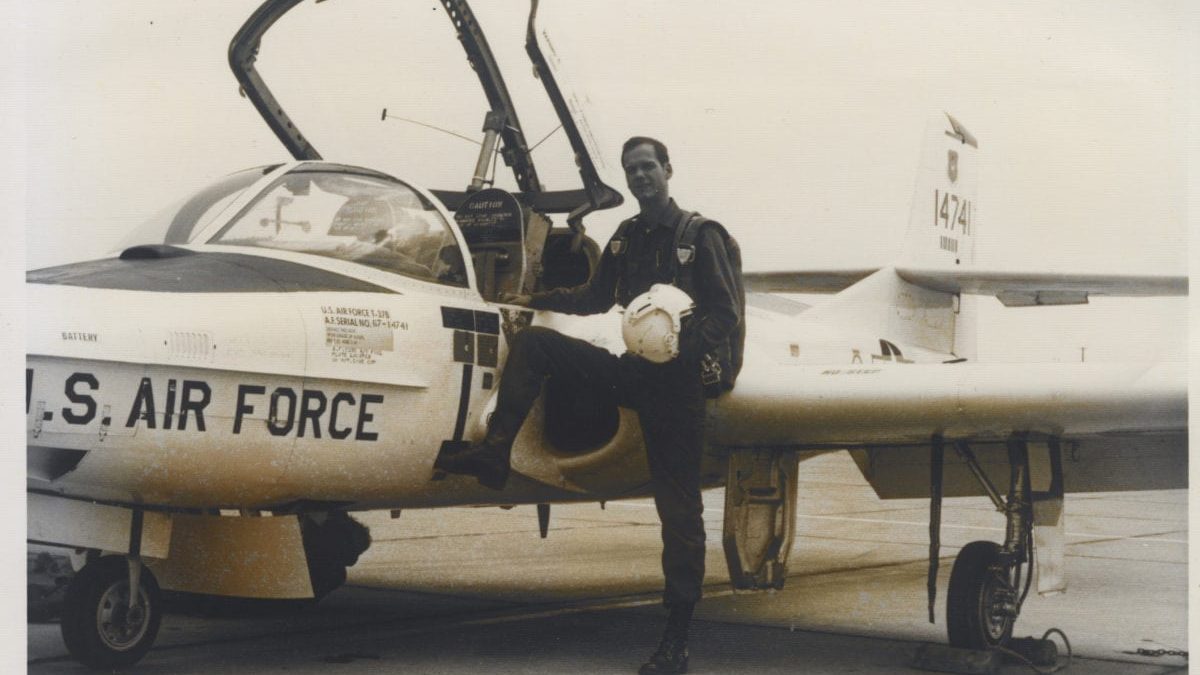
My father’s recent death has prompted me to think deeply about the mantle that falls upon each of us as we are left to lead our families. The mantle is a hefty honor and responsibility to lead and care for those we love. I have been asking myself the question, “When do we realize the responsibility we have to spend time with our parents before they die?” It seems like an easy answer: as often as possible, the older they get. But when they seem fine, other duties and distractions interfere. In my case, I kept getting intuitive messages that his time was near. My father and I had spent countless days fishing together, and he loved to float fish on area rivers. Two knee replacements had left him unable to canoe comfortably, so I bought a drift boat and we were able to return to the river for several trout fishing trips. For every time we got to go, I wish we had gone ten times, but I am so thankful for those days fishing and shooting the breeze about just about everything. That was the tone of my entire life experience with my dad. He gave his very best in every moment to everyone he met, willing to give or share anything he had to anyone he knew who was in need or simply if they asked. This and his love for our family was his way of being valiant, and I am thankful that he chose to share those qualities with us all. Despite my intuition, I thought we had a decade or more left to share. He was healthy and had no major complaints. And then he was gone. My father, Richard Sparks, (left) and his best friend Bill Opengary canoeing on the New River during one of our many float fishing trips.
The value of this experience is in learning to move beyond the urgency of everyday affairs and listening to that intuitive inner voice speaking to us about our important responsibilities. I share this to encourage each of us to invest the time while we have the chance. I am glad for the moments I shared and regretful for those where I allowed things to get in the way. How we respond to life’s intuition calls us to action and helps define our character.
Take Chris Blue, the subject of our cover story. As a young man, his faith enabled him to see that, in order to achieve his goals, he had to see things differently and to take on new responsibilities. As you will read in the interview, he listed them and took them seriously. He made a decision to take responsibility for his desire to become an actor by taking acting lessons, for his desire to improve his body by devoting time to exercise, for his desire to become the best singer he could by working with the best talent he could find. He did not say, “I just don’t have time.” He allowed his faith to guide him instead of allowing fear to impede him.
Chris’ mentor, Hallerin Hilton Hill, is an uber-successful Knoxville entrepreneur we hear on the radio almost daily. It seems beside the point to remark upon his successes, but the Hallerin Hill we have come to know is someone who has taken responsibility for his success. In June 2003, we named him “King of the Hill” and devoted our cover to him. We suspected the greatness he might achieve. He has grown his small-city celebrity status into a renaissance of enterprises, comprising Grammy-nominated songwriting, wisdom coaching, and public speaking, amongst other ventures. What impresses us about Hallerin in this story is that he saw it as his responsibility to share the abundance of his own success to help someone else on the road to their own.
Chef Bruce Bogartz has had a rich and varied experience within Knoxville’s culinary community. He has owned and operated several restaurants and has been head chef at a few others. Life is not always kind, and those ventures didn’t always work out. What I admire about Bruce is his willingness to take charge of his life. That is the very essence of tenacity. I’m really proud of the Bruce I know today. He’s started eating better, has lost considerable weight, and continues humbly to create fine Southern food. He has landed at, of all places, Moe’s Market on Northshore Drive. You might not think of fine dining at a gas station, but think again. Pairing up with gifted Yemini cook and owner Moe Alasry, together they provide the very definition of excellence: their place is where the locals go. Make no mistake, ourCityviewstaff eats there all the time—come join us! It’s always a delight to get to experience his colorful culinary creations. I’m proud of the Bruce that is once again on the path to success.
These are just a few of the people I have had the pleasure to meet or visit with recently, who remind me how to follow through with life’s responsibilities. I truly admire these qualities in others. Their deep inner strength, absolute faith, and indefatigable resolve is evidence of their true willpower.
I believe that intuition informs us of the correct path we should follow in life. We must be responsible in our choices to honor intuition and act with faith. And we must be tenacious in the pursuit of our goals. Lack of time is never an excuse. We can only fail by attempting to manage time, which will tick forward regardless of our human endeavors. Rather, when we manage life, it offers us rich rewards as we grow accustomed to wearing the mantle of responsibility.
→ Swipe for Next Story
Arts & CultureJULY AUGUST 2017
John D. Powers
Story by Jacob Rouser
Currently an Assistant Professor of Art at UT, Knoxville, 2016 Guggenheim Fellowship winner John D. Powers realized his love for sculpture during his studies at Vanderbilt University. His work explores contemporary culture while seeking to memorialize the past, all the while discovering ways to infuse motion into his sculptures.
“I kind of stumbled around…I liked everything I was studying, and then took a studio art class—it was a therapeutic elective from all the statistic classes I was taking. The next semester I took sculpture, and that solidified everything.”
Currently, John is working on pieces that explore death and how we memorialize it. Drawing from his travels in Turkey and Japan, John is creating two very different sculptures.
One, called “Tumulus,” is a black circle that “moves the way kelp moves but in an undulating circular path.” This artwork uses motion to explore one of history’s earliest burial markings.
His other piece fuses videogame icon Megaman and traditional Japanese mythology. During his recent travels, he witnessed giant stone heads at a royal burial site, and it turned his thoughts towards Megaman, whose “lives” are represented by giant heads.
Powers has two upcoming shows: in October at the Downtown Gallery show of UT’s Time-Based Art faculty; and in January, a solo show at Austin Peay’s new arts center. To see more of his work, visit john-powers.com.
→ Swipe for Next Story
PoliticsJULY AUGUST 2017
Dogged by Definitions
Story by George Korda
Acardinal rule of political campaigning is to define yourself before your opponent defines you.
The campaign for the Republican gubernatorial nomination offers an object lesson for political candidates and would-be candidates: Take care in how you define yourself even if you think you’re defining yourself carefully.
There are three principal reasons political candidates who’ve defined themselves in one way must sometimes undergo a redefinition:A true conversion of ideological position. What they said isn’t what they meant to say. Correcting an unforced error.
While Republicans win a lot of elections in Tennessee, it doesn’t mean all Republicans are happy about all the Republicans who win. There’s a continuing push-and-pull between conservative Republicans, more conservative Republicans, and way-over-on-the-right conservative Republicans, against GOP leaders seen to not be conservative enough in whatever way some conservatives define “not enough.”Boyd is wealthy, well-spoken, well-positioned, well-respected, and has been well advised to be well rid of the manner in which he once defined his political thinking.
Reallyconservative GOP members often identify moderate Republicans as RINOs (Republicans in Name Only). A RINO can even be worse in their eyes than a liberal Democrat. A liberal Democrat is a known enemy. A RINO is deemed a kind of turncoat, a Republican too willing to compromise conservative principles. A Democrat-lite.
Tennessee is today among the reddest of the Republican-red states. The chill on Democrats’ Tennessee fortunes began with a snowfall under President Bill Clinton and roared to an avalanche during the presidency of Barack Obama. As the national Democratic Party moved left, Tennessee’s more conservative Democratic voters were abandoned. In response, a conservative state became more conservative. Republican candidates enjoyed the benefits.
Being defined as liberal, moderate, or conservative, matters. A lot.
In January, Knoxville businessman Randy Boyd resigned his position as state commissioner of economic and community development, and in March entered the Republican gubernatorial primary to succeed term-limited Republican Gov. Bill Haslam.
Boyd is wealthy, well-spoken, well-positioned, well-respected, and has been well advised to be well rid of the manner in which he once defined his political thinking.
In a “Conversations” interview in the Jan/Feb 2017 issue ofCityview, Boyd, when described as a “Frist/Corker/Haslam type,” said, “I’m honored to be considered in the Frist/Corker/Haslam group because I admire all of those gentlemen…”
On April 1, 2015, theKnoxville Mercury, a weekly paper, published an interview with Boyd, who offered this description of himself: “I’m probably the most hated, disrespected, untolerated political entity in existence,” he says. “I’m a moderate.”
Among some conservatives, them’s fightin’ words.
An example:The Tennessee Staris an online conservative publication in Nashville that would like to make Boyd eat his words of moderation.
“Self Proclaimed [sic] ‘Moderate’ Gubernatorial Candidate Randy Boyd Sends Mailer Trying to Appeal to Conservatives,” was a June 9Starheadline of an article ripping a Boyd fundraising letter. The first paragraph mentioned Boyd’s “moderate”Knoxville Mercurystatement; the second paragraph contained the complete quote.
How many people actually readthe Tennessee Staris to some degree irrelevant in the age of internet and social media. Word gets around. However, the “I’m a moderate” quote appeared in many news stories about Boyd’s campaign announcement, such as that from the Associated Press. After referencing theKnoxville Mercuryquote, the AP article says: “Boyd’s self-description had evolved when asked about that comment in his AP interview, saying ‘I don’t generally like labels’.”
Boyd’s campaign website’s home page five times uses the word “conservative” to describe him and his philosophy, which indicates some labels are better than others.
Boyd’s campaign has also been ubiquitous on social media condemning a proposed “Sanctuary City” ordinance in Nashville, further burnishing his conservative bona fides.
If he was already thinking of running for governor in 2015, Boyd needn’t have defined himself so staunchly. But words once spoken being what they are, Boyd’s campaign appears to be correcting an unforced error that can affect the campaign.
His campaign knows primary opponents will with nauseating frequency regurgitate the “moderate” comment. They also know that most Tennesseans up to now haven’t been paying much attention to the governor’s race and that it’s in the coming months that voters will define Boyd for themselves. He has the time and money to overcome his political misstep.
In today’s conservative-RINO debate it’s questionable if Ronald Reagan could get conservative backing. As Reagan himself said: “Die-hard conservatives thought that if I couldn’t get everything I asked for, I should jump off the cliff with the flag flying – go down in flames. No, if I can get 70 or 80 percent of what it is I’m trying to get … I’ll take that and then continue to try to get the rest in the future.”
Nevertheless, the current political landscape is a reminder that any candidate would do well to heed a what was once said by America’s 30th president, Calvin Coolidge, whose nickname was “Silent Cal.”
Said Coolidge: “You don’t have to explain something you never said.”
→ Swipe for Next Story
InsightsJULY AUGUST 2017
While You Were Sleeping
Story by Bruce Fox
Several news items of late have captured my attention, and not in a good way. We are hearing a lot these days about Congress attempting to repeal Obamacare. What we are not hearing, however, is what the actual proposals look like until they are being voted up or down. Whereas most legislation is introduced and made public weeks before a vote, with committee hearings and amendments offered, that is not the case with recent healthcare proposals. The bills in Washington are being crafted behind closed doors by a few members of Congress or the Senate, and are sprung on the entire lawmaking body at the last moment—with no opportunity for thoughtful consideration, debate, and most importantly, public awareness and input.
The liberties of a people never were, nor ever will be, secure, when the transactions of their rulers may be concealed from them.
– Patrick Henry, American patriot and founding father
Unfortunately, this is not limited to the healthcare debate. In recent weeks, Congress has bypassed the committee structure and called up bills without allowing debate for quick votes that have harmed every American’s 7th Amendment rights to a trial by jury. Congress has helped the nursing home industry by allowing that industry to force arbitration and keep patients it has maimed and killed out of court where a jury could hold the industry accountable. It has passed legislation to protect big banks and prevent ordinary customers from seeking to hold them accountable by a jury forcing arbitration for fraud and other harms. Do you or might you expect to have a loved one in a nursing home? Do you have a bank or investment account? Then these provisions affect you. In fact, they affect about everybody I know in one way or another. Did we hear anything about them? Was there public debate? No, there wasn’t. When Congress does its best to keep citizens from knowing what they are voting for, that should concern us all.
The problem doesn’t just exist at the national level. In North Carolina, one party lost control of the governor’s office. In response, against the expressed will of the people, the legislature decided to meet in a special session with virtually no notice to the public and ram special laws through to take power away from the incoming governor. They had to do it in a hurry so the defeated governor could sign the legislation before the new governor was sworn in.
These are troubling developments. As the quote above from patriot Patrick Henry illustrates, our liberties are not secure so long as those in positions of power keep from us what they are doing. I challenge us all to keep our elected officials accountable and to demand transparency. It has been said that sunlight is the best disinfectant. When the people know what is going on, then we really will have a government of, by, and for the people. If we don’t know what is going on, it will no longer be our government.
→ Swipe for Next Story
DepartmentsJULY AUGUST 2017
Ablaze with Color
Story by Cityview
As spectacular as many destinations in the Smoky Mountains can be, Gregory Bald holds a special place in the hearts of many hikers for its unique beauty. The bald has an intriguing and disputed history. One story is that, during the Civil War, settler Russell Gregory used the land to graze cattle during the spring and summer months, hence the name Gregory Bald. Another is that the bald occurred naturally.
Ten acres of grassy meadow filled with a variety of azaleas await each traveller who chooses to make the steep trek up the mountain. Both the 8.8-mile round-trip hike via Gregory Bald trail and the 11.3-mile round-trip hike up Gregory Ridge trail are strenuous, though the latter covers an elevation gain of over 3000 ft. and is recommended for advanced hikers.
What the bald is most famous for is its abundance of flame azaleas, which have not only been treasured by visitors, but also have been collected by the British Museum of Natural History. Nature lovers from all over come to Gregory Bald to explore the variety of azaleas that stretch across the mountain top; peak bloom season is mid-to-late June. This year, Cityview arrived near the end of the season. But blooms continue to appear until as late as mid-July, and we were hopeful.
We took the Gregory Ridge trail, enjoying the mountain laurel and the wide variety of flora growing after recent rains. We met a few fellow travelers on both the trail and the bald; the experience of the meadow, the view, and the flowers makes human connection easy. By the second mile up, we knew there were still azaleas in bloom and the view to Cades Cove was clear. Atop the bald, we shared some time with fellow Tennesseans and visitors from Eastern Europe.
When taking either of the trails to the summit, your body may protest, but once you stroll into the sunlight, your soul will soar.
→ Swipe for Next Story
DepartmentsJULY AUGUST 2017
Old Location—New Ideas
Story by N. Brooks Clark
More than a century of dining memories inhabit 37 Market Square, on the corner nearest the parking garage. Built in 1870, the “Victorian vernacular” storefront sold tobacco and liquor until 1905, when it became a restaurant and confectioners shop. In 1920, Greek immigrant John Cavalaris opened the Gold Sun Café, where World War II soldiers savored home-style meals of beef stew before shipping out. In 1971, Cavalaris’ son-in-law Gus Peroulas and his brother took over. Gus’s yielded to Perry’s in 1997 until the structure was stripped to its façade and rebuilt with steel beams in 2010.
For diners with memories, please know that Blue Coast Grill & Bar is nothing like its predecessor, Blue Coast Burrito—the memory of which has caused some diners to steer clear of the building, even when nearby eateries have lengthy waits.
The good news is that executive chef Curtis Bates is offering a special blend of farm-to-table, new-American creations with complex flavors that are tipping the balance of Market Square—starting with the Chicken and Waffles with strawberries ($11), which is available both weekday and weekend brunch times (until 3 pm).
The patio seating in front and raised-deck seating along Wall Street allow diners to dine al fresco and watch the Market Square world go by. Large, tall windows both upstairs and down provide a bright, open feeling, which complements the lively atmosphere. Exposed brick on the inside walls hints at the building’s history. Singer-songwriter Chelsea Stepp plays on Wednesdays—ask for her version of Britney Spears’ “Toxic.” Blue Coast is a place to have a good time.
In the same way an art historian guide amplifies a trip to a museum, the wait staff are fully committed to the chef’s farm-to-table mission and are part of the dining experience. Our server Steven did this for us, walking us through the subtle “fifth flavor” that a diner might otherwise miss. For example, he noted the ginger garnish on the starter of melt-in-your-mouth blackened yellowfin tuna over sesame noodles ($11). (Opera Maestro Brian Salesky, take note: These are the New York sesame noodles you have been longing for.)
The Smokehouse Burger ($14), a signature dish, arrives with four oversize onion rings stacked atop it like a pasha on a sedan chair. Chef Curtis allows his knockout dishes to strut their stuff. The Smokehouse—made with Southern Natural Farms angus beef, the chef’s house-made barbeque sauce, Benton’s bacon, and fiery fiesta cheese from Sweetwater Valley Farms—has a unique taste to go with its grand entrance.
Do not miss the roasted corn shrimp chowder ($6 cup; $4 bowl). Infused with Benton’s bacon, it’s smoky, light, and tasty. The shrimp are perfectly cooked, tender and sweet.
Romey’s Salmon ($18), named after the chef’s son, is char-grilled, pan seared, and served with honey-champagne glaze over Cajun cheese grits from Shelton Farms. It comes with a side: think about shredded and pan-roasted Brussels sprouts with Benton’s bacon.
A refreshing twist on a dish found in other restaurants are the Pork Belly Tacos ($15), with shredded braised pork bellies from Southern Natural Farms, caramelized pineapple coleslaw, and pico de gallo. They arrive drizzled in soy lime glaze and garnished with scallions. The cool crunch of the coleslaw adds a nice texture and complement to the heat of the meat.
Hand-cut Cajun prime rib ($26 for 8 oz.; $32 for 12 oz.), also from Southern Natural Farms, is a hickory smoked prime rib seasoned with Cajun spices and seared on the grill. In addition to the classic au jus and horseradish, try the broccoli florets tossed in herb butter, sage, green onion, fresh garlic, and oregano.
Don’t miss the Napa valley chicken ($16). Surprisingly complex with a lemon wine reduction and topped with sun-dried tomatoes and goat cheese, it is an exquisite balance of flavors. Be sure to try the caramelized pineapple coleslaw and grilled asparagus as accompaniments to this dish.
Even in the competitive Market Square scene, the bill is very reasonable for a memorable dining experience.
→ Swipe for Next Story
Dining GuideJULY AUGUST 2017
Game Day Eats
Story by Ashley Barnes
Game day has arrived; you’ve been waiting for this all year. Decked out in your orange and white overalls and getting ready to head towards Neyland Stadium, you suddenly get a game-day craving for game-day delicacies. You’re thinking a burger, or maybe BBQ—no, maybe you want wings. Luckily for you, we’ve got you covered with restaurants, both close to the stadium and on the way there, that can provide you with all your tailgating favorites.
Sweet P’s Downtown Dive
Looking to pack the perfect game day meal? Sweet P’s Barbeque and Soul House offers a number of meats, sandwiches, appetizers, and more to complete your game day meal. Choose from a variety of meats sold by the pound or by the sandwich. You could pack their huge smoked Wings, flash fried and tossed in spicy garlic BBQ Sauce or soul rub. If you want to change it up a little, try their BBQ Burrito, stuffed with BBQ pork or chicken, pintos, slaw, cheddar, and BBQ sauce. A great on-the-go meal for the big game is their Sweet P’s Sampler: a BBQ pork or chicken sandwich, ¼ rack of ribs, beef brisket, and three sides.
410 W. Jackson Ave, 37902 (865) 281-1738 Mon: Closed Tue-Thu: 11am-9pm Fri-Sat: 11am-10pm Sun: 11am-9pm sweetpbbq.com
Gus’s Good Time Deli
If you’re up for a good time, check out Gus’s, conveniently located on Cumberland Avenue. Stop in on your way to the game to pick up a Good Times Favorite like their Philly Steak and Cheese: thinly sliced rib eye steak with grilled green peppers and onions, mayo, mustard and provolone cheese, served with fries. Or snack on their Cheese Bings: breaded cubes of cheddar and pepper jack cheese deep fried.
Touch down in Dazzo’s Pizzeria for one of downtown Knoxville’s best gourmet pizzas. All of you Vols fans out there should try the Knox-Patch Pie: hot garlic sauce, prosciutto, goat cheese, caramelized onions, and oil-cured black olives. Dive into Italy with the Fat Tony, which features roasted garlic sauce, mozzarella, pepperoni, black olives, banana peppers, and mushrooms. If a sandwich strikes your fancy, grab a Classic Italian: ham, salami, pepperoni, lettuce, tomato, red onion, and banana pepper served cold.
Craving something a little different on game day? Yassin’s Falafel House is just the spot for you. Grab a Falafel to go: falafel wrapped in a pita with lettuce, tomato, pickles, onions, and homemade tahini sauce. For those of you with a bigger appetite, try the Falafel Sampler Plate, which includes falafel salad, homemade hummus, and baba ganoush with a side of pita. Or pick up their Gyro, a favorite crafted with lettuce, tomatoes, onions, pickles, chickpeas, and olives topped with gyro meat and homemade tzatziki sauce.
Don’t miss out on the tailgating headquarters: Big Kahuna Wings. Whether you are tailgating in the comfort of your home, out on the town out west, or driving in to the stadium, stop by Big Kahuna. Choose from Wing Mania, which feeds 15 and includes 100 traditional wings, two pint sauces, and four pounds of BKW chips. Or grab the Pork Party, a 10-person party, with three pounds of smoked BBQ pork, buns, one bottle of BKW original BBQ sauce, and two quart sides. For larger parties, order their Big Kahuna Tailgate Party, which feeds 30-50 and includes 100 traditional wings, two pint sauces, five pounds of smoked BBQ pork with buns, two bottles of BKW original BBQ sauce, four quart sides, and eight pounds of BKW chips.
The Knoxville Symphony Orchestra opens 2017-18 with its second season under Music Director Aram Demirjian. The KSO has a full slate of concerts and events in the community, from its signature Moxley Charmichael Masterworks Series to educational outreach programs. Demirjian generously took time to provide in-depth answers to a few questions Cityview editor Keith Norris asked about his work, Knoxville, and the KSO.
Keith Norris: When did you realize conducting was something you wanted to do or found that you were passionate about it? How did you get your start?
Aram Demirjian:There was a mystique about conducting that always intrigued me, even from the time I was very young. As long as I can remember, even going back to elementary school, I enjoyed being in leadership positions (team captain, line leader). My mom actually conducted a children’s choir that I sang in at the time, and she gave me my first conducting “lesson” when I was seven years old, because I was interested in how it worked.
Don’t get the wrong idea, though — I was by no means some prodigy being groomed for this career from the time I could walk. I had a wide range of interests growing up. Depending on the year, I wanted to be a doctor, biologist, sports play-by-play announcer, historian and politician, all of which I pursued to some level of intensity. I was raised somewhat with the ethos of “make your money elsewhere and spend it on music.” If you told me 15 years ago that this is what I would be doing with my life I would have laughed.
I can really trace my “serious” interest in conducting back to high school and the first time I played in a full symphony youth orchestra (I also am a cellist). I was really enchanted by the phenomenon of a symphony orchestra — so many moving parts, so many individuals all working together to achieve harmony. And I wanted to be at the center of it, doing everything I could to bring that harmony about.
I started off mostly just by experimenting in front of the stereo with my favorite recordings, but my first opportunity to conduct abona fideorchestra was in my senior year of high school, when my high school orchestra teacher let me conduct a piece on a concert. Needless to say I was hooked. I went on to Harvard to study government, but could not shake the conducting bug and wound up spending most of my extracurricular hours conducting operas and orchestras on campus. Eventually, I came to the realization that conducting was not only what I enjoyed the most but the thing for which I had the greatest aptitude (my friends would tell you I was thelastone to realize this). I went on to grad school to study conducting full time at New England Conservatory, and really got my first “big break” when I won an audition to be the associate conductor of the Kansas City Symphony, where I spent four years before being hired by the KSO.
KN: Oftentimes when we read about you, the word “young” is attached. Do you find that your age affects how you are perceived in the music community? Does it affect how you approach the job?
AD:Usually, when I am referred to as “young,” it is meant as something positive. I think in the music world, as in many industries and disciplines, “young” can be a catch-all term for the qualities we associate with youth: energy, new ideas, optimism, hope. Young people are thirsting for new innovations and not yet set in their ways. In this sense, “youth” is a state of mind as much as it is a reflection of age. I know 70-year-old conductors who are “younger” than some 30-year-olds.
That said — Iamyoung! I am only 31 years old and I have only been conducting professionally for 7 years. I do not have the benefit of decades of experience and insight the way my mentors and role models have. With all music, but particularly with conducting, you tend to get better as you age. There’s a saying that it takes 30 years to become a conductor: 10 to learn how to listen to the orchestra; 10 to learn what you want from them; and 10 to learn how to get it from them.
Does my age affect how I approach my job? I guess I won’t know until I am older! It almost certainly does, though not consciously. The conductor is the leader, yet most of the musicians I conduct are older and far more experienced than I am, so I always strive to be aware of what I have to learn, to have respect for their knowledge and to be open to feedback. You have to be simultaneously conscious of all you have to offer and all you have to learn — and then let go of all of it when you get on the podium because ultimately you are there to serve the music as genuinely as you can in that moment. Beyond that, I think being kind to people goes a long way, no matter what your age.
KN: If you were to reduce what it means to direct and conduct a symphony orchestra to two sentences, what would you say?
AD:There is a brilliant conductor named Semion Bychkov who encapsulated what a conductor does better than anybody I have ever heard, and I am paraphrasing him now:
KN: Why Knoxville; what brought you here? Now that you’ve spent some time here, what do you enjoy about our community?
AD:It sounds obvious, but what primarily brought me to Knoxville was the KSO! A young conductor can’t ask for much better from his first music director job than an excellent, financially-healthy orchestra with a devoted audience. The KSO also recognized that the status quo was not sufficient — they were hungry to grow, evolve and reach beyond their comfort zone.
Knoxville is obviously a city with an artistic spirit, from the Knoxville Museum of Art and all the public art to the Big Ears Festival, The Pilot Light, and all the great independent groups that I am just beginning to discover. You can’t walk one block downtown without encountering art and creativity in some form. That quality was important to me.
I believe that classical music is for everybody no matter what their background or level of prior exposure. The fact that Knoxville is a city with a foundation of artistic curiosity suggests to me that there are many people the KSO can engage that we just haven’t reached yet — bringing those people in is my top mandate as music director.
There also is no shortage of exciting collaborative possibilities in Knoxville – when artists from different backgrounds work together, it makes us all stronger, fuels new ideas and creates unexpected experiences for audience members.
I am an American history junkie and also devoted to the performance of American music, and I am fascinated by the depth of Knoxville’s history. I think we have a unique opportunity in Knoxville to champion the music of our own country to the same degree that we celebrate traditional European composers and to examine the connections between our music and the many layers of our regional history.
KN:What’s your favorite Knoxville restaurant? Feel free to cheat and offer two or three, but give reasons!
AD:I get my coffee at Coffee & Chocolate — love their brews and their playlists! For drinks it’s Boyd’s Jig and Reel — scotch is my drink of choice and their list is jaw-dropping.
As for restaurants…because of some recently-discovered food allergies, I’ve become a pretty picky eater. I go pretty reliably to Babalu (for the chicken tacos and guacamole), Bistro by the Bijou (brunch!), The Tomato Head (because they have gluten free bread) and Café 4 (truffle fries)!
KN: You’ve come into a program with a 75-year legacy. The last two Music Directors have made huge, indelible marks on the way the community experiences symphonic music. Knoxvillians have grown accustomed to the Masterworks series at the Tennessee Theatre; to stunning, world-class guest artists; to progressive community, educational, and children’s programs; and to new works commissioned especially for the KSO. What programs and events do you hope to continue; what new things might we expect?
AD:Certainly our core, headliner series, like Masterworks and Pops will continue, but those programs are going to become a little more surprising. I believe that an orchestra concert should be a multi-sensory experience. If you want to sit back and close your eyes and let the sound wash over you, by all means, go for it! But if you like watching the stage, we’re going to give you more to look at, whether it’s dynamic lighting, theatricality or digital projections. This upcoming season alone, we feature dancers and rock musicians on Masterworks, full-length feature films on Pops and unusual stage configurations that use the full 360 degrees of the concert hall.
You’ll also hear a shift in sound. There will be no shortage of Beethoven, Tchaikovsky and Mozart, but we are going to come at those classics from new perspectives by pairing them with music the KSO has never played before, some of it by astounding composers that are alive and active today. Programs will be thematic and narrative. You’re also going to get used to the sound of my voice! I believe a little background on the music can go a long way, and I love talking to the audience during concerts — just like musicians of any other style would! It’s a great way to bring the audience into the magic of the music and to connect with them on a human level.
Finally, you’re going to notice us popping up in places you wouldn’t normally expect to find us. Already over 80% of our appearances occur outside of the concert hall, many of them in classrooms, libraries and hospitals. In the coming years, we’re going a few steps further and putting on social events for fun-seeking adults in places like The Standard, Jackson Terminal, and Mill & Mine that will feel more like a night out at a bar, where the featured music just happens to be orchestral. We’re calling the series KSO UnStaged, and we’re rolling out our first event in November! Keep an eye on our social media for more information!
KN: We love having a symphony here, but it’s not the first thing people think of. How might you work to lift the profile of the KSO? What impact would you like to have on Knoxville?
AD:I want the KSO to be an indispensable part of the civic identity of Knoxville and for the KSO to be one of the primary entertainment options for everybody on a Friday night and a gathering g place for Knoxville’s entire artistic culture.
I think one place to start is changing the way we talk about ourselves. Way too many people think that classical music is for the elite and cultivated or feel lost when they walk in the door of an orchestra concert. You don’t need to know single thing about Mozart, or when is the right time to clap, or what the difference is between a violin or a viola (no matter who might make you feel like you do!), but we will give you all the information and insight you need to have the best possible time if you make the leap and buy a ticket. We want to meet you where you are and share your journey with you.
If you’re getting the sense that this is important to me, it is because I don’t want the joy and electricity of orchestra music to be missing from anybody’s life! It is fun, powerful and exhilarating, and we are going to put on concerts and present ourselves in ways that make it obvious.
The conductor is force for unity, existing in a perpetual communion with every participant in a musical experience: the composers, orchestra musicians, audience members and community whom he/she serves, and the ultimate caretaker of the fulfillment of all. If the orchestra were a sports team, the conductor would simultaneously be a player, a coach, and a play-by-play announcer, constantly searching to understand the structure and heart of the music and the orchestra musicians, providing a unifying vision in rehearsal that is inclusive of the many musical perspectives among the players, and then participating in the performance as a teammate that helps the individuals in the orchestra reach their greatest level of expression and guides the audience through words and movement so that each concert-goer can enjoy their musical journey to the fullest.
→ Swipe for Next Story
DepartmentsJULY AUGUST 2017
Resourceful Tailgaters
Story by Cityview
Dear Orange Julie: The Knoxonomist hadn’t before considered the washing machine as a portable or economic answer to the problem of keeping beer cold at a tailgate. As a younger man, however, he employed that very solution when hosting a poker night. Sadly, the party achieved a level of bacchanalia so pronounced that the Knoxonomist neglected his duty to empty the machine; the return of Mrs. K the following day caused no small amount of distress.
That anxiety-inducing memory aside, and after wondering how those inventive Tennesseans installed the drain, and whether or not they’re supplying power to the washing machine (and to what end), the Knoxonomist dove into answering your question—and in that quest, dug deeply into his own past.
On one occasion in the early 90’s, after a fair amount of lubrication, the Knoxonomist embarked on cataloguing in a small notebook the various types and configurations of tailgating paraphernalia, small to large. It was a hopeless mission from the start, if coming up with a proper tally was the goal. However, as a purely non-scientific exercise, pursued mostly by visiting as many tailgaters as possible, it was both educational and inspirational.
Before his scrawl becomes illegible five pages in (tailgate research is thirsty business), it seems our younger Knoxonomist detailed a menagerie of customized vehicles: travel trailers, RV’s, pickups, custom vans, mini-vans, VW vans of uncertain vintage, ambulances, fire trucks, tour busses, school busses (both full and half-sized), and a variety of mutant vehicles that defied identification. The standout was a camper van jury rigged to the frame of a Chevrolet Citation, painted in PMS 151 orange, and manned by a couple of face-painted boys from LaFollette. It was as inventive as a modified flat-top house in Oak Ridge.
The tailgating gear was as custom as the rigs themselves. Of particular note were a grill, handcrafted out of bed rails and a 55-gallon drum, and designed to slide on lubricated ball bearings out of the back of an Econoline; and a blender powered by an old Stihl chainsaw. The margaritas were as fast as the women blending them, or at least that’s what it says in the notebook. It was at this point that the Knoxonomist stopped, his handwriting failing as he slid into a hammock suspended from the roof by custom-rigged steel tubing in its natural, recently welded state.
Walking around game day now, it’s obvious that, while there has been a certain amount of incursion by professionals, the heart of the eclectic and inventive tailgater is still beating. We’re talking about homemade modifications here, not the kind of things where someone else makes you a trailer with four flat-panel TV’s, surround sound, and a private bathroom.
These are the people who can, in a half hour, make a cornhole game with two shipping pallets, a survival knife, and an old pair of blue jeans. They are the stuff of legend. Have they always been resourceful? Yes, Julie. They have always been genius.
The Knoxonomist welcomes your questions—although he will answer only those that interest him. Send your inquiries to TheKnoxonomist@cityviewmag.com, and include your name, address, and daytime phone.
Dear Knoxonomist: I’ve been a Vol fan my entire life, and my blood runs orange! But I grew up with parents from a non-football town, and we didn’t attend the games. As a freshman last year, I fell in love with everything about going to the game—particularly the tailgaters. One group used an old washing machine as a cooler! Have they always been this resourceful? Julie –Alcoa, TN
→ Swipe for Next Story
JurisprudenceJULY AUGUST 2017
Go and Do Likewise
Story by Gary Wade
In the Old Testament, the Book of Leviticus teaches not to “seek revenge or bear a grudge against anyone among your people,” but to “love your neighbor as yourself.” This verse prompted an exchange between a lawyer and Jesus that appears in the Gospel of Luke. The lawyer, who is seeking guidance on the path to eternal life, asks Jesus to recite what is written in the law and how it is to be interpreted. In response, Jesus instructs the lawyer not only to love God with all of his strength and mind but, as provided by the verse from Leviticus, to love his neighbor. The lawyer then asks for clarification. “Who is my neighbor?”
In those days, the meandering road from Jerusalem to Jericho was fraught with danger. Robberies accompanied by violence were so commonplace that the path had become known as the “Way of Blood.” Samaria shared a border with Judea. Its people had also descended from Abraham but adhered to a form of religion which accepted only the Pentateuch—Genesis through Deuteronomy—as Scripture. Well before the birth of Jesus, Hebrew prophets had condemned Samaria for its “ivory houses” and pagan riches. This foretold the profound enmity that had developed between the peoples of first century Judea, where Jesus and his disciples lived, and the Samaritans. According to Biblical history, the Samaritans had desecrated a Jewish temple during Passover. In turn, Jews had destroyed a place of worship on Mount Gerizim in Samaria. The parable of the Good Samaritan takes place in this hostile environment.
A man walking along the bloody road was attacked, beaten, and stripped of his clothes. Jesus described the man as half-dead. A priest passed by without any offer of assistance—perhaps fearing danger to himself or indifferent to the plight of the injured man. A Levite, born to the Israelite tribe traditionally charged with the religious and political responsibilities in temple life, declined to offer aid, passing on the other side of the roadway. When, however, the Samaritan came upon the scene, he was “moved with compassion,” treating the fallen man with oil and wine and binding his wounds. He placed the helpless victim on his donkey, took him to an inn, and arranged for his treatment. On the following day, the Samaritan went on his way but left money for the innkeeper, promising to return and pay for the costs of his care.
When Jesus had completed the parable, he asked the lawyer which of the three who had encountered the injured man could be called “his neighbor.” The lawyer provided the obvious answer, “He who showed mercy.” “Go and do likewise,” Jesus responded.“Lord, give me the opportunity today to do something good for someone…”
This Biblical passage serves as the origin of the Good Samaritan doctrine in the field of law. Generally, this maxim exempts from legal liability any person who attempts to give emergency assistance to the ill and the injured. So long as an individual attempts to aid or rescue a person in peril, he or she will not be held liable for any acts of negligence in the effort. The obvious intent of the doctrine is to encourage individuals to offer help to those in crisis without fear of reprisal. All fifty states have adopted some form of the Good Samaritan doctrine. So has the United States Congress. In 1996, the Federal Emerson Act was enacted to encourage donations of food by adopting protections from liability for the donors of food to the poor and the hungry. Only intentional misconduct or acts of gross negligence by the donor could serve as the basis for legal action. Prior to the passage of the Act, national and regional companies most often disposed of their bulk food surpluses at landfills in order to avoid potential lawsuits from potential recipients stricken ill by eating substandard food.
Tennessee’s version of the Good Samaritan doctrine is by statute. If the service is provided in good faith, “any person,” including all medical personnel and “any member of a volunteer first aid, rescue or emergency squad that provides emergency…services” is, with certain exceptions, protected from liability. Our state has had little litigation on the subject. The single reported case in the last five years confirms that the statute, while offering significant protections against litigation, does not insulate those medical personnel who make “any direct charge for the emergency care.”
Although the University of Tennessee has had a number of outstanding presidents since its inception in 1794, Dr. Andrew David Holt, who served from 1959 through 1970, may have been the most revered. A man of spiritual nature, “Andy” was well known for his folksy charm, his remarkable wit, and his unique ability to illustrate important life lessons through storytelling. During the turbulent sixties, when so many college presidents were under fire, he enjoyed unprecedented popularity. In an interview late in life, Dr. Holt spoke of the influence of his mother as he grew up in Milan, Tennessee. Just as Dr. Holt started each day with a prayer, his mother had done so before him. He explained that her prayer was always the same…and always answered: “Lord, give me the opportunity today to do something good for someone…” This dear lady clearly qualified as a Good Samaritan. Today’s laws are designed to reward rather than risk punishment to those virtuous people, who with generous hearts and courageous minds offer their time and talents in moments of crisis.
→ Swipe for Next Story
InsightsJULY AUGUST 2017
Football Camp
Story by Robert Pryor, Sr.
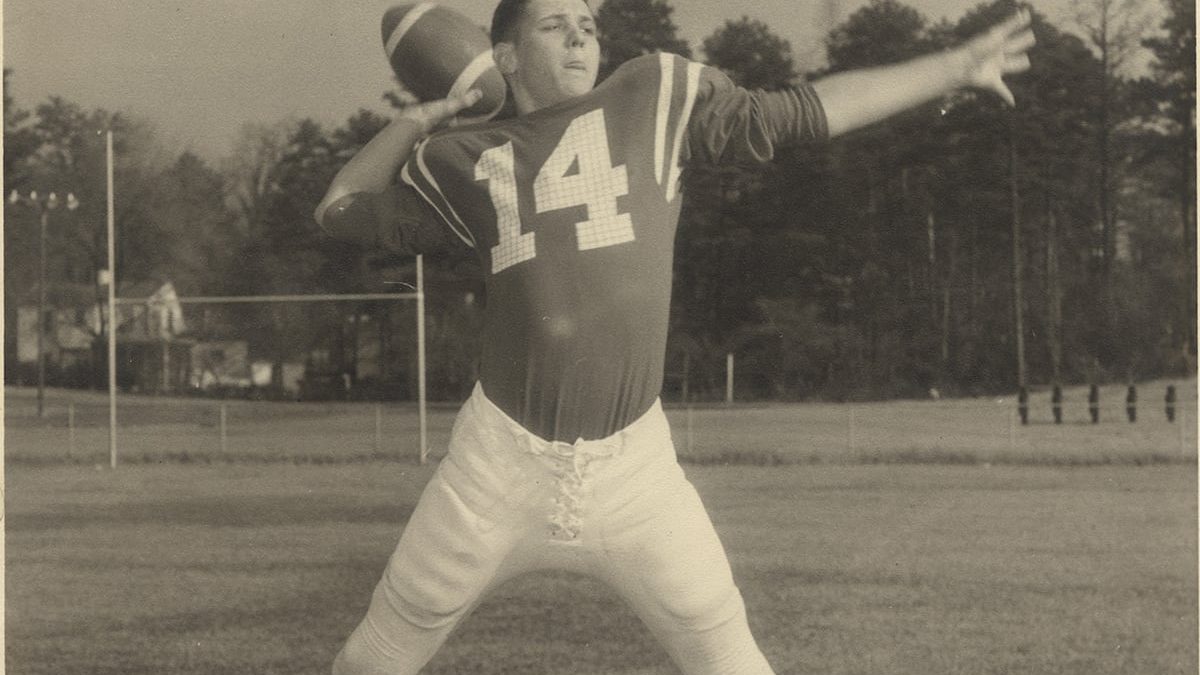
This time of year, my thoughts turn to that uniquely American and profoundly southern institution of football. As high school and college teams begin their seasons, I am reminded of my illustrious football career. Some of you may recall how my running and passing skills as a quarterback dominated the Knoxville/Knox County high school football league during the fall of 1958, 1959, and 1960. For those who have trouble remembering that phenomenon, perhaps the photo of me as Bearden’s quarterback will jog your memory. While I and my pad-pounding, Friday-night-warrior brethren often revisit the “glory days” and exaggerate our athletic prowess, most of us in our beloved East Tennessee love the sport and this time of year. My true athletic specialty was running onto the field and trying to look good while I paced the sidelines.
Preseason football camp for the Bearden High School teams in the late 1950’s was an exercise in torture the likes of which would not be allowed these days. Bear Bryant, the famous Texas A&M and later Hall-of-Fame coach for Alabama, decided that taking boys away to a harsh environment and exacting physical and mental torture would not only increase physical fortitude and allow focus on the team concept, but it would bond boys and even help them achieve manhood. I only point this out so that I can say that my name and Bear Bryant’s name once graced the same article. This “Junction Boys” method resulted in a trend in coaching that was accomplished by isolating the team far away from home and hammering its members in intense two-a-day practices. It was the preferred method in those days to shake off the weight and laziness that had set in during summer months. We Bearden boys were bused to Crossville where we, along with the members of the Oneida High School team, practiced and drilled until we could not walk. It felt like prison.
Each morning started with a two-mile run and exhausting calisthenics. I usually finished the run with the guards and tackles. Two scrimmage sessions a day in the hot sun on a field that was part grass and part rock were more than most high schoolers could take. Although some may have been turned from boys into men, I was just 16 and the methods created in me a strong preference to remain a boy just a little bit longer. Confined against our will at “Camp Crossville,” we were convinced we were in prison. It turns out we were.
Between 1942 and 1945, approximately 400,000 Germans and Italians were detained in over 500 prisoner of war camps across the U. S. and mostly in the South. “Camp Crossville” had been the site of a 1930’s Civilian Conservation Corps work camp. After Pearl Harbor and the entry of the United States into World War II, 1,500 German and Italian prisoners were housed there after being captured. In those days, locals referred to the camp as the “Jap Camp,” even though no Japanese prisoners were detained there. Today, it’s known as the Clyde York 4-H Center.
On my first trip to “Camp Crossville” in 1958, I was the fourth-string quarterback for the mighty Bulldogs. I had transferred to Bearden in the 10th grade and decided to play football to make friends. I also figured girls liked football players and decided I had a talent for looking good in a garnet uniform. When I stepped onto the makeshift field in Crossville, it was the first time I exposed myself to premeditated violence. I had been a superstar in Corky Goldman’s back yard as a child, but I had never been really hit. I had played organized team basketball and thought maybe my skills would transfer to the football field. When our senior starter quit the team, I received a quick promotion to third-string quarterback. Shortly thereafter, it was decided that our best athlete, who had become first-string quarterback, should play running back. This made me the second-string play caller with little or no effort on my part. Just as I was getting over the anxiety of accepting my undeserved ascendency, and while we were imprisoned and struggling to stay alive, it was discovered that our first-string quarterback was color blind. This affliction became apparent when he kept throwing the ball to the other team. I was informed that I was the first-string quarterback and would be starting in our first game of the year, and the first game in my life, against the perpetual champion and powerhouse of East Tennessee football: Kingsport’s Dobyns-Bennett High School. I didn’t deserve this. I had only wanted to make friends and wear a uniform. Although some may have been turned from boys into men, I was just 16 and the methods created in me a strong preference to remain a boy just a little bit longer.
Although my arm was questionable and my speed was nonexistent, I had a talent that even the greats never master. My coaches told me that I was a deceptive ball handler, capable of allowing me to fool a committed linebacker or cornerback with fakes and concealment. My ability to act and deceive would eventually lead me to the doors of the College of Law and a 50-year career in the courtroom, but on the patch of field where German prisoners exercised, it simply allowed me to survive.
We lived in the same barracks that had housed prisoners only thirteen years earlier. We used the same latrine and mess hall. History reports, however, that the prisoners had it much better than we Bearden footballers had it. We were running through the woods at 6:00 a.m., while the prisoners did not rise until 8:00 a.m. After breakfast and roll call, the officers enjoyed leisure time for the bulk of the day, and the enlisted men went off to work on Cumberland County farms or in factories. In 1958 and 1959, the Bearden football team blocked and tackled in the hot sun and had virtually no leisure time. The Germans had no curfew inside the encampment and they governed themselves. The Bearden football team had a strict curfew and were enthralled to the coaching staff. Benevolent treatment was common in the American prisoner of war camps, and there was very lax security. Every morning at roll call, the Bearden football team would be missing one or two players who had deserted overnight.
Nationwide, there were few deserters from prisoner of war encampments in the U. S., but on one evening three German enlisted men did escape from “Camp Crossville.” They were heard late at night behind a mountain cabin pumping water from a widow woman’s well. She got her gun and shot into the darkness, and one of the prisoners was killed. When the sheriff came to check on the shooting, he informed the lady that the men in her backyard were German escapees from “Camp Crossville.” In her distress, she claimed that if she had known they were Germans she would never have fired the shot. “I thought they wuz Yankees,” she said.
In 1944, the Germans at “Camp Crossville” had an orchestra and published a newspaper run by the inmates. Beer and wine were allowed to be purchased with their earnings from work in the Crossville community. Classes in English, chemistry, and math were taught and even piano lessons were available. The poor Bearden football players had no beer or wine to enjoy and weren’t even allowed to drink water during practice (another stupid trend in coaching). While we didn’t have an orchestra, we did regularly march around single file in a conga line, singing “Folsom Prison Blues” in the barracks.
One thing the football players did have in common with the prisoners is that we both ate well. Full and complete breakfasts were served for both the prisoners and the football players. Eggs and bacon, grits, and potatoes for breakfast – vegetables and fried chicken for lunch. There was always a big supper with plenty of milk, breads, and desserts. In 2004, Gerhard G. Hennes, a former prisoner at “Camp Crossville,” published a memoir entitled The Barbed Wire: POW in the U.S.A. He reflected in his book about 1944, the same as I recall about 1958 and 1959, on the great food that was served in the “Camp Crossville” mess hall.
I am sure that the only reason I survived three years of high school football was because of my experience with the hard exercise program and intense training that I received at “Camp Crossville.” I never thought I’d live to respect that experience, but as a 16- and 17-year-old boy, it was good for me to have been forced to endure such brutality. I was stronger in body and mind for having had that experience. Looking back 57 years, we were a good football team and won most of our games, but I can’t remember any specific game and no scores. Turns out I was not playing football so much as I was really making friends as I first intended. In sport, as in life itself, it’s not about the games we play, but the relationships we make along the way.
→ Swipe for Next Story
TravelJULY AUGUST 2017
Next Stop, Agave
Story by Sam Slaughter
If you’re interested in tequila and want to visit its home—the Mexican state of Jalisco, the only place where tequila is legally allowed to be made—you’ve got to do it right, aboard the Tequila Herradura Express, a luxury train dedicated solely to bringing you to La Hacienda San José del Refugio at Casa Herradura, one of the last tequila-making haciendas in the world.
Departing from Mexico’s second largest city, Guadalajara, the Herradura Express started in April 2017 and will run on weekends and certain holidays through the end of the year. You’ll be treated to stunning views of the Jalisco countryside as you enjoy entertainment, food, and tequila during the course of the ninety-minute train ride to Amatitán.
Regardless of which level of luxury you choose, it’s easy to forget that you’re on a train. The décor feels more like a chic, city apartment than a locomotive. There’s not a lot that tops sipping a Paloma—an iconic Mexican cocktail made with grapefruit soda, preferred over Margaritas by the local population—while rolling past the fields of blue weber agave that grow in the shadow of the Sierra Madre Mountains. The train is just the start of the luxury experience, though. Once you arrive in Amatitán, you get to experience what makes tequila, tequila—Casa Herradura has been making the spirit for almost one hundred and fifty years.
Herradura offers five different expressions of their tequila, ranging from their Silver, which is aged for just forty-five days, to their Seleccíon Suprema, the brand’s extra añejo (extra aged) spirit, which is aged for forty-nine months. In addition, they produce a Coleccíon de la Casa special release once per year. Their most recent is a reposado tequila aged for eleven months and finished in port wine casks.
Before learning what it takes to harvest and process the blue weber agave (the only variety of agave allowed in the production of tequila), you’re treated to more luxury, enjoying VIP food and beverages while watching traditional folk ballet and live mariachi music, which was originally developed in Jalisco. You’ll also walk through citrus groves to learn about the open-air fermentation process used to impart specific flavors to their tequilas.
Herradura, it’s safe to say, knows how to do it right. Not only do you get to try some delicious spirits, but you also get a holistic view of everything that makes the Jalisco region unique and special.
If you’ve not been to Jalisco before, there’s really only one way to do it right the first time. Move over, Amtrak; it’s time for the Tequila Herradura Express.
→ Swipe for Next Story
FeatureJULY AUGUST 2017
Balancing Health and Beauty
Story by Hannah Overton
In 2017, the beauty industry is bigger and brighter than ever before. In a world of picture perfect models on Instagram, successful beauty vloggers on YouTube, and nearly countless amounts of images and links to scroll through on Pinterest, the vast array of makeup possibilities is almost overwhelming. Care to sport Adele’s flawless winged eyeliner? Desire to keep it to the bare necessities? Want to throw it back to the wide-eyed look of Twiggy? There are tutorials for these looks and so much more.
An industry that used to rely solely on professionals to create a certain look now uses social media to provide that power to consumers themselves. But often, the thrill of the illusion makeup can create keeps consumers from remembering to take care of their well-being as they fine-tune their appearance. However, if you take a little time to research the topic, it is possible to indulge in the pursuit of both the fun and practical aspects of makeup, while also keeping skin healthy and happy.
Makeup has existed since long before Marilyn Monroe, Marie Antionette, Cleopatra, and the stage plays of William Shakespeare. The world’s earliest record of makeup may come from the first Dynasty of Egypt, but since that time, it has evolved in a number of ways. Makeup has had both its glory days and its day of shame throughout history. It has identified the prestige of the upper class and the desperation of the lower class, but today we see it on a level it has never experienced before. Both men and women are now consumers of cosmetics, and there are whole stores dedicated to selling any type or brand of makeup one might imagine or desire. While the choices these stores offer are no doubt fun and can embrace one’s wildest imagination, it is always important to contemplate what ingredients are being used to create the end product.
At this moment in America, there is not a lot of control over or rules governing the ingredients used in makeup and cosmetics. Many companies opt for shortcuts in order to increase quantity and profits instead of using quality, healthy ingredients. Due to this practice, many makeup brands can include toxins that interfere with the natural hormones our bodies produce. This is a common concern, one locally expressed by Knoxville makeup artist Susan Bourdeau, who has spent years advocating the importance of using non-toxic makeup. When asked about the growing awareness of health’s connection with beauty, Bourdeau says that, “over the last 20 years, as Americans have become more health conscious, paying more attention to what we put into our bodies, we have also become more aware of what we put onto our bodies.” This consciousness has caused many in the beauty industry to rise to the occasion and employ healthier and safer ingredients to make their products. The end result might be slightly more expensive, but the long-term effects are worth their weight in gold for a consumer’s health.
Bourdeau says that first and foremost, “clean, non-toxic ingredients are the most important thing a person should look for in their cosmetics and skin care.” Your motivation should go beyond merely asking if the color is right for your complexion. You should also question the ease of application. If your makeup does not easily blend, it can cause premature aging and more serious problems. In relation to this, Bourdeau notes, “For instance, parabens can act like estrogen in the body, and higher levels of estrogen are linked to breast cancer. Many products contain parabens, and the exposures add up over time.” The Susan B. Komen Foundation cites a study by the Endogenous Hormones and Breast Cancer Collaborative Group indicating that “higher amounts of estrogen in the blood are linked to an increased risk of breast cancer in women after menopause.” The more dangerous toxins we put on our body, the more those toxins go into our body and linger long enough to deal some serious long-term damage, especially as we age. This is why it is important to know what should and should not be in a skin care or cosmetic product.
Bourdeau points out that some buzzwords that might sound dangerous for makeup are actually not only safe, but necessary for high-quality and clean makeup: “You may think that preservative- and chemical-free is good, but preservatives are important for products that contain water; otherwise, microbes could become a big problem.”
In 2012, to help ensure that consumers can easily find a makeup line with both the absence of toxic ingredients and the presence of healthy preservatives and chemicals, Bourdeau formulated Susan Bourdeau Skin Care and Cosmetics, her own brand of makeup, to meet her standards for a high-quality, clean beauty product that is also priced to be affordable. Bourdeau’s twenty-plus years of experience in the beauty industry helped her create a line of skin care and makeup products that is non-toxic, while still upholding the professional quality she is committed to. “I have worked hard over the years with my suppliers to ensure that Susan Bourdeau products meet the exacting standards I have set, so I am confident in putting my name on these products.” Bourdeau shares that, “unlike other manufacturers, I have spent the money to find new ingredients and have eliminated toxic additives like Parabens, Sulfates, DHEA’s, and Triethanolamine and other Thalomines.” And Bourdeau is not the only professional concerned with the quality and safety of beauty products.
The beauty industry as a whole has positively answered consumers’ calls for non-toxic products. Non-toxic brands such as Physicians Formula, Mineral Fusion, Ilia, Beautycounter, BareMinerals, and Honest Beauty are all brands that can easily be found, not only in chain stores such as Ulta and Sephora, but also in superstores like Target and in brand outlets within malls. Some brands are more affordable than others, but if cost is a concern, a potential solution might be a surprise. Brand discount stores such as TJ Maxx are beginning to carry more beauty products from brands that promise to be clean and non-toxic. That includes not just makeup, but also basic skin care products.
Some other options for clean beauty products can be found through less traditional means. Young Living is a brand often known for its essential oils, but they recently launched a new branch of their company: a line of cosmetics called Savvy Minerals. This new venture features products that are non-toxic, made with natural and clean ingredients, and are entirely mineral-based. Although you will not be able to buy Savvy Minerals at just any department store, you can most likely find a local Young Living representative from whom you can order the products.
With so many brands promising to be non-toxic in response to a more health-conscious consumer, cosmetic shopping might feel a little daunting and overwhelming at the moment. But it does not have to be. Bourdeau simply suggests educating yourself. You do not have to buy a particular brand to ensure that your makeup is the cleanest it can be. You can mix and match from various non-toxic companies. She recommends that you look at what you are purchasing, read labels, and compare them to the knowledge of what you know to be safe and unsafe. According to the Environmental Working Group, a non-profit organization “dedicated to protecting human health and the environment,” other ingredients such as synthetic colors, fragrances, phthalates, and triclosan may cause effects from minor skin irritation to respiratory distress and cancers. Many companies might come across as natural and clean through their marketing but prove to be otherwise if you look a little closer at the ingredients in their products.
Makeup is supposed to be fun and creative. The countless ways of learning how to achieve an appealing look via instructions and examples one finds on the internet makes it even more enjoyable. Your face is a canvas, and the cosmetics you buy are your tools as an artist. But with such a mortal and precious canvas, it is important to ensure that what you use on your skin and face will replenish and fortify your health rather than destroy it. Thanks to experts like Bourdeau who care about both health and beauty, you as a consumer no longer have to sacrifice one in favor of the other. We live in an age where—with the right knowledge—beauty and health can walk hand in hand. Ultimately, consumers do not have to sacrifice their well-being in order to indulge in and enjoy beauty products.
→ Swipe for Next Story
FeatureJULY AUGUST 2017
Choosing Assisted Living
Story by Jon Hersey
In the 1970’s, what were then known as nursing homes gained a notorious reputation for extinguishing the personal dignity of residents. Keren Brown Wilson, whose mother would soon be considering her senior care options, came to the conclusion that moving into a nursing home had as much in common with being “committed” as it did with being taken care of.
She went on to pioneer the assisted living model, opening the nation’s first such facility in Portland, Oregon in 1981. Her solution was to combine what she called “the three Hs: health, housing and hospitality.” The state of Oregon adopted a care philosophy that proclaims, “Assisted living…promotes resident self-direction and participation in decisions that emphasize choice, dignity, privacy, individuality, independence and homelike surroundings.” Today, there are around 40,000 assisted living facilities (ALs). These have become increasingly important in providing the lifestyles desired by longer-living seniors.
But as with any burgeoning field, the number of options, though a boon, can feel like a burden when trying to make informed choices. An expansive definition of senior care includes a wide range of options, including independent living, senior communities, assisted living facilities, and long-term or memory-care facilities. Given the options and the gravity of the decision, experts recommend beginning the search at least 6 months, if not a year, before the target move date. Of course, it’s often the case people don’t know they’ll need to move until they really need to—a period the industry refers to as a “Time of Crisis.”
In the 1950s, Dr. Sidney Katz developed a framework still in use today, which is helpful for assessing care needs. This framework indexes what are known as activities of daily living, or ADLs. Basic ADLs include functional mobility, bathing, dressing, eating, going to the bathroom and taking care of one’s hygiene. The inability to manage even one or two of these makes living independently extremely difficult, if not impossible. There are also Instrumental ADLs (IADLs), which include shopping, housekeeping, accounting, food preparation/meds, and telephone/transport. Oftentimes those needing help with IADLs can supplement independent living with periodic homemaker services or in-home care.
How these and other needs are addressed at an assisted living facility determines the level of care for each resident. Harriet Amonette, Director of Marketing for NHC Farragut, notes that many seniors in assisted living facilities progress through a number of levels of care as their needs increase. NHC Place Assisted Living offers six levels of care, progressing from the most independent residents, who live on campus for the security of 24-hour nursing on-site, to those with mild cognitive impairment who are not yet ready for a long-term care or full-time memory-care facility.
NHC staff go through a meticulous assessment process with each potential resident, says Amonette. The staff guides the individual through a twelve-page assessment in order to evaluate what kind of care they will need and how often they will receive it. For example, if a resident were mostly independent but needed some help with daily medications and bathing a few times a week, that person might need a care level two or three.
Those looking for eldercare need to be honest with themselves and their loved ones, not just about current needs, but also those likely to crop up in the near future. Knoxville-native Andrew Scruggs opened an in-home care business—Always Best Care—in 1996 after his family’s experience illustrated the need for it. He says “these facilities are not one size fits all. Each family has its own unique criteria… Some are in denial about various issues while others have a much better grasp of their loved-one’s needs.” Exercise as much foresight as possible, and be realistic. If the last year or two has been a roller coaster, consider a place offering more care.
Conversely, a senior-care facility may not be the immediate best option. Scruggs adds, “Most seniors are most comfortable in their own home and want to age-in-place. This allows them more independence and control over their circumstances. I believe this is the best setting for seniors, so long as they remain safe.”
Atmosphere and Service
If you do need facility-level care, what’s the next step? Lynette Edwards is the Long-term Care Ombudsman for the East Tennessee District, which covers 16 counties in East Tennessee. Her mission, as part of the East Tennessee Human Resource Agency (ETHRA), “is to improve the quality of life, and to protect the rights of people living in long-term care facilities.” She says, “There is absolutely nothing more important than actually visiting an AL multiple times. You must get a sense of the atmosphere….”
Each visit gives you a snapshot of the atmosphere, the people, and the customer service. Your goal should be to get as many and as varied snapshots as possible. Go in the morning, the afternoon, the evening, peak hours, off-peak hours, during activities, and while nothing is scheduled. Schedule a tour the first time you go, but show up unannounced several times afterwards. Only with a variety of these snapshots can you assemble a realistic picture of the place.
Cleanliness and Materials
To some extent, you can follow your nose. Are there unpleasant odors, or does the smell of cleaning chemicals singe your nose hair? Is the place clean? This is also a good time to note the building materials. Is the flooring grippy or slick? Are there railings where there should be? Is smoking allowed anywhere in the vicinity? If so, do people follow the rules? Make sure they do.
Appropriate Staffing
Are there plenty of people there to help, or does it always seem to be a skeleton crew? It’s a bad sign if you ever get the deer-in-the-headlights look, or if someone appears to be looking around for help that never comes. Of course, your expectations should be based on the type of facility you’re visiting. Facilities that claim to provide more care should have more staff to provide it.
Activities and Events
Ms. Edwards highlights another important question: “Are there activities going on? Or is it overly quiet and boring with no activities?” Most if not all facilities offer activities and events. Take a look at the calendar and find out if any of these appeal to you or your loved one. Ask if you can meet the person who coordinates them, and get a feel for his or her personality. Is he or she open to suggestions? It’s also great if some of the activities offered have a physical component. For body as for mind, if you don’t use it, you lose it.
If you’re looking into facilities in Tennessee, ask if or how often they host H.A.B.I.T. volunteers. H.A.B.I.T., short for Human Animal Bond in Tennessee, is a group of volunteers from the University of Tennessee College of Veterinary Medicine, the community, and local veterinary offices. They visit ALs with healthy, well-behaved pets. Bonding with animals is emotionally and physiologically beneficial—a loving dog can make anyone smile!
Food
If it sounds shallow when I say that almost nothing is as important as the quality of the food, then don’t listen to me—listen to your district Ombudsman. “Do other residents enjoy the meals? Definitely eat more than one meal in the dining room,” she insists. Beyond that, find out how often the menu changes. Ask a resident’s opinion. Long-term care should not entail long-term dietary boredom.
Training
Training should meet or exceed the level of care you are shopping for. Even basic skills require cultivation to ensure the safety and dignity of those being cared for. As Scruggs puts it, “It’s one thing to watch a video about changing the sheets on a bed while the client is in it. It’s another to actually do it.” That’s why the offices at Always Best Care host a hospital bed, full-size dummy, and a sling lift—an interesting contraption that uses hydraulic power to hoist a person up from a bed and place them gently into a wheelchair.
If you’re placing a loved one with Alzheimer’s or dementia, it’s important that staff understand the disease and know how to compassionately care for sufferers. You could also search for an Alzheimer’s special care unit or memory care facility. Ask what kind of training and experience the staff gets. ALs do not have these facilities, though some offer these kinds of advanced care on campus. NHC is breaking ground on its own memory-care facility this year.
Cost
Before she was the Long-term Care Ombudsman, Lynette Edwards served as an attorney for ETHRA’s Legal Assistance for the Elderly Program for 11 years. Her cautionary advice is this: “Be aware that when you sign the pages in the admission packet, you are signing a contract—READ IT!!! Make sure you understand all the charges, fees, and extra charges.”
How are you planning on paying for it? Some resort to “cashing in” a life insurance policy or setting up a reverse mortgage on their home. Nowadays, financial experts often advise clients to purchase long-term care insurance around age 50 as part of their retirement plan. Of course, you can hold off longer, but the price goes up as you get older. Keep in mind that most policies won’t pay out until the policyholder requires assistance in at least two ADLs. Veterans may also qualify for assisted living benefits through their pension, though many overlook this.
Gut Check
When several facilities meet every requirement on your list, return to how each makes you feel. It’s great if you’re impressed by one or two outstanding individuals, but keep in mind that those people may move on to other jobs. Choose a facility that only hires great people, that is committed to ongoing improvement, and makes you feel home, sweet home.
→ Swipe for Next Story
FeatureJULY AUGUST 2017
USA Cycling Championships
Story by Ashley Barnes
A large crowd of Knoxville natives and visitors from out of town came together to cheer on nearly 200 professional cyclists for this year’s USA Cycling National Championships. About 100 men and 80 women from across the country raced through Downtown Knoxville for the U.S. Professional Road and Time Trial National Championships. The races began in the Old City and looped around steep hills on Sherrod Road in South Knoxville. The route was one of the more challenging courses the USA cycling world has experienced. Cycling course designer Jeff Corbett crafted the course based on level of difficulty, ease of access for the cyclists, and amount of traffic.
The men’s time trial was won on Saturday by Joseph Rosskopf, while the men’s winner in Sunday’s road race was Larry Warbasse. Amber Neben took both the time trial and road race medals. For Sunday’s event, men raced 14 laps for a total of 109 miles, while the women raced eight laps for a total of 63 miles. The race was such a success that Visit Knoxville will continue to host this event for the next two years.
→ Swipe for Next Story
FeatureJULY AUGUST 2017
Vol Football Season Preview
Story by Hobe Brunson
The opening of a new Volunteer football season brings many questions including a quarterback battle between Quinten Dormady, the returning junior, and Jarrett Guarantano, the redshirt freshman of whom great things are expected.
Questions about keeping Butch Jones off the hot seat and assuring a top-5 recruiting class are certainly pressing, and revisions to the coaching staff are also on the mind of the Vol faithful. But these are secondary to the primary question: How many games will they win this season?
The Vols aren’t experiencing the pre-season hoopla of 2016. Las Vegas has set the number of games they’ll win this year at 7.5. Simply put, the odds makers believe that the 2017 Vols will win either 7 or 8 games. Let’s see how that shakes out.
As former Tennessee standout wide receiver Jayson Swain notes, the expectations formula is fairly simple: “When you have more talent than the opponents in your division, you should be expected to get to Atlanta.”
We start with what’s expected of the Vols.
The Wins
Indiana State, UMass, and Southern Miss should certainly be “can’t lose games.” Although the Vols have a checkered past in these type of games, the three should all go in the win column. ESPN Power Rankings lists UMass at 112 and Southern Miss at 100. Indiana State is not ranked in top 130. Tennessee enters the season with a Power Ranking of 19.
The Losses
Alabama, LSU, Georgia and Florida are all ranked ahead of Tennessee. The Vols play the Crimson Tide and the Gators on the road, and LSU just has too much talent. These three are likely losses. After six games, this puts the Vols at 3-3, with six games remaining. Therefore, the team from Rocky Top must win five out of the six remaining games on the schedule in order to transcend the 7.5 game expectation.
Four out of Five
If we maintain that things return to normal, we can put Kentucky and Vanderbilt back in the win column, even though, on paper, both of these squads look improved from last year. Missouri may have an explosive offense this year, but there are too many weaknesses in their defense, so let’s put the Mizzou Tigers in the win column as well. Tennessee is 6-3.
Surely, two more wins lurk in that schedule, so let’s keep mining for gold. Who’s left? Two teams from Georgia—the Bulldogs and the Ramblin’ Wreck of Georgia Tech—and the Gamecocks of South Carolina. Tennessee opens the season in Atlanta against Tech in the Falcons new home, Mercedes Benz stadium. This most likely means a home crowd for The Yellow Jackets, with both teams playing in an unfamiliar venue. Georgia Tech runs that nasty flex bone triple-option. Historically, the Volunteers have not fared well against the option. Tennessee certainly has more talent than Tech, but the option offense and the venue might give the Vols more than they want. Unless Butch Jones and company arrive extremely well-prepared, give the Killer Bees a slight edge to put Tennessee at 6-4 on the season.
The Georgia Bulldogs have to come back to Knoxville in 2017. With them will be a very formidable 2nd year QB in Jacob Eason and the offensive coordinator is still Tennessee’s old friend Jim Chaney. They also return Nick Chubb and Sony Michel at running back. According to Swain and many sports commentators, this is such a must win for Tennessee. Because the game is at home, give a slight edge to Tennessee. Tennessee is at 7-4. One win to go.
What’s New
Incoming freshmen could help. Two that will almost have to in some capacity are Trey Smith, a 5-star recruit offensive lineman; and Ty Chandler, a 4-star running back. The Vols should hope that that one or two freshmen develops at defensive line and linebacker. These positions are thin.
Jones must get a better at game management. He has put together the best staff of his career this season. Defensive coordinator Bob Shoop had a shaky start in his first season, but he has an improved staff. Brady Hoke (defensive line) and Charlton Warren (defensive backs) should be big improvements for the Vols.
On the offensive side of the ball, the staff picked up their first QB coach during Jones’ tenure at Tennessee with Mike Canales, as well as new wide receiver’s coach Kevin Beard. These are both widely viewed as improvements. New offensive coordinator Larry Scott provides a steady hand in continuity, and, like Brady Hoke, brings some head coaching experience to the table.
South Carolina
We now come to the South Carolina game, at home on Oct 14th. The Vols have a bye the week before, after the Georgia game at the end of September. The following week is the third Saturday in October: Alabama in Tuscaloosa. South Carolina has Arkansas at home the week before and a long trip to Texas A&M the week before that.
Tennessee has more talent, but South Carolina packs a fairly potent offense. Questions remain, however, about a Gamecock defense that will struggle to stay in the top half of the SEC. Butch Jones has never beaten Will Muschamp: not at Florida, not at Carolina.
All things considered, Tennessee wins over South Carolina in an ugly game and makes it to another Bowl. That should keep Coach Jones here and a good recruiting class intact.
So let’s get ready for thirteen weeks of ecstasy, pain, and exhilaration. It’s football time in Tennessee.
→ Swipe for Next Story
Non-ProfitJULY AUGUST 2017
Teen Tune-Up
Story by Rebecca Whalen
Inside a bicycle repair shop on North Central Street in Knoxville, Jamesha Fain is hard at work giving a bike a tune-up.
“Sometimes you have to start from the beginning with an old bike,” she says. “You have to replace cables, clean them, change tires and tubes. Sometimes you clean or replace chains. People want a tune-up, so you go through the check list.”
Refurbishing bikes is second nature to her. However, that wasn’t always the case. She hasn’t always had this confidence. “I never thought I’d work with tools,” she says. “I didn’t learn to ride until I was ten and I loved it but I stopped a year later because I fell.”
It had been years since she had gotten on a bike, but you would never know it seeing how comfortable she is with them. Today, this 18-year-old provides bike tune-ups, quotes customers for repairs, fits neighbors for new rides, and educates them on accessories and brands. She leads community bike rides and spends her free time mountain biking.
“I used to have an issue where if something was hard, I would feel like I probably wouldn’t be able to do it or it would take me a lifetime to learn it,” she says, “but now I feel like I can do anything.”
And this is all thanks to the shop. This is all thanks to DreamBikes. Partnering with the Club
Jamesha’s story may leave some to wonder how a simple bicycle repair shop could have such a profound impact on a teen. Teens at the Boys and Girls Clubs of the Tennessee Valley apply to the club’s YouthForce, a workforce development program that engages teens in different types of after-school and summer activities in order to prepare them for the workforce.
After attending YouthForce University, where students learn the nuances of being an employee, students go on to a 60-hour paid internship with one of several local businesses. And, if regular performance evaluations show that a student is excelling in the program, they will then be afforded a chance to participate in a 150-hour paid technical training internship. Having excelled in YouthForce’s 60-hour internship, Jamesha was placed at the DreamBikes. Although she had reservations, having not been on a bike in years, she went to work as one of the shop’s student interns. Not Just a Repair Shop
As of early June, 10 students have made their way to the shop to learn new skills. The students are paid through two federal grants as part of YouthForce. “It’s a really fantastic level of technical skill that they’re able to give the kids,” says Rebecca McDonough, Director of YouthForce. “There are not a whole lot of jobs that you can go straight to and do something hands-on like this, especially right out of high school.”
But that’s the kicker: this isn’t your ordinary bike shop. The students come in after school Monday through Friday during the school year to work, while putting in longer days on Saturday. During the summer, those hours extend. They clock in, grab a bike, and get to work either refurbishing or parting out the unit. That knowledge comes from training with staff. Eventually the students work independently and simply use staff for questions when they get stuck.
But it isn’t all about the repairs. DreamBikes is taking training to the next level by giving students 360-degree participation in the business. Aside from repairing and refurbishing, they work with customers on the sales floor—fitting some for bikes and helping others find accessories—and with the store’s point of sale system. Students join staff at functions outside of the shop, promoting their work, doing presentations, and aiding in marketing and advertising for the business.
“We really try to ground them in every way of building and working in a business, getting the word out and figuring out as individuals what their strengths are,” says Preston Flaherty, the shop’s manager. “Then we kind of build their job around what they’re best at.”
Above all, these students are learning what it means to be reliable and model employees. “This YouthForce program is about bridging the gap between kids and those first job skills,” McDonough says. Providing Youth with an Outlet
Aside from simply technical skills, the shop provides so much more for the teens involved. For one, it’s a safe haven, Flaherty says, providing them positive activities to focus on after school and in the summer. But moreover, it’s getting them connected to a healthy activity.
“A bicycle is a great way for these kids not only to hop on and go out to some safer places, but also to hang out with friends and get out of their house,” Flaherty says.
It also provides them an answer to a very real challenge in Knoxville. “One of the biggest barriers that forbids teens from working is that don’t have transportation,” McDonough says. “But DreamBikes introduces them to an entirely new way of getting around when many never considered the bike as a commuter vehicle. It establishes independence.”
And it instills in them a sense of accomplishment for the work they do, one they aren’t afraid to share. Having come from a job she dreaded going to every day, Jamesha is now proud of where she works.
“You have people who encourage you,” she says. “It makes you look at a job differently.”Moving On Up
DreamBikes’ impact doesn’t stop when the students complete their 150 hours. DreamBikes may hire them on as mechanics in their shop. Currently, two on staff were former YouthForce students hired directly after their internship.
“Once they’re hired on with us and they’re employees of ours, we do all sorts of things with them from job shadowing to volunteer hours,” Flaherty says. “We help them with all their FAFSA paperwork and help get them through college.”
Flaherty is able to do this through a scholarship program that the organization runs. Every December, the nonprofit gives out scholarships to help their new employees pay for tuition, books, or whatever items they are in need of for school.
“I’ve always wanted to go, but I’ve always had the struggle of how I was going to pay for it,” Jamesha says. “I talked to my boss about it and they’re going to offer me a scholarship in December.” She already knows she will put it toward her tuition to study anthropology.
“DreamBikes is meant for kids to take their next step into the future,” Flaherty says. “Once they are seniors in high school and they graduate, we help them get out the door into their next step, whatever that might be.”A Young Community Player
With the roaring success DreamBikes has already had in the Knoxville community, it’s hard to believe the Knoxville location (one of five in the United States) has only been around since January. “The community response has been incredible,” Flaherty says.
The original DreamBikes opened in Wisconsin. With the success of the original store, new stores have popped up, helping to fund the store that will come after it. Knoxville’s local chapter is the currently the only southern-based store.
“When you’re looking at a place to open up a DreamBikes, what you’re looking at is two things, one, you have to have kids that are in need. But two, you have to open up in an area where the community would support you,” Flaherty says.
Knoxville has proven to be the perfect fit. The only way the shop runs is if they receive donated bicycles. Flaherty says they work on anywhere from 40 to 50 bikes each week, proof that the community is aware of their existence. The DreamBikes team refurbishes those bicycles and puts them out on the sales floor at a low cost along with accessories of all kinds, such as helmets, chains, clothes, and shoes. This funding raised, along with the money earned by doing tune-ups and that which is secured through grants and other fundraising means, is what helps pay for overhead and staff. And a small team of volunteers puts in their time to fill the gaps.
Herak Patel, a University of Tennessee student and volunteer with the organization, says he happily donates time a couple times a week. “The kids that work there are wonderful. They love what they’re doing,” he says. “It’s a great learning experience for them because they have the opportunity to work in a safe, but also rewarding environment. I wish I had this when I was in high school.”Getting Involved
In exchange for this community support, DreamBikes ensures that they give back to the community that supports them. “We have a mobile repair van that we take to moderate to low income neighborhoods and fix kids’ bikes,” Flaherty says. “The point of that is to get kids riding safe bikes.”
They bring along with them a few refurbished bikes from the shop and if a child approaches them with what Flaherty can only describe as a “rust bucket,” the DreamBikes team will give the child a new one. They have a goal to give out 100 bikes a year; Flaherty says he’s already given out 120, primarily to programs serving youth, such as the The Refuge Center, the YMCA, and the Boys and Girls Club. And this brings their work full circle.
“They do great mentoring for our kids,” McDonough says. We’re really proud to be a program partner with DreamBikes.”
→ Swipe for Next Story
FeatureJULY AUGUST 2017
Agreed
Story by Cityview
These days, we seem to disagree on many more things than we used to, or at least it appeared that way to us before we began making a list of what folks from this part of Tennessee do agree on: that Knoxville’s restaurants are better than ever; that the Sunsphere is iconic but underutilized; that it’s time for Lamar Alexander and Jimmy Duncan to retire; that though we have an abundance of greenways, our streets need work; that Sevier County has an indomitable spirit; that the Knoxville Symphony Orchestra is bursting at the seams with talent; that our dog parks suffer no comparison, and that, though he’s never been very far away…Phil Fulmer is back.
Cityview magazine first put Coach Philip Fulmer on our cover in September 2002. At the time, he was ten years into a Hall-of-Fame college football coaching career. I was delighted to get the chance to sit with him again—this time to discuss his new role at UT.
Nathan Sparks: I will never forget the first experience I had with you. I was a fledgling publisher and had been in business for just a few months, maybe a year. Phillip Fulmer: I must’ve been a fledgling coach, too.
S: It was after 1998, so I don’t think you were a fledgling any more. When I came to interview you, I thought that I would be clever, and I said, “bring me up to speed, coach.” You looked at me and said, “you called this interview; if you’ve got questions, you’d better get to it.” F: We must’ve had a bad practice or a bad game. I’m not typically like that, but let’s get to today’s questions, too.
S: So, welcome back! How does it feel to be a part of the UT family again? F: I’m excited, and I’m appreciative of Dr. DiPetro. I’ve been involved with the university, just not officially. I’ve enjoyed being on the president’s council for a while before taking the new position, and I’ve enjoyed the big picture of the University. The chance to interact again with a lot of people I already know is a special thing. I’ve also been involved in projects and good things that are happening at the University of Tennessee, and sometimes the message has gotten lost. I’m happy to be able to help get that message out about all the good things that are happening at UT, not just at the Knoxville campus, but at Martin, Chattanooga, and Memphis as well. With the space institute, our hospitals, and Oak Ridge National Laboratory, we’ve got so many good things going that I’m excited about being a part of telling the story.
S: So you don’t have a particular agenda in mind? F: It is truly at Dr. DiPetro’s discretion, what he wants me to do. We’ve talked through a lot of this: legislative issues, development with key boosters, and campus issues have been part of the discussion. And if it’s with athletics, I’m glad to help, even though it’s not my central thing here. If Butch Jones wants to pick up the phone and give me a call, as he’s already doing, I’m glad to help his team or any of the other sports—same thing with Chattanooga and Martin. It’s amazing how many phone calls I’ve already gotten about tickets and parking and all those things. I don’t have anything to do with that. I just thank the caller and send them on to someone who can address their issue. To make it clear, I don’t have anything to do with tickets and parking.
S: You are clearly one of the best recruiters ever. Other than knowing what to say to grandma, what are your secrets for recruiting great talent?Photo by Hobe Brunson
F: I think everyone would agree that you’ve got to be passionate about what you do and believe in what you’re selling. I think we did so well at bringing young men to our campus because we believed it was a good thing for them, and in most cases it turned out to be. We have a great history here at Tennessee athletically and academically. We live in a beautiful part of the country. We brought recruits into a culture that was healthy for them and supported them academically, personally, emotionally, and spiritually—all of those things that develop young people into men ready to be husbands and fathers and successful people in the community. We were passionate about what we were selling at the university.
S: Do you think you will be able to bring that to the academic side? F: I think it’s already there. The history is already there; the good things we’re doing on the academic side are already there. Sometimes we get in our own way, and things that are less important to the university end up getting talked about a lot more than the great things that are happening. I hope I can tell the message that “Yes, we’re not perfect all the time, but look at what we are doing really, really well.”
S: Do you have a specific job description or agenda as you begin your new role? F: We have been working on a specific job description. Dr. DiPetro has asked me to outline several goals that I have, which I am in the process of finishing, and I’ve had lots of conversations about government relations and academic relationships at the different campuses. Coming this year, there will be five or six events with key boosters in Nashville, Memphis, upper East Tennessee, Atlanta, Chattanooga, and other places. If Dr. DiPetro wants my opinion on something, I’m glad to give him my honest opinion. Everybody needs that. I think he has good people around him, and hopefully I can be an addition to his team.
“It was an honor and privilege to play for Coach Fulmer. From the first time I met him in December of 1993 when he came to my home, I felt very comfortable talking to him. He was a straight shooter, and I knew I would enjoy playing for him when I signed with Tennessee in February 1994.
I had a great four years at Tennessee, and a significant part of my decision to stay my fourth year was because I wanted to play for Coach Fulmer another year. He was an extremely loyal coach, he always had his players’ backs, and you knew he would always fight for you. As a result, all of his players fought for him as well.
I knew he was a special coach at the time, and Coach Fulmer being inducted into the College Football Hall of Fame on the first ballot is a testament to that.
I learned a lot about football from Coach Fulmer; he had great insight to all phases of the game. He was an offensive coordinator before he became a head coach, and he was extremely knowledgeable about defenses and other positions on both offense and defense.
I’ve been so grateful for his support of me since I’ve left University of Tennessee and throughout my NFL career. He always came to games when he could, and kept in contact whether it be a call, email, or text after a game. I always appreciated his support.
Most importantly, though, I am thankful for his friendship. The times that we are together on trips—having dinner, playing golf, or hunting—are times I truly cherish and value his friendship, and it means a great deal to me. I don’t play football anymore, but friendships don’t go away, and I’m honored and privileged to have played college football for Coach Fulmer, but even more honored and grateful to call Coach Fulmer my friend.” —Peyton Manning, August 2017
S: In the ten years since you’ve left coaching, what’s been your most rewarding pursuit outside of the university? F: I made the decision not to chase a job somewhere else because I didn’t think that I would be as passionate about the next job as I had been about my job at Tennessee. I made a conscious decision to enjoy my children and grandchildren rather than somebody else’s. I have done that. I have scheduled just like I scheduled something in athletics. I’m the assistant to the assistant that is the assistant pee-wee baseball coach over at Knox Youth Sports, and I love it. My grandson and granddaughter are there. I also have grandchildren in Nashville and Chattanooga, so I’ve made the rounds and enjoyed the fruits of not having to go to work every day. We do have a little business that we started, and we are working with that every day. Some of the charitable things that I’m very passionate about are Alzheimer’s and the Boys and Girls Club. Everybody is touched by Alzheimer’s, whether it’s in your family or elsewhere; it’s a terrible disease. I love seeing the Boys and Girls Club do well. The singer Charlie Daniels and I have a tournament every year in Nashville—it’s the biggest fundraiser for the Jason Foundation, which is a non-profit that works for the prevention of teenage suicide. It also strives to educate teachers and counselors to recognize signs of depression.
S: One of the things we saw throughout your coaching career was the emotional stabilizer that you were to young men. You seemed to keep them on track. How do you bring the same kind of emotional stability to a diverse student body? F: I think just being a part of the conversation and having everybody listen. Most of the time, addressing things that we disagree on or are not quite where we want them to be is usually about compromise and conversation. You’ve got to have the conversation. I’m willing to be a facilitator in any way I’m asked to.
S: Do you have one particular thing that you want to accomplish? F: Yes, to be a unifier. We have so many great things that are happening at our university that nobody is necessarily hearing about because they’re not happy about something else. Look at all the great things that we are doing, and let’s talk about them and find some common ground. That’s what I’m looking forward to. You make a choice: you can stay uninvolved and let things go on, or you can get involved and have some say. I represent not just myself and my family and my legacy, but I represent a whole bunch of young men that came through here and did well. I want my children and grandchildren to love the University of Tennessee and feel good about what we did here because there were so many good things that happened.
A university is bricks and mortar, and it has its own life, but it’s the people who make decisions along the way that can be productive or disruptive. We went through a period of time with four presidents in six years and a mess in athletics. We weren’t on a good page. I think we’re on a good page now with Dr. DiPetro as leader. And Butch has done a good job. Athletics goes as football goes, just to be blunt. He’s got a good foundation now: nine games, two years in a row. Think back to four years ago where we were. We’re in a different place now, and to get that message out is part of my job.
S: Do you stay in touch with some of the players that you have had? F: One of my daughters and I were talking about it a couple days ago. I’ll get 150 texts on Father’s Day from just players. I want to make this really clear: that goes as a credit to my staff at the time and all of the support we had. We operated that way; these were our children. We were responsible for them for a period of time, and you don’t lose that automatically. Not everything turned out perfectly; you see some kids didn’t make it. Some made it but didn’t get as much playing time. It wasn’t always perfect. But for the most part, those kids knew that we cared, and they knew that we did our very best to help them get where they wanted to be. You don’t just leave that relationship lying there; that’s a lifetime relationship. When I go to different parts of the state and the country, we’ll have get-togethers and see guys and stay in touch. I hear from them if they get married, or have a child, or get a new job, or need a new job. I think that’s great, and that’s why I chose to stay at Tennessee for so long. I had chances to leave, but we had a lot of good things going on, plus my own children were healthy and happy and growing. I didn’t want to change the environment at the time. We’re a big family.
S: What’s the one thing people will see that they don’t expect in the coming years? Are we going to see you cruising the campus on your motorcycle? F: Probably not. I keep that motorcycle kind of under wraps a little bit, but you might see me in the foothills occasionally when there’s not much traffic. I don’t know what the future holds. It’s not like I’ve been away: I go to games, I go to practice, that kind of thing. I’ve pursued my interest to get on the road with Dr. DiPetro and see how people respond. So far, it’s been positive, and I’m glad it has, though I’m sure there’s somebody out there who wrinkled their suits along the way.
S: I guess we can’t keep everybody happy all the time, but I think everybody agrees your involvement with the university is an awesome thing. F: Thank you. I hope it turns out to be just that.
S: Howard Baker was known as the great conciliator; maybe you’ll be the great unifier. F: I hope so. It’s not like we’re just way off page; we’ve made a lot of progress.
S: We seem like we’re in a better place than we’ve been in a long time. F: Getting that message out there is important.
S: What’s the one thing you’d like to add? F: Just the fact that I’m grateful, I’m grateful to have this opportunity, and I’m grateful for Dr. DiPetro’s foresight in allowing it to happen. Now is the right time, and I’m glad we’re a part of it.
→ Swipe for Next Story
FeatureJULY AUGUST 2017
Autocross!
Story by Keith Norris
When I was a kid, we had an International Harvester Farmall Cub tractor with split brakes. They had many mundane uses, but as a boy what I used them for was to skid around muddy corners as fast as I could. I’d slam on the left brake, let the right spin, and try to make that left rear tire stick to the ground as I whipped the tractor around the edge of our barn. Turns out, what I was trying to do back then is exactly what you want to achieve in the sport of autocross: to get around the turns as fast as possible. Nearly 40 years later, this is going through my mind as I sit in the passenger seat of Lyonel Kent’s modified BMW M3 on a warm July day, preparing to take my first ride around an autocross track. The desire for speed and the excitement of taking a turn fast are what autocross is all about. This evaluation is echoed by Kent, who simplifies the sport to a simple sentence: “You want to go drive your car as fast as you can through some pylons in a parking lot.”“It’s the funnest thing you can do in a parking lot and not get put in jail for it.” —Jeff Cox
Run by the East Tennessee Region Sports Car Club of America (ETRSCCA), the event is laid out in the parking lot of the Smokies stadium in Kodak. As we finished our first run, my adrenaline was up. It had taken only a little over 47 seconds, and it had its nail-biting moments for someone who had never been on a course, but I was ready to go again and that day I ended up riding along with four different drivers in four different cars ranging from a stock Ford Focus to a modified Miata, to Lyone’s M3. In each case, regardless of top speed, the experience was thrilling.
Kent began his more than 20 years in autocross for the opportunity to drive a car to its fullest potential. He caught the bug from one of his friend’s fathers, who first invited him to race, which he did a time or two in high school. He began in earnest when he got out of college and could afford to put some money into it. He put many race miles on a 95 Honda Civic EX that matriculated from college transportation to autocross racecar. Eventually, he moved on to wheel-to-wheel racing, what people think of as a traditional auto race, where you’re battling for the turn and racing for position against as many as seventy other cars on track at the same time.
Autocross, however, is a solo event—you’re not racing directly against other cars; you’re racing against the clock. The sport welcomes all comers. If you’ve got a car that handles reasonably well, preferably with a manual transmission, you’re ready to go. You only need someone to show you the ropes. Luckily, autocross people are some of the most generous sports nuts I’ve ever met, and they’re positively evangelical about their sport. Erika Deblock, a woman in her 20’s, has been racing autocross for about two-and-a-half years. She currently has a highly modified 2002 Subaru WRX that sadly didn’t make it to the course today. “I love her, says Deblock, “but she’s very liable to break at any moment.” She follows this with the kicker I’d come to expect from the participants: “As soon as I get a trailer, though, I’ll bring it out anyway. I definitely like the community more than anything. Even if you’re not in a car, the people here are always welcoming and fun to be around. The competitive spirit is always happy; no one’s at their throats; it’s always a good time.”
Also known as SOLO, autocross is a timed event where a car is driven through a course of pylons in a controlled environment. The courses are designed to be as safe as possible so that you’re
not going to ultimately hurt you or your car or other people. Participant Bob Colbert started out in the East Tennessee club in 2010. He notes that “You can’t beat the adrenaline rush. You can go as fast and as far as the car will take you.” The rules are pretty simple: navigate as fast as you can a course laid out with orange traffic cones. You’re docked a two-second penalty for knocking down a cone.
It’s all about the turns. How you navigate them determines how fast your run will be. Mark Pilson, who has been racing with SCCA since 1990, says that in the sport “you get an outlet to come out here and drive aggressive.” Aggressive only to a point, however. An autocross driver wrestles with two forces most of us have encountered when losing control of a vehicle: oversteer, where you attempt a corner and the back end comes out, and understeer, where you try to turn but the car keeps going straight. Depending on whether the car is front or rear-wheel drive, and depending how the car is set up, the driver may be fighting or inducing these situations in order to get around a turn as fast as possible. As Kent puts it, “oversteer is when you don’t see what you’re going to hit. Understeer is when you see what you’re going to hit.”
Cars are placed in multiple classes in order to ensure some form of objective measure—that similar cars can be compared with one another. It can seem complicated, but if you read the ETSRCCA website and trust the experienced drivers, you won’ have any difficulty with the concept. Largely it’s a matter of what kind of car you’re driving and how many modifications have been made to it. Regardless, most of the time, a fast driver in a slow car is going to be faster than a slow driver in a fast car.
With autocross, the barriers to entry are so low like anybody can do it. You can take your mom’s Honda Accord station wagon, show up, and have a blast. It’s based upon a love of speed. As driving enthusiast Dan Pilkington says, “most people got a car up to 120 miles an hour on the interstate when they were sixteen. But going 100 miles an hour and looking at a sharp turn in front of you is different. Going down the road at 60 mph isn’t that fast. Taking a turn at 60 is.”
As with any interest, technique comes with experience. As Kent notes, “you’re constantly learning,” both from driving and from other drivers. If you drive, though, you’re also expected to work the course and keep the pylons in place, to “shag cones,” as the phrase goes.
What participants walk away with varies. Pilkington says it thus: “When you get around a turn, you get that high like ‘I’m still alive this is great.’ You get back to the stress of your job on Monday and it just makes a difference. My boss is on me, but I almost died two days ago, so I don’t care.” For Kent, it’s a slightly different experience after over 20 years of racing. “I have a stressful job,” he says, “and getting on the race track for me is like my Zen. I’m just totally relaxed on the race track when I’m driving.”
Jeff Cox, with 34 years in law enforcement, has been racing for seven years and seemed to be taking the lead in organizing the day’s event. “It’s the funnest thing you can do in a parking lot and not get put in jail for it. And being in law enforcement, that means something.” He offers an invitation to those interested: “Come out and have fun. You can run anything you’ve got. There’s a class for every car and every car has a class.” Spectators are welcome, too. All you have to do is show up and sign a standard injury, loss, and damage waiver.
They say that racing is an addiction only cured by poverty. In autocross, you can take a long time getting there, though. For now, just show up with your car, and don’t worry about the rest.
I first experienced Chris Blue when he was 11 or 12.
You could see the light then. He was the lead singer of the family singing group The Blue Brothers. Many called them the gospel Jackson 5. He was their “Michael.”
I knew they had something special. Anyone with eyes and ears did. But they were always “almost” famous. The group never really got their shot.
Chris moved back home to give it one more try. The plan didn’t gel perfectly, but Chris couldn’t and wouldn’t give up. When Chris called me wanting to move back to Knoxville, I knew if he could be connected to the right people and experiences he could move in the direction of his destiny.
Under the tutelage of Paul Jones at Cokesbury and Travis Wyrick at Lakeside studios, Chris began to flourish.
One day we decided to dream even bigger. We went to Lakeshore Park to dream big on paper. As we sat near a chapel on the property, I drew a box and put everything he was currently doing in the box. I then asked him to dream without limits. We dreamed all over that legal pad and most of the dreams were too big for the box.
I asked him if God could use him outside the box. It was an emotional moment.
What is amazing about this one part of Chris’ story is that when we returned withCityviewmagazine a year later to do a photo shoot, the park had removed two exterior walls of the chapel to turn it into a useable public structure. The metaphor of the absent walls as a visual for living outside of a box stunned us both. Hallerin Hill and Chris Blue Photo by Bryan Allen
Hallerin Hilton Hill:When did you first hear yourself sing and say, “This feels like me”?Chris Blue:This all started back in Florida. My mom would bring the brothers together and sing and go to churches. I was four years old, and we had our very first concert, and I remember watching The Canton Spirituals on television and wanting to be like them. I was on stage singing one of the songs, and I heard myself sing it. I was like, “Oh my god this feels good. I feel like I could do this forever and be good at it.” That’s the first moment, at age four, that I realized that I wanted to sing forever.
H:What was the song?B:The song was “I Come from a Poor Family,” but it’s a lingo—so it’s po’ instead of poor: I come from a po’ family.
H:So, at four, were you poor?B:At four years old, we were extremely poor.
H:But you probably didn’t know you were poor?B:No, I knew. Even at four years old I knew because all of my friends around me had things that I never had. So, maybe the term wasn’t “poor” that I recognized, but I just knew something was different between my family and my friends’ families. They had things that we could only imagine having.
H:So, you start singing with your brothers. At four were you the lead singer of the Blue Brothers?B:Yes. At four years old, I became the lead singer of the Blue Brothers. We would travel everywhere, and I’d be the front man.
H:You did that for years, though. Did you ever have any frustration? Because as you start to sing, you start to get attention.B:Absolutely. You know, I always had a dream to be a gospel recording artist and travel the world singing as a quartet lead singer. The more we sang, the more attention we received. I thought that would eventually translate into a record deal or some notoriety or recognition, and none of the above happened.Noneof the above happened.
H:Why didn’t it happen?B:Honestly, I don’t know because I feel like we worked hard and were good enough. We were young, we could sing, we attracted some girls (that always sells records), but it still wasn’t enough.
H:Were you angry?B:I became extremely angry. I became angry at God. I became extremely angry at myself because I thought we had all the qualities we needed to be known as a professional group.
H:So, did you find yourself getting close to the dream?B:Yeah, we had several moments where record labels and execs would shoot us the dream and give us empty promises and dangle the carrot. And we’d be right there like, “Yes, our time has come; we’re here.” Promoters, friends of friends, they would all come to us and say, “Hey, man, we have this opportunity, or we know John-John up the road who is connected to such and such, and we’re going to link you guys together, and we believe in you.” But no one ever did anything. No one ever did anything, except talk.Photo by Bryan Allen
H:So, you sing all these years—close but no cigar. At some point, you have to make a decision: Is this just a pipe dream? Are we just going to sing on Sunday afternoons on somebody’s program, and do we need to be satisfied with that? Maybe that is what God has called us to do? Is it time for us to settle?B:Never. There is never a time when it’s time to settle.
H:But did you ever feel like it was the time to settle?B:I never felt like it was a time to settle because I always believed in plan A. There was never a plan B; there was only a plan A.
H:Plan A is?B:Work hard, be successful, work hard, get the recognition you need, get paid—get ready, get noticed, get paid. That was always it; that was always it. A wise man told me that.
H:You end up in Knoxville, Tennessee. How did you end up here?B:My parents’ relationship became a bit rocky and they decided to kind of part ways. We were in Florida, and my mom and dad kept us in church. They were really faith-driven on a lot of things, so when it came down to our moving to Knoxville, my mom simply said a prayer: “God, I know we need to move; something needs to change.” I really credit my mom because she was always hungry and passionate for something new. We grew up in a really small town; everyone knew everyone. A couple of red lights, a couple of gas stations.
H:What time was that?B:This was Winter Haven, Florida. We grew up in this really small town, in this really small house. It was a poor neighborhood, and a lot of my friends and my mom’s friends and relatives would all get stuck in this area, but my mom always had this dream, this desire, this thing in her that said, “We have to get out of these parameters, get out of this box because there has to be more out there and I’m just crazy enough to believe it, so I’m going to go see it.”
H:How many siblings do you have?B:I have six siblings. It’s seven of us in total, and I’m the youngest of all seven. We all come from the same mom and the same dad.
H:Call them by name, in order.B:My oldest brother is PJ (his name’s Earnest but we call him PJ), then there’s Julius, then Tashika (but we call her Strawberry), then there’s Michael, Ashley, Jonathan, then myself, Chris.
H:You all moved to Knoxville?B:We all moved to Knoxville with mom. We gave everything away we had in our home. We packed up the bare essentials in a U-Haul truck, and literally moved everything to Knoxville, Tennessee. At the time I was ten, so my brother was eighteen, and he drove all the way from Florida to Knoxville, trailing the U-Haul truck.
H:And you moved in where?B:We moved in with my cousin, who had a home in a neighborhood called Bexhill. It was all seven of us, plus mom, and my cousin and her two kids, and her husband—twelve of us were living in a four-bedroom house, two bathrooms.
H:How did your parents’ split affect you?B:I would say it had more of a long-term effect on me than anything. Because everyone around these homes was breaking up; my friends’ parents were divorcing. Everybody around me was going through different relationship issues, and everyone had their own struggles. So when you see divorce after divorce after divorce, that becomes a part of your way of thinking.
H:Here it comes.B:Here it comes; it’s just a matter of time. I’m going to get married, have children, and then I’m going to divorce, and that’s just life because everybody goes through that.
H:Did that stoke your determination?B:To be successful in life?
H:Yes.B:I don’t know. I always saw it as this separate entity; I always saw it as this separate thing. Music was one lane, and then relationship stuff is just something completely different. I always learned, even at a young age, to keep them separate.
H:So you compartmentalize.B:I very much compartmentalize.
H:Do you compartmentalize because that’s the way you handle it, or do you compartmentalize because you never wanted anything including relationships to get in the way of plan A?B:I would say both, absolutely. Especially the latter. I would never want anything to get in the way of my career, my dream, my life, my purpose.Photo by Bryan Allen
H:What are you running from?B:I’m running from failure.
H:What are you running to?B:I’m running to success.
H:Defined as?B:Defined as wealth: wealth in the spirit, wealth in mind, wealth in body, and wealth in the bank account.
H:What are you running through?B:I think I’m running through fear. I’m running through fear.
H:So you get to Knoxville, you’re ten years old. Your brother is eighteen. You move into a relative’s house. You’ve got twelve people living in four bedrooms; you’re on top of each other. I bet you don’t feel successful then. What do you think is going to happen?B:Well, it was promised to me that we would only be there for a couple months.
H:And you were there how long?B:A little longer than a couple months, but eventually we moved out and we began to travel more and we would go to different cities and states, different churches, and events and we would sing. I felt like we were back on track. We were in a new place, and more people were starting to notice us outside of ‘po’ county Florida—more people, as far north as Ohio and Chicago, as far east as the Carolinas, and as far west as Las Vegas. People were starting to recognize who the Blue Brothers were, and that’s when I began to really feel like we had a shot, like a really big shot, at making it.
H:Did you make it?B:We weren’t disciplined enough, I believe. At a young age, we lacked the knowledge of the business, and we lacked wisdom. We had integrity, but that wasn’t enough. To say we made it in the way that I desire: we didn’t make it.
H:You’ve been at it for a long time, and it’s not getting close or it doesn’t happen. But you haven’t given up on plan A. Your mother has been an inspiration because she has been thinking outside of the box, believing for you. But you’re still not there. When I met you, I met you when you were probably ten or eleven years old. I saw you guys early on. But when you were in college, you called me.B:I did. I was at Tennessee Temple University, in my third year at school. I changed my major every year, but I was getting my work done. The Lord just kept tugging at my heart telling me, “I think it’s time for you to leave,” and I’m like, “I don’t understand; it’s my third year in and if I leave now, I just wasted three years of my life.” But I knew that God was doing something; he was shifting something with my family, and I knew I had to be there. Full time. I called you and said “Hallerin, I really feel like I need to come home and really pursue this thing with my brothers.”
H:You called me, and I said that I want to help you find some employment and to be connected. But I remember saying to you that I want you to be around another level of excellence when it comes to music. Enter Paul Jones.B:You made the phone call, which is crazy to me. Paul Jones is a phenomenal human being; he’s a musical genius, and an icon in my mind. His knowledge of music and of the music businesses is just out of this world. He’s a pure guy, a genuine guy. I went down to Cokesbury United Methodist church within a week, met with Paul Jones, and I started working at Cokesbury Church the following Sunday. I was there for three or four years.
H:And everything changed with that relationship.B:Absolutely.
H:It was really important for me that you also got experience in the studio. Enter Travis Wyrick.B:Travis and I became friends. I talk about it today: God’s perfect timing in purpose. The timing of it was just impeccable. I meet you, Paul Jones, and Travis Wyrick. In the same year, within one summer actually, I met three of the most influential men in my entire life. I began to record with Travis. I would go help him out and do background vocals and and learn as much as I could. I would go over there just to watch him. I would wake up at 5:30 a.m. just to go to the gym with Travis so I could be under his musical wisdom. After that, I would linger around long enough just to see if he’d allow me to go back to the house so I could watch him recording.
H:Now you’ve got performance experience with somebody who is really, really good and who is very structured. That was my intent in connecting you with Paul Jones. Then we started working on a plan for you and your brothers. You ended up recording a project together.B:That was our first official album. It said “Blue Brothers,” and you were a part of that. Your heart has always been the size of planet earth, and I will never forget what you did for my family.
H:But it didn’t take off. We had the Blue Brothers project, and we’re almost there.B:Almost.
H:I wrote this song called, “You Don’t Have to Know Why.” The lyrics are:
He didn’t solve your problemsthe way you thought he would.
He chose a different answer,and it was twice as good.
See, it wouldn’t be a miracleif you understood
because then you could do it for yourself.
You wouldn’t need the Savior’s help.
You don’t have to know why because the why is not important, you don’t have to know how because how is not a factor, and you don’t have to know when because he controls time. All you need to know is that he is in control. It seems like you thought you had it figured out, but he chose a different answer.B:He did.
H:I remember you coming to me and saying “I can’t stop, can’t stop, won’t stop.” We were sitting back in the studio of my house, you remember that? You said, “I’m thinking about just going home.” Now did you have any trepidation about how your brothers would feel about that?B:Absolutely. I struggled with even the thought of going off by myself and doing anything without my brothers. Because I felt like we toiled together, we traveled together, we ran together, we did it all together. We always knew and we were taught to stay together. Everyone said, “Guys, make sure ya’ll stay together no matter what.”Photo by Bryan Allen
H:So, we have that conversation. I’m always super pragmatic. I say, “are you sure, and have you thought this through?” We went over to Lakeshore Park and you were asking me, “how do you put your life together?” I said, “If you had unlimited time, talent, money, and support, what would you do with your life?” And I saw you as we started writing down numbers and ideas, and on a couple of them you looked up like, “Do I have permission to pick this?” Do you remember that?B:I do, because again I felt as if I’d be considered a renegade, a traitor.
H:We sat there, and I wrote down the responsibilities that you currently had, and they were all in a very tight, religious box. And over here was that list of things you said you would really love to explore, and all of those things were outside of that box.B:And all of the things that were outside of the box gave me the most joy.
H:Right. I drew an arrow and a stick man, and I drew that line outside of the box, and when I drew that line outside of the box, you thought of all the people in that box that you thought you would either have to leave, or that would leave you, if you moved outside the box. What happened that day that you were at the table?B:Do I have to share that again? I sat there at the table struggling to accept the fact that who I am doesn’t fit inside the box so many other people want me to be in. And tears began to come down my face. I began to weep. I’ve always been one to consider myself a loyal guy and have integrity, and I felt like in that moment I was letting all of that go. I was becoming a man I said I would never become: a liar, a traitor. That was my struggle. Either do what you feel you’ve been created to do, or do what others think you have been created to do. There’s a fine line between inability and accountability: it’s one thing to not have the ability to do certain things—you can’t dance, or you don’t have the wits to be a doctor, or you’re unable to be an engineer. It’s another thing if you have all of those gifts, and the love of God inside your heart, but yet you still choose not to use them.
H:Have you heard Steve Jobs’ quote about living someone else’s dream?B:No.
H:Here’s what Steve Jobs said: “Your time is limited, so don’t waste it living someone else’s life. Don’t be trapped by dogma, which is living with the results of other people’s thinking. Don’t let the noise of other’s opinions drown out your own inner voice.”B:Wow.
H:It sounds like that’s what you were struggling with. Then I asked you a really important question: I said, “Are you ready to tell them?” I said you can’t sneak. You’vegot to have some real conversations. And you were like, “No, I don’t.”B:I remember saying, “I can just keep doing what I’m doing; they don’t have to know a thing.”
H:The reason I wanted you to have the conversations was because I knew that leaving the box had nothing to do with leaving them. You needed to take them out of the box. You needed to take your limited belief about their capacity for love and destroy that, so you could see how much they really love and support you. And that’s when you were really surprised because I said, “did you talk to your mother, did you talk to your brothers, did you talk to your family, did you talk to your church?” Finally, you did, and you were so blown away because you had them in a box as much as you thought they had you in a box.B:The unthinkable happened. They all accepted me. We all began to grow. We all stepped outside of that box and we now see love in a different way, in a different light. We don’t place any limits on it, and we don’t place any boundaries on it.Photo by Bryan Allen
H:So now, at the time ofthisinterview, we go back to Lakeshore. The last time we were there, the chapel was there, and it was all walled in. Now, they’ve turned it into a public space, and they took the walls down off the church. We did the photoshoot there, and when I told you what the metaphor was…B:…it blew my mind.
H:We were within fifty yards of that same spot.B:Yes, we were. I want to say God saw what happened that day and said, “you guys are going to now be the testament of the new movement of the church.”
H:Boom—outside the walls. Once we got outside the box, you started coming over to my house a lot. We started having these conversations about dreams without deadlines, turned into nightmares. Dreams need details and a plan and a deadline. You said, “Well, what do you do?” I said, “First of all, let’s identify the skill sets that you need.” You identified that you wanted to act, you wanted to do music, you wanted to speak, that you had all these things that you wanted to do. I said, “you need to start working on your core competencies, on your map. You need to have structure.” To your credit, you started doing that.B:I did. I knew I wanted to be an actor, so I remember I ran into a friend of mine a couple of years back at an event with Travis, and we began to talk and I said, “I want to work with you; I really have a passion for acting.” He said, “I teach this class, and it’s going to cost such and such,” so out of my pocket I began to spend money on the class. I began to invest in my future twice a week in acting, out of my pocket.
H:Youdoknow it doesn’t become real, though, until you start investing.B:Absolutely.
H:You know you believe in something and that you’re committed to something when you are willing to invest time, talent, and treasure. You did the same thing with dance.B:My fiancé was in town, and we were at the movies. I started dancing at the end of the movie, and I see this other guy dancing. He told me about his dance studio, so I started going to his dance class pretty much every Monday—learning choreography for an hour, and getting as much knowledge and dance information and wisdom as I possibly could.Photo by Bryan Allen
H:And you started going to the gym.B:I did. It started with Travis. Talk about investing—I didn’t have the extra funds to do that. But I would travel thirty minutes away from my home, and I would go to the gym and hang out with Travis. We would lift weights, and I began to gain a knowledge of human anatomy. Then I got a gym membership, and I just kept going.
H:I asked you to write music every day. You said, “I don’t have the equipment.” I said, “you have Garage Band.” I pulled up Garage Band on my iPad and made a song, and I said, “use the tools…”B:“…use the tools that you have to get what you need done.” Through that, I learned that you don’t have to wait. Why wait?
H:That’s when I knew you were very serious, when I saw you start to structure your life around your dreams. It went from talk to action. Now you have to try. So here comesThe Voice.B:Here it comes. A buddy of mine, Amy Lynn, made mention ofThe Voice. We would meet every week to write songs. She messaged me saying we couldn’t meet this particular week. She said to me, “I’m going to try out forThe Voice; it’s going to be in Atlanta. You should go try out.” I said, “No, that’s not for me. I’m just going to stay here in Knoxville and just grind, and hopefully somebody will see me some day.” But the funny thing is, the Lord was pulling at my heart to go on toThe Voice, to try out. I went to sing at Cokesbury one night, Concord another night, and then another church another night. At each church, I had someone come to me and ask if I’d ever thought about trying out forThe Voice. Then my sister called and she said, “Chris, I was praying for you today, and the Lord told me to tell you that you need to try out forThe Voice—notAmerican Idol, notAmerica’s Got Talent,notSunday Best. You need to try out forThe Voice.” As she’s telling me this, I had my laptop open, and I said, “Strawberry, you won’t believe it, but I’m actually filling out the form right now.” She said, “Good, I support you a thousand percent.”
H:You called me and said, “I’m going to Atlanta, but my car’s a little sketchy.”B:It still is. I remember sitting on your porch, and you came out with a set of keys and handed them to me and said, “Here, it’s my truck. Take it.” You reached into your wallet, grabbed a hundred-dollar bill, handed it to me and said, “Make sure you eat.” I will never, ever forget that day because not only was I investing in myself by taking a leap of faith, you helped me start this journey by investing in me. I appreciate that. It changed my life in so many ways.
H:You go down, and you try out. What happened?B:I was a nervous wreck. I don’t think I told you this, but halfway there I started to turn the car around because I got afraid. I got really scared. I just kept hearing what I was telling myself at home: “you’re not good enough, you won’t make it, they won’t like you.” I called my fiancé, and she helped me, and I think I called you too on the way down, and you helped me once again. I went on down, got into the room with nine different people. I was the only person, the only one, that they called back. I went back to Atlanta. I don’t think I told you this: I just prayed over the car and said, “Lord, just help me make it.” I drove my car down on faith. They said, “We’ll give you a call back if we like you.” Out of all the people that were in the room that auditioned with methatday, I believe I was the only person to get a call back.
H:You make it through, and you know you’re going to be on the show, and you are just ecstatic. Meanwhile, your fiancé is going through some of the roughest stuff in her life. Talk about Steph.B:Stephanie has been my rock, has been my gift, has been my strength, has been my everything. It started with bone marrow cancer. She’s in London and I’m in America. I’m having this high life, you know, a grand time. So many awesome things were happening for me, and so many terrible things were happening to her, and there was nothing I could do. The doctors said her cancer was stage three going into stage four—really severe. She just kept fighting. She only stands about five-foot-one, weighs a-hundred-and-twenty pounds soaking wet, a very petite young lady. But her heart is the size of the universe. She just graduated from college, a straight-A student all the way through high school and college. She had the opportunity to go to Cambridge University, NYU, Harvard. She turned all of that down for me. She said, “I don’t know how I would do all of that and have a life with you.” She was there for me. But when she got sick, I feel like I let her down. I still struggle to forgive myself for that because she needed me. I should’ve dropped everything I was doing. I should’ve forgotten about it all, just got on a plane, should’ve gone to see her, but I didn’t.
H:What’s her health status now?B:She had to have an operation on her brain, the last one. Funny thing is she called me and said, “Chris, I’m about to die.” I tried to encourage her and say, “No, you’re not going to die, everything is going to be okay.” She said, “When I hang up the phone, you’ll know I’m going to die, but I love you. Make sure that whomever you end up with, if they love you half as much as I love you, you’ll be loved for the rest of your life.” About fifteen or twenty minutes later, she flat lined, and I felt it because a part of me just left; a part of me was gone. All I could do was pray. I sat on the living room floor for the entire night, and I didn’t move. I begged God to bring her back. I wouldn’t move, I didn’t eat, I didn’t do anything. No one could call me. I was going to shut myself off from the world until he brought her back, and he did. About a week or two later, she went back to get checked up, and the doctor said that the cancer was gone. She was in remission. For the most part she’s doing a lot better.
H:Back toThe Voice. Blind auditions, battle rounds. To advance the story: last day, last blind audition, last slot. Every couple of days you’re calling me saying, “Hey, I keep riding the van over, and I wait all day, and I don’t get to try out.” On that final day, you say, “This is it; if they don’t call me today, Hallerin, I’m coming home.” Last day, last slot—all the judges have selected all of their team members, and Alicia Keys has one left.B:Unreal, man.
H:Blake and Adam have told her get over it—to just select somebody and move on.B:All the good ones have already gone; you’ve heard the best. Just pick somebody good, and let’s move on with the show already.
H:You get there that last day. It is the end of the day. If it doesn’t happen right then, you’re going home.B:Out of all of the days of waiting, that was the most peaceful day I had. I went to bed in peace. I woke up in peace. I don’t think I ate breakfast that day—I was probably a little nervous. But I still had peace in my heart because I just knew: Lord, if you just get me on the stage, I know you’ll do the rest. My name was called.
H:What did you sing?B:I sang “The Tracks of My Tears” by Smokey Robinson and the Miracles. Beautiful song, and the vocal coach looked at me right before we went out and said, “I need you, right now, to sing your face off.” I will never forget those words. I remember sitting there like, “Okay, why is she saying this?” I thought there were plenty of spaces left. But she looked me in my eyes, square in my eyes, right before I walked in the door, and she said, “I need you to sing your face off.” She took pictures of me as I was walking to the stage. She said, “I don’t know why I took pictures of you. There was something about to happen, something magical.” Before, I had prayed to God, “I want you to choose a coach for me, but Alicia Keys is my number one option.” I get out there and start singing. The crowd was oohing and aahing. Finally, I start focusing on them, and I just begin to be present in the moment, and that’s when I heard the loudest scream I had ever heard in my life. It was because Alicia Keys had turned around.
H:She was the only one thatcouldturn around.B:But I didn’t know this.
H:Every week you got better. You had a number of great moments, but you were adamant that you wanted some dance. But this show is calledThe Voice. The audacity! The people on set even said, “Are you sure you want to do ‘24K Magic’? You don’t come behind Bruno. Are you sure you want to do ‘Rhythm Nation’?” I was one of them. Here’s what readers may not know: for both performances, you had one rehearsal, one two-hour rehearsal to learn all of the choreography, all of the blocking. You crushed each one of those. I think it was because three years earlier you had been going to dance lessons, you had been training. All of those investments led up to that final night, that moment. We get to the finale. When I talked to you, you were not that nervous. I was; everybody else was. We get to the night of the selection, and I’ll tell you what I was thinking. I was thinking that everybody you thought you’d lose if you stepped out of the box was right there.B:Wow, I didn’t think of that.
H:You shed tears about what they would think. PJ was there—you collapsed, he held you up, and I’m sitting there watching you. We’re at Cokesbury; I don’t stand up. I sit in the chair and think, “I’ve got a lot of work. He’s going to come back and say, ‘Now it’s time to get to work’.”B:You know why? You talk about hard work and dedication—you looked me in my eye before I left for those sixteen weeks and said, “Go win.”
H:I did say that. “Think like a fighter. You don’t have time for all the other stuff. Go win.” So when the confetti comes down and they call your name, you had to answer this question a million times.B:I’ll tell you what went through my mind at the time. I began to think about all of those people I was afraid of, and that’s when I realized that I wasn’t the one that was trapped in a box. That was the first time I realized we all became free together. I began to weep for them. I began to weep for my coach because I know how bad she wanted to win, and I knew the sacrifice that she made in being patient and waiting on me. I wept for everybody back here in Knoxville, for all of the people across the world that supported Chris Blue on his journey. That moment was for them, not for me.Chris Blue and Alicia Keys Photo by Trae Patton/NBC
H:When Alicia Keys picks up this article to read it, what do you want to say to Alicia Keys and what do you want to say about Alicia Keys?B:If I had one word to describe Alicia Keys it would definitely be “real”: the love, the light, the joy, the passion, the energy, all of those things that people feel through their television screens about her is real. She really loves, she really cares, and she’s really smart. If she was standing here right now, I would tell her to her face, “Thank you so much for your investment in me. Thank you for making the sacrifice to believe in me without ever knowing me. Thank you for the patience and the time you took to help shape me, craft me, guide me into being a better musician and singer, and into a better man. Thank you for being real and not changing according to the way of a television show. Thank you for being my coach. Thank you for being my friend.” That’s exactly who she is. She is my friend. I thought when the cameras turned off, so would our relationship. But I feel like it’s grown even stronger.
H:What’s next?B:What’s next is I’m going to New York to work on some more music.
This fall, the University of Tennessee welcomes incoming Athletic Director John Currie. As a new football season begins, the Vol faithful are eager to hear what Currie is bringing to the job, one with both a storied and controversial history. Cityview talked with the new A.D. in July to discuss both his past experience and his thoughts on current issues in athletics.
Keith Norris: At the All-Sports Picnic in Murfreesboro, you mentioned that you wanted to be “a good steward of the donors’ money.” What does it mean to be a good steward in your position? John Currie: We’re self-funded, and we’d like to keep it that way. The majority of our dollars are coming from individuals and those individuals may spend fifty dollars, five hundred dollars, or five thousand dollars. When we make spending decisions we need to do so understanding that we’re spending somebody’s money, and they entrusted us with that money to make a good decision for Tennessee. Half of the dollars that we have come from individual fans. There’s a misconception about college athletics: that all of budget comes in massive corporate checks. That’s just not true. There’s no state money, tuition dollars, or taxes that go into the University of Tennessee’s athletic budget.
N: From time to time, one reads about athletic budgets negatively impacting academic budgets. How do you see the relationship between athletics and academics at the University of Tennessee? C: At one point the athletics budget in Tennessee was about five percent of the system-wide university budget. It pales in comparison. But we do require a special degree of transparency and accountability because we’re so visible. One of the neat things about coming back here after eight years is how much the university—not the athletics program but the university—has transformed. We have these incredible new academic buildings: the John Tickle College of Engineering, a music center, a student union building. And all of the landscaping and beautification of the campus. It’s light years ahead of where it was eight years ago. I am part of Chancellor Davenport’s cabinet. Most of the time there’s no discussion about athletics because there are so many broad issues that we are addressing in higher education. I love her energy. I love the fact that she is focusing on top 25 programs across the University. Academically, our student athletes are performing at an all-time high. And we have a number of athletic programs that are performing at a very high level right now—softball for instance. We were a couple innings away from another college world series appearance this year.
N: What did you learn at Kansas State that you didn’t know when you left here? C: I felt very prepared to be the athletic director at Kansas State because of the experiences, training, and mentoring I got here at Tennessee. This is a very dynamic university, and there are lots of moving parts. I was trusted with many different responsibilities and was able to see many different projects. We did the Thompson-Boling Arena renovations, where we took a twenty-something year old building and gave it new life, very economically. And we got the Neyland Stadium renovation project started.
At Kansas State, we built a brand-new football building, the best in the Big Twelve. It’s an eighty million dollar building without any debt. We did two hundred and ten million dollars of athletic facility construction. They were a department in disarray. There had been two athletic director turnovers fairly quickly, our finances were bad, and there was a lack of trust among the constituents. When I left here, I thought that communication was an important part of a director’s job. What I found there, going into a bit of turmoil, was that communication is 75 percent of an athletic director’s job. The way we rebuilt trust at Kansas State was through communication and transparency.
We have to communicate with all of our constituents and all of the people involved with the University of Tennessee. For some people, it’s 140 characters on Twitter, and for other people it’s a three-page, long-form, emailed letter. We have to be varied, aggressive, and smart so that we can earn the trust that we’re going to need to continue to propel the university forward.
N: Fans might tell you that UT search committees have been spotty in the past. What are your criteria for an effective search committee? C: It depends what kind of search we are talking about. In this day and age, coach searches are not going to follow the old school formal committee format. That’s just not the way it’s done anymore. The speed, intensity, loyalties, and realities of the marketplace ensure that if you put together a search committee for any head coach, you are not going to get very far. At this level of intercollegiate athletics, it’s about knowledge, awareness, and a full understanding of who you are and what you’re going to talk about when you go out to assess candidates.
A lot of it is about contacts. One of the things an experienced athletic director should bring to the table is a long-established, trusted network throughout college athletics. That enables us to discern who is going to be a good fit for the University of Tennessee. That doesn’t mean that searches are done in a vacuum. For instance, for our baseball search I sat right here in this room with a group of six or seven men and women, and we talked about what we needed, what the priorities were, and who was out there that we liked. Everybody in that room had an impact, even though the seven people came from different areas of the athletic department and from different points in their careers. For instance, even though I’ve coached my kids’ teams a couple times, I am not a coach. I need people around me that have more of a coaching background than I do. I was not a division one athlete, so I need folks around me who are division one athletes and who understand what that’s like. Joe Scoggin does a wonderful job here and understands what helps a coach be effective in our environment, so his perspective is important. Angie Keck—who was an athlete here and played on our original golf team for twenty-something years—manages five different sports. She understands our sports culture. Her perspective is important.
N: There have been some Title IX problems recently. Chancellor Davenport has made a commitment to ensuring that they are dealt with, both within the athletic department and across the college. What are you doing in that regard? C: This is something we talk about every day. It’s really important to remember the processes that exist to handle problems and complaints in Title IX are not athletic department processes. As soon as we think there might be an issue, we don’t ask “Is this really an issue?” We put it into the system. Donna Thomas is our Deputy Title IX Coordinator for athletics, and we put it into Donna’s hands. She gets it to Jenny Rictor and the Dean of Students. We’re following the leaders; they’re the leaders. The important thing about those types of situations is that we want to get into the process as quickly as we can so we can assure that there is a fair, thorough, and untainted process. That’s why as soon as I hear something, I pick up that phone and I call that tower.
N: Student athletes do a job while directors and coaches make money to put on the show. Should college athletes be paid a fair wage? C: First of all, college athletics is not a business even though people talk about it being a business. College athletics is an enterprise with some business principles. We have only two sports that generate more revenue than we spend on those sports. We have eighteen that don’t. We always need to remember that our athletes are students, and they are students first. We’ve gone to enormous lengths to ensure the quality of the student/athlete experience. If you look at the things that have happened over the last twenty years, there is no question that the value of an intercollegiate athletic scholarship is the highest it’s ever been. All you have to do is ask somebody who is paying tuition for their kid. They know what the tuition is now versus what it was twenty years ago. It is an enormous benefit when you talk about an athletic scholarship for four years at UTK. You’re talking about a roughly $250,000 benefit, tax-free. Then you add cost of attendance, nutrition benefits, the fact that we have fifteen or sixteen athletes right now who are in Vietnam on a trip of a lifetime…. The experiences we provide in intercollegiate athletics are reflective of enormous value for the student athletes without having to veer into a professionalized model, which would be devastating overall for the opportunities of young people.
N: Lady Vols is one of the most well-known brands in collegiate sports. Are you thinking about bringing that brand back? C: The chancellor and I have been very intentional about listening and getting to know all of the different perspectives on that issue. My own perspective includes ten years of being at the University of Tennessee, of being at the final four with Pat Summit, and being here when Monica Abbott was pitching. We built Regal stadium and Pratt pavilion. I remember when Pat Summit walked into that building for the first time. I understand the history and heritage of women’s athletics, and of leadership in one of the first schools to truly embrace women’s athletics at a level equitable to men’s. I understand what that means for the University of Tennessee and who we are. And I understand what the Lady Vol brand means. When I heard the Lady Vol chant at our softball games this past spring, you know it brought a smile to my face.
N: I know that fans will be happy to hear that you’re listening!
→ Swipe for Next Story
FeatureJULY AUGUST 2017
Empower Yourself with Kindness
Story by Angelique Medow
Although self-sacrifice has its place in times of crisis, a life lived without regular regard and support for what’s best for us can lead to unfulfilled dreams, misery, and escapism through addictive behaviors. Instead of sacrificing ourselves, if we foster more joy within—through kindness—we’ll not only experience that kindness, but also radiate it onto everyone and everything in our world. Let’s look at ways to begin being beacons of kindness.
If we rarely feel joyful, that’s a good sign that we may have given ourselves a heaping dose of the meanies. Joy is an essential element to our mental health and willingness to live. If we are not joyful about life, or in some way doing what we know will allow us to become more joyful, we are missing the point. Life is meant to be enjoyed, not endured. If our lack of kindness to ourselves and others is getting in the way of our joy, it’s gotta go.
Do we believe that we are worthy of receiving kindness? The more we can forgive ourselves for the past, the worthier we will be of receiving kindness. Said differently, our life will be filled with kindness when we believe we deserve it. If we’ve done things that we knew were wrong, judged ourselves and now believe that we don’t deserve kindness, here is a link to my previous article about how to learn to forgive ourselves. When we’re kind to ourselves and surround ourselves with others who treat us the same, we no longer need to bury ourselves in addiction, anger, and other kinds of self-abuse. Kindness is a very powerful agent of healing and transformation. We need to be as kind to ourselves as we are to our favorite others. If we believe in God, we need to be as kind to ourselves and others as we would be to God, as God’s life is within all. Like everyone, I’ve been mean to myself without even recognizing it. I learned that I can only be as kind to others as I know how to be to myself. It wasn’t until I realized that I was never going to enjoy more free time, a more physically fit body, and time to finish writing my book unless I changed. I had to learn to be so kind to myself that I made time for those things. I quit working a little earlier, I worked out more often, and again this year, I am choosing to set aside time to finish writing my book.
In coaching people to be empowered, I’ve observed that people have the ability to kick their dead-end habits to the curb as they learn to be truly kind to themselves. But what does kindness to ourselves look like? Let’s begin by thinking about the kindest we have ever been to someone else. Now, how can we treat ourselves more like this—like someone we love, who is worthy of kindness and care? If you’re ready to start being kinder to ourselves today, here are a few questions:
Question #1: What did I love to do as a kid that I don’t do much of now?
Schedule a non-cancellable date with yourself to do this. I guarantee that as soon as you schedule it, you will feel better.
Question #2: What do I dream of doing or would love to do?
Regardless of the reason why you haven’t started, or how afraid you might be, this isn’t yesterday. This is today. What one small step can you take towards doing what you love?
Question #3: How can I be kinder to myself?
Instead of thinking of all the reasons we can’t be kinder—“I don’t have time,” “the kids’ needs are more important than mine,” “I have to work,”—we should ask ourselves this question at every turn: how can I be kinder and consider my own feelings and needs—not just everybody else’s?
How will you be kinder to yourself? Please share your thoughts and feelings so we may grow in strength and willpower together …
Always with love, Angelique
→ Swipe for Next Story
FeatureJULY AUGUST 2017
Game Day Fashion
Story by Cityview
Famed costume designer Edith Head, who dressed such stars as Ginger Rogers, Grace Kelly, and Audrey Hepburn, once said that “you can have anything you want in life if you dress for it.” She should know; she won eight Academy Awards for her designs. Given her string of success, it might be that the Vols’ gridiron performance depends just a little on what you wear when watching the game, whether you’re in your home, at a tailgate, or in the stadium seats. If you’re committed to a winning UT season, therefore, you’ll want to dress the part and wear something beyond khaki shorts and an orange t-shirt that’s seen better days.
Game day is more than just wearing your favorite team’s colors; it’s about wearing pride and wearing it with class and panache. You can get an orange ball cap almost anywhere, but where can you go to put together the right game day fashion? You are going to be far more concerned about comfort by the end of the game than about those heels you swore matched best. Cityview took the time to pick out elegant looks, with comfort in mind, that will help you support your winning team—we’ve got some suggestions on what to wear to achieve the “Rocky Top” look in style.
For our shoot, All Occasions Party Rentals erected a giant tent and provided couches, tables, a grill, and everything else necessary to stage a successful tailgate. Alumni Hall, in addition to providing some of our fashion clothing, allowed us to use many UT accessories, including a portable UT bar. The Casual Pint Hardin Valley loaned us a keg and portable tap setup to make things look picture perfect for an afternoon spent preparing for the big game.
From Left to Right:
INA MARIE:Janice Ann’s—Katherine Barclay cream knit dress, $168; Simon Sebbag necklace, $398; Darcy persimmon cross body clutch, $98; Grace mango poncho, $85.
LAUREN:Altar’d State—Retro Brand Tennessee t-shirt, $45; white lace bralette, $20; medium wash distressed jeans, $60; golden rings, $20/set of ten; Statement gold bangles, $13 each, Tennessee hat, $30.
CASSIDY:Altar’d State—Tennessee orange spaghetti strap top with bow and ruffle, $45; grey “Parker” skinny distressed jeans, $60; dark wash denim jacket, $70; golden rings, $20/set of ten; gold filigree earrings, $11, rose gold long chain know necklace, $20.
MARCELLA:Altar’d State—Concrete gray off-shoulder sweater, $70; “Jolt” distressed jeans, $60; silver oval hoop earrings, $11; leather and stone wrap bracelet, $20, silver rings, $20/set of ten.
LAURA:Folly—Savvy Design by Savannah Johnson orange and cream print blouse, $60; KanCan white denim crop pants, $40; Three Sisters leather and metal bracelets, $12 and $15; Three Sisters leather tassel necklace, $25.
BRIAN:Boyd Thomas—Bobby Jones orange quarter-zip sweater, $125; houndstooth plaid shirt, $88; Grand River stretch denim traditional fit khaki jeans, $68.
JEAN:Janice Ann’s—“Simpli” titanium energy tunic with ¾ sleeve, $194; “Simpli” titanium energy pants, $189; “Hobo” persimmon leather clutch; leather and pearl woven necklace with tassel, $264.
LAURA:Janice Ann’s—Gretchen Scott orange tank with tassels, $109; Parker Smith “bombshell crop” jeans, $178; wood and mixed media graphic print necklace, $78.
JEAN:Alumni Hall—Escapada Living orange and white hexagonal print dress, $76; Fan Flirties earrings, $15; 1st & Gorgeous three-row stretch bracelet, $16; Occasionally Made necklace, $15; clear small crossbody purse, $28.
TYLER:Boyd Thomas—Peter Millar three button knit shirt, $78; Grand River stretch denim traditional fit jeans, $68.
LAURA:Boyd Thomas—Paige white shirt, $85; Liverpool crop jean, $79; Alashan orange fringe topper, $70; Zenzi cuff bracelet, $24; Zenzii orange stone and gold bracelet, $30.
→ Swipe for Next Story
FeatureJULY AUGUST 2017
On Liberty and Responsibility
Story by Keith Norris
When preparing our bi-monthly issues, I am invariably delighted by the insights offered by our writers. For instance, in this issue, while introducing some background for the early 19th century Cherokee removal, Gary Wade takes the time to walk us through a showdown between Andrew Jackson and the Supreme Court. It’s this kind of generous writing that makes me proud to editCityview.
Justice Wade introduces us to Hamilton’sFederalist #78, the letter most famously used by the Supreme Court to establish the idea of checks and balances. I’d like to head in a slightly different direction and write about Madison’sFederalist #10, the one most often taught in introductory college courses.
The Federalistpapers were written when it was unsure if the people of New York would approve the Constitution, a time of extraordinary strife in our young country as the population split over the strength of the federal government and over our ties with European governments—conflicts that certainly have their parallels in contemporary society. We find ourselves divided, again, over these same issues. Currently, political tempers are running hot. It may be helpful, therefore, to look back and understand what the man who wrote the first draft of our constitution had to say about factional strife amongst the population, and about the worry of its heading toward violent confrontation.
In the years immediately preceding the constitutional convention, the country had seen Shays’ Rebellion shake the governing principles of the new nation. Since the end of the Revolutionary War, the country had functioned as a confederation of states without a strong central government. Over the course of four years, we had proven a need to either revise the Articles of Confederation or “form a more perfect union” through the establishment of a federal constitution. And that’s just what we did.
One of the primary arguments for a strong federal government was to control “the violence of faction,” what had been seen in Shays’ Rebellion. In order to do this, Madison offered a number of possible solutions, only one of which would work if we were to maintain liberty as a controlling and foundational concept for our free nation. Briefly, Madison says there are several ways to control the “mischief” of violence that can happen when citizens are in opposition to one another: you can either remove its cause by removing liberty, which is a bad idea because it’s the very thing you’re trying to preserve in the first place—it’s “a cure worse than the disease,” Madison writes; or you can try to make everyone have the same opinions, which leads to the kind of tyranny our revolution opposed.
We can also try to control theresultsof faction and differing opinions. First, we could try to keep folks from having bad ideas. But that won’t work—ideas are often subjective, and who’s to judge good from bad? Finally, we can elect a representative democracy, one which incorporates a large number of representatives. Not so big as to be unwieldly, and not so small as to threaten that a small faction will take over.
Thus the importance of whom we elect to be our representatives. They must be true to us and not to large corporate interests. They must be of the people rather than of the government. We have a responsibility to go to the polls and elect those who will work with a diverse Congress to make laws that ensure our liberty.
Our liberty is in our hands, which pull the levers that elect the representatives who speak for us. That’s what I embrace and celebrate in this our legal issue.
Correction: In the article “A Home for the Ages” in our May/June issue, we misspoke about the coverages provided by Medicare and TennCare CHOICES. We should have written that people who have Medicare do not necessarily qualify for TennCare CHOICES. Medicare has strict limitations on providing in-home care and does not pay for home modifications. If you have questions, please consult an attorney to discuss these issues or contact Monica Franklin & Associates, Elder Law at 865-588-3700.
→ Swipe for Next Story
FeatureJULY AUGUST 2017
Winterfest
Story by Ashley Barnes
Get into the holiday spirit this year with the annual Smoky Mountain Winterfest, which started in the late 80s as a means to expand tourism beyond the Smokies themselves. Now, the event is celebrated across Sevier County, focused on Gatlinburg, Pigeon Forge, and Sevierville events. The 120-day festival brings light to these cities every year—literally. Photo by Jimmy Chiarella
Intricate light displays cover buildings, street lights and attractions throughout the colorful cities from the beginning of November all the way to the end of February, with themes changing according to the month. About fourteen million lights illuminate a 25-mile drive that leads up to Gatlinburg, intriguing visitors from all over. Some dedicated visitors make the seasonal trek to the area just for the cheery atmosphere and 12-days-of-Christmas light display that ignites the city. The entire display is environmentally friendly, now using only LED lights, which cuts energy costs down dramatically.
Sevierville kicks off their light display first on November 7th. Following right behind is Pigeon Forge on November 8th, then Gatlinburg on November 9th. No kick off celebration is the same during Winterfest; the three cities put together something completely different for each day. Animated light displays—with patriotic, holiday, and Smokies themes—attract guests to the festival. A simple way to start your Winterfest experience is to grab a seat on one of the light tours featured throughout November, December, and January. Tickets are only five dollars—make a reservation in advance and enjoy a hot cocoa while you take in the lights and listen to a guide explain each display.
If a heated vehicle and guide don’t appeal to you, you can embark on your own light tour. There’s no need to stop and ask for directions if you use one of the free lights maps provided at the Welcome Center. You can have the map at your fingertips with the free Winterfest lights app available for iPhone and Android. The high-tech enhancements don’t stop there; stop by the Visitors Center and purchase your very own 3-D glasses to make the light tour truly pop as each display becomes an intense burst of light and color right in front of you!
Most come for the light tours and holiday filled atmosphere, but that’s not all Winterfest offers. Each of the cities features a variety of holiday-themed events, some of which are detailed below. (For a complete listing, visit smokymountainwinterfest.com.) If you’re looking for some fun, family-friendly activities this holiday season, plan to visit the Smokies for Winterfest! Sevierville
The Winterfest Kickoff starts the season at 3 pm on November 6th at the Sevierville municipal parking lot. Enjoy free admission, food, fireworks, entertainment, and the famous light show.
After the kickoff, consider driving the 1.5-mile light celebration known as the Shadrack’s Christmas Wonderland. This light show uses some of the most advanced lighting equipment to bring out what Christmas is truly about. The kids can enjoy Santa’s workshop, which boasts a petting zoo, pony rides, Christmas movies, a craft station, and photos with Santa. Adults can enjoy the labors of food vendors, who offer hot chocolate, coffee, and fresh kettle corn.
If you need to run off that Thanksgiving meal, lace up your sneakers for The Santa Hustle 5K & Half Marathon on December 10th. Participants will be in their best Santa attire as they race with family
and friends. The festival doesn’t stop there. Join the 7th Annual Rose Glen Literary Festival, starting at 9 am on February 25th at the Sevierville Convention Center. This year’s Literary Festival will feature speakers such as June Hall McCash, Ben Montgomery, Jim Stokely, and New York Times best-selling author Jefferson Bass. Pigeon ForgePhoto by Jimmy Chiarella
Pigeon Forge holds their 28th annual Winterfest Kickoff on November 7th. You can start your festival experience at Dollywood, where the family will enjoy “It’s a Wonderful Life” or celebrate a simpler time at the Back Porch Theater with the acoustic band, Appalachian Christmas. Children will get the chance to meet Rudolph himself this year with Rudolph and His Friends. The show Christmas in the Smokies is one of Dollywood’s greatest traditions. Fourteen singers and dancers perform hometown holiday favorites alongside a band of eight musicians.
From November 1-January 6, the Smoky Mountain Opry puts on a larger-than-life Christmas show. A traditional section of classic Christmas music opens the show; the stage will be filled with huge toys during a visit to Santa’s workshop; a big finale ends the show, with a focus on the true meaning of Christmas.
If you think your family squabbles during the holidays, you are in for a surprise. The Hatfield & McCoy Christmas Disaster Dinner Show presents your favorite feuding families coping with holiday conflict. The fuedin’ feast features Fried Chicken, BBQ, and all the fixin’s.
The Comedy Barn’s Christmas Show is the best place to go for a good laugh. The show includes Christmas music, costumes, the Comedy Barn Canines, the Comedy Barn Cloggers, and a range of family-friendly comedians—combined to create the funniest Christmas show in the Smokies. Photo by Jimmy ChiarellaGatlinburg
Start things off with a big bowl of hot chili at the Gatlinburg Winter Magic Kickoff & Chili Cookoff on November 8th. Homemade chili recipes ranging from mild to spicy will have your mouth watering. Participants will compete for the People’s Choice Award and Best Booth Presentation. Feast your eyes on the ceremonial lighting of three million lights while enjoying your favorite recipe.
Enjoy the Festival of Trees this Christmas and pick up some handmade centerpieces and craft items. Walking through the decorated trees while taking in the holiday sights and sounds makes for a breathtaking evening. The festival is held November 22-27 at the W.L. Mills Conference Center. All proceeds will benefit the Boys & Girls Club of the Smoky Mountains.
The Sweet Fanny Adams Theatre will be showing their “Bah Humbug!” performance this holiday, featuring the Great Victorian Amusement Company. Have a laugh and sing along to one of the shortest versions of “A Christmas Carol” in production.
→ Swipe for Next Story
VeteranJULY AUGUST 2017
The Three Basics of a Love of Flight
Story by Chrissy Keuper
The power at Downtown Island Airport is temporarily shut down while a breaker is replaced, and 63-year-old Mike Copeland sits at the table in a dim conference room. Tall and cheerful, he relaxes in a chair in what appears to be his optimum bearing and attitude. He was born in Knoxville on September 19th, 1953 to John and Zelma Copeland. Mike and older brother Richard grew up in South Knoxville and went to Young High School.
When Richard graduated, he enlisted in the Air Force. Mike graduated in 1971 and enlisted that December:
“I was working in Miller’s Department Store, and I walked up to the courthouse and there was an Air Force recruiter on the main floor, and because my brother was in the Air Force, I stuck my head in and the next thing I know, I was drinking the Kool-Aid. [I] listened to their stories and got excited and I came home and told my parents I was going into the Air Force.”
Mike entered basic training in San Antonio, Texas, soon after Christmas that year. His flight there was the first time he’d ever been on an airplane.THE BASICSOne: “The neat part of it was it could be an overcast, nasty day, and you would take off and then you would all of a sudden be on top of the clouds and everything’s beautiful.”
Mike says his love for aviation developed after basic training, as he qualified to be on an air crew as a tail-gunner trainee at Castle Air Force Base in Atwater and then at Robins AFB in Macon, Georgia. In November 1972, Mike was posted to Guam as a tail-gunner on a B52 bomber during the Vietnam War. The B52 squadrons ran missions out of Guam and Thailand, and Mike and his crew arrived as the war was nearing its end:
“I didn’t understand the significance of that at the time, being 18 years old. We flew around at low altitudes a lot, to avoid being shot down, and it was always very rough and violent when you were down at low altitudes. It was very bumpy… and I remember always strapping down very tight to keep from being slung up against the sides.”
Despite being alone in the tail of the airplane amid boneshaking turbulence, Mike says he was never really frightened because the B52s were rarely shot down. “And the reason nobody got shot down,” he says, “was because they would never send the B52s. They didn’t want to have those assets up in an area where they could get shot down, so we were basically down South, bombing areas where the Viet Cong were coming down [across the DMZ].”
In late 1972, following multiple deadlocks in the Paris Peace Accords, then-US-President Richard Nixon pledged aid to South Vietnam. In December, to demonstrate the US commitment to the South, US B52s began bombing North Vietnam, and the danger to Mike’s crew and other B52 crews became imminent:
“The next thing we knew, we were going up north, above the DMZ, and bombing Hanoi and Hai Phong and those areas—about a 23-hour mission. We all became at risk. The first night, I think they shot down six B52s, and then I flew on the 22nd of December and I guess they had shot most of their SAM [surface-to-air] missiles and we didn’t see many that night. The next night, they shot down more. Lucky. In the right place at the right time.”
With the exception of his posting in Guam and a short stint of R&R in Thailand, Mike was never on the ground in Vietnam or the rest of Asia. He says he never experienced what many of his fellow soldiers did or suffered any post-traumatic stress after the war:
“I was just so young and so inexperienced, and I was in the air, and I didn’t really know what to be afraid of. I don’t remember ever really being frightened of it. I guess that’s the good thing about young people: they always think it’s going to turn out well. I always saw the good in everything.”Two: “And then, it was the excitement of going other places and seeing other things.”
After the war ended, Mike received a scholarship to the University of Tennessee. In 1976, he earned a degree in business logistics and transportation, graduated as a second Lieutenant, and entered pilot training at Vance Air Force Base in Enid, Oklahoma:
“In pilot training…, you had hardly any time. You might have 50 hours in an airplane, and they turn you loose in a twin-engine jet. I can remember sitting on the runway and running the jet engines up and taking off and being up there and thinking, ‘I can’t believe they’re gonna give me a paycheck on the 15th and the 30th’.”
Once his preliminary pilot training was completed in 1978, Mike was posted to Seymour Johnson Air Force Base in Goldsboro, North Carolina, and was trained to pilot the B52. Until 1982, he piloted domestic and international training missions during the Cold War. He’s still not allowed to say much about what were basically suicide missions:
“The B52s were on alert and I’m not supposed to say what we were on alert with, after all these years. We signed these documents, but you can imagine what we were on alert with. We were part of that emergency war order. If something happened, we would be launched, and we would fly to wherever our target was. And of course, it meant…. We knew we weren’t going to be coming back to much. A lot of times we wouldn’t even have the fuel to get back.”
Copeland says this period was the only time he really got scared:
“They would send us out to Montana and those areas, and we would be flying at night in the mountains, and you would come over a mountain and then to stay out of the radar beams, you would have to push over and go down the backside of the mountain. But then when you got to the bottom, you would have to pull back out so that you wouldn’t hit the ground. I would have these recurring nightmares of not being able to pull out. We had these low-light TV cameras and I would see, in my nightmares, the rocks rushing up and know there was no way to pull out.”
From 1982 to 1986, Copeland was an instructor on the T38 jet in a new training program: the Euro-NATO Joint Jet Pilot Training Program at Sheppard AFB in Wichita Falls, Texas. All the NATO countries participated in the program. “There were instructors and students from all these different countries. They just shoved us all together and the idea was that if we all trained together, then if we ever came into a situation in a conflict, we would be able to operate more efficiently.” During that period, Copeland attended an Air Safety Management Program at the University of Southern California and became an accident investigator for T38 crashes around the country.
He says the next step for a military pilot was then to stop flying and enter a non-flight posting for four or five years. “But my passion has always been aviation, and I want to be around it, I want to do it…, so that didn’t really interest me that much.” A friend from Seymour Johnson was then flying with USAir, and Copeland contacted him. Before long, he was flying with both USAir and British Airways. “Flew a little bit of everything over the next 20 years: Boeing 757s and 767s, Airbus 330s….” Copeland says that one of the things he most enjoyed about his job with the airlines was “jumping between those airplanes, flying different things, and the mission being different.”
At this point, Copeland was living in Knoxville again, “and that was very common…. There were a lot of pilots living in Tennessee because of the tax benefits, no state income tax.” He flew international flights for about 10 years. “Paris, London, Rome, Madrid… I love to go around and walk these cities. You’re over there for about 26 hours, and so you’re able to walk and see all of these different cities…. I probably know London and Paris and Rome better than I know major cities in the United States.”Three: “And then, it was the actual physical part of controlling a machine in all these different axes. In an aircraft, you’ve got a whole 360 sphere to maneuver in. People ask me what my favorite plane is, and I like them all. I like everything about all of them.”Photo by Nathan Sparks
When Copeland retired from the airlines, he knew he wasn’t finished flying for a living. He opened Flight Choice, an air charter company based at McGhee Tyson and Downtown Island Airports and bought an airplane that still had an air carrier certificate attached, which is required to carry passengers or cargo for hire. Copeland says there aren’t many charter pilots because getting a new carrier certificate from the FAA [US Federal Aviation Administration] is an extremely long process. “It’s really difficult to get a charter certificate. Say you met the minimum requirements—you would fill out a letter and send it to the local FAA office and they respond and say they’ll get to you as quickly as possible, and it might be two years before you hear anything.”
Copeland considers a good charter company to be as important to local and state infrastructure as any interstate system or airport and says flying charter can be a stark contrast to his experience flying for an airline. “I would have 290 people on an A330 Airbus coming in from Rome, and you land and for whatever reason your gate’s not available and there’s nothing you can do about it. Then those people can’t get off the airplane, and you know every minute you’re waiting, someone’s missing their connection.”
Copeland gets most of his work through word of mouth and says that, depending on where you’re going, flying charter can be an economical choice. He flies someone somewhere for a business meeting or carries parts to manufacturing facilities that need them; he flies for the airlines (if something’s broken on a flight, the airline might need a part and a mechanic, and he flies them to wherever they’re needed); and then there are just the random passengers who need to get somewhere quickly. “It’s a lot cheaper than most people think. Every day, I fly for fun. I get the enjoyment of flying and I get the enjoyment of helping people out when they’re in a jam. I’m saving the day.”