





































Vol. 33 · Issue 6 | November December 2017
Reading Settings
100%
Cover
Nov / Dec 2017
Swipe to read →
Vol. 33 · Issue 6 | November December 2017
  • Being “The Best” Version of Ourselves
  • Passionately Pursuing Life
  • Departments
  • Bobbie Crews
  • Guitar Men
  • Jennifer Brickey
  • Resistance to the Death?
  • The Amazing Disappearing Voter
  • That Accident Just Cost You!
  • The Equifax Debacle
  • Frozen Head’s Old Mac Trail
  • Oh Tannenbaum
  • Dine Like It’s 1929
  • Elegant Steak and Seafood
  • Jukebox Saturday Night!
  • Ready to Roll
  • The New Beer City USA?
  • American Cancer Society Hope Gala 2017
  • Decorating for Christmas
  • Puccini’s Turandot
  • Put Upon Pat
  • Robert Earl Keen
  • Features
  • A Just and Humble Life
  • Smoky Mountains National Park
  • Country Come to Town
  • The Best Ever
  • East Tennessee Underground
  • Aging and Oral Health
  • Dont Be Dumb
  • Financial Preparedness
  • Pigskin Panic
  • The Intangibles of Talent
  • The Knoxville Ice Bears
  • Unity
  • Authentic Agrarian
  • Home is Where the Art Is
  • The Selfless Adventure of a Lifetime
  • Toys for Tots
  • Best of the Best 2017
  • Bravo Zulu
  • Gathering Intelligence
  • Happy Holidays
  • Keepin’ It Real
  • Positive Exposure
  • The Heart of the Holidays
  • The Language of Love
  • The Making of Cityview Sunset
  • Tim Burchett
  • Winter Wish Book
→  Swipe to start reading
The PublisherNOVEMBER DECEMBER 2017

Being “The Best” Version of Ourselves

In this“Best of the Best” issue, our readers and fans cast votes on how others perform in their careers. Although careers are certainly important, I believe that who we are as a person is even more valuable (important or significant) than what we do. So in this issue, I’ll share some of my observations and insights about becoming‘The Best of the Best”version of myself.

I have tried a number of different career pursuits—outdoor outfitter, restaurateur, carpenter, contractor, realtor, mortgage broker/banker, mergers and acquisitions, etc. I used to laughingly call myself the poster child for adult A.D.D. I would try something new until I had learned the skill or it became “too mundane” and then I’d re-invent myself when I couldn’t achieve what I wanted. The limiting factor was not getting in touch with what was truly best for me, and that resulted in not being able to reach the level of success I desired, no matter how hard I tried. I worked so hard, often over 100 hours a week, to no real avail. I ignored my diet, never exercised, damaged my relationships, and nearly put myself in the hospital several times. For years, I stubbornly refused to listen. But my friends, family, and the woman I love didn’t give up and eventually I came to see the truth.

We are all human and subject to wants and desires. It’s not that having them is bad; rather, it’s what we decide to do with them. When I chose to balance out my life and deepen my connection to spirit, some really interesting things started to happen. Successes and failures with my own family and relationships became apparent to me. As I began meditation and free writing, spiritual insights and guidance became much clearer. I learned to listen to the wisdom of the universe and to learn from the mistakes of others. I was able to find my best course in life. And once I had my course, I was able to set goals to make me joyful in the completion of whatever tasks I was asked to undertake. From that position, I could help myself and others.

My personal formula for health and happiness is composed of creating balance in the different areas of life. I believe we all need the same basic six things: a deep meaningful spiritual connection, a healthy fit body, a commitment to continual learning, a joyful home life filled with love, a fulfilling career, and friends who are happy, healthy, and a positive influence on our lives. By allowing myself to take time every day to examine myself and these six areas, I receive real and valuable insight, and I stay balanced. Self-examination enables me to see and overcome fears, toss away limiting beliefs, and understand what, for me, is best. And finding and admitting my faults—to myself and those that care about me—has been my first step towards real and lasting change.

Here’s a snapshot of how I’m becoming “The Best of My Best” in all six areas.

First, I took a long inner look atspirituality. Although this was not always true for me, a meaningful connection to God is my major secret for success. I am not bible thumping here, but for me thoughtful, meaningful prayer and meditation offer the opportunity to deeply explore and understand what is really in my best interest. If you invest the alone time in yourself, you will be able to better define goals and stay on track. Through experience, I learned that I need to set aside some quiet time for myself every day.

Second, I took a long look in the mirror to see if I was happy with the way I treat mybody. Although I knew that exercise and proper diet are two of the easiest changes to make toward a happier and more productive life, I wasn’t holding myself accountable for doing it. I doubted my ability to succeed, and wondered whether the pain of giving up bad foods and taking time to exercise would be far greater than the pleasure I would experience from a healthy lifestyle. Ha! Well, I learned the hard way through years of denial and experience that nothing could be further from the truth! When I started respecting myself enough to take care of me, I felt better about myself, and people noticed and told me that what I was doing was an inspiration to them.

Third, I took a long, inner look to see if I was happy with the way I treat myselfmentally.I realized that I could benefit from more mental adventure—seeking ways to improve myself. Learning inspires me and affords me the opportunity to share that with my friends as well. Access to information has never been greater or easier. I really had no excuse for not taking some time every day to hone my mental state and increase my knowledge. No matter what I’m interested in, there is a plethora of free content out there with a simple internet search. Whatever I feel is lacking, I choose to take time each day or week to go learn about it.

Fourth, I took a look at myhomelife and family. Few things can be as fulfilling as a truly joyful home life filled with love. This is your place of retreat and should be stress and worry free. Proper rest is essential to being your best. Ironically, many people tend to take out their frustrations on the ones they love most. This is one of those times to just say no to anger. Being your best at home means being kind and understanding even in the most difficult of situations. Be firm, always be fair, and listen carefully before you speak to be sure you understand.

Fifth,career. Our choice in business career is important to our happiness and this is certainly an area where many people need improvement or often a complete change. Most people spend at least a third of their lives working. It doesn’t matter what you choose as long as it creates joy and a sense of fulfillment in your life. If you think or say, “I hate my job,” then by all means make an immediate change. Find the career where your service to others can really make a difference.

Sixth, I took a look at my inner circle offriends. I recall many years ago, I challenged one of my mentors, asking why I wasn’t getting what I wanted. I was young and quite immature at the time and thought I would show him that somehow what I wasn’t getting wasn’t my fault. I had a bad case of poor, pitiful me. He asked what I wanted and I replied that I wanted to be monetarily rich. “How rich,” he asked. “A multi-millionaire,” I responded not wanting to understate my goal. He told me I might want to reconsider my choice of friends. That made me angry. “How dare he?” I fumed. What have my friends got to do with my desire to be rich? Calmly he asked, “How many of your friends are wealthy?” Before I could answer, he continued, “Count them out please in the following order: millionaires, thousand-aires, hundred-aires, and just flat broke.” My paradigm suddenly shifted. Astonished, I realized that my friends did not share my aspirations for wealth and they were a very influential part of my life. I now realize there are far more important things than the simple accumulation of wealth, and many of my “poor” friends were rich in other ways. What I did was expand my circle. I learned from that experience to be sure to seek out new friends in all the areas of life in which I wanted to grow. Who better to learn from than a friend you loves you and cares for your happiness.

It is my observation that it’s not just me who can benefit from taking a good, long look at myself. We as a society clearly need to make some serious changes for the benefit of our health in all areas. A large percentage of the general population is now chronically obese and completely addicted to sugar and fast food. In addition to these health problems but not always as obvious are hidden addictions like opioids. There are more prescriptions to opioids than there are adults in the state of Tennessee and we have over 1,000 deaths a year from opioid overdose. In addition, smoking and excessive alcohol consumption are right up there with common “coping mechanisms” that solve no problems and take us farther and farther from mental and physical health.

I believe that there is a better option. We can use our intuition and willpower to choose what is best without allowing our fear or desire to sway us from our highest goals. We can truly love and accept ourself so that we have the confidence to choose what is best.

→  Swipe for Next Story
The PublisherNOVEMBER DECEMBER 2017

Passionately Pursuing Life

Mike is more than a little right on this because nothing could be more miserable than living a boring, uninspired life doing something you don’t enjoy. I spent some time thinking about that in relationship to my life and came to an interesting conclusion. I thought about some of the people I admire and considered why I admire them. Sure enough, in each case they exhibited a passion for their major pursuits in life. Two of them in particular have played large roles in recent issues ofCityview.

As many of you know, I am an avid photographer and have found my camera to be the key to unlock many a door behind which I discover an interesting story. As I take photographs for our “Best of the Best” issue, I get the opportunity to both visit with old friends and make new ones. But what is really interesting is when I learn something new about someone I know well. As I stood with my good friend Robert Tino in his gallery, discussing where we would shoot him for our “Best of” editorial coverage, I noticed that his style seems to have evolved. I suggested we head to his studio and work out a shot of him in front of a painting on the easel. Sure enough, he picked up a landscape, the kind of painting he is known for, and carried it over. But my eye was drawn to a painting of Jesus, done in a style I had not previously associated with his work. When I asked about the story behind the painting, Robert said “I finger painted that in a church behind the preacher as he spoke. I had only 20 minutes to work, and to entertain the congregation I chose to paint it upside down, using only my fingers.” That meeting spawned the idea for the cover of this issue, which features a painting Robert created in our studio over the course of several hours.

We don’t always share behind-the-scenes information, but in the following case, we need to set the record straight. When I learned that Phillip Fulmer had been hired by the University of Tennessee this past summer, I was elated. Our university needs all the talent it can get, and Phillip is one of the true leaders in our community. I immediately reached out and requested an interview to explore this new chapter of Phillip’s life. We wanted to bring you his story unfiltered, and I personally wanted to know exactly what he wanted out of the next phase of his life. We excitedly planned our interview and cover shoot. Everything was right on track, and then came an unexpected call from Phillip. “Nathan,” he said, “I may have gotten excited and jumped the gun, and I want to be sure what your intentions are and to make clear my position. What exactly are you wanting to interview me about?” I explained our interest was in what was next—what new and exciting things would we see. “Great,” he said, “because I do not want to be put in a position where I would be asked to stand in judgement of the athletic department or the coaching staff. They are all working hard, doing their best, and it would be disrespectful for me to do anything but support them.”

I point this out, on the record, because his words fit precisely the man I have come to know through the years. He is honorable, passionate, proactive, and empathetic—these are just of few of the qualities I have personally observed. Phillip is a leader who visualizes the outcome he wants, then communicates how to achieve it to those he is leading. We saw that in every season he led our football team. I wanted to share this because of some of the nonsense that has been tweeted and talked about regarding recent changes in the athletic department at UT. I believe that Phillip Fulmer is an outstanding man and public figure—his behavior both on and off the record are clear examples of that.

Passion and admirable qualities go hand in hand.

→  Swipe for Next Story
DepartmentsNOVEMBER DECEMBER 2017

Bobbie Crews

“They become like members of the family, so if I can do portraits of those members of the family for them, I’m glad to do it,” explained Crews.

Working from photographs that she and her husband, Clay, take, she begins to learn the personality behind the car and the bond that has developed with the owner. Through this, she begins to see the character of the car. Often times she incorporates people and landscape into her automobile portraits, using their reflections in the paint and chrome of the cars.

She developed this passion after years of murals, abstracts, chalkboard art, and courtroom sketches done throughout Knoxville, but her ability to see the personality within vehicles led her to try her first automobile painting as a fine art. The response was immediate, and after several years, demand for her art has spread over several states. She is currently working on a set for a car dealership in Brentwood, Tennessee, at her studio in the Emporium Center on South Gay Street.

Painting intimate portraits of automobiles is not a very common subject, but when a person sees and truly understands what is being conveyed in Crews’ art, that makes it worthwhile.

Visit Bobbie Crews’ studio at 100 S. Gay St. #107, or see more of her work online at bobbiecrews.com.

→  Swipe for Next Story
DepartmentsNOVEMBER DECEMBER 2017

Guitar Men

Mike Bagettaplays the kind of skronky, noisy-jazz, improvised music that alternates between finding beauty in ugliness and simply being beautiful. Born in western Massachusetts, he spent fifteen years in New York City making a name for himself as an improvisational guitarist and composer, heavily influenced by David Torn. However, Bagetta grew tired of New York. “It’s fascinating,” he says, “but after fifteen years, I grew tired of the constant influx of sensory overload.” After meeting a woman from Knoxville and visiting, Bagetta says that he found “Knoxville was just amazingly welcoming and it was more my speed.” He relocated here about eighteen months ago and now teaches guitar at East Tennessee State University and Pellissippi State. Photo by Bill Foster

Of his style, Bagetta says “I come from a jazz and improvising background but in my artier moments, I like to consider myself post-genre. I like everything from classic country to noise-rock and it isn’t so much that I am experimental as that I don’t want to exclude anything that could make song or a moment better. And today, that’s OK because artists like Marc Ribot and Nels Cline have allowed these sort of sounds to filter down into the mainstream.”

Today, Bagetta is still working on projects in NY and LA as well as performing locally. He has several records with both a trio and a quartet as well as TIN/BAG, a collaboration with trumpeter Kris Tiner. Bagetta’s latest album,Spectre, is a set of compositions based around a live sampling technique recorded as a trio. He has also recorded an album with fIREHOSE and Minutemen bassist Mike Watt and legendary session drummer Jim Keltner that will be released soon and is working on an album of his trademark composed/improvised compositions with Nels Cline of Wilco on lap steel. Bagetta can be seen on the last Monday of each month at Barley’s in the Old City as well as the occasional show at the Bijou by the Bistro. The A-ListerPhoto by Bill Foster

Knoxville nativeAndy Woodresides in Nashville but performs here frequently. As a touring guitarist for Scott Stapp, Sebastian Bach, Gary Allan, Rascal Flatts, and LOCASH, Wood is perhaps Knoxville’s most well-known guitar player. However, Wood didn’t touch an electric guitar until he turned eighteen years old. He grew up playing bluegrass mandolin from when he could first hold the instrument and he placed second in the prestigious World Championship Mandolin Contest in Winfield, Kansas at the tender age of sixteen. Once Wood discovered electric guitar, it took hold quickly as four years later he beat out 3,400 other entrants to win Guitar Center’s Guitarmageddon contest.

Today, Wood says, “I’m comfortable playing huge shows, I mean playing in front of 25,000 people with Rascal-Flatts doesn’t suck, but I love playing smaller shows where I am leading things also. They are both important to me and I don’t think I’d be happy without both options.” “Sometimes,” he continues, “because I play commercial music, there is a misconception that I don’t have other interests, but I enjoy playing most types of music. The only difference between a ripping solo in something like Chick Corea’s ‘Spain’ or Eric Johnson’s ‘Cliffs of Dover’ is tone and how you bend. At a certain level it becomes about what you choose to play and not what you are able to play. People like Bela Fleck and Jerry Douglas play what they want, and on my new album that’s what I tried to do. I’d love it if someone said, ‘I went to see Andy and all he played was bluegrass mandolin.’ I want every show to be different.”Photo by Bill Foster

Wood’s most recent work is his third solo outingLive at the Bijou, recorded at a sold out Bijou Theater on Gay Street and released with an album release party at The Open Chord at the end of November. It is available on CD and DVD as well as on iTunes and Amazon. Today, Wood is concentrating on promoting this disk before his next A-list sideman gig: “There is something about a live album; it’s all about how you entertain people. We even covered Gladys Knight. I want the guitar nerds to go ‘ooooo’ and for their partners to go ‘I like that.’ At this point, I just want freedom to play what I enjoy.”The ShredderPhoto by Bill Foster

Mick Murphyof My Ruin has come full circle from playing every small club on the strip in the early 1990s to a twenty year career in Los Angeles to moving back to Knoxville and playing Van Halen’s “Eruption – You Really Got Me” with the Foo Fighters in front of 20,000 people at a sold-out Thompson-Bowling Arena. Murphy grew up in Knoxville and moved to LA in 1996 when his band Hypertribe (also featuring Nick Raskulinecz, producer of the Foo Fighters, Rush, and Alice in Chains) began to gain traction. In 2000 in LA, Murphy met Tarrie B, a young rapper and protege of Easy-E. They immediately began dating (and eventually married) and recorded eight albums as My Ruin. Of the time, Murphy says, “It was crazy and intense but I was ready for a new adventure. I was twenty-eight and here was this crazy new roller coaster that we rode for fourteen years and eight albums.” In that time, Murphy also met Taylor Hawkins of the Foo Fighters and played for three years in his cover band, Chevy Metal, and recorded an album with Hawkins’ original group Birds of Satan. Photo by Bill Foster

Eventually, LA wore on the Murphys. “I started to realize that all that I wanted to do could be done in Knoxville. I missed my friends and family, and all the people I wanted to play music with were here. It felt very natural for us to move back.” Musically, Murphy says, “I’m a rock guitarist. I like what I like. I’m not super well-rounded because I’m obsessive about what I like, and I’m not interested in a lot of other kinds of music.” Murphy is now in Heavy Seventies, a band he formed with old Hypertribe buddy and Knoxville native Manning Jenkins and drummer Zak Stinnett, and is working on his solo project Neanderthal, for which he plays keyboards, guitar, bass, and drums. Murphy says of Neanderthal, “I want it to be unpredictable. I love playing music for that one guy who says ‘I can’t believe he did that.’ The people who like instrumental music of this kind aren’t a huge group, but I don’t care. I like it. Right now, I just want to have fun and play.”

You can hear Murphy on January 20th at The Open Chord with more Heavy Seventies shows to be announced. You can follow him on Facebook and Instagram. The Up and ComerPhoto by Bill Foster

Cameron Moorewas born in Memphis and raised on that city’s music: blues and jazz and Stax Records. He moved to Knoxville after high school to attend the University of Tennessee and study micro-biology. However, Moore played guitar in local bands and at churches all through his college career and after earning his undergraduate degree, he came to a crossroads. “I could either attend school for five years or more or try to earn a living playing what I loved. It was a really hard decision, but so far I don’t regret anything.”

Moore soon met Ben Gaines and formed Three-Star Revival, a fluid, improvisational jam band based around Gaines’ sturdy songwriting and Moore’s spiraling, melodic soloing. The band has toured extensively in the South, recording two albums (they are working on a third now) and playing withPhoto by Bill Foster

Portugal, The Man, The Royal Bangs, and Moon Taxi. Additionally, Moore formed Milkshake Fatty to indulge his jazzier side. “I guess I’m part of that ‘jam band’ thing,” Moore says, “but I always considered myself a jazz player first. I am influenced as much by someone like Grant Green as I am by Derek Trucks.”

Three-Star Revival headlined the Mill and Mine Christmas Party in December, Milkshake Fatty plays the Preservation Pub the second Wednesday of every month, and Moore leads a improvised jam session on the third Wednesday of each month. He also plays in the church bands at Cokesbury Baptist and New Providence and is available for lessons by contacting his Facebook page: Cameron Duffy Moore. The Rock and RollerPhoto by Bill Foster

Andrew Leaheywas born in Richmond, Virginia and currently owns a home in Nashville, where he is a well-regarded sideman and a music journalist forRolling Stone Countryand other outlets. However, his wife attends school at the University of Tennessee and Leahey is splitting his time between the two cities. This feels entirely natural to him, he recalls: “Knoxville is the first city that I didn’t live in that I found an audience in. I love the old architecture and I love the fierce pride folks have in the local music scene. When you play in Nashville, people are watching you and how you play, analyzing everything. In Knoxville, people want an experience. They want to participate and be part of it, and it reminds you why you worked so hard to be good to begin with.”Photo by Bill Foster

Leahey splits his time between sideman duties with a host of artists and front man duties with his band, Andrew Leahey and the Homestead. His first record,Sky Line in Central Time, was produced by Wilco co-founder Ken Coomer and distributed by the prestigious Nashville marketing company Thirty Tigers. That record, based around hook-laden rockers like “Little in Love” and “Penitentiary Guys,” gained him a strong following. His next record,We Came Here to Run, is almost complete and will be released in mid-2018. Furthermore, Leahey recently joined Elizabeth Cook’s touring band. Both things are important, Leahey says: “I like being a sideman, focusing on one thing and getting better at it, concentrating. But I like the responsibility of being in charge and running my own thing as well. They are both a big part of my life.”

Leahey plays regularly in both cities now. He sometimes plays with Handsome and the Humbles here, and members of that band play with him in Nashville. He fronted a Tom Petty Tribute on December 16th at Scruffy City Hall with a group of Nashville instrumentalists backing up a group of over a dozen Knoxville-based singers. The Homestead will also play the Shed in Maryville in May 2018.The SavantPhoto by Bill Foster

In my conversations with other guitarists, the one name that continually came up was that ofMike Seal. Words like “miraculous,” “incredulous,” and “monster” were tossed around with some regularity. Seal is the guitar player’s guitar player, the one player that every other musician in town seems to want to see. And, when one sees him, it is obvious why. Fingerpicking an Ibanez electric, with fretting fingers that hardly seem to move, Seal is impossibly fast but never loses the melody. He reminds one of every player who was ever on the cover ofGuitar Playermagazine, while also somehow being completely himself.

Born in rural Virginia, Seal grew up in a musical family as his father and brother are both talented musicians. He moved to Knoxville in 2003 to attend the UT Jazz program. However, Seal dropped out after a couple years as he began playing with Jeff Coffin and Jeff Sipe—his touring schedule made attending classes impossible. “Knoxville was the coolest place I had seen,” says Seal. “I grew up in a place where you could not be a professional musician. It impressed me to no end that you could not only make a viable living, but that due to the location, we were close to all these other scenes like Atlanta and Louisville where you could launch yourself nationally.”Photo by Bill Foster

Seal started off playing in famed local bands like Primordial Soup and Mountain Soul. That variety was what drew him, he says: “I only came to play jazz. I wanted to do it for the rest of my life but then I found all this other stuff like country and American that I didn’t really know. I met Robert Richards and Chad Melton and wound up doing a few reggae gigs with The Natty Love-Joys. That kind of variety shaped how I play now.” Seal also did a short stint in The Black Lillies and a one-year tour with Larkin Poe. The Larkin Poe gig turned out to be a pivotal moment as he married co-founder Megan Lovell in 2015.

Today, Seal still plays with the Jeff Sipe Trio and has been the guitarist for the Jerry Douglas Band for the last eighteen months. The Jerry Douglas band will be playing the Big Ears Festival in Knoxville in the Spring. And, in February, Seal says he is excited to bring a band with Danny Barnes, Eric Thorne, and Jeff Sipe to Barley’s in the Old City. He will also be teaching at the Tommy Emmanuel Guitar Camp in Memphis in July along side Douglas, Pat Ferguson, Steve Cropper, and Emmanuel. Finally, he hopes to have a solo record out next year and has a YouTube channel to which he posts often.

Of course, these six artists are only the beginning. From Brock Henderson’s Zappa-tinged surf with the Brockefellers to Barry “Po” Hanna’s tasteful fills with A1-Hundo and The Reflectors, to Hector Qirko’s returns to Knoxville with The Lonesome Coyotes and Running Dogs, to the various cover bands of Sevan Takvoryan, Chris Canada, Jim Rivers or Cory Smith, Knoxville has more incredible musicians than we could ever hope to cover. Get out, check it out, and let us know what you find!

→  Swipe for Next Story
DepartmentsNOVEMBER DECEMBER 2017

Jennifer Brickey

“What we have is our experiences.” This phrase captures Jennifer Brickey’s approach and philosophy to her work.

Born in Michigan and moving to Tennessee at 14, Jennifer’s parents were factory workers and their drive to go to work day after day doing the same thing again and again left a lasting impression on Jennifer when it comes to her craft.

As showcased by her pieces, she has a fascination with line, shape, and composition. She finds herself inspired by her parents when she paints, placing line after line, over and over again. There is a meditative quality to her painting: “I work inside the studio and think outside the studio,” she says. “When I go into my studio, I let everything else fall away.”

As a mom, a teacher, and a painter, Jennifer has three full-time jobs. She’s dropped the idea of the perfect studio – often she’s at the kitchen table with a cat sitting at one end of the paper and a child trying to draw at the other. But it is these experiences that shape and inform her paintings: “When you look at my art, I want you to feel it and experience it with your own impressions because these paintings are my experiences documented.”

Jennifer opens a show at the Emporium in November. Additionally, she is presenting a lecture entitled “American Badass Volume 2” on November 7 at 12:30 at Pellissippi State Community College. She will discuss post-modern female painters with personas worthy of the title. You can see more of her work at jenniferbrickey.com

→  Swipe for Next Story
DepartmentsNOVEMBER DECEMBER 2017

Resistance to the Death?

The evidence? As of this writing the TDP’s website’s home page urges visitors to “Join the Resistance,” the “resistance” having become a popular left-wing anti-Trump battle cry. The second major TDP website visual: a big picture of former President Barack Obama, who in eight years presided over a national electoral disaster. The descent actually began under President Bill Clinton, and under Obama Democrats sunk to their worst position in a century at the state and federal levels.

In Tennessee, Democrats, once the state’s dominant party, have been reduced to holding a few blue city enclaves surrounded by a massive bright red Republican landscape.

The Democrats dismal situation is this: they hold just 24 seats in the 99-member state House of Representatives; five seats in the 33-member state Senate; and Phil Bredesen, governor from 2003 to 2011, is the only Democrat to win major statewide office since 1990.

As the national Democratic Party emulates a stock car (turning only left), Tennessee Democrats either desert the party or don’t move at all. Both movements benefit Republicans.

Despite this obvious unwillingness of Tennesseans to march to a liberal beat, the party’s solution – such as it is – is to call Tennesseans to “resistance,” and continue to spotlight and highlight former President Obama, at the party’s helm as it sailed into the rocks and broke apart.

If you’re a Tennessee Democrat considering a statewide run for U.S. Senate, governor, or even Congress, do you carry the party’s banner and be part of the “resistance,” or do you run as a moderate candidate trying to separate Republicans from at least some of the base they’ve come to enjoy and not spend all your time thumping Trump?

Donald Trump carried Tennessee in 2016 with 61 percent of the vote against Democratic presidential nominee Hillary Clinton. That’s significantly higher than George W. Bush’s 2000 statewide victory over Albert Gore, Jr. (51 – 47 percent); Bush’s 2004 margin over John Kerry (about 57 percent to 42.5 percent); John McCain’s 2008 state victory over Obama (57-42 percent); and Mitt Romney’s 2012 statewide win over Obama (59.5 to just over 39 percent).

If the party’s ‘resistance” approach is meant to motivate the deep-left party base, as small as Tennessee’s might be, then it might be argued as temporarily worthwhile. However, given the last two decades of Republican ascendency, as an election strategy it’s likely meaningless or even counter-productive. There’s nothing in the electoral evidence to indicate Tennesseans will follow the “resistance” banner.

When Sen. Bob Corker got into a public spat with the president, it didn’t help opinions on him back home, according to a poll released Oct. 27, 2017, by Middle Tennessee State University, as reported by Nashville’s daily newspaper, the Tennessean: “The feud between President Donald Trump and U.S. Sen. Bob Corker may have hurt the former Chattanooga mayor’s support back home, according to a new poll released Thursday by Middle Tennessee State University.

“The poll found 41 percent of those surveyed disapprove of Corker, 14-points higher than a poll released earlier this year.”

So where does that leave moderate Democrats? You can hear them knocking, but can they come in?

As of this writing former Gov. Bredesen said he was considering making a bid for the U.S. Senate seat held by Sen. Corker, who is not running for re-election. Whether Bredesen ultimately is or isn’t a candidate, his style isn’t where the Democratic Party lives right now.

Bredesen-type moderation isn’t going to motivate the party activists: they want to walk across a victorious political battlefield strewn with the destroyed Republican fortunes and careers.

Tennessee Democrats can focus on resisting Trump or find a way to speak to Tennesseans like adults with opinions and beliefs of their own. Their other option is to march in step with the national Democrats’ penchant for lecturing the “unenlightened” for not having their minds right.

What will Tennessee Democrats do? The last couple of decades of electoral history suggest that Tennessee Democrats will continue fighting the last political war based on orders from the national party headquarters.

Between betting on a new strategy or being part of the “resistance,” bet on the Tennessee Democratic faithful choosing resistance, with, if nothing substantial changes, little to show for it.

→  Swipe for Next Story
DepartmentsNOVEMBER DECEMBER 2017

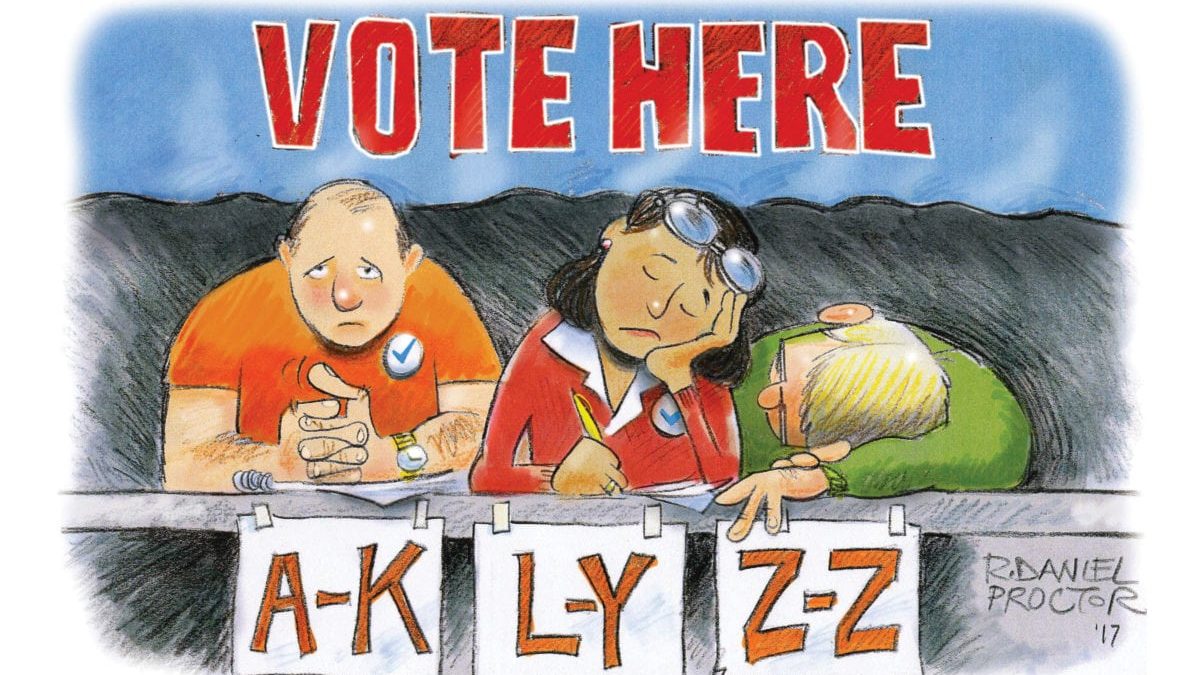
The Amazing Disappearing Voter

If a hitter’s batting average is.100, he’s headed to the bench, or off the team. If one in 10 seats is filled at a concert, it’s a flop. If nine of 10 people ignore invitations to a party, someone’s popularity is in the dumpster.

Only in politics can a one-in-10 turnout be praised as a success.

The 2017 Knoxville City Council primary elections, with 30 candidates running in five council distracts, attracted 7,140 voters, or about 240 votes apiece out of a possible primary election voting universe of 75,000.

To mark the outcome, Mayor Madeline Rogero said in a news release, “The citizens, inspired by the candidates, were engaged and turned out to vote in large numbers. The number of people who voted in Tuesday’s election was up by about 75 percent from the number who voted in 2009, the last time these same Council seats were on the ballot and there were no incumbents running.”

Actually, turnout should have been higher with no incumbents running. Incumbents tend to drive down turnout. There’s a perception that it’s too difficult to raise money against an incumbent; that they’ll get the lion’s share of endorsements; and that people don’t want to irritate someone who’s likely to be in office anyway by visibly supporting their opponent with yard signs, contributions, etc.

On a per-candidate vote count, 2009 still topped 2017. The 4,049 voters that year chose between 14 city council candidates. That’s a ratio of a candidate for every 289.2 voters, which beats 2017, if barely.

Even accepting Rogero’s point that the 2017 results were substantially better than 2009’s, what it means is that a terrible turnout compared to a terrible, horrible turnout becomes “large numbers” of voters going to the polls. Sow’s ear, meet silk purse.

Even some of the candidates running for the office have found themselves unwilling or unable to participate in city elections. On Aug. 26, the News Sentinel published a story headlined, “One-third of Knoxville City Council candidates have never cast a city election vote,” which said, “Nine of the record 30 people running for office have never voted for the office they seek, city charter amendments or city mayor elections.”

The downward, sliding slope of interest in city elections has been underway for years. In the January – February 2016 Cityview, this column spotlighted the reasons, or lack of them, for moving the dates of city contests to coincide with bigger elections. A look at contested mayors’ race turnout since 1987 illustrated the decline in voter interest (below, the winner is listed first and totals include minor candidates):

1987:Victor Ashe vs. Randy Tyree: 34,745 total voters

2003:Bill Haslam vs. Madeline Rogero: 29,883 total voters

2011:Madeline Rogero vs. Mark Padgett: 21,268 total voters

And that’s for the city’s top job.

Turnout would undoubtedly be somewhat higher if dates were changed. However, so would the participation of know-nothings; people who know more about the Vols’ football schedule than local issues; and those who vote only on the basis of some personal bias—for example, if the candidate is a man or a woman. That’s not an informed electorate.

In an odd way Knoxville voters’ apathy creates the situation about which many Americans often complain, that too few people make too many decisions for too many others.

As a steadily smaller number of people care who is in charge of the city, a steadily smaller number of people will care if there even is a city. One goes hand-in-hand with the other. It’s a matter of time.

People vote in large numbers for two reasons: they’re afraid of something a politician will do or they’re angry about something a politician has done. Without either as a compelling negative, interest in Knoxville city politics – and by extension, its future – will likely see a continuing decline.

As this is published, the City Council general election is about to be held. Perhaps this Election Day will show a change in the pattern. It’s either that or we’ll see yet another uptick in the number of voters who saturate the polls with their absence.

→  Swipe for Next Story
DepartmentsNOVEMBER DECEMBER 2017

That Accident Just Cost You!

Most of us know that Tennessee law requires all drivers to have a certain amount of insurance coverage to pay for harms and injuries that result if they cause a car collision. Since 1977, the law has said we all have to have a minimum of $25,000 per person injured, up to $50,000 per accident.

However, according to the latest figures from the Insurance Information Institute, 20% of Tennessee drivers have no insurance. One out of every five cars that you see is being driven by somebody who does not have insurance.

Recently, the General Assembly changed the law to increase penalties for failing to have at least minimum insurance coverage, but it has barely made a dent in the rate of uninsured drivers. We are supposed to show proof of insurance coverage when we register our cars every year, but many people simply get coverage to renew their registration and then drop it. The numbers have not really improved much.

If one of these drivers hits you and you get hurt, getting money from them to pay for medical bills, time lost from work and the other harms from getting hurt will be like squeezing blood from a turnip (one of my favorite East Tennessee expressions!). It just won’t happen.

The only person who can guarantee that there is enough insurance available to cover any harms or losses is you. Make sure you have both uninsured and underinsured auto coverage.

What does uninsured/underinsured coverage do? Consider Jim, a driver who has a $100,000 insurance policy. What if somebody driving with no insurance or the state minimum of $25,000 hits Jim and he ends up in the hospital with medical bills and lost wages of $45,000? Because Jim has planned well, he has $100,000 in insurance coverage to rely on. If he didn’t have uninsured/underinsured motorist insurance, he’d have to get that money directly from the driver who hit him. This is often difficult if not impossible.

You may think that it isn’t fair that the responsible party doesn’t have to pay anything, or a maximum of $25,000. However, don’t think your insurance company won’t pursue the driver that caused your injuries to get their money back. They will. Let them do what they do best. Insurance companies will make sure someone who causes harm and does not have insurance coverage will lose their license.

Tennessee law only requires that you get coverage equal to $25,000 per person. If the law does not require any more, why would we pay for extra? The answer is inflation.

$25,000 in 1977 paid for a lot more than it does today. $25,000 in 2017 dollars equals only about $6,200 in 1977 dollars. To have the same level of coverage we had in 1980 in today’s dollars, our mandatory minimum insurance really should be closer to $100,000.

I hope I have been able to convince you of two things: 1) do not rely on other drivers to protect you and your family if you are injured in a car wreck; and 2) make sure you have enough insurance in place to protect yourself and your family. I recommend a minimum of $100,000 uninsured motorist coverage. It is the only way to be certain you and your family will be able to recover when the unexpected happens.

It is natural not to think about insurance until you need it. The problem is that once you find out you need more coverage, it is usually too late. Don’t wait. Get the appropriate coverage for you and your family now.

Bruce Fox is an avid outdoorsman, world traveler, and attorney who has practiced for over 30 years. Learn more at foxandfarleylaw.com

→  Swipe for Next Story
DepartmentsNOVEMBER DECEMBER 2017

The Equifax Debacle

Equifax is a consumer credit reporting company. It makes a lot of money selling personal data of people like you and me. In 2016, Equifax earned more than $3 billion. It collects and aggregates a wide range of information on more than 800 million individuals and 80 million businesses worldwide. It, or one of the other credit agencies then sells that information to anybody who wants to check your credit. These companies have all the information on each of us needed for a criminal to steal our money. Therefore, each of these companies have a legal and moral obligation to take every step to protect that information.

On September 8, Equifax announced that they had failed to abide by that obligation for at least 143 million of us, announcing to the world that it had been hacked and that sensitive personal information had been stolen. Experts have stated that Equifax simply failed to install a security patch that had been available for months. Of course, the timing of the announcement is critical. The longer a company waits to announce, the longer consumers are left in the dark about being vulnerable.

Right now, there are some steps that consumers can take to protect themselves. First, if you have not done so yet, immediately visit their website atequifaxsecurity2017.comto see if you are at risk. If so, Equifax is offering free credit monitoring services. Experts also suggest that you contact each of the three credit reporting agencies and request a freeze on your credit. This has some downsides, however. There is a charge for the service, and if you apply for credit, you will have to unfreeze, and then request a freeze again.

What else can you do? Support the civil justice system. The day Equifax announced the breach, Congress was holding hearings on proposed legislation that would significantly limit damages consumers could pursue for harm caused by data breaches. According to the Center for Responsive Policies, the three agencies spent about $3 million lobbying Congress last year, pushing for bills that would limit their accountability.

Through the civil justice system, a number of class action lawsuits have been filed to hold Equifax accountable. A big reason class actions are available to consumers is because we are not actually customers of Equifax. If Equifax had its way, consumers would be prohibited from joining forces with each other to pursue class actions. With class actions, consumers can level the playing field. Equifax and other large companies are pushing hard to make the civil justice system inaccessible for consumers altogether using “mandatory arbitration”—wherein, rather than being able to file suit, you would be forced to file a claim with an arbitrator, often chosen by the very company you are trying to hold accountable for your harm.

The Equifax breach may be the largest and most damaging we have ever seen. One thing is assured, however; this will not be the last breach. Right now, we have not held companies like Equifax accountable. We need to guarantee, through protective laws and public pressure, our access to the civil justice system and thus hold companies to account in a court of law. Only then will we start to build a safer world.

→  Swipe for Next Story
DepartmentsNOVEMBER DECEMBER 2017

Frozen Head’s Old Mac Trail

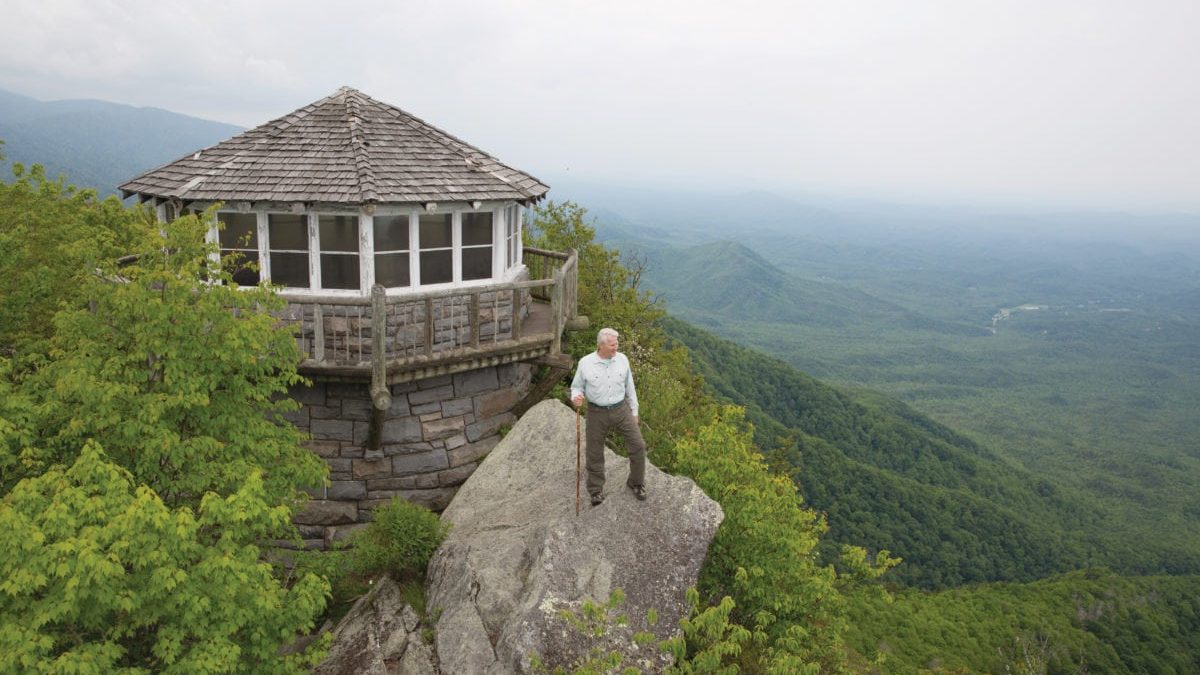
If you are anything like me and hike to escape the crowds of the city, going to the Smokies may not give you that fulfillment, especially during peak times of the year. Frozen Head State Park is a great way to avoid the crowds, while still being able to enjoy the grandeur of East Tennessee’s Mountains. Photo by Keith Norris

Recently, I trekked along Old Mac Trail where I found myself walking on a blanket of fallen leaves, the brown leaves under my feet starkly contrasting against the yellow canopy of the expansive forest, intensifying the experience into a surreal explosion of color, as if someone shook the yellow out of a paintbrush over and over again. It was a playground for my senses, the sweet scent of rain on the breeze, of damp dirt and moss. The forest was still, with only the occasional echo of a song bird in the distance. I huddled along the bank of the river to feel the coolness of the water on my fingertips and climbed the fern and moss covered boulders strewn throughout the forest—evidence of how ancient these mountains are.

On the day I was there, the top of the mountain was shrouded in a mist that made me think the mountains hide a mysterious secret of the past, and as I walked enveloped in the mist, I felt hidden and inclined to leave some of my own secrets behind. At the top of this trail is Lookout Tower, an old fire tower that has been modified with an observation deck, and on a clear day provides exceptional views of the Tennessee Valley and beyond. Escape the crowds, awaken the explorer within, and discover this gem in Knoxville’s back yard.

→  Swipe for Next Story
DepartmentsNOVEMBER DECEMBER 2017

Oh Tannenbaum

Several are within a 30-minute drive of West Knoxville. Pull on your favorite jacket and colorful scarf, and you’re ready for a Norman Rockwellesque experience. Saws are provided and owners will even blow out extra needles and wrap trees in a net to keep branches intact on the way home. Most farms also offer free hot chocolate or cider.

Leo Collins owns Bluebird Christmas Tree Farm. Visitors can stroll around the 10-acre field with 500 ready-to-sell Leyland cypress, Norway Spruce, and Virginia Pine trees. The farm includes an 1820s cabin, an old barn, a lookout platform, a shop with locally produced jams, jellies and honey, and rocks painted by a Pigeon Forge artist. Bluebird Christmas Tree Farm opens the Thursday before Thanksgiving, but is closed on Thanksgiving Day. Regular hours are Thursday through Sunday, 8 a.m. until 8 p.m. For more information, call 599-3522 or go tobluebirdtrees.com.

After a five-year hiatus, Jim and Jean Lockwood are reopening their Crosseyed Cricket Christmas tree farm the day after Thanksgiving. Their 60-acre property has 300-400 blue spruces ready for festive homes. Hours are 9 a.m. to 5 p.m., seven days a week starting the day after Thanksgiving. Close to Christmas, check the website for availability. For more information, call 986-5435 or visitwww.crosseyedcricket.com.

Jim and Barbara Stevens of White Pine Acres started growing trees as a hobby and have watched it grow into a tradition. “We’ve been selling to the public for 22 or 23 years,” he said. “The kids can roast marshmallows and we give out hot chocolate and spiced cider.” White Pine Acres opens November 24 on Fridays, Saturdays, and Sundays from 10 a.m. till dark. For more information, call 690-0289 or go towww.white-pine-acres.com.

Cousins Doug and David Tolliver at TNT Christmas Tree Farm sold their first Christmas tree in 1996. “My father and his brother started the business,” Doug said. Eventually he and his cousin, David, took over, and with 35 acres planted with Christmas trees, there are about 600 white pines and Leyland cypress ready to be sold. To learn more, call 932-0658 or 919-8118.

“Our up-and-coming Douglas Firs, Virginia pines, and white pines are on display as they grow to family Christmas tree sizes,” say Andy and Olivia Ogle, who own North Spoon Christmas Tree Farm operates Buttermilk Tree Farms with Steve and Sandy Lockett. North Spoon offers freshly cut Fraser firs brought over from North Carolina until the local trees are full grown, and will be open December 1 to 23 on Friday from 4 p.m. until dark, and Saturday from 10 a.m. until dark. Buttermilk Farms will offer Norway spruces that you can cut yourself, and will be open the day after Thanksgiving from 10 a.m. until dark and Saturday, Nov. 25, from 10 a.m. until dark, or until the trees are sold out. To find out more about both farms, call 865-755-5854 or visitwww.northspoonchristmastrees.com.

→  Swipe for Next Story
DepartmentsNOVEMBER DECEMBER 2017

Jukebox Saturday Night!

“What’s not to love about American soda fountain?” says downtown Knoxville pharmacy and fountain owner, Nolan Phoenix. The Phoenix Pharmacy and Fountain is bringing that love back to downtown Knoxville.

All of the menu items are handmade with fresh ingredients from local farms and markets to ensure an authentic experience. Phoenix believes that there is no greater satisfaction than serving ice cream to someone who thinks it is truly amazing. If it’s your first visit, make sure to try theClassic Brownie Sundae: two scoops of vanilla bean ice cream on top of a warm chocolate brownie, covered in hot fudge, topped with fresh whipped cream, chocolate shavings, and a maraschino cherry. For those looking for a more gourmet treat this fall, try the38 Special: one scoop of chocolate ice cream covered in a white chocolate shell surrounded in sweet orange juice with orange shavings on top.

418 S Gay St, 37902; (865)-692-1603 Mon-Tues: 12am-10pm Wed: 12am-6pm Thurs: 12am-10pm Fri-Sat: 8am-11pm Sunday: 12pm-10pm

thephoenixpharmacyknoxville.comPhoto by Kellie Crye WardJefferson Fountain

Offering more than just milkshakes, The Jefferson Fountain adds a piece of local history to every meal served. The Jefferson Fountain originally opened in 1944 under a different name and is now named the oldest pharmacy and soda fountain in Oak Ridge. This pharmacy offers traditional sweet treats and soda fountain eats with an Oak Ridge secret city theme like theFatman Burger: an 8oz bacon cheeseburger, or theLittleboy: a 4oz bacon cheeseburger. Jefferson’s most famous burger is the very specialMyrtle Burger, a 6oz burger with everything on it, named after a woman who worked for Jefferson Fountain for 44 years.

22 N Jefferson Cir, 37830; (865)-482-1141 Mon-Fri: 7:30am-3pm Sat: 6:30am-2pm Sun: Closed

Photo by Kellie Crye WardHoskins Drug Store

This historical icon represents more than just a traditional pharmacy and soda fountain. The oldest family-owned, family-operated drug store and pharmacy in East Tennessee is Clinton’s very own Hoskins Drug Store. Hoskins opened in 1930 and has been operated by the same family ever since. The family friendly restaurant maintains a close relationship with each customer whether they are a regular or from out of town. Try a Hoskins’ classic like theHoskins Burger: homemade pimento cheese and grilled onions on top of two hamburger patties. And you can’t go wrong with one of their homemade desserts, like theCoconut Cream Pieor theBanana pudding: warm banana pudding topped with traditional meringue—just how grandma makes it.

111 N Main St, 37716; (865)-457-4340 Mon-Fri: 8am-6pm Sat: 8am-3pm Sun: Closed

Photo by Kellie Crye WardLong’s Drug Store

The perfect pharmacy and soda fountain for the whole family is Long’s Drug Store. Regulars have been coming back for Long’s family-oriented atmosphere since 1956. This traditional style restaurant serves up favorites like old-style cheeseburgers and sandwiches or theHomestyle ChickenorTuna Salad, made daily with fresh ingredients. For breakfast, try theCountry Hamserved with gravy and biscuits. And make sure to taste one of Long’s classic milkshakes, made with an authentic shake machine.

4604 Old Kingston Pike, 37919; (865)-588-0581 Mon-Fri: 8am-8pm Sat: 8am-6pm Sun: Closed

→  Swipe for Next Story
DepartmentsNOVEMBER DECEMBER 2017

Ready to Roll

Many eaters keep their distance from sushi because they do not want to consume raw fish, but sushi is much more than that. It evolved from a fish preservation technique that started in 4th century southeast Asia. That same technique is used today, wherein fresh fish or other various ingredients are combined with fermented rice. The menu today has expanded to include cut rolls wrapped in seaweed and stuffed with seafood, vegetables, and other ingredients. It doesn’t matter if you are a sushi connoisseur or a first timer, Knoxville has several excellent sushi options to offer. Nama Photo by Jimmy Chiarella

Conveniently located in the heart of Downtown Knoxville, Nama Sushi Bar is the perfect place to start your night on the town. The menu has a cornucopia of options to choose from whether you’re looking for hot and delicious Asian entrees, cooked sushi rolls, or delectable sashimi. Start your palette journey off with some Warm, Sea-Salted Edamame. Continue to the next course with the Ex-Girlfriend Roll: seaweed and rice wrapped around snow crab, panko shrimp, cream cheese, cucumber topped with eel, avocado, spicy scallops and fantasy sauce. But if you’re on your first date it might be better to order the Maui Wowie: seaweed and rice wrapped around crunchy shrimp, avocado, spicy aioli topped with yellowtail, avocado and pineapple salsa. Finally, satisfy your sweet tooth by delving into Nama Truffles- chocolate truffles with raspberry sauce, golden pineapple, kiwi, mango, fried gyoza and pocky sticks.

5130 Kingston Pike; 865-588-9811 Lunch: Mon-Sat 11 a.m. – 3 p.m. Dinner: Mon- Thurs 3 p.m.- 10 p.m. Fri- Sat 3 p.m. – 11 p.m. Sunday: Noon- 9 p.m.

506 S Gay Street; 865-633-8539 Lunch: Mon-Sat 11 a.m. – 3 p.m. Dinner: Tues – Wed 3 p.m. – 11 p.m. Mon and Thurs 3 p.m. – 12 a.m. Fri- Sat 3 p.m. – 1 a.m. Sunday: Noon- 10 p.m. namasushibar.comAnabaPhoto by Jimmy Chiarella

Authentic Japanese cuisine right here in Knoxville! Whatever your seafood preference may be, Anaba has a menu item to please everyone. Begin your night with Seafood Ceviche: chopped mixed seasfood marinated with chopped tomato, scallion, cucumber, avocado, and marinated with ceviche sauce. And then delve into Takoyaki-fried dumplings made with diced octopus, tempura flakes, and vegetables. Finish off your taste journey with Chicken Teriyaki Roll: grilled chicken, scallions, and green peppers with teriyaki sauce and mayo, just to remind you that sushi doesn’t necessarily mean fish.

9405 S Northshore Drive; 865-531-2363 Lunch: Mon- Fri 11 a.m. – 2:30 p.m. Dinner: Mon- Thurs 5 p.m. – 10 p.m. Fri 5 p.m.- 10:30 p.m. Sat 12 p.m. – 10:30 p.m. Sun 11:30 a.m. – 9 p.m. anabajapanese.comKabuki FusionPhoto by Jimmy Chiarella

If you’re already a sushi expert and you’re looking for a little bit of creativity in your rolls, Kabuki is your next stop. Spice up your life with the JP Roll: crispy jalapeno, spicy tuna, cheese, and cucumber topped with shredded crab and crunchy. Or go for looks with the Caterpillar Roll: BBQ style eel, crab meat and cucumber topped with sliced avocado and caviar. No matter if you’re wanting aesthetics, creativity, or classics, you can find the perfect roll for you.

10901 Parkside Drive; 865-288-4111 Sun – Thurs 11 a.m. – 10 p.m. Fri – Sat 11 a.m. – 10:30 p.m. restaurantkabuiki.com

→  Swipe for Next Story
DepartmentsNOVEMBER DECEMBER 2017

Dine Like It’s 1929

Executive Chef Carol Scott is happy to explain the name Kitchen 919: “Whenever you have family or friends in your home, the gathering place is always the kitchen. The Kitchen brings people together. The zip code is 37919, hence the 919.”

In the space that once housed the Orangery, ornate French rococo has given way to Roaring 20s Art Deco. You can imagine Dorothy Parker and Robert Benchley trading witty barbs and sipping custom cocktails in the Temperance Bar, with its hammered-tin ceiling and photos from the era. Al Capone could hide away in the 919 Speakeasy, complete with a red light to warn of newcomers, or in this case, to summon a bartender.

Jay Gatsby might beckon guests up the familiar staircase to the reimagined ballroom with custom Italian seating, reclaimed wood flooring, original mirrors, and crystal sconces. Space previously used for storage has been turned into a suite of rooms for private dining and weddings—the Bride’s Room, Groom’s Room, and a gathering place with private bar and cigar porch.

In the dining area, Vogue-esque illustrations of flappers set off black-and-gold patterned wallpaper to the beat of jumping and jiving Jazz Age music. F. Scott and Zelda might nestle on padded banquettes that line the walls, as in the old Stork Club.

Our waiter, Stephanie, knowledgeably described each appetizer, entrée, side, and dessert, and orchestrated when they arrived.

Timing and spacing of each course is part of Chef Carol’s precise practice of Timeless Cuisine, developed especially for Kitchen 919. She honed her skills at Le Cordon Bleu College of Culinary Arts in Las Vegas, and in cheffing stops at Edison Park Steakhouse, the Orangery, Bravo!, Roy’s in Vegas, and BlueSlip Winery. “We draw on Italian, Asian, French, and classic dishes and bring them into 2018,” she says.

Your meal should start with the outstanding Charcuterie Board ($21) featuring Benton’s county ham, Sweet Italian Capicola, Spanish Chorizo, house-made duck sausage, three different pickled vegetables, the chef’s favorite pickled mustard seeds, red eye gravy aioli, toasted walnuts, and warm Dutch crusty rolls.

The small plates offer a variety of innovative taste surprises. The Roasted Quail in the Root Vegetable Garden ($12) mixes carrot puree, candied celery root, butter-braised parsnips, turmeric-roasted cauliflower, sautéed beet greens, carrot dirt, and pickled mustard seeds. Beets and Cream ($11) features salt-roasted golden beets, beet fluid gel, Cruze Farm buttermilk and goat cheese mousse, set off with an innovative red beet sponge cake. It is paired with arugula and the house champagne vinaigrette. Don’t miss the to-die-for Caramelized Brussels Sprouts ($11) with Benton’s bacon, oven-roasted apples, lemon yogurt, and hazelnut brittle. Photo by Nathan Sparks

The 919 Temperance bar menu features Pork Belly Cotton Candy ($10) which is house-made bourbon-bacon cotton candy wrapped around pork belly. (You had us at pork belly, bourbon, and bacon.) A refreshing twist on the standard gastropub deviled egg is the Green Eggs and Ham ($10) tops wasabi tobiko, avocado hollandaise, and Benton’s bacon with a deviled duck egg.

The Roasted Sweet Potato Bisque ($8) sets the sweet potato off to advantage with “oven-roasted” apples, ginger, garlic, and coconut milk.

A 14-oz. Cowgirl Ribeye Oscar ($46) arrives with buttery king crab legs, (not the more typical canned crabment), asparagus puree, béarnaise sauce, and a truffled Yukon potato mash. Giant Tortelloni with a caramelized Butternut Squash filling ($19) is presented with delicate sautéed spinach, and a brown butter sage and maple pecan sauce. Misoyaki Glazed Butterfish ($31), also known as sable fish or black cod, is marinated in misoyaki and finished with the chef’s favorite sizzling soy vinaigrette, served with steamed rice and butter-braised baby bok choy.

A tempting dessert menu includes, at $7 each, Pumpkin Beer Shortcake, Apple Pie Cheesecake, Limoncello Tart, Caramel Crème Brulee, and Chocolate Mousse Bomb, of hazelnut pound cake, white chocolate banache, scrumptious amarena cherries with a dark chocolate mirror glaze finished with a hazelnut chocolate bark. Classic cuisine with just enough whimsy—look for Chef Carol’s signature Picasso swirl.

In the realm of fine dining, Kitchen 919 is pricey, but a good value for the care, preparation, and top-line products that go into each innovative dish.

→  Swipe for Next Story
DepartmentsNOVEMBER DECEMBER 2017

Elegant Steak and Seafood

Connors Steak & Seafood in Turkey Creek bustles with customers. The visible flames of the kitchen grill near the entry area hint at the hickory mesquite wood and charcoal that give the steaks their distinctive flavor. Chefs and servers are in constant motion. As patrons move into the dining area, dark wood shoulder-height walls create intimate dining spaces, warmed by multiple fireplaces, with privacy available in booths. The lighting is low, contributing to the aura of relaxed elegance. This is a place for a business meal, a dinner with friends, or a celebration.

Connors’ wait staff is assiduously attentive to diners, even on a busy evening. Our waiter Darren knowledgeably described each appetizer, entrée, side, and dessert to make sure we ordered what we truly wanted. Darren managed to strike the magic balance of being there exactly when we needed and giving us enough space to enjoy our meal.

Among the appetizers, it’s hard to choose between the Fire Grilled Pork Belly ($14) of Kurobuta pork, braised in sweet tea and served with creole mustard and Asian buns or the Tenderloin Crostini ($12), a chilled sliced filet of beef complemented with goat cheese, fresh basil, cherry preserves and red onion. Connors’ Signature Lobster Crab Bisque ($6) is thick, creamy, and exploding with flavor and generous pieces of lobster and crab as well as the requisite hint of sherry.

Red meat lovers can pick among a glorious selection of well-aged cuts of prime beef, notably the Prime Rib (8, 12, or 16 oz. at $23, $26, and $29), the Filet Mignon (6 or 9 oz. at $27 and $30), a deliciously marbled 14-oz. Ribeye ($30), or a 14 oz. New York Strip ($30). Medium rare is medium rare: moist and flavorful. The wedge salad ($5), with blue cheese dressing, bacon, and drizzled in a wine reduction, is a crisp companion to the beef selections.

Australian Lamb Chops ($27 for four 3-oz. chops and mashed potatoes) arrive grill-crisped but a perfect medium rare with a rosemary and mint-infused demi-glace. A seasonal vegetable, broccoli in our case, completes the plate.

The mesquite-grilled Chilean Sea Bass Oscar ($34) exemplifies Connors’ creative presentation. Split stalks of asparagus top the delicate fish, resting atop blue lump crab meat, couscous, and broccoli finished with hollandaise sauce.

The fresh seafood section of the menu ranges from Shrimp & Grits ($17) and Blue Lump Crab Cakes ($25); to mesquite-grilled Atlantic Salmon ($22) with fennel peperonata topping, couscous, and broccoli; baked Parmesan-Encrusted Alaskan Halibut ($28) in lemon wine sauce with couscous and asiago creamed spinach; Alaskan King Crab Legs; and Cold-Water Lobster Tails—the last two served with drawn butter and grilled asparagus (at market price).

Connors offers a tempting dessert menu. Options include a large and creamy Strawberry Shortcake ($7), Bananas Foster ($7), Crème Brulee ($6), German Chocolate Upside Down Cake ($6), and homemade ice cream ($5).

For what Connors delivers—the dessert selection above, for example, is worth a visit—it offers some of the best values in town. Most entrées include a soup or salad, as well as a side item. Consistently high quality, as well as tremendous value, explain its loyal and consistent corps of customers.

→  Swipe for Next Story
DepartmentsNOVEMBER DECEMBER 2017

The New Beer City USA?

When you think of beer cities in the US, some immediately come to mind. Portland, obviously. Boulder, of course. Asheville—well, it was named Beer City USA for a reason. But Knoxville? For a long time, no, not even close. Beer was consumed, but it wasn’t necessarily produced in the city. In the last half-decade, though, more and more craft breweries have been opening within the limits of Scruffy City—with little sign of slowing down.

Beer originally first showed up in the town back in the mid-1860s when two breweries, the Knoxville Brewery and Union Brewery, first set up shop. Other breweries and brewpubs continued to open (with the East Tennessee Brewing Company eventually distributing to customers in a six-state radius) until 1907 when the city’s pubs were all shut down. The industry was further crippled when Prohibition was enacted in 1910 (ten years before the rest of the country).Knoxville beer lovers enjoy some tasty brews and a meal from a local food truck at Crafty Bastard

Then, things stopped for a while. A long while, in fact. Of the craft breweries devoted solely to beer production open in Knoxville today, the first didn’t open until 2010 when Saw Works Brewery (then known as Marble City Brewing Company, which had purchased its equipment from the defunct New Knoxville Brewing Co.) opened its doors.“Saw Works came in and was the first brewery to take the leap to only producing beer,” says Zack Roskop, founder of Knox Brew Tours.

At that time, the only other breweries were brewpubs—Woodruff Brewing Company (at Downtown Grill & Brewery), Smoky Mountain Brewery, and Black Horse Pub & Brewery. Thanks to the efforts by these breweries, more brewers in the area began the process of realizing their dreams on brewing in Knoxville, too.

Marty Velas, owner and head brewer at Fanatic Brewing Company, came to Knoxville to serve as head of brewing operations at Smoky Mountain Brewery after stints at a variety of breweries across the country and overseas. Now, Fanatic produces popular beers, including their Blonde, which are available at many craft beer bars and markets across the city. The amount of knowledge and experience Velas brought to Knoxville and now employs at Fanatic have changed and opened up the brewing landscape in town.

It wasn’t easy, though, in part because laws were prohibitive for breweries. Until recently, Tennessee had one of the highest taxes on beer in the country. In addition, there wasn’t enough demand for craft beer yet. One of Knoxville’s newest, Abridged Beer Company offers full-bodied and session beers, along with a full bar menu.

“There wasn’t enough certainty that there were enough people to support craft beer,” Roskop explained. When he ran his first Knox Beer Tour in November 2014, only the four breweries mentioned above were open.

Eventually, though, that began to change. Retailers such as the Bearden Beer Market and the Casual Pint began educating customers on craft beer, allowing the space to bring locally-made beers into the market. This new client base, combined with the camaraderie of the brewers themselves, has helped the Knoxville craft beer scene grow.

“We’ve seen nationwide that the craft beer scene has grown significantly in the past ten to fifteen years. Here we’ve been a little bit later in the game but we had a group of people here in Knoxville on the cusp, so once laws changed and some opportunities opened up finally, everyone that was waiting at the gate was ready to go,” Matt McMillan of Hexagon Brewing Company says.

Now, there are 12-20 (depending on the criteria used to count) craft breweries—a mix of brewpubs and production breweries with tap rooms—open and producing beer. For these breweries, variety amongst styles and production methods has helped sustain interest in and growth of the scene. Whether you’re looking for hop-heavy IPAs or sessionable porters, there’s a brewery (or two) for you in Knoxville. Want a fruity sour with a local food truck? There’s a brewery for that, too. Abridged’s lower-alcohol session beers allow you to have more than one pint per visit.

“Each of the breweries is doing something completely different. Could one street have ten McDonalds? No that wouldn’t work. One street could have ten different fast food restaurants though. They have some similarities but they’re offering different products in different packages for different demographics,” Roskop says. “We’re just beginning to tap a lot of different demographics.”

McMillan agrees.

“When you look at the size of the city, there are a lot of smaller three-to-five barrel concepts that sell most if not all of their beer in-house, so that model leaves us with room for growth and opportunities for more breweries.”

For example, Elkmont Exchange Brewery and Eating House, opening in early November, is amongst a number of breweries scheduled to open within the next year. It’s founders, Alex Violette, Bethany Lovato, and Ryan Davenport, bring with them a wide range of brewery and eatery experience. According to Lovato, Elkmont is opening “not only as a brewery, but as a full-service restaurant bringing the concept of fine dining in an approachable way.” The three honed their work relationship in Vietnam at Pasteur Street Brewing Company. Their return to the states is because of the appeal of the outdoors. As Lovato notes, “One of the biggest things we missed is accessibility to outdoor recreation.”

The breweries that are already here are all working at capacity and, according to Roskop, that’s still not enough.

“Overall, there’s still such a low percentage of craft beer consumption, that number can only go up,” he said.

The next step, then, is continued education. With brewers working together—through beer festivals, the Knoville Ale Trail, and more—the consumers will continue to learn more about craft beer, thereby (hopefully) increasing the desire for it in town. Balter Beerworks features a variety of its own beers and guest taps hosting brews from other local breweries.

“To make Knoxville a true beer destination, you have to grow the culture as a whole and everybody has to rise up together in beer quality by providing enough different styles of beer and approaches to brewing. As long as everyone is working at a high level, I think the beer industry will continue to grow,” founder of Abridged Beer Company Jesse Bowers says. “If we all work together and grow more awareness for craft beer here in the city, I think we’ll all be better off.” Through all of this, the brewers and those behind the Knoxville craft beer scene are confident that it will continue to grow in the future, making it a destination for beer geeks from around the country.

With so much variety, though, a first-time drinker might become a little overwhelmed. Should you stay in the downtown area? What about heading to South Knoxville or out to Bearden, where more and more new breweries are popping up? Well, Roskop’s Knox Brew Tours is there to come to the rescue.

Running public tours Thursday through Sunday (and private tours by appointment), Zack Roskop takes you on a 3.5 hour guided tour that not only fills you up on beer, but gives you a look at how beers go from grain to glass. The best part of the tour (besides the beer, of course): Not having to worry about driving from brewery to brewery! If you do want to do it on your own, the Knoxville Ale Trail is the best place to go to see where breweries are as well as what other craft beer-supporting establishments are around town.

Below, you’ll find some of our favorites that you can find around town. When it comes to food menus (and whether or not you can bring your pooch), it’s best to check their websites, as that is where you can find menus or what food trucks are set for the week.

New Kids on the Block

Abridged Brewing Company

Session beers (lower ABV beers that you can have several of over, you guessed it, a session of drinking) have become all the rage in the past few years, and Abridged Brewing Company, which is one of the newest additions to the Knoxville brewery scene, is working to specialize in those beers while also providing a family-friendly atmosphere with a 1950s-era industrial backdrop. From the outset, the goal of Abridged Brewing’s owners has been to create a spot that could become everyone’s neighborhood hang out—a low-key, relaxing place to have a beer or two after work. With their current offerings, they’ve certainly done that.

Recommended: Everyday English Bitter, Funshine IPA

Hexagon Brewing

Like many breweries these days, Hexagon was started by a passionate homebrewer who wanted to take things to the next level. With around two decades of experience making beer before Hexagon even opened, there was plenty of time to learn the ins and outs of the beer-making process. You’ll find beers that are more malt-focused, allowing the head brewer to fully express the different flavors possible while also providing a wide range of other beers that anyone can enjoy. As for the brewery and tap room itself, you’re greeted by a nice open space with plenty of room to relax or play one of the available games, such as foosball or tabletop Pacman. Occasionally, food trucks are also on property, so it’s important to check their website if you’re planning to go while hungry (or needing a bite to eat while you indulge in some craft beer).

Recommended: Sexy Cat American Pale Ale, RyeZome Rye IPA

Old(er) Favorites

Schultz Bräu Brewing Company

If German beers are your thing, there’s no question that Schulz Brau is your go-to in Knoxville. Priding themselves on German-style ales and lagers, the Schulz family serves up delicious crisp beers in an environment that is, basically, little Bavaria. From the imported tables and chairs to the high wall that surrounds the biergarten area, it’s easy to have a pint or two and forget about life for a while. Currently, you can only get food from food trucks but there are plans to eventually incorporate a kitchen on premises.

Recommended: German Pils, Döppelbock

Alliance Brewing

Striking a balance between tradition and innovation, Alliance Brewing’s beer selection provides a little bit for everyone. This South Knoxville brewery is a great place to go if you like to have a pint while watching soccer and, every Tuesday, if you’re lucky you can try a special cask brew. They tap the cask at six, so it’s important to be there on time in order to get a taste of the really good stuff. When heading to Alliance, parking may not be easy to find, so it’s better to just take advantage of the nearby bike trail and get there on two wheels instead of four (which meshes with the brewery’s own push for an “active beer culture.”)

Recommended: Cubano Coffee Brown, Kölsch, Citra IPA

Crafty Bastard

Known for having some of the most interesting beers on tap in town, Crafty Bastard has quickly established itself as a place for the adventurous to go. You can see all of the brewing equipment from their no-frills taproom and, if you’re hungry, there’s a different food truck available every day that they are open. The biggest issue here, though, is availability. As a nanobrewery, Crafty’s output is not the same as many of the others in town. When you factor in the great-tasting beer, you’ll quickly realize that what is there at the beginning of the week, may not (and probably won’t) be there at the end. The redeeming factor in this is that there’s always another interesting beer almost ready to go.

Recommended: Tessellation IPA, Triple Tennessee Pepper IPA, Banana Pudding Nitro Ale

Knoxville Area Breweries

Abridged Beer Co. 100 Lockett Rd. abridgedbeer.com

Alliance Brewing Co. 1130 Sevier Ave. 865-247-5355

Balter Beerworks 100 S. Broadway 865-999-5015 balterbeerworks.com

Blackberry Farm 1471 West Millers Cove Rd., Walland, 865-984-8166 blackberryfarm.com

Blackhorse Pub & Brewery 4429 Kingston Pike 865-249-8511 theblackhorsepub.net

Chisholm Tavern Brewing chisholmtavernbrewing.com

Clinch River Brewing Company 531 S. Gay St. 2045 Norris Freeway 859-421-3851

Cold Fusion Brewing Co. 4711 Morton Place Way 865-963-9764

Crafty Bastard 6 Emory Place 865-755-2358 craftybastardbrewery.com

Downtown Grill & Brewery 424 S. Gay St. 865-633-8111 downtownbrewery.com

Elkmont Exchange Brewery & Eating House 745 N. Broadway 865-249-7904 elkmontexchange.com

Fanatic Brewing Co. 2727 N. Central St. fanaticbrewing.com Geezers Brewery geezersbrewer.com

Hexagon Brewing Co. 1002 Dutch Valley Dr. 865-888-5138 hexagonbrewing.com

Last Days of Autumn Brewing 808 E. Magnolia Ave. 865-202-4298 lastdaysofautumn.com

Lilly Pad Hopyard Brewery 920 Ridge Rd., Lancing, 865-617-0984

Pretentious Beer Co. 133 S.Central 865-551-7693 pretentiousbeer.com

Printshop Beer Co. 1532 Island Home Ave. 865-385-5627

Saw Works Brewing Co. 708 E. Depot Ave. 865-247-5952

Shulz Bräu Brewing 126 Bernard Ave. 800-245-9764 shulzbraubrewing.com

Smoky Mountain Brewery 11308 Parkside Dr. 865-288-5500 smoky-mtn-brewery.com

→  Swipe for Next Story
DepartmentsNOVEMBER DECEMBER 2017

American Cancer Society Hope Gala 2017

Mill & Mine Knoxville 227 West Depot Ave Nov. 10th6:30-11pm Black-tie optional

On November 10, 2017, The American Cancer Society is hosting its annual Hope Gala at the Mill & Mine. A one-of-a-kind evening, the gala will feature great food, dancing, dueling pianos, silent and live auctions, jewelry raffles, and a wine and whiskey pull. Ted Hall of WVLT will serve emcee for the event.

Stacey Clark, Community Development Manager for American Cancer Society in Knoxville, and Meredith Overholt, Co-Chair of this year’s gala, took some time to answer some questions about the society, its goals, and the gala itself.

Cityview:What is the Hope Gala, what is its history, and what is its goal?Stacey Clark: The Hope Gala is an annual black-tie event in Knoxville presented by the American Cancer Society and focuses on their efforts to raise funds and awareness for cancer. The event has served as a fundraising source for the Knoxville-area chapter for over 25 years. 560 guests are scheduled to attend this year’s event, which has a financial goal of $200,000.

CV: Meredith, why did you and your husband Mark choose to become co-chairs of this year’s gala?Meredith Overholt: It’s an exciting time to raise money for cancer research. New medications and treatments are coming out every day that are changing the landscape of cancer therapy. I was at a meeting at Cornell in New York last weekend and heard a great talk by the director of melanoma therapy at Memorial Sloane Kettering Cancer Hospital. He said that just three years ago, the average life expectancy of a patient with metastatic melanoma was seven months. He is currently three years into directing a trial that has so many patients still alive that it has become impossible to calculate an average life expectancy yet! With the pace of drug and treatment development right now, every dollar contributed to cancer research is going to make a difference.

CV: How did you get involved with the American Cancer Society?MO: We got started going to the Gala when it was out at Blackberry Farm. We had a great time going out there, and got to know a lot of the ACS regulars. ACS is a natural for Mark and me; we both deal with cancer on an everyday basis, even though we don’t practice oncology per se. Skin cancer detection and treatment has become the largest part of my practice in dermatology, and Mark detects and treats thyroid and other head and neck cancers every day. Now that we are empty nesters, it seemed time to focus on our passions.

CV: What work does the American Cancer Society do in Knoxville? How does the gala help?SC: The Hope Gala serves a crucial fundraiser for the American Cancer Society and the Knoxville office. Funds raise by this event not only go towards cancer research and treatments, but prevention and education, as well as local programs that directly benefit patients and families currently battling cancer.

CV: What can Knoxvillians do to help the American Society?SC: Donate their time and dollars! ACS is constantly looking for volunteers to help with everything from our main fundraising events (Relay for Life, Hope Gala, and Strides) to local programs we provide such as Road To Recovery. Big or small, monetary donations are all appreciated and are vital to the ACS’s hope to one day create a world free from the pain and suffering of cancer.

→  Swipe for Next Story
DepartmentsNOVEMBER DECEMBER 2017

Puccini’s Turandot

In the midst of celebrating its 40th season, Knoxville Opera opens its spring calendar with a performance of Giacomo Puccini’sTurandot, an opera that was left without its conclusion due to the composer’s untimely death. Thankfully, one of Puccini’s colleagues was able to write the final scenes and give us an opera that has not gone out of production since it was first performed two years after Puccini’s death in 1926.Knoxville Opera’s 2014 production of Norma

Based on a 12th-century Persian story,Turandottells the tale of a coldhearted princess who has vowed to never marry. Any suitor who desires her hand can do so by answering three riddles, but the price of failure is immediate beheading. When the exiled prince Calàf sees the princess’s beauty, he is immediately entranced and undertakes the riddle challenge despite the protestations of his father Timur and faithful servant girl Liù. Will Calàf succeed where so many others have failed?

The opera hasn’t appeared on the Knoxville stage in fifteen years, but as Knoxville Opera Executive Director and Conductor Brian Salesky puts it, “A significant anniversary deserves a significant celebration.”

And a celebration it will be.Turandothas a ravishing score bursting with brilliant choruses and fiendishly difficult arias, including “Nessun dorma,” sung by Prince Calàf, and which Luciano Pavarotti elevated to iconic status.

Artistic director of Nashville Opera John Hoomes will stage direct, and Maestro Salesky will lead the Knoxville Symphony Orchestra and a lauded international cast of singers on the transporting musical journey. Knoxville Opera’s 2015 production of Carmen

Topping the bill is Canadian-American soprano Othalie Graham, who has received critical acclaim throughout North America for her interpretation of Princess Turandot. Tenor Jonathan Burton—last seen in Knoxville as the painter Cavaradossi in the innovative 2015 production of Tosca—returns to Knoxville Opera as Prince Calàf. Korean soprano Yunnie Park makes her Knoxville Opera debut as the servant girl Liù, as does bass Richard Zuch as the exiled King Timur.

Knoxville Opera is offering a number of accompanying activities to complement the performance, including pre-opera meals; opera previews hosted by Maestro Salesky for an in-depth look at the history, story, and music before the show; and an opportunity for students of all ages to take pictures with the cast on stage after the final bow.

→  Swipe for Next Story
DepartmentsNOVEMBER DECEMBER 2017

Robert Earl Keen

Keith Norris: I’m glad you’re’ coming back to town. You’ve been here more than a few times.REK: Well I love Knoxville.

KN: What do you like about Knoxville?REK: I love that square—what’s it called, Sundown Square?

KN: Market Square, but AC Entertainment used to do a show called Sundown in the City there.REK: I also collect Cormac McCarthy, so I enjoy that about Knoxville. Some of the first shows outside of the state of Texas I played over there at the Down Home in Johnson City, so I really just love Eastern Tennessee altogether. It’s an incredibly beautiful part of the country, if not the most beautiful part of the state of Tennessee. Robert Earl Keen, photographed in Kerrville, Texas on July 4 2016. Photograph © 2016 Darren Carroll

KN: This is your “Merry Christmas from the Family Tour.” Where did that song come from?REK: Well, I grew up in Houston, and as you can imagine, there’s really not anything Christmassy about it—except maybe for green lawns and red necks, you know, so…

KN: We don’t have any of that around here, swear.REK: Yeah, right. And so, our Christmases were not what you would have imagined if you watched any Bing Crosby kind of Christmas movie. At one point, when I was working on another record, I was kind of frustrated and it was about Christmastime. I thought well, I can get this knocked out, and I just started making up a song based upon my own experience, and was truly in the world of simply wanting to amuse myself. I was trying to get out what my Christmases were like, which were not bad; they were just not anything like what one visualizes when they start talking about Christmas.

KN: So Bob Hope was not involved.REK: Not at all. After I wrote it, I played it for myself and a couple of my friends, and everybody kinda cackled, and then I played it for a guy who was producing the current record, and he just flipped. I realized at that point that there’s something here. The first time I ever played it to an audience that I recall was when I came back home to Texas before I madeGringo Honeymoon,and I played at this little honkey-tonk. It was near the holiday season, and it was the closest I ever remember to thinking I had a hit. When you do this music from the beginning, you keep thinking, “oh, where’s my hit, when is all the light gonna shine on me?” And that never really happened for me. When I wrote “Merry Christmas from the Family,” I thought “this is my hit. I don’t know where it’s gonna take me, but it is definitely my hit.” It always gets the same reaction. If I play it for people who haven’t heard it before, they’ll just freak out, you know?

KN: That’s the way it works for us, too. When a friend of mine bought theGringo Honeymoonalbum, I got a phone call not too long after saying, “you’ve gotta listen to this,” and he played it over the phone. Tell me, why do you think that song works so well? Is it because of the characters—that we all know similar types?REK: I believe so, yeah. We’re all imperfect human beings on this planet trying to create this almost Hollywood version of perfection that we all have in our heads. I’ve seen most people sort of strive to have that kind of storybook lifestyle, and yet we realize that we don’t. In some ways, if you have a sense of humor, you think it’s funny; if you’re a more depressed and pathos-oriented person, you might get real down and out about it. I think most people have a sense of humor, and they see themselves in that song.

KN: You said earlier that one of the reasons you wrote the song is that you were “amusing yourself.” How much of your songwriting relies on that?REK: I’m embarrassed to say “more than you’d really want to know.”

KN: Actually, that doesn’t surprise me that much.REK: This is a parody song, and I don’t do many parody songs, but occasionally I do one just for a hoot. Like Bill Hicks used to say, “It’s a Hoot!” We have a bus, and every year it goes in to get repaired or get shined up, and it’s owned by the Florida Coach Company. Anyway, when we go off tour, it leaves Texas and goes to Florida; they take care of it, fix it up, shine it up, do a few repairs—and then they send it back. Well this year, they didn’t have very many repairs, so they sent it out with Gordon Lightfoot. Gordon Lightfoot had it out there—I didn’t even know he was still alive, but he is—and they sent him out there in the bus. Our fiddle player Brian, who’s been with me a couple of years or so, started making this joke about any time anything didn’t work—say a handle broke off in his hand, or something wasn’t clean. “Damn, that Gordon Lightfoot,” he’d say. So then it became this big joke; everything that went wrong was Gordon Lightfoot’s fault. So, you know, once again for the heck of it, I wrote this song called “The Wreck of Our Prevost in Peril” to “The Wreck of the Edmund Fitzgerald,” you know? I mean, what good does that song do me? Nothing. Zero. But it was really fine, and it got a lot of laughs when I played it for the band, and it was really fun.

KN: Did that lead to a lot of Gordon Lightfoot covers?REK: No. As a matter of fact, one of the lyrics was, For years in our ears, we could not help but hear Your sing-songy dramatizations.

KN: That’s great. Do you feel grateful for the list of people you’ve worked with. It’s pretty impressive.REK: I’ve been really lucky. I’ve bounced around; I always feel like I end up with people who are like-minded in some way. I mean, maybe we’re not alike, but you know, we all love music. And we’re all really passionate about it. And I’ve been really lucky to be able to be part of any of this community.

On the other side of the coin, a lot of times I complain about writers and musicians who don’t talk enough about what they do and how they do it. I mean there’s that pontificating that people will do at some seminars and stuff—it’s just a bunch of bloviated crap. But you know, the fact is I don’t think we ever get down to really talking about the craft and how things are put together and how beautiful some things are and how complicated some things are. I thrive on that kinda discussion, and I’m sorry to say that I’m not one who usually initiates it. But I certainly am all-in once it gets initiated.

KN: Do you thrive on collaboration when you work with someone else on a song?REK: I like to collaborate. I’ll tell you, because I’ve written so many songs by myself, people assume that I don’t collaborate, but I do. As I’ve gone on, I’ve done all kinds of collaborations, and I really enjoy it. A couple of years ago, I started going back up to Nashville and hanging out and writing with some people because I felt like I was kinda out of the loop—you know, I’m older, but I want to be part of it. I’m all about being in the fray. So I went there, and I wrote a lot of really good songs with a lot of really cool people. And some of the songs were really good, but they all just sort of went nowhere. A few of them got demoed; I finished almost every song I wrote with anybody out there. But—this is the good part—a couple of years ago, I wrote with these two young guys—one of their names is Cary Barlowe, and the other is Corey something—so they were Corey and Cary. How can you ever remember their names? Did you ever see that movieThe Big Short? The two young guys that are from Boulder—those are these guys, I’m telling you. It’s exactly like those guys. These super high-fiving, really smart guys.

We sat down and wrote this song, and everybody was high-fiving and saying “this is a great song,” and nothing ever happened. I thought it was straightforward, cool—I was proud of it. But it was right down the middle of the plate—a pitchable, mainstream, bro-country kinda song. And nothing happened. And then, like a week ago, I get this email and it says these guys’ names, whom I didn’t remember or recognize, and it has my name attached to it, and it says the title of the song, which I didn’t remember. And I went, “what is this? Somebody made a real mistake.” But I knew the person who sent it to me, so I called her, and I said “what’s going on?” and she says, “yeah, you wrote that song with these two guys.” And I said, “I’m not being able to access that file here, Sarah.”

I played it, and as soon as I played the first two lines, I went, “Oh, I wrote those. Oh, cool, cool.” It was so exciting. And then, the fact was that the song itself was badass. It was really exciting. I was so happy to be a part of that and be in the whole world of it. It’s a different world now. In some ways it’s smaller, and in some ways it’s a lot looser. You know, it’s weird. People can get ahold of you easier, but a lot of times you don’t have this “hey, let’s get it done” thing, so you just let it go. Anyway, that one worked out. We’ll see. Somebody might record it. That’d be really good, because I’ve never really had a recording on the radio. Regardless, it was exciting to hear a good song by guys who knew how to demo a modern country song, which I can’t do. That kinda stuff is what they used to call mailbox money.

KN: I’d never heard that phrase before, but it makes sense.REK: Right? All songwriters are always looking for mailbox money.

KN: I was watching an interview with Waddy Wachtel and Leland Sklar not too long ago where they were bemoaning how the industry had changed, that making music in the basement with a computer has changed the industry in negative ways. Do you agree?REK: I can certainly understand their point. But I want to say this: look at it from an historical perspective. If you start from the beginning of recorded sound to today, at least every ten years there’s this change; every 30 years there’s a tsunami of a change; and sometimes, like what happened in 2005, there’s a double-tsunami. It just happens. In 2005, the internet came on full-blast finally, and CD’s went out the door. There’s no more CD’s. There’s no bricks-and-mortar any more in the music business. It’s all gone. And there’s all these arguments about micro-pennies and how people aren’t getting paid. And this is all true; this is all true. But you know what? It’s a brave new world. Change happens. You have got to do something new. As they say in the airline industry, “Shift happens.”

KN: You grew up in Houston where the floods recently happened. Do you have any commentary on that?REK: The most exciting moment in my life was when I was five years old. Hurricane Karla hit Houston—category five or some crazy number like that. It was a big one. It was so exciting. I sat there with my little sister and my parents, and we sat underneath our big picture window that was taped up with masking tape: big X’s all over it. As we watched the house of our neighbors across the street, their huge hundred-year-old elm tree that you couldn’t put your arms around got blown over, and we just cackled, like “Ha, ha, the Jones’s lost their tree.” We literally lived across the street from somebody named Jones. The elm tree went over, just came out roots and all. Splat. And our street was flooded all the way up to our front door—didn’t get into our house. Our lights were off for three days, and you couldn’t have thought of anything more exciting.

KN: What should we listen to that we’re not listening to?REK: Well, I think everybody should dig up their Greg Brown stuff. Greg doesn’t tour very much; he’s kinda burned out, I think. He’s brilliant. But not brilliant in a singular way: he’s got great romance, great sexuality in his stuff, and beautiful, beautiful description. I mean, the guy is truly a poet of untold talent. When I used to say “Greg Brown,” about one in twenty would say, “Oh yeah, I love Greg Brown.” But now I never see that. That’s a talent we should be digging back up. When they throw this word “Americana” around, I think they’re doing an incredible disservice not to be including somebody like Greg Brown. He seems to me like the voice of America.

KN: He’s got one of my favorite live albums,The Live One. Right up there with Guy Clark’sKeepersand yourLive Dinner. How was it getting together for a reunion of that album 20 years later?REK: It was a blast. I was just gonna do the show. And as we got closer and closer to the date, I thought I should invite some friends, and then, amazing to me, all my friends showed up. And we all sang, and we had the best time. I couldn’t believe it. At that particular show, I thought man, the next time I feel like that dude who was bemoaning his state in the music business—next time that even crosses my mind, I’m gonna stop. I’m not gonna do it; I’m not gonna say it; I’m not gonna follow that thought. To be able to do this, to be able to have all my friends and real cool, super-talented, great songwriters who are way better than I am, all being up there on stage singing a song…. Shoot, man. People would give their left arm to do that stuff, and I get to do it a lot.

→  Swipe for Next Story
DepartmentsNOVEMBER DECEMBER 2017

Decorating for Christmas

Dear Knoxonomist:

The other day, my girlfriend of 10 months asked me if I could help get her house ready for Christmas. We’ve both been married before, and it seems that her former husband did most of the labor-intensive decorating. In a moment of weakness and distracted by a Packers game, I nodded in the affirmative. How bad could it be? Now I’m in her attic, staring at 15 boxes full of Christmas, with no instructions in sight. All I’ve ever done is put up a fake tree and hung a wreath on the door. She wants a nine-foot tree for the great room, and to decorate the evergreen growing up the side of the house. Help!

–Dave, Farragut

Dear Desperate Dave:

The Knoxonomist can sympathize with your problem, having balanced on many a ladder in his day, and is happy to help. There is one thing to keep in mind before we get started, however, something that governs the quality and authenticity of your behavior during holiday preparations. She wants you to be the guy like her ideal Dad, who can solve all problems with baling wire, duct tape, and common sense. She has a romanticized version of how easy it was back when a childhood house looked perfectly like a Christmas wonderland, and you’ll have to cope just as any Dad would and strive to exhibit ingenuity over flawless execution.

Plan on two solid weekends, with three or four weekday nights thrown in for good measure when you’ll make sketches and eat cookies. Don’t fool yourself—start in November before Thanksgiving. The first Saturday should be devoted to getting the boxes out, planning, and making trips to the home improvement store. Always get the boxes out first. The long, storied histories of each item will give you time to plan. There are a lot of questions.

Once everything is laid out and talked over, take some measurements (even if they’re meaningless), make a list on a smallish pad using a pencil, preferably with a hand-whittled point, and head to the store. The Knoxonomist has learned that nothing says serious home improvement like looking comfortable with a measuring tape.

Throw some wire, brads, picture hangers, zip-ties, and eyebolts in your cart, then try to find an older gentleman working there. Ask him questions about what you’ll need to pull off some of the problems confronting you. If you’re lucky, you’ll get the accumulated wisdom of multiple generations. The Knoxonomist’s father, for example, held him by the legs out a second story dormer as he strung some lights midway on the roof. I don’t recommend this, but it raises an important point: be daring and fearless. Again, this matters more than perfection.

The next day, lay everything out on the ground outside as a kind of practice run and head to the store. Come home with a few things and get serious about deciding where to put the eyebolt (top of a door jamb?) to best support the tree.

On the second weekend, you have to pull it all off. Invite a handy friend over to help out, and make a day of it. It helps if one of you has a truck and sawhorses. Put those out and put something on them. Have at least one dangerous moment, then go out for beers, having accomplished a great task and earned your libation.

→  Swipe for Next Story
DepartmentsNOVEMBER DECEMBER 2017

Put Upon Pat

Dear Put-Upon Pat:

Yes, the Knoxonomist has owned a truck in some form or other since high school when he got his license. It was his first purchase: a used 1970’s era Datsun 620 in mustard yellow. Not what he wanted—all the FFA guys had Ford F-150’s—but what he could afford as a bag boy at the Winn-Dixie.

That truck took the Knoxonomist through his college years and into his mid 20’s when he got a paying job and determined that what had become a rust bucket was not an acceptable mode of transportation for an aspiring entrepreneur. He then purchased a lightly used four-wheel drive truck with an 8,000 lb. winch on the front bumper.

All of this to say that you may not yet have run into the worst of truck ownership. Though it snows here less than it used to, winters can get icy and the local drivers often find themselves in ditches. On such nights, you will get phone calls. Nevertheless, if you don’t have a winch, get one installed. With a truck like you describe, you’ll be pulling your own rear out of something at some point.

In one of the record snowfalls of the mid-90s, the Knoxonomist found himself in just such a situation on Morganton road, halfway between Foothills Mall and Greenback. Power had been out for the better part of a week, and he was growing short on staples.

Somewhere near the turnoff to Walker Road, across from a small farm where a fellow still plowed with a mule, a hatchback had gone off the road and into a ditch. It was piloted by a brave but misguided young woman, with wild curly hair and wearing overalls and a Carhartt. In search of kerosene, she had driven herself and her three dogs off the track.

Heroically, the Knoxonomist pulled her car to a safer spot, loaded her into the passenger seat and the dogs and kerosene cans into the back, and motored off toward one of the mom-and-pop filling stations and groceries that used to dot the Blount Co. countryside.

And thus he met Mrs. K, to whom he has been married to this day. They used that truck to move four times, and the Knoxonomist himself moved countless friends and friends-of-friends all over the five-county area in the following years.

By purchasing a truck, you have made a commitment to your fellow man. There’s no getting around it. If you don’t like the situation, your two options are to adopt a tone with your family and friends—which is unwise—or sell your truck.

But it does have its advantages. The Knoxonomist family still owns that pickup, though it stays on the back 40. Both it and the marriage are still going strong.

Dear Knoxonomist: Over the summer, I fulfilled one of my dreams and bought a pickup truck, a beauty with a V-8, extended bed and liner, tie downs, assist steps—all the bells and whistles. Thing is, not two days after I took her home, my phone blew up with friends, family, acquaintances, and co-workers asking me to help move things or, worse, borrow my truck. I’m guessing you own a truck—how do you cope? Patrick –Powell, TN
→  Swipe for Next Story
FeatureNOVEMBER DECEMBER 2017

A Just and Humble Life

The United States Constitution was signed on September 17, 1789. On June 1, 1796, only seven years after the election of President George Washington, Tennessee became the nation’s sixteenth state. Andrew Jackson of Davidson County and James White of Knox County were among the signatories on our state’s first constitution. Unlike the United States Constitution, however, our state constitution only provided for two branches of government—the Executive and the Legislative. Under Article 5, the Legislature had the authority to create “superior” and “inferior” courts, but the Judicial branch had no independent standing and merely served at the will of the House and Senate.

From statehood until 1834, the population of Tennessee grew from 100,000 to almost 700,000. In those years, the state’s “superior court” designated a “chief justice,” but a legislative act abolished the position in 1834, just prior to the call for a new state constitution. A year later, voters ratified Tennessee’s 1835 Constitution. This newer version created the judiciary as a third branch of government and further vested the judicial powers of the state in a three-judge supreme court, with one judge from each of the state’s grand divisions. This provision tracked the language of the U.S. Constitution, eliminated legislative control, and more accurately reflected the balance-of-powers concept envisioned by founding father Alexander Hamilton in Federalist Paper 78. By the time our 1835 Constitution came into effect, the United States Supreme Court’s decision in Marbury v. Madison had further defined the role of the courts relative to the other branches: “It is emphatically the province and duty of the judicial department to say what the law is.”

After the Civil War, the state adopted the 1870 constitution. There were two provisions important to the judiciary: first, the number of judges on our high court increased to five; and, second, these judges were authorized to officially designate a chief justice. Many of the “chiefs” who have served the state’s high court since the establishment of the judicial branch have qualified as “the first or only.” For example, Nathan Green became Tennessee’s first chief justice under the 1835 Constitution. Peter Turney, who served as chief justice from 1886 to 1893, resigned the position in order to be able to serve as Governor—the only individual in our history to hold both offices. Grafton Green, the grandson of Nathan Green, served as chief justice for twenty-three years until 1947, longer than anyone before or since. In 1980, George Brown became the first African-American to serve on the court; in 1990, Martha Craig Daughtrey became the first woman on our supreme court; in 1994, Al Birch became the first African-American to be elected chief justice; and, in 2008, Janice Holder became the first woman to hold the position.

No one, however, is likely to match the remarkable feat of Knoxville’s E. Riley Anderson. On five different occasions between 1990 and 2006, his peers selected him as their chief justice. A man of few words on the bench or off, Anderson’s humble, soft-spoken demeanor brings back memories of President Calvin Coolidge, himself a lawyer. Historians say “Silent Cal” is most often remembered by a single anecdote. At a dinner party, a woman in attendance was seated next to the President. After being introduced, she revealed that she had made a large bet that she would be able to make him say more than two words. His response? “You lose.” Courteous in the extreme, Anderson would never be so abrupt, but when he spoke, his fellow judges listened.

In his role as “chief,” Anderson could claim a number of administrative accomplishments. For example, he proposed and his court adopted a carefully crafted rule permitting cameras in our courtrooms. Interpreting broadly Article 1, section 17 of our constitution, a provision guaranteeing “open courts,” our high court developed—with restrictions—news media standards, designed to enhance public confidence in our system of justice. With the same basic objective, Anderson also asked his colleagues to adopt an educational program for high school students. Called Supreme Court Advancing Legal Education for Students (SCALES), the program has become widely popular, garnering recognition throughout the country for its contributions to secondary education. In high schools all over Tennessee, lawyers representing “real” people involved in appeals to the supreme court argue “real” cases. Hundreds of students each year continue to benefit from the experience.

While respectful of Hamilton’s insistence upon the independence of each of the three branches but mindful of opportunities to work in concert for the public good, Anderson was instrumental in the adoption of an election process providing Tennessee voters the means by which to assess the character and performance of its appellate judges, including those on his own supreme court. For the greater part of his term of office and afterwards, a Judicial Performance Evaluation Commission scrutinized the record of every appellate judge standing for re-election and published the results. This “Tennessee Plan,” while modified by a 2014 constitutional amendment, was designed to remove partisan politics from our appellate judiciary and continues to serve as model legislation for other states. Further, Anderson’s work in the area of capital case management has served to restore confidence in the criminal justice system. Our state and federal constitutions require the effective assistance of defense counsel. Otherwise, appeals can extend for years in the state and federal systems before concluded. During Anderson’s tenure, this state created a Post-Conviction Defender’s Office and expanded the number of judges on the Court of Criminal Appeals, strategies intended to improve the quality of counsel and shorten the appeal process. Without citing chapter and verse, I have counted at least sixteen additional supreme court initiatives attributed to his leadership, all of which provide a higher level of service by the bench and bar to the people of this state.

Finally, in addition to his administrative role, Anderson took it upon himself to write some of the most difficult issues ever faced by our high court. Tennessee School Systems v. McWherter, which involved the public school funding question, and Planned Parenthood v. Sundquist, which addressed issues arising out of the landmark U.S. Supreme Court case of Roe v. Wade, are primary examples in the hundreds of cases he has written over his sixteen years on the high court. Anderson’s wife, Pandy, observed that “his sweet smile and gentle manner” often hid the fact that he “agonized” over each and every decision, especially during his various terms as chief. “I knew that he was opposed to the death penalty,” she said, “but his devotion to the rule of law always overcame his personal beliefs.” Early in his tenure, when other members of the Court, perhaps frustrated by delays in the federal courts, appeared to be ready to declare capital punishment as unconstitutional “cruel and unusual punishment,” his “swing vote” made the difference. In the ensuing years, however, Anderson carefully analyzed each and every case involving a sentence of death, upholding when justified and, when not, setting aside the ultimate penalty. In 2000, Robert Glen Coe, convicted in 1979 and sentenced to death for the first degree murder and rape of an eight-year-old girl, became the first Tennessean to be executed in forty years—no reason for celebration, but illustrative of his commitment to follow the written law.

The Book of Micah, Chapter 6, Verse 8, provides guidance for all jurists: “To act justly,…to love mercy, and to walk humbly…Justice when warranted, mercy when deserved,…humility always.” No one has been more faithful to this Biblical mandate.

—

A former Chief Justice himself, Gary Wade served on the Tennessee Supreme Court with E. Riley Anderson in 2006.

→  Swipe for Next Story
FeatureNOVEMBER DECEMBER 2017

Smoky Mountains National Park

Although this column is typically dedicated to the judicial branch of our federal and state governments, the executive and legislative branches deserve full credit for the national park system. Five presidents, three of whom are ranked by historians in the top ten of all time, played key roles in the creation of our very own National Park.

On March 1, 1872, President Ulysses S. Grant signed a law establishing the Yellowstone National Park—America’s very first. Between 1901 and 1909, Theodore Roosevelt, referred to as “the conservation president” and typically ranked as fourth among best presidents, doubled the number of sites within the park system. The Antiquities Act, passed during his administration, enabled Teddy Roosevelt and all succeeding presidents to proclaim objects of historic or scientific interest as national monuments. World War I President Woodrow Wilson, who is typically ranked between sixth and eighth among best presidents, signed the National Park Service Organic Act of 1916, which created the NPS as a part of the Department of the Interior. By then, our nation boasted thirty-five parks and monuments. The terms of the legislation authorized the NPS to promote and regulate all national parks, monuments, and other areas of jurisdiction “in order to conserve the scenery, the history, and the wildlife for future generations.” Wilson appointed influential industrialist Stephen Mather, who had led a public campaign to create a separate federal agency to govern parks, as the first Director of the NPS.

While the creation of national monuments fell within the authority of the President, only Congress has the authority to establish national parks, and, other than Acadia (then called Lafayette National Park) in Maine, there were none at that time east of the Mississippi. Mather, still in office in 1923, initiated an effort to correct the situation: “There should be a section of the Appalachian Range,” he writes,”…with its native flora and fauna conserved and made accessible for public use….”

By 1926, the United States Senate and the House of Representatives, at the urging of Tennesseans and North Carolinians, had laid the groundwork for what became the Great Smoky Mountain National Park. President Calvin Coolidge endorsed the enabling legislation. The bill authorized the NPS to assume responsibility for administration as soon as 150,000 acres had been acquired. While the older western parks had been established on federally owned lands, however, the acreage designated for the Smokies was in private hands. Because the Congress did not appropriate federal funds for purchase of the requisite acreage, the two states and private donors had to carry the burden.

Knoxvillians, in particular, had pushed Congress for at least three years prior to the passage of the bill. Ann and W.P. Davis, who were impressed by a vacation in Yellowstone in the early 1920s, are generally credited with having inspired the Smokies movement. Soon, Colonel David Chapman, Mayor Ben Morton, and others here joined the charge. The local Rotary Club, the Knoxville Automobile Club, and our Chamber of Commerce were all instrumental in promoting the concept. Community leaders formed the Great Smoky Mountain Conservation Association with the single purpose of making the Smokies dream come true. Davis, the general manager of Knoxville Iron Company, became the first chairman of the Association, and Carlos Campbell, who later authored Birth of a National Park, became the secretary. Governor Austin Peay, who had connections to a cabin in Elkmont, embraced the idea.

The source of an essential yet controversial gift came from the City itself. As an inducement for our state legislature to appropriate funds, Knoxvillians promised to pay 1/3 of the first purchase—76,507 acres from the Little River Land Company. At $3.57 per acre, the total cost was over $273,000—a handsome sum in those times. The appropriation by the State passed in both chambers. Upon signing the bill into law, Governor Peay handed his quill pen to Representative Ann Davis, who, taking full advantage of women’s suffrage, had run for and been elected to the State’s House of Representatives. Some of our state legislators later confessed that they supported the legislation thinking the City would not follow through. The City Council’s contribution to the purchase price, while visionary in hind-sight, resulted in a recall vote on four of its eleven members. Three lost.

Ultimately, Tennessee and North Carolina each invested $2 million, and the private sector, including pennies and nickels from local school children, contributed another $1 million. Nevertheless, the Herculean efforts in the Knoxville and Asheville communities would have been in vain but for John D. Rockefeller, Jr., who had established a foundation in memory of his mother, Laura Spelman Rockefeller. At the urging of then National Park Service Director Arno Cammerer, Rockefeller arranged a $5 million grant from the foundation, which assured the establishment of our Smokies. In tribute to the Rockefeller gift, North Carolina and Tennessee legislatures provided sufficient funds for the bronzed Rockefeller Memorial at Newfound Gap.

Franklin Delano Roosevelt, generally ranked either second or third among our best presidents (behind Lincoln and either just ahead or just behind Washington), signed an Executive Order in 1933 broadening the jurisdiction of the NPS. Construction of the memorial, largely built by FDR’s Civilian Conservation Corp, was completed in September of 1939.

On September 2, 1940, a crowd of 10,000 gathered at the memorial to witness the official dedication. Security personnel, sensitive to the image of the presidency on the eve of a second world war, cloaked FDR as he was lifted to the podium in order to dedicate the park to the “free people of America.” Afterward, many of those in attendance were shocked to see that the leader of their nation required a wheelchair. To date, he is the only President to have visited this most popular national park among all the creations of “America’s best idea.”

→  Swipe for Next Story
FeatureNOVEMBER DECEMBER 2017

Country Come to Town

Knoxville’s big crime story of the early 1970’s involved the double murder of Patricia Sotka and her daughter, Donna. The victims’ bodies surfaced in Fort Loudoun Lake on July 1, 1970, wrapped in bed clothing and plastic shower curtains and tablecloths. The bodies were tied with ropes attached to auto parts and concrete blocks. Patricia’s husband, Ronald Sotka, was charged with murdering both his wife and her daughter by shooting them in the head with a 7.65 mm. Beretta semi-automatic pistol. Sotka, a restaurant employee, had gone to great lengths to create a complex string of alibis and misleading evidence to conceal his guilt, claiming he arrived home and discovered that his wife had killed her daughter and then committed suicide. Sotka insisted that he had disposed of the bodies simply to avoid an investigation that would have revealed that he was a fugitive from the state of Kentucky.

The 1971 trial of Ronald Sotka was the most closely followed criminal trial in Knox County history to that time, but the star of the show was not some flamboyant, overdressed criminal defense lawyer trying to fulfill the jury’s expectations from years of watching Perry Mason. The star wore no bold pinstripes, cuff links, or silk pocket square. On the contrary, the spotlight and focus of the jury, spectators, and the press was a smiling and engaging young prosecutor in an off-the-rack brown suit, scuffed shoes, and wearing a slightly too narrow, outdated tie. Just six years out of law school, the top prosecutor in major felony cases in Knox County was Zane Daniel. He captivated the jury as he methodically untangled Sotka’s web of lies and alibis and, like a brain surgeon, slowly and suspensefully revealed the killer’s every evil thought and matching criminal act. Ronald Sotka was convicted and sentenced to 99 years in both cases, just as Zane requested, and thus began the illustrious legal career of the guitar pickin’ “smiling prosecutor” from Grainger County. Country come to town.

Zane Daniel was my friend. Actually, he was everybody’s friend. I have never known a more likeable person in my life. Zane had a million-dollar smile that involved all of the muscles of his face. His eyes smiled. His neutral facial expression was a smile. I often wondered how he did that. He had a special talent for making everyone feel special and deserving of his best attention. Although Zane died over 11 years ago, all who knew him still talk about him in the most reverent and joyful way.

The best things to come out of Rutledge were the sixth governor of Arizona, Robert Taylor Jones; All-American basketball player, A. W. Davis; homegrown tomatoes; and the Daniel family. Velma and W. I. Daniel passed their musical talent, charming personalities, and native intelligence to their sons, Creed and Zane. Velma was the role model for what all lawyers in East Tennessee came to know as the Daniel sense of humor and proclivity to enjoy life to the fullest. W. I. served as the Rutledge State Farm agent, part-time lawyer, and judge (as needed). Both sons became lawyers, but it was Zane who tried the big city practice. Beginning in 1964, Zane started his small practice and spent way too much time picking his guitar late into the night. That’s where I first met him: “late into the night.” In the big city of Knoxville, Zane found lots of nightlife and was drawn to it like a moth to a flame. Zane would say that his biggest fear was to have someone tell him, “You shoulda been here last night.”Zane Daniel

Zane received a good legal education and demonstrated an excellent grasp of the legal principles related to his fields of practice, but his greatness did not come from a law book. He distinguished himself and is remembered because of his extraordinary talent for communicating and relating to people. I mean all types of people. Zane was an equal opportunity lover of people and saw humor in almost every circumstance. He thrived on jokes, pranks, nicknames, pickup lines, personality, and charm. He could relate to a jury immediately. He was always quick to share his homespun opinions. In fact, he gave me my first lesson in lawyer advertising. He would say (as long as it got a laugh), “Everybody out past midnight has a legal problem, and I’m going to be out there with ‘em.” Once a young lawyer questioned the prudence of Zane’s decision to wear a flashy expensive Rolex watch in front of the jury during a damage trial. Zane explained, “If you’re going to ask a jury for a million dollars, you should at least show ‘em you know what it looks like.”

Judges loved Zane because he got to the point and was entertaining. All lawyers enjoyed his company, and there was universal appreciation of his colorful personality. He could have sold a lot of cars or would have been a natural in show business, but he was best as a lawyer selling his case to a jury.

Men were drawn to his “aw shucks” country boy wisdom and humor. A guy once told him, “I got more at home than I can handle.” And Zane replied, “Well, let’s go to your house.” He once told a more subdued lawyer, “I wouldn’t trade one of my good weekends for your whole life.”

Women saw Zane as handsome and exciting. He was a magnet to women and he knew it. Zane was single for over 30 years and pretty much kept his magnet turned on the whole time. He loved to say, “I had a girlfriend one time, but her husband came and got her.” A lawyer once complimented Zane on the beauty of the girl he was with, and he respectfully replied, “Yeah, she’s damn near perfect. The only thing wrong with her is she’s missing a button on her raincoat.”

Zane’s sons, Jeff and Todd, speak lovingly of their father and enjoy sharing memories of him. Both have completed law school and now have families of their own. Zane was an attentive and loving single father for most of their life, and as small boys they were shuttled between Zane and their grandparents in Rutledge. When Jeff joined his father in the practice of law, he asked, “Dad, what kind of law should I practice?” Zane told him that for job security he should practice criminal law. He explained, “As long as they keep making liquor, gunpowder, and women, there will be a big demand for criminal lawyers.” Zane used to tell his criminal clients, “If I can’t get you out of jail, I’ll get in there with you.”

Nothing pleased Zane more than to entertain a crowd with a pickin’ party after business hours. He would invite his great friend Red Rector to play mandolin, and Creed would play piano and sing. Zane loved show-business types and even tolerated people like me with no real musical talent. If you knew the words to the song, you were welcome. I must have traded a thousand jokes with Zane over the years, and together we laughed at everything. Today, I smile just thinking about him and all those great punch lines.

Late one Saturday night, Zane was on his way home after a big night on the town and had a Krystal cheeseburger craving. Who hasn’t had that craving? He stopped by the Krystal drive-thru before it closed and ordered one cheeseburger. When he pulled forward to pay, he realized he only had a hundred dollar bill; the lady apologized but said that she could not make the change. “No problem,” Zane said, “Give me a hundred dollars worth of cheeseburgers.” As she filled the order, the drive-thru line backed up and some irate guy called the police. When the police arrived, Zane was out of his car passing out free cheeseburgers to everybody in line and even gave the cops a sackful.

Those of us who knew and loved him were hit with a big blow when Zane was diagnosed with leukemia in 2006. His sudden illness required him to travel to Seattle for treatment. I sent him an iPod full of hundreds of old country and 1950s oldies recordings that we both loved so he could listen to it while he went through treatment. I thought it might lift his spirits and help him pass the time listening to people like Lefty Frizzell and the Platters. I knew he’d love it. Within weeks, Zane passed away after a bone marrow donor backed out.

The cassette tape arrived at my office a few days after he died. “Hey, Bob, it’s Zane, of course….” He’d made the recording, he said, instead of writing a letter. He thanked me for the music and shared a few of his many stories related to music and his friends. It was good to hear the voice I thought was lost to the ages. Although he mentioned several times that we’d get together after he “whipped this thing,” he knew he was in trouble. He got around to the real reason he recorded the tape about halfway through. “Bob, I just wanted you to know I appreciate your friendship. I ain’t never ran into you when we didn’t have a good time.” His voice was strong and Rutledge ran all through it. He talked about music and his boys, and I found myself laughing and crying at the same time. “There ain’t nothing more important than good friends,” he said, without an ounce of sadness or self-pity. It was a perfect closing argument from a country boy who loved and lived life wide open. That tape is a cherished possession I’ll keep for as long as I’m around.

A lot of people did not know it, but Zane was a very religious person. He was raised to live a spiritual life and from his childhood was a member of Sunrise Baptist Church in Rutledge. He raised Jeff and Todd in that church and is buried there today. Todd recalls that no matter how wild it got on Saturday night, they were awakened by Zane on Sunday morning and admonished, “If you’re going to hoot with the owls on Saturday night, you’re going to have to fly with the eagles on Sunday morning.”

Today my friend flies with the eagles.

→  Swipe for Next Story
FeatureNOVEMBER DECEMBER 2017

The Best Ever

As a special gift to Cityview readers, I have prepared a list of my all-time favorite things. As a lifelong resident of Knoxville with more than a few gray hairs, I think you might enjoy my list of some of the best things I have experienced during a lifetime in and around my hometown.

Best Ice Cream:I thought I would start with an easy choice. Homemade peach ice cream at Wallace’s Fruit Market was the best ever around these parts. On a hot summer night, my father would load up the car with all the kids in the neighborhood and off we would go to the hilltop market on Clinton Highway. One of the best treats of my childhood.

Best Car:On my 30th birthday I bought an Austin-Healy 3000 sports car. I went middle-age crazy and pushed it all over town. Although it was great looking and sounded like a sports car should, it was temperamental and refused to start from November to March. I still loved it and thought it fit my image at the time.

Best Pizza:There have been many good pizza restaurants around town over the years, but the winner in my book is Big Ed’s Pizza in Oak Ridge. Sorry, Pizza Palace—you’re good too.

Best Red Velvet Cake:No contest. Regas on Gay Street.

Best Bakery:I have great memories of both my mother and my wife buying baked goods from Wade’s Bakery.

Best Steak:In about 1966 my new bride, Norma, had visited relatives in Florida and upon her return I decided to surprise her with a picnic in the mountains. I picked her up at the airport and we drove to Metcalf Bottoms Campground and cooked the greatest steaks we ever had, creek-side on a small hibachi. The steaks were a special ribeye cut prepared by Raymond Duncan at Rocky Hill Market. I’ve eaten at great steakhouses from New York to San Francisco, and none have ever been able to top it.

Best Football Game:Although I did not initially want to go, my cousin insisted that all the men in our family should attend the Tennessee vs. Notre Dame game in South Bend in November 1991. My sons, Robbie and John, sat together in the end zone and I had a single ticket on the field. At halftime, I left my seat and stood where I could best observe my sons enjoy Tennessee’s great comeback. You will remember that Tennessee rallied from a 24-point deficit to win the game 35-34. After the game, my son John went onto the field and “borrowed” a piece of sod from the spot where Notre Dame missed what would have been the winning field goal. It was Johnny Majors at his best.

Best Cafeteria:This is a close one, but the winner is Wright’s Cafeteriaon Middlebrook Pike. The S&W Cafeteria once on Gay Street is a close second.

Best Hamburger:How about the big, greasy cheeseburger at the Blue Circle. That was back when I could eat onions. Now I rely on Litton’s.

Best Barbershop:Although the Marble Front was at one time the social center for downtown businessmen, I select the original Lion’s Den when operated by Cecil Groce. Downtown cosmetologists Bobbie Dunn and Melissa Hill are survivors of that great historical treasure.

Best Deli:Without a doubt, Harold’s Deli on North Gay Street is my all- time winner.

Best Hotdog:I grew up eating hotdogs from Smoky Mountain Marketat the south end of the Henley Street bridge. My grandmother lived behind the market, and I ate those wonderful hotdogs from earliest childhood until it closed for business in the early 1980’s. This is one “best” I really miss.

Best Bar-b-que:This is a very hard category, but my selection is Ott’s Bar-B-Qwhen it was near Dixie Lee Junction. When they had pork, it was the very best.

Best Chipped Ham Sandwich:I vote for Babe Malloy’s Drive-In on Chapman Highway.

Best Fried Chicken:Aside from my mother’s prize-winning fried chicken that fattened me up when I was young, I go with Chandler’s Delion Magnolia.

Best and Most Memorable Character:Without a doubt, Knoxville grocer Cas Walker wins this honor hands down. Everybody’s got a Cas Walker story and most of them are true. When he started out in the grocery business, he used to throw live chickens off the roof of his store every Saturday to draw a crowd and generate business. His early morning television program produced many classic moments and was a major stepping stone for Dolly Parton. He was a friend of my mother’s and once told her about a lady who filled out an application to work as a cashier in one of his stores. One of the blanks on the application read “Sex,” and she wrote in “Yes, one time in Nashville, Tennessee.” He was a major player in business and politics and was a true humorist without trying.

Best Race:Although our family owned thoroughbred race horses for several years, my favorite race was a Turtle Race held for charity in the late 1940’s at Alumni Gym at UT. My father took me and we would jointly select turtles to win very slow races on the basketball court. The turtles were sponsored by various Knoxville businesses, and I won with a turtle named U-Lik-A Cleaners. This is one of my great memories of my father.

Best 50’S Happy Days Cruisin’:The Southern Circle on Chapman Highway. Every hot rod owner in Knoxville was there, drinking Coca-Colas and eating onion rings on Friday and Saturday nights.

Best Salesman:Gary Cox at Rice Buick GMC is the best I ever saw at taking care of a customer. A true professional.

Best Jukebox:This recognition also must, of necessity, acknowledge the Best Public Swimming Pool, and the award goes to the Alcoa Pool. It was a holiday to go to the Alcoa Pool from Knoxville and watch the teenagers dance at the snack bar to those great 50’s songs on the jukebox. Whittle Springs Swimming Pool also had a good jukebox and gets an Honorable Mention.

Best Movie Theatre:The winner is the Tennessee Theatre. As a kid, I would ride the KTL bus to downtown and sneak Krystal hamburgers in to eat them during the movie. I saw the movie Shane there, but did not know that I had entered during intermission. I didn’t know movies had intermissions, and I have never seen the first half of that classic. One night in the crowded theatre, my mother made our whole family leave before the movie started because she thought she saw sparks fall from the balcony and thought someone was throwing matches. Actually, it was the gold leaf paint flaking off of the domed ceiling and floating to the orchestra seats through the projector lights giving off the appearance of a flame.

Best Drink:I would say it is the Orange Julius at the original Nan Denton’s on Gay Street. Goes great with a corn dog.

Best Salad:The shredded lettuce with bleu cheese dressing salad at the Original Louis on Broadway. I could survive on an IV of that dressing.

Best Shopping:I would have to say it was in the 50’s when my family would drive slowly through downtown Knoxville and then around SearsDepartment Storeon Central just looking in the windows. No walking necessary, and no buying involved.

Hope you enjoyed my list of all-time favorite things. Now, what’s on yours?

→  Swipe for Next Story
TravelNOVEMBER DECEMBER 2017

East Tennessee Underground

Led on by clues pointing him toward interesting species of cave dwellers, Nick Gladstone got separated from the rest of his party. Then he stepped on the wrong rock. “I guess I didn’t test it as well as I should have,” he admits. The rock slipped, and his ankle got wedged. Then his bodyweight swayed in the opposite direction and he heard his bone snap in the dull silence of the cave. “You’ve never experienced fear until you scream as loud as you can and no one hears you. All you can hear is silence, and maybe some dripping. Sound doesn’t carry as much as I thought it would in a cave,” Gladstone recalls.

Nor did he realize how far he’d actually gotten from his party. After screaming for about fifteen minutes, Gladstone realized that he was wasting his energy. He turned his headlamp off to conserve battery while he collected his thoughts. After about twenty more minutes, he made a decision. “I realized I just had to suck it up and get going. So I went out as I came in.” Nick dragged himself over six-hundred feet through tight, zigzagging spaces on jagged, unforgiving rock and cold wet mud.

I learn all of this while we plan a caving trip. For him, the lesson was not, “Caving is dangerous and should be avoided.” It was, “That’s what knee pads are for.” Instead of quitting, Gladstone is now a teaching assistant and first year grad student at the University of Tennessee, and he gets paid to catalog the biodiversity (the variety of species) in Tennessee’s caves—sometimes with undergrads and high-schoolers in tow.

If cavers persevere through incredible difficulties, it’s for the often immense rewards. Cavers explore parts of the earth that perhaps no person before them has ever seen. They often meet striking beauty that can’t really be transmitted, but only experienced firsthand.

“It was below freezing when we entered the cave,” says Jessica Preston, a geologist, recalling her first time caving in East Tennessee. Once inside, they immediately delayered. It was a balmy 58 degrees. “Some caves can be very breezy, but that cave was very hospitable,” she says. Golden birch leaves were strewn all about the entrance. She repelled down a 30 ft. drop and began to move through a wonder of steep formations of dolomite rock. “Most of the caves I go to in the South are in limestone, and the way that this one was formed was so much different. It had really large formations and multiple drops, and it had not been visited a lot, so it still felt very pristine, like we were the only explorers that had been there.”

The Appalachians and Interior Low Plateau (which make up roughly 70 percent of land cover in Tennessee) are replete with limestone and dolomite rock. “These are carbonate materials that dissolve once rainwater rips through them long enough, and they form these channels,” Gladstone explains; “That’s where caves are.” As relatively simplistic, closed ecosystems, caves happen to be an excellent place to study ecology and evolutionary biology. And Tennessee is home to the highest levels of subterranean biodiversity in North America. “Many of the species that I’m looking for might be endemic to one cave, meaning that’s the only place they live, and that’s it,” he says.

It was the Berry Cave salamander—which only lives in Knox, McMinn, and Roane counties—that spurred Gladstone to enter his first cave. He read a book about this flagship amphibian, wrote to the author, and soon found himself on an adventure with him. “He told me to bring a wetsuit, kneepads, headlamp, helmet, all that good stuff, of which I had none.” Once there, they entered a slow-flowing stream that came just above their ankles. The passage slowly shrunk, and they began crawling. “You’re on your hands and knees, chest-deep in water, and it just opens up into this huge room.” They got some pictures of salamanders, and Gladstone’s host taught him how to get through a cave without getting wedged into a wall. “It was extraordinary and made me want to keep going.”

In addition to bizarre creatures, stalagmites and stalactites, mansion-sized rooms carved by seeping water over millennia, the incredibly earthy smell of caves makes peated Scotch seem pedestrian. “It’s so unique,” says Preston. “There’s this sense of earthy, muddy odor that’s not biologic. It just smells like really good mud.” There’s not much airflow in caves, so dust particles tend to stagnate in the air. Gladstone adds that, “There’s a fungal pathogen in just about every cave system in Tennessee. It’s associated with white nose syndrome, which is one of the leading causes of bat population decline in North America. That might partly explain the weird smell.”

The white nose pathogen clumps around bat’s faces. It doesn’t harm them directly, but it keeps them from sleeping as much as they should, which decreases their energy. They get too weak to forage, which decreases their energy still more—until they die.

Unfortunately, white nose syndrome has become a divisive issue among cavers. In order to keep the pathogen from spreading, cavers are supposed to hose down and bleach all of their gear before going from one cave to another. Yet many who don’t understand the impact of their actions choose not to make the effort. And some who do understand their impact don’t feel comfortable with, for instance, repeatedly bleaching a rope that their life depends on. Lost Creek Cave, Sparta, TN. Graffiti mars the beauty of this underground waterfall – Photo by Jonea Mohn

“It’s not very advantageous to us as scientists, or people that care about these systems in general, to publicize the location of any particular cave,” says Gladstone. About 90 percent of all caves in Tennessee are on private property. “We don’t want people to know where caves are because there’s a higher probability of them intruding on private property and spreading this fungus.”

In addition to protecting landowner relations and avoiding the spread of white nose, there are other reasons cavers keep locations tight to their chest. Anyone who spends time in Tennessee’s caves will undoubtedly witness somebody’s thoughtless disrespect. Graffiti and trash are only the tip of the iceberg. Many visitors smoke, light fires, toss dead batteries into streams, or throw mud balls at walls and ceilings—which will likely never be cleaned. Preston says, “I’ve seen evidence of people having hurt bats, which really gets me crazed.” Some even destroy or remove stalactites, stalagmites, and other rock formations. “Unlike aboveground resources, caves don’t recover very quickly,” she says.

Protecting caves sometimes requires a bit of chutzpah. When Gladstone broke his ankle, his friends told him to “stand there and look pretty and make sure that the landowner doesn’t think that anything bad happened so we can come back.” He explains, “No one who owns that kind of property wants to learn that someone got hurt there.” “It was great!” he told the landowner, stifling his urge to cry out in pain–just grinning through it.

Similarly, once Preston slipped on perfectly flat ground—limestone covered by a little bit of mud—and fell backwards.

“I hit my head so hard I blacked out for a few seconds, and then I had an incredibly severe concussion. My eyes were crossed, I was nauseated, I had trouble walking. Under normal speed, we were 45 minutes from the entrance. But it took us about four hours to get out.”

Getting injured on someone else’s property can have some pretty severe consequences for cavers. But Preson does not consider injuring herself or not being allowed to return as the worst of them.

“When you’re caving, decisions you make don’t just affect you. They also affect those who might have to come in to help you,” she says. “And you could easily get hurt if you don’t have the proper equipment. Then you put everyone that’s coming to get you at risk of getting hurt or killed.”

Once while deep into a cave, her party came across a young man wearing blue jeans, tennis shoes, a bike helmet and a junky headlamp. He was cold. He’d gotten separated from his friends and was now lost. Preston’s group led him back to the entrance pit where they’d repelled in over 200 feet, and where they now needed to climb back out. The boy’s party wasn’t there, but their rope was: a dangerous strand that was poorly rigged. “They had it in a bad spot where there was a fairly rough edge to it.” The boy’s friends managed to find their way back, probably because they’d heard Preston’s group. The boys were all cold, poorly dressed, without enough light, and with no food or water. “They were preparing to climb out on their rope. My friends and I convinced them to climb out on our rope because theirs would have fallen. They were actually on drugs. One guy was definitely on meth. They were way messed up.”

Needless to say, this is a recipe for disaster. If you want to be prepared, you’ll of course need to be sober. You’ll also want want a good climbing-style helmet with a chin strap, not a bike helmet. Preston recommends wearing technical gear, and polypropylene long underwear with running shorts and a long-sleeve running shirt. Always take in a lightweight jacket in case you’re sitting and get cold. Food and water are critical. Pack what you’d need for a typical day of hiking, and fine tune as you continue caving.

You’ll need at least three sources of light: two headlamps and a flashlight, plus spare batteries. “You also always want to have three call-outs: three people that know where you’re going, and approximately when you think you’ll be out,” says Preston. “That way those people can call and get help if they don’t hear from you.” You should also cave with at least two other people. Preston says just remember the rule of threes: “three sources of light, three-callouts, and three people in your party.”

Gladstone says, “I had no idea that this was going to be the thing that I was interested in up until I did it.” His life lesson is: “Be adventurous; try new things. Go underground and risk your life a few times. You might like it. You might even make it a job.” Just remember to wear knee pads, and always test your step.

→  Swipe for Next Story
FeatureNOVEMBER DECEMBER 2017

Aging and Oral Health

“Medical science is backing up the critical link between your oral health and your systemic health,” says Steven Brock, DDS, at Dental Images, 1715 Downtown West Blvd. “The whole tie-in of how to keep from having a heart attack or having a stroke is finding out that your oral condition is front row and center in that equation.”

He says the risk is not only the bacteria in the mouth, but the immune system’s aggressive response that makes clots in blood vessels more likely to occur.

“If the blocked vessel is located near the heart or brain, then it can be life-changing and end in a call to 911,” he says.

But beyond keeping our heart and brain healthy, Brock says recent longevity research shows that having sound teeth or dental implant-supported replacements allow us the ability to eat fresh fruit and vegetables and high-quality protein that can extend our lives by 5 卦-7 years.

Brock says the link between the mouth and the heart and brain has changed his practice.

Brock relates that during a two-day presentation on the subject, expert Dr. Bradley Bell told cardiologists and primary care physicians, “Doctors, you’re not going to be able to properly manage the cardiovascular risks your patients have unless you have an effective working relationship with an informed and aware dentist who understands his roles and responsibilities in helping protect your patient.

“He turned around to the dentists in the room and he said, ‘Let me tell you, your primary mission is not to help save your people’s teeth. Your primary mission should be to help protect the quality of their lives, the integrity of their heart, and their ability to maintain a lifestyle of self-care by protecting their brain.’”The Importance of Dental Care As We Age

And as we get older, the care of our teeth should be high on our to-do list, but often, before they reach old age, people think of oral health as cavities, something they left behind in childhood.

Not so. “Most of the residents here at NHC Farragut have dentures or partials,” says Harriet Ammonette,Assisted Living Admissions Coordinator. “Very few still have their own teeth.”

She says NHC residents continue to see their own dentists.

“The biggest problems seem to be ill-fitting dentures due to weight loss, gradual changes in the mouth attributed to old age, and even some medications. Keep in mind too, that this is a generation that didn’t have half of the dental procedures, preventive cleanings, x-rays, dental products, etc., at their disposal. I am sure that is the main contributing factor as to why most do not have their own teeth.”Symptoms To Watch out for as We Get Older

“There is generalized recession of the bone around the roots of the teeth, and when your bones recede a little bit, your gums recede with them... and the root surfaces begin to show,” says longtime Knoxville dentist, Reuben Pelot, who practices in Farragut at 11514 Kingston Pike. “You don’t know at what age exactly these things will happen,” he says, adding that people may see more root surface in their late 50s.

“You add 20 years to your life—you’re going to see more of that. But are you going to be 78 or 98 before it’s ever a problem? Nobody really knows.”

“Because of wear, old fillings and crowns can make teeth more prone to crack or break,” Pelot says. “Say for instance, they bite down on a popcorn kernel that hasn’t popped. There’s a lot of breakage in the older generation.”

Jack Gotcher, oral and maxillofacial surgeon at the University of Tennessee Medical Center, agrees. “As areas of tooth roots begin to be exposed to the oral environment,” he says, “decay may begin to proceed underneath fillings or crowns. This type of decay is often hard to detect until significant tooth destruction has already happened. The first sign that something is wrong may be when a crown breaks or falls off.”Good News about New Treatments

“I often treat older patients for receding gums, and a dry mouth—both bad news for dental health,” says Jody Griffin, DDS, one of four practitioners at Cornerstone Dental Arts on Peters Road.

According to the American Dental Association, saliva is the mouth’s primary defense against tooth decay since it washes away food and other debris, neutralizes acids and provides disease-fighting substances. Dry mouth can be caused by poor health or can be the side effect of medications.

Griffin says home care, including dental probiotics, can help. He can also treat gum inflammation and disease with laser therapy at the Cornerstone office, and offers dental implants to replace missing teeth or to secure ill-fitting partials. Newest Technology from Europe

Now, high in the alps of Italy, not far from the German border, a special milling machine is being manufactured for Brock’s practice. Zirkonzahn is leading the way in zirconium dental technology. The company produces equipment that uses zircon and other new dental materials to create on-site fabrications of crowns, veneers and natural esthetic dental restoration.

“It’s a European integrated dental design and milling system that works not just for single tooth repair,” Brock says, “but allows us to perform full mouth dental planning for bone-based foundation implant placement and allows us to create custom orthopedically beautiful smiles for people that need a second chance who have lost their teeth.

“Our new CAD/CAM mill is being fabricated in Italy right now. It will be shipped here and be on site by the end November. We’re working to combine 3D facial recognition and 3D dental imaging. We’re going to make a full 3D avatar of each patient where we can see their face, we can see their teeth, we can see their bone, we can see everything related to decision-making—to create not only a surgical plan, but also the design of the final beautiful zirconium tooth replacement for the patient.

We are able to share visually in 3D the proposed outcome of treatment before we start. That creates a lot of peace of mind for the patient and our team before we begin the makeover journey.”Particular problems of the Elderly Dental Patient

“As we age,” Gotcher says, we are more likely to have additional medical problems which can affect dental care. For example, heart problems, such as heart failure, angina, or history of myocardial infarction, may directly affect the ability to have safe dental care in a typical office setting. Other common heart rhythm problems such as atrial fibrillation can negatively influence cardiac function. If patients experience anxiety or elevations in blood pressure and heart rate, it may put significant strain on their weakened heart. Careful monitoring of heart rate, blood pressure, or EKG may be needed in some cases. Many common medications, such as anticoagulants (blood thinners) have to be monitored and regulated prior to surgical procedures.”A Great Smile at Any Age

“Cosmetic dentistry has really come a long way,” Pelot says. “Now with the advent of implants, if there’s enough bone support the dentist can put in an implant to replace the root of the tooth. The implant itself is surgically implanted in the jaw and covered over … You come back for a second stage and attach a device to it called an abutment that sticks out of the gum. You make a crown and cement that to the abutment.

“There is always the opportunity to make a difference in one’s dental health no matter the age or past situation,” Brock says. “The art and science of dentistry today presents a gateway for anyone to embrace a better-preferred direction if challenges with dental inflammation or tooth loss exist. It all starts with a thorough assessment and a plan. Your heart and sound mind may very well depend on it.”

→  Swipe for Next Story
FeatureNOVEMBER DECEMBER 2017

Dont Be Dumb

Why? “People can’t just stay committed,” Ellis says. “We do things that have value to us, and health, for some reason, is just not. But there is a very small window where we say to ourselves ‘okay it might be,’ and you really have to grab on to that, and figure out what will make you keep going, what will keep you interested.”

After years as a trainer, Ellis went to nursing school and wanted a way to mesh nutrition and exercise to concentrate on preventative medicine. After nursing school, she found Trinity, which is heavily focused on preventative medicine.

McColl further explains that Trinity’s mission is “health care with a purpose.” Rather than looking solely to the next drug to prescribe or surgery to pursue, he also asks, “How do we improve nutrition? Because if we can improve people’s nutrition, we change a lot about their health.”

But improving nutrition or beginning to exercise are part of a larger, holistic approach to wellness, Ellis and McColl assert. Quality sleep and inner well-being, what many of us might refer to as the spiritual aspect of things, are crucial as well. And central to pursuing these areas is to move beyond promising to be better at them and ask some fundamental questions. As McColl puts it, we have to ask “why do I eat well? What are the deeper questions of my life, the deeper principles that drive me to eat well and to exercise?” When those questions are answered, a committed pursuit of wellness becomes more attainable.

Trinity opened VitalSigns based on a desire to keep patients from having to be on unnecessary medicines, preferring to work first through lifestyle changes. The practice has nurse practitioners who perform dietetic counseling, reinforced by Ellis at VitalSigns. However, they found, many people don’t consistently come to the gym on their own. “But,” says Ellis, “if they have an appointment for a meeting with a nurse, then they come.”

Accountability becomes key. Those involved with specific programs often meet with trainers three times per week, where they not only exercise, but also learn through food journaling how to pursue fitness.

“The issue is that you need accountability,” notes Ellis. “You need people to keep you invested because sometimes we don’t consider ourselves valuable in and of ourselves.” And that accountability doesn’t have to come from a trainer. It could come from a friend committed to pursuing fitness with you. Katie Ellis – Photo by Keith Norris

There are several issues involved with why people stop a fitness regimen after a short stint. One is over-valuing a certain appearance. According to Ellis, such a focus “is very fleeting.”

Another is going too big too fast. “Generally,” Ellis says, “people come into a gym and have unrealistic expectations of what they should be able to do because they might remember when they were younger and say, ‘Oh yeah, I used to bench whatever,’ and so they will instantly try to jump in to that and injure themselves.”

And after the injury, they stop. But often, quitting entirely isn’t necessary. A trainer can help a client avoid an injured area, like a knee, and focus instead on working out only the upper body. Ellis goes on to say that, “As humans, we have a mental barrier that if we have any kind of limitations, it puts us out, but we set ourselves up for those limitations because we go gung-ho right out of the gate.”

To avoid injury as you begin an exercise regimen, you’ll want a professional to watch your form so they can see if you are exercising correctly. They’ll explain the correct way to lift and isolate certain muscle groups. With that information, you can create regimens for yourself. Much of the challenge is in being prepared.

If you do injure yourself, seeing a doctor is important, and communicating the results of that visit to a certified trainer is crucial. A trainer can then do a postural assessment or a corrective exercise evaluation to see what a client can tolerate.

McColl adds that balance is necessary, and that people need to communicate with physicians as they pursue changes in diet and exercise. “Especially if they’re on medications,” he says. “Say somebody starts eating a whole lot better, and they start exercising more. They may not need as much blood pressure medicine, but then they keep taking it and their blood pressure gets a little on the low side.”

Looking at blood work is a better measure of success for McColl than looking in a mirror. It is “a measurement of data that changes very, very quickly and is very telling. There’s no cheating on blood work. It changes in predictable ways and only changes because certain things have happened. It’s really easy to show people their success in some of that blood work.”

He goes on to note that “success is having a good plan and then having a coach to help you through that plan. That coaching and accountability aspect is crucial.”

“The main thing,” says Ellis, “is not to sabotage yourself. Once you come up with a goal, how do you keep going? Recruit someone to hold you accountable, whether it’s a trainer or a friend. Come up with a contract with them. Really take a look at your food, and if you think ‘I don’t know what to eat,’ then seek help from someone who can help advise you.”

“You should have a goal, but it shouldn’t simply be superficial or external. It should also be fundamental: ‘I want to feel better,’ or ‘I want my labs to look better’.”

Even though attaining a certain waist size could be an important goal in the overall picture at the moment, it’s not necessarily a long term fitness goal. “If life is just about the way that we look,” adds Ellis, “it’s kind of a sad life.”

Being able to integrate exercise, nutrition, sleep, and inner well-being is invaluable. As McColl notes, “Today we have the opportunity to change and be different. Just a little bit of positive reinforcement at the right time, consistently applied, can make some great changes, so start small and build into that. Have a plan, have some accountability, have a coach, and get some good follow up.”

Though you may wish to lose a few pounds—to look good in the mirror or fit into the jeans you bought ten years ago—those might not be the most important elements to your long term wellness.

Because long term is the rest of your life.

Keith Norris is editor of Cityview.

→  Swipe for Next Story
FeatureNOVEMBER DECEMBER 2017

Financial Preparedness

In real life, most people don’t want that kind of drama. They expect their estates to be divided equally. But unfortunately, says Knoxville attorney Victoria Tillman, a common error often results in shock.

“A pitfall that I see is that older clients are encouraged by a bank or a friendly neighbor to add another person on their checking account,” Tillman says. “When the account owner dies, that account becomes their property.”

“It would be better if they gave the person financial power of attorney rather than joint ownership,” she said. “Most of the time, when a bank puts somebody on the account, it gives the co-owner the right of survivorship, which means the account would go to that person at the death of the original owner.”

Even though the will may dictate the property be divided into equal thirds, she says, at the time of death, the account becomes the property of the co-owner.

“It’s always better to have a financial power of attorney in place. It’s best to go ahead and put into writing the people you want to assist you when you’re not able to handle your own affairs.”

“I had a sweet little client,” she recalls, “and we’d completed some great estate planning for her that reflected her wishes. She went to the bank and happened to have her great-nephew with her. The bank encouraged her to add him as a joint owner. When she came back in and told me what she’d done, I said, ‘Your great-nephew could go to Las Vegas and have a good weekend draining that account and you’d have no recourse.’ I encouraged her to take him back off and provide the bank with a copy of the financial power of attorney we’d already prepared that named the person that she had chosen to assist her with her financial affairs.”

Knoxville elder law attorney Monica Franklin points out a few more problems she commonly sees. “The most obvious problem is that some people do not save enough for retirement,” she says. “This is becoming more of an issue for younger people because of the rarity of pensions and burdensome student debt.”

Retirement accounts such as a 401k or individual retirement account are very important, she says. Individuals should start them in their 20s and make regular contributions, even if they can’t contribute the maximum amount.

While saving is important, people should not overlook the equal importance of debt reduction.

“Almost everyone’s income is going to drop at retirement, often considerably,” Franklin says. “That can make it difficult to manage a large mortgage or student debt. Those debts are deductible on your income tax returns, so there is a certain predilection to delay paying those debts down. However, the tax treatment is less relevant after retirement and the additional debt payments can stretch saved resources. So, I recommend that people plan to be able pay off their mortgage within a few years prior to retirement, if possible.”

Balancing the cost of raising a family, saving for retirement and reducing your debt can be challenging, but are all important, she adds.

“I advise you to make sure that you contribute to your retirement each month and are cognizant of the end date of your mortgage.”

She says a common mistake made by aging parents is to give their homes to their children too soon.

“Often, the parents are worried about paying for nursing home care, so they give part or all of the home ownership to the children to ‘protect’ it from estate recovery. Doing so comes with significant risks. For most of us, our largest asset is our home.

“Giving the home to the children means that we cannot access our home equity to pay for long-term care. It also means that the home can be lost if a child dies, gets divorced, gets sued, or just takes the money. Believe it or not, I have seen children evict their parents from the home after the parent gave it to the child. The final issue that should be weighed when giving away the home is capital gains taxes. If a parent gifts a home or farm that has significant appreciation directly to the children during their lives, it can cost the children tens of thousands of dollars in capital gains taxes. That is always a consideration.”

What can younger people do to prevent these problems occurring as they grow older? They have in place the correct documents.

Tellico Village lawyer Loren E. Plemmons, who specializes in estate planning and trust administration, says there are documents everyone should have in place.

“Whether you’re a prince or pauper, you should have a last will and testament, financial power of attorney, healthcare power of attorney and an advanced care plan or living will,” she says.

Can a will be created by individuals without the assistance of an attorney?

“There are truly legal technicalities that must be followed to make it a valid document,” Plemmons says. “In my opinion, nobody should write their own will or get one off the internet because they’re fraught with problems and may not get the result the individual was hoping for. If the will isn’t prepared according to law or signed according to law, the person is usually deceased before the problem is discovered, and it’s too late to fix it.”

With blended families, the husband and wife should decide how the assets will flow, she says, rather than rely on the laws of intestate succession, which means there is no will and the state of Tennessee determines who the heirs are.

“When the first spouse dies, the children of that spouse could receive nothing if it isn’t spelled out in a last will and testament. When the remaining spouse dies, all the assets will go to that set of heirs, even though the assets may have been accumulated by both parties.”

She says wishes should be legally put into place. Don’t rely on what you assume will happen. Specify who will be executors, who will be financials agents, and who will receive property after death.

“A very common issue is that a married couple thinks if they die without a will, everything they own goes to the surviving spouse,” says Knoxville elder law attorney Glen Kyle. “That’s not the law. The law is that everything owned by the first spouse to die is split between the surviving spouse and the children.

“If something happens and there’s not power of attorney for finances or advanced directive, then we have to go to court for conservatorship. It costs money and takes time and usually involves several lawyers,” he says. “If it’s contested, it can cost tens of thousands of dollars and take a year or more. It can be like a divorce, tearing the family apart.”

He seconds the need for everyone 18 and older to appoint a durable power of attorney for finances and have a healthcare advance directive agent in place to make decisions for them while they’re living.

“A will only takes effect when you pass away,” Kyle says. “People of any age can become temporarily or permanently incapacitated, whether by a catastrophic accident or illness. In those cases, it is very important that another person has the legal authority to manage your finances and make medical decisions.

Not only should you appoint people, but you should also appoint successor agents and backups.

“You need someone to step in in case that person is unable to serve,” Kyle says.

“In a durable power of attorney for finances, you appoint an agent who can, among other things, pay your bills, manage your investments, manage your real estate, and your insurance policies. The agent is a fiduciary, meaning that he or she has to manage your finances solely for your benefit. It is also important to note that the agent does not have power ‘over’ you. You are not relinquishing any of your rights. “

Kyle says a healthcare advance directive incorporates both the traditional living will and a healthcare power of attorney, but it generally contains more detailed questions and answers about your healthcare decisions.

“In this document, you describe your end-of-life wishes and appoint an agent to carry out your wishes by making medical decisions for you if you are unable to do so,” he says. “A healthcare power of attorney and living will are types of advance directives.

“It is crucial to talk to your family and healthcare providers about your wishes. By putting your decisions in writing, you can reduce some of the uncertainty and guilt that often accompanies having to make end-of-life decisions for a loved one.

If an incapacitated individual does not have a power of attorney or an advance directive in place, he says, often the only alternative is to establish a conservatorship. That is a legal process where someone sues you in court to remove some of your legal rights and to make you a ward. There are certainly times when this is absolutely necessary, but often it could be avoided by having a valid financial power of attorney and healthcare advance directive in place before the accident or illness.

Ultimately, it’s up to you. Get the correct documents, seek the advice of a good attorney and financial planner, and look forward to enjoying the benefits of retirement rather than gambling on your future.

→  Swipe for Next Story
FeatureNOVEMBER DECEMBER 2017

Pigskin Panic

The University of Tennessee football program might well be operating in panic mode the rest of the season.

Getting steamrolled at home by a longtime SEC rival – with a head coach already teetering in a precarious predicament – can change the trajectory of a season. Or the path of the entire program.

Butch Jones entered this season with a seat as hot as a griddle on its third stack of pancakes. Factor in losses to Florida and Georgia to start this campaign, and a woeful, uninspired effort in a win over UMass, add in another tight loss to South Carolina and a blowout against Alabama, and there’s sufficient reason to suggest his time in Knoxville might be limited.

“We don’t pay attention to the outside, what everybody’s saying,” said fifth-year defensive tackle Kendal Vickers. “It’s pointless to pay attention to all that stuff. We’ve got our work to do.”Head DownPhoto by Nathan Sparks

Coaches are trained to keep their heads down, focus on the task at hand – the only entity they can control – and disregard everything else. A lockstep group of players will fall in line with that mentality.

At least that’s the plan.

In his four previous seasons with the Volunteers, Jones’ teams have shown progress (5-7, 7-6, 9-4, 9-4), but the diehard fan base is getting impatient for “great” to happen.

A quarterback battle between Quinten Dormady and Jarrett Guarantano – which started in the spring and oozed into the season – snatched a good deal of the spotlight. As the season played out, no answers emerged.

“There are a lot more pressing topics than the quarterbacks,” Jones said. “What they do is just a by-product of what everyone around them does.”

Injuries devastated the Vols last year, especially on defense. They had the quarterback position solidified (Joshua Dobbs), but letdowns happened everywhere else.

Already, several key players – offensive linemen K’Rojhn Calbert (knee) and Chance Hall (knee), receiver Jauan Jennings (wrist) and linebacker Darrin Kirkland (knee) – have been lost for the season. A few others – safety Todd Kelly Jr. (knee) and linebacker Cortez McDowell (wrist) – will be out indefinitely.

Tennessee has been 11-13 in games decided by one possession under Jones. That means about 50 percent of the Vols’ losses since 2013 have come down to the wire.

Having trouble winning the close games can be symptomatic. Mistakes have a way of piling up. Losing a critical game on a last-second desperation heave – like UT’s devastating loss to Florida in mid-September – can have a profound impact on a team.

Or, a coach’s career, for that matter.

“We have a lot of heart,” Vickers said of what Jones calls Team 121 (the 121st football team Tennessee has fielded). “This team works hard. This team’s really close. People don’t understand that.

“Being out there with my brothers every day, I wouldn’t have it any other way. We’re going to continue to work; continue to get better. It’s a long season. We could really do some special things with this team.”Finding IdentityPhoto by Bruce McCamish

In order to be special, a team needs to embrace its identity. What Tennessee must do is determine its most talented and most consistent player and ride him as far as possible.

That should have been easy. Running back John Kelly, ranked among the top 20 in rushing yardage most of the season, was the guy who needed to be showcased.

“Make no mistake about it,” Jones said of Kelly. “He’s the heart and soul of our team.”

Problem is, when the heart stops pumping, everything else shuts down. Days before the Vols’ game at Kentucky, Kelly was cited for marijuana possession and suspended.

More letdown than leader.

With an offensive line in flux because of injuries and competitive situations, there had been a tendency to rely heavily—sometimes too heavily—on the pass.

Lacking a big-time or even reliable quarterback, that tactic didn’t make sense.

“We’ve gotta run the football,” Jones said. “We can’t be one-dimensional.”

When all the dimensions fail, there’s nowhere left to turn. Waging WarPhoto by Bruce McCamish

Jones has been waging the war on all fronts. Cloistered within the confines of his team’s training facility and the main stage on Saturdays (well, Mondays too, if you count the Labor Day game with Georgia Tech), he has tried to maintain the tunnel vision a coach needs to survive in the games.

And then there’s the outside noise that somehow manages to leak through the facility’s brick walls. Several weeks ago, when a media member suggested defensive tackle Shy Tuttle’s injury (which kept him out of the UMass game) might have been inflicted by a teammate, Jones unleashed a somewhat awkward rant.

“I’ll tell you this, football is an emotional game,” he said. “It is a competitive game. The injury was caused not by a teammate. (Tuttle) landed on a helmet, and that’s the truth.”

When a coach says, “… and that’s the truth…,” that’s strange.

He went on to take the media to task for asking the question.

“…What do we want out of our media?” Jones said.

Jones staggered through the next couple paragraphs, talking about recruiting; then bringing up parenting issues and mentioning his three sons.

He went on to talk about his role as the caretaker of the Tennessee football program – recruiting players, winning games and graduating student-athletes.

Shortly after saying “…sometimes the negativity is overwhelming,” he brought up the phrase “fake news,” which is fashionable today – sometimes for the wrong reason.

It didn’t end there, though it probably should have – maybe even much earlier.

“Sometimes again, we have to check ourselves,” Jones said. “What are we here for? (What are) our values and principles that guide our life every single day?”

He said how he was friends with many of the reporters in the room. Jones understood they had a job to do.

“…There comes a certain time when enough is enough,” he said.

Wow. That could have been the beginning of the end.

It never had to have gone that far. Sounded like a coach who feels the heat of the seat.

And is struggling to deal with the panic head-on. Photo by Nathan Sparks

→  Swipe for Next Story
FeatureNOVEMBER DECEMBER 2017

The Intangibles of Talent

Just because the University of Tennessee women’s basketball team brought in the nation’s No. 1 freshman class, there are no guarantees success will follow.

Of course, the early reports are heading in a positive direction.

A Cancun Challenge championship was the crowning early achievement for the Lady Vols as, in January, they head into the meatgrinder known as the Southeastern Conference season—where everyone plays with a chip on their shoulder. Photo by Bruce McCamish

Bringing home the hardware across the Mexican border was the only quantitative measure of progress for the

UT program. But ask 6-foot guard Evina Westbrook, generally regarded as the nation’s best player in last year’s crop of high school seniors, and she’ll look beyond the numbers.

“[I’ve learned] how much everyone has to trust each other on the court,” Westbrook said. “Defensively and offensively, we’ve come a long way. [Since the start of the school year], the bonding level and the trust level has grown immensely.

“It’s been eye-opening to me. You can’t measure it, you just feel it. If I was to leave my man [on defense], I trust my teammates to have my back. Our communication level has grown. Our intensity level has grown as a team.”

Westbrook, as a guard with the ball in her hands a lot, is a big part of that. So are 5-7 guard Anastasia Hayes, 6-2 swing player Rennia Davis, and 6-4 post Kasiyahna Kushituah. All four members of the heralded 2017 recruiting class will be vital components of the Lady Vols’ success story. Photo by Bruce McCamish

“All of them are going to help us some way throughout the year,” said UT coach Holly Warlick, in her sixth year at the helm after serving on Pat Summitt’s staff for 27 seasons. “They’re all going to have minutes this year.

“Chemistry is the biggest part of any basketball team. We’ve got great talent, but talent doesn’t always get you wins. You take kids who have been the center point of their team for the last four years, you’re asking them to come in and be a part of something special. “Our returning players welcomed them with open arms. Our returners don’t want to do it all by themselves. The freshmen understand the upper classmen genuinely care for them and want to prepare them for what’s to come.”

Warlick used a history lesson to help explain the tenuousness of any situation involving an elite class. In 2008, the Lady Vols landed the country’s No. 1 class—Glory Johnson, Amber Gray, Shekinna Stricklen, Alicia Manning, Alyssia Brewer and Brianna Bass—but never had a national title to show for the impressive harvest.

“We had a lot of kids who were laid back [in that class],” Warlick said. “[Ten] years later, you look at the talent, but you also look at: How hard do they play? Will they fit into what we need? Photo by Bruce McCamish

“[This year] we didn’t set out to sign the No. 1 recruiting class in the country, we set out to sign the best fits for the University of Tennessee.”

So far, so good. Mission accomplished—at least for now.

The star-studded rookies have coalesced with seniors Mercedes Russell (6-6) and Jaime Nared (6-2), along with the other veterans, to form a unique blend that has shown signs of being impressive.

“The upperclassmen have drilled it into our head that every practice has to be intense,” Westbrook said. “If not, we’re wasting time.”

Hayes, who has gone out of her comfort zone while developing her vocal presence among the veteran players, had a benchmark moment in Mexico. She missed four late free throws and had eight turnovers in regulation against 19th-ranked Marquette. Then she hit five quick points in the overtime, and led the Lady Vols to victory.

“It was my time to step up,” Hayes said. “I grew up a lot in that game. I gained a lot of confidence.

“I hate losing. I kept that mindset even when I was struggling. I learned to trust everyone on the floor.”

Trust is just part of the equation. A big part.

→  Swipe for Next Story
FeatureNOVEMBER DECEMBER 2017

The Knoxville Ice Bears

A little girl who was battling cancer was at that game and fell in love with the star. It convinced her to make a two-fold “Make-A-Wish” list: A trip to Disney World and a visit from her favorite hockey player at her birthday party. Murray, stunned by the invitation, took a signed jersey and stick to her. Six months later, Murray got word that she had lost her battle with the disease.

Fast-forward a couple decades to about four years ago when his kitchen was getting new appliances. As the delivery driver approached, he recognized Murray. The driver told Murray—part owner and general manager since 2006 of Knoxville’s current hockey franchise, the Ice Bears—that his daughter was the little girl with cancer. “He told me my stick and jersey were still in the same place his daughter put them,” Murray said. “I showed him my key chain. It still has the [charm] his daughter gave me to protect me. “Here we are, two grown men, ready to cry in the driveway.”

That’s the impact the Ice Bears can have on Knoxville, and that’s the message Murray sends to every current player. It’s fast-paced entertainment contained in a competitive environment. Add to it the iconic venue of the tradition-rich, 5,000-seat Civic Coliseum, and it’s a recipe for a great way to spend the winter.

The Ice Bears, under new head coach Jeff Carr, are part of the Southern Professional Hockey League. It’s down a few steps on the game’s professional food chain, but allows players—the Ice Bears’ roster has 19 players ranging in age from 22-28—the opportunity to make their mark or scratch an itch for anywhere between $250-$400 a week, though the club takes care of most of the players’ expenses.

Along with “representing the logo” on the ice, Ice Bears players are challenged to be ambassadors for the franchise within the community. “Playing in Knoxville has been the best two years of my life,” said defenseman Jake Flegel, 25, from Whitby, Ontario. “We’ve got dedicated and passionate fans who give life to every game. “I’ve had some tough days, but I’ve never had a bad day in the Ice Bears locker room.”

Flegel, who has dealt with Type 1 Diabetes all his life, has become an unofficial spokesman for overcoming challenges once his story was told locally. “I had athletes who taught me I could do anything,” said Flegel, who last season spoke to 14 youngsters with similar health issues. “This is my time to give back for those who changed my life.”

Besides 28 regular-season home dates (where they averaged 3,700 fans with four sellouts last year), the Ice Bears hit the road in Justin Timberlake’s old bus to SPHL outposts from Peoria, Ill., to Pensacola, Fla., in the 10-team league. The home portion of the Ice Bears’ schedule begins Friday, Oct. 27 against the Evansville Thunderbolts, and runs through April.

Whether it’s an opportunity to see zoo animals up close and personal, enjoy the Kids Zone, meet mascot Chilly Bear, share some time with a super hero, or watch more than 100 wiener dogs race on the ice, the entertainment value can be as important as the hockey. And, who knows? That night could happen anytime.

→  Swipe for Next Story
FeatureNOVEMBER DECEMBER 2017

Unity

In our interview, when we asked if he had one particular thing he wanted to accomplish in his new role, he responded, “Yes, to be a unifier.” And that is how we presented him on our cover. Just two months later, UT-Knoxville Chancellor Beverly Davenport named Fulmer as UT’s new Athletic Director, giving him the opportunity to bring unity to an athletic program that has struggled with its own identity of late.

In a widely-hailed choice, he made his first move by selecting Alabama defensive coordinator Jeremy Pruitt as UT’s new head football coach. Fulmer introduces Jeremy Pruitt as new football coach on Dec. 8, 2017 – Photo by Hobe Brunson

We can’t think of a better choice for Athletic Director, and are looking forward to his leadership as we head into the new year and seasons beyond.

Phillip Fulmer has appeared four times on our cover. We are grateful for his generosity over the years. We consider him a friend, and encourage you to read our most recent interview with him, available online.

→  Swipe for Next Story
FeatureNOVEMBER DECEMBER 2017

Authentic Agrarian

When Mary and Stanley Griffin were designing their Agrarian-style home in Arcadia, they tapped into the origins of Agrarian design, when homes were built with local wood and stone. These homes are an acknowledgement of their place, and are examples of the authenticity that contemporary architecture aspires to.

The house is located in a development called Arcadia (the original Greek city was named after the god Arcas), nestled on a peninsula off Northshore Drive. Mary and Stanley looked for five or six years to find the perfect location. “I think we may have walked every lot in Knoxville,” says Mary. They grew up on farms in Strawberry Plains, where both families lived for generations, but Stanley’s work is west, so they knew they wanted to build on that side of town.

The home is a simple, expressive limestone, slate, and Hardie board structure. Chris Giraldo of Acme Brick, Tile and Stone did the stone and brick work. The partial front porch and cross-gabled roof are typical of this style, as are the proportioned vertical rectangular windows with decorative shutters and window grids facing the public street. The porch is framed with plain wooden columns. Bracket and corbel detailing, a wide front entrance, and substantial bronze porch lighting add to the overall refinement of the architecture without detracting from it. Landscaping by Patrick Caylor completes the look.

The Griffins had been looking at property with their builder Keith Walker, identifying lots with good views, the right location, and which Keith determined to be buildable. At a Christmas party, their friend Tom Smith told them that there was a new piece of land that had come onto the market. It was former farmland, and there were no roads—only a diagram with the future roads marked up. It looked perfect. Mary and Stanley decided to option that piece of property and think about it while the infrastructure was built.

It took about a year to develop the property and so the Griffins had plenty of time to think about the design they wanted for their house. Keith had recommended the house designer Stephen Davis, well known around Knoxville for his beautiful custom home designs. Davis took a design the Griffins had chosen for its floor plan and worked with them to re-cast it into the farmhouse style of the Arcadia development. “In Stephen Davis, we found the perfect partner,” says Mary. “He could incorporate our ideas into a classic farmhouse style.”

Mary had a few “must haves.” With children grown and gone, their lifestyle no longer required a formal living or dining room. Mary wanted a very large kitchen and island around which guests could convene—no formal dining room but a large gathering and dining area adjacent to the kitchen. “I also wanted a very luxurious master bath,” she laughs. “That was something that was very important to me.” Another item was a full basement instead of a crawl space. “Stanley wasn’t sure at first that he wanted to put in a basement,” she says. “Now that he’s seen what we did with the bar and media room area he agreed it was a good thing to do.”

Entryway

The foyer is spacious, with walls covered in a muted damask wallpaper framing a fine antique sideboard from Brad Johnson Antiques. Graceful open sight lines lead out into a stone outdoor space with a spectacular view of rolling farmland and the mountains beyond.

The Study

To the right is the entrance to Stanley’s study behind a sliding barn door, which came from one of the peninsula’s original farm buildings. Mary had seen the building when walking the property and asked the developer Patrick Schaad if anyone was going to use the wood when the building was torn down. “He said no,” she said, “and I knew right away that I wanted that door for the study. Patrick couldn’t let me have the door right away, so you can believe I kept going back to check on ‘my door’.”

Room with a View

The view from the open living room could be mistaken for a Brueghel painting. Three large vertical windows, without mullions, literally frame the view of rolling farmland and the mountains beyond, in keeping with the Renaissance ideal of Arcadia as an unspoiled wilderness.

Mary worked with decorator Jennifer Bruner to create a space that looks as though it has evolved over time. The color palette consists of whites, light-tinted colors and earth tones with white trim, and accents in contrasting dark shades.

The challenge with this style is to echo original farmhouses, which were decorated with whatever was handy and practical. This room achieves that without feeling calculated. Mary and Jennifer have created a comfortable gathering place with a focus around the floor to ceiling stone fireplace and spectacular views. The simple upholstered pieces in neutrals ensure the furnishings don’t detract from the natural beauty of the architecture. Stanley had few requirements, but one was a reclining chair. Mary and Jennifer found a handsome leather recliner that fits both Stanley’s need as well as the design aesthetic of the room.

A hip-pocket powder room is tucked off the main hallway and is papered in pale green and ecru. The champagne-finish sconces are from Stokes, and are echoed in the fixtures and the marble top of the bureau, which belonged to Mary’s grandmother.

The Gathering Place

In the true farmhouse style, nothing should be too delicate or precious. Instead, items should be hardy while still maintaining some sophistication and style. This style is perfectly exemplified in the kitchen. Instead of the more traditional metal stove hood, Mary used two pieces of walnut from her grandfather’s farm. She had Heritage Cabinets fashion it into the mantle over the stove. The juxtaposition of the stainless steel appliances throughout and the old walnut of this mantel is stunning. A butcher block island crafted by Cafe Tops sits on stout farmhouse table legs and anchors the space.

The china hutch between the kitchen and dining area was in Mary’s grandmother’s smokehouse. The walnut has faded from all of its years in the smokehouse, but rather than refinish it, Mary cleaned it and left in its original form. It strikes the balance for this style in that things should not be completely dilapidated, but also not look too shiny and new. The kitchen also contains a tea cart that her grandfather made for her mother many years ago.

Mud Room and Pantry

A short hallway off the kitchen leads to the mud room, a very generous pantry, and the laundry room. The mud room contains a lovely old bench from Willow Creek as well as a large tobacco basket on the wall. The bench provides a place to sit and remove shoes, while a window fragment with coat hooks serves as a coat rack. Mary and Stanley’s sons Kaleb and Ethan gave it to her as a Christmas present, and it complements this space beautifully.

The Master Suite

The master bedroom is an open plan with panoramic views of the lake, rolling farmland, and the mountains beyond. Large floor-to-ceiling windows let in a plentiful amount of light, and the simple décor lends an air of serenity. Furnishings are from O.P. Jenkins and Willow Creek antiques. Jennifer found the two arm chairs at Adorn Decor in the Old City. Deep and comfortable, they swivel to either face into the room or to enjoy the view. In the best tradition of this style, the room contains both beloved hand-me-downs as well as newer pieces. The room contains a trunk that Mary’s Uncle Ralph took to college when he returned from World War II and which he refinished for her.

The master bath is a delightful study in contrasts. On one hand you have the classic clerestory windows, robin’s egg blue-green walls, and pristine white soaking tub. This is all set off by a whimsical blue, white, and crystal chandelier serving as a focal point and drawing the eye upward. The grey marbled granite tops of the vanity and large pediment, mirrored cabinets above each sink lend weight and dignity to the room.

Upstairs

An open turned staircase leads you to the second floor and into a generous landing and sitting area. Rather than waste the space under the dormers, Mary had the architect carpet and light these three small spaces. “If we ever have grandchildren,” she says, “I think they will just love to hide and play in these fun little hideaways.” The two large bedrooms in the upstairs—both with full baths—provide plenty of room and privacy for guests. In addition, this floor also contains a large open space that Mary is using as a “great room” for house guests, giving the upstairs space the feeling of a private apartment. The bathrooms for each guest room are tiled in natural stone and granite. One of the two is papered in grey toile pattern and contains a family bureau and small desk, which Mary painted in a complementary grey-green.

Game Day

Wide stairs lead down to in the basement which is affectionately known as the barn-board room. The use of reclaimed barn wood from Mary’s father’s farm for the back wall of the bar as well as the built-in sideboard along one wall adds some history and character to this space. The bar itself is constructed of walnut harvested from a tree on that same farm and has an inset sink, stout foot rails, and plenty of elbow room. This looks like a place to tell stories, visit with friends, and have a good time. A comfortable living area with wraparound sofas and three large televisions makes it clear that this is going to be a favorite place on game day.

Adjacent to this downstairs space are Stanley’s tool room and hunting room. This is a most definitely a “man’s room” with a cedar lined closet and plenty of hanging space for all of his hunting gear. This level also contains a large workout room.

Outdoor Space

Agrarianism stresses the superiority of a simpler rural life as opposed to the complexity of city life, and this philosophy feels present in the outdoor living space facing the water. The outdoor room with fireplace and full kitchen will be a 10-month favorite, and the flagstone patio area, pool, and outdoor dining area complete the space.

Adherents to the Agrarian philosophy see farming as a way of life that can shape ideal social values. Mary and Stanley both grew up on farms in Strawberry Plains, and their grandmothers Zelma Hixson and Ella Mae Griffin were friends for over fifty years. Their brothers were best friends. In Arcadia, they have created this same feeling of family, harmony, and tradition. Maybe the Agrarians are right.

→  Swipe for Next Story
FeatureNOVEMBER DECEMBER 2017

Home is Where the Art Is

From the time he was born in Bristol, Robert Tino was moving. After a year there, the family moved to follow the career of his father. Fourteen years went by in a blur of towns—then the Tino family landed in the Great Smoky Mountains where Robert found something he’d never had before: home. When his family packed up to move again, Robert stayed as a house guest with the grandmother of a school friend.

Once Tino found his home, he never left again. He never left that school friend, Mary John Denton, either. They married, had two children, and opened a gallery in her grandmother’s old home. The gallery, now listed on the National Register of Historic Places, is recognized for the craftsmanship of a century past. It became the foundation for an artistic legacy. The Smoky Mountains are both home and the basis of his artistic vision and profession. Color Quartet

Tino started painting at the age of 12, and at 13 sold his first work of art. He sold the tempera painting of a ship to his father’s co-worker for $15. Decades later, after Robert Tino’s paintings had found homes across the globe—in Australia, Germany, Switzerland, Russia, China, Japan, and elsewhere—his father’s former co-worker came to the gallery, still the proud owner of the first work Tino ever sold.

His artistic career was launched by his older brother, whom he’s always regarded as a good artist. “I stole his pastels,” Tino recalls. He has since moved from pastels to acrylics to watercolors to oils. His art was his thanks and sings praises to the mountains, put down on cavas in serene layers of color. Sevier County embraced its new son, supporting his art at area fairs, shows, and festivals.

As a UT student in business and political science, he issued his first limited edition prints. Later, Mary John saw that Robert was content to stay home and be a great father. So she “kicked him out of the house” to build a studio. “She’s always been a truthful critic,” he says. But she describes her role as creating the magic and ambience that sustains him and the gallery. Up Close and Personal

In 2002, Tino began exploring a new style. Tranquil mountains were replaced by abstract swashes of color in Tino’s aptly titled painting of a bear, “Things Have Changed.” Layers of modeling paste and glazes were set off with textured strokes of the palette knife. The bear marked a departure in style, representative of a continued artistic restlessness to explore new forms. “The abstraction is freeing. It’s art for its own sake,” he says. Mary John recalls that one of his devoted collectors who always showed up to buy the first print was a bit shocked upon seeing it. He added it to his collection and lovingly remarked, “Tell Robert not to do that again.” Tino half whispers to himself. “I wish I’d kept that original.”

Tino expanded to a second gallery in Highlands, N.C., open from 1999-2009 and starting again in 2013. This year, however, he is closing it for the final time and moving everything back to his Sevier County studio. “We’re concentrating on new opportunities here,” he says. Tino is looking to explore new subjects and work with new materials. He’s filled with inspiration from his favorite Smoky Mountains spots, from old photographs, and, as you can see on our cover, Knoxville itself. Even a Walmart trip to stock his daughter’s dorm leads to a stop at the spray paint section. “Dad? Spray Paint? Why?” his daughter asks. He replies, “Colors! I want to see the colors!”Walking in the Rain

Even after many years pursuing his vision, Tino is still challenging himself. He’s producing commissions and 40 to 50 additional paintings a year. “I need it to be more than just another painting—to express my identity, to answer the questions, ‘How is this new? Does it have ‘Wow?’” With one of his latest commissions, Tino is devoting a year to complete a large-scale, abstract work for a collector whose only direction is that she likes Jackson Pollock. Like the bear that so often finds a home in Tino’s works, the artist himself is happy and free to pursue his own way.

As art critic Michael Welton writes: “Up-and-coming Knoxville, Tennessee, is striving to prove that great art doesn’t grow only out of urban Meccas.” Downtown Knoxville has become an artistic showcase, hosting a First Friday celebration of the arts that brings thousands downtown to explore galleries small and large as they present both established and up-and-coming artists. The visual arts are vibrant and alive in East Tennessee.

→  Swipe for Next Story
FeatureNOVEMBER DECEMBER 2017

The Selfless Adventure of a Lifetime

“After I’d been there quite some time, I learned the language and the things that cowboys did, like make their own saddles and lassos, and chase wild cattle across the savannah,” the man later recalled. “It was all quite wild and adventurous.”

Nothing proved more wild than the young man’s first ride on his mustang, a ride that resulted in his being thrown from the animal when it collided with a corral. He was badly injured in the collision, but the nearest doctor was 26 days away.

With a strong will to live, the man survived, but he made a vow that he would one day bring medical aid to remote areas of the world, like Guyana. He soon learned to fly an airplane and began making access to medical care a matter of a few hours for his South American home.

Little did he know that this would one day be his calling and he would engage thousands of people in the work. Birth of an Organization

Fast forward to today, and that cowboy-dreaming, airplane-flying English man, better known as Stan Brock, has quite the robust life story to tell.

Brock moved to the United States to film the television show “Mutual of Omaha’s Wild Kingdom” beginning in 1963. Throughout his years filming the show, he was given the opportunity to travel to different areas of the world, observing not just the wildlife but how people lived. Jezebel the Harpy Eagle and Stan Brock in a 1969 Wild Kingdom publicity photo

“I realized that there were people like the Wapishanas that didn’t have access to healthcare or couldn’t afford it,” Brock says.

The show ended in 1972, and, after some time spent doing a second television series and a few movies, Brock settled in Knoxville and formed Remote Area Medical. It was 1985 and he was determined to provide his own answer to the lack of healthcare access in the world.

“The purpose of the organization was to go into third world countries—like Guatemala, Honduras, Haiti, and Guyana—with aid,” Brock says. “We were an airborne organization, and we would parachute into these places—airdrop food and supplies when necessary.”

It wasn’t until about six years later that the mission was brought closer to home. And that shift in work began with a phone call. Providing Aid Close to Home

Brock received a call in 1991 from the Mayor of Sneedville, located in Hancock County. At the time of the mayor’s call, the town’s hospital had closed and the only dentist had moved permanently out of town. The mayor asked Brock if RAM would consider bringing dentistry and volunteers to the small town of 1,300, 58.5 percent of whom live below the poverty line. Brock loaded a couple of dental chairs into a pickup truck and set on his way with volunteers in tow.

“There was quite a group of people waiting for us,” Brock recalls. “We saw 150 dental patients that day, fixed their teeth the best way we could, and a week later we got a call from another county in Tennessee asking for the same help.”

The momentum built from there, and soon RAM was aiding United States communities through special aid operations called clinics, or “expeditions” as Brock often refers to them.

“There’s a terrible shortage of access to care in this country, or should I say affordable care,” Brock says, “and at the top is lack of affordable dentistry and lack of affordable vision care for adults.”

Each expedition is different, but often involves providing dental and vision services to residents of a community in need, in addition to medical care, diabetes aid, women’s health check-ups, and even veterinary care. Getting the Work Done

When a town or municipality contacts RAM in search of aid, Brock and his team get right to work. It’s a small staff at RAM, so like any nonprofit, the volunteers are vital. Since the organization’s founding, more than 114,000 volunteers have assisted RAM in 893 expeditions.

Madison Dunn, a Cocke County native now living in Putnam County, is one of those volunteers. A nursing student at Tennessee Tech with degrees in biochemistry and microbiology, Dunn serves the organization as a “host group leader” for Cookeville, assisting in clinics in her town.RAM providing vision care at a clinic

“My job is to keep all of my committee chairs and assistants on track to pull off a clinic,” she says. “The Cookeville clinic has seen roughly 875 patients each of the past two years. It means that a lot of potential patients are relying on me and my team to pull this together so they can get the much-needed help that they may not otherwise receive.”

Host group leaders secure the clinic location, meet with officials, and help committee chairs and assistants in any way they can. The most recent clinic in Cookeville was in March 2017, but planning began roughly seven months prior. It’s a time commitment, Dunn says, but it’s a team effort.

“I have recorded 400 hours at RAM clinics since April 2016,” she says. “This is not counting the hours spent driving and flying to clinics or planning them, just the time that I have logged while volunteering at the clinics.”

Clinics vary in size in regard to the number of patients they serve. A clinic in Baltimore this year aided nearly 1,600 patients; one in Orange County, California yielded a patient count of nearly 7,000. And as a result of those substantial numbers, the organization has to ensure it has volunteers, like Dunn, to cover the work and see as many patents as possible.

However, obtaining volunteers isn’t always easy. In fact, Brock says it’s one of the most difficult aspects to his work. The Volunteer Spirit

Volunteers assist in all aspects of the work on the day of a clinic. They can be found checking patients in, ensuring there is always sterile medical equipment and cutting prescription lenses to size, among a myriad of other tasks. But these vital volunteers are only one piece of the puzzle. The other vital group are the medical professionals—dental assistants, dental hygienists, and opticians, to name a few. This is where it has proven tricky.

“The volunteer spirit in the United States is strong, but unfortunately the government makes it hard for volunteers,” Brock says. What he means by this is that when a physician obtains their license in a certain state, in most cases that license cannot cross state lines and therefore neither can the physician’s services. Brock has been a firm advocate of changing this law nationwide over the years and helped Tennessee successfully do so in the mid ‘90s.

“Ever since, we’ve been allowed to bring in practitioners licensed in other states. And that’s good because regularly, about 60 percent of our providers are from somewhere else.”

Brock has worked actively to bring other states on board in changing that law, but continues to work to bring the entire country along for the ride: “I’ve gone to Washington to make an appeal in the hope that there will be a federal law to allow doctors to cross state lines, but at no cost to the government or taxpayer.”

And yet, even though this issue proves challenging when planning a clinic, the team at RAM does everything in their power to combat that and work with communities to ensure physicians are there for those in need.

“So many people depend on RAM,” Dunn says. Other Relief Efforts

Natural disaster relief has become an ever-growing arm of the work RAM does. Brock says the organization has spent time providing aid in places like Houston after Hurricane Harvey, various parts of Florida when Hurricane Irma hit, and Puerto Rico following Hurricane Maria’s wrath.

“These are unusual times,” he says. “And in recent years, with the change in weather and disasters coming at us sometimes five at a time, we need to be able to use all of these volunteers.”

The organization owns seven planes, a fleet of trucks, a 55,000 square foot facility in Rockford and about 200 acres in Blaine with their own hard surface runway. Brock says his current dream is to add a commercial size aircraft to the fleet, totally dedicated to relief, something he envisions being called “Compassion Airlines.”

“My hope is that one of the major airlines will allocate one of these to us and either sponsor it… or if not, give it to us,” Brock says. “It will sit half loaded with nonperishable stuff like water and blankets because we’ve got people ready with their backpacks packed, ready to respond to these disasters. Then we can respond immediately, not only in the Western Hemisphere, but also into Europe, Africa, or wherever.”

In the meantime, the team makes due with the fleet they have and their willingness to partner with companies and ask for help. Planning to spend almost the entire month of December in Puerto Rico, Brock says they had 63,000 pounds of emergency survival supplies intended for the communities there but had no way of getting it to the island, until a partnership with FedEx proved to be just what they needed.

“I asked, ‘If I can bring it to Memphis in trucks, will you carry it for us to Puerto Rico?’ and they did,” he says. “We followed and helped unload and made sure it was being distributed to people who really needed it.”

The RAM team continued their work in Puerto Rico throughout the month of December, hosting clinics in various communities and doing what they do best: providing top notch medical service to those in need. Getting Involved

There is no shortage of those seeking medical care in the United States and across the world. It’s a harsh reality, but it’s one that pushes Brock, Dunn, and the entire team at RAM to continue the work they do.

“It looks like hope. It looks like a brighter future for both the patients and the volunteers involved. It looks like a new start,” Dunn says as she finds the words to describe the work she participates in. “It looks like something that is bigger than you or me or anyone involved. It changes lives.”

If interested in volunteering or supporting the work of Remote Area Medical, readers can visit www.ramusa.org .

→  Swipe for Next Story
FeatureNOVEMBER DECEMBER 2017

Toys for Tots

Did Santa get my letter, they wonder. Is that big one for me?

The sounds of mom’s and dad’s footsteps bring their lingering thoughts back to present, and with a nod from mom, they barrel down the stairs.

The family room is just as they hoped. Santa indeed read their letters, and they are awestruck by the gifts he brought them.

They spend the morning unwrapping and playing.

It’s a scene realized all across the country. Children wake up on Christmas morning, their starry eyes dazzled by the toys they earned by being kind and doing good since last Christmas.

But for Gunnery Sgt. Julio Jimenez, a United States Marine, it is the group of children who see a different Christmas reality that are on his mind at this time of the year.

“Growing up, we didn’t have much,” he says. “I don’t remember opening presents at Christmas time. I’ve been there, where the kids don’t receive anything.”

And it’s this exact reason that he’s been volunteering with the U.S. Marine Corps Reserve Toys for Tots Program for the last 11 years.

“I never want a child to feel that.”

An Alternate Reality

An estimated 38 percent of children in the city of Knoxville live in households below the poverty level while nearly 47 percent are living in households using public assistance. That’s according to the U.S. Census Bureau’s 2011-2015 American Community Survey. Many households who hope to celebrate the holiday just like many others aren’t able to, as they lack the expendable income to purchase gifts for their children’s Christmas.

It’s a sobering thought: a child who made sure to be extra kind throughout the year, waking up with nothing.

But one organization has been working to correct that.

Enter Toys for Tots

The mission of the program is a seemingly simple one: collect new, unwrapped toys between October and December each year and distribute them as Christmas gifts to less fortunate children in the community. But this is about more than simply toys. According to the program, it’s a message of hope for children of struggling families.

Sgt. Steven Xiong, a United States Marine for nearly seven years who coordinates the Knoxville-based program, has been reaching out to the community for the last half of the year, encouraging individuals to donate during the collection drive and partnering with businesses to have them sign up as drop-off sites for donated toys. Those nearly 3-foot tall drop off boxes will be out through Thanksgiving.

“Businesses that are willing to help us out and have customers they know will help by dropping off a toy, contact us, go on our website, request a box,” he advises. “We will send a Marine to drop it off, put posters up, and let your customers know it’s for the kids.”

The Boots on the Ground

Companies, such as Toys R Us, Babies R Us, and AC Moore support Toys for Tots nationwide, while small businesses throughout the community, such as Sheffield Wealth Management and Fisher Auto Parts, make up the bulk of those drop-off sites. The reserve unit provides not only the box, but marketing materials as well. And in exchange each year, some businesses take their service just one step further, rallying their staff behind the cause.

Barge, Waggoner, Sumner and Cannon, Inc., an engineering and architecture firm with an office in Knoxville, is one of those businesses. The company looks to support different organizations from year to year, so this is its first year as a drop-off site in Knox County. The toy bin supports all 12 floors of their office building and anyone in the downtown Knoxville area looking to donate.

“We’re a convenient location,” says Brenda Humphrey, Project Administrator for the Knoxville office. “We always try to reach out and do something that pertains to children. That is the passion, to spread the blessings that we’ve received and through the community for those who are maybe on hard times during Christmas time.”

The staff chose Toys for Tots as their annual charity for 2017, but wanted to help even more. For some of the staff, that came in the form of payroll deductions to the program throughout the year. And as a team, they decided to put Toys for Tots into the running for a company-sponsored grant.

“You have to be active in the organization in order to get the grant,” she says. “This is how we’re being active. We’ve applied for $2,500 to give in addition to the toys we collect at Christmas and in the fall.”

Humphrey says she hopes to find out about the grant before the 2017 toy collection season ends, so that should the program be awarded, Marines will have time to purchase extra toys. This auxiliary fundraising is vital to the program.

“We stop collecting toys December 10, and then we sort them by age and gender,” Xiong explains. “If people want to donate money, we will take it because then we can go shop for toys we are missing.”

A Staggering Impact

Throughout the fall, families across the region register for the Toys for Tots program. The Knoxville-based program supports children in Anderson, Blount, Knox, Loudon, and Roane counties. Families register for the program online. Roughly 18,000 to 20,000 toys are collected each year, Xiong says.

The toys are stored in a warehouse in a local undisclosed location and are distributed during a three-day period in December. Families are instructed what day to arrive to pick toys for their children. But if someone arrives without having registered, they won’t be turned away.

“We’re not there to judge anyone,” Jiminez says. “It comes down to the kids and their smiles.”

And any leftover toys at the end of the three-day pickup period are put to good use: they are brought to East Tennessee Children’s Hospital. This is a priceless experience for all involved.

“It’s one of those feelings you can’t really describe,” Jiminez says. But he tries, and the memory of it overwhelms him as he speaks. “The ones that touch you the most are the little ones in beds that can’t move around, but as soon as they see you, the look they give you is unbelievable. You get an overwhelming feeling in your heart that you just want to hug them and tell them everything is going to be ok.

“At that moment, it doesn’t matter how much they are going through or what’s going on in their life. They only care about that one toy.”

National Network

The Toys for Tots program has been supporting the Knoxville community for quite a long time, but the national program traces its roots back to 1947. Major Bill Hendricks and a group of Marine Reservists in California wanted to support children who went without around the holidays, so they began collecting toys and distributing them. The pilot program was so successful that the U.S. Marine Corps took the program under its wing a year later and expanded it to the reserve units across the nation. Today, the Toys for Tots Foundation, the backbone organization that provides administrative, advisory, financial, and promotional support to local chapters, is based out of Virginia.

Typically, active duty Marines serve as coordinators each year for the local programs, while reservist Marines living in town support in any way they can, whether that means dropping off a box to a business or standing by a collection box during events to inform attendees about the program. Xiong has 10 or so Marines working with him to do this in the area, each helping out at roughly three to four events throughout each year—from car shows and sporting events to concerts and dinners.

“We’re a nonprofit. We don’t take money or earn anything. We’re just trying to give back to the community,” he says.

Nationwide, Toys for Tots has distributed more than 400 million toys to nearly 200 million children. For Xiong, this program is more than a volunteer opportunity. It’s personal. Like Jiminez, he recalls the struggle his family underwent as a child. But he was fortunate to have a few gifts on Christmas, and that was because of Toys for Tots.

“I remember my parents going to the warehouse,” he recalls. “They had all of these toys in bags when they would get home. I specifically remember the train and train tracks I received one year.

“Christmas is coming soon. We have to put in the effort. We need to do as much as we can to give back to the kids.”

Individuals looking to donate either funds or toys to Toys for Tots can visit knoxville-tn.toysfortots.org.

→  Swipe for Next Story
FeatureNOVEMBER DECEMBER 2017

Best of the Best 2017

Each year, as we get more and more interest in Best of the Best, and as more businesses vie for top position, new winners emerge. This year saw an explosion in both number of votes and changes in first place. In 61 categories, voters crowned a new champion, an amazing turn of events.

Additionally, with the advent of electronic voting, coupled with voters required to vote in a minimum number of categories, we have virtually eliminated ballot box stuffing.

We want to give our readers a true Best of the Best. With the number of votes and efforts to eliminate over-voting, we’re proud of our results and our winners.

This year, we’d like to celebrate one of our first-time, first-place winners. Although he has previously won best stylist, with Grow, Shane Archer has pulled an upset to win Best Salon. In just over ten years, he matured from high school graduate to owner of one of Knoxville’s top salons. The fascinating story of transitioning from a high school graduate to owner of one of Knoxville’s top salons in just over ten years is a story we know you’ll want to hear. We thought you’d like to hear it.

Archer knew his calling from an early age: “I remember going to the beauty parlor with my grandma and my mom when I was younger,” he says, “and we would sit in the corner with a glass-bottled Coke from the machine, and these old women would come in looking haggard and awful, and you could tell that they were there to make themselves feel pretty, and when they left they looked and felt like a whole different person.” That’s when Archer established an aesthetic that would govern his personal and professional life: “It is so cool to have the ability to like touch people on that level.” Then he decided to do just that.

Archer’s journey to establish Grow started in the most inauspicious of ways: by being fired from his first salon job. After graduating from cosmetology school in 2008, he worked at Ross the Boss, who recruited him fresh out of school. He notes that he was in a way excited when they terminated him. “I know that sounds strange,” Archer says, “but I knew that is not where I wanted to be long term.”

As Shane tells it, at the end of a busy Saturday at the Turkey Creek location, he was asked to “talk” with Ross Badget, Jr. (the son of the eponymous salon’s founder) and with the salon coordinator. He assumed that he might be promoted to have his own station at the salon, having been a “floater” up to that point. Instead, “He sat me down, and he was like, ‘there’s been some things and stuff going on, and you’ve been voted off the island’.” Archer then assumed he was being moved to another store. But no; he was being terminated, told that he didn’t mesh well with others and that his lifestyle had “a little bit to do with it.”

When Shane had his exit interview with the founder he asked him, “Did you fire me for being gay?” Archer recalls that Ross said, “I don’t have to answer that. Tennessee is a right to work state. I could fire you for wearing a purple shirt if I wanted to.” Archer has never forgotten that, and for every interview he did at every salon after, he wore a purple shirt.

When he moved on to Hairpeace, he told the owner Ethan Brewer that “My goal is to one day do my own thing. I told him my story and that I felt really strongly about owning my own salon. And he kind of joked and said, ‘Well maybe I’ll sell you this one one day’.”

Archer praises Brewer for helping him develop his artistry. “He allowed me to do a lot of things like become a educator for a product company instead of being there every single day.” And so Shane developed skills in another area of the industry. He continues to be a national educator for a product line he uses at Grow—he has chosen it because “of its eco-stance and general awesomeness.” He travels around the country on the weekends to teach classes in other salons.

“Ethan gave me the opportunity to train under him and some very successful hair stylists,” Archer continues. “He gave me a launching pad—kind of like a springboard—to get me where I am. I’m grateful for that.”

When Archer was ready to open his own place, he just went for it. He has some definite opinions on and insights into the salon industry. “I decided to do my own thing, he says, “because I witnessed things in other salons that I liked and didn’t like.” He chose to make it a place where stylists love to work—“at the end of the day we’re artists,” Shane says, “and if you don’t like what you do it’s going to come out in your work, and your work will suffer, your clientele will suffer, and without them you have nothing.” He envisioned a workplace that felt inclusive instead of exclusive.

“A lot of salons build, or try to build, loyalty to their brand instead of to their stylists,” Shane notes, “so if the stylist ever leaves, then the salon still keeps the clients—keeps the money. Whereas I am of a different philosophy. I am very upfront with my stylists. The whole point is to empower them to be the best that they can be.” Archer says that he can’t stand when an owner attempts to build loyalty to the salon instead of the stylist. “They’re not your clients. They’re the stylist’s clients,” he asserts.

He designed Grow to make every single person, both worker and client, part of the conversation. He wanted a place that felt like home, wanted it to be a place that was warm and inviting. Exemplary of this are the coffee bar in the waiting area and a color bar where, “instead of sitting in front of a mirror gazing at yourself looking like a crazy person with foils hanging everywhere and color on your eyebrows, you can sit and work on your laptop or eat lunch or talk to someone across the table.” He relies on the word “community” to describe Grow. Indeed, one of his favorite stories is about how two women who were neighbors didn’t meet until they were together in the salon. Now, they’re friends. And most of what you see in the salon supports community as well: the candles, the music, the art, the jewelry, and the coffee are all local.

Naming the salon was an important process. While he wanted to keep his name out of it and craft something simple, positive, and uplifting, multiple professionals told him that he should have his name in it as well. They compromised.

And so his creation became Grow: A Shane Archer Concept. While he wanted it to be a happy name that evoked an emotion, he also wanted people to think about what the name meant to them. And he wanted to grow his staff, their and the salon’s clientele, and the community. As Archer says, “we just want Grow to keep growing. I just want to do everything different than any other salon is doing.” Apparently, the name is serving him well.

There are similar success stories throughout this year. We hope you enjoy our presentation of Knoxville’s Best of the Best.

Around Town

Art & Music

Beauty

Correction: In the hair stylist category of both our print and online magazine, we initially and inadvertently located Frank Gambuzza in the incorrect salon.

Dining

People

Schools & Education

Stores & Services

→  Swipe for Next Story
FeatureNOVEMBER DECEMBER 2017

Tim Burchett

Nathan Sparks: So, Mayor Burchett, how did you first get into politics?Tim Burchett: Well, really I just got mad. I was at a very successful mulch business, but government was impeding its growth and finally put me out of business. I took all that frustration with government, and I called people for their help, but I couldn’t get people to return my phone calls. I thought, “Man I’ve grown up here in Knoxville.” And a lot of my family is here. My mom and dad were both public educators. We knew everybody. I played ball with all these folks kids, and they wouldn’t even call me back. I swore that if I was ever able to help folks in that position, I would. That was my start.

S: When we spoke in March of 2013, you called yourself a “limited libertarian.” Is that still true?B: I’d say that’s pretty accurate. I’m a Republican, but I come from the personal responsibility end of the party. I’m not a credit card liberal. I think people should be held responsible for their actions. It’s my business what I do; if it’s not affecting anybody else, then it’s my business.

S: You’ve always been a proponent of smaller government. Why?B: It goes back to personal responsibility. I think we as individuals have more control and do a better job of running our lives than government. I’ve never seen where government has come into a situation and made things better. Granted, we need government to build roads, and fight wars, and lock up bad people; but government oversteps its bounds daily.

S: How long did you serve in the state legislature?B: Sixteen years: four years in the House and twelve years in the Senate.

S: What would you consider your biggest accomplishment?B: I’ve passed a lot of legislation toward prosecuting child molesters, which have taken a lot of bad people off the street and protected a lot of innocent kids. A lot of my best work (and what propelled me to run for county mayor) was constituent service: just picking up the phone and answering people’s questions. Legislation will get you in the headlines, but constituent service gets you elected and re-elected.

S: So what has your biggest accomplishment as mayor been?B: Well we paid down a heck of a lot of debt, which isn’t the case in many places across the country. Look at Detroit, Michigan; they just declared bankruptcy. Here, we’ve seen our bond rating increase, we paid down debt, we actually built a school paid for in cash—which is just unheard of—and we did it during a pretty tough economic environment. We didn’t have wholesale layoffs, and we also did not raise taxes. So I think overall morale of the county has been increased. I think county employees are once again proud to say “Yeah, I work at Knox County.’

S: You seem to have a lighthearted relationship with city mayor Madeline Rogero, who might be considered a political opponent. How does that relationship work?B: Madeline and I are pretty good buddies: I call her “Rogero”; she calls me “Burchett.” We get along very well. We understand our respective roles. She is obviously more socially liberal than I am. But I find her to be honest. If I can find somebody honest in political circles, I can build on that. We talk periodically. We talked this morning, and we are friends. She is friends with my family, and she’s good to my girls. Sure, we’re going to disagree on things, but that’s just the nature of the beast. And I forgive her when she’s wrong, which works out.

S: You’ve served in both executive and legislative roles. Which do you prefer best?B: I like them both. I understand the roles. I’ve had blessings in that I’ve been fairly successful in both. I was talking to one of our CEO’s here in Knoxville after I had been in office for a couple years, and we were laughing about my style of leadership. I get community input, but I know right from wrong. I don’t drag things on the way they do in Washington with hearings upon hearings when they already know that they need to fix the problem. When people come in with a problem or an issue that we’re going to move ahead with, I ask my office two questions. I ask “Is it legal?,” and if they say yes, then I ask “Is it ethical?” If they say “Yes, it’s ethical,” then we go ahead. If they say it’s not, then we don’t.

S: One of the things I always admired about you is your willingness to do what you think is right, regardless of the political consequences.B: I feel like I answer to a higher calling. I’m a Christian. I’m not saying I am a role model, but I grew up in a family made up of wonderful people. My mama was a school teacher. She grew up during the depression as the youngest of seven kids. They had no electricity until she was a senior in high school. She flew an airplane during WWII. I would consider her a star, and my father was equally cool. He fought in WWII. When the Japanese bombed Pearl Harbor, he enlisted in the Marine Corps. They needed officers. His IQ test was very high, so they sent my dad to Georgia Tech. My dad was afraid he’d miss the war, so he skipped his midterm exams and purposely failed himself out. Then he went on and distinguished himself in the Marine Corps in several battles in the Pacific and in China. When he came back, he became a Dean at UT and made some tough stands during the integration period in our local community. Both my parents are in heaven, and I miss them every day. Everything that I’ve ever accomplished in my life is due to the things that they put in me: the values and things like that that. If I ever mess up it’s on me because they taught me right from wrong.

S: You said Congress has too many meetings and stretches things on. How would you plan on “Burchettizing” the U.S. Congress?B: Well I’d go to leadership, and I wouldn’t fluff them up. If they asked me, I’d tell them I’m tired of it, and I think the public is tired of it. We’ve had enough hearings, and I think that’s on purpose. They see problems with the VA—veterans committing suicide, not able to see a doctor for long periods of time—and they’ll have a meeting. It’ll be in six months when we’ve already moved on to some other calamity in our country. I think that’s by design because they don’t want to make any tough decisions.

S: Is that why you’ve said that sometimes you feel like political parties are a joke?B: Absolutely. The national parties have continuously failed us. They’re about getting re-elected. If it wasn’t for our local parties, I think the two-party structure would probably cease to exist. We talk about the Republicans now controlling everything—the House and Senate, judgeships and the Presidency. We hear we need to reach across the aisle. Well heck, we need to reach into our own aisle. The best we can do to solve healthcare, after seven years of Obamacare, is to have six or seven old white dudes walk out in their Brooks Brothers suits and basically kick a bunch of poor people off healthcare? That’s not a solution.

S: What is your solution to Obamacare?B: Market-driven principles: look at Lasik surgery for instance. We allowed a free market to drive that one small case. It started out costing thousands upon thousands of dollars, and now it’s down to around $500. That’s market-driven. We hardly ever let the market drive medicine. Unfortunately, what we’ve done is let the bureaucrats drive it.

S: With all of this in mind—and after contemplating a run for the Governor’s office— what has prompted your decision to run for Congress?B: Well it’s hard to explain other than saying that I prayed about it. I asked God what I needed to do. He speaks to me, just not in an audible voice. If you’re falling off a roof and you say “God, help me!” and a nail catches your pant leg, you think “Never mind, God. I don’t need you. I’ve got this.” In my opinion, God put that nail there. I was in a salt truck on an icy road about two or three years ago during the big ice storm we had in Knox County. I was in the passenger seat, and we were going about five miles an hour. We started drifting off to the side, and the driver said “Oh no, oh no,” and I asked “What’s wrong?” and I realized we were drifting. That’s a very sick feeling when you’re in a two-ton salt truck, out of control. There was this little patch of street, and we went off the edge and just stopped. If not for this one tree, we would have gone off. I mean it was a 20 or 30-foot drop. To me, God planted that tree sixty years ago knowing that I would be going off that cliff. I truly believe that. God, in the same way, told me to run. Not in an audible voice, but he showed me the options. I have a family now and this looked like the best option for me.

S: As a legislator, you sponsored the “roadkill bill”; as mayor, you promoted Animal Planet’s search for Bigfoot here in Knox County. What was the response like?B: Actually, the bill didn’t have anything to do with what the national media was saying. The bill allowed you to report what you hit. At the time in the state of Tennessee, we had about 6 million people. And we had a deer population that some estimated to be close to almost one million. That’s just hard for me to believe; it was probably closer to a quarter or half a million. Regardless, if you hit a deer, you couldn’t legally dispose of the body because the TWRA—the state of Tennessee—technically owned it. You’d have to call the TWRA. I’m a lifetime hunter and fisherman, and I’ve had a license most of my life. But I wouldn’t know whom to call. They’re hard to get ahold of. Tommy Head, brother of Pat Head Summit, our famous basketball coach, was the House sponsor. He represented Clarksville, and he had a situation where there were some dead deer that had been hit in somebody’s yard, and he couldn’t get TWRA to come get it. We modeled the bill after the state of New York’s bill, which passed years ago. Basically it said that if you hit an animal, you can call your local law enforcement, which you would do anyway because of the damage to your car, and they would report it. And you could dispose of the animal however you felt the need to. It didn’t really have anything to do with eating possums.

“What do you call a group of Bigfoot hunters in our woods? Campers.” They come here and spend a lot of money, those clubs do, and we just encourage it. Any time that you can promote our natural beauty, our mountains and our streams and things like that, I think it’s a good idea. It turns kids on to science, and they go to the library, and I don’t see anything wrong with that at all.

S: You mentioned to my son once that you loved woodworking, especially with bamboo. How did you choose bamboo as one of your woods?B: Well actually bamboo technically is a grass. It goes back to 1980 when I played football at Bearden High School. We had two-a-day practices in the afternoon. I would come home after the first practice just nursing my wounds because I was the smallest guy on the team, and I would read National Geographic. I remember reading an article on bamboo, and it just fascinated me. Bamboo is a poor man’s carbon fiber. They’re actually using it at Oak Ridge National Laboratory now as a substitute for carbon fiber. It’s just an incredible grass, and there are over one-thousand varieties. It’s beautiful, it’s durable, it kills germs, and it’s absorbent. It’s even used in the army a lot.

S: Are you in favor of national constitutional carry policy?B: Absolutely. I think we’ve got one already. The Second Amendment doesn’t say you have to go to your state to get a permit. I think constitutional carry is there if we have the right interpretation.

S: What other freedoms do you think are being attacked by the government?B: Our First Amendment. People say things that are offensive to me all the time, but I don’t think anyone should be able to stop them from saying it. A crowd of people was at an event picketing me, and someone asked, “Doesn’t that make you mad?” I said “Well yeah, but it would make me madder if someone made them stop.” He asked, “What do you mean?” I said, “You know, my dad fought for that. My mama lost her brother fighting the Nazis for that. And they don’t have anything like it in North Korea, China, Russia or even some of these European countries. They definitely don’t have it in the Middle East.” I worry about our First Amendment daily. On our college campuses, I see a bunch of folks that have never endured what folks like my parents and the people that made this country endured. I see a generation that appears to be tearing down everything that these hardworking folks built, and it scares the daylights out of me.

S: How does the common person fight fake news?B: Turn it off. Don’t buy it. If it’s in a paper, don’t buy the paper. If a company is advertising on a fake news story, call them up. Tell them, ‘I’m not buying your automobiles. I’m not eating your hamburgers. I’m not buying your clothes.’ I do it.

S: What would you say to the voters about the Washington culture and how it seems to corrupt people? How do you propose that you’ll keep your campaign and Congressional office free from corruption?B: Well I think it just goes back to where I come from, what I’ve done, and where I’ve been. Everybody should be held accountable; I should be held accountable. I don’t put myself on any pedestal above anybody else. I think Fred Thompson said it best. He was half-heartedly joking, but I think he was telling the truth. He said, “The worst thing they ever did in Washington was put air conditioning in the Capitol building because they could stay there year round.” It’s supposed to be a part-time job. When we were in Nashville, we would get into these special sessions over taxes. I’ve been there on a Sunday. I was there on the 4th of July. We would stay until we’d fixed the problem, and they don’t do that in Washington.

S: If you go to Washington, will you actively support term limits?B: Absolutely. I’ve talked about term limits in the past. You have to be careful though, Nathan, because with term limits come different problems. Do you want someone who’s a first-term congressman to be elected Speaker of the House? Say you give them a two-term limit, and they can stay four years. Then who is going to run the Capitol? It would be the lobbyists and the staff people.

S: There is tremendous waste in government. Will you support a balanced federal budget?B: Yes. We have one at the Burchett household. When we run out of money, I don’t send my wife and daughters to the basement with a hundred-dollar bill and a copier to print more. That’s basically what they do in Washington. We borrow from our enemies. One of these days that amount is going to come due and the American dollar—that thing that everyone works for—is going to be worth nothing.

S: Taxation has become ridiculous. The law is complex and difficult and not always fair. Will you support a flat tax and a reform of the IRS?B: I support a reform. I need to read your proposal for a flat tax. I’ve seen many different proposals. In principle, I agree with that. The IRS is a parasitic organization. But I feel like people run on things like IRS reform, and they don’t ever follow through with it. Some critiques of me have said that I need to get out of campaign mode. What they were saying was, “Yeah, that got you elected, but we need you to change and do something else.” In Washington, you’ve got this mentality of “that’s the way we’ve always done it, and you need to go sit over in your corner.” I don’t plan to sit in any corner, and I’m not going to be one of these guys who votes against everything and then you see me on CSPAN at two in the morning giving some bogus speech.

S: What else can we expect from this platform?B: Another thing we need to look at is energy independence. We need energy independence. That makes people nervous on the environmental side, but it shouldn’t. We’ve got over 500-years-worth of coal in the ground. Surely with the minds at ORNL, the top research facility in the country if not the world, if we spent a portion of the money we’re spending on these bogus wars, we could find a way to use gasification of coal in a process that was created in the 1910’s by a German. The Germans used it for gas and diesel for most of WWII. Yes, it’s going to cost millions of dollars to research, but I’ll tell you, the folks in India and the folks in China are pumping millions into it. If they think something can come out of that, I think we ought to follow suit. We can use solar technology and windmill technologies. I’m not so much of a fan of that. It looks good, but it’s basically art for big birds. You’ve got some here in Tennessee, and they whine about the efficiency. We need to look at other alternatives.

S: For many years, including this year, Cityview readers have named you as the top area politician. We had 302,000 votes this year, that is statistically significant. With that in mind, tell us why you are the right man for the job that you’re running for.B: I understand the district. Somebody said one time I speak fluent East Tennessee. I think they were saying tha I was redneck, but the reality is that I understand what folks are saying.

I grew up here. I went to school here. My family grew up here, and this is where I choose to stay. I like the way we think. We have a degree of personal responsibility. We solve our own problems. We’ve got our problems, but we don’t have the problems you see up north or in some areas out west. We come from a low-tax state. Some people complain about that, but I think that’s a great thing. I think it can get better, though. I think those kinds of values are what we need in Washington right now. We don’t need more from the other side. I’m talking about Republicans just as much as Democrats who claim we need more government assistance, that we need this program or that program. Government is not supposed to run a safety net, and we’ve allowed that to happen. It’s a sad state of affairs in our country when we have to turn to Washington for everything. They always ask me, “What if we have a disaster?” God forbid that we ever have anything like what hit Florida or Texas. But if we ever have a disaster, we’re not going to wait six months on tractors to get here. We’ll get to work, and we’ll take care of ourselves.

S: We’ve shown that with the fire in Sevier County. We were immediately helping people, and immediately getting them money.B: Exactly. We take care of our own.

→  Swipe for Next Story
FeatureNOVEMBER DECEMBER 2017

Keepin’ It Real

Whenever we make a resolution or promise, there is part of us that truly wants to succeed! Yet the key to success is to get to know the part of us that does not want to succeed. If our whole heart was on board with this, we would have done it already.

Get real with yo’ bad self!

To prove to yourself whether you are 100% whole-heartedly “in” for success, ask, “Is there any part of me that is not willing to keep this resolution?”

Take time to listen to your innermost thoughts and feelings, without criticism. Is there any part that is irritated? Angry? Frustrated? Unwilling? Unsupportive? Critical? This is the part that does not want to succeed. This part is also equally important and powerful as the part that does want to succeed. To harness this power, we need to acknowledged and accept it.

To avoid failure, we can consider revising the resolution so that we can be an “all-in,” whole-hearted, and 100 percent willing to participate in our own success!

What I resolved last year

I believe that each of us can improve something in our life. So far in life, I’ve let go of my most unhealthy behaviors, so now I’m on to what would seem like smaller stuff.

One of my three resolutions from 2017 was to quit drinking coffee. I enjoy the smell and flavor of rich, thick, espresso-like coffee. However, I discovered that it caused within me an acid fireball which returned to my throat as a fiery-hard golf ball. Although the coffee tasted good and I enjoyed its warmth, that’s not reason enough for me to cause myself such pain. So instead of medicating myself with prescriptions to allow me to continue to imbibe coffee and ignore what my body was telling me, I said, “okay then, I won’t drink coffee (dammit).”

To do so, I asked, “Is there any part of me that is not willing to quit drinking coffee?” And there it was inside of me—resistance! I felt like a teenager who’d been told that they were grounded. I was irritated and heard myself thinking, “Haven’t I given up enough already? Can’t I have this little pleasure?”

Then I asked a follow-up question: “What would it take for all of me to be whole-heartedly willing to quit?” I listened patiently, and the answer was, “Something warm that tastes good!!”

We cannot take something “enjoyable” away without replacing it. If we do, we run a high risk of returning to the old behavior. So, to appease the part of me that desired to drink something warm that tastes good, I now drink hot water flavored with good things, from a slice of apple to decaf herbal tea.

Having previously given up things that were much more difficult than coffee–like donuts and unhealthy relationships with men who caused significantly more pain than heartburn, giving up coffee was a breeze in comparison.

Over 2017, my GI tract healed significantly. Food began to taste better without the flavor of all that stomach acid. The “golf ball” feeling in my throat went away. Months into the resolution and feeling better, I decided to drink a small amount of black coffee. Not due to blind craving, but because I sensed that a little bit, for me, might be okay. Over the course of 2017, I drank a total of ten small cups of coffee and slowly savored each one. Now, having practiced and succeeded at eliminating multiple unhealthy habits, it makes it easier to look optimistically at the opportunity to succeed again.

Resolve to be empowered

As I mentor people in willpower and empowerment, I have found that asking good questions, patiently waiting for answers, replacing unhealthy choices with healthy ones and asking for help has healed many hearts, habits and homes.

At the heart of honing our willpower, is the opportunity for each of us to apply it well. Not by forcing ourselves to do things that part of us doesn’t want to do. Not by running from the discomfort of fear. Instead, by focusing and applying our willpower to courageously follow through on what is best. When we, by choice, choose to be and do what is best, regardless of our fears and desires, we are truly great.

Always with love, Angelique

→  Swipe for Next Story
FeatureNOVEMBER DECEMBER 2017

The Heart of the Holidays

Unconditional Love It’s moments like these that we feel truly accepted and appreciated as a meaningful part of a supportive family unit, community, or group. It’s moments like these that we know that we’re absolutely loved. It’s this feeling that can make life worthwhile.

Lookin’ for Love It’s no wonder that for most of us, the holidays harbor hope and heave pregnant anticipation—of what will happen, what we wish will happen and what we fear will happen (based on everything we’ve experienced so far). We are all looking to feel that feeling of unconditional love—even if we’ve never felt it before.

Maybe We’ve Never Felt It Maybe we never had a child run up to jump into our arms. Maybe our parents never told us they were proud of us. Maybe we don’t even know our parents. Maybe we’ve had experiences with religion that left us feeling like there is no love for us there. Regardless, even if we’ve never felt this feeling of unconditional love during our lifetime, we know it deep down in our genetic soul. How can we know? Because we all seek this feeling in one way or another—through our work, relationships, hobbies, addictions, fun, and even through our isolation. We long for this feeling of being loved and belonging, and continue to look for it until it’s found. And when we’re looking for it over the holidays and don’t find it, we can make the holidays feel horrible.

Where’s the Love? Some of us may find the feeling of being unconditionally loved when we commune with a deity (God) through prayer, meditation, and life. For others, we might feel unconditional love when we are in nature. And for others, we may feel it when we are with a special person or pet. There are as many ways as there are stars to feel unconditional love.

If we’re “lucky,” we might have a special person, or a few special people, who embody this feeling for us. Whenever we see them, think of them, or are with them, we know that we are absolutely loved. We feel comfortable, relaxed, and full—not the “full feeling in the tummy,” but that satisfied feeling when we know that the relationship is solid. Nothing needs to change or be fixed because nothing is stuck. The love flows splendidly just as it is. And it’s (mostly) very easy.

My Wish for You It is my wish for you to experience unconditional love in this holiday season, and always.

May you take an extra dose of “Christmas spirit” and hold it close to your heart. May you remember that not everyone in your family may be ready to experience unconditional love. May you accept that although some people may need to hold onto fear a little longer instead, you can be an example. You can lovingly care for yourself, and they may see. May you be generous of heart towards those who may perceive less love than you, those who may be angry or unkind. May you feel the kindness and patience in your own heart, and give yourself and others an uber-heaping scoopful, with sprinkles and glitter on top.

Always with love, Angelique

→  Swipe for Next Story
FeatureNOVEMBER DECEMBER 2017

Winter Wish Book

Inearly November, storefront windows of New York City are magically transformed into fantasies. Bergdorf Goodman, Macy’s, Lord & Taylor, and Bloomingdale’s continue a famous rivalry of grand window scenes that began in the 1800s.

You don’t have to go to New York for Christmas storefronts. As Frank Baum, author of “The Wizard of Oz,” wrote in an article in 1899: “Every village and hamlet in the land has some sort of window display of unusual merit to attract the public and further sale of Christmas wares.”

The first Sears Wish Book in 1933 featured Lionel electric trains, five-pound boxes of chocolate, and live singing canaries. By 1968, this American icon grew to 605 pages of toys and fashions. Many holiday traditions we love today began in the fashion world a century ago. Even the story of Rudolph was a store promotion for Montgomery Ward.

As Harry Gordon Selfridge, founder of the famousLondon department store, said in 1909, there’s “only ____ shopping days until Christmas.” The phrase stuck. With this spirit in mind, Cityview wants to get you prepared in advance for the holidays. This issue’s fashion feature is your window-shopping guide for holiday parties and the season beyond. Here, we present a few stores of our area in a Wish Book for Winter. Folly Boutique, Janice Ann’s Fashions, M.S. McClellan, Prestige Tuxedo, Boyd Thomas Clothing, Sole in the City, and Markmans have shopped the world to provide us with items to help you celebrate the 2017 season.

Here are layers of texture, velvets of wine-colored hues, the poetry in motion of swirling fabrics and the dramatic fluttering of bell sleeves, long sleeveless jackets that transform into long lean lines, geometric cut-outs, and carwash hems updated with modern design. From the elegance of Lapis and Port to the bold energy of Grenadine, you can decorate yourself in style, worthy of a display in a storefront window.

(left to right):

Boyd Thomas —Boho Chic feathered coat; Clara Sunwoo dress with windowpane cut-out sleeves. Sole in the City —Peter Kaiser Sinah open-toe heels. Markmans —DA Gold diamond dangle earrings; Markmans Signature 18k white gold and diamond necklace; Uneek five-stack bangle bracelets in 14k rose, white and yellow gold; Uneek 14k rose gold and diamond wide-band ring.

Prestige Tuxedo —White women’s tuxedo with red blouse; Sole in the City —Louise et Cie Jonah heels. Markmans —Supreme 18k white gold and diamond exquisite dangle necklace; Suwa platinum and diamond single-row dangle earrings; Supreme multi-row 18k white gold and diamond ring.

Janice Ann’s —Komarov blue-grey ombre dress with fitted lace bodice; Markmans —DA Gold 18k white gold and diamond hoops; DA Gold 18k white gold and diamond 30” necklace; DA Gold 14k white gold and diamond tennis bracelet; Uneek 18k pave diamond link bracelet.

Folly —Dark blue 3/4 bell-sleeve dress. Markmans —DA Gold 14k white gold and diamond dangle earrings; Uneek 18k white gold sapphire and diamond bracelet; DA Gold 18k white gold and diamond flex stack bangles; Fana 14k white gold sapphire and diamond ring.

M.S. McClellan —Canali suit; David Donahue sky blue shirt; handmade English silk tie. Markmans —Tag Heuer Formula 1 watch.

Janice Ann’s —CMK Komarov crimson and black dress. Markmans —Roberto Coin Barocco Collection 18k gold and diamond necklace; Supreme yellow and white diamond dangle earrings; Supreme 18k yellow gold and diamond bangle; Roberto 18k yellow gold princess flower ring.

Prestige Tuxedo —Ike Behar one-button tuxedo with black on black shirt and paisley bow tie. Markmans —John Hardy sterling classic square cufflinks; Tag Heuer Carrera watch.

Boyd Thomas —Flynt houndstooth sport coat; Ballin wool and cashmere slacks; Peter Millar plaid shirt. Markmans —John Hardy sterling silver chain link bracelet; John Hardy Naga Collection dogleg; Simon G diamond ring; Oris Skeleton leather watch.

Boyd Thomas —Luii long, sleeveless faux-fur jacket; Foxcroft Burgundy pleated top; Last Tango black pants. Markmans —Roberto Coin 18k Princess Collection 18k yellow, white, and rose gold and diamond bracelets; Simon G 18k white and rose gold and diamond pendant necklace; Roberto Coin Barocco Collection 18k rose gold and diamond bracelet; Roberto Coin Carnaby diamond earrings; Roberto Coin Carnaby diamond ring.

Janice Ann’s —Frank Lyman Design black sleeveless dress. Markmans —Supreme 18k white gold and diamond exquisite chandelier-style earrings; Markmans Signature 18k white gold and diamond necklace; Markmans Signature 18k white gold ring with fancy yellow cushion and white trapezoid diamonds; Uneek Platinum and 18k yellow gold bracelets with white and fancy yellow diamonds.

Cityview Thanks

Boyd Thomas

Folly

Janice Ann’s

Markmans

M.S. McClellan

Prestige Tuxedo

Sole in the City

Glam Squad

Makeup and Styling: Susan Bourdeau

Assistant: Laura Goddard

Nail Artist: Elise Ledford

Models: Paul Dender, Simon Hall, Maureen Pierce Hudson, Romona Knorr, Lori Santoro, Alex Warren

Editorial Assistant: Leala Marlin

Graphic Arts Assistant: Missy Zaloudek

→  Swipe for Next Story
FeatureNOVEMBER DECEMBER 2017

Happy Holidays

I love Christmas—the music, the mood, the holiday celebrated by Americans in unique and individual ways different from my own. I mean, I don’t hang lights from the gutters, but I’ve seen it done well; I don’t put a crèche out front, but they can be both beautiful and powerful; I don’t perform in a Las Posadas procession or eat a 12-course dinner on Christmas Eve, but those seem like fun customs. I even like hearing the greeting spoken in other languages:Joyeux Noël!

But still, it doesn’t mean what it means to me unless I hear the American English: “Merry Christmas!” I don’t care if I hear it spoken in an unfamiliar accent, or in the voice of a descendant of the Puritans, or by a first-generation Dreamer living here since childhood. That phrasing brings on memories of holiday cheer unique to my religious background, my cultural heritage, and my family. I don’t have any problem saying it to others or having others say it to me.

However, if I experience this kind of exhilaration during the public celebration of a holy day in my tradition, those from other traditions must experience similar feelings during their own. Lots of cultures have holy days, many of them in the midst of winter. The fun one in my tradition is Christmas—especially for kids. We got to open presents while celebrating the incarnation of God. It’s a pretty big deal. But others have days that are big deals, too. How do I refer to them?

Of late, the phrase “happy holidays” has earned a reactionary response, as though it were being enforced to negate the tradition embedded in “merry Christmas.” Though I’ve read about this linguistic curiosity, I’ve never had anyone insist on my using one phrase over another. When I was a kid, we got plenty of Christmas cards that said “happy holidays” right there on the front. It was often used as a generic phrase in order to recognize a whole season of celebration, from Thanksgiving to New Year’s.

The word itself is old, with roots in Old English, back when the Anglo-Saxons dominated England and Vikings raided the coast. It is a conflation ofhalig(holy) anddaeg(day):haligdaeg. In England, it came to mean both a holy celebration and a festive day off: to experience generosity and to generously give. “Happy holidays” indicates both. If there’s a threat to the celebration of Christmas, it’s from consumer culture, not from language.

Many traditions have days on which they celebrate generosity. It seems like something Americans from a variety of backgrounds can get together on: the gift of treating others as we would want to be treated. It is a concept of justice rooted in fairness—assuming that all of humankind should be treated as we would treat ourselves, even supposing we didn’t know where we’d be born or whom we’d be born to. This year, we might celebrate by passing the DREAM Act, which has long had bipartisan support, and ensure that our students and family and friends, who are productive members of our society here through no fault of their own, can be secure in their future.

There are many ways to celebrate ahaligdaeg—I hope your festivities this year are top notch. Happy Holidays to all... and from my tradition, Merry Christmas! It’s a big deal, and we like saying it.

→  Swipe for Next Story
FeatureNOVEMBER DECEMBER 2017

The Language of Love

If I were to set a chair in front of you and ask you to write a definition of it without using the word itself, you might describe its appearance, or detail its function, or both.

Eventually, I’m certain we would come to a workable definition, not so far from that in Merriam-Webster, which would allow me to say “please bring me a chair,” and a chair you would bring, one which we would all agree is a chair—something with a seat and a back that is intended to serve for sitting. This is definitive language, which is largely objective and allows us to have a commonly held set of terms for objects and ideas.

Emotions are another thing. Instead of “chair,” let’s say I asked you to define “love.” Our approaches would be widely divergent. Some would define it in abstract terms; some would attempt to be idealistic; others would be entirely cynical, referring to past loves gone wrong. And some would turn to foreign or ancient tongues and assert different words to define various types of love. That’s well and good, but it’s not what we practice.

We use the one word, love, for a host of things. I love lasagna, I love my mother, and I love hiking—God forbid I ever confuse the three.

Discussion of love with other humans makes things even more difficult—if someone who has long been a friend but for whom you’ve held stronger feelings says “I love you,” what do they mean? How can you tell? As noted, we use “love” for everything from football to fashion. How do you get more information? If you respond “me too,” you leave the issue in limbo. You might ask, “just how do you love me” or “in what way do you love me?” Risky business, but that’s how it goes in love.

It’s easy to do “chair” in definitive language. “Love” requires something else. If you’re going to find out what love means when another person expresses it to you, you’re going to need a comparison to something both of you already know. That’s how we make the unknowable, known: by comparison. You may not be hoping for it, but if the response is, “I love you like a brother,” then the comparison is clearly drawn to something both of you know: the love between siblings.

In the study of poetic language, because that’s most certainly where we’ve arrived, this is known as figurative language—instead of attempting to explain, we draw a comparison to something else. With “I love you like a brother,” all of the qualities and limitations of the sibling relationship apply, and thus love is better understood. If the response is “my love for you is like a rose,” or “I love you like bacon loves tomatoes,” the same rules apply. Learn the qualities of the thing being compared, and you learn the qualities of the love being expressed. That’s figurative language at work.

What else needs figurative language? Emotions and ideas that are terribly hard to define. Our loves, our hates, our spiritual and political beliefs—our differences. If we speak in terms of what we and our audience already understand, we just might be able to communicate something new.

Love is an uncertain emotion—and each time we experience it for the first time, it is the new frontier, the undiscovered country, the risky journey and uncertain future for which we need a new and shared language.

But oh, the reward.

→  Swipe for Next Story
FeatureNOVEMBER DECEMBER 2017

Positive Exposure

When the renowned photographer Ansel Adams captured his iconic photo “Moonrise, Hernandez, New Mexico,” he had mere minutes to set up his equipment, compose, and get the shot. In the early 40’s, he would have had to meter by hand the light after sunset. As he told the story, he couldn’t find his meter and thus calculated exposure using his knowledge of the luminance of the moon. He got it in one shot; prints of this photograph hang in museums and private collections across the country.

Today’s photographers have digital tools to work with, but the basic rules still apply. It takes an eye, practiced skill, and experience to produce pictures beyond what we can take with a smartphone. Here are four of Knoxville’s photographic artists, from across the professional spectrum, who produce the kind of powerful images we’re proud to highlight. Jimmy ChiarellaJimmy Chiarella

Where did photographer Jimmy Chiarella take his most beautiful pictures?

Was it in Montana 30 feet from a tiger? Or when he lived in England? Or later during his travels to Indonesia, Bali and Java? “It’s hard to say because they were at different times in my life,” Chiarella says.

Decades later, he has a vast collection of photographs of nature, people, buildings, and commercial products.

“The first camera I ever held was a 35mm Minolta,” he says. “I was in my 20s and stationed in England. I’d been involved with art since high school and it was an extension of that.

In 1974, after his time in the military, he found himself drawn to the business of photography.

“The art side seemed to come naturally,” he says. “Part of the scientific side is accurate color, being able to reproduce as closely as possible what you had imagined or thought you saw. You see that picture in your mind before you click the shutter. You try to bring that vision in your mind into something somebody else can visualize. It’s a matter of putting all your photographic knowledge to use. Jimmy Chiarella

“I started in Los Angeles and lived there 37 years. I came to Knoxville to slow the pace down. I’ve always

respected the truths, the attitudes, and the commitment to family that a true Southern gentleman makes,” and this is what we wanted for out son Joseph, who was nine at the time.”Jimmy Chiarella

He established JC Studios Photography and still works 40-plus hours a week as a commercial and architectural photographer. His extensive client list includes Nestle, Disney and Redkin.

“It’s always good to see your work in national publication, but mostly that’s done as part of a team. I think being part of a team is truly satisfying. I find myself looking at images to see how the creator got to that point and see if I can put my spin on what they’ve done.

“I like photographing almost everything. Ansel Adams is the one who said great pictures are not taken; they’re made. It holds true for commercial work, product photography, or anything else.”

For years, Chiarella’s work has graced both the cover and interior ofCityview. See Jimmy Chiarella’s work at jjcstudios1.com .Don DudenbostelDon Dudenbostel

When, in 1953 at the age of five, he picked up his mother’s Ansco box camera, nobody could have known that Don Dudenbostel would go on to receive the American Advertising Federation’s silver medal for lifetime achievement in photography and advertising. Or that the Professional Photographers of America, the largest professional photo association in the world, would present him with the title of Master Photographer in 1985.

“I still have a roll of film I shot with it,” he recalls about shooting with the Ansco camera one day at a park. “I made prints from it — photographs along the lake and of my family. I did pretty well for a kid five years old.

“My dad was a photo hobbyist,” he says. “I just loved watching him make prints. I received the first camera of my own on my seventh birthday, a little Brownie Star flash camera. I used to take that to school with me and take pictures.” When his junior high teacher needed a photographer for her son, she hired young Dudenbostel for his first paying job.

“Then I did kids in rock bands and got paid for that,” he says. “At West High School, I started photographing for the school paper,The West Wind. Then all through high school I did rock bands and got paid pretty well for that. There was a group here in Knoxville called Jay Jamie and the Soul Survivors. I did several shoots for them.”

He became the chief photographer for the University of TennesseeDaily Beacon, and also shot for the Associated Press, UPI, Esquire, and many other magazines and papers.

“I worked my way through school doing that,” he says. “I had a pretty good business going. When I got out of school, I apprenticed for Joe Jernigan. For the first year and a half, I worked for free, and then he started paying me.”Don Dudenbostel

He was offered a job for Lavidge and Associates, the largest advertising agency in the South. He shot commercials and did print ads for companies like Shoney’s, Pilot, Life, DuPont and Krystal. He spent a short period at ORNL and then get an offer from Davis, Newman and Payne Advertising in Knoxville, where he ran the photo, TV, and motion picture department for nine years.

Then he launched Dudenbostel Photography in 1984 for corporate and industrial photography and has been in business for himself ever since. It was a decision he’s still glad he made. “I’m one of the fortunate few to work in a profession that I still love as much today as I did 50 years ago when I first started it.”

View more of Don Dudenbostel’s work at x-rayarts.com .Tracie AnceletTracie Ancelet

Nine years after Tracie Ancelet helped another photographer shoot a wedding, she is one of the most sought-after wedding photographers in town.

“Really, it was just a hobby,” says the mom of four. “Our youngest is adopted from Ethopia. Once we went to Africa, I realized I really love documenting life, taking pictures, capturing my children.

“My dad died when my oldest was 6 months old. He had a Canon, and I inherited his film camera. I bought my first digital Canon in February 2008. When my kids got tired of me taking their pictures, I started taking my camera to the park and taking pictures of friends’ kids. That summer I took a class at the University of Tennessee.

“When someone contacted me and asked me to take pictures of their family, that’s when it all began,” she says. “Then someone asked me to take pictures of their wedding. I said, “No, I can’t do that.” It wasn’t long until her first wedding assignment, though.

“In October of 2008, when my daughter was a flower girl in a wedding, the photographer was a friend of the bride and said, ‘Bring your camera and you can help me if you want.’ I loved it. I came alive. I realized this was what I was born to do. Since then I’ve probably shot 250 weddings. I’ve never advertised. It’s all word of mouth.” She has also won Cityview’s best female wedding photographer three years in a row. Tracie Ancelet

What’s the secret to a good portrait?

“The secret to a great wedding photographs is relationships,” Ancelet says. “If you’re able to walk into a room and relate—I learn every single bridesmaid’s name and every single groomsman’s name—that’s huge.

“With a portrait, it’s all about lighting and emotion. My goal is classic and timeless, not traditional. I will get the poses your parents are going to want with you looking at the camera, but my goal is to capture emotion. Lots of times I say, ‘Don’t look at me.’ I love to play with light,” she says as she points to a picture in a photo book with the bride illuminated by a skylight.

“A little bit of wedding photography is also being able to corral a group of people. If someone is quiet, I don’t know how they go in and command. It’s almost like you’re a wedding planner and photographer because you’re keeping things on track.

“I’ve curled hair; I’ve put on countless veils; I’ve prayed with a bride because it was raining and everything had to be moved inside. When I go to work, I have to be emotionally and physically prepared because you don’t know what the day will hold. But it energizes me to be with people.

“I come home and look at my pictures from that day. It’s like Christmas — I want to see what I’ve got!”

Visit anceletphoto.com to see more of her work. Bill WaldorfBill Waldorf

He was at the top of the retail world. Then chance offered him an opportunity he couldn’t turn down.

Bill Waldorf worked for years as a fashion catalog photographer for a $1.5-billion-dollar chain of stores based in Mobile, Alabama. He did photo shoots in places like Miami, New York, Chicago, Dallas, and Vancouver, eventually finding himself in a corporate office as senior vice president of marketing.

About eight years later—in 2000—he found himself in Knoxville, working in a similar role for Proffitt’s department store. But his heart wasn’t in the boardroom.

“My passion was photography, and I missed having my hands in the creative process and being behind the camera,” Waldorf recalls “I would spend my weekends going out and photographing the beautiful scenery of East Tennessee.”

“About 15 years ago I had the opportunity to photograph my niece’s wedding. I realized I enjoyed documenting moments and told my wife I would enjoy having my own studio specializing in wedding photography. I started my current studio, Waldorf Photographic Art, in 2006.”

His style is photojournalistic—capturing the authenticity of moments as they naturally unfold. In college, he studied painting and illustration as well as photography and that’s one of the things that sets his style apart.

“I’m inspired by some of the great classical painters such as Johannes Vermeer, a Dutch painter in the mid 16th century. I like to photograph with beautiful natural light. My intention is for my images to look like works of art. I really don’t’ like to spend time creating cliché images.”

His studio also does commercial photography, with clients including Macy’s, Saks Fifth Avenue, Vera Bradley, Southern Sky Aviation, and FRCH Design Worldwide.

“We are one of the few studios that does our printing in-house,” Waldorf says. “We print all of our own wedding albums. We use the same method that museums and art galleries use for art reproduction: giclée—high-end inkjet printing. The clarity, vibrance, and tonal range of detail is much higher than typical lab printing.”

Even though he had multiple opportunities to move to other retail positions out of state, Waldorf and his wife Tammy wanted to stay in East Tennessee. His son Grant, who has been part of the business for five years and is responsible for all the printing and serves as one of the principal photographers. They also have a daughter, Angela, who is a junior at the University of Tennessee.

Waldorf’s staff includes his Creative Director, Lindsay Noll, as well as other photographers who have been with him for over six years.

Visit waldorfphotographicart.com to see more of his craft.

These are only four artists representing a wide range of photographic talent in Knoxville. You can see some of the rest of them in our magazine: Bryan Allen, who tells intricate stories with his company PopFizz; Hobe Brunson, who excels at sports photography; Bruce McCamish, renowned for chronicling the Smoky Mountain wildfires; Bill Foster, who photographs Knoxville’s music scene. And the list goes on.

→  Swipe for Next Story
FeatureNOVEMBER DECEMBER 2017

The Making of Cityview Sunset

Two white cats lounge atop a nearby table; interested but aloof, they meander about the space, eventually bounding off the table onto an adjacent file cabinet and up into the rafters. Robert’s love of animals is evident not only in the abundance of cats and dogs in and around his studio, but in the art itself. He has long been known primarily as a painter of the East Tennessee natural landscape and its fauna. In the past fifteen or so years, however, Robert’s work has evolved to include new subjects and styles, exploring a broader range of environment and human emotion. His studio may be comfortable, but he is not content to stay within the confines of his past accomplishments.

—

One of the things that is impressive about Robert Tino is his willingness to take on a challenge and pursue an idea. WhenCityviewcalled and suggested he paint the largest canvas he had ever done for our cover—and paint it in our studio so we could document its creation in pictures and time-lapse video—we received an enthusiastic “yes!” Over the next few weeks, we worked to come up with the right image and how to accomplish the project. We reset the studio, installed some new lights, and rigged up the stands to hang the canvas.

—

The accomplished photographer Bryan Allen agreed to shoot the process for our cover and set up the necessary video equipment. His assistant Jalynn Baker took many of the behind-the-scenes pictures you see featured here.

Though Robert said he would be honored to do the painting and appear on our cover, the honor has been all ours. It was a pleasure to watch him work, and we are in awe of his talent and professionalism. To ice the cake, Robert has agreed to attend our Top Chefs event on March 25th where he will do a painting live—we will include the piece in our charitable auction that night.

→  Swipe for Next Story
FeatureNOVEMBER DECEMBER 2017

Bravo Zulu

The house is filled with family photographs and keepsakes, sunlight, and the color of Big Orange. There is a Christmas tree dedicated to the University of Tennessee Volunteers. “It stays up year-round.” All the mementos of Tim’s long military career are downstairs, among them his Shadowbox, presented to him upon retirement. It’s about four feet tall and wide and it displays an impressive number of patches and medals. “I really have spent my whole life in the service. When I was growing up, there was a Naval air station in Hutchinson, training Navy pilots, but they transitioned that into an Air National Guard unit. I would go out to the base with my dad and go up into the control tower with the guys and watch them control airplanes.” Tim grins. “I’m not going to say I talked on the radio, telling them they were clear to land… but that probably happened more than once.”“I Just Love Airplanes.”

Tim was born November 25, 1953 in Hutchinson, Kansas, to Tom and Shirley Dearing. Tom served in the Navy and then the Air National Guard. Tim entered the service himself in 1973, while attending Hutchinson Community College. With 60 credit hours, he was allowed to take the AFOQT (Air Force Officer Qualification Test), the pilot training test, and the navigator test. Tim qualified when he was 19 years old and was flying a jet a year later. “I was so wet behind the ears, I was dripping,” he says. When he began testing at Craig AFB near Selma, Alabama, Tim and his fellow recruits faced possible service in Vietnam, but the war was ending as they graduated in 1975. Tim went back to Kansas and started flying B-57s with a bomb group based at Forbes Field:

“Those airplanes had just returned from Vietnam and the team was switching from the bombardment part of it to electronic warfare. The airplane was full of electronic gear and the mission was to go out and find holes in the radar systems coming into the United States. So we go out, fly over the ocean, and try to sneak back into the country while the fighters come and intercept us. If we made it through, there was something not-quite-right there, and they would adjust the coverage.”

Under the Strategic Air Command (SAC), Tim transitioned to the 117th Air Refueling Squad and then flew different versions of the KC-135 Stratotanker, air-refueling aircraft for most of the rest of his career. Refueling missions for NATO took Tim out of the country for the first time in 1980: to Royal Air Force Mildenhall, in Suffolk, England; Morón Air Base in Spain; Osan Air Base in South Korea; and Cairo West Air Base in Egypt. In 1983, Tim was moving back and forth between the Air Force and the Air National Guard and spent time at the Pentagon, devising “what if” scenarios and building operational plans:

“A good example: The First Gulf War. That scenario had been looked at really hard because you had Iran and Iraq fighting all the time. And so, if that fighting spreads out of there, what are we going to do to contain it?”Photo by Hobe BrunsonAir Base in the Sky

Tim was a Major in 1990 when he was deployed to Jeddah, Saudi Arabia, and immediately assigned to help plan the air refueling missions for fighters flying into and out of Iraq. The protocol for refueling: The jet flies underneath the fuel tanker, 22 to 25 feet below, as a telescopic boom is lowered into the fighter’s fuel tank. The logistics of this task are daunting, to say the least:

“Some of them refuel in the 20’s [20,000 feet in altitude], some of them can’t get that high and we’ll refuel in the teens. You agree with the other pilot to meet at this certain point in the sky at a certain time. I helped coordinate that. All these planes had to be separated by miles and altitude and it had to be choreographed to the second.” Tim points to his Bronze Star. “The reason I got this is that during the war, we did not lose one sortie.

The Gulf War was personally challenging for Tim. He says in all his time flying in the military, he never really worried that he would be shot down and that anytime something went wrong on a flight. his training kicked in and he always landed safely. But it’s obvious that Tim’s time at war weighs heavily on him. “I don’t think anyone really understands that, going to war. Knowing some of the things you’re doing, and for me, the challenge, knowing where all those airplanes are going and knowing which missions are the most dangerous missions, and putting a name… I still think about it. Those are your best friends, I always worried about signing their death warrant.”

For several years after the war, Tim, then a Colonel, moved around a bit: to Hickam AFB in Hawaii and Elmendorf AFB in Alaska, as Tanker Task Force Commander (a highlight of that posting was flying F15s in Alaska); back to Forbes AFB as Maintenance Commander, then Operations Group Commander; and then to Tinker AFB in Oklahoma, under the Pacer CRAG project. Under Pacer CRAG, the Stratotanker was being refurbished and upgraded, specifically with a glass cockpit. Tim helped write the requirements and specifications for potential contractors and he test-piloted the airplanes as the upgrades were made. The Best Thing

In 2000, Tim had one year left before he could retire and he had three choices for the next phase of his career: going back to the Pentagon in planning; working for the Defense Logistics Agency; or coming to Knoxville McGhee Tyson’s Air National Guard Unit as an Air Force Advisor. “I actually started my career in Knoxville. In January 1974, that’s where officer training was held. For eight weeks I was here, and became a Second Lieutenant. I loved the Knoxville area back then and my wife had been here; we had a lot of friends here from the military, people I’d met in the Gulf War, so we made the decision: ‘Let’s go there.’” The year went by and Tim’s work with the Pacer CRAG project continued here in Knoxville with the 134th Air Refueling Wing. He was prepared to retire, but the Wing Commander asked him to stick around another year to prep for an inspection. That year went by and then a new Wing Commander asked him to stay on to assist with the transition. In 2004, Tim gave up on retirement when he was asked to become Wing Commander. “I think it was the best thing I ever did in my career.”

It should be noted that Tim really likes to fish. In 2009, he was contacted by the Fishing League Worldwide (FLW). The FLW brought their National Guard team to the base at McGhee Tyson and Tim took them on a refueling flight. “After that, I decided to be a co-angler, competing against all the other guys who were in the back of the boat. They put me on the National Guard team to do that, and I got to travel all over for two years prior to leaving the military.”

In 2011, Tim was offered a promotion to General, which would involve a move to Washington, DC. He talked to his wife Lisa about it, and she said, “Would you consider retiring? I know you want to fish. You know, you’re not that young anymore.” He laughs. “She talked sense into me. One of the hardest things I had to do was call the General up there and say, ‘We’re not coming.’ In the military, that’s unheard of, to turn down a promotion.” He finally retired with 37 years and 9 months of service and is nothing but thankful for that career. “To get to fly and do all the things that I did, I got to serve in Tactical Air Command, Air Defense Command, Strategic Air Command, Air Mobility Command, Air Force Material Command, I got to see how those all fit together and operated. The Fisherman

After retirement, Tim found success as a professional angler and lived the fisherman’s dream until early 2016, when he hurt his back: a rough boat ride on Lake Champlin started the process, “but what really aggravated it, and this is ridiculous: I was buying 50-pound bags of potting soil and was loading my truck and twisting and I ended up damaging some discs.” The injury put an end to Tim’s professional fishing career, but led to an opportunity to work for Lowrance, a company making and selling fish and depth finders. “Because of my background in flying and avionics, working these fish finders is just second nature to me.”

Fishing aside, Tim’s love for airplanes endures and he remains a pilot. “I got into remote-controlled airplanes. There’s an airfield over at the Maryville landfill. I love flying World War Two airplanes and they’re good-sized airplanes. So, we meet over there, fly until about noon, go have lunch, and then after that, I’ll go pick up my daughter from school. Tough life.” Tim seems truly pleased with and grateful for that life. He says his mentors in the military taught him to treat his people well, to see every opportunity as a chance for growth, and “to not self-eliminate.” Tim has four children, three from his first marriage. His son Tom serves with the USAF at Knoxville McGhee Tyson. His youngest daughter, Harley, wants to be an astronaut and engineer; she’ll soon be back at Space Camp in Huntsville, Alabama, for the third time. Tim challenged her to build a remote-controlled airplane and “to make it better than it was out of the box. And she did. I mean, it impressed me. She even redid the wiring, figured out a better way to wire the receiver to make it work better. I was like, WOW. I hope she pursues that. I have always tried to instill in her: Never self-eliminate. See the vision. Always strive to get there.”

→  Swipe for Next Story
FeatureNOVEMBER DECEMBER 2017

Gathering Intelligence

Eric Barton is leading a tour around the Villa Collina, his 40,250-square-foot Italianate mansion in Knoxville, high on a bluff above a bend in the Tennessee River. As he explains the energy improvements that he’s overseen, the art and design choices that he’s made, and the philanthropic events he’s using the house for, it becomes obvious that he is a person who knows exactly what he wants and how to get it.

His confidence is contagious:

“My mother was 13 years old when she got pregnant with me and I’m her only child… she had a tough upbringing. Growing up, she drank and did all the things she shouldn’t have been doing, but she told me I could do anything, told me I was the best thing that ever happened to her—that’s the first memory that I have. That brought me a lot of confidence. I am completely, 100 percent confident in myself and I want everyone to be that way.”

Barton was born on the 5th of December 1975 in the small town of Centralia, Illinois, and grew up down the road in Sandoval. He graduated high school in 1993 as a junior at age 17, one of a class of 31 people. He immediately enlisted in the Marine Corps:

“My father was a Marine. I actually looked at the Air Force, first. I wanted to be an electronics technician, a satellite technician, but chose the Marine Corps. I’m a little biased toward the Marine Corps. The Corps expects more from a person, you know: ‘the few, the proud.’ It’s what they hang their hat on.”

Following boot camp and combat training, Barton attended school for 13 months to be a satellite technician. Stationed in Okinawa, Japan, he was able to travel to other parts of Asia during his tour. He also began his Associates Degree in Computer Studies, through the University of Maryland’s Asian Division, finishing in 1996 when he returned to the US. It was the first of a handful of degrees he has earned, so far:

“Education is important. It makes me a more rounded person, and it sets an example…. Education is critical. It’s always been big for me, personally and professionally, so whenever I have free time, I’ll start another degree or do courses. I try to read a book a week, every week. I can’t be 5000 years old, but my mind can have 5000 years of wisdom.”

While he was stationed at Camp LeJeune, Barton began a Bachelor of Science in Electronics Management from the University of Southern Illinois, finishing in 2001, at the same University where many of his friends in Illinois completed their programs of study…and he had already been out of the country and seen part of the world. He was commissioned as a Sergeant and attended The Basic School, the Marine Corps’ officer candidates school in Quantico, Virginia. When he finished, there were four slots for Ground Intelligence, which is where he wanted to work:

“Ground Intelligence involves officers and commanders in the operating forces responsible for analyzing intelligence and planning deployment and tactical employment of ground surveillance and reconnaissance units.”

From 2001 to 2003, Barton was deployed in the Gulf of Aden with the 2nd Marine Division as an Antiterrorism/Force Protection Officer and Top Secret Control officer; then with the 1st Battalion, 10th Marines, where he was named a top lieutenant; then as Captain and Senior Analyst with the Combined Joint Task Force Horn of Africa National Intelligence Cell in eastern Africa. He spent those two years on a ship in the Persian Gulf. It was the aftermath of the 9/11 attacks in the US and it was a busy time in the region:

“We had 32 analysts and I was a Captain at the time, so I was in charge of briefings in the evenings. We would gather intelligence on transregional terrorism: people, equipment, and weapons of mass destruction, as they were moving throughout eastern Africa, across the Gulf into Yemen, the Saudi peninsula, and into Iraq.”

A Tug at the Heart

While deployed, Eric earned his Master of Business Administration in Information Technology, and he and his wife decided to adopt two boys from Ethiopia. “I got out in 2003 and I went back that next summer and brought them home to Georgia, where the family was living at the time, in November of 2004.” The boys are the youngest of Eric’s five children.

From 2003 to 2009, Eric was with the USMC Individual Ready Reserve, though not a part of the active military. “I’d been active for 11 years and I loved it, I’d had a great career, just a wonderful career. And the reason I got out—there was just a tug at my heart, something calling me to get out. It was a scary decision, to do that.” He earned a Master of Public Administration in Knowledge Management, began working as the Youth Director at Bethany Presbyterian Church in Conyers, and began attending Columbia Theological Seminary in Atlanta to earn a Master of Divinity degree: “I felt a pretty strong calling—early in 2000, really.”

In 2005, Eric became an ordained Presbyterian minister and attended the US Army Chaplain School at Fort Jackson, South Carolina. He was also offered a one-year contract as a project manager in Baghdad, Iraq. “The offer was $250,000 for the year. I’d never made that kind of money before. It would definitely help us out, as we were trying to get out of school debt and adoption debt, and get me on track to find a more stable job in the States.” A friend told him that with his military background, he’d be perfect for the job.

“Didn’t mean to, just saw an opportunity.”

A private security team picked Eric up at the airport in Baghdad and transported him to the Green Zone to help manage an IT contract for the Forward Operating Base (FOB) Shield. “I’d been in seminary for two years and then all of a sudden, I was in a war zone.” When the job was finished, he was offered another opportunity to assist the US military’s transition to private security contracts, devising a security plan for truck convoys that were moving fuel and materials all over Iraq to and from Camp Taji, where the Iraqi Mechanized Division was located. “Two hundred and fifty places we’ve gotta deliver, it was taking tens of thousands of troops, it was dangerous, so the idea was to see if contractors could do it cheaper and more effectively. We were coming up with a methodology for doing this.”

He ran the convoys at night with a mixture of American and Kurdish personnel. “We delivered everything on time, or early, and no one was hurt. A few bombs blew up in front of us, or hit the back of the truck, but none of our people were hurt.” As a result, Eric contracted for the next three years, working with 25 teams. That experience led to Eric starting Critical Mission Support Services in Maryville, Tennessee (sold in 2010 and rebranded as RELYANT). “That set a foundation,” and in 2007, he started Vanquish Worldwide, LLC. (In 2011, Vanquish won a $985 million contract with National Afghan Trucking, delivering fuel and materials to all of the US FOBs in Afghanistan and the Middle East.) He was running multiple companies at the same time and employing about 11,000 people.

He also fell into the restaurant business, buying into Fort-Lauderdale, Florida-based Froots, and helping the company win a contract to provide a healthy alternative to fast food on US military bases.

“Didn’t mean to, just saw an opportunity,” is a statement that appears to be Eric’s business mantra. “In 2008, I was in Dubai looking for a car and I saw this magazine with these beautiful horses on it and I thought, ‘I’ve never seen this kind of horse.’ It looks like a Clydesdale, but it’s smaller.”

Gypsy Vanner horses are named after the Romany Gypsies (the name Vanner comes from “caravan”). They’re bred to be able to pull heavy wagons or vardos and to be docile enough for children to care for and learn to ride. Eric and his family bought some land and opened LexLin Gypsy Ranch in Rockwood, Tennessee, for breeding and selling Gypsy Vanner horses. “We also have a leadership course—we take police officers and executives and people who’ve never been on a horse and do a weekend leadership seminar, using the horse as a training aid.” Some of the horses are sold and some are donated to therapy centers across the country.

These are only a few examples of Barton’s business endeavors and philanthropy efforts. His companies hire lots of veterans and former military members and in 2010, he got involved with the Tennessee Veterans Business Association, supporting veterans as they become entrepreneurs themselves. He has sponsored refugees from Iraq and other countries; is a member of various philanthropic boards; and donates millions to charities, foundations, scholarships, and endowments.

He attributes his success mostly to his theological and military backgrounds. “My personal faith has helped me understand and love and cherish differences and not be, in any way, shaken by someone else’s faith.” The Marines provided him with the experience of working around people with lots of different cultural and religious traditions. “It’s the majority of the foundation of who I am. From 17 on, it was the experience and the leadership that the Marine Corps gave me. Some of it’s haphazard, some of it’s not.” Barton’s experience provided a network of people and potential business contacts, and it taught him that if something needed to be done, he should learn how to do it, himself.

“We needed weapons, so I became pretty proficient at understanding the Department of Defense trade controls and licensing process. I go to a country to do logistics, but I need security, so I find out how to do security. And I’ve gotta have good communications, so I figure out how to have a communications system, based on my background as a satellite technician. I have a trucking company [Vanquish Express] and I need drivers, so I started the school in 2009 [Peak Technical Institute in Maryville], and we graduate 50 students a month, now.” Eric himself qualified for a commercial driver’s license so that he would know what was involved. And you can call him Dr. Barton. In 2016, he received his Doctorate of Business Administration in Leadership.

Reading settings

Changes apply to this page only unless remembered.