DepartmentsThe Four Horseman of the (Political) Apocalypse
DepartmentsUT Buyouts
DepartmentsThe Collateral Source Rule
DepartmentsTime to Rethink the “Tennessee Civil Justice Act”
DepartmentsHaw Ridge
DepartmentsNorthshore Parks
DepartmentsA Jewel Shines in Bearden
DepartmentsBoozy Brunch
DepartmentsPizza Time in Tennessee
DepartmentsSunspot: A fresh look at an established favorite
DepartmentsAlive and Well
DepartmentsBook of Mormon
DepartmentsDIY Dodos
DepartmentsFlat Earther
Features
FeatureAll Men Are Created Equal
FeatureFirearms and The Law
FeatureThe Death Penalty
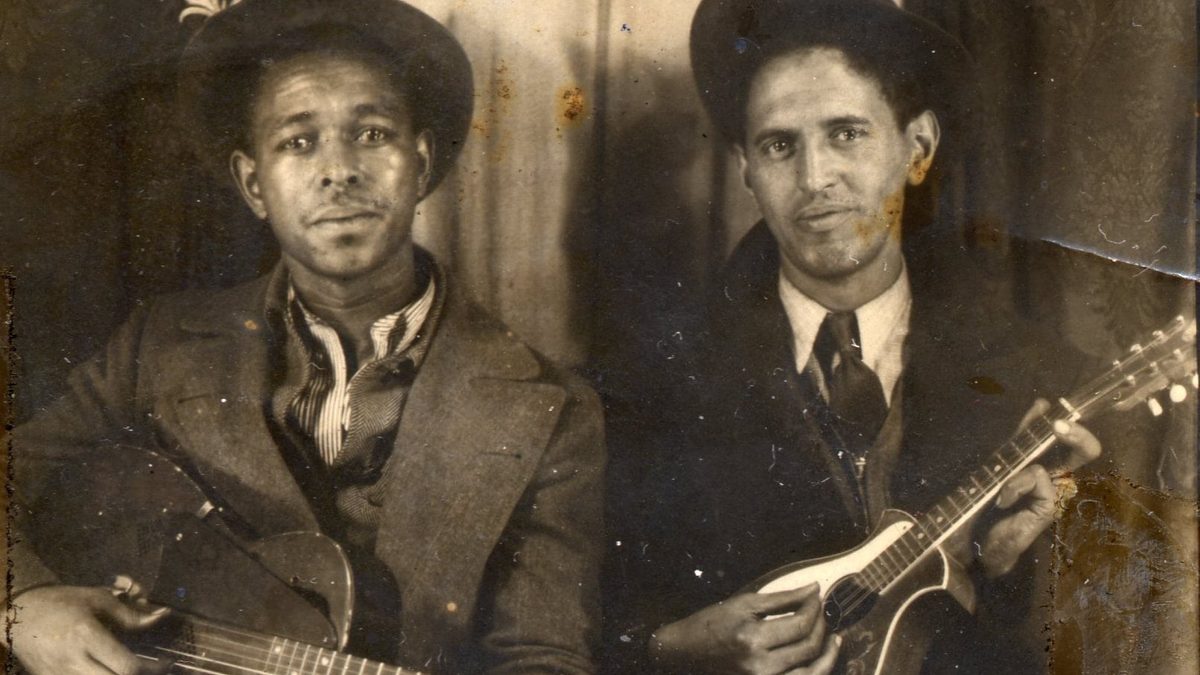
InsightsScratching the High Strings
FeatureAbingdon
FeatureKeeping it Low Key in the Low Country
FeatureLiving with Lyme
FeatureRetire?
FeatureThe Fountain of Youth?
FeatureFootball Time in Tennessee
FeatureThe Voice of The Common Fan
Non-ProfitPart of the Community
FeatureAttention to Detail
FeatureFam
FeatureFriends of the Smokies
FeatureHealthy and Successful
FeatureHon. J. Douglas Overbey
FeatureSecurity
FeatureSummer Travel
FeatureThe Importance of Rest
Reading Settings
100%
July / Aug 2018
Swipe to read →
Vol. 34 · Issue 4 | July August 2018
The PublisherLove, Understanding, and Positivity
The PublisherVideo Is No Longer Optional
Departments
DepartmentsJill Stone
DepartmentsKarly Stribling
DepartmentsThe Four Horseman of the (Political) Apocalypse
DepartmentsUT Buyouts
DepartmentsThe Collateral Source Rule
DepartmentsTime to Rethink the “Tennessee Civil Justice Act”
DepartmentsHaw Ridge
DepartmentsNorthshore Parks
DepartmentsA Jewel Shines in Bearden
DepartmentsBoozy Brunch
DepartmentsPizza Time in Tennessee
DepartmentsSunspot: A fresh look at an established favorite
DepartmentsAlive and Well
DepartmentsBook of Mormon
DepartmentsDIY Dodos
DepartmentsFlat Earther
Features
FeatureAll Men Are Created Equal
FeatureFirearms and The Law
FeatureThe Death Penalty
InsightsScratching the High Strings
FeatureAbingdon
FeatureKeeping it Low Key in the Low Country
FeatureLiving with Lyme
FeatureRetire?
FeatureThe Fountain of Youth?
FeatureFootball Time in Tennessee
FeatureThe Voice of The Common Fan
Non-ProfitPart of the Community
FeatureAttention to Detail
FeatureFam
FeatureFriends of the Smokies
FeatureHealthy and Successful
FeatureHon. J. Douglas Overbey
FeatureSecurity
FeatureSummer Travel
FeatureThe Importance of Rest
→ Swipe to start reading
The PublisherJULY AUGUST 2018
Love, Understanding, and Positivity
Story by Nathan Sparks
During the late 70’s I was living in Knoxville, attending the University of Tennessee, and working at Blue Ridge Mountain Sports as a salesman. Often after work we would gather at The Roman Room, a classic little dive next to Sam and Andy’s on the Strip. It served beer in small, fountain-style glasses, and the pizza burger was my favorite item on the menu. My memory of those evenings is only partially accurate I’m sure, but a few things stand out rather clearly about my co-workers and our beer and pizza burger fueled discussions.
Eddie Chin loved fly fishing for trout, talking about fly fishing for trout, or planning a fly fishing trip. My other co-worker, Ken Steele, was a hiker, and was only part time as he was in the doctoral program at UT in the psychology department. He would often challenge me with some comment, and I am sure that my youthful, exuberant outbursts amused him as I attempted to challenge his scholarly wisdom. One evening, he posed this question: Do you think simple words spoken by someone close to you could affect how you feel about yourself, possibly even to the point of a mental breakdown?
“Of course not!” I replied. “I know myself, am confident, and would simply dismiss their comments as a bunch of silliness. What kind of a person would want to do such a thing? I will never let anyone like that around me.” We debated heatedly until Eddie showed up and the conversation moved on to trout fishing. For some reason this stuck with me, and I would occasionally bring it up in conversation to get other people’s perspective, mainly to prove to myself that I was correct. This would not prove to be true….
How and when we choose to speak will most certainly have an impact on the world around us. We can speak with love and understanding and from that build a spirit of positivity in ourselves and others. Or we can choose the other path of hate and intolerance and create a spirit of destruction. Add in the freedom without responsibility offered by social media, and you have a recipe for disaster.
Words certainly have power when spoken with conviction, and they can certainly alter the lives of others. Recent times have seen teens commit suicide as a result of the ridicule they receive on social media. A Union County mother’s post about her son being devastated by bullying at school went viral earlier this year. I can feel the young man’s pain and know for certain that he will carry that with him all his life. It was good to see the outpouring of support nationwide; hopefully, that will help him set a positive life compass.
The overwhelming response was a great example of people stepping up to show their public support and say that such a thing should never happen again. The opposite of that, in my opinion, is one of the biggest problems in our society: the fear to get involved, to take action, to do the right thing. Those fears are partially well founded, based on the overly litigious nature of our society. But when we allow fear to rule our decisions, then we begin to deny there is even a problem and become ever more concerned about our feelings and of being offended rather than about what is ethical, truthful, and moral.
So, what is the point of sharing all of this? Simple. When we utter a single harsh word, we pollute the environment around us for all involved. Most people simply leave, some of the more sensitive ones might actually become physically ill, but everyone will suffer and some will not ever be able to let go of our words or actions.
I’ve often wondered, why do we choose to act this way? And why do we hold onto those hurtful thoughts in our memory? We could choose to forgive and move on. But many just can’t seem to.
If any of this seems to “ring your bell” and you’re ready to consider taking the next step towards the positive, I would like to challenge you to try an experiment. I first heard this idea while listening to a talk given by Skip Ross. If you wonder if you’re the only person who would do this—a lone positive ion in a sea of particles—you won’t be. I’m doing it. And if everyone participates, we could make Knoxville the most positive, loving, understanding community on the planet!
Challenge #1
For the next 30 days, eliminate all negative speech and thoughts. No matter what the situation, find something positive to say, and when you encounter a negative, just turn and walk away—do not participate. Many may fail during round #1, but this is just like working out at the gym, so don’t quit. If you make a negative comment to someone you simply start the counter over at day one.
Challenge #2
Ask your spouse, significant other and family to participate. Find ways to make it fun! Choose rewards to celebrate each successful day becoming more positive together.
Challenge #3
Do the right thing, no matter what. Make the world around you pay attention. Stand up and call attention to wrongdoing. Be an example for all whom you come into contact with.
Challenge #4
If you would like to share your success, let us know in a comment on our website or Facebook page. If you disagree with me, I’d like to hear that too. Regardless, be positive!
→ Swipe for Next Story
The PublisherJULY AUGUST 2018
Video Is No Longer Optional
Story by Nathan Sparks
By 2021, video will be responsible for 82% of the global Internet traffic, up from 73% just two years ago, according to networking giant Cisco. Almost everyone consumes some amount of internet video every day.
Recognizing this,Cityviewhas moved to serve the market in a new and innovative way—enhancing our print and online publications by offering video content to tell the stories of the people, organizations, and businesses that make Knoxville such a vibrant community.
With online consumption of video climbing, local businesses will find it beneficial to showcase their products and services using video.
Once upon a time, when the family gathered at a given time to watch their favorite show, it was accepted that they must endure commercials. But this isn’t how we watch video these days. Instead, we choose to consume video on demand at our leisure, and if our chosen stream is interrupted by an unwanted advertisement, we often move on. So, what is the new acceptable format?
AtCityview, we want to offer video that presents a story today’s viewer wants to watch: fresh, organic content that they can relate to as real and relevant, not overly polished advertisements that don’t reflect the nature of what the viewer came to see in the first place.
In that spirit, we proudly present Cityview TV, our new platform for presenting everything from informative, to editorial-style videos, documentaries, and social-media-style snippets.
We’re excited to bring real and relatable video to our readers, and to offer a variety of video formats to our advertisers. We’re uniquely positioned in this community to produce and deliver some amazing content.
I am looking forward to seeing this exciting new venture come to life as part of what we bring to the community. Give us a call if you are interested in having us video your story.
→ Swipe for Next Story
DepartmentsJULY AUGUST 2018
Jill Stone
Story by Emily Stevens
Like many great artists, Jill Stone was inspired at a young age. Jill’s influence was her art teacher: Mrs. Price at East Ridge Middle School in Morristown, Tennessee. Sixteen years ago, while living and working in the Washington D.C. area, she was inspired by a mural in a park that she strolled through with her daughter. From that day forward she made it her mission to pursue her passion for art. “I self-taught myself to paint murals and spent extensive time training my hands and eyes to see and paint fine details [with] high-end quality.”
She is most passionate learning the history of what she is painting, and she truly loves helping people get the results they are looking for. Her favorite style of painting is Trompe’ Loeil. She explains that many people do not realize that by painting an illusion with depth, she can utilize their original architecture to create a larger space, add character, or create an oasis to retreat to.
Stone’s passion for art runs deeper than her own career; she instructs painting classes for people of all ages, including kid’s art camps and seniors in assisted living facilities.
“Learning the process of fine art painting inspires growth. It brings joy, relaxation, and peace while building self-esteem and self-worth.”
Currently, she is creating a fine art mural painting of the Westmorland Water Wheel in Bearden. In addition, Stone has completed numerous residential and commercial projects including the faux marble walls at Spa Lounge in Oak Ridge and even a snowy “Chronicles of Narnia” forest mural in Johnson City.
Her portfolio and work can be viewed at jillstonestudios.com, and on Facebook, Instagram, and YouTube.
→ Swipe for Next Story
DepartmentsJULY AUGUST 2018
Karly Stribling
Story by Emily Stevens
Karly Stribling’s business, Soil & Steel, started as a half gardening/half metalwork business, has grown into mostly metalworking and sculpture business. Photo by Keith NorrisPhoto by Keith Norris
Growing up in Louisville, Kentucky, she attended DuPont Manual Magnet High School. While in high school she had the opportunity to intern for a local sculptor who introduced her to welding, which ultimately sparked her passion for metalwork. She moved to Knoxville in 2002 to attend the University of Tennessee as a sculpture major. Photo by Keith Norris
Prior to starting her business in 2010, she worked at many restaurants but kept pursuing her passion for art. “It’s not a fantastic living; hopefully it will be,” she says. But she notes that financial success is not the central motivating force: “As artists we make art because we can’t not do it.”
Several pieces were included in the January art show “Fe: Women working in Iron, Bronze, Aluminum and Steel” at Pellissippi State Community College. Her most recent installations include an archway at the entrance to The New Jewish Cemetery located on Middlebrook Pike, and an intricate gate to James Agee Park. In addition, images of her 2D and 3D work, commission pieces and sketchbook can be viewed on her websitesoilandsteel.com.
→ Swipe for Next Story
DepartmentsJULY AUGUST 2018
The Four Horseman of the (Political) Apocalypse
Story by George Korda
Feeling more uncomfortable by the minute, I sat in a major bank’s executive dining room with a newly-elected political officeholder. As an advisor to campaigns and candidates, I attended at the winner’s invitation.
As flattery-laced praise and congratulations flowed, a bank official made a tentative joke about the vanquished opponent. Another bank official joined in the fun at the loser’s expense. More jokes and derision followed. The officeholder-elect participated, not in a mean way, but enough.
Eventually the talk circled around to the purpose of the meeting: the bank’s leaders, who were of course big supporters, looked forward to a great relationship.
As we left the building he said, “I thought that went fine.”
“No,” I said. “It didn’t. If you’d lost they’d have been with the guy you beat making jokes about you. And they’ll share with other people what you said, not what they said. Don’t letflatteryconvince you they’re your friends. They’re not.”
With various local, state, and national elections held over the last several months, there are a good many newly-minted elected officials running around. Each of them faces the same four challenges to overcome: Flattery (example above), Arrogance, Money, and Friends.
Arrogance:An ever-present danger for political officeholders is believing that they are as special, brilliant, and amazing as they are described when being introduced before giving a speech.
Arrogance doesn’t necessarily mean a massive ego demanding to be noticed and assuaged. Former Tennessee Gov. Don Sundquist is a truly friendly and thoughtful person. But political arrogance saw him leave office in 2004 as one of America’s most unpopular governors.
For years Sundquist vocally opposed a state income tax. However, when he decided he wanted one, it was with an I’m-the-governor-and-you’re-not campaign.
In a conversation at that time with a Sundquist communications staffer, I said, “Even if he thinks it’s necessary just because he decides to turn on a dime it doesn’t make people idiots if they believed him the first time.”
WMC-TV’s post-election coverage of the Van Hilleary-Phil Bredesen contest to succeed Sundquist noted that “Each candidate suggested his opponent most resembled unpopular lame-duck GOP Gov. Don Sundquist, who flip-flopped to support the income tax after he was re-elected in 1998.”
Strategic humility. It works.
Money:Money is the mother’s milk of politics—and its worst curse. The political landscape is littered with the dead and decayed careers of political officials who couldn’t keep their hands out of the till.
Perhaps the most egregious example of filthy lucre’s siren song is the tale of former Knox County Trustee Mike Lowe. At one time a county Republican power, Lowe in 2015 pleaded guilty to paying two “ghost” employees taxpayer-paid salaries, overtime, and benefits for performing little or no trustee office work. Lowe served seven months in jail and must pay back more than $200,000.
Money does change everything. In politics, often for the worst.
Friends:I have on more than one occasion said to politicians that their greatest dangers often are not posed by enemies, but by their friends.
Friends come with silky voices and reminders of shared experiences and past favors. Politicians like their friends, want to help their friends, want to do things for their friends.
Friends come with earnest funding requests for that pet project or indispensable (they’re always indispensable) favorite cause. Sometimes the projects are genuinely worthwhile; sometimes not. The worst case: taking care of a friend’s desire can wind up on the front page or leading the evening news.
If friends have requests, there’s moneyin the budget, and what they’re asking isn’t illegal, immoral, or unethical, whynot? But bear in mind it can be like feedingseagulls on the beach: it attracts a crowd of others wanting a piece of the action.
Here’s a test: when friends come calling with their wonderful ideas, if it doesn’t fit your agenda, say no and explain why. If they’re your friends, they’ll understand. If they aren’t, they are seagulls seeking a cracker.
Flattery, arrogance, money, and friends: the Four Horsemen of the Apocalypse, politics-style.
→ Swipe for Next Story
DepartmentsJULY AUGUST 2018
UT Buyouts
Story by George Korda
Voters are motivated by many things, but among them two principal factors drive people to the polls: anger over something someone has done or fear of something someone might do. That’s why a political candidate running against the University of Tennessee, which typically wouldn’t seem a smart strategy, could work. There are, in fact, millions of reasons.
UT’s bill is between $19 million and $20 million for buyouts and payouts to fired former coaches and university administrators. It’s the stuff that voter anger is made of. UT is a venerable institution, justifiably respected, if not revered, by Tennesseans because so many have graduated from the institution, support its athletics, understand its importance to Tennessee’s future, or have sent their children to the school.
But money—money changes everything. And UT is a giant bureaucracy, and giant bureaucracies inevitably have problems to exploit.
This is particularly true if people can be convinced that money to which they can be connected is being wasted. “Wasted” can quite comfortably be used to describe millions spent to send coaches and administrators packing.
An example of how candidates could make this an issue: The candidate defines the problem in terms personal to the voter; The candidate compares dollars flowing to fired UT officials to average voters’ difficulties in making ends meet; The candidate pledges to bring whatever pressure is necessary to ensure the practice is ended, whether or not it’s possible for them to do a thing about it.
There are multiple variations of how this can be presented to the electorate. It’s useful, and usable, as a campaign tactic. Here, for example, is one version of a 60-second radio ad:
The University of Tennessee is a jewel by which our state is known around the world; however, the jewel needs cleaning. Our state’s flagship university is paying millions of dollars to people for being fired from their jobs. For failing! Millions of dollars paid out to football coaches and administrators, people let go by the university for not getting their jobs done.
UT’s former chancellor is getting paid 440,000 dollars a year – more than 35,000 dollars a month – to teach classes. That’s more a month than many Tennesseans make in a year. Some of that is your tax money, and it’s happening while you’re working hard to pay your bills, take care of yourself or your families, and to save for the future.
Hi, I’m Sincere Candidate, and if you elect me I’ll put a stop to your money being used to pay people at UT to go away. You don’t want millions of your hard-earned dollars paid out to fired UT officials. They’re getting millions, and you’re paying the price. Send me to Nashville and let me put a stop to it!
Voila, instant issue! Whatever is said to defend the practice will sound like excuses: it’s not all tax money; UT is contractually obligated; buyouts are common; the legislature doesn’t make those decisions, etc.
But, as the saying goes, when you’re explaining, you’re losing. And good luck convincing many Tennessee voters that its elected representatives should be on the outside looking in concerning these well-publicized, big-dollar, debacles.
Knox County State Rep. Martin Daniel, who represents the 18th House district, took on UT over such issues as the public train-wreck surrounding the Office of Diversity and Inclusion; a proposed code of conduct; and a review of discrimination lawsuit settlements. Daniel, a Republican, was targeted in the 2016 primary for his criticism of UT by his opponent, former State Rep. Steve Hall. Daniel still has his state representative job.
Running against UT is the wrong thing to do; running against UT in specific areas that are easily understandable as wasteful or unnecessary is another matter altogether. It can even be couched, if preferred, in positive terms: “I ask for your vote so I can go to Nashville and help the University of Tennessee to stop getting into positions where it’s paying people millions of dollars to go away.”
If voters can be made angry enough about UT firings payouts or fearful of UT payouts in the future, it just might be an issue on which a candidate can cash in.
→ Swipe for Next Story
DepartmentsJULY AUGUST 2018
The Collateral Source Rule
Story by Bruce Fox
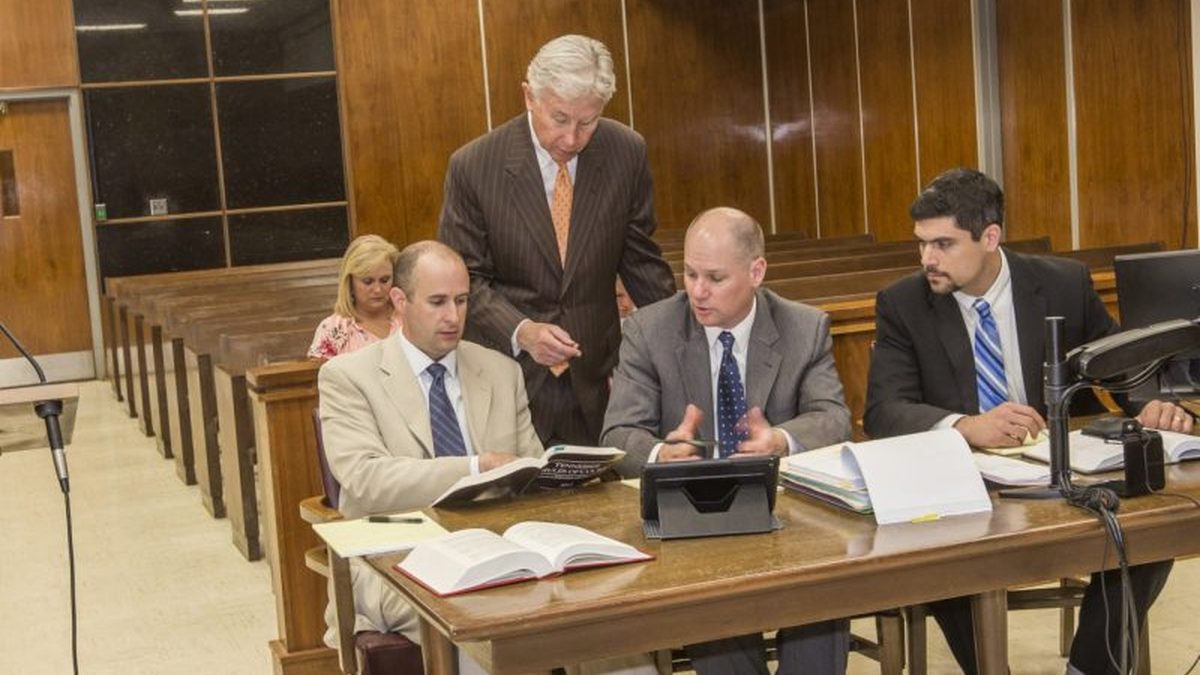
If someone gets hurt in Tennessee, and that injury is caused by the negligence or recklessness of somebody else, that person can recover the reasonable value of the medical treatment needed. To make sure this right is available equally to everybody, Tennessee has the Collateral Source Rule, which provides that a jury will consider the reasonable value of the medical service.
The reason health insurance covers many of these medical bills is because you have paid for the coverage. Either you are paying the monthly premium straight out of your pocket, or you are receving health benefits through your employer and making less money at work in order to have it.
Under the Collateral Source Rule, the medical costs considered to compensate you for your injury are the total reasonable value of your medical treatment, not the amount paid by your health insurance. Next year, however, the General Assembly will likely take up legislation to do away with the rule altogether. If it passes, the person who caused your injuries would be able to introduce evidence that an outside (or “collateral”) source, like health insurance, had paid your medical bills. This would be tremendously misleading to a jury trying to decide what fair compensation is.
The effect would greatly reduce the recovery of those with health insurance compared to somebody who had not worked to pay for health insurance. Here’s an example: Sam owns a local hardware store and has paid for his family’s health insurance for years. The other person, Dave, does not work and has no health insurance. Both are hit by a drunk driver and incur $50,000 in medical bills. But because Sam has paid thousands of dollars over the years for health insurance, his medical bills are paid (less deductibles and copays). Dave has no health insurance to pay any of his medical bills. Because Dave could show a jury the full $50,000 in medical bills, his jury will think his case is worth a whole lot more than Sam’s. Therefore, because Sam has worked hard to buy health insurance over the years, he will receive significantly less compensation than Dave for essentially the same injuries. Moreover, Sam’s health insurance company has the legal right to get back the money they paid if Sam recovers anything, so Sam’s recovery will be reduced even more.
The goal of our civil justice system is to hold the wrongdoers who cause harm responsible for the full amount of damages. If the Collateral Source Rule is abandoned, the drunk driver in our example will not be held fully responsible. He will be able to benefit from Sam’s hard work. That is why I encourage all to let your representative know you are against any effort to abandon the Collateral Source Rule in Tennessee.
→ Swipe for Next Story
DepartmentsJULY AUGUST 2018
Time to Rethink the “Tennessee Civil Justice Act”
Story by Bruce Fox
At one time a jury, having learned about the facts of each case themselves, was considered best able to determine justice in individual cases, even in civil matters. The Seventh Amendment in the Bill of Rights guarantees our right to a jury trial in civil matters, a right I have always thought was in keeping with the Founders’ ideas of having decisions that impact communities made by those closest to the communities themselves. What could be more “small government” than a group of twelve people who are from that very community chosen together by the parties to a lawsuit?
However, seven years ago, Governor Haslam signed the “Tennessee Civil Justice Act of 2011,” which sets an arbitrary figure as a maximum for “just” compensation for all cases, regardless of the facts. An injured party or survivor is now limited to $750,000 in noneconomic damages. The jury is never told that their verdict, if over $750,000, will be reduced by the judge after the jury leaves the court house. Under the act’s amended venue statutes, out-of-state trucking companies and corporations are not held accountable when they catastrophically injure or kill TN residents, and this law applies to every citizen in TN. The 7th Amendment was demolished by this legislation, and without the 7th amendment we are all at risk.
In 2011, there was much talk of Tennessee losing jobs and businesses because of runaway jury awards and “jackpot justice,” and the need to reign in a system gone haywire. The facts really did not bear that out, however. Jury awards in Tennessee had remained relatively flat over the previous two decades, actually trending downward. There was no evidence of any negative economic impact.
With seven years elapsed, I thought I’d look at these trends and see if there were any changes. Here’s what I found:In general, the number of cases being tried to a jury are continuing the same downward trend prior to 2011. Fewer cases are being decided by juries. Similarly, there has been no real increase in the average jury verdict amount.
What statistics cannot show, however, is how the law has impacted those who suffer catastrophic losses due to someone else’s conduct. As an attorney representing someone who has lost an arm due to the negligence of someone else, I can speak from experience when I say that it is one of the toughest things I do to tell that client the politicians of this state have put a cap on the pain and anguish his loss has caused him and will cause him for the rest of his life. The tort cap does not impact the “frivolous” case. It only impacts those cases with the highest degree of trauma and human loss. There is real moral damage done when we choose not to adequately recognize catastrophic damage suffered by our fellow citizens.
→ Swipe for Next Story
DepartmentsJULY AUGUST 2018
Haw Ridge
Story by Emily Stevens
Situated on the Clinch River between Knoxville and Oak Ridge, Haw Ridge Park offers 30 miles of trails for recreational activities such as trial running, hiking, and mountain biking. Some of the leisurely trails follow the contours of the shoreline, offering beautiful river views, while others climb the steep inclines, providing challenging trail running and exhilarating mountain biking experiences. In addition, the 780-acre park is a popular spot for geocaching—a relatively new sport in which participants use GPS coordinates to search for a hidden object. The banks of the Clinch River are a great spot for fishermen looking to catch rainbow and brown trout, smallmouth bass, and walleye. To complete the well-rounded list of activities, adjacent to Haw Ridge Park is Solway park, which offers access for paddlers and boaters.
Park Entrance: 821 Edgemoor Road, Oak Ridge TN
Hours: Dawn to dusk
→ Swipe for Next Story
DepartmentsJULY AUGUST 2018
Northshore Parks
Story by Emily Stevens
Approximately a half mile past the intersection ofNorthshore Drive and Pellissippi Parkway begins aseries of Knox County parks that provide access to the bountiful recreational opportunities on Fort Loudon Lake. On both land and water, Admiral Farragut, Carl Cowan, and the sprawling Concord Park allow residents of all ages to enjoy multiple activities. Photo by Trent EadesPhoto by Trent Eades
The smallest of the three, Admiral Farragut, provides a series of trails and a well-maintained disc golf course. Connected to Admiral Farragut by a wooded trail is Carl Cowan park, which features access to the lake, with a boat ramp and fishing locations, soccer fields, pavilions, and a playground. Photo by Keith Norris
Another mile or so down the road finds Concord Park, a series of three locations. Concord Park East has a junior golf course, tennis courts, soccer fields, multi-use trails, a dog park, and the marina. Concord Park West features baseball and softball fields, and a boat launch. The Cove at Concord provides access to the lake for paddling, fishing, and swimming. The Cove is welcoming for children with a beach and extensive playground. Visitors may rent standup paddleboards, canoes, and kayaks. Photo by Trent Eades
→ Swipe for Next Story
DepartmentsJULY AUGUST 2018
Boozy Brunch
Story by Emily Stevens
A portmanteau (French for suitcase) word that folds together breakfast and lunch, brunch has become a way to celebrate a spirited Saturday or Sunday. (Or both!) Featuring the best of breakfast and lunch fare, alongside a cocktail—often a bloody mary or mimosa—brunch can lift the spirits and fortify the soul. Usually eaten between 10 and 2 (though showing up earlier will get both quick seating and faster service), it can make a late Friday or Saturday night less of a strain on the following day. Here are our top recommendations.
Holly’s Gourmets Market
For the past 40 years, Gourmets Market has been a breakfast and brunch destination. Chef Holly Hambright’s menu offers creative spins on classic dishes in an inviting, bistro-market atmosphere. The expansive all-day breakfast menu features items like the Big Burrito, Goat Cheese and Eggs, and Chipotle Chicken & Grits. These favorites can be enjoyed with a brilliant Bloody Mary or a refreshingly unique Cucumber Prosecco cocktail.
At Scrambled Jake’s Breakfast Company, it is clear that they believe breakfast is the most important meal of the day. The restaurant features a neighborhood-driven breakfast and brunch dining experience. The menu includes a variety of options including the Rocky Hill Hammer (the name hails from the Northshore location), thick fluffy pancakes, and French toast topped with fresh berries or granola, Benny’s and other egg options, as well as fresh-squeezed juice and French pressed coffee. On Saturdays and Sundays, guests can treat themselves to a Blood Mary bar featuring local hot sauces for extra zip. In addition, Scrambled Jake’s has fun events like the weekly Fiesta Wednesday, during which they offer huevos rancheros, the Sonora omelet, and breakfast tacos.
The Crown & Goose provides a charming atmosphere for a leisurely Sunday brunch. Guests can enjoy their meals of Eggs Chesapeake, omelets, appetizer boards and more on the expansive patio or in the cozy indoor booths. To top off a rich breakfast, drink options include the Millionaire’s Coffee—Irish cream, Frangelico, Kahlua, and coffee topped with whipped cream—or a $3 glass of champagne, blood mary, mimosa, or poinsettia.
Offering a traditional menu, Cazzy’s has your favorite brunch staples such as chicken and waffles, southern eggs benedict and a delicious crab cake benedict. These items are served with a side—we recommend the yogurt parfait, which is topped with crunchy granola. During brunch hours, guests can select a $5 cocktail, either a mimosa or screwdriver made with fresh-squeezed juice, or a spicy bloody mary.
Gameday pizza can be a great thing, pick-up or delivery enjoyed as accompaniment to the sport itself. Sometimes, however, we want to meet the pizza where it is made, to see it expertly tossed into the rafters and to bite into a slice minutes after it comes out of the oven. That’s the kind of pie we’re looking at in our guide this issue: hand-crafted and fired by folks who will insist you eat it hot. Whether you’re downtown, in Rocky Hill, or on the south side of the river, these are our top five go-eat-it-there pizza picks this fall.A Dopo Sourdough PizzaPhoto by Keith Norris
Owners Brian and Jessica Strutz are committed to the craft of pizza. Brian trained in Flagstaff in a pizzeria that featured the pizza oven he would eventually purchase: a Stephano Ferrara original from Naples. A Dopo pies are naturally leavened with sourdough, which makes for a delicate, chewy crust with a perfect amount of char. The Spicy Greens (with mascarpone, mozzarella, greens, chiles, and lemon) and Margherita (with plum tomatoes, mozzarella, basil, and olive oil) pies pictured below were crafted by pizza masters Marcus and Kyle.
Photo by Keith NorrisBarley’s Taproom and Pizzeria
An Old City favorite, Barley’s offers delectable, hand-tossed pizza alongsidea bevy of beers poured from one of the great tapwalls in town. Our pizza master Izzy crafted the Barley’s All American pictured here. Pepperoni, sausage, onions, mushrooms, and green peppers atop their special herbed tomato sauce make for a classic pie. Barley’s has a wide-ranging menu and is a popular music venue as well.
Sauce, dough, fresh mozz, meatballs….all made inhouse at Dazzo’s, a narrow storefront on Gay Street that opens into a delightful New York style pizzeria with black and white tile and posters a plenty adorning the walls. Pizza maestros Zack and Reid put together the Dazzo’s Supreme you see here: fresh mozzarella, pepperoni, sausage, onions, peppers, and mushrooms sitting atop their homemade sauce. Dazzo’s is great for lunch, or dinner before the show.
Photo by Keith NorrisSouth Coast PizzaPhoto by Keith Norris
New to pizza but no stranger to Sevier Avenue, South Coast co-owner Chris Morton is a cheerleader for the fast-growing South Knoxville destination. South Coast specializes in pizza but also has some of the best smoked wings in town. The Island Home, seen here as crafted by pizza master Eric Moses, who has extensively honed his craft at pizzerias both local and overseas, bubbles with mozzarella, bacon, Italian sausage, pineapple, and spinach. Enjoy a great pie alsongside a pint of the their eponymous pale ale. If you’re hungry for other fare, try their excellent smoked wings from BBQ smoke master Jimmy Doran.
Pero’s has been serving fantastic Greek, Italian, and American food on Rocky Hill since 2011. Their pedegree, however, extends far back into family history and the original Pero’s on Kingston Pike. Pizza craftsman Lamar Cason ceated The Aspro Kota you see here: white sauce topped with grilled chicken, mushrooms, fresh tomatoes, and sauteéd spinach. If you’re in the neighborhood in the afternoon, check out their excellent and affordable lunch menu.
Tell us your picks for Knoxville’s hot spots to eat. Email our dining editor atdining@cityviewmag.com.
→ Swipe for Next Story
DepartmentsJULY AUGUST 2018
A Jewel Shines in Bearden
Story by N. Brooks Clark
Photo by Nathan Sparks
Tucked away on Chambliss Road is a place many Knoxvillians may remember as “Eva’s for Lunch.”The new owner, Misty Mills, has transformed the former shopping and lunch spot into a delightful casual Italian restaurant: Merelli’s.
In an inventive use of the space, Mills has created an intimate outdoor courtyard, a main dining room, and five private dining rooms. Chef Joseph Pereyo has developed a menu suitable for a casual weeknight supper, a business lunch, or a weekend special occasion.
The restaurant’s multiple private dining rooms allow for a variety of events, from an intimate family dinner, board meeting for twelve, or corporate events. One of the private rooms, named The Wine Cellar, seats eight amid the wine racks, while the Venetian Room can accommodate as many as 60 guests.
Contrasting with the more polished feel of the inside dining areas, the walled patio is informal, featuring tacos, pizzas, and build-your-own pastas (all items $9.99). It is pet friendly for lunch and dinner Mondays through Thursdays, with live music Fridays and Saturdays.
The main dining room has been remodeled with high latticed ceilings, the requisite statue (or two) of a Roman goddess, and Old Blue Eyes singing in the background. You wouldn’t be surprised to see a couple of the characters from Goodfellas at the bar.
The staff, starting with veteran hostess Glo Clarish, is enthusiastic, friendly, and knowledgeable.
Chef Joe Pereyo started cooking at age 7, on a Jericho, Long Island, kitchen stool watching his great aunts—one from Ireland, one from Spain—work their magic. The latter taught him a cheesecake recipe he won’t divulge, but if you try it you’ll love the delicate crust and creamy cake. “Whatever I do,” says Pereyo, “I want it to be the best I can do.” He delivers on a varied menu of hearty Italian cuisine, starting with the large PEI mussel appetizer ($12.99) in a white wine garlic sauce with cream butter and green onions. Be sure to ask for extra bread, asyouwon’t want a drop of the sauce to go to waste.
Calamari ($11.99) comes in a cayenne pepper breading with spicy marinara sauce and just the right amount of heat. The Italian Charcuterie board ($14.99), Fried Ravioli ($10.99), and a fantastic baked portabella mushroom Caprese ($9.99) topped with heirloom tomatoes, fresh mozzarella, pesto, and basalmic glaze round out the starters.
The Gnocci ($21.99), is exceptional—light and tender—in a mushroom and spinach cream sauce topped with walnuts, raisins, and Gorgonzola cheese. An elegant saffron cream sauce complements the Lobster Ravioli ($27.99) and the capers add just the right lemony, briney tang.
No Italian menu is complete without chicken and/or veal, prepared either with Marsala wine or as a lemony Picatta, ($20 or $17) and both are winners on the entrée list. The veal is especially well-prepared and we’d love to talk Chef Joseph into adding a Saltimbocca or Osso Buco to the menu.
For a more classically American dish, you won’t be disappointed in the large Grilled Rib-eye with mashed potatoes at $18.99, or Grilled Lamb Chops at $27.99.
Along with Great Aunt Pereyo’s cheesecake, Merelli’s offers a deconstructed Tiramasu, an irresistible Italian cream cake with raspberry glaze, and two Cannolis filled with a light, sweet cheese. Be sure to save room for dessert.
With several entrees in the $17-$20 range and several pastas from $13 to $18 for beef ravioli, Merelli’s can be as economical a stop as diners wish to make it, but the pricier dishes, notably the Gnocchi and Lobster Ravioli, are a fine value.
→ Swipe for Next Story
DepartmentsJULY AUGUST 2018
Sunspot: A fresh look at an established favorite
Story by N. Brooks Clark
At the corner of Cumberland and 22nd Street, Sunspot is easy to access in the new traffic pattern, and parking is available both behind the restaurant and on Lake Avenue.
The new location retains its contemporary atmosphere and cool vibe, with a stained concrete floor, reclaimed hardwood walls, and a dining room divider fashioned of re-purposed wooden doors. These elements, combined with deeply padded booths, provide an airy, but not noisy, dining experience.
2018 Top Chefs Second Place winner and Blackberry Farm alumnus Jeff Carter has brought an array of new and inventive dishes while taking care to keep those that are beloved by Sunspot faithful. The menu indicates which dishes are vegetarian, plant-based, or safe for the gluten-sensitive.
Small plates have a seasonal flair with a lovely summertime burrata, a cumin-and-coriander-dusted ahi tuna, or citrus-marinated shrimp. If you want to go the vegetarian route, the hummus plate with pickled vegetables or cauliflower and sweet potato fritter with caper remoulade are updated versions of these classics. Photo by Keith Norris
Sunspot is known for its salads, and Carter does not disappoint with his fresh kale and quinoa or chickpea salads. The Sunspot Salad is still here, along with a roasted serrano Caesar salad. A variety of proteins can be added to any salad for a small charge.
The entrée menu gives Carter a chance to showcase his creative approach. You could order the grilled salmon, but our recommendation is to try the jerk-roasted chicken with braised greens, or the unassumingly named Rice Bowl (Brown Basmati rice, house-made curried chickpeas, kale, red cabbage, mango, and root vegetables).
If you are dining with friends who like to share, the braised brisket with Shelton Farm grits and a spicy tomato relish and the cornmeal fried North Carolina catfish are not to be missed. Order one of these “for the table” so everyone can try them.
No Sunspot review is complete without mentioning the much-loved Tacos selection. In addition to the carnitas, salmon, chicken, and shrimp, the menu features a fried avocado taco, which made our meal. Complemented with hummus and goat cheese, it is delightfully fresh and different.
And fear not, Sunspot regulars. The beloved Black Bean Burger is still on the menu, along with a Cuban 2.0 (with Benton’s ham), the Bob (jerk chicken) and the BGLT (fried green tomato, bacon, arugula, goat cheese, and roasted garlic).
Sunspot offers 55 beer and 46 Bourbon selections. On any weeknight, you will see a group of after-work friends at the spacious bar, the outdoor patio, or on the rooftop garden, enjoying Sunspot’s broad inventory.
In keeping with present-day sensibilities, presentation is unfussy and lets the natural beauty of the food shine through. Portions are just right and appealingly plated.
The staff is enthusiastic, knowledgeable, and relaxed, while still attentive and capable. This is clearly a place that intentionally addresses culture and attitude. The result is a warm and friendly experience.
One of the best things about Sunspot is the range of prices, from $7 appetizers, to $12 salads to the most expensive entree at $18.00. No matter your budget, you can enjoy a flavorful and healthy meal at Sunspot.
→ Swipe for Next Story
DepartmentsJULY AUGUST 2018
Alive and Well
Story by Emily Stevens
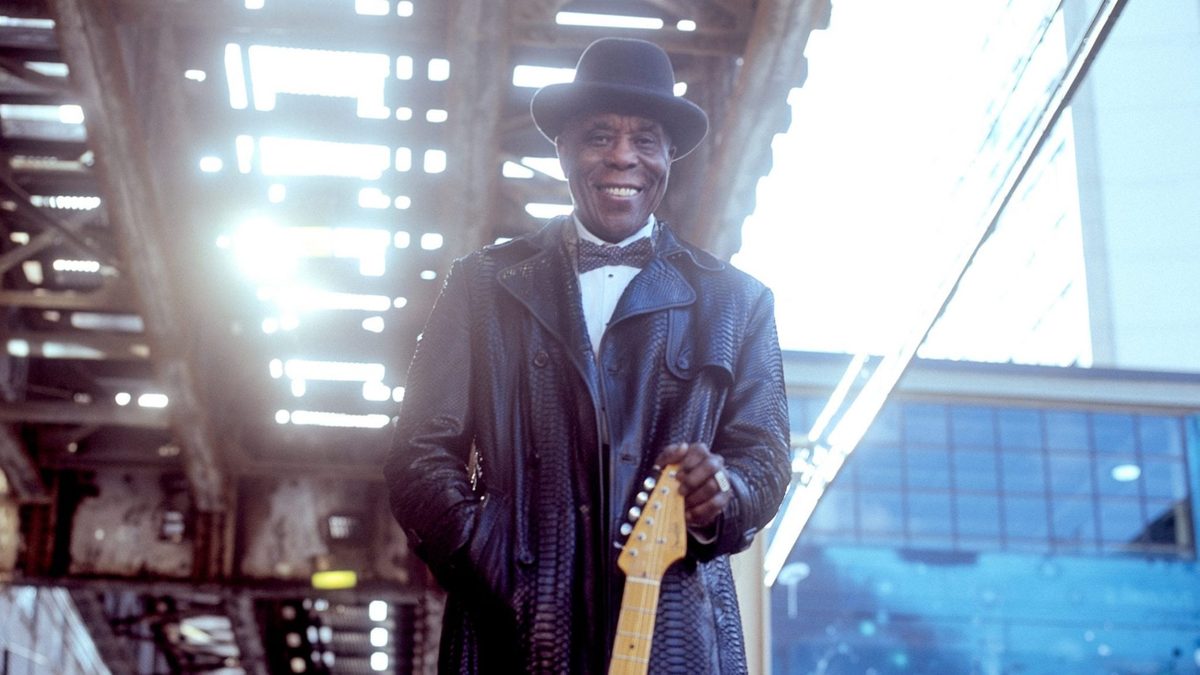
Hailing from Chicago as a pioneer of the West Side Blues sound, Buddy Guy is characterized by his electrifying blues performances. His story began in a small town in Louisiana, but in 1957 he realized his sound was too big for Lettsworth, and he took off for Chicago—with his guitar in tow, of course. At Chess Records, he first played in sessions alongside Howlin’ Wolf and Muddy Waters, and then later on his own.Rolling Stoneranked him #23 in its list of 100 Greatest Guitarists of All Time. His captivating style has influenced artists such as Jimi Hendrix, Eric Clapton, and Stevie Ray Vaughan. His most recent studio album,The Blues Is Alive and Well, was released in June of 2018 and features guests such as Mick Jagger, Keith Richards, Jeff Beck, and James Bay. Guy is one of the last few connections to the early blues era. “I’m always trying to make an album that someone accidentally plays where some kid hears it, picks up a guitar, and helps keep the blues alive.” You have the chance to spend the evening with this living legend when he performs at the Tennessee Theatre on September 27.The concert begins at 7:30 PM.tennesseetheatre.com
Awards & Recognitions:
2003 Presidential National Medal of Arts
2005 Rock & Roll Hall of Fame Inductee
2012 Kennedy Center Honor for his lifetime contribution to American culture
7 Grammys, including the 2015 Lifetime Achievement Grammy
37 Blues Music Awards (the most any artist has ever received)
Billboard Magazine Century award for distinguished artistic achievement
→ Swipe for Next Story
DepartmentsJULY AUGUST 2018
Book of Mormon
Story by Cityview
Labeled by theNew York Timesas “the best musical of this century,”The Book of Mormonwill be performed eight times at the Tennessee Theatre for six nights in July. An odd couple of Mormon missionaries travel around the world in this musical comedy. The nine-time Tony Award-winning musical was written by Trey Parker, Matt Stone, and Robert Lopez—Parker and Stone also createdSouth Park. Tickets for the performances are available throughtennesseetheatre.comwith prices starting at $44.
The play premiered in 2011 at the Eugene O’Neill Theatre in New York City.
Tony Awards:best musicalbest book of a musicalbest original scorebest featured actress in a musicalbest direction of a musicalbest orchestrationbest scenic designbest lighting designbest sound design
Robert Lopez: Having also composed songs for the musical Avenue Q and the Disney filmsFrozenandCoco, Robert Lopez is the youngest of only twelve people who have won an Emmy, a Grammy, an Oscar and a Tony Award.
Matt Stone is a co-creator ofSouth Parkand has won five Primetime Emmy Awards for his work on the animated series. He has been awarded three Tony Awards and one Grammy Award forThe Book of Mormon.
Co-creator of South Park Trey Parker has won Primetime Emmy Awards for his work onSouth Park, as well as four Tony Awards and a Grammy Award forThe Book of Mormon.
→ Swipe for Next Story
DepartmentsJULY AUGUST 2018
DIY Dodos
Story by Cityview
Dear DIY Dodos:
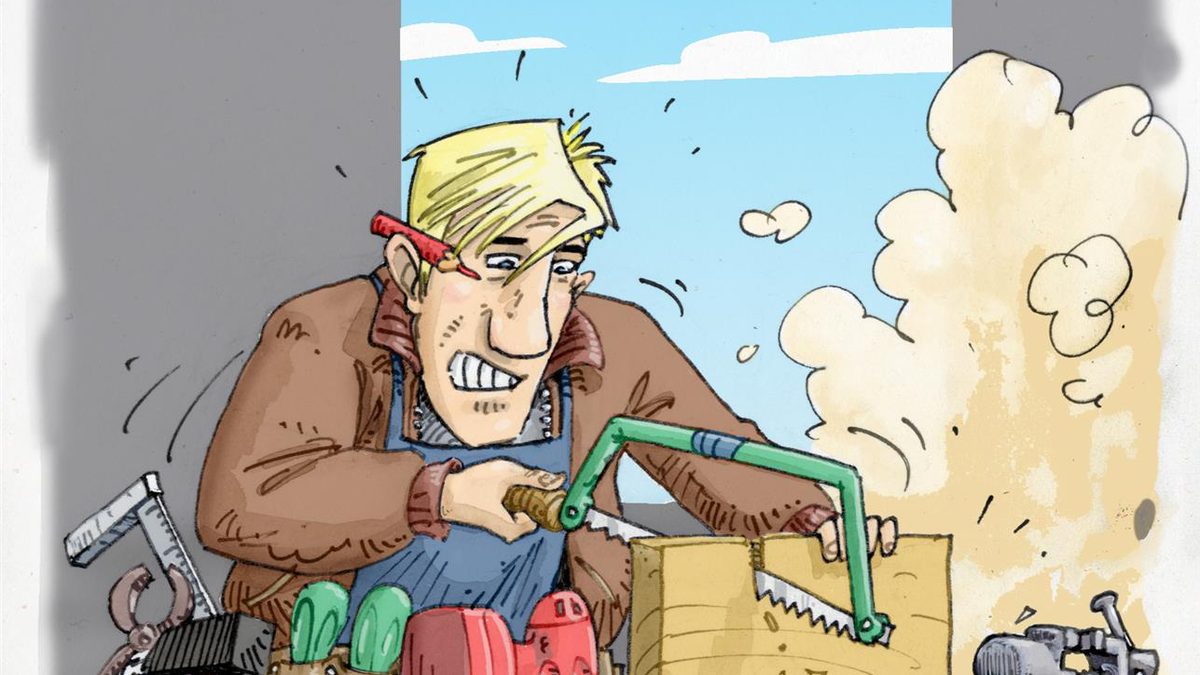
The Knoxonomist’s first tip is to hire professionals, just like Chip and Joanna! It’s nuts to think that TV personalities on home improvement shows do much except pose for set-up shots as they swing a sledgehammer or drive a nail. They have whole teams of experts in the background hanging drywall, or making sure the cabinets are secured to the wall and level, or plumbing a kitchen correctly. Illustration by Alexei Chtykhine
Have you ever tried to hang and mud drywall? Do you have any notion of what mudding drywall means? You’ll surely encounter it in your kitchen remodel. Look it up on YouTube. Go right ahead: hanging, taping, and mudding drywall. Then give it a try. The Knoxonomist will wait, and while we’re waiting will recall when he first attempted the task.
In the late 80s, the home of a woman the Knoxonomist was dating, with whom he was experiencing that rare and jealousy-ridden love of a man in his mid-twenties, was flooded. It was decided that the place had to be ripped down to the studs and floor joists—followed by the installation of new subfloor and drywall. The young woman happened to have friends in the construction industry, and the Knoxonomist found himself in a jealous corner, unwilling to not show up for construction yet uncertain of his abilities.
Demolition day went without a hitch,but the next day was an unmitigated disaster. Forced to choose between using a screw gun that looked like a jackhammer to install flooring, or to perform the seemingly easy task of taping and mudding drywall, the Knoxonomist chose the latter. And regrets his choice to this day. With a bruised ego and clumps of mudin his hair, he slunk away from an unacceptable job that had to be redone by a professional. Instead, he went to collect beer and sandwiches for the crew.
Doing any complicated construction job correctly requires watching an expert, assisting an expert, then trying it on your own only when you: 1) have enough experience, 2) have help from someone who isn’t your spouse, and 3) have the right tools.
By all means, learn to do your own work. But start with the small stuff and work your way up. Otherwise, you’ll end up with a bruised ego, buying beer for the experts you will inevitably hire.
The Knoxonomist welcomes your questions—although he will answer only those that interest him. Send your inquiries to TheKnoxonomist@cityviewmag.com, and include your name, address, and daytime phone.
Dear Knoxonomist: We’ve been so inspired by Do It Yourself shows that we’re getting ready to start on our first project, gutting our kitchen and putting in a new one—just like Chip and Joanna! Any last-minute tips? — Ryan and Becky Island Home
→ Swipe for Next Story
DepartmentsJULY AUGUST 2018
Flat Earther
Story by Cityview
Dear Rational Roger:
Gobsmacked! The Knoxonomist has been flabbergasted, astounded, astonished, dumbfounded, and taken aback, but never gobsmacked. When Aunt Petunia asks whether the Knoxonomist wants another helping of her famous rhubarb pie, the best in the world, he’s going to be gobsmacked. Who wouldn’t want another helping?
One of the Knoxonomist’s buddiesis a flat earther, so he feels your pain. George also believes the moon landings were faked, suspects the government was behind 9/11, and knows that Shakespeare is really the Earl of Oxford. One fine day, the Knoxonomist tried to reason with him.
“What do you make of all of those photos from space showing a round Earth?”
“Faked,” George said. “If Hollywood can make a man fly by swinging a hammer, the government can certainly fake a photo of a spherical Earth.”
Hmmm. The Knoxonomist tried again. “Why do we have night and day if the Earth isn’t turning on its axis?”
“It’s the sun that moves,” he said. “In a circular motion above the flat Earth. You can find an animated model on YouTube.”
“Well, then, what evidence do you have that the Earth is flat?
“Go to the beach,” he said. “Hold a ruler up horizontally to the horizon on the ocean. Does the horizon curve? Nope, the Earth is flat. Wake up! Trust your senses, man.
This went on for weeks. Finally, to his shame, the mischief got into the Knoxonomist.
“Still buying the Globalist hogwash?” George asked one day.
“The issue is moot. There is no Earth.”
“You’re standing on it!”
“How do you know? How do you know that we aren’t living in a virtual reality?
“Do you think we’ll eventually be able to make a virtual reality indistinguishable from ‘true’ reality?”
“Eventually, sure,” he said.
“And if we could, would we?”
He took a long pull from his cold one. “I suppose so.”
“And while there is only one real reality, there could be many virtual realities?”
He conceded the point.
Now for the clincher. “Then it follows that we are most likely living in a virtual reality.”
He didn’t speak again that night; he went home early. But the Knoxonomist got little satisfaction because now George goes on and on about his new favorite topic about how we’re living in a simulation.
But back to your mechanic. Unless you are prepared to go the distance, just nod politely when he suggests the Earth is flat. It’s not any crazier than believing that Aunt Petunia’s rhubarb pie is the best in all possible worlds.
The Knoxonomist welcomes your questions—Send your inquiries toTheKnoxonomist@cityviewmag.com.
Dear Knoxonomist: My auto mechanic recently said he thinks the Earth is flat. I was gobsmacked. What do you say to a flat earther? —Roger, Farragut
→ Swipe for Next Story
FeatureJULY AUGUST 2018
All Men Are Created Equal
Story by Gary Wade
Days before the inauguration of Abraham Lincoln on March 4, 1861, seven southern states seceded from the Union to form the Confederate States of America. On April 12, southern forces opened fire on Fort Sumpter. Four more states, including Tennessee, joined the Confederacy and the Civil War was in full throttle. The Union suffered early defeats, but beginning in early 1862, under the leadership of Ulysses S. Grant, the Union gained major victories. By June, the entire Mississippi River was in the control of the northern states. The Union, however, suffered a setback in August when its army lost the Second Battle of Bull Run and retreated to Washington.
In that historical context, President Abraham Lincoln presented to his cabinet a draft of what became known as the Emancipation Proclamation. By the use of his war powers as Commander in Chief of the Army and Navy under Article II, section 2, of the Constitution, Lincoln proposed to free all slaves in the rebellious southern states. Secretary of War Edwin Stanton supported the measure, but Secretary of State William Seward, mindful of the second defeat at Bull Run, cautioned that the announcement be delayed until a Union victory was secured on the battlefield.
On September 17, 1862, the Battle of Antietam near Sharpsburg, Maryland, pitted General Robert E. Lee’s vaunted Army of Northern Virginia against General George McClellan’s Army of the Potomac. In the bloodiest single day of the Civil War, with 22,717 dead, wounded, or missing, Lee withdrew his troops first, providing Lincoln with the strategic victory he needed. He announced that he intended to free all slaves in those southern states that refused to lay down their arms before January 1, 1863. When none of the states capitulated, Lincoln signed the historic proclamation, changing the legal status of 3.5 of the 4 million slaves in the country. While an enormous achievement for the abolitionists and African Americans, both free and slave, a further positive effect was to deter any support to the South from England or France, neither of which condoned slavery.
In the following year, President Lincoln, who had expressed concern about a legal challenge to the Proclamation, championed a resolution in the House of Representatives designed to abolish slavery throughout the entire country by way of constitutional amendment: “Neither slavery nor involuntary servitude, except as punishment for crime..., shall exist within the United States, or in any place subject to their jurisdiction.” Although congressional attempts to abolish slavery in 1818 and 1839 had failed to gain support, the Senate quickly passed the bill by a vote of 38 to 6. The House, however, failed by thirteen votes to gain the requisite 2/3 majority.
Undeterred, Lincoln, after winning reelection in the fall of 1864, made passage of the 13th Amendment in the House his top priority in the “lame duck” period before his second inauguration. His position was unmistakable: “Whenever I hear anyone arguing for slavery, I feel a strong impulse to see it tried on him personally.” In a session dramatized by the Steven Spielberg movie “Lincoln,” based upon Doris Kearns Goodwin’s book “Team of Rivals,” every House Republican voted for the resolution. They were joined by 16 Democrats, most of whom had been defeated in the November elections and, therefore, were free to vote their consciences. A vote of 119 to 56, barely enough, assured that the amendment would be sent to the states for approval. Republican House leader, Thaddeus Stevens, a long-time abolitionist, famously remarked of Lincoln’s role in the vote: “The greatest measure of the 19th Century was passed by corruption aided and abetted by the purest man in America.”
The amendment, of course, required the approval of 3/4 of the states in order to become a part of our constitution. By early April, 20 states, including Tennessee, had approved the measure. Sadly, Lincoln was assassinated on April 13. Eight months after his death, when Georgia became the 27th state to consent, the 13th Amendment became the law of the land.
Lincoln’s successor, Andrew Johnson, a Democrat from Greeneville, Tennessee, supported the Amendment. He “helped” by assuring the former Confederate states of its limited effect—neither granting the freed slaves the right to vote nor any other rights of citizenship. In consequence, the 14th Amendment had to be ushered through Congress by Stevens and other “Radical Republicans” without the help of the new president. Section one granted citizenship to the freed slaves and prohibited states from depriving them “of life, liberty, or property without due process of the law” or from otherwise denying “the equal protection of the laws.” With the exception of Tennessee, all legislatures in the southern states refused to approve of the measure. When, however, Congress adopted legislation that deprived those states of representation in the House and Senate until its adoption, all the other southern states fell in line.
After Lincoln’s assassination, President Johnson’s strategies were generally favorable toward the “entrenched white South.” When the mistreatment of the newly freed slaves reached epoch and often fatal proportions, the Radical Republicans again took the lead. Johnson, a former slave owner, had refused to support a measure which granted the former slaves the right to vote. Things got worse when Johnson vetoed a bill which would have continued the existence of the Freedman’s Bureau, the agency designed to help the former slaves make the transition to their new status. Another Johnson veto of legislation designed to assure the freed slaves in southern states the right to own land was quickly overridden by Congress, elevating the tension between the President and the legislative branch.
By then, General Ulysses S. Grant, the country’s military leader, had fully embraced the view of the Radical Republicans and, in consequence, had become the favorite to succeed Johnson as President. Grant, while not having voted for Lincoln in 1860, had adopted the “sacred goals” of preserving the Union and ending slavery forever “There are but two parties,” he remarked, when South Carolina had seceded from the Union, “Traitors and Patriots and I want to be hereafter ranked with the latter.” As the first four-star general since George Washington, he had walked the political tightrope, loyal to his duty to President Johnson and yet opposing Johnson’s promise to preserve the traditions of the South. Their differences finally came to a head when Johnson tried to fire Secretary of War Stanton. Congress had purportedly overturned the decision on the basis that it violated the Tenure of Office Act. Grant, as Commander General of the Army, declined to support the President’s position. The standoff resulted in Johnson’s impeachment by the House. Although Johnson narrowly won an acquittal in his Senate trial, the result further benefitted Grant’s political fortunes. In 1868, Johnson tried and failed to gain the Democratic nomination, losing to Horatio Seymour. Grant became the Republican candidate. In what historian David Blight described as the most explicitly racist campaign in American history, hundreds of thousands of African American votes made the difference in Grant’s 1868 victory. Johnson, embittered by the course of events, refused to attend Grant’s inauguration.
The 15th Amendment was the hallmark of the Grant administration. While the 13th abolished slavery and the 14th granted citizenship to African Americans, the 15th Amendment prohibited states from denying a citizen the right to vote based on “race, color, or previous condition of servitude.” The measure became law when ratified by the states on February 3, 1870. Grant believed this, the last amendment affecting the former slaves, represented all he and his Union troops had fought for during the war, fulfilling our forefather’s promise in the Declaration of Independence... “that all men are created equal.” It was “a measure” Grant contended on March 30, 1870, “of grander importance than any other act of the kind from the foundation of our free government... since the nation came into life.”
→ Swipe for Next Story
FeatureJULY AUGUST 2018
Firearms and The Law
Story by Cityview
Disclaimer: The materials set forth in this article are for informational purposes only and not for the purpose of providing legal advice. Your reading of this article does not establish an attorney-client relationship with the author. The opinions expressed in this article are the opinions of the author only and may not reflect the opinions of CityView Magazine.
Nowadays it is difficult for people with differing opinions to have a cordial discussion about the subject of firearms, the Second Amendment and its place in America. The large majority of such conversations inevitably morph into heated emotional debates with polar opposite positions being taken at every turn, each side unwilling to hear or consider, let alone respect the other side’s thoughts, opinions and suggestions. Whether you are far right, far left, or somewhere in between, a little more education on the subject cannot hurt.
The Second Amendment and gun ownership are inextricably intertwined in the fabric of our nation and its history. In Tennessee, chances are that there is at least one firearm within 500 feet of you at most times of the day. Everyone should be incentivized to learn more about firearms issues, applicable laws, and at the very least, safety issues, no matter where they fall politically.
As an attorney, law enforcement officer and responsible gun owner, I believe that it is especially imperative that anyone who owns a firearm learn as much as they can about laws applicable to gun ownership, possession and use. While I firmly believe that we as Americans have a Constitutional right to own and carry a firearm, this right must be exercised with great respect and extreme caution. To flippantly own or, worse yet, carry or use a firearm is disrespectful to the Second Amendment and puts you and those around you in danger. Knowing the law and receiving proper training is, in my opinion, an absolute prerequisite to properly exercising Second Amendment rights.
This article is not an opinion piece, nor is it meant to be political in nature. Its purpose is to touch the surface of the who, what, where, when, why and how of owning, carrying and using a firearm in the State of Tennessee. It also includes practical advice throughout, most of which I have gained over the years from my law enforcement experience and training. My hope is that the article will convey the most basic “need to know” legal and practical information for anyone interested in owning and carrying a firearm and for those simply seeking a better understanding of the topic.
WHO May Own and Carry a Firearm in Tennessee?
Tennessee Code Annotated (“T.C.A.”) § 39-17-1307 generally prohibits a person from “going armed” within the State of Tennessee. T.C.A. § 39-17-1308 lists some general defenses to the “going armed” statute. Two of the most notable defenses apply to a person possessing a firearm in their residence or place of business (be mindful of employment policies and private property rights if the business and/or property upon which the business is located is not yours), via what is commonly referred to as the “castle doctrine,” and a person possessing a firearm while engaging in any lawful hunting activity. There are two other notable exceptions to the “going armed” statute.
One exception applies to anyone with a valid Tennessee Handgun Carry Permit (or a handgun carry permit from a state that is recognized by Tennessee). For a Tennessee resident to legally carry ahandgunand ammunition for that handgunon their personwithin the State of Tennessee, that resident is required to obtain a Tennessee Handgun Carry Permit pursuant to T.C.A. § 39-17-1351et seq. Note that Tennessee does not issue a “concealed” carry permit, a common misnomer used for the Tennessee Handgun Carry Permit. TheTennessee Department of Safety & Homeland Security websitecontains very user-friendly information on how to apply for and eventually obtain a Tennessee Handgun Carry Permit. The website also contains an updated list of all states that recognize a Tennessee Handgun Carry Permit, which are the same states from which out-of-state permits are accepted in Tennessee. Non-resident Tennessee Handgun Carry Permits are also available for those travel to Tennessee frequently who either do not have a handgun carry permit (concealed or otherwise) from their resident state or whose resident state does not share reciprocity with Tennessee.
The other exception arrived in 2014 by way of T.C.A. § 39-17-1307(e), which spells out that any Tennessee resident that is not otherwise prohibited by state or federal law may possess a loaded firearm (handgun, shotgun or rifle) in a motor vehicle (including motorcycles) that they are in lawful possession ofwithoutthe need to have a handgun carry permit, thereby extending the “castle doctrine” to motor vehicles. Employer policies restricting firearms in employer-owned or leased vehicles must be complied with to remain under the protections provided by the statute. In 2017, T.C.A. § 39-17-1307(e) was expanded to apply to the carrying of a loaded firearm (handgun, shotgun or rifle) in a boat. While not a legal requirement, when carrying one or more firearms in a vehicle, with or without a handgun carry permit, it is always advisable to notify law enforcement of the presence and location of such firearms (without reaching for them and in a calm voice) if you happen to be pulled over.
Please note that state and federal law may prohibit certain individuals from being in possession of a firearm. Even if you do not fall into this category of “prohibited persons,” you should still be well aware of the definition of “prohibited persons” as you may find yourself inadvertently violating the law should you ever lend or sell your firearm to such a person with knowledge of them having a condition that fits the definition. Even having your firearm in close proximity to such a person if the firearm is not on your person could result in a violation of the law. Remember, while ignorance of the prohibiting conditionmayserve as a valid defense, ignorance of the law isnevera valid defense.
The most notable “prohibited persons” are individuals convicted of a felony (T.C.A. § 39-17-1307(b) and U.S.C. § 922(g)), alcoholics (T.C.A. § 39-17-1316), anyone adjudicated as mentally defective or committed to a mental institution (18 U.S.C. § 922(g)), anyone subject to an Order of Protection (after having a chance to appear, not simplyex parte) (18 U.S.C. § 922(g)),anyone who is an unlawful user of or addicted to any controlled substance (18 U.S.C. § 922(g)), and anyone who has been convicted of a misdemeanor crime of domestic violence (18 U.S.C. § 922(g)).
One common misunderstanding is that an individual must be 21 years of age or older topossessa handgun. A person must be 21 years of age or older topurchasea handgunfrom a Federal Firearms Licensed (FFL) dealer, but any adult (18 or older) maypossessa handgun and purchase a handgun from a third party that is not a FFL dealer. There arenoage restrictions on possession of a rifle or shotgun in Tennessee (must be 18 or older to purchase from a FFL dealer), nor are there any restrictions on a third party that is not a FFL dealer transferring a rifle or shotgun to anyone based on age aloneso long asthe intended purpose for the transfer to the minor matches up with one of the approved purposes set forth in T.C.A. § 39-17-1303(b) (i.e. hunting, camping or sport shooting). See 18 U.S.C. § 922(b), (c) & (x) and T.C.A. §§ 39-17-1319, 1303 & 1320 for more detail).
Photo by Keith Norris
WHAT May I Carry?
As discussed above, any person that is not otherwise “prohibited” may carry any loaded firearm of their choosing in their home, business, vehicle (including a motorcycle) or boat, with or without a carry permit, which may include a loaded handgun, shotgun or rifle, or all three (although carrying a rifle or shotgun on a motorcycle would be difficult and ill-advised). However, one must have a Tennessee Handgun Carry Permit (or handgun carry permit issued from another jurisdiction which is recognized in Tennessee) in order to carry a handgun on their person while in the State of Tennessee.
While Tennessee law allows an individual to carry an unloaded rifle, shotgun or handgun on their personwithouta permit, so long as it is not concealed, it is not loaded, and there is no ammunition for the weapon in the immediate vicinity of the person or weapon (T.C.A. § 39-17-1308), doing so isnotrecommended and likely serves no legitimate purpose.
When considering what handgun to purchase for carry, the best gun to buy is the one that you are most likely to carry. Factors to consider are ability to carry comfortably and safely daily, reliability and then capabilities/stopping power, and in that order. Top picks for every day carry are the smaller semi-auto, striker-fired 9mm pistols (most notably Sig Sauer P365, Glock 43 and Smith & Wesson M&P Shield) or a.38 SPL or.357 MAG revolver (such as a Smith & Wesson J-frame), preferably hammerless or with a shrouded hammer. With the semi-autos you gain capacity but sacrifice reliability (however, with those models mentioned, the sacrifice is minimal) and sometimes concealability, especially if you are a smaller framed person. Small revolvers are ball bat reliable and very easy to conceal but have limited capacity (most carry 5 or 6 rounds versus the semi-autos which carry from 8 to 13 rounds with standard magazines), are not as accurate beyond 20 yards and are slower to reload for the average shooter.
Keep in mind that the size, capacity and caliber of the pistol that you choose to carry will significantly impact your abilities to address any deadly threat that may be presented. Whileallcivilian handgun carry is defensive in nature, when armed with a larger, higher capacity semi-auto in a caliber that is 9mm or greater, with proper training one is able to better respond to a deadly threat (especially if the perpetrator is armed with a rifle or shotgun and firing from distance) in a more offensive nature (i.e. addressing an active shooter in the mall) to “take the fight” to the assailant. Opportunity to do so while armed with a 5-shot, snub nose.38 SPL revolver is limited, if non-existent, especially if the assailant is 20 yards or more away from you. Following a defensive shooting incident, you rarely hear of someone complaining about how many extra rounds they had after the fight was over, how their sight radius was just too long, their weapon just too accurate at distance, their caliber just too effective or how uncomfortable their pistol was to carry just prior to drawing their weapon. Keep in mind, however, thatanypistol is better than no pistol, so long as you have the proper training (more on that later), therefore do not shy away from the snub nose revolver or ultra-compact.380 ACP semi-auto if these are the only handguns that you are likely to carry on a daily basis.
Regardless of what type of handgun you may choose to carry, always remember to carry extra ammunition on your person if at all possible. The need for an extra magazine is not always a matter of needing more rounds. With many of today’s more reliable semi-automatic pistols, the magazine is typically the most unreliable component, usually due to springs that wear over time (which can be mitigated by rotating which magazines stay loaded). If your magazine fails you and your pistol will not function correctly, you are out of luck if an alternate magazine cannot be quickly substituted. Given the reliability of a revolver, the need for carrying additional ammunition is simply a matter of needing more ammunition, which can usually be carried on “speed strips” or “speed loaders” that are easy to throw in your pocket. Being able to quickly eject spent cartridges, access your spare ammunition and insert fresh rounds becomes the challenge, but one can become efficient at doing so with enough practice.
WHERE May I Carry?
Let’s start with where you maynotcarry your handgun (because in all situations except for hunting and sport shooting, loaded rifles and shotguns cannot be carried on your personanywhere, period). T.C.A. § 39-17-1359 provides private property owners the right to post notices on their property to clearly indicate that weapons are not allowed on their property. Any and all persons, except foron dutylaw enforcement officers, must comply with this prohibition posted by the property owner, regardless of whether any such person has a handgun carry permit.
Property owners wishing to prohibit firearms on their property should pay close attention to the requirements for signage as set forth in T.C.A. § 39-17-1359, which in 2017 was revised to provide more standardized and objective requirements. Many signs still in use today are non-compliant and ineffective for purposes of enforcing the statute. Other 2017 amendments to that statute placed stringent requirements on local governments when firearms are prohibited in certain public areas, all of which are aimed at protecting those attendees that are stripped of the ability to otherwise protect themselves (by requiring the use of metal detectors and armed, trained guards at all entrances).
In 2010, Tennessee made national headlines due to what was commonly referred to as the “guns in bars” bill. T.C.A. § 39-17-1309, which previously made it a crime to possess a firearm in an establishment that served alcohol (restaurant or bar) was repealed, leaving in place T.C.A. § 39-17-1321(b), which prohibits anyone carrying a firearm fromconsumingalcohol in any such establishment. Note that T.C.A. § 39-17-1321(a) prohibits anyone that is “under the influence” of alcohol or any controlled substance from possessing a firearm. There are many gray areas surrounding this statute, including the use of controlled substances prescribed by a licensed physician (seeTN Attorney General Opinion No. 14-86), as well as anyone who has any amount of alcohol in their bloodstream with a loaded handgun on their person or in their vehicle, even if the level of intoxication would not result in violation of Tennessee’s DUI statute (T.C.A. § 55-10-401et seq.). All safety issues aside, my suggestion is to err on the side of caution and not possess a firearm while consuming alcohol or thereafter until all traces of alcohol in your bloodstream have completely dissipated).
The Tennessee legislature further expanded handgun carry rights in 2015 by amending T.C.A. § 39-17-1311 to allow handgun carry permit holders to carry their handguns in any public park, natural area, nature trail, campground, forest, greenway or waterway owned or operated by the state, a county, a municipality or any instrumentality thereof. Furthermore, in 2017 our legislature made it clear that cities and counties can no longer generally prohibit handgun carry permit holders from carrying their handguns in those public places. Please note that handgun carry permit holders are still prohibited from carrying their handguns into any of those public parks and areas if there is a school-related activity or athletic event taking place. If you are a handgun carry permit holder carrying your handgun in any of these areas, and you discover that a school-related activity/sporting event is taking place, you must take reasonable steps to leave the area. T.C.A. § 39-17-1311 also extends a handgun carry permit holder’s rights to carry a loaded handgun on their person while within any federal park or forest. The coinciding federal law arrived by way of Section 512 of the Credit Card Accountability Responsibility and Disclosure Act of 2009 (seems like a logical place to find such a law), entitled “Protecting Americans from Violent Crime,” which prohibits the promulgation and enforcement of any law that would prohibit an individual from possessing a firearm in any national park or forest so long as the individual is not otherwise prohibited from possessing such firearm and the possession of such firearm is allowed by applicable state law.
One of the more common questions posed to me pertains to the right to possess a handgun on one’s person or in their vehicle while on school property. T.C.A. § 39-17-1309 generally prohibits firearms on school grounds. An exception contained within that statute applies to anynonstudent adulton K-12 school grounds if the firearm is contained within their privately-owned vehicle (not on their person if outside the vehicle), so long as the firearm is not handled. Note that this exception does not apply to adult students, who are still prohibited from possessing a firearm on their person or in their vehicle while on school property. Full time,non-studentemployees of higher education/postsecondary institutions may now carry aconcealedhandgun per T.C.A. § 39-17-1309(e)(11), so long as certain requirements set forth therein are strictly followed, which includes any notice requirements established by such institutions. T.C.A. § 39-17-1309(e)(9) allows private K-12 institutions to establish their own policies regarding handgun carry on their campuses. Also, T.C.A. § 49-7-163 has now extended the “guns in trunks” law (discussed below) to students and faculty of higher education/postsecondary institutions.
T.C.A. § 39-17-1313, commonly referred to as the “guns in trunks” law, allows ahandgun carry permit holderto lawfully store firearms and ammunition in their personal vehicle parked on public or private property upon which firearms would otherwise be prohibited, so long as such possession is not otherwise prohibited by federal law (i.e. parking garage of a federal building), the vehicle is parked in a permitted location (i.e. not illegally parked), and the firearms and ammunition inside the vehicle are kept from ordinary observation and locked within the vehicle. When first enacted, this statute only guaranteed that an individual could not be prosecuted criminally for possession of a firearm in their vehicle parked in an otherwise “no guns” parking lot. Initially it did not address whether an employee could be terminated if the parking lot belonged to their employer and a properly posted sign or employment policy prohibited firearms on such employer’s property. T.C.A. § 50-1-312 was later enacted to prohibit employers from discharging employees that comply with T.C.A. § 39-17-1313 if the reason for their discharge was due to their possession of firearms and/or ammunition in their vehicle. Note that T.C.A. §§ 39-17-1313 & 50-1-312 only protectshandgun carry permit holderscarrying firearmsin their vehiclefrom adverse action by their employer, not individuals carrying firearms on their person or in their vehicle without a handgun carry permit pursuant to T.C.A. § 39-17-1307(e), nor does it permit handgun carry permit holders to carry on their person while on any such property or bring their firearms inside any building on any such property.
In general, firearms may not be carried into any federal or state government building or courthouse, including U.S. Post Offices.
Should you ever find yourself deploying your weapon in a place in which firearms are prohibited by law, T.C.A. § 39-17-1322 provides an absolute defense to any of the illegal possession of firearms violations set out in Chapter 39, Part 17 of the Tennessee Code Annotated to a person who possesses, displays or employs a handgun in justifiable self-defense or defense of another during the commission of a crime in which the person protected was the victim. Note that this only applies to Tennessee state law violations and would not be a defense to any violation of federal law.
WHEN May I Carry?
My short answer is whenever you are not under the influence of alcohol or any controlled substance. Obviously the limitations set out above still apply. Typically if you can make yourself carry a pistol in the same manner for 30 consecutive days, it will become habit and the discomfort noticed at the outset will dissipate.
WHY Should I Carry?
The short answer is, why not? It is much better for you to have a firearm and not need it than for you to need a firearm and not have one, so long as you are properly trained. Following that same reasoning, there is no reason for someone who has received no safety or practical training, or who does not understand the laws applicable to firearms ownership, possession and usetocarry a firearm, as the possible detriments to that person and those around them far outweigh the potential benefits.
HOW May I Carry?
As discussed above, any adult that is not otherwise prohibited may carry a loaded firearm (handgun, rifle or shotgun) in their vehicle while in Tennessee without a handgun carry permit. To carry a handgun on your person, you must have a handgun carry permit issued by the State of Tennessee or a state with reciprocity in Tennessee. With such a permit, you can carry concealedoropenly in Tennessee. Tennessee Attorney General Opinion No. 05-154 specifically addresses the allowance of open carry in the State of Tennessee, clarifying that it is allowed so long as the individual has a handgun carry permit. While youcancarry openly, I would strongly recommend against it for your daily carry (excepting hunting trips in the woods and the like, where open carry may make sense for practical reasons). In a self-defense situation, the element of surprise is in your favor if you have your handgun concealed, so long as you are able to quickly access it from such concealment. Many people, especially those with no experience with or knowledge about firearms, are frightened at the sight of an openly carried handgun, a sentiment which many handgun carry permit holders do not understand but should be sensitive to.
Statistics show that most self-defense situations in which a victim employs the use of a firearm happen over the course of 3 to 5 seconds, consist of 3 to 5 shots fired, and occur within 3 to 5 feet (between the assailant and the victim). Decisions to draw or not draw and to shoot or not to shoot are typically made in milliseconds. Proper training isabsolutelykey to making wise and legal decisions with a firearm. Anyone who plans on purchasing or carrying a firearm should receive proper training from a professionalbeforeloading up and carrying a firearm. The Tennessee Handgun Carry Permit certified course barely scratches the surface of the level of knowledge that I feel is required of all individuals who want to responsbily carry a handgun and, unfortunately, many leave those classes with a false belief that they know all that they need to know to carry a handgun. Even though I am a “gun guy,” I have tremendous respect for anyone that chooses not to own or carry a firearm because they do not feel as though they have received the proper training to do so. Likewise, great respect is also due those who own and carry firearms who routinely practice and who keep firearms inaccessible to unauthorized third parties (childrenandadults).
One of my law enforcement firearms instructors always used to say, “train like you fight… fight like you train.” What this means for most people is that when they train and practice they need to do so with the handgun(s) that they carry and depend on and, if possible, drawing from the same holster/retention system in which the handgun is most often carried. This becomes a challenge considering that most carry guns are not as fun to shoot as larger target or tactical guns. However, you must know your capabilities and limitations with the handgun(s) that you carry so as to know what can expect when responding to deadly force with such carry handgun(s). Consider keeping detailed training records as evidence of your training regimen, as well as certificates for past courses taken, both of which may come in handy should you ever find yourself involved in litigation after being involved in a self-defense situation in which a firearm was involved, which is almost a guarantee these days.
Use of Deadly Force
T.C.A. § 39-11-602 defines “deadly force” as “force that is intended or known by the defendant to cause or, in the manner of its use or intended use, is capable of causing death or serious bodily injury.” Needless to say, the use of a firearm against another clearly falls under the definition of “deadly force.” Keep in mind that deadly force is never authorized to defend property (T.C.A. § 39-11-613 & 616).
Per T.C.A. § 39-11-611(b), deadly force may only be used in self-defense upon an objectively reasonable belief that imminent danger of death or serious bodily injury will occur, that the danger creating such belief is real or honestly believed to be real at the time and founded upon reasonable grounds (so long as the one using deadly force in self-defense is not, at such time, engaged in unlawful activity and in a place where they have a legal right to be). T.C.A. § 39-11-612 allows the use of deadly force to defend another so long as, under the circumstances as the person acting in defense of such other person believes them to be, such other person would be justified in using deadly force in self-defense. Tennessee is a “stand-your-ground” state, per T.C.A. § 39-11-611(b), which sets forth that there is no “duty to retreat” in the State of Tennessee, as such duty exists in other states. T.C.A. § 39-11-611(c) clarifies that a person using deadly force within a residence, business, dwelling or vehicle ispresumedto have held a reasonable belief of imminent death or serious bodily injury when force is used against another whounlawfullyandforciblyenters (or has entered) and the person using deadly force in self-defense knew or had reason to know that an unlawful and forcible entry had occurred.
Tennessee actually provides civil immunity to those who justifiably use force in self-defense (T.C.A. § 39-11-622), in most circumstances. Any person justified in using force in self-defense that is sued by an assailant or a third party in relation to the use of such force may collect reasonable attorney’s fees, costs, loss of income and expenses to defend any claims made in any such lawsuit.
It is good to remember that a self-defensive use of a firearm is simply tostop the threat, not eliminate/kill the assailant. They may be seriously injured or even die from the shots that you fire and wounds inflicted, but that should never be the intent. Once the deadly threat no longer exists, the justification for using deadly force in self-defense also no longer exists. An otherwise justifiable self-defense use of a firearm can, within milliseconds, become aggravated assault or even murder, should a shot be firedafterthe deadly threat ceased to exist. Unfortunately, one East Tennessee firearms instructor years ago would advise students to make sure to kill their assailant with proper shot placement, even going so far as to advise “execution type” shots after the assailant is down, so as to ensure that they would not be able to testify against them in connection with resulting criminal charges or civil liability claims. I cannot stress how monumentally incorrect and criminal this advice was and still is. To follow such advice is to convert what may otherwise be entirely justified self-defense to first degree murder. My hope is that anyone that received such advice from the instructor at issue will read this article and stand corrected.
Also keep in mind that deadly force can only be used in self-defense in direct response to deadly force. To the extent the force used by an assailant against a victim does not rise to the level of deadly force, yet the victim draws and possibly discharges rounds from a handgun, the victim has now become the assailant and may be found to have committed aggravated assault or murder (if the assailant is killed).
Practical Takeaways
A firearm shall only bedrawnon a person when deadly force can be justifiablyusedin self-defense against that person. The brandishing of a firearm should never be used as a way to de-escalate a situation, for the reasons stated above. On the other side of that issue, just because a firearm has been drawn does not mean that it has to be fired. To the extent you draw your handgun in response to being presented with deadly force, fully prepared to fire upon the assailant if needed, and your drawing of the handgun immediately deescalates the situation such that you are no longer threatened with deadly force (i.e. the assailant turns and runs or drops the weapon that they previously held in their hand), the deadly threat has thankfully stopped short of you having to fire a round. The handgun will go back into the holster just as easily as it came out and should happen as soon as you are able to do so in a safe manner, which may not be until law enforcement arrives.
Make sure that your purposes for carrying a firearm are for the protection of you and those family and friends around you, not to carry out vigilante justice any time the opportunity presents itself or to show that you are prepared to do so (i.e. open carry of a handgun). One with a vigilante justice mindset can quickly find themselves involved in a bad situation for which they are not prepared or trained. Leave enforcement of the law to trained law enforcement professionals. Be a good and cooperative witness. If you happen to take action and law enforcement, on or off duty, arrives and announces their presence, your job is over. Furthermore, you are a suspect until they have determined otherwise, so do not be surprised if they are not “friendly” to you until they can sort out assailant(s) versus victim(s). Cooperation from you from that point forward is crucial to your safety and the safety of the officers who responded to the incident.
Shots Fired
I always recommend that those who carry firearms have the name and contact information (preferably cell numbers) for at least three local criminal defense attorneys stored in their cell phones. Aside from telling law enforcement any facts that they must know immediately for your safety, their safety and the safety of others, my typical advice is that whichever of those attorneys is contacted and retained should be the only person that you speak with following any brandishing or use of a firearm against another in self-defense, even if you feel like you did the right and legal thing and even if it has to be hours or days after the incident. Most people want to talk when they feel like they have done nothing wrong, but immediately following such an intense situation isnotthe time to tell your story. In such instances, you can politely let law enforcement know that you are asserting your Fifth Amendment right to counsel and would like to speak to your attorney before answering any questions that they may have. Incorrect statements made or omissions of material information as a result of the adrenaline dump that most individuals involved in a life or death situation would experience could significantly impact your position in any criminal charges or civil liability claims that may be brought against you as a result of the incident. While the prepaid legal options that are offered at various handgun carry permit classes are better than having nothing, I typically advise against these as, in most instances, the insurance company picks an attorney for you and they may be the cheapest, not most qualified option. If I am ever forced to use a firearm on someone in justifiable self-defense, I want to be assured that I have the best legal counsel available to assist me, and I recommend you do the same.
Conclusion
If you are a firearms owner (or plan on being one) and you carry a firearm (or plan on doing so), I am hopeful that you finish this article having more knowledge of applicable laws and that you desire to be a more responsible firearms owner/carrier going forward. If you are adamantly opposed to firearms, I trust that you will know how serious some individuals such as myself take their Second Amendment right to bear arms, and that all “gun people” are not crazy.
Choosing to own or carry a firearm is easy. Doing it safely, responsibly and legally is the challenge. Accept the challenge and continue pursuing as much knowledge and training as you can. Your life or that of another may depend on it one day.
Kyle A. Baisley, Esq. may be contacted with questions, comments or concerns by email atkbaisley@lrwlaw.com.
QUOTES:
“It is of the utmost importance that Knox County firearms owners know as much as they can about gun safety and all state and federal laws that regulate ownership, possession and use of them. This will makes our community safer and allows law enforcement officers to more effectively and safely perform their jobs. I would urge each and every gun owner to obtain as much training as they can and stay current with new laws as they are implemented.” –Tom Spangler, Sheriff-Elect, Knox County, Tennessee Sheriff’s Office
“Gun ownership is an important right, but it comes with great responsibility. Every gun owner has a duty to know the law as it relates to gun ownership and the use of firearms in self-defense. Recent changes in Tennessee’s stand-your-ground law makes this even more important. Citizens who properly educate themselves and act accordingly will be protected under the law. On the other hand, my office will continue to aggressively prosecute those who possess and use firearms illegally.”–Charme P. Allen, Knox County, Tennessee District Attorney General
→ Swipe for Next Story
FeatureJULY AUGUST 2018
The Death Penalty
Story by Gary Wade
The Code of Hammurabi, developed by the King of Babylon during his reign from 1792 until 1750 BCE, appears to be the first mention of “an eye for an eye” as a rule of law. The Code, which preceded the Old Testament by some 500 years, prescribes the death penalty for a variety of offenses. A chapter in Exodus not only parallels King Hammurabi’s precepts but contains several identical provisions. Although there are other references to “an eye for an eye” in the Pentateuch books, the first time it appears in the Bible is at Exodus 24:21. In his Sermon on the Mount, at Matthew 5:38-9 of the King James Version of the New Testament, Jesus rejects this form of retribution: “Ye have heard it said, An eye for an eye and a tooth for a tooth, But I say unto you, That ye resist not evil [deeds by another]: but whosoever shall smite on the right cheek turn to him the other.”
This biblical contradiction illustrates the moral conflict in America on the issue of capital punishment. Nineteen states and the District of Columbia have abolished the death penalty. Although thirty-one states have laws permitting capital punishment for first-degree murder, the Governors of Colorado, Oregon, Pennsylvania, and Washington have declared moratoria. So, almost half of the states have done away with executions. Notably, all southern states, including Tennessee, continue to have statutes authorizing the penalty of death. While this state’s legislation, by substance and procedure, has undergone significant changes over the years, capital punishment has always been a part of its jurisprudence.
Recently, Lewis Laska, a Nashville attorney and professor at Tennessee State University, conducted a comprehensive study of each and every execution from 1782, when Tennessee was part of North Carolina, until the last execution in 2009. Of the first ten to die, all by hanging, three were for horse theft, two for burglary, and five for murder. In 1797, one year after Tennessee had achieved statehood, Robert Parker, convicted of burglary in Grainger County, became the first to die by order of our state court system. According to Laska’s treatise,Legal Executions in Tennessee,507 more individuals were put to death by this state until the United States Supreme Court’s landmark 1972 decision inFurman v. Georgiatemporarily halted all executions.
On the night of August 13, 1967, William Henry Furman broke into a Savannah, Georgia residence. When discovered by the owner, William Micke, Furman attempted to flee and purportedly tripped. His gun discharged, and the bullet struck and killed Micke. One year later, Furman was convicted of murder in the commission of a felony under a Georgia statute and sentenced to death. Ultimately, the case made its way to the United States Supreme Court. By a 5-4 vote, our country’s highest court ruled that a sentence of death under the law and facts of the case qualified as “cruel and unusual punishment” and, therefore, violated the 8th Amendment to the Constitution. A majority of the justices further found that the lack of a uniform system setting out specific criteria before a sentence of death could be imposed also violated 14th Amendment due process. The case was unusual in that all nine justices filed separate opinions, but a majority clearly directed the states to develop legislation designed to narrow the class of those eligible for execution based upon specific guidelines. Because the ruling in Furman did not provide a precise method by which states could draft legislation compliant with the Constitution, the effect of the decision placed a moratorium on all executions for the next five years.
In response to the Furman decision, Georgia, Florida, Texas, North Carolina, and Louisiana all passed new but varying legislative initiatives attempting to satisfy the high court’s directive. In Georgia, the legislature set out a list of aggravating circumstances—such as a prior felony conviction or the killing of a police officer, judge, or prosecutor—before a first-degree murder conviction would warrant a jury to impose a death sentence. After his conviction for first-degree murder, Troy Leon Gregg was sentenced to death under this new statute. In 1976, the Supreme Court upheld Gregg’s sentence because the jury had found the presence of one or more aggravating circumstances, thus narrowing the class of individuals eligible for the death penalty. Utah became the first state to actually resume capital punishment after the decision in Gregg. In 1976, Gary Gilmore, who had been convicted of murder and sentenced to death, waived his appeals. On January 17, 1977, he was executed by a Utah firing squad. Two years later, John Arthur Spinkelink, after having exhausted his appeals to the highest state and federal courts, was put to death by electrocution in Florida, thus officially ending the Furman moratorium.
Even though the decision in Gregg had allowed states to reinstate the death penalty, the Furman decision and other factors continued to delay executions in Tennessee. Prior to the Furman moratorium, the last individual to be executed in this state was an African American by the name of William Tines of the Lonsdale Community in Knox County. While on escape from Brushy Mountain State Penitentiary, he had raped a white, middle-aged woman in Roane County. At the conclusion of a trial before Judge Sue Hicks, later immortalized in the Johnny Cash song “A Boy Named Sue,” a twelve-man Roane County jury returned a guilty verdict and imposed a sentence of death by electrocution. Our supreme court affirmed the conviction and later upheld the denial of a writ of habeas corpus. On November 7, 1960, a prison guard at the Nashville penitentiary pulled the switch.
For almost 40 years thereafter, and despite remedial legislation, there were no executions in Tennessee. Post-conviction delays, especially in the federal system, may have been the primary cause, although that is subject to debate. Nevertheless, death row was reduced by one on April 19, 2000. Robert Glen Coe, after having exhausted all appeals, died by lethal injection. Some 21 years earlier, he had been convicted of the rape and murder of eight-year-old Cary Ann Medlin. Five more executions, each for first-degree murder involving aggravating circumstances as defined by our statute, took place between June 28, 2006 and December 2, 2009. All were by lethal injection except for that of Gulf War veteran Daryl Holton on September 12, 2007. After he had been left by his wife, Holton shot and killed each of their four minor children. Much like Gilmore, Holton chose to abandon his appeals. The difference was that Holton elected to die in the electric chair. In 2009, Cecil Johnson was the last Tennessean to be executed. In April of this year, there were 60 males and one female on death row, all convicted of first-degree murder; Christa Pike is the only woman, one of the six scheduled to die who were convicted in Knox County.
For reasons related primarily to the constitutional propriety of death by lethal injection and the availability of the requisite drugs for that purpose, almost nine years have passed since Cecil Johnson’s execution. That may change on August 9. Some thirty-five years ago, Billy Ray Irick, while serving as a sitter for five children, brutally raped and sodomized seven-year-old Paula Dyer. Afterward, near midnight, Irick telephoned the stepfather at his place of work and stated, “I can’t wake her up.” Although still breathing when the stepfather arrived, Paula, bruised and bleeding, could not be resuscitated after being taken to Children’s Hospital. The autopsy determined that she died of asphyxiation. After a 1986 trial before then Knox County Criminal Court Judge John J. Duncan, Jr., a jury found that several aggravating circumstances applied, including that the offenses were “especially heinous, atrocious, and cruel.” Since then, Irick exhausted all traditional means of appeal in the state and federal courts. On January 11 of this year, the United States Supreme Court denied relief on his claim that death by lethal injection was “cruel and unusual.” Absent intervention by Governor Haslam, who has the power to commute the sentence to life imprisonment, or a last-minute reprieve by the courts, Irick will die by lethal injection next month—the 515th execution in this state since 1797.
→ Swipe for Next Story
InsightsJULY AUGUST 2018
Scratching the High Strings
Story by Robert Pryor, Sr.
The mountains of southwest Virginia were beginning to take on their colorful seasonal hues. The morning was quite cool, and both men wore long wrinkled topcoats that served as their blankets when they slept. The short black man wore a floppy brimmed hat that covered his upper face, and both wore heavy wool suits and wide short ties that barely reached their bellies. They were somewhat unkempt, and the tall white man walked with his longs arms to his side with practically no swinging motion. He had a noticeable tremor. The Jim Crow laws and traditions of the day made their association not only unusual but a bit suspicious. Alvin Pleasant Delaney Carter, well known throughout the region as A. P. Carter, was a wanderer and introvert. The short man was only known as Carter’s guitar playing companion. His name was Lesley “Esley” Riddle. He was best known in Kingsport, Tennessee, where he had been raised by his grandparents.
This original odd couple was on a mission that autumn morning. They were using the train tracks of the Southern Railway and the Clinchfield Railroad to reach the people of Scott, Lee, Pulaski, Giles, and Washington counties of Virginia and beyond. They were gathering items of value. They were not collecting precious gems or roots with medicinal powers.A.P. and Esley were searching for songs. Yes, songs, and preferably songs with no composer of record. Appalachian folk songs about life, death, love, and misery were their stock-in-trade.A.P. Carter
A. P. Carter began his pressing search for mountain tunes two years before when he met Mr. Ralph Peer, a record producer for the Victor Talking Machine Company. Peer and Carter first met in Bristol on August 1, 1927, when Carter auditioned for a recording contract with his wife and pregnant 18-year-old sister-in-law. It was the first major public exposure for the Carter Family of Maces Spring, Virginia.A. P. Carter was the leader and bass singer for the clan from Poor Valley. His wife, Sara, sang and played autoharp or rhythm guitar, and his sister-in-law, Maybelle, sang and played lead guitar. The Carters, of course, became the most popular act in mountain music and are considered the first country music stars. Many of their hundreds of recordings questionably credit A. P. Carter as the composer or arranger, entitling him and his heirs to additional royalties.
As a result of his relationship with Ralph Peer, Carter learned that it was possible for him not only to earn a royalty as the artist on a recording, but he could also earn an additional royalty if he was considered the composer or arranger of the song. This royalty arrangement led to the searches in the backwoods of Virginia, Kentucky, and Tennessee, and together Esley and A. P. roamed the hills and hollows in their search for public domain tunes that together they would arrange, blend, and rewrite for the Carter Family repertoire.
As a teenager, Esley Riddle lived in Kingsport and lost his right leg in a cement plant accident. He used his recuperation time to learn to play the guitar. The later loss of the middle and ring fingers of his right hand in an argument over a shotgun resulted in his development of a unique picking style to accommodate his hand impairment. He used his index finger to pick or “scratch” the high strings and his thumb would “brush” the bass notes. At an early age, he had become known as a skilled picker and a young man with great musical recall and understanding.
Esley Riddle met A. P. Carter in Kingsport in 1928 at a house where Riddle and other young black musicians regularly met and played music together. Among those who jammed with Riddle at that time in Kingsport was a young “Brownie” McGhee of Knoxville and a heavy set blues guitarist named Blind Lemon Jefferson, who played on the streets of Johnson City and Kingsport. Although he was a farmer, Carter had no particular talent for growing crops. He was drawn to music of all kinds. He would sometimes fiddle along and sing bass harmony when the mood struck him. Carter was immediately impressed with Riddle’s talent and musical knowledge and invited Riddle to return with him to Maces Spring to meet his wife and sister-in-law and work together on songs.A. P. and Esley made regular trips into the mountains on foot seeking folk and mountain tunes that they could convert into hit recordings for RCA Victor Records. Riddle served as the “tape recorder” because he had such a great talent to remember tunes and duplicate them later for rewriting or arranging.A. P. was in charge of writing down the original lyrics. Working with Maybelle, who was already an accomplished guitarist, Riddle taught her his picking style which she would adopt and make famous as “the Carter scratch” known to anyone who ever learned to play country style guitar. Years later, Chet Atkins would play with Maybelle and her daughters and refine and make Riddle’s picking style even more popular and famous.
Esley Riddle
Although Esley Riddle is rarely referenced for his influence on the recording history of the original Carter Family and the foundation of country music, he was a major contributor in compiling the songs of the Carter Family songbook that sustains country and folk music to this very day. His work with A. P. Carter was without pay and without recognition. It is thought that Esley Riddle was the composer or arranger for such songs as “Lonesome for You (I Know What it Means to be Lonesome)” 1930, “Will You Miss Me When I’m Gone” (1928), “Wildwood Flower” (1929), “Worried Man Blues” (1930), “My Clinch Mountain Home” (1929), and the later released “Hello, Stranger” and “Let the Church Roll On” (1937).While the Carter Family was driving mountain and country music to national recognition, Esley was writing and arranging those songs from his home base in Kingsport and Virginia without compensation or notoriety.
The day A. P. Carter met Esley Riddle and Brownie McGhee would seem to be a significant day in the history of American music. Like Riddle, Brownie McGhee was handicapped not only by his race, but he suffered from polio as a boy in Knoxville, leaving his right leg impaired for life. In his youth, Brownie McGhee was pushed around the University Avenue area of Knoxville by his brother, Granville McGhee. Granville was known in Knoxville as “Sticks” because he pushed his handicapped younger brother in a wagon using a stick. Later, “Sticks” McGhee composed the risque song, “Drinkin’ Wine Spo-Dee-O-Dee”while in the military. The song later was cleaned up by “Sticks” and Brownie for a 1949 recording, which is considered by many the first rock and roll record.
Blind Lemon Jefferson went on to become a blues icon and is today considered the father of Texas blues. Brownie McGhee had a long career in blues music, making hundreds of recordings with his harmonica playing partner, Sonny Terry. Riddle, however, lived out most of his adult life as a shoeshine man in Rochester, New York, and it was only in his last years that he again played the guitar during the folk revival years of the 1960’s.He never earned a living playing music. Riddle died in July 1974.He is buried in Burnsville, North Carolina, his birth home.
A. P. Carter unwittingly made Riddle one of the important pioneers in the development and foundation of country music, and with his Kingsport friends, Brownie McGhee and Blind Lemon Jefferson, became significant pioneers in the forthcoming history of recorded rock and roll and blues music.
→ Swipe for Next Story
FeatureJULY AUGUST 2018
Abingdon
Story by Keith Norris
Just about two hours away from downtown Knoxville—a jump on I-40/81 to the northeast—is the wonderfully eclectic, seemingly sleepy but almost fitfully wide-awake town of Abingdon, Virginia.
On at least one trip to Abingdon, you should stay at the Martha Washington Inn, more properly the Martha Washington Inn and Spa. But you shouldn’t call it that. The locals just call it The Martha. And in understanding that one little linguistic tic, you can understand Abingdon. They love the mammoth and elegant Inn as though they each had a share in it.
Their Visitors Bureau will tell you that Abingdon is the perfect intersection of arts, culture, history, and outdoor activities—with all the amenities you’d like. It’s a big statement for a town of a little over 8,000. But it’s not empty braggadocio. They’ve got high-end shops; the best bike trail in this part of the country; 34 locally-owned restaurants; arts galore; the Barter Theatre, an internationally recognized and celebrated stage; Wolf Hills Brewery, producing beers to rival the best of Knoxville and Asheville; and The Martha. In short, they’ve earned bragging rights.
On my second day, a little after a tour of the Barter and an hour or so before listening to a string of stories from a couple of local raconteurs, I ran into fellow Knoxvillians Michael and Vikki Johnson at 128 Pecan, a fantastic little restaurant not far from the head of the Virginia Creeper Trail. After running down a shared list of great stuff we’d found to do, Michael looked at me, shrugged and said, “It’s just a cool little town.”
And it is a cool little town. But what makes it so much cooler than other quaint, small southern towns is its people. While exploring Abingdon, you’ll run into folks who will tell you all about it.
Really, Abingdon is a town made of stories, and full of storytellers. Originally named Black’s Fort in the mid 18th century, legend has it that the town was renamed Wolf Hills by Daniel Boone, whose dogs were attacked by wolves coming from a nearby cave. You can discover what purports to be the entrance to the cave a little ways down from the intersection of Court Street and Plumb Alley. This story is known by everyone in town and they won’t hesitate to tell you a version of it, followed by different family narrative twists (including how many steps removed their forebears were from Daniel Boone himself).
There are feuds going back centuries over what was the first cabin built in the late 18th century, arguments over 19th century loves lost in family conflicts worthy of the Montagues and Capulets, hushed conspiracy theories over just who might have torched a trestle on the Creeper Trail. After hearing these stories from a collection of natives, I began digging for something mildly risqué and scandalous, such is the nature of my curiosity. I ran into a plethora of yarns, many of which were clearly embellished or verging on myth. Some are far too racy or raucous to relate here, but I’m sure you can track some of them down if you visit and venture off the beaten path. As one example, a painting of a modestly dressed woman that once hung in The Martha is rumored to hide a salacious nude on the back of the canvas. As they say, seeing is believing.
Abingdonians also know more contemporary tales, like the origins of the Virginia Creeper Trail, which runs the course of an old railroad line from Abingdon to the North Carolina line. When I arrived, I was scheduled to ride 10 miles of the trail from Abingdon to Damascus with Wayne Miller, president of the Virginia Creeper Trail Club, the volunteer organization devoted to preserving and maintaining the trail. It was raining and had been for hours, but we took off nonetheless, and I did not regret it.
Wayne knows the history of the Creeper from its initial construction as a railroad at the turn of the 20th century to its establishment as a National Recreation Trail in the 1980’s, when Dr. French Moore, the “spiritual father of the Creeper Trail,” began arguing for its public use.
Riding the trail is both a magnificent and an intimate experience. On the longest trestles, you are out in the open, crossing gorges in graceful curves that reveal wide open spaces; at other times, you are riding under overhanging limbs of the kind of trail familiar to anyone from Appalachia.
In April 2011, the rash of tornadoes that caused terrible damage across a wide swath of East Tennessee touched down and took out one of the trestles, originally the longest of 47 along the trail. Visible from the trail is a piece of metal barn roofing embedded in a tree on the Smith farm, a property that took significant damage from the storm. Another trestle was damaged by arson during the initial struggle to turn the abandoned railway into a public use trail. Now, folks are united in their support. It is a great economic driver for the community.
In Abingdon, things happen if you make yourself available. It’s similar to that moment in learning photography, when you discover that the first rule of taking pictures of a city or landscape is simply to be outside when the light is right.
As I lunched at 128 Pecan, I entered into conversation with local personages Jan Hurt and Jack Barrow, chef and owner of the restaurant, who greeted me by asking if I had gotten good pictures of the peonies. Turns out he had seen me in a culvert, early in the day, shooting up at the flowers next to St. Thomas Episcopal Church. It is a very small town. The talk was wide-ranging across a number of topics, including the retelling of some standard stories. But they were not hesitant to tell their own, and give me a short list of what else to see, what other roads to go down. And in going down them, you’ll meet other storytellers and find treasures new and old.
A fairly new spot in town is Wolf Hills Brewing, housed in a warehouse building that is inviting and warm. From the tapwall, I can recommend Wes’s Wheat, For Science IPA, and Sinking Spring Pale Ale. An evening features great food trucks and personable people. It was there that I had an engaging conversation on art and politics with Carly Booher Edwards, featured on mandolin and vocals with Annabel’s Curse, a band that performs regularly in Knoxville.
Photo by Keith Norris
Though the building (at times a Presbyterian church, Temperance hall, dtown hall, and fire station) has stood since 1831, the Barter isn’t simply a venerable theatre hosting large productions. On Stage II of the Barter, largely an experimental theatre, I had a chance to see a new play making its premiere. The following day, I heard the long and fascinating story of the Barter’s history as delivered by Katherine Foreman, major gifts officer at the theatre. When the theatre was established during the Great Depression by Robert Porterfield, the entrance fee was often paid in dairy, livestock, and produce: barter. And thus its name. A look at walls full of pictures gives testimony to the sheer volume of acting, writing, and directing talent that has come through and been nurtured by the theatre. It’s a great story, one I wish I could tell in full here.
Wonderful stories abound in Abingdon. The highlight for me, however, was each of the narrators I encountered at each establishment, trail, and alley. At one stop, a new storyteller friend asked my age. I told him. He said, “Well I’ve got a little more than 20 on you. I’m 74. You live those 20 years well, ok? Love well. Go places.”
Yes. And one of the places to go is Abingdon, where you can find everything that’s advertised, and, if you duck down an alley or two and get into a conversation... everything that’s not.
→ Swipe for Next Story
FeatureJULY AUGUST 2018
Keeping it Low Key in the Low Country
Story by Nathan Sparks
There is something special about the South Carolina Low Country; actually, there are a lot of somethings. As four of us enter the Beaufort city limits, I know we are near the end of our seven-hour drive. We’re headed to Harbor Island, South Carolina, just east of the city. Our goal is to make this the ultimate low-key family vacation for Angelique, Ethan, Troupe, and myself, an SUV so full of gear that I had to borrow a rooftop carrier, and of course our little feline friend Caviar the cat. As we pass the old antebellum houses surrounded by live oak trees dripping with Spanish moss, thoughts of the fast-paced world of magazine publishing become a distant memory—at least for a few days.
Harbor Island is located between St. Helena Island and Hunting Island State Park. It is not overrun by busy, touristy shops but rather is a quiet, serene setting in a gated community—perfect for a peaceful family retreat.
A Natural RetreatPhoto by Nathan Sparks
Our rental home, located at 150 N. Harbor, has been recently remodeled and features one on the few private pools on the island. Many of the homes are on the beachfront, as was ours, making for a different kind of beach experience. You are not actually on the ocean but rather just at the mouth of the Beaufort River. Just off the beach is a large flat, teeming with life. Shrimp boats trolled peacefully up and down the river, as did pods of bottle nosed dolphins. Children swam alongside fishermen and folks cast netting for shrimp while wading waist deep in the water. The people at the rental agency, Seaside Getaways Natural Retreats, couldn’t have been nicer or more helpful in getting our vacation arranged. We arrived to a well-maintained and well-stocked house. If you don’t want to make the 30 minute trip back to town, be sure to visit the grocery on the way to Harbor Island. Photo by Nathan Sparks
There is quite a bit to do on the island: bike rentals, a community pool, tennis and basketball courts, and severalpublic fishing areas. You can walk on the beach up to the ocean, where we met folks from the Audubon Society looking over great flocks of birds that migrate through the area each year. This year, I was determined to catch some shrimp in my cast net and got to spend many peaceful hours in the surf hauling in little shrimp.
Pod after Pod
The dolphins were almost constantly coming by, swimming in pods and, I am sure, enjoying the abundant shrimp. One day I got the bright idea to send Angelique after them in a kayak. It’s a good thing we were counting on her to make dinner that day! Once she got going, she wasn’t about to stop and disappeared up the river. I swear that girl is part fish herself.
Johnson Creek TavernPhoto by Nathan Sparks
The island is also home to the only publicly accessible restaurant/watering hole within 15 miles. Johnson Creek Tavern is a true delight to visit. The food is excellent, the beer is cold, and the walls are covered in money. Each year they take it all down and donate it to a charity.
Hunting Island
Just a few miles down the road is thefabulous Hunting Island State Park. There are miles of woodland trails, enormous beaches, and an awe-inspiring lighthouse. This is one of the best state parks in South Carolina. I have been going there for over 45 years—watching the island change has been fascinating. Hunting Island also has a very large lagoon that is perfect for kayaking, paddle boarding, and at certain times of the year, fishing. I will never forget my time as a boy, watching the banks lined with people and everyone catching lots of fish; except us—we had the wrong bait. Off we went to town for bait. We were firstdirected there by a local man: “Just take the double drive on up to Beaufort,” he said. I can still hear the beautiful southern drawl of his voice 49 years later. As soon as we had the right bait, the cooler began to fill with fish: croakers, spots, and even a few trout. Every time I visit, I try to make a point to spend at least an afternoon in the park—reminiscing about those wonderful childhood days. Photo by Nathan Sparks
Across the street and up a bit is the Gay Fish Company. It is a wonderful journey back into time. I got to speak with Mr. Gay himself and was regaled with stories of the grand days of old when being a shrimper was a more glamourous pursuit. His docks, once filled with boats, now harbor only two; he plans to close, so his children will not be caught in the business like him. If his place isstill open when you go, be sure to stop in.
Beaufort Proper
This trip wouldn’t be complete without some meals in Beaufort. There are so many wonderful, fun places to dine and shop. We took a nice walk one day through all the back streets to view the lovely old homes and ended up in a used bookstore. The delightful smell of leather bound works of literature was so sweet. Then on to a great meal at Blackstone’s, just one of at least a dozen places I wish were here in Knoxville.
Beaufort is a wonderful place, nestled in South Carolina’s Low Country, featuring good food, wonderful outdoor sport, and the best fishing you could hope for. Take a vacation there soon. You will not regret it.
→ Swipe for Next Story
FeatureJULY AUGUST 2018
Living with Lyme
Story by Jon Hersey
Lyme disease has completely changed the way my wife and I live. May 2018 marked two years since she contracted it in Oakdale, TN. It was the first time she’d ever been camping, and it’s likely to have been her last. “We had sprayed our tent with tick repellent,” Rosalee recalls, “but when I woke up, I felt something on my stomach. I didn’t know about the proper method of pulling them off. When you have ticks on you, you just want to get them off.”
We went about our lives, but within a few weeks, it was apparent that something was wrong. “I started feeling really lethargic. I was waking up every morning nauseous, and I knew it wasn’t morning sickness. I was sleepy all the time, and at one point I almost fell asleep while driving.” Lyme disease kept popping up in our search results, and the timing made sense.
Lyme is notoriously difficult to diagnose. The one and only sure sign of an infection is a bulls-eye rash around the bite. Only 50 percent of those infected get it, leaving many—including Rosalee—wondering.
Lyme symptoms vary widely, including joint, muscle, chest, and even eye pain; irregular heartbeat and toothaches; inflamed arthritis; plus shooting nerve pain, burning, tingling, and numbness. Other more generalized symptoms include fatigue, depression, and “brain fog.” Lyme specialist Dr. William Rawls says, “It is mostly a big gray zone when it comes to definitions, and nothing about Lyme disease can be considered classic.” In some cases, it’s practically indistinguishable from many other chronic illnesses, such as multiple sclerosis, rheumatoid arthritis, Parkinson’s, Alzheimer’s, and fibromyalgia.
One reason that Lyme disease varies so widely from person to person is that the composition of the underlying disease varies. The primary microbe involved in Lyme disease is known as Borrelia Burgdorferi. Scientists have discovered more than twenty strains of it. Moreover, Lyme sufferers typically have other co-infections caused by other microbes, which commonly include Mycoplasma, Bartonella, Babesia, Ehrlichia, Anaplasma, Rickettsia, and even Chlamydia. Thus, the variability of Lyme disease is caused by the presence, concentration, and activity of each infection within the context of different and constantly changing biological environments. Some people who become infected may be stable and evidence no symptoms for years. However, if such a person’s immune system dips—maybe due to some other illness—Lyme symptoms may surface.
Unfortunately, there’s no conclusive test for Lyme. The standard test today is the ELISA, but it’s known to provide false negatives. According to one report, the test “has been shown to miss 35 percent of Lyme positive cultures,” meaning it’s only 65 percent accurate. By contrast, “An effective disease screening should be at least 95% accurate.” Another test known as Western blot is similarly unreliable. Some estimate that it’s accurate roughly 50 percent of the time.
In part, Lyme is difficult to diagnose because Borrelia microbes are masters of evasion and disguise. Their corkscrew shape—which earns the scientific name, spirochete—enables them to embed themselves deeply into just about any tissue in the body. There, they are shielded from your immune system and from antibiotics. Borrelia can further evade detection by changing its surface proteins. And, if it does come under fire, the microbes can transform into resistant cysts—impervious to most attacks.
Perhaps most frightening, Borrelia spirochetes can cross the blood-brain barrier and work themselves into brain matter, which is why Lyme sufferers so often experience overwhelming “brain fog.” “It’s definitely one of the scariest symptoms,” says Rosalee. She began to experience it within a couple of weeks after the bite. “It’s awful when you’re simply not able to say what you want to say, or when you can’t remember things you’ve known for a long time.”
Rosalee was one of the fortunate few whose diagnosis was unambiguous. “I remember the nurse saying that they tested twelve alleles. I was positive for nine, meaning the infection was very, very strong.” As hard as it was to get this news, it was a blessing in disguise. We have met several people who have gone years—and there are many more who have gone decades—searching for a diagnosis, without which treatment never really begins, leaving a cure forever beyond reach. Kris Kristofferson, for instance, “struggled through a years-long medical odyssey” involving misdiagnosis and unnecessary medications before reaching a positive diagnosis of Lyme disease. By contrast, we knew Rosalee had Lyme within three weeks of infection.
“If the test is negative,” writes Dr. Rawls of those less fortunate, “you continue with a label of chronic fatigue or fibromyalgia (even though you may have Lyme disease). At that point, you become a real thorn in your medical provider’s side—a chronic complainer who never gets well.” He adds that, “Public awareness about Lyme disease is at an all-time high, but concern from the medical community is at an all-time low. If something is difficult to diagnose, difficult to treat, difficult to understand, and rarely causes life-threatening illness, docs simply don’t have time in their busy practices to deal with it.”
After the standard two-week antibiotic treatment, Rosalee continued to experience strange migraines, weird muscle aches, shooting nerve pain, and extreme fatigue. Her doctor and nurse assured her that she’d be fine since she had undergone the “proper” treatment. So, like many chronic Lyme sufferers, she was forced to opt out of the traditional medical system.
When Rosalee began researching alternative treatments, she was overwhelmed by the variability and total lack of consensus about what works. “I found everything from $30,000 clinics where you spend a couple weeks and supposedly walk away healed, to inexpensive herbal therapies,” she says. “There’s pulsating antibiotics, intravenous antibiotics, infrared saunas, and laser therapy. There’s so much.” She realized that a common thread between many of the options is that they aim at wiping out the microbes, but they end up wiping out much more, including the very same immune system that healing so desperately requires. “Taking even more antibiotics and suppressing my immune system just made no sense to me.”
So she opted instead for a six-month regimen of supplements called Vital Plan, created by the doctor and one-time Lyme sufferer William Rawls. Rosalee explains that, along with the supplements, “You also start a very rigorous diet to restore your gut health. And that was the most challenging part. You start by eating from a list that consists of only about forty items and then gradually add things back and monitor the results.”
She was forewarned but unprepared for the “herxing.” As the supplements disturb the infection, the symptoms temporarily flare up and get more severe. “I had rashes, and the headaches got worse. But I knew that I wanted to stick to it to see whether or not it would work.”
Perhaps one of the biggest challenges for many Lyme sufferers is communicating to others how the disease affects them. “You don’t look sick, or necessarily act sick,” explains Rosalee. “It’s not something physical that you can see, but you are ill. It’s a very lonely disease. People find it very hard to empathize and understand what you’re going through, especially when many doctors think “oh, you were treated with antibiotics, so you’re fine, and it’s all just in your head.’”
If you have Lyme, it’s important to let others know and to explain to them how you’re feeling and how you plan to get better. And if you care about someone with Lyme, it’s important to take an active role in his or her recovery. You can help a friend or loved one by making sure they stick to a difficult diet, get enough sleep, and stay positive.
Lyme sufferers can also help one another. When Rosalee met a co-worker with Lyme, they began meeting regularly to share developments. “It felt good to be able to help someone, to share stories and challenges. We both felt less lonely.”
After five months of the Vital Plan protocol, I began to get my wife back. The joint pain and the fatigue began to fade. She had more energy, and I even talked her into exercising. “I was at least able to start walking on a treadmill or doing ten minutes of pilates,” she recalls. “A small step like two minutes of speed walking on a treadmill felt so good that the next day I wanted to do three minutes, and then four minutes. You start with little steps and every little victory feels so good.”
Even through such a harrowing experience, Rosalee has somehow found a silver lining. She says with a smile and with genuine gratitude, “The diet has definitely changed my life. I was someone who would never say no to sugar or carbs, and now I’m able to say no to anything, because my will to feel better and heal overpowers the slight joy or pleasure of eating something delicious.” She says, “Between the mental fog, the joint pain, the fatigue, and the fear of never being able to get better, you have to become strong and disciplined.” It’s definitely been a journey, and it’s likely far from over. But, she adds, “I feel like I’m halfway there. I’m over the hump.”
→ Swipe for Next Story
FeatureJULY AUGUST 2018
Retire?
Story by Carolyn Evans
The very word “retirement” evokes emotion. It can make you happy or make you want to hide. It depends on what you think your golden years will hold. Apparently, the majority of Americans solve the problem by not thinking about retirement at all.
“Why do so many people save little – or nothing at all – for retirement?” asked Forbes Magazine author Larry Light in a 2016 article titled “The Real Reason People Don’t Save For Retirement.” “The future isn’t real to them,” he says. “Only today matters. Psychological research bears out this sorry news, which is ingrained in human nature.”
Light refers to a survey by the Pew Charitable Trust: only half of American workers are enrolled in a workplace-sponsored retirement plan. And of those, most save only a few percentage points of their pay.
His article stresses both the financial and emotional components, and local experts agree.
“The biggest issue with people being prepared for retirement is not starting early,” says Andy Hampson, Senior Vice President and Trust Division Manager at Home Federal Bank of Tennessee. “A significant portion of Americans are at risk of retiring into poverty. The moment you take that first job, you should always participate at a minimum of 3 percent and not stop there. When you see people who retire and have very small amounts, it’s probably because they didn’t start addressing retirement until their late 30s, 40s or 50s. The key is to get started, and the earlier the better!”
Status: It’s ComplicatedPhoto by Hobe Brunson
“Retirement is an interesting topic,” said the Rev. Diana Brown Taylor, a counselor and ordained deacon in the United Methodist Church. “It’s complicated. It has layers. It depends on the individual and how you navigate change and your emotional state going into it. Those factors are going to be predictors about how you do in retirement.
“My full retirement age is 67,” Brown Taylor said. “People born between 1943 and 1954 will have to work until age 66 to receive their full benefits; between 1954 and 1959, it’s 66 and 10 months. At 1960 it increases to 67.”
Brown Taylor has counseled for 28 years, seeing a wide variety of people moving toward retirement. “Some people have difficulty functioning without structure,” she said. “That seems to be what pulls the rug out from under them. You’ve gone all these years having to get up and dressed, having a commute, having to be there at a particular time. Now that’s gone away. The challenge is, ‘What’s next?’ ‘What do I do now?’
No Longer a Company Man
A lack of company benefits can add to the stress.
“There’s a societal change in the last 20 years where fewer and fewer companies offer traditional pension plans to employees,” says Kelley Headrick, Vice President and Business Development Manager at Home Federal. “Employees now should take advantage of defined contribution plans, such as a 401K plan, offered by their employer where both employee and employer may participate. The employee should take advantage of any employer matching money.”
“We do a great job helping companies set up plans,” Hampson adds. “We conduct thorough, easy to understand employee education meetings, and the key component to success is the employee’s participation in this process.”
“Employee education is so important,” says Trish Turner, Home Federal Vice President and Employee Benefits Administrator. “If a company is offering a retirement plan, the company should offer employee education about the retirement plan. So often, employees aren’t even aware the company is making a matching contribution and therefore are leaving money on the table.”
Everyone Must Play and Plan
“If your company doesn’t have a plan there are options like a SEP IRA or traditional IRA. There are many ways to save.” Hampson says. “People who have been saving, at the end ask ‘Do I have enough?’ The answer is, ‘What are your expenses going to be?’ You need to be putting together a budget to understand what your needs are going to be and you’re going to have to come up with an investment plan.
“If you’re in a 401K or a profit-sharing plan, at retirement you may be handed a check and sent off to do something with that,” he adds. “It’s really important to talk to several advisors about how they’re going to help you and what they’re going to charge. You should be thinking about this two to three years before you retire.”
A Nation of Workaholics
“Part of the preparation for retirement is coming to the realization of how to rebalance when there’s no work in the work/life balance,” Brown Taylor says. “How have you prepared to live without work? These days, most people have not prepared to do that. I think we have lots of people who have fallen into the workaholic state. They’re on the hamster wheel to earn as much as they can for as long as they can. They haven’t had the time to develop a hobby. It’s helpful if you have interests outside of work already. That’s a benefit. If you don’t, you need to come to grips with what you’ll do with your time.”
“I think attitude is always important,” she adds. “I think being positive about this transition is important. If you take on the attitude of ‘Well, I’m getting old and have to retire and I didn’t want to do that and I don’t have anything left,’ that’s going to make for some challenging years and those years are going to be a little challenging anyway, possibly because of health issues.”
“Another important piece is finding a friend group or a group of people to do things with,” Brown Taylor says. “You have that already built in in the workplace. You have trust circles, people you can share things with. That goes away and you’re forced to spend more time with your spouse or other family members. It could be the issue of ‘My husband’s about to retire and he’s going to be in my hair.’ Start developing friends outside of work.
“I have a list in my head of things I’d like to do that I don’t have time to do now,” she notes. “I have lots of interests but I just don’t have time to take from earning a living to do them right now.”
“When planning your financial future,” Light writes, “it’s best to look at yourself as two people: your current self and your future self. The second one is who you should be thinking of, not the person you see in the mirror every day.”
→ Swipe for Next Story
FeatureJULY AUGUST 2018
The Fountain of Youth?
Story by Carolyn Evans
Fountain of youth? It’s more like the deep waters of youth, and you don’t even have to get your hair wet if you don’t want to—you can always exercise in the shallow end.
It is one of the best exercises to pursue as you age, but getting fit in the pool isn’t just for seniors anymore, says Amanda Roland, association aquatics director and senior program director at the Cansler Family YMCA.
Whether you want to become a triathlete, lose weight, tone up, or just have some fun, getting in the water is perfect. It’s certainly been great for Jim Froula, who has put in more than 1,960 miles in laps since he started swimming 26 years ago.
“Swimming improves health and your mental state,” says the 73-year-old Farragut resident. “When I was the director of an engineering honor society, I worked for a challenging board and one way I got through it was by swimming laps.”
As a kid, Froula earned the Boy Scout swimming merit badge. “I lived in a rural North Carolina county and the only swimming pool was at a girls’ camp,” he says. “The only time I swam there was one night when five of us boys climbed over the fence.”
If you’d rather not climb over a fence to improve your skills, open swim times and private swim lessons are available at the Cansler Y and at other Ys across town. So are traditional water aerobics classes in the shallow end of the pool—thus, dry hair.
At Ft. Sanders Health & Fitness Center, employee Lara Campen started lap swimming in college and is now in her 40s. “I’m going to continue to swim,” noted the triathlete, “because it can still keep me athletic and active in years to come no matter how old I get. At triathlons you have people competing in their 70s and 80s. You can get such a good workout for your cardiovascular system without the other forces that tug at your body. It lengthens your muscles at the same time. If you want a hard workout, you can push yourself cardiovascularly. You can also come in and have a nice easy swim that feels more like stretching and recovery.”
Campen has a 65-year-old client who did her first sprint (short) triathlon this spring.
“She just started learning to swim for the first time last fall,” Campen says. “She loves swimming so much that she wants to continue to improve her technique.”
At the Cansler Y, Roland’s private lesson students range in age from 3 to 70-something.
“To participate in our group exercise class you have to be at least 14,” she says. “We have people in our classes from their 30s to their 80s, and we have classes multiple times a week.”
In March the Cansler Y introduced the Hydrorider class that uses a spin bike in the pool.
“We got our first one and our membership loved it so much that we ended up getting seven more,” she notes. Roland is currently developing the area’s first water class for people with Parkinson’s disease.
“Several years ago we developed a class called Pedaling for Parkinson’s. One thing about people with Parkinson’s is they have that fear of falling. We work on their balance and taking their gait back to a normal stride. Once we accomplish that, we’ll put them on the Hydrorider. This application of a water-based spin class is new. I can’t find any research on it.”
Photo by Keith Norris
Francis Archer moved to Knoxville from Chattanooga a year ago and has jumped in with both feet. The lifelong swimmer is teaching private swim lessons at Ft. Sanders Health & Fitness Center, but her background includes teaching water aerobics, coaching triathlon swimmers and swim teams, and competing at the national level herself.
“I had a student in Chattanooga named Jane,” Archer says. “She came in to water aerobics and during that time she was diagnosed with Type 2 diabetes. She started coming much more regularly and got it under control. Then she wanted to know how to swim. She was able to ride a bike and run, but didn’t know how to swim. I taught her to swim and she did a couple of sprint triathlons. I also had a Down Syndrome young lady who I taught to swim and she did a sprint triathlon. She was so thrilled.”
At the end of June, Froula came back from the state Senior Olympics finals in Nashville.
“I’ve been competing at the state level since 2014,” he says. “You have to qualify in the district to be able to go to the state, so I went to Gatlinburg in 2013.
“Our subdivision built a pool in Concord Hills and I’ve been swimming there since it opened in 1992. Basically, I had never been on a team and had never had a lesson until recently. I went to the state in 2014, and in 2015 I had my first lesson—because of competition. I found out I was swimming against men who had competed on the Purdue and Wheaton swim teams. I’d been doing elementary backstrokes. When I did a little investigation on my competition, I realized had to learn the real backstroke.”
It turns out that swimming can improve your mind as well as your body.
“Swimming makes you smarter,” writes author Dr. G. John Mullen in an article titled “10 Hidden Benefits of Swimming.” “Regular exercise, such as swimming, improves memory function and thinking skills. This is good not only for the classroom and work, but it is beneficial for us as we age too. Regular exercise reduces inflammation and insulin resistance in the brain, which fosters new brain cell growth. Swimming also improves mood, anxiety, and stress, which increases the brain’s ability to think more efficiently.”
Regular swimming can delay the effects of aging by reducing blood pressure, increasing muscle mass, improving oxygen and blood flow to the brain, and increasing cardiovascular health, he says.
“Swimming slows down aging,” he confirms. “The pool is like the fountain of youth.”
→ Swipe for Next Story
FeatureJULY AUGUST 2018
Football Time in Tennessee
Story by Robert Pryor, Sr.
As our new coach, Jeremy Pruitt, jumps into his first season as head coach of the Tennessee Vols, Big Orange fans everywhere wish him the best. His work is really cut out for him because the schedule is tough and he is the fifth Vol coach in ten years and trying to improve on a 4-8 season. As they caution us fans on the radio, I’m trying to be patient and reasonable about this season, and that’s why I’m only expecting 9 or 10 wins.
Self-inflicted failures have transformed our beloved football program to one of the worst in the SEC for the first time in memory. Our SEC rivals have improved while the U. T. administration has committed blunder after blunder to bring our football program to a bad place desperately in need of a season of respectability. Once again, we are compelled to place a lot of hope on a new system and a first-year head coach.
Fortunately, however, there are some positive signs for this season. Coach Pruitt has obviously visited a Lane Kiffin garage sale and bought up all of Kiffin’s oversized white tunics. Although Coach Kiffin subjected Tennessee to public embarrassment and walked out after one season, he did win 7 games and his used tunics could be the “secret weapon.” I was happy to see that our new coach avoided Nick Saban straw practice hats and Derek Dooley’s neon orange pants. Another positive is Coach Pruitt’s apparent plan not to rebuild the program “brick-by-brick.”
While everyone wants Coach Pruitt to have success at Tennessee, I particularly want him to triumph and for us to have a winning record for my own personal reasons:
First, if Coach Pruitt is successful, it will make Coach Philip Fulmer look good since he was responsible for the hire. Of course, Coach Fulmer sought the athletic director’s job at the time the university hired John Currie. It was Fulmer’s second rejection by his alma mater notwithstanding the fact that he knew the program better than anyone and obviously had all the necessary skills to be a successful athletic director. Currie, of course, was hired at a high salary but only lasted eight months on the job because he screwed up his first important assignment. Many people, myself included, felt that Fulmer was like a fire chief ready to take the job, with lots of experience putting out fires. It turned out that Currie could not even find the fire, much less put it out. The university was smart to turn to Fulmer, the fire chief-in-waiting, who hired Jeremy Pruitt, the object of our hopes and dreams. Pruitt’s success will be Fulmer’s success.
I also want a winning season this year because we need to start beating our arch rival, Alabama. It has been eleven years since Tennessee beat Alabama, and we need a winning program as soon as possible to end that lopsided record. If Alabama continues to beat us, Nick Saban will be opening a Mercedes dealership in Knoxville. He already has a dealership in Birmingham and Nashville. Come on, guys, let’s beat Alabama and keep Nick Saban out of Knoxville.
In my family, I am the keeper of the football season tickets. When Tennessee has a winning record and is capable of beating any and all opponents on the
schedule, it’s a great time at my house because all of my children and grandchildren come home to eat, sleep, and pick up their tickets. I have a granddaughter who lives in Walla Walla, Washington, and she’s the biggest Tennessee fan ever. I’ve seen pictures of her lately and she was wearing a Washington State Cougar sweatshirt. This madness has to stop! I have another granddaughter teaching school with the Peace Corps in Guinea, Africa, and although she attended the University of South Carolina, I might even get her to come home when we start beating the Gamecocks. My son in Middle Tennessee and his family have permanent accommodations at my house for football weekends, and the best part is my wife, Norma, prepares a giant banana pudding and we tailgate at the house before going to the game. This is my “banana puddin’ reason” for wanting a successful Tennessee football season.
I guess you know college football is a great diversion from the challenges of daily life. It helps all who love it to stay sane and mentally balanced. When Tennessee has a losing season or is beaten by teams like Vanderbilt or Kentucky, Knoxville and the Vol nation become engulfed with deep depression. I’ve noticed that in a bad season people around these parts don’t smile, act rudely, and drive recklessly. However, a good, big victory or winning season helps everyone enjoy the diversion from their everyday problems and the torment of things like politics. When we win, we smile, hold doors for each other, and yield the right-of-way. Now, more than ever, I need a break from Stormy Daniels, Sarah Huckabee Sanders, Rudy Giuliani, Omarosa, and “fake news.” Please, Coach Pruitt, give me four months to focus on Marquez Callaway, Shy Tuttle, and Jimmy Hyams and the crew. I need relief from President Trump and Russia. I don’t know about you, but my sanity needs a vacation.
Do you remember how much fun it was looking forward to the release of Monday’s Top 25 rankings and Tennessee was listed higher than last week? That could happen again if our new coaching staff is able to put together a winning program. How much fun it was before every big game knowing there was a possibility that ESPN’s Game Day might be on campus. I want Tennessee to win again so once again there will be Tennessee callers on the Paul Finebaum show raisin’ hell and threatening our next opponent. In many ways, I long for the good ole days when walking horses roamed the sidelines and the music was furnished exclusively by the Pride of the Southland Marching Band.
Finally, I do not know what they are doing to the bleacher seats at Neyland Stadium, but my seat in Section T gets more narrow each season. I hope Tennessee goes undefeated this year and they complete more long passes and score more touchdowns than ever before because when they do everyone around me will stand up and cheer, allowing me the opportunity to sit down early and spread out and claim my rightful space. I was just thinking the other day that the only good thing about “the Wave” is it gives me a brief moment to shift my weight for more space. Most schools abandoned “the Wave” about twenty-five years ago; today, only Tennessee and Strayer University are the last holdouts.
GO VOLS!
→ Swipe for Next Story
FeatureJULY AUGUST 2018
The Voice of The Common Fan
Story by Keith Norris
Tony Basilio has been on the air in Knoxville and in the ears of Vol fans across the country for 25 years. Originally from Kennett Square, PA, Basilio graduated from UT with a degree in Broadcasting and has been a Knoxville resident since 1987. Just before Vol football practice started up in early August, Tony took a little time to talk with Cityview editor Keith Norris about his history on the radio, the Vols’ new coach, and prospects for the upcoming season. Photo by Hobe Brunson
K: How long have you been in the business.
T: I started doing the talk show in 1993 with WRJZ. Then I was just married and had a job making $800 a month gross. So I delivered pizzas, and the only time I could get a show that worked with my schedule was 11 o’clock at night. I did a sports talk show at 11 o’clock at night for about ¾ of a year. Then I went to work for Jim Staley who owned a radio station called WQBV in summer of’94. So in 2019 I’ll be celebrating my 25th year of full time, but technically I’m in my 25th year right now. But who wants to be technical. This is such a great field.
K: Why?
T: I wake up in the morning and say “what do common fans want to talk about?” Because when I go to games I don’t sit in the pressbox—I sit with the fans. I just went back to Pennsylvania, where I am from, and what we do when we go to Pennsylvania is I take my kids and sit out in the outfield because you meet people from the community, from the neighborhoods. That’s the sports I grew up on.
There’s too much class division in sports. When I used to go to games it was affordable and the rich and the poor sat together, blacks and whites sat together, everyone sat together.
K: What’s different? What’s changed?
T: Now it’s all money. The rich people sit down low. Now what they do is even if it’s raining, they guard those seats behind home plate like it’s Fort Knox instead of letting people move down there for the experience. That’s one of the things I decided about 5 years ago: I said how can I take my platform and open sports up to as many people as possible? One of things we do in November is a tailgate for the kids. I partner with Amachi of Knoxville and they mentor for kids of incarcerated families.
I had people in my audience pay $1,000 for a tailgate spot at UT 2 years in a row, and we are doing it again this year. Last year we collected over 500 tickets and we got somewhere around 200 kids into a football game who had never been. Most of them have parents that are in jail.
K: And Amachi buys the tickets?
T: No, my audience, I tell people what day the game is going to be and people from all over the United States of America send us cash to buy tickets for the kids.
K: So you have listeners from all over the country?
T: All over the world.
Photo by Hobe Brunson
K: Tell me a little about the business model that you’ve got going. Why would you stop working for a radio station and start…
T: Being in business for myself? Because I was fired. I would have been afraid to do this on my own if I wasn’t terminated. I was at a radio station and I got crossways with the general manager. He called me in one day, and we were doing really well; we had really good numbers, and I was doing an afternoon drive show at the time. It was 850 AM and they had a 50,000-watt station at the time. I was doing really well there. I had a double-digit share, and we were flying revenue-wise. But I’m just not political. At least I never had been. I’m not a corporate game player, so I belong on my own. Cause now I can call my own shots, help my community, do my own thing.
K: You’re on the air in Knoxville on what station?
T: I’m on WJBE: 99.7 FMand 1040 AM.
K: Your show actually runs online as well, right?
T: Yes. What’s changed about our model is that I have an app. I’m also on TuneIn radio, and I’ve got a live stream. What’s changed about our model is that it used to be appointment radio and now I’m an on-demand guy. What I do during the day is just lay my show down.
But I also Periscope my show and what has become a regular post-game show. It’s funny being in this business because you think you have all the answers when you’ve done something for as long as I have. But some things surprise you. We came down here [to the studio] one night just for the hell of it and did a basketball post-game show. And I thought, well this is stupid; this will never work. And the phone rang for two hours. So now we do post-game shows. I’ll have 10,000-13,000 people on Periscope alone. Those are utterly insane numbers. Then thousands more on my app at any one time. What we do is fan-centered, and what I do is as soon as the game is over we start taking phone calls on what is now called Fifth-Quarter Fan Reaction.
It’s kinda weird. After doing this for so long, I don’t have to kill myself like I did when I was a kid.
K: Where did your love of sports begin?
T: I grew up in Philadelphia, and sports has always been a communal thing to me. When we were kids, we would have 15 people jammed into a room as small as this studio, watching sports. I grew up in a family of 6. I had five brothers and sisters. Everybody was in one room and we would sit there and watch all of the Philadelphia sports. We were the one house in the neighborhood that had cable. Remember those days? Our uncles came over and watched the hockey games when the Fliers were on.
Sports are community to me. I do watch parties in the Fall—I’m the only guy in town who does what I do who will hang out with people the way that I will. To me, sports are as much about our celebrating what happens off the field as what happens on the field. I enjoy watching the band march as much as I do the game the older I get. I love the whole experience. I think that’s also my artistic side, and that’s why I love people so much.
K: What’s the appeal of sports talk radio?
T: It’s community. Our show is a water cooler. People sit around, and we’re a global water cooler. I understood that early on, which is a real part of my success. I think a lot of people that do what I do, think that it’s about pontificating. And yes, to some extent, when you host a show you have to be entertaining enough to carry it. But Knoxville just has tons of characters, and you want to let your characters shine rather than having it just be about yourself.
I let my callers call in and we have fun and go back and forth. I’ll count people down and tell them they’re out of here, and they’ll call back the next day. People tell me that sometimes when they listen to my show, they forget that they’re listening to a radio show. Or they feel like they are hanging out in a sports bar with friends. And I say that’s the greatest compliment you can give me.
I was telling you about those watch parties. We go to Bearden Hill Fieldhouse, which is where we’re going to do them this year. We’ll get 400-500 people in there for a football game. They say they’ve never seen anything like it. My sponsor Cherokee told me the other day they’ve never seen anything like it. We just have community because I’m not a big company. I have to try harder. I’m like Avis here. Nobody else does that.
A game day for me (this is no joke now) is going to a watch party. I’ll get up, get to that venue 45 minutes before kickoff, sit there for a game that usually takes 3.5-4 hours, come back here and do a talk show for 6 more hours with no breaks. I’ll go to sleep sometimes 3 o’clock, 4 o’clock in the morning. That’s my football game day.
K: And you find that enjoyable. Why?
T: I find it enjoyable because this is what I’m created to do. It’s the energy that people give me.
K: Tell me about your callers and your audience. Who are they?
T: They’re interesting because some of them want attention, but a lot of them are just regular people. I’ve made great friends through my show. Now, I’ve also had people that I’ve had to ban from the show. You’re going to have people cross lines. But for the most part they’re good people. I’ve been really blessed. Generally, the mistake people make with my show is that they think my callers are my listeners, and my caller is not my listener. In our business, it’s a researched fact that less than one-half of one percent of people that listen to you will ever pick the phone up. It’s just the way it is. I’ve got a highly professional listener for the most part—that’s why I have great brands sponsoring my show and have for years. But the callers, some of them sound like they’re insane. Ya know why? Because they kind of are.
K: How would you describe a Vol fan to someone who had never met one before?
T: A Vol fan is passionate. Vol fans are knowledgeable. Vol fans are a little nutty. A Vol fan loves people who work hard. A Vol fan respects and appreciates an athlete who works hard and gets the most out of what they do, more so than they do somebody who has tremendous, god-given ability and just kind of coasts. Vol fans love blue collar people.
Photo by Hobe Brunson
K: Three head coaches in nine years, more if we count interims. Why do we keep doing this? Why do we keep hiring them and buying them out?
T: House of Haslam. Until now. Jimmy Haslam, who’s had the keys of Tennessee until now, has simply been the worst manager in sports. They’re calling him the worst owner in the history of the NFL for what the Cleveland franchise is doing under him. Listen, Ben Roethlisberger has more wins than any quarterback this century in Cleveland stadium, and he plays for the Pittsburgh Steelers. Jimmy Haslam is a train wreck in Cleveland. He was a train wreck here behind the scenes, and they finally had to have a coup before they hired Jeremy Pruitt because Jimmy Haslam wasn’t going to hire Jeremy Pruitt. Jimmy Haslam’s hire was going to be Greg Schiano. If they had hired Greg Schiano, I wouldn’t be talking to you right now because I wouldn’t have done this anymore. I wasn’t going to be a part of that. I grew up in a Penn State family, and I saw the pain of what [the Sandusky child sex abuse scandal] did to their fan base, and I just couldn’t believe they would invite someone with any connection to it. Now I don’t know what Schiano knew or didn’t know, but why? You have a whole population of people to hire. Why would you hire him?
K: Fans might be a little jaded after years of this coaching madness. What is Jeremy Pruitt bringing to UT? How is he different?
T: He’s bringing hope. And he’s a real football coach. I’ve got a caller that had a great line the other day that said Butch Jones was an actor playing a football coach. Jeremy Pruitt is a football coach. I’ll tell you how much Jeremy Pruitt is a football coach: the other day I was talking to a caller who knows, and he was saying that Pruitt and his staff are just good ole boys who want to coach football. They don’t want to drive fancy cars, they don’t wear fancy clothes, they don’t want to hang out where the fancy people hang out. Butch Jones changed when he had the job here. He had a car with winged doors; he fell in love with the trappings of the job. I knew he was in trouble three years into the job when they were recruiting a kid from Oak Ridge, and Butch showed up at the field with somebody holding his umbrella for him. That was a sign.
Jeremy Pruitt is just a common guy. He’s just here to be a coach. To be honest, he’s not what we would call a grammarian and I kind of like that. He doesn’t speak perfect English; he’s just a football coach.
K: Practice starts today. How is he going to change the system we have in place and get the players on board with it in time for the start of the season?
T: They had a spring to get everybody acclimated, but what those kids have now is what the fans have, which is hope. I’ve talked to various people around the program who have told me we actually feel like we have somebody that knows what they’re doing. Hope is a powerful thing.
K: What are some of his liabilities?
T: He’s coming from the Saban family tree, which means those guys can be micromanagers. His deal is going to be is that he’s got to trust people around him and let them do their jobs. He’s got to trust people in UT’s athletic department and let them do their jobs. He’s a really hard charging guy, so if he’s not careful, what could be a real plus for him could swallow him in a job like this. This is his first head coaching job, so I kind of liken it to that Kenny Rogers song: “you’ve got to know when to hold ‘em and know when to fold ‘em.” For him, he’s got to know when to fight the battle, when to let the battle go. It’ll be interesting to see what he does.
K: He’s not giving many media interviews right now but seems to be concentrating on the actual games themselves. Is he going to have to open himself up to the media eventually, or is his holding back a good thing?
T: This is who he is. I kind of like it. It’s almost as if he doesn’t feel comfortable with the press.I think that was the deal early on. I think he’s shown the ability to learn. When he had his inaugural press conference, he looked like he was a little out of his depth in front of people. But at SEC Media Days he was kind of a different guy, much more polished—which showed me that he has that capacity to learn, to adapt and pick it up. There’s some smarts there.
K: How long of a honeymoon are Vol fans gonna give him?
T: Because this thing has been so poorly managed, he almost comes in here with no honeymoon. It’s not fair to him because the truth is that he’s been left a real mess. That said, he’s telling people they’ve got to win at least six games this year because they’ve got to have some credibility for recruiting purposes. It’s nearly impossible to recruit against a losing record in this league.
K: A friend of mine says that a bowl invitation is going to come down to the final game against Kentucky. Do you agree?
T: I think there’s a decent chance that this team could be fighting to be 6-6 at the end of the year. Although I will say this: the West Virginia game is winnable. The Florida game is winnable. I guess it’s one of these things where three weeks from the start of the season, I kind of look at their schedule and say they could win eight. Then talk to me when they get to the middle of the schedule when they’re getting into October and everybody’s crushing them, when they play all those hard teams, and I’ll say to you we’ll be lucky to win six. But right now, there’s a bunch of winnable games there and they have some talent.
K: The money question: what are we gonna end up?
T: The SEC East is the SEC Least. People are picking Kentucky to finish third in the division, and if that isn’t a sign that this thing is the SEC Least then what else could be? Some people are saying South Carolina could finish second. My gosh—South Carolina finish second in your division?! Tennessee and Florida are both kind of rebuilding, both are in the same spot. The Florida game is in Neyland Stadium this year, so I think Tennessee could win that. I think the Vols have a good season.
I’m going to say this team is either going to end up at 7-5 or 6-6 and make a bowl game. This team has enough talent to do that.
→ Swipe for Next Story
Non-ProfitJULY AUGUST 2018
Part of the Community
Story by Rebecca Whalen
She had been waiting to move until after her high school graduation. And when the time came, she was eager to arrive. She had spent ample time in the states before, but mainly in the north, in places similar to her city with “lots of cars and people,” she says. But Knoxville was different.
“Here the environment is calm and very easy going.”
Eager to discover her new calm and easy-going home, Duran wasted no time trying to find her door into connecting with the community. She hoped for a place where she could share values with others around her, while taking comfort in knowing that, like her, they spoke Spanish and perhaps even ate the same foods. And just one week after her move, she found her way in.
She found Centro Hispano. And it was actually Duran’s mom who introduced her to it.
“She told me all the time that when I move here, that’s what I needed to be doing, that they are great people that can help get me ready,” Duran says. “She told me that with moving to a new place, not knowing anyone, going there was going to make the change easier for me.”
It was just as she envisioned. “You have so much in common with these people,” she says. “Maybe they speak the same language, eat the same food, and have the same experiences. And it makes you feel connected.”
Connection. This is what Centro Hispano is all about.
Empowering a CommunityCludia Caballero-Photo by Keith Norris
“At Centro, our mission is to connect, integrate and empower the Latino community of Knoxville,” says Claudia Caballero, Executive Director of the nonprofit. “And all of those aspects are so important because it’s not enough to say you’re going to educate people.”
You can educate, she says, but you must also facilitate connections.
Centro provides a host of programs and services to the Latino community in Knoxville, including adult education courses like English as a Second Language and High School Equivalency Credentials prep programs. The organization provides on-site children’s education including after school programs and college prep courses. They even provide general interest educational workshops such as sewing, cooking, finance and healthcare. And to top it all off, Centro provides informational and referral services, along with newcomer programs.
“You come to a city and you’re new, you need to relearn how things are done in that different place and if you don’t have anyone teaching you that, you can’t be the best citizen you can be,” Caballero says. “We make sure that if people call or come to us that we are able to provide them information on whatever it is they’re looking for.”
According to U.S. Census estimates, a little more than 18,000 residents identify as Latino in Knox County. “We estimate that to be much larger, based on the number of people we serve and the population in schools,” Caballero says.
On any given day, 40 to 70 people walk through their doors to utilize services. “Integration is not a one-way road; it’s a multi-way one,” she says. “At Centro, we create a bridge for non-Latinos and Latinos to share spaces, conversations, and get to know each other.”
And that happens because of the willingness of clients and volunteers alike to put time and passion into those connections.
Duran actually began there as a volunteer. She had been taking English as a Second Language for years in the Dominican Republic, and knew that coming to Centro she would not only have the chance to help herself, but to help others. When she began she was working with the organization’s daycare, but as her time with the organization has grown, so too have her responsibilities. She now volunteers with the older kids in their evening program—helping with writing, reading, and math.
“I feel like it’s valuable for me because I feel like I’m part of the community,” she says. “I’m actually helping the community and helping people, like me, that just came here, the newcomers who don’t know what to do because they don’t know anyone here.”
And the services are having every impact intended on those using them. Just ask Azucena Hernandez.
Services When You’re Ready
Hernandez, a local construction professional, walked though Centro’s doors two years ago, yet she moved to Knoxville roughly eight years before. Her son had been volunteering there to earn community service credit for school, at a time when Hernandez was looking to improve her English. “It was that moment that I needed friends,” she says. “I needed to learn English and meet other people, meet good friends.”
She took sewing classes at Centro, joined a women’s wellness program, and just two months ago participated in a course that taught her the skills necessary to make presentations. “I learn so much from other people, American people,” she says, adding that it has helped her to better understand and respect American culture and life.
In her home, her family speaks Spanish, but feeling connected to her community as a whole was important to her, not just for herself, but also for her family. At just five, her youngest son is now an excellent English speaker. “That’s because of Centro.”
With three children and three grandchildren, a great relationship, and a profession she loves, Centro was icing on the cake. “I’m so very thankful for Centro Hispano.”
An Evolving Climate
While Centro has been serving the Knoxville region since 2005, much has changed within the last two years at the organization, Caballero says. Breakfast with Centro Hispano-Photo by Keith Norris
She moved to Knoxville from Austin, Texas, with her husband in 2016. “I always say I’m like a weed. I’ll grow anywhere I go,” she says, admitting, “We did a data analysis and Knoxville really stood out.” A Latina herself, Caballero wanted to work somewhere with a cause she felt passionate about. She applied for the Executive Director role at Centro, never expecting to receive the call for an interview, but she did, and today is thankful for it. “It’s been an exciting two years. I feel like we’re on a high note.”
What Caballero means by that is that she put a lot of work into the last two years to restructure the organization and her team. “Everything needs to be reinvented over the years. Times change, people you serve change and our organization has been around for 13 years,” she says. “I’ve always liked going into challenging situations and improving them.”
She spent time getting to know the clientele, listening to their stories in search of areas that could be improved, but also identifying things that were working well. “No need to reinvent the wheel,” she says. “I believe a nonprofit’s only purpose is to serve the people it’s meant to serve, and many times we forget to ask the questions to the people we are serving, but we will get answers from them.”
“Our clients are no longer people who just walk in and out of our building to make a class; they are an integral part of this organization.”
And with a team and board that is so whole-heartedly committed to the work, along with the host of volunteers, like Duran, who spend their time simply helping to help, they all come together into an impactful and empowering package.
Ways to Help
While the services are enriching and critical for the community, Caballero says there is a funding need right now. With a small staff of one full-timer and three part-timers, and a yearly budget of only $233,000, they are serving nearly 2,500 people a year. “The need is really big, “Caballero says, and hopes Centro will be able to achieve a $400,000 budget next year.
Certain programs are paused right now due to this funding gap—programs like the High School Equivalency Prep Program. It’s a struggle, she says.
But they truck along, never turning anyone away and doing everything they can to provide the best possible services to those in search of their support. And even for those volunteering, the opportunities provided are endless.
Duran continues to volunteer, but come fall she will start at Pellissippi State Community College to study psychology. Her hope is to eventually attend the University of Tennessee and perhaps become a counselor in a university. But for now, she is simply grateful for the chance to help others feel at home.
“I feel like Centro helps people. They give the resources in order to feel welcome here, to get to know the place, for them to not feel like they are lost,” Duran says. “It’s reassurance that they came here for a reason, that they are going to be fine, and that everything’s going to be better.”
“It’s like finding a family.”
→ Swipe for Next Story
FeatureJULY AUGUST 2018
Friends of the Smokies
Story by Gary Wade
As Friends of the Smokies begins its twenty-fifth year of service, over $60 million has been generated for the benefit of the Great Smoky Mountain National Park—far and away Americas most visited of all of its “crown jewels.” Today, supporters representing every one of nations the 50 states contribute almost 4 million per year. Being a part of Friends for the last quarter century has been an absolute privilege. Gary Wade at the Mr. Cammerer Fire Tower – Photo by Bryan Allen
One of our most ardent supporters is Dannie Bernstein. A prolific hiker, having completed both the Appalachian Trail from Georgia to Maine and the 1,000 mile Mountain-to-Sea Trail across North Carolina, she now lives in western North Carolina and volunteers time, talent, and treasure to Friends of the Smokies. An author of note, Dannie also plans and leads the annual Classic Hikes Series for Friends. In November of last year, she was the featured guest at the organization’s quarterly board meeting in Gatlinburg. When the discussion turned to the upcoming 25th Anniversary of Friends, she turned to me, smiled, and asked, “Is it truth or legend? What’s the real story about how the Friends of the Smokies got its start?” I gave my usual short answer. “Years ago, a longtime friend and I hiked to the historic Mt. Cammerer Fire Tower in the Smokies, only to discover how poorly the structure had been maintained. My friend, an architect, recognized the uniqueness of the design and complained to Park Superintendent Randy Pope about its lack of care. Before the meeting was over, my friend volunteered to draw the reconstruction plans and then nominated yours truly to raise the necessary funds. Capitalizing on the moment, Superintendent Pope developed a far more ambitious plan, calling the organization meeting for Friends of the Smokies on September 3, 1993.” Thus, Dannie heard my “Reader’s Digest” version.
A longer version of my story, solely from my perspective, really began in the summer of 1957 when I encountered an especially enthusiastic 10 year-old boy playing badminton at a church camp in Townsend. The name “Tommy” had been threaded into one of those Robin Hood type souvenir caps so popular in those days in Gatlinburg, where he then lived. On the first day of the 5th grade class at Sevierville Elementary School, I recognized the “new boy” as the same Tommy I had seen two months earlier. His parents had moved to Pigeon Forge to start what became known as Trotter’s Restaurant, a popular family style eatery that lasted for decades. As the years passed, Tommy and I shared the same friends, played sports together, and, after we had completed our education, became a part of the Sevier County workforce. He acquired his architectural license and founded his own firm—Trotter and Associates—which is known today for its artistic commercial and residential designs, befitting of our mountain environment. In the early 1990s Tommy telephoned, “Gary,” he gasped, as if it were an emergency, “We’re over 40 years old! We have grown up in the shadows of the Smokies and should have hiked all the trails by now!”Photo by Keith Norris
He challenged me to set aside a couple of weekend days each month for hiking, and acquired a map of the marked trails. Over the next two or three years, he carefully charted each of the hikes we made. The more popular the trails, such as the Chimneys, the various routes to LeConte, and Charlie’s Bunion, were first on our list. Tommy’s family had spent much of their free time in the Elkmont area, and he made sure I was exposed to every trail from the Sugarlands Center to Cades Cove—Jake’s Creek, Huskey Gap, and Blanket Mountain were some of his favorites. I, on the other hand, had spent much of my childhood near the Big Greenbrier entrance to the Park, east of Gatlinburg. So I was eager for Tom to experience trails like Ramsey Cascades, Maddron Bald, Porter Flats, and the Pinnacle.
During this time, my older brother, Dr. Dwight Wade, Jr. (the Eagle Scout in our family), and I hiked together on a day Tommy was out of town, using the Low Gap trail from the Cosby Campground to the fire tower on top of Mt. Cammerer. Tommy was eager to see what we had seen and so he and I made the trek a few weeks later. Octagonal in shape and with a 360 degree view, the tower featured a foundation of mountain stones, blocked from a mountainside quarry only 100 feet away. Some stones weighed over 600 p
ounds. While genuinely inspired by the structure, Tommy cringed at the dilapidated condition of what had served, in its day, as comfortable living quarters for the ranger on duty. The catwalk, the floor, the windows, and the roof were all in need of major repair. Sheer cliffs to the north and the east presented a real danger to those who ventured into and around the imposing tower. Photo by Bruce McCamish
When a back-country ranger arrived, Tommy inquired whether the tower would be repaired, and learned that Superintendent Pope was interested in having something done, but that there were no funds available. Tommy handed the ranger his business card, and remarked, “If Randy Pope wants to fix this thing, tell him that I will donate the architectural drawings. Ask him to give me a call,” he said, not actually expecting that he would be contacted.
To his surprise, Superintendent Pope scheduled a meeting and patiently explained that the Congress had failed to appropriate amounts sufficient for the upkeep of the numerous historic structures. While pleased that Tommy would be willing to donate his architectural talents, the superintendent asked how he might be able to raise the $35,000 or so necessary for construction, Tommy answered, “Don’t worry, I’ll leave that up to my friend, Gary Wade.”
Now that I have provided “my” short and long renditions of the events leading to the Friends’ formation (both of which are overly self-serving), I can now reveal the real story–as told by Superintendent Pope, who retired three months after the incorporation of Friends, but still lives in Gatlinburg. From 1984 to 1993, the Smokies had lost millions of dollars in federal budget cuts. Then Maryville Times Editor Dean Stone, a park enthusiast, knew about the shortfall and planted the support organization idea with Superintendent Pope circa 1991. Members of the Pigeon Forge Rotary expressed similar thoughts after Superintendent Pope had made a presentation to the club illustrating the effect of the cost cutting on all natural parks. During this time, the superintendent monitored the progress of the Yosemite (Friends) Fund created in 1988, but was reluctant to “pull the trigger” for the Smokies for fear that Congress would reduce the annual appropriation by whatever funds might be raised privately. After determining that gifts to the Yosemite Fund did not cause its share of the federal dollars to diminish, the superintendent chose to push forward. He set a date for a meeting designed to establish a support group for the Smokies.
On September 3, 1993, Superintendent Pope and Bob Miller, then the media “Voice of the Park”, hosted an organization meeting for what became Friends of the Great Smoky Mountains National Park. Among the invitees were prominent philanthropist Lindsay Young, Western Carolina University Chancellor Barney Coulter, Steve Woody of the Cataloochee Woodys, Judy Morton (Morton’s Overlook), Kathy McNeil (who with Voit Gilmore had agreed to donate hundreds of acres in North Carolina to the Park), conservationist and real estate broker Mary Johnson, Knoxville’s own Natalie Haslam, and myself. Within a few weeks, we were soon joined by Asheville banker and outdoor photographer John Dickson, noted author and historian Wilma Dykeman Stokely, former TVA chair John Waters, UT Vice President Jack Williams, businessman David White, and Cherokee Magistrate Lee Jones (who was later elected Tribal Chief on the Eastern Board).
I remember the Rotary Club of West Knoxville to be the very first to offer help. Led by avid hiker, Bob Ely, the Rotarians, persuaded artist Terry Chandler to donate a painting of the Cammerer tower. The sale of Terry’s prints largely covered the cost of restoration (the original hangs in the Friends office). Bill Stokely, III provided a helicopter to deliver the construction materials and, by 1995, the very first project of “Friends of the Smokies” had become a reality. The tower had been restored to its former glory.
Meanwhile, the new board solicited and received 151 $1,000 gifts from what we have called our charter members, a list which included such notables as Lamar Alexander, Ned McWherter, and Phil Bredesen. Karen Wade (no relation) had succeeded Randy Pope as superintendent. Methodist Minister Charles Maynard of Seymour, a hiker, writer, and photographer, agreed to volunteer his spare time “between Sundays” as Executive Director until we could afford a full time salary. By September of 1994, Charles became Friends’ first executive director and his assistant at church, Nancy Best, became the second employee. After laying the foundation for future success, Charles returned to the ministry, and the Board recruited former WBIR TV/Owner/General Manager Jim Hart (“Straight from the Heart” and “Heartland Series”) to take over with the title of President. Over the last fifteen years, Jim has recruited a remarkably talented staff, all dedicated to providing support essential to the future of the Smokies, and a host of committed volunteers (Ellie Burbank, for example, has given Friends over 17 years of service to the Friends office operations). Jim’s leadership has been absolutely critical to the progression of the organization.
So, I give Superintendent Randy Pope the credit for our beginning. In the 1920s, the people in and around Knoxville and Asheville initiated the movement to create a national park in the Smokies. Led by Tennesseans and North Carolinians, with a grant boost from John D. Rockefeller, Jr, the Smokies “opened for business” June 15, 1934. Today, the Friends and its partners, the Great Smoky Mountain Association, the Great Smoky Mountains Institute at Tremont, and Discover Live in America, are simply following in the steps of those early visionaries. Trail maintenance, scientific research, the sustenance of historic structures, wildlife protection, habitat restoration, and the introduction of young people to nature’s wonders are chief among the accomplishments of Friends and our sister organizations. Mt. Cammerer, 1921-Photo by Jim Thompson
The Mt. Cammerer Fire Tower, situated along the Tennessee/North Carolina boundary, has come to symbolize the commitment of “we the people” to cherish these mountains for all posterity.
Jim Hart
Under the leadership of Jim Hart, Friends of the Smokies assists in raising money to help the park with several items federal funding can’t cover. Hart, who grew up in Knoxville and has enjoyed the park his whole life, wanted to retire from his 35-year-long broadcasting career—but he wanted to have an active retirement. He jumped straight into Friends of the Smokies and has been involved with it for more than a decade. Hart says Friends of the Smokies has more than 2,000 volunteers—but there’s always room for more. Volunteers assist with everything from visitor information to trail work. If you don’t have time to volunteer, Hart encourages you to participate in other ways, whether it’s purchasing a Friends of the Smokies license plate or attending the annual Evergreen Ball. For more information on how to get involved call their offices or visit www.friendsofthesmokies.org.
Trails Forever
Trails forever was originally funded with a matching grant from Aslan Foundation in 2008. Currently a $5 million endowment, they fund a full-time trail crew to maintain trails in the park. This includes updating trails for better accessibility and reconstruction. Their current project is Phase 2 of the Rainbow Falls Trail which involves stabilizing sections of the trail that have eroded and to prevent further damage to the landscape. To volunteer with the Trails Forever crew and work alongside NPS staff, visitfriendsofthesmokies.org.
Cassius Cash
Publisher Nathan Sparks had the opportunity to speak with GSMNP Superintendent Cassius Cash on Friends of the Smokies and their mission in the national park.
Nathan Sparks: What does Friends of the Smokies mean to you?
Cassius Cash:Friends of the Smokies is the life line for us to get a lot of the projects done that we brag about such as restoring cultural sites or hiring temporary rangers to be in class rooms. They help us carry out the mission of the National Park Service.
N: Our park doesn’t require an entrance fee which allows a lot more people access to the park, doesn’t it?
C: That is correct. That is a proud point of the Great Smoky Mountains National Park. Even though we have more visitors coming in and our staffing is going down a tad, we are able to leverage our ability to provide a quality visitor experience through the funding source of the Friends. Again, a valuable piece to us is being able to carry out the mission of the Park Service and also provide an education to our youth for the next generation, and also to provide a quality experience to those 11.3 million visitors that come to the park on an annual basis.
N: The Friends right now are taking on a project to help revitalize/create a new radio broadcast system for all of the first responders and rangers in the park. Is that a vital project?
C: Yes, that’s the critical infrastructure that people don’t see. Radio systems are invaluable, whether it’s from daily operations to rescuing someone in the back country that may be hurt. This upgraded system will allow us to talk to emergency services outside of the park boundary, which we could not do before.
N: What your favorite project that you’ve worked on with Friends of the Smokies?
C: My favorite one would have to be restoring our cultural sites, like the cabins. We have more log cabins than any other national park in the country. To be able to restore those cabins allows us to keep the stories alive of the folks that were living in this part of the country before it became a park. I think that’s as important as it is to preserve our natural resources.
N: The firetowers in the back country were the original Friends of the Smokies project (specifically Mt. Cammerer), is that going to be restored again?
C: We were originally looking for that to be a signature project for the anniversary of the Friends this year, but we had it in queue so we did some restoration work on it last year. It will remain intact and in good shape for people to be able to experience what a firetower looked like in the Great Smokies.
N: What would you say to the visitors of the park is the #1 thing that you wish people would do?
C: An obvious one is to respect the wildlife. We understand that people come here to experience elk or black bears, which is the signature animal for the Smokies, but it’s important to remember that these animals are wild and could hurt people. People can have a quality experience while seeing wildlife, but also not endanger themselves. That would be our message to our visitors.
N: Is there anything you would like to add?
C: In regards to the Friends of the Smokies, they are an organization made incredible by people that have given their time, talent, and resources to allow us 25 years of support in. That’s a legacy that we want to be able to carry out. If you’re not part of Friends of the Smokies, it’s a great organization to look into because we are preserving something that is bigger than ourselves. As part of Friends of the Smokies, I aim to carry out their mission long after I’m gone—and that’s a powerful mission to be a part of.
Friends of the Smokies 25th Anniversary Print
Robert Tino’s landscapes have captured the beauty of the Smoky Mountains for decades. When we approached him earlier this year about the idea of doing an original work in honor of the 25th Anniversary of the Friends he was delighted to help as always.
This painting depicts a scene from a section of the Alum Cave Bluffs Trail, one of the more popular hikes in the park. Hikers use this trail as popular route to Mt. LeConte. We highly recommend this trail during the fall colors.
We are happy to inform our readers that beginning on October 1st, 2018 Robert will be offering Giclée prints on paper or canvas. A portion of all proceeds will be donated to benefit the Friends of the Smokies. Contact Robert Tino Galleries for more information. www.robertatinogallery.com
How You Can Help
Friends of the Smokies produces an annual park support list that details their current projects and how much money is needed to complete them. Donors have the option of choosing a specific project they would like to fund. The projects are divided into five categories: 1) Wildlife, Wonders, and Wilderness (Resource Management and Science), 2) Environment Education, 3) Parkwide Volunteers-In-Park Program, 4) Protecting Historic Places (Facilities Management), and 5) Improving Visitor Experience (Resource and Visitor Protection).
The 2018 Park Support List totals $1,276,945 of donations needed to complete all projects. Here’s a few that you can support:Wildlife, Wonders, and WildernessSupport Appalachian Bear RescueBear Management ProgramElk Management and MonitoringEnvironmental EducationSmoky Mountain University (Year 1)Urban Youth Program at Purchase KnobSupport Parks as Classrooms programsParkwide Volunteers-In-Park ProgramArtist in ResidenceProtecting Historic PlacesCable Mill Water Wheel ReplacementClingman’s Dome ObservationTower RehabilitationTrails Forever Rehabilitation ofRainbow Falls Trail (Phase 2) Improving Visitor ExperienceCades Cove Bike PatrolPreventive Search and RescueRidgerunner ProgramRemote Surveillance Cameras
→ Swipe for Next Story
FeatureJULY AUGUST 2018
Hon. J. Douglas Overbey
Story by Emily Stevens
On November 21, 2017, Doug Overbey began his role as a United States Attorney. He represents the 94th federal district of the U.S. and by extension, the interests of the federal government in East Tennessee. He enforces laws enacted by Congress and carries out the policies of the attorney general and the administration. Prior to this role, Overbey was in private practice in Knoxville for 38 years, working with civil and corporate litigation. He also served for 17 years in the state legislature.
What is the role of a U.S. Attorney?
As a U.S. attorney, we are often engaged in what prosecutions to bring. We certainly only want to indict where we think we can have a conviction. On the civil side, if someone brings action again the United States, we defend those claims. Photo by Hobe Brunson
Describe your time in the state house and senate.
It’s hard to believe I spent 17 years in the general assembly. I enjoyed the role of being a policy-maker. You are trying to find that balance point between competing concerns and competing interests. It was a challenge but as I tell school groups, if you want to make a positive difference in your state, a state legislature is the place to be.
How is your office combatting the opioid abuse in Tennessee?
The opiate epidemic is a scourge on our society. It’s a scourge on our state. We are one of twelve districts that were granted an extra assistant U.S. attorney to focus on and lead an opioid and drug task force. They are looking at health care providers and pharmacists who are writing prescriptions they ought not to write and filling prescriptions they know they shouldn’t. We also have an opioid coordinator who is looking at the drug trafficking sites. Our mission has been quite clear: to bring about prosecutions for those who are profiting and exploiting the citizens of the state and this nation in regards to opioids.
What is one important pursuit outside your profession?
In 2000, a deceased baby girl was found in a tool shed abandoned by her 14 year old mother. The Townsend community galvanized around the tragic event. At the time only seven states had a law that dealt with this type of situation. Under the legislation I co-sponsored, mothers who had hidden their pregnancy could surrender the child within 72 hours of birth and not be charged with abandonment. We later founded the organization A Secret Safe Place for Newborns, which helped to spread information about and the mission of the Tennessee Safe Haven law. Since 2002, 93 babies have been surrendered under the law. That is 93 children who are alive today.
“Becoming U.S. Attorney has brought together my vocation as a lawyer with my avocation of public service.”
→ Swipe for Next Story
FeatureJULY AUGUST 2018
The Importance of Rest
Story by Angelique Medow
If your week has been as challenging as mine, you’re ready to rest and recharge. For me, the healthiest way to “power up,” take a “rest from stress” and reconnect to truth and beauty is through “otium sanctum” or “holy leisure.”
“Otium Sanctum: ‘holy leisure,’ refers to a sense of balance in the life, an ability to be at peace through the activities of the day, an ability to rest and take time to enjoy beauty, an ability to pace ourselves.”
For me, otium sanctum is nourishing rest (leisure). To be happy, healthy, strong, willing and courageous, we must be nourished. More than just eating a healthy meal, TRUE nourishment supplies vital energy to EVERY area of our being: physical, emotional, intellectual and spiritual. When we’re properly nourished, we feel capable, worthy, loved and that we belong here—no matter what.
Life Requires Rest
Not simply sleeping, waking rest is a requirement of life. How do we know? We can take a look around. Everything in nature must rest or risk becoming miserable or die. For example, if we own a horse, we cannot simply feed it and ride it. It will die of exhaustion or get sick and/or be depressed. If instead, we feed the horse, ride it and give it some time to frolic in the fields and sunshine, and we will see a fresh stallion who’s ready to ride.
My Personal Experience
Until my early thirties, I did not rest. Sure, I did fun things like take trips, watch movies and get together with friends, but I did not mentally or emotionally rest—my mind was never quiet. I was also a workaholic. That’s not something I say lightly in the attempt to be complimented for my successes—it was a real problem. I defined myself by my accomplishments, so when I took time off to rest, I criticized myself for not having accomplished “anything.” It may sound silly, but to me, I did not see the difference between “rest” and “laziness.” I had not yet learned the power of rest.
After years without rest, I not only became exhausted and very ill, I also began to feel hopeless. I wondered if I would “always feel this way” because I did not know how to “fix” myself. Something needed to change, but I didn’t know what. Although I kept working too much and sleeping when I got sick, I decided to do one little thing differently. I decided to allow myself to hope by asking, “what do I need to know to be well?” while being open and willing to know the answer.
When I stumbled across the words “otium sanctum” in an article and decided to look up what that meant, I began my journey into healing. As I explored the meaning of the words, I began to notice that I held a lot of tension in my body, and allowed it to release. I instantly felt some relief and was inspired to know more. Although I didn’t have all the answers on how to heal, I already felt better. I decided that I should stick with this “otium sanctum” rest thing, and do it more often. I allowed myself “otium sanctum” breaks every day at work for five minutes, then ten minutes, then fifteen minutes—alone under the trees, in the honeysuckle breeze. I felt a vitality that came with hope. I felt appreciated and cared for—by me and by Life. I felt receptive and open to new ways of being without “doing.” I felt refreshed by this “downtime” and discovered that it was anything but lazy. It made me aware of how lucky I was, of how life goes on regardless how much I do or don’t do, and that beauty is just as constant as any suffering. And through this new perspective I gained from “rest,” I began to heal and love myself and life more. Rest was both healing and my gateway into asking more questions, listening for answers, meditating and regular “communion” with Life/God.
I leave it to you
And now, I ask you to take time for you—to nourish and recharge your being, to care for yourself. If that means silence in the sunshine, playing with your loved ones, walking in nature, reading a book, taking a bath, praying, meditating or petting your pet, I encourage you to love yourself enough to be nourished. You are worthy and worth it.
Always with love,
→ Swipe for Next Story
FeatureJULY AUGUST 2018
Fam
Story by Keith Norris
As a former English professor, one of the discussions and/or arguments I get into from time to time is whether some bit of spoken language is really a “word” or not. Often, these discussions have started while traveling, sometimes in that moment I dread most: the “what doyoudo?” question that gets asked by the occupant of the seat next to you on an airplane. There were three directions a conversation could go after my temporary traveling companion discovered I was an English teacher:
They would become self-conscious and stop communicating, imagining I was for some reason judging their “grammar” (despite my protestations that I taught writing, not speech, and that I had no interest in taking a red pen to the words of strangers);
They would become a smidge hostile and relate their absolute worst experience with a writing teacher (to be fair, these are often truly horrible experiences); or
They wouldwant to argue (not always in a friendly way) over the state of American English, attempting to establish some authority over the language itself.
On this last point, what would often surprise my companion was that rather than joining in a defense of American English as a static thing, I would express my love of a fluid, ever-changing language, one that requires us to be nimble and aware. Yes, words do have meanings, and there are rules, but in American English these shift and change. In stretching to understand and communicate, we need new language to speak of the new world.
While I am often puzzled and perturbed at the proliferation of social media shorthand, from time to time a particular bit of abbreviated English stands out to me as new language—a word or phrase that has achieved an unique meaning. Such is the term “fam,” which can be understood Merriam-Webster does, as simply short for “family.” However, the online Urban Dictionary, which features definitions submitted by users, goes a bit further to show us how language is adapting to meet the needs of a changing society. It defines it as “a word used to describe your peoples, ones that you can trust dearly, someone you consider family.”
Someone youconsiderfamily. As Americans who move, change jobs, and travel more than ever before, we have needed a word for that—and our inventive culture has developed one.
The word “fam” has been around for the better part of two decades, moving from regional dialect into the national lexicon as many words do: by way of music. And, as is often the case in this connected world, it has been adopted into use and has become a functional part of our spoken language.
It is more fluid in its ability to function as different parts of speech than its parent word family. You might say to a sibling, “you’re part of my family,” or even “you’re family.” “Fam” can be used as a 1:1 substitution in these sentence structures, but it can also be used more inventively as a direct form of address: “Hey, fam,” you might say with a good amount of fondness, greeting a member of your adopted family with a word meant to show them just how special they are to you.
It’s a great little word. It has its own rules. And it is perfectly acceptable to use. It satisfies a need. And that, after all, is what language is for.
→ Swipe for Next Story
FeatureJULY AUGUST 2018
Summer Travel
Story by Keith Norris
Recently, I took a few days to stay in Abingdon, VA, which will appear as a futureDestinationsfeature. It was my second trip of the summer season, what I look forward to year-round: getting out on the roads of America and visiting locations both well-known and unfamiliar. I hadn’t been to Abingdon in 25 years, and while the Barter Theatre and Martha Washington Inn were where I remembered them, there was so much to be seen and experienced that it felt like a new place to me. Perhaps it is that I am both older and more adventuresome these days, but I was thrilled to wander a town and explore its places and people.
This is what summer is to me: getting out into the world while the sun shines and the greenery grows. Don’t get me wrong—I love going places in other seasons—but summer is when it’s easiest to get around, particularly in the south. It’s usually fine and hot, and fewer tourists are around than in the fall. Once the dogwood blooms die, and until the leaves begin to turn—this is my favorite time to hit the road.
I’ll visit my favorite local places as I do every year: Gregory Bald, Frozen Head State Park, Big South Fork, Johnson City, Asheville…. But I’ll also travel to some new ground—and who knows where that will be. On some weekends,I just start the car and go, with some camping gear in the back and a song in my heart. It sounds a little hokey, I know, but I can’t help but enjoy where the road takes me.
My first trip of the season found me in the midwest, in the fields of Ohio, as farmers were preparing the soil but before the growing season had really gotten started. The days were mild, but the nights retained a certain chill. In Knoxville, the redbuds were finishing their yearly display; in Indiana, they were just budding.
When asking directions, people I ran into up there would say things like, “it’s in the building on the hill,” and I would look around and see nothing but the mild rises one runs into as you get close to the Carolina coastline. Geographical words mean different things when you’re elsewhere. And I felt exposed without the hills and mountains of East Tennessee to embrace me. Being able to see seemingly forever isn’t necessarily a comforting thing for a boy from Appalachia.
But it is new, and unfamiliar, and thus exhilarating to be there: in a heretofore unknown elsewhere that both thrills me and makes my return home sweeter—every time I cross the Kentucky/Tennessee border at Jellico and travel down the mountains toward Knoxville.
As when I travelled to the west coast in the late 1990’s, spending a couple of weeks in Seattle, Portland, San Francisco and environs. I loved the visit; I did. But after I landed in Memphis on my return trip, I wandered the airport until I found a BBQ place. I sat on a stool at the counter, sighed, and ordered a beer. Hearing my speech pattern, the woman who was serving me smiled and said, “honey, welcome back.”
→ Swipe for Next Story
FeatureJULY AUGUST 2018
Security
Story by Jon Hersey
Knoxville may not be Gotham City, but serious threats lurk nonetheless. As an extreme example, in 2007 Channon Christian, a 21-year-old UT senior, and Christopher Newsom, her 23-year-old boyfriend, were carjacked, abducted, and brutally murdered. Although horrific violence may be uncommon in East Tennessee, the unfortunate fact is that murder is not. In fact, there were more killings in 2017 than in any year since 1998.
The point is not that we should live in fear. Rather, we should do something to mitigate danger. We do this to some degree when we install security systems, when we are selective about what we share on social media, when we keep our data safe with strong, unique passcodes. But too often we are completely unprepared when it comes to securing our own, physical person. “We insure ourselves against floods, and fires, and being struck by lightning, things that are most likely not going to happen in our lives,” says Terry Bullman, a self-defense instructor and father of two. “But when it comes to personal safety, most people are going to be in a situation in their lives in which they are going to need to know how to defend themselves or a loved one.”
Bullman is a double black belt in Krav Maga, the self-defense system used by the Israeli military. He explains, “The first level of self-defense is awareness, and that’s a huge problem with today’s society in general.” True enough. Look around at you. Whether you’re in the office, at a coffee shop or (frighteningly) on the highway, it’s likely you’ll see people absorbed by phone screens. Bullman points to the news video of a man in a L.A. suburb who was so enveloped in his phone that he nearly walks directly into a wild bear. This lack of presence is pervasive, and it enables criminals. For instance, had more people been aware of their surroundings, how likely is it that James Shaw Jr.—armed with a rifle and naked save a jacket—could have walked into an urban Waffle House in the middle of the day and killed four people? Of course, victims are never to blame; but had they been more aware, they may not have been victims.
Since as long as I can remember, I’ve had the habit, when in public areas, of always placing myself where I can monitor what’s going on around me. Bullman refers to this as finding the “combat seat,” and explains that it’s not about being Superman or thinking that, regardless of what threats may befall you, you’ll be able to thwart them. Rather, it’s about awareness. “If something is going to happen, I just want to know first,” he says.
Awareness goes beyond picking the booth with the best view at your lunchtime spot. The idea redounds on what you do, when you do it, and how you do it. For instance, should you go out for a jog on the greenway at dusk all alone? No. You should take a friend or pick a less dangerous time or go run on a treadmill at the gym. But if you are going to do it anyway, at least leave one earbud out so you’ll know if someone is coming up behind you. Likewise, if you leave your car at the pump to go inside—whether to pay or buy something or use the restroom—make sure to lock your doors. Bullman adds that when he walks into a public place, he looks at each person. “I’m not being weird. I just scan the room. It’s not that you can’t relax and have a good time. It just becomes part of your nature, and you don’t even realize you’re doing it. But you’re not oblivious to things going on around you.”
Photo by Hobe Brunson
If awareness is the first principle of self-defense, the first rule of self-defense is “never go to a secondary location.” This means that, “Wherever you’re assaulted or attacked, you have to put up your defense there. If you go to a secondary location, you onlyhave a 5 percent chance of surviving.”
But how are you going to actually defend yourself? Many who take self-defense seriously simply go get a permit to carry a firearm. “It’s ridiculous,” says
Bullman. “Most of them don’t actually carry. And if they do, they don’t carry with one in the chamber and the safety off. It’s in their glove box, and the bullets are somewhere else. Or it’s in the bottom of their purse. I’m a huge proponent of carrying. I carry, but it’s not enough.”
Being in shape is a great start, but this alone is not going to give you the tools you need to defend yourself in a high stress, life-or-death situation. Although some people are natural fighters, most people would simply freeze if someone pulled a gun or a knife on them.
This is where a self-
defense system such as Krav Maga comes in. “One of the reasons Krav Maga is so awesome is that it is developed by the Israeli Military. In Israel, all of the women serve two years in the military, so the system has to work as well for females as it does for males.” This means that a 100-lb. women, if properly trained, can learn to defend herself against a person twice her size. Even kids can learn it. Bullman’s youngest son started when he was four years old. “And if I had a daughter,” he adds, “she would be a bad@$$, for sure.”Photo by Hobe Brunson
Anyone can learn the basics, and these can change a person in tremendous ways. Take, for instance, a participant in a Krav Maga retreat that Bullman recently held in Costa Rica. She had never done any sort of martial art and would go “exploring” a lot, which he soon realized was code for hiding out in the woods and smoking cigarettes. “She’s maybe 5’1” and less than 100 lbs. By the end of the week she was sparring with me. It’s not like she became a cage fighter, but her whole demeanor changed.” Not only was she repelling attacks: a month after the retreat, her husband thanked Bullman and reported that she hadn’t smoked a cigarette since returning.
In order to be useful, self-defense training must do more than show you what to do in a hypothetical situation. Not only must you know the moves, but you must practice them under the intense pressure of your adrenaline-infused stress response. Bullman says “the best you’ll ever do in a real fight is probably worse than your worst day in the gym.” In one exercise, he pushes a student and instructs her to kick with whichever foot she can after regaining balance. He then repeats the exercise but first asks her to close her eyes. He warns her that he is about to push her—but he doesn’t. “I’ve had people fall forward in anticipation.” This is the body’s stress response kicking into high gear. If you’re unprepared, you’ll be incapable of handling yourself.
Incidentally, being physically and mentally prepared to defend yourself plays a massive role in preventing situations in which you might have to. Knowing that you can defend yourself changes how you carry yourself. It’s not about puffing your chest out and walking around like a penguin. Rather, knowing that you can defend yourself and your loved ones gives you an incredible feeling of peace and confidence. On the other hand, says Bullman, “Attackers and rapists know when someone is weak or meek or mild.” Vulnerability is visible to aggressors.
You should be prepared to do what you need to in order to survive. From Bullman’s perspective, this includes hitting first if necessary. “If the fight is inevitable, you start the fight. And you start the fight by putting your fingers in someone’s eyes or kicking them in the groin or punching them in the solar plexus—hitting them with something that gives you a chance to get away.”
This may indeed be a life-saver. On the other hand, it may increase your legal risk. Attorney T. Scott Jones concedes that “In the vast majority of confrontations, the person who swings first and swings hardest generally wins.” But he adds, “You’ve got to be careful. Is that self-defense? Words are never considered adequate provocation.” So, if someone cusses you out and you respond by hitting them, you’ve committed assault.
Of course, a jury must consider the context of the situation. “The standard used by juries is reasonable force,” explains Jones. “Say someone shoves you, or your spouse, or your brother. You can’t then pull out a gun and escalate the situation. That’s not reasonable self-defense.” Note, for instance, that a 300 lb. man is capable of restraining a 120-lb.-women. So, if 120 lb. women punches him and he responds by beating her up, that’s not reasonable self-defense.
Jones adds that whenever possible, “The prudent thing to do is to call the guys in blue who get paid to deal with this stuff.” But, “At the end of the day, it’s better to be tried by a jury of twelve of your peers than to be carried by six.”
→ Swipe for Next Story
FeatureJULY AUGUST 2018
Attention to Detail
Story by K. Diahn Oakley
Jonathan Williams, Navy Veteran and business owner, had just returned from his third cross-country bicycle tour. The tours have added up to more than 11,000 miles across 25 states. This latest tour was the 2018 Unity Ride, filming a documentary of sites from New Orleans to Canada on the Underground Railroad. Now, his four bicycles rest against the wall of the small living area at White Lily Flats. He shares his adventures, pausing occasionally for the sound of passing trains beneath his window in the Old City.
In 1990 at the age of 18, he set off to see a bigger world and opportunities beyond his small hometown in Georgia. His ten-year Navy career started in Japan, supporting HH-46, Vietnam-era helicopters for Marine Search and Rescue. His specialty was expediting hard-to-find parts that were causing an airplane to be in a no-fly-status. He moved on to the Persian Gulf, and supported F-14 Tomcats and E-A6B planes used for tactical submarine communications. He was the caretaker who kept the birds flying by finding mission-critical parts.
The last stop in his Navy career was a thrill ride as a logistics specialist with the Blue Angels. After more than 70 airshows, it was like being a roadie for a rock band. It took a toll on family life. He came back to earth and landed in Knoxville to complete an important mission as a single father raising a daughter who was then five-years old.
He’s gone from caretaker of the skies to caretaker of the grounds that hold the fallen in national cemeteries. Accord Federal Services, the company he founded with other retired veterans, takes care of grave sites for the Department of Veterans Affairs. Cemetery administration is one of many services managed by Accord, with about $5 million in government contracts for facilities management and maintenance, subcontracting whenever possible to veteran-owned businesses across the states they serve.
From Memorial Day through the Fourth of July, Jonathan’s office was his bicycle, doing business by phone and computer. Milton Tooks and Bruce Watson, fellow veterans who help lead the company, have been very supportive of Jonathan’s cross country ambitions. They met through the Tennessee Veterans Business Association, an organization that Jonathan founded in 2010.
Jonathan was inspired to do his first, solo cross country tour by cyclist Andre Block. He’d met Andre on New Year’s Eve 2015 at Preservation Pub. Andre and Jonathan developed the idea for the 2017 Unity Ride. With a film crew to share their story, the cross-country duo set out wearing t-shirts that proclaimed the theme, “Let’s Reunite America.”
The 2018 Unity Ride was set against the backdrop of an immigration crisis and a country divided. The two riders are a white conservative and a black liberal, seemingly different on the surface, and from political sides that seem to be tearing the country apart. They made a pact to avoid topics that have become part of the national conversation that ignite our “worst instincts.” But instead, they seek unity amid diversity. “Everywhere we went, we were welcomed. We’re just two guys on bicycles finding people who are open and accepting of us. Despite our differences as a diverse nation, we are not as divided as we appear to be. “
The riders followed the trail of the Underground Railroad that led slaves from the Deep South to freedom in Toronto. The story begins at the Omni Royal Orleans Hotel in New Orleans. In a past life, the original luxury hotel had a rotunda where auctions were high society events at a site known as the St. Louis Exchange or The City Exchange. The site burned and crumbled and was renovated, leaving only a remnant of a column with part of the original name that had been The City Exchange. The last vestige of the sign now has only six remaining letters, the word “change.” From there, they rode onward to see the “change” in history.
“It can be really hard to find remnants or markers of the Underground Railroad in the Deep South. It is not well documented. Those who helped had to be very secretive, and all that a fugitive could know was the next safe place to go in case they were captured.” Andre and Jonathan sometimes found pieces of history that are hidden and disappearing by talking to locals in the town. Riding through small towns, they envisioned the courage of those who had gone before them on these roads, going through the woods at night from a barn to the next house, and the risks taken by those who protected them.
Midway through the trip, the Unity Riders came back through Knoxville to the Crescent Bend house. Family descendants say the home is thought to have been a safe place, with a hidden trapdoor under the staircase that provided refuge. “Standing in the hiding place, touching the walls in that room, you had a real sense of the people who had been there.” In Knoxville, they were joined by Doug Minter of the Knoxville Chamber of Commerce who rode with them from Knoxville to Toronto.
“As you crossed the river into Ohio, the Underground Railroad became a celebrated part of the heritage.” Suddenly, there were markers and signs that commemorated sites and heroes. The small town of Ripley, Ohio, is said to have been the largest network in the region with more than 300 people supporting the effort.
The journey encouraged people to talk openly about our past, to seek parts of a secret history that are disappearing, and to celebrate those who stood up for fundamental values. It is not to shame or blame or create further discord in a country that appears to be torn on the surface, but to seek accord underneath our skin and political parties. St. Augustine defined a nation “as a multitude of rational beings united by the common objects of their love.” The Unity Ride seeks that commonality.
→ Swipe for Next Story
FeatureJULY AUGUST 2018
Healthy and Successful
Story by Chrissy Keuper
“It was a life-changing experience. To me, Knoxville was a large city in comparison to my youth. The experience of moving a thousand miles away from home, to a city in the South, the cultural differences…. It was just a really great experience. And then the program I was in at UT was focused on building relationships and building an understanding of how to translate academia into practice; my particular focus was on community. I was allowed to know more and appreciate the importance of community in the overall health and wellbeing of individuals and cities. I decided to stay.”
Stephanie joined the United States Army Reserve in 1999. She had finished graduate school, was intermittently working as an adjunct professor at UT, and had begun her career in public health. “I was so accustomed to being busy: I worked multiple jobs through school; I got two degrees at the same time; I had this really fast-paced life.” She also found that she needed a second job to help pay her student loans. “I got out of school, I was working, it was fulfilling—but I thought, ‘I need more. Some type of adventure’.”Photo by Hobe Brunson
One day, as Stephanie was flipping through the journal of the American Dietetic Association, she saw an advertisement for the U.S. Army and Reserves and began to imagine the military as a possibility in her own life. Her father and stepfather had both served in the U.S. Army. She called a recruiter, not really knowing what to expect. “I went through the process and I ended up getting a direct commission as an officer. All of the people in my family who were in the military were men and they were enlisted, so to be the only woman, the baby of the family, and to be an officer was pretty cool.” She had never envisioned being in the military at all, had never even entertained the possibility of it before:
“I called my dad to tell him about it and he said, ‘You’re doing WHAT??’ Least likely person to be in the military. You can see from my career that I’m social-service oriented. It didn’t occur to me that I could do that in the military. When I thought of ‘military service,’ I thought of combat. Soldiers. Warriors. And that’s the primary mission. That part of service didn’t appeal to me. But the people… it’s the people that have kept me in. I’ve grown as a leader and I’ve had some incredible experiences. You know how businesses have those team-building retreats? That’s the Army, all the time. I’ve never experienced bonds like that in any other part of my life.”
She is now Major Stephanie Welch and she’s been the Executive Officer of the Chattanooga-based 7239thIMSU (Installation Medical Support Unit) for the last seven years. Dietitians are a fixture in every branch of the military and are generally members of medical staff who oversee food and exercise. Some dietitians are based in hospitals and go into combat; some design meals and MREs that are given to both soldiers and refugees; and some are in counseling, like Stephanie. “It’s a lot of life counseling, how to improve health and wellbeing. People are people and they have family issues and other things that are getting in their way of being successful, as a soldier.” She was mobilized for the first time in 2006 for Operations Iraqi Freedom and Enduring Freedom; she was stationed at Fort Campbell, running a nutrition clinic for soldiers who were deploying to and returning from Iraq and Afghanistan:
“It seems like a weird thing for the Army to have to worry about, but the health issues that soldiers face, particularly concerning nutrition…. They gain a ton of weight from stress-eating, either at home or on mobilization and deployment. There are contractor vendors and the food is plentiful. Lots of eating opportunities. On top of that, there are injuries, so then you’ve got this young, active person who is stress-eating and then they get injured and they’re not able to be physically active and there’s weight-gain and high cholesterol and all of the related problems. We’re also there for the families, so we had pregnancies and kids with eating disorders and family members with diabetes… a lot of issues.”
In addition to and sometimes because of an injury, many soldiers experience Post Traumatic Stress Disorder (PTSD). “I have no expertise in addressing PTSD. None. But I saw a lot of it and some of the signs and symptoms of PTSD are discovered through talking about eating behavior. Food is one of those things that people connect over and it has an emotional aspect to it. It has a physical, healing aspect to it as well, especially if there’s an injury involved. My experience was that food was a focal point for conversation; it’s sometimes easier to talk about food than about what’s really going on.”
Healthy Kids, Healthy CommunitiesPhoto by Hobe Brunson
When Stephanie finished grad school, she immediately began broadening the scope of community health programs in East Tennessee: first as Director of Community Development and Regional Strategic Planning Coordinator for the State of Tennessee’s East Tennessee Regional Health Office, then as Director of Community Development and Planning at the Knox County Health Department:
“If we want people to be healthier then we need to think about not just that person’s individual behavior, but all the things that influence that behavior: access to food and safe places to be physically active and exposure to unhealthy chemicals in communities and poverty… and so much more. As my own career developed, I became really fascinated by cities and communities and leadership decision-making and how all of that has an impact on the individual and their ability to be healthy and successful.”
She applied for special funding (Healthy Kids, Healthy Communities) from the Robert Wood Johnson Foundation. “We were one of just a handful of communities across the country awarded this funding. It allowed me to work in neighborhoods that were facing challenges, working with schools and other community institutions to support kids and families and their health decisions.” Her efforts in community systems and child health were recognized by education advocates; they asked her to become involved in the community schools model, “using the schools as a hub for not only improving student outcomes but improving community outcomes, as well.”
She was subsequently hired by the Great Schools Partnership, a Knox County-based nonprofit education foundation that exists solely to support and improve the county’s public schools, including those in some of the most vulnerable neighborhoods. The foundation helps to create and develop private-sector fundraising partnerships and to establish ways for individuals in the community to become more involved with the schools. She is now President. There are currently 13 community schools in Knox County; in the upcoming 2018-2019 school year, three more schools will join that list:
“The biggest barrier is that our educators are tasked with so many things that it becomes very challenging to add developing partnerships to that. They’re really focused on trying to provide the highest quality curriculum instruction for students and to meet the needs that help support that, so we’re able to provide a staff-person as a resource in that building, to help leverage those partnerships. Once there’s a good relationship between our staff and the principal and the teachers, it works really well. And it’s all an effort to make our schools great.”
Stephanie says over time, the private-funding partnerships mean that donors learn more about the schools and become champions for the students and the students have additional caring adults in their lives. “It makes a difference to them, socially, and our data show that it makes a difference to those kids, academically. On a broader level, it has helped improve the relationships between neighborhoods and their schools and between community leaders and the school system. I love it.”
Public Office
Deciding to campaign for a seat on the Knoxville City Council wasn’t an easy decision for Stephanie. She knew that representing Knoxville’s 1stDistrict would require an exceptional commitment in an already exceptionally busy life, but she had spent the last 20 years building the relationships that she knew were integral to both a successful campaign and a meaningful tenure on the Council. “I didn’t take it for granted in any way; it was a lot of work. But to have had the opportunity over 20 years to work in all of the different ways across the community that I did was a huge help. It prepared me to campaign but it also gave me a better perspective on serving in office. It felt like the right thing to do. This community has invested a lot in me and I felt like it was time to give back.”
Stephanie won a seat, began serving in December, 2107, and says it’s an exciting time to be on the Council. She’s among five of the newest council members, four of whom are women, and she’s found it notable that it’s such a highly functioning government body. “Good relationships. We don’t always agree, but there’s a lot of respect; people’s hearts are in the right place and they have the experience to put that into action.” Stephanie finds many similarities in the work she does in the Army Reserves and the work she oversees in communities and schools, noting that in all of these settings, there is support to be found, but it’s often difficult to make sure people have access to that support, or even know that it exists in the first place. “The ultimate goal is for the soldiers to be ready for the mission. We want kids to graduate from high school. There are lots of other things that have to happen in order for those things to happen, and much of that is on a personal level, a social side, the context of this person’s life. We need to find ways for more people to have that connection and that pathway.”