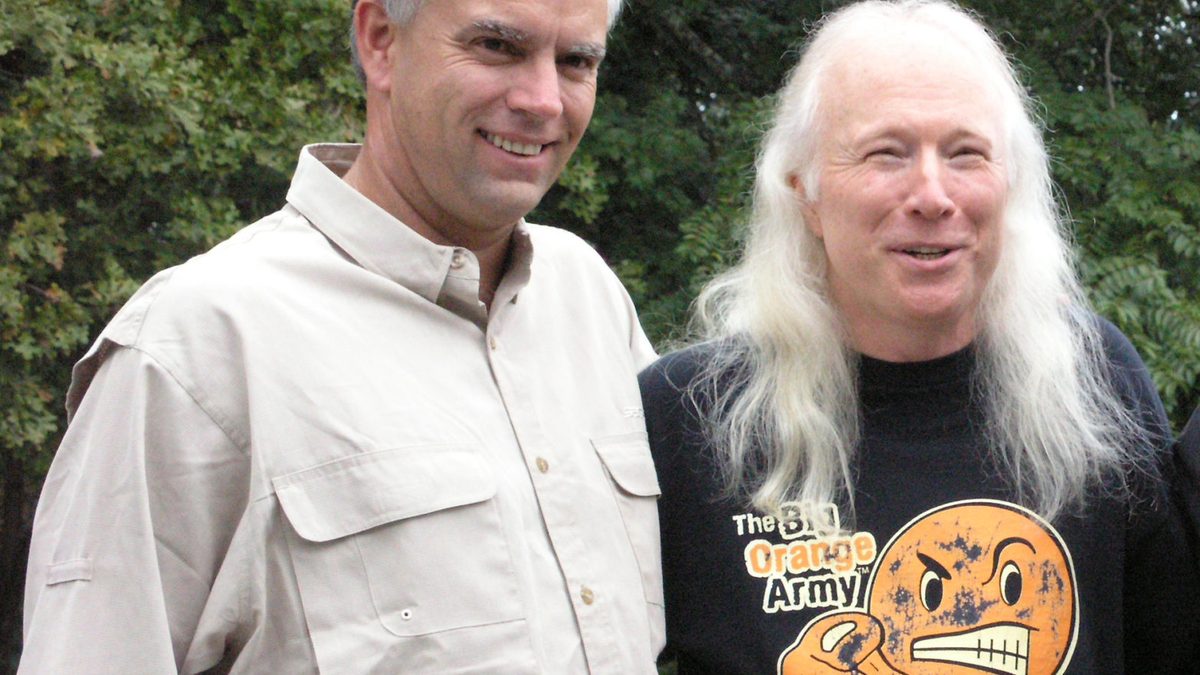
As we enter the last year of the second decade of this century I find myself reflecting upon not what but who has most affected me over the past 10 years. There have been many, but at the moment one in particular stands out. Bobby Drinnon, whom many of you knew, was my mentor for many years. I first met him nearly 20 years ago, but our real connection began almost 10 years later during an interview. Bobby taught me something that day.
When I arrived for that interview, Bobby sat behind a small desk in his modest office. His long white hair was framed by the rainbows on the walls. As the questions flowed and his story unfolded, I couldn’t seem to escape my skepticism at how anyone could possess the abilities we were discussing. I wondered if he could read minds and if my doubts were grossly insulting to him.
Having told me of his journey from childhood to young adulthood, he shared recollections of his fear of being different. That all changed when he met a woman who was able to help him make sense of his gift. And so began his quest to help me: the unwilling young man who arrogantly believed he didn’t need any help.
“Don’t you have some question you want to ask about yourself, Nathan?” “NO,” I thought, “I will not fall for this, will not get sucked down this rabbit hole.” Politely declining, I answered that this interview was about him, not me. He persisted, “But I can help you. I can explain things about yourself that I don’t think you understand.” Arrogance and pride can be blinding, and I was as forward-focused as an old mule hooked to a wagon. I was the hammer and he was the nail, and I would drive home my point with a good interview that my readers would enjoy.
But he was persistent as hell, so I decided to be a smart ass. I feigned defeat, “Sure Bobby, I do in fact have a question. What are the six numbers for tonight’s winning lottery ticket?”
He bristled and replied that he didn’t do that. It was convenient, I thought, that the one thing I asked was out of bounds, but I was on a roll. “Will you tell me if we give it all to charity?” I asked. “Surely you have another question,” he said.
Still feeling in control, I asked, “Will I get killed in a plane crash?” He replied that while he didn’t like to speak about people’s deaths, he didn’t foresee my dying in an airplane crash. He added, “That is, however, no substitute for safety, Mr. Pilot.” Wondering how he knew I was a pilot, I couldn’t resist and down the rabbit hole I went—head first.
“Do you ever wonder why people react to you the way they do?” he asked. “Sure, don’t we all,” I replied. “Well yes,” he said, “but not everyone is the same, and some people have a bigger effect on those around them.”
He went on to explain about auras and compared me to a nationally known religious figure, saying that our fields of energy were similar. Convenient that only he could see this, I thought, so I asked what else he could see.
He explained about what he called a life cord, and that it was each person’s connection to God, and how in it he could perceive some things about a person’s health. “How is mine?” I asked. “I can’t see it,” he replied. “Well by all means come over and find it,” I urged.
Walking behind me, he moved his hands about in the air, never touching me, and suddenly a bolt of sensation shot down my spine, shaking me to the core. I knew that for whatever reason my magical journey through wonderland had started, and there with his long flowing hair was my very own white rabbit, Bobby Drinnon, to guide me.
Through the rest of our conversation that day we shifted from me to him and back again, and I gained some considerable insight into my own life. I believed in his abilities as completely as any thing I have believed in my whole life, and I knew that when Bobby asked me to try something it was not without a lot of reflection on his part.
Some time after that he challenged me to try to see how long I could go without a single negative thought. I readily accepted his challenge only to find out that it is not as easy as one might think.
Within minutes I was behind a farm tractor on the road, and I was in a hurry to get home. “God must want me to enjoy and look around,” I thought, and I overcame the tendency to be negative. And on it went until I failed and had to start over.
Try it for an hour or even a day: it is refreshing not to have a single negative thought for a time. If you can’t seem to make it through the day, then go for a hike by yourself and find a place to sit in the forest without your cell phone.
Bobby wanted the very best for everyone he met. As I was deleting some old text messages, I came across the last communication I had with him before his death. He had just had surgery and knew that he had stage 4 cancer, yet his concern was not for himself but for others.
He said that there was one really important thing I could do for him. “Learn to really love, Nathan, and use the power he gave you as the gift it was meant to be, that’s all I ask. Xo.” I promised that I would truly try, and then he was gone.
I have been truly blessed to have been the publisher of this magazine and to have the opportunity to share my thoughts and feelings along the way. So as the new year begins, I will echo Bobby’s request to everyone who reads this: learn to really love and use the power you have to the benefit of all those you touch.
God Bless.
→ Swipe for Next Story
Arts & CultureNOVEMBER DECEMBER 2018
Lily Allen
Story by Emily Stevens
Farragut Intermediate School art teacher Lily Allen says she has never met a student that isn’t excited to be in art class. She works with third, fourth, and fifth graders—while keeping up with her own art as well.
Allen says her inspiration for becoming an art teacher began as a high schooler in Nashville. “I got to see how art reached a lot of students that otherwise weren’t being reached. They might be turned off to traditional ways of learning, but they were excited about getting creative, using problem-solving, and working with their hands.”
With a new set of school district standards, Allen has been able to cover the necessary topics while emphasizing the students’ choice and ownership in their creations. “They get so excited and are bursting at the seams when they come up with their own ideas.” During art class students are not only working with different materials and techniques, but also using skills that they have developed in math or language arts classes. The cross-curricular lessons give them space to express what they have learned.
Each of her students works hard to get a piece in the end-of-year art show, but Allen photographs every student’s work and posts it to Artsonia, an online gallery, for family members to view throughout the year.
In addition to teaching her students new styles, Allen has applied new concepts to art of her own. She primarily started in painting and printmaking but has incorporated weaving and macramé, which she also teaches to her students. To view and purchase Lily Allen’s art, you can visit her websitelewastudio.com.
→ Swipe for Next Story
PoliticsNOVEMBER DECEMBER 2018
Legislator or Loudmouth?
The Choices of Incoming State Rep. Gloria Johnson
Story by George Korda
It’s liable to get noisy in Nashville. Gloria Johnson has three options as she returns to Nashville to represent the 13th District in the state House of Representatives: 1) Be quiet and build a bit of seniority and some relationships; 2) Pick several issues on which she can compromise and work with the Republican majority to try to pass legislation; 3) Become a human bullhorn for the purpose of trying to embarrass Republicans. In Vegas, No. 3 would be a good bet. The other two are long shots.
The 2018 elections saw the Republican House majority grow to 73 seats to the Democrats’ 26. In the state Senate, Democrats hold five of 33 seats: two of the Democratic senators are from Nashville, three are from Memphis. They could hold caucus meetings in a minivan—with room remaining.
From a century of state political dominance, Tennessee Democrats in the last 24 years—beginning with President Bill Clinton’s first mid-term—have flamed out spectacularly. As the national party has steered a hard-left course, an increasingly leaky Tennessee Democratic ship has seen itself largely abandoned by Tennessee voters.
Republican State Rep. Eddie Smith, who’d held the District 13 seat for four years, defeated Johnson in 2014 after her first two-year term. Smith won a narrow re-election victory in 2016, but suffered a more than 10-point drubbing by Johnson in 2018. Smith, a well-regarded legislator, fell more than 2,000 votes short of his 2016 total. It speaks to a lack of enthusiasm among District 13 Republican voters and a motivated Johnson organization.
In the Democratic wasteland that is the Tennessee General Assembly, a vacuum exists. Johnson, not exactly a freshman given her previous experience, conceivably could fill that vacuum. No one else is doing so.
Johnson, a former teacher, is an education advocate and could make a Big Issue of demanding education improvements. But everyone’s an education advocate. Try to find a politician who’s against education, and good luck in the attempt.
Education is a big deal in individual and state economic success, but education isn’t that big a deal in statewide politics. Really. Though every candidate for office genuflects at the altar of supporting education, they also know that taxpayers generally prefer not to see their taxes raised. Thus, they try to walk a line between the two. Besides, if someone likes their child’s school and their child’s teachers, they don’t have a problem with education.
Johnson’s other Big Issue is healthcare, as in expanding Medicaid. The argument is that it’ll provide healthcare to 280,000 Tennesseans and it won’t cost the state any money because the federal government is picking up the tab.
That’s the club with which Johnson can batter her Republican counterparts, claiming throughout the state that the GOP grinches with hearts three sizes too small are denying children —children!—healthcare. Polls show Tennesseans want expanded Medicaid! Only the cruel would turn this down!
Johnson could use this platform to encourage the disaffected to vote for Democrats and to shame Republicans into doing something about Medicaid, even if just to gag her. It’s a pulpit from which she would likely find sympathetic hearers among many in the news media.
However, if expanding Medicaid were that effective and attractive it would have ridden to passage in its own limo. Republican Gov. Bill Haslam’s Insure Tennessee went down a flaming wreck despite the GOP’s legislative supermajority.
Across the country, states are finding that when federal payments reduce to 90 percent, the 10 percent that must be picked up is sending some of them to the financial emergency room.
AsGoverningmagazine reported in July 2018, “Many are tapping into tax revenues, making hospitals help, or adding work requirements and premiums to account for their increasing share of the expansion bill.”
Kentucky is eyeing a nearly $300 million shortfall in its expanded Medicaid program and is thinking about scrapping it altogether.
Nevertheless, if Johnson wants to demagogue the issue—a not unheard-of practice in politics—she can. The betting here is that she will.
Johnson is a Democrat in Tennessee. As Bob Dylan so eloquently put it: “When you ain’t got nothin’, you got nothin’ to lose.”
Illustration by R. Daniel Proctor
→ Swipe for Next Story
DepartmentsNOVEMBER DECEMBER 2018
Tons of Fun!
Today’s playgrounds are designed to captivate the minds of our youth.
Story by Cityview
Whether it’s the mulch-scented schoolyard or the colorful metal masterpieces of today, playgrounds are a timeless option for an afternoon of family fun. Restless kids can burn off energy, invent their own games, and even create healthy habits that last a lifetime.
Kids at play are having healthy, creative fun. But research shows that there’s a lot happening beneath the surface. Childhood play is a natural exercise where kids connect with their peers, develop their emotional intelligence, and express themselves. It’s not just fun ‑it’s one of the most important parts of childhood.
There’s a lot that kids can get from a playground that they’ll never get from a screen. It’s important to focus on hanging up the controllers and getting outdoors. Knoxville offers a variety of playgrounds for children of all ages, including ones created out of wood, metal, and recyclable material. Each playground offers different challenges and interactive features.
Lakeshore Park’s Hank Rappe Playground •6410 S Northshore Dr. This playground is a visually-stunning twist on the classic schoolyard.
Ashley Nicole Dream Playground •620 Winona St. Knoxville’s first fully-accessible playground includes both classic and modern equipment.
Fort Kid •1049 Worlds Fair Park Dr. This elaborate wooden fortress is conveniently situated in the heart of downtown.
Suttree Landing Playground •1001 Waterfront Dr. With a small playspace and a waterfront view, Suttree Landing is the perfect picnic spot.
Victor Ashe Park Playground •4901 Bradshaw Rd. This classic playground is bordered by open fields, hiking trails, and much more.
Photography by Keith Norris
→ Swipe for Next Story
DepartmentsNOVEMBER DECEMBER 2018
Garden to Table in the Foothills
The Dancing Bear Appalachian Bistro Stays True to Its Mission of Authenticity
Story by N. Brooks Clark
When asked how she makes her Fall Squash Soup both creamy and light, Shelley Cooper lights up with the passion that she brings to her creations. “We begin with the vegetable stock, which we make in-house,” she says. “We add enough cream for velvety richness and smoothness. Peanut dust and bacon bits add flavor, and pomegranate seeds provide the pop.” With her pulled-back blonde hair, large eyes, and sly smile, Cooper could be played by Kirsten Dunst, if she were making a hiking movie in the Smokies.
As executive chef of the Dancing Bear Appalachian Bistro since 2015, Cooper has found joy in following her vision of true Appalachian cuisine with inventive twists. “I’m doing what I said I was going to do,” says Cooper. “It’s a bad-ass feeling of peace in knowing the authenticity of that concept. In fact, our roots have gotten deeper. We have expanded upon the concept.”
Growing up, Cooper spent summers with her paternal grandparents on a farm in Western Carolina, where they cooked on a coal-burning stove and kept freshly grown food in a storage shed on the side of a mountain. On her mother’s side, family visits were to the Mississippi Delta, where they also had an extensive garden and fresh pickings. After culinary school at Johnson & Wales, Cooper cooked in Charleston, Los Angeles, New Zealand, Alaska, and Hawaii—picking up creative ideas along the way.
Among the most popular items on the menu, the Appalachian Hot Pot exemplifies what Cooper is all about. Served in a mini cast-iron skillet, it’s an Appalachian jambalaya with shrimp, scallop, crayfish, andouille sausage, wild rice, tomato, Vidalia onion and fennel broth. A pepper vinaigrette on the side adds bite. The scallop is perfectly cooked, soft, and moist. “Shelley has a way with scallops,” says Mark Oldham, who, with his wife Sharon, bought the property in 2013. “And she has a unique talent for blending these flavors and bringing out the best.”
Amid the tall trees just off Lamar Alexander Highway in Townsend, the new Bistro building has a hunting lodge feel with wood beams, bark walls, and a roaring fire in a majestic fireplace. Marshmallows and pieces of chocolate are always on hand to bring back memories of campfire S’mores.
Among the “Little Bits,” the Smoked Pork Belly & Egg comes with creamy corn grits, cabbage, a quail’s egg, and benne seed bourbon-cured apples. Each bite has such taste that you want to make sure and take your time.
Two “From the Garden” standouts are the Charred Caesar Salad of broccolini, cornbread dust, soft-boiled egg, anchovy, and shaved hard cheese; and the Rainbow Beet Salad that complements different-colored beets of different subtle tastes with carrots, radishes, curly spinach, goat cheese, blistered grape, and shallot vinaigrette. Photography by
Jim Martin
Main dishes (“From the Farm and Sea”) include Wild Coho Salmon served on wild mushroom corn risotto, bacony baby greens, and hominy cream. For unabashed carnivore couples, the two-pound smoked, Bone-in Ribeye for two is reminiscent of a thick Delmonico cut, served with a loaded potato, caramelized Vidalia onions, wild mushroom casserole, vegetable medley, and the house steak sauce.
Desserts include Apple Whiskey Crumble of spice streusel and whipped cream butter, Vanilla Crème Brûlée, and Chocolate Hazelnut Tart with a raspberry puree.
Dancing Bear’s unique dishes come at fine-dining prices, but the experience and the tantalizing tastes make it worth the price. Photography by
Jim Martin
The Cityview Rating:
TheCityviewRating reflects the totals of the five categories: Ambiance, Service, Food, Presentation, and Price. (25: Out of this World; 20 to 25: Excellent; 15 to 20: Very Good; 10 to 15: So-So; 5 to 10: Not Recommended; 0 to 5: Don’t Eat Here)
137 Apple Valley Way Townsend, TN 37882 (865) 336-2138
→ Swipe for Next Story
Dining GuideNOVEMBER DECEMBER 2018
Crispy Comfort
Story by Cityview
Nothing will warm you up quite like a platter of golden, crispy fried chicken and its best friend, beer. No wonder restaurants specialize in fried chicken across America! Fried chicken is traditionally a lunch option, but this is one versatile tradition; it can add flavor to breakfast, brunch, or dinner. Five Knoxville restaurants dress up this timeless meal with brand-new sides, sauces, and seasonings.
Balter Beerworks
Spicy or sweet? At this service-station-turned-trendy-microbrewery, there are fried chicken options for every palate. Brighten up brunch with time-honored chicken and waffles, or stay warm at lunch with Hot Chicken Sliders. Pair these anytime dishes with the microbrewery’s own Firebelly IPA for perfectly-balanced flavors.
Here’s a decadent brunch that’s worth the indulgence. At Tupelo Honey, juicy, lightly-breaded chicken pairs deliciously with fluffy buttermilk biscuits. This all-day Southern restaurant, one of Market Square’s quintessential restaurants, has a honey-battered take on fried chicken that takes comfort food to the next level.
Hot damn! The Frank and Maple’s Hot Damn Fried Chicken Sandwich packs one sweet punch. It’s just one option on a menu with a serious single focus: southern-style chicken with just as southern sides, such as tomato pie and black-eyed pea salad. With “wet heat” and “dry heat” rubs available to heighten the experience to your individual palate, Myrtle’s truly does have a fried chicken offering for just about anyone.
Years ago, this new kitchen + bar was Watson’s Department Store. Now that it’s Not, it offers all kinds of southern-style goodness. Their entrees elevate classics to a new level with unique flavor combinations. Check out their Not Yo’ Mama’s Chicken & Waffles, which pairs fried chicken with chilled spiced watermelon, a savory cheddar-cheese waffle, and bourbon maple syrup. Or freshen things up with the Asian Chicken Salad, featuring fried teriyaki chicken, cabbage and spinach, various fresh veggies, and a sesame-peanut vinaigrette.
Yes, Jackie is a real person. She pursued her dream of a soul food restaurant for years, perfecting her recipes and working long hours in the food industry. Once it opened in 2015, the restaurant was an immediate hit. After a move to North Knoxville in November 2018 – and a successful GoFundMe for new furniture and equipment – Jackie’s Dream Cafe came back stronger than ever. The restaurant’s Traditional Hot Chicken, a filling Nashville-style entrée, delivers comfort and authenticity.
The “Violins of Hope” is a new exhibition at UT’s Downtown Gallery featuring restored violins that were played by Jewish musicians during The Holocaust. The collection of over 50 violins was created and restored by master violin maker Amnon Weinstein. Weinstein was inspired when a Holocaust survivor brought him a violin for restoration and heard the tragic story of the instrument. These violins tell the stories of suffering and survival. The exhibition is free to view and will be on display for three weeks. In addition, the Knoxville Symphony Orchestra will perform with the violins on January 23 and 24 at the Tennessee Theatre. These performances offer guests a chance to hear the restored violins, as well as commentary by Hallerin Hilton Hill and dramatic readings. For more information visit violinsofhopeknox.com.
→ Swipe for Next Story
DepartmentsNOVEMBER DECEMBER 2018
Dear Flushed:
Dear Flushed,
Story by Cityview
The Knoxonomist applauds your ingenuity. As you know, getting rid of persistent guests is tricky business, and the Knoxonomist has added your method to his repertoire. This year the Knoxonomist resorted to using a WIFI jammer—on the fifth day of their visit, his cousin and family suddenly discovered they could no longer streamDeadliest Catch, and so they packed up and rolled out.
The Knoxonomist wants to say “be honest,” to tell your couch-sprawling uncle and his disapproving wife that it’s time to hit the road, that the bar is closed, that there ain’t no more laundry service. But you’ re not going to do that, and neither is the Knoxonomist. The consequences are too severe. Aunt Petunia will record the Knoxonomist’s bluntness in the monthly family newsletter she mails and posts to Facebook. The Knoxonomist has heard reports of her sticking the damned thing under the wiper blades of cars parked at her church and local Kroger.
No. The only solution is deviousness.
Here’s an idea if you want to avoid the guests in the first place. Move without telling anyone. When Uncle Cletus and crew show up for Thanksgiving, you’ll be giving thanks in another state. When sister Chrissy and her wastrel, pony-tailed boyfriend show up for Christmas, you’ll be chugging another Christmas cognac in Cleveland. When brother Roy Bob bangs on last year’s front door, you’ll be banging … well, you get the point. But perhaps it’s too drastic to actually move away from home—after all, all of your stuff is there.
Instead, consider telling everyone you moved, but don’t. If that works, not only do you get peace and quiet but you also get to keep your house. But perhaps you don’t mind guests, you just don’t want them to take root. Here’s a few ideas.
When your guests arrive, assign them chores. Not the easy chores like making a beer run, but nasty chores, such as cleaning the toilets, scooping up dog poop, and cleaning bathtub grout with an old toothbrush you cheerily provide.
Ask your guests if they mind bed bugs. (This won’t work with Uncle Cletus, of course.) When they look appalled, say they shouldn’t worry – you haven’t seen any bed bugs in the last hour or so.
Put hotel-style price lists about the house. Be outrageous. A packet of M&M’s is $3, a can of Coke is $5; beer is $7 for mass market, $12 for microbrew.
Flushed in Fountain City, the Knoxonomist hopes he helped. You’ve certainly helped him – the Knoxonomist will try your clogged toilet trick the next time Roy Bob won’t get around to heading home.
The Knoxonomist welcomes your questions— Send your inquiries toTheKnoxonomist@cityviewmag.com.
Illustration by Alexei Chtykhine
Dear Knoxonomist: During the holiday season I had guests who didn’t know when to pack up and head out. I deliberately clogged up a toilet. That worked—my brother, his wife, their four kids, and their three little rat-dogs cleared out. Any advice for next year? — Flushed in Fountain City
→ Swipe for Next Story
JurisprudenceNOVEMBER DECEMBER 2018
240 Years and Counting
The History (And Future?) of Immigration in the United States
Story by Gary Wade
Winston Churchill, whose mother, Jennie, was born in America, qualifies as one of the genuine heroes of World War II. As England’s Prime Minister charged with defending against the air attack of Hitler’s Nazi Germany, Churchill exclaimed, “Never give in. Never give in. Never, never, never, never…Never yield to the apparently overwhelming might of the enemy.” At a news conference in Washington well after the war, a reporter, obviously proud of her American heritage, asked this great man what he thought about the United States Constitution, which of course had been adopted in 1789. Churchill, equally proud of England’s centuries-old Magna Carta, simply replied, “I don’t know. It’s too early to tell.” At the age of 86, Churchill made his final visit to the United States in 1961. Of interest, he made the trip on a yacht owned by Aristotle Onassis.
The subtlety of Churchill’s “too early to tell” humor requires some context. England’s Battle of Hastings took place in 1066. William the Conqueror, a descendant of the Norse Vikings who had settled in Normandy, France, defeated the English forces. Harold II, the Anglo-Saxon King of England, was killed in the battle. William became king, and England changed. English aristocrats lost their lands, English and French began to mix, slavery subsided, and a new culture began.
By the end of the 12th century, seven kings had succeeded William to the English throne. At the death of Richard the Lion Heart, a Crusader memorialized in the Robin Hood tales, his brother, John, succeeded to the throne. After King John’s coronation, England experienced a series of failures at home and abroad. King John imprisoned his critics. His heavy-handed abuses of power ultimately led to a civilian revolt. The result was the 1215 version of the Magna Carta, a document forced on the King by his subjects. This “great charter” guaranteed individual rights and, of importance, required that the monarch respect legal process, habeas corpus chief among them, a procedure authorizing courts to intervene against any of the King’s unlawful imprisonments.
The Magna Carta, however, was not a single document. There were amendments. The 1297 version remains the law of England and Wales. Apparently, 721 years is “long enough to tell” by Churchill’s standards. Today, most historians agree that the Magna Carta was the major influence on the development of the U.S. Constitution.
All Americans should know our own story. After years of conflict, the English colonists rebelled against their mother country. “Taxation without representation” served as a primary basis for protest. A series of injustices under English rule ultimately led to the Declaration of Independence on July 4, 1776. A year later, however, the work of creating a new government began. The Articles of Confederation, creating 13 separate and sovereign states, served as the nation’s first constitution. Ratified in 1781, the Articles were doomed to fail as the Revolutionary War continued. Without taxing power, the country endured a weak defense, a declining economy, and an inability to pay war debt to the countries who had supported our revolution.
By 1787, independence was finally won, thanks as much to English fatigue, some say, as to America’s forces. The Federalist Papers made the case for change. Fifty-five delegates met in Philadelphia to form a new national charter. The result of their efforts was the U.S. Constitution, a remarkable document, now almost 231 years old, which established three branches of government – the executive, the legislative, and the judicial. Each had enumerated powers, designed to provide checks and balances on the others’ authority. The words of the preamble still ring with power and dignity: “We the People of the United States, in Order to form a more perfect Union, establish Justice, insure domestic Tranquility, provide for the common defense, promote the general Welfare, and secure the Blessings of Liberty to ourselves and our Posterity, do ordain and establish this Constitution for the United States of America.”
But 16 of the 55 delegates had refused to sign the new constitution. Among them was Patrick Henry, the patriot whose battle cry, “give me liberty or give me death,” had served to inspire the revolution. The dissenters were disturbed by the absence of a statement of fundamental rights. Not unlike the people of England during the rule of King John, many of our founders insisted upon guarantees of individual liberties. Young James Madison of Virginia, “Father of the Constitution,” negotiated a compromise. By 1791, the first ten amendments to the Constitution spelled out our “Bill of Rights,” which included, among other protections, the freedom of speech, press, and religion; the right to be secure against unreasonable governmental searches; the entitlement to the due process of law; and the right to trial by jury.
It is notable that, despite spirited disagreements, our Founding Fathers were able to join hands, and “in order to form a more perfect Union …and secure the blessings of Liberty,” agree not only upon our Constitution but also its accompanying Bill of Rights.
Fast forward to 1865. Less than 70 years after the adoption of the Constitution, a French law professor had an idea – a Statue of Liberty as a gift from France to the United States. By 1886, sculptor Frédéric Auguste Bartholdi had completed the statue, a symbol of the freedoms guaranteed to the American people. Seventeen years later, a sonnet by Emma Lazarus titled “The New Colossus” was mounted on the inner wall of the pedestal. Her inspirational, unforgettable words name the torch-bearing statue “Mother of Exiles,” from whose “beacon-hand glows world-wide welcome.”
Our majestic New York statue is our country’s symbol of greeting. In the last 240 years, through a civil war, two world wars, and numerous foreign conflicts, our form of government has withstood the test of time, but our nation’s position on immigration has changed. The lamplight has faded on our golden door, and Congress continues to struggle in search of a solution. Where is James Madison when we need him?
“Give me your tired, your poor, your huddled masses yearning to breathe free, the wretched refuse of your teeming shore. Send these, the homeless, tempest-tost to me, I lift my lamp beside the golden door!” —Emma Lazarus
→ Swipe for Next Story
FeatureNOVEMBER DECEMBER 2018
Santa Claus on Freemason Street
Story by Robert Pryor, Sr.
Don’t try to tell me there’s no Santa Claus.I met him once years ago, when he actually came to my house and brought candy for me and my neighborhood friends. Howard and David Dickens were there, and so were the Seals boys, Larry and Sidney. Of course, Corky Goldman was the most excited. Connie Woods was there, I’m sure.
There was a soft knock on the front door and suddenly he stepped inside.WOW!Of course, he was all in red with white trim and a wide black leather belt holding back his perfect rotundness.I studied his well-worn but shiny black boots that must have supported him for more than a million miles. But it was his hair that gave him an aura that seemed supernatural to a five-year-old. Silver white and definitely real. No wig, but real hair growing out from under his red fur-trimmed cap—and a magnificent, well-groomed beard. He just stood in my living room with his hands on his hips, and it seemed that time stood still.
My small living room was filled with my playmates expecting a fake Santa, perhaps from Sears, but we were shocked by what was obviously the real deal. Larry ran to him and wrapped himself around Santa’s leg while others just screamed or laughed that nervous laugh when you are overcome by excitement. Darla from across the street wet her pants and the piano bench.
I must admit, I was quite the celebrity in Lincoln Park for years after the Christmas of 1948 because I had a direct connection to the real Santa Claus, and he was a personal friend of my father.I never doubted him again until I was about eight, and Christmas morning turned into a scavenger hunt for gifts hidden throughout the house.
Almost everyone has fond childhood memories of Christmas mornings, and mine are especially memorable because my parents were so committed to the customs of the season and the happiness of me and my brother, Jimmy. My father built an oversized ping-pong table that filled our living room wall to wall. He obviously forgot to measure a regulation table, and I knew that he was involved because it was made of standard plywood, had screw-on water pipes for legs, and was not painted green.I had to crawl under the table to get to the fireplace to empty my stocking. Traditionally, our stockings were always stuffed with an orange and lots of candy, along with things we needed anyway like pencils and a toothbrush.A Tennessee football and jersey were once my major gifts from Santa. That year, a Lionel train went to my brother, but I actually played with it more than he did.I should have focused on the guitar Santa left me. That guitar could have changed my life, and I might have died at age 42 in the bathroom of my mansion in Memphis. But while I’ve always had the moves, I never had the voice.
As I got older, disaster began to creep into my holidays. During my high school days, I was hired by Miller’s Department Store to provide the entertainment for the opening of the Christmas toy department. The store manager knew me and thought I could put the show together from a recording and costumes the store had rented from a television show. At that time the store was on Henley Street and was Knoxville’s major department store long before West Town or even I-40.The big show was to feature four live cartoon characters in full body costumes that zipped up the back. The costumes came with large oversized plastic heads. Of course, I was the star of the show, Huckleberry Hound, and my friend Bobby Baker was Quick Draw McGraw. Benji Miller, as I recall, was Yogi Bear. The group practiced dancing around and acting out the music, and on the Saturday morning of the performance the basement floor of the store was packed with hundreds of small children and their parents, excited about the show and the grand opening of the toy department. And who was set to introduce Santa at the end of the show? Huckleberry Hound.
As you might imagine, if you hire four teenagers to take charge of your big store promotion, you must embrace the risk of disaster. Well, guess what? Benji got real nervous and had to use the restroom after we dressed in our costumes, but there was no restroom and seemingly there would be no rest. We were confined in a hallway out of public view, and Benji fidgeted in his Yogi Bear costume as we prepared to go on the stage. There was an emergency door that presumably led to the outside, but when Yogi Bear stepped outside for relief, it set off the fire alarm. The children and their parents scattered believing there was a fire and the fire engines soon arrived. Chaos prevailed. Later, the show was presented to a smaller audience and, fortunately, we got paid and Christmas was saved for Huckleberry and Company.
Early in my law practice, I experienced another Christmas calamity. As you may know, many lawsuits are settled just before Christmas and I had received a settlement check for a young married couple just days before the close of business for the holiday season. The couple agreed, as is common, to accept a joint settlement even though the redheaded wife was the one physically injured. There was no reason to require them to divide the joint recovery. Just sweet and agreeable kids looking forward to a big Christmas with the fruits of her pain and suffering and his assumed loss of matrimonial prerogatives. They insisted on a cash recovery and could not be talked into opening a joint checking account in which to deposit their loot.I accompanied them to the bank just in case they encountered a problem with the settlement check.
Understandably, there was a delay while the teller gathered up $17,000 in cash, but when she stacked the money in the window, Red grabbed a fist full of hundreds. Hubby, not to be outdone, grabbed two fists full, knocking me out of the way. Christmas cash flew into the air and all over the bank floor. As they fought for the crumbs on the floor, I thought to myself, “Now, this is a learning experience.”What I didn’t know about my clients was that they had decided to get a divorce pending the settlement and were then living separately. It was a nightmare never to be repeated.
But even though Christmas has as at times been visited by calamity, it was always a happy time in my childhood—even more so later in my adulthood as Norma and I raised our own three children. Using my mother’s recipes, Norma has always prepared a large roasted turkey, ham (HoneyBaked in recent years), mashed potatoes with giblet gravy, broccoli casserole, Roquefort cheese dressing, and the best minced oysters in the world. If you have ever tried unsuccessfully to buy oysters from December 20 to 25, it’s because I’ve bought them all up. This year our family looks forward to another happy Christmas, but, hopefully, without drama or disaster.
Merry Christmas everybody, and please leave me some oysters!
→ Swipe for Next Story
FeatureNOVEMBER DECEMBER 2018
Switches
Encouraging Honesty in a Dishonest World
Story by Robert Pryor, Sr.
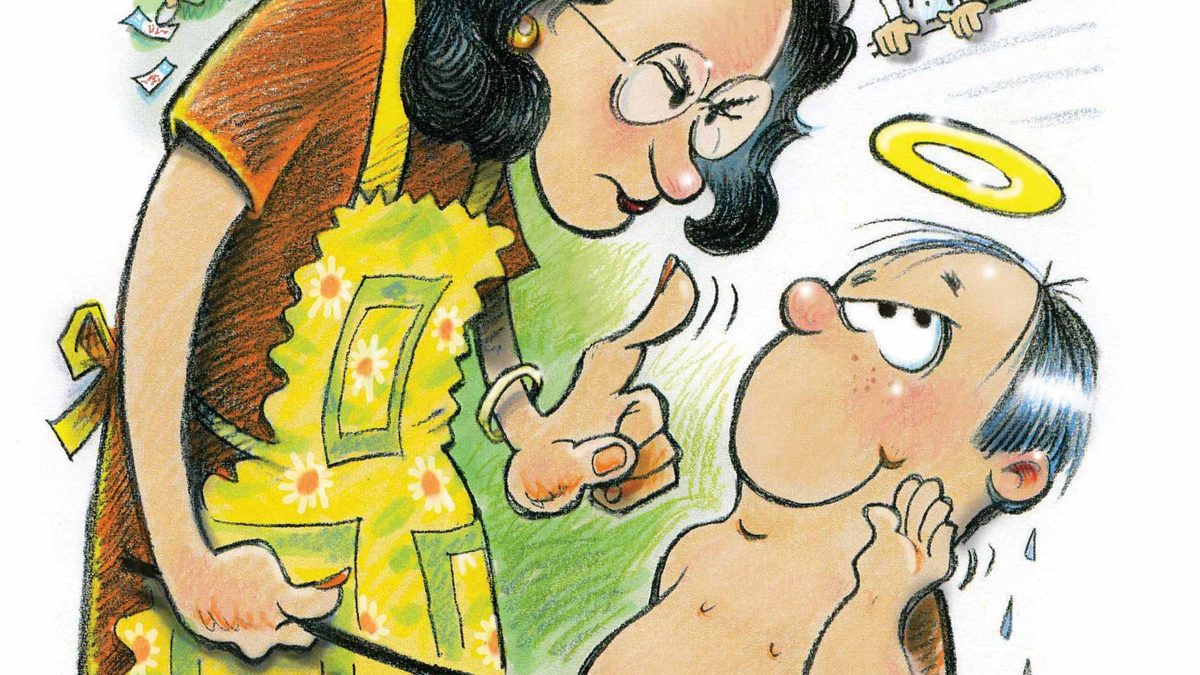
I want everyone to know that as a kid growing up in Knoxville, I was always opposed to corporal punishment. Unfortunately, at my house they didn’t give me a vote, and when I got in trouble my mother was very resourceful in her approach to discipline. Branches from the bushes next to my childhood home served her as a more than adequate arsenal.
I knew I was in trouble when my mother looked up from her plate of homemade lasagna and asked, “Bobby, did you have a towel today after your swim?” I knew I had done wrong, but in my mind it wasn’t a big deal. Even today, over 60 years later, I remember everything about the forgery and the lie.
During the summer of my tenth year, I was a proud member of the YMCA summer camp. At that time, the main Y on the corner of Locust and Clinch was the only one in town, and with boys my age I would play basketball and other games there and then have a picnic lunch in Tyson Park. In the afternoon, we would swim in the indoor pool at the Y, but for some reason we were not permitted to wear bathing suits. Why in the world would the YMCA make us swim naked? I never understood that and now, six decades and two college degrees later, I still don’t understand it. I think it had something to do with teaching the boys that all men are not created equal.
We were required to obtain a towel by paying a dime to the camp counselor for a small piece of paper with his initials, which we then exchanged for a towel to hide our nakedness after the swim. One day I didn’t have a dime so I found a piece of paper and scribbled what looked like the counselor’s initials and traded it in for a towel. As was explained to me later by my mother, that constituted a forgery. To me, it was just a clever solution to a temporary problem.
When I was questioned by my mother about the towel, I told her that I used a dime to obtain a ticket—and that was a lie. I might not have known what forgery was, but I did recognize a lie when I told one. LaVerne Pryor was a world-class cook and a master at cross-examination and carrying out stiff sentences for bad behavior. Through a close, sharp, and rigid cross-examination, she got the truth out of me and in the process taught me my first law lesson. She explained that I had not only committed a forgery, but, like Bill Clinton years later, had lied about it—and the lie was worse than the act it sought to conceal.
As was necessary from time to time, my mother asked me to go to the yard and find a switch. Now, in case you don’t know, a switch is a thin branch from a tree or bush that is highly flexible and at least two feet long. In the 1950’s, switches were commonly used in my neighborhood by parents when their children needed a whippin’. While I rarely required discipline, the lie about the towel was considered a qualifying event. I remember that the search for the switch was the worst part about a whippin’. Like going to the dentist, the anticipation of the punishment was worse than the punishment itself. The point is my mother impressed upon me the importance of telling the truth and that it was wrong to make a misrepresentation to gain an advantage.
My father was a gentle soul and thought that all solutions should be thoroughly discussed, and that the embarrassment of doing wrong was probably punishment enough. I think my parents believed that if they set a good example for me, they would earn my respect and I would not want to disappoint them later in life when there were plenty of opportunities to make wrong turns. We have tried to practice this same philosophy with our own children and, so far, it has worked. I always fear for kids who lose respect for their parents and therefore would not hesitate to disappoint them.
A little later and while still a student at Lincoln Park school, a friend and I got into some big trouble, giving me an opportunity to learn another lesson. Some older boys, who were strangers to our neighborhood, were trying to push us around as they were delivering some type of political circular door-to-door. To get even, we decided that we would go behind them, pick up the circulars off the porches, and throw them away. Believe me, at that age we had nothing against the candidate and did not even know who he was until he suddenly appeared in my living room. I received another cross-examination from my mother and quickly confessed and ratted out my buddy. Back to the yard for a switch and another good lesson learned.
My next lesson came on a Sunday afternoon after church. My family had taken my grandparents to eat lunch in a restaurant, and my mother was explaining from a menu what my Papa Pryor could order, when I thoughtlessly blurted out, “What’s the matter, can’t he read?” That may have been the most hurtful thing that I have ever said to anyone in my life. I was told later how hurtful it was because, no, he couldn’t read, and I didn’t know it. My grandfather was born in Calderwood below Maryville and was adopted as a child. He courted my grandmother around the Carpenters section of Blount County, and after they married, he worked as a custodian in a school and later for the Southern Railway at John Sevier Yard. He was a short, stocky man with a great sense of humor, and he was particularly fond of me. He had worked as a child, had not received an education, and to my dismay had never learned to read. As a child, I assumed every adult knew how to read, and I remember crying that Sunday afternoon at the very thought that I had carelessly said something that hurt his feelings. It is a lesson I will never forget, and since that time I have always tried to guard against assuming anything before I shoot off my big mouth with something that could be hurtful or disrespectful. No switch was necessary to help me remember that lesson.
Like almost everyone, I learned all of these lessons before I was twelve, and they have guided me for a lifetime. I am from a wonderful place where honesty and the way you treat other people are important. I’m baffled that I now find myself in a world where people who are supposed to be intelligent role models and leaders lie with impunity and spew hateful words about and directly to their adversaries.
Regardless of our differences in matters of politics, religion, or lifestyle, we all should insist on honesty from our elected officials and people privileged by power. George Washington is considered our greatest president because, in part, he could not tell a lie. I remember in the second grade painting a picture of ole George holding a hatchet and standing next to a tree with red dots for cherries. Our current president reportedly has told over 6,000 lies or misrepresentations in his first two years in office. Someone is keeping count, and before the midterm elections last November he was lying at the rate of 30 per day. I highly suspect that President Trump’s mother and father failed to teach him the lessons the rest of us learned as children, and switches were probably not a part of his youth.
Both the conservative right and the liberal left spent millions of dollars advertising lies about each other during the last election, and even our church leaders disappoint us with coverups. I read in the paper about the TVA coal ash cleanup and how evidence has proven that the corporation in charge of the project repeatedly lied to workers about the dangers involved in coal ash exposure. These corporate lies have apparently resulted in considerable illness and death. The same type of wrongs have been committed by those responsible for managing Pilot Flying J. Our prized corporate citizen has admitted trying to get away with over $50 million stolen from its most loyal customers. The company and several executives admitted wrongdoing, and others have been found guilty and are on their way to prison simply for cheating and telling the type of lies my parents warned me about when I was in elementary school. No doubt, these corporate leaders missed their lessons in truth and honesty and could have benefitted from an occasional trip to the yard for a switch.
→ Swipe for Next Story
FeatureNOVEMBER DECEMBER 2018
Nashville
Story by Peter McCarville
Nashville is still certainly thriving off its status as a “music city”—a reputation it has earned through decades of churning out country superstar after superstar. And, if anything, the city’s desire to seek out new and exciting artists has only expanded. There will always be plenty of country music coming out of Nashville. The Honky Tonks on Broadway are packed wall to wall, day in and day out, year-round. But there are also many other new and exciting prospects popping up in a variety of venues small and large. Music City is now more diverse musically than it ever has been: record labels like Infinity Cat have emerged and are creating an international platform for some of Nashville’s most enjoyable garage rock acts like JEFF the Brotherhood and Pujol, while Jack White’s Third Man Records curates classic artists like Willie Nelson and Johnny Cash, puts out contemporary favorites like Sun Seeker and Margo Price, and hosts special live sessions where artists’ performances in their signature Blue Room are recorded straight to vinyl. There a plenty of exciting new things happening in Nashville that solidify its status as a music capital. But you’ll have to be willing to seek out these opportunities to catch something as unique as what appeared in the days of yore.
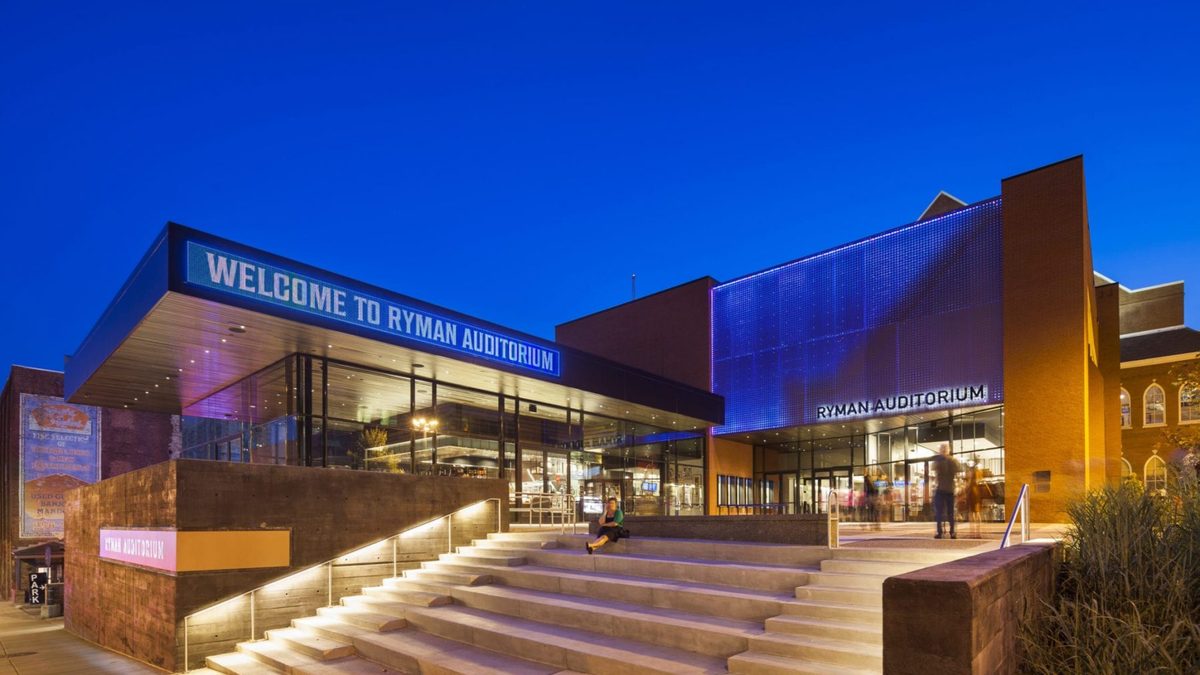
Despite the semi-dissolution of Nashville’s famous Music Row, many of the historical venues still stand and operate, the most renowned of which is the Ryman Auditorium. Built as a church in 1892, the building, which is the epicenter of downtown Nashville, eventually transitioned into a live music venue, and became the home of the Grand Ole Opry from 1943 to 1974. It now operates as a full-time theatre. According to Joshua Bronnenberg, who oversees the tours and museum there, it sees over 250 performances and other events throughout the year. He is also quick to point out that the auditorium didn’t always receive the praise it currently gets, saying “[when] the Opry left in 1974, the building ‘went dark’, as people like to say, with the only activity seen in the auditorium being that of limited tours.” It was not until “two major renovations (1989 and 1993-1994), [that] the building opened to the public in June of 1994 as a daytime tourist attraction and an evening concert venue.”
Since then, it has simply become one of the greatest places to take in a performance, with rows of original pews, a sprawling semicircular balcony, and large, beautifully crafted stained windows. In its central downtown location, The Ryman serves as a beacon of what the city’s music has built over time, with country music’s smaller stepping stones surrounding it.
A myriad of other classic venues line the neon sign spangled street of Broadway, with Tootsies being the most prominent. The pink building sticks itself out both for its striking looks and, for many music fans, because it has been mythologized as a place to see the next wave of country artists in the infancy of their careers. They feature music every night, as do many of the other establishments that line the street—like Robert’s Western World, which has hosted its share of famous musicians while also playing a pivotal role in the revitalization of Broadway that began in the 1990’s. There are also plenty of newer places doing their part to keep Nashville’s reputation alive, like Acme Feed & Seed, Bootleggers Inn, and Tequila Cowboy—all great places for people of any age interested in reveling in the city’s culture. Photo courtesy of The Bluebird Cafe
Downtown, however, is far from the only place to see the up-and-comers perform. Visitors to the Bluebird Café are treated nightly to rising, talented artists showcasing their music before a small audience. Bluebird General Manger Erika Wollam-Nichols notes that it is a different type of venue than some of the Honky Tonks. “The Bluebird is a listening room,” she says, “rather than a party room.” She is referring to the café’s quiet policy, where spectators are asked to hold their talking while the performances progress. This is a significant difference from the Honky Tonks downtown, where the party is every bit a part of the experience as the performance. The Bluebird is a place where the emphasis is on the song as much as anything else. On most nights, they hold what are called “In the Round” events, where “you can expect to see most any songwriter performing,” Wollam-Nichols says, “with peers, co-writers andfriends. That could be anyone from Garth Brooks with his co-writers, to a very new songwriter, invited by some more advanced co-writer.”The Bluebird also maintains its own mystic history, with a slew of artists being discovered there throughout the years.“Many songwriters and artists have had career moments at The Bluebird,” Wollam-Nichols reflects, “from Garth Brooks’ famous showcase where Lynn Schultz from Capitol Records was in the audience, to Taylor Swift who performed in front of Scott Borchetta, pre-Big Machine Records, to Faith Hill who was singing backup for Gary Burr when she was approached by Martha Sharp from Warner Brothers.”
And many artists still perform there in hopes of capturing one of those career-defining moments, as happens all over Nashville. But it can be daunting nowadays. It’s not clear whose lawn you should land a helicopter on to boast about writing “Sunday Morning Coming Down,” as emerging songwriter Kris Kristofferson did when delivering a tape of the song to Johnny Cash. For many, the battle is self-fought. Stephen Paul is one of those artists trying to pave their own way. He doesn’t have the backing of some larger acts, and still books his own shows through networking with venue owners he’s met over the last few years. “Sometimes I reach out to bars blindly and see if they are interested, which leads to other opportunities along the way,” he says. The country market is also very full, as one might expect, but he says that doesn’t lead to unhealthy competition. “Country music is a family,” he affirms. “No matter how big or small, everyone is willing to lend a help hand. But at the end of the day, it’s like any career. You just bust your butt every single day if you truly want to succeed.”
Those words ring true for everyone working in music in Nashville, not just for country artists. Chris Davis organizes shows under the banner FMRL (pronounced “ephemeral”). The shows display avant-garde and experimental artists from Nashville and elsewhere around the world in houses, clubs, and bars throughout the city (hence the name), not unlike Knoxville’s Big Ears music festival. “The letters FMRL could stand for anything,” Davis says. “I like to say, ‘Free Music Ruins Lives,’ because free jazz and experimental music ruined—or re-tuned—my ears, thus ruining my life, perhaps in a similar way to how bluegrass destroyed John Fahey’s life.” Davis puts on shows for artists like Guzheng player Wu Fei and multi-instrumentalist JayVe Montgomery. They represent a different side of Nashville, one that is not simply country superstardom, but rather is artistic and measured. Davis says those artists “[understand] that pushing noncommercial music in a town built on commercial music success is inherently difficult. But the world is changing and people are exposed to a very wide range of music and they want to hear that music performed live.” FMRL has come to represent the other side of the city, where country music is but one element and not the whole experience. In Nashville, country is king, but its strength is in diversity.
→ Swipe for Next Story
FeatureNOVEMBER DECEMBER 2018
Sevier County Staycation
A long weekend close to home
Story by Emily Stevens
This season you have battled the holiday shoppers, visited with family, entertained out-of-town relatives, and now it’s time for you to take a long weekend and let all of the holiday stress melt away. Fortunately, you don’t have to go very far to find peace and solace in Sevier County. Within it lies Pigeon Forge, Gatlinburg, and the Great Smoky Mountains National Park. This part of Tennessee is steeped in rich history, art, culture, and is home to the most widely visited park in our nation.Cityviewhas put together a weekend itinerary for those looking for the perfect close-to-home getaway.FRIDAY
On your way out of Knoxville, stop byScrambled Jake’son Northshore Drive for a hearty breakfast to get your day going.
When you reach the town of Sevierville, visitRobert Tino’s Galleryand take home a piece of Smoky Mountains artwork.
In the heart of downtown, visitCourthouse Donutsfor a cup of coffee to warm you up and make-your-own donut. Stroll across the street for a photo op with the bronzestatue of Dolly Partonin front of the courthouse.
To gear up for the second half of the day, fill your bellies atHolston’s Kitchen.
Head to Pigeon Forge to visit theTitanic Museumfor a fun and fascinating adventure. Don’t forget to take a photograph of your best Jack and Rose impression!
After a fun-filled day of travel and touring, take a load off by checking in to your basecamp for the weekend. We recommend staying atDreamMore Resortin Pigeon Forge orGreystone Lodgein Gatlinburg.
To take in all that Pigeon Forge has to offer, catch a performance at theSmoky Mountain Opryand round it out with dinner atLocal Goat, which specializes in craft drinks and foods that are sustainable and locally sourced.SATURDAY
If you visit Gatlinburg and don’t eat at one of the many pancake houses, did you really go to Gatlinburg? To get your fill of syrup and stacks, we recommend thePancake PantryorFlapjack’s Pancake Cabin.
For a high-flying view of Gatlinburg, visitOber Gatlinburgto ride a scenic chairlift or aerial tramway. The activities vary seasonally but include riding a mountain coaster, snow tubing, ice skating, skiing/snowboarding, and much more.
Enjoy lunch with one of the best views of the Smokies atSeasons of Ober Restaurant, or a lighter bite and refreshment atThe Loft Lounge at Ober.
A must-see in Sevier County is theGreat Smoky Arts & Crafts Community. As the largest independent organization of artisans in the United States, you can visit the shops and galleries of painters, woodworkers, potters, weavers, and much more. The Glades, as the community is known, can be reached by taking the Yellow Trolley from downtown Gatlinburg, or you can drive the woodsy route yourself. A map of the community and destinations is available online atgatlinburgcrafts.com.
While in the Glades community, enjoy dinner atRed Oak Bistro. The small but personable restaurant features wonderful tapas and wine. The owners, Olga and Mike, take great care to make sure you receive the best dining experience.
Before you turn-in for the night, perch yourself atYee-Haw Brewing Co.for a nightcap or visitOle Smoky Moonshinenext door for a quick tasting.SUNDAY
To make breakfast easy like Sunday morning, enjoy the meal at your lodging. Both DreamMore Resort and Greystone Lodge offer excellent in-house dining choices.
No visit to Sevier County is complete without a hike inGreat Smoky Mountains National Park. Before you hit the trail, pick up a boxed lunch fromParton’s DeliorOld Dad’s General Store. And for an extra mid-hike pick-me-up, grab a sweet treat fromKilwin’s Chocolates.
Head toward Cades Cove on Little River Gorge Road. Two of our favorite hikes includeSpruce Flats Fallsat Tremont, and if you’re looking for something a little more blood pumping,Abrams Fallsin Cades Cove. Detailed information on all of these trails and more can be found athikinginthesmokys.com.
After an adventurous day of hiking, you’ll have worked up quite the appetite. Luckily, one of the best dining experiences lies just down the road in Townsend, Tennessee.Dancing Bear’s Appalachian Bistrois a true farm-to-table experience, complete with a toasty fire to roast marshmallows. For our review and recommendations, check out the “Dining Out” feature on page 48.
Cityviewknows that our readers have a variety of interests: some enjoy art and history, some are looking for more family fun, and some want to take in all that Mother Nature has to offer. In addition to this itinerary, here are a few of our other favorite Sevier Co. attractions:Tennessee Museum of Aviation (Sevierville)Forbidden Caverns (Sevierville)Scenic Helicopter Tours (Pigeon Forge)The Track (Pigeon Forge)Ripley’s Believe It or Not Aquarium (Gatlinburg)Anakeesta (Gatlinburg)
→ Swipe for Next Story
FeatureNOVEMBER DECEMBER 2018
CBD OIL
Story by Hannah Overton
Over the past couple of years, CBD Oil has increased in popularity in East Tennessee. You may have heard about it on the news, or through a friend, or may have even seen it being sold in stores. But what exactly is it? And why do so many people swear by it? I tasked myself with the journey of educating myself on CBD products and maybe even trying some for myself. Below is what I learned and what I found.
CBD Oil is derived from the Cannabis Sativa L. plant, which is the official name for the hemp plant. But you can buy both CBD oil and hemp oil on the market. Eddie’s Health Shoppe in Knoxville sells a variety of CBD products. Co-owner Bridget Reymond explains the difference between the two CBD oils currently on the market: “if you hear someone talking about a full-spectrum product, those are going to be the hemp oils… [the hemp oils] are going to have CBD 1 and 2… your body has both CBD 1 and 2 receptor sites throughout your body.”
I have heard several people voice concerns about CBD products in relation to marijuana. While technically the same plant, marijuana and hemp are bred differently. Hemp plants have low levels of THC, the psychoactive component in marijuana, and many CBD products are THC free. The only ones that are not THC free are the full-spectrum, pure hemp oils, which cannot legally have more than 0.3% THC in any product. That being said, none of the CBD products currently sold on the market have any psychoactive effects, even the brands containing low levels of THC. Reymond encourages those who might have concerns to be “better safe than sorry and to go with the CBD isolates, which would be THC Free.”
Eddie’s Health Shoppe began selling CBD products a couple of years ago, but Reymond notes that its popularity has risen significantly in the past year after some changes in legislation peaked consumers’ interests. But Reymond notes that word-of-mouth has been the biggest cause for the rise in popularity and sales. Those who have had good experiences using CBD oil don’t seem to be shy about sharing it with friends at all.Co-owner of Eddie’s Health Shoppe downtown, Bridget Reymond has become an expert on CBD oil, its many uses and health benefits, and how it interacts with the body. Photo by
Hobe Brunson
The first time that I ever heard someone talking about CBD oil was a couple of years ago when, after a very long and scary health journey, the sister of one of my dearest friends was diagnosed with a form of epilepsy that wasn’t responding to traditional therapy provided by modern medicine. The only thing that ended up helping was the use of CBD products. As I learned more about CBD oil and the various products on the market, I became intrigued with all of the options and claimed health benefits.
TN State Senator Dr. Richard Briggs, also a thoracic surgeon, sponsored a bill several years ago legalizing CBD oil for the use of pediatric patients with epileptic disorders. According to Briggs, treatment of seizures is a CBD oil benefit that has “big scientific evidence.” Doctors have seen a lot of success in the use of CBD oils for the treatment of seizures in patients of all ages. Along with CBD oil, Sen. Briggs references prescription drugs that contain levels of THC that have the same benefits as medical marijuana. Marinol is a synthetic form of THC that has been a legal prescription used for patients with AIDs or those going through chemotherapy since the mid-1980s. Absorbed through an inhaler, Sativex is a combination drug of CBD and THC that’s currently being tested and reviewed in the U.S. Briggs believes that with drugs like Marinol, potentially Sativex, and the legalization of CBD products on the market, there would be no need for unregulated medical marijuana. Consumers would be able to glean all of the benefits that medical marijuana typically claims, without needing to depend on someone who isn’t a medical professional trying to guess what dosage would be appropriate for their symptoms and health issues.
Aside from seizures, consumers have claimed many and various health benefits from using CBD products regularly. Reymond states that customers use it for “anything related to stress or inflammation in the body,” which can be reflective of anxiety-related conditions, different depression or mood disorders, ADD, autism, daily aches and pains, workout recovery, chronic conditions like arthritis, fibromyalgia, seizures, Parkinson’s, cancer, and more.
I fall into the “and more” category, which is what personally sparked my interest when I first heard about CBD oil. With a still-being-diagnosed autoimmune disease, I deal with a variety of symptoms that fall into many of the categories noted above: anxiety, depression, sore joints and muscles, inflammation, and extreme fatigue. Functioning normally is something I’ve taught myself to do, but flare-ups can leave me feeling completely depleted of any energy. I’ve considered the use of CBD products to help with my various symptoms, but learning more about its origin finally pushed me to try some.
I’m open-minded when it comes to being healthy. I’m all for modern medicine. The collaboration of science and the human body is positively fascinating to me. However, I’m also not against holistic medicine. In my mind, whatever leads a person to healing is probably the route they should choose. And I have to hold myself to that same open-minded graciousness toward my own health.
The possibility of relief for some of my daily symptoms was the ultimate appeal of CBD products for me. Since I hadn’t used anything like it before, I started out simple and tried the lozenges. I almost forgot that I had them to try until I saw one in my purse when I was grocery shopping and decided to just try it out. Let me preface that by saying that for me, grocery shopping is a big deal. Because of some of my dietary restrictions, meal planning is the simplest way for me to make sure I’m eating the right foods. A huge grocery store run happens every Sunday, and I hit up all of my favorite spots and get it done in one go. This sometimes takes two to three hours, and I always end up anxious over making sure I get everything for the week. I was at Target when I tried the lozenge. About 15 minutes into my shopping, I realized I wasn’t scurrying around like I normally would be, trying to get everything and get out. In fact, I didn’t feel the need to rush to the next store. I had time, and in fact I could get everything I needed at that one store and just go home and enjoy my Sunday.
This was an experiment for me. I didn’t walk into this journey expecting CBD oil to take away all of my worries. After trying various products over a certain time, my biggest takeaway was that, for me, it helps calm my anxiety. I’m curious to see what relief I might have over long-term use, but seeing how loved ones have found success with it, I definitely see why so many are team-CBD. While it may not be for everyone, it could be the right choice for some. If you think it might be an option for you, do your research! Senator Briggs and the folks at Eddie’s both agree on this important step in the process. Make sure you’re buying any CBD products from a reputable source, such as Eddie’s Health Shoppe, where the employees don’t just sell you a product, but also inform you on how it should be used. But at the end of the day, if you need any kind of mental or physical relief and you choose to try CBD products, I hope that it brings you the answers you seek.
→ Swipe for Next Story
FeatureNOVEMBER DECEMBER 2018
Coalson Says: Adult Language Required
Story by Carolyn Evans
Remember unfolding a great big roadmap? Ever desperately pull one out while flying down the interstate at night, knowing you’re probably headed the wrong direction?
That’s how many of us approach estate planning. The plan seems complicated, full of words we don’t understand, and we can’t figure out which road to take.
Knoxville attorney Felicia Coalson says it’s not so bad: learning a few key vocabulary words can go a long way.
“People don’t want to talk or think about their death,” she says. “They think if they don’t deal with wills or powers of attorney, they won’t die.”
It’s pretty easy
In actuality, though, she says getting a plan together can be like plucking a gray hair: quick and almost painless.
“I very highly recommend that young parents with children do estate planning because they need a guardian in case something happens to both of them. Other than that, I’d say 55 to 65 is a good time to start. You’re starting to get kind of set in how much money you have. That’s a good time to put your wishes down.”
Coalson says although some people don’t need any legal paperwork, most people need either a will or a trust.
“It’s really a pay now or pay later scenario,” she says. “If your heirs have to go to probate, I’ve seen legal fees range from $4,000 up to $55,000 — that $55,000 was contested, though.
What’ll it be?
“What you do depends on your stage in life, your assets and your wishes,” she says. “If you just want to give Susie your car, that’s simple planning, meaning a will is sufficient. If you want to send her to college and give her a lump sum at 30, then you need a trust. The more assets you have and the more complex your wishes are, the more you lean toward a trust. The fewer assets, the more you lean toward a will.
“The big thing to decide is whether you want your assets to travel through our intestacy laws. If you don’t want your heirs to have to go to probate court where things become public, you want to draw up a trust.
“Drawing up a will doesn’t have to be a time-consuming experience,” she says. “It should be an hour to an hour-and-a half for a simple will. You can get a simple will done for under $500. I see revocable living trusts probably the most. That means the people who make the trust can change it while they’re living. That’s usually a minimum of $1,500.”
While Coalson has clients in her office to discuss wills and trusts, she likes to bring up the subjects of power of attorney, versus conservatorships and advance directives. The terms may sound complicated, but they’re really simple.
Have the talk
“A power of attorney is a document that can give one or more people the authority to make decisions about your medical treatment, safety and living arrangements, and your financial wellbeing, according to your wishes, while a conservatorship is a court proceeding in which the proposed conservator petitions the court to have your decision-making authority taken away from you because of incompetency or disability.
“Power of Attorney means you’ve freely given someone the authority to make decisions for you. Those Powers of Attorney can be limited so that they come into effect upon condition of the Maker — for example if two physicians diagnose incapacity. It’s a document that usually costs about $100. Around the age of 60 is a good time to do this,” she says. “You’re still very vibrant. You’re not concerned about being disabled. I want my clients to go ahead and do a power of attorney while they’re sitting with me. I want them to have the best quality of life possible. So, let’s rip off the Band-Aid while we’re talking about uncomfortable things.”
Or someone could take it
Conservatorships come into play when someone hasn’t given others decision-making authority through a power of attorney. Coalson says the most common scenario is adult children with parents who have dementia, but conservatorships also can become necessary when a parent suddenly has a stroke or is in an accident. In addition, mental illness, whether in a parent or a child, can make a conservatorship necessary. In any case, families must petition court for a conservatorship.
“Anyone who petitions the court may be granted that power over you if they are deemed by the court to be appropriate,” Coalson says. “The big difference in the two is planning and money. If you execute a power of attorney, then you get to choose who will be making decisions for you if the need arise. If you don’t execute a power of attorney, then that choice is taken away from you in a conservatorship proceeding. The price difference in the two is also staggering; I have been involved with conservatorships that have lasted years and cost over $50,000.
Choose a spouse, child or friend
“In a power of attorney document, you’d want to name your spouse, a child who makes good decisions or a close friend,” Coalson says. “Let that person know that you’ve listed them and tell them where the key to your lockbox at home is located. That way if something happens to you and your spouse at the same time, someone can access your important papers. Many times things happen over the weekend, when banks are closed. A fireproof metal security box from Walmart is sufficient. Just let the right people know where it is.”
Conservatorships are costly
Coalson says postponing the decision to allow someone to step into your shoes can be very expensive and an online article, ‘Conservatorship FAQ’ at www.inc.com backs her up. “Conservatorships are time-consuming and expensive,” the author writes. “They often require court hearings and the ongoing assistance of a lawyer. The paperwork can also be a hassle, because the conservator must keep detailed records and file court papers on a regular basis.”
“Since we’re living longer and in assisted living facilities, I’m seeing more conservatorships,” she adds. “There are all kinds of reasons – from being mentally challenged to having a debilitating disease.
“I recently dealt with a conservatorship that amounted to $50,000 in legal fees,” she says. “It was a husband and wife. She didn’t have authority to change anything on his insurance. He at first didn’t want to give her that control, then he wasn’t mentally sound enough to do so.
“Some people are in very bad places in their lives,” she adds. “I guess the worst conservatorship cases I deal with are with people who are in terrible shape. We had a client one time who was blind and bound to a wheelchair, couldn’t keep herself clean, and was allowing drug addicts to live with her — along with seven cats and some dogs. For most of us, those are horrific conditions that we don’t want our loved ones to live in. In spite of her physical conditions, her mental acuity was fine. Her sister was pushing for a conservatorship, but she fought that conservatorship tooth and nail. She would come in the court bedraggled, but at the end of the day, she was a competent individual. That conservatorship was denied, and it should have been, because you are not incompetent until you are legally adjudicated as such. People get to make their own decisions in America, even if they appear terrible to others. That protection comes at a price, though, and can lead to expensive conservatorship proceedings
“If the court doesn’t like the person nominated or there is no one who wants to take care of the individual, they nominate a third party to come in and they get paid. East Tennessee Human Resource Agency (ETHRA) has employees who serve as third-party conservators for those individuals who have no one else to help them. They do a really good job.”
Take a time-out to plan
“After 45 years of life and 18 years of practice, I have figured out that you can’t hide from your problems, and that we all have to deal with death and taxes,” Coalson says. “I encourage everyone to sit down with their lawyer and go ahead and make some decisions now, before those decisions are taken away from them.”
Coalson says: “If you execute a power of attorney, then you get to choose who will be making decisions.”
→ Swipe for Next Story
FeatureNOVEMBER DECEMBER 2018
Raising the Bar
Establishing Healthy Habits for Nutrition and Fitness
Story by Hannah Overton-Middleton
Each New Year, countless resolutions are made with a healthier lifestyle in mind. While most of these revolve around personal goals, sizes and weights, it’s more important than ever today to keep the whole family and the whole year in mind. This season of new beginnings, we had the opportunity to speak with experts on how to get the whole family, but even more importantly your kids, involved in living a healthy lifestyle.
Parents in today’s world have a whole different set of challenges and issues to face than did the previous generation of parents. Our world is riddled with technology that didn’t exist even five years ago. Often times we might realize that we spend too much time scrolling Facebook or Instagram, but we aren’t the only ones struggling. Our kids are increasingly exposed to more media and screens and distractions than ever. Screens and app addictions don’t just target adults. It’s more important than ever to make sure your kids are active and making healthy choices throughout the day.
This is an issue Vickey Beard, the Vice President of Healthy Living for YMCA of East Tennessee, is used to helping families face. “Children need to be active every day to promote healthy growth and development. Kids who establish healthy lifestyle patterns at a young age will carry them – and their benefits – forward for the rest of their lives,” says Beard. Healthy habits start young. It may be tempting to download an app onto your phone to keep your child busy, but Beard shares that “using a smartphone to divert a child’s attention could be harmful to their social-emotional development; these devices replace the hands-on activities important for the development of sensorimotor and visual-motor skills.” Essentially, screen time should be limited. Increased idle activities encouraged by technology are adding to a major problem in our country.
Nutritionist Lee Murphy, senior lecturer at the University of Tennessee, states that “Childhood obesity is the top concern for our youth. With phones and tablets and computers and TVs, it is very easy for children to be sedentary. The recommendation is for 60 minutes of activity daily for children, and parents cannot rely on school to provide all of that.” Making sure that your children put all of the devices down and spend some time being active is an important part of every day.
When it comes to kids’ fitness specifically, Beard says that “there are three elements of fitness for kids: endurance, strength and flexibility.” Endurance can be a competitive sport or activity such as soccer, swimming, or basketball. Strength training for kids simply involves them learning to use their own bodies for fitness, including push-ups, crunches, pull-ups, and anything else to help tone their muscles and build gradual strength. Flexibility can come from anything that involves stretching: yoga, gymnastics, and dance are just a few options. According to Beard, an important way to approach a healthy lifestyle with your child is to “think about what really motivates them as a parent, meaning the parent will need to step up and live that lifestyle also.”
In Knoxville there are many options for families to stay active. The YMCA of East Tennessee and other groups in our area offer group sports and activities for kids. The YMCA also has a group exercise program for kids called PowerUp Fitness for Kids ages 6-12.
While it may be difficult for a parent to participate in a team sport or group fitness class with their child, there are other ways for the entire family to enjoy activities together throughout the week. Beard encourages group activities like hiking or biking, two perfect options with the beautiful Great Smoky Mountains at our back door. A simple walk through the neighborhood can encourage an active mindset in your children as well. Anything that gets them outdoors or moving their bodies is a win towards a healthy lifestyle.
Staying active isn’t the only way to make sure your children establish healthy habits though. Beard and Murphy both agree that an active lifestyle and nutrition go hand-in-hand. “Healthy nutrition is an important part of leading a healthy lifestyle. Combined with physical activity, your diet can help you reach and maintain a healthy weight and reduce the risk of chronic disease,” says Beard.
Murphy even has two specific goals for encouraging nutrition in your child’s life: “Aim for a goal of at least five servings of fruits and vegetables daily. Ideally, that includes at least two servings of fruits and at least two servings of vegetables.” She also encourages “creating a naturally colorful plate… each representing a different phytochemical and nutritious vitamins and minerals. Choosing a ‘rainbow’ on your plate helps encourage nutrient-dense options.” But for Murphy, nutrition is a lifelong issue to be cognizant of, as “proper nutrition not only helps development, it is essential for adequate and healthy growth to occur and reach potential. From a mother’s prenatal nutrition, to breastfeeding an infant, to the introduction of first foods, to creating healthy food habits into toddlerhood and the school-age years, each step of an individual’s growth and life cycle holds crucial outlets for nutrition.”
An easy and fun way to get your child involved and excited with choosing good nutrition is to help them make important decisions! “Allow the kids to pick which vegetables will be served with meals—not IF they will have vegetables, but which ones. Allow them to help in food prep, and even consider food preparation all the way from the seed in a family garden,” suggests Murphy. “You can also try ‘food art’ and make fun shapes and colorful designs with your food presentation.”
When asked if there were specific staples of a nutritious diet to keep on hand, Murphy suggests, “plenty of fresh (and frozen), colorful fruits and vegetables; whole grains (like oatmeal and whole-grain breads and cereals); lean proteins (like nuts, baked chicken, and lean beef); low-fat dairy products; and don’t forget hydration with non-sugary drinks (like simple water!).”
At the end of the day, Beard and Murphy both insist on one very important aspect of encouraging a healthy lifestyle in your child: it’s something you have to experience together. “Do it with your child,” encourages Beard. If staying active and pursuing good nutrition doesn’t seem fun or interesting to you, most likely it won’t seem that way to your child. Encourage your children to get involved with decisions to choose good foods and fun ways of staying fit.
Make health more than just a New Year’s resolution. Make it a lifestyle. Make it a family affair!
→ Swipe for Next Story
FeatureNOVEMBER DECEMBER 2018
Lake Effect
Rustic Chic with a Family Focus
Story by Karen Clark
Ali Box was no newcomer to renovating older houses in her neighborhood. She had just completed a renovation on an adjacent property on Wildflower Way when two things happened: her home on Wildflower sold almost when listed, and she had finally made the decision to acquire the 15-acre property next door.
She had just completed a renovation on an adjacent property on Wildflower Way when two things happened: her home on Wildflower sold almost when listed, and she had finally made the decision to acquire the 15-acre property next door.
“I had just finished my house, but didn’t get a chance to enjoy it!” she laughs.
Ali took an existing traditional four-bedroom lakefront house and over several years, the last working with Kennon Rymer of Infinity Construction, has labored to transform it into a five-bedroom, five-bath home that is a perfect fit for Ali, her beau Jason Barnes, and five children.
The property is on Lakefront Drive, which is a turn off Tedford Road, past Neely Hollow and the Ft. Loudoun Yacht Club and down a long private road. The driveway takes you up to the top of the hill, where the views of the lake and mountains are arresting.
The exterior of the house is stone and stucco with an ample front porch framed with large, rustic beams and a wide stone floor.
Ali made a design choice that absolutely transformed the home: the original formal dining room is now an airy, double-door entrance that makes a welcoming space with immediate views of the lake. The alder wood doors, from Home Choice, swing wide with substantial iron hardware and create a grand entrance.
You can see how this decision drove the flow of the house.
The square living room with its high, vaulted ceiling has the original beams which have been stained and painted to a dark brown, in contrast with the knotty alder-wood tongue-and-groove ceiling. Donovan Swick with O.P. Jenkins worked with Ali on the interiors, and selected a custom wall unit which runs along the left. “We actually had the wall unit cut down because it was too tall to fit in the overhang,” says Donovan. “That was a challenge, but we made it happen because she loved it so much we made it work. It’s all about the client. In the end they live there.”
Donovan also helped Ali select the olive octagonal ottoman which complements the square shape of the room nicely and is echoed in a two-tier cast-iron chandelier that Ali sourced from California. Contemporary high-swivel slip-covered chairs surround the ottoman and are next to the tall stone fireplace and access to back porch.
To the right of the entrance is what is clearly the heart of the house—the kitchen. The original kitchen was small, in keeping with the era. Ali removed two small closets to expand the kitchen and allow for a small mud room next to the garage. The highlight is the Miele built-in coffee bar from Standard Kitchen. “Basically, the whole kitchen is built around this and our Scottsman Pellet Ice maker,” Ali smiles. She is especially fond of the Thermadore twin column refrigerators with pull-out cabinets between them for her canning supplies. The walls of the kitchen are a light washed brick and the space is anchored by a rectangular island lighted with large seeded-glass globes.
Exit the kitchen and you are in a room that used to be a sun porch. It is now a washed-white dining area with large table and bench seating. “This is more how we live, more casually and it’s a great place for friends to gather for a glass of wine, or a place for school projects,” says Ali. Simple, tall windows suffuse this room with light.
To the right of this room is one of the home’s more interesting features—a turret built by the original owners. The white plaster walls, curved stairs, and iron railing have an almost fairy-tale feeling as you walk up to the second floor. Small windows set in the exterior walls allow the white plaster to reflect light.
Up here, the second floor is divided into a boy’s wing for Ali’s son and a girl’s’ wing for her daughter. The boy’s room has a double bed tucked into the wide dormer with a view down the lake, a perfect place to read a book or just daydream. There is a large comfortable sofa for friends to hang out and a built-in desk. His bathroom was originally a closet, which Ali cleverly fitted out with a glass-wall shower beneath the eaves, and a pedestal sink. It feels a little like a cabin on a ship, tidy and efficient.
The hallway that connects the children’s rooms has an ingenious feature—a small laundry room just for them. “I want them to learn to do their own laundry!” Ali notes. This hallway also contains the girl’s bathroom, a little larger than her son’s and with the original octagonal black-and-white tile and bead-board walls Ali replaced to match the original.
The girl’s room has doors that open onto an eastward-facing stone porch, and large windows looking southward over the lake. The high angled ceilings and white walls make the room feel airy and calm. A former sleeping nook has been changed into a second staircase leading down to the main floor. This second staircase comes down into the space that was once the front door, and the original transom window lets light into the staircase.
Back on the main floor, the hallway to the master suite contains what was originally a full bath. Ali cut this in half to make a half-bath and used the remainder of the space on the master suite. This suite opens into Ali’s work space and a cozy seating area with fireplace. The bedroom overlooks the lake, and Jason’s bathroom uses the reclaimed space from the hallway. Jason is 6’7”, so the cabinetry and fixtures are all scaled to his height.
Walking through the bedroom leads you to Ali’s work space, closet, and bathroom. White is her favorite color, and this bath reflects that simplicity and elegance. White shiplap walls, countertops, cabinetry and fixtures sit atop a white, heated tile floor. A partial-wall glass shower is next to a graceful soaking tub and windows overlooking the lake. It is clearly a welcome refuge after a busy day.
The lower level of the house has two comfortable and generously appointed guest rooms, which share a full bath. Ali recalls that it was originally painted in grey and red. “It looked like a gas station bathroom!” she jokes. It has been remade in white and black with two farmhouse sinks and the original cast-iron tub updated with a new tile surround.
Down the hall is the main laundry room and a must-have for Ali—her “puppy shower.” Continuing down that hall leads to a brick walled and barreled-ceiling hallway to the wine cellar.
At the other end of the hallway is the downstairs rec room, with deep comfortable sofas and doors to the stone porch. There is a small game room where you can often find Cade, as well as a work room for Ali’s business.
The transformation of this house is truly spectacular, perhaps best expressed by Donovan. “It’s like a piece of coal got put under pressure and then all of a sudden it became a diamond.”
→ Swipe for Next Story
Non-ProfitNOVEMBER DECEMBER 2018
Giving Joy
Story by Carolyn Evans
Mission of Hope
At Black Mountain Elementary School at the end of a highway in Southeastern Kentucky, a little boy named Tyler got a bike. Even though Emmette Thompson, director of Mission of Hope, has gone on countless trips to deliver toys and food to the neediest kids of Appalachia since then, he will never forget that cold day.
“On our Christmas deliveries we do clothing and food for the poorest kids,” he says. “The Fountain City Lions Club buys us four bikes for each of the 28 elementary schools we go to in Northeast Tennessee, Southwest Virginia, and Kentucky.
“As Tyler took off riding, he turned and said, ‘You know, I really like this bike… I just wish we had a place to live in,’” Thompson recalls.
“It turned out that the family lived in a Winnebago on church property. They had to walk over a foot bridge to go to the restroom. A Christ Covenant Presbyterian Church team was with us. They were so torn up about it that they decided to do something. Over the next year, through Christ Covenant’s support, along with Mission of Hope and Clayton Homes, we were able to get a doublewide for Tyler. We got Tim and Robin Harris of Knoxville Wholesale Furniture to donate furniture. The parents knew about it, but we didn’t tell Tyler.”
The day finally came when he got off the school bus and saw his new home.
“It was powerful,” Thompson said. “The parents were sobbing their hearts out. Bill Williams and I were crying and Tyler said, ‘I reckon God does answer prayers.’
“We’re an Appalachia relief ministry,” Thompson says. “We’re based here and serve a rural mission field. We’re the folks that started working in the former coal mine boom towns after Bill Williams did a story on the coal mines closing in the mid ‘90s. We serve areas identified by the Appalachian regional commission. Williams felt that people who flew over and drove around these areas weren’t aware how dire the situation was in these communities.”
Donated items are collected at the Mission of Hope warehouse off Middlebrook Pike. New toys, clothes, non-perishable food and hygiene items are needed for this year’s deliveries to schools.
The mission is to take hope to the people of Appalachia through evangelical Christian charitable ministries. For more information about volunteering or donating, go to missionofhope.org, call 584-7571 or email info@missionofhope.org.
Angelic Ministries
About 2 a.m. on an early morning in 2000, things started happening. Betsy Frazier was up again, talking to God. “I was 55,” she said. “I thought, ‘I haven’t accomplished anything with my life.’ I was a gospel singer and I really had thought I would be a famous gospel singer. I’d been getting up during the night and praying and reading the Word and waiting to hear the Lord speak to me. That night I heard clear as a bell, ‘Write this down.’
“I got a yellow legal pad and he said ‘angelic,’ and I wrote that down. Then ‘angelic ministries.’ Then ‘angelic ministries international.’ He began to show me snapshots of what was going to happen. I saw a black grand piano, a woman with her hands folded praying, a man running, and a woman dancing. He said, ‘This is going to be bigger than you can imagine.’”
Frazier started a small ministry in the old Merita Bread factory at 1218 N. Central that her husband, Mike, had bought for his import tile business. The ministry— which distributes food, clothing, toiletries, and furniture—exploded and soon he had to move out of the 65,000 square foot building.
A couple of years later, the Fraziers were in the Bahamas on a trip Mike had won when Betsy called home to see how things were going.
“The girl said, ‘Betsy you won’t believe what’s come in—a black grand piano,’ Betsy recalls. “That was a kiss from the Lord because I love music so much. Our main goal is to share Christ, and the Lord just shows off here.”
The ministry helps people have a merry Christmas each year.
“We’ll transform our usual shopping area into a Christmas mall,” said Tony Earl, executive director. “We give away toys, and there’s an area where children can shop for their mom and dad. We give away Christmas decorations, including trees, lights, wreaths, wrapping paper, bags and tape.”
Families can shop for free—including Christmas—on Tuesdays and Wednesdays. A worship service is open to all at noon on Saturdays with a free meal following. To donate or volunteer, go to angelicministries.com or call 523-8884.
“Dear Santa”
Remember as a child taping sheets of notebook paper end to end because your Christmas list to Santa was so long? Luckily, local children who won’t have a great Christmas have been getting help for the last 15 years from the ‘Dear Santa’ program at Helen Ross McNabb. Helen Ross McNabb has several locations in Knoxville and offers help to children, adults, and families with addiction, mental illness, and social challenges. Last year, the Farragut Middle School Cheer Team collected and donated gifts for wish lists as part of the “Dear Santa” program at the Helen Ross McNabb Center. The program is available to child clients and their siblings.
“This is a way to bring a positive to something that may not be that exciting for some families,” says Rebecca McKnight, community relations coordinator. “To open a gift on Christmas morning can help the healing process for the children we serve.
“Dear Santa is open to our child clients and siblings who live in the same household. Kids fill out a wish list and ask for clothing, toys, or gifts. People who are interested in donating can ask for a wish list that will tell them a little about the child and the gender. Due to HIPAA, we can’t release the child’s name.
“We get more requests than we have the ability to fill,” she added. “The program has grown dramatically, and we rely on our frontline staff to determine the greatest need.”
McKnight says they typically serve close to 2,000 a year, including some adults who can’t live on their own. Dear Santa is made possible by the Beth Haynes 12 Days of Christmas Online Auction and community donations.
“Last year we had one little boy who had requested an X-box game. It was kind of an outdated game. They decided to buy him a new game system with games instead. Another donor went all the way to Nashville to pick up an American Girl doll to match a little girl’s request. We allow our children to make one big wish, but most requests are normal things like makeup, clothing, or a basketball. We have some donors who purchase one or two items on the list and some who purchase everything. It’s up to the donor’s discretion.
“We start taking donor information in late August and wish lists are ready for distribution in late October. Our goal is to have all lists matched to donors by Thanksgiving,” she said.
Many decades ago, a young girl grew up on the streets in Knoxville. About the age of 12, she went to live at the John Tarleton Children’s Home. She went to school, even nursing school, but she wanted her past to stay a secret. She became a nurse and got married. Then one day when she was older, she had to do it: she had to help. In 1990 she began to give out hotdogs from the back of her car and Lost Sheep Ministry was born. Maxine Raines is now 81 and living in a local nursing home.
“There are so many reasons why people are homeless,” says Ross Jones, director of operations, “the majority are probably challenged mentally and emotionally.”
Each week, 200-250 homeless people gather under the Interstate bridge in downtown Knoxville. “The outreach has been in Knoxville for 28 years,” Jones says, “and hasn’t missed a single Wednesday night of serving meals and distributing clothes in all that time. We always have a serving line and tables, but Christmas is one of the only times during the year we do a sit-down meal. At Christmas, those who are being served are already seated and we come serve them. There are 100-200 volunteers that night. We decorate with red and green tablecloths and give out gifts—they’re usually quilts. There are a few ladies here who quilt all year just to give them away at this time. We also give out small things like fruit, peppermint sticks, flashlights, and fingernail clippers.
“If you want to volunteer at our Christmas service on the 19th or donate money to help buy presents, go toknoxvilledreamcenter.organd click on the Volunteer tab or the Invest in KDC tab,” Jones says. For more information call 688-9636.
The Love Kitchen
Two sisters were cooking up a storm back on Valentine’s Day in 1986. Helen Ashe and Ellen Turner didn’t want anybody to go hungry, and they were going to do something about it. As they worked in the basement of a church, they had no idea that what they were doing would come to be known as The Love Kitchen or that their Christmas dinners would be legendary.
About 18 years ago, the sisters got a new volunteer at their new location at 2418 Martin Luther King Jr. Blvd.: Patrick Riggins.
“Christmas at the Love Kitchen is just like Christmas at your grandma’s house. That’s the way the sisters wanted it. Coming to eat with us is just like going to your grandmama’s house. She’s going to feed you till you pop,” says Riggins, a computer programmer.
“I was put here,” he says. “Years ago my brother-in-law was volunteering here. I’d never heard of the place. I said, ‘Justin, that’s good. It’s good you’re helping people.’ He said, ‘You should volunteer.’ I said I didn’t have time. He kept bringing it up and I said, ‘If God wants me there, he’ll put me there.’ A couple weeks later he asked me to cover his route picking up food donations because he’d gotten a promotion at work. Once you start helping the sisters, you couldn’t stop.”
Riggins went on to become board treasurer and later board president. As Helen stepped back, he became the official volunteer executive director in 2015.
“Now we’re doing about 3,000 meals a week, both delivered and served in-house,” he says.
“We feed in-house on Wednesday and Thursday at 2. We’re here Monday through Thursday because we’re doing so many meals that we had to add two days on to get all the meals cooked.
“If you want meals delivered, you have to establish a need. We want to respect our volunteers who give of their time and gas. Many times social workers will refer people to us who don’t qualify for mobile meals, and we’re able to help them.”
Riggins says the biggest needs are money, a canned food drive and volunteers to come over. “On Mondays it’s kitchen work,” he says. “We’re cutting up vegetables, bread, putting desserts together. Some people don’t have a whole lot of time, so they’ll deliver for us on Thursday. A route just takes an hour. On Wednesday and Thursday we’ll have people come in and cook or help serve meals.”
To donate or volunteer, go tothelovekitchen.org. For more information, call 546-3248.
All around Knoxville, organizations and individuals are reaching out and giving generously—’tis the season.
→ Swipe for Next Story
FeatureNOVEMBER DECEMBER 2018
Best of the Best 2018
Story by Cityview
Knoxville is over 200 years old, and it’s still growing. It’s a place where new restaurants, artists, builders, and professionals can thrive. In one of Tennessee’s largest cities, where can we begin to experience it all?
Start with a good meal. Whether it’s breakfast, brunch, or burgers that you’re after, Knoxville has dozens of restaurantsjust that. And with almost forty Dining categories from dog-friendly restaurants to food trucks, this year’s Best of the Best results can help you find the perfect spot.
But it doesn’t stop there. Knoxville is a major cultural center in Tennessee, and its art scene showcases that with cultural events like First Friday, concerts of all kinds, and festivals galore. Best of the Best highlights some of the Marble City’s most talented craftspeople, from tattoo artists to painters to photographers.
Many stores and services are less flashy and might not seem so intriguing-—until you need them. Where should you go when your car needs to be repaired? When your kitchen needs a new floor? And who even thinks about holiday decorating services before November? Hundreds of Knoxville businesses are ready to give their best to help you be your best, whether you’re repairing a bicycle or looking for a good fishing guide.
It takes a community of healthcare professionals, artists, entrepreneurs, builders, mechanics, and more to keep a city like Knoxville going. Scruffy City residents come from every walk of life, but they’re all here to be the best they can be.
It can be tough to break out of our routine and discover all that our city has to offer. That’s whyCityviewlooks to its readers to find the best of Knoxville each year. This year’s competition concluded with 191,000 votes in over 200 categories. Check out this year’s winners to find out who your fellow readers have chosen as our city’s best.
Around Town
Art & Music
Beauty
Dining
People
Schools & Education
Stores & Services
→ Swipe for Next Story
FeatureNOVEMBER DECEMBER 2018
Behind the Cover
Story by Cityview
Kyle is a member of the Appalachian Ballet Company. She has been with the company for 17 seasons, and has held title roles such as Sugar Plum Fairy, Cinderella, Peter Pan, and The Little Mermaid. She currently teaches jazz and ballet at the Van Metre School of Dance where she was formally trained.PHOTOGRAPHER:
BRYAN ALLEN
An award-winning and nationally recognized photographer and videographer based in Knoxville, Bryan began his love affair with the camera as a young child and has been shooting ever since. With over thirty years of experience, Bryan’s creative passion has always been photographing people and telling authentic stories through his imagery.HAIR & MAKEUP:
GROW SALON
Styling for the photoshoot was provided by Grow. Shane Archer’s team styled Kylie using Glo Minerals makeup and L’ANZA hair products.WARDROBE:
JOSIE’S BOUTIQUE
Clothing was provided by Josie’s Boutique. Kylie is pictured on the cover wearing a beautiful, bright ombre dress by L’ATISTE, which is available in store now.LOCATION:
EAST TENNESSEE HISTORICAL SOCIETY
The East Tennessee Historical Society, located on Gay Street, provided the perfect backdrop for our urban shoot. In addition, special thanks to Director Cherel Henderson and Executive Assistant Stephanie Henry for coordinating an indoor space for us to stay warm during the winter shoot—it was 35 degrees!
We would also like to thankAll Occasions Party Rentalsfor loaning us equipment,Cody GentryandTony Vandergrifffrom the City of Knoxville for securing the location, theTennessee Children’s Dance Ensemblefor generously lending us their talent, and theAppalachian Ballet Companyfor serving the community with wonderful performances for so many years.
→ Swipe for Next Story
FeatureNOVEMBER DECEMBER 2018
Decades of Dance
The Appalachian Ballet Company Celebrates 50 Years
Story by Valerie Lick
Whether it’s the dead of winter or the middle of a lazy summer, over 90 dancers of the Appalachian Ballet Company are hard at work.
Take Kylie Berry, for example. Berry, featured on the cover of this issue, has held title roles such as The Little Mermaid and Sugar Plum Fairy and is currently the company Rehearsal Mistress. The daughter of a former ballerina, Berry first took up the tutu at just six years old—and she never put it down.
“I grew up watching her dance,” Berry says of her mother Amy Vaughn, the Artistic Director of the Appalachian Ballet Company. “I said I wanted to be a ballerina when I was eight years old, and I never changed my mind.” After years of training, racking up hundreds upon hundreds of practice hours, she left the state for what she calls “the big, bad world of professional dance.”
“When you really want to make a career of something, you don’t take a summer off,” she says. And make a career she did. Berry performed with North Carolina’s Charlotte Ballet for several seasons, where she found that her training served her well.
But in 2010, the Appalachian Ballet Company’s prodigal daughter came home. Now her workdays begin and end with studios full of young ballerinas, from preschoolers just learning to spin to accomplished high schoolers ready to dance professionally. And every single one of her students works hard—dance isn’t as effortless as it looks.
In fact, the graceful performances that the Appalachian Ballet Company brings to Tennessee’s stages are decades in the making.
In the second half of the 20th century, East Tennessee was not yet known for ballet. But that didn’t matter to local kids who wanted to dance, who worked long afterschool hours to learn centuries of classical techniques and motions. Without a locally-based ballet company, however, their opportunities to share their hard work were few and far-between.
Enter Cheryl Van Metre. A local ballet instructor, she opened the Van Metre School of Dance and gave kids the education they wanted, rivalling bigger schools in bigger cities. She saw another need, though: the need for a company. In 1972, Van Metre founded the Alcoa Civic Ballet. Over the years, the company took on a new name, new shows, and new dancers— including Amy Vaughn, the company’s current Artistic Director.
Vaughn, who has been a member of the company almost since its inception, remembers that Van Metre and the Board of Directors changed the organization’s name when members began to flow in from across the region. “A few years in, and the board made the decision to change it to the Appalachian Ballet Company. Dancers were coming from Oak Ridge, from Seymour, even from Jefferson City. We weren’t just one town’s dancers,” she says.
The Southeastern Regional Ballet Association, which provides standards of excellence as well as a yearly exhibition, unites ballet companies from eleven U.S. states and territories. Of its member companies, the Appalachian Ballet Company is the only one to call Tennessee home. They are also one of the only regional companies that regularly employs an orchestra—a partnership that the company’s directors find expensive but necessary.
“We just continue to grow,” Vaughn says. Under Van Metre, the fledgling company only performed two shows: TheNutcrackerin the winter and a spring show. Not only did Vaughn add a second weekend ofNutcrackershows, she also took on a fall show, a recital for the school, and a yearly performance with the Southeastern Regional Ballet Association.
The Appalachian Ballet Company has also grown in other ways to keep up with the complex professional world of dance. “When the company started, it was just about classical ballet,” she says. “But the world of dance has evolved so much that you have to be able to do everything. So that’s what we’re presenting to our dancers, that they can be well-rounded. They could be in a jazz troupe or on Broadway—they don’t need to just do classical ballet.”
Regardless of its form, Vaughn believes that dance is a type of storytelling that brings art and expression to an area. “I think that with the beautiful expression of the human body—not only that it can move and create a feeling for someone else… your body can tell a story,” she says. “We can really share with the audience a story or a thought or a feeling.”
Vaughn also thinks that dance is life changing for the kids who learn it. “Equally important are the dancers who train and work hard to learn the art form, the athleticism, the musicality, the French terminology. There’s just so many life lessons they learn by taking dance. There’s so many wonderful things involved in having a child involved in dance where they have that structure.” Vaughn adds that her graduating high school dancers all sported a 4.0+ GPA and multiple college scholarships.
So, what’s next? Vaughn, Berry, and the rest of the company’s leadership hope to keep it growing. “There’s always going to be a bit of growth because we want to always be bigger and better,” Berry says. She also hopes to collaborate with more artists and perform more shows with the Knoxville Symphony Orchestra.
Regardless of how it grows, it’s clear that the Appalachian Ballet Company will continue to be an expressive, artistic force in the region.
→ Swipe for Next Story
FeatureNOVEMBER DECEMBER 2018
Learned from Childhood
Story by Keith Norris
In this issue ofCityview, we are featuring multiple stories related to Knoxville’s young people and the adults who work with, supervise, and inspire them.
To my mind, the best way we can immediately serve the children in our community is to throw our support behind the institutions and programs that have the clearest impact on their lives and future prospects. First among these is education. My conversation in this issue with the president of Pellissippi State Community college, the principal of Austin-East High School, and the director of Project Grad explores how we can work to achieve educational equity across our community.
There are a host of other ways Knoxvillians are caring for and interacting with kids, of course. In these pages, you’ll find stories on kids’ fitness, Big Brothers and Big Sisters of East Tennessee, the Tennessee Children’s Dance Ensemble, and the Appalachian Ballet Company, which is currently performingThe Nutcracker, a ballet that features children in the cast, is enormously appealing to young people, and introduces kids to both dance and symphony—to the arts.
As a child, I was drawn to Tchaikovsky’s ballet, staying up late during the holidays to watch it on our black and white TV set whenever I could find it on. It was one of many engagements with the arts early in my life that molded my way of seeing the world. This wasn’t by accident. My father, a brickmason by trade turned technical writer to support his family, was getting a college degree through distance education over the course of a decade, and his education payed off for me as he wanted to share his experience. He introduced me toHamlet, and encouraged wide and diverse reading.
One of the greatest gifts he and my mother gave me was to engage me with arts and letters in person. My father took a job in Lexington, Kentucky in the mid 70s, and from 6th-10th grade we lived just south of the city. Determined to encourage my interest in the arts, they bought subscriptions to a children’s program with the symphony there, where I fell in love with symphonic music during a performance ofPeter and the Wolf. During intermission, some of the musicians came out to interact with us. Getting a chance to give the double-reed on a bassoon a try fascinated me and thrilled my imagination.
My parents also enrolled us in Audobon Society lectures at Transylvania University and a performing arts series at UK. These experiences were rich beyond imagining. At the same time I was attending lectures, I was singing in a choir and a gospel quartet, having learned to read music standing next to mom while we sang hymns. There is a strong educational argument to be made for the use of hymnals in church.
My early engagement with the arts shaped my life, leading to my first experience with Appalachian Ballet in the fall of 1989, when I saw them performCinderelladuring my first semester as a UT graduate student in literature. In front of me, dancers told a story that transported me back to when I first saw ballet as a boy. Years later, that experience remains.
→ Swipe for Next Story
FeatureNOVEMBER DECEMBER 2018
Christmas Spirits
Story by Cityview
In this contradictory cocktail offered by Mark Zerod of drink. at Bistro by the Tracks, subtle heat helps you embrace the contradictory elements of the chilly season.
1½ oz. Godiva Liquor
½ oz. Ancho Chili Liquor
¾ oz. Coffee Liquor
¼ oz. Creme de Coca
Combine all ingredients. Add ice and shake. Double-strain cocktail into glass. Serve the cocktail up with fresh mint.
This layered celebration of the season is crafted by Michele Lawson of Club Leconte as a holiday dessert drink—a sweet snowbank of peppermint to be enjoyed by the fire.
1 ¾ oz. of Absolut Vanilla Vodka
1 oz. of Crème de Menthe (clear)
½ oz. of Half & Half
2 teaspoons Grenadine
Crushed Andes Peppermint
Fill shaker with ice, vodka, crème de menthe, and half&half. Shake hard. Pour mixture into martini glass and rim with crushed peppermint. Layer by slowly pouring grenadine over a bar spoon against the edge of he glass. Garnish with a small candy cane.
This citrusy kick to the taste buds was developed by Schuyler La Rue from the Dancing Bear.
1½ oz. Johnny Walker 12 year
1 oz. Freshly squeezed Grapefruit
1 oz. Freshly squeezed Blood Orange
1 oz. Black Cherry & Thyme Simple Syrup
1 whole egg white
2 Dashes Bogart Bitters
Combine all ingredients without ice and shake (excluding bitters). Add ice and shake a second time. Strain cocktail into glass. Garnish with Thyme sprig and an orange peel. Add 2 dashes bogart bitters and create frothy design using cocktail straw.
Step aside, pumpkin-spiced latte. Kyle Haggerty offers a uniquely Drawing Room take on the seasonal pumpkin craze.
1 egg white
½ oz. lemon
½ oz. lime
½ oz. simple syrup
1½ oz. Chattanooga Cask Strength Bourbon
¼ oz. St. Elizabeth Allspice Dram
2 bar spoons pumpkin pie filling
Add citrus and egg white to shaker and shake vigorously without ice for 30 seconds. Add ice and rest of ingredients and shake for 10 seconds. Fine strain into a double old fashioned glass filled with ice. Garnish with a sprinkle of nutmeg and cinnamon on top of cocktail.
In the fall, a gentleman demands a cocktail steeped with the complexities of the season. Here, infused rye (made with star anise, a cinnamon stick, brown sugar, and a bosc pear) provides layered flavor.
2 oz. Pear and Cinnamon infused rye whiskey
¼ oz. fresh squeezed lemon juice
4-6 dashes black walnut bitters
Stir and strain into a coupe glass. Garnish with a twist.
→ Swipe for Next Story
FeatureNOVEMBER DECEMBER 2018
Memories and Traditions
Story by Carolyn Evans
My mom and dad fooled me that year.”
It was the Christmas of 1967 and Oak Ridger Don Bell was 12.
“It was probably the best I can remember,” says Bell. “That was the one. Every year I would sneak in under the tree at night and pull the tape back, so I always knew what I was getting. My parents knew I was doing that. That year, when the three of us kids opened presents on Christmas Eve, I got a few clothes — stuff I didn’t even want. My brothers got a lot more and I was the youngest. I didn’t say anything and went to bed a little disappointed, maybe thinking I hadn’t been good enough.
“The next day my dad said, ‘Let’s go over to your grandmother’s, which wasn’t unusual. When we got there, he said, ‘I’ve got to go somewhere. You stay here.’ I walked into the house and was in the kitchen. Then I glanced toward the living room and there was a brand new, metallic green deluxe Stingray bike. I was so thrilled.
“I can still see it. I got the bike I had dreamed of. I’d just had an old Murray bike from Western Auto called a Wildcat that looked like a Stingray. That Christmas day it was so warm that I rode my bike on Michigan Avenue all day.
“About ‘95 or ‘96 I found a Stingray bike at an antique shop. I have it in my house so I can look at it and think of all those times when I was a kid.”
“There were nine of us children — Iva, Paul, Lee, me, Elsie, Wayne, Carol, Dwight and Ellen.” says Evelyn Norris, 84. “When I was 8, we lived in Philadelphia. We didn’t have a whole lot, but my mother made Christmas joyful and upbeat. My father had health problems, so my mother always had a lot to do. She loved each one of us. There was no partiality with us children. At that point we didn’t have a car, so we walked to church. If it was near Christmas when we went to church, we were each given a little box of candy with a handle. It was a very big deal to have your own box of candy.
“My mother always had Christmas stockings,” she says. “They always had an orange and nuts in them. We never got oranges and nuts any other time of the year. One thing that we always had that meant a lot to me was a nativity scene. It was a punch-out paper one that folded up. We made paper chains out of green and red construction paper and strung popcorn for the tree. We loved doing that.
“My mother made handmade gifts for us – maybe a slip or a stuffed animal that she had a pattern for. One year we each got one and mine was a giraffe. We loved those things. We might get a toy like jacks or pick-up sticks and we got paper dolls several times. One thing that I got that wasn’t from my mother was a Jack and Jill magazine from my grandparents. It came addressed to me each month.
“We always got maple sugar candy from the trees that my grandfather tapped. It came in a box with a piece for each kid. We’d take a little bite and then each of us would hide ours in a special place. One Christmas we got a doll for three of us girls. It was a girl doll about 12 inches tall. When my mother died, we found that doll. She had saved it. It must have meant a lot to her to have been able to buy it. I don’t remember the doll having a name, but she used to have light brown hair, but she doesn’t anymore.”
Roy Ogle, 94, grew up in South Knoxville with twin sisters 16 months older than him. His dad planted a big garden each year and also raised chickens and pigs. One pig at a time.
“A week or two before Christmas we went out in the woods and cut a tree,” Ogle says. “We’d find some woods – we didn’t know whose property it was. We strung popcorn and used icicles.”
“They were the little silver strands that came in a box,” Ogle’s wife, Martha, added.
“After we moved into a house with electricity,” Ogle said, “we decorated with lights. I remember not getting anything much for Christmas – maybe a little toy car with apples and oranges in an old sock — probably my dad’s — with chestnuts, walnuts and pecans. Each year my dad killed the pig just before Christmas so we had a special meal to go with chickens that I caught and my mother killed.”
“His mother baked stacked cakes nine layers high with cooked apples between the layers,” Martha added.
Back in the 1940s, Nancy Smith Triplett was the fifth of six kids growing up in Concord.
“You went to church to get your fruit on Christmas Eve,” she said. “The churches here in Concord had a Christmas Eve service where they handed out a bag with fruit and candy to everybody. I’m not sure about the Presbyterians, but I’m thinking the Methodists and Baptists did.
“At our church the kids put on a play and everybody got a treat bag,” she added. “Our parents would put Christmas under the tree while we were at church and then Mama came in the back of the church to watch the play and walk us home.
“One year, when I was 6 or 7, I found a little dish set behind the door before the Christmas Eve service. I didn’t tell anybody I’d seen it. I just got one gift every year. Our grandchildren will ask us, ‘What did you get for Christmas?’ and I tell them, ‘One thing.’ They think that’s awful, but that’s how it was. All our friends got the same thing. It wasn’t a big deal.”
She said her Aunt Freddy would show up on Christmas Day each year bearing fruit or a home-cooked delicacy. One of her staples was a shoebox full of angel biscuits and Nancy loved them.
“For Christmas dinner we’d have a turkey, ham — everything you can think of,” she said.
“My mother was famous for making fruit cake. She’d make them in October so they could age. She steamed them for three to four hours. That was how you cooked them. I got her recipe. It’s hanging on my wall. I did mama’s fruitcake three or four times down to the letter.
She said her mother, Dorothy Dunlap Smith, also made peanut butter pinwheels.
“Mama put potato in it,” she recalls. “She’d cook a white potato and put it in the powdered sugar. I didn’t like it, but Larry always loved it. I’m going to try that again this year. Something always goes wrong with it.
“He was accepted very well,” Nancy said about Larry. “He went over bigger than most of the in-laws. He was Presbyterian when I met him, but he said, ‘If you convince me that yours is right, I’ll go to your church.’”
Larry Triplett grew up right outside of Philadelphia, Pennsylvania. “I came to Mountain City, Tennessee, just out of ninth grade when my grandmother died,” he said. “It was just the side of the mountain in Tennessee. My dad wanted to get out of the mushroom agriculture business in Pennsylvania. We moved back to take over the farm.
“We raised beans, corn, wheat, cows, pigs,” he said. “I think it was better.
“As a little kid, we put the tree up the day beforeChristmas. That was the tradition. It was left up till New Year’s Day. We didn’t get much in those days,” he recalls. “At Christmas you got what you needed and one toy. My brother got the toy at that time and I didn’t, because of our ages. I always got a surprise – something I needed. We had a big meal. My mother usually made a turkey and all the trimmings.”
He said becoming a Baptist wasn’t hard.
“The churches up in the mountains weren’t much different whether they were Baptist, Presbyterian or Methodist. They were all primitive preachers who preached the gospel and shouted, so I didn’t have any problem with it.”
Larry and Nancy were married in Creighton Memorial Baptist in Historic Concord 59 years ago. “I was used to four, five or six people at Christmas dinner, but when we had Christmas dinner at Nancy’s house,” he said, “we’d have 30-40 people. Everybody drew names and after we opened gifts there was a mountain of wrapping paper.”
The Tripletts still live in Historic Concord Village.
Neysa Peterson, 82, is in assisted living at NHC Farragut, but she grew up in Terra Haute, Indiana.
“It was interesting to see how we worked it out together when we had our three girls, since my husband had Swedish traditions and I had American ones. When we were first married, we lived near my husband’s family in South Dakota. We opened our gifts on Christmas Eve — which was also Swedish tradition — at his grandmother’s house with the extended family. There we had a dinner that included Swedish dishes like a potato sausage dish called petatas corve. I learned to make a Swedish rye bread called limpa with fennel in it, Swedish meatballs, and pickled herring. I didn’t like the pickled herring, but my husband loved it. Then on Christmas morning the girls looked in their stockings and opened a present, the way I had grown up. Then we went to a Swedish Baptist church with an early morning service.
“After my husband got his doctorate and we were living in Vermont, we went out and cut our own tree on land a friend owned. Our three girls went with us. When we got home we found a little birds’ nest in it. That was fun because my husband Jim’s family was from Sweden and that’s a Swedish tradition. We added an artificial bird to the nest.
“I’ve been talking to some people here at assisted living,” she added. “It’s really interesting to me that the first memory that seems to come to mind is not a positive one. They remember one in which they were disappointed. I don’t know if it was unmet expectations from the eyes of a child or that their parents didn’t have the money to buy the things they really wanted.
“As a kid my mother was a really good seamstress,” she said. “I had one sister. When I was about 13, my mother made us bathrobes for Christmas. I found them in the closet in the living room. I was trying to decide which was mine. I wanted the pink one, but my sister got it and I got the navy blue one. Its humorous to me that that was the first thing that popped into my mind.”
There was a more upbeat story, though.
“A resident here told me this story of when he was young. There were three boys in the family and they got one bike. How they ended up working it out was one sat on the handlebars, one sat on the seat and pumped, and one sat on the rear fender.
“Our house was just east of Concord Village,” says Doris Woods Owens, 92. My dad made a lot of my toys when I was younger. Every Christmas I would get a different piece of furniture for my dolls. He made a doll bed painted a cream color that was big enough to put a baby in. He made Adirondack chairs painted cream that I put my dolls in and made those for different children. He made a kitchen cabinet painted green. We lived where there were no children, but I was lucky enough to live across the railroad tracks from a rental house where a little girl lived.
“My brother and I were born in Concord in a big two-story house that my grandparents gave my parents as a wedding present,” Owens says. “The depression hit and when I was about 10, a family came to live with us for several weeks. A builder, Charles Turner and his wife, Hazel, were some of my parents’ best friends. They had two little redheaded girls. During the depression everything came to a halt because nobody could afford to build. He had built his own house before he got married, but they didn’t have money coming in and we could feed them. He helped do construction on the house and would help in the garden. My dad was working and had a good job as a rural mail carrier.
When my dad would come in, they’d start working on a project. They laid a hardwood floor and cut an arch into the junk room and made it into a sunroom with six windows. After the sunroom that’s where the tree went. Christmas at that house was very special until the time we were going to have to leave it [because of TVA flooding the area].”
→ Swipe for Next Story
FeatureNOVEMBER DECEMBER 2018
Relax and Enjoy the Season
Story by Cityview
What are you planning this year? Whether you’re organizing your business’s holiday party or throwing a Christmas wedding, there’s a lot on your plate—and not just because someone has to cook! For those who are hosting large holiday parties, you might consider caterers to help create a memorable menu, event planners to make sure your party goes smoothly, interior decorators to make sure your home looks magical, and outdoor decorators to create a stunning light display.
Those who are escaping the hustle and bustle with holiday vacations have a lot on their minds, too. It can be stressful to plan everything, only to realize one detail has been overlooked: Who will watch the dog? Do you have the right currency for your destination? There are dozens of details to consider, which is why the area’s experts are here to help.
The holidays are a magical time to take a step back and relax with friends and family. Knoxville’s many event professionals will make sure that you can do just that.
Your Guide to Christmas Services
We provide this selection to give a glimpse of what Knoxville has to offer as you plan your festivities for the season.
Catering
For events of all sizes—if you need to feed a group, contact a well-established catering company with a solid reputation.
thetravelauthority.comCateringFor events of all sizes—if you need to feed a group, contact a well-established catering company with a solid reputation.
gourmetsmarketandcafe.comPrivate ChefWhen you want to offer your guests something truly special, a high-end professional chef can provide a menu to die for.
knoxprovisions.comRestaurants with Private RoomsSo the family is in town and you want a night where no one is in the kitchen? These fine restaurants have a place for your people.
kitchen-919.comInterior Christmas DecoratorsThe decorating doesn’t take care of itself. These experienced professionals can help you achieve the holiday look your home has been waiting for.
wolfganginteriors.coEvent PlanningFrom consultation to a complete staging of your event, planners offer a variety of services to make certain everything comes off without a hitch.
After my parents’ home in New Hampshire was robbed on Christmas Eve of 2016, my mom didn’t feel safe there. They had thought about retiring in Tennessee, and now that plan seemed like an even better idea. So, they bought a house in Kingston. Strangely, at closing the seller only gave them one key. We soon learned that she had a reputation for being a bit crazy. We were told that previously, she rented the house and that she repeatedly entered without reason or notification while her tenants were out. When I went to check on the house before my parents had even moved in, I found evidence of someone having entered, and I immediately called a locksmith.
Now that they’re moved in, along with my dad’s armory, they’re considering security afresh. So, for their sake and yours, I’d like to recap the essentials this series has covered.
Security Systems
Security systems offered today fall into two broad categories: professionally monitored and self-monitored. When the alarm of a professionally monitored system is triggered, it alerts someone who can assess the situation and dispatch help, be that police, fire, or an ambulance. Professionally monitored systems are a direct link to first responders.
By contrast, self-monitored systems alert you. They may feature loud alarms and the ability to access security footage, but they are basically insular.
Some systems, including offerings from Nest, are hybrids. They are self-monitored, but users can pay extra for professional monitoring. If you need an affordable entry point that you can leverage for higher security later, hybrids are a good choice.
You want your security system to work even when the power goes out, right? Find one that has a battery backup with a reasonable run time, or plug it into an uninterrupted power supply (UPS). You’ll also want a cellular or Wi-Fi + cellular model so that if power to your Wi-Fi modem or router goes out, it will still be connected. If you opt instead for a Wi-Fi-only model, you’ll want to put your modem and router on the UPS as well so that everything stays up and running until the power comes back on.
As you’ll see when sizing up your options, some modern security systems can integrate with various smart home devices. For instance, if the ADT Pulse system detects fire, it will alert the fire department, turn off the HVAC system to prevent smoke circulation, and unlock smart door locks so you can get out of the house more quickly. Alarm.com also offers systems that integrate with locks, lights, cameras, HVAC, and garage doors. To avoid annoying compatibility issues down the road, think not only about what you’d like now, but also in the future. That way you’re not stuck trying to piece a system together with devices from multiple manufacturers, which can be both a headache and, ultimately, unsafe.
Digital Security
On a recent trip to Yosemite, my friends and I stopped at a restaurant in San Francisco. When we came out, I was shocked to see that my rental car had been broken into and my MacBook Pro—the center of my work life—was stolen. I immediately logged into Apple’s Find My iPhone app. If the thieves had been able to somehow break into it, they would likely connect to Wi-Fi, at which point I would be able to use the app to see their location (the Find My iPhone app finds more than just iPhones). More important to me than finding these criminals, whom I was unlikely to confront, was ensuring that my data did not fall into the wrong hands. So, I used the app to send an erase command to my computer. That way, if it ever is connected to the internet, my computer’s contents will self-destruct.
The experience further demonstrated to me the importance of strong, unique passwords. I doubt the thieves ever got past my lock screen.
But the bigger lesson for me was the physical security of digital devices and how that redounds on your digital security. The rental I had was a Jeep, so it didn’t have a trunk. In my freshly-educated opinion, a trunk is now a must-have for any vehicle I rent or buy. Further, whenever possible, I now keep my new laptop with me. It might seem weird to carry your laptop on you when you’re just running into the grocery store. But feeling “weird” is a lot better than feeling violated.
Security and privacy are intimately related. The more the world knows about your location, possessions, and habits, the more that potential criminals also know. So be careful about what you share, with whom, and when. Wait until you’re back from vacation to tell the world about how great it was, and use more selective means of keeping friends and family in the loop, for instance, by texting instead of tweeting.
Deterring Physical Threats
The first and most important form of physical security is awareness. It’s never been so easy to tune in to omnipresent digital devices and tune out of your surroundings. So, make it a habit to regularly take stock of who and what is around you. It’s not about being paranoid; it’s about being present.
In addition to being present, you also want to be prepared. This means learning how to defend yourself from physical threats. Learn Krav Maga or kickboxing; martial arts give you a tool for self-defense that you can take with you anywhere. Knowledge of self-defense is an insurance policy for living in a world that is not always peaceful. Incidentally, as Krav Maga instructor Terry Bullman points out, vulnerability is visible to aggressors. On the other hand, those who know how to defend themselves exude a different message: Don’t mess with me.
You might also consider arming yourself with a gun. Firearms safety instructor Bryan Schroeder says, “I recognize that not everyone is comfortable with firearms, and that’s okay.” But, “sometimes the only way to stop a bad guy with a gun is for a good guy with a gun to intervene.” If you’re going to go this route, don’t think for a second that shooting at a target once a month is preparation for brandishing a firearm in a self-defense scenario. Take a course with instructors who are or have been in the police or military. And before signing up, make sure you’ll be in a setting that allows you to engage targets in a 360-degree setting at varying distances and, perhaps most important, under stress.
Stay Safe
When I entered the restaurant in San Francisco, there was a poster in the lobby warning of thieves breaking into cars. I read the words, and they registered in my mind, but they did not connect with me personally. It’s not that I thought, “Oh, that won’t happen to me.” It’s that I just didn’t even integrate that warning with my own situation. That’s an easy mistake, and the consequences are very high. I hope these words will do more than register in your mind. I hope you’ll consider how to bolster your security, that you’ll make the effort to be present and aware, and that you’ll give yourself the ultimate gift: the ability to defend yourself.
“Security and privacy are intimately related. The more the world knows…the more potential criminals know.”
→ Swipe for Next Story
FeatureNOVEMBER DECEMBER 2018
The Great Experiment
Honor and Excellence is the hallmark of TCDE
Story by Emily Stevens
Nearly 40 years ago, Dr. Dorothy Floyd had a revolutionary idea of creating a dance company entirely made up of children. Thus, she founded the Tennessee Children’s Dance Ensemble. The first of its kind, Floyd said the ensemble was her “great experiment.” She believed children had great potential and wanted to prove that they held the same performing capabilities as dancers in professional adult dance companies. Her goal was to “use the universal language of dance to give children a voice.”
To assist with the opening of Dancers Studio and the success of TCDE, Floyd recruited her friend Irena Linn, whom she met in Berlin, Germany, from the Boston Conservatory. “From the beginning, I knew there was a special idealism in her,” says Linn. “I wanted to be a part of her dream of teaching children using the art form of modern dance.” Linn is currently the Artistic Director of TCDE and has set dozens of dances for the ensemble, including “Seeds for Planting,” a piece that is part of this year’s repertoire. Floyd and Linn choreographed this piece is the the 1980s, but is still relevant as it portrays a volatile and angry society. “The dance offers the premise that our children are our future, and if they are lost, so will be the survival of life as we know it. The dance offers a glimpse of the fear of war and its consequences as experienced by the child,” says Judy Robinson, current Managing Director of TCDE.
Each year TCDE adopts a theme to select the performance pieces. This year’s concert theme—one that is very fitting to this kids-focused issue of Cityview—is The Voices of Children. This theme features pieces from Dr. Floyd, Irena Linn, Amy Wilson, and other accomplished choreographers. The performances explore ideas of global concerns and issues of interest in relation to children.
One of this year’s featured choreographers is Associate Artistic Director Amy Renee Wilson. Wilson joined TCDE in 1985 when she was nine years old. After graduating from the ensemble, she went on to study dance at Florida State University. Upon graduation, she returned to Tennessee and the ensemble to teach modern dance classes. Wilson is an exquisite choreographer and has earned recognition with the Tennessee Arts Commission, while contributing more than two dozen works to the company’s repertoire. She has been teaching full-time for 20 years.
As a young dancer in the ensemble, she says she learned many life lessons from Dr. Floyd and Irena Linn. “I was an extremely shy child and they gave me the opportunity to have a voice,” Wilson says. In addition to gaining self-discipline and a good work ethic, she learned how to work with children in a positive and effective way at a young age.
“I enjoy helping the children to believe in themselves and love challenging them to see how much they can achieve through the art of dance.” She believes the creative part of dance in that sense is very important in the development of young people.
Her pieces “What About Us” and “Caught” are part of The Voices of Children. One is a multi-media work that focuses on environmental concerns, and the second addresses mental illness. Wilson says “What About Us” was inspired by her love for the Gulf of Mexico. She grew up traveling there with her family and her father, a boat captain, lives in the St. Andrews Bay Area.
“When the Deepwater Horizon oil spill occurred in 2010, my heart just broke. The piece uses multimedia to project images and words of the beauty and the destruction of the Gulf of Mexico and its animals. The dancers love to perform this piece because it is somewhat of an angry plea through dance to take care of our planet, our future, and the children of the world.”
In addition to an annual spring tour in Tennessee, the dance ensemble has participated in nine international tours. Last year, they participated in a world tour that featured a stop in Hungary. There the girls performed in Budapest and at the Debrecen Flower Festival.
TCDE’s current crop of young dancers, represented here by Sydney Aikens, Ella Baldwin, and Henley Prochaska, seek to continue the tradition of the ensemble and to carry its mission forward.
Secondary goals of TCDE includes, “to serve as goodwill ambassadors for our city and state.” The organization accomplishes this by doing community outreach projects and working with children. Their incredible work has earned the company the name “Children Helping Children.” Past special projects have included producing the International Children’s Festival on the Ellipse near the White House in Washington, D.C. The performance featured children from 13 different countries. Locally, the company has worked with children in Gatlinburg shelters following the fires of 2016, and also held the annual production of “Children and the Arts,” which allows children to attend for only a penny and gives local students an opportunity to showcase their talents.
→ Swipe for Next Story
FeatureNOVEMBER DECEMBER 2018
Yellow Rose
Story by Hannah Overton
I was in junior high when I first heard the incredible tale of Febb and Harry Burn. I was lucky enough to have an English teacher who valued learning and the thirst for knowledge above her lesson plan for the day. We were encouraged to ask questions and have conversations, and through this classroom style I learned many tidbits of history and science that have shaped my life as an adult. It was in this classroom that I discovered the role that our part of this country played in establishing my responsibility as a voting citizen.
The right of an adult American citizen to vote seems like common sense. But it was less than 100 years ago that women’s suffrage was a fiery and controversial topic in most circles. Men and women argued for both sides of the topic and had been protesting since the 1820’s. Some even suffered violence for the sake of the cause. There were strikes, marches, summits, rallies, and letters inflaming the whole country with the radical idea of a woman having the right to cast a vote on an election day. What would such freedom and individualism lead to? After years of this conversation shaking the country, the 19th Amendment to our Constitution, as prescribed in Article V, was “proposed by two-thirds of both Houses” of Congress in 1919.
But that wasn’t the end of the road. In order for women to receive the right to vote, the 19th Amendment needed to be ratified by “three-fourths of the several states.” Many supporters of women’s suffrage depended on the northern states of our country to win ratification, but surprising losses left suffragists hoping and praying for better results in the South—where the majority of their opposition lived amongst the Democrats at the time. Many of the southern states had already declared their opposition, and Tennessee became the final battleground for ratification. President Woodrow Wilson convinced Governor Albert Roberts to call a special session in Nashville. The conventional political wisdom of the time in Tennessee had indicated that the state would vote to oppose ratification. Supporters from all over the state wrote their representatives to try their best to convince them to vote for ratification. Representatives in favor of ratifying the 19th Amendment wore a yellow rose to advertise their support, while those who opposed wore red. Photograph by Hannah Overton-Middleton
One 24-year old politician from McMinn County in East Tennessee wore a red rose for the sake of his career. He felt his constituents wished to vote against ratification and didn’t want to disappoint at such an early stage in his career, no matter what his personal feelings about the subject were. But on August 18, 1920, when there was a tie inthe vote, Harry switched his red rose for a yellow for one very important reason: the voice of his mother. He read aloud a letter he had received from her in the midst of a crowd of politicians on the verge of riot:
Dear Son,
…Hurray and vote for Suffrage and don’t keep them in doubt. I noticed Chandler’s speech, it was very bitter. I’ve been waiting to see how you stood but have not seen anything yet…. Don’t forget to be a good boy and help Mrs. Catt with her “Rats.” Is she the one who put rat in ratification, Ha! No more from mama this time.
With lots of love,
Mama
With this decision, Harry Burn broke the tie in the last state to vote and the 19th was officially ratified. While it led to a physical riot, he stood his ground and remained firm on his decision, and women across the country gained the right to vote.
The Suffrage Coalition of Knoxville, TN has dedicated time and resources to the memory of the suffragists of Tennessee. A life-size, bronze memorial was erected in August of 2006 in Market Square to forever memorialize the Tennessee women who fought so long and so hard for women’s suffrage in America.
On June 9, 2018, the Suffrage Coalition unveiled their latest project: a statue commemorating Febb and Harry Burn’s essential role in the ratification of the 19th Amendment. They celebrated the occasion with a suffrage parade amidst chants of “votes for women,” speeches, and an official unveiling of the statue of Febb and Harry Burn installed in front of the East Tennessee History Center in downtown Knoxville.
The day was a sobering and emotional one for me. I saw men, women, and children of all ages rejoice in celebrating a piece of our local and national history. I witnessed generations of women from the same family honoring those who fought long and hard for our ability to cast a vote. It was not only a celebration of East Tennessee’s role in women’s history, it was a celebration of working together. The 19th Amendment wouldn’t have been ratified if it weren’t for a mother and son working together. It wouldn’t have been ratified if men all over the country had not voted for women to have the right to vote. It wouldn’t have been ratified if it weren’t for women all across the country never giving up hope for this basic right.
This amazing piece of history has stayed with me throughout my life. Every time I step up to a voting booth I remind myself of the fight that was fought by others so many years ago in order for me to have my right to vote. I encourage myself, and others, to always take a moment and honor each woman who sacrificed so much in the fight for women’s suffrage. There are so many who were thrown in prison and sacrificed comfort and reputation so that we might have the right. Such an honor is not to be taken lightly. It is a duty never to be treated flippantly. Voting is more than just selecting a name on a list of candidates. Every time I go for stroll through downtown Knoxville, I will now be reminded by the smiling face and reassuring hand of Febb Burn—who will now be honored every August 18th on Febb Burn Day— that voting is a beautiful privilege I will always cherish with responsibility and confidence.
→ Swipe for Next Story
VeteranNOVEMBER DECEMBER 2018
Crunch Points
Flying, Teaching, and Leading in the 134th
Story by Carolyn Evans
Lee Hartley gets up every day knowing exactly what he needs to do. “We’re here to fly airplanes,” says the tall, lanky Doyle High School graduate.
In 2018, Col. M. Lee Hartley Jr. became the base commander for the Tennessee Air National Guard’s 134th Air Refueling Wing in August after two years as vice commander and 19 years in pilot and command positions.
Flying is still Hartley’s passion, even after 6,800 flying hours, both military and commercial, and hundreds of missions, including 60 combat missions in support of operations Enduring and Iraqi Freedom, Freedom Sentinel, and Inherent Resolve.
He discovered flying at the age of six when his father took him to an air show in Dallas. Decades later, he’s still infatuated.
What was it that impressed him? “Lots of really fast airplanes with a lot of noise,” he says.
As he moved through elementary and middle school, he always came back to the same thought: “I sure would like to be in the military and fly a plane.” To satisfy his longing to be in the air, his dad arranged a few flights in small planes for him.
He played basketball at Doyle High School, was in the National Honor Society, and went to Boys’ State in 1986. “I applied for the Air Force Academy, a rigorous process that requires academic excellence.” He graduated from the Air Force Academy in 1991 with a bachelor’s degree in engineering mechanics and served on active duty as an instructor pilot until 1997.
“One of my fondest memories was getting my first solo — you fly by yourself. You’ve gone through all your instruction and demonstrate that you know how to take off, land, and do basic air work. You’re nervous. In the back of your mind you’re thinking ‘Did I do it perfectly?’ I remember getting thrown in the solo tank in early ‘92. It looks like a big livestock feeding tank. Even in southern Texas [at the Randoph Air Force Base] it gets a little chilly. I had a year of pilot training and then went back to Randolph to teach the instructor course.
“There are a lot of things I like about flying,” Hartley says, adding that he flies about once a week as an instructor. “Nothing is ever static. You’re moving around in the air at five to six miles a minute. The requirement for you to know where you are — the situational awareness — is constantly changing. The crunch points … that challenge, that appeal … is probably one of the things I enjoy the most.”
He says life is busy on the 363-acre base in Alcoa where 10 KC135R Boeing Stratotankers are located.
“We have roughly 1,100 people here on the base who are tremendous volunteers and great patriots. No kidding, we’re busy. About two years ago, if I remember, in the 134th either you or the person next to you were deployed at any given time. Our members live and breathe and work and go to church and school right here. We contribute $3.31 million a week to the economy here.”
Students, including international active duty, guard and reserve, are trained in Air Force professional military education classes, live in the dorms, eat in the dining facility, go to church on the campus and learn to be leaders in the United States Air Force.
“Within the community I don’t know that there’s a great awareness of what we do out here,” he says. “I’d like for people to know. When the public sees the news on TV, they may not know that we have people here who are involved in the news all the time, all over the globe.
“The base has been here since’52 and the Guard took the keys from Active Duty in’57. We’ve been in the air refueling business since 1964. I will say our operational tempo is high. Our airplanes converted their engines in 2008 and since then it’s been guns blazing. We’ve been busy for the last 10 years. It’s ebbed and flowed a little bit, but the overall participation for most of our members isn’t one weekend a month or two weeks a year. It’s a lot more than that. Last year we put somebody pretty much in every continent. With people gone on a continual basis, it makes it hard to do the training.
“We have two missions here on the base: one federal and one state. We have people all over the world right now doing their mission for the Air Force. We’re also here to respond to the Governor and the state of Tennessee as he needs. Our planes are for refueling. Our support functions such as medical, security, logistics, civil engineering, force support squadron, and communications are where we are able to support disaster relief.
“Our planes are for air refueling. We can greatly extend time over the battle space. The idea is you have a flying gas station so you don’t have to stop. It’s a coordinated dance. The boom operator who lies in the back and flies the boom, controls the aerial refueling piece of it. The tanker pilot’s job is to make sure the two airplanes go where they need to go. The receiver aircraft pilot’s job is to follow the instructions of the boom operator lying in the back to get the airplanes that last 50 feet and to make sure the airplanes are in close enough proximity and are stable together that we can make the connection and offload the fuel. Pretty awesome in a lot of ways. I think our boom operators have the best enlisted flying job in the Air Force.”
“Since 2008, the wing has had a fairly continual presence in the Middle East. One of the big highlights I had here was an aero-med mission. One of the things that I remember being very rewarding is that one of the patients had been the victim of three IEDs. He was in critical condition. We were able to get him out of Afghanistan and back into Europe.”
He says one of his main responsibilities is to encourage young airmen to become the leaders of tomorrow. Hartley said leadership was engrained from the moment he stepped off the bus at the Air Force Academy.
“To be a good leader, you have to be a good follower. Until you’ve been there, it’s hard to effectively lead somebody. It’s that ‘Don’t draw a line in the sand that you’re not willing to step up to.’”
“Being a leader is more about a journey than an ‘Aha’ moment. If you’re able to take a step back and be reflective, you’ll see being a leader is more about how you’re serving the greater good.
“Being in East Tennessee, we receive outstanding support in the local community, many of them know what I do and will come and ask me about the military. Obviously, I’m partial to the Air Force and the Air National Guard. I think what I would offer to any young person is there’s a purpose to their lives that’s bigger than themselves. That’s right where they’re going to find meaning, when the focus is not on themselves. Serving something bigger than yourself is about as worthy a cause that I can think of and to do it in a way that gives back.
“The ideas of our Founding Fathers, our Constitutional values — that’s what we all raise our right hand to swear to, to support and defend the Constitution against all enemies both foreign and domestic. That’s what we all aspire to serve. It doesn’t matter what happens politically. I support and defend the Constitution and there’s a certain satisfaction knowing you’re serving your fellow human being.
Hartley met his wife, Kristin, while he was stationed in Texas. The couple has two daughters. Haley, 18, is now at the Air Force Academy. Emily, 16, is a student at Heritage High School.
“To ignore that my faith is the driver in all of it would be to shortchange everything. For me, that drives everything. Your faith is something that you always hang on to; it’s fundamental to the things I do. My purpose for Lee Hartley the person, not the uniform-wearing Lee Hartley, is to be true to my Christian faith.
“To be in this role as the Commander of the 134th Air Refueling Wing means a lot,” he says. “I don’t know that anybody could have a better dream job. I believe in what we do. I believe in our mission here. I like that we serve the state of Tennessee as well as the United States. I think we live in the best place in the world.”