InsightsAre our Tennessee Natural Resources in Danger?
DepartmentsWhat’s SUP?
DepartmentsAnaba
Dining GuideFood Trucks
DepartmentsBike Boat Brew & Bark
DepartmentsMeal Kits
Features
JurisprudenceHamilton The Lawyer
InsightsWright’s Cafeteria
FeatureBowling
FeatureSuperfoods or Superheroes?
FeatureA Step Back in Time
Non-ProfitScouts
FeatureTop Chefs 2019 – Warren Weiss
FeatureBass Master
FeatureBehind the Cover
FeatureEast TN Local Growers
VeteranGentleman Hop Farmer
FeatureManaging Assets
FeatureRandy Burleson
Reading Settings
100%
May / June 2019
Swipe to read →
Vol. 35 · Issue 3 | May June 2019
The PublisherWhen Fathers Go Fishing
Departments
Arts & CultureJohn Phillips
PoliticsSuper Tuesday, Super Conflicts
InsightsAre our Tennessee Natural Resources in Danger?
DepartmentsWhat’s SUP?
DepartmentsAnaba
Dining GuideFood Trucks
DepartmentsBike Boat Brew & Bark
DepartmentsMeal Kits
Features
JurisprudenceHamilton The Lawyer
InsightsWright’s Cafeteria
FeatureBowling
FeatureSuperfoods or Superheroes?
FeatureA Step Back in Time
Non-ProfitScouts
FeatureTop Chefs 2019 – Warren Weiss
FeatureBass Master
FeatureBehind the Cover
FeatureEast TN Local Growers
VeteranGentleman Hop Farmer
FeatureManaging Assets
FeatureRandy Burleson
→ Swipe to start reading
The PublisherMAY JUNE 2019
When Fathers Go Fishing
Story by Nathan Sparks
Spending the afternoon with Ott DeFoe on the Holston River stirred some great memories. As we were filming the interview, we spoke of his father teaching him to fish and what an awesome influence that had made in his life. I have so much respect for any father who takes his children fishing. I couldn’t help but reminisce about fishing with my dad and the impact it has had on me. So many memories of hours spent without interruption, just one-on-one time where you learned not just how to fish, but about proper etiquette and how to be a true sportsman. I use those tools that my dad taught me every day.
One particular lesson occurred while fishing on Kerr Reservoir in Eastern Virginia. Dad was a great fisherman but he never denied that his friend, Johnny World, caught more fish. When asked, Johnny always answered, “It’s not that I am a better fisherman, I just fish more than you do.” The truth buried in that lesson probably didn’t hit me right then, but the moment stuck with me. I learned that in life persistence really counts. Ott related that more than once he had won a tournament by not quitting early. Persistence doesn’t mean ignoring balance, we need that tenacity in all areas of our life.
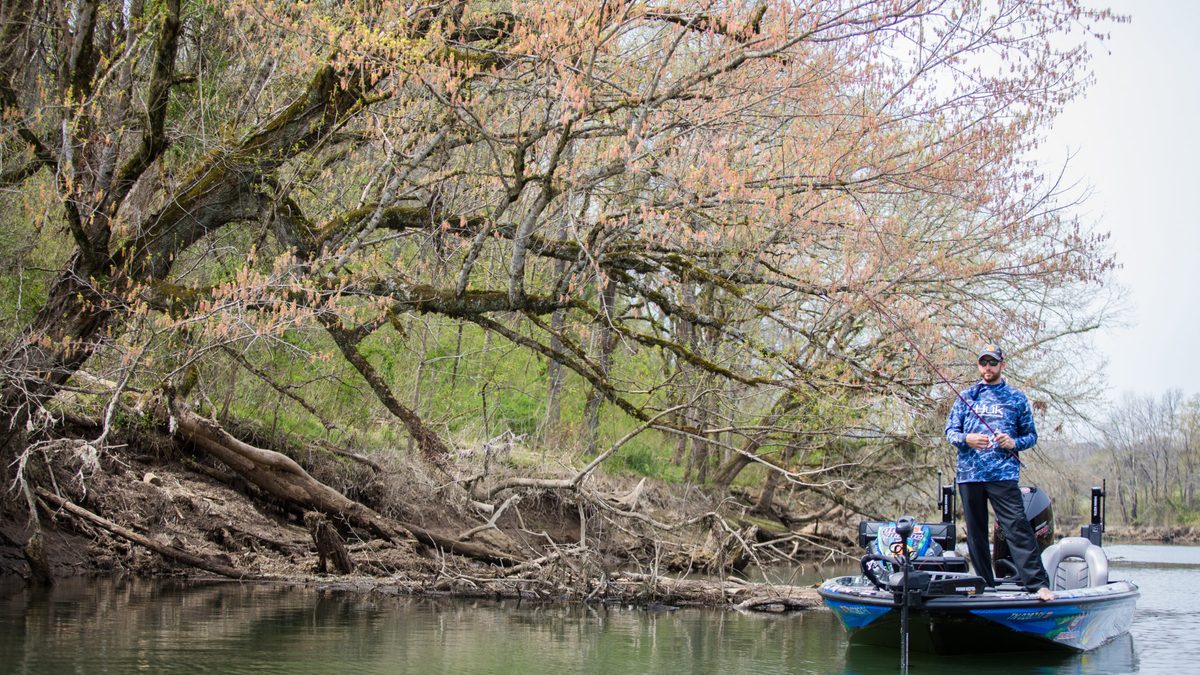
Near the end of the day, Ott took me for a ride in his Bass Pro 1754 customized by Shallow Water Innovations. He claimed it would run full speed in really skinny water and I really wanted to see. Thirty miles per hour seems much faster in six inches of water with rocks shooting by than 70 mph running down the lake. The short trip gave time for a one-on-one moment. I asked if there was anyone he really wanted to fish with. His answer was perfect: “I would rather fish with my kids than anyone.” It was well said, and my respect for him as a father way surpassed my respect for him as the 2019 Bassmaster Classic champion.
I cherish every memory of fishing with my dad and relish every opportunity that I get to fish with my boys. Don’t make excuses. You don’t need a fancy boat, or for that matter much of anything except the willingness to spend some time building a connection to your family, friends, nature, and the Creator. Get out there and go fish!
→ Swipe for Next Story
Arts & CultureMAY JUNE 2019
John Phillips
Story by Susan Alexander
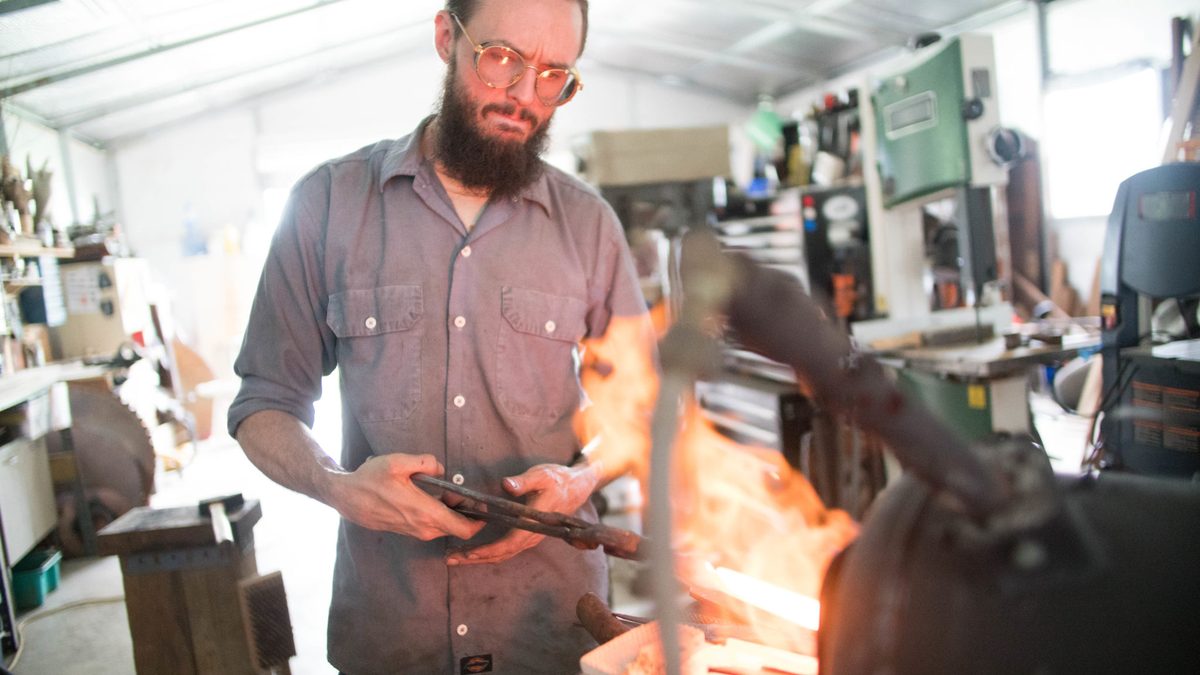
His love of cooking led John Phillips to create the implements with which to do it.
A wood- and metalworker for 15 years, Phillips turned his skills to knifemaking about five years ago after shopping for a kitchen knife and not finding what he wanted. “Everything felt like it was stamped out of a factory. So, I thought, ‘How hard could it be to make a knife?’”
Turns out it was a lot tougher than he imagined. But after doing it about 1,000 times, Phillips has mastered the art, from selecting steel reclaimed from old tools to honing their edges and perfecting how they balance and feel in the hand.
His one-of-a-kind blades, which start at about $500, are used in the Knoxville kitchens of JC Holdway, Rebel Kitchen, OliBea and Southern Sisters Mobile Cafe. They also caught the attention of celebrity chef Sean Brock last year.
“I met him in Nashville, and he bought a bunch of stuff from me, and he started talking about it on social media. Now I’ve got a waiting list of orders several months long.”
Earlier this year Phillips participated in a television competition that showed off his skills, though he’s not allowed to discuss the project until it airs. He also was featured in January’s edition ofGarden & GunMagazine.
Phillips sells a lot of his wares on Instagram and gets orders from around the globe. But his business, Phillips Forged, is still “just one guy in my garage,” he says.
You can find him online atphillipsforged.comand on Instagram @phillips.forged.
→ Swipe for Next Story
PoliticsMAY JUNE 2019
Super Tuesday, Super Conflicts
Story by George Korda
The Super Tuesday presidential primary, which includes Tennessee, is only 10 months away, March 3, 2020. What a dreary thought.
Americans in the last decade entered into an era of year-round, non-stop political campaigning. Not that it hasn’t always been with us; however, it wasn’t so loud. Among the reasons: the internet, social media, cable television, political talk radio, increasingly partisan mainstream news, or some combination thereof. It’s relentless.
Among Republicans, apart from something catastrophic disturbing the election (a massive meteor strike or raining 40 days and 40 nights come to mind) Tennesseans will vote for President Donald Trump. President Donald Trump appeals to Tennessee’s conservative nature. A secondary factor: conservative Tennessee voters enjoy thumbing their noses at national media members who passionately hate Trump, lionize liberal politicians–and more offensively, sneer at southerners.
National Democratic candidates are running a Race to the Left. This means that Tennessee is an electoral vote write-off for the Democrats. However, in a competitive party primary, candidates still want Tennessee’s convention delegates. But what will Democratic presidential candidates say and sell in the Volunteer State? Philosophically speaking, with history as a guide, what they’ll promote in the primary to their political base helps to doom them in general election.
Abortion? Tennessee’s to-this-point dwindling number of Democratic state legislators aren’t all for one, one for all on the subject, as a Nashville Tennessean headline announced in February: “Tennessee Democrats are conflicted on abortion. Why this House leader is crossing the state to talk about it.” But in the same story, state party chairman Mary Mancini is indirectly quoted as saying Tennessee’s party platform is clear, that women should make their own choices on abortion.
Immigration? Medicare-for-All? Free college? Pick the issue, and the probability is high of Democratic candidates leaning so far left they’ll have to prop themselves up with their left hands to keep their bodies from hitting the ground.
What 2020 will reveal is whether Democrats are making any headway in a state they once dominated. Since 1994, Bill Clinton’s first election, Tennessee Democrats haven’t just been on a downward glide slope: they’ve crashed into a mountain. Will they rebound from the national party’s leftward lurch? Will Republicans lose or gain even more legislative supermajority ground?
How to know? One method is to wait until Election Day. But that’s no fun. Polls of Tennesseans will appear as frequently as mail solicitations for extended warranties. The following is a quick guide to discern which polls actually matter.
Polls of adults: Politically useless, except for amusement. There’s no way to know if they’re even registered voters.
Polls of registered voters: More useful, but still suspect as a reflection of voter thinking. Presidential elections bring out higher percentages of registered voters, but the Trump-Clinton 2016 race saw about a 58 percent turnout. That means 42 percent stayed home, about the same percentage as 2012.
Likely voters: the best, but also the most expensive. Even then, how was the sample weighted in terms of party affiliation, age, voting history, educational level, and other demographic factors. Were the questions objective, or leading to a desired answer? Who paid for it? Are the results remarkably akin to the sponsoring organization’s political objectives?
The above three polls are what the public sees. Well-funded campaigns have the benefit of sophisticated internal campaign polling. To know what their polls say, listen to what the candidates say. They don’t have to worry about offending a majority of Tennessee voters: they do that just by being liberal Democrats. Between now and Super Tuesday will be an endless diet of political campaigning, with everything that represents. What a dreary thought.
→ Swipe for Next Story
InsightsMAY JUNE 2019
Are our Tennessee Natural Resources in Danger?
A Conversation with the Tennessee Wildlife Federation
Story by Nathan Sparks
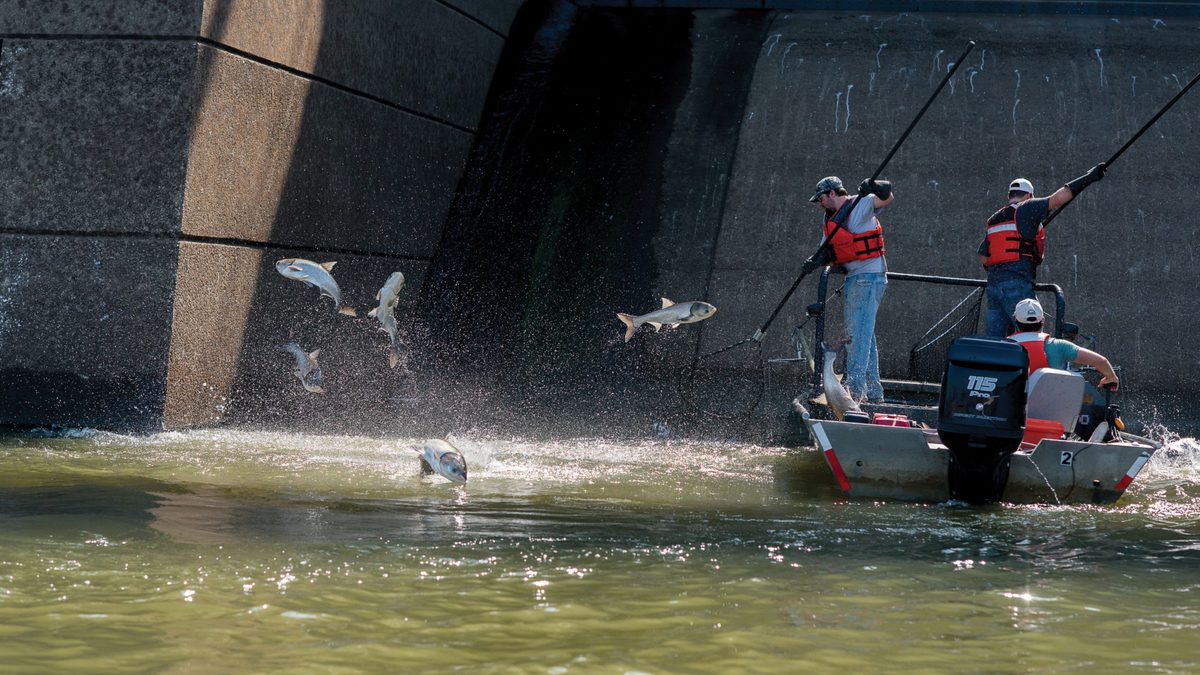
We live in an area abundantly rich in natural resources. The beauty of our lakes and rivers is nothing short of amazing, and our mountains are as equally impressive. To whom do we trust the stewardship of these priceless resources? Mostly, that falls to the government and they often could use a little help and guidance from the private sector. According to Mike Butler, CEO of TWF, we are losing wildlife habitat every day and fighting both invasive diseases and species from further harming the use and enjoyment of our outdoor heritage. We should all be very concerned.
For many people though, out of sight is out of mind, and this can be a recipe for disaster. It certainly was the case on Kentucky Lake as the Asian carp silently invaded. According to Butler, property values have fallen as much as 50 percent and recreational use of the lake has fallen massively. And it’s no wonder because who would want to wake board or jet ski with 15-pound carp jumping and hitting you in the face at 30 miles per hour? The Asian carp is in the Tennessee River, already north of Chattanooga, which means it is only one step away from Fort Loudoun Lake.
We interviewed Mike Butler, Terry Lewis, and Bruce Fox to discuss what the Tennessee Wildlife Federation is doing to help preserve our natural resources. Click the video above to listen to our Insights podcast.
→ Swipe for Next Story
DepartmentsMAY JUNE 2019
What’s SUP?
Story by Emily Stevens
The days are getting longer and the summer heat is upon us. A classic cool-off in Knoxville has always been stand-up paddle boarding (SUP). There are SUP tours, SUP yoga classes, and even SUP races. If you’re not so new to the SUP scene and are looking to take your skills to the next level, checkout local competitive groups such as Paddle Knoxville (on Facebook). They meet every Wednesday evening at Ned McWherter Park to practice. They are open to paddlers of all skill levels. If you’re just getting started, here are some great places to rent:
Billy Lush Boards & Brews: Located at Volunteer Landing, they can provide SUP rentals, as well as kayaks, canoes, and more. They offer SUP yoga classes and host events such as the City Lights Paddle–a night time group paddle each Saturday evening from Memorial Day to Labor Day.billylushboards.com
Mead’s Quarry Lake at Ijams Nature Center: For those who own boards or paddle boats, there is a free, public-access dock at the Ijams River Landing open daily from 8 AM to dusk. Not looking to haul all of your gear? Ijams has partnered with River Sports Outfitters to offer rentals at Mead’s Quarry.ijams.org
The Cove: Located on Northshore Drive, River Sports Outfitters has outfitted a rental building to allow visitors to rent paddleboards and other craft right at the waterfront of this paddling hot-spot. Rentals will be available on Saturdays 10 AM to 6 PM and Sundays 12 PM to 6 PM.riversportsoutfitters.com
→ Swipe for Next Story
DepartmentsMAY JUNE 2019
Anaba
Story by N. Brooks Clark
Emerging from his behind-the-bar kitchen area with a playful grin, Chef Seisuke Fukuoka, who goes by Sei, presents a chef’s special, Okonomiyaki (Japanese for “grilled as you like it”), as if he is sharing a special surprise. It’s his version of a Japanese pancake, made with flour, eggs, shredded cabbage, shrimp, tempura, green onions, and topped with savory seasonings. In his new location, Sei’s mission is to bring authentic Japanese dishes to Tennessee.
Anaba (Japanese for “little-known good place”) cultivates the atmosphere of a traditional Izakaya, an informal after-work pub akin to tapas bars and American taverns. The new location occupies the previous home of Knox Mason, which moved to larger quarters in the Embassy Suites Hotel up the street. The distinctive long, narrow dining room has a brushed stainless-steel bar on the right with the kitchen/sushi work area in full view. Steel-topped tables and orange-cushioned banquettes line the left wall. The simple-yet-cheerful décor—including a mural of anime characters like Astro Boy and Speed Racer—is perfect for the space.
The Anaba crew shares their chef’s joyful approach to their work, moving easily from front to back, introducing the menu, and knowing that many of the dishes are heartier and feature more ingredients than the simple sushi and teriyaki dishes many American patrons are used to.
While the Inuit are said to have 1,000 words for snow, there seem to be a comparable number of words in Japanese to describe “delicious.” Anaba’s menu offers everything from sappari (light) to suppai (tangy), to kotteri (rich). The menu is divided into sections for panko-fried meats and seafood, udon noodle bowls, ramen noodles, rice bowls, and hibachi. There’s a great kids’ menu as well. Many dishes can be ordered as either an entrée or appetizer portion. We recommend the appetizer portions of some dishes to sample more of the varied menu.
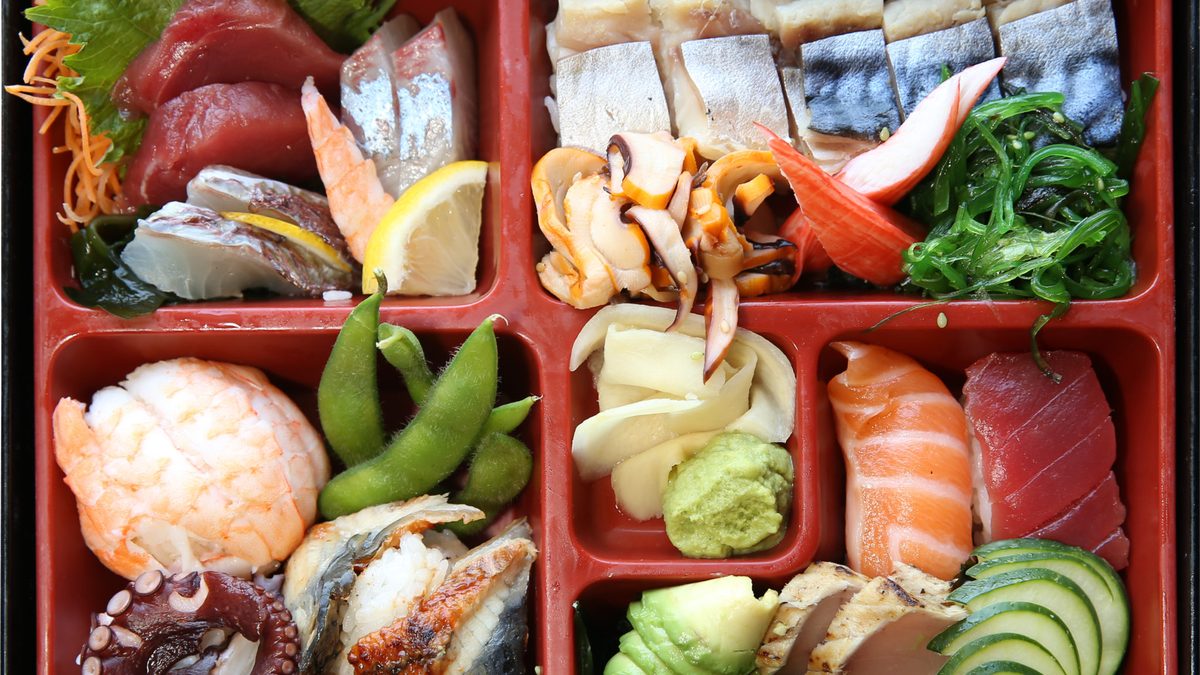
A third-generation expert in the art of Japanese cuisine, Sei grew up working with his father, Toshio, in his sushi restaurant in the Osaka Fish Market, so plan on sampling Anaba’s excellent sushi options. Pair these with the Milos Tuna, which is ahi tuna steak with marinated tomatoes and mango.
If you like ramen, try the Tonkotsu Ramen Bowl, a pork broth soup with stir-fried pork, onions, green beans, and mushrooms. The Miso Ramen is a light-yet-savory, plant-based option. Curries are popular in Japan, and Anaba offers a wide variety of chicken, beef, shrimp, and tofu curries served with fresh vegetables. Our table loved the Katsu Curry, panko-fried seafood with a mouth-watering curry sauce. If Tekka Maki is one of your go-to sushi orders, you may like the Tekka Bowl, which has sashimi tuna marinated in a sweet soy sauce and topped with scallions and seaweed.
Folks who arrive ready for a hearty meal will definitely want to order Zosui (“big bowl of soup”) with rice and cream broth topped with a tilapia filet. The Hibachi Beef Steak is tender and served with mushrooms and either white or fried rice. The Kimchee makes a crisp accompaniment to these full-flavored entrées.
In Japan, the dining experience is visual presentation as much as taste. The Japanese believe that you “eat with your eyes first.” In keeping with this philosophy, Anaba follows a traditional, minimalist art form, paying close attention to the arrangement of both the food and garnishes.
As the Japanese say, “Kuchi atari ga ii,” or “This goes down easily!”
→ Swipe for Next Story
Dining GuideMAY JUNE 2019
Food Trucks
Story by Emily Stevens
What was once a construction rental lot, is now a food truck community. Owners Alden and Scott Larrick moved to the area from Austin, Texas in 2016 and noticed that something was missing. In their hometown, food truck parks were common and they wanted to bring that concept to Knoxville. “We hoped to create a casual, come-as-you-are neighborhood hangout,” Alden says. Officially opened in February 2018, the park is a family-friendly, dog-friendly outdoor space with a rotating cast of 25-30 different food trucks and also features a bar with many beers, ciders, seltzers, and non-alcoholic beverages. The park operates rain or shine thanks to a large covered seating area. Their schedule of trucks, events, and updates is available atknoxfoodpark.com.
Ale’ Rae Grill
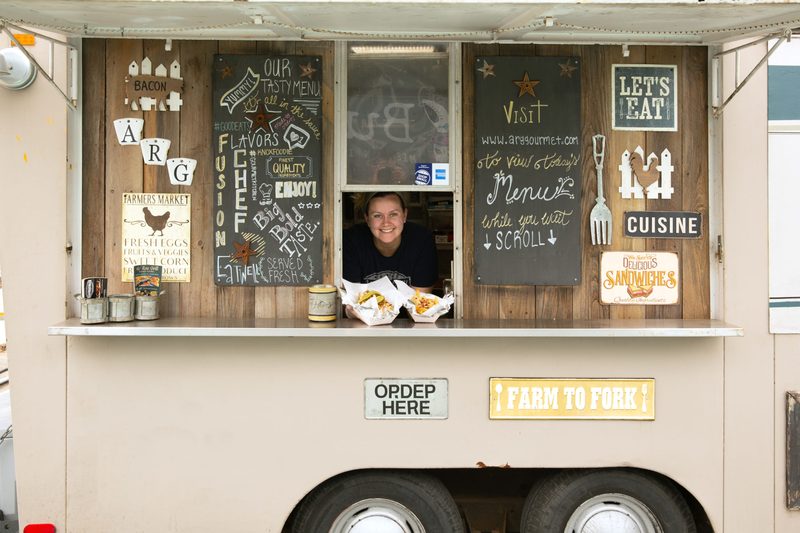
Father-daughter duo Dave and Allie Goldschmitt started Ale’ Rae Grill in the winter of 2017. With Allie’s background of cooking for mostly international students and athletes for the past 20 years, she and Dave have put together an eclectic menu of “street food with a gourmet face lift.” Allie says they enjoy the freedom of traveling and experiencing new atmospheres. In addition to the food truck, they run Ale’ Rae Grill & Bar located on Ball Camp Pike and offer catering. For a complete schedule of all locations, visitarggourmet.com.
Stick in a Box
“Everything is better a on a stick,” according to co-owner Neil Harkins. He and Eric Schoenholz both come from a background in the food service business and have recently celebrated the one-year birthday of Stick in a Box. As you can imagine, they offer signature chicken, beef, shrimp, and sausage kabobs. But uniquely, they also serve up sliders, sandwiches, wraps, and even desserts stick-style. The co-owners pride themselves on staying open year-round. “We serve several call centers and office parks where people work year-round, so we would be doing them a disservice if we shut down.” Find them on Facebook for events and their next locations.
Fai Thai
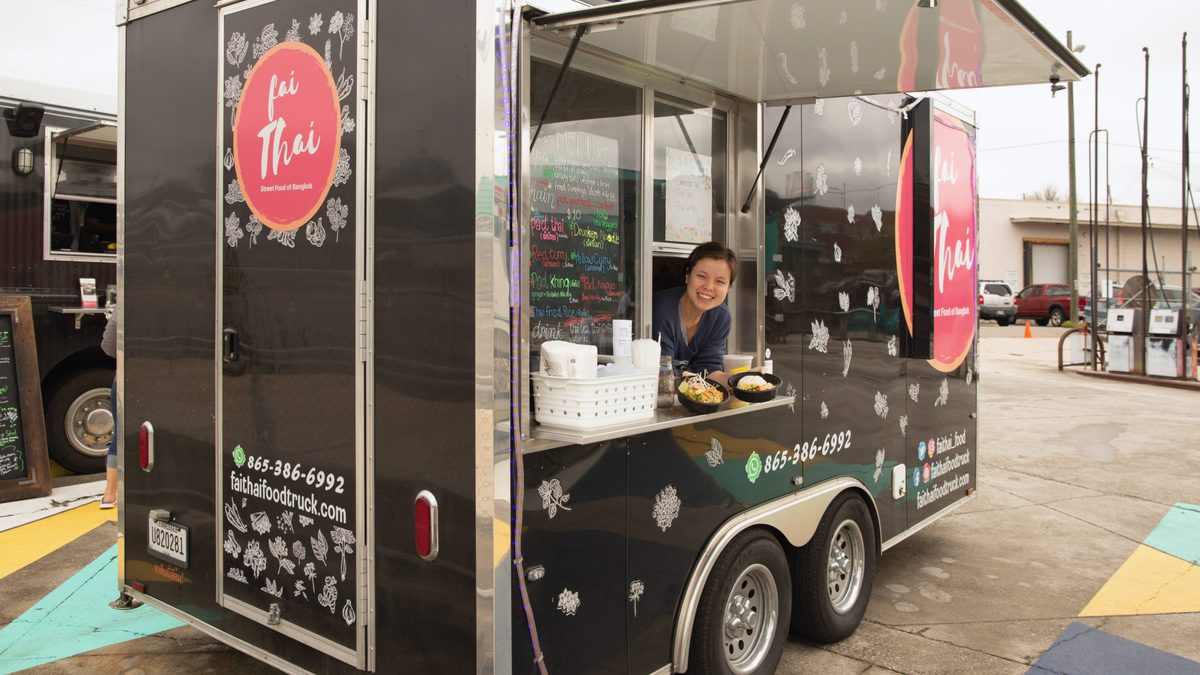
Serving up dishes that are inspired by the streets of Bangkok where she grew up, Thailand-native Fai Kultida Blais loves to feed people. In July 2018, Fai and Nathanael Blais took a limited budget and turned it into a successful two-man operation. Cooking is in the bloodline of Fai’s family and she uses traditional recipes that have been passed down. Fai Thai is open year-round and their menu, along with their schedule, can be found atfaithaifoodtruck.com.
Knox Wurst
In the spring of 2016, Jack and John Human, and Andrew and Eric Kinder began experimenting with making sausage. The four have worked in the food industry since they were teens. While cooking together weekly for a group of friends, they found that they enjoyed putting menus together. The food truck idea sparked and they began to explore cuisine options. They wanted to offer something that wasn’t available in the Knoxville area, and thus, Knox Wurst was opened in June of 2018. Knox Wurst is rolling spring through the fall serving their craft sausages and toppings. Checkoutknoxwurst.comfor their calendar and menu.
Penne for Your Thoughts
In one short year, Penne For Your Thoughts has received the People’s Choice Silver Knife award from Taste of Turkey Creek 2018, as well asKnox News Sentinel’sBest Food Truck of 2018. Co-owners Geoffrey Bernstein and Samantha Wallenstein are blown away by the overwhelming response. Their inspiration comes from being able to connect with the people of Knoxville. By having the advantage of being mobile, they are able to explore new locations. “We love making people happy and laugh with our ‘punny’ menu, and getting to know our customers gives us great joy.” Specializing in family-friendly Italian-American fusion food, you can find their schedule atpennetruck.comas well as on social media.
Captain Muchacho’s
It’s hard to miss the sombrero and outgoing personality of Duncan Trout. The owner of Captain Muchachos, Trout decided that starting a food truck would be a great way to challenge himself after graduating from UT. He says the best part is that you get to set your own schedule. “Food trucks can be very seasonal, and if you place yourself in the right events during Tennessee’s beautiful spring, summer, and fall seasons, you can take an extended break in the wintertime.” Checkout Captain Muchacho’s Facebook and Instagram to see where you can try their fresh made-to-order Cali-style Mexican cuisine.
→ Swipe for Next Story
DepartmentsMAY JUNE 2019
Bike Boat Brew & Bark
Story by Emily Stevens
To kick off the summer season in Knoxville, “Bike Boat Brew & Bark” offers fun for the whole family. On Saturday June 1, head to Volunteer Landing with your furry friends for the Visit Knoxville Powerboat Nationals and Riverwalk Tour with Historian Jack Neely. For cyclists, hop on the Guided Brewery Slow Ride, which will lead you from Volunteer Landing to some of the best local breweries Knoxville has to offer. Or if you’re looking to take the scenic route, the Guided Urban Bike Ride to Suttree’s Landing is the perfect ride. Participants can bring their own bike or experience Pace, the new bike share program. Users can download a free app to locate the nearest Pace bike, and they will also be available for rental at Volunteer Landing. In addition, there will be a Guided Urban Hike with Alan Sims, Photo Contest by Young-Williams Animal Center, TVA Expo, and more. What better way to spend a summer day with family and friends on Knoxville’s waterfront! For more information and event details, go tovisitknoxville.com.
→ Swipe for Next Story
DepartmentsMAY JUNE 2019
Meal Kits
Story by Cityview
Dear Stefan,
Using fossil-fuel burning and noxious-fume spewing jets and trucks to ship small boxes containing plastic-wrapped ingredients (such as single cloves of garlic) and tiny plastic vials (filled with such exotica as truffle oil) kept cool by space-age thermal lining and frozen gel packs hardly seems environmentally friendly,but then you know that, don’t you, Stefan?The Knoxonomist wagers that if you recycle, it’s a measure of your desire for domestic harmony and not a measure of your enlightened soul. Your wife wins that point.
As for price? These services charge about $10-$12 per individual meal—certainly cheaper than dining out but more expensive than going to the grocery store, assuming you shop with discipline.But you don’t do that, do you, Stefan?You fancy yourself a sophisticated cook, and what sophisticated cook couldn’t use more spices for his designer spice rack!
Wondering why the Knoxonomist knows so much about these services? That’s because Mrs. K subscribes to not one buttwoof them. Does the Knoxonomist approve? That’s irrelevant. Mrs. K likes them, and that’s all the Knoxonomist needs to know. A chief ingredient of any happy marriage is tolerance.
However…The Knoxonomistcandetail some of the hassles caused by these services. Sometimes the delivery is late, in which case you eat late; sometimes the food is spoiled, in which case you eat out; and sometimes necessary ingredients are missing, in which case you go to the market after all.
Plus you have to eat a bunch of stuff you don’t like. (That’s assuming you have discriminating taste, like the Knoxonomist. If you have asophisticatedpalate, then never mind.) The Knoxonomist is not ashamed to admit that he is not down with radishes on his tacos, or pickled cabbage on his hamburgers, or truffle oil on anything.
Oh, the things the Knoxonomist has seen. Cauliflower “rice.” Roasted sliced beet “fries.” Roasted panko-covered zucchini “fries.” Roasted carrot “fries.” Almost every meal contains a roasted vegetable and an entrée cooked in a large pan drizzled with olive oil and set to medium heat, and almost every meal takes something simple and fancies it up.
That’s what you get with these services. The ingredients are generally good, but whoever writes the recipes believes that a simple hamburger for a simple man is not good enough–you’re going to get goat cheese and onion jam on that burger whether you like it or not. But, Stefan,sophisticatedcook that you are, that’s probably right up your kitchen aisle.
The Knoxonomist welcomes your questions—Send your inquiries toTheKnoxonomist@cityviewmag.com.
Dear Knoxonomist: I’m thinking of subscribing to one of those services that send you the recipes and ingredients to make home-cooked meals. I’m a sophisticated cook with quality cooking utensils, and I know my way around high-end grocery markets, but I like the idea of food shopped right to my door. My wife, who doesn’t have my discriminating palate, claims these services are environmentally damaging and just too expensive. What do you think? — Stefan from Sequoyah Hills
→ Swipe for Next Story
JurisprudenceMAY JUNE 2019
Hamilton The Lawyer
Story by Gary Wade
If George Washington is the “father of our country” and James Madison the “father of our constitution,” Alexander Hamilton, the top aide to Washington in the Revolutionary War, principal author of the Federalist Papers, and the first Secretary of the Treasury of the thirteen United States, qualifies as the “father of our government.” His legacy included a strong central government, a national bank, a tax system, a navy, and a coast guard. Recently, biographer Ron Chernow and a hit Broadway musical introduced him to a new generation of Americans. Born out of wedlock in the British West Indies, orphaned by his mother, and abandoned by his father, Hamilton was also a remarkable lawyer in his adopted home in New York.Biographer Ron Chernow is introducing Alexander Hamilton and his legacy to a new generation of Americans. He will be at the Tennessee Theatre on May 7 as part of The Sherri and Baxter Lee Distinguished Speaker Series. The event is sponsored by Lincoln Memorial University Duncan School of Law and the East Tennessee Historical Society.
Primarily a civil practitioner, Hamilton participated in two high profile criminal cases. The first was a murder case which preceded an important election in New York. On a snowy night in December of 1799, Guliema Sands left her residence on Greenwich Street presumably to meet her fiancé Levi Weeks. Days later her body was found in a well. In what became known as the Manhattan Well Tragedy, Hamilton, still serving as Inspector General of our country’s fledgling army, agreed to represent Weeks despite—and perhaps because of—the public uproar against Weeks. In a stroke of irony, Aaron Burr, Hamilton’s bitter rival, assisted in the defense.
An outraged public distributed handbills, accusing Weeks of impregnating Sands and then murdering her. Sands’ relatives and caretakers, Elias and Catherine Ring, displayed her decaying body on the streets of New York for three days. The indictment charged that Weeks, “not having fear of God before his eyes” and “seduced by the…devil, beat and abused” Sands and threw her into the well to drown.People v. Levi Weekscame to trial at the old City Hall on Wall Street in March of 1800. Crowds, unable to squeeze into the courtroom, stood outside, chanting “Crucify him!” In proceedings lasting past midnight over three days, fifty-five witnesses testified. Cross-examinations of the Rings established that their boarding house served as a brothel and that Elias had likely slept with Sands. Ezra Weeks, the defendant’s brother, offered alibi evidence which was corroborated by a local architect.
When cross-examining Richard Croucher, who lodged at the boarding house, Hamilton held candles to each side of his face—producing a frighteningly sinister image. He then asked the jurors “to look upon the man’s countenance to his conscience.” The transcript implies that Croucher confessed to the crime and then bolted from the courtroom. The jury returned a not guilty verdict in five minutes. Later, Burr claimed that he, in fact, had used the candles, announcing to the jury, “Behold the murderer!” The transcript simply identifies the questioner as “one of the prisoner’s counsel,” Chernow questions Burr’s claim.
The second case did not produce victory but led to a change in the law of defamation—then a crime. In 1803, Harry Croswell, a newspaper publisher favoring Washington’s Federalists, charged that Democratic-Republican Thomas Jefferson, who won a victory over incumbent John Adams in 1801, had, during the campaign, paid his party’s newspaper editor, James Callendar, to publish an allegation that “Washington was a traitor, a robber, and a perjurer” and that Adams was a “hoary-headed incendiary.” Offended by the story, Jefferson sent a message to his party’s loyalists: “[A] few prosecutions of the most prominent offenders would have a wholesome effect on restoring the integrity of the presses.” In short order, Croswell was indicted for defamation by an attorney general loyal to Jefferson. Hamilton, whose differences with Jefferson during Washington’s administration had led to the creation of the two vying political parties, joined the defense.
At that time, all the prosecution had to do to gain a conviction was prove that the statements were defamatory. Truth was no defense. By 1803, Callendar, the source of Croswell’s story had turned against Jefferson. Just before trial, Callendar drowned under mysterious circumstances. Hamilton had no basis to subpoena Jefferson to testify. The verdict of guilt was inevitable. On appeal, Hamilton sought a change in the law, maintaining that truth should never be a crime. The state legislature, recognizing the importance of the case, adjourned to listen to Hamilton’s presentation. For six hours, he argued for a new trial, contending that a free press served to check abuses of executive power. Otherwise, he asserted, in a pointed reference to Jefferson, “the most zealous reverers of the people’s rights, have, when placed on the highest seat of power, [can] become their most deadly oppressors.” A reporter wrote that there was “not a dry eye in the house” at the conclusion of Hamilton’s remarks. Counsel for the prosecution called his legal powers the “greatest....this country has ever produced.” Nevertheless, the four panel judges split 2-2, thereby upholding the verdict of guilt.
In the notorious 1801 election, both Jefferson and Burr received 73 electoral votes. The incumbent Adams had only 65. Although it was commonly understood that Burr was to be vice-president, he declined to yield to Jefferson. Under the rules of the electoral system in place prior to the ratification of the 12th Amendment, each member of the Electoral College cast votes. Because no distinction was made between the votes for president and vice-president, the decision was to be made by the House of Representatives. Although incoming members of the House would give the Jefferson’s party a 68 to 38 advantage, the lame duck membership, where the Federalists had a 60-46 majority, had the duty to choose. The sixteen states had one vote apiece, so 9 votes were necessary to win. While his party all voted for Jefferson, most Federalists voted for Burr, resulting in a two-way tie for 35 consecutive ballots. Despite his party differences with Jefferson, Hamilton denounced Burr, convincing James Bayard, a Delaware Federalist, to switch to Jefferson on the 36th vote.
After sworn in as President, Jefferson had no use for his disloyal vice-president. In an effort to recapture his political clout, Burr ran for governor of New York. Hamilton worked to assure his defeat. Burr demanded a duel. Chernow wrote that on July 11, 1804, while Hamilton fired into the air, Burr shot to kill. Thus, Hamilton did not live to see his state adopt truth as a defense to libel. In the 1964 landmark case ofNew York Times Co. v. Sullivan, the Supreme Court ruled that in order to prevail on a claim, a public figure must prove the statement to be false, defamatory, and maliciously made—much as Hamilton had argued 160 years earlier.
“For six hours, he argued for a new trial, contending that a free press served to check abuses of executive power.”
→ Swipe for Next Story
InsightsMAY JUNE 2019
Wright’s Cafeteria
A Family Tradition
Story by Robert Pryor, Sr.
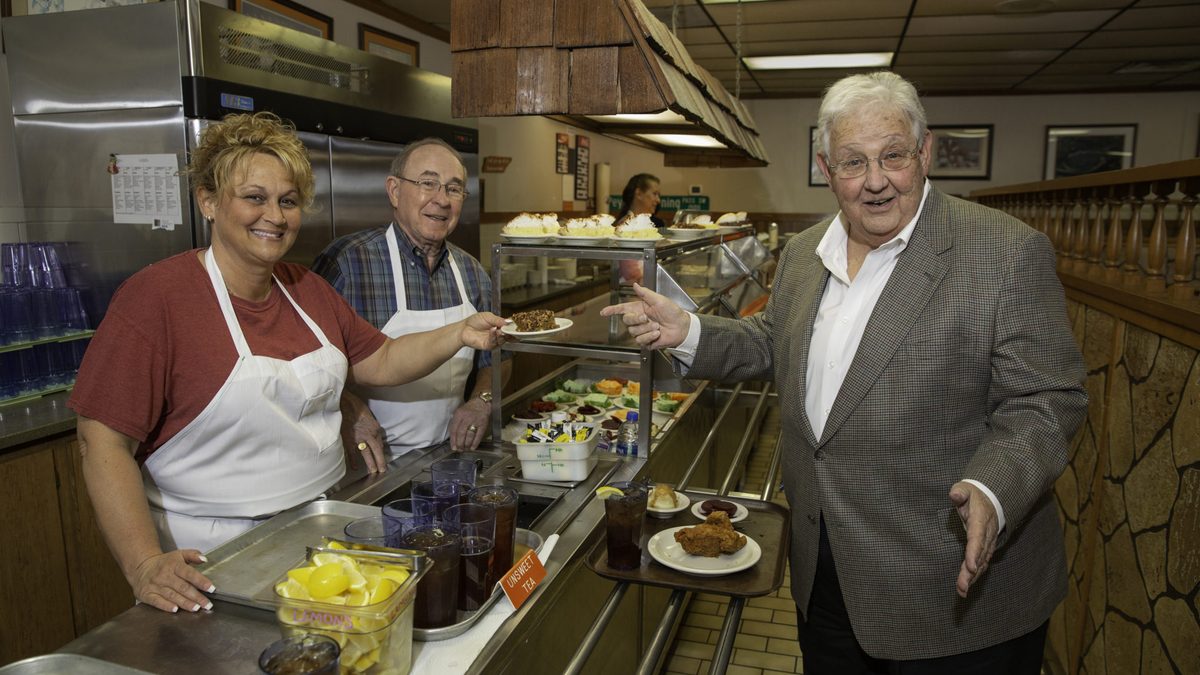
Last year, I was referred to a new doctor in the Dowell Springs medical complex off Middlebrook Pike. I have now been forced to tell that doctor I can no longer come for my appointments because I have gained 15 pounds under his care. He was offended and asked how such a thing could happen, and I confessed he was located too close to Wright’s Cafeteria and I ate lunch there before and after each appointment.
If you like good down-home country cooking, there is no place better than Wright’s. It’s become a Knoxville institution, but most do not know the story behind those good pinto beans and chicken and dumplings. David and Donna Wright are responsible for the popularity of this homegrown treasure, but it has taken the hard work of three generations to make it a reality.
It all started in 1928 when Grandpa Harry Bean opened a small grocery store on Cumberland Avenue at Seventeenth Street. That grocery store eventually moved to the present site of the cafeteria on N. Middlebrook Pike, and it was operated as a grocery and feed store by grandpa alone until his son-in-law, J.B. Wright was discharged from the military in 1945. J.B. and his wife Ella Mae, David’s parents, eventually took over the operation of the grocery store. In 1955 the store was enlarged to its present size. Throughout the 1950’s, Wright’s Grocery and Feed Store was a busy place. They not only sold groceries, but also livestock feed, ran three rolling stores, put in gas pumps, and J.B. operated the best butcher shop in Knox County. To further diversify, J.B. and Ella Mae began to serve breakfast to workers who came in the early morning, and pickle loaf, bologna, and souse meat sandwiches were prepared to order at the meat counter at lunch time. J.B. sold groceries on credit and accepted eggs, cured hams, and hogs in payment. Wright’s Grocery would deliver grocery orders in a green Willis Jeep and loaded grocery orders in fruit baskets for pick up long before Kroger and other major grocers discovered this concept.
In the mid 1960’s, Middlebrook Pike underwent a redesign, and highway construction interrupted the grocery business. J.B. and Ella Mae noticed that although grocery sales were down their food service was uninterrupted. It was at that time they decided to get into the restaurant business instead.
The grocery store was remodeled and turned into a cafeteria in 1965. Ella Mae prepared the menu using her own recipes that she had developed from what she had learned from her mother, Grandma Bean. Stuffed peppers and spaghetti were early favorites. David likes to say that the family spaghetti recipe “came over on the mother ship.” Chicken and dumplings, steak and gravy, fried chicken, and fresh vegetables were the mainstays. Menu items were refined over time, and J.B. added catfish strips to serve on Fridays. Both J.B. and Ella Mae were good cooks, and they began to develop a reputation for serving good country cooking.
In 1974, David and his wife Donna were asked to take over the operation of the cafeteria by David’s mother and father, and Donna reluctantly left her career in nursing to join Ella Mae in the kitchen. In time, Donna added her own touch to the menu items, and today their daughter, Robin Griffin, oversees the food preparation while her daddy, David, entertains the customers in the serving line. Robin grew up in the business, and loyal customers hope that she will perpetuate the cafeteria operation for many years to come.
Now, if you’ve never been to Wright’s Cafeteria, you need to know that it is one of the few places where you can regularly find fried chicken livers. The menu regularly features fried chicken (the best in Knoxville), turkey and dressing, meatloaf, and fried catfish on Friday. The fried chicken is cooked with David’s “own secret recipe.” David says his fried chicken is nothing more than the “losers from Newport’s Friday night cock fights.” He also swears that he “gets up early every Friday morning and fishes for the catfish with dynamite.” The vegetables are as fresh as the season will allow, and the mashed potatoes are the real deal: peeled, cooked, and whipped in the kitchen. Wright’s uses close to 400 pounds of potatoes a week and takes no shortcuts. Pinto and navy dried beans are soaked overnight and cooked with ham hocks and flavored with a touch of bacon grease.
Wright’s is famous for its gravy. During the course of the week, Robin prepares her mother Donna’s sawmill gravy to serve over chicken bits, steak, and pork. A recent survey has revealed that David says the word “gravy” more than any other person in the United States. Ripley’s Believe It or Not can’t find anyone who closely challenges him. You can hear him ask, “Do you want gravy on those taters?” when you enter the front door.
Wright’s Cafeteria is open every Thursday night for dinner. It takes a lot of work to run a restaurant of any type, and five lunches and one dinner a week is all David and Donna can squeeze out of their long-time loyal staff. Donna Burnette, the cashier, is also the pie maker. Every morning she and Robin bake nine to twelve pies and a ton of banana pudding for the day. David’s brother, Calvin, works in the kitchen with Robin, and you can tell that all of the employees have a close relationship with the Wright family.
When you eat lunch or Thursday night dinner at Wright’s Cafeteria, you usually get more than good food. It is a gathering place where friends like to meet and the famous and the infamous can be found. Politicians of all stripes dine at Wright’s. They know it’s the place to see and be seen. One day, I even saw a table of Knoxville’s four democrats talking low over plates of fried chicken. Lawyers, judges, doctors, policemen, and sports celebrities are regular customers. Several U. T. coaches are regulars at Wright’s, and Gus Manning has been a long-time favorite customer. In the fall David predicts every week’s final U. T. football score, but don’t bet his numbers because he has never picked the Vols to lose.
My wife and I ate dinner last Thursday night at Wright’s, and before we left there were four couple friends of ours who had gone through the line and sat down at our table. Friends we had not seen in months all happen to show up on the same night to dine on the food we grew up on. Now, understand, Wright’s draws a rather “mature” crowd. It’s not a teenage hangout.
Wright’s is so popular, S&S Cafeteria put a billboard on the property next door to try to solicit away customers. Many customers fill takeout boxes for relatives and sick friends who crave comfort food. Of course, David is the master of ceremonies and knows virtually every customer and their kin folks. You may remember, several years ago David ran for the state legislature and lost in the primary. He found out he was well liked, but nobody wanted him to go to Nashville to pass bills–they wanted to keep him cooking meals on Middlebrook Pike. He chats with everyone coming through the line, and on Fridays talks a lot about hush puppies. “How many pups do you want with that catfish–how about tartar?” David is kind of the unofficial town crier and passes good and bad news to his friends coming through the line. He’s a walking obituary and up on all of the latest local and sports news. He swaps jokes with many customers, so if you’re waiting in line you just have to be patient and appreciate the unique, friendly nature of the experience.
I, like many of our readers, was raised on country cooking. There’s just something comforting and reassuring to me about basic southern meals cooked using time-tested traditional methods. Call it country or call it soul food, it takes me back to my youth and stirs memories of home.
The family tradition of Wright’s Cafeteria goes back 90 years. David Wright’s grandfather, Harry Bean, started the ball rolling, and now David and Donna’s daughter, Robin, carries the family banner dedicated to good southern recipes and a great place to meet with friends to enjoy a pleasant piece of Knoxville history.
→ Swipe for Next Story
FeatureMAY JUNE 2019
Bowling
It’s a party. It’s a reunion. It’s a sport.
Story by Carolyn Evans
Every week across Knoxville there’s a party with music, atmosphere, and lots of talking—and you’re invited.
Actually, the party has some exercise thrown in, and well, technically, the party is known as “bowling.” But for those addicted—high school students from Hardin Valley to Gibbs and for adults of all ages—it’s lifeblood, something they can’t live without.
Knoxville native Sharon Cross lives in Louisville. She was at Strike & Spare Family Bowl on Hayfield Road a few Mondays ago with her pink bag and blue and yellow ball. She says she joined the league to make her mom happy, but has found that she loves it too.
“I just retired last May after 42 years at Patricia Neal Rehabilitation Center,” Cross says. “My mom, Betty Newman, bowls here. She says, ‘Oh I think it would be so much fun if we bowled together.’ I’m like, ‘For her, I’m going to do it.’”
Cross is a member of the Ten Pin Haters team and her mother is on the Yoyos, so there’s some competition going on.
“I like the socialization with everybody, the friendly competition,” Cross says. “I’m learning really. I actually just started in the fall. I’ve made some really nice friends. My husband is still working but he’ll join me when he retires.”
Cross is just one of nearly 200 who participate in the 50-plus senior leagues at the Strike & Spare in West Knoxville, Fountain City and Western Avenue, says Wendy Cox, general manager of the three facilities. She says the facilities offer other leagues as well that include children, youth, college and younger adults.
“At Strike & Spare in West Knoxville there are 16 teams of four,” Cox says. “At Fountain City I have leagues where seniors can walk in and bowl. Thursday at Fountain City is my biggest group. They call it a ‘coffee league.’ Western Avenue has 10 teams. I’ve got some husbands and wives who don’t bowl on the same teams because the husband wants to tell the wives everything they’re doing wrong. But overall, I think everybody’s having a blast.”
“I bowled on leagues up in Ohio,” says Carl Altvater. “I moved down here in ‘93 from Sandusky. I started bowling when I worked at Ford Motor Company in Sandusky. I got on their morning league and bowled at 9 a.m. I had a 175 average then. Now it’s 132. If I could get my line right, I could bowl 200 easy, but I’m a southpaw.
“I’ve got a 16-pound ball laying in the rack. I’ve got one at home I won at the banquet we had for the team I was on. It’s one of those Hammer balls. It’s orange. That’s why I like it–just like the Tennessee Vols.”
Altvater retired from ARC Inflator in March, but he’s not sitting still. In addition to starting a new business, he’s bowling.
“I came over here and inquired if they had a senior bowling league and they did. I started with the Two and Two team with Imogene, Carol, and Howard. I come once a week. We start warming up around 12:30 and we’re usually done by 3:30 or 4. I like the exercise, friendship and talking to each other, meeting other people from different areas.”
John Tolson was born and raised in Halls. He’s also on the Ten Pin Haters.
“We’re ranking 13th,” he says. “I spent about 40 years in California. My wife died and I remarried and found a California girl who’d come to Tennessee, if you can believe that. Maggie and I live out in Kingston. We’ve been married 20 years and moved back from California in 2000.
“I started bowling at 63. I’ve had an 814 series (three games). I’ve had a 300 game. Scratch bowlers are 200 average.”
Is he the best bowler in the league?
“Oh no,” he says, “I’m one of the 15 best bowlers. I’m not bowling up to my average right now. I’ve got a left knee implant and I’ve got a nerve and muscle disease. I’ll be 83 in June. It’s a great league, a great bowling alley. These people, they’ve been through as much or more than me in life. The fun we have, the camaraderie. Old people, we can tell tales and things like that.”
Across town at Western Avenue, Cedar Bluff resident Meg Ruckman has become quite a legend. At 100 years old, she has bowled for the last 40 years and is still going strong.
“I came here from Charleston, West Virginia, in 1978,” she says. “My husband Gilbert was retired from Dupont and our daughter was living here. I guess I was bored. Our daughter, Sandy Nguyen, was already a bowler. She was giving me a hard time, I guess. She said ‘You’re going to get into bowling.’ I’ve been bowling ever since.
It gets in your blood and you have to bowl. It’s the worst thing in the world if you don’t get to bowl. If you get hurt or you get sick, the first thing you think, is ‘Oh I can’t bowl!’ That’s the way it is with every bowler. I was 60 when I learned to bowl. Most people have bowled and quit by that time.
“I couldn’t begin to tell you how many bowling balls I’ve owned. Right now I have a closet full. Dozens. When I could use a heavier ball, Columbia Ricochet is the one I liked better. Now I have a Brunswick Twist. I have to buy a ball made in a 10-pound weight. It’s a really pretty pink with blue and snow.”
Ruckman has also bowled in West Knoxville and in Oak Ridge, but has been back at Western Avenue for the last six to seven years on the four-member Hotshots team.
“I think bowling is good for you all the way around,” she says. “It gives you something to look forward to that you enjoy. You get out and see your friends. I have a lot of pain in my back and hips. Bowling doesn’t hurt it any. I think it even helps.”
What’s her advice for someone turning 60? …“Get out there and bowl!” she says.
→ Swipe for Next Story
FeatureMAY JUNE 2019
Superfoods or Superheroes?
Everyday foods with extraordinary benefits
Story by Hannah Overton
When it comes to healthy eating, there are endless amounts of fad diets, detoxes, and buzzwords to go around. Some seem to work, while others have their moment in the spotlight, only to fade away with the next new fad.Cityviewhas been exploring different trends in health and wellness in some of our recent issues to try to discover which ones might be worth looking into for your own personal health.
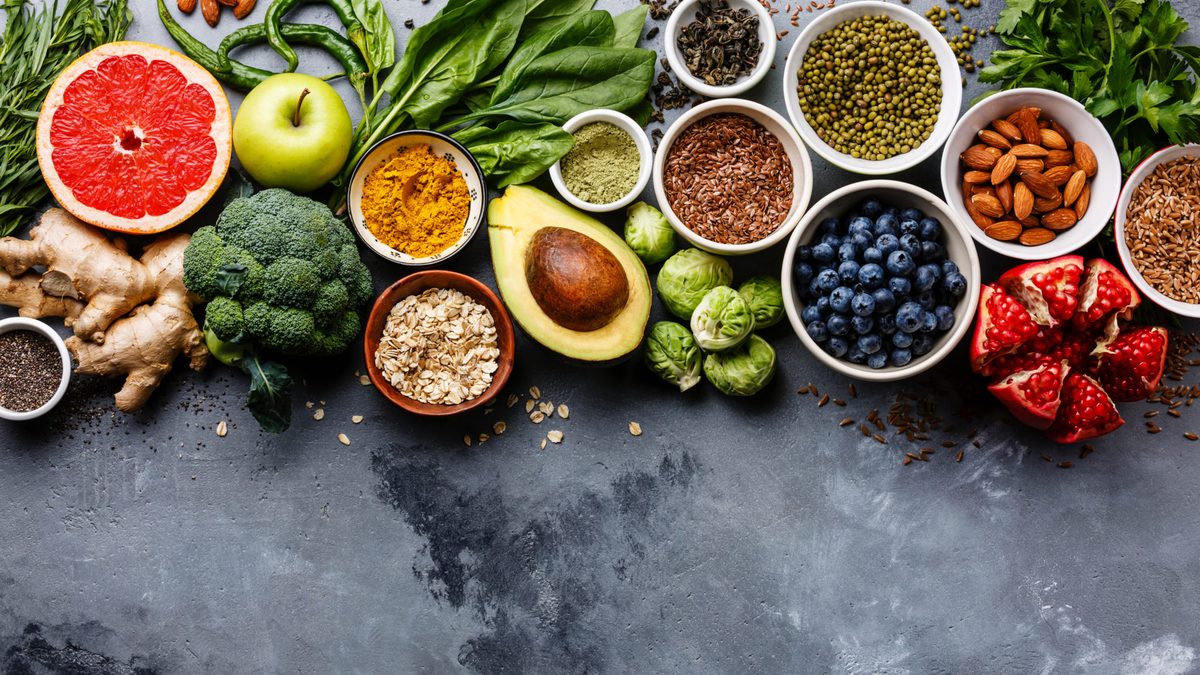
One buzzword that’s been gracing the description of many natural health and wellness products globally is one you may be familiar with: superfoods.Merriam-Websteractually defines a superfood as “a food that is rich in compounds (such as antioxidants, fiber, or fatty acids) considered beneficial to a person’s health.” The five superfoods that this article will be exploring are all easy to find, no matter where you do your grocery shopping, easy to incorporate into recipes, and have been reliable sources of nutrition for years.
Apple Cider Vinegar has been claimed to help with almost anything you can think of. I’ve heard tale of people who rinse their hair with it, use it in salad dressings, and gargle it with honey to help with laryngitis. But what is it about this potent liquid that makes it seem so magical? Dr. Barrett Debuert of Knoxville’s The Health Factory and The Fittest Kitchen shares that first of all “Always consume this superfood with the mother. You will know if it contains the mother if it is cloudy/raw. Clear Apple Cider Vinegar is not what you want. Consuming Apple Cider Vinegar with the mother ensures you are getting good bacteria and living enzymes.” If used correctly, the good bacteria and living enzymes found within Apple Cider Vinegar can help promote a healthy digestive system and clearer skin.
Joe Defranco, co-owner of Go Nutrition & Gifts, explains even further that Apple Cider Vinegar can specifically help your digestive system by increasing stomach acid. Increased stomach acid can help digest food better and faster, especially in individuals with naturally low levels of stomach acid.
Dr. Barrett and Defranco both agree that Apple Cider Vinegar should be diluted when consumed. Dr. Barrett suggests taking one to two teaspoons mixed with water daily for long-term benefits. You can also try incorporating it into your daily diet. The Fittest Kitchen provided us with a quick and easy recipe for a Detox Dressing through their free, online recipe subscription.
Turmeric is a lot of things. It’s a root in the same family as ginger, and it’s also nature’s anti-inflammatory. Dr. Barrett says that: “Turmeric has the ability to reduce systemic inflammation (inflammation throughout the entire body), even in the brain and nervous system.” He enjoys turmeric in his daily diet by juicing a fresh piece, but many have started taking this superfood in supplement form.
“Most experts think that it’s the Curcumin component of Turmeric that is the most important aspect of the herb,” says Defranco. “The higher the concentration of curcuminoids in the product, the more effective the product is for inflammation.”
Turmeric has been a saving grace for me in my personal health journey. I was diagnosed with Late-Stage Lyme Disease in December, and my most prominent daily symptom has consistently been joint pain caused by inflammation. I was used to taking anti-inflammatories on a daily basis, and was resigned to that reality being my foreseeable future. However, shortly after I began taking the Turmeric supplement my healthcare practitioner prescribed me, I found that I rarely had to take other anti-inflammatories anymore.
Even though you probably need to consume a more concentrated version of Turmeric, such as juicing the root directly or taking it in supplement form, in order to enjoy its full benefits, using it as a spice in dishes can still provide low-levels of anti-inflammatory benefits. It can be a wonderful addition to a homemade curry or Thai-inspired dishes.
Not only is Green Tea one of the safest ways to consume caffeine, it’s also full of antioxidants. According to Defranco, “Green Tea is well studied and researched and found to be very high in cancer-fighting antioxidants. The main cancer-fighting component of Green Tea is a substance called EGCG. Other notable components are the polyphenols found in it, which also help with inflammation.” You can purchase Green Tea in either a bag or loose leaf form for drinking, but also as concentrated capsules.
One of the most popular ways to enjoy Green Tea currently is by drinking Matcha, a variety of the tea itself. Most of the time it comes in a finely ground, bright green powder. Matcha is more concentrated than your average cup of Green Tea.
Matcha lattes have become popular menu options at coffee shops all across the world. The Fittest Kitchen provides a recipe to create your own Matcha latte at home!
Ginger has always been one of my favorite spices and flavors, but this little root can do far more than bring a smile to someone’s face. Much like its cousin Turmeric, Ginger has some anti-inflammatory properties. But one of its most popular uses is actually for a healthy digestive system. Dr. Barrett expounds that “consuming raw ginger as a whole food source helps digestion, bloating, acid reflux and helps raise metabolism.” Defranco adds the benefits of helping with nausea and and an upset stomach, along with the idea of ginger being “a ‘warming’ herb and can be beneficial to people that are always cold.”
There are many ways you can cook with raw ginger root, but not everyone may enjoy the flavor quite as much as I do. Defranco says “Fortunately [for those who don’t enjoy the flavor of ginger] it is available in pill form, tea, candy and the root itself.” No matter what form you try, keeping ginger on hand has been proven to aid with digestive issues.
Quinoa may look similar to a lot of grains, but it’s actually a seed according to Dr. Barrett. And it’s a seed packed with lots of protein and fiber. This can be a wonderful protein alternative for those who are vegan or vegetarian. Defranco adds that it’s lower in carbs, higher in fiber and protein, and faster cooking than just about any grain. It’s also gluten free.
There are many ways one can enjoy the benefits of quinoa. It can be prepared ahead of time for an easy, packable lunch, used as an alternative to pasta or other grain-heavy dishes, or even used as a side dish for a meal needing a little punch of protein. Dr. Barrett’s favorite way of enjoying quinoa is by preparing a cold quinoa salad made with seasonal fruits and veggies.
I’ve been gluten-free for seven years now, and quinoa is one of my favorite gems I’ve found in a gluten-free lifestyle. It’s so easy to fix ahead of time, and packed with so many nutrients and protein. Quinoa can be the perfect meal to pack for a day-hike, or just to keep on hand for your child’s lunches.
Superfoods go beyond just a buzzword in health topics. Most things identified as superfoods actually have proponents that have been proven to provide benefits to the human body. The five we explored in this article all have their own unique ways of helping you live your healthiest life, and they’re all easy to find and incorporate into your daily lifestyle and diet.
For more information about these superfoods or to find out how to supplement, visit Eddie’s Health Shoppe or Go Nutrition & Gifts. If you’re interested in more free recipes featuring superfoods that nourish the body and mind, you can subscribe to The Fittest Kitchen online atfittestkitchen.com.
→ Swipe for Next Story
FeatureMAY JUNE 2019
A Step Back in Time
Story by Karen Clark
As you cruise down Lamar Alexander Parkway into Tuckaleechee Cove, you travel back to a slower, gentler time. The remnants of old roadside motels, fudge shops, and hardware stores are reminiscent of post-war rural America. Walking down those hardware store aisles through bins of bolts and nails still sold by the pound is a refreshing alternative to the modern Home Depot.
Townsend is part of Tuckaleechee Cove, which as of the 2010 census had only 448 residents. Although it is a bustling tourist destination in the summer, it is still a quaint little town the rest of the year. Passing Dancing Bear Lodge, I can’t wait to come back later in the spring to have some of Chef Shelly’s fried squash blooms. Seeing the sign for the Lily Barn reminds me that I need to take a stroll through their gardens this summer to add to my own lily garden. They have hundreds of varieties of the most beautiful lilies.
In older times, in rural communities, courtship often started at the country dance where a little moonshine might be served along with good country cooking. The men competed for the women’s attention by demonstrating feats of strength, while the gals sat quilting and feigning disinterest. While I saw no evidence of a still on the property, I was delighted to find a master quilter in Jodi Savage.
Jodi and Terry met in 1989 in San Diego, where they both worked for a consulting firm, which eventually landed them back here. After a brief stint in Virginia they came back home. “We always knew we would end up in Knoxville,” says Jodi.
While living in Virginia, Terry and Jodi found themselves frequently traveling back to Tennessee along I-81 for family gatherings and fell in love with the rolling landscape and old farm houses along the route. They found the old family homes that had been expanded over time particularly appealing.
They thought about retirement in Virginia and Cashiers, North Carolina, but their hearts were always here. Avid hikers, they had both hiked the Smokies extensively and wanted to be close to family. One day, driving along the road in Townsend, they saw what they thought was the perfect spot. Luckily, one of their soon-to-be neighbors was there in his old red pickup. “Hop in,” he said, “I’ll show you around.”
That tour around the area resulted in the Savages buying their land on Cedar Creek Road. They selected architect Jonathan Miller, who has extensive experience in designing period-specific farm-house style homes. When the plans were completed, they chose Caylor Brothers Builders to build the home.
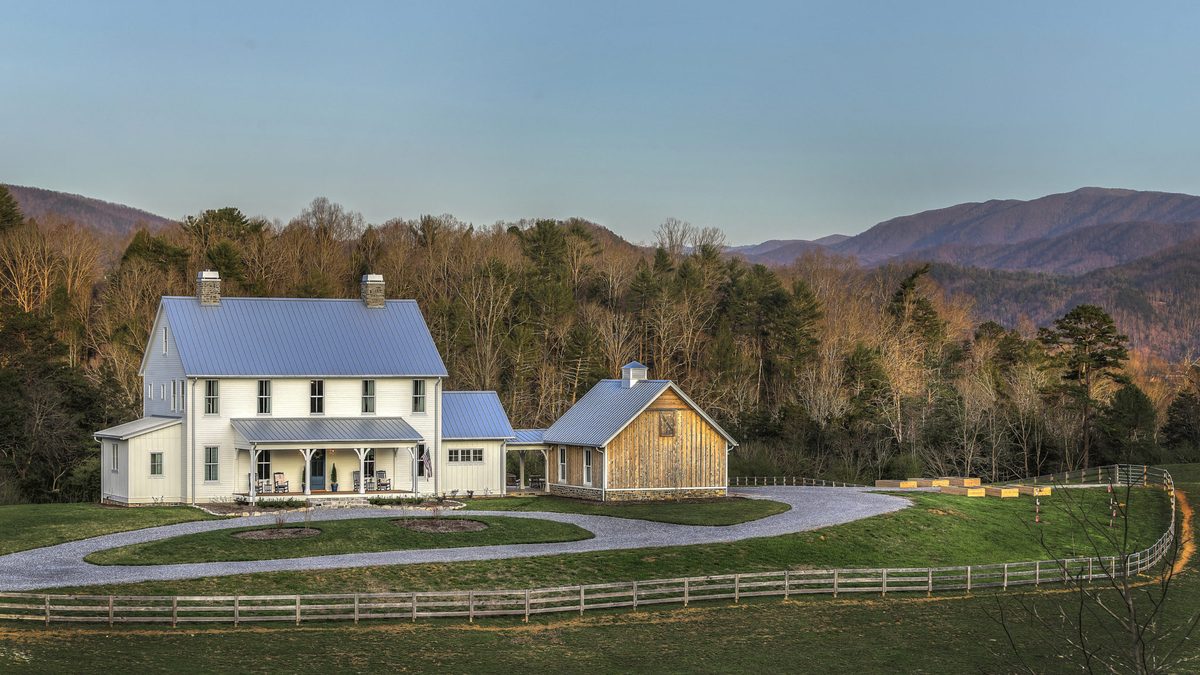
The style of their home, best described as “American Farmhouse,” uses a combination of Hardiplank lap siding and Hardipanel vertical board and batten to create a home that appears to have grown with a family over generations. The standing seam roof is typical of this style, as are the six-inch half-round gutters. In fact, this house is similar in many ways to a previous home that was on the property.
“Jonathan wanted to be sure we picked the perfect site for our new home. His first thought was to put the house up on the hill,” Terry explains. “But we loved the view from the middle of the property. With that in mind we all worked together to position the house with a perfect view of the mountains.”
“We were intentional about this house being part of the history of the place, and the Caylor family has been in Townsend for generations,” says Jodi. “Delmar Caylor’s great-great-great-grandfather, George Caylor, had his cabin on this property and we used the stone from his old chimney for the front porch steps.” Jodi set up an Instagram (@farmhouseoncedarcreek) to document the build and was tickled to find the house featured onSouthern Living’sInstagram in January.
A winding drive takes you gently down to the house from Cedar Creek Road. The neighbor’s cattle graze in the pasture to your right outside the wood rail fence enclosing the house and three of the Savage’s 70 acres.
The old Caylor homeplace chimney-stone steps take you up to a deep front porch and front door. To your right is a detached two-car garage connected to the house with a breezeway. A barn-like structure with knotty pine ceilings, it opens onto the flagstone patio and fire-pit. Its style and location allow it to also serve as space to entertain.
To the left and slightly behind the house is a potting shed that Terry built from scrap left from the house construction. It contains an antique sink painted red, making the shed lovely as well as practical. A large new tractor shed is down and behind the house.
Walk through the barn/garage and you find yourself in an outdoor living space with a generous flagstone patio, fire pit, and back porch with wide double-doors leading into the house.
This back porch is replete with deep chairs, a swing bench, and a view of the rolling hills and mountains. The western exposure makes this a splendid place to watch the sunset over the hills. Terry grew up on a farm in Illinois raising hogs, soybeans, and wheat. From the porch you see the result of his farmer’s work ethic on their new property. Three large planter boxes that he recently built are waiting for their first crop of flowers and vegetables.
The breezeway that abuts the house, patio, and garage leads to a back door that is the family’s primary entrance to the house. You enter the back hallway and mudroom with the laundry conveniently on your left, behind a primitive-style barn door built from Smoky Mountain Vintage Lumber barn wood. The bead-board-ceilinged laundry room contains a large farmhouse sink, a Big Chill cherry-apple red fridge and plenty of storage. It is the domain of Luna the Porch Kitty, who rules over it all.
Come through the front door into the home’s center hallway. What would have been the parlor on your right is used as Jodi’s study and design studio for her quilting and other work. “Some people would put a room like this upstairs, but we wanted to be able to primarily live on the main floor,” she says. The fireplace in this room has an antique mantel and mirror over the insert gas stove with “coal stove” frontispiece from Valor Fireplaces. Jodi has a large work table in the corner with a painting of Betsy Ross by Terry’s father, Royce, on the wall above. The Anderson glass double doors combined with the room’s large windows from Home Choice Windows and Doors ensure this room is suffused with light. Terry’s study, across the hallway, is also behind glass double doors, with plenty of deep, built-in shelving lined with fabric and Jone’s cabinetry below the shelves. Both rooms have bead board ceilings and a simple, functional decor.
Continue down the main hallway, past the powder room with a pedestal sink and you come to a set of six beautifully rendered wildlife studies, also drawn by Terry’s father. “We really wanted to fill this home with things that mean something to us,” says Terry. “My father was a commercial illustrator and we have quite a bit of his work. We also have some of Jodi’s family heirlooms and recipe cards in the kitchen.”
The hallway opens into the heart of the house—a large, bright room with a gorgeous beam ceiling. The main beam, sourced from Alabama, is an actual hand-hewn antique beam. These structural support beams make a pleasing contrast against the shiplap ceiling.
The fireplace in the great room is a full masonry fireplace with a wood burning stove. From Alderlea by Pacific Energy. “We really had to watch the codes on clearances,” Jodi says. “Brianna at Caylor Brothers was a lifesaver—she was meticulous to be sure we got that right.” The vintage-style lighting is from a variety of sources, including Ferguson’s, and American Lighting.
A long farmhouse table surrounded by an eclectic assortment of chairs divides the space between the living area and the kitchen. Its rustic finish combined with the chairs give it a quirky and authentic vibe. Most definitely a working table, it is put to the test when Jodi annually bakes her multiple gingerbread houses.
The kitchen is a delight. It’s the kind one can only design after many years and many kitchens and many family meals—a marvelous combination of beauty, simplicity, and function. Decorated in slate blues and whites, it has a marble-topped island with a vegetable sink, black soapstone counters, and a tiny gingham-check backsplash. Jodi knew exactly what she wanted when it came to the appliances. The Thermador oven is commercial depth, meaning that sheet pans can go in lengthwise. Anyone who has ever had to bake multiple batches of cookies will appreciate how useful that is. The Kohler farmhouse sink, from Ferguson’s, sets off the cabinetry nicely. The pull-out drawer beneath the sink is covered not with doors, but with blue and white curtains Jodi found and altered, adhering to the farmhouse style.
An open sideboard contains Jodi’s collection of old silver plates and Vietri Italian dinnerware. “Terry always gets me these pieces, he knows I love them,” says Jodi. ‘“Like so many other people, I find that our children have no interest in fine china, so I decided to get rid of it, simplify and use what I like.” The cabinets in the sideboard have a pie safe cutouts–one of the many small but influential details that contribute to the older house feeling.
To the left is a generous pantry. Jodi had the builder remove the center panel from the door and has sewed a sweet blue and white ticking insert. “I think they thought I was crazy when I asked them to remove a panel from that door!” she laughs. It has plenty of shelving, a microwave, and small Wolf stove—often all they need for a weekday meal.
The master bedroom walls are covered in irregular shiplap with a slightly distressed white wash, contrasting with the beam ceiling. The room also has a small gas fireplace topped with an old mantel—so cozy on a winter evening. The closets use pocket doors to conserve space, and the master suite is a study of plain wood in browns and greys. The real delight in this space is the master bath. Built to look like two added-on sheds, it has a slanted ceiling in the “golden ratio” proportions that make buildings or rooms feel harmonious. There is an open shower on one side, two countertops and sinks in the center space, and a commode on the other side. With its many windows giving a soft white light, a vintage globe chandelier, and white tile with a faint ecru design, this rooms feels like the warm, slightly faded white room of your favorite house. Jone’s supplied the cabinetry here and throughout the house.
The upstairs space is for family and guests. Stairs open onto a generous landing and sitting area space. There are three bedrooms up here–a smaller one and a “bunk room” that share a “Jack and Jill” bathroom, and one slightly larger bedroom with its own bath. There was a full house for a wedding shower a few weeks after they moved in and Jodi was still unpacking. “I had to really hustle, but it was so fun and really great. We loved that people were here to see it.
This is a home that was built by people who know what they want, and what they wanted was simplification, form following function, and a design ethos of “less but better.”
Jodi says, “Our dream was to build a home that would complement the land. A simple American farmhouse that would feel as though it had been there for years. We were fortunate that we found the perfect land and wonderful people to make that dream come true.”
→ Swipe for Next Story
Non-ProfitMAY JUNE 2019
Scouts
The Next Generation of Leaders
Story by Rebecca Whalen
It’s Sunday night in Knoxville and Paul Renier is working diligently to prepare his lessons for the next day. With two other educators at his side, they plan what will be about an hour of educational programming for the following evening, knowing just how much it’s going to serve the youth that will join them. “We will set up stations and four to five students will work together to get through their achievements for the week,” he says.
When Monday night rolls around, Paul jumps into gear, and so does the rest of his family. After all, Monday nights are uniform nights in the Renier house. It’s been this way since 2012.
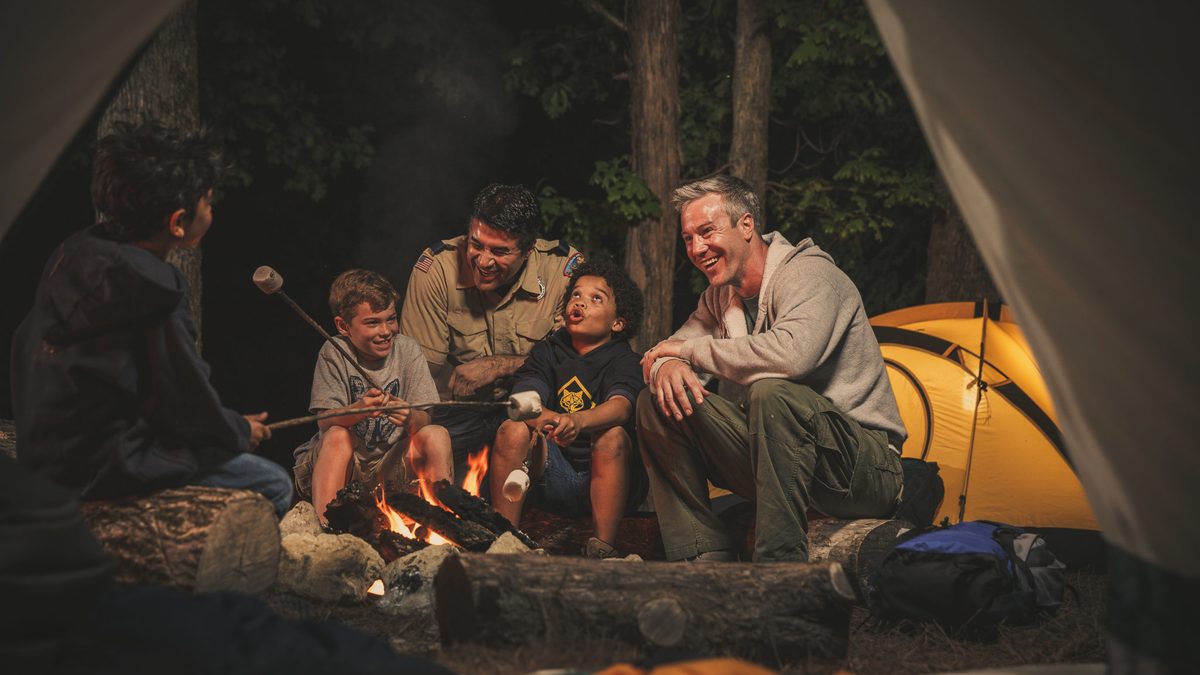
After a long day of schooling and work, the five members of this busy family are decked in scout uniforms of various kinds and head off to their weekly troop meetings. They are all involved in Boy Scouts of America, or BSA. Mom Sarah, who serves as the committee chair for one of the new BSA girl troops, 13-year-old Joshua, and 11-year-old Olivia are dropped at 6:15pm at their troop meetings after which dad heads about five miles down the road with eight-year-old Chase for their own meeting. Paul serves as den leader for his pack of second graders.
On another side of town, Heather Mazzouccolo and her 12-year-old daughter Sofia head off for their own meeting. The two are part of Girl Scouts of Southern Appalachians and Sofia has been with the same troop for about seven years now, with Heather at the helm as her troop leader. Every other week, the two venture down to the public library to meet up with their troop and participate in activities and discussion. The girls are excited about working toward badges that they will cherish for a lifetime. This is modern scouting in East Tennessee.
Driven by Purpose
Scouting in East Tennessee traces its roots fairly far back. The BSA Great Smoky Mountain Council has been in existence in some form since 1915, with the Girl Scouts of Southern Appalachians forming a few years earlier in 1912.
While the missions differ ever so slightly, at the crux of this work is the desire to grow the next generation of leaders who are confident, compassionate, and positive members of their communities.
David Williams serves as Scout Executive for the local BSA council. He joined the cub scouts as a third grader and has been a scout ever since. “After I came home from the military, I worked for a Boy Scouts summer camp and they said when you graduate, you can work for the Boy Scouts,” he says. “After my first semester, I decided that’s what I wanted to do in life.”
When he graduated, Williams joined the commission as Commission Executive, working with 300 to 500 volunteers and 40 to 50 Boy Scouts groups and Cub Scout packs, learning the basics of this powerful youth program. After 14 years on the Tennessee staff roster, he moved to Dallas for four years before coming back to East Tennessee four years ago.
Similar to Williams, the local Girl Scouts council is run by someone driven by a history and understanding of how critical scouting programs are for youth. “I was a Girl Scout, my mother was a Brownie troop leader, and I loved the experiences,” says local Girl Scouts CEO Lynne Fugate, who joined the organization officially in 2016 after a longtime career in finance. “I believe wholeheartedly in the fact that Girl Scouts is an organization that helps young women explore all kinds of possibilities.”
What’s ironic about these two leaders is that both of their families have been connected to the other organization. Fugate has former Eagle Scouts in her family and Williams’ family has been part of the Girl Scouts in varying ways in the past. And while the two organizations differ in execution and programming, both are driven by the desire to create safe spaces for their youth to work hard, to fail, and to learn. “Lynne and I always say that we think your son or daughter ought to be in a scouting program, you’ve just got to pick the one that’s right for them,” Williams says. “It’s amazing what the programs can do for them.”
One of the most unique aspects of the Girl Scouts programming isn’t the newest cookie flavor, it’s actually the fact that everything is girl-run. During the early years in the program, girls learn about the Girl Scout law, practice the oath, and become familiar with the components. But as they grow, so too do their responsibilities to lead and learn.
“The younger they are, the more leaders have to teach them about goal setting and prioritizing,” Fugate says. With their volunteer leader at the helm, the girls discuss what they will do for the year, what badges they want to earn, and even what it will cost and what they will do to fundraise to make it happen. “We are teaching young people early on that compromise is not a dirty word; it’s a give and take.”
This makes every troop different. In Mazzouccolo’s troop, Sofia and her friends have set the goal to go primitive camping this year. While they might normally work on first aid in their bi-weekly meetings to earn their badge, Mazzouccolo is taking it further. “We’re going a little deeper into first aid, so when we are out in the middle of the woods, they know what to do,” she says. “It’s not just ‘put a bandage on,’ it’s ‘here’s how to wrap a head wound, put on a splint, apply a tourniquet’ and later this year, as most of our troop is 12 or older, they are going to get CPR certified.”
Mazzouccolo’s troop has been together for seven years and she’s noticed the changes. “They’ve gotten more confident in saying what they want to do, learning how to make decisions together,” she says. “They are a lot more self-reliant, and the leadership aspect where we ask them to do something? They do it. They know what’s expected of them and a lot of times they do it before we even have to ask.”
“They give us a lot of time to learn and expand, and meet and experiment,” Sofia says. “We’ve known each other for a long time and it’s more casual now and easier to cooperate as a group.”
Being Part of the Pack
While the format of a Boy Scout troop or pack meeting is a little more formal, the lessons learned align. “If you’ve never been inside BSA programs or don’t know anyone who’s been associated with it, the default is made we’re a camping club or outdoors organization, but that’s just a hook we use with young men and women to bring them into the programs and build citizenship, physical fitness, a duty to guide.”
Most know Cub Scouts and Boy Scouts, but there are three other co-ed programs for ages 14 to 20 that have been around since the 70s. There are High Adventuring programs, where youth have the opportunity to learn to scuba dive, backpack, and even rock climb. There’s Sea Scouting where youth learn to sail, some having even gone on to international meets. And there’s Exploring, where high school students with a desire to be in law enforcement are taught everything they need to know for a career in this field. Finally, there’s STEM Scouts for students grades 3 through 12, using STEM as the hook to learn.
Youth, like 17-year-old Jesse Mullins and his 14-year-old sister Tori, have the opportunity to be in both troops and crews. “When I was growing up, I would go to the campouts my brother went to and more recently I would get involved in events, even crew,” Tori says. “I only joined less than a year ago though.”
For the Mullins family, these groups are simply part of life for them. Even their parents are involved.
“I see them take on a lot more responsibility than most kids their age,” says Gary Mullins, Jesse and Tori’s dad. “They’re going outdoors, learning nature conservation, how to be leaders, how to be self-sufficient. Tori is president of her crew and Jesse has been senior patrol leader and lodge chief. They’ve both done a lot in a short period of time and it makes their dad proud.”
Jesse will move into his senior year of high school next year and it’s his experiences as a scout that have him ready for his next chapter. “In scouts, you don’t just get to do great programs and events, you also get to improve as a person. You learn a lot of things about the person you want to be, the character you want to have,” he says. “And see that by looking to the people around you who are great examples of what kind of person you want to grow up to be.”
Safe Spaces to Grow
As you speak to youth and families involved in these programs, there’s a common theme that continues to show up: familial involvement. Parents reaped the benefits of being in these programs as youth and years later recall the value they brought to their lives. The youth, in exchange, become even more interested and excited about being part of something bigger than themselves. Parents relish in the excitement and join in serving as leaders, committee chairs, and service unit managers training other leaders.
But regardless of the level of involvement a parent can give, they rest easy knowing that their children are part of programs that are encouraging them to try and to lead. And even if they fail, they are in a safe space where they can get back up and try it again.
“All those things that you want out of leaders in your family, in your community, in the nation? That’s really what we do. We make that impact on young men and women’s lives that they’re going to carry throughout their lifetime,” Williams says. “And that’s what it’s all about.”
“All those things that you want out of leaders in your family, in your community, in the nation? That’s really what [scouts] do.” David Williams , Scout Executive / CEO of the Great Smoky Mountain Council, Boy Scouts of America
→ Swipe for Next Story
FeatureMAY JUNE 2019
Top Chefs 2019 – Warren Weiss
Story by Cityview
Warren Weiss, chef de cuisine for Knox Mason, grew up in Indiana. He’s been in the Southeast for about 14 years now and says he’s loved every minute of it. He made a stop for several years in Alabama learning from a renowned chef who emphasized using locally-grown ingredients and supporting local farmers. He made his way to Knoxville about four years ago. He says once he came to Knoxville, it was easy to get back in a groove of working with local food producers in our region. Weiss is a downtown resident and loves working downtown—a perfect fit for Knox Mason, which has operated on South Gay Street for five years. It is due to reopen in September in the Embassy Suites Hotel on the corner of Gay Street and Union Avenue. Weiss says the restaurant has been on the polished side of casual. The new location will be adding a lunch menu and Weiss predicts more Creole and French influence than they’ve had before.
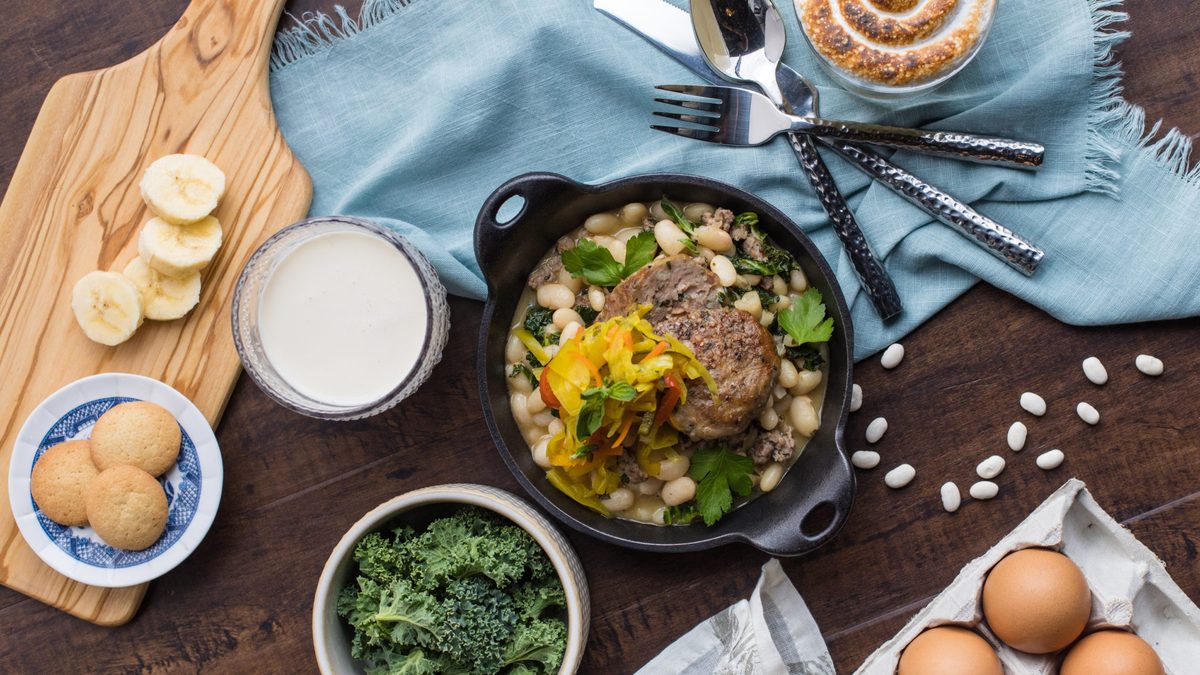
This elevated pork and beans dish included pork sausage, stewed white beans, local kale, house-made chow-chow, and incorporated fresh local herbs throughout.
More than a traditional banana pudding, Weiss layered it with vanilla wafers, fresh bananas, and topped with a beautiful toasted marshmallow swirl.
Soon to open in the Embassy Suites on the corner of Union Ave and Gay, Knox Mason elevates southern comfort food, while accentuating southeastern ingredients, and supporting local farmers.
→ Swipe for Next Story
FeatureMAY JUNE 2019
Bass Master
Story by Nathan Sparks
Ott DeFoe: Maybe five or six years old up on Douglas Lake. I can remember fishing off of a pontoon boat we had at the time, and I can remember catching a carp up there off the bank.
O: Yeah exactly. The pull of that, you know, and just how exciting it was to catch something that was really hard to reel in. That was one of the first fish I remember catching.
O: Absolutely. The first tournament I ever fished was with my dad at nine years old and all the way up ‘til I was in my early twenties or so.
O: Yes. I was fishing local team tournaments. The first one was at nine years old and that was on Cherokee Lake. The very next year at ten or eleven years old we fished around 40 or 50 tournaments.
O: No. It was a long time. I think I was twelve years old before I won any money bass fishing, actually.
O: The first time was up in Kentucky on Cumberland Lake. I was fishing with a family friend, Billy Caldwell. I don’t remember for sure how many fish we had that day, but I think we came in second. Won like $150 or something.
O: Yeah, it was a big deal for sure.
O: I knew at the age of nine that I wanted to be a professional bass fisherman. We took a family trip down to Lake Okeechobee, Florida. It was my dad and my older brother. We went down there and hired a guide at Roland Martin’s Marina and went out on that lake, which is a huge wide expanse of water. It was very early in the morning and we were running down these little boat trails, and, you know, I’m a kid from East Tennessee used to rocks and wood and clear water. And here we are in what looks to be a swamp, running through places where there’s alligators swimming everywhere and just grass; a total shock of an environment. But we stopped out there in seemingly the middle of everything else, the guide says, ‘okay, let’s fish here.’ We get up on the front and start fishing and start catching bass and that was it for me.
O: When we came home from that trip was when we signed up to fish that first tournament at Cherokee Lake. It was just a few weeks or a month later; didn’t catch a single fish in that tournament. Caught a lot more in Florida than we did at home, but it was that experience of being out there very early in the morning when it’s still dark, you know you can’t see anything and just watching the world come alive. Watching everything wake up was really the excitement early on before catching a lot of fish really took place.
O: My dad and I have won some tournaments together, nothing real big. We fished some 30 to 50 local tournaments and stuff, but we have won a few tournaments together for sure.
O: They all enjoy fishing they really do. Abbie is our oldest at eleven. Then we’ve got Parker and Lizzie that are twins who are seven, and they all enjoy fishing. Living on the river like we do, they like to go out there behind the house, if it’s for five minutes or for a couple hours.
O: The biggest bass I ever caught in a tournament weighed ten-pounds nine-ounces. I caught it in a Bassmaster Open down on Lake Kissimmee. It was a fish I actually caught off the bed. I could see that fish down under the water and that particular day I had already caught an eight-pounder earlier that morning. It was up in the day in the afternoon, I already had a good stringer of fish, and I’m just trolling around out on this big flat looking in the grass. I see this big white spot where this fish had made a bed and it looks like a log laying in the middle of this white spot. I told the co-angler who was with me, I said, “Man, that fish is that long.” You could see it down in that black water. I eased back off of it and fished and fished and about 10 or 15 minutes into it I get a bite. I caught the male, ‘bout a two-and-a-half-pounder and that’s not the fish I’m fishing for. Let it go and fish and fish and fish and finally I said we got to leave to get back to check in on time. Minutes later at 2:13 I caught that fish, just before we had to leave. I eased the bait to the bed and I feel a bite and I’m like, ‘I already caught the male so surely it’s not the male again.’ I set the hook and the fish was maybe 20 or 25 feet away from the boat, but I can remember seeing the mouth open, that big white mouth back and forth out of the water. I knew as soon as that happened that I had the right one.
O: Once you hook that fish, that’s just the first part of the battle, and you have to land it for it to count. It’s a very stressful, very tense moment, but as you become more experienced as a angler you learn to control yourself in those moments and not over horse the fish or break your line and those types of things. It’s controlled chaos. That’s the best way to describe it. Photography by Bryan Allen, PopFizz
O: One of my most memorable moments would be in the Bassmaster Classic in 2017 down on Lake Conroe, Texas. On the final day, I had kind of a tough morning and I was sitting in decent shape in the tournament. I wasn’t leading, but I was within a few pounds and really just needed a big final day to have a shot at it. I’m fishing on this bank throwing a Topwater big popper style bait, and as I’m easing out there there’s some little sticks and stuff sticking up. I throw that bait up there and I’m working it back, working it back, and I actually start to reel it in because I’m fishing as far I need to. I turn the reel handle like two times and I see this fish swim up towards the bait so I stop and I go back to working the bait and keep working it. I can see the fish darting back and forth underneath the bait, kind of sharking it just back and forth. I just keep working and working, the fish drops out of sight, and immediately comes up and gulps the bait. The fish comes up and tail walks beside the boat and it was an insane fight, but I finally landed it. It weighed nine-pounds nine-ounces. It was a giant fish to catch on top water period, but much less on top water on the final day of the Classic.
O: My single favorite lure? I’m a crankbait fisherman at heart. I always have been. I love to fish a crankbait. It’s a bait that anybody at any level of expertise can fish. You can give it to a child who just wants something to throw out and reel back. You can give it to very experienced anglers, but a crankbait is something I’ve loved to fish as a child and I still love to fish today. But, there’s nothing that beats a top water strike, whether it’s a buzz bait or walking bait, but a crankbait, day in and day out is something that I have a lot of confidence in and that I feel like I can catch fish with under most conditions. Photography by Bryan Allen, PopFizz
O: Yep, thanking Jesus. For me, giving God the glory is everything. It’s what’s most important in this life. I’m very thankful for what I get to do for a living and the talent that He gave me. This talent of being able to catch bass the way that I do. That it is a God given gift and I use that gift and the platform that I’m on to try to give Him glory every time I get a chance.
O: Fish every chance you get. Whether that’s in a river, in a pond, in a lake, wherever it may be. If you get to go out on a boat, if it’s from a kayak, if it’s from the shore…fish every single opportunity you get because every time you go, you’re going to learn something.
O: Really, I would say two particular fish I caught. The first day at about 10 o’clock in the morning, I caught a six-pound largemouth and I caught that on a Storm Arashi. Catching a fish like that on Fort Loudoun in this tournament, I knew would be the difference that could separate me. To catch a really big fish, one single really big six- or seven-pounder, because those fish are out there on this system but you can’t count on them. A four- or five-pounder is a good fish, but a six-pounder is definitely something that’s pretty special on this system. So, catching that fish that early on the first morning was definitely exciting. But, the one that I would say when I caught it I felt like I probably had a shot to win, was the very final fish that I caught in the tournament and that was a four-pounder that came just before 3 o’clock. I had to be in at 3:40 PM and I was still about 25 minutes away, so I was in the last 10 or 15 minutes of fishing time. I caught a large mouth that was just over four pounds right around Concord. When I landed that fish, I actually had just caught a drum. So, I fished around the other side of the point and I get this bass, and I’m fighting like it may be a bass or it may not. It kind of ran from me when I first hooked it, but when I got it fairly close I actually felt the head shake and I knew then that it was a bass. When I landed that one, I thought this was probably my turn. Photography by Cody Walters, PopFizz
O: It was really just thankfulness. It’s unbelievable that it all happened the way that it did. It really still feels surreal to go back and look at the pictures. You know we’re actually sitting in the boat that my family got to ride through the arena in with me holding the trophy. It really was very, very surreal. Because there was so much build up to it, from announcing it last year down there on the riverfront with the town and stuff, there was so much hype around it–especially on the Tennessee guys to be in that tournament. We talked about it for eleven months, especially the week immediately before the Classic, with all the interviews and everything. For it to finally happen and just to go the way that it did was thankfulness–that it came and that it had been and that you know God blessed me with a win.
Whether out on a boat, from a kayak, from the shore—in a river, a pond, or a lake…fish every single opportunity you get because every time you go, you’re going to learn something.
→ Swipe for Next Story
FeatureMAY JUNE 2019
Behind the Cover
Story by Cityview
Special appreciation to Bryan Allen and Jalynn Baker of PopFizz for going above and beyond to capture the beautiful highlights provided by natural light. Thanks to Jalynn’s contortionist efforts behind the reflector, BA was able to reel in the light for some amazing shots. Also, we offer our gratitude to Cody Walters of PopFizz for shooting the Bassmaster Classic images.
→ Swipe for Next Story
FeatureMAY JUNE 2019
Randy Burleson
A Familiar name in Knoxville’s restaurant industry
Story by Nathan Sparks
Randy Burleson opened the first Aubrey’s in Farragut in 1992. While pursuing his MBA at the University of Tennessee, he took a part-time job as a dishwasher and became interested in the industry. From that humble start, a vision was born. The parent company, Burleson Brands, now operates 20 restaurants in East Tennessee. Randy believes that top notch talent is one of the keys to success, and cream does rise to the top. Two of his chefs, Jeff Carter and Danny Wilhoit were big winners in this year’s Top Chefs competition.
Top quality ingredients, awesome service, and the very best people. I think that’s a sign of our commitment to make the best food and try to create the best experiences in our restaurants.
There’s not enough time in a day. But the biggest challenge today is finding great employees. The labor market is tighter than ever so you have to make sure you are taking excellent care of your people.
I have learned so much and gained a true appreciation of the value of being a servant. Customers are openly thankful when you give them a quality, relaxed dining experience. There is nothing I enjoy more than seeing happy customers.
I’m a very fortunate man. I finally got married to the most beautiful bride, Melissa, and we now have a five-year-old daughter, Aubrey Jaye. I am truly blessed.
If I could eat a filet every day of the week that would be awesome, but I like to try other things too. Fresh catch is always the number one question I ask when I go out to eat dinner.
We eat out almost every night. Not only our restaurants, but I like to go to other people’s restaurants. I see so many restaurants doing great things and they inspire me to come into work the next day and make our restaurants better.
Yes, it will be located in Happy Holler. Chef Jeff Carter will be heading up the opening.
I enjoy what I do. Thank you for letting us be blessed, just a huge “thank you” to everyone who dines with us.
Restaurants are like a relationship. You learn from them.
→ Swipe for Next Story
FeatureMAY JUNE 2019
East TN Local Growers
Story by Heather Duncan
On a hot summer afternoon, I don’t want to contemplate cooking dinner over a hot stove. Instead, a fresh-picked salad or a sandwich made with hunks of big, earthy tomato sounds inviting.
So I head to the farmers’ market down the road to gaze at the red, purple, and yellow fruit and ask for advice: Which tomato variety will make my dream-sandwich drip juice down my elbow? Local farmers often grow heirloom varieties that taste amazing, but don’t ship long distances for stocking grocery store shelves.
The farmers’ market is full of color, smells, and textures that makes buying food joyful in a way my grocery trips under fluorescent lights will never be. Today, you can shop East Tennessee farmers’ markets most any day of the week from April until November; plus, Knoxville also hosts an indoor winter market. The non-profit Nourish Knoxville operates the Market Square markets and the market at New Harvest Park, and the East Tennessee Farmers Association for Retail Marketing (FARM) runs markets at Ebenezer United Methodist Church in historic Oak Ridge, and, new this year, at Hardin Valley Church of Christ. East Knoxville is also now home to a small Sunday market.
I find these a great opportunity to teach my kids where food comes from. If they sample a fruit or vegetable and complete an activity related to the environment or the food system, kids can earn $5 vouchers to do their own food shopping through POP (“Power of Produce”) Club at the Market Square and New Harvest markets.
The market scene has diversified and improved significantly in recent years. “It’s really exciting to seeing students coming downtown and not just buying coffee and a cute flower, but buying kale to make salad for themselves and their roommates,” says Ellie Moore, markets manager for Nourish Knoxville. Shannon Meadows looks out over the bountiful fruit trees of Mountain Meadows Farms.
Mountain Meadows Farm
“People have said to my parents, ‘You don’t look like a farmer,’” says Shannon Meadows. “What do they think a farmer looks like?” News flash: He doesn’t have to wear overalls. Or be a he.
At Mountain Meadows, a farmer looks like Shannon: A tanned, spindly young woman in a T-shirt and shorts, with a huge triangular smile, and a ponytail of escaping blonde curls. Fridays she’s often up at dawn and done picking and packing after midnight to get ready for two markets the next day.
Mountain Meadows Farm began as a “retirement project” for Shannon’s parents, Ernie and Sue Meadows. Ernie was a landscape architect for the Tennessee Valley Authority, but he missed the farm life of his childhood in South Georgia. He and Sue bought a farm on a ridge in Anderson County in 1970, raising hogs there for several decades as a second income.
Now Mountain Meadows grows berries, plums, nectarines, peaches, apples, pears, grapes, melons, and some vegetables, with Shannon and David Meadows at the helm. The fruit varieties often change almost weekly, which is why a family member can usually be found behind the counter. “If you kind of know the pulse of what’s happening on the farm, it’s easier to describe to the customer what they may like and what’s best at that moment,” Shannon says.
You can find her at the Ebenezer market and at Market Square on Wednesdays, explaining how to tell if a peach is juicy-ripe without bruising its “shoulders.”Lacewing Farms, located in Corryton, offers farm-fresh eggs from their pasture-raised flock.
Lacewing Farms
Farming is often generational, and tough for newbies to break into–especially in today’s age of corporate farms on thousands of acres. But the local food movement has made it more feasible to start from scratch with a small farm. That’s just what Brian Ader did on five acres of family land, down the road from his parents in Corryton. He named the farm for a small, delicate moth that benefits the garden by eating pesky aphids.
“I was always interested in environmental issues and food, so that led me to volunteering and working on other farms,” Ader says. He earned a degree in plant and soil science before venturing into farming. “I’ve been doing it a few years and still feel like a beginner.” Although the learning curve has been huge, Ader has a dedicated customer base.
He grows “most any vegetables,” including greens, asparagus, root crops, squashes, tomatoes, peppers, and broccoli. The farm’s cherry tomatoes are among his most popular produce, but he also encourages customers to try new things like kohlrabi and bok choy, “those Asian greens people are shy about.”
Lacewing is not certified organic, but Ader says he uses only “organic approved inputs”–in other words, chicken manure for fertilizer, biodegradable film mulch made of corn, and sparse pesticides that are organic-certified. Ader also sells eggs from his pasture-raised flock. Logan Zavels, Zack’s wife, greets customers with a bright, friendly smile at the Ebenzer Market.
Zavels Family Farm
When it comes to produce, the Zavels family grows “a row or two of everything,” says Charlie Zavels, 23. He and his brother Zack, 26, are the third generation working on their parents’ cattle farm in Corryton. The Zavels have about ten acres in produce in addition to the cattle they still raise, along with hogs (both without antibiotics or steroids) and pasture-raised lambs. It’s all for sale at the market, with the pork and aged beef available by the cut.
“We started out doing one or two markets a week, and now we’re up to seven,” Charlie says. “I’ve been going to market by myself since I was 16. Customers have kinda watched me grow up.”
In the intervening years, he earned a degree in plant science and got hitched. “[My brother and I] always wanted to farm, but we had to go get a degree in case farming didn’t work out,” he says.
The women of the family are often the ones answering your questions and weighing your produce with a smile. Customers keep coming back to the Zavels’ booth for cherry tomatoes, sweet peppers, and winter squash.
Hines Valley Farm
Many people assume food sold at farmers’ markets has been grown without chemicals or genetically manufactured seed. But while many local farmers try to use sustainable farming methods, most aren’t actually organic. Hines Valley Farm is an exception: It’s certified organic by the USDA. John Ledbetter grows more than 20 different vegetables on his two acres, selling them not only at the Market Square farmers’ market but also to local restaurants like Northshore Brasserie and The Plaid Apron.
Although Ledbetter’s father had grown corn, soybeans, and alfalfa in Texas, Ledbetter at first had no interest in following that path. Farming is his fourth career after managing restaurants, teaching college, and advising mutual fund clients on tax rules.
When Ledbetter felt called to life outside a cubicle, he turned back to farming, but in a way that would express his environmentalism. About eight years ago, he bought a disused farm in Loudon County that is surrounded by creeks and ponds on three sides, insulating it from chemicals that might drift over from other farms. He does a lot of the work himself, spending 90 hours a week in the field during the growing season. Rows of fresh veggies and greens line the booths at the farmers market on Ebenezer Road.
RiverView Family Farm
Visible directly across the water from The Cove park in Farragut, RiverView Family Farm has been in business since 1801. Siblings Byron Williams and Rachel Williams Samulski have taken over many of the daily operations from their parents, Lafayette and Janice. “I’m sixth generation and my children will be the seventh generation,” Samulski says.
The Williams process and sell whole and half Angus beef. “Our cattle are born and raised on the farm, so we can tell you who the great-great grandmother was,” Samulski says. “People used to buy a freezer full of meat because it was cheaper. Now we find that people are buying because they want to know where their meat’s coming from.”
Byron Williams, who is also a full-time golf instructor, decided to help with the farm so his aging father could maintain his lifelong passion.
But over time Byron has made his own mark on the business. He sells grain-fed beef but introduced grass-fed, too, after the owner of a local gym expressed interest in it. Grass-fed cows require more pasture and take about six months longer to fatten up, Byron Williams says.
Samulski runs an event business at the barn that includes hosting weddings and corporate parties as well as a public holiday craft sale.
“We can educate people when they visit the farm,” she said. “So much has grown up around here that I think people are appreciating getting out and away from things.”
Get started
If you want to try out using all your senses to grocery shop in a farmer’s market, you will be part of a growing trend. You’ll probably see some friends and neighbors there.
“I think there’s a huge resurgence of folks wanting to cook for themselves and wanting to support local growers and producers,” says Ellie Moore with Nourish Knoxville. In the last six years, “I have just seen the quality of produce and what customers are buying increase so much. It’s just crazy how people are diversifying their grocery basket.”
→ Swipe for Next Story
FeatureMAY JUNE 2019
Managing Assets
Story by Jon Hersey
In the last issue, we saw that laying the foundation for financial freedom requires discipline, but it’s not overly complex. As Jeff Hall with Rather & Kittrell Capital Management said, “A well-run 401k plan that has good oversight and good management is the greatest investment vehicle that most of us will ever have access to.”
But for many, that’s not enough. Maybe you don’t have a 401k, or you prefer to be more hands on, or you have other money to invest. Managing assets can be complicated. Here’s how to simplify it.
1. Define your objective as specifically as possible.
Money is a tool, not an end in itself. What do you want to do with it? Make work optional? Pay your college tuition, or your kid’s? Take your family on a cruise? Buy a car or a collection of fine wines?
Be as specific as possible in defining your goals. For instance, if your goal is retirement, how and where do you want to live? What will be your monthly and yearly expenses? Don’t forget about routine and unforeseen health care costs, car and home maintenance and repairs, insurance, taxes, and so forth. Consider when you’ll begin tapping into different income streams, such as a pension or 401k. And given that social security trustees expect the program to be bankrupt by 2034, you’ll want a plan that doesn’t rely on it.
You’re trying to foresee and plan for everything imaginable that relates to achieving your goal so that you can accurately translate it into a dollar figure. If you forecast the cost of your goal too low, you might not achieve it. If you forecast too high, you’ll unnecessarily forgo other values.
2. Set your target date.
By what date do you want to achieve your goal? Your strategy will be entirely dependent on this date. If you plan to use $30,000 toward a new house within five years, then you shouldn’t expose that portion of your savings to lots of risk. But if you want to achieve your goal decades from now, then you may want to increase risk in order to increase potential earnings.
Note the value of starting early. If you have only five years to accumulate a lot of money and your target is set in stone, you have a problem: Accumulating a lot of money quickly requires a high rate of return, but that opportunity comes with heightened risk, which is unsound if your target date is non-negotiable. Walking a tightrope with your nest egg in hand is not an optimal way to reach your goals. Be proactive. There’s no such thing as too early to start planning, saving, and investing.
3. Determine your asset class mix.
You’ve clearly defined your goals, accurately translated them into a requisite dollar amount, and given yourself a comfortable amount of time to accumulate it. Now there’s one more step before choosing assets to invest in. You need to determine what percentage of your portfolio to put into different asset classes, such as cash (for unexpected expenses and opportunities), bonds (which generate interest but create penalties for selling early), stocks (which generally outperform bonds, but entail more risk), commodities (such as metals, oil, agricultural products, etc.), real estate, and businesses. Many advise holding cash in savings for three months’ worth of expenses. How you invest the rest depends on your goal(s), timetable, and comfort with risk.
The closer the goal, the less risk you should take, because you have less time to recover from a loss. Considering retirement, a common strategy is to subtract your age from 110 (or 100, if you’d like to be more conservative) and invest that percentage in stocks and the rest in bonds. So according to this strategy, if you’re 30, you should put 80 percent of your investments in stocks and the rest in bonds. And because investments in real estate, commodities, or business interests are usually riskier than bonds, subtract these from your stock portion.
If you want to adopt this kind of strategy but you don’t want to monitor it, consider target-date funds, which are managed to reduce risk as the target year approaches. These typically include the target year in their names: for instance, Vanguard Target Retirement 2065 Fund (VLXVX).
4. Implement your strategy.
Now you can pick assets that meet your plan and purchase them. Herein lies another big question: Are you going to put in the time and effort to try and beat the market? Or would you prefer to be more passive? According to Paul Fain, President of Asset Planning Corporation, data shows that few active investors achieve higher gains than the stock market average, which suggests the wisdom of a passive approach.
Yet, there are renowned systems for active investing, such as the CAN SLIM method developed by Investor’s Business Daily (IBD) founder William O’Neil. IBD also offers services that crunch data and spit out a variety of ratings, including a composite rating of “Pass,” “Neutral,” or “Fail.” As a curious student of investing, I signed up for a free trial and bought several stocks based on IBD’s data. My results were mixed, but generally good. I purchased seven stocks based on highly positive IBD ratings. Five are doing well, and one is up by 45 percent. Two of them are down. And although IBD is always revising ratings, this is not instant. In one case, IBD displayed positive indicators for my stock several days after it had nosedived. Nonetheless, I’ve made significantly more than I’ve lost, even when including the $30 I paid for another month’s service after my free trial ended.
If you prefer to be more passive, you still have lots of options, perhaps the best being mutual funds. “My late father,” says Fain, “used to call mutual funds the greatest invention of the 20th century. With mutual funds, you can buy exposure to oil, real estate, U.S. and foreign stocks and bonds, specific industries; you can really build a diversified strategy that’s cost-efficient and professionally-managed.” For instance, purchasing a mutual fund that invests in real estate allows you to invest in real estate without having to be the one to take maintenance calls in the middle of the night. Shares are also far less costly, far more diversified, and much easier to buy or sell than real estate.
Another type of mutual fund, an index fund, is designed to mimic the overall performance of a segment of the stock market. For instance, funds such as the Vanguard 500 ETF (VOO) track the performance of the five hundred largest stocks that are traded on the New York Stock Exchange and NASDAQ—the S&P 500. Warren Buffet, the investor with the Midas touch, champions index funds as one of the best investment options available.
The more you have to invest, the higher the stakes, and many people—myself included—delay investing on the premise that they have to do more research. There’s no doubt, research is essential to success. But you can’t succeed if you never actually try. Here, I’m inspired by a friend of mine and his remarkable father. When my friend was in grade school, his teacher introduced a game whereby students pretended to invest in stocks and then tracked how they would have done. But my friend’s dad, understanding the importance of having skin in the game, gave his son real money to invest. This enticed my friend to take a deeper interest, and by the time he was in college, he had made about a one-hundred-fold return on his father’s initial investment, all while learning valuable lessons and developing a priceless skill. Like learning to ride a bike, making investments is the best way to learn investing—just start small.
Nonetheless, you may want professional guidance. Fain says, “Whether or not someone seeks out an advisor boils down to interest and confidence. I can’t perform an appendectomy on myself, nor do I want to. With financial planning, you can take classes and read books and be very effective. But a lot of people lack either interest or confidence, or both.”
Thankfully, technology has multiplied the number of options available. Some “next-gen” advisors use video-conferencing to meet with clients who live in different parts of the country or the world. Some offer subscriptions, similar to gym memberships or cell phone plans. There are also robo-advisors: applications that apply mathematical rules to user input to develop—and even implement—a financial plan.
Should you choose a more traditional route, Daniel Messing of Pugh CPAs recommends interviewing several people to find the best fit. “You want to be comfortable that you can pick up the phone and call that person and understand what they’re saying.” Moreover, it’s extremely important that your advisor understands your goals and is willing to prioritize helping you to achieve them.
If you haven’t already, go get some skin in the game.
→ Swipe for Next Story
VeteranMAY JUNE 2019
Gentleman Hop Farmer
U.S. Army Captain Michael Trost’s Path to the Farm
Story by Chrissy Keuper
The hilltop house of Michael and Stephanie Trost in Maryville is in transition. They are slowly cleaning out, packing, and preparing to sell the Maryville property in order to realize a dream to become full-time farmers in Madisonville. “We’re used to working hard,” says Michael. It’s an especially bright future for two people who recently weren’t sure what that future might look like.
Michael was born in Harbor City, California in 1963. His father had been a U.S. Marine, so it came as no surprise when in 1982, just out of high school, Michael began a long and restless career in the U.S. Army, the U.S. National Guard, and the U.S. Army Reserve. When he enlisted, he was posted in Seoul and then in San Francisco as a clerk. After a few years, he left the Army and joined the National Guard, serving in a tank unit in California. In 1988, he attended the California Military Academy for officer training and then joined the infantry “and was everything from a platoon leader to an executive officer to a company commander,” Michael says. He resigned his commission in 1996 after earning a bachelor’s degree in History and was interested in possibly teaching, “but my grandfather said ‘Do one thing and do it well’. For me, that was the military.” So, he returned to the Army as an enlisted infantryman and served again in South Korea, though this time in the demilitarized zone at the border with North Korea. “I liked it, even though it was a little bit scary.”
He stuck with that until 2000, “and at this point I’d spent a lot of time in the military but hadn’t been anywhere except Korea.” He noticed that an Army Reserve unit called Civil Affairs “had guys who went everywhere, they were going everywhere, all over the planet, basically… Let’s try doing that.” Michael says the civil affairs teams included Special Forces and Psychological Operations operatives and they were sent “wherever troops needed to win the hearts and minds” of civilians. He traveled with teams in India, Bangladesh, and Thailand, augmenting Special Forces in the Pacific Rim. “And then 9/11 happened and we were all geared up, ready to go. We knew they were going to call us up. We were short in supply and high in demand.”
Michael deployed to Mosul, Iraq, in 2004, to work in the operations center as a driver and gunner and he helped train others how to use the larger weapons. In 2006, he became a teacher in a more formal setting when he was stationed at Fort Bragg, North Carolina as an instructor in weapons and civil affairs. He taught recruits how to work in the midst of different cultures; how to ascertain problems and find ways to communicate; “how to understand how others just do life, basically,” he says. In January 2012 while Michael was leading a civil affairs team, two Afghan boys asked him for candy and pens, which was fairly common. The team was there to help facilitate medical assistance and support to local civilians.
Stephanie and Michael met via a dating website in 2007 while she was working in South Carolina and he was still at Fort Bragg. She says it took a lot of time and thought for them to get together and they didn’t waste that time. They got married in 2008 and moved to their Maryville hilltop in 2009. “I had set a distance limit of 50 miles on my profile and he was well outside of that,” she laughs, “but we were a 98 percent match.” “It was a real good match,” Michael adds. They built a red barn and filled it with horses, mules, and alpacas. They were enjoying their life together. They made plans for the future. In July 2011, Michael was deployed to Afghanistan.
Spin Boldak (White Desert) lies on the border with Pakistan at Afghanistan’s southeastern edge. The hilly desert district is linked with Kandahar by highway A75 and is the last outpost at the border in that area of Kandahar Province. It has seen centuries of warfare. Michael and his fellow soldiers were there to convince local civilians to work with them, rather than with the Taliban. “No electricity, no running water… But they had cell phones. And we set up all these solar panels to give them lights on the road (Highway A75), their one highway that was paved. Trucks would come every day from Pakistan, delivering whatever and also trying to smuggle in ammonium nitrate and other stuff to build bombs,” Michael remembers.
When Michael, then a Sergeant, arrived in 2011, Afghan national police and security forces were training for the transition to a planned American withdrawal in 2014. In February 2012, a statement by Afghan Taliban head and former Afghanistan President Mullah Omar claimed the Taliban had successfully infiltrated the Afghan security forces and police and were combating foreign troops as insiders. These insider attacks are called “green-on-blue incidents.” Just days after Omar’s statement, Michael was leading a Civil Affairs team of American troops, Afghanistan National Police, and Albanian NATO soldiers in a mission to document data on village schools. Getting out of their vehicles in one village, they were attacked.
At first, Michael thought someone had thrown a grenade at them. He’d been in the act of raising his right hand to his face when something cut his hand in two. “I checked my face, because I would have been hit there, too, but then we heard ‘d-d-d, d-d-d-d… a machine gun firing.” With mud walls on either side of the road, Michael couldn’t tell where the firing was coming from and he took bullets in his abdomen and both buttocks and legs. The Albanian captain and corporal who were with him were also shot; the captain was killed. Michael and the corporal managed to wait out the bullets under one of their vehicles before the rest of their team found them and gave them as much medical help as they could. (Michael lost a finger when his hand was hit; it was retrieved, but couldn’t be reattached when he finally got into surgery.) Then, they were helicoptered out to Kandahar. The shooters were members of the Afghan National Police. One was killed during the firefight; the other was captured afterward.
Michael was prepped for surgery as soon as he hit the ground in Kandahar. After the first round of surgeries, he managed to contact Stephanie. “At first he couldn’t speak,” she says, “because he was so heavily medicated. But then I heard his corporal in the background say, ‘She answered the phone’ and I heard a heart monitor. That sound is etched in my memory, forever.” When she was finally able to speak to a doctor, Stephanie was told Michael was being stabilized to be transferred to Landstuhl Regional Medical Center in Germany, where all the major decisions about his treatment would be made. His sciatic nerve had been severed and the wound to his right hand was so bad it could lead to having his arm amputated.
At Landstuhl, Michael’s arm was saved and several surgeries later, he was transferred again to Walter Reed National Military Medical Center in Maryland. Stephanie met him there. He spent the next few years having surgeries, fighting bacterial infections, rehabilitating, and combating the ensuing pain with a variety of medications. “I was on Methadone for a while, on Oxycodone for years,” Michael says, “just trying to mask the pain with whatever I could pump down me.”
Stephanie says she never really understood how much pain he had been in until 2016: Michael’s right leg had refused to heal from the original injury and was finally amputated. The surgeons used the big toe from that foot to build a thumb for Michael’s wounded right hand. “He just had his leg amputated and his hand rebuilt, they gave him a morphine pump; he never used it and that to me was truly an eye-opener to the level of pain he’d been at. They took his leg and that pain didn’t compare to what it had been. I noticed the change in him that day, from that day on.” She says the first week he was home after the amputation, he began weaning himself from all the opioids he’d been on. He received a prosthetic, did more rehabilitation, and then decided to put his new leg to the test: in 2017, he hiked up Half Dome in California’s Yosemite National Park. On the field during a New York Yankees game, Michael was presented with a four-wheel drive motorized wheelcahir from the Independence Fund.
Michael and Stephanie are both retired now, though by no means leading lives of leisure. Soon, she and her Gentleman Hop Farmer (according to his LinkedIn profile) will be moving to the 25-acre Madisonville farmstead: Poke-a-Dot Hops and Garden. Michael received his brewing certificate a few years ago and now grows a variety of hops that he hopes to sell to local brewers. Stephanie is already growing shiitake mushrooms and they’ll soon plant organic vegetables and herbs to sell, along with honey and the bath products that Stephanie makes. Visitors to the farm will be able to buy the produce and commune with the horses, mules, and alpacas. The log cabin that they built is a rental for most of the year; in the off-season, it’s a free getaway for veterans and their families. Michael and Stephanie are trading lives of relative solitude on the hilltop for a life that will be at least partially open to the public.
This is their path into the future and we’re invited along for the walk.