From my earliest recollection I have always wanted to contribute in a positive, meaningful manner. My goal was to find a way to participate that satisfied my need to learn. Then teaching what had been learned as a result, created happiness. Wanting to drink-up as much as the world had to offer, I was that kid who never wanted the adventure to end, often saying, “do we have to go home now?” It didn’t matter what it was, I wanted to do it bigger, better, faster, and more times than anyone else.
Quite a number of times the suggestion was made to become a teacher, but the restrictive nature of the formal education environment was not appealing to my renaissance-like attitude. The answer came to me kind of by accident, at age 14. I rode my bicycle to the outdoor store in need of fishing supplies. There I and found a product which was manufactured locally—trout flies. I learned how to make them, then convinced the store they needed a new vendor, and used the credit to barter for the supplies.
Later, I would realize how being an entrepreneur would enable me to share my knowledge with others. It was my first way of teaching as I trained my employees. It was one of the more enjoyable parts of owning a business.
So, over the course of 40 plus years as an employer, sharing and teaching people new skills has created a continual sense of joy, watching as the employees enjoyed applying their newly learned crafts. Working alongside them created a great sense of camaraderie and connection, but more importantly kept me on path with my mission to give back, in this case by teaching.
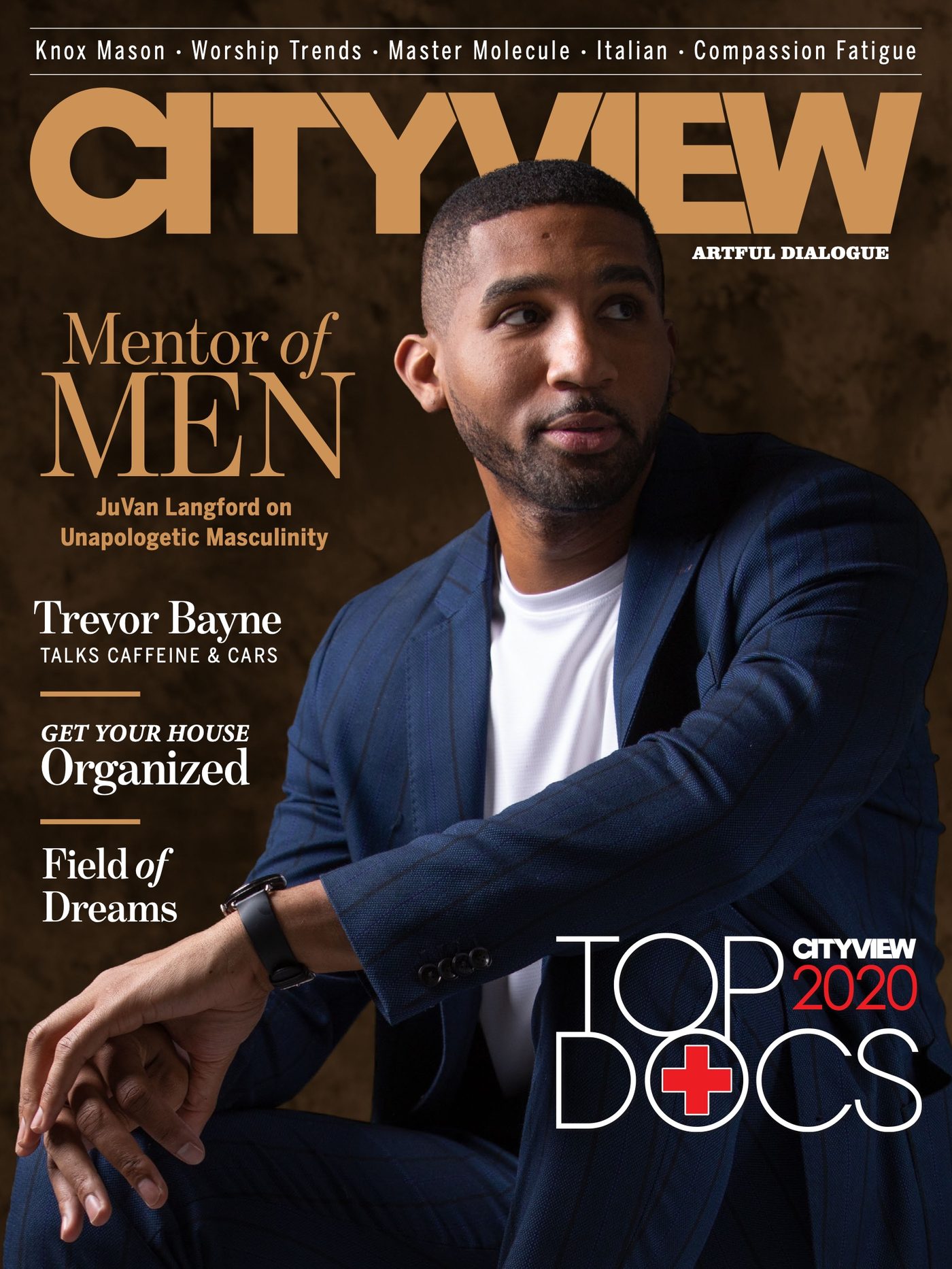
It was clear the world had enough negative media outlets and my Boy Scoutish nature inspired me to do something different when I acquiredCityview. The magazine’s mission is to provide accurate, positive, and inspiring information about the people, places and activities in the area. An all class, no trash, no goofy, and no stupid approach. That would be my way of giving back and serving the community in a positive manner.
Many times I have experienced the greatest life changing moments from listening to someone sharing a simple idea in a story. These, often-simple-teachings have really changed my life for the better time and again. When someone tells a story really well it is easy to remember, and that makes the message easier for me to incorporate into my life. That is why I feel compelled to share not only my story, but the stories of the people that are also making significant contribution.
My mission is to help empower the lives of others by sharing that which I have learned in a positive inspiring fashion, both as a teacher and by example. I do that now through the pages ofCityviewand plan to begin public speaking, producing video/podcast content and help to organize and teach seminars. I have been so blessed to have learned so much and now it is time to share it with everyone. Thank you for being interested and taking time to help me in my mission by readingCityviewand visiting our website.
→ Swipe for Next Story
Arts & CultureMARCH APRIL 2020
Jimmy Chiarella
Story by Isaiah Woodruff
I have always been fascinated by the properties of light. This interest has influenced my life’s work over the past 50 years. As a photographer, I can’t think of a more important aspect of the work than light. Living in Los Angeles, I was able to specialize in photographing “highly reflective surfaces”. Gold, silver, chrome, glass and plastics were the norm and lighting these was as difficult as anything I can recall.
I was approached by the department head of glass and ceramics at Cal State University to photograph his personal works of iridized glass for the gallery in Taos, New Mexico. We settled on a trade; if I photographed his work, he would tutor me in my glass quest. A decade passed as I worked to produce my glass art. Then one evening while on an assignment in New York City, I passed a gallery that displayed a glass cube, which seemed to radiate light from within. It was as if the light that was received, was amplified. Another decade passed and we moved to Knoxville where I started to explore how I could create objects that played with light in a similar fashion.
Even though glass art has been around for over 5000 years, there is no place to learn this specialized form called “cold glass”. The process starts with tiny pieces of lead crystal, which are then polished and glued together after inserting a piece of dichroic glass. This process is repeated hundreds of times over, resulting in a magnificent glass cube.
Less than.01% of the art glass we see today is created this way, in fact, you can count the number of great artists in this field on one hand. As critical as the materials are, patience and pursuit of perfection are the two characteristics that define this art form.
→ Swipe for Next Story
DepartmentsMARCH APRIL 2020
Incredible Appalachia
Story by Isaiah Woodruff
Travel Through Time at the Museum of Appalachia
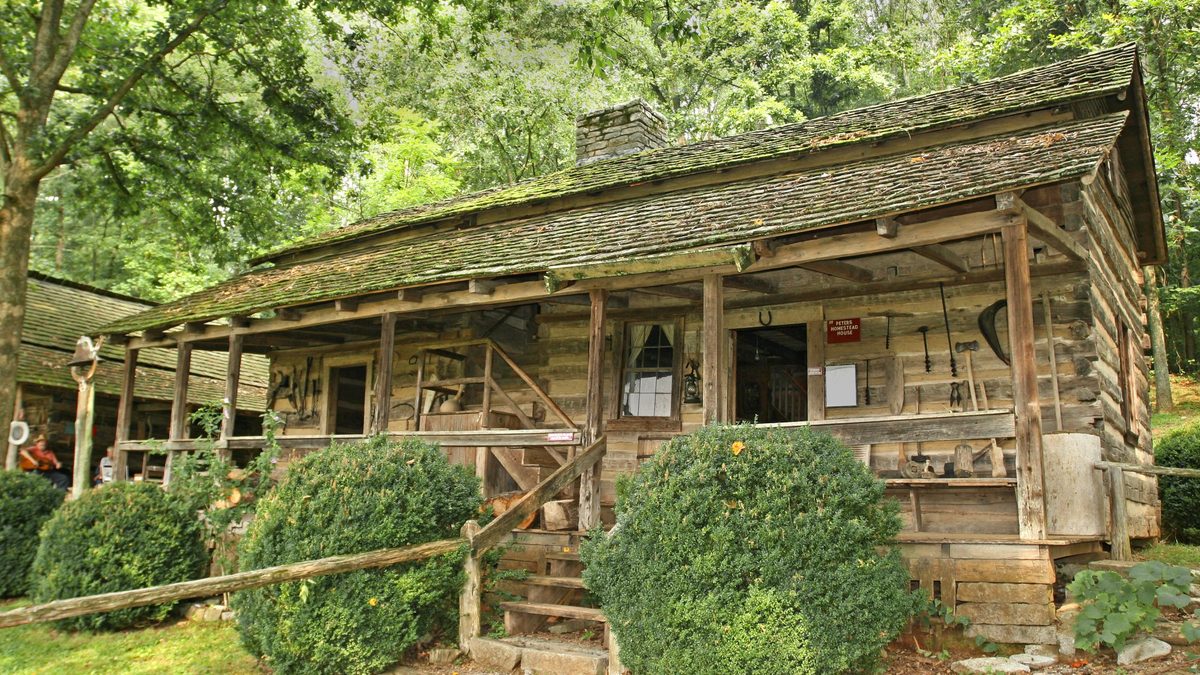
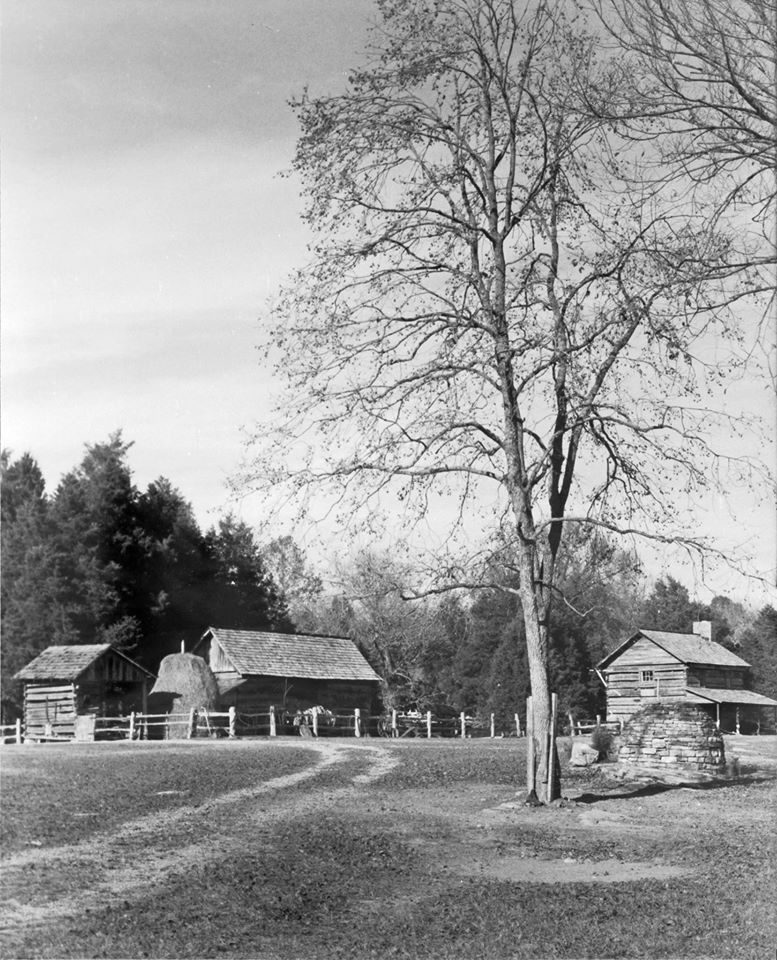
John Rice Irwin founded his vision in 1969—a museum sought to ensure that Appalachian history would survive forever. Over the years, the museum continued to see more and more visitors, while portraying an authentic mountain farm and pioneer village. “It started as a man’s collection and turned into a passion,” says Rice’s granddaughter, Elaine Irwin Meyers. Today, the museum of Appalachia has grown substantially, presenting over 250,000 artifacts including folk art, musical instruments, Native American artifacts and much more. You can find all of these timeless treasures in their 3 multi-story exhibit buildings, with each floor featuring different points of interest.
Across the 65-acre property, you’ll see a recreated Appalachian community. The pioneer village comes complete with 35 individual log cabins, barns, free range farm animals and gardens as well. While traveling through the estate, expect to be engulfed in pioneer life and times and a culture that existed for hundreds of years. Museum of Appalachia offers self-guided tours for those who want to enjoy the exhibits at their own pace—making it a great spot for couples and small groups who wish to be on their own page. The Museum of Appalachia is a great spot for all types of events. Grades with all ages are welcome to come appreciate a place in history. Annually, the property hosts hundreds of field trips and over 100,000 guests in total come every year. With a warm and welcoming ambience, this place seems to act as a time machine, taking you back centuries. It attracts adults and children alike to come and experience the Appalachia lifestyle ancestors before them had.
→ Swipe for Next Story
MusicMARCH APRIL 2020
The Black Lillies
Story by Drew Hamilton
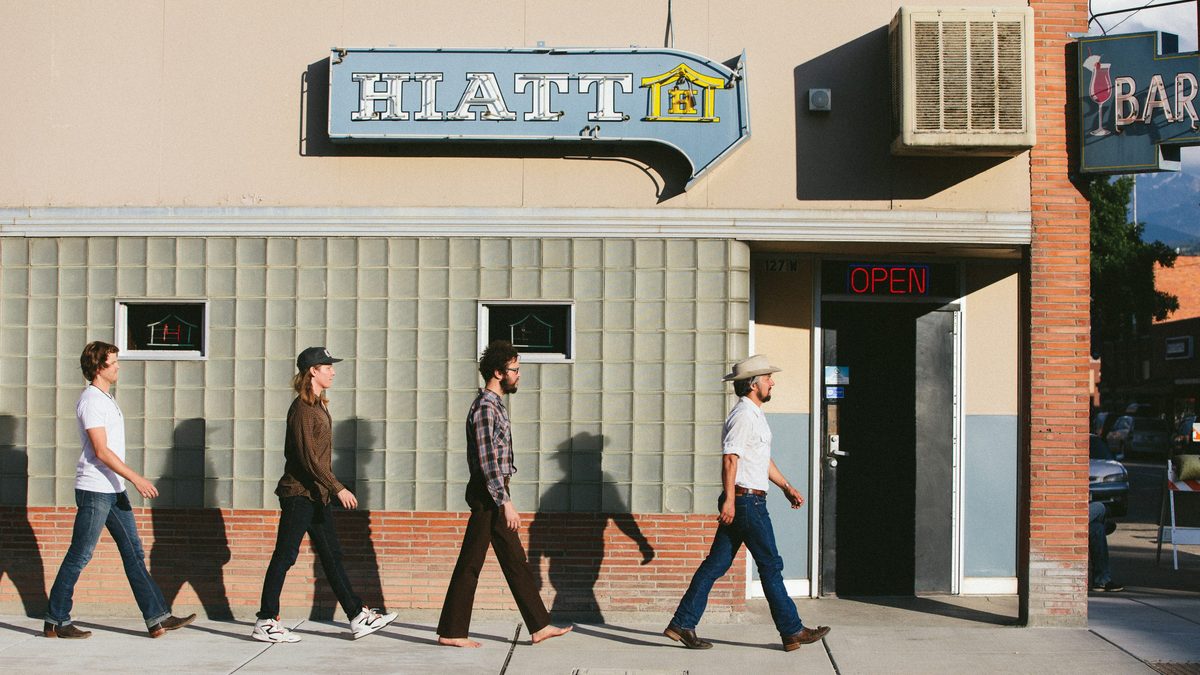
Knoxville’s famed band The Black Lillies combines the familiar sounds of rock & roll with the down-home folk tunes we know and love. Led by lead singer Cruz Contreras, the band has been actively performing and producing music for more than a decade. “It’s crazy.” Contreras says, “I had this dream to play in a band when I was 15, and I’m still living it out at 43.” The band’s name originated from Contreras’ childhood, as a boy caring for the Lillies his father planted at their home. And since its inception, the band has travelled across the United States—even Europe at one point—sharing good vibes and music with fans. And while all that traveling could get rough on the spirit, this band proves that that is not always the case. “The more we travel, the more we like traveling,” Contreras says.
This career has been everything Contreras ever asked for, and more. “The most rewarding part of all of this,” he says, “is that we get to bring people together through our music.”
Look for live dates in Knoxville this spring or catch The Black Lillies this summer at the Catoosa Music and Arts Festival in Jamestown. And be sure to head to www.theblacklillies.com to download their album Stranger to Me and be on the lookout for their pre-hiatus performance “Farewell for Now” coming up this spring.
→ Swipe for Next Story
PoliticsMARCH APRIL 2020
The Color Purple
Story by George Korda
Will the blue wash over Knoxville’s traditional red political landscape.
On a WATE-TV show in 2003, after Bill Haslam was elected Knoxville mayor, I concluded that he might be the “last overtly Republican mayor of Knoxville.” That could still be the case, unless the new mayor and city council stall or reverse the city’s growing blue hue. From 1972 to 2007, Knoxville elected four Republican mayors: Kyle Testerman (twice), Victor Ashe, and Bill Haslam. Randy Tyree was the lone Democrat between Testerman’s two terms. With Madeline Rogero’s 2011 election victory, and now Indya Kincannon’s accession to the mayor’s office, city voters have elected two, rock-ribbed, unapologetic, liberal Democrats. The city council has been shifting as well, with little resemblance, physically or politically, to past city legislative bodies. Seven women are included in the nine-member council. As different as that may be, it’s not the biggest potential impact. The mayoral administration’s and council’s actions over the next four years determine whether the blue wave continues to wash over Knoxville. It could also show tinges of the color purple, or even (gasp!) red.
The Democratic Party’s movement has Tennessee Democrats in control of a handful of urban areas, Knoxville among them. Tennessee Democrats resemble fans of a losing football team, hoping each election cycle will be better than the last. Two headlines from the 2018 mid-presidential term elections reflect hopes, and hopes dashed:
Associated Press, Oct. 24: 2018: “Shut out for years, Tennessee Democrats are now optimistic.”
Politically, Tennessee has gone Republican red, while Knoxville has gone Democratic blue. Many reasons contribute to this, such as demographics, the urban-rural divide, a desire to live near like-minded people, and a broad decline in local voter election interest.
Turnout grew slightly in the last two open-seat mayoral elections. In 2011, a paltry 21,000 voters were in attendance. In 2019, a slightly less paltry head count of 25,000 were in attendance. Still, low-voter interest benefits organized political efforts. Small turnout helps a good organization offset the advantages that money can bring to a campaign.
In Knoxville, hitting the organizational heavy bag to build its political punch is the “progressive” (really liberal) City Council Movement. “The City Council Movement’s mission is ‘to strengthen the people’s political power by holding elected officials accountable via organizing, education and participatory democracy.’ The candidates speak of doing more for Knoxville’s impoverished and homeless and some are active in causes to help African Americans, like Black Lives Matter,” wrote News Sentinel columnist Georgiana Vines in an Oct. 9, 2019 pre-election piece. Newly-elected council member Amelia Parker is a founder of the City Council Movement. Parker was endorsed by the Democratic Socialists of America, which stated in a news release following her victory: “In City Councils like Boulder, CO and Knoxville, TN, where the DSA already has one member in office, our influence is only growing, electing Junie Joseph and Amelia Parker to Council seats, respectively.”
The other council member to which the Democratic Socialists referred is Seema Singh Perez. On Election Night 2017, the Democratic Socialists of America tweeted, “Seema Singh Perez was just elected to the Knoxville City Council; She’s the first South Asian woman on the Council and a member of the DSA.”
On the City Council Movement’s Facebook page there are various photos of smiling people with raised clenched fists, promoting various “progressive” causes. The causes include Climate Strike, updates on city meetings and decisions, and an interesting Nov. 13, 2019 post about a “Post-Homelessness Summit Community Gathering” to discuss a “Homeless Bill of Rights.”
The Homeless Bill of Rights cites what homeless people should have a right to do in public spaces. Among them: “performing necessary body functions, occupying shelter from the elements, making use of the political left is successfully changing the face of Knoxville politics. However, to the degree the City Council Movement, Democratic Socialists, and whoever is in ideological agreement with them, try to transform Knoxville into a red-state version of San Francisco, they risk creating the very dynamic that has seen once-dominant Tennessee Democrats pushed into a few urban redoubts. When the cry goes out for “Power to the People,” the actions of city government over the next few years will see who answers the call.
→ Swipe for Next Story
InsightsMARCH APRIL 2020
Ride Responsibly
Story by Bruce Fox
It’s about this time of year with spring right around the corner that I am reminded of the importance of motorcycle safety. In my years of practice, I have represented many injured motorcycle riders and all of those cases have a similarity—the driver of the vehicle that hit the motorcycle almost always says they never saw the bike. Nathan and I sat down with Scott Maddux, owner of Smoky Mountain Harley Davidson to discuss how riders can be more proactive in avoiding accidents. According to Scott, there is no substitute for safety and that is why they offer classes for both first time and seasoned riders alike. “It’s an easy way to learn if you have never ridden” says Scott, “We provide everything you need including the motorcycle and upon completion you get a certificate that when presented to the DMV will get you the required endorsement without having to take a test.” Classes are taught at the Maryville location and there are lots of resources for folks wanting to participate in group rides. Smoky Mountain Harley has three full-service locations and four outposts all with resources to help riders unfamiliar with the best places to ride in our area. Scott also made another interesting safety point about the type of helmet riders choose. Tennessee requires riders to wear helmets but not full coverage types. Scott spoke about his personal knowledge of several accidents where full coverage helmets had saved the rider from serious injury. No matter where you choose to do business, be sure to take the time to be informed and choose the best safety gear you can afford. I hope you enjoy the ride.
→ Swipe for Next Story
DepartmentsMARCH APRIL 2020
Homegrown Horticulture
Story by Drew Hamilton
With winter’s frosts becoming more and more infrequent, we firmly set our sights on spring. As life blossoms around us, now is the perfect time to exercise that potentially green thumb. The soil in East Tennessee can vary greatly depending on your location, especially if you live within the city limits. One way to stack the deck in your favor is by building raised garden beds. Whether you plan to grow flowers, herbs, or vegetables, raised garden beds give you the unique opportunity to better control your growing conditions. In addition, these beds make it easier to isolate your new vegetation from invasive weeds and other undesirable elements.
First, consider the areas that you have at your disposal. Depending on what you would like to grow, the placement of your garden beds should almost always be a consideration. As a general rule, build the beds in an area that will receive plenty of sunlight (between six and eight hours a day). In terms of design, these beds can range from relatively basic and straightforward, to much more elaborate configurations. A quick internet search will provide no shortage of building plans and supply lists. However, pay close attention to the materials that are used. Pressure-treated lumber is generally considered safe for beds, but for those who want to stick to untreated wood, consider using woods that are naturally resistant to rot such as cedar. In addition, allow at least six inches of depth in your beds to provide room for budding root structures and restrict the width of your beds to four feet to make tending to your plants more manageable. Lastly, be sure to consult the staff at your local garden center to find the right mix of soils to ensure the healthiest environment for your new garden to thrive.
Apart from the fresh air and the satisfaction of seeing your labor bear fruit, building and tending your own raised beds can provide a nice supplement of healthy treats to add to salads and meals throughout the spring, summer, and early fall.
→ Swipe for Next Story
DepartmentsMARCH APRIL 2020
Knox Mason
Story by N. Brooks Clark
Knox Mason in the downtown Embassy Suites maintains its culinary roots.
Downtown Knoxville’s latest addition to the hotel scene gets your attention when the glass doors of the new Embassy Suites lobby on Gay Street whisk open to reveal a 50-foot-tall light array, artistic cast-bronze ceiling lights, and modern décor looking like a fashionable boutique hotel in a large city. A space that many remember as a cavernous and boring bank office, as silent as a tomb, now makes each patron feel like a red-carpet celebrity. Walking up the black polished steps to the new Knox Mason mezzanine, you are forgiven for wondering whether this is the place to get the shrimp and grits, crayfish, and cornmeal fritters that made chef Matt Gallaher’s South Gay Street storefront a foodie magnet.
From that high-design mezzanine, diners can look down over the glittering lobby—or from the covered outside balcony suspended over the sidewalk below, they can watch the passing parade on Gay Street, looking more and more like Bruce McCamish’s artistic photos. Inside, the slate blue and gray ceilings and white walls set a contemporary tone, but you draw hope from a sliding wood barn door in front of the wine closet and the cookware atop the internal walls—light blue, teal, and green Le Creuset Dutch ovens, southern cooking books, mason jars (of course), and a Leave it To Beaver-era desk globe with the Approved by Parents Magazine tag still attached. Knox Mason servers get it: you are there to savor that true southern cuisine, for example, using warm Benton’s bacon vinaigrette on a ‘Kilt” greens salad of kale and frisée on Paysan Tennessee toast, crowned by a Windy Acres Farm egg poached at 142 degrees.
As Gallaher and chef de cuisine Warren Weiss were shuttering the old location in 2018, they got together and set out their plan to reopen a year later in a new location.
“Matt and I collaborated on the menu,” says Weiss. “It would have Knox Mason original recipes. In some places the menu was honed down; in others we added some embellishments, like the Smoky Springer Mountain Chicken and Cades Cove Sausage Gumbo. But we agreed on having the same tone that we have no matter how polished our environs.” To that end, Weiss made sure to take with him the most valuable things—the original Knox Mason recipes. “One recipe was written on a beverage napkin, others on random pieces of paper, and some stuck on the wall.”
The commitment to an unpretentious tone carries through to the way dishes using locally sourced ingredients are presented with simple elegance.
Many Knox Masonites satisfy their southern cooking jones just sitting at the bar and sampling the Snacks menu: Enjoy the pop on your palate from semi-crunchy Fresh Pork Rinds with Bourbon Barrell smoked paprika and Tennessee Sunshine hot sauce. The Deviled Windy Acres Farm Eggs are smooth and tantalizing with rooster sauce and Tennessee chow-chow. Don’t forget the Gulf Shrimp Toast—buttery shrimp mousse on that scrumptious Paysan Tennessee Toast with Alabama white sauce—and Crayfish and Cornmeal fritters with Tennessee Sunshine aioli. But the unexpected new treat is Fried Oyster Fun Bun—two sliders seasoned with Tennessee Chow Chow, Virginia peanuts and Kentucky soy sauce aioli.
Grazers can also pick from four “Mason Jars”—herbed chips with caramelized Vidalia onion dip; Sweetwater Valley pimento cheese with house-made “wicked” pickles and Fanatic Beer Bread; smoked sunburst trout rillettes with spring onion crème fraiche, boiled dressing and Paysan bagel chips; and Joyce Farms chicken liver pâté.
You can’t go wrong with the Smash Burger, comprising two 1/3-pound patties on a Payson brioche bun with wicked pickles and Vidalia onions. The Low Country Shrimp and Grits bring comments about the delicate, creamy grits paired with house-smoked ham, smoked sausage, green onions and shellfish butter. In the same way, the Heritage Farm Pork Belly is enhanced by the Tennessee Sunshine-spiked sweet potato purée and Jack Daniel’s fried apples with Benton’s Bacon.
With the super-fresh Trout Fillet as an outlier at $24, large dishes are a reasonable $18 to $19. Openers range from $5 to $7. This is an excellent value for a memorable culinary treat.
→ Swipe for Next Story
Dining GuideMARCH APRIL 2020
Dining Guide – Italian
Story by Isaiah Woodruff
So, you’ve decided you’re in the mood for Italian. Not just run-of-the-mill Italian but, Italian fare featuring authentic entrees loaded with fresh herbs, cheeses, spices, meats, vegetables, and of course, the aroma. Fortunately, Knoxville and surrounding areas are blessed with an abundance of fabulous restaurants highlighting Italian cuisine. This Dining Guide focuses on a select few of these extraordinary places presenting mouth-watering entrees, which, of course, wouldn’t be complete without pizza and pasta. Amici
One of Blount County’s newest restaurants features house made, Italian food. Amici does not follow traditional Italian-American cuisine, but instead features native Italian cuisine. They have delightful entrees including their Lamb Bolognese and homemade Burrata, which have been crowd favorites. “Amici”, meaning “friend” in Italian lives up to the name, as they continue to attract more customers returning as regulars. 1420 E. Broadway Ave, Maryville 865-724-1710 |amicimaryville.comSavelli’s
Savelli’s is an Italian gem you might miss if you’re going too fast. Located on Sutherland Avenue you will find a petite restaurant equipped with big Italian character. Savelli’s fans rave over their authentic Sea Bass with risotto as well as the deep-fried calzone. Next time you’re near Sutherland Avenue, keep an eye out for this fantastic Italian eatery. 3055 Sutherland Ave, Knoxville 37919 865-521-9085 |savellisknoxville.comEmilia
If you’re ever in the Market Square area looking for amazing Italian food, look no further. Emilia is a local restaurant stocked and loaded for anyone looking to get that legitimate Italian fix. From Gnocchi Amatriciana and Pollo “A Mattone” (brick-cooked chicken), to desserts like tiramisu and butterscotch pudding, Emilia has Italian flavor for any palate. 16 Market Square Knoxville 37902 (865) 313-2472 |emiliaknox.comPero’s on the Hill
Pero’s on the Hill features Italian, Greek and American cuisine all under the same roof. A wide selection of options coupled with a relaxing atmosphere create the perfect environment. Pero’s on the Hill not only features savory entrees, but live music and an outdoor patio to top it all off. The Spanakopita and Chicken Parmigiana are highly praised recommendations. 16 Market Square Knoxville 37902 (865) 313-2472 |Cappuccino’s
What originally started in 1977 has now found a home on Kingston Pike. Located in the same building as Copper Cellar, Cappuccino’s offers an array of fine Italian dishes. It’s no secret, traditional, authentic Italian is hard to find. Cappuccino’s Lasagna and Veal Marsala are among the many dishes worthy of acclaim. The restaurant staff is very courteous and welcoming, which is to be expected from this splendid establishment. 7316 Kingston Pike Knoxville 37919 (865) 673-3422 |cappuccinos-italian.comGavino’s
Anyone in the mood for Italian comfort food, insanely delicious garlic knots, and cold beer, should consider a trip to Gavino’s. With classics on the menu to choose from, like the Neopolitan Pizza or Chicken Alfredo, picking an entree could be quite a hard decision. If you’re in the mood for dessert, the Tiramasu could be right up your alley. Bearden: 5211 Kingston Pike Turkey Creek: 11316 Parkside Dr gavinospizzeria.comThe Original Louis Drive in Restaurant
The staff at Louis Original Drive in Restaurant go above and beyond to provide the Italian experience. With more than 50 years in the industry, this restaurant continues to attract those in need of a meal that is both fresh and genuine. Louis is located on Old Broadway with a variety of good Italian options like Baked Spaghetti and Ribeye Steak served with special salad, onion rings and a baked potato. 4661 Old Broadway Knoxville 37918 865-688-4121 |theoriginallouis.comAltruda’s
Located on North Peters Road is an authentic Italian experience you don’t want to miss. Altruda’s offers the genuine taste of Italy at a reasonable price. There are plenty of flavorful options on the menu including Chicken Carbonara and Veal Parmesan, but make sure you try their renown garlic rolls and house salad to start things off!
125 North Peters Rd, Knoxville 37923 865-690-6144 |altrudas.com
→ Swipe for Next Story
DepartmentsMARCH APRIL 2020
What Women Want
Story by Cityview
Dear Knoxonomist: How do I discover my true purpose? My wife’s therapist(s) have assured her that once I do, she will have the perfect husband. I’m trying to figure out what she really wants? —Ivan
Dear Ivan— The Knoxonomist wonders who cares? He knows who he is and what he wants. The Knoxonomist knows his true purpose: to spread his superior wisdom amongst all who come seeking. He never had to pursue his calling; it came to him. Stop trying to understand what women want, give up this fools mission, even the famous Sigmund Freud couldn’t solve this mystery after decades of study. You are wisely imagining that if you express your manly desires they may be brought back to your attention at an inopportune moment, like when the Knoxonomist agreed, while in an inebriated state, that having his mother-in-law over for dinner once a week was a good idea. The Knoxonomist knows that “Gotchas” should expire like sour milk, however a woman can recall the most minor of details even 30 years later in order to domesticate her man. Whether or not there is a bit of sagacity in her desire, know that you can expect to be irrevocably held accountable for everything you speak. Since the jury is out on whether or not women can read men’s minds, the Knoxonomist recommends not even thinking of things that could bite you like a fire ant on the morning toilet seat suicide squad.
The Knoxonomist suspects at this point you are contemplating a vow of verbal celibacy in hopes of keeping a peaceful coexistence. Abandon this line of thinking just as deftly as the Knoxonomist would avoid yet another mother-in-law dinner or the age-old question “Do these pants make my butt look fat?” The Knoxonomist recommends instead that you enjoy a few cold ones with the boys before one of you decides to perform some ridiculous man-proving feat that is only possible after exactly the correct number of tequila shots. The Knoxonomist recognizes the benefits of such behavior. Adrenaline is the elixir that makes men feel alive, not to mention having bragging rights for whatever stupid thing we did. The Knoxonomist remembers the show Jackass, and he hopes you and your friends aren’t considering snorting wasabi or playing in Anaconda-filled ball pits. But otherwise, he is all for your stupid stunts and tricks as a way to establish your true masculinity.
It is wise to avoid becoming little more than the well-trained house husband. In our minds we are benevolent creators put here to serve and protect those we love. We are hunter/gatherers and adventure seekers. Deep down that is exactly what our women want and need us to be. Your calling will come to you when it is time for you to know and not before. Take heart, not even the Knoxonomist knows what a woman truly wants.
→ Swipe for Next Story
DepartmentsMARCH APRIL 2020
Support Duck Takes Flight
Story by Isaiah Woodruff
Daniel Turducken Stinkerbutt breaks boundaries as the hottest new support animal.
Carla Fitzgerald worked as a horse carriage driver until a wreck left her physically and psychologically damaged. It took months for her to learn how to walk again, but PTSD from the incident continues to linger. While many people with PTSD turn to therapy or active hobbies to help maintain their peace, Carla turned to a mild-mannered mallard named Daniel Turducken Stinkerbutt. After seeing how they interacted, Carla says “the doctor recommended that I bring Daniel to serve as an emotional support animal.”
While a duck is far from the average Emotional Support Animal (ESA), traditionally cats or dogs, he is just what Carla requires whenever she boards any type of vehicle. In fact, any domesticated animal can qualify as an ESA; the only requirements are that they are manageable in public and home settings and are qualified by a licensed mental health professional. Daniel Stinkerbutt’s work uniform features little red booties to protect his feet and a diaper. This duck takes on the full-time job of providing peace to his partner.
Stinkerbutt became an internet sensation when he boarded a flight with Carla. This makes sense, as a duck in a diaper is the last thing you’d expect to see boarding a plane. Fellow passengers stared in amazement while the well-behaved bird provided a sense of peace for Carla. Since then, Daniel has been featured on ABC News, BuzzFeed and Cosmopolitan just to name a few places.
Carla believes “as long as the ESA provides the service you need, it doesn’t matter if it’s a pet rock or a pet rhino, just so it brings you peace.” While some people think a duck is a ridiculous ESA, Daniel Turducken Stinkerbutt fulfills his purpose gracefully. Without him taking Carla under his wing, her life would be much harder.
→ Swipe for Next Story
JurisprudenceMARCH APRIL 2020
Field of Dreams & Money Ball
Story by Gary Wade
As early as 1856, journalists began to refer to baseball as our National Pastime. People all over the country played, watched, and read about a sport supposedly invented in 1839 by Abner Doubleday in Cooperstown, New York, now the home of the Baseball Hall of Fame. George Will, who contends that he only writes about politics to support his baseball habit, placed the game in historical context when he pointed out that Fenway Park in Boston and Wrigley Field in Chicago are older than the Golden Gate Bridge, the Hoover Dam, the Jefferson Memorial, and the United States Supreme Court Building. A passage from the movie “Field of Dreams” describes the sport in more romantic terms: “The one constant through the years has been baseball.... This field, this game, it’s part of our past. It reminds us of all that was once good and that could be again.”
In the fall of 1919, two important developments changed the nature of Major League Baseball. The first is known as the “Black Sox Scandal.” Star player “Shoeless” Joe Jackson and seven of his Chicago White Sox teammates, all notoriously underpaid by the team owner, were indicted for intentionally losing the World Series to the Cincinnati Reds. A gambling syndicate paid the players thousands of dollars to “fix” the result. All eight players were acquitted in a jury trial. The team owners, however, determined to establish the integrity of the sport, named federal judge Kenesaw Mountain Landis as the first Commissioner of Baseball. Given practically unlimited authority to govern, Landis forever banned the “Chicago Eight” from organized baseball.
The second occurred just after the conclusion of the 1919 Series, the Boston Red Sox sold the contract of Babe Ruth, a young player who had starred as both hitter and pitcher, to the New York Yankees for the then unprecedented sum of $100,000. While with the Red Sox, the “Bambino” had set a major league record for the most home runs in a season and led his team to three world championships. The owner explained that he needed the money to finance a Broadway play. Even with the hefty price tag, some sportswriters described the transaction as the “steal of the century.” The Boston team had won outright five of the very first 16 World Series until the time of the trade, but did not win another until 2004. The eighty-five-year streak of bad luck has been dubbed the “curse of the Bambino.”
Ruth became the greatest player—and the greatest personality—in all of sports. The Yankees, which had never before played in a World Series, won seven American League pennants and four World Series Championships during Ruth’s fifteen-year tenure. In the 1927 season, Ruth hit 60 home runs, a record that stood for 34 years. During the Great Depression, a sportswriter asked if he was aware that his $80,000 salary was $5,000 more than that of President Herbert Hoover. “I know,” the Babe responded, “but I had a better year.”
By the end of Ruth’s career, “Iron Man” first baseman Lou Gehrig led the Yankee dynasty. With statistics comparable to Ruth, he never earned more than $39,000 before losing his battle with ALS, better known today as Lou Gehrig’s disease. Centerfielder Joe DiMaggio, whose celebrity rose to even greater heights when he married Marilyn Monroe, succeeded Gehrig as the Yankee’s new star. He became the very first player to earn $100,000 in a single year. By the time DiMaggio’s career ended in 1951, outfielder Mickey Mantle had joined the Yankees. Eventually the most popular player of his era, Mantle received $7,500 his first year in the big leagues. Over his 18-year career, he played in 20 All-Star games, won three Most Valuable Player awards, and led the Yankees to 12 American League championships and seven World Series titles. His 18 home runs in his World Series games broke Ruth’s record of 15. From 1963 through 1968, Mantle’s salary was $100,000 each year. His career total of $1,128,000 is about what an average player today makes in a year. Even more ironic? In 1952, a Mantle card manufactured by the Topps Chewing Gum Co. sold for once cent. In 2018, the same card brought the astounding $2,880,000 at auction! What brought about these dramatic changes?
The “reserve clause,” initiated in the standard baseball player contracts as early as 1879, tied a player to a particular team indefinitely. In 1922, the United States Supreme Court ruled in Federal Baseball Club v. National League that the clause did not violate antitrust laws. Baseball was merely an “exhibition” according to Justice Oliver Wendell Holmes, who authored the Court’s opinion. Thus, players could be traded, but otherwise had no freedom to change teams.
As Mantle retired in 1969, Marvin Miller the executive director of the players union, negotiated baseball’s first collective bargaining agreement. A year later, the St. Louis Cardinals traded Curt Flood to the Philadelphia Phillies. Flood, who played most of his 15-year career with the St. Louis Cardinals, had won seven Gold Gloves as the National League’s top fielder at his position, led three pennant-winning teams and compiled a lifetime batting average of almost.300. Flood, encouraged by Miller, challenged the reserve clause. Only 32 at the time of his trade, Flood had sat out the 1970 season, foregoing a $90,000 salary. In the following year, he played only thirteen games before retiring from the sport. He lost his case in a 1972 ruling by the Supreme Court.
Then, in 1974, the Oakland Athletics owner breached the contract of star pitcher Jim “Catfish” Hunter. Hunter, free to negotiate with any team, signed with the Yankees for five years at $667,000 per—the highest salary ever awarded. A year later, pitchers Dave McNally of the Baltimore Orioles and Andy Messersmith of the Los Angeles Dodgers, encouraged by the Player’s Union, played without contracts. On November 4, 1976, an arbitrator declared that they were free agents. McNally retired, but Messersmith signed a three-year contract for a total of $1 million. Years passed before the owners and the players agreed on what is known as “The Curt Flood Rule:” a player with ten years in the majors and five years with one team, must give consent to a trade. A 1998 Act bearing Flood’s name confirmed that the antitrust laws applied to baseball.
In March of 2019, Mike Trout of the California Angels, today’s equivalent to the star power of Mantle, signed a contract for $35,540,000 per year for twelve years—a total of $426,500,000! Later on that year, the Yankees signed free agent pitcher, Gerrit Cole, to a nine-year contract for $324,000,000, making Cole, at $36,000,000 per year, the highest paid player in baseball—at least for now. If healthy all year, Cole would likely pitch in 30 or so games, about $1,200,000 per appearance. After his first three starts, he could purchase the 1952 Mantle card and have at least half a million left over. Free enterprise at work.
→ Swipe for Next Story
InsightsMARCH APRIL 2020
Cookin’ with LaVerne
Story by Robert Pryor, Sr.
My mother was a great cook. She had one foot solidly planted in southern country cookin’ and the other in an effort at a more sophisticated international cuisine, especially German and Italian. With seemingly little effort, she could work all day and come home and throw together a great meal of meatloaf, lasagna, sauerbraten, or fried chicken.
My mother cooked by taste the way some people play piano by ear. She would taste everything, then add a little more salt, oregano, paprika, or maybe horseradish. I do remember one Thanksgiving when she got a little heavy handed with the sage and no one could eat the dressing. She rarely used recipes and just moved about by instinct.
Growing up in the home of LaVerne Clift Pryor, I learned to appreciate good food and developed a fondness for vegetables most kids avoid at all cost. Broccoli, cauliflower, and Brussel sprouts grow on you if you’ll just give them time and if they are prepared properly. She made a lot of slimy okra gumbo, but I still pass on that one.
LaVerne was a champion cornbread maker. Always in a black iron skillet and usually with cracklins. My father loved cornbread and ended many meals standing at the kitchen sink with cornbread crumbled in a glass of milk. Few people do that anymore, but, to him, that was a fine dessert. My mother first learned her cooking skills from her father, Floyd Edgar Clift. Floyd left the banks of the Holston as a boy and came west to Knoxville in 1905 to make a better life in the big city. He worked odd jobs around town and played baseball. As a teen, he joined the Navy and became a cook. After his Navy discharge, Floyd worked in or operated restaurants around East Knoxville. One man who knew the family well was heard to say, “You could tie Floyd to a power pole on Magnolia Avenue and come back in a week and he would have a café up and running.”
Floyd Clift met and married Grace Mchaffey in 1912. Grace worked in a laundromat on Gay Street directly across from where Frank and George Regas would start their famous restaurant just seven years later. Floyd operated the Magnolia Avenue streetcar for the Knoxville Railway & Light Company when he met Grace. The streetcar ran from Lake Ottosee (later Chilhowee Park) to Gay Street, and he and Grace would wave to one another each time Floyd made the turnaround on the Gay Street end of the line. That wave soon became a flirt and eventually he stopped the streetcar and asked for a date. The date finally came, but only after Floyd fought and whipped each of Grace’s five brothers. The Mchaffey boys were tough customers from the Arlington community near Chickamauga Avenue and Broadway. Grace Mehaffey was from a large family and certainly knew her way around a country kitchen. She also taught LaVerne, her only girl and firstborn child, her gifts of the galley.
LaVerne shouldered much of the cooking responsibilities in the Clift family and was affectionately called “Sister” not only by her younger brothers, Gene and Floyd, Jr., but also by her parents and all of Lincoln Park. “Sister” was a real kitchen mechanic. She thickened her chili with cornmeal, used lots of butter, and some lard (especially frying chicken). She broiled her steaks in the oven or fried them in a skillet. She beat beef steak and pork with a hammer. I commonly came home to a house smelling of pinto beans cooking on the stove. She always cooked her dried beans with ham hocks after soaking them in water overnight. She seasoned her green beans with fatback and cooked them with new potatoes. Mother added a little coffee when she made redeye gravy and always kept a quart of buttermilk for cooking various dishes and for Daddy to drink when the supper was extra country. She cooked with a lot of flour and typically ended up with it all over the stove and the drain board. She rarely changed clothes from work to start supper so she wore an apron with flowers on it. I recall her cooking to be noisy with lots of banging, dropping, and sizzling, but the end product was worth the effort.
LaVerne taught me to understand the glory of a homegrown tomato. I thank her for that as much as anything she ever did for me. Most people can’t appreciate a homegrown tomato or something like Hickory Cane corn until they are at least 40 years of age, but because of her I learned their greatness before age 10. I think of her each spring when the farmers’ markets open. To help her, I shucked corn, cooked dried beans, and broke green beans. As a reward, she would prepare me an egg custard pie or perhaps a Lazy Daisy cake.
When my wife, Norma, and I married in 1965, she only knew how to cook tuna fish casserole. That’s the only thing they taught her how to cook in home economics at Christenberry Junior High School. We ate tuna fish casserole at least three nights a week and sandwiches the remaining nights. Thankfully, LaVerne took Norma under her wing and taught her the basics and shared her talent of improvising on recipes. Today, Norma is known as an outstanding cook and we still enjoy many of my mother’s great dishes. Here are few of LaVerne’s recipes you might enjoy:Roquefort Cheese Salad Dressing
Ingredients: 6 Oz. Bleu Cheese Crumbles 1 C. Buttermilk 1 C. Helmon’s Mayonnaise 1/2 C. Sour Cream 1 Tsp. Garlic Powder 1-1/2 Tsp. Onion Powder 1 Tsp. Sugar 1/2 Tsp. Salt 1/2 Tsp. Coarse Ground Pepper Mix the ingredients in a bowl with a spoon. The second time you make this dressing, you will want to double the ingredients. Black Walnut Sweet Potatoes
Ingredients: 8 Mid Size Sweet Potatoes 1 Package Black Walnuts Pieces 1-1/2 Sticks of Real Butter 1 C. Dark Brown Sugar Boil the sweet potatoes until tender and then cool, peel, and slice. Each slice should be 1/4 to 1/2 inch thick to prevent crumbling. Melt butter in black iron skillet and add brown sugar stirring until the mixture boils. Add the potato slices to the mix spooning the sugar/butter mixture over each slice and serve with sprinkled black walnuts on top. Holiday Oysters
Ingredients: 2 Qts. Oysters 1 Medium Onion 1 C. Chopped Curly Parsley 1 C. Thinly Sliced Celery 2 Sticks Real Butter 2 C. Half and Half Ritz Crackers Salt Pepper Sauté chopped parsley, chopped onion, and thinly sliced celery in the butter. Lay down a bed of crumbled Ritz Crackers in a medium size casserole baking dish. Top the crumbled crackers with a thick bed of drained oysters cutting large oysters to bite-size pieces with scissors. Salt and pepper the layer of oysters and saturate with the butter/vegetable mix. Repeat the cracker and oyster beds again using salt and pepper and the butter/vegetable mix on top of oysters. The top layer will be Ritz Cracker crumbs. Soak the top with Half and Half by opening the drain pores with a table knife and bake in the oven at 350º for approximately 40 minutes until brown.
→ Swipe for Next Story
FeatureMARCH APRIL 2020
Courage & Camaraderie
Story by Nathan Sparks
The most rewarding accomplishments in life are tackled with good friends by your side.
Telling my story has been a game changer in many positive ways. The comments and fun ribbing about being on the cover have been a lot of fun. But as promised, this series is about the journey that I committed to share. The part where most have expressed interest in is the challenges and obstacles that were along the way. Everyone loves a great success story but the similarity of struggle to their own lives is what makes it real. My goal here is not to say look at me but rather to look at yourself through my lens and know that just like me, you can do and achieve anything you want.
It was last December when I started getting serious about physical conditioning. When you start to choose your clothes to hide your imperfections, you are deep down the rabbit hole of despair. Negative thoughts would run through my mind like I will never be able to run a mile again, or I need to be careful about what I try to lift. I rationalized it was age but in reality it was neglect. Everyone knows that getting back into shape will involve some discomfort, but as the saying goes, pain is just weakness leaving the body.
Muscle soreness is just a small part of getting back on path. Creating joy has been an process of learning to exercise my gratitude muscle. Instead of thinking about how difficult a workout was going to be I began to visualize how I would look and feel afterwards. It worked so well I began to try it on everything. Each time the task created dread or anguish, I refocused on the outcome and how it could be positive. If there was no solution then I would choose not to participate.
I enjoy my work and spending time with family and loved ones. But when I started to really get introspective it became very obvious that I was not taking enough time for simply having fun, some might even call me a workaholic-this had to change immediately. Ali Jenkins of Stretch to Win
Piling on the Plates
Step one was to identify those things that were more important than anything else. I value my health but my actions did not match, always putting off till tomorrow what I should do today. Goals without deadlines are just dreams and what I needed was a clear understanding of exactly what I wanted and how I was going to get there.
One thing I perpetually put off is getting enough exercise. I really wanted to get back into great shape so I made a firm commitment to some form of exercise six days a week. It was a place to start my journey and one where I could see tangible results.
I needed to find a place where I could feel comfortable, where I could leave work at the door and just be like everyone else, just one of the guys. The perfect place for me–D1 Sports Training of Hardin Valley. Devin Driscoll, the owner, does a great job of creating regimens that really inspire people to stick with the program. This is more than just the corner gym. There are no treadmills, this is a serious training facility complete with a 60 x 25 yard turf field and weight room. If you want to get it done this is the place.
There are lots of athletes, some in high school, but so are the 50 to 60’s crowd-people just like me—doing everything from DDPY yoga to power lifting. But most importantly it is fun, and at D1 you are on a first name basis with everyone in pretty short order.
Having the assistance of knowledgeable professionals to assist in guiding you through the process is invaluable. Without professional help it was just too easy to tell myself I couldn’t. And once I made that agreement it became twice as difficult. Devin and his team have really helped me make some impressive gains. In a little over 2 months I have added 90 pounds to my bench press going from 145 pounds to 235 pounds. It’s been like that for almost every area of my body, literally amazing increases. I feel better than I have in a really long time and feel like this a a great foundation. Aaron Searcy, licensed massage therapist
Sustainability
The most important part about whatever path of growth you choose is picking something you can sustain, and if you do that you will have a foundation to change other things in your life.
One thing almost everyone needs to consider is a better diet. I do eat pretty clean, not perfect, just pretty good. My problem is I really enjoy good food. While I haven’t seen any pounds fall off, I have moved the body fat down by 3%, which means I lost over six pounds of fat and gained that much muscle mass. It has made a huge difference and I have lost several inches off my stomach. My favorite lunch treat is the tuna sandwich at Aubrey’s, ordered with no bun and broccoli, it’s the perfect keto meal.
Stretch, Stretch, Stretch
There is a price for sitting on your butt too long and part of that price is loss of flexibility. No sooner than I started really cranking up my workouts, it was obvious that I was really tight. Ali Jenkins of Stretch to Win, offers a unique service to help get you back in the groove by releasing tension in the fascia—tendons, muscles and connective tissue—which increases blood flow around the joints. This also releases unneeded fluid which results in increased range of motion and a reduction swelling. As you progress in the therapy and inflammation decreases, pain is often diminished. Different from traditional stretching, this assisted manual stretching technique utilizes activation to trigger the para-sympathetic nervous system to allow a much deeper state of relation, thus a far better stretch, something that is nearly impossible to achieve alone. After about 4 sessions, I was actually able to run comfortably for the first time in years.
Relax and Smell the Roses
Even with all of Ali’s fascial release, I was still holding tension unnecessarily. The daily stress of life was still holding me away from the joy I was seeking. I called on Aaron Searcy, licensed massage therapist, to help me finish my quest.
Stress to a degree is necessary or we might just fall over, but holding tension is not healthy. Massage allows for someone else to hold space for you in a manner that allows for your body to receive a nurturing touch, which promotes healing. And it reduces the stress hormone cortisol, which in excess has a really negative effect. In addition, a good massage boosts serotonin and dopamine, which are your body’s natural feel good neuro-transmitters. We all need touch but massage takes it to another level. I was chronically bad at not allowing time at this type of self-maintenance. High functioning people want to help all the time, so relaxing simply is not second nature. Part of spiritual balance that I am seeking is being able to receive. For me in years past, I couldn’t even easily receive a simple compliment without feeling like I was being a burden. Aaron has taught me that the outer appearance is a reflection of the inner condition and while he works, he offers mindful consultation as well. So difficult as it was initially, I learned to receive and release and that has helped me in all of my relationships. Restoring balance in my body has helped me gain balance and clarity across all areas of my life.
I have found that many people that offer life coaching often refer to problems in their childhood and the need to spend time to resolve and process those feelings. Certainly being clear of any past trauma in your life is a positive step in the right direction. We all need to pull a few weeds to get the garden ready for spring. My next adventure will be all about what to plant in my new life. I am looking forward to finding tools that help increase joy.
→ Swipe for Next Story
FeatureMARCH APRIL 2020
Self Care
Story by Angelique Medow
Most of us come into this world with an intrinsic ability to have fun. We can see it when we watch kids play with water and just about anything. If somewhere along adulthood we fell out of love with life, this article offers lighthearted ways for us to have good-clean fun.
Do you need more fun in your life? Think of one reason why you CAN’T or SHOULDN’T have more good-clean fun. Got one? You win!! You definitely need more fun. Here’s how—just remember the acronym E.N.J.O.Y.
E-encourage–means “give support, confidence or hope.” We can encourage ourselves by re-purposing the road trip game, I-spy. Instead of “spying” cars, cows or birds from our car window, we can “spy” and say all the kind and truthful things we see about everything and everybody. Maybe we like a color on a person’s shirt—say it. Maybe we like a new haircut—say that. Like a smile? Say it. Yes, just like that! “Spy” and say supportive, confidence-building, hopeful things, and everyone will be having more fun!
N-nevermind Never mind what anybody else is thinking, saying or doing about you and your encouraging, fun behavior. Do it anyway, and laugh all the while (to yourself and/or out loud). This is called freedom, and one of the reasons why kids have so much fun!
J-joy Stand up for our own joy and the joy of others. If brings good-clean joy to eat a delicious meal, find a way to eat it without any guilt (guilt has a yucky aftertaste). If you’ve always dreamed of the joy of hiking the Andes, find a way to go. You might be able to earn your way there by working at a travel agency where you can find the best deals and get a work-discount. Or maybe, volunteer for a mission trip that’s going there. Whatever gig you take that gets you to our dream-joy will be worth it, and the “job” will be fun, knowing there’s a fun-filled “pot of gold trip” at the end of the “work rainbow!” If our best friend (or even an acquaintance or teller at the gas station that we just met) always dreamed of the joy of a having a pair of red patent-leather shoes, find a way to buy a pair. Imagine the joy that you will share with her when you present them!
O-open Open your heart to the truth that tomorrow may be the very best day of your life. We have no idea what or who will walk into our workplace, gym, grocery store or even into our hearts during our remaining days as “us.” To be curious is splendid. It adds a mysterious twinkle to our eye that makes us even more beautiful and alive!
Y-yes Allow ourselves to say yes to any good-clean thing that adds fun for ourselves and others. Forgive all the reasons why we believe we “can’t” and let the fun flow!
Having fun yet?? Just thinking these thoughts can be fun! Now, go do some.
→ Swipe for Next Story
FeatureMARCH APRIL 2020
Everything In Its Place
Story by Drew Hamilton
In this installment of our Building Trends series, Cityview takes a look at the latest developments in home storage and organization just in time for spring cleaning.
As we enter into this new decade, we mark roughly one century of modern consumerism here in the United States. Rocketing off the boom of the industrial revolution years earlier and fervent production to fuel the war effort in the decade before, the “Roaring Twenties” marked the beginning of an obsession with materialism. Although this would all come screeching to a halt with the Wall Street Crash of 1929, our preoccupation with accumulating “stuff” would not lay dormant for long. Now, all these years later, purchasing new items is easier and cheaper than ever before. The problem? Where do we put it all? Questions like these have fueled a new fixation in home building and remodeling. Builders and buyers alike are on the hunt for the latest storage and organization solutions.
What was once considered an afterthought in the home design and building process has now become something of an obsession. As our lives become more hectic and we accumulate more things, a new niche market specifically geared toward storage and organization has flourished into a lucrative industry. In popular culture, shows like “Tidying up with Marie Kondo” and “Master the Mess” have brought the war against clutter to the masses. In fact, “Master the Mess” stars Joanna Teplin and Clea Shearer (the entrepreneurial minds behind the Nashville-based home organization company The Home Edit) have already published a New York Times bestselling-book and are slated to helm a new show for Netflix following their adventures methodically organizing the homes of celebrities. In this article, we will continue our building trends series with a look at the options available for those who want to keep their abodes neat and tidy. Capitalizing on unused spaces in the home is paramount in finding the perfect nook for every item that we might not need every day, but can’t stand the thought of kicking to the curb.
The Closet When it comes to home storage, a common hurdle that most homeowners encounter is the utilization of closet space. Traditionally, the closets of the first half of the 20th century were relatively modest affairs. With large wardrobes and chests of drawers in vogue, closets were either a small afterthought or nonexistent. However, with the post-war baby boom new housing developments began to spring up outside of major urban areas and without the restrictions of city confines, these new subdivisions offered more square footage than ever before at an affordable price; with this newfound space, the walk-in closet was born.
Since its introduction, the walk-in closet has quickly become a necessary amenity for prospective home buyers. As its popularity has increased so has its size. “Bedroom sizes, especially compared to those of the houses built in the 80’s and 90’s, are becoming smaller,” says Pam Neuhart. “On the other hand, bathrooms and closets are becoming bigger.” And as the owner of Closet Solutions, this translates to an unprecedented spike in business. With an increase in size also comes an interest in more complex storage solutions. Where once a simple solution of wire shelving would suffice, customers are now seeking more complex systems to keep items ordered and out of sight. Sacrificing that extra bedroom space for elaborate storage has necessarily made an enduring mark on the aesthetics of today’s homes. “The design is becoming more minimal,” says Pam. “As people have started to shy away from bulky, heavy furniture, that has translated into the bedroom. They’re cutting back on dressers and the like and, instead, pulling those elements and functions into the closet.”
This has become the driving force behind the wide range of closet amenities available in today’s market. Closets are more customizable than ever before, and the only limits placed on the modern home buyer or renovator are budget and vision.
Some clients are even taking the master closet out of the bedroom entirely. “I’m seeing a lot of people converting spare rooms into a master closet,” says Chris McKenry. For empty nesters, bedrooms that were once the domain of their children take on a new life and purpose once the kids grow up and move out. But the trend is not unique to established homeowners. “I’ve also had younger couples who’ve purchased larger homes in West Knoxville,” says Chris. “They come to Closets by Mckenry looking to take a dining room or guest bedroom, even one that’s far away from the master bedroom, and turn it into a master closet,” he says. “It becomes a destination space.” In his experience, he notes that women are especially fond of having a separate, dedicated room to get dressed for the day or get ready for events.
With so much square footage being set aside for these elaborate master closets, consumers have the opportunity to customize the space to their exact specifications. In doing so, each room takes on a unique life of its own, reflecting the personality and priorities of the clients who commission them. “When I’m designing any space, I like to treat it as your favorite store,” says Chris. “If it’s a pantry, it’s going to be your favorite gourmet store. If it’s your closet, it’s going to be your favorite clothing boutique. Because every time you go in, you’re going shopping, right? If you have the space organized, just like smart retailers, you’re going to have a good shopping trip, and you’re going to be able to find exactly what you need.” The most important thing is to maximize any available space to address specific needs. For some, shoe storage is a major priority to accommodate elaborate collections of footwear. For others, the idea of incorporating an island into the design is becoming increasingly popular. Gone are the basic, boring closets of yesteryear. “It’s not cut and dry like it was 25 years ago,” says Pam. “When I first started it was, ‘Do you want white? Or do you want white?’ Now there are dozens of finishes. If you want a glass top in your island to look down and see your jewelry, it’s there. In terms of choices, your options are virtually endless.”
No Space Wasted For those tired of keeping up with the maintenance of a larger home, the idea of moving into an entirely new, smaller space is an attractive option. “We’re seeing baby boomers deciding to downsize from a larger home,” says Pam. “It’s an issue when you move from a 6,000 square foot home to 3,500 or 3,000 square feet. Space is at a premium. They still like their things,” she says. “They just need a place to put them.” These situations in particular can benefit from professional designers like Pam and Chris. “Wherever you see dead space, there’s an opportunity,” Chris explains. A popular option for smaller homes is to convert a coat closet in close proximity to the kitchen into auxiliary pantry space. “For a small reach-in closet, we’re able to install adjustable shelves and even a slatwall panel on the side for brooms, aprons, and things of that nature.”
Multi-function rooms are also becoming more of a mainstay. For example, a second bedroom can serve as an office for most of the year and still accommodate guests when the need arises. “With the kids gone, traditional bedroom suites can be replaced with a Murphy bed,” says Pam. “This frees up space, especially when the hidden bed is flanked by supplementary storage cabinets on the sides.” By downsizing to a smaller home, couples are often using these extra liberated funds to transform their new home into a consolidated space that caters to their specific needs.
In general, as homeowners find themselves with more disposable income, they are finally able to focus on the details and upgrades that weren’t plausible in the midst of raising kids and establishing a family. “In your younger years, it’s easy for these little to get away from you as more important things take priority,” says Pam. “Once things start to settle down and the kids start families of their own, these homeowners are finally finding the time to implement the improvements they’ve dreamed of over the years.”
Everything Else Trends in storage and organization are not necessarily limited to the more domestic realm of clothing and pantry needs of the home. Clients are only limited by their imagination. By tapping into a family’s hobbies and interest, designers like Pam and Chris can maximize other unused space to house sporting equipment and the like. “With women working more and more as professionals, they can accumulate a lot of clothing and shoes to correspond with each season,” says Pam. For men with a relatively modest stable of garments, their storage priorities can differ vastly from their spouse. “If they’re into hunting, they’ll take an extra bedroom closet and convert it into a hunting closet,” she says. “This way they can consolidate their hunting clothes and accessories, perhaps even a gun safe.
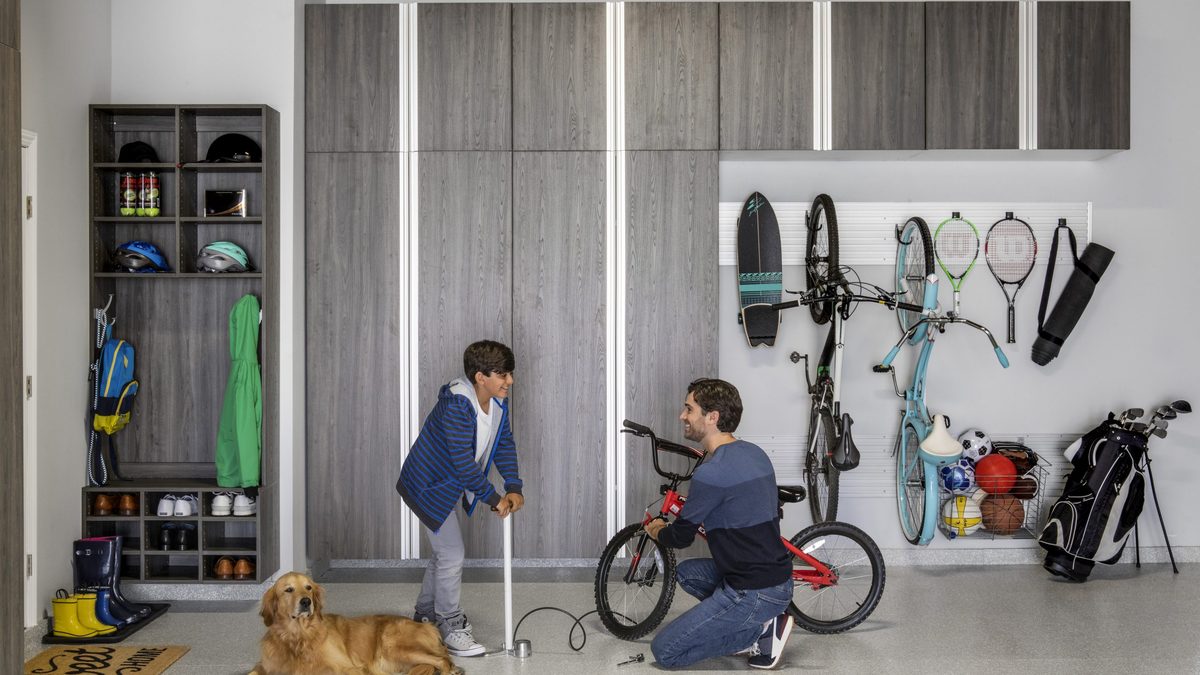
Often, this approach spills over into the garage for outdoor equipment and larger objects. Fishing boats, rods and reels, ATVs can all find a dedicated space to keep them out of the way until they’re needed. For smaller items, many companies now offer convenient overheads storage racks and rope and pulley systems to suspend items, keeping them safe from any elements that they may come in contact with on the ground while also freeing up precious floor space for its intended purpose, housing automobiles.
Looking Ahead Home storage and organization is getting more attention than ever before. Apart from popular books and television shows, the rise of home décor blogging and smartphone apps centered on home design has opened new possibilities for those looking to improve their living space. Clients can find inspiration from around the world and blend that into their own unique vision to run concurrent with their lifestyle. “It’s completely transformed the way this business used to be,” says Pam. “Especially with Pinterest, people can see so many ideas that they would’ve never really considered otherwise.” In terms of price, Chris notes that clients can get very basic walk-in closets finished with great storage options for as low as $2,000 to $3,000. From there, the sky is really the limit. More extravagant build outs can reach $10,000 to $20,000 depending on the scope of the project. In the wake of this booming interest, local homebuilders are already compensating for the future plans of their customers. To recall our previous installment of this series, technological advancements in home energy efficiency allow more options than ever before in terms of storage and functional space. The application of spray foam insulation keeps previous dead zones at a more consistent temperature. “It’s a big difference,” says trusted contractor Charles R. Atkins. “When the storage space is kept within ten degrees of the home’s temperature, it significantly broadens the range of items that you can store.” By having the foresight to take these measures, attics, crawl spaces, and basements can be outfitted for more practical use. “Instead of being an afterthought, potential storage spaces are identified early on and are incorporated into the design by the builder and/or an architect,” he says.
In the end, thoughtful storage and organization works as a double-edged sword. Intimately tied to our belongings, it can be hard to get rid of cherished items. On the other hand, when items are hastily stored, they can easily become forgotten or ruined in improper environments. “If you have proper storage, you can still find things,” says Charles. “Once things are in a box, you don’t use them. The things that we’ve been given, that we’ve inherited, that we’ve purchased are meant to be used. Once people have proper storage space, it allows them to actually reduce their storage burden. It serves two purposes, to locate and use the things you want to keep and to repurpose or donate the rest to someone or some organization that will give these items new life.”
→ Swipe for Next Story
FeatureMARCH APRIL 2020
Traveler’s Respite
Story by Karen Clark
Eileen and Roland Ho call Tennessee National home away from home.
A tender breeze softly awakens mighty oaks to the cool of the morning. Squirrels scamper across dew-covered fairways in search of breakfast. The familiar sound of a perfectly swung driver echoes through the air. Birds cheerfully greet the new day in song. The reflections of passing geese echo from the calm waters of Watts Bar Lake. The sun slowly rises from her evening sleep. Deer silently saunter to the pond for a morning drink and are startled by the spash of a new Titlist gone afield.
These are the sights and sounds of life at Tennessee National. These are the reasons Eileen and Roland Ho have chosen to build a vacation life there and call it their home away from home in Tennessee.
With properties in Shanghai, Hong Kong, and Los Angeles, Roland and Eileen selected the Loudon area as a sanctuary from their hectic travel schedule and because of his love for golf. A native of Shanghai, Eileen travels internationally for her market research firm providing services to companies like Proctor and Gamble. Roland is a Drexel University graduate and chemical engineer by training. He began his career with Occidental Petroleum where he ultimately headed-up the International Business Division for the company. Later, he founded his own enterprise, RKH International, where he provided complex resin and plastic formulations to international manufacturers. Now retired, golf is his passion.
Roland and Eileen wanted a relaxed, comfortable space that would provide opportunities to decompress and enjoy a more tranquil pace of life. They needed a place that would help them to disconnect from the fast lane for a while, so they could re-energize themselves. The home also needed to be low-maintenance, since they were only going to come in a few times each year. They purchased property in Tennessee National in 2016 and began construction on the house at the end of 2017. Their builder of choice – Bill Biles of Biles Homes. Bill’s recommendation to concept the home and draw the plans was Stephen Davis of Stephen Davis Home Designs. Both Eileen and Roland were very clear at the outset of the project that they wanted the design to reflect Asian culture. And, seeing as the house is surrounded on three sides by the Greg Norman designed golf course, they also wanted a design that allowed every room to showcase the stunning course views as well as the captivating natural environment.
Bill and Stephen analyzed various options to accommodate the Ho’s requests and one solution incorporated a belvedere. “Roland and Eileen were instantly intrigued with the idea,” says Davis.
Defined as “a summerhouse or open-sided gallery, usually at rooftop level, commanding a fine view,” the belvedere helped to create a gracious and distinctive home with a roofline that appears to be flared– a hallmark of traditional Chinese architecture – combined with the Craftsman details required by the development. Classic Chinese buildings are often built with an emphasis on breadth and less on height, featuring an enclosed heavy platform and a large roof that floats over this base.
“The belvedere was definitely the biggest challenge during construction, “says Bill Biles. “It floats over the living room below, so we worked with a structural engineer and Stephen to determine the required bracing. We craned-in thousands of pounds of steel to create the necessary supporting framework to accommodate that. We deliberately went over and above in the engineering.”
“The house is unusual in that most homes with a belvedere are two stories, “says Stephen. “And, with it hovering over the main gathering room which has high ceilings, it made for a really interesting staircase design.” The challenge involved going a long distance from the main floor all the way to the belvedere, have it arrive in the right place at the top and not consume the house. By turning the stairs, Stephen created an attractive design that allows one to look all the way up to the ceiling of the belvedere.
Surrounded by a railed rooftop platform, which on a 19th century North American coastal house would be called a widow’s walk or roof walk, one is afforded spectacular outdoor views. This room, with sliding glass doors onto the deck surrounding the structure, offers a perfect haven for reading, reflecting, stargazing or enjoying a romantic sunset and a favorite bottle of wine.
Through the incorporation of customary Chinese features and western design elements, the home is a marvelous example of tradition, refinement and function.
Entering through the front door, one is immediately greeted by an open great room featuring panoramic views through floor-to-ceiling windows. Hand-scraped 6½-inch hickory hardwood run throughout the main floor. The carpeted areas use a new type of carpeting called “Areo” in which the carpet and pad are bonded as one. This new method uses a heavy-duty tape to attach the carpet to the floor beneath and is made entirely from low maintenance, recycled materials.
One of the striking features of the living area is the 60-inch electric fireplace heater beneath a dramatic tile wall. Roland and Eileen didn’t want a wood or gas fireplace, but did want the ambiance and heat of a fire. This modern heater is very realistic and can heat up to 1,200 square feet. “The design aesthetic really started with the linear feel of the fireplace,” says interior designer Michelle Hunley.
The suspended wall above the fireplace features handsome 24-by-48-inch Diesel Living ceramic tile in metal gray. This industrial-influenced tile adds to the home’s contemporary, clean look. “Installing that tile was interesting,” says installer Joshua Sharp. “We had to use a special thin adhesive that would grab the tile quickly because of its weight.” The fireplace surround features a black and grey “Bali” pebble tile. The overall effect is stunning!
With a true passion for food and cooking, you can tell from the well thought out kitchen design and set up that this space has been prepared for a serious student of the culinary arts. Whether an evening of fine dining is on the menu or more simple fare due to the demands of the day, the creations that can come from this kitchen are limited only by one’s imagination. Behind the spacious countertops, use of the Speartek “Perspective” 3-by-4-inch glass tile backsplash serves to create a very attractive design accent that is an immediate focal point. Although flat to the touch, it actually presents a fascinating 3D appearance that adds an element of depth to the wall. To facilitate the organizational integrity of the kitchen, Eileen has her spices divided between Western and Chinese varieties. Two slim pullout drawers provide the dedicated space needed for her large assortment of aromatic spices, which are positioned within easy reach.
The Miele appliances blend seamlessly with the Plainfield shaker style gray cabinetry, and sophisticated black and white marble countertops add a beautiful sense of openness and modern chic.
Adjacent to the kitchen is an open-air patio overlooking the pond and Roland’s favorite, the “screen room.” This incorporates an ingenious screening system using a clear synthetic material over the screens to allow the space to be heated and air-conditioned, or completely open when the weather is nice. A folding glass wall separates the screen room from the rest of the house. Because this room can be temperature controlled, it serves as an extension of the main living space, and its location on the east side of the house offers protection from the hot afternoon sun. There’s also a counter bar separating it from the kitchen with an over-counter glass wall that can be folded back, creating a favorite place to entertain.
The island in the center functions as a preparation area or serving station as well as a place to visit with friends or family over a cup of coffee, glass of wine, or aperitif. Whether entertaining or congregating, this is a perfect area to enjoy good times.
A small pantry is perfectly positioned off the kitchen and provides generous storage space along with easy access to the main cooking area.
To avoid tracking in unwanted outside debris into the house, a convenient mudroom is adjacent to the kitchen, laundry room, and garage entrance. This entire area is tucked away out-of-sight and serves as the perfect location for Roland’s golf shoes and clubs after an active day on the course. On the lower level of the home, perhaps the most titillating feature one will discover is a truly unexpected treasure – the consummate entertainment space.
This is the type of spot that should be enjoyed with golf buddies at day’s end after a competitive round, gathering with friends prior to going out for dinner, a cocktail party, summer solstice party, waiting for the roast to finish cooking, or simply chillin’ by oneself.
As an added benefit, this room opens out onto an elegant stone patio, which offers the perfect setting to enjoy a favorite book, sip a beloved nectar, or simply sit and visit. Whether enjoying the calm of the morning or celebrating the evening, the patio is the quintessential location to let go and unwind.
The space also features a wet bar as well as a freestanding “waterfall” style bar. Ultra contemporary, a waterfall appearance is created because the top of the bar, or countertop, drops vertically down the side as opposed to abruptly stopping at the edge, thereby, creating a seamless flow or connection between the floor and cabinetry.
With two guest rooms and bath adjacent to the bar area, the downstairs can easily transform into a private guest suite.
No matter the occasion, this stress free zone offers rest to the weary, excitement for the party people, and a home away from home for guests. While the festivities may end-up downstairs, the party most likely will start upstairs, just off the kitchen, with the open wine bar.
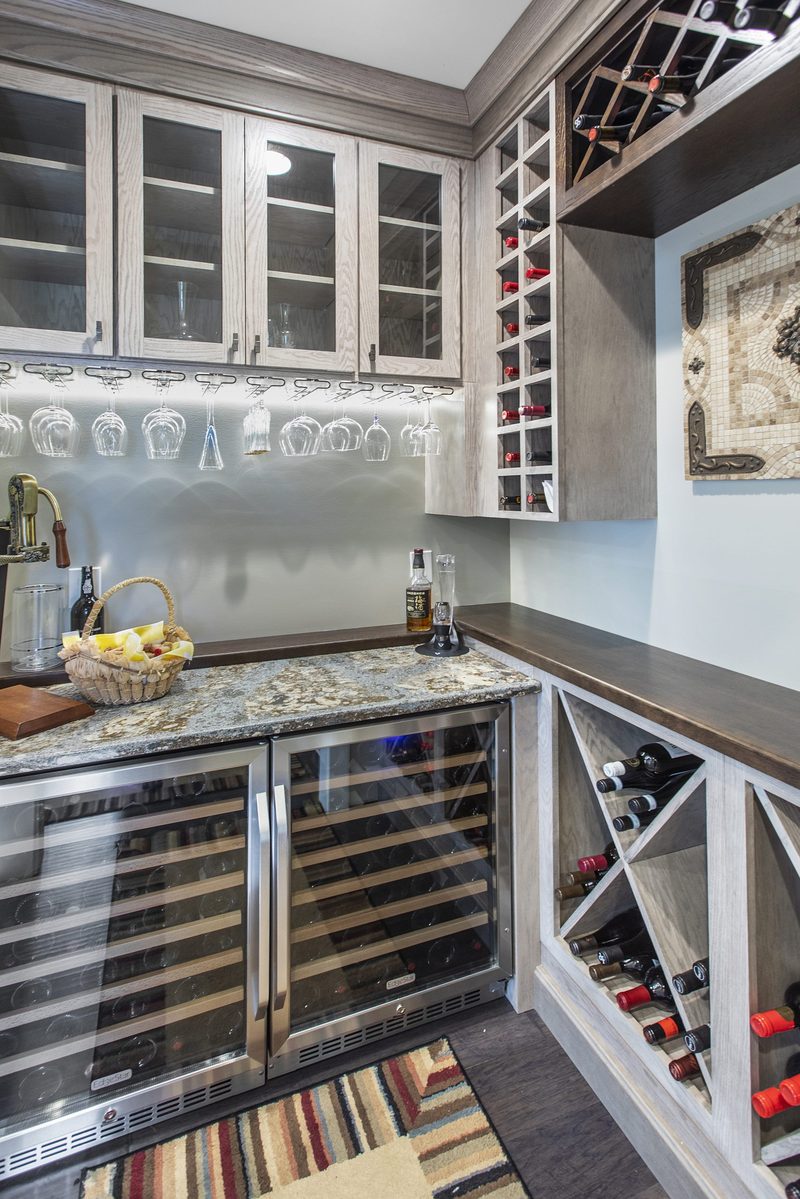
The wine room features a large glass, lighted window that faces the living area. This design aspect offers connoisseurs and novices alike a view into the space and serves to create a heightened sense of anticipation among oenophiles. Designed to provide temperature-controlled space for about 200 wine selections, as well as room for the necessary stemware to complete the experience, this unique area is a rare find that adds a delightful touch to an already well-appointed entertainment environment.
Well-positioned accent lighting shines upward creating a jewel box effect that is visible from both the living and kitchen areas. LED technology allows the lighting color to be changed in order to enhance the experience or to more accurately reflect the mood of the evening, event, wine selection, or meal.
Building that special home away from home for someone requires great attention to detail. It’s vitally important because such a home will serve as a refuge from the rigors of life. Second homes fill a special role in that they need to provide a sense of familiarity to the homeowner even though the primary residence may be a continent away.
That’s why Eileen and Roland were very specific in their request to both Bill and Stephen when it came to the design and build of the house. The incorporation of Asian culture, tempered by the Craftsman details required by Tennessee National, along with the need to capitalize on the natural beauty of the development, were driving forces in the production of the final product. Another important request – closet space. Given that Roland and Eileen have aggressive travel schedules it was imperative that ample space be available at all times. Therefore, the large walk-in closet allows them the ability to keep a broad range of clothing onsite to accommodate various weather conditions and avoid the inconvenience of heavy travel packing. Additionally, Roland is a seasoned veteran of Texas tornadoes. As such, he had them include a below grade, reinforced room. Leaving nothing to chance, the room is heated, cooled, and includes hard-wired access for phone and Internet. Since the property is visible as people enter the community, the house has been oriented to showcase the most attractive and interesting design elements to arriving guests, highlighting that no detail is too small.
Given the speed at which life moves today, downtime is essential to a healthy lifestyle whether at home or away from home. While we may enjoy the fast lane, most of us know that we can’t sustain those speeds forever. Roland and Eileen understood this, and while looking for a more relaxed pace, found the perfect speed for them – at Tennessee National. The Personal Touch
When asked, “What sets Biles Homes apart,” Bill is quick to say, “Because I build it as if it were my own.” That philosophy has helped to catapult his company to the forefront of the custom home and remodeling market in and around Knoxville.
For more than 17 years, Bill has been in the construction industry. And, since 2010 he has been the driving force behind Biles Homes.
As the builder of Roland and Eileen’s home, prospective clients have asked what he could build for them along those same lines. Being a custom craftsman Bill says, “We built this for someone else. What would you like us to build for you?”
→ Swipe for Next Story
Top DocsMARCH APRIL 2020
2020 Top Docs
Story by Cityview
Many of us would agree that our health is our most valuable asset. As such, we go to great lengths to make sure we safeguard it. We take vitamins and supplements, attempt to eat healthier, exercise, try to get the right amount of sleep, and a myriad of other health-conscious things to improve our overall well being – that includes choosing the right doctor.
But how do we know who the right doctor is in a particular discipline? More to the point, how do we know who the ‘best’ doctor is in a given field of practice? Frankly, that’s a question we’ve been asking for almost two decades. Since 2002, Cityview has been publishing an annual list of Knoxville’s ‘Top Docs’ based on results provided through an online balloting process. The physicians who have been included on the list have been chosen solely by their peers. In other words, doctors are choosing doctors as to who they believe is a top provider in a specific field.
In 2002, Cityview published results for 21 different medical categories, which highlighted a total of 66 physicians. The list covered half a page and designated the 1st, 2nd, and 3rd place heritors. The next year, 2003, those numbers grew exponentially in both categories and physicians listed. That trend has continued over the years to the point that we now list hundreds of physicians in approximately 75 categories…until this year.
This year, we have chosen a different path. This year, category-by-category, we are only publishing the name of the physician who received the most total votes from among their peers. This person will have truly earned the accolade of Top Doctor in a given discipline. 2nd place and all subsequent accolade recipients, along with the 1st place honoree, will be listed online at Cityview’s website. Additional names may appear in the event of a tie for a specific position.
So, as we continue to evaluate ways to improve or protect our health, inclusive of preventive and post affliction care, we can also look to the medical community to deliver guidance as to the appropriate provider in a given practice area.
The healers have spoken through their votes and this time, we are pleased to present their very top choices for Top Docs 2020.
Allergy & Immunology Anesthesiology Cardiology Cardiovascular Disease Critical Care Dentistry Dermatology Endocrinology Family Practice Gastroenterology Genetics Geriatric Medicine Gynecologic Oncology Gynecology Hematology/Oncology
Hospice/Palliative Care Hospitalist Hyperbaric Medicine Infectious Disease Internal Medicine Maternal & Fetal Medicine Neonatology Nephrology Neurology Obstetrics/Gynecology Ophthalmology Otolaryngology Pain Medicine Pathology Pediatrics
Physical Medicine & Rehabilitation Podiatry Psychiatry Pulmonary Medicine Radiation Oncology Radiology Rheumatology Sleep Medicine Surgery Urogynecology Urology
Allergy & Immunology
Anesthesiology
Cardiology
Cardiology Electrophysiology
Cardiology, Interventional
Cardiovascular Disease
Critical Care
Dentistry
Dermatology
Endocrinology
Family Practice
Gastroenterology
Genetics
Geriatric Medicine
Gynecologic Oncology
Gynecology
Hematology/Oncology
Hospice & Palliative Care
Hospitalist
Hospitalist-Family Medicine
Hyperbaric Medicine
Infectious Disease
Internal Medicine
Maternal & Fetal Medicine
Neonatology
Nephrology
Neurology
Obstetrics & Gynecology
Ophthalmology
Otolaryngology
Pain Medicine
Pathology
Pediatric Cardiology
Pediatric Critical Care
Pediatric Dermatology
Pediatric Emergency Medicine
Pediatric Endocrinology
Pediatric Gastroenterology
Pediatric Hematology/Oncology
Pediatric Infectious Disease
Pediatric Hospitalists
Pediatric Neurological Surgery
Pediatric Ophthalmology
Pediatric Orthopaedics
Pediatric Otolaryngology
Pediatric Physical Medicine & Rehab
Pediatric Psychiatry
Pediatric Pulmonology
Pediatric Sleep Medicine
Pediatric Surgery
Pediatric Urology
Pediatrics
Physical Medicine & Rehabilitation
Podiatry
Psychiatry
Pulmonary Medicine
Radiation Oncology
Radiology
Radiology, Diagnostic
Radiology, Interventional
Rheumatology
Sleep Medicine
Surgery, Colon & Rectal
Surgery, General
Surgery, Neurological
Surgery, Oral & Maxillofacial
Surgery, Orthopaedic
Surgery, Plastic
Surgery, Thoracic
Surgery, General/Vascular
Surgery, Vascular
Urogynecology
Urology
→ Swipe for Next Story
FeatureMARCH APRIL 2020
Compassion Fatigue
Story by Angelique Medow
A pandemic affecting people who continually give too much
Regardless how much we may want to help those who are hurting or in need, caring full-time for others can lead to a downturn in a caregiver’s own feelings of vitality, leading to feeling overwhelmed, stressed, ill and depressed. Whether it’s a hospice nurse who loves their job, or a spouse to someone with Parkinson’s who loves their family member, when these caregivers honestly answer the question “how are they?” their loving statements are often followed by attempts to swallow hard feelings and hold back tears.
Compassion fatigue is a term used to describe a state that is experienced by all types of caregivers, after giving to the point of exhaustion and debilitation—with no end in sight. The word compassion means sympathetic pity and concern for sufferings or misfortunes, and fatigue means extreme tiredness resulting from mental and/or physical exertion or illness.
Symptoms of Compassion Fatigue
Cindy Jacquemin, Vice-President of Patient Care at Caris Healthcare—an in-home hospice care program, explained, “signs of compassion fatigue could typically be physical fatigue, (such as) calling off work or not being as interested in work.” According to the National Center on Caregiving, having CF feels like “stress, resulting from continued exposure to a traumatized individual. It has been described as the convergence of secondary traumatic stress and cumulative burnout, a state of physical and mental exhaustion caused by a depleted ability to cope with one’s everyday environment.”
The US National Library of Medicine, National Institutes of Health lists that:
CF is characterized by exhaustion, anger and irritability, negative coping behaviors including alcohol and drug abuse, reduced ability to feel sympathy and empathy, a diminished sense of enjoyment or satisfaction with work, increased absenteeism, and an impaired ability to make decisions and care for patients and/or clients. The negative effects of providing care are aggravated by the severity of the traumatic material to which the caregiver is exposed, such as direct contact with victims, particularly when the exposure is of a graphic nature. This places certain occupations, such as healthcare, emergency, and community service workers, at an increased risk of developing CF and potentially more debilitating conditions such as depression and anxiety, and even post-traumatic stress disorder (PTSD). These conditions are known to increase sickness absence, psychological injury claims, and job turnover, and negatively impact productivity.
Symptoms can be deeply emotional as well. Symptoms might include: “crying for no reason,” thoughts of suicide coupled by guilt for having thoughts of abandoning the one needing care, lack of focus or inability to focus—“foggy” thinking, fear of the future loss of the one needing care, coupled by desire for the one needing care to pass—and guilt for having the thought, lack of personal hygiene and proper nutrition.
If any of these symptoms sound familiar, you are not alone.
While most often diagnosed in professionals who work in the fields of mental, emotional, physical or spiritual health, compassion fatigue is by no means limited to professionals. Statistics provided by the National Alliance for Caregiving and AARP 2015 show approximately 43.5 million Americans have provided unpaid care to an adult or child in the last 12 months. At $470 billion in 2013, the value of unpaid caregiving exceeded the value of paid home care and total Medicaid spending in the same year, and nearly matched the value of the sales of the world’s largest company, Wal-Mart ($477 billion), as listed in the AARP Public Policy Institute (2015) Valuing the Invaluable.
Mothers and fathers may often be unsung caregivers, caring for children or extended family, to the detriment of their own health. They may also be indirectly caregiving by working to finance the needs of their families, to the detriment of their own needs and personal well-being. A conservative estimate reported by the Family Caregiver Alliance shows that 20% of family caregivers suffer from depression, twice the rate of the general population.
Other types of caregivers include people who give care to those who are incapacitated, wounded, struggling with addiction or veterans of war, narcissists, mentally ill or depressed. People who “carry the world on their shoulders,” giving to its variety of needs and causes can also be considered caregivers. And sometimes, caregivers are overly generous people who admit they “don’t know how to say no,” and give their care to all.
What type of caregiver are you?
Wherever we may recognize ourselves in the previous caregiving scenarios, each of us are caregivers to an extent. As an empowerment coach, I encourage people to assess where they may need to balance their giving to others with their giving to themselves, to live healthier, more joyful and fulfilled lives. So I ask you, are there areas where you give at levels that cause you to suffer: mentally, physically and/or emotionally?
My experience giving too much
Like many of us, I learned things as a child that I needed to unlearn as an adult. I learned by example, that women were to be caregivers to their husband and children and extended families and work job(s) to earn our worth. We either had no awareness of our individual needs, purpose, or feelings, or consciously suppressed them all in order to give our time, energy and bodies to serve. So that’s what I did. However, I held onto a hope that if I continued to give-give-give of myself, eventually, someone—a man, would notice and give back to me. After 36 years of experiencing life that way, my mind and body broke down, and my needs continued to be unmet.
I sat down with a lawyer to create a will and thought about the least inconvenient and most caring way to others that I could commit suicide. I ended a marriage, continued to worked 60 or more hours a week running my high-end design and construction firm, while also taking myself to as many as eight doctor’s appointments a week, searching for ways to heal my body and mind. I struggled mostly in silence, not knowing how to care for myself and feeling unworthy of care. All the women around me continued to behave in the old ways I had, which didn’t work for me—so I couldn’t turn to them for help. And my religious understanding of my role as a Christian at that time, left me feeling that if I had any needs, I was sinning—I was to live my life giving all of myself in service to others. I had no examples of how to be an empowered woman, one who values herself—the creator within her, as just as valuable and important and needed and worthy of care … as all the rest of creation. And that is the lesson I learned from that experience–that I am just as valuable and worthy of care as everybody and everything else.
There is a very good life, beyond the life of an over-giver, and I gladly live to tell about it.
After nearly 15 years of dedicated self-reflection, meditation, prayer, solitary sabbaticals in the deep woods, healers, physical training, a change in diet and plenty of experience, I now enjoy a life that includes lots of good love and healthy, daily doses of self-care. I also created a business called Will You. People meet with me as a source of inspiration and joy. I am a confidential, non-judgmental ally and sounding board, providing intuitive feedback and experiential tools to encourage women and business leaders to make wise choices. My mission is to live a life that inspires, uplifts, and cares for all souls, so we may lead more meaningful, joyful lives.
Mother Teresa’s Experience
Over-giving, overwhelm and lack of compassion for ourselves can happen to the best of us. Mother Teresa epitomized caregiving to the world to the exclusion of herself. Unbeknownst to many, she experienced intense personal suffering. “After her death, Mother Teresa’s letters revealed that she spent almost 50 years in a crisis of faith, sometimes doubting the existence of God and frequently feeling His absence in her life. The absence began to be felt around 1948, soon after she began serving the poor in Calcutta, and would last until her death in 1997. As David Van Biema wrote in Time magazine:
In more than 40 communications, many of which have never before been published, she bemoans the “dryness,” “darkness,” “loneliness,” and “torture” she is undergoing. She compares the experience to hell and at one point says it has driven her to doubt the existence of heaven and even of God. She is acutely aware of the discrepancy between her inner state and her public demeanor. “The smile,” she writes, is “a mask” or “a cloak that covers everything.” Similarly, she wonders whether she is engaged in verbal deception. “I spoke as if my very heart was in love with God–tender, personal love,” she remarks to an adviser. “If you were [there], you would have said, ‘What hypocrisy.’”
The deeper cause of compassion fatigue, despair and the “inner hell” experienced by me, Mother Teresa and many others is avoidable if we change our perspective on self-care.
Compassion fatigue and other illnesses are a result of the following three things: a person’s lack of awareness of their own needs, a belief that they are not worthy of having their needs met, and an inability to self-regulate their giving and receiving from themselves.
Compassion fatigue, depression and other mental and emotional disorders are—at least in part, caused by a personal disconnect with one’s own needs. As an empowerment coach, I guide and walk alongside people as they learn to identify their deepest needs and purpose, and nurture themselves in healthy ways. This type of self-care can seem counterintuitive to both our cultural standards of behavior and the way we were raised.
Our personal needs for self-compassion, understanding, acceptance and care is a relatively new concept. While caring for others at the expense of one’s self is often characterized as “heroic,” self-care is often characterized as selfish and/or shameful. This idea is ingrained in our culture, families and religion. Our choice to “sacrifice ourselves to serve others,” may even be labeled “love.”
Over-giving—a nonsensical approach to care.
Sometimes, an analogy can help us see ourselves or our situation differently, so here’s one to which you may relate. When you were a child, did an adult ever tell you that you needed to eat more than your fill because other people were starving? Does it make sense that we should over-eat because others starve? Conversely, should we starve ourselves because people are starving? Should we make ourselves sad because others are depressed? Shall we withhold joy, fun, love, health and care from ourselves (and therefore cause ourselves suffering) because any human, animal, plant or planet is needing care or suffering? This kind of thinking, although prevalent, is neither healthy nor empowered.
According to the National Center on Caregiving, 57% of caregivers report that they do not have a choice about performing (caregiving) tasks, and that this lack of choice is self-imposed. Forty-three percent feel that these tasks are their personal responsibility because no one else can do it or because insurance will not pay for a professional caregiver. Twelve percent report that they are pressured to perform these tasks by the care receiver. And 8% report that they are pressured to perform these tasks by another family member, as listed in AARP and United Health Hospital Fund (2012), Home Alone: Family Caregivers Providing Complex Chronic Care.
In each of these situations, caregivers’ own resignation, anger, frustration and overwhelm become fuel for their own compassion fatigue.
Empowered Choices
One step that each of us can take towards feeling our best, is to “fully choose what we choose” to do. This means giving ourselves fully to what we do during the time we do it, with no part of us wishing to be elsewhere. This practice, applied to any part of life is called mindfulness. We are keeping in mind how willing and present we are to participate in our life and choices. Are we “all there?” Or is part of us “checked out?” Or “pissed off” about doing it? By being mindful and choosing to be fully present, we become fully engaged in life. We are in internal agreement about our choices, and no longer feel conflicted, frustrated, stressed, angry or overwhelmed. We feel empowered and at peace in any activity, because our whole self is in agreement to participate—whether we’re caregiving, tree trimming or making love.
The Deeper Antidote
We must compassionately care for ourselves—or risk living the dry and desolate “hell” that Mother Teresa so vividly described. We must compassionately care for ourselves—or risk losing our will and joy to live. To honor the creator and all of its creations, we must compassionately include and care for ourselves as we would care for others.
However, before we can begin compassionately caring for ourselves, we must know that we are worthy to receive care and joy. Worthiness comes when we acknowledge that the power of life that keeps our heart beating, our blood pumping, our lungs breathing and our food digesting, is with and in us. By accepting that we are responsible for caregiving to that life, that power, that God within, we must learn to respect and care for it and therefore ourselves. Knowing this, we can no longer treat ourselves poorly, or deny ourselves and our creator (God) of pure water, healthy food, sleep, sunshine, exercise, and a life worth smiling about.
Three things healthcare managers recommend
For the purpose of this article, the management professionals interviewed in the field of healthcare suggested three methods to provide supportive care to their caregiving staff: learn how to be present with our own family and enjoy time not thinking about work, speak among coworkers or other caregivers about caregiving experiences during extracurricular activities like lunches together or special outings. Third, speak with specialists who can assist you as you learn to better care for your mental and spiritual well-being. Gary Fleenor, Vice President of Human Resources at Caris Healthcare also recommended that caregivers take a step back and recognize the diminishing returns of over-giving. “You have to take it easy sometimes and just sit back and recharge your batteries to be able to maintain your high level of care for others.”
Below, I’ve provided additional recommendations for self-care and caregivers.
First, recognize your worth. The simple fact that you are alive, shows that you are worthy of being here, in this body at this time (as this can be instantly revoked). You are here, and you are deserving of a life that includes care and joy. Each of us can learn to accept and appreciate this more.
Second, mindfulness. Check in with yourself. Are you really taking care of you? Take at least 15 minutes every morning and evening to care enough to ask yourself how you feel and what you think.
Third, meditation and prayer. Meditation is deep listening. Listen: to your answers, to silence, to nature. Observe and accept them without judgment or criticism. If you feel weak or afraid, ask (pray) for help.
Fourth, be more aware of your food. What one thing can you add or remove from what you eat today that would be best for you?
Fifth, get some exercise. What movement can you do for even a few minutes today that would add flexibility and health to your body and mind?
Last but not least, remember to add joy-filled fun! No matter how much you may accomplish, if you have no time for fun, you will probably feel drained by the end of the day (or before you even get out of bed in the morning!). Begin adding joy now. What can you do for 15 minutes today that’s just for fun? (Note: truly joy-filled choices feel just as joyful the next morning.)
Remember, the best way to avoid compassion fatigue is to recognize, accept and appreciate your own worth. Life deemed us worthy to be alive and read this article today. If it didn’t, it could take us. We can accept that we are worthy of life, care, joy and appreciation of all kinds, and can start feeling better right now. If you would like to learn about ways to better care for yourself, willpower that works, and ways to add healthy joy to life, you can find resources at www.willyou.guru.
If you think you may be experiencing compassion fatigue or depression, contact your health provider. If you’re an unpaid caregiver in the home, options in financial assistance and support may be available to you atwww.caregiver.orgor by calling 1-800-445-8106.
→ Swipe for Next Story
FeatureMARCH APRIL 2020
Accelerating to Espresso
Story by Isaiah Woodruff
Local NASCAR champion Trevor Bayne is brewing up something fresh and new.
I didn’t know what to expect when I met with the 2011 Daytona 500 champion. When I think of NASCAR drivers, Mountain Dew comes to mind, plus left turns and the occasional mullet. Instead, I met the bright eyed, young, coffee house owner named Trevor Bayne. When I walked into Mahalo Coffee, I was immediately met with the smell of fresh coffee brewing, in a Hawaiian atmosphere with a whole lot of of southern hospitality. Even while I was interviewing him, Trevor would stop to say “hello” as people walked by. You would have thought he knew every customer his whole life.
As a former college athlete, it’s safe to say I enjoy a little adrenaline. The feeling of flying around and breaking records is irreplaceable to me. For Trevor Bayne, adrenaline has been a lifestyle since the age of 5 when he got his first go-kart. Some parents think of their young child flying around in a go-kart and the thought terrifies them. “I didn’t realize how nerve racking it must have been until I had kids of my own” said Trevor. All that being said, he claims his parents were “fully supportive” of his passion. Trevor was racing to fame, already addicted to the rush of speed.
At the early age of 13, he was already dominating any race he was in. In 2004, while competing in the Allison Legacy Series, he was named their youngest Top Rookie. By the end of 2005, he was the series’ champion. In 2008, he was hired by Dale Earnhardt Inc to race in their top driver development car.
Flashes of success continued, leading up to a grand climax in 2011. During Trevor’s first appearance in the Daytona 500, he finished in first place. At 19 years old, he was the youngest champion in Daytona 500 history. “The record is going to be hard to beat” says Bayne. Trevor continued to compete for a few years following, but this race ultimately highlighted his career. What’s next? After a long career full of accolades, Trevor moved back to Knoxville with a business idea in mind: a coffee house. It seems like a strange transition from NASCAR Racing to running a coffee house, this much, Trevor could agree with. Truth is, he and his family went through many different business plans, from wedding venues to wood working. “I never wanted to be done. I like to work at things. The idea of coffee stuck with me.” Thus, Mahalo was born.
Mahalo translates to the English courtesy “thank you”. The reason behind this name is simple; “we are so thankful for the community”, says the former champ. “Knoxville has been behind me from the start, from when I was five and got my first kart, to when I would go to food city race night at the expo center, to when I was at Bristol racing.”
His passion for his home has started something wonderful for the community, while many others may have just coasted after such a prolific lifelong career. Trevor’s strong spirit and mentality are what sperate him from most. This may seem like such a strange turn of events, that’s what happens when you live life in the fast lane.
→ Swipe for Next Story
FeatureMARCH APRIL 2020
Forged in Faith
Story by Drew Hamilton
Knoxville offers places of worship to cater to a wide range of convictions and lifestyles.
The American South has long been touted as the heart of our nation’s religious lifeblood. Faith permeates the fabric of nearly every facet of our lives: civically, socially, and politically. As settlers poured into East Tennessee more than 200 years ago, they came clutching their sacred texts looking to find strength and comfort in a higher power. Along with places of commerce, local government, and education, churches were on the forefront of these newly established communities. Even now, modest places of worship dating as far back as the 18thcentury continue to dot the landscape. Today, Knoxville remains a stalwart jewel in our country’s aptly named “Bible Belt,” and new congregations of all sorts continue to take seed and grow.
Growing up as the son of a Southern Baptist minister, I am intimately familiar with the importance that faith plays in our cultural landscape. I found myself in church every time the doors were open. I watched from the pews as my father led us all in traditional hymns, the choir in their robes and the congregation dressed in their Sunday finest; some of the songs were just as old as the now weathered wooden houses of worship previously mentioned.
As these Sunday services drew to a close, I would often join my father in front of the altar as members of the congregation passed by offering a handshake and words of appreciation. My father knew them all by name, and the loving fellowship on display was abundantly clear to me even at a young age. As I grew and evolved, so did the church around me. The old hymns remained, but newer, more modern songs of praise began to enter the musical rotation. Where there was once only the accompaniment of a piano and organ, more instruments started to appear; drums, guitars, and brass horns became relatively common. Where we once relied on swiftly thumbing through the pages of the hymnals that rested in the backs of the pews to reference the verses we couldn’t quite remember, large screens appeared offering the same convenience at the click of a button from a booth in the balcony. The elaborate outfits that my mother dressed me in as a child gave way to more casual attire. The formalities and traditions of my youth were slowly dismantled. The love and fellowship that I always felt remained as present as ever, but as the world changed so did the church.
Here atCityview, we understand the importance of faith in our community. Through worship, we find a solidarity of spirit and a strength of fellowship. As we continue to grow, we understand the importance of connecting our readership to the organizations that best serve their spiritual needs and reflect their values and priorities. There is a home for every soul and an outlet for support and service to any who seek it.
Size and Scope
Although the early churches in this region were relatively small in size and membership, East Tennessee’s surge in population in recent years has given way to ever-growing congregations. In recent times, the emergence of megachurches (those with 2,000 or more weekly attendees) has drastically changed the way that many worship and interact with fellow members. With such large numbers, these churches are able to provide ministries and services to their members and the community at large in ways never before possible. Attendees can participate in not only worship services, but also organized sports, social events, and volunteer opportunities. While some may worry about being lost in the crowd, these congregations offer a wide variety of specialized ministries designed to focus on specific groups and interests. By doing so, they foster more intimate bonds among members that find themselves in similar circumstances.
In contrast, many have abandoned the idea of large religious organizations for smaller, more tight-knit groups. Turned off by the notion of being swept up in a wide sea of personalities, smaller groups are forming very niche gatherings apart from the normal criteria one might apply to a typical church. They often meet in unconventional places like coffee shops, public parks, or private homes. Their amorphous and transitional nature can offer a sense of relaxation and comfort to those intimidated by the idea of organized religion.
Concurrent with this trend is the fragmentation of traditional denominations. Congregations once under the general guidance of parent organizations are increasingly disassociating themselves from these larger collectives over discrepancies in doctrine and other attributes. As these churches distinguish themselves as independent enclaves, the number of nondenominational churches has increased significantly in recent years.
Churches worried about alienating potential members because of disagreements about long-standing denominational dogma have opted to tailor their mission and focus to reflect those of their particular membership. While certainly evident in case-by-case issues, these divisions vary in size and severity.
Worship StylesFaith Promise, Knoxville, TN
Just as these gatherings vary in size, there are just as many variations in style of worship. For those who pine for the long-standing traditions of their childhood, there are plenty of churches that strictly adhere to the same conventions. For many, these sacred rites and beliefs help anchor them to their past and provide a solid foundation for the future.
For others, keeping up with current trends in technology and lifestyle has prompted a new approach to worship and services. In an increasingly digital world, faith initiatives are connecting with their members online now more than ever. For those who are homebound or traveling, many churches are providing streaming video of services that can be accessed in real time or archived for later consumption. In addition, the rise of digital tithing has made it easier than ever before for members to give with the click of a mouse or through a smartphone app.
With one-third of many communities working on any given Sunday, many organizations are offering worship services and small group studies at unconventional times. For those who feel alienated because of their career, this can be life changing. They can still maintain a healthy balance of work, family, fellowship, and spirituality.
Giving Back
For almost every organization of faith, service to the community plays a large part in their existence. For many believers, finding a church home that resonates with their personal causes and passions is of the utmost importance. Ministries can cover a vast spectrum of social issues in a variety of applications. Some organizations partner with local secular groups to battle problems of homelessness, poverty, and hunger. By exploring the mission statements of these organizations, community members can align themselves with congregations that share their sense of morality to better impact the lives of those around them.
For those with a passion for evangelism, there are numerous opportunities to become involved in mission work, both home and abroad. Whether through money or volunteering, Knoxville’s places of worship routinely send willing participants around the globe to touch the lives of those in need. As a result, our community has been integral in establishing faith-based initiatives in several countries that would have otherwise proved impossible. Organizations like One Vision International are locally based and have sent volunteer Knoxvillians to serve in Haiti, the Dominican Republic, Brazil, and the Middle East. As Knoxville continues to grow, we welcome those of all religions embracing our freedom to worship and applaud the organizations going above and beyond the call of duty to better the lives of our fellow man.
Finding Your Place
With so many faiths and congregations represented in our area, there is undoubtedly a place for you to find a spiritual home, a group that allows you to not only worship freely but live out your beliefs through action as well. No matter where you seek your higher power, Knoxville is proud to be a bastion of hope, a community that invests in the lives of others both physically and spiritually.
Learn about the myriad of ministries and services available to enrich the lives of you and your family. Let us remember to nurture our souls and in doing so, reach out to our neighbors both near and far, here and abroad.
Many hands make light work, and we all work better when we surround ourselves with others that share our convictions. By doing your due diligence, you can receive the blessings of a spiritual life fulfilled in a fellowship of faith and service.
→ Swipe for Next Story
FeatureMARCH APRIL 2020
Master Molecule
Story by Nathan Sparks
Modern pharmacology helps turn back the clock.
As humanity continues to advance, technology follows suit. For decades, groundbreaking discoveries in human health and treatment have been made. One of the oldest voyages in medicine has been trying to slow down our biological clocks. It is inevitable that as time goes by we continue to age. But what if we could not only stop the negative effects, but to some degree, reverse them?
There was a time when the diagnosis of low testosterone in men or low estrogen in women brought you no closer to a remedy for its symptoms. As we age, we produce fewer hormones. For men the side effects of “low-T”, as it’s often called, are much more extensive than just a loss of sex drive. The loss of muscle mass and bone density begin and, in its place, body fat arises, specifically visceral fat. This kind of fat is inside the abdominal wall around our organs and in our blood vessels, and it doesn’t discriminate between the sexes. As women lose estrogen, they cease to ovulate, and a variety of health issues ensue, like hot flashes and migraines.
Men and women both, are susceptible to heart disease from lack of hormones as well.
“These adversities can be at least partially mitigated through treatment such as hormone replacement therapy,” says Dr. Charlotte McDonald, DNP, FNP-BC of Optimal Health, a practice focusing on physical and regenerative health. “My average patient experiences increased libido and a higher energy level,” she says. “Another positive effect is weight loss and increased muscle mass with proper exercise.” But the effects of such a therapy go beyond weight loss and energy. A recent multi-year study from the Intermountain Medical Center in Salt Lake City, Utah, showed that testosterone therapy actually helped elderly men with preexisting coronary artery disease avoid major adverse heart effects.
The typical American diet and sedentary lifestyle are major contributing factors to our overall health—add excessive alcohol consumption and we have a recipe for disaster. Most of us know that eating poorly and not exercising will eventually catch up with us, impacting our health in a negative way. But night after night, many opt for the couch or worse, and a box of Twinkies. It seems like people think the pain of getting back into shape will not be worth how it would actually feel to have a great physique at a healthy weight. Many have lived the same unhealthy dietary lifestyle since grade school. This is especially true in the south, where we were raised on comfort food. Making a healthy transition from our traditional dietary lifestyle is no easy feat, but more than worth the effort.
What people really want is a miracle in a bottle; give them a pill to make them skinny so they can stay glued to the tube. This still wouldn’t solve our health problems, as diet and exercise have to constantly work together to maintain results. It is and always will be, up to us to take care of our bodies. And that’s where hormone therapies can play an incredibly important role.
MM One — The T shot Anti-aging doctors and regenerative health clinics often refer to testosterone as the master male hormone, and for years, it has been the gold standard in men’s hormone therapy. There are two popular procedures: injections and implantable pellets. While both work well, injections can require weekly trips to the clinic if you are uncomfortable with self-administration. “Patients typically stop by once weekly for a quick check up and injection,” McDonald says. “Visits usually take less than 10 minutes and don’t require an appointment.” For the implant method, several testosterone-based pellets, about the size of a grain of rice, are implanted under the skin near the hip. The effects of this implantation last up to six months, so doctor visits are substantially lower. Men with low-T often see astonishing results from either of these therapies. Dr. Tom Rodgers of Performance Medicine says “make sure if you are getting testosterone treatment, that you are checking your estrogen levels, red blood cell counts and having things monitored by an expert in hormone replacement therapy.”
Testosterone, in low doses, is also being used by some women in place of estrogen, giving multiple benefits as their bodies convert the needed amount into estrogen and leave behind the healthy benefits of testosterone. Women who choose to supplement their hormones in this way often recognize beneficial changes to their mood, energy, and libido.
Stemming the Tide People seek Stem Cell treatment for its ability to alleviate joint pain and avoid joint replacement. Once a joint is gone, it will never be the same again. This is why alternatives like stem cell treatment are preferred and recommended by physicians. While joint replacement can take up to 6-12 months for full recovery, this treatment can have a much quicker turnaround. However, most people do not opt for stem cell treatment and try to ride out their pain as long as possible. This only leads to further joint deterioration, often beyond repair.
Stem cells are a hot topic in every regenerative clinic in the country. They are looked upon as the proverbial fountain of youth, especially in cartilage restoration. Stem cell treatment is used for a variety of ailments, most commonly joint therapy, and in some cases even erectile dysfunction. The hurdle for many, however, is the cost; stem cell treatments are typically not covered by insurance. This could change sometime soon, however, as Medicare has released a code that may cover this type of stem cell procedure. The procedure varies from $5,000 to $7,000 per joint and depends on the source of the cells.
“Stem cell injections help rebuild and repair what makes the joint work naturally,” says Dr. Sam Nia of Optimal Health. As part of the research article, Optimal Health injected both of my knees, my elbow, and my neck. In each of these areas, I showed significant cartilage loss and it was causing me pain and loss of mobility. They recommended low impact training at the gym for a few weeks after injection, and I have seen good results. “The overall physical condition of the recipient also makes a difference,” Nia says. “The patient must have some cartilage left to build from to be a good candidate for the procedure.”
The FDA Is looking to identify cell therapy characteristics that will make treatment more predictable and efficient. Adult stem cells can come from the patient’s body itself, typically bone marrow. Common sources include amniotic stem cells, mesenchymal stem cells (MSCs) and induced pluripotent stem cells (iPS). For more information on these, turn to your local clinician in a practice that deals in this type of therapy.
Perfect Peptides One of the newer therapies used today is the use of peptides. These powerful tiny proteins contain chains of amino acids that can be used as hormone substitutes by the body. Because this form of therapy is relatively new, there are some peptide therapies that remain unproven and lack FDA approval, so be sure to pose some extra questions with your physician, should this be a therapy you choose.
Bremelanotide PT 141 was conceived from an attempt to increase the pigment in the skin; useful for those who are ultra violet sensitive. This is a story not unlike the stories from the trials for a potential pulmonary tension medicine “sildenafil citrate”. Here, trial participants reported the interesting side effect of increased erections and soon this became the principle use of the drug.
Just like the now famous Viagra, this peptide appears useful in treating erectile dysfunction in men, even in cases where the “little blue pill” had failed.
When the use of a drug has significant effects on the person using it, concerns about the additional side effects often fall to the wayside. This may be a predictable response when you are talking about sexual performance, but what other promised result would drive people to take higher risks? What if there were a “little blue pill” for body composition? Take an injection and like magic the body would start releasing growth hormones that would radically increase muscle tissue and reduce fat? It would be standing room only for sure in the clinic waiting rooms.
Tesamorelin is a synthetic form of growth hormone releasing hormones (GHRH). Just like natural hormones, the peptide also tells our bodies to increase the production of growth hormones. It is typically used to treat HIV patients, reducing extra fatty areas on their body. While its main purpose is this treatment, it has been found to serve other funtions as well. It reduces fat, while simultaneously enhancing muscle growth. This has led many athletes and bodybuilders to give it a try in hopes of increasing their ability, although it has not been approved for this purpose and some question its safety.
Growth hormone use is not approved for fat loss or athletic improvement at this time. Additionally, there are potential side effects, including joint pain and inflammation, and the cost can be high. Is there a compound that will turn back time on the pituitary gland’s ability to produce growth hormones? Semorilin, a naturally occurring bio-identical hormone, works but only lasts for a short period—somewhere around 30 minutes. Tesamorelin, on the other hand turns on the spigot to growth hormones and leaves it on, but at what cost or effect? Have enough studies been done to prove the benefits outweigh the risks? At this point, it is uncertain, but when the medical provider tells the patient that this will help get rid of body fat and increase muscle mass, many patients are willing to take their chances.
So, how do we know what is safe and what is not? This can be a slippery slope. There is so much information on the internet about all of these, but often so technical in nature that for most, it’s hard to reconcile the simple question “Is hormone therapy right for me?” For now, it seems best to stick to proven therapies that are FDA approved, like basic testosterone therapy. “It’s really about having a healthy lifestyle,” McDonald says, “with properly balanced hormones.”
Is there hope on the horizon for a magic bullet? In our opinion, it is just a matter of time—and of course cost—as pharmaceutical companies continue their search for the fountain of youth.
→ Swipe for Next Story
BusinessMARCH APRIL 2020
Sign Language
Story by Julie Blaylock
When the United States Supreme Court rules on an issue everyone must comply. For many Tennessee communities, that means less restriction on signs.
Farragut has long been a hotbed of contention between local businesses and city officials when it comes to signage. Signs are essential to businesses; they are often the only way you know they exist. The town of Farragut wants to make sure that signage is consistent from business to business and maintains their vison of how the town should look. But some business owners think the town goes too far in the restrictions they place on business signage.
For those of us who aren’t planning engineers, sign ordinances tell businesses and other entities what kinds of signage they can have, but they’re actually more than that. They are the statutes by which a city attempts to reduce visual clutter and avoid business “sign wars.” They’re also a huge part of a community’s identity; done well, they can enhance appearances, perceptions and marketability of a location. Some argue they even protect property values. The business owner’s perspective can be quite different and overly restrictive ordinances can adversely affect profitability. This is especially concerning when local brick and mortar shops are battling to compete with internet behemoths like Amazon.
My role is to be the advocate of the business community during discussions with our municipalities, and the signage issue has been an ongoing debate in Farragut for decades. The Farragut/West Knox Chamber was an instrumental voice in Farragut’s last major revision to their sign ordinances in 1998. This helped businesses achieve greater visibility, largely due to the revisions of signs for multi-tenant spaces. Previously, shopping center signs only displayed the name of the plaza on the signs nearest the road or entrance. The 1998 revisions saw that the plaza signs included additional space for the individual businesses within; a needed adjustment since the storefronts were often distanced by the road and large tracts of parking.
Farragut is overhauling its ordinance once again, due in large part to a U.S. Supreme Court ruling that requires all municipal sign ordinances to comply and achieve total content-neutrality in their language.
What does that mean? The ruling comes from a case called Reed vs. The Town of Gilbert. In the case, The Town of Gilbert, Arizona, passed a sign ordinance with stricter provisions for certain signs based on the visible content, meaning that even if the sign was physically the same type of sign, it was held to a different standard depending on what was on the sign.
This standard was applied when the Good News Community Church in Gilbert was cited several times for failing to remove temporary signs advertising their services. Similar signs of the same type and size were exempt from the time limits based on message, and so the church sued the Town of Gilbert, stating that the ordinances were unconstitutional and a violation of their First Amendment rights.
The case was heard by the U.S. Supreme Court in January 2015 and decided in June 2015, and the courts agreed with the church that Gilbert’s ordinances were indeed unconstitutional and in violation of the First Amendment, with Justice Clarence Thomas stating the town’s sign ordinance was “content-based on its face” in light of the fact that the “restrictions in the Sign Code that apply to any given sign [depend] entirely on the communicative content of the sign.”
What is the ultimate implication of this landmark ruling? The unanimous decision by the court means that stricter limitations cannot be placed on signs based on their content, and that all ordinance language must be content neutral—based solely on the physical aspects of signs, which can include the quantity, overall size, height, placement, lighting, etc.
So what is a town to do when faced with a total overhaul of their sign ordinances? Mayor Ron Williams sees opportunities to improve the current ordinances, at least by making them less daunting. “I think you need to streamline it.” He recognizes the wordiness of the existing document, stating it’s a result of trying to keep to the aesthetic that Farragut is known for. “You’re putting so much in there so you’re not discriminating, but trying to keep a tasteful air throughout your town.” He would also like to see the use of taller more narrow signs placed on vertical legs in places where traffic obstruction is a big concern. Following that, implementing signs with rotating tenant panels that give every business a shot at being displayed.
Business owners would like to see them utilize it as an opportunity. It’s no secret that it’s tough to start a small business, especially where retail is concerned. Strict rules about signage can make it even tougher. So far, it appears as though the Town of Farragut is doing just that. There certainly needs to be better balance between the desire of the leaders for a beautiful town and the requirements of business to be successful.
There is no doubt that business is important to the town as it is the majority of the revenue stream. Local sales tax, comprises 56%, state sales tax accounts for another 17%, and 11% from the wholesale drink tax. So, in total 84% of the revenue of the town is generated from business activity. With that in mind, it would seem that the town leaders would want to relax some of the rules to attract even more businesses to locate within the town. But Farragut leadership remains steadfast to the town’s founding principles and there is something to be said for sticking to your values, however this leaves somewhat of a sour taste in the mouths of many business owners.
The initial set of ordinances were adopted in the Fall of 1980; they were 60 pages long and considered a critical part of the Town’s identity. The current set is just under 14,000 words and covers pretty much everything imaginable. The major factor in Farragut’s 1980 incorporation was that residents did not want the beautiful bedroom community they lived in to look the way certain parts of commercial Knoxville did in the late 70’s. And, in defense of the town, they were pretty clear to anyone who wanted to locate a business within its boundaries about what the rules would mean. If you don’t want to listen to the airplanes then don’t build a house near the airport and then later complain that you have “special needs.” Not all business owners disagree with the town’s rules. Mary King, co-owner of MD Weight Loss & Wellness Center, which is located on a busy Farragut corner on Campbell Station Road, recognizes the visible end-result of Farragut’s standards. “I know we don’t want to trash up Farragut; it doesn’t look here like it does in other places!” says King. She didn’t experience problems with obtaining her signage, but admits she would have liked to place a small “Coming Soon” sign in front of her building. “For local businesses like us, we’d like to have created a little anticipation; if there could have been some way to make that a bit easier, that would have been great.”
The 1998 updates addressed some rudimentary legal items, but they also cleaned up language from a lot of amendments made since the initial adoption. The big change was the one the Farragut/West Knox Chamber of Commerce helped to effect—those provisions for multiple tenant panels for ground mounted signs for shopping centers.
But the current ordinances are still really similar to the first ones, and littered with content based language. This comes straight from the current ordinance; from a section for “Signs permitted in all zoning districts.” Currently, it reads that some signs are “specifically permitted.” That may lead others to think any others “shall be prohibited,” the list stipulates for “Advisory signs, such as ‘No Parking,’ ‘Exit,’ ‘Entrance,’ ‘Handicapped Parking.” That’s a big red flag for content neutrality.
Farragut isn’t alone in this, though. Other cities in Tennessee are at various stages of compliance themselves, depending on where they started from; this isn’t like changing the font of a document in one fell swoop. Maryville has updated all of their sign ordinances to be compliant, but Brentwood, TN has a mixture of parts that are compliant and parts that aren’t.
It would have been extremely easy for the Town of Farragut to just task their Community Development office–headed by Mark Shipley–with the task of tackling the unwieldy ordinances, piece by piece, until they met the standard of the Supreme Court’s decision. Even more interesting is the fact that the Reed decision is actually specifically directed just toward non-commercial signage (remember, the entity who pressed suit was a church, not a for-profit business).
Instead, they invited multiple representatives of the business and residential communities to the table to revise it together. This was a hopeful sign that the rules might be adjusted to a more business friendly tone.
None of these individuals, including me, are truly experts on signage, codes or ordinances of any kind. Shipley stated at the opening forum in April 2019 that this was exactly what they were looking for: feedback that questioned language that was confusing or contradictory to lay people such as ourselves. The committee currently consists of Shipley and his team; Jennifer Roche, Knoxville Area Association of Realtors, John Hoffman Farragut Visual Resources Review Board member, Betty Dick, town founder and Farragut MPC representative, Farragut Business Alliance/Shop Farragut representative Steve Krempasky; Town Administrator David Smoak and myself.
Shipley and the Town see this overhaul as an opportunity—though it comes with challenges specific to ordinance writers—to not only conform to the ruling but to hopefully make Farragut a friendlier business community. The meetings are open to the public and I heartily recommend attending and making your voice heard. Shipley publicly spoke about the chance to address issues that have been brought up to Town staff such as WHERE signs can or should be placed, how big can they be, how many can a business have and more. Overall, he has said, this is an opportunity that will provide for more signage, something long asked for by businesses in Farragut. Plus, there are opportunities to make the final document more visually appealing and easier to read, so that those applying for a sign permit know exactly what their options are before they proceed without having to hire legal counsel to interpret the law.
Shipley and his team have warned the committee that these are some of the swamps we’ll have to try to wade through. There are certainly ample challenges but, more importantly, if the business community shows up in force to voice their requests, the town is much more likely to amend the ordinance in a more balanced fashion. That should always be the intent of trying to write a sign ordinance that keeps to a certain aesthetic, but also helps businesses draw more traffic and is carried out fairly across industries. In the words of the late legendary statesman Senator Fred Thompson “There is nothing politicians fear more than the voice of their constituency.” If you want change, no matter which side of the equation you are on, then attend the meetings and write letters voicing and explaining your opinion.
Murky Waters
So, where are we now? Thus far, we’ve waded, neck-deep at times, through signage of every kind you can imagine and some that I never even thought about: Environmental award signs, political signs, vending machine signs, signs permitted for Gas Stations, and Trailblazing signs that advertise specific lodging brands or attractions (these are what you see near interstate ramps). The committee is meeting every month, sometimes more.
One example of a convoluted sign ordinance rewriting issue is in way-finding signs. To stipulate that you can have, say, 25 signs but only if they’re all used for way-finding or giving directions violates content neutrality; you’re telling the business WHAT they can put on the sign in order to have or use it. So, how do you write an ordinance to allow the numerous signs a hospital needs—because hospitals need a LOT of directional signs—but restrict other business and still call it equitable and content-neutral? It’s tricky stuff, for sure.
Of most interest to me, of course, are the signs that affect businesses in single and multi-use tenant spaces. The notion of rotating panel signs is an interesting one. Will it become part of the new ordinances, and moreover, will it satisfy business tenants who want more signage exposure? For now, we can only speculate.
In Closing
It is unclear at this time what the town will do or what the final product will look like, but one thing is certain: they will have to soon come into compliance with the Supreme Court ruling. We, as citizens, business owners, residents, need to give our leaders input. Hopefully, they will listen and consider compromise to the will of the residents and businesses in the community, but they can only do that if you make your voice heard. See you at the meeting.
Meet Julie
I’m Julie Blaylock, and I oversee the local Chamber of Commerce.
Have you ever wondered what it would be like to have the perfect career, or how to even begin finding one? The truth of the matter is, like most people, I didn’t know where to begin. But after eight years at the Chamber of Commerce, there is no question I have the absolute best job I never knew I wanted. Every day I get to see business leaders in action and most days I get to meet new people. I get to learn about how their businesses work, and help them network with other businesses in the community. This helps them grow and increases profits, which allows them to create new jobs. Seeing the community thrive gives me pride in my work. So, what could be better than that? For me, this is the best job in the world. The Chamber serves hundreds of regional business members from all over Knox and surrounding counties. Our mission is to strengthen, promote and create business opportunities through relationships and education that encourage member success. I am excited to contribute to Cityview’s new business section and bring you information on the local business community. I’m on the forefront of what is changing in local business and will be sharing it in this series. If you have any ideas, feel free to shoot me an email at julie@farragutchamber.com or give me a call at the chamber at 865-675-7057.
→ Swipe for Next Story
PeopleMARCH APRIL 2020
Generation of Gentlemen
Story by Nathan Sparks
JuVan Langford mentors men on how to be unapologetically masculine.
My journey of stepping more completely into my own masculinity left me asking “what does healthy masculinity look like” and “how can we turn society towards positive change?” As I explored the answers to those questions, I had the opportunity to meet a man whose goal in life is to help other men find the answers to those questions. It seemed fitting for our Top Doctors issue to feature someone who works to improve the mental, physical, and spiritual health and wellness of men worldwide. We are honored to present to you the story of JuVan Langford, men’s empowerment coach.
JuVan grew up in Worchester, Massachusetts. Born to a 16-year-old mother, he was a child being raised by a child. At the tender age of three, he lost his father to Leukemia. Although we might be able to empathize with his circumstance, it would be nearly impossible to fathom the pain from such a loss. For JuVan’s mother, it was more than she could handle. She turned to drugs and alcohol to cope with the grief. It wasn’t long—about the age of 4 or 4 ½–that JuVan found himself in foster care. He would end up with 4 younger sisters, and as any young man would, he felt compelled to assume the role of father to keep his sisters safe.
Sometimes, it seems that life just has it out to make some journeys more challenging than others, and JuVan’s foster care experience wasn’t ideal. His life was filled with physical and sexual abuse early on and profuse bullying in middle and high school.
I wondered, what was it that gave him the strength to overcome these odds like he has? The man sitting in front of me during this interview, exhibited none of these qualities. According to JuVan, “That was sports. I found a lot of solace, and, I found what most men spend their lives in search of, an identity, something I could really hold on to. Having that jersey on my back gave me a sense of purpose. I played all the sports, basketball, football, and ran track. I found safety and protection in sports and it gave me a platform to find myself.” I could definitely relate to how sports helps to build confidence, since that had been my safe place as well.
JuVan’s challenge didn’t end there. He had a deep and underlying challenge—one of finding himself. How exactly does that make one feel, again in his own words, “I think a question that followed me through all of that was, who am I, now that I am adopted, who am I now that I don’t have a dad to call father? Who am I now that my mother cares so little about me not to be there for me? Who am I now that…and it just continued to go on and on. I think most significantly, by asking these questions, it built this curiosity within me and it gave me this capacity to explore self-inquiry and ultimately build a relationship with myself.”
By getting to know himself, he was able to work through some really tough situations to which many of us could relate: feeling ashamed to tell our story for fear of what others will think, searching for a turning point when we don’t have a mentor to rely on and feeling intimidated. JuVan shared one of his life changing moments. “I lived in a small apartment complex and between the living room and the bedrooms, there was a small hallway and I would walk up and down the hallway. One day I was walking down and I stopped, closed my eyes and I put my hands to my sides. I felt this energy passing through me and I felt like, Whoa. It was like my first time I believed in energetics or God. And it really, it landed for me, it was a really special moment.
I felt like something was guiding me through, like something was protecting me and I identified that as God. And I think that gave me a bit of strength to carry through some of the adversities that were yet to come.” At that point, I wondered when JuVan really knew his life’s calling. Was that the defining moment, at 11? “No, not at all.” He said he had spent years without ever planning to work in empowerment, in fact he avoided that for much of his life. Fortunate to get a full ride to Skidmore College, where he completed a double major in Business Management and Spanish.
After college, while living abroad, he had what might be called another coming to Jesus moment where he became clearer on his purpose. He had spent his entire life trying to be better than average at everything, but not great at any one particular thing. With this thought in mind, he really wanted to be called on to make a difference and leave a positive legacy behind.
Again, he became curious and asked himself, “If I could do anything, if money wasn’t an issue, what would I be doing? I would be in the entertainment industry behind or in front of the camera.” Thoughts of an experience as a child helped form this vision. One night as he was being pulled back and forth from his grandmother to his mother they ended up in a shelter and on the TV was the Wizard of Oz. Years later he realized that just like Dorothy at the end of the movie, that he already had everything he needed to achieve his goals right in front of him.
Innately, he knew that all he would need in terms of relationships and resources, would come. The next years would be learning his dream. A stint at Maker Studios, where, as one of the first few employees, he got to experience lots of job roles. From creative scout to producer, to director, and pretty much everything in between. There, he learned about video production and the impact of social media.
When Maker Studios was sold to Disney, JuVan had an opportunity to take time to think about what was next. He decided to go abroad. “I went to the Dominican Republic and I don’t know if you’ve ever been to a third world country, but it was one of those mind blowing and heart opening moments. I realized this is the work I want to do for the rest of my life. I want to give back, I want my work to be a real contribution to society.” It was at that point that a young man shared his story with JuVan, and it was such a reflection to his own story, that the question of where do young men go in that situation to turn for help?
That was the turning point for his decision to reorganize his non-profit to focus on young men. Into the schools of Los Angeles he went, with a passion to help. “We began to realize that these young men needed community. These young men needed to be witnessed by one another. These young men were going through some of the greatest challenges of their lives. And I just built this belief that men are not meant to just maintain careers in sustained families and then struggle in their pursuit for inner peace. It’s really the other way around.” So he’s clear, find inner peace then you’ll be fulfilled in your career and your family.
It became more and more clear to him that men are lacking a place to really communicate with other men. He thinks at the very core that men don’t need a place to go to. They need a place to come from. “We’ve lost a sense of who we are and what we want and where we’re going,” he says. The organization’s mission is to focus on the core principles of: identity, intimacy and integrity. The reason being, is that identity is the most important element in a man’s life. “If he doesn’t know who he is, he will have a very challenging time navigating any situation or any relationship he chooses to be in. And so the philosophy is that if we can get men to be clear on who they are, what they want, where they’re going, then they will feel strong enough, they will feel clear enough to be able to have intimacy in their life, not only in the interpersonal relationships, but in their romantic relationships.”
With that intimacy, men could lead a life of integrity and be willing to say what needs to be said. Men wouldn’t choose to remain silent about what matters the most, which directly applies to spirituality. He found that often, men would go to church more as a ritual, rather than a true experience. And that and the overall decrease in church attendance leads to another problem. Young boys are growing up and not having any idea who they are or what they want out of life. They need a community to plug into and that is what the nonprofit provides—a safe place to speak the truth with someone who can offer counsel in a positive and supportive manner. JuVan went on to say that men often tend to hide from what they don’t know or are uncertain about. The problem with these “non-choices” is that they have delayed consequences, and without the benefit of having mentors to talk with, this avoidant behavior is unlikely to change. The focus at his non-profit centers will be to create those spaces again, lead those conversations where men can be witnessed by other men.
I wondered, what keeps men from seeking this on their own? For JuVan, he said it was his embarrassment about sharing—he felt he just wasn’t man enough because he didn’t already know the answers. This feeling created a sense of vulnerability, instead of empowerment. To be a person that could help shift the dynamic of a social stigma against men’s empowerment, he would have to get comfortable sharing his story again and again. Doing so has helped him to break through and create a roadmap for masculinity and conversations that create empowered men.
“I thought, man, I don’t want to be just another person,” said Juvan. What’s clear is he wants to be the person who helps shift the dynamics of a form of social behavior that is crippling the male population. Deep down he feels like our greatest challenge is the thing that we’re born to break through and then teach others. And this is certainly the case for me when it comes to the masculinity conversation. In my own journey for soul growth I found this to be true and it was no sooner than sharing my truth that so many opportunities opened up to help me. In this it seems to me that JuVan is right on the mark.
What he learned, is that what separates one man from the next is their story, their history, what they’ve been through and how they’ve not gotten over it, but rather, learned to live above it. For him, it boils down to this. “What I have learned is how to manage my emotions, how to build my emotional intelligence, how to connect with myself, how to build a relationship with my inner child and to heal the wounds and reframe the narratives that have kept me hostage and really distanced me from everything that I wanted.” He went on to share that learning to simply tell the truth until it doesn’t hurt anymore has opened a lot of doors. There are a lot of men who are hurting because we live in a world that makes it unsafe for us to be honest about our feelings, sharing with other men so that we can heal openly.
JuVan Langford has a vision–a huge vision–to build conscious campuses around the world. The vision is to provide resource centers with doctors, lawyers, therapists, and dentists that offer their services to men who may not be able to afford them or just don’t feel safe to reach out for those services. “We will have a leadership complex where we have a wraparound auditorium and co-working spaces in a meditation dome where men can come in and learn mindset training to build their willpower. We will have a health and wellness complex where we will have a state-of-the-art fitness center, farmer’s market, football fields, basketball courts, indoor volleyball, and then we will have a residential complex. Then we have young men who can actually live on the campus and be given jobs and opportunity to share in creating a virtuous cycle of mentorship.
“The last six years of traveling across Europe, Australia, Africa, and sitting in rooms with men of different backgrounds, sexuality, creeds, religions, and realizing there are a lot of common concerns that these men have (which also) drive me. I feel the world’s greatest challenges are the direct result of masculine dysfunction in men. And I think that men are dysfunctional because we’re at war in our mind and hearts. What we need as men are one on one exchanges with other men that are committed to helping each other.”
We can do this for each other at any time. A simple conversation, sometimes a single thought or idea is spoken and everything changes. “That happened to me at 13 years old. I remember being at this huge event. There were 20,000 people in the auditorium and this man came floating out to the center stage in a white outfit with white hair. And he just stood there just watching the entire audience and people were clapping and rooting and I’m like, ‘who is this guy?’ And he spoke so much truth that day. Juvan with his mentor and renown public speaker George Zalucki
“The person that I was sitting next to is my grandmother and she nudged me and said, ‘are you okay?’ I said, ‘yeah’. She goes, ‘you’re crying.’ I was so connected to his message that he was literally transfusing this wisdom into me and I took it enthusiastically. I later got a chance to meet him, and he’s become an incredible mentor of mine. George Zalucki, has become very special to me {Cityview Sept/Oct 2019}.” To experience love and be witnessed by a woman was one thing for JuVan, but for a man to truly care about him was a tremendous new experience. “He gave me strength in the spiritual muscle to work through a lot of the challenges that I was experiencing. And now, I can be that man for other men.”
Certainly, this is a grandiose plan and when asked where the funding will come from JuVan laughingly says, “It will come from wherever it is now.” Although it may seem like an impossible dream to some, it is difficult not to respect the confidence he has in his vision.
“So what is the key, the first step?” I asked. His answer was both clear and direct. “I think a big part of growth comes through self-education and a lot of men don’t realize what they’ve actually been through. They don’t realize what they’re holding onto or carrying through life. They don’t realize who they are and their worth. They become numb, but in most cases it’s just an absence of awareness. I help men build their awareness and bring to their awareness what they are choosing or pretending not to be. And once you can be honest about where you are, then you can start to heal.” He believes that healing creates room in the mind, in your heart and your life so that you can start creating, self-generating, and manifesting what you truly desire. That is the definition of a healthy relationship with yourself. “If I can teach those things to a man, then I have done my job.”
In closing, JuVan has given us some ways to begin our own soul journey. If we approach learning about ourselves with self-honesty as the point of beginning, then we are on-path. We can just be exquisitely honest about what’s not working and what we want. This would be a great thing for any man to experience and their significant others will be so happy that their man has gotten real with himself.
Cityview looks forward to following JuVan on his journey. Look for our updates on the first big event that will happen right here in Knoxville later this summer.