JurisprudenceThe Constitution and Judicial Politics
InsightsSmoky Mountain Memories
FeatureJuxtaposition
FeatureLaura Slyman: Real Estate Girl Wonder
FeatureSmart Home
FeatureSouthern Hospitality
Non-ProfitHere for the Kids
FeatureGifts Locally Crafted
FeatureThe Best of the Best 2020
VeteranThink. Ask. Act.
Feature‘Are you sure you want to do this?’
Reading Settings
100%
Nov / Dec 2020
Swipe to read →
Vol. 36 · Issue 6 | November December 2020
The PublisherThrough My Lens
Departments
Arts & CultureSharing Tennessee’s Beauty
DepartmentsSpace to Create
PoliticsGoing Postal
InsightsGet out!
DepartmentsKeeping Warm
DepartmentsTaking stock
Dining GuideCityview staff’s lunchtime favorites
DepartmentsPick 7
DepartmentsThe Knoxonomist
DepartmentsYour Pet’s Vet
Features
JurisprudenceThe Constitution and Judicial Politics
InsightsSmoky Mountain Memories
FeatureJuxtaposition
FeatureLaura Slyman: Real Estate Girl Wonder
FeatureSmart Home
FeatureSouthern Hospitality
Non-ProfitHere for the Kids
FeatureGifts Locally Crafted
FeatureThe Best of the Best 2020
VeteranThink. Ask. Act.
Feature‘Are you sure you want to do this?’
→ Swipe to start reading
The PublisherNOVEMBER DECEMBER 2020
Through My Lens
Story by Nathan Sparks
Arriving on the scene for a portrait shoot, as I have done thousands of times, I am greeted by a friendly group of people. I am happy, the weather is nice, the folks are relaxed, attractive and reasonably fit. All in all, it looks to be an easy shoot. I break out some gear and select the positions for the people. Suddenly I get that spidey sense that something is up. Experience tells me it’s not a question of will they ask, it’s only a question of when.
“Can you make me skinny?” one asks. Another pipes up, “Yeah, can you Photoshop off a few inches?” “Take off all of my double chins?” Remove all my wrinkldes? In an effort to please I sometimes agreed, and in the process, got myself into trouble. There are definite limits to the Photoshop weight reduction plan. The lesson I learned from this oft-repeated experience is about lack of self-worth. They know they should be eating better and exercising but instead would rather have a quick fix.
I remember feeling the same way. The year was 2001 and we needed a photo for the publisher’s letter. I was strongly resisting, but the art director insisted. The photographer wanted to make me look cool, so he had me lean back and put my feet on the desk. “You will look like a man’s man, strong, powerful and in charge,” he said. Just over 40, with a full head of dark hair, I might have been a little cocky, so I did as he asked. The negatives came back (yes, it was so long ago we were using film) and I was, well, somewhat upset. What am I saying? I was furious. I stormed into the art director and said with quite the tone, “These photos make me look fat!” Calmly he looked up and replied, “Well, that is because you are fat,” and then he rolled with laughter while I could find nothing funny at all about publishing a photo that made me look fat. Stubbornly I continued, “What can I do to not look fat?” “Well, you could eat better and try to get some additional exercise,” he said, again followed by a raucous amount of laughter. I was getting seriously irritated. “No,” I insisted, “what can I do?” Finally he recovered from his laughter. “Never lean back, sit up on the edge of your chair, lean slightly forward and lift your chin a bit. You will be just fine; after all you’re not that fat!” again the laughter that, when at your expense, is so annoying. I was back on the phone to the photographer to schedule another shoot. I love that story, though in the real version there was a lot of profanity. Some real bombs were put in for effect, if you get what I mean. The second shoot happened and I looked really nice.
I was happy because the job was done right the second time and I was happy with how the photo made me feel when I looked at it. That is the art of being a photographer: being able to put your subject at ease and posing them so you can capture the person in their best light.
But the lesson is really about learning to like who you are, exactly as you are, not as some skinny model type who only eats half a can of tuna twice a week. If you’re not happy make a change, but do it because you want too. Your friends and family should love you for you, and if they don’t, that is their problem.
We all get zinged now and again by people that want us to change for them. My advice, don’t do it. Don’t invest yourself in anyone who will not equally invest in you. When we try to force a relationship the focus is never quite right and thats because you are seeing them through the wrong lens, the lens of desire rather than the lens of reality. Just move on to find those who will love you for you!
→ Swipe for Next Story
Arts & CultureNOVEMBER DECEMBER 2020
Sharing Tennessee’s Beauty
Story by Rachel Holbrook
Art has always been a big part of Jonathan Howe’s life. His passion first manifested itself in drawings and sketches when he was a boy growing up in Maryville, and, by the time he entered high school, he knew he wanted to seriously pursue it. As a homeschooled student, Howe had to search harder than some to find art instruction to help him grow in his abilities, but he eventually made his way to an art class at Maryville College, where he went on to earn his art degree. A year and a half after graduation, in 2007, Howe decided to launch full-time into art as a career.
In the beginning, Howe primarily painted portraits by commission, but he soon branched out into landscapes, working primarily in oils on canvas. His work has evolved through his commitment to developing his own style and through his continued study of other artists, such as Edgar Payne and Scott Christenson, from whom he draws inspiration. “There’s a combination of doing this purely for myself because I enjoy it, but I’m also thinking, ‘Is someone going to want to put this in their home and enjoy it for a long time?’”
Howe’s work is heavily influenced by his Appalachian locale. “I think we live in one of the most beautiful places in the country,” he says. The Smoky Mountains are his biggest inspiration. He grew up backpacking, camping, and hiking the trails in the Smokies and continues to visit the mountains where he does plein air painting.
“I see the art community growing quite a bit in Knoxville,” Howe says. “My desire as an artist here in Knoxville is to get to a point where my work is more nationally known. I want to help shine a light on the area and how beautiful it is.”
He says most of his sales have been in the Knoxville area, and he counts himself blessed to be a full-time artist sustained by the local community. He hopes to see a growing appreciation for art in Knoxville.
Howe continues to paint portraits—his most recent commission was for the University of Memphis Law School—but most of his traveling shows at galleries are landscapes. Locally, you can view his work in his studio by appointment, or on his websiteJonathanHoweFineArt.com.
→ Swipe for Next Story
DepartmentsNOVEMBER DECEMBER 2020
Space to Create
Sundress Academy hosts visiting writers at Karns farmhouse
Story by Rachel Holbrook
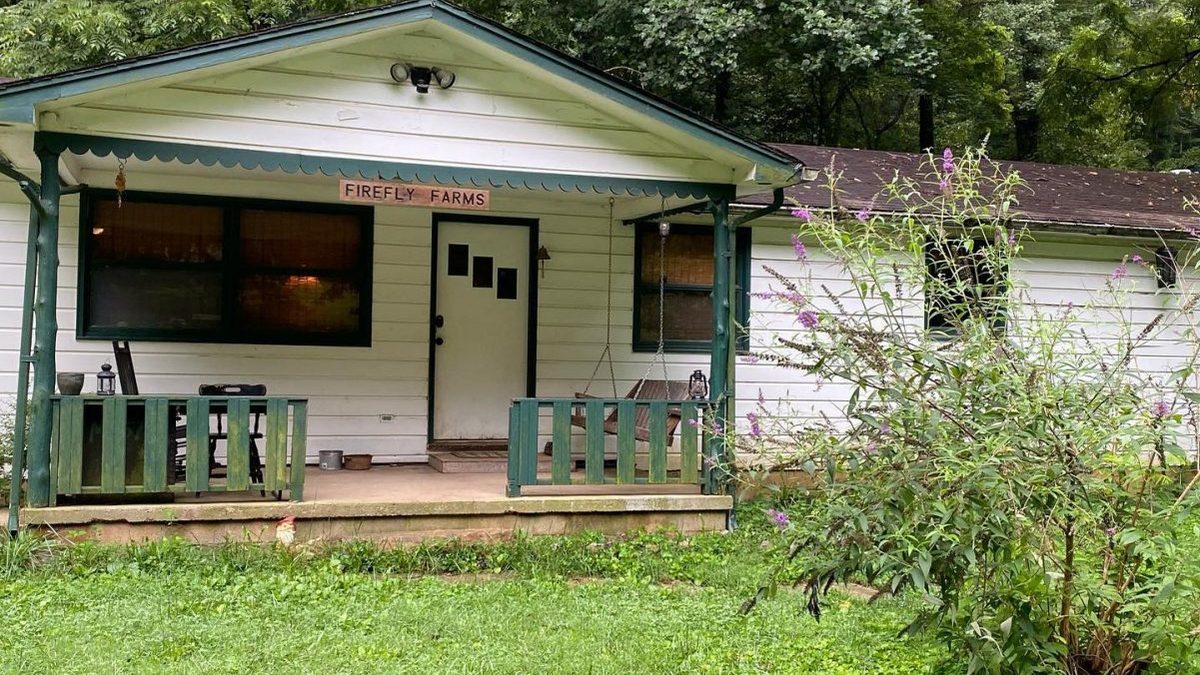
Nestled into a verdant holler in the Karns area of Knoxville, you’ll find a small farmhouse surrounded by lush foliage and serenaded by the bleating of sheep, the buzzing of cicadas, and the intermittent sounds of chickens and ducks. Two Great Pyrenees guardian dogs protect the grazing herd while two writers—a poet from Washington state and a novelist from Tennessee—share the shade of the front porch to beat the summer heat. The two writers in residence at the farm lead very different lives thousands of miles apart, but they have come to the farm for the same reason. They are seeking the space and solitude to work on their craft. Sundress Academy for the Arts (SAFTA) is the perfect place to meet this need.
Erin Elizabeth Smith founded Sundress Publications, a 501(c)(3) nonprofit, in January of 2000, as a home for literary journals. In 2011, Sundress published its first print book. Although it is a national organization, Sundress believes it is important to engage with the Knoxville community. That’s why they offer many free literary events, both online and in person, such as a monthly reading series at a local brewery and an online poetry series.
SAFTA is the residency arm of Sundress, located on the 45-acre Firefly Farms, founded by Erin and her partner, Joe Minarick, in 2013. Erin characterizes the beginning days of renovating the old farmhouse and the property as a year of “a bunch of poets with chainsaws, taking down trees, doing big bonfires, taking out walls, redoing plumbing, and doing tiling.” This communal effort to reimagine an aging farm as an artist’s residency breathed new life into the property, and they welcomed their first residents in the fall of 2013. Over the intervening years, SAFTA has brought writers such as Chen Chen, Kathy Fagan, and Ruth Awad, among many others, from all over the world to the hills of East Tennessee. One resident traveled all the way from Pakistan.
As the managing editor of Sundress Publications and the creative director for SAFTA, Erin’s dedication to the arts and the artistic community have made a lasting impact in the lives of many emerging and established writers and visual artists. She encourages the Knoxville community to take advantage of the many readings, Holler Salons, and other events that are offered free and open to the public. You can find information about upcoming events online atwww.SundressPublications.com.
→ Swipe for Next Story
PoliticsNOVEMBER DECEMBER 2020
Going Postal
Politicians notice the rare letter that lands on their desk
Story by George Korda
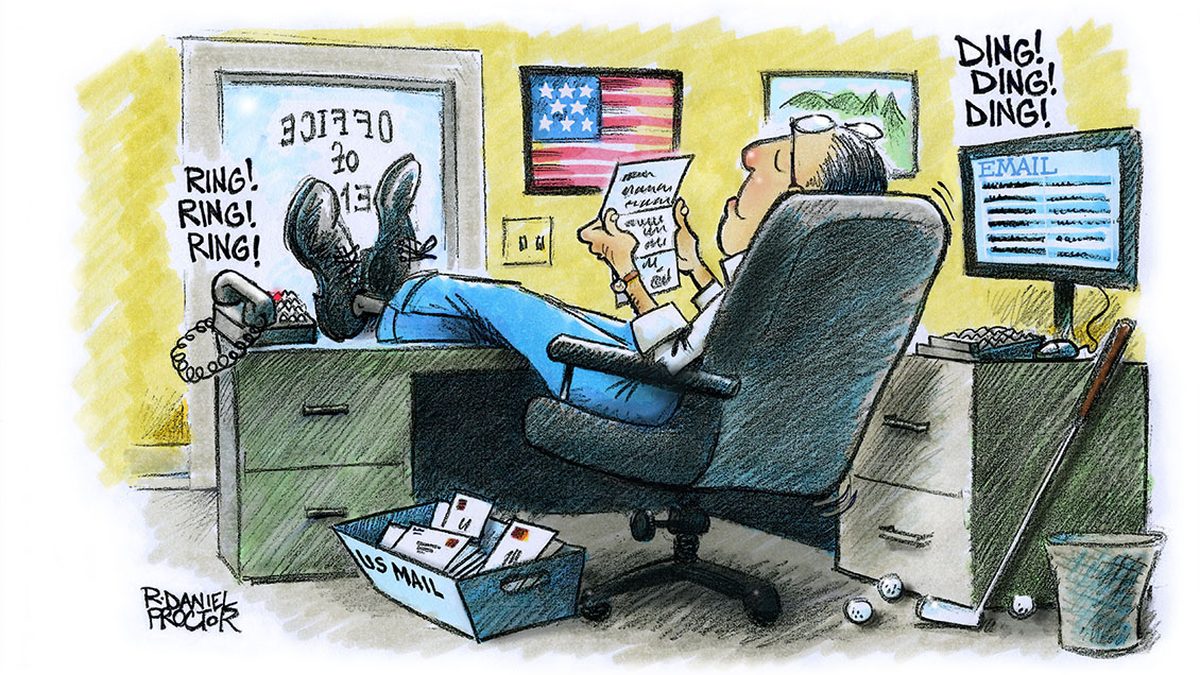
“Mr. Postman,” (said the politician), “look and see, is there a letter (from a constituent) in your bag for me?” Politicians may not sing it like the 1960s group the Marvelettes, but it’s what they want to know.
Political leaders have received letters from irate, happy, or questioning citizens for as long as there have been politicians. In the information age, when ‘send’ buttons can immediately deliver hundreds, or even thousands, of messages to officeholders, letters have not lost their value, and in some cases may be more influential than ever.
The evidence is in your curbside, U.S. Postmaster General-approved mailbox. When you pull mail from your mailbox, it’s probably mostly circulars, bills, and various forms of junk mail. An actual letter in the mailbox, one personally addressed, with a postage stamp, is invariably opened first. Someone took the time to put their thoughts on paper, enclose it in an envelope, and physically send it to you. That matters.
It matters to elected officials as well. The personal touch of a written card or letter has a greater impact than another “ding” when the latest e-mail drops into their inbox. However, the higher up the political food chain you go, the lighter the effect becomes.
At the federal level, the chances of your letter, e-mail, or fax being seen by a U.S. senator or representative may be equal to winning the lottery. Twice. For example, there are about 4.2 million Tennesseans over age 18. If only one-half of one percent contact their Washington representatives daily, it means about 21,000 communications are received collectively each day by Tennessee’s two U.S. senators and nine House members.
Such contacts have accelerated in the President Donald Trump era. For example, New Yorker magazine said that in the weeks after Trump’s inauguration, record numbers of e-mails, faxes, phone calls, and letters arrived on Capitol Hill: “One Republican senator received, from a single Web-based faxing service, 7,276 of them in twenty-four hours.”
Lower-level staff members survey the incoming messages. Constituent service goes in one pile; the political piles are segregated into favorable, unfavorable, unsure, or however subjects are divided. The senator or representative can view a graph to see how constituents feel about an issue. What can make a letter, particularly a handwritten letter, stand out is that there are fewer of them than faxes, phone calls, and e-mails. That helps increase the possibility of being noticed, even in Washington.
At the state and local levels most people wouldn’t know their elected representatives if they were asked to identify them in a police lineup. State and local offices don’t receive remotely the same attention as the federal government. When they are being noticed, it’s usually only when there’s a crisis or controversy afoot. (In 2014, for this column, some 15 people were asked to identify their county commissioners or state legislators. Only one knew the name of one of his two Anderson County commissioners.) Such lack of awareness creates opportunity for a letter writer. It doesn’t take many calls, faxes, or e-mails to get a local politician’s attention. It indicates people are at least interested enough to send something. Often, county commissioners or city council members consider it a torrent if an issue generates a half-dozen contacts, with letters and phone calls highest on the effectiveness list.
Unless a caller has a personal relationship with the officeholder, personal letters, as mentioned, stand out more. But there are unwritten rules: the angrier the tone or the more insulting the wording, the less likely letters are to be considered representative of larger numbers of voters, or to be taken seriously to any degree.
Of course, these general letter-writing rules go out the window in a short-fused, we’ve-got-to-make-contact-right-now environment. In such situations it’s as many messages as can be sent, as fast as they can be transmitted.
With respect to how letters, e-mails, phone calls, etc., are handled by elected officials’ offices, bear in mind that it’s very unlikely they’ll admit that they give one type of communication more weight than another. However, they do, because of the same allure that emanates from a personal letter in your mailbox.
Therefore, if you really want to reach out and touch an elected official, sit right down and write a letter.
→ Swipe for Next Story
InsightsNOVEMBER DECEMBER 2020
Get out!
Story by Bruce Fox
More now than ever before those who have an interest in learning about the outdoors find it difficult to make connections with people to teach them. This is especially true when it comes to hunting and fishing where children are involved. The Tennessee Wildlife Federation is working to help with this dilemma through their Hunting and Fishing Academy. This volunteer-driven program not only works with the kids but the parents as well by providing comprehensive and immersive experiences.
Through partnerships with landowners the program has access to some of the best hunting and fishing grounds in the state. The highly trained volunteers—known as Hunt Masters—lead the participants through the training process. They teach about species and their habitats, ethical harvesting methods, and much more. The academy isn’t just about hunting or fishing; the participants learn core skills for camping all the way down to how to build a fire and leave a campsite without a trace of it having been there.
The academy is only one part of a growing interest in outdoor programs. The Tennessee Scholastic Clay Target Program is one of the largest youth shooting programs in the nation. Tennessee currently has 83 teams in public and private schools along with some independent clubs like the 4H program. The special taxes on firearms and ammunition help fuel these programs.
Our children today spend far too little time outdoors. Some studies indicate that less than 25 percent get more than 30 minutes of physical activity per week. There is no doubt in my mind that when kids spend time outdoors, they are less depressed and more engaged in learning. Even the playground at times has the air of uncertainty and that affords the opportunity to learn by trial and error, failure and success. Learning to deal with the unknown helps them learn to plan, prioritize, multi-task and negotiate. These are skills that are crucial for their success.
Educating our youth is critical for the preservation of conservation. The sales of hunting and fishing licenses provides $8.3 million per day nationwide for conservation efforts. Programs like Hunter for the Hungry help feed on a regular basis thousands of Tennesseans who are in need. If you are interested in conservation I strongly advise you to get involved with one of these programs to help teach our children the value of the outdoor experience.
→ Swipe for Next Story
DepartmentsNOVEMBER DECEMBER 2020
Keeping Warm
Story by Rebecca Whalen
As the temperatures drop and the need to keep our distance persists, the question on all of our minds is how to stay warm while still enjoying all that East Tennessee has to offer. For those who spent time updating patios and decks in the summer, it will be another season to try and make use of the space. And if you’re a hiker or simply someone who enjoys the outdoors, then staying warm is an absolute must to have the best experience possible.
Perfect for Everyday
A simple beanie can go a long way during the winter, but Haley Breland of River Sports Outfitters suggests sticking with wool. Its moisture-wicking properties make it perfect for winter, whether you’re sitting on the deck enjoying the fresh air or hiking in the Smokies during a light rain. Our favorite? The Outdoor Research Ukee Beanie, which retails at $30.
If you plan to head to the woods or simply want to stay warm on your outings downtown, base layers will make all the difference. Breland recommends Patagonia Capilene layers, another moisture-wicking selection that keeps you warm while repelling odor. Patagonia Capilene Air Crew shirts retail at $129.
Long Term Investment
Try to make your deck a four-season investment by installing an outdoor heater. There are a lot of options out there, including fire pits, but Dale Madden of Earthadelic Landscape and Construction suggests an electric infrared heater. His top pick? The Bromic Tungsten Electric heater which retails at $700+. To make the use of the heater more friendly to the Earth, Madden recommends firing it up on a circuit like that of a clothes dryer for a more efficient use of power.
Free for All
The easiest way to stay warm this winter, and avoid the winter blues, is to stay active. Download the Nike Training Club app. This year as a result of COVID-19, Nike has made the entire interface—premium programs, workouts, and nutrition information included—free to all users. It’s an easy way to burn the holiday calories while also releasing some necessary endorphins.
Take it one step further and bring your workout to the Knoxville Greenways trail system. If you haven’t been, there are about 85 miles of free access trails that pass by parks, rivers, and more. Tackle one of the many trails while using a free guided run from Nike Run Club app and you’ll warm up in no time.
→ Swipe for Next Story
DepartmentsNOVEMBER DECEMBER 2020
Taking stock
Seasons Innovative Bar & Grille chef pays attention to the details
Story by N. Brooks Clark
A formative moment in Deron Little’s development as a chef came on Page One of the 923-page Escoffier Cookbook. Under the heading “Basic Principles of Cookery,” M. Auguste Escoffier (1846-1935) wrote, “Indeed, stock is everything in cooking, at least in French cooking. Without it, nothing can be done. If one’s stock is good, what remains of the work is easy; if, on the other hand, it is bad or merely mediocre, it is quite hopeless to expect anything approaching a satisfactory result.”
Little starts with excellent ingredients for his stock and cooks it down for 36 hours to produce the veal glace on Seasons’ Black Angus Filet Mignon. “It will change your life,” he says. The aged center-cut house-rubbed pepper-crusted filet itself is so soft in texture that it truly melts in your mouth, with the flavors of caramelized onion, torched bleu cheese, and rosemary working together with the garlic mashed potatoes. “It’s a symphony,” says Little. “Nothing fights against each other. It’s a piece of art.” No one is arguing: Little has put his culinary magic to the test in many Cityview Top Chefs competitions, and he has placed near the top every time.
Pre-COVID, Little’s Turkey Creek restaurant was packed both inside and in the generous patio area with loyal Farragut neighbors and fine diners who had heard about the Roasted Corn Bisque and come to taste for themselves. Then came the lockdown—and the biggest challenge of Little’s career. “He was tenacious, determined, often hard-headed,” says Cityview publisher Nathan Sparks. “He had the drive to outlast the adversity. He found a way when most people would have hung it up.”
Nowadays, diners like Michelle and John Holztrager are regulars for Wednesday half-price salads and wines, then show up on weekends for scrumptious dinners. There are plenty of patrons like them outside, in the patio, and in the main area—socially distanced throughout. They get great attention from a wait staff that does an outstanding job of anticipating the needs of diners in the three distinct areas.
Many Seasons loyals come just for their favorite appetizers and small plates. Top raves go to the unique texture and taste of the Sesame-Seared Ahi Tuna, sliced to perfection and served with soy sauce, wasabi cream, Thai cucumber relish, and a hint of Cajun seasoning. The wild-caught grilled Gulf Shrimp come with three different wild, sautéed mushrooms, garlic cream sauce, truffle-scented arugula, and white truffle oil.
Seasons fans like the Holztragers appreciate Little’s elegant variations on old favorites like the Iceberg Lettuce Wedge—with grape tomatoes, bleu cheese crumbles, crisp smoked bacon, red onion, home-made bleu cheese dressing, and balsamic reduction—and the Summer Tomato Salad of organic California baby greens, arugula, vine ripened tomatoes, truffle ricotta blend, sliced red onion, fresh avocado, balsamic reduction, and white balsamic vinaigrette.
Similarly, Little brings unique touches of visual artistry to entrées like his herb-encrusted Rack of Lamb, with Kentucky mint bourbon sauce with grapes, bleu cheese, and mashed potatoes; and his Duo of Maple Leaf Farms Muscovy Duck. This combines Chinese-five-spice-scented smoked duck with a duck sausage, served with honey strawberry compote on a quinoa-wild rice blend.
The desserts are made fresh in-house by Deron’s son Dane. They are hard to resist and even harder to choose between from a list that includes White Chocolate & Strawberry Reduction Custard, Millionaire’s Chocolate Torte, Pina Colada Bread Pudding, Coconut Crowned Key Lime Pie, and Red Velvet Cheesecake.
Part of Seasons’ success has been its emphasis on moderate prices, and this tradition continues in the post-COVID era. Like a good neighborhood spot, Seasons is still a surprisingly good deal.
→ Swipe for Next Story
Dining GuideNOVEMBER DECEMBER 2020
Cityview staff’s lunchtime favorites
Story by Susan Alexander
If it’s lunchtime and you’re ravenous, you might consider the Holy Grill. That’s the tasty combo from Holy Land you see above: chunks of lamb, marinated chicken and Arabic hamburger served over rice, roasted red peppers and onions, along with pita bread and sauce. It’s just one of the many tasty items we head for when we’re heading out at noontime. On the following pages are some of the lunchtime restaurants and markets the Cityview staff can’t live without. Many offer outdoor dining options.
Calhoun’s
Calhoun’s has always been known for its generous salads. The oriental chicken salad is the go-to salad for our creative director. This fall, Calhoun’s is featuring a salad that combines her two favorite things, salad and BBQ.
Downtown: 400 Neyland Dr, (865) 673-3355
West: 6515 Kingston Pike, (865) 673-3377
Farragut: 10020 Kingston Pike, (865) 673-3444
Turkey Creek: 625 Turkey Cove Ln., (865) 288-1600
Oak Ridge: 100 Melton Lake Peninsula, (865) 685-0850
The Shrimp Dock
With locations in Bearden, Farragut and Alcoa, The Shrimp Dock offers fresh seafood in po’ boys and baskets with Cajun sides as well as the best clam chowder in town! While you’re there, pick up some fresh seafood for dinner, like shrimp fresh from the Gulf or wild salmon for the grill.
Alcoa: 321 S. Calderwood St. Alcoa 37701, (865) 233-7447
Not Watson’s
When we’re downtown and having hunger pangs, Market Square is a great place to be, and Not Watson’s Kitchen + Bar offers a broad menu sure to please, from sliders and scallops to salads and burger options. And the tater tots? Make it a double!
15 Market Square Knoxville 37902, (865) 766-4848
Sitar
Our managing editor loves catching up with friends over chicken tikka masala and naan at Sitar. While their lunchtimee buffet has been suspended during COVID, ordering from the menu is still a great option.
The French Market offers both sweet and savory French crêpes, delicious baguette and croissant sandwiches, plus a choice of soups and salads. They also carry imported goods at their two locations.
Whether it’s their Grilled Tuna Sandwich, a Chicken Finger Platter or a Perfect Pair, the menu at Aubrey’s always serves up something that hits the spot for lunch.
West: 6005 Brookvale Ln, (865) 588-1111
West: 9208 Middlebrook Pike, (865) 691-0504
East: 805 Huckleberry Springs Rd., (865) 465-7636
North: 214 E Emory Rd, Powell (865) 938-2724
Holy Land
Offering daily specials and classic deli selections, like the Reuben pictured above, Holy Land caters to Middle Eastern and European recipes. When nothing but a gyro with tzatziki sauce will do, this is the place to be. Holy Land is also a Middle Eastern market, so stock up on the ingredients you can’t find at the grocery while you’re there.
When TGIF is all you can think about, head to the scratch kitchen and craft beers at Balter Beerworks, located in a rehabbed service station downtown. Share some potato chip nachos with a friend, then dive into sliders, fish street tacos, a burrito bowl, beer cheese soup or lots of other tasty options. Cheers!
100 Broadway SW, Knoxville 37902, (865) 999-5015
Tomato Head
If it’s Monday after an indulgent weekend, Tomato Head is where we find healthy options for lunch, like a hummus plate or a Greek salad. Of course, the sandwiches and pizzas might lead us astray, and the desserts? On a Monday? Why not!?
Downtown: 12 Market Square, 37902, (865) 637-4067
West: 7240 Kingston Pike, Suite 172 37919, (865) 584-1075
→ Swipe for Next Story
DepartmentsNOVEMBER DECEMBER 2020
Pick 7
Fun things you want to do in Knoxville
Story by Susan Alexander
Nov. 7-Jan. 3|Smoky Mountain Christmas
Dollywood turns on the charm of Christmas—and more than 5 million lights—for its annual holiday celebration. Enjoy award-winning shows, culinary goodies, shopping and, for the first time, fireworks that light up the sky! Go todollywood.comfor more info and tickets.
Nov. 20, Dec. 4|Drive-In at the Midway
The Drive-In at the Midway series at Chilhowee Park will present holiday films on Fridays, Nov. 20 and Dec. 4. Admission is free, but space is limited and participants must register in advance to reserve a space. Go towww.knoxlib.orgfor movie info and tickets.
Nov. 21-22, 27-28|Holiday Shopping Festival
Shop from local venders, food trucks and coffee stands at the Holiday Shopping Festival at The Pavilion at Hunter Valley Farm. Guests will be limited to 75 at a time, including at a Nov. 20 Preview Party. Tickets to the festival itself are $5 each ateventbrite.com. Half of all ticket sales and booth fees benefit East TN Children’s Hospital.
Nov. 27-Dec. 20|Christmas in the Cave
Historic Cherokee Caverns hosts its annual holiday event Fridays through Sundays from Nov. 27 to Dec. 20. Stroll along the path through the cave and enjoy Christmas lights, scenes and other decorations. Then sip some hot cocoa around the bonfire. Info:cherokeecaverns.org.
Dec. 4|Fantasy of Lights Parade
The Fantasy of Lights Christmas Parade rolls through Gatlinburg on Dec. 4 featuring floats decorated with one-of-a-kind displays of LED lights, marching bands, large balloons, dancers, and holiday characters.
Dec. 11-Jan. 3|Holidays on IceGirl on the figured skates at opened skating rink. Russia.
The Holidays on Ice skating rink relocates to the Civic Coliseum this year. The larger rink will be open Fridays through Sundays. For more info, call 865-215-4423.
Dec. 12|Tour de Lights Bike TourChristmas fair on a city streets in Europe
Enjoy a fun, free, family bike ride through downtown and North Knoxville. Participants are encouraged to decorate themselves and their bikes while enjoying the holiday decorations they ride by. It starts at 5:30 on Market Square. Info:bwknox.org.
→ Swipe for Next Story
DepartmentsNOVEMBER DECEMBER 2020
The Knoxonomist
Story by Cityview
Dear Holly,
The Knoxonomist knows Santa will be up against some tough odds this season, but let’s try to put your child at ease. After all, the notion of Santa is one of a child’s most precious experiences.
Part of the Christmas magic makes Santa and reindeer alike immune to all sickness, including COVID-19. So there will be no issue of his reindeer having to be properly distanced for rooftop landings. Thank goodness Rudolph’s red nose will not be covered in a mask.
There are complications in Santa’s workshop this year as some of the elves are working from home and that has slowed down the production line. The elves who assemble the toys have to send them about with the North Pole Package Service (NPPS), (notoriously unreliable due to the reindeer union’s constant bickering over break time and gourmet hay breaks) to other elves who paint them, who in turn have to ship them to the elves who pack Santa’s sacks. The Knoxonomist, who is well-versed in package logistics based on his seasonal jobs as a youth at the USPS, UPS and Federal Express, knows that adding this sort of complication to an otherwise already complex system is like dropping a wrench into a finely oiled machine.
The Knoxonomist sympathizes with ol’ Saint Nick. The Zoom calls between his helpers have surely tested his Christmas spirit as well as his patience. Perhaps the Knoxonomist will send Santa some Cliff’s Notes on how to mute the little hellions. The Knoxonomist has heard rumors that the elves are also busy baking bread and googling for goodness knows what when they should be making toys. This is undoubtedly causing massive data slowdowns on the Santa-net communication system. With an expected 110,000 elves on this year’s payroll, the Santa-net has surely slowed to a crawl. The Knoxonomist fears this will interfere with the children’s emailed letters to Santa. But the Knoxonomist believes in the magic of Christmas and that Santa will find a way.
Also, that naughty and nice list? This year, Santa’s probably looking seriously at safe practices. Has Johnny been washing his hands regularly? Is Suzie sneezing into her elbow? I expect these things will be high on Santa’s list when he decides who gets the lumps of coal this year.
In closing, the Knoxonomist recommends putting the milk and cookies out. Santa is surely on the way.
The Knoxonomist welcomes your questions—Send your inquiries toTheKnoxonomist@cityviewmag.com.
→ Swipe for Next Story
DepartmentsNOVEMBER DECEMBER 2020
Your Pet’s Vet
Story by Cityview
The holiday season is upon us, and there is no better gift to give your pet than proper veterinary care. Pets can’t tell you in words when they feel bad so you need to be prepared when the times come. Granted, most pet owners already have a vet, but you may not if you have recently moved or acquired a new friend. If that is the case, here are a few simple suggestions on how to pick the best vet for your pet.
Once a prospective client asked if her dog could meet me. Then she added, “he’s very aggressive, he even bit the last veterinarian, and I would like to see if he tries to bite you before changing vets.” That may seem extreme but what veterinarians think is important in choosing a provider versus what a pet owner thinks is often quite different. And the pet owner—and, of course, the pet—ultimately are the “deciders” on this one. If possible, avoid the “bite” test but do ask for an introductory visit.
Once inside, here are some considerations to look for: Are the upfront staff happy to see you? Is the facility clean? Does it have any odd smells? Does the veterinarian listen to you or lecture you? Do you feel like your veterinarian cares about not just your pet but also about you? If the answers to these questions satisfy you, and you feel like you can trust him or her, you may have found the right veterinarian.
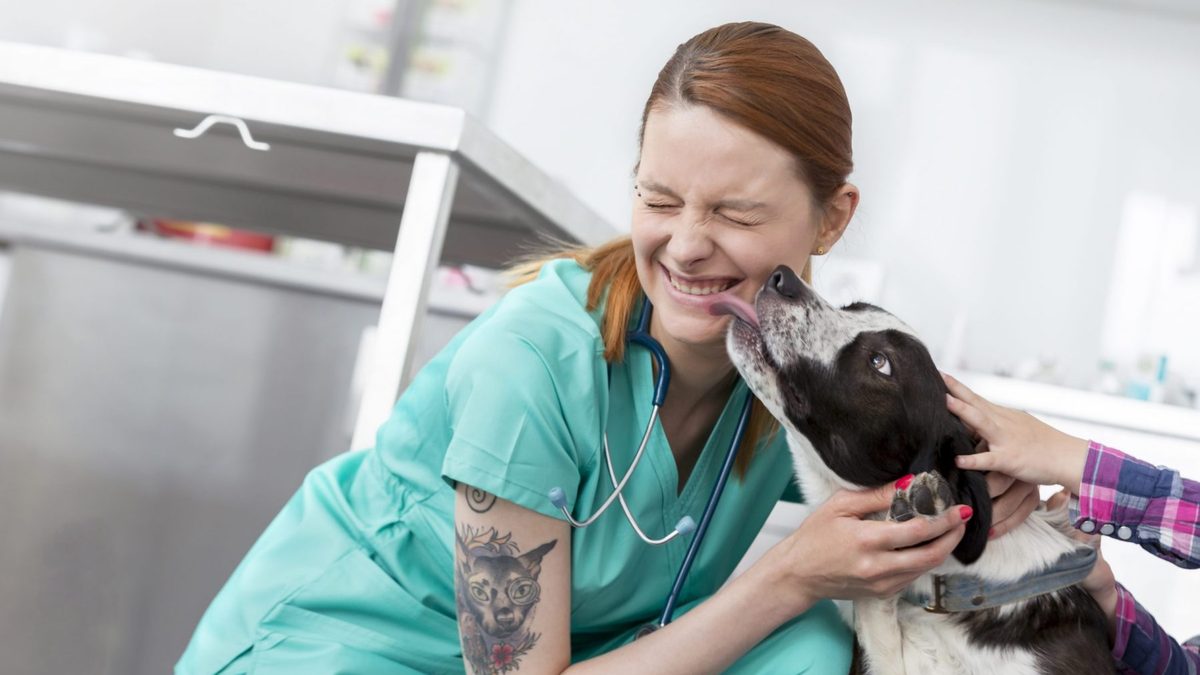
For the pet and owner, trust is the most important factor and first impressions are everything. Like medical doctors, veterinarians are highly trained professionals and are capable of delivering expert care. However, bedside manners do differ, and finding the one that suits you and your pet is the key to a successful relationship. Trust is often realized within the first few minutes of the interaction with the vet, animal and owner(s). There should be a comfortable rapport accompanied by lots of smiling and tail wagging or purring.
You will be glad you took the time to find your pet the best caregiver available. Happy Holidays!
In 1961, during his last visit to America, Winston Churchill, the heroic Prime Minister of England throughout World War II, was asked at a news conference what he thought of the United States Constitution. Perhaps because the Magna Carta, first adopted five and one-half centuries prior to our Declaration of Independence, served as a foundation of government in our mother country, Churchill hesitated before his response, displaying his characteristic dry sense of humor, “I don’t know, it’s too early to tell.”
The predecessor to our current constitution, officially titled the Articles of Confederation and Perpetual Union, had been drafted by the Second Continental Congress after the Revolutionary War and was ratified by the 13 states in 1781. Most historians believe that the Articles failed largely due to the lack of authority given the federal government over the individual states. In recognition of the ineptness of this form of government, the Congress of the Confederation initiated a process which led to the ratification of our Constitution of 1789.
Gaining the unanimous approval of the states proved to be a monumental task. A group called the Federalists favored adoption, advocating a strong central government, but powerful opposition developed among a group called the Anti-Federalists, who preferred a more independent, localized form of governance. Federalists Alexander Hamilton, James Madison, and John Jay, using the pen name Publius, wrote a series of commentaries in support of the new Constitution. The Anti-Federalists, led in part by Patrick Henry of “Give me liberty, or give me death” fame, opposed the proposal, using the pseudonym ‘Brutus’ for its publications. Ultimately, the offer of a Bill of Rights by Madison forged the basis for compromise. Eleven of the original colonies voted favorably for ratification of the “new” constitution, and, within months of the inauguration of George Washington as president, the remaining states, North Carolina and Rhode Island, signaled approval.
A fundamental issue in the debate, however, related to the selection, tenure, and authority of the federal judiciary. Hamilton, the author of the oft-quoted Federalist Paper No. 78, described his vision of the powers of the President and the Congress:
“The Executive…holds the sword…The legislature not only commands the purse, but prescribes the rules by which the duties and rights of every citizen are to be regulated.”
He saw the role of the judiciary, the third branch of government, as limited to the power of judgment and, in order to assure independence of the federal judges, advocated lifetime appointments, subject only to good behavior, as England had done centuries earlier: “The judiciary…may truly be said to have neither FORCE nor WILL…and must ultimately depend upon the aid of the executive arm [to enforce] its judgments.”
The Constitution in its final form embraced Hamilton’s commentary, granting tenure for life so that federal judges were not beholden to either the executive or legislative branches: free to assess the propriety of legislation and to strike any law which “stands in opposition to that…declared by the Constitution….”
In the nearly 230 years of decisions by the United States Supreme Court, Hamilton’s No. 78, outlining the responsibilities of judges, is far and away the most referenced by courts of all other of the 85 Federalist Papers. Article II, Section 2, Clause 2 of our Constitution authorizes the President to “nominate, and by and with the advice and consent of the Senate, shall appoint…judges of the Supreme Court, and all other officers of the United States…” This straightforward “Appointments Clause” empowers the President, upon the creation of a vacancy, to name our federal judges, including the justices of the Supreme Court, but subject to the approval by the Senate. The House of Representatives has no part in the process.
Because Justices may serve until they die in office, resign, retire, or are successfully impeached for “bad behavior,” selections to the Court today have become high-stakes politics in that any appointment is dependent upon cooperation between the President and the party in control of the Senate. To illustrate, after the February 2016 death of Antonin Scalia, regarded by many as a leader of the more “conservative” faction of the Court, Republican Senate Majority Leader Mitch McConnell refused to permit a hearing before the Senate Judiciary Committee for Federal Appeals Court Judge Merrick Garland, who had been nominated by President Obama months before the end of his second four-year term. In contrast, McConnell, less than a month before the presidential election, promised to expedite a hearing for President Trump’s nominee, Amy Coney Barrett, following the September death of Ruth Bader Ginsburg, who helped make up the more liberal faction of the Court. At this writing, the Committee’s Chairman, Lindsey Graham, has begun her confirmation hearings.
In order to provide some context, a total of 114 justices have served on the United States Supreme Court since the adoption of our Constitution. Conversely, there have been 37 unsuccessful nominations to the highest court. Eleven were rejected by the Senate, and 11 were withdrawn by the president. The Obama nomination of Judge Garland and 14 other such nominations by previous presidents lapsed at the end of a Congressional session. Interestingly, six nominees, although confirmed by the Senate, declined the office, and Lincoln’s Secretary of War, Edward Stanton, who was nominated by President Grant, died before assuming the office.
Judge Barrett will have likely been affirmed by the Senate and administered the oath of office by President Trump by the time this article is published. While the President has made no secret of his desire to challenge the results of the November election in the event he should lose and likely hopes that a “friendly” United States Supreme Court, including Justice Barrett, would award him four more years in office, her background and her professional credentials makes a plausible case for her candidacy.
Forty-eight years of age, Judge Barrett was born in New Orleans and graduated from St. Mary’s Dominican High School there in 1990. She earned a Bachelor of Arts degree at Rhodes College in Memphis, magna cum laude, and, after graduating first in her class from Notre Dame Law School, served as a law clerk for Justice Scalia, whose judicial philosophy she adopted. She has taught at George Washington School of Law, the Virginia School of Law, and at Notre Dame. Confirmed by the Senate in 2017 by a vote of 55-42 for a seat on the Seventh Circuit Court of Appeals, Judge Barrett has continued to teach a course at her alma mater law school, commuting between her Chicago judicial office and South Bend. Opposition to her appointment will have been based upon some of the lawmakers’ concerns about the future of Roe v. Wade, a landmark Supreme Court decision which has been the law of the land for almost 50 years. In 2006, then attorney Barrett, who is Catholic, joined in an advertisement supporting a right to life beginning at fertilization. Another issue likely to have been addressed in her hearings involves her criticism of the majority opinion authored by Chief Justice John Roberts, a George W. Bush appointee, upholding the constitutionality of the Affordable Care Act, better known as Obamacare, by a 5-4 vote. Insurance coverage for pre-existing conditions, a popular provision, serves as the hallmark of the Act. Finally, Judge Barrett’s admiration for Justice Scalia and his judicial philosophy includes a broad interpretation of the 2nd Amendment, which would signal her opposition to limitations on gun rights. Suffice it to say, she will have undergone an intensive scrutinization throughout the confirmation process.
Senate Republicans outnumber Democrats by 53-45 at this stage in the electoral process. There are two independent senators, both of whom caucus with the Democrats, which is indicative of a close, but favorable vote on confirmation. In the unlikely event the confirmation has been delayed based upon the election, there could be a different result. Incumbent Republicans are defending 23 seats and Democrats only 12. In order to gain control of the Senate and, in consequence, the majority on the Senate Judiciary Committee, Democrats must take a net four seats from the Republicans—a tall order, but not unrealistic. To several prognosticators, Republicans are at considerable risk of losing seats in Arizona, Colorado, Maine, and Michigan. Democrat Doug Jones of Alabama, who won a close special election against impeached state supreme court justice Roy Moore in 2017, is likely to lose his seat to the Republican nominee. Tossup races, according to pollsters, are in Georgia, Iowa, North Carolina, Montana, and South Carolina, seats now held by Republicans. If Democrats take one or more of those seats, they win the Senate. Should there somehow be a tie between the parties, the Vice-President will cast the deciding vote. So, who will that be? That depends on the presidential election and any litigation contesting the result, an issue that could very well be decided by—you guessed it—the United States Supreme Court.
→ Swipe for Next Story
InsightsNOVEMBER DECEMBER 2020
Smoky Mountain Memories
Story by Robert Pryor, Sr.
On mornings I drive into town, when the weather is as clear and crisp as it was this morning, I see the mountains. I’ve never tired of seeing them for I am a child of the mountains. My family’s long history of living and dying in this valley commands the respect for the Great Smoky Mountains. The history at my disposal tells me that my mother’s family emerged from Strawberry Plains but my father and his people were from and of the Appalachian Mountains.
As a child in the lap of my paternal grandparents, I was regaled with stories about their early life in the foothills of what is now the Great Smoky Mountains National Park. When the park was officially dedicated by President Franklin D. Roosevelt in 1940, my grandfather, James A. Pryor, was 50 years old, born in the Mint community of south Blount County. My grandmother, Laura Florence Baumgardner Pryor, was three years older, born in the nearby Carpenters section of south Blount County. Nannie was the third of nine Baumgardner children, all born near Carpenters Campground as was their father, James R. Baumgardner. If you don’t hear banjos and fiddles at this point you won’t get it.
“Papa” Pryor courted my grandmother all around south Blount County in a horse-drawn buggy. They frequented Montvale Springs, Tallassee, Cades Cove, and Abrams Creek. He told me many times about how Nannie won his heart with her “limber pickles and stack cake.” That’s the sort of thing grandfathers tell grandsons.
As a young man, Papa learned carpentry skills and worked on the Little Tennessee Valley Hydroelectric Development in construction of the original village of Alcoa. I wonder how many times he looked longingly up to the mountains during those hard days. The village name was later changed to Calderwood, and Papa would talk of working on the construction of the Calderwood Dam. Calderwood and Abrams Creek populated his stories and he was proud that he grew up and worked in the Smoky Mountains. He considered himself a mountain man. My grandmother loved to go back to the Baumgardner home place in Carpenters, and I remember her taking me to the one-room schoolhouse where she was educated. My family always attended Decoration Day at the Carpenters Campground Cemetery where Nannie’s family was buried and where she and Papa rest today. She would take me to the garden where she worked as a child. She would prepare a bucket of water and take me into the garden and we would sit on the ground and pull a turnip. She would wash it off with water from the bucket, slice it with a pocket knife and we would eat raw turnip to her delight, if not mine.
I spent a great deal of time as a child with my Nannie, spellbound as she told her stories of the mysteries of Rindy Bailey, a homeless East Tennessee wanderer who wore multilayers of clothing and carried her feather bed. Nannie would enhance stories reported by Knoxville journalist Bert Vincent about this woman who walked the hills and valleys of Jefferson, Union, and Sevier counties. She told me about the Walker sisters, five spinster sisters who lived as Nannie had in a primitive and self-sufficient manner in Little Greenbriar between Tuckaleechee Cove (now Townsend) and Gatlinburg. The Walker sisters refused to move from their home place and defied the federal government during the establishment of the Great Smoky Mountains National Park. Nannie told me about the sisters and how they lived, and I could tell that she envied their independence and lifestyle, something I think burns in all of us from time-to-time. Nannie had a real melancholy about early life for those few residents of what became the national park.
The medicine for her melancholy came in the form of a picnic trip into the Smoky Mountains. A picnic would be anticipated for weeks. Abrams Creek, Cades Cove, or Metcalf Bottoms, the lower end of Little Greenbrier, were always the destinations. Nannie insisted on leaving very early and cooking breakfast over an open fire. She would assign me responsibility for gathering sticks and fallen branches to serve as kindling, and she would cook country ham in an iron skillet and fry eggs and bacon over the open flame. She would sing old songs and dance about lost in the visions of her childhood. She knew every word of “The Ballad of Floyd Collins,” about a cave explorer who became the focus of a 1925 effort to rescue him from a Kentucky cave. So many things we do as grandparents reveal who we are and what we love in this world to those who are paying attention. It was easy to imagine her cooking over an open fire as a young girl with her brothers and sisters in the Smoky Mountains. She could eat like a horse but seemingly never gained a pound. If only I had inherited that metabolism. If she left a holiday table due to an interruption, we would refill her plate, and she would return and clean her plate again without ever noticing what we had done. As any good Pryor, Nannie always embellished a bit. She claimed to be part Cherokee Indian. I don’t know what part was Cherokee, but evidently it was not enough to get me a share of the tribe’s casino profits. Believe me, I tried.
On those trips my Papa would boast “Boy, today I’m going to ride a bear out of these hills – just watch me.” Luckily, the bears never showed up.
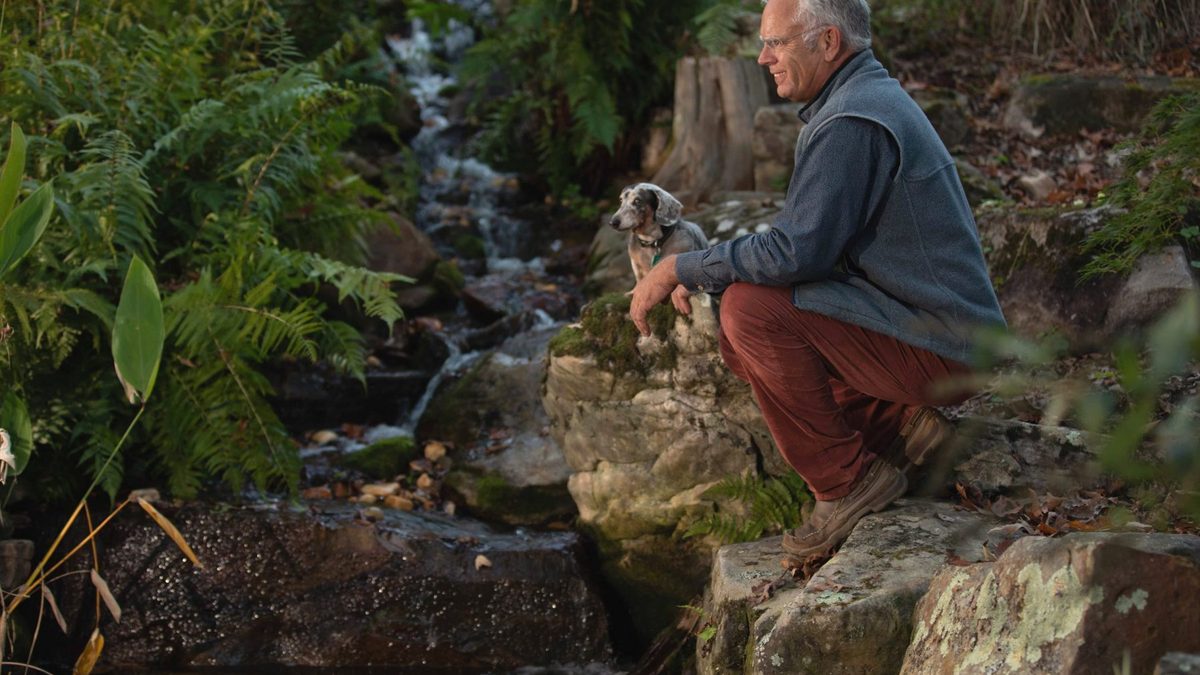
Any child of this valley had their initiation into the river. Nannie took me by the hand. The water was so cold it felt like my feet were freezing even in the heat of a summer day. I don’t know if you’ve ever noticed, but a mountain creek has a smell that’s unique and unforgettable. I don’t know what causes the scent, but it must be the combination of cold, fresh water mixed with the scents of moss-covered rocks and sweet rhododendron and mountain laurel blooms and musky hemlock and molding leaves. It is the scent of the mountains, and when combined with the fragrance of a campfire, one of the most unforgettable impressions of my childhood.
I have many memories of Gatlinburg and the Smokies from my young adult years before the candied apples, cheap souvenirs and miles of pancake houses moved in. I proposed marriage to my wife, Norma, at Howard’s Restaurant. I hid the engagement ring in a bag with my bowling ball in the trunk of my car, and when we got to the restaurant, I had trouble finding the ring box because it had fallen into one of my bowling shoes. I thought I was going to have to call the whole thing off. Months later, we spent our first honeymoon night in a small rock cabin at the Black Bear Inn in downtown Gatlinburg. I remember the most challenging part of that night was keeping the fire burning in the small fireplace. As I recall, everything else went well. A year or two later, we celebrated Norma’s return from a trip by cooking thick ribeye steaks on an hibachi on a late summer afternoon visit to Metcalf Bottoms Campground, my melancholy the one being controlled. That steak had as much as anything to do with the success of our 55-year marriage.
For many years, Norma and I spent New Year’s Eve with friends in rented cabins at Cobbly Nob. A roaring fire and a cabin full of close friends made for many a happy New Year’s. It was fun to walk the streets of Gatlinburg and buy taffy and, yes, candied apples. We always tried to end those New Year’s celebrations with breakfast at the Burning Bush.
I must admit there were a number of years that our Smoky Mountains held little interest for me. My occasional trips to the courthouse in Sevierville involved bumper-to-bumper traffic, and I dared not venture to Pigeon Forge and the national park. At one point, I considered purchasing a mountain home between Pigeon Forge and Gatlinburg, but lost all interest when the sales pitch included the details of a secret route to avoid traffic. No doubt, my problem with the Smokies concerns the way it has changed from the beautiful place of my youth to the over-commercialized, congested one of today. If I had not known it as it once was, perhaps I would have more tolerance for the hillbilly comedy clubs, upsidedown buildings and water parks. I can’t help but prefer things in their more natural state and appreciate things for “the way they were.” But those rivers are still there, and every now and then they call to me, as much as I might ignore them.
On a beautiful day last month, my wife, daughter, and our dog, Maggie, tried to escape the boredom of the pandemic by making a trip back to our beloved mountains. We entered through Townsend, which has changed very little over the last 30 years, and there was little traffic as we entered the national park. How beautiful it was as we traveled the route I had once traveled with Nannie and Papa. We stopped at a campground, and there it was once again — that fabulous smell of a campfire by a cold, clear creek. Though we didn’t leave early enough to do a bit of picnicking, I could see Nannie dancing and singing her mountain songs, and I vowed to return.
→ Swipe for Next Story
FeatureNOVEMBER DECEMBER 2020
Juxtaposition
Story by Nathan Sparks
The news came as a shock, like being pulled out of a 180-degree sauna and plunged into a glacier-fed river. Yet it is ultimately the most settling news that I could ever imagine. My guide on this journey is Molly Miketo, a kind and gentle woman whose voice somehow penetrates the chaos that is temporarily in my mind. “Breathe,” she says, “They want you to breathe.” I hadn’t even realized that I wasn’t. Like an animal in the forest, I had frozen entirely, thinking that if I didn’t even breathe, I would be invisible. But like a duck on a pond, the fact that I seemed calm on the surface didn’t altogether hide that underneath I was paddling like hell trying to comprehend what I had just learned.
Sometimes it takes profound contrast to shake things up enough to make real and lasting change. On the contrary, at other times, the smallest occurrence can set phenomenal events in motion. The latter is sometimes referred to as the butterfly effect. If one wanted to be scientific, it might be defined as a nonlinear system where the output is not proportional to the input. Call it what you will, the fact remains that sometimes little events turn into big things.
I often find myself comparing life to a free-flowing river. The calm pools separated by intense whitewater rapids, the river, like life, becoming calmer as it approaches the end of its journey. This is true if we pay attention to what we are supposed to be learning. The real question is: how do we interpret these gifts of knowledge that our trip offers? That has often been the description of my experience in this lifetime, and unfortunately I have not always listened.
The things that I thought would make a significant change did little, and the seemingly inconsequential often brought forth a cascade of events. Thus is the nature of chaos theory and the profound effect that the smallest change can have on the future. It seemed that I have a knack for offering these little tidbits. Some might call the ability to create change with small actions a gift, and had I found someone to help me hone this talent earlier, a gift it may have been. Still, all too often for me, this unpolished skill has been a challenge where many people have misunderstood my intentions completely.
But as I sat with Molly, listening to her repeat the words she was hearing, there was no misunderstanding this time. You see, Molly is an Akashic Records consultant. Through divine prayer, she can connect to a source of energy and knowledge about life and ask any question you wish about the past, present, or future. Many people are skeptical about such things, but after my experiences with Bobby Drinnon, who was a fantastic psychic and dear friend, I know it is best to be fully open and seek knowledge rather than prejudge. So I sit and listen to what she’s saying as the information is shared through her to me.
“They say your gift lies in juxtaposition, the ability to see things not as they are but as they should be, and to help create the contrast necessary for change.” I quietly ponder this message as I try to deconstruct the myriad of thoughts—both past and present—that are flashing through my mind. I recall Bobby Drinnon telling me that he thought he knew who I was in a past life. At the time I had no idea why he would choose to share that, and honestly, I didn’t take what he told me all that seriously, but over the years, the things done by who he said I had been were weighing on me.
I ask about this in such a manner as to not give away the answer, inquiring without naming the person who Bobby thought I was during that time. Molly’s soft voice brings their reply, “You were a warrior, sent to help create contrast between two factions, to ensure the creation of the Christ consciousness for this planet. You volunteered for the job because you were well suited to the task.” It’s a bit much to take in, and I wonder if it’s true, but regardless, the effect for me was the same. I was relieved.
Bobby’s gift for me was to share who he believed I was in a prior life. True or not, the comment made a lasting impression and helped me in many circumstances to be a better person because I sure as hell didn’t want to be like the man he referenced. Finding out that Bobby may have been wrong adjusted my perspective. This new information helped renew my self-regard and clarify my life’s mission.
I was starting to see a pattern. What then, I asked, is my purpose during this lifetime? Molly quietly replies, “They are telling you that you are already doing what you have come to do.” She adds that, “They want you to have patience; there is more to come. They say that while you wait you might cleave away some unnecessary parts of your life, make some different choices.” A vision of a perfectly neat garage comes into my mind; mine indeed is not and I belly-laugh out loud. And although the idea of being neater and not hoarding so much junk is always a good idea, I knew they meant I should make some different life choices. The deeper this session went, the more intense and meaningful, and the more intrigued I became with the concept.
As a child and a young man, I was very hardheaded and stubborn. I am sure there are those that would laugh and say that I still am. It makes me chuckle, as well. I personally never had that view of myself; instead, I expressed my philosophy as “tenaciously determined”.
When I was told that I couldn’t do something that seemed easy to me, it made me angry. Who were they to say what I could or couldn’t accomplish? Sadly though, sometimes, I believed the lies, and their negativity became part of my reality. But occasionally, someone would touch me, as gently as the swoosh of a butterfly’s wings, and set in motion a completely unexpected outcome. And as I drifted off for a moment as Molly spoke, it seemed like the memories of those moments were rushing towards me, the events where a single kind gesture or simple statement had altered my life. I was beginning to understand why they had been part of my experience.
Case in point. I can’t recall what day of the week it was other than it was a hot summer day, and we had no rafting trips booked. I was part owner of a company called Mountain Quest on the Nolichucky River in Erwin, Tennessee. Looking up at the car coming down the gravel lane, I was surprised to see four middle-aged ladies stepping out and walking up to the headquarters building. “Can we go down the river?” one cheerfully asked. My partner Jerry Cooke set about explaining that the river’s flow was very low and that we didn’t have any guides on duty during the week. I have no clear recollection of why—save possibly to escape the chores of the day—but I piped up and said I’d do it: “We can take a small raft, and I will take them down the river.”
The trip, to be exact, was the Nolichucky gorge, roughly 8 miles of class III-IV whitewater, and Jerry was right, it was going to be a brutal rock-scraping kind of day. It turned out instead to be magical. Unlike a weekend day, the river was not filled with people, rafts, and other boats, but rather, the quiet of the forest and the whispering of the water over the rocks. It was nothing short of enchanting. I enjoyed listening to my lady passengers’ conversations and answering the occasional question. It was a delightful trip.
We came to a place we called “the jacuzzi,” where it was safe to sit below a 2-foot drop with the warm river water bubbling soothingly. Three of the ladies were quick into the water; the fourth sat stoically in the front of the raft. Moving alongside, I asked why she didn’t join her friends, and with pain that I could feel without words, she said she could not swim and that she was afraid. After a few moments, I convinced her that I would stay right with her while moving to her friends and ensuring her safety. Moments later, happily reunited and laughing again, the woman took my hand and looked closely at my palm. Then she looked at me and said, “You will be a writer one day.” I laughed and said I seriously doubted that. Why, she asked. “Because I flunked English; they told me I couldn’t write,” I said. But she told me she was positive that I would one day be a notable writer. And from that moment on, every time there was a need to write something, I would think of what she said and give it a try. Over time, I overcame my self-limiting belief that I could not write. That lesson taught me that we get what we need when we need it; the question is are we smart enough to listen and respond.
That small act had a profound and lasting impact on my entire life. With a simple suggestion born of her intuition, she had planted a seed that would ultimately take root, such a small act with such a lovely outcome. And at that moment, the gravity of this knowledge flashed into my mind.
A rock in the river parts the water to either side and the water has no choice which way it will go; unlike the water, we get to choose which path we take—positive or negative—and whether we create butterflies or demons. It is obvious that contributing to the positive helps our global society improve and that even the smallest adverse action contributes to its decline, but to think that even the smallest comments we make can have great impact gives hope to our current plight.
So big or small, there is absolutely no doubt that every action has the potential to create an unequal and not always opposite reaction. That’s certainly a twist on the old saying, but it seems to be often true for me. So, if the simple statement that I would be a writer had influenced my life, I began to ask myself what I can do consistently to help create positive change in myself, other people and current events. I believe there is a little God in all of us and that, deep down, we all know the right ethical and moral course of action in every situation. We need to act with the belief that what we do today will impact everyone’s tomorrow.
We, as human beings, as a society, have to reclaim our right to simply be free to share our truth in an effort to help one another. There is no doubt our deep sense of apathy has come from decades of being misled about the truth. Not only do we no longer trust the system, but our apathy also lies in our belief that there is nothing we can do to change it. Or worse, we fear what may happen if we try. That very belief fosters the continuation of corruption at every level. What is going on around us, the rioting, the unrest, and the looting might, unfortunately, be necessary to create change but make no mistake; there is a better way. The turmoil certainly has our attention as a society, and those on the positive side of change need to take action. Perhaps all of this social and political unrest is simply the universe creating enough contrast between good and evil to help us realize that we must overcome our apathetic state of mind and do something to make change. If the single flap of a butterfly’s wings can create a tsunami on the other side of the world, imagine what we can accomplish if we bond together. Perhaps we all need to take a minute, whether with our politicians or neighbors, friends, family, strangers, and be the butterfly in their lives.
This was all rushing through my mind as I sat with Molly, wading through a river of experiences as I learned a little more about myself. And all thanks to her gift. But just as quickly as I wandered down the rabbit hole, I was back. Molly’s kind voice was echoing the message she had heard, “They say there is much left for you to do. Have faith and be patient.” I felt an internal peace with what the Records were conveying to me through Molly. I felt more in tune with my purpose than ever before.
We are all growing as we pass through this life, both on a human level and a soul level. Give it your best, and you will never know regret. It is different for every one of us, so what works for you might not work for me and vice-versa. What does seem to work for everyone, though, is constant encouragement towards the person they can be rather than the persistent pointing out of their failings. Be love and light to everyone you meet; be an example of the person you know you are.
I am thankful that I have been allowed the opportunity to understand and share so much with so many.
Something was still nagging at me as my time with Molly was ending. What was the big thing I was supposed to accomplish this lifetime? And like a lightning bolt shatters the night sky, I knew exactly what it was. The little things are the seeds of the big things. Taking time every day, at every opportunity to plant those seeds and set in motion future events was the proper use of my ability to juxtapose. I recalled asking Bobby why he didn’t tell people about catastrophic events headed their way, like severe addictions that would wreck their lives. He replied, “It is not my place nor God’s will, but I can and often make small suggestions that I hope will trigger their own free will and if they choose to, they can decide to overcome the challenge.” Knowing that merely caring, being honest and present, has the potential to affect a positive change in someone else’s life is a purpose in itself.
When you choose to share, your butterflies will take flight and do exactly what they are supposed to do, floating about waiting to fulfill their purpose.
My opportunity to be one of the architects of societal change lies in my own daily choices to be a good member of that society—and so does yours.
→ Swipe for Next Story
FeatureNOVEMBER DECEMBER 2020
Laura Slyman: Real Estate Girl Wonder
Story by Carrie McConkey
Laura Slyman sat in a formal black dress, pen in hand. The Knoxville native had just finished an 18-month MBA program in marketing at The University of Tennessee and was preparing to walk the stage at graduation.
But the 24-year-old had an important task to complete first: she’d just sold her first house and had to fax the handwritten contract. “I almost didn’t make it in time,” she remembers. “By the time I had sent the contract, we were racing over to the auditorium.” It was a moment that would change her career.
More than two decades later, Slyman’s passion for her industry has not waned. She’s performed in the top one percent of the 5,000-member-strong Knoxville Area Association of Realtors (KAAR) for the past 10 years, and her commitment and work ethic has been recognized through Cityview’s Best of the Best in 2018, 2019, and 2020.
Many men and women are attracted to the field of Real Estate as a second career. Life experience serves as a benefit, as do the many networking contacts that a professional accumulates through the years. But for Slyman, the calling came early — starting that graduation night. “I knew in that moment that I would never work in the corporate world again,” she says. “I loved getting to make the phone call to the sweet young couple letting them know that they had just bought their first home. It was amazing being a part of an unforgettable moment in their lives—and to know that a new chapter was about to begin for them.”
In 2007, then-31-year-old Slyman took sole ownership of Slyman Real Estate, the company her father Jim had started in 1971. Today she leads a team of 26 agents as owner and broker, and partners with Buying Agent Beth Miser on the Laura Slyman Team. She also fills the rare role of a female auctioneer (she completed auctioneer school as one of only three women in a class of 120), teaming with father Jim who serves as the President and Owner of Slyman Auction.
Knoxville’s location, beautiful surroundings, and unique culture have kept Slyman close to home. “After all,” she says, “Real Estate is local.” She continues, “I love the ‘small big city’ feel… the close proximity to all the major cities… the escape of the mountains.” Slyman believes in the importance of giving back, having served as the president of KAAR in 2018. “It was important to me to be involved locally in our association”, she says. “My dad was also a past president of KAAR—he taught me from a young age the importance of serving.”
With the many hats that Slyman wears, her favorite role is that of mother to two sons: Keylor, 15, and Cole, 12.”Parenting is humbling”, she says. “There is no handbook.” On being a working mom, Slyman says, “I may be in my heels at the track meet, but I am there. My kids will hopefully always know that I am their number one fan.”
Slyman’s MBA in marketing has served her well; she uses it daily in all facets of her work and serves as Marketing and Sales Director for Slyman Auction. She reflects gratefully upon that graduation night, and the fulfilling career path she chose. She says, “I realize my job isn’t brain surgery, but I really do feel like I make a difference in people’s lives.”
105 Center Park Drive, Suite 200 Knoxville, TN 37922 865-862-6161 (office) 865-567-9916 (cell) Laura@SlymanRealEstate.com www.LauraSlyman.com
→ Swipe for Next Story
FeatureNOVEMBER DECEMBER 2020
Smart Home
Story by Ellen DeVoe
It’s 10 o’clock at night. My son is sleeping in his crib upstairs, and my husband has fallen asleep in the recliner. I remember I left my workout gear in the car, so I unlock my car from inside the house using the key fob, put the keys back in the bowl, and head out the door. On my way back in, I find that the garage door locked behind me. All other doors to the house are locked, and the spare key is missing. Luckily, I have my cell phone. I call my husband to let me back in. He keeps his phone on silent, but I’m optimistic. No answer. Not only am I locked out, but we haven’t turned on the outside security lights for the night, so I’m completely in the dark.
That night I decided it was time for some high-tech updates to our not-so-smart-home.
When building a new home, homeowners are making smart home technology a top priority. According to local high-end custom home builders, like Rob Purvis of Purvis Builders, “People want and expect certain home technologies in their new homes. Security, lighting and thermostat control, home audio, and entertainment systems are among the most popular I’ve seen in recent projects.” In new construction, “It benefits everyone involved to have a game plan before the house is built,” he says. “When the house plans are near completion is is the best time to figure out what technology is right for you and where in the home you want it.”
But what about existing homes? My husband and I live in a basement rancher built in the early 70s, so smart home technology wasn’t exactly factored into the design of the house, though we had a wicked faux wood stereo and intercom system throughout the house, until it died.
I started to research different products on the market and realized there were two big decisions to make first: did we want something my husband and I could install ourselves, or did we want a professional to install everything for us? Saving some money is always appealing but technology integration can be tricky and we, like most busy working parents, just don’t have time for hours of tech support phone calls when something goes wrong. As non-professionals we would most likely have to select from among various brands for each specific product that would potentially be on different platforms, such as Amazon, Google, Samsung, or Apple, having to depend on these to play nicely together while shuffling through multiple apps to control each device. Again, that sounds like lots of frustration if there is a problem. We concluded that everything should be on one platform, one app, that worked on any of our digital devices, and to get that the best answer is to find a local expert that can handle it all.
Speaking with local experts confirmed the potential nightmare of DIY home automation. These do-it-yourself products run through your home’s Wi-Fi network, requiring a very dependable internet connection. They are designed to be controlled through your cell phone, tablet, or computer, not by a professional monitoring company. We had hoped that installing automation would increase the value of our home, but we learned there is a catch. “When someone has these DIY products installed in a home,” explains Christine Dean of HIS Security & Technology, “it can be difficult to transfer them to a new homeowner. Security becomes an issue. How are you going to lock out someone who had access to these products before you bought the house?” If the home is controlled and monitored by a professional company, “the previous homeowner’s information is stripped from the system and is assigned to the new homeowner. This can be harder to do with a DIY smart home versus a smart home that is professionally monitored,” she says.
The difference between products such as Ring, SimpliSafe, or Google Nest and products offered by companies like locally owned HIS Security & Technology or Advanced Security Systems is that the products offered by these local companies are not always dependent on Wi-Fi. They can communicate through the equivalent of a cellular text. This allows for a more secure and less vulnerable system. Security professionals often partner with the Alarm.com platform, and all of the products they specify have been vetted for security purposes before ever going into a client’s home. The vetting process ensures security from malware and account-hijacking or identity theft. If you already have smart devices you want to continue to use, “we can integrate some of these devices with our program. For example, you can talk to Alexa to tell Alarm.com to turn on the lights.” says Christine.
Jeremy Scurlock of Advanced Security, another top end local company, agrees. “We can provide you with both a landline and cellular connectivity in the event of a power outage so it works during inclement weather.” Advanced also offers assistance with whole house audio-visual equipment. “These modern systems enable you to control all of your music in every room from your smart phone, making it much more enjoyable to actually use the technology.”
Professional installation and the ability to monitor your devices for you give homeowners peace of mind. If there is an issue that arises with a product, most all local companies offer support team members that will troubleshoot it from the backend and assist by phone from a local office, rather than from somewhere across the world. If the issue persists, a local representative will come to your home to make necessary repairs. In a crisis situation, it can be difficult for a homeowner to communicate clearly with emergency personnel. Monitoring companies have professionally trained employees who will call local authorities on your behalf to notify them of a situation.
What exactly makes a home a Smart Home?
Homes on the market have begun to boast ‘smart home’ capabilities in order to boost sales and pricing. However, just because one has Alexa controlling the kitchen lights does not make a home smart. There is really no limit to the automation available for modern homes. Jeremy suggests “if you are building a new home have your security/automation contractor review the plans before the construction starts. Often we can make suggestions that will keep the automation aspect of the project within its budget.”
In order to create a standard in the real estate industry, Coldwell Banker Real Estate teamed up with CNET, a technology news and review website, to define a smart home: “The home must have a smart security feature or a smart temperature feature in addition to a reliable internet connection. It then must include at least two features from a list of smart options, including appliances, entertainment, lighting, outdoor sensors, and safety detectors.”
Now the question is, why a smart home?
Besides the well-known characteristics of smart home devices, such as controlling your thermostat, changing the volume of your Throwback Thursday Playlist and knowing who is at your front door before they even know they’re there, smart home capabilities and innovations are launching every year with new and improved features. Christine described a situation that really hit close to home where someone left their grill on. “It burned their porch and almost all of their house. I couldn’t help but think, if only they had the Grill Guard!” She explains this device lets you know if you have left the grill on, avoiding disasters like this.
Devices can be placed on chairs, beds, or doors of elderly loved ones or those with special needs, notifying a caregiver if someone is not getting up, getting up more frequently than usual, getting out of the house in the middle of the night, or even leaving the house as usual but forgetting to turn on the alarm system – then turning it on for them. “Alarm.com subscribers get notices via text or email when unusual activity occurs, like a door being opened in the middle of the night or no movement in the house during the daytime, says Jeremy.
Another good reason to make one’s home smarter is that some home insurance companies are starting to recognize the benefit of smart home technology. These companies are beginning to offer special discounts, rebates, and deals for homeowners who have installed smart devices in their homes. Typical qualifying devices are those that detect water, improve energy efficiency, and increase the home’s overall safety.
No matter what you choose, to do-it-yourself or have a professional team monitor your home, there are endless options to make your home smarter. Just remember that smart home devices are meant to help simplify the management of your home, not make it harder. Make a list of priorities, needs and wants, and start from there. Research before you buy and ask questions if needed. Know that products will improve, so be sure you consider devices that are able to be upgraded without having to purchase completely new each time. And remember – wireless does not mean there won’t be a power cord.
It’s 10 o’clock at night. My son is sleeping in his crib upstairs, and my husband has fallen asleep in the recliner. I remember I left my workout gear in the car, so I unlock my car from inside using the key fob, put the keys back in the bowl, and head out the door. On my way back in, I find that the garage door locked behind me. Luckily, I have my cell phone, no sweat. I pull up my security system’s app, turn on the outside light with one tap of my finger, and then unlock the garage door with one more tap. I’m back inside before my husband has even snored himself awake.
→ Swipe for Next Story
FeatureNOVEMBER DECEMBER 2020
Southern Hospitality
Story by Mary Leidig
East Tennessee’s warm welcome brought Deb and Mike Held from their Colorado home to Rarity Bay, and it’s why they’re staying.
Married 44 years, Mike and Deb met in college in Nebraska and raised their four children in the Denver area where Mike was a partner in several car dealerships over the last 20 years. Until Deb’s recent retirement, she worked in the school system, banking and accounting. Their three daughters and one son are now grown and raising their own families, which has meant nine grandchildren so far.
Ending up in the Rarity Bay community near Vonore was not in their retirement plan.
“Our plan was supposed to involve a ranch in Colorado,” says Mike Held. In fact, they were already ensconced in a large home on 68 acres of Colorado ranch land. Then a visit to East Tennessee changed everything they thought they knew.
Ron Bills, founder and president of Providence Builders of Tennessee, and his wife Diane, vice president, became friends of the Helds through one of their car dealership partners in Colorado. In 2017, the Billses invited the Helds to East Tennessee for a visit to their home in Rarity Bay.
It was love at first sight. And it wasn’t long before they traded those 68 acres in Colorado for a third of an acre in East Tennessee. “I had to leave my horses and chickens,” says Deb. But she has more than made up for that loss with time spent exploring the Great Smoky Mountains, soaking in Tennessee’s lush landscapes and enjoying the people. Always the people.
“Everyone is just so friendly here, and I think the word is getting out about Tennessee,” she says, laughing. “Even the car rental guy at the airport was friendly and easy to work with.”
“We just loved everything about it,” Mike says. That feeling a high school senior gets when she finds the college campus where she fits, the satisfaction one experiences when the last puzzle piece falls into place — that’s what the Helds felt when they decided to make East Tennessee their home. Working with Providence, the Helds broke ground in January 2019 on their 4,900-square-foot home at Rarity Bay. In November, the couple moved in.
Rarity Bay on Tellico Lake is a gated community in Monroe and Loudon counties, ideally located on the front porch of the Great Smoky Mountains. The community of about 900 homeowners that some residents call a “southern Cape Cod” includes waterfront living with mountain views and amenities that include a country club, championship golf course, tennis and pickleball courts, fitness center, swimming pool, community docks, horseback and hiking trails, and more.
“We totally missed the coronavirus during the building, thankfully,” said Mike. “So that wasn’t a challenge for us. Our biggest challenge was building a house long distance from Colorado.” Though Providence made even that obstacle disappear.
The “all in one” architect/builder offers special software on its website for clients to get an up-close view of progress right from a cell phone. The Helds took full advantage of it. The couple logged on to the website daily, literally watching their home being built. The software made it easy to work through questions and any design changes.
“I looked forward to getting online every morning just to see what was new,” says Mike.
The couple’s dream for the house matched their vision, with views of the mountains and water. But their initial plan was a bit large for the lot.
“We wanted two master bedrooms in a ranch design with a three-car garage, so we couldn’t keep quite all of it,” he says. “Providence helped us work out a change in the design.”
This new home in a new region of the country meant pretty much starting over in choosing furniture and housewares. But the Helds did pack some special pieces that blend with their nearly all new furnishings.
“We brought with us a rare chicken egg incubator and an antique pie safe that has been in Deb’s family for many years. It’s very much like a hutch,” says Mike. And while they sold their horses in Colorado, Deb brought her saddle to Tennessee. Just in case.
Accustomed to darker wood and more carpet and beams in many Colorado homes, the couple chose white cabinetry in the kitchen and wood floors throughout.
“Diane was always so helpful to show us different styles and advise us,” noted Deb. They chose wood beams in the vaulted ceiling of the great room even though they were not in the original design. The stunning change resulted in a beam that runs down the center and two additional beams down both sides of the ceiling. The massive floor-to-ceiling natural stone fireplace in the great room invites, with subtle colors and tones carried into the kitchen’s granite countertops and backsplash.
This home is designed for gathering and entertaining, creating open spaces that bring people together. The light-filled great room leads out onto their favorite spot. “The tongue-and-groove vaulted screened deck is the place we love the most,” says Mike. The master suite also offers its own private access to the deck.
Throughout the building process, the Helds were pleased with the friendly service they received. “That spirit is Tennessee for us,” said Deb. “From the trim to the granite and flooring, the vendors were so helpful and personal. They took the time to get it right,” Mike says. The design, building and move-in journey have been the perfect recipe for their new life here. Having built several homes before coming to Rarity Bay, Deb and Mike Held say their experience with Providence is the best.
Ron Bills says this is exactly the kind of experience he and his wife want for all their Providence clients. “We love it when a plan comes together. We’re not just putting a house on top of a piece of property. We know how important it is to integrate the design of a home into the land. We wanted to do that with the Helds,” Bills says.
Founded in 2005, Providence is headquartered in the old courthouse in Lenoir City. “We totally gutted the building and completely renovated. The care we wanted to take in redesigning that building speaks volumes about who we are as a company,” Bills says. “The craftsmanship we put in our offices is the same detail we want to go into the homes we build.”
One year after moving in, the house and East Tennessee still feel new to the Helds.
“We’re still in the honeymoon stage,” says Mike. “We love it all—in the community and in our house. Our open great room that takes you to the deck, the bar, bonus room and our master are every bit what we dreamed of.”
Rarity Bay residents welcomed the couple early, offering to help their new neighbors settle in..
“We’re all from somewhere else, and this place and the people are a great fit for us,” says Deb. “I still ask myself why everyone is so friendly. They just are.
“We still think of the Providence team, too. They are respectful, passionate and courteous about what they do—from the painters to the tile team.”
So have they found their forever home?
“Well…maybe not,” says Mike, smiling.
While their Rarity Bay home is near the water, it’s not waterfront. “We’ve bought a lot right on the lake, actually just a few blocks away, and we’re trying to build a dock right now.”
So, a new home might be in the future. “We’ll see,” he says.
In the meantime, the couple is still discovering the region’s natural resources, including the nation’s most popular park. “We love the Great Smoky Mountains National Park,” notes Deb. “And we’re still exploring – always exploring.”
→ Swipe for Next Story
Non-ProfitNOVEMBER DECEMBER 2020
Here for the Kids
Story by Rebecca Whalen
This past April, while many were settling in to COVID-19 quarantine, Josie Fellers was practicing for one of her biggest performances yet: auditions for the University of Tennessee Dance Team.
A senior at Oak Ridge High School and dancer at Oak Ridge Academy for Dance, Josie was accepted into UT’s School of Communications and had completed the second round of virtual tryouts for the dance team. She pushed harder than ever to prepare for this milestone, but something about how she was feeling seemed off. “We noticed she was getting more tired than normal,” says John Fellers, Josie’s father, and as she prepared for her third audition, it only seemed to get worse.
After undergoing tests—and extra blood work pushed for by Josie’s mom, Shellie, a registered nurse—Josie and her family had an answer to what was making her unwell. Josie had leukemia. “You can imagine as parents, you’re just shocked, in a daze. Is this real?” John recalls.
For the next five months, Josie would spend the majority of her time at East Tennessee Children’s Hospital (ETCH) being cared for by the hospital’s unique makeup of doctors, nurses, administrators and volunteers. “Children’s Hospital cares about your children like they were their own…,” John says. “It’s been an experience for sure, but they have made it much more bearable and easier to get through.”
Only Kids, All the Time
Josie’s introduction to ETCH actually started 18 years ago. Born with underdeveloped lungs, Josie was rushed to ETCH where she spent the first 10 days of her life. Little did her family know they would be back 18 years later, watching their teenager battle cancer. But that is what the children’s hospital is tasked with, to be there for children from birth to early adulthood improving their health, caring for them during unimaginable journeys, and leading them on pathways to wellness.
“Children aren’t little adults,” says Matthew Schaefer, ETCH’s new president and CEO who took the helm in August. “What we have the opportunity to do here is be about kids, all kids and only kids, all the time.”
The pediatric hospital has a 152-bed campus on Clinch Avenue in Knoxville, which includes an ER and access to a host of pediatric subspecialties, including hematology and oncology. No fewer than 5,500 children are admitted to the hospital in a single year. The campus is joined by two urgent care locations in Knoxville and another two on the way in Sevierville.
Becca Trout, nurse manager in the Hematology and Oncology Clinic, says it’s unusual for a children’s hospital to not be associated with the larger health system, but for ETCH, it’s opportune. “It gives us the ability to make governing decisions that are best for the kids specifically, not necessarily for the larger health system,” she says. “For families, it means they’re getting the most well-supported currently recommended treatment plans…People are just relieved to know that they can get cutting edge treatment close to home.”
Supporting the Family
Trout’s mention of relief for families is one that’s found often when speaking with someone about ETCH. “When children walk through our door, roughly 150 a day, 40 a day through our operative environment, we are not experts on those children,” Schaefer says. “Moms and dads, caregivers, whomever is the guardian of that child, they are the experts on that child, and they have entrusted the care of their most precious thing to us.”
And the families notice that emphasis. “People may not realize the amount of support that’s given in so many different ways,” says Karisa Bitner of Lenoir City, whose daughter Lilly, diagnosed with leukemia at the age of 5, spent nearly two-and-a-half years in and out of ETCH undergoing treatment. “It’s not just medical. It’s mental, it’s physical, it’s even spiritual if you need it. It’s things on a very basic level.”
ETCH became the family’s only other safe space when Lilly was at her sickest. Now two years out of treatment, Lilly is visiting just a few times a year and doing telemedicine where she can. Bitner says she feels blessed they chose to move close to a hospital that could handle oncology when they did, just nine months prior to Lilly’s diagnosis. And today they have a family of supporters as a result. “They hold a special place in my heart.”
John Fellers echoes the sentiment. “From day one there, we were just overwhelmed with how many people, volunteer services, and social workers wanted to stop and visit with us to make sure we had everything we needed.”
The Fellers received a care package when they first arrived containing gift cards to local restaurants, laundry detergent to use on-site, a roll of quarters for the vending machines, and so much more. And it meant the world to them. “From the first hours and days we had people coming in and checking on us, and it was wonderful.”
Tackling a Pandemic
This year has been nothing short of challenging for so many across the world, but for the team at ETCH, they took the challenge in stride. “There were so many things that had to change in a very short period of time,” says Dr. Joe Childs, ETCH’s chief medical officer. Based on what they were seeing in other countries, COVID-19 was not proving to be devastating for children, “However, it posed risks for parents and healthcare workers,” Childs says. “The prioritization was wanting to keep the environment safe for the patients we’re taking care of, but we also needed to protect all of our staff so we could continue to perform the mission of the hospital.”
From the availability of testing and personal protective equipment to visitation protocols and screening at entrances, the team at ETCH went through it all. “While the disease itself has not brought us a lot of sick patients, it’s made it challenging for us to transition how we can perform our essential mission,” Childs says. “It has changed a lot of things that we do here, but I think some of those changes will lead to improvements long term.”
Telemedicine is one. Prior to the pandemic, the hospital had done a total of 150 telemedicine visits, but as of late September, that number was 11,000. It was a necessary thing for the hospital to do when things were unknown during the pandemic, but in many cases, doctors are finding it effective. “We’ve learned new ways to prevent the spread, both as communities and health care facilities,” Childs says, adding that as we approach flu season and a time when they see a rise in RSV, it will come in even more handy.
Add an increased emphasis on mask wearing and hand hygiene, and the team is working around the clock to ensure children and families feel supported during their personal challenging time and the world’s. “Challenges are a way to rise up and find other ways to succeed,” Schaefer says. “That’s the way the hospital looks at the pandemic, and I believe it’s what will drive us forward.”
More to Come
Like many organizations, ETCH did see some changes in how they raised their funds this year. The pandemic forced a shut down of elective procedures at one point this year, but Schaefer says they have been able to weather the storm. The hospital team had to cancel multiple large events this year, some moving to virtual platforms, including their annual Golf Adventure event, Radiothon, and the upcoming Fantasy of Trees. But Schaefer says they are still seeing the support for these events.
Yet while so much has changed and created challenges for East Tennessee Children’s Hospital this year, the generosity of the community is not one; they’ve continued to see support from donors. And volunteers continue to remain engaged in the work, just as they always have. “We always want more people involved here,”Schaefer says. “Part of our service is not just to patients, part is inviting others in who want to be here and be involved in something bigger than themselves.”
East Tennessee Children’s Hospital seems to be a home away from home for the patients who are there. The medical services and treatments are a driving force, of course. But the people bring it home. The physician who chose Children’s Hospital as his or her place of practice amongst children’s hospitals far and wide. The music therapist who uses the joy of music to lighten the challenging load young patients carry. The new CEO who takes time to check in with families. The nurse who organizes special celebrations for a child when a birthday comes and they’re stuck in a hospital bed. The people are what drive the impact.
Josie closed out an important chapter in her journey with ETCH this year, with her nurse by her side. After four rounds of chemotherapy with recovery phases in between, Josie’s final chemo treatment was August 26, her 18th birthday. And while she will make routine trips to the outpatient clinic at ETCH to monitor her blood counts, Josie is ready for the next chapter, eagerly anticipating UT’s Dance Team tryouts in the spring. And her family is simply grateful for the care and support she received, which, coupled with her strength and positive attitude, helped get her to this point.
“I can’t say anything but positive things about how they’ve treated us, how they’ve treated Josie,” John says. “The quality of care has been top notch, just like it was 18 years ago.”
To learn more about East Tennessee Children’s Hospital and how you can get involved, visitwww.etch.com.
→ Swipe for Next Story
FeatureNOVEMBER DECEMBER 2020
‘Are you sure you want to do this?’
Story by Matthew McGarry
Come Easter Sunday, most families gather together for a feast centered on the traditional Easter ham. Not so at the Atkins house. At least, not an Easter or so ago, when Chuck’s wife Marie thought that she’d grab a ham from their downstairs meat freezer. Ram, as Marie learned, cannot be prepared the same way as ham. So, while it looked appetizing, Chuck says, “our Easter Ram was such that even Daisy, our Weimaraner, turned her nose up at it.”
Such is the life of Chuck Atkins, an outdoorsman, hunter, husband, dad, and custom home builder.
When not designing and constructing custom homes in the Knoxville area, or attending weddings – “I think I’ve been to about 30 of them!”—Chuck can often be found doing two of the things he loves most; getting to bond with people and enjoying nature, which is why he is especially fond of hunting. “But not trophy hunting,” he says. “We always respect and honor the animals that become our food.” His hunting travels have taken him many places, accompanied by a wide variety of companions, from school principals and coaches to church pastors and business associates…even his son Jonathan, age 14,his daughter, Brooke, age 12 and his youngest son Nathan, age 6.
“You know, when you spend hours in nature with someone, it provides a great backdrop to get them out of their normal routine and build deeper relationships, regardless how the hunt turns out,” he says. “It can be revealing and, for me, that’s the real joy in it. What happens when you actually come face to face with an animal is really just a small part of the experience.” A favorite hunting story of his involves Brooke. “A deer showed up and it was about 10 degrees outside. I looked at Brooke and I asked her, ‘do you want to shoot that deer?’ And she said, ‘What do you mean, Dad?’ I said, ‘Well, you have two choices. You can shoot that deer, we can honor it, we can take it to be processed, we’ll use the meat… that’ll take about two or three hours. Or, we can just look at that deer, smile, and be at Starbucks in about 15 minutes.’” You can probably guess what they did.
Chuck sees his business in the same way he views everything else in life. “Mine is a relational business, not a transactional one,” he explains. “Building a home is an emotional experience so, while I could probably design and build twice the number that I take on each year, that’s not something I want to do. Each project takes such a tremendous emotional investment. And, you know, a project can sometimes last 18 months or longer!”
Charles Atkins, Inc., Chuck’s firm, was born just about three decades ago. He started off pursuing an interest in business and economics, receiving his undergraduate degree from North Carolina State. He was in his 20s and bounced between jobs in residential and commercial real estate, land development, and home building and construction.
It was the experience he had with a local builder that focused him on his current vocation, an experience that taught him about more than what it takes to design and build; it taught him one of those life lessons that has truly shaped who he is. “I was fortunate enough to have a mentor,” Chuck recalls, “and looking back I see how important and influential that experience was. The company went bankrupt, you see, and I took over the projects that were still in development at the time. It had a profound effect on me. Your definition of success can really change when things go from wonderful to bad.”
That life lesson gave Chuck much to think about. Here he was at age 29, not without experience, but feeling somewhat like he was without direction. “I spent a lot of my 20s trying a lot of different things and, while that was in many ways beneficial, I needed to focus.” Chuck concluded that adding one more experience to his many just might give him the direction he sought and, with that, he journeyed to England to receive his MBA from the University of Cambridge. He spent a year studying and consulting, which gave him the opportunity to “sit back and reflect on who I was and who I wanted to be.” That reflection led Chuck to an epiphany of sorts: “I’ve always looked for work that gives me a feeling of being engaged,” he explains. “Work that gives me a sense of purpose and of serving a need. Work, to me, has never been about money. Instead, it’s always been about challenges, and taking on just as many as I need in order to do what I do well and enjoy it. That’s what I’m always looking for; not just in my work, but in my life.”
Chuck decided that he was destined to wrap all of these interests and experiences into a business of his own and in 2001, started his own company, Charles Atkins, Inc. “I suppose it’s not surprising that I chose a direction that combined my experience in home building and construction with my interest in business. And, with an artist/craftswoman mother and a civil engineer father, I have no doubt that my career path was influenced by the interests that I inherited from my parents.” Chuck’s dad gave him his ability to take a vision, one that starts out as just a rendering, and make it happen by putting a complex variety of pieces together. His mother gave him his creative bent, as well as his entrepreneurial spirit. “As a youngster,” Chuck recalls, “I would help my mother prepare for and run holiday craft shows. We did this across three states before I was even a teenager. It was like a traveling road show, going from place to place with the crafts my mother made. For me, looking back, that took a tremendous amount of focus and courage, not to mention a lot of creativity. I really believe that the way I view a business – that is, being committed to your customers and being flexible enough to adapt when you need to – is founded largely on that experience.”
Today, Charles Atkins, Inc. is an almost-20-year-old Knoxville custom home building company with numerous recognitions, such as Cityview’s Best of the Best Contractor-Custom Homes over $1 Million and Contractor-Custom Homes over $750,000. Chuck has no desire to be the biggest builder in Tennessee. In fact, that’s pretty much what he doesn’t want. Perhaps that’s why you’re much more likely to find him on a job site than in an office.
“The first thing I ask a client is, ‘are you sure you want to do this?’ I’ve mentioned how building a home is an emotional process. It’s a journey, really. For the project to be successful and the process to be one that we can enjoy, a real commitment has to be made. If a client could find the home that truly reflects who they are and how they live, they wouldn’t be coming to me, so I know right away that they’re searching for something special. I need to know what that is.”
The journey that Chuck takes with his clients demands a relationship built on honesty and trust. “When you invest in people and relationships, and you’re building for them, they already know you can build. What they want to really be sure about is that level of trust.” And this is an area where Chuck, according to past clients and industry colleagues, truly excels. Says one client: “I would recommend Chuck to anyone interested in building a beautiful home and more importantly, to someone who wants to work with a great individual.” Another says: “When people ask me if I liked working with Chuck I tell them, yes, I did. In fact, he’s on our Christmas card list!” Colleague Jonathan Miller of Jonathan Miller Architecture & Design, who has partnered with Chuck on more than one occasion, couldn’t be more laudatory; not just of Chuck as a professional, but as an individual. “What can I say about my good friend Charles Atkins? Chuck’s never-ending energy, eye for interior detailing, craftsmanship, and quality construction always make our homes look amazing!”
Now, those are endorsements that are hard to top.
What does the future hold for Charles Atkins, Inc.? “Right now, that’s hard to say. I’m really enjoying the work I’m doing. How do you grow a business that’s relational and not transactional? I suppose that would mean finding a few people who share my vision, who understand that our focus is on relationships, not buildings. But for right now, I’m just going to continue to love what I do.”
→ Swipe for Next Story
FeatureNOVEMBER DECEMBER 2020
The Best of the Best 2020
Story by Chelsie Hall
The best thing about our annual Best of the Best survey is what we learn about Knoxville and the surrounding communities. For every issue we produce, the people we meet, the stories we hear—and get to pass along—make every day exciting and informative. The work makes us founts of information to pass along to our friends and family: what’s new in town, who’s doing what, places you really must try.
If that’s the case with every issue, multiply it by a thousand for Cityview’s Best of the Best issue. Once a year we invite readers to vote on their favorite eateries, businesses, service companies and so much more, and then we get to share the top results with you. This year voters responded in a big way! More than 348,000 votes were registered for the hundreds of categories in the Best of the Best 2020 competition.
Some of the top finishers are old reliables that aren’t surprising, but others are new businesses—or new to us. Either way, we’re reminded every year of the people, places, services and more that we need to add to our calendars. American Food remains the most voted category with Aubrey’s as the winner; we’ll dig into the tuna sandwich for lunch at our first opportunity. You can be sure we’ll be in line to enjoy a specialty cocktail at Peter Kern Library come happy hour. Next time we need some hair inspiration, we’ll make an appointment at Grow’s fantastic new salon. And when we need a special-occasion centerpiece or arrangement, Lisa Foster Floral Design will be at the top of the list to call. The runners-up, some of whom missed the top spot by just a few votes, also deserve our congratulations and our patronage.
It is truly amazing what is available in our community and the wonderful talent that is there to provide it to us. Cityview applauds all of the winners and thanks all of the voters in this year’s Best of the Best.
Contractor – Interior Designer
→ Swipe for Next Story
FeatureNOVEMBER DECEMBER 2020
Gifts Locally Crafted
Story by Susan Alexander
When you give a gift you bought on Amazon, your money ends up far, far from home. Probably as far as China. When you give a gift from a chain department store, some of it stays here to pay staff and overhead. But a large chunk goes away. When you give a gift that is made and sold in Knoxville, where does your money go? Nowhere at all. It stays here to pay bills. It buys groceries. It supports other local businesses.
Here are just a few local makers of gift items to shop this holiday season. Others can be found atthemakercity.org.
Neighborhood Maps: Sharing A passion for hometowns
David Harman’s love of his hometown led to Native Maps, the maker business that connects his customers with their own favorite cities. His screen-printed maps take an up-close look at the neighborhoods that make up more than 30 U.S. cities, including Knoxville.
“It grew out of a love for Dallas,” he said. “I wanted to see a neighborhood map of Dallas.” So he created one with help from a friend, and then printed some to share with friends. “And it attracted so much interest and pride in the city. I came to Knoxville for grad school at UT, and while I was here the prints kept selling back in Dallas. So about halfway through grad school I decided to expand the business to six cities.”OLYMPUS DIGITAL CAMERA
The finished pieces aim to include every tiny neighborhood in the city he’s mapping. “Neighborhoods are organic,” he says. “We cull information from multiple sources to cross-reference each neighborhood, and we work with a team of locals in each city to get the details just right. And before we finalize any map, we confirm it with locals.”
Each Native Map is screen-printed by hand in Harman’s shop in the Fourth and Gill area. He uses water-based inks, no solvents and 100 percent recycled paper from French Paper Co., one of America’s last independent paper mills.
“We want to create a product you feel proud of and are comfortable bringing into your home,” he says.
Though the pandemic has significantly impacted his sales to retail stores, he says his e-commerce sales from hiswebsiteare strong. “I feel like people are shopping online and being intentional about supporting small businesses. It’s kind of balanced out for us.”
To further attract buyers, Native Maps offers free shipping and returns through the website and sale updates on its email newsletter. Maps can be purchased framed or unframed. Though Harman does use social media marketing, he says most of his sales come from people who’ve seen his maps elsewhere and want one of their own.
“Our goal is to treat every new map like our hometown. We want the natives and newcomers to speak of their city with pride. These maps are a way for you to get lost in your own town, to dig in and reconnect.”T-shirts and tumblers: Hobbies grow into side gig for crafter
“Christmas, to me, isn’t about spending a lot of money,” says Joycelyn Perry. “It’s about the look on the face of the person receiving the gift.”
That’s why Perry spends her free time creating gift items, from T-shirts and wine glasses and tumblers to trays and coaster sets. Many of the gifts she creates are personalized for the receiver.
A lifelong crafter, Perry started out making personalized cards for family members about 10 years ago. She also created wedding invitations, hand-stamping and embossing them. Then she moved into making T-shirts for herself and members of her sorority, Delta Sigma Theta. From there, she added a variety of resin-based crafts like mugs and tumblers. More recently, she’s added trays and coasters, and even waist beads, a traditional African accessory made of small glass beads around the waist. She sells her products mostly online, from her Instagram and Facebook accounts,jazzyjcreations. And occasionally she participates in local vendor events.
“It’s fun and therapeutic for me,” she says. It’s also a side gig for her. Perry is an engineer for Fed Ex and caregiver for her aging parents. “I could probably make it a lucrative hobby if I wanted to, but I wouldn’t have any time for me.”
Among her favorite creations are flasks she creates to appear to be made of wood. She hand-paints the wood grain with alcohol ink and then seals it with epoxy. “I see things on Instagram and TikTok and then I try it myself. Once I’ve mastered a technique, I post it on my social media pages.”
Perry says her products have made great personalized gifts for teachers, and they’d be perfect for gift exchanges among friends. Or really, for anyone whose eyes you’d like to light up when they unwrap their gift. Jewelry: Hebert lives out her passions
Coleen Hebert has loved jewelry since she was a kid, she says. She also loves plants and nature. She combined those passions when she started Lucy Lieu Co. in February.
The Louisiana native moved to Knoxville in 2018. She says her botanical jewelry bloomed out of her belief that we’re all created to live out our gifts and talents. “I don’t love the idea of working for a paycheck,” she says. “I forced myself to think outside the box: how could I pay my bills by doing something I love to do? I’ve always done craft projects and I love entrepreneur ventures. This feels like the right spot for me.”
Hebert starts her process by collecting and pressing ferns and wildflowers and other snippets of greenery. Then she pours epoxy resin into a frame or bezel (sometimes adding color to it), adds the plant element and more resin to seal it. A propane lighter eliminates bubbles from the resin. She mounts her finished pieces in gold- or silver-plated brass jewelry — bracelets, pendants and earrings, which are sold locally at Bradley’s in West Knoxville and online atetsy.com.
She says the pandemic hasn’t affected her sales as much as she thought it might. “People have been super supportive. But I’m looking forward to having popup sales and selling at festivals and markets.”
Her company name reflects both her past and her philosophy of life. “My mom has called me Lucy since I was little,” she says, “because I looked like Lucy from the Charlie Brown comics. So I when I designed the company I wanted to make it a tribute to her.
“And I chose lieu because it rolls off the tongue (with Lucy), and because it means ‘instead of.’” A devout Christian, Hebert says she’s chosen “love instead of judgment and Christ instead of the world. Those are my foundational truths: I don’t desire to leave God out of what I do. It means choosing kingdom things instead of earthly things.”Leather goods: Joanna Warren isn’t afraid of creativity
Joanna Warren sees upsides for her leatherwork business in the COVID pandemic.
“It’s been pretty good for me,” she says. “I had another job and was furloughed, so it forced me to focus on this work. And I used the money from the CARES Act to put into leather, so it’s been a positive force for my business.”
Warren has been creating hand-sewn leather goods out her West Knoxville home for a few years. Her enterprise started with a wallet, proceeded to home decor items and then into purses. She’s branched out some more, into “whatever I am inspired to make.”
“I’m trying different things,” she says. “I’m inspired by nature, by the colors and textures of the leather. I’ve done some baskets, a wet-molded vase, a bag with vertical stripes in blue. I’m not in it to be a millionaire. I want to do things that interest me.”
One of her more unusual items: oyster shucking mitts. “My husband’s family is really into oyster roasts, and they shuck them using these old towels to pry into them. I think mine is a much more novel approach.”
Warren’s leather comes mostly from U.S. tanneries, though she does also work with material from Italy and Turkey. She buys small pieces which allow for more creativity in her finished pieces. Initially she bought whole hides. “Everything would be the same color,” she says.
In addition to the previously mentioned benefits of the pandemic, Warren also has gained inspiration from a Master Class she watched while sheltering at home. “It was by Bobbi Brown, and she said just go out there and do it and see what happens and listen to your customers. I took it to heart.
“I was always really scared to try something and see what people thought. But I’ve learned not to be afraid. It’s a really exciting way to grow.”
A lifelong crafter, Warren sells her leather goods locally at 214 Magnolia and online athttps://joanna-warren.com/.
→ Swipe for Next Story
VeteranNOVEMBER DECEMBER 2020
Think. Ask. Act.
By 2014, Holbrook had remarried and settled in Farragut with their children and his wife Rachel.
When Cadet Matthew Holbrook earned his wings at Fort Benning, Ga., in 2000, his grandfather surprised him by attending the ceremony.
The World War II paratrooper who jumped into Normandy proudly pinned the wings on his grandson.
“Except that he pinned his own wings on me—from World War II,” says Holbrook, commander of the 844th Engineer Battalion in Knoxville. “And I gave my wings to Grandpa. It was a wonderful moment.”
Eagle Scout Holbrook was drawn to the military before he was a high school student in Seymour, where he earned an ROTC scholarship and then a full scholarship to Cumberland College — majoring in biology and minoring in history.
And then there’s his family.
“I had two grandpas and two uncles who served in World War II, the Korean War and Desert Storm. My grandmother served in WW II as an Army nurse. Pretty special stuff to me.”
Following basic training at Fort Leonard, the 18-year Army veteran served two tours in Iraq in a combat unit, Army reserve units in Lexington Ky., and Cincinnati, Ohio, and a special Army Corps of Engineers unit in Washington, D.C.
Since 2019 he has led more than 750 men and women of Knoxville’s 844th Engineer Battalion, an Army reserve unit that covers Greeneville, Gray, Chattanooga, Asheville, and specialized units in South Carolina and Georgia.
The 844th ranked number one of all engineer battalions east of the Mississippi River for the last four months of 2019. The battalions are evaluated on key performance indicators such as physical fitness, weapons qualification, administrative and logistical efficiency.
Very early in his military career, after being stationed in Baumholder, Germany, 22-year-old Holbrook would lead a platoon of 23 soldiers with the 40th Battalion, C Company, in Baghdad. This first tour began in May 2003.His unit’s 15-month tour was at the time the longest combat tour since the Korean War.
“I was in charge of training and our soldiers staying fit,” Holbrook said.
The platoon was first stationed in a small area in downtown Baghdad – Sheikh Maruf. Three times a day they patrolled, walked neighborhoods.
“By day, we had a security force at gas stations. There was a gas shortage and price gouging,” he said.
Then with a bigger combat platoon, Holbrook led nearly 30 soldiers who established checkpoints that included barriers to stop attacks and rebuilt sewage treatment plants, schools and hospitals.
Relationships formed. His platoon earned trust with the Iraqis. The work was rewarding.
For nearly a year, the American soldiers were seen broadly as a positive presence, and they provided jobs for Iraqis.
Until 2004.
“Around April in 2004 we took a bad hit, getting rocketed a lot. A car bomb hit outside our gate, and about 40 Iraqi nationals died that day,” he said.
The insurgents were sending a message. “Work with the Americans, and we’ll come after you.”
Checkpoints were everywhere, and this began to disrupt Iraq’s citizens’ lives.
Holbrook brought everyone in his platoon home from that first tour, was awarded a Bronze Star and in 2004 was named 1st Armored Division Platoon Leader of the Year.
Soon after, he was back in Germany for more training, became executive officer and was promoted to captain.
His second tour in Iraq in November 2005 came quickly.
He was first deployed to Kuwait to prepare for the surge — the increase in the number of American troops to provide security to Baghdad and Anbar Province. He would spend the rest of the tour in Baghdad Airport. There he became the equivalent of a human resources officer – an engineer performing HR work — evaluating commissioned and noncommissioned officers.
“If anyone got injured, we worked with them,” he said
What the military was giving Holbrook was training for life. Think first. Ask questions. Then act.
“I was responsible for paying Iraqi contractors for damage and repairs, and I sat in on Baghdad City Council projects.”
Holbrook liked the seat at the table, seeing the politics and balancing act of the Iraqis who were trying to help people versus just the strong guys. But he also missed the interaction with the average Iraqi citizen on this tour.
This was a much harder tour for Holbrook, who saw four of his soldiers killed. “I took that pretty hard.” They all received the Bronze Star and Purple Heart.
At the end of Holbrook’s second tour in November 2006 he was ready for stabilization and vacation.
Life kept moving swiftly, however, as he came home first to Seymour, then to a job in Nashville. And then in 2007 came his first child Hailey, a daughter with his first wife.
In 2008 he began a career with United Healthcare in Lexington as a network account manager, while commanding 100 Army Reserve soldiers.
Several years later Major Holbrook was second in command at the 478th Engineer Battalion in Fort Thomas, Ky., just across the river from Cincinnati.
And by 2017, Holbrook’s military career took him to a contingency response unit for the Army Corps of Engineers in Washington, D.C. This specialized unit commanded by a full colonel responded to natural disasters like hurricanes and California’s wildfires.
“Rachel and I are definitely a blended family with our children Kyra, Elijah, Owen, Abby, Logan, and Hailey,” he says, smiling.
Today, as commander of the 844th and associate director of physician network contracting for United Healthcare for several states, Holbrook’s military career has “formed me into the person I am today.”
His military career has stretched his leadership skills, helping Holbrook to “stay calm while teaching me a lot of empathy and maturity.”
Even in the healthiest environment, commanding men and women in several cities demands focus and energy. And commanding in a pandemic in 2020 has meant a completely different kind of Army Reserve training.
Summer training’s new strict rules included masks, temperature checks and other public health protocols. Men and women were still living in barracks, so “if one gets COVID, everyone could get it.”
How is Holbrook leading under the shadow of COVID -19? “We strictly adhere to the public health guidelines,” says Holbrook. “This means trust in my sergeant major and other leaders. It means visiting our outside companies to show that we care.”
Holbrook always looks to the Army Reserve’s vision. “We make sure the 844th is ready to support the United States and defend the constitution—wherever that happens.”
While Holbrook cannot describe those missions, he emphasizes it is vital to stay safe and “keep our soldiers safe.”
“Now is a hard time to be leader in the Army. As reservists, we are a microcosm of the country. In today’s atmosphere I worry about the racial tension, and I worry about COVID, and I worry about November.”
Holbrook wants his men and women to know they are equal and that they are brothers and sisters.
“Each other is all we have. We all have to trust,” he says quietly. “There’s no room for racial tension.”
Holbrook finishes up his two years as battalion commander with the 844th in spring 2021 with the change-of-command ceremony. He hopes this special event is held in person and not virtually.
He’s looking ahead and would like to be promoted to full colonel. That means going to school to be eligible.
Between now and the 844th’s change-of-command ceremony in 2021, Holbrook is sure of his goals.