I started hunting and fishing with my father around age 6. I have so many fond memories of those trips.
Sometimes we would drive up towards Meadowview, Virginia, and on the way, would stop at this old country store. Places like this were part of our ritual when we were going hunting or fishing. To my father, the interactions with the locals were as important as our activity. That was fascinating to my young mind. I would listen intently to his conversations imagining there was some sort of secret meanings to some of the things adults said, all the while silently hoping for a piece of candy or a small plastic toy truck, and if I was really lucky, a pickled egg. The anticipation of watching the man at the counter take that long silver spoon and slip it into the enormous jar filled with pickled eggs swimming in that red brine was a treat in itself. On days when Mom had not packed our lunch, we would get a fried bologna and cheese on white bread from the meat counter at the back of the store. Those stores were such fun to explore, part grocery, part hardware, part gas station, and always a little fishing gear or a gun or two, a virtual cornucopia of visual delights, I soaked it all in, always anxious to find some hidden treasure. Oh, those were the days. Then we would be off to a cornfield for a dove hunt or out to Edmunson Lake for some fishing, it never mattered to me as long as we were together.A sunny winter day for Smallmouth fishing on South Holston Lake, one of our last trips together.
Dad always made a point to stop before we ventured onto someone’s land to let them know we were there and double check to make sure it was OK. He was certain to ask if there was anything we could do to help, always willing to set aside our adventure to help the farmer. He was grateful for the opportunity to be allowed onto the land and always willing to give back.
On hunt days we would sit under a power pole in the middle of the field, using the scrub growth as a blind. I would happily build imaginary roads and towns in the dirt with the toys from the store while waiting for Dad to shoot. Mostly in those early days, I acted as the retriever for the downed birds, but occasionally a dove would light on one of the wires, and I would get a shot with my BB gun. I am pretty sure I never hit one, but the sound of the BB gun would flush the bird from the wire, and then Dad would shoot. He always told me I hit it first and that he just finished it off, I knew it wasn’t true, but it made me feel good just the same. Striper fishing with my brother Rick and Dad on Captain Mike Jolly’s Loyston Liner.
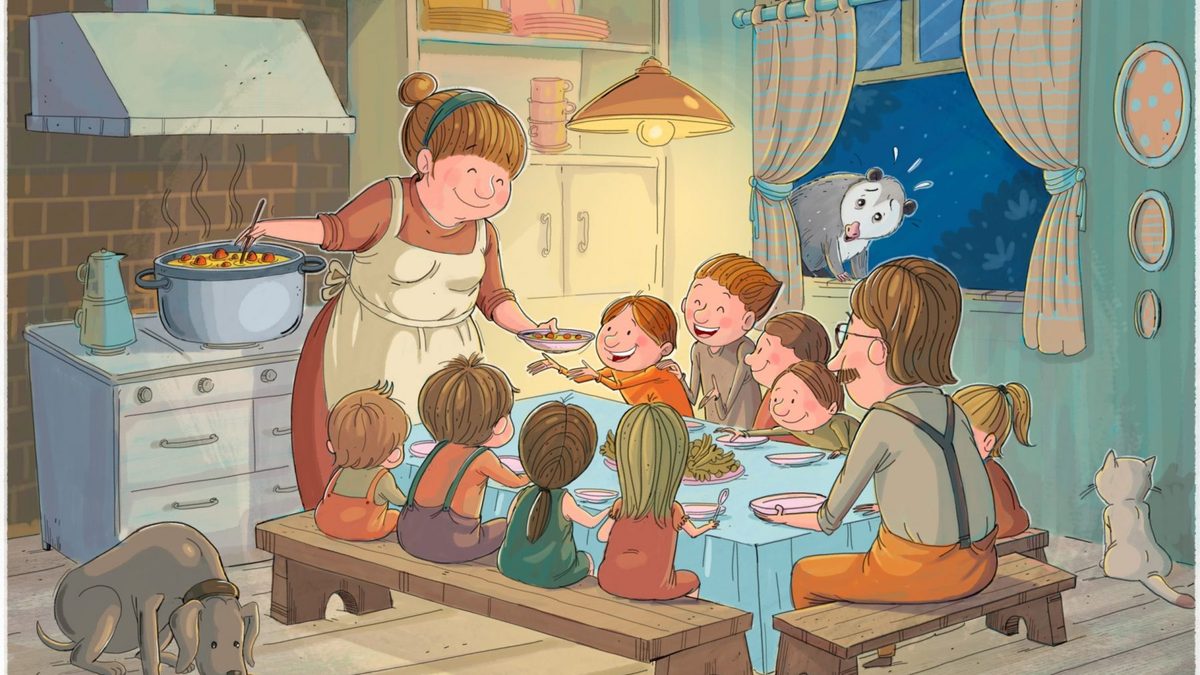
As we would leave for the day, my father would stop by the caretaker’s home and offer whatever game we had taken that day to the caretaker’s family. Mostly they took nothing, but the gesture meant a lot to the landowner and the caretakers. One particular day, after a successful dove hunt, the caretaker must have seen us driving across the field towards the gate. This day the tables would be turned as the caretaker would offer to share his bounty. With a thick country accent and a warm smile the caretaker spoke through the window of our International Harvester Scout. “Hey Richard, why don’t you and your boy come in and have a little stew? I killed a possum and the wife cooked it up real nice.” I had never seen a look like that on my dad’s face as he did his best to graciously decline. We laughed about that for years.
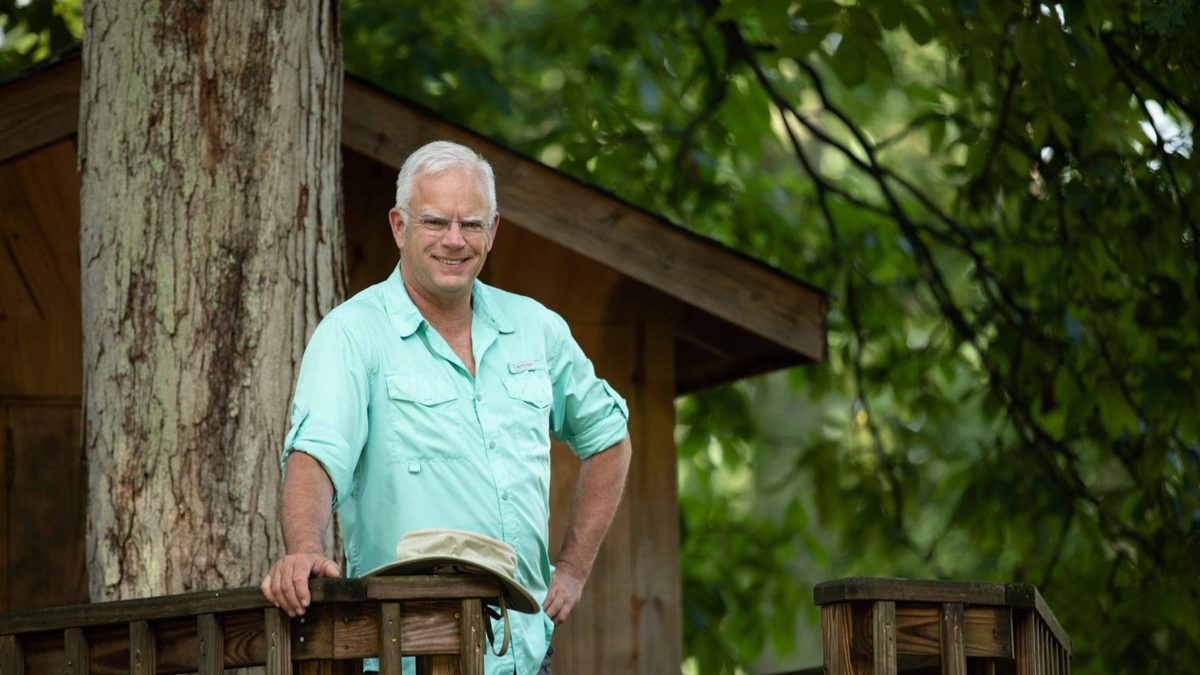
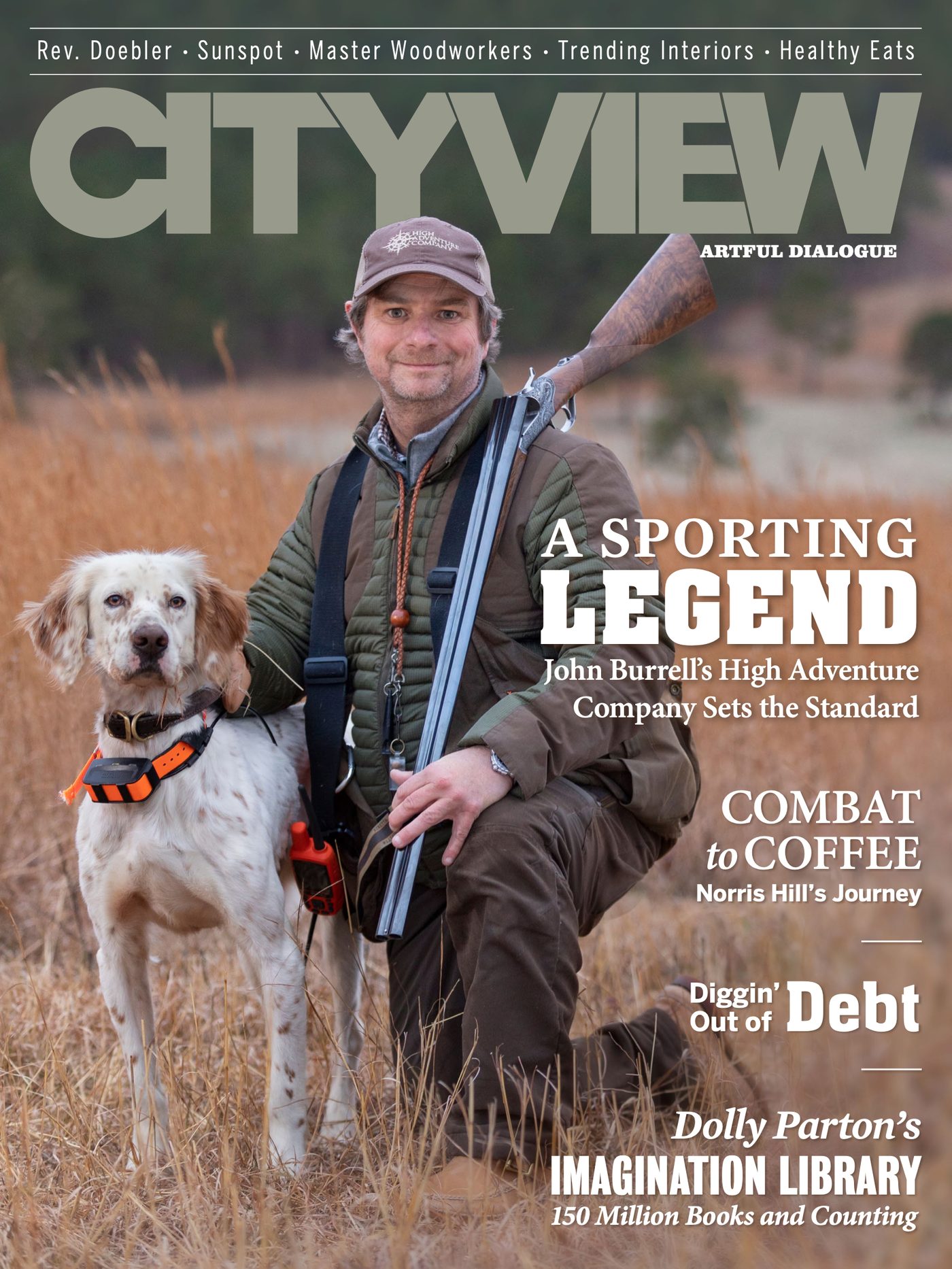
There was never a shortage of places to go on those days. People welcomed you onto their land and into their homes, but that was then. Sadly, finding a place to have that sort of experience now is much harder. So I called my friend Bruce Fox, an accomplished sportsman in his own right, and asked for his recommendation. And that is how I came to meet the man who graces our cover this month, John Burrell. That experience reinvigorated something in me that my father had taught me long ago about the importance of our relationships with our fellow man. John’s generosity opened the door to being able to share stories about the sporting life with the hope that something we share might spark a desire in you to more fully embrace nature and all it has to offer. Dad open boating some nice whitewater in Quarter Mile Rapids on the Nolichucky River.
Dad was always willing to give anyone, including a total stranger, any help he could offer. That spirit of generosity was always greeted with gratitude, and that lesson is one we could all stand to apply more frequently. He never spoke a harsh word while we were on those adventures. He loved the sporting lifestyle and cared deeply for the people with whom he shared his adventures. I thank God for my friends who remind me through their kindness of my dad, and for men like John who have made it their life’s mission to help others enjoy the beauty of the sporting lifestyle.
And as we begin the new year, and the pandemic begins to pass, perhaps we once again can experience more robust and meaningful social interactions. Let us take time to be thankful for what we have in life, especially each other, and at every opportunity give generously. Hope to see you out there.
→ Swipe for Next Story
Arts & CultureJANUARY FEBRUARY 2021
Arts: Bill Cook Jr.
Story by Rachel Holbrook
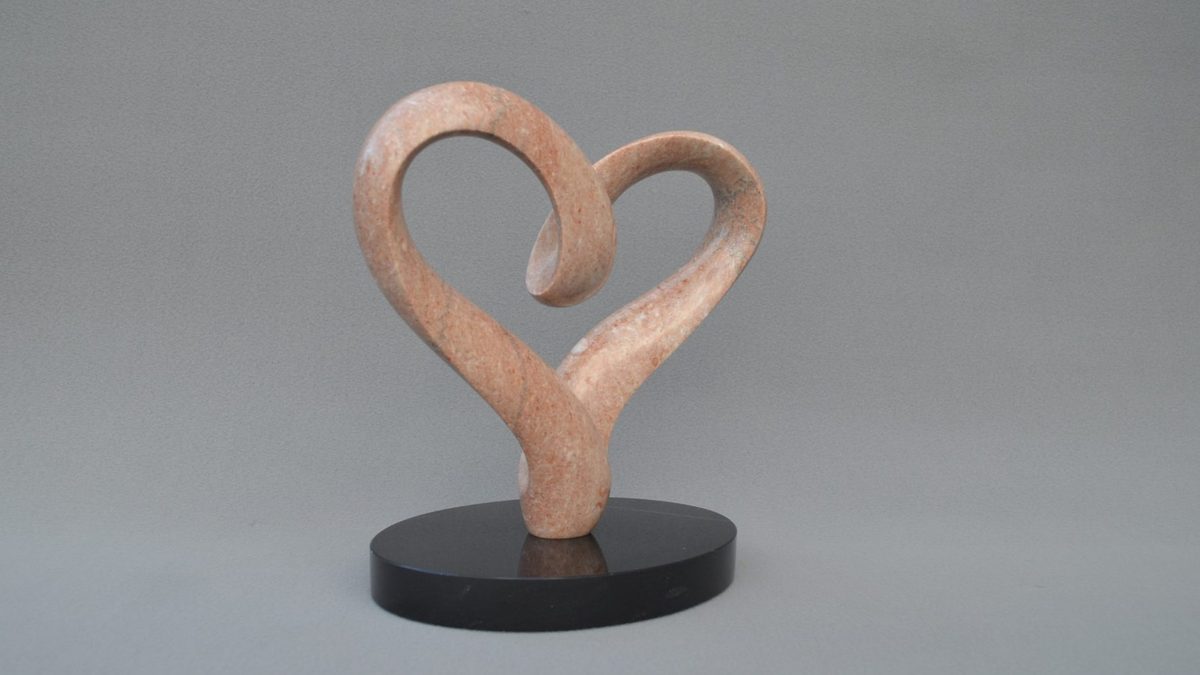
Bill Cook Jr. has been coaxing artistic creations from natural materials since he was a boy whittling and carving wood. In his early 30s, Cook was living in South Florida when he saw a newspaper ad for a class in stone carving. Cook says, “I walked in and I was the youngest there by like 40 years. But what I found out was I learned a tremendous amount from these old guys who had been doing this for a long time. Learning how to chisel by hand.” He still has the first piece he made, a pregnant torso made from alabaster, which he gifted to his wife. “It has become a passion.”
Influenced by artists like Constantin Brancusi, Richard Erdman, and Elizabeth Turk, Cook has developed his own expertise in carving mobius, loop, and flowing curvilinear forms. When asked if he has a favorite piece, he said that’s like choosing a favorite child. However, one of the pieces he calls “one of my favorites” is a white marble loop called “Song of the Siren,” which now resides in a library in Alabama. Another piece he is very fond of is a griffin he made for L&M Stem Academy, here in Knoxville.
Cook says his work is inspired by shapes in nature—like a tree with a certain bend to it—and things he hears people say. He describes a piece called “Psalm 18:60,” which was inspired by a sermon about the hand of God reaching down and pulling a lost soul out of the quagmire. “I have to make stuff,” Cook says. “Sometimes I just start chiseling on a rock and see what happens.”
Cook’s latest piece is a commission for a new restaurant called Vida, opening in Knoxville after the New Year. The sculpture is a life-sized Aztec warrior princess made from a 900-pound block of Tennessee Brown Cedar marble with a copper headdress, breastplate, and loincloth. On a much smaller scale, Cook says he does occasionally do table-top-sized commissions. Cook plans to do studio tours in the spring at his new studio in North Knoxville. You can view his art on Instagram at @BillCookJrSculpture and his website: www.BillCookJr.com.
→ Swipe for Next Story
DepartmentsJANUARY FEBRUARY 2021
Knoxville Bourbon Society
Story by Susan Alexander
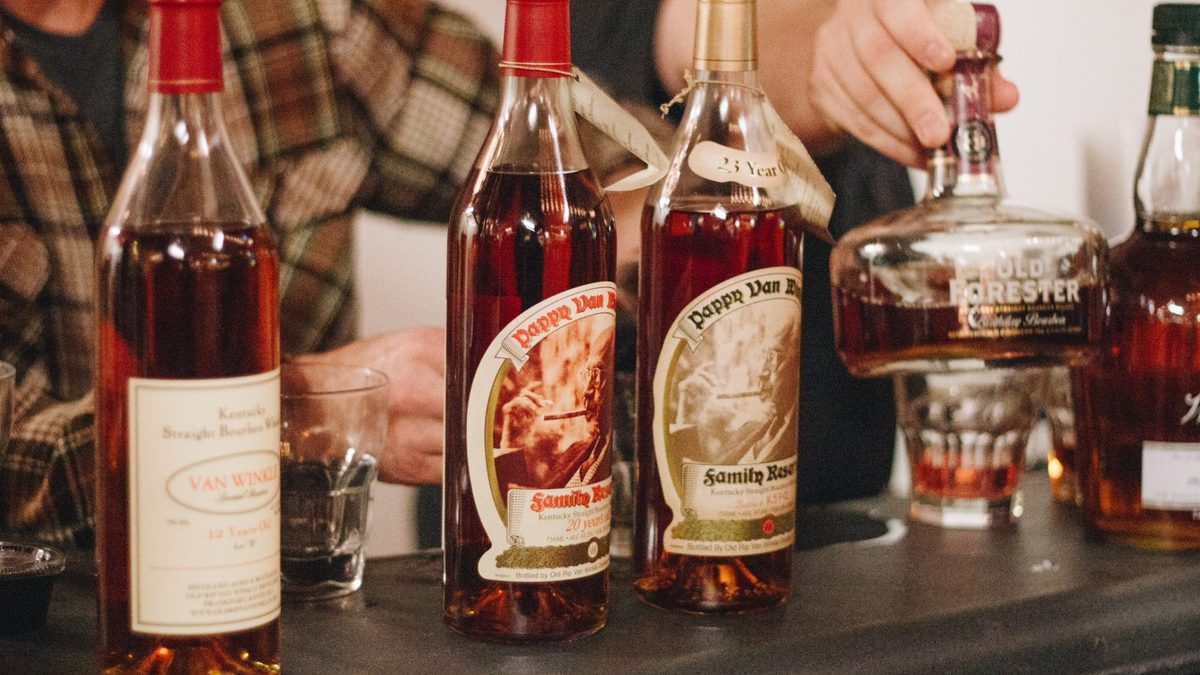
A longtime fan of craft beers, Stephen Lowery shifted loyalties after he and his brother took a trip in 2010 to the distillers along the Kentucky Bourbon Trail. By the end of the tour and tastings, he was a convert. Now he’s a lead administrators on the Knoxville Bourbon Society’s Facebook page. The almost 3,000 members of the KBS trade stories of their favorite drinks and drinking establishments, help each other locate hard-to-find bottles, offer advice on new brands to try, and, prior to COVID, met in person monthly to sip and socialize.
When Downtown Grill & Brewery was unable to hold its annual Christmas party to benefit The Love Kitchen, the Knoxville Bourbon Society jumped in by donating bourbon-related items for an online auction to help make up the difference.
Like many others in KBS, Lowery was taken with the story of the popular brown liquor. “Once I heard the history, how it all got started and all the accidents that brought it to where it is today, it turned me on to it a lot,” he said “It’s the story of what makes America America.”
Darrell Freeze, with Constellation Brands, said brown goods like bourbon have taken off in the last three years all over the country. “The millennial generation seems to really like craft cocktails and the tales of whiskeys and bourbons,” he said. “They almost have a cult following; I think social media is probably a big piece of that.”
So, too, were changes in Tennessee state law a decade or so ago that allowed for distilleries to be established in 41 more counties than previously had been permitted. Small local distilleries in Knox and surrounding counties have added to the buzz around booze.
Lowery loves to experiment with new cocktail combinations. He has a cold smoker for creating smoked cocktails and a one-liter barrel for aging liquors. “I love trying something out,” he said. “I made an Old-Fashioned with simple syrup and cardamom and cinnamon and aged rye and bourbon aged in my barrel. It was awesome.”
Awesome, too, is the civil tone at the Knoxville Bourbon Society’s Facebook page. “We try to keep it nice, try to make it social,” Lowery said. “It’s a community.”
No red or blue comments, please. For the Knoxville Bourbon Society, it’s all about brown.
→ Swipe for Next Story
MusicJANUARY FEBRUARY 2021
Kelvin Scott, Master Luthier
Story by Susan Alexander
Knoxville’s award-winning luthier says the time of pandemic has been the most productive period of his working life. It’s also been one of the most challenging.
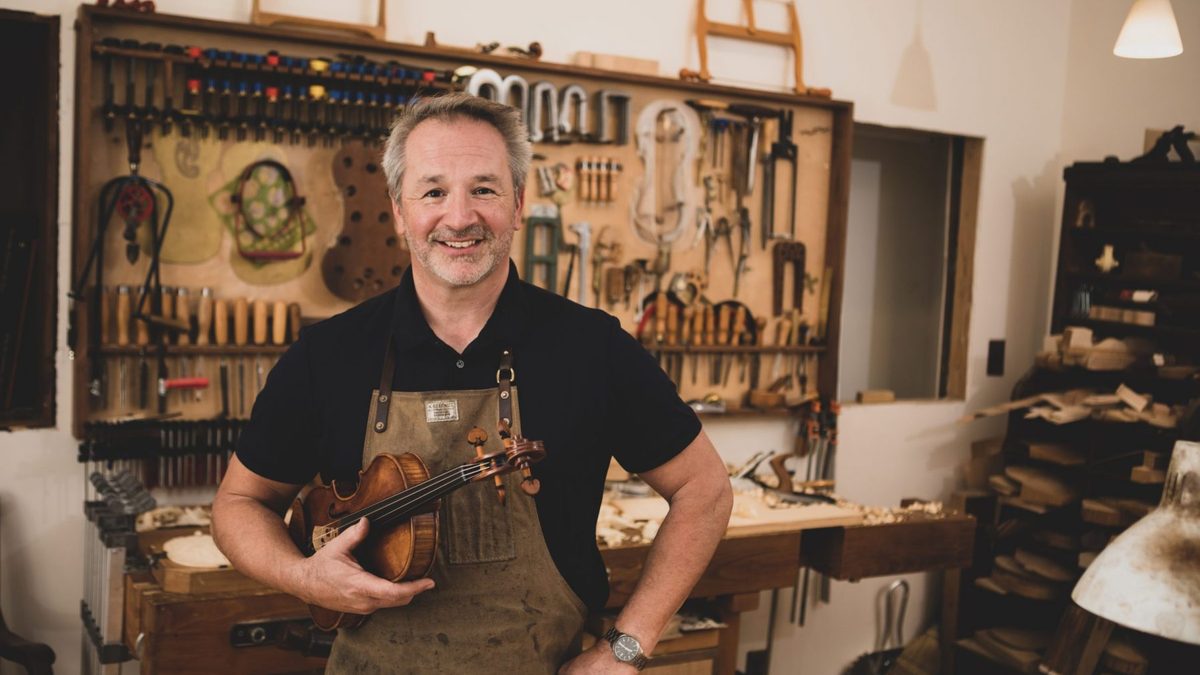
Kelvin Scott builds violins, violas and cellos in his shop in Mechanicsville. Normally, his client waiting list is a year long; musicians around the world seek out his instruments. But in the time of COVID-19, that list has shrunk.
“COVID has had a massive impact on the music community. It’s restricted the ability to perform, closed orchestras and dramatically redefined the way people study music in college. The trickle-down effect has been bad for makers,” he says.
“Still, my process doesn’t change much; the work is always there. And there are glimmers of hope,” he says. “Four people have recently joined the waiting list, and three are new clients. I’m still able to create instruments that will find homes one day.”
A master violin maker, Scott has been a luthier since 2000 and based in Knoxville since 2003. Winner of several international competitions, Scott joined a select group of luthiers in 2012, receiving the designation Hors Concours or “above the competition.” He is no longer eligible to compete.
Scott typically makes about a dozen instruments a year, “depending on if I make a cello or not,” he notes. All his instruments cost well into five figures, ranging from $21,000 to $40,000.
The process from start to finish involves detail and precision. After building the instrument in about three or four weeks, he suntans with ultraviolet light to darken the wood — another three-week process. Applying layers of varnish takes another few weeks.
Being a violin maker offers a very appealing lifestyle, Kelvin says, but it’s a challenging occupation. “I am a chemist when I cook varnish. I have to be willing to travel to eastern Europe and Italy and Germany to source wood (though that travel has stalled for now). I study violin acoustics. And I have to embrace physical craft work; there’s no escaping the thousands of tool strokes it takes to create a quality instrument.”
Still, it’s that old-world commitment to craft that he values.
“We live in modern times where things are stamped out of plastic. There is real gain as a society from people making things that machines can’t duplicate.”
→ Swipe for Next Story
PoliticsJANUARY FEBRUARY 2021
Real Money
Story by George Korda
“A billion here and a billion there, pretty soon you’re talking about real money.”– the late Rep. U.S. Sen. Everett M. Dirksen
Sen. Dirksen was so 20th century: The federal government’s coronavirus (COVID-19) pandemic response can be measured not in billions, but trillions. COVID-19 relief bills infused cosmically-sized amounts of borrowed money into the national economy as lifelines for individuals and businesses in the wake of government-imposed business shutdowns.
The “free” money saved many—but not nearly all—businesses from shuttering and thrusting employees into unemployment. But nothing is free. Governmental largesse comes at a cost to taxpayers, a cost which can be inflated, manipulated, or massaged during a crisis. As Democratic U.S. Rep. James Clyburn reportedly told a House Democrats’ conference call last March, before the first trillion-dollar COVID-19 relief bill passed Congress: “This is a tremendous opportunity to restructure things to fit our vision.”
The multiple versions of the Health and Economic Recovery Omnibus Emergency Solutions (HEROES) Act, introduced by U.S. House Democrats as COVID-19 response legislation, are illustrative of governmental leaders responding in the manner described by the now-immortal words of President Barack Obama’s White House chief of staff Rahm Emanuel: “You never want a serious crisis to go to waste. And what I mean by that is an opportunity to do things that you think you could not do before.”
National Public Radio reported that by mid-May, the government had pumped some $3 trillion into the economy. Then came House Democrats’ proposal for another $3 trillion (later scaled down to $2.2 trillion) HEROES Act, which demonstrates that the word “coronavirus,” when festooned throughout a spending bill, covers a multitude of fiscal sins. Tennessee 3rd District U.S. Rep. Chuck Fleischmann, a member of the powerful House Appropriations Committee, described the HEROES Act as a “panoply of ultra-left-wing initiatives which they knew would be non-starters in the Senate and (the Trump) White House.”
Said Fleischmann of Democrats’ objectives, “That’s the practical effect, bailing out cities and states. There’s unlimited largesse in aid to states, largely northeastern and midwestern states, that are upside-down because of their inept handling of their pension funds and high-tax structures. It’s not fair for Tennesseans, living in a fiscally sound state.”
To Fleischmann’s point, according to an analysis by USA Today, Tennessee’s public employee pension shortfall is $1.7 billion, the country’s fifth-smallest pension liability. Conversely, California has a nearly $191 billion pension deficit, the nation’s largest. Illinois, one of the first states with its hand out after the pandemic hit, is upside-down $137 billion.
One could wonder if states in the worst financial shape have a vested interest in conducting coronavirus-related economic clampdowns. More unemployed workers and shuttered-by-government-order businesses means devastated economies, and coronavirus gets the blame. This puts pressure on the federal government to shovel money in those states’ directions.
Every dollar is ultimately the taxpayers’ responsibility. At the moment, American taxpayers are in debt for about $28 trillion. American taxpayers are forking over about $500 billion annually in interest payments on total debt outstanding – and interest payments are only growing larger.
There are those who say tax cuts are the problem; however, the government could confiscate—not tax—the wealth of every American millionaire and billionaire and it would amount to dropping a pebble into the red-ink ocean.
The House’s HEROES Acts contained temporary aid to classes of people illegally in the United States; money for science projects; suspension of federal student loan payments through September 2021; and 1,800 pages of other definitions, descriptions, and dollar amounts.
“I think the vast majority of Americans would desire and expect a reasonable stimulus bill in terms of size…On the other hand, we have to be cognizant of fact that every dollar we spend is a dollar further indebted…there’s going to be a day of reckoning,” Fleischmann said.
When that day comes, someone will try to take advantage of the crisis, because that’s how it works, particularly when you’re talking real money.
→ Swipe for Next Story
InsightsJANUARY FEBRUARY 2021
The Ethics of Pandemic Life
Story by Bruce Fox
With the raging COVID-19 virus playing havoc with our lives, our work, our health and our American society, we individually must make rational decisions to protect one another. The act of a wearing mask should be a simple, ethical decision to protect our family, friends, co-workers and total strangers that we encounter daily.
The protection of others should be the primary reason for adhering to the recommendation to always wear a mask in public. If not for our own protection, we should do it for others we encounter, and for our overworked and stressed healthcare providers who are on the front lines of caring for those who have been infected.
I speak from experience about the impact this virus can have on the people we love and care about. My mother, both brothers and my dad’s caregivers were all infected with COVID-19 following my father’s passing the day before Thanksgiving. We don’t know the source, but we do know that the virus does not discriminate, and it infects good people who are trying to do the right thing.
So I implore you to do the ethical thing by always wearing your mask to protect the people you love and care about. Someday soon, a vaccine may protect us, but for now our masks are our best bet for staying safe.
→ Swipe for Next Story
DepartmentsJANUARY FEBRUARY 2021
Sunspot: Eclectic Meets Delicious
Story by N. Brooks Clark
Why does a place known for its salads and vegetarian offerings have so many customers who come in specifically for what they insist is one of the best burgers in town? “Well,” answers Sunspot manager Jeff Breedlove, “we make our own grill seasoning. And we use local ground beef. Along with the grass-fed beef from Simpson Farms.” It’s unfailingly juicy and tasty, with a combination of flavors deriving from the mayo, mustard, house pickles, tomato, onion, arugula and cheddar cheese.
For the vegatarians, the beloved Black Bean Burger combines with quinoa, beets, portabella mushrooms, chipotle mayo, arugula, guacamole, cucumber and tomato for a unique palate symphony.
Sunspot, on the edge of the UT campus at 22nd Street and Cumberland, attracts what Breedlove calls “a very diverse clientele.” With its high ceilings, half-capacity seating, well-masked servers, and the bar-area/dining room divider fashioned of repurposed wooden doors, Sunspot has been able to make COVID-wary patrons feel comfortable, even as the roof and patio areas have closed for the colder months. “On game days, we’ve done OK,” says Breedlove.
It doesn’t hurt that Sunspot has more than 40 beers on tap and 15 more in bottles, as well as 60 Bourbons and a generous selection of wines.
The eclectic menu reflects the creative sensibility of Chef Jeff Carter, 2018 Top Chefs second place winner and Blackberry Farm alumnus. “He’s added a more Southwest sort of style,” says Breedlove, “with a little flavor here and there to surprise you.”
That starts with the much-loved tacos selection. The seared salmon taco is tantalizing with salsa verde, slaw, and cotija. The fried avocado taco comes with arugula, pico de gallo, hummus, and goat cheese. The blackened shrimp gets a kick from jalapeno aioli, radish, pickled onion, slaw, and hot sauce. The curry tofu taco gets chickpeas, red cabbage, mango slaw, and cashew-parmesan crust. The fried chicken tender dances with Mexican street corn, house hot sauce, cotija, pickled red onion, and arugula.
Each taco is a fresh and delightful experience. Smart Sunspotters mix and match, but it’s hard to pick only three. Don’t tell the other tacos, but the fried avocado is our favorite.
Among the Small Plates, veggie favorites include the hummus plate, offering the simplicity of fresh and house-pickled vegetables, and the broccoli and coconut fritters, served with chipotle mayo and topped with roasted tomatoes. The mixture of broccoli, coconut, lemon zest, egg yolks, and parsley sparks a unique taste.
On the Entrees list, the Rice Bowl is a similarly singular creation among the most requested. Brown basmati rice and house-made curried chickpeas come with red cabbage, mango, and roasted root vegetable hash.
The melt-in-your-mouth grilled salmon is served with Romanesco sauce and lemon butter atop a melt-in-your mouth grit cake with sugar snap peas. If you’re feeling down to earth, the chili mac is an honest man’s favorite with a Jeff Carter twist. Black beans, beyond burger and green chile top plant-based mac and cheese, served with roasted tomato and house salad.
The presentation of these dishes is straightforward while allowing the originality of the dishes to shine through. The staff has effectively navigated these difficult past months by understanding how to keep diners comfortable with social distancing while still being attentive and capable. On the dining horizon, Sunspot consistently shines.
→ Swipe for Next Story
Dining GuideJANUARY FEBRUARY 2021
Livin’ Lean
Story by Susan Alexander
It’s January, and if 2020 had the impact on your waistline that it did on lots of others’, you may be ready to climb on the resolutions bandwagon with the rest of us. But that doesn’t mean suffering through bagged salad and carrot sticks at home. Lots of local restaurants offer an enticing range of delicious salads, small plates and entrees that also happen to be good healthful choices as well. So dig in—and watch the numbers slide down the scale!
Anaba
Salads and sushi are flavorful and healthy choices at Anaba Japanese Cuisine. Consider seafood ceviche marinated with tomato, cucumber, green onions and avocado and served with a spicy cocktail sauce. And their sushi and nigiri/sashimi include a wide range of ingredients, from avocado to wagyu. Hold the rice? That’s an option too!
Farragut: 9405 S. Northshore Dr., 865-531-3263 Downtown: 131 S. Gay St., 865-474-1187 Maryville: 1837 W. Broadway Ave., 865-233-5545
Fleming’s
There’s no need to miss out on the steaks—or even the wine—when you’re at Flemings for a special evening. The filet mignon is a lean choice along with a house or caesar salad or shrimp cocktail. Just shut the menu firmly before you get to desserts!
Turkey Creek: 11287 Parkside Dr., 865-675-9463
Seasons
So many choices on Seasons’ intriguing menu: Sesame Seared Ahi Tuna or Diver Sea Scallop, a Fall Harvest Beet Salad or Springer Mountain Chicken with local mushrooms. Feeling especially virtuous? The Grilled Vegetable Platter with marinated zucchini and yellow squash, portobello mushrooms, broccolini, seared artichokes with cheddar cheese grits, flat bread toasts and hummus will fill you up, not out!
Turkey Creek: 11605 Parkside Dr., 865-392-1121
Tako Taco
Located adjacent to the Mill and Mine, Tako Taco blends the flavors and ingredients of cultures and locales near and far. Consider Ancho Roasted Chicken Tacos, Roasted Veggie Tacos, or a Vegan McRib Torta made with seitan, hoisin BBQ Rojo sauce, house pickles and onions. Even dessert won’t get you in trouble: it’s Melon Gazpacho Sorbet. Yum!
Downtown: 235 W. Depot Ave., 865-545-4625
Bistro at the Bijou
Drop in Bistro at the Bijou for some rustic and delicious dishes. Healthy options include a Shaved Brussells Sprouts Salad tossed with greens, bacon, red onion, pumpkin seeds and parmesan in vinaigrette, Hoppin’ John with rice, black-eyed peas, collard greens and sweet and spicy chow chow, and a selection of protein plates with soup or salad.
Downtown: 807 S Gay St., 865-544-0537Knox Mason
Knox Mason’s menu is populated with fine Southern goodies, but don’t despair! You can enjoy dinner and not dread the next weigh-in! Try a Local Roasted Winter Squash Salad with goat cheese, arugula, toasted pecans and a pickled peach vinaigrette. Or how about ‘Kilt’ Green Salad with Blake’s Toast, Circle V Farm egg, kale, frisee and Benton’s Bacon vinaigrette? Yes, please!
Downtown: 507 S. Gay St., 865-770-5988Sunspot
You don’t need to search to find lean and healthy options on Sunspot’s menu Try a Kale and Quinoa Salad with arugula, butternut squash, goat cheese, radish and a roasted almond vinaigrette. Or Citrus Marinated Shrimp with cucumbers, pickled red onions, radish, cilantro, avocado puree, the house hot sauce and grilled flat bread. Other options among the entrees: Tofu Grain Bowl or Grilled Mahi Mahi with harissa, vegetable root hash, kale and a miso vinaigrette.
Near UT: 2200 Cumberland Ave., 865-637-4663
Plaid Apron
Hungry for some hearty farm-to-table fare at lunch? Head to The Plaid Apron in the heart of Sequoyah Hills, and consider dishes like their Farmers Plate, with pan-roasted seasonal vegetables, balsamic reduction, fresh herbs and choice of added protein, or Winter Stew, with squash, kale, fire roasted tomato, white beans, garlic, onion, and vinegar, with a slice of homemade sourdough bread.
Sequoyah Hills: 1210 Kenesaw Ave., 865-247-4640
Kaizen
Kaizen strives to emulate the atmosphere of small Japanese-style pubs, or izakaya, while offering a range of Asian cuisines. Consider Mapo Doufu, a Sichuan tofu dish with toasted chili oil, fermented black beans, broad bean paste, and fresh herbs over steamed rice, or Balinese Shrimp Curry, with potato starch and veggies in a spicy, tamarind-based Indonesian inspired curry, steamed rice, & Sambal chili paste.
Old City: 127 S Central St., 865-409-4444
Chesapeake’s
Straight from the sea to your table is Chesapeake’s motto. Consider a Steamed Seafood Fest with Maine lobster, mussels, Maryland spiced shrimp, clams and oysters, Seared Ahi Tuna over Asian slaw with wasabi paste and soy ginger sauce or the Maryland Seafood Salad with burl crab, shrimp, scallops, fresh greens and avocado ranch dressing.
Downtown: 600 Union Ave., 865-673-3433
West Knoxville: 9630 Parkside Dr., 865-851-9088
→ Swipe for Next Story
DepartmentsJANUARY FEBRUARY 2021
Toy Joy
Story by Cityview
Now that the holidays are over, make sure that all those toys your pet happily received over the holidays are both safe and fun. For dogs, make sure that the toy has no parts that will come off and be swallowed. Squeaky toys are fun until your small dog finds the source of the squeak and swallows it. Cats can get in trouble, too. I once removed the plastic head of a mouse toy from a cat’s small intestine – not fun for me or the cat.
Dogs love rawhide bones, and dogs that chew rawhide invariably have great teeth as the chewing really helps them. As a veterinarian, I have never had to remove a piece of rawhide from a dog’s intestine. But I have often wondered whether some of my patients have felt discomfort after swallowing a big piece of rawhide as it slowly dissolves in its passage through the small intestine. My advice to owners is to have their dogs chew responsibly and not swallow big chunks. Hard rubber toys on the market like Kong and Nylabone are reasonably safe, and the ones that you can add a layer of peanut butter to are loads of fun.
Soft toys can be the most dangerous for pets. Dogs have an uncanny ability to swallow quite large objects whole. And soft teddy bear-like toys can end up getting pushed down the small intestine and then wedged in there, requiring surgery. I have never ceased to be amazed at what a dog can swallow.
Above all, make sure that the toys that require supervision are kept away from your pet when you are out of the house. Leave them a safe hard rubber one to gnaw on until you get home again.
In 1950, my father traded a new Ford and $400 to Newt Ogle for a lot on the Middle Prong of the Little Pigeon River in the Emerts Cove community of Sevier County. Located just outside the Greenbrier entrance of the Great Smoky Mountains National Park and fronting on what people called the “Corner Hole,” the property was a perfect setting for the rustic cabin Dad and Mom finished the following year. I was 3 at the time. So, every year thereafter when school was out, my dear mother would pack our clothes and move me and my brothers into what became our summer home – a single bedroom with two bunk beds, no heat or air conditioning, and certainly no TV, but plenty of swimming, fishing, tubing, hiking, and occasional camping.
Not many families lived in the Cove. In 1935, the Marshalls were the first “outsiders” to arrive, then the Smiths, the Cains, the Barbers, the Hattie Ogles, the Schmutzers, and the Isenberg-Thomas-Murphy cabin partners, all of whom had already built modest summer homes just across the river from the new Wade place. Some of the “country folks” lived in the area year-round and often came to the Corner Hole well before “concrete” pools became fashionable. So, it wasn’t long until I met Perry and Ollie Ramsey and family, who owned and worked a small farm at the end of Spring Hollow Road about a mile away. Their eight offspring, Wanda, Wilma, Helen, Fred, Mayford, Sam, and the twins,”Big’n” (Ruby) and “Littlin’”(Ruth), all several years older than me, were frequent and regular visitors at the Wade place. They were so friendly to our entire family even though we too qualified as “outsiders.” I quickly latched onto Mayford, then 15, and tagged along whenever and wherever he would allow me to follow.
After a hard day’s work on the family farm, he would often come by our place to swim or fish, and when the water level was up after a hard rain, he would guide the more adventuresome kids in the Cove down the river, “riding the rapids” in patched-up tire “inner tubes.” When Mayford flashed that infectious and sometimes mischievous smile, the Wades and almost all other boys along the river were ready to follow, whatever his plan, knowing full well that great fun was ahead. At full capacity, the Wades and Schmutzers alone comprised seven of his most faithful followers.
Of course, I thought I was Mayford’s favorite among the four Wade boys, and one day I received a confirmation of sorts when he invited me – and only me — to join his family for a Sunday dinner.
As I best remember, this was my first real social engagement outside of my own family gatherings, and so I was thrilled, to say the least. Although only five or six years old by then, I have vivid memories of the occasion. In addition to her garden vegetables, Mrs. Ramsey brought out a big bowl filled with a meat and gravy dish. I tried some and liked it, and when she offered more, I answered in the affirmative. At that point, I asked what I was eating. Before she could answer, Mayford interrupted, “Rooster!” he exclaimed. I took him at his word.
Years passed. Mayford became a state trooper in the area, and I began a law practice. He was good at his job and periodically was called to testify in car accident cases involving clients of my firm. In 1987, after 15 years as a lawyer and including 10 of those as the Sevierville mayor (then an unpaid job few were willing to take), I was appointed to an appellate judgeship with an office in Knoxville.
Meanwhile, Mayford had been promoted to the rank of sergeant. Despite his travels and those of my own over the years, Mayford and I remained in close contact. Both of us had long been married to local girls well “above our raisin’s.” Three or so more years passed before Sergeant Ramsey and wife Dorothy Gene hosted a sizable Christmas party at their new house in Sevierville, which my wife Sandy and I were pleased to attend. During the course of the evening, I joined in a conversation with Mayford and another of his former “followers,” Ed Schmutzer, a fellow attorney who had become an avid hunter by then.
Of course, we began to talk about our good old times in the Cove, all of which were a bit exaggerated by convenient memories. Somehow the subject of the conversation turned to wild game as a food source. Rabbit, venison, wild boar, and even bear and squirrel were named among our collective culinary experiences. I mentioned that a month earlier I had actually tasted barbecued raccoon at the annual supper offered by then House of Representatives Speaker Jimmy Nafieh in Covington, Tennessee. All of us had a laugh about my attendance there because I had been quick to admit that the greasy texture of that little varmint did not suit my palate.
Ed, after explaining that he had tried practically everything else but would never eat ‘possum’, asked if I had ever tried that delicacy. Just as I answered, “No,” Mayford, who had mostly been listening with amusement until that point, excitedly interjected, “Oh yes, you have!”
Immediately, my mind raced back some 35 years to the “rooster” I partook of at the Ramsey farm. Need I say more?
→ Swipe for Next Story
InsightsJANUARY FEBRUARY 2021
Pryorities
Story by Robert Pryor, Sr.
Remember Art Linkletter? Now, that’s a name many have not heard in a long time. For the younger crowd, Linkletter was a host in the early days of television. He had a great talent for interviewing children and eliciting spontaneous and hilarious answers. Those lucky enough to have black and white TVs would gather around to watch Linkletter try to match wits with 5- and 6-year-olds. I remember I owned a record filled with some of his best interviews. Do you remember the following exchanges?
Linkletter:Stanley, what do you want to be when you grow up? Stanley:A bus driver or a pilot. Linkletter:Well, suppose you were a pilot on a big airline and all four engines stopped. What would you say? Stanley:Our Father who art in heaven.
Then there was the boy who was asked who was the boss of his family, his mom or his dad, to which he responded:
Boy:Both of them. Linkletter:Oh, you must be a diplomat? Boy:No, I’m a Catholic-Baptist.
Mark Cheverton was asked what the hardest thing was about school, and his simple response was “buttoning my pants.”
One of Linkletter’s favorite questions was if the child was a character in a storybook, who would they most like to be? One boy said that he would like to be Papa Bear because he could eat lots of honey and Goldilocks would be sleeping in his bed.
Sally gave some good advice when she was asked what she would do if she were president of the United States. Her response, “Keep my mouth shut.”
Roxanne, a young Bible scholar, was asked about her favorite Bible story:
Roxanne:About the wine. Linkletter:Where did it happen? Roxanne:When Jesus went to the wedding. Linkletter:How did he make the wine? Roxanne:Out of water. Linkletter:Yes, that’s the story, but what do we learn from that story? Roxanne:The more wine we get, the better the wedding.
Thinking of Art Linkletter caused me to recently recall some family stories I’ve heard over the years about the darnedest things kids say. For example, I know 6-year-old twin boys in Rome, Georgia, named Court and Sawyer who come up with the most delicious but innocent responses. They were asked what they were going to be for Halloween, and Court said, “A greens keeper” to which Sawyer corrected, “No, Court, A GRIM REAPER.”
Court is all boy and loves military toys. He mostly wears fatigues, and last Mother’s Day his grandfather told him he should “thank BeBe and your mother for everything they do for you – they make your meals and get your clothes ready – they do everything and today is Mother’s Day and you should show them your appreciation.” Whereupon Court marched into the kitchen and said, “BeBe, Mom, thank you for your service.”
Court and Sawyer had a live-in Latina nanny their first three years and Spanish became their first language. One day a relative asked Sawyer to say hello in Spanish, and he said, “Hello in Spanish.”
The other day Court wanted something and was adamantly refused by his mother. He flopped dejectedly into a chair and buried his head in his hands and sang, “Hello darkness, my old friend.”
Court and Sawyer’s sister is quite prim and proper and possesses no competitive bones. Wren is not an athlete, but a beautiful and intelligent sweat-free child. When she was forced to play soccer last year, her first game did not go well. She stayed far from the fray and made no attempt to get near the ball. At timeout, her mother pulled her aside and demanded that she be aggressive and go for the ball and kick it in the net. Her mother promised, “If you play hard, I will buy you a toy afterwards.” Wren replied, “Mom, let’s go home now and I will give you one of my toys.”
Years ago, when my grandson was about four and in nursery Sunday School, my son went to the nursery after church service to retrieve him and was leading Andy away by the hand. “How was Sunday School today?” my son asked. “Oh, okay. They just talked about God and Jesus again.”
I fondly remember the first time my now-grown granddaughter carried a purse. She was all dressed up and we were at dinner in a fancy restaurant and she had her purse in her lap. I asked her what was in the purse and she explained, “My ‘yipstick’ and a pair of panties.”
A father of young children I know told me about leaving the dinner table one evening when his kids were arguing. When he returned, the argument was over, but a big mess of mashed potatoes was stuck to the wall. “What happened?” Dad asked. The middle child with the spoon said, “It’s a mystery that will just have to be solved later.”
I’m sure you have your own examples of the darnedest things your kids or grandkids have said. Why not write them down when you’re bored with the pandemic and send them to me? Just email them toinfo@cityviewmag.com. We all enjoy a good laugh, and if I get enough good ones, I will share them in a later article.
→ Swipe for Next Story
TravelJANUARY FEBRUARY 2021
Meet Me at The Wort
Story by George Korda
Longtime Knoxville “big dog” (as we say in these parts about someone of prominence) Bill Baxter took 19th century newspaper editor Horace Greeley’s advice (“Go west, young man”), and found a second calling.
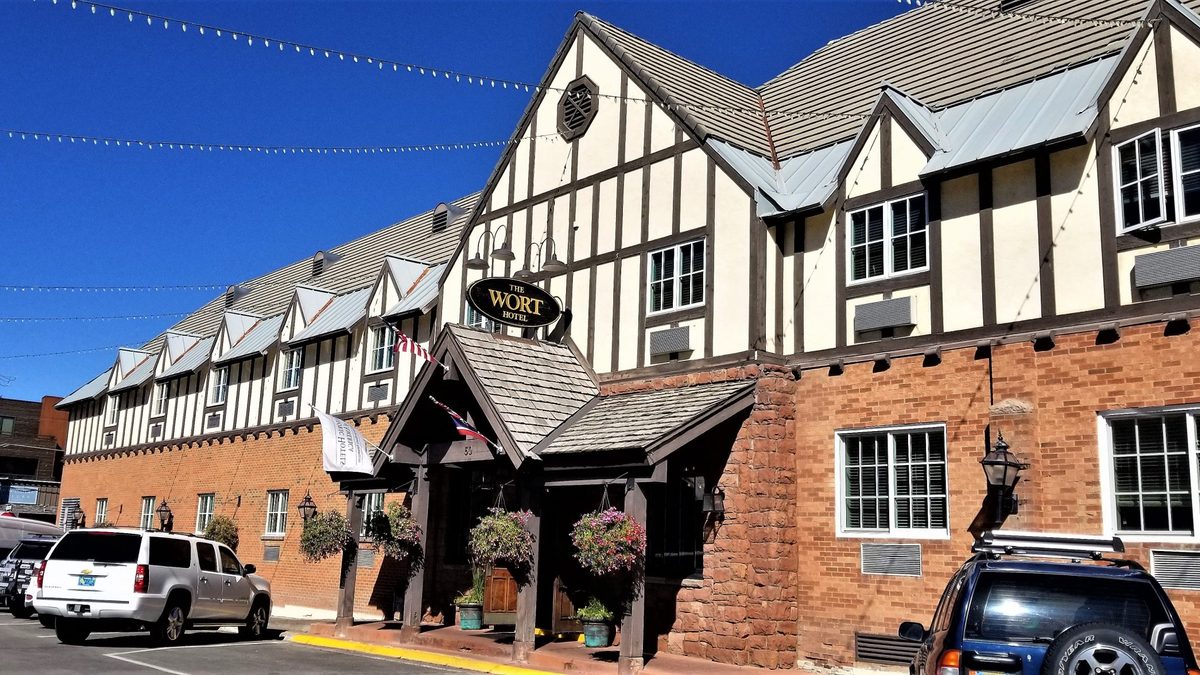
In Tennessee, Baxter has served as the state’s commissioner of economic and community development, chairman of the Tennessee Valley Authority Board of Directors, and in various other roles. He once dabbled with the idea of running for governor. Today, he splits the majority of his time between Knoxville and Jackson Hole, Wyoming, just outside Grand Teton National Park. Baxter owns the historic Wort Hotel, a Jackson Hole fixture and focal point since it opened in 1941.
Western and cowboy-themed, with long-ago mounted moose, bison, and elk heads overlooking guests and visitors — and a hotel bar inlaid with more than 2,000 silver dollars — the hotel is a tourist attraction in its own right. Named for the family that founded it, the 55-room Wort Hotel is on the National Register of Historic Places. Baxter also owns another famous local site a block away, The Cowboy Bar, built in 1937.
“The Wort is the social center of the town and of Jackson Hole generally,” Baxter says. “The phrase, ‘Meet me at the Wort,’ was coined decades ago by the locals whenever they wanted to see a friend or a business colleague, or to do just about anything — relax and visit, do some business, or have a cocktail and dance. And it’s still true today.”
He bought the Wort in 2004, saying it was a “new, attractive business opportunity in one of my favorite places in the world. I’d been making annual trips to hike, climb, ski, either solo or with friends and family. The annual trips became semi-annual, then four times a year.”
Baxter’s energy level is such that it suggests a comparison to something once said about President John F. Kennedy. Even when he was still there was a sense of “motion forcibly restrained.”
“One of the things that attracts me most to the West is the independent, self-reliant spirit of the people who live here,” Baxter says. “Southerners and Westerners have much in common. I feel right at home in Wyoming. Keeping up the older structures is always a challenge. But when they’re iconic, even on the National Register of Historic Places, they’re worth every penny. It’s a joy to preserve these two hospitality properties so people can continue to enjoy the unique and authentic experiences they provide.”
Bill Baxter has doubled-down on big-dog status, becoming one in Jackson Hole as well. Maybe if you find yourself in those parts, you can meet him at the Wort.
→ Swipe for Next Story
FeatureJANUARY FEBRUARY 2021
Life is Messy
Acupuncture treatment refocuses energy on positivity and love
Story by Molly Wagers
Recently, I married and began the transition process from being one to being a couple trying to operate as one unit. As my new husband and I navigated the holidays, where to go, when, do we travel and all that entails, I found myself in a place that became slightly challenging, maybe even uncomfortable. I slipped out of the sweetness that was ever-so-present during our wedding period into confusion, uncertainty, and hurt.
I’ve been ardently working these past few years to be present, loving, and at peace. I’ve tasted the presence of calm, peace, and love and, even in its smallest dose, I know it’s attainable, possible, and driven solely by my volition, desire, and energy. So when the hurt and confusion settled in, I knew it was a strong signal to seek simplicity, to unwind and rebuild again.
When I visited Amber Collins, Doctor of Acupuncture and Oriental Medicine, the timing was a perfect collision in my world. “Life is messy,” she said. “I say that a lot. When you think you have any firm grasp, you don’t. Practicing acupuncture and Oriental Medicine has been a deeply humbling experience, to sit across from people who open to you, sharing their greatest sorrows and joys.”
Her mission? “I want everyone to experience acupuncture and Traditional Chinese Medicine if they want to,” she said. “I want everyone to see its beauty and the depth to which it can help each person. I want everyone to feel balanced and well; not only survive but thrive.”
Amber received a master’s and doctorate degree in Acupuncture and Oriental Medicine from AOMA Graduate School of Integrative Medicine in Austin, Texas. Her bachelor’s degree from The University of Texas at Austin was in psychology and sociology. She is a certified yoga instructor and is licensed by the State of Tennessee Health Department and board certified by the National Certification Commission for Acupuncture and Oriental Medicine (NCCAOM).
As we talked, the relationship of complexity and simplicity continued to be at play. When we stop to think about acupuncture, it makes perfect sense. Amber’s definition of the practice: “It is very complex, nuanced, dynamic, ever-changing, always evolving, very specific and unique to the person, the season, the time, the day, even to the practitioner. It is a system that supports energy, the body, and mind.”
It felt good to hear about this medicine system that seems to ebb and flow with life. As I learned more about Oriental Medicine (historically known as Traditional Chinese Medicine or TCM), the fundamental pillar of yin and yang became apparent. The opposable forces really piqued my interest, that we have two opposing sides contained within one unit and existing together. Each of these parts is needed as we continually live life, which is indeed a moving and volatile force.
I asked Amber how she found acupuncture. “I started getting repeating migraines that continued to get worse each time they came around,” she said. “I was working as a trainer for a large corporation in my home state of Texas, highly stressed, not eating well, with bad habits outside of work. When the migraines kept getting worse, I started seeing a chiropractor, massage therapist, and rolfer in addition to my family doctor. One day, my chiropractor suggested acupuncture as a way to reduce the frequency and intensity of my migraines.” After about five visits, she began to see results. She said now she only experiences headaches sporadically, mainly when she is overstressed, dehydrated, or not addressing an emotion. “Honestly, though, I am really grateful to those migraines, because during one of my treatments, I realized ‘this is it. This is what I am meant to do.’”
During my visit with Amber for acupuncture, she asked me a thousand questions, checked my pulse, looked at my tongue and paid attention to my words, body language, and emotions that cropped up as I was speaking. She wanted to know about any pain, symptoms, recurrences, when and what I eat, how much I drink, how much I move, sleep, and even when I have bowel movements. She wanted to know what and how my body is doing so she can be aware of how the energy of the body is functioning. Where are the blocks? Where may disharmony be showing up? “Most people have heard of chi, our vital life force,” she said. “It runs the course of your body on meridians, which can be thought of as highways throughout your body. Any blockages, excesses, deficiencies or combination of these in one of your meridians will result in disease or disharmony.”
“Acupuncture is going to help you with whatever it is you are ready to heal, address, or change,” she said. “It will support digestion, metabolism, sleep, stress, any addictive eating behaviors … the list really goes on and on! When you are ready to make a change and implement new and different actions and thoughts to support that change, a new space is created by you for you.”
By me, for me … in this moment I knew I desired change! I was very interested to see what acupuncture could do for my body. Amber had informed me that since acupuncture impacts a person on many and subtle levels, it can bring things up and out for people that have been packed away, ignored, or pushed down. This didn’t scare me since I’m always wanting to improve, and so Amber inserted about 3 or 4 needles along my spine, which assists with relaxation and stress release. Aside from a quick prick, I felt no pain. After a bit of time, it felt like relief and peace were oozing down my back and through my body. Given the contortions my brain had just put me through navigating the holidays, my body was happy to be able to release the tension. I also got to experience fire cupping, which unwinds and releases the connective tissues and assists with blood flow and circulation to the area. It’s good for tension also. The most painful part of fire cupping, truly, was hearing the metal forceps bang against the glass cup. (In fire cupping, a cotton ball is soaked in alcohol, held by forceps, lit on fire and then swirled around a glass cup that is then placed onto the skin.) I could feel my skin being sucked into the glass a bit, and yet this new sensation was intriguing to me; not painful. After lying there for many minutes, Amber softly checked in. It was time for the needles and cups to be removed. I felt some slight sadness because I was relaxed and completely lulled into the relief of the treatment. And yet, the next moment called!
Supporting my body in this way contributed to the overall clarity I was seeking. It calmed my nerves and eased my tension so I was able to process what was happening instead of staying in the confused state I had worked myself into. When my body released the stress, it created the space for me to return to that sweetness of newly married life, addressing our decisions with kindness and love, which is so much a part of why I chose to marry this wonderful man. It returned me to a state of presence in which I can be a true observer of all that is happening in and around me. I am able to see the various forces at play, able to learn, grow, and continue living as fully as I can. Even with my dedication to presence, life does happen, and as Amber wisely and kindly said, “The beauty of life is just that … messy. When you come in, we’ll figure it out together.” And in this one example I’ve shared, she did, with her insights, wisdom, and practice of Oriental Medicine.
For information on Amber, go to www.Wildelementsacu.com, email wildelementsacu@gmail.com, or call 865-934-9394.
→ Swipe for Next Story
FeatureJANUARY FEBRUARY 2021
Home Decor
Story by Susan Alexander
If there’s anything that’s in during the time of COVID-19, it’s home. We’ve spent more time hunkered down there than we usually do, we’ve put time and money into DIY home improvement projects, we’ve worked there, attended class there, Zoomed there. And maybe we’re just a little bit sick of looking at the same furnishings inside the same four walls.
We asked three Knoxville-area designers for their thoughts on what’s in and what’s out in home decor as we head into 2021. A breath of fresh air, perhaps? Maybe you can use their ideas to breathe some into your home space. Teresa Cicuzza | Knoxville Wholesale Furniture
What’s in:Open concept, casually elegant living spaces. This calls for large-scale art and accessories rather than the use of small items and groupings. The placement of furniture, rather than walls, defines separate living spaces. This has opened up a high demand for custom designed upholstered furniture with unique shapes to assist in defining the spaces.
When custom designing the upholstery, it is important to use a layering of textures and shapes for interest. The mixing of metals is now prevalent and highly desired. Gold lighting fixtures and hardware are definitely the in thing, while using silver or black metals throughout for contrast. With hardwood being the most desired flooring choice, rugs are a necessity! Rugs have now become art to make a personal statement in the overall design. What this all really boils down to is that your home should reflect your own personal style making your home as unique as you are.
What’s out:Small, formal mostly unusable rooms. The use of only one metal throughout the home. Small groupings of art and accessories. Jennifer Wood | Mango’s Decor & Co.
What’s in:It is definitely hard for some to grasp but having unique pieces with complementary shapes and finishes is 100% okay in the design world. I like to compare it to it’s acceptable to wear white after Labor Day or before Memorial Day or yes you can place black and brown together. Times are changing and it’s fine to hop on board.
What’s out:One thing that I see so many people get stuck on that they can’t move past is identical furniture throughout a room. Having a bedroom, dining room, living room suit is a thing of the past. Judy Gooch | Judy Gooch Interiors
What’s in:I am seeing many new homes under construction in east Tennessee, both traditional and contemporary designs, using black exterior and interior windows with light painted jambs, sills, and window trim. This trend seems new yet classic and timeless.
What’s out:Edison bulbs with their exposed filaments were all the rage a few years ago, meaning many fixtures were designed with clear glass globes to show them off. This trend seems to be fading as more fixtures are being shown with opaque or translucent glass or fabric shades. With brighter LED lights becoming the norm, softer light from a shaded lamp is less fatiguing to one’s eyes.
→ Swipe for Next Story
Non-ProfitJANUARY FEBRUARY 2021
Imagination Library
Story by Rebecca Whalen
Each month in homes in Knox County, more than 21,000 children receive a book in the mail. The packaging comes off and the children rediscover the joy of reading. And parents relish the moments spent poring over a story with their young ones.
“When you sit down and read with your child or with a child in your life, it’s not just building preliterate skills or their imagination, it’s also critically important bonding,” says Mary Pom Claiborne, director of marketing, development and communications at the Knox County Public Library. “It’s a very intimate time. They get a lot of emotional security, and that can set a tone for the child’s life.”
Claiborne has been with the public library since 2004. Just one year after her entry, the library officially launched the Knox County portion of Dolly Parton’s Imagination Library. Once a month until their fifth birthday, children who are registered for the program, free of charge, receive a book in the mail, addressed to them. Claiborne worked diligently from the start, knowing how important this would be to the library’s mission. “When you create readers, they’re going to want to continue reading,” she says. “It’s a nice complement to what we do.”
More than 3 million books have been mailed out in Knox County since 2005 through the program. But it is just a small fraction of the impact the Imagination Library has had across the world. Dolly Parton reads “Coat of Many Colors,” the one hundred millionth book donated by Parton’s nonprofit Imagination Library, during a ceremony in the Great Hall, February 27, 2018. Photo by Shawn Miller.
A Sustainable Model
The Imagination Library was the brainchild of East Tennessee’s one and only Dolly Parton. Back in 1988, Parton started the Dollywood Foundation to focus on unmet needs of children in Sevier County, where Parton grew up. And while the foundation at the time focused on work that addressed the growing dropout rate in the county, other work was brewing that would ultimately form the program we see today.
“Dolly has the ability to inspire people to do things and make it fun and exciting,” says David Dotson, CEO of the Dollywood Foundation. “That all came together in 1995 when the beginning of the Imagination Library started to come into focus.”
After making an impact on many teen lives with the Buddy Program, Parton and her team worked diligently to find a new arena in which to make a difference, and for Parton, something very close to home came to mind. “This entire effort was inspired by my daddy,” Parton recalls. “I saw firsthand how the inability to read and write hurt him in so many ways. So I wanted to do something to honor him and inspire children to love books and love learning.” And so, with a strong sense of purpose at its core, the program took hold and the Imagination Library mailed its very first book in 1996.
At the time the program focused on Sevier County, but, as Dotson recalls, when he came on board in 1999 it was clear this was a model that could be easily duplicated far and wide. “We knew the model would work on an operational basis, so it was really a matter of how you share this with other communities,” he says. “We weren’t trying to sell it, but when you really believe in something, you’re just trying to share the good news.”
So they worked to get the word out. And Dotson said two things really helped: an article about Imagination Library in that appeared in Southern Living in 2000 and Dolly attending a National Press Club meeting and sharing the Imagination Library story that same year. The Imagination Library story was told and the program began expanding.
By 2002, 35 communities were participating, and Dotson and a small team were scouring the country for more, attending regional and national meetings, presenting at workshops and conferences, cultivating any opportunity they could. And in 2004, Governor Phil Bredeson launched the Governor’s Books from Birth Foundation, expanding the work of Imagination Library statewide in Tennessee.
“From that point to the last few years, that has driven most of the growth,” Dotson says, adding that other statewide programs have jumped on board and others are planning to in the next year. Though it wasn’t originally planned, the program went international In 2006 when it launched in Canada. Then the mayor from a town in Yorkshire, England, was in Tennessee and chatting with a tourism official when Imagination Library came up in the conversation. It made its way to the United Kingdom the following year. Australia and Ireland also house programs that started in 2013 and 2019 respectively.
Today, 1.7 million children, including children in all 50 states, are enrolled in Dolly Parton’s Imagination Library.
Local Champions
The critical piece of Imagination Library’s success lies within the partnerships built with local nonprofits, businesses, and more. “Our partners are really the magic of it,” Dotson says. “The thing I’m most proud of is that we’ve been able to build partnerships with so many different types of organizations, and it feels like we’ve done something to unify people. It’s hard to argue with what we’re doing.”
The foundation has a staff of 15 that manages the operational side of the program, negotiating the best books at the lowest prices, negotiating mailing costs, book enhancements like title-specific reading tips, program expansion, and more. They then join with community partners or a statewide program which handles registering kids for the program and maintaining their local database. Parton pays the overhead for the foundation staff, and each participating community covers the cost of books and postage.
United Ways, Friends of the Library, civic clubs, Junior Leagues, literacy organizations and more are often the partners, but not always. “Whoever the local organization is is making it happen,” Dotson says. “They are the local face, funder and manager.”
In Tennessee, the state commits 50 percent of the funding for Imagination Library programs in all 95 counties, something Claiborne says was critical to its success. “It would have been difficult to do without the governor’s commitment,” she admits. “Once he paid for half, everybody was super excited to back it.” For the other half, the local organizations work with the community to raise the funds.
Today in Knox County, the program is headed by Danielle Velez, who was a parent of two Imagination Library recipients prior to managing the program for the library. “We signed up for the Imagination Library in the hospital and the books just started arriving. It was such a good reminder when you’re so overwhelmed,” she recalls from when her daughters were born. “I started realizing what a gift it was to get those in the mail.” They were perfect, she says, perfect topics always perfectly timed.
In 2014, Velez became the program manager for the Knox County Imagination Library, housed within the Knox County Public Library. “That’s a huge benefit because not all Imagination Library programs are like that,” she says. “Others are private nonprofits that have to raise their overhead, but Mary Pom and I are library employees and my purpose in the library is to manage the Imagination Library program…All the funds that we raise, 99 percent goes to books and mailing.”
Velez works with many community partners to ensure children are enrolled. Birthing hospitals are key as parents fill out paperwork before they even leave with their newborns. Other libraries, Headstart programs and community events are critical to ensuring children register. Today, Velez says, 60 to 70 percent of registrations come in online, and while it’s tough to say exactly where the registrations are coming from, word of mouth and local program help are critical. And so is Parton. “Anytime Dolly does anything, she promotes the Imagination Library,” Velez says.
But if you ask Parton, she says the opposite. “I get most of the attention, but our success is due to all of the organizations across the world that have partnered with us,” she says. “They deserve all of the credit and a lot more of the spotlight. But I understand how these things work so while they continue to do all of the hard work, I’ll continue to do all of the talking!”
Hitting a Milestone
While 2020 was a challenging year for so many, the Imagination Library hasn’t seen much change. “As the world has shifted, it’s shifted in our direction,” Dotson says. A home-based program that provides enrichment for kids with their family is what most families needed this past year. “The model is a perfect fit to deal with the pandemic.” In 2020, the program gifted 19 million books, coming in just under the 15 percent increase goal they had set for themselves. Four of the program’s biggest enrollment months ever happened last year.
As of this year, the Dollywood Foundation has given away 150 million books through Imagination Library, a milestone made possible through the efforts of people across the world with a love of reading and a desire to instill that love in generations to come.
“Honestly, I never dreamed this program would be this big,” Parton says, adding that her original goal was to involve a few more counties in east Tennessee. “But as we began to grow, my dream began to grow, too. And we aren’t done yet! But even if all of this stopped today, the Imagination Library would still be the thing I am most proud of. Everywhere I go kids, parents and grandparents all thank me for the books and share really powerful stories about what this means to them. It’s an honor to know that I may play a small role in their lives.”
As a young man, I loved four things: hunting, fishing, camping, and canoeing. My time indoors was generally spent planning or preparing for my time outdoors, where I happily spent the majority of my youth. Within a year of graduating high school, I was a partner in an outdoor outfitting enterprise, Mountain Quest. There is nothing better than living your dream every day. When my son Troupe, already an avid fisherman, began expressing an earnest desire to hunt, I started searching for places like my dad took me. He always seemed to know those sweet spots where the magic would happen. Times have changed. Private locations are not as accessible as they once were, and I needed a contact that knew the lay of the land. After a few phone calls, I had the right name. John Burrell, owner of The High Adventure Company.
John agrees to meet us at the company’s Soque River lodge. With the memories of trips with Dad on my mind, I find myself driving through North Georgia with my son. As we wind along those two-lane backroads, I know I wouldn’t be the man I am without my father having invested his time in making sure I experienced everything he could share, and I have done my best to pay that forward.
The fall in North Georgia is magical, and on that day the sun is shining, and the air crisp. A winding gravel lane leads up the hill to overlook the river with the mountains in the background. At the lodge, Troupe and I are greeted by John, who is rigging up his fly rod. John has a way about him that instantly puts you at ease, and I can’t say that I have ever felt more comfortable with someone I just met. Life’s funny that way; those moments when things just work, call it what you will, but sometimes you just know when you have found a kindred spirit—this seemed like one of those moments.
John is a legend in the sporting world. Thirty years ago, while I was trying to make my mark in business, John was building relationships with the owners of some of the premier hunting and fishing destinations in the world.
Today, his company is the authority on where to go to experience world-class hunting and fishing, offering over 25 different top-shelf experiences on three continents. You may have seen him on the Emmy Award-winning television series, Brush Country Monsters. His company, The High Adventures Company, manages some of the finest locations in the world, specializing in what he says is “not just a hunting or fishing trip but best-in-class experiences.” John and I had spoken by phone a few weeks earlier, and after the call I was excited to learn his story.
At its headwater, the Soque is a mountain stream. Hardly wider than a single lane road in most places, it is easy to wade and its winding nature offers great pools where monster trout—we are talking double-digit huge fish—are said to lay in wait. John describes what’s in store, but as we roll along it’s difficult to imagine such a small stream having that level of quality trophy trout. We spend the day fly fishing while laughing and sharing stories of our past sporting adventures. I watch as John patiently works with Troupe, coaching him toward his first trout on a fly. It would be difficult to pick a single word to describe John at that moment, but his passion for the outdoors and the people he guides is admirable.
Entry into the stream is comfortable, but the gin-clear water offers little cover; these fish are wary wild trout. Within minutes, though, I am hooked up to the fish of a lifetime, a nice rainbow trout, which John estimates is around 10 pounds. It’s an exhilarating feeling, landing a fish that size on a tiny number 16 nymph. In my opinion, this is the most fantastic trout fishing east of the Mississippi. I have fly fished all over the country, and this is a genuinely stellar stream. With four miles of completely private fishing, this is a dream trip.
That night over bourbon, I get to learn a little more about what makes John tick and why his company is so successful. He decided to pursue this as a career in college. Starting as an intern at Burnt Pine Plantation fresh out of college, he soon helped form The High Adventure Company to manage sporting properties and as the booking agency for other sporting facilities. The similarity of our early exploits was mildly ironic. He worked on dinner as we talked, bragging that the mushroom gravy recipe he was concocting was every bit as good as the trout fishing. True to his word, the meal was incredible, and as the bourbon flowed throughout the evening I listened to the richness of his stories with great interest. I can tell that the company’s success is due to more than just a great fishing or hunting experience; after all, Mother Nature doesn’t always cooperate. So, what keeps clients coming back year after year? John tells us that it’s the fact that he offers the best in class across the entire experience, from staff to lodging and food. “Nothing is left to chance when it come to caring for our guests, it’s 5-star all the way.” That best-in-class approach to the sporting world even prompted Auburn University to ask for John’s guidance in creating a entirely new major—wildlife enterprise management—which has become one of the university’s most popular majors. It makes sense that a high-level education would be an asset in bringing this level of operation into the remote areas where the company operates.
I wondered, too, about what continues to inspire John to deliver this level of service to his customers. Aside from his love of the outdoors in general, one of the things that drives him is the people that come for the first time. “Taking that first time hunter and seeing the excitement in his or her eyes or introducing someone late in life that otherwise wouldn’t have the opportunity,” he explains, “is really more enjoyable to me than the hunting itself.” That’s a big statement from a man who has been able to hunt all over the world for pretty much anything.
So where would he take someone who wanted to learn to fly fish? “I would take them out into the yard and teach them how to cast. That way when they get to the river, they can really enjoy the process and eliminate a lot of frustration.” The bourbon flowed freely, and I was beginning to understand why all of John’s clients feel so special in his presence.
We talked for some time that night, concluding that Cityview and The High Adventure Company would partner over the next year or so to bring these adventures to our readers with articles and videos. If anyone is interested in booking a trip while we are covering a location just drop us a line and we will share our schedule.
Our conversation that evening was the inspiration for a cover feature, and it was off to Barnsley Resort for a photo shoot. Barnsley is an easy drive from Knoxville, about two and a half hours, just south of Adairsville. The pictures on the website don’t do justice to the magnificence of the venue and the thousands of rolling acres of broomsedge grass that make it the perfect setting for quail hunting. The Barnsley experience, like all of their other offerings, is best in class and everything you need will be provided. The Beretta Shooting Grounds quail and skeet facilities are sponsored by Beretta Firearms, and as I walk into the pavilion, a case of beautifully engraved shotguns complements a welcoming fire.
Listening to John’s English setter Lucky’s enthusiastic yelping coming from the kennel is like a deja vu visit to my first bird hunt and early memories of my father’s bird dogs. Lucky bounds from the kennel exactly as I remember our English pointer doing so long ago. Soon we were off, Lucky leading the way. Watching a dog at this skill level come to point is a breathtaking moment, and Lucky is as still as a statue, carved in perfect unmoving form, informing us of the birds. This is a hunter’s dream moment and to get to capture this on camera is an honor.
We spend a truly memorable day, hunting quail, taking a few shots at the 1,000-yard rifle range, visiting the skeet facility and, of course, enjoying a five-star lunch served at the hunting pavilion. As the sun sets over the North Georgia mountains, John and I sit down to discuss some of our upcoming articles. We talk about Tipiliuke, the company’s flagship location in Patagonia. The lodge is situated on 50,000 acres and boasts some of the finest trout waters in the world with private access to nine miles of the Chimehuin River and three miles of the Quilquihe River. Located in the foothills of the Andes, the Estancia’s site offers a variety of other activities. Hunters can enjoy red stag, wild quail, Russian boar, and trout fishing all in one grand-slam trip in a truly picturesque setting, and for the rest of the family there is mountain biking, skiing, horseback riding and more. The lodge has received numerous awards including being voted “World’s Top Fishing Lodge” by Sporting Classics Magazine. The borders aren’t yet open but hopefully soon. Until then we will focus on the stateside locations in Texas, Nebraska and South Dakota, for some deer, boar and pheasant hunting. We are truly excited to have the opportunity to share John’s vision and these adventures with you.
→ Swipe for Next Story
FeatureJANUARY FEBRUARY 2021
Listen Without Frustration
Rev. George Doebler discusses creating relationships that last
Story by Susan Alexander
When Rev. George Doebler landed at The University of Tennessee Medical Center in 1985, he’d already done time at San Quentin — as prison chaplain. A California native, he’d previously tried his hand as a farmer and cowboy, attended seminary and started a small church before a graduate degree program required an internship at the California state prison.
The internship was a turning point for Doebler. “I met people who were very bright but who had done just terrible stuff. I still have a file of some of the poems and stories they wrote that were very, very well done. And that led me to think, well, how do I understand this? So after San Quentin, I decided to do some more clinical training at St. Elizabeth Hospital in Washington, D.C., which is a federal mental hospital.”
Eventually that training brought him to Tennessee, where he oversaw the chaplaincy programs at the state’s mental health hospitals during their deinstitutionalization. Then the vice chancellor at UT Medical Center approached him to start a chaplaincy program at the hospital. Doebler told him he preferred to work with people struggling with mental illness.
“And he said, what makes you think we don’t have people dealing with that at the medical center? And he took me and sat me down in the emergency room. People were coming and going, and I saw acutely disturbed people who were given meds and sent back out. And so I told him I’d come on board.’
Thirty-five years later, Doebler, 82, still serves the chaplaincy program there as special advisor. It is one of the largest pastoral care programs in the state.
Given the health challenges of 2020, we asked Doebler to share his thoughts on coping during the pandemic and creating relationships that can survive crises.
How do you think people are dealing with relationships when they can’t be together?
You don’t need to be with someone to be connected. If I know someone and I love them, I don’t need to be physically present. We have two daughters and we talk to them regularly on the phone, but with the virus thing, they’re hesitant to come visit us because I’m old, you know. And I understand their hesitancy. It’s not because they don’t love us; they’re afraid I might get sick.
As the pandemic continues, do we develop psychological issues along with our concern for our health?
I think in some cases, they’re already there. They’re just heightened by this trauma and they become more pronounced. What’s curious to me is how little the psychological and psychiatric community is saying about what’s going on. It’s like they’ve kind of hidden. They’re saying we can’t, we don’t want to come to the hospital to get exposed so they pull back.
I think that people who are self-differentiated, who are pretty clear about who they are, seem to be coping well with this. The people who are having difficulty are not very differentiated. They found meaning in other people, in activities. People who are centered, you’re not going to hear about them. They’re being safe; they’re not going to make the news. They’re not making noise, carrying flags or not wearing masks. And they’re not in the hospitals sick with it. And they’re not in the news because it’s not a good story.
How are people managing grief when they can’t be with their loved ones as they’re dying?
For some, there are some beautiful moments; they are handling this very well. They’re talking on the phone, they’re with them as best they can be. I think how we grieve is how we’ve lived. How people cope with their grief has to do with how they’ve lived their lives. And if it’s a mom or dad who is dying and if there’s a lot of unresolved things with mom or dad, grief is harder because if they die and we have not come to terms with whatever that was, we feel like it’s not finished. And it’s not, but the issue was there probably since childhood for the kids.
People are confronted with a whole new paradigm. It’s a completely different world than it was in January of 2020. How do we manage that?
I tend to think that’s not true. Everybody’s talking about how the world’s changed. I don’t think it’s changed. I think it’s shifted. I think what’s happening with the virus, people have known that these viruses are going to come every 30 to 40 years. I think everybody was set in the way they were doing things. And so you shift something and they think everything has changed. And how they’re coping with this, how the culture’s coping with this has been there a long time. The tools they’re using and were trained to use don’t seem to fit, but there are people doing very well during this whole thing.
What are the proactive steps that people can take to improve the health of their relationships?
You need to be able to listen without frustration, to actively listen. How do I be less reactive when someone says something? And to know that what I’m feeling is me, my stuff; it doesn’t have anything to do with them. I believe it was Stephen Covey who said seek first to understand than to be understood.
When conversations become emotional, how we respond really says more about who we are than anything else. We’re talking about relationships. How we relate to people has to do with us, and how people respond to us has to do with who we are.
I think it’s important to plant the seeds of greatness in people, to suggest where they could go or what they might be so they can consider ideas that they might not be considering. And then try to support them in where they want to go.
Rev. Doebler can be reached at gedoebler@gmail.com.
→ Swipe for Next Story
FeatureJANUARY FEBRUARY 2021
Diggin’ Out of Debt
Story by Matthew McGarry
hat’s the biggest challenge faced by individuals who find themselves up to their eyeballs in debt? Take a guess. Is it the difficulty of attaining credit? Those annoying calls from collectors? The mental anguish that comes every month when unpaid bills are piling up and there’s little to no money in the bank? No, none of those.
The greatest challenge debtors face is that even if they’re able to reduce their debt, the behavior that got them there in the first place seldom changes. Dave Ramsey, a money management expert, trusted voice on financial management, and popular national radio talk show host, puts it this way: “Most of the time, after someone consolidates their debt, the debt grows back. Why? They don’t have a game plan to pay cash and spend less. In other words, they haven’t established good money habits for staying out of debt and building wealth. Their behavior hasn’t changed, so it’s extremely likely they will go right back into debt.”
Let’s back up a bit. If you’re carrying what you feel is too much debt, you’re not alone. According to Experian’s 2019 Consumer Debt Study, Americans carry an average personal debt of $90,460. “Personal debt” is comprised of revolving debt, such as retail cards and credit cards, housing-related debt, such as mortgage loans and home equity lines of credit (HELOCs), and consumer loans, such as personal loans and student loans. The debt numbers vary with age, as well. Gen Zers, ages 18 to 23, carry the least amount of debt with an average of $9,600. Millennials, those between the ages of 24 and 39, carry an average personal debt of nearly $79,000. Gen Xers, ages 40 to 55, carry an average of $136,000. Baby Boomers, ages 56 to 74, carry just under $100,000 and seniors ages 75 and above, carry an average of $41,000. All of which, as a nation, puts us at about $17 trillion.
Okay, now that we know just how big a problem this is for many Americans, what do we do about it? First, we need to recognize that there’s a critical psychological component to money management. Spending feels good, there’s no doubt. Saving feels, well, not so good. In order to manage your money wisely, you need to take an unemotional, disciplined approach to it. Easier said than done, for sure, but that’s what it takes to stay debt free… a change in the way you look at spending.
Suzanne W. Himes, lead financial planner at Asset Planning Corporation of Knoxville, stresses the importance of understanding and acknowledging the reasons for one’s debt situation. “Knowledge is empowering,” she tells her clients. Health events, spending habits, family dynamics, personal money history… all contribute to an individual’s debt situation. Her advice? “Create a detailed inventory of assets and liabilities. Reduce the cost of the debt as much as possible. Refinance, transfer to another creditor, negotiate, etc. Track three months of spending at a very detailed level; there are several good apps out there that can make quick work of this. Create a ‘last dollar’ spending plan and funnel everything possible to debt payoff. Be willing to make short term sacrifices for long term success and, lastly, enlist the help of a support/accountability partner who can help you stay on track if needed.”
Dave Ramsey agrees. In order to overcome the psychological challenge of reducing debt, he suggests what he calls the “snowball” method. Counter to what seems to make the most sense, the debt snowball method is a debt reduction strategy in which you pay off bills in order from smallest to largest, regardless of interest rate.
Shouldn’t I pay off my higher interest debts first, you ask. The answer is mathematically, yes, but psychologically (which we talked about earlier), no. That’s because the debt snowball is designed to help bring about that much-needed change in how those in debt behave with their money so that, ideally, they never go into debt again. “It forces you to stay intentional about paying one bill at a time until you are debt-free,” says Ramsey, who advises clients to start with the smallest debt first, pay it off, then take the payment you’d applied to that debt and start applying it to your “new” smallest debt. Why? The psychological benefit. Paying off a debt is both freeing and motivating. With larger debts, “you won’t see traction for a long time,” Ramsey says. “You might think you’re not making fast enough progress and then lose steam and quit before you even get close to finishing. It’s important to pay your debts in a way that keeps you motivated until you’ve wiped them out.”
Roger Kiger, life coach and financial planner with Knoxville-based Visionary Horizons, says that when it comes to debt relief, “the main issue is always a scenario of folks not understanding where their money goes on a monthly basis. That analysis is the first part of understanding what the options are.”
Once that understanding is reached, says Kiger, “basically, the next steps would be to, first, address discretionary spending (things you can eliminate or reduce) and, second, the indebtedness and things you can negotiate. In regard to debt in particular, financial institutions aren’t usually very helpful when someone is having financial trouble. But they get interested when they think they may not get paid back.” It’s worth a phone call to a creditor to find out if they’re willing to offer some type of relief… a reduced monthly payment or partial forgiveness. “Their options are usually fairly limited,” says Kiger, “but it’s worth reaching out when you’re having trouble.”
Kiger takes a different view of debt reduction strategies. While Ramsey advises paying off the smallest debts first, Kiger recommends the first attack be on the debt with the highest interest rate. “Even if you can refinance some of it, the cash flow can improve greatly,” he says. “With a longer-term note, like a HELOC (home equity line of credit) or refinancing a mortgage, the cash flow immediately improves.” Again, we’re talking psychological benefit; an improved cash flow can be a tremendous stress reliever.
While you may be tempted to take some shortcuts, don’t. The shortcut most often taken is debt consolidation by using other unsecured creditors that tempt with short-term low rates. Consolidation companies and banks market this service with a vengeance, tempting debt-stressed individuals with tens of thousands in savings, temporary low interest rates, low monthly payments, and more. The truth is that, in short, there’s not much truth to the benefits they claim. Be wary of companies offering 0% balance transfer opportunities; before you know it, you’re back at 28.9% interest. Be wary, too, of debt consolidation firms that offer reduced payments at low interest rates. More often than not, your loan term is stretched out by 12-18 months. The result? Even at the lower interest rate, with the lengthened term — which yields the lower monthly payment — you’re paying for a longer period of time and, subsequently, paying more in the end. Dave Ramsey, in his blog entitled The Truth about Debt Consolidation, sums it up succinctly: “Debt sucks. But the truth is that debt consolidation loans and debt settlement companies suck even more.”
So, what are some tried-and-true, sensible ways to tackle indebtedness? Here are a few tips:
One, make a plan based on what you bring in, what’s most important to you. Your goal? To manage your expenses in such a way that you can live debt free and, ideally, have an emergency savings fund of three to six months of expenses in the bank. Two, speak to your creditors about your debt. “Ask and you shall receive,” as the Bible says. Maybe not always, but sometimes. It’s worth asking! Three, investigate a HELOC, which allows you to take out credit against the available equity in your home and you don’t need to have paid off your home to be eligible. A HELOC offers a revolving line of credit similar to a credit card, which means you can borrow money, pay it back, and borrow again… usually at attractive rates. Four, get the advice of a professional, a support partner who will help you stay on track…” a Ramsey, a Himes or a Kiger. Lastly, make more money if possible!
→ Swipe for Next Story
FeatureJANUARY FEBRUARY 2021
Knoxville Woodworkers
Story by Susan Alexander
When the weather outside is frightful—and even when it isn’t—nothing adds warmth and depth to interior spaces like the warm shades of wood. Add to that the talents of local craftsmen who bring passion to their pieces, and you have furnishings that will make a home special and unique for a lifetime —and beyond. Three Knoxville woodworkers share what led them to their vocation and what inspires them as they continue to evolve in it. Joshua Shorey | BAPO Design
For probably 15 years, Joshua Shorey has been working with hourglass shapes. When he’s not building custom wood and metal furnishings for his clients, he finds himself drawn to tall, slender hourglasses executed in a series of planes, as demonstrated by the candlesticks he has posted on his website, bapodesign.com.
Because of his yearning for perfection, he also began making the beeswax candles to go with them. “Once you learn how to go about making things across enough disciplines, you can make about anything.”
Initially a ceramic artist, the Massachusetts native has an undergrad degree in ceramics, an MFA in sculpture from the University of Tennessee, and he’s worked in residential construction, an iron foundry, the aerospace industry and teaching in China before starting BAPO Design three years ago. He works out of Able Trade, a maker co-op space in the Jackson Terminal in the Old City.
“My wife and I decided why don’t we figure out how to make our living making things,” he said. “It wasn’t much of a plan, but I knew I wanted to commit my career to using my hands and intellect to create beauty. It’s been our sole income since day one. We’ve been very fortunate.”
His wife, Sammy, works with him to make BAPO a success. “She makes sure everything’s working — logistics, the website, communication, the Etsy shop,” he said. “I’m the balloon and she’s the string.”Jacob Burkhalter | Chaser and Burk
Jacob Burkhalter got his start building mid-century modern furniture because of his budget. “My wife wanted a shelf off of Etsy that I couldn’t afford at the time, so I borrowed some tools and spent a total of $9 and really enjoyed it. I caught the bug then,” he said. “I started collecting tools and researching everything I could learn about it and taught myself woodworking about seven years ago.”
The mid-century vibe is what appeals to him for his custom work. “I just always gravitated toward that. I like the clean lines and the simplicity of it all. I got started just as it was catching on, so I was well positioned for the next wave of popularity.” Examples of his work are on his website, www.chaserandburk.com.
The Burkhalters moved to Knoxville from Kansas City four years ago and love being near the mountains. “The outdoor culture is really cool. I’m 20 percent happier as a baseline just because it’s so pretty here.”
The more he works in wood, the more he realizes beauty matters. “The more I see my artistic side grow, the more obsessed I become with things that are beautiful: nature, food, crafts. It’s been really fun.”Tim Travis Jr. | Dovetail Woodwork
Knoxville native Tim Travis Jr. grew up watching his dad work with wood and “fix pretty much anything. He was just one of those men who could do anything and knew a lot about everything,” he said. “I always looked up to him in how he could create amazing things.”
By his teens he was following in his dad’s footsteps and he began considering woodworking as a career. He eventually started his own remodeling business, Dovetail Remodeling, for about 10 years and, about a year ago, began creating gift items like storage cases, pens and bottle stoppers using burl wood with resin and stainless steel. He initially sold on Etsy; now he’s developing his own website as Dovetail Woodwork.
Travis is particularly fascinated with burl wood. “It has endless grain patterns that twist and turn, burl eyes, and wavy patterns; it’s just quite amazing. The burl is actually caused by a sort of wood virus that attacks the tree, causing these giant knots. So on the outside of the burl it looks unattractive and worthless, but open it up and you have some of the most beautiful looking wood grains you’ll ever see. I think there’s a metaphor there somewhere.
“It’s difficult to work with and very expensive, but the end result is always worth it. That’s what draws me to burl woods. Combine burl with wood dyes and colored resin and you have some truly unique pieces that are straight from this earth.”
→ Swipe for Next Story
FeatureJANUARY FEBRUARY 2021
Old North Knoxville
Story by Mary Leidig
Native Knoxvillian Gary Koontz has been ordering the same meal at Rankin Restaurant on North Central Street since the early 1960s. He remembers well growing up in North Knoxville’s Oakwood-Lincoln Park neighborhood, attending Christenberry Junior High and Fulton High School. And he remembers eating at the diner.
Gary, a realtor with Realty Executives, still drops in from time to time at Rankin’s, a North Knoxville staple since 1953. On Rankin’s Facebook page the diner is described as “the oldest operating restaurant in Knoxville.” The restaurant is not far from The Original Freezo, another retro restaurant in the neighborhood. It opened in 1942 and is the home of a great swirled soft-serve cone. Gary Koontz has been ordering the same meal at Rankin Restaurant on North Central Street
“I enjoy Rankin’s and order the same thing every time: a hot steak sandwich, French fries and chocolate milk,” says Koontz. Gary, who still gathers regularly with a group of his childhood friends, could never have imagined the transformation he is seeing in the old ‘hood – a group of Old North Knoxville neighborhoods now part of a re-energized residential and business district.
Today, he and his wife, Vicki Koontz, also a realtor with Realty Executives, live in the Rocky Hill neighborhood in west Knoxville. But they are amazed at the energy and evolution of the Old North, Oakwood-Lincoln Park and Happy Holler neighborhoods. These neighborhoods — some of Knoxville’s oldest — have become a vibrant part of their real estate and home renovation portfolios in recent years. Vicki renovates homes under the brand Restorations by Victoria.
The buzz in 37917
Who are these new kids on the block in these urban neighborhoods? Millennials and other new homeowners are coming to the 37917 zip code because they love the older city neighborhoods and hip urban appeal. And they’re just minutes from the North Central Street business district and eclectic downtown Knoxville.
While Fountain City has long been a great choice for homeowners in North Knoxville, the Old North Historic District neighborhood area, covering about 325 acres nearer downtown, is the more exciting new market in Knoxville, says Vicki. “It’s the Sequoyah Hills of 37917.”
Knoxville Area Association of Realtors data is clear, showing a surge in home sales and appeal in the Old North and surrounding neighborhoods in the 37917 zip code. In 2016, 390 homes in the zip code had been sold through November. In 2020, 477 homes were sold in the same time period. Home values, too, have risen. The median sales price through November 2016 was about $85,000, and the median sales price through November 2020 has approximately doubled.
Glam-ma House
Old North Knoxville Park, which includes a playground, gazebo and a paved trail, is across from one of Vicki’s most recent renovations and sales on Oklahoma Avenue, a completely renovated 1899 Victorian home now in blush pink that she calls a “Glam-ma” home. It’s a modern, stylish home full of light that brings out the best of the original design, and it fits right in with the neighborhood’s homes.
“This house spoke to me as soon as I saw it,” Vicki says, smiling. “You don’t paint just any house blush pink, and this house was previously white. The new color is perfect. I’m interested in homes that can be restored to their original beauty.”
The dream of what a house can be is what Vicki says keeps her up at night. Always looking for that original beauty, she only wants her name on projects she’ll be proud of. “Houses speak to me and tell me what they need to become and who’s going to live there. The pink house on Oklahoma fit in perfectly into renovations that have already been completed in the neighborhood.”
After buying it in 2017, Vicki and her contracting team reconfigured the 2-bedroom, 1-bath home to three bedrooms and two bathrooms. “We gutted and completely renovated all 1,800 square feet. That meant a new kitchen, wiring, roof, plumbing, insulation, restoring the old windows and aged plaster walls, and other structural renovations. We also repaired and restored the original heart pine flooring – a wood that I love.
“There was also this section of the house with some bad flooring that needed to be replaced with heart pine—a hard-to-find wood. I love a home with seamless flooring throughout, and so I began to look diligently for this pine,” she said.
Through a friend, Vicki became aware of an old house ready to be demolished on Magnolia Avenue – but not before she looked through its windows to check out the flooring: heart pine.
“I love to tell this story because my pink house on Oklahoma now has a piece of Magnolia Avenue inside it,” says Vicki, smiling.
These historic homes are rigorously inspected, and her house on Oklahoma was no exception. The healthy scrutiny helps ensure the historic integrity of these homes – many of which are more than 100 years old.
What do millennials want?
Vicky and Gary Koontz watched Old North’s residential growth begin to explode in 2017, and Vicki believes it is part of an outgrowth of downtown Knoxville’s exciting renaissance. Gay Street, Krutch Park and surrounding streets have become a charming mix of businesses, residential spaces, theaters, restaurants and outdoor venues – a district that is highly walkable, safe and friendly. In the past 15 years, this evolution has extended to surrounding districts such as North Central Street – or “Downtown Central” as Vicki calls the updated area.
“These new homeowners want community. They want to walk, bike and ride a bus to downtown, and the Old North neighborhood is just minutes away,” notes Vicki. “We have to attribute much of this residential growth to what downtown Knoxville has become.”
Nearby, the North Central Streetscape was completed in 2019 and brings a remarkable new look to sidewalks, landscaping and street design. The $6 million transformation covered 13 blocks and added 43,000 square feet of green space and resurfaced streets and sidewalks. The progress complements the growth in the Old North Historic District and throughout the surrounding residential area.
The grace of historic homes with friendly front porches and tree-lined streets and sidewalks is exactly what younger homebuyers are looking for—neighborhoods of special character, says Vicki. “This is a great way of connecting, and there are only certain parts of town that have all these amenities. Subdivisions haven’t always offered this. Homeowners drive into their subdivision and straight into their garages, using their remotes. They walk into their homes without really seeing anyone much on their street.
“The bar has been raised here in Old North. Restoring here is extensive for our new home buyers: new kitchen, baths, etc. You’re getting an older home, but with everything new,” she says. “The historic designation of Old North is just so special.”
Neighbors are friendly and are out and about with pets and children greeting each other, and the neighborhoods are safe.
After looking in the Old North neighborhood for a while, Marshall Stair and his wife Natalie bought a home in 2014 on Armstrong Avenue. Marshall is a former city councilman and an attorney with Lewis Thomason, P.C., in Knoxville, and Natalie works at home. The couple has two children: Stella, 2, and Watson, 8 months old. “We especially loved the house and had been looking in the neighborhood for a while. What drew us here was the historic charm of the area, sidewalks, and easy access to downtown,” says Natalie Stair. “Also, Marshall’s brother lives a few blocks away.”
And the best part of living in Old North? “Without a doubt our neighbors,” Natalie says. “It is a diverse group of people, and we have enjoyed getting to know them. This year we have been limited by COVID and a new baby.”
Marshall and Natalie enjoy the local shops, bakeries and restaurants that continue to pop up nearby, saying that the streetscape project on North Central has greatly improved the aesthetic of the area.
Building a neighborhood back
Vicki Koontz comes from four generations of families in the building business, so real estate came naturally when she began working in the business about 30 years ago.
Her first house restoration came in the 1990s amid a bit of unsurprising fear. “I very tentatively —I was scared to death—renovated my first home, and I sold it! And since then, especially in the last few years, it’s been like a blessing to have many opportunities to restore houses. Restoring is something I love,” she says.
Since the mid-1990s, she has restored and sold about 50 houses, with 8 of them in Old North Knoxville and a new project coming in 2021 on Oklahoma Avenue. She’s also working to renovate a house on Atlantic Avenue in the Oakwood-Lincoln Park neighborhood, an area she says is the next hot spot for new home buyers and sellers – “especially with these very low interest rates.”
Gary Koontz and some of his Old North childhood cronies were full of memories recently in a gathering at Old North Knoxville Park. Gary met up with Gerald McGinnis and David Swanner, who are both mostly retired from a variety of vocations and professions. They are watching the stunning growth and change in the Happy Holler, Old North and Oakwood-Lincoln Park parts of North Knoxville, the areas where they roamed as kids. Mid Mod Collective on North Central adds to the cool vibe of North Knoxville neighborhoods.
Their childhood memories of the 1950s and ‘60s include Lincoln Park and Oakwood Elementary, Christenberry Junior High and Fulton High School, a bit of mischief, “climbing” Sharp’s Ridge, many days at the Boys Club, one of them working part time at Porky’s Pool Room in Happy Holler … and more. They’ve watched race relations greatly improve in all the Old North neighborhoods and see the positive impact of diversity and inclusiveness today in the area.
And what about these newer generations of homeowners who are making these historic neighborhoods their own? They, too, will have stories to tell, memories to share, as part of this ever-evolving district – one of city’s most iconic.
→ Swipe for Next Story
VeteranJANUARY FEBRUARY 2021
Shaped By a Letter From War
Story by Phil Newman
It is early 1991, the height of the 42-day Persian Gulf War, in the Iraqi desert on the road to Baghdad. Some of the first U.S. Marine Corps infantrymen to enter through Kuwait in a caravan of Humvees are watching clusters of frail, threadbare Iraqi fighters—most likely teens but looking much older—emerge from makeshift bunkers and step forward in surrender. Among them is a thin young man clutching a wrinkled note. With fear in his eyes, he hands it nervously to a translator while speaking quickly in Arabic.
One of the Marines, 20-year-old sharpshooter Norris Hill from East Tennessee, shifts the rifle in his arms and nods toward the soldier. “What’s he saying?”
“He wants you to give this letter to his father,” the translator repeats, “because he thinks you are capturing him to take him out and kill him.”
“That’s not…”
Hill pauses. What he starts to say—what he is trained to say—is, “That’s not why we’re here. Tell him we’re going to take him and his friends to get medical attention, shelter, food, water. His life is about to get infinitely better.”
But looking into this young man’s eyes, Hill senses something deeper welling up within himself. He is struck by a sudden vision: What if I was this frightened boy? What if I had to say goodbye to my own father? What would I write in that letter?
As an unexpected torrent of emotion rises, Hill feels himself shedding a thick layer of ooh-rah machismo, letting it fall into the dust at his feet. This encounter will become seminal in his life, a marked memory, a key strand in a tangled nexus of war-fueled struggle, stress, brokenness—and eventual healing.
For the moment, he knows it’s not a good look for a Marine, but he can’t hold it back any longer. He begins to weep.
On a late-autumn morning in 2020, the emotion of that moment and others remained palpable as Hill talked over lattes in the bright, bustling environs of Honeybee Coffee Co. at Kingston Pike and Lovell Road, one of four Knoxville-area Honeybee shops Hill owns and operates.
In a wide-ranging conversation, Hill—whose chiseled, inked physique and sharp jawline belie his easy demeanor and gentleness of speech (think Mike Tyson with a deeper voice)—recounted for the first time publicly his journey through years of buried post-traumatic stress disorder (PTSD), decades of counseling, and, more recently, powerful experiences with psychedelic therapy. He also reflected on his place in Knoxville’s burgeoning small-business community, where Honeybee—which began as a “hobby” in an Airstream trailer in 2014—has thrived while gaining a devoted fan following in the city Hill has loved since he first arrived as a teen.
An Impulsive Enlistment
Norris Hill was a rising high school junior when his family moved to West Knoxville from Georgia in the mid-1980s. The Southern California native was passionate about sports—especially football. As he grew into a key player for the Farragut Admirals, Hill envisioned competing collegiately, but academic struggles limited his options. As an 18-year-old in 1988, he “impulsively” enlisted in the Marine Corps, packed for boot camp in Parris Island, S.C., and began four years of service that would alter his life in ways he could scarcely imagine—or talk about until almost three decades later.
“I was ready to go see the world,” Hill recalls. “My mom cried for six hours and my dad said, ‘Well, this sounds like the best thing that could ever happen to you.’ Dad had served in the Navy, but I didn’t know much about that. He never really talked about it.”
Hill had long been “unsettled” and vexed by deep questions, “the ‘why’ questions,” as he puts it. Why am I here in this big house with a great family while an orphan kid in Bangladesh is starving to death? Why is there so much suffering? The Marine Corps magnified Hill’s perspective as an American and a global citizen.
“The Marines messed with that in a totally different way,” he says. “It was this whole process of, Who am I becoming? What am I about? What does this uniform represent? We were stripped down, built back up, trained to be the best—better at killing than anyone else in the world.”
Through basic and combat training, the Corps equipped Hill with “discipline, a sense of purpose,” and a depth of camaraderie with young men of varied ethnic and socioeconomic backgrounds who became as close as brothers.
Hill was thrust into unexpected combat in Panama in 1989, when a 72-hour “benign deployment” to guard a fuel base dragged into three months of intermittent jungle fighting after orders came down to remove de facto President Manuel Noriega from power. Several of Hill’s fellow Corpsmen were killed in battle. The experience was a shocking precursor to the action he would see in the Middle East.
‘Always a Wrestling’
Yet it was on that momentous day in Iraq, as he looked into the eyes of the teen soldier clutching the letter, that Hill saw himself in the enemy’s eyes. “I would have wanted to tell my dad the same things if I thought they were taking me away to kill me,” he says. “Let my dad know, and my family, that I love them. Celtic spirituality talks about thin spaces where the distance between heaven and earth collapses. For me, [that moment] felt like a thin space, like something was going on that I needed to pay attention to.”
A fresh perspective entered Hill’s mind: “Humanity is humanity, white or black or African or Puerto Rican. With whatever gifts we have, our role is to take care of each other, if we want to make the world a better place.”
Hill had killed enemy combatants prior to his encounter with the surrendering Iraqi soldiers. Doing so was almost automatic—almost. “There was always a wrestling in me,” he recalls, “but at those moments, usually everything turns off.” Training kicks in. A Marine does his duty.
It wouldn’t be so easy anymore. “I felt like I was digging into this new understanding,” Hill says. “If I believe this about humanity, am I at peace with turning and shooting one of these people? And I was not. Call it a blessing or fortunate or whatever, but from then on, I never had to shoot my weapon at anyone again.”
After Iraq, Hill was transferred to Japan. “It was cool that I was able to put my rifle down for a while.” He left active duty in 1992 and began building a life back in Knoxville that included marriage, a busy job, children, more children (via adoption), and launching his ambitious coffee business.
Pressure and Time
During those post-war years, Hill kept his military service tucked into a sort of emotional footlocker, where the most painful memories were buried too deep to access. He plunged into work, including a 15-year tenure as director of the Provision Foundation, for which he crisscrossed the globe helping to distribute some $75 million of aid in places like Africa and Haiti. “We were able to finance projects for agriculture and coffee and all sorts of stuff. I’m immensely grateful for that.”
Even while the dark memories stayed hidden, the many positive aspects of Hill’s Corps experience often informed his thoughts and actions—especially a level of fearlessness. Case in point: “The earthquake on Haiti in 2010 happened on a Tuesday. I got on a plane by myself, flew to Santa Domingo, rented a car on Thursday and drove to Haiti to help. I was stopped twice by people with guns, and it’s just sort of this, I can do it, you know? Just tell me where to go. There’s no hill that’s too big, no challenge too great.” He and his wife Melissa’s involvement in Haiti led to their adoption of teen son Rivaldo (who would follow in Hill’s footsteps as a standout athlete at Farragut High, this time in soccer).
Military training also aided Hill in launching Honeybee. The business is a labor of love for Hill. It allows him to support Third World coffee farmers, serve up some of the world’s finest coffee, and work closely with his son Aaron, who has developed into a renowned roaster.
“I’m really grateful for the way that Knoxville has wrapped its arms around our business, how well we’ve been received, how well we continue to be taken care of,” he says.
Over time, though, memories of battle took a toll on Hill, from nightmares—he’s under fire, his gun jams, he awakens dripping with sweat, screaming at invisible foes—to anger and edginess. Relationships suffered. Most telling and painful: Hill’s marriage to Melissa unraveled. No parting is one-dimensional, but Hill’s buried trauma was a key factor. “I don’t think most people are equipped to deal with somebody who has PTSD,” he reflects, “and I don’t think most people who have it are equipped to deal with it.” The end of his marriage, Hill says, “popped the cork on my PTSD.”
After experiencing incremental improvement over two decades of therapy—mostly conventional counseling, Eye Movement Desensitization and Reprocessing (EMDR), hypnosis and other methods—Hill began hearing and reading about the therapeutic use of psychedelic drugs, specifically mushrooms, as a means of helping PTSD sufferers and others to find relief. With professional guidance and care, he underwent an intensive session lasting four-and-a-half hours (followed by several micro-dosing sessions). As wartime memories from Panama and Iraq came into sharp focus, Hill says he was able to see each one in a new light.
Emotions rose. Images sharpened. Tears flowed—and kept flowing. One word kept surfacing: Release. “I started exhaling like in The Green Mile, when [John Coffey] opens his mouth and all that stuff comes out. And it was just ‘release, release, release, release. You don’t have to live like this.’
“When I came to, I experienced a connectivity to the world and to people like I never had before. My perspective on life and death and where I fit in the world and the economy of everything in the culture totally changed. It was deeply, deeply difficult, but I stayed, and I stayed to do the work. It was ridiculously profound and simple at the same time, and the effects have been lasting.”
One of the effects is that Hill thinks more about legacy now. “My mind immediately goes to my two grandkids [Wilson and Sophie]. They’re amazing. I turned 50 this year, and I’m thinking, what does the future hold? I hope the legacy that lives on is this idea of let’s take good care of one another. And I hope at some point, Sophie and Wilson catch a glimpse of that.”
Hill’s progress in overcoming much of his PTSD has tempered his view of the Marine Corps. “The military gave me way more than I gave the military. And I am—it’s taken me a long time to be at peace with this—but I’m extremely grateful.”
Taken together, his progress in recovery has led Hill to stop blaming others for his traumatic memories—the military, people in his life, circumstances—and own his pain, while also forgiving others and himself.
For most of his recovery years, Hill has kept his eye on the path in front of him. But more recently, he is seeing clearly enough to stop and help other wounded warriors on a similar journey.
“It’s tough, getting guys to open up, especially guys that think they’re so tough, mighty and unbreakable, but they’re at a point where, ‘I don’t know why I want to live anymore.’ And once they’re at that point, it’s like, ‘Okay, let’s start processing some stuff.’”
Hill hopes his words to fellow strugglers will hit their mark, not unlike the mark that comes from looking into the eyes of a frightened young soldier and imagining what it must be like to tell your father goodbye forever.