Megan Lingerfelt’s murals breathe life and color into Knoxville
Story by Rebecca Whalen
It was Megan Lingerfelt’s first day in Knoxville in late 2018 when she found her place in the regional art scene. Formerly living in Seattle, Lingerfelt had spent time over the previous year honing a new craft in public art, and when she and her partner found themselves in Knoxville, she got to work making a name for herself in her new city. “My first full day in Knoxville, I had a meeting with the program director at Dogwood Arts,” she says, “and we started talking about Strong Alley, ideas of how to revitalize it and get new work into it.”
The meeting helped her make the leap. “They kept giving me opportunities down there in Strong Alley and downtown, and it’s blossomed and grown from there,” she says. Lingerfelt brought new life to the Dolly Parton mural in the alley and updates a seasonal wall three to four times a year. Her most recent installation portrays a spring flower arrangement with varying green tones and delicate white flowers.
Lingerfelt wasn’t always a muralist. An artist since youth, she would eventually find her way to a Bachelor of Fine Arts, with a focus in painting and drawing. “I focused on mechanical forms,” she says. “I really liked the technicality of doing these hard shapes and recognizable forms, repetitive patterns, and that’s kind of been a theme for my work.” After moving her studio in Seattle to a building covered in murals, she contacted the organization responsible for the art and began volunteering with them.
It didn’t take long for her to be hooked on this new art form. “In a public space, it’s very much about space-making,” she says. “It needs to fit into the landscape. It needs to be relevant. And it needs to speak to the space.” Her murals can be found inside establishments such as Vida and Inskip Grill in Knoxville, but her larger murals are outdoors: the Maloney Road Tunnel Project, the Mountain Lake Rowing Association building (one of her largest), and the Lerner Lofts, among others.
Her Lerner Lofts installation, “Windows to the Smokies,” is by far her most memorable, she says. Walking downtown in her new city with a camera in hand, Lingerfelt felt inspired by the old architecture, melded with the new. “The windows are so appealing. They have this sense of nostalgia,” she says. She brought that inspiration together on her mural, every window detailed intricately and uniquely from the rest, with a continuous view of the Smokies across them. “That was my first experience of the city, and it was a very welcoming one. And so getting to put that into a composition design format was really satisfying.”
Lingerfelt finished out 2020 with roughly 20 projects under her belt, and she anticipates doing even larger projects this year. While most of her work last year was focused in Knoxville, you can anticipate seeing her work show up in municipalities outside of the city in 2021. “I’m not creating them for myself,” she says. “I’m creating them for the person on the sidewalk.”
→ Swipe for Next Story
MusicMAY JUNE 2021
Following Her Path
Young artist Marlee Hart is building her music career with the help of local talents
Story by Chris Blue
Knoxville producer Travis Wyrick had been hearing about Marlee Hart for a few years before he heard her sing. He arrived at Boyd’s Jig and Reel in Knoxville’s Old City with his children during a Rhythm N’ Blooms Music Festival and couldn’t believe that the voice he heard was that of a teenager. He introduced himself to her parents. At just 16, Hart sings with the definition of a much older artist, Wyrick says: “She loves the authentic Dolly Parton sound; she doesn’t want to be modern country.”
Hart fell in love with music from the start, influenced by her musical family. “My Papaw and his brother would play around with guitars and banjos,” she says. “We’d all sit around the fire and play.” Singing with her mom and sister was part of her daily life, and guitar lessons deepened her interest. But it was after a midweek Bible study where she was asked to sing for the group, that she knew it was something she wanted to pursue. The group members were blown away by her voice.
When Hart met Wyrick, he had a similar reaction, and with this new connection, her future in music began. Wyrick recalls a memorable recording session in Muscle Shoals, Alabama, with Hart and another young artist, Hudson Macready, where the adults and parents “were almost in tears because we were on holy ground,” referencing Aretha Franklin’s musical origins there. After the session, Wyrick got to work producing Hart’s EP album. Writing alongside well-known local talents, such as Hallerin Hilton Hill and Erick Baker, Hart’s album,Lost in my Radio, was exactly as she hoped it would be.
Still in high school, Hart feels at home on stage. Inspired by artists like Kasey Musgraves and Dolly, music connects and inspires her: “Whenever I’m in the studio or on stage, I’m just being myself and the music just takes me to another place.” Her dream is to follow in the footsteps of these country greats. “When I’m listening to music, it just fills up my heart. I don’t know what God has in store for me, but I’m going to follow his path.”
→ Swipe for Next Story
PoliticsMAY JUNE 2021
To Bear Arms
The arguments surrounding Tennessee’s new Constitutional Carry legislation
Story by George Korda
When I was a kid, my friends and I played ‘army,’ fighting World War II around the houses and nearby jungle-like terrain of Merritt Island, Florida. We carried realistic toy military rifle replicas, marching to our “battles” using neighborhood streets. An adult neighbor might call out, “I hope the good guys win.” These days, it’s unlikely we’d get similar comments.
Guns being an emotional issue, emotions pro and con are high surrounding the Constitutional Carry, or Permitless Carry, legislation that was signed into law on April 8 by Gov. Bill Lee and becomes effective July 1. With some restrictions, this bill allows persons over 21, and military members over 18, to possess and carry a handgun—openly or concealed—without a permit or a course on gun safety.
Political decisions often seem to be grounded in Sir Isaac Newton’s Third Law of Motion: for every action, there is often an equal and opposite reaction. As gun control advocates have ramped up their demands for an increasing number of what they call “common sense” gun control restrictions, there’s been pushback from those who feel such restrictions are an assault on their rights.
The issues are rooted in the 2nd Amendment to the Constitution: “A well regulated Militia, being necessary to the security of a free State, the right of the people to keep and bear Arms, shall not be infringed.” The legal definitions of “shall not,” according tolawinsider.com, means a procedure is prohibited, an obligation not to act is imposed, or there exists an absolute prohibition of this specification. People have a right to bear arms; the argument is over whether, or what, restrictions may be applied.
Tennessee’s Constitutional Carry bill was subject to discussions that included unconditional support, sober analysis, and shrieks of horror. The question worth asking is: does only the gun’svisibilitymatter? If someone’s weapon is concealed in their pocket, purse, or an unseen holster, is that better than it being seen?
That there were changing or conflicting thoughts on the subject, even at the highest levels, demonstrates the politics and the passions driving the legislation. On September 3, 2018, during Gov. Bill Lee’s 2018 gubernatorial campaign, theTennesseannewspaper reported, “When asked if he thought Tennesseans should be able to carry a handgun without getting a permit, Lee said, ‘I don’t. Primarily because I’m a guy who’s listening to law enforcement and what they believe, and law enforcement is very much against that.’” The Tennessee Sheriff’s Association was against the bill, as were multiple law enforcement agencies around the state. In Knox County, Sheriff Tom Spangler—who supports Constitutional Carry—said the Sheriff’s Association position was that, “We were just wanting to make sure that they had classroom education of the laws and those who have never carried a gun, knowing when they can and can’t use it.” Spangler intends to offer free courses to the public on the dos and don’ts of proper gun practices.
In 2020, Tennessee issued 145,000 handgun carry permits. That can only be a fraction of the guns in private ownership throughout the state. Very few guns are ever used in homicides: there are 325 million Americans who own an estimated 200 million to 300 million guns. In 2020, there were about 14,000 gun-related homicides; in comparison, 42,000 died in vehicle crashes.
While giving context to the discussion, gun statistics are irrelevant to the person whose funeral has just been held. Thus, requiring educational programming on gun usage—without needing a permit—could have been an acceptable middle ground, but middle ground isn’t exactly in the spirit of the times. At some point, after a few fatal accidents, an educational component will be assigned to Constitutional Carry.
When it happens, it won’t be greeted with universal acclaim and will be cited by gun rights advocates as another greasy spot on the slippery slope. But it’s coming, sure as shootin’.
→ Swipe for Next Story
InsightsMAY JUNE 2021
Along the River
Life lessons come in many forms, but the ones found outdoors are the ones that stick
Story by Bruce Fox
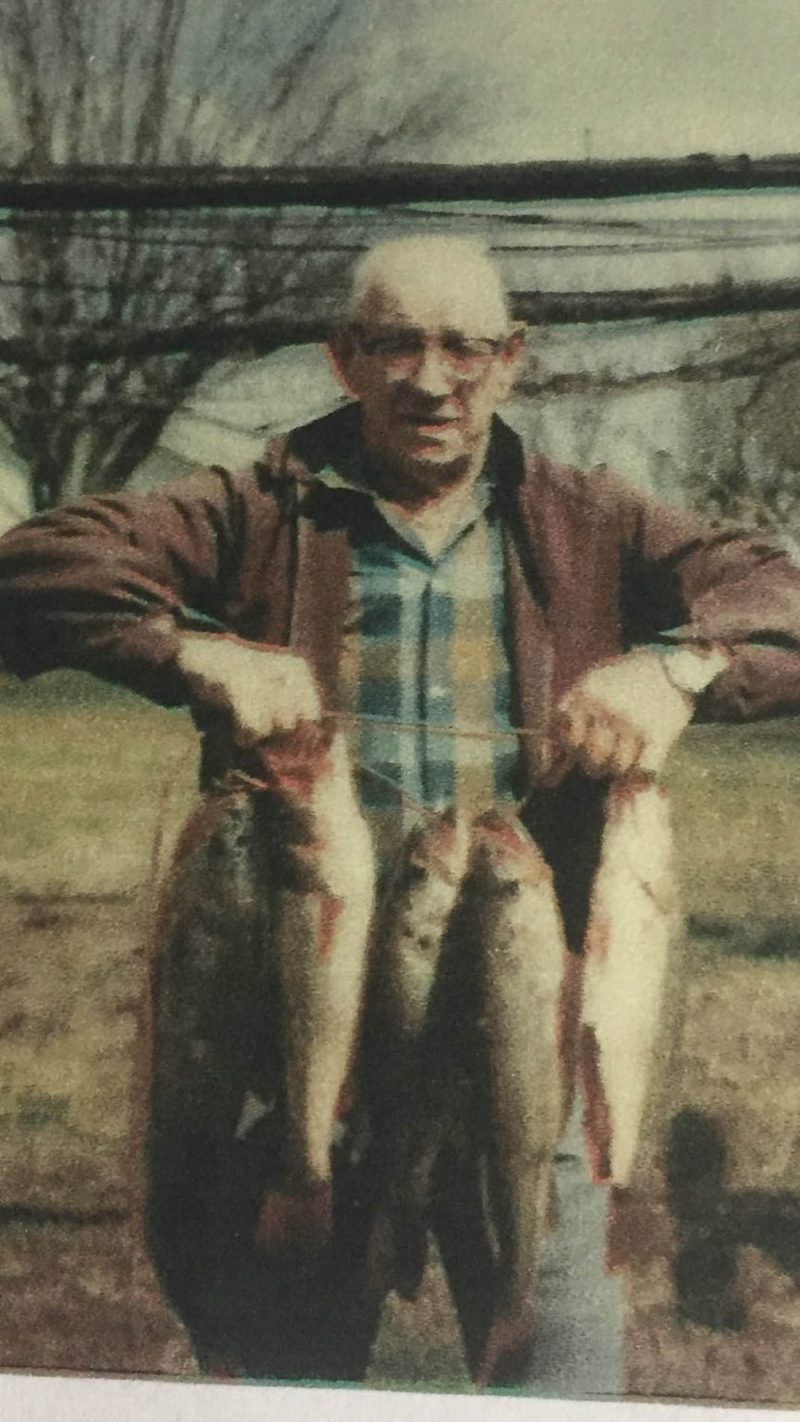
I was raised by my grandparents in a small town called Medford. My mother was 17 when I was born, and with an uncle three years my senior, I became one of the kids. My papaw, or “Pap”, was my best friend. An Oak Ridge fireman, Pap hitchhiked to work everyday, and I remember visiting him with my mom as he fixed us lunch and let me play on the fire trucks. Pap always made time for me.
I sometimes suspect I was Pap’s excuse to go fishing or squirrel hunting. I helped him dig worms in the chicken coop that we took along with our reels and rods to a place called “the old log” along the river. We always caught an abundance of trout, the occasional carp (which we always threw back), and some redhorse. Back at home, Pap always expertly filleted the trout, after which Mamaw fried it up and served it alongside biscuits and gravy.
As I graduated high school and headed to college, I didn’t see Pap as often. I visited my parents when I came back, but generally didn’t make time to go fishing or visit him and Mamaw often. I got too busy with my own life. But as I‘ve grown older, I’ve realized that Pap shared his love of the outdoors with me, and the life lessons he taught me along the way—patience, integrity, perseverance—have remained.
Now, as an avid hunter, I know that Pap protects me on so many of my adventures, and I know he is beaming with pride at my new position as Chairman of the Tennessee Wildlife Federation, an organization dedicated to preserving the outdoor experience for generations to come. I am truly the person I am today because of my Pap and the hours spent outside along the river.
→ Swipe for Next Story
DepartmentsMAY JUNE 2021
Mountain Wildflower Walk
Story by Rebecca Whalen
It’s the perfect time to venture out in search of the wildflowers that cover East Tennessee. If you’re looking for a place to start and are on the hunt for a half day adventure that encompasses a variety of elevations, this one is for you. You’ll be sure to find wildflowers in varying stages of bloom throughout.
A little less than an hour south of Knoxville you will find Abrams Creek. This creek stretches for miles but an easy and less trafficked access point is the Abrams Creek Campground. From the campground you can access the Cooper Road Loop Trailhead which will bring you on a beautiful stroll along the water. It’s a long trail, but turning around at any point will still yield you sights and sounds worth the drive. Keep your eyes peeled for Trillium. They are stunning at any stage of bloom.
Back in the car, head along the Foothills Parkway toward Wears Valley. The sights are breathtaking, so be sure to stop and take in the view along the way. (When you arrive in Wears Valley, if you’re in need of a snack break, pop on by the National Park Market on the corner of US 321 and Line Springs Road for an ice cream cone.) Head to Metcalf Bottoms to continue your wildflower viewing.
Then make your way to The Sinks off of Little River Gorge Road for more wildflower viewing. There are a handful of trails that come off of the main parking area, but the Meigs Creek Trail is a winner for wildflowers of varying kinds.
Our final recommendation for your half day of wildflower walks would be making a stop in Tremont. Any of the trailheads prove fruitful for your wildflower hunt, but especially the Middle Prong Trail. Small waterfalls show up early along this trail, making for yet another visual combination worth the drive.
This is just a sampling of what is out there this time of year for wildflower viewing, but we hope it provides you with a starting point.
→ Swipe for Next Story
DepartmentsMAY JUNE 2021
Good Vibes & Libations
Maryville’s Diamondjack Wine Bar evokes the spirit of speakeasies past
Story by N. Brooks Clark
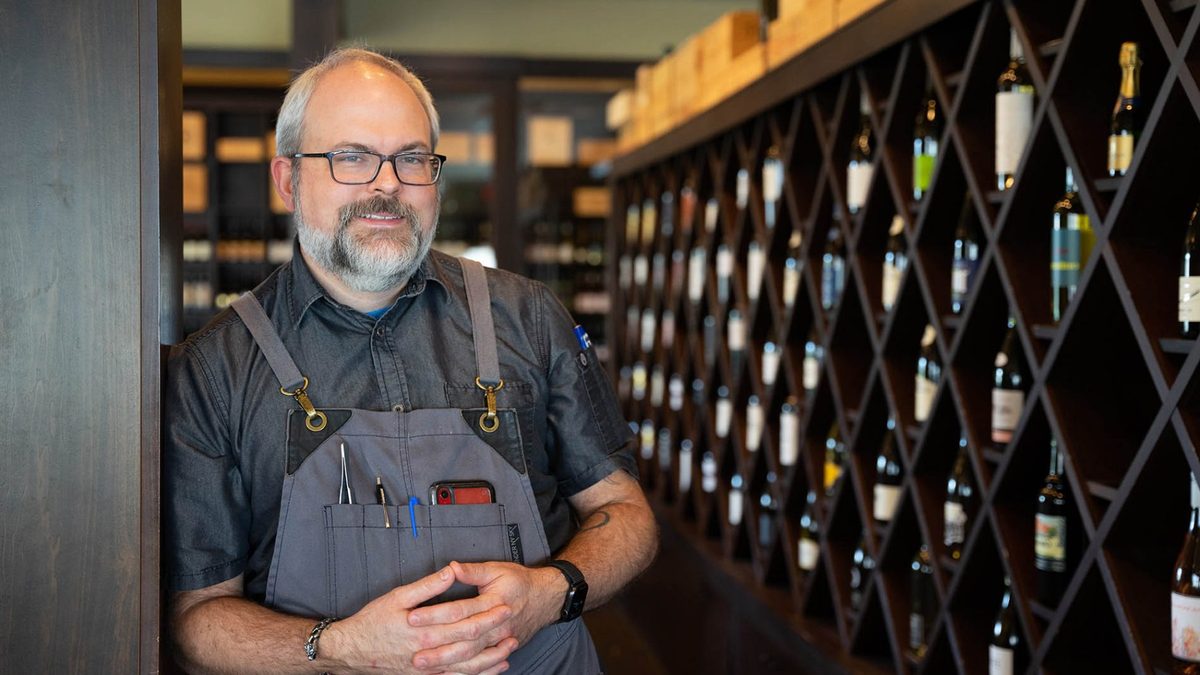
Tucked into a two-bedroom Craftsman house on the edge of downtown Maryville, Diamondjack Wine Bar combines the intimacy of its interior design, the bonhomie of owners Micah and Rachel Talley, and the passion of sommelier/mixologist Dylan Hayes. “It’s a happy place,” says Micah.
Micah had a crush on Rachel Moore starting in third grade at Foothills Elementary School. “I’d get in trouble for chasing her on the playground,” he says. They were Maryville High sweethearts. She went on to sorority life at the University of Tennessee, was a spa coordinator at Blackberry Farm, and works as a realtor. After an uneventful semester at Middle Tennessee State University, he became a Blackberry steward. “Hospitality kind of runs in my family,” Micah says, whose father ran several restaurants in the area, including the 411.
The restaurant’s name comes from Jack “Legs” Diamond, also known as Gentleman Jack. “He was a Prohibition-era rumrunner who delivered alcohol to smaller southern towns and illicit drinkeries,” Micah explains, grinning impishly. “We wanted Diamondjack to embody that exclusive, spontaneous, speakeasy feeling.”
Celebrity muralist Paris Woodhull—who Micah knew from his time at J.C. Holdway—created the black-line portrait of Gentleman Jack—with a mustache, Panama hat, and wine glass—that serves as a logo and a mural presiding over the bar area.
Although Diamondjack is supposed to evoke windowless speakeasies behind secret doors, the large windows, white walls, and white marble of the bar and tables create a bright, welcoming atmosphere that draws in the after-work crowd and—since it’s on the newly-opened Maryville-Alcoa Greenway—bikers and hikers, who also enjoy the five picnic tables outside.
The five-table main room, decorated in calming gray-green shiplap and white plaster, contrasts the four-table Burgundy room with six whimsical paintings of Victorian ladies blowing hot-pink bubble-gum bubbles.
Micah offers a simple rotating menu of just five small-plate and five entrée choices. The charcuterie board features whole-grain bread, prosciutto, lavash, cracked-blossom honey from Munich, Parisian Brie, pickles, Sequatchie Cove Coppinger cheese, and vegetables. The shishito peppers—roasted with lime juice, sea salt, and Aleppo pepper—have a bright texture and taste.
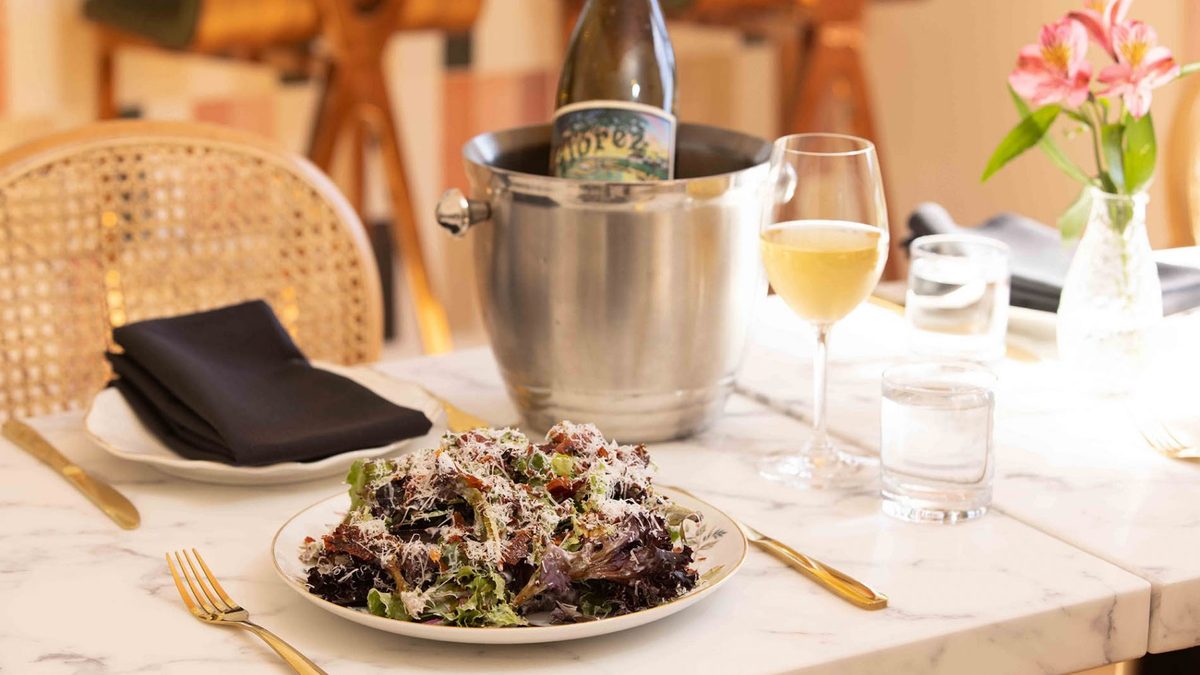
Spring mix salad includes shallots, shaved pecorino cheese, daikon radish, lemon, and dill with buttermilk dressing and crispy prosciutto, delightfully set off by a 15-year-aged balsamic vinegar.
Everyone these days has a fried chicken sandwich, but this one stands out. It arrives with a generous slab of Brie, the piquant house-made sweet hot mustard, and classic “bread and butter” pickles. If you are feeling more uptown, the steak and frites is a classic aged Mitchell Farms New York strip served atop crème fraiche and pecorino corn puree.
To “drink well and prosper,” as the menu instructs, patrons channel the enthusiasm of Seymour native Dylan Hayes. “I love doing wines and custom cocktails,” he says, “especially pretty ones.” Dylan’s Lean Queen features Mezcal gin, butterfly pea blossoms, red wine, and egg whites. His Pink Lady mixes tequila with Peychaud’s Aperitivo, a whole egg, wine, and simple syrup. High Tea, “a great summer sipper,” uses 20-year Pu’er tea, honey, Spanish vermouth, and a little rum.
Where would we be without brunch? Sunday brunch is served from 10 a.m. to 2 p.m. We advise getting there early to enjoy a couple of Dylan’s special Bloody Marys before digging in to chicken and waffles or the sausage and grits bowl.
Sometimes a place just has a certain vibe that invites you to come in, kick back, and enjoy the moment. A couple of secret knocks on Diamondjack’s door, a whispered password, and you’re in the club.
→ Swipe for Next Story
Dining GuideMAY JUNE 2021
Burger Battle
Testing out some local takes on an American classic
Story by Marc Anthony
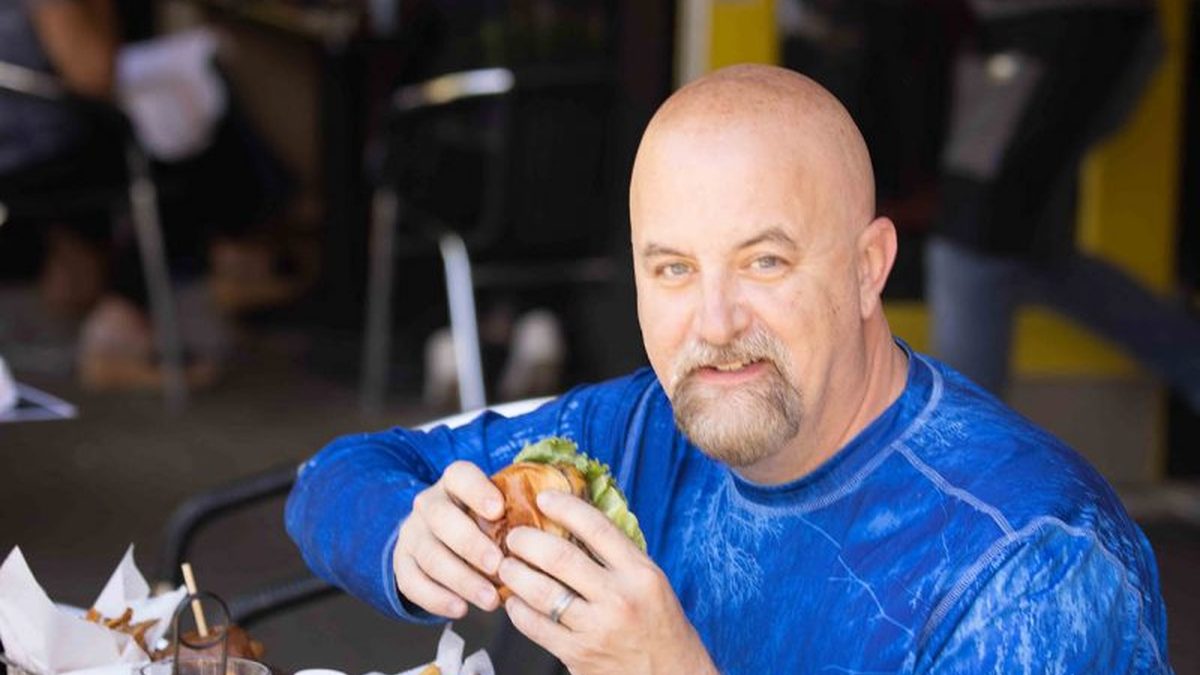
Burgers are my second favorite food ever. (Watch this space for a future food battle to find out my favorite). Few things are more American than the classic hamburger. Add cheese, bacon, condiments, and vegetables, and you have yourself the ultimate food palette. If you aren’t wrapping both hands around it, opening wide to devour it, and using stacks of napkins to clean up after it, is it really a burger? Not for me.
Six restaurants, six burgers. Who serves the best burger in Knoxville? You be the judge!
The Market Cheeseburger at Not Watson’s Kitchen + Bar
Some burgers need to come with a roll of paper towels. I love a cheeseburger that has you washing your face before you leave. The word that leapt from my mouth after my first, third, and fifth bite of Not Watson’s Market Cheeseburger was moist. This burger is one of the most moist burgers in Knoxville. That image from old commercials of eaters dabbing their face with napkins after every bite of their cheeseburgers comes to mind here. Not Watson’s Market Cheeseburger could start a paper shortage. Luckily, they use cloth napkins. Standing tall on an Ace Bakery burger bun with lettuce, tomato, pickles, Tillamook cheddar cheese, and Not Sauce, this feels and tastes like a true pub cheeseburger. The Not Sauce added a hearty zip, rounding out the experience. It was so zippy, in fact, I asked for more to dip my fries into.
When I told people I was doing a Burger Battle, someone said I needed to throw one monkey wrench into my steady diet of classic cheeseburgers. I’m a carnivore, plain and simple; I’ve turned my nose up at any burger called Impossible or Beyond. How could a meatless burger be anything close to ground sirloin? Then I tried Sunspot’s Black Bean Burger. When chefs speak of complex flavor profiles, I find myself searching Google for a clue as to what that means. But now I think I’ve figured it out. This burger has so much going on that it’s hard to home in on what exactly you’re experiencing. Quinoa, beets, and mushrooms make this burger’s base. Add arugula, guac, chipotle mayo, and a pillowy bun and this becomes transformative. Could I actually be a closet vegetarian? I don’t think so, but this has definitely opened my eyes to the impossible, great beyond.
The No Name, Not On the Menu Burger at J.C. Holdway
Let’s get the biases out of the way: J.C. Holdway is one of my top three favorite Knoxville restaurants. I love this place. The constantly evolving menu is exquisite from top to bottom. So let’s scan that menu and find the cheeseburger. That’s odd; it’s not there. We all like to be part of the secret. We want the knowledge others don’t have. Well, now you know: you just have to ask! So, if it’s at J.C. Holdway, it must be a gourmet burger laden with unpronounceable ingredients, gold dust, and fireworks, and is $54, right? Not exactly. It is simply a two-patty, American cheese, Dijon mustard, Dukes mayonnaise, white bread bun cheeseburger. Simple and perfect, just the way Chef Joseph Lenn liked his cheeseburgers as a kid. And if that’s good enough for him, then it’s good enough for me. It’s a cheeseburger that almost has me forgetting about all the incredible food actually on the menu. Almost.
The Cheeseburger Platter at Litton’s Market, Restaurant, and Bakery
Ask anyone where to get a burger in Knoxville and Litton’s is their first answer. There is not a more traditional restaurant for the classic hamburger. Walking through the front doors, you are transported to 1946 when Litton’s opened; its walls display more Knoxville and Fountain City history than the McClung Museum. While Litton’s is well known for the Thunder Road burger, I chose to leave off the added goodies and stick to the basic Cheeseburger Platter, though it was anything but basic. You can taste the tradition in every bite. Years of perfecting the char of the beef, the heartiness of the bun, the cut of the tomato, and the crunch of the onion, have you shaking your head slowly in admiration after your first bite. How can it be this good? Are they going to judge me if I order a second one right away?
Sam and Andy’s has been a Knoxville institution since 1946. Moving from the Cumberland Avenue Strip to Farragut in the 1980’s, they have served Vol Burgers to several generations of east Tennesseans. This is the quintessential lunch counter, two-fisted, food-falling-off-your-face pure American cheeseburger. No pretense, no fluff, just a big strong hunk of meat. Melting cheese, a thick-cut tomato slice, creamy mayo and mustard, and a heap of onions make this burger a beast. I have an old saying, which is, “Onions are how you remember a cheeseburger,” and the Vol Burger is absolutely memorable. I’m a voracious eater with a healthy appetite, and I found myself contemplating whether to stop chowing down with a couple of bites still to go. What a burger.
Farragut 11110 Kingston Pike (865) 675-4242
The Classic Bacon at The Stock and Barrel
The Stock and Barrel has become the go-to place for outrageous, over the top, mouth-watering burgers. And while I don’t mind the bells and whistles, you can tell a lot about a burger place if they can make the simple cheeseburger great. The Stock and Barrel’s Classic Bacon stacks Mitchell Farm beef with bourbon onions, pickles, tomato, greens, cheddar, mayo, and—the kicker—Benton’s Bacon on a flour-dusted bun from Flour Head Bakery. Built like a geological formation, this burger looks too big to consume, but the bun gives way to your two-handed grip and the first bite takes you to Burger Heaven. The smoke of the bacon, the zing of the pickles, the heartiness of the beef, and the toast of the bun play together like a string quartet. If this burger is the platform for all the other wacky burgers on the menu, then bring on the bells and whistles.
There is something so calming about being outdoors, especially in the early morning just as the sun is about to rise. A natural silence falls across whatever type of neighborhood you live in, whether it’s the middle of downtown Knoxville or out in the countryside of Maryville. Amidst all that has changed this past year—the mask wearing, social distancing, working from home—the outdoors is the one place that hasn’t. It seems you can always count on it for daily serenity.
But that’s the thing about nature, isn’t it? No matter how much we throw at it—the excitement and the chaos—the natural world remains resilient and unwilling to change who it is. It remains a place where we can venture to let go of our busy schedules and anxieties and simply exist. For some, it’s a morning row on the quiet river before the day breaks. For others, it’s a planned hike in the Smokies to feel “off-the-grid” if only for a few hours. Still for many, it is simply a step onto the back porch for a deep breath of fresh air to calm the nerves.
However you experience the outdoors, one thing is for certain. Even if only for one short moment, you can truly let go and escape.
→ Swipe for Next Story
DepartmentsMAY JUNE 2021
Digital Surveillance
Story by Cityview
Dear Terrance,
The Knoxonomist knows exactly how you feel. Recently while on a regular jaunt to the local watering hole, some nitwit—evidently trying to watch a movie while driving—damn near ran a truck full of chickens off the road and feathered a local panhandler. The Knoxonomist expressed displeasure at this featherbrain’s obvious disregard for the safety of his fellow man with some choice profanities. Suddenly there was an unexpected and unknown voice in the cab: “Is there something I can help with?” Somewhat stunned, the Knoxonomist replied, “Who the blue blazes are you, and how did you get in here?” This prompted another painfully polite response: “Is there something I can find for you?” The inner Knoxonomist surfaced as a superlative smartass, “Sure. I would like to find eternal bliss.”
After a moment of pause, the voice replied, “I have located Eternal Bliss in Texas. Would you like directions?” The Knoxonomist wondered if that might be because everything is bigger in Texas. But the Knoxonomist had always known that true bliss was right here in the good ole Volunteer State. After all, this is the home of the finest moonshine ever cooked up. Bliss can also be found while pursuing certain species of fish or the occasional horned mammal. However, evidently, to findtrueeternal bliss—according to the Knoxonomist’s intruder—one must go to Texas. To that the Knoxonomist says, “Hooey!”
The Knoxonomist knows this is not limited to himself. Why his own florist—yes, occasionally there is a softer side to the grumpy ole goat—regaled a perfectly horrifying tale of Alexa listening to her bedroom conversation with her husband where she asked if he ordered her a witch’s hat for Halloween. Before he could think of an aptly smarmy reply, Alexa chimed in: “It is in your shopping cart on Amazon.” Horrified at this information, the Knoxonomist immediately removed the Alexa Dots from all areas where marital congress occurs. No telling what Mrs. K might order if suggestions were made based on listening to the most intimate moments. The Knoxonomist wondered if any of the comments made in such a situation were being stored for future use. Clearly, he should not be held accountable to things agreed to after several shots of whiskey. In fact, all such comments should expire with the sobriety of the new dawn.
The Knoxonomist is perturbed by these unwanted intrusions. What’s next, video monitoring? With all of the deep fake software out there, there is no telling what you may find yourself starring in. The Knoxonomist isn’t really the paranoid prepper type, but enough is enough. So it’s time for some good ole-fashioned man time.
The Knoxonomist could just head out to the wilderness and leave electronics home, but then there could be trouble with the missus later. So here is the plan. Make sure your device has some sort of coverage that includes theft, loss, and liquid intrusion. Grab your favorite fishing gear and head to the lake or river. Upon arrival, toss that puppy right into the watery abyss. The insurance company will replace it in a few days, and for a time you will be free from those prying ears. And don’t be worried about the minor mistruth you will have to tell; no one ever went to hell for lying to an insurance adjuster.
The Knoxonomist further says that if you get home and the first ads you see on your device are ones about separation anxiety and the benefits of having an implanted tracking device, well, perhaps it is indeed time to consider off-the-grid life. Be sure to write.
The Knoxonomist welcomes your questions—Send your inquiries toTheKnoxonomist@cityviewmag.com.
“Seems like no matter where I am or what I am doing, I am never really alone. Is it true that my conversations are being monitored? Every comment I make seems to reappear as an ad on my personal device. Is there any way to avoid this pestilent-like surveillance?” —Terrance
→ Swipe for Next Story
DepartmentsMAY JUNE 2021
And We’re Off
Pre-planning is key to traveling well with your furry friend
Story by Cityview
As summer looms, let’s talk about vacation plans and how our four-legged members of the family fit in. As you pre-plan for your trips, reach out to any hotel you are planning to stay in to ensure it is truly pet-friendly; just because it says “pet-friendly” doesn’t always mean every kind of pet or breed is allowed. Also be sure your pet is up to date on his or her vaccinations. It’s a good idea to get a physical examination by a veterinarian for your pet before long trips. And if your pet needs anti-anxiety or anti-nausea medications, this would be the time to discuss it. Remember to bring a copy of your pet’s medical record and rabies certificate/tag on your trip. When crossing state lines, you are legally required to have a veterinarian-issued health certificate. Enforcement of such for dogs and cats, however, is rare and would be an enormous undertaking for federal authorities.
Ensuring your animal is comfortable in your vehicle is also incredibly important. Rooftop transportation is out, and harnesses and seat belts for dogs are in these days. Cats are safest in a secured pet carrier. And be aware of the little things that are unique to your animal when traveling. My little dog, Rugby, for example, is prone to pressing the window open button in the back seat. That and his tendency to leap out at passing cars makes for a very dangerous situation. Leashes and crates are very important for transporting from the car to the place you are staying. Also, an important reminder about how quickly car interiors heat up when parked. Figure out a reminder system so that your animal does not get left in the car on a hot summer day.
And finally, coming out of this crazy year we have had, perhaps a pet-sitter is the way to go. Just maybe, your pet would like to have the house to herself for a change.
Those who do not learn history are doomed to repeat it
Story by Gary Wade
Deep divisions exist in America. The states are no longer united. Morality and economy are in conflict. The year is 1850, and the country is in crisis. What brought a nation dedicated to the proposition that “all men are created equal” to the precipice of self-destruction?
In 1619, Dutch traders introduced slavery to the British Colonies in North America. Twenty captured Africans arrived in Jamestown, Virginia. For the next 140 plus years, millions of chained Africans were packed onto cargo ships, transported to the New World, and sold into slavery, many losing their lives on the way. Legislation—such as the Hereditary Slave Law of 1662, which directed that a child from an enslaved mother inherits her status as a slave—offered protections in the slave trade. By the 1700s, laws defined slaves as “property.”
After the Revolutionary War and the failure of the Articles of Confederation, the Second Continental Congress drafted and passed the 1789 United States Constitution. For purposes of apportioning by population the 435 seats in the new House of Representatives, each slave counted as three-fifths of a person, a modest elevation of status. By then, as many as seven million African slaves had been imported to this country. And with Eli Whitney’s 1793 invention of the cotton gin—a mechanical device which removed seeds from cotton—the market value of slaves increased. By then, slaves made up one-third of the entire population in the South. Because cotton was king in the Southern states, the institution of slavery was vital to their economy. Thus, Congress passed further protections, authorizing owners to cross state lines to capture runaway slaves.
The abolitionist movement in the North began to gain momentum in the 1830s. Harriet Beecher Stowe publishedUncle Tom’s Cabin. Frederick Douglass, as a free man in the North, became a prominent spokesperson for the abolition of slavery. The Underground Railroad, led by “conductors” such as Harriet Tubman, guided slaves who had escaped from their masters to states in the North that had passed laws prohibiting slavery.
Expansion westward increased tensions between the North and the South. When Missouri applied for statehood, Congress reached a compromise. Missouri would enter as a slave state and Maine as a free state, to preserve the balance of power in Congress. However, any new states from the territories would be free. For 30 years, the Missouri Compromise was the law of the land.
In this time period, Southern icons such as Andrew Jackson and James K. Polk of Tennessee, and John C. Calhoun of South Carolina, passed into the ages. Henry Clay of Kentucky, who in 1850 brokered more compromise legislation, had only months to live. These series of acts only temporarily diffused the slavery controversy in the territories, but did settle the borders of Texas as a slave state, and admitted California as a free state.
In 1832, Abraham Lincoln announced his candidacy for the state legislature. He ran eighth in a field of 13. Two years later, he won the seat, helped make his town of Springfield, Illinois, the state capital, and soon after completed his study of the law. After four terms in state government, he twice sought and lost the Whig nomination to the U.S. House of Representatives. On a third try, he won the party’s nomination and the general election. However, Lincoln’s position on the slavery question coupled with his criticism of the Mexican War defeated his chances for re-election.
The 1854 Kansas-Nebraska Act allowed new states to decide whether to be free or slave and repealed the portion of the Missouri Compromise restricting the extension of slavery in new states. This led to years of border wars in the Kansas territory between abolitionists and pro-slavery forces. In 1857, the Supreme Court ruled in Dred Scott v. Sandford that the Constitution did not afford citizenship rights to black people, whether free or slave. Two years later, abolitionist John Brown seized the federal arsenal at Harpers Ferry in a failed attempt to trigger an insurrection by slaves.
Lincoln, distressed by the terms of the 1854 Act, suspended his law practice and sought the nomination of the new Republican party to challenge Douglas for his Senate seat. The highly publicized Lincoln-Douglas debates of 1858 projected Lincoln as a national figure, but did not win his election to the Senate. Although he won the popular vote by seven percentage points, Lincoln lost the electoral vote in the Illinois legislature. These debates, however, set the stage for the presidential election of 1860. Nominated by his party, Lincoln won only a 40 percent plurality of the popular vote over the three other candidates, including Douglas, who finished second at 30 percent. In a twist of irony, Lincoln received enough electoral votes to gain the presidency.
Failing in his effort to become one of 100 senators in Washington, D.C., he was elected to the highest office in the land. Yet trouble ensued. Ten southern states had not even included Lincoln on the ballot, viewing his stand against slavery as a threat to their way of life. Seven states voted to secede by March 4, 1861, when Lincoln took his oath of office. Four more states soon followed.
On April 12, the Confederacy began a 33-hour bombardment of Fort Sumter in the Charleston Harbor. The Civil War was underway. Within a year, the Battle of Shiloh at Pittsburg Landing, Tennessee, resulted in 23,741 casualties. In two days, the losses exceeded the combined number in this county’s first three wars—the Revolution, the War of 1812, and the Mexican War. Five months later, Northern and Southern armies squared off at Antietam Creek, Maryland. In the war’s bloodiest single-day confrontation, casualties almost equaled those at Shiloh. Three days in the summer of 1863, however, surpassed all others in blood and gore from the two sides. Led by General Robert E. Lee, the Army of Northern Virginia invaded Gettysburg, Pennsylvania, to take on the Union Army of the Potomac in what became the pivotal battle of the war. Casualties reached 51,000.
At Lincoln’s second inaugural address on March 4, 1865, he spoke optimistically of reconciliation between the states: “With malice toward none, with charity for all, with firmness in the right…let us strive on to finish the work we are in, to bind up the nation’s wounds…” Just over a month later, Lee surrendered at Appomattox Courthouse, Virginia. In so doing, he rejected resorting to guerrilla warfare as advocated by Confederacy President Jefferson Davis. “Better to do right,” Lee explained, “even if we suffer in so doing, than to incur the reproach of consciences and posterity.” Within the week, Lincoln was dead. By war’s end, at least 618,222 and as many as 750,000 lives were lost, more than the combined deaths in our country’s two World Wars, Korea, and Vietnam. This lesson in history thus ends with the words of our 16th president: “A house divided against itself cannot stand.”
→ Swipe for Next Story
InsightsMAY JUNE 2021
The Perfect Face for a Mask
Drawing a line in the sand on a year-long debate
Story by Robert Pryor, Sr.
I’m no stranger to a face mask. I wore one practically every day from 1949 to 1953. The cowboys of Lincoln Park voted me the best “bad guy” of all time and made me the perpetual outlaw. Among my bad acts was daily robbing the stagecoach, making it necessary for me to run from the sheriff and his posse. I was chased down Freemason Street, back up Farragut Avenue, and all over Sharp’s Ridge, and I never once dared to remove my bandana mask for fear my true identity would be revealed. At the Broadway Theater, all movie cowboys wore bandanas around their necks, but only the bad guys pulled them up over their noses and mouths converting them into a mask. That helped distinguish the good hombres from the outlaws. I’m sure that’s why the mask mandate of the pandemic has really been no big imposition on me. It’s like I’m still being pursued by my childhood pals shooting with our cap guns and riding our make-believe horses by running in a gallop holding invisible reins with our left hand while slapping our hip with our right hand.
When we were finally told last year that we were in the throes of a COVID-19 pandemic, my family and I had no problem taking precautions. Wearing a mask didn’t bother me—after all, I had experience. However, many refused then and now to follow precautions, especially wearing a face mask in public. I have often wondered why intelligent people would ignore such a simple precaution. I must say, I am sympathetic with most non-believers because the virus risk was “downplayed” in the beginning of the health crisis and, as late as April 3, 2020, the President was advising the public that masks were an unnecessary option which he refused to recommend or follow. You will also remember he stated it would be all over by May. Today, we apparently still have many who are “confused” about the need to wear masks. Maybe they stopped following the COVID-19 news and escalating hospitalizations and deaths after April 2020.
Others, I understand, reject masks because they do not look attractive in a mask, or some men feel they are not masculine enough. I don’t think anyone loves masks, but most are willing to make the sacrifice. Everyone I know will be happy when they are unnecessary. Some, like me, have a perfect face for a mask. The more I cover, the better I look.
Of course, there are those who refuse to wear a mask because they see the pandemic as a fraud and a conspiracy of big business and elitists to destroy small business and non-elitists. Some believe it to be a government conspiracy to violate our civil liberties, and they have argued that the reported spikes in infections were simply the result of increased testing, insisting that if we stop testing the infections would disappear. I recently have learned that some non-believers are refusing to take the vaccine believing it to be more deadly than the virus. While each of these theories has been advanced, it is understandable that some of us have been deceived and refuse to trust experts.
Admittedly, wearing a mask every day in public is a real bummer, but I’m proud to say that I’ve done well except for occasionally going the wrong way in the new one-way grocery aisles and occasionally forgetting my mask when I get out of the car. Of course, they fog up my glasses, making it a challenge to walk around in Kroger. Sometimes I think walking in a fog may be more dangerous than the virus. At our house, our decision to wear masks during the pandemic was an easy one for several reasons.
For one, the recommendation came from smart people. We followed the advice of experts from leading medical institutions and people with years of experience working in the fields of public health and infectious disease. We rejected the advice of unqualified people like those who got into college by hiring others to take their admission exams and those whose medical experience was limited to the field of reading x-rays. Of course, everyone has to make their own decisions, but if the guy refusing to wear a mask also thinks drinking bleach might be a good way to prevent succumbing to a deadly virus, you might want to look elsewhere for guidance.
My second reason is that I don’t want to die. Worse yet, I don’t want to kill other people, especially my own family and friends. At near 600,000 deaths in the U. S., we know the virus is deadly to many who contract it, and I have been near some of them. Did I give it to someone not knowing I was infected? Did I do all I could to prevent the spread of the virus? I know I’m high risk if I contract COVID-19. I know that because every time the news programs show seven or eight doctors and nurses gathered around a dying man in the ICU, he looks just like me.
The third reason I wear one is because our nation has a crisis, and to be a good American we all have to step up and grab a bucket to help put out the fire. We need to be good neighbors just like when we step up in times of disasters, death, and war. Hopefully, the pandemic will be over soon, and we can celebrate the victory and our contribution to it.
Finally, to go out in public without a mask is rude and insensitive to others.
We all realize that there may be those with health situations that make wearing a mask prohibitive. I am sure that’s not just an excuse for many. In that case, group situations should be avoided as much as possible, but masking should never be avoided for political reasons. Politicians, however, have made it political. Dr. Fauci says “mask up” and our elected leaders say “mask at your option and remember next election (if you live that long) that I’m the guy that didn’t make you wear those stupid things.” We, the people, have been left to our own devices.
Although I’ve heard stories of mask confrontations in stores and restaurants, I never witnessed such a situation until recently. I drove to my favorite wing place one evening to pick up our online order. The parking lot was full, and I had to park quite a distance from the restaurant. As I approached the front door, I noticed a bearded man standing on the sidewalk. He had no mask, causing me to immediately realize that I had forgotten and left all seven of my cloth masks in the car, including the one that says, “No. I’m not George Clooney.” Because I was in a lazy mood, I didn’t want to walk back to my car, so I decided to stick my head in to announce that I was there for the pickup, but would wait outside since I had no mask. The lady at the door was adamant that I could not come in without a mask; out I went to wait. To my surprise, I am now in exile on the sidewalk with a non-believer and soon-to-be forced to discuss the mask conundrum. “They ain’t nuttin’ but a dictator in there,” says my new maskless friend. This surely will challenge my diplomatic skills, I think to myself, understanding that he is rebelling against being asked to leave the restaurant because he refused to wear a mask. “Well, it is their business,” is my best retort. “When you own a business, I guess you get to make the rules,” I tried to explain thinking him to be devoted to our free society. After all, nothing is more emblematic of a free society than an owner or operator of a business establishing a non-discriminatory dress code. Of course, nothing is discriminatory about a business mandating a mask for entry.
He then clearly described to me his frustration. “I’ve got rights,” he began. “Nobody can tell me what to wear and I ain’t wearing no mask for nobody.” Okay, I get it now. This guy has a problem playing with others. I’ve known many like him in my lifetime. These are the guys who only think of themselves and who believe they are above the rules. They were selfish as children and care very little about the greater good as adults. Their mothers told them they were special, and, unfortunately for the rest of us, they believed it. You can spot them by their aggressive driving, their parking habits, and in the disrespect they show toward authority, traditions, and our shared destiny. Against my better judgment, I couldn’t resist. “You’re right about that,” I humored him. “They’re dictators, all right. Did you know I came over here last week buck naked and they threw me out? I’ve got my rights, and I’ll wear or not wear what I want to.” In the silence that followed, I thought to myself, was this guy also opposed to the encumbrance of speed limits, red lights, and non-smoking rules? Did he customarily take two parking spaces and break the line to pay cashiers? Is he the kind of man who would make a sport of being rude to waitresses? Fortunately, his wings were politely delivered to him on the sidewalk, and he walked away into the night.
Mask up, everybody. If not to protect yourself, but to protect the rest of us until, hopefully, we are rescued by the vaccine.
→ Swipe for Next Story
FeatureMAY JUNE 2021
Game and Field Fair
Story by Rebecca Whalen
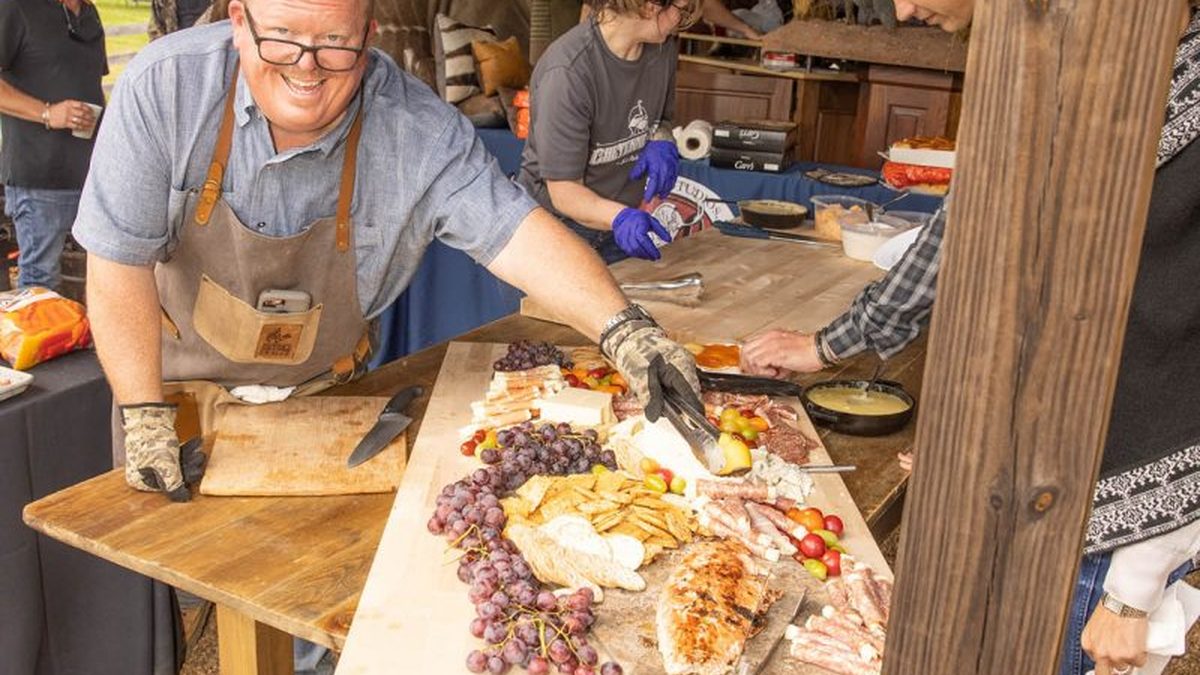
In April, Cityview Publisher Nathan Sparks headed over to the Game and Field Fair at the Barnsley Resort in Adairsville, Georgia. The event, held on the Beretta Shooting Grounds, was a collaboration betweenHigh Adventure Companyand The Pepi Family Jonas Brothers Studios. Attendees heard from experts in the field as they experienced a few showcases of some of the best gear out there, watched a variety of demonstrations, attended seminars, and more over the course of the weekend. Sparks and fellow attendees even had the chance to taste cuisine from High Adventure Company master chef,Sean Finley. Click for the full gallery
→ Swipe for Next Story
FeatureMAY JUNE 2021
Farmer’s Markets Close to Home
Story by Susan Alexander
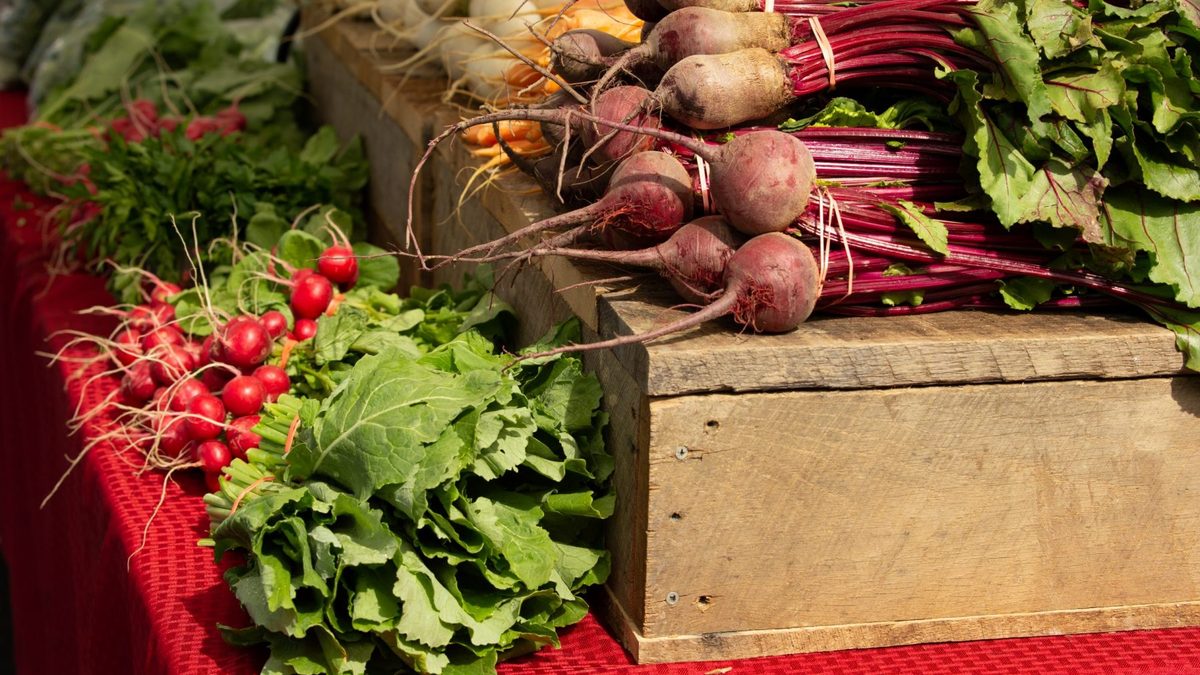
Looking for some farm-fresh ingredients to make a favorite recipe even better? Eager to support local growers and makers? Then drop in one of the several farmers markets around Knox County throughout the week.
Here’s when and where to find them:
Tuesday, 3 to 6 pm:Ebenezer Road Farm Market,Ebenezer United Methodist Church,1001 Ebenezer Road.
Wednesday, 10 am to 1 pm:Market Square Farmers Market, Market Square.
Thursday, 3-6 pm:Hardin Valley Farm Market, Hardin Valley Church of Christ, 11515 Hardin Valley Road.
Thursday, 3-6 pm:New Harvest Farmers’ Market, 4775 New Harvest Lane.
Saturday, 9 am-1 pm:Market at Mary Costa Plaza, outside the Knoxville Civic Coliseum, 500 Howard Baker Jr. Avenue. The 9 am hour is dedicated to shopping for the elderly and immunocompromised; shopping for the general public begins at 10 am.
Saturday, 9 am to noon:Dixie Lee Farmers Marketat Renaissance Farragut, 12740 Kingston Pike.
Charlotte Tolley, who oversees Nourish Knoxville, the nonprofit that operates the markets downtown and at New Harvest Park, says that as COVID guidelines change over time, so might the locations and restrictions at the markets. She encourages shoppers to check their website for the most up-to-date info.
→ Swipe for Next Story
FeatureMAY JUNE 2021
Sweet Serenity
Bridgemore home combines bold statement pieces and a neutral palette to create one couple’s dream home after kids
Story by Mary Leidig
A distinct barrel-vaulted ceiling with herringbone brickwork brought a couple’s heart-of-the-home kitchen together. But it’s the inspired Brazilian quartzite island that is the centerpiece in the new house.
“It makes our kitchen a dream for cooks and entertaining, and it’s the most important piece in our new house and the very first piece we bought,” says the homeowner. So, they designed the entire kitchen around “this piece of art.”
The stunning steel blue 10-foot-long island with hints of pearl and gray is just one of many standouts in this 5,225-square-foot home at Bridgemore Planned Community in Farragut.
Originally from the Northeast, the homeowners—who preferred not to share their names—have called Knoxville home for 15 years and moved into their new home in May 2020. “We love Knoxville more than any other place we’ve lived. This is our home to stay.”
It’s the couple’s second custom-built home in Bridgemore. Their first home, which they built in 2006, was this community’s very first home. And much like that first home, they made every building and design decision together—down to the hinges on the doors.
One of the highest points in West Knox County and in Farragut, Bridgemore’s 340-acre location offers extraordinary views of the mountains and is minutes from the Tennessee River and Fort Loudoun Lake.
The homeowners decided to downsize after their children were grown. Although, now that their children have spouses, families, and pets, they were careful not to go small: “We enjoy the main level and when family is here, we have a whole other living area on the lower level with a great room and stone fireplace, kitchen, two bedrooms, two baths, and a media/bonus room.”
This is a bright, inviting home with panoramic views through soaring windows that flood the rooms with natural light.
Making a Statement
Designer Stephen Davis calls this two-story home’s style European, with a blend of traditional and French provincial.
Davis founded Stephen Davis Home Designs in 1990. He and his team work closely with homeowners to come up with architectural ideas that don’t fit into one style box.
An unusual front elevation with the home’s main entrance came together in a fun way. Tall windows showcase a wood floating staircase with a black iron railing. Davis and the homeowners customized the staircase to fit their desire for more natural light, making the four-bedroom, four-and-a-half bath home feel even more voluminous.
An office for the husband stands out for its windows that offer breathtaking views of the Smoky Mountains. “It’s really just so gorgeous in there. I don’t know how he gets anything done,” Davis says.
Large windows and high ceilings surround every room; the couple likes to call their new home “our glass house.”
Davis and builder Chip Seigler, owner of Seigler Building and Development, together designed and built the homeowners’ first house at Bridgemore. They say this new home mixes many elements of granite, timbers, and flooring—from the great room with its four curved eastern white pine beams and stone fireplace to the 13-foot-ceiling master shower with surrounding high windows.
Watching the beams being hoisted in place by lifts onto the 22-foot-high ceiling was “incredible,” say the homeowners. Appalachian Log and Timber Homes supplied the beams.
“The master shower is pretty amazing, and it looks like rain is coming right out of the ceiling,” says Seigler. Five windows on the perimeter of the shower bring more light into the bathroom, and tile walls 13 feet high add another architectural detail to this dramatic space.
These design statements throughout the home are intentional art. Well thought out from the beginning of their dream, the homeowners planned their home for every time of day and for every season. “We’ve thought about what our home feels like at night as much as how it feels in the day. With the right lighting, a house can glow. We also wanted our landscaping to pop with color in the spring and to soften up the brick with evergreens so that it looks great in the winter.”
Part of the beauty of the property is the show of 400 tulips that the wife planted, one of her favorite flowers to welcome spring.
Designing Big Dreams
His office overlooks the mountains. She sees two of their four patios from the great room. They both see East Tennessee’s beauty from every corner: “And it is all on purpose, just what we wanted. Our designer and builder helped give us this.”
These homeowners enjoy a flair for style and design, and Seigler says part of what he does is help bring to life what people want in a home. “These folks knew what they wanted. Their home is built around the pine beams in the gathering room, and the rooms flowed out of that,” he says. “We do so much custom work, and homeowners are often dreaming about that special house for a while. They have a starting point, and in this home the great room was it for this couple.”
And then, of course, there is that floating staircase. “We were able, too, to line the stairwell with shiplap board. It’s all pretty grand,” says Seigler.
It’s just what this couple wanted.
Other additional touches came from these homeowners’ dream. Seigler’s construction team took brick and laid the herringbone design in the kitchen’s barrel-vaulted ceiling. The resulting color scheme of ivory and cream on the ceiling brick and cabinets blended perfectly with that special Brazilian quartzite island. Meridian Brick supplied the materials for the kitchen’s vaulted ceiling as well as the home’s brick exterior.
“Not everyone is qualified to install herringbone brick on a ceiling,” says Seigler “It’s a half dome. It’s also not often we build a home where the lower level is accessible from the front entrance of the home.”
The rest of the house is a timeless color palette of light gray with hues of blue and a medium brown hickory floor. So much about the home’s artistic feel has made Seigler’s relationship with the homeowners and design team memorable. “It means a lot to get to come back and build a second house like this one.”
Davis agrees and credits much of his ease in collaborating with builders and architects to his own early work experience as a roofer and carpenter. He has a deeper understanding of the enormous amount of detail it takes for a team to create something original. “I don’t stay within one style or design, and I try to marry function and originality. If you do your due diligence, you accomplish both,” he says.
The home’s unique lot that slopes in the front presented an intriguing challenge for the design and building team to create a brick terraced front entrance. “The homeowners also wanted a vaulted space that grows in height from the front door through the great room and as you go to the back of the house,” says Davis. “It all works. The inside of this home flows and functions with the creativity.”
“My favorite part of this work is the customer collaboration with the design team to take a solid project and make it better. I think we did this,” says Seigler.
An Abundance of Caution
While much of the United States shut down in March 2020 due to the pandemic, Seigler’s construction team was just starting its detail work on the couple’s home.
Seigler approached his subcontractors and the homeowners to stress that they would finish the home with an abundance of caution. “We pushed very hard for a safe working environment, and we finished the home in June.”
The homeowners say both Davis and Seigler helped them move into their new home in the middle of the pandemic, something they never could have imagined. “The building slowed a little because of the pandemic, and we were actually lucky in the timing,” she said. “Smaller groups, always masked, worked in the home. We have a special appreciation for this and for our contractors staying healthy.”
Elegant and Serene
This elegant, serene home works because of a couple’s dream that combines creative flow and function. “Steven carved out the house to fit the property, and Chip built it wonderfully,” says the couple. “We’ve used every inch of space for our house.”
“There’s simply no other house like it in Bridgemore.”
→ Swipe for Next Story
Non-ProfitMAY JUNE 2021
For the Love of Service
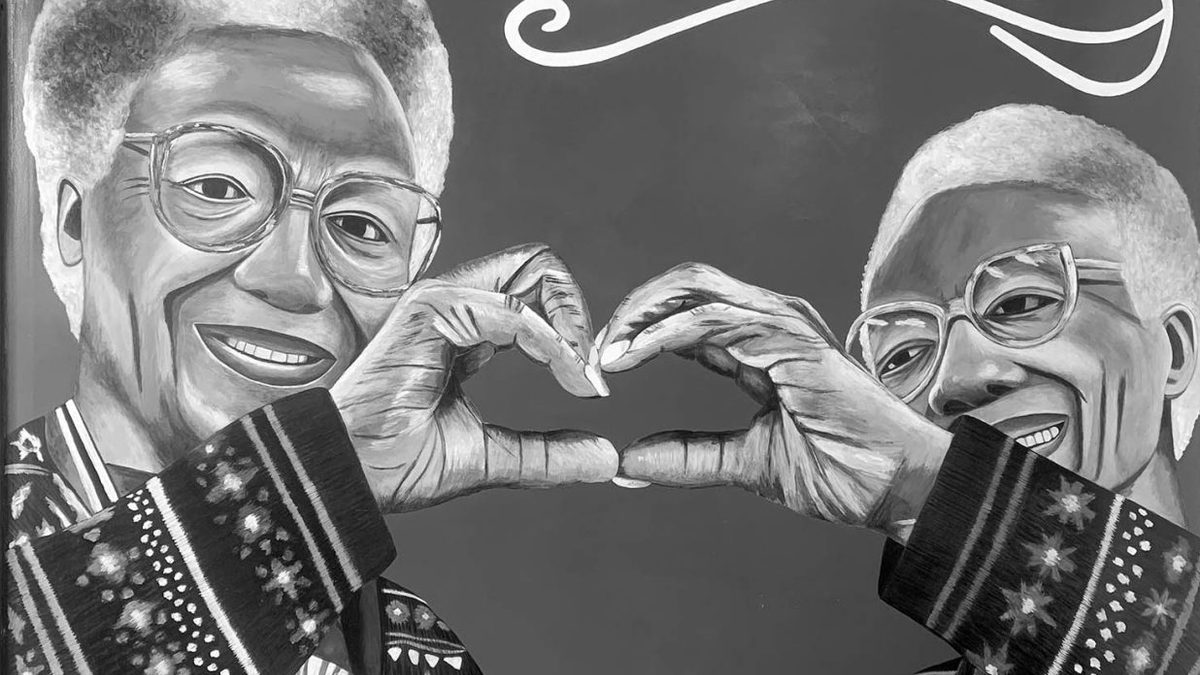
The Love Kitchen’s all-volunteer team honors the memory of their founders by feeding their neighbors
Story by Rebecca Whalen
It was 2001 when Patrick Riggins stepped foot inside the Love Kitchen for the first time. While he lived in Knoxville his entire life, the Love Kitchen was not something he knew existed. That is, until his brother-in-law started volunteering there. “He was picking up food donations from stores and he kept bugging me about it,” Riggins recalls with the laugh. “I got tired of hearing him and said, ‘If God wants me down there, he’ll put me there.’“
There must have been some bigger plans brewing, because not two weeks later, Riggins’ brother-in-law got a promotion, causing his schedule to change. “Can you go pick up for me until I can find someone else?” he asked. Riggins agreed.
He walked into the Love Kitchen and met the two sweetest ladies he had ever encountered: Helen Ashe and Ellen Turner. “I thought to myself, if these two ladies can make time for this, then I really have no excuse,” he recalls. So he started picking up food donations. Fast forward 20 years and Riggins continues with that work, except now he wears a new volunteer title: Executive Director.
Riggins’ fast fall for the Love Kitchen is not unlike many other introduction stories for volunteers who started when Helen and Ellen were alive. They walked in, met the sisters, and regardless of what their volunteer task was or had the potential to be, they fell in love. They wanted to be part of the work because of “the sisters,” as they were so often called. “Helen and Ellen, they wanted you here, if you wanted to be here,” Riggins says.
The sisters founded the Love Kitchen back in 1984. The two were nurses at the time, but seeing patients come in to the emergency waiting room who couldn’t afford to eat, weighed on them, Helen in particular. “She would go and feed them on her breaks,” Riggins says. When the two were advancing toward retirement, Helen shared with her sister what she felt was her calling in her next stage of life. She wanted to start a place where people could just come to eat, regardless of who they were or what life had handed them: “Whoever is hungry, we feed them.” Ellen shared in the excitement and joined Helen in the dream.
Today, 35 years after the Love Kitchen’s founding, that core mission remains. Every Thursday, dozens of volunteers arrive at the Love Kitchen on Martin Luther King Jr. Avenue and pick up meals to take to those who are elderly, disabled, or otherwise homebound throughout Knox and surrounding counties. Three different menus are prepared for the Thursday delivery day, and that day more than 3,000 meals go out the door. Each recipient receives seven meals for the week, and if they ask for more, they get them.
Volunteers come in throughout the week to prepare this enormous weekly feat. Mary Kerr, who began volunteering after retiring from teaching, now helps on Tuesdays to get that process going. “My job there is to make sure that all the volunteers that come in have a job,” she says. “I was made to feel so welcome when I came and so wanted and so needed and so appreciated, and I try to do that to everybody that comes.”
Similar to Riggins, Kerr’s introduction to the Love Kitchen in 2014 was a memorable one. After hearing the sisters speak at a banquet and asking them after their talk how someone could get involved, Helen, in the loving, down-to-earth tone everyone knew her for, said, “Well, baby, do you have time?” Kerr started crying, telling Helen that time was all she had now that she was retired. “Well, honey, you come on Thursday at 10 a.m.” She did and never left. “I just fell in love with them.”
Kerr walked in that first day to a woman slicing strawberries. Within minutes the woman had her wash her hands, get gloves and an apron on, and open the 42 cans of green beans from the pantry. The next week, Kerr got a “promotion” as she calls it. “They let me fry the bacon for the sisters.” There were three things the sisters loved: greasy crispy bacon, strawberries with strawberry sauce on them, and animal crackers. And to be the one to prepare and serve that to these two humble women was a big deal to volunteers. These are the memories they hold on to of the organization’s founders.
Today, Kerr spends Tuesdays working with volunteers to prepare for the work that will happen the remainder of the week, such as lunches on Wednesdays and Thursdays. “We used to serve it in house,” Riggins says, “but with COVID, we can’t do that now. Now we make the meals to go.” The meals go into containers and volunteers take them outside so that people can walk or drive up if they are in need of a meal. Each bag contains two lunches, and if it’s chilly outside during the pickup times, they will have hot cocoa or tea to take as well. More than 100 lunches are served each day.
After the meal pickup, the Love Kitchen opens up its doors for the Wednesday Market Pantry. “The sisters felt like, well if we are making food, we can serve whoever wants to come to eat, so that carried on,” Riggins explains. “Anything we don’t use in the meals, we put out in the dining room now.” Volunteers man a long line of tables filled with boxes of fresh fruits and vegetables, canned goods, bread, and desserts. Anyone who needs it can come to the pantry, and follow down the line, selecting the things they’d like to take home. Roughy 100 to 120 families come to pickup from the pantry each week.
Behind all of this work—the food preparation, the deliveries, securing food donations, manning pantry and pick up days—are people dedicated to this cause that the sisters worked so hard for. Not one person is paid for this work, not even Riggins. Everyone is a volunteer. A core group comes weekly to help and on any given day each week, core volunteers will train anyone new arriving to lend a hand. And there’s a humbleness that is ever present among them. Riggins is a computer programmer by day, but works and volunteers throughout his day at the Love Kitchen office. The organization’s secretary volunteers four days a week so that someone is available to field calls and inquiries. The chef volunteers four days a week to ensure the meals are being made. Roughly 40 to 50 volunteers are there working each week.
And even when COVID-19 seemed at its worst, Riggins says the volunteers kept coming back. Their services to the community never changed; in fact, the number of people reaching out to receive meals went up. And the volunteers heeded that call. “As the operation has grown and with COVID demand on resources, I kept thinking, ‘We’ll have to hire,’ and yet we never have to. We always have plenty of volunteers.”
While Riggins holds the Executive Director title and responsibilities, he remains one of the boots on the ground volunteers as well. He still picks up food donations every week, just as he did that first day more than 20 years ago. “I feel like this is what I’m supposed to be doing, and it feels great,” he says. Costco Wholesale is one of the key places that provides food donations for the organization, along with others like Panera Bread. “We buy less than half of the food we use.”
Funding for the remainder of the food comes exclusively from private donations, with little solicitation from the volunteer staff. “The sisters didn’t want to take government money. They always said that you work hard and try not to get on government charity. Provide for yourself because you’ll be happier and feel better if you do,” Riggins says. Because this was just who Helen and Ellen were.
Born in 1929 in South Carolina, the sisters were born to a sharecropping family, working since they were four or five years old. “They got up and would go to the ‘big house’ and wash clothes and clean in the kitchen, and then they would go to school,” Riggins says of the life stories they shared. “When they came home, evening chores would be to clean at the ‘big house.’” They worked hard from a very young age and carried important lessons from their father, John, throughout their lives.
Ellen passed away in 2015, Helen in 2018. And yet even though they are no longer physically part of the work, their spirit is felt by all who enter. The lessons they taught—lessons from their father—carry on in the hundreds who work with the Love Kitchen every year. Their father had three truths that volunteers like Riggins know by heart: “Theres’s only one father, the Heavenly Father; there’s only one race, the human race; and never take the last piece of bread off the table because someone might come along and need it.”
Riggins, Kerr, and so many other volunteers can recite these lessons as if they were their own. “I know they’re smiling down,” Kerr says. “I can just picture Helen saying to Ellen, ‘Look, baby, they’re feeding all these people.’”
The legacy of Helen Ashe and Ellen Turner lives on through the Love Kitchen and its team of volunteers. Riggins especially will never let the team forget how all this work began. After working for so many years with the sisters, he became almost like a grandson to the two. “As they got old, Helen said, ‘We’d like you to continue this and make sure that after we’re gone, that you keep this running,’” he says. “They left it in my hands, and I promised I would do it. So I’m doing it.”
To learn more about volunteering with or supporting the Love Kitchen, readers can visitthelovekitchen.org.
→ Swipe for Next Story
FeatureMAY JUNE 2021
Alex Gass
The Walnut Kitchen
Story by Rebecca Whalen
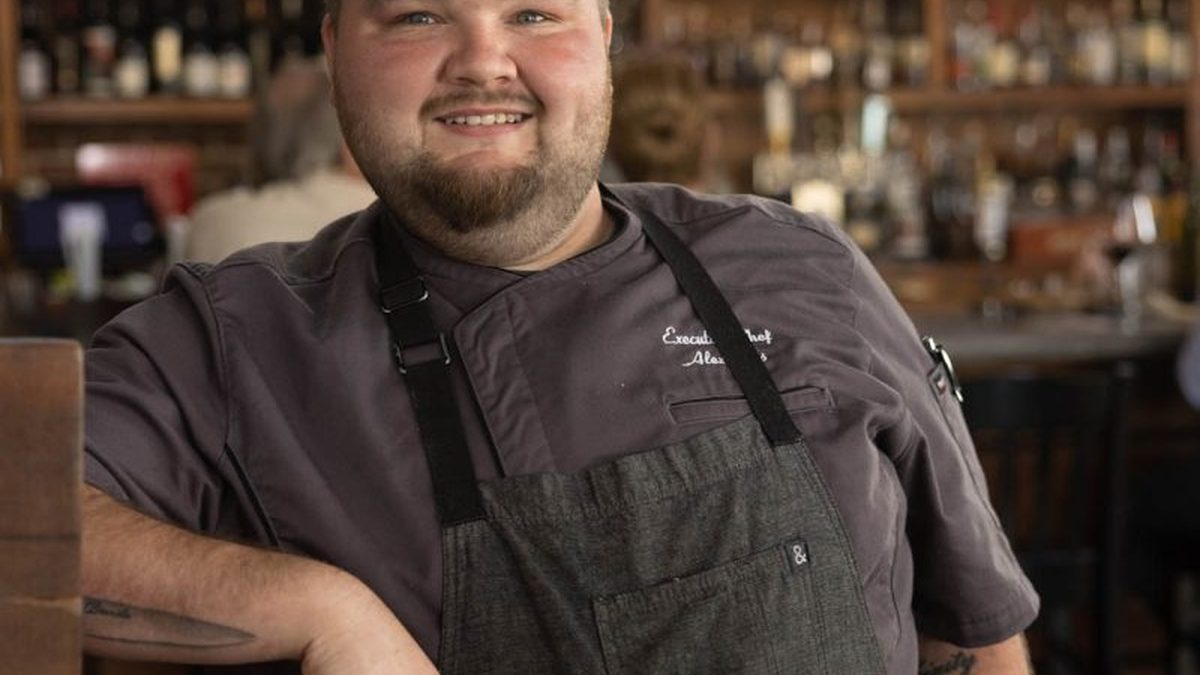
Down on High Street in Maryville, you will find The Walnut Kitchen, a farm-to-table restaurant serving up locally grown produce and Tennessee beef. There inside, building the menu with a musical flair, is Chef Alex Gass, an Oak Ridge native.
While it might not be obvious, Gass didn’t grow up envisioning a life in the culinary industry; he wanted to be a musician. However, his mother ran a catering business, and while he didn’t recognize it then, his life in the culinary arts had already begun. “I was trained to be a chef my whole life through my mother and all of these other instances,” he says. “With the acceptance of that and wanting to pursue something in the arts, I took off with it and made it my thing.” He approaches cooking just as he does music: blending emotion and energy to create something people love.
The tunes are high as he looks at a sample of everything coming off of the farm to create his menus. “It becomes my paint palette as I try to figure out the best ways to match the ingredients to bring the best product to the table,” he says.
With a love of the Cherokee purple tomato—a product that made him realize the beauty in a raw vegetable, thanks to his grandmother—Gass creates menus with the hope of building connections with guests. When not in the restaurant, or preparing a menu for Top Chefs, Gass can be found enjoying time with his wife and children.
Simpson’s Dry Aged Filet
— 2ND PLACE WINNER —
Served with a Celeriac Puree, Braised Leeks, Hot Sauce Reduction, Honey Garlic Blue Cheese Compound Butter, and House Gravy.
Cream Sickle Panna Cotta
Made with Orange Peel Jam, Buttermilk Panna Cotta, and Candied Orange Peels, and served with Orange Supreme.
→ Swipe for Next Story
FeatureMAY JUNE 2021
Annie Fletcher
Cazzy’s Corner Grill
Story by Rebecca Whalen
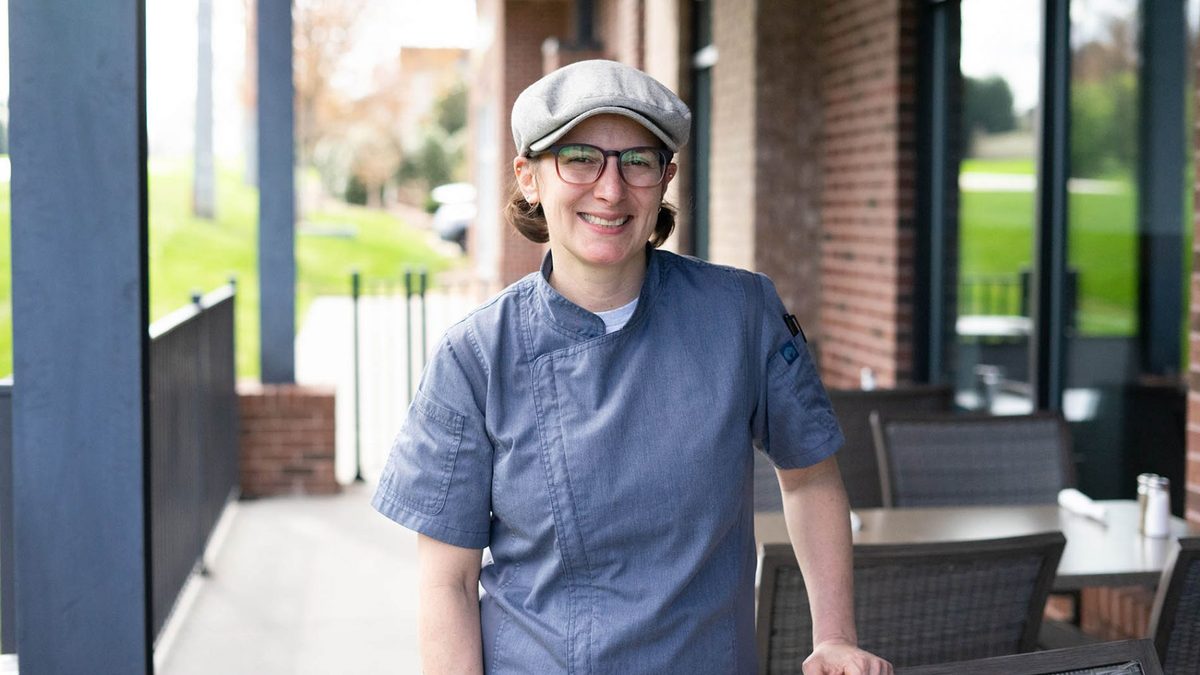
Cazzy’s Corner Grill has been part of the Knoxville community since 2012, serving up classic American cuisine set in a contemporary restaurant design. Inside Cazzy’s kitchen is Chef Annie Fletcher.
Fletcher was part of a military family growing up, traveling around the country throughout her youth. Tasting her mom’s spare ribs while living in Hawaii set her on a path toward food. After playing shortstop for the University of Tennessee’s softball team, Fletcher settled in Knoxville. She worked as a server for 15 years—providing her a different perspective of the culinary industry—before becoming a chef eight years ago.
While she wears the chef title, Fletcher is at heart an artist. Becoming a chef simply allowed her to practice her passion using food as her medium. “A lot of [my menu] ideas start as sketches in a sketchbook,” she says. “I start there, develop and try things, make notes. But it all starts with the sketchbook.” Dishes based on proteins are her sweet (or savory) spot.
Fletcher can be found working on new recipes—like those prepared for Top Chefs—both in the Cazzy’s kitchen and at home where you can always find wine, salmon, and chocolate among her staple home kitchen ingredients. She is inspired daily in her work by her late friend and boss, Robert Goebel, and the memory of her co-worker, Alexis Clayton.
Lobster Tail & Filet
Served Ceviche-style with Poblano Aioli, Cilantro Chimichurri, Tostadas, Jicama, and Mint Vinaigrette.
Dark Chocolate Ganache Cake
— 1ST PLACE WINNER —
Served with Rum Caramel Sauce, a Dark Chocolate Tort Sphere, Chocolate Mousse, Mint Cuilis, and an Edible Orchid.
→ Swipe for Next Story
FeatureMAY JUNE 2021
Damon Smith
Dancing Bear Appalacian Bistro
Story by Rebecca Whalen
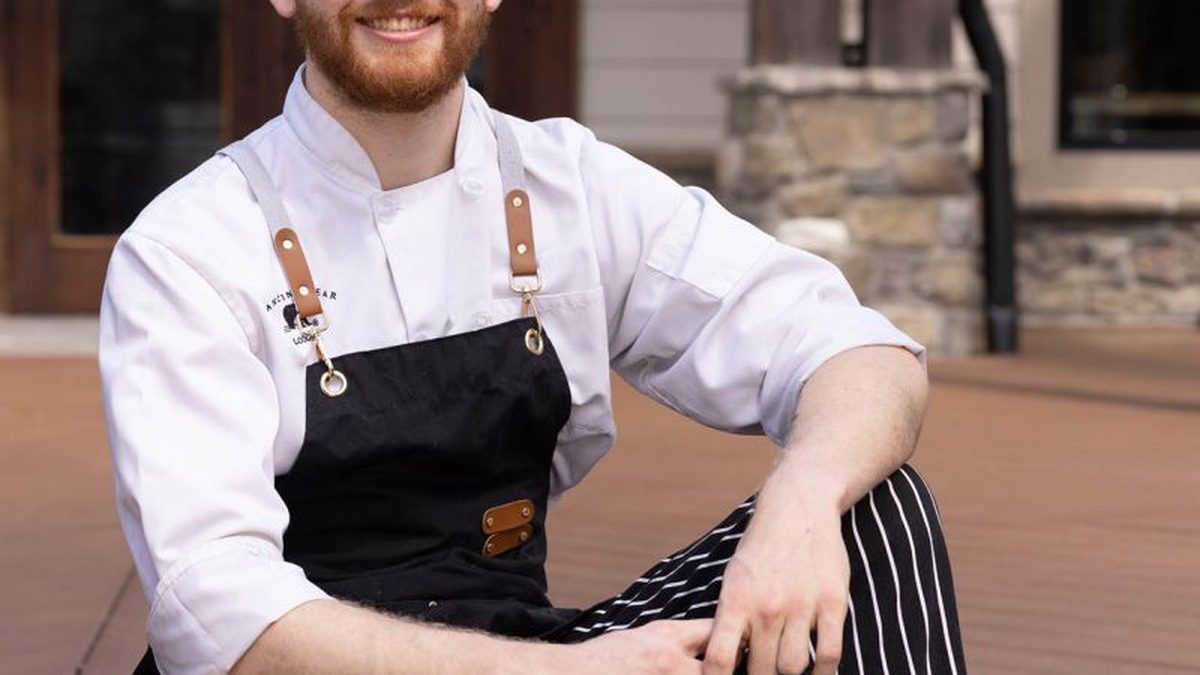
A drive to Townsend will bring you to Dancing Bear Appalachian Lodge, where the Bistro, set amongst the Smokies, serves up regionally inspired dishes in a rustic setting. Working behind the scenes here is Chef de Tournant Damon Smith, a Mount Juliet, Tennessee, native.
Smith started taking culinary classes when he was in high school. As a late teen, he began work in a commercial kitchen. “I fell in love with the atmosphere,” he says. When he was ready to head off to college, he sat in a San Francisco restaurant while on a trip—indulging in a chowder-filled bread bowl—and imagined his life as a chef. He decided then and there to pursue culinary arts, instead of a more traditional college path. “I always knew I wanted to do something involved in the arts, or something with a creative flow…just something I could be my true self in,” he says.
The youngest of six, Smith surrounds himself with creative and like-minded people who drive him to do his best every day, believing always that food is about more than just eating; it’s a way to show someone you care.
Smith builds his menus—like his entry for Top Chefs—using locally sourced ingredients and draws inspiration from their versatility. But if you ask him what his favorite ingredient is, he will undoubtedly tell you it’s love: “If it doesn’t have love in it, it’s not going to taste nearly as good.”
Appalachian Hot Pot
Containing Seared Ora King Salmon, Diver Scallops, Blistered Peppers, Roasted Carrots, Spring Peas, and Clam Chowder Broth, served with Crusty Sourdough.
Lemon Olive-Oil Pound Cake
Served with layers of Peppermint Icing, Whipped Cream, and Raspberries, and topped with Pistachio Glass.
→ Swipe for Next Story
FeatureMAY JUNE 2021
Deron Little
Seasons Innovative Bar & Grille
Story by Rebecca Whalen
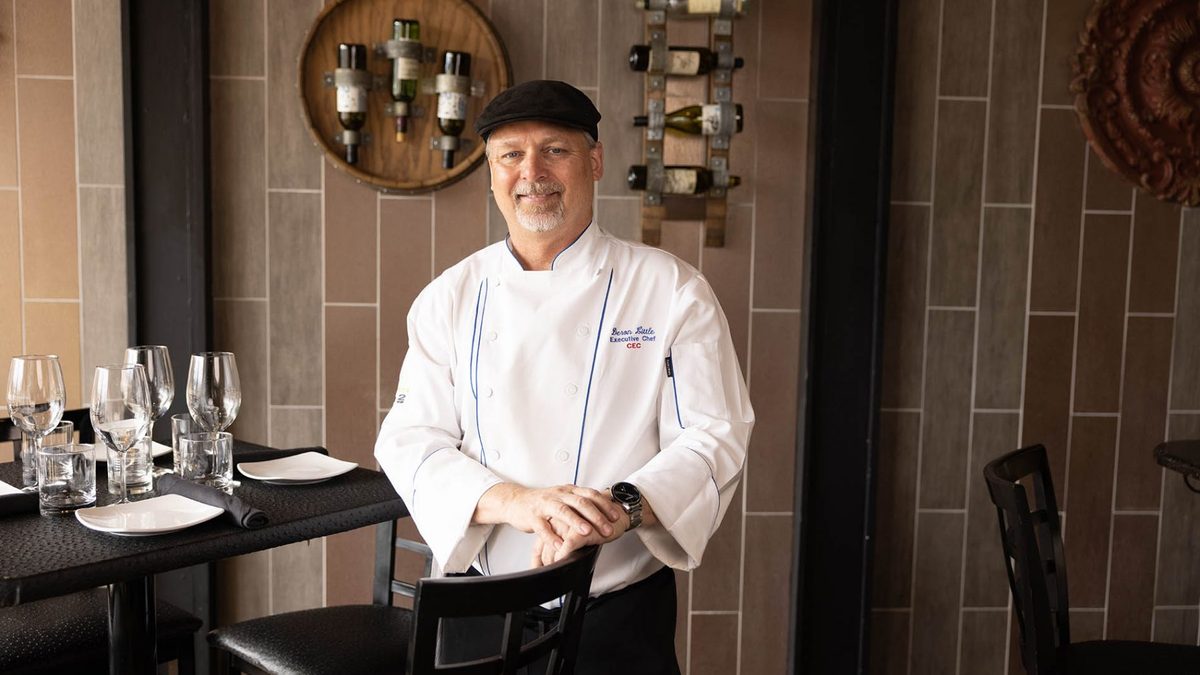
Chef Deron Little opened Seasons Innovative Bar and Grille in 2013 amidst a long career in the culinary arts. He combines seasonally inspired and classically prepared American cuisine.
A Yakama, Washington, native, Little actually thought he would become a professional motocross racer when he was young, but an injury caused him to stop traveling that path. With an open future ahead of him, his culinary story began in the kitchen of the restaurant his father managed. It was there, watching his father cook up steaks, that Little fell in love. “I still remember that smell,” he says. However, it was his mom who, he says, influenced him to become a chef: “My mom is a wonderful cook, one of the best cooks I’ve ever met.”
Early on, Little worked for a master chef in his hometown—one of only 18 in the world at the time—and says his eventual inspiration for the Seasons concept came from this mentor. “It was a real blessing for me to have the opportunity to work for him.”
Today, after 43 years in the culinary industry, Little believes deeply in what he calls the “true culinary experience” and approaches his menus—including those created for Top Chefs—hoping to instill fellowship around the dinner table. “It’s an emotional process,” he says. “It’s not only about the season, but how the season makes you feel.”
Wagyu Tenderloin
— 1ST PLACE WINNER —
Served with a Montrachet-Stuffed Morel Mushroom, Port Wine Prosciutto Demi, Benton’s Bacon, Caramelized Onion, Lyonnaise Potato, and a Lemon Asparagus Tower.
Chocolate Torte Tower
Served with White Chocolate Mousse, Macerated Raspberries and Vanilla Crème Anglaise, and topped with Fresh Mint.
→ Swipe for Next Story
FeatureMAY JUNE 2021
Jared Martin
Kefi
Story by Rebecca Whalen
Over on Jackson Avenue in downtown Knoxville, we find Kefi, Jim and Lori Klonaris’s Mediterranean restaurant rooted in classic and creative Greek dishes. And inside Kefi’s kitchen you will find Athens, Tennessee, native Chef Jared Martin.
Martin set foot in his first commercial kitchen when he was 16, serving in an ice cream shop. Six months later he shifted to cooking food, and it seems he never stopped. Martin spent time perfecting his craft in restaurants across the region, connecting with inspiring chefs and mentors along the way. But his introduction to fellow Top Chef Jonathan Gatlin 12 years ago was one that stands out the most; the two have been growing their careers side by side ever since.
For Martin, a lot goes in to creating a new dish, like the ones created for Top Chefs, but first and foremost is the season. “What kind of vegetables do I have available to me based on nature?” (Mushrooms are his favorite.) Protein—if he chooses to include it—comes next, followed by plating and efficiency of creation, an important consideration for any restaurant chef. And don’t be surprised if you hear him humming a Disney tune while he works; it helps him stay focused.
All of this comes together to create his menus. “I like to make people happy; I like to see people smile,” he says, “and that’s what has drawn me to this career.”
Prime Rib Eye
— 3RD PLACE WINNER —
Served with Blue Oyster Mushrooms, Fingerling Potatoes, Kasseri Cheese, Benton’s Bacon, Chives, Fried Kale, and Bulls Blood Beets.
Baklava
A traditional layered Phyllo Dough pastry with Pistachios and Honey, served with a scoop of Pistachio Ice Cream.
→ Swipe for Next Story
FeatureMAY JUNE 2021
Jeff Carter
Sunspot
Story by Rebecca Whalen
Nestled on Cumberland Avenue by the University of Tennessee is Sunspot. Part of the Burelson Brands team of restaurants, Sunspot offers up a combination of Southwestern, Caribbean, and Latin American cuisines. Behind the menu is Corporate Chef Jeff Carter.
Carter grew up in Mobile, Alabama, watching and helping his dad in the kitchen. It helped Carter develop a love for cooking, a love which continued throughout his life.
At 22 years old, Carter stepped into his first commercial kitchen, a newbie among the seasoned staff, but it was an experience that helped shape the chef he is today. Now a chef of 25 years and with a continued passion for his work, he is constantly looking to learn new skills and techniques to make his menus even better than they were before. “Few times you make something the first time and it’s spot on,” he says. “Always go back to the drawing board, back to the recipe to make it better.”
When not creating menus based on what is out in the garden—or preparing a menu for Top Chefs—Carter is home, with staples such as chicken thighs, olive oil, and soft butter in his kitchen. He is a dad to five who spends his free time woodworking. What started as a pastime making cutting boards has grown into a new side interest in furniture-making.
Shrimp Enchilada
Served with Roasted Mushroom and topped with Verde Sauce, Cotija Cheese, Chipotle Sour Cream, Pico, and Cilantro Lime Rice.
Chocolate Hazelnut Torte
Served alongside Vanilla Bean Ice Cream and topped with a Frangelico Caramel and Crushed Toasted Hazelnuts.
→ Swipe for Next Story
FeatureMAY JUNE 2021
Jonathan Gatlin
Vida
Story by Rebecca Whalen
Vida is Jim and Lori Klonaris’s newest fine dining venture in Knoxville, offering Pan-Latin dishes with accents of Asian cuisine. The man behind this new space’s menu is Chef Jonathan Gatlin.
A New Orleans, Louisiana, native who studied at Le Cordon Bleu College of Culinary Arts in Atlanta, Georgia, Gatlin has been working in kitchens for the last 21 years. Though if you ask him, he became a chef 15 years ago. At the beginning, Gatlin worked in restaurants for small stints, picking up the best traits from culinary teams as he formed his own version of what being a chef meant.
A former athlete, Gatlin brings his love of sports into the kitchen. “The kitchen feels more like a team,” he says. “You’ve got players in the game—some are stronger than others—and when the game begins, people walk in like a team to accomplish a certain goal.” As the “coach,” Gatlin ensures everyone understands the why behind the dishes they create.
Influenced by his Southern roots, Gatlin prides himself on taking the comfort foods that bring about nostalgia in those who enjoy them and putting a new “fine” twist on them. That—coupled with what is seasonally available and an understanding of the target audience—is what he considers when creating his dishes, including his Top Chefs entries. When not at Vida, you can find Gatlin home at the grill or enjoying time outdoors.
Seared Scallops
Served on top of Bamboo Rice and Sauce Piquant, alongside Pea Tendrils and topped with Fresh Microgreens.
Cuatro Leches Cake
— 3RD PLACE WINNER —
Served along with Strawberry Curd and Dulce de Leche, as well as Fresh Strawberries and Toasted Meringue.
→ Swipe for Next Story
FeatureMAY JUNE 2021
Robert McDonald
Bistro by the Tracks
Story by Rebecca Whalen
Bistro by the Tracks is a French-concept bistro combining contemporary and Southern fare. The restaurant is part of the Burelson Brands lineup of restaurants, and has Chef Robert McDonald III leading the culinary charge.
McDonald is a Knoxville native who began cooking in high school. A graduate of the University of Tennessee Culinary Institute, McDonald began working in local kitchens in 1999. His experience at a small grill in Fountain City made him realize that home was in the kitchen, and he worked his way up to run multiple kitchens in the region before finding himself at Bistro. “I like the fast pace, and I like the heat,” he says. And while his favorite dish to cook is a simple burger, he is also a fan of cooking soups and sauces, aspects of a dish that seem to always make it better.
McDonald bases his dishes, like those on his Top Chefs menu, on inspiring flavors. “I find something and I latch on to it, whether it’s a type of hot sauce or a random ingredient we come to or a produce item from the local farm. I will find that and let the mind go and draw the inspiration from that,” he says.
McDonald is humble about his skills, but even on late nights when he arrives home from work while his family is already asleep, you can find him cooking a late night meal for himself, simply for the love of his craft.
Rack of Lamb
Coated in a Soy and Sorghum Butter and served with Black Garlic Demi, Tri-colored Couscous, Preserved Carrots, and sprinkled with Ground Pink Peppercorns.
Peanut Butter & Jelly Cheesecake
Made with Crushed Peanuts throughout the crust and batter and topped with Pickled Macerated Berries and Peanut Brittle.
→ Swipe for Next Story
FeatureMAY JUNE 2021
Top Chefs 2021
A Celebration of Culinary Artistry
Story by Rebecca Whalen
The smell of fresh-baked muffins wafts out of the oven as I pull out a fresh batch. “Are they done, mama?” my four-year-old, Lincoln, asks as he patiently waits to taste his creation. Chocolate blueberry muffins. I have to admit, they smell divine. As I am shutting the oven, our publisher Nathan Sparks calls: “I’ve got an idea.”
This can only mean one thing: we’ve got a new project. And quite frankly, I’m always delighted to flesh out new concepts together. “We can’t meet in person for Top Chefs,” he tells me, “but what if we could still support our culinary friends this year?” My son’s eyes widen at the sight of his muffin cooling down. My toddler, Rylie, glances from him to the muffin and back again before reaching out yelling, “Eat!” I’m reminded of just how powerful an experience food can be, even at a young age. And as Nathan paints an image for me of his Top Chefs idea, I can almost taste the culinary masterpieces to come.
In a matter of days, we invite chefs across the community to send us their submissions for innovative entrees and decadent desserts. We then spend time in their restaurant kitchens, watching their artistry unfold as they craft culinary works from scratch.
The eight chefs and restaurants you see in this section gave it their all to showcase the best that Knoxville has to offer. In just six weeks, more than 1,000 Top Chefs specials were served, as you, our readers, dined and cast your ballots for your favorites. Our panel of celebrity judges also joined in on the fun, helping us spread the word by sharing their experiences through their platforms and casting their ballots alongside you. In addition, they were asked to rate their experiences in each restaurant.
Top Chefs has long been an opportunity to gather around the table, indulge in exceptional food, and celebrate our community. This year, while distinct in format, has been no different. I dare say, it has been more impactful. Thank you for joining us in support of this important local industry, asCityviewpresents Top Chefs 2021: Restaurant Edition. If you enjoyed this year, you’ll be super excited to hear what we have planned next. Entree Winners:SeasonsWalnut KitchenKefiDessert Winners:Cazzy’sSeasonsVidaExperience Winners:SeasonsDancing BearBistro by the Tracks2021 ChefsChefs
Deron Little
Annie Fletcher
Alex Gass
Jared Martin
Jonathan Gatlin
Damon Smith
Robert McDonald
Jeff Carter
→ Swipe for Next Story
FeatureMAY JUNE 2021
High Adventure At Crocodile Bay
Costa Rica boasts unforgettable fishing and ecotourism experiences for all who visit
Story by Nathan Sparks
For decades I have wanted to visit Costa Rica. It seemed that almost everyone I know had traveled there and loved the experience. So, when John Burrell, President and CEO of High Adventure Company, invited me to go on a scouting trip to check out a possible new opportunity for High Adventure Company clients, I was stoked. One thing I have learned this year is that if a location is on John’s list, it is a sure bet that it will be unforgettable. With that in mind, it was off to the airport.
After an easy ride to San José, Costa Rica’s capital, we jump aboard one of Sansa Air’s Cessna Caravans for the hour-long hop to Crocodile Bay Resort in Puerto Jiménez on the Osa Peninsula. As a pilot, I love small planes, and the view of the coast and Golfo Dulce, which separates the peninsula from the rest of the country, is spectacular. It sets the stage for a perfect arrival. It is a short two-minute ride from the local airport to the resort.
Crocodile Bay Resort is known for its sport fishing, but also for its ecotours. Today’s version of the resort is an unpretentious campus composed of a main building surrounded by lodging units, most of which are a few decades old. (This won’t be the case for long, but we will get to that later.) Upon arrival, we are greeted by owners and brothers Beau and Cory Williams and the resort’s front end manager, Juan. We have never met, but it feels as if we are old acquaintances. We settle in, indulge in dinner and drinks, and head off to bed. It will be an early morning.
The next day starts as planned at 5:30 a.m. with a breakfast of eggs Benedict and oatmeal, just the sort of hearty meal needed for this day. An hour later, John and I, along with Tania Tuttle, also of High Adventure Company, head to one of the resort’s Boston Whalers, and after a quick bit of bait gathering, we are off on the ride to deep water. Our hope is to catch some sailfish on a fly rod, and after a lifetime of fly-fishing for trout and smallmouth bass for me, it seems an almost impossible feat to imagine. The sailfish, part of the billfish family, is one of the fastest marine animals in the world.
After about 90 minutes, we are setting the outriggers and putting the bright colorful teasers into the water.
To catch a sailfish on a fly rod you first need to locate the fish and then tease it close enough to the boat to make an appropriate cast. We troll along, patient yet anxious. John climbs into the tower with the captain, scanning the horizon for any sign of activity. It’s not long before we raise a nice sailfish and Tania takes the rod, eager to land her first. We watch as the sailfish jumps magnificently trying to throw the hook while Tania battles to keep the line taut, John calmly coaching her. As she brings the fish to the boat, she holds its bill, and the smile on her face says it all. This remains our sole catch of the day, but between the excitement of our first catch and the views of Costa Rica’s coast, we can’t help but feel already invigorated by the experience.
The intensity of the sun can take it out of you at the latitude, so after a quick swim to cool off, I am happy to slide into the bar for cocktails with my friends before dinner. I once read that no problem arrives without a solution in its hands, and it is in locking myself out of my room, hot and ready to cool off and relax, that I connect with Olimpia. In my moment of minor distress, this wonderful woman smooths my ruffled feathers, tells me that she loves me—I think she says that to everyone—and that she will make sure that everything is okay. When that kind of emotion is genuine, even the most stressful of situations can seem to melt away in an instant. Olimpia not only loves her guests, but serenades them in a cappella versions of local songs. She is the perfect fit for the bright Costa Rican birds that sing the chorus with her. I am beginning to realize just how special this place can be. There is a certain harmony between the people and the environment. Costa Rica, in a sense, is like traveling back in time to a more balanced world. After the past year of constant warning about contagion, it seems being here has slowed me down enough to realize that heartfelt love is contagious as well.
I carry that feeling with me as I enter the bar in search of my friends. If you have ever been to a fish-camp bar, you know how truly magical it is. And although Crocodile Bay is far more than a fish-camp, the feeling of the group this evening is one that epitomizes that warm feeling you get when everyone seems to knows each other. Put a group of fishermen in a bar and it will not be long before the stories are flying and the bonds of new friendships are being forged. Today will be no different.
Sitting at the bar, I reflect on some of my past experiences with my new friends. I enjoy storytelling. Hell, it’s my life. But when John begins a tale, it seems as if even the birds quiet to listen. Everywhere we go, John seems to know someone, and they always seem to have some past experience in common. The stories are rich, filled with laughter and driven by vivid images of high intensity and great adventure. They flow like good bourbon, and you can’t help but be entertained.
The day’s fishing stats are up on the board, and the two gentlemen across the bar, James and Sean, seem to have set the standard for the day. But this is not a tournament, and I am enjoying their obvious enthusiasm for fishing, listening to their tales of past catches. The two are long-time fishing buddies who have been coming to Crocodile Bay to fish for around 10 years, and they are giving us some insight into what to expect the next day. We’ve made fast friends, and despite our slow day on the water, they assure us that tomorrow will be better. I love this about a true sportsman, the eternal optimism that tomorrow will bring that ultimate catch.
While sailfish were our species of interest on arrival day, they won’t be our only on this trip. Costa Rica’s biodiversity is unrivaled; National Geographic has called it “the most biologically intense place on Earth.” We get to witness elements of this fact firsthand, and on our second day, at the suggestion of our new friends, we head off in search of the roosterfish.
If you’ve never seen a roosterfish, it is quite the sight. Seven long spines protrude out of its dorsal fin. It’s aggressive and hard-hitting, but it makes for a memorable fishing experience. These fish can grow to be nearly 60 pounds in size, but you would never know its weight the way it jumps and darts about the water. This is my first time attempting to catch one, and I’m surprised to find that this gorgeous fish can even be caught on top water with poppers. For the less experienced, it can be a more fast-paced bite with the opportunity to learn to better handle a rod and reel. I am a reasonably experienced fisherman, but I have never seen a roosterfish. I am ready for the opportunity to catch a monster.
The bites are slow with no roosterfish in sight, so we motor in to about 100 yards off the beach, the ocean bottom 100 feet below us. We bait up and cast our lines. With plenty of live bait we spend the next several hours catching and releasing some nice roosters. Just as we thought it was over, one of the other Crocodile Bay captains who was fishing nearby floated us some more bait in a small net. We all enjoy landing several nice fish and eventually call it a day.
We have the opportunity to spend a little time with the resort owners, Beau and Cory, and I’m fascinated listening to their story. They first visited Costa Rica in 1992 on a family vacation that included three generations. I can remember a trip or two when my Dad’s father, Charles Garland Sparks, came along; it was always a treat to get three generations together. For Beau and Cory’s family, it was, in Beau’s words, an “unexpected opportunity for family bonding,” but that bonding was so rejuvenating that the family kept coming back. In 1998, their father’s 1,000-acre development near San Francisco was taken by eminent domain by the state for use as a landfill. It upset him so much that he took the money and the boys and moved to Costa Rica, a place he characterized as appreciating them being there. One of the ideas was to offer air conditioning, which at the time was not available at most Costa Rican fishing resorts. I guess that sometimes it’s the little things that make the biggest difference.
The brothers worked on the crews to help build the first phase of the resort, which is now home to the largest fishing fleet in the country. They currently have 50 boats and are growing fast. Right now, they are in the construction phase to add 100 new privately owned condos—or Rainforest Residences—as well as a new clubhouse, spa, pool, and other amenities. The overall operation, dubbed Botánika Osa Peninsula, will fly Hilton Hotel’s brand, Curio Collection by Hilton. Curio will rent the rainforest condos when not in use by the owner. (And let it be emphasized that this will not be a timeshare; rather it will be direct-fee, simple ownership of the units.) While this is a Hilton hotel, Aqua-Aston Hospitality, a Honolulu-based company that is now an indirect subsidiary of Marriott Vacations Worldwide Corporation, will be its operator. This is an unusual partnership, but one that Beau says will help them continue to receive clients from across the world.
With increased capacity will come a new world-class marina, with slips capable of handling yachts up to 250 feet in length. The current Crocodile Bay Resort will become Crocodile Bay Marina and will transform into a seaside village.
Beau relays all of this over a few cups of coffee. It’s the fish-camp feel again. Everyone, especially the owners, is warm and open to a good conversation. If you are looking for a vacation getaway with great management, this might be your ticket. But more importantly, if you are looking for a solid investment in a resort-type rental, I highly recommend giving Beau and Cory a call. The first of the Rainforest Residences sold out in almost no time, and I suspect the same will be the case on the remaining.
On our last day, we wake up early and enjoy a trip with ecotourism guide Dennis Valverde to a forest near Corcovada National Park, one of the most bio-diverse regions. Minutes into the drive, we already see two scarlet macaws feeding in the trees. Their colors are spectacular. We arrive at our first stop of the ecotour, which is a visit to Dennis’s family’s farm, a totally unexpected treat. We are greeted by his grandfather, a colorful looking fellow who I am sure has a story to tell. We immediately see several sloths including a mother and baby, white faced monkeys, and a virtual cornucopia of plants and insects. We hike about 30 minutes, before arriving at their gazebo. Dennis begins cutting a white pineapple which ends up being the best I have ever tasted. The white pineapple plant only produces one fruit in its entire lifetime. I savor every last piece. To top this visit off, Dennis’s grandfather brings about 20 pieces of sugar cane over, and after some whacking to break the joints, teaches John, Tania, and me how to extract the juice to make a delicious sugary drink. It is so reminiscent of a simpler time; check out the video of the process atcityviewmag.com/costarica.
From there we are off towards Corcovada. On the way, Dennis brings us by the most unusual tree I have ever seen. Made up of a latticework of small tendril-like trunks, it is easily 50 feet across at the base and shoots up hundreds of feet into the air. Standing inside of its lovely feet, you can feel its power. The forest here is so lush and the canopy is so dense that very little sunlight reaches the forest floor. It’s a biologist’s dream, and John, who is a wildlife biologist, is constantly comparing notes with Dennis. I listen and hope to pick up a new fact or two. Dennis, who is also a phenomenal photographer, shares with us many of his photos depicting everything from frogs to lemurs, some of which are pictured here.
The experience is so rich, but all good things must come to an end so we head back to Crocodile Bay for our final night. However, it doesn’t disappoint—how could it? At dinner, we meet local legend Todd Staley, the very first employee of Crocodile Bay, who joins us for dinner. Todd is not only a world class captain, but he also helps run La Federación Costarricense de Pesca, or FECOP, an organization dedicated to helping manage the Costa Rica fisheries and aid in policing illegal long-line activity in and near shore waters. The effects of this long lining practice can be devastating to the quality of life for billfish, and it’s good to know that they are actively fighting to keep the fisheries sustainable.
Fishing is one, if not the top, of my favorite things to do. And Costa Rica fishing is nothing short of amazing. However, I can’t stress enough how important it is to not miss out on the ecotours. Both are an essential part of any Costa Rica trip.
We only had a few days at Crocodile Bay, though I would have enjoyed having a few weeks instead.Cityviewis planning to go back on a combination photo safari and fishing expedition. If you would like to join us and be part of the creative team on our stories, please get in touch, and we will give you the details on this trip along with our upcoming African safari photo tour. If you just want to book a trip and want to be sure all the details are perfectly in order, contact the High Adventure Company. You can find more information on our website.
→ Swipe for Next Story
FeatureMAY JUNE 2021
Breaking Bland
Knoxville’s newest design star, Mary Welch Fox, brings her out-of-the-box approach to interior design to HGTV
Story by Marc Anthony
Knoxville native Mary Welch Fox had been looking for that big break. An interior designer who prides herself on bringing personality into homes, Fox has spent the last decade-and-a-half honing her craft and building her brand: Mary Welch Fox Design. From Colorado to New York City, then over to Chicago and—as of 2012—Charleston, South Carolina, Fox feels at home as an interior designer. Little did she know that her big break was on its way.
In 2017, she received word that two old classmates suggested her for an HGTV series. Now with seven Charleston-based episodes of her new show,Breaking Bland, under her belt, Fox (also a wife and mom of two) is awaiting a release date. With 2020 being 2020—and I’m not talking about hindsight—the show’s debut was pushed to 2021, but upon airing, will give viewers a glimpse into how Fox combines client personalities and her own personal creative artistic ideas, making this home renovation show different from the rest.
Marc Anthony:I always wonder about the people on design shows and if they’re messy, yet want to clean up other people’s stuff. Did you have a messy bedroom as a kid?
Mary Welch Fox:Well, I am an artist at heart, so yes, sometimes. Cleanliness is something I had to train [myself in], for sure.
MA:Tell me about the show.
MWF:The premise is to go into a family’s home where the family wants to do something different from the norm. I want to infuse their personality into their space to be uniquely theirs, not the run-of-the-mill, contractor-grade renovation.
MA:Tell me about your Knoxville connection, born and raised here? Is this where you got the nicknames ‘Mow Wow’, ‘Melchie’, and ‘Welcher’?
MWF:How did you know all those?
MA:Hey, I do my research.
MWF:Apparently! Yes, I’m born and raised in Knoxville, and most of my family still lives there. I spent the first 18 years of my life there.
MA:How did you get discovered?
MWF:I grew up with Angie Jedlicka, and she works for RIVR Media, which is based in Knoxville. She and I were best friends in middle school, and we went to different high schools, different colleges, and our lives went separate directions. But she and another friend of mine, Stephanie Ellis, both had mentioned my name to do a screen test to see if I would be a good fit for television. It was dear friends from growing up that teed me up and put me in this incredible position.
MA:Speaking of screen tests, you wanted to become an actress?
MWF:I did study acting and theater at the Lee Strasberg Institute in New York in my twenties. I don’t consider myself an actress; I’m an interior designer that likes to be on TV.
MA:Even though the show is based in Charleston, South Carolina, the crew that you have with you is a Knoxville-based crew?
MWF:A lot of Knoxville people came out to help film the pilot and the producer was from Knoxville. So it’s an all-Knoxville crew [which] made filming feel so much more at home and easy and special. It was nice to be surrounded by people from home.
MA:What was it like filmingBreaking Bland, sending the homeowner away and then seeing their reaction to your renovation?
MWF:Oh God, I cannot explain that experience. I cried every single time. It’s the coolest experience I have ever been through to be able to make the best gift in the world for somebody, which is also terrifying because they haven’t been able to see it throughout the process.
MA:Anyone kind of shrug their shoulders and say, ‘nice try’ or was everybody happy?
MWF:No. Hopefully, everybody was happy!
MA:It’s not every day that you have the chance to be on television, so how did you balance both the TV show filming and your business as an interior designer?
MWF:Balancing both was one of the biggest challenges of my life. Often the cameras would stop at 5 p.m. or 6 p.m. and I’d go straight to work for myself. Any days ‘off’ were dedicated to the show and maintaining my business as well. To say I was tired when I was done would be an understatement.
MA:How real are the time constraints that we see on docu-design type shows like yours? Any missed deadlines?
MWF:The time constraints are very real. There were a few missed deadlines that sometimes have to happen to ensure the build is done properly, but make no mistake about it: TV design/build is way faster than real life design/build. Also, I’m technically an interior designer. Interior decorators tend to just work with the interior decor. I have a degree in interior design, interior architecture, so my job is mostly centered around the interior architecture of a home. The decor is just the finishing touch.
Breaking Blandis one of 16 new series coming to HGTV. Fox’s show is described as being part of a new wave of TV shows coming to the network that “inspire people who want to reimagine their homes,” says Jane Latman, President of HGTV. “We’ve locked in a solid lineup of creative, innovative, and entertaining programming with design experts who are pushing the envelope with their distinct point of view.”
→ Swipe for Next Story
FeatureMAY JUNE 2021
Fighting Fraud
How resourceful scammers are stripping citizens of millions and what you can do about it
Story by Matthew McGarry
When Cityview publisher Nathan Sparks spoke with his mother recently, she was surprised to hear that everything was OK. Not long before she called, she received a frantic call from someone claiming to be her oldest grandson, and in a well-practiced, rushed manner, designed to make his voice hard to identify while drumming up the urgency and panic on the other end, explained that he had been arrested and jailed in New York. “But please don’t tell my dad,” the caller said. The caller promptly asked for her credit card information so they could post bail.
Her prompt call to her son was a smart choice. He called the number back, asking for more information, including the supposed attorney’s license number. He called the precinct closest to the number the caller gave. “They said, no, they’d never heard of my son,” Nathan says of his conversation with a member of the precinct. “I described what happened, and they suggested that, most likely, it was a scam.”
Sheriff Tom Spangler of the Knox County Sheriff’s Department says that he’s seeing a sharp rise in these types of crimes, in particular, those that target the elderly citizens of Knox County. “Crimes against seniors have always been out there,” he says, “and sadly, we know that much of it goes unreported to law enforcement.” Often, victims don’t want to admit that they’re victims, Spangler adds, “So, I do think that a lot of what’s going on with these fraudulent activities goes unreported. Even when it is, there’s not much that we, or any other law enforcement agency, can do about it. And that’s unfortunate.”
An early 2021 press release by the Federal Trade Commission shares that American consumers reported losing more than $3.3 billion to fraud in 2020, “impostor scams” being the most common type reported. That’s almost double what was reported the prior year. In Tennessee alone, the data shows that the FTC received more than 35,000 fraud reports last year—a fifth of that from the Knoxville metropolitan area—resulting in more than $40.6 million in losses.
The Grandparent Scam
While Mrs. Sparks had the smarts to reach out to her son, this scam unfortunately victimizes many people in her age bracket. “Elder financial exploitation”—fraudulent activity perpetrated against senior citizens—is an emotional and financial challenge that Americans are facing at an alarming rate.
In a June 2018 white paper issued by the U.S. Securities and Exchange Commission, author Stephen Deane called elder financial exploitation “a public health crisis, a virtual epidemic.” It’s somewhat prescient that Deane used the word “epidemic” to describe the level at which this fraudulent activity is happening. The COVID-19 pandemic appears to have given rise to fraud of all kinds, the grandparent scam being one of them.
Grandparent scams typically work somewhat identically to what Nathan described. According to the AARP’s Fraud Resource Center, the victim gets a call from someone posing as his or her grandchild, then explains—in a frantic-sounding voice—that he or she is in trouble: there’s been an accident, or an arrest, or a robbery. “To make the impersonation more convincing, he or she will throw in a few family particulars, gleaned from the actual grandchild’s social media activity.” The hook comes in the way of a plea to wire funds immediately with a final request to not tell mom or dad.
So why the elderly? Defined as people 65 years of age or older, the elderly population is growing at an exponential rate. It’s predicted that by 2050, the elderly population in the United States will reach 90 million, outnumbering kids for the first time in history; a very large group of vulnerable individuals over which a scammer can cast a wide net. Unfortunately, senior citizens make easier targets for scammers who can capitalize on a senior’s ability to make quick decisions, especially when feeling pressured. In addition, the wealth of today’s elderly makes them high-dollar targets. According to the U.S. Census Bureau, the median net worth for homeowners age 65 and older in the United States is $201,500. Add on the fact that scammers bank on the isolation in which most elderly live, and this leaves the nation’s seniors in a particularly vulnerable state for scam targeting.
The Utility Scam
Not all scams target the elderly, however. There’s nothing more nerve-racking for an individual than hearing their power will be shut off. And that’s why utility scams do not discriminate; they target individuals of all ages. And the Knoxville region is no exception. Individuals in our area are actively receiving a robo-call where an animatronic-sounding voice tells them that this is an urgent message claiming to be from the Knoxville Utilities Board informing them that their last monthly payment was not received and that their power is to be shut off sometime later that very day.
The caller goes on to tell you, the target, that “in order to avoid a shutoff and additional fees to return service,” you can “call this number immediately.” According to the Federal Communications Commission, using something called “spoofing,” scammers can even make the phone number they’re calling from look like a legitimate KUB number. Of course, when you call, a human being is there who is, not surprisingly, happy to help you make a payment and bring your account up to date, avoiding the shut off. Be wary. They’re good.
Stephanie Midgett, a communications analyst with the KUB, says they’re too smart to ask for credit card info. “These fraudsters want payment via a pre-paid card. While a credit card can be shut off and payment stopped, once the fraudster has the pre-paid card number, they have your cash,” she says. “They frequently call businesses and are smart enough to call at busy times, knowing that the business owner doesn’t want to risk losing utilities during that time.” Luckily, for some folks, the ask for a pre-paid card gives them pause and a reason to hang up.
Unfortunately, though, many do not. “It varies from day to day,” says Midgett, “but there are days when we’ll receive dozens of complaints about these calls. It’s important for our customers to know that KUB will never make a call like this. If there is ever an issue with a missed payment and the possibility of a service termination, that information is always communicated directly with the customer through their monthly statement. We will not call, text, or email.” While these calls may be reported to KUB, they’re often not reported to law enforcement.
Government Dollars Scams
After a year where so many people have had to file for unemployment, the U.S. Department of Justice warns citizens about fake unemployment benefit websites after receiving reports of their existence. Turns out, lots of people are getting calls informing them that they are eligible to receive government benefits, and they sadly end up providing their personal information.
Other government agencies are being used to target individuals as well. Spangler’s mom received one. He describes her experience as “frightening, which is the point, isn’t it?” he says. The call came from the Social Security office, or at least that is what they wanted Mrs. Spangler to believe. She was then told that there was an issue with her account and that by providing the caller with her Social Security number—right then and there, over the phone—everything would be taken care of. “She, of course, shared what had happened with me,” Spangler says. “The best we could do was file a complaint on the FTC website.”
While these scams scare citizens into forfeiting their information to a supposed government agency, other scams look to capitalize on the extra dollars that citizens have received this past year. “The time is right, unfortunately, for fraud,” says T. Scott Jones, partner in the Knoxville-based firm Banks & Jones. “With stimulus money, tax refunds, unemployment payments in hand, individuals can be easy prey for scammers who are selling home improvement services, automobiles, all sorts of things.”
Recently, Jones has seen a scam where fraudsters find individuals who do not have bank accounts. After obtaining their personal information, these scammers then use this information to create accounts for them, all of which, of course, lead to an account other than theirs. “They were defrauded on payments that were being made to them. It was pretty ingenious, and unfortunately, a lot of these scams are.”
Be aware. Stay safe.
In many cases, these scams aren’t done by someone on their free time looking to make a quick buck. “People need to understand and remember this important fact: these fraudsters are professionals,” Jones says. “This is what they do, and they’re extremely good at it. So, consumers must be very, very careful and certainly should never give anyone their personal information.”
Jones goes on to say that, from what he has seen, there is little that can be done, at least in terms of recovery. Once the victim gives a scammer their money, he says, “Well, it’s gone.”
That doesn’t mean that law enforcement and local governments cannot have a role to play. For Bill Bright, Assistant District Attorney with the Knox County Office of the District Attorney General, the best tactic to take in combating fraud is a solid partnership with law enforcement. “We work very closely and very well with local law enforcement,” Bright says. “The kind of fraudulent activity we see, which is often coming into Knox County from out of state, or out of the country, demands a proactive and highly coordinated response.”
The activities to which Bright is referring are centered, by and large, around check and credit card fraud, which he terms “sophisticated operations” perpetrated not just by random individuals, but by “associations” comprised of skilled scammers.
Bright says that credit card information, especially when the purchaser is sliding a magnetic strip card, can be stolen by a variety of methods; so can a checking account number and bank routing number. His suggestions? “Be cognizant of this. Check your bank statements and credit reports regularly, keeping an eye out for potential fraud. Don’t leave your checkbook, or checks that you’re mailing, where they can be stolen. Once the criminals have your credit card or checking account information and the fraud is committed, recovering those funds is virtually impossible.” Which is why Bright’s office focuses on working with law enforcement and catching fraudsters before serious damage can be done.
Spangler agrees. He hits the nail on the proverbial head when he says, “About the only action we can take is to be proactive, since not much can be done once the crime has been committed except report it. Seniors, in particular, need to be made—and kept—aware that these kinds of fraudulent activities are out there and that they need to take the right action. That is, to never give personal information to just anyone, especially if it’s over the phone, they want it right away, and there is no way to confirm their true identity.”
Spangler and his team are working to personally visit the senior living centers in the county in the hopes of educating the residents on this problem and the steps they can take to combat it.
Remember that old saying that if it sounds too good to be true, it probably is? Think about that next time someone tells you you’ve just inherited a million dollars from a long-lost relative in Uzbekistan.
→ Swipe for Next Story
FeatureMAY JUNE 2021
Grocery Gamble
Navigating nutrition requires attention and a commitment to better choices
Story by Susan Alexander
A trip to the grocery store is a veritable stew of decision-making. Broccoli or beans for dinner. Fresh or frozen fruit. Wheat, white, or rye bread. Beef or chicken. Sirloin or chuck. Fruity Pebbles or Lucky Charms. (The answer there should be neither.)
And there are lots of variables behind the choices we make. Personal preference. Cost. Brand loyalty. Environmental awareness. And, we have to assume, health.
Even within the healthy choices category, there are a variety of issues to be aware of. Added sugar. Saturated fat. Sodium content. Dietary fiber. Lactose. Gluten. And who could forget the myriad of ingredients that are unrecognizable or whose words are too long to pronounce? It’s enough to make a frazzled shopper grab a frozen pizza and run. But that wouldn’t be a good choice, for a variety of reasons.
For help, we turn to two local experts, Janet Seiber, clinical dietitian at the University of Tennessee Medical Center, and Lee Murphy, registered dietitian and senior lecturer at the University of Tennessee, to take us on a tour of the grocery store and discuss the decisions we’re up against. Pay strict attention; it’s a lot to, ahem, digest.
It’s hard to go wrong when we’re shopping for produce, Seiber and Murphy agree. In fact, we’d do well to shop that section more often and thoroughly, since most Americans don’t consume the five fruits and vegetables per day the USDA recommends. Shopping for a wide variety of colors there ensures a good range of vitamins and minerals, and fresh produce also provides the dietary fiber necessary for a healthy digestive tract.
Some nutrition experts encourage shoppers to consider organic produce, especially when it comes to items without a skin or peel. And remember, if an item is labeled organic, it meets the necessary criteria regarding pesticide use.
Breads and Bakery
The name of the game for good choices in breads and grains is more fiber and less sugar. Added sugars are one of the biggest nutritional culprits targeted by health experts today. They lead to serious health problems, including heart disease, diabetes, weight gain and obesity, according to the Centers for Disease Control and Prevention. Added sugars are those that are added to foods when they are processed. (Naturally occurring sugars, such as those in fruits and milk, are not added sugars.) As of this year, added sugars must be listed on food labels immediately below the Total Sugars line.
A rose by any other name would smell as sweet, but sugars by any number of names should still best be avoided. Those names include corn sweetener, corn syrup, dextrose, fructose, malt syrup, maltose, sucrose, honey, and molasses. Cookies and cakes and other such desserts are usually laden with added sugars and shouldn’t be part of a daily diet.
As far as breads, Seiber says to aim for at least two grams of fiber per serving and little or no added sugar. Whole grain or whole wheat should be one of the first items listed in the ingredients list. What about multigrain? Doesn’t mean a thing, she says. As far as gluten, it’s only important to avoid if you have celiac disease or a gluten sensitivity. There’s no need to avoid it for general health purposes.
Dietary fiber is also the reason why nutritionists favor brown rice, whole wheat pastas, steel cut oats and other whole grains over their processed, whiter counterparts. Besides keeping things moving well digestively, fiber also slows the rate at which sugar is absorbed into the bloodstream. That keeps your blood glucose levels from rising too fast, such as when you’ve eaten a sugary treat on an empty stomach and felt somewhat off afterward.
Saturated fat—the kind that solidifies when it cools, like bacon fat or the trimmings from a big juicy ribeye—is the culprit in the meat department. However, it is easily avoided—or at least minimized—with smart choices. Choose leaner cuts—loins and rounds—rather than the heavily marbled or fatty chucks and shoulders. In ground meats, aim for something around 90 percent lean, Seiber says. And remember, a serving size of protein is only about three or four ounces.
Seafood is an important element for a healthy diet too, and two servings per week are recommended. The fat that is in fish is omega 3, Seiber says, and that is anti-inflammatory. Because Tennessee isn’t a coastal state, Seiber recommends using fresh fish within a day or two of purchase or buying it frozen.
Other concerns with proteins involve how the animals or fish are raised, and two Knoxville chiropractors who incorporate nutritional advice into their practices warn about the chemicals that can be found in grain-fed meats and farmed fish.
“There are hundreds of studies that link commercial meats with cancer and heart disease,” Dr. Jack Parrish of Victory Health Center told a group of adults who’d gathered for his nutrition class. “They feed grain to animals that were created to eat grass. This changes the fatty acid ratio and denatures good fats, which leads to modern day disease.”
Dr. Pete Sulack of Exodus Chiropractic shares similar views. “When you eat fish,” he says, “the reason you do is the omega 3 fatty acids. Fish in the wild eat algae, but farmed fish do not, and that algae is important in the production of the omega 3s.”
Eggs and Dairy
We’re back to the hazards of saturated fats in the dairy department—those fats that solidify when solid, on a dish or in our arteries. Butter and cheeses are bad boys for saturated fats, so use them sparingly, Seiber suggests. Margarine has its own problems; stick margarine tends to include hydrogenated oils and trans fats, which are no better.
Low- or no-fat milks are the smart choice—or unsweetened non-dairy “milks,” such as almond or coconut. Yogurt is good for digestive health; Greek yogurt has had more liquids drained off and contains more protein and fewer carbs. Lots of yogurts have added sugar or sugar substitutes, so be aware of that.
Eggs are a good source of protein; Sulack prefers cage-free organic eggs, which, though more expensive, contains higher levels of amino acids and proteins, he says.
Processed Foods
We’ve all probably heard that the healthiest way to shop is to stick to the outer perimeters of the grocery store—the produce, breads, meats, and dairy sections, specifically. But most of us do venture into the center aisles where the processed foods reside. Here are the culprits to watch out for:
Sodium:Raises blood pressure. Try to limit sodium content to 350 milligrams in a food serving, says Seiber. Daily intake should be no more than 2,300 milligrams total.
Calories per serving size: Calories per serving size are very important to consider. Moderately active women should eat about 2,000 calories per day; men should eat about 2,600. To lose weight, subtract about 500 calories per day.
Sugar and artificial sweeteners:We’ve already discussed the need to limit added sugar. The same applies to artificial sweeteners. A few servings a day is fine, Seiber says, but be careful about consuming excessive amounts.
Chemicals:Processed foods contain lots of additives that flavor, preserve, thicken, blend, and color foods, and the FDA studies, regulates, and monitors them for safety before allowing their inclusion. Still, many of them may not be great to consume in large quantities. Good rule of thumb for the most cautious of consumers: if you can’t pronounce it, don’t eat it.
Murphy points out that ingredients are listed by descending order by weight, so if sugar is listed way up top, put that potential purchase back on the shelf. “There are some ingredients that most people might want to watch for in general,” she says, “like high fructose corn syrup and hydrogenated oils, but in my opinion the bigger issue is to try and limit sugar and less desirable ingredients as the number one or two ingredient on the list.”
The Bottom Line
Nutrition can be confusing, and sometimes it seems the advice coming from the experts changes minute by minute. Murphy doesn’t disagree. “It’s like with coffee,” she says. “Some studies say it’s going to make you live 1,000 years; others say coffee’s going to kill you. People choose to believe the study based on if they like coffee.”
The bottom line, she says, is that America’s big problem with food is eating too much of it—or too much of the wrong stuff. Weight gain and obesity is the problem we most need to address.
“Look at the serving size first,” she says of studying food labels. “If you’re eating three servings, the rest of the information on the label is irrelevant.”
Then look at the fiber content—the more the better—and limit the sugar content. And don’t forget to head out for some daily exercise.
“Of course we want people to eat right,” she says. “But if we get overwhelmed, the primary focus should be serving size, calories and fiber, and exercise.”
→ Swipe for Next Story
FeatureMAY JUNE 2021
Metal Work: Blacksmiths
Knoxville makers find flexibility is steel’s greatest strength
Story by Susan Alexander
Ask the average Joe to describe steel and expect to hear some of these words: Cold. Hard. Tough. Unyielding.
But ask the men and women in Knoxville who use steel and other metals to make artistic sculptures and functional household goods, and you’ll hear a different, and unexpected, set of descriptions: Forgiving. Flexible. Easy to fix mistakes.
Karly Stribling uses that forgiving quality as she shapes chandeliers and railings, incorporating some femininity into her creations. Mary Ruden does different sorts of work, assembling large metal outdoor sculptures for public art spaces and bronze busts to remember important women in history. Kevin Johnson enjoys the flexibility metal brings to the pieces he customizes for people’s homes—but no swimming pool fences, please.
These three metalworkers are just a sample of the talented men and women who inhabit Knoxville’s robust maker community. More can be found online at The Maker City’s website,themakercity.org, or that of the Foothills Craft Guild,foothillscraftguild.net.
Mary Ruden
A need for space and a passion for the flora and fauna of the Great Smoky Mountains brought Mary Ruden to her current home in Sevier County. A Chicago native who’d been working in Miami, Florida, Ruden is a self-proclaimed “orchid and plant nut” who was attracted to the diversity of the park’s plant life.
A former college art instructor, including at Pellissippi State, Ruden pursued sculpting in metal because it’s an unusual discipline: “I wanted to do something different. There are a million painters out there; not everybody can work in metal.”
In addition to plant life, Ruden is inspired by women’s history and is committed to helping historic figures be remembered. A Ruden original bronze bust of Lizzie Crozier French, a women’s suffragist, is installed in a city hall in North Carolina.
Her work is also represented in several outdoor public art installations around the country. Her large outdoor work is displayed on the Belt Line in Atlanta, and a sundial featuring a portrait of Albert Einstein sits outside the entrance to the new American Museum of Science and Energy in Oak Ridge. She even decorated a cow when Chicago celebrated its history as a beef supplier with a plethora of cow sculptures around the city.
“I think a public art piece reaches more people,” she says. “If you want to influence people, you need to put up a big flag. Public art is the way to do it.”
Ruden creates her work out of a large studio in Sevier County, complete with a crane to help her navigate around her work. When she isn’t working in metal, Ruden also quilts and paints. Her website ismaryruden.com.
Kevin Johnson : The Iron Studio
Kevin Johnson got his start in metalworking with his dad in California. At age 14, Johnson began making wrought iron fencing for their home, and soon friends and family began hiring them for their iron fencing needs. Perhaps it was too much of a good thing: fencing is the one thing he doesn’t like to do out of his business, The Iron Studio, in West Knoxville.
Johnson, a mechanical engineer by trade, came to Knoxville as a consultant for IBM knowing his contract was short-lived. He started moonlighting in metal and has been doing it full time since the end of 1993. He creates vent hoods, benches, fireplace screens, chandeliers and other custom work, initially from his home and now out of a commercial space on Cogdill Road.
“I like not doing the same thing every day,” he says of his work. “I like working with metal; it’s a very forgiving medium. And not a lot of people can do it, not that many people have welders and forges.”
Johnson has completed several commissions for Blackberry Farm and Blackberry Mountain, including fireplace screens, a 274-bottle wine rack for a private home and work on a wine cellar at The Barn at Blackberry Farm. His three employees include his daughter, Kortlyn: “She’s a great craftsperson.” You can find more about Johnson’s work attheironstudio.com.
Karly Stribling: Soil and Steel
Karly Stribling started metalworking as a high school student in Louisville, Kentucky, and never stopped. She majored in sculpture at the University of Tennessee. “Metal seemed to be what I excelled at and enjoyed,” she says. “It’s a very powerful material, and it lasts. It’s also very flexible and forgiving. I try to bring a femininity to it. I feel like I have something different to offer.”
Stribling does more individual work than corporate, she says, both artistic and functional. “I really enjoy designing. It’s all about the balance between being able to make what I want and what the client wants as well.”
A recent project took roughly half of the year of the pandemic to complete, she says. It was a sculpture memorializing singer-songwriter David Olney, who died in early 2020. “It was a fun challenge in that the client wanted a six-foot-tall visual interpretation of one of his songs.” She recently installed it in Santa Rosa, Florida.
Stribling works from her home in Knoxville, and while it hasn’t been easy balancing work, family, and staying sane, Stribling says she feels lucky. “I was able to have a new metal shop built on our property. I had been working in our very small garage, and now I have a space that makes my heart skip a beat every morning when I walk in. I am able to do a lot more—and different kinds of—metal work.” Her website issoilandsteel.com.
→ Swipe for Next Story
VeteranMAY JUNE 2021
Tip of the Spear
Service as a U.S. Marine helped Bob Sparks rise from rural Appalachia to a life of business and personal success
Story by Phil Newman
When Bob Sparks enlisted in the U.S. Marines in 1961, the 17-year-old out of southwest Virginia’s Appalachian Mountains quickly discovered that he was better equipped for basic training than many of his fellow recruits at Parris Island, South Carolina.
“Having grown up outside, hunting, trapping, fishing, farming—it was a big benefit,” says Sparks, seated at a table in his property-management office off Northshore Drive in the Rocky Hill area of Knoxville. Several military awards and mementos occupy a nearby shelf. “I had a lot of the natural skills already, to be able to shoot pistols and rifles and become known as an expert marksman.”
Fellow enlistees and officers alike marveled at how quickly Sparks excelled. His skills had not resulted from mere hobbies or weekend pursuits; they had been the key to his survival as a boy and a teen.
Born in 1944, Bobby Eugene Sparks was the seventh of 11 siblings in rural Tazewell County, Virginia, (not the Tazewell we’re familiar with in East Tennessee). The family looked after each other and “produced about 85 percent of everything we ate or used,” Sparks says. His grandparents owned three houses side by side, one of which was home to the elder couple; one to an uncle, aunt, and four cousins; and the other to Sparks’s brood. There was no running water, no indoor plumbing, no heat on cold nights other than what the stove could generate.
Sparks’s father was a coal miner, “when he could get work,” his mother a hard-working restaurant cook. “We had kind of a sparse upbringing,” Sparks says. “We farmed enough to can and preserve several hundred jars of food every fall, which we needed just to get us through the winter with that many kids. I guess we were poor, but we didn’t know we were poor.”
The youngsters roamed the woods hunting wild game with small arms and fishing for supper. They sometimes ran across a moonshine still or two tucked behind a hill or hollow.
In many ways, such a boyhood was idyllic. But when Sparks was 11 years old, tragedy struck. His mother suffered a massive heart attack in the middle of the night, and suddenly she was gone. The loss was devastating. Sparks recalls that his siblings helped make life bearable as they worked hard to continue providing for the family’s needs.
As Sparks’ tale unfolds, similarities to the bookRocket Boys(and its Knoxville-connected film,October Sky) come to mind. Like Homer Hickam Jr., Sparks seemed destined for a job deep in the coal mines after high school. He made a patriotic choice to circumvent that inevitability.
“I left school my junior year to join the military,” he says. “I went in 16 days after my 17th birthday. It was a great opportunity to get away from where I grew up because it was coal, just coal. Mining was the only business we had back then.” Sparks had no interest in following his father and several of his brothers into the mines. (As a teen, he had also helped several other siblings travel around constructing Jim Walter modular homes.)
Sparks says he “wanted to serve the country and make it a better place, which I think we did.” He opted for the Marines “to be in the front. They were the tip of the spear, always the first to go in. I wanted to be part of a solution, to get something done.”
When Sparks joined in 1961, tensions in Southeast Asia were simmering toward what would become America’s engagement in Vietnam, which began in earnest when the first Marines landed on the beaches near Da Nang in March of 1965. Sparks would not be called to serve there; instead, he would be stationed in Okinawa and train troops who were sent from there into the fray of Vietnam.
After 16 weeks of basic and intensive training at Parris Island, Sparks, a combat engineer, was assigned to help build an airstrip at Marine Corps Air Station Cherry Point in North Carolina. He was later transferred to California, where he served in the 1st, 3rd, and 5th Marine divisions, and then shipped out to Okinawa for a year-and-a-half tour. There he ran the armory, trained fellow Marines, and, in his free time, worked to become a 2nd-degree black belt in karate. Later, he was stationed in Puerto Rico, where he helped build an airbase.
As he talks about his path through the military, Sparks is low-key and easygoing—until the subject of the training comes up. “My ego says that I was better to train people than I was to be shot at, and I guess that saved more people by preparing them for battle.”
Asked about some of the Marines he trained who fought in Vietnam, Sparks pauses for a few moments. “I’ve got a lot of friends whose names are on that wall,” he says quietly, referring to the Vietnam Veterans Memorial that opened in Washington, D.C., in 1982.
And then he looks down, reflects silently for a minute that stretches into two, and excuses himself for a break. When he returns, he sits back down and says, “Sometimes I have some memories, I guess.”
After he was honorably discharged in 1967, having achieved the rank of Lance Corporal, Sparks returned home to southwest Virginia for a short time to “sort of clear my head,” he recalls. Knowing and training fellow Marines who had died in combat weighed heavily on him.
Six years had passed since his enlistment. He was 23. He walked along the creek beside his family’s home, the same creek from which he had carried water for bathing. He crossed a narrow bridge and meandered along another creek where he had fished to help feed his family. He walked through the woods where he had hunted and trapped game. He lingered at his grandmother’s well, where the Sparks children had trekked to fetch water and carry it back to the house for drinking and cooking.
He let the familiar environs and the soft mountain air ease away some of the horrors of war. And when he was ready, he turned the page to a new chapter of his life.
With his hardscrabble early years and toughness as a Marine, Sparks wound up working in collections, tracking down loan payments, sometimes in rough parts of towns. “I guess I wasn’t smart enough not to go into areas that I shouldn’t have,” he says.
Later his work in financial services took him from Virginia to Florida, Georgia, and Alabama. “I was, what they called, ‘the collector’ because the company I worked for would lend money to smaller companies. And if they got delinquent, I would travel to those offices, usually with a letter from the president of the company that said, ‘You’re fired.’ I would take their keys. Sometimes we retained some of their staff, and sometimes we’d fire the whole office. And then I would recruit people and train them to take over that office. I did that for several years.”
He then ventured to Indiana where he finished college at Ball State University—the last of five schools he had attended during and after his military service after earning his G.E.D., thanks in large part to the G.I. Bill. His degree was in teaching. But in the early 1970s, Sparks purchased a real estate firm, then a tech company, and grew his knowledge as a businessman.
Along the way, he began handling leases for outdoor-advertising companies. He met and married his second wife, Sally, in Kentucky, in 1988. A year later, Lamar Advertising Co. asked Sparks to head up its Knoxville office, so the couple moved south. Sparks retired from that role in 1998. In 2002, he bought a Century 21 franchise. “We took a company that was producing $200,000 in annual revenue and grew it to $1.3 million,” he says. They sold it in 2017.
Today, Sparks works in property management and shares space with Sally, an accomplished Knoxville-area Realtor®. Some say that Sparks bears a resemblance to the Dos Equis “Most Interesting Man in the World,” and it’s fair to say that Sparks has navigated his share of interesting twists and turns.
In his three-plus decades in Knoxville, Sparks has become deeply involved in church, civic, and charitable efforts. “The atmosphere in Knoxville is pretty relaxed,” he says. “A lot of people want to help. We’ve served on several boards, and volunteers are easy to get. People want to be your friends here, so it’s a good place to live.” Making it even sweeter: Sparks’s three children from a previous marriage all live in Knoxville. “All of my grandkids are within five miles of me.”
Sparks is a card-carrying member of a gang dubbed the ROMEOs—Retired Old Men Eating Out—who often gather at Mimi’s Café in Turkey Creek and at other spots to share stories, jokes, memories, and friendship. Not all, but many, are fellow Marines or other military veterans. The fellowship they share helps Sparks remember the sacrifices they and many of their brothers and sisters have made for the nation they love.
“I’m very, very proud that I had the opportunity to serve,” he says. “Yes, sir. I’m very proud that I did my part to take care of our country. And it made me a better person for sure, because it made me more responsible, more in tune with other people’s needs than my own.”
Serving was an honor, he says. “It gave me an opportunity to grow, with the discipline that they gave me. I think it’s a wonderful opportunity for young people to go into the service and figure out what they want to do in life.”
Becoming a U.S. Marine carries with it “the pride of the uniform, and training that made you what you are. We were the spear point; that’s the purpose of the Marines.”
Sparks looks back fondly on the education he received and the confidence the military instilled in him. “I was privileged to sit at the table with ranking officers and be part of things that gave me a lot of satisfaction, that I was elevated from a poor boy in Appalachia up to those important places.”
As the conversation winds down, Sparks apologizes for the emotion he had displayed earlier. Not at all, he is told. He has no reason to apologize. He is human. He lost friends who gave their last full measure of devotion. He has more than earned any feelings he might experience, and every tear that might fall—even if they were to fill the buckets he once toted to his grandma’s well and to those bubbling creeks of his wild, mountain youth.