Over 60 years ago, Yogi Maharishi Mahesh predicted one percent of the population practicing transcendental meditation would measurably improve the quality of life of a whole country’s population. Studies seem to bear this out, and the practice has been continually evolving. Research documented a 16 percent reduction in crime and homicides, and the scientific community agrees the effect is real.
During COVID-19, a group of five New England hospitals employed the “Heal the Healers Now” program, using transcendental meditation to help relieve stress and anxiety in health care workers.
Transcendental Meditation might be a bit much for some, so baby steps, right? Simply getting our thinking correct can do wonders. Zig Ziglar, the eternal optimist, once said, “Positive thinking will let you do everything better than negative thinking will.” But it really takes more than just positivity. It takes sitting down, making a plan, and writing it out. Let’s explore that idea.
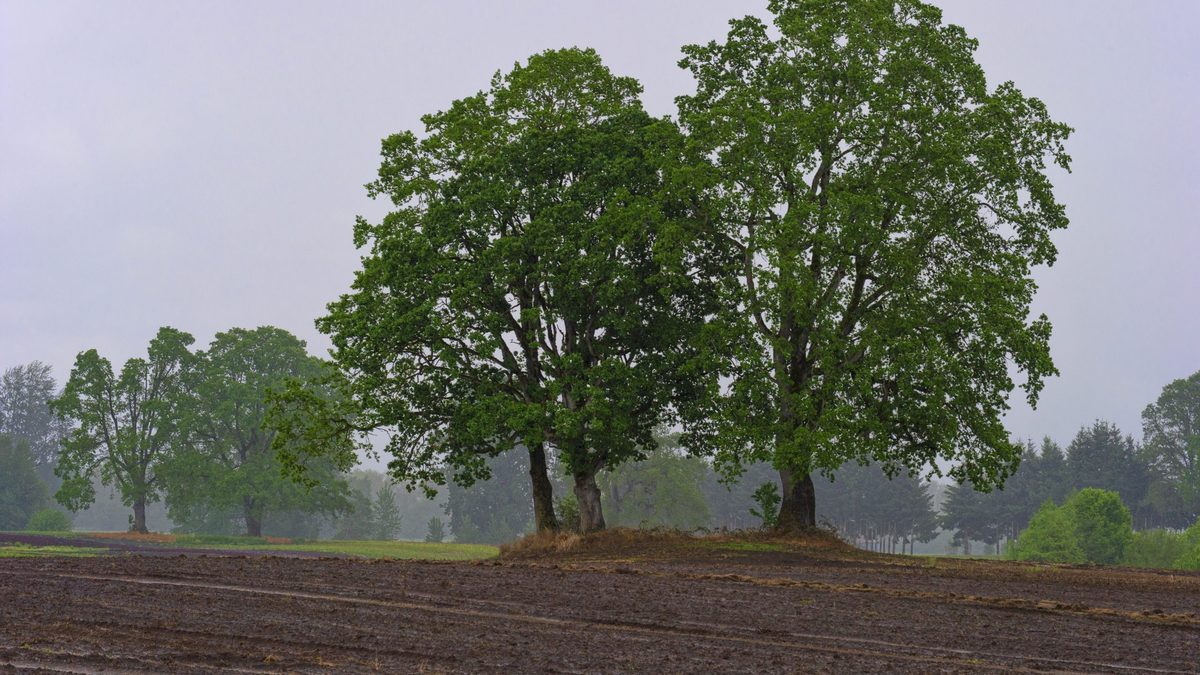
Living an inspired life requires balance in all areas: business, home, social, physical, mental, and spiritual. These are really like the limbs on your tree of life, so to speak, so if nothing else, draw a stick tree and make these six areas your main branches. Then you can hang your important items on as smaller branches and leaves. Now you have the start of something that you can look at and review each day. If you add to it each day, by the end of the year you will have your own forest of dreams.
Bobby Drinnon, one of my mentors, and I spent a fair amount of time discussing the difficulty of remaining balanced. I can recall one day when he challenged me to try something new: “For the next month, love everything, every situation and everyone that you find yourself exposed to with as much heartfelt love as you can muster.” I admired and respected Bobby as much as any person I have ever known; I accepted. After all, how hard could it possibly be to have a month of total love?
Well, I found it to be quite stressful as I dealt with the conflicting emotions of my normal behavior contrasted with full-time love. After all, what do you project to the driver in front of you who is going too slow or the one who is tailgating you, literally trying to push you off the road? I was lovingly exhausted before I made it from his house to the main road. I laughed and wondered how I would ever make it for 30 days when it had only been 30 minutes. I scratched my head in bewilderment.
Bobby said that if I would go into every situation filled with hope and joy that I would see an obvious difference in outcomes. I was, of course, skeptical, but stayed the course and—for the most part—did it with a smile on my face. The difference was truly amazing! Isn’t learning to love really learning to be positive even when you find yourself in uncomfortable situations?
To me, what I have shared is a truth, that focused, positive thought will have a positive impact on the world around you. Love and you will be loved back; conversely, hate and you will be hated in return. Is it any wonder the state to which much of society has fallen? So many are bombarding others with doubt, fear, and anger. It surely doesn’t take a lot to offend our fellow humans these days.
So, I ask, if one percent of the population can change the outcome for the whole country with positive meditation, then what happens if a majority of the population harbors outrage? We desperately need to chart a new course. We need to regain balance in our lives and find a way to love our fellow man even when we don’t always agree. Find the middle and be happy that we have something that works.
Bobby’s last texts to me came from his hospital bed during his fight with stage four cancer. He wrote, “God is still running the universe, and he will take care of us.” In his final text, he told me: “You can do one important thing for me. Learn to really love, Nathan, and use the power he gave you as the gift it was meant to be. It’s all I ask.”
Tears fill my eyes every time I read those words from Bobby. The reality is that it is a struggle to love everything. But I really do try my best every day, just as Bobby asked. I’m not sure I can ask much more of myself than that.
So here’s where you come in. I would like to challenge you to accept Bobby’s challenge alongside me. This challenge doesn’t have a timestamp. It begins now as you read these words and will continue for the rest of our lives. Because the need to love and be loved doesn’t end. It is an inherent part of who we are as humans. And it is our responsibility as members of humanity to take care of one another, regardless of how different we might be.
Let’s spread this challenge far and wide. Share it on social media (#bobbyschallenge), tell friends about it, challenge your family, your kids, your colleagues. Love unconditionally today and everyday. And even after you slip up, as we all inevitably will, just remind yourself that love is always possible and try harder the next time.
Here’s to a 2022 rooted in respect and kindness for the world around us. May love and light fill your world!
→ Swipe for Next Story
Arts & CultureJANUARY FEBRUARY 2022
A Calming Palette
Michelle Barillaro draws viewers in with abstract cold wax art
Story by Rebecca Whalen
Michelle Barillaro can still vividly remember receiving her first set of oil pastels when she was seven, along with a special coloring book she designated only for them. She can also remember how it felt when someone used a different medium in the book. “I was not very happy,” she says with a laugh. But because of her passion and interest, Barillaro’s mom enrolled her in some art classes at the community center, which spurred a future life in art.
Art was in her DNA. Visiting her dad who lived in Spain for a while, Barillaro felt drawn to the museums there; the buildings seemed to speak to her. She attended the University of Tennessee to study architecture, where she would fuse that interest in art with the knowledge of building structures. She’s been working in the field ever since.
About four years ago, Barillaro reintroduced herself to art as a hobby. She dabbled for years in several mediums, but after enrolling in a few classes, her talent seemed to flow naturally. She began painting in earnest, picking up new techniques and mediums along the way. She found her home quickly in abstract art. Aside from oil paint, Barillaro focuses much of her art on cold wax. “You mix it with the oil paint, of equal proportion, and then spread it on your wood panel,” she says. “Layer it, texture it, carve it, and you just get some really cool results.”
Her work has a certain color pallete, and that’s not an accident, she says. “They’re all variations of what I like, the turquoise, the beachy colors, but usually always with that pop of orange or red or chartreuse.” Her pieces start with a “punchy” color as their base, then are covered with more muted colors, pulling that original color out as she searches for the perfect composition.
Along with original work, Barillaro creates commissioned art, often inspired by a photograph or space shared with her by a client. She also teaches a monthly workshop at her home studio for those interested in learning the cold wax method.
Behind the music with ‘America’s New Romantic Piano Sensation’
Story by Rebecca Whalen
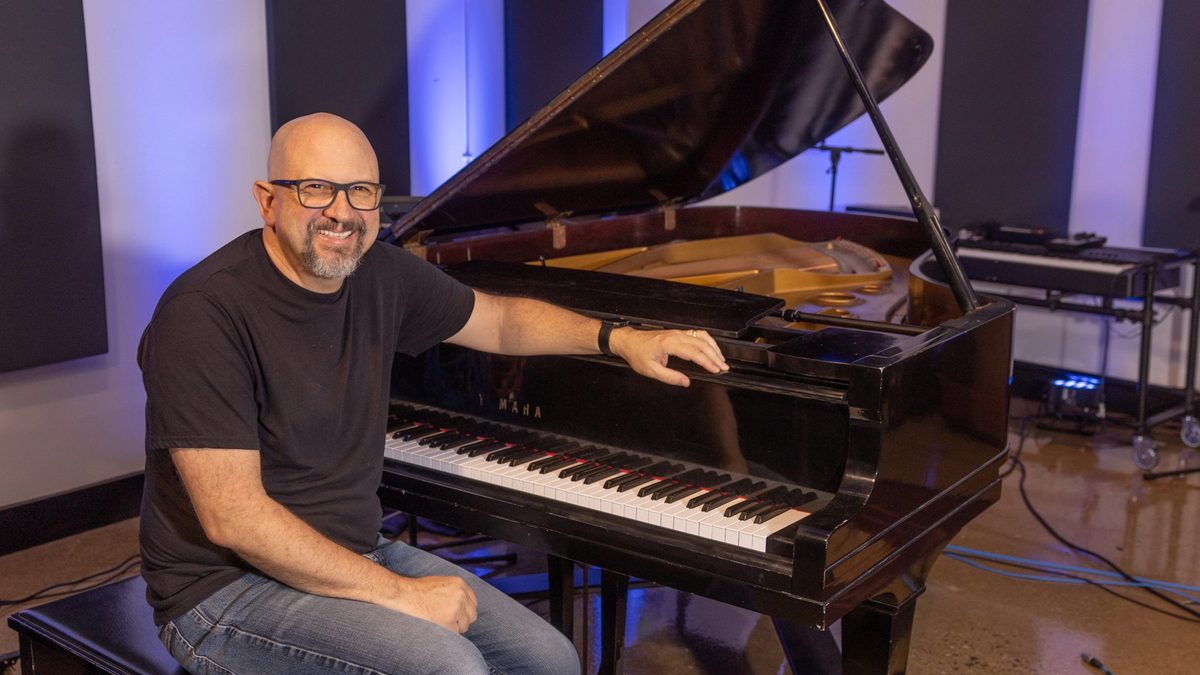
If you’ve ever seen him on stage, you know that Jim Brickman is a light hearted performer. He appears genuinely happy to be there, happy to share his music with the audience, and happy to have his friends come out and sing with him as he plays. He pauses between songs often to tell anecdotal stories about his life and experiences with other performers. But when he turns his attention to the ivories, there’s not a sound to be heard in the entire auditorium except for those of his crisp, perfectly executed notes. The audience fully caught up in the music. Brickman understands how to engage with the audience; he is a masterful performer in all respects.
We caught up with Jim prior to his concert at the Bijou in December to talk about how he began this life in music and what’s ahead for this talented musician.
Cityview: What does it feel like after all these years to sit down at the piano and do the thing that you love every day?
Jim Brickman: It feels like a conversation. It feels like you’re getting together with your friends. It doesn’t feel like a car, something that you necessarily have to concentrate on or perfect to a technical standard; it comes out very emotionally. So it’s very comfortable. I don’t get nervous about it or like I’m not proficient enough for it or something like that. It feels very natural, like what I’m supposed to be doing and not like any of it is forced or because I have to.
CV:It must be such a wonderful thing to spend your life doing the thing that you love.
JB: I never thought that there was a choice. I’m sure you feel this way about your writing; it’s a calling. And if you’re artistic and creative, it tends to lead you more than you leading it.
CV: You started playing when you were young. Tell me about that early leap into music.
JB:It was very confusing for me early because I mostly play by ear and mostly what I am is a songwriter. And that doesn’t really show itself. So you’re learning a language, but people don’t think that you’re talented or proficient because technically speaking, you know, I don’t read that well and I didn’t interpret classical. I didn’t develop the style. So it takes longer for anybody to advocate, recognize that there’s something there beyond any kid that takes a piano lesson. But my desire led me to keep pursuing it. Even though technically, teachers were like, I didn’t have it. Not that anybody really ‘has it’. I don’t think any teacher, unless you’re a prodigy, thinks any real kid at that age has it. And then also, what does ‘has it’ mean? You’re gonna make them a star 10 years old? I mean, I had to grow into it.
CV:What made you keep pursuing it, even though you were getting this different reaction from people than what you were feeling within yourself?
JB:I liked sitting at the piano. I didn’t like practicing, but I liked listening to the radio and picking out melodies that I heard. I heard it inside in my head, and then I just had to figure out how to take it from my head and through the instrument.
CV:When did you decide to make a living out of your talent?
JB:I did study music in school. Again, not a very good student; I think that’s the general through-line for me being a kid. I always had my own voice, so to speak. So I had a knack in high school. I entered a contest. I had a band with a fellow student, Anne Cochran, in high school, who’s also still touring with me. We had a band 40 years ago, or so, and we’re still performing. And audiences love that because there’s such a bond and natural relationship on stage and it translates. But she and I entered a talent contest for the best band in Cleveland—I grew up in Cleveland—and we won the contest. And so it immediately propelled me, at 15 years old, into getting interviewed on the radio station and seeing the real industry—as much industry as there is in Cleveland—not just what was in my head. It opened up the idea of possibilities.
So I pursued a career as a jingle writer for advertising because I had a knack for simple, straightforward pop melodies—which is still my style. When I write, I write in a very commercial way that comes naturally, melodies that are hopefully infectious or that sound like you’ve heard them before, but they’re new. It’s just what I excel at. And so jingle writing was perfect for me because it’s like songwriting, but without the life experience, emotional connection because you’re writing about products. So it’s more of a clinical meets creative objective. And so, I did make a living at that. It was my career. I did it from 19 years old to 31-32. That was my career. I didn’t think of it as a stepping stone to something else. It was what I did.
CV:What was the turning point for you? What prompted that first album of yours in 1995?
JB:I was doing jingles in Cleveland and Chicago. And I found that there was way more schmoozing and way more selling, and it was very competitive. And it wasn’t really that fulfilling. The bigger the job, the less fulfilling it was because there are so many people involved and you’re just basically executing a creative direction and being told, ‘Make it like this. Make it like that.’ It’s not that fulfilling, but it gives you a ton of experience. And so I got a lot of experience with singers arranging things, understanding the emotional connection that commercial music makes and that sort of thing. So it was a wealth of experience, but it wasn’t—towards the end—very fulfilling.
So I moved to Los Angeles because I thought there will be some opportunity out there because there are so many choices and you’re in a place—between New York, Nashville, or LA—[that is an] entertainment center. So you have around you film and TV and songwriting and recording. And so, I didn’t know what it was going to be but I just thought it was going to be opportunity. And so I was having a struggle. I was still doing jingles because I I had to make a living and I still worked a lot. Ironically, I got more business when I moved there from the people at home than I did when I was at home, because of course, if you move to Los Angeles, you’re more talented in their eyes than if you live in Cleveland. It’s like a geography equals talent mentality. But I was also very unsure.
So for my own satisfaction and my own therapy, I went into the recording studio and I just played and recorded. I found an engineer in a studio, and I said, ‘I just want to come in and just play and improvise.’ For years, I didn’t really play [the piano]. I wrote at the piano, but I didn’t play. There’s kind of a difference. I didn’t know it was an album, but I recorded eight or nine songs just for myself. And then after the session, I listened back to it and I thought, you know, maybe this is something, that there’s a place for my style of playing that people—if they knew about it—would like and enjoy. It’s not something that is out there, all that much solo piano pop music, that’s not covers or jazz or classical. So I took it and I thought, I think there’s something here, and so I pursued that. I used the same approach as the jingle company because again I was conditioned to running a company where the product was the music. So I kind of skipped over a lot of the playing at weddings, playing at a bar piano, that kind of thing. I never did any of that; I skipped right to the recording. I had a mentality that was recording so it wasn’t as if all of a sudden, I started to learn how to record; I already had all that experience in it. So that’s how it began.
CV:What was it like to put out your first album out and makea shift in your career?
JB:What was interesting is that those demos that I had written that dayarethe first album. When I got signed, I said, ‘Well, when am I gonna start recording?’ They said, ‘Well you already did. Those demos you played for us is an album.’ And I said, ‘Are you sure? They were just noodling around.’ So it had an authenticity to it because I didn’t know I was doing it. I think kind of the naiveté of it is what made it good. But when I started at the record label, Advocacy, I thought it was so strange because I never had anybody, any guidance or mentorship. Even when I was in Cleveland, I was completely on my own. And so when the record label came along, and they would be like, ‘Okay, you’re going to fly to Atlanta, and the rep is going to meet you there, and she’s gonna drive you around to all record stores so you can meet all the people, sign some CDs, take pictures. And they’ll pick you up, and you’ll go to Atlanta, Birmingham, Chattanooga, Knoxville,’ you know, that kind of thing. And so I would be sitting in the car, and I would say, ‘Did you get the sales from the first week?’ And she would say, ‘I just got the sales. You sold 300 this week.’ And I was like, ‘How? Nobody knows who I am. What? I don’t understand.’ Even 300 was something I was shocked about. Like, how? Why? Who are those 300 people? I just thought it was strange. Itisstrange, if you think about it. I wasn’t performing live. I think at the time, they would have these little stations where you would listen to albums, or maybe there was a ‘Brand new in the Instrumental Piano Section’ or something. But I still thought it was shocking.
CV:Tell me about some standout moments in your career.
JB:I mean, like anything in life, you’re so busy doing it and striving for it and coming up with new ideas. At least in my case, I always wanted to grow, but also stay in the lane of what people expected, you know, to be a constant and not to vary who I really am. So it’s all about trying to amplify and learn while you’re serving up content to people. And one of the things that I didn’t realize was going to be such a part of the career was the songwriting with collaborations. So while performing is a highlight—playing in my hometown on the stage where I would see all people [I knew], playing with symphony orchestras, playing in Thailand and Korea—I always had that feeling every time that I had in the car with the 300 albums. It was like, ‘I’m in Thailand. How did this happen?’ even though you know how it happened. Like I know the trajectory of why the song “Valentine” became a huge hit around the world. So, you know, you can follow the path and how it did happen. But the highlights, I think a lot of them are the collaborations with people that I admired: Carly Simon, Kenny Loggins, Olivia Newton John. My first big tour after playing some small places, the co-bill with Olivia Newton John. And so when those things happened, I could tell that it was moving along. Casey Kasem and American Top 40 saying, ‘The number one song is Jim Brickman.’ You know, those were the highlights, things that I grew up admiring, or [working with] iconic people, like Donnie Osmond—as a guest on my tour, not me a guest on his tour—Kenny Rogers, Johnny Mathis.
CV:How did it feel to have those collaboration moments?
JB:What I think is interesting with an iconic artist, is at first, you have this pinch me moment, but then when the work starts, at least for me, I felt like I belonged there and I knew exactly what I wanted it to be. And it was collaborative as if they were any singer. Well, they are any singer; it’s just they’re famous. But I expected myself to be a little bit more nervous about that in a lot of those situations. Go over to Johnny Mathis’s house and teach him the song. Or write a song with Olivia Newton John at her house and hang out and have her fix me up on dates and things like that. I think the thing that I noticed the most about Olivia, Kenny Rogers, Carly Simon, Johnny Mathis, was that the bigger star and the more iconic, the nicer, the harder working, the perfection quality, was much more so than the up and comers or the medium level [musicians] with their career on the way. And I think it’s because they’ve seen it. They know the ups and downs. They understand. They’re older so they have more life experience, but they’re still so professional. And then on the other side of the glass, they’re in the studio, saying, ‘How was that Jim?’ And I’m like, ‘I don’t care if we sang the phone book, I’m doing a duet with Johnny Mathis. He’s singing my song.’ Which is the other big thing about it, as opposed to doing a duet of like Silent Night or something where even though I’m playing and we’re recording together, it’s not the same as themperformingmy songs. The people that I admire and enjoy the most tend to be the people you would think would be untouchable or difficult or something like that. But the difficult ones are the 20- and 30-somethings.
CV:You’re in the position now where you’re the experienced collaborator. What do you bring to your sessions with younger artists?
JB:It doesn’t always work because everybody’s different, obviously, so some people want to absorb your knowledge or your experience and some people know everything and they don’t want to know what I have to say. But for the people who do, mostly what I like to share is be who you are, which is a life lesson too. It’s not just a music thing. Don’t try to be what you think you’re supposed to be, whatever that is, because it doesn’t exist. And so if you’re not successful being something fake then it’s really frustrating because you’re not even yourself. If it’s gonna not work, at least let it be who you are. At least you can try to do something with that. I just feel like a lot of performers, actors, actresses, musicians, say, ‘Well, I can play. I can do that.I can play the trumpet, too. And whatever you need me to do.’ And that’s not a thing, right? That’s just proficiency. It’s not authentic to who you are, and people respond when what you’re sharing is true and from your heart. T
he other thing is that if you’re going to decide to do this as a profession and not just for yourself, then the commitment is really to your fans and the audience to deliver them something not to just be, ‘Come look at how wonderful I am and what I’m doing in my little world. Come observe me performing my stuff.’ Like it’s hanging in a museum or something. You have to connect with the audience. When they come see you live, there’s got to be a relationship that you’re building where they get to know you. There’s a reason that they’re there: to be entertained. I never understand anybody that is in their little bubble and not thinking about that fact they can actually turn this into a business. And it is a business; it is not just going to go on the shelf for your grandkids as a ‘look at my art’. When you commit to doing it as a business, then you owe your customers, fans, the past of who you are and what you do. It’s about them, not you.
CV:Tell us about the new album.
JB: So I’ve done a ton of Christmas records. And I love playing with symphonies. First, again, it tends to be the country moments because soloing with symphonies and then having them play my songs, I mean the strings soaring and the beauty of symphony orchestras. I thought this was the year for a very celebratory uplifting, feeling in the world. It wasn’t the time for intimate bittersweet. Christmas is always emotional and I already have plenty of albums like that. So I just felt like it was a time to be triumphant and really celebratory, and I love the way my music sounds with the symphony. The other thing was, it was very challenging, which I felt like I needed. I think I was getting into this place where it just came so naturally that I wasn’t working that hard at it; it just kind of came. And so playing something like the Nutcracker is extremely challenging for somebody like me, because I didn’t write it. So you have to play to a certain extent, some of what’s written, otherwise, people don’t recognize it as the Nutcracker. And I’m doing the same thing for the live show, learning a lot of that. Many times in the past, I could just show up and it comes so naturally that could be really fun and entertaining and the playing would be great without me having to really practice because I’ve done it for so long. So I thought it was time to challenge myself not only for the live show, but also for the album.
CV:What’s ahead for the coming year?
JB:I’ve been spending a lot of time with a couple of things. One is more philanthropy for young musicians and students. I’m working with my alma mater, Cleveland Institute of Music, about developing a Business of Music program with them and more of a media training because so many students at school are in their academia bubble. And then they graduate, and they don’t know what to do, or they don’t understand how important that business is. You can be the most talented person in the world, but nobody hears it, because you have no way to feel like you’re gonna get yourself out there that. I do that, and I want to do that, because I didn’t have that and I know that it would have helped me so much to shape my career, if I had advocacy or I understood how much of a business it is.
I’m working on developing and producing more of a live stage show that maybe I’m not in and developing other artists. I love to discover young artists, though they don’t have to be young. I’m doing a lot of philanthropy with the Actors Fund, and we just did this big talent competition. But what made it unique was that you had to be over 40 to enter the competition because for obvious reasons the world skews to 20-year-olds. So I thought, gosh, it’s like a second chance and or an I always wanted to be that but life got in the way or I can’t audition for American Idol because I’m 50 years old or whatever the case may be. So I’m working on that project and a lot of little things like that. You know, of course, I’ll continue touring and trying to evolve the show, so that when I come back to Knoxville, the 20th time, people aren’t like, ‘Oh, I saw that already, bring me something that’s fresher. The pandemic gave me a lot of chance to think about the future.
→ Swipe for Next Story
DepartmentsJANUARY FEBRUARY 2022
The Score
Paul Jones shares his talents with television networks, local artists, and youth
Story by Chris Blue
Growing up in an episcopal church, hymnal music was a familiar space for Paul Jones. When an organ was introduced to his home as a child, Jones took to the instrument quickly, teaching himself to play. Eventually, he started piano lessons and his life in music began.
At age 15, Jones’s participation in a cover band took him in a new direction. He wanted to improve and learn more of the technical work associated with recording. “I would ask people, what is MIDI and how do you work it and no one could answer me,” he says. “So I would beg my parents to take me down to a B. Daltons to get a keyboard magazine to see if I could find anything.”
Jones felt at home in this space, so much so that by the 1980s he was producing musical scores for television shows. As he worked composing for networks, he found a second home in the pages of the church hymnal, holding full-time church positions that allowed him to bring his love of music to the sacred space. He remains in both arenas to this day.
Since opening Auralation Music, alongside Chris Robbins, in 2010, Jones has led the scoring of music for networks like CBS, A&E, Food Network, and ESPN. He’s also held positions at 15 to 20 different churches and has become a sought-after expert in local talent. One day you might find Jones and his team figuring out the sound for a new murder mystery or recording an 18-piece jazz orchestra. Another day you might find him at the studio with students, teaching them the trade and providing the options for learning that he never had. Or you might just find him in a local church, fulfilling his duties as a worship leader. Each day is different, but for Jones it’s worth it. “At the end of the day, find the place that gives you peace in your life and enjoy it.” To learn more about Jones and Auralation, visitwww.auralation.tv.
→ Swipe for Next Story
PoliticsJANUARY FEBRUARY 2022
Mandating No Mandates
Tennessee’s place in the battle of vaccination requirements
Story by George Korda
At a hotel in a politically blue state, when I went to use the fitness center, the desk clerk said no ID and COVID-19 vaccination card, no entry. I’d planned to exercise; I didn’t think to carry the proper papers. At my wife’s suggestion, I had a smartphone photo of my vaccination card, and as a registered guest, surely the ID wasn’t necessary. Yes, it was. I searched my phone, finding a photo of an old ID. From behind her mandated mask, the desk clerk asked, “Is it expired?”
“It may be, but I’m not, and that’s clearly me,” I said. After green-lighting me to use the fitness center, she leaned forward and whispered, “We think it’s nuts, too, and we can’t wait until this governor is gone.”
While blue states have leaned toward toeing a mandate line, many red states have objected on the grounds of constitutionality, freedom, and individual right to privacy. Tennessee’s officials even calling a special legislative session to address the issue.
A result: on November 10, Gov. Bill Lee signed into law restrictions on what can, and can’t, be done to Tennesseans in the name of protecting them from COVID-19. For example, while not denying employers the ability to issue vaccination mandates, the law says, “A private business, governmental entity, school, or local education agency shall not compel or otherwise take an adverse action against a person to compel the person to provide proof of vaccination if the person objects to receiving a COVID-19 vaccine for any reason.”
This is pushback at what’s happening at the federal level. President Joe Biden once said he opposed vaccine mandates. “No—I don’t think it should be mandatory. I wouldn’t demand it to be mandatory,” Biden said on Dec. 4, 2020. However, by September 2021, he was mandating vaccinations for federal employees and vendors as well as private businesses with more than 100 employees. He also sent a message to unvaccinated Americans: “Our patience is wearing thin.”
Government leaders often mistakenly believe that they need only issue an order and everyone in a city, county, state, or country will fall into line, quick-smart. But no. Laws and government rules and regulations are a giant maze built with walls of legal language which can sometimes be breached. This twisty-turny mandate environment is described in an Oct. 22, 2021, article published by The Commonwealth Fund, “COVID-19 Vaccine Mandates and Incentives Under Federal Law.”
A salient paragraph: “Employers who impose vaccine mandates or offer incentives, however, must navigate a complex web of legal requirements. Their ability to impose mandates is limited by the Americans with Disabilities Act (ADA) and Title VII’s prohibitions against disability and religious discrimination. Vaccine incentive programs are governed by the Affordable Care Act (ACA) prohibition against health status discrimination. An employee vaccination program also may violate medical privacy rules under ADA, Health Insurance Portability and Accountability Act (HIPAA), and Genetic Information Non-Discrimination Act (GINA) regulations.” Clearly, mandates aren’t as simple as they might seem.
With respect to federal over state authority, the National Constitution Center points to the Congressional Research Service saying that, “With few exceptions, the CRS says there are no laws that allow the federal government to issue a vaccine mandate to the general population.” However, it says vaccine mandates are possible through the Department of Health and Human Services or the CDC, regulations even under the Commerce Clause. This runs smack into states, such as Tennessee, passing state laws against mandates.
The issue for many isn’t one of COVID-19 and the complexities of vaccinating hundreds of millions of people: it’s often a chance to bash someone’s political opposites. Those vocal about opposing a vaccine mandate might be identified as mindless reactionaries who care little about the health of others, and those vocally in favor of vaccine mandates may be tabbed as authoritarian, mind-controlling Big Brother clones out of George Orwell’s “1984.” Most people aren’t in either camp, however. They’re simply unnoticed because they don’t make noise.
Inevitably, practical considerations show themselves. To what degree are the unvaccinated likely to be separated from society and denied the ability to work, enter a store, go to a restaurant, fly on a plane? And for that matter, to what degree might the vaccinated be separated from those who oppose the vaccine? Should everyone be forced to wear an identifiable symbol on their clothing with their vaccine status?
Tennessee’s current elected representative majority have confronted these issues and decided there are lines over which government cannot cross to impose its will on citizens. There will never be universal agreement. They exercised their responsibilities, as they see them, to safeguard Tennesseans’ rights by mandating no ID or vaccination card required.
→ Swipe for Next Story
InsightsJANUARY FEBRUARY 2022
The Power of Connection
Investing time in relationships enriches the journey
Story by Bruce Fox
It was 1976, and I was in my last quarter of law school at the University of Tennessee. One of my final elective courses of study was International Law, taught by visiting scholar and professor Clive Parry of Cambridge University. And while I knew this would be yet another opportunity to prepare me for a life in law, little did I know that meeting him would alter the course of my life entirely.
Late in the quarter, I walked into another class in the College of Law only to find a note on the chalkboard telling me to report to the Dean’s Office after class. When I arrived, I found Professor Parry there with an invitation for me to join him at Cambridge University that fall to spend a year studying International Law.
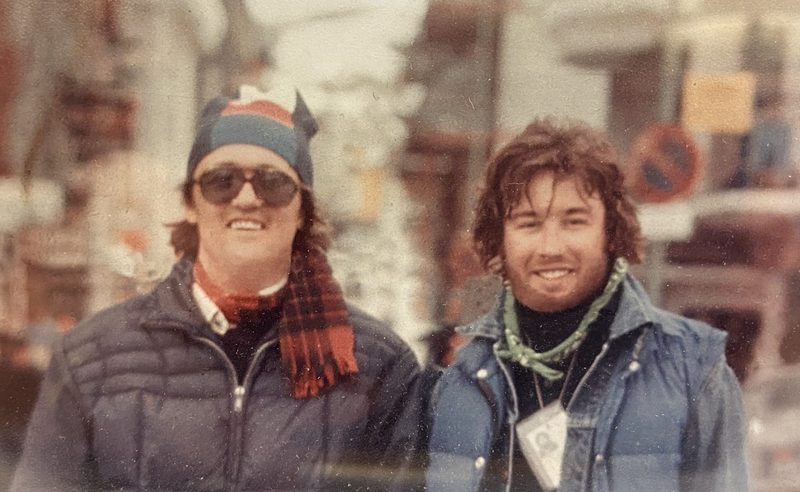
While studying overseas was daunting, I eventually found my way through the connections made with fellow students who had arrived from all over the world to study the same coursework as I. One of those was Richard Turnbull, an Aussie student; we were drawn to each other like magnets. We spent the year studying law and seeking adventures far and wide.
I returned to Knoxville to begin my life in law. Richard eventually became a Crown Prosecutor in Hong Kong and traveled extensively back to the United States in pursuit of international travel fraud. We would generally meet at a ski resort in the Rockies—as we were both avid skiers—and he has visited Tennessee on several occasions, entertaining my friends and family with his Aussie humor and stories of our year, as we swapped stories of cases we’ve handled.
My introduction to Richard helped me realize that there are no chance meetings. Doors open for a reason. It’s our choice, however, if we walk through them. Perhaps that’s why I came to understand early on how critical it is to invest time in relationships and not let the meaningful ones go, even if how we connect gets challenging.
Here in Knoxville, I’ve taken the lessons learned from Richard’s friendship and have never let them go. After 44 years, I still have a core group of friends from my time at the College of Law whom I make the effort to stay connected with every week, be it through Friday night dinners or mornings on the golf course.
Amidst many milestones over the years of marriages, new homes, growing families, and now grandchildren, they have been there as an extended family, and it’s been my realization that the bond we share is not the golf or dinners or the Monday afternoon beers at Sullivan’s. The bond is the long, deep friendship we have all shared simply because we put the time and effort into maintaining it.
These relationships have provided me with memories and shared experiences that I would not trade for the world. And while technology, a nomad society, or a rampant pandemic may change the way we approach them, it is our willingness to invest ourselves in those relationships that will enrich our lives and give meaning to the journey.
→ Swipe for Next Story
DepartmentsJANUARY FEBRUARY 2022
Bullhead
Mt. LeConte’s trail tises from the ashes, sprouting new growth and life
Story by John Quillen
Difficulty Level:Moderate-Hard
Trailhead coordinates:35.67396, -83.49322
Length:11.8 miles |Elevation Gain:3,200 ft |Style:Out & Back
My truck was grunting so I downshifted to low gear as we crested Newfound Gap in the Great Smoky Mountains National Park. It was Thanksgiving weekend 2016, and the ‘71 Ford I was driving was ready to shed human cargo and a canoe. A strange warmth permeated my dashboard, presaged by the curiosity of flames dancing atop the spruce and hemlock in the distance. Invisible drafts whipped a human-stirred cauldron mawing through the Chimney Tops. Three of us poured out to absorb this horrifying scene. Hell was eyeballing Mt. LeConte.
Bullhead was the only divide between this inferno and the Smokies’ most iconic peak. We raced to escape, becoming part of this unfolding tragedy. From Sugarland Mountain, black sky rained napalm down this space that guarded humanity from pocket wilderness. Like a scene from war, shaved toothpicks and blackened rock laid bare the Anakeesta slate cementing these mountains. This image remains forever in my mind.
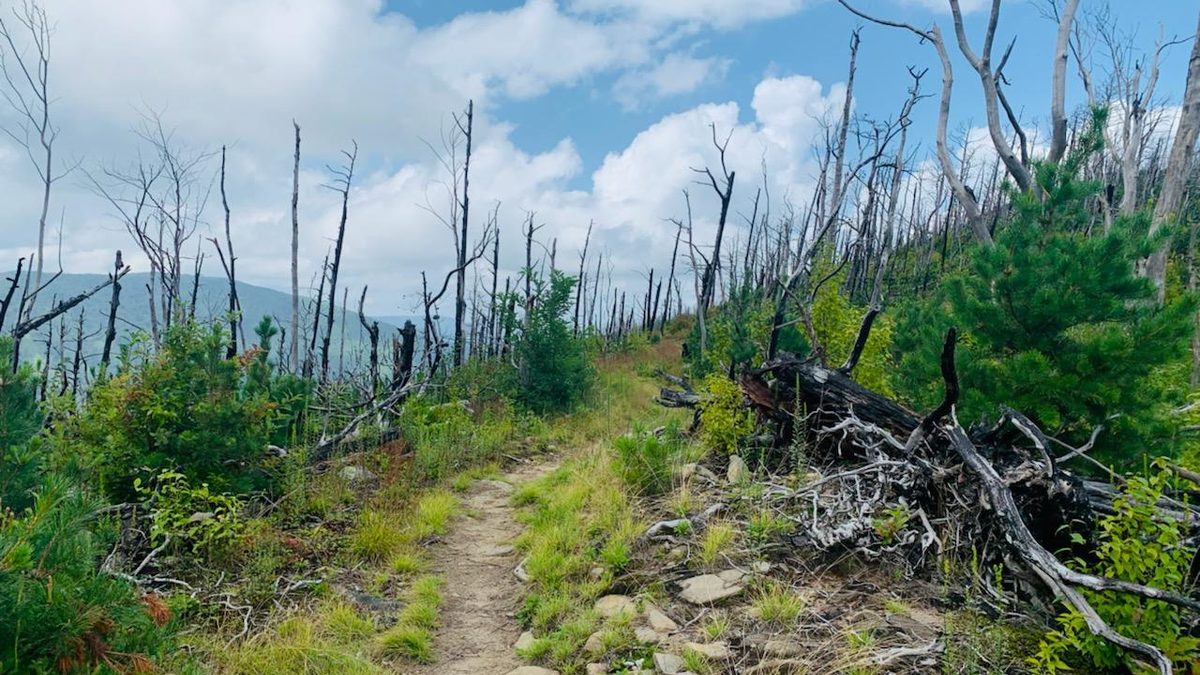
For years, this meandering trail struggled to regain identity. Closed to the public for two years and scraped down to raw bone, her recovery was tepid and chaste. Grasses punched through rock. Tree sprouts dipped their toes. From trauma ward to maternity wing, Bullhead battled season by season. Scree gradually ceded to dirt. Dirt birthed scrub pine, long grass, and hope. A beard of emergent green stubble was obscuring deep scars.
Five years and three miles up, a Carolina raven buzzes me and settles atop his boulder at a place called the Pulpit. This Civilian Conservation Corps-devised rock cairn has grown over the past century with the help of a few thousand different hands, once needed to view the mountains to the east. The raven’s squawking conveys some mordant estimation of the recovery happening around me. Broom moss dots the shadow of its wing. This land is healing, bit by bit.
Bullhead was named after a bison, the body of which is represented in profile by three distinct summits. The terminus of this post-apocalyptic pathway veers right to the unsinged Cliff Tops. Here at 5,700 feet, no hint of flame dared trespass the lodge and overlooks; LeConte’s public face unharmed. But around the corner, on her least used trail, this quiet hero silently grows new life and all are welcome to heed its call.
→ Swipe for Next Story
DepartmentsJANUARY FEBRUARY 2022
A Marbled Masterpiece
A winter’s feast by Chef Danny Wilhoit at the Avalon Country Club
Story by N. Brooks Clark
The Avalon Country Club has relaunched T-Prime Steak & Seafood, the formal dining room in the clubhouse, which is nestled in the Avalon subdivision off Hickory Creek Road, just west of the Watt Road exit. T-Prime is open for dinner on Thursdays, Fridays, and Saturdays, along with Sunday brunch. A patio area outside the dining room looks out over the golf course. The 13-table dining room—with dark wood booths, banquettes along the walls, and a tray ceiling—has the classic, comfortable feel of your favorite steakhouse.
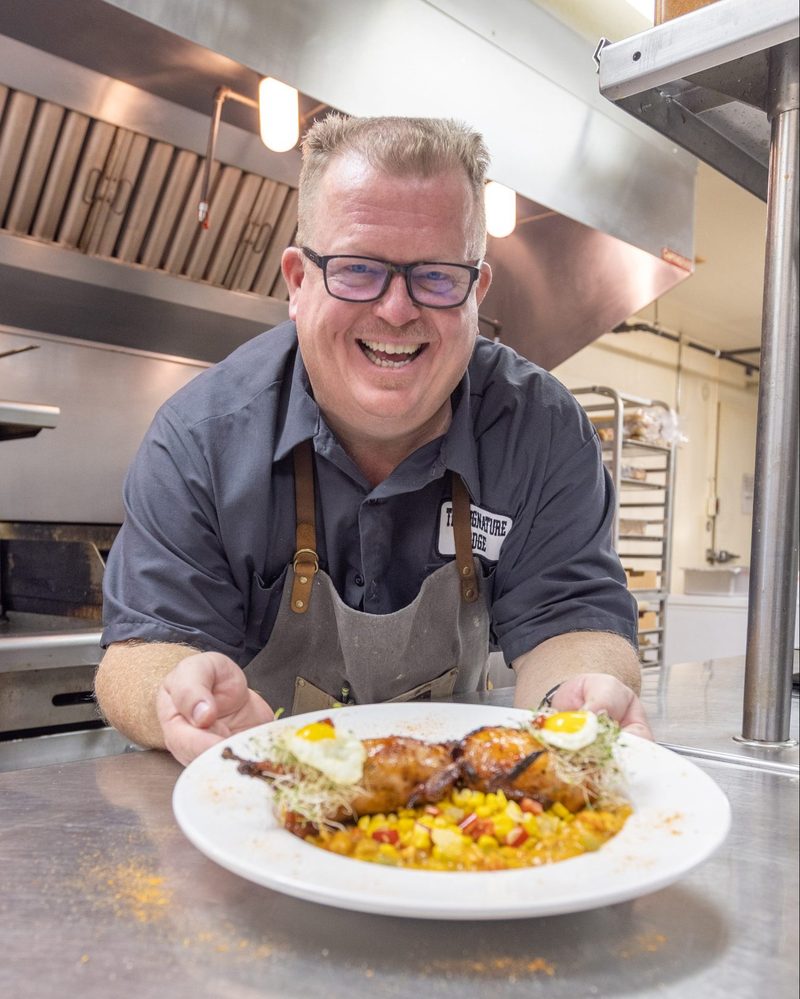
“The members of the club are ecstatic,” says Danny Wilhoit, who was recently hired as executive chef and food and beverage director after seven years at Bistro by the Tracks. His menu includes a Filet Mignon with red wine demi-glace and preserved lemon gremolata, a New York Strip Steak with thyme demi-glace and balsamic grilled onions, and a thick Bone-In Pork Chop. “It’s brined in rosemary, oregano, thyme, and apple cider vinegar,” says Wilhoit, “then grilled and served with a sweet pepper, jalapeno, red onion, and crawfish cream reduction. I like to show how something so simple can be elegant, delicious, and rich.”
The Airline Chicken Breast (Danny, may we suggest a name change here?) belies its name with aromatic thyme, garlic, and oven-roasted shallots. I love lamb, and the braised Leg of Lamb Risotto is a poem of arugula, pecorino Romano cheese, and a rich and smooth creamy sauce.
The Croque Monsieur’s Swiss cheese and ham is served with a luxurious bechamel sauce seasoned with toasted hazelnuts, parsley, and rosemary. Chef Danny’s secret? “With just a little sugar, it’s not overpowering,” he confided.
My wife and I often like to make a meal of starters or small plates and had plenty of options. The Italian sausage meatballs bathed in French onion broth, crème fraiche, basil, and toasted bread feature local Cruze Farm buttermilk. A real treat is the enormous Blackened Tiger Southeast Asian Shrimp with shallots, garlic, parmesan cream, and crostini. For the kale-curious, I recommend the kale salad, fresh from Zavels Family Farm in Corryton, brightened by carrots, purple cabbage, toasted almonds, craisins, cilantro, and a honey ginger vinaigrette.
Bistro by the Tracks patrons will remember Wilhoit’s carrot-hued hair and beard, evoking Wildlings leader Tormund Giantsbane fromGame of Thrones. Wilhoit’s mother remembers him pulling up a chair in her Campbell County kitchen to watch her make dinner. As part of the culinary program at Campbell County Comprehensive High School, he took part in state and regional competitions. Three days after graduating from Johnson and Wales University in Charlotte, North Carolina, Wilhoit started at Bistro as a line cook, rose to line chef and then executive chef.
Working with Bistro’s elegant wine selection, he became a Level II Sommelier and a lover of fine Scotch and Whiskey. “I love the science of why things taste the way they do,” Wilhoit says. “It’s so much about the investment in the time that it takes to create a truly great product.”
In that spirit, bartender Cadye Long—a 23-year-old Jackson, Tennessee, native—has responded to patrons’ 19th Hole enthusiasm for artisanal creations with a “Champion’s Cocktails” list that includes a Peanut Butter White Russian (Skrewball Peanut Butter Whiskey, Kahlua, vodka, cream of coconut, and heavy cream), a Black Mojito (Black Patch Rum, agave syrup, lime, mint, and soda), and an Avalon Paloma (Los Vecinos del Campo Mezcal, grapefruit, lime, agave, and Sprite).
Even if you are not swinging an elegant shoe across the links at Avalon, do make time to stop by this season and treat yourself to a banquet worthy of the best at Winterfell.
→ Swipe for Next Story
Dining GuideJANUARY FEBRUARY 2022
First Meal
Whether sitting down or taking to go, you won’t be able to get enough of Knoxville’s breakfast scene
Story by Marc Anthony
You can debate if breakfast is the most important meal of the day. But what’s indisputable? Breakfast. Tastes. Good. From sweet to savory, East Tennessee loves first meal and rises early to partake in delectable choices from newcomers and kitchen legends throughout the area. Let’s swing our legs over the edge of the bed and head out for some tasty vittles while the sun is still rising in the sky.
My last vacation before the world shut down was an 1,800-mile drive around France. I ate some form of crepe daily. The French are known for their crepes, but not necessarily their coffee. That’s why I was happy to find my favorite Italian coffee, Lavazza, served fresh at the French Market Creperie. The Parisian décor transports you to a corner shop in the 7th Arrondissement. I ordered a Parisian-Style Ham and Cheese buckwheat crepe, called a galette, and a Strawberries and Cream crepe with sweet ricotta, cream cheese, and almonds. You can tell owners Allen and Susan Tate have a love affair with France, as the flavors are authentic and transportive. C’est Magnifique!
Downtown: 412 Clinch Ave | West Knoxville: 161 Brooklawn Street
The sign may say Gourmet’s Market and Cafe, but everyone knows it as Holly’s. As in Holly Hambright. Like you might, I get into ordering ruts at restaurants, always getting the same thing for fear of getting something I won’t like. This has never been the case at Holly’s. Since my first visit, I have never once been let down with my choice, even if it’s out of my food comfort zone. That’s why this day’s table had a Raspberry White Chocolate Scone, Ribsticker Breakfast Bowl, and Chef’s Whimsy French Toast—because, you know, moderation. I don’t have to tell you that Knoxville is lucky to have this place, even if Holly refuses to sell me an antique coffee maker from one of the beautifully appointed and kitschy shelves.
West Knoxville: 5107 Kingston Pike | (865) 584-8739
You know you’re in trouble when Scrambled Jakes spells cinnamon roll “SIN-O-MAN”, and it comes out of the kitchen on a flatbed truck. Portions are huge up and down the menu, and you’ll leave this place completely satisfied. From “Benny’s” to scramblers to breakfast classics, Scrambled Jakes has earned its long lines. Two large rooms, a lovely fireplace, bar seating, and exquisite French Press coffee have had me at Jakes since it opened in 2017. The Knox Lox bagel I enjoyed was the perfect combination of schmear and salmon and is perfect for a change of breakfast pace. Pro tip: get yourself on the waiting list as you’re leaving the house.
Rocky Hill: 7428 S. Northshore Drive | (865) 540-6199
If you want to spend a morning mountain climbing and don’t have time to get to the Smokies, order a bagel sandwich at Paysan Bread and Bagels. This might be the biggest breakfast sandwich in town, and it all starts with an authentic, hardy choice of bagel, from Asiago to Cacio e Pepe. Climbing to the foothills of this ascent, you encounter an egg so thick and dense, it is the shelf on which your protein resides. Capping this amazing breakfast sandwich is a peak of bagel to plant your flag. Paysan provides no seating but shares a building with Remedy Coffee, rounding out this breakfast experience.
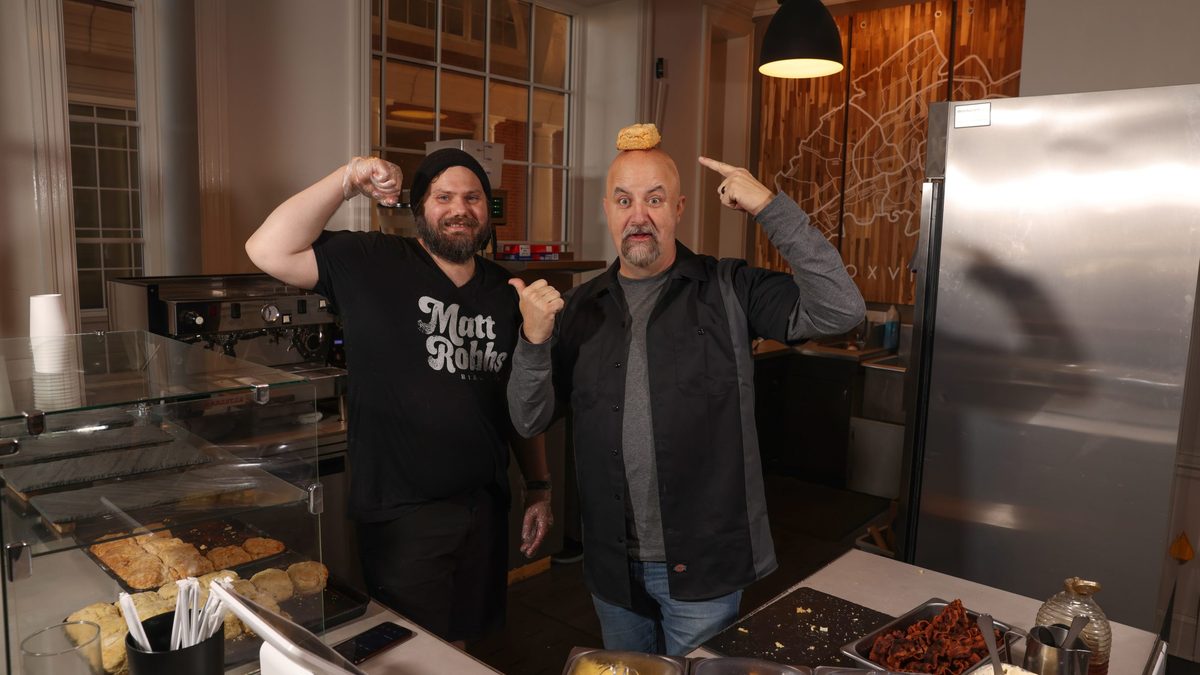
Matt Robb is just a guy who wants to make you breakfast. He’s not a chef nor does he have a background in restaurants; he’s a former barista with a dream. He’ll tell you he started this place on Kickstarter, borrowed some kitchen equipment, and started whipping up breakfast a few years back. There is probably not another breakfast in town that tastes and feels more homemade than this. I had a mouth-filling garlic and cheddar biscuit with bacon, egg and cheese that had me picking up every crumb for fear of missing a morsel. A word to the wise: Matt Robb’s One Man Show is only open while the food lasts…which is never much past 11 a.m.
Reba McEntire returns to the Thompson-Boling Arena on January 29 at 8 p.m.after postponing her tour last spring due to the COVID-19 pandemic. But to the delight of East Tennessee fans, McEntire announced back in October that she would be back on the road with new music in tow coupled with classic Reba hits.
McEntire had a busy year in 2021. After postponing her tour, she released her first new music for fans in two years and a few months later released her box setRevived, Remixed, Revisited, a collection of some of her most iconic songs, reimagined with new arrangements. (The set features a duet with Sevier County’s own Dolly Parton on the song “Does He Love You?”)
After a long residency in Las Vegas with Kix Brooks and Ronnie Dunn, the trio announced the end of their Vegas show; their final performances happened mid-December.
So she is back on the road and ready to bring country music to the masses. Be sure to get your tickets early, and enjoy getting to see McEntire in her element on stage at Thompson-Boling.
Head towww.tbarena.comfor ticket information for her Knoxville return, and be sure to bring your dancing shoes.
→ Swipe for Next Story
JurisprudenceJANUARY FEBRUARY 2022
The Truth about Dolly
Remembering moments with the Daughter of Sevier County and their unexpected connections to my life in law
Story by Gary Wade
Almost everyone who lives in Sevier County has a story about its favorite daughter—internationally known singer, songwriter, movie star, businesswoman, and philanthropist Dolly Parton. Few, if any, in the United States today equal the success and popularity of this talented woman. Her pathway from rags to riches serves as a shining example of the American Dream. Her famous line, “It costs a lot of money to look this cheap,” illustrates a self-effacing sense of humor which so endears her to fans all over the world. With the arrival of 2022, Dolly reaches the ripe, but no longer so old, age of 76. Through a healthy diet, regular exercise, and the wonders of modern medicine, she still looks to be in her twenties.
Of all the cherished memories my fellow Sevier Countians can share about Miss Dolly, few have got more mileage out of a relatively modest relationship than yours truly. Yes, we were students together at Sevier County High School from the fall of 1962 through the spring of 1964, but by then her story was quite well-known locally. She had grown up in a large, loving family in a small home on Locust Ridge, she had attended Caton’s Chapel Elementary School, and as a child gained some notability by appearing on WBIR’s Cas Walker morning show—singing and playing guitar with Uncles Bill and Louis Owen. My younger brother Sid became an ardent admirer during Dolly’s senior year in high school. As a freshman, he made sure he got to sit by her in band practice—he, blowing on the trumpet, and Dolly, of all things, playing on the drums. As for me, just a sophomore, I was more than satisfied to simply stand in awe as she walked the school hallways between classes and occasionally nodded and smiled in my direction as I passed by.
After graduating in the spring of 1964, Dolly caught a bus to Nashville confident that one day she would become a country music star. Before long, she caught on with the Porter Wagoner television show, often performing duets with the star and regularly cutting record albums as his sidekick. Never one to forget her roots, by then she had begun to schedule a concert at her alma mater each year in order to provide much needed funds for her Smoky Bear high school band.
Meanwhile, I found my way to the University of Tennessee, spent seven years there, and found my way back home with a license to practice law. Three years later, I had the honor of being elected town mayor, a position which I later learned was sort of like drawing the community’s short straw. Most of the local wags say that my main purpose in that role was to field complaints about late garbage pickup and barking dogs. The home telephone calls as to the former usually came in the early mornings before I went to work and, as to the latter, the complaints usually came after supper, either just before or just after I went to bed. Nevertheless, there was one perk in the job that made it all worthwhile. The previous mayor had always been called on to emcee the annual Dolly concert for the band and I inherited that role, became reacquainted with the budding celebrity, and began a long-distance relationship of sorts.
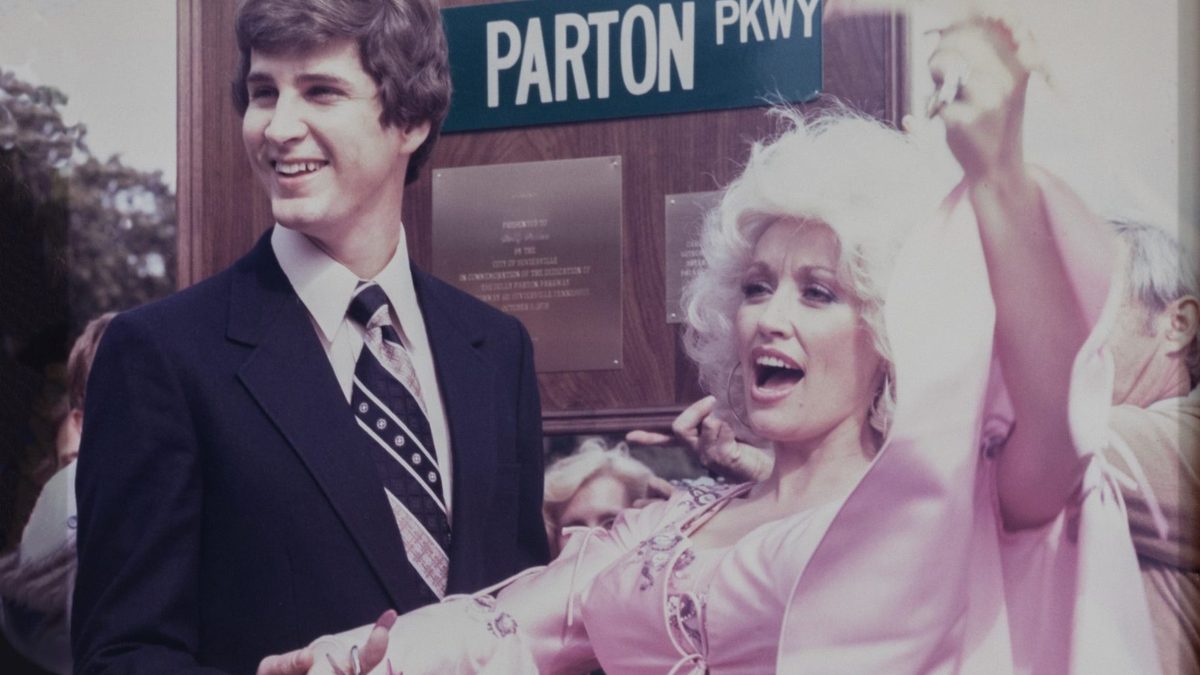
As she continued her generous support for our school band and climbed the ladder of show business success, the “city fathers” (there being no women on the board at the time) asked the Tennessee Department of Transportation to name the newly constructed section of Highway 411 east of our downtown in honor of our favorite daughter. The General Assembly approved, and then Commissioner Bill Sansom instructed his crew to construct and display an appropriately “curvy” sign for
the Dolly Parton Parkway, one of the flattest stretches of road in the county. Every politician within driving distance attended the accompanying ceremony,
and Dolly and I cut the yellow ribbon, opening what eventually became one of the most traveled routes in East Tennessee.
A few days before this event, our city, mindful that Dolly was scheduled to appear onThe Tonight Show, had sent a letter inviting the show’s host, Johnny Carson, to attend the ribbon cutting. When Dolly appeared as guest, Carson read the letter of invitation—which included the names of all the Sevierville board
members—to his national television audience. Our little community proudly enjoyed a good fifteen seconds of fame. Dolly was one of Carson’s frequent and favorite guests. A genuine television star in his own right, he is remembered by many of his fans for his overt admiration for the enormity of Dolly’s most obvious assets. “I would give a year’s pay (which was considerable at the time) for just a peek,” he remarked, to the delight of both Dolly and his live audience. There were TV censors in those days, but they let this one pass.
In one of Dolly’s many appearances on this popular nighttime show, she talked about her past relationship with the young mayor of her hometown. While claiming as fact that we were high school sweethearts, she revealed that the two of us had spent a lot of time together in my father’s Chevrolet pickup truck. This tale became a bit more exaggerated (much to my surprise – and tacit approval) in an interview she gave a few months later to People Magazine. Now, just to set the record straight, everyone in town knew that my father never owned a pickup truck. Moreover, most knew that Dolly was over two years older than me and that no self-respecting female high school senior would dare be seen with a fuzzy-cheeked sophomore—especially one who had neither a driver’s license nor a vehicle. Because, however, Dolly’s fun-filled remarks were in writing and appeared in a national magazine, they caught the attention of my dear wife. She did not approve—ready to end the nonsense.
Nevertheless, the fictional relationship contained yet another chapter, one that with a bit of a stretch might fall into the broad category of this column—Jurisprudence. By 1987, Dolly had her own television variety show on one of the three major networks. In August of that year, her producers brought her to Sevierville to film a Thanksgiving special in conjunction with a reunion of her Class of’64. At the same time, I had been nominated for an appellate judgeship, a highly competitive position in the state courts. Her reunion show was to take place on the day before my interview with the nominating commission. On the day of filming, I could see from my office window that Dolly’s crew was hard at work trying to make a hot summer day look like the fourth Thursday in November. Bales of hay, cornstalks, and pumpkins galore decorated the courthouse staging area and grounds. At the front portion of the yard stood the newly erected Dolly Statue created by sculptor Jim Gray. Considered to be a showpiece in the filming, the artwork depicted a bluejeaned Dolly strumming her guitar with her signature butterfly perched on the top fret.
About an hour before taping was to begin, Dollywood General Manager Ted Miller burst into my law office, which was located no more than 50 feet from the statue. “Dolly needs a boyfriend for the show, and you fit the bill,” he explained, “Can you come right over to rehearse in Dolly’s trailer?” Who could say no to that? Ted escorted me to the trailer, unlocked the door, and there was Dolly in the flesh. She greeted me warmly and handed me a script. For a full minute, I was literally struck dumb! National TV with an audience in the millions? After a partial recovery of my wits, I was able to nervously read my lines aloud. Dolly read hers perfectly. I did not. In fact, I couldn’t remember then and cannot today recall the content of our proposed on-camera exchange. Mercifully, Dolly suggested, “Let’s wing it, the scene just lasts a few seconds.” I readily agreed.
Within minutes, filming began. We joined her 100-plus classmates seated in the courthouse yard. As I remember it, the director announced that the scene of the reunion would have “one take.” Interviews with a few from her class proceeded without a hitch. When it finally came to my part, Dolly, who in the year before had lost some weight for her new television show, approached me as her “old boyfriend,” and with hands on hips, proudly displaying her svelte figure, asked, “Well, what do you think of me now?” Because of the buzz of the cameras and microphones, I could not hear my answer, but I do remember that it went something like this, “I think I liked you better when there was more to love!” Whatever I said seemed to satisfy the directors, and for me and all of those’64 classmates who had taken the time to appear in this section of the show, that one scene pretty much constituted our collective TV debut.
That should have been the end of the story. My interview with the judicial nominating commission took place the next morning. Distinguished attorneys and legislators from all over the state had assembled inside a crowded conference room in Knoxville. Each of the several other candidates had completed their interview before my name was called. Being a “W” in the alphabet, I was last—and increasingly nervous. The first thing I saw upon entering the room was the Knoxville News Sentinel. A reporter had covered the filming the day before. “Above the fold” and in bold letters on the front page appeared the only line I had in Dolly’s Thanksgiving Special: “I think I liked you better when there was more to love — former mayor, Gary Wade.” My heart sank. Whatever opportunity I had to receive the nomination was gone, I thought. Surely an “honorable” judge would never say anything like that—at least in public. Thankfully, the Commission members had senses of humor. There were a few smiles but not a word was said about the newspaper article. Later, two of the commissioners quietly informed me that my words to Dolly were a plus. Not all judges had to be stuffed shirts.
Roll the clock forward another 19 years. My name had been one of three candidates sent to Governor Phil Bredesen for a vacancy on the Tennessee Supreme Court. As the background investigations were in the process, Governor Bredesen happened to make a joint appearance with Dolly to plug her Imagination Library initiative. At the conclusion of the press conference, Dolly reportedly whispered in the governor’s ear that her old boyfriend might make a pretty good justice. So, whatever success I have enjoyed in my 28-year judicial career, I may just owe to Miss Dolly.
All of this reminds me of an experience the late Senator Howard Baker claimed to have had while he was new in the law practice in his native Scott County. An agitated man who had unsuccessfully represented himself in General Sessions Court burst into his office wanting to hire Howard and demanding an appeal. “Why so?” asked Howard. In response, the man insisted, “They swore lies on me! And proved some of them!” Well, my Dolly stories contain a little bit of truth, but most of it qualifies as the droppings of a male bovine.
→ Swipe for Next Story
InsightsJANUARY FEBRUARY 2022
Not as Advertised
Men are not as brainless as advertisers want you to believe
Story by Robert Pryor, Sr.
Is it just me, or are we men getting slammed by American advertisers? Every time I turn on my TV, another poor guy is being made to look foolish and stupid. Do commercials have to sacrifice the intelligence of men to sell a product? I don’t know about the rest of you men, but I’m getting tired of being thrown under the media bus.
Now, I admit some men are a little awkward in some situations like casual conversation and interpersonal relationships, but that does not make us dumb. Sure, we have done some stupid things and have even won awards for idiotic behavior. The Darwin Awards, for example, are symbolically given to people who die from such stupid conduct so as to ensure the long-term survival of the species. By selectively allowing one less idiot to survive, the gene pool is protected. Men have won 88% of all Darwin Awards, but those guys do not represent the rest of us who survive stupid conduct every day. Anyone would agree that such an award for the male terrorist who mailed a letter bomb with insufficient postage and opened it upon its return, or the man who died trying to take a selfie next to an injured bear he spotted in the woods. I insist that men are not universally stupid and certainly not as stupid as commonly portrayed in today’s TV commercials. To prove my point, consider these few examples of premeditated attempts to display men in a false light.
Let’s begin with one of the worst offenders, Liberty Mutual Insurance. Not only do they incorrectly assume all other insurance companies are ripping off their customers by selling more coverage than they need, they do it in a way most offensive to men. They put this character, Doug, on the street to carry the company message to random people in the most irritating and harassing way possible. “Only pay for what you need,” says Doug to everyone he meets. The ads are apparently directed at people who may have a fear they are being overcharged for insurance, but why does that require a messenger who is not only irritatingly stupid, but he wears a bright yellow shirt, tinted aviator sunglasses, a mustache disguise, and his partner is an emu also wearing sunglasses. That’s right, an emu just to make Doug’s absurdity more obvious. The chief of marketing for Liberty Mutual describes LiMu Emu and Doug as a demonstration of “surprise and humor.” Yes, but men are always the butt of the humor, and especially those legitimately trying to sell insurance. Would you want to buy insurance from a clown on a treadmill with an emu? Neither Doug nor his emu has any credibility, and their only redeeming value is to look ridiculous.
In its continuing effort to demean men, Liberty Mutual now has an ad featuring a food cart vendor selling – wait for it – “wet teddy bears.” Not hotdogs as expected, but “wet teddy bears.” Are these people insane? The newest ad shows a female DJ in New York harbor waiting to play music. An attractive well-dressed and normal looking woman walks up and requests a dance song. A disco version of the company jingle begins and a witless man who looks like a refugee from a lumberjack convention enters from the opposite side trying to do the moon walk and begins to dance a bad version of the funky chicken mixed with the robot. I’m sure you’ve seen the one starring a tall skinny guy with straight blond hair to his waist sitting with his twin Afghan Hound. They engage in synchronized movements apparently to make the point that stupid men who look like dogs should buy insurance from Liberty Mutual.
Our next clueless star appears in a hearing aid commercial. Charlie goes to visit his girlfriend at the home of her parents and they are talking in the kitchen as her father, wearing his new hearing aid, reads the newspaper in the adjoining room. The girlfriend whispers across the kitchen island to our hero inquiring if he brought condoms. Initially, he doesn’t understand her and she repeats the question in a low whisper deliberately mouthing the words when her father, with his back to the kitchen, says, “Condoms, Charlie. She wants to know if you’ve brought any condoms.” Now, that part of the commercial was designed to sell hearing aids, but then clueless Charlie replies aloud to the girlfriend, “Yeah, I brought them.” That part was gratuitously designed to make Charlie and all other men appear hopelessly dumb and inept.
It is likely this whole dumb man thing started with Barney Fife. Advertisers have obviously studied his character and insert a little Barney in any commercial where male stupidity might help sell the product. Why else would Progressive Insurance give us Jamie every hour of the day and night? Jamie, now there is a lost ball if there ever was one. He eats and goes to sleep with food on his face while pretending to give a driver road test, and he makes the driver stop for free wood scraps on the side of the road. In one episode, Jamie believes that the handsome new hire, Scott, looks exactly like him when they obviously bear no resemblance. Jamie is so oblivious, he’s an embarrassment to men everywhere. Thanks to Flo for making sure we understand bundling.
Who in the world thought it would be a good idea to run those ED commercials now so prevalent on TV? Most men are still shocked the subject is even discussed openly in the media. Recently, I was watching a waiting room television in a doctor’s office with about 10 other patients when our silence was broken by a descriptive commercial about ED’s big brother, PD, using vegetables as exhibits. I dared not make eye contact with anyone in the room and buried my head deeper into theCityviewmagazine I was reading.
These ads are not only uncomfortable for any male over 10 years of age, they are specifically designed to make men feel that all adults are having sex all the time and everywhere. Apparently, all men but me are out of town at some resort or at a big party dancing on a cruise ship with a hot babe engaged in some type of mating ritual I was never told about. Like most men, I learned all I know about sex between the seventh and the twelfth grades and ED was never mentioned. Do these drug advertisers have any idea the harm they are causing by making men feel inferior and causing us to believe all is well and we can come to the party anytime and dance around like a Laysan albatross if we just pop a pill? What torment! Intentionally blunting what little male sensuality we have left.
I would like to meet the fool who was sitting around in an advertising agency trying to come up with a convincing message and said, “I’ve got it. Why don’t we appeal to old people who are on Social Security by hiring Jimmie “J.J.” Walker to remind them what a halfwit he was 46 years ago by having him scream “DYN-O-MITE.” Or, “If J.J. is not available, maybe we could permanently kill off another male hero by propping Joe Namath up long enough to read the same script.” Why would anyone really make a man look so dense as to go down on one knee in front of his girlfriend in a swanky restaurant to make a candlelight proposal that she join him in a T-Mobile account “forever”?
Brothers, we have to stop this advertising assault. I feel so inadequate now, I may never recover. Men everywhere, I implore you, wake up and smell the abuse. Time is short, and we must regain our rightful reputation as masters of the remote control.
→ Swipe for Next Story
FeatureJANUARY FEBRUARY 2022
Renovating with Purpose
The historic home that became the focal point of an innovative fundraiser for Lakeshore Park
Story by Mary Leidig
Veteran Knoxville home designer and realtor Stacy Jacobi always wanted to host a show house with glamorous tours and parties—but with a twist. All the money goes to charity.
In late August 2021, she did exactly that.
It all began with what Jacobi thought would be a traditional house flip, which is a type of real estate investment in which a person buys a property to sell for profit. When a realtor friend showed her a special house earlier this year, Jacobi “saw the home and thought it was beautiful.”
Renovating this 4,200-square-foot 1929 home on Cherokee Boulevard was a massive undertaking. “Four-and-a-half months seemed like record time with COVID,” she says. It was the start of a one-of-a-kind project that would benefit one of Knoxville’s most visited destinations.
My Father’s Son
As someone who grew up on an Oklahoma farm, Stacy says her childhood was full of time outdoors and fun projects. “I’m my father’s son,” she says, smiling. But that desire to dive in to projects that excited and challenged her never left. When she grew up, renovating houses along with her flair for home design became her passion. A licensed realtor since 2000 with Keller Williams Signature Real Estate, she has renovated or led new builds of more than 20 houses.
She and her husband David have lived in Knoxville since 2001, raising their family. The couple has three daughters, two in college and one working. David’s work took the family on moves “all around the country” before they landed in Knoxville. They settled into a 1939 “cottage” on Sherwood Drive three years ago. “It’s now in its second renovation,” Stacy says.
Renovating a Historic Home
”You need to see this house.” Those were the words that gave Stacy pause earlier this year. A friend and colleague told her about a very old house that had never been renovated. When she arrived, it turned out to be bigger than she thought. “I fell in love with that old house, and I wanted to bring it back.”
And so she did. By April, Stacy closed on the house, and by the end of the summer completed its renovation, working alongside Brian Floyd Construction. Other Knoxville area vendors involved in the project included Smokey Mountain Tops, Integrity Tile, Ferguson Bath, Kitchen & Lighting Gallery, Dixie Kitchen Distributors, and Closets by McKenry.
Leaving her more modern signature design style, Stacy kept many traditional features in the home, respecting woods and lighting. And yet, she completely renovated the main house, its guest house, and its maid’s quarters. It would end up becoming a million-dollar project.
“My typical style is white brick painted houses and white kitchens—more modern transitional than dark traditional,” she says. “This home had so much character with the clinker brick, original wood-stained door, and slate roof. Painting it and making it white didn’t seem to be right for this home.”
Stacy kept the general footprint of the home and its 9 ½-foot ceilings. She embraced its rosewood interiors, terra cotta tiles, massive stone fireplace, and plaster walls.
Then there was the brick exterior. “It’s clinker brick, a different texture,” she says. Clinker bricks are produced when wet clay bricks are exposed to excessive heat during the firing process. They have a shiny, darker-colored coating. Clinker bricks are so named for the metallic sound they make when struck together.
“These bricks also protruded off the outside of the house as part of its design. I didn’t want to change any of this. I didn’t want to take that away,” she says. “This house was simply so different to me from any house I had ever worked with.”
The wood front door would stay, too. Stacy reached out to Meagan McReynolds of Farm Chic Creations to strip and restore it. She also had the original terra cotta tiles reglazed, giving them a fresh, new look.
Seamlessly mixing original with new, Stacy smartly opted for replacing the windows with Pella casement energy efficient windows in a design that worked well with the old house.
Other stylish upgrades included a new master suite created by combining two bedrooms on the main level, something she thought new homeowners would love. She was also able to connect the front and back of the home by opening up an archway. From there, the kitchen was expanded, with the help of Dixie Kitchen, to include a butler’s pantry with ample storage.
The design called for a hood over the range, but it required dropping the ceiling down to make everything look symmetrical in the kitchen. “There are a lot of design challenges when you’re working with a home that old,” says Clark Coffey of Dixie Kitchen, “but Stacy and I worked through it and came up with a great plan.” The hood became the room’s focal point, along with the Dura Supreme custom inset cabinetry.
Finding Space to Give Back
As Stacy pondered the huge business of renovating and selling the house, a new idea took over. “I’ve always wanted to give back, and we have always tried to do our part,” she says.
But she had never tried the totally different idea she was about to undertake. “I always wanted to do a show house and hold tours with all the money going to a charity.”
Lakeshore Park was an easy choice for Stacy. Her family has enjoyed this park’s open green spaces and trails for many years. “We’ve loved this place for a long time,” she says.
When Lakeshore Park Conservancy’s Executive Director Julieanne Foy was contacted about the idea, she was thrilled. The conservancy manages the park—one of Knoxville’s most beloved city parks and its most visited. And Foy was familiar with the unusual home having grown up in Knoxville. She found the collaboration perfect. “Stacy worked with Lucas Haun, who is on our Friends of Lakeshore Park committee this year, and the two also work together at Keller Williams.”
Stacy had a unique vision for this project, Haun says. “Traditionally, you’ll see things like this on special new construction homes. It’s very rare that it’s done on an old historic home like this.”
When the house was completely renovated, Stacy says, “I had about a minute to stage it with Jeannie Bennett,” owner of Bennett in Knoxville. Bennett worked with her lead designer Robert Shipley to transform the house with furniture, getting it ready for the fundraiser. She took the time to make the house “simply beautiful” at no cost, Stacy says, embracing the dream of donating the proceeds to charity and furnishing it in four days. “Bennett showcased this big house unbelievably.”
A Unique Idea—A Huge Success
Suddenly the frenzy of planning had begun, starting with Jacobi’s social media planner Heather Young. In just three weeks, they were ready for a special VIP event and a three-day tour of the house. Both included fun and lively offerings: food, coffee, donut and pizza trucks, and wine from Ashe’s Wines and Spirits. There was even live music by Joshua Washington from Knoxville’s Community School of the Arts.
More than 1,000 people walked through the vintage house during the three-day tour. When all was said and done, the VIP event and tours together raised close to $22,000.
Foy was overjoyed. “The open house was the first fundraiser of this type for Lakeshore Park, which typically hosts two to three events a year,” she says. “It’s a totally unique idea and a fantastic idea that was a huge success.”
And it had its benefits for the real estate industry as well. “It showed how a historic cottage property could live and how you could entertain there and how you don’t necessarily have to have a big sprawling open floor plan in order to entertain,” Haun says. “It also showed a lot of people a little bit more about how you can take an older home and make it something really special. It has a new feel and an old feel, but is still very functional and practical.”
The hard work paid off. “Events like this benefit everyone involved,” Foy says. “Stacy is extremely talented, and her whole team pulled off an amazing event.”
For Stacy, using homes to benefit the community has become a fulfilling part of a lifelong profession and craft she loves. And she’s already found the next big project.
What’s next? “The Boys and Girls Club,” she says. “Yes, that’s next.”
About Lakeshore Park Conservancy and Why it Matters:
Lakeshore Park Conservancy is a non-profit 501(c)(3) corporation responsible for the operation, management and enhancement of Lakeshore Park, a general recreation public park located in Knoxville on the banks of the Tennessee River. According to its website, the conservancy was formed in 1996 with a mission to manage, preserve and enhance the park, and to build a community dedicated to conserving the park for the future.
Lakeshore Park opened in 1995 on 60 acres of leased land at the Lakeshore Mental Health Institute and has grown and evolved over the years to 185 acres owned by the City of Knoxville and managed by the conservancy. Lakeshore Park is the only general recreation park in the City of Knoxville developed through a public-private partnership. With contributions from the public and friends of the park, the conservancy manages day-to-day operations at the park, supplements the basic services provided by the city and builds new park improvements.
With approximately 1 million annual visitors, Lakeshore Park is the most visited public park in Knoxville.
Users can walk, bike or run along extensive greenways, enjoy a youth sporting event, stroll by the riverside or soak in unparalleled views of the Great Smoky Mountains. Learn more atwww.lakeshoreparkknoxville.org.
→ Swipe for Next Story
Non-ProfitJANUARY FEBRUARY 2022
Tennessee Wildlife Federation
Tennessee Wildlife Federation is on a mission to protect the wildlife, water, and resources of the Volunteer State
Story by Rebecca Whalen
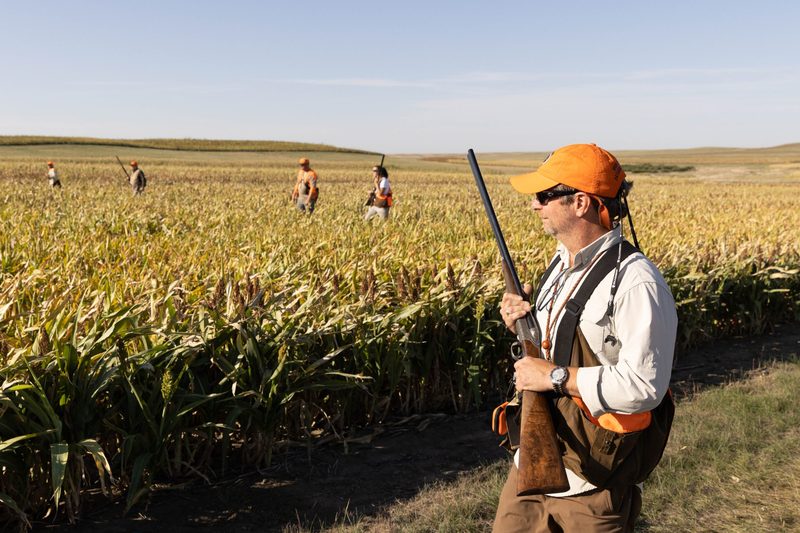
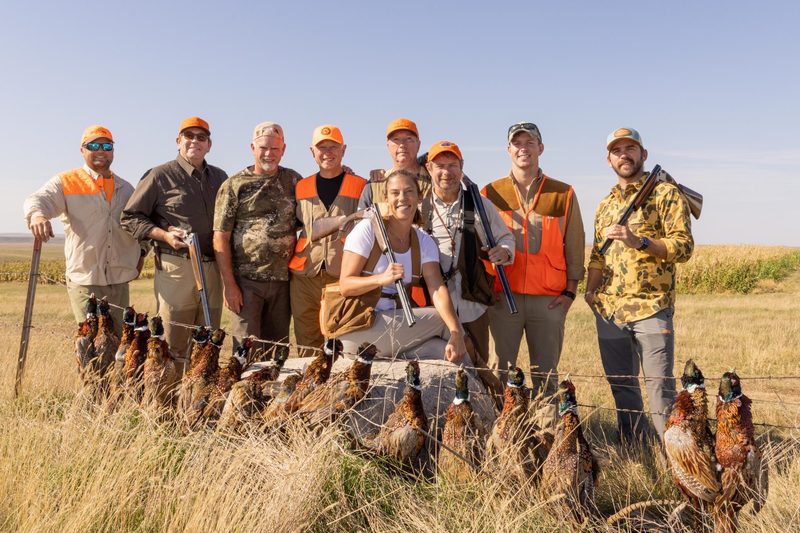
Knoxville native Bruce Fox’s introduction to the Tennessee Wildlife Federation came to him at the perfect time. An avid hunter and outdoorsman with a deep connection to the outdoors, Fox was approached by the leadership of the organization to join its ranks of advisory-level supporters, and he knew he needed to take the leap. “I agreed to meet with them because I knew the word wildlife meant something to me,” he says. He drove to Nashville for the next board meeting and listened as they talked shop about the active work of this long-standing wildlife organization. The work spoke to him, he says, and he jumped in full force, ready to do his part. That was about seven years ago. Today, Fox sits as the organization’s board chairman.
One of the things that makes Fox feel so engaged is the organization’s history of success in making positive change for the natural resources of Tennessee. Look up any conservation or wildlife effort in the state and you’re sure to find the Tennessee Wildlife Federation as a key player. “We are an organization that does good things for what you care about,” Fox says.
The organization fulfills its mission through work in three key arenas: policy, outreach and engagement, and habitat stewardship. “It’s our job to give a voice to the resources that don’t have a voice,” says Mike Butler, the organization’s CEO, “and to represent the interests of those people that care about the outdoors.”
Kendall McCarter, the organization’s Chief Development Officer, calls the TWF’s history rich with success in some of “the most important conservation and environmental policies and happenings for the last 75 years.” Over the course of its lifetime, the Tennessee Wildlife Federation has played a critical role in the passage of the Water Pollution Control Act of 1971, the reintroduction of elk to Tennessee in 2000, and the Right to Hunt and Fish Amendment of 2010, among many others.
And while the breadth of what this organization does can be tough for any one person to wrap their head around, this breadth is exactly what has led to its success. “We’re here for the wildlife, water, and wild places of Tennessee,” McCarter says. “And if you care about those things then take a look at our work.”
Most natural resources in the state of Tennessee are publicly owned, like air, water, wildlife, and some lands, Butler says, which is why the public policy work of TWF is critical to maintaining and preserving them. The organization advocates both in Nashville—where it’s headquartered—and in Washington DC for policy changes.
One of Tennessee Wildlife Federation’s most recent policy initiatives is Tennessee Clean. The premise of the policy is to address litter in a comprehensive way across the state. Butler says the organization became interested in this work after reading through research that showed the level of micro-plastics in the Tennessee River to be far greater than that of the Yangtze in China. “It really got our attention,” he says. “And as a result of that we started looking at what was going on with plastics in the environment.”
The more they looked, the more they realized that this effort wasn’t just about plastic; it was about litter as a whole. So, they began researching how to tackle the problem. “If you’re going to be about conservation and you have a concern and value for our great outdoors, one of the first things that we have to do is take care of our garbage as individual citizens,” Butler says. And so, Tennessee Clean was born, following suit with other states which have put in serious efforts to clean their state up.
“The state needs to set policy goals around addressing the litter problem,” Butler says. “And then let’s leverage the private market to develop creative solutions to fix it.” The act would establish a commission made up of representatives appointed by the governor and a speaker that would represent private industries. The commission would establish goals focused on litter and a timeframe in which to achieve them.
“We had a pretty good win this last year at the legislative level getting this moving and getting it in the right committee,” Fox says. “We’ve got a lot of work cut out for us to move it forward and to get it passed.”
The organization’s leadership anticipates pushback, particularly from convenience stores where the use of plastic bags is a critical part of the store process, but Fox believes they’re ready. And he believes that corporations and businesses will be integral parts of the solution.
Tennessee Clean is just one of the many initiatives the organization is presently working on. A quick look at their website and you’ll see dozens of opportunities for engagement in their policy work, from the Recovering America’s Wildlife Act—which aims to support the management of non-game species—to the Share our Rivers Coalition—which aims to create management plans for specific waterways that suffer from overcrowding by commercial canoe and kayak rental services. All of the work is possible because of the public’s support.
As Butler says, in order to have a sound public policy program, you also must be an advocate, which is where TWF’s outreach and education come in. TWF programs encourage citizens to engage and become involved in the outdoors, “tapping into the interests,” Butler says, to learn more about it.
This means providing opportunities to steward the next generation along. For younger generations, it means opening doors for them to find new interests and immerse them in new experiences. And TWF tackles this in great strides.
Passionate about this effort, Fox says youth find themselves with programs that provide them not only a strong connection to the land, but a place to build camaraderie and confidence.
The organization’s Scholastic Clay Target Program, for example, is one of the most successful in the country, Fox says. It provides students in grade 9 through 12 with opportunities to participate in trap, skeet, and sporting clays shooting programs, culminating with a seven-day-long state meet in Nashville each year. This year, nearly 2,000 students—about 30 percent of which were females—participated in the state meet.
The TWF also provides opportunities through its Hunting and Fishing Academy, which began in 2018, to take groups of 10 to 20 beginner hunters and anglers out at a time to learn to hunt and fish with what Fox calls the state’s “master hunters and fishers.” This program is an important one to these outdoor sports. According to TWF, for every 10 active sportsmen, there are only seven who are growing to take their place.
“I think there’s a realization by us old guys that if we don’t do this, what we’ve grown up enjoying will disappear. Society will forget about hunting and fishing,” Fox says, who has participated in the program as an instructor.
The academy ensures these sports continue with the younger generations and provides a way for older generations to share firsthand their knowledge of hunting, fishing, and firearms safety.
And then there are programs like Hunters for the Hungry, a long-standing program dating back to the late ‘90s, which builds a new level of commitment to the outdoors for those already immersed in the sporting world. Through this program, the organization staff connects with hunters to donate excess venison from their white-tailed deer season hunts to feed the hungry at food banks and soup kitchens.
If a hunter walks into a participating local butcher’s shop with meat from their recent trip, a participating butcher will ask if they would be willing to donate a pound of ground to help feed hungry families. Many times, though, that one pound quickly becomes more. “I think people understood this past season that there are a lot of families in need, that things were hard. Our donated poundage went way up.” Fox says more than 550,000 pounds of meat were donated just last year through this program, “25 percent higher than our prior years,” he adds.
All of these programs, along with other outreach and education efforts, combine to create a different level of engagement across the state, meeting citizens where they’re at and encouraging them to participate in ways that speak to them directly.
Engaging individuals in the environment is critical, but it can only happen if that environment exists to engage them in, Butler says, and that’s where the third leg of this organization comes into play: the Habitat Conservation program.
“Our stewardship work really focuses on habitat,” Butler says. “We restore habitat and [partner with] other organizations and agencies [to] restore wetlands, streams and different forests. Those activities maintain the quality and the health and abundance of our waters and lands and our wildlife and fish that live in those.”
To date, roughly 13,000 acres of habitat has been either conserved or restored as a result of the TWF’s work, partnering with both private landowners and public agencies in the program.
One of the larger projects the organization is currently working on is the management of the invasive species of Asian carp. Look up Asian carp videos online, and you’re sure to find plenty with fishermen driving down waterways in boats with shields out front to keep from being severely injured by these jumping giants. The sound of the motors and propellers cause the fish to jump wildly from the water into the path of oncoming boaters. This makes the water virtually unusable for recreation and causes property values to plummet.
Just this year, TWF led the charge to secure a $25 million federal grant to fight the Asian carp problem. “Think about Tennessee and what our waterways mean to the state from one end to the other,” Fox says. “We’ve got a lot of rivers, creeks, lakes that fund a lot of recreational activities.”
Killing off the fish is not an option, so with the grant funding, the organization and other partners plan to stop the fish from coming through the locks and further upstream. “And then we’re trying to find commercial uses for them so that commercial fishermen with these big seine nets will actually be able to make a profit from scooping these things up while reducing the population.”
Aside from the fact that each staff and board member has a sincere connection to Tennessee’s great outdoors, the piece that keeps coming up in all of these conversations with staff and board is engagement. The Tennessee Wildlife Federation seems to have this down to a science.
While events are indeed part of the organization’s development model, more important, Fox says, are the opportunities to engage one-on-one with like-minded individuals, such as hunters and fishermen and anyone else invested in connecting with the land. McCarter explains: “We specifically brought a relationship-based fundraising model to the organization. We sit down with donors one by one and talk about how they can make an impact.” This, he adds, can fundamentally change an organization.
With a staff of just 23 across the state, TWF is breaking down barriers to nonprofit development alongside the barriers it is breaking down in connecting people to place. At a recent event held at the University of Tennessee’s Lauricella Center next to Neyland Stadium (seeCityview’s November/December 2021 issue), Fox walked around a room of roughly 80 invited guests to engage them in conversation about the work of the Tennessee Wildlife Federation across not just East Tennessee, but the state. Each guest was invited strategically because of their commitment to the outdoors in one way, shape, or form.
It’s this commitment to understanding its audience, it seems, that is a game-changer for the TWF. The people are what make it happen. People like Butler and McCarter and their staff working daily in this fight for the wild alongside policy makers and donors. People like the thousands of volunteers who engage with the organization yearly through programs and conservation work in the blinds or on the water. And people like Fox, who live their lives committed to their roles as stewards of the great outdoors.
As Fox looks back on his time on the board and ahead to the incredible amount of work to come, he feels empowered by the work he’s been a part of, but also the decades of work that came before him. “It just excites me with the breadth and scope of what we’re doing and how we’re accomplishing it and what we’re taking on to fight litter and fight Asian carp and preserve habitat,” he says. “We’re taking on the big issues, and we’re being successful with it.”
To learn more about the many initiatives of the Tennessee Wildlife Federation and its work across the state, visitwww.tnwf.org.
→ Swipe for Next Story
FeatureJANUARY FEBRUARY 2022
Pheasant Hunters’ Paradise
Nathan’s adventure journey takes him to the vast prairies of South Dakota to experience world-class pheasant hunting and five-star dining at The Signature Lodge at Cheyenne Ridge
Story by Nathan Sparks
As we step off the plane onto the tarmac, it’s unusually warm for September in Pierre, South Dakota, as in no-jacket-required kind of warm. The day had finally come. Bruce Fox and I were meeting John Burrell and Tania Tuttle of the High Adventure Company for a two-day pheasant hunt. We had both heard stories of the incredible hunting and over-the-top hospitality that we couldn’t wait to see for ourselves. The stories are so grand that, candidly, they were hard to believe. The fact that this trip coincided with my birthday made it certain that this would be a good one.
And who would be there to greet us? None other than Sean Finley—hand outstretched with a broad smile on his face—a welcome sight after a hard day of travel. South Dakota is unarguably home to some of the finest pheasant hunting in America, and Cheyenne Ridge Outfitter’s Signature Lodge, which is operated by the High Adventure Company, is the hunting lodge that every hunter dreams of going to. Not to say there aren’t numerous excellent lodges in South Dakota, but the Signature Lodge is known for its extraordinary level of hospitality, Finley’s masterful five-star food creations, and of course its world class hunting. That is what you come to expect from the High Adventure Company, regardless of which of their worldwide locations you are visiting.
It’s a pleasant drive from the airport through the rolling hills of seemingly endless cornfields and grass. Even the grass here has cool names like Blue Gram, Little Bluestem, and Western Wheatgrass, and it seems to just roll on forever. Walking into the main lodge, 30-foot ceilings and massive rough-sawn timbers set the tone for the main room which houses a large horseshoe-shaped bar complete with every kind of libation imaginable. On the other end of the main room is a majestic stone fireplace and chimney on which are displayed mounts of big-horned sheep, pheasant, and fox. Just down the hall is a large game room with table bowling, pool, and more. Around the corner is the ice bar and cigar lounge, again replete with various libations.
Assuming you arrive in the afternoon as we did—and that you are not hunting that day—then the bar is open. Finley puts on a show that rivals any chef I’ve experienced. A substantial buffet of appetizers goes out every day around 5 p.m. We’re talking everything from smoked pheasant and flatbread pizza to sweet chili duck confit sliders. As we indulge, we are entertained by the stories being told by the High Adventure team as well as others guests around the bar.
Finley’s dinners are more than just a simple meal, much more. Each one is planned with five-star precision, and chef comes out to explain each of the many courses. Having owned a restaurant, I can really appreciate the attention to detail in his presentation of each item. Not only are the recipes well-executed, each plate is a work of art. But Finley has much more up his sleeve than just an exquisite dinner presentation.
The breakfast spreads found at most lodges are groupings of expected items, but not here. There is an omelet station with nearly 20 items to select from. Beside it rests an entire 60-day-aged New York strip loin, ham steak, and elk steak. Additionally, there is French toast, waffles, fresh fruit, nuts, yogurt, and four kinds of juice. Lunch, as you can imagine, is just as robust. In front of me is an amazing rendition of a burger, so big it won’t fit in my mouth.
The properties are laid out perfectly with long strips of food plots with grassy areas on each side. The corn and grains provide both food and cover for the birds. The walking is easy and safe, and I enjoy photographing a group of hunters that first morning. Listening to the guides as they work the dogs and call loudly as the birds rise, “Rooster” signals to the hunters they are clear to shoot. Each hunter must be sure the shot is clear; safety is at the forefront of this operation.
Bruce and I want to visit the skeet range before the hunt to knock a little rust off of our wing shooting. The sporting clays facility overlooks the lake and includes several long range rifle targets if you want a little target practice. The staff have just refilled the clay targets and Bruce quickly shows that he really isn’t all that rusty. It takes me a little more time to feel confident, but in the end, I feel like we are ready for the tomorrow’s hunt.
The next morning—after one of those amazing Finley breakfast feasts—we are off to the field. Our party consists of John Burrell, Tania Tuttle, Mark McClain, his son Marcus, Dallis Joiner, and Dr. Joe Duncan. Doc has been around since John’s days at Mossy Oak. That’s something I really admire about John; he surrounds himself with interesting and competent people to help him provide best-in-class experiences across his hunting lodges.
The scene is simply inspiring with gently rolling hills and seemingly endless cornfields. It’s no wonder pheasants thrive here. Our first walk of the day is uphill through hybrid sorghum into the rising sun. Since it’s unusually warm, even early in the day, the dogs are having to work extra hard in the heat. Our wait will not be long now until the excitement begins.
Private shooting reserves, such as Cheyenne Ridge, are very popular with out-of-state hunters. Daily limits can be up to 20 birds per hunter, in stark contrast to the state limit of three per day. Shooting reserves are required to replace a minimum of two birds for each bird taken. Birds are tagged and logged by the guides prior to leaving the reserve property and returning to the lodge. This is truly a gentleman’s hunt as everything—including cleaning and packing the birds for shipping home—is part of the package. According to John Burrell, “The demand for first-class sporting adventures has grown greatly during COVID.”
A few minutes into our walk and one of the guides calls, “Rooster!” The significance of the guide or fellow hunters calling out this term is to signify that sighting of the red head or male; hens are not fair game. Pheasants rise to get above the cover almost like a helicopter making for relatively easy wing shooting for a brief moment. But as soon as they head downwind, it’s a different matter entirely. South Dakota can have some pretty brisk winds, and pheasants know how to take advantage of mother nature.
Pheasants tend to run on the ground, and were it not for well-trained dogs and guides to work them, it would be difficult at best to hunt these wily birds. This crew is certainly filled with great wing shooters and we do well, with John and Doc probably being the best shooters of the crew. The hunting is well-organized with both the guides and dogs working well as a team. By the end of our trip, our group had bagged 154 birds, all while enjoying the camaraderie of our hunting party.
Doc said it best: “What makes Cheyenne Ridge so special is that theres no part of the experience that you can call your favorite.” And Tania totally agreed: “I loved how everyone there wanted me to succeed and supported me even though I was by far the least experienced.”
For me, one of the best parts of these trips are the stories told around the bar in the late afternoon and evening hours. I watched one evening as Bruce told of a cape buffalo attack in Africa; not one of the many that gathered to hear uttered a word till he was finished. And it literally made the hair on my neck stand up as if I were right there with him as the buffalo charged. That was just one of so many I lost track of, except for Sean Finley telling me about streamer fishing on the Soque for giant trout. I made a note to book a trip as soon as we returned.
Each night we wiled away the hours with stories over cocktails and cigars. There is no question that anyone who comes here will want to return, hope to see you there.
→ Swipe for Next Story
FeatureJANUARY FEBRUARY 2022
April Thomas
Story by Rebecca Whalen
For April Thomas, tattoo and piercing experiences are very personal spiritual journeys. “Everything we do is permanent or at least going to last for a long while and the memories are going to be with you forever,” she tells me. “Everything we do is equally intimate and important.”
I’d never really thought about it like this before. But she’s right. Getting a piercing or a tattoo isn’t a decision that you can change moments later, and for many people, the process of getting one isn’t a random decision; it takes time, planning, introspection. Each tattoo means something; it usually tells a story. And as I sit with April, I begin to understand why her leap into the visual storytelling world of tattoos back in 2011 seemed so effortless to her.
You see, April is a people person. She always has been. And it truly started to shape her life when she began taking photos. “Photography has always been a passion of mine,” she tells me. “I’m a photojournalist at heart.” April focused on capturing “taboo subjects” with her camera as she explored the path to getting her own body art, she says. “You learn a lot through that journey.”
She did the wedding and baby photography gig for a while, but it wasn’t until she began to take photos of people in their own environments and engaged in their passions that she found herself wanting to learn more about their paths and loving the stories they told. “I love showing people how strong and beautiful they are,” she says. It’s interesting, because this is exactly how April describes the Born This Way Body Arts mentality.
Born This Way was meant to be a place where body positivity and acceptance of self and others converge. “Wanting to see everybody realize their vision of themselves is something that I have really tried to push out into the community and help others embrace, too,” she says. And she has tried to weave that mentality into not only how she approaches her clients, but also how she approaches her team. “It’s a wonderful thing to have created a space where artists are supported. They can live their dreams and do amazing, industry-changing work, but not have so many of the stresses that come with working at a lot of studios. It’s so wonderful to see how they grow.”
April commits herself to her team’s growth, but she also has grown a lot since she began her people-focused life. When I ask her what she wishes someone told her early on, she’s quick to answer. “I wish somebody way early on in my journey had told me it’s okay to fail. It’s okay to lose money. It’s okay to hire and fire. It’s okay to learn,” she says. “I was so nervous about messing up, and I was so hard on myself about all of those things that if somebody had told me to let loose and let the failure flow, maybe I would have been here sooner.” It’s taken time for her to trust herself, she adds.
But she knew that eventually success would come. And when I ask her how, April’s true philosophy on life shines through: “The universe always has our back, and everything that we think doesn’t work out was better for us in the end, even if we don’t recognize it at the time.”
It brings us back around to April’s why. We began our conversation talking about how critical it is to lead others by helping them accept themselves and live their truth, and once again we organically arrive here. “I hate to say body art can bring people together, but because we are so accepting of all people… it really does,” she says, adding later, “It’s a huge part of our community now, and I feel like Knoxville has been on a really positive path of everybody accepting one another more, and I feel partly responsible for some of that.”
Stepping outside of the studio, you will surely find April behind the camera lens, but you also might find her helping someone sell their home; she has her real estate license. And if she’s not there, she’s gardening on her four acres and cooking vegan and vegetarian dishes with what she grows. “I want to convert it all to be a food forest in my retirement,” she says. “I’m currently learning about soil regeneration.” She’s also in the process of planning a spiritual retreat in May. She is hoping to give attendees a chance to learn about “manifesting their dreams.”
Everything April does focuses on the idea of helping others to believe in themselves and achieve what they truly want in this life. When I ask her if she could ever picture herself participating in yet another industry, as long as it has people involved, she knows the answer: “I would be all in.”
“The universe always has our back, and everything that we think doesn’t work out, was better for us in the end, even if we don’t recognize it at the time.” April Thomas
→ Swipe for Next Story
FeatureJANUARY FEBRUARY 2022
Carol Evans
Story by Rebecca Whalen
It’s hard to imagine the Legacy Parks Foundation without Carol Evans. But it’s a good thing we don’t have to. She’s been there since its inception. “I think it’s just where my heart is,” she tells me.
Carol’s intro to this work was happily unexpected. She moved to Knoxville in the’80s and began doing marketing for the Lady Vols. “I loved that job because I always said we were the best part of somebody’s day.” She left not long into the role for another with Scripps Networks. But somewhere along the way, Carol was approached to join a new advisory board for Knox County, one entirely focused on green space and the community’s connection to it.
The Parks and Recreation Advisory Board was created in the early’90s as an element of the Knox County Greenways Plan. It was tasked with overseeing the development of the county’s park system. “The idea for Legacy Parks came out of that park advisory board,” she tells me. The board spent time researching models that worked and recruiting board members to help. “It was very entrepreneurial in the beginning because you’re forming a whole organization, and all the branding and all the marketing and the prep materials, and so I got pretty immersed.”
The board hired an executive director who was there for under a year, but before leaving she pushed Carol to throw her name in the ring. “I’m like, ‘Why? I don’t know that I’m ready to take the leap from it being a passion and having an interest in nonprofits to actually doing it for a living.’ But I did and it was the smartest choice I’ve made.”
Fast forward to today, and Carol has been at the helm now for almost three decades, raising money for parks, trails, and open spaces in the region. “We conserve natural resources. We connect communities and we create public places,” she says. And while the work can be “hyper-focused” on Knox County, there’s a regional goal at play here, she says.”We have incredible natural resources. We’ve not always seen them fully for what they are. We’ve not taken advantage of them, and we’ve not accessed them,” she says. Early on, these natural assets weren’t recognized as such. “But over the time I’ve been in this job, the world changed.”
What she is referring to is how generations approach where they live. And she’s right. Instead of getting a degree, finding a job and moving where the job is, so many in younger generations put place before profession. “While I was in this job, we saw the world shift a bit and having the opportunity to ride your bike or go for a hike or go for a paddle close to home became important for where people chose to live and have a career.” She takes pride in the part she and the organization have played in helping to shape Knoxville’s identity as an outdoor town. And she pours her heart and soul into the work. I find it fascinating that even when Carol is having a tough day at work, it’s the spaces she works so hard for that she retreats to for peace, hiking and “playing,” as she calls it. “I’d go over to Baker Creek and I would walk outside and someone would thank me and us for what we’re doing. And that’s the reward in itself.” She doesn’t work for the recognition, but those comments let her know that the work she’s doing daily is working.
Carol is settled in to how she leads. And she attributes that comfort to her work with the Knoxville Chamber more than 20 years ago. “We did a series where we brought in leaders…and all of them had a different style,” she says. “And that stuck with me, that I had the confidence or at least the assurance that the way I do it can still be right, and someone else can do it and still be right.” She’s a conceptual leader, she tells me. “I do think people want the vision of where you’re headed and where they can see themselves.” So she surrounds herself with people who can take her big ideas and make them reality. The most recent example of which is Knoxville’s Urban Wilderness. “We announced it and then we got somebody to do a plan to show us how that would work.” Today she works to do those things simultaneously. She’s constantly learning.
While she wishes someone told her earlier on to “listen more” and that “it’s really okay not to know things,” the skills she’s picked up along her path have made a world of difference. As she collaborates more with other organizations on projects—something she’s seen happening more and more over the last three decades—her ability to learn and grow in her work never stops, and I have reason to believe she wouldn’t want that any other way. “It keeps it fresh and interesting.”
“Having the opportunity to ride your bike or go for a hike or go for a paddle close to home became important for where people chose to live and have a career.” Carol Evans
→ Swipe for Next Story
FeatureJANUARY FEBRUARY 2022
Elaine Streno
Story by Rebecca Whalen
Most people don’t know this, but this is Elaine Streno’s second time at Second Harvest. “I just saw a little ad in the paper,” she says when I ask about her intro to the organization. “A little nonprofit needed a director, and I answered that and did a lot of interviews.” It was 1984; Elaine had just moved to Knoxville with her husband from Washington, DC.
She got the job, but it wasn’t long before Elaine and her family moved away for her husband’s work. Within the decade, she was called back to Knoxville and lo and behold the position was there for her. “It spiritually aligned itself again, and I got the job again in 1993.” So yes, this is her second time with Second Harvest.
Since then, she’s worked to eliminate hunger in East Tennessee’s 18-county service area. “It sounds very value and mission oriented, but there’s a whole lot of challenges with that,” she admits. There are eight different feeding programs in an area that Elaine calls “broad and diverse. Mountains, urban, we really have to customize it for this community. We are not a pantry, we do not distribute food to the needy—although if you come here, we would give you a pretty hefty box of food—but our mission is to supply the partners with food.”
Things have changed a lot in this arena since Elaine’s first stint as executive director. “The Feeding America network started as there was so much food being thrown awayin the United States in the’60s and’70s,” she explains, “and so it was set up where a community would want an entity, a warehouse to take this food that was being tossed from big food companies.”
All of the food was donated, “so you kind of never knew what was coming down the pike,” she explains. And while those donations were important, they were “not meeting the needs of this community when it was donated.” So they joined other food banks and came up with a new business plan: they started purchasing inventory.
What was once a team of five at Second Harvest is now a team of 50, all working diligently to feed their neighbors. “If anyone had told me how big it would become, I would have run the other way because it was a little tiny place with a little tiny budget, little tiny fundraising efforts. And that’s of course grown into a huge budget, a lot of stuff and a lot of fundraising.”
But she didn’t run the other way; she leaned in. The year she rejoined the organization, a fellow nonprofit director told her, “You have to spend money to make money.” Elaine never forgot this. “So when you sit down and tell your board of directors, ‘We need to,’ and ‘there’s no money,’ they have to take a leap of faith and spend it anyway,” she says. “That’s what my board did 20 years ago. That’s information that was helpful to me because how do you let the community know you’re here and that we need you and all that stuff?”
Utilizing that model paid off for her and she has things throughout her tenure at Second Harvest that make her sit back in awe of what she was able to accomplish with her team. And first and foremost was the warehouse.
Second Harvest’s old warehouse flooded and the board helped Elaine find an existing warehouse in their service area that they could utilize. “It wasn’t built to be a food bank; it’s a lot nicer than a food bank should be,” she admits. “It’s made a tremendous difference in our efficiency. So I’ll hang my hat on this facility. And the beauty of it is it’s paid for, and so we have no debt in that regard. I’m very proud of that.”
As Elaine speaks, it’s hard not to feel proud for our community and the work being accomplished here. I feel that even more so as she tells me about the level of camaraderie she’s seen in the nonprofit sector these days that wasn’t there a decade ago, along with the increase in giving and generosity she’s seen during the last two years. “You don’t want to wake up in the morning and know that your neighbor cannot provide meals to their children,” she says. “I think people saw their stories and just said now I want to help them.”
Elaine tells me that it’s not only the gratitude she sees from the community that keeps getting her up every morning, but also seeing what they’re doing for others. “When people need food, there’s a lot of chaos, there’s a lot of dysfunction, there’s a lot of addiction. There’s just a lot of reasons people need Second Harvest, and so it’s that hope that we give them when we can provide a meal.”
And as we finish our conversation, it seems clear she’s far from done. “I don’t like being asked when I’m going to retire,” she says with a laugh, adding later, “Yes, we have a succession plan, we’re working on all that but I love what I do still so much. I’m just not ready to not do it.”
“There’s just a lot of reasons people need Second Harvest, and so it’s that hope that we give them when we can provide a meal.” Elaine Streno
→ Swipe for Next Story
FeatureJANUARY FEBRUARY 2022
Erika Brown
Story by Rebecca Whalen
For most people, your 20s are about finding your passion or working your way up to the place you dream of being. For Knoxville swimmer Erika Brown, however, she’s living her 20s in the place she always dreamed: in the pool competing around the world.
Erika takes time from an International Swim League competition in the Netherlands to hop on to a Zoom call with me. In fact, her hair is still visibly wet when we talk. This woman lives and breathes competitive swimming. “I started swimming when I was 10 years old,” she tells me. “There was a local YMCA. (My parents) really just wanted me to have a way to make friends and get some of my built-up energy out.” She tried almost every sport they offered, never finding the right fit. But then she found swimming; and it seemed as if she finally found what she was missing. “I really fell in love with it,” she says. “I just kept going from there.”
Erika entered the competitive space almost immediately. She recalls being inspired by collegiate athletes when she was a girl, which encouraged her to pursue collegiate swimming and begin setting her sights on something greater. “It wasn’t until college that those dreams really started to come together for me,” she says.
Erika began studying kinesiology at the University of Tennessee in Knoxville, finding her rhythm in the water as a collegiate athlete. “That was a really pivotal moment for me, getting to go to college and experience what it was like to do something bigger than yourself,” she says.
It wasn’t always easy though. I often wonder how young athletes fare in such a high profile and competitive environment. I’ve thought about it even more since the topic of mental health came into the public sphere during the Tokyo Olympics; thank you, Simone Biles. Erika surprises me with her openness on the topic. She tells me that she went “through a depression during my first year in college. I was very homesick and lonely so after that first year I went home and wasn’t sure if I would come back.” But time with her family helped her remember why she swam, and when she came back in her sophomore year she ended up having what she calls her “breakthrough season.”
It was her sophomore year at UT and Erika was excelling in the pool as a Lady Vol, “but I wasn’t totally comfortable bringing everyone on board with me, having that voice and standing up for what I knew to be right.” I imagine it’s challenging for athletes, especially ones new to the limelight, to distinguish themselves in their field, outside of the number of points they score or the record times they set. “You just have to stand up for what’s right,” Erika tells me, adding later, “You can accomplish things a lot quicker by having that voice.”
Her voice and leadership paid off, as Erika helped her team to their first ever SEC Championship in 2020. But senior year didn’t quite go as planned. “We missed our NCAA (championship) due to COVID.” Erika was devastated. “I had to remain focused on that end goal,” which of course was the Olympics, though things there were still in question.
The Olympics—and the trials—were eventually postponed to 2021, and the pandemic forced athletes, like Erika, to train alone or in very small groups. She trained where and when she could, often at night when they could get access to the pool. She entered the trials more ready than ever and earned her place on the USA Olympic Swimming team.
When the 2020 Olympics were held in Tokyo—in 2021—Erika got into the pool and came out with two medals: a silver in the 4×100 medley relay and a bronze medal in the 4×100 freestyle relay.
As I sit and listen to Erika tell her story, it’s hard to believe she’s reached such incredible milestones at such a young age—she’s only 23. But this is the life of many athletes, diving in, so to speak, to huge moments early on in their professional careers. There’s a very genuine feeling of humility that comes across as you speak to her. “Actually getting to be there and swim alongside such amazing athletes and be on the podium with those women, it was really life changing,” she says.
Erika remained in Knoxville after graduating from UT, where she continues her training with other pro athletes. And she’s already looking to the 2024 Olympics in Paris, France, at this point only two years away. “I’m getting back to work and getting focused.” But the work of an athlete doesn’t start and end with the Olympics. If you’re looking for her this next year, she’ll be training for international trials in April, and back in Japan in May for the FINA World Championship.
“Actually getting to be there and swim alongside such amazing athletes and be on the podium with those women, it was really life changing.” Erika Brown
→ Swipe for Next Story
FeatureJANUARY FEBRUARY 2022
Hallerin Hilton Hill
An observer of life who chooses joy and gratitude, leads with purpose, loves from the heart, and feels called to share light with his fellow man
Story by Nathan Sparks
It doesn’t happen all that often, but every now and then an interview almost writes itself. Sitting down with Hallerin Hilton Hill was one of those magical moments. But considering the wealth of talent this man has, that is to be expected. Not surprisingly, the first thing he did was express his gratitude for being asked to participate. That fits well with the man I know, who always seems grateful for everything in his life.
Despite the fact almost everyone has listened to Hallerin’s radio show on 98.7, this man is far more than just a talk radio host. His list of roles includes author, songwriter, producer, public speaker, life coach, musician, artist, family man, businessman, and believer. “I’m a collection of gifts and talents that were given to me by God,” he once told me.
He has a voracious appetite for learning and consistently seeks ways to share that knowledge with the world around him. He’s a kindred spirit that I am proud to call my friend and brother; Hallerin is truly a Renaissance man.
When I first took overCityview, Hallerin had already been going strong for close to a decade. Ever since my own talk radio show back in 1993 in Nashville, I have enjoyed the banter of talk radio. I was especially drawn to his positive approach to storytelling, something that was parallel to the approach I was planning for the magazine. After a few years of publishing, we interviewed him forCityview, and he landed on our cover as “King of the Hill.”
That was in 2003, and we have since sought Hallerin’s input many times. As of this printing, he will have appeared on four of our covers and was responsible for introducing us to Chris Blue just after he wonThe Voice, giving us the first full interview to be done with Chris after he won. Hallerin happily conducted the interview, illuminating parts of the story that might have never made it into the public eye.
Through the years, I’ve learned much about Hallerin, and he has been very kind to me, most recently featuring me on his television show,Anything is Possible.
As I sat in his studio being interviewed, I had a feeling of deja vu all the way back to 2003. My mind flashed to the different versions of Hallerin that I had experienced over the years, and I knew right then that it was time to share the story of the man who has spent his life amongst other things, sharing other people’s stories.
So we sit down together over a cup of coffee inCityview’s new studio at the end of the year to talk about the elements of Hallerin that we don’t often get to see. I remember from my own time in radio the incredible amount of preparation it takes every day to create a successful broadcast. I wanted to drill down and understand the formula that has created this immensely successful program.
You seem to have great intuition for what will engage your audience; what’s your secret?
“I had a great friend that said, ‘Great talk show hosts are great observers of life.’ There is a definitive way you think about topics, monologues, writing themes, guest clips you’re going to use on the show. There’s definitely a framework that I have to put a show together. But being a keen observer of life keeps you in continual prep mode. And that’s probably my best preparation, just paying attention to what’s going on around me all the time. I find myself insanely curious. I’m always listening and watching. And now, more often than not, I’m not listening and watching the news. I’m listening to and watching life. So honestly, my formal prep is to do a survey of national, regional, and local news to see what’s going on in the world, to see what people are talking about, see what’s hot, see what’s trending.
“I have things that are on my radar, on my mind, and on my heart. I’m going to look at what’s going on in the world. These things will be on my radar. Then I’ll have things that I’m thinking about; that’ll be on my mind. And finally I have things that are just on my heart that have nothing to do with whatever the trending topic of the day is. I try to give a little bit of each.”
Emotionally solid and heartfelt, I like that. I often wonder while listening how much he depends on the caller to drive the direction of some of his topics. It’s a common theme in talk radio for the host to say things to shock the listener.
You often stir the pot enough to get the listeners to share their opinion. Why?
“I do. But I’m not trolling. And that’s the one thing that throughout my career, I just haven’t done. I haven’t gone, ‘Okay, this will make everybody talk, and I’m just going to do whatever would be sensational or salacious.’ That’s never my motivation. Although sometimes if you talk about what’s hot, that’s what’s going to happen. But I’m driven by something deeper than just conversation. I want people to have hope. I want to throw light into the world. I want people to flourish. I want people’s lives to be better. And so somewhere in the back of my mind, that’s always pulsing. It’s always there.”
I know for a fact that Hallerin doesn’t just talk about spreading hope; he walks the walk. Just like the day he gave the keys to his new truck to Chris Blue so he could make it to his audition in Atlanta forThe Voice. There are many other stories like this, which leads me to my next question.
Why do you choose to give back so freely?
“Yeah, that’s a true story, but, Nathan, that’s why we’re here. Right? When it’s all said and done, we belong to each other. And we ought to help each other succeed. And I think that’s part of the challenge of civilizations and societies around the world—figuring out how people can live together.”
I first met Hallerin in 2003, but it wasn’t until 2019 that I learned about his men’s Bible study group. A friend suggested that I should attend. It was an enlightening experience as I sat around the room with men from all walks of life and listened to Hallerin.
What compelled you to take the Book of Proverbs, create a text, and start a Bible study group?
“I was having, what I call, a ‘yes week’ with God. And this was a week where I just said, ‘Whatever God tells me, I’m just going to say yes to.’ Don’t ever do that if you’re not serious about it because it’s crazy. I was in the habit of journaling, and I had been a student of the Book of Proverbs for a long time. And the reason that I was a student of the Book of Proverbs is because of Solomon’s story. Solomon was maybe 13, or 14 when he became king of Israel. And he didn’t know what to do. And so the biblical record is that he offered 1,000 sacrifices at the high place at Gibeon. And God showed up and said, ‘Okay, you got my attention. What do you want?’ And he said, ‘Look, I’m just a kid. I have no idea how to lead the people that you’ve assigned to me. I need wisdom.’ God says to him, ‘So you don’t want a Ferrari. You don’t want a palace. You want the skill to accomplish what you’ve been called to?’ And he says, ‘Yeah, not only do I want it, I need it.’ And God says, ‘Well, you can have that right now.’ And he gives him wisdom instantly.
“And so here Solomon is, and what’s in front of him is bigger than what’s inside of him. And he had no idea what to do. As a kid growing up, I always felt less than. I always felt like I wasn’t good enough for what was in front of me. I wasn’t big enough, strong enough, fast enough, smart enough. I always felt diminished in some way. And when I first heard that story, I thought, that’s me. That’s what I need. Because I have great things that I want to do with my life. I have no idea how to get it done. And I would certainly love to be connected to an infinite ally that could help me do that. That’s what attracted me to Proverbs was this notion that God could give you wisdom.Chokmahis the Hebrew word. It means skill. Chaim Potok said it is ‘the mannered calculated use of one skill in the attainment of success.’ My definition of wisdom is that it’s highly developed skill, applied at the right time to produce the right result for all the right reasons.
“I needed that. I’m broke. I’m not connected. I don’t have any name or fame to help me climb any kind of ladder. And so this notion that God would involve himself with me and give me what I need to make it, and to do something that’s bigger than me, that resonated with me. So I heard that if you read the Book of Proverbs, that there is wisdom for life in it. And maybe there’s some cheat codes in there to help you live. So I just started reading the 31 chapters of Proverbs. So what I would do is I’d read the chapter that corresponded to the day of the month that it was, and I read it over and over and over, and I started journaling. And I started studying deeply. And there were so many different life lessons that were unlocked. And I started to see fruit in my life. It helped me tremendously. I’m writing in my journal one day, and my pin lifts up, and I write, ‘Start a Proverbs study group.’ And I’m like, back to writing, and God taps me on the shoulder and goes, ‘No, I meant that.’
“So I said, I’ll call Central Baptist Bearden. Great church, great pastor, great southern Baptist congregation, and I know they have committees on top of committees. If I call and say, ‘I’m just some stranger. I don’t even go to your church. I need to use a room at your church.’ It’s gonna go to their facilities committee, and it’s gonna die in committee, and God got canceled. So I call the church and oddly, the pastor answers the phone—he never answers the phone—and goes, ‘Hallerin. What’s up?’ I tell him, ‘I’ve been writing in my journal, and God, I think, is telling me to start this Proverbs study group.’ And he kind of hesitates. And I’m like, yes, it’s fading. God is about to get canceled. He says, ‘Give me a minute.’ He comes back on the phone: ‘When do you want to start?’ I said, ‘Next Tuesday,’ and I thought yes, now he’s canceled. He comes back on the phone, ‘I think I got it figured out.’ And I said, ‘What figured out?’ He said, ‘Well, we normally feed lunch to our staff on Wednesday, but we’re going to move staff lunch to Tuesday; you not only can have the room, we’re going to provide food as well. See you next Tuesday.’
“I started the Proverbs study group because I wanted a deeper understanding of Proverbs. And I knew that if I engaged other people in this journey of learning how to do life well, that’s what it was really about more than it being deeply over-the-head religious. I wanted to have people join me in that journey. And it was connected to my higher purpose, which is helping people flourish, helping people get better at getting better. So we started that. And I had one specific assignment with that which was—and I know this might sound weird—but God told me to teach the Proverbs study group for a decade, for 10 years, without any pay, praise, or promotion. Nothing. Don’t promote it, don’t build a website, don’t tell anybody about it, whoever comes, comes. And if the room is empty, I want you to teach the empty room.
“Which was interesting because about four years in, I come one day, and nobody’s there, room’s empty, put my handouts out, put my presentation up on the screen. And at the stroke of noon, I started teaching the empty room. And I taught for about 20 minutes. And finally a guy walking down the hall at the church, looks in, and he says, ‘Bro, are you teaching an empty room?’ I go, ‘Yeah.’ He walks back out. He finds one of the other guys that works at the church. And they come in and for the last 20 minutes, they sit as a mercy audience.
“So I finish, and I’m in the parking lot and I did not feel like a failure. I felt what real commitment feels like. I felt really good. There didn’t have to be any money. There didn’t have to be any fame. There didn’t have to be any anything. I was satisfied doing what I was supposed to do. That was more than enough.
“And it released me from the need to be famous or to have money. I could just do whatever I was called to and try to do it to the best of my ability. And then people started coming, and it started growing.”
Through the years, Hallerin would from time to time casually mention something he was working on, but often the details would be limited because he’s really not one to boast about what he is doing. But this is the perfect time, and he is in the mood to share.
I understand you are writing a screenplay, can you tell us about that?
“I started writing this musical calledThe Butterfly Machine. And I came up with this concept of music as fuel, versus music as commerce. What I mean by that is this, I had a decent career as a songwriter and producer…but I understood the music business. But music makes me really happy.
“So in my office, I have a studio next to my writing office, and now I use music differently. I use music as fuel. I’ll go in, and I’ll work on the musical or write a song or I’ll create a groove. And I will create, sing, or play myself happy. I get so excited as I’m creating that my energy shifts, and I get excited, and I get happy. And when my happy tank gets full, then I turn back to whatever I’m working on, and I use the energy from the music as fuel for all the other creative endeavors that I have. To me, it’s a very efficient way to get myself inspired to do great work. So the payoff is not in dollars, the payoff is in the energy that it generates.”
I had never really thought about music that way and couldn’t wait to experiment with the idea. But while I was on the musical thread, I wanted to hear the full story about what I call “the great song writing challenge” that he had with Chris Blue.
Tell me about the time you challenged Chris Blue to write a song in one hour.
“That’s a great story. Whenever you’re pursuing something, you should focus on your skill development, before you think about commerce. Pursuing mastery of that skill is more important than marketing that skill. If your skill set is really strong, now we have something to market. So whenever I would write with songwriters or creative people, I would say, ‘Writers write.’ You need to write hundreds of songs in order to really, well you know, Nathan, you do this creative stuff. You’ve got to shoot hundreds of 1,000s of images to really learn how to dial it in, to get that eye. So Chris was hanging out with me a lot, and we’re writing music. And so he calls me one night and he’s like, ‘Man, every time I call you, you’re writing.’ And I said, ‘Oh, yeah, I’m a writer. I’ll write a song within this hour. Like I’ll finish a song, start to finish, melody, chord progression, finish the song and do a little demo and send it to you within an hour.’ And so he said, ‘Well, I’ll take you up on that’. I said, ‘Okay, call me back in an hour. Let me hear what you got.’
“So we separate for an hour. He calls me back. He’s like, ‘What you got?’ I’m like, ‘I got a finished song. Here it is.’ He said, ‘Well, I got a finished song. Here it is.’ So we finished those two songs. And so he’s like, ‘Wow, that’s crazy. I did a song in an hour.’ I said, ‘Why don’t we do it again?’ He’s like, ‘I’m down. I’ll call you back in an hour.’ We call each other back in an hour. So he’s like, ‘Man, that was two songs in two hours.’ I said, ‘Why don’t we do it again?’ He said, ‘Okay, I’ll quit when you quit.’ So we go, call each other back in an hour. Now we’re six songs in, and it’s three or four o’clock in the morning. And I said, ‘Why don’t we do it again?’ He said, ‘You gotta be kidding me.’ I said, ‘Let’s go. Writers write.’ By the time the sun rose, I think we had written eight songs. Eight complete songs. What’s the value of that? Get your reps in.”
Has this ever happened in real life, where you’ve been called on to deliver a song in a very short time frame?
“That’s how I ended up with a song in the movie,The Preacher’s Wife, with Whitney Houston. A friend of mine called me and said, ‘Disney needs one more song for this movie. I’ve got to turn it in in the morning’—it was six o’clock in the afternoon—‘so we need a finished song tonight by midnight. So I can go in the studio all night and do the demo that I can present the next morning to Disney.’ I said, ‘Let’s go.’ And it’s only because I had made that decision. I said when I started writing music, it’ll take 10 years—once again—for me to develop a level of skill that will allow me to produce when I want to. And so I’m always encouraging people to get your reps in. Because it makes you available to lead, love, and serve. When you’re highly skilled, then you can step into the world of service at a different level. So that if they say, ‘Hallerin, I need your help with X,Y, or Z,’ if my tools are refined, I can come to you, and I can humbly serve you and produce a great result for you.”
“I don’t know why God tapped me on the shoulder and said, ‘I want you to use your life in that way.’ But it feels right. It feels like that’s what I’m supposed to do.” Hallerin Hilton Hill
At this point, I wonder if my friend ever sleeps. Sometime back I knew that Hallerin was traveling doing public speaking. I truly don’t see how he fits it all in.
On top of everything you are doing in the community, why add public speaking to the mix?
“It’s not about me. It really is about having this ability to use storied narrative teaching to add value to somebody else’s life. So what I enjoy the most is when someone is inspired. They hear something, it triggers something, and it makes them want to do something better for their life or for someone else. That’s what really turns me on. When I have somebody say to me, ‘I needed to hear that. That added some value and it makes me want to improve my life or it improved my life.’ As a speaker, I feel like I failed if you’re impressed with me. If you’re like, ‘Oh, man, he’s a great speaker.’ I feel like I’ve succeeded if you’re driving in your car when you leave and you’re thinking about what you’re going to do with what you just heard, and how it’s going to add value to your life. So we’re talking about whatever it was and you tried whatever is was and you’re on your boat and you’re having a great experience, because you tried something that you heard from me, and your life is measurably better. That’s the golden ticket for me. It’s not, ‘Oh he’s a great speaker. He’s in front of all these people.’ That’s not what it is. The purpose is to throw light into people’s lives so they can see further and better.”
Hallerin is a student of positive psychology, much like myself. So while you may see or listen to him on his shows and think he’s an extrovert, that’s not his claim.
You are so engaging on the show and in person, I can’t imagine why you say you’re introverted.
“I’m telling you, I’m shy. I have to push myself beyond my comfort zone all the time, and so I practice it because I don’t want to. That’s the irony: I don’t want to, I have to.”
To me, this is profound. I feel that way because this mirrors my own beliefs. So many people will so often tell you why they can’t, but every once in a while you meet somebody who makes it happen, no matter what.
Where does that need and drive come from?
“I had a dream. And in this dream, I was throwing light. These balls of light were coming out of my hand, and they were hitting people in the chest. And they were lighting up, and their lives were filled with joy. And they would reach into their chest and grab that light, and they would throw it on all the other people that they ran into. And ever since I had that dream, I’ve wanted to be about that. I’ve had to be about that. I want my life to have that kind of meaning and purpose. So when I say, ‘I have to,’ I don’t know why. I don’t know why God tapped me on the shoulder and said, ‘I want you to use your life in that way.’ But it feels right, Nathan. It feels like that’s what I’m supposed to do.”
There’s no question that understanding your life’s calling is important, but I really wanted a deeper answer. So I ask again.
What’s your why?
“Grow and help others grow. My why is how do I leverage what I’ve been given to give people some light and some hope? You’ve got to remember, I hear all the bad news. You know, in the world that I’m in, and in the context I’m in—and especially talk radio—it’s just bad news. The rage industrial complex is real. And people are entertained by their rage, which is very dangerous, because if rage becomes your drug of choice, then you’re going to have to have more rage in your life. That’s dangerous. So I’m always trying to figure out how do I help people have just a little bit of hope. And so that’s what I want to be about. It feels right. It feels like you could go through this life journey and if you tried to help a few people have some light and hope, it’s a better way to finish your story.”
So you believe God gave you the goal of helping to bring joy into people’s lives?
“First of all, somebody helped me. And I remember very distinctly what that felt like. If I got my phone out right now, and I showed you pictures of myself as a kid, you’d see a picture of me as a little boy, with this big, radiant smile. And then you’d see pictures of me from about 11 years old, on to 26-27 years old, and you would not see a smile on my face. I just realized that I was an angry, introverted young man. I didn’t know that I had this great horizon before me. My brother gave me a book by Zig Ziglar called,See You at the Top. And that book was transformational. I must have been about 14 years old when he gave me the book. Later on, I became a friend of Zig Ziglar and he wrote the blurb on my book and he actually was teaching a Bible study at his home church using the book about Proverbs that I wrote, which is a crazy story, but somebody turned on a little light there. And then I had teachers and I had mentors that saw something in me that fed that thing in me and that put light into my life. And I remembered the transformational effect that they had.
“James A. Dick that owned these radio stations in Knoxville, when I walked into that radio station, I had lost everything in Hurricane Hugo living in the Virgin Islands running a radio station there. I was wiped out. I came here with nothing, $300, riding the bus every day, looking for work. I didn’t have a car. I didn’t have clothes. I didn’t have furniture. I had one suit. I walk in. I talk myself into a temporary job. He hires me to work during the holidays at a little more than $6 an hour. And that guy saw something in me. And he literally was like, ‘I will never stop what your potential is. I’ll do everything I can to help you.’ And he did. He opened so many doors. There was this grand, silent conspiracy going on in this town to make sure that I succeeded. I didn’t really know about it until later in my life, but people helped me. And I remember what that felt like.
“I remember what it felt like when Hundley Batts, one of my great mentors, when I was 18 or 19 years old, and I was general manager of a small radio station and this guy owned some radio stations in that city and just would take me to Chamber of Commerce meetings, and he would take me to Rotary Club meetings, and he would take me to bank board meetings. He put me in the room so that I could see how business operated, how people operate it, how to talk to people at different levels. I could talk to people in the C suite, and I could talk to people in the hood. He exposed me to things. That guy was intentional about pouring some light into my life. Those were just a couple of transactions, but the people who affected me like that, I wanted to affect people that way.”
What is the driving motivation behind it all?
“It is my driving motivation to help people flourish, help people get better at getting better. That’s when I’m happiest. That’s what I know I am. You came to the Proverbs study group. You felt the energy in that room. You saw what it was and you saw how people left the room, like, ‘Wow.’ It was unbelievable. Create a safe space where people could explore how they could be better and hopefully when they leave that moment, they go and say, ‘I want to have that same effect on somebody else.’ When you strip away all the success or failure, we’re all human, and at the level of humanity, that’s where everything is negotiable. If I see your humanity, if I see the real human being that you are, if you see the real human being that I am, it transcends race or culture. It transcends all of it once I connect with your humanity…I’ve always been excited about those moments in spaces where people feel felt, and they feel safe. Because when you feel safe, that might be your opportunity to grow.”
How would you sum up our conversation for the reader?
“You can have a life full of joy-infused, purpose-driven, peak performance. You can have a good life. The beginning of that is a deep sense of gratitude. Gratitude is where it starts. And that hope happens. Hope is possible. And I want people to have hope. If there was anything I would want to communicate more than anything it’s that you can have hope. It’s not all bad. We may go through some bad days and bad times, but you can have hope. And you can flourish. You can live well, you can be well. I think that’s what’s in my heart.”
Hallerin was recently inducted into the Tennessee Radio Broadcasting Hall of Fame, a well-deserved honor after 30 years of telling the stories of our community. He also celebrates his 20th season ofAnything is Possiblethis year. He is living proof that if you put your whole heart into your life’s mission, the impact will affect the world in marvelously positive ways.
→ Swipe for Next Story
FeatureJANUARY FEBRUARY 2022
Joel Farmer
Story by Rebecca Whalen
Joel Farmer loves his cattle. He stares at them wistfully through the window as they roam his 100 acres in Lenoir City; he talks about them like they are family. Because to a certain extent, they are. Joel raises two different types of cattle at Clover Meadow Farm: Certified Black Angus—the kind that produces a “big fat marbly steak,” he says—and Longhorn Angus—a very lean meat. “There’s a certain group of people who want a lean cut of beef,” he tells me. “It doesn’t have a lot of fat in it; they feel like it’s healthier for them.”
His background is in the paper industry—35 years to be exact—and he is still supporting that industry to this day. After graduating from the University of Tennessee in 1987, he began working in paper mills, spending 25 years with the same company, 10 to 12 of them as vice president for global corporate accounts. “I learned a lot of positive things. I learned a lot about what I didn’t want to do for myself and my family and our employees,” he says. “Probably the No.1 one thing was that bigger is not better,” something he learned from one of the company’s presidents.
But he also learned that you have to have the right customers, those who truly understand what you’re about. He uses this mentality at Clover Meadow. Joel has had the farm for the last 15 years, but it wasn’t until about 8 or 9 years ago that cattle became its focal point. The farm, as I have learned, is a family affair. “One of the things some of our mentors, the older people in the family, have taught us is you’ve got to let your farm help you to make your money,” Joel tells me.
His son, Carson, took this to heart and found rodeo after exploring ways the family farm could help him make a living. However, through Carson’s story came Joel’s next chapter. Joel team roped with Carson, he says, and that’s why he started raising his own cattle, “mainly because we wanted to practice here on our farm.”
Occasionally, they would process a cow, and when they did, people bought it. They decided eventually that this was another one of those opportunities the farm was providing them. “Unfortunately, you don’t make a lot of money training horses and rodeoing and so you’ve got to supplement your income, so we used a little bit of our business background and started putting two and two together,” he says. “We found that not only do we love the cattle part of it, we love the interface with the restaurants, talking to the chefs, them telling you what makes a piece of meat special.”
Things really began to take off after Joel’s daughter, Emily, suggested he send some of the beef they were processing to Charleston, South Carolina, where she lived and worked in a restaurant. “We started there supplying beef to that restaurant and then they opened another restaurant and then we started to grow,” Joel recalls, “and man, for good quality local beef, quite honestly, it’s just telling people the truth about what you have and communicating well with them.”
This local, farm-to-table piece is so important to Joel. He appreciates how others appreciate the value of local. And he is quick to give others credit for the farm’s success. His wife, Angela, takes care of the calves until they’re weaned from their mothers, he tells me. He also adds that he has a few partners in this business, particularly in the processing side which he is about to embark on.
The processing facility that they are building on the farm will be USDA certified, no easy feat for an already overworked farmer. Joel walks me through the process. “You’ve got to get certifications on everything in your building, all the equipment,” he says. “They came out and worked with us on the way we handle our cattle.”
I find it incredible that for as much work as farmers have, somehow many, like Joel, find the time and energy to work through this certification process. Joel tells me there are about eight to ten more things that have to be done and addressed in order to be USDA certified, but it’s worth it for him. “My dad always told me: if you’re going to do something, do it right.” Well said, I think to myself.
If you ask Joel about the most important piece of work on the farm, he will easily boil it down for you: it is all because of the grass. “We’re grass farmers first. And then we’re cattle farmers.” I love this line. The cattle at Clover Meadow stay on the grass 80 percent of the time, he tells me. That’s good for the cows, it’s good for the business, he says, but it’s also “part of being a good steward for the land.” And as he looks out on the pasture at healthy and happy cows, Joel knows what his goal is: “We want to be the Benton’s bacon of beef. Bigger is not better, better is better.”
“My dad always told me: if you’re going to do something, do it right. We want to be the Benton’s bacon of beef. Bigger is not better, better is better.” Joel Farmer
→ Swipe for Next Story
FeatureJANUARY FEBRUARY 2022
Jonathan Miller
Story by Rebecca Whalen
There’s nothing I love more than speaking to an artist about their work. And Jonathan Miller is no exception. Jonathan has a passion for putting pencil to paper, and as we sit down to talk shop, that passion radiates from the screen. “I discovered in high school I could draw and I wanted originally to be an art major,” he tells me. “By my dad wisely said, ‘John, if you’re going to, if you want to draw, you need to find something you can make a living doing.’ And architecture seemed like a really nice path.”
Jonathan wasn’t a fan of the “practicalities of architecture” though, but luckily it didn’t hold him back. “I went to a modern school”—the University of Tennessee—“where practicalities weren’t the highest priority; it was more about theory and so I thrived,” he recalls. And while he admits he wasn’t a great student, “I could draw and I could craft things pretty well.” It was the art side of architecture that drew him in, “adding color, being creative, kind of thinking outside the box, the abstract process of deconstructing things and reassembling. Those were things that always came really naturally to me. That was my on-ramp.”
After graduating from UT, Jonathan set out to find his space in his field. He settled into commercial architecture, a space that didn’t quite align with him and his desire to see this as art. “I realized that no one really cares about that, that in the end our business is a business about getting a set of drawings out to a builder…it was more than just art,” he explains. “That was a tough 12 years of growing as a young architect because I was somewhat not in my element.”
And while working in commercial architecture wasn’t his ideal, it at the very least helped him understand the type of architect he wanted to be. “I didn’t like it at the time, it wasn’t fun, but it was training me to be a much better technician,” he says.
When he opened his firm, Jonathan Miller Architecture, in 2002, he knew he wanted to focus on residential work, the “perfect expression” of the type of architect he dreamed of being. “It’s where we spend the majority of our life, in our homes, so I think residential really allowed me to do a lot more design work than just the technical side.”
When he first branched off on his own, Jonathan had a vision for the types of homes he wanted to tackle. “I really wanted to take old houses and…put all the contemporary modern elements with it. It’s what we now call ‘the new-old house,’” he says. “I just think these things are timeless. There’s something about the scale and the look and the detail that resonates with us as people. And so I just really started that dream of trying to create new houses that had history to them.”
Jonathan loves to tackle smaller homes. He finds them challenging and “just more thoughtful” in the design they can create. And these smaller homes are the ones that often stick out to him more from his path, like one from when he was just starting out in his business. “There was a home that was one of those ‘For Sale, this house is free, come and get it’ type of things. And it was a family of seven who had already gotten the home and were living in it.” But there just wasn’t room for all of them, he says, and so he modified it, reshaped it to make it functional for them. “It’s not going to win any design awards, but they were the most thankful, enjoyable clients to work for. We were able to get in there and help change their life.”
Jonathan genuinely loves this work. It’s made clear as he talks about the people whose homes he has worked on. And his team has been a winning arena for him as well, though he admits that finding the right team members can be the most challenging piece of small business ownership. Oh, and creating dream homes within a strict budget can sometimes make for challenging work.
As Jonathan speaks, he’s thoughtful and positive. It’s obvious he has a clear vision of leadership as well. “I feel pretty strongly that a community leader has to be pretty present at home,” he says. “I think the biggest challenge we’re facing as a culture is the degradation of family.” His family of four means everything to him. “I think it starts there.”
Even with the challenges surrounding labor and supplies that he and many others experienced of late, Jonathan remains positive, and oddly, he sees his role right now not as simply someone who can craft a home for another, but also one who can instill a sense of calm to those around him: “I view our role is to be instilling patience and helping our clients with that mindset.”
“I really wanted to take old houses and…put all the contemporary modern elements with it. It’s what we now call the new-old house.” Jonathan Miller
→ Swipe for Next Story
FeatureJANUARY FEBRUARY 2022
Mark Oldham
Story by Rebecca Whalen
Mark Oldham would never call himself a local. “I’ve only been here seven years,” he says. “I’ve met people who’ve been here for 20 years and they say they’ll never be considered a local.” But what he can call himself is someone deeply committed to this region.
Mark’s first foray was at The Regis Inn in Huntsville, Alabama, in 1984. The hotel was owned by his father, who offered Mark a spot there as a manager trainee. Mark took it, but after four years, he began to feel ready for a change. “Eventually you get to the point where you say, you know, do I really want to work for my dad? And I needed to see if I could do something else.”
While working at the inn, a salesman putting together an in-room guest directory came through needing a room. Mark struck up a friendship with the man and by the time he left, Mark was catapulted into the next chapter. Together they started US Hospitality, which grew from an “out-of-order hotel room” to the Inc. 500 in 1992. “By the time it was over, we did guest directories in 27 countries and all over the world.” He calls this experience “humbling.”
When the millennium rolled around, the internet was booming, and Mark says they needed to find ways to diversify. They merged with Uniguest, a company that placed computers in hotel lobbies. You might know them today as business centers. “We were very much ahead of that curve,” he tells me. Business boomed, but by 2013 he and his wife, Sharon, decided to hang up their hats as hotel service providers.
Throughout this all, Mark couldn’t stop noticing the hotel owners and managers. “They like having guests. They like serving guests, and they’ve got to have a servant attitude,” he says. “I just liked them.” And with hotel ownership and management in his blood, Mark took a leap at the age of 55. “We just didn’t want to get back in that rat race of traveling all the time.” So he and Sharon decided to reenter the “core hospitality business,” founding together Oldham Hospitality a year later.
The two were in Nashville when they decided to take the leap; they were thinking about moving west or up to the northeast. But fate had other plans, and Mark and Sharon spotted a listing for Dancing Bear the day it was put up for sale. They fell in love with the property. “It’s in the mountains. It’s close to our beloved Big Orange Vols—we’re big Tennessee fans.”
“We met here,” Mark tells me, as he looks out the window of his office. This space inspires him, he tells me, but so does the national park, serving his guests, and having his family with him for the ride.
Mark’s journey is marked by success but it wasn’t always simple. It’s taken hard work to get to where he is today, and it’s taken a lot of time learning about people. “That’s the hard part, right? Learning their personalities, learning what motivates them, learning how to motivate them, learning what maybe ticks them off…Weaving together a team and organization is very difficult.” He understood this firsthand during the merger, a decision he surprisingly tells me that if he had to do it over again, “I don’t think I would have merged with Uniguest even though it turned out okay.” One of his key business relationships was a tumultuous one, he says, “If you become partners with somebody, you’re either going to be best friends or best enemies, right? There’s no in between. And I really thought we were going to be best friends and we were going to have a great relationship. And it just turned out the opposite.”
But getting through it and selling was a victory. “That was my greatest triumph,” he says, “saying I’m ready to turn the page and get out of that business and move into something else.” It propelled him into the opening of Oldham Hospitality and eventually Dancing Bear and the bistro, among other culinary endeavors. “When we were back in’84,’85, at the Regis Inn, that was our biggest headache,” he recalls of the restaurant there. “My dad pulled his hair out. His partners pulled their hair out. And we looked at each other and I said, ‘Dad, if I’m ever in the hospitality business later in life, I’m never going to own a restaurant.’” He was 26 when he said that. It’s funny how things turn out.
Mark’s down-to-earth nature shines through on our call, and it’s obvious he loves this work. But it’s also obvious he loves his town. His other role in Townsend, where I actually first connected with him, is as chair of the Townsend Cades Cove Gateway Alliance. “You’ve got to have a love for where you live. You’ve got to try to make that community better.” He walks the talk.
And while he still won’t call himself a local, he’s certainly part of its fabric, biking and hiking on the regular, fly fishing when he has time. “The culture of the mountains is everywhere. It’s who you talk to. It’s who you work with. It’s what you do on your day off.”
“You’ve got to have a love for where you live. You’ve got to try to make the community better.” Mark Oldham
→ Swipe for Next Story
FeatureJANUARY FEBRUARY 2022
Notable in Knoxville
Story by Rebecca Whalen
If there’s one thing I know for sure, it’s that East Tennesseans know a thing or two about hard work and hospitality. Regardless of where you look, you are sure to find those in leadership positions leading with a sense of pride for our community and a sense of service for the people they work with and for.
This fall, I sat down with nine notable individuals who give their all to every part of their lives, but also to causes that enrich our community. An architect, a cattle rancher, a hospitality visionary, a tattoo and piercing trendsetter, a humble shepherd of 13 car dealerships, an Olympic swimmer, a warrior against hunger, an urban wilderness wonderwoman, and a champion of the preservation of our national park. Each of these individuals have stories that are uniquely their own, and yet their common denominator is that their life lessons have created within them values that help guide their present and future to the benefit of all around them.
The stories they share are ones of taking chances, allowing yourself to fail and then flourish, finding and owning your personal style of leading, figuring out how best to support your team in their roles and their growth, and so much more. And all of these community leaders feel adamant that those learning moments helped to shape who they are today.
In the words of April Thomas: “The universe always has our back. And everything that we think doesn’t work out was better for us in the end, even if we don’t recognize it at the time.”
Shannon Harper
April Thomas
Mark Oldham
Carol Evans
Jonathan Miller
Elaine Streno
Joel Farmer
Erika Brown
Tim Chandler
→ Swipe for Next Story
FeatureJANUARY FEBRUARY 2022
Shannon Harper
Story by Rebecca Whalen
It’s an interesting thing being born into a family business. But it’s not always exactly what you think. Just ask Shannon Harper. “You’d think my first word was car and maybe my dad stood by my crib saying the word over and over,” he jokes. “But it’s just something that was always part of our daily life. It was a topic of conversation always.”
Shannon officially joined the team at Harper Auto Square, the family business, when he was just 13, doing filing, something he admittedly wasn’t a fan of. “I was much more suited for the wash bay, more physical activity rather than sitting in a glass box doing filing,” he says. He eventually was moved there. It was in the wash bay where he really began to learn the trade and “drive nice cars in and around the lot.”
Over the years, Shannon transitioned through many different roles with the company, always growing in his work and responsibilities, but there was a moment in 2009 when he seemed to move into the next chapter of his career. “My dad’s former partner, Dale Underwood, passed away.” Prior to Dale’s passing, Shannon and his father, Tom, the company’s owner, spent a lot of time visiting Dale in the hospital having frank conversations on the subject of what was next. “He laid out a lot to me about how important Dale was to him and how he needed me to kind of step up into those roles,” Shannon recalls. “I think that was the first opportunity of really going from doing to leading.”
You can see how much that moment means to Shannon. His eyes tell the story of having a great mentor and friend in his father. Tom passed away in May of last year, one of the biggest challenges Shannon has faced to date.
Shannon learned the trade from the best there was out there. He also learned what it meant to be a leader. “Those guys lived and breathed humility, and they cared, genuinely cared, very much,” he says. “They would do anything for their employees and for the customers.” Shannon calls it “servant leadership,” a different way of looking at the role of a leader, someone whose job it is to support those around them. He is committed deeply to that role. “We’re not at the top; we’re at the bottom,” he says. “Our job is to support those who are actually doing all the work.” And accounting skills are helpful too, he adds.
Shannon’s the type of guy who gives out his cell number to every customer he meets. I gather from speaking with him that he’s also the type of guy who is constantly looking to create a culture people want to be a part of. That’s been helpful, especially over the last decade or more as the automotive industry has dealt with a heavy transition in how customers approach car buying.
“The transparency of the internet worked out extremely well for us. It brought to life information that we were never aware of and allowed, through online reviews, to show that hey, you don’t have to take my word for it; here are 10,000 people who said it’s a great experience.” And as the market transitions to focus on more efficient models, Shannon looks forward to bringing more of those models to the dealerships.
A self-proclaimed “car nut,” Shannon loves his job. It’s hard not to feel that. “That makes what I do very, very easy,” he says. “Because I get to come to work every day and talk about something I love.” So it might be easy to forget that this 36-year-old is managing 13 franchises, a collision center, and a car wash. It’s a constant exercise in creatively improving himself—and empowering his team.
But whatever he’s doing is working. “Every single one of our general managers has started at the bottom and worked their way up,” he says. “My responsibility is to create an environment where our future leaders grow in their skill sets and learn.” That includes giving them the space to make family a priority. For Shannon, that’s his wife, Emily, and his two young daughters.
Shannon seems to really understand work-life balance, something I dare say we could all take note of. Aside from his family, he also finds space to disconnect from devices and bike.
So if he’s not at one of the dealerships—hard to believe that being possible given how much he shoulders—you can find him in that realm. “There’s something about it that I think allows you to think clearer and kind of de-stress,” he says. “I would be a stressful mess if I didn’t have the ability to go out there and go on a long bike ride.”
“That makes what I do very, very easy, because I get to come to work every day and talk about something I love.” Shannon Harper
→ Swipe for Next Story
FeatureJANUARY FEBRUARY 2022
Tim Chandler
Story by Rebecca Whalen
When you have a passion, it finds a way in to your life in ways you wouldn’t expect. It was January 2007, and Tim Chandler sat at the Friends of the Smokies Evergreen Ball taking in the scene. Tim was an executive at Scripps Networks at the time, and he was tasked with bringing some clients to the event.
Tim recounted his first encounters with Friends of the Smokies to me this past fall. He tells me how connected he felt to the work of preserving and protecting the park. “My family, when my kids were young, camped often when we were in Knoxville, and the Elkmont area was a favorite place to camp,” he says. The fireflies were magical and the three streams surrounding the campground made for incredible experiences for his family. But it was seeing those deteriorating cabins during those trips that stuck with him. “We so need to preserve our past,” he recalls thinking.
Tim studied marketing and quickly received an opportunity to get into sales with a computer company, using “some natural talents that I had.” This opportunity eventually led him into the television and tourism business. “That’s where I found my passion,” he says. “And it just took off.” He was moved to Knoxville in 1993 for work and three years later took a leap and joined a startup network called HGTV. “That began a career that was just absolutely magical.”
Tim’s role with Scripps was in advertising sales, and he was there for 22 years. It’s hard to imagine HGTV as a fledgling network, but Tim can vividly. He calls it “humbling” to have seen firsthand where it started and where it would eventually end up. “I got to travel the US working with this startup because there weren’t that many of us,” he tells me.
During his time with the network, he oversaw the promotion of the then-new HGTV Dream Home program for its first six years. “Seeing that grow over the years probably really defines my career,” he says of his time with the network.
His success there is part of what helped his early success as a volunteer at Friends. Years in sales meant his contact list was vast. “I knew that I could help them out in the auction,” he recalls thinking after that first ball. So he volunteered to be a silent auction committee member that next year, securing donated gifts from others who wanted to give back to the park. “After chairing that for a couple of years, they actually asked me to be the host, the chair of the whole event,” he says, beaming.
Tim was a for-profit executive, so I’m curious to understand what pushed him to make the switch to nonprofit life a number of years later. And while Scripps being sold to Discovery, Inc. in 2018 may have started that leap—“it kind of rocked my world,” he admits—Tim tells me he was ready to reinvent his career.
Mentors played a role in this. “Mentoring relationships are so important at every stage of your career,” he says, adding that is whether you become a mentor or need one. “That gets you past those bumps in the road or when your career stalls out at a certain point. You think, okay, do I need to do something else? Do I need to change something? And going back to those people and getting wise counsel and advice is really good.”
Connections are what helped Tim know in his heart where to go next. “Scripps had a long history with the Friends of the Smokies,” he says. Friends’ longtime president Jim Hart was a former Scripps executive and approached Tim about serving on the board. His role grew from there.
“Fundraising is about selling your project or purpose that your organization is doing and transitioning that,” he says. “I’ve always found that if you tap into the passions that we have, it naturally flows from there and people just glow when they talk about the park, when they talk about whatever project they’re working on.” And those people, he says, inspire him to get up every morning and do the work.
Just last year, the organization opened one of the first ADA-compliant trails in Cades Cove, a moment Tim calls out as one of his most proud in his Friends career. “That was very exciting to see these families that were not able to get to the cabin, and now they could do and experience our history and be out in nature.”
This is Tim’s life. And even though he works daily in support of the park, he is a patron himself, spending time amongst the wild whenever he can. And he supports national parks across the country, too. Next up, a revisit to the Grand Canyon in 2023.
“My family, when my kids were young, camped often when we were in Knoxville, and the Elkmont area was a favorite place to camp.” Tim Chandler
→ Swipe for Next Story
VeteranJANUARY FEBRUARY 2022
Water in the Blood
Knoxville’s Dale McCurry reached the pinnacle of US Coast Guard service while saving lives and training others
Story by Phil Newman
Standing waist deep in the gently flowing waters of the Little River in Townsend, Dale McCurry is intent on making a perfect presentation. Fly fishing is exactly that, the art of presentation, making something artificial appear completely natural. As he casts upstream, he is careful to maintain a tight loop in the line. The fly glides ever so gently into the water, the current and the trout below barely noticing. He mends the line to continue the drift, waiting for that slight indication that a fish has taken the fly. The background of the Great Smoky Mountains National Park, coupled with the quiet flow of the water around him creates a serenity which McCurry is no stranger to.
Fly fishing is a carefully orchestrated set of steps to convince a fish to take the fly. One tiny knot in your leader or indelicate presentation of your fly can mean the difference between a great catch or the heartbreak as you watch your fish swim away. There’s finesse involved in this, a trait that McCurry, a Coast Guard veteran, knows all too well.
McCurry caught the fly fishing bug while stationed in southeast Alaska with the guard. A fellow “coastie” took him under his wing and showed him the ropes of how to fly fish. “It was refreshing,” he says. “No noise, just out in nature.I think it’s the serenity I love so much.”
Serenity was vital to McCurry’s time in the service. He spent much of his career as a member of a Search and Rescue (S&R) unit, a role largely dependent on that very same finesse that he shows out in the water, except in that role, the stakes were much higher. “One decimal point can mean the difference between being in the right spot and not being in the right spot,” he says, factors that can mean life or death for someone on the open sea.
McCurry charted a 24-year rise from new recruit in 1997 to Master Chief Petty Officer—the highest enlisted rank achievable in the US Coast Guard. On that journey he encountered joys he’s happy to remember and sorrows he wishes he could forget, from the sublime heights of marveling at remote Alaskan beauty as a new fly fisherman to the devastating depths of pulling a child’s lifeless body out of the frigid Chesapeake Bay.
And while this Savannah, Georgia, native (reared mostly in Hilton Head, South Carolina) felt destined to either follow his family’s well-worn path into a service business or to set a course toward a less certain but likely more adventurous future, he chose to navigate the channel less traveled, and that has made all the difference.
Conditioned for the Sea
While McCurry was an only child whose birth father was absent from his life, he did not lack for a strong male presence. His mother’s brothers saw to that.
“The whole family took me in,” McCurry recalls in a conversation from his home in east Knoxville, where he and his wife Spring and their daughters Taylor, 21, and Lauren, 18, moved to Connecticut in mid-2021.
McCurry may be a recent transplant to Knoxville, but he’s no stranger to East Tennessee’s alluring blend of natural beauty, hospitality, and opportunity. He often visited the area as a child and later as an adult on group motorcycle rides and family vacations. He has long been smitten. “I love the mountains, the culture, the people. Everybody’s nice. There’s a big-city vibe without the big-city crowds and traffic.”
In those early Hilton Head years, McCurry was smitten mostly with the water and the blessing of his family. “My cousins and I grew up like brothers and sisters,” he recalls. “We went to Grandma’s house every Sunday and played football or baseball. Aside from the legacy of not having a father, it was a storybook upbringing. My uncles took me to games, hunting, fishing, farming. They offered the time to teach me and to be sure I understood what they taught me. It’s truly remarkable.”
McCurry’s maternal grandfather (US Navy) and uncles Tommy (Navy) and Michael (Air Force) served in the military. Those connections partially informed his career considerations. More tangibly, the family operated an air-conditioning service company primarily for Hilton Head’s many resorts. “I knew my future would be as an AC guy—and attics in the South are hot—or I could try other things. I started as a mechanic.”
You’re a Coastie Now
After meandering through several trades, McCurry was still searching for “my one thing” when he visited a military recruiting center. The only person on duty was a woman representing the Coast Guard. As she explained the branch, McCurry thought it sounded like a natural fit.
Entering into this fray in 1997, McCurry reported for eight weeks of basic training at Cape May, New Jersey. “It was the full indoctrination to a seagoing service and the military,” he says. Company commanders “wearing those funny hats would yell at ya, nonstop.” At a height just north of 6’4”, McCurry endured the wrath of one particular commander who stood 5’5”. “He made me get on my knees so he could yell at me face to face.”
The guard turned out to be a fit for McCurry, but “it took my first year to realize my love for the ocean was there.” Although he grew up on the coast, “it’s not until you get a couple hundred miles offshore that you realize it’s either in you, or it’s not. I found that I truly enjoyed it.”
After basic, McCurry was assigned to a Coast Guard cutter out of Charleston. He was deployed mostly along the lower east coast and the Caribbean. From there, he attended advance training (A-school) in Yorktown, Virginia, became an EMT, and was sent to an S&R unit in Virginia Beach, where he would encounter some of the most trying days and nights of his service.
‘I Would Have Wrapped Him in Blankets’
The Chesapeake “is a harrowing place,” says McCurry. “It’s a big washing machine. When the weather kicks in, boating can become treacherous.” Manning a 47’ Motor Life Boat, his unit was called upon in numerous emergency situations. There were water rescues, arrests, boat tows, and body recoveries after suicides from the Chesapeake Bay Bridge. The toughest case was a group of four on an 18-20’ foot bowrider.
“There was a small child, under 8, who had the wrong size life jacket. When the boat capsized, he slipped through it. We found him two days later. It was devastating,” McCurry recalls, adding later. “When you pull a grown man out, that’s one thing. When you pull out a small child, that’s completely different. The sight and the smell.” Had the boy been wearing the proper life jacket, “we would have pulled him out of the water a few minutes after the accident,” McCurry says quietly. “I would have wrapped him up in blankets. Life would have been different.”
Advancements…and Setbacks
The memory of that and other life-and-death duties often haunted McCurry. It was hard for Coasties to talk about tragic circumstances. “Sometimes we did, sometimes we didn’t,” he says. “That station had a great officer in charge. We were supported. If we wanted to talk, we could. We were all pretty young. We suppressed everything.”
As McCurry’s time in the guard progressed, so did his personal life. “I met my wife, got married, had a child. With my four years coming up, we had another child. For my pay grade and my qualification codes, the Coast Guard let me get out. During all that, September 11 happened.”
After 9-11, “the detailer called me and said you can come back and we’ll give you a bonus, or we will bring you back as an activated reserve.” He opted to return. In hindsight, “it was a durn godsend, going back in. It gave me the structure, the purpose, the opportunities to advance and improve.”
While continuing to serve, personal tragedy struck. His beloved mother passed away in December 2004. “That was a defining moment,” McCurry says. “My security blanket was gone, and I had to grow up. I started taking life more seriously and became more career-minded.”
Throughout his guard service, McCurry’s deployments ranged from short stints essentially “on call” (two days on, two off, odd weekends) to longer assignments on bigger ships—two to four months or more. Either way, time on duty amounted to about six months each year.
Guard life was not easy on Spring and the two girls. “This life isn’t for everyone,” McCurry concedes. “Spring was a single parent more than half the year. And my poor kids, they lived in nine states. Then again…they’ve seen a lot of the country. We bounced from Georgia to Alaska to St Louis to Cleveland to Connecticut.”
In Cleveland, McCurry was part of a Great Lakes Region unit that managed the repair and maintenance of small boats. “Rolls Royce jet drives with all kinds of advanced technical stuff” weren’t easy to fix, what he calls “depot-level maintenance.” In Alaska, he was on a Coast Guard cutter in the Bering Sea from 2007 to 2010 while Spring and the girls lived in the southeastern part of the state. “I was gone a lot,” McCurry says.
Later in his career, he became a leader and trainer of other Coasties. “It was a good fit for me. I was a maritime law-enforcement trainer. My last assignment was for five years, which is uncommon, at the Coast Guard Academy” in New London, Connecticut. Among other projects, he oversaw the lab at the academy’s Department of Engineering. “A bunch of engineers with a common problem became a brain trust on how to fix it.”
Fewer than one percent of Coasties rise to the highest rank of Master Chief. McCurry says he took the long path of “steady progress” to advance to what he considered not a pinnacle of pride but rather a greater opportunity to serve. And as he downplays that and other aspects of his service, Spring chimes in to fill in a few gaps—like the food pantry McCurry helped spearhead in Connecticut to help hundreds of Coasties receive much-needed provisions during a US government shutdown. “He’s humble, one of the humblest people I’ve ever met,” Spring says of her husband. “He doesn’t take credit when it’s due, even though I know he deserves it.”
McCurry smiles and jumps back in: “We. It’s always ‘we did it.’ Not just me.” Spring smiles back as if to say: See what I mean?
Knoxville Calling
On June 14, 2021, after 24 years, McCurry retired from the Coast Guard. He didn’t take much time to reflect; he began his new job in Knoxville in July.
Why Knoxville? “After retiring from the military, you get to go to your home selection, and they’ll move you,” he says. “Officially, I had a great job opportunity in Knoxville [with Phillips Corp.]. Unofficially, we wanted to move here because we knew it was a great community.”
McCurry and Spring had “competing ideas” about which part of Knoxville to call home. “I wanted to be back in the hills or deep in a holler so far you’d have to pump in the sunlight. She wanted to be closer to civilization. I got outvoted.”
For her part, Spring has “mixed emotions” about the new retirement phase of life. “I’ve been a military wife for a very long time, and it’s like a family. We are adjusting to civilian life. I do like Knoxville. Everyone is friendly and welcoming.”
Working for Phillips, McCurry is a project manager setting up Training Facilities for HAAS Service Training. And while there are still elements he misses about his life in the guard, it seems he finds himself in a good space, fit for the next chapter of his life. “When you do this for so long, it gets in your blood. I miss the people I worked with. That said, I landed with a very military-friendly company. That’s a key that not a lot of veterans seek in transition. Money is important, but it’s better to pick a place based on culture. At Phillips, every interaction has been pleasant and professional.”
It’s not hard to see why a pastime like fly fishing might have stuck with him after all these years. The stories of the search and rescues are enough to eat at anyone. But thinking back on his 24 years in the Coast Guard, McCurry finds nothing but positive, remembering the lives he helped to save and the places he visited—but most of all the friends he was blessed to make.
“It seems like a lifetime,” he says of his service. “I met so many people and I had so many mentors. Every Coastie out there was always willing to help, and it helped me become a better person. I’m forever grateful.”