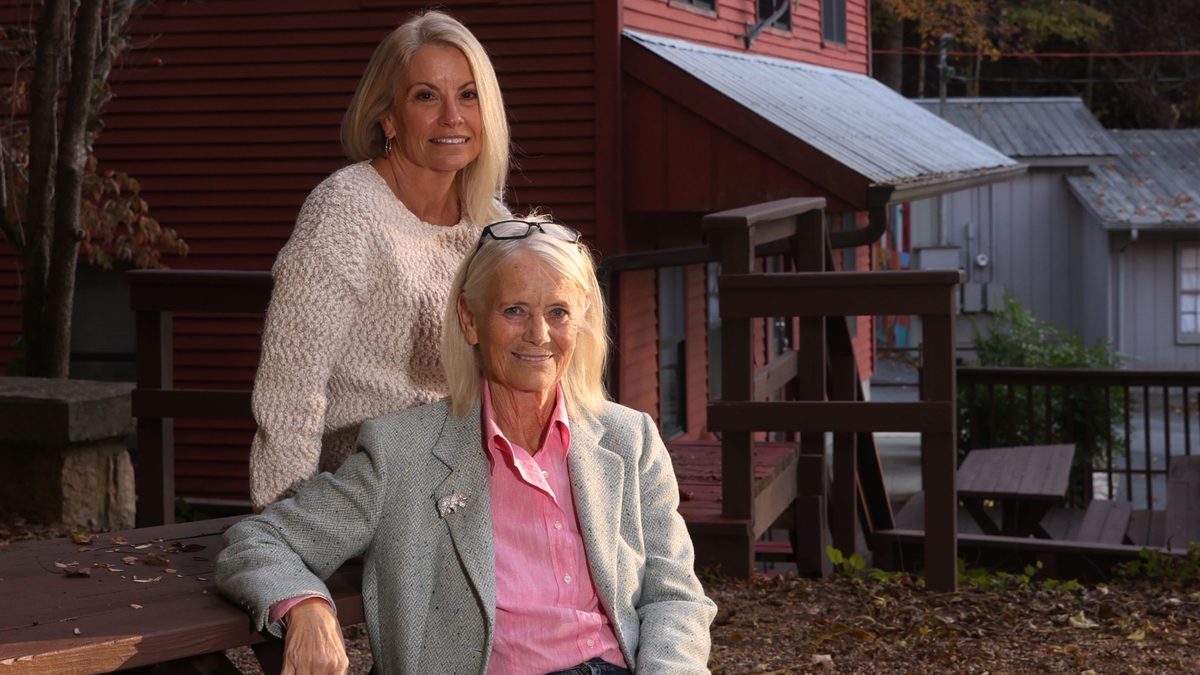
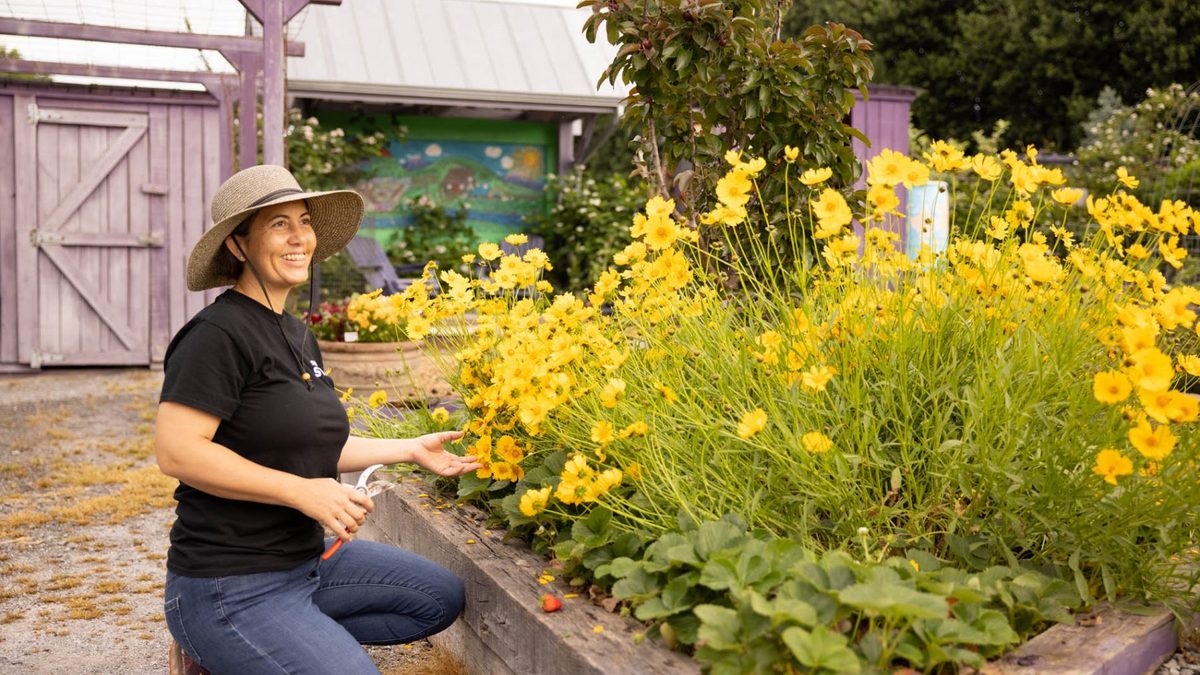
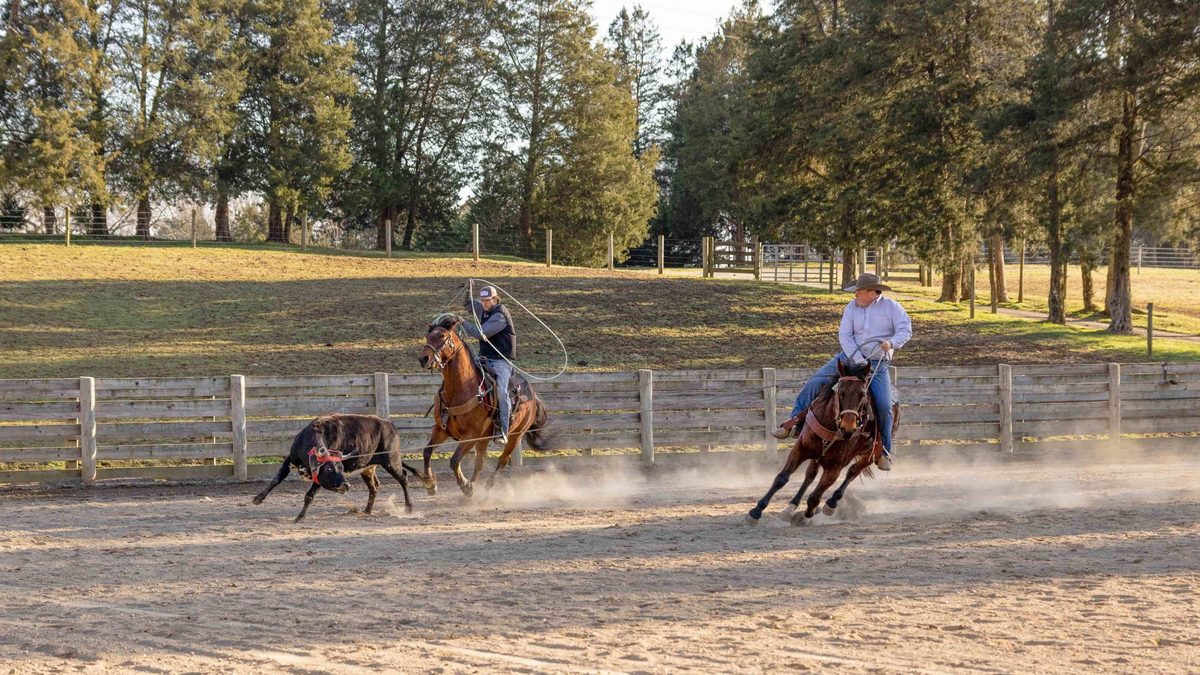
FeatureMarket Wagon is helping East TN farmers expand
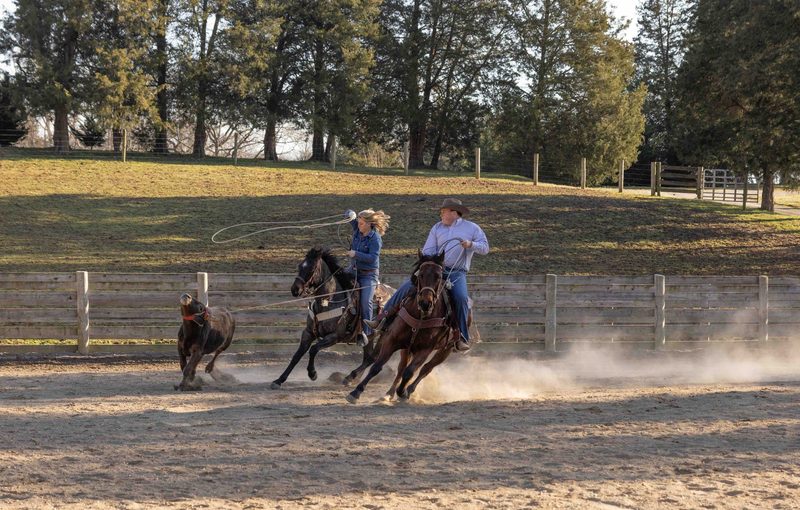
FeatureRoping Fever
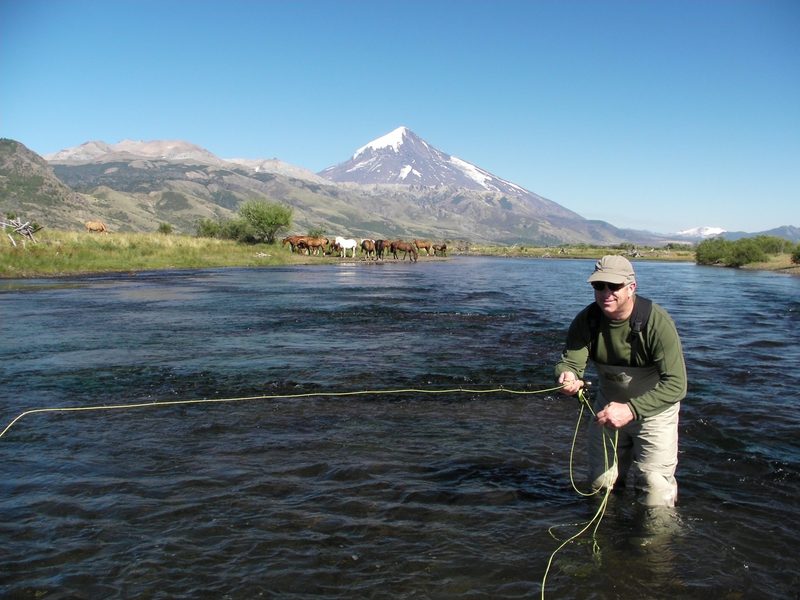
FeatureSunrise on the Soque
FeatureThe Littlest Cowboy
VeteranWaging the War Within
Reading Settings
100%
Mar / Apr 2022
Swipe to read →
Vol. 38 · Issue 2 | March April 2022
The PublisherFrom the Publisher
Departments
Arts & CultureFloral Portraits
MusicA Guitarist’s Calling
PoliticsWe Draw the Lines
InsightsMuddy Pawprints
DepartmentsThe Crag
DepartmentsSexy Sophistication on Market Square
Dining GuideMarble City Market
DepartmentsCountry Stuff
Features
JurisprudenceUnto These Mountains
InsightsCoping in a Strange World
Feature5 Spring Break Experiences Close to Home
FeatureGracious Waterfront Living
Non-ProfitPassion & Perseverance
Top DocsTop Docs 2022
FeatureDigging In
PeopleGreg LeMond
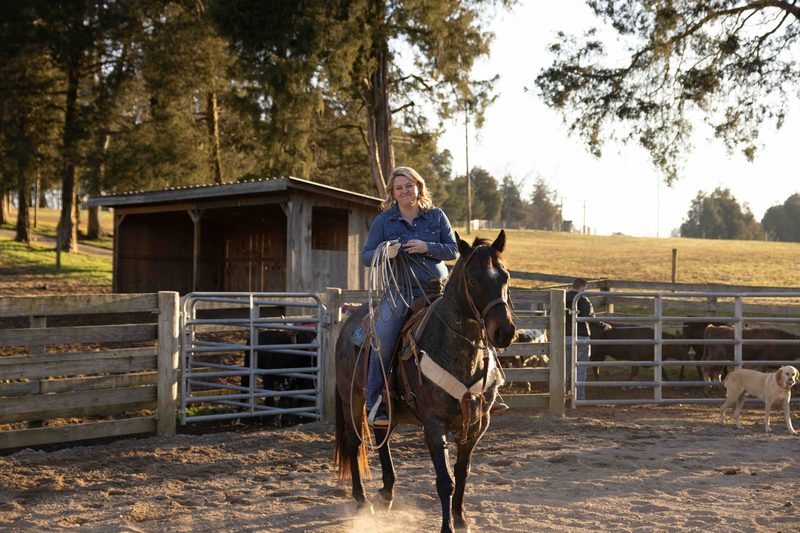
FeatureMarket Wagon is helping East TN farmers expand
FeatureRoping Fever
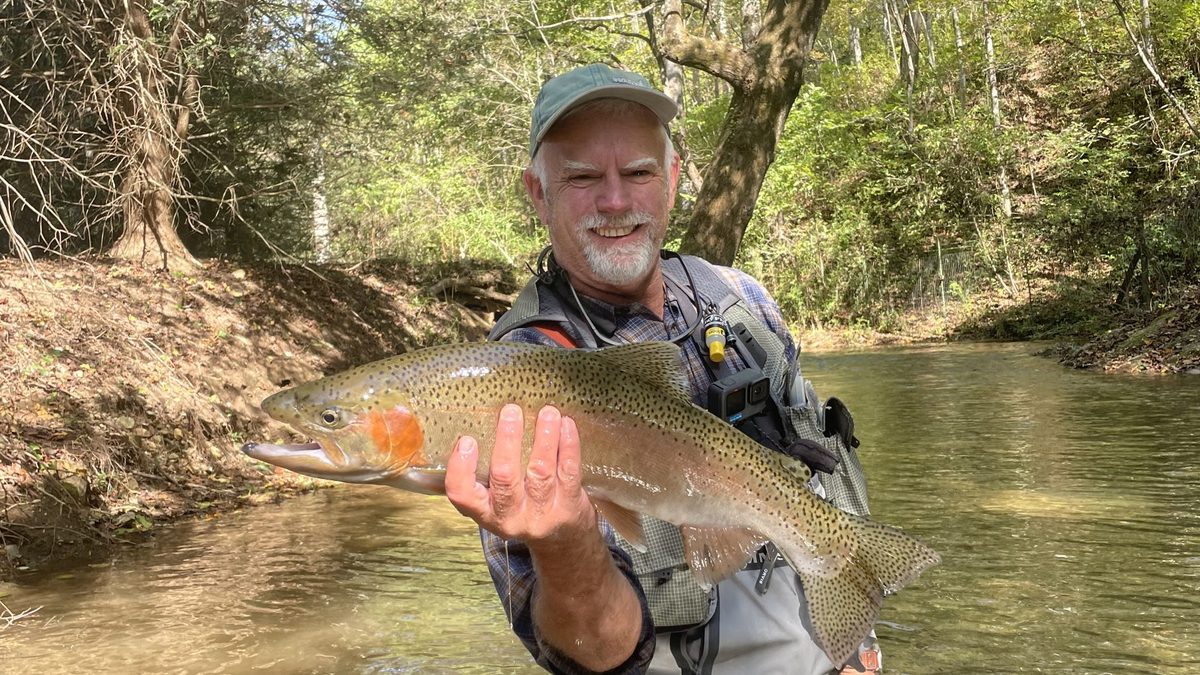
FeatureSunrise on the Soque
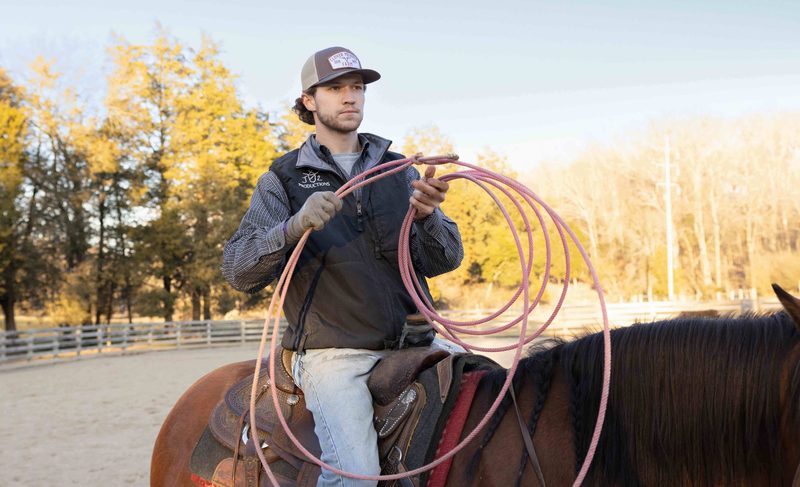
FeatureThe Littlest Cowboy
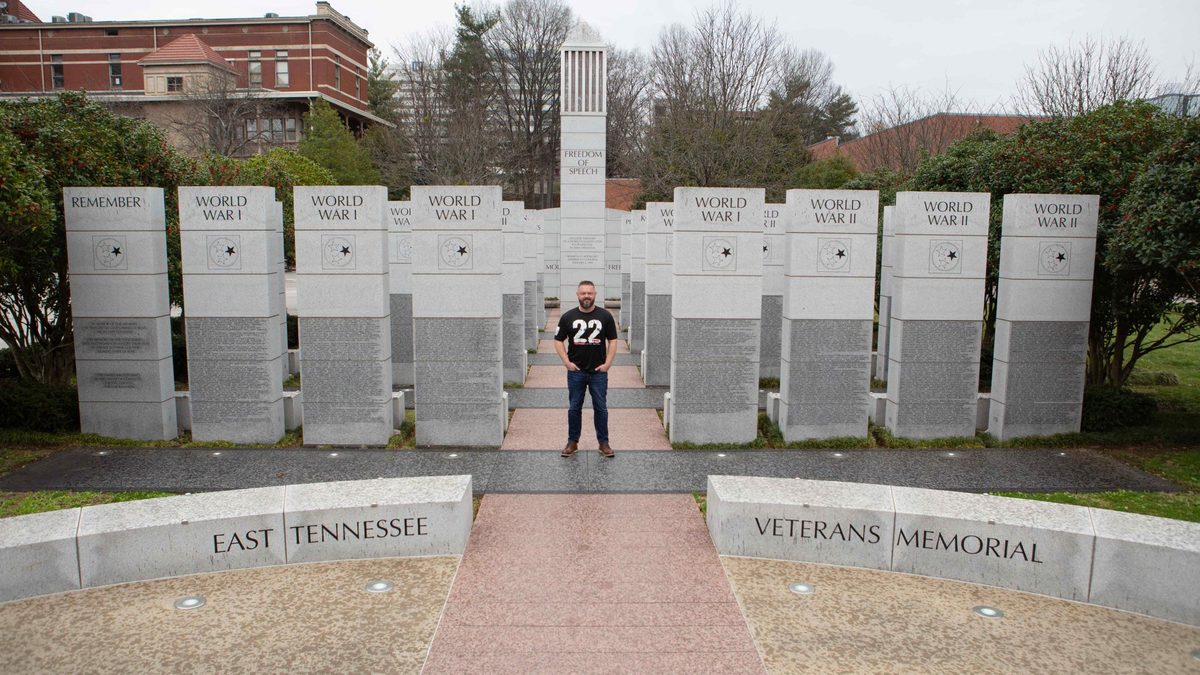
VeteranWaging the War Within
→ Swipe to start reading
The PublisherMARCH APRIL 2022
From the Publisher
Story by Nathan Sparks
There is a greater need for citizen involvement in our political system than ever before. Yet, we see a dramatically decreasing number of qualified candidates willing to serve coupled with poor voter turnout. My theme for the year started with the romantic proposition to love everything, and I am sticking with the notion that loving is far superior to hating in any situation. However, it is difficult to find much to love about our current political climate.
Why do so few participate? Perhaps because politicians receive far more ridicule than praise, neither politicians nor voters want any part of that rhetoric. Or could it be the lackluster voter turnout? It is understandable when a candidate has poured their heart and soul into a campaign, and the turnout is meek. Perhaps there are countless reasons, and these are only a few; nonetheless, we need to improve.
In May, we will have our local primary election, which will effectively be the final election in many races. Tennessee is so overwhelmingly Republican that Democrats often don’t see the point in running, making the primary the actual election. While there are many very qualified candidates in some races, the field is sorely lacking in others. Those races deserve our attention even more so. This lack of talent seems to hold at every level: local, state, and federal, but perhaps the apathy is greater at the local level, where we often misperceive the actions of a particular politician as not having any effect on our lives. Recent events would say otherwise as we watched those same politicians shutter our businesses during the pandemic. Let’s be clear—every single elected official is essential, and we as citizens should be dutiful in our selection process.
Especially at the local level, the R or D should be of less concern than the person’s qualifications to effectively discharge the duties of that office and their positions on specific local issues. We need more centrists who care more about the outcome than the party line.
As a publisher and journalist, I firmly believe in freedom of speech, but I do not think anyone should be able to anomalously take cheap shots at those willing to take on the challenge of governing. There is little regard for the damaging effect defamation has in the current world of social media. There is no requirement to authenticate yourself to obtain a social media account. Most haters who haunt those forums don’t have huge followings, but they tend to intimidate the people who would have something positive to say. I have tremendous respect for a person who puts forth both their position and a solution in a public forum and uses their name.
The national media members who willingly disseminate disinformation are an entirely different story. It is difficult for any of us to make informed decisions without accurate information. Why do they continue to have a voice? Plain and simple: greed. Both the network and the advertiser are more interested in profit than truth. If every company that advertised with any national media made it implicitly clear that if the network wanted to continue to receive the advertising revenue, misinformation is not an option, then, in my opinion, most of this would stop.
Are we perfect here atCityview? By no means but we invite anyone to bring light to any of our editorials. If you make a good case for your position, we might just offer to publish your article or idea, especially if you present a plausible solution. We all get better by participating—you have an open invitation to share with us anytime, and please take time to honor our democratic process and vote. Until term limits and true campaign reform pass it’s the least you can do.
→ Swipe for Next Story
Arts & CultureMARCH APRIL 2022
Floral Portraits
Sarah Moore finds an artistic home among the wildflowers
Story by Rebecca Whalen
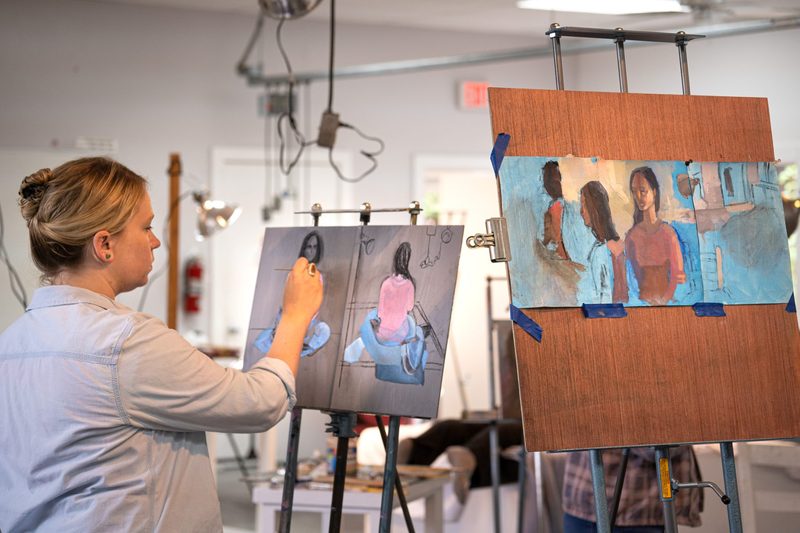
When ironweed first blooms in late summer, its vivid fuchsia cannot be missed. As the autumn shifts into winter, tanned, fluffy seed heads make their appearance. The plant undergoes a transformation throughout its life cycle giving it character and inspiring people like local artist Sarah Moore.
A native of Georgia who grew up in rural South Carolina, Moore took time trying out mediums while young until she found her niche in paint. “I remember my very first paint-by-number kits and this was back when they didn’t have the kind of newer healthier solvents,” she says. While potent, the paint was “thick and satisfying,” and she soon found herself with a passion.
Moore was discouraged from pursuing art in college, so she opted for architecture, taking art classes on the side. But even after obtaining a master’s in architecture, the paint called to her. “Deep down I just knew that (architecture) wasn’t the right fit for me,” she says. “As soon as I started painting again, I just realized I never want to stop doing this. Whatever I have to do to make this work, I will find a way.”
She kept her artwork to herself in those early days. “I realized that I had all these foundational skills in art, but I didn’t actually have a style or a voice or something that was uniquely an expression of myself,” she says. Eventually, Moore found an interest in painting the landscapes of the places she explored in her travels. She moved to Knoxville in 2015, and had her first gallery showing. She fell in love with seeing her art on display.
Moore began taking walks a couple of years ago to reduce her anxiety. And the foliage along the way became her subjects. “Once I started painting wildflowers, it just kind of opened up this new world and I started seeing more of them everywhere. It’s like that old quote, ‘There are always wildflowers for those who want to see them.’”
To learn more about Sarah Moore and see more of her work, visitwww.sarahmoore.studio.
→ Swipe for Next Story
MusicMARCH APRIL 2022
A Guitarist’s Calling
Larry Vincent shares his love of music through teaching
Story by Chris Blue
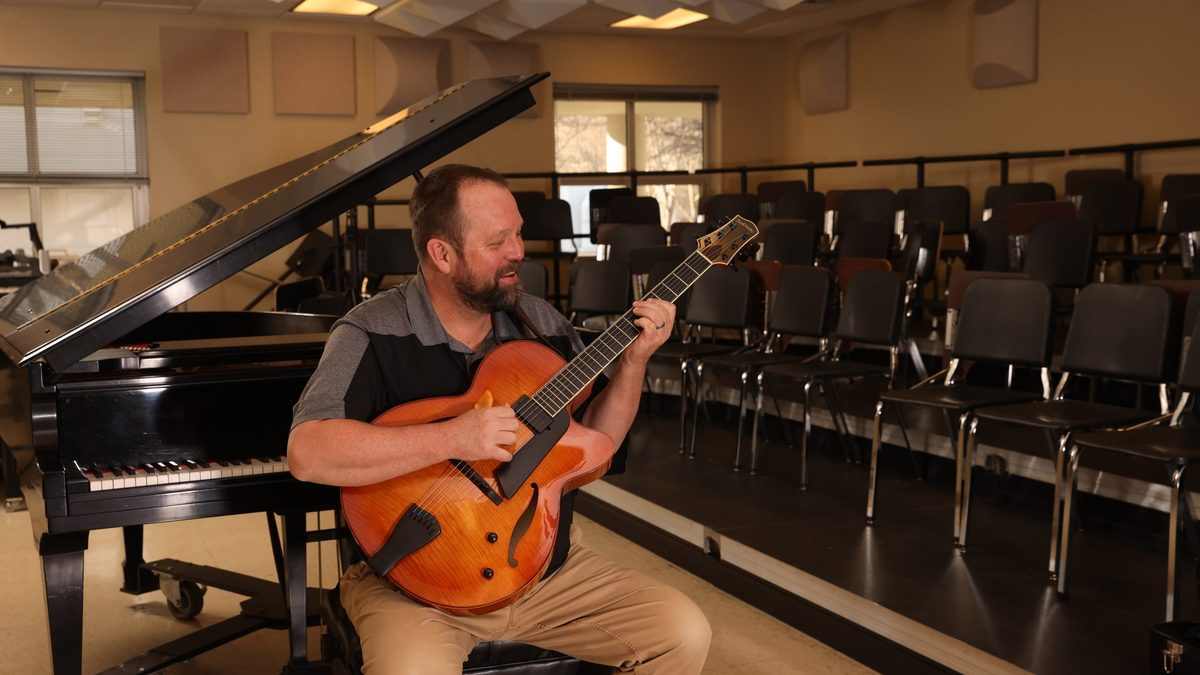
As Larry Vincent stands on stage, guitar in hand, his eyes close as he feels the movement of every note. His fingers slide effortlessly across each fret as music dances across the strings. It’s not hard to understand how deeply connected he is to his craft.
Vincent grew up in Venezuela around a music-loving family. His grandmother was a classically-trained pianist; his dad an avid guitar player. “We always had guitars around the house,” he says. “I started playing guitar when I was young.” And his love of the instrument grew from there. “That’s what brought me to Tennessee,” he says. “It was the University of Tennessee jazz program here.”
Vincent moved to Knoxville in 1987, and found a mentor in instrumentalist and music instructor Donald Brown, his ensemble director. Eventually the two would end up doing recording projects with one another, Brown even playing on Vincent’s first album,In Exile. “He’s a master musician,” Vincent says of his mentor. “There’s no one that I admire more than Donald, and I’m sure I’m one of many that get to say that in Knoxville and in the country.”
Vincent’s love of music grew. “At some point, my career in music shifted from primarily playing to more of a role as an educator,” he says. He became an adjunct instructor at Pellissippi State Community College in 1997, eventually becoming an associate professor in 2008. And he found himself connected to his family in a new way. “[My mom] was an educated college professor and she taught teachers. Her subject is the psychology of learning,” he says. “She was forging and mentoring future educators.” And he had a desire to make that impact, too. “Just to see somebody grow in front of you [and know] that you had a small part in that, there’s nothing more rewarding.”
Vincent has been sharing his love of music with hundreds of students since 1997, but continues to play shows throughout Knoxville, where you can hear elements of jazz, South-American inspired artistry, and a little bit of rock in his work.
→ Swipe for Next Story
PoliticsMARCH APRIL 2022
We Draw the Lines
Redistricting puts Republicans and Democrats at odds
Story by George Korda
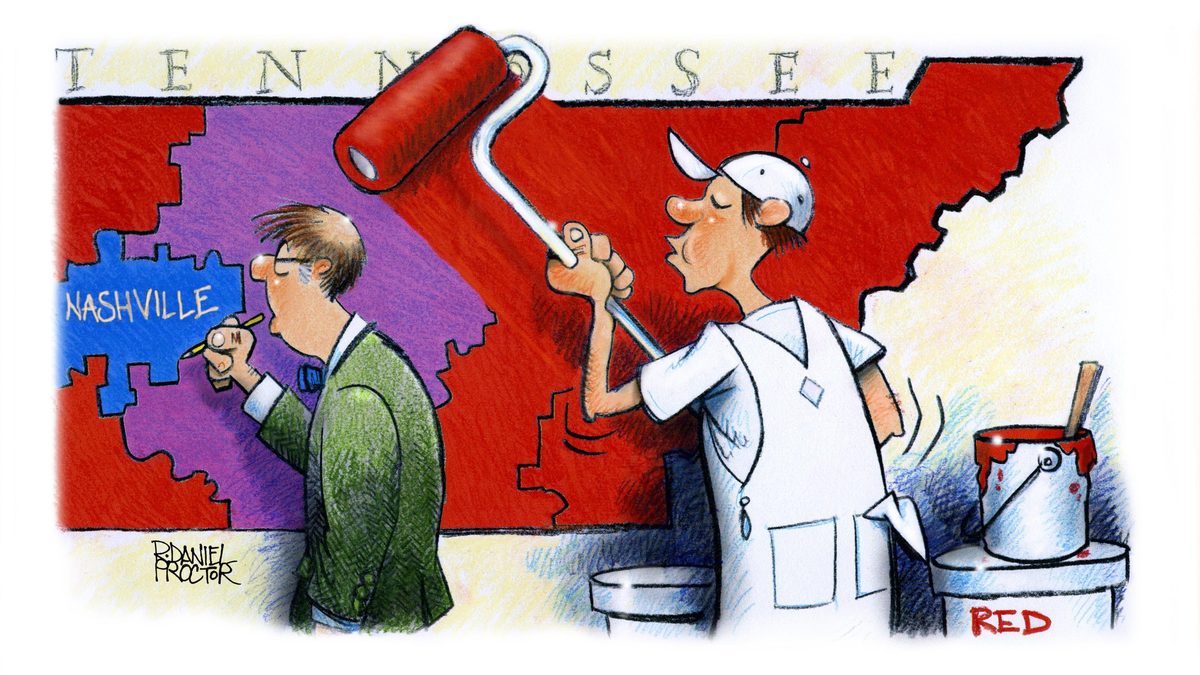
Redistricting works like this: when your political party is in power, among the spoils of victory is drawing congressional and state legislative district lines. A legislative majority following the U.S. census brings with it the ability to shape—pretty much literally—the state’s political map.
When your party is on the short end of the votes, it’s a different world. You search for any reason to claim the drawn districts are unfair, unjust, and un-American (read “gerrymandered”). And if the parties’ respective political fortunes change and the one that was on the bottom finds itself on top, its members’ previously held redistricting principles are as hard to find as someone who owes you money.
Following the 2020 census, Tennessee and its Republican legislative supermajority began its march to redistricting, which, by the time this appears, should be completed. And if Republicans haven’t fashioned districts good for Republicans, no doubt it’s a big surprise to everyone.
Early in the process, there were, unsurprisingly, complaints about how Republicans were drawing their state maps. The lead paragraph of the Dec. 17, 2021Nashville Tennesseanredistricting story is illustrative: “Tennessee House Redistricting Committee on Friday unveiled—and voted to advance—its own draft state House map that would eliminate five Democratic incumbents who face re-election in 2022.”
Tennessee Democrats would qualify for an Endangered Politicians list: six Democrats of 33 state senators and 26 members in the 99-member House. The state Senate could hold a caucus meeting in an average-sized van. From dominating Tennessee politics for more than a century following Civil War reconstruction, Democrats’ fortunes have plummeted as the national party moves ever-further left and Tennesseans vote Republican.
Republicans had to win elections in formerly Democratic-drawn districts to reach the point at which the G.O.P. could draw district lines. Democrats, whose redrawn districts were once amenable to their candidates, are now on the sidelines, complaining. (Note: to know when a complaining politician or party is taking a stand on politics rather than principle, explore if in the past, when they were on the other side of the issue, they took an opposite position.)
The U.S. Constitution sets out the rules on U.S. House districts: “The Times, Places and Manner of holding Elections for Senators and Representatives, shall be prescribed in each State by the Legislature thereof; but the Congress may at any time by Law make or alter such Regulations, except as to the Places of chusing (sic) Senators.” But, says the political website Ballotpedia, “The United States Constitution is silent on state legislative districts.” And according to the Constitution’s 10th Amendment, “The powers not delegated to the United States by the Constitution, nor prohibited by it to the States, are reserved to the States respectively, or to the people.”
However, U.S. Supreme Court rulings, the first in 1962, have established various state redistricting legal boundaries, principally in matters of race, population, activities of redistricting commissions, and partisanship, according to the National Conference of State Legislatures. Challenges to redistricting plans are not uncommon, but those who have the legislative votes still have the advantage.
Legislative district “gerrymandering” originated in 1812, when Massachusetts Gov. Elbridge Gerry signed into law a state redistricting bill that helped to elect three of his party’s candidates to office. Some observers thought the district drawn by the bill resembled a salamander, with head, body, and claws; the Boston Gazette thus labeled the district a “gerry-mander,” giving birth to the term.
Gerrymandering is often claimed as a bad thing by people who don’t know their gerrys from their manders. Regardless of the party, any redrawn district lines that put them in a weaker position becomes gerrymandering. And again, it depends on whether you’re up or down in legislative numbers. In 2019, the Daily Beast website published an article headlined “Democrats hate gerrymandering except when they get to do it.” Tennessee Republicans don’t talk about it because they’re on top.
Regardless of party machinations, redistricting must be finished by April 7, 2022, the filing date for 2022 election candidates. Inevitably, both parties want to draw new lines to consolidate their electoral power. For Tennessee Republicans, unless something has gone desperately wrong, it should leave them singing a happy tune.
→ Swipe for Next Story
InsightsMARCH APRIL 2022
Muddy Pawprints
Our four-legged friends are constant reminders to live life fully
Story by Bruce Fox
I have had dogs in my life for the past 23 years. To be exact, I have had Labrador retrievers in the fabric, heart, and soul of my life since I went with my wife, Mary Jane, to look at a litter of puppies in Roane County. While the intent was to get one puppy, thanks to the influence of my children, we ended up with two that day: Hank and Lacy. Little did I know that the course of my life was about to take a drastic, unexpected, and wonderful path into the world of American Kennel Club Hunt Tests and Field Trials.
With training help from friends, I ran in the AKC Hunt Test with both Hank and Lacy where they qualified as AKC Master Hunters and competed in the Master Nationals in Colorado and Texas. Hank won his Master National title; I still have his silver plate on the wall in my “dog room”—yes, I have a dog room. Lacy and I made it to the last series of the Master Nationals, but I made a handling mistake and we went out in the last series. I still remember that mark in detail and the mistake that I made that cost her title.
Unfortunately, we lost Hank at age 7 to cancer and Lacy at age 8 to a different cancer. I felt like I had a hole in my heart.
When I eventually recovered from the loss, we started to think about another Lab puppy. And once again, found ourselves in the presence of six-week-old pups where we picked our Ty, a yellow Lab. Ty turned out to be a fantastic dog, and after spending time with our hunt test trainer, I was informed that Ty was the best marking dog he had trained. It turned my world upside down, but we got Ty to a field trial trainer and started a new journey of Field Trials as opposed to Hunt Tests. Today, Ty has his Master Hunter title and qualified All-Age in field trials.
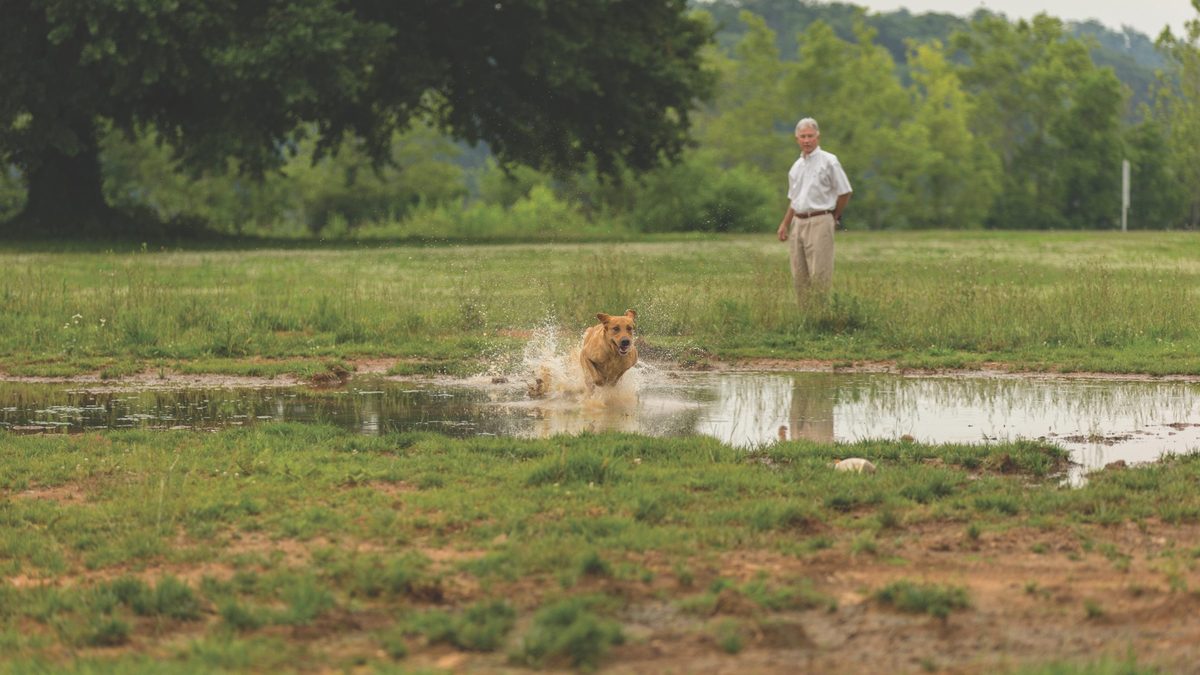
During field trial training, I met Woodrow. He seemed like such a happy dog and, wanting to have his presence in my life, I called the owner and offered to buy him. Woodrow was three and fit into our family like a glove. He and Ty became best friends, to not only one another but to me. They are my constant companions. Both come to the office with me every day. Even my clients know them well.
Ty just turned 11 this year, and Woodrow turned 10 on Christmas Eve. I know my time with them is coming close to an end. And while I know the heartache that I will face when that time comes, the companionship, joy, and love they have brought to my life have made me a better man and the journey a lot more fun.
Our dogs become more than companions; they are constant reminders to love unconditionally, live life fully, and be who you are. And while I might not have them with me forever, I will always carry their lessons in my heart.
→ Swipe for Next Story
DepartmentsMARCH APRIL 2022
The Crag
At home on the rock of Knoxville’s climbing pit
Story by John Quillen
ALL CLIMBING LEVELS|IJAMS PARKING: 2514 ABERDEEN LANE
CLIMBING ROUTE HEIGHTS: 30 to 60 FEET
FIND THE CRAG:Walk ¼ mile along first trail to the right out of the parking lot. Take a left before Burnette Creek Trail ascends to the right.
I’m 30 feet up a route called “Carcosa” on the Detective Buttress taking in the last glimpses of a disappearing sun melting behind the lime pit. My final move is the crux, and I dive for a jug buried deep behind blasted limestone. Now I need to turn slightly to grab a chain and throw a “dog bone” (quick draw) so my belayer can lower me back to the ground. I’ve inched up this route a few times, but am still sweating in the late afternoon sun.
If Knoxville is the “scruffy little city” then Ijams Nature Center definitely has the scruffiest little crag. Developed and maintained entirely by volunteer labor, this is the only “legit” climbing pit in the heart of our Urban Wilderness. It was the vision of local rockers, like Robbie Blackwell, Benjy Darnell, Kelly Brown, and Micah McCrotty, who released this resource from its kudzu prison. On any given Tuesday those same visionaries are here, harnessing up newcomers who wish to make their first forays on outdoor rock, many having begun inside the gym.
Sarah Whitt is one of those “gym to crag” climbers. She climbs nearby and tells me later about the skill and community she’s gained here. Kelsie McNutt gently takes me off belay. She travels an hour each week from Inglewood to hone her skills on “Madelaide”, arguably the best beginner crack in this part of the state. Flaking out a rope next to me is a couple from Idaho, who learned about this crag through Mountain Project and were excited to take a detour on their cross-country trek to tick off some routes on Knoxville rock. On this day, the parking lot is full of license plates from across the country.
Pat Caveney and Cai John like to “project” hard routes. They spent months inching up appropriately named “Scruffy City Blues” before triumphantly ascending this 5.11-rated route. This group of four climbs all over the Southeast but Ijams is home rock. “It’s a devious climb,” Cai says. “Once you slab past the first half you hit the steep headwall. We probably whipped off the crux 50 times before we unlocked it.”
I’m focused on the newest route since it is named after my favorite novel,Blood Meridian. Here on what I have dubbed “the Cormac McCarthy wall”, we are waiting in line to take another shot at this friction demon. It is positioned alongside “The Road” and “Suttree”. In keeping with the book, this cliff face claims scalps and makes cowboys the villains as it peels me off and whips my body once more into the sky.
As in the Old West, this territory is disputed and until Ijams and the city resolve management, volunteers are critical for keeping these 35 routes open. The East Tennessee Climbers Coalition welcomes volunteer love, especially on “trail days”. And I guarantee you’re sure to find a harness and route to fit.
→ Swipe for Next Story
DepartmentsMARCH APRIL 2022
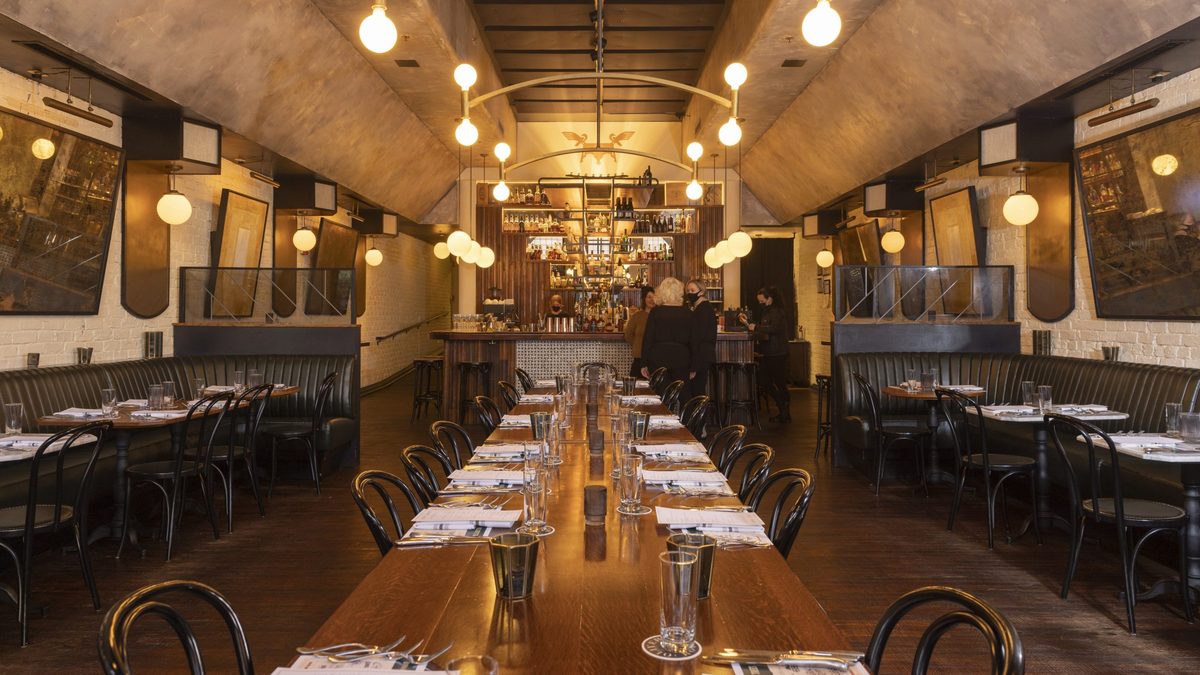
Sexy Sophistication on Market Square
The Oliver Royale blends debonair décor with flavorful dishes in Knoxville’s downtown
Story by N. Brooks Clark
When you walk into The Oliver Royale on Market Square, you’re really entering the Jersey Lily Saloon. That’s what it was in 1876, when the Kern’s Bakery and Confectionery Building was built. Now also home to the Oliver Hotel, Tupelo Honey, and the Peter Kern Library speakeasy, the edifice was designed by architecture icon Joseph Francis Baumann with flourishes of Italianate round-arched windows, decorative hood molds, and elaborate bracketed cornices. The bar was named for Lily Langtry, the red-haired, green-eyed actress from the Isle of Jersey who was also the mistress of the Prince of Wales, later King Edward VII.
The Oliver Royale channels Jersey Lily’s sexy sophistication in a way that resonates with its urbane diners. General Manager Sondra Richardson—who got her upscale-dining chops at a tony Palm Beach, Florida, steakhouse—gets it: “We’re a little slice of New York elegance,” she says.
When the Royale was renovated in 2015, the owners hired Brooklyn-based Home Studios, a firm founded by a former fiction editor to “tell the stories of inspired outsiders through the artforms of architecture and interior design.” So, the feeling that you’re walking into a novel is no accident.
The renovators pulled up five layers of flooring from the storefront’s decades as an Endicott-Johnson shoe store and a White Stores grocery to reveal dark wood that was re-laid on either side of basket weave-patterned tile that runs up the center area and—in concert with a line of globe light fixtures paired on either ends of smooth steel arms—leads to the Gatsby-worthy bar in the back. The white brick walls are adorned with large abstract art, plus one striking Lauren Lazarus painting of flowers. A hollow cathedral ceiling, rubbed with an industrial gray, works with wood center-ceiling sound-panels to deaden the decibels of chatty downtowners.
Executive Chef Darin Hoagland learned to tantalize the tastes of culinary highbrows at Café Maxx in Pompano, Florida, at Fort Lauderdale’s Riverside Hotel and Bistro Mezzaluna. He moved to Knoxville in 2017 with family and started at The Oliver Royale as a line cook under John Gatlin. He became executive chef a year ago. “I keep my southern roots and add fresh seafood and tropical fruits,” he says. “I keep it fresh and different.”
In the “To Begin” section, the Smoked Salmon Arancini mixes house-smoked salmon in tasty Italian rice balls with asparagus tips and cream, micro frisée, dill, and scrumptious Benton’s ham crisps. Though a misnomer, the Blackened Tuna “Fish N’ Chips” is among the best items on the menu, with slices of tuna with barrel-aged soy, citrus, spicy mayo, mixed root vegetable chips, and red-veined sorrel.
The Seafood Ravioli entrée features shrimp, scallops, crab, San Marzano tomatoes, cured lemon, Kalamata olives, capers, roasted red peppers, white wine, butter, and herbs.
Confit Duck Leg is hearty and refined at the same time. It comes atop a mixed bean cassoulet that includes cranberry beans, Peruvian lima beans, gremolata, crispy pork belly, chipotle mayonnaise, okra crisps, and a demi-glace that takes Hoagland three days to make.
Many diners return to the Royale just for the Oliver Burger, topped with whole grain mustard-infused Welsh cheddar, tomato and apple chutney, Benton’s ham crisps, and boardwalk fries.
If there is a short ribs contest among downtown restaurants, don’t count this Confit Short Rib out. It comes with scallion-whipped potatoes, confit baby carrots, English peas, celeriac, and that heavenly demi-glace.
Pan-Seared Monkfish is savory and flavorful atop cauliflower purée, roasted Romanesco, Mediterranean salsa, heirloom tomato, cured olives, and crispy leeks.
Desserts include Truffles and Macarons, a tasting of assorted seasonally inspired chocolate truffles and local macarons. But don’t miss the Banana Spring Rolls of pineapple and rum caramel, vanilla ice cream, and brûléed bananas.
→ Swipe for Next Story
Dining GuideMARCH APRIL 2022
Marble City Market
Food makes a triumphant return to the historic Regas Square
Story by Marc Anthony
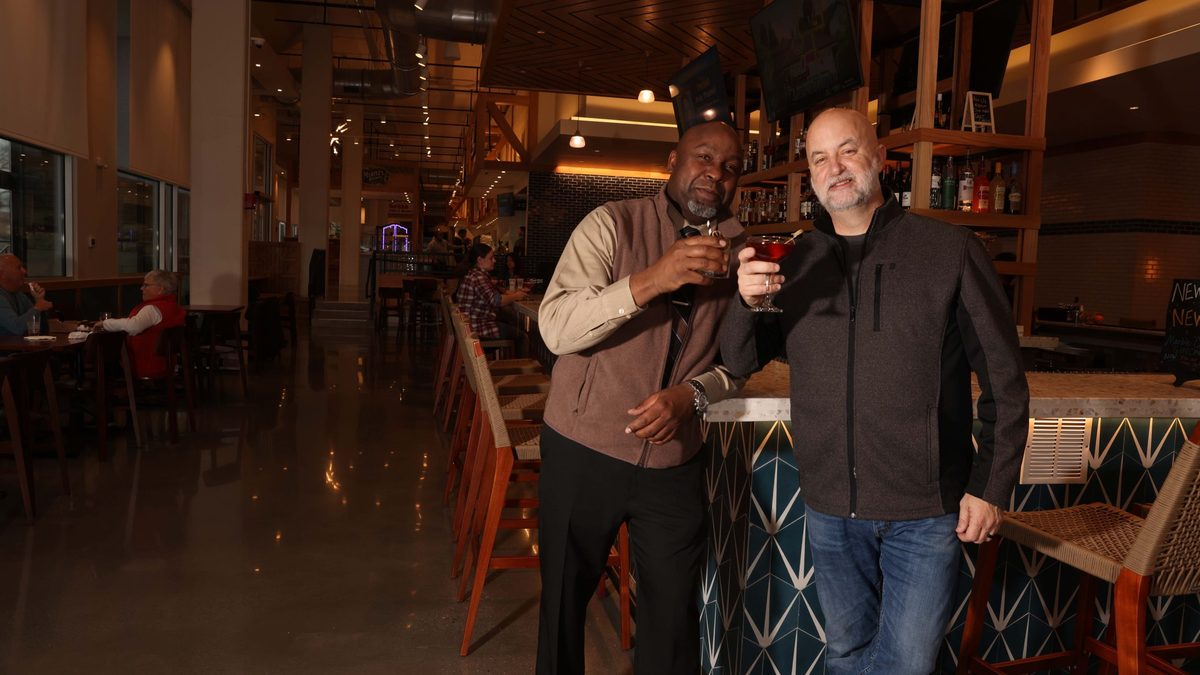
Marble City Market is Knoxville’s first culinary marketplace. Emulating the European food hall concept, the market serves up everything from donuts and ramen to kimchi and classic barbecue. And anchoring the hall is Frank & George’s, an adult beverage station dedicated to the Regas Brothers and their heritage on this square. So if you and the family are all in the mood for something different, this is the place to head to for dinner. Grab your favorite meal then sit down together for a feast.
The Donut Theory
Myrtle’s Bakehouse
Paysan Sandwich Shop
The Corners Pizza
Seoul Brothers
Gekko Poke & Ramen
Po’ Richard’s
Smash Knoxville
L&O BBQ
Penne for Your Thoughts
Fantail Fish and Frites
Learn more about the establishments at Mobile City Market below!
The “theory” of The Donut Theory is that gluten free food can taste as good as anything else. And, to be honest, I had no idea everything on the menu was gluten free when I grotesquely devoured a donut and a rice crispy treat within a minute. By the way, this is not just a donut shop. Grab some chicken and Mac and Cheese and round it out with a donut dessert so delectable you’ll dive right in. The Strawberry Shortcake Old Fashioned is a donut split down the middle, smothered in a secret strawberry sauce and topped with homemade cream. It’s labeled as “Chef’s Favorite”. Duh.
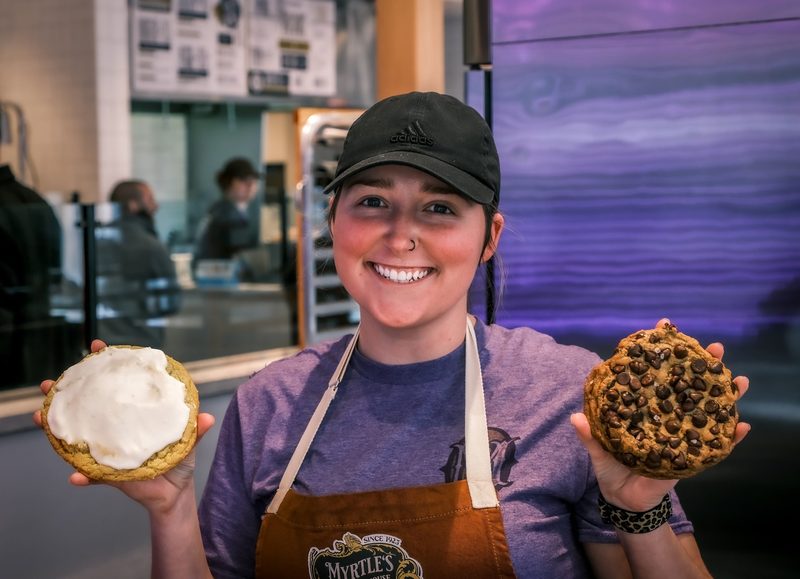
If you laugh at the concept of sharing a face-sized cookie, then I have the place for you. Myrtle’s Bakehouse, a loving homage to a baker’s mother, packs so many chocolate chunks into a cookie you’ll lose count. Weighing in at just under half a pound, you will gratefully do some eight ounce curls. Pro Tip: Scruffy City is not just a bar on the Square. It’s Myrtle’s original cookie with the added decadence of toffee, pecans, and espresso chips. Let this cookie prove that coffee beans make chocolate pop.
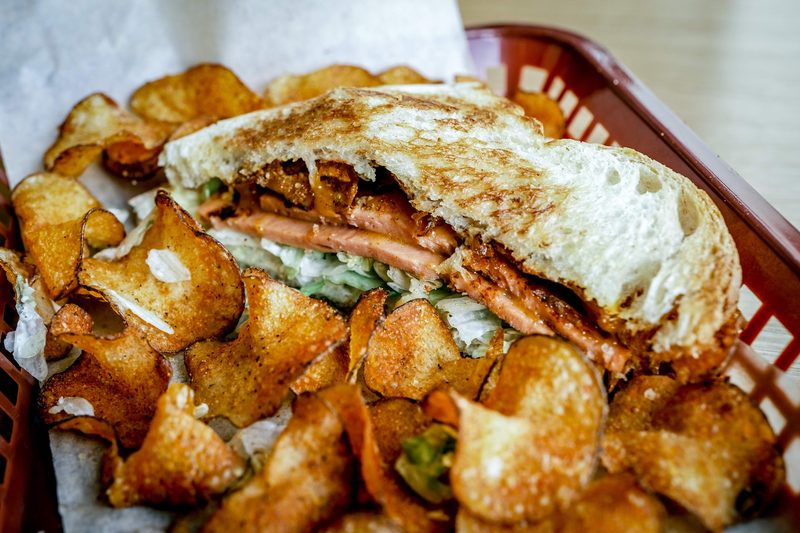
Let’s just get the judging out of way. Bologna is my favorite lunch meat. There, I said it. Don’t judge me. Fresh out of the Oscar Mayer pack or sliced from the ring and thrown on the grill or smoked for the richest bologna flavor, if it’s on the menu, it’s in my belly. And it is at Paysan Sandwich Shop. The Fried Bologna (say it with an “i” at the end) comes sizzling off the grill with sorghum mustard, “shrettuce” and BBQ potato chips on grilled white bread. If there is any menu item at Marble City that can transport you back to your childhood, this is it. An evolving menu of sandwiches keeps the menu fresh, so get this “delicacy” while you still can.
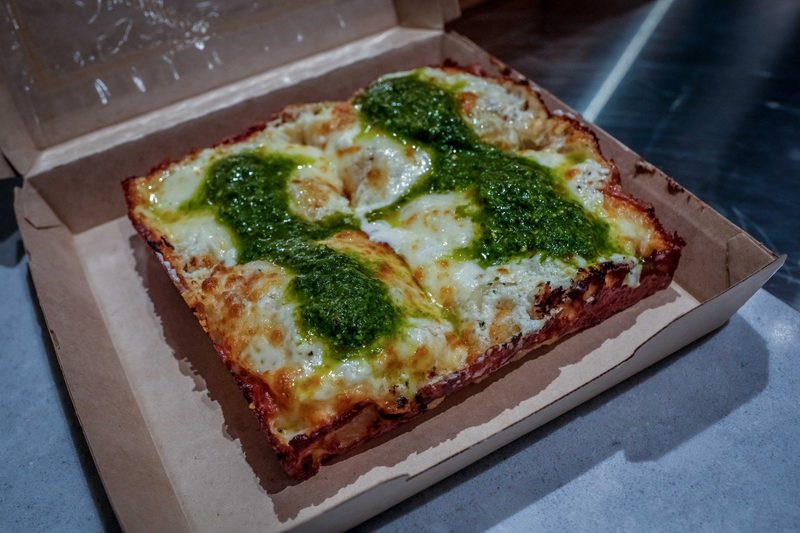
Pizza. I could probably stop there. I won’t. There are so many different varieties to choose from: New York, Chicago, New Haven Apizza (yes, this is the correct spelling) and the newest rage, Detroit style. Square and deep, The Corners is called The Corners because of how tasty the corners of the pizza are. The ingredients of a Detroit style pizza are spread all the way to the edges, so the crust—crisp and chewy—lies below the surface against the steel cook tray. In the corners. Also, with the sauce on the top, grab a bunch of napkins and enjoy a different take on deep dish, crispy crust pizza at The Corners. Mmm, Pizza.
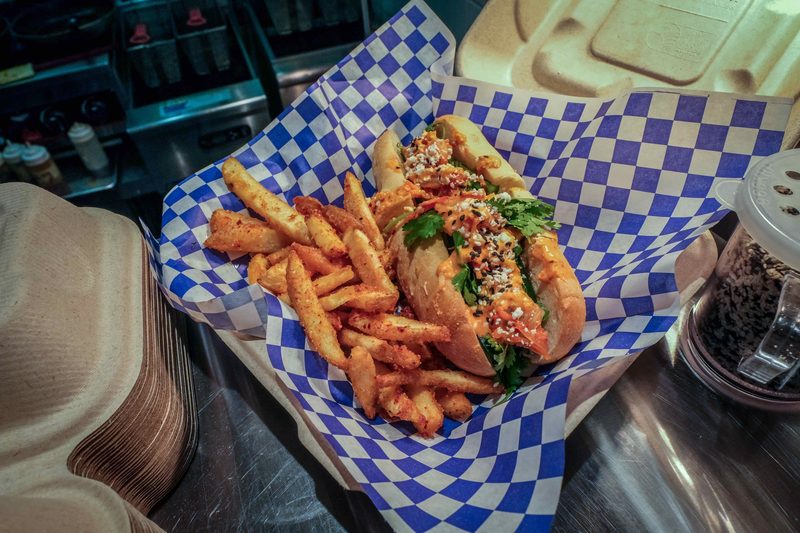
Korean food is finally getting noticed in America. And it’s about time. You might be unfamiliar with terms like bulgogi, daikon and kimchi. That is why you need to order the Bulgogi Banh Mi from Seoul Brothers. Marinated sliced beef (bulgogi), daikon (radish-like root vegetable), cukes, cilantro, kimchi (fermented cabbage) and more make up a sandwich that had my tastebuds dancing from one taste to the other yet blending into one culinary experience so tasty and satisfying that I could have ordered a second one. And here, KFC means Korean Fried Chicken, OG style.
It’s a shame that Gekko’s name doesn’t include Street Tacos because the shrimp tempura street taco I gobbled down was as good as anything I’ve ever had from a food truck or street vendor. And I’ve eaten a food truckload of street tacos. You know you’ve been eyeballing Poke for a while, sizing it up, figuring it out. But until you just come to the food hall and dive into a bowl, you’ll keep side-eying it. Poke, aka Hawaiian sushi, is just one more thing that will expand your culinary horizon. Gekko serves Japanese poke, wonderfully dense and creamy ramen, and did I mention the street tacos?!
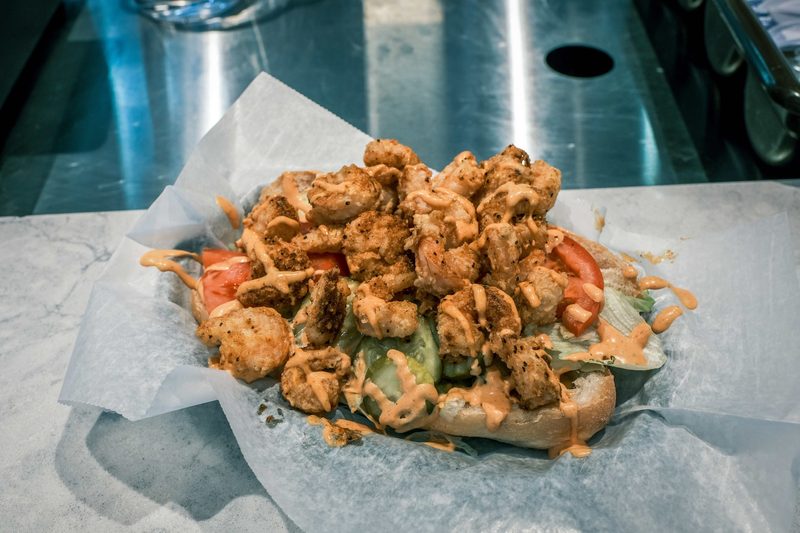
Steak, shrimp. Surf, turf. It’s the toughest decision you’ll make while craning your neck to Poor Richard’s menu board. Rolls imported from Philly are stuffed full of chopped roast beef and melting cheese for a hearty and visually impressive steak sandwich. Or, get the shrimp Po’Boy, which has more shrimp than three Red Lobster All-You-Can-Eat refills. Striped with a zesty House Creole Aioli and served with lettuce, tomatoes, and pickles, you’ll need to grab a fork as it is perfectly unwieldy. It’s not a sandwich; it’s a platter. On a bun.
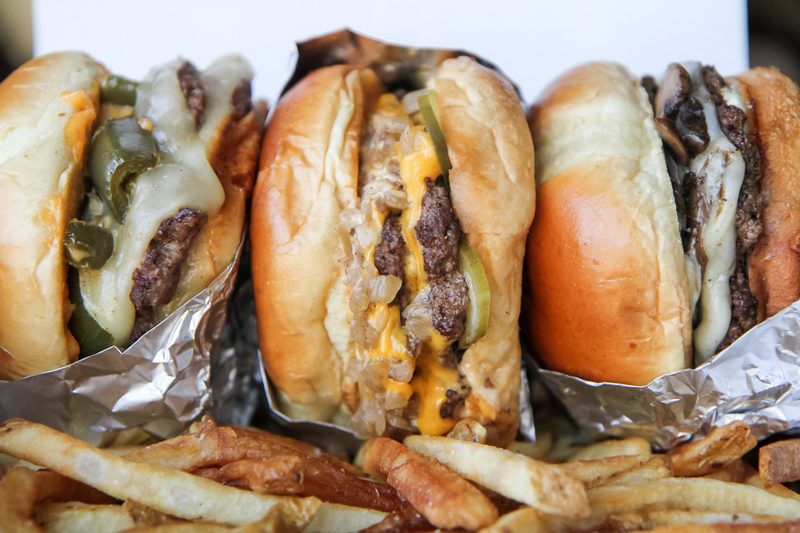
Thickburgers are so over. Smashed patties—lightly seasoned and piled high with veggies and condiments—are the new school. Tennessee beef and other local ingredients are masterfully crafted into a mouth watering, pub-style burger. Hand-cut fries, whoopie pies, and even chicken smash burgers served on potato buns or Rad style enliven the menu board. Chef-style burgers don’t get any better than this. Pro Tip: Truffle Mayo. If you don’t know about mayonnaise on fries, you might need to get out of the house and head to Smash Knoxville!
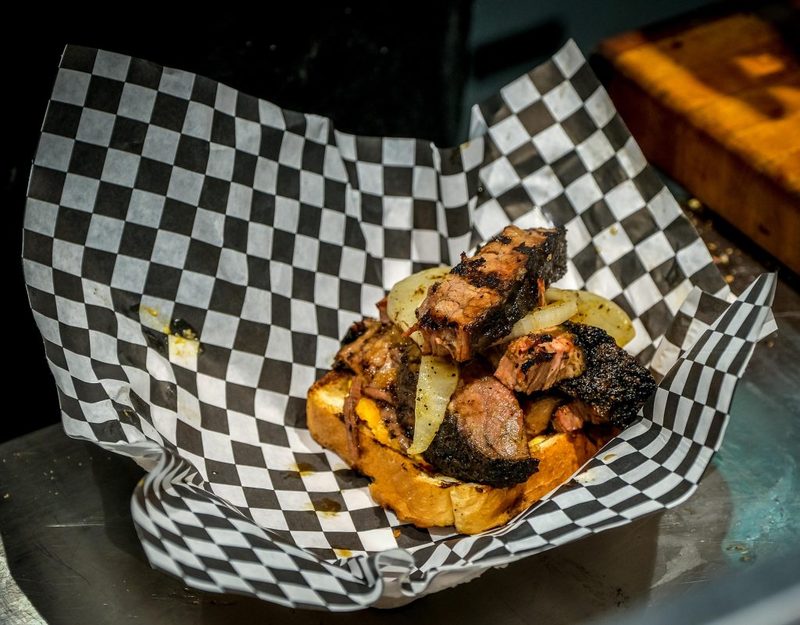
When I walked up to the counter of L&O BBQ and eyed large cast iron pots, my mouth watered knowing what lurked beneath. Smoked Mac and Cheese, collard greens, baked beans, Brussels Sprout and Cabbage Slaw are just the sides. Have you ever made a meal out of sides? I do every Thanksgiving. But allow me to introduce you to some meat: brisket seasoned with coffee and pepper and roasted for 14 hours, pork swimming in cider vinegar, or a half chicken brined for 24 hours. Pro Tip: Chicken Thigh Patty Melt with pimento cheese and collards. My work is done here.
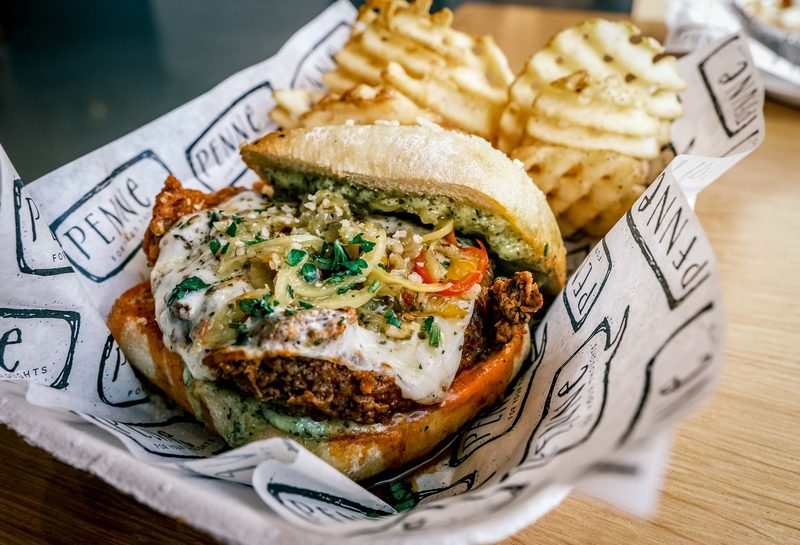
The famous food truck has pulled off its wheels and settled in wonderfully at Marble City. Don’t worry, they’re still on the street, but now they’re at the food hall, too. Penne For Your Thoughts is so delicious they don’t need gimmicky names to attract business, but they’ve got them anyway. The “Chicky Chicky Buff Buff” is a spicy buffalo sauce chicken sammie. “Pastative Thinking” is one of the tastiest takes on alfredo I’ve ever had. The slow smoked chicken adds so much depth to this dish, you may never order anything else. But there is so much to choose from. And it’s pasta, so what else do you really need to know?
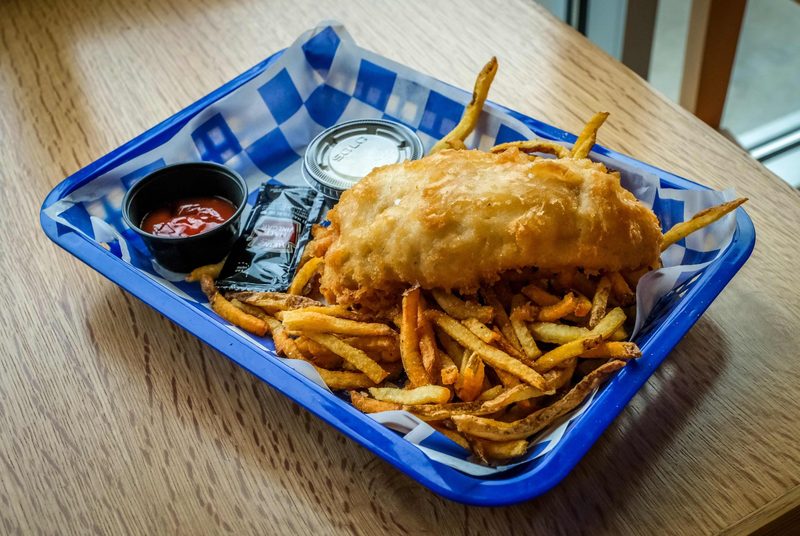
I’ve been waiting for good fish and chips in Knoxville for decades, and here we are at Fantail Fish and Frites. Fantail is shrimp, Fish is haddock, Frites (say freets) are fries. But the most important ingredient is what you put on all three. Malt Vinegar. Stop puckering and hear me out. If it’s good enough for the British, it’s good enough for you and me. I’ve been putting malt vinegar on fries since I strolled the beach boardwalks of my youth. It’s that kick you need when gorging on the wildly generous portions in your basket. Thickly battered and fried crispy, you’re in for a treat no matter what you order.
Walker Hayes makes his way to the Marble City this spring
Story by Rebecca Whalen
We all remember the first time we heard “Fancy Like” on the radio. That classic guitar riff opens up to a song you can’t help but sway to. And now you’ll get to sway to it in person when Walker Hayes visits Knoxville this spring.
This singer-songwriter from Mobile, Alabama, now living in Franklin, Tennessee, released his first single back in 2010, and while he’s had the fan base since then, he was thrown into the spotlight during the summer of 2021 when “Fancy Like”—from his EP albumCountry Stuff—rolled through TikTok. His original post on the platform was a video of him and his daughter dancing to the song on their porch, and people seemed to like it; the song went viral. It eventually landed in the top three of Billboard’s Hot 100 in July and later in spot No. 1 on Billboard’s Hot Country Songs list. Let’s face it, you can’t help but love this song.
And now Hayes will be making his way east to Knoxville to bring fans and new listeners along for a fun evening of country on April 28 at 7:30 p.m. at the Tennessee Theatre. More info on tickets can be found atwww.tennesseetheatre.com.
→ Swipe for Next Story
JurisprudenceMARCH APRIL 2022
Unto These Mountains
Paying homage to the Eastern Band of Cherokee Indians and their new business venture
Story by Gary Wade
Those of us who grew up in this neck of the woods know of Cherokee, North Carolina. Many of us, however, are unaware that there are three federally recognized Cherokee tribes. One is the Cherokee Nation in Oklahoma; a second is the United Keetoowah Band of the Cherokee Indians, also in Oklahoma; and the third is that with which we are most familiar, the Eastern Band of Cherokee Indians—our friends across the mountains. How this division came about, most moving to the West while some cloistered in the Smokies, has a historical basis.
During his four years as president, John Quincy Adams of Massachusetts signed into law a protective tariff placing duties on imports. The law was particularly unpopular in the South where the cotton trade was king. In the election of 1828, Andrew Jackson succeeded Adams as president and inherited from the prior administration South Carolina’s John C. Calhoun as his Vice-President. Regrettably, Jackson and Calhoun had a long history of political differences. In 1832, an election year, Jackson was able to pass legislation lowering, but not eliminating, the tariff. Dissatisfied by Jackson’s modest attempt to placate the southern states, South Carolina—with Calhoun’s vigorous support—claimed the right to nullify the federal tariff law. When Jackson sent the Navy to Charleston and threatened to hang Calhoun as a traitor, the “Nullification Crisis” was temporarily resolved. Calhoun, however, resigned his vice-presidency in order to return to the Senate and advocate for the South.
To shore up his popularity in the southern states for the ensuing election, Jackson had earlier signed into law the Indian Removal Act, which authorized him as president to grant lands west of the Mississippi in exchange for Native American lands in the states. At that time, almost 125,000 Native Americans lived on millions of acres in Tennessee, Georgia, North Carolina, Alabama, and Florida. The tribes in these states considered “civilized” were the Choctaw, Chickasaw, Seminole, Creek, and, of course, the Cherokee. Many in these tribes owned land individually, had learned to speak English, and converted to Christianity—considered earmarks of “civilization.” A few even owned slaves to help work their farms. White settlers, however, coveted their lands to profit in the cotton industry and sometimes used violent means to gain access, looting and burning houses, stealing livestock, and squatting on Native American lands. Many of the states had passed laws in disregard of the traditional sovereignty of the tribes as self-governing.
Jackson, who in earlier times had led troops to battle the Creeks in Alabama and the Seminoles in Florida, had taken up the cause of the white settlers. To illustrate, in the landmark case of Worcester vs. Georgia, the Supreme Court ruled that the laws of Georgia had no application to tribal lands, implicitly holding that the other southern states’ laws had no force or effect in the Indian nations. In response, Jackson, according to some reports, commented, “[Chief Justice] John Marshall made his decision, now let him enforce it.” As the country’s top executive officer, Jackson ignored the ruling. The Choctaw were the first to be sent west. The Creeks were next. Meanwhile, agents acting on behalf of the Cherokee negotiated the Treaty of New Echota, purporting to trade all Cherokee lands in the southeast in exchange for $5 million, relocation assistance, and compensation for lost property. John Ross, however, the principal chief of the Cherokees who was armed with 16,000 tribal signatures, protested the terms of the treaty, arguing that his people had not approved of its contents. Most simply refused to leave.
By the time Jackson was succeeded in 1837 by his former vice president, Martin Van Buren, only 2,000 Cherokees had left their homelands for what was called the Oklahoma territory. So, Van Buren sent General Winfield Scott and 7,000 soldiers under his command to expedite the process. This led to what became known as the Trail of Tears. The soldiers marched some 15,000 Cherokees, in possession of only what they could carry, over 1,200 miles to Indian Territory. Tragically, more than 5,000 died along the way—as a result of exposure, dysentery, cholera, typhus, whooping cough, and starvation. Still, not all Cherokees left. Approximately 800 tribal members lived along the Oconaluftee River in western North Carolina. Their chief, Yonaguska, also known as Drowning Bear, managed to avoid removal with the help of his adopted white son, lawyer William Holland Thomas. Thus begins the tale of a Cherokee farmer and prophet by the name of Tsali.
On November 1, 1838, during the roundup commanded by General Scott, Tsali, his wife, his brother, and his three sons and their families were captured and marched under guard toward a military location on the Hiwassee River. According to one account, when Tsali’s wife paused to care for the needs of her infant, one of the guards struck her and prodded her with his bayonet. When the mother, holding her baby, was forced onto horseback, her foot hung in the stirrup. She lost hold of the child, who fell to its death. In response, Tsali and his family attacked the soldiers, killing one guard and injuring or subduing the others, and then fled to the mountains. Word that Tsali’s clan had evaded capture and hidden out in a cave near today’s Clingman’s Dome prompted others to join them. Over time, hundreds of Cherokees had gathered in the area, surviving on roots and berries to avoid starvation.
Without enough soldiers to risk in such a remote part of the mountains but fearful of setting an intolerable precedent, General Scott had a situation on his hands. He chose to enlist the aid of Thomas, who had earned the trust of the tribe. Thomas was directed to make an offer. If Tsali and his family would surrender to be judged by the military courts, those other Cherokees who had joined them in the mountains would remain free to stay. For their role in the killing of their soldier guard, Tsali, his brother, and his sons were executed by a firing squad, purportedly made up of Cherokee prisoners. Tsali’s wife and youngest son, Wasidana, were spared. The fugitive Cherokees who had taken refuge in the Smokies became the forebearers of today’s federally recognized Eastern Band of Cherokee Indians, which is located on some 68,000 acres known as the Qualla Boundary. Regardless of its precise historical accuracy, this saga and Tsali’s role as a martyr have become legend.
Since the summer of 1950, the dramaUnto These Hills, originally written by Kermit Hunter, has played at the outdoor Mountainside Theatre in Cherokee. The story line recounts the history of the Eastern Band and has included roles of such notable figures as Sequoyah, who created the Cherokee written language, Chief Yonaguska, Thomas, and, of course, Tsali. More recently, Charles Frazier, the award- winning author ofCold Mountain, publishedThirteen Moons, a historically based novel which makes reference to the story of Tsali as “Charley.”
The Great Smoky Mountains National Park, which opened in 1934 during The Great Depression, has a long history with the Eastern Band. Gatlinburg, of course, opened as the Smokies’ gate city on the Tennessee side. Cherokee has served in that role in North Carolina. Gatlinburg and later Pigeon Forge began to thrive as resort cities after World War II while Cherokee met with less success in the development of its economy. Things began to really change in 1997. The Eastern Band opened Harrah’s Cherokee Casino. With four expansions since then, the Casino’s hotel now boasts over 1,100 rooms. And the gambling options compare favorably with those in Las Vegas. Dining options include Ruth’s Chris Steak House, Guy Fieri’s Kitchen, the Brio Tuscan Grill, and other restaurants. Many Tennesseans travel over the mountains to add to the prosperity of the tribal council.
In order to qualify as a member and share in tribal earnings, one must first have a direct lineal ancestor among the 3,146 authenticated people listed on the 1924 Baker Roll of the Eastern Band, as approved by act of Congress; and second, must possess a minimum of 1/16 degree to meet the tribe’s blood quantum requirement. Today, Cherokee has over 16,000 on its rolls. With communal ownership, every tribal member received an estimated $13,000 in this past year.
Now led by current Principal Chief Richard Sneed, the Eastern Band continues to prosper but with plans to diversify, having recently purchased over 400 acres in Sevierville. The properties are located on both sides of Interstate 40 at the 407 exits, one of the most heavily traveled sections of interstate in the country. Roughly 200 acres at the southeastern quadrant is under development. The Texas-based Buc-ee’s, a massive convenience store conglomerate, is constructing a 74,000-square-foot facility with 120 fuel pumps and car washes extending over a mile. As the anchor tenant for the Eastern Band, Buc-ee’s, which has 38 locations in Texas alone, claims its Sevierville store will be the largest convenience market in the nation and “the home of the world’s cleanest bathrooms, freshest food, and friendliest beaver”—the company mascot.
A direct quote from one of the many positive comments on a story posted at TheSmokies.com serves as the inspiration for this column: “I sincerely hope some sort of recognition or tribute is offered to the American Indians whose land this once was.” And is now again.
→ Swipe for Next Story
InsightsMARCH APRIL 2022
Coping in a Strange World
Story by Robert Pryor, Sr.
If you feel anxious and depressed because of the chaos in the world, I would regard you as normal. I have always felt I was grossly sane and grounded, but the last couple of years have made me feel I am losing precious fibers that attach me to reality like a tree perishing in the forest one fiber at a time. I suspect I am losing my connection with the world and the values I have known since birth. I read that 75 percent of Americans surveyed rated 2021 a bad or terrible year, and it is predicted by most that 2022 will be no better and probably worse. With COVID-19 infections increasing, climate change now a scientific certainty, bitter political division the rule of the day, and intolerant and angry people all around me, I have grown nervous just venturing out of the house.
You see, I grew up in the simplicity and safety of the 1950’s and 1960’s, and today find myself in a confusing and dangerous world. Like many of you, I remember a day – in fact, 60 or so years – when we felt safe and secure at home with unlocked doors, children playing in the neighborhood, secure savings protected in the neighborhood bank, and elected officials working together to solve problems. But today’s world is violent, callus, and disrespectful of longstanding institutions and values that my fibers require for survival, our commitment to democracy and a healthy and safe environment being chief among them.
To this point, I have coped with the new order by either ignoring it or relying on the humor I find in my efforts to survive. Like you, I try to cope as all around me takes on new shapes and forms. Here are a few of my favorite coping ideas and practices.
COVID Virus
First, I try to maintain a safe distance when standing in line to pay or to receive some service. I actually stand on those blue stickers on the floor, but I remain vigilant for people who would break line by moving into the “safe distance” I provided. I recognize that some who would refuse to wear a mask or get a shot of vaccine for the protection of themselves and others might think nothing about jumping in front of me in line.
If given an opportunity to receive a free miracle drug developed at the urging of President Donald Trump (Operation Warp Speed) and proven effective in preventing illness and death from the COVID virus, take it. It is my belief that history will record that the quick and lifesaving development of the COVID-19 vaccine as the greatest achievement of the Trump presidency.
Avoid the risk of contracting the virus by eating lunch in an empty restaurant at 3:00 p.m. In that way, you will not want dinner. Safe and healthy. I lost ten pounds that way. I call it “The Early Bird Special” on steroids.
I have convinced myself that my mask keeps me warm when outside in the cold around others, and I suggest you wave to strangers to make up for the loss of a smile as a greeting.
Domestic Terrorism
If you find yourself in a march or parade of some sort and the people around you are angry and suggesting violence to disrupt the government or disrespect democracy, you should quietly slow your pace until you are near the rear of the procession, then slip out of line as if looking for a restroom and run to your car and go home. If for some reason you cannot escape, do not have your photo taken in front of a rebel flag with a guy dressed in buckskin and a horned headdress.
Politics
Do not discuss politics with anyone under any circumstances, but vote every time you are given a chance until there are no more elections.
Climate Change
Be cautious about buying a car in this and the coming years. Avoid cars with internal combustion engines. While the move to electric cars should be celebrated, there is bound to be tremendous depreciation on any gas engine autos purchased now or in the future. Remember all those picture tube television sets and 8-track tape players you got stuck with.
If you are young, consider buying future beach front property in Valdosta, Georgia, or Aiken, South Carolina.
Internet Technology
Use caution when purchasing merchandise on the internet. I purchased a rose bush from a dealer and have now been notified the dealer has been hacked by the Chinese or a group of flower mobsters. I was cautioned I should be on the lookout for my credit card information being used to make other floral purchases either in China or Sicily.
Avoid those “I’m not a robot” tests on the internet to prove you are human. They are totally unreliable and impossible to pass. Last December I was asked to select all squares with a bus. One square had a full picture of a school bus and another had a picture of the front of a big Greyhound passenger bus. But another square had a picture of a traffic jam on an interstate highway made from 8,000 feet above while another had a picture of a big wheel probably on the front of a bus. You know there must have been a bus somewhere in that traffic jam. Of course, I got labeled a robot, but to my surprise another test was quickly given about crosswalks. Again, I was found not to be human. They were all trick pictures. Finally, I passed when they showed only an elephant and a cat. I guess they really wanted to sell me the underwear even if I was a robot.
By the way, if you are offered cookies on the internet, I would advise you not to accept them because they’ll never send them to you. I’ve always loved chocolate chip; don’t you?
Working from Home
If you are like me, you are doing a lot more work from home and spending more time confined there with your spouse. If this is your situation, be on the watch for “spousal fatigue.” You should take regular breaks away from your spouse by pretending to go to the drugstore or to the service station to check the air in the tires of your car. Try taking nightly walks into the deep forest. I have observed that “spousal fatigue” can be a very dangerous condition usually evidenced by intense screaming and the pulling of hair. Or just sitting whimpering in the fetal position in a corner of the bedroom.
Driving
During the pandemic, I find that it is good to drive around the city. In the car alone I feel I should be safe from the COVID virus but still out and about the community. However, there are a lot of angry drivers out there, and most of them are in little black cars or pickup trucks with loud mufflers. Isn’t a muffler supposed to dampen sound? Wow! “Loud muffler” – that’s an oxymoron. I thought we had noise ordinances.
Medical Attention
You should see a doctor immediately if you experience a sudden cough or congestion with a runny nose. Fatigue, night sweats, and a headache can also indicate a COVID viral infection. Remember, your doctor should be contacted and you should be treated for trauma injuries caused by family members quarantined with you or if you experience deep depression associated, for example, with the lack of interest in taking down your Christmas decorations even though it is now March.
Loneliness
If you suffer loneliness as a result of being confined to your house, it is advisable you should create an account with Walgreens. The recorded lady from Walgreens calls me four times per day just to tell me what drugs I will need to refill next month, or what drugs are ready and not ready for pick up. Walgreens even calls to tell me they have filled prescriptions I haven’t taken in years, but it is always good to hear her voice to break the solitude. She is a welcome voice in a desolate world, and I even use her as a suicide hotline.
Heroes
Be kind to America’s new heroes who continue to work and serve under difficult and dangerous circumstances. I am primarily talking about ICU medical staff, waiters and waitresses, and school teachers. Finally, it would be helpful not only to ourselves but to society as a whole if we would occasionally think about people other than ourselves. Good luck, and happy coping!
→ Swipe for Next Story
FeatureMARCH APRIL 2022
5 Spring Break Experiences Close to Home
Story by Susan Alexander
Everybody deserves a little bit of fun on spring break. But with gas around $4 a gallon, a road trip to the beach might not be the best option. Here are some spring break ideas close to home:
1. Chattanooga:Want a getaway with lots of opportunities for fun? Just 90 minutes down Interstate 75, see Rock City and Ruby Falls. And the Tennessee Aquarium. The Creative Discovery Museum and an IMAX Theater. Not to mention the Chattanooga Choo Choo for a historic overnight stay. And lots of restaurants and shops along the riverfront. There’s history for your Civil War buff, the Tennessee Valley Railroad for your train maniac, and for the eccentric sightseer, The International Towing and Recovery Museum. Find out morehere.
2. Sevier County:Dollywood may not yet have opened for the season, but there’s lots of fun to be had in Sevierville, Pigeon Forge, and Gatlinburg, from outlet shopping to go kart racing and laser tagging and miniature golfing. Want to have some water time without a trip to the beach? That’s there, too. Not to mention shows to enjoy and zip lines to conquer. Take a look at the optionshere.
3. North Carolina Gem Mining:When my kids were little, nothing made them happier than sifting through a bucket of mud — with the dream of finding a priceless gem hidden within. Though we never retired on the riches they uncovered, they did come away with enough stones — garnets and amethyst, primarily — to satisfy their desire for buried treasure. The mountains of Western North Carolina have mines that are easily affordable for a family adventure. More infohere.
4. A day outside.You decide where. As long as the weather cooperates, there’s nothing better than a day in the park, be that the Great Smokies, or Norris Dam, or Cumberland Mountain, or Seven Islands, or Big Ridge, or Fort Loudoun… do you get the idea? We are so fortunate to have so much space to explore right in our own back yard. Pick a spot. Pack a picnic. Go.
5. Just stay home.You don’t have to go away to find fun things to do. Head to Zoo Knoxville and The Muse in the morning, grab some lunch, then go play at World’s Fair Park or Carl Cowan Park or any of the dozens of other playgrounds around town. Wrap up the day with a pizza and family movie time at home. You’ll have some happy spring break campers by the end of the day.
→ Swipe for Next Story
FeatureMARCH APRIL 2022
Gracious Waterfront Living
Story by Mary Leidig
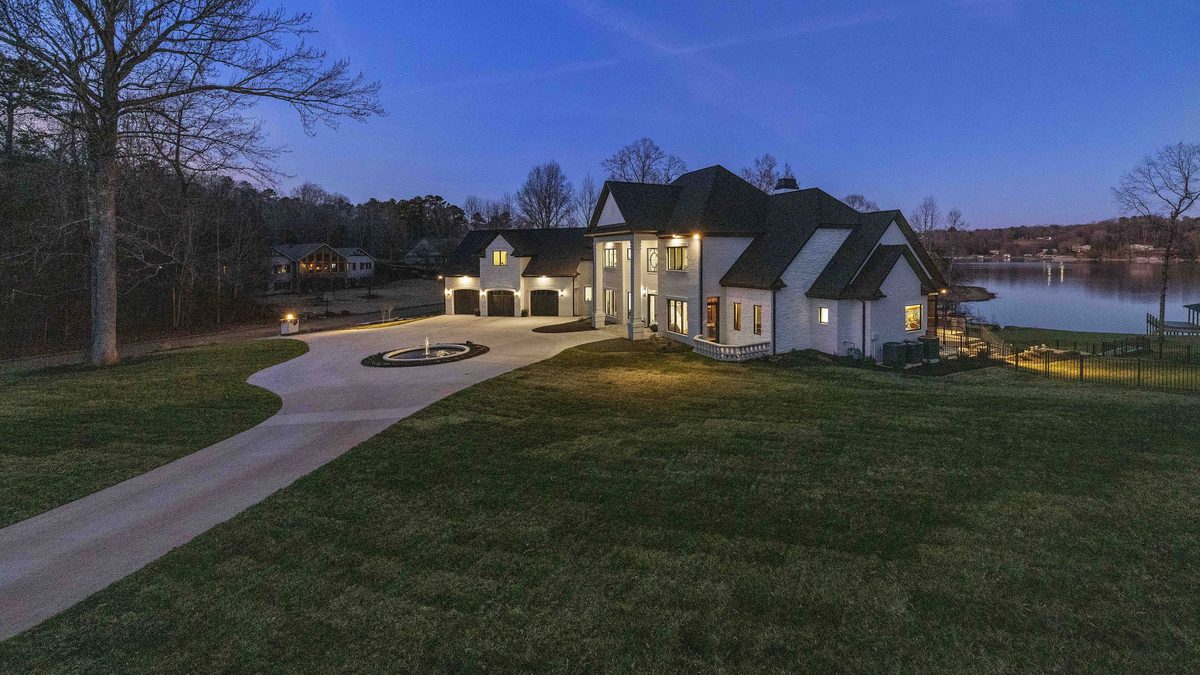
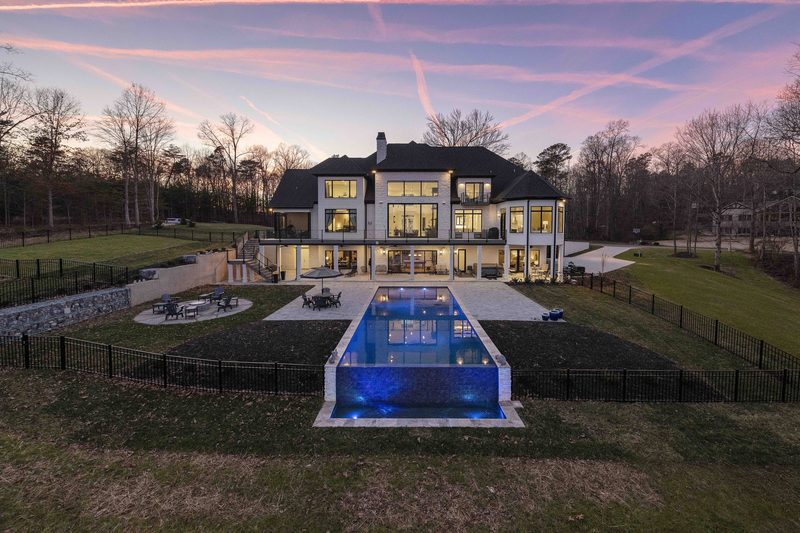
Theirs is a love story that began more than 20 years ago, that now centers around a new “toes-in-the-water” home, spanning 8,700 square feet on Fort Loudoun Lake.
Bill Kovacich and Laura Paul Kovacich bought the lakefront property at Miller’s Landing when they became engaged, not knowing in 2000 what exactly they would do with it.
“We never imagined such an investment during an engagement,” says Laura, who remembers they very nearly weren’t able to buy it.
While dating, the couple had visited the lakefront subdivision often and loved what they saw. After believing that lots were no longer available for sale, Bill spotted it on a drive through the neighborhood from Rockwood where he was an engineer. It was the very last available lot on Fort Loudoun Lake (part of the Tennessee River System) at Miller’s Landing and for sale by owner. The couple bought it immediately.
After owning the lot for 22 years, they are finally living their dream.
Starting a Life Together
Laura is a Kingsport native and Bill was raised in St. Louis. They met at the Knoxville Museum of Art one night when Laura was enjoying a “Live After Five” concert with friends and was introduced to Bill. She was senior account executive for B97 WIMZ-FM and a voice/copywriter for radio and television advertisers and advertising agencies. He was a plant metallurgist for Caterpillar Inc.’s advanced compacting technology group in Rockwood.
The two soon began to date and became engaged in the gorgeous Greenbriar area of the Great Smoky Mountains—one of their very favorite places.
Laura, also a former radio host with WIVK-FM who produced her own show “Nighttime with Laura” has worked with several other Knoxville stations. “It was the beginning of my love of East Tennessee,” she says. Laura then turned her career to recording radio commercials. She still writes and voices them and is a senior broker in commercial real estate for NAI Koella RM Moore. Today, Bill teaches quality management principles to Caterpillar sites worldwide. He also represents the United States in matters pertaining to international quality standards.
They married and developed careers that took them across several states including Tennessee and South Carolina—until 2020. That year was the start of a global pandemic and also the year construction was underway on their lakefront home.
Two Houses in One
Choosing the correct builder was the next logical step in the process. They met with Providence Builders owners Ron and Diane Bills to discuss their ideas. Laura and Bill had a good idea of what they wanted in a home and Ron brought in architect Jimmy Stiles to create the final plan. Ron enjoys this aspect of the building process most of all. Helping to facilitate the owners’ visions coming to life on a set of plans is very rewarding. Once that is done, Ron must choose the right project manager to see the build through.
For this project, Ron chose Chris Goodwin, one of his senior project managers, to oversee the construction.
The couple’s two very different ideas of what their house could look like eventually merged elegantly into a stunning three-story, four-bedroom, six-and-a-half-bath home.
Laura likens the home’s exterior to “Old South transported to 2022.” The couple used the whitest brick they could find along with white stone that is even brighter in the sunlight. The home includes traditional two-story columns “with a twist.” The columns are contemporary, but with the look and feel of a mansion from the 1800s. Walking up to the home, the breezy, open style of its main floor meets you at the door.
Laura’s right brain and Bill’s left engineering brain worked wonderfully together as Chris steered them to very different design combinations that have blended well. “I’m part engineer and part artist,” says Chris, a Knoxville native. “One of the elements of working with diverse clients is listening. I hear not only what you’re saying, but what you meant.”
Providence knows that the construction process is often dynamic on site and a successful and happy client is often the result of allowing the project manager the freedom to make changes directly with the homeowner without a lot of red tape. After a lot of listening to Laura and Bill, Chris bought in to the homeowners’ vision.
Laura wanted a coastal Florida house with a southern soul and an art gallery vibe, Chris says. Except for the lower level and Bill’s office on the main floor, the rest of the home mostly follows Laura’s vision. The color in this home comes from the stunning art on the walls. The rooms are light and airy.
A Magical Retaining Wall
One beautiful example in working with Laura’s vision is the retaining wall outside the pool area, made of sandblasted cobalt wine bottles and stone gabion baskets. These heavy wired baskets filled with an aggregate are often used in railroads.
“When glass washes up on a beach, it can have a frosty look,” Chris says. “The magic here is that it is like beach glass sprinkled throughout inside gabion baskets filled with stone and something completely original.”
A southern coastal style for Bill? Not so much. Bill favors what Laura calls an “old world” traditional feel with darker woods that are part of his office and the bar, which even includes a family coat of arms.
The deep, rich wood hues and an acacia floor are striking and they set a tone for the billiard table and bar, which was handmade in England. This is “Bill’s World” – Laura says. The room opens onto the infinity pool and is easily the best view of it. A glass-etched door by Laura Goff Glass Design takes you into the wine room.
What Does Bill Think of It?
Ron Bills’ choice of project managers turned out to be key in this successful build. Earlier in his career, Chris worked with Kristopher Kendrick, well known as one of the masterminds of Knoxville’s downtown revitalization and Old City development. Kendrick refurbished existing old buildings to create new places and new energy. Chris believed he could use similar concepts to link the design of Bill’s living and office areas to the look and feel of Knoxville’s gilded age of homes.
Designing and building Bill’s office became a kind of homage to Knoxville’s gilded age, says Chris. Solid cherry shelving and custom work using sawtooth shelf design—a style of construction from 100 years ago—give a classical look.
This unique cabinet design collaboration included Bill, Chris Shaw, owner of Black Oak Woodworks, and Dwane Dishner of Dishner Designs. Another feature in the office is the mahogany desk, custom built by Knoxville cabinetmaker D. Scot Williams.
And Bill loves all of it.
Normally a project has one vision. “We made their two visions one. We broke them apart to different levels of the house and brought them into reality,” says Chris, who has a low threshold for boredom. “Laura and Bill’s two visions provided a wonderful and great challenge for me.”
“We were so thankful that Ron chose Chris as our project manager because Chris knows how to speak both languages,” says Laura. “He’s amazing and is a solution provider.”
The couple also can’t say enough about the skill and creativity of their team of vendors. Floor installers with David’s Abbey Carpet & Floors brought warmth to the home with tile, carpet, white hardwoods, and brown acacia flooring.
Cabinetry with clean lines and inset lighting from Dixie Kitchen Distributors, Inc create a calming space in the kitchen.
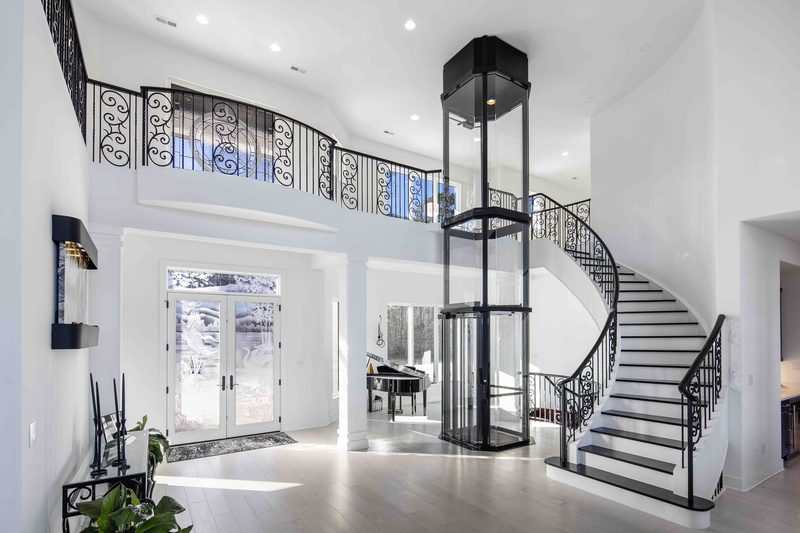
And in the main foyer, a magnificent curved stairwell transitions from wood to wrought iron from the lower level to the third floor, created by Rusty Parks, of Parks & Sons. The effect draws the eyes up as guests enter the home.
Outside, Brandon A. Jarrett, president of Nature by Design, LLC, captured Laura’s style and plant selections, bringing this home to life. When these varieties are in bloom, the property is awash in color from lilacs and gardenias at the pool’s edge to the pink and white azaleas fronting the home. Orange, red, and yellow maples bring a different color palette in the fall, and dogwoods dot the property as well.
Working relationships with these and their other valued vendors matter to Laura and Bill.
And That View…
There is also nothing standard about their outdoor pool. This 40-foot-long pool appears to be dropping off into the Tennessee River, with a vanishing edge and a swim lane. Always thinking of what family and friends need, the homeowners have planned for their guests to enjoy the outdoors in shade or sun. That’s because the roof line allows guests both.
This home is for everyone and every age. “We built it for people to come and share our love of East Tennessee, the river, roasting a marshmallow or taking a dip in our pool,” Laura says.
Inside the main level is a floating quartz fireplace hearth, 21-foot ceilings, 12-foot-high doors and a grand piano, where Laura often enjoys playing. This same quartz flows into the kitchen’s design in its countertops—all provided by Trish Weaver at Stonecraft, Inc.
A stunning Marvin glass panel door from HomeChoice Windows, Doors, Flooring brings the view of Fort Loudoun Lake into the living room.
Also in view from the living room is the large boat dock by Lakesource Dock Construction, which includes slips for two boats and two wave runners and something else special.
Listening to Bill’s desire to look up in the dock ceiling, contractors took siding, flipped it with the grooves showing and created a sense of vertical space—rather than a flat ceiling. Shingles cover the top. “It’s a really a nice effect,” says Chris.
Laura likes it, too. It’s where her 1994 Malibu Echelon Tournament inboard ski boat docks when they enjoy boating.
Hearth & Patio provided warm serene gathering spaces: outdoor furniture for the pool and fire pit, and indoors the main floor linear fireplace and the three-way fireplace downstairs.
And that view? From the open living and dining rooms, kitchen, and sunroom, “we can see the water from all of it,” says Laura. The natural light enhances multi-colored hand-blown Romanian glass throughout. Keeping that main floor plan open, they chose entries instead of doors.
All kitchen and dining room chairs are furnished by Bill Cox Furniture along with the modern navy sofa and living room multi-color rug. The coastal style continues throughout with art that even includes a large painting of a heron by a Myrtle Beach artist.
Head to the third floor where the main window is stained glass with the very personal, very large initial “K” for the couple’s last name and white etched glass doors also by Laura Goff Glass Design. Part of the master suite bath is a soaking tub from Ferguson Bath, Kitchen & Lighting Gallery. The view of the lake is dramatic.
An Elevator and Six-Car Garage
A licensed commercial and residential contractor, Chris says the couple’s home is his largest single residential project. “This project is really close to 10,000 square feet, counting its two-story, six-car garage.”
That’s right. A six-car garage that grew out of Bill’s love of unique automobiles. He even owns cars that won awards, one being a 1967 Camaro Raleigh Sport and the other a 1993 Camaro Z 28 Indianapolis 500 Pace Car that has actually been on the Indianapolis Motor Speedway.
Another spectacular showcase in this triple-stacked home? The elevator.
As part of a forever home, Laura dreamed of an elevator, and this three-story, eight-sided glass elevator from United Elevators has become a beautifully stylized hub of the home. Instead of the elevator being a box in the corner, it became transparent and an artistic feature in the entry, easily seen from the street. This bold design by architect Jim Stiles is intentionally created to be out front—a centerpiece of the home.
While a massive challenge to complete, it’s now virtually maintenance free, a “forever thing,” says Chris.
The Constant Companion on the Job
There was another massive challenge, too. The 800-pound gorilla in the room from start to finish was COVID-19, says Chris.
Originally planned as an 18-month build, the pandemic changed all that. Supply chain issues, scheduling, lead times, pricing and more extended the project to 24 months. “COVID-related issues were my constant companion on this job, but we were actually able to keep our eye on the ball and minimize issues,” he says. “What clients remember is whether they are happy at the end of a big project like this. That’s what is important.”
The team at Providence are problem solvers, and Chris holds true to that mentality. He won’t say no to the myriad of challenges that can arise with any project. Providence always finds a way to make it work.
That Feeling When You Know It’s Home
Every room, every view is what Laura and Bill have been envisioning since their engagement. Through careers and journeys, they’ve been making their way back to this dream.
What’s the most important part of this home? The people and the relationships, they say.
The project’s vendors were a perfect match for these homeowners. Everyone is an artist in their chosen field. “It takes a village to achieve anything in this life, and no one is better than another…simply different,” says Laura. “We all have a background, experiences, and a story. Our story just happens to be our ‘Happily Ever After’ on a beautiful body of water in East Tennessee, created by so many who we will always be thankful for and will always remember.”
Ever evolving, this couple has developed their own life list. “We want to share this place we have worked our entire careers for and been blessed with. We want it to be a place of revitalizing and restoring for everyone who visits as well as recreation amidst some of the most beautiful aspects God created in East Tennessee.”
→ Swipe for Next Story
Top DocsMARCH APRIL 2022
Top Docs 2022
Story by Cityview
In the last couple of years, the world has placed a special emphasis on the medical community. The front-line workers. The ones, who despite having worries and families of their own, put everything on the line to ensure the rest of us were being cared for. Whether that was in the emergency room tending to patients battling COVID-19 or in their specialty practices ensuring that their doors remained open so that their patients wouldn’t lose opportunities to better or maintain their health. Here atCityview, we are grateful for these men and women.
This year marks the 20th anniversary of our Top Doctors list. Each year, we call out the doctors who have gone above in beyond in their respective medical fields to help you, our readers, navigate the complex world of health. But we do so in a way where you can feel confident in the names you’re reading. We reach out to our medical community, and we ask them:Who of your peers are the best in their disciplines? Who would you send your family members to if they needed medical care?And we present the results here, in just about every discipline imaginable, from pediatricians and primary care doctors to specialty fields such as psychiatry and neurology.
One thing to note: the doctors here are listed in alphabetical order, not by number of votes. They have been ranked the top group of physicians in their fields, so you can feel confident in choosing any of the names listed for any of your health needs. So without further ado, we present the 2022 listing of Knoxville’s Top Doctors. Stay well!
Allergy & Immunology
If pollen makes you miserable and seafood gives you hives, turn to allergy and immunology doctors for relief.
Donald Ellenburg, MD
Allergy & Asthma Affiliates
Robert Overholt, MD
The Allergy Asthma and Sinus Center, PC
Tidence “Ty” Prince, MD
The Allergy Asthma and Sinus Center, PC
Jeffrey Schlactus, MD
The Allergy Asthma and Sinus Center, PC
Andrew Singer, MD
Allergy & Asthma Affiliates
Michael Springer, MD
The Allergy Asthma and Sinus Center, PCAnesthesiology
Count backwards from 10… Anesthesiology deals with caring for patients before, during and after surgery, as well as in intensive care and emergency medicine.
Daniel Bustamante, MD
University Anesthesiologists
Jack Chavez, MD
University Anesthesiologists
Craig Combs, MD
University Anesthesiologists
Robert Craft, MD
University Anesthesiologists
Michael Flynn, MD
University Anesthesiologists
Jeffery Ollis, MD
American Anesthesiology of TN Parkwest Hospital
Jeffrey Queen, MD
ETCH-Children’s AnesthesiologistsCardiology
Cardiology deals with the disorders of the heart, including congenital heart defects, coronary artery disease, heart failure, and electrophysiology.
Raj Baljepally, MD
University Cardiology, PC
James Cox, MD
University Cardiology, PC
Jerry Crook, MD
University Cardiology, PC
Malcom Foster, MD
East TN Heart Consultants
Jeffrey Hirsh, MD
University Cardiology, PC
David Huntsinger, MD
University Cardiology, PC
Jeffrey Johnson, MD
University Cardiology, PC
Joseph Liu, MD
University Cardiology, PC
Ayaz Rahman, MD
Cardiology Associates of East TN
Benjamin Shepple, MD
University Cardiology, PCCardiology, Electrophysiology
Electrophysiologists focus on the electrical system of the heart. They study and treat irregular heart rhythms with medicine, a pacemaker, cardiac ablation or surgery.
James Cox, MD
University of TN Medical Center
Jeffrey Hirsh, MD
University Cardiology, PCCardiology, Interventional
An interventional cardiologist treats heart and blood vessel conditions using nonsurgical, catheter-based procedures and imaging techniques.
Raj Baljepally, MD
University Cardiology, PC
Stuart Bresee, MD
University Cardiology, PC
Venero Camelo, MD
University Cardiology, PC
Tjuan Overly, MD
University Cardiology, PC
Ayaz Rahman, MD
Cardiology Associates of East TennesseeCardiovascular Disease
A cardiovascular disease specialist focuses on diseases of the heart and blood vessels and manages conditions such as heart attacks and abnormal heart rhythms.
Bret Rogers, MD
UHS–Cardiology Group, LLC
Benjamin Shepple, MD
University Cardiology, PC
Carmelo Venero, MD
UHS–Cardiology Group, LLCCritical Care
Doctor needed, stat! Critical care docs deal with seriously or critically ill patients with conditions that may be life-threatening.
Paul Branca, MD
University Pulmonary & Critical Care
John Callison, MD
University Pulmonary & Critical Care
Tina Dudney, MD
University Pulmonary & Critical Care
Jared Kravitz, MD
University Pulmonary & Critical Care
Elise Schriver, MD
University Pulmonary & Critical Care
James Shamiyeh, MD
University Pulmonary & Critical CareDentistry
Although primarily associated with teeth, dentistry includes other aspects of the head and face complex, including muscular, lymphatic, nervous, vascular, and anatomical structures.
Jonathan Bradshaw, DDS
Heritage Family Dentistry
Dr. Steven Brock, DDS
Dental Images
John Coulter, DDS
Coulter Family Dentistry
Robert Kelso, DDS
Robert M. Kelso Family & Cosmetic Dentistry
G. Drew Osborn, DDS
Foothills Pediatric Dentistry, PC
Joseph Rainey, DDS
University General Dentists
Olcie Wilson, DDS
University General Dentists
Andrew Young, DDS
Knoxville Dental CenterDermatology
Turn to a dermatologist with conditions involving the skin, hair, and nails, including acne, eczema, psoriasis, and skin cancer, among others.
Elizabeth Anderson, MD
Knoxville Institute of Dermatology
Matthew Doppelt, MD
Southeastern Dermatology
Elizabeth Ergen, MD
Dermatology Associates of Knoxville
Carley Fowler, MD
Knoxville Center for Dermatology and Plastic Surgery
Kimberly Grande, MD
Skin Wellness Center
Cynthia Kang-Rotondo, MD
Greater Knoxville Dermatology
Meredith Overholt, MD
Skin Wellness Center
Quyn Rahman, MD
Knoxville Institute of DermatologyEmergency Medicine
Got a problem you need help with NOW? Emergency medicine is concerned with the care of illnesses or injuries requiring immediate medical attention.
Frederick Ergen, MD
Fort Loudon Medical Center
Patrick O’Brien, MD
Southeastern Emergency Physicians LLC
Fred Wenger, DO
TeamHealth SoutheasternEndocrinology
Endocrinology deals with the endocrine system, its diseases, and hormones. Conditions like diabetes, thyroid disease, growth issues and infertility are treated by endocrinologists.
Thomas Doty, MD
Endocrinology Consultants of East TN
William Law, MD
Endocrinology Consultants of East TN
Daniel McCammon, MD
Endocrinology Consultants of East TN
Gregory Moffitt, MD
Endocrinology Consultants of East TN
Casey Page, MD
Endocrinology Consultants of East TN
Amit Vora, MD
Endocrinology Consultants of East TNFamily Practice
Unlike other specialties, family practice physicians are qualified to treat most ailments and provide health care for people of all ages.
Raye-Anne Ayo, MD
Family Health Center
Amy Barger Stevens, MD
University Family Physicians
Daniel Cox, MD
Lakemoor Family Physicians
Shelly Durbin, MD
Family Physicians West
Julie Jeter, MD
University Family Physicians
Randy Pardue, MD
Trinity Medical Group
Amy Rosine, MD
Fountain City Family PhysiciansGastroenterology
Gastroenterology is the branch of medicine focused on the digestive system and its disorders. Colon cancer screening by a gastroenterologist is important for fighting cancer.
Youhanna Al-Tawil, MD
GI for Kids, PLLC
Mark Anderson, MD
University Gastroenterology
Jeffrey Brown, MD
Knoxville Gastrointestinal Associates
Sarkis Chobanian, MD
Gastrointestinal Associates
Meade Edmunds, MD
Edmunds Gastroenterology
Sangeeta Gulati, MD
University Gastroenterology
John Haydek, MD
Gastrointestinal Associates
Maria Newman
Gastrointestinal Associates
Carlos Rollhauser, MD
University Gastroenterology
Ramanujan Samavedy, MD
University Gastroenterology
John Stancher, MD
University Gastroenterology
Thomas Young, MD
University GastroenterologyGenetics
Genetics is concerned with the study of genes, genetic variation, and heredity in organisms. It can help explain why some diseases run in families.
Ilse Anderson, MD
University Genetics Center
J. Hamm, MD
East TN Children’s Hospital Genetic Center
Carmen Lozzio, MD
Clinical Cytogentic ServicesGeriatric Medicine
Geriatric medicine focuses on health care of elderly people. It aims to promote health by preventing and treating diseases and disabilities in older adults.
Monica Crane, MD
Genesis Neuroscience Clinic
Cynthia Pearman, MD
UT Hospice and Palliative CareGynecologic Oncology
Gynecologic oncologists treat women’s cancers and complex benign gynecologic diseases, including cervical cancer, endometriosis, fibroids and ovarian cancer.
Jonathan Boone, MD
University Gynecologic Oncology
Larry Kilgore, MD
University Gynocology Oncology
Kristopher Kimball, MD
University Gynocology OncologyGynecology
Gynecology deals with the functions and diseases specific to women and girls, especially those affecting the reproductive system.
Tammy Baker, MD
Tammy Baker, MD
Christine Gale, MD
East TN Children’s Hospital Pediatric and Adolescent Gynecology
Hematology/Oncology
Someone is likely to be referred to a hematologist-oncologist because an abnormality was detected during a blood test.
David Aljadir, MD
University Cancer Specialists
Antony Charles, MD
University Cancer Specialists
Hesamm Gharavi, MD
Tennessee Cancer Specialists, PLLC
Wahid Hanna, MD
Hanna Cancer Associates
Daniel Ibach, MD
Tennessee Cancer Specialists, PLLC
Timothy Panella, MD
University Cancer SpecialistsHospice / Palliative Care
Hospice and palliative care focuses on symptom management, relief of suffering and end-of-life care.
Cynthia Pearman, MD
UT Hospice and Pallative Care
John Vannoy, MD
Internal Medicine AssociatesHospitalist
A hospitalist practices in a hospital and works to treat patients with a variety of illnesses and injuries.
Christie Carringer, MD
UT Hospitalists
Deborah Franklin, DO
UT Hospitalists
Jano Janoyan, DO
UT Hospitalists
Ryan Kerr, MD
UT Hospitalists
Mary Nelson, MD
UT HospitalistsHospitalist, Internal Medicine
An internal medicine hospitalist sees patients for the duration of a hospital stay, as opposed to in outpatient settings.
Michael Carringer, MD
UT Hospitalists
Kimberly Morris, MD
UT Hospitalists
Janet Purkey, MD
UT HospitalistsHyperbaric Medicine
Hyperbaric medicine is a treatment used to speed up healing of carbon monoxide poisoning, gangrene, stubborn wounds, and infections in which tissues are starved for oxygen.
Lee Carder, MD
University Wound Care and Hyperbaric Center
Lindsey Harrell, MD
Mobile Hyperbaric Centers, LLC
Vaughan Hall, MD
Mobile Hyperbaric Centers, LLC
Ryan Unger, MD
University Wound Care and Hyperbaric Center
Infectious Disease
Infectious disease docs have been busy over the last year. They are trained to make the right diagnoses for dozens of infectious diseases and organize treatment plans.
John Adams, MD
Knoxville Infectious Disease Consultants
Ernest Kemp, MD
Knoxville Infectious Disease Consultants
Jeffrey King, MD
Knoxville Infectious Disease Consultants
John Narro, MD
University Infectious Disease
Mark Rasnake, MD
University Infectious Disease
Russell Smith, MD
University Infectious DiseaseInternal Medicine
Internal medicine deals with the prevention, diagnosis, and treatment of internal diseases. Internists, as they’re also known, generally treat adults.
Davis Allan, MD
Internal Medicine Associates
Amy Bentley, MD
Internal Medicine Associates–Bentley & Hall
David Durbin, MD
Internal Medicine Associates–Bentley & Hall
Daniel Ely, MD
Faculty Internal Medicine
M. Douglas Leahy, MD
Internal Medicine Associates–Leahy & Allan
Jennifer Piel, MD
Family Physicians WestMaternal & Fetal Medicine
Maternal–fetal medicine, also known as perinatology, focuses on the health concerns of the mother and fetus prior to, during, and shortly after pregnancy.
Kimberly Fortner, MD
High Risk Obstetrical Consultants, PLLC
Mark Hennessy, MD
High Risk Obstetrical Consultants, PLLC
Bobby Howard, MD
High Risk Obstetrical Consultants, PLLC
Lynlee Wolfe, MD
High Risk Obstetrical Consultants, PLLCNeonatology
When babies are born ill or prematurely, a neonatologist is likely to oversee care in a neonatal intensive care unit.
John Buchheit, MD
Knoxville Neonatal Associates-Pediatrix
Tara Burnette, MD
Regional Neonatal Associates
Mark Gaylord, MD
Regional Neonatal Associates
Malinda Harris, MD
Knoxville Neonatal Associates-Pediatrix
Keri Lattimore, MD
Regional Neonatal Associates
John Meadows, MD
Regional Neonatal Associates
Stephen Prinz, MD
Knoxville Neonatal Associates-PediatrixNephrology
Kidney function and disease is the focus of nephrology. It stretches from dealing with diet and medication to kidney replacement.
Kendra Hendon, MD
Knoxville Kidney Center, PLLC
Ritu Khanna, MD
University Nephrology
Ross Nesbit, MD
University Nephrology
Edward Newman, MD
Knoxville Kidney Center
Urath Suresh, MD
University NephrologyNeurology
Neurology deals with disorders of the nervous system. Neurologists treat diseases of the brain and spinal cord, including epilepsy, stroke and Parkinson’s disease.
Michelle Brewer, MD
Knoxville Neurology Clinic
Steven Rider, MD
University Neurology Cole Neuroscience Center
Randall Trudell, MD
University Neurology Cole Neuroscience Center
Megumi Vogt, MD
University Neurology Cole Neuroscience Center
Brian Wiseman, MD
University NeurohospitalistsObstetrics/Gynecology
Obstetrics and gynecology deals with both pregnancy and childbirth and the health of the female reproductive system. It’s commonly known as OB-GYN.
Stephanie Cross, MD
University Women’s Specialists
Kimberly Fortner, MD
High Risk Obstetrical Consultants
Periclis Roussis, MD
Fort Sanders Perinatal Center
Erin Saunders, MD
Fort Sanders Obstetrical & Gynecological Group, PC
Walter Schoutko, MD
University Women’s Specialists
Jaclyn Van Nes, MD
University Women’s Specialists
Nikki Zite, MD
University Women’s SpecialistsOphthalmology
Ophthalmology deals with the diagnosis and treatment of eye disorders. Ophthalmologists also can perform surgery on the eyes.
Andrew Anzeljc, MD
Baptist Eye Surgeons
John Dawson, MD
East Tennessee Eye Surgeons, PC
Paul Froula, MD
University Eye Specialists
Herbert Glatt, MD
University Eye Specialists
Joseph Googe, MD
Southeastern Retina Associates–Weisgarber Office
David Harris, MD
University Eye Specialists
Frank Murchison, MD
Baptist Eye SurgeonsOtolaryngology
Otolaryngology is a subspecialty that deals with the surgical and medical management of conditions of the head and neck.
Leslie Baker, MD
Greater Knoxville ENT Associates
Elise Denneny, MD
Greater Knox ENT Associates, PC
William Horton, MD
Greater Knox ENT Associates, PC
John Little, MD
Children’s Ear, Nose & Throat Specialists, PLLC
Ear, Nose & Throat Consultants of East TN, PC
Richard DePersio, MD
Greater Knoxville ENT Associates
Christopher Rathfoot, MD
Greater Knox ENT Associates, PC
Allan Rosenbaum, MD
Greater Knoxville ENTPain Medicine
A pain medicine specialist treats pain caused by disease, disorder, or trauma. They often see patients with pain in the back, knee, head, hip, and neck.
Jason Buehler, MD
University Anesthesiologists
James Choo, MD
Pain Consultants of East TN, PLLC
Elmer Pinzon, MD
University Spine & Sport
Matthew Vance, MD
University Anesthesiologists
Christopher Vinsant, MD
American Anesthesiology of Tennessee, PC
Pathology
Pathology studies the causes and effects of disease or injury by examining bodies and body tissues and performing lab tests.
Frank Beuerlein, MD
Innovative Pathology Services
Lisa Duncan, MD
University Pathologists, PC
Michael Dyer, MD
Innovative Pathology Services
Alan Grindstaff, MD
University Pathologists, PC
William Konomos, MD
Innovative Pathology Services, PLLC
Stuart Van Meter, MD
University Pathologists, PC
Laurentia Nodit, MD
University Pathologists, PCPediatric Cardiology
Pediatric cardiologists diagnose and treat heart problems in children and work with pediatric surgeons to determine the best interventions.
Yvonne Bremer, MD
East TN Pediatric Cardiology
Jeffory Jennings, MD
ETCH–Knoxville Pediatric Cardiology
Michael Liske, MD
East TN Pediatric Cardiology, PC
Sumeet Sharma, MD
Knoxville Pediatric CardiologyPediatric / Critical Care
Pediatric critical care specialists generally diagnose and treat children who have an unstable, life-threatening condition.
Knoxville Institute of DermatologyPediatric Endocrinology
If your child has problems with growth, puberty, diabetes, or other disorders related to the hormones and the glands that produce them, a pediatric endocrinologist may treat your child.
Pediatric hospitalists are pediatricians who work in hospitals caring for children in many hospital areas.
Julia Arana, MD
ETCH–Children’s Pediatric Group–Inpatient Service
Shannon Cohen, MD
ETCH–Children’s Pediatric Group–Inpatient Service
Kristin Farr, MD
ETCH–Children’s Pediatric Group–Inpatient Service
Priya Gyani, MD
ETCH–Child Neurology Services
Deann Holbrook, MD
ETCH–Children’s Pediatric Group–Inpatient Service
Jeanann Pardue, MD
ETCH–Children’s Pediatric Group–Inpatient Service
Amit Patel, MD
ETCH–Children’s Pediatric Group–Inpatient Service
Kristen Sheets, MD
ETCH–Children’s Pediatric Group–Inpatient Service
Pediatric Infectious Disease
If your child has a persistent disease caused by an infectious agent, a pediatric infectious disease specialist can help your pediatrician diagnose and treat your child.
Pediatric neurosurgeons treat issues in a child’s nervous system as well as head and spinal deformities. Issues they address include spina bifida, skull deformities, and birthmarks.
Pediatric orthopedics focuses on children’s musculoskeletal problems including limb and spine deformities, gait abnormalities and bone and joint infections.
A pediatric otolaryngologist cares for children with conditions of the ear, nose and throat, including those related to breathing, swallowing and speech.
Michael J. Belmont, MDChildren’s Ear, Nose & Throat Specialists, PLLC
John Little, MDChildren’s Ear, Nose & Throat Specialists, PLLC
Joe Graves, MD
ETCH–Pediatrics ENT Services
R. Mark Ray, MD
Children’s Ear, Nose & Throat Specialists, PLLC
Pediatric Physical Medicine and Rehab
Pediatric rehabilitation medicine helps children with brain injuries, cerebral palsy, spinal cord injuries, neuromuscular disorders, and musculoskeletal conditions.
Nadine Trainer, MD
ETCH–PICUPediatric Psychiatry
Pediatric psychiatrists specialize in the diagnosis and treatment of disorders of thinking, feeling and/or behavior affecting children, adolescents, and their families.
Michael Greer, MD
Pediatric Psychiatry
Gordon Greeson, MD
Helen Ross McNabb
Lee Naramore, MD
Parkway Psychiatric Service
Pediatric Psychiatry
John Robertson, MD
Center for Family PsychiatryPediatric Pulmonology
Pediatric pulmonologists treat children from birth to age 21 with breathing problems or a problem with their lungs.
Safina Kureshi, MD
ETCH–Pediatric Pulmonology & Respiratory Care
Eduardo Riff, MD
ETCH–Pediatric Pulmonology & Respiratory Care
John Rogers, MD
ETCH–Pediatric Pulmonology & Respiratory Care
Pediatric Sleep Medicine
Pediatric sleep medicine experts diagnose sleep disorders in children and work with them to ensure the entire family gets a good night’s sleep.
Ehab Mansoor, MD
ETCH–Childrens Sleep Medicine Center
Pediatric Surgery
Pediatric surgery involves the diagnosis and surgery involving fetuses, infants, children, adolescents, and young adults.
Carlos Angel, MD
ETCH–East Tennessee Pediatric Surgery Group
Eric Jensen, MD
ETCH–East Tennessee Pediatric Surgery Group
W. Vaughan, MD
ETCH–East Tennessee Pediatric Surgery Group
Pediatric Urology
Pediatric urologists treat diseases of the genitals or the urinary tract in children, including disorders of the kidneys, ureter and the bladder.
David Hill, MD
ETCH–University Pediatric Urology
David Riden, MD
ETCH–Tennessee Pediatric Urology, PC
D. Smith, MD
ETCH–University Pediatric Urology
Pediatrics
Pediatricians handle the medical care of infants, children and adolescents up to age 21.
Abigail Blackmon, MD
Blackmon Pediatrics
Gregory Blackmon, MD
Blackmon Pediatrics
Cameron Blevins, MD
Knoxville Pediatric Associates, PC
Kurt Brandt, MD
Knoxville Pediatric Associates, PC
Richard Glover, MD
ETCH–Children’s Faith Pediatrics
Joseph Peedon, MD
ETCH–Children’s Pediatric Group
Lauren Speckner, MD
Knoxville Pediatric Associates, PC
John Wilkinson, MD
Knoxville Pediatric Associates, PC
Deanna Yen, MD
Knoxville Pediatric Associates, PCPhysical Medicine & Rehabilitation
Physical medicine and rehabilitation aims to restore function and enhance quality of life to those with physical impairments.
Michael Craig, MD
Knoxville Orthopaedic Clinic
Bruce Fry, DO
Knoxville Orthopaedic Clinic
Jeffrey Hecht, MD
University Rehabilitation Associates, PC
Donald Lakatosh, MD
Dr. Donald Lakatosh
John Lavelle, MD
Tennessee Orthopaedic Clinic, PC
Elmer Pinzon, MD
University Spine & SportPodiatry
Podiatry involves the study, diagnosis, and treatment of disorders of the foot and ankle.
Kelly Bumpus, DPM
Knoxville Footcare, PC
Robert Hancock, DPM
Volunteer Podiatry, PC
David Sandberg, MD
Volunteer Podiatry, PC
Heather Sandberg, MD
Volunteer Podiatry, PCPsychiatry
A psychiatrist specializes in mental health, including substance use disorders, and can address both the mental and physical aspects of psychological problems.
Sharon Burnside, MD
Laurel Management
Lane Cook, MD
Cornerstone of Recovery
Melanie Fuertes-Hunt, MD
Peninsula Hospital Psychiatry
William Hogan, MD
William M. Hogan, M.D., PC
James Kennedy, MD
Laurel Management
Francis LeBuffe, MD
Dr. Francis LeBuffe
Clifton Tennison, MD
Helen Ross McNabb CenterPulmonary Medicine
Pulmonary medicine concerns the lungs. Pulmonologists generally assist in managing difficult or unusual diseases of the respiratory system.
Shannon Byrd, MD
Statcare Pulmonary Consultants
John Callison, MD
University Pulmonary and Critical Care
Elise Schriver, MD
University Pulmonary and Critical Care
Francisco Soto, MD
University Pulmonary and Critical CareRadiation Oncology
Radiation oncologists oversee radiation therapy treatments for cancer. They develop and prescribe treatment plans and make sure they’re given accurately.
Sriniva Boppana, MD
Premier Radiation Oncology Services
Grant Clark, MD
East Tennessee Radiation Oncology, PC
Steven Dill, MD
University Radiation Oncology
Joseph Meyer, MD
Neurosurgery and Spine ConsultantsRadiology
Radiologists diagnose and treat injuries and diseases using imaging procedures such as X-rays, CT scans, MRIs, nuclear medicine, PET scans and ultrasound.
Judson Gash, MD
Association of University Radiologists, PC
Garth Graham, MD
Vista Radiology, PC
Christopher Hovis, MD
Vista Radiology, PC
Steven Knight, MD
Association of University Radiologists, PC
Garnetta Morin-Ducote, MD
Association of University Radiologists, PC
Jeffrey Peeke, MD
Association of University Radiologists, PC
John Simmons, MD
Abercrombie Radiology
Daniel Walsh, MD
Abercrombie Radiology
Scott Wegryn, MD
Vista Radiology, PCRadiology, Diagnostic
Diagnostic radiologists undertake a range of imaging procedures to obtain images of the inside of the body and then use them to diagnose injury or illness.
Wayne Eberenz, MD
Abercrombie Radiology
Jeffrey Peeke, MD
UT Medical Center Radiology
John Simmons, MD
Abercrombie Radiology
Daniel Walsh, MD
Abercrombie RadiologyRadiology, Interventional
Interventional radiologists not only interpret medical images, but also perform minimally invasive surgical procedures through small incisions in the body.
Andrew Conrad, MD
Vista Radiology
Christopher Stevens, MD
UT Medical Center Radiology
Scott Wegryn, MD
Vista RadiologyRheumatology
Rheumatologists treat people with pain and disorders of the joints, muscles, tendons and bones, such as arthritis.
Tonya Baker, MD
Rheumatology Consultants, PLLC
Jeffry Bieber, MD
UT Rheumatology
Robert Capps, MD
Rheumatology Consultants, PLLC
Christy Park, MD
UT Rheumatology Associates
Kenny Sizemore, MD
Rheumatology Associates of East Tennessee
Jay Warrick, MD
Rheumatology Consultants, PLLCSleep Medicine
Sleep medicine is devoted to the diagnosis and therapy of sleep disturbances and disorders, including insomnia, sleep apnea and narcolepsy.
Rosanne Barker, MD
Barker Sleep Institute
Kevin Martinolich, MD
UT Sleep Disorders Center
Dewey McWhirter, MD
Tranquility Sleep Specialists
Farrukh Siddiqui, MD
Fort Sanders Sleep Disorders CenterSurgery, Colon & Rectal
Colon and rectal surgeons address diseases of the small intestine, colon, rectum, and anus, as well as conditions of the liver, urinary tract, and female reproductive system.
Mark Casillas, MD
University Colon & Rectal Surgery
James McLoughlin, MD
University Surgical Oncology
Gregory Midis, MD
Premier Surgical Associates, PLLC
Andrew Russ, MD
University Colon & Rectal SurgerySurgery, General
General surgery focuses on the abdomen, including esophagus, stomach, intestines, liver, pancreas, gallbladder, appendix, bile ducts, and often the thyroid gland.
William Gibson, MD
Premier Surgical Associates, PLLC
Keith Gray, MD
University Surgical Oncology
David Harrell, MD
Premier Surgical Associates–North
Michael Kropilak, MD
Premier Surgical Associates, PLLC
James Lewis, MD
University Surgical Oncology
Gregory Mancini, MD
University Surgeons Associates
Gregory Midis, MD
Premier Surgical AssociatesSurgery Neurological
A neurosurgeon specializes in the treatment of nervous system disorders, including trauma, stroke, tumors, and other diseases or infections of the brain or spine.
Richard Boyer, MD
Neurosurgical Associates PC
David Hauge, MD
Neurosurgery & Spine Consultants of East Tennessee, PC
James Killeffer, MD
Neurosurgical Associates PC
Joel Norman, MD
TN Brain and Spine
Joel Ragland, MD
Neurosurgery & Spine Consultants of East Tennessee, PC
Oral and maxillofacial surgeons treat diseases, injuries and defects in the head, neck, face and jaws. They are trained to administer anesthesia and provide care in an office setting.
Eric Carlson, MD
Department of Oral and Maxillofacial Surgery
Turner Emery, MD
Knoxville Oral & Maxillofacial Surgery, PC
Surgery, Orthopedic
Orthopaedic surgery is devoted to the prevention, diagnosis, and treatment of disorders of the bones, joints, ligaments, tendons and muscles.
Russell Betcher, MD
Knoxville Orthopaedic Clinic
Herman Botero, MD
Knoxville Orthopaedic Clinic
Michael Eilerman, MD
University Orthopaedic Surgeons
Edwin Holt, MD
University Orthopaedic Surgeons
Robert Ivy, MD
Knoxville Orthopaedic Clinic
Paul Johnson, MD
Knoxville Orthopaedic Clinic
James Kimbro Maguire, MD
Knoxville Orthopaedic Clinic
Gregory Mathien, MD
Knoxville Orthopaedic Clinic
Philip McDowell, MD
University Orthopaedic Suregons
Matthew Nadaud, MD
Knoxville Orthopaedic Clinic
William Oros, MD
University Orthopaedic Surgeons
Tracy Pesut, MD
Tennessee Orthopedic Clinic, PC
Elmer Pinzon, MD
University Spine & Sport
Matt Rappe, MD
Knoxville Orthopaedic Clinic
Timothy Renfree, MD
Tennessee Orthopedic Clinic, PC
Christine Seaworth, MD
University Orthopaedic Surgeons
Edwin Spencer, MD
Knoxville Orthopaedic Clinic
Konstantinos Triantafillou, MD
University Orthopaedic SurgeonsSurgery, Plastic
Plastic surgery involves the restoration, reconstruction, or alteration of the human body, both reconstructive and cosmetic. Reconstructive can include the treatment of burns.
Ed Breazeale, MD
The Breazeale Clinic
Joseph Chun, MD
University Cosmetic & Reconstructive Surgery
Daniel Fowler, MD
Knoxville Center for Dermatology and Plastic Surgery
Tom Gallaher, MD
Gallaher Plastic Surgery & Spa MD
Jason Hall, MD
Trillium Plastic Surgery
Kathleen Herbig, MD
University Plastic & Reconstructive Surgery
Dean Kleto, MD
Dean Kleto Plastic Surgery
Jay Lucas, MD
The Lucas Center/Cosmetic and Plastic Surgery
Steven Smith, MD
Steven J. Smith, MD, PLLC
Timothy Wilson, MD
East Tennessee Plastic SurgerySurgery Thoracic
A thoracic surgeon cares for patients with diseases of the chest, generally excluding the heart. About 80 percent of thoracic surgery involves cancer of some sort.
Vascular surgery manages diseases of the arteries, veins and lymphatic circulation system by medical therapy, catheter procedures, and surgical reconstruction.
Joshua Arnold, MD
University Vascular Surgeons
Michael Freeman, MD
University Vascular Surgeons
Oscar Grandas, MD
University Vascular Surgeons
Kyle Kleppe, MD
University Surgeons Associates, PC
Michael McNally, MD
UT Vascular and Transplant Surgeons
Scott Stevens, MD
University Vascular SurgeonsSurgery, Vascular
Vascular surgeons treat diseases of the vascular system. While they perform surgery, they also treat diseases of the vascular system with medicine or exercise.
C. Scott Callicutt, MD
Premier Surgical Associates, PLLC
Scott Stevens, MD
University Vascular SurgeonsUrgent Care
Urgent care is the diagnosis and treatment of medical conditions which are serious but pose no immediate threat to life and health.
John Carroll, MD
Summit Hardin Valley Internal Medicine
Jay Hammett, MD
East Towne Urgent Care
Robin Huskey, MD
Well Key Urgent Care
John Rooke, MD
Park Med Urgent Care Center
John Sanabria, MD
Lakeway Urgent CareUrogynecology
Urogynecology doctors treat women with pelvic floor disorders. They can help improve quality of life by treating incontinence or prolapse issues.
C. Bowling, MD
UT Urogynecology
Robert Elder, MD
UT Urogynecology
Michael Polin, MD
UT UrogynecologyUrology
Urology focuses on surgical and medical diseases of the male and female urinary-tract system and the male reproductive organs.
James Bienvenu, MD
University Urology, PC
Walter Chiles, MD
Tennessee Urology
Jeff Flickinger, MD
Urology Specialists of East Tennessee
Paul Hatcher, MD
Urology and Urological Surgery
Edward Kim, MD
University Urology, PC
John Lacy, MD
University Urology, PC
Rebecca Lavelle, MD
Blount Memorial Hospital
Ryan Pickens, MD
University Urology, PC
Christopher Ramsey, MD
Tennessee Urology
Renee Quillin, MD
Urology Specialists of East Tennessee
Edward Tieng, MD
Urology Specialists of East Tennessee
Wesley White, MD
University Urology, PC
→ Swipe for Next Story
Non-ProfitMARCH APRIL 2022
Passion & Perseverance
Empowered leaders keep traditions alive and thriving at Arrowmont School of Arts and Crafts
Story by Rebecca Whalen
There is nothing more thrilling to me than hearing the stories of women who have put their boots to the ground and inspired their communities through nonprofit work. Having spent time in the nonprofit world with a fierce female advocate as my mentor, I feel inspired each time I get to hear their stories. And the leaders of Arrowmont School of Arts and Crafts are no exception. Theirs are stories of fighting to keep traditions alive and working hard to help their community thrive.
East Tennessean Trudy Hughes was just a youngster when she came to know Arrowmont. At just six years old, she fell in love with the work created here, and her family encouraged her to find out more. “I found a weaving that I wanted, and my dad said, ‘You have to interview the artists who made it or someone here on campus who can tell you about it,’” she recalls her father saying, “’and you have to take it back home and share it at show-and-tell.’” Little did she know that a few decades later, this passion for handcrafted art would become part of her journey once again on a more permanent basis. Today, she serves the organization as executive director.
In another seat of the Arrowmont leadership is Margit Worsham, who sits on Arrowmont’s board. Worsham is actually how I first learned of Arrowmont’s legacy. She is by far one of Arrowmont’s biggest cheerleaders. Her first intro to the school was back in 1995 at a painting class. But over time, her passion and drive for helping the organization thrive increased tenfold. During one particular fundraising weekend, Worsham took a printmaking class, and while she will tell you it didn’t go well, she ended up selling the painting she did in the class at a fundraiser to benefit the school. So, she took up painting, solely to benefit nonprofits. “That’s only because I took this class out here,” she says. “So you never know what it will lead to when you come to Arrowmont.”
And then there is Fran Day, whose intro to Arrowmont came when she was just a girl. Arrowmont was a stopping point on her trek to see her grandmother each summer. “I was supposed to always make my granny a present, but it never happened,” she says. “So I would come to Arrowmont, we would visit the craft shop, and I would buy something handmade and take it to her.” After working in other parts of the country, Day eventually found her way back to Arrowmont as Director of Institutional Advancement. She remains in that position today.
These are just a few of the stories that paint the portrait of Arrowmont, and they all have a common thread: a meaningful memory focused on art that they just couldn’t let go of. And for good reason. Arrowmont has for the last 100 years been the keeper of certain Appalachian traditions, and its leaders are ones willing to work as hard as they can to ensure they never leave.
With passion and perseverance, these modern women are not unlike the founders of Arrowmont who believed deeply in its work. The New York-based women’s fraternity, Pi Beta Phi, sent a group of women in the early 1900s to East Tennessee to open a settlement school. The women ventured south by train, eventually making their way by horse and buggy to the quaint town of White Oak Flats.
“They suggested to the guys, the men that were leading White Oak Flats, ‘We would very much like to teach your children,’” Worsham says. But the hardened mountain farmers had no interest.
According to Pi Beta Phi’s historical account, the mountains and rural landscape made it difficult to find an exact location for the school. The women began teaching in temporary quarters. By the summer they held a meeting with the community proposing the creation of a permanent school. A piece of property was identified on Ogle-owned land. The fraternity told the community that they would put in a portion of the cost, but the community would need to make up the difference or they would need to head elsewhere in search of land.
One night community supporter Martha Whaley Huff (whose husband Andy stood at the forefront of the financial community support for the school), had a dream. “Mrs. Huff had a dream the night when the girls were leaving that the Reagans and Ogles and the Huff children were playing in the river, and the fog came rolling down the river and engulfed them,” Worsham says. “And to her, that meant that the men would forever live in ignorance. So she asked her husband to go down there, stop them, and tell them that you will make sure that they get the land.” Huff did so, even Ogle himself put in money, and the full amount was raised. The community held a celebration as Ogle signed the deed, and Pi Beta Phi promised to build a schoolhouse, maintain it and provide the community education.
Within two years, the school became the first school to provide not only education, but also health care. By 1926, the school opened its first craft shop. By 1945, it held its first craft workshop. And by 1967, with the children’s education now in the hands of the county’s public school system, Arrowmont transitioned into a craft education center.
A number of years before the Bi Beta Phi women arrived, White Oak Flats had a postmaster by the name of Radford Gatlin who owned a general store in the town. As I learned more about the history of this area from former community leaders, I was surprised to learn that Gatlin was not well-loved, so much so that he was asked to leave town with the promise that if he did they would name the town after him. And even though he was at odds with his neighbors, it would seem they held true to their word. The town became known as Gatlinburg.
Today, Gatlinburg is a thriving community with Arrowmont smack in the middle. “This was an enterprise of women,” Day says. “And it changed the complexion of this community…This was a subsistence community until this school was founded and these women began to encourage cottage industry. For the first time, there was money in the community, and women had it.”
Strong female voices remain, and the school has been integral in keeping the arts and crafts traditions built here alive. Day adds, “It brought a sense of empowerment.”
In the early days, women, like Hughes’ grandmother, passed these skills down to future generations. But it very suddenly became a challenging task. “Suddenly families had to find others to pass the skill and the craftsmanship on to. Members of their own family—once they moved off for the war or they got educated and they were able to get jobs in the north or whatever happened—didn’t have a need for it and they also didn’t have a desire for it,” Hughes says. “Without Arrowmont, many of the arts and crafts that we value so much now and that have continued to be perpetuated and accentuated, might not even be here.” This is Arrowmont’s legacy.
Students from across the world come here to learn bookmaking, woodworking, enameling, metalworking, drawing, and more. Janet Harper is one of those students. A potter since the ‘70s, Harper began taking classes at the school in the late ‘90s to learn new techniques. Her involvement eventually led her to the Arrowmont board.
“In today’s world, everything is so ephemeral and to be able to make something with your hands and go home and put it on the shelf and see that you actually created something…It’s concrete evidence that there’s a connection between your mind and your hands and your heart.”
The school builds these connections not only through yearly courses, but also through distinguished programs, such as the summer University Fellows program. The Appalachian Craft and Culture Fellows program identifies under-recognized artists and provides them stipends to help them take steps in their careers. The Legacy program brings school teachers from all disciplines to the school each year to learn the value of Appalachian craft. There is even an Art Reach program where local grade-school students come for courses taught by professional artists, a program Hughes says is even more important now as art budgets continue to be cut in schools.
And the organization’s supporters have stood by the organization through it all, from the early days when supporters rallied to help Pi Beta Phi buy the original land, right through to 2013 when the organization had six months to raise $8.5 million to buy the land the school stood on. The city, county, neighbors, and donors across the country came through. Arrowmont purchased the land, and its programs continued to grow.
Then there was the work to build the endowment. “We have a supporter that lives [out of state] and she came and talked to Fran and said, ‘Fran, I think you need to do a capital campaign, and I think it will be fair if you have three years to do it in and you should raise $10 million, and I’ll be happy to give you $10 million to match it,’” Worsham says.”We started on January 1, 2018, and in November 2019 we had $13 million. This lady, she said, ‘You know, I changed my mind.’”
But it’s not what you think. The donor had indeed changed her mind but it was simply about how much she would give. She doubled her gift. Today the school has a $54 million permanent endowment, and Hughes says the plan is to at least double it so that any person who wants to take a class, “regardless of their ability to pay, would be welcome to come and do so.”
Arrowmont celebrated its 75th anniversary in 2020, and the staff continue to innovate in how they connect people to art. Most recently, the school is slated to open galleries at Knoxville’s Emporium in April, where they will offer small classes, workshops, and installations. And as the organization’s leadership looks ahead at what’s to come, they know that so long as Arrowmont is alive and well, so too will the tradition and culture of Appalachia.
As Harper says, “Arrowmont really speaks to the creativity in your soul.” And with passionate advocates like Day, Hughes, Worsham, and Harper leading the way, there is no doubt those traditions and that commitment to nurturing the creativity in all of us will remain.
To learn more about Arrowmont or to sign up for classes, visitwww.arrowmont.org.
→ Swipe for Next Story
FeatureMARCH APRIL 2022
Digging In
Local garden experts share the latest in gardening trends for 2022
Story by Susan Alexander
Amy Haun knows one thing for sure that’s new in the world of gardening: more people than ever are interested in the topic. Haun, Brian Townsend, and Tobi Johnson, all master gardeners, administrate the Knoxville Area Gardening Tips Facebook group. Before the pandemic, about 4,000 people had joined the group. Now its membership hovers around 12,000.
I’m one of the gardeners who joined. I couldn’t identify a wildflower I spotted on a walk with the dog. It took just a few minutes for someone in the Facebook group to set me straight. Someone else told me the name of a weed I couldn’t get under control and what worked for them.
“There are more people at home now with time to grow something in their space,” Haun says. “We’re all looking for what we can do on a personal level to improve our situations. It’s empowering to plant a seed and see it sprout. Empowering and hopeful.”
March is both a hopeful and an impatient time of year for gardeners. We’re pacing in front of the calendar, looking forward to turning over the soil and sticking something in it. But the threat of frost will keep us mostly doing garden maintenance—weeding, pruning and the like—for more than another month. While we wait, here are some new garden products and concepts to consider incorporating into your plan.
Retail therapy
It may be too early to dig in the dirt, but that doesn’t mean that you can’t delve into shopping for new supplies and plants. Amy Haun is fond of the new Smart Pots fabric planters for container gardening. “Plants don’t get root bound in them,” she says. “They let the roots breathe and it’s almost impossible to overwater plants.” They come in a wide range of colors and sizes, some with handles for making lifting easier. When I spotted their raised fabric bed options, which come up to 12 feet long, I wanted to lunge for the debit card. They’d work well on uneven or slightly sloping ground.
Speaking of, raised bed gardening has been trending lately, as has incorporating edibles into the flowers and shrubs of an ornamental landscape. “Tomatoes and peppers are good choices for that for someone who doesn’t want a full-blown vegetable garden,” Mike Newman, owner of Northshore Nursery in Lenoir City, says. Kitchen herbs—basil, parsley, oregano, thyme, to name a few—are great to plant in pots on a patio or deck, within easy reach of whoever is cooking, Haun says. She recommends large pots that hold more soil and require less frequent watering than small ones.
Newman says deer are an ongoing challenge to gardeners where he is. He discovered on Amazon a solar-operated deer repellant that uses motion detectors to activate it. It does a great job, he says. Another hot yard product (pun intended) is the stainless steel smokeless fire pit. Different versions offer the bonuses of being lightweight and easy to move or complete with a searing rim and grill top for cooking.
When it comes to plants, Newman says Proven Winners is marketing some new bloomers that he expects to fly off the shelves.“The Prime hydrangeas grow to about four feet tall, which is a nice middle ground between the dwarf hydrangeas and the ones that grow to eight feet,” he says. “And they have some new roses that are really nice, too. The Oso Easy line is made up of disease-resistant, no-maintenance roses that are prolific bloomers up until frost.”
Too new to buy
If you really want to stay up on the newest annuals and vegetables to grow, UT Gardens is the place to be. It is one of the test sites for All America Selections, an independent nonprofit that tests new garden plants before they’re brought to market.
James Newburn, interim director of UT Gardens, explains the process: “We usually compare the new plant to two existing varieties that are already on the market. We start them in the greenhouse from seed, then transplant them out in the garden. We plant the experimental plant in the center and the comparisons on either side of it so we can really do a qualitative evaluation. We watch them throughout the growing season and then submit our findings back to AAS, which evaluates data from all the test sites. If it performs well and is given high marks, then it is given award-winning status, which you will see when it appears in a seed catalog. They’ve begun to designate regional winners as well.”
Though it may take two or three years for the new variety to show up on the market, visitors can see the test plants at UT Gardens in the Kitchen Garden area enclosed within a purple fence and in the semicircle garden beds close to Neyland Drive between the Children’s Garden and the labyrinth. Newburn says the test plants and comparisons are labeled as such. Between 10 and 15 varieties of plants are tested each year. The staff tries to plant a minimum of a dozen plants of each variety. UT Gardens also displays previous AAS winners in the same locations, designated with Winner signage.
“About 25 years ago, we tested a new variety of petunia, a ground-cover petunia, meant to be a landscape plant that would spread along the ground,” Newburn recalls. “That came to be the Purple Wave petunia, which you know is everywhere now. We’ve tested the disease-resistant zinnias, an innovation in plant breeding that has swept throughout the industry. We give people an opportunity to see the latest, newest thing on the market before it’s even on the market.”
What’s old is new
Whether it’s out of concern for the environment or a desire for less sweat equity, more gardeners are planting native plants that require less maintenance and feed the pollinators they attract. They’re thinking more about “right plant right place”: will the plants they select thrive in the space they’re destined for? Will they grow well in full sun and dry conditions, for instance? Are they suitable for zones 7a and 7b plant hardiness zones, which Knox County falls into?
Those sorts of concerns make up the concept of sustainable gardening, or using gardening practices that cause no harm to the earth and its inhabitants while attempting to actually enhance it. Sustainable gardeners often compost their own yard waste and kitchen scraps and even collect the rainwater that runs down their gutters to water their plants. And they’re careful with pesticides and weed killers or avoid using them entirely.
I’ve fallen in love with growing native perennials. One, they tend to be happy with the environment and grow well; that seems obvious since they’renatives. Two, I enjoy watching the butterflies and hummingbirds and bees that flock to their blooms. And three, they’re perennial, so I don’t have to plant year after year.
Rylan Thompson, master gardener coordinator for the Knox County Extension Service, says it’s essential to start these efforts—or any garden projects—with a soil test. This involves collecting small samples of the soil from the area you want to plant, combining them in a soil test kit and submitting it for a breakdown of how acidic or alkaline it is, whether it’s heavily clay with compaction issues and what amendments should be added to make it suitable for growing the plants you want to grow.
Free soil testing kits are available at the Knox County Extension Office in the City County Building downtown, at Mayo Garden Centers, Stanley’s Greenhouse in South Knoxville, and Knox Seed and Greenhouse on Rutledge Pike. It costs $15 for each soil test kit to be analyzed.
Local learning online
Whether you’re a rookie gardener or one with years of experience, there’s always something to learn about growing things, and Knox County has several online resources that are new or yet to be fully utilized. Thompson shared some of his favorites:
– Tennessee Smart Yards is a UT Extension-led program that teaches Tennesseans practices to create healthier landscapes and communities. A series of nine videos by extension and water resource professionals supply the expertise that gardeners need to make their own yards Smart Yards. Doing so with the aid of a downloadable workbook can lead to being certified as a Smart Yard. You can find the videos attnyards.utk.edu.
– Sign up your neighborhood or community to be a National Wildlife Habitat. The effort aims to make our world healthier, greener and more wildlife-friendly. Three Knoxville neighborhoods—Forest Heights, Fourth and Gill, and South Woodlawn—are certified, as is Knoxville itself with its many parks and green spaces, including the Urban Wilderness just outside of downtown. You can sign up atwww.nwf.org/communitywildlifehabitat.
– A wealth of information from Tennessee Extension agents and specialists will help gardeners with selection and care information on garden plants, managing soils, identifying infections and diseases and supporting water quality. Their resources are found atwww.uthort.com.
– When the Covid-19 pandemic made in-person presentations by garden experts impossible, Knox County master gardeners took their speakers bureau online, presenting free videos on a range of gardening topics. You can find their videos on their YouTube channel. Just search Knox County Master Gardeners.
Must-have garden equipment
Our garden experts shared their thoughts on gardening essentials:Garden knife
Amy Haun called this an all-around useful tool, good for digging and planting, cutting roots apart and weeding. Be sure the metal blade extends into the handle so it doesn’t easily bend or break. Large polyethylene pots
Large polyethylene pots in a variety of sizes are great for container gardening, says Mike Newman. They’re not porous like concrete, they’re easier to move and survive season after season outdoors. (I have one on the deck that I love.)Soil probe
Rylan Thompson says a small hand-held soil probe is a great way to examine the structure and moisture level of the soil and also useful for collecting soil samples for analysis. Knee pads or a padded garden bench
Gardening gets physical and finding ways to make it easier will extend the time you’ll be able to work, Haun says. A garden bench can be used as a kneeler or flipped over to sit on. (The bench I was given by a friend is my favorite piece of garden equipment.)Hat and gloves
A comfortable hat and sturdy garden gloves that fit snugly enough to be able to pick up seeds are great protection for anybody outside for extended periods.
→ Swipe for Next Story
FeatureMARCH APRIL 2022
Market Wagon is helping East TN farmers expand
Story by Susan Alexander
Chelsea and Kyle West’s farming adventures began in 2016 with a backyard garden. As many gardeners do, they ended up with more produce than they could eat. So they took their bounty to a little farmers market in Harriman and sold it. Two years later, they moved to Sweetwater and a 20-acre farm they dubbed Dirt Poor Farm. They continued to sell what they grew and raised at local markets.
Fast forward to 2022. Now the Wests are part of Market Wagon, an online market that connects consumers with local and regional food producers. They’re selling their produce and meats online in both the Knoxville and Chattanooga markets. And their sales have skyrocketed.
“It’s gone really well,” says Chelsea. “We’ve shifted almost all our sales to Market Wagon. We went from being able to cover a couple of counties to 29 counties. We went from using eight acres of land for produce to 12 acres this year. Pretty much what we list on Market Wagon, we sell.”
For the uninitiated, Market Wagon started in the Indianapolis area six years ago. The service allows customers to place weekly orders for local food online — from meat, dairy and eggs to produce and baked goods — and have them delivered to their door. Local food producers list on the Market Wagon website what they have available for sale that week, and then fill orders and deliver them to the hub location (Knoxville’s is off the Strawberry Plains exit), where they are sorted by customer and sent out for delivery.
“Orders have to be placed by the end of Tuesday,” Chelsea says,”and once orders are cut off, we get a pick list. The produce gets picked on Wednesday and delivered on Thursday. We set our own prices and pay a commission to Market Wagon.”
Consumers who opt for home delivery pay a fee of $6.95 for delivery, though they can also choose to pick up at the hub location for no additional charge. There is no subscription. Customers only order when they want to. It seems we have a new and different way to support East Tennessee’s farm economy.
Move over Yellowstone. The real cowboys are right here in East Tennessee.
Story by Phil Newman
Horses whinny and snort in the sunlit meadow of Clover Meadow Farm in Lenoir City on a late Winter afternoon. Carson Farmer, who calls the farm home, readies his horse inside the adjacent arena where they will practice. On this day, he’s invited a few other members of the roping community to join him at the farm to partake in the sport they’ve all spent their lives adoring.
A few yards away, Judd and Nikki Davis get their horses saddled up and ready for the afternoon of roping. Judd walks toward the arena leading two horses carrying the Davises’s young girls. Growing up on the family’s property, Smoky Vue Farm, in the Thorn Grove Community in east Knox County they seem to have a natural affinity for all things equine. This is a multi-generational farm first established in 1911 as a dairy farm by Judd’s great grandfather.
Nikki smiles and her eyes brighten. “The thing we love most about it is that it’s a sport you can do with your family,” she says. “Roping started out with my dad and my brother, doing it together, and now my children are showing some interest in it. It’s not like most sports, where you grew up playing and then kind of quit. This is a sport you can continue on with your children and their children.”
There is a little more to roping’s allure that draws men and women, collegians, teens and youth to compete in high-stakes rodeo events not only in and around Knoxville but throughout the Southeast and the nation. “Well, the most exciting thing is to win, as it is with any competition,” Nikki says with a laugh.
This braiding of several strands—family bonding, camaraderie, generational ties, and high-intensity competition—links Knoxville’s roping standouts. They take to rodeo arenas regularly with friends, family, fellow cowboys and cowgirls to compete for hardware and prize money on the amateur, semi-pro and professional levels.Cityviewvisited with several top local ropers and emerged with a deep appreciation for all that they bring to our community and culture.
Sisters in the Saddle
Take Lucinda Fletcher and her little sister, Natalie. The duo grew up on a family farm dating back two centuries near The Cove at Concord Park off of Northshore Drive. As they talk about what roping means to each of them—and especially their passion to pass on that love to the next generation—they exude a contagious joy and exuberance.
“We always had horses on the farm, and our great-grandfather got into and loved rodeo,” says Lucinda, who continues to travel to weekend rodeo events far and wide, working around her career as a psychiatric nurse practitioner. Her husband, Joel, grew up in a rodeo family and competes in team-roping and steer-wrestling.
“The rule in our house growing up was that you can’t practice roping unless your homework is done,” says Natalie with a smile, adding that the sisters roped before and after school just about every day and all summer long. Natalie also competes around her work as an equine veterinarian.
Both Fletchers compete in the discipline of calf-roping known as breakaway roping, standard fare for women’s collegiate, semi-pro and pro rodeo. In breakaway, one mounted rider and a calf leave their respective chutes. The rider lassos the neck of the calf as quickly as possible. Natalie explains, “We rope the calf, and at that point our rope breaks away from our saddle horn. When the end of the rope [marked by a bandana] flies off, that’s when our time stops.”
Breakaway roping is exciting and fast-paced—a good time can be just a few seconds—not unlike the sisters’ own rapid rise on the roping scene. Beginning when they were 6 and 8, Natalie and then Lucinda steadily advanced through the junior-rodeo ranks to become nationally known, decorated ropers by their teen years.
As students at Farragut High, they advanced to the national finals each year. They both attended the University of Tennessee-Martin and competed on the Skyhawks’ rodeo team, racking up honors and accolades while pursuing their respective degrees.
Today, while they continue to compete, their focus has shifted toward helping emerging ropers learn the craft through lessons and rides hosted at the family farm.
“Not everyone gets to be around horses like we have,” Natalie says. “My heart is for those kids in a neighborhood who think they could never ride or rope. They come here, learn it, and get the bug. I love to invest in that younger generation to help them experience roping and to keep growing the sport.”
“We also spend time taking our kids we are training to their rodeos,” Lucinda says, “and that’s a really fun part of it for me—to see them learn and compete.”
It Gets in The Blood
Not far away in Loudon County, Carson trod a different trail into rodeo. It all started when he turned 16 and his dad told him to “go find a job or something to do.”
The reason for that spur toward action? Carson had excelled at football as a youth like his father Joel Farmer, a University of Tennessee-Knoxville alumnus who played long snapper on the Volunteers’ Sugar Bowl championship team in 1985. But Carson “just lost the passion for football” as a sophomore in high school and began “looking for something that could last a lifetime.”
As fortune would have it, the Farmers lived across Union Road from a neighbor who boarded horses. “I would go over and help this lady with the horses, and that got me into it; I learned to do it the right way. I fell in love with horses before I fell in love with the sport of roping,” Carson says.
It didn’t hurt that a great uncle was a horseman and roper. “Once I heard that you can compete with horses in rodeo, I was like, ‘Here we go!’ I started high school rodeo at the end of my sophomore year. I found out you could get out of class early on a Friday afternoon [to travel to weekend rodeo events], so that worked out great,” he says with a laugh.
Like many other male ropers, Carson focuses primarily on team roping and in individual tie-down roping. In team roping, two riders working together, each with a rope, attempt to lasso a calf on the run; the “header” rider lassos the horns, and then the “heeler” lassos the back legs. In tie-down roping, a lone rider attempts to lasso a calf, dismount the horse, and tie the calf’s front and rear legs. (The world record in that discipline is just over six seconds.)
Carson worked his way up from amateur regional events in high school to the professional ranks, focusing mostly on team roping. He typically ropes the horns as header, “but I also enjoy heeling. I try to stay sharp on both.”
“It gets in your blood,” he says of horses, rodeo and roping. He continues to compete while operating a beef processing plant in Oak Ridge and living on the “back 40” of the family’s farm in Loudon County. His dad Joel, while also busy with business endeavors, likes to rope alongside him.
For anyone thinking of joining the fray for themselves or for their children, Carson and our other local roping experts say that the most important factor is horsemanship and riding a quality horse.
“Horses are a big responsibility,” he says. “You want to have good stock.”
Rodeo on the Rise
On another afternoon back at the Davis farm, Judd is out of breath just working on “learning to pin calves, my daughters and me.” He and Nikki embody a lengthy legacy of ranching, farming, horses and livestock in and around East Tennessee.
“Our kids are sixth-generation on the farm. It’s something we can do as a family, so we know it will continue,” says Judd, who enjoys competing in team-roping events.
“I’ve always ridden, since I was a baby,” he says. “I didn’t’ start roping until I was out of high school. I played three sports [at Webb] all the way through. Nikki started when she was 10, so it goes way back with us.”
It also appears to be going way forward. The Davises have seen a recent rise in interest in rodeo among Knoxville families. “Nikki teaches lessons, and just over the last two years, we’ve noticed a big pick-up in people wanting their kids to get outside and ride horses,” Judd says.
Especially for children but also for adults who want to learn horses and roping, expert guidance and supervision are paramount. “When you’re sitting on a 1,200-pound animal and you’re gonna put a rope around the horns of a 600-pound animal, there’s a lot that can go wrong,” he says. “You’ve got to be careful.”
One alluring aspect of the sport that ropers share is the rich heritage of rodeo in America. Having developed mostly in the western U.S. and worked its way back east, riding horses and competing in rodeo events evokes a roughhewn and rugged pioneer spirit and a toughness that characterizes those who have lived the ranch or farm life over the centuries.
“There’s such a rich history with it,” says Lucinda, “but not everyone understands all that goes along with it.” For example, because of modern-day portrayals in movies and on TV, when some folks hear that she and Natalie are rodeo pros, they assume, “Oh, so you ride bulls?”
Interest and awareness of the sport are “definitely growing,” Natalie says. “When we were in high school and we told someone we rodeo, they would go, ‘What is that?’ Now there are a lot more kids getting into it. It’s not feasible for everyone. It involves buying horses and trucks and traveling the world. But it’s so rewarding.”
A Tight Knit Community
Back in Lenoir City, as Carson and the Davises finish their afternoon of roping, there’s a deep sense of appreciation for this sport they’ve all grown to love. Knoxville’s rodeo community is “so tight” and friendly, Nikki says. “Everybody knows everybody. If someone has a hurt horse or needs a trailer or anything else, everybody jumps in to help.”
And as they unsaddle their horses and close up the arena for the night, that pride, excitement, and camaraderie in the sport is felt by all. “If me and Carson go out there and we’re roping against each other, we’re in it to win, but we’ll be the first one to pat each other on the back and say, ‘Man, you did great.’ Most all of us are that way with each other,” Nikki says, Carson nodding along. “I mean yeah, we want to win, sure, because it’s a competitive sport. But we also want to see our buddies do well, too.”
→ Swipe for Next Story
FeatureMARCH APRIL 2022
Sunrise on the Soque
Watching the trout rise on a small stream with a North Georgia mountain backdrop creates lifelong memories
Story by Nathan Sparks
The sun is rising, and there is a low fog across the valley. Red and orange clouds highlight the eastern horizon. The acrid taste of coffee is a stark contrast to the smooth, cool mountain air. The smell of Benton’s bacon wafts from the kitchen. Bruce Fox steps onto the porch next to me, a grin on his face, and rightfully so. What we are about to experience is equaled in few, if any, places in the world.
North Georgia is a fantastic place, some might even say magical. What creates that feeling are trout that defy the imagination to exist in such large sizes and numbers in these small waters. They are wary selective creatures lurking deep in the shadows. The High Adventure Company guides are like magical safecrackers, holding the ability to unlock these world-class, double-digit lunkers with seeming ease. Yes, today will be an epic fishing adventure.
This section of the Soque River, managed by the High Adventure Company, consists of roughly four miles of privately owned trout stream. According to HAC’s owner John Burrell, “This section of water is high quality and not like any trout fishing experience elsewhere in the Eastern United States. The fishing must be top shelf all the way, and this stream produces trophy trout, unlike any water this size I have ever fished. But a truly epic trip is about more than just the sporting aspect. We focus on the overall experience, and spare no expense to make sure that happens.” John is spot-on; landing a massive trout on a four-weight fly rod is a grand experience, but put all together, it creates an adventure of a lifetime.
One usually has to travel great distances to find fishing of this caliber. A place not only to unwind, but to feel your soul restored is usually not close by, but the Soque is just a few hours south of Knoxville, near Helen, Georgia.
For me, one of the things that creates that peaceful, soul-healing sensation is fly fishing, and when the fish are cooperating, there is a sense of joy that washes over me like no other when I have a rod in my hand. The rhythm of casting, the challenge of making that perfect presentation on a small stream, and then seeing the fish rise, is like living art. With that in mind, it’s time to get the day moving.
Joining me on this trip are Earl Worsham, Bruce Fox and Gary Chasin. Earl is an expert fly fisherman. He has fished in some of the world’s most desired rivers, and so I am anxious to see just how this little stream in northern Georgia stacks up from the perspective of a world traveler. Bruce is my close friend and regular contributor toCityview, and Gary is a well-known real estate developer from Chattanooga. Both are avid fly fishermen.
My route here took me through Vonore, home of the world-famous Benton’s Bacon, so I stopped to say hello to Alan and pick up a few pounds and an aged country ham as a gift, partly for land owner Mark Lovell but also because I can never get enough of Alan‘s beautifully aged—as he calls it—“Redneck Prosciutto.” It’s worth the drive to Vonore any day to pick up one of these.
Our guides for the day are George and Chuck, and we are starting out at the confluence of the two smaller streams, forming the headwaters of the Soque. This is the spot where on a previous trip I hooked a trout so powerful that I was never able to bring him to the surface. I am eager for a rematch, but a story I have heard is on my mind distracting me from listening to the guide.
During my trip to the Signature Lodge in South Dakota, lodge manager and expert fisherman Sean Finley and I sat and shared a bourbon as he told me tales of his times on the Soque where monster trout were caught on large, segmented streamers. When a man tells you that he had a fish hit so hard it snapped a 20-pound shock tippet, it draws an image in your mind. I’m ready to put that tale to the test, but I know better than to assume I am the final authority. As John frequently says, “Don’t guide the guides,” and George and Chuck tell us to tie on pheasant tail nymphs with size 18 midges below.
I am impressed as I watch Earl move into position. He is 89 years old, but moves with effortless confidence. It usually follows that a small stream will have mostly small fish, but the Soque is an exception to this rule. Earl smoothly places his cast right into the seam where the currents of the two forks meet. The perfect presentation is met with an almost immediate strike and the battle begins. I watched Earl fish for some time, photographing and enjoying watching the delight on his face. Truly, this is a magical place.
I find myself torn between fishing and taking photos throughout the day, though that story Sean told me about those tippet-snapping monsters just keeps taunting me. So near the end of the day I ask George about trying a streamer. I am prepared with a good selection and quite surprised with what he and Chuck suggest, quite a bit smaller than Sean’s story called for. Again John’s motto rings in my head, “Don’t guide the guides,” so I tie on what George recommends and head into the stream. Standing by myself in a nice run, I make my first cast andwham. The fish hits so hard it nearly snatches the rod from my hand. What a fight. I feel in my heart the same joy I saw watching Earl earlier in the day.
As with all High Adventure Company venues, the food and hospitality are exceptional. Mark Lovell and his team put out quite the dinner spread and we end the evening swapping tales of our exploits across the globe.
After breakfast the next day, I shadow Bruce and his guide, Chuck, with my camera in hand. I position myself on a small rise just upstream with my long lens and capture catch after catch. Soft light filters through the overhanging trees, dancing on the water. The joy of watching my friend catching these trophies is almost as much fun as catching one myself. Almost. Watching him get in that zone, where nothing else matters, free from all else, is like a work of art. These moments are sometimes fleeting so as often as I can I attempt to repeat the feeling. Fish or no fish, the sound of the rushing water, the rhythm of the casts, seem to soothe me like nothing else. Bruce however is far from soothed; he is so excited to have caught over 30 nice trout in a single morning. His parting comment as we left, “When are we coming back?”
For me, moments like these are the most special of all gifts. And sometimes a single phrase or part of a story will touch someone who is there and maybe help them for the better. I think that people who don’t spend time on the water often misunderstand part of what fishing is about. I can recall so many fishing trips with my dad, and remember how happy he was in those moments. The memory is as priceless as the experience right in front of me.
Camera put away, it’s my turn. In a pool where you wouldn’t expect to see much over an average-size trout, I cast right next to a tree hanging over a slight bend in the stream. I promise Chuck then and there that I wouldn’t reveal his secret fly, so let’s just say that to the trout it was like magic. Second or third cast and it is on, the fish stripping line madly as I try to control the run. But with big wild trout and super light tippets you have to be careful. Patience pays off with a marvelous catch, and another, and another. I simply can’t recall a better day fly fishing.
As the day comes to a close, I am reminded that fishing is about way more than just catching fish. There will be good days and bad, but the best ones are those where a river flows through them, singing its song, sharing the secrets of time in the subtleties of its currents.
If you are looking for a world-class fly fishing experience and some superb southern hospitality then check out the Soque River Lodge. Send an email at monstertrout@cityviewmag.com,and we will send you more information.
→ Swipe for Next Story
FeatureMARCH APRIL 2022
The Littlest Cowboy
Story by Phil Newman
Steven Farmer recalls back when his diapered toddler, Jake, waddled around the yard sucking on a pacifier and tossing a lasso over a chair. “He’s been roping since he was about three days old,” Steven says with a laugh.
Fast forward to today, and at the ripe old age of 6, Jake is a fast-rising youth rodeo star in north Georgia. His family is kin to Knoxville’s Farmers who are featured in the preceding article. “When Joel and Carson got into rodeo, they came down here to our place and we helped them get going,” Steven Farmer says of the cousins.
Jake is in his first season competing in Rookie Dummy Roping at Georgia Junior Rodeo Association events. To say he’s doing well is an understatement. “He’s been in five rodeos so far and won first place in every one,” his dad says.
Young Jake comes by his prowess honestly. His granddad, Ed Farmer, still rides and ropes at age 74. “We have a long history of roping in our family, and that’s one of the reasons Jake likes to do it,” Steven says. “He eats, sleeps and breathes it.”
While the rodeo events where Jake competes involve static “dummy” targets, Steven is quick to note that “at home Jake ropes live steers off his mare.” That’s as real as it gets.
Jake’s roping future ought to shape up to be a bright one. What’s more, with the prize money he has already won—including $42 at a recent event—he might find himself picking up the tab for supper after the rodeo before he knows it.
→ Swipe for Next Story
PeopleMARCH APRIL 2022
Greg LeMond
Changing the face of cycling with innovative ideas, a resilient spirit, and a deep understanding of the science of carbon fiber
Story by Nathan Sparks
As I sit in the research and testing facility for LeMond Bicycles, flashes of Greg LeMond’s story that I’ve recalled from the media over the years course through my mind. The first American Tour de France winner. A man unflappable in the face of corporate America when it was time to speak up about illegal performance drug doping in the sport. An early adopter of the carbon fiber bicycle frame. Thinking back to my earlier days I recalled my own experience with carbon fiber. I had never really connected the dots, but in a way, I have something in common with this man.
In 1973 my entire family was involved in the manufacture of custom whitewater slalom racing canoes. Fiberglass cloth, polyester, and epoxy resins were the materials of the day, but somehow my dad came home one day with a large roll of carbon fiber—then in its infancy—which we incorporated into some of our layups. I look at the LeMond bicycles around me and am amazed at just how far the use of this material has come.
Greg is an expert in the uses of this material and its potential in a variety of industries. I mention using carbon fiber when building my race boats, and he takes the lead. For the first few minutes he interviews me, truly interested in my story. It turns out that Greg and I are kindred spirits. Whenever I had heard the name Greg LeMond, “Tour de France winner” came to mind, not fly fisherman, hunter, alpine skier, and more. And so we spend some time swapping stories from the past. I even learn that he has visited High Adventure Company’s Tipiliuke Lodge in Patagonia and that fly fishing for trout is one of his favorite pastimes.
When I found whitewater canoeing as my sport, you couldn’t keep me off the river. I defined myself not as a tennis player nor as a baseball player (though I did those things), but rather as a whitewater slalom racer. I wonder about the path that led Greg to embrace cycling as his life’s passion. Turns out, the path was much more convoluted than I would have imagined: “Honestly, I was an alpine skier. I grew up on the snow. I was born in L.A. and when I was seven and half years old, we moved to Lake Tahoe…Alpine sports became what I loved.”
It’s a part of Greg’s story that I had never heard. “I was the type of kid that wanted to be doing things, rather than watching on the sidelines,” he says. And while he didn’t grow up in a family “at all into sports,” after the’72 Olympics, which his mom watched passionately, his sister took up gymnastics. “She ended up becoming a champion on the national team. She also went to Russia to compete. So she took up that sport. And it’s kind of out of this competitiveness that I came to be a freestyle skier. That was kind of our competition.” The fight to be the most talented sibling began.
“By 1975 for my birthday because I had gotten more serious about skiing—I was mainly a mogul skier and my sister was really doing double flips and everything and I wanted to learn—my parents bought me a week camp to Wayne Wong’s Ski Camp in Whistler. So that was a big deal. When I went there, I did a flip and I don’t know how many times, but I injured my back. It was kind of weird that that was kind of my last real experience skiing. At the end of the camp, they said, you know, the best thing to get into shape for skiing is bike riding.”
This statement laid the groundwork. And I laugh as Greg tells me about the strange, coincidental experience that took him from skiing to biking. He worked all summer to earn up enough to buy a bike to train for skiing. By the end of June of that year, he purchased himself a Raleigh Grand Prix and began preparing for camp. “The day I was leaving to go to that ski camp, the national championships of cycling is on our front road blocking our way to go to San Francisco to fly to Whistler. I jokingly said, ‘Well, maybe I’ll pick cycling for my Olympic sport.’” It’s funny how things turn out.
So, there you have it: Greg LeMond didn’t wake up one morning declaring he’d be a competitive cyclist. Who knows, had things turned out differently, perhaps we would be interviewing him now about his Olympic gold medal wins in skiing. I find this fascinating as we sit together in his space, dedicated to the science of cycling technologies. But it also has me wondering how, after he fell into the sport, he found his way to the competitive sphere. Turns out, this was also by happenstance.
“There was no snow that winter, and I just happened to be in a bike shop where somebody asked if I ever thought of competitive cycling. I said, ‘No.’ And so they invited me into the Reno Wheelmen Club…They did a race on the same circuit as the national championships that were in front of my house, and I got second place out of about 40 riders.”
Things seemed to be happening for a reason on Greg’s journey. During the race, there were some national champions in the peloton—the word used to describe the lead group of cyclists in a race. “They said to my parents, ‘Wow, your son might have a lot of talent. Two weeks later, I won my first race and that hooked me.”
And so, the chapter of Greg LeMond’s story as a world-renowned cyclist began.
I know how Greg felt as a young person finding his sport. My first race hooked me, too. I began a journey across the Southeast and then to the national level to compete in whitewater slalom. But for me, those races and wins ended with small trophies and a pat on the back. For Greg, however, as he began winning, he began earning. “I made probably $2,000 worth of prizes my first year. In my second year—because I moved right up to the top—I probably made $8,000 or $9,000. And get this, at 18 years old, I made $30,000 racing my bike.”
It had to have felt like all the money in the world, I tell him. “It was really addictive, and it was really a magical period for me,” he says beaming.
Greg reiterates to me that his family, while his sister was a gymnast, was not a competitive sports family. So the time spent together doing sports was for fun and enjoyment amongst them, an almost exact parallel to my own family. And nothing was more exciting, he explains, than the day he raced alongside his dad.
“There was a race called the Red Zinger Classic. I was the youngest rider to ride it, and I should have won it but I crashed the last day, but my dad was the oldest guy to race it. He was 36th place and I was third place. That was a cool thing for us. I always think of child athletes with dominating parents and how miserable that would have made me because I was the person who pushed my dad, I’m the one who trained him. And I’m the type that it would have destroyed me having an overbearing parent. And that’s what I think was really great about it because it was something that I discovered.”
The feeling I was having was one of déjà vu, thinking of my own dad competing on the same slalom courses as I during the national open boat championships in the ‘70s.
Greg loves this sport through and through. And you can tell in the way he talks about it and the energy that exudes from his body as he does. “Cycling is truly a dynamic sport. It’s not like almost any other sport,” he says, adding after, “It’s way more dramatic, way more strategic, way more reactive.”
I sit fascinated as Greg flies through information on what goes through a cyclist’s mind during competition, like where you are on your wheel during a race and staying out of the wind. It’s always the nuances of any competitive sport that separate the winners from the losers. I find myself most captivated as he details cyclist power measurements and energy savings, proving to me that this sport requires not only a well-trained body, but a well-trained mind. My kind of sport. Greg puts it perfectly: “It’s not just the strongest that win the race; it’s the smartest.”
Greg eventually trailed away from this sport he loves. I can relate. I found myself trailing off of slalom racing, too, as I put more time into work. Though I know Greg’s story was different. After a rocky end with his long-time sponsor over Greg’s willingness and fearlessness to speak his mind about the rampant doping that was happening in the sport at the time, his interest in the competitive side of this sport waned. “That period really burned me out, truly. I lost interest in cycling. It was a sport I loved. It was my whole life. And then it was kind of like I was reduced to a soundbite,” he tells me. This chapter of his life seemed to have ended.
But it would ultimately be to our gain here in East Tennessee. I’m a firm believer that things happen for a reason, and this end to competition catapulted Greg into the next chapter of his story. “About 2012 to 2013, I decided, you know what, I love design. I have a lot of ideas for products,” he says. “I had a fitness company design some really great products, but cycling was my passion and bikes are my passion. I had a lot of ideas for bikes, but I knew that I needed to control my own supply, just because of the nature of the business, and I decided I wanted really to figure out how to make bikes here in the US.”
But not just any old bike. The type of bike Greg is talking about is one of if not the ultimate carbon fiber bike made today. He told me early in our conversation that his first intro to this type of bike was back in 1986. “Bikes are really complicated to make, with basically the geometry and all the forces. And so when you’re riding, it can come apart. The first rider that used it in the Tour de France in’84 got badly injured, so nobody would touch it.”
That’s probably why when he started out on his manufacturing path, it was challenging to find the right partners. “The first year, I couldn’t find anybody to help me build a bike here in the US. It doesn’t exist,” he explains. “I mean, there are very few carbon fiber engineers here that have any knowledge of making a bike. For me it was more of a supply chain issue. There’s a couple of big companies in the world that control the supply, and I wanted to make sure my bikes didn’t get diverted somewhere. And so I started looking at how I could do my own manufacturing here. I went to Delaware. Then I came here to Oak Ridge.”
This year will be a big one for LeMond Bicycles, which he officially incorporated in 2016. “We are going to be building frames this year. We have somebody working with us that’s in Alabama. We’re doing all the development here, and then we’re probably going to do initial production at the Alabama facility. And then we’re going to bring it up—as we produce a higher volume—to right here in Oak Ridge. This year, we’re gonna come up with a road and gravel bike made here in the US.” He adds, “Right now, we’re looking at building our first plant probably in Europe and then a second plant here within two years of making carbon fiber. So that’s our goal.”
As Greg works towards the development of a world-class carbon fiber bicycle utilizing some creative minds and research at Oak Ridge National Laboratory (learn more about the science of carbon fiber atcityviewmag.com), he is also building electric bicycles, making cycling accessible to the masses, especially those of us who live in hilly locations. And his hope is that by making cycling more accessible and innovative, the nature of how the general public approaches cyclists on the road will change.
“People often look at bike riders as a nuisance, but if they could understand the benefits of cycling, it would change things,” he says. “Even if you’re an automotive driver, if you had a great cycling network, the traffic congestion would be dramatically lowered in every city.”
I walked into this interview with the knowledge of what I’d read about Greg LeMond, but I knew from the start I suspected there was more there. “I’m not just an athlete. I mean most people looked at me when the bike company started out and thought it’s because I had a licensing deal with Trek, but no. I’m involved, I mean truly into designing every speck of the bikes you’re buying, I had a part to play in every part of the design, truly.”
We are pleased and privileged to have this company in our community, but also to have a business owner who is so deeply committed to his craft. And I have a feeling that for Greg, this is just the beginning.
→ Swipe for Next Story
VeteranMARCH APRIL 2022
Waging the War Within
Jesse Hawe is taking the fight to the epidemic of suicide among his fellow military veterans
Story by Phil Newman
These are among the quiet, desperate words that former enlisted U.S. Marine Jesse Hawe has heard on the other end of the phone when listening to fellow veterans open up about the depths of despair they can’t seem to escape.
Because he is a visible part of Knoxville’s veteran community—and a tireless advocate of efforts to stem the tide of suicides among service vets, having mourned two fellow marines who ended their own lives—Hawe (rhymes with Oorah!) has found himself on the receiving end of such calls. The conversations are often wrenching, but he relishes the opportunity to shine light into dark places.
“It’s the most stressful conversation you’ll ever have with someone,” Hawe says. “I’ve never been in that position, never been suicidal, so it’s hard for me to put myself in those boots exactly, but I talk to them like I’ve known them my entire life. I tell them I care, and I mean it. They might be a complete stranger, but I let them know, ‘I will come over to your house right now. Let’s go to dinner. Let’s get a drink.’”
In his connections with struggling veterans, whether by voice, text, or face-to-face, Hawe often focuses on the future—not a distant time and place, but the immediate future that can seem much more real and within reach. “I’ll say, ‘See you tomorrow at lunch. Come out to our next hike. Stop by our event this weekend. I really look forward to seeing you there.’”
In those subtle, heartfelt turns of phrase, Hawe seeks to reinforce a truth that often feels impossible to glimpse when the fog of internal war is thickest: “You matter, you’re important, and you’ve got a lot to give.” The upshot of what Hawe hopes to communicate is…hope itself—and on the other side of those tough talks, he often gets to see hope rekindled and reignited.
“I see it, and it’s always kind of moving when it happens,” says Hawe of the struggling strangers who become acquaintances and then friends with brighter eyes as they take part in local veterans’ activities and events.
Hawe is among a band of brothers and sisters in the Knoxville area who have united to support those who have served in all branches of the military. The organizations he is part of include the local chapter of Team Red, White & Blue (Team RWB), a national nonprofit whose mission is to enrich veterans’ lives.
“We do these hikes, and [the veterans] look forward to the next one, and the next one,” he says. “You build camaraderie. The best way to help a vet is to be there for that vet. Breaking bread. Putting an arm around them and telling them you love’em.”
While Hawe wasn’t physically on the battlefield with most of the vets he has gotten to know, he can relate to many of the underlying dynamics and tensions tugging at them.
“We all have the same sense of service and of coming home,” he says. “They feel the disconnect, the loss of purpose, the feeling of, ‘I’m protecting the world’, but then coming back into your civilian life where you don’t feel like you’re doing enough.”
It can be easy to forget just how young America’s servicemen and women are when thrust into life-or-death scenarios and called upon to act decisively. In the same way that returning to one’s college campus in middle age tends to make the students look like babies, those fresh years of 18 to 22 seem jarringly for those in the military.
“At a young age in the service—21, 22—you could have a hundred people counting on you,” Hawe says. “Even at 20, you could be a team leader responsible for the lives of 20 or 30. You have rapport and respect. Then you come back to the civilian world, and suddenly you lose all of that. You return to a 9-to-5 job, and nobody really understands that sense of purpose you gave up.”
Hawe is quick to emphasize that most Americans, and East Tennesseans in particular, “do appreciate service members and the sacrifices they make.” Still, the chasm between everyday life and being in pitched battles can be tough to bridge.
That’s where the friendship, the empathy and the listening ear of fellow veterans can play a huge difference in quite literally saving lives.
Jesse Hawe’s sense of empathy and heart for service took root in the waterfront community of Oswego in north-central New York, a tightknit harbor town on the coast of Lake Ontario. His brother, Dean, six years his elder, “was the first in our family to serve in the Marines. He and I were both Eagle scouts. He was a good role model. I was a young kid with absolutely no direction in life.”
Looking back, Hawe notes that he was less than fully motivated academically. When it came time to apply to college and scholarships, “as much as the school and everybody tried to help me, I didn’t do it. College, at that age, was just not for me.”
He graduated from high school in 1998 and was delivering pizzas as most of his friends left for college that fall. “I looked around my hometown, and everyone was gone.” Hawe’s choice to enlist in the Marines was not difficult—and would yield important character dividends in short order. “The Marines helped give me that push, that sense of doing something bigger than yourself,” he reflects.
My hope is gone. I can’t see anything left to live for. No one understands this battle. They’ll be better off when I’m gone.
Boot Camp was no vacation, but it suited him and his attitude. “I was mentally ready; I had spent a lot of time with Dean,” his Marine elder brother. “I communicated well with my recruiter. They laid out what to expect. You’re always getting yelled at, but I never got ‘in trouble.’ I always looked at push-ups and running as making me stronger. I knew that after camp I would be a different person. I was hoping to look like Mr. Universe, but that didn’t quite happen.”
For the next two years, Hawe drove a commercial ambulance at Marine Corps Base Camp Lejeune, North Carolina, performing some duties similar to a civilian EMT. Heading into the new millennium, he made a surprising choice. “When I got out of that unit, the only option I liked was artillery, so I went from a pretty easy ambulance unit to becoming a grunt in artillery. Everyone thought I was crazy to volunteer for that job.”
Part of the small-town boy’s motivation was to experience the world. “The unit was set to go overseas in about six months; they told me I might get to see 15 or 20 different countries.” In the meantime, “we got to do all of this cool embassy-reinforcement training: jumping out of helicopters, rappelling, urban warfare. Little did I know what was about to happen next.”
What was about to happen was 9/11. Right after the 2001 terrorist attacks, Hawe’s unit was called to New York City to help, but “at the final hour they said we were going overseas” instead. On September 19, he was on a boat headed toward the Middle East. After training in Egypt, Turkey, Spain, and a few other places, Hawe’s unit was among the first into Afghanistan.
“We set up the U.S. Embassy and the airport—the one that was all over the news last fall that got taken over. The embassy had been abandoned since the Cold War. President Reagan’s photo was still on the wall. There was a deck of cards on a table.”
For several months, Hawe and his fellow marines set things up for later engagement before returning home. He served stateside until he left the Corps the following year, just before the U.S. invaded Iraq. He explored serving in the reserves, but the fit wasn’t quite there.
After his service, Hawe “fell into my career doing paintless dent repair” and parlayed that into the Knoxville-area business he now owns, Dents & Detail. “When I got out, I moved to Charlotte. My mom had told me I had to be bold and knock on doors to get a job, so I went from business to business and found a company called Dent Wizard. That’s what got me into this industry.” His current business has two primary locations, in Maryville and west Knoxville, and is growing.
A Knoxville resident since 2003, Hawe and his wife, Amy, live near Farragut with four children in the mix, 17 and younger. Hawe can’t imagine a better place to live, work, and raise a family.
“I just love it here. It has become home, just as much as my hometown in New York—only the weather’s way better down here,” he says with a laugh. In addition to the allure of proximity to the mountains and the draw of the university—“I wasn’t a college fan before, but it’s hard not to get excited about Tennessee football”—Hawe considers Knoxville “a really big town with a small-town feel. You could go to a restaurant on Friday night and a different one on Saturday night, and you might see the same person.”
Of course, part of that possibility comes from Hawe’s active involvement in the community and the number of friends he has made along the way. “Every time we do veteran events, the community rallies around and supports us,” he says.
Hawe became focused on suicide prevention several years ago, in large part because of the two fallen fellow Marines he had known.
“I had talked to each of the guys a couple months prior, and I felt like I didn’t do enough to reach out to them. I regret that. Obviously, once they’re gone there’s nothing you can do, but I could try to make an impact on others. That pushed me to get more involved in our veteran community.”
As a local leader of Team RWB, Hawe organizes events including “hikes, rucks, yoga classes, social events—anything we can do to get vets out of their house.”
It was in this context that the phone calls began. “Last year, I had some guys who needed someone to talk to, and because they see me active in the community, on Facebook, at events, they reached out to me. I would say I’ve been able to help a few of them keep on going.”
As he and fellow veterans work to restore hope in those who are waging an intense battle, Hawe encourages any of them reading these words to “get involved and surround yourself with other veterans. That’s the biggest help. You don’t have to do it on your own.”
Among Team RWB and Hawe’s planned events in 2022 is ahike on May 14, where up to 150 veterans from across the nation are expected to gather. No doubt Hawe will make a number of new friends that weekend—maybe even some who will dial his number to talk about the war within and to receive a welcome dose of hope.
Note: The National Suicide Prevention Lifeline is available to anyone in suicidal crisis or emotional distress. The number is 800-273-8255.