Skirting Chicago on the east side, private planes often fly just over the water around 1,000-1,500 feet AGL in the VFR flyway to view the Chicago skyline. This was today’s plan. A group of us from Knoxville had joined up at the Lansing Municipal Airport in Illinois and were going to attempt a formation flight through the flyway on the way up to the annual Oshkosh airshow in Wisconsin. Sammy Jones, owner/operator of Meadowlake Airpark here in Knoxville, invited us to accompany him to an airport just north of the annual Airventure show hosted by the Experimental Aircraft Association.
Our group consisted of Sammy, his wife Angie, Troupe Foden-Sparks, James and Tammy Lee, Russ Carvin, John Colton, Mike Fields, Kris and Ian Torgerson, Dan Whorten, Tommy Phelps, and Susan Pfiffner.
Attempting your first formation flight gives one a great appreciation for those who can fly literally a few feet apart with seeming ease. We never achieved a tight formation, but we did have a beautiful view of Chicago’s waterfront. We cleared the flyway and climbed up to cruise altitude and headed north.
I had no idea what to expect from this new location or the people we would meet there, but Troupe, my 15-year-old son, and I were both excited to see a new place and meet some new friends. And from what Sammy had told us, we were in for a real treat.
It doesn’t always work out like you think; sometimes it is way better. The Brennand Airport is owned by Keith and Colleen Mustain. Their two sons, Matt and David, also help around the field. Few times in my life have I been met with such incredible and sincere hospitality. We landed and taxied to our tie-down and within a few minutes it just felt like home. The airfield has both paved and grass runways and is so perfectly kept it looks like a painting. Folks like the Mustains renew my faith in the human spirit. We all gathered up in the late evening and swapped stories in front of the FBO as we watched planes come and go—camaraderie at it’s finest.
The Oshkosh Airventure airshow is always a massive event, and this year’s boosted the largest attendance ever with over 650,000 people and more than 10,000 aircraft visiting the field in just one week. That makes Oshkosh the busiest airspace in the world for a few days.
If you have any interest in aviation at all this is the place to go. From warbirds of every description to the most modern of hover craft, it is all there. You can see almost any type of aircraft ever made, take classes, attend seminars, and of course watch the fabulous aerobatic performances.
Also, if you have the opportunity to visit Airventure next year I highly recommend making your way to the museum. There is more aviation history in that building than literally anywhere on Earth. It is a delight to behold.
One of my favorite parts of the airshow is getting to see the man who taught me to fly—none other than Skip Stewart with his beautiful Pitts Bi-plane, Prometheus. This is one all muscle bi-plane, and Skip’s routine is a high energy, close to the ground thunderbolt of a show.
While sitting waiting to watch Skip fly, his wife Cari asked if I could help out and that is how I found myself on the runway during the Oshkosh Airshow. Talk about front row seats. When Skip comes by full speed just a few feet off the ground, it is absolutely amazing.
Aviation remains the safest, most fun way to travel, but be warned—you might catch the bug and become an enthusiast like me.
→ Swipe for Next Story
Arts & CultureSEPTEMBER OCTOBER 2022
Pay it Forward
Painter-sculptor Marga McBride believes in sharing gifts
Story by Susan Alexander
Marga McBride sees the sublime in the simplest of images. The brilliant red seeds of a towering magnolia. The determination in the face of a toddler who sees himself as Captain America. The pain of racism radiating from a grown man’s eyes.
Both a painter and sculptor, McBride believes it’s important for artists of any ilk to share their gifts. “When you’ve been handed certain gifts and sensitivities from another realm,” she says, “it’s your duty to share.”
A Nashville native, McBride was creative even as a child. She studied painting at the University of Tennessee and began working with clay at age 35. She has worked at art galleries, including Bennett as gallery director, taught painting on board ships for Crystal Cruises, entered pieces in shows across the country while also practicing and teaching yoga. She and husband Jay McBride moved last August into their home beside Fort Loudoun Lake, where she can always find inspiration among the birds, the flowers, the light, and the water. With separate studios for painting and sculpting, she has both the space and the time to create.
Her work in clay began with the creation of altars, small paintings she framed in clay. “They were very simple and all about the spiritual messages in nature and art. I thought of clay as a frame for the paintings. Then I started making more of the frames, making them more intricate. Then I made a sculpture.
“When I found clay, I found a very seductive medium that’s all about feeling, all about intuition,” she says. “I was mesmerized by it. You can make anything out of clay. Then you can paint it.”
One of her larger installations can be found at East Tennessee Children’s Hospital. She created a fountain and surrounding images on the third-floor courtyard adjacent to the hematology/oncology clinic. The work includes a bronze sculpture, aluminum cutouts, stained glass, and mosaic tiles. It depicts water flowing from hands in the clouds into a child’s hands, and from there into the fountain’s base. “The idea behind it is we’re given gifts and then we need to pay them forward.”
McBride relies on yoga and meditation to keep her mindful and creative. “Being still is big. I don’t want to be so busy that I miss the point.”
What usually goes up must instead stay the same. That’s as good a way as any to describe how some in Knoxville and around the country want to deal with “gentrification,” a subject that locally has been increasingly talked about as the value of living in Knoxville–and its costs–have grown.
The term is used to describe the transformation a lower-income neighborhood undergoes as more affluent buyers move in. The fears of some here are that gentrification will make once-poorer neighborhoods more costly, moving out lower-income people. However, for some home and property owners, lenders, landlords, and government, gentrification is another way to say their investments are appreciating. Accompanying increased property values are increased taxes on a more affluent tax base, about which government rarely complains.
The gentrification argument is therefore circular: government is spending taxpayers’ money to help improve a neighborhood’s desirability and value, and then spends taxpayers’ money in an effort to overcome the market to keep the increased value from affecting the people living within those neighborhoods.
Gentrification came up in the debate over the ultimately-approved downtown Knoxville baseball stadium. Dasha Lundy, 1st District county commissioner, voted for the stadium despite concerns that included gentrification, as she told WATE-TV news: “It’s so difficult because of history. Having a majority minority community, we’re dealing with gentrification and all that stuff. I struggled with this for a long time, but I choose right now to be optimistic.”
Gentrification is said by its opponents to have a range of societal impacts: financial, social, historical, even health. Throughout the country an increasing number of cities that essentially lean politically left have been devising often-intricate and expensive plans to stymie gentrification with mixed success. It appears they reason that market forces can be overcome if government gets active on the subject and comes up with creative solutions—usually involving taxpayer money—to blunt the effects of property that is becoming ever-more desirable in the marketplace.
In Los Angeles, California, Metro, which runs the city’s transportation system, says it will buy land adjacent to new rail lines to keep it from falling into the hands of developers and to promote “affordable housing.” The New York City Council has voted to make “racial impact studies” part of the city’s land-use process. In Memphis, Tennessee, an organization in 2021 filed a $20 billion lawsuit against the city to try to show it has, among other issues, fostered gentrification over the years. Five states have some form of rent control laws; however, as a Brookings Institution article notes, rent control inevitably “decreases affordability, fuels gentrification, and creates negative spillovers on the surrounding neighborhood.”
The problems of gentrification often seem to be discussed around racial lines, obliquely, if not directly, and for a long time. It’s not as if this is a new issue. More than a quarter-century ago it was the subject of a master’s degree theses by then-University of Tennessee student Colin M. Riley. Titled, “Reinvestment in Inner-City Historic Space: An Analysis of Gentrification in Knoxville, Tennessee.”
Gentrification is in some respects opposite what were once controversial practices of housing and property dynamics of bygone years. “Redlining” by lenders—denying services to someone based on the location or the characteristics of the residents—funneled lower-income people into lower-income neighborhoods. But today, the fear of “there goes the neighborhood” based on a perceived threat to sink prices and property values has been upended: low and moderate-income neighborhoods that see an influx of upper-income residents, with corresponding higher home prices and property values is a reversal of there goes the neighborhood.
Wherever gentrification is discussed, the conversation invariably gravitates to how much (taxpayer) money government will pay to brush aside the market. People in decision-making positions can get the idea that if they don’t like how markets work, they can pass laws or regulations that overcome market forces.
During her successful 2019 run for mayor, Kincannon was asked about gentrification: “My approach to avoiding gentrification, I call it responsible revitalization. I support revitalization in parts of town that haven’t had investment in a long time or haven’t had enough investment. But we can do so in a responsible way that avoids displacement and gentrification.”
The mayor’s office wouldn’t directly address a question about whether Kincannon is opposed to gentrification; instead, it says gentrification isn’t occurring here: “First of all, gentrification refers to economic pressures and policies that dislocate residents, and that is not happening in Knoxville…we do not believe that is happening,” says Eric Vreeland, the city’s deputy communications director. “Thoughtful redevelopment is the opposite of displacement.”
Last year, the city council approved a mayoral plan to create the Knoxville Affordable Housing Trust Fund, a 10-year, $50 million spending plan on which, Vreeland says, “two years in, we’re ahead on that schedule.” Some $12.5 million is being spent on First Creek, “to replace infrastructure and build roads, sidewalks, lighting and green space.” According to the Knoxville Community Development Corporation (KCDC), the project also included the demolition of the 189 units built in the ‘40s. Residents in those units were relocated to other KCDC properties, but were being given first priority when the new apartments.
This year, the mayor’s budget also included $4.2 million into the transformation of the Western Heights housing community, which according to the KCDC addresses “the renovation and replacement of residential structures” and other aspects of the neighborhood. Other city programs such as down payment and owner-occupied rehabilitation assistance are supposed to help low-income people buy and improve homes.
So is gentrification occurring in Knoxville? Well, maybe. Says Vreeland, “We recognize there are market forces beyond the City’s control—such as sellers’ asking prices for their homes, or higher taxes affected by the reappraised value of a home increasing at a higher rate than the county average, or rising interest rates.”
Inevitably, the market will do what the market will do, regardless of government’s wishes, desires, or actions. And longtime residents of old-time neighborhoods, watching affluent newbies arrive, can say to themselves, “There goes the neighborhood.” Because whatever goes up will never stay the same.
“First of all, gentrification refers to economic pressures and policies that dislocate residents, and that is not happening in Knoxville…we do not believe this is happening.” Eric Vreeland, City of Knoxville Deputy Communications Director
→ Swipe for Next Story
InsightsSEPTEMBER OCTOBER 2022
Journey to Understanding
Story by Bruce Fox
As of this writing, I have been on travel for more than 14 days. That might not seem like much in the grand scheme of life, but I’ve been amazed at what I’ve learned in such a short time by simply allowing myself to unplug. I have traveled all over the world during my life, but something about this trip is different.
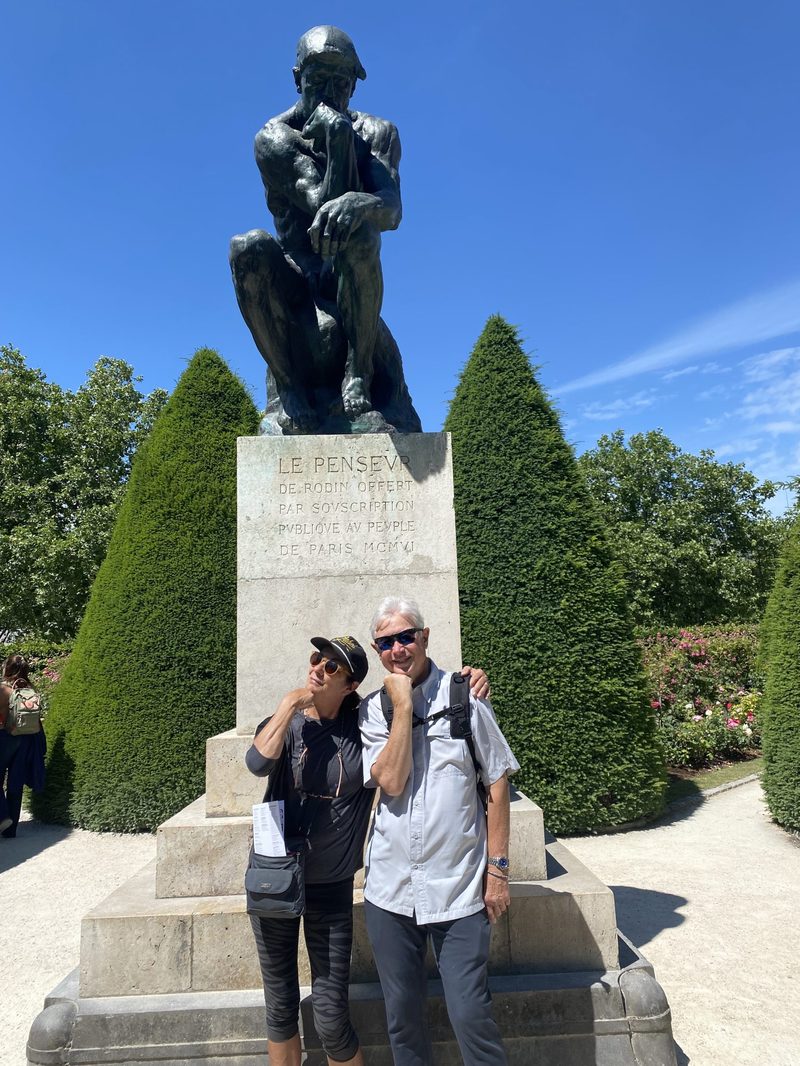
Planning for this trip began nearly 1,000 days ago. Covering sections of Europe—particularly London, Paris, and Normandy—in a short timeframe required careful planning, something my friend is very good at. I felt such joy listening to her ideas as she researched for months. Then Covid struck, and the wait seemed endless. When the day finally arrived, we sat in Dulles eagerly waiting to start the arduous journey across the Atlantic. It had not quite hit me yet how this trip was going to impact me.
The first revelation came during dinner. The setting was Le Florimond, a tiny restaurant in center Paris where we enjoyed Beef Ribs, smashed potatoes, smoked beet fenugreek, homemade duck confit with potatoes, and a French BBQ sauce—coupled with a bottle of French Chardonnay. It was a romantic evening, and my friend looked beautiful in a scarf passed down in her family. After, we walked the streets of Paris holding hands, laughing, and enjoying time together. It was like traveling back in time.
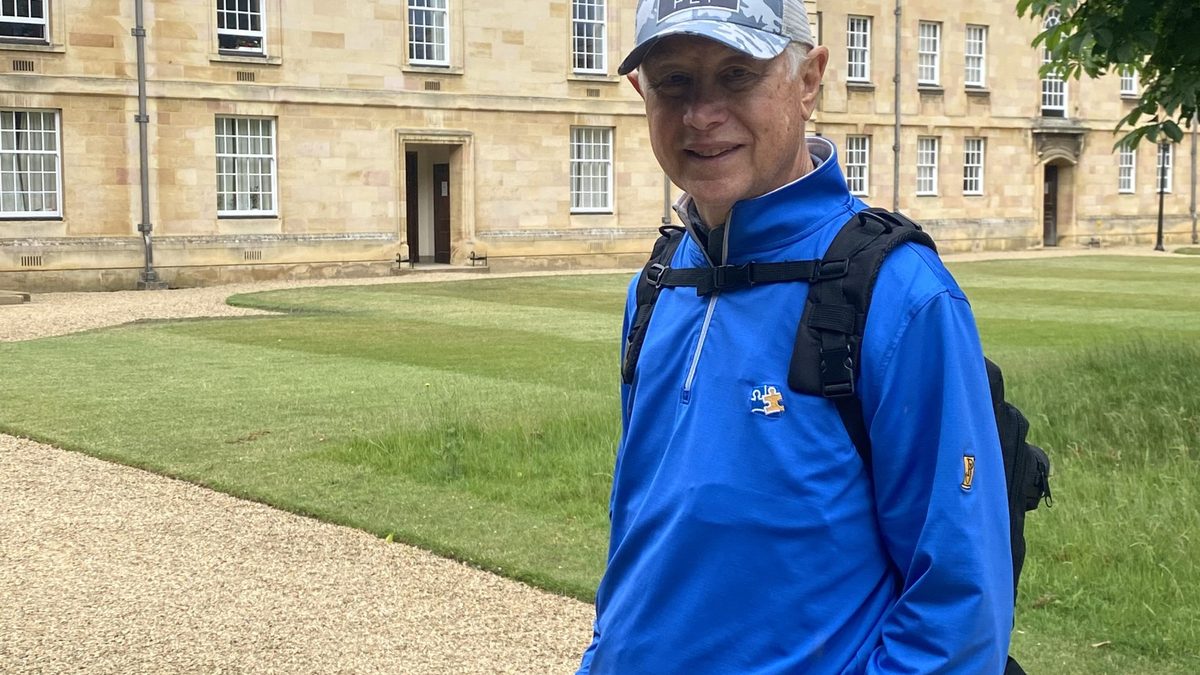
Visiting King’s College in Cambridge, where I studied 45 years ago, was my second moment of new understanding. We took the train from London and spent the day exploring the town and campus. The college seemed unchanged, but the city that felt like a small village all those years ago has grown. We walked the narrow streets to the River Cam where I rowed eight-man crew as a student. Memories flooded back, and as I looked at my friend, it felt right to connect my past with my present.
Our day trip to Normandy to visit Utah and Omaha beaches included a stop at the Normandy American Cemetery. Walking through the final resting place of more than 9,000 Americans was grounding. White Lasa marble grave markers bore each soldier’s name, rank, unit, death date, and home state, many from Tennessee. It was emotional for us both.
As we sat at dinner near the end of our adventure, I was struck by a thought. This journey was more than European adventures and revisited memories; it was a journey into my feelings about my best friend, who just so happens to be my loving wife of 25 years.
People say you can learn much about your partner when you’re on a major trip together. For those in a new relationship, it can be eye-opening. But even after all these years, this trip helped us to know each other at a new level. When we were able to strip away the extra voices, technology, and work, we realized how much we still enjoy simply being with one another. The uninterrupted time together was a blessing.
→ Swipe for Next Story
DepartmentsSEPTEMBER OCTOBER 2022
Home of Giants
Visiting the mighty before they make their final—and unplanned—departure
Story by John Quillen
In the 1800s, naturalist William Bartram once remarked that you could swing from limb to limb from the Atlantic Ocean to the Mississippi River without ever touching the ground. He didn’t know at the time, but were anyone to take on his challenge, they would cross over the oldest mountains on the planet—so old, in fact, that they once rivaled the present heights of the Himalayan Mountains. Hard to imagine that Clingman’s Dome just over the Tennessee border in North Carolina could have been Kanchenjunga and Mt. Mitchell to its east once an Everest.
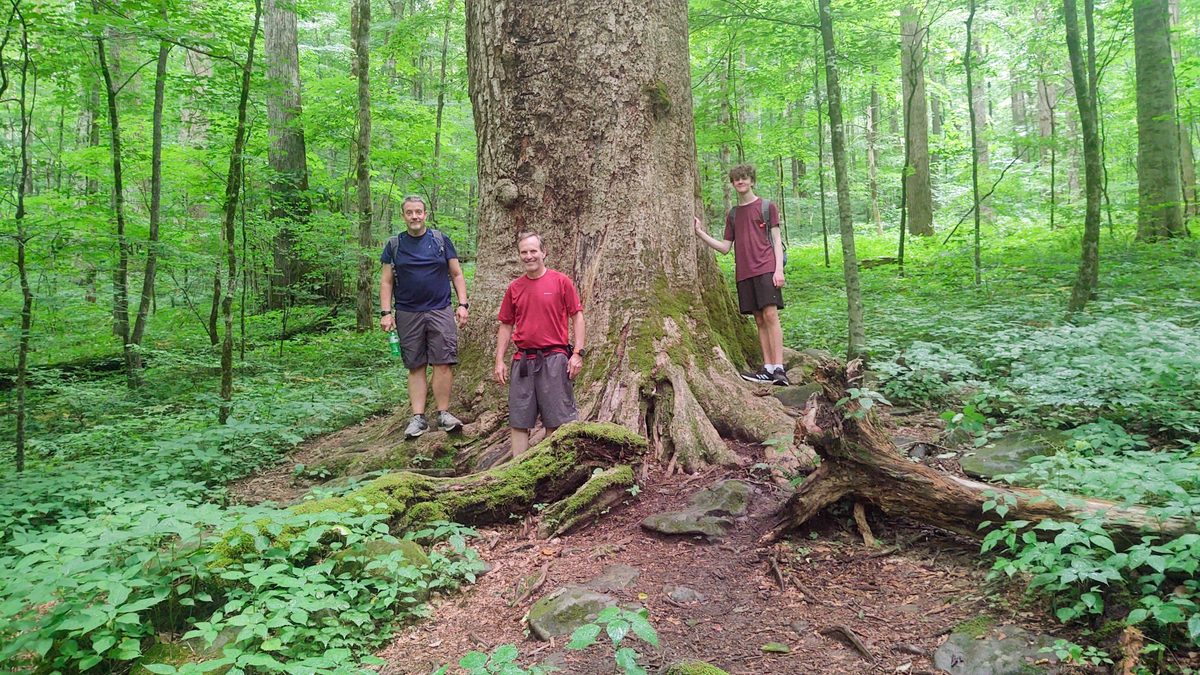
However, nestled in a basin called Poplar Cove near Little Santeetlah Creek is a vestigial sliver that will make you a believer. Joyce Kilmer National Forest is the home of giants; a real-life land of lost time. It is a fold in the universe that lets you walk 500 years through a hidden doorway to the real America. One hundred species of trees thrive in this primeval canopy. Buxom ferns, the envy of any florist, nudge rattlesnake plantain so tall I thought it had to be another plant.
I’m between twin poplars that tower 150 feet above me with a girth that defies three big human hugs. My neck is straining to catch errant rays of sun filtering through their crown. Alongside me is the biggest beech tree I have ever touched, its smooth bark irresistible for me and vandals. The Cherokee used to say that the beeches resist lightning, but that immunity sadly does not extend to graffiti. Moving on we weave between hemlock totems—soldiers who have fallen in battle with the invasive hemlock woolly adelgid. Despite their misfortune, their hollowed trunks still reach 60 feet or more, a testament to their former glory.
Joyce Kilmer’s words inspired a wilderness. “I think that I shall never see a poem lovely as a tree.” Like these mighty hemlock, Kilmer fell in a battle not of his choosing in World War One, never to rise again. Two decades back, I saw quite a different forest here, but you can never climb the same mountain twice. An ecologist told me back then that all I can do is go see them while they’re still here. I would advise you to do the same.
→ Swipe for Next Story
DepartmentsSEPTEMBER OCTOBER 2022
The Izakaya Way
Story by N. Brooks Clark
Japanese-style pub Kaizen offers an informal, peaceful atmosphere
When you walk into a restaurant and see one of Knoxville’s top chefs enjoying a birthday dinner with her family, you figure you’re in for a good meal. “I would come here five nights a week if I could,” says Holly Hambright, with a grin. It’s no wonder Hambright loves this place. Kaizen, which moved from Clinch Avenue in 2020, takes an innovative and fresh approach in merging a multitude of Asian culinary traditions.
We sat on the patio, a re-imagined beer-garden space with plenty of tables under leafy tress. The brick walls surrounding the patio still bear the hallmarks of ages past, in this case, some are from the former Crown and Goose. It provides a wonderful sense of Old City history.
Before you enter the patio, be sure to stop at the generous bar, where mixologist Rachel Santella will tempt you with a menu of cocktails. We couldn’t decide. The Bossy Boots (tequila, sake, elderberry liqueur, grapefruit soda), the Mall Girl Pearl (gin, vermouth,) or the Gary’s Got Legs (Toki Japanese Whisky, Chinola Passion Fruit Liqueur, yuzu, bitters)? Fortunately, a little bird told us about the Secret Menu, so we went with Rachel’s pièce de résistance, the French 75. A word to the wise – this drink is named for the 75mm Howitzer field gun used by the French in WWI, which was known for its accuracy and speed. Enough said.
We started with the Steamed Buns. These are one of Kaizen’s most popular dishes, and one bite will tell you why. There are a wide variety of filings to suit any taste, but our favorites were the Bang Bang Shrimp, the Thai Sausage, and the Pork Belly. We aren’t telling, but there may have been a small tussle at the table over the Pork Belly, served with kimchi, a miso mustard, and hoisin sauce.
Several dishes have stayed on Kaizen’s menu from its beginning. The Dan Dan Noodles served chilled with pork, black soy and vinegar, toasted chili oil, and pickled cabbage is a house favorite. Shrimp lovers may lean toward the Bang Bang Shrimp Fried Rice (delicious), while the plant-based crowd may opt for the Mapo Doufu. This tofu-based dish uses fermented black beans and bean paste served over fried rice.
Speaking of fried rice, it was exceptional. We asked Chef Jesse Newmister how it was done. While loath to give up his secrets, he did reveal that he uses a process of cooking the rice, then freezing it to maintain the mouth-feel of individual grains, before then seasoning and cooking. Rather than just a base to the featured ingredients, the rice adds a dimension all its own.
Newmister was born in Terre Haute, Indiana, where he was always cooking, but yearned to break away from the regional fare. “Any cuisine that’s not German in Terre Haute is exotic,” he laughs. He went to culinary school at Sullivan University in Lexington, Kentucky, worked in Charleston, South Carolina, then moved to Knoxville to help open the Northshore Brasserie. He and co-owner Margaret Stolfi operated Kaizen on Clinch Avenue near the YWCA until they moved to the Old City in early 2020.
We couldn’t resist the Gyoza, perfect little dumplings with garlic beef and onion, served with a sweet Thai dipping sauce. One standout dish was the Dry Fry Eggplant. Newmister creates crispy little eggplant straws dusted with Szechuan pepper, chili oil, and fresh herbs. Get one for the table.
If you are feeling indulgent, the Spicy Pork Fat Noodles arrive with generous pieces of diced pork belly, glass noodles, cabbage, and onions, topped with a peanut sesame crunch. If you love kimchi, go for the Hot and Sour Duck Noodles, which comes in a kimchi broth with pulled duck confit (hat tip to the Northshore Brasserie), Napa cabbage, peppers, and udon noodles.
The trouble you may have at Kaizen is choosing among the wide variety of dishes, each better than the last. You may just have to go five nights a week.
→ Swipe for Next Story
DepartmentsSEPTEMBER OCTOBER 2022
Wine Down
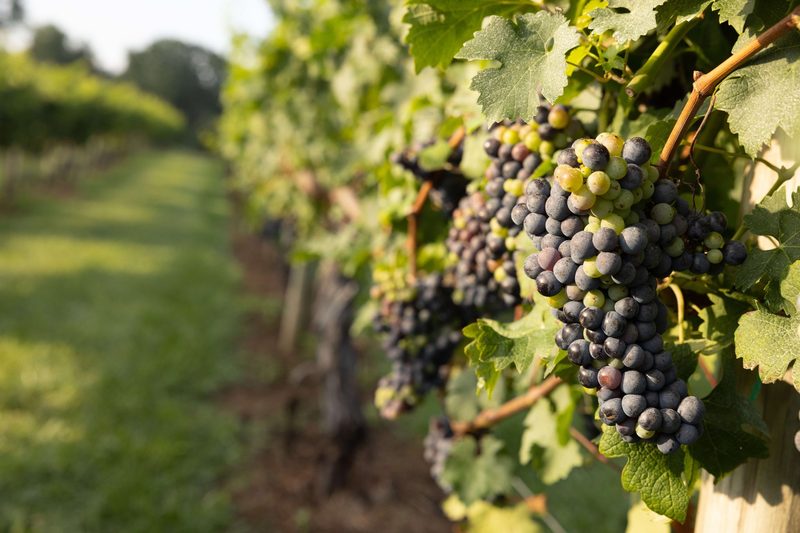
Spout Spring Estates keeps Viticulture Thriving in East Tennessee
Story by Rebecca Whalen
Anytime I step onto the grounds of a local winery, I find myself having flashback moments. Life at the winery was just a blink in my personal timeline, but it’s one I will never forget. As a tasting room specialist at a tiny family-owned winery, I relished the moments caring for the vines and walking interested patrons through the aromas they might encounter in the wines they were tasting. And while I was a fresh college graduate, even I could sense how much each person’s struggles and daily stressors would just melt away when they arrived to sample the carefully crafted flavors. That feeling is without a doubt felt at Spout Spring Estates in Blaine. Chuck and Alice Belt make sure of it.
The Retiree’s Legacy
I find it fascinating that this legacy Chuck and Alice have built here was not always their life’s work. “Chuck and I are both mechanical engineers,” Alice admits to me. “We lived in West Knoxville, and we were going to retire, but we couldn’t decide what to do.”
The options were to buy an ocean-worthy boat or buy a farm. And while one might think they would opt for the more whimsical of the two, they bought the farm. This was back in 2004. “Even if you’re retired, you have to do something,” Alice jokes. And so after some internet research and finding out “before Prohibition, Tennessee grew more grapes than we even do today,” they settled on growing grapes.
Still living in Knoxville, the two planned to plant an acre of grapes a year on their Granger County farm, but quickly found out that you cannot care for two acres of grapes just on the weekends. So they moved to the property in 2006 and continued planting.
Learning the ins and outs of viticulture is no easy feat, and there are most certainly experts that any winemaker will call out in their travels. For Chuck and Alice, they studied cultivation with the University of California and utilized materials from the University of Pennsylvania. They joined viticulture organizations and the local Tennessee Farm Winegrowers Alliance. But they also connected themselves with mentors, particularly Troy and Connie Perrin, Memphis-based viticulturists. “We went down and introduced ourselves to them, and they said, ‘Don’t do it. It’s too much work,’” Alice says, “but we did it anyway.”
I find myself identifying with Alice and Chuck the more we talk. They ran toward the challenge. And rather than take the retired life of ease, the two—who lovingly refer to themselves as “stubborn” and “hard-nosed”—decided they wanted this enough that enduring the hard work was just the step they needed to take. “We found out that they were telling us the truth,” Chuck says. “It’s a lot of work, hard work. It’s something you should start doing when you’re younger, much younger.”
They sold their grapes to a local wine group in Pigeon Forge in those early years and made wine out of their garage—“You’re allowed to make 100 gallons a person without having a license,” Alice says. But in 2012, Tennessee passed the Tennessee Farm Winery Law which made it possible to take your grapes to a licensed winery where they would make your wine, put your label on it, and sell it at your farm. And so Alice and Chuck jumped on board. “We did that for a couple years to just see if we would have enough business, before we made all the investment in the winery equipment.”
Turns out, people liked it, and so the duo jumped in to winemaking and began plans to open their winery. Chuck is modest when he talks about the process. “A lot of people try to make it out that it’s really complicated, and they are real secretive about it,” he says. “But it’s not rocket science. It’s a natural process that will take place whether you do anything or not, but as long as you start out with really good grapes, it’s kind of hard to mess it up. It’s 10 percent wine making and 90 percent cleaning and sanitizing and monitoring and testing.” Alice agrees, but is quick to call out the intricacies necessary that Chuck has mastered at this point as the winery’s winemaker.
All In
Deciding to bring people to the farm was not as big a leap as you might imagine for Chuck and Alice. Even before they opened the winery, they had already been welcoming people to the farm by booking it out for weddings. They eventually got to the point where they were doing upwards of 130 weddings a year at the property.
But with a thriving winery business, Alice says there’s just not enough time to commit to both. So they are officially leaving the wedding business behind and committing full force to there winery and vineyards.
The pavilion they built on the property was the perfect space to convert to the winery. There they process grapes, create their wine, bottle and label, all on site. They also created a retail space to sell and provide tastings. “After a few years of working with a very small tasting room, we expanded that and made it a much larger tasting room and started adding tables and chairs for more people outside,” Chuck says. Winery goers often bring lunch and spend all afternoon outside at the winery, a welcome sight for Chuck and Alice.
Today, they care for 4,500 vines in their six-acre-vineyard, and they have a tenured team who help them do it. Once grapes are picked, they go through a detailed process right on site, from de-stemming and pressing the juice right through to finishing a wine before bottling. “We barrel age all of our red wines and one of our whites,” Chuck says, Alice adding that a red could take up to three years before it’s bottled. Then again, there are white wines that can be bottled within six months.
“We grow the Nefra, which are referred to most often as the noble varieties,” Chuck explains. “That would be Cabernet Sauvignon, which is a Bordeaux. Sangiovese, which is Italian. Riesling, which is German. Chardonnay, which is a Burgundian grape. And a little bit of Muscadine, just because we have to.” Tennesseans love Muscadine wine. So in 2014, after many asks from their patrons, Chuck and Alice planted the grapes.
“It’s a Lifestyle”
There are still only about 70 wineries that call the state of Tennessee home; the state’s wine industry seems to still be in its infancy. However, that number has about tripled in the last two decades.
“Recently, we got the state to establish a grape and wine board and they have been really good about coming forward with taking some of the tax money that the wineries pay in and funding some different programs to help support the industry. That just started happening probably within the last five years,” Chuck says, adding that he feels it’s a good investment for the state. “I think they’re finally discovering that that’s the case.”
In March of 2020, Chuck put up a map of the world in the Spout Spring Estates tasting room and asked patrons to place a pin in the map to mark the place they were born. Two years later, that map has pins in every continent. Speaking to other winery owners in the region, they tell similar stories. The appreciation of good wine is not beholden to a certain place or age group or culture. It is a culture all on its own and as Alice says, “The culture of wine is more than just a job or a product. It’s a lifestyle.”
→ Swipe for Next Story
Dining GuideSEPTEMBER OCTOBER 2022
Dinner And…
Local eateries boast both food and fun all in the same location. Date night anyone?
Story by Marc Anthony
Rustic, regional, and romantic. Trip Advisor ranked Dancing Bear Appalachian Bistro as one of the most romantic restaurants in America in 2019. Secluded, savory, and sensational are also perfect alliterative words to describe this fantastic restaurant tucked quietly into the peaceful side of the Smokies in Townsend. A farm-to-table experience like none other with a concentration on regional dishes with fresh produce grown on-site. The summer’s Live on the Lawn series could have earned the title “Dinner and… A Show”, but with a full s’mores bar alongside roaring fires waiting for diners outside, the title had already been taken.
Most golf courses offer a “19th Hole” bar and grill, sometimes nicknamed “the watering hole.” You come in dirty and dusty after a round of golf, stay for a quick beer and story about your bad golf game, and head to your car to offload your clubs. T-Prime Steak & Seafood at Avalon Golf and Country Club might be just a little different. Alone, it’s one of Knoxville’s best restaurants. Combine it with an amazing golf course tucked in the Avalon subdivision between US 70 and Interstate 75 and you have a dynamic duo. All the classics are on the menu from Surf-and-Turf to Cilantro Glazed Lime Chicken. Even if you don’t play like Tiger Woods, here you can eat like you’re on the pro tour.
I’m old enough to remember when you had to go somewhere to play video games. A pocketful of quarters and Mom dropping you off at the arcade was the best day ever. Galaga, Joust, and Space Invaders were just a few of my favorite games. If you’re ready to step into a virtual time machine, then transport yourself to Token Game Tavern, where classic video games and pinball are king. The tavern serves all sorts of pub fare from nachos to Chicago dogs and even a cocktail made with Nerds. For game nerds who also want to eat their fill, this is the place to be.
Knoxville: 213 N. Seven Oaks Drive•(865) 770-3870 •tokengametavern.comMaple Hall |Dinner and… Bowling!
Yes, we may have grown up hanging out at a bowling alley, but it wasn’t somewhere you really wanted to hang out if you weren’t bowling. Conversely, Maple Hall is a place you want to hang out even if you won’t be channeling your inner Pete Weber. Boutique bowling alleys are growing in popularity, but few can rival the character of Maple Hall which is tucked inconspicuously into a historic Gay Street building. You’ll hang out here for the relaxing lounge area; locally sourced, made-from-scratch menu items like Springer Mountain Farms Hot Chicken; game night classics; oh, and some bowling. Pro Tip: Walk between lanes like you work there to find the upstairs cocktail lounge which is perfect for private gatherings.
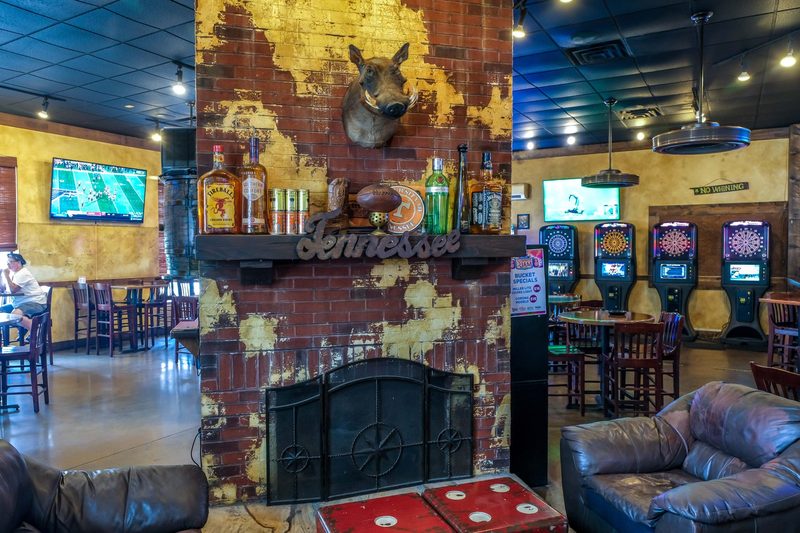
This is the closest thing to a pub you’re going to find in Knoxville. Golden Tee, Power Putt, Big Buck HD, PGA Tour Golf, cornhole, skee-ball, darts and many other games spread across the restaurant. Pool tables, lush couches, and a centrally located brick fireplace round out the tavern experience. Generous outdoor space provides a comfortable and never-too-crowded feel with regular live music performances on the newly refurbished stage. Pro Tip: Come for the fun, stay for the Psycho ‘Shrooms. Settle down, they’re legal and zesty. Oh, and Jon Hamm might be there… in the form of a ham sandwich.
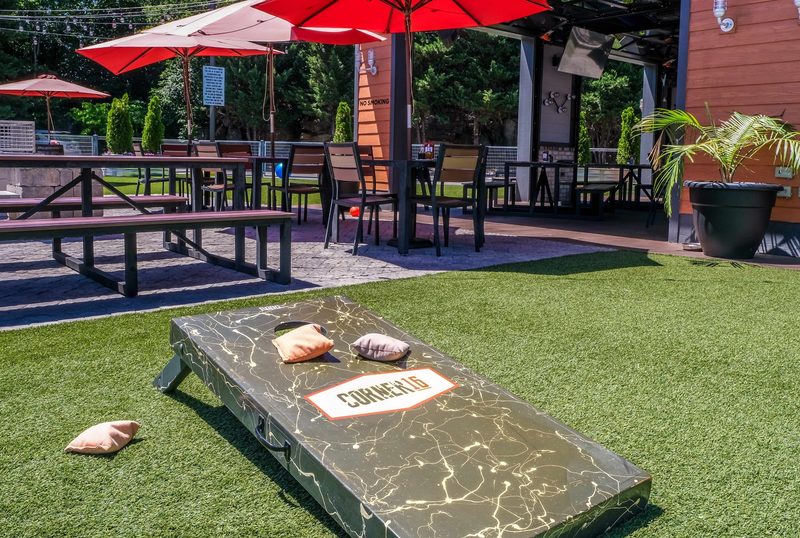
If you’re from Knoxville, you know about the “C” restaurants owned by Mike Chase—Calhoun’s, Copper Cellar, Cappuccino’s, Chesapeake’s, and others, now including Corner 16. I’m not sure the last time I was on Astroturf, but there are many square feet of it adorning the outdoor area here. Cornhole, soccer, and other fun keep the kids occupied as you dine on food you have come to depend on from a “C” restaurant. Comfort food and comforting fire pits keep you cozy when temps cool. Lunch, brunch, dinner, and a good time are waiting for you at Corner 16.
Middlebrook: 1640 Bob Kirby Road•Northshore: 9637 Kroger Park Drive•corner16.comTopgolf |Dinner and… a Driving range!
Microchipped golf balls that turn the driving range into a video game? What’s not to love. Long awaited in the Marble City, Topgolf made its debut mid-August, and while you might be coming for the golf, the in-house restaurant is not something to miss. You’ll find traditional bar apps on the menu, but you’ll also find nontraditional items like Farmhouse Flatbread made with cauliflower crust and Meatalian Flatbread featuring prosciutto. Burgers, chicken sandwiches, and salads make up the dinner menu, and while the company hails from out of state, you’ll find local beer on tap. Pro Tip: Don’t leave without trying the injectable donut holes, as seen on TikTok.
After all these Years, the Vols Deserve a Heisman Trophy Winner
Story by Gary Wade
Jurisprudence is simply a means to an end. Justice is what we want, and that applies to college sports. Because it is September, and, in the words of the late Bobby Denton, “It’s football time in Tennessee,” this editorial comment addresses the decades of injustices imposed upon the orange-clad Volunteers by the voters for the Heisman Trophy.
First, let’s use the history of Vol football to provide context. The University of Tennessee has sponsored the program since 1891–when Benjamin Harrison was the president of the United States. Over the years, and even counting the disappointments in the last decade plus, the Vols have compiled a record of 854 wins, 406 losses, and 53 ties, good enough to place our gridiron heroes at number 11 in all-time winning percentage among all colleges and universities. With 52 bowl appearances, the Vols rank third in the nation. Further, Tennessee places second in all-time winning percentage in the SEC—you can guess who stands first, but that is another story. With 16 conference championships and six national titles, surely the Volunteers have at least once fielded the best player in the country. Not so, according to those who have chosen the winner of the Heisman trophy.
In fairness (which has no place in a column about injustice), the Heisman, named after legendary coach, John Heisman, was not awarded by the Downtown Athletic Club in New York until 1936. The criteria for selection? “Outstanding performance which best exhibits the pursuit of excellence with integrity,” the Club says. “Winners epitomize great ability combined with diligence, perseverance, and hard work.” Sounds good. Our local pigskin heroes have had no shortage of candidates. Let’s take a look at only those Vols who finished as high as second in a final tally for the Heisman.
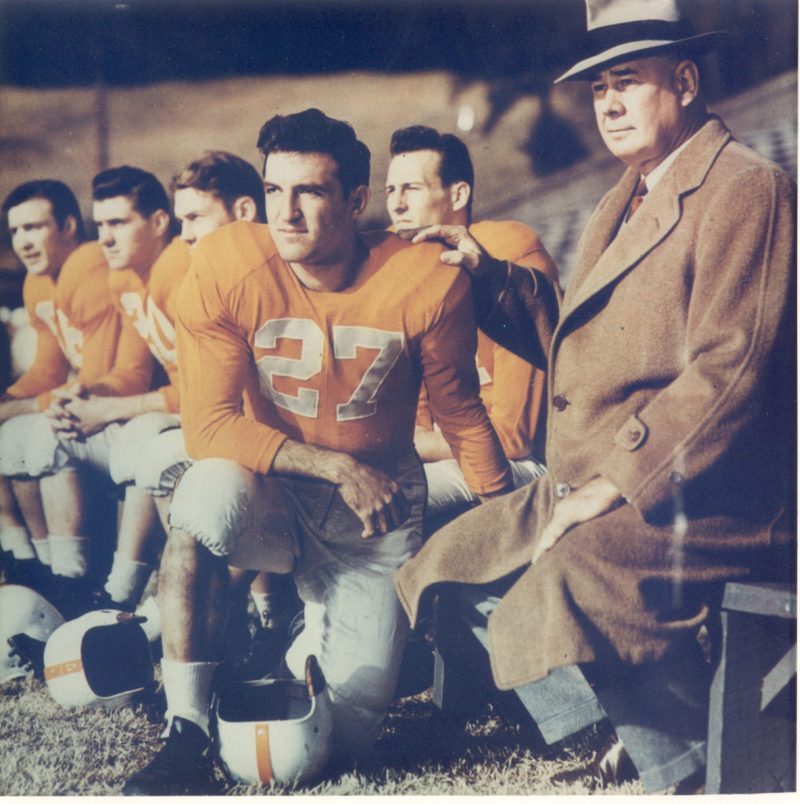
Hank Lauricella, who played tailback in General Bob Neyland’s single wing offense for the 1951 National Championship team (bowl games did not count in the polls in those days), finished second in the voting for the Heisman. A first team All-American, Lauricella rushed, passed, and punted for the Vols—a genuine triple threat—as he led the orange to a 10-0 regular season record. Dick Kazmaier of Princeton, however, somehow won the trophy. His team was undefeated as well, but is having beaten such “powerhouses” as Harvard, Yale, Lafayette, and Dartmouth impressive? Given the level of Kazmaier’s competition surely should have served as a disqualification. Of course, no Ivy League player has won the Heisman since that year. A Princeton halfback over a national champion? To quote fictional prison escapee “Pete” from the movie O Brother, Where Art Thou?, “That don’t make no sense!”
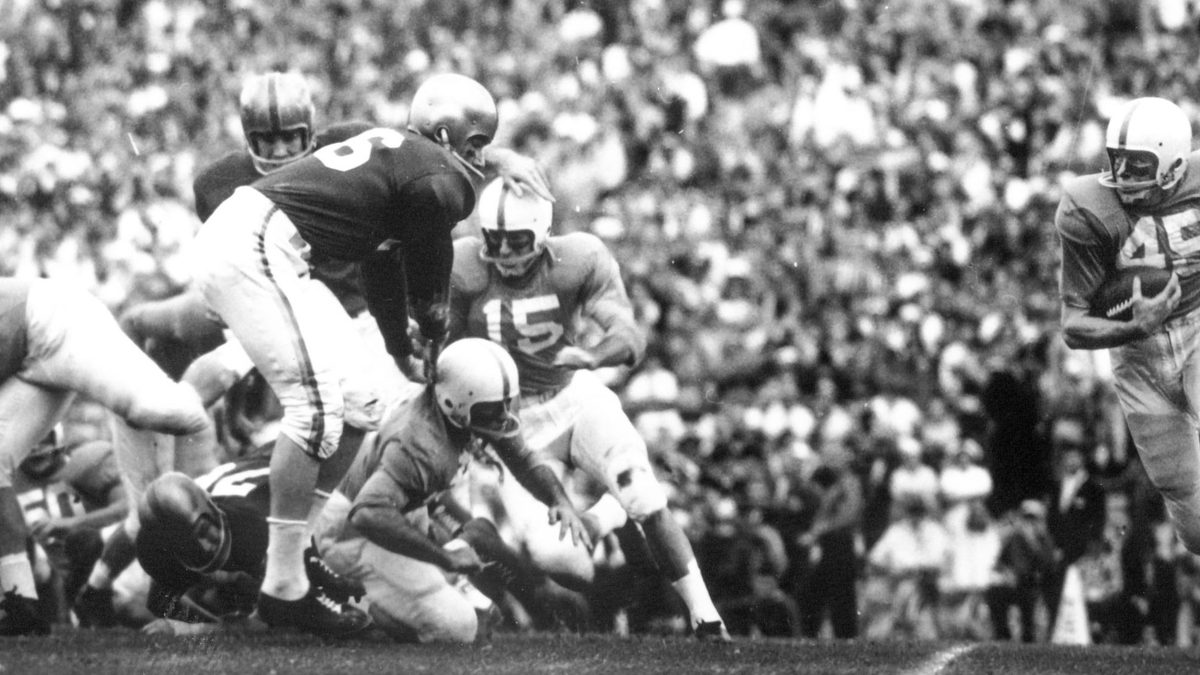
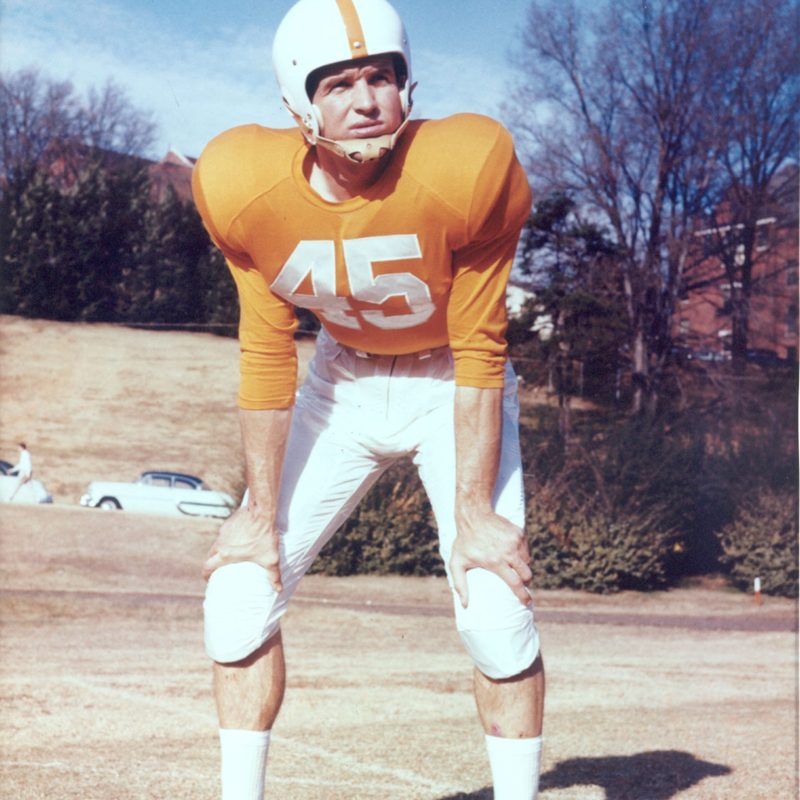
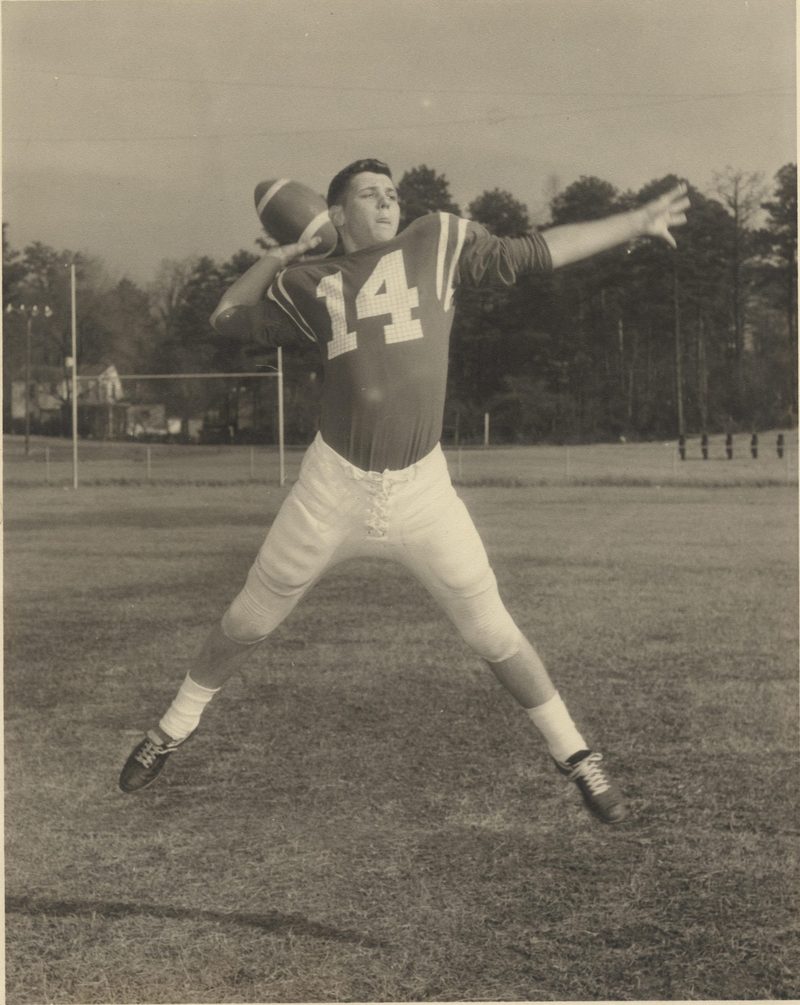
For fans of the Big Orange, it still hurts to remember the aftermath of the 1956 season. Coached by 1938 Tennessee All-American end, Bowden Wyatt, the team defeated all 10 of its regular season foes, including SEC runner-up Georgia Tech in a classic game at Grant Field in Atlanta. Johnny “Drum” Majors, the SEC player of the year as a junior and a senior, was, some believed, the favorite to win the Heisman. Barely nosed out by Oklahoma in the final poll for the national championship, the Vols and its athletic department had every right to promote its All-American tailback, who had not only rushed, passed, and punted, but had played outstanding defense in that magical year. Once again, fate intervened. Paul Hornung, the quarterback for a Notre Dame team that won two games in the fall of ‘56 and lost eight, won the trophy in a close vote. He had thrown for all of three touchdowns that season and was intercepted on 13 of his passes. Some might say that Hornung, who later starred as a halfback for the Green Bay Packers, proved his worth in the NFL. Well, by that standard, Jim Brown of Syracuse, a three-time MVP in the NFL, won rushing titles in eight of his nine years with the Cleveland Browns. Most experts classify him as the best running back of all time. In the 1956 Heisman vote, Brown finished fifth. Just for the record, Majors led the Vols in rushing and in passing and earned an excellent pass efficiency rating of 157.4. By comparison, Hornung, the last player to play for a losing team and win the trophy, had a 108.0 rating. Not close. No justice.
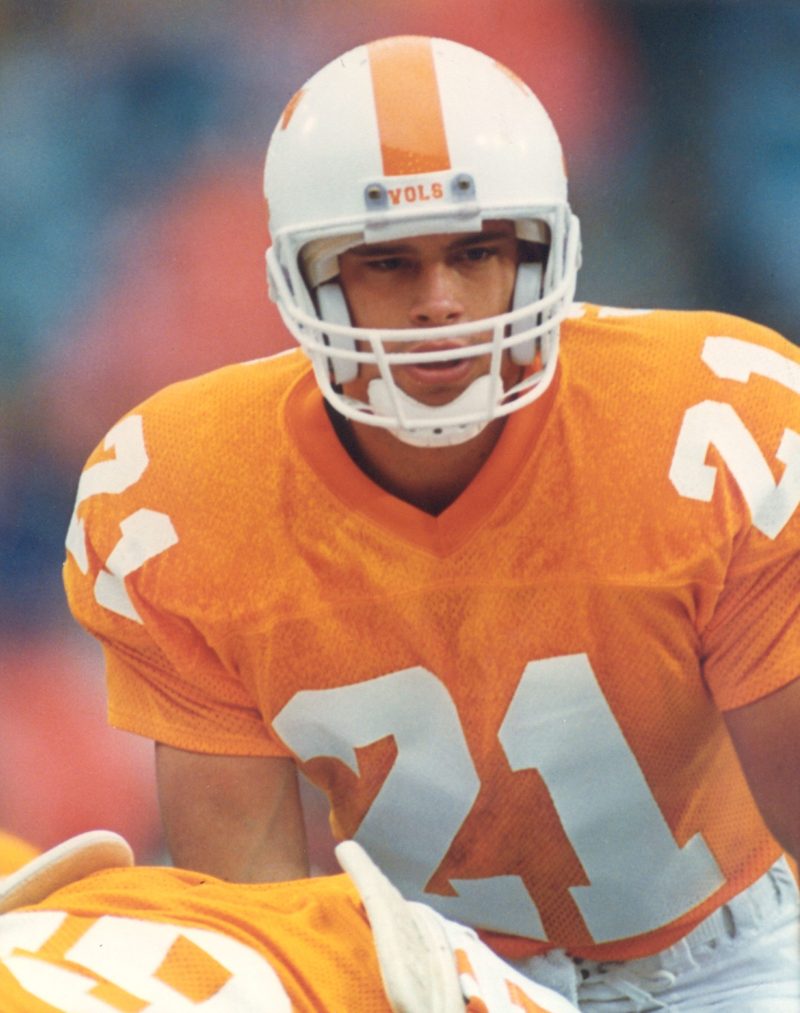
In 1993, the Vols having long since abandoned the old single-wing formation when the tailback did the passing, junior quarterback Heath Shuler finished a distant second to Florida State’s Charlie Ward in Heisman balloting. Passing for over 2,300 yards in the fall of 1993, Heath threw for 25 touchdowns with only eight interceptions, breaking every single season record in Tennessee football history. The one-loss Seminoles, however, won the National Championship. Ward threw for over 3,000 yards with 27 touchdowns. Under those circumstances, it’s hard to argue that Shuler, also a gifted runner, should have won over Ward, but in almost any other year until then, his stats would have warranted the award. Had Heath played his senior year instead of going pro, the Bryson City native would have been the odds-on favorite for the trophy. Instead, a running back by the name Rashaan Salaam of Colorado garnered the Heisman. Does anyone remember him?
The year 1997 is the last time many Tennessee fans, including yours truly, watched a televised Heisman Trophy presentation. After choosing to stay for his senior year, Peyton Manning threw for record settings of 36 touchdowns and almost 4,000 yards while leading the Vols to an 11-1 regular season record, including its SEC Championship game against Auburn. A consensus All-American, he won the Maxwell Award as the best player in college football, the Davey O’Brien Award as the best passer, the Johnny Unitas Award as the best quarterback, and the Best College Football Player ESPY Award. Nonetheless, he finished second in the Heisman vote, upset by Michigan’s Charles Woodson, the only defensive player to ever—that is, ever, before or since—to win the trophy. Now that result truly stands out as an injustice. A dose of jurisprudence, like an appeal to a higher body, might have corrected the wrong, but such as it is. Peyton, of course, was the number one pick in the NFL draft some five months later and went on to a Hall of Fame career. As to “diligence, perseverance, and hard work,” Heisman criteria, he had no peer.
Parenthetically, and just to add insult to injury, yet another snub pains fans of a former quarterback for the Oklahoma Sooners, one who just happens to serve today as the head coach of the University of Tennessee. In one year, Josh Heupel appears to have rescued a moribund program from the depths of 2020 and inspired new hope among the Vol faithful. Under those circumstances, it is easy for Volunteer fandom to overlook his playing career. As a senior in 2000 under Coach Bob Stoops, Josh passed for over 3,600 yards with a 136.4 efficiency rating and finished a close second to Chris Weinke in the Heisman vote. Weinke the 28-year-old Florida State quarterback squeaked by with a vote of 1,628 to 1,552. Of note, a 22-year-old Heupel, the consensus All-American who had been named Quarterback of the Year, gained a measure of revenge in the National Championship game that season, leading his team to a victory over the Weinke-quarterbacked Seminoles. Weinke, who after high school spent six years in the baseball minor leagues with the Toronto Blue Jays organization, is the oldest player to have ever won the Heisman. Somehow, the Heupel oversight, “Don’t make no sense.”
Maybe it’s this year, the next, or even a decade or half century after that, but there can be no justice until Tennessee can boast its first Heisman Trophy winner. Go Vols!
→ Swipe for Next Story
InsightsSEPTEMBER OCTOBER 2022
Gridiron Glory
Vivid memories from the Vols history bring elation for the season ahead
Story by Robert Pryor, Sr.
As I sat waiting for the kickoff, I felt detached from reality. The entire stadium was in a stupor with little sound and suspended movement. Was this a football game? Stoll Field had never been the scene of a more bizarre gathering. It was November 23, 1963, and Tennessee was about to face the Kentucky Wildcats in the annual renewal of their long rivalry for the Ole Beer Barrel.
Watching early play, I remember thinking about how trivial the game, the bands, and the outcome were because the President of the United States, my president, had been killed just 24 hours earlier. I identified with President Kennedy because he was young and had reasonable answers to complex questions. Why did I even come to Lexington with my friends for this meaningless game? The entire nation should have stopped to weep. Tennessee won the game, but who cared? The 1963 Tennessee/Kentucky football game is one I will never forget because it was truly a game of no consequence.
We drove back to Knoxville Saturday night, and I slept late the next morning. I turned on the television and fell back to sleep. I woke as the suspected assassin was being transferred in the Dallas jail when suddenly he was shot and killed on live TV. For me, the Kentucky game will always be sad and associated with the Kennedy assassination.
I have lots of other vivid youthful memories of football games, and always suffer a few pigskin flashbacks this time of year.
As a kid, I was a loyal Tennessee Vol super fan. I bought a 35 cent game program every time I attended a Tennessee football game at Shields-Watkins Field and added it to my display on the knotty pine walls of my Lincoln Park bedroom. I also had 8-by-10 glossy black and white photographs of my favorite players framed and mounted next to my programs. Included in my gallery were Andy Kozar, Hank Lauricella, Bert Rechichar, John Michels, and Doug Atkins. These are the men who built the tradition we like to talk about today.
I remember when Chattanooga beat Tennessee in 1958 and how it seemed like the end of the world to a 15-year-old boy. I didn’t even know there were Chattanooga fans there that day until they rushed the field and tore down the goal post on the north end. I watched as the police intervened in the celebration and pieces of the goal post were carried away. It was called a “riot” because police unnecessarily used billy sticks to beat the crazies from the Choo-Choo City and loaded them into a paddy wagon. It was the only time Chattanooga had beaten Tennessee, and the post-game skirmishes between fans and the Knoxville police were more exciting to watch than the game itself.
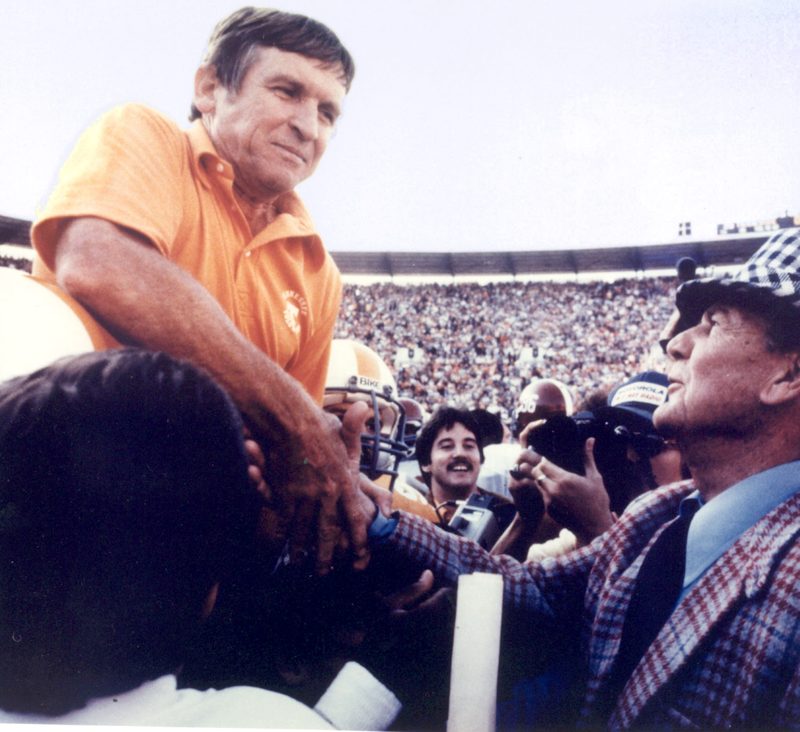
In October 1981, I took my family to Birmingham to see Tennessee try to beat Alabama. We made a point to get to the stadium two hours early because I wanted our sons, Robbie (then 13) and John (then 10), to see Coach Bear Bryant up close. The Bear had a tradition of bringing his team out on the field in street clothes before the game, and they would casually walk around the field as if they had never seen it before. We had good seats that day on about the 35-yard line in the Alabama section, and when the Bear came out I lectured our sons on his importance to the college game and how they should relish the chance to see him up close and remember it as a sports highlight in their lives. Well, it got better than that. Our seats were close to the field and Coach Bryant walked over to speak to some workers organizing Alabama equipment on the sideline. He leaned on the fence close to our seats, and I seized the opportunity to take the boys down to speak to him. John was too bashful, but Robbie, the more adventuresome, went with me and met and shook the hand of the great Bear, who was gracious in his houndstooth hat. What a great memory—even if Tennessee did lose the game. He retired after the 1982 season and died a month later.
My boys and I were in attendance with all the men in our family and a few close friends in November 1991 at Notre Dame Stadium when Tennessee made a great comeback to win the game. We had two seats together behind the north goal post and a solo seat in a folding chair on the field in the southeast corner next to the UT band. I sat in the chair on the field for the first half and met up with the boys at the north end near their seats at halftime. My son, John, was so excited predicting a definite comeback for Tennessee notwithstanding the fact that we trailed 31-7. Because of John’s prediction and the long walk back to my bad seat, I stayed in the concourse tunnel in the north stadium for the second half so I could watch the boys’ reaction as the game unfolded. The rest is history. You will recall that Tennessee scored 28 to Notre Dame’s 3 points in the second half to win 35-34 by blocking Notre Dame’s last second field goal attempt. If you were there, you will never forget it. It probably was Coach Johnny Majors’ greatest Tennessee moment. Years later, I spoke with him about it over lunch, and we agreed it was a great day to be a Vol. I told him how important that game was to my family, and he confirmed it proved very important to him and his long career.
As a kid growing up in North Knoxville, I was always a high school football fan. My family annually attended the city-county Thanksgiving football game usually played between Knoxville High School and Central High School. I don’t remember any game details, only that it was always freezing cold and Knoxville High usually won.
My first exposure to high school football in Knoxville was at Evans-Collins Field on the site of the present day Caswell Softball Complex. In the 1950’s, Fulton, Catholic, and East played their home games there just as Knoxville High School had done before them. I remember the lighting was poor and the team dressing rooms were under the grandstand. The teams entered the field and returned to the dressing rooms together through one 50-yard line gate resulting in a lot of pushing and shoving. Many great Knoxville area high school players battled on Evans-Collins Field. Fulton was always my favorite team, and I followed their athletic program from the school’s opening in 1951. I can remember now cheering for those early athletes in maroon and white like Babe Craig, Jay Bayless, Don Lobertini, and my lawyer friend, Jo Mont McAfee. I see Jo from time to time in downtown Knoxville, and we always stop and reflect on those great early Fulton teams.
For you younger folks, you should know that several early and important high schools have long since closed. South High School was known as “The Rockets” and wore red and white. Rule High School had a “Golden Bear” mascot and wore blue and gold, and the always powerful Young High “Yellowjackets” played at Duff Field on Chapman Highway. Young’s colors were orange and black. They always reminded me of Halloween. There was no Austin-East in the early days and East High School wore blue and gray and went by the name “The Mountaineers.” These schools all fielded competitive, tough teams in their day.
The memorable Knoxville area high school football players from the 1950-1965 era when I was watching from the bleachers, and later playing for Bearden, were Johnny Payne (Central), Ed Poore (East), Chubby Watts (East), “Cracker” Murrell (South), Pig Raggio (Fulton), Bob Black (Fulton), Claude Messamore (Fulton), Fred Cope (Bearden), Johnny Comer (West), Mickey Snyder (West), Albert Davis (Alcoa), Jackie Pope (Oak Ridge), D. D. Lewis (Fulton), and Bryant Jarnigan (Rule).
One memory I’d like to forget is the Old Timers Charity Football Game in 1971 planned to raise money for my alma mater, Bearden High School. I was 10 years post-Bearden and football, but was harassed to return to the gridiron one last time to quarterback the squad of older guys in a game against more recent graduates. I promised Norma I would not play in the game because she was nine months pregnant and I was too slow, too fat, and totally out of shape. However, it was hard to resist when they elected me captain of the “Over-the-Hill Gang,” and, after all, it would be the only opportunity for my firstborn, Robbie, to see me play as a Bulldog. Norma begged, but duty called.
They carried me off the field on a stretcher in the second quarter out of breath and with a broken arm. Unfortunately, Robbie missed all of my brilliant plays and how brave I was in the face of injury because he was at the concession stand. Do me a favor and please never mention this game to Norma.
Perhaps these events and names will help trigger your own football memories as together we begin another Big Orange campaign. Go Vols!
→ Swipe for Next Story
FeatureSEPTEMBER OCTOBER 2022
Looking Ahead to an Epic Vols Season
Story by N. Brooks Clark
Sept. 1 Ball State.A Thursday evening home opener. Look for UT to put lots of points on the board.
Sept. 10 at Pittsburgh.The Panthers went 11-3 and are ranked in the Top 20. The Vols came close last year and should win this time around with a solid offensive output.
Sept. 17 Akron.Former Mississippi State head coach Joe Moorhead takes over the Zips after a 2-10 season that had Zippy the Kangaroo hopping mad. Another chance to gear up the VROOM attack.
Sept. 24 Florida. At SEC Media Days, Heupel described last year’s 38-14 drubbing in Gainesville as a learning opportunity for his new team. He said he ran the game film and pointed out moments in the third quarter that “changed the trajectory” of the game, where different decisions could have led to a different outcome. At home this time, the Vols can take the improving Gators, coming off a 6-7 season.
Oct. 8 at LSU.The Tigers also went 6-7 last year. Death Valley is always perilous, but this should be a W. Look for a breakout day by freshman running back Dylan Sampson, a 5’11, 190-pound 10.3-in-the-100 speedster from Baton Rouge.
Oct. 15 Alabama.Quarterback Bryce Young won the Heisman Trophy but not the national title. To keep this game close, UT’s up-tempo offense has to keep Young and the Crimson Tide offense off the field as much as possible.
Oct. 22 UT-Martin (Homecoming).Although this is supposed to be a post-Bama breather, the Skyhawks were 10-3 last year, losing to eventual runner-up Montana State in the Division I Championship Subdivision playoffs. So, it’s best to not take our UT-System cousins for granted!
Oct. 29 Kentucky. Though the Vols won a 45-42 barnburner in Lexington, beefy Penn State transfer quarterback Will Levis led the Wildcats to a 10-3 season and a Top 20 preseason ranking. It will be another wild one. A win would be big.
Nov. 5 at Georgia. Quarterback Stetson Bennett IV’s Horatio Alger story—walking on for the Bulldogs, starring at a junior college, returning to Georgia, winning the starting job as an underdog and leading the Dawgs to national title—somewhat parallels that of Josh Heupel. As with Bam, UT’s offense must keep Bennett and his offense off the field as long as possible.
Nov. 12 Missouri.The Tigers were 6-7 and improving at the end of last season.
Nov. 19 at South Carolina.The Gamecocks were also 7-6 and improving at the end of last season. Always tough in Williams-Brice Stadium.
Nov. 26 at Vanderbilt.The 2-10 Commodores are rebuilding. Hopefully, a tune-up for another bowl game, this time in Florida.
→ Swipe for Next Story
FeatureSEPTEMBER OCTOBER 2022
Turn It Up
Coach Josh Heupel and Quarterback Hendon Hooker’s up-tempo offense makes all things possible in 2022
Story by N. Brooks Clark
In college football, the past is never dead. It is not even past. As long as Lane Kiffin walks the Earth, there will be airborne mustard bottles and golf balls in fans’ minds. OK, the behavior of some fans at last year’s Ole Miss game was not good, but it gave UT Coach Josh Heupel the chance to say to his visiting recruits, “Look at the fan base: This is how much these fans love this team and how passionate they are.” Former Knox County Commission Chair Hugh Nystrom showed up for the next game in a French’s Mustard T-shirt, and Heupel got every recruit he wanted. Let Us Not Praise Former Coaches
To remind us how lucky we are to have Heupel and the 7-6 team with 15 starters returning that will probably go 9-3 this year, let’s look back at our recent history. Kiffin was hired in 2008 because his dad, Monte, was a wily defensive coordinator who knew how to get players ready for the NFL. Kiffin the younger featured an outsized, untucked polo and lost to Bama because he forgot he needed a field goal kicker. He earned Spurrier-level animus from Vols fans by deserting Knoxville for the beaches of Southern Cal. Four years later, AD Pat Haden called Kiffin off a team bus on an airport tarmac at 3 a.m. and fired him. From Vols fans to Pat Haden: respect.
Derek Dooley taught us to tuck in our polos, even have them tailored, and to throw down clipboards, kick the turf, and scream like a baby at quarterbacks. He lost to LSU because he sent too many players on the field. Then came Butch Jones, who deemed Alvin Kamara not good enough to carry the ball for the Vols. Then came three years of Jeremy Pruitt, an ogre-ish figure out of a middle-earth movie who was nasty to players (while paying them) and did so many bad things that UT would be on probation forever if the NCAA weren’t falling into the earth like a Tolkien kingdom.
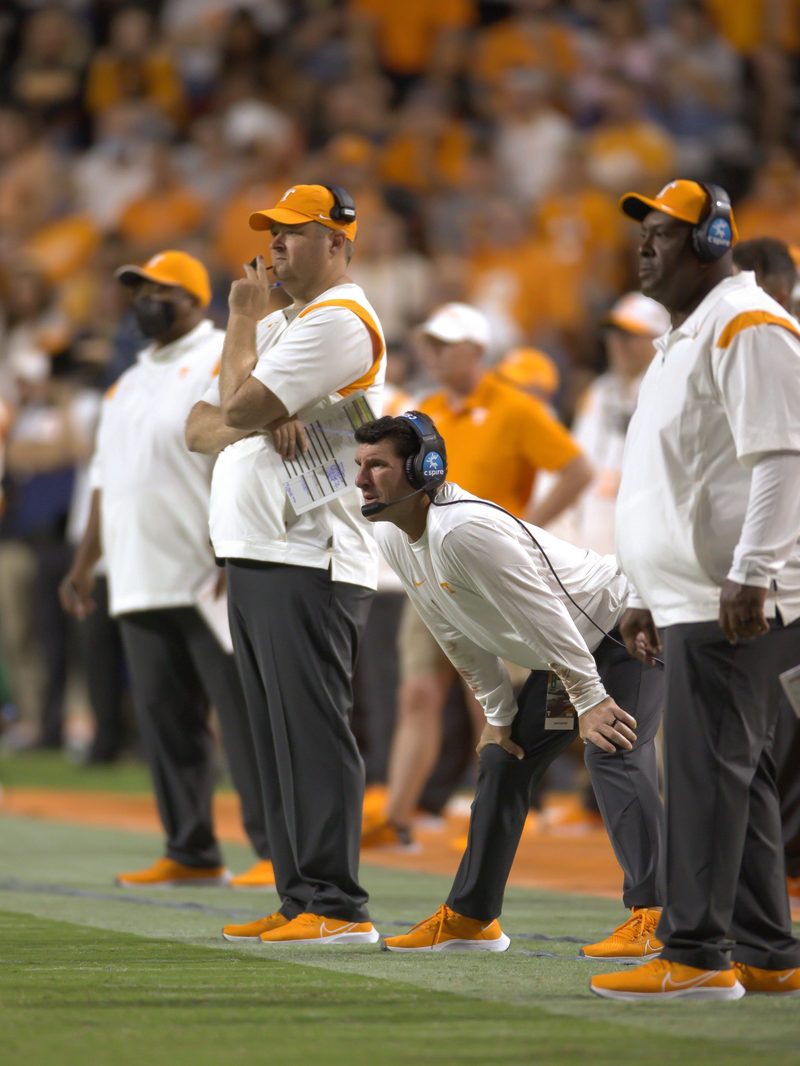
So just over a year ago we met Josh Heupel. It seemed weird at first that our new athletic director, Danny White, fresh from the University of Central Florida, simply hired the coach he had there. But Heupel has proven to be a rare find. He has an unassuming, down-to-earth way about him, and speaks grammatically—a welcome change of pace from Jones and Pruitt. Our decade of coach fatigue made it easy to miss that Heupel had gone 28-8 in his three seasons as head coach at UCF. Moreover, he has an admirable Horatio Alger-type bio as a player and an impressive pedigree as a coach. From Aberdeen to Snow College to the Sooners
Born in Aberdeen, South Dakota, Heupel grew up in the film room with his dad, Ken, the coach at Division II Northern State University. Heupel quarterbacked the Aberdeen Central Golden Eagles to the state quarterfinals. Major college scouts don’t often make it to the South Dakota high school quarterfinals, so Heupel played his freshman year at Weber State in Ogden, Utah, then moved to Snow College, a community college in Ephraim, Utah. Heupel made junior college All-America and moved to Oklahoma, where he passed the Sooners to an undefeated season, a national title, and finished as runner-up for the 2000 Heisman. As an assistant coach for the Sooners for nine years, he helped mentor Jason White and Sam Bradford to Heismans in 2003 and 2008, respectively. As an offensive strategist, assured a staff member, “He’ll outsmart you in every which way.”
Heupel said at SEC Media Days that, on arriving at UT, he set out to be “extremely real, extremely transparent, talk less, listen more, find out the things that were right, things that were broken, and be consistent with standards and expectations.” In the toxic Pruitt environment, the players were a bunch of individuals, not good at working with each other. Team-building activities included dodge ball, food trucks on Tuesday evenings, baseball games, and a boat trip on a coach’s boat.
“We continue to build accountability, connection, and the culture we want to have inside of the building,” said Heupel at UT’s Media Day. “There is a difference between teams that believe they can win and those that expect to win. Using the word ‘expect’ rather than ‘believe’ is something we have talked about. A year ago, none of our players and a good portion of our staff had ever been through a training camp together. Today there is greater trust and belief in what we are doing. There are clear lines of communication. They understand our standards and expectations.”“Tempo is our identity.”
Heupel’s up-tempo offense spreads the field wide, uses lightning-quick quarterback decision-making, and exhausts opponents’ defenses. “Tempo is one of the tools we use to apply pressure to a defense,” explained Heupel. “Tempo is our identity,” echoed a staff member. The offense does not yet have a name, like the West Coast, Air Raid, or Run-and-Shoot. We might modestly suggest Vols Racing Out On the Move, or VROOM.
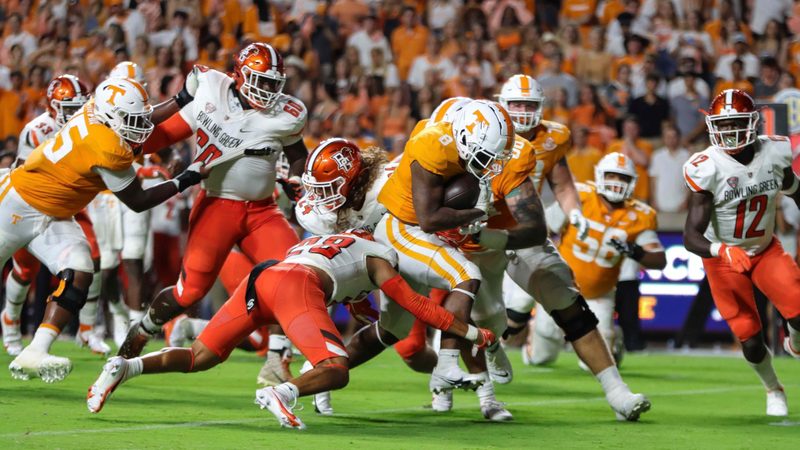
At first, Heupel picked cannon-armed Michigan transfer Joe Milton III to direct the offense. After Milton tore two ligaments in his ankle in the second game, Heupel switched to Virginia Tech transfer Hendon Hooker, who became one of the nation’s most explosive quarterbacks, hitting 68 percent of his passes for 31 touchdowns and just three interceptions. He also ran for 616 yards and five touchdowns, third-most ever for a UT quarterback.
>>WHAT TO EXPECT IN THE 2022 SEASON<<
Hooker’s dad, Alan, was an All-America quarterback at North Carolina A&T and the 1986 National Black College Offensive Player of the Year. As recounted byNews Sentinelbeat writer Adam Sparks, when Hendon was 3, his dad was on the road a lot as an AT&T academic recruiter. To keep the kids connected, Hendon’s mom, Wendy, showed Alan’s game films and mimicked his play calls with flash cards. “We ran the old Pittsburgh Steelers system with colors and numbers representing the plays,” said Alan. “So, Wendy would hold up red and a number, and Hendon would say, ‘Red 15! Red 15!’ That’s how he learned his numbers and colors, being a little quarterback just like Daddy.” By 10, Hendon was adjusting pass protections and calling audibles for his Pop Warner team. It’s fitting, then, that the children’s book,The ABCs of Scripture for Athletes—which Hendon co-wrote with his younger brother, Alston, a redshirt freshman QB at A&T—has accompanying flash cards.
During an up-and-down playing career at Virginia Tech, Hooker earned his public relations degree. With eligibility remaining, he transferred to UT and started a master’s program in agricultural leadership, education, and communication.
In the 2021 preseason, when UT players were still deciding whether to buy into the Heupel system, Hooker told his teammates to trust the coaches, trust the process. If they did, Hooker told them, Tennessee’s offense could light up the scoreboard. This aligned with Hooker’s serious, calm, and mature demeanor. “In high school, they called him ‘Old Man Hen,’” Hendon’s sister, Nile, a client service manager in Atlanta, told Adam Sparks. “He’s like everybody’s dad. In Little League, he’d invite his whole team over for a sleepover because he took care of everybody. He’s just super protective over anybody he loves — including his friends and his teammates.”
Now the advanced age of 24, Hooker made light at SEC Media Days of his younger teammates who don’t get his references to late-90s/early-’00s TV shows likeThe Famous Jett JacksonandThe Jersey.
Hooker spent all summer watching films and working to improve his game. “I pride myself on being the first one in and the last one out,” he said at Media Days. Before that event, Hooker and receiver Cedric Tillman were treated by the Spyre Sports Group to a two-day “networking and educational” trip to New York City as part of the new world of college athletes’ compensation for NIL (Name, Image, and Likeness). Hooker and Tillman got tips about building their brand and social media best practices, met with chief marketing officers for brands like Barstool Sports, Fanatics, and Topps trading cards, and posed in front of the Nasdaq billboard on Times Square. “This is creating real experiences and giving athletes ways to grow their brands and be better prepared on Day One when they’re drafted,” said James Clawson, Spyre co-founder and CEO. “They made a great impression. They are just phenomenal people.”
Tillman grew up in Las Vegas. His dad, also Cedric, was a receiver for the Broncos and Jaguars. In his UT career, Cedric the younger has been mentored by Marquez Callaway (now with the Saints), Jauan Jennings (now with the 49ers), and Josh Palmer (now with the Chargers). After catching 72 passes for 1,205 yards and 14 touchdowns—his biggest games coming against double coverage by formidable Georgia and Alabama—Tillman looms as one of SEC’s best receivers. “Ced is a naturally reserved guy,” said Hooker at UT’s Media Day. “He’s gone out of his comfort zone to step up in a leadership role.”Plenty of Speedy Receivers, including Squirrel and Bru
With receivers Velus Jones Jr. and JaVonta Payton drafted by the Bears and Cardinals, respectively, Hooker will be looking for redshirt sophomore Jimmy Calloway; junior Jalin Hyatt, a deep threat speedster from Irmo, South Carolina; senior Ramel Keyton from Marietta, Georgia; and Southern Cal transfer Horace “Bru” McCoy, a “speed guy” from Palos Verdes Estates, California.
Three speedy freshman receivers—Chas Nimrod, from Bentonville, Arkansas; Kaleb Webb from Powder Springs, Georgia; and 5’10”, 160-pound Marquarius “Squirrel” White from Birmingham, Alabama—created a buzz in spring ball and made an impression working through the summer catching balls from the JUGS gun as late at 10 p.m. “When I was a freshman,” said senior safety Trevon Flowers at UT Media Day, “there wasn’t anybody in here doing extra work.”
Heupel describes Squirrel White as “a dynamic playmaker with the ability to run by anybody and everybody.” At UT Media Day, Offensive Coordinator Alex Golesh said, “It was so exciting to see his mental presence. He is mature beyond his years.” Cedric Tillman added, with respect, “For a little guy, he’s not afraid of anything.”
The receiving corps has seasoned leadership at tight end from Jacob Warren, a 6’6”, 246-pound redshirt senior from Farragut whose dad played for UT, and Princeton Fant, a sixth-year player from Nashville. Jabari’s Changed Body and Tayven’s Blond Curls
After running for 796 yards and nine touchdowns last year, junior Jabari Small from Memphis worked his butt off in the offseason to, says Golesh, “change his body.” How did he do it? “I attacked my shoulders,” explained Small, now 5’11” and 213 pounds (up from 206 a year ago). “I did a lot of lower body work, pushing the sleds.”
He intends to carry the ball 20 times a game and be a playmaker. “Jabari is as focused as I’ve seen him since he’s been here,” said Golesh. “There’s a different look about him when he walks into the facility. He’s exuberant. He has a new confidence.” Sophomore Jaylen Wright, who ran for 402 yards and four touchdowns, starts off as the other main running back, with a couple of promising freshmen waiting in the wings.
At Media Day, backup QB Joe Milton echoed a football truism: “You’re always an ankle sprain away from starting.” OC Golesh noted that “Hendon and Joe carry themselves like they truly like each other, both taking ownership of their role as leaders.”
Freshman Tayven Jackson from Greenwood, Indiana—whose blond curls and arresting green eyes give him the aura of a young Patrick Mahomes—arrived at UT in January and is a quarterback of the future. He is happy that next year’s class includes 6’5” hotshot Nico Iamaleava from Downey, California.
As a practical matter, the tempo of the offense starts with 6’3”, 296-pound junior center Cooper Mays, a Knox Catholic grad who knows every aspect of the game and senses exactly how quickly the VROOM offense can go.
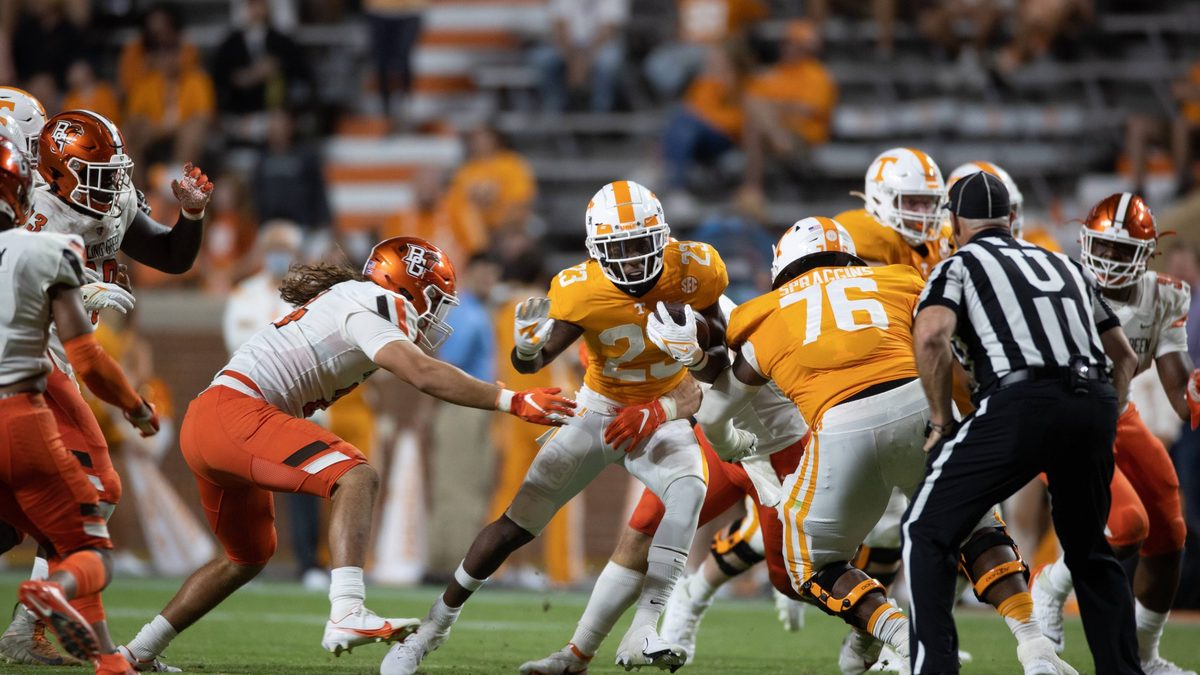
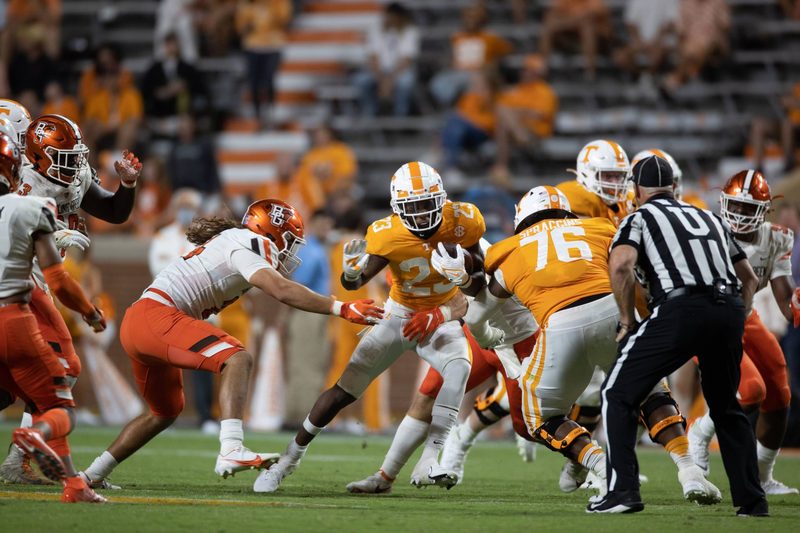
On Mays’s right is 6’3”, 325-pound guard Javontez Spraggins from East St. Louis, Illinois, who a source describes as “a very large human being and a ground-and-pound force committed to putting his defensive tackle on the ground,” which he usually does. At left guard, senior communications studies major from Memphis Jerome Carvin did not allow a sack all season in 896 snaps.
Darnell Wright will fill the right tackle spot left by Cooper’s brother Cade Mays, now with the Carolina Panthers. A 6’6” 335-pound senior from Huntington, West Virginia, Wright, one of the best tackles in the country, moves from left tackle to right, “what he felt was his natural home,” said Golesh.
Protecting Hooker’s blind side at left tackle will be 6’5”, 315-pound senior Jeremiah Crawford, a transfer from Butler (Kansas) Community College, or 6’6” 337-pound Florida transfer Gerald Mincey, a redshirt sophomore from Fort Lauderdale. Look for an Improved Defense
Seven starters return to the defense that last season allowed 421.7 yards per game and had the SEC’s worst pass defense. Tackle Matthew Butler is now with the Raiders while defensive backs Theo Jackson and Alontae Taylor are with the Titans and Saints, respectively.
“Four or five games we could have won in the fourth quarter,” said Heupel at SEC Media Days. An improved defense will help. Senior defensive end Byron Young—not to be confused with Alabama senior defensive end Byron Young—is one of the best “edge rushers” in the SEC.
On his best plays, he seems to be all over the opposing quarterback in a heartbeat. “A freak,” apprised safety Jaylen McCollough at UT Media Day. “He makes my job a lot easier.” Said Heupel, “Byron has transformed his body, added weight, trimmed up, and in leadership, communication, trust, taken a step as a person.” Freshman Joshua Josephs from Kennesaw, Georgia, will have to step up as edge rusher on the other side.
Defensive tackle Omari “Big O” Thomas, a 6’4”, 320-pound junior from Memphis, has a knack for batting balls at the line. (He and Jabari Small have been teammates since middle school.)
Linebackers Jeremy Banks, a redshirt senior from Cordova, Tennessee, and Aaron Beasley, a senior from Franklin, Georgia, are joined by 6’5”, 260-pound Tyler Baron, a “very bright,” (says Heupel) Knox Catholic grad; Nebraska transfer Jackson Hannah from Montgomery Bell in Nashville; and last year’s Texas transfer Juwan Mitchell, from Newark, New Jersey, by way of Mater Dei (Kansas) Community College.
“We shot ourselves in the foot in some games,” said safety Trey Flowers at Media Day. He, McCollough, and cornerback Warren Burrell—all three from Georgia hometowns—must stop big plays, aided by three transfers. Two are graduates of Nashville’s Ensworth School—Wesley Walker from Georgia Tech and Andre Turrentine from Ohio State. Dee Williams, from Forsyth, Georgia, came in January from East Central (Mississippi) Community College and excelled in spring drills.
News Sentinelcolumnist John Adams predicted that the Vols’ chances of going 9-3 hinge on the September 10 game against Pitt, ranked No. 17 in the AP preseason poll. UT’s revamped, retrained defense will make the difference. “We’ve been watching the films,” said Flowers, “the good, the bad, and the ugly. In practice we’re asking how accountable are we being on every rep, so that on second and one, third and two, when we’re tired, we can relate back to what we’re training our bodies to do.”
→ Swipe for Next Story
Non-ProfitSEPTEMBER OCTOBER 2022
A Legacy of its Own
Legacy Parks is making outdoor space accessible for all in East Tennessee
Story by John Quillen
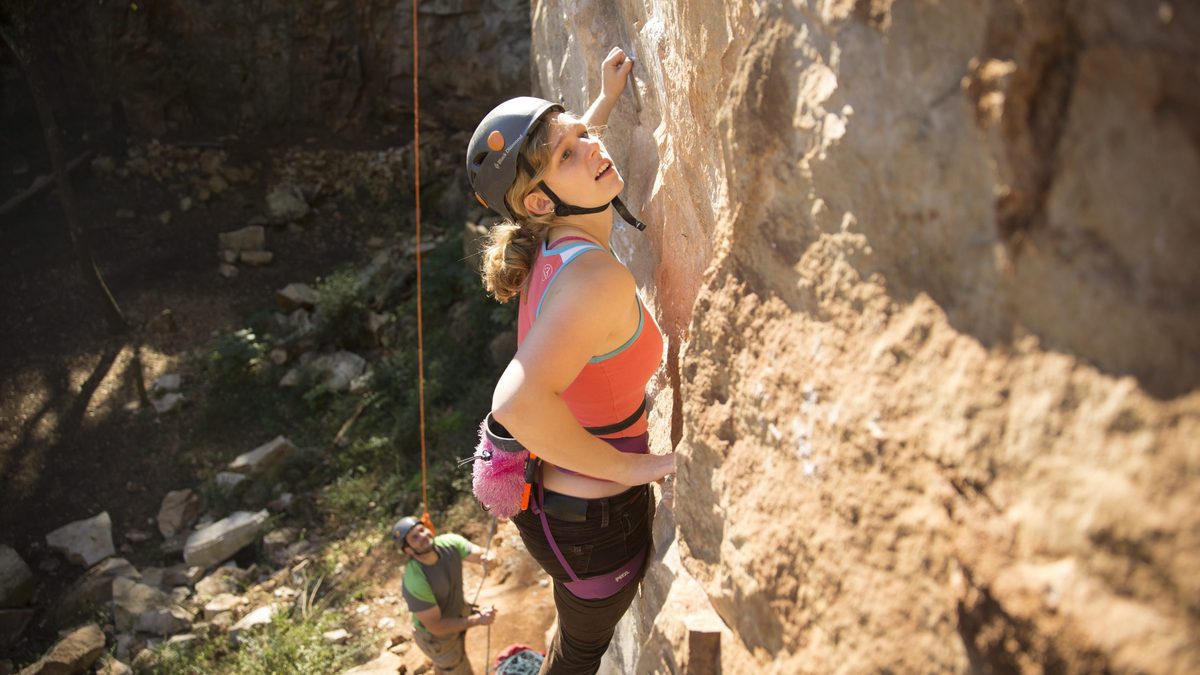
Frank Harvey is a man on a mission. If his name does not ring a bell, then you probably are not a rock climber or been on the receiving end of his prosecutorial hammer. Now retired from a lifetime of putting troublemakers away, Frank is laser-focused on Keller Bend, the best piece of unquarried limestone in Knoxville. His efforts to gain the attention of county leaders has spanned a couple of mayors now. It is the only multi-pitch rock wall within miles of town. Frank is one of the old-school climbing pioneers and, like many of us, has tried like hell to get the county to help make it something even more accessible.
One day, while brainstorming around his kitchen table, we collectively reached an “aha” moment. “Let’s call Carol over at Legacy Parks.” What she so wisely brought to our attention was our narrow focus on climbing. None of us had thought about the variety of potential uses over there such as bird watching and hiking. Her acute awareness of the politics was subtle. “You need to get so-and-so on board.” For Frank and the rest of us, this was golden beta. What Frank is doing would make his grandfather proud and proves conservation activism is in the blood. You may recognize his grandfather’s name, Carlos Campbell. An overlook on Newfound Gap Road bears homage to his achievements. Without Campbell, there would be no Great Smoky Mountains National Park. And without Harvey, no climbing at the Obed, Black Mountain, or the Scruffy City.
A 2002 wildfire in the Umpqua National Forest would change Carly Pearson’s life forever. She had been working in some capacity with public lands for many years as a firefighter. Now Pearson was in Oregon battling another blaze. She was helping prepare a staging area near the helicopter when everything went dark. Carly woke up at the bottom of a ravine unable to move. After being airlifted to Medford and thoroughly examined, the news was not encouraging. She had broken two vertebrae and was paralyzed from the waist down.
This didn’t stop her from eventually completing the Camino trail in Spain, mountain biking, kayaking or rock climbing through the non-profit Catalyst Sports organization. With assistance, she and others are able to get in laps at River Sports Outfitters on their indoor wall. “They have been awesome to us,” Carly notes. One Saturday each month they help train volunteers to assist climbers with varying challenges take on the same routes as everyone else.
Legacy Parks is picking up the mantle and making Knoxville outdoor spaces similarly equitable. Project manager Reid Hartsell takes considerable pride in their collaboration with Catalyst. This partnership resulted in accessibility boat ramps installed at Beaver Creek north of town so people with disabilities can enjoy the river. Carly beams when she speaks of the mountain biking trails, though.
Five days per week, I suit up to tackle Redbud Crest and Floyd Fox over at Baker Creek Preserve. Depending on my joints it will either be a mountain bike or trail running day. And more than once I have passed Legacy Executive Director Carol Evans pedaling through this 100-acre tract that will forever be the epicenter of what has become the Urban Wilderness. It was Carol’s connections and drive that put funds together to make Baker something that is nationally recognized. When I speak to her about how she was able to connect William Hastie, Marie Myers, and Forks of the River to cement the South Loop she quips, “We have four lawyers on our board.” I am sure it involved the talents of them all.
Legacy Parks acts as more than a land acquisition agent. They actually handle funds and go after the grants. Sometimes they hand projects over to the city as was the case at River Bluff Wildlife Area. This historic site was the high ground for Union troops during the Civil War as they eyed the Knoxville prize. One cannot help but think real estate developers felt the same way before it was rescued and preserved in perpetuity by folks like Carol. There’s great rock over there and trails that disappear into fall dreamscapes evocative of Walden Pond. Herons skim pocket pools beneath our city’s best overlook.
We hang off marbleized cliffs as reverberations from Lindsey Nelson Stadium echo another Vol baseball win. I’m picking Carol’s brain about how we can turn climbing into the next mountain biking here. Our case is to prove there is room for both. “We are both opportunistic and entrepreneurial,” Carol remarks. But she is way ahead of me, and I suspect everyone she encounters.
There is obviously a lot of nickel-and-dime work. It is not all ribbon cutting and photo ops. “Everyone likes neighborhood parks.” She does not say so, but I suspect those ten-acre tract acquisitions are niggling fit makers. Carol’s not one to complain. But it is in what she doesn’t say that catches my attention. There are projects on the horizon that excite me to no end. One of those is the rail connection from the old Kern’s bakery out to Island Home. Carol is tight-lipped about this one. Greenways are bread and butter to Legacy Parks. Easements must be finessed, organizations assuaged, political feathers groomed. Carol was made for this position. Her years with the Chamber of Commerce figure prominently here.
Funding for Legacy comes from multiple places. Both the city and county ante up along with tourism revenue. Whenever the folks at Visit Knoxville bring someone into town, Carol helps them get set up with a truly outdoor experience. She knows that visitors like the idea of hiking, biking, and paddleboarding within minutes of their hotel.
The 2015 Together Healthy Knox Initiative seeks to increase access to green spaces. Sometimes those green spaces are blue in the form of the Tennessee River. More than once I have dropped a kayak or canoe via one of those handy ramps. Now Carly and many others are able to do so at Beaver Creek. There is a 44-mile water trail up there that stretches from Halls to Melton Hill, now with ADA accessibility.
But even bigger things are coming to the French Broad. In concert with TVA and the TWRA, Legacy has helped purchase Cruze Landing below Seven Islands State Birding Park. Their aim is to stabilize the boat ramp and install an adaptive boat launch like the one at Beaver Creek. There is also a second platform area below to give paddlers multiple launching options for their day outdoors which could begin with bird walks and end with paddling. Like project manager Reid Hartsell says, “After 15 years of advocating for our region’s exceptional natural resources, Legacy Parks has left a legacy of its own.”
“Freedom” and “access” are keywords for Carly Pearson though. In all our conversations she reverts to that. Sharp’s Ridge has two miles of modified trails that she bombs with her specially designed ride. I can really appreciate her need to get out unassisted. Both the trail and the adaptive bike were Legacy Parks’s doing. Her gratitude for this organization mirrors my own. “We simply couldn’t have done this without them,” she remarks.
As we wrapped our discussion, Carol deftly dropped pins on people and places for me and the climbing community to resource. Our vision is a “Connected Crags” within the Urban Wilderness where climbers will flock to Knoxville rock and bounce between Keller Bend, Ijams Crag and potential top roping at River Bluff. Just another way to increase Knoxville’s outdoor stock price. I picture climbing tourism much the same way the Appalachian Mountain Bike Club envisioned dirt trails. Like them, we will go nowhere without Legacy Parks. I have learned that climbing areas are like halfway houses; people accept them, just not always in their backyard.
But for two years in a row, climbers have spent beautiful Saturday mornings hauling tons of trash from the embankments across from the university. Although climbers did not throw the trash off the bluff, we counted 25 volunteers, all climbers, who are invested in putting forth equity to get this place on the crag map. And most of them had never climbed there.
This is no different than the mountain biking love which spawned Urban Wilderness. Build it and they will come. There are grant monies through Patagonia and Covenant Health designated for people with disabilities earmarked for Ijams Crag, now owned by the City of Knoxville. Again, accessibility is the focus. Carly is interested in climbing this area with her friends at Catalyst Sports, and I have talked to her on more than one occasion about our desire to get them on that rock. The problem is the monies are tied up bureaucratically at Ijams. I explained the climbing community’s frustrations to Carol and Carly. I can always use the advice and guidance of strong women.
Access, access, access. Carol, Reid, and Carly preach this from the rooftops. After interviewing them all, my vision has widened. Our frustrations about climbing center on this one issue. No one cares if we climb at Keller Bend because the only way to get there is to load up my canoe or commandeer Frank Harvey’s pontoon boat. This doesn’t bother the neighbors due to the self-limiting nature of this limited access. Now I know how Carly feels when she considers transitioning from indoor laps at River Sports to outdoor rock at Ijams Crag. It is just one-quarter of a mile from the parking lot but may as well be across the Himalayas for people with disabilities.
Legacy manages and procures millions of dollars in public outdoor assets. They plant trees, fund trail building in the Urban Wilderness, preserve hilltop vistas and historic sites, the list goes on and on. But it is on the human level that their impact is most felt. I rounded the corner on Sycamore loop in Baker Creek Preserve last week. A hiker had stopped and was motioning towards something deep in the woods. Curled up was a baby fawn, spots radiating like diamonds through the protected forest canopy. His face told a story of incredulity. “Right here, in the heart of Knoxville, who woulda thunk?” Legacy staff hears these kinds of stories regularly. And that is what keeps them in the fight for all of us.
→ Swipe for Next Story
FeatureSEPTEMBER OCTOBER 2022
A Walk in the Woods
No matter the season, getting off the beaten path and into the wilderness will heal your soul.
Story by Nathan Sparks
We have set up our campsite, and I am helping my son Troupe with the evening’s firewood collection. We are in the Smoky Mountains for a few days of camping and fly fishing.
As we gather wood for our fire, I explain what squaw wood is and why it can help get a fire going, especially in damp conditions. We have gathered a good bit of kindling—small twigs and some bark from an eastern red cedar. We eventually find some larger deadfalls for once the fire is properly burning. I tell Troupe that with a properly laid fire you should be able to start it with just one match. He looks doubtful but gives it a try and successfully lights it with a single match.
It’s always a great moment when you are able to share with your child some outdoor knowledge. As I watch Troupe continue to coax the fire, I am struck with thoughts of a trip in my early years during which being able to bring fire to life made a real difference. And as he ventures off to collect more firewood, I allow myself to get lost in the memory of that particular experience during my late teens and how critical it was to have some outdoor skills. As Troupe wanders around looking for more wood, I sit next to the fire and let the flames take me back to the mountains of decades past.
There was a time when the southern part of the country—occasionally even Knoxville—would see some significant snow. It was 1976, and as a Blue Ridge Mountain Sports sales rep, I was fascinated with everything outdoors. Almost every dollar I made went to purchase new equipment. From the latest climbing gear to the most innovative camping equipment, I was always all in. My goal at that time was to complete a multi-day winter backpacking trip in the Pisgah National Forest in North Carolina. When the day finally came, I was ready to roll, but the weather seemed to have other plans.
I walked outside only to be met with heavy snowfall.Who cares?I thought.It’s just a little snow.Perfectly capable of driving in these conditions, I set off towards Asheville. My trusty steed—none other than a cherry red 1967 Opel Kadett Station Wagon—was well-equipped with a new set of snow chains, just in case. I felt unstoppable.
However, the further I got up into the mountains, the worse it got. Traveling along Interstate 40, the plows couldn’t keep up, and the little traffic there was had slowed to under 30 miles per hour. I knew how late I would be to meet my friends and feared they would leave without me and I’d have made the trip—and prepared for months—for nothing.
Angry and somewhat desperate to make up time, I studied my small folding road map and spied what looked to be a possible shortcut across US 276, an almost straight line from where I was to my destination. It seemed too good to be true, but I was game. The map was so small, however, that the switchbacks were not clear, and in my anxiousness, I completely missed that it crossed the Blue Ridge Parkway at just over 5,000 feet above sea level. I made it for a few miles down the two-lane road, but knew trouble lay ahead when the mountain loomed up in the windshield.
Pulled over on the side of the road, knee-deep in snow, I worked furiously at getting the chains on my tires. As I spotted a snow plow coming down the road, I thought,What luck! Just in time. But as he passed me and began up the mountain, I watched in disbelief as he lifted his plow blade, leaving the road covered with over a foot of fresh snow. This was the bottom of the mountain, and conditions would certainly worsen the farther up I’d go. I took a run at it, but was stuck in less than 1,000 yards. Pulling out a shovel, I began to dig myself out, convinced the opportunity for the trip had been missed.
But as occasionally happens in those moments, lady luck came to the rescue in the form of a large motor-grader making its way towards me, plowing the road as he came. The grader stopped beside me, and a grizzled old fellow with a quizzical look of disbelief on his face stepped out from the cab. “Are you trying to make it over this mountain in that thing?” he asked with a smirk. Quickly explaining my plight, I asked for his suggestion. “Hold on a minute,” he twanged, and with that, he dragged out a heavy chain and instructed me to hook it to my frame under the front bumper. No convincing was necessary on my part. Chain attached. “What’s next?” I asked.
“Just keep it neutral and try your best to steer right behind me,” he replied. “I will pull you to the top of the mountain, and then you are on your own.”This might work out, after all, I thought. “You won’t have a problem after that,” he said. “I heard on the radio that they have already plowed the North Carolina side.” The journey up the mountain was bumpy, but we made it to the top. What a relief.
True to his word, the North Carolina side was clear, and somehow I made it to my friends just in time. I felt like I had already had a first-class adventure, and this was going to be a two-fer for sure. We grabbed our packs, strapped on our boots and gaiters, and off we went.
The falling snow was gorgeous as we made our way to our first campsite, roughly six or seven miles up the mountain. About dusk, the sky cleared for a fantastic star show, but with the clear skies came plummeting temps, and we struggled to stay warm, aided only by a large fire. Eventually with boots and water bottles into the foot of our sleeping bags—an old mountaineer’s trick to avoid having frozen boots in the morning—we went to bed, hoping the sunrise would bring some respite from the cold.
The following day was bitter cold. Our gear was good but not perfect, and I was having a tough time getting warmed up. I don’t think I felt my fingers until we got packed up and moving. The nearly 18-inch-deep wet, cushy snow of yesterday was now piled into drifts crusted over on the top making it difficult to navigate without snow shoes. It was a lesson learned about the value of truly understanding what you need to be both safe and comfortable on an outdoor excursion. And it is one I will never forget.
When the idea of a backpacking trip came up this summer, I knew the first thing I needed to do was update my backpacking gear. I was about to embark on a multi-day excursion with my 15-year-old son and despite the fact that it had been more than 40 years since that snow-capped few days on the mountain, that feeling of being ill-equipped for what lay ahead was frozen in my mind. So I started with a trip to Little River Trading Co. in Maryville to see what they would recommend in the way of a gear update.
Little River has a great selection of pretty much everything you might need for this kind of trip. The staff was super helpful in getting us correctly sized for our new packs, and I have to say that today’s packs are much better engineered than those of my days at Blue Ridge. Gone are the days of the external frames, now replaced by perfectly fitted ergonomic internal frames with easy top and bottom access and built-in water reservoirs. Troupe ultimately chose a Gregory Paragon 58, selected for its lightweight nature, and I went with an Osprey Atmos AG 65, also lightweight but with side pockets perfect for my tiniest of cameras. An excellent suggestion was to pack everything in waterproof stuff sacks. That way, things lying around the camp would stay dry even out of the pack. So we made sure to pick up a half-a-dozen Sea to Summit eVac Dry Sacks of varying sizes.
We decided to forego tents and instead chose to use ENO hammocks and rain flys. This meant we could camp almost anywhere without worrying about water in the tent. These hammocks make even the best sleeping pad seem uncomfortable. I’ve been using one for quite some time and love being able to set it up right next to a stream to enjoy the sound of running water.
Clothes can make a difference in how much you enjoy your adventure. Modern outdoor clothing is quick-drying and most incorporate some level of stretch for comfort—quite an upgrade from years past.
The Little River staff recommended KÜHL Radikl and Prana Stretch ReZion pants and shorts. Patagonia’s Tech Web belts and Capilene Cool sweat-wicking shirts made our short list as well.
We coupled our attire with, in my opinion, the best outdoor footwear out there. My all-time favorite boots are from Keen Footwear, and Troupe and I both opted for the Targhee Vent Mid Height. We couldn’t have made a more ideal choice.
It might seem like a secondary thought, but good socks are essential for any sort of outdoor adventure. I prefer Smartwool or Darn Tough; they never let me down. Even with perfect boots and socks, a pack of moleskin for blisters are an essential addition to the first aid kit.
A final check of my old gear made me realize I needed a new cook set and stove. If I learned anything from the many canoe trips with my dad as a teen, it’s that campsite cuisine is an important part of any overnight outing, and although I personally prefer a campfire, that just isn’t always possible. By either campfire or stove, I was determined to share with Troupe one of my favorite parts of camping, shared with me when I was his age. I knew how good it would feel to pass down a tradition to my son which my dad passed down to me.
So we headed out to River Sports Outfitters in Knoxville for a lesson in modern camp cook gear. Ultimately, we went with a Mountain Safety Research stove and cook set, selected for its ability to use regular auto gas. The perfect update from my old SVEA stove.
For Troupe and me, no trip is complete without a little fishing. Syndicate fly rods are perfect for Smokies stream fishing. You can pick one up at 3 Rivers Angler in Knoxville, and while you’re there, find out what flies you will need.
The final piece of preparation was simply selecting our locale. We drove to the top of Treemont Road and set off from there. If you are new to backpacking, I highly recommend Johnny Molloy’sBackpacking Tennesseeguidebook. Johnny has spent more than 2,500 nights on the trail and is, in my opinion, our area’s consummate authority on hiking in the southeast region. He’s the real deal.
After Troupe came back with arms full of firewood that first day, we spent the rest of the evening just enjoying the sounds of nature, as we fed the campfire, occasionally swapping a story. I always relish the time spent outdoors, and this trip felt particularly gratifying to be with my son.
The outdoors does something special to you. When given the chance, it can catapult you deep into thought, its sounds and smells often causing you to become lost in memories from hikes or trips past. But it can also find you more present than our usual lives often allow. And with the right gear, exceptional company, and a willingness tojust be, the outdoors can be a haven for all who make an effort to get to know it.
→ Swipe for Next Story
VeteranSEPTEMBER OCTOBER 2022
A Time to Recast
Air Force veteran and attorney Aaron Kimsey found friendship and freedom on the water
Story by Phil Newman
Some 500 miles due west of Knoxville, the teeming waters of Arkansas’ White River lure anglers from around the world to fish for trout—rainbow, brown, cutthroat, and brook—with fly rods in hand and hope in their hearts: hope not only to hook a keeper but also to enjoy the kind of sublime, sun-sparkling day on the water that almost everyone of a certain age associates with Robert Redford and Brad Pitt inA River Runs Through It.
On a brisk February morning in 2020, longtime flyfishing addict Aaron Kimsey, a US Air Force veteran and tireless attorney with a growing law firm in Sevierville, found himself within a stone’s throw of the White. But he wasn’t there to don a vest laden with lures, palm a reel, or cast a line. He had given up fishing the previous year after the death of a beloved mentor, dear friend, and fishing buddy. Attorney Bill Anderson’s influence had effectively saved Kimsey’s life in the years after his military service ended, as he struggled to face the aftermath of life-or-death combat and suffered through lonely days and nights without the structure, purpose, and brotherhood the military had provided.
It was Anderson who had given Kimsey his first post-military job and inspired him to pursue a career in the law. The duo had trekked to the ends of the earth together, fishing from Alaska to Argentina, sharing a kinship that Kimsey had not experienced growing up, in large part because his own father was in jail for most of those formative years.
So painful was Anderson’s passing that Kimsey couldn’t bear the thought of wading into a stream without him; the memories were too precious, the pain too raw.
“It was really difficult on me,” Kimsey recalls. “He was my boss first, but he became my best friend and a father figure. He helped bring me back from the brink and round off my edges. He was there for me; he was my rock.”
The reason for Kimsey’s trip to Arkansas was not to fish but to pick up a dog to take back home. Yet a thought tugged at his heart and mind:Maybe it’s time. Maybe Bill would tell me to get back in the river. Maybe he’d even be with me in spirit, whispering that it’s okay, the memories we shared will never die—but now it’s time to make some new ones…
Not Quite a Flying Start
Aaron Kimsey was born in Knoxville, but his family lived in Murfreesboro for several years of his childhood. After his parents divorced, Kimsey moved with his mother and two brothers to Maryville, and then to Morristown when he was in fifth grade. Kimsey says his father “was a phenomenal individual—as long as he was sober.” Alcohol and other factors led to crime that confined the elder Kimsey to prison. Kimsey recalls visiting his dad on weekends at Brushy Mountain State Penitentiary.
At 16, Kimsey started a company that built and repaired computers. Meanwhile, a stepfather “was mentally and somewhat physically abusive,” he says. “I was a very angry youth.” To get out from underneath that situation, he enlisted in the Air Force—“they were paying huge bonuses”—right before graduating from Morristown West High School. He shipped out soon after receiving his diploma.
His military service, spanning 2000 to 2008, was a blend of the mundane and the manic, beginning with basic training along with tech and avionics school, right through to becoming a guidance-control systems specialist and later flying on covert, low-level missions in Iraq.
Early on, his orders to Davis Air Force Base prompted Kimsey, a Tennessee homebody, to ask his mom, “Where in the **** is Tucson, Arizona?” She laughed and told him it was way out west.
He was part of the 42nd Electronic Combat Squadron of Airborne Command and Control Center (ABCCC), supporting airborne warning and control system (AWACS) aircraft in classified activities. He later worked with the C-130 Hercules military transport aircraft. A move to the 355th Component Maintenance Squadron had Kimsey inspecting and troubleshooting avionics, navigation, computer, electronic warfare, and photographic equipment.
The broad expertise he amassed in short order “allowed me to deploy with other squadrons, because I was able to do anything you could think of.” For example, he worked with the 41st ECS supporting the EC-130H Compass Call communications-jamming aircraft.
Battle Tested, Battle Weary
When the military started downsizing some of those operations, the service “told me I could get out, or I could go into a ‘critically manned’ career field—the most dangerous jobs in the Air Force. I was single and divorced at the time, and I wanted to retrain.”
That meant taking the harder path, but Kimsey, a go-getter, was ready to go and get it. He went to flight school. He endured Survival, Evasion, Resistance, and Escape (SERE) training, which included search evasion, prisoner of war (POW), and survival skills. “Looking back, all of that was great for me, learning self-control, understanding how to handle pressure.”
Kimsey “begged to get into the MH-53M program, the biggest, baddest helicopter out there.” The Air Force was using the MH-53M for covert incursions into enemy territory—long-range, low-level missions to insert, extract, and resupply special ops forces. We’re talking harrowing, high-risk missions.
While stationed with the 20th Special Ops Squadron in Ft. Walton Beach, Florida, Kimsey came to appreciate the way the military melds high-powered men and women into laser-focused teams. “We were all type-A individuals, working together well, mission-driven, acting in concert; it’s like a symphony,” he says. “I was very fortunate to work with the 20th, by far the best job I had in the military.”
Kimsey was later deployed with the 41st, a C-130 squadron, to Djibouti in the Horn of Africa on the Gulf of Aden, “the second-hottest place on earth, and it felt like it,” he says.
In 2007, he was deployed to Iraq with the 20th as a flight engineer on the MH-53M. “The mission was infiltration, exfiltration, and resupply of special forces. We went and picked up Navy Seals and others and took them where they needed to go. Working with such high-level operators was an absolute honor.”
Kimsey would find himself “sitting between two pilots, controlling the systems—radio, navigation—50 feet off the ground, weaving between trees, wires, having to dodge obstacles quickly.” He also served as a right-door gunner and hoist operator. “I ran either a 50-caliber machine gun or a mini-gun out the window to protect the aircraft. We engaged the enemy frequently.”
Kimsey completed that intense deployment and returned stateside, where he was honorably discharged in 2008. He would receive three Air Medals, awarded for single acts of bravery and heroism.
Reflecting on his service, he emphasizes that “the people I worked with are by far the highlight of my military experience. Your friends, your fellow soldiers, are right there with you, going through the good and the bad, like a second family.” Noting the high rate of veteran suicide, Kimsey attributes much of the epidemic to “the loss of that support structure and way of life. I’ve never found anything like it.”
Another factor is the combat that many vets have endured, including seeing comrades fall and ending the lives of combatants. “It was hard on me,” he says.
Not Resting His Case
Post-military life began with struggles with alcohol and working through tough memories. “It’s difficult to understand,” he says, “but here’s an example: You’re sitting outside your tent in the desert, smoking a cigarette, when a warning siren goes off because your base is being mortared. The first time, you feel desperate fear. After a while, you don’t even flinch. It becomes normal—the worst stuff becomes normal.
“I was lost, not in a great place mentally,” he says. It was in that fog that Anderson, a man for whom Kimsey’s mother had worked—a fellow veteran who had served with the 101st Airborne—invited Kimsey to Key West to work for him. Over several years, Kimsey regained his bearings and opted to return to college, eventually graduating from East Tennessee State University and then Lincoln Memorial University’s Duncan School of Law in Knoxville, where he took night classes after work. By then, he was a single dad with a three-year-old son, Morgan.
Kimsey earned his J.D. in 2015, passed the bar, and eventually landed “a dream job” as managing attorney for the Tennessee market of a large firm. But along the way he became disillusioned with the work. At the prompting of a friend, he applied for a job in the Public Defender’s office of Tennessee’s Fourth Judicial District, which serves Cocke, Grainger, Jefferson and Sevier counties. He made about a third of his previous salary—a downshift that didn’t faze him for a second.
“That is by far the best job I’ve ever had,” Kimsey recalls. “There’s a lot to be said for protecting people with fewer resources and being able to get into the trenches with them.
“I caused so many problems,” he says, laughing. “I argued fiercely. I tried to dismiss an entire docket one time. I worked 80 to 90 hours a week, visited the jail at night to work with defendants. The people needed an advocate, and I enjoyed the hell out of being there for them.”
In 2018, an opportunity arose for Kimsey to assume leadership of a criminal-defense firm whose principals were leaving or retiring. He dove into the client work with characteristic gusto. “I’m wrapped very tightly,” he says. “I’ll wake up at two or three in the morning thinking about a case and write down my ideas. It’s just how I am.”
Among many legal accomplishments, Kimsey is proud that LMU Law’s Mock Trial program bears his name. “It’s a valuable learning experience that prepares students to interact with a trial,” he says. “I frequently go down and judge the cases.”
His type-A drive—evident first in the military and then in his legal career—made it essential for Kimsey to find a healthy outlet. Enter flyfishing. He has cast many a line in the South Holston, among other East Tennessee waterways, in addition to adventures with Bill Anderson and others.
“Sometimes I’d stand out there and fish with no fly on,” he says. “I didn’t care about catching fish.” As he moved his casting arm gently back and forth, keeping his elbow level, feeling the rhythm, calmed by the water’s flow, all else faded away. “It was about being in that environment. It allowed my brain to slow down and focus on a simple task as opposed to all the ins and outs of a court case.”
Flyfishing was a passion—that is, until the aftermath of Anderson’s death in 2019.
Which brings us back to that clear winter day in 2020, when a heart tug prompted Kimsey to arrange a quick flyfishing adventure on the White River. “It was very emotional, for sure, and it ended up being the best reinvigoration of a pastime I could have imagined,” he recalls. “We caught a lot of monster trout that day.”
More recently he fishes mainly with son Morgan, who is now 12. “I used to go out a hundred days a year, now maybe it’s 10. Life has taken a different turn.”
And that’s just fine with Kimsey. As inevitable as life’s ebbs and flows are, there is always the next case, and there is still the river, still the fly rod, still the lifelong memories of casting, and recasting. Whether it is with a beloved father figure or a son steadily growing into a man, it’s plenty to buoy Kimsey along toward his next adventure.