Much of my life has been based on split-second decisions. Looking back, I can clearly say that my best and worst decisions often occurred in a split second. While many, or maybe even most people, don’t relish the idea of having to make quick decisions, there are those of us that thrive by living on the edge. Some think of us as thrill seekers; others call us adrenaline junkies. Personally, I just don’t like to be bored. A fast-paced lifestyle suits me best, and I like the challenge of making decisions while on the move.
The more logically minded of you may think of this behavior as reckless. Why not, you say, take your time and carefully evaluate the best course of action? Granted, that is prudent in some situations, but I think that I would have missed a lot, if not all, of my life’s best opportunities, had I insisted on having more time to think. And to your point, a few of my decisions made in haste haven’t worked out, but the experience I gained from moving forward before the opportunity passed has been priceless.
Almost 22 years ago, I decided to buyCityviewMagazine. It wasn’t long after making that life-changing decision that I learned how difficult owning and running a publication can be. Honestly, I didn’t think it was going to work out. I called my dear friend Johnny Pirkle—the only person I knew that was in the media—and asked him for help. Pirkle told me not to worry and that it would only take about six years before advertisers would trust my media judgment enough to place ads in the publication. Then the orders will flow, and it will all be okay, he said. I wouldn’t say I liked that answer at all. What I needed was a six-month plan. I doubled down and decided to do what was necessary to make it work and work well, but Pirkle was right. It wasn’t going to be quick, easy, or cheap.
Twenty-two years later, I still feel like I made a good decision, and putting in the effort to makeCityviewwhat it is today has led me to new friendships and opened many new doors.
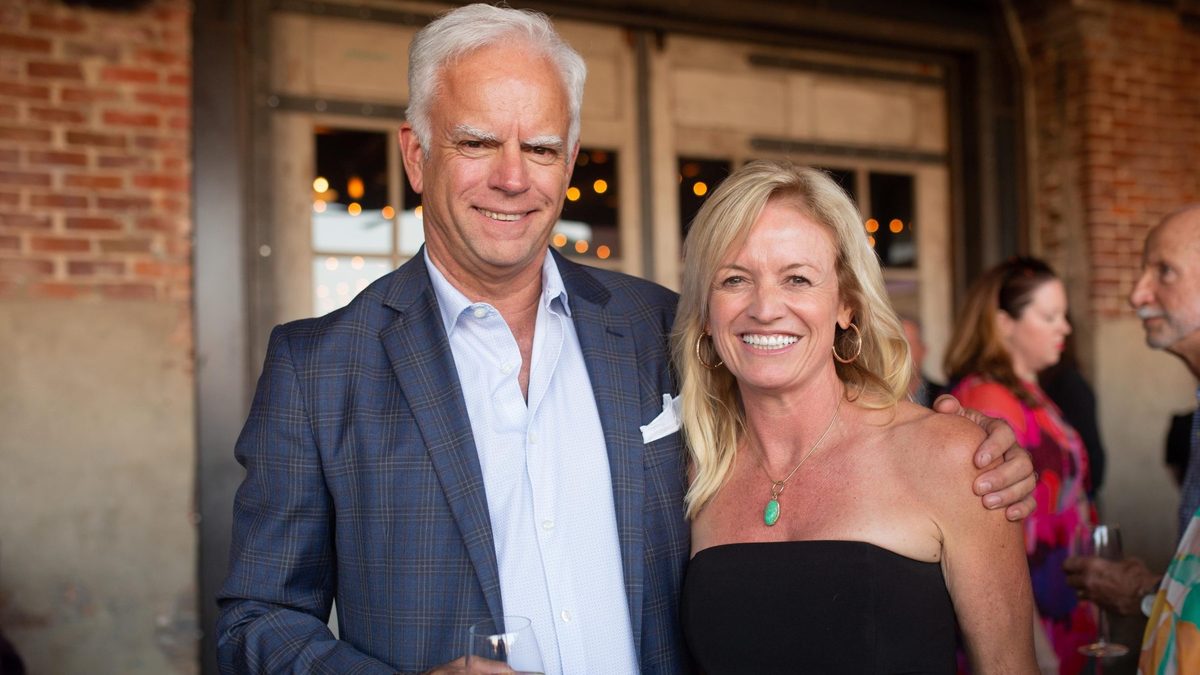
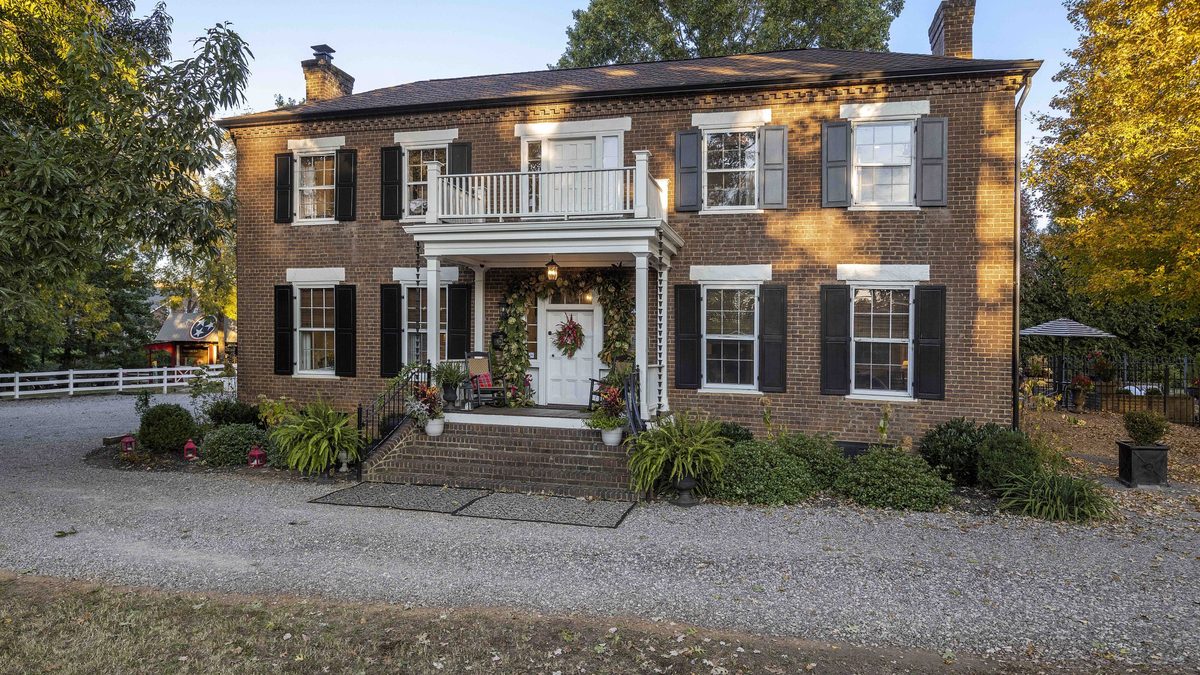
I wasn’t looking for any additional ventures when the next door opened. Meeting a fellow small businessperson allows me to appreciate what others have gone through to be successful. And so it was when I first met Anne White last spring—the owner of the historic Boyd Harvey Bed and Breakfast—I remember thinking how challenging that must have been during the pandemic, and anyone that could survive that must be a kindred spirit. I promised to come and view the property, but after several months, I still had not made the time to follow through.
Despite my lack of follow through, fate had other plans. On the way home on a random Tuesday night, I stopped in Van Edom’s Wine Bar, and there she was, sitting next to a friend discussing her business and how to improve her situation. I joined the conversation, and soon we were discussing the possibility of a partnership. I was genuinely interested in the opportunity and it was easy to envision how our two companies would benefit. What started out as a business conversation quickly turned to more. I have heard it said that when you know, you know, and it had just not happened to me until then. I am happy to say that Anne has agreed not only to be my partner in business but also in love and life, and yes, she is just as much of a thrill seeker as me. We both look forward to bringing our adventures to the pages ofCityviewfor your enjoyment.
→ Swipe for Next Story
Arts & CultureNOVEMBER DECEMBER 2022
Poetry in Paint
Andrew Saftel’s work provokes thoughtful immersion into art
Story by Susan Alexander
History. Nature. Literature. Travel. Those are among the influences that find their way into the bold abstract collages Andrew Saftel creates.
“I think of them as picture poems,” he says of his work. “I use text, old letters, documents…I collect all kinds of ephemera that find their way into my paintings.”
A sign painter as a young man, Saftel still relies on an opaque projector to transfer handwriting and other images to his work. Often he cuts into the wood panels on which he paints, indelibly carving the messages he wants to convey. Andre Saftel in front of Footsteps, 96" x 72Generations Of Searchers, 48×48Present in the Future, 48x60_, 2020Visited This Place, 66×44Prev1of4Next
“The general idea behind all of my work is a combination of looking back at history in an attempt to understand how we got here and a comment on how we are collectively moving through time together in the present,” he says.
“I love to read about history and use references to what I’m reading. I was readingUndaunted Courageby Stephen Ambrose, about the Lewis and Clark expedition, so I used William Clark’s handwriting from his diaries, ‘We Proceed On,’ on the bottom of a painting. This phrase represents how we all just keep on through challenges in life to get to where we are going.”
After earning a BFA at the San Francisco Art Institute, Saftel moved to Knoxville in the 1980s. After 10 years in the city, he and his wife, historian Susan Knowles, moved to a 32-acre property in rural Sequatchie Valley, where his 2,200-square-foot studio allows room for a wood shop and metal shop in addition to a painting space.
Though his body of work includes sculpture and photography, Saftel concentrates on painting on wood and on paper in recent years. “The pace of life and working in the studio has been more relaxed this summer and, I hope, will continue. My goals as an artist and the pacing of work have changed as I get older. Life outside of the studio is as important as the achievements with the work.”
He’s currently assembling work for a solo exhibition at the Cedarhurst Center for the Arts near St. Louis. After three months there, it will move to Bennett’s gallery in Knoxville in December. Bennett has represented Saftel for many years.
The centerpiece of the exhibition is a new work he titled “Peas Come to Table,” a four-and-a-half-foot square piece based on Thomas Jefferson’s farm log from Poplar Forest, his retirement home west of Monticello. Saftel went online to read Jefferson’s 174-page handwritten log. And on May 23, he found an entry that said “Peas come to table.”
“I found it to be really poetic,” Saftel says. “So I printed off the pages and put it in my projector.”
The pandemic gave him time to paint and to reflect. “In the previous five or six years, I was always having gallery shows and schlepping work around. Then we stayed home for two years. Where I live is really inspiring. I was able to relax and appreciate everything. I was able to think differently, and we live differently now. It was an opportunity really.”
You can view Saftel’s work at his exhibit at Bennett during December and January or online atandrewsaftel.com.
→ Swipe for Next Story
MusicNOVEMBER DECEMBER 2022
For the Family
Josh Lovelace’s solo project creates space for families to listen together
Story by Chris Blue
I’ve hit the point as a parent where song requests from my one-year-old are a regular occurrence. Music is my life, but even I can admit it’s tough to listen to Baby Shark on repeat. That’s why local songwriter Josh Lovelace’s solo project, Young Folk, is a welcome listen.
Josh released his first album,Young Folk,back in 2017, debuting a new genre for both parent and child alike. The lyrics are easily accessible for children, yet purposefully written and well-produced for the adult ear to enjoy.
Josh was born and raised in Knoxville. He grew up in church with both parents on staff, where he cut his teeth on performing. “It was the thing I just really fell in love with early on, and I’ve never wavered,” he says.
After graduating high school, he began touring immediately. “Anybody that would have a keyboard player at the time, that was all I was doing,” he says. “I was just available.” Then in 2011, a call came through from Christian rock bandNeedtobreathe, asking if he would play piano for them in the studio—tomorrow. He drove to Charleston to record on their album,The Reckoning. “I got the call a couple months later to go on tour with them with Taylor Swift.” Josh has been with Needtobreathe ever since.
When his first child was born in 2013—he has two now—he spent time recording songs for him, “so as he grows up with me on the road 150-plus days a year, he’ll always be able to hear my voice before he goes to bed every night,” Josh says. “I didn’t have any plans to do anything other than that.” But the songs took on a life of their own. “I just wanted to create a space for families to listen to music that they enjoyed together, that wasn’t just for kids or just for grownups, but for the family.”
Josh released his second solo album,Growing Up, just before the pandemic hit. His third album,Moonwalking, released this summer, right before Needtobreathe’s next tour. It maintains that authentic sound and down-to-earth accessible lyrics found in both his first two solo albums. You can hear more of his music atjoshlovelacemusic.com.
→ Swipe for Next Story
InsightsNOVEMBER DECEMBER 2022
Relentless Resolve
Story by Bruce Fox
I know you are going to hate to hear this,” I say to my orthopedic surgeon, “but we are going to have to postpone my hip surgery.” He is clearly unhappy to hear this, but it really doesn’t make a difference at this point; the decision has been made.
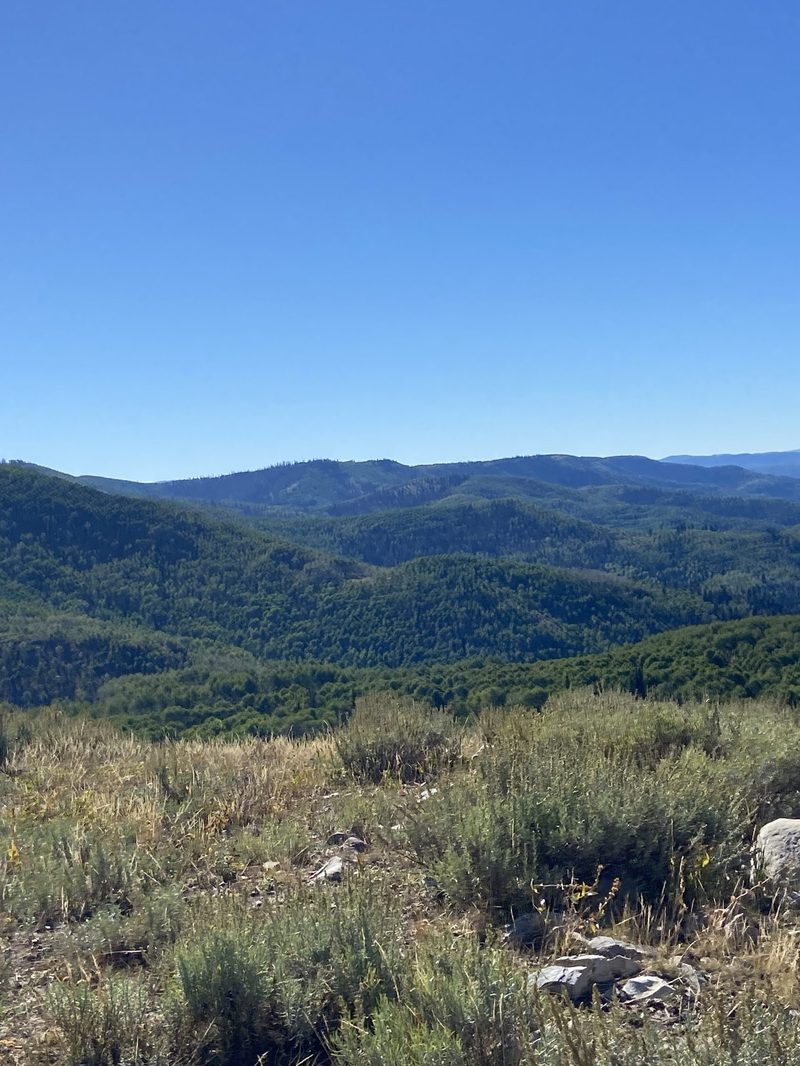
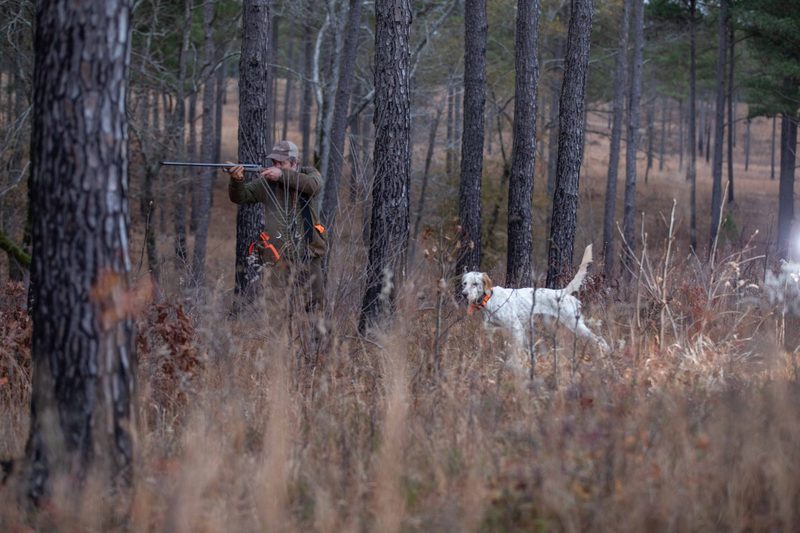
You see, I am a hunter. There isn’t really anything I love more than the thrill of the hunt. Each year for 23 years, I have applied for elk tags and finally this year I, along with my hunting partner, Stanley Fox, won the Utah lottery for a Wasach Range hunt. There was simply no way I was going to miss this hunt. The surgery would have to wait.
Both Stanley and I are in our 70s, and this would be a challenging hunt in steep terrain at 9,000 feet of elevation. I scheduled more time with my exercise trainer in the hope of being ready for it. We arrived the day before the hunt and met with the guides to lay out a plan. As we began the hour-long trek in the dark to the hunting area, I was grateful for having put in the extra training.
Throughout the day, we heard elk bugling, and two hours before dark one had moved within 400 yards of us, chasing cows in a meadow. By the time we got within range though, it was too close to dark to shoot. Two hours uphill and we were exhausted by the time we got to our camp. Day two was essentially a repeat of the first day, and Stanley and I were so tired we began to have doubts about whether we would be successful.
On the third day, we rode in the truck through the meadows of the national forest to try to locate a large bull elk. It was fairly warm and not much was moving. We covered the entire length of road with no success.
Day four, the last day of the hunt, we headed back to the same area we hunted the first day. We had just made it into the correct area around daybreak when we heard multiple bull elk bugling. Finally, we spotted a massive bull, but it was a long shot, 435 yards. It would be the longest shot I had ever made in my over 30 years of hunting. The lead guide Trent encouraged me, and the other guide, also Trent, braced up against me to help me steady myself. Precision was key.
The encouragement helped. I made the shot. I was elated. It took several hours to clean and transport the animal back to the camp, all the while enjoying the camaraderie of a successful hunt. There were a lot of reasons that I could have come up with to not go on this trip. However, throughout my life there has been a resonant chord: the willingness to find within myself the resolve to do whatever is necessary to create the memory of a lifetime. Whatever your passion, always find a way to make it happen. You will be happy in the long run that you did.
→ Swipe for Next Story
DepartmentsNOVEMBER DECEMBER 2022
Epic Exploits on Fontana Lake
An annual pilgrimage reveals a lost treasure of years past
Story by John Quillen
Small waves tickled my kayak as the autumn sun warmed our chilled cores, a light breeze gently skimming Fontana Lake, just two hours south in North Carolina. Two eagles circled our small armada as we disembarked on the shore of their namesake creek. That night, under stars of unobstructed radiance, the stillness of our backcountry site was broken by our laughter at an experience long past in this very special place.
Two years ago, the percolating coffee pulled us from warm bags as Richard Hatten wrestled his boat upstream, a sizable chore that found him wading over and through partially submerged rocks. Over steaming mugs, we chuckled at his plan to take advantage of low water and be in position for a sporting whitewater exit in a few days.
Our anticipated trek to the creek that year was abbreviated. Light sprinkles morphed into a monsoon the likes of which I have rarely experienced. And on the second afternoon, the growing storm found us huddling beneath a tarp, lifting the center periodically with a shovel as gallons drained to the ground. Richard’s exit plan was starting to look like a suicide mission.
In between storms the next day, our stalwart friend proclaimed, “It will be an adventure either way.” We offered to carry his kayak, but he refused. With an anxious friend and most of the camp gear in tow, I navigated a 17-foot canoe back across the lake just before another storm arrived. Two of our crew remained for safety and to witness the inevitable debacle, one that would be shared over many a campfire since then, as if legend.
My favorite version has Richard nearly making it down the whitewater tunnel until he, his Go-Pro, and his favorite outdoor kit rolled into the water. Severely bruised, he was left to paddle back to Fontana Marina with nothing but a flat shovel. Everything else was sacrificed to the river. Richard returned multiple times over the last two years attempting to recover his gear without success.
In my most recent pilgrimage back to the site, something glimmered from the bank as Curt Roberts pulled his boat ashore. Caked in mud was Richard’s holy grail: the GoPro lost two years prior with footage still intact. Eagle Creek finally gave up the secret of Richard’s epic adventure, but the water may reveal even more next fall.
→ Swipe for Next Story
DepartmentsNOVEMBER DECEMBER 2022
Tuscany Comes to Maryville
Bella offers authentic Italian cuisine—and the flaming Pasta in the Wheel!
Story by N. Brooks Clark
Bella occupies a building in downtown Maryville that was built in 1925 as a J.C. Penney, whose name is memorialized in a mosaic at the front door. For 20 years it was Sullivan’s Downtown, a cousin to Sullivan’s on Rocky Hill. When owner Chad Irvine decided to close his satellite venue, Jim and Loni Klonaris and their partners took the space and opened Bella in April of 2020. Executive Chef T.J. Saunders’ daughter Madeline named it: “If you’re going to have an Italian restaurant,” she said, “you have to call it Bella.”
As she did at Kefi, Vida and the Vault, and the Press Room, Lori Klonaris created a sophisticated interior design. Striking light fixtures of black bentwood with a warm interior autumnal glow suffuse the dining room with a Tuscan glow. The bar area is set off with rows of stick lumber that hang vertically from the ceiling, keeping the flashing TVs and bar noises from the restaurant patrons. Painted white brick walls also serve to absorb sound. Blue padded banquettes provide privacy.
We started with a selection of small plates including PEI mussels, truffle fries, grilled focaccia and calamari. Seriously, have the fries. Paired with the beet salad with maple-roasted acorn squash and candied almonds, the sweet-salty combination is fantastic.
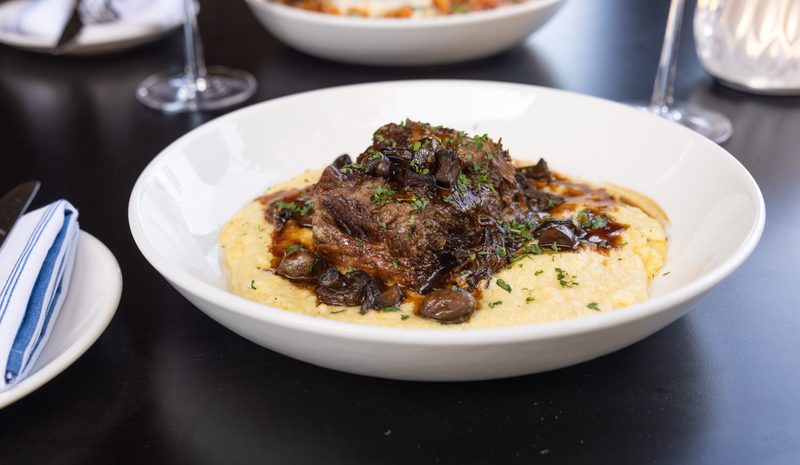
The theme, of course, is Tuscan. “Tuscany is known for its beef,” says Saunders. “We feature several of the region’s classic dishes.” The 14 oz. bone-in Pork Porterhouse (in the Tuscan tradition of formidable servings) comes with apple-ginger bacon, chutney, and polenta. Classists may prefer the prime sirloin, plated in the traditional manner with chili aioli and those decadent parmesan truffle fries.
As a nod to their neighbor to the north in Lombardy, Bella also prepares a delicious Veal Milanese, a robust herb-crusted veal chop served with lemon butter, arugula salad and whipped potatoes.
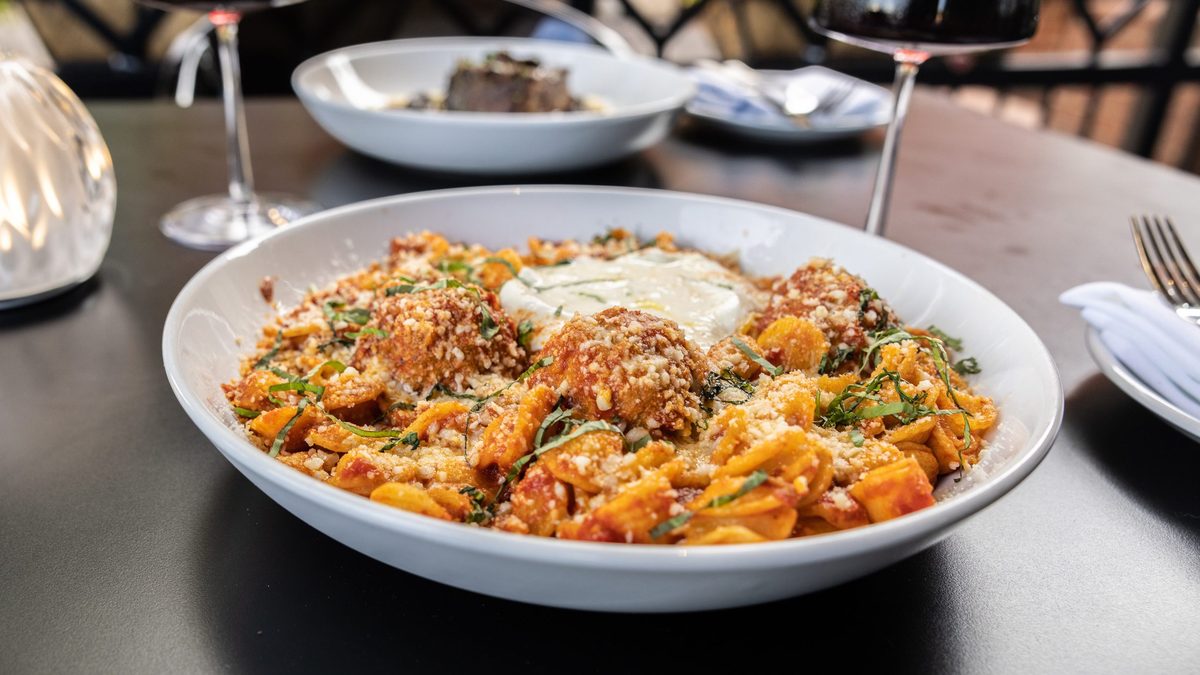
Pasta aficionados will like the thick pappardelle noodles, covered in a spicy meat ragu, herbs, and goat cheese. A delightful plant-based option is the wild Mushroom Rigatoni with asparagus and peas, a light mascarpone sauce and ricotta and hazelnuts crumbled on top.
But let’s not forget the headliner, the star of the show. The dish that Chef T.J. serves tableside as many as 50 times an evening: Pasta in the Wheel. With a wonderful flourish, he brings an enormous wheel of Grana Padano cheese to your table. Open at the top, the cheese resembles the caldera of Mt. Etna. When Chef T.J. poured the brandy and lit it, we felt a little... Pompeiian.
Saunders’ 6’5” stature adds to the show. A native of Lansing, Michigan, Saunders studied culinary arts on the G.I. Bill at Schoolcraft College near Detroit, training under five certified master chefs and then with Ed James at the Ritz-Carlton in Dearborn, Michigan. He then moved to the San Diego area, working at Café Del Mar and the Four Seasons Resort Aviara in Carlsbad. If you think you detect a Michigan accent in his speech, he is happy to correct you: “My relatives have a Michigan accent,” he says. “I lost mine in my years in San Diego.” Since moving to Knoxville in 1999, he’s cheffed at Lakeside Tavern, Kalamata Café, Ruth’s Chris, and Babalu, among others.
Amid the dancing flames of the Grana Padano, Saunders scrapes the softening cheese into a pot with penne pasta and stirs it to perfectly combine the pasta with the cheese. During the ceremony, he explains that Grana refers to the finely grained texture of the cheese and Padano refers to the Po Valley in the Piedmont region of northwest Italy, where Cistercian monks started making it in the 12th century. Today, says Saunders, “It’s the king of cheese in Italy.” It is similar to the more familiar Parmigiano Reggiano.
Seafood lovers will appreciate the simple but satisfying creamy Tuscan Shrimp served with sun-dried tomato, spinach, basil, garlic, served atop penne pasta, or the grilled salmon with asparagus.
Desserts include signature Zeppole filled with chocolate ganache, a dreamy lemon Italian crème cake and Apple Crostata—thinly sliced Granny Smith apples inside crisp puff pastry. We recommend pairing dessert with a delicious Spritz 75 (limoncello and Prosecco) because, as we say in Tuscany, “E finata a tarallucci e vino,” or “It ended with sweet biscuits and wine.” Buon Appetito!
→ Swipe for Next Story
Dining GuideNOVEMBER DECEMBER 2022
New Eats
East Tennessee’s latest restaurants have us lining up for a spot at the table
Story by Marc Anthony
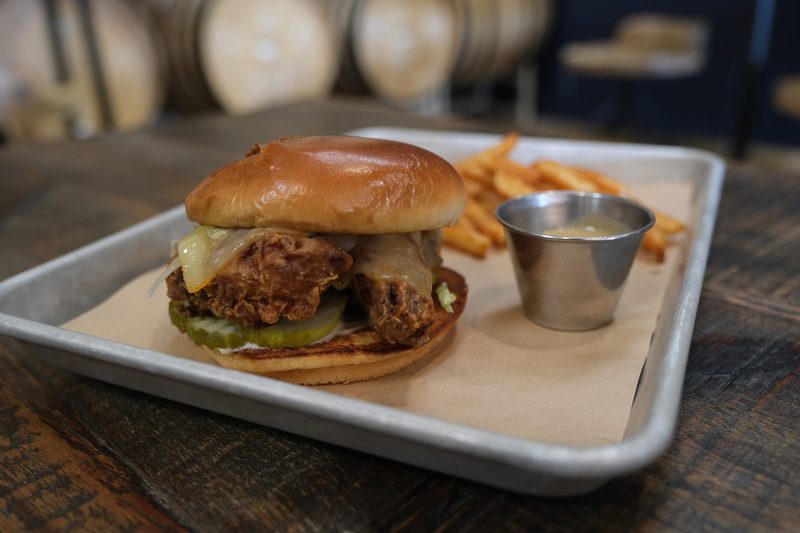
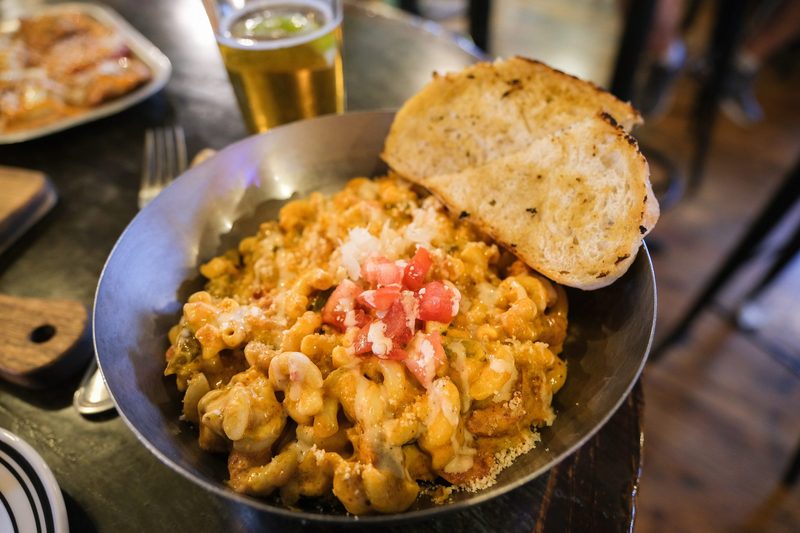
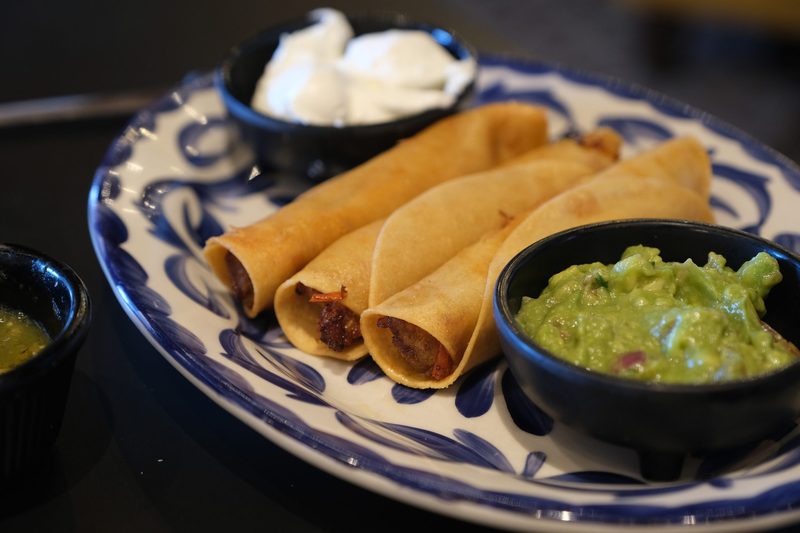
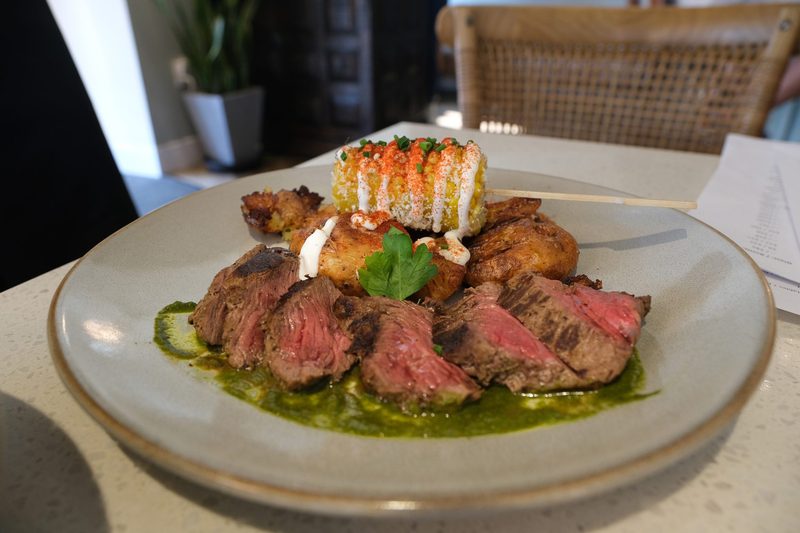
There are few things east Tennesseans love more than a new restaurant. And buddy, do we show up. Crowded foyers, loaded tables, and the fight to survive that all-important first year have the latest eateries in town clamoring for your business. Here are six of the newest restaurants that need to see you in their place tonight. You will not be disappointed with any of them!KoyoBlackberry FarmAle Rae GastropubPotchke DeliLoco BurroPoint B Eatery
Koyo
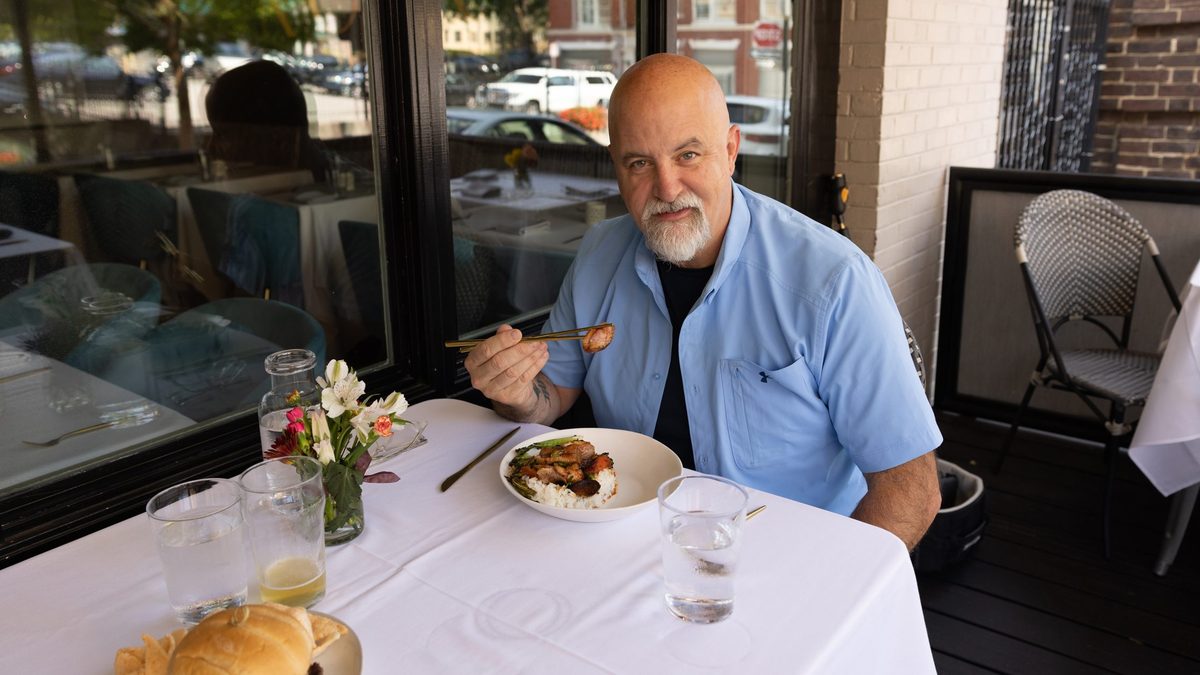
At a time when several local japanese restaurants have bailed out of traditional fare and gone “poke and ramen” on us, it’s nice to have a non-chain, sit down restaurant serving elevated Japanese food. And after that build-up I’m going to tell you about a burger? Yes I am. Have you ever ordered something and then wished you had ordered what your friend across the table ordered? While I was noshing on the delectable and perfectly prepared Duck Bulgogi, my dining partner was kind enough to split his A5 Wagyu Burger. I’m just going to say this: it was the best burger I have ever almost threatened someone’s life over. It’s. That good. Coming out of the Nama family of restaurants, you know the menu is to die for.
This is a food guide, this is a food guide. BEER! Ok, now back to the food. A resort known worldwide for its food and professional culinary spawn just had to open a taproom with some of the best small batch Belgian style beers in the region, didn’t they? So Blackberry Farm went ahead and put as much time and effort into creating their beer line-up as they did making sure their resort is world class. I mean, if they didn’t, would they have a Wood Wizard on staff? I think not. So, is the food an afterthought here? It is at some breweries, but don’t tell the BLT Burger and the Fish Tacos. The food is as good as the beer. Would you expect anything less from Blackberry Farm?
Another Knoxville restaurant named for the owner’s children (see OliBea). Doting Dad Dave has daughter Allie in the front of the house, and daughter Rachel in the back of the house whipping up “Elegant Comfort” in a rustic environment that started as a food truck in 2016. With live music every night, innovative drinks like an Old Fashioned with a fig in it and cutting edge cuisine flying out of the kitchen, Ale’ Rae’s has made the transition from street to brick-and-mortar seamlessly. The honey-drizzled toasted sourdough with wild berry tomato compote, chipotle raspberry cream cheese, and smoked gouda spread with candied bacon crumbles is why Chef Dave never eats a meal, just snacks on toast all day! You’ll be eating many meals, and snacks, at Ale’ Rae’s.
I’ve lost track of all the people that have come out of Blackberry Farm and spread out across east Tennessee, filling tables with amazing food. Now here comes Laurence Faber, planning Potchke Deli as a pop-up to only be convinced that he better stick around as Knoxville needed a Jewish deli. Biding his time until he can open an eastern European restaurant, he and Emily Williams have created a comfortable nook in historic Regas Square. Vegetables, cured fish, dips, and breads populate the traditional and not-so-traditional Jewish menu. And let’s not forget the sumptuous bobka that you may have only read about or seen on TV. Consider yourself lucky that you won’t have to travel to a major city to get good lox.
Pro Tip: Search the Potchke website for a subtle Seinfeld reference!
No, NOT Gatlinburg… the mall! I always find myself craving Loco Burro anytime I get to the mountains and it was always worth the two-hour drive. If you wondered what was going to save the mall, here it is! We haven’t been blessed with a lot of good Tex-Mex in east Tennessee until now. From the time the chimichurri hits the table with warm tortilla chips until the end of the meal when you amble over to the ice cream bar, the experience is spectacular. With rooftop views and entertainment, locally owned Loco Burro rides into town when gas prices demand we stay close to home. Pro Tip: As a corn on the cob freak, I could have made a meal out of the mesquite grilled corn with the garlic lime aioli and cotija cheese. I will next time!
There is only one letter that matters at Point B. I’ll give you three guesses. Here’s a hint. {B}runch, {B}oards, {B}ourbon. Not many restaurants serve {B}runch every day. Point B does. Honestly, charcuterie was something I thought you only saw on Instagram, but Point B showed me what a REAL {B}oard is. There’s no chance I could do these boards any justice in such little time here, just understand the line out the door isn’t for the view of the apartment complex across the street. And you’ll wonder why Point B didn’t check your ID before you got the {B}ourbon Banana Pudding. Pro Tip: Ask owner Dan Goss to tell you the story of the name of Point B because it involves ducks. And who doesn’t love a good duck story? 1020 Ebenezer Road | (865) 312-9590
Cityview‘s Nathan Sparks, Devin Driscoll of D1 Training in Hardin Valley, and Congressman Tim Burchett will host the second annual Christmas for the Kids holiday event on December 9 featuring pictures with Santa, hot cocoa, s’mores, and holiday festivities. Admission to the event is a toy which will supportlocal Marine Toys for Totsefforts.
“We are expecting this year to be particularly high in requests,” says Sgt. Travis Ganong, the local Toys for Tots Coordinator. “To date, we already have over 700 families registered.”
Each year, the local Toys for Tots efforts have supported an average of 1,391 families and 4,523 children, Ganong says. Just under 17,500 toys were collected on average over the last three years, assisting families in need of some extra help over the holidays. As with any organization, Toys for Tots does have some specific needs that raise to the top. “In the past, our biggest needs are in the 12 to 14 boys and grill age groups,” Ganong says, “as well as the 9 to 11 girls. I am expecting this trend to continue but on a larger scale this year.”
The Christmas for the Kids event will be held once again this year at The Davis Barn at 1515 Ashland Springs Way in Knoxville. Barn doors will be open from 5:30 pm to 7:30pm and all are welcome. If you’re unable to make it but still wish to support the event and Toys for Tots, you can drop off your unwrapped toy anytime atD1 Training.
→ Swipe for Next Story
JurisprudenceNOVEMBER DECEMBER 2022
The Great Experiment
The Volstead Act brought with it a host of unintended consequences, causing leaders to question whether they made the right choice.
Story by Gary Wade
There is Murphy’s Law, “Anything that can go wrong will go wrong,” and then there is its first cousin, the Law of Unintended Consequences. The latter law might be defined as any attempt to solve a complex problem that creates unanticipated and often undesirable results. Almost 200 years ago, a London paper expanded on these concepts with a Portuguese proverb, “The road to hell is paved with good intentions.” So, in order to rid the country of the physical and social ills related to the use and overuse of alcohol, America endeavored upon The Great Experiment. There were consequences.
The prohibition movement actually began shortly after the conclusion of the Civil War. Organizations like the Prohibition Party, the Anti-Saloon League, and the Women’s Christian Temperance Union launched a grassroots effort to ban all forms of booze throughout the country. Influenced by the death of her first husband who had suffered from severe alcoholism, Carrie Gloyd became a passionate activist for prohibition. She soon met and married David Nation, a minister and attorney, and the couple eventually moved to Kansas, where Carrie Nation started a local branch of the WCTU. When her peaceful efforts failed to persuade those in the saloons to abstain from their bad habits, she turned to more forceful means. Undeterred by a growing number of arrests for her destruction of the inventory of local saloons, she adopted a hatchet as her weapon of choice, singing hymns, praying, and gaining popular support as she destroyed huge containers of the “evil alcohol” in her targeted taverns. A heroine to many and a nemesis to others, her death in 1911 did not slow the nation’s movement toward outright prohibition. By then, a veritable army had joined in the cause.
The founders of the 1789 Constitution, however, had purposely developed a cumbersome process for any amendments to their historic document. The House and the Senate had to first pass a joint resolution for consideration by the states, and then three-fourths of the states had to vote in favor of ratification. In 1917, during the First World War, Congress completed the first step with overwhelming votes in each chamber. The popularity of the measure extended to the states. Not long after the war’s end, Nebraska became the 36th of the then 48 states to vote for ratification of the 18th Amendment to the Constitution. Only Rhode Island and Connecticut had voted to oppose. The National Prohibition Act, the enabling legislation essential for the enforcement of the amendment, had the strong support of House Judiciary chair Andrew Volstead and passed easily in Congress. Even though President Woodrow Wilson vetoed the measure, the House and Senate had more than the two-thirds necessary to override, and, on January 16, 1919, adopted as the law of the land what came to be known as the Volstead Act.
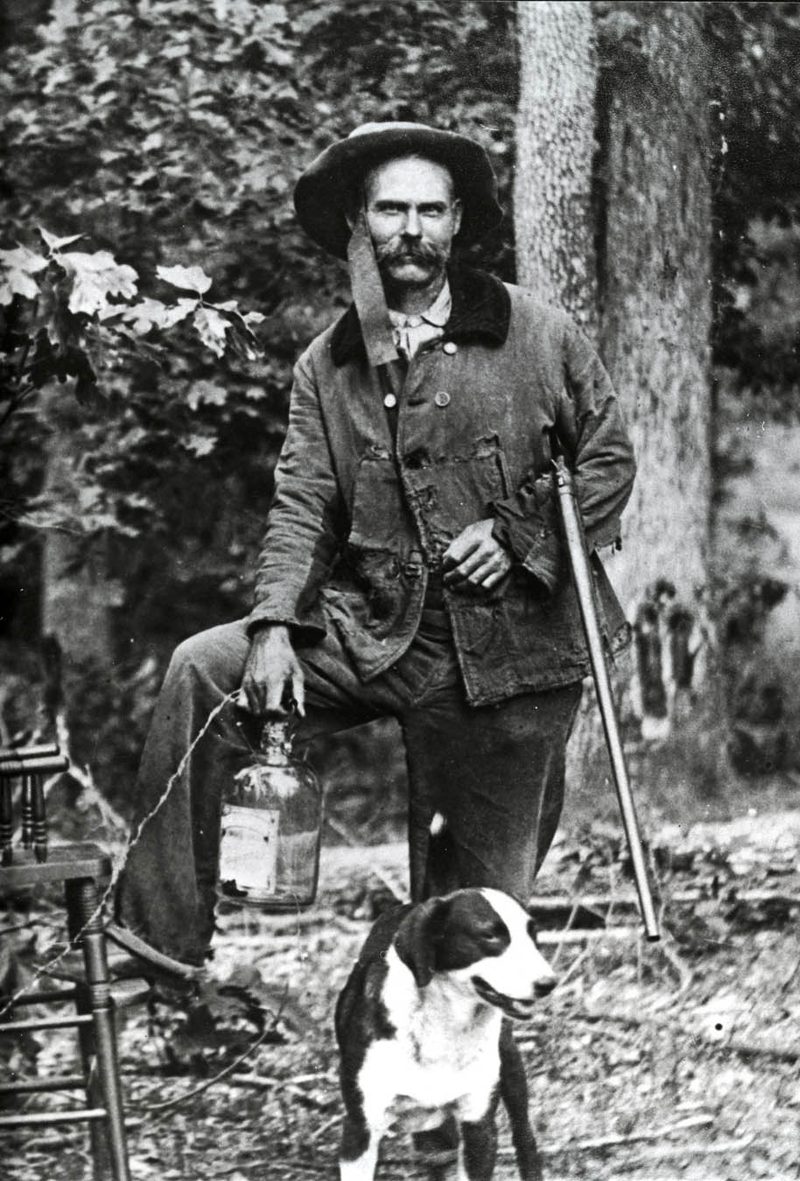
The law prohibited the production, transportation, and sale of intoxicating liquors, defined as containing 0.5% alcohol or more. There were loopholes. First, the act did not become effective until after one year, permitting stockpiling by the customers who could afford to do so. For example, when the Wilsons vacated the White House at the end of their term, they took their supply to their new residence; President Warren Harding, Wilson’s successor, moved in with his own stash. Whether local or national, politics and alcohol had often worked hand in hand. Second, the act did not prevent the actual consumption of alcoholic beverages, allowing wine and cider manufacturing for home use—much to the relief of the mountaineers in East Tennessee and rural areas throughout the country. Finally, there were exceptions for alcohol in medications prescribed by physicians, alcohol distributed by pharmacies, and alcohol used for religious purposes, including churches and synagogues. One authority on the subject claimed that the prosperity of the Roman Catholic Church, wine being a part of the sacrament, reached new heights in the decade following the Volstead Act—probably not a coincidence.
There were critics of this Great Experiment. Winston Churchill, well known for his love of scotch, famously described the American law as “an affront to the whole history of mankind.” Then there were these unintended consequences. When the breweries and distillers in the United States closed operations, the production and sale of alcoholic beverages surged in our bordering countries. Mexico and the islands of the Caribbean were among the areas that prospered. Canada benefited the most. “Rum running” took place with impunity on the Detroit River, which serves as a boundary from our neighbors to the North as far east as Lake Erie. The lyrics of a rhyme written in these times reflected our country’s budding relationship with the Canadians:Four and twenty Yankees, feeling very dry, Went across the border to get a drink of rye. When the rye was opened, the Yanks began to sing, God bless America, but God save the King.
Bootleggers became commonplace in the 1920s. Speakeasies, wide open to women, replaced saloons where men had once had almost exclusive reign. No self-respecting women would be caught dead in the old taverns and bars, but the secret nature of the speakeasy, so named because the patrons were warned to “speak easy” so as not to alert law enforcement of their whereabouts, changed that. New York alone, which was loathe to assist in the enforcement of the prohibition law, had as many as 100,000 speakeasies, according to one source. One authority on the subject estimated that 60 percent of the nation’s local law enforcement officers had violated the Volstead Act and that accepting bribes to turn heads to illegal operations was commonplace within the profession.
Terms like “bathtub gin” made in the home and, of course, “moonshine,” manufactured by moonlight in remote areas, became a part of the American vocabulary. Further, grocery stores had a difficult time keeping concentrated grape juice in stock. The packaging had warning labels: “Do not store in a jug for more than 20 days in order to avoid fermentation.” The companies that sold the product might as well have provided the recipe for table wine.
The prohibition era served as a boon for some in the medical and pharmaceutical professions. In just the first six months of the Volstead Act, 15,000 physicians and 57,000 pharmacists acquired licenses to prescribe and sell products containing percentages of alcohol far greater than permitted by the new legislation. To illustrate the impact of these exceptions on pharmacies, during the decade after passage of the 18th Amendment, Walgreen’s experienced remarkable growth, expanding from 12 to 525 stores across the country.
Federal law enforcement, which was understaffed, underfunded, and overwhelmed by their new responsibilities, did their jobs as best they could. By the second year of the Act, over 20,000 prosecutions took place. That number increased substantially every year, but still only scratched the surface. In Chicago, Al Capone became both wealthy and famous. Organized criminal gangs like his, previously limited to gambling and prostitution, found a new and better source of income through illegal sales of alcohol, and they often fought each other for “territory.” Incidents like the 1929 Saint Valentine’s Day Massacre, when seven of “Bugs” Moran’s rival Irish North Siders were lined up against the wall and shot by four alleged Capone men, two of whom wore police uniforms, changed the minds of many of the Americans who had supported prohibition.
The influential John D. Rockefeller, Jr., an early proponent of the Great Experiment, altered his position on the issue by the end of Herbert Hoover’s presidency. In 1932, he wrote that “the law had made otherwise good citizens criminals and had encouraged disrespect for police authority.” Franklin Roosevelt, the Democratic challenger to Hoover in that election year, announced in his campaign that he favored repeal of the 18th amendment. Hoover was hesitant on the issue. After Roosevelt’s convincing victory, the Cullen-Harrison Act increased the alcohol content of Volstead from 0.5% to 3.2% as to beer and wine, adding jobs to the depressed economy. After signing the bill, FDR announced, “I think this would be a good time for a beer.”
On December 5, 1933, the 21st Amendment, adopted by Congress and the states in the same way as the Great Experiment had become law, repealed the 18th Amendment, the first time in United States history—and so far, the last—that a constitutional amendment has been overturned.
→ Swipe for Next Story
InsightsNOVEMBER DECEMBER 2022
Jurors in Jest
Courtroom tales remind us that laughs can be found even in the most serious of spaces
Story by Robert Pryor, Sr.
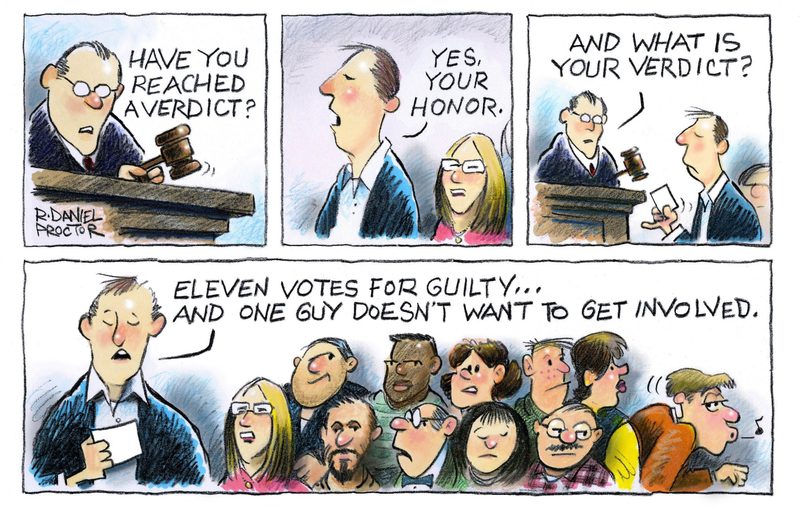
Did you know that some of life’s most humorous moments are played out regularly on the stage of a courtroom somewhere near you? While court trials are typically serious affairs about serious subjects, they have long been the source of many comedic moments. Lawyers are tense and jurors are nervous but abruptly empowered. Witnesses are often so intimidated by the atmosphere they are unable to relate their unique knowledge or perspective. Over the years, I have personally witnessed many funny incidents in the courtrooms of East Tennessee and have heard many more from other lawyers. When lawyers get together, they like to talk about the glorious things they have observed in their courtroom trials. Perhaps you will enjoy a few of these judicial calamities.
Years ago, in the second day of a Knox County damage trial, everyone was in place at 8:30 a.m. when it was discovered that the defense attorney was missing. His client was seated quietly at the courtroom table, but she had no lawyer. “Where is Mr. B (the defense lawyer)?”, the judge asked. No one knew and the judge compelled the jury, the parties, the court reporter, and the plaintiff’s attorney to remain in place until the defense lawyer arrived or called to explain his absence. Finally, after a 20-minute wait, Mr. B burst through the door of the courtroom on a dead run. Out of breath and his clothes in shambles, he explained, “I’m sorry I’m late, Judge, but I spent the night at my girlfriend’s house last night and woke up this morning and couldn’t find my socks.”
In the cross-examination of a very religious witness early in my career, she began speaking in tongues. Now, that’s a challenging situation for any lawyer. They do not teach the proper response to that in law school. In the middle of my impassioned closing argument in a federal civil rights case, a lawyer at counsel table overswivelled his chair and tipped over backwards in the seated position just as I started outlining the grievous damages my client had suffered. The jury, judge, and I could only see his two legs and feet sticking up above the table top and the snow white skin of his legs was showing where his pants yielded to gravity. No lawyer can quickly recover from these types of sudden and unforeseen events. Juries love spontaneity and delight in seeing the unexpected occur.
I once called an expert witness to the stand, and after I asked his name and allowed him to describe his three degrees in the field of engineering and his years of scientific research, I made the mistake of asking his age. The man truly had no idea of how old he was and finally offered up his date of birth. The jury loved watching my pain.
Early on the first day of a medical malpractice case in Sevier County, the jury selection process ran a little longer than normal. We finally agreed on 12 good citizens who seemed a perfect match for my case, and the judge announced, “Well, we’ve worked hard this morning, let’s take a short break, then we’ll get started.” The judge tapped the gavel and the bailiff said, “All rise. This court stands in recess.” When everyone reassembled in the courtroom 15 minutes later, one of the jurors was missing. The bailiff searched the hallways and the restrooms, but the 12thjuror was not to be found. After waiting a few minutes, the judge looked at the jury and commented, “You don’t think he’d be stupid enough to go home, do you?” Juror No. 6 spoke up and replied, “I know him, Judge, and the answer is ‘yes’.”
In Blount County, after I had questioned the jury in a medical case, the defense lawyer asked the jury panel, “Does anyone on this panel know Mr. Pryor, the lawyer who filed this lawsuit?” A very attractive and well-dressed lady on the back row of the jury raised her hand. I was shocked because I knew few, if any, people in that county and did not recognize her as a person I’d ever met. “How do you know Mr. Pryor?” the lawyer asked. “Well, he took me to Dallas to a football game a few years ago.” The courtroom roared with laughter thinking a tryst had been revealed. I immediately requested an opportunity to question the juror and led her through an explanation that I was in charge of a chartered bus tour to the Cotton Bowl when I was in law school and she and her husband were part of a group of 40 people who purchased the travel package to watch Tennessee play Texas. Whew, I escaped again!
Judge Robert Love Taylor presided over the Federal District Court in Knoxville from 1950 until his death in 1987. Judge Taylor had the reputation of a tyrant when pressing lawyers along to finish their proof in record time. Judge Taylor always wanted quick, short trials with no extra motion and no frills. Of course, I am hardly a frilless lawyer. I tried many cases before Judge Taylor, and in one car wreck case my client had sustained serious and disabling injuries when hit head-on in the curve of a two-lane mountain road. On the morning of the trial, I was attempting to prove that the impact was on my client’s side of the road and that the defendant had negligently crossed the centerline into the plaintiff’s lane. Importantly, I needed to prove the impact debris from the two cars was deposited in my client’s lane of travel. I called my client and then her son, who came to the scene and observed the debris.
My third witness was the wrecker driver who responded to the wreck and would testify that the debris was in my client’s lane, but, unfortunately, I ran into Judge Taylor’s impatience. “This is cumulative evidence!” he screamed when I called for the wrecker driver. “You don’t need this witness, you’ve already called two witnesses.” I resisted by explaining, in front of the jury, that it was important to introduce the testimony of an unbiased third party and that the wrecker driver had excellent recall and remembered detail important to the jury’s decision. “Very well, but make it quick,” Judge Taylor conceded. With that, the witness was brought into the massive and ornate courtroom for the first time. He was dressed in a work uniform with his name “Marvin” stitched over his shirt pocket. His mouth flew open as he stood and gazed up at the baroque ceiling of the majestic room whereupon Judge Taylor, a short fiery man, stood and leaned forward from the judge’s bench toward the witness and in a loud accusatory tone asked, “WHAT DO YOU KNOW ABOUT THIS?” To which my key witness replied, “Nothing, Judge.” The jury could not contain their laughter as the judge looked disappointedly at me. Luckily I talked both the judge and the witness through the necessary proof and won the case to the delight of the jury. I think they felt sorry for me.
The Cocke County Gas Company dug a ditch across a driveway and temporarily backfilled it before stopping work for the day. The backfill washed out during an overnight rain storm causing a car to wreck the next morning. In the suit against the guilty gas company for injuries suffered in the wreck, Judge Taylor asked the gas company lawyer what possible defense he had to such an obvious case and he replied, “Your Honor, I’m relying mainly on the defense that the cause was an ‘Act of God’,” to which Judge Taylor replied, throwing his arms in the air, “Don’t you know God doesn’t act in Cocke County?”
Lawyers know that they must take great caution when questioning jurors during the selection process because responses are difficult to predict. Sometimes they forget and can expose themselves to great risk. In an attempt to illustrate that Tennessee statutes do not require a passenger car to automatically stop at every railroad crossing and that a stop is only required when a train is visible or when the railroad warns of the train’s approach, a Knoxville lawyer representing a man whose car was hit by a train once asked a jury, “Do you know of any law that requires you to stop at a railroad crossing?” Bad question to teach a complex issue. Without pause, a juror on the front row spoke up and said, “Yes, the law of survival.”
I remember trying a complex case for personal injury in Anderson County against five lawyers from the Clinton/Oak Ridge area. As the only out-of-county lawyer, I was worried about local bias until after the jury was selected and sworn and one of the jurors asked to be heard. In open court, he said, “Judge, do you remember on the first day of jury service when I rode up on the elevator with you and told you I thought I could be fair on any case unless one particular lawyer that I hated was involved?” The judge searched for recall and then said, “Yes, I remember that. It was an Anderson County lawyer with which you had had a bad experience.” To which the juror replied, “Well, he’s here.” I fought hard to keep that juror on the panel, but the case went forward with only 11 jurors, some of whom may have had difficulties with that same lawyer because my client prevailed. Sometimes a trial is a contest to see which side hired the most acceptable lawyer.
Today, private mediation has become very popular as a means of resolving litigation without a jury trial. There are far fewer jury trials today than just 10 or 15 years ago and far fewer humorous stories to tell. Many lawyers today have never tried a case in front of a jury because of mediation, or because they only practice to settle cases and not necessarily to insist on full and fair damages being paid. In many ways, that’s a shame because a fair and impartial jury trial has always been the best method ever devised to determine truth and to do substantial justice between parties. Many lawyers have forgotten that it is the genuine threat of a jury trial that is the key to forcing a fair compromised settlement. It has been my experience that juries work really hard at trying to award fair and reasonable damages, and insurance companies work really hard at trying to avoid paying fair and reasonable damages. This is not to mention that insurance settlements and mediations are virtually humorless.
→ Swipe for Next Story
FeatureNOVEMBER DECEMBER 2022
A New Era Dawns
The Volunteers’ last-second 52-49 victory over Alabama puts UT back in college football’s elite
Story by N. Brooks Clark
You probably saw it, either in the roaring throng of 101,915 at Neyland Stadium or as part of a CBS-TV national audience that peaked at 17 million viewers.
With 7:49 to go, down 49-42 to Alabama, it was do or die. With Bama defense playing the pass, quarterback Hendon Hooker handed off eight times to running backs Jaylen Wright and Jabari Small before hitting receiver Jalin Hyatt for a 13-yard touchdown—his fifth scoring catch of the day—to tie the score at 49-49 with 3:26 to go.
When Alabama’s drive stalled on the 33-yard line with 21 seconds on the clock, kicker Will Reichard sliced his 50-yard attempt just to the right of the crossbar.
Hooker had 15 seconds. He hit receiver Ramel Keyton for 18 yards to midfield. Nine seconds left. Hooker rolled right and lofted a pass 27 yards to receiver Bru McCoy at the 23. In a clutch move worthy of a superhero, the six-foot-three, 220-pound McCoy leaped high between two defenders and, even as he was hit from both sides, came down with the ball. Tennessee called timeout with two seconds to go.
“The coaches and players are the calm in the storm,” said coach Josh Heupel. “They just continue to reset. Whatever happens, they are ready to go and compete on the next series.”
Kicker Chase McGrath had missed an extra point earlier. “It wasn’t my cleanest hit,” said McGrath. Still, his 40-yard kick went straight, dropping just over the crossbar. Then-No. 6-ranked Tennessee had edged No. 2 Alabama to bring its record to 6-0, the Vols’ first 6-0 start since the national title season of 1998.
As all of us know, the Orange faithful, many blowing smoke from stogies, poured onto the field in joyous mayhem. “I saw the south goalpost come down and I headed north,” said veteran college football scribe Ivan Maisel. “Then I saw the north goalpost come down.” Students marched some parts to the Sigma Chi house, others down Cumberland and into the Tennessee River.
“What an unbelievable show of energy from our fans,” said Heupel. “The student body is just electric. The Vol Walk is the most unique thing in college sports. Tonight’s was unlike anything I’ve experienced.” The win pushed the Vols to No. 3 in the AP poll, setting up Oct. 22 and Nov. 5 showdowns with No. 19-ranked Kentucky and No. 1-ranked Georgia.
“It’s definitely history,” said safety Trevon Flowers. “We’ll never forget this moment.”
wp:paragraphBefore that 1998 season, financial advisor, News Sentinel columnist, and former UT lineman David Moon gave a talk to the UT athletes, mainly about the downsides and upsides of living life in the Vol Nation fishbowl. He noticed the athletes looking for the reaction of a person in the middle. When that athlete nodded, they all nodded and bought in. “He was quiet but had something about him that drew his peers to look to him for reaction and cues,” said Moon at the time. “I did not know who the young man was, but he was obviously respected by the other athletes – and not just football players. He had the ‘it factor.’ Moon found out later it was quarterback Tee Martin. “That’s leadership,” said Moon in a Metro Pulse season preview. “Watch what happens on the field this season because the team does what he wants them to do.” Of course, Martin’s magic and charisma loomed many times during that championship season. /wp:paragraph
wp:paragraphThese past two seasons, we’ve seen a special brand of leadership from quarterback Hendon Hooker. That includes his partnership in excellence with backup Joe Milton III. “The main thing is for us to keep our foot on the gas,” said Hooker after Milton went 8-for-9 in the season opener against Ball State. “We’ve said all along there’s not gonna be a drop-off when he’s in the game.” /wp:paragraph
wp:paragraph Photo by Bruce McCamish
Hooker and Milton both came to UT as transfers—from Virginia Tech and Michigan, respectively. They are roommates and close friends. “We really go everywhere together,” Milton told Gabriel Jackson for a story in the Florida game program. “We’re always around each other. If you see me, you see him. It’s a brotherhood that can’t be broken, for sure.”
wp:paragraphAs Hooker told Jackson, “It’s deeper than football. We push each other to be better quarterbacks, but we’re really brothers. Blood couldn’t make us any closer. If I am going through anything, Joe is the first person I’m going to. I can always count on Joe to have my back, and I am always going to have his back.”
After the win over Florida, Hooker said calmly he was just grateful to be able to compete with his brothers, adding that the Volunteers pride themselves on having the best brotherhood in college football. The action on the field shows plainly that this is not idle talk. At nearly 25, Hooker is a person who is focused, disciplined, and always looking after the needs of his teammates.
wp:paragraphHooker directs the nation’s No. 1 offense, averaging over 550 yards per game. After the Florida victory, the Walter Camp Football Foundation named him as its National Offensive Player of the Week as he completed 22 of 28 passes for 349 yards and two touchdowns and ran for 112 yards and another touchdown.
wp:paragraphThe Bama game showed a national audience not only the talents and resourcefulness of 2021 Heisman Trophy winner Bryce Young, but also the many reasons that Hooker is very much in the running for the 2022 Heisman. After the last-second tumult of that game, Hooker said calmly, “We approach every game the same. It’s just another day at the office.”
wp:paragraphFor the LSU post-game interview, the News Sentinel ‘s Mike Wilson noted that Hooker wore a T shirt reading “Condredge Holloway,” showing images of Holloway and his nickname, the Artful Dodger. This season marks 50 years since Holloway became the first Black quarterback to start in the SEC. His 23 wins as a starting quarterback were the most by any Vol at the end of his three-year career. He is now immortalized as one of the statues in front of Neyland Stadium. “Just wanted to pay homage to one of the greats,” Hooker told Wilson. Photo by Carlos Reveiz
wp:paragraphWith star receiver Cedric Tillman sidelined with an ankle injury for Florida, LSU, and Alabama, the receiving corps of Ramel Keyton, Jalin Hyatt, and Bru McCoy have made highlight catches seem routine.
wp:paragraphAgainst Florida, with a minute left in the half, Keyton made an Avengers-like diving catch for 43 yards to the Florida 35 that led to a key touchdown. “Ramel and the other receivers are always doing extra work,” said Hooker. “They make plays like that on a daily basis. That’s why I have complete confidence in all my receivers.”
wp:paragraphAfter his five touchdowns against Bama, Hyatt explained humbly that “it was just the looks that they were showing us, but a lot goes into it.” The coaches’ planning. The veteran offensive line that gave Hooker plenty of time in the backfield. “Personally, it was probably my best game,” Hyatt allowed, adding quickly, “I just feel blessed to be out there.”
wp:paragraphBaltimore Orioles fans of a certain vintage recall crowd rumblings for slugger Boog Powell that sounded to untrained ears like “Booo!” Similarly, Vols fans may have confused TV viewers with their enthusiastic roars of “Bru!” Against Florida, he had electrified the crowd in the second quarter by taking a pass on the left sideline and gaining 70 yards to the Gator 4. In all, McCoy had eight catches against the Gators. In the post-game interview, McCoy—with his square-jawed George Clooney-ish good looks—was understated about the “roller-coaster” that had brought him from Southern Cal, through other unpleasant stops, to the word from the NCAA that he was eligible to play at UT. He came to UT to “do a job,” he said, and that is what he wants to do. Against Alabama, his 27-yard catch setting up the field goal heard ‘round the world most certainly did that.
wp:heading {"level":3} Photo by Bruce McCamish
wp:paragraphIn early October Joe Rexrode of The Athletic did a deep dive on the origins of Heupel’s wide-open offense and his understated but solid confidence. “Let’s go to Atlanta,” said Heupel last December when Hooker told him he was returning for his last season of eligibility. The SEC championship game seemed like a faint hope then but seems conceivable now.
wp:paragraphRexrode researched the pivot points in Heupel’s quarterbacking life—running the Run and Shoot offense in high school in South Dakota, opting for Dave Arslanian’s wide-open offense at Weber State in Idaho, tearing his ACL and going to Idaho’s Snow College, expecting to rejoin Arslanian at Utah State. But first-year Oklahoma coach Mike Leach picked Heupel out of junior college tapes films to run his Air Raid offense. In 1999, Bob Stoops took over as coach. Before the 2000 season, Heupel told his teammates they would win a national title. “Um, OK,” said linebacker Torrance Marshall. The Sooners delivered, and Heupel placed second in the Heisman balloting.
wp:paragraphFor nine years Heupel coached OU’s quarterbacks and coordinated the offense, coaching two Heisman winners. In 2015, he became offensive coordinator at Utah State then Missouri, where Brian White, Danny White’s brother, was deputy athletic director. In 2017, brother Brian recommended Heupel as head coach to brother Dave, then AD at the University of Central Florida. “We had this Ferrari of an offense, and we needed a new driver,” White told Rexrode. When brother Dave became AD at Tennessee, he hired Heupel, who hired like-minded Offensive Coordinator Alex Golesh, quarterbacks coach Joey Halzle, and other staffers receptive to innovative offensive ideas—who gather weekly to exchange new strategies. “It’s amazing,” Hooker said to Rexrode. “I call them the football scientists.”
wp:heading {"level":3} Photo by Carlos Reveiz
wp:paragraphDefensive Coordinator Tim Banks came to Heupel’s staff last year after five seasons as co-defensive coordinator and safeties coach at Penn State, formerly known as Linebacker U. A Detroit native, Banks played cornerback for the Central Michigan Chippewas in the early’90s, co-captaining a team that won a Mid-American Conference championship. He grad assisted at Bowling Green then coached at Ferris State, Bowling Green, Memphis (under Tommy West), Maryland, Central Michigan, and Cincinnati (both under Butch Jones, when Banks’ defense was a key to the team’s success), and Illinois. Banks has developed plenty of defenders who went on the NFL.
wp:paragraphA work in progress last year, UT’s defense visibly stepped up against LSU, making five sacks and holding on several third and fourth downs. Defensive end Byron Young made two-and-a-half sacks. Linebackers Roman Harrison and Joshua Josephs made one each, while sophomore tackle Bryson Eason assisted on a sack. In the second quarter against LSU, after an incompletion on third and 1, tackle Kurott Garland punched into the backfield and linebacker Aaron Beasley stopped LSU running back Josh Williams for a 1-yard loss. Beasley ended up with nine tackles.
wp:paragraphThrough the first games, Banks—working through the losses of key defensive backs, notably cornerback Warren Burrell with a season-ending injury—has rotated as many as 25 players, including transfers and freshmen, giving them game experience and seeing who can play. Anchored by safety Trevon Flowers, who had 11 tackles against Alabama, Banks’s cast has included nickelbacks Tamarion McDonald, who made nine tackles against the Tide, and Wesley Walker, a Georgia Tech transfer; cornerback Christian Charles and safety Doneiko Slaughter (eight tackles each against Bama), cornerbacks Kamal Hadden, Brandon Turnage, and De’Shawn Rucker, along with safeties Jaylen McCollough and Andre Turrentine, an Ohio State transfer. Cornerback Dee Williams, a transfer from East Central (Mississippi) Community College who was sidelined with injuries for the first four games, made his first appearance at LSU by returning a punt 58 yards.
wp:heading {"level":3} Photo by Carlos Reveiz
wp:paragraphGeneral Neyland’s Game Maxim No. 2 was, “Play for and make the breaks. When one comes your way—SCORE.” At the start of the LSU game, walk-on special teams player Will Brooks recovered LSU’s fumble on the opening kickoff, leading to UT’s first touchdown. “He did that while getting hit in the mouth and falling out of bounds,” said Heupel proudly.
wp:paragraph“There was a lot of wind, so the kick was short,” said Brooks, a redshirt sophomore and finance major from Vestavia Hills High School in Birmingham, Alabama. “I kinda saw it bounce off him. It took a good bounce and I slid into it. He and I collided, and he sort of popped me as I was headed out of bounds. I was a little sore the next day.” LSU was Brooks’ 18th game playing on special teams. “Coach Ek [special teams coordinator Mike Ekeler] always talks about being prepared, to make your shot count and take advantage of your chances. Coach Heupel and the other coaches don’t treat us like walk-ons. They give us our opportunities. I’m really enjoying being a walk-on.”
wp:paragraphAgainst Alabama, Christian Charles provided a similar break by pouncing on a muffed punt in the second quarter that led to handy touchdown.
wp:paragraphAfter each game, Heupel says that the team has some things to work on and they are a long way from where they need to be. After LSU, he said, “We’re a long way from playing our best football.” After Bama, he said, “This journey is just beginning, we’re halfway. There are a lot of things, starting with me, that we can start correcting.”
wp:paragraph“We believe we can beat anyone on our schedule,” said Jalin Hyatt after the victory at LSU. “And we have a real chance of that this year.”
→ Swipe for Next Story
FeatureNOVEMBER DECEMBER 2022
The Boyd Harvey House
With a story steeped in history, an elegant bed and breakfast in the heart of Choto offers guests a restful experience with a gourmet flair.
Story by Anne White
Family trips to my grandparents’ homes were a regular part of my upbringing. On my mother’s side, Myrtle Joy Rice was a single woman who taught high school English, practical by anyone’s standards, but she would become my best friend and mentor on our special days. I would tell her how much I wanted to prepare dinner for the entire family, and with her help, we would plan it all to the smallest detail. She would then take me to Giles Grocery Store and wait in the car while I took the menu and shopping list into the store.
I would choose a giant shopping cart and fill it with everything I needed to prepare my dinner. I think she let me go in alone as a way to make me feel grown up. Her friends would help me as I made my way around the store. I never knew if she talked to them about it, but the process was magical to me. It always seemed so ironic that she would appear at the checkout precisely as they had finished ringing up my choices. She never questioned what it cost or attempted to second-guess my ingredients. She allowed me to experience what would later become one of my true joys in life.
When we arrived home, she would bring out two Coca-Colas in those small six-and-a-half-ounce contour glass bottles, and we would pour them over ice, sipping and talking about the next steps. I would carefully lay out all of the ingredients and begin to prepare the meal. As the cooking progressed, I would break to take out the fine china, crystal, and linens to set the table. Things didn’t always go smoothly—I once put something into the disposal that caused it to jam and smoke so much that the fire alarm went off and firemen came rushing into the apartment—but these are memories I will always hold dear.
My other grandmother, Katharine White, was much more of the refined Southern belle. My love of flowers came from spending afternoons in her rose garden. We would prune the roses, bring the cut flowers inside, and arrange them in vases. My grandfather was the judge in the small town of Hopkinsville, Kentucky, and they frequently entertained. She would allow me to help as she set up the house to receive guests. Creating a beautiful and relaxing atmosphere for conversations was always important to her, along with ensuring the dining room table was well-appointed.
As I prepare for guests to arrive at the Boyd Harvey House each week, I find those experiences from my childhood come to my mind often. As a young one, they were formative. As an adult, they are constant reminders of how important it can be to truly prepare for guests, and beckon me to heed the call to create not just a meal, but a moment in time that will never be forgotten. I have my grandmothers to thank for that.
Adoring History from Afar
Learning the history of older homes has always been a passion of mine. And although I love history on a larger scale, what appeals to me most is local history and the exquisite environments that can only be experienced in older homes. The depth of character that an older home provides, coupled with its history leaves you imagining the stories they could tell if their walls could talk. It’s invigorating and soul-enhancing to explore them.
In one of my first jobs, I would drive along the back roads of eastern Tennessee, exploring the small towns. I adored the stories told by locals over lunch, and as I drove by the historic homes, I imagined what it would be like to live in them. But they were just musings, and when I moved to Knoxville from Asheville in 1992, owning a historic home, much less a historic bed and breakfast, wasn’t even in my wildest dreams.
Having just graduated from the University of North Carolina at Chapel Hill, I secured a job in pharmaceutical sales. Like many young career women, I got married, had two wonderful boys—who are now 20 and 22—and settled down to live my life, one that would eventually prove to be full of surprises.
Around 18 years ago, on a snowy day just before Christmas, my sons and I were on our way home from visiting friends when I decided to take a different route. Just down Harvey Road, there was a sharp curve that slowed me down, and as I looked up, I was awestruck by a stunning older home, beautifully decorated for Christmas. The wonder of the snow atop the trees and rooftop brought memories flooding back of all those historic homes I had admired over the years.
There was just something about this home—and the entire Choto area, really—that intrigued me. And while the moment eventually passed, I was left with this feeling that it wouldn’t be gone forever. Something told me I would see this house again, the next time on grander scale. This house and I had intertwined destinies and no doubt it would eventually make sense as to how.
Falling in Love with the Boyd Harvey House
In 2018, the boys were about to enter college, and I was ready to downsize and simplify life. I began looking for lofts in the downtown area of Knoxville, but I just couldn’t find the right fit. As I searched for smaller homes in the Choto area, my frustration grew, so I adjusted the settings on my Zillow search and, lo-and-behold, there it was. I remember exclaiming out loud, “What in the world!” The memory of the snowy day 18 years before flooded my mind. I learned that the home was built in the 1800’s and I arranged for a tour, fell in love, and ended up buying the home shortly after.
Anyone who has purchased an older home can relate to wanting to do a few things to spruce up the place. It started as what I would call ‘light renovations,’ but the more I did, the more I fell in love with the property. This was of course pre-pandemic and things came together easily and it wasn’t hard to find people willing to work.
My initial goal was to eliminate anything that wasn’t historical and bring even more life to the things that were, starting with little things at first such as light fixtures and paint, then tile work and more.
I wouldn’t call it a money pit—and to this day I really think it was a great investment—but it was eventually time to see some return. I still didn’t see myself running a bed and breakfast; instead, I gutted the space above the garage that was already an apartment and created what we now call the Boyd Harvey Carriage House. It had previously been listed on Airbnb, and I had an adequate amount of furniture to make a very nice space so I updated the listing, ready for a guest.
With the carriage house complete, I turned my full attention to the main historic home. Collin, my oldest, was already at the University of Tennessee in Knoxville and Carter, my younger son, lived in the renovated carriage house while the renovations to the main home were completed. By the fall of 2019, most of the renovations for the entire property were complete, and Carter and I lived in the main house while accepting reservations for guests to stay in the carriage house. It was fulfilling to see that people wanted to come and stay and that they had an interest in the history of the property. I happily obliged anyone who asked to tell them more.
After the Revolutionary War, Pennsylvania native Thomas Boyd who served as a captain in the American Revolution under George Washington, got a land grant to use in Tennessee. He built a log cabin on the Boyd Harvey property in the 1780s. We don’t know for sure, but it’s estimated that Boyd owned more than 1,000 acres.
His son, also Thomas, built part of the main house and members of the Boyd family remained in ownership of the property until 1917 when they sold the house and portion of the acreage to Maryville College. The Harvey family bought and lived on the land from 1920 through 1973.
In 1985, the Howe family—who had purchased the home and immediately began work on it—submitted that year for the house to be named on the National Register of Historic Places.
In January of 2020, I began researching how people were using nationally-registered historic homes and learned that a large number were in fact bed-and-breakfasts. A few months later the pandemic hit and Carter was heading off to college. Trying to be as revenue generating as possible, I was thankful for the bookings in the carriage house, but also knew that I needed to increase my occupancy rate.
Demand for more overnight stays increased during the pandemic. People did not want to stay in hotels; they wanted space and outdoor areas where they could socialize. I honestly never imagined that I would have an opportunity to own my own business, but the vision became clear during the pandemic.
Well-Suited for Bed-and-Breakfast Life
The architecture of the almost 200 year-old Boyd Harvey House provides the perfect design for it to operate as a small traditional bed-and-breakfast. The front part of the house and a detached summer kitchen were built in 1835 by Thomas and Anna Boyd. The first-floor foyer, flanked by two parlors, contains the main staircase and its original hand-carved railing. The second floor originally contained two bedrooms—one above each of the lower two parlors—but it is now home to a beautiful owner’s suite, the downtown loft that I could never find.
The summer kitchen was connected to the main portion of the Federal-style farmhouse in the mid-1800’s and the rear one and upper one-half story wing was formed. This second floor area now houses the guest suite and has two private staircases. It is completely separate from the owner’s suite because the entire home was constructed of handmade brick including the interior wall that separates the guest suite from the owner’s suite.
Outside, a whimsical garden sits ready for intimate dinners, a variety of porches—some screened and others open—offer ample space to breath in the fresh air for meals or quiet afternoon reads, a sizable fire pit keeps the evenings alive, and a luxurious pool and hot tub combo out back make summers at the Boyd Harvey House feel effortless and resort-like for those who come to stay. Finally, there’s the Tri-Star Barn, one of my favorite spaces on the property. Here, guests find a rustic bar, comfortable seating, and antique finds that I’ve collected along my journey. They love this space, and I adore its character.
History Up Close
I will always be thankful for how the Boyd Harvey House unlocked my passion for entertaining, one that has always been there, part of both sides of my family. There are pieces in the house that came from each of my grandmothers—the artwork, the rug in the foyer, the barrister bookcase filled with novels that nearly every generation had touched—all constant reminders of their love and the early memories we shared that would foreshadow my future life in hospitality.
Through the Boyd Harvey House is a constant stream of people with so very many stories to tell. They come to have family reunions, collaborate with colleagues, celebrate milestones, disconnect from a harsh technology-driven world, or reconnect with their loved ones. And as a result I find myself more fulfilled than ever preparing the property for their stay and connecting with local businesses to provide my guests the very best experience possible. My hope is you will join Nathan and me and become part of the Boyd Harvey House story.
→ Swipe for Next Story
Non-ProfitNOVEMBER DECEMBER 2022
A Lifeline & A Voice
Sertoma Center offers support for adults with intellectual disabilities
Story by Susan Alexander
Eric works a full-time job keeping a loading dock clean and organized. He lives alone in the home he purchased through Habitat for Humanity. He likes to turn in early and watch the WWE in the evening. All the help he requires from the Sertoma Center is a daily check-in regarding his medications and transportation.
In another part of town, Jonathan utilizes assistance from Sertoma Center with tasks throughout the day. He loves to bowl, despite being wheelchair bound. He has an affinity for any first responder he sees, since they rescued him from an abusive situation when he was young. “He wears the biggest smile you’ve ever seen,” says Lee Freeman, Sertoma’s executive director.
Eric and Jonathan are just two of the 130 people Sertoma serves in Knox County. Some have physical disabilities. Some are nonverbal. Some have little to no family support. All have intellectual disabilities. And Sertoma serves them all, providing a positive path forward to help them thrive.
An Important Mission with an Ongoing Challenge
Sertoma Center was founded in the early 1960s as an outgrowth of the downtown Sertoma Club. The club recognized the need for education for children with intellectual disabilities, Freeman says, at a time when school systems did not serve them. When schools began mainstreaming students of all abilities and serving those with intellectual challenges until they turn 22, Sertoma redirected its focus to helping the adult population.
Of its 130 clients, about 90 live in one of Sertoma’s 32 group homes. Another 20 or so come to the center during the day for activities while family members work. Some clients receive job training and go on to work in local businesses. Some participate in social activities, like going to dinner or visiting the mall. Occasionally they take trips to the mountains or the beach.
The challenge, Freeman admits, is providing these opportunities while being exceedingly short-staffed. Ideally, the center should employ about 225 people, he says, but, at the time of this writing, there were only 160, a number that dropped as a result of Covid and never fully recovered. In addition, the compensation it can offer entry-level staffers is currently $14 an hour — woefully low for the responsibilities they undertake caring for clients. Unless they develop a heart for the work, many move on to jobs that pay as much or more and require much less commitment. Fixing that situation just might rest with the Tennessee legislature, where one of Sertoma’s greatest advocates serves as a senator.
Becky Duncan Massey worked at Sertoma Center for nearly 25 years, starting out in marketing and development and then moving into the executive director’s job. “I fell in love with our population and the difference we made in their lives. It became my passion.”
After lobbying the legislature for funding for the agency and getting acquainted with the players and the system, she ran for office. As a state senator, she shares her knowledge of social services with fellow elected officials and advocates for the vulnerable citizens Sertoma and similar agencies care for.
Raymond Lee, director of residential services, who joined Sertoma in 2005, started out as a house manager for the organization, eventually transferring to work one-on-one with a client. “I ended up with him for 11 years. It was life-changing, watching him grow and helping him through losing his dad. I knew I was in the right place,” he says. But while his heart felt satisfied, the compensation was challenging. He eventually went to Freeman and had a heart-to-heart. Freeman encouraged him to try something different with the organization as a scheduler. Eventually he landed in the director’s role. “Every day is a new challenge, especially due largely to the lack of staffing. But I look forward to every day. We have an opportunity to help another person have a better life.”
It’s that commitment that also inspires Freeman. Formerly in marketing and sales, Freeman attended one of Sertoma’s fundraising Friendship Dinners, met some clients and staff and fell in love. He also brought a personal experience to the job: his best friend from boyhood suffered a traumatic brain injury in a car crash and never fully recovered. When Freeman visits with clients, his friend is never far from mind.
Training, Training, Training
Training is critical to both the success of entry-level staff and the welfare of the clients they work with. New hires complete 23 online courses that ready them for the work, followed by 40 hours of job-shadowing with veteran staffers. Finally, they complete training specific to the individuals they’ll be working with.
“We are in charge of their lives every day,” Raymond Lee says of their clients. “We take care of medications. If someone is not vocal, we’re their lifeline, we’re their voice. It’s important to make sure all the staff is properly trained to be their advocates.”
In addition to training its staff, Sertoma provides its clients with job training. Project Search is one such training program. It’s a collaboration between Sertoma, Knox County Schools, and local businesses. The partnership with East Tennessee Children’s Hospital is for clients age 18 and older who aren’t enrolled in the school district. Clients become interns at the hospital from February to October. The partnership with Park West Medical Center works with Knox County Schools students ages 18-22 with intellectual disabilities, operating throughout the school year. Fort Sanders Regional Medical Center joined the Project Search effort this fall.
During the internships, they receive training and experience in the workplace, in departments that include food service, central supply, environmental services, nursing units, and surgery. They help prepare meals, deliver food trays, answer phones, clean operating rooms, and distribute supplies. Additionally, on-site instructors teach them about team building, workplace safety, technology, financial literacy, interviewing skills and much more.
“The most exciting thing about Project Search is that [Park West] has been able to hire some of the participants for full-time work,” says Scott Hamilton, Park West CFO and Sertoma board member. “They have been great hires; they know their jobs, they’re very reliable, and the staff loves them. It’s cool to see.”
The Challenge of Funding
In the 2021-22 fiscal year, the center operated with a $12.2 million budget. Ninety-five percent came from state and federal funds, Freeman says. The remainder came from donors and private support. Earlier this year, State Senator Massey sponsored a bill that she hopes will eventually increase those funds. The legislation created a health care task force to look into what similar agencies in other states pay their staff, what companies who are competing for the same pool of workers are paying, and what Tennessee pays similar workers in other industries. After gathering the data, she hopes to go to the governor and the commissioner of finance with a proposal for a higher reimbursement rate for agencies like Sertoma.
“I hope the deep dive may help us come to a long-term, realistic solution for the increases that are needed,” she said. “Lots of things need funding at the state level, and you can’t fund everything. You do what you can where you can. I’m hopeful this wage study will make the best argument for increases that are needed.”
It should come as no surprise that the wheels of progress turn slowly. Massey says that results from the study aren’t due back until December of 2023.
In the meantime, Sertoma will continue its work to support its clients, just as it always has. “We’re always looking for ways to expand the number of people we’re able to serve, whether that’s through strategic partnerships or other means,” says Hamilton, who will serve as the incoming board president in 2023. “We’re always there as a resource, and as with any nonprofit board, we’re always interested in raising money and hosting events to do that.”
To learn more about Sertoma’s work—or to find ways to get further involved—visitwww.sertoma.com.
→ Swipe for Next Story
FeatureNOVEMBER DECEMBER 2022
Best of the Best 2022
Story by Cityview
Three hundred and one thousand votes says a lot, but it doesn’t say it all. Not even by a long shot. The community’s participation inCityview‘s Best of the Best voting is just one of the ways people support this effort. For weeks prior to the beginning of the voting, we get calls of all sorts:When will the voting begin? Can I nominate someone in advance? My friend’s name is spelled wrong, can you fix that?This has turned into something with a life of its own, and it makes us proud to see how important this poll has become to Knoxville.
Most people who participated this year voted around 35 times; the top voter placed 324 votes. All but three of the top 26 most-voted categories came from the dining section, with the remaining three being hair salon, stylist, and colorist. Clearly, we want to look good when we are out eating at restaurants. We added numerous categories this year, and still, we received requests for many more. It’s a never-ending process to keep it all current, but it is no doubt a labor of love for all of us here.
There is no better way to start the holiday season then by being the bearer of such good news to all the winners. To see the delight in their eyes or hear the joy in their voices as they receive the news that they’ve won is like experiencing Christmas morning over and over again.
This is especially true for the first-time winners and those who didn’t even realize they were nominated. Perhaps they did something for someone without thinking about how it would benefit themselves. Perhaps they simply shared the joy of their work in such a humble way that it spoke to the person they were helping. After all, this is the south, the land of hospitality, where people help each other just because it is the right thing to do. And those sort of selfless acts, not matter how big or small, make all the difference in the world.
So, for those who didn’t make the top three this year, remember, there is always a way to be the best of the best. Do something unexpected and kind for someone around you. Go above and beyond just because. And who knows, you just might find yourselves on the list in 2023.
Arts & Music
Americana BandThe Dirty Guv’nahsMoon TaxiChillbilliesThe Black Lillies
Art ClassesMighty MudArrowmont School of Arts & CraftsAppalachian Arts Craft Center
Art GalleryBennettArt Market GalleryRobert A. Tino Gallery
Bluegrass BandThe Black LilliesJimbo Whaley & The Greenbrier BandThe Alex Leach Band
Blues BandKitty WampusSoulfingerCrawDaddy Jones
Glass ArtistLaura GoffJohnny GlassRichard Jolley
Music School / StoreOpen ChordRush’s MusicSchool of RockJoy of Music School
Painter – AbstractLily AllenCurtis GloverMark English
Visual Artist – AbstractCurtis GloverLindsey WorthingtonLindsey Orrin
Automotive & Marine
Auto DetailerHarper AutoKnox Details2Clean
Auto MechanicDennis Hall,Dennis Hall’s Auto ServiceBrandon Lay, Harper VolkswagenMike Human, Human’s Ray BPAndy Wallace, Hall’s Service CenterAaron Broyles,Mercedes-Benz of Knoxville
Auto Repair ShopHarper AutoFisher TireMatlocks Tire and Service
Boat DealershipAmerican Boat CenterNorris Lake Boat CenterAlcoa Good TimesTravis Marine
Boat RepairTravis MarineMadisonville MarineAmerican Boat Center
Body ShopHarper CollisionJoe Neubert CollisionMercedes-Benz of Knoxville
Body Art Studio – ArtistDale Johnson, Mythical Markings Tattoo StudioJon Goad, Elite Tattoo Co. Amberlyn Moses, The Mountain Mule Tattoo Co.
Body Art Studio – PiercingBorn This Way Body ArtsMythical MarkingsElite Tattoo Co.
Body Art Studio – TattooBorn This Way Body ArtsMythical MarkingsRosie Tattoos
Cosmetic InjectorErica Oakes, Culture Aesthetics & WellnessJanet Breeding, The Skin Wellness CenterBrooke Nix, Brooke Nix Medical AestheticsVeronica Garza, Create Medical AestheticsHeather Whittemore, Be Well Anti-Aging & Weight Loss
DermatologistDr. Kimberly Grande,The Skin Wellness CenterDr. Meredith Overholt, The Skin Wellness CenterDr. Carley Fowler, Knoxville Center for Dermatology and Plastic Surgery
DermatologyThe Skin Wellness CenterKnoxville Institute of DermatologyDermatology Associates of Knoxville
FacialThe Skin Wellness CenterGallaher Plastic Surgery & Spa MDPure LuxeCreate Medical Aesthetics
Photographer – PortraitBruce McCamishSaray Taylor-RomanAmanda May Forhergill
Place to work (< 50 Employees)GrowThe Skin Wellness CenterBe Well Anti-Aging & Weight Loss
Place to work (50–99 Employees)David’s Abbey Carpet & FloorsThe Trust Company of TennesseeTIS Insurance ServicesUT Federal Credit Union
Place to work (100–499 Employees)Knoxville Wholesale FurnitureRealty Executives AssociatesHarper Auto Square
Place to work(500> Employees)Knoxville TVA Employees Credit UnionUT Medical CenterKnox County SchoolsCovenant Health
Playground or ParkLakeshore ParkThe CoveMcFee Park
PoliticianGlenn JacobsTim BurchettGloria Johnson
Public Golf CourseWillow CreekEgwani FarmsDead Horse Lake Golf Course
Real Estate Agent—CommercialChrista Rosenberg, Coldwell Banker Wallace & WallaceJay Cobble, Providence Commercial Real EstateChandle Turbyville Holrob
Real Estate Agent—ResidentialLucas Haun, Keller Williams RealtyMichelle Corley, Realty Executive AssociatesBedros Bozdogan, Keller Williams RealtyLaura Slyman, Slyman Real Estate
Veteran-Owned BusinessHoneybee CoffeeThe Chow HallBrooke Nix Medical Aesthetics
Wealth PlannerThe Trust Company of TennesseeThierry SommerEdward Jones
Wedding VideographerJerry Wilkerson ArcherYoung VideographyRellek Films
→ Swipe for Next Story
FeatureNOVEMBER DECEMBER 2022
Hosting the Holidays
Knoxville’s authorities on style and grace give their insight on how to make your home shine for your guests this season
Story by Rebecca Whalen
As the season of merriment arrives, it’s one of the best times to play host to friends and family. We invited some local experts to offer insight into making this year’s holiday hosting the best yet. Because there’s nothing quite like decorating your home and inviting those you love to come enjoy it, too. To start off, let your front porch be your inspiration. “I think the wreath is a great way to unite the outdoor with the indoor,” saysSam Franklin, local florist and expert holiday decorator. “Maybe it possesses the same kind of colors and elements that you may be decorating the inside of the house with so you kind of set that first tone as people arrive at your front door.” First impressions are everything, even at the holidays. Fresh greenery when decorating brings that festive atmosphere in, but stay vigilant. “Live greenery in East Tennessee can dry out super fast,” Sam says. His fix? “Use artificial as a base, then tie live greenery in over the artificial so that it’s easier to remove when it looks dry and add more back.” Add flameless LED candles and strings of fairy lights in for some added pizazz. Above all, make your Christmas decor work with your home, not the other way around. “When you have a beautiful item in your house, I’m a firm believer to not take it away and put plastic Christmas decorations in its place,” Sam says. Snippets of greenery, leftover ribbon, small miscellaneous items can be put to good use as accents on beautiful and classic pieces you already have out. Pages:12345
→ Swipe for Next Story
VeteranNOVEMBER DECEMBER 2022
Solace Amidst the Savagery
Knoxville martial-arts master Pete Mills reflects on his intense service in Vietnam
Story by Phil Newman
In October of 1968, Pete Mills, a US Army Private First Class, peered out on unfamiliar fields and marshes as the plane ferrying him touched down in Saigon, halfway around the world from his home in Carter, Tennessee. Having been drafted May 1 of that year, Mills had completed basic training at Fort Bragg, North Carolina, and advanced infantry training in New York.
“When we landed, they rushed us straight to a bunker because we were under fire from rockets and small arms,” Mills recalls. “That was a good way to start things off. Welcome to Vietnam.”
The welcome didn’t get any warmer after that—unless you count the stifling heat and humidity that Mills and his fellow American troops encountered as they fanned out to bases and forward areas throughout the thick Southeast Asian terrain. “We were always soaking wet, it was so hot and humid,” says Mills, who would serve almost 15 months in-country, assigned to battalion level (with five companies underneath it), working in transport and supply, supporting an Army chaplain, and advancing to the rank of Sergeant.
For Mills, a Knoxville martial-arts master, 10th-degree blackbelt, dojo leader, and internationally known instructor who turned 78 this past July, the memories of that “intense, emotional time” in Vietnam more than a half-century ago remain as etched and vivid as many of them are painful.
If You Could Survive the First Three Minutes...
Take the multi-day journeys Mills would make across Vietnam as part of convoys transporting supplies—food, water, gas, bullets “and whatever else the troops needed,” he says—to troops in the field, primarily in the Central Highlands, at times coming under enemy fire, staying alert to protect the caravan. “If they could knock out a gasoline truck, it would cause a lot of damage. We had gun trucks that could take small-arms fire, with mounted machine guns, and choppers supporting us in the air. But still, there were a lot of hits.”
If enemy fire struck a gasoline truck, the truck behind it was tasked with pushing the gas truck off the road. “That’s hard to think of, hurting your own people to save the lives of everybody else in that convoy,” says Mills.
At night, the convoy vehicles would “circle up on an air strip somewhere, like an Old West wagon train. You were responsible for what was in front of your vehicle. Someone was on guard all night. If we came under attack, you’d roll out and find somewhere to go quickly. They always had choppers there. If you could survive the first three minutes of rocket fire, a chopper would be in the air—if it hadn’t been hit yet. They had machine guns that could cover the size of a football field and put a bullet in every square foot—tremendous firepower.”
Some of those nights were long and harrowing, and many of Mills’ fellow soldiers were killed or wounded along the way, which brings to his mind another difficult aspect of the war. Because Mills had entered the military as a devout Christian with interest in the ministry, another of his jobs was to shadow an Army chaplain named Tim Tatum on visits to troops. “I supported him in his ministry as his bodyguard and whatever else he needed,” Mills says. In addition to delivering up to 15 different sermons in a given week, Tatum would visit hospitals, chapels, the motor pool—and conduct memorial services for fallen soldiers in the units within the five companies under the battalion (upwards of 1,000 troops).
“It was always painful,” Mills recalls of being part of many of those memorials, often for young men he had served alongside or interacted with on the battlefield.
One morning, he recalls, at a hospital in Cam Ranh Bay, “the VC [Viet Cong] penetrated our guard and threw charges right down the middle of the hospital floor. I was visiting the next day. It was sad to see the savagery of war. These boys already had an eye or a leg missing. On Easter morning, they killed 14 people in the hospital.”
Among the Fortunate Ones
Even as he witnessed so much carnage, Mills felt “lucky” that he was not directly assigned to combat. “We were in supply; the infantry was out looking for the enemy. They had the toughest jobs. If you were, say, a 120-pounder, they’d make you crawl down into tunnels. They would clear them first with hand grenades, but still, it was a dangerous deal.” Mills was “too big for that,” he adds.
The horrors of war inevitably led to (or magnified) problems soldiers had brought with them from back home. “There were divorces—one guy I knew in basic training, his wife left him while we were there—and girls who didn’t wait for their boyfriends to come home. A lot of other guys got married in Vietnam, fell in love, or thought they were in love. The chaplain would say, ‘So, you’re gonna live with her and her family in Vietnam?’ They’d say, ‘Oh no, Chaplain!’ That would make them rethink things.”
Mills wed his wife, Dot, before the war, who supported him all the way through, he says. The couple has now been married 59-plus years and are the parents of a son, Todd, and two grandchildren, Tucker, 10, and Julianna, 6.
Upon arrival in Saigon, Mills “had known about drugs” but not encountered them much. “The first night walking into the hootch [hut shelter] in Vietnam, the smell of marijuana would knock you down,” he says. Alcohol flowed plentifully as well. “Everybody got drunk. A lot of guys would mostly stay drunk through the whole thing.”
In another consequence of war, Mills was among many soldiers exposed to Agent Orange, a tactical herbicide the US military used to clear leaves and vegetation for its operations, primarily along roadways. “Especially people who were in transportation like I was, we faced it every day,” says Mills. “You could smell it in the air. Later, I ended up with diabetes, and I know [Agent Orange] sped it up.” Some health complications remain.
Still, Mills’ memories of Vietnam are not all negative. “We had fun, too,” he says. “We were 18-, 19-, 20-year-old kids—even though I was a little bit older—so we’d laugh, joke, play football.” When he was granted a week of R&R during his service, Mills flew from Vietnam to Hawaii to meet Dot and enjoyed a memorable respite in the islands.
In addition, Mills enjoyed working closely with Chaplain Tatum, and Mills himself was afforded chances to encourage the troops, share his faith, offer solace, and befriend some of the Vietnamese support staff he met as he crisscrossed the country. “They would allow certain Vietnamese to come on post and help with cooking, laundry, and once in a while we’d get an opportunity to share with them,” he says.
Serving in the Army honed his leadership skills and instilled in him the value of “staying with it,” Mills says. “That has been a big thing in my martial arts over the years. You have goals, you have to commit to them and stay with them. I can’t tell you I want to become a world champion, but I’m not gonna train any more this week.”
Looking back, “the military was great for me,” he says. “I made friends and served with some good men. I got to visit Hawaii with my wife. I benefited from the GI Bill, finished my associate’s degree, with some credit for my military service, and earned a master’s. I could not have done that otherwise.”
Even so, coming home in 1969 and the years following—leading to the end of American engagement in 1975 and beyond—was not an easy time for Mills and his fellow vets. As a Knoxville native, Mills’ family “had always respected and been part of the military; we were strong supporters of America,” a foundation that was vital to Mills when he encountered a homecoming that was often more hostile than hospitable.
“We got copies of Stars and Stripes in Vietnam, so we knew about the protests and riots. I remember when I was stationed in New York [in 1968], going to the city and watching all the hippies, the flower children in their VW vans. There was a lot of anger. We had to be careful about wearing our uniforms and go out as groups.
“They would let you into Yankee Stadium free if you were in uniform, but you didn’t always want to wear the uniform. Even back in Knoxville [after his service], we didn’t have everybody liking us. That has changed over the years, and for the most part we are received well now and welcomed home.”
Much of the reason Mills was too big to dive into those tight tunnels in Vietnam was because of his age (he was 23 when he was drafted) and his muscular upbringing in the hills of East Tennessee. Born in 1944 into a family of farmers and “ordinary country folks, I guess,” Mills was active in sports—he played football, ran track, and wrestled at Carter High School—while also excelling in weightlifting. He became interested in mixed martial arts as a young teen, thanks in large part to the influence of his father, Walter, a former Golden Gloves boxer.
When Pete was about 15, his dad taught him boxing and began taking him to the Knoxville Golden Gloves gym at Chilhowee Park to train. Soon the young Mills’ interest expanded from boxing toward martial arts; he learned French footfighting, karate, taekwondo, and more.
During his time in Vietnam in 1968 and 1969, Mills—who had achieved his Black Belt in 1967—was able to train periodically in taekwondo with the Korean Ranger Group in Cam Ranh Bay. After the war, he would parlay his interest and experience into growing a thriving martial-arts business and serving as a national and international leader in the disciplines. One way he has sought to pay it forward is by offering low-cost classes, making martial arts available to all, and counting among his students fellow military veterans.
“One of my students, Chuck, served three tours in Iraq. He was hit twice, and he has a lot of issues with his back, neck, and hands. Another was a staff sergeant in Afghanistan. I get the chance to thank them for their service,” says Mills, who also has trained soldiers—including elite Green Berets—in martial arts, fighting techniques, “how to search a vehicle for drugs, for example. I’ve been to Russia five times, to the Dominican Republic, I went to Israel last year and trained with the Israeli military.”
On July 26, 2016, Mills was inducted into the Greater Knoxville Sports Hall of Fame “for his wide-reaching contributions to mixed martial arts”—an honor that he gladly shared with the many fellow instructors and leaders who have taught, inspired, and supported him over the years.
It was likewise his honor to help defend his nation through the military. “When I look back on it all,” says Mills, “I’m not sorry that I served. I love America, and I would be willing to do it all over again if I had to.”