I confess. I was not the best student during my school years. But one day, in Mr. Odell’s math class, I was struck by a comment he made. “The best mathematicians are lazy,” he said, adding, “the smartest people always look for shortcuts.” He then showed us how to eliminate multiple steps and still arrive at the correct answer. I now officially had permission to look for the shortcuts. Don’t get me wrong, I don’t know anyone who would call me lazy, but I am always looking for the quickest, most straightforward way to finish.
In my early years as a fledgling businessman, I experimented with many different pursuits. Tying fishing flies, building fly rods, mowing grass, paper route, charms pops re-seller a/k/a ‘sucker dealer in junior high’, contractor, restaurant owner, mortgage broker, boat builder, concrete coatings, outdoor outfitter (rafting, canoeing, kayaking, climbing) fishing guide, chef, business performance consultant, SBA Loan packager, and, I even dipped my toes into the world of the Amway corporation. Yes, I was a soap salesman for a time. It was my first multi-level marketing experience, and frankly, there was so much about it that I truly loved.
It wasn’t long after joining that I met Ken Goss. Ken was steadfast in his belief in the principles of the Amway method of marketing and team building. “Just follow the formula,” he would often say. I watched all the successful Amway distributors work hard and make lots of money, but for some reason, I thought I could do it differently. Despite trying and failing at so many things, I couldn’t get Mr. Odell’s words out of my head. I was determined to find the shortcut to building a successful multi-level marketing business.
I spent a lot of time with Ken, constantly asking questions in search of my holy grail-the MLM shortcut. I asked him one day what was the one thing that was the most significant factor in his success. He hesitated, commenting that there were so many things, but I pressed him, and he said if he had to choose only one thing, it would be that he read the book How to Win Friends and Influence People every month. “The whole book?” I asked. “No, but I read something in the book almost every day,” he said, “It helps me to remember how to best communicate with my people.”
I wanted a different answer, so I said, “I know, Ken. I know reading is important, but there has to be something else that has played into your success.” He then said something that changed my life: “Nathan, you tell me that you know—are you sure about that?” “Yes,” I replied emphatically. Ken said, “Nathan, to know and not to do, is not to know!” Well, that left me without a response because I knew that he was correct.
So, I went and got a copy of the book and started reading with the idea that I would follow the book’s guidance and do what it said. It seemed like everyone suddenly got nicer. I was amazed; my business increased, and tasks involving other people were easier to complete and much more fun. I carried the book with me everywhere. People often say that it is the second most-read book in the world. Who knows, but it has sold over 30 million copies and, in my opinion, is one of the most influential books ever written.
So, I found my shortcut, and it was simple: don’t waste a lot of time trying to reinvent the wheel. Most of us think we know better than the experts what is best for us, even if it is not working, despite how easy it is to simply take existing knowledge and apply it to the present day.
So perhaps start the new year by doing some reading. You might win a new friend or have more influence over your world, and maybe you will find your formula for success.
→ Swipe for Next Story
Arts & CultureJANUARY FEBRUARY 2023
Out in Open Air
Story by Susan Alexander
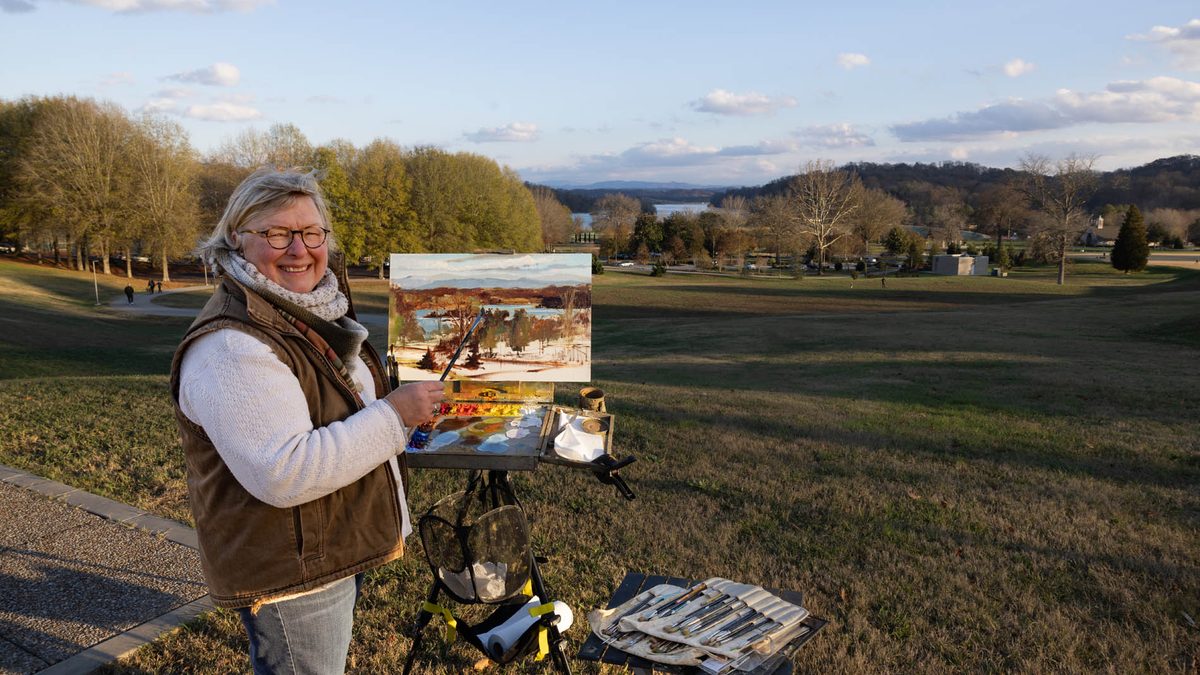
Kathie Odom’s success as a plein air painter holds a life lesson for all of us. A University of Tennessee art school graduate, her career led her to creative endeavors that weren’t fine art: framing, faux finishing, decorating, and renovating spaces. It wasn’t until she turned 50 that a birthday gift from her husband Buddy steered her back to her first love.
The gift was a plein air—meaning “open air”—painting workshop at the John C. Campbell Folk School in North Carolina. “I haven’t stopped painting since,” she says. “I had come to a place where I felt like it was my time. My children had flown the nest, my parents had passed away. My mother had ALS, and to see her lose her abilities to do the things she loved made me realize I was not doing what I really wanted to do, which was to get back into art. It was a lightbulb moment. It took courage and bravery, producing something and being proud enough to put it in front of people. I’m just so glad that it happened and that I’m doing it.”
Now 63, Kathie is represented by galleries around the country, including the District Gallery in Knoxville, and, in addition to painting in plein air events, she teaches workshops. In 2023, she’s scheduled to teach in Santa Fe, New Mexico; New Hampshire, Alabama and Provence, France. She published a book last fall of her art, photographed by Knoxville photographer Jim Wells, and Buddy’s stories about it. When they’re not traveling, her studio consists of the mountains that surround their Walland home.
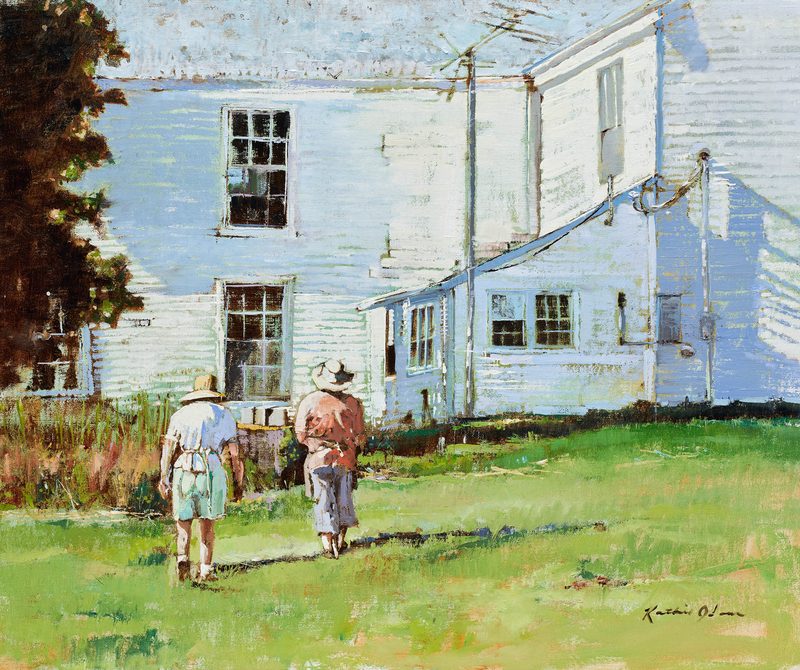
Kathie paints in oils and calls her style “nostalgic impressionism.” “I love where we live, and I love connecting nature with manmade things,” she says, “especially old structures close to the mountains. I like to imagine the stories of the people who lived there.”“Get Your Outside On” – 12″ x 20″ – Oil on Linen – Plein Air
She doesn’t want realism as the final result. “I look at a subject and wonder how would Kathie paint that, and it really takes the pressure off. So my paintings start with a drawing in paint. Then I get to lay on the butter—the color and viscosity of the paint. I feel like I have an approach that is my own.”
Kathie was one of 20 artists who participated in Friends of the Smokies’ first plein air painting event last fall, which raised $270,000 to benefit the park. “We’ve been to Wisconsin and California, Arizona and Florida for plein air events, and to see all the paintings of our park… it was very emotional for us.” You can find more info on her work atkathieodom.com.
→ Swipe for Next Story
InsightsJANUARY FEBRUARY 2023
The Confession
Story by Rebecca Whalen
It’s not the stories that Ioftentell that haunt me, the fun ones around the campfire celebrating the success of a good sporting trip. No, the ones that keep me up at night are those where pure instinct took over and adrenaline coursed through my veins as I overcame inescapable odds. Those are the ghosts that surround me.
I follow the hunter’s mantra to be cautious to remain the hunter, not become prey, and always act as ethically as possible. I approach each day afield with the attitude that it could be my finest experience yet. It is the chase that draws me like the moth to the flame, not necessarily the result at the end of the day. Some of my friends truly understand this, but to most, I don’t even try to explain that passion, that feeling for hunting and fishing, that drives me. For me, nothing even comes close when compared to the thrill of the chase.
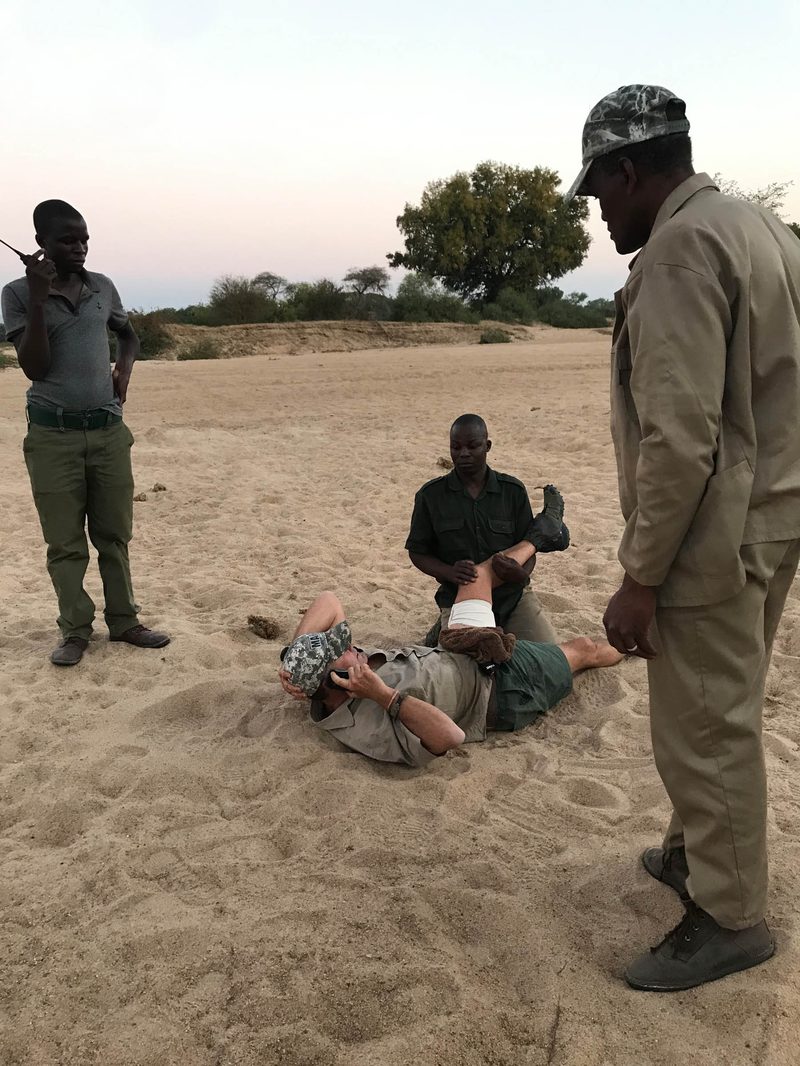
Sitting quietly in the woods waiting to hear the gobble of an old tom turkey is one of my favorite pastimes. It is often met with memories of beautiful foggy mornings and sunset walks back to camp, coupled with an innate sense of wellness that comes from being surrounded by nature. But not this morning. Something in the trees jogs my memory, and I begin recalling an experience that found me on a dry riverbed in Africa, my trusty 416 Rigby in hand, watching as a wounded Cape buffalo made a charge toward my friend, professional hunter Ian Bachelor.
I can’t say that my memory of the moment is perfect, but my memory of the feeling of that moment I carry with me just as clearly as the dew on the leaf I am looking at this morning, patiently waiting for a turkey to respond to my call. This memory is not of calm and serenity, as I feel here in these woods. It is a memory steeped in terror and adrenaline.
Ian’s first shot hit the buffalo in the horns just before he was knocked backwards about 15 feet. The buffalo had been wounded prior to our arrival, and I watched in horror as it made its second charge toward Ian, goring him in the leg. I shot twice, my second shot ending the battle and ultimately saving my dear friend’s life. Despite the struggle of the next many hours to get him to a hospital before he bled to death, Ian overcame incredible odds and survived.
Whenever this memory surfaces, I am overwhelmed with the feeling that there is still a score left to settle. My desire to return calls to me as loudly as the cry of the dying buffalo. My beloved says never again, but honestly I can’t wait! I know it is only a matter of time before I return, seeking to find peace with that harrowing experience. But I suppose that is the call of the wild, isn’t it? To enter into a situation without complete control and use your knowledge and instincts to overcome the challenge.
I am off in pursuit of another adventure, but before I go, consider this. Choose to be the hunter and go through life seeking that which will bring you the greatest joy. Even when you are met with failure, endure. Be respectful but don’t let others make your critical decisions. Hold a picture of success in your mind as you continue the journey that will ultimately define your legacy. Go hunt for what will make you great.
May your heart be calm and your aim be true no matter your quest.
→ Swipe for Next Story
DepartmentsJANUARY FEBRUARY 2023
The Big South Fork
Story by John Quillen
Often seen as the Smokies’ little sibling, the Big South Fork rides like an emergency $20 bill in my wallet. As leaf peepers crowd the usual, high-altitude routes, I sneak off into this gorge to feast on colors that flow downstream with the river. With 125,000 acres at my disposal, choices abound.
I park at Leatherwood Ford and begin walking along the opposite side of the water. We used to cross the old bridge, in obvious disrepair. Fortunately, there is a newer alternative which puts you astride the low-flowing rill. This is the John Muir Trail and there are 44 miles of it here. I’m only going to do about six this weekend as my terminus is a well-known overlook. Blowdowns scatter the path as I straddle logs and rock hop a sizable tributary. Remnants of a hiking bridge dangle its toes into the water along with mine, but I don’t mind the challenge. It keeps the hordes from my destination. I wonder if some of this trail neglect isn’t intentional for that very reason.
Two miles in and the switchbacks begin. We will ascend for almost a mile in the shadow of sandstone towers that beg for rubber shoes and a harness. In fact, there is an abundance of traditional rock climbing routes here on the rim and at the Blue Heron mining section of the park. I reach a cliff line with small alcoves. Blue-tailed lizards dart into the minuscule recesses as we top out on the Grand Gap Loop. Turning right, we follow this road-sized trail to the big prize: Angel Falls Overlook. No matter how many times I camp atop this bluff, the view still takes my breath away.
We bed down beneath a full canopy of stars not far from the overlook as barred owls serenade us to sleep. There is no water up here, which keeps overnight company at bay. Alone on the top of this prominence, we stare off into Kentucky as the Big South Fork River carries another season’s detritus downstream. This is an ideal place for beginner backpackers or a family outing just an hour-and-a-half from downtown Knoxville.
→ Swipe for Next Story
DepartmentsJANUARY FEBRUARY 2023
The Brass Pearl
Oysters on the half shell and signature cocktails bring NOLA to Market Square
Story by N. Brooks Clark
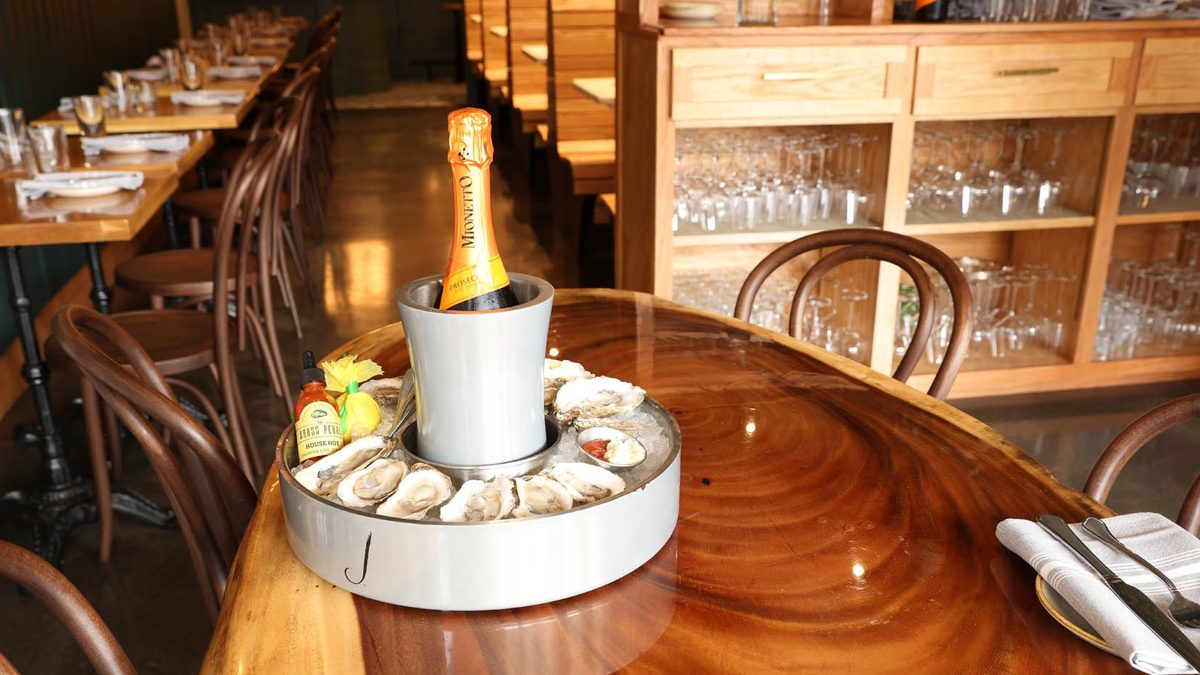
The French poet Léon-Paul Fargue wrote, “Eating oysters is like kissing the sea on the lips.” Knoxville’s only raw bar,The Brass Pearl, opened on Market Square in early 2022 with a simple concept: oysters from various regions of the east and west coasts, fresh-caught seafood, hand-crafted cocktails, and “bubbles.” It is a delightful addition to the Square.
The interior design with its lofty ceilings, rococo mirrors, and black-and-white tile floor will have you thinking you’re in the French Quarter, and when you taste the house Po’ Boy of crispy shrimp, haddock, oysters, kale, and radicchio slaw, you’ll know you’ve arrived in The Big Easy.
Chef Ben Dawson, a Powell High School and Pellissippi graduate, honed his craft at the French Market and Cru, picking up innovative ideas as sous chef for Darin Hoagland at Oliver Royale. “Darin’s passion for the craft and his ability to break down techniques to teach someone new was like nothing I’ve seen before in a kitchen,” said Dawson. “I learned something new every day.”
While you are deciding, you might try one of the house cocktails, the Oyster Shooter of vodka, house mix, and an oyster, or a Martini, offered Dirty (Castelvetrano Brine, olive), Dry (Dolin Dry Vermouth, twist), or Classic (Cocchi Americano, twist).
The stars of the show are obviously the oysters. On the evening we visited, the selection du jour included the Sugar Shack from New Jersey (slightly salty with a sweet finish), Dukes of Topsail from South Carolina (high salinity, sweet and scallop-like), St. Anne’s Bay from Nova Scotia (briny, crisp, clean), Sarah’s Shore from Prince Edward Island, Canada (nutty, popcorn, lemon finish), North Shore Gold from Cape Cod, Massachusetts (brisk brine, sweet finish), with Bad Boys from Nova Scotia (buttery, sweet, umami).
We especially liked the “tasting notes” supplied at the table that allowed us to savor the differences among the varieties. If you’ve ever thought all oysters taste the same, it’s a learning experience. Along with the usual crackers and hot sauces, the Pearl includes a classic “mignonette,” a piquant sauce made with vinegar and shallots for sprinkling atop of the oysters.
The “bubbles” include one of the best sparkling selections in town, from Italian Proseccos to various French Brut wines, a Spanish Frizzante, and several particularly good California options. These are offered by the glass, so you may sample these as you do the oysters.
Adding several of the other starters—for example the whipped feta with Fresno chilis, honey on toasted sourdough, or caviar served with crème fraiche, red onion, chopped egg—make a wonderfully light and flavorful meal.
If oysters aren’t your thing, or you are in the mood for something heartier, there’s always a fresh catch. Ours was Chilean Sea Bass cooked to firm and succulent perfection. Fish ‘n’ Chips are crispy, beer-battered haddock and fries with chowchow tartar sauce and malt vinegar.
We loved the tomato-based Fisherman’s Stew of mussels, shrimp, fish, grilled lobster tail, spicy tomato sauce, risotto, and toasted sourdough. If you are feeling indulgent, the Lobster Bisque—served with sourdough crouton, crème fraiche, and chives—is delicious.
The New York Strip with blue cheese came with oyster mushrooms, demi-glace, buttermilk blue cheese, crispy shallots, white cheddar polenta, and asparagus.
We finished our meal with a Salt Bae—Blanco tequila, grapefruit cordial, aperol, lime, salt, and soda. It was a marvelous digestif, and we left the Pearl in true NOLA line-band fashion, humming “When the Saints Go Marching In.”
→ Swipe for Next Story
Dining GuideJANUARY FEBRUARY 2023
Famous Faces & Places
You know them, you love them, you can’t live without… their FOOD!
Story by Marc Anthony
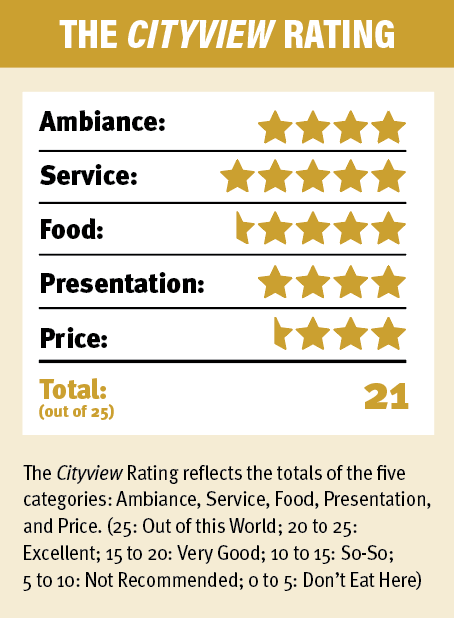
Dolly, Guy, Trevor, Blake, Paula, Drew, and Peyton all have local eateries and hangouts that have been swarmed with customers all hoping to get a peak at the celebrity faces that may be in their midst. Let’s see why they have come to east Tennessee to set up shop, starting with Mr. Manning!
Peyton Manning’s Saloon 16
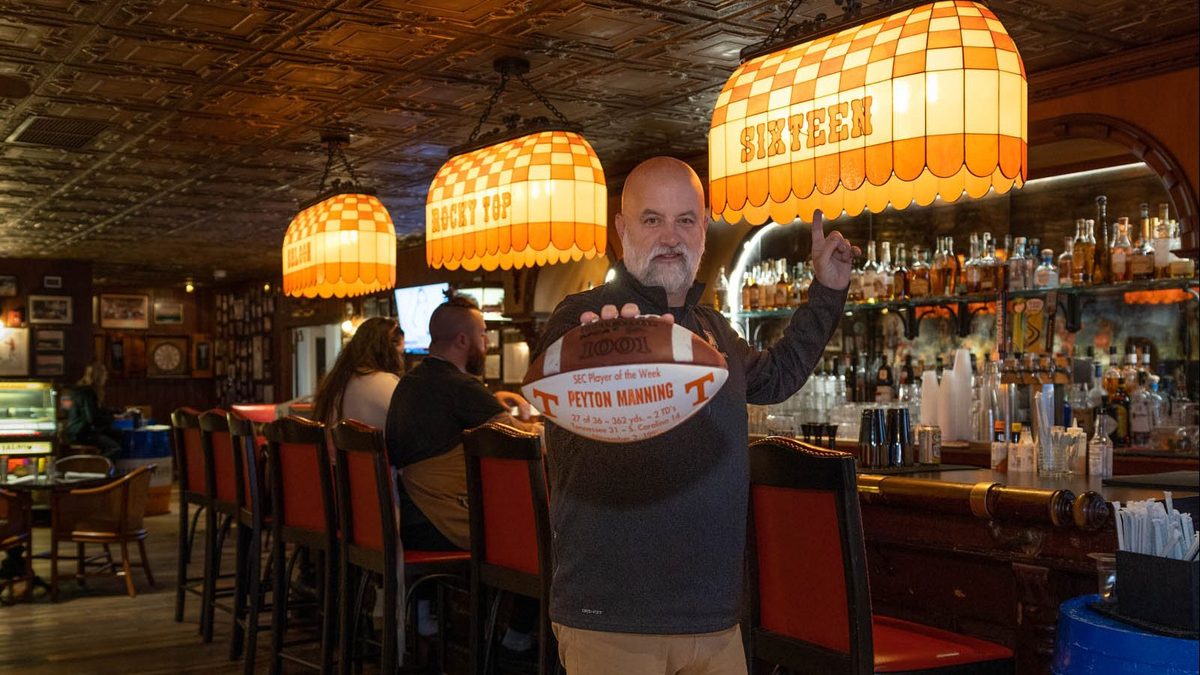
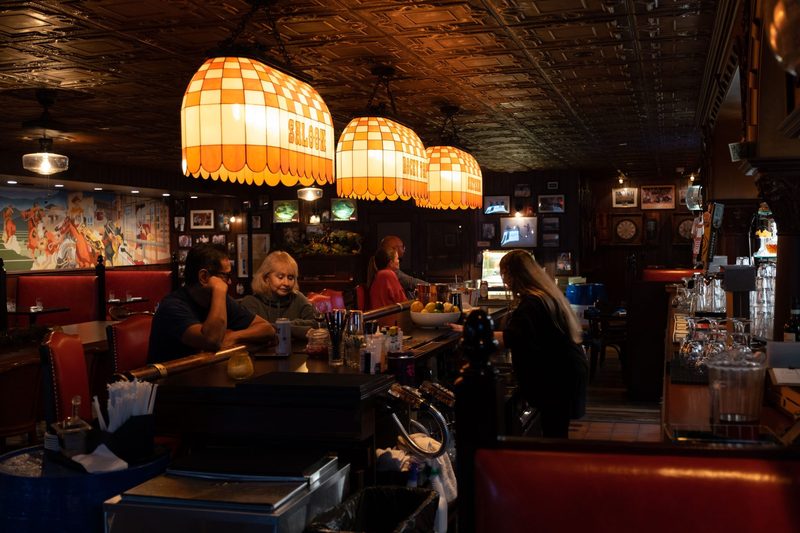
The night Tennessee beat Alabama on the football field, Sheriff Peyton was in town and The Graduate Hotel on the strip became the OK Corral for the after party. It was a night to remember. But what do the hotel and Peyton Manning have to do with each other? How about a little speak-easy just off the lobby called Saloon 16. Truly, you kinda gotta ask where it is as it’s not the grand entrance you might expect. It’s a nondescript, smaller than you’d think, Vol-colored hang out with memorabilia galore. Traditional pub food dominates the menu at this cozy watering hole located in the heart of a boutique hotel.
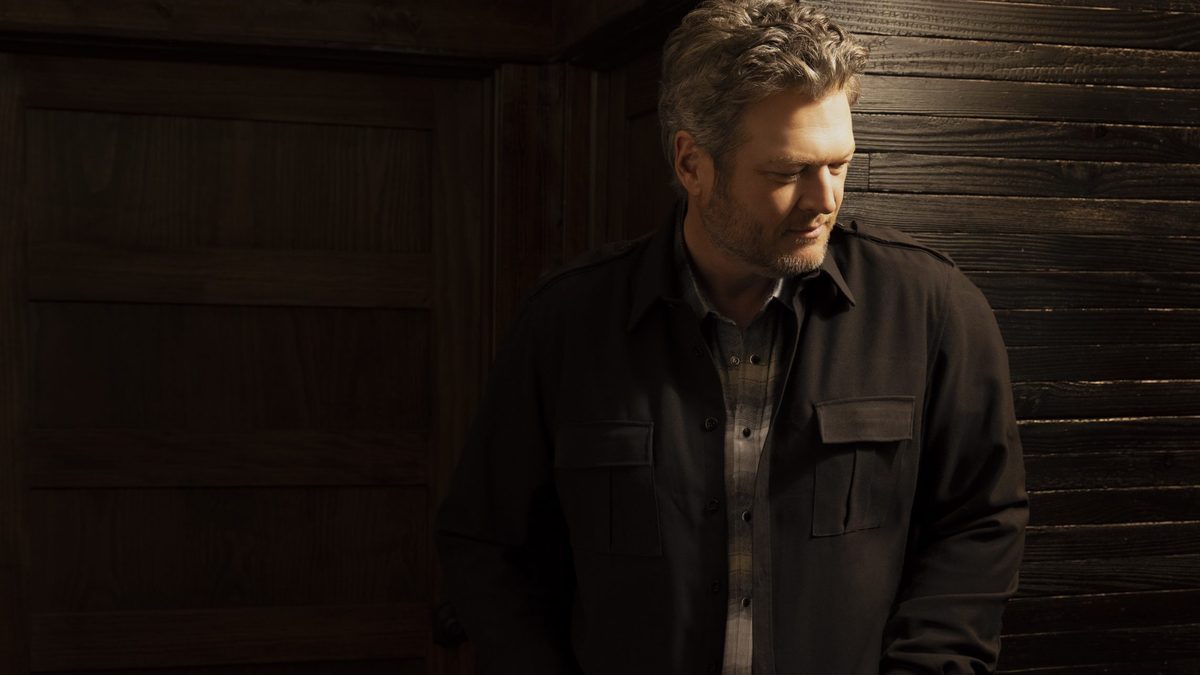
Blake Shelton came to Gatlinburg and turned it up a notch. The Singer/Music Show Judge/Celebrity Husband has put together a signature restaurant and music venue and has become THE place for live country performances in east Tennessee. If you’re having lunch in Gatlinburg on a Monday, Ole Red will have a singer on stage. The Kiss My Country Grilled Chicken Sammich and Sugar Bear’s Peach Cobbler round out the experience that Blake wants you to enjoy while discovering the next great country singing talent, just like he does on The Voice.
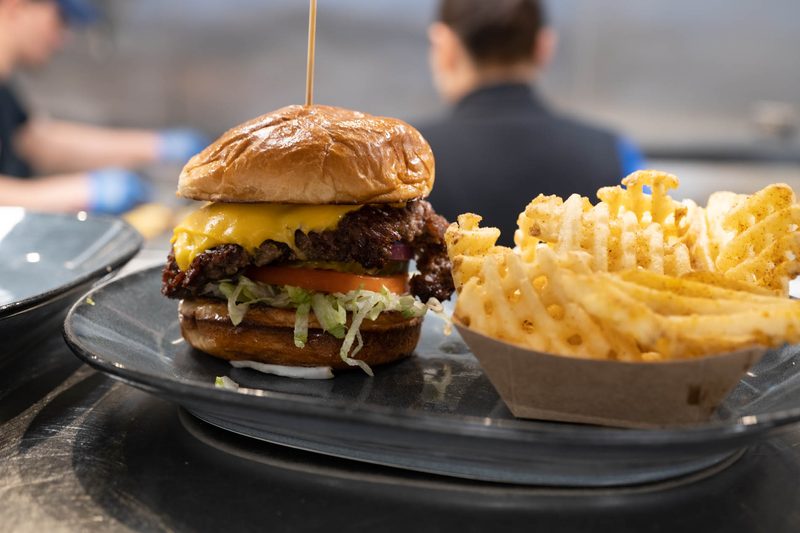
Former NFL Quarterback Drew Brees was such a fan of Louisiana’s Walk On’s restaurant that he became an owner. Walk On’s is a family sports bar with a taste of Louisiana. I have eaten there multiple times since they walked on to Kingston Pike in Knoxville, and I can’t even begin to tell you how good the food is. Come hungry. The University of Tennessee shows up in the Walk On’s origin story but I’ll let you discover that for yourself as you salivate over the Voodoo Shrimp and Grits or the Black Jack Chicken Sandwich. And yes, there is alligator on the menu. Nothing is over-the-top spicy and the bar is a centerpiece. Walk in to Walk On’s.
Daytona 500 winner and local dude Trevor Bayne jumps in and out of the NASCAR drivers seat at 200 miles an hour to enjoy a much slower pace at his Mahalo Coffee Roasters locations in Powell, downtown Knoxville, and Alcoa. The coastal coffee shops of Hawaii inspired the name and theme of the joint with a laid back, open air lanai feel. Your coffee’s beans were probably roasted by Trevor himself, and he is the most likely celebrity glimpse of all the famous places featured in this issue. Robust flavors burst from Mahalo’s cups with plenty of take-home bagged bean and merch options available.
Paula and her boys emblazon the side of the building. Smells of Paula’s cooking waft down the escalator when you enter through the gift shop. Paula Deen’s face predominates the cookware and the ornaments and the cookbooks for sale. You know you’re at Paula Deen’s when you’re at Paula Deen’s. Name any comfort food you’ve ever had and it’s on the menu. Chicken and Dumplings, check. Pot Roast, check. Ooey Gooey Buttercake, check. You’ll believe you’re in Paula’s Kitchen in Savannah when it’s actually The Island in Pigeon Forge.
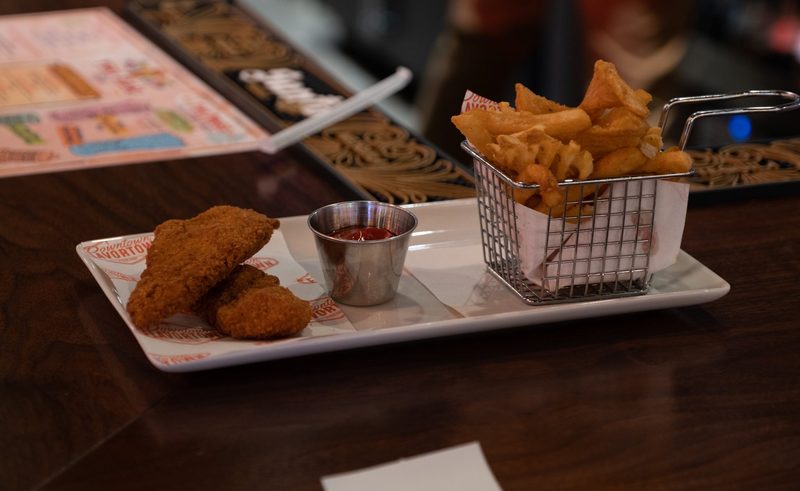
Is it a restaurant, an arcade, a bowling alley or a Tiki bar? It’s all of them and one of the newest hotspots in Pigeon Forge. Food star Guy Fieri’s head burst wide open and Downtown Flavortown stuck to the walls. A place that implores you to Play With Your Food. And at a whopping 43,000 square feet, there’s plenty of room to do just that. From delectable shareables like Trash Can Nachos to the unimaginable Spaghetti and Meatball Waffles and Guy’s own vintage Chevy Camaro on the play floor, Downtown Flavortown is worth the long wait for a table. I challenge you to spend less than 2 hours here.
America is on full display at Dolly Parton’s Stampede from the theme of the show right down to your plate overloaded with comfort food. Country music legend and homegirl Dolly Parton has added to her extensive portfolio by buying and renaming Dixie Stampede, and the show reflects the changes as the Mason-Dixon line isn’t anywhere to be found. Horses are the main attraction and can be visited upon entering the theater. A full roasted chicken highlighted my four-course meal and was sumptuous. A weekend trip to Pigeon Forge wouldn’t be complete without a visit to the Stampede.
With thousands of fans in Knoxville, consistently exceptional shows over his career, and a 2021 album, Body Language , that we simply adore, there’s no doubt that Blake Shelton’s show in February at the Thompson-Boling Arena will be a memorable one.
Story by Rebecca Whalen
Shelton’s “Back to the Honky Tonk” tour—an epic name for a country artist’s tour, if you ask us—kicks off in Nebraska in mid-February, and Knoxville is one of his early stops before he makes his way across the country through the end of March.
The last time Shelton played in East Tennessee was back in March at a concert during “Spring Blake” at Shelton’s Ole Red restaurant and music venue in Gatlinburg (check out the Dining Guide for the good word on the menu). But it’s been quite a while since this many East Tennesseeans got to see him all at once.
Special guest Carly Pearce and country newcomer Jackson Dean will join Shelton on the Honky Tonk tour. Pearce—who has won multiple CMAs and recently sold out her show at the Ryman Auditorium in Nashville—has her own connections to East Tennessee. She left Kentucky when she was a teenager for a job performing at Dollywood which would eventually catapult her into a successful music career. Dean might be a newcomer, but he has already developed a following. His single “Don’t Come Lookin'” quickly found its way to the top of the charts and on streaming television series, Yellowstone. Let’s give kudos where kudos is due. We caught up with Shelton to hear more about what’s coming up for the country music star in 2023:
Cityview: Why “Back to the Honky Tonk” for the tour?
Blake Shelton:I love a Honky Tonk and played a lot of them in the early days of my career. Some of my favorite memories are playing the country clubs across this country back in the day, so I wanted to bring that whole feel back.
CV: What’s in store for you after you leave “The Voice” in the upcoming Season 23?
BS:I have a new show on USA Network that Carson Daly and I created—we’re also in it with Nikki Bella who is our host. Back in the height of Covid, they had really tight restrictions on who could be on set so there was no audience and a limited amount of crew people, so we had a lot of downtime on set. One day, we were drinking in our dressing room watching TV and we were watching that show “Holey Moley!” and we said this would be even more fun if everyone was drinking! That’s how “Barmageddon” was born.
CV: What is your favorite part about visiting the East Tennessee community?
BS:I lived in Nashville for 12 years and spent a lot of time all over Tennessee, and I love the mountains and people in East Tennessee. There’s so much great music that comes out of that area….Not too long after we opened Ole Red in Gatlinburg, me and Gwen and the boys rented a cabin and stayed for a few days and had so much fun. There’s so much to do for the kids and your surrounded by the mountains. It was a great vacation.
———
Tickets arestill availablefor the Knoxville show. You can expect to hear old favorites from Shelton coupled with new and catch the star before he leaves weekly public view. He announced in 2022 that the 23rd season of “The Voice” will be his last as a coach.
→ Swipe for Next Story
JurisprudenceJANUARY FEBRUARY 2023
Remnants of a Scoundrel
It was the best of times, it was the worst of times…it was the spring of hope, it was the winter of despair. —Charles Dickens, A Tale of Two Cities
Story by Gary Wade
The 1960s, so long ago, left lasting impressions for those in this country who stood witness—an entire decade on an emotional roller coaster. The election of a young president with a vision of placing mankind on the moon, an escalation of a war in Vietnam, the hope of Camelot, Lee Harvey Oswald in Dallas, the promise of Lincoln in the form of Civil Rights legislation, and, sadly, the 1968 assassination of Martin Luther King, Jr., in Memphis. The list goes on.
James Earl Ray, convicted of Dr. King’s murder, was born on March 10, 1928, in Alton, Illinois. His parents, who had eight more children, eventually moved to Ewing, Missouri. Ray left school at the age of 12, later joined the U.S. Army, failed to adapt, and was discharged in 1948. A year later, he was convicted of burglary. In 1952, he served two years for armed robbery. After his release from prison, he committed mail fraud and served four years in Leavenworth, Kansas. Another armed robbery of a Kroger in St. Louis resulted in a 20-year sentence. In 1967, he escaped by hiding in a bakery truck and found his way to Mexico where he tried to make a living filming pornography. Failing in that, he moved to Los Angeles and volunteered to work in the 1968 presidential campaign of segregationist George Wallace.
In March of that year, using the alias Harvey Lowmeyer, he traveled to Birmingham to buy a 30-06 rifle, 20 cartridges, and a scope. When he discovered that King planned to be in Memphis to support the striking garbage workers there, Ray followed. A bomb threat delayed King’s arrival. Knowing the danger he faced, King delivered the iconicI’ve Been to the Mountain Topaddress at the headquarters of the Church of God in Christ:
What [might] happen to me from some of our sick white brothers? Well, I don’t know…I just want to do God’s will…I’ve seen the promised land [but] I may not get there with you…I’m not fearing any man. Mine eyes have seen the glory of the coming of the Lord.
Afterward, King checked into room 306 of the Lorraine Hotel, known as the King-Abernathy suite because he and Rev. Ralph Abernathy, a friend in the civil rights movement, so often stayed there. While standing on the balcony at 6:01 pm on the following day and just as he asked a musician in his entourage to playTake My Hand, Precious Lordat their meeting later that night, a shot rang out. The bullet entered King’s right cheek, traveled downward in his spinal cord and lodged in his shoulder. He died just over an hour later at St. Joseph’s Hospital. It was April 4th, 1968.
Moments after the shooting, witnesses saw Ray run from a rooming house across from the Lorraine. A package found nearby contained a Remington rifle and binoculars. Ray’s fingerprints were on each. Ray fled to Canada and after a month in hiding, was able to acquire a passport in the name of Ramon George Sneyd and flew to London. Days later, he was arrested at Heathrow Airport before he could depart to Rhodesia or South Africa, apartheid countries at the time. Ray was extradited to Tennessee where he faced trial on first degree murder. Percy Foreman, a famous criminal defense lawyer from Texas, was called on to represent Ray. On March 10, 1969, Ray’s 41st birthday, he pled guilty in order to avoid the possibility of the death penalty and received a 99-year sentence. Three days later, Ray recanted his confession and unsuccessfully tried to withdraw his plea. He was transferred from Memphis to Brushy Mountain State Prison in Morgan County.
A series of appeals began with Ray vs. State, when our state supreme court denied his effort to reopen the case. In 1972, the state’s court of criminal appeals affirmed the dismissal of Ray’s petition for post-conviction relief. Later, the federal court refused to grant a writ of habeas corpus. Ray’s appeal to the Sixth Circuit Court of Appeals was also unsuccessful. Ray had claimed that he did not shoot King but knew of a plan by a man named “Raul” who he had met in 1967. In a subsequent interview with a journalist, he contended that he purposely left the rifle with his fingerprints near the murder scene in hopes of becoming a famous criminal. Ray believed that Wallace, when elected president, would issue a pardon.
On June 10, 1977, Ray and six other inmates escaped from Tennessee’s Brushy Mountain Prison in Morgan County. He was captured three days later. A year was added to his sentence. Ray and his Tennessee attorney, Jack Kershaw, also a segregationist, persuaded the House Select Committee on Assassinations to investigate his claim of unwitting participation in the murder plot, but ballistic tests proved inconclusive. At Kershaw’s urging, Ray took a polygraph as part of an interview with Playboy magazine. Test results indicated Ray shot King and did so alone. When Ray learned Kershaw had been paid $11,000 by the magazine, he fired him and hired attorney Mark Lane of New York, known primarily for his conspiracy theory on the assassination of John F. Kennedy. Lane, who also appeared before the House Committee, alleged that Ray was an innocent pawn in a government plot to kill King.
Meanwhile, as Ray continued to meet defeat in the Tennessee courts, he was confronted by Dr. King’s son, Dexter. Ray denied having fired the fatal shot. Surprisingly, the King family supported Ray’s effort to gain a new trial, but none was forthcoming. In a 1997 mock trial made for HBO television, Ray gained a hollow victory. Persuaded by designated defense attorney William Pepper, a friend and supporter of King during the last years of his life, the powerless “jury” returned a not guilty “verdict.” On behalf of the King family, Pepper then sued Loyd Jowers, a restaurant owner near the Lorraine, for Dr. King’s wrongful death on the theory that Jowers and others, including governmental agencies, were somehow involved in the murder conspiracy. In the actual civil trial that followed, a jury found in favor of the family, which then agreed to only $100 in damages in order to establish that their motive had nothing to do with money.
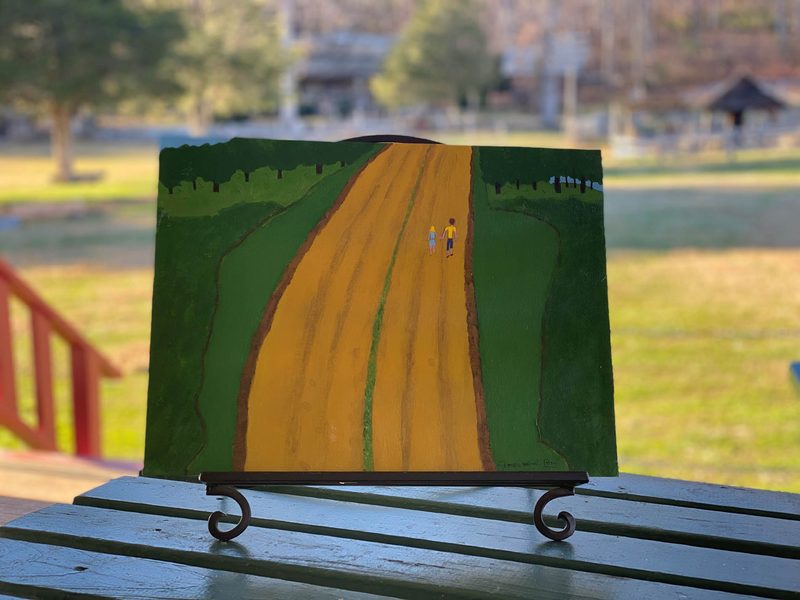
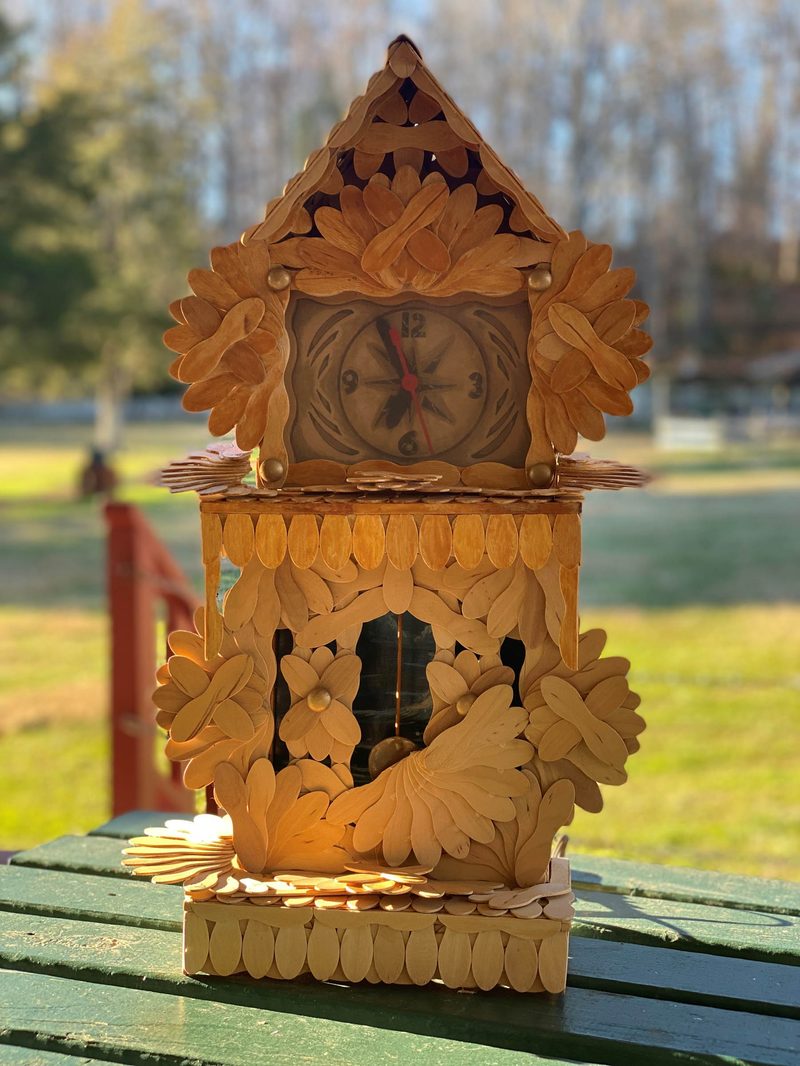
While in prison, Ray married Anna Sandhu Ray. The marriage lasted some 14 years until his wife was granted a divorce. Remnants of his incarceration are among keepsakes stored at the Museum of Appalachia in Norris. The extensive collection of the museum’s founder, John Rice Irwin, includes a clock Ray made of discarded ice cream sticks and an original piece of art Ray painted while in prison. Only weeks ago, Elaine Irwin Meyer, the daughter of Irwin and the executive director of the museum, found these artifacts in her father’s spacious storage facility. Although only these two items are attributed to Ray, Irwin, who died a year ago, spent his adult life collecting artifacts representative of Tennessee and Appalachian history. Early estimates are that Elaine faces at least three years of “treasure hunting” in Irwin warehouses in order to compile an accurate inventory.
Ray died of kidney and liver disease April 28, 1998, at the age of 70. Prompted by then Attorney General Janet Reno, the Justice Department conducted an extensive investigation of the assassination. Two years later, the department issued a 150-page report, confirming Ray’s guilt and rejecting the Memphis verdict in the family’s civil suit.
→ Swipe for Next Story
InsightsJANUARY FEBRUARY 2023
Defending My Life
How will you fare when you reach the final judgment?
Story by Robert Pryor, Sr.
I’ve been attending far too many funerals lately. If this keeps up, there won’t be anybody left for me to play with. Fellow lawyers, golfing partners, teammates, neighbors, and beer-drinking buddies have all gone missing in action.
At this point, I will spare you the old joke that I read the obituaries to see if my name is included, but I do read them as a gateway to the sports page. So far, my name has not appeared. In fact, my doctor says I’m in good shape for the shape I’m in. “Sound as a dollar,” I think is the way he put it. That statement alone will scare the life out of you.
Many of those ole souls that I’m missing were not really that old. As I get older, it seems that people are dying at a younger age. One came to mind the other day because I knew he lived somewhere near Port Charlotte, Florida, where Hurricane Ian hit. I Googled him and found out the hurricane was the least of his problems. He died in 2013. Knowing him, he probably smoked one too many cigarettes and remained overly friendly with Jack Daniel’s. Guess I should have looked him up sooner.
All these encounters with death have caused me to ponder, “Where did they go? Where will I go?” And, of course, “Will I see them again?” I realize these are heavy questions for an article by me, but I have no sure answers. Oh, I know about faith. After all, I have not always been asleep during all my years in Sunday school and church, but I think it would be good to at least have a little more evidence as I consider the practicalities of perpetuity.
My favorite movie is “Defending Your Life” starring Albert Brooks and Meryl Streep. My children call to tell me every time it’s scheduled to be on TV. It’s a great comedy about Brooks and Streep being unacquainted in life, but meeting in the afterlife after dying on the same day. The movie suggests that after death our lives are judged in court by a panel of judges who review movies taken every day of our life. Everyone is assigned a defense lawyer and required to watch the high and low moments of their life leading to a judicial decision on ascension to the “next phase.” Prosecuting lawyers show movies to demonstrate bad character, fears, or poor judgment and thereby challenge qualifications to “move on.” I bet that’s what death is like. All my relatives and friends have been through a trial in heaven and spent days in court where judges reviewed the salient events of their lives and allowed them to go forward or hold them back based upon their honorable or dishonorable record.
I wonder who has failed to reach the “next phase” in the judgment of the court? I’m sure my mother and father moved on and today reside happily in the “next phase” because they both lived good and decent lives and demonstrated good character and judgment. But what was the result of the trial of my drunken uncle, my friend from Port Charlotte, and, say…Jerry Lee Lewis? I heard that Leslie Jordan once said that he had committed so much sin that he had been baptized fourteen times because he wanted to make sure he got into heaven. I would like to see some of his trial to see if he made it.
I must admit, I seriously doubt that Saint Peter guards heaven’s gate. “Defending Your Life” made no mention of Saint Peter, and he would not necessarily be empowered to keep the “book of life” or guard the gate simply because Jesus gave him “the keys of the kingdom of heaven” (Matthew 16:19). Besides, there apparently are twelve gates to heaven just to confuse things further (Revelation 21:12), and he could not possibly guard all twelve gates. What will I do if there are twelve gates? At which gate will I be expected? Will it be like that time at the Gator Bowl when I went to the wrong gate and had to walk all the way around to the other side of the stadium? Worse yet, what if my gate requires one of those damn electronic tickets on my iPhone? It could be like trying to enter Neyland Stadium, and I could spend an eternity standing in line.
Now, let’s examine the larger problem. What parts of my life will I be required to defend and how will I do it? You don’t think they would pull out a film of that July day when I was in such a hurry I parked my car in the large parking lot at Opryland and stupidly left the engine running for over four hours? Surely not. I remember that the car was still smoking from the engine fire as we approached it to leave. Norma reminds me that, in denial, I stupidly remarked to our three young children that it looked like somebody had tried to steal our car. It was surrounded by policemen and firemen. It would be hard to defend that double blunder. What about the time in high school when I climbed aboard a bulldozer one night during construction of I-40 near West Hills. I started it up and couldn’t get it stopped. Not knowing what to do, I jumped off and ran away. That mistake won’t play well in court.
What if they have movies of the night in 1960 when six of us high school guys broke into the Deane Hill Country Club pool and stripped naked to go skinny dippin’, or what about all those annual egg fights between West High and Bearden in Sequoyah Hills? That is my first recollection of running from the police. Could there possibly be film of each of my transgressions? It would certainly be embarrassing to have to sit through movies of me rolling girls’ yards when I was in high school, or my cowardly reaction to climbing to a cave on Cherokee Bluffs and insisting on a helicopter to rescue me from a rock wall. Just one of my many fears revealed.
Oh, yes, I almost forgot—there was that time I was compelled to judge a wet T-shirt contest. I really didn’t want to, but the bar shook with rhythmical pleas for me to be the “pitcher man.” I’m certain somewhere there’s a video of me standing there like a halfwit with an empty water pitcher in my hand. Now, I know I’m going straight to hell.
Hopefully all of my life’s movie won’t be embarrassing. There might be some good film of my conduct as a lawyer and as a teacher. I’ve given lots of people directions and have adamantly refused to ever go to a cock fight. I’m twice a godfather, once a Cub Scout, and served on safety patrol in the fifth grade, but what about all those angry things I’ve said to telemarketers and the thousands of dirty jokes I’ve told over my lifetime? How can I possibly defend all the dishonorable and inglorious things that I’ve done? I recently started making a list of friends who might vouch for me, but realized most might not even be there.
Thinking back over the years, I might as well plan to throw myself on the mercy of the court and hope for the best. But wait, I still have lots of life left to create some great video. As a lawyer, I have many opportunities to help people and to do good for others. You do, too. After all, we are basically good people, right? Like most of you, I have tried to live my life in a way that is respectful to my fellow man, and I have strived to keep my faith alive. I’m sure we all can agree that when our name appears and our trial is held, we hope that most of our movie demonstrates a life well lived and that we are allowed to move on to that “next phase,” whatever that might be. However, in my case, it might be better if some of my film gets lost or becomes irreparably damaged.
→ Swipe for Next Story
FeatureJANUARY FEBRUARY 2023
A World of Potential
With a wealth of new and returning talent, the Lady Vols aim for the Final Four.
Story by N. Brooks Clark
In a November visit to the Rotary Club, Lady Vols Coach Kellie Harper noted that the excitement of the football season had reminded her of the late 90s. “Our football players are getting to experience what I experienced in the late 90s,” said Harper. She was referring both to the 1998 football championship and to her seasons as a French braid-pony-tailed point guard for three Pat Summitt national championship teams and a fourth that made it to the Elite 8.
In the offseason, Harper—now in her fourth season as coach at UT—landed the nation’s top transfer-portal class, adding four strong players to her already talented mix. “This did not happen by accident,” Harper told the Rotarians. “Once players enter the portal, they will decide very quickly. With portal recruiting, you’re cramming.”
“You have to do your research and be ready,” Harper said, “so you know if the player is someone who will hit the program and contribute.” The portal additions were—
• Jasmine Franklin, a 6’1” graduate forward from Missouri State. “I coached Jasmine her freshman year,” said Harper. “She’s a rebounding machine.”
• Jillian Hollingshead, a 6’5” post player from Georgia who handles the ball like a guard. (You get a gold star if your subconscious mind filled in the words “… like Candace Parker.”)
• Rickea Jackson, a 6’2” senior forward who played in three seasons at Mississippi State, leading the team and the SEC in scoring. “She’s fun to watch,” said Harper. “She’s a gamer. She loves to play and can play multiple positions. She fits right into what we’re doing.”
• Jasmine Powell, a 5’6” senior point guard from Minnesota. “She is explosive to the rim,” said Harper.
The Lady Vols also welcomed McDonald’s All-American freshmanJustine Pissottfrom Toms River, New Jersey. She made 182 career threes at Red Bank Catholic and won gold with the US U18 national team in the Women’s Americas Championship in Buenos Aires last summer. “She’s got a little Jersey in her,” noted Harper. Like a 6’4” Meadow Soprano, Pissott boxes out and defends with attitude. Her twin sister, Georgia (Gia), plays for the Naval Academy.
So how did Harper go about mixing these five players in with eight solid returnees from a team that went 25-9 and made the Sweet 16 last season? “You have to work at team chemistry,” Harper told Rotary. “Rooming lists, where they sit in the film room, what group they’re hanging around with. We went to the Birmingham Civil Rights Institute in Alabama—all to try to help that chemistry.”
At an early practice, Harper stopped play because the players weren’t yelling encouraging words to their teammates or trying to pick each other up. “We talked about being one with each other, so we have to do those little things—be there for each other, pick each other up when we’re down, talk,” Rickea Jackson toldNews Sentinelbeat writer Cora Hall.
At game-time, the richness presents an unusual problem. “We’ve got players who can play so many positions,” Harper told Hall. “There’s probably not a combination on paper that I couldn’t make work. The hardest part is paring it down to five at any moment.”
On the Floor
At point guard, newcomer Powell alternates and plays alongside 5’8”Jordan Walker, who started last year and led the team in assists (115) and steals (38). She played two seasons at Western Michigan and earned her degree in political science with a minor in communications before transferring to UT in 2020. A member of the SEC Academic Honor Roll for the past two seasons, Walker got her MBA with a concentration in entrepreneurship and innovation from the Haslam College of Business and is now working on another masters—in agricultural leadership, education, and communication.
On the wings, newcomer Jackson starts, along withTess DarbyandJordan Horston.
Darby, a 6’1” junior from Greenfield, Tennessee, makes about 40 percent of her threes. “We play well when she’s on the court,” said Harper after a victory over UMass game in November. “She communicates well.” (Her little sister, Edie, is a 5’7” freshman walk-on who can also drain threes.)
Horston, a 6’2” preseason All-SEC senior from Columbus, Ohio, can drive and score. She was leading the team in scoring and rebounding last season when she dislocated and fractured her elbow and missed the last eight games, including the NCAA tournament. Over summer she worked with the strength and conditioning coach and increased her vertical leap by four inches. In a practice she tried to tip in a rebound but tipped it too hard. “You don’t know what to do with your new hops, do you?” asked Harper. “I told her, if you get a breakaway, as long as it’s not a two-point game in the fourth quarter, go ahead and try to throw one down. Because I think she’s pretty close to being able to do that.” The idea of being one of the few women to dunk in a game appeals to Horston. “Might as well take a chance, try it out, see how it goes,” she told Cora Hall.
At center, 6’6” preseason All-SEC seniorTamari Keyfrom Cary, North Carolina, was diagnosed with blood clots in her lungs in December and lost for the season. She had been is an imposing presence on the floor, and an essential element in the Lady Vols offense near the basket. Last year she led the NCAA by blocking 199 shots (3.5 per game) while averaging 10.5 points and eight rebounds.
Throughout the challenging November and December schedule, Harper made a point of giving meaningful playing time for the other eight players on the bench, who could comprise a strong rotation in their own right. Newcomers Franklin and Hollingshead tend to get into the game early, as do sophomore wingsMarta SuárezandSara Puckett.
Suárez, a 6’3 redshirt from Oviedo, Spain, sat out last season with a foot injury and makes slightly under 30 percent of her threes. “She’s very crafty with her passes or finishes, ball fakes,” Jordan Horston told Cora Hall. “But the main thing I really notice about Marta is how efficient she is. She can get a rebound, she can hit a three – open three, contested. She’s just good around the basket, good with her finishes.” Suárez and Tess Darby went on a service trip to Rwanda in July as the culmination of their yearlong experience with the VOLeaders Academy leadership-development program.
Puckett, a 6’2” from Muscle Shoals, Alabama, hit thirty percent of her three-point shots as a freshman, including a go-ahead shot with 18 seconds to go against Belmont the NCAA tournament that helped the Lady Vols make the Sweet 16.
Along with freshman Jersey Girl Pissott, sophomore guardsBrooklynn MilesandKaiya Wynnand 6’3” forwardKaroline Striplinadd a spark when they get minutes. Miles, a 5’4” defensive specialist from Frankfort, Kentucky, can play point. “She brings a lot of energy and toughness,” said Harper. Wynn, a 6’0” rebounder from Richmond, Texas, grabbed six boards in just 17 minutes on the floor against Kentucky in last year’s SEC tournament.
In her first career start, Striplin, from Hartford, Alabama, had seven points—including a three-pointer—three rebounds and a block, a steal and an assist in a 69-39 win over UT Chattanooga in December.
Growing from Adversity
Like Pat Summitt, Harper makes sure to expose the Lady Vols early to the level of teams they will face in the NCAA tourney. “We have the best schedule in the country,” Harper said at Rotary. “We want to challenge our players. Our goal is to be the best basketball team we can be. You don’t get better on a sailboat. Great teams have to have some adversity.”
In the season opener at Ohio State, the Buckeyes obliged with a withering full-court press. All cohesion fell apart as the Lady Vols had 29 turnovers and lost 87-75. After a 74-65 win over UMass, the Lady Vols were dominated in a 79-67 to Indiana. In a tournament in the Bahamas, they beat Rutgers 94-54 then lost to UCLA 80-63 and Gonzaga 73-23.
After wins over Colorado (69-51) and Eastern Kentucky (105-71), the Lady Vols were edged 59-56 by Virginia Tech, as Key held 6’6” ACC Player of the Year Elizabeth Kitley to six points while scoring 11 herself. “We just have to keep working hard and getting better,” said Key afterward.
After traveling to Palo Alto to meet Stanford on December 18, the Lady Vols started their SEC schedule at Florida on December 29 and at home against Alabama on January 1.
Mighty UConn visits Thompson-Boling Arena on January 26, re-sparking an iconic rivalry. On February 26, UT has its showdown with national champion South Carolina, which last season beat UConn for the national title.
“They’re good,” said Harper. “They return almost everyone from a good, deep team. But we have an established culture and system. We feel confident that we can go toe-to-toe with and beat anybody.”
→ Swipe for Next Story
FeatureJANUARY FEBRUARY 2023
Vintage Vibe
Retro rental in Knoxville transports visitors to the Frank Lloyd Wright heyday
Story by Mary Leidig
[flipbook id=”3″]
For years, Michelle Flanigan-Hill has taken leisurely drives by the Vista Road houses in Louisville, Tennessee. These 1950s-60s mid-century modern homes are her favorite architecture era, reminding her of joyous, warm childhood visits in her grandparents’ home. /wp:post-content
wp:paragraphIn 2021, Michelle and her husband, David C. Hill, and their partner, Jim Johnson, bought one of them. The couple are both real estate professionals with Coldwell Banker Nelson. Today, the 6,716-square-foot “Casa Vista View” house is a popular vacation Airbnb rental. Groups and families regularly book it. /wp:paragraph
wp:paragraph“This place is really quite busy,” she says. Michelle is particularly proud of this since she has redesigned the entire home, bringing back a look and feel that combines a bit of Frank Lloyd Wright craftsman and mid-century modern. The 17-year real estate broker traveled several states to find just the right chairs, vases and tables to fill the home—in true mid-century style, original and of the period. /wp:paragraph
wp:paragraph“Wright’s designs influenced many great architects,” Michelle says. “George Belleville was one of those architects. He designed Casa Vista View back in 1959 for a doctor from California.”
The Dream of Restoring This House
wp:paragraphWhen the three bought the home, their goal was to restore and sell. Michelle, who lives in Maryville with David, loved the home’s straight lines, large windows, and quality of the construction and materials used in the 50s and 60s. “It looked like it would be sitting on the windy bluffs of the Pacific Ocean in California,” she says. “The use of older growth hardwoods for construction, which is seen in the Douglas fir siding, means it’s still in remarkable condition—as is the timber frame crossbracing in the exterior and interior walls.” /wp:paragraph
wp:paragraphWhen they were acquiring the property, Michelle would stop by and peek through windows. She saw kitchen cabinetry painted pink and concrete floors covered with carpets. Big decisions were coming as Michelle—who studied architecture at the University of Tennessee—began to envision restoring it. /wp:paragraph
wp:paragraphToday, a floating bamboo floor covers most of the square footage and 80 percent of the home’s furnishings are from the 50s and 60s. “They aren’t new except for a very few pieces that are remakes, which are simply not made as well as all the authentic used furnishings I found,” she says. Her journey began online and on the road to Georgia, North Carolina, and Tennessee in serious search of the perfect vintage pre-owned furniture of her favorite era. “Finding hundreds of pieces in decent shape is challenging,” she notes. /wp:paragraph
Creating the Perfect Time Capsule
wp:paragraphHaving filled their own home with mid-century furnishings, Michelle knew what brands to go after: Heywood-Wakefield, United, Lane, Broyhill. Although many companies have changed the way they make furniture today, Michelle was lucky. All the furniture she found is in great condition except for a few nicks and water marks. /wp:paragraph
wp:paragraphThe massive volume of furnishings includes couches, bed frames, ottomans, tables, lamps, and stools filling the equally massive house. “It’s really awesome furniture, and the people who are staying in the Airbnb want to be in this time capsule,” she says. The time capsule includes decorating various tables with oversized Life Magazines in perfect shape from the same era. /wp:paragraph
wp:paragraphEven the plants in the indoor atrium are of the time period and something she loves helping maintain. They are a part of the water feature, too, that runs full length along the main entrance. “Like these designs from the mid-century modern era, the front entrance is on the side of the house.” It’s one of those architectural features people ask her about and is a signature part of the era’s design. /wp:paragraph
wp:paragraphAlong with furniture, she would choose all vases, figures, statues from the same era she is so passionate about. Walls are lined with artwork that are classic mid-century modern reproductions. /wp:paragraph
wp:paragraphThe biggest surprises at the time now seem not so surprising: finding materials and then waiting for them was part of working during a global pandemic that stymied deliveries nationwide. “I finally found my front door in Woodstock, Georgia, and I actually drove down myself and got it,” she says. A stunning reproduction of the time period, she knew she must have it. /wp:paragraph
wp:paragraphMichelle and her construction team also took on the restoration of the fireplaces and walls. This meant cleaning and refacing some of them, which included the use of ashlar cut marble. The house exterior also utilizes this type of stone. /wp:paragraph
wp:paragraphAshlar cut stone has been shaped and dressed to have smooth and even faces, as well as square edges. It can be used for walls, arches, fireplace surrounds, outdoor kitchens and full-scale buildings among other projects. This method of cutting stone goes back thousands of years to Greece, Crete and other parts of Europe. /wp:paragraph
wp:paragraphToday, ashlar has a broad spectrum of applications and is found on historical buildings, along with mid-century modern and craftsman homes like Casa Vista View. /wp:paragraph
wp:paragraphWhen it came to building the mailbox, this seemingly easy task took some heavy lifting—literally. The half wall at the back of the carport had to be torn down and rebuilt, an enormous job. The ashlar cut marble it was faced with was removed and cleaned so that it could be creatively used to build an oversized mailbox, matching the ashlar cut marble on the fireplaces and exterior of the house. Michelle loved the result. /wp:paragraph
wp:paragraph“It’s a really stately mailbox—beneath a stone capstone so heavy we had to use a Bobcat in positioning,” Michelle says. “An awesome stone mason made the mailbox look like it had been there from day one.” That master stone mason for the house was Steve Jinks, a long-time craftsman. “We were just lucky he was able to work us into his busy schedule,” she says. /wp:paragraph
wp:paragraphThe kitchen evolved into a more expressive craftsman look in its cabinetry and countertops—no more pink. Michelle searched for original Formica but found none for the countertops. Instead, she found black diamond granite for the kitchen and bath surfaces. The pool would be resurfaced with hand-cut blue coping stone, as well as blue-gray “penny tile” on the inside edge of the pool. /wp:paragraph
Mixing Old and New
wp:paragraphPart of restoring the house was making it both comfortable and efficient for 21st century living. All utilities are now underground, plate glass windows are now insulated with modern low-e glass (low emissivity) and roofing material “so thick that when airplanes are flying over Alcoa Highway in front of the house, which is common here, you can’t even hear them,” Michelle says. /wp:paragraph
wp:paragraphThe pitch of these mostly flat-roof mid-century modern homes means less need for gutters. Calming riverstone surrounds the home, and rainwater falls evenly in four directions onto the river rock below. Only in a few places are gutters required. /wp:paragraph
Everyone Has a Story of Casa Vista View
wp:paragraphThe veteran construction and engineering team took Michelle’s dreams to reality. “Fidel Cacho was our amazing carpenter and craftsman who I’ve worked with on properties for more than 15 years,” she says. “He did most of the frame and finish work on the Vista Road house under the supervision of general contractor Steve Carico and our structural engineer, James Bauman.” /wp:paragraph
wp:paragraphWhile Michelle and the team worked to meticulously restore this gem, she noticed people stopping by the house. They wanted to see the transformation. “People would drive up and ask us if they could go inside.” /wp:paragraph
wp:paragraphSo of course, Michelle decided to host an open house. More than 100 people came one Saturday over the course of four hours. “They all had a story to tell as they had been watching that house for years,” she says. /wp:paragraph
wp:paragraphTheir attachment to the immense six-bedroom, four full and three half-baths home grew. Michelle, David and Jim began to find reasons to turn down offers to buy it. It was final. They would keep it. Eventually, the couple did sell the house to their partner Jim, who knew it would make a great Airbnb, with Michelle as its designer. /wp:paragraph
wp:paragraphJim actually handles the bookings, while Michelle helps make sure the house continues to look its best as new pieces are added now and then. /wp:paragraph
Stepping Back In Time
wp:paragraph“Our goal was to be able to walk onto this property and feel as though you had just stepped back in time to the 1960s.” The focus was on every detail, down to the furniture, decorations and vintage magazines on the tables. Clearly, they succeeded. /wp:paragraph
wp:paragraphFor Michelle, the restoration was an eclectic mix of the styles she loves best: mid-century modern and craftsman. “This home was built in an era when the quality of construction and materials used was stronger and more solid.” Even the furniture was heavier and built differently. Dovetail joints adjoined wooden furniture, instead of nails and screws with lightweight materials. /wp:paragraph
wp:paragraphThese days, Michelle keeps Casa Vista View looking its best in true ‘50s and’60s style. It’s exactly the retro look these Airbnb clients want. “We all grow up with a different perspective of what feels like home,” she says, “and we have a feeling about our favorite memories from childhood that bring us comfort.” For Michelle Flanigan-Hill, Casa Vista View is exactly one of those. /wp:paragraph
→ Swipe for Next Story
Non-ProfitJANUARY FEBRUARY 2023
Safety & Serenity
Horse Haven nurtures abused and neglected horses — and the people who love them
Story by Susan Alexander
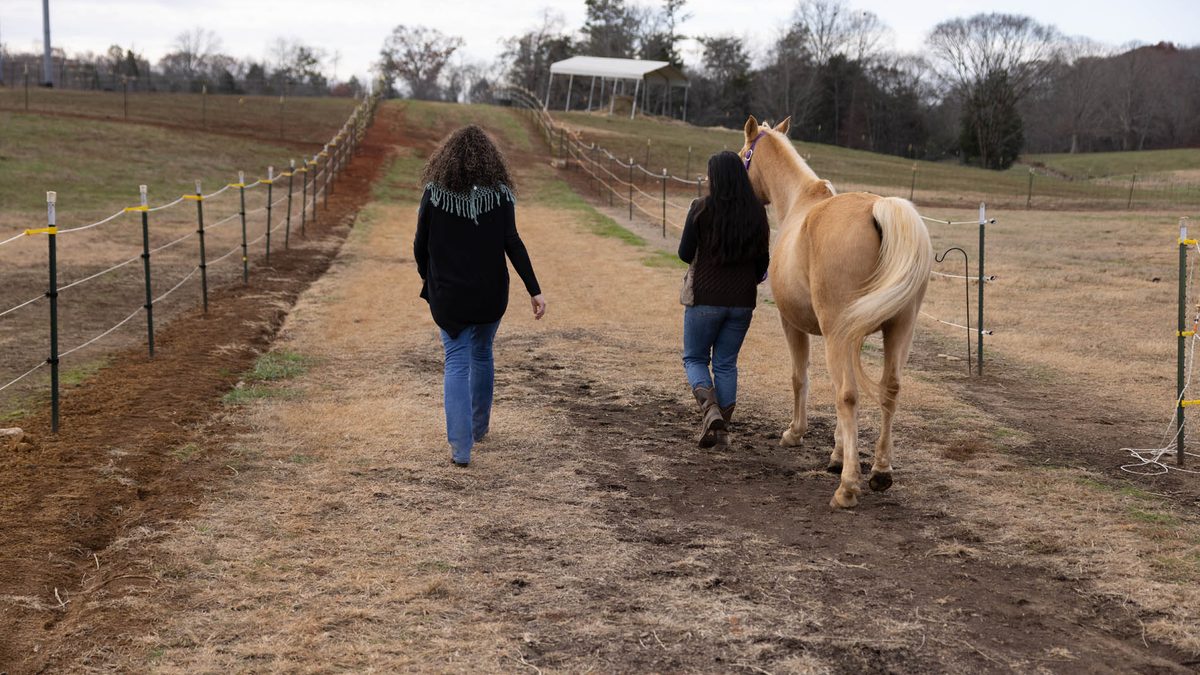
When Ashley Ford arrives for a day of work at Horse Haven, she knows she is at a place of peace. “My favorite thing is when I walk in, everyone greets me,” she says.
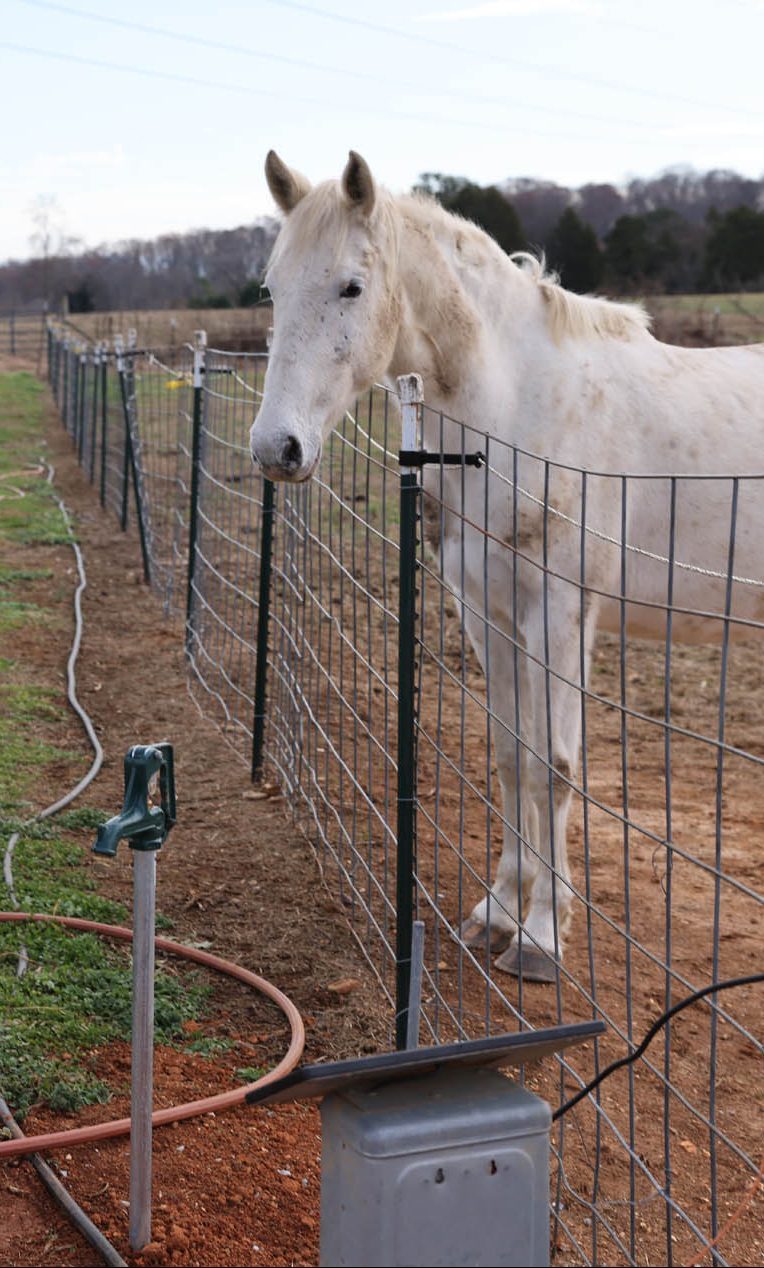
By everyone, the organization’s executive director doesn’t just mean staff members and volunteers. Their charges, the horses that have been rescued from abuse or neglect, nicker their hellos, too. Sunlight filters into the barn and the smells of hay and horse combine for a pleasant earthy scent. And the sounds? “There’s nothing better than hearing a horse munch on food or hay. You know they don’t have to worry about their next meal.”
A Volunteer Effort
Horse Haven has been providing such safety and security since 1999. That’s when founder Nina Margetson realized that animal control officers didn’t have a place to take an abused horse. Horse Haven is now the oldest and largest equine rescue organization in Tennessee with certification from the Global Federation of Animal Sanctuaries and Guardian status from the EQUUS Foundation. Horse Haven staff use their experience and expertise to help other rescue groups save animals.
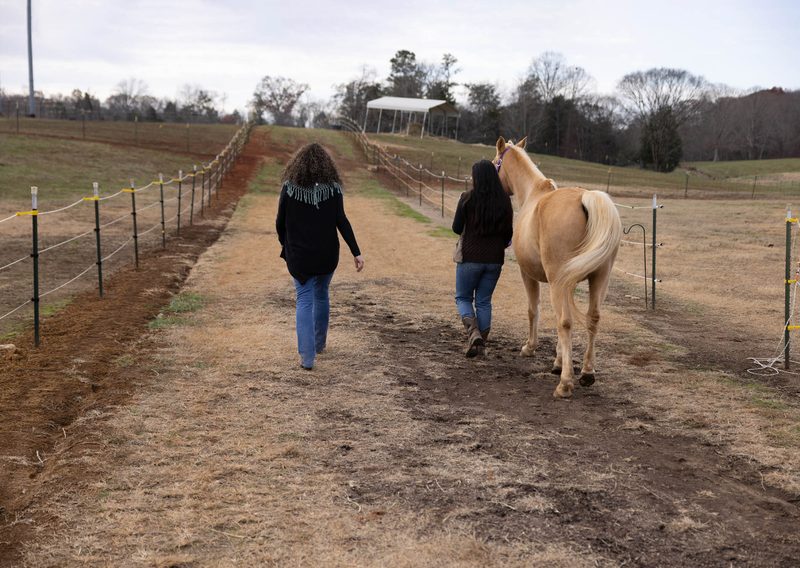
Located on a 15-acre leased property in Loudon County, Horse Haven houses anywhere from 10 to 50 horses at any given time. (When the rescue is at capacity, it relies on a foster network to house additional horses.) The nonprofit’s 138 volunteers fill two shifts a day 365 days a year to care for the horses — feeding and grooming them, leading them outside in the morning and back to the barn before the sun comes down, cleaning their stalls, even accompanying staff and law enforcement officers on calls to rescue animals. “They are the backbone of the organization, and they all come because they love horses,” Ford says of her volunteer team. “But somehow, they find unexpected personal healing here of their own. Whether they’re dealing with illness or anxiety or family issues, everybody comes out a better person,” Ford says.
Volunteer Donnie Malone is inclined to agree. She started volunteering four years ago not because she loved horses but because her 14-year-old daughter Cadence did, and her age required a parent to be with her at the farm. “It’s hard being the mom of a teenager,” Malone recalls of those years with a young adolescent, “but over the past four years I’ve watched her grow into a woman with empathy and compassion. Volunteering together has changed our relationship.”
Ford tells the story of another volunteer, Beth Mason, who kept coming to the farm even in the midst of her battle with cancer. “She found healing from being with the horses,” Ford says. “She got so weak she would come out and just sit. She said ‘I need this place.’” When she was no longer able to get there, Ford and her team brought her favorite horse to her driveway, and Mason came out in her wheelchair for a final goodbye with her four-legged companion. “I’ll never forget that experience,” Ford says, “how much that meant to her.”
From Harm to Healing
The animals at Horse Haven come from anywhere in the state. They come because someone—a neighbor or a passerby—alerted animal control officers to a situation of abuse or neglect. “Our most recent rescue was of six horses,” Ford says. “One was two years old. Her body score was the lowest she could have; she was just a sack of bones, she could barely stand. She had to be lifted by a tractor and held in a sling to stay upright. It’s so sad to have had to experience that level of neglect in two years.”
Some of the horses rescued have never been touched by a human hand and are feral. Some have only had what grows in their field to eat. Some owners surrender them; others fight tooth and nail to get them back. Ford suspects mental health issues often lead owners to neglect their animals. Or they get in over their heads financially. “Mom always said beware of the hobby that eats,” she says.
Once a horse is seized, it is taken to UT Veterinary Hospital for an exam. A horse will remain there until it is well enough to move on to Horse Haven. Once there, it is weighed and photographed on a weekly basis, documenting its original condition and subsequent progress to district attorneys until litigation is complete. Sometimes that can take years.
Madison Whiddon, Horse Haven’s equine manager, is in charge of the horses’ care once they arrive at the facility. “I love pretty much everything about the job,” she says. “Seeing the ones that don’t trust anyone at all and then seeing where they end up once they learn they can trust humans … it’s amazing.”
“Our horses have been through things,” Ford reiterates. “We can watch them heal and learn to trust again, and their personalities come out. They’re so … majestic. It’s almost magical. They’re over 1,000 pounds and they still respect a human being. And allow them to get on their backs and ride around. What other animal does that?”
Finding Forever Homes
Eventually, however, the horses are made available for adoption. The process to acquire a horse is rigorous. “It usually starts with an electronic application, then the equine manager or I will do a phone interview and ask a ton of questions,” Ford says. “We get a vibe from that call about what they’re looking for. Then we have a meet-and-greet with the horse that’s available, and we can tell if it’s going to be a good match. Ninety percent of the horses pick their person. They take a step in and put their head on your shoulder or chest.” That meeting is followed with a visit to the prospective owner’s property. Horse Haven requires an acre of land per horse, shelter and solid fencing.
Board member Meggan Graves, an emergency veterinarian, is glad of Horse Haven’s presence in the community. “The hardest job a vet has is having to euthanize an animal, and Horse Haven is there to keep that from happening.”
Graves has benefited from the organization in another way: she and her husband adopted a mule there to add to their own small farm. “I’m a sucker for long ears,” she says. “We got her last August and she is the perfect addition to our little herd. She gets along with the other donkeys and mules and she’s even let me put a saddle on her and ride her.” It was acquiring the mule that led to Graves joining Horse Haven’s board.
A Home of its Own
Looking ahead, Graves says the organization’s number one goal is to find Horse Haven a permanent home that gives the team the ability to keep doing what they do for horses. “We need to be able to make upgrades and improvements to the facility. Property is so expensive right now and land is limited, and it’s a huge credit to the organization that it’s in a place to be financially stable and able to look for that.”
Until that day comes, Horse Haven will continue its mission at its current location, healing both horses and people every day. “Helping out an animal is therapeutic,” Graves says. “And if you’ve never loved on the soft muzzle of a horse, you’re missing out.”
A nostalgic reflection on how commerce transformed a once-wild patch in Farragut
Story by Phil Newman
On an overcast spring day in 1984, a two-tone Buick Century station wagon carrying my dad, two sisters (ages 17 and 7), our two dogs, a very pregnant cat, and me (15) exited I-40 at Campbell Station Road to begin a new life in Farragut, Tennessee. We had just driven 1,335 miles from our previous home in Littleton, Colorado. (My mom was finishing some work out west and would join us later.)
Immediately I was struck by how different things looked and felt in East Tennessee compared to my former life at the foot of the Rockies. Dry air, open spaces, and distant mountain peaks gave way to dense trees, steaming humidity, and limited vistas.
That afternoon, on our first visit to the Farragut Walmart (no, I had never heard of the chain), a smiling lady who noticed our out-of-state plate in the parking lot walked up and offered, “Welcome to Tennessee!” I just stared at her. We weren’t exactly unfriendly in Colorado, but we didn’t tend to start conversations with strangers either. It wouldn’t take long for me to come to appreciate the sweetness of Southern hospitality.
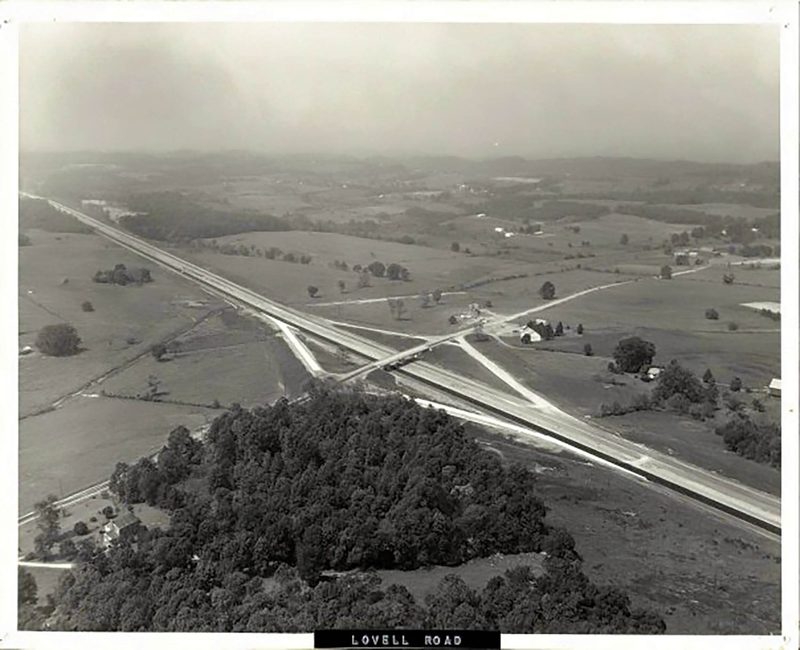
The next day we drove along Kingston Pike to West Town Mall. There wasn’t much between Farragut and West Hills, as I recall. A few businesses and a lot of empty space. Nor was there much between Campbell Station and Lovell Road, two miles east of our new house on the corner of Old Colony Parkway in the Village Green subdivision.
That remained so even as one of my first jobs, busing and washing dishes at Days Inn’s Tasty World restaurant, found me traversing the lonely stretch of I-40 in predawn darkness from Campbell Station to Lovell to help the cooks prepare hot biscuits for waking travelers.
It was still just as barren on many an evening when I puttered up the interstate in my first car—a little Ford Courier pick-up truck—toward a fun dinner with friends at Darryl’s (anyone else miss that old haunt?), ice cream at Swenson’s and a movie in Downtown West, or a longer trek to visit my first girlfriend over in Fountain City.
Little could I—or just about anyone I met at Farragut High in the mid-1980s or at UT-Knoxville leading into the’90s—have envisioned how that overgrown strip of 360 acres, home to a few wild turkeys, a winding creek, and an old mill, would transform into the vibrant, bustling hub of commerce now known as Turkey Creek.
Gobbling Up the Land
This portion of west Knox County was “named for the Turkey Creek tributary which literally meanders all over the Concord/Farragut area and beyond,” wrote Mona Isbell Smith in a September 1, 2020,KnoxTNTodayarticle titled “Let’s talk turkey (creek),” which describes some of the site’s early buildings—including old homes, the Red Mill dam, and Virtue Mill Co.
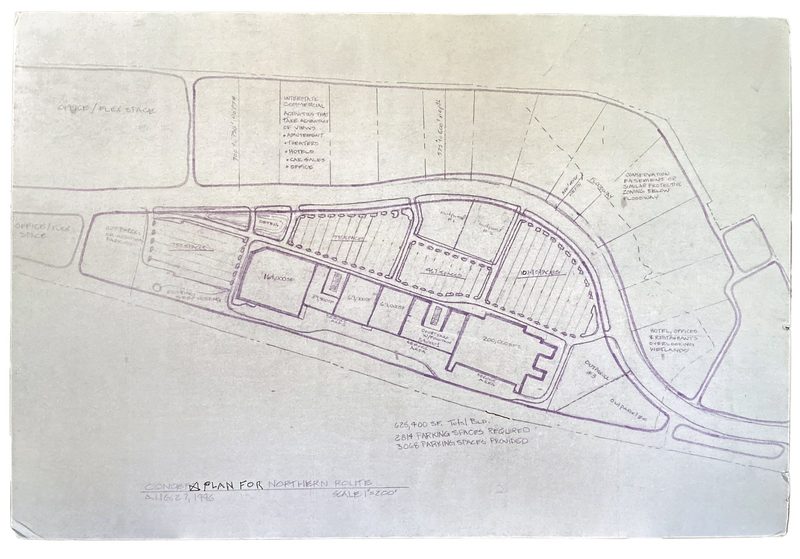
In a 2020Farragut Pressarticle title “Turkey Creek retail bonanza,” writer Alan Sloan confirms that “Turkey Creek’s roughly 360-acre area was essentially barren in the mid-1980s.” Interest in the land rose in the mid-1990s, and road construction began in the latter part of that decade.
Jim Nixon has been part of the mix since the beginning, when Turkey Creek was “nothing but dirt” and a dream. A licensed broker/representative and an investor with Turkey Creek/Farragut Land Partners, Nixon played a pivotal role in efforts to transform the area.
“We put a lot of effort and expertise to work” over the years, he tellsCityview. “The result is obvious now, but we were going one, two steps at a time, and I don’t think anybody thought it would be what it is today.”
A primary catalyst in the growth was the construction of Parkside Drive. As Nixon recounts, “the City of Knoxville and Knox County combined with us in a public-private partnership. [Turkey Creek Partners] donated the land, and the city and county each built part of the road.”
Tracing the arc of Turkey Creek’s progress, he says, “We started in 1995 and made our first sale in 2000, to what was then Baptist Hospital. After that we sold to Thomas Enterprises out of Atlanta, which built for Walmart and Target. Once we attracted those, several others were attracted by them.”
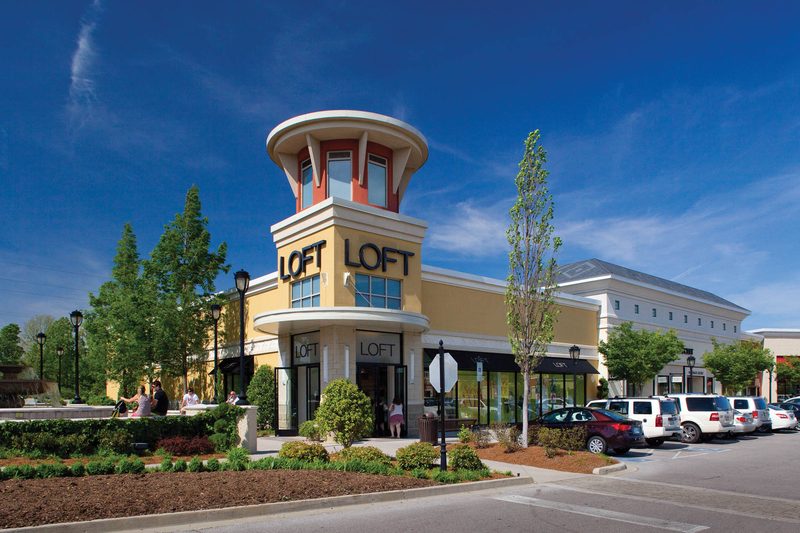
Another milestone was a joint venture with Colonial Properties to build the Promenade and the Pinnacle, which brought some 650,000 square feet to the party, including Belk, Best Buy, Panera, World Market, Regal Pinnacle 18, and H.H. Gregg. Colonial, in turn, had contacts with scores of retailers, “and they brought a whole bunch of them to Knoxville,” Nixon says.
Other key deals included those with JC Penney and Gander Mountain (in the space now occupied by At Home). Nixon notes that Turkey Creek “isn’t quite done yet,” since a 190-unit apartment complex is still under construction. After that, “we have just one little one-acre tract left,” he says.
She has Seen it All
Wendy Smith, Communications Manager for the Town of Farragut, wrote an article titled “Pinnacle at Turkey Creek draws visitors, serves community,” forKnoxTNTodayin 2019. Among other highlights, she quoted lifelong Farragut resident and Turkey Creek stalwart Ashley Lynch, who has had a “front-row seat” to the area’s growth since she was a toddler.
When I caught up with Lynch recently on a Saturday afternoon, I found out she still works in Turkey Creek, and that her mom, Bunny, and I were classmates at FHS—long live the class of’86! Her dad, Terry, had graduated from Farragut in 1979. What’s more, her grandfather owned school buses, and the former Concord Road horse-race track was among the land the family owned going back several generations.
“It’s a crazy small world,” says Lynch, who serves as security director for The Pinnacle in Turkey Creek, spanning from Best Buy to Regal Cinemas, covering some 650,000 square feet of commercial space. She’s also a Farragut High graduate, class of 2008.
Her dad “used to take his four-wheeler and go through Turkey Creek when it was just trees and mud,” Lynch says. In her own childhood, “we lived on Admiral Road, right behind FHS, and when I was 9 we moved to Grigsby Chapel, looking over at Turkey Creek, and there was nothing there. I remember some trees and maybe one light. In the mid-’90s there was talk that they were going to develop it, and then, bam, it seemed like all of the construction started.”
At age 16, her first job was in Turkey Creek at Target, then Hallmark. She moved into security, and ever since her career has been evolving. “Turkey Creek has always got a soft spot for me because I’ve grown up here, doing my job or shopping or just driving through,” she says. “So it’s sentimental, but it’s also cool to be part of the trajectory of growth and progress. I’ve watched our town grow since I was a little girl to being right in the middle of it all as an adult. There’s not one phase of Turkey Creek that I haven’t lived through.”
Over the years, Lynch has noticed a mostly gradual but at times rapid increase in the number of shoppers and diners plying Turkey Creek, especially as travel has picked up in the wake of COVID-19. “When people come up the interstate to pass through town, they see this huge assortment of stores and restaurants,” she says. “We also see a good number of day-trippers coming from all over, east from Crossville, or south from Kentucky. I’ve bumped into groups of older ladies who meet here to eat and shop. Locals, too. It has become quite the gathering place.”
Case in point: In a 2021Cityviewarticle profiling military veteran Bob Sparks, he described a group of friends, most of them fellow vets, who would meet regularly for a meal and fellowship, usually at hot spot Mimi’s Café in Turkey Creek. They called themselves the ROMEOs—Retired Old Men Eating Out. The ROMEOs exemplify the many ways that Turkey Creek has drawn people together to “do life” and deepen friendships. (Sadly, several of the ROMEOs have recently passed, and the meetings have become infrequent, according to my friend Sally Sparks, Bob’s wife.)
As for Lynch, her security job affords her opportunities to sample all of the food, drink, and shopping that Turkey Creek has to offer. As an insider, does she have a favorite? “Salsarita’s is my go-to lunch spot,” she says. “I like to drive down the greenway on my golf cart and stop in.”
Mixed Blessings
Marcee Lotts Merritt is a longtime friend of mine whose family lives behind Turkey Creek off of Heron Road. Yet another fellow Farragut High grad (class of’81) who grew up in the Cedar Bluff area, she’s the daughter of the late A.L. “Pete” Lotts, who served as Chairman of the Knox County Board of Education from 1968 to 1986, and for whom Lotts Elementary in west Knoxville is named.
Decades before Turkey Creek, “we were nicknamed ‘Farragut Farmers’ and considered Farragut to be a lovely, quiet town, with gentle, steady growth, lots of farms, and natural beauty,” Merritt tells me. “It’s still lovely, but the last fifteen-plus years have brought hectic seasonal traffic with visitors from all over the region coming to Turkey Creek.”
She notes that “many locals try to buy early to avoid Turkey Creek during the holidays. I recall a few Christmas Eves where we chose to go to downtown Knoxville for dinner because we felt it’d be easier to get a reservation and less crowded.”
As a Knoxville-based Realtor, Merritt has noticed a trend of “folks downsizing after the kids grow up and moving into other communities. They still love Farragut, but many have found it more challenging to downsize and stay in town. Others miss the quiet, pasture-like setting they experienced here so many years back.”
What Happened to the Pregnant Cat?
The development and rapid growth of Turkey Creek have not occurred in a vacuum. This part of the city is but one reflection among many of the fast pace of change in East Tennessee: the population explosion, the cascade of commerce, the arrival of so many newcomers over the past few decades whose presence has increased demand for the kind of services that Turkey Creek provides.
And that’s no wonder: we live in a richly appealing part of the South, the United States, and the world. So high has that appeal risen that it’s sometimes hard to remember how different things were here back in 1984—and how much things have changed.
The pregnant cat that made the trip from Colorado to Tennessee with us? She gave birth to kittens who became the pets of neighbors and new friends in Village Green. Our two dogs remained faithful companions for several more years. My sisters and I finished growing up. I graduated from UT-Knoxville and became a writer.
Decades later, in 2017, my own daughter, then a UT-K education major, was assigned to student-teach at Farragut Primary School, which had been visible from the back windows of our house in the mid-1980s when we arrived in Tennessee.
Yes, it was sentimental for me to ponder the circle of life. As I gazed out our windows way back then, I could never have dreamed that I would one day have a beautiful daughter who would teach in one of those classrooms.
One of the biggest differences was that now, on her way to and from the school, my Abby could stop by one of dozens of shops and restaurants along the Turkey Creek corridor—that formerly wild patch of undeveloped terrain that had much more quietly welcomed the awkward teen boy who first laid eyes on his now-beloved Knoxville all those years ago.
→ Swipe for Next Story
FeatureJANUARY FEBRUARY 2023
Work From Home
Two years into the #WFH reality, Knoxville companies report what works—and what doesn’t
Story by Karen Clark
There have been innumerable articles written about remote work, or #WFH as it is usually abbreviated. These range from a breathless enthusiasm about the “new normal,“to the now-famous Elon Musk memo—get back to the office or you’re fired. Ask any CEO in town about working from home, and you will get a vigorous response.
We spoke with local employers about the reality of having remote employees. We asked about unanticipated benefits of a remote or partially WFH workforce, as well as unanticipated issues that arose from a bifurcated staff. Here’s how remote work is shaping up—not in the pages of your favorite business journal—but in the real world.
Practical Considerations
Logistics–Sending employees to work from home requires companies to provide company-owned and controlled equipment that can be locked down. Before the pandemic, employees were relatively safe behind the company firewall; now that “attack surface” has spread to living rooms and kitchen tables on home networks.
Jeff Scott, CEO of managed service provider Net3, says allowing staff to use their personal equipment presents an unacceptable level of risk. “The additional expense of buying equipment was not foreseen by some employers,” he says, “but it can be an even swap if they are remote full-time, and we can simply move their company equipment home.”
Using secure VPN connections to your company network and prohibiting storage of company info on individual computers were not immediate concerns in early 2020, but companies are reevaluating their security posture with remote workers to tighten things up.
Go Virtual–Companies who use applications that are either cloud-hosted or accessed via virtual desktop tend to be more successful with remote workers. Not only does this improve speed and performance but it means that company data never resides on the home computer. If your company uses applications that require an installed client, consider one of the “thin client” solutions on the market—essentially desktop devices that have no physical hard drive, rather a server they connect to.
Supporting Remote Users–The industry Help Desk standard is a 100:1 ratio for employees to Help Desk staff, but that is when everyone is in the office on one homogeneous system. Some employees are very tech-savvy while others require more hands-on help. Very few IT teams were originally set up or staffed to support remote work. Rebooting the shared printer is a five-minute task. Walking a non-technical employee through their home internet or printing issue can take much longer. If your company allows flexible work hours, you need to expand Help Desk support to match the times staff are working.
Scott says that one of the most important considerations is to have remote support tools already in place, so staff can easily jump onto a computer to assist. “These are good tools to have even if you are on-site,” he says. “They really make your Help Desk more efficient.”
Management Considerations
Productivity–When companies first sent staff home, there was a flurry of tools meant to monitor employee productivity. Employers were concerned that employees would not work as they did in the office. Most of these draconian methods (mouse movement, keystrokes, webcams) backfired spectacularly, with good employees resenting the implication that they were dishonest and poor performers finding ingenious workarounds. While some level of supervision is necessary, careful thought needs to go into the employment of tools that aren’t overly intrusive. Successful employers moved towards goal-oriented key performance indicators (KPIs). “We empower employees to get the job done, not punch a clock,” says Scott.
If tasks are easily quantified, then you can use the same productivity tools you use when in office. For positions that are not as easily measured, it comes down to management. Companies may consider putting policies in place that, for example, require an employee to have worked for at least a year or received two consecutive good evals to be eligible for remote work. “We’ve gotten over the idea that it has to be the same for all employees,“says Scott, “It really depends on the type of person.”
Scheduling–Many companies have adopted a hybrid schedule with employees splitting their time. The most successful arrangements appear to be when in-office days are defined, e.g., Tuesday through Thursday. This allows easy scheduling for meetings and sets expectations for when people will be available for the “Hey, got a minute?” chats that are often productive.
Flexible Schedule and Teamwork–If the job is purely production-based, then interaction with other staff members may not be as critical. But typically, people within the same department will talk, ask questions, and get assistance from the group. A fully flexible schedule can make that inter-department “chatter” difficult. Companies reported also on departmental cohesiveness. Creative teams, for example, work best together when there is a creative “flow” and members are riffing off each other’s ideas. Creative people tend to be socially oriented and thrive in a more communal environment.
The key is to find a schedule that works for your unique team, while being cognizant of the challenges being home working can pose. Cary Francis, HR and Business Consultant with Co-Advantage, helps 200 companies manage their 4,000 employees both in office and remote. Also a remote worker, Francis says that most of the companies have maintained a 9am to 5pm schedule, but that doesn’t mean it’s easy for the at-home employees to step away once that end-of-day arrives. “I have a hard time shutting down at night,” she says. “Sometimes at night I’ll be like, ‘Oh I can just jump online,’ and before I know it, two hours just went by.” Separation of home and work can be a challenge. It’s something to be cognizant of to avoid burnout.
Sharing the Load–What are the changes that impact the workers who remained or returned to the office in a split workforce environment? One unexpected consequence is that on-premise staff can find themselves handling work that they normally would not. Staff members may walk down to Accounting, or IT or Marketing to ask a question or get help. Before remote work, there may have been a staff of six to assist—now with half the staff working remotely, this all falls to the three who happen to be there. This can lead to a feeling that the load is not being shared equally in the department.
Zoned Out on Zoom–While a common pre-pandemic question was, “Could this meeting have been an email?”, it is also true that in-person meetings engage people more than virtual ones. It’s hard to tell who is “zoned out” on a Zoom call, and most of us have checked our email during a Zoom meeting, especially if there are more than five or six attendees. Most importantly, we lose the “meeting after the meeting” where much of the real discussion and decision-making may happen. Engagement is critical to maintain a healthy and happy company and workforce.
Legal and HR Considerations
Employees have Changed–TheWall Street Journalreports, “The employees who return to the office after a year of remote work aren’t the employees their bosses remember.
They have spent over a year adjusting to a radically different rhythm—both in terms of work and their personal lives. They have shifted their working hours and learned to manage their own tasks without oversight. They may place more value on their family time or personal priorities, and perhaps been forever changed by a loss or health concerns. After a year of working in solitude, many have come to expect more control over how, when and where their work gets done, and to have greater autonomy relative to their managers and organizations.”
Brandon Morrow, an employment attorney with Kramer Rayson, says, “Employers are wise to take advantage of the lessons learned with WFH employees. While pajamas in the office might not be a good idea, some of the independence and work habits translate perfectly well into the office.”
Technology Stipend–Some employees may have high-speed home internet connection, while others have slower service. Should employers pay for faster service to allow for faster work? “Current internet speeds have largely solved this issue,” says Scott, “but there are people in rural areas that still use DSL. We find that many rural customers are moving to services like Starlink to get fast internet service. It has been a real advantage for us to be able to recruit remote employees in these areas.”
At Net3, Scott provides a monthly “technology stipend” to defray a portion of the costs of both internet services and a cell phone plan. “If we expect our employees to be reachable by cell, it makes sense to me that we shoulder some of that cost,“he says.
Discrimination–“Everyone had to send staff home one day in March and they didn’t have a Pandemic Handbook. Now, companies are revisiting some of those early decisions,” says Morrow, who advises companies on remote employee issues. “It’s important to have Remote Work policies and define objective criteria for eligibility for remote work. Obviously, if an employee’s essential job functions can only be performed in person, that’s easy. What may be a little trickier is an employee who was able to perform most job functions from home, and now wants to continue.”
One important thing to discern, he says, is where the request is a “reasonable accommodation” as defined under the ADA, or simply an employee preference. The employer is under no obligation to modify essential job functions. To avoid the perception of unequal treatment, he suggests using other objective criteria in addition to job function.
Francis says the companies she works with relied heavily on outsourced HR services for advice during the pandemic, creating updated policies to match the new working environment. “There are a lot of in-depth details that had to be addressed,” she says. But it also opened the door to companies feeling like they could reach out even more now with questions when unsure. “We give them the tools and assistance in implementing different things to the employees.” Outsourcing or seeking advice from professionals can be both smart for implementation but also from a legal perspective.
Moonlighting–If you’d like to see something interesting, Google “Can you work two WFH jobs at the same time?” The results may be eye-opening. With many remote jobs available, especially in different time zones, some employees have taken on a second job, unbeknownst to their employer. A Microsoft Azure expert, for example, can earn $150 or more per hour doing occasional consulting work with multiple companies. To manage this, companies generally have a non-compete clause in the employment agreement prohibiting working for the competition. “We recommend that the employer require employees to disclose moonlighting, “says Morrow, “and then the employer can determine if that creates a conflict of interest.”
Child Care–Working parents have always had to juggle their schedules when a child is sick. Traditionally, working from home for a day or two when the flu hit was generally acceptable. However, it is important that the WFH arrangement is not a substitute for childcare.
Companies can require remote employees to have childcare during their work hours. Before the pandemic, that was standard, but that fell by the wayside in 2020 because it had to. With schools and daycares closed, there was no way for most people to have separate childcare, so companies had to be flexible on it or they wouldn’t have been able to employ parents at all. Employers have been moving back toward pre-pandemic policies on this.
Leadership considerations
Company Culture–While “apprenticeship” usually makes us think of a trade, it is the same in many businesses. New employees learn about company culture, management, communication, and business practices by being around and observing senior staff and executive leadership. “In our firm, we know it is vital for new attorneys to work alongside more experienced partners to understand how we work with our clients, our values and our standards.“Morrow says.
In many WFH scenarios, this is just not the case, so employers need to find innovative ways to keep their employees engaged. “You have to still have that culture, even though you’ve got hybrid employees that are working from home and have the virtual environment,” Francis says. “Seeing somebody on the computer is one thing, but talking face to face is always better.” Many companies, like those Francis works with, try to have quarterly meetings to bring together this new hybrid team at least a handful of times a year.
Office space–Employers who sent staff home or work on a hybrid model report that this allows them to either reduce office space square footage, or, as is the case with Net3, grow the company without an equivalent increase in office space. “I used to have a spot for each employee,” Scott says. “Now, it’s more like a one to three ratio.”
Customers in Other Time Zones–Businesses with customers in multiple time zones now find that they can hire a West Coast team, or a Mountain Time team to work with those customers without asking employees in Eastern Time to attend 10 pm meetings. “That is a great advantage,” reports Morrow, “and a terrific way to provide support to customers on their own schedule.”
Presenteeism Bias–In the pre-pandemic workforce, “presenteeism”—being physically in your seat at work just to look dedicated, no matter how unproductive—was just another fact of office life. Leigh Thompson, professor of management and organizations at Northwestern University’s Kellogg School of Business, says there are two key psychological phenomena that fuel presenteeism.
The first is the ‘mere-exposure effect’, which holds that the more a person is exposed to someone or something, the more they start to grow affinity. “If I’ve seen one person 10 times for every one time I’ve seen somebody else, I’m just naturally going to like them more,” explains Thompson. If a particular worker makes themselves more visible, they may naturally ingratiate themselves to others just by being there—even if the others don’t realize it or can’t pinpoint what is it they like. You might say, ‘I don’t know, I like their smile, I like their attitude—they’re leadership material’.”
This bias exists alongside another psychological concept called the ‘halo effect’: associating positive impressions of someone with their actual character. “You start to think of the person who’s bringing you coffee or asking about your weekend as maybe ‘a sweet guy’—but then I take the mental step of thinking you’re a productive worker, too,” says Thompson. “You’re nice, and then I immediately bloom that out to, ‘the guy must be a hard worker as well’—even though you’ve given me no evidence in this coffee-cup situation to make me think that you’re a hard worker.” This can lead to promotions or other benefits going to in-person workers.
Now, presenteeism has simply gone digital: people are working longer than ever, responding to emails and messages at all hours of the day to show how ‘engaged’ they are.
The Bottom Line
Work from home is clearly here to stay, with hybrid arrangements being the dominant strain. The companies who have been most successful with remote employees have several things in common.
They use a hybrid schedule combining remote and in-office work with defined in-office days. They utilize some degree of in-person meetings. While allowing flexibility in work hours, they also use defined productivity metrics. They issue and support company-managed equipment and have updated their policies and procedures around remote work. While some business owners predict that a future tightening of the economy will bring workers back to the office, astute business leaders will take advantage of the flexibility and reach that WFH can provide to their organizations.
→ Swipe for Next Story
FeatureJANUARY FEBRUARY 2023
When Life Gives you Market Volatility….
Managing Your Investments in Uncertain Times
Story by Oana Harrison
Overall, 2022 has been a tough year for global investors. Stocks have been particularly volatile, with big price swings attributable to the potential for additional interest rate hikes by the US central bank and relatively high inflation.
The U.S. economy has been sluggish, with a tight labor market, declining profit margins, and a flatter yield curve. According to World Bank data, U.S. inflation rates rose from 1.23 percent in 2020 to 8.2 percent by September 2022, then receded to 7.7 percent by October 2022. High inflation rendered real-wage growth negative and hurt consumer confidence. The Fed interest rate hikes aimed at adjusting for inflation increased the cost of borrowing.
Of course, the natural reaction when the market takes a dive is concern—even fear—and a desire to react. However, market volatility is a fact of life, and the anticipated recession risk remains moderate, predicts Fidelity Investments.
Historically, the U.S. stock market recovered from market dips over a long enough period and the S&P 500 shows a long-term uptrend. So, how do you best deal with market volatility?
Keep calm and invest on
Most experts agree that even for those who monitor the markets constantly, the market remains unpredictable, always going through cycle. However, that uncertainty is often worse than bad news.
“When you have bad news, you know what to do about it,” says financial advisor Frank Venable of Morgan Stanley, adding later, “but in times of uncertainty, everybody predicts or expects the worst usually, and that’s why markets usually overreact. I think that’s what we’re going through right now.”
Thinking long-term and taking the emotion out of the equation could help, ensuring you keep your goals and tolerance to risk top of mind.
“The first thing we tell our clients is not to be emotional about their financial decisions,” said Roger Kiger of Visionary Horizons Wealth Management. “Everything that we are going through right now is short-term. Never make long-term decisions based on today’s circumstances. If you make emotional decisions instead of logical ones, it’s going to cost you a lot of money.”
Brad Bower of Patriot Investment Management echoed the sentiment: “The biggest thing to remember during a market downturn is to not panic. Before you make any decisions regarding your finances, it makes sense to think about any long-term ramifications.”
Keep Your Financial Plan Close
Helpful during times of uncertainty is no doubt having a solid financial plan in place. And it’s never too late to reach out to a professional to start one. “Regardless of the state of the economy, you should have a financial plan—and stick to it. Once you have a good plan in place, the market fluctuations won’t matter that much in the long run,” emphasized Kiger.
“We work with our clients to develop a personalized financial plan to handle the ups and downs of the market, and from there we can allocate investments based on a client’s goals and risks tolerance,” added Bower.
Note that the definition of risk is different for everyone and there is no one-size-fits-all plan. Seeking out a professional to ensure you are making the right investments for your unique life is pertinent, so is recognizing that when you jump to sell, there’s someone on the other side ready to buy.
“Remember, the most important thing to understand is to be consistent and don’t panic during times of uncertainty,” Venable says. “it can often be a time of opportunity.”
Investment Options
Part of staying abreast of your financial plan is understanding some of the options at your fingertips. First of note is in regard to your IRA. “If you convert a regular IRA to a Roth IRA right now when the balance is less, it’s that much less to pay in taxes to convert it to a Roth,” pointed Kiger.
“For retirees, the Roth conversions now could be an advantage because at age 72 they must begin taking an annual required minimum distribution, and they don’t know what the tax rate will be then. Now is a good time to take money from retirement accounts and put it into a tax-free account at low tax rates,” Kiger added.
A Roth IRA conversion can be a powerful tool for retirement. If taxes are expected to rise after you begin withdrawing from your traditional IRA, then a Roth IRA conversion has the potential to save you money in taxes in the long run. However, it’s important to consider possible drawbacks, which could be a big tax bill that’s challenging to calculate if you have other retirement accounts that are funded by pretax dollars, wrote Jean Folger in “Pros and Cons of a Roth IRA Conversion” forinvestopedia.com. Therefore, weighing the tax benefits of doing a conversion might be important. Again, it’s best to consult with a tax advisor about your specific situation.
There is also an option called tax-loss harvesting that you can use, which means to sell an investment that’s under-performing and losing money then use that loss to reduce your future taxable capital gains. “We’ve done that for a lot of folks,” Kiger says, “especially for those who are in the higher tax brackets.”
Generally, real assets—such as real estate, infrastructure, and commodities—prove to be good investments to hedge against inflation, outperforming bonds and equities, according to FS Investments. The price of commodities—which include raw materials and agricultural products like oil, gold, and grains—tend to rise alongside the prices of finished products made from them during inflationary environments, wrote Trevir I. Nath in “The Correlation of Commodities to Inflation” forinvestopedia.com.
Invest into Certain Stocks
When choosing stocks, finding assets with returns that outpace the rate of inflation can be a great place to start. In a down economy, long-term investors might choose to buy stock in companies of interest that were previously inaccessible. If you see your stocks devalue but believe in the viability of the company/industry, you may eventually see the stock value increase again, and maybe even surpass its historical high.
When investing in a company, consider its profitability. Kiger pointed out that “it needs to be at least cash flow neutral; otherwise, they are still reliant on investors to stay in operation. If the company is not publicly traded, then I would probably wait because there are too many unknowns, and you would need to be prepared to invest a lot of money.”
Dividend-paying stocks tend to be in value sectors, such as financials, energy, and utilities, which have outpaced growth sectors, such as tech, wrote Lawrence C. Strauss forFidelity.com. “If you want safety, the dividend-paying stocks are good place to go,” Kiger says.
“For those just starting out,” Bower specified, “an index fund that tracks the overall US stock market would be a great place to invest. Younger investors have a 30 to 40-year time horizon and they should focus on that rather than on today.” He also pointed out that “for younger investors, now is a great time to put cash to work in the market and to evaluate your personal savings rate. We encourage our clients to work towards a savings rate of 12-15 percent of income.”
And what if you are not a person versed in and ready to buy stock? “If you’re not a stock person, you can buy a 10-year bond that pays between 5-6 percent interest,” Kiger says. “We haven’t been able to buy bonds paying that much interest at low rates in the last 15 years, so there’s another good opportunity.”
There’s one other thing to consider—TIPS, or Treasury Inflation Protected Securities. Their whole purpose is to protect you against inflation. According to the U.S. Department of Treasury, the principal of a TIPS can change over time, unlike other Treasury securities, where the principal is fixed. TIPS pay a fixed rate of interest every six months until they mature. Then upon maturity, if the principal is higher than the original amount, you get the increased amount. If the principal is equal to or lower than the original amount, you get the original amount.
“In my opinion, the prices on TIPS have already gone up,” Kiger says. “We bought TIPS in the last couple of years but stopped buying them in the first quarter of 2022.”
Parting Words
Multiple experts we spoke with noted that in their many years as financial advisors, they have seen several market cycles like the one we see today. In a good market, most anybody can manage their own money; however, in a bad or uncertain market, there are few who know how to best proceed
“Lately, we’ve had a lot of request to discuss portfolios for people who have been self-managing for the last 15 years. Some of our younger clients haven’t seen a market like this. Others who have been through a recession figured out that they didn’t want to do this themselves,” says Kiger, whose firm lately has been hosting workshops to keep both clients and public informed on how changes in the national market may impact people locally.
“This has been our busiest time to help people stay on course and help them not make rash decisions based on short-term circumstances,” he says. “I tell people that right now it’s more important not to make a mistake. That’s where a trained financial advisor can really help.”
Of course, you should always keep yourself informed, even if you’re working with a financial advisor. Be sure to look at several different sources of information, even branching beyond the US economy to provide context for the market we are in locally.
If you have a 401K, there is usually information on the provider’s website. Keep an eye on local investment companies’ websites as well for pertinent advice and workshops available to the public.
Disclaimer
This content is for research and information purposes only and does not constitute legally binding advice or recommendations. The author is not a financial advisor and does not endorse any product or service that is referenced or linked in the matter. This article is not a replacement for a financial advisor’s advice.
→ Swipe for Next Story
PeopleJANUARY FEBRUARY 2023
Emily Wyrick
Preparation, practice, and planning has this budding artist on the fast-track to stardom
Story by Chris Blue
I’ve known Emily and her family for many years now. I can recall sitting down to dinner with them about five or six years ago wondering who would be next in this incredibly talented family to make their next move in the industry. It came as no surprise that in the background, Emily was growing her love of music as a singer-songwriter.
Emily grew up in Knoxville, but, she tells me, it wasn’t until she entered high school at Webb where she began to understand who she was. “That’s kind of where I first developed my identity among my peers as the singer or musical one in the class, the creative one,” she says. And it’s not surprising why. With an entertainer as a father—the legendary producer Travis Wyrick—music was ingrained into her life. “As little kids, there were these bands that would come in, track for three-to-four weeks or a whole month, so they were kind of like family at the time,” she says. “To me, they were the coolest people…We always took them in as a family when they were recording.”
It seems though that her excitement was about more than simply the glamour of the music. These people represented something different for Emily, and she had them at her fingertips in her formative years. “I always looked up to them because I thought it was so cool the way that they express their individuality,” she says. “That was good for me at a young age to see.”
It came to life when Emily prepared for her first talent show in first-grade. The song choice? Kelly Clarkson’s “Because of You.” “I remember saying, ‘This is my huge break!’ This talent show and getting to be on stage.” So she worked extra hard to prepare, and who was there to help guide her but Travis—and Rob Beckley from the band Pillar, one of the bands Travis had in the studio all the time. “Rob was helping me with the dramatics, like what to do with stage presence,” Emily recounts.
“I just remember being in my room with my dad and Rob trying to coach me and talk me out of my nerves…That process while it seemed like the biggest thing at the time—and it probably to everyone else wasn’t—it was for me because I fell in love with that whole process of preparing, collaborating with other creatives, taking advice from people, going through all the nervousness before, kind of blacking out during, and then afterwards just feeling proud of yourself. I guess that was for me my big break—recognizing what I love to do most.”
There is nothing quite like the feeling of being on stage, and even at a young age, Emily could feel its power for her. “I wouldn’t have known the word back then, but it’s extremely vulnerable, and I think the vulnerability is a window for all the other things that make you feel,” she says. “It creates a platform for bonding with others, for human connection.”
Fast forward a few years and Emily found herself in the studio with her dad asking to record some songs she knew. But it felt different, she says. “That’s when he started taking it more seriously with me because maybe he heard potential in my voice, and my voice had matured and I gained control at that point.”
Travis has been a big part of Emily’s development as a musician. Also musically inclined, Travis worked his way up to the level of producer he is today. And it opened doors for Emily to see inside the music. “I do remember my first house when I was little. He had a little studio built in the basement. I don’t know what it took him to get to that point because by the time I was able to process it, I was like, my dad is a successful music producer. That’s what he is and what I’ve always known him to be.”
She recalls him bringing her with him to the Dove Awards—the Gospel Music Association’s annual award show—and sitting next to Billy Ray Cyrus and Miley Cyrus. “I thought, wow that’s her dad, and this is my dad,” she says. Not long after, the successful Hannah Montana show that launched Miley’s career aired for the first time. “I felt like it was within reach at that point for me because I had met her and to me she was just like another girl I’d met at school but then she turned around and became who she is now. I said, that’s what I want to do. How do I get to do that?”
This foreshadowed what was to come for Emily, but first she needed to try her hand at sports. Basketball became her number one focus through high school. “I think I liked that I was good at something and the routine because you know, with music there’s really no routine. It’s not always clear.” No truer words could be spoken.
Watching her brothers—Blake and Charlie—influenced this love of sports. “That was our way of bonding as a family,” she says. “Basketball and sports kind of became our weekends.” All three of them played basketball, soccer and baseball—yes, even Emily played baseball. “People when I used to play would say, ‘Oh, but softball, right?’ And I’d say, ‘No. I play baseball.’ I was the only girl on the team.”
Emily realizes during our interview that there must have been some similarity to why she loved sports. “Now that I’m thinking about it, you prepare, you practice, you plan, you anticipate and then you get those nerves right before and people come to watch, and then you got to perform. And then afterwards you win or you lose, and you’re either proud of yourself or you find a way to improve for the next time. Then you’re hungry for the next game,” she says. “It’s a little bit of the same system.”
Music always remained in the back of her mind though. She had one foot in the court and the other in the studio. Well before she even began with sports, she took piano lessons with a neighborhood piano teacher, which she continued for a year until the teacher moved away. “I never took lessons again after that, but I’m super thankful for that because it helped teach me the basics of the chords, and from there I just discovered my own way around the piano.”
Emily began creating her own short piano compositions and eventually memorized a compilation of “all the little excerpts of piano songs that I’d written over the years, compiled into a three-minute” song. And she started writing her own lyrics, too, as an outlet for her feelings. “I think at that point it was a way of avoiding direct vulnerability, but at this point it is the most vulnerable thing because my songs, the lyrics, are pretty personal and pretty emotionally deep. It’s like basically sharing my diary with everyone,” she says.
“When I perform my original music, it’s the most vulnerable thing. But it’s also the most rewarding thing, after the fact when people can relate or when people can heal,” Emily says. “It makes the fear behind vulnerability smaller and more within reach.”
Emily credits so much of her success and growth to her family’s support—Travis, her brothers, and of course, her mom, Betsy, there for the “breakdowns or self-doubt conversations,” she says. “She helps me stay grounded to who I am and what I know and not get caught up in a lot of things that don’t matter.”
All of this support played the exact role it needed to for Emily, and she notes that it never went unnoticed how critical that was to her journey as an artist. “I’m thankful that my parents let me choose what I’m passionate about and nurtured that over the years, never forcing it on me. They never told me I couldn’t do it,” she says, adding later, “They just let me be me.”
Instead of feeling pressure from her supportive family, Emily says she finds encouragement and focus. Singing the national anthem at Thompson-Boling Arena last year, she felt a stronger connection to her dad. “I was back in the little downstairs basement area warming up and my dad said, ‘You know, this is really cool to watch you perform in Thompson-Boling Arena, somewhere that I’ve played before.’ I’m really thankful he said that because it helps me think well, what else has he done and why can’t I do it, too? I mean, they’re very different. He was opening for Bon Jovi at Thompson-Boling Arena, and I was singing the National Anthem, but still, I can say my dad and I both performed at Thompson-Boling arena. Who gets to say that, you know? Maybe other than Billy Ray and Miley.”
You can tell listening to Emily that there was something about this performance that was special for her. It seemed to solidify her decision to pursue music full time as a career. She pursued the business administration program at Auburn University earning her Bachelor’s degree. It wasn’t until after she graduated that she agreed to perform the National Anthem—a question she had been asked multiple times over the years during college. “It was so empowering just saying yes to doing that,” she says. “For the first time, I started thinking long term of my life, as I was looking into a job within my degree, and it always felt kind of sad, like I was settling.”
But that day at the arena reignited her spark. The conflict between Russia and Ukraine had just begun and there was a patriotic feeling as she stood there singing. “People were like, ‘I teared up,’ or ‘I got chills,’ and I don’t think it was because of my voice alone, but because of the magic of music and how a song can make people feel that way,” Emily recalls. “I thought, I’ve got to be the outlet for that.”
Emily admits she is a spiritual person, and there was something bigger than herself at play here, she thought. “I was thinking, God, this is where you’re shining your light, and as long as this is what you want for me, if you keep shining this light down this road, I’m gonna take it,” she says. “That was when I decided that if he’s on my team, let’s see where this goes.”
We all know where it went. Since last year, Emily’s presence as a musician in our community has increased tenfold. She has played at venues across the region—small shops, private events, more well-known venues too, all growing her voice and place as a singer-songwriter.
I can speak from experience that being a musician is a grind, just like any other gig. There’s so much that goes on behind the scenes and as Emily says, “There’s no clear syllabus to follow.” But for musicians, the grind is worth it.
And one other thing to note? Relationships. Emily says this past year has taught her just how important those are, and that came to fruition this very year when she found herself in a studio in Muscle Shoals, Alabama, recording where some of the greatest artists have recorded—Aretha Franklin, Etta James, Leonard Skinner, Rolling Stones. Inspired by some younger local artists who had played there with the help of John Macready —“Demographic doesn’t really matter when it comes to who inspires you,” Emily says—an opportunity opened for her to play there. It was eye opening.
“It was like a spiritual, musical awakening,” she gushes. “It really sparked my whole admiration for music.” Joining her that day were seasoned musicians—session musician and songwriter Spooner Oldham, familiar faces Julius Blue and Vince Ilagan, and David Hood, the base player for so many Muscle Shoals sessions.
“There were two different feelings I had. In one sense, I was like, ‘Who am I to go to Muscle Shoals and have the Swampers play on my songs? I’m not good enough. These songs aren’t complex enough.’ And that was kind of where my mom has come in to help me change my mindset, saying, ‘Okay, you could think like that. Or you could just let the day be and then at the end of the day, be like, ‘Wow, I’m proud of myself.’”
You can guess which Emily chose. “In that moment, I looked around and was so thankful and proud and full of love in my whole body for this moment right now,” she recalls feeling.
Up next for Emily? She continues writing original music, getting ready to release her album, and performing as often as she can across East Tennessee. “The more I say yes, the more I feel like I’m fulfilling my purpose or getting closer to what I love to do most—and that’s perform and connect to people.”
U.S. Army veteran Don Eklund reflects on his service amidst the flames of Vietnam
Story by Phil Newman
Some of the most vivid stories from the Vietnam era center on events long after the din of battle has faded. They reveal glimpses into a soldier’s character and leadership outside the context of steaming jungles, enemy attacks, and exploding mortars.
For Knoxville’s Don Eklund, one such story unfolded in an airport and on a flight in December of 1970, after he had completed his tour in Vietnam and was headed home to Tennessee.
Leaving the hot zones of Southeast Asia, Eklund was processed through Fort Lewis, Washington, in Tacoma, and transported to the airport for a nighttime connecting flight to St. Louis, before continuing on to Memphis. He was with a group of fellow U.S. Army soldiers taking similar journeys back to their respective hometowns.
“I was the oldest, 21, the rest of them were 20 or younger,” Eklund recalls. “We went into the lounge and ordered a round of drinks.” The server “starting checking IDs and found out most of the guys were not of age.” Eklund spoke up, vouching for the others, imploring her to bring them the spirits. She kindly but firmly refused.
“Do you mean,” Eklund said to her in a measured tone, “we can go over there and fight like hell to cover your ass, and come back here and they can’t order a drink?” She replied, “I’m sorry, but I can’t.”
After she left the group, Eklund told them, “It’s alright, boys, we’ll take care of this.” He bought a bottle of liquor and took it on the plane, he says, and “told everyone to order half a Coke.” Once airborne, he poured them a drink. When a flight attendant noticed and said to Eklund, “You’re not supposed to be doing that,” Eklund looked at her and replied, “Well ma’am, I just hate that,” as he continued pouring.
“I didn’t think it was right that after everything these boys had done fighting for their country, they couldn’t be served a drink,” he says. “We celebrated.” In St. Louis, the soldiers parted ways. After landing in Memphis, Eklund would continue east toward Knoxville. War protests in many parts of the U.S. were in full fervor at the time, but Eklund recalls that as he made his way home, “Everywhere I went, somebody offered to buy me a drink. No one accused me of being a baby killer.”
‘If I had stayed in school…’
Eklund was born February 8, 1948, in Memphis, but grew up in Lexington, Tennessee. His dad, Carl, worked for TVA and was transferred to the Knoxville area in the 1960s, where Don finished his junior and senior years at Karns High School (class of 1966).
Eklund enrolled at UT-Knoxville in the summer of 1966, but by the following spring he was “just about burnt out,” so he returned to Lexington to work for a friend’s father’s construction company. He recalls a vacation with his parents to his dad’s family in Wisconsin, then enrolling in a few courses at Jackson State Community College, where he also sold ladies’ shoes at Butler’s and got serious with a girl he had met in town.
In November 1968, the trajectory of his young adulthood took a sharp turn when he received a U.S. Army draft notice, ordering him to report the following month to Fort Campbell on the Tennessee-Kentucky border. He felt “a little regret, because if I had stayed in school and hadn’t played around, I probably would’ve missed the draft. It didn’t hurt me as bad as it hurt my parents. The one thing Dad wanted me to do was finish college.”
Granted a short leave during basic training, Eklund got married December 28, completed basic in February, and continued to Fort Polk, Louisiana, for advanced infantry training. By May 19, 1969, he had arrived at Cam Ranh Bay, Vietnam, in an inlet of the South China Sea. Back in the States, his daughter, Dawn, was born exactly one month later on June 19. “For a year, I got a lot of pictures but that was all,” he says.
‘Hotter than the devil…’
Eklund’s job—his military occupational specialty—was Indirect Fire Infantryman (11C), a.k.a. 11 Charlie, where he would work the M2 4.2-inch mortar gun. After a week at Bien Hoa Air Base not far from Ho Chi Minh, Eklund’s assigned duty station was Landing Zone Betty, or Phan Thiết, located on the coast. “It was hotter than the devil, and there was nothing but sand,” he says. LZ Betty was home to Task Force South of I Field Force, a corps-level command of the U.S. Army.
As is the case with many military veterans, Eklund’s fondest memories involve fellow soldiers. For example: “At LZ Betty my squad leader had about a month left in-country, but he took me under his wing and taught me the ropes—all about the gun I was going to be on, what to look for, how to hear incoming rounds,” Eklund says. “You could actually hear the weapons they fired, and you had about 20 or 30 seconds to take cover.”
Eklund “got the grunt details at first,” on proper placement, getting rounds, and preparing them. “Then you learned how to use the gun, and then how to remove a hang fire.” He explains, “If you drop a round down the tube and it doesn’t come out, you have to take the gun apart, reach down the barrel, and pull that round out. Nobody wanted to do that! The reason they wanted me to,” he says with a laugh, “was because I was 6-foot-3 and had longer arms than anybody.”
His height also led to a “strange experience” when Eklund was ordered to travel north to take part as a flag bearer in a change-of-command ceremony, in which one general replaces another. “They made sure we had starched fatigues and polished boots. It was a big whoop-de-do,” he says. “Then they flew us back, and I was back on the mortars.”
On one occasion when LZ Betty came under heavy mortar and rocket fire, Viet Cong troops penetrated the perimeter, resulting in an intense effort to fight off the attack. “The night we got hit, I was a squad leader, and we were on the gun,” Eklund says. “We had some troops try to get through the wire, and all hell broke loose. We had a fire mission, and we fired the whole time. The barrel would get so hot you could light a cigarette off it. That was quite a night.”
Late that fall, Eklund’s squad was assigned to Landing Zone Uplift at Deo Nhong Pass north of Phù Mỹ. In December, his squad was one of two that went to Firebase Christmas in the Central Highlands to provide cover fire for troops in the surrounding areas. “We were way up on a mountain. It was so different up there—it rained 28 of the 31 days, and it was cold.”
‘It felt like an earthquake…’
As his tour progressed, Eklund’s squad was attached to the 506th Infantry Regiment of the 101st Airborne Division, and to “The Herd,” the 173rd Airborne Brigade, a special ops task force containing elements of the 10th Mountain Division and the 10th Special Forces Group.
Eklund’s squad was tasked with providing mortar fire for ground troops. In the Central Highlands, he recalls, “we were on each side of a big mountain that was honeycombed with caverns. We fired and fired and fired and fired. And when we weren’t firing, jets were dropping napalm or high explosives on it.
“We had our moments. One night it felt like an earthquake. [The U.S.] had a B-52 bomber drop. You felt it, but you never saw the planes. You knew it was comin’, but you didn’t know when. We took incoming rounds from the opposing force’s mortars also. They weren’t a very good judge of distance. If one got close, you might get hit with shrapnel if you didn’t have cover. A couple of NVA ground troops tried to penetrate our positions, but they failed. We had troops around the perimeter.”
‘You see things…’
On another occasion, Eklund suffered an injury that was considered “non-combat.” While hiking a load of trash to a pit at LZ Betty, a fire exploded and blew him into the back of a vehicle. “It burned my back and one arm, so I was put on light duty for almost three weeks.”
Part of his light duty was, “to put it exactly—it was burning shit,” Eklund says. In the outhouses, 55-gallon barrels cut in half went under the toilets. “You had to pull those barrels out, and pour coal oil in them, and light’em, and you had a long two-by-four”—he shakes his head and starts to laugh at the recollection—“and you’d find a place to sit in the shade, read a book, whatever, go over now and then and hit the can on each side, and stir it up, and put more fuel in it, and relight it,’til there was nothing but ashes. It smelled just like you’d imagine.”
Remembering such “lighter” moments can be helpful, because Vietnam brought its share of heavier ones—moments Eklund says he has wrestled with in dreams over the years. “You see things, and you just kind of let’em go. Talking about them doesn’t do much good,” he says. “You saw body bags. I was at one of the firebases in the Central Highlands, and we had two new guys come in, and they were directed to a bunker, and somehow a grenade was dropped, came off one of their packs, and it concussed. They brought’em out right past me, the medic was with’em, and he just shook his head. I guess the most regretful thing is that I didn’t even know their names.”
‘To me it was an honor…’
Eklund survived his tour, finishing out his service at Fort Hood near Killeen, Texas. He finally met his daughter in person. His post-military life unfolded first in East Tennessee, where he began a career in manufacturing of automotive seatbelt parts, and eventually in Oak Ridge, where he went to work for Boeing Aircraft in 1983. He retired in 2012 and has continued to make his home here, near two of his nine grandchildren.
It was only years after Vietnam that Eklund learned about the comprehensive benefits available through the Veterans Administration. After meeting a VA rep he went to high school with, “he set up my hearing appointment, my PTSD appointment—all I had to do was go,” he says, adding that he’s been going yearly ever since. “I would advise anyone who has never been to the VA for additional benefits to go. It’s the best thing I ever did.”
Reflecting on his military service, Eklund harkens back to his dad, Carl, who passed in 2011, the same year as Don’s mother. “To me it was an honor, because my father had done it also, and at least I could follow in his footsteps.”
The elder Eklund was a second lieutenant in an engineering corps during World War II. “He went into Italy to build bridges, and he got wounded—shrapnel in his hand,” the younger Eklund says. “I’m sure he was [proud of me]; we didn’t talk about it much. I never talked about it, and he didn’t either.”
In the case of both men, the silence was no reflection of the level of well-deserved mutual respect and admiration they shared for the service they had rendered to a grateful nation.