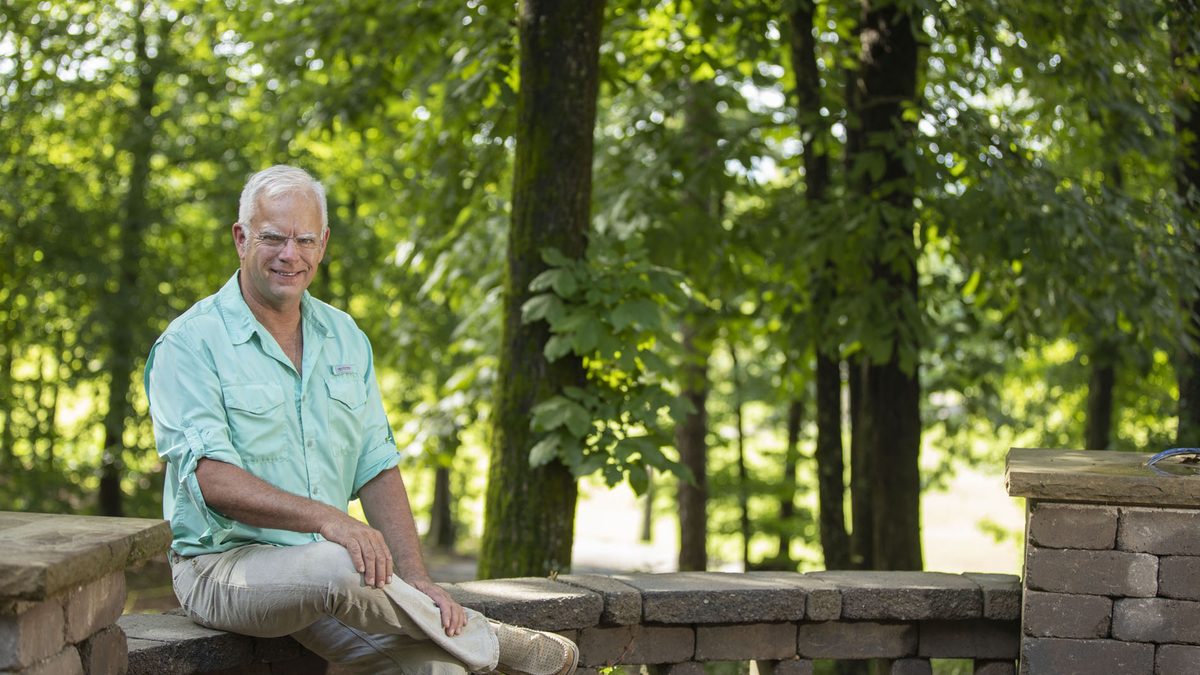
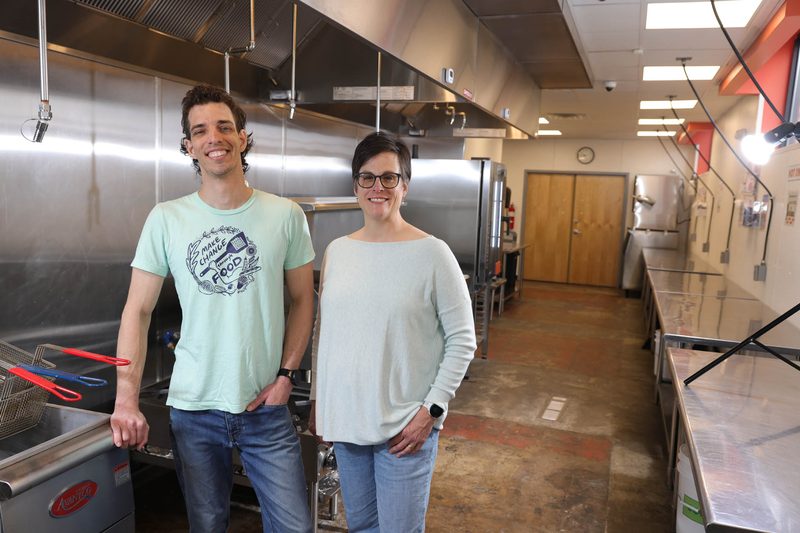
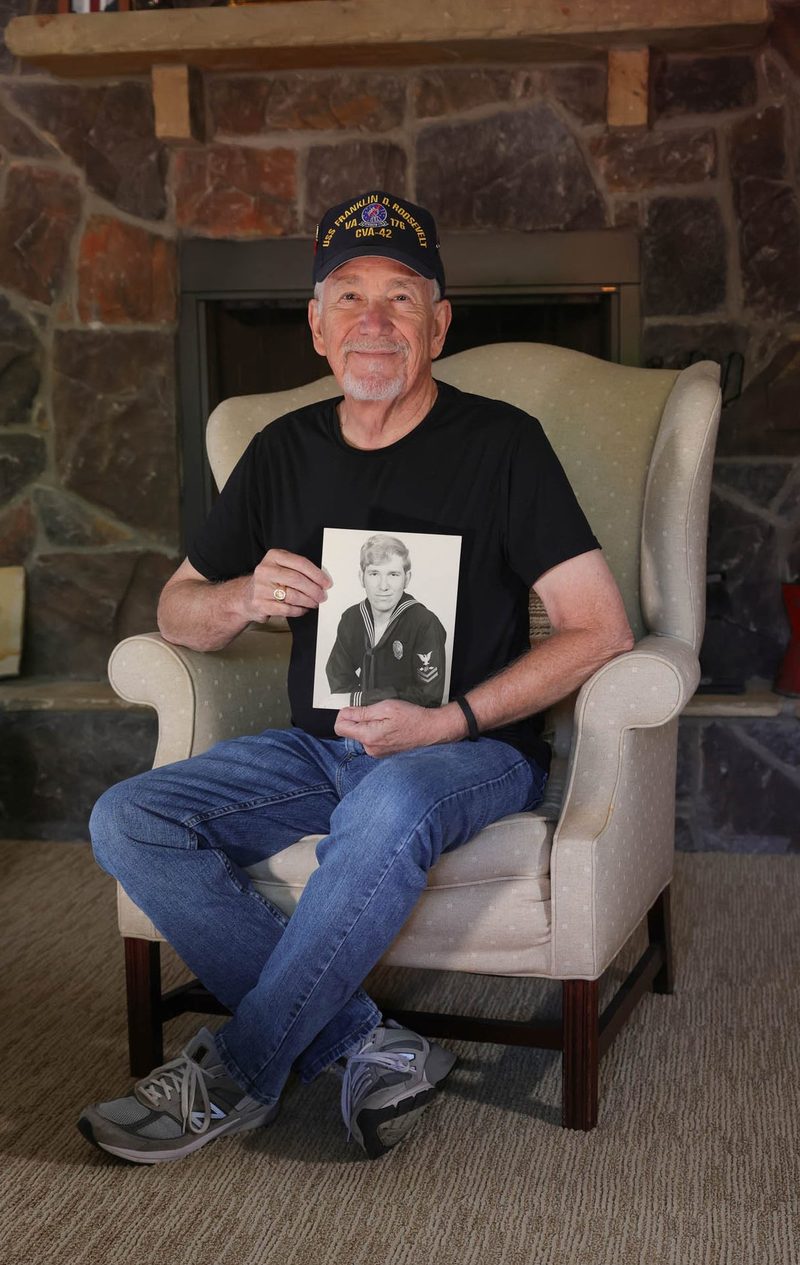
I was standing in the large arena at STAR for the Bridles and Blue Jeans fundraiser when a blast from my past tapped me on my shoulder. Sometimes when you run into an old friend, it’s like the universe is trying to remind you of something…something youneedto know. Seeing Paul brought back so many fond memories of the adventures and antics of my youth. And with those memories came an important realization.
Paul’s family had moved into the house directly behind mine. They came from Sacramento, California. Paul was close to my age, and we became instant friends. He was game for any adventure we could dream up, and for whatever reason, our parents seemed completely content, allowing us to do pretty much anything we wanted. And so, we did. We hunted, fished, and camped all over East Tennessee. In those days, the lots in the back of subdivisions weren’t popular for anything other than a place to dump trash. One day while walking to the cul-de-sac to have a little target practice at old bottles and other assorted junk, we noticed a handsome palomino mare in the nearby pasture.
“We should ride it,” said Paul. The problem was we didn’t have a bridle or the money to purchase one. No matter, a quick trip to the encyclopedia to see a few photos and then on to the workshop. Of all the things that I wasn’t in my childhood, the one thing I could do was make things. So I created a makeshift hackamore bridle with some rope, a splicing fid, and a little duct tape. Paul’s sisters, Kim and Elizabeth, would ride that mare with apparent effortlessness. It didn’t come as quickly for me. I was profoundly lacking in knowledge of what could go wrong. But my incompetence was soon to be replaced with some hard-won real-life experience.
One afternoon, Paul climbed onto the horse and said, “Hop on. Let’s ride to the top of the ridge.” The pastures were quite hilly, but I never gave that a second thought. He reached down a hand, and I climbed aboard. We were about halfway up the ridge when Paul’s sister Elizabeth arrived at the barn. Having no idea that Paul and I were riding, she whistled loudly for the horse. Neither Paul nor I had any idea how barn sour that horse was, and what happened next I remember as it was yesterday.
The mare started for the barn quickly, making it difficult for me to stay in my spot. As soon as she cleared the trees, she broke into a full-on run down that steep hill, eliminating any chance of me staying in the right spot. Paul was yelling loudly at me to move back, but try as I might, I just could not. Paul slid up on the neck holding the horse’s ears, and I was about where he should have been. Somehow, we made it to the barn alive. I was about to breathe a sigh of relief until I realized she was going to cut through the barn and go out where a few boards were missing. She wiped us off her back, dropping us right into a pile of fresh manure. When we realized we weren’t hurt, we erupted into laughter. Those were the best of times.
Seeing Paul and reminiscing about times past made me realize just how important his companionship was to my future love of adventure. We took risks without hesitation, knowing that no matter what, we’d always have each other’s backs. Paul stood up for me many times when no one else would. In doing so, it taught me the value of true friendship, the kind that can only be had by investing time in another person. Perhaps in this day of constant immersion in social media, we should put down our devices and spend some quality time with a friend. Who knows, they might just help you realize a passion you never knew you had.
→ Swipe for Next Story
Arts & CultureMAY JUNE 2023
Joy of Discovery
Lil Clinard delights in exploring through art
Story by Susan Alexander
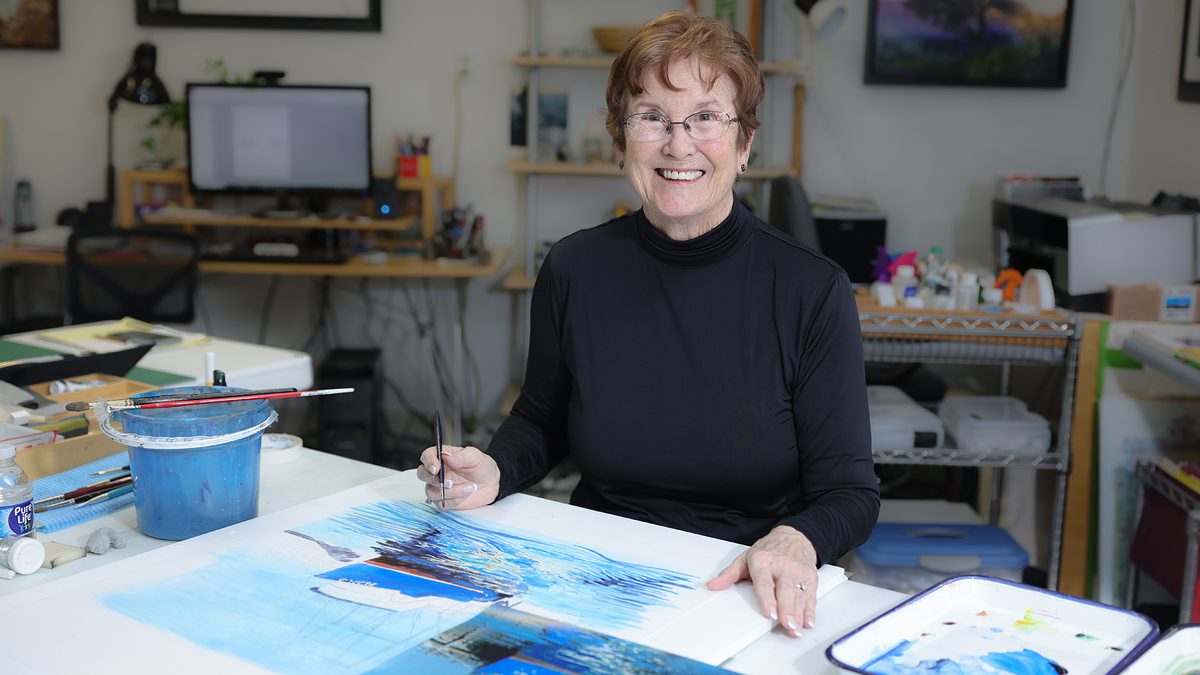
If Lil Clinard faces a new challenge, get out of the way. She’ll jump in with both feet. Though she spent her career in technology, her retirement has been absorbed in art.
“The advice they give to artists is to focus on a particular style or medium and stick to it. I’d be bored stiff,” she says. “I can’t remain focused on one area, but I focus intently on what I’m working on at the time.”
Artistic as a child growing up in Greeneville, Tennessee, Clinard relied on painting skills to earn spending money while attending UT. But she never considered art as a career. “Math and science were easy for me, so that’s the way I went.” She went all the way to a doctorate in engineering and a career at Oak Ridge National Laboratories and Science Applications International Corporation in Oak Ridge. Her work took her around the world, and she snapped thousands of photos along the way.
About the time she retired, she and her husband John moved to Tellico Village and a new phase of life. Clinard decided to take up watercolors. She knew it was a challenging medium, and she was up for the experience.
She learned the techniques, starting with traditional, representational pieces. Then she began experimenting. She moved from small canvases to Yupo paper that stretched five feet tall and 100 feet long. She began painting large abstract depictions of waves. “I probably have 5,000 photos of water and waves. I take elements from three or four pictures usually. They’re very different from traditional watercolor painting. The paint is wet all at one time; there’s paint running all around.”
During the pandemic, stuck at home, she moved onto acrylics. “I needed to cheer myself up, so I tried to do cheery things — flowers and sunlight — some representational and some abstract.”
Eventually she moved on to encaustics — painting with hot wax — though watercolor remains her favorite.
“I like to try new things — approaches, materials, paint. I like the joy of learning something new and experimenting. I just have a big time.” Clinard participates in ArtXtravaganza and Artsclamation shows every year and in the Knoxville Museum of Art’s plein air event. Her work is at Art Market Gallery downtown and on her website,www.watercolorsbylil.com.
→ Swipe for Next Story
MusicMAY JUNE 2023
Strings That Tell a Story
Violinist Marki Lukyniuk brings vibrant performances to East TN
Story by Chris Blue
Watching Marki Lukyniuk play the violin is invigorating. There’s such energy in his movements. Passion behind every note. Whether it’s a quiet classical piece or a pop song reinvented on the strings of his violin, every song he plays feels new.
Marki is a University of Tennessee junior, but has made great leaps in East Tennessee since arriving in Knoxville seven months ago. From wine bars and cafes to weddings and benefit concerts, he’s played his instrument far and wide, sharing his gift with all who will listen. “I love that I can serve people with my talent,” he says, “that my service would help someone feel better.”
Marki hails from western Ukraine. He grew up playing the violin, beginning at the age of five. “My uncle grew up playing the violin”—he played for a symphony orchestra—”and that’s why my mother decided to send me and my brother to the music school,” he says. “She wanted us to play the violin.” Little did Marki know that he would have a natural talent for the art.
Marki practiced every day once he began, anywhere from 20 minutes to four hours a day. After years of playing, he hit a point where he “saw people engaging with my music, enjoying my performance,” he says. “That’s when I realized that’s what I want to do. I want to entertain people and see the smiles on their faces. And I would do anything to become better at it.”
That came into play last year when Marki was faced with the difficult decision of whether to stay in his home country or apply elsewhere to pursue his talents. He had been studying music at the Kyiv Conservatory. “A long time ago I said my mission is to be a musician and play for people and if my opportunities were limited in Ukraine and I couldn’t finish my studies, I decided I had to sacrifice whatever I had in Ukraine—friends, family—and go chase my dreams,” he says.
The conservatory was closed for a while as a result of the war with Russia, and while it planned to eventually open back up, “I knew it was not safe to be there,” Marki says. “It was one of the hardest decisions I’ve had to make, but it definitely was one of the best.”
In the fall of 2022, after Marki had already arrived here in Knoxville to continue his violin studies, the park he frequented with his friends near the Kyiv Conservatory along with the popular Glass Bridge where Marki would often spend time busking, were bombed.
Marki would spend a portion of his fall semester planning a benefit concert for his friends back home. “I thought, what if I decided to stay and go to this park with my friends or play on this bridge? What could have happened? I was really frustrated and I wanted to send some money home.” The benefit ensured that he could send more than simply what was in his pockets.
Now Marki continues playing across the region, engaging listeners in a variety of genres, though his personal favorites are funk and pop, “Michael Jackson, James Brown, just music that gives me energy so I can give that energy to people.”
Marki’s plan is to finish his bachelor’s degree at the UT next year, continuing his studies under Violin Professor Miroslav Hristov, and hopes to then go on to pursue his masters in violin in Miami, where his older brother, Kostia, is currently pursuing his own.
→ Swipe for Next Story
PoliticsMAY JUNE 2023
Peering in to the Abyss
Silicon Valley Bank’s 2023 collapse draws deep similarities to the most notable bank failure in East TN history
Story by George Korda
Insistent—even demanding—messages from reporters in Tennessee and throughout the country were growing into an ever-higher stack on my desk, all asking essentially the same questions: is Knoxville financial organization Southern Industrial Banking Corp. going under, and, if so, what would happen to investors’ money?
Nothing was easy about the drama that played out in boardrooms, conference rooms, and courtrooms over the financial disaster that almost exactly 40 years ago took down the East Tennessee financial empires of Jake and C.H. Butcher, of which Southern Industrial Banking Corp. (SIBC) was a part. Memories of those days’ intensity were rekindled in the wake of the March 10, 2023, collapse of the California-located $212 billion Silicon Valley Bank (SVB), the second-largest bank failure in U.S. history.
The Butchers in the late 1970s and early 1980s controlled more than two dozen banks and financial institutions in Tennessee and Kentucky. Jake had run for governor in 1978, losing to Lamar Alexander. The Butchers built the first and started the second of Knoxville’s two tallest downtown skyscrapers. Their flamboyant lifestyles were legendary. It was a whirlwind of financial success and excess–until United American Bank (UAB), the tall hog at the Butcher money trough, was shut down by regulators in February of 1983, beginning the end.
I saw some of the SIBC drama from the inside. At age 29, I was the public information director for the Tennessee Department of Commerce and Insurance. This experience enabled me to envision what must have been intense efforts to keep California’s SVB afloat, just as there were to keep SIBC alive—more than 6,000 of its depositors weren’t insured by the Federal Deposit Insurance Corp. (FDIC). SIBC wasn’t regulated by federal authorities, or even the state’s banking department; instead, the insurance department had regulatory authority through its industrial loan and thrift division. When I asked my boss, the late John C. Neff, then the state insurance commissioner, why the department had oversight of a financial institution, he said it was probably the result of a lobbyist’s work many years earlier. And, he added, the state’s industrial loan and thrift laws were weak.
In late February of 1983, the commissioner called me to his office to say he was flying to Knoxville to meet with SIBC officials, including SIBC owner C.H. Butcher. When Neff returned, he said that Butcher had agreed, in lieu of an order, that until certain financial conditions were met SIBC was to stop selling investment certificates and advertising that certificates were for sale. Butcher, he said, agreed.
But within days, SIBC again ramped up its sales efforts, promising unrealistic returns on investment certificates. I was in the commissioner’s office when in a phone call Neff told C.H. Butcher to stop. Immediately. Butcher argued that the conditions had been met, but the commissioner was having none of it. A March 8, 1983, “consent agreement” between the department and SIBC said that SIBC would ‘’cease and desist in the future offer and sale of investment certificates or any other securities without full and fair disclosure of S.I.B.C.’s business practices and financial condition.’’
After the call, I asked the commissioner how it had gotten to this point for the Butchers. On a piece of paper, he drew a triangular shape, writing UAB; (C.H. Butcher’s) C&C banks; and SIBC, drawing arrows from one to another. He said that in the past, the Butchers had advance notice about examiners’ visits. The pattern was to shift bad or questionable loans to the entities not being examined. This time, Neff said, examiners showed up at UAB and C&C banks simultaneously, and unannounced. There was nowhere, and no time, left for the Butchers. The whole scheme was more complicated than that, he said, but what he’d drawn was the significant element.
In SVB’s case, it had a substantial amount of money in long-term treasury bonds during a time when the US, because of Covid, was seeing historically low interest rates. As the Fed increased interest rates, SVB sold its long-term investments at a loss to meet cash demand for withdrawals from increasingly worried tech industry investors already hit by a downturn: $42 billion was withdrawn in a single day. SVB’s fate was sealed.
Reading about actions of SVB bank officials before its flame-out, some of what was reported was eerily familiar to C.H. Butcher speaking about his plans to keep SIBC afloat.
• FromCNN Business, March 13, 2023: (SVB president Greg) “Becker and his leadership team revealed last Wednesday night a hope (but no firm commitment) to raise $2.25 billion in capital as well as $21 billion in asset sales that sparked a $1.8 billion loss.”
• ANew York Timesstory of March 9, 1983: “On Feb. 17 Mr. Butcher said at a news conference on the sidewalk in front of the C&C Bank of Knox County, the group’s lead bank, that he would put $20 million of new funds into Southern Industrial. Of that amount, Mr. Butcher said he would invest $5 million of his own money. Another $5 million was to have been made available through the purchase of loans from Southern Industrial by one of the C&C banks. And $10 million more was to have been made available by the purchase of consumer loans from Southern Industrial by First Tennessee National.”
Before SIBC announced its bankruptcy filing, media calls were coming to me without letup. The truth: the department had reviewers at SIBC, but they hadn’t completed their work. What I could say was described in the March 9, 1983, New York Times story: “Tennessee’s Insurance Department has been examining Southern Industrial since the end of January, according to George Korda, a department spokesman. But he said the examination probably would not be completed for at least a month.” In the end, the law required that all SIBC withdrawals made within 90 days of the bankruptcy had to be returned.
SVB, SIBC, or whatever the name, vast amounts of peoples’ money, personal and professional reputations, political fallout, and potential legal ramifications create the complicated abyss that opens beneath financial institution failures. The tension is almost tangible. I know this, having touched some of it myself.
But within days, SIBC again ramped up its sales efforts, promising unrealistic returns on investment certificates. I was in the commissioner’s office when in a phone call [John C.] Neff told C.H. Butcher to stop. Immediately.
→ Swipe for Next Story
InsightsMAY JUNE 2023
The Darby Deer
Finding meaning…and sometimes redemption…in the details
Story by Bruce Fox
Darby Campbell is a successful business man with multiple businesses across the country. Of note, several marinas, Lakeside Tavern, Margaritaville Hotels, and more. Darby is a friend, a dedicated hunter and fisherman with whom I’ve hunted for several decades.
Years ago at a UT basketball game—our seats are in the same row—Darby mentioned that his dad had purchased some acreage in Oak Ridge that might have some turkeys on it. I was somewhat skeptical, but much to my delight, the ridge was covered with turkey scratching and sign. Come turkey season, it would definitely be worth a try.
Pre-dawn one morning, we crept up the ridge into position. At first light, I sent out a few owl calls hoping to provoke an old tom—turkeys don’t care for owls and often gobble out a warning—and sure enough, one sounded off 100 yards in front of us, just off the point of the ridge. I set Darby up against a large hickory tree, in line with where I thought the tom would come. I backed off 50 yards and made a soft hen call. Old tom was coming!
As the gobbler approached, I could see Darby anxiously moving around, trying to spot the bird. I had emphasized the need for stillness, but he was nervous with anticipation. The tom got spooked, dropping back down the ridge just below me. I had a clear shot, and I took it.
Darby was furious; the bird was supposed to be his. I quietly told him he spooked it and it was leaving when I shot it, but not to worry, there were two more gobbling down the ridge. I got him set up again, closer to where I had heard at least two gobblers sounding off, and started calling. Within a short period of time, I saw two gobblers in full strut with a half dozen hens coming toward us. Darby made a great shot and harvested a huge old tom with a long beard. I was forgiven for shooting his bird.
On the way back to the trucks, I noticed multiple sign on trees where a buck had rubbed his horns. I made a mental note to talk to Darby about deer hunting next fall.
When the season started, I happened to be sitting at a red light on Northshore Drive when Darby pulled up next to me, rolled his window down, and said he had hunted the property for deer but had no luck. He said that he would be duck hunting for the week and I was welcome to deer hunt the property on Thanksgiving and the day after. He would return to hunt the next day. I told my wife, Mary Jane, about Darby’s offer, and she granted me a “kitchen pass” to hunt on Thanksgiving morning.
No luck on day one, but walking back to the truck, I came across a large “scrape” making a mental note of the location for the next morning. Setting my tree stand just below the crest of the ridge provided a clear view of the scrape. Shortly after daylight, I caught movement; a buck was heading up the ridge! I got set up and took the shot. The deer kicked and headed uphill to a point directly above me. I saw him go down about 75 yards away.
My heart raced as I lowered my gun to the ground with the haul rope. I turned my back on the deer to face the tree to inchworm my tree stand down. When I was about six feet from the ground, I heard a commotion behind me and turned to see the deer heading over the ridge. I jumped from the stand, grabbed my gun from the ground, and started up hill. However, I had foolishly failed to untie the rifle. It hit me like a freight train and I fell backwards on the steep slope. Although it seemed like an eternity, I finally came to my senses, untied the rifle, and began looking for the deer.
When I found him, I could not believe my eyes. I started counting points and when I got to 16, my head spun. I couldn’t believe it, so I counted again…16. I knew I would need help to move the deer. So I drove over to my dad’s Oldsmobile dealership in Oak Ridge. He, my brother, and one of my uncles were all there, and gladly agreed to help.
It was the deer of a lifetime, even featured in several outdoor magazines. Darby thought it was a joke when I told him. When I finally convinced him, he was even madder than when I shot his turkey!
The “Darby Deer,” as I now call it in honor of my friend, taught me how important it is to slow down and pay attention to the details, as they can, no matter how small, often lead to something spectacular. And as for Darby, I assume he’s forgiven me at this point for taking his turkey and his deer, so I suppose this story is a little bit about redemption, too. Thanks Darby for being a friend and sharing your dad’s hunting spot.
→ Swipe for Next Story
DepartmentsMAY JUNE 2023
Rocky Fork
A patch of heaven worth fighting for
Story by John Quillen
Prior to 2015, this rough patch of hill country was like many in our region, abandoned by timber barons to all but local adventurers. Fortunately, thanks to the rescue efforts of Unicoi native David Ramsey, this tract called Lamar Alexander Rocky Fork State Park is one of the newest arrows in the Tennessee State Park quiver. The land was designated as a Tennessee State Park in October 2012, but not officially opened until 2015.
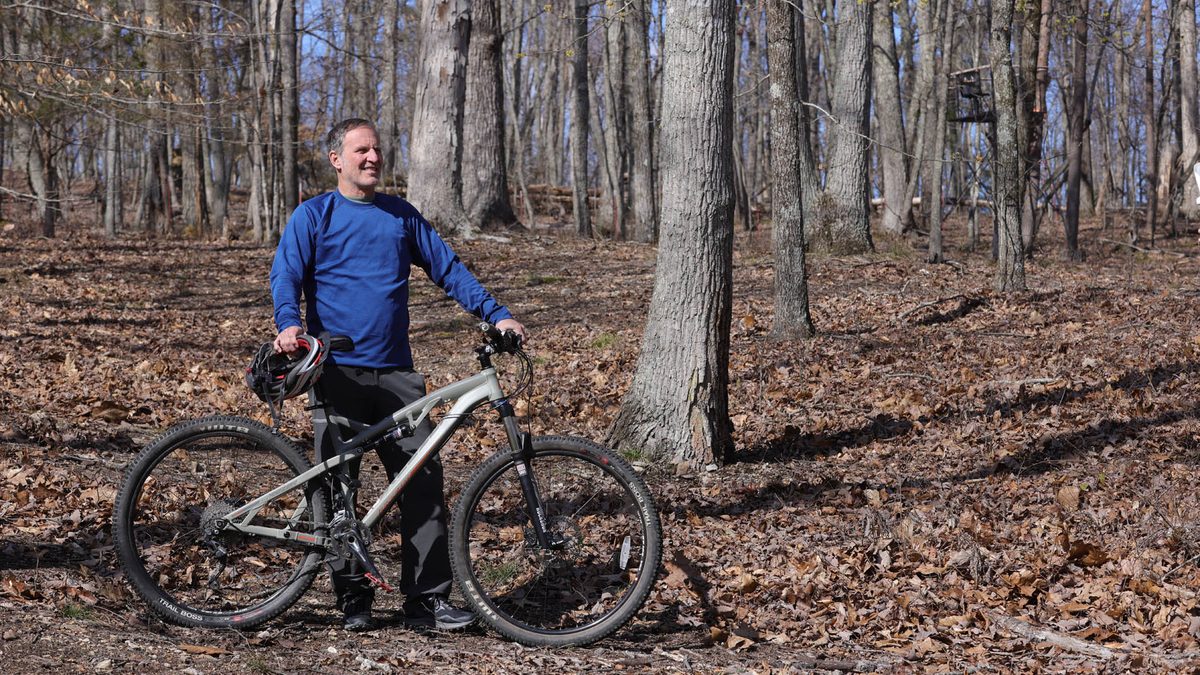
Rumor of backcountry camping and mountain biking lured me northeast on a cold morning rigged for a day of exploration. The drive took me through some rugged terrain on the spine of Tennessee’s eastern terminus. I crested a hill where I had crossed on the Appalachian Trail many years back.
Layered and gloved up, I mounted my bike and cruised past numerous cascades dropping from a trail leading to Birchfield Camp. Living up to its name, these pathways seemed more suited to hiking than my present conveyance. Sub-freezing temps were no longer a concern as I started an unrelenting climb to what would eventually become a 14 percent grade experience.
But the interior views of these northeast hills on the border of North Carolina were worth the pedal pushing and dismount degradation. Curled rhododendron dripped icicle whiskers. I climbed and climbed until the waning sun began to signal my inevitable retreat. Rocky Fork had gotten me, and my loop would have to wait for longer days. In for not even four miles, and my quads had ticked off 1,700 feet of ascent. I saw no one past the first mile and realized immediately why.
There are 20 miles of trails, 40 climbing routes and unlimited streams to fish in this 2,000-acre wilderness. So there are plenty of reasons to return. But next time, I may leave the mountain bike at home.
→ Swipe for Next Story
Dining GuideMAY JUNE 2023
Old School
Knoxville’s old school restaurants are still here for a reason and we’re stepping in to taste their legacies
Story by Marc Anthony
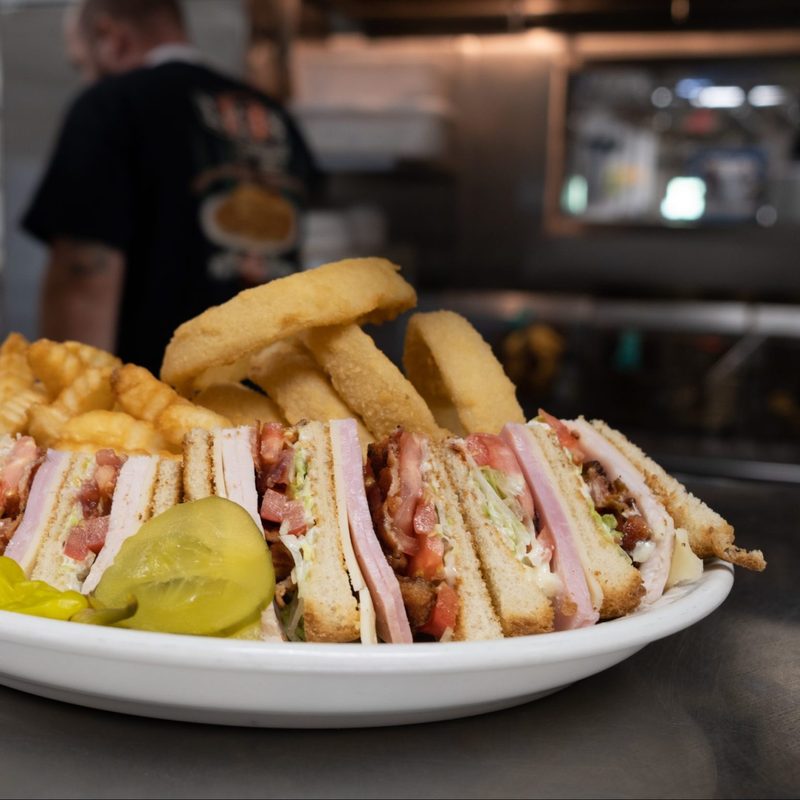
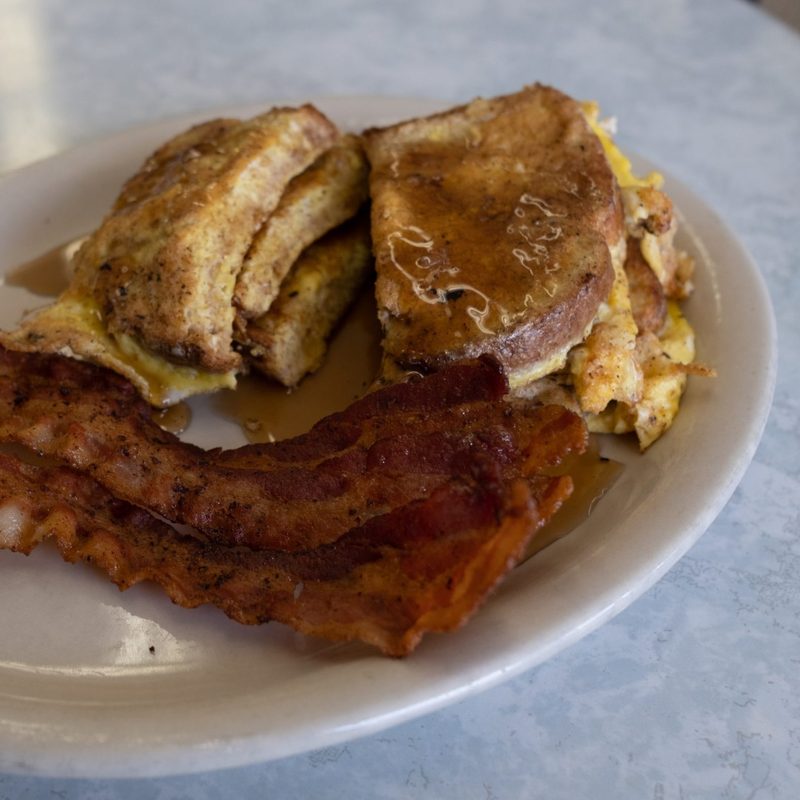
If everything old is new again, then these Old School Knoxville restaurants are the trendy up-and-comers on the restaurant scene. Except, they aren’t. And we’re the better for it. Tradition trumps trendy asCityviewPublisher Nathan Sparks and I step back in time to visit the best of the foundational food establishments around town.Sam & Andy’sPizza PalaceThe Original Louis’Altruda’sLong’s Drug StoreColonel’s CafeLitton’sPete’s RestaurantInskip GrillHoskins Drug Store
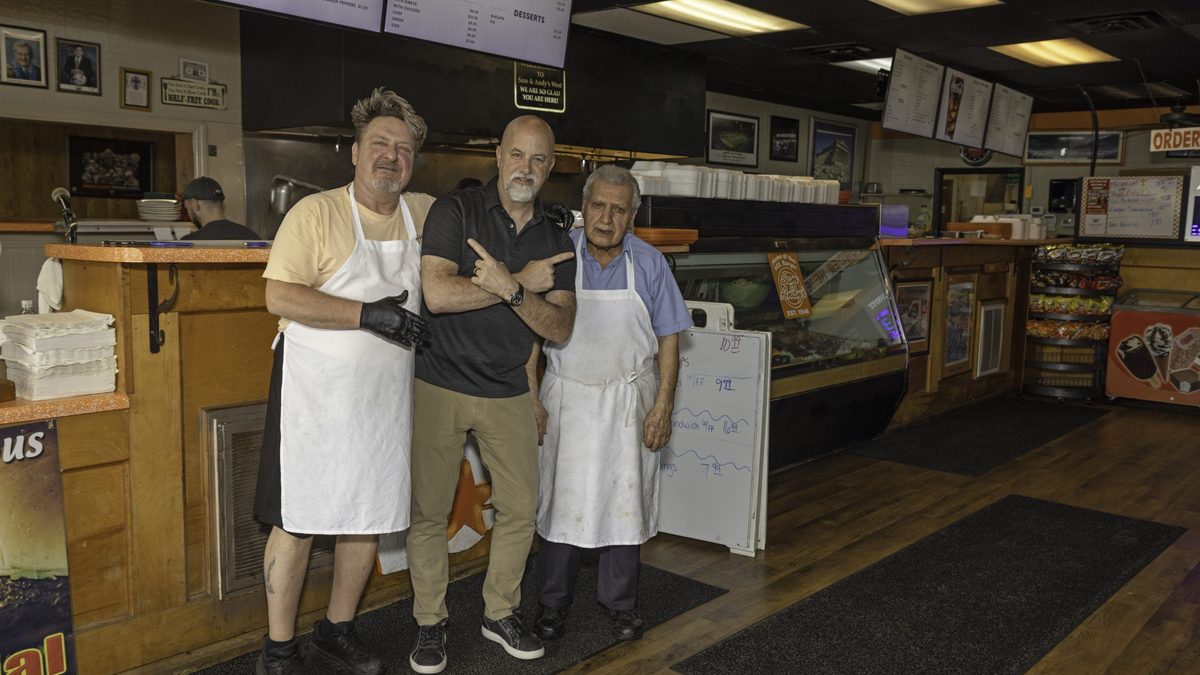
Sam & Andy’s Moving from the Cumberland Strip in 1997, Sam & Andy’s West continues the family tradition started in 1946 by Sam and Andy Captain. John and George “Poppy” Captain keep the Vol Burgers sizzling at Knoxville’s best lunch counter. Most customers don’t even have to speak their order before it’s called out down the line and prepped as everyone is a regular and has trekked to Farragut to follow the lunch tradition they started as UT students. —Marc Farragut | facebook.com/samandandyswest
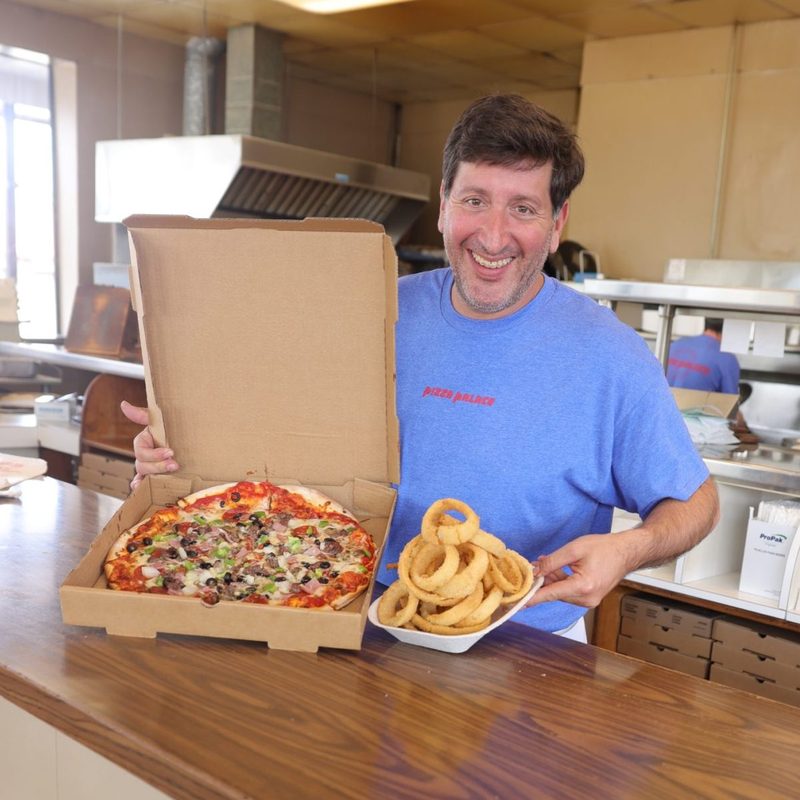
Pizza Palace What is the secret to great pizza dough? Charlie Peroulas says it can be anything from the temperature of the water to the humidity in the room plus a little luck. Plus they custom make all their own sauces from family recipes. Whatever the secret is, they have it down to an art form. Their pizza is amazing but then again so are the onion rings which are hand cut and fresh breaded daily. Started in 1961, the Peroulas family is legendary in the Knoxville food scene. Charlie joined the company in 1997 and has been leading the company for the last several decades. It is a definite must-try. —Nathan East Knoxville | visitpizzapalace.com
The Original Louis’ I wish I had the word count to tell you about “The Lore of Louis’”! All you need to do is ask anyone from Fountain City why the word “original” is on the sign, then sit back and enjoy the story and the food. And I can sum up the menu in a word. Spaghetti. Oh, there’s much more on the menu. But if you know, you know…the story and the spaghetti! Family owned since 1958. —Marc Fountain City | theoriginallouis.com
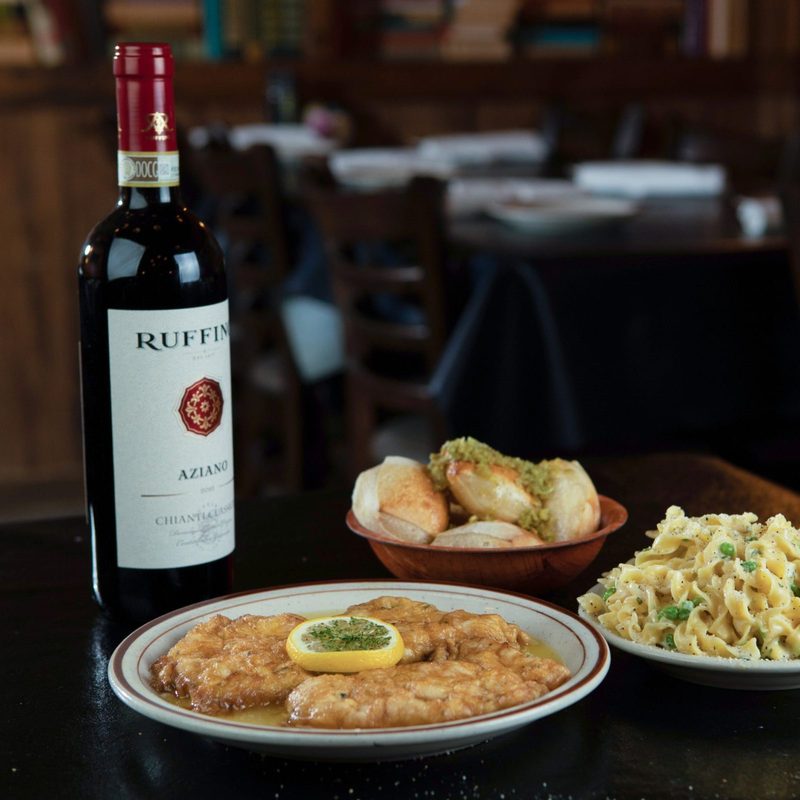
Altruda’s A great date night, the quiet cozy dining room is complete with a fireplace. Named for his mother, Geraldine Ida Altruda, this eatery is as authentic as Italian gets in Knoxville. Proprietor, Paul Meyer says “It’s all about people, and homemade salad and garlic rolls.” I recommend the Tiramisu for dessert. —Nathan West Knox | altrudas.com
Long’s Drug Store Into the 1950’s we go with a trip to Long’s. You don’t even need to say drug store because Knoxville knows Long’s like they know their neighbors. Is there anything better than a low lunch counter, lined with red cushioned stools and relics of the eight decades staring back at you? Heaping platefuls of comfort food are only a Jenny or a Ruth away! —Marc Bearden | ldsknox.com
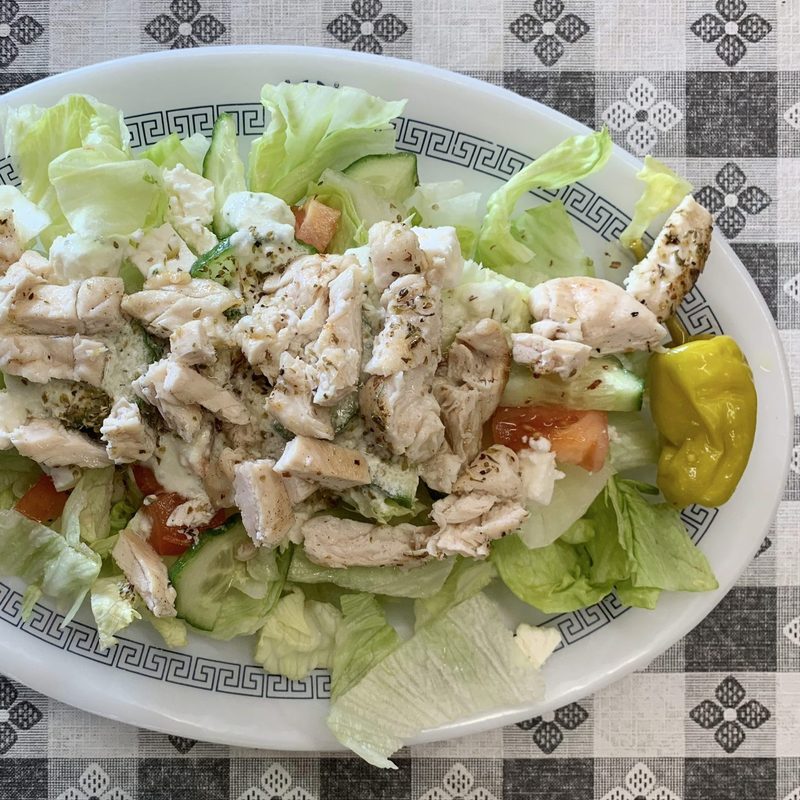
Colonel’s Cafe Colonel’s has been on the restaurant scene for quite some time. In fact, I lunched there regularly while working at Blue Ridge Mountain Sports in 1976 when it was much more of a delicatessen. Nowadays, look for a more Greek menu, but with a good home cooking feel. —Nathan Bearden | (865) 588-8481
Litton’s Is it the burgers, the plate-sized chili dog platter, or the dessert case that catches your eye when you walk into Litton’s? Whatever the draw, Litton’s has been a destination since 1946 when it was a grocery store and full service gas station. The very first “Litton Burger” was 89 cents. The bakery has been a Fountain City staple since 1983 and there are fewer Knoxvillians who haven’t been to Litton’s than have! —Marc Fountain City | littonsdirecttoyou.com
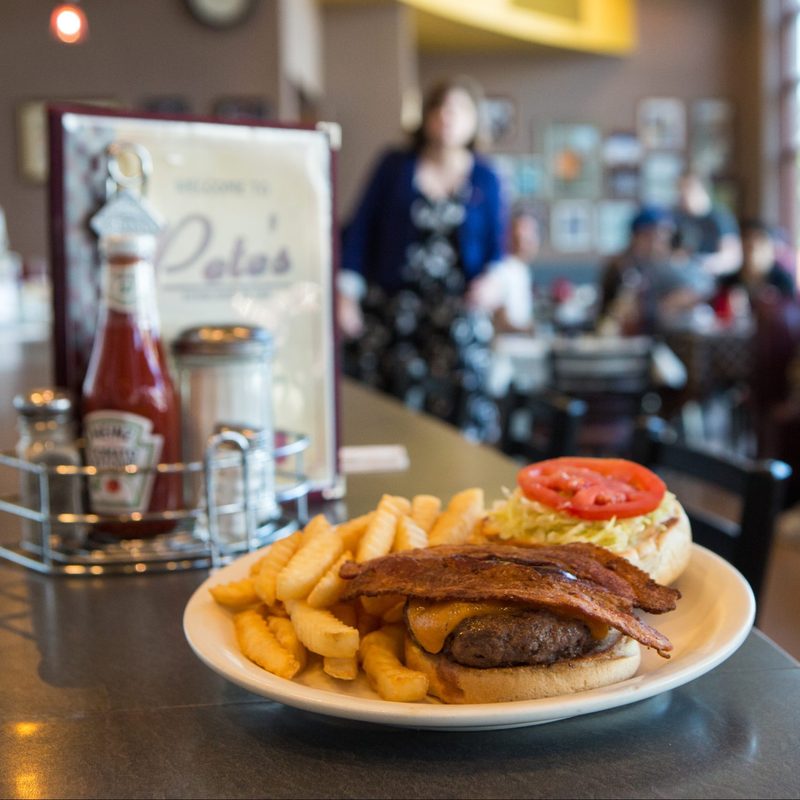
Pete’s Restaurant There is just something about a diner that you can’t find anywhere else. The little booths, the small water glasses, it’s like somewhere there is a manual for all the items that make up the perfect diner experience. The food is great, but the anticipation is even better. —Nathan Downtown | petescoffeeshop.com
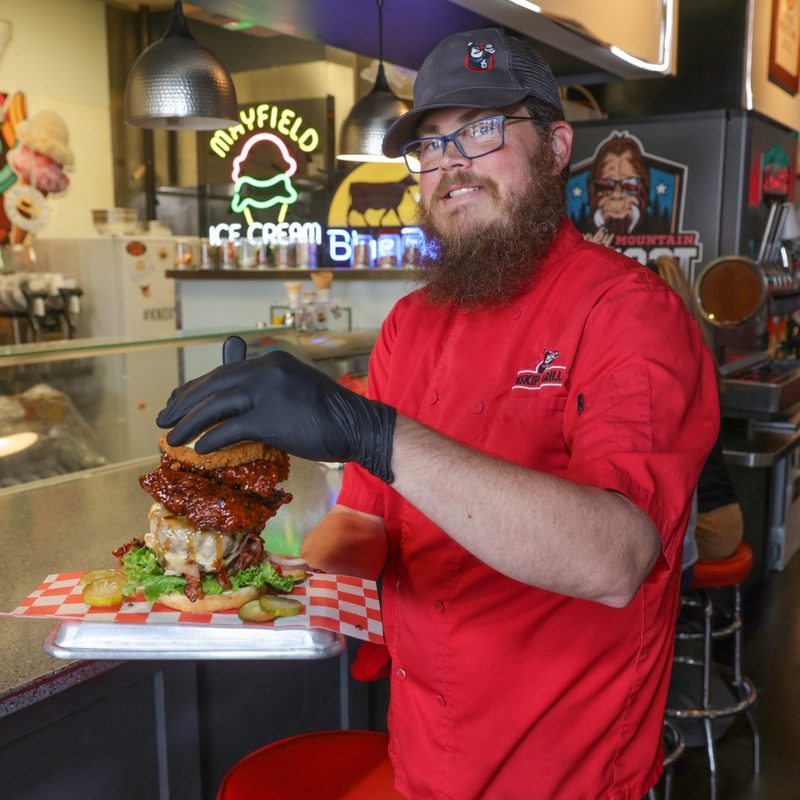
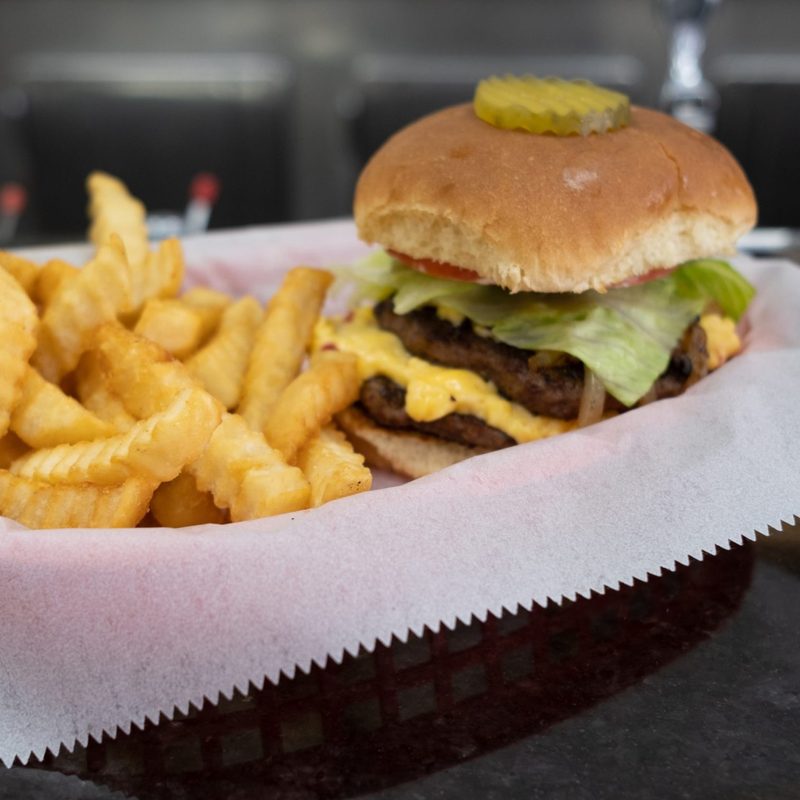
Inskip Grill Formerly on Inskip Road in Knoxville, Inskip is celebrating their move to new digs in Fountain City. Mouthwatering burgers like the Dolly and Kane are still on the menu, and Yelp recognized Inskip as one of the top diners in America. “Welcome to the Burgersphere,” as the sign says. Why there is a gorilla climbing the Sunsphere inside is beyond me, but I’m still full from the McGhee Tyson. —Mar c Fountain City | inskipgrill.com
Hoskins Drug Store I walked into Hoskins for the first time and didn’t know if I was getting something to eat or going on a museum tour! Inarguably the best soda fountain/lunch counter/museum in East TN. There is no trip to historic downtown Clinton that shouldn’t include Hoskins. Family owned since 1930 says everything. If you want to know how your grandparents grew up, go to Hoskins today. —Marc Clinton | facebook.com/hoskinsdrugstore
→ Swipe for Next Story
DepartmentsMAY JUNE 2023
Keb’ Mo’
Bringing five decades of blues to the Knoxville stage
Story by Rebecca Whalen
The Tennessee Theatre | May 12th | 8 p.m.
Keb’ Mo’s sound caught my attention this winter when Tennessee Theatre announced he’d be coming to the Marble City on May 12. Every now and then I’ll connect quickly with a song, and I couldn’t get the smooth sound of his latest single, “Good to Be (Home Again)” out of my head. It has been a nonstop listen for weeks.
If you listen to the lyrics, the song is a celebration of the communities that make up the foundation of who we are. And while Keb didn’t grow up in Knoxville—he grew up in California, eventually calling Nashville his home—I couldn’t get Knoxville out of my mind as I listened.
“It’s good to be here. It’s good to be anywhere. It’s good to be back. It’s good to be home again,” Keb sings in the single. The song is an anthem for our true hometowns and the ones that have taken us in.
Keb—whose real name is Kevin Moore—is a blues artist with plenty of soul to go around. He got his start as a guitarist in his early 20s, but made a name for himself over the next few decades as both guitarist and songwriter. For years he worked somewhat behind the scenes, but that seemed to change in the mid-90s when he released his first self-titled album under the Keb’ Mo’ name.
Fast forward to today, and Keb’s sound just keeps getting better. And, judging by the number of Grammys and Blues Foundation awards he has, I’d say I’m not the only one who feels that way. His early music is just as smooth and enticing as his new, which makes his show at Tennessee Theatre in May a must-see. Tickets are still available for the show. You can head totennesseetheatre.comto learn more. Perhaps we will see you there.
→ Swipe for Next Story
JurisprudenceMAY JUNE 2023
It Happens Every Spring
They’ll watch the game and it’ll be as if they’d dipped themselves in magic waters. — Terrence Mann
Story by Gary Wade
Baseball, beginning in 1876, remains to many as our national pastime. In the words of Babe Ruth, “Baseball was, is, and always will be to me the best game in the world.” Commentator and author George Will, no fan of football, famously wrote: “Baseball, it is said, is only a game. True. And the Grand Canyon is only a hole in Arizona. Not all holes, or games, are created equal.”
In 1922, Justice Oliver Wendell Holmes Jr., writing for a unanimous United States Supreme Court, added the judicial stamp of approval, declaring that baseball was entitled to an exemption from federal antitrust laws—a monopoly status no other professional sport has enjoyed. Although the decision has been roundly criticized in recent times, 1953 and 1972 Supreme Court opinions have upheld the ruling. Congress has done nothing to alter the situation. Thus, baseball occupies a cherished status in the eyes of the law.
Over the years, Hollywood has promoted the image, romanticizing the sport with such films asThe Pride of the Yankees,The Natural,Bull Durham,Moneyball,Eight Men Out,A League of Their Own, and so many others. From the sublime to the ridiculous, compare the film version fantasies ofDamn YankeesandAngels in the Outfieldwith the fun-filled antics inThe Bad News BearsandMajor League. Stars like Robert Redford, Madonna, Brad Pitt, Clint Eastwood, Geena Davis, Gary Cooper, Charlie Sheen, Susan Sarandon, Kim Basinger, Robert Duvall, Glenn Close, Robert De Niro, and, of course, Tom Hanks, have all appeared in box office hits related to the sport.
Of special mention is the 1989 movieField of Dreams, which featured Burt Lancaster in his final role as an actor and Kevin Costner in the starring role. The plot was built around a mystical voice heard only by an Iowa corn farmer threatened by bank foreclosure, saying, “Build it, and they will come.” The Terrence Mann character, played so compellingly by James Earl Jones, delivered a memorable tribute to the game:
“The one constant through all the years has been baseball. America has rolled by like an army of steamrollers. It’s been erased like a blackboard, rebuilt, and erased again. But baseball has marked the time. This field, this game – it’s a part of our past…. It reminds us of all that once was good, and it could be again.”
On August 12, 2021, Major League Baseball scheduled a televised regular season game in Dyersville, Iowa, at the filming location of this titular movie. The players for the Yankees and the White Sox emerged from the cornfields beyond the center field bullpen just as did the legendary Shoeless Joe Jackson and those other ghostly players in the film. For fans ofField of Dreams, experiencing the real game was truly magical. As a Hollywood touch, Kevin Costner threw out the first pitch. When the last pitch was thrown, the teams had combined for a total of six home runs. Each of the round trippers, including two by current home run king Aaron Judge, landed in the cornstalks. The last, launched in the bottom of the ninth inning, won the game for the White Sox, 9-8.
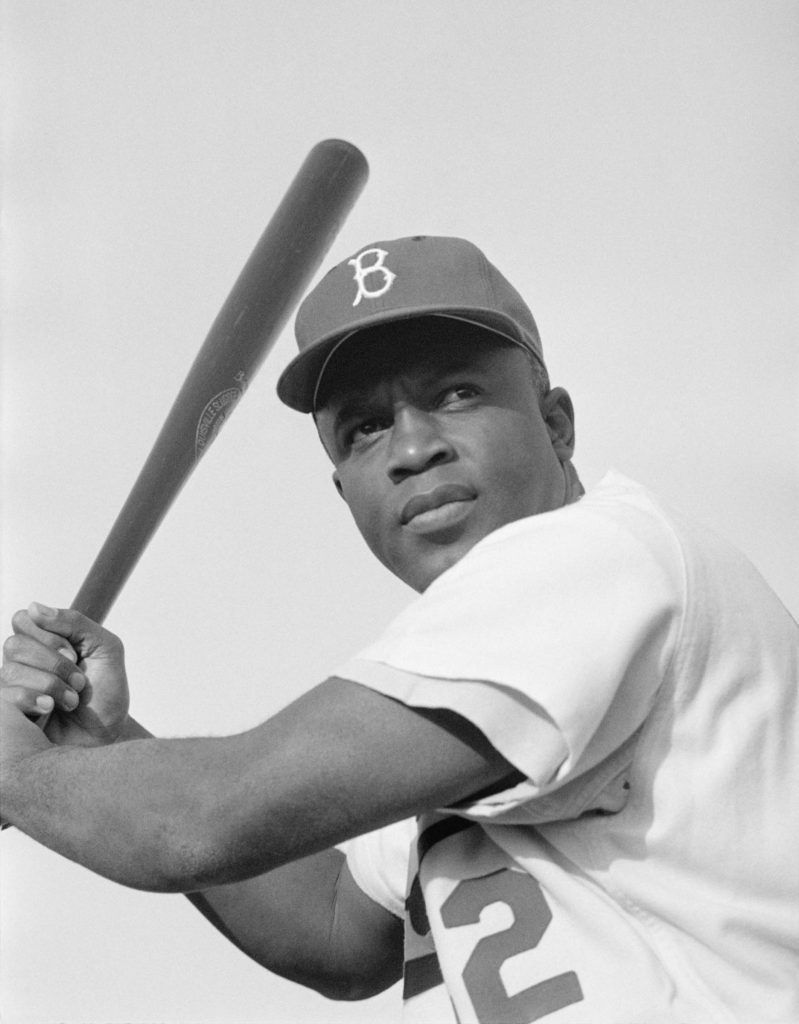
Yet for all the good in the hardball sport, its history is stained by a colossal blemish. If the original sin in this country was slavery, as many say, baseball “compounded the felony” for far too long by the exclusion of African American players. The case of Jack Roosevelt Robinson, who was born in 1919 and named for President Teddy Roosevelt, illustrates the point. After his family moved from Georgia to California, “Jackie” starred in football, baseball, basketball, and track in both high school and junior college, thereby earning a scholarship to the University of Southern California. As a junior, and while participating in two other varsity sports, he set a rushing record at the school in football which still stands today—an astounding 12.2 yards per carry. Drafted in World War II, Robinson was commissioned as a second lieutenant in the Army. When, however, a bus driver for an integrated bus line ordered Robinson to move to the back, he angrily refused.
The driver’s complaints to the military eventually resulted in a court martial. Although the charges were ultimately dismissed, the length of the proceedings deprived Jackie from overseas deployment. After he was honorably discharged, Robinson served a short stint as a small college athletic director, but soon signed on with the Kansas City Monarchs in the Negro Baseball League. He earned All-Star status in his first year as his team’s shortstop. A subsequent invitation for tryout with the Boston Red Sox of the American League turned out to be a publicity stunt, designed primarily to assuage the desegregationist sensibilities in Massachusetts (The Red Sox were the last team to field an African American player). Jackie’s interest in breaking baseball’s color barrier did not go unnoticed by Branch Rickey, the club president and general manager of the Brooklyn Dodgers.
From this point, the big screen, with some embellishment, takes over the Robinson story in the 2013 movie,42. Harrison Ford undertook the role of crusty pioneer Rickey and the late Chadwick Boseman starred as Robinson. In the initial interview with the Dodgers, Jackie asks, “Do you want a player to have the guts to fight back [to the expected racism]?” “No,” says Rickey, “I want a player who has the guts not to fight back.” Jackie pauses before the response, “You give me a uniform and a number, and I won’t fight back.” After a year with the minor league team in Montreal, Jackie was awarded number 42 for the big-league Dodgers. By then, he was at the relatively advanced age of 28 when most first-year players were in their early 20s. Despite objections from the other team owners and racist taunts wherever he played, Rickey and Robinson were steadfast in their resolve. Jackie’s conduct and superior play facilitated the process. He won Rookie of the Year in 1947, and, in 1949, he was voted the Most Valuable Player in the League. After his retirement in 1956, he was named to the Baseball Hall of Fame located in Cooperstown, New York.
A memorable scene in the42movie takes place when Rickey asks a front office employee, “Do you think God likes baseball?”
“What the hell does that mean?” his colleague responds.
“It means someday you are going to meet your Maker, and when he inquires as to why you didn’t take the field against Robinson, you answer because he was a Negro, that may not be a sufficient reply.”
“Jackie’s a Methodist. I’m a Methodist. And God’s a Methodist. We can’t go wrong!”
Technically speaking, Robinson was not the first African American player in the big leagues. In 1884, Moses Fleetwood Walker played, ironically, 42 games for the Toronto Blue Stockings before an injury ended his career. He was the last African American to participate in a major league game until Robinson debuted with the Dodgers on April 15, 1947. In 1997, Major League Baseball retired number 42 across all National and American League teams, making Robinson the first professional athlete in any sport to be so honored. There is a single exception. On Jackie Robinson Day every April 15, each player in both leagues wears that number in tribute to his memory. After Robinson’s death in 1972, he was awarded both the Congressional Gold Medal and the Presidential Medal of Freedom in recognition of his leadership both on and off the field.
→ Swipe for Next Story
FeatureMAY JUNE 2023
Age-Defying Habits
The search for the Fountain of Youth begins at home
Story by Oana Harrison
Getting older is a privilege, and taking care of how well we age is our choice. Although DNA and other circumstances play a role in how we age, we can make choices to impact our quality of life as we advance through life. Anti-aging care is a habit, and it starts at home.
Nutrition
A healthy diet can provide us with most of the necessary nutrients for our bodies to function well. Most of us have tried a popular diet at one time or another, but what is the right choice?
“Instead of recommending a certain diet,” shares University of Tennessee Nutrition Lecturer Lee Murphy, “I like to emphasize the five per day rule. This is a simple concept I teach everyone from elementary school kids to adults: eat at least five fruits and vegetables per day.”
Murphy’s advice for a healthy diet is not surprising: eat lots of fruits and vegetables, along with whole grains, lean protein, and unsaturated fat. For those who turn up their noses at vegetables, try to hide them inside dishes you usually cook, like incorporating frozen or fresh kale or spinach in casseroles or even in smoothies.
Don’t dismiss frozen fruits and vegetables. “I’m a public health nutritionist by training, so even if you get your vegetables from a can, I think it’s great. And even if you need to watch for sodium, if that’s the only way you eat vegetables, it’s still better than nothing,” Murphy says.
And speaking of sodium, high levels are bad for cardiovascular health. The DASH diet stands for Dietary Approaches to Stop Hypertension and it is high in fruits and vegetables, alongside nuts, seeds, and fish. According to the Mayo Clinic, “the typical American diet has a whopping 3,400 milligrams (mg) of sodium or more a day.” The standard DASH diet limits sodium to 2,300 mg a day (approx. 1 teaspoon of table salt), while the lower sodium version of the diet sets the limit at 1,500 mg daily. Our body needs unsaturated fats for proper cellular function, and fish is a great source of that. However, most of us don’t get enough fish in our diet. Murphy recommends a goal of at least two servings per week.
Supplements
“A healthy nutrition should be the foundation, and only then you should look at supplements,” says Eddie Reymond, who runs Eddie’s Health Shoppe. Just like with your diet, start with a solid foundation: a good multivitamin. “Don’t be fooled by flashy labels,” warns Raymond, but instead make sure you get the main ingredients.
Those main ingredients include vitamin B complex (releasing energy from carbohydrates and fat, breaking down amino acids, and transporting oxygen and energy-containing nutrients), vitamin C (protecting cells against free radicals), vitamin D (for calcium and phosphorus absorption), vitamin E (for vision, reproduction, blood, brain and skin health), and selenium (protecting against cell damage and infections).
As we age, we can also look specifically at collagen (for skin elasticity), N-acetyl cysteine or NAC (for liver health), and Nicotinamide Adenine Dinucleotide or NAD (a coenzyme central to metabolism, which also protects DNA integrity and ensures proper cell function). Raymond mentioned Senolytic activator, Pyrroloquinoline Quinone (PQQ), and Resveratrol as three examples of anti-aging products targeting cellular health and regeneration.
Although many supplements have been proven to have some health benefits, the FDA doesn’t employ the same strict regulations as for drugs, so ask your physician before you start taking supplements.
Physical and mental fitness
In addition to a healthy diet, staying physically and mentally active is crucial to aging well. The adage “use it or lose it” comes to mind.
Exercising doesn’t have to be strenuous to be beneficial, but you do need to move every day. “It can be as easy as taking a daily walk or getting off the couch and sitting back down 8 to 10 times for 3-4 sets,” says Shane Glarrow, co-owner of South Landing Fitness. “Keep it simple and be consistent.” Glarrow, who opened South Landing Fitness with his wife Crissy in 2016, learned from a young age the importance of taking care of his health when he was diagnosed with diabetes. Crissy is a former gymnast and understands the importance of discipline in staying fit.
As we age, our balance might get a bit shaky. That can be prevented or lessened through strength and resistance training. “We like to teach people fundamental movements and patterns which they can use in the gym or at home,” Glarrow points out. “The intent is to provide them with simple exercises that they can commit to, because that’s what’s going to lead to results.”
Richard Dowdy, owner of Fitness Solutions, a former Air National Guard member and fitness equipment provider, also knows this to be true: the most effective exercise is the one you like and that you can do at any time. “Now in my 50s, I notice that if I don’t exercise, I hurt more,” Dowdy says. “If I keep moving, everything feels better—my back, my joints, and even my mood.”
Dowdy says that treadmills are very popular because walking is a simple exercise most everyone can do; as a bonus, many feature workout sceneries, even travel destinations programmed in. “Many of my senior clients prefer recumbent bikes because it’s easy to get them, without having to step across a frame, so they don’t have to worry about falling,” he says. “It’s never too late to start. My friend’s mom is 96 years old, and she just started working out. She hasn’t missed a day in a month, and she’s raving about how good she feels.”
After a good workout, a sauna session can help. There are many options, from traditional steam-based ones, which are great for detoxing, to the infrared versions, which can increase metabolic rates. The caution is to look for low EMF (electromagnetic field exposure), hydrate, and replenish your electrolytes.
Beyond physical fitness, consider your mental agility and peace of mind. Yoga covers both and can be done by anyone at any age. “Even the most inflexible person can breathe,” points out Heather Jagels of Mountain Zen Yoga. Breathing is important for obvious reasons, but also because controlling our breathing can reduce stress, a major aging agent.
Yoga is great for the entire body. There is even face yoga. Our face has muscles and lymph nodes, just like the rest of our body. Jagels explains: “Massaging your face gets the blood circulating through the skin, massaging the lymph nodes creates a drainage system which helps reduce puffiness, and working the muscle tissue helps increase firmness.”
Holistic Approach
Board-certified family medicine practitioner Raye-Anne Ayo advises looking holistically at how we age and how we live, recommending a traditional Mediterranean diet (vegetables, fruits, whole grains, olive oil, fish, yogurt), which research shows can lower the risk of cardiovascular disease and other chronic conditions. In addition, she recommends low sugar, moderate alcohol, and no smoking.
Exercising on a regular basis is important. It can be low impact, such as walking; tai chi, which helps with some chronic pain syndromes; or yoga, which helps with stress. Ayo explains: “We aim to decrease cortisol levels and metabolic inflammation through diet, exercise, and stress management. This can really protect your DNA and overall health, and decrease the risk of cardiovascular disease and even cancer.”
Some low weight-bearing resistance training such as push-ups, wall sits, or lunges are easy on the joints, while the tension will stimulate the bone to regenerate and strengthen. Minimizing muscle loss, which happens with age, keeps your metabolic rate higher, so that it’s easier to burn calories.
Mental acuity and spiritual health play a significant role in our health and longevity. “Learning a new task or hobby, mentally stimulating puzzles, reading books, or just being social and having conversations with a friend can help,” Ayo advises. “Meditation but also having a sense of purpose for one’s life are very important to one’s health,” she added.
→ Swipe for Next Story
FeatureMAY JUNE 2023
From the Tree Tops
A new sanctuary where couples and families can stay and play
Story by Mary Leidig
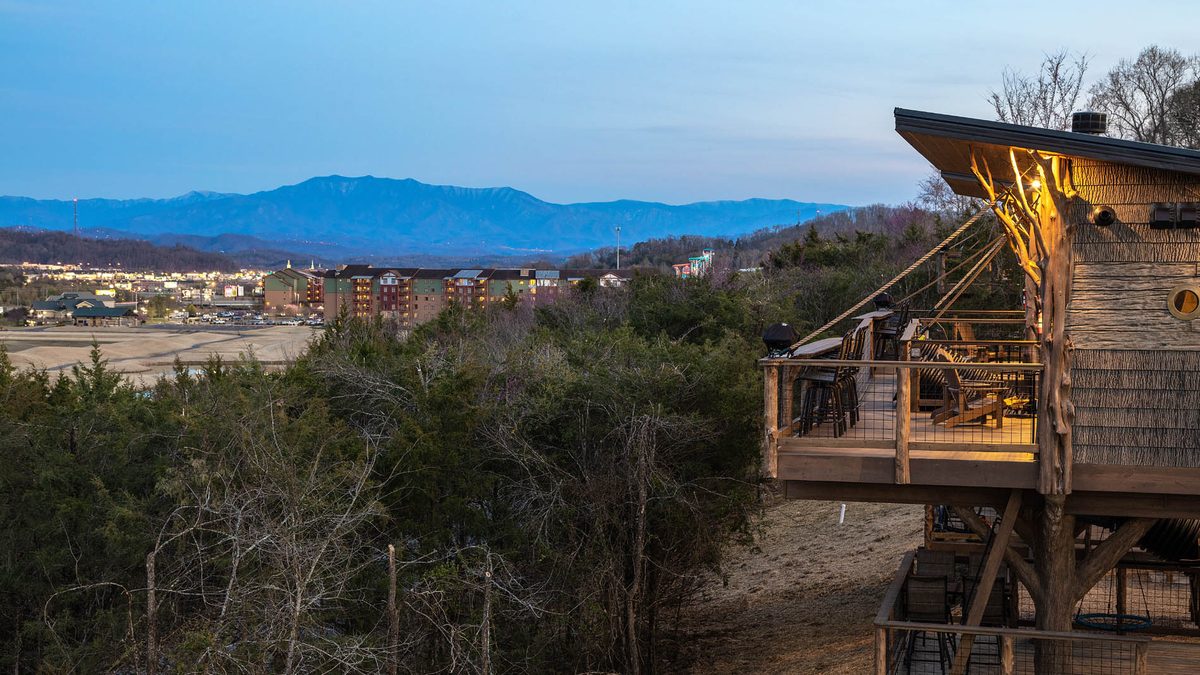
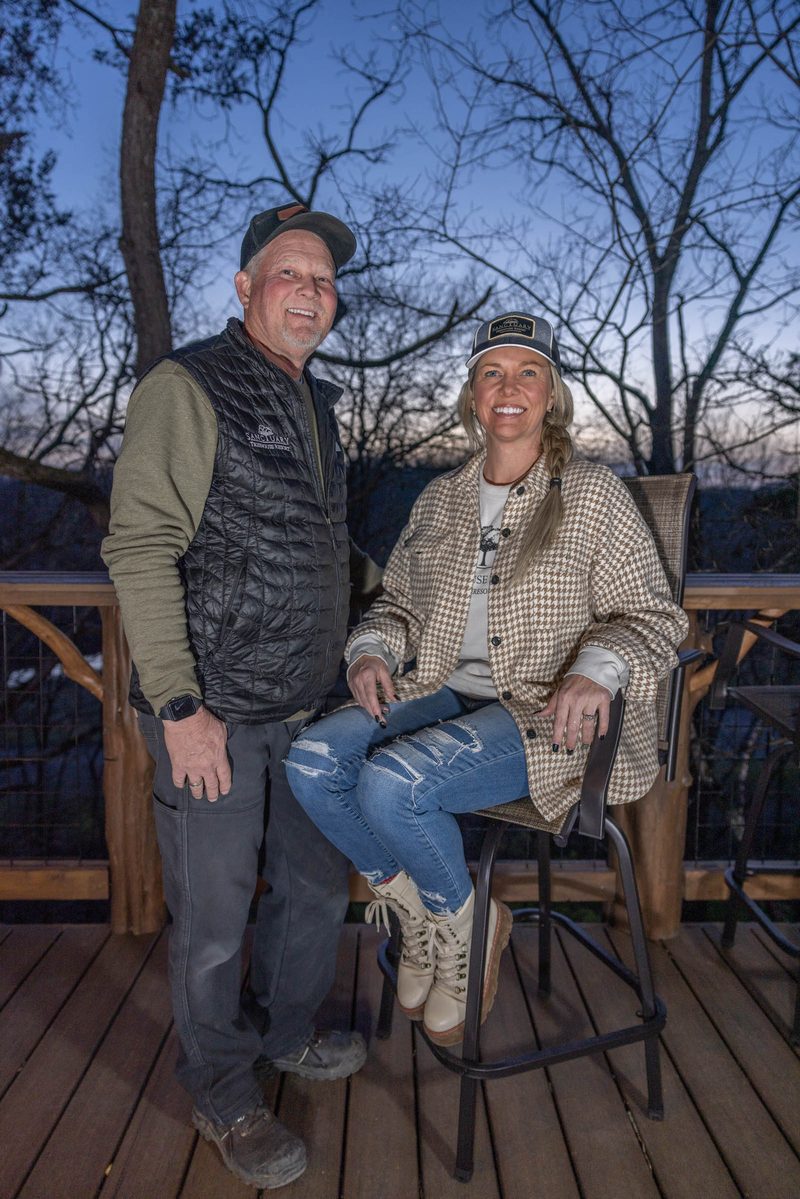
For Amanda and Brian Jensen and their four children, building a treehouse in 2014 was a family thing. It still is—only today the number of their treehouses is seven going on 130. And in fact, they hope their interactive Sanctuary Treehouse Resort in Sevierville will be the world’s largest when completed.
“This concept is catching fire,” says Amanda, who is the marketer for the husband-wife team. They plan to build 130, possibly more. Amanda calls their plans and meticulously detailed designs “grow as you go.”
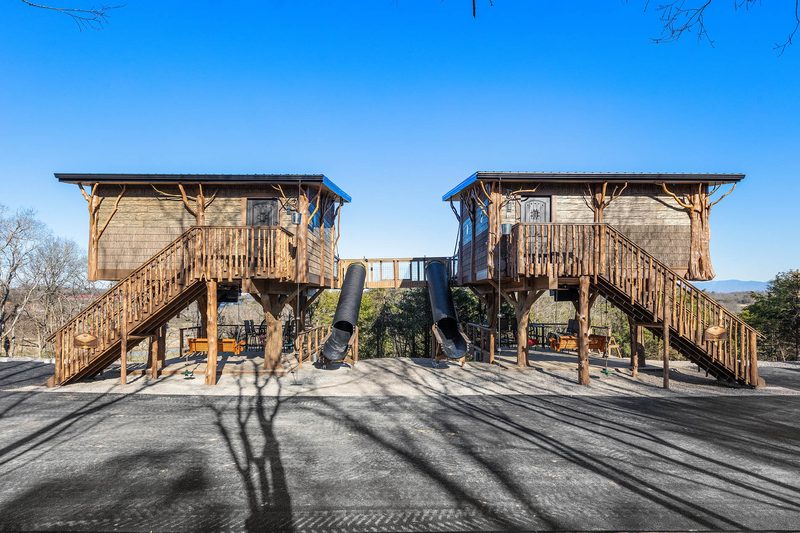
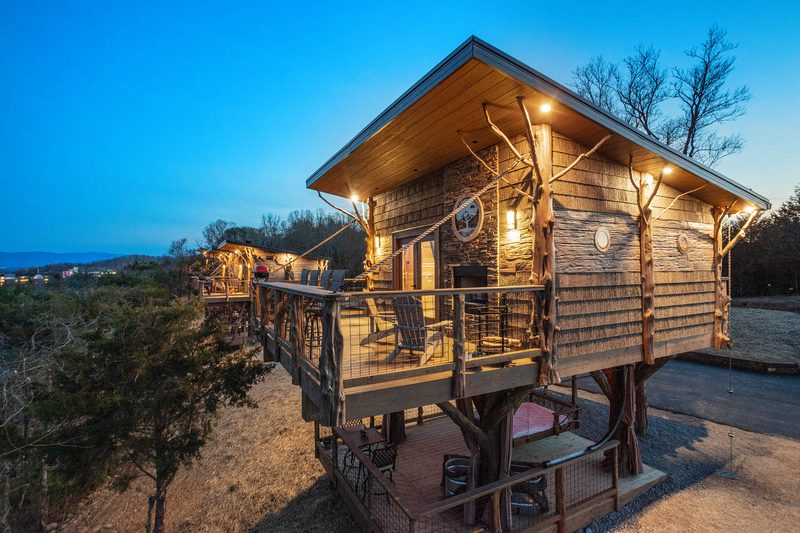
The resort near the Smoky Mountains offers reservations for three different types of treehouse lodging: Tree Fort, accommodating six guests; Tree Fort Double, two treehouses connected by a drawbridge; and the upscale Luxe design features king-size gel cooling beds and outdoor tubs. Also included in the couple’s current and future designs are an enchanted forest, walking trails, scavenger hunts, fireplaces, and bamboo jetted tile showers.
The other level of magic for guests includes special interactive features for children and adults such as hidden roll-out beds, drink chutes, hatches, ladders, portholes, speakeasy windows, rope climbs, outdoor trough tubs, and even heated toilet seats. Both rustic and luxurious in a style Amanda describes as “boujee.”
When the couple’s children were younger, that first treehouse sported bunk beds and zip lines for their kids who loved it. It was a kind of blueprint for their future, though they didn’t know it at the time. “But we ended up seeing how treehouses became a thing,” says Amanda.
Retired from other businesses, the couple also own Gatlinburg SkyCenter, a restaurant and shop at the top of Gatlinburg’s popular chairlift with its massive views of Gatlinburg and surrounding Smoky Mountains. Not far away are the 40 forested acres where the treehouses nestle, intentionally becoming part of the natural environment—just minutes from their 10,000-square-foot home and the Great Smoky Mountains National Park, the nation’s most popular park.
Just Trees and Dirt
As Brian began to dream of an actual treehouse project in 2022, the U.S. Army veteran and electrical engineer gingerly “brought Amanda along” as he shared his initial ideas for the treehouse project. Choosing the spot was easy. They became aware of available property in their own neighborhood that they had driven past for years. Sugar maple and black walnut trees filled the property.
And the views? Built on a slant, the treehouses offer “stadium seating” scenes of the Great Smoky Mountains, Mt. LeConte, English Mountain, two 18-hole golf courses, the Little Pigeon River, and more. “This was untouched property—just trees and dirt—and we knew we had to buy it after we saw it,” Amanda says. Keeping the trees and topography of the land was a priority, making all the difference in how people would find sanctuary in these mostly cedar treehouses.
Amanda admits there were days “I didn’t want to work this hard,” she says, smiling. It would be a project they began planning during the Covid pandemic with architect Allen Halcomb, president of MossCreek Homes in Knoxville. Glass shortages during Covid made it challenging to get porthole windows, yet Brian creatively found replacement options.
Brian actually built the first seven treehouses with his own small crew of construction personnel, working with Jerry Sutton as general contractor. The couple plans to bid the rest of the build out to a larger construction company. “Brian and I and our team can then focus on the building of the amenities,” says Amanda.
Keeping it Personal
Still a family affair, their emerging commercial project involved Brian building much of the furniture and some very stylized pieces like Jack Daniels whiskey barrel sinks and tables as well as king- and queen-size beds that roll out, hung with ropes. And then there were bunk beds he would build that crank up to expand. “Brian can literally build anything, even our home as well,” Amanda boasts.
While she began designing the marketing and public relations, working with the new website and social media, their 17-year-old daughter helped create art for the interiors. The whole family—their three daughters and son range in age from 10 to 24—joined together to come up with the themes and names of the treehouses. “We’re keeping it as personal as possible,” Amanda says. They are also delighted the children are getting to see firsthand how a business is built.
Brian’s favorite part of the endeavor? “I would have to say working together with my wife and our children. We are blessed with the opportunity to create something for them, for others—with them. There is a lot of value in family and showing your kids how to build their dreams. Nothing was ever handed to Amanda or me. We have had to work for it. We have thoroughly enjoyed showing our children how this is done. You know, give a child a fish and you feed them for a day; teach a child to fish and you feed them for a lifetime.” Married 17 years, the couple’s style is “yin and yang, and it works,” says Amanda.
We’ve Stayed in Every One of the Them
Along the way, the couple’s biggest surprise continues to be the reception of their big idea. “We were humbled by this, and we love it.” In addition to great local interest as well as from friends and family, they are receiving booking requests from outside of the United States from travelers curious about the unique resort—something Brian and Amanda could not have imagined. “It’s just so rewarding,” she says.
The secret to getting it right? Real world trials. “We have stayed in every one of these treehouses,” Amanda says. Truly, the couple and children have “hung out and lived in them a little to work out those kinks you don’t want your guests to experience.” Their final punch list included resolving minor issues in the electrical system and small furniture adjustments. Getting it right meant nothing was too insignificant.
The couple foresees interest from customers with broad vacation interests, from vacationers looking for a one-of-a-kind experience or those wanting to relax at a nature reserve, right through to guests interested in being in the mountains or at Dollywood in minutes. Guests ride the property in solar-powered golf carts, and, Amanda says, it is so complete that travelers need not go any further. She and Brian call it a sanctuary for good reason.
The Grand Opening—A Dream
From that one family treehouse came the whimsical business idea that saw its grand opening on March 27 this year.
Amanda says that special day was a dream. “Kind of like a wedding day—a whirlwind of unfinished conversations with friends, neighbors, family and those in our community who were excited about what they finally got to come and see. We were humbled by it all and look forward to the memories that will be made here by people and their families for years to come.”
“It’s been a true dream of mine and Amanda’s to create this resort,” says Brian. “For my part, I find that the challenge of creating all the unique features on the treehouses has been personally gratifying and entertaining. I always thought of my wife as amazing, but I have been truly affirmed in watching her handle our PR, marketing, branding, decorating, and theming—in addition to her ideas she gives so freely to me. All this, on top of the wonderful wife and mother she continues to be.
“It is quite rewarding to see the reaction to what we have created. We are always told that pictures do not do it justice. You just have to come and see it to really feel it.”
The seven-treehouse resort including trails and lush landscaping will grow to 130 tree dwellings. And after that? “We’ll see,” says Amanda. “We’ll just keep saying, ‘Grow as you go.’”
→ Swipe for Next Story
Non-ProfitMAY JUNE 2023
Making Farm-to-Table Happen
Nourish Knoxville is committed to cultivating healthy communities
Story by Karen Clark
On a bright, sunny Saturday, Ryan Sowell and his almost-5-year-old daughter, Lindley, visited the Market Square Farmers’ Market on their way to the Car Show. When Sowell was a student at UT, he visited the market almost every Saturday because it was walking distance from his apartment. “We want our kids to grow up with real food and know how to prepare it,” said Sowell, a senior manager in partner development with Amazon Web Services.
“It’s great that they have a kids’ program here. Lindley got a voucher for five dollars and chose some sweet potatoes. She was really excited to pick them out herself. We roasted Lindley’s sweet potatoes with a little olive oil and butter. Between that five-dollar voucher and the two dollars she got from the Tooth Fairy, she’s quite pleased.”
For some 20 years, Knoxvillians have enjoyed watching the Farmers Market grow and prosper. Since 2013, the ethos of community-supported agriculture and nutritious food has rocketed to new heights through the efforts of Nourish Knoxville, a nonprofit promoting local food systems in ever-expanding ways.
“We strive to create a sustainable food system in which everyone has access to healthy, locally grown food, and farmers can make a living wage,” says Executive Director Charlotte Tolley. “We now operate three farmers’ markets, create the East Tennessee Local Food Guide, provide multiple nutrition-incentive programs, and donate locally grown produce to partner organizations.”
Nourish Knoxville works closely with local and state government officials to advocate for policies that support local food systems and sustainable agriculture, farm-to-school programs, urban agriculture, and small-scale farmers.
Among its programs, the organization offers workshops and classes for adults on topics such as gardening and cooking with local ingredients. It partners with local schools to bring fresh, locally grown produce to cafeterias and teach children about the importance of healthy eating and where their food comes from. In addition, it welcomes field trips to the market, providing seasonal-produce scavenger hunts, recipes, and local food education, rewarding participants like Lindley Sowell with “Produce Bucks.”
Nourish Knoxville provides resources and support to community gardens in the Knoxville area, helping to increase access to fresh produce and promote community engagement. A Veggie Voucher Program helps low-income families purchase fresh produce at farmers’ markets, making healthy food more accessible to those who need it.
“There are so many food deserts in the Knoxville area where you can’t find fresh vegetables,” says Chef Jeffrey DeAlejandro of OliBea, an original Nourish Knoxville board member. “There just aren’t any grocery stores in some areas. For a while, there were some farms in Maryville that would give you as many free vegetables as you wanted if you helped with the harvest. Now, people are paying attention and having fun with where their food is sourced. They say, ‘Oh these are the Mossy Creek mushrooms? They use those at Blackberry Farm.’”
Communities Creating a Public Space—the Farmers’ Market
In 2001, Tolley—a native of Lucy, Tennessee, just north of Memphis—earned her BFA in photography and film from UT. “After school I worked at a bakery in London through a work-abroad program and spent a lot of time at a lot of public markets,” she told Laura Ayo of theNews Sentinel. “The public market space is utilized by all of the community and becomes the central gathering point. Farmers, butchers, bakers, and cheesemongers sold their goods alongside artisans and artists. I really liked the way those communities worked together to create a public space.”
Back in Knoxville, working for Bliss and Tomato Head on Market Square, she joined the Market Square District Association. Partnering with local businesses and others, she helped launch a farmers’ market. She was named its volunteer director in 2005. “It was important to us in the beginning to earn trust and stick with our ideals, which has definitely paid off for us,” Tolley told Ayo.
“If memory serves,” says David Gwin of VG’s Bakery. “I think there were eight vendors at the first MSFM and we were all on the stage area. No way did I envision it growing into the massive two-block event it has become. However, there was a real sense of ‘community’ at the beginning, like we were all in this together.”
“Market Square was my early morning go-to,” recalls DeAlejandro. “I’d get there early on Wednesday and Saturdays with a shopping cart and get almost everything I needed. Those days were crazy. Everyone knew everyone. We’d swap food and have folks eat for free. I remember when I started putting the farm names on the menus at Crown and Goose, they thought I was wasting ink!”
“Market Square itself was for the most part a place no one needed to visit except for Tomato Head,” says Gwin. “I truly believe the amazing growth of the MSFM opened the eyes of investors to the potential for Market Square. Charlotte believed so strongly in what we could do for the area, and she encouraged us to put our best out for the shoppers to experience. It opened our eyes to the possibility of actually thriving as a small business that was until then struggling. I am grateful for Charlotte to this day!”
The Importance of SNAP Customers
Gwin is gratified to see small eateries that rely heavily on the Market Street Farmers Market for their ingredients. “I get really excited when I see Jeff from OliBea’s and Drew [McDonald] from the Plaid Apron walking through the market with their wagons full of fresh, local produce and meats,” says Gwin. “So much has changed about the MSFM since the early years. With the advent of ‘Market Money’ more vendors were able to sell more products without committing to personally accepting credit cards. Then the EBT (SNAP) program allowed people getting assistance to experience truly ‘fresh’ food that is so much more tasty and nutritious.”
In 2008, the market became the first farmers’ market in Tennessee to accept SNAP (Supplemental Nutrition Assistance Program) with a script-based system. Says Tolley, “When SNAP benefits moved from food stamps, the physical paper vouchers, to a card, it meant most small farmers and farmers’ markets could no longer accept SNAP benefits. We modeled our program after Texas’s Sustainable Food Center program and began accepting EBT/SNAP cards, giving customers tokens to spend with vendors.”
“Accepting SNAP benefits was a huge change in the organization’s outreach and a core part of the mission,” notes Fork Design architect Forrest Kirkpatrick, a Nourish Knoxville board member. “It elevated the markets from a boutique luxury for those interested in and able to afford local produce, to a food staple for a greater cross section of our community.”
The Birth of Nourish Knoxville
While the Farmers’ Market alone was successful, Tolley thought they could do more. Nourish Knoxville was founded in 2012 by several local farmers and community members who recognized the need to connect local farmers with consumers in the Knoxville area.
“Charlotte first approached me and the other founding board members about forming Nourish Knoxville after her realization of where much of the money generated by the Market was going,” remembers Webb teacher John Schmid. “Most of it was going to support events, like the Biscuit Festival, and other activities of the City Center group that had little to do with expanding the Downtown Market and increasing outreach on the local farm and food scene. That desire to increase investment in the market and in other ways that could positively impact local farmers and educate the community about buying local and eating healthy was the driver in forming Nourish Knoxville.”
Connecting Farmers Directly to Consumers
As more people shopped at farmers’ markets, Community Supported Agriculture, or CSAs, offered a way for farmers to market directly to consumers. “They started as a way to sell extra produce,” says DeAlejandro, “but sometimes now the farmers sell out before they get to the market.” All can be found on Nourish Knoxville’s online Food and Farm Directory.
Jeff and Lyn Johnson of Sequoyah Hills for years had a CSA “subscription” from the Care of the Earth Farm. “I loved that it was organic and local,” says Lyn. “We would get a big box every other Saturday filled with seasonal produce, from the early spring greens, to summer squashes, onions, herbs, and tomatoes. We would plan our week’s menu after the box arrived and we saw what we had to work with. Once in a while we would get a squash or something we hadn’t seen before, and it was fun to find a recipe and learn how to prepare it.”
Connecting with Underserved Populations
Says Tolley, “In 2016 we were a part of a statewide grant with the AARP Foundation to double SNAP benefits up to $20 per day through their program, Fresh Savings. When that grant ended in 2019, we self-funded SNAP-doubling at our three markets and rebranded as Double Up Food Bucks, which is a national brand by the Fair Food Network. Thanks to a grant from the Tennessee Department of Health, we now fund Double Up Food Bucks at 16 locations in central East Tennessee. In 2022, SNAP recipients spent over $58,000 on local foods across the 16 locations, with 1,251 transactions (or customers).”
Knoxville Area Transit hung signs inside the buses going to Knoxville markets offering Double Up—Market Square Farmers’ Market, New Harvest Farmers’ Market (Bus Route 33), and Eastside Sunday Market (Bus Routes 33 and 34). At Market Square, the biggest market accepting SNAP, the number of SNAP and Double Up Food Bucks transactions rose from 170 in 2019 for $13,208, to 205 in 2020 for $28,626, peaking at 307 during the Covid year of 2021 for $35,492, and moderating to 270 in 2022 for $23,026.
“It’s been amazing to see the changes in Nourish Knoxville over the last decade,” says Kirkpatrick. “It’s been nothing but positive growth. It’s been so successful that I’ve actually lost count and track of what all NK is currently involved in. I honestly don’t know how Charlotte does it. What I do know is that it started with one market, two employees, three board members, and they were all working from home. The staff, the markets, the programs, and the board have all grown expansively since NK was founded, as has its positive effect on this town.”
How You Can Contribute
As a nonprofit, Nourish Knoxville relies on private donations, grants, and sponsorships from businesses and individuals. Tax-deductible donations may be madeonlineor by check to P.O. Box 2422 Knoxville, TN 37901.
Nourish Knoxville is currently accepting volunteers to assist at the Wednesday Farmers’ Market, Thursday New Harvest Market, and the Saturday Market Square Market. Visit the web siteor emailvolunteer@nourishknoxville.comfor more info.
→ Swipe for Next Story
FeatureMAY JUNE 2023
Top Dog
In search of the Smoky Mountain Market hot dog
Story by Robert Pryor, Sr.
I know a weenie man,
He owns a weenie stand,
He sells most anything,
From hot dogs on down!
Someday I’ll join his life,
I’ll be his weenie wife,
Hot dog! I love that weenie man!
On a recent drive south on Chapman Highway, I noticed that the Smoky Mountain Market has been torn down and only a vacant lot remains. Tears swelled up in my eyes and I made an immediate right turn down Hawthorne Avenue and suddenly experienced a flashback to my childhood. As a young boy, I spent a lot of time with my grandmother and grandfather at their home on Hawthorne just a half a block from Chapman Highway and the great Smoky Mountain Market hot dog. Every afternoon Nannie would take me by the hand and we would walk together up the hill to the market for lunch. It was a reward for being good all morning. One hot dog with chili, mustard, and onion and a Grapette for me and the same for Nannie. Even today, that is one of the happiest memories of my childhood and my all-time favorite lunch choice. In college at UT, I spent many late nights choking down three dogs and a Coke or a quart of chocolate milk at good ole SMM, and it was a great spot for a cheap date. Norma and I often had a late night dog after a movie date at the Tennessee Theatre. I ate SMM hot dogs well into my professional years until it closed in 2002. In case you are new to these parts or lived a sheltered life in the west, north, or east ends of the county, the SMM was a South Knoxville institution at the south end of the Henley Street Bridge. It was an open air market with lots of watermelon and bottled pop out front in large open top iced coolers and, inside, a counter that sold a hot dog every 30 seconds, night and day. Over the last 20 years, I’ve passed by the overgrown and neglected property many times and recalled the great tastes I enjoyed there and the sweet smell of Kern’s bread baking across the street. All of that is gone now, but I’m still in search of the elusive taste of the greatest hot dog in the world.
Although I often eat hot dogs for lunch, I have been involved in a marathon lately in preparation of this article. I’ve been all over the county to make sure I could accurately report to you where you might find a close equivalent to the hot dog I’ve loved all of my life. I’ve thrown up just twice and, after I finish this article, I may not eat another hot dog for a year.
To understand my search, it’s important that you know that there are two types of hot dogs. There is the simple dog and the grotesque dog. Frankly, I prefer the simple hot dog, but respect those who prefer the sloppy, overdressed, and oversized grotesque dog. A simple hot dog, eligible to be considered in my competition against the SMM hot dog circa 1952 – 2002, must meet some basic requirements. Now, hold it right there. Can you believe a grown man is writing a stupid article like this about hot dogs? But, I’m in too far, I must continue.
First, it must have a soft, fresh, and steamed bun. At SMM, the buns were from Kern’s Bakery and they were kept under a stainless hood and steamed constantly from the hot water warming the weenies and chili as they waited to be married to the warm soft bun. I’ve watched this ceremony a thousand times.
Second, the weenies must be soft and limp. Never try to sell me a hard rigid weenie. Cheap weenies make the best hot dogs. The good ones are all beef, standard length, and of small circumference. There is nothing worse than a fat expensive weenie unless it happens to be a mettwurst sausage with white beans (perhaps the subject of a later article).
Third, special attention must be given to the chili. Next to the weenie, the chili is the most important part of a SMM hot dog. It was a magic elixir that no one else has captured.
It must be thin and soupy with minimum body and absolutely no beans unless they are pureed and not visible. I love dark, chunky, and beanie chili with hot tamales, but it disqualifies a hot dog in my competition. Lastly, the onions must be super diced and the mustard must be the standard yellow French’s variety. Deli mustard is good, but it never made it to Chapman Highway.
Using my juvenile taste buds as my guide, I’ve searched Knoxville for years looking for the perfect duplicate for the SMM hot dog and, although I’ve failed to find it, I’ve discovered some close competitors and a few very good non-qualifiers.
Denton’s Big Orangealways involves fond aromas and memories for me. The Nan Denton’s Orange Julius at the corner of Gay Street and Clinch Avenue was a part of my life until it closed in 1981. Although Sister Nan sold hot dogs, the big fascination for me and my family was with her corn dog and the Orange Julius drink. Brain freeze. Somewhere along the line, Nan gave it up and members of her family either sold off the Orange Julius name or the rightful owner came back to claim it. Whatever might be the case, today Denton’s makes a very good hot dog, which I consider quite competitive to those hundreds I ate at the end of the Henley Street Bridge. In the old Fouche Building and today on Kingston Pike near Papermill, you can buy a hot dog with probably the best weenie in town. The chili is a little thick and meaty, but, fortunately, contains no beans. The onions and the bun are first class and Denton’s gets extra points for trusting you with their mustard pump. I like hot dog joints where you get access to as much mustard as you want. I like mine on top where I can see it.
In my mind, the Denton hot dog is comparable to the dog at the historic “Original Freezo” at 1305 N. Central Street. When I walked up to the window, my mind traveled back to 1949. As a kid from Lincoln Park, I traveled North Central regularly in the late 40’s and throughout the 1950’s and must have stopped at the Original Freezo hundreds of times for ice cream or milkshakes. I don’t remember ever eating a hot dog there, but once had the world’s best banana split. Funny how you remember things like that. The hot dog was great with a soft steamed bun and a soft weenie. The chili was identical to Denton’s and could have used a little thinning out. By the way, if you intend to stop by the Original Freezo, understand that there’s no indoor dining and outdoor dining is a challenge. I sat in the back of the parking lot at a round concrete picnic table that was probably originally placed there by James White soon after he arrived here fresh from the Revolutionary War. I wasn’t sure it would hold me, but I got through it and, as usual, got a little mustard on my shirt.
Roger’s Place Barat 8817 Kingston Pike has been one of my stop-off spots for years. It first caught my attention by advertising “The Best Hot Dog in the World.” I knew that was a lie because I had been taught better by Nannie. In Roger’s, you can expect thick cigarette smoke, which kind of contaminates the taste of what is otherwise a very good hot dog. Like at all of my other competitors, I order Roger’s dog with only chili, onion, and mustard on top. Two of Roger’s dogs and a glass of beer are all I need to make my day, but in my SMM competition it comes in high, but not first.
I have been quite impressed with the simple dog atDave’s Dog House, 7409 Middlebrook Pike. The owner is very nice, but you have to eat in your car. I find that I get twice as much mustard on my shirt when I eat in the car. The dog is very competitive, but the bun is not steamed the way I like it and the chili is, again, too thick. Dave’s (actually Sherri Jenkins’) has many “specialty dogs” and smoked sausage, which did not interest me in the least until after the competition.Petro’s Chili & Chipsalso has a good dog that compares quite favorably with Denton’s.
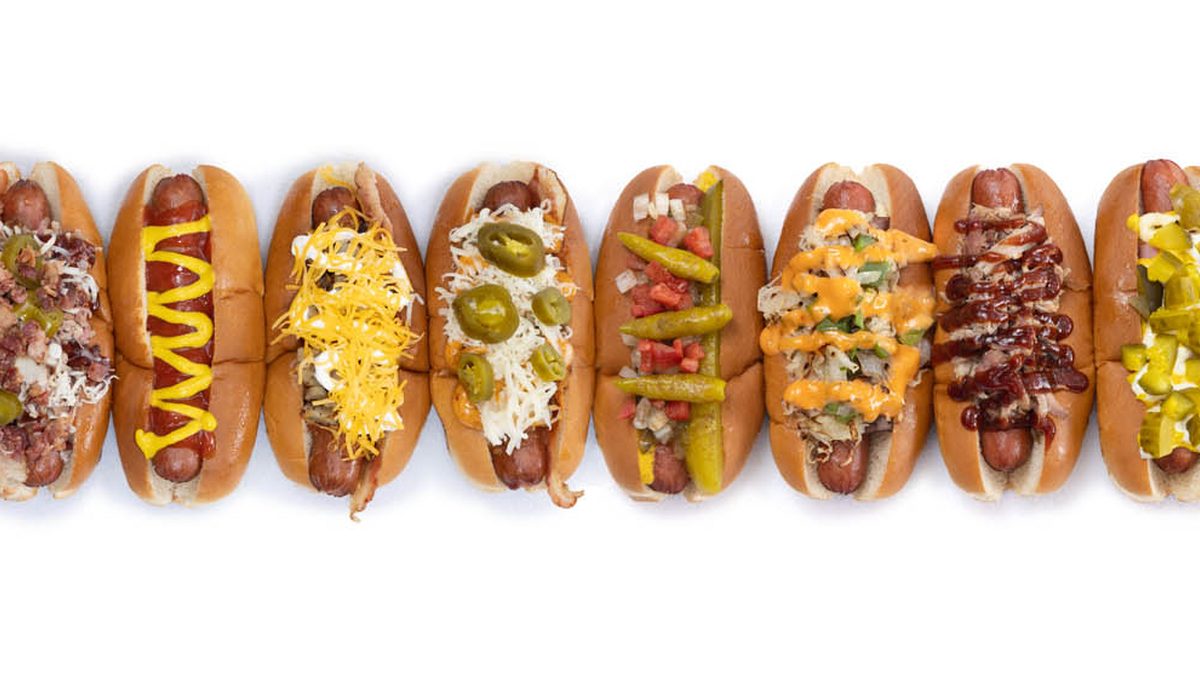
I’ve interviewed a lot of people as I’ve staggered from hot dog stand to hot dog stand and most are happy to share with me their favorite hot dog joint. The older ones, however, agree with me that their personal favorite was good ole SMM on Chapman Highway. I have discovered, however, several Honorable Mentions that did not make my final cut.Curious Dogat 200 Jackson Avenue demonstrates a keen imagination in their hot dogs and sandwiches, but their wiener is too fat and the dog is too sloppy with chili for me. I got it all over my hands, arms, and shoes. A simple dog can be eaten efficiently in four bites without getting chili all over your face.D & B Hot Dogs and Ice Creamon Oak Ridge Highway at Solway has obtained national recognition for their decorated dogs. While I prefer a more simple taste (which they did have), most of their menu has dogs topped with every ingredient imaginable from tomatoes, peppers, kraut, and Thousand Island dressing, to pickles, barbeque sauce, and maybe even a fortune cookie.
Although I have not tried it,Tellico Beach Drive-Inin Tellico Plains comes highly recommended for their slaw dog, and the next time I get to Blount County I’ve got to tryWoody’s Market & Delion Morganton Road. Woody sounds like my kind of guy who’s been turning out simple dogs like I prefer for years. “Get Your Goodies at Woody’s”– I’ll be there soon.
Oh, by the way, I guess you’re interested in the winner of my little competition, and I’m happy to announce that for my taster – wait for it – theVol Market #3at 3400 Western Avenue makes the best SMM-like hot dog in the county. Beyond the hot dog itself, the guys at Vol Market #3 get extra points for creating an atmosphere that, like SMM, is conducive to eating hot dogs. No matter what time you visit the Vol Market, there’s a crowd of people eating hot dogs or standing in line to get one or three. It’s a friendly place full of friendly people from all walks of life, all after the same thing—a simple hot dog that’s close to what was served for 60 years at the south end of the Henley Street Bridge. What’s your favorite hot dog?
→ Swipe for Next Story
FeatureMAY JUNE 2023
The Lifelong Volunteer
Hometown Heroes: Why Knoxville teacher Ernie Roberts spends so much time volunteering
Story by Susan Alexander
Ernie Roberts’s list of community involvement reads like a roster of Knoxville’s nonprofits:
He’s taken Key Club members from Bearden High School to volunteer at the Empty Stocking Fund since the mid-1980s, and he serves as a board member for the project.
He serves as president of the Love Kitchen board and runs errands as needed. “Helen Ashe and Ellen Turner were dear friends,” he says of the founders, “and we’re working hard to keep their legacy going.”
He works at East Tennessee Children’s Hospital’s Fantasy of Trees each November and enjoys catching up with friends he sees among the visitors who come to enjoy the festivities.
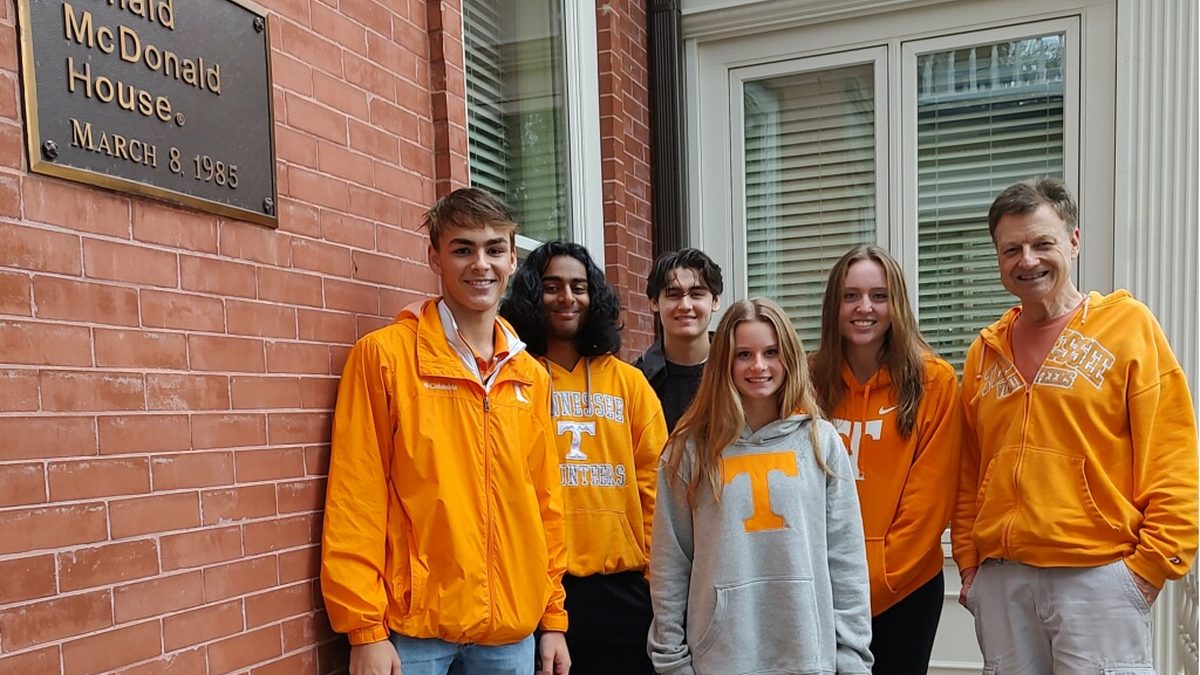
He and his Key Club members run a parking lot at the Ronald McDonald House during UT’s home football games and have raised more than $200,000 for the nonprofit. “We hope to hit the quarter-million mark this season. We’re close,” he says.
He serves as executive producer for WETP’s Scholars Bowl show and used to host Mathline, a call-in show about math, for the channel.
He’s active on the Old North Knoxville Neighborhood Association and helps organize its annual Victorian Holiday Home Tour. He’s a member of the Northside Kiwanis Club, helps with Knoxville Opera, occasionally providing lodging for a visiting artist, and used to be involved with The Word Players. And he serves on the Metro Drug Coalition board.
Oh, and though he retired from Bearden High School in 2009, he still teaches math there part time and is an assistant faculty advisor to the Key Club.
A graduate of Central High School and UT, where he also earned his master’s degree, Roberts sees nothing but upsides to all his efforts in the community. “Everything I get involved with is about people,” he says. “One of the best benefits of volunteering is all the folks you get to meet. I’ve met some really good friends and close acquaintances. And working with the students in Key Club is sort of like being a coach; you get to know a different side of them than in the classroom. It’s a nice feeling.
“And it’s great to introduce others to the idea of community service. Some Key Club members still show up to the Empty Stocking Fund, years after they’ve graduated. It stuck with them.”
“It’s fun,” he says of volunteering. “I enjoy doing it. If people give it a chance, they might really enjoy it, too. It becomes a part of you.”
Do you know someone who is making a positive impact in East TN who deserves a shout-out?
Email us ateditorial@cityviewmag.com.
→ Swipe for Next Story
FeatureMAY JUNE 2023
Garden Revamp
Tips for getting started or adding to your existing green space
Story by Rebecca Whalen
For gardeners, spring is our time. We start our seedlings, get them into the ground, and care for them as they grow into something that will provide us either sustenance or something beautiful to look at—or both. Being a gardener in springtime is a thrill.
Whether you’ve been toying with the idea of incorporating native plants into your gardens, are fairly new to growing your own vegetables, or are simply ready to redo your landscaping, there are some basic steps you can follow to ensure your garden sees success this year.
Proper Planning
Since many landscapers are already knee-deep in projects, that might mean you’re on your own this year. Don’t panic. Rylan Thompson, UT Extension’s Knox County agent, says to simply start with a plan: “You should really put thought into what your goals are for your space.”
A good place to start is with your soil. “East Tennessee soil is clay and rich,” says Mike Newman of Northshore Nursery. “Clay particles are very fine which means the water doesn’t drain very well. A lot of East Tennessee soil holds water and plants don’t like that.”
If you’re wondering how your soil fares, you can have it tested through the University of Tennessee Soil, Plant and Pest Center. Pick up a soil sample test kit from Thompson at theUT Extension officeand mail it in. Within the week, you’ll have a clearer understanding of your soil and recommendations of how to move forward with it.
Once you’ve built up your soil, Newman suggests identifying the right plants for different areas of your garden. Go to different nurseries and talk to staff about your goals, your garden spaces, your soil, and what you’d like to see in your garden. Then go home and do your own analysis. “The biggest thing is to research your plant materials,” Newman says; buying a larger plant will mean you need to have the space for it to grow. And while you can buy and plant anytime, he says, “later in summer, you’ll have to keep up with the maintenance.”
Issues to Watch Out For
Winter wrecked havoc on plants across East Tennessee. Thompson advises that you keep this in mind as you care for your green spaces. “We did see a lot of browning and a lot of freeze damage,” he says, adding that not all plants were impacted, but many were, and the freeze impacted parts of the same plant in different ways.
“On the same plant, certain tissues can vary with hardiness—leafs, buds, stems—with roots being pretty sensitive to those low temperatures as well. A lot of it can depend on what the plant is and its micro-climate.” A plant that was protected in a corner of the yard during winter might hold up differently when compared to one in the yard’s center. Pay attention to those seemingly small details.
Another thing to watch out for? “If we have a year like we did the last two or three where we get frequent rains, and then the sun comes out and we have a humidity spike, that does create a lot of fungal issues,” Thompson explains. “If leaves or stems get spots, it’s time to act.”
Of particular note is boxwood blight, a fungal issue that Thompson and his team have been hearing a lot about recently from local gardeners. “If somebody has a plant that’s losing leaves and they see black lesions on the stems of the boxwoods, then give us a call. We can help them figure it out.”
→ Swipe for Next Story
FeatureMAY JUNE 2023
Plants with a Purpose
Native species help restore habitats and support the life that relies on them
Story by Susan Alexander
The pawpaws growing in Avi Askey’s yard help to feed the family in the house. And the Zebra Swallowtail butterfly, Tennessee’s state butterfly, relies on it for food and a place to live.
Carex sedges are beautiful grass-like evergreens, but they also help prevent soil erosion and provide nectar for insects early in the spring.
Native plants like these are growing in popularity as gardeners get savvier about their impact on the environment and the birds, pollinators, and other insects that inhabit it.
Barbra Bunting, a longtime Knox County Master Gardener, wanted to convert 7,000 square feet of what used to be lawn to native plants. She worked with native plant designers Leah Gardner and Joan Monaco of Gardner Monaco Design, who recommended plants that would do well in the space. She added her own research to theirs and put together a list of plants based on the soil and the orientation of the sun. Then she started growing them from seed.
“I probably planted several thousand plants, and I have several more thousand to go in this year,” she says. “I want to simulate how things would naturally grow without our intervention, how they would grow in a field or the woods. Sometimes there are dozens of plants in a square foot of space.”
Bunting, who lives on six acres of land in Hardin Valley, doesn’t recommend that gardeners new to native plants tackle such an undertaking. “Start small. Not 7,000 square feet.”
Bunting and the folks at Tennessee Naturescapes, a native plant nursery in Clinton, call native gardening the wave of the future. “It’s here to stay,” says Becky Marlow, a nursery worker for 25 years. “The whole mission of it—the impact on our planet—is something more people are willing and eager to do something about.” While a single person can’t solve all our environmental challenges, they can contribute to the cause just outside their own front door by planting natives.
Devoted to the cause
Askey has been selling native plants from his nursery, Overhill Gardens, in Vonore for 24 years, and he uses them to design native landscapes around East Tennessee, including at Seven Islands State Birding Park in East Knox County and Suttree Landing Park in South Knoxville. “My first draw was aesthetic—I valued the sense of place the native plants provide from a visual point of view. Add to that the relationships between plants and insects and birds that have evolved over the millennia … supporting that in suburban environments has become really important.”
Askey acknowledges that natives may lack the vivid colors and huge blooms one sees at bigbox garden centers. “There’s a shift; I certainly experienced it. The more I became familiar with natives the less appealing the gaudiness of some flowers became.” Not that natives lack color: he cites the showy blooms of Indian pinks and native azaleas as examples and adds that the fruits that may follow or the textural interest of foliage increases their engagement. “It takes a little more design skill to arrange a seasonal progression of interest throughout the year.”
Tennessee Naturescapes in Clinton has been selling native plants since founder Lori McAlister, now retired, started it out of her home in 2007. It’s grown over the years and now offers about 300 different species of plants native to the Southeast, including perennials, wildflowers, shrubs and trees. “Our philosophy is we’re trying to restore the ecosystem we’ve altered through human activities and provide food and shelter for wildlife,” says horticulturist Rich Curzon. “And restore plant diversity. Too many invasive plants—English ivy, Chinese privet, Japanese honeysuckle—have been changing our habitats and choking out natives.”
Becky Marlow adds that natives also tend to be easier to grow. “They’re already adapted to the climate and the soil here, and once they’re established in the ground—which takes about a year—you don’t have to worry about them. A lot of non-natives didn’t survive the cold snap we had at Christmas. The natives did well.”
How to get started
Marlow and Curzon echo Bunting’s advice to turn your garden over to native plants a step at a time. Start a small native shade garden under a tree. Maybe shrink the size of your lawn a bit. Remove plants that are known to be invasive. Or if you can’t yank them out, then manage them. “Don’t let the privet begin to berry so birds won’t scatter the seeds everywhere,” Marlow said.
And learn what you’re doing. There are lots of resources for doing so.
The Tennessee Native Plant Societyhosts free monthly native plant seminars on Zoom. Field trips designed to promote interest in Tennessee’s native plants are open to non-members as well as members.
Wild Onesrecently moved its Smoky Mountains Chapter from Sevier County to Knoxville. The nonprofit promotes environmentally sound landscaping practices to preserve biodiversity through the preservation, restoration and establishment of native plant communities. It offers workshops and webinars on native plants that can add up to a certificate in Gardening with Natives.
Homegrown National Parkworks nationally with the same mission. Videos by cofounder Doug Tallamy answer a lot of the questions gardeners have about transitioning to native plants.
Pollinator Partnershipalso a national organization, offers a wide range of educational resources for just about every region of the United States. The organization is dedicated to the health of pollinators which are critical to food and ecosystems, through conservation, education, and research.
And don’t forget aboutNative Plant Rescue Squad, working hard to rescue plants in need of saving. Check out Cityview’s most recent story on the squad here:cityviewmag.com/native-plant-rescue.
→ Swipe for Next Story
BusinessMAY JUNE 2023
Food Frenzy
Real Good Kitchen serves up community and business acumen for local food entrepreneurs
Story by Rebecca Whalen
When Angie Cook opened her food truck “Cooks on the Curb” in 2016, she wasn’t prepared for what would come. Cook got the food truck from her husband for her birthday and the pimento cheese she made was the focus of every dish. “We took it to the road with our family as a way to teach out kids about work ethic and to give them part-time jobs and us to have some time together,” Cook explains. However, having two full-time jobs and a food truck proved to be a bit more than a side hustle—“it’s a full-on everything hustle,” she says.
They decided to sell the truck and transition to small manufacturing. “We already had a customer base and they liked our product and kept asking for it and if I would make it on the side,” she says. “A lightbulb went off and I was like, ‘Maybe, I keep my business and refocus it.’ So that’s what we did.” But they couldn’t do it at home. Pimento cheese is considered a high-risk product and required more specialized space and equipment to produce. So she rented space in a local kitchen, though found out quickly it didn’t quite fit her needs. All that changed when she met Bailey Foster.
“I happened to be at a women’s meeting for Women Talking Food, and that’s how I met Bailey,” Cook says. Foster told her about her vision forReal Good Kitchen, a startup commercial kitchen that would not only provide space, but also incubate food-based businesses. Cook fell in love with the concept. The kitchen would not only be able to offer her the equipment needed to produce her product, but also classes on product costs, marketing, and more. Not to mention more convenient kitchen times. She signed on as one of the original members.
The Shared Space is Born
Shared kitchens have been growing in popularity over the last decade. A 2020 survey showed there were about 600 shared kitchen facilities across the U.S. that year, and that number continues to grow. It was Foster’s experience with one that led her to create Real Good Kitchen in Knoxville.
“My first experience with a shared commercial kitchen and food business incubator was in San Francisco where I lived in the early 2000s,” she says. The California-based La Cocina, “had such an incredible impact on the food industry and ecosystem in San Francisco and in the Bay area as a whole, helping to create so many opportunities for people to be successful in business.” It created a pipeline of resources and opportunities for its members.
This idea of bringing equity, mentorship, and opportunity to the culinary world spoke to Foster, and when she moved back to Knoxville after almost 25 years away, she found that the landscape of food in East Tennessee had evolved. There were downtown redevelopments, thriving farmers’ markets, and local breweries. Her vision for a commercial kitchen was emerging.
“I wanted to create a kind of facility in the community where folks who might not have the opportunities or the experience or the capital could start their own business but could do so at lower risk and costs,” Foster says.
She also wanted the facility to be high-quality and attractive to those who were “much more experienced in the industry, or maybe wanted to try out new concepts or do R&D for new products.” And the 2,500-square-foot kitchen has become exactly that to the businesses who sign on as members.
Dry storage space, a walk-in cooler and freezer, group sourcing, loading and delivery access, not to mention 24/7 access and low overhead, came together to provide an ideal setting for people looking to expand their offerings or test their product feasibility.
Vic Scott, who owns Seoul Brothers with her brother Josh Coates, started using the kitchen when their business was just beginning. “Incubator kitchens are a great way for people who have these great ideas and amazing products to get into a space that will help teach them how to be a business owner,” Scott says, “and how to take their product…and turn it into a recipe for success.” She and Coates continued using the kitchen well into their early stages in Marble City Market, their current location.
Fostering Community
Foster and her team—there are only five of them, “small, but mighty,” she’d say—work to ensure the kitchen operations run smoothly. But there is so much more that goes into the creation of new food-based products and companies, she says. “It can be kind of daunting to figure out, for example if you grow your own peppers, how do I make those into hot sauce and bottle that and get it onto shelves at local grocery stores? And how do I do that safely and legally? Then how do I scale that process? We help with all of that.”
On top of assembling knowledgeable team members, Foster partners with community experts from different industries, making the offerings at Real Good Kitchen and the process of building a food business a more comprehensive one, whether that’s helping with designing a logo, sorting legal issues, setting up payroll, or creating a basic business plan. Some classes already exist at the kitchen, but Foster is working on a slew of new courses for members. All eyes will be on Real Good Kitchen as that programming evolves.
Nearly 70 food-based businesses have utilized the resources at Real Good Kitchen over its short two-year life span, including everything from food trucks and bakers looking to expand their at-home products to existing restaurateurs in need of R&D space for new menus, staff training, and more. In the process, they’ve connected with fellow members of the culinary community.
This collaboration piece—which Foster calls her most important role—rings out most when talking to current and former food business owners about the kitchen. Put dozens of various businesses in one space and partnerships organically begin to form.
“We were surrounded by people who were seasoned, who had been in the business for a while and some people who were new, just like us,” Scott says. The kitchen provided a space for best practices to be shared and collaborations to form. “That’s part of what being a small business owner is about in Knoxville, cultivating relationships with other businesses and supporting each other, helping each other grow.” And while Seoul Brothers no longer utilizes the kitchen space, they remain deeply connected to past and present businesses that do.
Foster believes in the potential for food to bring people together, “to create common language and common experience,” she says. “That’s not for everybody, but I think more often than not it creates a real advantage for the businesses here…It can be lonely and hard to run a business and we want to help with that in whatever way we can.”
This year, Foster launches the Real Good Kitchen Foundation, which will offer scholarships to entrepreneurs utilizing kitchen resources. “We’re working to reach more folks,” she says, adding that accessibility is the goal. “I would hope that we can try to address all the barriers as they come,” Foster adds, whether that’s cost, language, or maybe someday even childcare.
→ Swipe for Next Story
VeteranMAY JUNE 2023
Let No Name Go Unspoken
Chris Albrecht serves his fellow veterans long after the battle ended
Story by Phil Newman
One of Chris Albrecht’s all-time favorite quotes—more than that, a guiding maxim, a life principle, the impetus behind many of his passionately persistent endeavors across the Knoxville community—is variously attributed to the ancient Egyptians, to prolific American author Ernest Hemingway, and to elusive English graffiti artist Banksy.
No matter where it originated, the sentiment abides near the front of Albrecht’s mind and heart as he seeks to salve the internal wounds of battle in the lives of his fellow U.S. military veterans. For them, the fog of war has long lifted, yet the fog of painful, often quietly debilitating memories clings like mist on a Smoky Mountain morning.
The quote, in essence, is that every person dies twice: the first when they stop breathing, are buried in the ground, and a headstone is placed on the grave; and the second when someone speaks the person’s name for the last time.
Albrecht’s desire to keep names and legacies alive finds expression in his leadership roles within two area organizations: the Capt. Bill Robinson Chapter 1078 of the Vietnam Veterans of America (VVA), where Albrecht serves as public information officer (PIO); and the United Veterans Council of East Tennessee, a more broadly focused veterans’ organization which Albrecht helped to found and where he serves as president and PIO.
Among many meaningful ways Albrecht helps to bless the lives of those who have served America in the military, three programs stand out to him: one, a regular series of no-cost veterans’ breakfasts throughout the community that provide much-needed connections and build life-giving camaraderie; two, Salute to Tennessee’s Fallen, a relatively new traveling memorial honoring Knoxville-area service members who have lost their lives since 9/11; and three—the most widely known—an annual one-day effort called Wreaths Across America (WAA).
Voices for the Voiceless
That third initiative is perhaps the most special to Albrecht, partly because of its fast-growing impact in the community. Each Christmastime (in 2023, the date will be Saturday, December 16), volunteers “show up by the hundreds” at Knoxville’s three veterans’ cemeteries, place a wreath at each headstone, and then—in a gesture that touches closest to the meaning of Albrecht’s go-to quote—speak the name of the veteran aloud.
They say each name, and if Albrecht has anything to do with it, it won’t be the last time.
The scope of the wreaths initiative has become almost staggering: the three veterans’ cemeteries hold some 19,000 graves, and “the past two years we’ve had enough wreaths to cover all of them,” Albrecht says with a touch of wondrous gratitude in his voice. “This has rapidly become a Knoxville holiday tradition. More and more people are willing to support it, mostly by word-of-mouth.”
In the days leading up to each wreath-laying Saturday, Albrecht’s anticipation builds. “When I see those three or four semi-trucks pull into the lot [shipped from Maine], it’s a big deal. I’m so pleased I can be a part of it.”
Two of the cemeteries are operated by the state of Tennessee. The one on John Sevier Highway is the area’s “active” resting place, with 15 to 20 military funerals each week. The other is sloped along Lyons View Pike near Northshore. A third, the National Cemetery on Tyson Street Northwest, dates to 1863 during the Civil War; its approximately 9,000 plots include many prominent Knoxvillians, among them General Robert Neyland.
“We like to see every veteran honored,” Albrecht says, noting that individual and corporate donations provide the funds to make that happen. Someday, he will be counted among that number. “I plan to be buried at the John Sevier Highway cemetery, and I hope somebody places a wreath at my headstone and says my name out loud.”
While Albrecht describes his own background and military service as “unremarkable,” it is insightful to trace the path that led him from an Ohio boyhood, to four years in the U.S. Navy during the late 1960s and early’70s, to a varied professional career including landscape horticulture and radio, to a move to Knoxville when his wife accepted a job at UT-Knoxville, to becoming an integral, highly valued member of East Tennessee’s veterans community.
Growing up in the capital city of Columbus and graduating from high school in 1967, it was natural for Albrecht to enroll at The Ohio State University. Problem was, “after the better part of my freshman year, I realized I was not, shall we say, college material at that point in my life,” he says. “At that time, Vietnam was raging, and I knew I would be draft bait, so I enlisted in the US Navy.”
His father and uncle had each served in the Navy during World War II. “When I came home and announced I had dropped out of school, my dad was not a happy camper,” Albrecht recalls, “but a few weeks later when I said I was joining the Navy, he said, ‘That’s the best decision you could ever make.’”
As many fellow vets will attest, entering the service at age 19 accelerated Albrecht’s maturation. “I had been a horrible student in high school and college; in the Navy being a horrible student wasn’t an option,” he says. “By the time I got out and my active duty ended [in 1972], I was an EF second-class petty officer, equivalent to a sergeant in the Army, which was as high as I could have advanced in four years.”
‘One Misstep . . . World War III’
In between, after boot camp at Naval Station Great Lakes north of Chicago, Albrecht was sent to aviation electronics school down South in Millington, Tennessee, and then assigned to a squadron at Naval Air Station Cecil Field just west of Jacksonville, Florida, where he served as an aviation electronics technician.
At Cecil Field, he worked on aircraft including the LTV A-7, a carrier-capable light-attack bomber developed in the early-1960s. Later, he was transferred to Naval Air Station Oceana in Virginia Beach, Virginia, where he performed electronics tasks on the A-6 Intruder, the first Navy aircraft equipped with an integrated airframe and weapons system. (Cutting-edge stuff for its time.)
In layman’s terms, Albrecht says he “kept the radio working so the plane could fly. I was not a warrior; I was a cog in a multimillion-dollar weapons system.”
During his four years, “I spent more time at naval air stations than aboard ship,” one notable exception being the USS Franklin D. Roosevelt, a Midway-class aircraft carrier that traversed the Mediterranean Sea. “There was this thing going on that most people have forgotten about called the Cold War,” Albrecht deadpans. “We spent our time playing what might flippantly be referred to as a game of ‘cat and mouse’ with the Soviet air force and army.”
The job did not entail direct combat, but tensions were high nonetheless. “One misstep on anybody’s part could have started World War III,” Albrecht says.
Despite being in the camp of “Vietnam-era, but I never went to Vietnam,” Albrecht knew many contemporaries, including a handful from his high school, who saw combat in-country, some of whose names are now etched into the wall of the Vietnam Veterans Memorial in Washington, D.C.
Upon completing four years, in January of 1973 Albrecht returned to Ohio State on the G.I. Bill and earned a degree in landscape horticulture, only because “it sounded like an interesting thing to learn about. I have never been disappointed about that.”
The war in Vietnam was even more pitched. “Walking across campus you could tell who the veterans were. You might make eye contact and nod, but that was it. Being a vet then was a real low-profile thing.”
After college, Albrecht worked in landscape-design sales and installations, but over the years he also engaged his communication chops in the radio industry, providing broadcast management, working with sales staffs, and doing “thousands of voiceovers for radio and TV commercials.” (He’s got the richly resonant voice for it, to be sure.)
At Home in Knoxville
For a chunk of his broadcasting career Albrecht lived in Manhattan, Kansas, where his wife, Mary, whom he had met at Ohio State, was a professor and department head at Kansas State University. In 1996, Mary was offered a role as a professor and assistant provost at UT-Knoxville, which brought the couple to our fair city.
The Albrechts have one son, who is now grown, married, living in Knoxville, and the father of a young daughter. “We’re awfully proud of our son,” the elder Albrecht says, “and our granddaughter has me wrapped around all of her fingers.”
One key to acclimating to Knoxville when he first arrived was being a member of Optimist International and taking part in the local chapter’s activities. It was only about eight years ago when a friend and fellow vet invited (see also: challenged) Albrecht to become involved with Vietnam Veterans of America. At first, he demurred. “I reminded him that I had not served in Vietnam.” The friend persisted, noted that Albrecht had been in uniform during that era and had followed orders; this was another opportunity to continue in the vein of serving.
“My first step was to become a member of the VVA’s Capt. Bill Robinson chapter,” Albrecht says. “We have about 325 members who meet once a month. We’re not just a bunch of old farts telling war stories. We can look each other in the eye and say, ‘I’ve been there and done that.’ We talk about life, grandchildren, projects in the community. Camaraderie is the key thing there.”
Camaraderie. It’s a word that Albrecht returns to several times during the conversation. “The friends that I’ve made, the camaraderie we share, to me is so vital,” he emphasizes. “Working together, standing shoulder to shoulder with brothers and sisters, means the world.”
He points to studies that indicate more than 20 veterans commit suicide every day in America. “It’s absolutely tragic. When a veteran is feeling alone and isolated, they are more susceptible to those thoughts. We like to think we are doing things to combat that. That sense of camaraderie that we are building is nothing but positive for mental health.”
A supportive larger community also plays a critical role. Albrecht had already long-since fallen for Knoxville before he became involved on the military front. At that point, his appreciation only grew. “I discovered that this is an extraordinarily veteran-centric community,” he says. “I can wear a vet’s hat into Kroger or Home Depot, and inevitably somebody’s going to say ‘thanks for your service’ and start a conversation. Knoxville is special that way.”
The same is true among local news media, he says. In his publicity roles with the VVA and United Veterans Council, Albrecht interacts frequently with reporters and editors. “They have all been very supportive of what we’re doing.”
Reflecting on both his own time in the Navy and the intervening years, Albrecht remains humbly grateful.
“The military experience changed my outlook altogether and pointed me in the right direction,” he says. “I don’t regret any of that time. As a new enlistee, I would have rather been home with my friends goofing off, but I was making a lot of new, lifelong friends and having experiences that I would never wish away.
“When all is said and done, I’m proud of my time in uniform.”
He is at least as proud of—and deeply thankful for—the opportunities he continues to seize to give back to his brothers and sisters across East Tennessee. To honor, to respect, to support, to foster camaraderie.