BusinessUnderstanding the Employee Retention Credit
Reading Settings
100%
Sept / Oct 2023
Swipe to read →
Vol. 39 · Issue 5 | September October 2023
The PublisherSeptember ’23 – From the Publisher
Departments
Arts & CultureStone, Softened
MusicAs True as You Can Be
PoliticsParental Consent
InsightsA Constant State of Present
DepartmentsA Family Feeling in Oak Ridge
Dining GuideNew Eats
DepartmentsFestival Fever
Features
JurisprudenceThe Call
InsightsThe Old Folks at Home
TravelHammock Coast
FeatureLook Amazing in Your Own Skin
FeatureThe Offensive Explosion Continues
FeatureHilltop Retreat
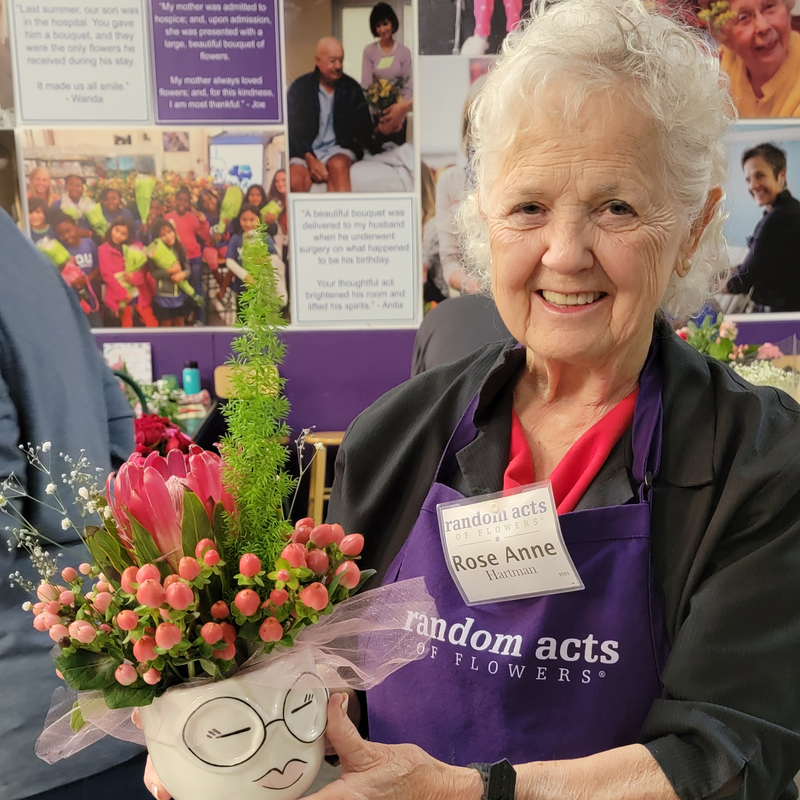
Non-ProfitSprouting Kindness
VeteranMoving Heaven and Earth
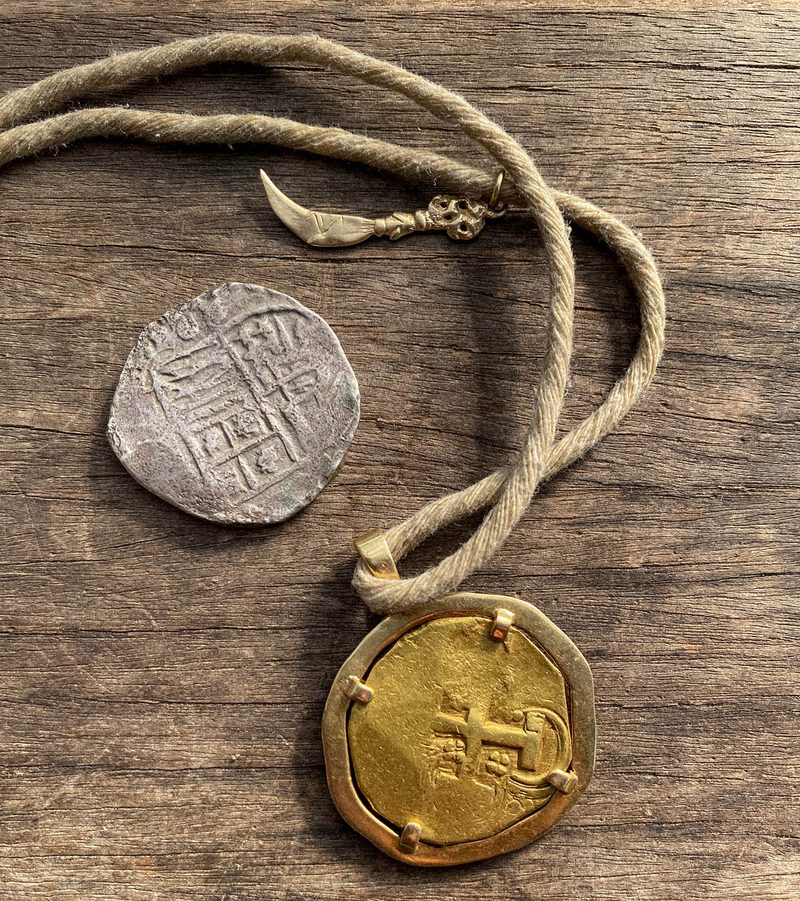
FeatureObed Treasure
FeatureSwinging for the Fences
BusinessUnderstanding the Employee Retention Credit
→ Swipe to start reading
The PublisherSEPTEMBER OCTOBER 2023
September ’23 – From the Publisher
Story by Nathan Sparks
As a small business owner, my company, like most others, was adversely affected by the pandemic. Anything to help survive was welcome. And, like almost every other business, I heard about the Employee Retention Credit (ERC) program, but the endless solicitations I received made it feel like a scam. And the accountants I spoke with were hesitant to express an opinion. So much like the SBA Economic Injury Disaster Loan (EIDL) program that ran out of funding with thousands of approved loans in the pipeline, I just didn’t pay any serious attention to the program. That was until someone referred me to Don Lawson.
I called on Don in hopes of learning how the ERC program really worked. His explanation checked out, and I gave it a shot. The process was painless, and Don got us approved for the credit. I started wondering if all of my business colleges had applied and to my surprise only about 10 percent were even aware of the opportunity. When I would tell them about my experience with Don, they all wanted an introduction. The more people I introduced him to, the more I learned about his story, and the more impressed I became. Don brings a level of expertise that will potentially bring millions of dollars into the hands of local business owners. In doing so he helps ensure positive growth in our business community. As much as I would like to have the time to call everyone I know to make sure they are taking advantage of this, that’s just not realistic. Instead, I wrote an article in this issue to explain how Don’s company, Smart Business Accounting, can help if you had a business that kept employees working during the pandemic.
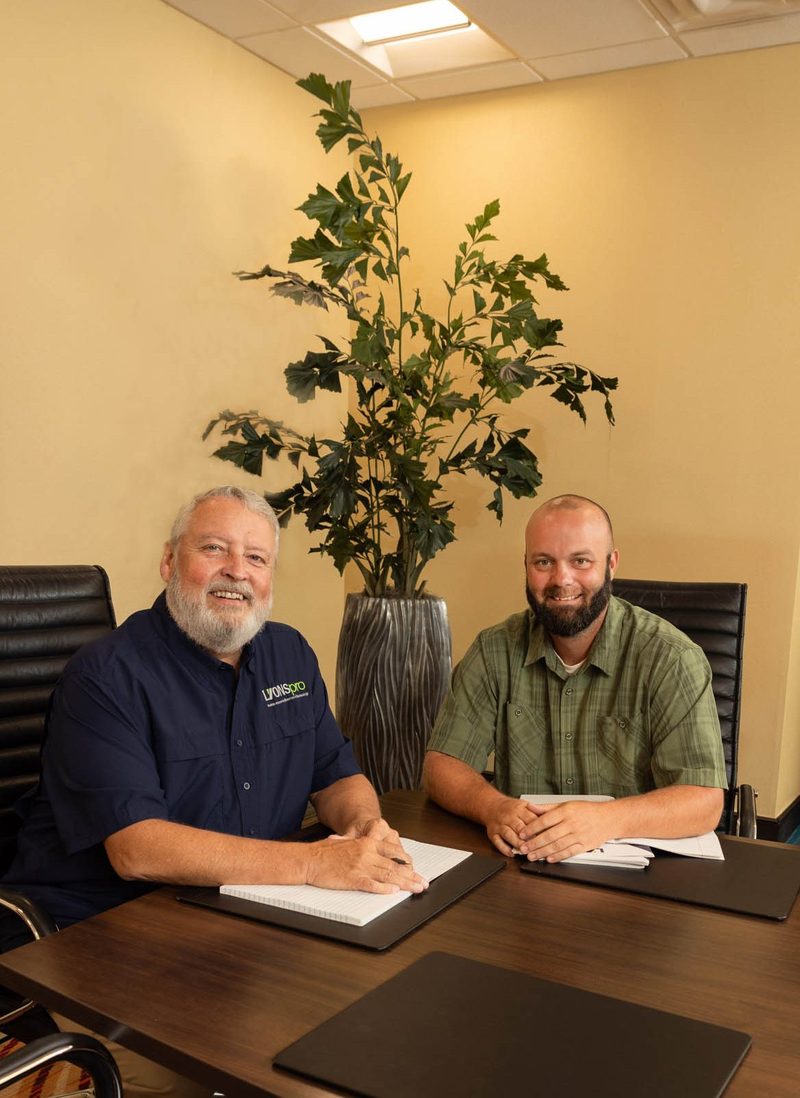
Around the same time I met Don, a corporate consolidation prompted me to look for a new company to help me with my back office administrative workload. My friend Brooke Allen introduced me to Wes Brown, the national sales director for Lyons HR. As I was showing him a preview of the upcoming March cover with Dr. Edwin Spencer sitting on the riverbank with his fly rod, he told me that he had hunted with Edwin; in fact, Wes took him turkey hunting for the first time. Doesn’t take much for me to go down the conversational rabbit hole of hunting and fishing and the more we talked the more I realized we were kindred spirits.
Wes took the time to educate me on all of the services a certified professional employment organization (PEO) offers, and frankly, I was amazed. This would be a game changer for my company. This would allow the company to grow in new and different ways, where I could offer more to my employees.
I started asking my peers if they were aware of the financial and time savings and again to my amazement, most were totally unaware that they could offer health insurance with large group rates and could see big savings in their workers compensation insurance premiums.
A healthy thriving business community is essential for the proper growth of our area, and it is my opinion that these two companies are really working to help the business community prosper.
East Tennessee is one of the fastest growing regions in the United States. With that comes good and bad, hopefully most of the growth, although challenging, will be good for us. This kind of growth offers big opportunities in the business arena.
Opportunity, however, does come with a price. I don’t think that anyone who opens a small business realizes just how much administrative time and effort will be required to run their new company. I believe they go into business a little bit naive when it comes to that aspect of self-employment. Certainly, that was true for me. And though I have gotten much better at the process, the fact remains that it takes a lot of time. When I see an opportunity to reduce my admin workload I jump at the chance.
Self-employment requires constant learning and good coaching. Take the time to seek out some help to make your business life more enjoyable. Who knows, with some extra money and more time maybe we can take a day off and go fishing. See you on the water.
→ Swipe for Next Story
Arts & CultureSEPTEMBER OCTOBER 2023
Stone, Softened
Jeanne Kidd uses sculptures to tell stories, convey emotions
Story by Susan Alexander
Jeanne Kidd’s artistic heritage lies in Italy, where her grandfather, a marble carver, lived before coming to New York, and where her favorite artistic medium, Carrara marble, is found. She calls Israel her “soul’s home.” She spent time there as a teenager and fell in love with the country, and when she returned in her 50s, she found a home for her sculptures, duplicated in bronze.
Kidd’s actual home is here in Knoxville, where she carves marble and alabaster into fluid pieces she describes this way: “It reminds you of something but it’s not of anything.” She strives to make stone appear soft. She wants to see the play of light and shadow along its curves. She tells a story or explores an emotion with each creation.
Kidd’s career in art got a late start. Though she completed a Bachelor of Fine Arts degree at the University of Tennessee, she earned a living styling hair and giving massages, then working with her husband, Will Kidd, running Seven Seas Estate Sales here. It wasn’t until she had a health scare about seven years ago that she realized it was time to return to stone. “I told my husband we’ve got to rearrange our lives. If I have five years to live, I have to carve.”
Health scare averted, she got serious about art. Her sculptures are exhibited at Pivot Point Fine Art Gallery in Knoxville, at galleries in Florida, and, reimagined as larger pieces in bronze, in outdoor exhibits in Jerusalem. Recently, her six-foot-tall bronze Healing Heart Sculpture was approved to be placed at the main entrance to Sheba Medical Center at Tel HaShomer in Israel.
Kidd is currently writing a memoir and completing four marble sculptures in her home studio. She’s beginning a “flower series,” she says, and has a vision for creating healing garden spaces with large permanent installations similar to those she has established in Israel.
Ed Snodderly’s lyrics and sound speak to our roots in East Tennessee
Story by Chris Blue
Growing up, Ed Snodderly spent a lot of time in the countryside of East Tennessee. His grandfather, who owned a general store in Piedmont, would become an early inspiration for his interest in music. “He was an old time fiddle player with his brother Silas,” Ed says. “They played a lot of festivals and fiddler conventions and would win ribbons.”
Ed was 12 when he picked up his first guitar, a no-name, three-string version found in his family’s attic. He quickly found a connection to the music. “That’s when my dad said, ‘We need to sit down at the kitchen table a minute.’ And we did,” Ed recalls. “He held that guitar and he played G, C, and D; then he handed it back to me and said, ‘You’ve got to learn those three chords, and you’ve got to be learning where you can change really quick, before you can even think about a different guitar.”
Guitar became his life after that pivotal moment. He knew that his future rested in music. So he got to learning, rock-and-roll at first, and then “old time music,” thanks to family reunions. The range gave him a deeper appreciation for his craft that would eventually translate into songwriting. “A lot of my lyrics, a lot of my songs are very sense of place,” Ed says. “I write a lot about my memory of things.” The lyrics to one of those such songs, “The Diamond Stream,” can be found in the Hall of Honor at the Country Music Hall of Fame in Nashville.
Ed co-founded the Down Home in Johnson City back in 1976, whose stage has seen the likes of many now-famous artists, such as Kenny Chesney and the Dixie Chicks. He says it’s a place for people to listen to and showcase their best. His part in its founding was just one of the reasons he earned the Lifetime Achievement award from the Southern Region of Folk Alliance back in 2020.
Ed’s albumChimney Smokecame out this summer, a collection of his best songs, he says, a “fairly southern kind of offering.” Visitedsnodderlymusic.comto listen.
→ Swipe for Next Story
PoliticsSEPTEMBER OCTOBER 2023
Parental Consent
Voices build momentum after Tennessee’s mature minor law gets a clarification from the governor
Story by George Korda
The extent of the state’s ability to decide that minors of a certain age can make their own medical decisions while keeping their parents in the dark—Tennessee’s “mature minor” law—is under renewed scrutiny.
“Parents upset over Tennessee law allowing kids to get vaccinated without parental consent” is the headline of a WTNZ-TV, Nashville story from late June. “Mimi Pohlam says she and her husband make the decisions for their kids…She believes it’s their place to make decisions for their kids, not the government’s—especially when it comes to the Covid vaccine. ‘I don’t want the state or federal government to raise my children. I would like to make those decisions and I have the right,’ said Polham.”
Not necessarily, mom. Tennessee, like many states, is somewhat schizophrenic about parental authority over children. For example, there are laws that put parents squarely in the financial cross-hairs (figuratively speaking) if their children engage in behavior resulting in personal injury or property damage. At the same time, the “mature minor” law lets children act independently of their parents in decisions affecting their health.
“Tennessee children are legally allowed to make a variety of medical decisions for themselves,” said an article titled, “Is Your Tennessee Teen a Mature Minor?” in the February-March 2022 edition of the Nashville Bar Association Journal. “A teen has a right to be treated for a sexually transmitted disease without parental consent. A child may seek prenatal care without a parent’s knowledge or consent. A teen may also be able to make mental health care decisions, including taking medications, without his or her parent’s knowledge or consent. This specific decision-making authority is provided by statute…This doctrine creates a presumption that mature teenagers can make medical decisions, and consent to treatment, for themselves.”
Covid-19 and controversies surrounding vaccines and vaccinations were a continuing headache for health departments through the pandemic. Confusion was understandable. In spring of 2020, Americans were warned of the potential dangers of a “rushed” vaccine. However, by December 2020, many medical authorities declared the vaccines safe and effective. These were contradictory positions. Parental questions or hesitancy was justifiable.
In May 2021, the Tennessee Health Department sent a letter to its “Covid-19 Vaccinating Partners.” The letter explained that parents could be left out of the loop regarding child vaccinations and described the three stages of mature minor consideration:
• Under the age of 7 there is no capacity, and the physician must have parental consent to treat (unless a statutory exception applies)
• Between the ages of 7 and 14, there is a rebuttable presumption that there is no capacity, and a physician generally should get parental consent before treating (unless a statutory exception applies).
• Between the ages of 14 and 18, there is a rebuttable presumption of capacity, and the physician may treat without parental consent unless the physician believes that the minor is not sufficiently mature to make his or her own health care decisions.
“There is no federal, legal requirement for parent or caregiver consent for COVID-19, or any other, vaccine,” the letter said. Thus, under the law, responsibility for parental decisions is removed from the parent and turned over to a health care provider.
The “Mature Minor Doctrine Clarification Act” was filed in the Tennessee legislature to deal with the mature minor law as it relates to vaccinations, Covid-19 and others—but not about STDs, pre-natal care, or mental health. The bill prohibits providers from “providing a vaccination to a minor unless the provider first receives written informed consent from a parent or legal guardian of the minor.”
Piecemealing a law isn’t something legislators typically like to do because it opens the door to pressure to amend other parts of the law; in this case, such as pre-natal care or taking other medications without a parent’s knowledge or consent. Nevertheless, the “Mature Minor Doctrine Clarification Act” passed, and Gov. Bill Lee signed it into law on May 17, 2023.
Arguments about vaccinations are part of a larger parental rights issue confronting the country. Provisions in law typically address irresponsible parents. The mature minor law, however, takes from all parents the ability to render judgement, or even know, if their child is making decisions that profoundly affect their health. The argument isn’t over, and is almost certain to become louder.
→ Swipe for Next Story
InsightsSEPTEMBER OCTOBER 2023
A Constant State of Present
Nature reminds us of the importance of being in the now
Story by Bruce Fox
Sitting on a bank on the coast of Sitka, Alaska, it’s hard not to feel like a small piece of something greater. The sweeping views are breathtaking. All the streams and tributaries are loaded with salmon, in a constant state of motion to get back to their original breeding grounds. It’s a sight I am certain I will only get to see once in my life. Not far away is a mother brown bear, so big I can hardly wrap my head around it, gathering dinner for her cubs. They are stocking up for the winter, which will be long and cold here.
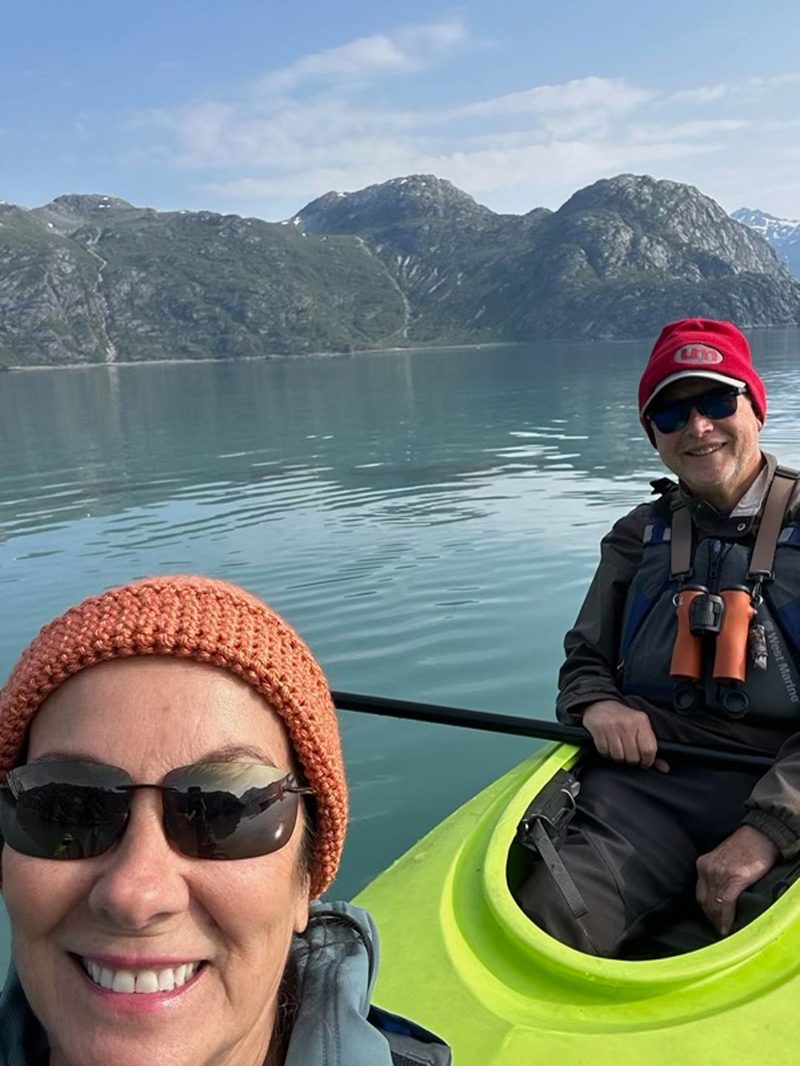
I’m on a seven-day trip on the shores of Alaska, part of the Uncruise that my wife, Mary Jane, and some family from out west have taken. Unlike a typical cruise, this kind takes you and a small group of 40 or so passengers on a small ship to more remote locations, offering you a chance to see ecosystems and wildlife up close. The crew members are studying marine biology or forestry. One day we’re bushwhacking in the forest with mud up to our ankles. Another we’re in ocean kayaks getting up close and personal with a pod of whales.
There’s something that nature does to you when you’re so close. You find yourself dialed in to its movements, studying its how and pondering its why. Nature is in a constant state of being present. We humans could learn a thing or two from that.
As I stare at the salmon jumping furiously upstream, unwilling to accept defeat against the raging currents, I’m reminded that life is not always an easy path forward, but if we are determined enough, we can accomplish incredible feats. As I watch the mother bear feed her three cubs before finding something for herself, I’m reminded of how important is to give of ourselves and care for the people you love without expectation. And as I watch the sea lions flop their bodies in surprisingly rapid movements along the shoreline, I’m reminded of the resiliency of our spirit and our innate ability to adapt to changing environments.
→ Swipe for Next Story
DepartmentsSEPTEMBER OCTOBER 2023
A Family Feeling in Oak Ridge
Fire & Salt gives Chef Alex Gass a stage for his culinary creativity
Story by N. Brooks Clark
When you walk into Chef Alex Gass’s Fire & Salt restaurant in Oak Ridge, you are immediately charmed by the staffers’ camaraderie. “It’s a family environment,” says hostess Eden Frazier, whose sister Jayley is a pastry chef. They and a dozen or so others came with Gass from Walnut Kitchen in Maryville. When Gass told them he was starting a restaurant, they said they wanted to be a part of it. It’s an atmosphere reminiscent of the TV seriesThe Bear. “That show is inspiring to me,” says Executive Chef Billy Krebs. “I wasn’t sure about doing this, but then I watched it and said, ‘This is where I need to be.’”
Krebs’s son, Gabe, 20, is assistant manager and drums with his dad on guitar and Gass on bass in their progressive rock band Sirens. “We express ourselves as people in music the same way we do in our cooking,” says Gass. “Real food is unity, bringing people together.”
Gass’s family and Oak Ridge roots run deep. He started cooking with his aunt, mother, and grandmother for the Kern United Methodist Church and with his mom’s catering business. At 15, he started at Big Ed’s Pizza and then opened a couple of Aubrey’s before private cheffing on the road with stars like Elton John, Van Halen, and Widespread Panic and returning to the Randy Burleson family of restaurants at Bistro by the Tracks.
Gass’s mom died a few years ago, and he still mourns. ACityviewreview of Walnut Kitchena couple of years ago compared Gass to Emeril Lagasse the way he darted about the kitchen. “Emeril was my mom’s favorite chef,” says Gass. “I saw that review and showed it to my dad and said, ‘Wouldn’t Mom have loved to see that?’”
The restaurant’s name comes from a farmer’s wise words that Gass remembers from childhood, that “You don’t need to do too much to good food. It only takes a little fire and salt.” No surprise that Gass is passionate about local, fresh ingredients.
As a starter, the Watermelon Caprese salad tosses locally sourced melon with heirloom tomatoes, fresh mozzarella, shallot, basil, balsamic reduction, and a drizzle of Georgia Olive Oil.
We recommend combining your starter with one of bartender Giana Maldonado’s seasonal cocktails, headlined by a Lemon Mint Julep, a Morning Mule, and Lavender Lemonade. Hint: The Lemon Mint Julep is out of this world.
Moving on to the “fire” portion of the meal, it might be easy to overlook the BBQ ribs. Everyone does ribs, but Gass’s are served with a blackberry barbeque sauce, jicama slaw, and, of course, a fried cornbread that would make his mom proud.
The six-ounce Fire & Salt Filet, served with braised leeks, demi-glace, celeriac puree, hot sauce reduction, and blue cheese compound butter, is a savory treat for the more modest appetite. Folks looking for a little more might opt for the 12-ounce pork porterhouse, classically presented with roasted potatoes and a honey-bourbon glaze.
The Shrimp & Grits feature Shelton Farms grits, andouille sausage, shallots, and house-made hot sauce for a new twist on this classic. The Salmon in a white balsamic reduction is simplistic perfection (remember the fire and salt?) which allows the buttery, creamy flavor of the salmon to shine.
All entrees are available with a plentiful array of à la carte side dishes, from caramelized onions (our favorite), various compound butters, and a heavenly cheese and bacon radiator.
The wine list has been carefully curated and offers diners a robust, but not overwhelming selection of reds, whites, and sparklers. We love a good Pinot Noir and tried “Purple Hands,” a Willamette Valley pinot with a slightly effervescent quality, a delightful change from the usual.
Gass never stops creating, in his kitchen or in his band. “Music is how we’re held together as humans,” says Gass. “We’re held together by vibration. When I took cooking from a job to a passion, I realized cooking was music—manipulating the vibrations to project happiness to others.”
→ Swipe for Next Story
Dining GuideSEPTEMBER OCTOBER 2023
New Eats
The year is far from over, but 2023 has brought fresh eateries for us all to indulge in
Story by Marc Anthony
To say I’m impressed with the 2023 additions would be an understatement. From a renovated church to a multi-level brew pub, East Tennessee restaurateurs have pulled out all the stops to bring us a host of new experiences. Appalachian cuisine, barbeque, modern takes on rustic menus, even fresh and light smoothies bowls, make up some of this year’s additions, with more anticipated later this year.
Elkmont Station
Honoring the spirit of The Great Smoky Mountains National Park and the rail line that ran between Elkmont and Knoxville, Elkmont Station is a beautiful room with a rustic menu teeming with comfort and tradition. The Pimento Cheese Fritters with red pepper jam were gone from the plate so fast, the server thought we’d been robbed. Here’s something about me: if there is shrimp and grits on a menu then there is shrimp and grits on my table. And after one bite, I knew this was a dish to savor. So I did for 47 seconds. With an ever evolving roster of handcrafted food and drinks, get your reservation quickly for one of Knoxville’s most noteworthy new restaurants.
If 71 South weren’t directly in the heart of Knoxville’s Urban Wilderness with people everywhere, it might be a little bit of a creepier place. Nestled inside one part of a church in South Knoxville abandoned since the 90’s, the restaurant exudes warmth and light and food, while the church’s old sanctuary, large enough to trigger my megalophobia, sits lurking just out of the windows. Our server said he heard that it’s haunted and maybe that’s why he’s moving to Alaska! Nonetheless, this delightful menu travels from tofu banh mi to smash burgers with crispy Brussels in between and never disappoints. I always look at the faces of other diners when I’m on a Dining Guide tour and the pleased reactions throughout the restaurant say it all. So on any day of the week, even Sunday, head to church and praise the wonderful food and atmosphere at 71 South.
So maybe Deron Little knows a little something about opening restaurants. His successful run at Seasons Innovative Bar and Grille in Turkey Creek and multiple victories in this magazine’s Top Chefs competition makes his trek into Sevierville highly anticipated and incredibly well received by locals and tourists. His award-winning menu includes an almond encrusted barramundi with melted brie, and the honeysuckle hot sauce on the Cactus Jack burger is unique to any burger I’ve ever tasted. Located in the historic Central Hotel, let it be written that Seasons 101 is the next chapter in Deron Little’s storied history. Sevierville | 101 E. Main Street |seasons101.com
Yee-Haw Brewing
Indoors or out, hot day or cool evening, Yee-Haw Brewing on Broadway in Knoxville is an epic brew pub with multiple levels of fun. With space to roam and play or sit and drink tasty Yee-Haw beverages or gobble a smash burger as soft and pillowy as a cumulus cloud, this place has fun and food aplenty. With activities like soccer watch parties and Mug Night Monday, Yee-Haw has built a unique and special gathering spot with very elevated pub fair and famous adult beverages that will have you dropping this pin on your map.
From the owners of Seoul Brothers comes a southern style soda shop featuring locally made ice cream, waffle cones, Italian sodas, sundaes, floats, milkshakes, malts, and locally sourced baked goods! With a menu reminiscent of growing up in East Tennessee, the owners Josh and Vic present the memories of their childhood through sweet treats and smiles. Located conveniently in Marble City Market, Bubbles and Cream is hoping that new Regas Square management will allow this precious dessert spot to thrive in this ready made European style food court that should have people lined up around the block.
A host of new locations are expected to open up the rest of this year, and a few have opened there doors in the week leading up to our press day.
STIR Knoxvilleopened its doors in the Old City at the tale end of July, offering fresh oysters, a seafood cold bar, and some craft cocktails, too. And for all you brunch lovers out there, yes, they have weekend brunch. Old City | 217 Willow Avenue |stirknoxville.com
In mid-August, Smash Cityopened its second location in Knoxville on Central—the other location is in Omaha, Nebraska—after testing their concept out in Marble City Market. Smash burgers have a cult following now, but this place also offers chicken sandwiches. The sauces they offer are off the charts on the taste meter. Old City | 211 S. Central Street |smashcityburger.com
The summer also brought the entrance of the seventies-inspired bar and restaurant,Fly by Night. Owned by the same folks who brought us The Tern Club downtown, walking in here is like walking into the past and the apps and drinks are era-specific with a modern twist. South Knox | 211 S. Central Street |flybynightknox.com
Ella and Moe Fawaz’s smoothie restaurant,Blossom Bowls,opened its fourth location in Bearden this summer with menu items that delight the taste buds. The newest spot joins their already existing and highly trafficked locations in North Knoxville, Northshore, and Maryville. Bearden | 4622 Kingston Pike |blossombowls.com
→ Swipe for Next Story
DepartmentsSEPTEMBER OCTOBER 2023
Festival Fever
Big Kahuna Wing Festival
Story by Cityview
September 3 | 3pm
Celebrating its 10th year, dozens of teams from across the Marble City showcase their best sauces and styles at World’s Fair Park.
HoLa Festival
September 16 & 17 | 4pm & 10am
Celebrate Hispanic Heritage Month at World’s Fair Park with live music, dancing, drinks, food, and artisan crafts. Proceeds support HoLa Hora Latino.
Pigeon Forge Bluegrass Festival
September 22 & 23 | 6pm
The LeConte Center livens up with an epic lineup of artists for two days of bluegrass heaven in Pigeon Forge.
Dandridge Scots-Irish Festival
September 30 | 9:30am
Pipe and drum bands, Celtic music, Irish step dancing, and more make up this all-day festival. Head to the Highland Stage the Friday prior for a special concert.
Knox Pride Fest
October 6-8
World’s Fair Park will come alive once more in October with music, entertainment and speakers all focused on inclusion and diversity.
Greek Fest
October 20-22
The Greekend is upon us. Tours, dance shows, and plenty of food will go around at the St. George Greek Orthodox Church.
→ Swipe for Next Story
JurisprudenceSEPTEMBER OCTOBER 2023
The Call
Story by Gary Wade
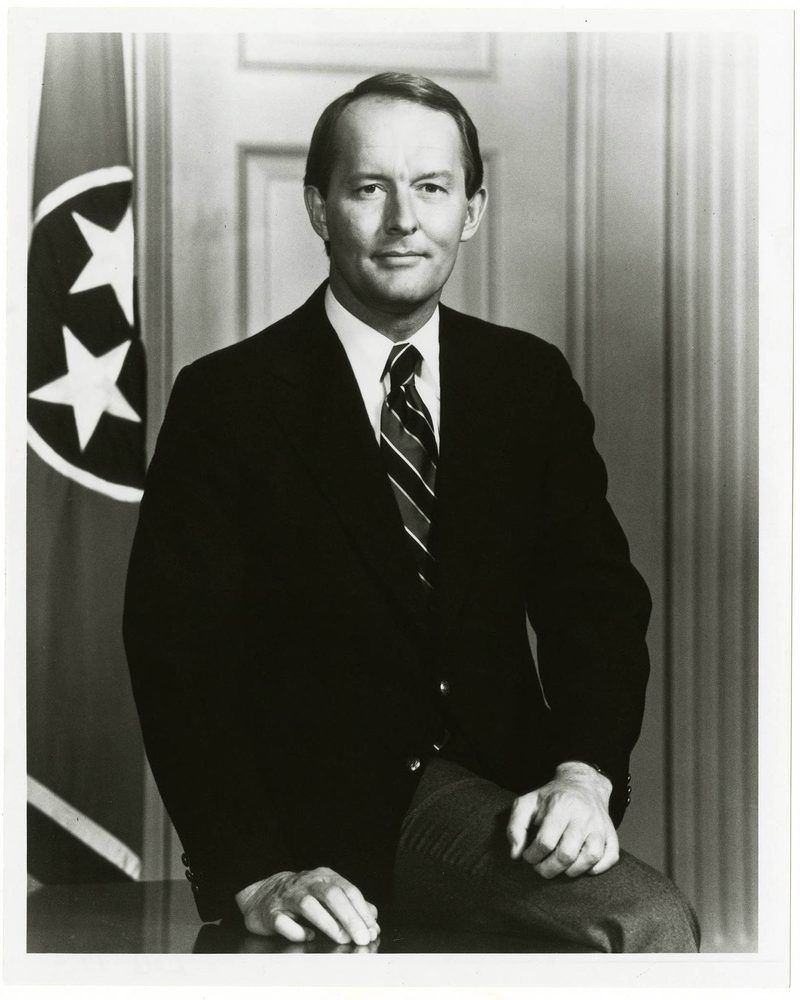
The State of Tennessee was in crisis. On Tuesday, January 16, 1979, the news media reported that the outgoing Governor, Democrat Ray Blanton, had the day before commuted the sentence of a convicted double murderer by the name of Roger Humphreys, the son of a political supporter, and pardoned or released 51 others from prisons throughout the state. The Blanton administration, already under investigation by the FBI, planned to release even more in the few days before Governor-Elect, Republican Lamar Alexander, was to be inaugurated the following Saturday, January 20.
Hal Hardin, who had been Governor Blanton’s first appointment to a circuit judgeship, had resigned that position in 1979 when named by President Jimmy Carter as the United States Attorney for the Middle District of Tennessee. A man of an exceptional reputation, Hardin maintained an office in the federal building on Broadway in Nashville, within walking distance of the state capitol building. As the chief federal law enforcement officer for the district, Hardin often worked hand-in-glove with the Federal Bureau of Investigation, which had suspected that aides to Governor Blanton had accepted bribes in return for the release of prison inmates and were continuing to do. By the terms of Article III, Section 6 of the Tennessee Constitution, of course, a sitting governor has the power to either pardon those convicted of state crimes or commute, that is shorten, their sentences.
Targets of the FBI investigation included Blanton’s legal counsel, Eddie Sisk; his staff extradition officer, Charles Benson; and Tennessee Highway Patrolman, Fred Taylor, who served as security for the governor. Based upon recorded conversations in Memphis between Taylor and a government informant, the FBI had arrested all three men some thirty days before the January news reports. Agents found marked $100 bills on Sisk and clemency documents, a general term that can include a pardon or a commutation, in Benson’s briefcase. All three men were charged with violations of the federal racketeering act.
Hardin had learned of the taped conversations regarding prisoner for pay between Taylor and the FBI informant, which included a reference to the state’s most notorious inmate – James Earl Ray, the man convicted of the murder of Martin Luther King. Another name the FBI had discovered among those scheduled for release was triple murderer, Eddie Denton of Cocke County. While hesitant to intervene in a matter related to a state issue, Hardin had confirmed his worst suspicions from a conversation with a longtime friend of Blanton’s, who stated, “Hal, nobody can talk to him right now…. By 10 in the morning, he’s drunk … out of control.” Keel Hunt, in the masterfully researched and written book The Coup, wrote that Hardin ultimately decided to call Alexander as a courtesy, but chose to do so “as a Tennessean,” not as the United States Attorney. He did, however, inform the Governor-Elect that he felt that his duty as a federal official required him to immediately notify state authorities of what the FBI had learned of Blanton’s plans.
After being contacted by Hardin, Alexander first determined that the call was legitimate. He hung up and then telephoned Hardin back at his office. After learning the details of Blanton’s intentions, he first sought the counsel of his top aide, Tom Ingram, and then legendary Memphis attorney, Lewie Donelson, a law partner to Howard Baker, who had agreed to serve as Alexander’s Director of Finance and Administration in the upcoming term. The author Hunt quotes Ingram’s general reaction in his book, “There was no enthusiasm for [an early administration of the oath of office] in our shop.” He explained that the days before the inauguration had been meticulously scripted. “It was going to spoil things,” Ingram recalled. Upon learning of the possibility of an early transition later in the day, a distressed Honey Alexander concurred with that assessment, describing the disruption of her carefully tailored plans before the following Saturday as the “worst day of my life.”
Donelson, an ardent Republican, advised Alexander, “You can’t [take the oath early] without the Democrats.” Alexander agreed. He would not accept the office early absent the participation and support of the leaders in the senate, the house, and the state’s attorney general, all Democrats. Having developed longtime, respectful relationships with both the Speaker of the Senate, John Wilder, a Democrat, and Speaker of the House, Ned McWherter, also a Democrat, Donelson became a valuable asset in the discussions that were to follow. Hardin and Donelson each telephoned the speakers. Donelson, when interviewed later, recalled that McWherter responded, “I’m for it.” After a pause, Donelson said, “But Ned, I want you to be [at the ceremony].” His call to Wilder was brief and ended without any commitment.
Coincidentally and without collaboration with Alexander or the transitional staff of the new administration, Republican State Senator Victor Ashe, was well-known in those days for seeking opinions on a variety of legal issues from the staff of Tennessee Attorney General Bill Leech. Troubled like so many others with Blanton’s scandal-ridden term of office, Ashe asked for a definitive answer on whether Alexander could be sworn in before the traditional date of the inauguration. A member of Leech’s staff responded in the affirmative. Leech, however, was unaware of his staff’s opinion and, after learning of Hardin’s findings, needed time to review the constitutional question.
Attorney General Leech, who lived some 50 miles away in Maury County, had reserved room 416 at the Sheraton in Nashville, while awaiting the birth of his child at a nearby hospital. To avoid drawing attention to their discussions, this room became the designated place for a more extensive briefing from Hardin. By then, Leech’s support staff had more carefully researched the basic legal issue. Could an early transition of the governor’s office be successfully defended under Tennessee law? While hesitant at first, Leech was persuaded by his staff that an early swearing-in would be compliant with the terms of the state constitution. If the leadership in the state house and senate agreed to take the requisite action, his staff would ask Chief Justice Joe Henry of the Tennessee Supreme Court, also elected to his office as a Democrat, to administer the oath of office to the new governor.
Meanwhile, Alexander, cautious by nature, continued to express concerns about the propriety of an early transition. Much later, in an interview by Hunt, he reflected on his trepidation, “That might be how you change power in a Latin America junta [but] what’s special about America … is that … the power passes peacefully to the [election] winner.” When recalling the course of the events, Alexander recited the words of George Washington during the country’s first presidential term: “What is most important in this grand experiment, the United States? Not the election of the first president, but the election of the second president. The peaceful transition of power is what will separate this country from every other country in the world.”
McWherter and Wilder, now mindful of the FBI’s findings, talked with Leech, who confirmed the legality of an early transition. Despite likely repercussions from their own party, each agreed to be present, concluding that a united front was the best way to stop Blanton from releasing for pay even more prisoners. Then a member of Leech’s staff, Bill Koch, now the law dean at Belmont, remembered that everyone decided that the transfer of office should take place that very day, fearing what Blanton would do if he found out about their plans.
When Chief Justice Henry, who was recovering from heart surgery, received notification, he drove to his office chambers. In a conversation with Donelson, Henry first acknowledged the gravity of the situation, “This is very serious …,” he lamented, before accepting the correctness of Leech’s opinion on the legality of an early transition. The author Hunt quotes the exchange between these two giants within the legal profession. “We’ve talked to the FBI,” explained Donelson, “and there are going to be more pardons. Everybody’s going to have a black eye [if no action is taken].” Henry agreed.
All the principals in the process except for Hardin, who as a federal officer felt that the action was purely a matter for the state, agreed to meet at the Supreme Court building at 5:45 that afternoon. Meanwhile, reporters from both Nashville newspapers, who had observed the unusually guarded activities in the Legislative Plaza that afternoon, suspected something “big” was about to happen. As the rumors began to spread, two of the local television stations sent cameramen to stand outside McWherter’s office. Contrary to his popular open-door policy, his entrance was closed. Blanton somehow got wind of these unusual activities and telephoned Wilder’s office hoping to be briefed. A Wilder aide chose to be evasive, denying any knowledge of the plan. When McWherter emerged from his office to walk to the courtroom, he invited the media to follow, but did so without explanation.
Lamar and Honey Alexander arrived at the Supreme Court Building just as McWherter, Wilder, Leech, Henry, and others assembled in what is called the robing room, a private area which opens into the public courtroom. Just as the ceremony was about to begin, McWherter telephoned Blanton’s residence. When he answered, McWherter handed the phone to Leech who explained the circumstances. Obviously shocked by their planned action, Blanton responded, “The hell you say. I hate to go out … like this….” The phone call ended. All then entered the courtroom where the media has assembled. Alexander spoke briefly, and the Chief Justice administered the oath of office. Speakers McWherter and Wilder extended their congratulations to the new governor, expressing approval of the process. The CBS affiliate televised the events live, interrupting the network’s evening news.
At the conclusion of the ceremony, a television reporter interviewed McWherter, whom he addressed on camera as “the leader of the Democratic Party.” The reporter continued, “I don’t wish to be indiscrete, Mr. Speaker, but you are of the ‘other party’ than the man just sworn in as governor; the man whose ouster as governor was felt needed by you and other members of your own party. Could you comment on that?” McWherter explained his rationale and that of his colleagues as the basis to support the early transition. Not satisfied, the reporter pressed on, “The man you just swore in is a Republican,” he emphasized, “You are a Democrat, and most of the people who participated in the decision to swear him in early are Democrats….” Before the reporter could finish his question, McWherter interrupted, “First, I am a Tennessean,” he insisted. “This is in the interest of Tennessee, regardless of party.”
A lesson for the ages. Amen.
First, I am a Tennessean. This is in the interest of Tennessee, regardless of party. – Ned McWherter, Speaker of the House, 1979
→ Swipe for Next Story
InsightsSEPTEMBER OCTOBER 2023
The Old Folks at Home
Memories and gratitude would top the list in a visit with mom and dad
Story by Robert Pryor, Sr.
My family has always enjoyed spending time with senior relatives and especially parents. I can remember my father regularly driving across town with me in tow to visit his parents living in North Knoxville. I grew up learning to visit with parents and continue to absorb their comfort and wisdom.
I married and left the family home when I was college age, and, during my engagement, would sing “Homestead on the Farm” to my mother as she prepared supper. She would cry at the part about “... I wonder if they pray for the boy who went away and left his dear old parents all alone.” Actually, I didn’t go very far. After marriage, I just lived two miles from my parents and visited them often.
Our three children are now grown and continue the tradition of coming to see “Mom.” Why is it they never say they are coming to see Dad? We are lucky that two of our children and three of our grandchildren live in Knoxville, and one branch with one grandchild lives as close as Middle Tennessee. Two granddaughters got away and ventured out of state, and we see them as often as possible.
I’ve been thinking a lot lately about the importance of being in a close family and how great it would be to drive to my old family “homestead” to visit again with my mother and father and talk about our lives together and apart and what’s going on in the world. My mother, LaVerne Pryor, was Knoxville’s first lady real estate broker, and my father, Jim Pryor, was president of Tennessee Trailways Bus Company. My father passed away 53 years ago, and my mother passed 38 years ago.
Mom was opinionated and outspoken with a great sense of fairness and a remarkable storehouse of empathy. She was very extroverted and social. My father, on the other hand, was a bit quieter, fiscally conservative, and quite conscientious with a great work ethic. We talked a lot during my youth about politics, the news of the day, their professional lives, and the importance of friendships. What would we discuss today if I could just once again visit them to share some time and love?
My mother would want to talk about Donald Trump. I think she would like him for his antagonistic and uninhibited nature. Like most of his followers, she would be drawn to his combative personality and celebrity and perfectly willing to overlook his obvious character flaws. She would laugh at his speeches and his constant attack mode. My father would be less impressed and would want to talk about Estes Kefauver and Cas Walker. My mother knew Mr. Walker and for years had her real estate office next to his Kingston Pike store in front of old Bearden High School. He would sit in her office for long hours and tell her jokes and stories about his adventures as a coal miner and the owner of a chain of grocery stores. He once told about a woman who applied for a job at one of his stores and on her application answered the request for her “sex” by stating, “Yes, one time in Nashville, Tennessee.” In the old days, my parents would double team me about current events and politics around the dinner table. They encouraged me to think about issues of the day and develop my personal beliefs about public matters.
Of course, both of my parents would be amazed by the computer, but, unfortunately, I would not be able to explain it to them. My computer still has me designated as a robot. My father would be happy to see that the wheels on the stagecoaches still appear to roll backward in the movies and on television. He would always bring that to my attention. As a bus man, he would be dismayed that there are few intercity buses and no bus station in Knoxville. People have to stand in front of a closed service station in the dark of night to catch a bus to Atlanta. He oversaw the construction of the Trailways terminal on Main Street where the federal courthouse now stands. I would have a hard time explaining the Kardashians, the popularity of tattoos, and the Vol football team’s record from 2008 – 2022. Derek Dooley, Butch Jones, and Jeremy Pruitt would upset him to the point I would dare not disclose that Pruitt had to cheat to lose more games than he won.
Both of my parents loved music. My father played trumpet in the Knoxville High School band, and was a big fan of Big Band music, which has difficulty finding a voice in today’s world of hip hop, heavy metal, and techno music. In case you haven’t noticed, country no longer sounds country, but sounds like pop and that might be confusing to him. He loved to play and sing “In the Garden” and “Your Cheating Heart” on a small electric organ in our living room. My mother sang in the church choir and told me she was a contralto. I agreed, thinking she meant she liked to be contrary. My mother enjoyed a party and was a good dancer. She taught me and my
friends how to slow and fast dance with a girl on a date. My longtime friend, Jim McMichael, reminds me from time to time that the only dance steps he knows he learned from LaVerne. We jitterbugged a lot around my house.
If I took my parents to a restaurant, how would I explain vegan, meat-free burgers, kimchi, craft beer, lattes, couscous, and quinoa (whatever that is)? My father would be outraged with the concept of buying bottled water from a grocery store. Imagine explaining how my smartphone works and exactly what is a Labradoodle.
After we catch up on family and my career in law, my father would want to know why everything costs so much and what’s happened to the middle class. Why are all these people living under the bridge or sleeping in doorways? They probably would agree that people don’t seem very happy. Is there a depression going on? The streets need paving and there’s so much crime.
My mother would likely comment she wishes houses sold for these kind of prices when she was in the real estate business. Where’s Sears, Kodak, the record store, Wright’s Cafeteria, and what happened to all the Oldsmobiles (my mother’s favorite car – she had a purple one)? What’s a Starbucks, a Google, a Netflix, an Amazon, an Uber, a Snapchat, and an Airbnb? Is Aunt Susie dead? Whatever happened to New Coke, that cute young Michael Jackson, and Bill Cosby?
With a chance to sit and talk with my parents, I would be excited to explain to them that last year I, with the help of Ancestry and the Mormon records vault, researched our family roots. I must tell them my DNA revealed that I am 10 percent Norwegian and 90 percent butter. I could explain my discovery that my grandfather, Papa Pryor, was the only child of Sophronia Florence Murphy, who died when he was four years old causing him to be raised by his grandmother in that area of Blount, Sevier, and Knox counties now known as Seymour. His mother was a direct descendant of the Murphy clan that immigrated from Northern Ireland to Marion County, South Carolina, and fought as patriots in the Carolina militia during the Revolutionary War. I bet they didn’t know that. I could also explain why my mother’s father left the Clift farm in Strawberry Plains in 1905 and walked to Knoxville as a young boy to make his way alone in the world. People used to say that you could tie him to a power pole on Magnolia Avenue and come back a week later and he’d have a café up and running. Mother always loved to talk about her father as a great cook, a train engineer, and a brawler.
The best part of my dream reunion with my parents would be the opportunity to reassure them how successful they were in raising a family and providing their children with an education and a solid value system that served them well over the years. Parents need to know that they did a good job. They need all the love and attention their children can give them. Most parents and many grandparents have paid a high price to make sure their children and grandchildren have a fair shot at a good life, and the least we can do as their babies is to go visit them.
I heard a man sing a song one time about “Here’s a quarter, call someone who cares.” Well, I know someone who cares, and if you’re lucky enough to have parents or grandparents who are still living and who were important in your life, you might want to give them a call. I wish I could, and once again go check and see how my old folks are at home. In the event my grandchildren do not read this article, tell them to please come home to see us soon.
If I took my parents to a restaurant, how would I explain vegan, meat-free burgers, kimchi, craft beer, lattes, couscous, and quinoa (whatever that is)?
→ Swipe for Next Story
TravelSEPTEMBER OCTOBER 2023
Hammock Coast
Pawley’s Island is a Destination Throwback in time to a quieter more relaxed state of mind
Story by Nathan Sparks
Just about everyone has heard of Pawleys Island. That is due mostly, I assume, to the fame of the signature hammock that adorns the back yards of many of our East Tennessee homes. The Pawleys Island hammock was the brainchild of Captain Joshua John Ward, who crafted the idea on a boat out of necessity, trying to get a good night’s sleep. He didn’t actually invent the hammock; he just reimagined one that would work better. In 1935, his family opened the Original Hammock Shop on the main road through Pawleys Island, South Carolina, where it remains today. And while the road and area has grown quite a bit since then, this hidden treasure remains as quaint and down-to-earth as it was during a simpler time.
For those who know me and follow my series, you know that an adventure focused on rest and relaxation is not my norm. My adventures are more often than not concentrated on fishing and hunting, sometimes speckled in with epic hikes or, in my earlier years, strenuous climbs. I’m a “go big or go home” kind of guy. But when I got a call from Mark Stevens, Director of Tourism Development at the Georgetown County Chamber of Commerce, I couldn’t help but feel intrigued. “We have seen a recent uptick in visitors from the East Tennessee area, and I thought you might be interested in doing an article.” Although I don’t normally find this kind of offer intriguing, the more he told me about the four mile stretch of Pawleys Island and the Hammock Coast, the more it spoke to me, and I figured it was probably time anyway for a more laid back adventure. And, when I learned he was formerly the editor of the Erwin, Tennessee newspaper, well, things started to click. I had operated a rafting company on the Nolichucky River and we reminisced about people we both knew. So we made some plans and set the dates. And off I went in search of some solitude, where the only plan I had was to be present and unwind while exploring a new location.
All In
My partner, Anne, loves this kind of adventure. We officially began our trip with a stop in Beaufort, South Carolina, having gone down for an evening at their annual River Festival—highly recommend if you’ve never been. Friday we flew out of the Beaufort Executive Airport (aka Frogmore International) for a short flight up the coast. We flew at a low altitude to enjoy watching the seashore. Flying at 1,000 feet above ground level gives a wonderful view of the developments and marshlands. She enjoyed seeing the Battery in Charleston as we flew above it, just outside of the Charleston Airport airspace. We landed in Georgetown and were greeted by the most polite lineman at the airport’s General Aviation Terminal I have ever encountered. That kind of greeting makes you think everything is going to be okay. He even forewarned us of where the local law enforcement might be laying in wait to ensure us tourists obey the speed limits.
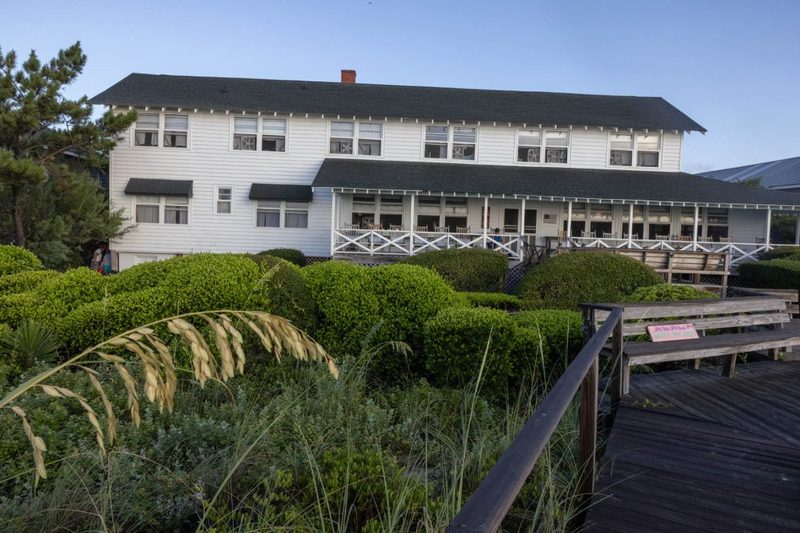
We grabbed our rental car, and we were off to try to make lunch at the Sea View Inn, the oldest on the island. The inn was built just a couple years after the hammock shop. There’s no air conditioning in the entire establishment, something I initially felt a little skeptical about. We had a second floor oceanfront room, but the windows are open across the entire inn and the ever constant sea breeze makes it very comfortable. We were met by Mark, along with Beth Stedman, the president/CEO of Georgetown County Chamber of Commerce. We sat on the front porch, hearing more about the island, before grabbing lunch inside, and then it was off to the beach to soak our toes in the surf and catch a little sun. A few minutes with your toes in the sand quickly reacquaints you with why almost everyone loves the ocean.
One of the most unique things about this stretch of coastline is that there are no commercial ventures on the island proper—other than a few places of lodging. And those by no means are high rise swanky hotels; no not at all. These are historic bed and breakfast type operations that make you feel like you have traveled back in time in the best way possible. You’re taken care of, at same time given space to enjoy the solitude. This was exactly what we were in search of when we began planning this trip–time to unplug and relax.
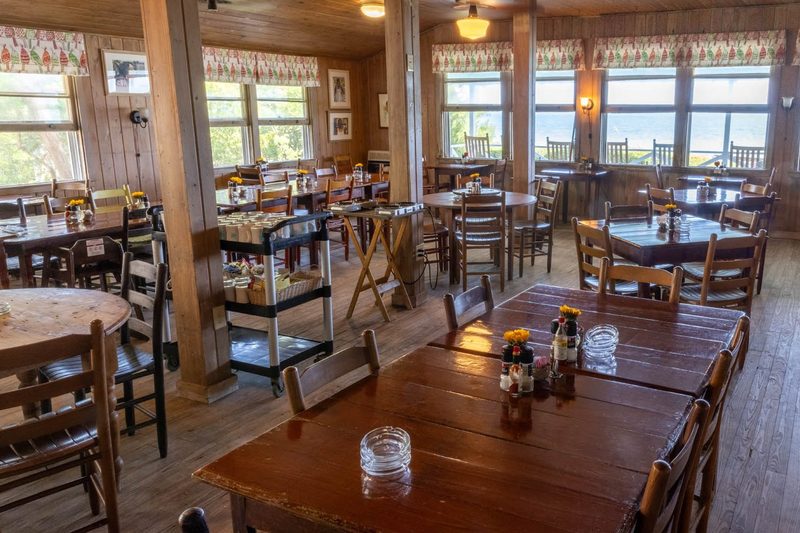
Dubbed “the barefoot paradise,” the inn is right in the middle of the island with a private beach on one side and a salt marsh on the other. It’s the type of place with a line of rocking chairs on a full porch overlooking the ocean where you can grab a cocktail or glass of wine and let all your troubles float away. For me, this is the kind of spot where the best conversations take place. We were informed right at the start that cell phones are frowned upon on the property. Behind us, the kids were playing on a Joggling board which reminded me of my own childhood vacations—a time where we played non-stop till meal time mostly without adult supervision, or so we thought. So, the opportunity to sit on the porch with my girl, enjoy our conversation, and listen to the ocean and happy children without the constant chirping of cell phones was worth the trip. And that barefoot piece? Let’s just say I came to understand that rather quickly.
The inn offers breakfast and lunch to guests, but also by reservation to other island folk, offering tourists like us a chance to meet the locals. The food is, for the most part, served country style or buffet. It is exactly like what your grandmom served when you visited her on Sunday mornings.
On top of all of this, it was also National Hammock Day so our time on the beach the first day is cut short by our desire to stop by the Original Hammock Shop. Trust me, these people take the hammock lifestyle seriously. It’s there we met the men who weave the hammocks. They are a jovial lot, and the one man who’s worked there the longest, Marvin Grant, tells me that as of that day he has woven 25,201 hammocks. Quite an accomplishment over a period of 41 years. There’s a large celebration going on at the shop with a band, a plethora of food cooking, a dozen or so food trucks—oh, and they’re giving away a hammock every hour. The hammocks are available in a number of colors and configurations and the original establishment is now surrounded by a quaint series of shops of all sorts, a very enjoyable courtyard style outdoor browsing experience.
Five Star Food
Now, you can find just about anything you want just off the island which is only five minutes away and good food was on our minds. We made reservations at Chef Adam Kirby’s Bistro 217 restaurant. Chef Adam is nothing short of amazing and from the Beef Carpaccio to the herb encrusted Grouper, it was five-star all the way. When chef said he thought there was one order left of butter beans that he grew on his farm I was hooked for good. If you go to Pawleys and do nothing else, have dinner at least once at Bistro 217.
Private Island Feel
Being on an island without major resorts and with limited public access which is primarily on the North and South end of the island is nice. The beach is wide and clean and the water quality is awesome. As Anne and I would stroll along the beach, we found the people to be very friendly. We met several people from Tennessee and the feeling was like you had known them for years.
The manager of the inn, Kipp Chrismer, who I never witnessed wearing shoes, shared with us that most people come back year after year on the same week. Entire families he said have been coming here for decades. If you are interested in staying on Pawleys, specifically at the Sea View Inn, better make those reservations early. You might just catch me snoozing in one of those rocking chairs listening to the ocean.
→ Swipe for Next Story
FeatureSEPTEMBER OCTOBER 2023
Look Amazing in Your Own Skin
“Your face is marked with lines of life, put there by love and laughter, suffering and tears. It’s beautiful.” — Lynsay Sands
Story by Oana Harrison
Just like with everything else, anti-aging skincare and any rejuvenation treatments should focus primarily on health, with “looks” being the secondary purpose.
Aging is a natural occurrence, and there is beauty in it. However, society can put pressure on us to pay extra attention to wrinkles and other imperfections that are normal as we age. Lucky for us, there is a plethora of over the counter and professional help to assist us in rejuvenating ourselves inside and out.
“We live in a time where the ability and choices in aesthetic care are greater than they ever have been before,” shared Dr. Tom Gallaher, board-certified plastic surgeon and founder of Gallaher Plastic Surgery & Spa. “However, in my opinion, the individual seeking these treatments should be driven by their own goals and not by external factors or peer pressure.”
The Normal Aging Process
Once again, let’s ask: what are the normal effects of the aging process on our appearance? And, more importantly, what are the factors that contribute to skin health? Skin is one of the largest organs of our body (accounting for 15% of our body weight and covering about 20 square feet!) and its health is affected by intrinsic and extrinsic factors. Intrinsic factors include DNA, buildup of damaging products of cellular metabolism, and increasing biological aging of the cells. Extrinsic factors are environmental and behavioral elements such as exposure to sun and UV radiation, hydration, nutrition, stress, lack of sleep, and exposure to toxins in tobacco and alcohol.
Normal aging effects are diminished skin elasticity (collagen loss) and hydration (loss of hyaluronic acid), thinning of the epidermis (surface layer of the skin), increased bruising potential and sagging (due to fatty tissue loss under the skin and thinning of the blood vessel walls), dry skin (less hyaluronic content and sebum production), and of course wrinkles.
How to Fight the Aging Process
In our previous article,The Search for the Fountain of Youth Begins at Home, we discussed at-home care and daily habits to help us age well. But when should we start a skincare routine? According to specialists, a healthy routine should start as early as childhood. This doesn’t mean applying cosmetics or doing anything extreme, but simply building good habits that protect our skin from damage.
As we age, we can help our outer appearance look healthier through skincare products and daily routines; aesthetic medicine such as injectables (fillers; mesotherapy), laser treatment, chemical peels, or cryogenics (cool sculpting); plastic surgery; or osteoaesthetics (focused on improving the inner body function which translates outwardly on improved appearance). Let’s examine each option and hear from local Knoxville area experts on how they can help.
Skincare
A good basic skincare routine is the best starting point. During childhood, the focus should be on hygiene, hydration, and damage protection—use a gentle cleanser, moisturizer, and sunscreen. As puberty hits, so do pimples, most likely. Adjust the cleanser and add spot treatments with salicylic acid. In our 20s we should up our regime to include anti-aging products such as antioxidant serums and creams. Start adding retinol and retinoid products into the skincare routine in our 30s and 40s, which along with antioxidants, will fight off fine lines and wrinkles.
Be aware to use retinoid products carefully and as a part of your nightly routine, as they increase skin’s sensitivity to sunlight, thus making it more vulnerable for sun damage.
For mature skin, address the loss of collagen and hyaluronic acid, as well as skin damage. This is when we bring our A game. It’s important to understand what aging effect we want to target so we choose the right products and not get lost in the myriad of options touting miracle cures (spoiler alert: there are none).
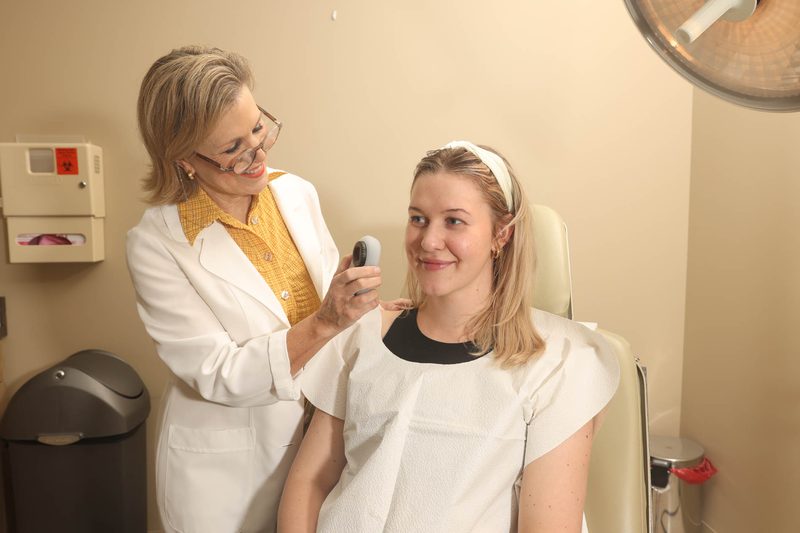
Before choosing a skincare regimen, it’s important to understand your skin type and specific skin health issues you might have, so it’s wise to consult a dermatologist. Dr. Meredith T. Overholt, MD, FAAD, board-certified dermatologist and founding partner of The Skin Wellness Center cautioned against following self-made social media skincare experts, pointing out that, although well-meaning, the social media advisors usually don’t have the proper expertise.
“The biggest thing to keep in mind is that topical things work very well on the epidermis, the outer layer of the skin, on some disorders of pigmentation, and certain fine lines and wrinkles. The goal of topical therapy ought to be to address those things. When you see a topical product that’s claiming to help with deep lines and wrinkles, you’re probably going to end up disappointed,” Dr. Overholt concluded.
She pointed out that skincare is a very personal matter—there is not a “one-size-fits-all” solution. Dr. Overholt added: “Our practice has been looking at people’s skin for many years, addressing medical issues as well as cosmetic ones. Skincare is personal and customizable care. What we ultimately recommend is based on the level of involvement people want and a doctor’s opinion.”
Certain skin tones and genetics are more prone to certain skin conditions than others. In addition, many of the off-the-shelf skincare products are less potent than medical grade ones offered by dermatologists or skin care specialists. “You can go to the store and buy something that has retinol or hyaluronic acid but the problem with non-physician dispensed product lines is that they don’t have the same FDA scrutiny on consistency of ingredient percentages,” explained Dr. Gallaher. “When you work with a specialist, it’s almost like having a personal trainer for working out: you get customized expert guidance.”
A good routine will include a hydrating cleanser, exfoliator (scrub), toner, serum, moisturizer, sunscreen, and face mask; it incorporates vitamin C (antioxidant), vitamin A/retinol (fights hyperpigmentation, dark spots, wrinkles, and increases collagen), antioxidants (help with hyperpigmentation and wrinkles), niacin (helps balance sebum production, improves water retention, and skin elasticity), hydroxy acids (increase cell turnover and stimulate new skin cell growth), and hyaluronic acid (hydrates the skin and boosts hyaluronic acid production).
Aesthetic Medicine
Aesthetic Medicine refers to medical procedures aimed at improving physical appearance using non-invasive to minimally invasive cosmetic procedures. The most common cosmetic procedures for aging skin are: photorejuvenation, injections of Botulinum toxin (Botox), injection of dermal fillers, mesotherapy injections (injections of pharmaceutical preparations, enzymes, hormones, plant extracts, vitamins, and/or other ingredients such as hyaluronic acid), chemical peels, microdermabrasion, microneedling, laser treatments, and cool sculpting (cryolipolysis). Let’s talk briefly about each one.
Photorejuvenation uses Intense Pulsed Light (IPL) technology to reduce the appearance of common skin concerns, such as sunspots, age spots, melasma, broken capillaries, and wrinkles. This minimally invasive procedure requires little recovery time and has few side effects.
Injections vary in substance contained and effect duration. The most common derma fillers for injectables are: hyaluronic acid (HA), Calcium hydroxylapatite (CaHA), Poly-L-lactic acid, Polymethylmethacrylate (PMMA), and autologous fat injections. Except for PMMA, they are naturally occurring substances. HA injections plump and hydrate the skin for 6 to 18 months. CaHA injectables stimulate natural collage production, with effects lasting longer than HA (about 12 months), for deeper lines and wrinkles. Poly-L-lactic acid is as a collaged stimulator which can smooth deeper facial wrinkles for more than 2 years. A combination of collagen and a synthetic yet biocompatible substance, PMMA provides continuous skin support and firmness. Autologous fat injections put our own fat to good use: fat gets harvested via liposuction, purified, then injected in areas such as cheeks and lower lids to provide a more youthful look.
What are some things to consider before choosing any aesthetic medicine procedures? Do your research: know what is FDA-approved, understand the side effects, and find a qualified provider. “There is no right or wrong. When it comes to making a treatment decision, it depends not only on a person’s particular skin issues but also on their budget, pain tolerance, and downtime available for recovery,” said Dr. Overholt. She also noted that skin health should be the main reason for any procedure, which has been historically where dermatologists came in.
The Bottom Line
Despite the amount of outside pressure, keeping our health and wellness, and your own personal desires, front and center is essential when approaching anti-aging and aesthetic treatments. “From sunscreen and moisturizers to advanced physician dispensed skincare, to neurotoxins and fillers to laser treatments to surgical procedures, the patient should be educated and given choices that allow them to be driven only by their desire to look and feel more youthful and heathier,” concluded Dr. Gallaher. “In other words, these treatments are at their best when the patient has them as a gift to themselves.”
→ Swipe for Next Story
FeatureSEPTEMBER OCTOBER 2023
The Offensive Explosion Continues
Led by rocket-armed Joe Milton III, the Volunteers will keep up the tempo.
Story by N. Brooks Clark
The Vols’ capped their 10-2 return to glory in 2022 by lighting up the scoreboard in a 31-14 win over No. 7-ranked Clemson in the Orange Bowl. Linebacker Aaron Beasley swooped across the field like an Avengers character, making 12 tackles, four of them in the backfield, including two quarterback sacks. Joe Milton III hit 19 of 28 passes for 251 yards with no interceptions and touchdown passes to Bru McCoy, Squirrel White, and Ramel Keyton. With the return of Milton, those receivers, and tight end Jacob Warren, plus Oregon transfer Dont’e Thornton, coach Josh Heupel’s up-tempo offense will pick up right where last year’s offense—No. 1 in the country with 46.1 points and 525 yards per game—left off.
Joey Halzle, 37, who could pass for a third Affleck brother, moved up from quarterbacks coach to offensive coordinator after Alex Golesh became head coach at South Florida. No worries, though. Halzle has been in the Heupel system for 15 years, as a backup QB at Oklahoma and an assistant coach. He is one of what Hendon Hooker called his “football scientists” who convene each week to come up with innovative offensive ideas.
“Anybody can be explosive in this offense,” says McCoy, who memorably rose up between two defenders to make a miracle catch in the last seconds against Alabama and set up the winning field goal. After McCoy makes a catch, says Halzle, “he runs the ball like he’s a linebacker.” At UT Media Day, McCoy said he is much improved from his first season with the Vols after his transfer from Southern Cal. “It’s playing techniques,” he explained, “the little things in the game within the game: the receiver-cornerback head games, how important it is to prepare and have a good understanding of the offense. When you know what you’re doing, you can really make things happen.”
White bonded with Milton when he arrived before his freshman year. “In spring ball, we just clicked,” he said at Media Day. “We’re Mike and Pippen. We get together off the field. We do jet skis. I can’t swim, so I have to wear a life jacket.” Their bond was evident as they connected on long bombs of 64 (v. UT-Martin), 58 (v. Missouri), 64 (v. South Carolina), and 50 yards against Clemson.
“That one was just sailing so high in the air,” said White of the 64-yarder against Martin. “It just stayed up there, but I got it.” With his 23.4 mph speed, he is probably the fastest person on the team, though he admitted running backs Jaylen Wright and Dylan Sampson are close. “We need to race someday,” he said with a chuckle. As to why he’s called Squirrel and not Marquarius, he explained, “My great grandmother named me that. There was a squirrel in our garden that picked our tomatoes, and when the squirrel would move, I would move at the same time.”
Ramel Keyton made miracle catches at key moments last year and punctuated the season with a 46-yard TD catch against Clemson. “He is an elite deep ball threat,” said Halzle. “He can track a deep ball. He’s got deceptively long speed because of his long strides.” He is also known for doing extra workouts catching balls from the Jugs machine.
Warren, a 6’6”, 253-pound Farragut High grad, decided to return for his last season of eligibility. He’s teaching the tight end ropes to talented freshman Emmanuel Okoye from Anambra, Nigeria.
Thornton, a graduate from Oregon, is 6’5”, 214 pounds. “He’s a freaky talent,” Halzle said, “A guy with that size who can run like that. And he’s trying to learn the way we do it.”
The passes get the headlines, but part of the Heupel special sauce is enabling the quarterback to adapt to defenses over-protecting against the pass. In the tying drive against Alabama, Hendon Hooker handed off eight times to Wright and Sampson before a 13-yard TD pass made it 49-49. Running back Jabari Small got a few breakaway runs, including a 49-yarder at LSU, and many of his 13 rushing touchdowns that way.
As it was last year, center Cooper Mays determines how quickly the Vols line up for the next snap. “The faster the better,” said Mays with a confident smile at Media Day. “We love that fast tempo.” Left tackle John Campbell Jr. transferred to UT from Miami because of an important Knoxville resource. “They got Waffle House,” he said in a press conference. “That’s the place I like. At the U (Miami), there wasn’t really no Waffle House. It was like 40 minutes away.” Needless to say, Campbell likes his defensive linemen smothered and covered. Texas transfer Andrej Karic at left guard, Javontez Spraggins at right guard, and Jeremiah Crawford or Gerald Mincey at right tackle round out a solid, experienced line.
Joe Milton III may have the strongest arm in college football. “A 40-yard pass is a flick of the wrist,” said Peyton Manning, who saw Milton throw an 80-yard TD pass as a counselor at the Mannings’ quarterbacks camp. As most Vol fans remember, Milton transferred from Michigan and won the starting job in 2021, but had a problem with overthrowing his receivers and yielded the starting job to Hooker. Rather than stomping off in a huff, Milton became best friends with Hooker and set about learning the intricacies of the Heupel system. His coaches made a technical adjustment to his stance and his use of his lower body on his throws. “His accuracy has gone through the roof,” said Halzle. “His touch has improved. He’s fundamentally changed his delivery, using his lower body.” From 243 last spring, he is at 235. “I feel lighter. Five pounds is a major difference in the way I make my moves.” This is evident in short reels when Milton effortlessly does a standing backflip.
Halzle compliments his attention to detail: “If he’s knowing the why of things we’re doing in certain situations like, ‘Why is this coming up instead of this,’ it helps him understand, ‘Where do I want to get with this ball? Where do my eyes start?’ In the run game, he can tell you all the calls that the O line’s making right now, which helps him. He has a huge understanding of that now. It’s extremely detailed, which allows him to just go play free, just let his talent take over.”
Milton is also mentoring UT’s five-star freshman quarterback Nico Iamaleava. When 6’5” Milton first stood next to 6’6” Iamaleava, he said, “I thought at first, he’s a little bit taller than me. That’s a first for a quarterback. Then I put on shoes, and we’re the same height.”
Milton said he told Iamaleava he can ask him whatever he wants, “in football and life – nothing is off the table. You can ask about my failures, you can ask about my success, it doesn’t matter. No question is dumb and I’m willing to help you, because everybody’s going to face adversity, you just never know when. But when you do face it, you got to know how to overcome it.”
“It’s almost like a big brother-little brother relationship for the two of them,” Halzle said. “You rarely see Joe without Nico.” Of Iamaleava, Halzle said, “That guy is mature beyond his years. With his calmness on the field, we’ve got a ton of confidence in that guy.”
The defense, in its third season under coordinator Tim Banks, was a work in progress in 2022. Beasley and five starters welcomed graduate-transfer linebacker Keenan Pili from BYU. “A tremendous family man [spouse’s name: Lindsey], big, athletic, physical,” said Banks. “Everyone respects him because of his work ethic.”
Over the past two seasons, defensive tackle Omari “Big O” Thomas has swatted away eight passes. One he nearly intercepted. “Yeah, I want to get one of those,” he said, grinning, at UT Media Day. “It feels kinda natural,” he explained. “I have good eye-hand coordination. But the trick is you don’t jump. You stay on your feet so the quarterback does not pump-fake you out. I count the seconds that he has the ball, because usually they keep it a set number of seconds, so I know when to get ready.” Prediction: Thomas will swat one, grab it for a pick, and roll in for a TD.
By necessity of injury and inexperience, Banks fielded cornerbacks and safeties by committee in 2022. He now has a larger, more experienced group to pick from. “All those guys are healthy and very talented. We’re looking for overall consistency and confidence.”
Cornerback Dee Williams was a secret weapon on returns, debuting with a 58-yard punt return against LSU and averaging 18.7 yards on punt returns and 17.0 on kickoff returns. Named a fourth-team All-America as a returner, he is a secret no more.
The season will turn on four games: September 16 at Florida, a September 30 revenge match at home against South Carolina, October 21 in Tuscaloosa against a No. 3-ranked Bama team with a score to settle, and finally big, bad No. 1-ranked reigning national champion Georgia in Neyland Stadium on November 18. The Bulldogs are tough, but look for an epic upset.
→ Swipe for Next Story
FeatureSEPTEMBER OCTOBER 2023
Hilltop Retreat
Country and suburban styles blend together to create a family sanctuary, nestled in the hills of East Tennessee
Story by Micha Haas
Up on the patio of Benny and Carol’s bright hilltop home, surrounded by a plush couch and warmed by a stone fireplace, you’ll find a slice from a very unusual tree. It’s been milled flat, preserved and polished, and mounted on a metal frame as a table, but still you can see how magnificent the tree was.
When I first sit down with Benny and Carol at the table, I am in awe at its size. The slice is 52 inches wide. And as Benny tells me the history of its four separate hearts, the half-century old bullet still lodged in its side glimmering in the sunlight, and its eventual journey into a focal point of the patio, you could call me stunned. The tree, says Benny, was well over 100 years old when it was felled (it stood right in the middle of where the garage is now). And those four hearts? They indicate that the tree had actually been harvested once before and had regrown from four different sprouts afterward. This tree’s history predates the lifetimes of every one of us on the porch, and Benny and Carol wanted to preserve that legacy—bullet and all—in the home that sprouted up around that stump.
Of course, in terms of the actual design, the home was centered around a different tree, a Christmas tree, in fact, standing behind a 12-foot-tall secret door built into a bookcase. But we’ll get to that. Prev1of0Next
The Perfect Blend
The story of this hilltop retreat begins with Benny and Carol’s marriage. “We were looking from day one,” says Benny. Back then, Benny lived out by Hardin Valley in a small craftsman-style home. He’d grown up in the country in northeastern Tennessee, and home to him meant trees, barns, and game; Benny is a lifelong uplands bird hunter, with the hunting dogs to prove it. Carol, meanwhile, grew up in western North Carolina, a small-town girl, and lived most of her life in the suburbs, teaching at a local elementary school. The difference between the two was night and day; Carol used to say she felt like she’d driven to East Nashville every time she’d come out to see him.
When the two married, Benny wound up moving into Carol’s home, because it was better for keeping up with their blended family (between the two of them, they brought four kids to the table), but he missed the open country. He remembers telling her, “I can live here for a little while but I’m not dying here unless I die soon.”
So the hunt was on to find the right person to design the perfect home that would blend Benny’s country living with Carol’s suburban lifestyle, a dream home for the family to enjoy together for years (and generations) to come. When they finally found it, a hilltop lot covering several acres of woodland, so dense with trees that you could barely see the sun, he knew it was the place, and he knew exactly which designer to call to make it happen.
The Man with a Plan
Stephen Davis is something of a Renaissance man around Knoxville — musician, painter, and avid fisherman are just a few ways he describes himself. But most importantly for Benny and Carol, he’d been in the home design business for more than 30 years. “Quite frequently when we’re doing the calculations to be able to go stake a home, we find problems in the plans,” Benny says, reflecting on his experience as a land surveyor. “And we have to call the designer and say, ‘Hey, we got a problem here.’”
Not so with Stephen. Stephen’s work was always precise, and every design had something special. “Didn’t matter what kind of house he was designing, something caught your eye,” Benny says.
Stephen told Benny and Carol to bring him a list of needs for the house, and when he read it, one of the requests stood out. “[My request],” says Carol, “was a Christmas tree closet.” And when she says Christmas tree closet, “I mean to roll it in and roll it out decorated.”
“I’ve been doing this for 33 years, and I thought I’d seen just about everything,” Stephen says, “but every time I think that, somebody comes up with something new and fun.”
Carol’s Christmas tree is 10 feet tall and meticulously decorated with, among other things, dozens of pheasant tail feathers (the fruits of Benny’s long bird-hunting career) and a towering tree-topper. The whole tree would require 12 feet of clearance to be moved upright, and as Stephen told the couple, 12-foot-tall interior doors just aren’t made. “I’ve got that covered,” was Benny’s reply. “I want it to be right off the great room, and I want to do a bookcase.”
So Stephen got to work. The Christmas tree closet became the center of the design for the house, and he worked outwards from there. “I like it when people know what they want,” he says, “and they knew what they wanted, they knew what they were after.”
Envisioning the Layout
Carol had a vision for the interior of her home — everything from the big round dining room table to the canine painting in Benny’s second-floor office, a work by local artist Ron Williams. Her kitchen, outfitted with appliances from Friedman’s, provides the high-end utility she needs while fitting seamlessly among the custom Tamco cabinets and elegant countertops from Smoky Mountain Tops. She has a sunny crafts room on the first floor — her own office of sorts, with floor-to-ceiling Windsor casement windows from Homechoice — and upstairs a room for the future grandkids, with bunk beds lining the walls. “I wanted someplace they would come and love to be,” she says.
But the exterior, that was all Benny; an outdoor living space with a fireplace overlooking the natural landscape, the hunting dog weather vane leaping across the rooftop, and of course ‘the barn’, his own private retreat found partway down the driveway. The outdoor living space was Stephen’s favorite part of the design, a comfortable place bridging Carol and Benny’s different aesthetics into a cohesive whole.
Crafting the couple’s home meant designing into and around the hilltop dominating the property, which presented unique challenges of its own. The driveway would have to snake its way through the treeline as it made its way up to the house. In Benny’s ‘barn’, some walls would lose an entire story from one end to the other. But unique challenges also create unique opportunities, and Stephen is proud of the features that emerged.
“I consider the best compliment that I’ve ever been paid is that I listen to my clients,” he says. “It’s not my job necessarily to be the interior designer, but to provide a perfect template for great interior design.”
From Paper to Property
Bringing Benny and Carol’s dream home from Stephen’s mind into reality was a job for Keith DeLong. Keith’s been in construction for more than two decades, doing both renovations and ground-up work for custom homes, and like Stephen, he has a long working history with Benny; he’s worked with Benny’s surveying company for much of those last two decades.
“One of the attributes I needed in a homebuilder was to be able to trust him,” Benny says, and Keith is the “most trustful, honest guy I’ve ever known.”
Keith considers Benny and Carol’s home one of the greatest challenges of his career, but also one of his great successes. “Benny knew exactly what he wanted to do with the property and where he wanted to situate the main house and the guest house and how he wanted to split the driveways,” Keith recalls. “He had a tremendous vision for that.”
Like Stephen, Keith considered the elevation to be the greatest physical obstacle. “It was really hard to stage materials,” he says. A lot of time had to be committed to excavating and moving dirt around to level out the foundation for the house, as well as laying out long sections of pipe and wiring beneath the hill.
This was only made more difficult by the time; Keith had only just broken ground on the project when the pandemic hit. “We were lucky enough to get the timber,” Carol says, or construction on the frame for the house might have stalled for months.
Despite these obstacles, Keith kept the project on track, finishing the house in mid-2021 after about a year and a half of work. The results, he says, were worth it: “When you get to the end of it, you can go, ‘Oh my gosh, look at this place, it’s awesome.’” The stonework on the house’s exterior and fireplaces, done by Tennessee Stone, is perhaps his favorite feature. He describes the property as a “mountain retreat,” one that emphasizes the beauty of the East Tennessee wilderness around it.
Living the Dream
Heading down the custom troughed driveway, Benny shows me his domain — the ‘barn.’ Looking at first like a cross between an external garage and a guesthouse, you’d never suspect that the interior belonged to another world, one of handmade country log cabins, complete with a pack of hunting dogs out back and an outhouse door on the bathroom.
“The amount of work that Keith’s team put into building this room was unbelievable, and they just took so much pride in it,” Benny says. He is especially fond of the woodwork in the ‘barn,’ which appears at a glance to be rough unprocessed timber, despite being of a quality on par with the sleek polished floors in the main house — the handiwork of Henson’s Greater Tennessee Flooring.
All of the elements in the house come together to create a cohesive space that gives homage to the family’s blended traditions. Together, they’ve made the house a home.
Benny and Carol have lived in their home for two years now, but they’re already thinking about the future. While some of their kids still call the property home for the time being, in time the couple wants to use what they have to give back to the community.
“My mom had cancer in 2017,” explains Carol, “and she came and stayed with me for a year for treatment at Proton Therapy. And I had just met the most wonderful people there, and the biggest concern was they did not have a place to stay.” So the couple intends to rent out their guesthouse to cancer patients at low rates for the duration of their treatment, so they can focus on their recovery, and not worry about their living situation.
That table on the patio — that relic of a century-old tree — in many ways embodies the heart of the house and the people who call it home. Even though it sprouted into different branches, the roots all come back together as one. This is a family home, meant not just for Benny and Carol, but for all of their kids and the generations that come after.
→ Swipe for Next Story
Non-ProfitSEPTEMBER OCTOBER 2023
Sprouting Kindness
Hometown Heroes: Random Acts of Flowers brings encouragement to individuals in healthcare facilities with recycled flower arrangements
Story by Laura Lee Cochran
For each of us, we can all name a time we felt alone and forgotten, especially in our most vulnerable moments. In those times, we wish someone would reach out to give us encouragement and tell us everything will be alright. This situation is the the life of many individuals in healthcare facilities. Many are facing unknowns without a community championing them in their recovery or someone’s hand to hold onto.
Random Acts of Flowers, founded by Larsen Jay, saw this need in the community and found a way to conquer it. The nonprofit focuses on bringing joy to individuals in healthcare facilities by collecting recycled flowers that would otherwise be thrown into the garbage, and repurposing them into beautiful bouquets.
“The mission is so simplistic, but yet so important,” says Allison Slavick, Random Acts of Flowers executive director. “People who are facing injury or illness, or even just the aging process… and having a personal moment where somebody comes in and shows that they care and that they’re thinking about you, I mean, the impact of that is just incredible to witness.”
The organization began in 2008, a year after Jay suffered a near fatal accident. It was after this accident that his eyes were opened. To him, receiving flowers, cards, and visitors encouraged him to persevere through his recovery process. Though, it shocked him when he looked around and noticed many people lacked the same support. This sparked the “first delivery” as Jay repurposed his own flowers and wheeled them down in his wheelchair to someone in need of support. This one moment has now expanded from an idea, to a non-profit in Knoxville, to new cities around the country. Though, we are lucky to know they started in Knoxville and continue to serve the community within it.
As of now, Random Acts of Flowers has 1,500 deliveries in Knoxville a month. A study by the University of Tennessee Medicine—conducted for the organization—found that 11.3 percent of participants stated that Random Acts of Flowers were the only visitors they received during their time in a healthcare facility. Slavick says she’s been working to expand the amount of facilities the organization reaches.
“There’s so many ways to get involved, and bring a little bit of kindness and a little bit of joy. And we really want to help bring in that volunteer spirit.” Allison Slavick
For Slavick, the impact of her work could be felt during her very first week on the job. The non-profit had received several calls and to Slavick, it reassured her of taking the position and knowing that she was truly making an impact.
“Receiving one of those calls during my first week from a woman who had just received florals from one of our deliveries – hearing her voice shake – the joy that you could hear of somebody who needed this moment of kindness and received it brought me to tears,” she says.
The impact of the bouquets goes far beyond the ones it serves. In fact, a large majority of the organization’s volunteers have been a recipient of a bouquet or a loved one of a recipient. Slavick says that anyone, even if they claim not to have a green thumb or a creative eye, is able to participate in many ways with the organization as a volunteer. (You can learn more about the volunteer applicationhere.)
But if volunteering isn’t a possibility, there are still other ways to get involved. The organization hosts a variety of events throughout the year to raise awareness and dollars for its mission, including Fall Fest this Sunday, October 15 (more infohere),Veterans Week in November, and Poinsettia Week in December. Slavick says that the events are opportunities to “advocate on behalf of the people that we serve.”
Slavick encourages anyone with an interest to serve to visit their website. “There’s so many ways to get involved,” she says, “and bring a little bit of kindness and a little bit of joy. And we really want to help bring in that volunteer spirit.”
To learn more about the organization or to find more information about their upcoming events, visitrafknoxville.org.
→ Swipe for Next Story
FeatureSEPTEMBER OCTOBER 2023
Obed Treasure
Stories of the riches found in the ocean deep and on the side of East Tennessee cliffs
Story by John Quillen
Del Scruggs was in his twenties when he caught wind of what was going on in Florida. Whispers of buried treasure wafted up the hollers of East Tennessee in 1985 and Del was keen to get in on the action. He somehow managed to convince his cousin to mount up on bicycles and head for the Keys. “We tore up a lot of salad bars on the way down,” Del laughed. It took them almost two weeks before he finally caught up with Mel Fisher, having parted with his relative in Gainesville. Fisher was gaining notoriety among the scuba community for hooking the biggest prize. If this treasure hunter was initially reluctant to take on a landlocked diver, when he learned how he got down there Del was hired on the spot.
I attracted a small crowd when my climbing buddies learned Del was going to “dig out” some of the booty he kept from his diving days. Milling about his establishment, appropriately named The Lilly Pad Hopyard Brewery, due to its proximity to the Lilly Bluffs area, patrons begin to file in on a Saturday afternoon and line up for his beer offerings. Some are chalk-covered dirtbags like me, but most are a mix of locals, tourists, and motorcyclists. A band cranks up in the background as Del educates us on the difference between a doubloon and piece of eight. I finger a brittle-looking golden oval he has mounted on a necklace. The sand has scrubbed many of the markings but it’s clearly a coin. To think this currency was struck in the early 1600s somewhere in Bolivia and laid on the bottom of the sea until Del freed it boggles my mind.
Twenty-eight ships comprised the fleet that included Nuestra Senora De Atocha when they departed from Spain in 1622. Spanning 110 feet, this galleon took two months to load and document all the bounty from Colombian mines. It was said some of the most beautiful gems of South America were packed away in the recesses of this titanic vessel. One particular stone, dubbed the “Atocha Emerald,” is estimated to be worth upwards of $4 million. Forty tons of silver and gold, much in the form of ingots, were recovered in what has been described as the most successful treasure hunt in history.
For that reason, the Spanish dispatched a full complement of 82 infantrymen to guard this wealth, which brought the ship’s manifest to 265. Their initial plan to avoid the well-known Caribbean hurricane season was pushed forward as a result of clerical issues in port. (It takes a few minutes to record tons of treasure, apparently.) The fleet departed Havana and planned to skirt the Keys when they ran headlong into the very thing they were trying to avoid. Five vessels succumbed to this storm, described as producing mountainous waves. The following morning a passing vessel found five survivors clinging to debris. The remainder were trapped below decks and became part of the sea.
Fisher had been on the trail of the “Atocha Motherlode” since the ‘70s. It was an expensive venture for him, having lost his oldest son, daughter-in-law, and diver Rick Gage, when their bilge pump failed while scouting the shipwreck in 1975.
Del would spend two years making up to three dives per day. Del shared a story of one particular dive when he was vacuuming the seafloor and was struck on the side of his head by an object he had dislodged from its sandy tomb. (It turned out to be a gold bar.) To pass time, he juggled onboard the dive boat and recalls running afoul of the captain when it became apparent Del was tossing a couple hundred thousand dollars’ worth of gemstones into the air.
Del’s success brought a unique and enviable set of problems with the IRS. “He paid us in treasure. I tried to give them some of the loot, but they wanted cash!” After two years, Del cashed out with Fisher and roamed around South Florida, not having to worry much about returning to college for a little while. He did eventually make his way back to East Tennessee, complete his degree and marry Marte, “the greatest treasure of all,” he quipped. Ever the entrepreneur, he hung out a shingle in the Old City where patrons could pick up their own Atocha bounty. Del named his store Shipwrecked.
Del may have been looking for the next buried treasure when he purchased 20 acres right up against the Obed Wild and Scenic River area. Insular and wary of outsiders, Del made friends with the Howard family. Perhaps sensing his authentic Knoxville lineage (most of these folks were descendants of patriots who ended up with their bounty in the form of Revolutionary War land grants), he apparently garnered enough local credibility to obtain another 25 acres. He put a trailer up there and set about raising his family.
In the ‘90s, rock climbing was still fairly outlaw at the Obed. Self-proclaimed dirtbags like Kelly Brown were exploring these river bluffs and finding sandstone gold of their own in the hills. There were different factions competing for development of multiple areas in this nascent addition to the national park system. The Wild and Scenic River designation had been conveyed by Congress only in 1976. It is said that the name Obed stems from an early long hunter who traversed the area in the 1700s.
Four tributaries comprise this 5000-acre gem. These include the Obed River, Emory River, Clear Creek, and Daddy’s Creek. Some of the bluffs are 500 feet tall and include portions of the newly completed Cumberland Trail. Del was again uniquely positioned to capitalize on treasure. Kelly Brown describes the ‘90s as “the golden years of the Obed climbing scene.” Climbers turned the Lilly boulder fields into a local base camp until the NPS outlawed it. Del opened his wooded acreage to temporarily host these displaced rock jocks.
While Brown and others like Tony Robinson scouted new routes in minimally explored gorges, weekends were spent beneath the stars on Del’s property. It didn’t take long before he had established a dirtbag base camp on his land near the entrance to South Clear and Lilly Bluff. He was within walking distance to all the action.
I suppose Del was tiring of campers watering his pine trees, so he proposed having this gang chip in for a port-a-potty. “That’s where the idea of charging people to camp came up.” First, he put up a self-pay kiosk. I have personally spent many a night down in the woods above the creek, lulled to sleep by the sounds of owls and partying dirt baggers. Del says that the honor system wasn’t necessarily being honored (I put in my $5 every time, Del, Scouts honor). It was only natural that he and his Lilly Pad would host the annual Obed Trail Day event. Climbers give back in the form of trail maintenance and service the 300 climbing routes. Del’s Lily Pad serves as base of operations for this cooperative between the East Tennessee Climbers Coalition and the National Park Service.
Frank and Ann Harvey serve up heaping portions of gumbo at Del and Marte’s following an afternoon of sweat equity that often sees up to 100 volunteers. We come to give back. Many are the afternoons that weary and mud-covered mattock toters have returned from an area called Y-12 or Stephen King’s Library, moving stones and rerouting or re-bolting. Timmy Campbell laments the E.R. bill after being “kissed” by a copperhead while sweating away one September morning on an overgrown trail near South Clear. Everyone has their own tale of being lit up by yellow jackets which makes dipping in the river all the more necessary. Dirt and chalk join cares which are washed away to float down the gorge at infamous “Diaper Rock.”
Kevin De Angeli had already led up a route named “Lilian’s Arete.” Hiking from the Lilly Pad, it is about one mile through the woods and a few hundred feet down the bluff. (It made no sense to waste a trip to Morgan County on the day we photographed Del and Marte without some hang time.) Hailing from Argentina, Di Angeli finished his PhD at UT and remained, in part, because of the climbing. Dangling from the very top of this beautiful, classic North Clear climb, is Patrick Caveney, another PhD from the Tri Cities. He is trying to photograph me as I pick my way around the crux move. Distracted by the breathtaking river gorge below, Caveney reminds me he is balancing with expensive camera gear, so I get back on belay and continue delicately, tiptoeing my way skyward.
We finish taking turns on this route in an area named the Squeeze Ledge. Getting here literally involves punishing torsion through a rock tunnel not recommended for the claustrophobic. Alex Lewis, another overeducated doctor, has laid out a full rack of trad gear. While we were swinging around the arete, he was eyeballing a route inauspiciously dubbed “The Crack.” Deftly placing cams, hexes, nuts, and other technical gear into a varying width slit, he makes short work of this 50-foot sandstone puzzle. Traditional climbing areas are scarce in East Tennessee. Always humbled by these young men and their dexterity on the rock, I wonder if going back to the university would improve my climbing abilities. They definitely “school” me every time we harness up.
Rock climbing isn’t the only activity in the Obed, just my personal favorite. Hiking, paddling, and star gazing are but a few others. The Obed has received a distinguished international dark sky place designation due to the absence of ambient light. But if you mention the name in outdoor circles, climbing is probably going to be the first acknowledged sport. Once, while on an expedition in South America, a local guide surprised me with a question about the grippy Obed action.
In what turned out to be his swan song, author Cormac McCarthy takes us on a ride deep in Morgan County, through the town of Wartburg where the Obed Visitor Center may be found, over the hill down into this river gorge. Evocative and visceral, McCarthy “comes home” to a place still teeming and verdant in his final work,The Passenger. “I counted 273 creatures with their Latin names,” his main character, Western, notes.
Nowadays, Del’s primary focus is on his brewery. From the cold water of Clear Creek he divines competitive offerings that are in growing demand at establishments in Knoxville. If you spend any time with Del, you realize he is one of those guys favored by the same winds of fortune that blew him down to the Keys. Much like the estate of Mel Fisher where treasure is still being salvaged, Del continues to raise bounty from the depths of wild places. At the Obed, plenty of wild is what keeps folks like me and Del on that same road as McCarthy’s protagonist, west of Knoxville and worth the drive.
→ Swipe for Next Story
FeatureSEPTEMBER OCTOBER 2023
Swinging for the Fences
Working with a Certified PEO is a gamechanger that helps small businesses grow
Story by Nathan Sparks
Business can be a lot like baseball at times. I don’t know a single business owner that would disagree. At times it feels like it is the bottom of the ninth, the score is tied, bases loaded, full count, and the other team is at bat. You only have one pitch left, which will determine whether you get to continue and have a chance to win.
Wes Brown knows that scenario all too well. Baseball is his summertime passion, and he is serious about coaching. Making the right decisions during high-stress situations on the field makes all the difference for his team. Wes brings that same intensity to the business world, where, as National Director of Sales for Lyons HR, he helps business owners make the right call when everything is on the line. His broader goal, however, is to provide a service that helps business owners stay out of those high-stress situations. That’s actually how we met.
Every small business owner I know faces the same problem regarding administrative duties, specifically those associated with what we call HR (human resources) and the back office. We, as owners, know that these functions are necessary to have a successful business, but they can often take 20, 30, or even 40 percent of our time. So instead of losing time with our customers and compromising our daytime work hours, we often find ourselves working evenings to make up for the difference. No small business owner wants to work constantly. Like everyone else, we want time off to enjoy our friends, family, and hobbies. We need balance.
So what’s the answer? For myself and Cityview, it was finding the right PEO. And for us, that was Lyons HR. I have used PEOs since 2006 but mainly for their payroll function. Knowing that many of my business colleagues are burdened with those responsibilities mentioned above, it seemed fitting to sit down with Wes, someone who has become a trusted business partner in the field, to explore the ins and outs of teaming up with a certified HR company that has a more extensive menu of products and services.
The Function of a PEO
There are a lot of things I want to cover. Still, I thought I would start with the basics to benefit those unfamiliar with a PEO or a Professional Employer Organization.
One of the primary functions of a PEO, which is familiar to most, is dealing with payroll. Passing this aspect of your business off to someone you can trust is a blessing all on its own. Honestly, this is a win-win for both the employer and the employee. “With a well-established PEO, the employer doesn’t have the burden of keeping records of the employees pay, sick time, accrued vacation time, etc. That’s all done by the PEO,” Wes says. “Each employee has a file accessible through the internet when they need things like copies of pay stubs or W-2s or just want to review their earnings.” To top it off, Wes says all the filings for payroll taxes, Social Security, unemployment, etc., are handled for the employer.
This, in and of itself, sounds like enough of a reason to sign on for some businesses, but everything has a cost, right? My question was simple, could I afford this expanded menu? Most will be pleasantly surprised to find that the increase, if any, would be minimal. The benefits a PEO brings generally offset a large portion of that.
“One area where a PEO can save employers money is workers’ compensation insurance,” Wes explains. “At Lyons, for example, we purchase our master workers’ compensation insurance in bulk and take a high deductible, allowing us to buy at a significantly lower rate than the standard market. We pass along a chunk of those savings to our customers, plus we have savings in other areas, which largely offsets our services’ cost.”
There’s an incredible savings in this regard. I’ve learned over the years that when a company buys workers’ compensation from a local insurance company, they’re most likely subject to state mandatory rates, and they can expect to spend at least a couple of days each year in a workers comp audit. A good PEO will give you much better rates and be able to handle the audits for you. When a company uses a PEO, workers are actually co-employed by the local business and the PEO, thereby sharing the cost and the time. To put it in our coach’s terms, this is a solid base hit.
Significant Impact in a Small Size
One of the things I was most intrigued by when I began diving into the idea of a full-service PEO were the opportunities that existed to offer benefits to my team that, traditionally, many small companies are not able to with any level of cost-effectiveness. These benefits would include health insurance and retirement plans. It always seemed like a pipe dream. But working with a full-service PEO has helped me realize that it is actually possible, just not in the traditional way.
As mentioned above, PEOs like Lyons typically employ tens of thousands of people as co-employers. This not only helps from a workers’ compensation perspective, but also from a health insurance perspective. Picture the most robust plans that might be typical for a Fortune 500 company or one with hundreds of employees. Those suddenly become within reach because the PEO can lump you into their pool of employees.
“PEOs can offer group health plans that go across such a large employee population that the traditional fears of the small employer are overcome,” Wes explains. “If one person on your team falls ill, you don’t see a drastic rate increase. Plus, PEOS can look at your existing plan if you have one—and if not, they can take a census of employees and get you a quote—and if your claims for the year are less than your premiums, they often can offer you a rebate of the unused portion of the premium, thus reducing your costs.”
Looking Ahead for Employees
Wes says that even if you have claims that are higher than the premiums, your rate does not go up; you are not responsible for the difference. “So it essentially rewards you for running a tight ship and having helped the employees,” he says. It feels like another base hit. I’m rounding second with a man on first. It’s starting to feel like we have the advantage.
I know most of us business owners either cringe or daydream when we hear the “R” word, but when it comes to retirement—there, I said it—for our employees, it’s a different ballgame. When you’re a small business, offering 401K programs feels out of reach. But we want that for our teams. And quite frankly, if the Secure 2.0 Act of 2022 stays in effect, we will all be required to do that shortly anyway. (The Act is a second iteration of the Secure Act and aims to improve retirement systems. The law is a bear though. Look for a future story dedicated to dissecting this legislation.)
It can be a real burden to the employer to figure out what all the requirements are to offer retirement and ensure that all of them are met. It would cost thousands of dollars and likely take several work days each year. And I feel that the amount of time and the knowledge required to fulfill the legal rules, not the cost is why so many employers, especially small businesses, simply don’t offer retirement programs.
Wes says right off the bat that at Lyons, they don’t charge to administrate your 401K as long as you have at least 4 people in the program. They set it up, we ensure all the filings are done correctly, and we ensure all the rules are diligently followed. “We often find employers paying unnecessary taxes by not taking advantage of the Qualified Automatic Contribution Arrangements,” Wes says. “In some cases, an employer can contribute as much as $30,000 to the plan in a year with pre-tax dollars.”
As for the new legislation, Wes theorizes that it will be revised before the end of the year, but if not, then every employer with even a small number of employees will have to provide a 401K or some type of retirement plan. And only 10 percent of the employees can opt-out, “meaning everyone has to be in. And the law calls for a minimum contribution by employers of 3 percent. But more so, it calls that the percentage has to increase by 1 percent a year until employers match up to 10 percent. That’s why we think this law might get revised. A 10 percent increase in payroll in an already rapidly rising labor market would be a burden that would put many businesses out for good.”
Knowing that we can take advantage of these benefits and not be burdened with another administrative responsibility feels like having the bases loaded with our power hitter at bat.
Finding Trust in a Questionable Market
For a lot of employers, it would require a considerable amount of trust to hand all this over. I’m walking proof of that. After years of working with a PEO for payroll, I was looking for a partnership with a certified full-service PEO, and for good reason.
This is my company, and these people are my team, after all. Employers should take the time and do their research, especially when not all PEOs are created equal. “It is not difficult to start a PEO, but it is very difficult to start a legit PEO,” Wes says. “At Lyons, we are ESAC (Employer Services Assurance Corporation) and IRS-certified company, and a $25 million bond backs that to insure our customers never have to worry. That’s the kind of trust and security you want backing up anyone with whom you plan to go into business.”
Ask about the nontraditional things too. All the documentation you encounter as a small business owner truly adds up, yes I9s and W4s, but also things like job descriptions, offer letters, and employee handbooks. It would behoove you to see if some of that time can be recouped with additional services from the PEO you’re considering. “It also helps if you have to terminate somebody for cause,” Wes says. “If they signed off on an offer letter with what their job description was going to be and they’re not performing the duties under their job description, it makes it much easier to fight unemployment or employee claims.”
It’s common for companies to see a dramatic increase in productivity and sales once you sign on with a PEO. For many this can be as great as 30 or 40 percent. And what a relief to just step onto the field of business, stroll on up to the plate, and knock the ball so far out of the park that even Fenway Park’s Green Monster wouldn’t stand in your way.
I could share so much more with you about working with a certified PEO like Lyons, and how effortless this has been, but I’ll leave that for another time. The bottom line is, if you are self-employed you owe it to yourself to get that balance back. You owe it to yourself to have a major league coaching staff to help you do that, and my work with Lyons has helped. If you have any thoughts or questions on my experiences, I’d love to hear from you. Email me at nathan@cityviewmag.com. Let’s talk.
→ Swipe for Next Story
BusinessSEPTEMBER OCTOBER 2023
Understanding the Employee Retention Credit
Business owners need any and every advantage available to be able to continue to effectively compete. Finding relief in the form of government programs that offset the damage done by Covid is a gamechanger.
Story by Nathan Sparks
It was about two months ago that I met Don Lawson. I received a letter from Don regarding the ERC. I was pretty sure that I didn’t qualify because we had gotten a Payroll Protection Grant, but I was curious so we agreed to sit down. From the beginning, I thought this could make a great article and this would be my chance to drill down and get all the facts. What I came out of the meeting with was far more than I had expected.
I’ve spent some more time with Don recently, learning a bit more about how he got into this field. It’s not every day you meet someone with his level of third-level specific knowledge about a subject, so it felt worth it to spend a few hours with him.
I came to find out that Don’s always had a passion and a talent for finance, and he has spent decades in the industry proving it. “I love dealing with people,” he tells me, “but from early on I always have this knack for finance and numbers.” It seems it was about more than simply crunching numbers, though. “I wanted to get into the finance world to not only change my life, but be able to change other people’s lives as well.” It’s certainly a good reason to spend your life doing something. I feel similarly about Cityview.
After graduating from the University of Tennessee Knoxville with a dual degree in accounting and finance, Don spent 12 years working as a commercial lender in Knoxville. Along the way, he earned a Master’s degree from Louisiana State University’s Graduate School of Banking. Eventually, when he struck out to build his own company more than a decade and a half ago, Don’s focus on helping businesses came front and center, and he worked diligently to establish a pipeline for companies who needed help with a variety of challenges from navigating complex business scenarios and structuring deals for real estate developers to arranging financing and constructing successful business plans, whether they be for start-up companies or established ones. Smart Business Accounting, Don’s company, has since become a trusted resource for businesses looking to grow or evolve.
The ERC
Constant consultation with businesses has always put Don at the forefront of understanding the lay of land in the business community. That’s part of what led him to learning more about the Federal Employee Retention Credit program, or ERC.
If you’re unfamiliar, the Employee Retention Credit program, created under the 2020 Cares Act, came about in response to the economic impact of the pandemic, offering refundable tax credits for a portion of the wages paid per employee during 2020 and 2021 for qualifying businesses. “It was designed to help businesses keep their employees working during the pandemic by giving them money to pay payroll for these employees,” Don explains. I was aware of the credit at the time, but have learned so much more about it since Don and I connected.
For the 2020 ERC, the relief caps at $5,000 per employee, but for the 2021 ERC a business can get as much as $21,000 per employee – numbers that can add up fast for some companies.
For close to a year, amidst his other work with clients, Don spent hours researching and understanding everything there was to know about the ERC. At more than 28,500 pages in length, along with nine different amendments that have come about in just the last two years, the credit paperwork is a tangled web, but Don recognized the enormous opportunities that rested within those pages for local businesses. At the same time, he realized that most businesses would fail to utilize the program as a result of its complexity. Especially when many of us business owners had already utilized the second flagship program of the Cares Act: the Paycheck Protection Program, or the PPP.
“At the time, in March of 2020, all the way through 2020, if you did one, you were excluded from doing the other, and so many businesses did the PPP,” Don says. “The PPP was a very simple, streamlined program that got them money the very next day and so right at the beginning of the pandemic when everyone first had a choice, it became instantly clear that the PPP was going to be the path of least resistance. They have since amended the law to say that you can now do both.”
But at nearly 29,000 pages, the law is far from accessible for most of us. Aside from not knowing even if they qualify, it’s a maze to even understand where to start and how to get through all the paperwork until you receive your full benefits. So Don breaks it down. His deep understanding of this program and amendments has helped hundreds of businesses understand if they qualify. We’re one. And he has made himself into one of the foremost experts on the program in the region. He’s confident he can get any qualified business the money they are entitled to; and quite frankly, I’m confident in that too.
From the client standpoint, all they’re needing to do is provide me financial records and sign the initial documents. We do everything else to see if they qualify. – Don Lawson, Smart Business Accounting
“Most businesses tell me that things are worse now than they were even during the pandemic and so much of that is inflation, supply chain issues, and labor. They’re struggling. But if I can get a small business $50,000, that’s life changing for them.”
Of course, there are caveats and exceptions and a whole circus of hoops to jump through to make it happen, but that’s where Don’s expertise lies. He’s done the legwork so business owners can be confident they’ll get their money without spending a year buried in legal documents. It was a game changer for me. “From the client standpoint, all they’re needing to do is provide me financial records and sign the initial documents,” Don ensures. “We do everything else to see if they qualify.”
Local Impact
Knoxville Harley-Davidson was the first business Don assisted in the program. With dozens of employees, the potential for a big payout for the company was exceptional, and like many businesses, regaining these funds was critical.
“Our owner owns four motorcycle dealerships, running with around 80 employees, and he refused to lay people off,” says Tonya Ensor, Business Office Manager at Knoxville Harley-Davidson. “He wasn’t going to send people home. He was going to make sure that his people were still working and still being paid 40 hours a week when other places were sending people home or laying people off. The ERC makes up for that.”
But like many of us, leaders at the company were worried that they would get mired down in an endless sea of legal paperwork, as the company they were originally working for was asking so much. “I was originally encouraged to work with a different company, but they were making things very, very tedious. When Don reached out to me, when he realized the lag time and tedious process they were requesting, he immediately stepped in and took the reins,” Tonya says. “I think when I was most impressed with him is when he realized how much of the job they were asking us to do, when he felt it should have been their job. He was extremely helpful and made the process as smooth as possible. He’s kept in contact with me so that I knew what was going on through the process.”
“We sat and talked,” Don says of those initial meetings with Knoxville Harley-Davidson, “They believed in the product, they believed in me and said, ‘Hey, listen, we would like to move forward with this.’”
Ready to find out if you qualify?
Harley-Davidson was hardly the only business that faced challenges during the pandemic, though. And many in our region have turned to Don and his team, like Mike Pope over at Pope’s Plant Farm. Mike owns three garden centers in the region with about 200 or so employees. “Our sales weren’t the problem, our problem was our expenses,” he says. “A container ship went from $3,500 to $20,000. Fertilizer went from $24 a bag to $44 a bag, and I was afraid I wasn’t even going to be able to get it, so I bought two tractor-trailer loads – that was $200,000. Of course, payroll was up. The natural gas bill went through the roof.”
Like Harley-Davidson, Pope’s has received only a portion of their payment but more are coming as they finish filing for them. “He’s been honest with me,” Mike says. “And I’ve been honest with him, and things have just worked out fine.”
None of us know how much money remains in the program. The program will be over before we know it, and it will almost certainly run out of money before it runs out of time. – Don Lawson, Smart Business Accounting
Don has transitioned into working on ERC cases full time now; the need is so great that he says it has completely filled his calendar. As of this writing, he’s helped nearly 500 companies, from breweries and restaurants to manufacturing companies and hotels— in securing millions of dollars from the ERC program. His largest client to date received roughly $6.8 million from the program.
But it’s not just big businesses that benefit. Don regularly works with small business, too. He told me once about doing an ERC project for an operation that only had one employee, which ultimately brought in $12,000 for the business. “We’re just happy to help,” he says, “no matter the size of your business.”
On top of all this success for the business community, Don and his team make time to give back to the community further by doing this work for local nonprofits. Having benefitted from children’s charities as a youth, Don ensures community organizations like the ones that helped him in his early formative years have the opportunity to see if they qualify for the credits. “When he found out what we did, working with foster children, it just touched his heart,” says Denise Melton, executive director of the House of Hope. Don’s work has helped House of Hope and many other nonprofits continue and grow in their important work in our community.
The Time is Now
The window to get your ERC money may be closing sooner than we think. While the deadline for a 2020 ERC application is April of 2024, and the deadline for a 2021 ERC application follows in April of 2025, Don warns that the real deadline may be much sooner than that. “None of us know how much money remains in the program,” he says. “The program will be over before we know it, and it will almost certainly run out of money before it runs out of time.”
I don’t often do stories like this, but I’ve taken the time to learn more about Don’s process and talk with other fellow business owners in the region who have worked with him to make sure this is legit. Moreover, I stand behind my endorsement of Don and his company because I personally trusted him to handle Cityview’s ERC filing and am proud of the work he’s doing in the community to help businesses in East Tennessee survive and prosper.
I want to ensure other members of our community have the same opportunity. And Don doesn’t charge for his services unless he is successful in assisting companies receive the ERC funding.
Ready to find out if you qualify?
→ Swipe for Next Story
VeteranSEPTEMBER OCTOBER 2023
Moving Heaven and Earth
Charlie Orr built roads and survived harrowing moments in Vietnam
Story by Phil Newman
Of all the vivid memories Charlie Orr holds from his tour of duty in Vietnam from late 1966 to early 1968—and there are many; a few will be told here, others are too gruesome to recount; take it from one whose face turned greenish-pale at the hearing of them—perhaps the one that best encapsulates his war experience lasted less than five seconds.
As Orr tells it, “I was wounded one night chasing the Viet Cong through the jungle, when shrapnel caught me in both legs, between my knees and ankles. Boy, it hurt like hell. I had to walk back and be treated. On the way I passed through a dry creek bed, and about 15 yards to my left, I saw a [Viet Cong soldier] trying to get back to his outfit. He stepped into the open to cross that creek bed at the same time I did. We looked at each other, and I nodded my head, and he nodded his head. Then he went his way, and I went my way. He was just a kid. I could tell he didn’t want to be there either.”
A few seconds. No words. No weapons. Only a look in each other’s eyes, an acknowledgment, and off to mend—if mending were possible—before the next battle.
Secrets and the City
Some 26 years before that frozen-in-time moment in Southeast Asia, Charles Eugene Orr Jr. had been born in Bristol, Virginia, on October 8, 1941, two months before Pearl Harbor changed the course of the American twentieth century, ushering in both the Second World War and the nuclear age.
In 1943, the family moved to Oak Ridge after Orr’s father, Charles Sr., was assigned by the US Army to operate heavy equipment for a contractor that was working on a classified construction project.
While the Secret City grew to a beehive of activity during World War II, with up to 75,000 residents, Orr recalls his childhood as spartan: The family of four, including a brother four years Charlie’s senior, lived in a “tiny trailer” with no electricity, no running water, and a shared bathhouse (one side for men, one for women). Armed men on horses patrolled the perimeter of the city. No one knew about the Manhattan Project under development.
In 1954, when Orr was 13, the City of Oak Ridge was formed, and the trailer homes were shuttered. Orr’s father bought 56 of the trailers and moved the family to Solway, about 10 miles to the southeast, establishing a community on 16 acres he had purchased.
Among the highlights of those years was a swimming pool that Orr Sr. dug—and we’re not talking some cute little backyard baby pool.
“He built that pool with a big diesel dozer—40 feet long, 85 feet long, and 13 feet deep,” Orr recalls. “It was the talk of Solway, and people would want to come swim. Mama was smart, and she charged folks, 50 cents for adults, 25 cents for kids. She was the brains and Daddy was the brawn.” (The elder Orr was 6’3”, 250 pounds, “all muscle,” his son says.)
After graduating from Karns High School in 1959, Orr attended UT-Knoxville and then ETSU while working summers for Ralph Rogers at the rock quarry where his dad served as a foreman. There, he learned to operate a road grader and other heavy equipment—skills that would soon serve him well halfway around the world.
In Search of Charlie
Fast-forward to December 1966. Orr had followed a serpentine path since enlisting in the US Army in the Army Security Agency (ASA) signals intelligence branch. He’d completed basic training at Fort Jackson, SC, and advanced infantry training at Fort Gordon, GA; trained in morse code at Fort Evans, MA; received orders to shift from ASA to combat infantry (as US involvement in Vietnam was ramping up); trained in Germany through “the durn middle of winter” as a combat engineer; been assigned to Fort Campbell, KY, for six months of jungle-warfare training; and now, he was in Seattle, WA, boarding “an old cargo ship that had been converted into a troop carrier” for a cramped 21-day journey.
Having raised his hand when asked who could drive a road grader, Orr would be tasked with moving dirt and rocks and building roadways in Vietnam. He arrived with his fellow soldiers in Vietnam’s Quin Yan Harbor, some 200 miles up the South China Sea coast from Cam Rahn Bay, in full combat gear, “loaded for bear.”
His grader had been shipped and was waiting for him. Orr was first assigned to build an ammo dump, creating tall berms to protect the munitions.
A few days after arriving, Orr was on his grader watching a fellow soldier, a “kid around 19,” walk up a mound. “I saw a flash, and from an angle, a sniper shot him right through the shoulder just above the heart,” Orr recalls. “I jumped off the grader, tried to stop the bleeding, holding my hand over him, but he was hit bad. Some other people and a medic came over. That’s when I knew then we were in a pretty hostile area.”
No one else had seen the sniper’s trajectory. When a helicopter arrived to evacuate the wounded man, Orr said, “Do not go over that ridge right there.”
“Why not?” the pilot, a lieutenant, asked.
“I saw the flash from the rifle from that way,” Orr replied. The pilot laughed. “He didn’t believe me, I guess, and he thought I was being disrespectful.”
The pilot, a co-pilot, two medics, a side gunner, and the injured soldier “lifted off and headed right over that ridge, and the sniper shot at the rear rotors. I was watching when it crashed over the ridge. I thought,Good Lord, if they had just listened to me...”
Orr pauses. “It’s just like I’m doing it all over again right now,” he says with a heavy sigh.
He volunteered to ride over toward the crash site. It wasn’t a pretty sight. The crew and passenger of the chopper had all been incinerated.
“We reported them all dead and I went back to building the ammo dump,” Orr says, adding, “I had seen death before, but not like this. I thought,Boy, this is terrible, and it made me be more careful.”
Later, Orr moved inland to a “mini base” in the foothills of Vietnam’s Central Highlands. He was part of a crew building a north–south supply route, code-named QL1, which later became—and remains—National Route 1.
He often saw combat, building roads by day and going on patrol to assist other combat divisions when called upon. “My grader had lots of little pings in it from being shot at.”
Fellow soldiers “were chasing Viet Cong through the jungle, got lost, we were called us in to help find them. We’d go into little villages, talk to the ‘mama sans.’ They had little bamboo fences set up. We saw pandas, some great big old cobras, rice paddies, little farming areas.”
Orr tried to build figurative bridges as well. “I would stop my grader, hold my hand in a peace sign, put my weapon down. I didn’t want them to be afraid of me. Kids would come back and stop me, and sometimes I would give them a little bit of candy or something.
“I was always looking for VC” as they recruited young men and women from the villages, Orr recalls. In some cases, the enemy soldiers developed a soft spot for this American Charlie. “Once the VC saw that I was helping these villages, cutting drainage ditches while building that supply route, they liked that; these were their mamas’ and daddies’ villages. I think they looked out for me. I could have been killed several times, but they knew who I was and were less apt to shoot at me.”
Saving Children from a Fire
Once, when Orr was building a helicopter pad in the jungle, he noticed a fire burning down the hill and across a creek. It was an orphanage. “I saw little kids and nuns running to the creek to get water.” He drove his grader as close as he could to a small bridge, shut it off, took a bucket, and ran to assist. He helped put out the fire and rescued some children from the building. The appreciative nuns wiped his singed, sooty face and brought him a cool drink.
“They were so grateful, and those kids...” Orr pauses as the emotion rises.
“I got back on my grader, and there was a jeep sitting there with a colonel. He said, ‘Orr, I’m gonna see you get a medal for what you just did.’ I said, ‘Sir, I don’t know about that.’ He said, ‘I’m gonna see [General William] Westmoreland this afternoon,’ and he wrote down my name and company.”
The good feelings would fade fast, though. “When I got back to base, there sat my company commander and my first sergeant. The CC said, ‘Orr, you are under house arrest and I’m gonna court-martial you. You abandoned your worksite.’” For weeks, Orr was forced to fill sandbags with a shovel. Others spoke up on his behalf—“He put that fire out and saved lives!”—and the house arrest ultimately ended. The medal was sent down, but the CC would not give it to Orr. He wrote home. “My mama went to see Congressman [John] Duncan, and he wrote to Westmoreland; he promised to give me that medal, but I never got it.” The court-martial was rescinded, but Orr was fined $50 for “inappropriately taking government equipment off-site.”
Gruesome Discoveries
Here is where some of Orr’s memories turn even darker. “One time in the jungle, we walked up on a little clearing and there was a soldier’s body lying there...” Readers will be spared more details; suffice to say that “my mind just snapped then,” Orr recalls.
On another day, a soldier had been tortured and was still alive when Orr and his platoon came upon him. As the soldiers were directed to keep moving, “somebody put him out of his misery; probably our platoon leader. We heard a shot after we left.”
Yet another day, while returning from a day of grading, Orr “saw three VC up ahead run across the road with a recoilless rifle and a tripod. They set it up on the edge of the jungle. I had the grader wide open, started firing my M-16 with one hand like John Wayne, shooting over their heads. I made it down the road. A dump truck was headed the other way, with an officer and a driver and three guys in the bed. I stopped and told them, ‘Turn around! There’s a rifle hidden a half mile down the road.’ They said, ‘Nah, we ain’t goin’ back, we’re carrying mail.’ The officer said, ‘Soldier, move on!’
“The next morning as I came back I found that dump truck, burnt, all five of them killed. Some of those officers just would not listen to you.”
Orr sighs. “I could tell you other stories,” he says—but not all of them are the sad kind.
“There were some good moments, like with those little kids on the side of the road, giving them a bar of soap or candy—I wasn’t supposed to be doing that.
“This little girl came up one time and said, ‘VC want to talk to you.’ I said, ‘What?! No.’ She said yes, at the edge of the jungle. ‘No hurt; you number one GI.’ I said, ‘Okay.’ I walked over about 20 or 30 yards and these two VC stepped out. I didn’t have weapons. We held our hands up and tried to talk with signs. They said, ‘That my sister, you been good to my sister. We glad.’ That sort of thing probably kept me alive.”
Orr “blocked out” the possibility of dying in combat. “I always figured I would make it. My thoughts were mostly right at that moment. When I was running the grader, I had to concentrate; this was a massive piece of machinery. I’m not one to dwell on things anyway.”
Back home in East Tennessee, Orr would end up working for the phone company in Oak Ridge for 26 years, where his wife, Doris also worked for 32 years. The couple had met shortly after Charlie’s return from Vietnam in early 1968, at the Amvets center; she remembered Charlie from swimming at the Orrs’ pool in Solway, where he had worked as a teen lifeguard. Their whirlwind romance led to the altar on February 12, 1968.
The Orrs reared two children: daughter Scottie, born in December of 1968; and son Jay, born in 1970. Charlie and Doris make their home on 10 acres in Solway along Beaver Creek, a tributary of the Clinch River. Among other pursuits, Charlie is a musician who is part of a band called The Golden Eagles, where his friends include 100-year-old Ruth Skidmore, the subject of a feature article in the July-August 2023 issue ofCityview.
Thinking about his military service and his tour in Vietnam, Orr says, “I felt like I couldn’t do anything better than to help those people stay free of communism. If we don’t try to stop it over there, it’s gonna come to us. I was as proud as I could be to wear that uniform.”