DepartmentsFour Leaf Peat’s St. Patrick’s Day Celebration
DepartmentsThe Knoxonomist
Features
JurisprudenceThe Barber of Sevier
InsightsThe Death of Tradition
FeatureFacilitating Healing
FeatureOptimizing Health
FeatureThe Trouble with Tennessee Health Insurance
Non-ProfitThe Change Makers
Top DocsTop Docs 2024
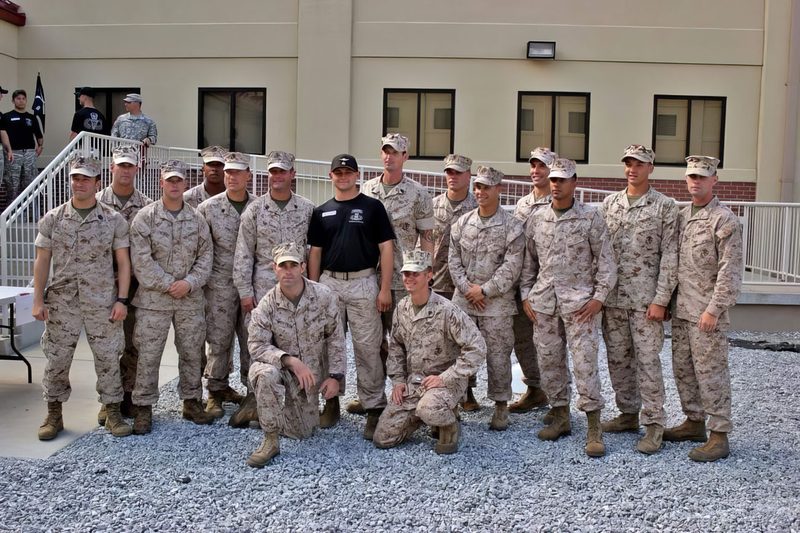
VeteranHope for the Heroes
FeatureSporting Dog Fever
Reading Settings
100%
Mar / Apr 2024
Swipe to read →
Vol. 40 · Issue 2 | March April 2024
The PublisherMarch ’24 – From the Publisher
Departments
Arts & CultureDampening the Noise
MusicPerfect Pitch
PoliticsRise of the (AI) Political Machine
InsightsCommunication Conundrum
DepartmentsThe Third Men
DepartmentsIrasshai
Dining GuideDate Night
DepartmentsFour Leaf Peat’s St. Patrick’s Day Celebration
DepartmentsThe Knoxonomist
Features
JurisprudenceThe Barber of Sevier
InsightsThe Death of Tradition
FeatureFacilitating Healing
FeatureOptimizing Health
FeatureThe Trouble with Tennessee Health Insurance
Non-ProfitThe Change Makers
Top DocsTop Docs 2024
VeteranHope for the Heroes
FeatureSporting Dog Fever
→ Swipe to start reading
The PublisherMARCH APRIL 2024
March ’24 – From the Publisher
Losing a Legend
Story by Nathan Sparks
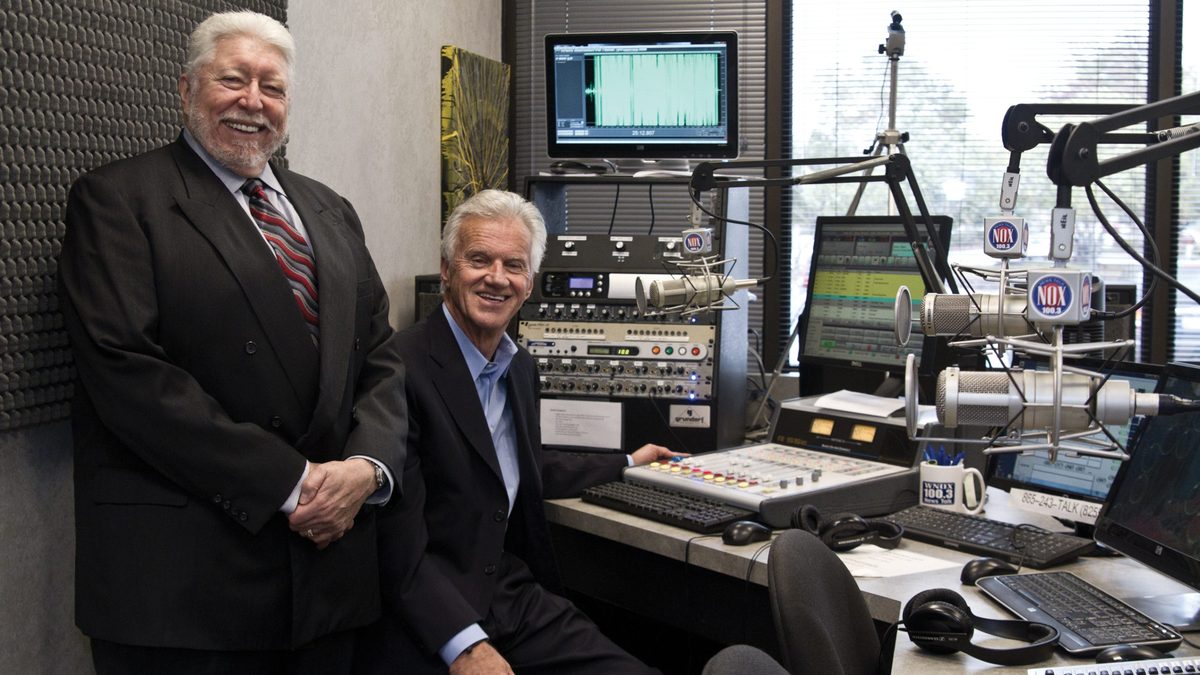
I first met John Pirkle when he was trying to refinance his Hit-Kicker radio station. Learning about how he had built a 100,000 watt FM station when most cars still had AM radios piqued my interest. Clearly a forward thinker, John seemed to always be a step ahead. I admired that he took on WIVK in a head-to-head battle in the country music arena. He upset Dick Broadcasting—owners of WIVK—so much so that they made him an offer to lease his station to eliminate the competition.
So, in 2001 when I purchasedCityview, John was semi-retired and looking for something to do, and I was as lost as a person could be. The conversation went something like “Pirkle, I purchasedCityviewMagazine, and I have no idea what I am doing and not a clue on how to run an effective media.”
“I will be right there,” he said, and my training began. Before Johnny walked in, I didn’t even know what I didn’t know, but Johnny did, and he took pleasure in teaching me the ropes.
To me, Johnny was larger than life. He seemed to know everyone’s backstory. When he recounted those tales, they left me wide-eyed in disbelief. He insisted we initially needed to be controversial to get people’s attention and to let them know thatCityviewhad a new direction. The idea of publicly picking on someone admittedly made me uncomfortable, but I chose to trust his counsel.
He selected Mayor Victor Ashe as the subject of our first “controversial” story, and we published an article titled “Victor Victorious” which detailed how the infamous young Victor had ended up in a Webb School dumpster. Soon after that came the Pamela Reed scandal, and we were off to the races. All of these articles provided the perfect opportunity for Johnny to teach me the importance of understanding the behind-the-scenes aspects of publishing. It was also an opportunity to show me the nuances of interviewing.
As we sat with Pamela Reed, we reached the critical part of the interview. Her situation in part stemmed from an email server and when it came up she exclaimed, “Off the record!” I was concerned we had lost the meat of the story. Johnny was unflapped. He calmly waited for her to finish. Then he said, “Pamela, for the record, tell us about the email server,” and she retold the entire story on the record. I was floored, but had learned an important lesson—never assume.
As I learned more about how to be a responsible publisher, my relationship with Johnny grew into a true friendship. We spent hours debating the topics of the day. John could be a bit of a trickster which kept you on your toes, but he was also the sharpest media man I have ever had the privilege of meeting.
I asked him one day if there was a secret to his success. Without hesitation, he said absolutely. “The secret to my success is the perfect blend of bullshit, bravado, and panache!” John was definitely one of my lifelong heroes. Rest in peace, my friend.
→ Swipe for Next Story
DepartmentsMARCH APRIL 2024
The Knoxonomist
Story by Cityview
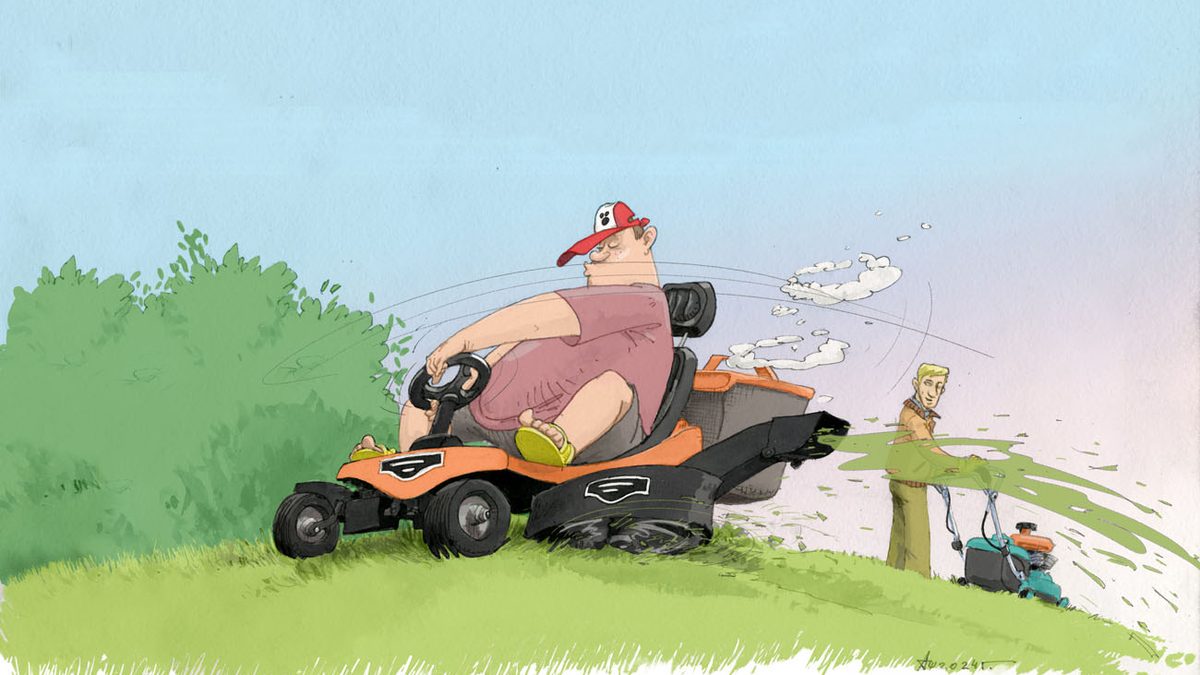
The Knoxonomist appreciates the idea that you are concerned about your husband’s health, but old Knox just doesn’t buy it. No doubt, sending him out in the sweltering spring and summer heat might strip a few unwanted pounds. However, the Knoxonomist thinks that you might be missing the point of his desire to purchase the mower of his dreams. Perhaps you should consider the idea that his choice of mowers has nothing to do with mowing the grass. What he is actually after is to establish his virile masculinity among his new neighbors, and the Knoxonomist thinks you might want to allow him some latitude on this decision.
By forcing your husband to push a tiny 19” electric lawnmower about the yard, you will have effectively emasculated him. Let there be no doubt that his new friends will know that he is not wearing the pants in the family. Stripped of his dignity in the grassy battlefield of the front lawn, he might resort to other ways to establish himself. The Knoxonomist suspects he would want to take up 4-wheelin’. On the weekends he could take his tricked-out side-by-side up to Royal Blue where he could get into untold types of trouble. Might it be better that he exhausts his manliness on the mower where you can keep a closer eye on him?
The Knoxonomist also encourages you to look at the world through his eyes. Has your husband intruded on the decisions he knows (and you know) that only a woman can make effectively? Your husband knows that you could easily paint your own fingernails, but he recognizes that a manicure is about much more than just nail color. Your husband also knows that you could dye your own hair and that you’re not any more beautiful to him with those extensions, but in allowing you to choose your path, getting your hair and nails done the way you like and spending time with your friends at the salon, you’ll be a happier woman.
There is a fundamental difference between what you see in your lawn and what your husband sees. You see a chore that needs to be done. He sees an opportunity. Some days the lawn will give him peace and solitude. Other days, the lawn will be where he will release the frustration of a difficult day. But no matter how he’s feeling when he climbs up onto that behemoth of a lawnmower, you both will have a cleanly-mowed lawn once he climbs down, and what’s more than that, the Knoxonomist assures you, it’ll be a happy man walking in the door.
Spring is almost here, and we need to purchase a lawnmower for our new home. My husband wants an expensive 48-inch zero-turn ride-on mower for our tiny half-acre lot. I think he should get a push-mower for some exercise instead. How can I convince him? -Alice
→ Swipe for Next Story
MusicMARCH APRIL 2024
Perfect Pitch
A dive inside Knoxville’s own Julius Blue and the influences that brought his talents to life
Story by Chris Blue
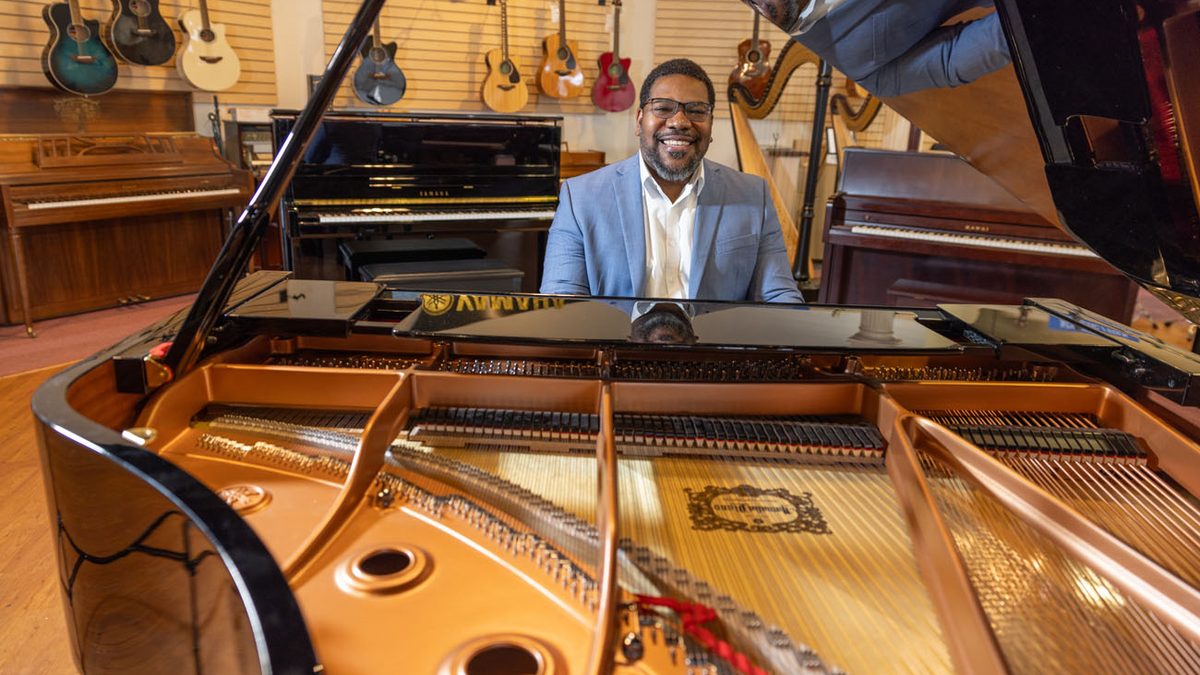
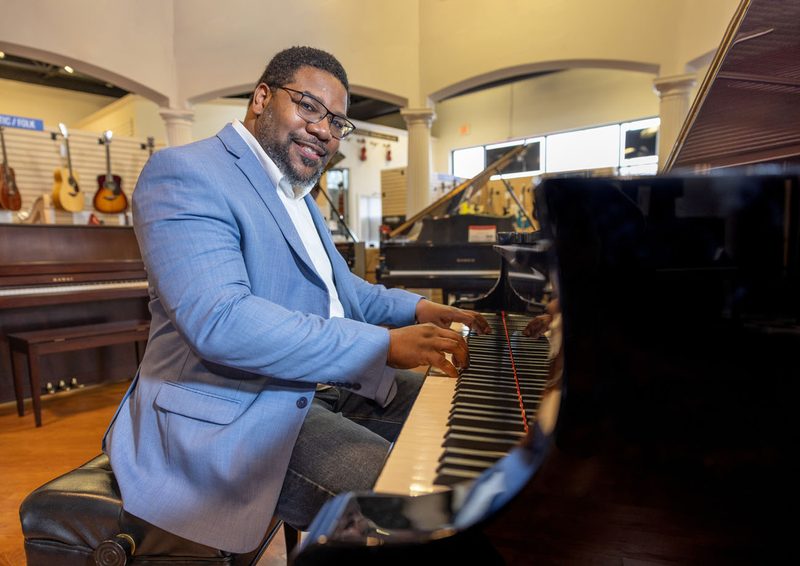
Julius Blue is that kind of musician you admire. Not only because he plays five instruments, sings, directs, and scores music for film and tv, but also because he has perfect pitch. You can sing something and without sitting down to a piano, he can tell you the notes. He’s an incredible musician.
Perhaps it came from his musical upbringing. His mom, uncles and aunts, grandmother, just about everyone around him sang in choirs and churches. And it had an influence. I know this because Julius is my brother.
But being blood related is not why I chose Julius this issue. I chose him because of the influence he’s had in our region as a musician. If you’re pursuing music in East Tennessee, you know Julius. He’s likely played on one of your tracks. And if you’re a lover of local music, you know him well, too. You’ve seen him on stage. The man is a musician through and through.
“Hearing our mom and her siblings and everybody just singing, playing the piano,” he tells me, “I could just hear them in the other room and it just moved me.” He adds that, like me, he felt further moved to pursue this passion when he stepped into church and witnessed the beauty of the music it held.
Julius would wake up as a kid and play drums on the bed, a hint to what he would pursue first in his musical endeavors.
“Before the six o’clock service, we would get back to church early and I just would mess around on the instruments. Somebody would be praying, but, you know, if I had a chance to get on and play, I would Mom and Dad sort of picked up on it.” The drumset came that Christmas. The rest of us were electrified by the sounds he made.
Drums eventually became piano. It was the Baldwin organ that our mom and dad bought for the family home that would spark his interest in the keys. “I remember them saying, ‘Nobody touch this. Nobody play this. This is for decoration.’ But from time to time when they weren’t around, I would just turn it on for just a few seconds and I just remember hitting the key of C,” he says. “And I don’t know, something was just ringing in my spirit.” And when the organ at church evolved to a keyboard, the notes of Gary Williams hit his new interest home.
I can vividly remember coming home one day in elementary school to a pitch black house and venturing down the hallway only to find Julius sitting on the floor with his keyboard, headphones in, just playing. “By that time, once Mamma discovered I was picking up on it, she would encourage me to learn songs by certain artists, but the catch was we didn’t have a CD player or a tape player. I didn’t have anything to sit and rewind. I’m just playing it from how many times I’ve heard it played and just trying to see if I can find the notes.” Enter perfect pitch.
Fast forward to after high school, and you would find Julius taking lessons from the jazz band instructor at Pellissippi State Community College. By the time he got to the University of Tennessee, he was off and running. And after he graduated, he quickly made a name for himself in the industry. He’s traveled the world playing with some incredible artists, both mainstream and gospel, artists like Grammy award winning artist Dorinda Clark, a major influence on his craft.
“She doesn’t pacify,” he says. “When she grabbed the mic, she’d go, and I felt like that really opened my eyes to a whole other thing of not just playing, but being able to perform.”
Julius would go on to perform with so many artists such as Kirk Franklin, Donnie McClurkin, Donald Brown, The Boogie Knights, Emily Wyrick, and, well, me.
In fact, if you’re eager to see this true musician at work, join us in Asheville on March 23 or here in Knoxville on May 11. Details atchrisblive.com. We will see you there.
→ Swipe for Next Story
Arts & CultureMARCH APRIL 2024
Dampening the Noise
Shannon Deana Johnson conveys quiet with her work
Story by Susan Alexander
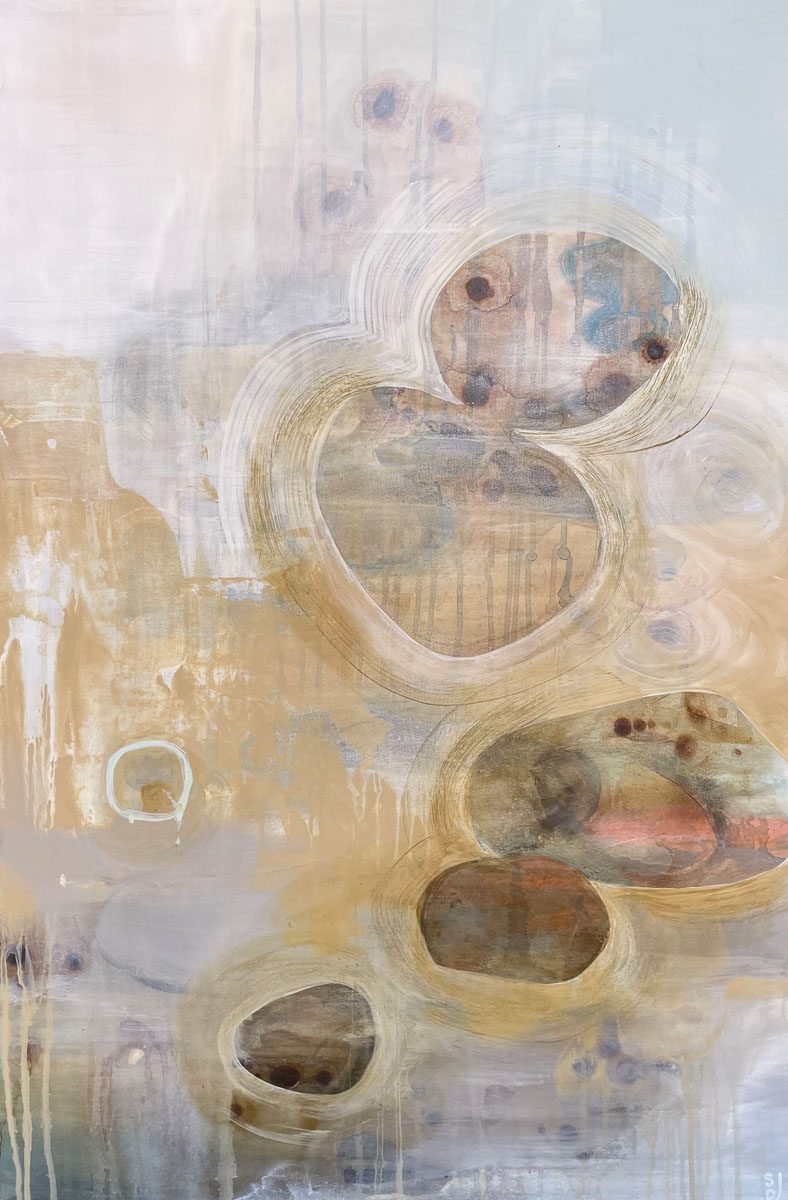
Inspired by nature, Shannon Deana Johnson aims to capture the feelings it evokes. “To me the world is a noisy place,” she says. “When I am outside I can experience a calmer, quieter life. That feeling is what I want to convey in my work.”
Her abstract paintings depict the shapes and colors of the natural world and the processes that impact it. “I take a close-up view of those processes,” she says. “I use water a lot in my work. If I lay down a layer of paint, I may use a spray bottle to apply water to mimic the effects of erosion on land.”
The blues and earth tones of our Smoky Mountains represent the quiet and calm she seeks in her paintings. A trip to Santa Fe, New Mexico, brought a lot of pinks into her pieces. A visit to Hawaii inspired additions of turquoise and sepia brown. “I like to see the landscapes when we travel,” she says. A sketchpad accompanies her on those journeys, and a camera may help her recall the pattern of leaves on a path she has hiked.
A Southern California native, Johnson followed her now-husband to Knoxville, received her bachelor’s in fine arts from the University of Tennessee and raised their three children here. When the youngest was ready to start school, she headed to the classroom as well, teaching art to various age groups for the next 20 years.
After years in the classroom, Johnson believes everyone possesses a level of creativity and can be taught to make art. But the real artists are those who have a need to create and won’t be satisfied without fulfilling that need. Johnson herself returned to her art full-time in 2021.
Her work can be found at Pivot Point Gallery in Knoxville, at dk Gallery in Marietta, Georgia, and on her website,shannondeanajohnson.com.
→ Swipe for Next Story
InsightsMARCH APRIL 2024
Communication Conundrum
The balancing act between our rational thoughts and our intrinsic emotions is a difficult one
Story by Rev. George Doebler
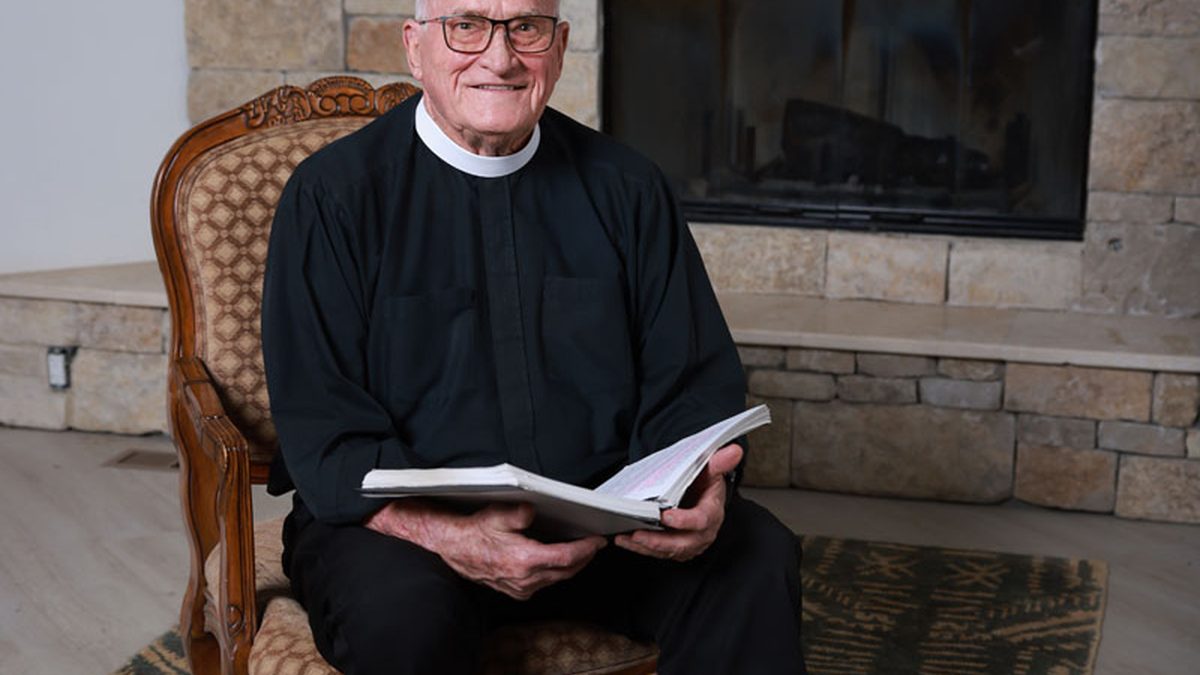
No one reading this needs to be told that we are living in an anxious time. Communication seems to be filled with more “noise” than messages. Rabbi Edwin Friedman wrote, “Communication is an emotional process, not a cerebral one.” It is not possible to hear someone when you are emotionally moving away from them.
This is an idea that seems to go against a lot of what we are taught. Somehow, we have been taught that if our thoughts and words are clear and precise, we will be heard or understood. Why is it then that the person we’re speaking with misinterpreted what we said?
Communication is not just about the words. Though I think we can all admit that it is something that we do not like to look too closely at, we tend not to look at the emotional context in the room. It happens in families, work, government, even religion. Think about the times you and your significant other get into an argument. Whatever is said in those moments is often not heard (especially when the volume is turned up). When our emotions overcome our ability to be calm and collected, clear communication does not happen. Instead of moving toward the person, we end up moving away from them, and the other person becomes even more distant—both physically and emotionally.
Ultimately, our emotions dictate what we hear. When we watch the news, we not only hear the story, we feel it. The tone of the newscaster often becomes more memorable than the message itself. Or consider when you buy a car. A friend of mine who sells cars told me once, “Buying a car is an emotional thing. It has little to do with the car. It has a lot to do with how the car ‘feels.’” When I thought about how I buy a car, I realized he was right, the emotional process plays a hefty role.
So if our emotions impact how we hear, see, think, etc. then how do we keep them from getting in the way of how we communicate with others? How do we control our anxiety, our fears, our excitement, rather than let them control us?
The answer is in how well we know ourselves, I suppose. If I have an understanding of what “bugs” me and can keep my emotions in check, perhaps my life will be less stressful. I just might be able to hear what is going on around me and not react to it. In theory, this makes perfect sense. Though, I must admit, it is not easy for me—and I imagine for many others, too.
What happens if we leave emotion entirely out of the mix, though? I can recall an experience a number of years ago when my wife, Nancy, and I were volunteers in an evening community addiction program in Washington, D.C. Nancy was giving methadone pills to heroin addicts who were still actively using, while I conducted a therapy group. One evening in a group of eight to 10 people, I encouraged them to be open with their thoughts and feelings about one another. While I felt calm and dialed in to my role as a facilitator, the group members grew emotional. At one point, one male member began telling a woman in the group what he thought about her lifestyle. The woman quietly reached into her purse and brought out a pistol. “Take that back,” I can still vividly recall her saying. The man quickly replied, “I take it back. I take it back!”
Despite what was happening, my thinking was stuck in what I believed should be happening. I said to her, “You agreed to the rules of this group that there would be no violence.” She put the gun back into her purse. The group members thought little of her carrying; it was not new to them. Everyone just stared, and we simply went on with the session.
That night, I awoke in a cold sweat. I realized, hours later, what could have happened in that group had I—or others—let additional feelings out in that moment. At times, we can get so caught up in our thinking we are not able to feel at all. It worked in our favor that day, but something about it still felt off.
A month later, I stopped doing the group. The words of Rabbi Friedman came to mind: “Communication is an emotional process, not a cerebral one.” I thought I was doing what I had been taught intellectually, but I had blocked out my own emotions and therefore lost an opportunity to truly connect with the group members. I decided I needed to work on understanding why I was doing what I was doing and how to hold space for both what I’ve been taught and my emotions.
How each of us communicates largely depends on how well we can balance these two sides. Rethinking this most basic element of who we are and how we connect with others is a lifelong learning process, but one that may be worth our time and energy.
→ Swipe for Next Story
DepartmentsMARCH APRIL 2024
Four Leaf Peat’s St. Patrick’s Day Celebration
Sunday, March 17, 2024 – 6:30 PM
Story by Cityview
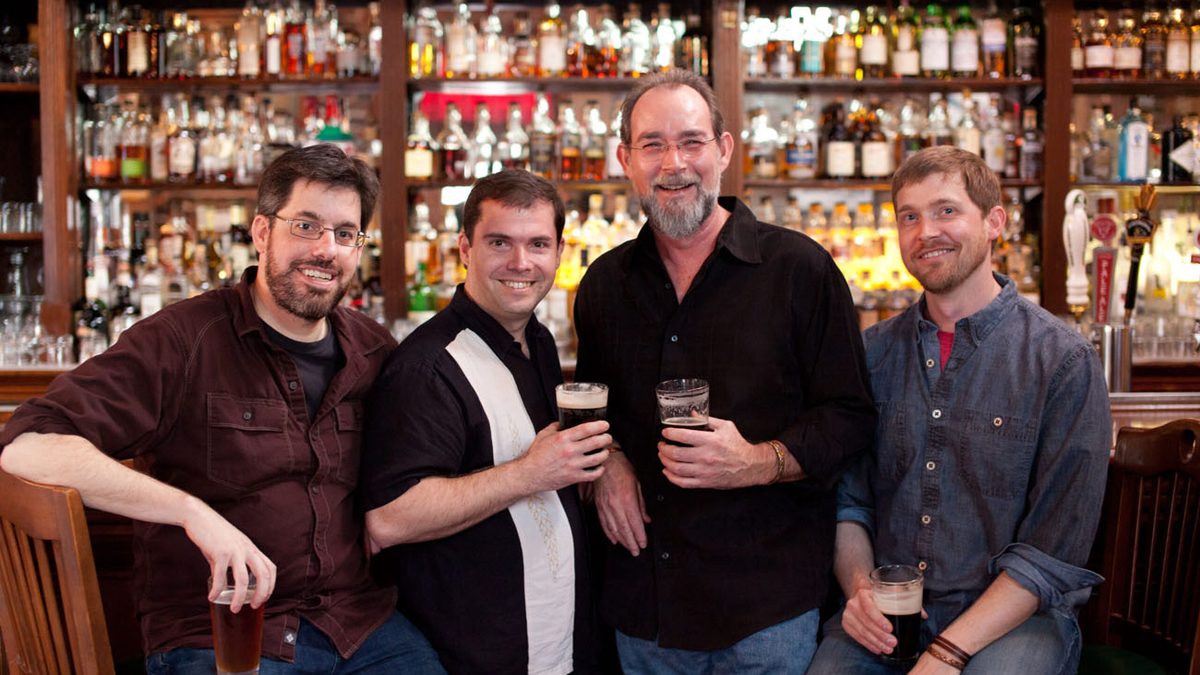
For 20 years, Four Leaf Peat has been bringing the spirit of Ireland home to Knoxville. Chad Beauchaine (fiddle), Rick Hall (hammer dulcimer, uilleann pipes, bodhran), and Jason Herrera (bodhran, flute, whistle) have been with the band since its inception in 2004, with Gil Draper (guitar, mandolin, bouzouki) joining in 2008.
“Here we are 20 years later,” says Beauchaine. “And we’re still having fun,” adds Hall.
This St. Patrick’s Day they’re making their way to the Bijou Theatre, which, as it happens, was also the site of their very first concert. “It was a night of Celtic music to save the historic Bijou in 2004,” recalls Hall. And just like back then, they’re excited for the opportunity to share more of their musical heritage.
“We take music from Ireland and we put our own personal imprint on it,” says Beauchaine. “This region did the same thing to traditional Irish music, so when people hear it, even though it’s not Tennessee music, you can hear the Tennessee in it.”
Their 20th anniversary concert will feature the traditional Irish music the band is known for, as well as special appearances by accomplished Irish dancers Claire Shirey and Jonathan Srour. Tickets are available online now atknoxbijou.org. You can learn more about the band on their websitefourleafpeat.com.
→ Swipe for Next Story
PoliticsMARCH APRIL 2024
Rise of the (AI) Political Machine
How voters will navigate an artificial intelligence-laden election cycle.
Story by George Korda
Anyone who believes the intelligence of politicians is artificial will have more reason than ever to think that is the case during the 2024 election cycle. Artificial intelligence (AI), in what might be said is the rise of the machines, has thundered into the political arena with great promise to enlighten, inform, confuse, anger—and influence—voters.
The problem is that AI images and voices may result in voters not knowing if the messages they’re seeing and hearing are truth, or lies. “So, what’s new?” one might ask. Twisting words, presenting falsehood-as-fact, and stretching the truth until it squawks in pain are as common in elections as politicians’ promises. The difference is AI’s revolutionary ability to make what isn’t real seem real.
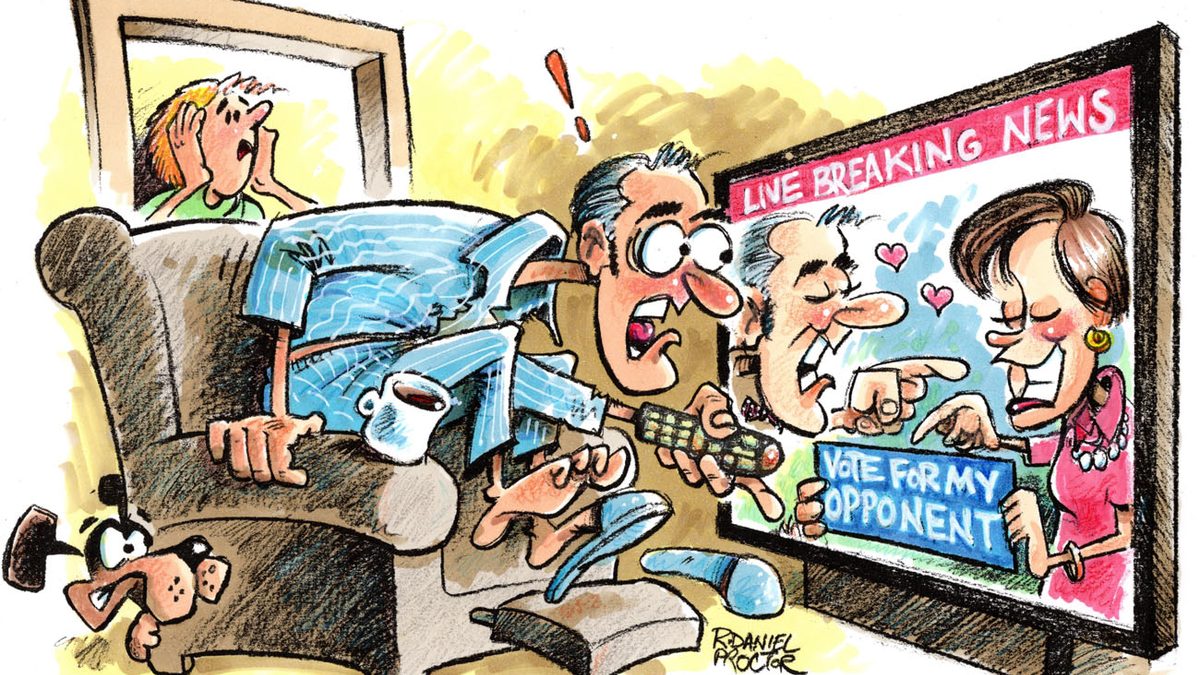
Social media provides a glimpse of AI’s potential power, both positive and negative. Every day, political memes are posted on social media. Some are honest, but many contain only a shade of truth, or are outright lies. People prone to outrage, or who react to something they find outrageous, tend to react emotionally, without a nanosecond’s effort to investigate if it’s accurate: It exists, therefore it’s true.
AI can take such misinformation or disinformation to never-before-seen levels. The image is seen, the voice is heard. It looks and sounds exactly like the political candidate. The offended or outraged viewers or listeners post it, send it, e-mail it, and distribute it in every other way. As a saying goes, “A lie gets halfway around the world before the truth can pull on its boots.” In the 21st century, a lie is around the whole world in the blink of an eye.
AI has already had a new, but not necessarily positive, impact in the presidential primaries. For example, in July in Iowa, a super-PAC supporting Florida Gov. Ron DeSantis released an ad against former President Donald Trump using an AI-generated Trump voice. The super PAC also released an AI-generated ad showing Trump (though it wasn’t) and Dr. Anthony Fauci (though again, it wasn’t), the controversial former medical advisor to President Joe Biden.
AI is putting into common usage previously little-known words. For example, a “deepfake,” per the Merriam-Webster Dictionary, is “an image or recording that has been convincingly altered and manipulated to misrepresent someone as doing or saying something that was not actually done or said.” Another is “prebunking,” which presumably enables people to distinguish when information is ‘mis’ or ‘dis.’
These developments are making a lot of people very nervous. “There are currently no federal rules for campaigns when it comes to using AI generated content in political materials such as ads,” ABC News reported on November 8, 2023. “’All campaigns can use this. So, in that sense, who is setting the rules of the road as the campaigns themselves, as they go?’ asked Russell Wald, the policy director at Stanford University’s Institute for Human Centered AI, [on] ABC News Live.”
Several U.S. states are acting to try to contain AI legally. Early in 2023, the National Conference of State Legislators published information regarding states’ AI regulation efforts and plans. A NCSL website posting, last updated Dec. 7, 2023, said, “… legislation may use different terms such as ‘deepfake’, ‘synthetic media’ or ‘deceptive media’ when referring to AI. These terms all refer to what people commonly think of as AI but may have different implications depending on what term is used and how statute defines it.”
Introducing legislation doesn’t ensure passage. The NCSL’s page said that in Illinois, a bill failed that would have prohibited deepfake videos to influence an election 30 days from Election Day. In Indiana, a bill failed to require a disclosure on “doctored” election-influencing media. Even if laws are passed, there’s no guarantee they’ll survive court challenges, or will even be followed: there are laws against identify theft, but it’s hardly been stopped. Restricting AI use may also run headlong into free speech considerations.
AI, like the fictional Terminator (in both its good and evil iterations), is coming to an election near you. This puts new pressure on voters to know if what they’re seeing is true. Whether they do or not, AI doesn’t care. Like the Terminator, AI is here. It doesn’t feel pity, or remorse, or fear, and it absolutely will not stop, ever, as it attempts to influence people’s votes. Artificially.
→ Swipe for Next Story
DepartmentsMARCH APRIL 2024
The Third Men
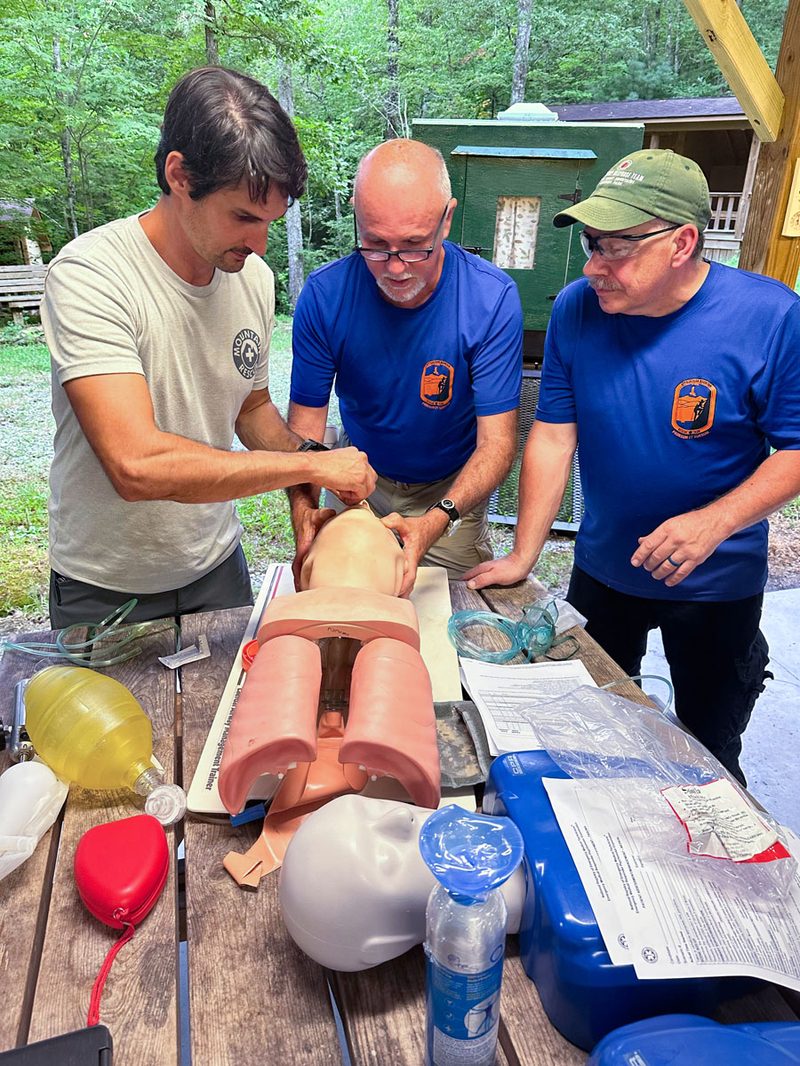
Up steep rock faces or under the intense flow of a waterfall you’ll find the unsung heroes of East Tennessee rescues
Story by John Quillen
Charlie Avery has logged many hours parked along Newfound Gap Road. He has a real, old-fashioned park service radio that crackles occasionally and wakes him from catnaps. Sometimes he just walks along the path leading up to Alum Cave answering questions from hikers and tourists about what he does and when he does it. “I am not a park service employee,” he clarifies, as people ask about the usual nonsense, which always comes back to bears, it seems.
These out-of-staters don’t know about his single pitch climbing guide training or countless weekends forfeited at his own expense learning how to splint broken limbs. But, when he tells them about finding a dead body at Big Creek, their ears perk up. As a member of the Appalachian Mountain Rescue group, he donates untold hours as an on-call expert. I just know him as a good rock climber.
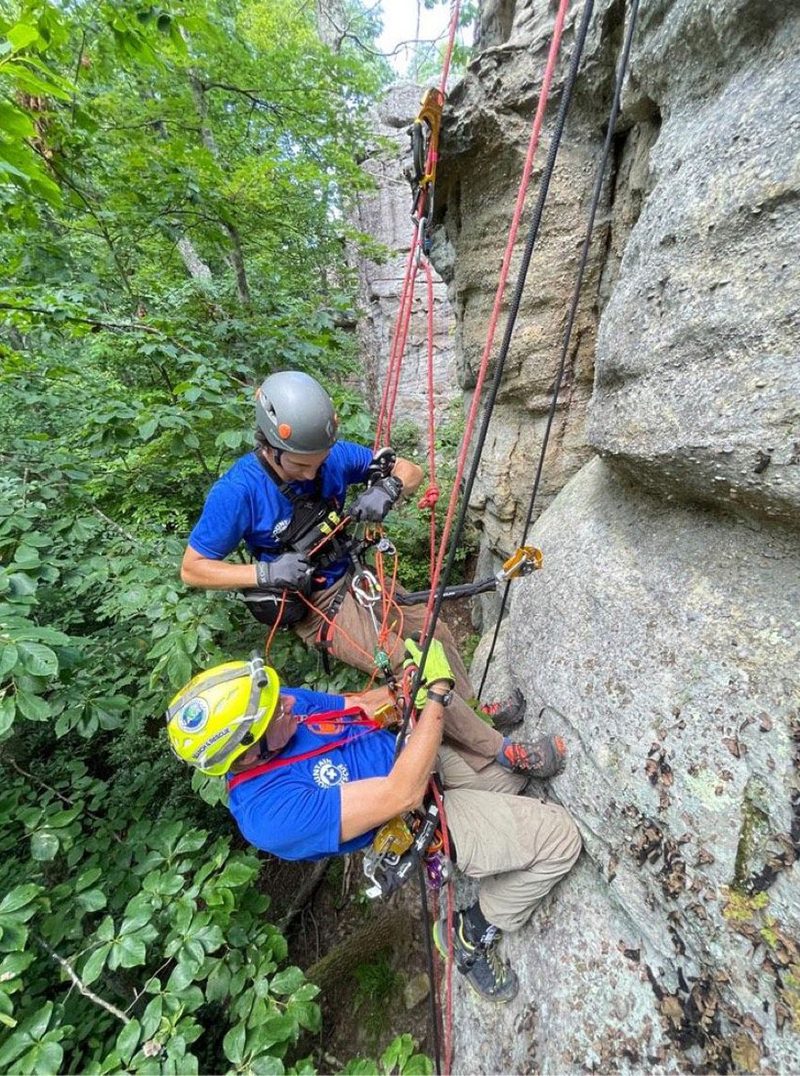
He and others are what I call “Third Men.” When critical agencies, like the National Park Service, need technical expertise, these high-angle guys are hard to beat. Appalachian Mountain Rescue is comprised of physicians and rescue experts and was born from an incident in 2014 at Looking Glass in North Carolina when the local agencies struggled to reach climbers high on the face of this infamous multi pitch climb. Based in Asheville, their sphere of assistance is a 150-mile radius and includes the Great Smoky Mountains National Park, which consumes much of their resources.
Charlie and I met doing volunteer trail maintenance at the Obed in 2018. He was deep in undergraduate psychology studies which may explain his interest in the subject of rescue.
“Someone told me that climbing was a selfish pursuit and that bothered me,” he admits. He then started volunteering at the Obed in the “Climb with a Ranger” program. Folks like Charlie spend Saturdays teaching children and beginners the nuances of top rope climbing at the Lilly Bluff wall. It’s a noble and sore neck pursuit, holding people off the ground who have never left it. We talk about the psychology of getting lost in the woods and how humans tend to follow certain patterns.
Charlie has participated in more than one missing person search; but, along with his team they devise systems that leverage mechanical advantage on the fly when victims are salvageable. In September they did just that on Alum Cave trail through the notorious Arch rock. A young hiker had seriously injured her leg and Charlie and his crew helped save her life, lowering her through those precipitous steps through which we have to ordinarily hunch and grab safety cables.
Not all of their work occurs on public lands, though. Charlie tells the story of pulling a four-wheeler off of a victim in Cocke County who had been missing for several days. Their technical rope work allowed the local agency to gently extricate this victim. I couldn’t help but think about another good friend, Roger Murphy, who does this with swift water rescues.
When David Brill published his book, Into the Mist, about disappearances in the Smokies, I told Roger’s son, Wesley, to buy it for his dad for Christmas. Roger is the aquatic version of Charlie. “Murph” was busying himself circling the incidents in the appendix in which he had some involvement as team coordinator for Blount Special Operations Response Team. I believe he lost count around 34. I could always count on him to lend a hand when I took a group of troubled teens into the woods or needed a belayer on Maryville High School’s indoor climbing wall he helped build. Roger is another serial “do gooder”. Like Charlie, his interest in the mindset of missing persons stems from an honest desire to reunite them with their loved ones.
Too many hikers ignore the no swim warnings at Abrams Falls. Roger gets those late night and early morning phone calls. Then he gets to wake a lot of other people to organize the recovery operation. I usually text him when someone goes missing and he can tell me exactly where they will be found in that creek and what they will look like when his team extricates them from an underwater logjam. Same thing with missing persons. Roger usually hits the nail on the head. He has read every scholarly publication written about missing persons and can accurately divine which way they are going to meander, or, in some cases, whose basement they may pop out of.
I’m thankful to have people like Charlie and Roger on call for the national park. Fortunately, I have not had to personally employ their talents. However, there was a time when those on overseas expeditions with me have. But those are stories for another time. For now I just rest easier because of the knowledge and altruism these guys bring to bear for the benefit of all outdoor enthusiasts, and you should, too.
→ Swipe for Next Story
Dining GuideMARCH APRIL 2024
Date Night
Pick out a great outfit and brush up on your wine knowledge—we’re heading out for date night in East Tennessee
Story by Marc Anthony
For first dates, third dates, or sometimes only dates, East Tennessee has a variety of eateries that will help set the mood for date night. Whether you want a quiet night out with your mate of 30 years or an intimate first date to block out the world around you, we have discovered the best places to celebrate togetherness for just the two of you.
Osteria Stella
Which date night? First date, but not a blind date. Cozy, intimate and dark describe the interior feel of Osteria Stella and that lends itself to really getting to know that person you’ve had your eye on for a while at work. You’ve known each other for a little while, flirted once or twice, and as a result they likely won’t mind if your first kiss has a hint of garlic in it or find it too forward sliding into the adjoining Brother Wolf for a nightcap. Added bonus here: while not four dollar signs ($$$$), this space is on the pricey side, so your date will be extra impressed by you picking up the tab. Downtown | 108 W. Jackson Ave |osteriastella.com
Oliver Royale
Which date night? The date night that might turn into a breakfast date! I mean, we are in the restaurant of one of Knoxville’s most historic hotels which is also home to a speakeasy. It’s all set up. An entire evening of fun sampling one of the best restaurants on Market Square, having a crafted cocktail in the Peter Kern Library (if you know, you know), and maybe turning the night into an episode of The Bachelor(ette) with a fantasy suite only an elevator ride away. The Oliver Royale supports natural, local and sustainable food supplied by Tennessee’s own Seven Springs Farm and Mountain Meadows to name a few. Enjoy the night—and next morning at The Oliver. Downtown | 5 Market Sq |oliverroyale.com
Vida
Which date night? The online meetup where they have traveled to Knoxville for the date and you want to impress them so they move here. Jim and Lori Klonaris do this every time they open a new restaurant: they make it the most beautiful restaurant in town. High-backed velvet booths, exquisite wall hangings and light fixtures, and a ceiling that will crane your neck make Vida a place that will make your date wish they lived here. The food is beyond compare with a menu that concentrates on small plates and lots of reaching to food in front of the people you’re dining with. Don’t tell your date about The Vault which, of course, we all know about, but will have your potential mate looking for a real estate agent to get the relocating underway. Downtown | 531 S. Gay Street |vidaknoxville.com
Emilia
Which date night? The date that turns into a double date. If you are seated against the wall, as I have been on many occasions, the tables are set so close to each other that you are often drawn into conversation with the couple on their date night sitting right next to you. I’ve even shared an appetizer with an adjacent couple when they inquired about how something tasted. Granted, Emilia is not a family-style restaurant, yet you will be so smitten with the cuisine that you’ll want to share with others around you so you can take credit when they love something you’ve suggested. Downtown | 16 Market Sq |emiliaknox.com
Seasons Innovative Bar and Grille
Which date night? The place you take the person you love the most and are on date number 4,532. Few restaurants in town inspire as much confidence as Seasons. There is a reason why Executive Chef and Owner Deron Little is a consistent winner of this magazine’s Top Chef award and that’s because you just know and trust that everything coming out of that kitchen is going to be the best thing you have eaten all month. Changing seasons mean changing menus at Seasons, and it’s always exciting to catch the quarterly reveals on their social media pages highlighting the most exciting new foods in Knoxville. Farragut | 11605 Parkside Dr |seasons-cafe.com
Walnut Kitchen
From the owners of Seoul Brothers comes a southern style soda shop featuring locally made ice cream, waffle cones, Italian sodas, sundaes, floats, milkshakes, malts, and locally sourced baked goods! With a menu reminiscent of growing up in East Tennessee, the owners Josh and Vic present the memories of their childhood through sweet treats and smiles. Located conveniently in Marble City Market, Bubbles and Cream is hoping that new Regas Square management will allow this precious dessert spot to thrive in this ready made European style food court that should have people lined up around the block. Maryville | 606 High St |thewalnutkitchen.com
→ Swipe for Next Story
DepartmentsMARCH APRIL 2024
Irasshai
Anaba offers welcoming authentic Japanese cuisine on Northshore Drive
Story by N. Brooks Clark
The moment you step inside the doors of Anaba, you’re greeted with a warm “Irasshai,” Japanese for welcome, from the team of chefs behind the sushi bar, led by General Manager Young Woo Cha, 32, who’s been with Anaba for 10 years.
“I make sushi. I do everything,” says Cha, who came to the U.S. from Seoul, South Korea, as a boarding student in his sophomore year at the Kings Academy in Seymour, where he was a midfielder in soccer. He then played forward at Maryville College under Head Coach Pepe Fernandez while majoring in finance and accounting. Cha also worked at Anaba, starting out as a dishwasher. After graduation he stayed with Anaba, rising to be manager of the Gay Street location.
“We are genuine Japanese cuisine,” says Cha, who notes that Denso employees regularly come from Maryville for company dinner meetings. Anaba’s owner, Seisuke “Sei” Fukuoka, is a third-generation sushi chef who came to the U.S. 35 years ago from Osaka, Japan, where Suehiro, the family restaurant, continues to thrive. Though Fukuoka is 80 and “retired,” he remains actively involved with his restaurants. His nephew Koki, plying his trade at Anaba, is a fourth-generation sushi chef, working alongside Sous Chef Gee, who comes from Myanmar, of Burmese descent.
The restaurant’s aesthetic is a blend of modernity and tradition, with gray walls adorned with cast-iron Japanese-type rectangular shapes. The sushi bar, with its 13 seats, provides an intimate setting for patrons to witness the artistry of the chefs.
As you settle into your dining experience, the beverage menu invites you to start with a Nigori Cloudy Sake, known for its subtle sweet taste. “A lot of people ask for it,” says Bartender Bailey Kim. Others prefer a Koji Gold beer, made in Nashville with Japanese rice, or one of seven Japanese whiskeys on the menu.
Anaba’s menu is a celebration of Japanese flavors, offering a unique dining experience. If you’re seeking a culinary sushi adventure, try the “Trust Me.” Name the price you want to pay—say, $100—and Koki will craft a personalized masterpiece for your table. “Regular customers like to do that,” says Cha.
The Shrainbow is a vibrant display of shrimp tempura on four kinds of sashimi, shrimp, avocado, wasabi mayo, spicy mayo, eel sauce, tempura flakes, masago and green onions—a fantastic taste combination.
Seafood enthusiasts will appreciate the freshness of the oily and fatty O-Toro (Bluefin Tuna Belly) and the slightly fattier Chu-Toro (Bluefin fatty tuna). The Bluefin Tuna Roll and Chef’s Special Roll, featuring avocado and other delectable ingredients, are must-try items. The Wagyu beef atop rice adds a touch of luxury to the menu.
Anaba caters to diverse tastes with dishes like Tonkotsu Ramen, a flavorful pork broth soup with green beans, stir-fried chicken, onions, and green onions—by far the most popular item on the menu.
The pork cutlet with Japanese curry sauce is another crowd favorite, offering a satisfying blend of flavors.
To conclude the dining experience on a sweet note, Anaba presents the deep-fried tempura cheesecake—a delightful creation in which cheesecake is dipped in tempura batter and deep-fried. The result is a dessert with a warm and crispy exterior and an inside like ice cream.
→ Swipe for Next Story
FeatureMARCH APRIL 2024
Facilitating Healing
“To keep the body in good health is a duty…otherwise we shall not be able to keep the mind strong and clear.” – Buddha
Story by Micha Haas
Not every medical professional wears a white coat. There are benefits to the white coat, certainly, but they are far from the full story when it comes to medical care. There are many practitioners out there whose offerings aren’t the mainstream, some of whom may even work closely with the classic white-coat doctors, yet who rarely get given the chance to share what they do. So this issue we’re going to let them do just that.
Acupuncture
Most of us have heard of acupuncture. You likely might even be able to visualize at least some aspect of the treatment itself. While it’s become more mainstream, the treatment itself is nothing new and has been used and described for centuries. In fact, it is recognized as having been first documented and described in The Yellow Emperor’s Classic of Internal Medicine, a writing dating back to about 100 BCE. And while it has Eastern origins, it eventually made its way to Western cultures.
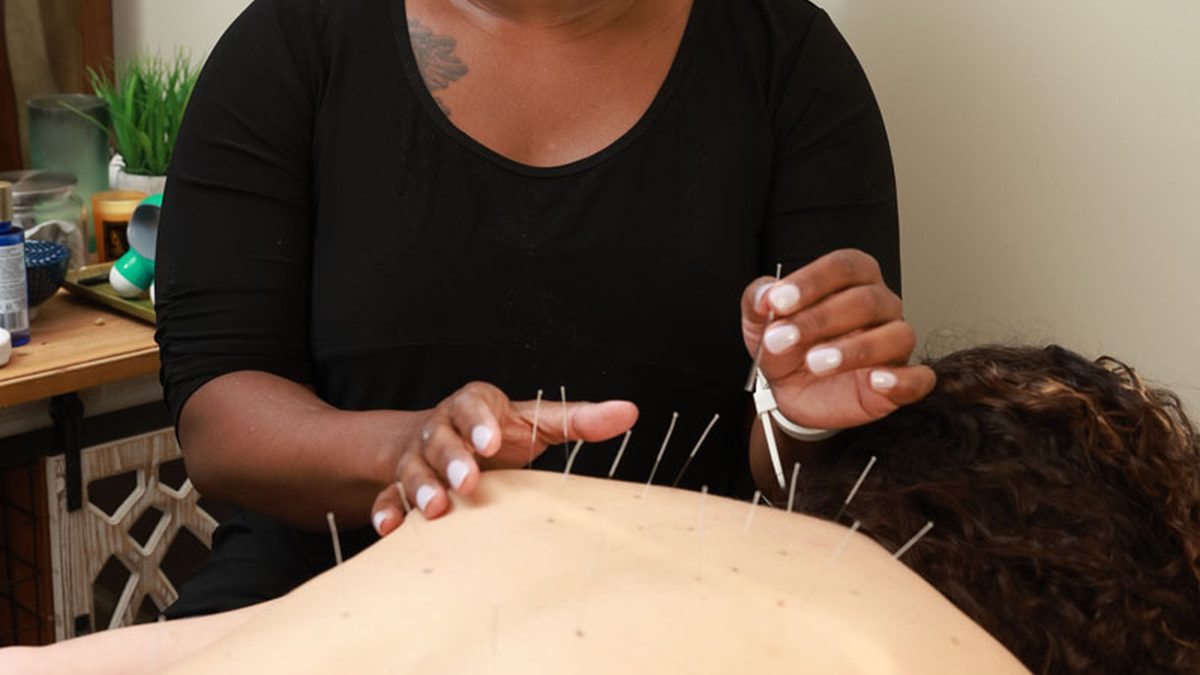
The goal of acupuncture is to facilitate the body’s ability to heal itself. Nikki Peoples of Satori Acupuncture in Knoxville likens the body to a complex grid of power lines (meridians), and the acupuncturist’s job is to clear blockages in that grid. “The insertion of the needle creates an endorphin release in the body,” Peoples says, “which will create an analgesic effect in our system, and that’s where the healing happens.”
After initial intake at Satori, most sessions involve only five to 10 minutes spent actually having needles inserted by the acupuncturist; the bulk of the session is spent relaxing with the needles left in. Peoples notes that—contrary to what some may fear from the idea of being stuck with needles—the process is so calming that many of her patients fall asleep during this part of the session.
The majority of Peoples’ patients come to her for some form of chronic pain, but she says that acupuncture can have a positive impact on a myriad of different issues, from digestive issues to autoimmune conditions; her first year of practice, she recalls, was primarily focused on fertility treatments.
Every treatment plan is unique, but she recommends one to three treatments a week, which can involve both acupuncture and other natural healing techniques. As for the risks? They’re relatively low. Just make sure you’re seeing someone with the proper qualifications and training in the technique.
Herbal Remedies
For Peoples, herbal supplements complement her acupunctural treatments, but for others, herbalism is a dedicated treatment option in itself – particularly as an alternative to pharmaceuticals. These remedies utilize the power of plants to treat illness or simply maintain health, and like with acupuncture, are meant to catalyze the body’s natural rejuvenative processes.
“Herbal medicine encourages your body to heal itself,” says Fiona Fox, co-owner of Fox Muscle & Joint, “whereas most pharmaceuticals are there to replace something.” Fox has a background primarily in Ayurvedic (Indian) and Chinese traditional medicine, but she notes that there is a long tradition of natural medical practices that hail from the Appalachian Mountains as well.
These herbal supplements come in a variety of forms, from powders and teas to skin creams and tinctures like Fox produces and prescribes to the clients she works with.
There can be many benefits to using natural remedies in place of pharmaceuticals, she explains, from the lack of risk of addiction to avoiding allergic reactions to pharmaceutical chemicals. Though, she adds, you don’t need to take tinctures and supplements every day to get benefits from them; somewhat regular use can yield results.
Risks associated are unique to each individual, like most treatments, and are largely based on their conjunction with traditional medicine. If you are already taking medication, you should consult your primary care doctor before supplementing or replacing it with an herbal supplement. Fox says she never unilaterally suggests one of her patients stop taking a prescribed medication, even if her remedy is meant to provide relief from the same condition.
Lion’s Mane
One increasingly common tincture you might see on shelves or in online stores is Lion’s Mane mushroom (hericium erinaceus). For years, there have been studies suggesting numerous health benefits associated with regular consumption of this particular breed of mushroom (one study cites “antioxidative, antidiabetic, anticancer, anti-inflammatory, antimicrobial, antihyperglycemic, and hypolipidemic effects”). And now alternative health practitioners and everyday people alike have caught on to the practice.
“Mushrooms have betaglucans, which come in a wide variety of configurations and branching patterns and can lead to a wide range of effects in our body,” says Josiah Patterson, a Powell-based mushroom farmer and producer of tinctures. “Lion’s Mane has not only some particularly unique betaglucans in it, but it also has unique smaller weight molecule compounds.”
These compounds, Josiah says, are what gives the mushroom its unique benefits, which range from helping regulate digestion and blood pressure to even, it is suggested, combatting Alzheimer’s and other regressive memory disorders.
It’s not specifically tinctures you need, either, Josiah notes. Tinctures provide a concentrated dosage, but the important thing is just to make mushrooms like Lion’s Mane part of your lifestyle. In addition to his tinctures, he regularly cooks mushrooms as part of meals; he even makes mushroom teas! All of this, done regularly, can greatly help regulate your body.
Electrotherapy
On another end of the alternative therapy spectrum is electrical stimulation, or electrotherapy. Think TENS and EMS, the most common forms. These therapies utilize electrical pulses to help areas of the body in pain. In TENS, or transcutaneous electrical nerve stimulation, adhesive electrode pads deliver low-voltage electrical pulses directly to an impacted area. In EMS, electronic muscle stimulation, the electrodes cause muscle contractions to re-educate muscles. Both offer temporary relief from a variety of pains.
A newer electrotherapy—as in, it’s been around since the 80s—that we’ve recently learned about is H-Wave, which claims to be able to provide longer-lasting relief from pain and assist in the healing process. In this form electrodes are attached to an area of the body in pain and the user has an option to administer either low-frequency waveforms or high-frequency ones.
“H-Wave creates a local anesthetic,” says Matt Rose of Electronic Waveform Lab, Inc., the company that produces the device. “It’s different from other devices out there because it acts intrinsically upon the nerve cells in the area that you’re being treated in.”
H-Wave claims a lot of success in reducing the amount of pain medication its patients take, as well as increasing their ability to perform everyday activities. Rose says that the best results come from patients undergoing two treatments daily. Clinical studies suggest that anywhere from half to three-quarters of patients working with H-Wave and similar electrotherapies experience a noticeable reduction in pain and increased functionality in treated areas, though how long these effects last vary by patient and device.
At the moment, electrotherapy is available both as prescription and over-the-counter options, and either version is meant to be applied at home without direct doctor supervision. In general, electrotherapy is seen as a fairly low-risk alternative treatment option, though, as always, it is important to consult a physician before beginning the treatment.
Integrative Manual Therapy
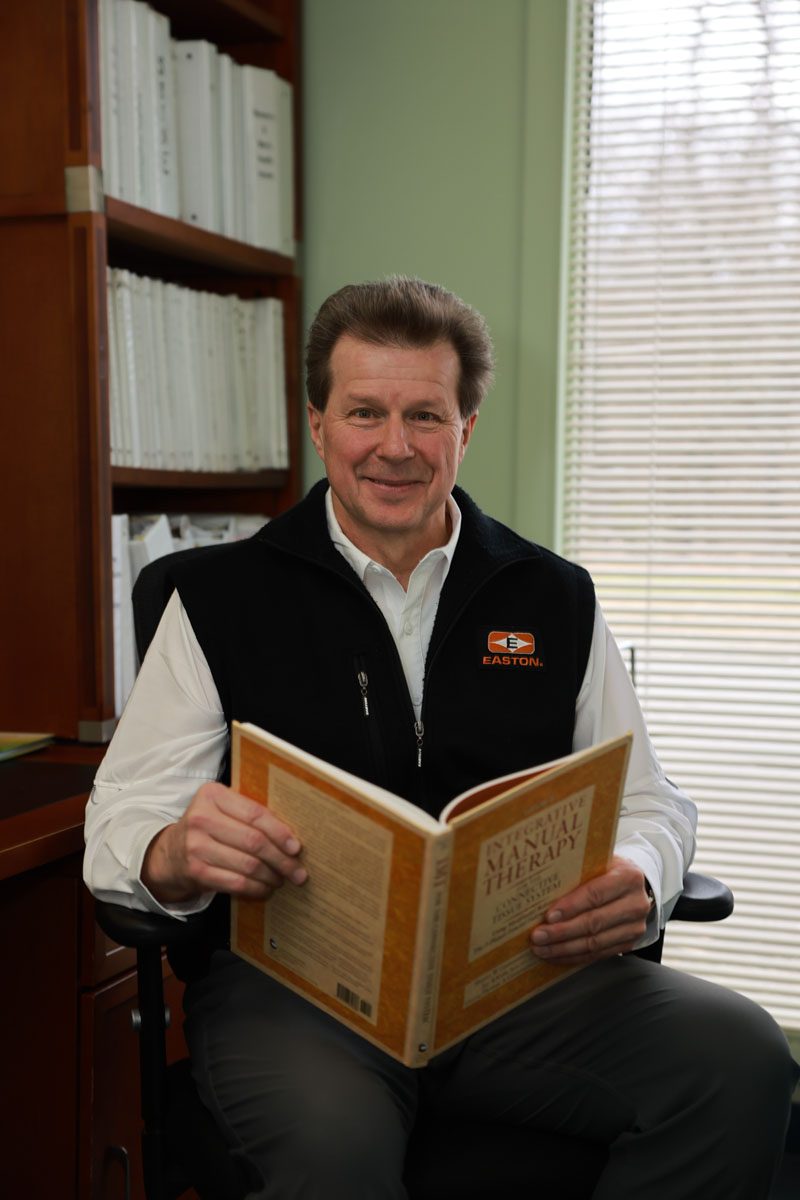
Integrative Manual Therapy is a holistic therapeutic technique that combines common physical therapy techniques with specific protocols (as practitioners call them) to reduce inflammation in the fascia, the thin fibrous tissue that basically holds your insides in place. Practitioners locate areas of inflammation and other infirmity and relieve the immediate source of it, often through connecting seemingly disconnected parts of the body, as well as helping develop lifestyle strategies to reduce and prevent its return.
Jerzy Tworek, a local practitioner, describes his approach as “mapping.” Different areas of the body can affect each other, he explains, and if he can determine which area is dominant or controlling of others, he can isolate the root source of pain or discomfort that others might not be able to see. “I use my hands, basically, to touch different locations and see which one’s affecting the other,” Tworek says. One patient compared the sensation to a dentist working on your mouth and their touch making your ear itch.
Many of Jerzy’s patients come to him with pain (both chronic and post-operative), and his goal is to guide them to a point where they can regain the level of activity that pain can make difficult. Jerzy recalls a patient who, after a single session and three days on a new diet, reduced her severe back pain remarkably, a “70 percent improvement in the inflammation.”
Complementary Medicine
Whether it’s integrative manual therapy, herbal medicine, electrotherapy, or the centuries-old practice of acupuncture, alternative medicine offers a different approach to wellness, and is one that is on the rise. Facilitating the body’s ability to heal itself, each method we’ve explored, along with others, offer patients opportunities to over-come whatever blockages exist inside the body that are causing dysfunction in the journey to healing.
If one of these treatment options has caught your eye, there are plenty of ways to learn more about it before you dive in. Talk with your primary care physician. Reach out to the many local practitioners offering the services and schedule a consultation. Couple your anecdotal research with data-driven research on each, which is so much easier to access these days. The most important thing is that, for whatever treatment you decide on, you walk in with knowledge, an open mind, and a commitment to overall wellness.
→ Swipe for Next Story
VeteranMARCH APRIL 2024
Hope for the Heroes
Matt Gordon served his nation and now serves up healing for fellow veterans
Story by Phil Newman
A raging storm brought Matt Gordon to East Tennessee. In September 2017, Hurricane Irma unleashed her fury on the Gulf Coast of Florida near Matt’s home in Naples. As residents evacuated, the Gordons—Matt, his wife, Mindy, and their two young children—fled northward. Hotels were filled through Georgia, so they kept driving until they reached Maryville, where they stayed for a month—which would become a permanent relocation.
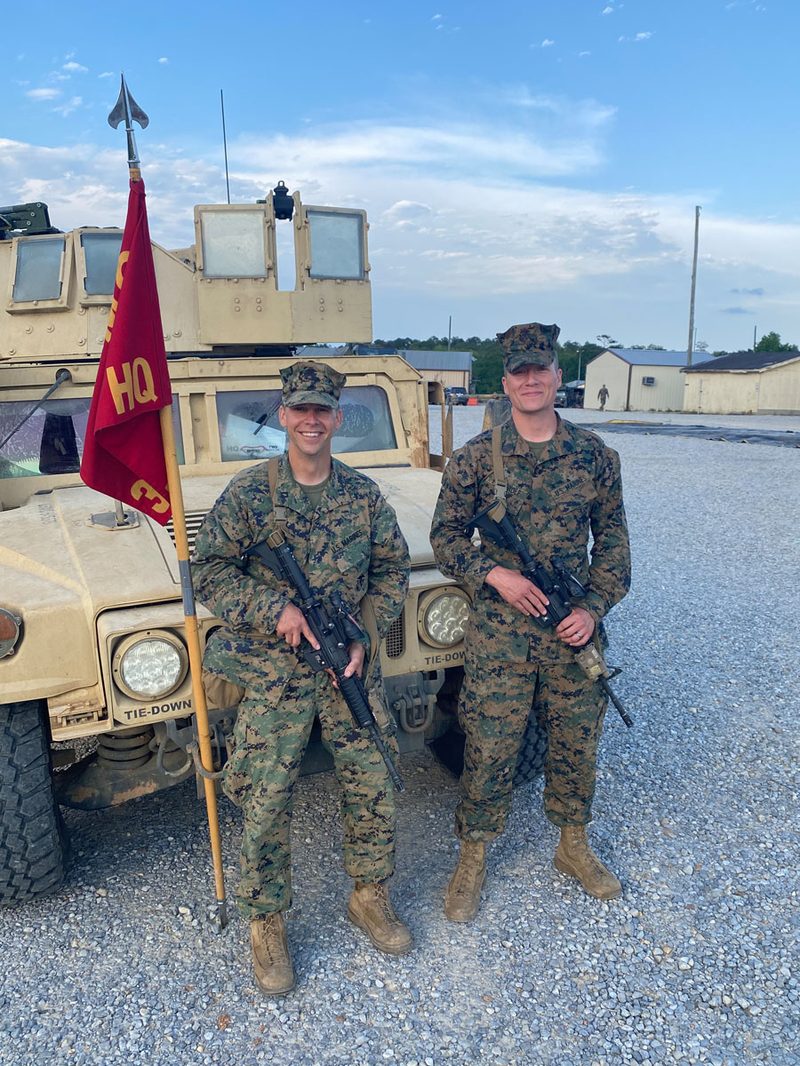
“We found a real sense of community here,” says Matt, a 14-year veteran of the U.S. Marine Corps whose years of active and reserve service (2007-21) included a tour in Afghanistan (2010-11). “We loved the homey feel and the slower pace. With kids who were about 3 and a newborn, we wanted to get back to an old-school feeling, where families walk to the park, get outside and enjoy nature. And the Knoxville area has a huge, active veteran population.”
The circumstances of the Matt’s first taste of East Tennessee are especially fitting in light of his devotion to helping veterans escape a raging storm of a different sort, the inner hurricane that wreaks havoc as they face the gale-force gusts of post-traumatic stress disorder (PTSD), depression, anxiety, and other mental health challenges resulting from their wartime service.
“So many veterans find themselves in despair, thinking of self-harm, with suicidal ideation or planning—it’s a very dark place,” Matt says. “It’s vital to be a light in the darkness for them, to talk, listen, empathize, to be there when they are at their lowest. That is a powerful and hopeful thing to do for another human being.”
Since moving to the area, Matt has worked for or alongside a number of community organizations dedicated to providing material, health, emotional, and mental support to retired military personnel. The single biggest impact he has made was in organizing a USA Patriots amputee soft-ball game at Smokies Stadium in 2022, inviting area vets, and assembling a Veterans Expo of multiple nonprofits that offer help and hope.
“My ultimate goal,” he says, “is to bring veterans together for events that include food and knowledge,and that provide opportunities to check in and see how they’re doing. Isolation is the enemy’s playground, so any opportunity we get to bring veterans out is valuable.”
Matt now works as COO of Quest Legacy, which develops coaching curriculum for youth sports. He’s aboard member for the East Tennessee-based nonprofit The Quest Movement, as well as the lead instructor for the suicide-prevention programs it offers.
‘9/11 Changed Everything’
Born on Christmas Day of 1984, Matt grew up in Wisconsin, looked up to and admired his brother who was five years older, and attended a military boarding school. The academy instilled in him a desire to honor his nation by serving in some way—a desire that only deepened in the aftermath of Tuesday, September 11, 2001.
“Certainly, 9/11 changed everything for everyone in America,” Matt reflects. A few months short of his 17th birthday, he experienced what he terms “a stark calling.”
“Being raised in the’90s, we had learned a lot about the glory days of Desert Storm, victory in Iraq, Kuwait, a lot of red, white, and blue. Because of our nation’s lack of proximity, far away from the fighting, we almost felt like we were invincible... and then we were not. When 9/11 happened, watching the destruction, buildings falling and people dying, took a toll on all of us. Personally, I knew I wanted to take action and make a tangible difference.”
After high school, Matt earned a degree from the University of Tampa in 2003, and the next year enlisted in officer candidate school (OCS) in the Marine Corps. He was trained in artillery, which encompassed heavy cannons and guided missiles.
In Afghanistan, he oversaw the use of guided munitions to combat the use of improvised explosive devices (IEDs). “We worked with our assets on the ground—the observers and long-distance reconnaissance units. They would advise us as to a location of a combatant placing an IED. We would confirm them via UAV assets [unmanned aircraft vehicles] and, once it was clear they were legitimate targets, we would take them out.”
Brothers in Arms
One of the most meaningful aspects of Matt’s touring Afghanistan was the presence of his elder brother, Gunnery Sergeant Joseph Gordon, who had joined the USMC in 1998, served three years, enrolled in college, but then—spurred on by the September 11 attacks—rejoined the Marines and been deployed to Afghanistan at the same time Matt was there.
“My brother’s team identified potential threats, observing the enemy planting IEDs, and called for strikes,” Matt says of Joseph. “That connection was special. It was absolutely an honor for me to serve with him. His commitment to the nation and his service had inspired me, and he had mentored me growing up.”
As for other memorable moments during his tour, Matt mentions the capture of Osama bin Laden in Pakistan on May 2, 2011—although he wasn’t directly involved. “We operated on the Pakistani border in southern Afghanistan, but I tell people, ‘I found out about bin Laden the same way you did: on CNN,’” he quips.
Matt also emerged with a deep appreciation for his fellow warriors. “The men and women who showed up every day committed to excellence was, and still is, incredible. Balancing wartime responsibilities while trying to preserve things at home is a challenging task regardless of age, but especially for younger marines.”
What’s more, his time in the war led Matt to the mantle that he would later take up. “It was at this time I noticed ‘cracks’ in the mental and spiritual foundation,” he recalls. “Hence why suicide prevention is a priority in my life.”
Home, But Still Battling
In a twist of irony, when Matt’s tour ended, he arrived back in the U.S. on—wait for it—September 11, 2011. “I transitioned into the Marine reserves, was appointed as a suicide-prevention instructor, and began a 10-plus-year journey of training, intervention, and counseling,” he says.
That journey included stops in Virginia, Pennsylvania, and Florida. “I was a police officer trained in crisis intervention and a reservist at the ANGLICO [4th Air Naval Gunfire Liaison Company in West Palm Beach], where I led the suicide-prevention training.”
Matt eventually served as executive officer of a reserve unit in Chattanooga. He would fly from Florida, land in Knoxville, drive to Chattanooga, and repeat. Having achieved the rank of major after serving as a battery commander, he transitioned out of the military.
Soon after he became a full-time resident of the Knoxville area in 2019, Matt, who has a background in personal finance, worked in real estate as a veterans advocate. “The VA home loan is a huge asset for veterans. For those who had trouble getting a loan for a home, I would help them with financial counseling so they could secure mortgages.”
Home ownership is a sometimes-overlooked key to financial growth and also a life-saving mental health measure for retired military personnel, he says. “There is a direct correlation between purposeful activity and the rate of self-harm and suicide. While it is stressful to own and keep up a house, we find that veterans who have that purpose and responsibility develop stronger coping skills and life habits than they would have otherwise.”
One of Matt’s tasks was also to create events for veterans, which naturally led to his growing engagement with vet-related nonprofits and initiatives—including Team Red White and Blue, Operation MRV(Meals Ready for Veterans), Hike to Remember “22,” the aforementioned softball event, and more.
In many ways, though, Matt feels as if he’s just getting started—and he would love to see others catch that spirit of service as well.
“I want to encourage people in the community: You are the right person to help. Sometimes we think we should let a mental health professional handle it, or call 911, orwait for someone more qualified todo it. You’re the person to intervene, regardless of whether you’re aveteran or not. Don’t be afraid to lean in and be there for somebody who is hurting.”
He also extends an invitation to “join our movement,” literally, The Quest Movement and its training. “If we can saturate our community with people who are equipped, empowered, and ready to bring hope—through a conversation, a hug, a show of empathy, a referral for more assistance—using the tactics we teach, then they will be able to help anybody, veterans and others. This is a truly life-changing and life-saving opportunity.”
In January, Matt spearheaded 2024’s A Hike to Remember “22” along a Knoxville greenway to and from 5.11 Tactical store in Farragut. The event draws area veterans for good food, an out-and-back hike, and much-needed fellowship with fellow vets. This year’s theme was “Carry the Burden of Others.”
Like other aspects of Matt’s journey—from the attack on America in 2001, to fighting alongside his brother in the war, to a hurricane pummeling the Florida coast in 2017—the wording of the event’s theme feels poetically fitting.
After all, Matt has dedicated his life to carrying the burden of others, to doing all he can to lighten it, and to inviting his fellow East Tennesseans into the battle with him.
→ Swipe for Next Story
FeatureMARCH APRIL 2024
Optimizing Health
The ever-increasing popularity of peptides calls for a review of their efficacy
Story by Dr. Edwin Spencer
As a scientist, I realize that one subject does not make a study. It’s not even a drop in the bucket. However, if that one subject is you, then your perspective changes.
Two years ago, I underwent a total knee replacement which happens to be the most common surgery in orthopaedics. Being a pathologically driven person, I wanted to crush the rehab and get back into the gym—and return to work as quickly as possible. For years, I have preached to my patients the importance of nutrition to maximize recovery and prevent complications. A high protein diet, supplements like branch chain amino acids, creatine, vitamins D and C were boxes that I had already checked. So, the obvious question was: is there something else that could harness the body’s own ability to heal and optimize its function? That search lead me to peptides.
Although the use of peptides has been around for decades, their use in regenerative medicine has exponentially increased in the past ten years. It is expected that FDA approval for peptides will increase by 40 percent over the next 10 years as pharmaceutical companies have now realized their value in preventive and regenerative medicine. Some examples of common peptides are oxytocin (used in labor and delivery), insulin (used to treat diabetes), and more recently semaglutide, which is being hailed as one of the greatest weight loss treatments ever. So, what is a peptide? The answer requires a little background information.
The Break Down
If science is not your thing, feel free to skip forward a few paragraphs. A peptide is simply a chain of 10 to 100 amino acids linked together in a sequence. Amino acid chains longer than that are usually called proteins, and proteins will be hundreds of amino acids chains folded up on each other. Proteins are the structural building blocks of the body, while peptides are the signaling mechanism by which cells and organs communicate with each other. Cells and organelles within each cell have receptors on them onto which the peptides can bind and regulate a particular function of that cell or organelle.
Peptides can be used to increase the function of a cell or organ to secrete a desired substance such as a hormone and as such can be more strategic in their respective action. This is much different than taking the end product such as the hormone itself. For instance, one could take GH (growth hormone) which has many desired effects on body composition, reduction in inflammatory mediators such as CRP (C reactive protein), and reduction in triglyceride levels. However, taking the end product hormone can bypass the bodies normal negative feedback mechanisms that keep those hormone levels at their normal physiologic level. In contrast, taking a peptide that mimics the signal to have your body naturally secrete more growth hormone, keeps those negative feedback loops intact and is thus safer and more tactical.
Let’s Talk Healing
I have always had a hard time accepting claims at face value. Claims such as “this product will give you more energy” or “this product will make you look younger” are used so often that they have become cliches. I’m a mechanism guy. I want to know how it works and the science behind it. So, I started my delve into peptides to see what could work for me and my patients.
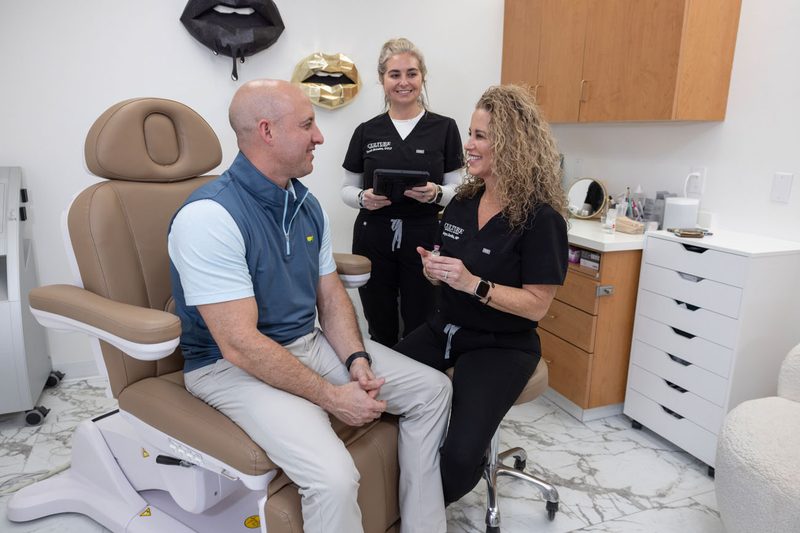
This included doing personal research, listening to podcasts, and conducting interviews with local experts including Dr. Deb Durst at Revitilyze MD and Anya Zerilla NP at Culture Aesthetics and Wellness.
One of the first peptides we discussed was BPC (body protection compound) 157. It is a 15 amino acid peptide that is very similar to one found in the stomach. It can be taken orally or injected just beneath the skin. The exact mechanisms at the signaling cascade cellular level are still being elucidated however the effects include stimulating fibroblast growth factor, (potent bone marrow stem cells that make collagenous tissue to repair wounds), a decrease in inflammatory markers, and an increase in GH receptors. Orally, it has been used to treat inflammatory bowel disease such as ulcerative colitis.
I asked Dr. Durst about the effects that she has seen with BPC 157 in her clinical practice. “We have seen amazing results in healing time in acute injuries and surgery and even pain reduction in chronic conditions,” she responded. At Culture, Zerilla said, “We have seen no adverse side effects and that the best delivery method is by injection except for GI use”. When asked about site specificity (meaning injecting into the site of injury), Dr. Durst said, “Unless the injury superficial and the needle can be directed by imaging such as with ultrasound, then simple subcutaneous injection into abdomen is effective”. Zerilla echoed the same.
Thymosin beta4 is another repair/regenerative peptide that is frequently used with BPC 157. It is a powerful wound healing peptide that has been shown to increase re-epithelialization (resurfacing of a wound) by 40 to 60 percent. It also increases collagen deposition and angiogenesis (growth of new blood vessels).
Growth Hormone & Weight Loss
As we all age, the amount of growth hormone produced by the body decreases. This results in a reduction in lean muscle mass, slower metabolism, and can have negative effects on energy and sleep. Growth hormone releasing hormone (GHRH) peptides like tesamorelin, ipamorelin, sermorelin, and CJC 1295 stimulate the anterior pituitary in the brain to secrete more growth hormone. The patient is able to realize the benefits of an increase in their own GH while the normal negative feedback loop remains intact which mitigates the possibility of the patient becoming supratherapeutic, meaning you’re over the normal physiological level and entering into where you will have side effects without getting any meaningful additional benefits.
I asked our local practitioners about their use of these GHRH peptides. “Most of my patients don’t come in asking for peptides, but rather have complaints like fatigue, loss of muscle mass, stubborn fat, sleep disturbances and recovery,” said Dr. Durst. “The use of these peptides can markedly change the way my patients feel and look and even sleep”.
My concern would be the possibility of promoting cancer by stimulating its growth. A quick review of the peptide literature came up with no data. Therefore, I went to the data on the end product, the exogenous growth hormone, and found that there are good data to show that it reduces disease and extends life, but there was no reported increase in cancer rates. Zerilla echoed that finding: “I have not seen or heard of any significant side effects or increase in cancer rates with the use of the GHRH peptides”.
Semaglutide has become a very popular weight loss peptide. It was being used in research on dementia and serendipitously patients were found to lose weight. It works by mimicking the GLP 1 (glucagon like peptide 1) receptor which, in the gut, makes you feel full and, in the brain, makes you feel satiated. It seems to work on caloric restriction but there may be other effects that are not understood.
Bringing It All Together
The source of the peptides does matter. Peptides can be made through what is called a recombinant technique or synthesized. The recombinant technique basically induces a bacterium to make the peptide which is then purified. This can be an imperfect purification process that leaves some of the bacterial products behind. These products can cause reactions in patients. A purer form is synthesizing the peptide in a machine. Regardless of the method, the facility should be FDA approved and the product third-party tested to ensure purity and sterility. Therefore, you should be careful obtaining peptides outside the U.S.
Peptide use is growing as clinicians are realizing the positive effects on repair and healing as well as on body composition and, more importantly, on disease prevention and longevity. Research is burgeoning on the use of neurotropic peptides in cognitive decline and neurodegenerative disorders such as dementia. If we shifted our focus in medicine from just treatment with medicines once a disease is encountered, to prevention from the disease actually occurring, we could potentially improve our healthspan (length of time that we are free of disease or disability) and thus our spend in healthcare dollars.
I think that is what we all want, to live better and longer. Peptides appear to offer that opportunity, but it first starts with behavior modification with exercise and nutrition. The number one life hack to improve healthspan is by far and away exercise of various forms with peptides being a subsequent adjunct.
My personal use after my knee replacement certainly made me a believer in peptides. So much so that I used them when my son had his ACL reconstructed which has optimized his recovery. As a result of this personal experience and my own research and review of the data, I encourage many of my patients to consider the use of peptides after injury or surgery in an effort to optimize their recovery. However, as I tell them, if you are considering their use, do your due diligence and research, ask questions about them, and carefully consider your options. Informed health decisions are best. Peptides could just be the key to improving recovery, optimizing health, and potentially improving longevity.
→ Swipe for Next Story
FeatureMARCH APRIL 2024
Sporting Dog Fever
No matter where you are, there is nothing like watching dogs work in the field.
Story by Nathan Sparks
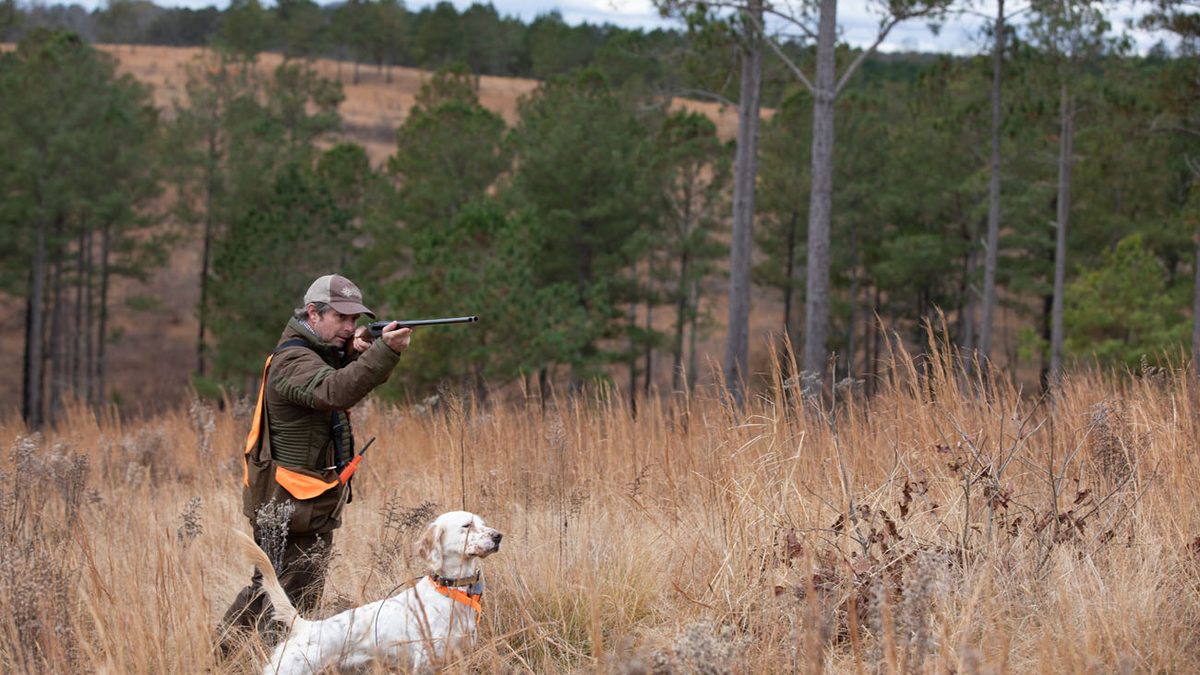
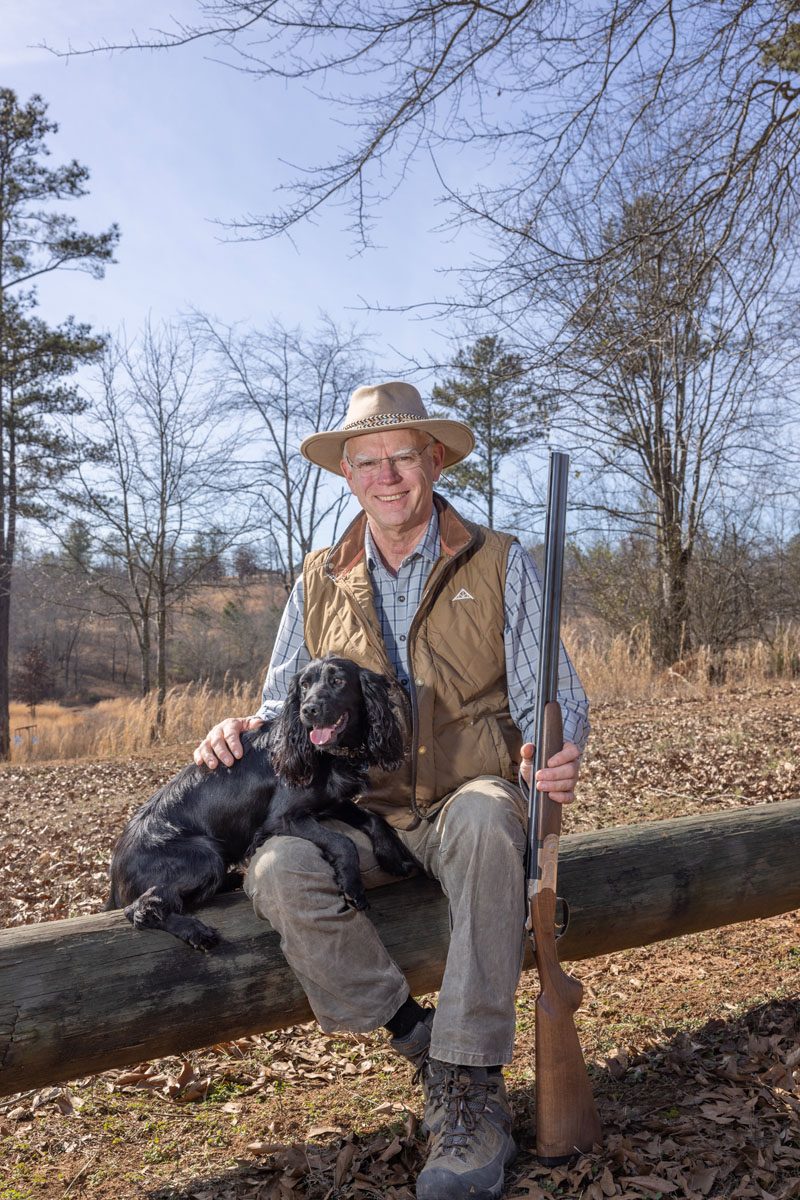
Let’s take a step back in time. It’s a brisk but pleasant day in December of 2020. I am meeting John Burrell, the owner of High Adventure Company, at the Beretta Shooting Grounds at Barnsley Resort near Adairsville, Georgia. At this point, I don’t know John all that well, but our recent trip to the headwaters of the Soque River for some trout fishing has sparked in me something I had ignored for much too long—my outdoor roots. Our initial meeting was thanks to my son Troupe wanting to go deer hunting and my friend Bruce Fox suggesting John as a resource.
From our very first conversation, I felt comfortable with John, the kind of feeling that lets you know you will be good friends. That led me to the day when I would photograph John and his beautiful English Setter Lucky for the cover of the magazine.
Watching John as he worked Lucky through the fields while we took photos took me back to my youth and the days spent with my dad quail and grouse hunting.
We had an English Pointer and a Gordon Setter, Beauregard and Bonnie. In those days there were three things I truly loved: bird hunting, fishing, and whitewater canoeing. On hunting days, Dad and I would set out early and head to the woods. Even back in those days when the ruffed grouse population was far greater than today, hunting those elusive birds required a lot of walking. We would try to find old logging roads to make our walks a little easier, and we often didn’t make it back to the truck until close to dark. Those days were magical. Sometimes when we would sit for lunch we would hear a grouse drumming on a log looking for a grub. And the adrenaline-fueled thrill of the grouse when flushed is like no other experience. Thanks Dad; those were the days.
Watching those dogs range up and down the steep hills and through the laurel thickets invigorated my soul. The cold, crisp air biting at your face, the wonder of the ice crystals that would form on the trees at times—the memories are as vivid as if they were yesterday.
I am so thankful today that I grew up during a time without cell phones and social media. As I think back on those times, I realize the importance of disconnecting from the cacophony of constant communication that overwhelms us in today’s world. A walk in the woods or the field allows you the opportunity to spend time in nature, relax, and be thankful for all that God has created.
Rekindling My Passion
Watching the interaction between my friend and his champion English Setter made me realize it had been much too long since I had a sporting dog for bird hunting. After those hunts with Dad as a young kid, the last time I had my own sporting dog by my side on a hunt had to have been my late teens. That day with John I decided it was time to get back into the world of sporting dogs.
I wanted both a flushing dog and a setter from good blood lines, so I asked John to keep a lookout for the right ones. His knowledge of the sporting world is considerable, and he knew just where to send me for the perfect dog: veterinarian and breeder Fred Moody.
Fred and his wife, Rhonda, run The Sawbriar, a hunting preserve in Allardt, Tennessee. They are well-known for the quality of their dogs. Their October 2022 litter would have within it the dog I would soon call my own, and that following January I finally met her: a cute little ball of black fur with a single small white crest on her chest.
Chota comes from a lineage of award-winning field trial champions from Britain, and my high expectations were about to be rewarded with some great performance. A big part of the fun in sporting dogs for me is the time spent training and watching the dog improve. Since I picked her up, Chota and I have spent time every day doing some kind of training. That’s where her full name, Chota Rocket, came from. One day she spotted a squirrel and it was like I shot her out of a gun-—she was rocket fast.
Chota Rocket’s First Hunt
Fast forward a full year, and Chota’s first day in the field with live birds proved to be a memorable one. It was a comfortable February morning, and we were walking again through the fields of the Beretta Shooting Grounds.
A slight breeze rustled the gold-colored broomsedge all the way to the horizon. Perfect conditions for a quail hunt.
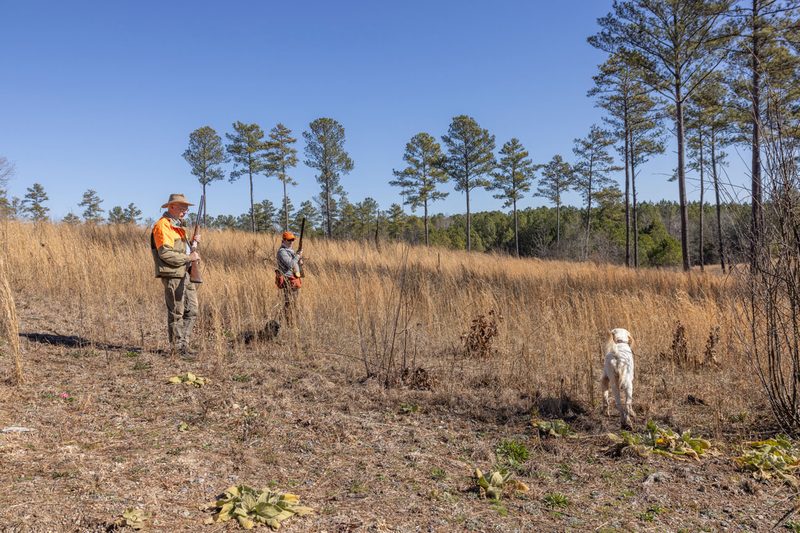
It’s appropriate that Chota’s first real hunt was with John and Lucky. The inspiration that I got watching them back in 2020 came full circle. When a dog is on point and the little flushing dog bounds into the cover, all the troubles of the world just seem to fall away. I was watching my rambunctious little Cocker Spaniel enter a new stage of her training.
Different breeds of pointing dogs all have a little bit of a different way of looking for the birds. Another of my friends Steven Farmer, one of the guides at High Adventure, has a German Shorthaired Pointer named Sweetie who often looks like she is tiptoeing as she scents out where the bird is holding. Not so with Lucky, who can cover acres at a time. For every type of style of hunting, there is a breed best suited.
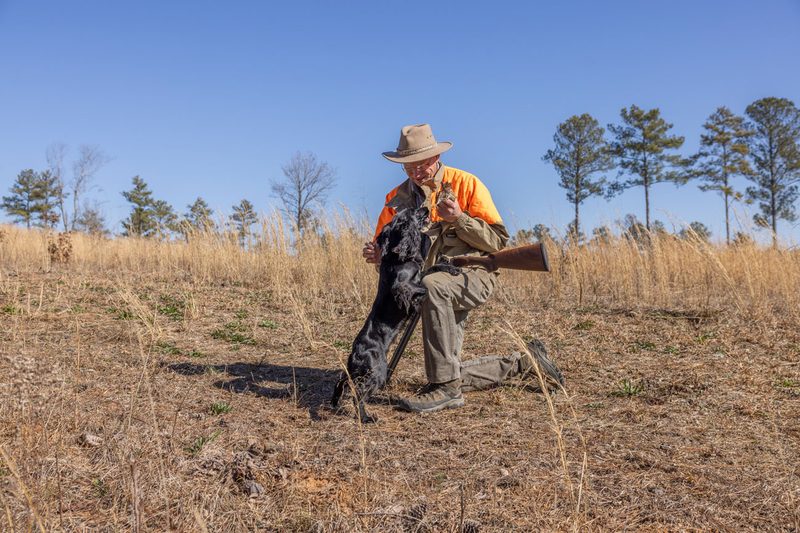
It wasn’t long before Lucky was on point, and John and I moved into position. It was Chota’s first moment of truth as we sent her in to flush the birds. Turned out to be a single, and the bird went to John’s side. I silently held my breath for a moment. Despite trying to do all the correct training, you always wonder how the dog will respond to being under actual gunfire in the field. Chota never flinched and dove straight into the brush to retrieve the downed bird. She seemed so happy as she laid the bird at my feet, and I could not have been any more proud.
We spent the rest of the day walking through the fields. Lucky would find coveys of birds, and Chota became more eager to flush as the day passed. It seemed like she got more excited with each flush. By the end of the day, she was one happy, exhausted little dog. It made me want to take the rest of the month off and just go hunting every day with her.
How to Get Involved
In the process of creating and publishing these stories I am often met with an abundance of curiosity from readers about how to get into hunting or fishing. If you don’t happen to have a friend that is an avid sportsman then the key to having a great first experience is to employ a competent guide service. I was lucky to find John and The High Adventure Company, and I do highly recommend all of the locations and services they offer. I have had nothing but top-notch experiences. High Adventure manages the shooting grounds at Barnsley, and the hunting and accommodations are first rate all the way.
A great way to polish up your skills for an upcoming hunting trip is a visit to a skeet and trap range. They have everything you need from guns and ammo to competent instructors. Best to learn how to properly handle a shotgun before making your way into the field for a hunt. Iron Mountain Sporting Clays near Bass Pro in Kodak has an awesome clays course, or if you are on the west end, try the Oak Ridge Sportsmen’s Association.
If hunting or shooting is not your thing, consider exploring the forest trails in our area. The folks at River Sports Outfitters or Little River Outfitters can be a wealth of info on where you can get off the beaten path with your dog.
Finally, if you are interested in becoming a sporting dog owner, I highly recommend spending a few days in the field with competent guides and see how the different breeds actually do their job. It can be a lot of fun investigating to see exactly what kind of dog best suits your personality and needs. Who knows, you may just find your next hunting partner. After all, the best come with four paws.
→ Swipe for Next Story
JurisprudenceMARCH APRIL 2024
The Barber of Sevier
A tribute to the man who reminded me that we’re all just people doing our best—and the one who’s kept me looking fresh for decades
Story by Gary Wade
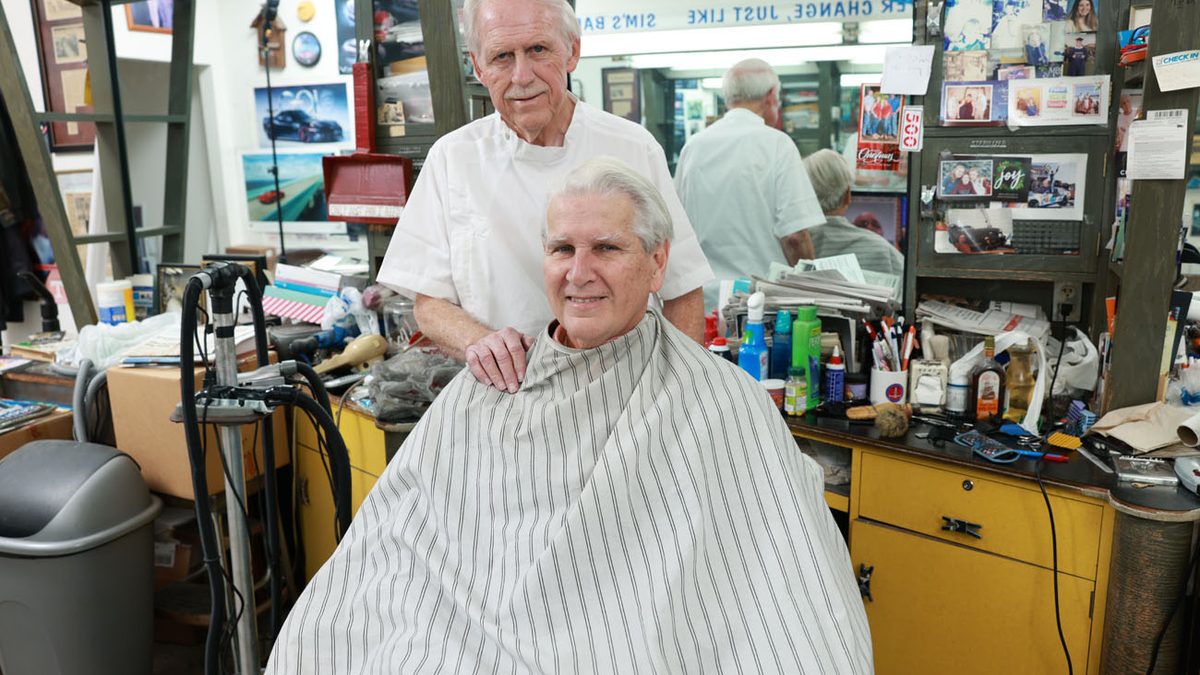
Conley Sims, born in 1908, opened a barber shop on Bruce Street in downtown Sevierville almost 100 years ago. When a shave and a haircut cost only “two bits,” my father and, later, his four sons became regular customers. Because Mr. Sims became so proficient in his craft, taking an average of only three minutes for a regular cut, Sims’ Barber Shop as a business enjoyed relative prosperity – even during the Great Depression. Conley’s son, Johnny, graduated from high school in 1959 and chose to follow in his father’s footsteps. After a stint at Tri-Cities Barber School in Knoxville and the grant of state licensure, Johnny, at age 19, took the second chair in the shop founded by his father. By then, a “regular” haircut cost 75 cents, but the more popular “flattop” in those days priced at $1. No appointment necessary, first come, first serve. Wait your turn. Open on Saturday.
Impressed by the modern techniques of the new man in the shop and often a bit troubled by what he perceived as Conley’s rushed cuts, my father switched loyalties from the father to the son. So, from 1959 until his death in 2008 at the age of 101, excepting only a few occasions when another “clipped his ears,” no one other than Johnny Sims cut the hair of Dwight Wade, Sr. Other than the seven years I spent at the University of Tennessee, the same can be said for yours truly.
For all their years together, Conley and Johnny Sims opened their shop at 4:30 a.m. and stayed on the job until their last customer had been sheared of his excess hair. Even at age 85 and until his death in 1994, Conley would come in for an hour or two each day to serve any of the waiting customers in a hurry to leave. Those who were more concerned with their appearance waited for Johnny, who has always been quite serious about the quality of his work.
Since his father’s death, Johnny–never John–has carried on the tradition of Sevierville’s oldest continuing business. He still opens at 4:30 a.m. Monday, Tuesday, Thursday, Friday, and Saturday. He closes on Wednesday and, of course, Sunday, and rarely misses a home football game of our Vol heroes. He has watched many of his longtime customers first “turn gray and then turn loose.” The conversation in his shop is light, usually spiced with good humor and often laced with a critique of the Lady Vols and the Tennessee football and men’s basketball teams. His walls are adorned with photos and advertisements of our local politicians, almost all of whom know to pay their respects to Sevier County’s longest serving barber.
With that background, I can begin to get to the point of this tale, but first a Howard Baker story. When our United States senator-to-be was a young lawyer practicing his trade in tiny Huntsville in Scott County, one of the old-timers in the community burst into his office late one morning with a complaint. The man explained that he had tried to represent himself in a trial before a justice of the peace and had lost. Livid with his experience, he told Howard that he needed a lawyer to appeal to a higher court. When Howard asked what had happened, the old farmer, vexed by his unfortunate encounter, shouted, “They swore lies on me…and proved some of them!”
In that vein, what I write may not be entirely accurate, but I have told my Johnny Sims story so often that some of it must be true. So, here it is. Let’s go back to 2012, the year I was to begin to serve a two-year term as Chief Justice of the Tennessee Supreme Court. As a hometown boy, I chose to be sworn in at the Sevier County Courthouse in Sevierville at 10 a.m. on Saturday, September 1. Two days earlier, an edition of the Mountain Press, our local equivalent of the New York Times, had a front-page, above-the fold column announcing that I, being the first ever from the county to serve on the state supreme court, would be sworn in as Tennessee’s 29th Chief Justice. A pretty big deal in these parts, I thought. Local boy done good.
I needed a haircut for the festivities and, of course, went to Sims’ Barber Shop, which is located less than a block from the courthouse. As I waited for my turn in his chair, I noticed that Johnny had the edition of our local paper prominently situated atop his various reading materials. So, I fully expected him to mention my good fortune when I took my seat in his barber chair. After five or ten minutes passed, he had made no mention of the news story. Perplexed, I finally asked, “Johnny, did you see the Mountain Press story?”
“Yes,” he answered, “I read it when I got to work this morning.” Again, he made no mention of the Saturday event.
“Did you see that I’m going to be sworn in as chief justice tomorrow at our courthouse? It’s the state top judicial office!”
“Sure,” he answered with a smile. “Me and one of my customers was laughing about that just yesterday!”
Dissatisfied with his apparent lack of enthusiasm for my promotion, I pressed on. “It’s at 10 o’clock tomorrow morning at the courthouse,” I explained. “You know, you have seen me grow up here in town and cutting my hair all these years, any chance you might be able to attend? It’s outside and open to the public.”
Unimpressed, as he continued to work on me with his clippers, “Probably not,” he deadpanned. “Saturday is always a busy day for me at the shop.”
Sure enough, Johnny did not come, but he had unknowingly provided me with all the speech material I needed. On my big day, I took the microphone and began my remarks with the conversation I had with my barber the morning before. I saw a lot of smiles and heard chuckles all around.
For almost 30 years, I traveled the state to hold court, mostly in Knoxville, Nashville, and Jackson, but other smaller towns as well. Lawyers, staff, and courtroom onlookers were always overly courteous to me as a judge – out of respect for the office and not necessarily for the man in the black robe. “All rise” — from the court officer are always the opening words when I or any of my colleagues in the profession take the bench. In or out of court and wherever we are, each judge is always being addressed as “your honor” – pretty cool, huh? I must plead guilty to having had an unwarranted feeling of self-importance from time to time. So, thanks, Johnny, for reminding me that I am just one of the guys here at home. Great preparation for retirement!
As a postscript, when called upon to speak during my time as chief justice, I almost always got a laugh when I told a version of the Johnny Sims story. Afterward, some in the audience would inevitably ask about Johnny and whether, after over 60 years in the business, he was still cutting hair. “Yes,” I always answered, “He is still going strong and is more and more a local celebrity.”
By the way, Johnny, easily the most popular barber in Sevier County, has doubled his price for a haircut in the last few years — and never offered me a discount or a marketing fee. With apologies for the title to Pierre Beaumarchais, the author of the 1775 French comedy The Barber of Seville, and Rossini’s 1816 opera featuring Figaro the barber, Johnny Sims is The Barber of Sevier.
→ Swipe for Next Story
Non-ProfitMARCH APRIL 2024
The Change Makers
East Tennesseans are making waves through medical missions both here and abroad
Story by Carolyn Evans
East Tennessee is full of volunteers and heroes. Some work 20 minutes away at a hyper-local nonprofit where people come to them for services. Others board planes to travel across the country and the world to the communities most in need of assistance. All around us is a cast of hundreds who aren’t out for all they can get—they’re out for all they can give.
A Mission to Serve
East Tennessee Orthopedic surgeon Dr. Paul Naylor, founder ofKnoxville Medical Mission Foundation, has been to Guatemala 24 times since the year 2000.
“We’re a surgical mission,” he says. “In the late 90s, a few of us were sitting around and I said, ‘We should go somewhere.’ There happened to be a nurse at Parkwest from Guatemala, so we decided to go there.”
They contacted a Catholic church that had had an orphanage associated with it and talked to the priest. Soon the team made its way to South America to perform medical procedures.
Their first operating rooms were old rooms in the church, but they needed better facilities. Over the 24 years that Knoxville Medical Mission Foundation has been going, things have changed.
“The church has a hospital associated with it,” Naylor says. “The rooms are no longer rudimentary. We have the best operating rooms in the country. We can operate on club feet, do artificial knees and shoulders, hip surgery. We do a lot of adult foot repairs and general surgery cases like hernias and gall bladders, and urological cases like kidney stones and hysterectomies.”
Naylor’s team headed back to South America this past January. The plan? A whopping 145 surgeries in 12 days.
“Our team will include 54 people, most from Knoxville,” Naylor said before the trip. “I have to recruit the surgeons. This year we will have 11, about a third from outside the Knoxville area.”
The group has a fundraiser to defray travel costs and gets about 90 percent of all the supplies, such as artificial knees and shoulders rods and plates, donated through grants. Locally, DeRoyal gives Knoxville Medical Mission Foundation packets containing all the things they need for the operating rooms.
Naylor served at Tennessee Orthopedic Clinic at Parkwest Hospital for 33 years and is now the chief medical officer for a medical supply company. He also has a Ph.D. in biochemistry and gives talks all over the country about avoiding infections during surgery.
Corners of the World
As a contractor, Mark Scarbrough withWater’s Edge Medical Ministryroutinely coordinates building projects—but coordinating medical missions is the job that satisfies him the most.
“I’m not a doctor,” he says. “I’m a Christ follower and deeply spiritual.” The idea for the organization, in particular the logo, came to him back in 2014, and he’s since focused on ministry that “would bring honor and glory to God.”
The organization supports medical, dental, optical, and sports development in overseas communities in need, including some in Africa. When not leading missions, you can find Scarbrough arranging for the donation of supplies, equipment, and volunteers to support the overseas missions. Almost all of the volunteers are from right here in East Tennessee.
“We’ve taken doctors and nurses and men, women and college-aged people from here to Africa,” he says. “We’ve connected with different doctors from different countries and our volunteers work in those countries under doctors’ supervision.”
Scarbrough even coordinates efforts with other organizations, such as Air Mobile Ministries which creates backpack size water purifiers, to maximize impact.
Water’s Edge has even brought a patient back here to help. In 2004, the group helped bring a patient from Zambia here for surgery. The patient later returned for two additional surgeries over the course of several years.
Faithful Servants
Providing medical, dental and mental healthcare locally isInterFaith Health Center.“When our patients leave, we really expect them to leave with hope,” says Melissa Knight, executive director. “We want to empower our patients to thrive, not just survive.”
Knight says InterFaith looks out for the people who fall through the cracks. The mission is to provide comprehensive, affordable medical, dental and mental healthcare to the uninsured by offering care on a sliding scale. The center doesn’t bill for any insurance, but is 100 percent for the uninsured and emphasizes comprehensive, affordable care.
“We are not a walk-in clinic,” Knight says. “We have a screening tool on our website. Because we want to be people’s medical home, our application is several pages long. If people qualify, we encourage them to walk in and fill out an application or fill it out online. You can also call to see if you qualify.”
Like the traditional primary care practice or pediatrician, InterFaith treats all types of chronic and acute illnesses and also offers tests such as pap smears, mammograms, cholesterol checks, blood and urine tests, and most types of X-rays on site. They have a full-time staff for mental health services, the bulk of which is the hour-long one-on-one session. The dental side sees almost as many patients as the medical side, providing crowns, fillings, partials, cleanings, extractions, dentures on a case-by-case basis, and more.
“I feel so blessed that God called me to come here 30 years ago,” Knight says. “I feel blessed to be able to give a hand up to people who are working so hard to take care of themselves and their families. A huge percentage of our patient population is from the service industry. They’re the people who take care of you. They’re the ones who will serve you dinner tonight or change the oil in your car or cut your hair. We have always been committed to expanding our services. We’ve made it our mission for the next year or two years to provide more services for our patients.”
Teaching Compassion
Medical residents are often looking to serve and hone their craft. And alongside them are physicians doing double-duty: attending to patients and passing along their knowledge.
ForDr. Stephanie CrossandDr. Paige Johnson, both OB-GYNs who work at UT’s Graduate School of Medicine, it has been meaningful work to serve alongside their students in international mission trips.
“There are a lot of residency programs that offer electives…but we thought, what if we could offer [mission work] to each of our residents when they’re in their third or fourth year and are surgically adept at that point?” Cross says they pondered.
The program started with Dr. Robert Elder about a decade ago, but since then so many other physicians in the department have continued the important work with Health Talents International.
“These patients wait for years for this,” Cross says. “For a resident and for me, it’s great surgical exposure, but I think the more important thing for residents is…it’s a great grounding experience for them.”
Typically, a physician brings one resident with them in the program, Johnson says, those hours counting toward the resident’s graduation.
“What you have available is somewhat limited. You definitely have to rely on your diagnostic skills,” she says. “One of the things that is beautiful about it is just the way different medical professionals interact to make the best decisions we can for the patients that we serve.”
Remote Area Medical
Headquartered in Rockford,Remote Area Medical(RAM) was launched by the late Stan Brock in 1985 when he was living among the Wapishana Indians in Guyana, South America. Brock witnessed simple illnesses to more advanced ones take over whole tribes. He vowed to find an answer.
“I realized that there were people like the Wapishanas that didn’t have access to healthcare or couldn’t afford it,” Brock toldCityviewback in 2017. “The purpose of the organization was to go into third world countries…with aid.” Six years later, he brought the mission close to home. Brock passed away in 2018, but his legacy continued.
As of this past September, RAM has operated nearly 1,300 expeditions, as they call them‚ in 30 countries, says Chris Cannon, marketing manager at the organization. “We operate on a community host group model and people reach out to us to host a clinic,” he says. “It’s about an 18-month process to find volunteers and donors in an area.”
“We travel to the country and set up for the weekend providing medical, dental and vision care in different places…Every patient gets medical care and we ask patients to pick between vision and dental, as those are typically our most requested services,” Cannon says. “We do eye exams and take trucks to grind the lenses, so you can walk out with glasses free of charge. For dental, we offer cleanings, fillings, extractions and X-rays. We can do a limited number of dentures, depending on where we are. They are free to the patients. At the Knoxville clinic, we open on Friday mornings. We typically offer dentures and we usually have people in the parking lot on Wednesday evening to be sure they get a spot.”
RAM continues to grow. Last year, they did more than 80 clinics, planning even more this year with about 60 staff. Since 1985, more than 196,000 volunteers have come together to put on clinics.
Securing One Another
“My little boy walked up to me one day on the football field and said, ‘Dad, feel my chest,’” says Mark Slaughter. Next thing he knew, his 11-year-old son was in heart surgery. “Luke flatlined and I made a deal with God. I promised God I’d do something with my life that had purpose. At the time, I was working with a medical device manufacturer. I quit my job within 90 days and thought I’d be in full-time mission work or in a children’s hospital.”
But a radical idea redirected Slaughter’s path. He had already been working in the industry, but thought what if instead of keeping the profit every time he sold equipment, he donated it to medical missions? He went for it, launching On-Belay Medical.
Slaughter named the company for the hiking method of being connected by ropes. He based the company on the Biblical principle of giving and chose the goal of funding free medical care.
“In Luke 6:38 it says very clearly ‘Give and it shall be given to you,’ he says. “It doesn’t say ‘hope so.’ I had this crazy idea to quit my job and start a company with no money and no customers with the business plan of giving away all our profit.”
In 2014, Slaughter donated a significant portion of the company’s ownership to the National Christian Foundation, creating a powerful “monthly giving machine” to support nonprofits around the world. And in 2016, he launched an international medical missions team committed to the advancement of spine care in Uganda.
Caring for Global Neighbors
About 10 years ago, East Tennessee Children’s Hospital otolaryngologistDr. John Littlewas searching for an opportunity to help and found one in Guatemala with Health Talents International. He has made six or seven trips since then to do an intensive surgery week. He has even taken his own children with him on the trips.
Health Talents, which has been in Guatemala for 50 years, has a group of about 60 surgeons, nursing students, physician’s assistant students, and academic nurses, primarily from Tennessee, Alabama and Arkansas.
“We all go down and do our specialties, but the continuity of the mission has been amazing. They typically have a week each month for surgery clinics. It’s divided up through the year for different specialties. They have patients ready. We get there Sunday midday and drive three hours. We throw stuff in the room and we start seeing patients before dinner…We’ll do 70-90 surgeries. It’s really a very well-done program.”
Procedures include hernia repairs, thyroidectomies and removing masses. Little says cooking in Guatemala is done in the home with no ventilation, so people breathe in wood smoke, resulting in a lot of nasal polyps.
“We typically pray with them before they go back for their surgery. Once my son asked if he could pray, and I said, ‘Certainly.’ He said the Lord’s Prayer in Spanish. It was a great father-son moment. It was one of those times that makes your heart smile. My children have all gone into healthcare, not because of me, but because of Guatemala. They all just got the bug. It’s easy for that to happen because you can see how meaningful it is to those people.”
Little recently became involved with another mission in Ghana, helping facilitate an opportunity to deliver anesthesia machines from Knoxville.
Serving Needs
“East Knox Free Medical Clinicis a stopgap to medical care as we see patients only on non-holiday Monday afternoons,” says Janet L. Purkey, M.D. “We provide care for the uninsured. Our patients receive most medications and lab testing at no charge to them.”
The clinic operates within Magnolia Avenue Methodist Church where volunteer health providers, many of whom are retired nurses, routinely see people with hypertension and diabetes, but do their best to address whatever concern is presented, Purkey says.
“We’re able to pay for the routine medications and lab because of generous donations from donors in our community. It’s a miracle, from my viewpoint.”
Working for almost two years before launching in 2013, the board of directors who founded East Knox Free Medical Clinic patterned it after similar organizations in Oak Ridge and Hilton Head.
“We offer free medical care. It’s all volunteer from our physicians, nurses, social service folk, and student volunteers,” Purkey says.
Retired doctors like Dale Betterton came running after Covid. His wife Dorothy Davison, family nurse practitioner, came, too. She serves now as clinic manager. Even retired and active physicians from out of area, like Dr. Sharon Smith, came to help. Alongside them are medical students, mostly from UTK but also from elsewhere, honing their skills while serving in the process.
“Being at (clinic) on a Monday afternoon is one of the most fulfilling parts of my practice of medicine,” Purkey says. “It is an amazing place to be.”
→ Swipe for Next Story
InsightsMARCH APRIL 2024
The Death of Tradition
Story by Robert Pryor, Sr.
I always thought I was a compassionate progressive. Turns out, I’m a traditionalist. Excuse me, make that a compassionate traditionalist. The older I get, the larger my rearview mirror. Now it’s larger than my windshield.
Of course, I respect the need to sometimes make changes in the way we live our lives. But I deplore those drastic changes that ignore the common sense that is all wrapped up in established rules and practices. Hope you don’t mind if I vent a little about things that are messin’ with my world.
First, there are these crazy changes in college sports. We all know they have nothing to do with the integrity of sports, fairness, or improving competition or academics. After the Orange Bowl last year, Georgia Coach Kirby Smart went on a rant, saying, “College football has got to decide what they want.” I have news for Coach Smart. It has already decided what it wants – money.
College athletics have turned into pro sports right before our eyes— largely with our support or, at least, with our acquiescence. I hate the realignment of the college conferences, the 12-team football playoff, NIL, and the “transfer portal.” I feel that each is destroying college athletics and, especially, football. If I want to watch spoiled millionaires knock each other around for the financial benefit of crybaby billionaire owners, I can always watch the Cowboys play the Washington Commanders.
I’ve been a college sports fan all my life, and I’m especially loyal to all UT sports teams. I’ve never particularly enjoyed pro sports because they are, well, pro sports and not amateur college competitions. Now, they’re becoming all the same. I prefer to cheer for my team because it is faster, stronger, more skilled, and better coached—not because I have the best team money can buy. The NCAA can no longer insist that its purpose is to support and protect “student athletes” from professionalism. It has failed miserably on that promise and will soon request members to approve direct pay by universities to some student athletes. Just think about it, players will only have to show up on campus in the off season to pick up their paychecks. I’m happy that the needs of the players have finally been recognized, because both male and female student athletes work hard trying to get an education while at the same time practicing long hours to bring honor and prestige to their college or university.
But wouldn’t a reasonable stipend have been sufficient as part of their scholarship package? Does anybody honestly believe that a 17-year-old kid deserves an annual income in the millions because he can throw a ball for his school? Reportedly, the University of Colorado football team had two players who collectively earned over $7 million last year playing for a losing team. Hardly the way to teach team unity. Our Pride of the Southland Band has a tuba player who daily practices his instrument and performs marching drills, but he doesn’t receive hundreds of thousands of dollars in NIL money. Now, if you think that’s fair, try carrying a giant tuba around in August heat learning how to spell V-O-L-S on the field.
Now don’t try to tell me that all student athletes are actually earning NIL money by making TV ads for Mercedes Benz, cookie companies, or lawyers. They are not. When was the last time you saw a third-string guard on TV earning NIL money by endorsing a real estate firm? NIL is a sham and nothing but a device for universities to buy players or entice them to transfer schools. It’s no different from the days when coaches used to fly over a recruit’s home and drop a bale of hay stuffed with hundred-dollar bills in his backyard. I fear that big money is corrupting not only our colleges and universities but also the athletes and million-dollar teams they play on.
Poor planning by NCAA leadership and the greed of conferences and universities have created pure chaos in college sports, and the big NIL winners so far appear to be car dealerships and the lawyers who will try to straighten it all out. In my view, high school juniors should be selecting prom tuxedos and picking up their dates and not flying around the country on private jets with opportunistic businessmen carrying the promise of $2 million-per-year contracts. While the law may require fair compensation for use of an athlete’s name, image, and likeness, those opportunistic businessmen with access to booster money and private jets have turned my favorite pastime into an out-of-control lottery with few, if any, rules. The universities have fallen for this NIL scheme hook, line, and sinker.
The traditionalist in me also rejects the concept of free agency in college sports under the guise of the “transfer portal.” What it does is teach student athletes that their word is no longer their bond. They can sign to accept a scholarship from the University of Florida as a running back for NIL value of perhaps $500,000, and after one season switch to the University of Georgia for perhaps an extra $250,000 and play against Florida next year. It makes my orange blood boil when a UT player leaves to play for Kentucky because “business is business.”
By the way, do we really believe that Oklahoma and Texas belong in the SEC? First, neither is in the Southeast. They have turned their backs on their divisional conference and are coming to the SEC for TV contract money. Frankly, I always liked it when Georgia Tech was in the SEC, but teams from the Southwest do not belong. The Big Ten now stretches from New Jersey to California for the financial benefit of athletic departments and certainly not in the best interest of fans or athletes. Some poor parents will have to travel from LA to New Brunswick, New Jersey, just to see their daughter play Rutgers in volleyball.
As if the ruination of college sports was not enough, there are so many other things that drive me crazy these days. For example, would somebody please tell me the name of the person who thought it was a good idea to decorate hotel beds with 15 or more pillows? I’d like to challenge him to a pillow fight. It takes me 30 minutes every night to get the decorative pillows onto the floor and 30 minutes more to put them back in the morning. That’s one hour of productive time lost per day.
Locks on bathroom doors should be against the law. Someone put a lock code on the men’s room in the building where my law office is located. The first time I tried to gain entry an emergency situation was almost created. I know a guy in Nashville who was faced with a real emergency when he rushed into a Starbucks only to be faced with a lock code. He left dejected and in extremis. Outside, a homeless man sitting on the sidewalk saved the day. “Hey, buddy, try 9991.”
Change comes hard to a traditionalist like me. I believe these things fall under the heading of “if it ain’t broke, don’t fix it,” and if I sound like a cranky old man, it’s only because people keep moving my cheese.
Don’t it always seem to go That you don’t know what you’ve got ‘Til it’s gone They paved paradise And put up a parking lot. Big Yellow Taxi, Joni Mitchell
→ Swipe for Next Story
FeatureMARCH APRIL 2024
The Trouble with Tennessee Health Insurance
Story by Oana Harrison
Health care and health insurance in the U.S. have had their share of challenges, and Tennessee is no exception. Although most agree that health care should be accessible and affordable, the reality is different: health insurance cost is often prohibitive both at individual and at business levels. For small businesses particularly, high and increasing plan costs and the administrative burden of managing plans have been major pain points.
We asked Tennessee small business owners about the challenges they face when deciding whether to offer employee health insurance, their main frustrations and concerns with current options, and changes they’d like to see.
But first, let’s look at Tennessee’s state of health and health insurance.
Tennessee is in the top ten least healthy states and was ranked 44th in the country for overall health in America’s Health Rankings 2022 Annual Report. Health challenges include mental distress (a third of adults experiencing depression), drug deaths (up 79% within two years), smoking, lack of physical activity, and increased poverty.
While constantly pegged for being an unhealthy state, Tennessee’s healthcare spending per capita ranks 38th (USA Facts) and sits below the U.S. average ($10,908 in Tennessee vs $11,910 U.S. average in 2020), and its percentage of uninsured residents remains high (9.98% in Tennessee vs 8.63% U.S. average in 2021).
Employer-provided coverage and Medicaid/TennCare are the main sources of health insurance coverage for Tennesseans. Sadly, today Tennesseans with job-based coverage pay much higher premiums and deductibles than in previous years. Between 2010 and 2018, premiums increased by 26% for individual plans and 38% for family plans, while deductibles increased by 82% and 65% respectively. According to ValuePenguin, a subsidiary of LendingTree®, Silver plans cost an average of $25 more per month in 2024 (a 5% increase), while Gold plans had the biggest increase, of $55 more per month (a 9% increase).
Should Small Businesses Offer Health Insurance?
Small businesses offering health insurance can better attract and retain qualified talent in an increasingly competitive market. Healthy employees experience less stress, miss fewer workdays, and perform better. Employee health benefits can qualify business owners for significant tax deductions. Additionally, health benefits can be used to offset salary costs, and save money on the owners’ health benefits by being a part of a group plan.
On the flip side, health insurance is costly, and the prices have gone up for premiums, deductibles, and overall average group coverage. Also, according to a 2023 study by KFF, a research-based nonprofit organization, small businesses pay a higher average premium for single coverage than large firms, leading to only half of all small firms (with fewer than 200 employees) offering some health benefits in 2023.
Choosing the best insurance plan for both employees and the business is difficult and time-consuming, which is why most business owners will pay a broker. Also, the owners need to reassess plans every year and keep a close eye on unexpected changes.
A Word from Healthcare Providers
For healthcare providers who are also small business owners, the issue of insurance hits home hard. They are committed to best serving their patients while also taking care of their employees.
Raye-Anne Ayo, MD and owner of Family Health Center, PLLC has seen the deductibles and premiums go up, and the level of coverage go down. The increase in insurance cost is also impacting the business from a different angle:
“I actually lost work hours from an employee because she couldn’t afford the health insurance through me, and in order to be covered by her husband’s job, she had to work part time. This is especially hard in light of the healthcare workers shortage.” Dr. Ayo points out that some procedures and tests are more difficult to administer to patients who need them either because of the approval process or because of lack of coverage. For example, if a patient comes in and needs a CAT scan, many insurance providers will take 72 hours to respond if they’ll cover it or not. “So, the options are to do it, pay out of pocket and hope that insurance covers it later, go to the emergency room, or wait while you’re in pain and hope things don’t get worse. This is unacceptable!” says Dr. Ayo. Another problem is when health insurance is not covering basic procedures, such as a combined flu, COVID, and RSV test. “The test costs about $85 and the insurance is reimbursing me between $56 and $72, so I’m losing money on every single test that I run,” says Dr. Ayo. “I lose money by offering good patient care.”
Dr. Craig Hennie, DC, owner of Homberg Chiropractic & Wellness, faces some of the same challenges. “Expenses have gone up, while reimbursements have not; this is the big issue. The other big issue is that you have insurance companies dictating care instead of doctors. They use various diagnosis codes and algorithms that don’t seem to be based on realistic scenarios. It is frustrating as a care provider to be told ‘no’ when trying to offer things like an MRI or some other diagnostic testing. In many cases, the insurance company requires me to see someone several times before approving an MRI, which makes the patient mad and delays proper treatment.” Dr. Hennie points out that patient care is personalized: every patient is different, and some are more complicated cases than others, especially when they have multiple underlaying conditions. It is common practice for insurance companies to evaluate treatment based on codes and peer review. “I’m the one with years of experience and I know my patients,” Dr. Hennie says. When insurance companies decide not to cover recommended treatments and require additional visits, it drives up cost and denies good patient care.
For Dr. Kristopher Goddard, owner of The Osteopathic Center, insurance for patients has always been a challenge. Although his services provide regenerative healthcare, many procedures are not covered by insurance. Rather than fighting with obsolete rules and insurance codes for very little reward, he simply did away with filing for insurance. “This was a hard decision, but the red tape had become unbearable,” says Dr. Goddard. In addition, just like other businesses, he saw the rates go up and the reimbursements go down. He witnessed many of his peers, small healthcare providers in particular, being pushed out of working with health insurance. It became a game of negotiation rather than a standard coverage for similar procedures. “Your reimbursement depends on how well you negotiate. Two companies that offer the same services will have very different rates just because of how they negotiated. And that’s not right,” concludes Dr. Goddard.
Small Business Owners on Health Insurance
“I never insured my employees, simply because it was too expensive! Nor did I have insurance anywhere I worked before owning my business. Insurance is ridiculous! Now and then,” confesses Bobbie Dunn, owner of Alpha Omega Hair Design salon in downtown Knoxville. This is a challenge facing many small business owners in Tennessee. Like her, others would love to offer their employees health benefits but simply can’t afford it.
At Aubrey’s restaurants, covering insurance has always been a priority for owner Randy Burleson. “We have 20 or so restaurants with different types of workers, so it gets complicated,” says Craig Krause, director of communications for Aubrey’s. “There’s a lot of back-and-forth negotiation for the best plans each year, and there are many factors to consider when choosing, beyond the price: who has the best coverage, the best prescription reimbursement, out-of-pocket amounts, deductibles. Insurance is hard to negotiate, so we go through a broker called Trinity Advisors. Insurance is a yearly challenge; you expect that insurance rates will go up, but by how much is always a surprise. Will it be 6%, 10% or more? Do we need to look for another insurance provider again? It’s a terrible system.” Another consideration when choosing insurance providers is which doctors and how many doctors are in network. At Aubrey’s, the preferred companies have been Blue Cross Blue Shield or United Healthcare, since they cover the most doctors, and employees can see the same doctors they know and trust, rather than have to switch.
“The real kicker is that we pay a lot of money for a system that basically punishes us for using it,” says Krause. “The rate is based on how healthy your employees are, so if we have a couple of people who, let’s say, have a heart attack or some other serious health issue one year, our insurance rates go up for everyone. We’re supposed to help our people but then we all get punished for trying to be healthy. The insurance system is unfortunately more about the money than anything else,” concludes Krause.
For Lisa Sorensen, co-owner of Bliss Home and Bliss & Tori Mason Shoes, the issue of health insurance is top of mind. As a small business owner, she, too, had to deal with the same challenges that other owners had when choosing the best plan for the employees that the company can afford. When she was diagnosed with cancer, she felt guilty for negatively affecting everyone else’s insurance rate. She shares some of her firsthand experience with the insurance system. “My oncologist told me that I could stay on the medicine I was taking for another five years, or we could do a couple of tests to see if I can get off the medication earlier, as it does have some side effects and of course it costs money. I needed two tests to determine the chance of reoccurrence for the tumors. I had met my deductible since I already had a couple of surgeries that year. Unfortunately, the insurance I had didn’t cover the tests, and I couldn’t pay out of pocket, so I had to stay on the medicine. This doesn’t make any sense to me; the system needs to be reformed.”
Is there a solution?
When a system is not meeting the needs of individuals and organizations, change is needed. But change is difficult and slow to happen. While the powers that be debate and ponder, some healthcare providers and small business owners found creative ways to best serve their patients and employees.
Dr. Hennie and Dr. Goddard joined healthcare providers’ coalitions to get better rates. Dr. Hennie’s practice is a part of the Tennessee Chiropractic Association which teamed up with the Tennessee Dental Board for better group rates and more plan options. Dr. Goddard’s practice was a part of the Summit Medical Group alongside some 300 other providers. This allowed them to negotiate better insurance rates as a group rather than as individual practitioners.
Aubrey’s supplemented insurance with other health benefits, such as telehealth and text care for prescription refills and non-major ailments; avoiding a doctor’s visit avoids an increase in insurance. For temporary workers or younger employees, offering prescription reimbursement or a fixed amount for healthcare allowance proved to be beneficial.
Other companies offer cash equivalent incentives for employees who engage in and track wellness activities via fitness apps.
Overall, both local healthcare providers and small business owners agree: the current health insurance system is not serving the best interests of either individuals or organizations. The system needs a thorough review and change so that people come first, doctors can dictate proper care, and everyone can afford to be healthy.
→ Swipe for Next Story
Top DocsMARCH APRIL 2024
Top Docs 2024
Story by Cityview
We approach every new year knowing that our first great undertaking will be our Top Doctors list. This list is our way of recognizing medical professionals in our community who are working tirelessly in service of that community, and recognizing the people who do that for us is something we are always excited to do. It is a chance for them to get the credit they deserve, and it also helps our community know who they can turn to when they are in need of a good doctor.
Of course, the people who know this profession best are the professionals. So every year, we call upon the doctors in our community to choose among themselves the ones who most deserve to be recognized that year. Often we find ourselves with some familiar faces in our lists, doctors who have time and time again proved themselves to be trusted experts in their respective fields. But just as often we find ourselves welcoming new faces, doctors from the next generation stepping up to stand beside their mentors. We are proud to publish all of them in this listing. Newcomers and veterans to the list alike have devoted themselves to making our community a healthier place to live, and as the esteem of their colleagues show, the have succeeded.
As always, we publish this list without rankings in the categories. Every name you see listed is one of the top in their field, and you can be confident that any one of them will take good care of you.
We would like to thank all the doctors who took the time to recognize their peers for this year’s Top Doctors list. We understand how much weight you already carry doing the work that you do, and that you found the time to help us make this list speaks volumes, both of you and the people you voted for. We could not have done this without you, and we are honored to publish your choices for 2024’s Top Doctors.
If pollen makes you miserable and seafood gives you hives, turn to allergy and immunology doctors for relief.
Leslie Baker, MD
Greater Knoxville ENT Associates
Jane Conley, MD
The Allergy Asthma and Sinus Center, PC
Richard DePersio
Greater Knoxville ENT Associates
Donald Ellenburg, MD
Allergy & Asthma Affiliates
Timothy Frazier, MD
Allergy & Asthma Affiliates
William Horton, MD
Greater Knoxville ENT Associates
Marek Pienkowski, MD
Pienkowski Allergy Clinic
Tidence “Ty” Prince, MD
The Allergy Asthma and Sinus Center, PC
Jeffrey Schlactus, MD
The Allergy Asthma and Sinus Center, PC
Andrew Singer, MD
Allergy & Asthma Affiliates
Michael Springer, MD
The Allergy Asthma and Sinus Center, PC
Joseph Wisniewski, MD
The Allergy Asthma and Sinus Center, PC
Anesthesiology
Count backwards from 10… Anesthesiology deals with caring for patients before, during and after surgery, as well as in intensive care and emergency medicine.
Daniel Bustamante, MD
University Anesthesiologists
Jack Chavez, MD
University Anesthesiologists
Gordon Collins, MD
American Anesthesiology of TN
Craig Combs, MD
University Anesthesiologists
Brian Conroy, MD
American Anesthesiology of TN
Michael Flynn, MD
University Anesthesiologists
Benjamin Harper, MD
University Anesthesiologists
Patrick McFarland, MD
University Anesthesiologists
Samuel Mcilrath, MD
American Anesthesiology of TN
James Miller, MD
University Anesthesiologists
Jeffery Ollis, MD
American Anesthesiology of TN
Jeffrey Queen, MD
ETCH-Children’s Anesthesiologists
Joseph Simpson, MD
University Anesthesiologists
Cannon Turner, MD
American Anesthesiology of TN
Brian Wetherington, MD
Blount Memorial Physician Group
Cardiology
Cardiology deals with the disorders of the heart, including congenital heart defects, coronary artery disease, heart failure, and electrophysiology.
John Acker, MD
University Cardiology, PC
Raj Baljepally, MD
University Cardiology, PC
Stuart Bresee, MD
University Cardiology, PC
James Cox, MD
University Cardiology, PC
Jerry Crook, MD
University Cardiology, PC
Lee Dilworth, MD
Knoxville Heart Group
Malcom Foster, MD
Turkey Creek Medical Center
Jeffrey Hirsh, MD
University Cardiology, PC
David Huntsinger, MD
University Cardiology, PC
Jeffrey Johnson, MD
University Cardiology, PC
Joseph Liu, MD
University Cardiology, PC
Ayaz Rahman, MD
Cardiology Associates of East TN
Benjamin Shepple, MD
University Cardiology, PC
Charles Treasure, MD
Tennova Heart
Carmelo Venero, MD
University Cardiology, PC
Nicholas Xenopoulos, MD
Cardiology Associates of East TN
Cardiology, Electrophysiology
Electrophysiologists focus on the electrical system of the heart. They study and treat irregular heart rhythms with medicine, a pacemaker, cardiac ablation or surgery.
Michael Bailey, MD
University of TN Medical Center
James Cox, MD
University of TN Medical Center
Jeffrey Hirsh, MD
University Cardiology, PC
William Mahlow, MD
University of TN Medical Center
Hitesh Mehta, MD
Knoxville Heart Group
Cardiology, Interventional
An interventional cardiologist treats heart and blood vessel conditions using nonsurgical, catheter-based procedures and imaging techniques.
Thomas Ayres, MD
Knoxville Heart Group
Raj Baljepally, MD
University Cardiology, PC
Stuart Bresee, MD
University Cardiology, PC
Malcom Foster, MD
Tennova Heart
Barry Michelson, MD
Tennova Heart
Sara Negrotto, MD
Cardiology Associates of East Tennessee
Tjuan Overly, MD
University Cardiology, PC
Ayaz Rahman, MD
Cardiology Associates of East Tennessee
Joshua Todd, MD
Knoxville Heart Group
Venero Carmelo, MD
University Cardiology, PC
David Wood, MD
Knoxville Heart Group
Nicholas Xenopoulos, MD
Cardiology Associates of East TN
Cardiovascular Disease
A cardiovascular disease specialist focuses on diseases of the heart and blood vessels and manages conditions such as heart attacks and abnormal heart rhythms.
Neil Barry IV, DO
Tennova Heart
Lee Dilworth, MD
Knoxville Heart Group
Malcolm Foster, MD
Turkey Creek Medical Center
David Huntsinger, MD
UT Medical Center
Jeffrey Johnson, MD
UT Medical Center
Kyle McCoy, MD
Tennova Heart
Ravi Mehta, MD
Turkey Creek Medical Center
Benjamin Shepple, MD
University Cardiology, PC
Charles Treasure, MD
Tennova Heart
Critical Care
Doctor needed, stat! Critical care docs deal with seriously or critically ill patients with conditions that may be life-threatening.
Paul Branca, MD
University Pulmonary & Critical Care
John Callison, MD
University Pulmonary & Critical Care
Jesse Doers, MD
Statcare Pulmonary Consultants
Tina Dudney, MD
University Pulmonary & Critical Care
Jared Kravitz, MD
University Pulmonary & Critical Care
Scott Luchsinger, MD
Statcare Pulmonary Consultants
Michael McCormack, MD
University Pulmonary & Critical Care
James Pharaoh, MD
Statcare Pulmonary Consultants
Elise Schriver, MD
University Pulmonary & Critical Care
James Shamiyeh, MD
University Pulmonary & Critical Care
Francisco Soto, MD
University Pulmonary & Critical Care
Arseniy Tsapenko, MD
University Pulmonary & Critical Care
Eric Weaver, MD
Statcare Pulmonary Consultants
Dentistry
Although primarily associated with teeth, dentistry includes other aspects of the head and face complex, including muscular, lymphatic, nervous, vascular, and anatomical structures.
Jonathan Bradshaw, DDS
Heritage Family Dentistry
Dr. Steven Brock, DDS
Dental Images
John Coulter, DDS
Coulter Family Dentistry
Robert Kelso, DDS
Robert M. Kelso Family & Cosmetic Dentistry
Steven LoCascio, DDS
East TN Prosthodontics
Chase Nieri, DDS
Dental Images
G. Drew Osborn, DDS
Foothills Pediatric Dentistry, PC
James Pickering, DDS
Pickering & Allen
James Williams, DDS
Turkey Creek Dental
Olcie Wilson, DDS
University General Dentists
Andrew Young, DDS
Knoxville Dental Center
Dermatology
Turn to a dermatologist with conditions involving the skin, hair, and nails, including acne, eczema, psoriasis, and skin cancer, among others.
Elizabeth Anderson, MD
Knoxville Institute of Dermatology
Lawrence Bushkill, MD
Knoxville Dermatology Group
Matthew Doppelt, MD
Southeastern Dermatology
Elizabeth Ergen, MD
Dermatology Associates of Knoxville
Carley Fowler, MD
Knoxville Center for Dermatology and Plastic Surgery
Kimberly Grande, MD
Skin Wellness Center
Robert Griffith, MD
Griffith Dermatology
Matthew Hanggi, MD
Knoxville Dermatology Group
Katherine Kerchner, MD
Dermatology Associates of Oak Ridge
Edward Primka, MD
Dermatology Associates of Knoxville
Cynthia Kang-Rotondo, MD
Greater Knoxville Dermatology
Meredith Overholt, MD
Skin Wellness Center
Quyn Rahman, MD
Knoxville Institute of Dermatology
Emergency Medicine
Got a problem you need help with NOW? Emergency medicine is concerned with the care of illnesses or injuries requiring immediate medical attention.
Michael De Boer, MD
TeamHealth Roane
Frederick Ergen, MD
Fort Loudon Medical Center
Leonard Lamsen, MD
University of TN Medical Center
Patrick O’Brien, MD
Southeastern Emergency Physicians LLC
Joseph Peeden, MD
East TN Childrens Hospital
Fred Wenger, DO
TeamHealth Southeastern
Jeffrey Zurosky, MD
Parkwest Medical Center
Endocrinology
Endocrinology deals with the endocrine system, its diseases, and hormones. Conditions like diabetes, thyroid disease, growth issues and infertility are treated by endocrinologists.
Thomas Doty, MD
Endocrinology Consultants of East TN
William Law, MD
Endocrinology Consultants of East TN
Daniel McCammon, MD
Endocrinology Consultants of East TN
Gregory Moffitt, MD
Endocrinology Consultants of East TN
Casey Page, MD
Endocrinology Consultants of East TN
Amit Vora, MD
Endocrinology Consultants of East TN
John Williams, MD
Endocrinology Consultants of East TN
Family Practice
Unlike other specialties, family practice physicians are qualified to treat most ailments and provide health care for people of all ages.
Raye-Anne Ayo, MD
Family Health Center
Amy Barger Stevens, MD
University Family Physicians
Rachel Bowman, MD
Tennova Primary Care Karns
Luke Chesney, MD
Summit Medical Group at Deane Hill & Northshore
Daniel Cox, MD
Lakemoor Family Physicians
Shelly Durbin, MD
Family Physicians West
Brad Flaming, MD
Emory Family Practice
Anthony Florian, MD
Rocky Hill Family Physicians
Amy Forsee, MD
Rocky Hill Family Physicians
Julie Jeter, MD
University Family Physicians
Rickey Manning, MD
Halls Family Physicians
Randy Pardue, MD
Trinity Medical Group
Amy Rosine, MD
Fountain City Family Physicians
Rodney Sturgeon, MD
Halls Family Physicians
Gastroenterology
Gastroenterology is the branch of medicine focused on the digestive system and its disorders. Colon cancer screening by a gastroenterologist is important for fighting cancer.
Youhanna Al-Tawil, MD
GI for Kids, PLLC
Jeffrey Brown, MD
Knoxville Gastrointestinal Associates
Sarkis Chobanian, MD
Gastrointestinal Associates
Meade Edmunds, MD
Edmunds Gastroenterology
William Ergen, MD
Gastrointestinal Associates
Sangeeta Gulati, MD
University Gastroenterology
John Haydek, MD
Gastrointestinal Associates
Mark Jackson, MD
Knoxville Gastrointestinal Specialists
John Moore, MD
Gastrointestinal Associates
Maria Newman
Gastrointestinal Associates
Carlos Rollhauser, MD
University Gastroenterology
Steedman Sarbah, MD
Knoxville Digestive Disease Consultants
Ramanujan Samavedy, MD
University Gastroenterology
Thomas Young, MD
University Gastroenterology
Genetics
Genetics is concerned with the study of genes, genetic variation, and heredity in organisms. It can help explain why some diseases run in families.
Ilse Anderson, MD
University Genetics Center
J. Austin Hamm, MD
East TN Children’s Hospital Genetic Center
Geriatric Medicine
Geriatric medicine focuses on health care of elderly people. It aims to promote health by preventing and treating diseases and disabilities in older adults.
John Carroll, MD
UT Hospice and Palliative Care
Monica Crane, MD
Genesis Neuroscience Clinic
Cynthia Pearman, MD
UT Hospice and Palliative Care
Karen Rhea, MD
Internal Medicine Associates
Gynecologic Oncology
Gynecologic oncologists treat women’s cancers and complex benign gynecologic diseases, including cervical cancer, endometriosis, fibroids and ovarian cancer.
Jonathan Boone, MD
University Gynecologic Oncology
Larry Kilgore, MD
University Gynocology Oncology
Kenneth Cofer, MD
Thompson Oncology Group
Kristopher Kimball, MD
University Gynocology Oncology
Gynecology
Gynecology deals with the functions and diseases specific to women and girls, especially those affecting the reproductive system.
Tammy Baker, MD
Tammy Baker, MD
Allison Eaton, MD
University Womens Specialists
Christine Gale, MD
East TN Children’s Hospital Pediatric and Adolescent Gynecology
Holly Noonan Talley, MD
Generations OB/GYN
Hematology/Oncology
Someone is likely to be referred to a hematologist-oncologist because an abnormality was detected during a blood test.
David Aljadir, MD
University Cancer Specialists
Hesamm Gharavi, MD
Tennessee Cancer Specialists, PLLC
Wahid Hanna, MD
Hanna Cancer Associates
Daniel Ibach, MD
Tennessee Cancer Specialists, PLLC
Ross Kerns, MD
Tennessee Cancer Specialists, PLLC
Richard Lee, MD
Tennessee Cancer Specialists, PLLC
Mitchell Martin, MD
Tennessee Cancer Specialists, PLLC
James Mosley III, MD
University Interventional Radiology
Timothy Panella, MD
University Cancer Specialists
Hospice / Palliative Care
Hospice and palliative care focuses on symptom management, relief of suffering and end-of-life care.
Carla Gillespie, MD
Statcare Hospitalist Group
Cynthia Pearman, MD
UT Hospice and Palliative Care
Adam Tyson, MD
UT Hospice and Palliative Care
John Vannoy, MD
Internal Medicine Associates
Hospitalist
A hospitalist practices in a hospital and works to treat patients with a variety of illnesses and injuries.
Christie Carringer, MD
UT Hospitalists
Michael Carringer, MD
UT Hospitalists
Deborah Franklin, DO
UT Hospitalists
Benjamin Helms, DO
UT Hospitalists
Jano Janoyan, DO
UT Hospitalists
Jason Kennedy, MD
UT Hospitalists
Ryan Kerr, MD
UT Hospitalists
Claude LaCharite, MD
UT Hospitalists
Mary Nelson, MD
UT Hospitalists
Nathan Smith, MD
UT Hospitalists
Benjamin Verzi, MD
UT Hospitalists
Hospitalist, Internal Medicine
An internal medicine hospitalist sees patients for the duration of a hospital stay, as opposed to in outpatient settings.
Michael Carringer, MD
UT Hospitalists
Kimberly Morris, MD
UT Hospitalists
Janet Purkey, MD
UT Hospitalists
Walter Zibas, MD
Statcare Hospitalist Group
Hyperbaric Medicine
Hyperbaric medicine is a treatment used to speed up healing of carbon monoxide poisoning, gangrene, stubborn wounds, and infections in which tissues are starved for oxygen.
Lee Carder, MD
University Wound Care and Hyperbaric Center
Vaughan Hall, MD
Mobile Hyperbaric Centers, LLC
Lindsey Harrell, MD
Mobile Hyperbaric Centers, LLC
Ryan Unger, MD
University Wound Care and Hyperbaric Center
Infectious Disease
Infectious disease docs have been busy over the last year. They are trained to make the right diagnoses for dozens of infectious diseases and organize treatment plans.
John Adams, MD
Knoxville Infectious Disease Consultants
Ernest Kemp, MD
Knoxville Infectious Disease Consultants
Jeffrey King, MD
University Infectious Disease
Lori Patterson, MD
East TN Childrens Hospital
Russell Smith, MD
University Infectious Disease
Hiediliza Tan, MD
Blount Memorial Hospital
Internal Medicine
Internal medicine deals with the prevention, diagnosis, and treatment of internal diseases. Internists, as they’re also known, generally treat adults.
Robert Alley, MD
Internal Medicine Associates
Amy Bentley, MD
Internal Medicine Associates–Bentley & Hall
Jeffrey Boruff, MD
Internal Medicine West
Larry Brakebill, MD
Internal Medicine Associates
Glen Hall, MD
Internal Medicine Associates
Rocio Huet, MD
University Internal Medicine
James Hurst, MD
Summit Medical
M. Douglas Leahy, MD
Internal Medicine Associates–Leahy & Allan
Kimberly Morris, MD
University of TN Medical Center
Jennifer Piel, MD
Family Physicians West
Nathaniel Piel, MD
Faculty Internal Medicine
Janet Purkey, MD
University of TN Medical Center
Katie Tipton, MD
Trinity Medical Associates
Maternal & Fetal Medicine
Maternal–fetal medicine, also known as perinatology, focuses on the health concerns of the mother and fetus prior to, during, and shortly after pregnancy.
Kimberly Fortner, MD
High Risk Obstetrical Consultants, PLLC
Mark Hennessy, MD
High Risk Obstetrical Consultants, PLLC
Bobby Howard, MD
High Risk Obstetrical Consultants, PLLC
Cecil “Tripp” Nelson III, MD
High Risk Obstetrical Consultants, PLLC
Callie Reeder, MD
High Risk Obstetrical Consultants, PLLC
Lynlee Wolfe, MD
High Risk Obstetrical Consultants, PLLC
Neonatology
When babies are born ill or prematurely, a neonatologist is likely to oversee care in a neonatal intensive care unit.
John Buchheit, MD
Knoxville Neonatal Associates-Pediatrix
Tara Burnette, MD
Regional Neonatal Associates
Mark Gaylord, MD
Regional Neonatal Associates
Malinda Harris, MD
Knoxville Neonatal Associates-Pediatrix
Keri Lattimore, MD
Regional Neonatal Associates
John Meadows, MD
Regional Neonatal Associates
William Henry Wooldridge, MD
Knoxville Neonatal Associates
Nephrology
Kidney function and disease is the focus of nephrology. It stretches from dealing with diet and medication to kidney replacement.
Kendra Hendon, MD
Knoxville Kidney Center, PLLC
Ritu Khanna, MD
University Nephrology
Stephen Kiss, MD
East Tennessee Nephrology
Ross Nesbit, MD
University Nephrology
Edward Newman, MD
Knoxville Kidney Center
James Ogrodowski, MD
Renal Medical Associates
Denise Rivers, DO
University Nephrology
Ashutosh Singh, MD
Nephrocare Tennessee PLLC
Urath Suresh, MD
University Nephrology
Neurology
Neurology deals with disorders of the nervous system. Neurologists treat diseases of the brain and spinal cord, including epilepsy, stroke and Parkinson’s disease.
Michelle Brewer, MD
Knoxville Neurology Clinic
Alexander Hartmann, MD
University Neurology
Steven Rider, MD
University Neurology Cole Neuroscience Center
Randall Trudell, MD
University Neurology Cole Neuroscience Center
Brian Wiseman, MD
University Neurohospitalists
Obstetrics/Gynecology
Obstetrics and gynecology deals with both pregnancy and childbirth and the health of the female reproductive system. It’s commonly known as OB-GYN.
Leonard Brabson, MD
Tennova Women’s Health Specialists
Lisa Buckingham, MD
University of TN Medical Center
Stephanie Cross, MD
University Women’s Specialists
Kimberly Fortner, MD
High Risk Obstetrical Consultants
Laura Ellen Moffat, MD
Fort Sanders OB/GYN Group
Periclis Roussis, MD
Fort Sanders Perinatal Center
Andwylynn Sances, MD
OB/GYN Associates of Oak Ridge
Erin Saunders, MD
Fort Sanders Obstetrical & Gynecological Group, PC
Walter Schoutko, MD
University Women’s Specialists
Jeanette Toney, MD
Tennova Women’s Health Specialists
Jaclyn Van Nes, MD
University Women’s Specialists
Shenika Welch-Charles, MD
University of TN Medical Center
Nikki Zite, MD
University Women’s Specialists
Ophthalmology
Ophthalmology deals with the diagnosis and treatment of eye disorders. Ophthalmologists also can perform surgery on the eyes.
Nicholas Anderson, MD
Southeast Retina
Andrew Anzeljc, MD
Baptist Eye Surgeons
John Dawson, MD
East Tennessee Eye Surgeons, PC
Paul Froula, MD
University Eye Specialists
Herbert Glatt, MD
University Eye Specialists
Joseph Googe, MD
Southeastern Retina Associates–Weisgarber Office
David Harris, MD
University Eye Specialists
J. Frank Murchison, MD
Baptist Eye Surgeons
James Rouse, MD
University Eye Specialists
R. Keith Shular, MD
Southeast Retina
Otolaryngology
Otolaryngology is a subspecialty that deals with the surgical and medical management of conditions of the head and neck.
Leslie Baker, MD
Greater Knoxville ENT Associates
Elise Denneny, MD
Greater Knox ENT Associates, PC
Richard DePersio, MD
Greater Knoxville ENT Associates
William Horton, MD
Greater Knox ENT Associates, PC
John Little, MD
Children’s Ear, Nose & Throat Specialists, PLLC
Clyde Mathison, MD
Farragut ENT & Allergy
Mark Overholt, MD
Ear, Nose & Throat Consultants of East TN, PC
Nicholas Panella, MD
Ear, Nose & Throat Consultants of East TN, PC
Christopher Rathfoot, MD
Greater Knox ENT Associates, PC
R. Mark Ray, MD
Children’s Ear, Nose & Throat Specialists, PLLC
Allan Rosenbaum, MD
Greater Knoxville ENT
Pa in Medicine
A pain medicine specialist treats pain caused by disease, disorder, or trauma. They often see patients with pain in the back, knee, head, hip, and neck.
Jason Buehler, MD
University Anesthesiologists
James Choo, MD
Pain Consultants of East TN, PLLC
Donald E. Jones, MD
Pain Medicine of the South
Elmer Pinzon, MD
University Spine & Sport
Matthew Vance, MD
University Anesthesiologists
Stephanie Vanterpool, MD
University Anesthesiologists
Pathology
Pathology studies the causes and effects of disease or injury by examining bodies and body tissues and performing lab tests.
Frank Beuerlein, MD
Innovative Pathology Services
Lisa Duncan, MD
University Pathologists, PC
Michael Dyer, MD
Innovative Pathology Services
Alan Grindstaff, MD
University Pathologists, PC
Ariana Citabria Holley, MD
Innovative Pathology Services, PLLC
Elizabeth Hubbard, MD
University Pathologists
William Konomos, MD
Innovative Pathology Services, PLLC
Richard Sances II, MD
Innovative Pathology Services, PLLC
Russell Tipton, MD
Innovative Pathology Services, PLLC
Stuart Van Meter, MD
University Pathologists, PC
Laurentia Nodit, MD
University Pathologists, PC
Jeremy Vincent, MD
Innovative Patholgy Services
Pediatric Cardiology
Pediatric cardiologists diagnose and treat heart problems in children and work with pediatric surgeons to determine the best interventions.
Yvonne Bremer, MD
East TN Pediatric Cardiology
Jeffory Jennings, MD
ETCH–Knoxville Pediatric Cardiology
Michael Liske, MD
East TN Pediatric Cardiology, PC
Sumeet Sharma, MD
Knoxville Pediatric Cardiology
Pediatric / Critical Care
Pediatric critical care specialists generally diagnose and treat children who have an unstable, life-threatening condition.
Kevin Brinkmann, MD
ETCH–Children’s Pediatric Intensivists
Frankie Crain-Ruf, MD
ETCH–Children’s Pediatric Intensivists
Emily Martin, MD
ETCH–Children’s Pediatric Intensivists
Pediatric Dentistry
Pediatric dentists are dedicated to the oral health of children from infancy through the teen years.
Elise Evans, MD
Bearden Pediatric Dentistry
Darryl Phillips, MD
Children’s Dentistry of Knoxville
Jessica Phillips, MD
East TN Pediatric Dentistry
Pediatric Dermatology
Pediatric dermatologists treat skin, hair, and nail problems in babies to young adults, including acne, eczema, psoriasis, and vitiligo.
Edward Primka, MD
Dermatology Associates of Knoxville, PC
Pediatric Emergency Medicine
Pediatric emergency medicine is the care of children’s illnesses or injuries requiring immediate medical attention.
If your child has problems with growth, puberty, diabetes, or other disorders related to the hormones and the glands that produce them, a pediatric endocrinologist may treat your child.
Carmen Tapiador, MD
ETCH–Pediatric Endocrinology
Elizabeth Wirthwein, MD
ETCH–Pediatric Endocrinology
Pediatric Gastroenterology
If your child has a digestive system, liver, or nutritional problem, a pediatric gastroenterologist has the expertise to treat your child.
Youhanna Al-Tawil
GI for Kids, PLLC
David DeVoid, MD
GI for Kids, PLLC
Chad Thornhill, MD
GI for Kids, PLLC
Pediatric Hematology / Oncology
If your child or teen has a blood disease or cancer, a pediatric hematologist/oncologist will likely evaluate and treat him.
John Corns, DO
ETCH–Pediatric Hematology/Oncology
Jennifer Hamm, MD
ETCH-Pediatric Hematology/Oncology
Shahid Malik, MD
ETCH–Pediatric Hematology/Oncology
Susan Spiller, MD
ETCH–Pediatric Hematology/Oncology
Pediatric Hospitalists
Pediatric hospitalists are pediatricians who work in hospitals caring for children in many hospital areas.
Julia Arana, MD
ETCH–Children’s Pediatric Group–Inpatient Service
Michael Blake, MD
East TN Childrens Hospital
Shannon Cohen, MD
ETCH–Children’s Pediatric Group–Inpatient Service
Kristin Farr, MD
ETCH–Children’s Pediatric Group–Inpatient Service
Priya Gyani, MD
ETCH–Child Neurology Services
Joni Oberlin, MD
East TN Childrens Hospital
Deann Holbrook, MD
ETCH–Children’s Pediatric Group–Inpatient Service
Jeanann Pardue, MD
ETCH–Children’s Pediatric Group–Inpatient Service
Amit Patel, MD
ETCH–Children’s Pediatric Group–Inpatient Service
Kristen Sheets, MD
ETCH–Children’s Pediatric Group–Inpatient Service
Pediatric Infectious Disease
If your child has a persistent disease caused by an infectious agent, a pediatric infectious disease specialist can help your pediatrician diagnose and treat your child.
Pediatric neurosurgeons treat issues in a child’s nervous system as well as head and spinal deformities. Issues they address include spina bifida, skull deformities, and birthmarks.
Karsten Gammeltoft, MD
ETCH–Child Neurology Services
Anna Kosentka, MD
ETCH–Child Neurology Services
Jennifer Savage, MD
Neurosurgical Associates PC
Jessica Sheah, MD
ETCH–Child Neurology Services
Pediatric Ophthalmology
Pediatric ophthalmologists diagnose, treat, and manage children’s eye problems, as well as prescribe eyeglasses and contact lenses.
Gary Gitschlag, MD
Knoxville Pediatric Opthamology
Chris O’Brien, MD
Bright Eye Consultants
Allyson Schmitt, MD
Knoxville Pediatric Opthamology
Pediatric Orthopedics
Pediatric orthopedics focuses on children’s musculoskeletal problems including limb and spine deformities, gait abnormalities and bone and joint infections.
John Crawford, MD
Knoxville Orthopaedic Clinic
Curtis Gaylord, MD
Knoxville Orthopaedic Clinic
Cameron Sears, MD
Knoxville Orthopaedic Clinic
Pediatric Otolaryngology
A pediatric otolaryngologist cares for children with conditions of the ear, nose and throat, including those related to breathing, swallowing and speech.
Michael J. Belmont, MD
Children’s Ear, Nose & Throat Specialists, PLLC
John Little, MD
Children’s Ear, Nose & Throat Specialists, PLLC
Joe Graves, MD
ETCH–Pediatrics ENT Services
R. Mark Ray, MD
Children’s Ear, Nose & Throat Specialists, PLLC
Allan Rosenbaum, MD
Greater Knoxville ENT
Pediatric Psychiatry
Pediatric psychiatrists specialize in the diagnosis and treatment of disorders of thinking, feeling and/or behavior affecting children, adolescents, and their families.
Deborah Christiansen, MD
ETCH- Developmental-Behavioral Pediatrics
John Kupfner, MD
Peninsula Outpatient Center
Lee Naramore, MD
Parkway Psychiatric Service
Dovile Paulauskas, MD
Behavioral Medicine Institute
John Robertson, MD
Center for Family Psychiatry
Caryn Stoller, MD
Northshore Group
Pediatric Pulmonology
Pediatric pulmonologists treat children from birth to age 21 with breathing problems or a problem with their lungs.
Daniel Heintz, MD
ETCH–Pediatric Pulmonology & Respiratory Care
Safina Kureshi, MD
ETCH–Pediatric Pulmonology & Respiratory Care
Pediatric Sleep Medicine
Pediatric sleep medicine experts diagnose sleep disorders in children and work with them to ensure the entire family gets a good night’s sleep.
Ehab Mansoor, MD
ETCH–Childrens Sleep Medicine Center
Pediatric Surgery
Pediatric surgery involves the diagnosis and surgery involving fetuses, infants, children, adolescents, and young adults.
Carlos Angel, MD
ETCH–East Tennessee Pediatric Surgery Group
Eric Jensen, MD
ETCH–East Tennessee Pediatric Surgery Group
W. Glaze Vaughan, MD
ETCH–East Tennessee Pediatric Surgery Group
Pediatric Urology
Pediatric urologists treat diseases of the genitals or the urinary tract in children, including disorders of the kidneys, ureter and the bladder.
David Hill, MD
ETCH–University Pediatric Urology
Rhys Irvine, MD
ETCH–University Pediatric Urology
D. Preston Smith, MD
ETCH–University Pediatric Urology
Pediatrics
Pediatricians handle the medical care of infants, children and adolescents up to age 21.
Abigail Blackmon, MD
Blackmon Pediatrics
Gregory Blackmon, MD
Blackmon Pediatrics
Cameron Blevins, MD
Knoxville Pediatric Associates, PC
Kurt Brandt, MD
Knoxville Pediatric Associates, PC
Ashley Gilmer, MD
Knoxville Pediatric Associates, PC
Richard Glover, MD
ETCH–Children’s Faith Pediatrics
Joseph Peedon, MD
ETCH–Children’s Pediatric Group
Stephanie Shults, MD
Shults Pediatrics
Angela Smithey, MD
Knoxville Pediatric Associates, PC
Lauren Speckner, MD
Knoxville Pediatric Associates, PC
John Wilkinson, MD
Knoxville Pediatric Associates, PC
Physical Medicine & Rehabilitation
Physical medicine and rehabilitation aims to restore function and enhance quality of life to those with physical impairments.
Michael Craig, MD
Knoxville Orthopaedic Clinic
Bruce Fry, DO
Knoxville Orthopaedic Clinic
Jeffrey Hecht, MD
University Rehabilitation Associates, PC
John Lavelle, MD
Tennessee Orthopaedic Clinic, PC
Elmer Pinzon, MD
University Spine & Sport
Samuel Yoakum, DO
Tennessee Orthopaedic Clinic
Podiatry
Podiatry involves the study, diagnosis, and treatment of disorders of the foot and ankle.
Kelly Bumpus, DPM
Knoxville Footcare, PC
Robert Hancock, DPM
Heelex Podiatry
David Sandberg, MD
Volunteer Podiatry, PC
Heather Sandberg, MD
Volunteer Podiatry, PC
Psychiatry
A psychiatrist specializes in mental health, including substance use disorders, and can address both the mental and physical aspects of psychological problems.
Sharon Burnside, MD
Laurel Management
Lane Cook, MD
Cornerstone of Recovery
Melanie Fuertes-Hunt, MD
East Tennessee Behavioral Health
James Joseph Kennedy, MD
Psychiatric Associates
Paul Miller, MD
UT Internal Medicine Psychiatry
Pulmonary Medicine
Pulmonary medicine concerns the lungs. Pulmonologists generally assist in managing difficult or unusual diseases of the respiratory system.
Benjamin Bevill, MD
University Pulmonary and Critical Care
Isaac Biney, MD
University Pulmonary and Critical Care
Paul Branca, MD
University Pulmonary and Critical Care
Michael Brunson, MD
Statcare Pulmonary Consultants
Shannon Byrd, MD
Statcare Pulmonary Consultants
John Callison, MD
University Pulmonary and Critical Care
Elise Schriver, MD
University Pulmonary and Critical Care
Francisco Soto, MD
University Pulmonary and Critical Care
Radiation Oncology
Radiation oncologists oversee radiation therapy treatments for cancer. They develop and prescribe treatment plans and make sure they’re given accurately.
Srinivas Boppana, MD
Tennova Radiation Oncology
Christopher Brett, MD
University Radiation Oncology
Grant Clark, MD
East Tennessee Radiation Oncology, PC
Steven Dill, MD
University Radiation Oncology
Joseph Meyer, MD
Neurosurgery and Spine Consultants
Nilesh Patel, MD
Tennova Radiation Oncology
Daniel Scaperoth, MD
East Tennessee Radiation Oncology, PC
Radiology
Radiologists diagnose and treat injuries and diseases using imaging procedures such as X-rays, CT scans, MRIs, nuclear medicine, PET scans and ultrasound.
Donna Culhane, MD
Abercrombie Radiology
Judson Gash, MD
Association of University Radiologists, PC
Garth Graham, MD
Vista Radiology, PC
Christopher Hovis, MD
Vista Radiology, PC
Steven Knight, MD
Association of University Radiologists, PC
Garnetta Morin-Ducote, MD
Association of University Radiologists, PC
Jeffrey Peeke, MD
Association of University Radiologists, PC
Robert Santee, MD
Vista Radiology, PC
John Simmons, MD
Abercrombie Radiology
Scott Wegryn, MD
Vista Radiology, PC
Radiology, Diagnostic
Diagnostic radiologists undertake a range of imaging procedures to obtain images of the inside of the body and then use them to diagnose injury or illness.
Donna Culhane, MD
Abercrombie Radiology
Judson Gash, MD
UT Medical Center
Jeffrey Peeke, MD
UT Medical Center Radiology
Gayle Roulier, MD
Vista Radiology, PC
John Simmons, MD
Abercrombie Radiology
Daniel Walsh, MD
Abercrombie Radiology
Radiology, Interventional
Interventional radiologists not only interpret medical images, but also perform minimally invasive surgical procedures through small incisions in the body.
Bradley Pollard, MD
UT Medical Center Radiology
Peter Kvamme, MD
UT Medical Center Radiology
John Simmons, MD
Abercrombie Radiology
Christopher Stephens, MD
UT Medical Center Radiology
Scott Wegryn, MD
Vista Radiology
Rheumatology
Rheumatologists treat people with pain and disorders of the joints, muscles, tendons and bones, such as arthritis.
Tonya Baker, MD
Rheumatologix
Jeffry Bieber, MD
UT Rheumatology
Robert Capps, MD
Rheumatology Consultants, PLLC
Christy Park, MD
UT Rheumatology Associates
Gary Klipple, MD
UT Medical Center
Kenny Sizemore, MD
Rheumatology Associates of East Tennessee
Jay Warrick, MD
Rheumatology Consultants, PLLC
Sleep Medicine
Sleep medicine is devoted to the diagnosis and therapy of sleep disturbances and disorders, including insomnia, sleep apnea and narcolepsy.
Rosanne Barker, MD
Barker Sleep Institute
Tina Dudney, MD
University Pulmonary and Critical Care
Kevin Martinolich, MD
UT Sleep Disorders Center
Dewey McWhirter, MD
Tennova Sleep Centers
Farrukh Siddiqui, MD
Fort Sanders Sleep Disorders Center
Surgery, Colon & Rectal
Colon and rectal surgeons address diseases of the small intestine, colon, rectum, and anus, as well as conditions of the liver, urinary tract, and female reproductive system.
Mark Casillas, MD
University Colon & Rectal Surgery
James McLoughlin, MD
University Surgical Oncology
Gregory Midis, MD
Premier Surgical Associates
Andrew Russ, MD
University Colon & Rectal Surgery
Sung Lee, MD
Premier Surgical Associates
Surgery, General
General surgery focuses on the abdomen, including esophagus, stomach, intestines, liver, pancreas, gallbladder, appendix, bile ducts, and often the thyroid gland.
Brian Daley, MD
UT Medical Center
William Gibson, MD
Premier Surgical Associates, PLLC
Keith Gray, MD
University Surgical Oncology
David Harrell, MD
Premier Surgical Associates–North
Michael Kelly, MD
Premier Surgical Associates
James Lewis, MD
University Surgical Oncology
Jillian Lloyd, MD
University Surgical Oncology
Aaron Margulies, MD
Aaron G. Margulies, MD
Gregory Mancini, MD
University Surgeons Associates
James McLoughlin, MD
UT Medical Center
Gregory Midis, MD
Premier Surgical Associates
David Schutter, MD
Premier Surgical Associates
Surgery Neurological
A neurosurgeon specializes in the treatment of nervous system disorders, including trauma, stroke, tumors, and other diseases or infections of the brain or spine.
Todd Abel, MD
UT Medical Center
Richard Boyer, MD
Neurosurgical Associates PC
James Killeffer, MD
Neurosurgical Associates PC
Joel Ragland, MD
Neurosurgery & Spine Consultants of East Tennessee, PC
William Snyder, MD
Neurosurgical Associates PC
Jonathan York, MD
Neurosurgical Associates PC
Surgery, Oral & Maxillofacial
Oral and maxillofacial surgeons treat diseases, injuries and defects in the head, neck, face and jaws. They are trained to administer anesthesia and provide care in an office setting.
Eric Carlson, MD
Department of Oral and Maxillofacial Surgery
Turner Emery, MD
Knoxville Oral & Maxillofacial Surgery, PC
Jack Gotcher, MD
Department of Oral and Maxillofacial Surgery
John Hudson, DDS
Department of Oral and Maxillofacial Surgery
J. Michael McCoy, MD
Department of Oral and Maxillofacial Surgery
Surgery, Orthopedic
Orthopaedic surgery is devoted to the prevention, diagnosis, and treatment of disorders of the bones, joints, ligaments, tendons and muscles.
Paul Becker, MD
Knoxville Orthopaedic Clinic
Russell Betcher, MD
Knoxville Orthopaedic Clinic
Herman Botero, MD
Knoxville Orthopaedic Clinic
E. Brantley Burns, MD
Tennessee Orthopedic Clinic, PC
Douglas Calhoun, MD
Knoxville Orthopedic Clinic
Michael Casey, MD
Tennessee Orthopedic Clinic, PC
Harold Cates, MD
Tennessee Orthopedic Clinic, PC
Michael Eilerman, MD
University Orthopaedic Surgeons
G. Brian Holloway, MD
Knoxville Orthopedic Clinic
D. Hamilton Hunter, MD
Tennessee Orthopedic Clinic, PC
Robert Ivy, MD
Knoxville Orthopaedic Clinic
Paul Johnson, MD
Knoxville Orthopaedic Clinic
James Kimbro Maguire, MD
Knoxville Orthopaedic Clinic
Gregory Mathien, MD
Knoxville Orthopaedic Clinic
Philip McDowell, MD
University Orthopaedic Suregons
Matthew Nadaud, MD
Knoxville Orthopaedic Clinic
William Oros, MD
University Orthopaedic Surgeons
Tracy Pesut, MD
Tennessee Orthopedic Clinic, PC
Matt Rappe, MD
Knoxville Orthopaedic Clinic
Timothy Renfree, MD
Tennessee Orthopedic Clinic, PC
Christine Seaworth, MD
University Orthopaedic Surgeons
Edwin Spencer, MD
Knoxville Orthopaedic Clinic
Konstantinos Triantafillou, MD
University Orthopaedic Surgeons
Surgery, Plastic
Plastic surgery involves the restoration, reconstruction, or alteration of the human body, both reconstructive and cosmetic. Reconstructive can include the treatment of burns.
Stefanos Boukovalas, MD
University Cosmetic & Reconstructive Surgery
Ed Breazeale, MD
The Breazeale Clinic
Joseph Chun, MD
University Cosmetic & Reconstructive Surgery
Daniel Fowler, MD
Knoxville Center for Dermatology and Plastic Surgery
Tom Gallaher, MD
Gallaher Plastic Surgery & Spa MD
Jason Hall, MD
Trillium Plastic Surgery
Kathleen Herbig, MD
University Plastic & Reconstructive Surgery
Dean Kleto, MD
Dean Kleto Plastic Surgery
David Lo, MD
Premier Surgical Associates
Jay Lucas, MD
The Lucas Center/Cosmetic and Plastic Surgery
Steven Smith, MD
Steven J. Smith, MD, PLLC
Stacy Stephenson, MD
UT Medical Center
Timothy Wilson, MD
East Tennessee Plastic Surgery
Surgery Thoracic
A thoracic surgeon cares for patients with diseases of the chest, generally excluding the heart. About 80 percent of thoracic surgery involves cancer of some sort.
Raymond Dieter, MD
University Heart Surgeons
Thomas Gaines, MD
University Heart Surgeons
David Graham, MD
East Tennessee Cardiovascular Surgery Group
Petros Leinonen, MD
East Tennessee Cardiovascular Surgery Group
Michael Maggart, MD
East Tennessee Cardiovascular Surgery Group
William Walker, MD
Tennova Cardiothoracic Surgeons
Surgery, General/Vascular
Vascular surgery manages diseases of the arteries, veins and lymphatic circulation system by medical therapy, catheter procedures, and surgical reconstruction.
Joshua Arnold, MD
University Vascular Surgeons
Michael Buckley, MD
University Vascular Surgeon
Willard Campbell, MD
Premier Surgical
Michael Freeman, MD
University Vascular Surgeons
Oscar Grandas, MD
University Vascular Surgeons
Kyle Kleppe, MD
University Surgeons Associates, PC
Matthew Mancini, MD
UT Medical Center
Michael McNally, MD
UT Vascular and Transplant Surgeons
Scott Stevens, MD
University Vascular Surgeons
Surgery, Vascular
Vascular surgeons treat diseases of the vascular system. While they perform surgery, they also treat diseases of the vascular system with medicine or exercise.
Joshua Arnold, MD
UT Medical Center
Michael Buckly, MD
UT Medical Center
C. Scott Callicutt, MD
Premier Surgical Associates
Michael Freeman, MD
UT Medical Center
Michael McNally, MD
UT Medical Center
Scott Stevens, MD
University Vascular Surgeons
Stephen Tonks, MD
Premier Surgical Associates
Urgent Care
Urgent care is the diagnosis and treatment of medical conditions which are serious but pose no immediate threat to life and health.
John Carroll, MD
Summit Hardin Valley Internal Medicine
Jay Hammett, MD
East Towne Urgent Care
Robin Huskey, MD
Well Key Urgent Care
Urogynecology
Urogynecology doctors treat women with pelvic floor disorders. They can help improve quality of life by treating incontinence or prolapse issues.
C. Bryce Bowling, MD
UT Urogynecology
Robert Elder, MD
UT Urogynecology
Michael Polin, MD
UT Urogynecology
Urology
Urology focuses on surgical and medical diseases of the male and female urinary-tract system and the male reproductive organs.