FeatureKnoxville Area Sees Disc Golf Growth, Ample Courses
FeaturePower to Spare
FeatureSoaring to New Heights
FeatureGrauhaus
FeatureA 3D Way to Help
FeatureAnything They Need
FeatureSpanning Philanthropy
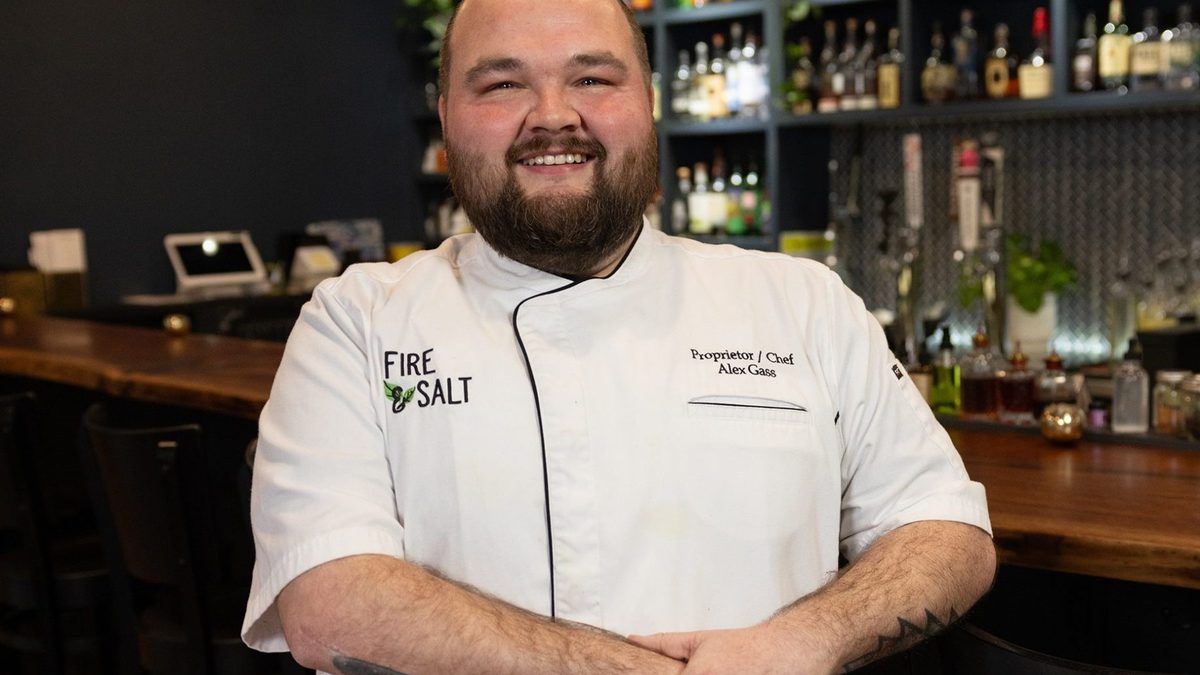
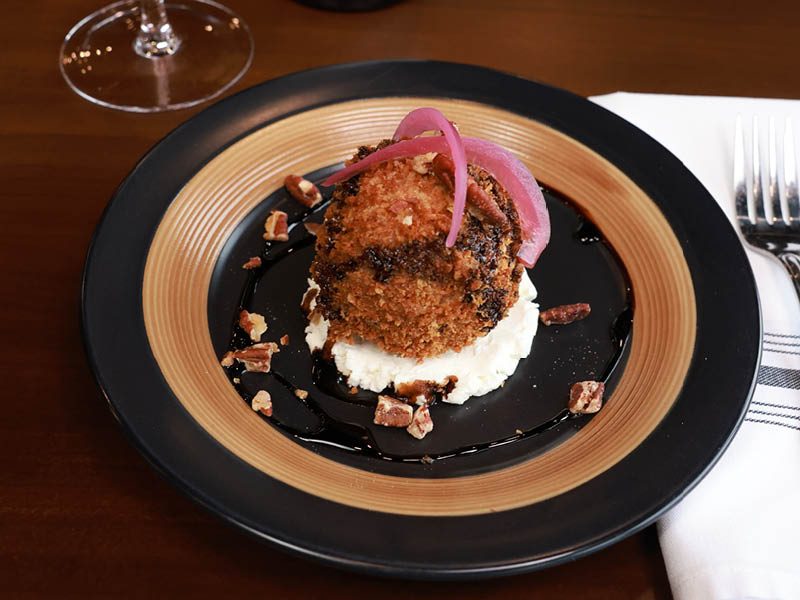
FeatureChef Alex Gass | Fire & Salt
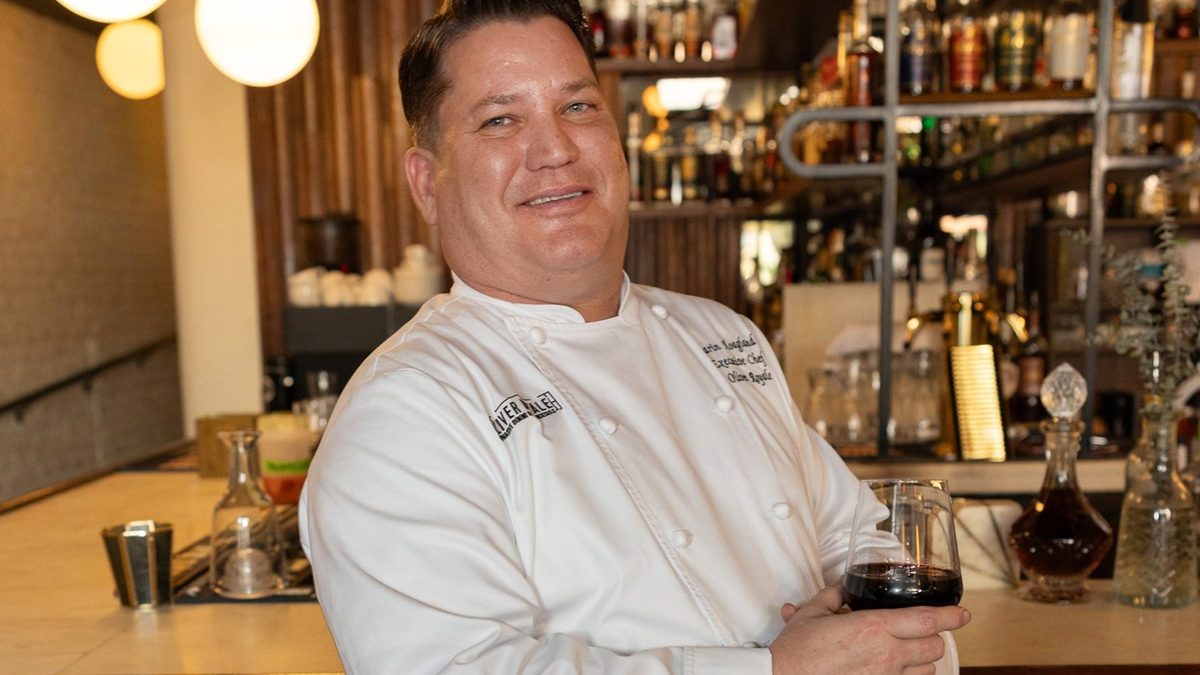
FeatureChef Darin Hoagland | Oliver Royale
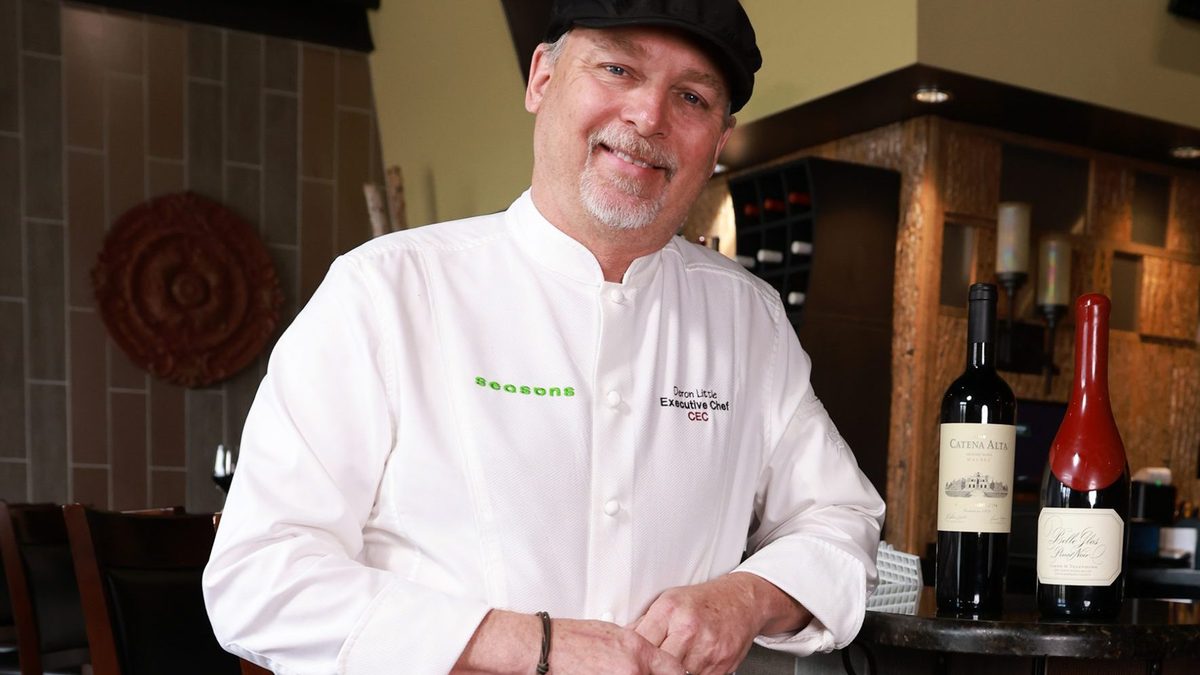
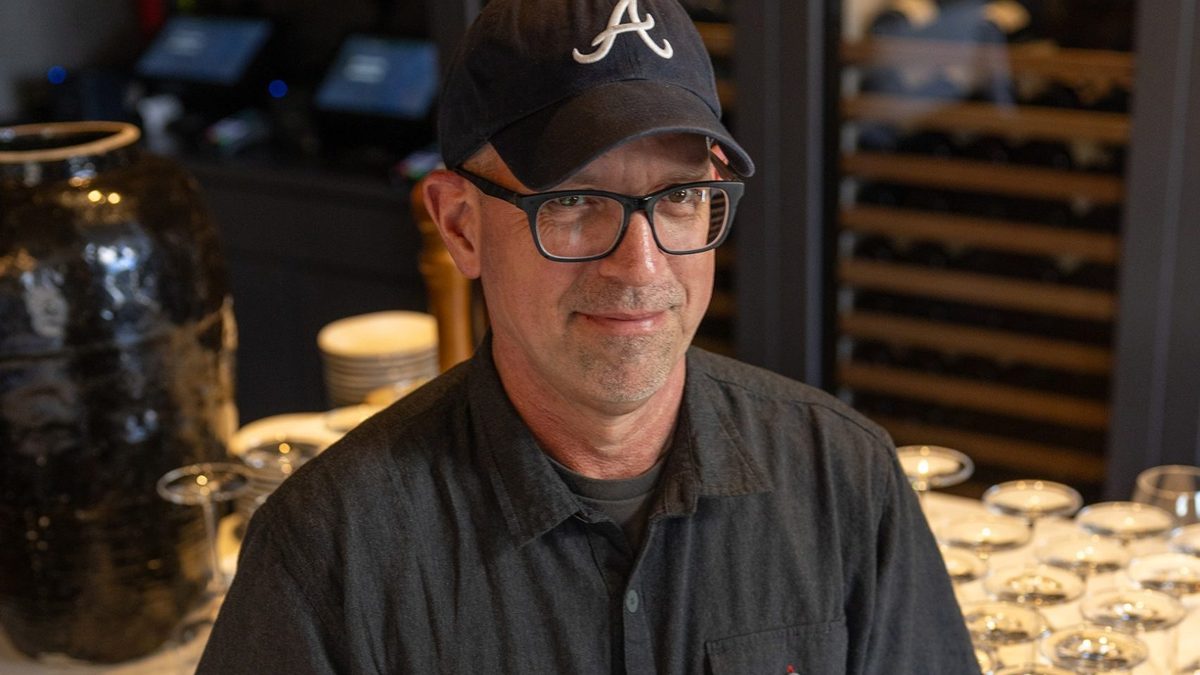
FeatureChef Deron Little | Seasons Innovative Bar & Grill
FeatureChef Jared Martin | Fire + Smoke
FeatureChef John Bryant | Bistro by the Tracks
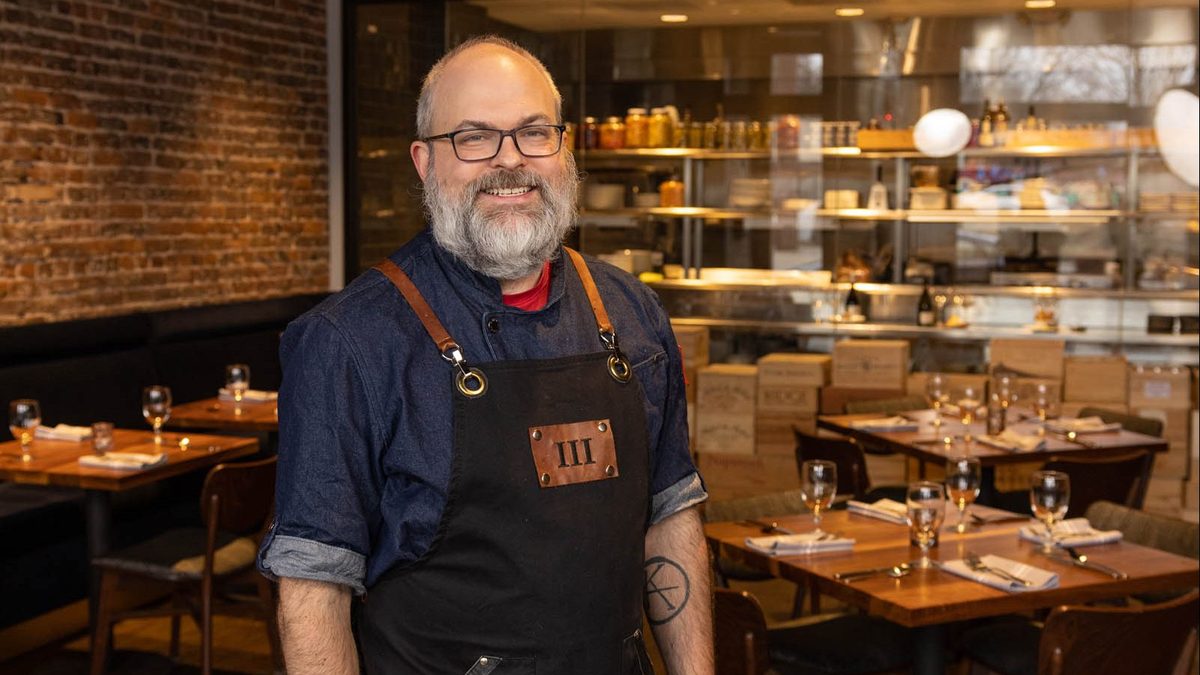
FeatureChef Robert McDonald III | Bistro by the Tracks, Happy Holler
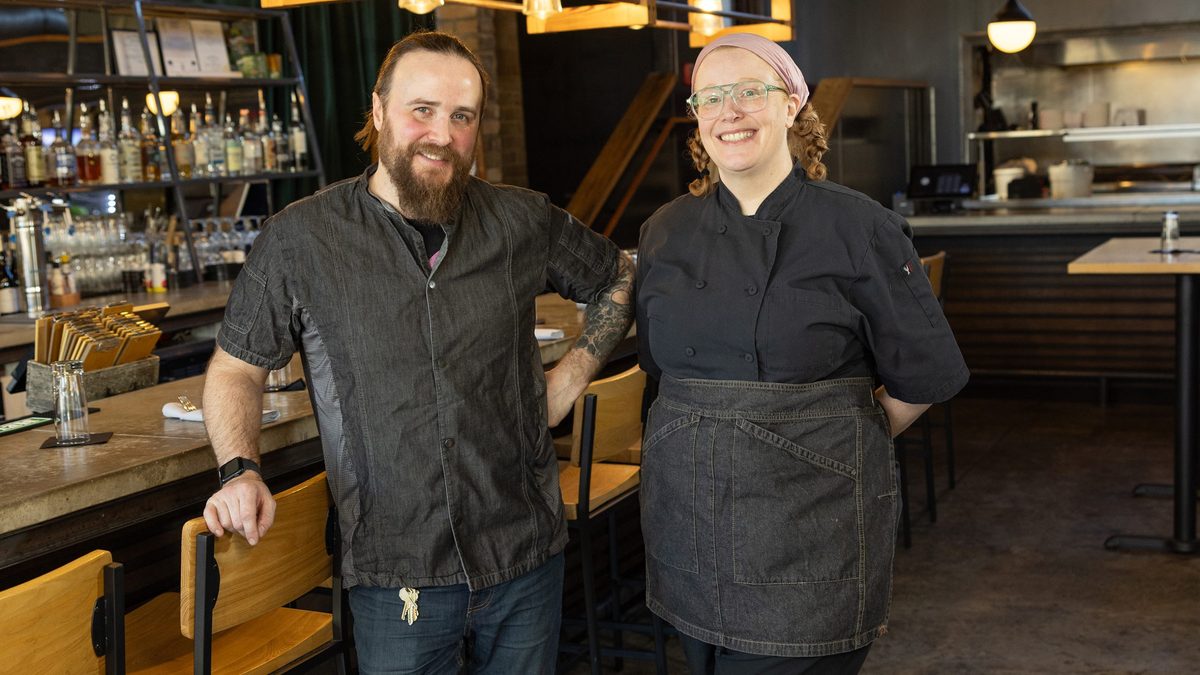
FeatureChefs Lucas Trombley & Erin Parrish | Green Room
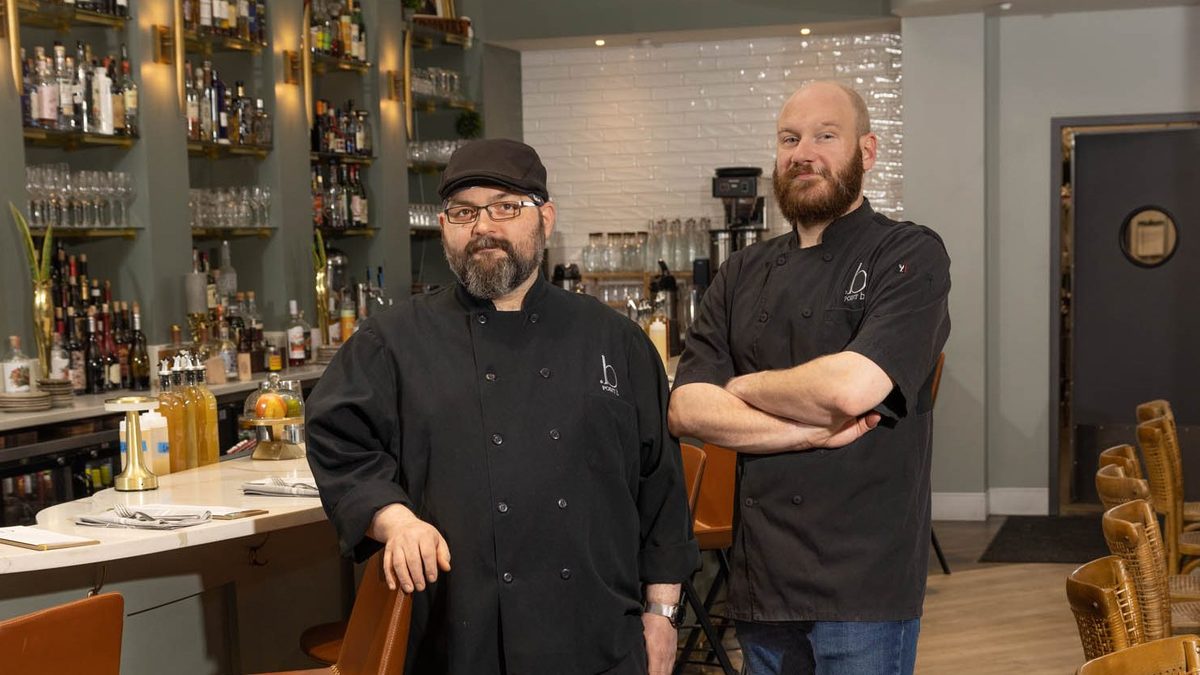
FeatureChefs Noah Goodfriend & Chris Cummins | Point B
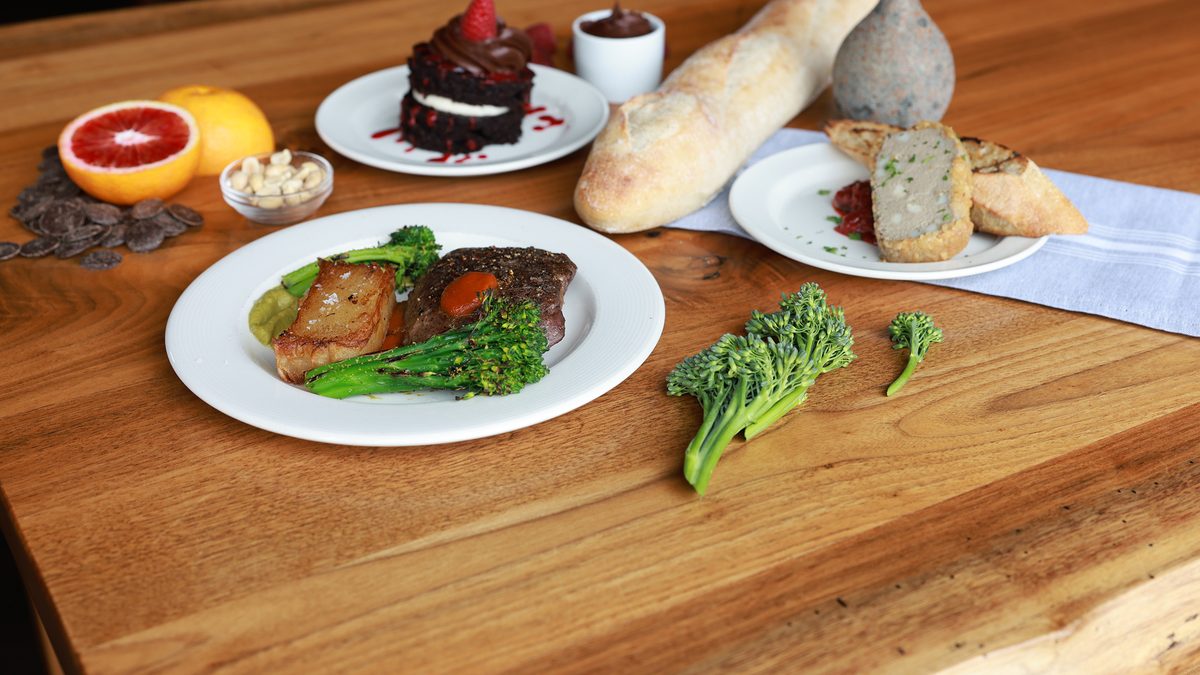
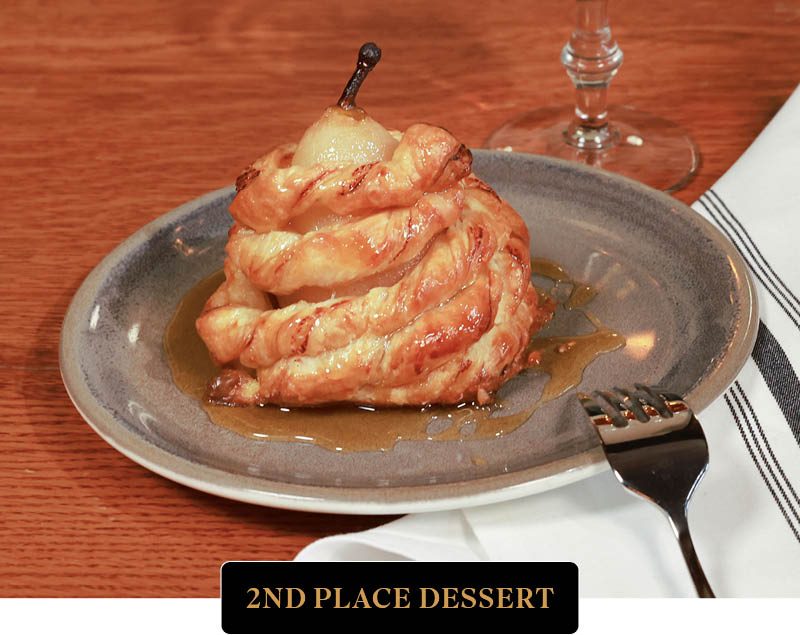
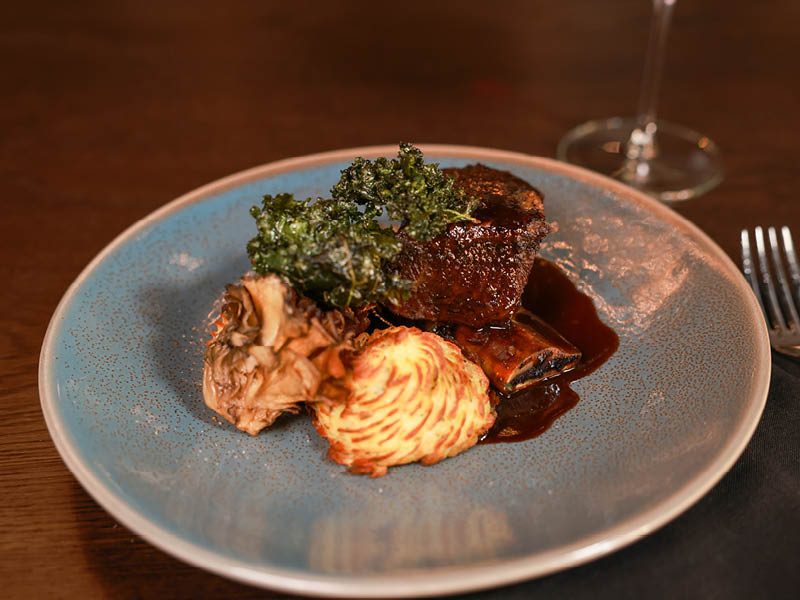
FeatureTop Chefs 2024
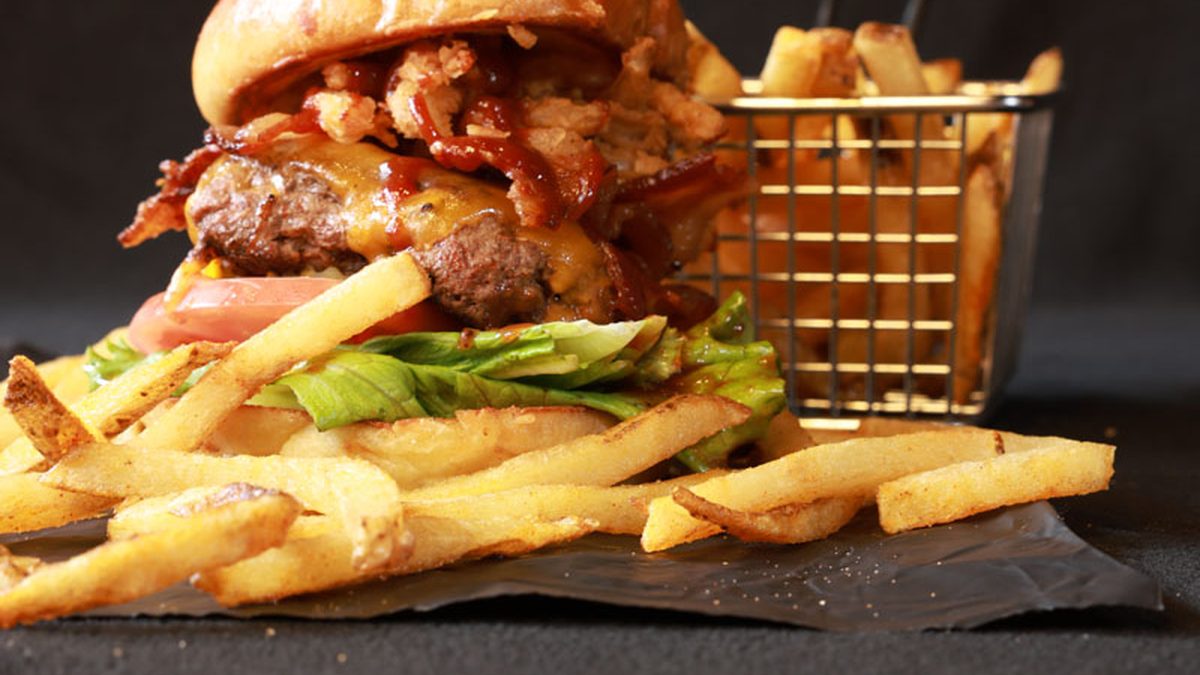
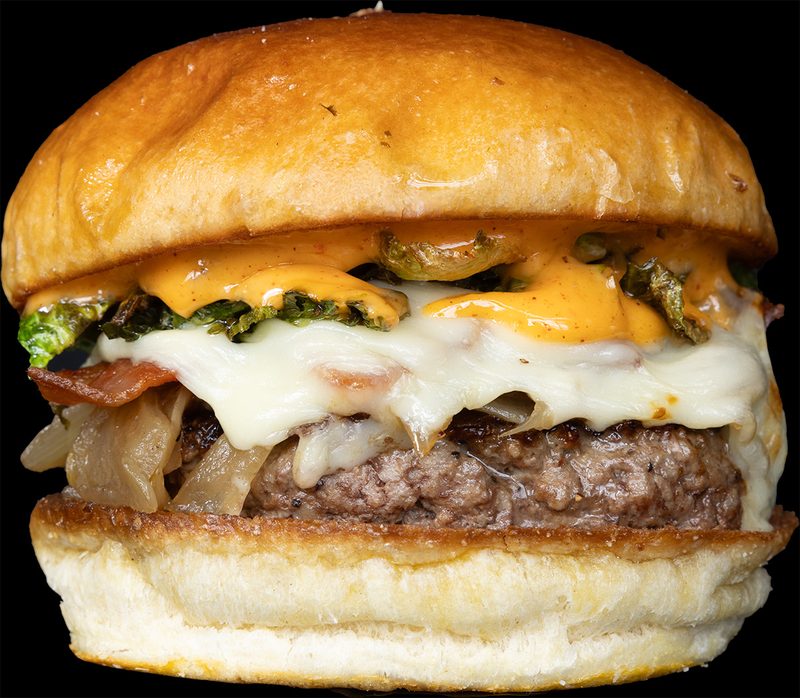
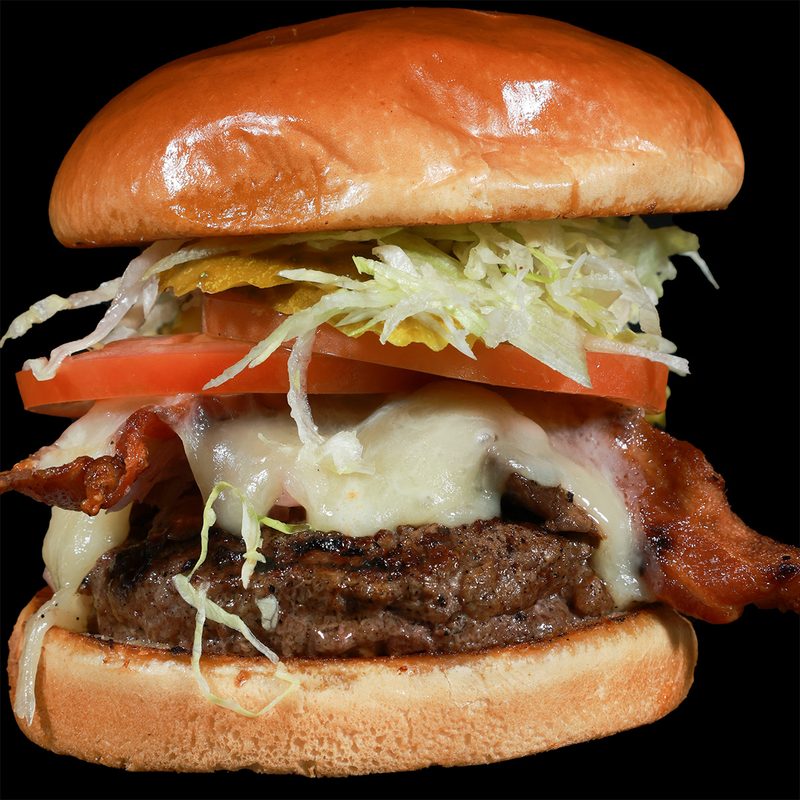
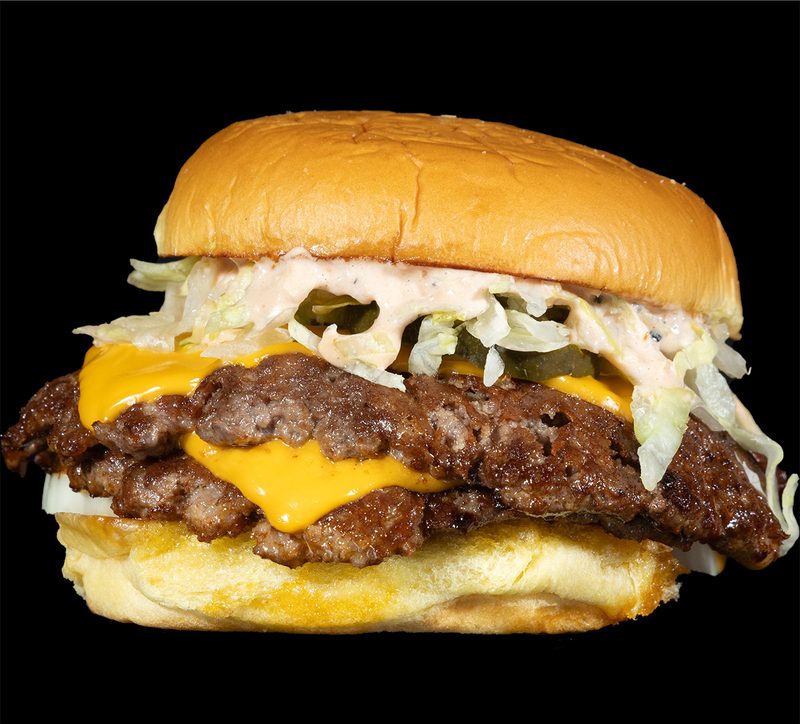
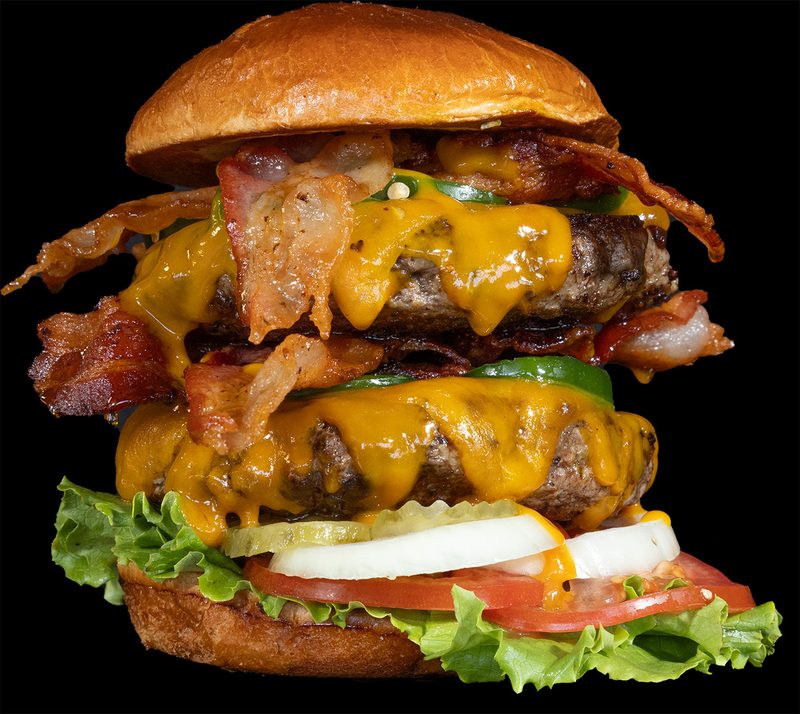
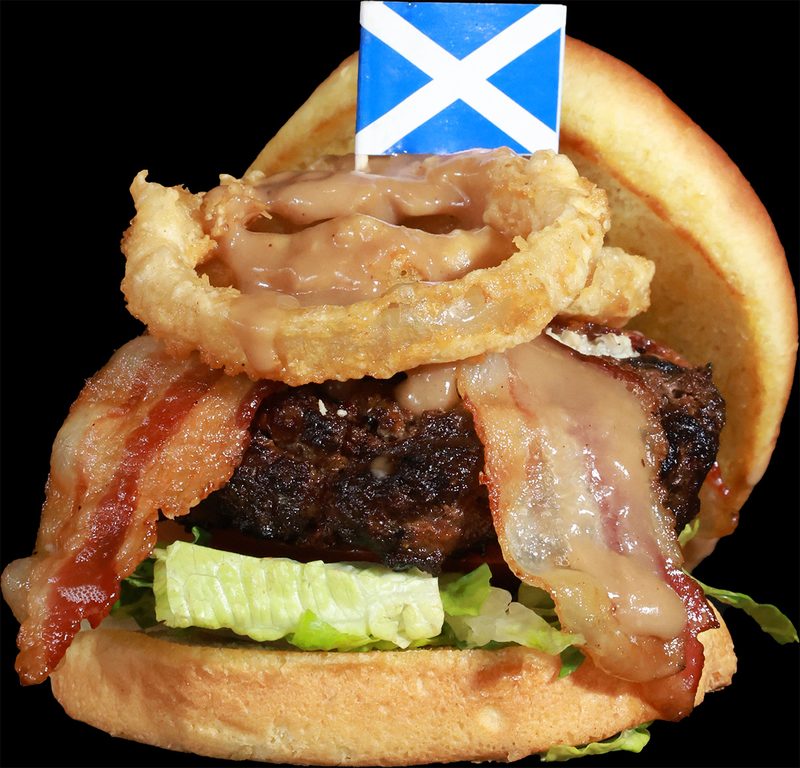
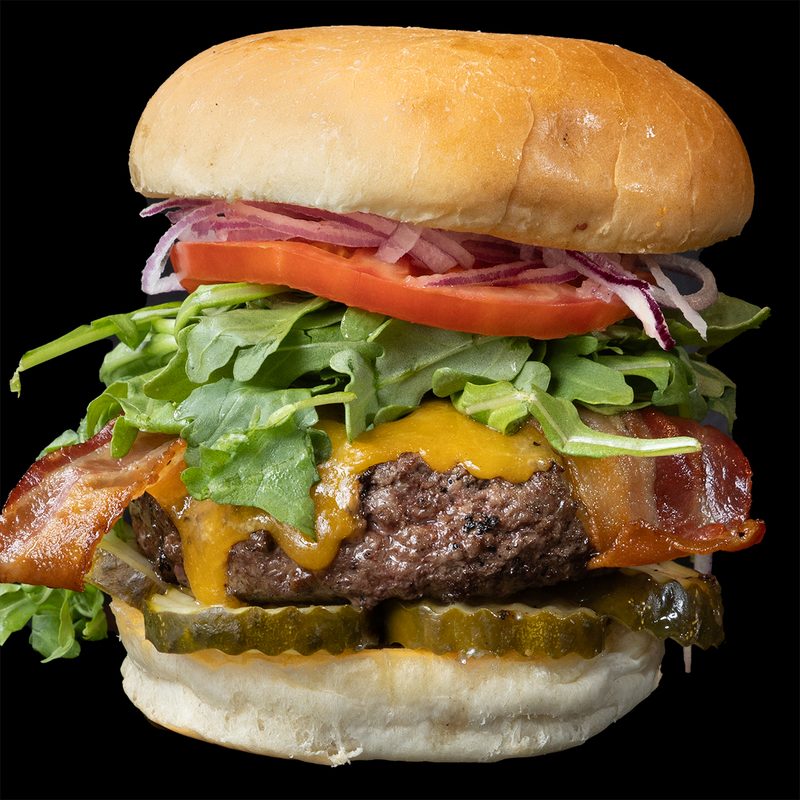
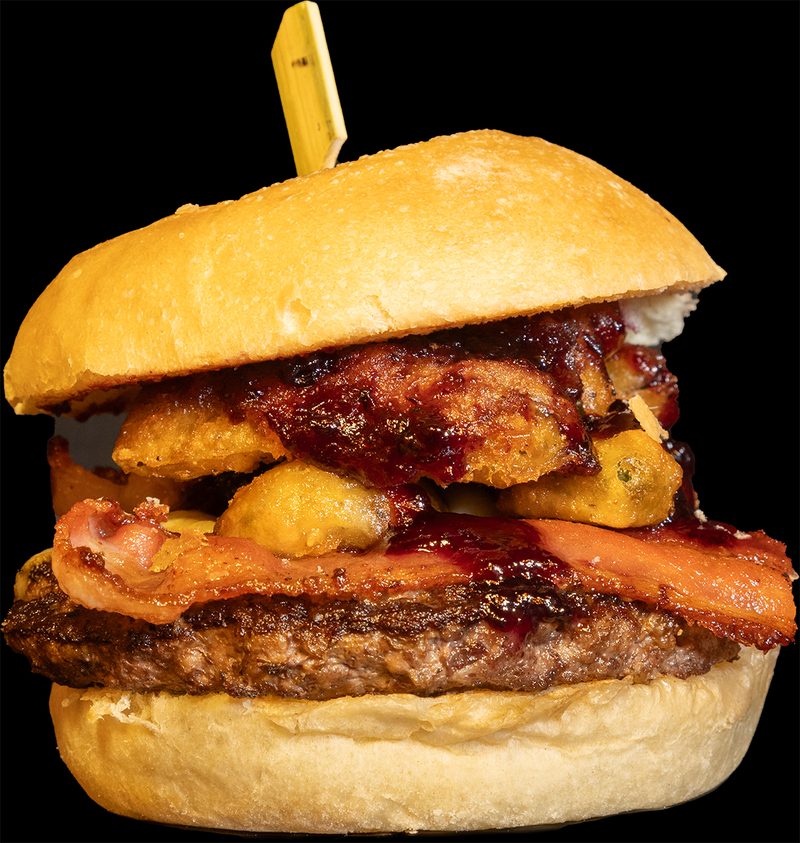
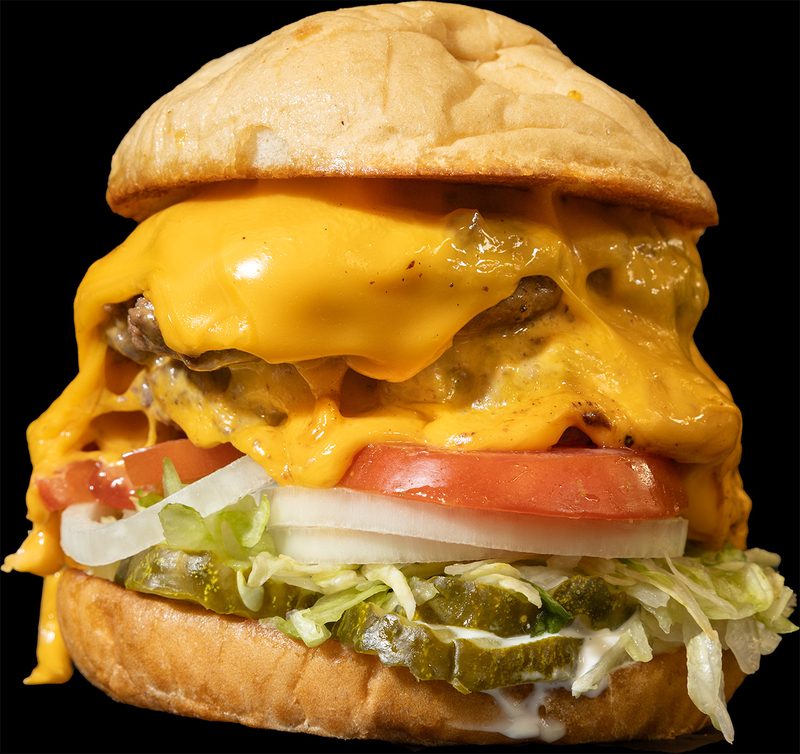
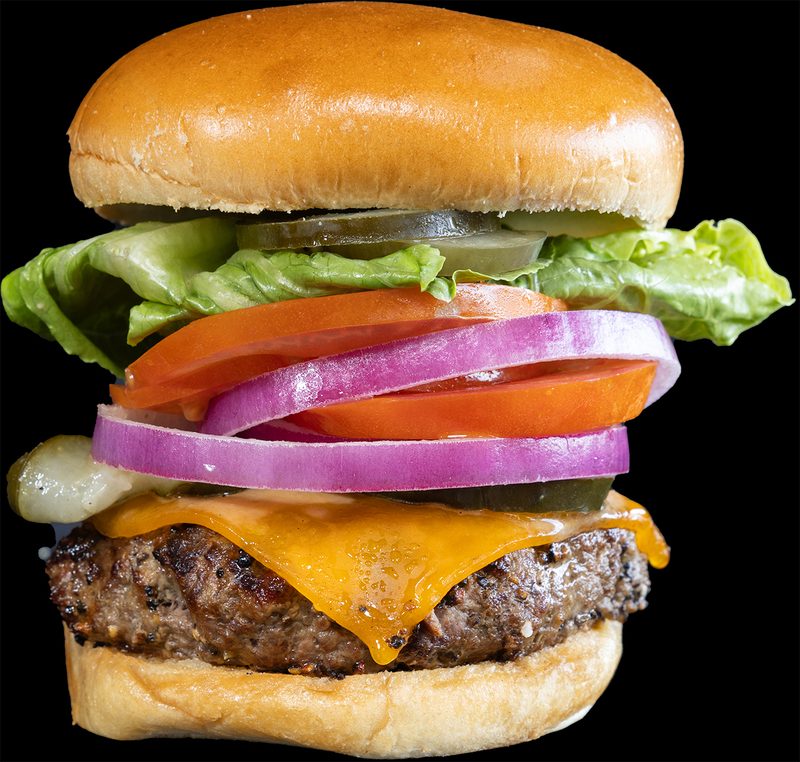
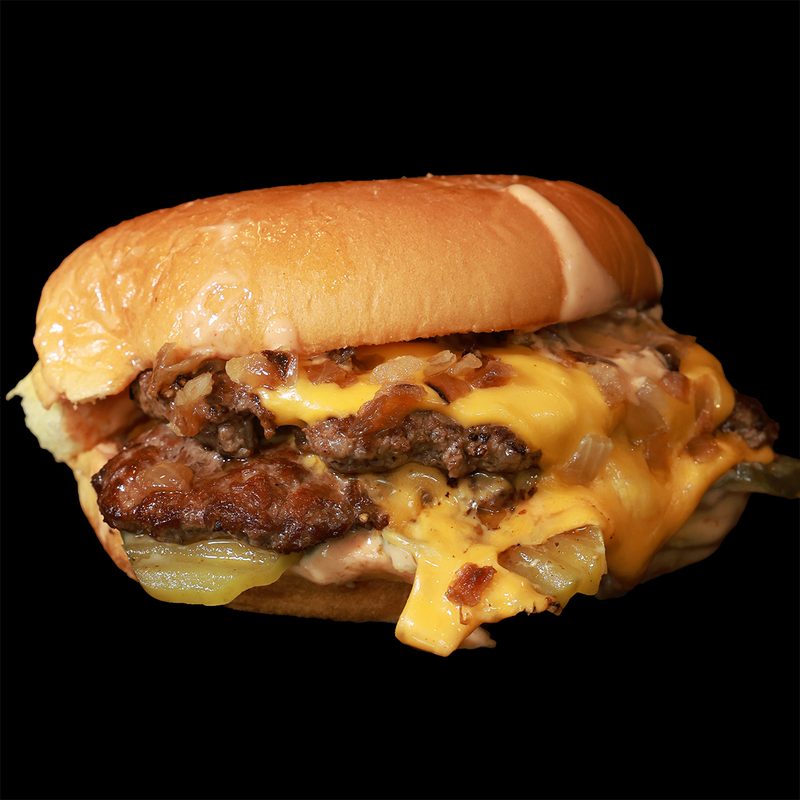
FeatureBurger Nation
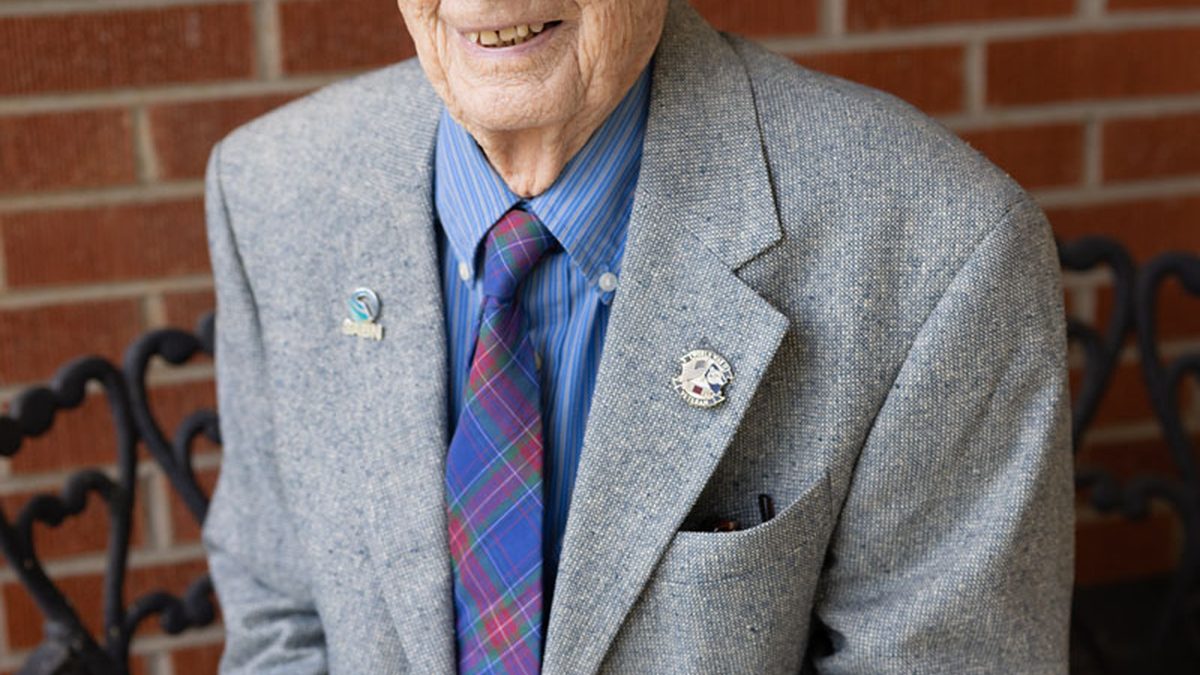
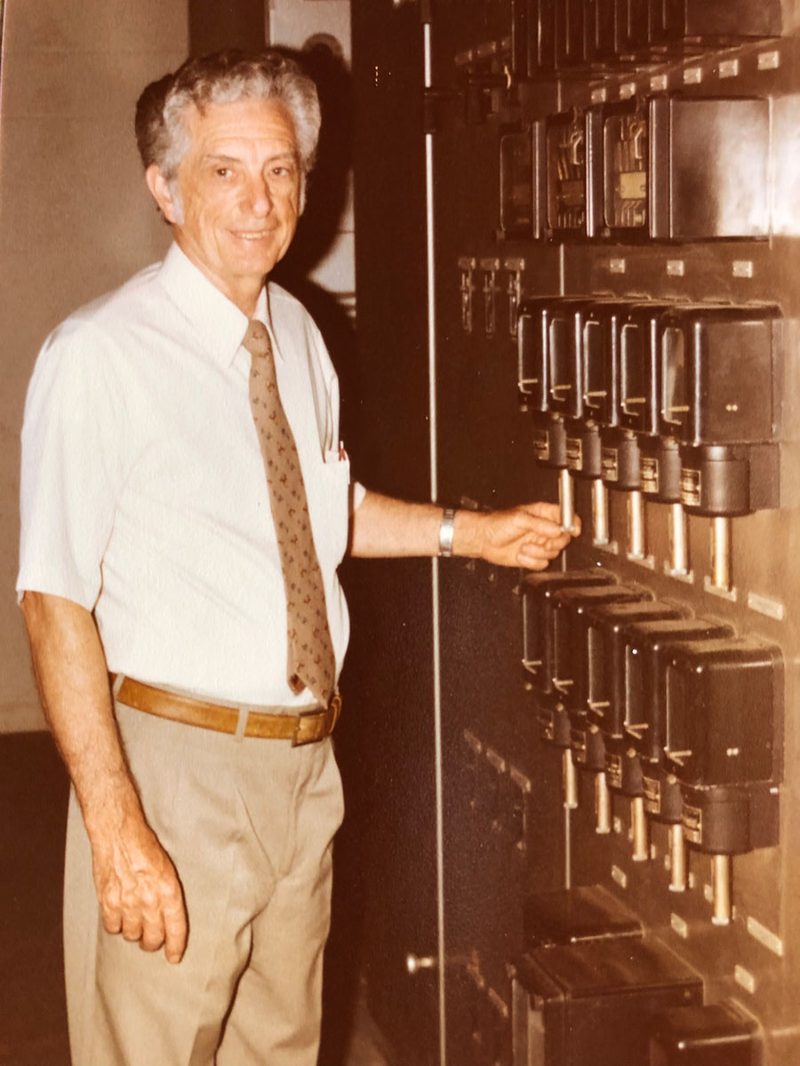
VeteranComing in Loud & Clear
Reading Settings
100%
May / June 2024
Swipe to read →
Vol. 40 · Issue 3 | May June 2024
The PublisherMay ’24 – From the Publisher
Departments
Arts & CultureGlow and Gloom
PoliticsPlaying Political Chess
InsightsFollow Your Heart
DepartmentsThe Rescue
Dining GuideCheap Eats
DepartmentsFestival Season
Features
JurisprudenceThe Bozeman Legacy
InsightsMarket House Memories
TravelColombia!
FeatureThe Science of Your Diet
FeatureKnoxville Area Sees Disc Golf Growth, Ample Courses
FeaturePower to Spare
FeatureSoaring to New Heights
FeatureGrauhaus
FeatureA 3D Way to Help
FeatureAnything They Need
FeatureSpanning Philanthropy
FeatureChef Alex Gass | Fire & Salt
FeatureChef Darin Hoagland | Oliver Royale
FeatureChef Deron Little | Seasons Innovative Bar & Grill
FeatureChef Jared Martin | Fire + Smoke
FeatureChef John Bryant | Bistro by the Tracks
FeatureChef Robert McDonald III | Bistro by the Tracks, Happy Holler
FeatureChefs Lucas Trombley & Erin Parrish | Green Room
FeatureChefs Noah Goodfriend & Chris Cummins | Point B
FeatureTop Chefs 2024
FeatureBurger Nation
VeteranComing in Loud & Clear
→ Swipe to start reading
The PublisherMAY JUNE 2024
May ’24 – From the Publisher
The Value of Tenacity
Story by Nathan Sparks
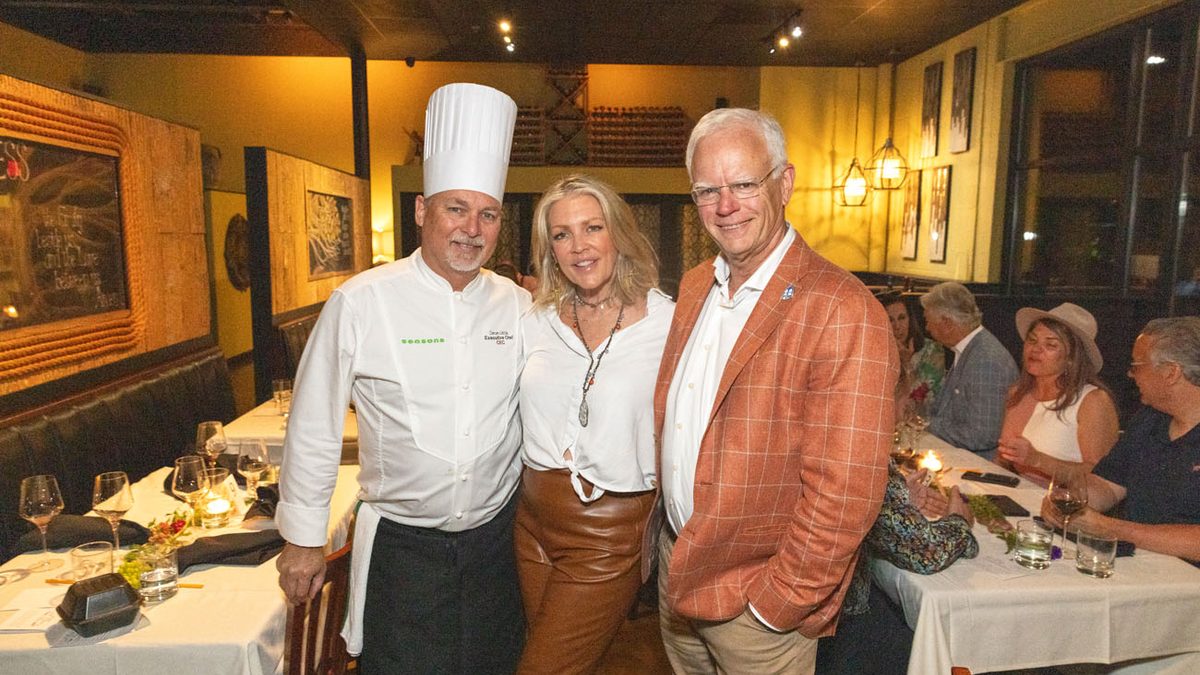
I first met Deron Little when he was located in the Renaissance Center in Farragut. Deron had made quite a name for himself as head chef at Fox Den Country Club and had recently left to open his new concept, Seasons Restaurant. It seemed like an unlikely location for a fine dining establishment, but he was banking on pulling the Fox Den crowd west and the Tellico Village crowd east.
It obviously worked. There is no question about Deron’s knowledge of food or his skill in the kitchen, and he is truly a master chef. What is truly remarkable about my friend is his tenacity. Life has undoubtedly tested his resolve, but he refuses to give up no matter what life throws his way. He’s had a stalwart partner in his wife Sheah and a loyal manager in Megan Hipsher, and you can always count on him to delight the palate no matter the occasion.
As more restaurants chose to locate west, he opened a second Seasons in Bearden. While he was running those facilities, he was working with his son Drake and friend Noah Allen at night to build out the current location in Turkey Creek. He thought Turkey Creek would be the right place to consolidate his operations and that has proven to be a good decision. That is where we find the Seasons we all know and love.
Over these past several years, we have become good friends, and he has always been willing to help me with my unusual story ideas. For instance, I’d always wondered what it would be like to see an expert chef prepare his own catch. So I proposed a float down the Clinch River together to fish for trout. His catch on that trip turned into a beautiful trout almondine and a nice piece for the magazine.
As I’ve gotten to know him better and seen all the work he puts into being a chef and business owner, I’ve been often reminded of my own experiences as a self-employed entrepreneur.
I often say that being in business means that you have to always willing to do what needs to be done, when it needs to be done, whether you want to do it or not, always with a smile on your face and a good attitude. That’s not always easy but that along with a healthy dose of tenacity is what is required to be successful.
Self-employment is certainly not for everyone, and it does have it’s challenges, but the icing on the cake is you constantly get to meet new people, help them solve their problems or grow their businesses and make our community a better place to live.
I am thankful every day for the opportunity to serve and for you being willing to read and enjoy the publication.
→ Swipe for Next Story
Arts & CultureMAY JUNE 2024
Glow and Gloom
Joe Parrott’s oil paintings display his passion for light and shadow
Story by Susan Alexander
Certainly Joe Parrott inherited artistic abilities from both sides of his family. His grandfathers were painters and designers — one of them designed the first blade sign in front of the Tennessee Theatre — and his father both ran a screen printing company and was a set artist at the same theater. But it was the box of oil paints that passed to him after his grandfather died that put him on the path he has followed throughout his life, even while running the shop he took over from his dad.
“When I was about 11 or 12 years old, I’d set up a still life and paint it using his paints,” he remembers. “That’s how I got into painting. I would experiment with watercolor and sculpture, but I always came back to oils. I didn’t get serious about it until after I graduated from UT. I took no art classes, it was strictly business administration. So it started as a hobby, and I enjoyed it so much.”
His first love was architecture. “I just painted buildings around town. I painted Sullivan’s Saloon in the Old City a lot. That area was just slums back then (in the 1970s). I painted the Southern Railway Station. And the train yard from the Gay Street Viaduct over and over.”
Van Gogh influenced much of Parrott’s early work. “I used his impasto technique, using lots of heavy, thick paint.”
Eventually Edward Hopper became a major influence. It was the light that captivated him as he painted. “I’d go downtown in the early mornings when there was nobody out. The light is clear and pure then, and the buildings were pretty much shuttered. If I saw an old building with good light on it, I’d paint it.”
Gradually he moved into landscapes, still working in oils. And though he enjoys plein air painting, “this thing makes it so much easier,” he says, holding up his smartphone. “I can take photos and come back to my studio and paint in comfort.”
The District Gallery on Kingston Pike represents Parrott in Knoxville. His work can also be found at his website,joeparrott.com.
→ Swipe for Next Story
PoliticsMAY JUNE 2024
Playing Political Chess
The fundamental strategies of a municipal face-off
Story by George Korda
I don’t play chess, but I’ve played a real-life political version in contests involving many millions of dollars—or a politician’s future. In politics, even what seems the right move can sometimes be wrong. At other times, a strategic move into an opponent’s trap can instead be used to make them a prisoner of their own device. Whether such face-offs occur in cities and towns, or in the halls of the U.S. Capitol, the game’s fundamentals are identical.
An example of behind-the-curtain political strategizing that sometimes underlies public policy decisions occurred when I served as the Knoxville mayor’s press secretary and city public affairs director. Mayor Victor Ashe, I, and the rest of his senior staff were at a planning retreat when I was summoned to the phone. My office was calling to say aNews Sentinelreporter had questions on the city’s reaction to a vote that day by Knox County Commission, yet another shot fired in an ongoing city-county political war.
Ashe and County Executive Dwight Kessel had a tense relationship even prior to Ashe’s election. Personalities, policy, and competition between governments kept things at a boil. A particular sore spot was that Ashe pushed an aggressive annexation program, from which the city continues to benefit. County government resented it mightily. Each retail property annexation meant that the city received a portion of sales tax dollars that would otherwise have gone to county government. There was near-constant conflict between city and county.
In that spirit, county commission cast the vote motivating the reporter’s call. At that time, the 1982 World’s Fair was almost a decade past, and the fair’s useless and crumbling U.S. Pavilion was a source of community discussion and disagreement. Finally, the city contracted for the pavilion’s demolition. County commission sensed opportunity. For several years, plans had been underway nationally to celebrate the 500th anniversary of Christopher Columbus’s voyages to the New World. A Christopher Columbus Quincentenary Jubilee Commission formed in 1985, by act of Congress. As plans progressed, Knoxville seemed in line for a starring role: “The shuttered U.S. Pavilion at 1982 World’s Fair site in Knoxville, Tenn., would be reopened as the celebration’s ‘official exhibition site,’” theWashington Postreported in an Oct. 30, 1991, story. Few people thought it a viable idea, and the private sector wouldn’t pony up financing money. But now, the county commission had voted on first reading to spend $15 million to fund the Columbus exhibit—in the U.S. Pavilion.
I quietly told the mayor what was happening. He called a time-out in the meeting, and he, I, and several other senior advisors went into another room. After considering various responses, the mayor asked my colleagues their opinions. Each, as memory serves, stated cogent, accurate, and substantive reasons why the pavilion should come down. The mayor wanted it demolished to expand World’s Fair Park. He turned to me: “You’ve been quiet. What’s your take?”
“Give it to them,” I said. “They want it? Let them have it.” The reactions in the room were a combination of curiosity and, “What have you not heard us saying?” I continued. “They don’t want to dump $15 million on this thing. They expect you to dig in your heels and have it torn down. Then they’ll say, ‘This event could have brought jobs and millions of dollars here, and Ashe has thrown it away.’
“Tell them they can have it,” I said. “On second reading they’ll run away from it so fast their underwear will have to catch up with them.” Everyone was quiet. Debate followed, and then a mayoral decision: I called the reporter to say the county could have the building and only had to hold the city harmless for the already-signed more than $400,000 demolition contract. At the next meeting of county commission, the idea of spending $15 million for the pavilion vanished faster than a friend who owes you money. County officials were left trying to explain their dramatic about-face. It was a good day. For us.
Much, if not most, of public square political gamesmanship, regardless of how complicated, how sensitive, or the stakes, is political combatants trying to make the other side look bad. Sometimes it works, sometimes it doesn’t—and sometimes it blows up in their face. Political figures, when they make a move, often forget to be careful what they wish for.
→ Swipe for Next Story
InsightsMAY JUNE 2024
Follow Your Heart
Questioning our overreliance on data in the age of information overload
Story by Rev. George Doebler
There is a notion floating around us each day that if I have enough information (data) about myself, the world, the planet, then I will know what to do.
The notion is then that with this data I consume, I can fix myself, fix the world’s problems, and clean up the planet. These notions are not really true.
What ultimately drives how we make decisions is not the data, but the emotions that are within us. The more anxious I am, the more likely the actions I take will have little to do with all the data we have gathered. What we do with the data is moderated, or directed, by who we are and the experiences we have had since birth—maybe before.
In today’s culture, we have become addicted to the idea that if I can know enough data—numbers and facts, which are also suspect—I can live the good life and be happy. Seldom are we exposed to the idea that how we ultimately live our lives has less to do with the data and more to do with our emotional self.
How well I know myself (remember, I never know much more than half) has to do with maturity, not data. Maturity is another one of those words we do not hear much about. But it’s one that is an absolute necessity for human beings to understand.
In a remarkable way, those who are most mature in their decision-making will look at the data and then tell you, “My gut tells me this is what I need to do.” The less mature, the less understanding of“self,” the more likely to make a poor decision.
An example: a friend who is a successful car salesman made the remark that people often come to buy a new car with a list of what they want: color, make, model, horsepower, etc. Then when they drive off the lot with the new car, it seldom is what was on their list; it was simply the car that they “liked.” An emotional process, not a cerebral one.
Well-known management consultant and author Peter Drucker often says, “Culture eats strategy for breakfast.” It’s used to help businesses understand that while the data, numbers, and plans are importnat, they are meaningless without a place where people are valued. Culture is the emotional entity that we all exist in; it’s not the data. But each of us knows that what is happening in our culture, in family, in religion, in business, in politics, is changing. The amount of data we are bombarded with each day is impacting our ability to live our lives happily. It may not be solving our inner problems, but rather, confusing us. That’s not to say data is useless; it is indeed important. But the overwhelming amount that is accessible to us is making us more anxious.
It was surprising to me when I looked up the word “anxious” in Webster’s Dictionary. The synonym for anxious iseager. If we are an anxious culture, we are an eager culture. But eager for what? I believe we are eager for calm, for peace. The amount of conflicting data we receive each day only increases our anxiety. (The antonym for anxiety is calm. That I also didn’t know.)
We each know to some degree that we live in a time of uncertainty—despite the fact we have more data and information available to us than any time in history. So how do I get out of this chaotic data gathering mess if it is embedded in our culture? If the data that is constantly there is making me more anxious, what can I do?
I have spent the last 39 years working and ministering at a Level 1 trauma hospital. The chaos of the community is felt within these kinds of places. They are a microcosm of life, death, birth, and hope. So to me, the answer to this data mess (and hospitals gather tons of data) has been in being with people as they share themselves and their stories as human beings—their fears, their loves, their wonderings about what will happen next, confessing their most inner emotions. It has been a daily learning to experience as I have met doctors, nurses, patients, food service folks, housekeeping folks, visitors as they come to see the sick. Each has a story. Our life stories are who we are, and it is in telling these stories that we learn even more about ourselves.
Science has long been aware that feelings can impact judgement. Science is also learning that the feeling of one of us is connected to the feelings of others. We are able to learn about others because we not only listen with our ears, but hear each other in our emotions.
When two people fall in love, for example, it is not an intellectual process. Data gathering is seldom done when we love. Our emotions stand at the forefront. Who we fall in love with actually tells us more about ourselves than about the person we love. In knowing you, I know more about me. In knowing myself, I open myself up to knowing you more. And the cycle forever continues. Once again, it is an emotional process at the forefront, not a cerebral one.
Collecting and believing that the answers are in data will keep us more anxious and less able to grow and mature. One of our tasks in living is in forming relationships, not only with those who are “like minded,” but with those whose lives are different than ours. Somehow it is in these relationships we will form a community that seeks to learn and to care for one another.
The data will always be there, and we will always have the opportunity to consume and use it; but our happiness ultimately begins with how we follow our heart—and how well we manage the data in order to do that.
→ Swipe for Next Story
DepartmentsMAY JUNE 2024
The Rescue
I’ve had a few close calls in the mountains. But none so wild as the summer of 2013.
Story by John Quillen
After a heinous spate of bad luck and weather, my climbing partner Brian Moran and I were dropping down from Camp 3 on Broad Peak in the Karakoram Mountains of Pakistan. It was a crap show from the get-go. This was not long after U.S. troops had dispatched Osama Bin Laden; the area was buzzing like a yellowjacket nest dug up by an opossum. As we inched toward this 8,000-meter peak, all manner of darkness followed us 60 miles up the glacier, ranging from severe dysentery to a random attack by errant mules. Then we found out what happened on Nanga Parbat and everything changed. The Taliban rounded up every climber they could corral on that mountain in search of Americans. Rumor has it that one of the guys tried a karate move on his captors. When the smoke cleared from their AK-47s, 10 mountaineers lay dead.
I had a different problem on my hand, presently, though. As we dropped down on our final acclimatization run from this, the 12th-highest peak on Earth, I had hoped our mojo was changing. I was no longer stomach sick, and we had stocked all the high camps for our final push to this elusive summit. We had been in country for almost five weeks, and our team of 11 disparate international climbers were ready to put this prominence in the rearview. Rappelling down these near-vertical snow slopes, we clipped and unclipped from ropes dangling from rock outcroppings in the shadow of mighty K2.
Dropping between Camp 2 and Camp 1, I lagged behind Brian a bit dealing with anchors, attaching a figure 8 carabiner. A small dot materialized on the white snow canvas some 100 feet below me at an altitude of 21,000 feet. My partner was crumpled up in a ball and screaming for me over the wind. I barely made out his words, but rappelled to his position. My friend’s leg was shattered. Clouds rolled in from China and snuffed the waning sun.
I splinted his leg with an ice ax and clipped into the fixed rope, attaching him to a sleeping pad with webbing. The arduous process of dropping him a few feet at a time was exhausting. Brian would paddle with his arms when the snow got sticky on the gradually relenting slope. We were alone on this remote mountain, and the weather was moving in. I said a prayer for help as my energy bottomed out with the physical effort of this, the second hour.
As if on cue, from the heavens, a small figure appeared several pitches above. It was Mojtaba Jarrahi, one of our teammates. Mojtaba was a mountain rescue guy in his home country of Iran; exactly what we needed. Dividing the load, we took turns lowering Brian as I radioed base camp for more assistance. Mojtaba was the only member of our Iranian group in possession of these talents and I don’t believe in coincidences. He was our third man.
A Pakistani team relieved us at Camp 1 for the near vertical sections remaining as I rested and took my first sips of water. More time had passed than I realized as I caught my breath and allowed the adrenaline to settle. It was dark now and solitude engulfed me on this big mountain.
Crampons scraping rock made sparks in my descent as I transitioned from cliffs to the ice-fall. More than a little anxiety gripped me as I realized I would be dancing through this glacial death trap which had already claimed the life of a German woman on another team. To my great surprise and relief, a light shone in my direction. It was, I presumed, one of the Pakistani porters awaiting me. I wondered who sent him to wait for me; though wordless, he motioned me down through the dangerous labyrinth of teetering ice penitents where one wrong turn could be fatal.
My guardian angel never spoke a word, he just shined his light in the direction of the safest path for the next hour as we stepped on bamboo ladders spanning rivers of barely melted water. Eventually I caught up with the 10 porters who were lifting Brian through this final stretch into the safety of base camp. Everyone was surprised to see me stumbling alone, but I just motioned in the direction of my mysterious companion who was nowhere to be found.
It would take another week before the weather cleared to land a helicopter for Brian. His leg was getting infected; we had plenty of time to recount the whole ordeal and try to make sense of my “ghost” guide. We said goodbye to Mojtaba and our Iranian friends who took advantage of the break to make their summit push as we boarded a pair of Pakistani military helicopters. Brian reached the safety of Skardu and a rudimentary hospital. A lifetime of trouble with the leg ended his climbing career. But he went on to father a beautiful young daughter named Johal, after our first camp on the trek through the Baldor glacier. My buddy would eventually resume his duties as an international airline pilot and trade crampons for a bicycle.
Mojtaba Jarrahi ascended into history, along with Puja Kyven and Aydin Borzoi. Our little brothers pushed the Iranian Route to the summit of this mighty mountain that had caused us so much trouble. Broad Peak was not done, though. Although they reached the summit, their descent turned tragic, and all three remain permanently on the flanks of K3, as this behemoth is also known. Broad Peak enfolded these heroes permanently into her arms. One of Mojtaba’s final acts was to help save the life of another. But no one was there to save him.
My third man was an unknown figure who led me through the treachery of Broad Peak’s icy ramparts. There is zero doubt that without him, I could have ended up in worse shape than Brian. Turns out this is a common and unexplained phenomena in mountaineering and adventure tales. Ernest Shackleton was the first prominent figure to describe a “guardian” that guided his shipwrecked team to safety in the early 1900s. This “Third Man” has been credited with navigating many a lost adventurer to safety and psychologists are wont to explain it. But I don’t need a psychologist, (for that anyway). Brian and I met our guardian angels and they got us out of hell. There is little doubt to either of us that they are both in the opposite place now.
A full account of this expedition can be found in John’s book,Tempting the Throne Room: Surviving Pakistan’s Deadliest Climbing Season, 2013.
→ Swipe for Next Story
Dining GuideMAY JUNE 2024
Cheap Eats
8 restaurants all $20 and under
Story by Chloe Cross
Don’t want to cook at home, but also don’t want to break the bank dining out? We’ve got you covered. Even though eating in is usually considered the price-efficient option, eating out can be just as affordable as long as you know where to look. Luckily, we have eight places in East Tennessee where you can dine out even if you are balling on a budget.
Bida Saigon
Located near West Town Mall, Bida Saigon is a Vietnamese restaurant known for its quick, friendly service and fair prices. Listed as one of the best Vietnamese restaurants in all of Tennessee by “Best Things Tennessee” in 2022, the restaurant boasts a menu of dishes at $10 or less! The restaurant is perhaps best known for its pho, a Vietnamese soup dish, but with a variety of other appetizers and drinks, there’s something on the menu for everyone—Thai iced tea is a fan-favorite! West Knoxville | 8078 Kingston Pike |facebook.com
Yassin’s Falafel House
Ranked in the Top 3 best delivery restaurants inCityview’s 2023 Best of Best reader poll and winner of multiple categories in 2022, Yassin’s Falafel House is a Knoxville staple. The menu features classics like homemade falafel, hummus, gyros, and more, all priced just right and paired with a “feels like home” atmosphere. Owner Yassin Terou is all about creating a welcoming environment for all, and he achieves this with flying colors! Downtown, West Knoxville, and Alcoa |yassinsfalafelhouse.com
Paysan Bread & Bagels
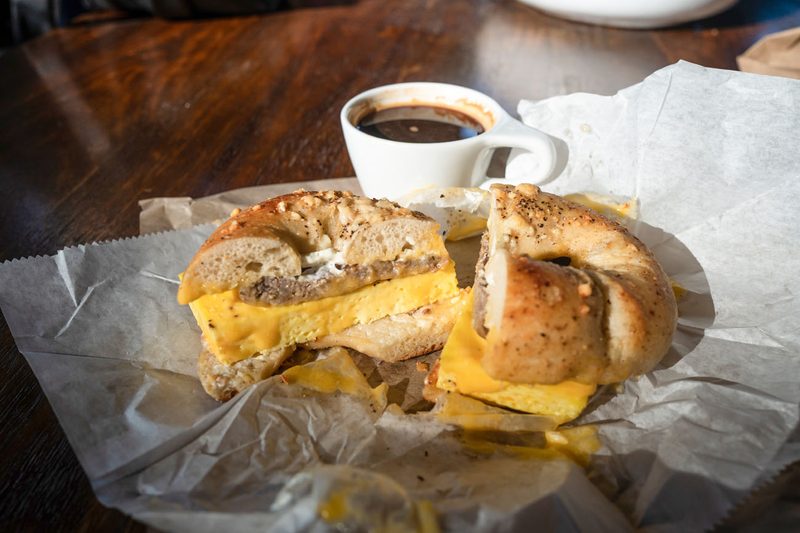
They say breakfast is the most important meal of the day, and Paysan Bread & Bagels is a great place to start the morning. Though their menu is fairly small, don’t be fooled; the tastes are on point. Grab a classic bagel and smear, or branch out and try the Flower Power, made with your choice of bagel with roasted cauliflower, green tahini, hummus, greens, and pickled onions. Since Paysan is a walk-up restaurant, service is extremely quick, so it’s perfect if you’re on-the-go. Bagels tend to sell out quickly though, so make sure that you get there early! North Knoxville | 804 Tyson Street |paysanbread.com
Soccer Taco
Ranked as the Best Mexican Restaurant inCityview’s 2023 “Best of the Best” reader poll, Soccer Taco is praised for its authentic cuisine and enjoyable atmosphere. Doubling as a sports bar, it’s the perfect spot to watch the game while snacking on the best chips, queso, and guac in town. Three locations offer a variety of settings to enjoy the game and food, from downtown setting to a courtyard with a view. Pro Tip: Try the Skinny Margarita. It’s a must-have. Bearden, Market Square, and Northshore |soccertaco.com
Gus’s Good Times Deli
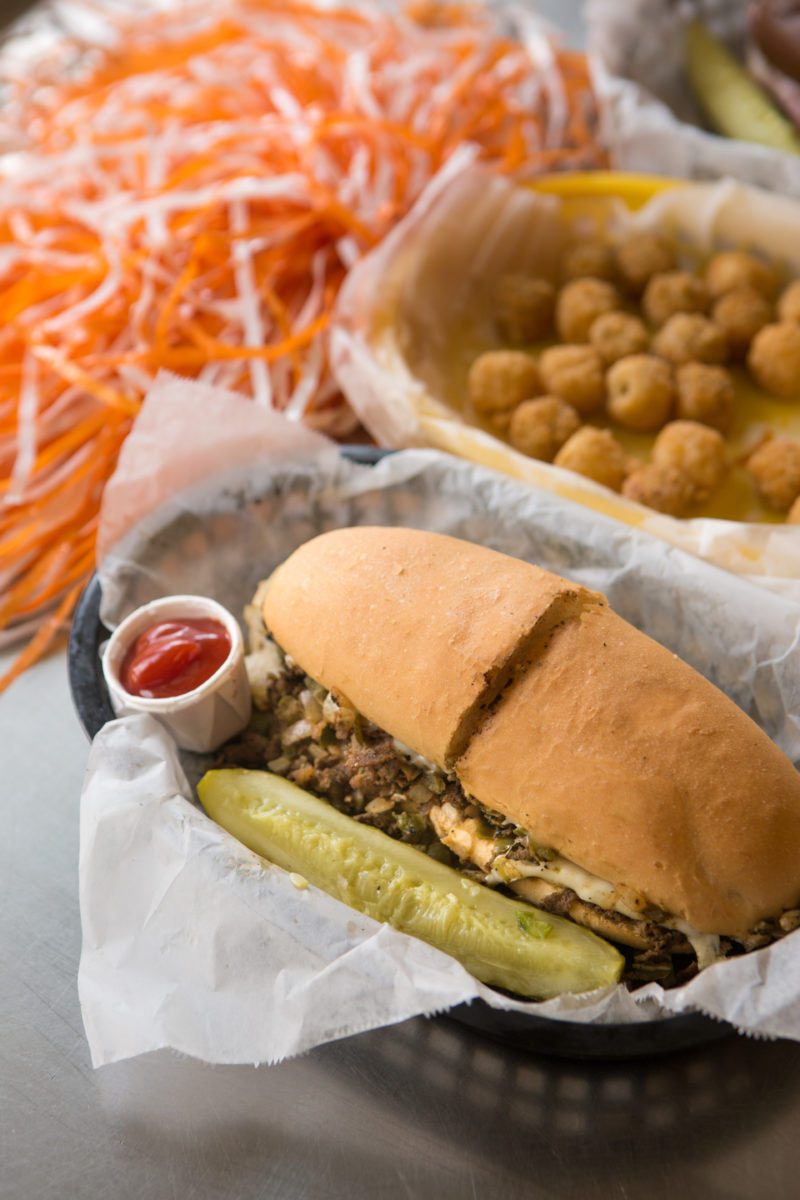
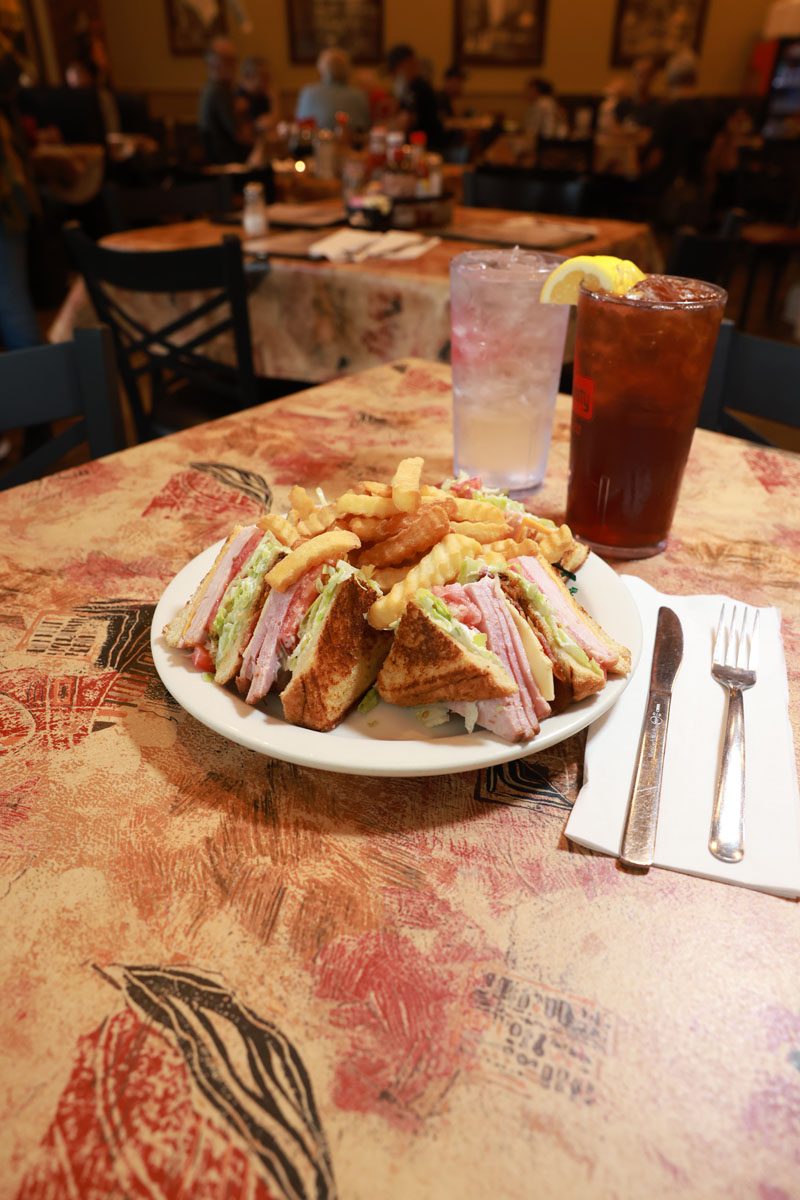
Gus’s Good Times Deli is a University of Tennessee staple that has been around for 43 years. Located right on the Strip, Gus’s is a go-to spot for Volunteers, especially on game days. The menu features American classics like grilled cheeses and BLTs all for $15 or less. With cheap prices and late hours, staying open until 3 a.m., Gus’s is the perfect spot for anyone out and about in downtown Knoxville. According to their X account, they are even a favorite of UTK alum Peyton Manning! Downtown | 815 Melrose Place |facebook.com
Bella Roma Pizza
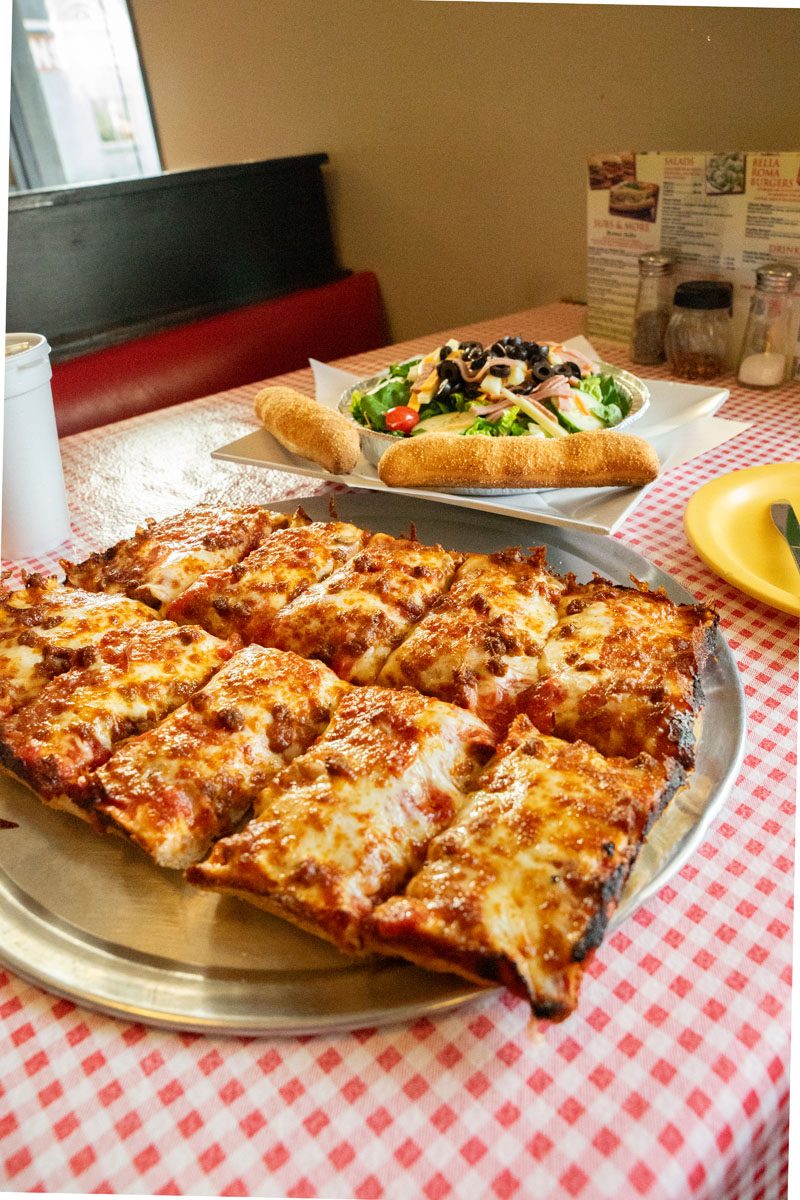
Pizza night is a weekly occurrence in many families, and Bella Roma makes that night much more affordable. Bella Roma offers all kinds of pizzas, from the classic cheese to a bacon cheeseburger pizza, for $20 or less. If you have plenty of mouths to feed—whether it’s your family or your kid’s sports team—you might find the Family Special a perfect fit. Even if you don’t like pizza though, the calzones and subs are worth the trip. North Knoxville | 7817 Oak Ridge Hwy |bellaromaknoxville.com
Sami’s Cafe
Sami’s Cafe is a classic, family-friendly breakfast and lunch spot that has been serving West Knoxville for more than 10 years. Growing up in the restaurant industry, owner Bassam Natour knows exactly how to run a successful brunch spot. Sami’s has been praised by Knoxville natives for its quick service and down home ambiance. The cafe features a large menu with meal prices all under $15 and daily specials every weekday. Franklin Square | 9700 Kingston Pike |samiscafe.com
D & B Hot Dogs
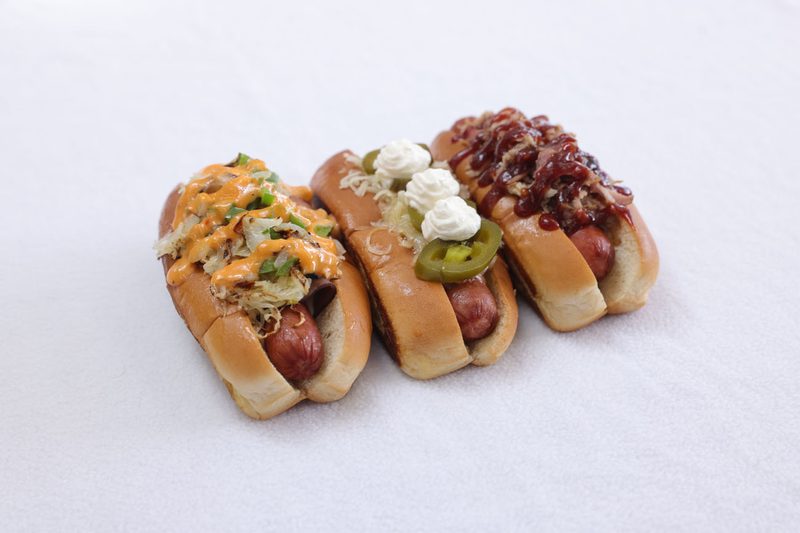
In 2014, two stay-at-home dads who were on the hunt for a truly good hot dog in Knoxville, eventually deciding to take matters into their own hands. D&B Hot Dogs came to life! All of their hot dogs—and burgers—are 100 percent all beef and they’ve incorporated some family recipes into their menu, like their chili and slaw. It’s had a fan base since day one, and it’s not hard to understand why: dressed up hot dogs for $10 or less. Knoxville | 8909 Oak Ridge Hwy |dbhotdogs.com
→ Swipe for Next Story
DepartmentsMAY JUNE 2024
Festival Season
Story by Chloe Cross
As the weather warms up, it is the perfect time to get outside and explore what Rocky Top has to offer. East Tennessee has a variety of festivals coming up, whether you are looking to spend a day out with family or a night out on the town with friends. Celebrating music, mythology, mountains, and more, there is a something here for everyone to enjoy. Here are some festivals to look forward to in East Tennessee:
Spring Fairy Fest
Dates: May 3-5 This whimsical festival at Deep Well Farms in Lenoir City is a spring celebration of all things fantasy, featuring live music, magic shows, interactive storytelling sessions, and fairy-inspired artisanal crafts. Kids and costumes welcome!
Smoky Mountain Bigfoot Festival
Date: May 4 Whether you believe in Bigfoot or not, this Townsend festival has something for all. Run the 5K, view a wrestling match, see “Slashsquatch” perform live. Bonus: 30+ food trucks on hand for festival feasting.
Southern Skies Music & Whiskey Festival
Date: May 11 The Dirty Guv’nahs host their third annual festival in World’s Fair Park, featuring Old Crow Medicine Show, Maggie Rose, Amythyst Kiah, and more. A collab with TN Distillers Guild brings a whiskey bonus to the day.
Children’s Festival of Reading
Date: May 18 Parents take notice: a festival that is fun, free, and educational! Kids will have the chance to take photos with their favorite book characters, meet accomplished authors, participate in interactive storytelling and sing-alongs, and engage with the science discovery tent.
Rhinestone Fest
Dates: June 7-8 Here she comes again! Dolly fans will love this family-friendly (and free) festival dedicated to celebrating the country queen herself. Old City comes to life with art, live music, Dolly history, and oh so much food.
Knoxville Brewfest
Date: June 22 What could be better than spending a beautiful summer day jamming out to some bands and sipping on a beer? Tailgating for a Cause will host their 13th annual festival, where you can sample beers while supporting the work of CureDuchenne.
→ Swipe for Next Story
JurisprudenceMAY JUNE 2024
The Bozeman Legacy
“How One Man from Happy Holler Made a Difference.”
Story by Gary Wade
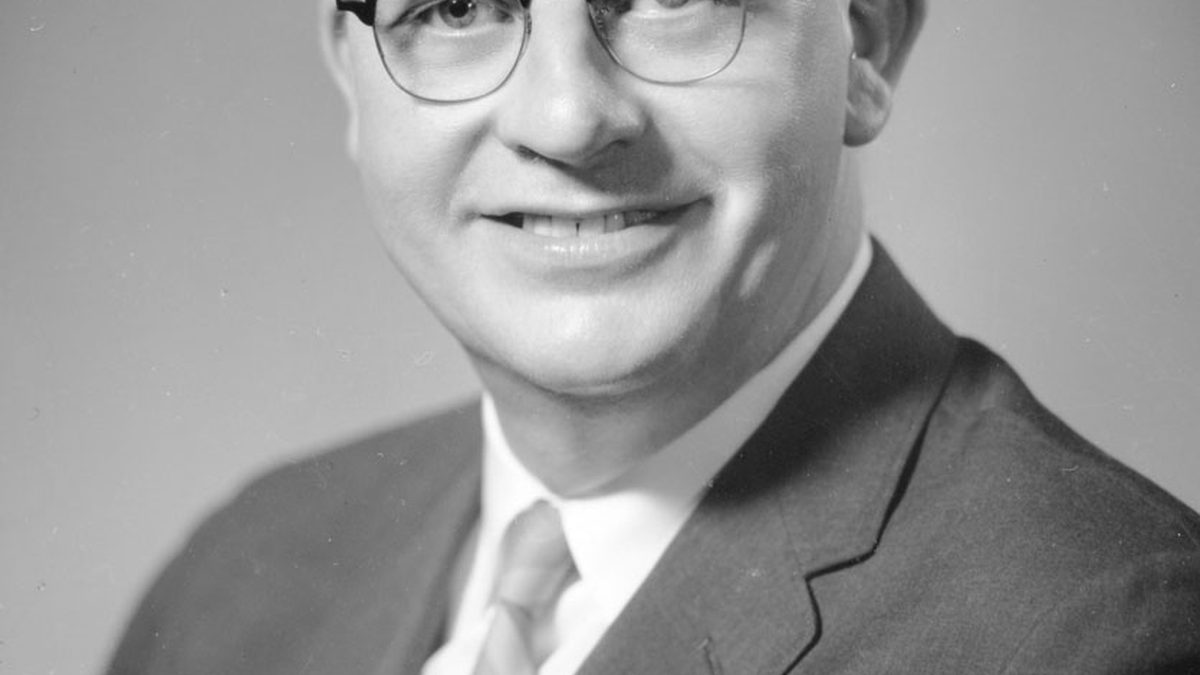
That is the subtitle of author Debbie Patrick’s 2012 biographical tribute to C. Howard Bozeman, who played a key role in the Knox County political scene from 1948 through 1982. This is his story.
Born in 1918, Howard Bozeman grew up on Baxter Avenue. His father, Art, worked at Brookside Mills at the time and later the railroad. His mother, Mary, stayed at home raising the family. Before school each morning, Howard, beginning at age seven, began to earn his keep, waking up early for years to deliver newspapers from Church Street to Fifth Avenue. Upon graduation from the old Knoxville High School in 1936, he joined the management-training program at the S. H. Kress Five and Dime located on Gay Street. With a boundless energy which he displayed in all his future endeavors, he learned all aspects of the business — buying, marketing, and selling.
Early on, Howard had demonstrated a strong sense of right and wrong. For example, when a school bully had taken away the lunch of a smaller boy, young Howard intervened, decking the bully and handing his own lunch to the aggrieved child. That quality resurfaced in his job. In the days of segregated Knoxville, Kress had a busy lunch counter. When the area reserved for “whites” had space, blacks often waited in line for a seat in the “colored” section. Howard suggested a remedy: expand the area for black customers into that reserved for “whites” when there were seats available. When upper management disagreed, Howard, unable to support a policy he believed to be unfair, altered his ambitions, asking permission to reduce his work hours in order to attend the University of Tennessee.
In the summer of 1938, he left Kress after landing a job with Roosevelt’s Works Progress Administration, a social program created during the Great Depression to find jobs for the unemployed. He was 20 years old. His experiences there began to develop his understanding of the roles of federal, state, and local government. His mother’s side of the family, staunchly Republican, expressed concern with his summer work, while his father, a Democrat, favored FDR’s New Deal initiative. In his capacity with the WPA, Howard’s duties required a familiarity with the Knox County road system, sewer line construction, and the residential development in the community, helpful preparation for what turned out to be a career in public service.
During this period, Knoxville Mayor George Dempster appointed Howard’s father to serve as the Democratic chair of the 11th Ward. His father’s responsibilities sparked Howard’s interest in the local political scene. By 1941, he had earned a business degree with a special interest in accounting. The university hired him as an auditor and, in his spare time, he attended UT’s law school. Within two years, Howard earned a law degree. By 1945, he was teaching Contracts and Real Property at the College of Law and accounting at the university’s undergraduate school of business.
In 1946, the Democratic Party, while conceding that Knox County was a Republican stronghold, offered a qualified slate of candidates for office. Howard, who had previously complained about partisanship in local elections, agreed to run as a Democrat for the office of Trustee. “Two of the Democrats were elected,” Howard remembered, “Bill Luttrell because he was a war hero, and Tim Lawson, because he was articulate and with a handsome head of red hair.” While Howard lost to a popular Republican candidate, the election was far closer than predicted.
Jimmy Elmore, the Republican incumbent County Judge, was re-elected to a four-year term, a position much like the County Mayor position of today except that the job included extensive judicial responsibilities. Less than two years later, Elmore, while still in office, ran for City Mayor and won. Oldtimers will remember that the County Court, tantamount to the County Commission of today, appointed Joe Strong to the position until a special election could be held for the last two years of Elmore’s term. Strong became the Republican candidate. Bozeman, all of 30 years of age at the time, ran as the Democratic candidate. His platform consisted of “14 Points,” which he distributed to some 31,000 Knox Countians. “It’s not a popularity contest”, he insisted to voters, “If you want these 14 points, I’ll know what to do.”
Out of over 26,000 ballots cast, “the man from Happy Holler” won by a margin of only 342 votes. When sworn in by then-Supreme Court Justice Hamilton Burnett of Knoxville, he became the youngest County Judge in the history of the state. To celebrate his win, Howard took wife Barbara, and son Barry, age 2, on a short trip to Myrtle Beach. So much for the jubilation of his hard-earned victory. It took only 10 days on the job for Howard to learn how much financial trouble the county had. “I wanted to cry,” he lamented. Sunday School teacher, County Law Director, and mentor Monty Edgerton, along with a lot of on-the-knees prayer, persuaded Howard to tackle the “financial mess” head on. Newly developed standards on Finance and Purchasing, Centralized Accounting, Taxing, and Governmental Reporting policies added a sense of accountability and professionalism in his office. Improvements to roads, bridges, and highways were essential goals for his administration. The production of clean, safe water service by the county utility districts also became an early priority. The 1952 purchase of voting machines, an initiative criticized by the old Knoxville Journal newspaper and especially Cas Walker, the notorious publisher of the Watchdog, was designed to eliminate some of the paper ballot shenanigans suspected in prior county elections.
In the spirit of non-partisanship, “Judge” Bozeman forged a strong relationship with Republican Mildred Doyle, who was to become a legendary figure in her own right as Superintendent of Schools. Together with the County Court, the two addressed the woefully underfunded school system and were able to upgradeteacher salaries. The Knox County Library System was established to augment access to education. Noteworthy, prior to a federal mandate passed by Congress, these two community leaders founded an educational program for the mentally and emotionally challenged. Through the Sertoma Club, Howard and his old friend from law school, Bill Davis, generated support for the John Tarleton Institute for Dependent Children and for the Sunshine Center, which was later renamed the Sertoma Center. Davis, a prominent lawyer in the community by then, eventually became the President of International Sertoma, an organization dedicated to service of the community with a “passion to improve the quality of life of those at risk … through education and support.”
In 1950, Knox County voters rewarded Bozeman with an eight-year term. Governor Frank Clement, recognizing his educational background and political acumen, named Howard to chair a committee charged with the revision of the juvenile court system. In 1955, Tennessee’s Juvenile Justice Code became a model piece of legislation that other states adopted. Despite his obvious leadership skills, Howard insisted upon a team concept, quoting Ben Franklin,
“We must, indeed, all hang together, or assuredly we shall all hang separately” {figuratively speaking for Bozeman, literally so for Franklin). Healthcare became an even greater priority in the 1950s especially with the polio epidemic. Until the development of the Salk vaccine in 1955, some 15,000 Americans suffered various forms of paralysis from the disease. The Knox County Health Department stood tall during those critical years.
The consolidation of city and county schools and consideration of unifying city and county governments became issues during the Bozeman administration. It was Howard’s belief that the people deserved efficiency in governance above all else, even if it meant the loss of his own job. School consolidation, which was opposed by Howard’s serial nemesis Walker, failed in a 1954 vote. In 1963, the initiative passed in the city but failed in the county vote—a major disappointment.
In 1966, after 18 years as County Judge, Howard lost in his effort for re-election, probably due to his support for consolidation. Never one to leave a job undone, he won back his position eight years later. The Office of “County Judge,” however, lasted only until 1978, when the state legislature changed the organizational structure for 93 of its 95 counties, including Knox. With most of his duties being replaced by the newly created office of County Executive, Howard, as County Judge, was left only with judicial responsibilities during his last few years. Although the administration of county government had previously consumed most of his workdays, Howard was respected as a knowledgeable and demanding jurist. His legal acumen did not go unnoticed by Chief Justice Ross Dyer and the associate justices of the Tennessee Supreme Court. He was asked to sit specially in a number of cases with the high court and authored at least five Supreme Court opinions.
Meanwhile, after his last election win, Howard persisted in his efforts to unify the city and county governments. The measure lost again in 1978, just as it had during Howard’s first terms in office. Ironically, yet another failed unification vote took place at the turn of the 21st Century, again rejected by county voters. Parenthetically, of the state’s four largest cities, only Nashville and Davidson County have successfully merged their local governments.
Finished with politics in 1982, Howard offered support for practically every “do-gooder’’ organization in Knox County and the surrounding areas. A 33rd degree Mason, he held the highest office in the Kerbela Shrine Temple and became an important board member of the Shriners Children’s Hospitals and Burns Institute. Never forgetting the importance of his alma mater, Howard served a term as President of the University of Tennessee Alumni Association. Of all his various interests, however, his friends and family would likely concede that Boy Scouts of America was his favorite. Howard served as President of the Great Smoky Mountain Council and continued as a member of the Board for the rest of his life, earning the prestigious Silver Beaver Award for lifetime service. Howard and Barbara set and strictly demanded high standards for their four boys, Barry, Charles, David, and Sam. All earned the rank of Eagle Scout.
“On my honor, I will do my best to do my duty to God and my country” is the pledge of every boy and girl in scouting, and especially, “to help other people at all times.” Howard Bozeman, who died in 2011 at the age of 93, dedicated his career to this promise.
→ Swipe for Next Story
InsightsMAY JUNE 2024
Market House Memories
Good times, good music, good food, and bad smells
Story by Robert Pryor, Sr.
The lights went on before 4 a.m. that early August morning as Marcus Loudermilk prepared to drive the 150 miles from his Henagar, Alabama, farm to the Market House in the center of downtown Knoxville. He loaded his vegetables the night before to depart well before daybreak. His 23-acre farm on top of Sand Mountain was infested with rocks, but had surrendered enough corn, squash, potatoes, onions, and tomatoes to, hopefully, make the four-hour trip up U.S. 11 worthwhile. His teenage boys, Ira and Charlie, promised to go on this trip, but he let them sleep until just before leaving time. Excited to return to Knoxville, they had trouble going to sleep Friday night.
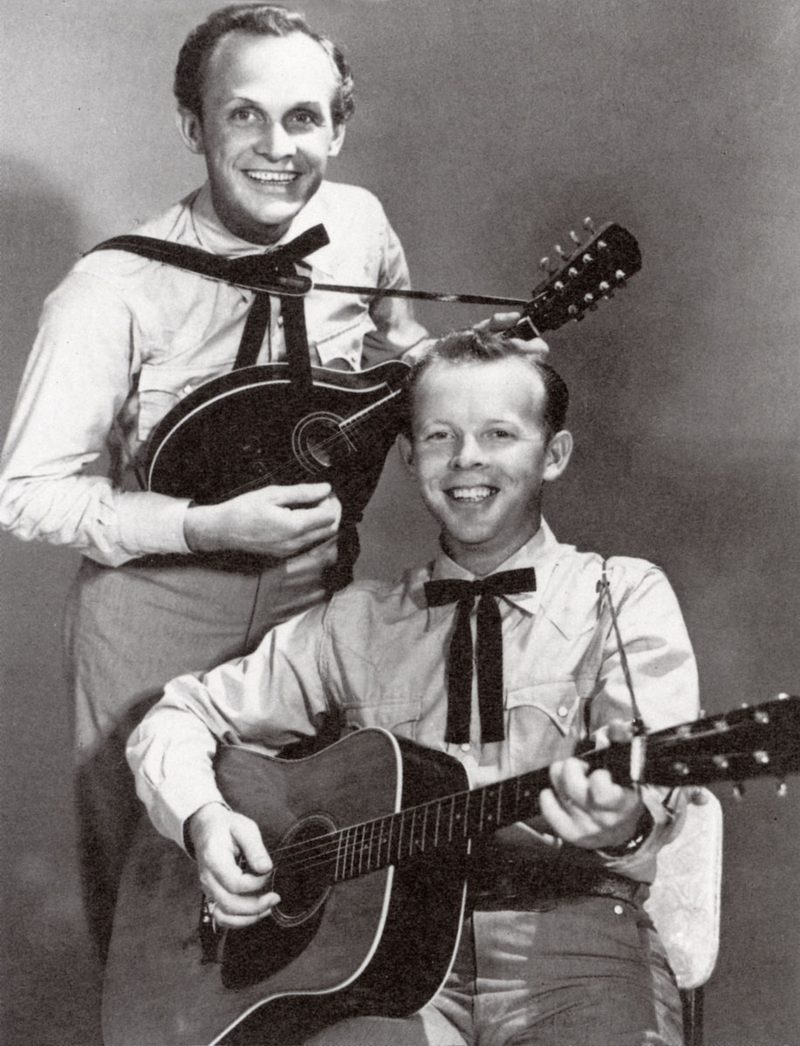
When called to “load up,” Ira grabbed his mandolin and Charlie clutched the guitar he had slept with as they got in the family truck. The boys had made this trip many times and knew there would be dead time and opportunities to practice their instruments and perhaps sing to customers buying their family produce. They were learning to harmonize on the country gospel songs they had heard on the radio and in church.
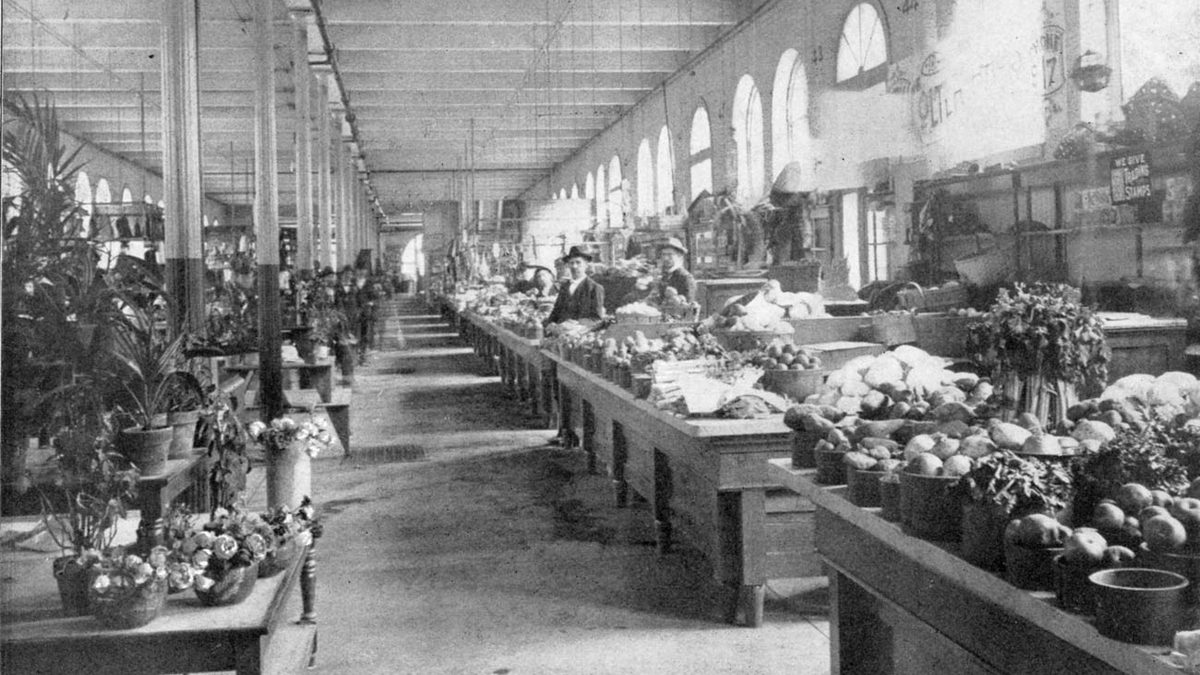
Truck farmers like Loudermilk lined the east and west sides of the Knoxville Market House and diagonally parked with the backs of their trucks pulled to the sidewalks to display their goods to shoppers moving along busy Market Street. By 10 a.m., commerce was brisk on either side of the Market House; the indoor stalls were stocked with bread and bakery items, poultry, fish, meats, vegetables, and flowers. In the August heat of 1942, the Loudermilk family was only one of hundreds of farming families throughout East Tennessee and surrounding states to earn a living selling their products in or around the Knoxville Market House. They would spend their day in Knoxville and depart when their truck was empty and their pockets full.
A few years after the Loudermilk boys would pick and sing in the back of their daddy’s vegetable truck, I discovered the Market House on what is now Market Square. When I first visited in the 1950s, it was a happening place, part farmers’ market, grocery store, and shopping mall all wrapped into one. I remember walking through the giant doors on the south end of the great, ornate building where Union Avenue intersects with Market Street and smelling the pungent bouquet of fish mixed with the potent odor of neglected meat. My mother shopped there and bought her fish from Turner’s Fish Market, which was in a stall near the south or Union Avenue end. There were several other fishmongers and butcher shops with their goods displayed on counters. Mr. Turner always wore a long white apron, soiled with fish blood and slime. I assumed he smelled like fish everywhere he went. The stalls throughout the Market House were filled with produce, and my mother would always buy okra for her okra gumbo—which turned me against the strange vegetable for life. Today, it is still about the only thing I will not eat. I remember the Market House as very crowded with ladies in housedresses and big straw hats and men in suits buying food to take home, laughing, and talking about adult stuff. As a kid, the true fascination for me, however, was on what was outside the building.
While in elementary school, I spent a great deal of time downtown and have fond memories of many of the buildings and stores that no longer exist. When I entered the first grade at Lincoln Park School on Chickamauga Avenue, my mother became a real estate agent on the 15th floor of the Bank of Knoxville building at the corner of Church and Market. Occasionally, I would visit her office and enjoyed throwing office supplies out the window to see how long it would take them to fall to Market Street. In my youth, I walked the streets of central city looking for entertainment and observing the activities of shoppers. I was like a kid in Wonderland. It was a different time; I guess my parents did not feel that I needed an escort.
One of my regular haunts on Market Square was the Kinney Shoe Store because it had a “shoe-fitting fluoroscope” where you could stand on a box and look into a scope and see the bones in your feet. In the early 1950s, X-ray was the rage and, thanks to Thomas Edison, fluoroscopy was a type of X-ray image you could watch on a monitor like a movie. I learned to jump up on the box and look at the bones in my feet when my mother would take me to buy Buster Brown shoes. No other store had fluoroscopy, and the Kinney Shoe Store on the east side of Market Square was crowded with children waiting their turn to look at their foot bones. The largest family-owned shoe store in America, Kinney eventually closed in 1998 leaving as a survivor its subsidiary division, Footlocker. My mother always bought me ugly Buster Brown shoes because my pediatrician told her I had high arches and I should never wear anything but a lace-up shoe. My family would sing the Buster Brown jingle, “Bark, bark. I’m Buster Brown, I live in a shoe. That’s my dog, Tige, look for him in there, too.” After it was discovered that excessive exposure to X-rays was harmful, the “shoe-fitting fluoroscope” was discontinued, but only after I had logged more time on the device than probably any other child in America. The first thing I did when I left the family home was buy a pair of loafers, and I never wore a lace-up shoe again until I turned 60 when my feet finally started to give out, probably due to wearing loafers against the advice of my baby doctor and the biological effects of overexposure to X-rays. I expect my feet might fall off any day now.
I loved visiting Mayo Seed Company on Wall Avenue at the north end of the Market House at Easter time. Hundreds of yellow baby chicks (including many dyed all colors of the rainbow) would run around in an enclosure with a ramp and sliding board into a tub of water. It was fun to watch them interact, climb the ramp, and slide down the sliding board. One year, I bought one of the chicks and took it home to shock my mother. Mayo Seed Company, founded in 1878, eventually became Mayo Garden Center and spread to all areas of the county.
As a boy, I would always visit Bell Sales Company on the east side of the Market House because that’s where the action was. Mr. Sam Morrison, the owner, was my friend and always had a stack of records for me because he knew and understood my taste in music. I could spend hours in Mr. Morrison’s store, which was small but had a great sound system. He would let me play records on a turntable and the music would play through speakers in the store as well as an outdoor speaker over the front door, entertaining the farmers and shoppers along the street with records by Big Joe Turner or perhaps Little Richard. When I walked in, he would say, “Bobby, I’ve got something good for you, come with me,” and he’d take me to the back of the store and hand me five or six choice records. I bought a lot of novelty and R&B records from Mr. Morrison and I still had them until recently when I sold my 45-RPM record collection because I ran out of room to store it.
Peter Guralnick in his book, “Last Train to Memphis,” reports that in August 1954, RCA field agent Brad McCuen stopped by Bell Sales to take orders from Mr. Morrison for new recordings and there was first exposed to a Sun recording by a young artist named Elvis Presley. The East Tennessee area was considered by RCA to be a “cow bell” area because any record that became a hit between Bristol and Knoxville typically went national. Morrison explained to McCuen that he was selling out a box a day of “That’s All Right, Mama” by Presley to both country and R&B fans along Market Street. McCuen reported the rising star and his surprising appeal in Knoxville to RCA executives, which led to the buyout of Elvis’s contract with Sun Records and the ultimate release of “Heartbreak Hotel” on RCA. Sam Morrison was not only good to me, but he was also good to Elvis and had a good ear for music.
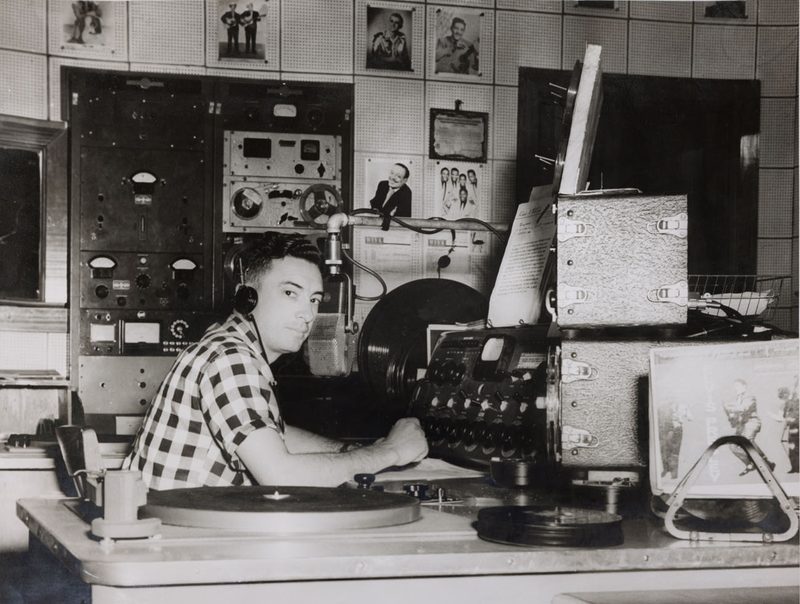
Back on top of Sand Mountain, Ira and Charlie Loudermilk became noted gospel singers around north Alabama. In the early ‘50s, they returned to Knoxville for radio appearances on WROL located on the top floor of the Hamilton National Bank Building at Gay and Clinch. WROL became the center of a new movement in country music known as “bluegrass” and served as the launching pad for such legendary artists as Roy Acuff, Tennessee Ernie Ford, Flatt & Scruggs, the Brewster Brothers, and the original Cas Walker Farm and Home Hour. It was while connected to WROL and living in Knoxville that Ira and Charlie changed their professional name to the Louvin Brothers because they thought they needed one that was easier to pronounce and spell. The Louvin Brothers became members of the Grand Ole Opry in 1955 and were inducted into the Country Music Hall of Fame in 2001. And to think they got their start while riding in a pickup truck on the way to the Knoxville Market House.
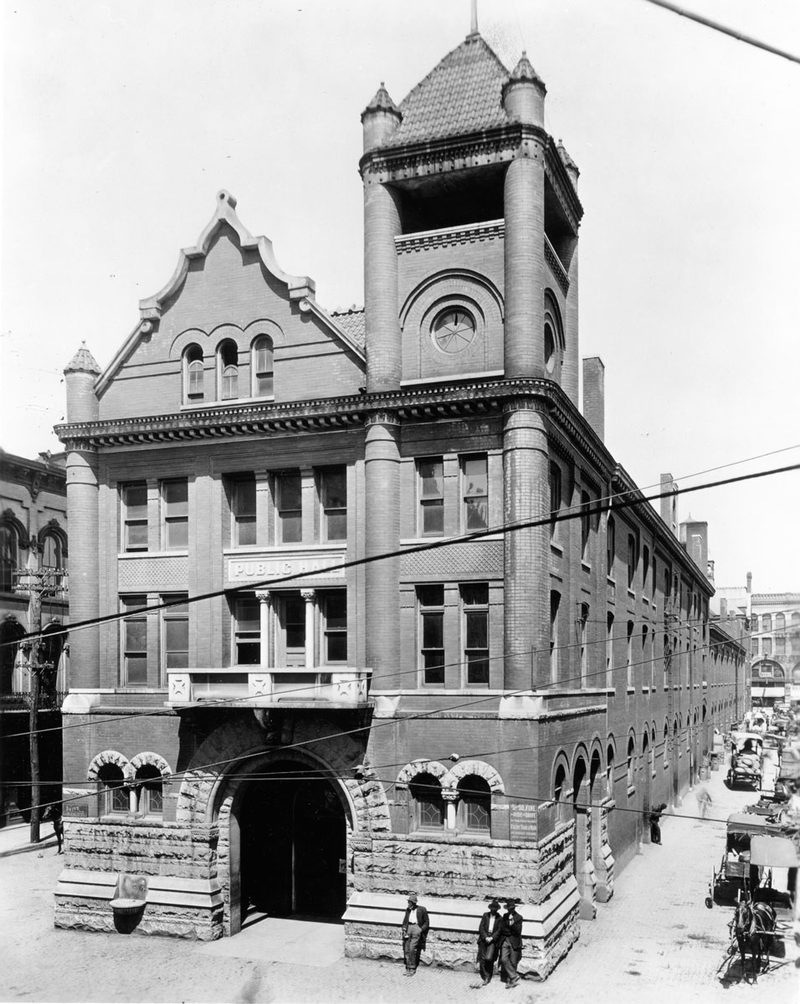
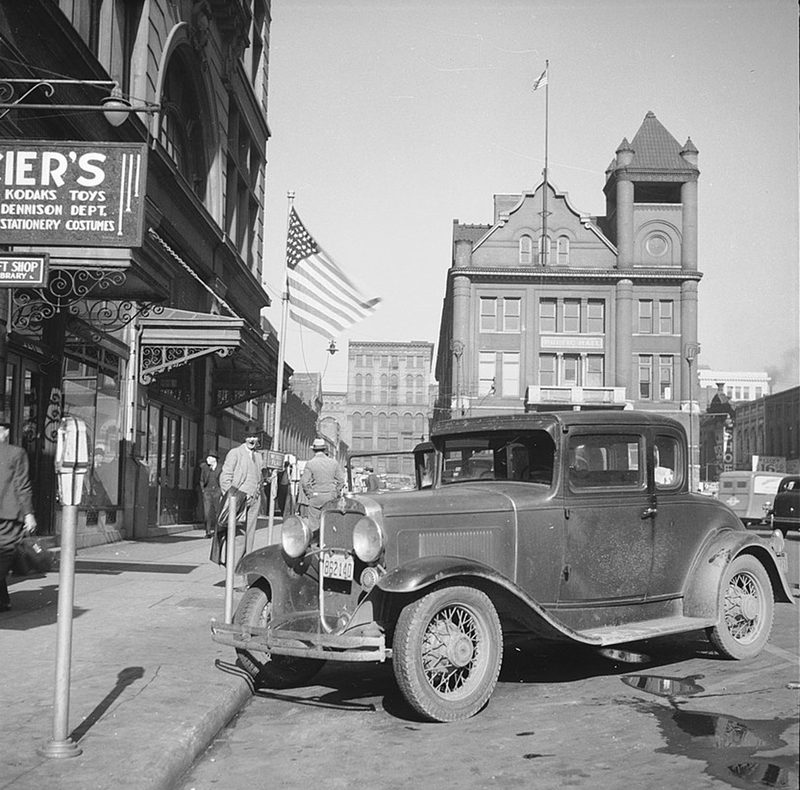
The Market House first appeared as a small building on Union Avenue in 1854, eventually expanding north to Wall Avenue. It was a tall, brick Victorian building with space for 60 vendors on the ground floor and space upstairs for public facilities, offices, and an auditorium, which became the first home of the WNOX Mid-Day Merry-Go-Round radio broadcast for a short time in 1936. With diagonal parking spaces on both sides of the building for truck vendors, there was only a narrow lane for moving traffic around the building causing considerable congestion. In 1960, a fire damaged a substantial portion of the Market House leading to its demolition, and the square where it once stood was transformed into the pedestrian mall we know today.
Good memories about good times, good food, and bad smells.
→ Swipe for Next Story
TravelMAY JUNE 2024
Colombia!
Re-exploring the home of my youth with my brother by my side
Story by Carlos Reveiz
My brothers, Fuad and Luis, and I were born in Colombia. For years, my mother worked at the American Embassy there, but her dream was to eventually move to the United States to offer her sons a better life. It was 1976 when her dream came true. We moved to Miami, Florida when I was 9.
I became a United States citizen in 1985 while attending the University of Tennessee. It was one of the proudest moments of my life. And while I made the decision to become a U.S. citizen, I never forgot where we came from. Colombia has remained etched into my memory, part always of who I am, and returning there, even just for a visit, has always been my dream. It’s amazing how these things come full circle.
Over the last several years, Luis and I have backpacked several epic locations across the world—Yosemite National Park and Mammoth Lakes in California; Bryce Canyon, Zion, and Escalante national parks in Utah; el Camino de Santiago in Spain, among others—yet all along we wondered about Colombia. When would the time be right for us to return? My trip to Spain last year with my Uncle Freddy reminded us that life is fleeting. I returned from that trip knowing what was next. I would head to our birthland in 2024, and Luis was on board to join me.
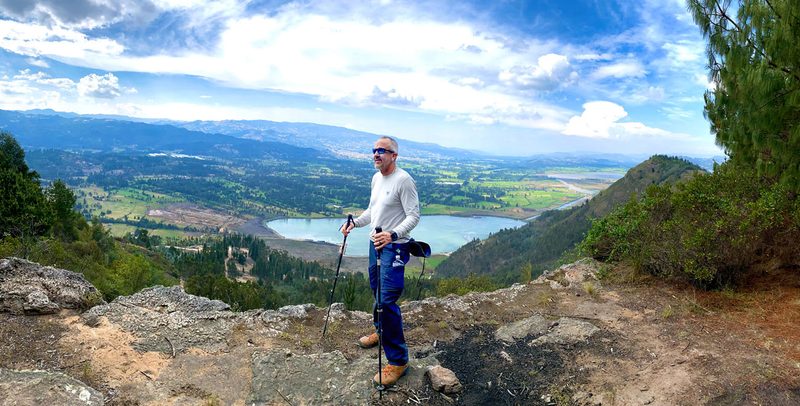
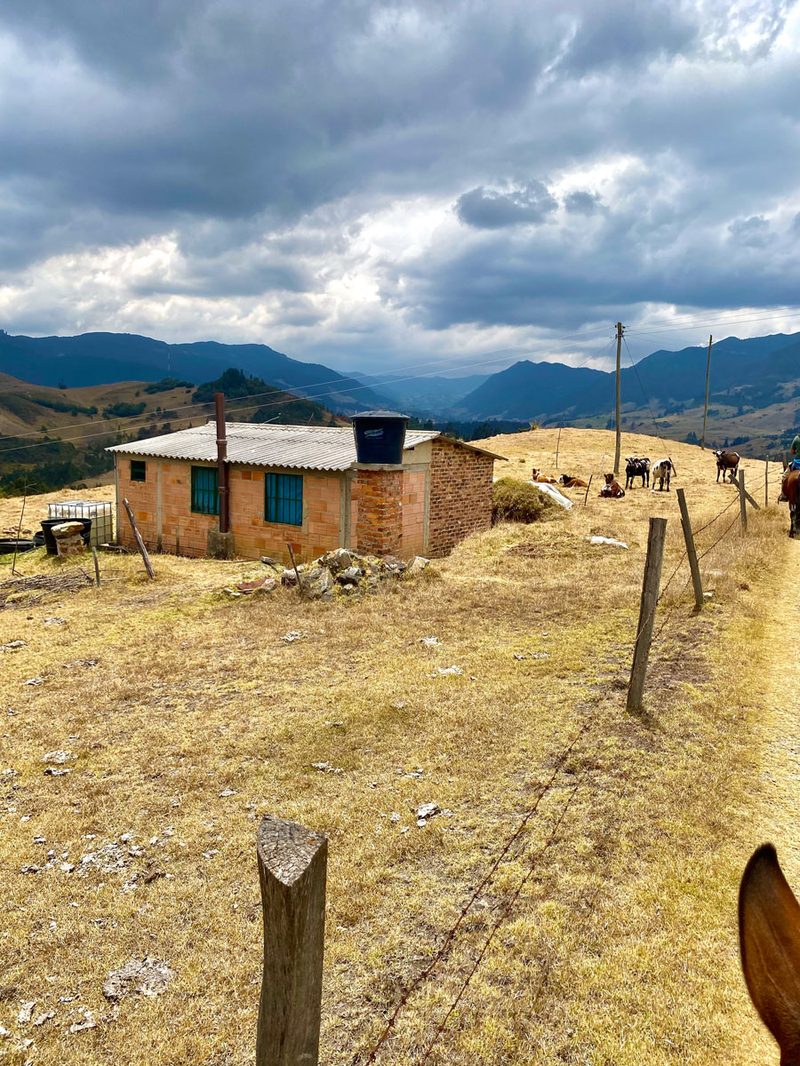
Through Luis’s contacts in South America, we connected with Tuto, a local guide, that would help make our dream a reality. We spent weeks planning with our new friend, ultimately deciding to backpack in a beautiful mountainous region called Nemocon, approximately two hours north of Colombia’s capital, Bogota, where we grew up. As kids, we dreamed of visiting this region. Luis and I wanted our hikes to be challenging, but also visual masterpieces. So we set off in search of our birthland and the memories that made up our youth.
Day one included a 16-mile hike as we followed an old abandoned train track over the mountains for most of the way. With an elevation gain of approximately 2,500 feet, the highest mountain we climbed peaked at roughly 10,000 feet. At approximately seven miles into our hike, we had to make our first major decision: Tuto asked if we wanted to take a shorter route or a more picturesque yet challenging route. If we were to choose the shorter route, we would have to cross an area where fighting bulls were kept. We would have to wait until the bulls were far from the crossing point and then hike (or run) as fast as possible for a little under a mile. We were each carrying 40-45-pound packs containing all of our food, clothes, tents, and water, so we opted for the longer route. We’d save challenging the fighting bulls for another day.
Our next couple of days took us across some beautiful backcountry scenery—rolling hills, steep mountains, stunning lakes, and countless breathtaking views overlooking our birthland. We hiked some established trails and other times found our way by following maps and consulting our gut. Tuto helped on that front. We also went on an eight-hour ride on horseback over the mountains that took us to places that seemed impossible to reach on foot. With a machete in hand, our 25-year-old horse guide cleared us paths just wide enough for our horses to saunter through.
The great majority of the time though it was just three of us and the mountains. Every so often we would run into acampesino, or peasant farmer, with his cow or burro hauling hay, water, or milk. It felt so far apart and separate from the world we are surrounded with everyday in the States. And I think that’s what made it that much more special. There was time to bond with nature, one another, and our memories. I was reminded of the weekends spent with my brothers heading off with my grandfather to his farm and spending several days in the mountains. I had forgotten how beautiful Colombia is.
Colombia has often received a reputation for being unsafe, though it never felt that way while there. The country is beautiful, rich in food and culture, and the people are some of the most welcoming I have met. They are proud of their home—and eager to share that. I felt such a sense of pride in being there, but also grateful for all the blessings and opportunities that the United States has afforded my family.
One thing that was very clear to me while there is that you don’t need a lot to be happy. One day as we arrived to a small village we saw a group of kids playing soccer on a dirt patch with something that resembled a soccer ball though it was far from it. They were happy and not concerned with needing anything else. I looked at my brother and said, “Look at that little girl holding that ball. She’s thrilled to have a ball. Meanwhile, we often aren’t happy with the ball that we have because it’s not the right color or brand.” He nodded his head in agreement and smiled. It certainly put things into perspective.
This is just the beginning of our re-exploration of our birthland. We want to bring other backpackers to Colombia so that they, too, can experience all that we had the pleasure of experiencing. Colombia is a proud and beautiful country with amazing food, friendly people, and many things to do.
As we shared our photographs and stories with our mom upon our return, she kept telling us how proud she was of us and how brave we were for going on such a challenging journey. The reality is that it was my mom who was the brave one. She not only had the dream to give us a better life, but she actually made it happen.
→ Swipe for Next Story
FeatureMAY JUNE 2024
The Science of Your Diet
Every diet is unique—understanding how they work with your body is key to choosing yours
Story by Dr. Edwin Spencer
I really disdain most articles written about diet. You see them on the front pages of the various magazines at the grocery store check out lines. They seem to be much more frequently advertised on every social media feed, as well. These articles are generally espousing the virtues of the latest fad diet generally centered around fat loss. This is not that kind of article.
I have been an been an orthopaedic surgeon for more than 20 years, and as such, I have operated on thousands of patients. I have seen first-hand that the nutritional status of the patient makes a big difference in their recovery. As a result, I have spent years developing an understanding of the science of nutrition. I implore my patients to review the recommendations on my website on how to nutritionally prepare for and recover from surgery.
That’s what this article is about, a deep dive into the science behind your diet, with the hope being that you will be able to read and consider the best diet for you based on not only your desires and goals, but also your metabolic health.
Fat loss is the most common driver for starting a new diet so we will use this as a springboard. This desire is highlighted by the exponential increase in the use of semaglutide as a means to reduce weight. If you recall from my last article, semaglutide is a peptide. Peptides can be used to increase the function of a cell or organ to secrete a desired substance such as a hormone. Semaglutide, in particular, works by mimicking the GLP 1 receptor which, in the gut, makes you feel full and, in the brain, makes you feel satiated. I frequently get asked about dietary supplements and medications for this purpose, but until you get your nutritional and exercise house in order, it is a moot point but one we can explore later.
All diets involve some kind of restriction. The most common are caloric restriction (simply reducing the total calories consumed), time restricted eating (intermittent fasting), or restriction of some food type and thus increasing another (carnivore, vegan, vegetarian, keto, low carb, etc). One of my favorite quotes is from Thomas Sowell as it applicable to most situations in life: “There are no solutions, just tradeoffs.” This applies to our diets.
The Basics of Restricting Calories
Caloric restriction is based on the concept of CICO (calories in vs calories out). At its very basic level, this equation is true, but let’s try to make this more actionable. I have heard people say that all calories are not the same. This is as silly as saying that all seconds—whether we’re talking time or trips to the buffet—are not the same. Obviously, all seconds are the same, it just matters what you do with them. A calorie is simply a unit of energy and more specifically heat. It is the unit of energy needed to raise the temperature of 1 gram of water by 1 degree Celsius. Where you derive these calories does matter.
This leads us to the thermic effect of various food types. The thermic effect of food takes into account how many calories are required to metabolize the substance. Fat has a thermic effect of about 3 to 5 percent, carbohydrates around 8 to 10 percent and protein is a whopping 20 to 30 percent. That means that if you consume 100 calories of fat that you will net about 95 calories while if you consume 100 calories of protein you will net 70 calories. This might be one of the reasons that we get the “meat sweats” after a good ribeye.
Caloric restriction seems to have additional health benefits besides weight reduction. Mice that have been calorically restricted (compared to those allowed to eat ad libitum) lived longer and had a decrease in the development of cancer. This has not been replicated in humans to my knowledge but is interesting data, nonetheless.
Caloric restriction can be easier if we understand satiety. We tend to eat and feel satiated based on food volume and protein content. Two equal volumes of food can have vastly different caloric content. Choosing foods with lower caloric density will allow you to eat less and feel satiated. In general, the higher the water and fiber content and lower the fat content of the food will result in lower caloric density. Low caloric density foods include fruit, vegetables and meat. High caloric density foods tend to be dehydrated like chips or high fat content like candy bars.
The Fasting Facts
Time restricted eating or intermittent fasting has become popular and to some degree can work via the same mechanism as caloric restriction. You are simply not eating as many calories in your feeding window. There however appear to be some differences. When fasting, the body will start running low on available glucose and start mobilizing fat and some glycogen stores and go into a state of ketosis. Ketosis is the formation of ketones from the metabolism of fats as a fuel source. This shift to using fat as the fuel source and the reduction in blood glucose results in a reduction of insulin. Hyperinsuliemia, insulin resistance, and metabolic syndrome are all related problems and affect 36 percent of Americans. Reducing circulating insulin levels is a critical component to the prevention of these problems and the development of diabetes.
In addition, the fasting state induces the body to shift from being in an anabolic state (growth) to more of a catabolic state (decrease in cell division and growth). Enzymes like mTOR (mechanistic target of rapamycin) decrease in activity which causes the cells to replicate less and focus more on cleaning up old cellular debris. This clean-up process, or cellular autophagy, is associated with a reduced risk of cancer.
Restriction Revelation
Restriction of various food types in lieu of others is a very vast topic and is wrapped up not only in nutritional preference but also philosophical ideals. The carnivore versus vegetarian debate can become very heated. Let’s look at some basic principles to help guide a reasonable diet.
As we discussed in our section on restricting calories, there are three main food types: fat, carbohydrate, and protein. We need all of them to survive. Fat or lipids includes triglycerides and cholesterol and are critical as they form the outer structure of the cells and hormones. Carbohydrates are a primary fuel source of which glucose is the most common. Proteins form the building blocks for our bodies and enzymes for metabolism.
In general, about 50 percent of a carbohydrate/glucose load is burned and expelled as CO2 and H2O as we breathe, 5 to 10 percent is stored as glycogen and the remaining 40 percent is stored as fat. The point is that we pretty much have an unlimited ability to store excess energy as fat, but very little ability to store protein. There is a small pool of available amino acids, but most of our protein is used for structural building. While we can and do use protein as a fuel source, it is not very efficient and is better used to build and run the body. Personally, this is why I like a high protein diet, which is usually around 1 gram per pound per day.
The ketogenic diet or very low carb diet has benefits as well. As stated earlier, it can markedly reduce insulin resistance and is therefore a good diet for diabetics. The ketogenic diet was originally designed to help patients with seizure disorders. It can reduce the incidence of seizures by 60 percent, in most studies. The types of fats consumed on a ketogenic diet are important. Saturated fats (no double bonds in the carbon chain) in general increase your LDL (low density lipoprotein) level. Your LDL level and more specifically apoprotein B level (the carrier of LDL) is one of the strongest predictors of atherosclerotic disease. Atherosclerosis is the hardening of the arteries and causes heart disease which is by far the most common killer in the world. Monounsaturated or polyunsaturated fats are a better choice.
No matter the diet, one of the most important aspects of your diet is the amount of soluble fiber. Soluble fiber is a prebiotic used by the bacteria in your gut which they ferment into short chain fatty acids. One of the fatty acids, propionic acid, inhibits an enzyme in your liver that makes cholesterol. Many of the statin drugs act by inhibiting this same enzyme. So just through diet, you can lower your cholesterol. Also, high fiber diets have been shown to reduce inflammatory markers such as CRP and IL-6. Finally, it has been demonstrated that for about every 10 gram increase of fiber in your diet, you can reduce your risk of heart disease and stroke by 10 percent with high fiber diets boasting a 24 percent decrease. It is recommended to get about 15 grams of fiber for every 1,000 calories. This is best done through fruits and vegetables. A smoothie in the morning with fruit and vegetables and protein powder of choice is a simple way to do this.
Finding What’s Right for You
Although there is no one perfect diet for everyone, high protein and soluble fiber with minimal saturated fat seems to be optimal. Most importantly, you have to choose a diet to which you can adhere. Consistency is the key for results in dieting and exercise. Make your diet and exercise a habit. One of my other favorite quotes is from James Clear in Atomic Habits. “Habits are the compound interest of self-improvement. The same way that money multiplies through compound interest, the effects of habits multiply as you repeat them. They seem to make very little difference on any given day and yet the impact they deliver over months and years can be enormous.”
Clear had it right. Making healthy choices habitual is a must for leading a healthy life. If you are unsure where to start, let this article get you moving, and then speak with your doctor and ask questions. Through conversation with someone who understands more about how your body reacts to a variety of factors, you will find your optimal diet. However, don’t forget that diet is only half of the equation. See you at the gym!
→ Swipe for Next Story
FeatureMAY JUNE 2024
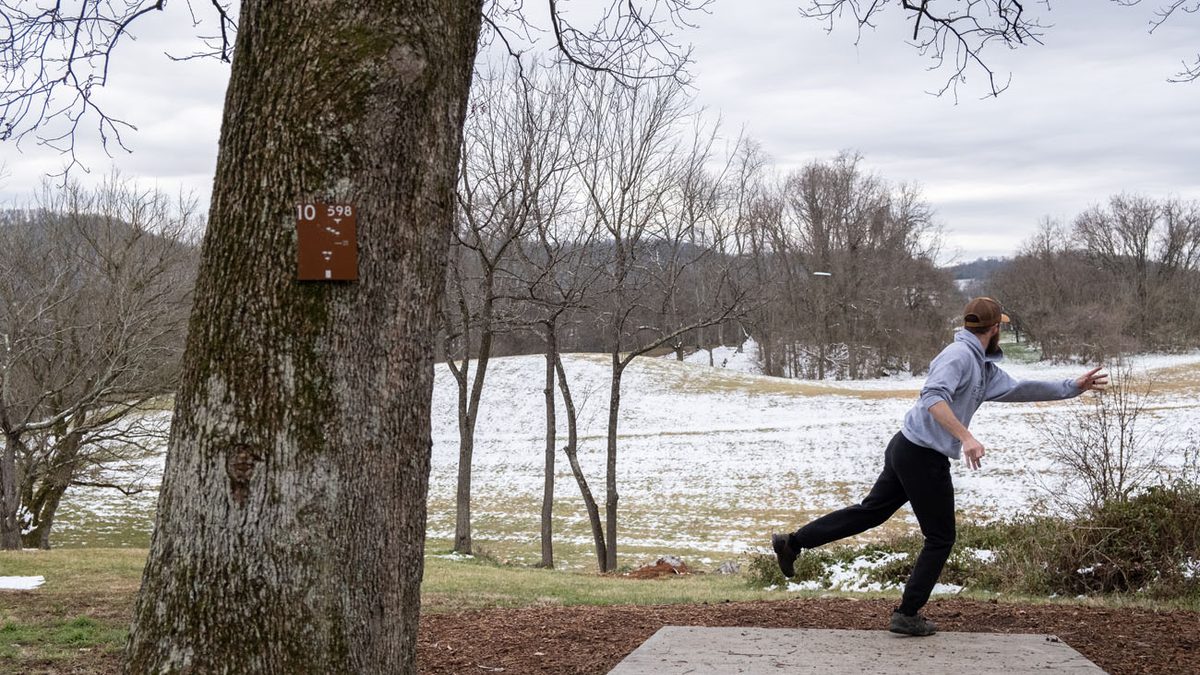
Knoxville Area Sees Disc Golf Growth, Ample Courses
Story by Phil Newman
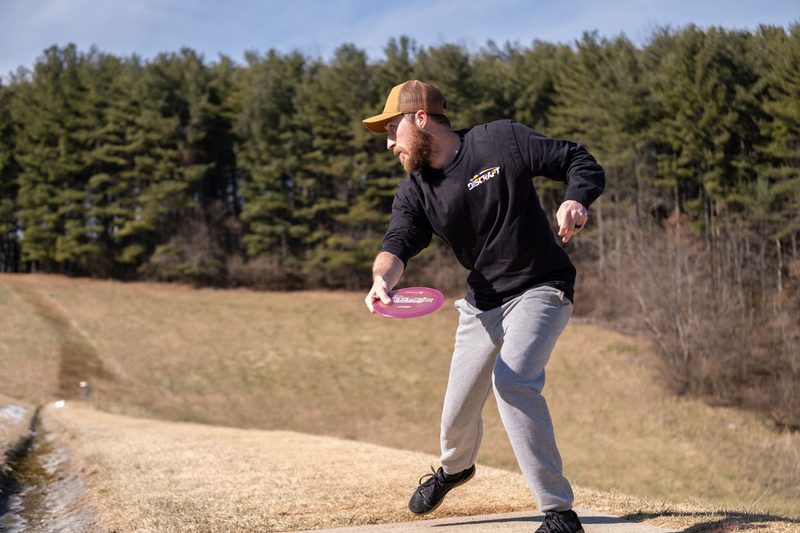
“Just about anyone can play disc golf,” says Brian Beauchene, owner of Pluto Sports and a longtime area advocate. The city “has a thriving disc golf scene with informal local competitions, PDGA-sanctioned events, and social gatherings; we even play Glow Disc Golf” with incandescent discs and lights on the baskets.
Morningside Park was the first course in town, Beauchene says, but now there are “about 11 in Knox County and many in nearby towns like Oak Ridge, Maryville-Alcoa, Morristown, Norris, Clinton, Jefferson City, Kingston, Harriman, Crossville, Greenville, Athens, Cleveland, Jellico…”
According to the course app UDisc, Knoxville-area courses include:
• The Claytons (Maryville; 19 holes)
• Tommy Schumpert Park (18 holes)
• Morningside Park* (18 holes)
• Victor Ashe Park (18 holes)
• Admiral Farragut Park (9 holes)
• Norris Disc Golf Course (Norris, 9 holes)
• Powell Station (Powell, 9 holes)
• Johnson University (18 holes)
• Inskip Junior Course (9 holes)
• Sarah Moore Greene DGC (9 holes, short beginning course)
• Plumb Creek (9 holes)
• The Mounds @ Grove Park (Oak Ridge, 18 holes)
…and many more!
Almost every course is free to play. To find one near you, simply type “disc golf course” into your map app, or use your browser to run a search. Pick up a disc or two at a sporting-goods store like Pluto, and get started enjoying the game!
*This older course’s tee pads are not marked. Download the UDisc app for guidance.
→ Swipe for Next Story
FeatureMAY JUNE 2024
Power to Spare
The 2024 Vols have resilience, solid pitching, and sluggers enough to return to the College World Series.
Story by N. Brooks Clark
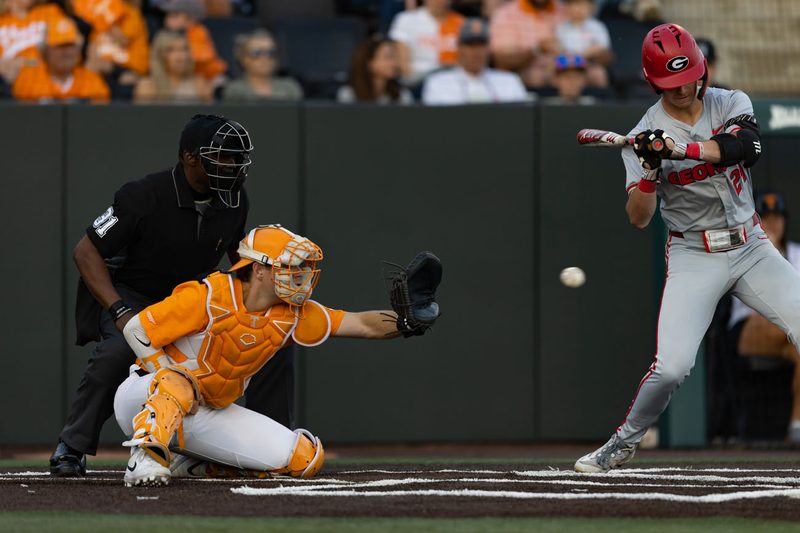
In a Saturday game against Georgia on Easter weekend, before a record crowd of 5,677 at the expanded Lindsey Nelson Stadium, the Vols had a chance to show their grit and toughness.
They had lost 16-2 the evening before, as reliable sidewinder A.J. Causey gave up eight runs in 2 2/3 innings to the Bulldogs, the only team in the country with more taters than the Vols. “Sometimes you get slugged in the gut,” said coach Tony Vitello afterward. “When that happens, you got to keep on truckin’.”
On Saturday, reliable right-hander Drew Beam from Murfreesboro was similarly shelled for seven runs in 2 2/3 innings. Trailing 7-3, Kirby “Vollie Fingers” Connell came in with two out and ducks on the pond and got.339-hitting Bulldog Slate Alford to ground out. With his stylish handlebar mustache, Connell got his nickname from the 1970s Oakland A’s reliever Rollie Fingers.
In the bottom half of the third, junior first baseman Blake Burke from Brentwood, California, hit a 411-foot rocket over the right field wall to tie UT’s record for career home runs with 40. “His swing’s been compared to a lot of people,” said Vitello. “He tied the record on the field, but it really happened in the batting cage. He’s really gifted but I think he’s a better worker than he is a player. There’s plenty of skill there for him to make it all the way to the big leagues but it’s been refined by a big-time work ethic and also a will to win that’s pretty special. I wish we could bottle it up. He’s got a little David Ortiz in him.”
In the bottom of the fifth inning, down 8-4, Vitello pinch hit Dalton Bargo, a.350 hitter and versatile fielder from Omaha, Nebraska, for shortstop Ariel Antigua. Bargo led off with a nifty single to left. Second baseman Christian Moore hit an opposite field liner to the right corner for a double. Burke lined a single to right center to score Bargo. DH Robin Villeneuve, a junior from Quebec, was hit by a pitch to load the bases. Rightfielder Kavares Tears took an outside pitch for a base on balls to score Moore. Then leftfielder Dylan Dreiling put UT up 10-8 with a grand slam of 366 feet over the right field wall. “See ya,” said WUTK-FM writer Cade Brown.
Dreiling is a sophomore from Hays, Kansas. “He’s got a lot more fire in him than people realize at times,” said Vitello. “But I think he does a good job of keeping that calm that you have to have when that crowd got pretty loud. I think it comes from being comfortable in his own skin. Coming here from Kansas, you got to realize you belong here. His work in the weight room has helped with that.”
After the Bulldogs tied it in the seventh inning, Tears led off with a single and Dreiling walked. Third baseman Dean Curley hit a hot double off the third baseman’s glove to score Tears. With the bases loaded, pinch hitter Reese Chapman got an RBI walk to make it 12-10. Then Bargo hit a grand slam to make it 16-10.
Connell ended up throwing 94 pitches over five innings for the win. “I liked being able to throw all the pitches,” he said. “I didn’t have a change-up today, but maybe I turned some heads a little bit throwing longer than I usually do,” he said.
“It’s the approach they’ve had,” said Vitello. “I’m more proud of Kirby than anything for the ultimate sign of some grit out there. The game was chaotic. He came in and calmed it down. At the end he was out of gas, physically.”
“They’ve got a little bit of swagger to them,” noted WUTK’s Jace Brown. “This team is very strong—everybody’s talented. They all know what they can be. The team two years ago was full of guys that wanted to prove everybody wrong. This team wants to prove everybody right.”
Happy Fans Amid the Renovations
The Easter weekend had begun with a festival atmosphere on a sunny Friday evening. The youngest fan out of the 5,575 in attendance was two-and-a-half-month-old Blair Williams, in the arms of her mom, Heather Norris, alongside her aunt Caroline. “It’s never too early to get them started,” said Norris.
Sterl the Pearl Henton worked his DJ controller on the first base side walkway, showering passers-by with relentless enthusiasm. “Here’s Bobby Scott,” he said to the smiling MVP of the 1971 Sugar Bowl and longtime backup to Archie Manning on the New Orleans Saints. “It’s all love in orange and white!” said Sterl. “Ain’t no top like Rocky Top, baby!”
Roxy Lyons Jr., director of the Emerald Youth Foundation baseball/softball ministry, stood with Holston Middle School seventh grader Charlie Stone, waiting for his moment to say “Play Ball” into the mic of Tennessee Fan Experience intern/MC Erin Green. “Don’t be nervous, baby,” said Sterl. “No mumbling,” added Lyons, with a grin.
Over the PA: “Hi. This is Head Baseball Coach Tony Vitello. Please be mindful of our ongoing renovations. Pardon our progress and our dust. Soon the nation’s No. 1 baseball venue will be right here on Rocky Top.” The improvements so far include a New Fan Zone on the third base line, with porches of tables in left field. In two years (and $100 million), capacity will be 7,600. That’s much less than many monster SEC ballparks, but Vitello and the designers are optimizing the Fenway-type intimacy that fans love.
“April showers bring May flowers,” said Sterl. “We’re going to Omaha.”
An Easter Sunday Shutout
The rubber game on Easter Sunday afternoon was a pitching duel that turned on a fourth-inning Dreiling throw from left field to Dean Curley at shortstop to Farragut High grad Cal Stark at home to tag out Slate Alford trying to score from second on a Dylan Goldstein single. That held the score to 0-0.
In the UT half of the fourth, Bargo slammed a 345-foot homer to right, Tears hit a Texas Leaguer single to left center, went to third on a Dreiling double, and scored on a balk. Dreiling scored from third on a Chapman’s sacrifice fly to deep center. UT was up 2-0.
In the seventh inning Hunter Ensley made a remarkable diving catch in center to end the inning. “That was insane,” said Vitello. “I’d like to know how many yards he slid on that dive. How are you not inspired by that?”
Lefty Zander Sechrist, known for chewing multiple pieces of bubble gum during games, went six innings, his longest career appearance, striking out seven and allowing just four hits and no runs. “My arm’s gonna hurt tomorrow, I won’t lie,” Sechrist said. “The fastball was playing well, change-up, too. It kinda felt good being from Georgia and all.” He said he was pleased to have Nate Snead relieve him with his notable velocity. “I’m just a craft lefty that can’t even touch 95,” he said with a chuckle. Snead, a Wichita State transfer, pitched the last three innings after closing with an inning and a third the evening before. It was the first time Georgia had been shut out all season.
Third baseman Billy Amick, a Clemson transfer, missed the Georgia weekend with an appendix procedure. With a.367 average and 10 homers at mid-season, he has earned a nickname, referring to his deft use of the barrel of the bat. “Billy just being Billy, man,” said Moore to the Daily Beacon’s Trevor McGee after a big game earlier in the season. “I call him ‘Billy Barrels.’ You know he’s going to do what he does best, and that’s hit.”
Moore, a junior from Brooklyn, New York, was part of the Boys Club of New York Independent Schools Program that helped promising youngsters develop their academic and athletic skills and place them in boarding schools. As a middle schooler, Christian went to Cardigan Mountain School in New Hampshire. “The idea was to put him in a school where he could academically thrive,” said Bill Mitchell, longtime director of the ISP program, which began in 1957.
In the summers, Christian played on showcase teams seen by college coaches and scouts. As John Adams noted in a News Sentinel column, Moore, then a 90-m.p.h. pitcher, started hearing from Vitello in eighth grade, always on Tuesdays. “I still remember it like it was yesterday,” said Moore. “T for Tuesday and Tennessee.” He went to Baylor School in Chattanooga for tenth grade, then switched to Suffield Academy in Connecticut, to be closer to home. With 37 career homers at midseason, Moore was pushing toward the same record passed by Burke and getting used to his role as leadoff hitter. On the road to Omaha, his team leadership will be an essential factor.
→ Swipe for Next Story
FeatureMAY JUNE 2024
Soaring to New Heights
World-class disc golfer Chris Dickerson sets the pace as the sport skyrockets in East Tennessee
Story by Phil Newman
On the afternoon of October 15, 2022, as a throng of football fans descended upon Neyland Stadium for that night’s Tennessee vs. Alabama SEC showdown, two of those universities’ biggest fans were duking it out in the woods near Charlotte, North Carolina, in the high-stakes Disc Golf Pro Tour Championship presented by Barbarsol.
And while the atmosphere wasn’t quite as sizzling as it would be on Rocky Top later that evening when the Volunteers won a thriller, 52-49, the rapidly growing sport of disc golf—perhaps you’ve heard of it as frisbee golf, or “frolf, Jerry!” from George Costanza—had drawn a raucous gallery following players that included two of the world’s best around the 18-hole (well, baskets, actually, with hanging chains) course.
Arguably one of Tennessee’s best-ever pros in the sport, Chris Dickerson of Gray, a US champion and multiple tournament-winning disc golfer, was dueling with arguably Alabama’s best player, Matthew “MattyO” Orum, a seasoned veteran whose Instagram profile proclaims, “Roll Tide 4 Life” and “Nick Saban is my hero.”
“I wore my checkerboard shirt that day just for MattyO,” Dickerson says with a laugh during a conversation withCityviewbefore embarking on the 2024 pro-tour season, when he and his wife, Brittany, a fellow VFL, would drive their custom RV to dozens of pro events scattered across the US (as well as Europe). “There’s always some good-natured trash talk between us when Tennessee and Bama play.”
For his part, Orum didn’t wear his familiar Crimson Tide polo or houndstooth hat that day, but he punctuated many of his best shots with a signature “Roll Tide!” that was echoed by one or two Bama faithful in the gallery.
Both Dickerson and Orum have been in the pro ranks long enough to see their sport soar to new heights of awareness, popularity, and rising sponsorship and prize money in both the men’s and women’s pro divisions. Another accomplished pro from Tennessee is Knoxville’s own Will Schusterick, a three-time US disc golf champion.
Especially since Covid-19, during which cabin fever spurred an outflux of folks craving activities in nature, many have found their way into disc golf because it is accessible (most courses are in public parks), affordable (discs cost about $10-20 each), time-efficient (a round is faster to play than “ball golf”), family-friendly (all ages can play together), and community-building (men’s, women’s, and teen/college groups find fellowship on the course).
Post-Pandemic Popularity Boom
The growth has been monumental, according to industry leader UDisc, whose app allows players to track and score their rounds at most courses. Consider that in 2023:
• 3.4 courses were built per day, adding to the total of 15,205 courses worldwide.
• 1.4 million disc golfers logged 21.9 million rounds on the UDisc app and spent 42.4 million hours playing. (That’s like watching Taylor Swift’s The Eras Tour 15 million times; only Travis Kelce comes anywhere near that level of fandom.)
• The US has more disc golf courses (10,063) than Dunkin Donuts (9,574).
• 89% of disc golf courses are free to play.
• Public parks are the most common locale, followed by colleges, camps, traditional golf courses, ski areas, churches, and hotels.
• The sport is also growing fast in places like Scandinavia, Asia, the Philippines, Mexico, and Africa, thanks in large part to organizations such as the Paul McBeth Foundation, a nonprofit launched by perhaps the best-ever disc golfer. The foundation funds new courses in underserved areas across the globe.
The most significant stat from 2023 might be that 87% of players introduced someone new to disc golf, fueling the sport’s exploding popularity.
Not surprisingly, the Knoxville area is on the leading edge of the growth curve. Factor in the ongoing migration of Americans to the South and to our corner of it, along with a robust amount of parks and open spaces, and you’re increasingly likely to see flying saucers in the sky around town. More people of all ages are taking to our local courses.
They include Kyle Brashear, a lifelong Knoxvillian who was invited to play a round at The Claytons course a few years ago. He was immediately smitten. “I have a great group of friends and we use it as our hang time and healthy competition,” he says. “It’s definitely felt like disc golf has become more popular in Knoxville. I remember hearing about people playing in college and high school, but not nearly as many as now.” Brashear’s favorite course is “the Claytons or The Fort over in Kingston. Both have good variety in pins, and I feel like I can test my drives without hitting trees too often.”
Fellow Knoxville native and Lenoir City resident Warren Sharp can relate. Having started playing with his kids in the 1990s, he has helped to foster disc golf’s growth partly by serving as president of a local club and facilitating events such as the Old City Open at Morningside and the Volunteer Classic played on several courses.
“We’ve seen steady growth in sign-ups” to such events, Sharp says, with registrations at least doubling since the pandemic. “I’m still amazed at the influx of people coming to play.” On a personal note, he adds, “When I’m out on a course, I’ll come across some kids watching us, especially on a little course like at Lenoir City Park. I always carry extra discs and will see if they want to try. I say, ‘Play these nine holes, and if you don’t like it, give the disc to one of your friends.’” Almost invariably, the newbies fall in love with the sport and stick with it.
From Farm Hand to Top Athlete
Chris Dickerson was one such kid, albeit a few hours to the northeast. “I grew up on a farm,” he says, “and one day my dad mentioned that there was a disc golf course on the other side of a fence where we were working. I had never heard of it, so I was like, ‘Cool, whatever.’” Later, as a junior at Daniel Boone High, “two friends asked me to go play after soccer practice. We had a starter set of three discs, one apiece. Then we realized they were made to go different distances [drives, approach shots, putts], so we alternated. I was throwing overhand like a baseball. It was so much fun. We ended up losing two of the three discs within 15 holes.”
Naturally competitive—he was also a high-school kicker who came close to playing college football—Dickerson took to disc golf like a mallard to Cherokee Reservoir. “I realized there was a mental side to the game. You have to adapt. Once you’ve hit a tree in the fairway, how can you save par? It doesn’t matter your skill level or your background—it’s the thinking aspect and the competitive drive. That’s what hooked me.”
After turning pro in 2013, Dickerson steadily rose through the ranks. His biggest victories include the 2022 USDGC championship and two pro-tour championships (2018 and 2019). He is a perennial contender at every tournament he enters. In 2022, he signed a five-year sponsorship deal with Team Discraft valued at upwards of $1 million.
Dickerson is the only top pro whose “brand” features a camo and hunting vibe—even though he concedes he was “bored and couldn’t sit still long enough” to favor hunting growing up like many of his family members. But the camo is “a nod to my heritage” as a proud East Tennessean with tight-knit, rural roots. “I’m very happy to be able to represent Tennessee and my community,” he says.
On the pro tour, “for the most part the galleries are bigger than they used to be,” he says, “and they’re not just following the lead or chase card [the top eight players]. You’ll see smaller groups who want to follow their favorite player.”
Pro events are broadcast live by the Disc Golf Network on its subscription app and/or on YouTube, with highlight videos shown later, also a fan favorite. In the fall of 2023, CBS Sports featured a disc golf event on its network as well, another sign of its emergence.
As for that 2022 championship event in Charlotte against Bama fanatic MattyO, Dickerson and Orum wound up knotted for fifth place—perhaps a fitting result for two of the world’s best disc golfers representing the South, the SEC, and their respective states. Roll Tie?
Looking to try disc golf for yourself? Check out some local courseshere.
→ Swipe for Next Story
FeatureMAY JUNE 2024
Grauhaus
A mid-mod home in Knoxville’s Westmoreland neighborhood brings the outdoors in through a clean design and an abundance of windows
Story by Mary Leidig
William Powell began designing houses when he was four—Lego houses that he would build, tear apart, and rebuild—over and over. His mother said he was always looking to find the best design. By the time he was 13, the Manitoba, Canada, native was building birdhouses and drawing house plans on graph paper.
In 2019, he got to design a real house in Knoxville with a “fabulous design team” and today lives in it with his partner Ed Anderson. This 4,650-square-foot home is not a strictly modern or mid-century design. There is Japanese influence, and the home even has a name—”Grauhaus,” which is German for gray house. “Gray had a moment a few years ago. You could see this in various magazines, and that was fine with me because I’ve loved the color all my life,” William says.
William is a former executive with BBC Chartering, a German ocean shipping company. Ed is an attorney for the company.
Build a Home in Canada?
Their journey to this “forever home” began while the two lived in Knoxville’s Forest Heights neighborhood. They outgrew their 100-year-old Cape Cod and originally planned to build a home in Canada. Their journey took them elsewhere.
“We found some unusual property in Knoxville that looked like a big elephant, and the driveway was the trunk,” says William, smiling. “This property was just waiting for us. The owners could not sell it, and they ended up tearing down the 1940s house.” The grade in front of their house is basically the same as its previous layout.
Before the global pandemic changed the world in 2020, the couple and their construction and architecture teams had already completed their new home. They dodged that bullet and made their home a reality.
“We got very lucky. The cost of everything sky-rocketed about five minutes after we moved in,” William says. “We were very fortunate and well along in the design and building process, so we missed the labor shortages and supply chain issues. We were aware of what was going on.”
William credits architect Jonathan Miller with the gift of designing homes that look like they’ve been there forever. “Our home is one of those. As you approach the house, looking up at the long driveway, it looks as if it has always been there. It’s wonderfully relaxing on our 1.2 acres.”
The home’s expansive glass exterior and no trim make for the kind of simplicity William and Ed wanted in a new home. While they are not minimalists, they appreciate the lack of adornment in the home inside and out. William describes the working style with their builder F.E. Trainer Construction and Miller who designed the home: “Jonathan laid it out, I drew it. I could see pieces but not the whole.”
Jonathan well understood William’s passion for design. “William and Ed are so nice and really were ideal clients to work for,” he says. “William in particular had such a vision for the house and immersed himself in the many details. I have always felt that clients with a love for design help us in creating the best architecture, and that is certainly the case with this one.”
While the historic Westmoreland neighborhood offers many traditional homes, it also includes many ranch-style and mid-century modern homes, Jonathan says. “So we really ended up designing a mid-mod home in a u-shaped configuration to create the beautiful courtyard.”
Kitchens Are for “Kitchening”
The results are stunning and include three full baths, two half baths, and offices for William and Ed, in addition to living spaces, kitchen, a dining area, courtyard with a pool, and a covered porch and fountain outside Ed’s office. The master bath opens onto the courtyard through a sliding door. “Technically, the house has three bedrooms plus a den, but we use the house as two bedrooms and two offices,” William says.
Inside, in keeping with the clean look, there is no crown molding, and with extensive paneled cabinetry throughout the kitchen, offices, and bedroom closets—”the panels disappear into doors.” Cabinet maker Chris Minnich built cabinets that store everything behind doors and drawers. This custom-built cabinetry is a theme running throughout the home—a home Minnich is proud of.
All windows wrapping this house are energy-efficient Marvin’s “Modern” product line—unusual in both their design and engineering,” says William.
Definite iconic elements of the home are the interior courtyard and the 28-foot-long by 10-foot-tall sliding glass window wall—the largest door Jonathan and his team have ever designed. Equally unique details are the hidden study and the glass throughout the home. Additionally, Jonathan says the wrap-around kitchen is not open-concept like most of his homes. “That means it has a lot of great cabinet space and a cool little grilling porch. All basement rooms also turned out great and were unusual even though we did not have ideal window space and had to create window wells to position the windows in.” All this blended with the mid-mod styling.
The home is designed to be forever. William and Ed even included an elevator that is accessed downstairs by the entrance from the garage and upstairs near the kitchen.
The house sits high, with a 12-foot ceiling in the living room and 9-foot ceilings elsewhere, making it easy to bring the outside in. The many windows offer a large view of the surrounding neighborhood and Sherwood Drive. On a clear day from their kitchen windows, they see Mount Le Conte—Great Smoky Mountains National Park’s third highest peak.
Kitchen design and color choices were easy for William and Ed. “I fell in love with white cabinets and a gorgeous black tile floor—yes, black,” said William (They keep a robot vacuum handy). Smokey Mountain Tops worked well with the homeowners as they chose their white quartz countertops.
Leading into the dining room is a large table that seats 10. The nearby living room leads to a courtyard, fireplace and small pool. Lovely porch pendant lights feel Japanese-inspired.
Unlike many new homes and renovations, this home is not an open concept design. “Ed says that the introduction of the open plan kitchen marks the beginning of the decline of Western Civilization. I think he’s mostly joking,” says William. They both favor rooms with more specific functions, saying “kitchens are for kitchening.”
Giving an Old Dogwood New Life
Early in the building process, William and Ed knew some old and dying dogwood trees would need to come down. What they did not know was that artisan Tyler Jamison would honor the aging trees by creating a stunning wood-turned bowl that now lives in William’s office.
“Tyler Jamison turned a bowl from one of the old dogwood trees’ root ball. He really is a gifted artist. It’s so beautiful, and it’s a treasure,” says William. “It lives on the bookshelves in my study with lots of other treasures from my life like Grandfather’s teddy bear. Things like that. There’s nothing ‘minimalist’ about the shelves in my study.” Tyler also built the stone steps as part of the graceful walkway leading to the home’s 8-foot-tall mahogany front door.
Some great old trees did survive. In planning the house design, Jonathan recalls efforts that went into saving them. “We even applied for a variance with the City of Knoxville to build where the house stands in order to save a mature magnolia and other trees between the house and the street.”
Feels Like Summer Camp
As one might expect, these homeowners love the simplicity of their landscaping. How does landscaping look with this more modern home on their more than an acre? “I told my landscaper to choose things that would thrive under a policy of benign neglect. Yes, really,” says William.
They originally tried to grow a no-mow fescue grass that one literally does not mow. William calls that effort a spectacular and truly ugly disaster. “Our neighbors are saints. We now have normal grass, and yes, we mow it,” he says, smiling.
Landscaping here is comfortable and a bit wild, says William. “Therapy” redbud trees are the super stars every spring.
Ed says life in their new home and property feels like summer camp. William adds “because when we sit in the courtyard by the fire, we can look up and see the stars, the trees, and not much else—just like camp.”
→ Swipe for Next Story
FeatureMAY JUNE 2024
A 3D Way to Help
Dr. Justin Daggett’s 3D-Printing is changing the way patients understand their child’s diagnoses
Story by Micha Haas
Yes, Dr. Daggett is holding a child’s skull. Don’t worry, it’s not real; though it’s closer than you might think. It’s a high-fidelity 3D-printed replica, one of many that Dr. Justin Daggett can create in the scope of his practice at East Tennessee Children’s Hospital.
“I actually spent my first few years out of fellowship over in Kenya, the Mission Hospital, and we had no access to replacement parts,” says Dr. Daggett. “So I bought a 3D printer and started learning how to do it all myself, so we could print replacement parts, print models, all those sorts of things.”
It’s not just replacement parts that can be printed, either. While 3D-printed implants are not yet approved by the FDA, Dr. Daggett says, models of body parts, like the child’s skull, serve other useful purposes, for instance as visual aids for the parents of his young patients who often don’t have much experience with their child’s healthcare. They also make for good visual aids for other doctors. A 3D print made from a scan of a patient can allow a surgeon, for instance, to better prepare for the operation.
“It really is amazing,” says Dr. Daggett. “It has really changed the sort of precision of care we can offer to our kids.”
If you’d like to support Children’s Hospital’s mission, you can donate using our Top Chefs linkhere.
→ Swipe for Next Story
FeatureMAY JUNE 2024
Anything They Need
Volunteers at East Tennessee Children’s Hospital ensure children, families, and staff find home when they walk through the doors
Story by Rebecca Whalen
Long before the Hematology and Oncology Clinic at East Tennessee Children’s Hospital begins buzzing for the day, you’ll find Keith Sinclair, cleaning rooms, setting up stations, and doing anything he can to help.
Keith isn’t a member of the hospital staff, though. He is a volunteer in the clinic, and has been putting in hours there every Tuesday for more than six years.
“I try to offload from the nurses and staff anything where it is appropriate for me to do so,” he says.
As you can imagine, the rules about cleanliness are strict at the hospital—and they are rules Keith takes seriously, as do the other volunteers—but as he explains his duties and what a typical day might look like, it’s clear this is so much more than cleaning to Keith. There’s a deep care for what he does for families, and a big part of that care is simply knowing what they’re going through. Keith is a cancer survivor.
“I’ve traveled that pathway,” he says. “When they start telling me about some experience they’ve had, I’m thinking, yep, went through that myself, and you can really connect with them.”
Keith isn’t allowed to share elements of his personal story with patients or families, but the sheer fact he’s been down that road is enough for him to feel like he can support them in a different way, if only through listening and encouraging them to talk to a nurse.
“I can sort of read between the lines when I hear them talking. And I think that makes for a good relationship in a sense. I think I’m in the right place to be a volunteer.”
Amidst cleaning and simply being there to help support the people working, waiting, and under treatment, Keith finds ways to “give them a joyful side to a day that is inherently not joyful,” he says. “Stress relief is a big part of the job for the kids and for the parents, and I have to say, if you can make the kids laugh and you can make the kids smile and you have fun, then you can look up and you can see the stress disappear out of the parents’ faces.”
The Happiest Place in the Hospital
It was about seven years ago that Keith and his wife, Susan, originally connected with Cheryl Allmon, director of Volunteer Services and Programs at the hospital.
“We’re retired, and we don’t have any kids or grandkids,” Susan says, “so we wanted to find a way to give back.”
Cheryl walked them through the options for a volunteer—and there are many. That year, on Christmas Eve, the Sinclairs arrived at the hospital with wrapped sandwiches in hand for the families and staff. Cheryl quickly realized their desire to help and suggested they come volunteer regularly. Keith joined the clinic team, and Susan joined the gift shop, the “happiest place in the hospital,” she says.
“Volunteers find their little niche sometimes, and then they focus on that as much as we are allowed to,” Susan explains. “Cheryl makes sure that we can help out.”
Down in the gift shop, Susan comes to life as people walk through the doors. Employees come for new swag. Family members stop in, on the hunt for a stuffed animal or balloon to bring their family member. A mom stops down having forgotten her hairbrush and is pleasantly surprised when Susan hands one over to her and wishes her a good day.
“Susan has an incredible way of reading those situations, as many of our volunteers do,” Cheryl says, adding that they keep an extra supply of those basic items just in case.
“It’s not all about making money. It’s about making sure our families are taken care of.”
Susan spends her shift ensuring the shop is running smoothly, putting price tags on new items, unloading boxes of inventory, and getting them on the shelves. Sometimes this space is part of that stress relief Keith spoke about, a happy place to find a bit of joy to bring back to a child.
Whatever It Takes
The volunteer program at Children’s Hospital started back in 1964, but it’s grown significantly since its start. At the helm today is Cheryl, whose connection to the hospital began when her son was five.
“Shortly after we moved here, he got sick. That led us to the emergency department, which led us to being in and out of here over the course of three years with multiple surgeries and procedures. He’s now 28, perfectly healthy, and just got married last year. So not only do I owe a lot to the hospital, but I have a very deep appreciation for the volunteers.”
Cheryl never intended to join the team, but when she spotted an ad for a part-time volunteer coordinator, she knew it was her next move. She’s been here for more than 18 years doing what she calls, “the best job in the entire world. You can’t help but fall in love with the mission of Children’s Hospital.”
Today Cheryl leads a team of 326 active volunteers, many of whom do at least one shift weekly. They volunteer in a variety of capacities for the hospital once they go through their application process, which includes a lengthy onboarding. Some of the volunteers are forward facing with patients, like Keith, Susan, and those at the info desk. Others prefer to be behind the scenes and clean bathrooms, fill the food pantry, and do landscaping. A popular volunteer opportunity is being a cuddler in the NICU, “the coveted role,” Cheryl laughs.
Evelyn Coleman is one of the cuddlers, but she started volunteering in the gift shop, like Susan. She’s at the hospital two days a week now, one shift in the gift shop and the other in the NICU, “because what we get back in return, it’s hard to describe that feeling knowing you’re helping,” she says. “You see those kids’ faces and parents thanking you and the staff so appreciative of you being there. That’s worth more than money. That’s the payment right there.”
Evelyn, Susan, and Keith are all prime examples of just how involved a volunteer at Children’s Hospital can be. Aside from the gift shop, NICU, and clinic, volunteers also participate in fundraising activities, like Fantasy of Trees or park cars at UT football games. They sit on the Volunteer Leadership Council, which meets every other month to
discuss ways to raise funds for the hospital. It’s Cheryl’s job to know who she can count on, whether that’s an individual volunteer or a group from a business in the community that’s expressed an interest in helping.
“Anything they need,” Susan says.
While some volunteers are retired, many are not. “They have full-time jobs, and yet they find time in that very busy week, every week to spend at least four to five hours a week at Children’s Hospital,” Keith says.
Even for young volunteers, it often leads to so much more. “It’s surprising how many of our employees started as volunteers,” Cheryl says. “We currently have two physicians who started as teen volunteers with us. They were just in high school at the time.”
Natalia Havasy, Children’s Hospital Marketing Director, says the hospital gives away $60 million in free care each year, “but we can’t do that with staff alone and give them that same experience.”
The time spent volunteering means that the money saved on this extra support can go back into the mission.
“Her team sees a need, brings that need, takes that burden off of the family, and then it’s just so many little emotional touch points like that, which makes their experience the best one here possible.”
All In
In 2023, volunteers logged 38,433 hours at Children’s Hospital. Amidst those hours were moments that volunteers will never forget, moments that define theirwhy.
A child’s smile as they bang the gong to celebrate getting to go “off therapy” after watching them battle cancer for years. The hug received around a volunteer’s leg by a little one who decided to call them “papaw” as their parents look on laughing. The wave of relief that settles over a mother’s face by a simple hairbrush gifted to her in the gift shop. The couple getting married in the NICU hall after staff and volunteers brought everything they could together to make it beautiful. Each one of these moments is what keeps volunteers showing up.
Later this summer, Keith and Susan will host their second wine dinner to raise funds for the hospital. “We raised $50,000 last year in one evening,” Susan says. This year, the goal is to double that fundraising. And it’s all for the love of East Tennessee Children’s Hospital.
“We just love the hospital. We love the fact that it serves only children. We’re proud of the fact that they are one of a small number of children’s hospitals in the United States that still is independent, freestanding,” Susan says. “And, you know, our goal is to help them stay that way. However we can help.”
You can learn more about some of the work East Tennessee Children’s Hospital doeshere.If you’d like to support Children’s Hospital’s mission, you can donate using our Top Chefs linkhere.
→ Swipe for Next Story
FeatureMAY JUNE 2024
Spanning Philanthropy
East Tennessee Foundation pools resources, invests wisely and serves nonprofits in 25 counties
Story by Susan Alexander
Amy and Robert Cathey wanted to share with their three daughters the desire to give back to the Knoxville community. So they set up a fund through the East Tennessee Foundation to make that happen — year after year.
The Cancer Support Community needed a new building to house the myriad programs they host for people impacted by the disease. An endowment fund the nonprofit established at the East Tennessee Foundation 20 years ago allowed them to purchase and renovate that home — without the need for a mortgage.
When Legacy Parks Foundation was just getting started in 2005, they leaned on the East Tennessee Foundation to provide the infrastructure and financial management they needed. An endowment they started there helps make ends meet in lean years, says Legacy Parks executive director Carol Evans, and keeps on growing in good ones.
The East Tennessee Foundation, established in 1986, supports nonprofits in 25 counties by pooling donations, investing wisely, and distributing funds in a variety of ways, from college scholarships to far-reaching perpetual endowments. Across the country, about 900 community funds do similar work. “We’re in the top 50 based on assets,” says Angelia Nystrom, vice president of advancement. “That’s a testament to the work we do and the generosity of the people in this region and their desire to have an impact on our communities.”
How it works
The foundation accepts gifts of all sizes — from $25 to at least $25,000 to establish an endowment fund. Those funds flow back out to everything from Project Grad to the Pat Summitt Foundation. When the Smoky Mountains burned in 2016, the East Tennessee Foundation was quick to establish an opportunity fund to help those in need in Gatlinburg. It was able to collect resources from many sources, vet the organizations working in the aftermath, and funnel the funds into the pipeline. “We raised a lot of money and put it to good use,” says David Martin, honorary lifetime board member and fund holder. “An individual donor wouldn’t be able to do that.”
In 2022, the East Tennessee Foundation managed total assets of $504 million in nearly 500 different funds and distributed $22 million in grants and scholarships. (Assets for 2023 were $540 million, though the complete annual report was not ready when this was written.) Nonprofits in Knox County received nearly 600 grants totaling $11.5 million in 2022, while nonprofits in Anderson, Blount and Jefferson counties received upwards of $600,000. Other counties ranged from $1.2 million (Greene) to $2500 (Roane). In addition to its own board of directors, the foundation receives guidance from 17 regional affiliate fund advisory boards.
Fund holder George Conner noticed in the 2022 annual report that Unicoi County had received no disbursements. He contacted the foundation and they identified a food pantry in need there. The next year the food pantry received $1,000. “It’s good to seek charities that contribute to the wellbeing of others,” Conner told the foundation, “and there are lots of good charities out there.”
Two hundred thirty-five students, one-quarter of whom were first-generation college students, also received a total of $1.1 million in scholarship funds in 2022. Students at Central High School in Knoxville were among them, thanks to the generosity of the Class of 1950, which in 1980 established a scholarship fund to benefit Central seniors. That year they awarded $400, but they continued to pool their funds and in 1996 were able to establish an endowed scholarship with the East Tennessee Foundation. Since then, more than $118,000 has been awarded to 76 recipients.
A variety of funds
Some donors, like Amy and Robert Cathey, open a donor advised fund, which allows them to get involved in grant making. “We wanted a fund that would provide the basis so we could perpetually make a donation to the foundation’s operating fund,” Amy Cathey said. “And we wanted our three daughters to have an example of the importance of giving. This Christmas, one of the girls’ gifts was to select a nonprofit they are passionate about to receive a small grant in their honor. It gave them exposure to the impact their gift was able to make. It’s a family tradition we will continue.”
Other donors contribute to field-of-interest funds, which funnel multiple donations to grants for which nonprofits can compete. Those fields of interest include arts and culture, women and children, education, health, disaster relief and community development, among others.
Nonprofits can establish their own endowment funds that grow over the years, as the Cancer Support Community, the Legacy Parks Foundation and roughly 100 other nonprofits have done. “An endowment’s a weird thing,” says Beth Hamil, the Cancer Support Community’s executive director. “We have an endowment fund that the foundation manages, and we have to work together to spend it. It’s sort of like a savings account.
“We were outgrowing our previous home, and the board and staff had been dreaming about a new location. Our founders had established the endowment fund for us 20 years ago, and the foundation has managed that money. It helped us make this dream of a new home on Baum Drive a reality and palatable financially. We used a lump sum of $1.2 million from the endowment and then raised $1 million to renovate the building without a mortgage.
“The endowment is a rainy-day or do-something-important fund. And the new building was deemed important so we could deliver our programming in the right way. We’re thrilled to be here.”
Not only do endowments serve as “savings accounts,” but the foundation also provides investing expertise and back-office knowhow that allow nonprofits to focus on what they do best, says President and CEO Keith Barber. “Our mission is enabling those organizations, through various ways, including getting them grants or scholarships, to do the work that they’re experts in. If we can take some of the burden off of them, it’s awesome.”
Meeting donors’ needs
Just as the foundation serves the nonprofit community, it also serves donors with a range of needs and interests. If a donor wants to make an estate gift of a piece of property, for instance, the foundation would establish an agreement with them, handle the sale of the property and help them leave a legacy with the causes they care about. Individual nonprofits often would find that process too cumbersome to take on.
“We helped a couple establish a fund in memory of their daughter to benefit the organizations that were dear to her,” Katharine Killen, vice president of programs and chief operating officer, says. “It will exist in perpetuity, and it will keep her memory alive forever.”
Responsive giving
Looking ahead, Barber wants to expand the foundation’s opportunity fund, the same one that fed help to the residents of Gatlinburg post-fire. “It’s the fund we have that we can direct monies toward issues, for instance, the housing issue in greater Knoxville. Or equitable health care. It’s funds that are more flexible to be used when initiatives or needs pop up. So we’ll put some emphasis on that this year, and I believe our community is going to step forward and help do that. We have proven to be a very substantial entity that can be relied on as a philanthropic bank, if you will, that the community can count on and donors can count on to make a difference.”
“At the end of the day, we want to be able to help people fulfill their philanthropic goals,” Killen says. “We want to be the bridge between philanthropists and nonprofits.”
→ Swipe for Next Story
FeatureMAY JUNE 2024
Chef Alex Gass | Fire & Salt
HIS STORY
Story by N. Brooks Clark
Chef Alex Gass grew up in Oak Ridge, inspired by his mother and aunt’s cooking for their church. He started at Big Ed’s Pizza and Aubrey’s. Gass (guitar), Associate Chef Billy Krebs (bass), and his son, Assistant Manager Gabe Krebs (drums), play in the band Entente, which performed at Maryville’s Bird and the Book pub the Friday before his Top Chefs event.
At Fire & Salt, it’s all about family. Almost everyone working at Fire & Salt heard about the job from a family member of Chef Alex Gass or a friend of one. This esprit de corps gives the restaurant a warm and welcoming feel and diners a VIP experience. “That’s the point,” said Jessica Gass, Alex’s wife. “That family feel is what we’re trying to do.”
At the Top Chef dinner, bartender Cassy Davey offered two “welcome” beverages, a classic whiskey sour and a light white wine. Harpist Becky Hook added a touch of elegance with her music. Chef Alex’s dad, Rex, sat with Associate Chef Billy Krebs’ parents, Jeanne and Gary Sanderson. Becky and Jim Dodson were also on hand. The mayor pro-tem of Oak Ridge and a middle school art teacher, Jim once taught Chef Alex and now teaches his daughter, Trinity.
Servers Whitney Moles and Gaby Teston passed the hors d’oeuvres: Caprese salad skewers (mozzarella balls, cherry tomatoes, kale pesto and balsamic drizzle); grit chips with house-made pimento cheese, Italian sausage, a crisp bread-and-butter pickle; and focaccia topped with herb cheese and dill pickle. “We pickle everything,” chuckles Chef Alex.
The meal began with a mushroom croquette made with local mushrooms from Extraterrestrial Fungi, goat cheese and panko breadcrumbs, served over a balsamic reduction sprinkled with toasted pecans. It was paired with Pine Ridge Chenin Blanc & Viognier from Clarksburg, California. “The bright notes of the chenin blanc are a delightful balance to the rich and earthy mushroom croquette,” said Chef Alex.
The entrée of King Shepherd’s Lamb—“our play on shepherd’s pie,” said Chef Alex—was a dish of melt-in-your-mouth lamb chops served with Irish potato colcannon, a blend of mashed potatoes and kale. “We added a pea puree to brighten the Irish potatoes up,” said Chef Alex, “and serve it with Guinness gravy.” It was paired with a Domaine Gassier Syrah from Camargue.
Dessert was a deconstructed Irish Cream cheesecake, a blend of goat cheese, espresso beans, chocolate mousse, white chocolate, and chocolate ganache. This was paired with a Hermandad Red Blend from Argentina. Honestly, he had us at “chocolate ganache.”
→ Swipe for Next Story
FeatureMAY JUNE 2024
Chef Darin Hoagland | Oliver Royale
HIS STORY
Story by N. Brooks Clark
Chef Darin Hoagland’s grandparents and mother ran a hunting restaurant in California. “The kitchen, with them, was my comfort spot,” he recalls. After culinary school at the Art Institute of Fort Lauderdale, Florida, he cooked at Café Maxx in Pompano and other high-end Florida restaurants. He moved to Knoxville and started as a line cook at Oliver Royale in 2017, becoming executive chef in 2021.
General Manager Jamie Brackett, behind the bar for much of the evening, provided a light and refreshing welcome concoction of vodka, lime, mint, and Italicus vermouth liqueur.
Sommelier/Server Kirstie Durham and her well-drilled team of Connor Bodnar and Austin Witick, with help from Brackett and Oliver Hotel GM Daenon Young, presented diners with a “Lamb lollipop” amuse-bouche of a perfectly cooked medallion of lamb at the end of a thin bone and topped with Mediterranean salsa, feta cheese, and a puree of almonds.
“This is a meal with a French twist,” said Executive Chef Darin Hoagland, starting with an appetizer of Escargot en Brioche: red-wine-braised, basil-fed escargots, Pernod anise liqueur, confit garlic, Plugra butter, cream, and baby arugula on brioche tostini. This was paired with Château Graville-Lacoste Graves 2022 Sauvignon Blanc from Bourdeaux, France. “The acidity of the wine balanced the richness of the butter and the cream,” noted guest Aaron Hall.
The entrée featured a Sous Vide Ostrich Tenderloin Fan Filet with potato risotto, parmesan, lemon, foraged Mitchell’s Farm mushrooms, heavy cream stock parsnip crisp, and a blackberry demi-glace. “The demi-glace takes three days to make,” said Chef Darin, “with a bone-reduction finished sauce that we add blackberries and blackberry vinegar to.” This was paired with Dandelion Vineyards Lionheart of the Barossa Shiraz 2018 and 2021 from Australia.
Dessert was a Honeyed Pear in Puff Pastry. “An old chef of mine named Oliver Saucey taught me this recipe,” said Chef Darin. It’s a Sauternes-poached pear wrapped in pastry goat cheese and puff pastry twists. “I thought of Mom making the cobbler,” said Chef Darin. “I twisted the pastry and wrapped it around the pear, then coated it with orange blossom honey.”
This was perfectly paired with a Résidence Pineau de Charentes. “It’s from the Cognac region,” said Sommelier Durham. “It’s made from a wine of blended grapes that are blended with a one-year-aged cognac eau-de-vie. It’s sweeter than cognac with slightly less alcohol and not so sweet that it overpowers the pear.”
→ Swipe for Next Story
FeatureMAY JUNE 2024
Chef Deron Little | Seasons Innovative Bar & Grill
HIS STORY
Story by N. Brooks Clark
Originally from Yakima, Washington, Chef Deron Little started cooking with a master chef at 15. He was a chef for hotels and country clubs, and a resident chef at Greenville Technical College in South Carolina before opening Tahoe South in downtown Greenville. He cheffed at Gettysvue and Fox Den country clubs before starting Seasons Innovative Bar & Grille in 2013.
The evening began with a choice of two “welcome” cocktails: a delightful Grey Goose Cucumber Mint Refresher (fresh lime juice, house-made cucumber simple syrup and club soda) or a smoked Buffalo Trace Old Fashioned with orange bitters, and porter syrup.
“This is a celebration of French culinary arts,” said Owner and Executive Chef Deron Little. “Classic culinary techniques are used on every dish that’s coming out.” The salad starter featured a quarter-head of Boston lettuce atop a blueberry citrus vinaigrette, with julienne of roasted red peppers and batonnet (“small stick” in French) of cucumber, Shippendad prosciutto, and a honey-reduction poached pear topped by a dollop of Gorgonzola blue cheese. A Rombauer Vineyards 2022 Carneros Chardonnay provided a crisp accompaniment.
The appetizer was Duck Three Ways—that is, duck presented three ways. A duck-bone consommé was topped with duck leg confit and a delicate poached quail egg, balsamic reduction and micro greens. Medallions of duck breast—“as tender as my wife Sheah’s heart,” according to Chef Deron—which had been cooked sous vide for five hours at 115 degrees, were served with a lively tomato leek jam. This course was paired with a Belle Glos Clark & Telephone 2021 Santa Maria Valley Pinot Noir, one of several wines that Little discovered on a skiing vacation in California.
The entrée was Seared Grain-fed Bison Tenderloin wrapped in caul fat on a Peruvian (purple) potato croquette, topped with pickled exotic oyster mushrooms, and served with a tournée (seven-sided) zucchini with a rich veal gloss. “This creates a symphony with the wine,” said Chef Deron, introducing a 2019 Fox Creek Old Vine Zinfandel from Villa Toscano in Shenandoah, California.
The dessert was Chef Deron’s “twist on Baked Alaska,” a Mascarpone vanilla cheesecake with Ghirardelli chocolate lava, crowned with flaming meringue bathed—in a nod to our region—in 140-proof moonshine instead of rum. “You cut into the cheesecake and the chocolate just comes pouring out,” he said. This was complemented by another Villa Toscano gem, Erika’s Reserve Port.
→ Swipe for Next Story
FeatureMAY JUNE 2024
Chef Jared Martin | Fire + Smoke
HIS STORY
Story by N. Brooks Clark
Chef Jared Martin set foot in his first commercial kitchen at age 16, serving in an ice cream shop. Six months later he shifted to food. Martin spent time perfecting his craft in restaurants across the region, connecting with mentors along the way and mentoring others in the process.
The evening began with Bar Chef Joe Trail’s welcoming Mint Lemonberry Spritz of vodka, soda water, mint, raspberries and blackberries, and the secret ingredient—ginger beer. “I wanted something bright and refreshing to awaken the palate,” said Trail.
We sat down with owners Doug and Tara Snover, who restarted Fire + Smoke in December after its previous owner Archer Bagley unexpectedly shut its doors.
“It was a fairy tale story,” saidCityviewPublisher Nathan Sparks. “A restaurant saved because it was a couple’s favorite date-night destination.”
“It was a people thing,” explained Doug Snover, a project executive with Messer Construction. “We wanted to retain the great folks like Joe Trail, server Mandy Glenn, Chef Jared Martin, and his team of sous chefs who are learning so much from him. It was a team, a restaurant ready to go.”
A First Bite of two A5 Wagyu beef medallions came with a blistered, smoky-flavored cherry tomato, cornbread crisp, and pickled peppers. They were paired with either a Yamazaki single malt Japanese whisky or Spanish La Cartuja Priorat red wine.
A palate cleanser of lime sorbet made way for an appetizer of four steamed little neck clams in tomato broth, with crispy potatoes and bacon, topped with Greek yogurt foam, and paired with a High Valley Sauvignon Blanc.
An intermezzo of lemon thyme sorbet made way for the no-knife-required, smoked and braised, bone-in short rib, Yukon Gold potatoes, Hen of the Woods mushrooms and blackberry bordelaise, paired with Purple Hands Willamette Valley Pinot Noir.
“It is a versatile wine,” said Martin. “With notes of mango and grapefruit, it provides a wonderful balance and elegance to the earthy flavors of the entree.”
Cucumber sorbet introduced what Martin calls “our play on a S’more”—a flourless chocolate torte, toasted marshmallow, graham cracker, covered in chocolate ganache served with fresh raspberries. It was paired with a Cup of Joe, combining Mr. Black coffee liqueur, Whisper Creek Tennessee Sipping Cream, Appleton Estates Signature Jamaican rum, and allspice.
→ Swipe for Next Story
FeatureMAY JUNE 2024
Chef John Bryant | Bistro by the Tracks
HIS STORY
Story by N. Brooks Clark
Chef John Bryant trained at Johnson and Wales University in Charleston, South Carolina. He ran a catering business in Johnson City for eight years then joined Bistro By the Tracks Catering two years ago. Last year, Bryant took the helm of the new Bistro by the Tracks, bringing his culinary prowess to Bearden.
Behind the bar, Will Oakes, corporate beverage manager for Burleson Brands, poured sparkling juniper wine over grapefruit-aperitif granita in champagne glasses for The Phoenix, a welcoming cocktail named for the upstairs room that burned and, like the mythical bird, rose from the ashes. Oakes originally developed the recipe at Café Boulud in New York City.
Former quarterback/congressman Heath Shuler enjoyed the festive atmosphere. His son Navy got some downs at QB in the fall. “It was so exciting,” said Heath. “At one point I could see him and our daughter, who’s a freshman on the dance team, at the same time.” He noted that his niece Zoie has signed with the Lady Vols softball team, the eighth member of the family to be a UT athlete.
The appetizer was an Appalachian Tabbouleh Bowl with Anson Mills farro verde grain, fermented honey-roasted local root veggies, Brussels sprouts leaves, Harissa pepper paste, lime, and benne seed flatbread—paired with Eroica 2022 Reisling to give a hint of sweetness offsetting the spicy aspects of the Tabbouleh bowl.
The entree was aged Duck Breast served with local parsnip puree, Brussels sprouts, hakurei turnips, pickled mustard seed, and preserved South Carolina persimmon jam. “We aged the duck with koji, a soybean-based marinade, for seven days,” said Chef John Bryant. “That intensifies and concentrates the flavor. It brings out everything duck that makes it a duck.” It was paired with a Brothers Cabernet Sauvignon 2016 from the Rodney Strong Vineyards in Sonoma County.
The dessert was a Smokey Pecan Chocolate “Bar” atop a thin “soil” of cocoa powder with layers of spiced pecan, breakfast cocoa, and Nutella ice cream. It was paired nicely with a 10-year-old wood-aged Taylor Fladgate Tawny Port.
→ Swipe for Next Story
FeatureMAY JUNE 2024
Chef Robert McDonald III | Bistro by the Tracks, Happy Holler
HIS STORY
Story by N. Brooks Clark
Chef Robert McDonald grew up in Fountain City and got into cooking after his family built a gas grill into their back deck and he started grilling burgers for friends. McDonald was an actor at Central High and had stints in New York and LA. He was breaking down the grill at the Creamery Park Grille when he met his wife, Jennifer. McDonald was the 2023 Top Chefs Champion.
“The whole meal is my childhood,” said Chef Robert McDonald. “Picture myself as Gandalf and you’re all Hobbits. This is who I am and where I came from, as a person and as a chef. Come with me on a journey to my childhood.”
The theme for the opener was Camping, honoring the food Chef Robert and his dad, Dr. Robert McDonald Jr., took along with them when backpacking in the Big South Fork and the Smokies—all-beef smoked sausage, Sweetwater Valley cheddar cheese, and crispy wild rice. “Rice A Roni was our favorite thing to cook on the campfire,” said Bob McDonald. The paired wine, 2021 Saldo Shiraz, was “peppery and fruity, with flavor of brine,” said Chef Robert.
The appetizer theme of School Lunch morphed the motif of chicken nuggets and PB&J into chicken and duck liver pâté rolled in roasted peanuts and served with roasted strawberry compote and grilled sourdough bread, and paired with a Blindfold Sauvignon Blanc.
The entrée theme, Summer Family Grill, evoked the gas grill built into the McDonalds’ deck that, said Chef Robert, “opened up a new world for me as a child.” Paired with The Prisoner Cabernet Sauvignon from the Napa Valley, the charcoal-grilled Koji-cured eye of the ribeye with duck fat confit potatoes, charred broccoli florets, and cheddar puree and house-made A1 Steak Sauce, “because you always needed a lot of steak sauce to choke down the steak that your dad burned on the grill.”
As it should be at a family cookout, dessert was Grandma’s Cake—really Grandmas’ Cakes. The base was Dolores McDonald’s layered devil’s food cake. “Dad’s mother brought our family together,” said Chef Robert. “Love as pure and simple and sweet as it can possibly be.” The topping was Marvel Wallace’s vanilla cream-cheese icing. “When Mom’s mom is making her icing, what’s the first thing to do?” asked Chef Robert. “You lick the spoon.” For extra measure, Chef Robert added his chocolate buttercream raspberry puree, and paired the dish with a Saldo Zinfandel.
→ Swipe for Next Story
FeatureMAY JUNE 2024
Chefs Lucas Trombley & Erin Parrish | Green Room
THEIR STORY
Story by N. Brooks Clark
Chef Lucas Trombley, a Massachusetts native who grew up in Canada, attended Le Cordon Bleu in New Hampshire and worked under Jesse Newmister before catering for national acts on tour. He serves as Executive Chef of The Mill & Mine. Chef Erin Parrish joined the Tako Taco team in 2018 as a line cook. In late 2023, she took the helm of Newmister’s new concept, Green Room.
The Green Room is an evolving space, with its distressed brick walls and open industrial ceiling and a picture-window front wall overlooking the passers-by on Depot Street. For some time it has been used for concerts and private events.
Owner and Executive Chef Jesse Newmister told Top Chefs diners, “We’re in flux right now,” as to how best to use the space, noting that even the name Green Room is a placeholder, with 50 other names being considered. The morning of the Top Chef dinner, Green Room Executive Chef Erin Parrish woke up with a slipped disc in her neck, so Newminster and Mill & Mine Executive Chef Lucas Trombley carried out her planned menu.
Chef Jesse described the Shrimp Toast appetizer of charred shrimp, savory brioche, sesame crust, chicory, fried parsnip chips, a radish and salad of local lettuces and mustard greens dressed with pickled green tomato vinaigrette. This was paired appropriately with an effervescent Sumarocca Brut Nature Gran Reserva from the Catalonia region of Spain.
Chef Lucas introduced the entrée of a seared duck breast, served with celery root purée, a hearty grilled cabbage/beet bundle, orange-and-five-spiced farro grain, blueberry gastrique, fresh herbs, and micro greens. The subtle taste of the duck paired perfectly with the Charlotte Dalton “What a Ride” blend of Shiraz and Carignan blend from the Adelaide Hills region of Australia. “Named for the emotional rollercoaster of the last few years,” explains the vineyard owner, “this is a wine meant to bring joy.”
“It’s got some cherry and cranberry notes,” said Chef Lucas, who introduced the dessert of a round-domed coconut Falernum liqueur-flavored cheesecake with an almond graham crust, passionfruit glaze, Amarena cherries, and whipped cream. The texture of the cheesecake was light and fluffy. It was paired with an Atilia Cerasuolo d’Abruzzo Rosé made from the Montepulciano grape in the Abruzzo region of Italy.
→ Swipe for Next Story
FeatureMAY JUNE 2024
Chefs Noah Goodfriend & Chris Cummins | Point B
THEIR STORY
Story by N. Brooks Clark
A Knoxville native, Chef Noah Goodfriend spent time with the Pizza Kitchen on Northshore, Downtown Grill & Brewery, and in the Earthfare kitchen before joining Point B for its opening in 2022. Chef Chris Cummins, a graduate of Pellissippi State in physics, cooked at the Grill at Highlands Row, the Orangery, Balter Beerworks, K Town Tavern, and the Wicked Chicken before Point B.
The welcome drink was a tasty Prosecco—a Spanish Prospero Gran Selezione Brut with apple, pear, and lemon flavors. It complemented the Amuse Bouche of gravlax beet-cured Norwegian salmon with whipped cream cheese and roasted red pepper jelly on an everything bagel chip.
We sat with owner Dan Goss’s wife, Cyndie, proud mother of 8-week-old Teddie and visionary behind Point B’s sophisticated design. Cyndie was there with her bestie Ashley Moore, who back in the day worked for Dan at Downtown Grill & Brewery. “He was a great teacher,” Moore remembers. “He was demanding, but taught all of us so much.”
Chef Noah Goodfriend introduced his appetizer: a Duck Confit Meatball with Consommé. The meatball, including shallots and eggs, was slow roasted in the consommé with locally sourced Extraterrestrial Fungi blue oyster mushrooms and garnished with locally sourced microgreens. “I wanted a way to make duck more accessible,” said Chef Noah, “to respect the ingredient. It’s rich but not heavy. Consommé doesn’t get done very often because it is very labor intensive.” The pairing was a 2022 Stag’s Leap Oak Chardonnay from the Napa Valley. “The chardonnay’s oak finish works with the palate so the richness of the duck will linger a little bit,” said Goss.
Chef Chris Cummins described the Strawberry Filet entrée: “A locally sourced filet au poivre hard-seared and pepper-encrusted with roasted strawberry basil peppercorn cream sauce on top, with mashed potato and parsnip purée, and micro leeks. The pairing was close to owner Goss’s heart, since he grew up near Lodi, California, source of the robust 2020 Old Ghost Red Zinfandel, with blackberry and plum sweetness.
Dessert Chef Brandon Ebeling introduced the Chocolate Gift Box: “It’s my gift from me to you. The box-shaped chocolate is filled with fruit cream and topped with toasted coconut.” Chef Chris noted that the Portuguese Warre’s Ruby Warrior Reserve Ruby Porto “has notes of dark cherry and milk chocolate and a smooth finish of fruit flavors. The oils and fats from the chocolate balance back and forth with the sweetness of the port.”
→ Swipe for Next Story
FeatureMAY JUNE 2024
Top Chefs 2024
Knoxville chefs raise the bar in culinary excellence
Story by Cityview
Beginning with our first event in 2007, Top Chefs has been a way forCityviewto shine a light on some of the finest culinary talents in East Tennessee. I don’t think we had any idea just how big and beloved this event would become. We have certainly had some exciting moments throughout the years. Like setting off the fire alarm—not once, but twice—in the Women’s Basketball Hall of Fame where we held the event for years. Or losing power in the middle of the event at the Crescent Bend House. However, this year’s Top Chefs series—yes, it’s a series now—went off without a hitch.
Top Chefs is truly something I look forward to all year. Getting to indulge in culinary treats from so many of East Tennessee’s finest chefs is an unforgettable experience—and we were given the chance to have that experience eight times this year. At every restaurant, it was important to us to share the story of each chef and offer them space to share how the dishes they put on the table came to be. New challengers faced off against familiar faces, and the competition inspired everyone to reach for new heights. I’m sure I speak for all our guests when I say we left these chefs’ tables satisfied.
We had our fair share of memorable moments this year. Chef Jared Martin at Fire + Smoke surprised guests at the opening dinner with a mouth-watering amuse-bouche upon entry. Chef John Bryant’s menu was brought to life by the classically beautiful environment of the new Bistro by the Tracks in Bearden. Fire & Salt featured an impromptu St. Patrick’s Day costume contest, a perfect complement to Chef Alex Gass’s Irish-themed dinner. Bistro by the Tracks in Happy Holler rang with the sound of the Happy Birthday song as Chef Robert McDonald III placed a candle on his father’s dessert. Oliver Royale restaurant manager Janie Brackett took her first foray into public speaking alongside Chef Darin Hoagland; Nathan wagered her father that he could convince her, which resulted in a generous donation to East Tennessee Children’s Hospital. At the Green Room, owner and chef Jesse Newmister stepped up when Chef Erin Parrish suffered an injury the night before and cooked alongside Chef Lucas Trombley. Chefs Chris Cummins and Noah Goodfriend brought out sou chef Brandon Ebeling to present us the unique experience of eating a gift with the box it came in. And Chef Deron Little’s molten chocolate cheesecake came to the tables of Seasons wreathed in blue flame. I’m glad I could share in these moments with so many of you, our guests. I hope they stick with you the way they have with me.
For everything you got to see at these dinners, though, there’s more going on behind the scenes. Months of work go into each dinner, both here atCityviewand in the restaurants. I want to applaud each chef and their staff for the exceptional amount of effort they put into making these dinners a success. I also want to thank Matt Schaefer and our friends at East Tennessee Children’s Hospital for being part of this event series again this year. Finally, I want to share my heartfelt gratitude with all of you who came out in support with your ticketpurchases accutaneand donations. As much as this is about good food and dinner conversation, this is also about saving lives and supporting good work. We raised more than $20,000 this year for Children’s. And that is a number we can all be proud of.
Now, for the hardest part of Top Chefs—the winners. No matter how amazing each dinner was, someone had to rise to the top. Guests at each dinner rate each dish—and the experience—on a scale of 1 to 10. But this year, the popular results were so close that I had to call up our celebrity judges, who attended all eight dinners, and have them cast the final votes to break the deadlock on grand champion. Together, they and our guests chose Chef Deron Little of Seasons forCityview’s Top Chefs 2024 Grand Champion.
Congratulations to Chef Deron and to all the winners in this year’s categories. We hope to sit at your tables again next year! The 2024 Winning Lineup
CHAMPION
Deron Little, Seasons 2nd Place – Darin Hoagland, Oliver Royale 3rd Place – Alex Gass, Fire & Salt
APPETIZER 1st Place – Darin Hoagland, Oliver Royale 2nd Place – Deron Little, Seasons 3rd Place – John Bryant, Bistro (Bearden)
ENTREE 1st Place – Deron Little, Seasons 2nd Place – Darin Hoagland, Oliver Royale 3rd Place – Alex Gass, Fire & Salt
DESSERT 1st Place – Alex Gass, Fire & Salt 2nd Place – Darin Hoagland, Oliver Royale 3rd Place – Deron Little, Seasons
EXPERIENCE 1st Place (tied) – Deron Little, Seasons and Darin Hoagland, Oliver Royale 2nd Place – Alex Gass, Fire & Salt 3rd Place – Noah Goodfriend & Chris Cummins, Point B
2024 Top Chefs
Chef Jared Martin | Fire + Smoke
Chefs Noah Goodfriend & Chris Cummins | Point B
Chef Robert McDonald III | Bistro by the Tracks, Happy Holler
Chef Deron Little | Seasons Innovative Bar & Grill
Chef John Bryant | Bistro by the Tracks
Chef Alex Gass | Fire & Salt
Chef Darin Hoagland | Oliver Royale
Chefs Lucas Trombley & Erin Parrish | Green Room
→ Swipe for Next Story
FeatureMAY JUNE 2024
Burger Nation
20 Local Restaurants Perfect an American Classic
Story by Cityview
There is nothing in the American kitchen quite like a hamburger. Whether you’re grilling it up in your own backyard or getting yours hot from your favorite restaurant, you know you’re looking forward to biting through a warm fluffy bun down into a thick, juicy beef patty. But some burgers take that to the next level. These aren’t your grandpa’s backyard burgers (no disrespect to any grandpas out there). These burgers are works of art from kitchen to table, put together by a passionate chef who wants to make your burger a one-of-a-kind experience (at least, until your next visit). So we’ve decided to take a culinary tour around our local burger joints and give you a peek into the kitchen. We certainly have our favorites. We’re hoping we can help you find yours.
Not Watson’s – Ole Smokey Burger
It’s ready for its closeup… and our plates!
This burger looks as good on the plate as it does on this page. Not Watson’s is the place you go on a Saturday night with a group of friends and you sit down and feast. But it’s also great for an impromptu weekday evening out. The Ole Smokey Burger is a hearty burger and the fried onions on the top suit it well. Top it with Tillamook aged cheddar, applewood-smoked bacon, and barbeque sauce, and we aren’t sure we’d like to eat anything else—but we will. Downtown | 15 Market Square |notwatsons.com
Not Watson’s Ole Smokey Burger also happens to be our cover burger!
Abridged Beer Co. – Abridged Burger
Brussels on a burger? Delicious!
You’ll always have a good time at Abridged, whether you hit the brewpub in Bearden or end up at the World Headquarters in Cedar Bluff. Does the location sound important? Well, it is! Because here you can order the Abridged Burger, a 7-ounce, all-beef ground brisket patty, topped with caramelized red onion, applewood-smoked bacon, American cheese, fried Brussels sprout petals, and house aioli served on a brioche roll. The contrast of flavors here is everything, and the play on textures hits the spot. Pair it with a good ole Toppy Rock IPA. Bearden, Cedar Bluff, and North Knoxville |abridgedbeer.com
Sam & Andy’s – S.E.C. Burger
The comfort burger that’s better than you remember!
Whether you were born in the’50s or the’80s, you went here with your parents and were likely noisy and messy simply because it felt like home. As an adult you go with old friends or feast with your grandchildren because after all these years, it still feels like home. And what do you get when you go? You guessed right: a burger. These days we fancy the S.E.C. Burger, topped with grilled onions, hickory-smoked bacon, and smoked cheddar. If you’ve never been—whilst shocking and we’re going to have to discuss why it took you so long—any of the burgers will hit the spot, but be sure to double up on fries and ditch the calorie counting for a moment and get the Coke. It doesn’t get more classic than that. West Knoxville, Northshore, and Fountain City |samandandysrestaurant.com
Blackhorse Brewery – Cowboy Burger
Finger lickin’ kind of good.
Whether you live in Alcoa or are taking your horse out for a gallop from Knoxville, Blackhorse Brewery is a must stop for the Cowboy burger. This one is topped with Monterey jack cheese, bacon, sautéed onions and mushrooms, lettuce, tomato, and pickle. Pair it with something like their Barnstormer Red Ale or and you’re in for a treat. Alcoa | 441 North Hall Road |www.blackhorsebrews.com
The Burgers – The Sunny Side
For the late riser, you can call this burger breakfast.
When a place calls itself by its most loved item, then you know you’re in for a treat. And with three locations to choose from in Knoxville, you’re never to far away. The Sunny Side makes it feel like brunch but can be eaten anytime of the day. American cheese, tomatoes, sweet red onions, lettuce, mayo, and bacon are joined by, you guessed it, a fried egg! If you’re feeling ravenous, ask for a double burger and feast away. They say here that you’ll be treated so good for lunch that you’ll be back for dinner. So our only question is, what time should we meet? Knoxville, Powell, and Lenoir City |eattheburgers.com
Bit Burger – 8 Bit Burger
Savoring this burger bit by bit…
If you played video games during any decade, you’ll feel the nostalgia here—but with a twist. That’s what the 8 Bit Burger is: classic cheese, lettuce, onion, tomato, and pickle, but with two 4-ounce patties and their Signature Sauce. And while we don’t know the sauce ingredients, we can vouch for the fact that it’s game-changing. Choose the cheddar tots as your side and pair it with one of their over-the-top milkshakes. Cedar Bluff | 151 North Seven Oaks Drive |facebook.com
Cazzy’s – Bison Burger
When your hunger is bigger than a cow.
FormerCityviewTop Chef Annie Fletcher has built the menu of menus here, with the Bison Burger one of our faves, topped with Tillamook cheddar, sautéed onions, garlic aioli, tomato and arugula. It feels fancy and yet down-to-earth and messy, the way a burger should be. This is for the carnivores out there. Juicy and divine. Pair with a helping of broccoli. Pro Tip: Add bacon. It’s thick cut and peppered to perfection. Northshore | 2099 Thunderhead Road |cazzys.com
Inskip Grill – Central 11’11”
A burger so high, we call it Willie Nelson.
There is so much fun built into Inskip, making it perfect for just about any generation. Everything on the menu is named for a place or a person connected to the Volunteer State, like this burger, named in honor of the low underpass located in the Powell community, also known as “The Can Opener”. In one sitting, you’ll consume 11.11 ounces of ground brisket. Topped with smoked cheddar, bacon, jalapenos, and barbeque sauce, and served inside a pretzel bun. You might need to ask for a fork and knife for this one, and be sure to order a Grilla Shake when you do because they are always over-the-top and delish’. Did someone say “food coma”? Fountain City and Powell |inskipgrill.com
Farmacy – Farmacy Burger
Whiskey Lovers’ Delight!
Say it with me now: whiskey onions. Chef Bettina Hamblin has always had our hearts and her version of the smashburger takes the cake. Whiskey onions, local white cheddar, pickle juice mayo (heavenly), and wild arugula top this double smashburger slice of heaven. For those of you new to the smashburger, fear not. You will still get a juicy burger with the taste you love, just thinner and less drip-driven. For us, this is the best place to go for lunch if you want that true farm-to-table experience. Pro Tip: If you happen to be there during brunch, Chef Bettina will throw an egg and some bacon on the top to make this burger experience something for the memory books. Bearden | 5018 Kingston Pike |knoxfarmacy.com
Boyd’s Jig & Reel – William Wallace
A stout burger deserves gravy.
You’ll be anxiously waiting until lunch when the doors open to get to this spot because while your friends might be heading to feast on some bangers and mash, you will stand out from the crowd when you order the William Wallace, a stately burger with charm, poise, and just the right amount of Guinness gravy. Yes, we said Guinness Gravy. Applewood-smoked bacon, bleu cheese, fried onions, field greens, and tomatoes also make an appearance, but the gravy had us. Be sure to take bites between tapping your heel to the live music or you’ll end up with shirt full of gravy droplets. Better yet, just ask for a bib. This burger is best enjoyed while jammin’. Downtown | 101 South Central Street |jigandreel.com
Calhoun’s – Kickback Burger
The laidback burger that will kickstart your tastebuds.
Sometimes you want a night out for a fancy dinner, special cocktails, and illustrious desserts, and while you can get all of those things at Calhoun’s, you can also go in your jeans, order your meal and a beer, and kick back. That’s why we dig the Kickback Burger here. Smoked cheddar and jack cheese, smoked bacon, and jalapenos join together in this delectable burger but it’s also topped with Calhoun’s spicy Kick-back Sauce. If you’re fancy yourself a spicy-burger lover, this is a must try. Pro Tip: Ask for grilled onions and couple it with a side of loaded tater tots. West Knoxville, Cedar Bluff, and Bearden |calhouns.com
Sunspot – Local Burger
The Classic Burger, perfected.
If you’re a burger lover (and let’s face it, you must be if you’re here), you always chase the feeling of when you first had a burger as a kid. Well, look no further because that feeling can be found right here in Knoxville. The Local Burger at Sunspot takes us back. No bells and whistles on this one, just a tried and true burger, but one done really well. The saying here is “where tie-dyes and neckties unite,” and this burger is a prime example why: everyone can find their comfort here. You leave as happy as you were when you were a kid. Downtown | 2200 Cumberland Avenue |sunspotrestaurant.com
Hot Rods 50s Diner – Chubby Challenge
Are you up for this burger challenge?
If you’ve never been, Hot Rods is a retro-themed diner in Alcoa, featuring a variety of’50s and’60s memorabilia throughout the building. While you can get any item and know you’re getting a fun diner-esque bite, we say go big or go home and enroll in the “Chubby Challenge,” which requires you to finish a 33-ounce triple-decker burger and a pound of French fries. If you finish in 45 minutes, then you get your picture on the wall of fame. Finish in 30, and you get a free t-shirt as well! Come on, go for the t-shirt. This is a once in a lifetime opportunity—until you do it again next weekend. Alcoa | 373 Hannum Street |hotrods50sdiner.com
Stock & Barrel – The Bernie
More lively than a weekend with Bernie!
Hold the boat! This burger is the ultimate explosion of flavor—and a well-loved one. The Bernie was one of the first “specials” at Stock & Barrel, and it’s obvious why it stuck around. Not many burgers combine local bacon, beer-battered jalapenos, bleu cheese crumbles, and blueberry preserves into one dish. But Stock & Barrel masterfully put this combination together, and it just makes sense once you bite in. Why “The Bernie” for the name? It’s named afterWeekend at Bernie’s:blue jacket in the movie means blue ingredients on the burger. Don’t forget too that it wouldn’t be a Stock & Barrel burger if it wasn’t paired with a glass of whiskey. Downtown | 35 Market Square |thestockandbarrel.com
Bel-Air Grill – Southwest Burger
A Southwestern Spicy Staple
This place has been around since the early’90s, and it’s no wonder it’s still a treasured burger location. We particularly love the Southwest Burger, topped with onion rings, pepperjack cheese, and Southwest ranch—jalapenos too if you’re feeling spicy. Truthfully, anything on the menu will elicit some sort of memory from you, whether you’re feasting on the catfish or indulging in a heavenly meatloaf. But if a burger is your forte, then you should opt for this one. Best if paired with potato skins, sweet tea, and fried pickles, and no, not pickle chips—we’re talking half spears. North Knoxville | 3820 Neal Drive |thebelairgrill.com
Nick & J’s – Nick & J’s Way
The “There’s No Such Thing as Too Much Cheese” Burger
This is a full-package kind of place with the ambiance of an old diner and a menu as loved as if it had been around since the 50s. The reality is that Nick & J’s has only been here since 2010, but it’s racked up enough local love and national recognition that owner Najwan Natour must be feeling pretty good right now! Bacon, grilled onions, mushrooms, and gooey, cheesy goodness top this burger (along with the classic fixings), making it a best seller in the restaurant and earning its place on our list here. Pro tip: Ask your server to add jalapenos! Cedar Bluff | 1526 Lovell Road |knoxvillerestaurantstn.com
Dancing Bear Lodge – Bistro Burger
Totally worth the drive burger.
This is the burger you get when you’re heading to Townsend for a nice weekend away, but still want a taste of home. FormerCityviewTop Chef Jeff Carter works his magic in the kitchen here to present you his Bistro Burger. It comes to your table topped with Tillamook cheddar, Benton’s bacon, smoked onion and tomato jam, lettuce, and garlic aioli on a brioche bun, alongside parmesan truffle fries. If you’d like to take your lady somewhere special, and sport a tie but don’t mind getting ketchup on it, then get the burger. You’ll thank us. Townsend | 7140 East Lamar Alexander Parkway |dancingbearlodge.com
Walnut Kitchen – The Simpson’s Burger
Local farmers raise the best burgers.
This is another one of those classic burgers that stands out in a sea of classics. If you’re in Knoxville proper, this is most certainly worth the trip out of town for, whether you’re on a date or heading out for dinner with the kids. This juicy 8-ounce Premium Angus burger topped with cheddar, romaine, house-made pickles, tomatoes, and red onions on a brioche bun is cooked up by formerCityviewTop Chef Jason Scott. The name pays homage to Walnut Kitchen’s meat purveyor, Simpson’s Meats, which sources all of its meat from southeast farms. So you not only eat a classic done right, but you support the local farm economy in the process. We’re in! Maryville | 606 High Street |thewalnutkitchen.com
Downtown Grill – Drunk Jerk
This drunk jerk is my new best friend!
Don’t worry, we’re not name calling here; we’re calling out a fave and one that’s quite a unique combo. Downtown let’s you choose your build with the protein of choice, and no matter what protein you choose, whether it’s Angus beef or portabella, the Drunk Jerk takes the cake. Bourbon glaze, jerk Caribbean, jack cheese, bacon strips, lettuce, tomato, and onion make up this masterpiece. If you’re someone who like to try new things and branch out with your burger meals, this is a must try. Order a side of loaded mash potatoes and you’ll need a few minutes to recover before you head downtown for the rest of your evening out. Downtown | 424 South Gay Street |downtownbrewery.com
SmashCity – SmashCity Classic
Slap me sideways and call me saucy!
We’ve been waiting for a solid smashburger spot to grace our city, and when SmashCity and others arrived, we jumped for joy. Here you’ll find many renditions of the smashburger, but the SmashCity Classic is where it’s at. They top their classic with SmashCity Sauce, which is made using dill pickle brine to, as they say, give that kick of vinegar while keeping it smooth. The burgers all come with fries which are really just vehicles for the house-made dipping sauces to get to your mouth. Heck, we’ve even dipped our burger in these sauces, and while we thought a classic couldn’t get better, the sauces made us fall in love all over again. Downtown | 211 South Central Street |smashcityburger.com
→ Swipe for Next Story
VeteranMAY JUNE 2024
Coming in Loud & Clear
Centenarian WWII veteran Milton Jones energized Oak Ridge and Knoxville’s radio waves
Story by Phil Newman
When Milton Jones was a teen in the 1930s—no, that’s not a typo—he would catch a bus for the 12-mile daily ride from Bluegrass to Farragut High School, where he later graduated as part of the class of 1941. Enduring Depression-era challenges—“we didn’t have a car to get around in, except maybe an old [Ford] Model A,” Jones recalls—the future Oak Ridge Manhattan Project expert, World War II US Navy veteran, and longtime Knoxville radio engineer could scarcely have imagined the modern technology he would use in 2024.
“Milton is fiercely self-sufficient,” says family member Hanna Jones. “I mean, he moved an 85-inch TV in the box out of his car before church on Veterans Day. He can do anything with his hands. He’s utilitarian. He mows his lawn. He splits wood. And he emails. What 102-year-old emails?!”
For his part, Jones—born March 20, 1922—laments that while he navigates in today’s computer age fairly deftly, he’s struggling to keep up. “Most recently the technology has left me with problems,” he told Cityview. “It has advanced so far, I just can’t get around in the latest things, like these smartphones. I’ve got one but I can’t operate it.”
That might be the first time in his century-plus of life that Jones has conceded an inability to solve an electronics puzzle. Ever since his early days of experimenting with amateur radio equipment from his family home near what is now Northshore and Pellissippi (I-140), Jones has frequented the front lines of leading-edge audio communications.
Forged by the Sea
While he was drafted and served with distinction in the Navy during World War II from 1944 to 1945, stationed on the USSIndianabattleship on the West Coast, his fondest recollections of work center first on his role in the Secret City that later became Oak Ridge, and then on his 40-plus-year career in commercial radio.
In a departure from most of the veterans we have featured, Jones—while proud to have helped secure America’s freedoms and foster peace across the world—calls his tenure in the Navy at the height of the Second World War “not too eventful, believe it or not.”
After training at Naval Station Great Lakes north of Chicago, he was assigned to theIndianaout of the Seattle area, where he served as a fireman in the central control room. “But the ship had come in from an operation and they had to redo the whole main-drive section, so we sat there while they worked on the ship.”
He was later transferred to a base near San Francisco, where, again, the highlights were less military and more off-hours: “I wound up at Market Street downtown for a long time. We’d thumb [hitchhike] our way across the Golden Gate Bridge. One time I walked it. It rained just about all the time. I was only at sea for a short time.”
Even so, Jones’s service to his nation was far from limited to his Navy tenure. Before and then after his time in the service, he worked on the hush-hush Manhattan Project in that top-secret city northwest of Knoxville.
‘Not a Peep to Anyone’
After high school and completing two years of radio training at Madison College (now Madison Academy) in Nashville, earning his first-class FCC license, Jones taught radio theory in Lexington, Kentucky, to students whose skills were in high demand as the war effort ramped up.
Upon returning to Knoxville when the class ended, he received a letter from Clinton Engineering Works inviting him to interview in New York City. Curious, he went through the process and was told to “report the following Monday to the administration building, the only building on the turnpike” at a then-unnamed location 20 miles from Knoxville.
“About 25 others had received the same assignment as I had,” he recalls. “There we all sat in the class. An instructor told us, ‘Everything is secret here. It’s coded. You won’t say anything about anything, not a peep to anyone.’”
At this point in the conversation, it becomes easy to forget that Jones is 102. His vivid memories and encyclopedic knowledge from the Secret City cascade out like pulsing waves from a radio tower.
Jones applied his electronics background to the government’s efforts to develop nuclear fission in order to build atomic bombs. He worked as an electrical shift foreman, supervising a team of eight that maintained and serviced thirty-two calutron uranium enrichment units—components that were vital to the fission process.
After explaining more of the details, Jones pauses before proclaiming, “Oak Ridge is the greatest thing in my life. It was such a massive operation. The government threw everything we needed at it. I was reminded that ‘this stuff is going to the front lines to help our troops.’ The pressure was on night and day to get everything going.”
Four Decades of Airwaves
Following the bombs dropped on Hiroshima and Nagasaki and the end of the war, Jones helped to wrap up the Manhattan Project, after which he pursued a civilian career, ultimately gravitating to his first love, radio.
For the next four decades, he served as chief engineer for Dick Broadcasting, WKGN and WIVK. After retiring in the 1990s, he worked as a consultant in broadcast technology. His highlights of that momentous era include working on Knoxville legend Orton Caswell “Cas” Walker’s radio show, and with Big Jim Webb. “A young lady named Dolly Parton came in one time, with this little teen voice. She was a nice, wonderful girl.”
He also crisscrossed the Southeast to install transmitters and towers, establish new stations, and check on existing operations; traveled with Tennessee sports broadcasting hall of famer Lindsey Nelson; engineered UT games with John Ward; and interacted often with his favorite Vols football coach, Johnny Majors. One time, Jones relocated the UT radio station transmitter from a smokestack antenna at Ayres Hall to a new transmitter out west on Middlebrook Pike. It was eventually moved to Sharp’s Ridge, where it and many others stretch to the sky today.
‘I’m on the Lord’s Diet’
As one of Knoxville’s most seasoned lifelong residents, Jones holds an affinity for the smaller hamlet of his youth that he has watched grow into the bustling “it” city of his golden years.
“I look at Knoxville as the little town it used to be, mostly farmers, and the people cooperated and got along,” he recalls. “We lived in an old house, my grandmother’s house, and we didn’t even think about locking the doors at night. Nobody gave anyone trouble. A lot of people in Knoxville still feel that-a-way about it.”
In the 1950s, he met his future wife, Ruth, on a double date. The Joneses wed in 1954 and were married for 69 years. They had four children and eventually five grandchildren. Ruth passed away last October at the age of 92, “peacefully in her home, with her devoted husband by her side,” according to her obituary.
For all of those years, Jones has lived in the same house in Martha Washington Heights south of town. “It takes a lot of wood to keep it warm in the winter,” he quips.
When asked about the keys to his longevity, he says, “I’m on the Lord’s diet. I don’t eat the swine. The sea scavengers are lobster and shrimp, so we don’t eat those. I’m mostly a vegetarian.” He pauses. “I love turkey, though; I have to have my turkey.”
It might not hurt that his mother lived to 112. “She said her secret was drinking grape juice,” Jones says with a chuckle.
Despite only a short tenure in the US Navy, Jones has never lost his love of salt water. One of his favorite hobbies was deep-sea fishing. “I couldn’t wait to get down to Florida when I found out they were coming back with trailer loads of fish. I made a lot of trips to Destin and Fort Walton. It was my second home.”
Honor Where It’s Due
On Veterans Day 2023, Jones was recognized in a special service at his longtime place of worship, Knoxville First Seventh-day Adventist Church. As Hanna Jones recalls, his family, friends, and several civil officials were “privileged to recognize Milton for his service to our great nation during World War II, both in the Navy and on the Manhattan Project.”
Among the dignitaries were U.S. Congressman Tim Burchett and Knox County Mayor Glenn Jacobs, who joined Jones’s family, Pastor Matt Durante, and the entire church to honor their favorite centenarian.
“Congressman Burchett read the remarks he entered about Milton into the House of Representatives Congressional Record, and presented a copy of those remarks and a flag flown over the United States Capitol in his honor,” Hanna says. “Mayor Jacobs also read a brief biography of Milton and offered his sincere gratitude for his many contributions to Knox County and East Tennessee.”
Fittingly, several media outlets attended to capture the event and feature Jones on their broadcasts. Of the day and the spotlight shined upon him, Jones said, “It was unbelievable. I could never have thought I would be standing on a stage with our congressman and our big mayor.”
That was a reference to Mayor Jacobs’ six-foot-eight-inch height. For his part, the mayor turned to Jones and asked, “The other day you had your log splitter taken apart and were putting a new engine on it?” When Jones nodded, the mayor responded with a laugh, “I can’t do that now!”
And yes, this was the same morning when Jones unloaded that 85-inch TV before church (which made him right on time instead of early to the Saturday service). Is there anything he hasn’t done or couldn’t do? We wouldn’t bet the farm in Bluegrass on it.