I cant say with certainty exactly when I knew that the entrepreneurial path was for me. But I can say it was fairly early in life. My parents always tried to get me what I wanted, but they also insisted that I work for what I got. As with most youngsters, I started by mowing grass and raking leaves. This is where I learned the value of advertising. Mother worked at the junior high school and had access to a mimeograph machine. We wrote up a letter introducing myself and my yard services, and I put one in every paper-tube in the neighborhood. I didn’t realize, but I was underpricing the competition, and this would prove to be an unexpected bump in the road. There were some threats, and I needed a partner to watch my back. Who better than Jimmy Horton? We could mow twice as many yards, and I didn’t have to keep looking over my shoulder.
Junior high school came and things were evolving quickly. I didn’t make the baseball team and got sent to the yearbook club where my lack of English skills landed me the job of school photographer. I discovered that if you rode the early bus you had time to visit the local confectionery. It was there I discovered Charms Blow Pops. A long lasting surgery treat with a surprise in the middle—and at only five cents a bargain. I would run down and buy three or four each day. One day a fellow student wanted one of my suckers. I politely declined but when they offered a quarter, well the light came on. The next day I ran to Hodges confectionery and cornered the market. I had a steady stream of customers coming to my locker every day, and I was making great money. That was until the assistant principal got wind of my scheme. Mr. Hutchinson was a short, angry man with a flattop hair cut and a persistent neck twitch. It made my neck hurt just to watch him. I don’t recall ever seeing him smile. He snuck up on me and slammed my locker door open exclaiming, “I am not going to have any dealers in my school! Come with me. I am going to call your father, paddle you, and expel you from school.”
He confiscated all my inventory and made me sit and wait for my father. Now I had held the all-time world record for the most paddlings ever given to a student in elementary school, and I wasn’t at all excited to start the process over again in junior high. I sat in the front office and contemplated running out the door. I was tired of being beaten by angry teachers. Granted, I was probably the poster child for ADD, but some things you just cant beat out of a kid. Plus, for the most part, I was bored. Just as I was ready to bolt out the door and join the circus, my father arrived on the scene. Now I feared not just one ass-whopping, but another one when I got home. Unfortunately, I had no idea how to find the circus or hop a train, and wondered if gypsies really existed and if they could help me find a new life.
My father asked if I was ok, which I found rather odd considering the situation. He had to leave work and for that alone I knew I was in for some lashes. But to my surprise he breezed right past me and the secretary, who objected loudly, and went right into the Vice Principal’s office. “We have caught your son selling candy on school premises and we are going to suspend him after his corporal punishment is administered.” It was time to tighten the laces on my shoes. But my father’s voice rose and he said, “The boy shows some sign of being an entrepreneur, and for that you want to beat him and kick him out of school? I don’t think so. I will take my son home and he will come back in the morning and that will be the end of this. Am I clear?” My father was clearly angry. He came out of that office and said, “Let’s go. And I don’t want to hear a single word out of you.” It wouldn’t be till years later that I would really be able to understand all that had happened that day. Shortly thereafter I got a paper route and never went back to dealing blow pops. The schoolyard wasn’t a business-friendly place for me. But the experience opened my eyes. I had no idea that my life as an entrepreneur was just beginning.
→ Swipe for Next Story
The PublisherNOVEMBER DECEMBER 2024
Nov. ’24 – From the Publisher
Story by Nathan Sparks
You may not have met me, but if you are reading this, in a way, you know me. That you are choosing to take time to read is helping to support part of my mission in this life, and for that, I thank you. It doesn’t matter whether you agree with me on any particular topic. What does matter is we are both seekers. We take time to wonder about the world around us rather than be robots who are fed their opinions by the media.
It seems to me that the mainstream media has lost its way, often choosing to present a polarized opinion rather than simply report the facts. So if we cannot depend on the major news outlets to be a reliable source for current events, then where do we look? For many, that source has become social media, but that comes with its own set of problems.
Social media serves a significant role in our society. It provides a vehicle for those who would otherwise never have a mainstream voice. But having a voice comes with the responsibility to be honest, present facts, or be candid that what you’re presenting is your opinion.
Social media as opposed to mainstream media, is in my opinion, the perfect venue, and for many the only venue, for the public expression of personal opinion. So, where is the problem with social media? I think it lies in not having to personally take credit for what you post. And that allows anyone to put out blatantly false information without regard for how it might injure or influence someone.
In the Cityview of the past, we published commentary-based articles in our pages. I often had readers call or write me to express their disagreement with something we published. Often, I would contact them and have a conversation to explore their views on the matter. In every case where they were offered the opportunity to write an opposing article for us to publish, however, they declined.
One hundred percent of the time it was because we require writers to take a by-line. Each time I asked why that was a problem, and each time the answer was similar, but followed a similar line: “I would get fired from my job,” “I would be shunned at my church,” or “My friends would hate me,” and on and on.
I called on my friend George Korda to see if he had similar experiences on his political talk show. George related that he frequently offers, but never once has anyone been willing to come on his radio show and openly debate an issue. Why would anyone work for, worship with, or socialize with people who would ostracize them for simply expressing an opinion is a mystery to me. We all have the right to our opinions and should be able to express it freely without fear of reprisal. And we should all be willing to sign our name to the opinions—or factual pieces—that we post.
→ Swipe for Next Story
MusicNOVEMBER DECEMBER 2024
Big Dreams
East TN’s own Milkman & The Big Band takes fans along for a growing ride
Story by Chris Blue
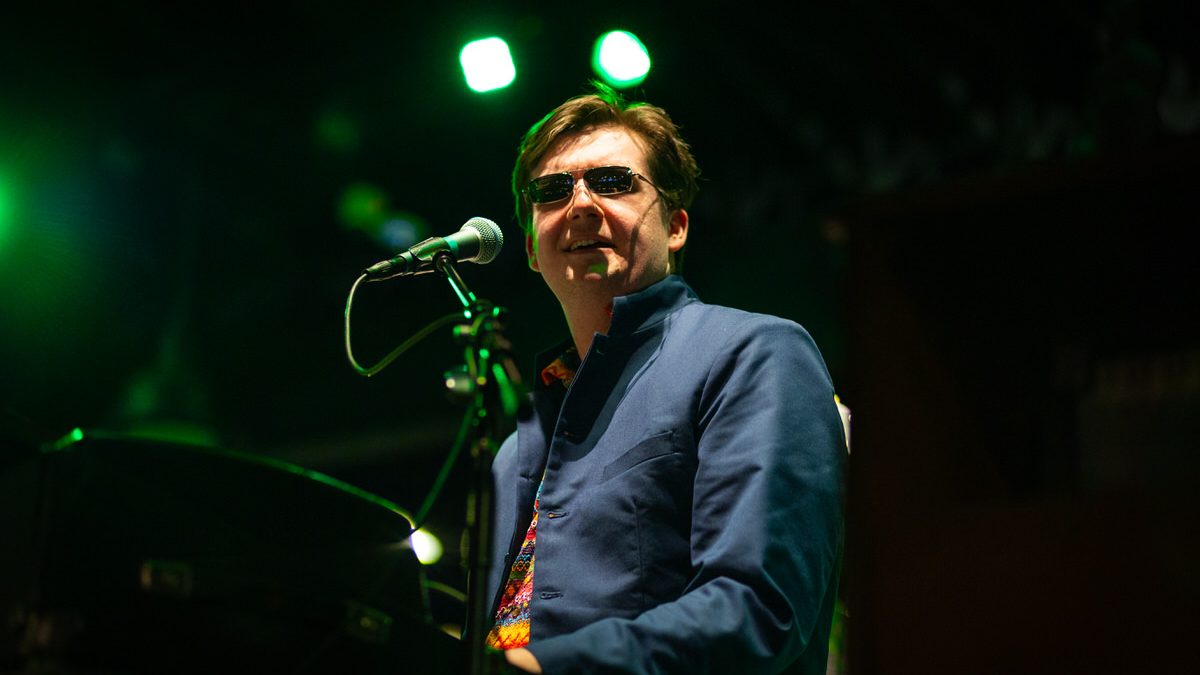
There are many modern-day musicians who trace their musical origins to the Beatles. Dino Nassios is one of them. A lover of technology and computers, Dino never considered himself a musician, but things changed when he saw Paul McCartney live in Georgia. “That concert just opened my eyes. And it was like a religious-like happening,” Dino says. “It woke something in me.”
He began to learn different instruments and learned to write songs. He soon met fellow musician, Ryan Tabor, who would end up becoming his writing partner, and a band, now well-loved by East Tennesseans, began to form.
This was back during Covid, Dino tells me, “We were just hunkered down and we needed something to do. We’d always had a passion for music and I had big aspi- rations to record music with instruments, but more than the typical four-piece rock band.” Dino found a fascination with the horns, strings, and instrumental fury that went into the creation of the Beatles albums he adored.
So he, Ryan, and several fellow musicians—”kind of unconventional,” he admits—attended an open mic night. The band got a positive reaction. And with that they simply kept showing up and kept growing, eventually becoming Milkman & The Big Band. “As of today, we’re actually 21 people,” Dino laughs. “Now the band has gotten really, really big.” The band encompasses two keyboardists, drums, percussion, bass, a string section, horns and as of late summer, three backup singers.
This past March, Dino and the band put out their first studio album,Let Me Tell You, followed by their latest album,Milkman Live. “We’ve been grinding away making new songs and covering our favorite songs and rocking and rolling,” Dino says.
As I learned more about Milkman & The Big Band, it most certainly begged the question: how does one travel with that size band? For the moment, it’s simple.
“We’re pretty contained to East Tennessee,” he says. Part of that is due to the fact they are all from the region. But bigger moves are on the way, and while Dino couldn’t talk about it just yet as there were still some moving parts to iron out, he had this to say during our call, “In 2025, bigger things are to come. And I mean that sincerely. I know every indie band ever says, ‘Oh, big things are coming,’ and nothing ever happens but I can assure you that you’ll see at the Tennessee Theater again next year.” I will definitely look forward to seeing their next moves.
Trips abroad provide insight into how we listen and learn from one another
Story by Rev. George Doebler
There is a country in South West Africa that taught me something about Knoxville, Tennessee. That country is Namibia, one of the poorest, most arid countries in the world. How could it teach me about Knoxville and how it operates? Let’s go back a bit.
Until 1998, I had never heard of Namibia. A good friend of mine, Rev. Louis Bauer, was a pastor in Knoxville at the Messiah Lutheran Church for 12 years. And while he later left Knoxville for Chapel Hill, North Carolina, we stayed in touch. When I saw he was in Windhoek, Namibia, teaching a Paulinum Seminary years later, I texted him and asked, “What in the world are you doing in Namibia?” His response took me aback, “You have to be here to know the answer to that question.”
We communicated over the next few months, and admitedly I became more and more curious during that time as to what could draw this Yale-graduated, very bright Lutheran pastor serving at a very prestigious church in Chapel Hill across the globe to Africa to teach. It wasn’t long before I convinced my wife, Nancy, to join me to find out.
In negotiating the trip with Louis, he remarked I could only understand if we stayed at least a month, that I could teach a few sessions in the seminary, then go out to see where these students came from and where they would minister. A month seemed a long time to go anywhere but I agreed and this began a learning experience that has been a part of all that I have done and think for the past 25 years.
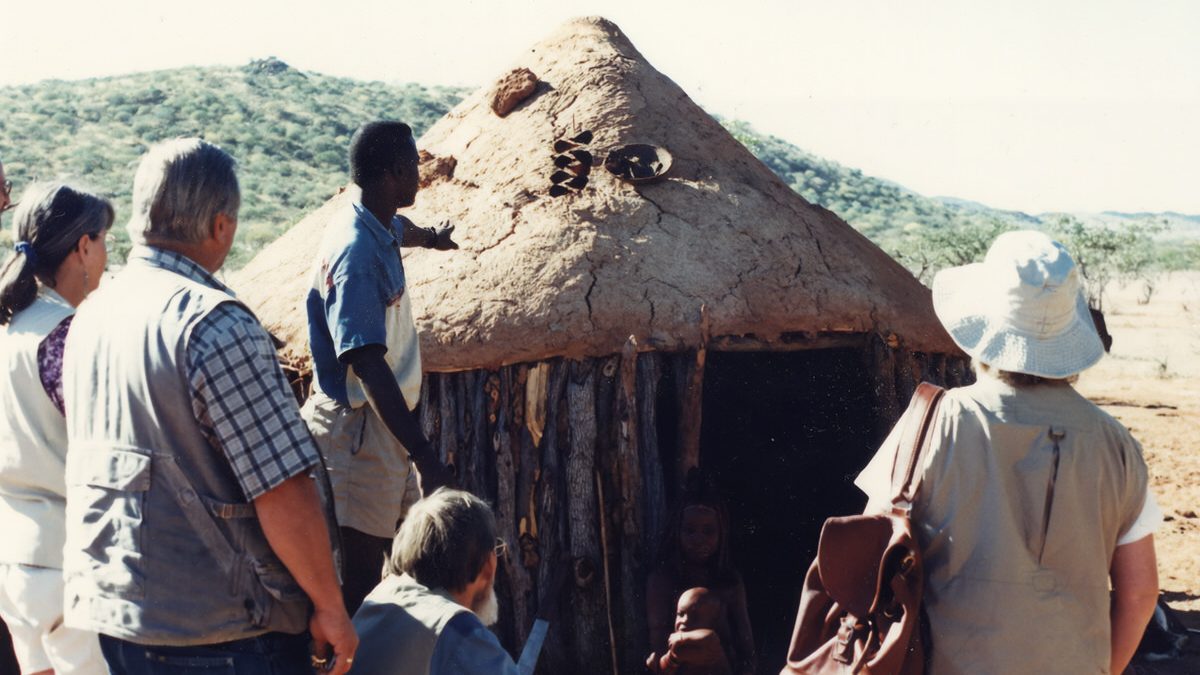
Windhoek is the capital and largest city in Namibia. Paulinum Seminary is a theological school of the Namibian Lutheran Church. My introduction to Namibian culture was deceiving. Windhoek was a fairly modern city with the amenities of an American city. It was leaving the city and going out into the country, where I got to learn how little I knew about poverty – about no electricity, about no running water, about no sanitation (no toilets). I hold my experiences in my mind and soul as I write this and tell about visiting the villages that cover most of northern Namibia. The villages were small groups of people who lived in huts, some made of clay and mud, others made of brush and limbs. The farther north we went, towards Angola, the poorer it seemed to be. I began to understand what Lou had said before we came, “You have to be here to understand why I came.” It was astonishing to me to see others living in an arid place where water is scarce and can only be gotten from wells.
To go into a village—many of which were only 50 to 60 people—we had to have permission of the chief. Our interpreter would go into the village and tell the chief who we were and why we had come to see him and his village. Our interpreter asked that we give the chief gifts— sugar, tea, and tobacco. The chief in one particular village was proud to show us his newest son and newest wife (he had 4). These were Himba people, nomadic and very proud. Their homes were made of mud and a tent with a small hole in the roof to let out the smoke from a small fire that was going in the middle of the floor. The fire was to keep out insects and bugs. The floors were like concrete, made of cow dung.
Our young interpreter spoke 12 dialects. Every 20-30 kilometers, the people’s dialects of the same language changed. The further you got from one village, the more you needed to speak another dialect. For those living there, if you did not travel far from your village, you did not learn the other dialects.
There seemed to be no need. But, as we were told, if you wanted to marry and have a family of your own, you would need to form relationships with other villages. There was a regulation that to strengthen a village you needed to marry outside your village. Therefore, you needed to speak the dialect of the other village.
We were told that we were the only white people some of the children had ever seen. The smaller children, seemingly of ages 4 to 5, would come up to us and want to touch our skin. It was an experience I still hold dear.
Lou told us he had heard stories about this from his students, but had not experienced it himself. He believed deeply that he needed to experience to know where these students, who had been taught by missionaries, came from and how they could learn what he taught about pastoral care when they came to Windhoek. Learning to speak English was a part of their seminary experience because those who taught often did not know the students, villages, or dialect.
A story I tell about being with the Himbas still causes me to smile. When we camped for several days along the Kunene River, we went into one village a number of times. In the evening, the villagers began to come to our camp and we shared our food. The women came to our camp wearing T-shirts, given to them by missionaries. In the village, however, the men and women wore only loin clothes. No t-shirts in sight. To protect their skin from the sun, they coated their skin with a mixture of fat and red ochre.
When we expressed our concern that they need not change aspects of their culture in order to visit and eat with us, the women quickly took off the T-shirts and put them in a pile. They began to sing and dance. The men brought out drums and began to play. It was a gift to see this, part of a culture we believed to be gone. As I think back on this experience, I wonder why I did not take off my shirt. Nor did Nancy. Our culture did not let us.
Now, how does this have anything to do with Knoxville or Tennessee? Coming back to Knoxville after five weeks in Namibia was a culture shift. There were things I saw and felt about differently. I began to see that when I went to meetings with folk in East Knoxville, they were speaking a different “dialect” than West Knoxville. The same was true in North and South Knoxville, especially when meeting people with deep roots in their community.
I think we are experiencing the dialect changes in the expansion of West Knox area as well. The shift from a rural culture with beautiful farms being replaced by housing developments. The coming of people from other “villages”(like Michigan, California, Iowa, etc) is the new norm. Learning the new dialects is not easy and is causing a new anxiety that some find troubling.
I have begun to wonder if the many dialects have something to do with what is happening politically in our culture and the world. No longer do we take time and form relationships for my words and dialect to be interpreted to a community close by. Where do I have time to sort out what I am hearing from another village. The message and communication I send is immediately sent to many villages.
It seems that our task at this time in our history is to stop and listen to the other villagers who we often may find ourselves not being able to hear. We need to listen in order to hear well enough that we do not react with an intensity to create more anxiety, but listen in order to hear well enough to engage in thoughtful dialogue. Listening then becomes crucial in my ability to hear and learn from others.
Browse related content
→ Swipe for Next Story
Dining GuideNOVEMBER DECEMBER 2024
Home-Baked for the Holidays
Local sugary sweets to melt your teeth and your heart, and a lot more besides
Story by Micha Haas
Rows upon rows of goodies – and suddenly you’re struck with the deadly question, what to choose? Not between the goods themselves, mind you – the choice between eating everything and suffering the consequences, or somehow restraining yourself. Today we’re here to make that choice a little bit easier for you, whichever way you swing. Looking for places to satisfy a deadly sweet craving? Here’s your guide. Looking to live vicariously through others and escape a few extra pounds? That’s a sacrifice I’m willing to make for you. Let’s dive in!
The Artisan Cakery
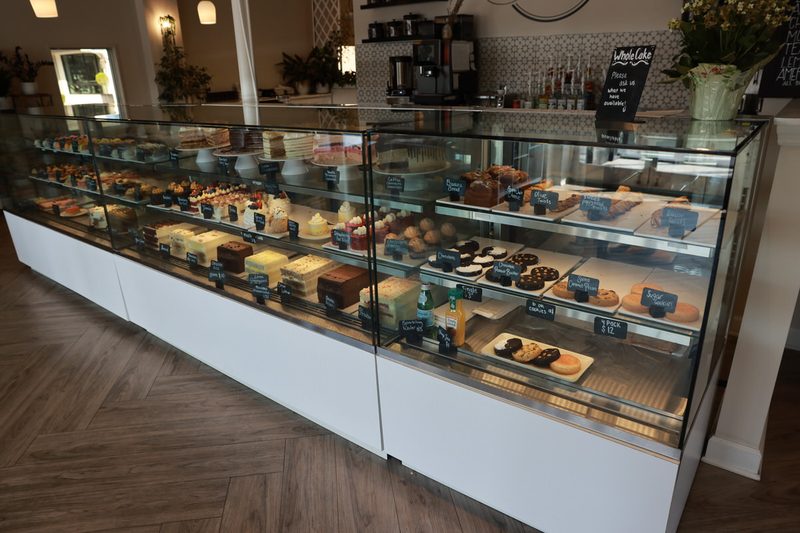
At last, a bakery offering cake by the slice – an opportunity I will certainly not take to eat only a single slice! I person- ally can’t help but stick to a guilty pleasure: cheesecake. In this case, the Cakery offers a caramel cheesecake which I doubt I could resist (even if I tried to, which I definitely did not). A warm, bright atmosphere awaits you as you find a nice spot to sit back, relax, and try a few new delicacies with a cup of coffee or tea. And if anyone asks, just say you’re taste-testing for the upcoming Thanksgiving gather- ing you’re about to host—whether or not it’s true!
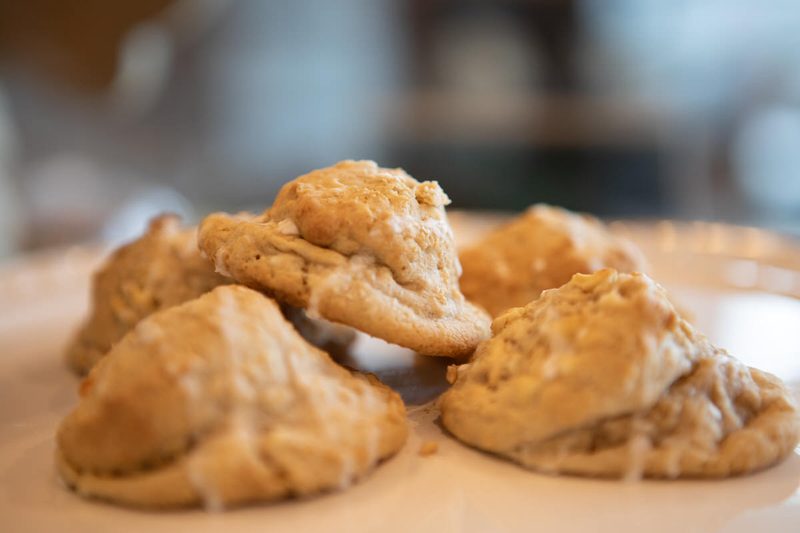
VG’s Bakery might be based out of their flagship location in Farragut, but the place to find VG’s is at farmer’s markets. There’s just something about a fresh pastry in the open air, with the buzz of the market in full swing; they also have some specialty items they only sell at the market, like their breakfast kolache (though you can cheat and sneak one at Capybara Coffee at UT, though you didn’t hear that from me). Regardless of where you get your VG’s fix, you can be certain of finding some- thing to your liking. For me, that’ll be a peanut butter cookie, or maybe an old-fashioned snickerdoodle.
For those among us who are a little south of Northshore when the hankering for a sweet treat hits, the Art of Cakes Bakery is the perfect spot. It’s another award-winner, too, with Trip Advisor’s “Best Bakery in Tennessee” title to their name. Most of Art of Cakes’ offerings are custom made-to-order cakes, and they are busy, so if you’re looking for something for a special occasion, don’t wait to place your order. But for those of us just having a hankering, they have plenty of options in the storefront as well. I personally have a love for snickerdoodles, but white chocolate macadamia is a joy as well.
I’m afraid I don’t have enough special events in my life to justify all the cus- tom-order cakes on this list, but I’ll do my best, just for Marble City Sweets. This minority-owned bakery in Market Place off Kingston Pike promises sweets that are truly over the top, and they make good on that promise. For those of us who haven’t yet found that excuse for a custom order, you can never be entirely sure what you’ll find waiting for you in the case, but you can rest assured you won’t regret the first bite or the last.
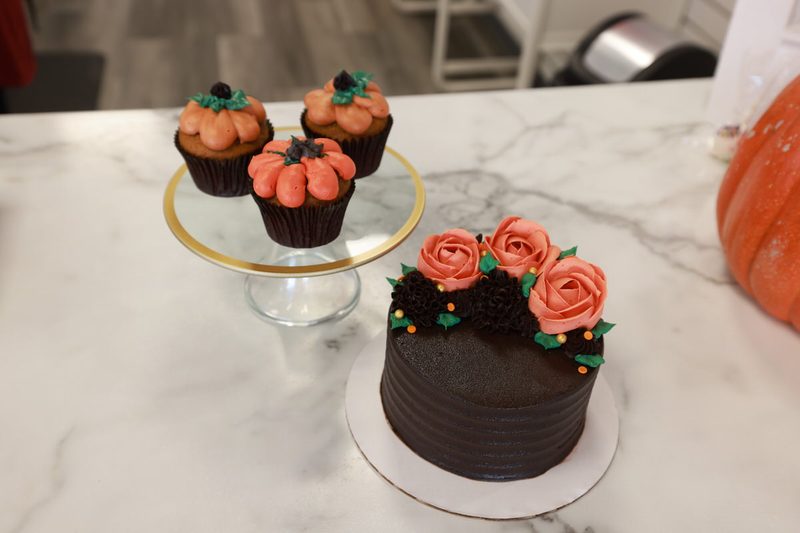
Heidi’s is the place for cakes of all shapes and sizes. You’ll see on Heidi’s website that they advertise their wares as being perfect for special occasions—like that holiday get-together—but sometimes the special occasion is simply “because I want one.” Heidi offers both ready-made and custom-made items; as I don’t have the room in my stomach for a full dozen custom cupcakes, I stuck to a single key lime cupcake to satisfy my love for citrus during my visit, but just about every one of those specialty fondant cupcakes looked tempting… seems to me like a perfect excuse to host a holiday gathering!
The cookies have spread! Theoretically, you could pay a visit to all three of their locations for three times the cookies. Since I don’t want to be a bad influence on your diet, I won’t recommend doing this, but I did want to mention it just in case…And in case you do pay them a visit (or three), there are enough options to keep you satisfied each time. Their Caramel by the Sea cookie was once named Best Cookie in Tennessee, which was enough reason for me to give it a try. I might be picking up a box on my way to Thanksgiving dinner—the family needs to try these.
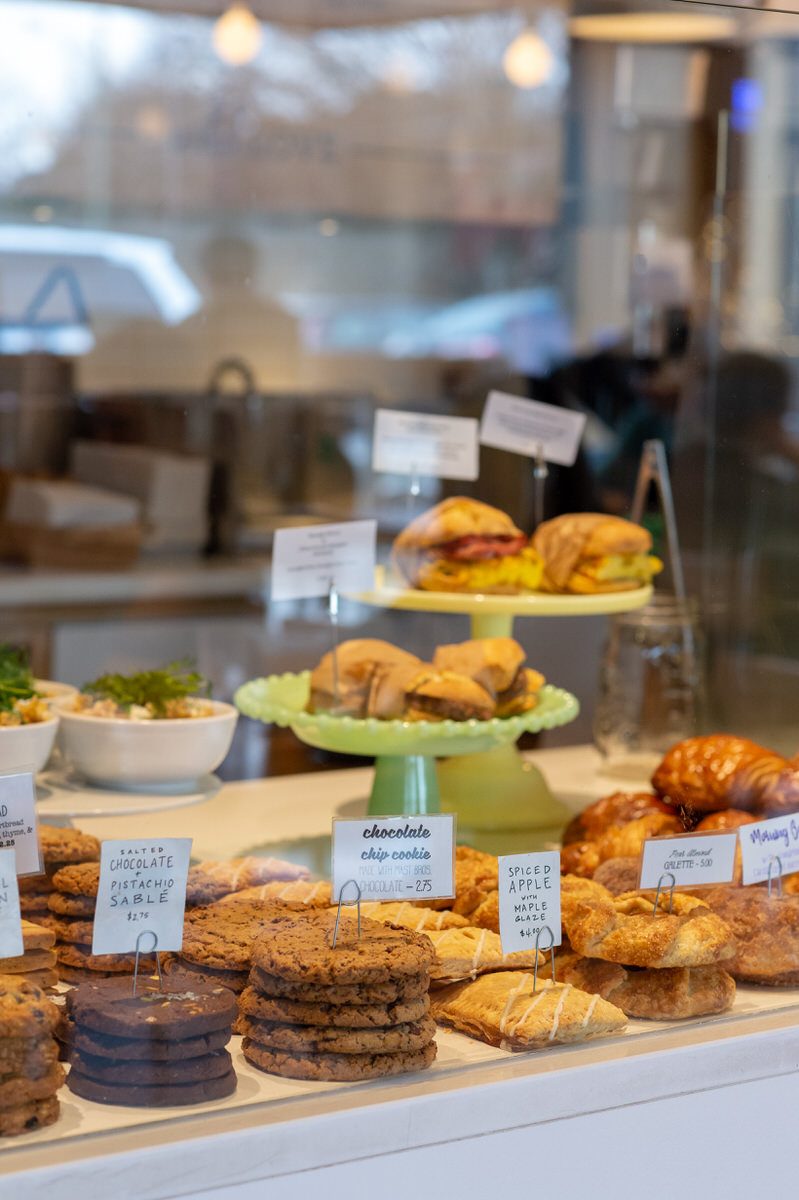
We’re hardly the first publication to put this downtown spot on a list—in fact, Wild Love Bakehouse has previously been dubbed the Best Bakery in America. If the fact that a bakery has managed to snag this title from among all the bakeries in the country isn’t enough to entice you to give it a try, then perhaps you can take my humble word for it. This bakery was a regular haunt for me back when I worked downtown, and it wasn’t just for my sweet tooth. Their lunch options are unique and savory. The menu is always in flux, but you won’t regret getting it—especially during those last minute holiday shopping trips downtown.
This one’s another three-location wonder; if you want me to lay out another route so you can visit all three, please let me know. But in the meantime, let’s talk about the food. I’ll be honest, even though the cookies are front and center on their website, “bakery” was rarely my first thought when it came to Ham’N Goody’s, and I think that’s because of the delectable sandwiches (and the biscuits’n gravy, though it’s been a while since I’ve indulged that particular fancy). Build yourself one of their classic sandwiches (and they have vegetarian options!), or get one of their specialties, and dig in! And then give the pound cake a try – there’s a reason I’ve reconciled Ham’N Goody’s as a bakery these days.
How our favorite Vol song got its start and found its way to our beloved team
Story by Gary Wade
In 1945, a 19-year-old Sicilian woman by the name of Matilda Scaduto worked as a lift elevator operator at the Schroeder Hotel in Milwaukee, Wisconsin. When Diadorius Boudleaux Bryant, a touring musician from Georgia, happened to enter her elevator, she literally saw the man in her dreams. “I’ve been looking for you,” she declared, later explaining, “I had a dream of this man when I was eight years old. I recognized him right away.” As for the 25-year-old violinist for a traveling band sched- uled to play at the hotel, it was love at first sight. Five days later, they were married. Later, Boudleaux decided to call his new bride “Felice,” a label that stuck.
While Felice had no formal training in music, her family played by ear and often sang together at their home. With a love of music and with empty pocketbooks, the young couple moved to Moultrie, Georgia, where Boudleaux worked as a mechanic and as a part-time entertainer. While the two scraped by financially, they really wanted to make their living by writing songs. She was imaginative
and had a knack for lyrics. He put their creations to paper. One of their first songs, “Country Boy,” was purchased and recorded by Little Jimmy Dickens, a regular with the Grand Ole Opry. After the release of that song, things began to click. In 1950, their fifth year of marriage, they moved their songwriting talents to Nashville, unintentionally starting a trend that eventually helped turn our state capitol into “Music City.” The couple attributed their success in selling their records to a scheme literally “cooked up” by Felice. Her Italian cuisine, especially chicken cacciatore and spaghetti with meatballs, was popular with the local vocalists. After dinner, Boudleaux would play and sing their latest works. More often than not, the combination of good food and good music — what they called their “pasta scam” — resulted in a sale.
In careers that produced over 6,000 songs, many of which were recorded by practically every major recording artist, they early on hit the jackpot with their association with the Everly Brothers. Don and Phil, who had Knoxville connections, recorded 29 Bryant tunes in all. Of these, 12 qualified as hits, including such notables as “Bye, Bye Love,” followed by “Wake Up Little Susie” and “All I Have to Do Is Dream.” While describing the Bryants as “masters,” Phil once remarked, “I learned more from them than anybody.”
In 1967, country music megastar Archie Campbell, the pride of Bulls Gap, asked the Bryants to write some slow songs for an album he planned to callThe Golden Years. On August 28, the couple checked into room 388 at Rel and Wilma Maples’ Gatlinburg Inn to focus on the project. While most of the 11 songs in the album were Bryant creations, the story goes that they tired of the slower pace and, as a diversion, penned an upbeat song they titled “Rocky Top.” Campbell didn’t pick up that song but the Osbourne Brothers, Sonny and Bobby of bluegrass fame, recorded an up-tempo version and put it on the B-Side of one of their records (for trivia fans the A-Side was “My Favorite Memory”). Ralph Emery, who was then a mere radio show host and well before becoming a country music icon, was the first to play “Rocky Top” on the air. The song was well received and peaked at number 33 on the charts. In 1970, a Lynn Anderson release of the spirited tune did even better, climbing to 17 on the country charts — not bad for the ten or so minutes the Bryants had invested in spawning their new creation.
Of course, the story does not end there. In 1972, W.J. Julian, the band director for the Pride of the Southland Band at the University of Tennessee, agreed to include a Barry MacDonald arrangement of “Rocky Top” at the half- time show of the Alabama-Tennessee game at Neyland Stadium. Even though the Vols were nipped by the Tide that third Saturday in October, the crowd responded favorably. So, Julian staged a repeat performance at the Astro-Bluebonnet Bowl in Houston the following New Year’s Eve. This time the Big Orange triumphed, defeating the LSU Bengal Tigers, 24-17.
Thanks to the perpetual license granted to the University by the Bryants, the song has been a staple at Tennessee football and basketball games ever since. Although “Down the Field” serves as the official fight song for the Vols, in 2015 USA Today designated “Rocky Top” as the number one fight song in all of college football. Heck, Dolly Parton is among the many who have recorded the song. Peyton Manning learned all six verses of the song well before spontaneously conducting the band after a big win at the stadium. Much to the annoyance of the opposing teams’ fans, the Vol faithful join in on the delightful chorus several times each game: “Rocky Top, you’ll always be home sweet home to me, good ole Rocky Top (whee), Rocky Top Tennessee, Rocky Top Tennessee.”
Boudleaux died in 1987. Felice lived in Gatlinburg until her death 16 years later. They have been named to both the Country Music Hall of Fame and the Nashville Songwriters Hall of Fame and were posthumously honored with the President’s Award from the American Music Association.
With apologies to the town in Anderson County which voted to adopt the same name as the popular Bryant melody, there was a genuine Rocky Top before the song was written, and it is right here in our Great Smoky Mountains National Park. Along the Appalachian Trail just past Spence Field and on the way to Thunderhead Mountain is a stone outcropping identified on a 1934 map as Rocky Top. Of interest, the House of Bryant, which now owns the rights to the song, failed to convince the United States District Court to enjoin the former Lake City, a community of some 1,728 good citizens, from adopting its new name.
Before her own death in 2011, Wilma Maples had become the go-to source for those who wanted to know more about the Bryants, their connection to Gatlinburg, and, of course, their favorite place to stay. The Inn, established some 87 years ago on the Parkway in the center of town, is now truly historic, a genuine landmark in this resort community. Room 388 has been preserved just as it was in 1967. While a few modern amenities have been added to meet the expectations of their current guests, the ceiling, walls, and furniture remain unchanged, just as enjoyed by the Bryants so long ago. The most popular room at the hotel? Make a guess.
While most of the 11 songs in the album were Bryant creations, the story goes that they tired of the slower pace and, as a diversion, penned an upbeat song they titled “Rocky Top.”
→ Swipe for Next Story
InsightsNOVEMBER DECEMBER 2024
The Real McCoy
Honoring one of the best— a true and giving friend
Story by Robert Pryor, Sr.
He grew up on the south side of Chickamauga Avenue in north Knoxville. I lived on the north side at the foot of Sharp’s ridge. We walked the same streets, played ball on the same soil, and attended the same schools, and like any kid growing up in Lincoln Park during the 40’s and 50’s, we drank the same cold water from streams dribbling down from the ridge bound for First Creek. Everyone knew of the McCoy brothers, the three of them all part of the “Drug Store Cowboys,” a group of teens hanging out at the pharmacy at the corner of Chickamauga Avenue and Pershing Street across from Lincoln Park School. Jerry was the baby. It those days Lincoln Park was a community of railroaders, policemen, firemen, and textile workers and their children, all born at nearby St. Mary’s Hospital. Jerry became a builder of homes, apartments, condominiums, and commercial buildings all over Knoxville and beyond. He was a woodworker supreme and enjoyed building furniture to give away to friends and family. When my daughter-in-law suddenly passed 20 years ago at the age of 31, he built my grandchildren a playhouse that could comfortably accommodate a family of four. His giving was limitless. Tomatoes, peppers, and squash from his well-tended garden would show up on the tables of his many friends. I was one of those, one of Jerry’s friends. He was always easy to like. An authentic man with no pretense. You know, the kind that fit best into a lifetime friendship.
The “Real McCoy” was funny, country funny. He didn’t know any jokes. His humor came naturally and revealed itself through life experience and simplistic observations. He was one of those people who just made you laugh. His impatience was hilarious and the stuff of legend. Did you ever know a man who would leave the house for work after eating a big breakfast and immediately phone back before he reached the end of the driveway to ask what would be served for supper? This is a man who often got out of his pickup truck before it stopped rolling. When he called me, his seatbelt alarm always drowned out his voice. Jerry’s mind was always preoccupied by thoughts of improving on yesterday or, more importantly, planning for tomorrow. The importance of the now, of being present in a moment, alluded him to the delight of everyone. Zen he was not.
Oh, the fun we had. Jerry and I were golf partners on numerous occasions – perfect situations for lacking patience. Although we had discussions about the importance of taking his time with all the money on the line, his mind was always on to the next hole before his club reached the ball. On the one occasion we were in contention, he promised me “Bob, I’m gonna take my time the rest of the way and par every hole.” When we reached the green, Jerry was the first to putt and barely looked the ball or the line over before yanking it offline. He started walking before the ball stopped and looked at me and said, “Bob, I forgot to take my time.” When he told me that he had bought a table saw for his workshop and that he could stick his finger in the saw and it would stop immediately and not even break the skin, I told him that this was a great feature because he was going to need it.
A gambler at heart, Jerry loved competition on any level. I sat down with him on one occasion to watch “Dancing with the Stars” and noticed that before the judges voted Jerry would accurately guess the score each judge eventually gave. I accused him of watching a rerun. He told me, “No, Bob, I just know dancin’.” I asked him if he knew how to Cha Cha or Tango or do the Texas Two Step and he told me, “I don’t do no dances that’s got names.” He took me for $40 betting on TV dancers.
In the Air Force, he told a fellow airman, who happened to be a music teacher, about his wish to play a musical instrument. The man volunteered to teach Jerry how to play the harmonica. Jerry asked that he just teach him one song – “Oh! Susanna.” It took a few weeks, but Jerry learned to play that one song on the harmonica. When the airman was transferred out, he gave Jerry the harmonica. One day Jerry was bragging about his musical abilities and a group of new airmen in the barracks challenged him to prove it. Jerry found his harmonica and played “Oh! Susanna,” as if he’d written the tune himself. As the requests for additional songs rang out, Jerry abruptly threw his harmonica on his bunk and said, “No, boys, I’m too tired.”
He had no fear, especially if there was an opportunity for a memory. Once, after being rained out of a round of golf in Myrtle Beach, he looked out the window and spotted a catamaran for rent. With the storm blowing in, Jerry and five others decided that they would rent the catamaran and sail out into the Atlantic with a cooler of beer. Jerry knew nothing of sailing, but said he had once ridden on a catamaran. The boy at the marina, with a look of confusion on his face, refused to rent unless someone had experience in sailing. One of the sailors said, “Jerry knows how to do it,” and the marina boy relented, saying “Okay, but look at those whitecaps out there... you better know what you’re doing.” Jerry replied, “Hey, buddy, that’s just the way we like it.” They capsized before they left the marina harbor with everyone and the beer in the surf.
He always bartered and haggled on price. During a sale at a discount golf shop, Jerry was considering buying a pair of black golf shoes to look like Phil Mickelson. He held up a pair of black saddle oxfords and asked the salesman “What you want for these?” The salesman said, “They’re marked on sale for $38,” to which Jerry responded, “You can do better than that... they don’t even fit me.”
His ability to talk to anyone and haggle without offending endeared him to others. On one shopping excursion in Florida, he claimed that he was robbing all the merchants by paying such cheap prices. “They’re practically givin’ this stuff away,” Jerry stated. When driving from the mall with our friend, Wayne, Jerry said he needed to stop at a convenience store for a roll of Tums. Jerry and Wayne ate Tums like candy. I stopped at a convenience store, and Jerry got out and asked Wayne if he wanted a roll and Wayne asked him to bring him a roll of orange Tums. Jerry was gone a long time, and I finally went in the store to see what the delay was only to find Jerry standing in the middle of the store looking perplexed. I asked him what was wrong and he said, “There’s nobody working in here and they don’t have any Tums.” About that time, a lady popped up from behind the counter and said, “I’m down here. What do you need?” Jerry asked her where the Tums were located and she said, “They’re back here with me in a box... we had a pipe leak and the box got wet.” She said she was going to have to throw all the Tums out and she offered the entire box to Jerry for free. He went back to the car carrying a box of about 300 or more rolls of Tums, and as he got in the car, he threw an orange one to the backseat to Wayne. When Wayne asked him what he was carrying, he said, “They gave me this whole box of Tums. I told you, I’m robbing these people down here.”
I’m losing a lot of friends these days, but I’m discovering an incredible power and warmth of overwhelming appreciation and peace that rushes in from the many memories I’ve created with those who have enriched my life with laughter and friendship. An authentic and genuine friend is a gift to treasure. Gerald McCoy passed away August 31, 2024. The cause of death was impatience.
Did you ever know a man who would leave the house for work after eating a big breakfast and immediately phone back before he reached the end of the driveway to ask what would be served for supper?
→ Swipe for Next Story
FeatureNOVEMBER DECEMBER 2024
Sail Away
Hoisting the sails for a week-long adventure in the British Virgin Islands
Story by Nathan Sparks
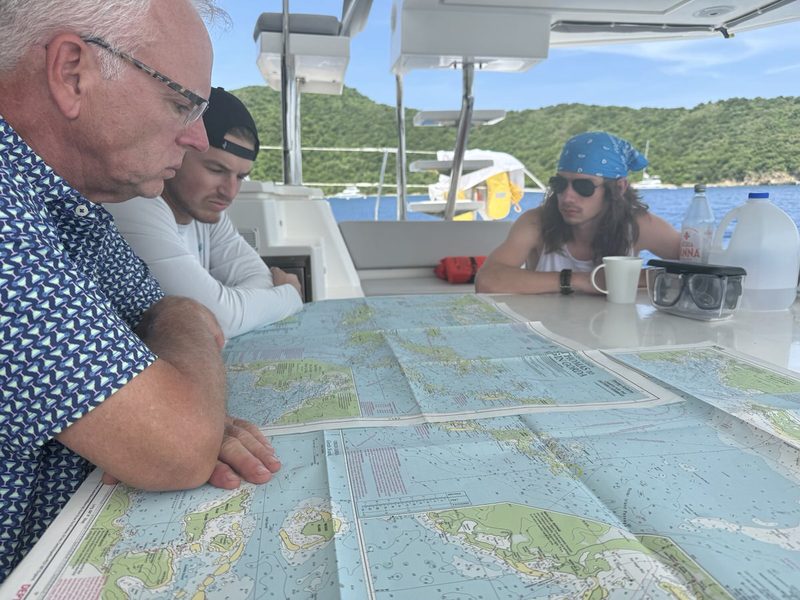
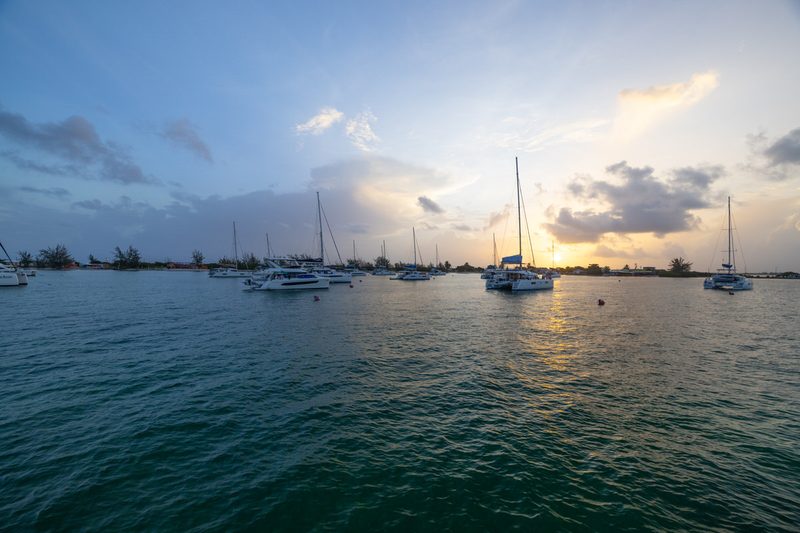
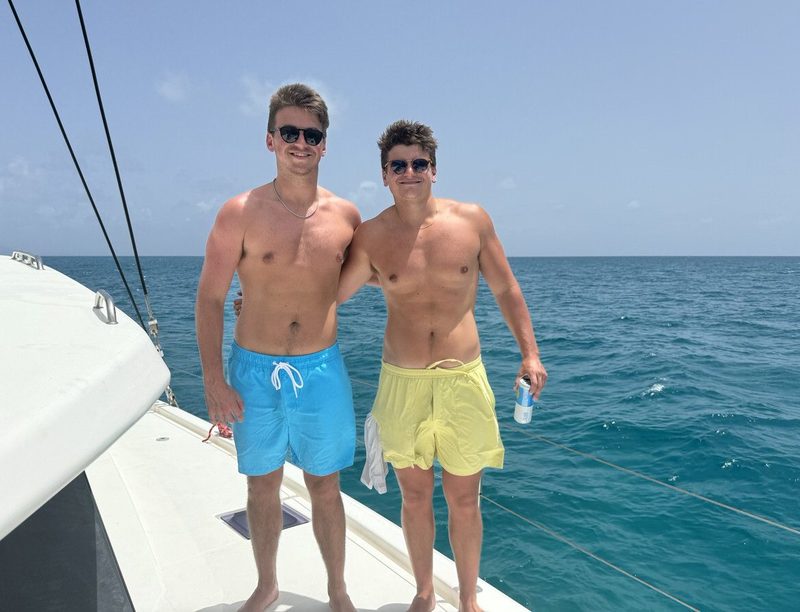
Second time’s a charm, or so the saying goes. My first trip to the British Virgin Islands wasn’t as smooth as I would have liked. But that was 20 years ago. So, as I stepped foot off the plane on the island of Tortola, I am both excited and hopeful. My crew for this trip is my son Troupe; my girl, Anne White; and her sons, Collin and Carter Barczak. Troupe is an experienced sailor, having gone on his first sailing charter when he was just six. He has grown up riding the wind. Everyone else has considerable time on the water, but this will be their first multi-day trip on a touring-class catamaran.
I love sailing; everything about it makes me feel good. I also love teaching. There is just something about watching the light come on in a new sailor’s eyes when they realize they are on the way to mastering a new skill. And the BVIs are the perfect destination for that to happen. Your never out of sight of land, and there is plenty of help close by, if needed. Newbie’s will choose the ease of mooring balls instead of anchoring, and with modern GPS, navigation is incredibly manageable, even for the novice.
For this trip, booked through The Moorings company, we elected to have provisions delivered, so when we came aboard, we knew we were, for the most part, set on that front. Electrical and air conditioning, however, was another story. It wasn’t quite the start I envisioned, but after quickly realizing the issue, we alerted the staff to the technical issues and they dispatched a technician. I think Moorings overall is a great company, but this was a rough day. I tried to convince the tech that you cannot put a 1.5-inch rubber hose over a 3/4-inch rubber hose and secure the connection with hose clamps and duct tape. But as I sat next to him in the belly of the boat, I glanced to his right and saw a similar repair. A fair bit of disagreement ensued, but ended positively with the head of maintenance, Mr. Hastings (a remarkably polite man), agreeing with me and convincing his staff of the correct path to a good repair.June 16, 2024 CAPTAIN'S LOG The first task of the charter captain is to ascertain the seaworthiness of his vessel and the condition of the mechanical systems. As with most bareboat charters it is normal to find problems. 1. Boat cannot be hooked to shore power, why? 2. Air-conditioner inoperative, why? 3. Door to main quarters sticks, trapping me below deck. The approach to the repair by the staff was less than I would have hoped, and in the end I ended up with my shirt off performing the repair myself. Regardless of who you charter with, expect problems, leave yourself a full day before your trip, and inspect the repairs. Our boat generator failed during the trip. No credit was offered for any of the inconvenience or loss of time. Rule of thumb: a three year old charter boat (think dog years) will most likely give you some problems.
Renting a boat without a crew has its caveats, maintenance ease being one of them. If you elect to rent without, you need someone on board with the skills necessary to resolve issues that might come your way. I luckily served this purpose for my crew.
By mid-afternoon on day two we were finally off the dock. A friendly skipper joined us for an hour to run through all the systems—a good idea if you are unfamiliar with the particular boat—and then we headed off.
We chose a short run to Norman Island, which proved to be just the right amount of sailing for the first day away from the dock. Our destination? The Willy T. floating bar and grill. It’s a novelty not to be missed by any who visit. Of course we enjoyed libations, and the younger members of our crew had a fine time jumping from the rear of the ship. Dinner that night was followed by dancing. Electrical issues aside, it proved to be quite a fine start to what would end up being a memorable trip.
On day three, we were off to The Baths, a national park located on the southwestern tip of Virgin Gorda. The Baths lived up to their label as being one of the most picturesque spots in the BVIs. It was a perfect spot to do a little snorkeling and afterwards to make a quick stop at Poor Man’s Bar for a painkiller.
Our next leg was dead upwind, and we opted to motor forward, ending up in a small bay for the evening. The next morning we spent the day exploring and enjoying the Bitter End Resort which is in the process of being rebuilt. Next was Saba Rock, which is covered with restaurants and shops. The view of the sunset at dinner here was in and of itself worth the trip.
On day five, we headed up to the island of Anegada. Many who sail the BVIs omit this from the trip because the entrance to the anchorage is shallow. We were determined, however. All of my crew stood watch as we navigated the channel. With each passing moment we seemed closer to hitting bottom—in fact, the depth finder said we should hit. We prepared for the worst.
It wasn’t until Carter suggested that the depth finder could be inaccurate that we breathed some sighs of relief. Based on our earlier maintenance experience, it dawned on me that the depth finder may have been calibrating inaccurately. We made it to the mooring ball without incidence, and a quick dive by Collin confirmed the hypothesis. Crisis averted.
With our worries behind us, we set off to explore Anegada with our final destination being Miss Bell Creque’s Cow Wreck Beach Bar & Grill. The name comes from a ship that wrecked in the late 1920s that was carrying cow bones. For years, the bones washed up on shore, thus the name. It was a great end to our day, but that night the generator’s voltage regulator failed and once again, no AC. All those hours of running the generator while on the dock were taking their toll. We weren’t phased, though; the positives outweighed the struggles.
On day six, we set sail for Cooper Island where we had scheduled a scuba dive adventure. The Moorings had a maintenance boat meet us, and this time the technician quality was on the mark. In less than an hour we were back in business and ready for our scuba adventure. Scuba is just one example of one of the many activities you can add to your trip in the BVIs. And while I missed the excursion due a hurt back, everyone else said it was a winner. I spent my afternoon recuperating on board; not too shabby of a place for some R&R.June 18, 2024 CAPTAIN'S LOG Plan ahead and be thankful for young and strong crew. On our second night we got a little off schedule and ended up in a small bay with very little sand. With the main anchor set with a good scope I am still uneasy. Collin, Carter, Troupe and Anne work as a team to pull out the secondary anchor and dingy it out to a second spot. Cooperation and hard work saved a major mishap. Tonight, I am thankful for all of them. Great teamwork!
Next we were off to the island of Jost Van Dyke, home to what would end up being my favorite bar of the trip, the Soggy Dollar. We were anchored on the west end of the island to go to the bubbly pool (which turned out to only be bubbly certain times of the year—noted for next time). Instead of sailing to the Soggy Dollar, we grabbed a cab in the form of a pickup truck with bench seats in the back. The roads were steeper than any round these parts, and admittedly, had all of us slightly terrified on our way. But we made it the Soggy Dollar in one piece. If you go, I highly recommend spending a day or two here anchored just off the beach—and avoid the taxi rides at all costs.
The next day we headed back to The Moorings base to get ready for our journey home. While it may seem we had our fair share of trip hardships, the BVIs were a whimsical place to visit. We all had a great time, and while I embarrassed myself a few times—and hope that those stories of what happened on this trip for the most part stay there—the only question left is where sailing will take me next. Sailing is one of my lifelong passions. Perhaps next up is the coast of Spain or some other European destination. Wherever the sails take me next, I simply cant wait until I hear the wind in the wires as we sail away to our next paradise.
→ Swipe for Next Story
FeatureNOVEMBER DECEMBER 2024
The West Highland Way
Conquering the wild: A seven-day odyssey through Scotland’s majestic West Highland Way
Story by John Quillen
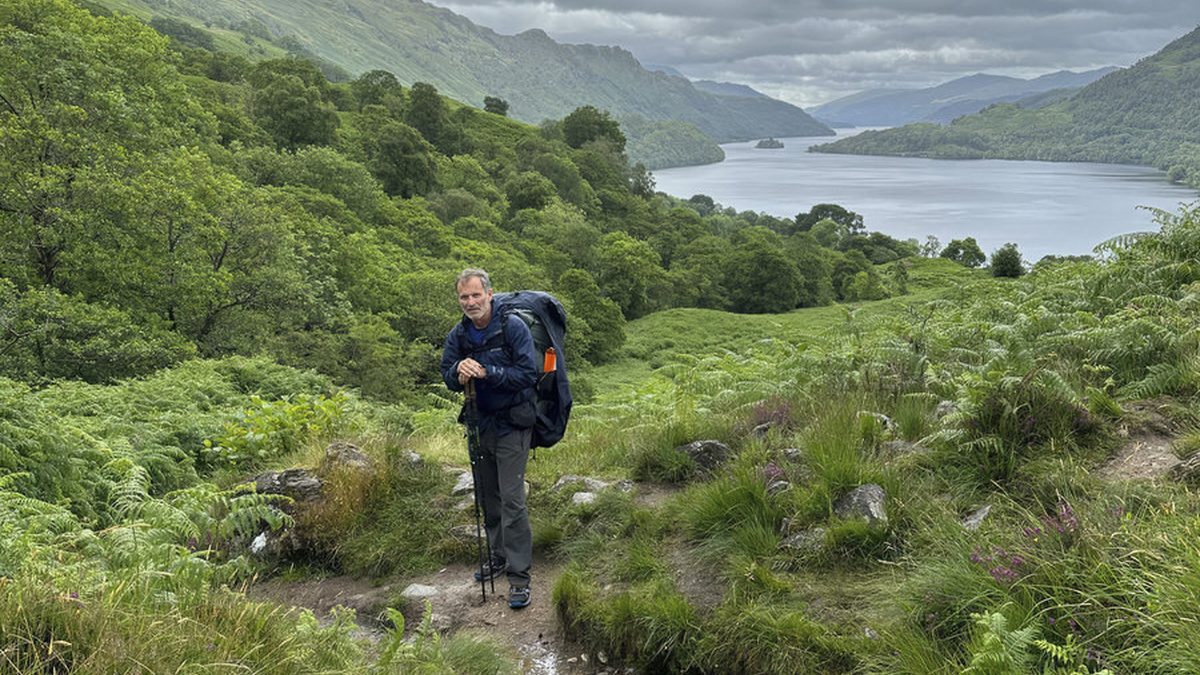
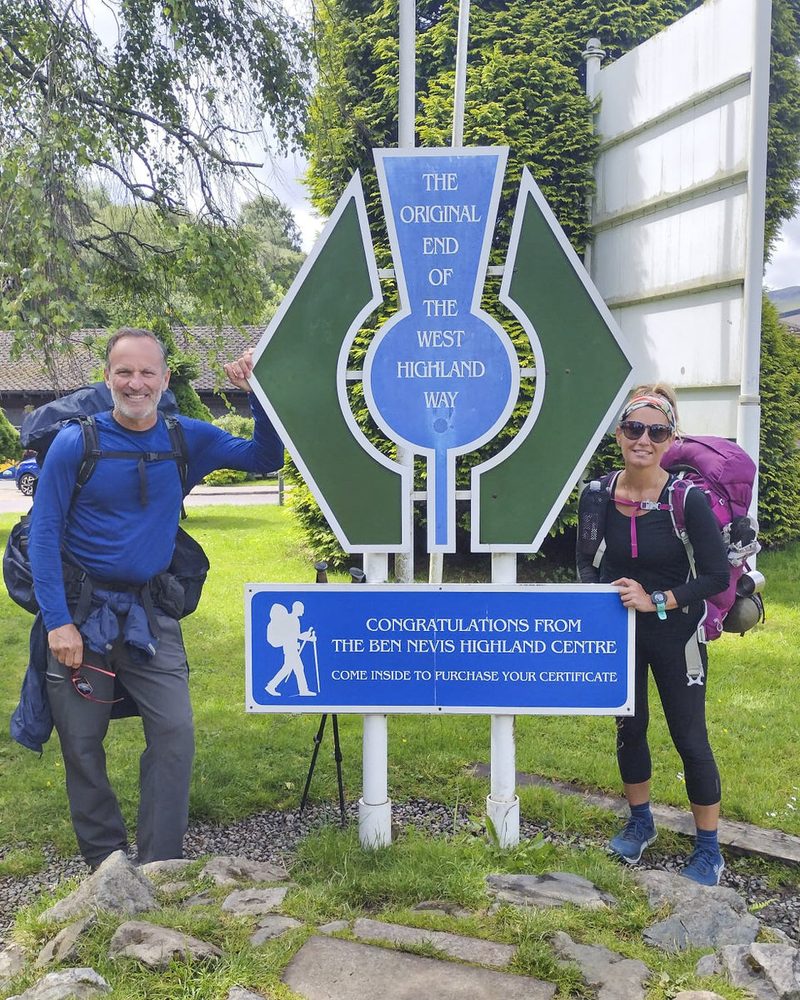
I lifted a creaky latch on the farm gate long enough for me and Toni to slip through. The sheep seemed disinterested in escape and who could blame them. I wanted to be locked in here myself. For the first time in days, clear skies did little to dry our wrinkling feet and soaked socks, but our spirits rose. I couldn’t tell you exactly where we were, my watch didn’t have a preloaded map for this area of the Scottish Highlands. All I could say is that we were somewhere between a village named Kinlochleven and heaven.
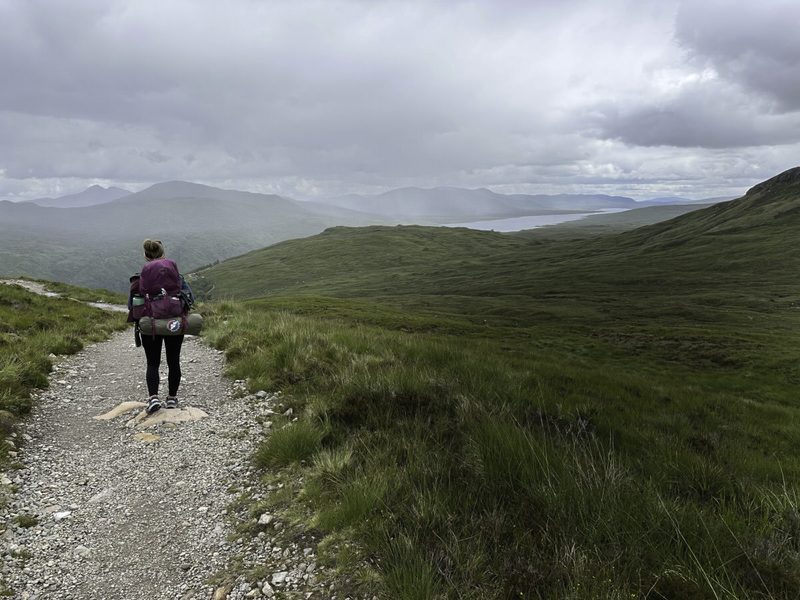
It was an honest start here on the West Highland Way. My hiking buddy, Toni Brewington, and I were lured with prom- ises of big clouds and endless views. And this 96-mile footpath delivered, initially. Offloading from the train we took from Edinburgh via Glasgow, we disembarked at a little obscure village called Milngavie. Locals paid us little mind as we shouldered way too heavy packs in anticipation of all sorts of weather. I wandered about to locate a fuel can, welcomed by the first of many rains.
The town behind us ceded to agricultural pastures and hills. We were alone and sauntering in scenic splendor.
Halfway through this first day we spied the Glencoe distillery off in the distance and could not pass this opportunity to visit. Resisting their offerings was easy as there were many more miles to complete this day. One of the United Kingdom’s oldest pubs was up the trail and dinner was sounding pretty nice. The Clachan was our only option in this village ironically called Drymen. After a delicious meal we continued walking. The sun didn’t set until 11 p.m. so we had plenty of time to bed down with the sheep alongside a bucolic stand of pine.
My chief impetus for this journey was to take advantage of the Scottish wild camping law. This precept assures your ability to throw out a tent anywhere you like on any property in the country. Unlike in the States where national parks are adding fees and restrictions daily, the Scots realize the value of this disappearing freedom. And on this trip, so did we. We tented almost every night, six of them to be exact.
Our second day found us walking in the rain toward the first loch of our journey. My spirit is drawn to these mystical pools and their unspoiled beaches. We camped there our second evening along the bank of Loch Lomond.
Not only is this the biggest body of water in Scotland but the entire United Kingdom. Considered a boundary between the Lowlands and Highlands, we would walk these shores for several days with wet feet. My desire to swim was diminished by the cool temperatures and near hypothermic nights in the 40s. But this was welcome contrast to the heat we willingly fled in Tennessee. After 16 miles, any flat piece of ground was sounding good. A nice storm drove us into the tent which flapped throughout the abbreviated night. Daylight rolled in at 4:30 a.m.
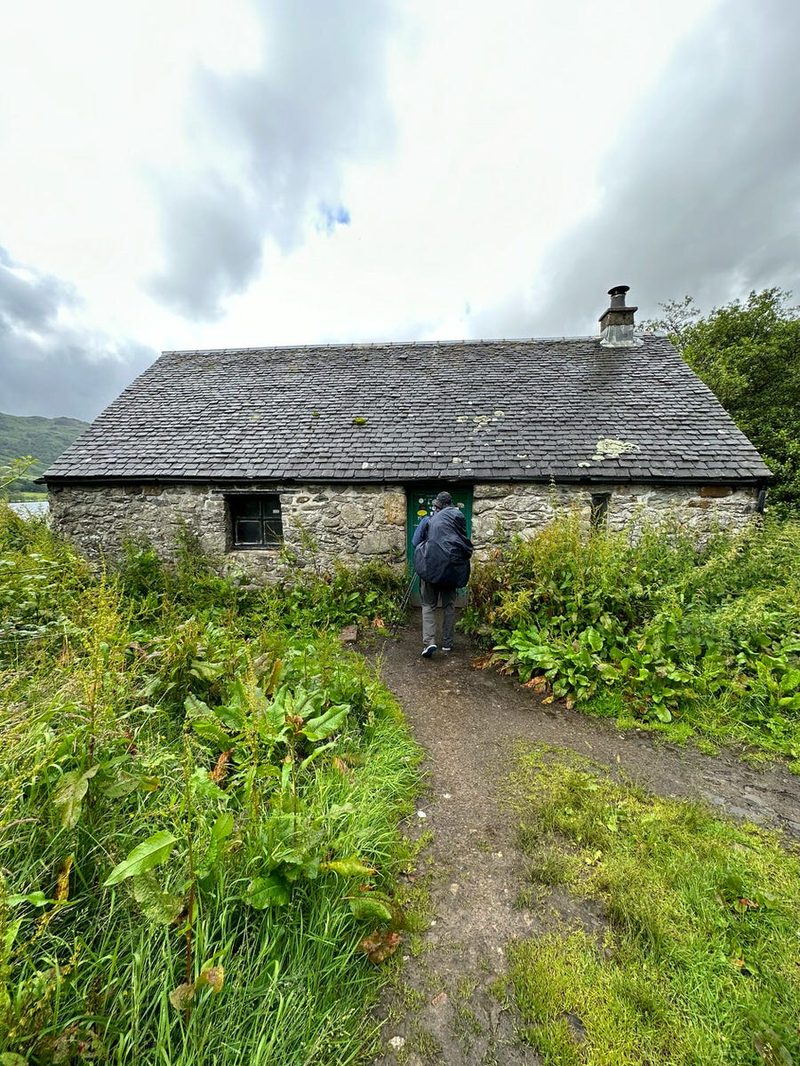
We hoped for some abatement in the weather, but this was just not our present luck. Resigned to wrinkly toes in porous hiking shoes, we slogged north along the loch sloshing through puddle after puddle, finally encountering an abandoned building in the middle of nowhere. They’re called bothies in Scotland; back home we would label it a shelter. Nothing was more perfect as a respite from the rain except the company soon to join us.
Marius Prinsloo and his son and friend would also seek shelter from the drizzle in our humble abode this night; the teenagers managed a delightful fire for our pleasure. Toni and I complimented them on their willingness to tackle this hundred-mile journey, mostly for Marius, the father who was shepherding some high-strung boys.
Tyndrum was our next objective as we pressed deeper into the majestic Highlands. I was realizing that my partner and I were apparently roughing it on this trail when I saw people load their packs into vehicles here. What is nice about the West Highland Way are the many options for your trekking pleasure. Village hotels are available, provided you secure a reservation at one of the lodges well in advance. Services will ferry your backpack from point to point. Hoisting my wet, 40lb load made me somewhat envious of that choice, but not for long when we disappeared into a random stand of trees in a meadow with clouds clearing that fifth night.
Our biggest day was coming up. The “Way” carried us up and over the Bridge of Orchy into the pine forests past Crianlarich and back along another loch where the sun peeked out for what seemed like the first time in a week. Glistening in the distance was Loch Tulla and Loch Leven. The rains had stopped, and we skipped along happily, passing Marius and his boys who were battling tents in the wind behind the shelter of ancient farm ruins in a camping spot so beautiful it made us think twice about continuing. The Kingshouse Hotel was in our sights and 19 miles was plenty for one day.
We pitched out along a stream in the shadow of Ben Nevis, an iconic Scottish mountain, snoozing in the harmony of sheep and trickling water.
Perfect described day six. The “Way” pulled us onward with blue skies and a gentle breeze at our back. A hill called the Devil’s Staircase awaited and this much-decried climb required our attention. After all our miles on the Appalachian Trail, I have to say it fortunately didn’t live up to the hype. We have bigger hills back home.
Nestled ahead in a small village was somewhat of an anomaly, the world’s largest indoor ice climbing arena. Wintertime is a different animal here in Kinlochleven, apparently, but not enough to support this endeavor which unfortunately shuttered the year prior to our arrival. You can bet I was disappointed.
After lunch in this idyllic hamlet, we climbed again back out of the river basin into the glacial scarred hills, still running with the water of a week’s rains. We had hopped and crossed so many puddles on the constantly dripping trails that even here, at higher elevation, the seeping was continual. At one crossing, Toni slipped and fell into a patch of water, wetting most of her clothing and gear. We decided to find a camp spot and get her dried out. It was time to quit for the day after 15 miles anyway.
As the afternoon ceded to evening, I built a small fire to stave off the burgeoning pestilence of Biblical proportion now invading our solitary and remote campsite nestled in a patch of peaceful spruce. We had heard of the Highland midge issue, but were now experiencing it to full effect. These micro mosquitoes would infiltrate any exposed skin, including nasal passages, and bite you into tortuous submission. I sat with a full net covering my head and still had them finding little exposed patches between a jacket and ungloved hand. Retreating to the tent was our only respite and sleep was certain on this last night of our adventure.
Squawking gulls heralded our arrival to the seaside village of Fort William. But not before we met our friends from days before who caught me on the tail end of trying to rescue a sheep from its fence entanglement. Marius and boys had doubled miles in hopes of catching their ride from this village back to their home in Glasgow. The five of us walked arm in arm into this salt air and sea of tourists to find that statue with the man rubbing his aching feet which signified the official end of the West Highland Way.
In seven days, we had hiked 107 miles and climbed over 12,000 feet. We slogged through moors and ascended glacially carved peaks. Four hours on the train back to Glasgow retraced our steps as we spied tiny dots in the distance shouldering packs and weaving through sheep. It is undoubtedly one of the greatest treks I have undertaken. “The Way” had made us official converts.
Learn more
→ Swipe for Next Story
FeatureNOVEMBER DECEMBER 2024
Sports Medicine
Prompt care for sports injuries makes all the difference
Story by Dr. Edwin Spencer
Everyone has become familiar with doctors and training staff being on the sidelines, courtside, and in the dugout for most sporting events. Fans have come to expect immediate help for our modern-day gladiators that get injured on the field of play. With bated breath, other players and spectators alike wait to hear an update on the status of the fallen comrade while announcers replay the moment and pose educated guesses as to the type of injury and the impact it could have. It’s an important, yet often overlooked, element of sporting events. But how did all this begin?
Sports medicine as a form of practice is actually not new. Ancient Greek and Roman physicians Herodicus and Galen rendered care to some of the original Olympians. The Edwin Smith papyrus from 3000BC, which was translated in the 1920s, documents a case of shoulder dislocation as well as other trauma. Orthopaedic surgeons have been treating trauma and sports related injuries for hundreds of years; however, it wasn’t until 1954 that the American College of Sports Medicine was founded which promoted and codified research and clinical treatment of the athlete.
Tradition of Healing in TN
Knoxville and the University of Tennessee have had a long tradition of sports medicine thanks to some of the founding members of the Knoxville Orthopaedic Clinic (KOC). Bob Brashear was the first team physician for UT. He graduated from medical school in 1928 and was a UT student health physician and then completed an orthopaedic residency at the Campbell Clinic from 1938 to 1941. He then moved to Knoxville and became the team physician for UT, but like most able bodied men in that day, Bob and his partner Dr. Tommy Stevens enlisted and served our country in WWII. Bob and Tommy returned to Knoxville in 1946 and resumed their roles as team physicians and branded themselves as Knoxville Orthopaedic Clinic in 1959.
Dr. Bill Youmans joined the group in 1968 and continued the KOC tradition of caring for the UT athletes until he retired in 2006. Bill was not only the team physician, which was a novel concept at the time, but was a founding member of the American Orthopaedic Society for Sports Medicine which had its first meeting in 1972. In addition, Bill started a sports medicine fellowship here at KOC.
Fellowships are an extra year of training after ortho-paedic residency and offer heuristic education under a seasoned professional. Since Bill was a pioneer in sports medicine, Dr. Greg Mathien seized the opportunity to become one of his first fellows in 1992 and joined Bill in the sports trenches the following year. Dr. Russ Betcher subsequently completed the Youmans fellowship in 1998 and complemented Bill and Greg on the sidelines. As a UT alumnus, Dr. Matt Rappe always dreamed of being on the sidelines and running through the “T” and that dream came true in 2007 when he joined Greg and Russ as UT physicians.
Caring for Athletes
But enough about the history and lineage. What is it like to care for athletes, and how has this practice changed over time? To answer these questions I contacted my partners, not about a patient or practice management, but about stories, and more specificallytheirstories and thoughts, some of which, I imagine, will surprise you.
I always enjoy talking with Bill, who reminds me of Bob Newhart with his penchant for dry wit and unabashed honesty. “I did not consider myself a fan,” he told a reporter once. At first this seemed at odds with the perennial furor of the Tennessee faithful, until the follow up. “I felt that being a fan might alter my treatment deci- sions, and my primary concern was always the welfare of the athlete and person.”
A truly refreshing take on medicine. Bill’s most mem- orable moments were the joy and satisfaction of seeing athletes return to play. Back in the day, it was common to see Bill and his players in the paper, but he always stayed true to treating the person first.
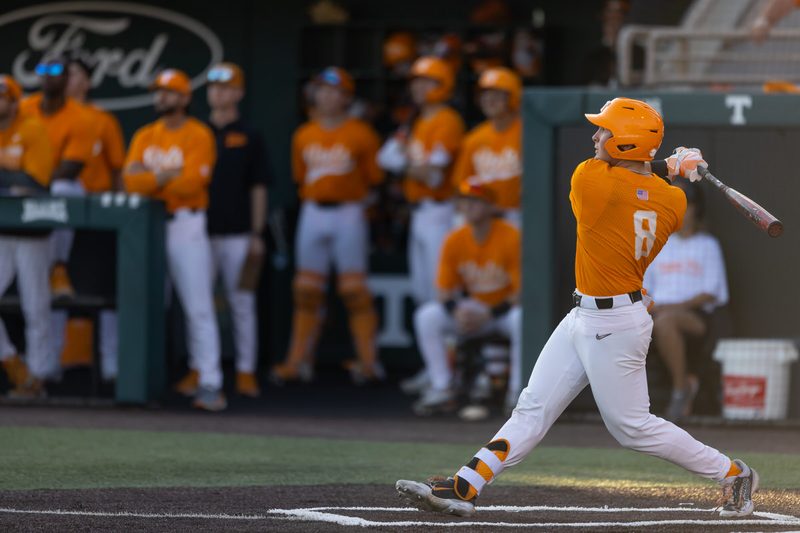
Greg, Russ, and Matt continue this compassion-focused treatment of the athletes at UT. It might be surprising to some, but the familiar sideline presence is just the “tip of the iceberg,” as Greg put it. About 90% of their time is spent in the training room and on calls with trainers, players, and families. It is very much like another full- time job. Despite the time commitment, each one finds it enjoyable with indelible memories of the football win at Notre Dame, the home win over Alabama when Neyland erupted, and the recent historic National Championship run of the UT baseball team.
To the men, overwhelming gratitude was expressed for the efforts of Dr.’s Chris Klenk and Amber Luhn who serve the primary care needs of the athletes. There are many facets of the comprehensive medical program that they provide which includes nutrition, concussion management, stress mitigation, and mental wellness. “The stress level can be quite significant for the players with the advent of NIL, revenue sharing and social media,” Chris said.
They employ a multidisciplinary approach with curated experts in all domains to provide care from dietitians, nutritionists, and therapists when needed. Concussion diagnosis and management has come a long way in just the past 30 years. We used to just hold up some fingers and ask the player to count them and guess the correct year. Now, they use functional imaging and electroencephalogram data to aid in diagnosis and return to play.
Does the stress and pressure of social media and revenue sharing pour over to the medical staff and foist more responsibility on them? One can imagine a beleaguered medical staff member trying to assimilate information knowing that careers are on the line. Russ said, “It now requires input from multiple sources, but the same goal is still at the heart of the matter…the health of the patient.” However, the NIL is not all negative, as Matt has found that, “the athletes are more invested in their physical and nutritional well-being.”
Serving the Community
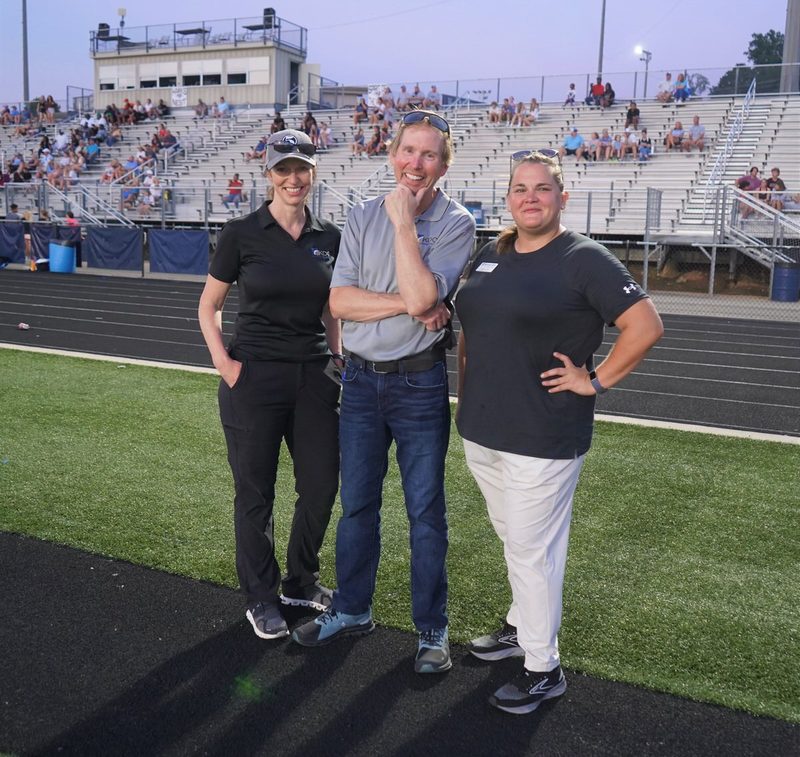
UT is not the only institution for whom the KOC physicians provide services. Many of us are on the sidelines at every high school football game and render orthopedic care to all the student athletes. This coverage would not be possible without the help of the high school athletic trainers who run point on all the sports in the respective schools. You will see them in the training rooms managing physical therapy and keeping us informed on the current status of the players.
Sports medicine was born from some entrepreneurial orthopedists who saw a need. It has now grown into a multi-billion-dollar business that is as convoluted as an MC Escher print. However, when distilled to its most basic component, it is the care of an athlete, who is first and foremost a person who entrusts their very welfare to us. This is one of the most sacred of relationships, which we extend to all patients, athlete or not.
Learn more
→ Swipe for Next Story
FeatureNOVEMBER DECEMBER 2024
The Goalposts Come Down Again!
Heroes on defense and offense deliver an epic 24-17 victory over the Crimson Tide
Story by N. Brooks Clark
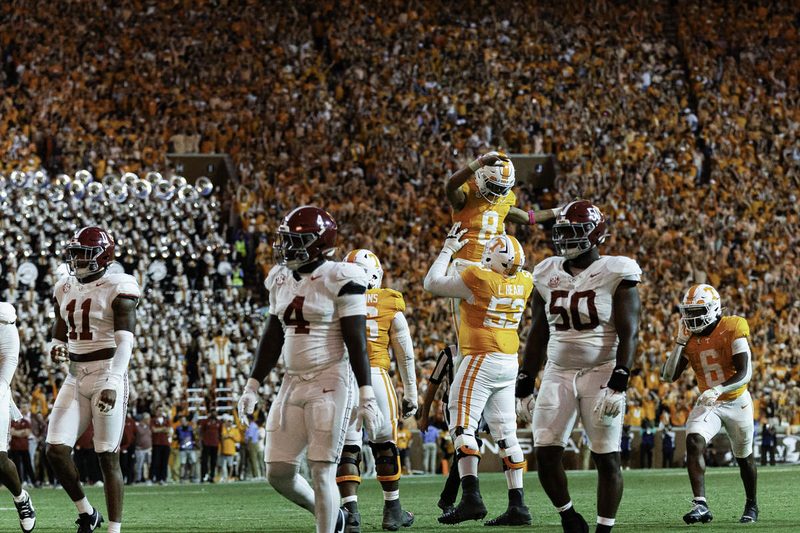
As it was two years ago, Alabama was vanquished in Neyland Stadium. The Volunteer Faithful, many puffing cigars, flooded the field. Within minutes both goalposts had come down.
“The third Saturday in October,” said UT Coach Josh Heupel after the game. “College football is as good as it gets. The fans. Defensively, an elite performance, controlling the line. Offensively, not good early, but I love a lot of what I saw. In a prize fight you have to answer the bell. It was another great night on Rocky Top.”
The Crimson Tide came in 5-1 and ranked No. 7, having beaten No. 1 Georgia 41-34, then lost 40-35 to Vanderbilt for the first time since 1984. UT, also 5-1, stood at No. 11, the week after a 23-17 overtime victory over Florida and two weeks after a painful 19-14 upset loss to Arkansas.
Workhorse running back Dylan Sampson had a signature 20-yard run on UT’s first drive but fumbled on the Bama 18. “I put it behind me,” said Sampson after the game. “I had to be a leader for my team. You gotta be able to deal with yourself first before I try to lead other people. I know my teammates. I know how to approach different people. I trust in my blocks up front. It’s about lowering the pad level and the will to get in the end zone.”
On Bama’s ensuing drive, on a third-and-one Bama quarterback Jalen Milroe broke though the line and would have scampered for a touchdown but for the arm of safety Will Brooks, who reached out and tripped Milroe up. “I saw him run through the gap,” said Brooks, a walk-on senior from Birmingham. “I knew no one else was behind me, so I dove and I tried to swipe his leg.”
UT’s defense forced Bama to punt. After UT went three-and-out, Bama drove to the three-yard line. Milroe threw to receiver Ryan Williams in the right corner of the end zone, but Jermod McCoy leapt up, extended his left arm and snatched the ball. He landed four yards deep in the end zone as Williams fell away from him. McCoy looked around and sprinted out of the end zone down the left sideline, scampering 58 yards to the Bama 46. “He was playing the game he plays,” said Heupel. “It changes the way the game is played from that point forward.”
UT’s drive ended with Max Gilbert’s 53-yard field goal try, wide to the right.
Early in the second quarter, Milroe passed five yards to Williams in the end zone to put Bama up 7-0. On the next drive, Iamaleava ran to his left and, while being tackled, extended himself to attempt a backwards pass to Samson. His body laid out as he hit the turf hard, Nico sat out a play –– long enough for backup QB Gaston Moore to loft a long ball to Bru McCoy on the right sideline that was picked off by Bama strong safety Malachi Moore. Iamaleava’s body slam was not serious. “It woke me up a little bit,” he said after the game.
A 14-yard sack of Milroe by defensive end Dominic Bailey plus a five-yard intentional-grounding lagniappe forced a Bama punt. On UT’s next drive, Bama linebacker Que Robinson hit Nico’s arm on a pass toward McCoy that fluttered into the arms of cornerback Jaylen Mbakwe on the Bama three.
After UT’s defense once again forced a punt, UT’s ensuing drive ended with a 50-yard miss to the right. Bama’s subsequent drive was contained by outstanding tackles from edge rusher James Pearce Jr., defensive ends Tyre West and Dominic Bailey, defensive back Boo Carter, and defensive tackle Omarr Norman-Lott. Bama kicker Graham Nicholson’s 54-yard attempt fell short.
At the half, UT was down 7-0. Iamaleava had been generally inaccurate on his passes and had overthrown receivers open deep. “I missed a shot to Squirrel,” Iamaleava admitted in postgame interviews. “If I hit that, it gets our offense going.”
“At halftime nobody blinks an eye,” said Heupel afterward. “There is belief, confidence, and trust in one another.”
Midway through the third quarter, UT drive included Sampson runs of 13 yards up the middle and 36 yards to the right, a 27-yard run by Nico, a handy pass interference call to the Bama 2, and Sampson’s two-yard plunge to tie the score at 7-7.
Bama’s 10-play drive ended in a 35-yard field goal to put the Tide up 10-7.
With 1:42 left in the third quarter with UT at its own 42, Iamaleava rolled right and, under pressure, flipped a nifty pass 35 yards to Dont’e Thornton Jr. on the right sideline, which he ran another 20 yards to the Bama three. Sampson punched it in to take the lead 14-10.
Bama answered with its own TD early in the fourth quarter to go up 17-14.
With 8:35 to go, UT started on its own 46. An Iamaleava five-yard scamper and a holding call put the ball on the 39, whence Sampson carried the ball four times in a row for 23 yards to the 16. On the next play Chris Brazzell II ran for the right corner of the end zone. Iamaleava laid the ball up and Brazzell laid himself out to make a diving catch in the end zone to put UT up 21-17.
Bama’s next drive was stymied by Milroe’s two-yard tackle for loss by Pearce and linebacker Jeremiah Telander.
As Bama was trying to drive for a winning TD, Crimson Tide running back Kendrick Law heard a word or two from UT defensive back Boo Carter that made him turn around and throw a punch at Carter’s helmet. Carter swung back but missed, and linebacker Arion Carter quickly ushered him away. “I had to grab him,” said Carter afterward. “He’s a young player, as I am. I said, ‘We gotta play the next down.’” The personal foul penalty made it fourth and 22 on the 18. Bama got only 14 yards on a short pass to Justice Haynes. UT took over, ran Samson three times, and Gilbert nailed a 41-yard field goal to put UT up 24 -17.
Bama’s last-chance drive began on the 25 with 1:24 to play. Milroe aimed for Williams slanting from left to right, but safety Brooks stepped in front of him and grabbed it. “I saw the quarterback double-pump for a second and I went and got it.”
“I seen him break on the ball,” said Carter. “I thought, ‘He’s gonna get that.’ I wouldn’t want anyone else behind me.”
“A journeyman,” lauded Heupel. “He invests every single day and reaps the rewards. A special player but a special young man.”
“Right here,” said Carter, gesturing to Brooks at his left at the interview table, “is one of the most unselfish people you’ll ever meet.”
“He never takes the opportunity for granted,” said Sampson, who ended up with 139 yards and two TDs. “He’s always in there looking at the film. You can trust him. He will always do his job. Our defense is giving us a lot of confidence. Having a stout defense like that, it does something for us. We love each other. It’s a real connection in the locker room.”
Many Vols for Life were on hand for the Bama game, which the current players appreciated. While coach Josh Heupel was speaking to the press, Alvin Kamara of the New Orleans Saints popped his smiling face through the curtains into the interview room. “AK!” exclaimed one wag.
Receiver Bru McCoy had six catches for 80 yards. Nico went 14 of 17 for 194 yards and one TD. The defense rattled and hurried Bama’s Jalen Milroe all day and held the Crimson Tide to just 75 yards on the ground. “This group believes that it’s really good,” said Heupel. “They’ve got a chance to be really special.”
Of Sampson’s role for the rest of the season, which includes Kentucky and Mississippi State at home followed by mighty Georgia in Athens on November 16, Nico predicted, “He will continue to be a dog.”
Said the ever-philosophical Sampson, “It’s always a blessing to be able to put one foot in front of the other.”
→ Swipe for Next Story
Non-ProfitNOVEMBER DECEMBER 2024
Roots & Wings
Knoxville Dream Center began ‘under the bridge’ but has spread help throughout Knoxville
Story by Susan Alexander
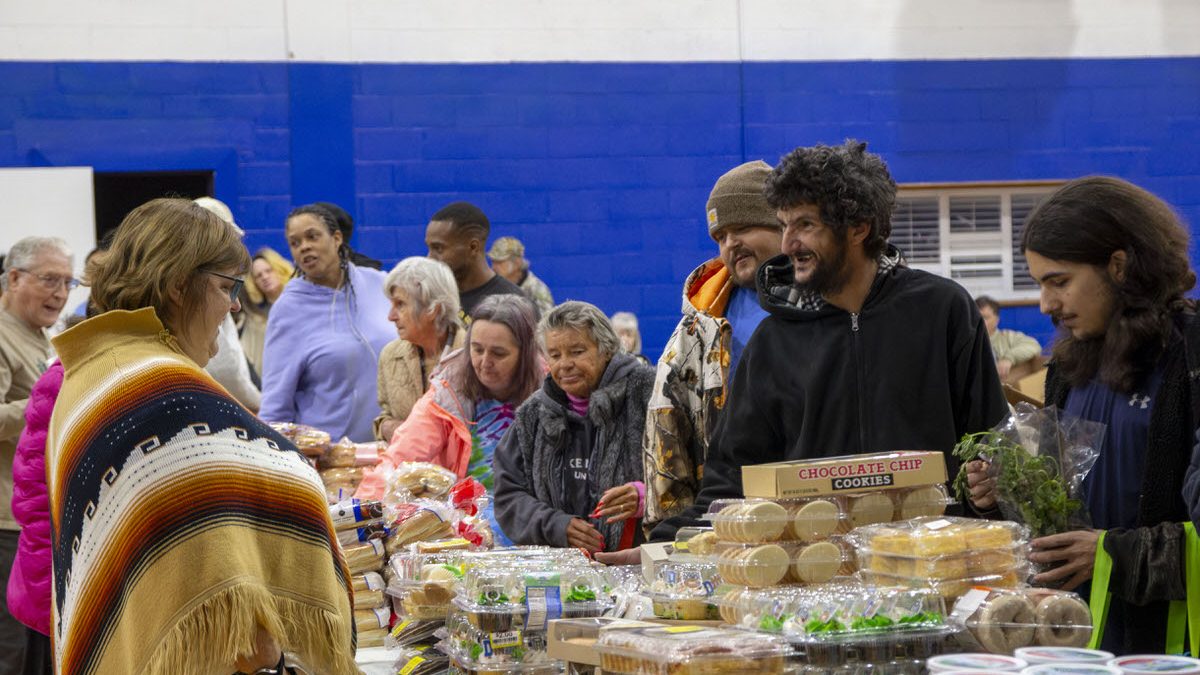
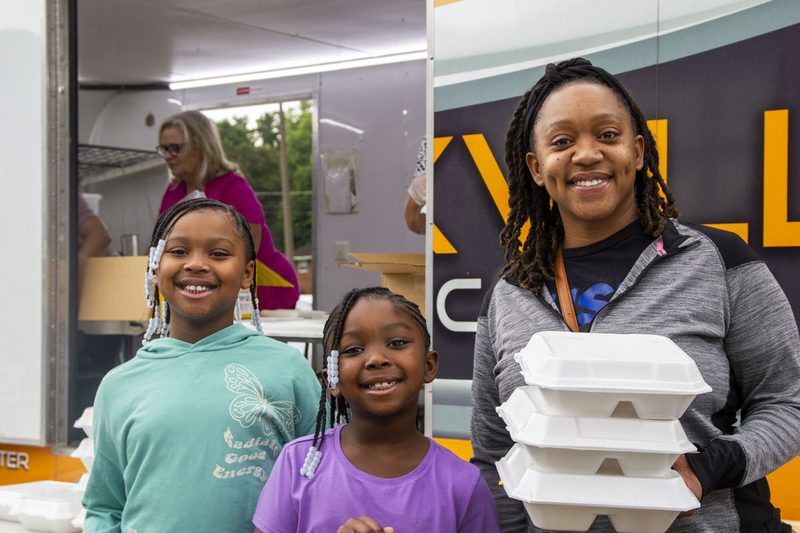
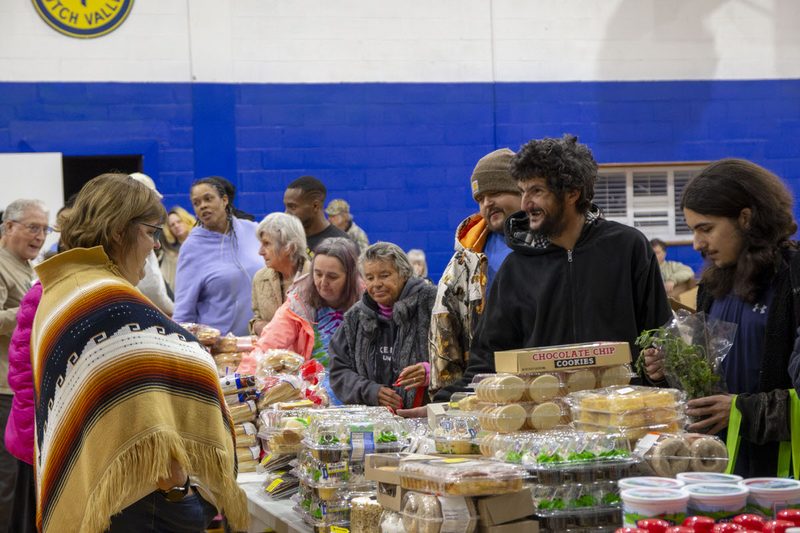
Every Tuesday at about 4 pm, Becky Wells arrives at Beaver Creek Cumberland Presbyterian Church ready to work. Already there are other diehard volunteers and the people they’re there to help, greeting friends and catching up on the news. They’re all awaiting the arrival of a refrigerated truck from the Knoxville Dream Center, one that weekly distributes fresh produce, meat and other groceries to those who need it.
Beaver Creek, located in Powell off Clinton Highway, has been working with the Dream Center on its food truck program for two years. Wells, who oversees the church’s Mission and Outreach Committee, was a little negative about it when Tommy Halcomb, a church member and teams coordinator at the Dream Center, originally proposed getting involved. “I didn’t know how it would work. Would there be any people to give it out to?” she recalls thinking. But once she got started, she’s had no regrets. “There’s no denying there’s a need in the area. It’s been a great thing, for the people and for the church.”
Beaver Creek is one of eight local churches that work with the Dream Center to distribute food that otherwise local grocery stores would pitch into dumpsters. The food comes through Second Harvest Food Bank’s Food Rescue Program. (During the school year another location is added near the University of Tennessee campus to help students who need it.) Most of the items are perishables: produce, meat, bread and other baked goods.
The Dream Center has been sending out food into the community since 2013. But its roots go back much further than that.
Under the Bridge and Beyond
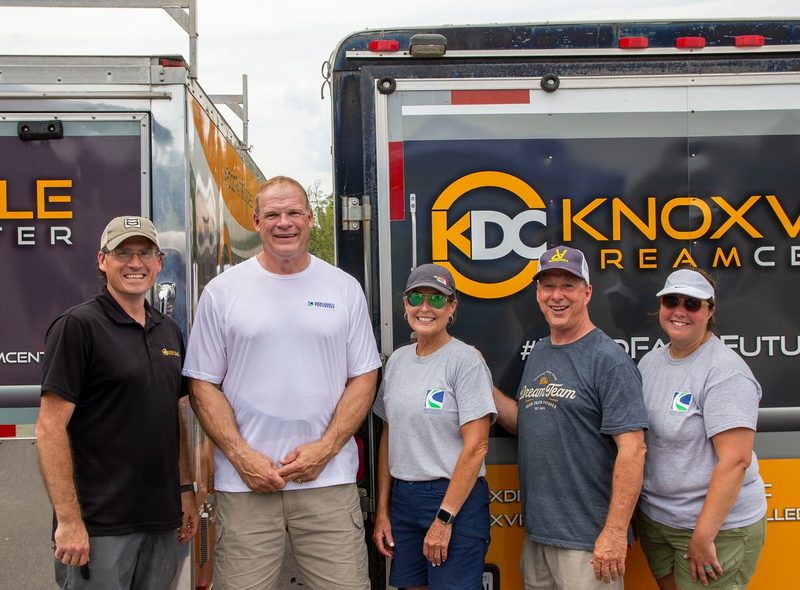
The Knoxville Dream Center, a 501(c)3 nonprofit, grew out of a longtime ministry to the homeless called Lost Sheep Ministry. It began in the early 1990s under an overpass in downtown Knoxville. Maxine Raines was the product of homelessness herself, and she wanted to give back, so she started distributing hot dogs from her car and sharing her faith every Wednesday evening under the bridge.
It wasn’t long before the ministry was feeding hun- dreds and members of the community were pitching in to help. Among those earliest of volunteers was Paul Harris, the pastor overseeing benevolence programs at Park West Church of God. By 2013, Lost Sheep had acquired warehouse space overlooking I-640, and the expense and management was becoming too much for Raines. Harris, now executive pastor at Park West, took over directing and expanding the programming, creating the Knoxville Dream Center modeled after a similar though larger nonprofit in Los Angeles. Though the Dream Center is its own entity, about half of its funding comes from Park West, says operations director Ross Jones.
“Park West would say we’re their local missions program, but we want other churches to feel like they can be a part of it. It’s for the whole community.”
“At Park West we wanted to invest heavily into serving our city,” Harris says. “My heart was wanting to do more than help the homeless. I started taking food and at first I went door to door giving it away. We discovered the suffering silent, like Miss Cathy, sitting on her couch with a walker beside her. We realized there are people we’ll never know because they’ll never come under the bridge. And that’s how the food trucks got started.”
“The concept is simple: Get food. Go somewhere. Give it away.” Harris says. “Give churches a tool to help people and form relationships. The value is consistency.”
Today the Dream Center touches lots of people through- out East Tennessee who need help. It still feeds people under the bridge on Wednesdays, and provides medical and dental services as well. Its food trucks head out four days a week. The Fresh Start Clothing Store opens every Thursday to provide clothes at thrift store prices or for free to people needing to apply for or start a job.
The Dream Center also offers lots of help to Knox County teachers and students, especially those at Title One schools. It provides meals for parent-teacher programs after school and works with school social workers to provide necessities to families in need. It also provides school supplies and goodies like gourmet coffee to teachers at Title One schools. And Christmastime festivities include reading The Polar Express, complete with hot cocoa and faux snow, as an incentive program for the schools’ top readers.
Adam Fritts, director of Community Schools for the United Way of Greater Knoxville, praises the Dream Center’s work with the schools. “They want to do things that support kids and teachers and families — provide the day-to-day essentials they need — and they do so from a space of wanting to share their own resources. I couldn’t say nicer things about the Dream Center.”
Nehemiah Project
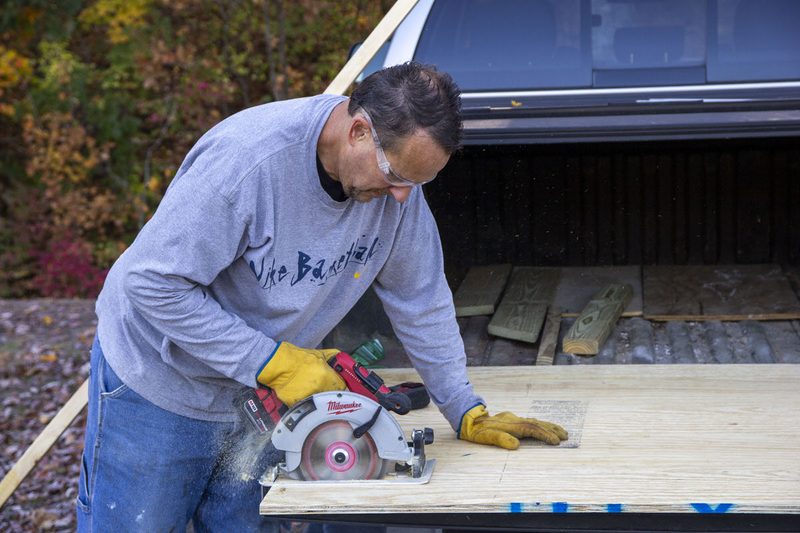
On Labor Day, while most of us were grilling hot dogs or mourning the end of summer, Joe Gardner was at Lowe’s, selecting wood for a wheelchair ramp he would build that week in New Market. Gardner has been the face and the hands of the Nehemiah Project for four years.
A retired engineer, he learned his home repair skills while helping more skilled volunteers at Park West Church. When the Dream Center took over that ministry, Gardner was ready to lead it.
Five days a week, Gardner is a willing volunteer, help- ing area widows with leaky faucets and toilets that won’t stop running, building wheelchair ramps, repairing dry- wall, replacing light fixtures, laying flooring and handling other household repairs. He also maintains the property at Park West Church and Dutch Valley Church of God.
“The Bible tells us to care for our widows, and the very first widow we helped was Maxine Raines,” Paul Harris says. “We helped fix up her house.” (Maxine passed away in 2020.)
“In the four years the Dream Center has had the project, we’ve had 430 requests for help,” Gardner says, “and we’ve been able to take care of about 90 percent of
them. Some situations involving structural damage we can’t take on. And I do have plumbers and roofers I can call on when I need help.
“Before I started doing this I did not know I had a passion for it,” he says. “But I found a huge need, and I found out I had an aptitude for it, and I really enjoy it. Not to say it isn’t overwhelming sometimes.
“One of the widows I’ve helped called this morning when I was on my way in,” he says. “She said the Word of God had been given to her for several people, and I was one of them. She told me I am where I need to be and doing what I should be doing, and if I continue I will be greatly blessed. That’s difficult to ignore.”
A Farm and the Future
About a year ago, the Dream Center acquired access to part of a privately owned farm in West Knox County. Since then, it has taken on farming as part of its mission.
“We’re raising cattle; we have about 30 head at the moment,” Jones says. “No crops yet. We’re processing beef for the benefit of the ministry.” The beef has been used primarily for the after-school meals at Title One schools and for the under the bridge outreach, he says.
The vision for the future of the farm involves two aspects. First, it’s another source of food the Dream Center can use in its various feeding programs. And second, it has potential for housing or training.
“Because of the land that’s available to us, we have a chance to start other ministries — maybe a recovery program or temporary housing for people who need it or maybe a training center for ministers. No decisions have been made about that yet, but the future is bright,” Jones says.
→ Swipe for Next Story
VeteranNOVEMBER DECEMBER 2024
We Knew We Were First
Knoxville’s Gail Wallace Davenport helped pioneer women’s Navy service on the high seas
Story by Phil Newman
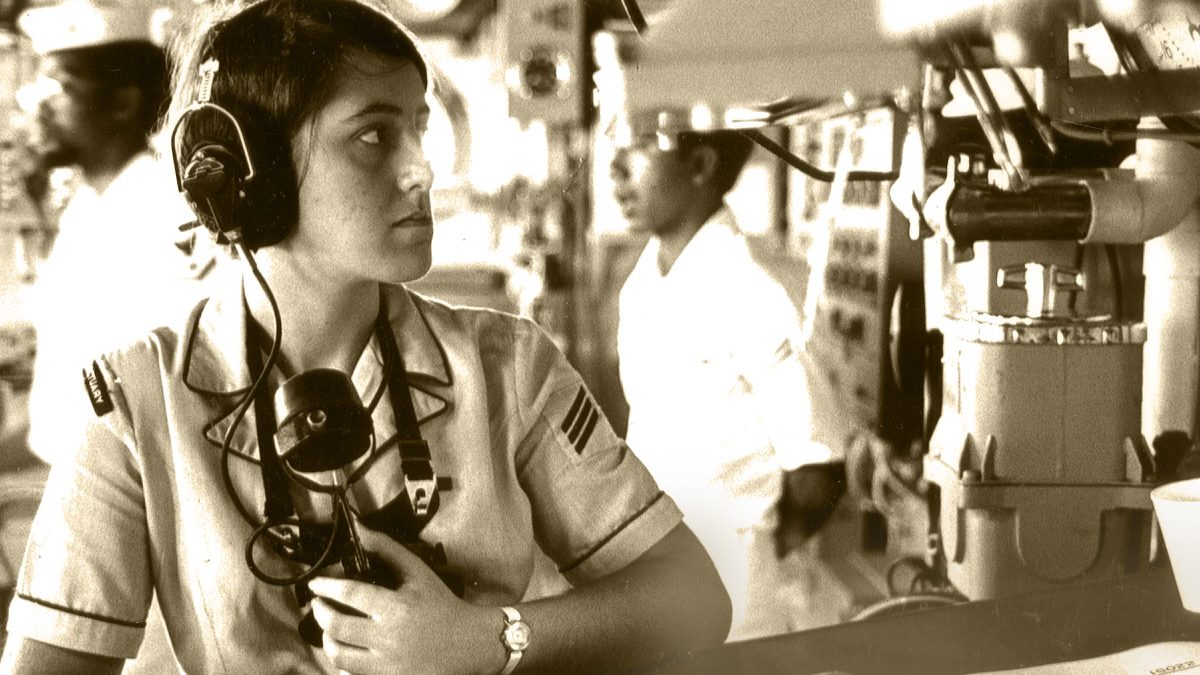
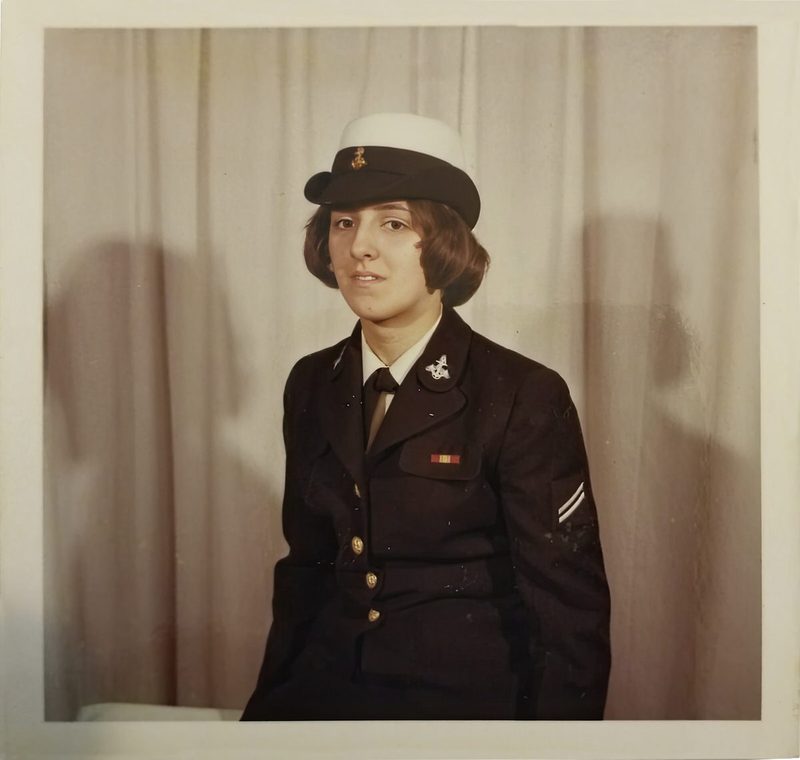
As Gail Wallace looked out over the Panama Canal in late 1973, she was reflecting on more than just the engineering marvel of locks and canals that was enabling theUSS Sanctuaryto navigate this shortcut from the Atlantic to the Pacific. That was a sight to behold, but as one of the first 60 female sailors to serve on a Navy vessel in non-medical roles as part of a cutting-edge pilot program, Gail had more on her mind. “I knew we were making history,” she recalls today, “and it felt awesome, wonderful to be one of the pioneers.”
When she had received her orders to serve on the ship the previous fall, Gail had jumped at the opportunity. “Oh yes, it was ‘Bring it on, let’s do this!’” she says of the chance to expand women’s roles and responsibilities at sea. Her two-plus years serving on the ship during the Vietnam era also represented a coming-of-age for Gail, a part of the growing out of her shell that had begun when she first joined the Navy in 1971 after a mostly quiet Midwestern upbringing—one whose influences all but guaranteed she would someday don a uniform and report for duty.
Destined for Service
Born August 7, 1953, in the rural hamlet of Winchester, Illinois, a four-hour drive from Chicago, Gail Wallace was the fifth of nine siblings: five boys and four girls. “It was a pure farm town,” she recalls, “with four blocks total and not one stoplight even to this day. We walked everywhere, and everyone knew each other. It was an ideal place to grow up.”
Among her siblings, six served in the military, spanning the Air Force, Army, and Navy. Her father (World War II and Korea) and a grandfather (World War I) had also served in the Army. “My dad, Warren Wallace, was sent to Oak Ridge to help build the bomb,” Gail says.
She graduated from Winchester High in 1971. Money was tight, college not a viable path, and in those days it was less common for high school grads to live at home with their parents. The message was “Go find your way in life,” Gail recalls. Inspired by her older siblings, especially a brother who had received three purple hearts and two silver stars for his Air Force service in Vietnam, Gail opted to enlist. “But it wasn’t that I felt like I had to,” she clarifies. “I really wanted to serve my country. All of us did. I looked forward to it.”
The Navy was perhaps a curious choice, though, since at that time women made up only one percent or so of that branch. In fact, the first recruitment center she visited refused to take her. A second office farther from home was more amenable, and Gail enlisted on November 10, 1971.
She reported to United States Naval Training Center Bainbridge in Maryland for basic training, where her female drill sergeant “yelled at me pretty much nonstop for 10 weeks.”
The rules were strict, of course, from an enlistee’s bed getting tossed if a quarter wouldn’t bounce off of it, to the expectation of perfectly placed clothes and personal items. The days consisted of “studying and marching, more studying and more marching,” Gail says.
A poor class grade would result in a weekend pass being revoked—a huge downer for the stir-crazy recruits. “I only missed one weekend, and it was miserable.”
She was eventually sent to Naval Station Norfolk (Virginia), where she worked as a yeoman in an office. Granted top-secret clearance, she was tasked with bringing priority teletype messages to the brass, among other administrative duties.
In mid-1972, word started circulating that the Navy was about to expand the role of women aboard ship, beginning with one specific vessel, theUSS Sanctuary. As a joke with her friends one night at a base’s watering hole, she said, “I’m gonna be one of those girls picked for the ship”—and the very next week, she received orders to report. “I was in shock!”
Women on the Water
TheSanctuary, a hospital ship, had originally been commissioned during World War II. With a capacity for 70 officers and 498 enlisted sailors, the vessel later earned 12 campaign stars during the Vietnam era, serving on counteroffensives from 1966 to 1971.
After that, the Navy opted to repurpose it, so the ship was recommissioned for humanitarian purposes on November 18, 1972.
According to an article inThe Navy Times, Admiral Elmo Zumwalt became Chief of Naval Operations in 1970 with that branch of the service “in turmoil.” Morale was low, Vietnam was unpopular, and calls for expanding women’s rights throughout American society had grown more insistent.
Largely to address those concerns, Zumwalt issued 121 policy missives called “Z-Grams,” one of which, #116, came to be known as “the Navy’s Equal Rights Amendment.”
“Building on Truman’s 1948 Women’s Armed Services Integration Act,” 116 “promised equal rights and opportunities for women in the Navy,” the publication reported. Considered a “radical proposal” at the time, it “included command opportunities... opened the Naval Reserve Training Corps to women, and eliminated the segregated service of male and female sailors. For the first time in history, women could serve side-by-side with men at sea (in non-medical capacities).”
As a pilot program growing out of Z-Gram 116, theSanctuarywould incorporate several female officers and 53 female enlisted sailors when it embarked on goodwill medical missions in late 1972. These “first female personnel to serve at sea in a non-medical role” included “machinist’s mates, radiomen, yeomen, dental technicians, boatswain’s mates, hospital corpsmen, and many more. They stood watch and performed naval duties just as their male counterparts did.”
TheSanctuary’s “non-combatant mission” was ideal for testing “a gender-integrated crew,” since the ship already had separate compartments for the Navy Nurse Corps females who had served aboard. The ship was further equipped to accommodate the expanded female population before the pilot program’s first voyage.
One of those first new non-medical female sailors was Gail Wallace.
Bringing Hope and Healing
Working as a yeoman in the administrative area at first, Gail quickly adjusted to life aboard the ship. Her quarters were the same as the men’s: a tight bunk, a tiny compartment for personal items, and a small locker to hang uniforms
Gail was transferred to help run the ship’s expansive store, which provided essential supplies to a population not much smaller than her entire hometown.
TheSanctuarymade its way down the Atlantic coast and to South America, where it would dock so Navy doctors and nurses could treat patients in communities that sorely lacked medical services. The vessel and its crews would do the same in Port au Prince, Haiti, among other locales.
Gail considered the ship “a big family” and loved inter- acting with her fellow sailors, male and female alike. For the most part, the men were welcoming. “They accepted and respected us, as long as we did our jobs, and saw us as shipmates,” she recalls.
TheSanctuarywas slated to go to Vietnam in 1974, where it would treat and transport wounded soldiers, but those orders were canceled, ostensibly because the US was easing down its engagement and looking toward the end of combat operations in Southeast Asia. There also were plans to navigate to Greece, but that plan was scuttled.
Guided ‘Home’ to Knoxville
When her stint on the ship ended and she was discharged from the Navy in November 1974, Gail returned to Illinois. She gravitated toward secretarial work that would later include an opportunity for a role at UT-Knoxville.
In the end, “it was God’s will” that propelled her to migrate south from Illinois, she says. “A group from Knoxville had come to stay with us at our church.”
Connecting with them, along with meeting a Maryville family that would later take her in, were among the circumstances that aligned and made East Tennessee the right place for Gail beginning in the early 1980s, when she began to put down roots that run deep to this day.
Patriotism continued to flow through her veins, so it’s only natural that she served seven years in the Army Reserves via the 844th engineering battalion out of Knoxville.
“I loved it, and I took it seriously,” says Gail, who rose to the rank of Sergeant (E5). She received several medals during her service, which focused on water purification initiatives. Her work took her mostly to Fort Bragg, North Carolina, and also into Alabama.
It’s also fitting that Gail looked for opportunities to continue breaking down barriers. “When we hit the time for our first two-week camp [in the Reserves], they said they wouldn’t make us camp because we were women. I said no thank you, we’ll do everything that the men are asked to do.”
In Knoxville she met and wed Stephen Davenport, and they were married for 32 years until his passing 13 years ago. Gail is the mother of “two wonderful sons,” Michael and Matthew, both of whom are married, and is happy to report that, “Finally, I have one grandson who is almost 2. He calls me ‘Ma.’”
Gail lives on Western Avenue, “in the middle of every- thing,” and enjoys the vibrancy of the community. The Knoxville area appeals to her on many levels, including its support for the military and veterans.
“I had lived in Virginia, California, Florida, New York, and Illinois, and I haven’t found any place where people are friendlier than they are here. The whole city is wonderful.”
Between her sons and grandson, her crafting community, church, clubs, and volunteering with veterans’ organizations, Gail stays blissfully occupied.
Last April, she was part on an HonorAir Knoxville flight to Washington, DC. One of the reasons she applied for the trip was to memorialize two men from her rural hometown in Illinois, James H. Price and David R. Hunt, who died in combat in Vietnam. “I found their names on the wall and brought back etchings that I’m going to take to the museum in Winchester,” Gail says.
Reflecting on her own time in the Navy, she says, “I may speak for a lot of people in that I served because I wanted to. I love our country, and I’m proud of what we accomplished. If I could have served for 80 more years, I would have gladly done it.”