Adam Ragusea brings 2.47 million along on travel, food, and so much more
Story by Cityview
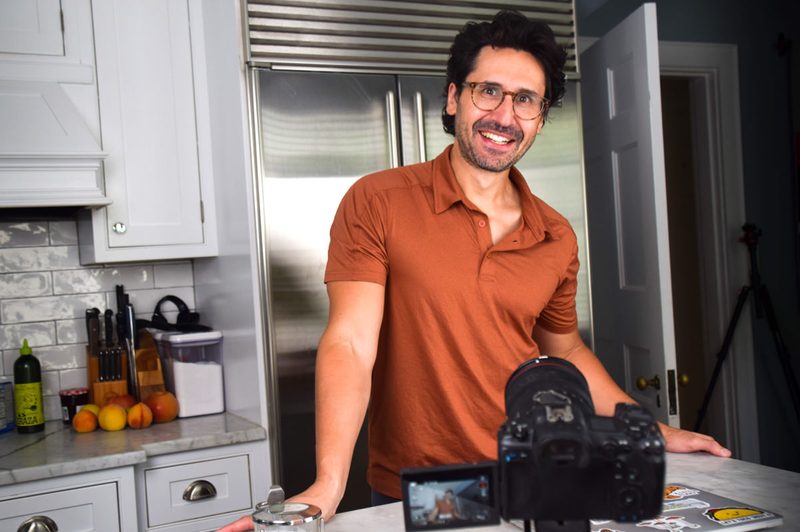
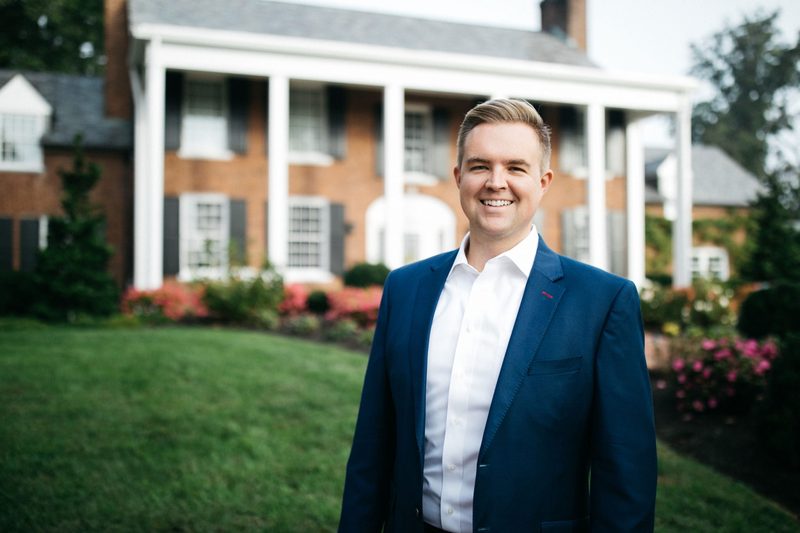
In this era of digital content creation, Knoxville’s Adam Ragusea has established his place in the world of online culinary arts by creating a brand that has been personally, professionally, and financially rewarding with some two and a half million subscribers to his YouTube channel. But his journey has been unconventional and unintentional through a career that transitioned from music and journalism to public radio and teaching.
For several years, Ragusea toyed with YouTube content producing short videos on various topics that barely scratched the online surface. Then, in 2019, he posted an 8-minute video explaining a method to prepare New York-style pizza at home and the Internet took notice. The views soon mounted (currently more than 22 million for that video) and the new online star quit his day job.
“I was teaching journalism at Mercer University and after posting the video in March, it went viral several months later,” said Ragusea, who was living in Macon, Georgia, at the time before moving in 2021 to Knoxville where his wife, Lauren, has family. “I saw an opportunity and lept on it just as the pandemic hit in early 2020.”
Hundreds of videos followed as he gained a mass of subscribers fascinated by his tight delivery, well-crafted videos, and straightforward recipe instructions that dipped into food science almost any home cook could understand.
“I don’t think I’m a particularly good cook and I’m certainly not a scientist,” he notes. “But I trained as a journalist and am an uncommonly curious person who can learn something new and explain it to someone else with enthusiasm.” Teaching at Mercer for six years was undoubtedly a significant advantage.
As his popularity grew, Ragusea began producing two food videos each week and later expanded content to include weekly podcasts and videos covering a wide range of topics that piqued his interest, including regional themes following his move to Knoxville. For instance, in a 2024 YouTube episode, Ragusea explores Alcoa, going into intense detail about the town, such as the streets named after renowned scientists and an explanation of its company namesake. And the comments show the engagement. At the time of this writing, there were 681 comments on the 9-minute, 46-second video.
Two years earlier, Ragusea interviewed researchers at North Carolina State University for a video investigating attempts to grow truffles, the rare and expensive fungus used to flavor foods. “They are difficult to grow but we do have the right climate and soil type to grow truffles in East Tennessee and North Carolina in the Blue Ridge Mountains area,” explains Ragusea. “So if anyone’s going to crack the code on farming truffles it will be right here but it’s a decades long process.”
The financial success of Ragusea’s YouTube channel was swift after the initial pizza video. “Although it wasn’t initially huge – that one video was making something like $200 a month – it was incredible because we were absolutely broke at the time,” he says. “We had two small children with serious health problems, I was teaching at a small Liberal Arts college, and we were really pinching pennies. But the way you make a lot of money on these platforms is by building a very large library of popular content, which is what I did.”
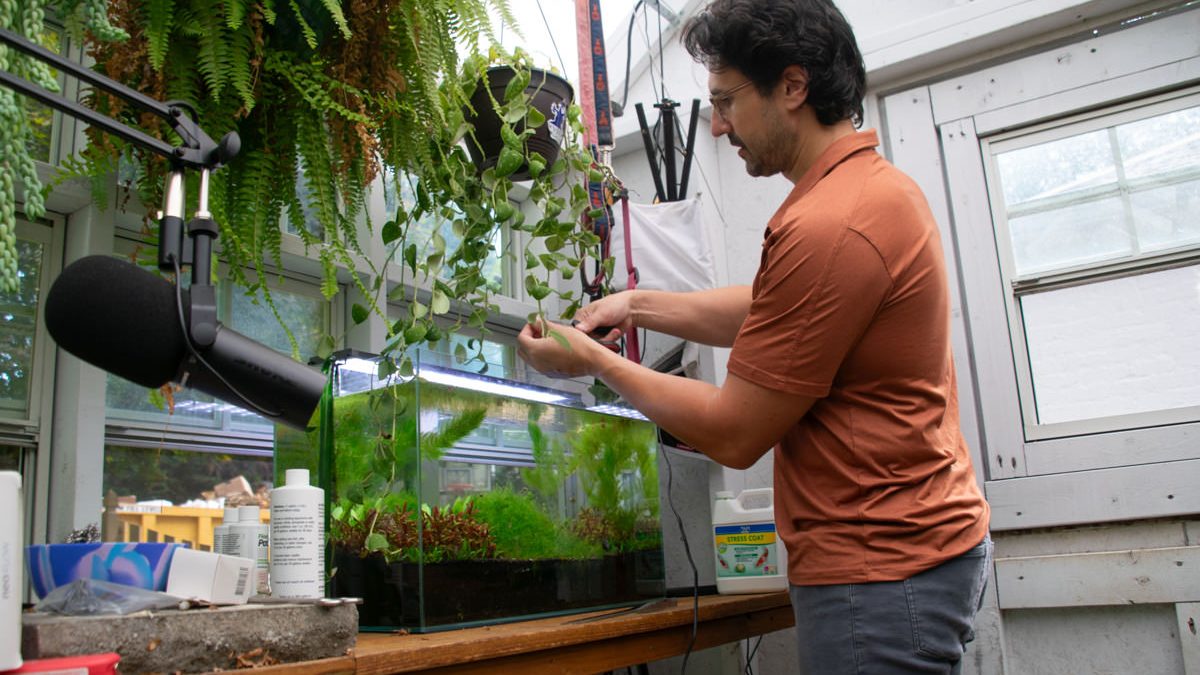
Within six months, his family was financially secure, “Not empire-like wealth,” he stresses, “but in the sense that we could continue our normal lifestyle and not worry about money.” But there were other concerns. For each 1-minute of video production, Ragusea had to invest perhaps hours in research, preparation, and editing. “I was working absolutely absurd hours into the early morning and kind of hurting myself through overwork,” he admits. So in early 2024 he announced plans to cut back to one video a week, enabling more family time and pursuing other interests. “My main leisure activity these days is freshwater aquaria,” he says. “I keep fish and also vampire crabs from Australasia. Our Knoxville house has a greenhouse which is where I keep all the tanks and built an elaborate setup. I needed a project to help me psychologically and this really has.”
Less time in front of the camera has freed up Ragusea to investigate other business ventures that intersect with his food passion, specifically his quest for the perfect pizza. This past summer, he teamed up with Joe Seiber, owner of Knoxville’s Status Dough doughnut shops, to create a new line of the beloved flat food.
“There are many great styles of pizza crust, but I’ve modified Joe’s unique doughnut dough into a great pizza crust and I’m partnering with him to create a line of pizza to sell in his stores around Knoxville,” he says. “We’ll be starting first in the Farragut location then the others, including his new store on the campus of the University of Tennessee here in Knoxville. My success all began with pizza, so I’m really excited about this next stage.”
But don’t expect him to give up on his YouTube channel anytime soon. “I’ve reached a decent cruising altitude with the channel right now and I want to continue with topics that interest me and, I hope, my audience who have come on this journey with me so far,” he says. “My first foray into the local pizza business might be a sign of what’s to come.” You can follow Ragusea’s journey atadamragusea.com.
→ Swipe for Next Story
Arts & CultureJANUARY FEBRUARY 2025
Love at First Sight
A visit to the University of Tennessee led watercolorist Kate McCullough back to art
Story by Susan Alexander
It seems buildings can make a first impression as strongly as people can. Because the first time Kate McCullough laid eyes on the Art and Architecture building on the University of Tennessee campus in Knoxville, she knew. It was time to get back to art.
A Buffalo native, Kate spent her career in interior design, working in healthcare settings after she and her husband moved to the west coast of Florida. After the cold of upstate New York and the heat of Florida, she says they chose to be “halfbacks,” settling in Knoxville 28 years ago. She did some interior design work here as well. Until that visit to the UT art school.
“It hit me like a brick,” Kate says after exploring the school’s gallery. “I had to do this again.” She had taken some art classes as a student in the early ‘70s, but the “this” she refers to became primarily watercolor and pottery classes at UT. Eventually the pottery fell away, and Kate has been painting watercolors for about 20 years.
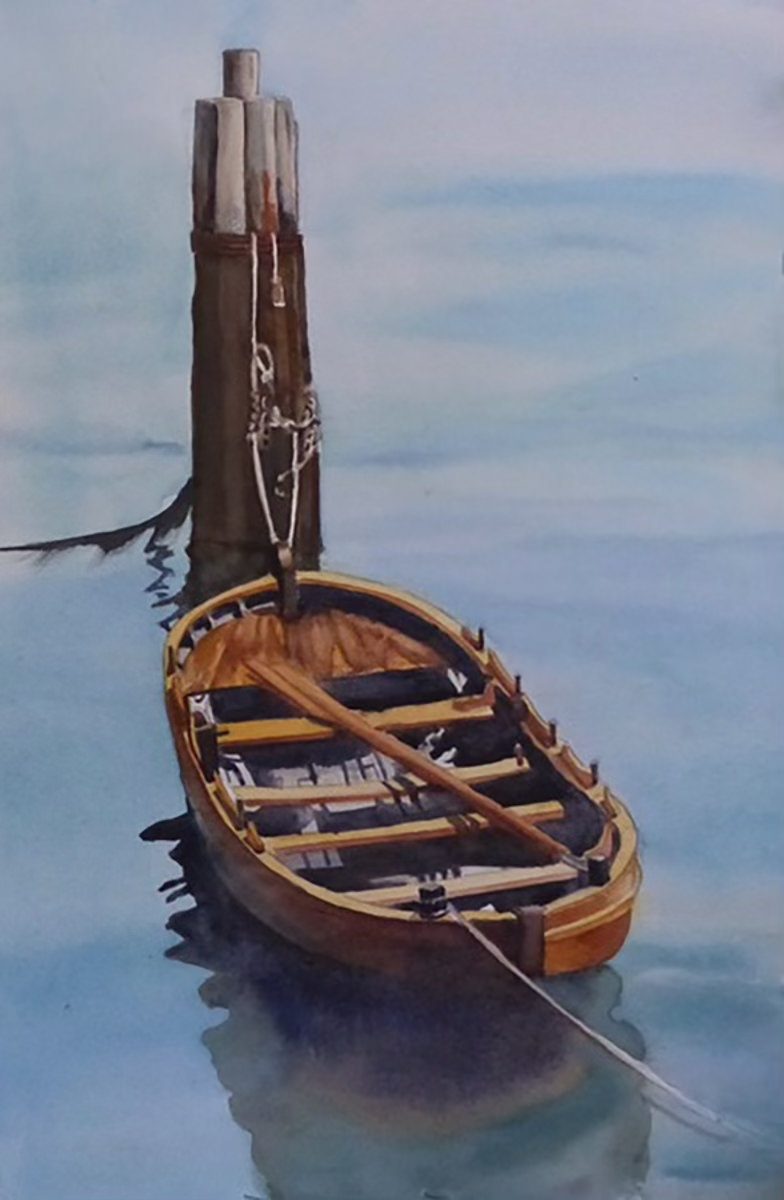
Her subjects run the gamut, though she says she especially enjoys painting cityscapes and still lifes. She loves her medium’s translucence. “I love the softness of it, the way you can see through layers of color to the paper.”
Kate is a member and prior president of the Knoxville Watercolor Society, a member of the Art Market Gallery downtown, and an instructor at the Oak Ridge Art Center. She also paints with a group at Westminster Presbyterian Church most Thursdays. And she shows her work as a member of the Tennessee Watercolor Society as well.
Still, she prefers to paint in solitude. “I like it when it’s me and my art. When you’re with other people, you end up talking. It’s hard to focus.” Though sometimes her husband, Roy, joins her in their West Knoxville home studio. He paints in oils. “Turns out oil and water do mix,” she quips.
You can learn more about Kate McCullough’s art on her websitekatemcculloughwaterart.weebly.com. You can also find her work on display at Art Market Gallery.
→ Swipe for Next Story
PoliticsJANUARY FEBRUARY 2025
Tennessee: For Democrats, What’s Next?
The results of the election has this writer curious about the future of the Democratic Party in the Volunteer State
Story by George Korda
With a new-but-old presidential administration taking office, and Tennessee election winners beginning their new terms of office, the question is, will Democrats be able to overcome their now decades-long Volunteer State decline?
Much of the political universe, nationally and locally, will continue to revolve around President Donald Trump. As an experiment, start a public affairs conversation with anyone on any subject, and then count the seconds until they invoke the name, “Trump.” It shouldn’t take long. Trump’s dominance of political thought and discussion is largely fueled by a national news media that post-election remains obsessed with his every move. Anticipate no change in Trump continuing to overwhelm the political firmament.
The Republican state legislative General Assembly supermajority is unchanged. In its election analysis, theAssociated Pressstrained to put the best face on Democrats’ 2024 Tennessee outcome: “Tennessee’s Republican legislative supermajority will remain unchanged after Democrats failed to flip seats in a handful of competitive races, but the minority party didn’t give up any ground, either. Republicans will continue to hold 75 out of the 99 seats inside the House chamber, the same amount the GOP held before Tuesday. Over in the Senate, Republicans will have 27 members while Democrats will continue to have just six.”
The Democrats’ small ground they hold indeed didn’t shrink further, but it has been trending downward for a while. To illustrate the Democrats’ deterioration, in 1992 Democrats, historically Tennessee’s dominant party, held a 63-36 state House majority: today, Republicans have a 61-seat advantage. That doesn’t mean Republican Gov. Bill Lee, whose term ends in 2027, will get everything he wants; for example, even with Republicans’ huge majority, Lee hasn’t been able to obtain legislative approval for universal school vouchers.
Tennessee’s baseline Democratic vote is found in the Marsha Blackburn-Gloria Johnson race’s 34.8% of Tennesseans voting for Johnson; with or without a campaign, she’d have probably finished with about the same numbers. Johnson achieved her 15 minutes of fame by being one of the “Tennessee Three,” a trio of Democrat state representatives who last March protested for gun control on the House floor. It’s understandable why Johnson took the senate campaign plunge: she’d gotten news coverage that helped her raise some money (about $7.2 million, according to theNashville Tennessean); she’d likely never get another chance; and she was running concurrently, and unopposed, for her state House seat.
Locally, the Republican party squashed Democratic hopes for adding gains to their minimal holdings.The Knoxville News Sentineldescribed Democratic misfortunes: “Knox County Democrats, riding high after chipping away at Republican leads over the years and flipping a county commission seat earlier this year, crashed back to reality as election results came in Nov. 5. Knox County is GOP country.” Democrats hoped new face Bryan Goldberg would unseat 18th District Republican State Rep. Elaine Davis. Over the years, the 18th has been a much-contested race, but Davis sailed to reelection with about 54% of the vote.
As mentioned, Trump’s presence, for good or ill, bestrides the political world like a colossus. He is, at present, driving Tennessee’s GOP bus: its near-term fortunes rise or fall with him. If the public believes him to be fulfilling broad promises of igniting the economy, making definitive steps to secure the border, and creating a path to eliminate unnecessary government spending, will this move on the national scene position Tennessee Republicans to gain even more power? Maybe. If he doesn’t, they’ll take a short-term hit. What appears to be certain on the national and local level brings to mind an oft used metaphorical definition of insanity: doing the same thing over and over and expecting different results. There’s a new, post-Trump day coming in January 2029 for Republicans and Democrats, and each side will spend the next four years working, and changing, to make it sunny on their side of the street.
→ Swipe for Next Story
InsightsJANUARY FEBRUARY 2025
Learning to Learn at 86
After decades in pastoral care, I thought I had the answers. Turns out I had a lot to learn.
Story by Rev. George Doebler
One year ago, in my first column withCityview, I wrote that when I know something, I know half and when I am absolutely sure I know, I know less than half (Edwin Friedman). Well, in the past year and a half, I have had a new teacher, and he is teaching me not as much by words, but by what he is doing. Friedman’s words have come to life.
I stepped down as the Director of Pastoral Care at UT Medical Center 17 years ago, and the next day became a Special Advisor. I held that title until last year. Under that title, I did some mentoring, some teaching and counseling. People who had been shot, stabbed, or beaten had come to the ER.
When they initially came in, there was a bit of drama: police, families, or suspicious folk would show up. If there was a death, the drama ramped up. If it was gang-related, it ramped up even more. But this always died down after a bit. In many cases, patients were seen, treated, and released. I’m unsure if there was ever any follow-up.
In the midst of my new job, I began meeting with people I had met and worked with 30 years before about what has come to be called “gun violence.” The stories behind these events that brought people to the ER were not medical issues, after all; they were community issues. The violence was and is not limited to areas we tend to believe are “more susceptible to crime.” So even after my departure from the medical center, I continued to meet with this group to see if there were resources we could put together to help. This is where I first heard of Safe Haven, a program that was working with kids, age 10 to 18, to help them stay out of trouble.
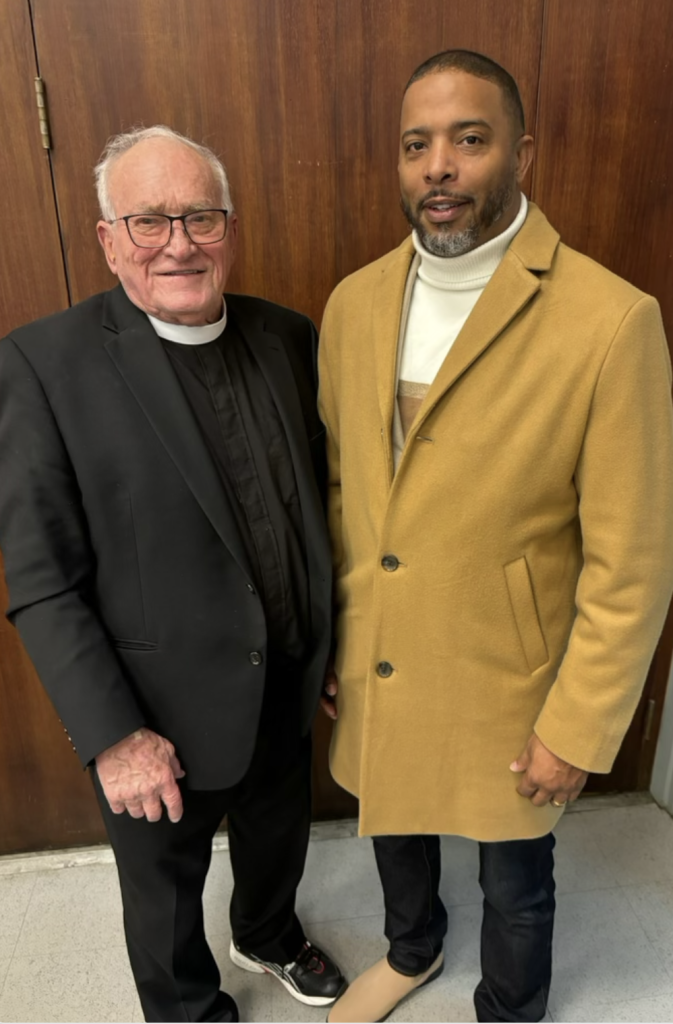
I called one day to learn more and a deep, quiet voice answered, “Hello.” No “Safe Haven, a place of refuge and safety,” just, “Hello.” It was, I would later learn, Lawrence Williams, Safe Haven’s founder. I told him who I was and that I wanted to meet to learn about his work. “Why would you want to know?” It was then that my new teacher began to impart his wisdom.
My learning up to this point included 40 years of clinical pastoral training in a prison, seven years in a federal mental health institute, 13 years in a state one, and 39 years at the medical center. All this “experience” and yet I am discovering it was all within walls, boundaries that existed outside of the community itself. Community problems—violence, sickness, accidents, deaths—all came to those places. But these places exist apart from the people.
It was during my first visit to Safe Haven that I met Lawrence, a middle-aged man who was born, raised, and still lived in this community. While there, I met two polite young men in their mid-teens, who were living at Safe Haven. Lawrence was mentoring them in a stable and safe house where they were fed and taught.
The learning for me had a rather steep curve. For the first time, I was where the people who came into the ER actually lived, where they had to be aware of their safety every minute. Each of the young men I met had been carrying guns before they came to Lawrence. Having once been part of that culture, Lawrence was the strong role model for them. Turns out he was for me, as well.
He is teaching me how little I know about the people in my community who have not only health and welfare issues, but a lifestyle that I, as a white pastor seeking to be a part of the “helping,” am disconnected from. And while I have more questions than answers now, I know enough at this point that I can give what little of the gifts I have—physically, emotionally, and financially—to support. Programs like Safe Haven are making an extraordinary difference as 501c3s, but they lack staff to write grants or fundraise in order to grow or sustain their programming. I have asked Lawrence many times in the past year, “How do you pay for all of this?” It’s always the same answer: “God always provides.”
→ Swipe for Next Story
DepartmentsJANUARY FEBRUARY 2025
Bears in the Backcountry
An anecdote about wilderness kinship
Story by John Quillen
I had been trying to talk my friend, Kim, into backpacking for years. She was an avid hiker who was sufficiently fit to do the Spence Field turnaround in a day or a Leconte route via the Boulevard. I could tell she was developing some curiosity as evidenced by questions such as, “Do you worry about getting hurt or twisting an ankle?” This was the early’90s and I was spending almost three out of four weekends getting to know the half-million-acre sanctuary that is the Great Smoky Mountains. Sometimes I would just disappear alone, with no itinerary and hitchhike back to my vehicle at different trailheads. In those days, permits were a suggestion and any mention of onerous fees were backcountry blasphemy.
A new trail guide was out in the first edition. This “brown book” would give you an elevation profile, trail facts, and history notes. I would mentally download my intended route and leave this heavy thing in the car. No one cared where you pitched out, be it in a designated spot or hidden in a holler, as long as you left no trace.
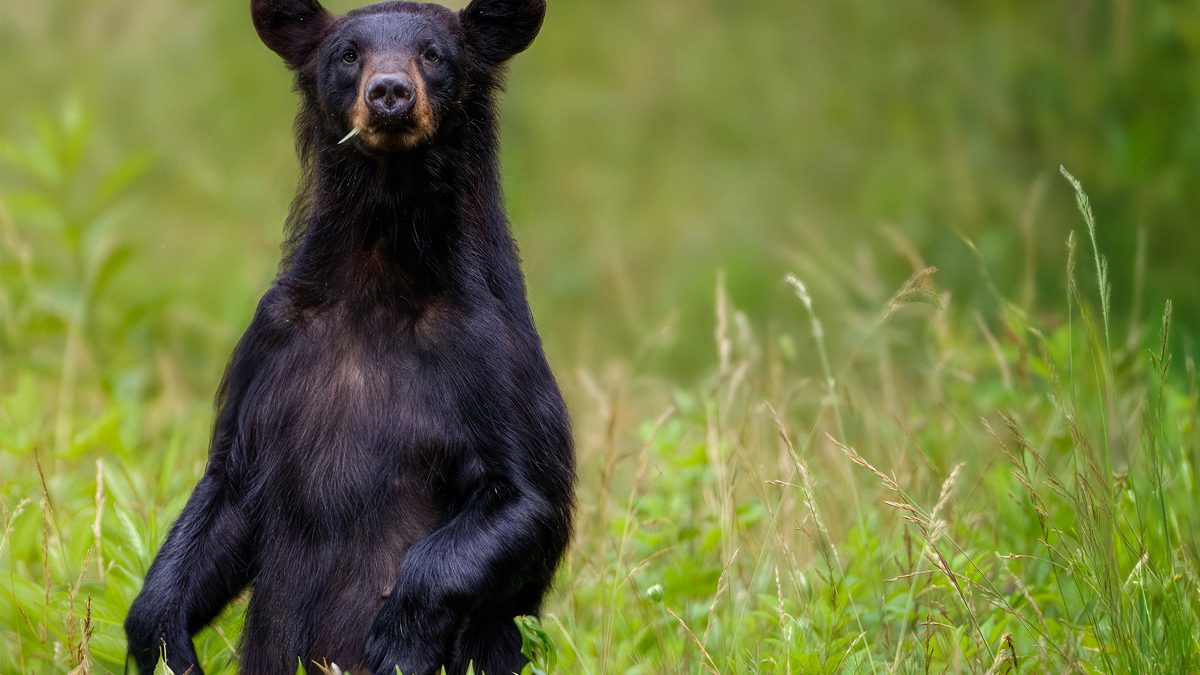
Kim was getting closer to commitment on an overnight. I could tell when she finally asked the million dollar question. I think she was trying to not appear concerned by making this the last technical query: “What do you do about those bears when you see them?” In my opinion, bears know they are safe from humans in the park. Every Smokies outing of mine included a great bear anecdote. My attitude was one of kinship. They never bothered me and I certainly returned the favor. In fact, I saw them so often I took it as a positive omen for my weekend. Often I would round a corner and startle one which frightened me, and we would both jump and speed in opposite directions. This apparent mutual kinship appealed to Kim. It aligned with her vision of backcountry bliss. I was living proof that Smokies black bears don’t prey on humans.
It was a postcard fall weekend in 1996. Hardwoods were nearing peak and I suggested a loop starting at Mt. Sterling Gap. We would climb for a mile and turn off on the Long Bunk trail deep down into the splendor of Catalochee. Angled rays of sun bounced off turning leaves and glistened from purring streams as we rounded the corner after eight miles into the Pretty Hollow Gap campsite. I found a good flat spot at the upper end of this site and off shouldered my load. I shook out the tent’s rainfly as Kim staked out the corners. Scarcely had we finished squaring away our gear when I saw a look of horror in her face; she stood frozen.
Ambling down the hill as if to function as camp host was the fattest bear you could imagine. He wasn’t running, just coming in to sayhello. Knowing that Kim was unaccustomed to this type of welcome, I walked to the perimeter to intercept this uninvited guest and clang some sticks in his direction, per usual. I didn’t want to admit this to my nascent partner on her first overnight, but I never had bears come into a camp like this. He turned around and disappeared into the brush. I set out stringing a rope between two trees as this was well before the days of cables now hanging at every back country site.
Cooking was a foregone conclusion as we fed a fire into the night with eyes circling our perimeter. We dared not lure him closer. When he finally disappeared we retired into the mesh and nylon separating us from nature. I dozed off into a dream where the bear was pushing against our domicile and woke up yelling. Except it wasn’t a dream. Kim had nudged me aggressively awake with the words, “He’s right outside the tent.” What a magnificent first backpacking trip for her.
This mighty beast had climbed one of the two trees from which I had hung our packs and food. Placing his weight on the rope, he brought down two saplings and devoured the contents. The ground looked like a crime scene with fuel bottles and shredded noodle bags now mixed with leaf litter. Our friend had gotten what he came for and by daybreak retreated to his den somewhat fatter. My pack was shredded and the devastation immense. Not only were we exhausted from this terrifying night but hunger, pushed aside by the evening’s events, now settled prominently within our stomachs. I lashed the remnants of my pack with string from the trees. We had little choice but to finish our intended loop back to the car which involved a significant climb of Pretty Hollow Gap trail to Sterling Ridge. A group on horseback encountered us and provided sustenance in the form of cereal bars. They had no trouble believing our experience down by this beautiful creek in the solitude of the upper valley.
I would return to the wilderness with a renewed sense of awareness and without Kim. Her trauma was real and to my knowledge her first night on the ground in a tent would also be the last. Since then, bear/human interactions have increased in the park, but I see less every time. Perhaps it has something to do with the statistic about dogs which seems to be a common determinant. They are not allowed in the backcountry but people who ignore this rule suffer negative consequences. This should be a warning to folks who bring them: you are inviting bear trouble, according to National Park Service data.
I gained two souvenirs during my trip with Kim: a punctured fuel bottle and bear clawed brown guide book. And my friend? She never quit having nightmares about the grunting or big eyes circling our encampment. So, 28 years later I offer a heartfelt apology to Kim Frazier, wherever she is. I’m hoping she “bearly” remembers it.
→ Swipe for Next Story
DepartmentsJANUARY FEBRUARY 2025
Bella Blazes with Flavor
Pasta alla ruota headlines a Tuscan-inspired menu in downtown Maryville.
Story by N. Brooks Clark
We began our Tuscan journey at Bella in Maryville with one of what would be several specialty cocktails, this one the Venetian Old Fashioned, made with Old Forrester 80, turbinado sugar, bitters, Meletti Amaro, and garnished with a Luxardo cherry “This drink is smoked with cherrywood,” said bar manager Makayla Williams, “which seasons the flavor of the bourbon.”
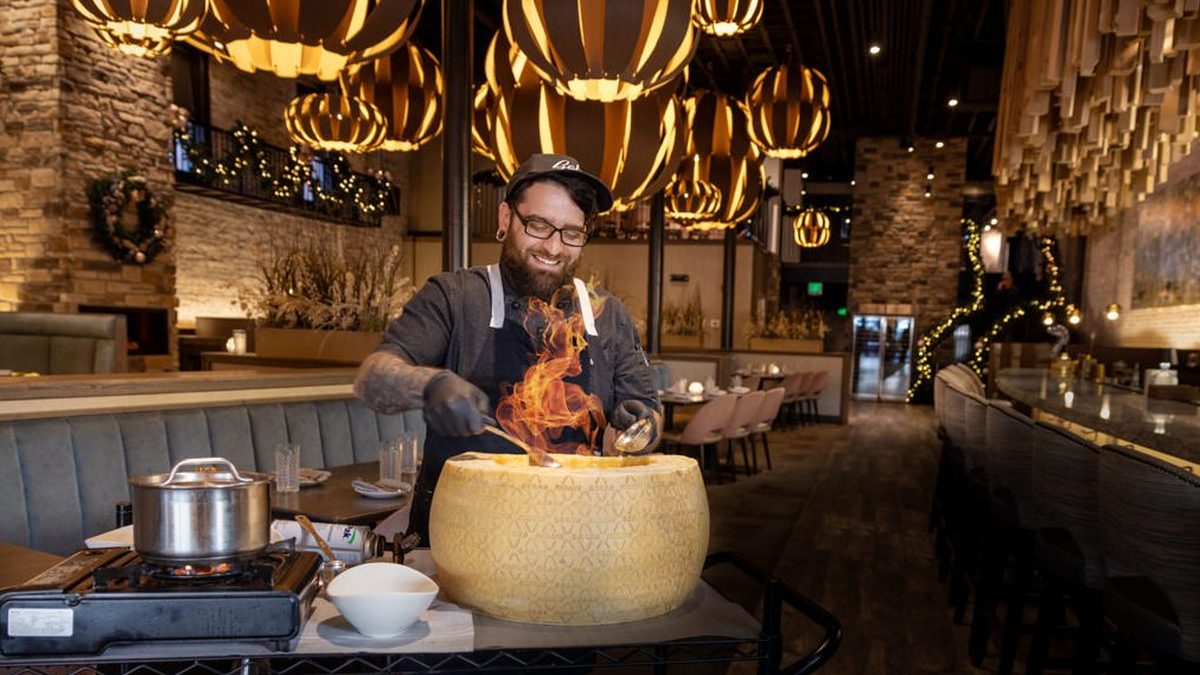
After sampling a few of Bella’s Meatballs Pomodoro and focaccia, it was time for the star of the show, pasta alla ruota, fettuccine in a sauce made tableside in a wheel of Grana Padano. Chef Cory Giaquinta explained that Cistercian monks started making the cheese in the 12th century, and that it is similar to, but softer than, the more familiar Parmigiano Reggiano. With a deft flourish, Giaquinta poured vodka into a steel spoon, heated it to boiling, poured it into the cheese and lit it.
Amid the dancing flames, he stirred the softening cheese. “You keep it moving so the alcohol burns off,” he explained. This dish is so popular that Bella goes through a 90-pound wheel in a week, often with Sous Chef Tyler Michael performing the combination of a flambé and gueridon service.
Bella occupies a building in downtown Maryville built in 1925 as a J.C. Penney store, memorialized in a mosaic at the front door. For 20 years it was Sullivan’s Downtown, a cousin to Sullivan’s on Rocky Hill. Then it was Bella owned by Jim and Lori Klonaris. In December of 2023, Texas transplants Jimmy Loup and Jim Saunders decided to take over.
This is a very pretty restaurant. Deep blue banquettes provide privacy and even on this busy night, our table felt secluded and quiet. On the other side of the restaurant is a bustling and cheerful bar, with tables in the middle of the room beneath dark globe lighting in varying heights and sizes. The effect is both sophisticated and modern.
The evening’s next signature cocktail was the Lemon Chill, a confection of vodka, limoncello, and Sauvignon Blanc with a delicate whipped cream topping. It was a wonderful complement to the Bella’s House Salad of mixed greens, tomatoes, cucumbers, kalamata olives, crispy prosciutto, pickled red onions, crouton crumbles, and house vinaigrette.
You may find it difficult to choose among the entrees, as we did. The Duroc pork chop is juicy and flavorful, served with an apple-bacon-ginger chutney atop polenta.
The Atlantic salmon is prepared in the Tuscan fashion, over a hot grill and a little pesto—letting the salmon’s natural flavors shine. Other seafood choices include Grouper Piccata, served with angel hair pasta or a decadent Creamy Tuscan Shrimp, prepared with sun-dried tomatoes, spinach, basil, and garlic served with penne pasta. It was one of the favorites in our group.
In the midst of our entrées, we made time for the Ciao Bella, a post-modern gin cocktail with a fascinating story. It uses Dolin Génépy, a quintessential alpine drink that dates back many hundreds of years. It is comprised of a multitude of alpine herbs, but the most prominent is Génépy, a petite variety of artemesia (“mountain sage”) found principally in the high mountains of the Savoy. The Sevez family has been making Génépy in an alembic still since 1821.
Some say the test of a great chef is either an omelet or roast chicken. If Bella’s Roasted Airline Chicken is any indication, Chef Giaquinta is molto talentuoso. The classic preparation with a lemon butter sauce, served with Italian farro and roasted carrots is savory and comforting. If you are looking for something more substantial, the Gorgonzola filet with fingerling potatoes and broccolini may be to your taste. Bella also offers brasserie-style center-cut sirloin or ribeye steaks with parmesan-truffle fries.
Although we felt quite indulgent, we sampled another cocktail— the Lucky Penny. Made with Chris Stapleton’s Traveller Blend No. 40 Whiskey, honey, elderflower and fresh blueberries, this drink has a story. Jim Saunders and his wife Angela were visiting Jimmy Loup in Maryville. “Jimmy had moved here to flee the Texas heat,” says Saunders. “He’s my best friend, my business partner in our restaurant company. He was saying we need to start another one. We need to get the band back together again.” Angela, originally from Sweetwater, often visited her grandmother, so she knew the area.
“As we are sitting with Jimmy, Chris Stapleton’s ‘Starting Over’ comes on and we hear, ‘Honey, for once in our life, let’s take our chances and roll the dice. And I can be your lucky penny. You can be my four-leaf clover.’ And we said, ‘Let’s do it.’ We agreed to buy Bella from the Klonarises and open a restaurant together.”
Chef Cory came to Bella after a year at the Dancing Bear Lodge and comes from a big Italian family in Massachusetts. His father’s side is from Sicily. “I use a lot of my grandma’s recipes,” he says, “I added more basil, garlic, and thyme to the meatballs and make them with a combination of sausage, pork and veal.”
By this time, our best friend and bar manager was back with yet another creation, this time her favorite—a spin on an espresso martini named Winter Is Coming. It mixes Tuaca Italian brown liqueur (instead of vodka) with Frangelico, espresso infused with pumpkin brown sugar and topped with a cinnamon cream foam. You may prefer the Maple Infused Old Fashioned with sazerac rye, bitters, and a maple-cinnamon syrup.
Leave Room for Molto Buono Desserts
Our pause for dessert cocktails was followed by a selection of classic dessert choices, from a chocolate pot de crème to tiramisu. Chef Cory’s tiramisu is unique. “It’s a whole new recipe,” he says, “changed to be less sweet and more traditional.” Its lady fingers are soaked in traditional Italian Moretti beer and prepared with Kahlúa, coffee, mascarpone, and whipped cream.
Bella’s Apple Crostata features thinly sliced Granny Smith apples inside crisp puff pastry, cider glaze crumble top, and vanilla Tahiti gelato. And we felt that we couldn’t go wrong with a few Zeppole for the table.
The Lemon Blueberry Cheesecake is an updated twist on the classic cheesecake, as it is not baked. This preparation makes for a much lighter version than its New York cousin. It is made in two layers on a graham cracker and almond crust and topped with whipped cream and macerated blueberries.
In short Bella hits the sweet spot for a restaurant—fine cuisine for the connoisseur and a local favorite that will become a “Where should we eat tonight?” destination for many.
→ Swipe for Next Story
Dining GuideJANUARY FEBRUARY 2025
Good Eats
Getting creative with eating healthy out on the town.
Story by Micha Haas
I have a confession to make: I hate you, salad. And really, it’s not you, it’s me. Those cold leafy greens just don’t get me excited anymore. But that’s not to say I don’t want to eat healthy. The best way to eat healthy, of course, is to cook all your own meals at home, but for those of us who are busy and on the go (or just aren’t up to the Gordon Ramsey standard in the kitchen), that’s not always an option. So instead, I’ve decided to go on a journey around Knoxville to find new places to eat well – and ways to eat healthier at the places we already go. Care to tag along?
Redbud Kitchen
For those looking for healthy grub a little bit south of downtown, you might want to take a peek into Redbud Kitchen. The way to go here to keep it light and green is to go for one of their bowls. If you’re looking for some protein, you can go for the Philly Salad – thin strips of beef overtop peppers, onion, tomatoes, cheese, and greens – or add some meat to their Veg Head bowl. They’ve also got their own take on the black bean burger, this time with salsa! Downtown | 906 Sevier Avenue, Knoxville, TN 37920 |redbudkitchen.com
Bearden Nutrition
Would you believe that this place is a good stop for nutritional fare in Bearden? It’s startling, really, a place with a name like this. In all seriousness, I have always been a believer in a nice fruity beverage for my midday, and for a quick drink stop, Bearden Nutrition is a great place. All their specialty drinks are only 1 point on Weight Watchers (which, while I have not done this program personally, a quick Internet search tells me is pretty light) but have bright fruity tastes that hit well above their weight class; their loaded teas, meanwhile, are 0 points!
Poke is something my sister turned me onto back in my college days, and it’s about as quick and easy as it gets for a healthy lunch on the go. Just stop in, pick what you want in your bowl (and there are plenty of options), and there you go; I personally went for a base of half rice, half salad, with some chopped jalapenos for a kick and seaweed salad as a treat. It’s served cold, so there’s no waiting around for your order, either – just dig in! Chopsticks optional.
Hardin Valley | 10756 Hardin Valley Road, Knoxville, TN 37932 |knoxpoke.com
Sunspot
During my year at UT, Sunspot was a go-to lunch destination for me. With some great seafood and vegetarian options, like their grilled salmon and their tofu grain bowl, there are plenty of ways to stay green and light without dipping too deep into the salad menu (which isn’t to say there aren’t some unique salad options, for those of a more salad-ly inclination). Personally, I’ve always liked their black bean burger, but maybe tell ‘em to go light on the chipotle mayo!
Every single person I asked for recommendations for this article told me to go to Farmacy, bar none. I have to admit, I’d never gotten the opportunity to pay it a visit myself, but that to me sounds like a great opportunity for a truly unbiased first bite. If you’re looking to eat healthy, I will warn you, they’ve got some truly tempting comfort food on the menu. Staying light means sticking to some of the more veggie-heavy options, like their Bella sandwich or their Cure-All salmon sandwich (though you might have to leave off that aioli), but even with those restrictions, I don’t
It’s always a pleasure to get to try something a little more out there, and for me today, that’s an Ethiopian dinner. Unless you’ve sought that sort of thing out before, there’s a good chance you haven’t heard of this place; it’s only open Wednesday through Saturday, and only for dinner. But if you do manage to find yourself a seat, they give you the opportunity to try just about everything on the menu with their combination plates. All their vegetarian options are so unique and tasty, you might not even miss the meat (though they have meat dishes as well). Be warned, though – very high in fiber!
Want to have flavorful organic food, and as much of it as you want? Try an Indian buffet. Aroma Kitchen is a regular haunt for me; the food comes out quickly, the staff are great, and the food has that perfect kick to it. But there are some tricks you need to know if you’re trying to eat healthy here. Firstly, and perhaps obviously, avoid the fried foods like samosas and pakoras. Less obvious is that paneer (a type of Indian cheese) is often cooked in ghee (a type of butter) or with other heavy dairies. I’ve also seen some web sources suggest naan is a no-go as well, but that’s such a staple I couldn’t bring myself to ditch it. My last visit, my staple was the Chana Saag, a chickpea dish served in a spinach-based sauce.
The classic smoothie bowl! If you’ve never had one, it really does feel like you’re eating a dessert (and sometimes you are, let’s be real here), but you can build these pretty healthy for a quick snack! And Blossom Bowls, unlike a lot of their competition, is a local company, so you know you’re supporting your community by indulging your sweet tooth here. I think the ways to go wrong with a smoothie bowl are pretty obvious (sorry, Nutella and caramel drizzle), so I won’t tell you how to build yours – do what I do and ask for a recommendation at the counter!
At 2:20 a.m. on Sunday, April 14, 1912, theRMS Titanicof the White Star Line struck an iceberg in the North Atlantic. In its maiden voyage, only four days after departing the English port at Southampton in route to New York City, the ocean liner carried passengers and crew of 2,224. Designed to stay afloat with up to four flooded compartments, the ship suffered breaches to six of her sixteen compartments and two of the boiler rooms. Immediately, the crew activated distress flares and radioed for help. Many of the passengers were moved to lifeboats, but through poor supervision, some were launched at less than full capacity. In under three hours, the ship was gone. Over 1,000 were still on board. Those subjected to the icy waters died within minutes.
TheRMS Carpathiaresponded to the SOS but arrived one and one-half hours after theTitanichad sunk into the depths of the Atlantic. Although the lifeboats saved over 600 of those on board, casualty estimates exceeded 1600. Among the dead included many of prominence: Captain Edward John Smith, a veteran of 40 years on the sea; ship architect Thomas Andrews; real estate developer John Jacob Astor IV, one of the wealthiest men in the world; mining magnate Benjamin Guggenheim; and United States Representative Isidor Straus and his wife, Ida, co-owners of Macy’s Department Store. Led by violinist Wallace Hartley, the eight members of the ship’s band chose to continue their music as women, children, and some of the men on board climbed into lifeboats; these brave musicians stayed on the deck throughout, performing until they disappeared into the sea. Two weeks later, Hartley’s body was discovered… with his violin still intact.
Outraged by the news of the disaster, the public demanded answers. Why had theTitanicproceeded at full speed in the iceberg-filled waters? Why were there not enough lifeboats for the passengers? Why was the evacuation so poorly managed? Why were the survivors primarily from first and second class and most of those lost passengers from third class? The newspaper reports were particularly critical of J. Bruce Ismay, the chairman and managing director of White Star, who after assisting others aboard the lifeboats, had eventually taken a seat himself.
Captain Smith received both blame and praise for his role. His last words, “Well boys, do your best for the women and children.” A congressional inquiry exonerated Ismay but most importantly resulted in legislation setting safety standards for sea travel, among them a 24-hour radio system requirement and sufficient lifeboats for all passengers. Today, theTitanic, which was finally located in 1985, remains the most noteworthy maritime disaster in American history, so highly publicized at the time and more recently romanticized by the 1997 movie of the same name. This tragic shipwreck, was not, however, the worst such disaster in the history of our country.
At 2:00 a.m., on April 27, 1865, the steamboatSultanaexploded on the Mississippi River seven miles north of Memphis. Over 2300 were on board. Estimates of the lost lives ranged as high as 1800. Most were Union prisoners being transported to the North near the end of the Civil War. This is their sad—and rarely told—story.
In 1862, P.L. Atchley enrolled in the Union Army at Knoxville and, in 1864, was mustered in the 3rd Tennessee Cavalry in Nashville. Within months, his company of some 1,000 soldiers were assigned to guard a trestle along a Union supply line at Sulphur Creek near Athens, Alabama. On the morning of September 25th, Confederate forces led by Nathan Bedford Forrest began an artillery assault on the Union fortification. Two hundred Union soldiers, including their commanding officer, were killed in the attack. Conversely, Forrest had no losses. By noon, the Union had surrendered. Atchley and the other survivors in his company were transferred to Confederate prisons. The conditions were horrible in both Andersonville, Georgia, and Cahaba, Alabama, but less so in the latter. Atchley became one of 3,000 prisoners of war incarcerated at Cahaba, a converted cotton shed on the Alabama River having a capacity of only 500. Each man was allotted six square feet of space. In a period of months, many were lost to malnutrition and disease. All were weakened by the lack of sanitation and medical care. In February of 1865, matters got worse. Cold and heavy rains flooded the prison. In what appeared to be a stroke of good fortune, the North and South soon agree d to an exchange of prisoners. Atchley and the other Union soldiers were to be sent to Vicksburg, Mississippi, some 600 miles to the west. By train boxcar, steamer, and on foot, most of the POWs made the trip. Too many others lost their lives along the way. Upon arriving in Vicksburg, Atchley and several of the others required hospitalization before they could be transported northward. In the meantime, events of historic proportions had taken place in other parts of the country. On April 9th, General Robert E. Lee surrendered his Army of Northern Virginia to Ulysses S. Grant at Appomattox Courthouse in Virginia. Five days later, President Lincoln was shot at Ford’s Theatre in Washington D.C. by actor John Wilkes Booth.
While the Union soldiers awaited their departure, Union Chief Quartermaster Reuben Hatch made a deal withSultanaCaptain J. Cass Mason to transport the enlisted men and officers to Cairo, Illinois: $2.75 per for the former and $8 per for the latter. The arrangement included a kickback to the unscrupulous Hatch. One of the four tubular boilers on Mason’s steamboat developed a leak. Rather than risking the loss of his bargain, he chose to make temporary repairs rather than waiting for a more permanent fix. So, on April 24th, Atchley and an estimated 1959 other prisoners, 22 guards, 70 private pay customers, and the captain and crew, a total of at least 2137, left Vicksburg on board the side-wheeled steamboat.
Unlike the state-of-the-art Titanic, which measured 11 stories from keel to chimney and with a length of almost three times that of a football
field, theSultana, by comparison, measured 250 feet in length with a width of only 42 feet. From its keel to its four funnels, the wood-structuredSultana, first launched in 1863, was just over three stories high, and with a design capacity of 376 passengers. Its load was over six times specifications.
As theSultanachugged up the flood-swollen Mississippi, two more events captured the national news. General Joseph Johnson, commander of some 90,000 Confederate troops then located in North Carolina, surrendered to General William T. Sherman, effectively ending the war. On the same day, Booth, who had eluded authorities for almost two weeks, was found in a barn in rural Virginia. After refusing to surrender, he was shot in the neck, paralyzed, and soon died. Only hours later, theSultanaboilers exploded, scalding many of the passengers and sending most aboard to their watery graves.
Those who were not killed by the blast and able to swim clung to floating debris, trees partially submerged by the floodwaters, and, at times, to each other. Most died by drowning, exposure to the cold, or injuries from the explosion. Others somehow made their way to shore as the current carried them downstream toward Memphis. One Good Samaritan, a southern sympathizer, braved the waters with a canoe, saving some 15 of the soldiers from the elements. Atchley, initially reported as one of the dead, was either picked up by the Samaritan or able to swim to the Mound City, Arkansas, shore. Family lore and reports of his rescue are in conflict. In the following days, Atchley first made his way to Memphis and then to his home in East Tennessee. He married Anna Rule within a year of his return and fathered six children.
Reports of this tragic event were relegated to the back pages of the news. Booth’s capture, Lincoln’s funeral, the return of his body to Springfield, and the culmination of a Civil War, which had cost the lives of over 600,000 young men, dominated the attention of the nation. Sadly, no one was ever held accountable for the fate of theSultana. Captain Mason, like theTitanic’s Smith, went down with his ship. Hatch, with his strong political connections, deftly avoided court martial. There were modest safety improvements as a result of the disaster. There was no high-profile congressional inquiry.
In 1889, John Simpson of Knoxville, one of 463 Tennesseans on board theSultana, organized the first reunion of those who, like Atchley, lived through the ordeal. That began a tradition which has been continued by the survivors’ descendants over the years. A few monuments commemorate the course of events. One is on the Memphis waterfront and another, donated by the Gray Eagle Marble Company and dedicated in 1916, is at the Mount Olive Baptist Church in Knoxville. Atchley had died in 1910, unaware of the plans for the symbolic commemoration. In 1982, what was left of theSultanawas discovered 32 feet deep in an Arkansas soybean field, some four miles from Memphis. In 1997, attorney Jerry Potter of Shelby County published his meticulously documented book,The Sultana Tragedy.
→ Swipe for Next Story
InsightsJANUARY FEBRUARY 2025
Nature Boy
For a man better acquainted with sidewalks than saddles, nature has been a source of endless comedy—and bruises.
Story by Robert Pryor, Sr.
As I read the latestGarden & Gunmagazine, I am again reminded how out of touch I am with nature. I have never been around a farm, milked a cow, fed chickens, slept in a tent, spent much time in the woods, or, as often reported here, have rarely and always unsuccessfully engaged in fishing. I don’t remember how I happen to receive each edition ofGarden & Gunbecause I have never put out a garden or owned a gun. Somehow the great outdoors has largely escaped my participation. I’m far too citified for my own good.
My few encounters with nature have not gone well. At summer camp as a boy, they taught me how to saddle a horse, but when I tried to ride away like my hero, Roy Rogers, the saddle rotated to the belly of Trigger and drug me along a very rocky Cumberland County wagon trail. I think I still have scars on my back from that fiasco. If God had intended me to ride horses, he would have given me a cowboy for a father.
Years later, when my children were small and impressionable, we attended a picnic where some fool had arranged for small horses to be ridden by the children. I was informed that one of the horses was acting up and was refusing to take riders. Because of my vast experience with horses at summer camp, I was the obvious choice to break the pony and bring it in line. Well, I got on and it bucked once and took off, full gallop, out of my control. It raced through the picnic grounds, the tables of food, the wiffle ball game, and directly into a patch of trees in an obvious attempt to throw me off. However, I knew from the cowboy movies that when the horse passed under an overhead limb I could grab it and lift myself out of the saddle and drop safely to the ground.
Unfortunately, the limb hit me in the head and knocked me off onto a boulder causing a suspected broken hip. Of course, my children embarrassingly witnessed their father’s last ride. At the hospital (one I had sued several times), in an effort to conceal my identity, I informed the doctor I was with the rodeo and just passing through town on the way to Oklahoma City. I inquired if he thought I would ever be able to ride again. Luckily, I was only bruised from my buttocks to my calf and made the conscious decision to never ride again.
Once, on vacation in the Bahamas, Norma and I strayed from our touring party into the jungle to investigate a narrow pathway. On the way back, the path was blocked by a giant man-eating lizard resulting in the tour director sending out a rescue party when we were reported missing. How would I know that iguanas look more threatening than they really are?
Twice in my life I have been invited to go into the woods to hunt. My Uncle Fred, Cousin Jack, and my grandfather, Papa Pryor, traveled way out west to what is now Farragut near Dixie Lee to hunt rabbit. Understand, the Pryors are not natural hunters. We, as a breed, are not even unnatural hunters. Uncle Fred declared all the way out that the rabbit was his “natural enemy.”
I was young at the time and was given a shotgun for protection as we stalked the wild hare. We hunted a small area in the snow on someone’s farm. Papa Pryor sat in a folding aluminum chair to watch when suddenly I was the first to be confronted by a rabbit that jumped up in front of me, and I shot but missed because he wouldn’t stand still and jumped from side to side in a zig-zag fashion. Obviously, I needed to hunt game that would stand still.
Years later, my opportunity came when Larry Seals and David Bartow asked me to join them to hunt fox squirrels on House Mountain in east Knox County. Apparently, they had heard of my prowess in hunting rabbit and that qualified me to join them in their outdoor adventures. Larry and David had played football at Fulton High School and were genuine outdoor guys. Larry was my neighbor and childhood friend and, at the time, we were freshmen at U.T. He was all excited about hunting fox squirrels because he said they were larger and more violent than gray squirrels. “Very rare,” he insisted.
I assumed they were a cross between a fox and a squirrel and were capable of tearing a man’s arm off. I didn’t want to go. Not so much because I was afraid of squirrels, but because Larry said we had to be in the woods on the side of the mountain at daybreak on a chilly October morning. I knew from my weeks as a paperboy for the Knoxville Journal that I didn’t typically do “chilly daybreak” well. Squirrels wake up in their tree nests when the sun first breaks through, they explained.
So there I was, sitting on a tree root to avoid the wet leaves at the base of a large oak in the cold dark of the forest, again holding a borrowed shotgun in my hands. My hunting companions had spread out to stake out their own trees after instructions to me to be quiet and listen for the squirrels leaving their nests. It was hard for me to stay warm bundled in two heavy coats, and I finally was forced to stand because my leg had gone to sleep.
I took one step on my impaired leg when I heard a loud chatter directly above me. Frightened, I reacted by shooting up without aiming or even lifting the gun above my hip. Actually, you could say I shot in self-defense. The chatter stopped and a large red squirrel fell at my feet. Now what? In the silence of the woods, I felt like giving CPR to try to correct my error. Killing was new to me.
Shortly after the mountain absorbed the blast from my gun, my companions appeared and found me standing in shock over my prey. “Damn, that’s the largest fox squirrel I’ve ever seen,” Bartow said. He should know because he was experienced and had even camped out in the woods. They insisted that I have my prize stuffed and cherished for eternity, and we left immediately to go to the taxidermist. As for me, all I had wanted to do was bury the animal and try to put the whole thing behind me once and for all.
I don’t know if you know it, but taxidermy is expensive, and to make matters worse, my mother would not allow me to bring a stuffed rodent holding a hazelnut into her house. Later, after Norma and I tied the knot, she, as well, banned “Big Red” from our marriage home. I wanted to donate it to a squirrel museum or something like that, but I couldn’t find one.
As you can see, I’m not cut out to be an outdoorsman, but I do visit many outdoor stores looking for large size men’s clothing. There must be an abundance of XXL and XXXL size hunters and fishermen. A saleslady at Bass Pro Shops the other day asked me if I was looking for big and tall, and I said, “No, I’m looking for short and fat.” Going forward, I guess shopping for big clothes is about as close as I’m ever going to get to nature.
→ Swipe for Next Story
TravelJANUARY FEBRUARY 2025
Nature’s Masterpiece: Yosemite
Standing in the presence of a creative legend’s memories
Story by Bruce McCamish
It was the summer of 1989. My mom had taken me over to a her friend’s house to visit, as she often did, as they chatted and baked, sipping black coffee. Cooped inside with not much else to do, I wandered through the house in search of a cure for my boredom and came across a very orderly living room—the kind not meant for little hands. There on the coffee table sat a large picture book with black and white photos of landscapes I had never seen: large rock faces seemingly touching the sky, vast canyons, and snow-capped mountains entirely devoid of trees. To this day, I can still remember how transported I felt looking at them.
It turned out that boredom would never again follow me to that house. Each time we visited, I would rush to the living room and flip through the book over and over again, imagining myself exploring its landscapes. I had no idea just what kind of impact it would have on me. A seed had unknowingly been planted. A curiosity for imagery had begun. I found out later that the book was filled with images from a man named Ansel Adams—you may have heard of him—and I was his newest student.
Fast forward to age 15. Borrowing my brother’s Canon A-1 camera, I would pedal to Kroger on Asheville Highway, buy a bag of.99-cent birdseed, then position feeders at varying distances from our bay window to photograph the birds. As a teenager, I hiked the Smokies often, tagging along with anyone who would drive me. By my 20s, I had logged more than 30 states driving alone from the Adirondack Mountains and the wilderness of upstate Maine, to the Grayson Highlands of Virginia and everything in between. Always touting a camera, while knowing very little about how to use it, I documented my travels on Velvia slide film. My fire for photography was in full blaze.
On the way home from one of those such trips, I stopped by an old bookstore in the quaint town of Amherst, Massachusetts. And there, nestled within the wall of large picture books, I found it. The book of my childhood. The book that fueled my desire to hop in a car and drive until my $20 bill ran low, scramble trails I had never trod, hear maple leaves crunch beneath my boots in places I had never been to before, drive down gravel roads that even Rand McNally didn’t show on any map. The one that started everything: The Tetons and the Yellowstone by Ansel Adams. This was the book that taught me to be comfortable being uncomfortable, to push through rugged terrain, and expand my perspective beyond my youthful edges.
Over the next few years, I bought a few other Ansel Adams books and began to see his imagery beyond the pictures themselves.”When I’m ready to make a photograph, I think I quite obviously see in my mind’s eye something that is not literally there in the true meaning of the word,” he wrote in one. “I’m interested in something which is built up from within, rather than just extracted from without.” I began to understand what he meant. Ansel and his imagery had a great influence on bringing awareness to areas of our country that we now know as Kings Canyon National Park, Denali National Park, and Yosemite National Park. Those images also brought an acceptance that photography could share gallery space with traditional art. Dozens of his books now call my house their home. They gather little dust as I pick them up from time to time seeking inspiration when my creativity is waning.
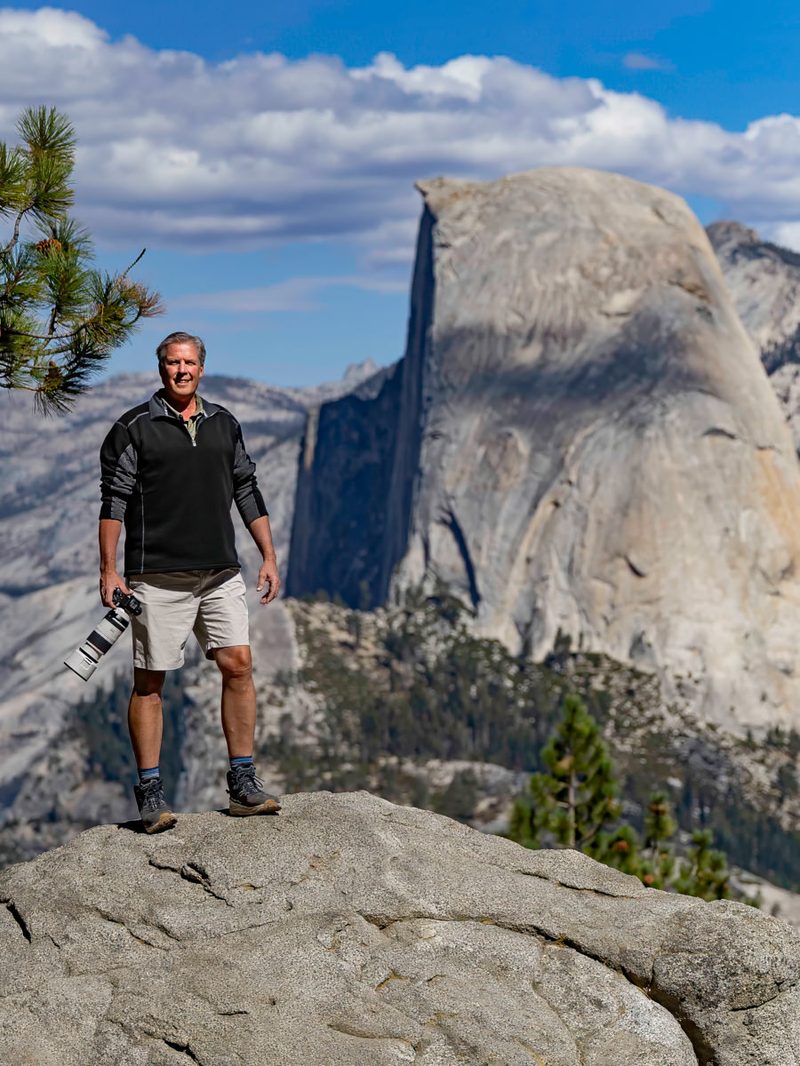
This past spring, I felt it was time to visit the place Ansel held most dear: Yosemite National Park. He spent many summers there in his youth, found his future wife there, and photographed some of the most iconic images of our time inside this park. I reached out to an old friend, Jim Retemeyer, whom I had met many years prior at the northern terminus of the Appalachian Trail at Mount Katadin. It had been years since we had spoken, but as we reconnected, it felt as if no time had passed.
Jim, who at the time of our meeting had just retired from the Air Force, was now a mathematics professor in California. We made plans to hike Half Dome in Yosemite in the fall, and with the help of his significant other, Torri, secured a lottery permit to do so. I’d soon be standing in the same place as my teacher, atop the granite monolith that had been on my bucket list for the last 40 years.
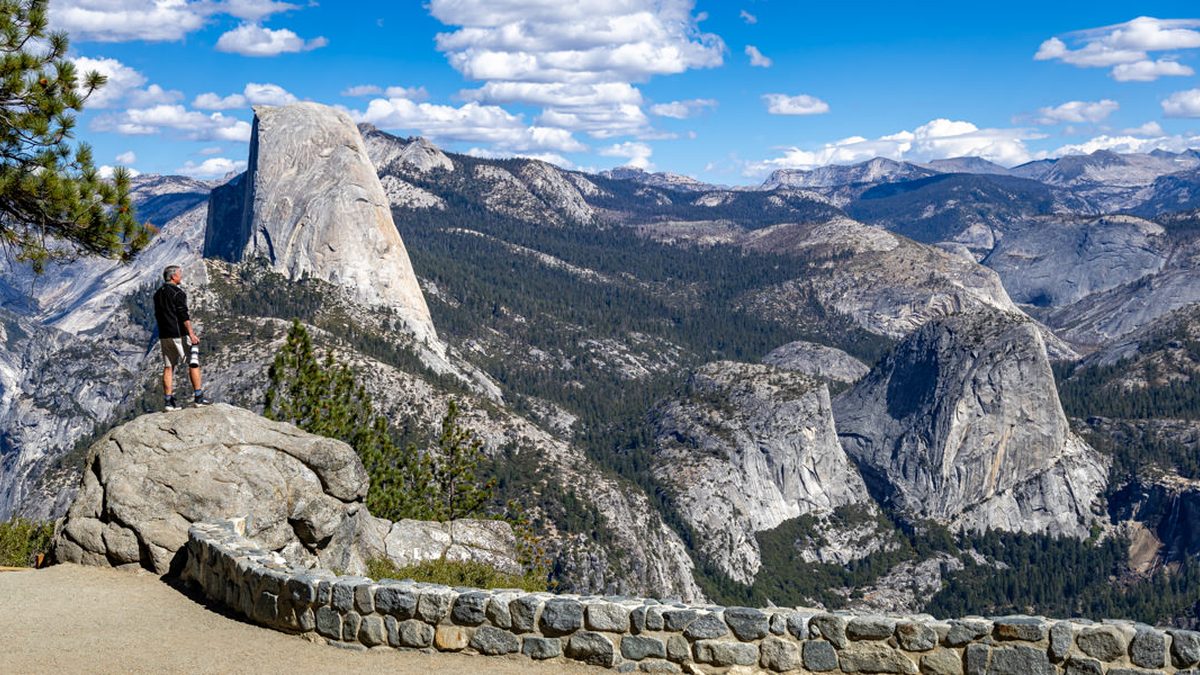
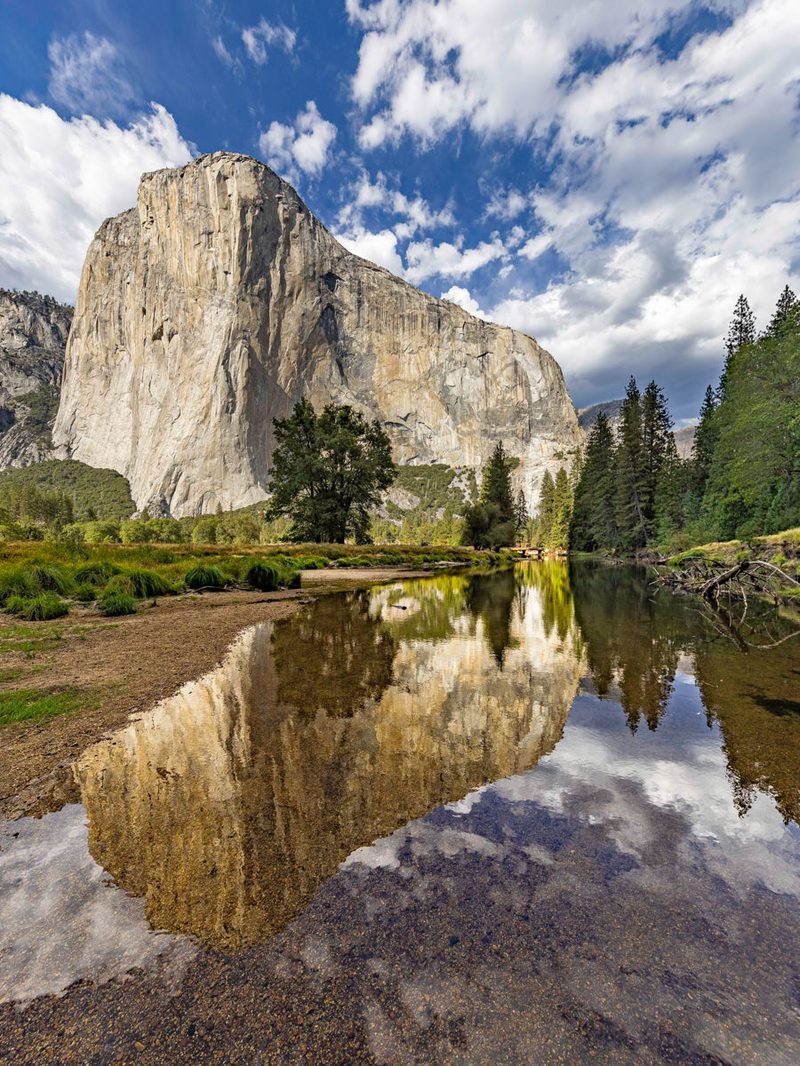
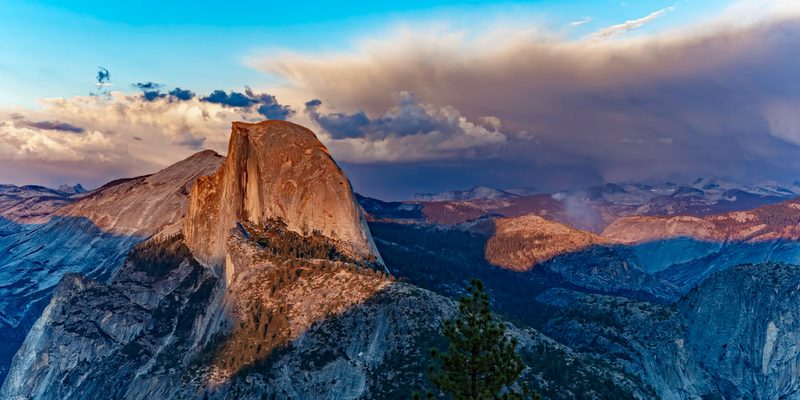
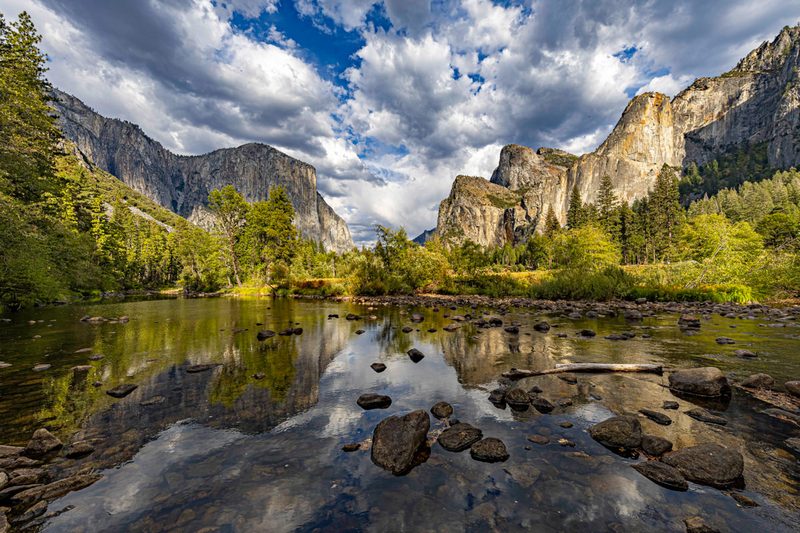
On October 3, I flew into Fresno and made the two-hour drive to the Mariposa Grove entrance of Yosemite. I quickly found that, like our Smokies, Yosemite had been recently ravaged by fire—mile after mile of charred ground, scorched trees, and downed timber. It was beautiful in an eerie way. I turned out toward Glacier Point and wound around the unfamiliar scenes I had first observed in that book at age 8. This moment was 52 years in the making. It felt surreal.
Half Dome loomed in front of me. I found a place to park, then walked a path to a stone wall where I stood feeling as if I were the only person in the world. Fifty other people walked all around, yet this moment felt as if it were just for me. Tears drew, just as I knew they would.
As I brought myself back to the present, I got back in my car and headed to the hotel. A familiar smile and long embrace greeted me, melting away the 29 years that had passed. Jim had traded in his short military haircut for a more fitting Grizzly Adams-esque long grey mane. He introduced me to Torri and together we shared a meal and prepared for our 3:30 a.m. wake-up call the next morning.
We hit the Mist Trailhead at 4:31 a.m. Yosemite at this time of year has a 10 percent water flow compared to the spring snow melt season when all of the waterfalls are roaring, so the “mist” name didn’t apply as we made our way up. We turned our headlamps off at sunrise about the same time we came to the top of Nevada Falls. Over the next couple of hours, we hiked through a beautiful valley, then ascended to the foot of Sub Dome, the most challenging part of the hike for me.
Steep switchback after switchback revealed themselves to us as the top of my quads screamed. I hadn’t waited 40 years to stop now, and thought of Ansel’s words to keep pushing, “A great photograph is one that fully expresses what one feels, in the deepest sense, about what is being photographed.” I knew the uncomfort of the journey would find its way into the images I would capture at the top.
We came to the foot of the cables that would take us up the final 400 feet of elevation to the summit. “Water bottle!” someone yelled from above, followed by intermittent clanking as it blew past us off the side of the mountain. The cables were steep, and it was a slow slog to the top. Jim, on his 10th ascent of Half Dome, was first, followed by Torri and me, first-timers on this excursion. As the cables neared their end, my first meeting with Jim flashed in front of me. And as we sat at the summit, a breathtaking 360-degree view unworthy of words surrounding us, I couldn’t help but feel overwhelmed with gratitude as I shared this moment with him. It felt as though a circle had been completed somehow. The moment will forever be cemented in my mind. Jim & Bruce at Mt. KatahdinJim & Bruce in Yosemite
On our descent, I ran out of water the last two miles, blew out brand new hiking boots, and destroyed the tips off of some very expensive hiking poles, but nothing could shake the joy I felt. Almost 18 miles, 5200-feet elevation gain, 14 hours on the trail, all done with a friend I met by happenstance almost 30 years ago. And all in a place I had revered since I was a child. It felt as if Ansel had been with us throughout it all.
With four days left in Yosemite, I made the drive to Yosemite Village to the Ansel Adams Gallery, the place where Ansel taught students, developed his images, and lived. I befriended the staff photographer, Courtney Risdon, who graciously took me on a four-hour private tour. We’d end up in the valley shooting various subjects and sharing stories of a legend. When we returned to the gallery, he surprised me with a walk into Ansel’s studio, a once-in-a-lifetime moment. The original darkroom burned down in 1938, along with many never-printed negatives. Ansel himself put the fire out and the studio was rebuilt. I could picture him there giving instruction, encouraging new photographers, and mentoring those with the same burning passion he had until his passing in 1984, the same passion he ignited in me as a boy.
In some ways, I cannot believe it took me more than 50 years to visit this special place. Ansel Adam’s impact on my life was profound and to know I finally stood in the place he stood, experiencing the beauty of what he experienced—with a dear friend along with me, no less—is beyond words. It made me realize that you’re really never too old to explore. Yosemite brought a resurgence of my 8-year-old curiosity. As adults, we often get caught drifting through life, just getting through the next moment. It’s difficult sometimes to be present and curious, like we were when we were kids. But Yosemite reminded me of how good that feels.
Before we left, Jim and I planned our next trip. We didn’t want another 30 years to pass before we went adventuring together again. Next up is Sahale Peak in the Northern Cascades of Washington State, another place I’ve seen photographically and have longed to visit. There’s no time like the present, after all. And I’ll be sure to bring the eagerness and excitement of that 8-year-old kid, sitting on the carpet flipping through the pages of an Ansel Adams book, along with me.
The imagery in front of me comes alive every time I take a photo, and I hear Ansel’s words whisper, “You don’t take a photograph, you make it.”
→ Swipe for Next Story
FeatureJANUARY FEBRUARY 2025
Unlocking Gut Health
The Role of Prebiotics, Probiotics, and Postbiotics in Healing and Harmony
Story by Dr. Edwin Spencer
The longer that I have practiced medicine, the more aware I have become of the importance of what we eat. I particularly noticed the gravity of this effect in relation to surgical outcomes. The healthier the patient, the more predictably they would heal.
At first glance the astute reader says, “well No shi..”. I could not agree more with sentiment, however what defines “healthy”? Is it body mass index, blood pressure, blood glucose level, lipid panel or one of the other myriad of biometrics? Well doc its all of them says the medical student. An easy out for sure, but are they all related and do we have agency over them? The answer may surprise you.
The health of your gut is more critical than you might think. It’s not just about avoiding an upset stomach; the gut is the powerhouse of our body’s immune response and overall well-being. As strange as it may sound, humans are often called “walking bacteria” because our bodies are home to trillions of microorganisms. In fact, there are more bacterial cells in and on us than human cells, making our health deeply intertwined with the health of our microbial communities.
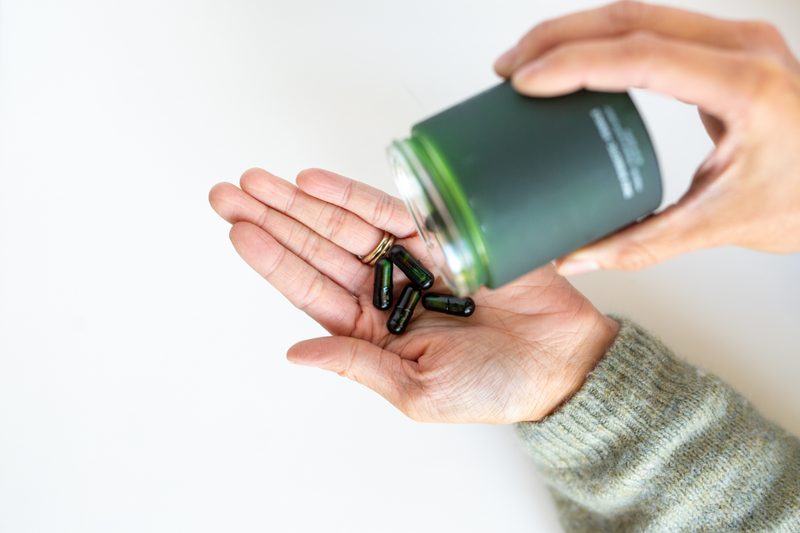
At the heart of this relationship are three key players: prebiotics, probiotics, and postbiotics. While the names might sound like jargon, they represent a holistic approach to gut health that can alleviate conditions like leaky gut and chronic inflammation, cardiovascular disease, improving overall vitality and ability to heal and recover.
The Gut: An Internal Ecosystem
Inside your digestive system lies an ecosystem of microorganisms known as the gut microbiome. This community, comprising over a thousand bacterial species, plays a crucial role in breaking down food, producing essential nutrients, regulating immunity, and even influencing mood. When this ecosystem becomes imbalanced- due to factors like poor diet, stress, or illness- it can lead to “leaky gut syndrome.” This condition occurs when the gut lining becomes permeable, allowing harmful substances to escape into the bloodstream. These unwanted invaders can spark widespread inflammation, which is linked to chronic conditions such as arthritis, diabetes, atherosclerosis, and even mental health disorders like depression.
Fortunately, maintaining a healthy balance in the gut can prevent these problems. Prebiotics, probiotics, and postbiotics work together to restore harmony within the gut, creating a stronger barrier and reducing inflammation.
Probiotics: The Friendly Soldiers
Probiotics are live microorganisms, often referred to as “good bacteria,” that confer health benefits when consumed in adequate amounts. Commonly found in fermented foods like yogurt, kefir, and sauerkraut, probiotics include species such as Lactobacillus and Bifidobacterium.
Fun fact is that your individual microbiome is determined more by your environment than genetics. You acquire this microbiota and nurture it from birth. In fact, babies delivered vaginally have a microbiota that is similar to the vaginal cavity while those delivered via Cererian section have one that is more similar to the mother’s skin. As babies and children sample their environment and interact with pets, they continue to evolve their microbiota. This is one of the main reasons why there are geographical differences in respective microbiota and why you might not feel so well after eating in a foreign country. You are wondering while on the toilet “what the hell did I eat” and your buddy is out fishing. His microbiota is adapted to his type of food and woefully yours is not.
These friendly bacteria have an important job. They directly compete with harmful microorganisms, effectively crowding out invaders like E. coli. Probiotics also produce short-chain fatty acids (SCFAs) such as butyrate, which strengthen the gut lining by promoting the production of protective proteins. Another SFA propionic acid inhibits an enzyme in the liver called HMG CoA reductase. This enzyme is the target of many statin drugs. Therefor you can lower your cholesterol through proper nutrition.
Research shows that probiotics are particularly effective in reducing symptoms of irritable bowel syndrome (IBS) and may even improve mental health by enhancing communication along the gut-brain axis. However, not all probiotics are created equal. Their efficacy depends on the specific strain, dosage, and whether they can survive the acidic environment of the stomach to reach the gut.
Prebiotics: Fuel for Good Bacteria
While probiotics are the workers, prebiotics are their fuel. Prebiotics include soluble and insoluble fiber. Higher fiber diets are not just to make you more regular; the fiber is the food for the microbiota and it blunts the glucose load and thus insulin response. The way that it works is that the insoluble fiber acts like a fence or lattice work on the interior of the gut lining. The soluble fiber like pectin and inulin are more globular and fill in the holes in the fence and allow the food to be passed down to the microbiota where they can make the short chain fatty acids. This fiber wall on the interior of the gut, slows the uptake of nutrients such as glucose and thus decreases the insulin response. Fewer spikes in insulin leads to less insulin resistance and diabetes.
Postbiotics: The Secret Weapon
Postbiotics might be the least familiar of the trio, but they are just as important. These are the byproducts of probiotic activity, including SCFAs, peptides, and antimicrobial compounds. Think of them as the “final product” of fermentation, packed with health benefits.
One of the most remarkable roles of postbiotics is their ability to strengthen the gut barrier. They stimulate the production of mucin, a protein that forms a protective gel layer in the gut lining, helping to prevent toxins and harmful bacteria from slipping through. Additionally, postbiotics have potent anti-inflammatory properties, as they can regulate immune cells and suppress overactive inflammatory responses.
I have mentioned anti-inflammatory many times now and it is definitely a key buzz word in the health and wellness space, but how is the gut involved? About 70-80% of the immune cells surround the gut mainly in locations called Peyer’s patches in the lymphatic system. It makes sense that God designed us this way because we don’t want bad actors escaping the sewer that is our gut and getting into our bodies. We have two other barriers in the gut which are the mucous gel layer and the epithelial gut lining cells. This epithelial layer is really just one cell thick but the surface area is huge. Spread out the gut lining is the size of a tennis court. There are tight junctions in between those epithelial cells that are critical maintaining the barrier. By protecting and nourishing the epithelial cells with prebiotic, probiotics and postbiotics, we prevent foreign material from getting into the blood stream and lymphatic system and stimulating an immune response.
On the contrary, consuming highly processed food with added sugars (fructose) damage the tight junctions. Lectins such as gluten can damage the tight junctions as well and this creates “leaky gut”. When the lymphatic or immune system is exposed to these leaked substances, it creates inflammatory signals like IL-1, IL-6, and TNF which circulate in the blood stream creating systemic inflammation which is correlated with insulin resistance and diabetes, heart disease and high blood pressure and even dementia. Foreign proteins can leak through as well and the immune system will recognize them as invaders and will create antibodies to them. If those proteins are similar to yours, then those antibodies can attack your you body. This is one of the proposed mechanisms of autoimmune diseases of the skin and joints and why many patients realize improvement in their disease with improvement of their diet and microbiota.
Prebiotics, probiotics, and postbiotics work synergistically to combat leaky gut. Probiotics reinforce the gut lining by promoting the production of tight junction proteins that seal the gaps between intestinal cells. Postbiotics, particularly SCFAs like butyrate, further support this process by reducing oxidative stress and enhancing the structural integrity of the gut barrier. Meanwhile, prebiotics fuel the beneficial bacteria that maintain microbial balance and produce these crucial postbiotic compounds.
What can I do?
Ok, that was a lot of science. I feel that it is important to bring the receipts when you make a statement. The real question is, how do I incorporate this into my daily routine?
First, avoid highly processed foods that contain added sugars which is basically fructose. Fructose inhibits mitochondrial function (the little organelles iwwn your cells that make energy) and cause insulin resistance. Fructose also damages the tight junctions in the gut contributing to “leaky gut” and inflammation. Highly processed foods are calorically dense and cause you to eat about 25% more as well.
For what it is worth, I have been drinking smoothies for 15 years or more. It is what is in the smoothie that matters. The diversity of the smoothie counts. It should look like a rainbow of colors and here is why. Light skin berries like raspberries, blackberries and blueberries are chocked with soluble fiber and polyphenols and flavonoids which are potent antioxidants. Bananas, apples, and pears have soluble and insoluble fiber and multiple vitamins. Mango, oranges and pineapple also have insoluble fiber and soluble fiber and vitamin C which is important for collagen production, immune function, and it is also an antioxidant. Spinach not only has fiber but thylakoids which are a natural GLP-1 agonists. GLP-1 is glucagon like peptide which has become all the rage as it increases satiety. In addition, the amino acids valine and glutamine are also GLP-1 agonists which is why I add a scoop of collagen powder and whey protein isolate.
I also add 10-15 grams of creatine for cellular energy. I try to get 50 grams of protein with 25 grams of fiber in the smoothie. Pomegranate juice (prostate health) and Naked drinks or almond milk can act as the base. Snacks throughout the day include various nuts and berries and jerky to try to get 60 grams of fiber per day and maximize my protein intake.
I start out my day with yerba mate and espresso and kombucha. The yerba mate tea is full of antioxidants and it is also a natural GLP-1 agonist. The kombucha is an acquired taste. To be honest the SFA’s in the postbiotics are sour like vinegar. Ever heard of an old-timer saying that a tablespoon of vinegar was good for? Well they were right. Acetic acid or vinegar is a postbiotic. I can’t tolerate some of it like kimchi. Can’t get it past the nose. However there are many types of kombucha that are really not bad. I have to credit my wife Tracey for turning me on to them.
The Future of Gut Health
As research into prebiotics, probiotics, and postbiotics continues to grow, so does their potential to revolutionize health care. These compounds may hold the key to treating chronic conditions like inflammatory bowel disease, metabolic disorders, and even mental health challenges.
The personalized approach to gut health is particularly exciting. As we learn more about the unique composition of each individual’s microbiota, treatments tailored to specific microbial profiles could become a reality. Imagine a future where a simple microbiome analysis could guide diet and supplement recommendations to optimize your health.
Investing in your gut health is one of the best things you can do for your overall well-being. By embracing the power of prebiotics, probiotics, and postbiotics, you’re not just supporting your digestion—you’re fostering a healthier, more resilient body and mind.
→ Swipe for Next Story
FeatureJANUARY FEBRUARY 2025
New Coach. New Players. New Style.
Lady Vols Coach Kim Caldwell took five portal transfers and installed a high-octane pressing defense and up-tempo offense shooting plenty of threes
Story by N. Brooks Clark
Midway through the second quarter of a December game against Florida State, the Lady Vols up 29-22, Seminole Amaya Bonner set up in the right corner and launched a three-pointer. Guarding her, redshirt sophomore Talaysia Cooper extended high into the air like a Marvel superhero and slapped the arcing ball high into the stands. The Lady Vols faithful erupted.
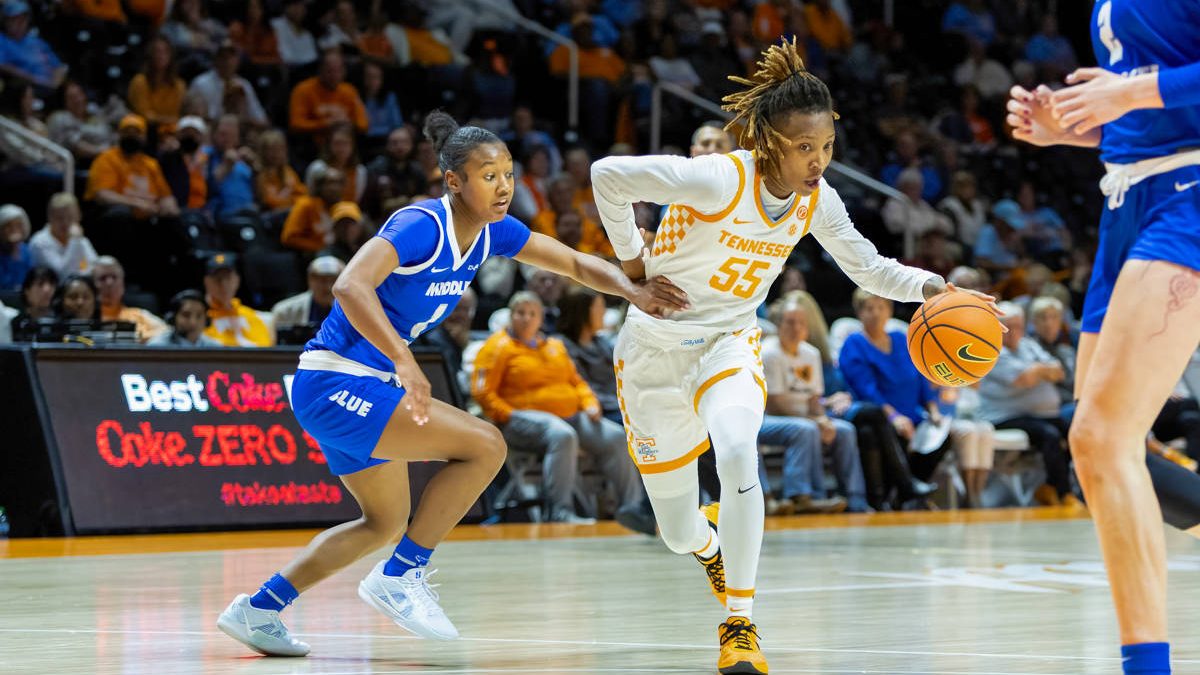
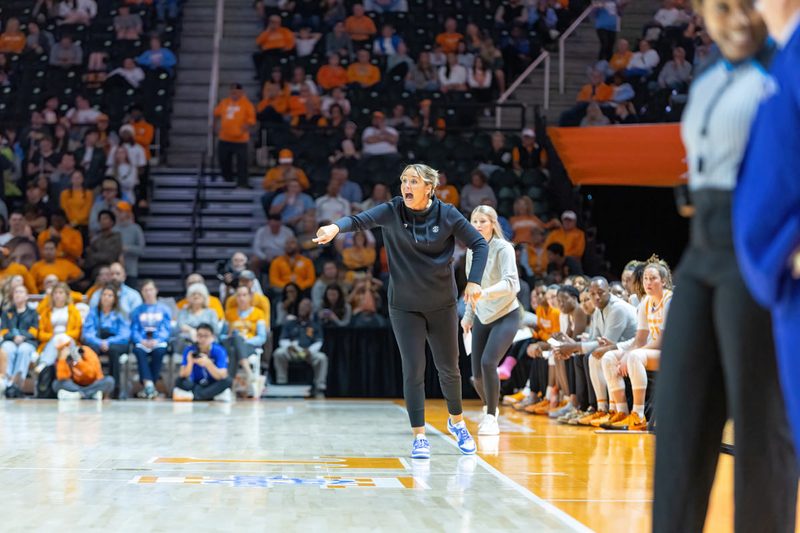
Twenty-eight seconds later, in a high-energy flurry characteristic of new coach Kim Caldwell’s up-tempo style of play, Cooper (No. 55 pictured at left) hit a three then a jump shot, then followed a Tess Darby three with a steal that set up a three by junior Zee Spearman to go up 43-25. A Cooper lay-up made it 47-29 at halftime.
Another potential characteristic of Caldwell’s emphasis on running and gunning came in the third quarter, when a few minutes of less-than-full intensity caused the Lady Vols to blow that 18-point lead. “Eighteen points is nothing for us,” said Caldwell afterward. “It’s a game of runs. We knew they were going to have theirs. [It was the result of] our lack of urgency on defense and the fact that we were just turning the ball over and not hustling back. We just kind of quit a little bit there, and you can’t do that against a team that can score like they can.”
As Caldwell had explained after an earlier game, “When we have one person who takes her foot off the gas, we look bad.” The Lady Vols buckled down in the fourth quarter, using 22 points from Cooper and Spearman to win, punctuated by Spearman’s fadeaway jumper to put the Lady Vols up 79-77 with 24 seconds to go. (FSU missed its final shot.)
Spotting an Upcoming Talent
Caldwell, 36, was born in Parkersburg, West Virginia. She watched women’s hoops because of Pat Summitt and read her book Sum It Up many times. “It was a phenomenal book for a young coach to read. It helped me be a head coach at 26,” said Caldwell at her introductory press conference. “It helped mold me as a coach.”
She played for her dad, Scott Stephens, at Parkersburg South High. “He was the reason I wanted to coach. He was my role model. He was by my side every year for four years. He was my sounding board. He taught me all the things I didn’t know you were supposed to do as a head coach.”
She played for Glenville (W. Va.) State, assistant-coached at Ohio Valley University for a year, at her alma mater for a year, and at Sacramento State for three years. She then became head coach at Glenville State for seven years, leading the Pioneers to the 2021-22 Division II national title in her sixth season. She head-coached one season for Marshall, went 26-7, and got the Thundering Herd into its first NCAA tourney since 1997. That’s when UT Athletics Director Danny White spotted her as an up-and-coming talent and hired her in April to replace Kellie Harper.
Chip on Our Shoulder
“We’re excited about the Kim Caldwell era,” said point guard Jewel Spear, a preseason All-SEC pick, after an earlier game. “Our defense is sparking our offense. We have so much depth and everybody brings something different. Coach wants me to be active and take risks. This has been an adjustment for us. [Her system] forces you to be aggressive. Fresh legs. Fresh legs. You’re going hard, you get subbed out.”
“It’s looking at their motors and seeing how tired they are,” said Caldwell. “I coach a lot of energy and effort.” Caldwell routinely subs in five players at a time and favors a full-court press. Against Iowa, the Lady Vols forced 18 turnovers, many of them resulting from the press.
“The way we play takes a couple of months to figure out how to play quickly,” said Caldwell at media day, “how to get used to shooting quick shots, how to transition on defense.”
“Everything she said was music to my ears,” said Spear, who led the Lady Vols in threes last year. “She’s our captain, our leader,” said Caldwell.
“The conditioning was eye opening,” said Spear. “One defensive drill was that you had to get three stops in a row before you could get out.” Kaniya Boyd, a redshirt freshman guard from Las Vegas who rehabbed an injured knee last year, is a ferocious defender on the press.
Returning hustlers and three-point threats Tess Darby and Sara Puckett are also thriving in the Caldwell system. Darby, with a 37% career average on threes, works well in the swarming defense, knows how to trap, and directs others to do the same. “We’re just playing with a chip on our shoulder and going out there to prove something,” she said to Beacon sports reporter Alex Sarkis on media day. Puckett, 32% on threes for in her career, disrupts opponents’ defenses, deflects passes, and works well inside with 6-foot-5 senior forward Jillian Hollingshead.
“We’re Some Dogs.”
“Don’t be embarrassed if you have trouble distinguishing one Lady Vol from another or if you can’t match a player with a position, or tell the starters from the backups,” wrote John Adams in the News Sentinel. “Everybody runs. Everybody guns. And the points are piling up. You can’t fully appreciate this team by checking the stats. You need to experience the effort. Recent Lady Vols teams often have lacked a sense of urgency. This team plays as though the game is on the line every possession.”
Rapuluchi “Favor” Ayodele, a transfer from Pitt originally from Mόstoles, Spain, is a ferocious rebounder. “I really like Ayodele,” wrote a fan on Facebook. “She is a true warrior. She don’t score a lot, but she out there giving 200 percent. Rounding, diving on the floor and most of all, she a very physical presence. We need that tough hard-nose player.”
Samara Spencer, a 5-7 senior transfer from Arkansas, made four threes in a row to start the MTSU game. Ruby Whitehorn (No. 2 in the photo), a junior transfer from Clemson, led the team in points (18), rebounds (14), and steals (3) in an early game v. UT Martin.
Cooper, a McDonald’s All-American from Turbeville, South Carolina, played for the Gamecocks as a freshman, then transferred to UT after the portal had closed and sat out last year. “She sees the ball and goes and gets the ball,” said Caldwell after a win over Samford when Cooper had 19 points, seven steals, five rebounds, five assists and two blocks. “She makes deflections. Her steals really help us get a good flow.” She leads the team scoring, as she did 23 points in a 78-68 win over Iowa on December 7 in Brooklyn, New York.
Cooper often connects with Spearman (No. 11 at left), a 6-foot-4 junior forward who transferred from Miami. “We play very well together,” said Spearman after FSU. “Once we get that going…”
Cooper and Spearman’s board crashing is one reason the Lady Vols lead the nation in offensive rebounds. Another is Alyssa Latham, a Syracuse transfer who got nine points, seven rebounds, and a block in 17 minutes off the bench. Caldwell has said she ranks “high on the deflection sheet” kept in practices.
“The 6-2 forward from Glenview, Illinois, is relentless on rebounds, especially cleaning the offensive glass to give Tennessee more possessions—something Caldwell especially values,” wrote longtime Lady Vols and Pat Summitt chronicler Maria M. Cornelius in knoxTNtoday.com. “While just a sophomore, Latham shows maturity on the court and with the media. She is quickly becoming a player that media want in the post-game press conferences because of her ability to break down the game and provide up-front answers, such as being asked about Florida State’s surge to tie the game.”
“We have to understand that teams are going on their runs, but we have to continue to stay locked-in,” Latham said after FSU. “We can’t give up. We can’t put our heads down. We have to stay together, keep playing, and the game will come to us.”
“If we get Zee and Alyssa going, it’s going to be a hell of a season,” Cooper said. “Not many people can guard that, to be honest.”
We’re some dogs,” Latham agreed. “We can guard anybody. We’re not going to stop playing. We’re a very resilient team. You can see we have a lot of chemistry. We have fun while we’re playing.”We’re some dogs,” Latham agreed. “We can guard anybody. We’re not going to stop playing. We’re a very resilient team. You can see we have a lot of chemistry. We have fun while we’re playing.”
→ Swipe for Next Story
FeatureJANUARY FEBRUARY 2025
History is More Than Just a Story
East TN Historical Society strives to preserve our past and connect us to it
Story by Susan Alexander
Country music. Sports. The Smokies. All three contribute largely to the identity of the region known as East Tennessee. That’s why all three are subjects of programs and exhibits produced by the East Tennessee Historical Society.
Capturing what’s significant about the region and preserving it for the future is the task of the historical society. It’s been doing that job since 1834, when it was established as the East Tennessee Historical and Antiquarian Society.
Collaboration is Key
It shares space in its Gay Street headquarters, the East Tennessee History Center, as well as the mission of historical preservation with three other entities: the Calvin M. McClung Historical Collection, the Knox County Archives, and the Tennessee Archive of Moving Image and Sound (TAMIS), all departments of the Knox County Public Library. The historical society occupies the first floor with the Museum of East Tennessee History, which opened in 2008. Knox County Archives occupies the second floor, allowing access to property deeds, marriage records and the like. And on the third floor, the McClung Collection gathers reference materials, genealogical information and other research. TAMIS is housed in the basement of the building.
Dr. Warren Dockter, ETHS executive director, distinguishes their missions this way: “The McClung collects paper; we collect objects. It’s an unusual nonprofit-governmental partnership. We’re the more public-facing entity, and we lean on them for reference material, research and programming.”
Dockter, a native of Grainger County who earned his PhD in history at the University of Nottingham in England, leads a staff of 15 full- and part-time employees as well as volunteer researchers and university interns in the tasks of gathering materials, researching programs and exhibits and presenting them to the rest of us in East Tennessee. The society also works with 134 other history-gathering groups throughout the region as a resource and a promoter of their own programs and exhibits. Following the catastrophic floods in the aftermath of Hurricane Helene, Dockter also anticipated helping some groups recover and restore their collections.
Community Connections
The society is funded by a combination of state and local grants and private donations and fund-raising events like Biscuits and Bubbly and the East Tennessean of the Year evenings. It has between 1,200 and 1,500 members and focuses much of its programming on families in an effort to get young people interested in history. It works closely with the University of Tennessee and Lincoln Memorial University, serving as a source of research and relying on student interns to help them accomplish it. “Graduate students from UT have had internships at the ETHS which give them hugely valuable experience in museum studies,” says History Professor Dr. Vejas Liulevicius.
Every summer the ETHS hosts the History Hootenanny, a fun day of history-related programs, music and films at the History Center and the Tennessee Theatre across the street. The most recent one was centered around country music. Next summer the focus will be on sports as Knoxville opens its new baseball stadium on the outskirts of downtown.
It also produces three print publications: The Journal of East Tennessee History, which has been published since 1929; Tennessee Ancestors, a genealogical journal since 1978; and Newsline, which focuses on ETHS’s exhibits and programming.
And daily it invites the public and countless groups of students of all ages to browse the Museum of East Tennessee History and attend talks and programs about our past.
Bringing History to Life
The museum takes up the story of the region in the 1540s, when Hernando de Soto first explored here. It follows the establishment of pioneer settlements in what was Cherokee lands, the eventual removal of the Cherokee on the Trail of Tears, the Civil War, the establishment of the Great Smoky Mountains National Park, the birth of country music, the 1982 World’s Fair and much much more. Artifacts include a pioneer wagon, Davy Crockett’s long rifle, a See Rock City barn roof and an original Island Home trolley car. Exhibits are accompanied by audio recordings and videos that allow people of the past to tell their own stories. It’s also the first museum to incorporate QR codes into its exhibits that allow information to be read aloud to people with impaired vision. The project was developed by Karns Girl Scout Mia Warren for her Girl Scout Gold Award. In a room just off the main museum, colorful and interactive exhibits make history come alive for its youngest visitors.
Lisa Oakley, ETHS vice president and curator of education, says those hands-on activities and objects really help elementary-age students learn about the past. She customizes her presentations based on age and curriculum requirements as well as where in the region the students live. Middle school and high school students get involved through the regional National History Day contest that ETHS coordinates. Students conduct research and present their findings in whatever format they choose.
“I have been with ETHS for 33 years this month,” Oakley says. “I still learn something every day.”
“We punch above our weight,” Dockter says of the work the society does, crediting his staff for the accomplishment. “The quality of our work, the programs we put on — we do excellent work.”
His opinion is echoed by UT Early American History Professor Chris Magra. “The ETHS has helped me as a researcher and as a teacher to learn about the history of our region. I learn new things every time I tour the exhibits and attend the public workshops and talks… It would be hard to imagine doing my job without the ETHS.”
Always Adding More
Not that there isn’t always more to be done. Dockter and his staff are always striving to include more voices in the history of the region, especially those that haven’t always been represented, like Cherokee and Black voices and those of Hispanic immigrants. For years the ETHS has posted its First Families database online, which includes those people who were here in 1796, when Tennessee became a state. Now they’ve expanded it to Tennessee Ancestors, which allows people to find their families much later. “It opens the door for more people to take pride in their family research,” Dockter says. “Before 1870, it’s almost impossible for African Americans to trace their families. Tennessee Ancestors is available for everybody to take ownership of where they come from.”
Patrick Hollis, executive director of the Mabry-Hazen House, appreciates all that the historical society contributes to the community. “Through our shared goal of telling a complete narrative, we take people past simple memories into the complex world of times before us to understand how we arrived in our present. ETHS is a leader in preserving those stories and the resources required to tell those stories. I wouldn’t be able to learn as much as I have about the Mabry-Hazen family without the rich collection of documents and objects housed at ETHS.”
A project on the horizon is the three-year commitment revolving around the 250th anniversary of the United States. Dockter is vice chair of the state’s 250th commission, and ETHS will be developing lectures, workshops and exhibitions around the anniversary. They will launch in 2025.
All of the research, the exhibits, the lectures, the overall mission of the historical society adds up to connecting personal stories with those of the region. For instance, “everyone I know has a WWII story — their dad served, or a grandparent,” Dockter says. “So the history of the war becomes part of their story. That’s the magic of history. Historical forces touch real people. People matter. Stories matter.”
→ Swipe for Next Story
FeatureJANUARY FEBRUARY 2025
Shangri-La Therapeutic Academy of Riding
The Power of Companionship
Story by Micha Haas
Shangri-La Therapeutic Academy of Riding brings hope, love, and purpose to those in need through the help of the innovative programs
N
o, no, horses don’t belong in the house!” Lynn Petr, the executive director of the Shangri-La Therapeutic Academy of Riding (STAR), vividly remembers an elderly woman who shouted that at her when she led one of STAR’s miniature horses into the assisted living facility. The staff were amazed. The woman had not spoken since she arrived at the facility, but seeing a horse like she had grown up with brought her back to life. It’s an experience Lynn will never forget, and this moment and others just like it are what makes programs like Minis in Motion so powerful.
Lynn and STAR have been offering therapeutic riding services for 38 years, beginning as Lynn’s Master’s thesis and becoming her life’s work. Participants—who range from people with developmental disabilities to disabled veterans—pay regular visits to STAR’s 63-acre Lenoir City stable, where they learn to care for horses and have the opportunity to ride with the assistance of skilled instructors. The program is accredited by PATH (Professional Association of Therapeutic Horsemanship) International, and every day you can see the payoff from their dedicated work.
“There are goals and objectives for every single program that we have, and every person has individual goals. Together we figure out how we can make this person the best they can be,” says Lynn. “That’s why, when someone walks through our doors, their disability disappears.”
Horses on Wheels
STAR is more than just a place to ride, however. Through programs like Minis in Motion, STAR brings the healing power of animals straight to those in need. Minis in Motion began in 2009 as an effort to work with local schools to give students an alternative to expensive field trips, but it quickly evolved into a program focused on the needs of those struggling with dementia and Alzheimer’s.
“Minis in Motion travels to different adult day centers and senior centers for visits,” says Morgan Vance, the Director of Strategic Initiatives and Advancement at the Pat Summitt Foundation. The Foundation has supported the program for several years through grants. “Those visits really brighten the day for patients, as well as the caretakers. It helps them connect, and it can be a soothing opportunity as well.”
Some facilities, like Concord Place Memory Care, have been partnered with Minis in Motion for a decade or more, and their staff can’t speak highly enough of the benefits for their residents.
“Every time STAR comes to our facility, it’s the number one thing that week,” says Lorie Warren, Life Enrichment Director at Concord Place. “When you have those horses here, it brings my residents complete joy. They will even go to individual rooms if the person can’t come out.”
Partners for Change
STAR also offers opportunities for invidiuals cared for at home. “We invite caregivers and their loved ones to come out to the stables through our Reflections program,” Lynn says. “Loved ones experience our horses for an hour a week, giving caregivers a break if they need it. Though, many of our families want to be part of it, too.” The reason, Lynn explains, is that the participants become something different when they come to the farm. It is motivating, allowing them to come out of their shells, as they meet and take care of some of STAR’s full-size horses. “It’s a breath of fresh air for caregivers to see their loved ones as their ‘old selves,'” Lynn adds.
Through the generous support of organizations like the Pat Summitt Foundation, STAR is able to keep the cost low for participants, making the therapeutic power of horses available to as many in the community as possible.
“For our participants, it really just gives them a spark of joy,” Lynn says. “It rejuvenates the family as well as the individual. We just want them to know that we’re here for them.”
To learn more or find ways to get involved, visitrideatstar.org.
Shangri-La Therapeutic Academy of Riding 865-988-4711 11800 US-11 East Knoxville, TN 37772 rideatstar.org
→ Swipe for Next Story
FeatureJANUARY FEBRUARY 2025
Mountains of Success
Earl and Margit Worsham share a journey of ambition, love, and resilience
Story by Nathan Sparks
Walking up to the main house atop the Norton Creek preserve, I am excited to see my friends. Earl’s warm smile and friendly chuckle are enough to brighten anyone’s day. We’ve only visited for a moment when Margit appears around the corner with a broad grin on her face. Both of these people are very special, and although they are both humble about the matter, I have yet to determine which is the better fisherman.
Early in my publishing career, I had been invited up to Norton Creek to fish. I met Earl Worsham at his house, and we jumped into the truck to explore. On the way to the creek, we stopped at the guest house that sits atop a small lake once used for hydro-electric generation, and inside found Margit, his wife, on a ladder painting.
Earl wanted to check to see how she was doing. It was my first time meeting this wonderful woman. The words that flowed from her mouth to Earl are ones I will never forget: “I must love you because I am going to stay here and paint while you go fishing with your friend.” For a brief moment I wondered if she was upset, but the warmth of her smile portrayed her kindness and the truth of their love. That was the first day of my journey with the Worshams—it would not be my last.
Their’s is a fascinating story, and I feel honored to have the opportunity to share with our readers. My intention in bringing it to our pages, in particular our people issue, is to give an adequate nod to their accomplishments—though, in truth, I wish I could spend the entire article just recounting their fishing stories; there are many wonderful tales from across the world.
Earl’s story begins in Knoxville in 1932, where he was born into a family that defined hard work and craftsmanship. His father, a contractor who built landmark structures such as the Andrew Johnson Building and the Medical Arts Building, was a significant influence on Earl, he tells me. However, tragedy struck and his father passed away. Earl was only 16. Suddenly, he found himself navigating life and the family’s construction legacy without the guidance of his father.
Despite this challenge, Earl was determined to forge his own path. A pivotal summer at Norton Creek, working alongside his neighbor Doug Hindson, became a defining moment. At the time, Earl and Doug were teenagers, earning fifty cents a day and room and board. But the experience ignited both his fledgling entrepreneurial spirit and his love for Norton Creek—a place he would one day own and cherish.
By age 19, Earl began building his first houses while completing his university studies. This marked the start of his entrepreneurial career, a journey driven by resilience and ambition.
Early Career and the Army
Earl’s drive found its way into every element of his life. He joined the United States Army and trained in counterintelligence. His time in the Army sharpened his analytical skills and gave him a deep understanding of negotiation and strategic planning. Unbeknownst to him at the time, these counterintelligence skills would serve him well in dealing with foreign government officials later in life.
While stationed at the Pentagon, Earl also worked toward a master’s degree in finance at American Univerisity. This dual commitment to service and education reflected his relentless work ethic. “I wrote a term paper about how to build a subdivision of houses,” he recalls. “I came back out of the Army, and I started building.”
That he did, only this time he tackled more ambitious projects. His early venture in converting an old garage into The Greater Tennessee Building became the launchpad for a prolific development career. From there, he built Knoxville’s first Hyatt Regency Hotel and the Hamilton House apartments in Sequoyah Hills. His reputation grew when he collaborated with the University of Tennessee to construct married student housing, including the iconic Laurel Heights buildings.
Expanding Horizons: Miami and Beyond
Earl’s work wasn’t limited to Knoxville. By the 1960s, he was taking on large-scale projects in Miami, where his vision transformed the city’s skyline. Among his accomplishments was a 630-room Hyatt Regency in downtown Miami and the restoration of the historic Biltmore Hotel in Coral Gables.
His most significant Miami project involved a billion-dollar venture that included a Hyatt Regency, a convention center, a 60-story office tower designed by architect I.M. Pei, and a connected parking garage.
Though skeptical of the project given the rate of homelessness and lack of infrastructure in Miami at the time, the mayor of the city convinced Earl to compete for the project saying, “Miami isn’t dead; we’re going to revive it.” Earl was on board. He got the bid.
While working in Miami, Earl’s influence extended internationally, thanks to his love of fly fishing. As a board member of the Atlantic Salmon Federation, Earl found himself in Norway, fishing in pristine waters. This passion led to his introduction to Russian fishing grounds on the Kola Peninsula.
The trip, however, turned into a groundbreaking business opportunity when the mayor of Moscow offered Earl the chance to create the first real estate joint venture in Soviet history.
Earl built 16 office buildings in Moscow, navigating the complexities of Soviet bureaucracy. Despite losing ownership due to title manipulation, Earl’s foresight in securing advance rent payments ensured profitability. “I knew going in that they might steal them, but I was prepared,” Earl recounts. “It was still an incredible experience.”
A Love Story Forged by Fishing
Amid his business ventures, the next chapter of Earl’s personal life was beginning to take shape. It was 1982 and his love story with Margit was about the begin. They met during a fishing trip in Norway that year. At the time, Earl was married, and Margit was living her life independently. However, fate had other plans.
By 1991, Earl was divorced, and Margit’s husband had passed. Earl had been trying to get a date with Margit for some time without success. It wasn’t until a chance meeting in Miami in 1994 that their paths converged again.
Even then, things almost went awry. Margit, fresh from a Bahamas fishing trip, arrived in Miami to meet Earl and was mistakenly left waiting in the hotel lobby due to interference from Earl’s ex-wife. When Earl finally found her, Margit was two minutes away from leaving. Margit already had a planned date with the Duke of Earl the next evening while in London for a big conservation meeting, but Earl’s charm convinced her to stay. “I stayed for two days,” she says, chuckling.
Their first date was unforgettable. Earl took Margit to the renowned Joe’s Stone Crab restaurant, bypassing a three-hour wait thanks to his connection to the Maître D. The next day, they sailed together, cementing a bond that would last a lifetime.
Margit had no idea of Earl’s accomplishments during those early days. “While driving, he pointed to a building and casually said, ‘I built that,’” she recalls. “I had no idea of the scale of his work until we spent more time together.”
A Legacy of Ambition
Earl’s career highlights include building more than 100 public housing projects across the Southeast and Puerto Rico, often in collaboration with his partner Melvin Goldberger. These projects, inspired by a federal turnkey housing initiative, addressed critical needs in underserved communities.
In addition to his housing projects, Earl’s work in Miami remains a testament to his visionary approach to urban development. His billion-dollar Hyatt Regency project transformed downtown Miami, proving his ability to balance ambition with execution.
Margit’s Strength and Leadership
While Earl was building cities, Margit was building communities. An advocate for conservation and leadership, she served on numerous boards, often challenging others to think beyond their immediate concerns.
One memorable instance occurred during a leadership meeting where Margit convinced Ken Bell, the head of Dollywood, to remain involved in Sevier County leadership despite his initial reluctance. Her ability to inspire and motivate others became one of her defining traits. She is never afraid to speak her mind, often inspiring others to step outside of their own comfort zone.
Margit’s resilience extended to her personal life. Despite battling cancer multiple times, she’s maintained a positive outlook. Earl credits her attitude with being a source of strength in his own life. “She just keeps going, no matter what,” he says.
Family and Philosophy
Earl and Margit’s life hasn’t just been about business; it has also been about family and connection. They worked to unite Earl’s daughters from his first marriage, hosting gatherings that became cherished traditions. Margit even instituted a family rule: anyone in a bad mood had to take a walk in the woods until they felt better.
Their philosophy of embracing life’s challenges with optimism extends to all they meet. Earl often shares his wisdom with young entrepreneurs, advising them to “keep plugging when things look the worst.” Margit adds: “Live life to the fullest and don’t worry about small things—nobody cares.”
Living Fully
Even in their later years, Earl and Margit have remained active and engaged. Earl has organized golf tournaments and spent winters at their home in the Dominican Republic, while Margit continues her board work and conservation efforts. Their home in Norton Creek has become a sanctuary for friends, family, and guests, filled with laughter, stories, and a host of fishing excursions. For Earl and Margit, life has been about more than accomplishments; it has been about relationships, joy, and leaving the world better than they found it.
→ Swipe for Next Story
FeatureJANUARY FEBRUARY 2025
Making a Name
Building a business is a skill, and a skill can be learned. Take it from them.
Story by Micha Haas
How often do you think about the battery in your pocket right now? And I mean really think about it – where it comes from, how it works, and what it means for the environment. I wouldn’t blame you if you don’t think about that at all; I certainly didn’t. But Anna Douglas did. A lot, in fact. So much so that it became the springboard for SkyNano, the company she co-founded alongside Cary Pint back in 2017.
“I realized the way that we synthesize and mine the materials that make up our batteries is often a very dirty process and can undermine their use as a clean energy,” says Anna. “So we started looking at how to synthesize carbon in a more sustainable way.”
SkyNano’s process allows carbon dioxide to be converted into high-quality carbon nanotubes, which can then be used in other products. While this technology is still new with only a few testbed locations, and with the actual nanotube manufacturing all done at SkyNano’s facility, Anna is looking forward to the day that she can start installing the machinery on smokestacks all across East Tennessee, producing nanotubes right on-site. It’s a brilliant innovation with the potential to make a real difference.
But it takes more than just a good idea to make a difference—and be a successful business owner. If Anna’s idea had stayed in that Vanderbilt laboratory as a student project, then it would have lived out its life on a shelf somewhere. It took guts, perseverance, studying the intricacies of business ownership, and a healthy amount of risk-taking to give her idea the opportunity to shine. And she’s not the only one to have taken such a leap of faith. Hundreds of others in our region have as well.
Building a business is a challenge, scary even sometimes, but for East Tennessee entrepreneurs, it’s a labor of love. We caught up with some of the region’s business owners to learn more about how their companies came to be and the lessons learned along the way.
Find a Need and Run With It
Whether you’re speaking to the owner of a brand-new business or a 50-year veteran of their industry, everyone was a new business owner at one point or another. Some people turn to entrepreneurship after a successful career working in the field, but others come to it as unknowns, having to carve out their niche without the support of a reputation. Regardless of where they come from, every entrepreneur was a new business owner at one point. And they’ve all learned the dos and don’t s of business ownership, starting with the need to identify a real need in the market and find a solution to match it.
“You have to find a way to honestly ask the market where the hair-on-fire need is,” says Anna, “I’ve seen people try to fit a square plug in a round hole somewhere, and it just never works.”
Lucas Haun, a leading real estate agent in the region and a founding partner of Keller Williams Signature, says one of the key elements of making this work is ensuring you understand the costs associated.
“You’ve got to look at the numbers,” he says. “The numbers have to work, and if the numbers don’t work, then you need to wait until the numbers work.”
Need can mean a lot of things, though; for Anna and SkyNano, it may have been a unique product, but for others, that need is expressed in other ways.
Greg Atkins, founder of the West Knoxville-based multimedia marketing group New Frame Creative, found that while video and web production services existed in his community, they weren’t tailored for small businesses or nonprofits.
“Back when I started, there were only these huge video production companies that mostly did cable TV, so if you wanted to do video production for your website, you’re calling Jupiter Entertainment or another of these companies that wanted to charge you $15,000 for a 30-second commercial. And if you’re Food City or Pilot, you can afford that, but if you’re not, you can’t,” Greg says. “If my only options are to film it myself or spend a small fortune to get video made, there’s got to be a way to meet in the middle of that.”
Meanwhile, for Eugene “Chico” Dupas, co-founder of Ebony & Ivory Brewing in North Knoxville alongside long-time friend Mitchell Russell, the need was a social one.
“We’re going to expose a population of people who probably have not typically been invited into the craft beer community, and that’s black and Hispanic folks,” Chico says. “We want Ebony & Ivory to sincerely be a brewery that really focuses on diversifying the craft you’re seeing.”
Identifying a need in the community and an effective way of addressing it, whether that be your particular expertise in the field or something unique in your business model, is the first challenge for an aspiring business owner. And once that need has been identified, that’s when the real work begins. Prepare your business plan and make it happen.
Getting Your Hands Dirty
Starting your own company will have those interesting early days. For some, your company might start in that bright shiny new space you just renovated; but not always. For most, there are stepping stones to get there.
John Macready and John Roethlisberger, two former U.S. Olympians, operate FlipFest in Crossville, a high-profile gymnastics camp that garners campers from across the country. But it wasn’t always this way. Macready started off his career as a gymnastics camp instructor staying at the house of a camp-goer because the camp didn’t have lodgings on-site, he says. It took time to get to where he is.
For Jackie Griffin, a Knoxville-based chef and restauranteur, she started her business, Jackie’s Dream, cooking out of her house after quitting her last job.
“I just got tired of being underappreciated and underpaid and talked down to in this industry,” Jackie says. “I wasn’t expecting anything more than whatever I cooked for the day.”
It took time for both business owners to build up their followings and skills. Macready, of course, went on to be a famous gymnast and brought his passion full circle by reentering the camp scene on the 150-acre FlipFest property. And this year, Jackie’s Dream celebrates its 10th anniversary with a incredibly dedicated following of patrons.
Macready says there are five sure-fire things to do to avoid unnecessary pressure and stay on top of your goals: the TO-RIDE method. The method stands for Team, Opportunity, Responsibility, Initiative, and Details.
“Our minds are filled up, probably 90 percent, with things that we can’t control and that we waste time on,” he says. “If we just realized it and threw them aside and concentrated on things we could actually control, we would be successful a lot faster.”
It Takes a Team
While there is a lot of work to be done, it is important to remember that first letter in Macready’s acronym: team. You don’t have to go it alone. For him, it was Roethlisberger and others. For Jackie, it was friends and family.
“I was not just a one-woman kitchen,” Jackie says. “It was me, my mom, my son, a friend of my son’s, my cousin, and my business partner’s sister, and then a few nieces helped me out.”
Building the right team, one that can get a business off the ground and keep it moving for years afterwards, is each and every enterprise’s goal.
Magda Smith has been in business for more than 50 years as a hairdresser, owning a salon in Miami for 26 years before opening Femme Touché in West Knoxville, and while circumstances have changed over her many decades in business, her team stuck with her.
“I worked with Heather and Anton since Miami,” Magda says, adding that both hairdressers relocated with her when she moved up from Florida; even some customers followed them to Knoxville.
Isaac Pannell, who owns Pannell Construction, says his businesses were always built around his team, either the skills they already had or ones they could easily be trained in.
“I actually started as a nonprofit working with refugees and internationals. Our goal was to provide workforce development and skills training to them, and the way we did that was by owning and running businesses,” Isaac says. “One of those was a general construction company, and that was my beginning with construction.”
Loyalty and commitment between founder and team is critical to a thriving business.
“Entrepreneurship is wild and crazy. It’s not for the faint of heart,” Isaac says, “but that’s what makes it fun. My advice would be don’t do it alone.”
Marketing Madness
One of the biggest revolutions in the past few decades has been the advent of dedicated digital marketing. The ways people consume media has changed greatly in recent years, and businesses have had to navigate that change. Knoxville is a unique place, with the amenities of a big city but the atmosphere of a small town, meaning that word of mouth still has its place in the market. However, more and more businesses, even mom-and-pop shops have had to start venturing out into the media marketplace.
“It’s harder to get people’s attention, so to even have a shot at getting noticed in today’s day and age, you’ve got to have digital materials that stand out,” Greg says. “If two restaurants are opening up with the same food, and one restaurant throws online a basic social media profile with bad photography and a cheap template website, while the other restaurant hires a professional photographer and builds a professional-looking website with a really nicely done logo, you’re going to pick that second one every time.”
Some of the most important marketing elements for a business are one-time expenses, like having a good-looking and functional website, so they aren’t out of reach for smaller businesses. Particularly in a smaller market, it can be effective to build a consistent base of clientele rather than an ever-expanding one, but this approach does have limitations.
For those still building up their business or hoping to expand, more targeted advertising campaigns may become necessary. In those instances, it’s important to make the most of the budget you have.
“People buy little ads because that’s what they can afford,” Lucas says. “That’s fine, if that’s all you can afford, but you have to be consistent. If there’s a publication that’s out there every month, you have to be in that same spot every month. I don’t know that I ever got anything serious out of advertising until I’d been doing it consistently for years.”
Marketing isn’t always consumer-directed, either. For Isaac, the most important marketing he has done has been to other professionals.
“What we care about is partnering with good architects, where if a client comes to us first, we can refer the architect to them, and if they go to the architect first, then the architect refers us to them,” he says.
The Perfect Place to Thrive
For these entrepreneurs, while parts of the journeys have been tough, they are glad to call East Tennessee home for their thriving companies—and share their insights with fellow members of the community.
“You start a company, and everything seems like it’ll be really fast-paced, and it’s this really exciting, flashy life, with really high highs and really low lows,” Anna says. “But you need to realize this is a marathon, not a sprint.”
Entrepreneur Stories
Making a Name: Magda Smith
Making a Name: Chico Dupas and Mitchell Russell
Making a Name: Anna Douglas and Cary Pint
Making a Name: Greg Atkins
Making a Name: Isaac Pannell
Making a Name: Jackie Griffin
Making a Name: John Macready
Making a Name: Lucas Haun
→ Swipe for Next Story
FeatureJANUARY FEBRUARY 2025
A Conversation on Conservation
There is no greater gift we leave than to help ensure the preservation of nature and our wildlife for future generations
Story by Nathan Sparks
It was the 75th annual Tennessee Wildlife Federation meeting in Chattanooga, and I sat next to Earl Worsham in the very spot TWF had held their first meeting. As part of the evening’s festivities, Earl was about to receive the award for Conservationist of the Year. The project he was being recognized for was the Brook Trout restoration project that he and his wife, Margit, brought to life on their property at Norton Creek near Gatlinburg. Sitting there that night I hoped that Earl and Margit would be willing to share their story.
“A roundtable,” I suggested to them, is how I would like to share this in the magazine. We’d talk about the Norton Creek trout project but also about conservation projects in our region as a whole. Both Earl and Margit were open to the idea, but insisted that we include the other voices that helped bring the brook trout project to fruition: Jim Habera, Region IV Fisheries Program Manager for the Tennessee Wildlife Resources Agency (TWRA), and Matt Kulp, Supervisory Fishery Biologist at the Division of Resource Management and Science for the Great Smoky Mountains National Park. We also invited Jason Maxedon, Executive Director of the TWRA to join us. And that is how I found myself with five conservationists, sitting on the porch at the main house on Norton Creek as the Brook trout swam without worry just down the hill from us.
Fishing is a hobby for some, but for Earl and Margit, it is a passion. Both have fished all over the world for countless varieties of species. But for many like them, the pursuit oftrout ranks high on their list. And of all the trout species there is only one that is indigenous to this part of the world: the Appalachian Brook Trout.
The brilliant colors of this fish make it an instant favorite of many. So it is of little wonder to me that the curators of several miles of a private trout stream would want to do something to protect these living jewels of the mountains. One has to wonder exactly when and how the idea arose to protect this amazing resource. As we began our conversation it seemed the proper way to set the stage. So I asked what prompted the idea to protect and preserve this part of our heritage.
Earl Worsham:Margit is the real conservationist here. One day we were driving up the mountain. We got about a quarter way up, and it was one of those beautiful days. The sunshine was coming through the trees. I stopped the car, and Margit said, “You know, we ought to protect this property in some way, particularly along the road up through here, the drive to the mountain because as soon as we pass away, the kids are going to sell this place.” And so that started the very first conservation easement.
Nathan Sparks:So at Margit’s suggestion, the two of you decided to protect this space for future generations. Does the easement protect the brook trout conservation project property as well?
Margit Worsham:Yes, nobody’s ever allowed to build on it. The first easement is 237 acres. And we just put another 102 acres into a second conservation easement.
Earl Worsham:That protects the creek and the road and 200 feet on each side all the way up to the watershed where the water comes up.
Margit Worsham:We also have the synchronized fireflies so they’re protected by the same easement.
Nathan Sparks:Give me some history about how you became interested in creating this brook trout program.
Earl Worsham:I was the president of Trout Unlimited in Atlanta, and then I was on the national board for about 16 years and was the international chairperson. So I’m a fisherman, and then I bought this place, [Norton Creek]. Jim was working with the University of Tennessee, so we got the University of Tennessee and Georgia Wildlife and we wanted to get the Appalachian strain of Brook Trout, but we couldn’t get it because it was too early. They were just beginning a brook trout restoration program in the park. So I bought a lot of Brook Trout eggs, eyed, and a box called the Whitlock vibrant box. The box is an engineered plastic container that at the top of it you have 500 eyed eggs. It has slots in it, and as those eggs hatch out, they drop down into the bottom of the box. The bottom has engineered holes in it around the sides, so that when the egg sac of the small baby trout has been absorbed, they then swim out, and that keeps the predators from getting them so they’re strong enough to populate a creek.
With Jim and UT and volunteers, we put those boxes all up and down Norton Creek. We got a good population. Jim would come back and survey it every so often, and we’ve had a few reports from surveying those brook trout. Then about two years ago, I said, “I think the population has gone way down.” I wanted to put some more vibrant boxes in and hatch some eggs out, but it turns out that there was now a restriction on the Whitlock vibrant boxes. You had to have a proper program. So I called Jim and he said, “I think the National Park is ready to join the venture with this restoration program. And through the leadership of Matt Kulp and Jim Habera, we start this project, by first taking out the non-Appalachian trout by electro fishing.
Jim Habera:The process lasted over the course of the summer, it probably totaled up to five or six [passes]. We wanted to make sure we got them all.
Earl Worsham:Then instead of the eggs, we introduced basically what would be breeding pairs that were taken from three different watersheds in the park. They were placed in there, and we left them alone for a year.
Jim Habera:That next summer we came back to check and make sure they had spawned. And they did. We found reproduction throughout the area of that restoration zone. So we knew they had spawned that first fall, which is what we were hoping for. And then the summer of 2024, we came back and checked a couple sites, one down by the lower end and one up above that upper road crossing and the populations had multiple sizes and ages. So to my eye, they are very well-established now and they’re going to be there. It was great that you all had the foresight and vision to want to do that project and put those native fish back in there.
Earl Worsham:That was my objective from the beginning and now it’s somewhat of a reality.
Nathan Sparks:Matt, can you fill us in about the history of brook trout restoration in our area?
Matt Kulp:I started there in 1992 as a grad student, and I worked for Steve Moore who was the biologist at the time. Steve already had established a pretty robust brook trout restoration program…The park was kind of a haven for brook trout in its day. But from 1935 to 1975 the National Park actually stocked non native rainbow trout and brook trout. They stocked hatchery brook trout from the north, native to northeastern United States. So in the 70s they kind of realized the fault in their ways and ceased stocking. They came to find these rainbow trout were pretty invasive. I say all that to say it was really an advent in changing philosophy for the National Park Service.
Nathan Sparks:What did the restoration programs look like up until that point?
Matt Kulp:The park started some restorations that weren’t successful, some were just too ambitious, some didn’t have good barriers, a variety of reasons. When Steve Moore came on board, that’s when some of those were successful. His graduate work was on refining those techniques with electro-fishing. He got that program reinvigorated and started on a number of streams. We’ve moved into using chemical restoration using antimycin.
Nathan Sparks:Can you explain electro-fishing for those who don’t know?
Matt Kulp:It’s basically putting electricity into water and using that to stun the fish…It’s a nice tool for these mountain streams where it’s a pretty steep gradient, a lot of rocks and hard to get into with a seine or net.
Nathan Sparks:And then you take the non-native species and move them somewhere else.
Matt Kulp:That’s correct.
Nathan Sparks:Matt, how many streams in the park have been restored?
Matt Kulp:In total, we’re up to 19 streams now in the park and right at 39 to 40 miles restored.
Nathan Sparks:What’s a successful restoration look like?
Matt Kulp:Zero non-native species is your goal.
Nathan Sparks:How many fish constitute a reasonable population when they’ve reproduced for a few seasons?
Matt Kulp:It kind of depends on the stream. Each stream has a little bit different productivity and the biomass it’ll hold to support that population. So, it’d be about 1500 to 3,000 fish per mile. We have streams in the park that go up to five to 6,000 fish per mile, but each watershed has a different level of sustainability and some are just a lot more productive than others.
Jim Habera:In a typical size stream I’ve always thought a really good high density, above-average brook trout population is about a fish per meter. So if we do 100 meters sample site, and we end up with 100 brook trout out of that all ages and all sizes, that’s kind of above average.
Nathan Sparks:What is the population like here in Norton Creek?
Jim Habera:We actually did quantitative samples back in June. Just to my looking at the numbers, we got the lower site down just above the switchback and I think there were 80 fish in that site. That would be above average. It looked really good. And then on the upper end, the habitat’s a little smaller up there, so not quite that many fish, but still average to above an average brook trout population, abundance wise, in size, structure, age class, to what you’d see elsewhere in the mountains of East Tennessee.
Nathan Sparks:This is the project you got an award from the Tennessee Wildlife Federation for, correct?
Earl Worsham:For the brook trout restoration, yes. And I didn’t even do anything.(chuckles)These guys did all the work and a fabulous job.
Jim Habera:We took those trout out in the summer and early fall of 2021 and then translocated those fish from the three park streams in September 2021. We let that set for the next year or so…We did come back in the summer of 2022 just to poke around a little bit, make sure that we saw some reproduction just to make sure, did we get these fish in here in time? Did they find each other to spawn? And they sure did.
Earl Worsham:I was worried about it because I feed the fish down below the rainbow trout below the waterfall, and they put in the pool house. The pool house, by the way, is a reservoir for electro generating, hydro generation for the power for the main house. That’s what it was before. The brook trout restoration is from the pool house up until the full watershed so it’s protected from the rainbow trout by a large waterfall.
Nathan Sparks:So the waterfall acts as a natural barrier keeping the rainbows in the lower creek from migrating upstream. Or at least that is the intention, correct?
Matt Kulp:I think we are pretty safe unless they have wings.
Earl Worsham:It’s kind of interesting. When we did the first projects in the 1990s with the University of Tennessee and Tennessee Wildlife [Resources Agency] and Georgia Wildlife, we would put in these eggs, go through the Whitlock vibrant boxes and hatch them out and let them breed and so reproduce in the creek. I invited my good friend up from Knoxville who’s a fly fisherman, his nickname is Panther, saying, “Panther, this is pristine brook trout water that you’re going to be fishing.” And the first two fish he caught were rainbow, but we got them all out this time.
Nathan Sparks:Jason, can you talk about TWRA’s role in conservation efforts like this?
Jason Maxedon:Conservation doesn’t happen without partnerships. We have many great federal partners, many great state partners, but the most critical partners are on private land, because 90 percent of our state is in private ownership, and so we dream about partners like Earl and Margit. What they’ve done is a legacy. It’s a legacy for them now, but it’s a legacy for future generations. And what they’ve done by putting the property into a conservation easement, that’s going to carry on, and what they’ve done with the brook trout is going to carry on. It’s going to get a native population that we can work with them on, and hopefully folks that have the conservation easement in the future to be able to move those fish to other areas, to keep those native populations. So it’s a great thing for our state. It’s a great thing for all of our partners, and we’re very thankful for what you’ve done.
Nathan Sparks:Matt, is it true that this species of brook trout only exists in this end of the state?
Matt Kulp:That’s correct.
Nathan Sparks:I am aware that there is a size limit, but are they protected in any other way?
Matt Kulp:Of course. The park has a seven inch size limit on the fish and a five fish daily crew limit. And then the state has different regulations outside the park.
Nathan Sparks:My understanding is that most that seek the thrill of catching a brookie are catch and release sportsman, do you find that to be the case?
Jim Habera:We’ve tried different regulations over the years, but over time, came to the realization it’s not really necessary to have really restrictive regulations on them. They are a GCN species in Tennessee, greatest conservation need. They’ve got to have this really particular habitat, these cold water streams up in the higher elevations in the mountains. But they’re not so unabundant that we can’t just manage them with some basic angling regulations. We used to have a six inch size limit outside the park and decided that wasn’t even necessary. The angling pressure on them these days is so low. The people that seek out those waters to fish for brook trout, are not interested in harvesting those so it became apparent to us it wasn’t necessary to have a lot of regulations on them. If that were to ever change, we could go that route. But at this time, it doesn’t appear to be necessary. It takes effort to catch a brook trout. It does. You’ve got to want to do it. You have to want to go to where they live.
Nathan Sparks:Talk to me about TWRA’s stocking programs across the state.
Jason Maxedon:Our agency stocks about 9 million fish a year across the state. We stock a lot of panfish. We’ve got bass, bluegill, crappie, trout, and many other species.
Jim Habera:Giant walleye, sauger, striped bass, hybrid striped bass, Florida bass now, or f1 hybrids—that’s been big in some areas now and has become real popular.
Nathan Sparks:Break that down for me a little bit please. How many of those are trout for East Tennessee?
Jim Habera:In East Tennessee, it’s over a million trout, just in East Tennessee. And that doesn’t even count the warm water and cool water species…We have two trout hatcheries in region four in East Tennessee, one in Irwin and then Buffalo Springs which flows into the Holston near Blaine, is our big one. It’s actually a true hatchery, where they bring in rainbow trout eggs every year and hatch those. And that hatchery not only supplies fish to a lot of the seasonal trout streams and some tailwaters and reservoirs in East Tennessee, but they also provide the starter fish, the grow out fish for the Irwin hatchery, and also for Gatlinburg. Buffalo Springs provides most of the trout that are stocked, ultimately by the Gatlinburg hatchery.
Jason Maxedon:One interesting thing that we do with some of those fish as well is like we are even out in West Tennessee, where you got cooler water temperatures in the winter months. We’ll go out and have little sections that we may stock in a lake for what we call R3—recruitment, retention and reactivation. We’re trying to get folks into angling that may not have that opportunity, and it’s a good opportunity to allow them in those winter months to actually catch the trout even out in West Tennessee.
Earl Worsham:Matt, in the park is it catch and release or can you harvest any trout?
Matt Kulp:You can harvest them over seven inches, five per day. Less than four percent get over seven inches in most streams.
Nathan Sparks:So there’s no harvest effectively happening?
Matt Kulp:Not really. Brook trout fishing was closed in the park up until the early 2000s. Prior to that, we did a little study to evaluate fishing and harvest in the park, and it was an 87 percent of the people fish and catch and release on their own. And so even if they caught legal sized fish, they answered they would throw them back anyway. So I think it’s the type of people that seek those types of opportunities, as we were talking about, they’re just there for the experience, and not there necessarily to harvest fish.
Jason Maxedon:Let me back up. That is to harvest fish. Some of what we do is workshops to recruit these folks into it. We’re doing things like where we teach them what baits to throw, how to catch these fish, how to clean them, how to cook them. So we’re trying to get folks into fishing that have never done it before, and carry it all the way to the table.
Nathan Sparks:Which promotes license sales, which is how you’re funded.
Jason Maxedon:That is correct. We want to promote sales.
Nathan Sparks:Why does the state not fund you directly?
Jason Maxedon:That’s a model that was set up back in 1949 by Governor Gordon Browning. Right now, we’re primarily funded by the sale of hunting and fishing licenses. It’s a model that’s worked for a long time for many states, but it’s not working as well for a lot of states now. The reason it’s not working as good is we’re not selling as many hunting and fishing licenses. Folks have changed a lot. A lot of people were taking kids and grandkids, and that’s not happening as much now. So we’re constantly trying to work through the R3 effort to try to do that. We do get some money from the state and that’s very important to us. We get a portion of the real estate transfer tax, about three-and-a-quarter percent on 100 is what we get. That’s critical to us. We typically use that money to purchase lands with and to do some maintenance on some of our wildlife management areas and hatcheries. The other biggest part of our funding comes in from Pittman Robertson dollars, which is a Federal excise tax, [a tax] put on the manufacturer of safe firearms, and it gets passed on eventually to the consumer, but they pay that. That’s big money to us, to the tune of anywhere from $20 to $25 million a year, and that’s where these partnerships are critical. We can take that money and match things like with the University of Tennessee. If we wanted to do a research project, we typically will take 75 percent of Pittman Robertson dollars, and the university will put up 25 percent and that’s the way we do a lot of research. It’s where we work with a lot of different partners. You mentioned the Tennessee Wildlife Federation a minute ago. We grant them funds to run a couple of their programs with those Pittman Robertson dollars. So those are critical dollars. With that funding model, the states that are really being successful right now, that aren’t having money issues for that model, are states that have a portion of a sales tax that usually like 1/8 of 1 percent of an existing tax on sporting goods in their state. Those are the states that are doing the best right now.
The conversation continued over lunch. Before we feasted on Margit’s fabulous cooking, Matt reminded us that it is unique for the park to get involved in a project on private land. They made an exception here primarily because of the permanent easement that protects Earl and Margit’s property and this project in perpetuity.
The other part of this is establishing a part of the genotype that we didn’t have anywhere else but in the park. Now they have those fish in another place, in case they ever have to draw upon those for sources. During our conversation, Earl had likened this to a “brook trout gene bank.” Whatever the reasons, it is good to see active conservation projects in our backyard.
Later that afternoon, Earl and Margit took us down to lower Norton Creek, where we have fished many times before. We all tried our hand. Ultimately, it was my son Ethan, who joined us to film this discussion, who landed the best fish of the day. I’m glad to be part of keeping this tradition alive in our region with my own family, and thank Earl and Margit, the TWRA, and the National Park Service for the role they’ve played to keep this past-time alive and these trout populations thriving in Appalachia.
→ Swipe for Next Story
FeatureJANUARY FEBRUARY 2025
The Year of Art
Unlock the doors to creativity and inspiration with our curated guide to the vibrant art galleries of East Tennessee
Story by Cityview
We are blessed in East Tennessee to have an incredible amount of galleries to visit, opening our eyes to art forms of all kinds from local artists, many of which you’ve seen in our pages, to national artists whose names are recognized far and wide. If this is your year to broaden your cultural horizons and dive into the world of thought-provoking creative works, we have got just the group to get you started. These only scratch the surface of what’s available in and around our region, but if you’re committed to exploration, we know we will see you soon at the rest!
UT Downtown Gallery–1106 Gay Street
Visit during January and February to see new work by Ambrose Rhapsody Murray.
KnoxWalls–609 N Central Street
A great option to appreciate large-scale art in the elements. Grab a cup of coffee or hot cocoa, and enter through Lilienthal Gallery or at 609 N. Central Street.
Pivot Point Gallery–15 Emory Place
A constantly changing exhibition, the gallery features more than 30 artists from a variety of mediums in one space. A must-visit for quiet and contemplation.
Knoxville Museum of Art–1050 World’s Fair Park
Explore the State of Becoming exhibit in January, along with KMA’s usual exhibit variety.
Art Market Gallery–422 South Gay Street
Take in art from more than 50 local artists who utilize mediums of all kinds in this showcase-style cooperative marketplace.
Lilienthal Gallery–23 Emory Place
The gallery will celebrate the grand opening of their Nouveau exhibition, featuring hyper- contemporary art. The exhibit kicks off on January 3 and ends in March.
US Marine Chris Bryant stands ready to protect, to serve—and to help save the lives of his fellow military warriors
Story by Phil Newman
Chris Bryant is not one to seek the limelight, so it’s no surprise that he is most animated when talking about the impact others have made—like a woman named Nan, who came to a Fire-Team Tennessee suicide-prevention class through the Rocky Top Veterans Foundation (RTVF) and, less than a week later, seized an opportunity to literally save a vet who was on the brink of taking his own life.
“She’s a veteran, and her family has a history of suicide,” Bryant, the nonprofit foundation’s cofounder and president, recalls of Nan. “She took our training, and she was very quiet during the class when we did our group interactions and role-playing scenarios. I could tell it was hitting home. Only six days later, a friend called her and said, ‘I’m getting ready to kill myself.’ Nan was able to apply the tools from the class, keep him on the phone, talk him through the crisis, and get him to the help he needed.”
For Bryant—who has led RTVF since its inception in 2020 while working full-time at the Knox County Sheriff’s Officeandserving in the US Army Reserves—encounters like Nan’s top his list of meaningful moments. “It’s proof that this can work,” he says, emphasizing that the suicide-prevention training is designed not only for veterans but for anyone in the community who wants to help bring hope to the hurting.
The light in Bryant’s eyes as he shares that account is but one reflection of an inner fire that has long propelled him to serve, to protect, and to inspire those around him—a fire that has burned throughout his life as a Knoxvillian, a Marine, a law-enforcement officer, and a tireless advocate of reducing the epidemic of veteran suicides.
From Lenoir City to Parris Island
Most of the veterans we have featured in these pages have moved to the Knoxville area after their service, which shows just how appealing our community is to those looking for a beautiful, friendly place to plant roots and call home.
Chris Bryant, though, is a proud lifelong East Tennessean, a graduate of Lenoir City High School (class of 1991) whose family members live in the area and also in Sweetwater and Cleveland, Tenn. With a Navy veteran father and a great uncle who served in the Army, “military life runs in the family,” he says.
That said, “I always wanted to be a Marine. I didn’t want to be stuck on a ship, and the army didn’t appeal to me as much.” So, after mostly holding down a series of service-industry jobs after high school, at age 23 he opted to enlist.
In early 1996 he reported to Marine Corps Recruit Depot (MCRD) Parris Island in South Carolina, where he endured basic training and additional instruction to become an 0331 machine-gunner, responsible for tactical use of the 7.62 mm medium machine-gun, the 50 cal. and 40mm heavy machine-gun, and their support vehicle—aka “a grunt,” as Bryant describes his initial role.
It wasn’t an easy transition from civilian life. “Age 23 doesn’t sound old until you show up at boot camp,” he quips with a laugh. “I was definitely the old man, and I felt it. I’m the even older man now.” (More about that shortly.)
Chosen for a slot in the security forces, Bryant was assigned to Kings Bay Naval Submarine Base in Georgia, where he was stationed on a nuclear sub. There he was promoted and “did a lot of top-secret work. It was fun.”
After two years at Kings Bay, he returned to Parris Island as a weapons battalion instructor. Others had noticed what Bryant was discovering as well: “It was very natural and a good fit for me to teach.” He trained recruits on the firing line and in urban combat, among other disciplines that apply directly to life-and-death situations in the heat of battle.
After four years of active duty, he left the military in 2001—but the military never left him; he spent many of the ensuing years pining for its camaraderie and shared purpose.
‘I wanted to put the uniform back on’
The year prior to entering the service in 1996, Bryant had landed a role with the Knox County Sheriff’s Office (KCSO). When he completed his four years in the Marines, he was welcomed back to work. His duties encompassed “patrols, narcotics, a lot of drug task-force units, addiction units, K-9, working in some warrants.” Eventually he joined the KCSO regional training academy to instruct new recruits and current officers. His tenure with the sheriff’s office is now at 23 years and counting.
As enriching as that work has been, Bryant continued to miss the military and had the itch to get back in the mix, so in 2021 (then in his upper-40s), he signed up for the Army reserves. “I wanted to put the uniform back on,” he says. “Funny thing, at first most of the young guys thought I was an undercover CID”—referring to the criminal analysts that identify threats within the Army. He wasn’t, of course, and eventually he won over many of those younger guns. “They treat me with the respect of someone with prior service,” he says—and that respect is evidenced in part by his advancement.
Since 2021, Bryant has been promoted from rank E-4 (specialist) to E-5 (sergeant), and moved from the 253rd Military Police Company (TN ARNG) in Lenoir City, now to the 252nd MP detachment out of Oneida.
“I love wearing the uniform,” he reiterates. “It’s not quite the same as the Marines, but it’s still the uniform. It represents the opportunity to do something a lot of people either can’t do or aren’t willing to do, to stand for what we believe in and do what is needed to keep it.” Serving is “a privilege, and I’m proud to do it.”
‘We love our veterans’
Another role that Bryant considers a high privilege is his leadership of the Rocky Top Veterans Foundation. The reasons he, along with his wife, Taryn, and longtime friend Eddie McCarter, launched the foundation are varied but boil down to one simple statement. “We love our veterans,” Bryant says.
As an expression of that love, RTVF started small, visiting assisted-living facilities to encourage residents, running a Sustain Valor campaign that supplied community members with about 1,500 T-shirts bearing a flag and an eagle as a symbol of support for area vets.
Since then it has developed into a direct veteran-care organization, focused on connecting Knoxville-area vets with caring people and services.
Each September, the foundation hosts the Bourbon & Bowties fundraiser to support its programs. (The most recent event was held at Skyview at Broadway Social.)
Among other opportunities for veterans, RTVF hosts an event called Pints with Patriots about twice a month. The servicemen and women “come and hang out at dinner,” Bryant says, as a way to combat the isolation that can be so deadly. “We get them out of the house and talking with other veterans, which is part of our mission: to integrate them back into society and make them feel like they belong, because they do.”
The aforementioned Fire-Team Tennessee is a key initiative in the fight to end veteran suicide; it’s designed to be “a life-saving network of community members and organizations trained to identify the warning signs, question... to provide assistance to veterans in crisis, and direct them to the help they need.”
In part through suicide-prevention classes, Fire-Team aims to reduce some of the 6,000 veteran suicides each year, a rate that is 1.5 times higher than civilians. And despite an increased federal investment in mental health, the numbers, sadly, continue to rise.
Bryant recalls one of those personally. “We had a veteran come through a couple years ago who very good at hiding his demons. He looked and seemed okay. I found out this past January that he had taken his life. He was like a lot of military guys, afraid to admit he was struggling.”
Preventing those kinds of tragedies, Bryant says, will require a comprehensive effort: veterans programs, medical and psychological treatment, medicine in some cases—but also regular people becoming part of the solution. “I feel like this is a community issue, and our community needs to step up and take responsibility. That’s all of us, working together.”
A gift of life-sustaining hope
One more time, Bryant emphasizes what we’ve already learned about him. “I’m not the guy who likes being put in the spotlight. I like seeing the impact. [Rocky Top Vets is] not a large organization, but we are well supported by our community members and volunteers. We have a lot of people who believe in what we’re doing, which makes me proud to be part of this thing we started. If I could get more people aware, that would be enough for me.”
As he works to increase awareness of the the foundation and thus assist more vets, Bryant is only adding to the already profound positive difference he has made in our community, even if he would deflect such an accolade and aim the credit at others who share his passion and priorities.
Regardless, it is clear that Bryant quietly, humbly embodies the spirit of the Marine motto: Semper fi, always faithful—faithfully training up fellow officers to protect and serve; faithfully equipping people in how to save a life; and faithfully recounting the inspiring stories, like Nan’s, that demonstrate what it looks like to provide life-sustaining hope to those who need no longer suffer the wounds of war in silence.
To learn more about opportunities to volunteer and bless our area’s veterans through the foundation, visitrockytopvets.org.