FeatureA Triumphant Return for the Knoxville Smokies
FeatureGeared up for March Madness
FeatureNew Era for One Knox
Non-ProfitFinding Her Voice
Top DocsTop Docs 2025
VeteranFollowing the Chow Line
FeatureHome Run
Reading Settings
100%
Mar / Apr 2025
Swipe to read →
Vol. 41 · Issue 2 | March April 2025
The PublisherMar. ’25 – From the Publisher
Departments
Arts & CultureBig Ideas
MusicStrings of Change
PoliticsDowntown Beirut No More
InsightsMatters of the Soul
DepartmentsPorter’s Creek
DepartmentsA Hip Enclave in Happy Holler
DepartmentsIn Crust We Trust
Features
JurisprudenceThe Rabbit is a Hero
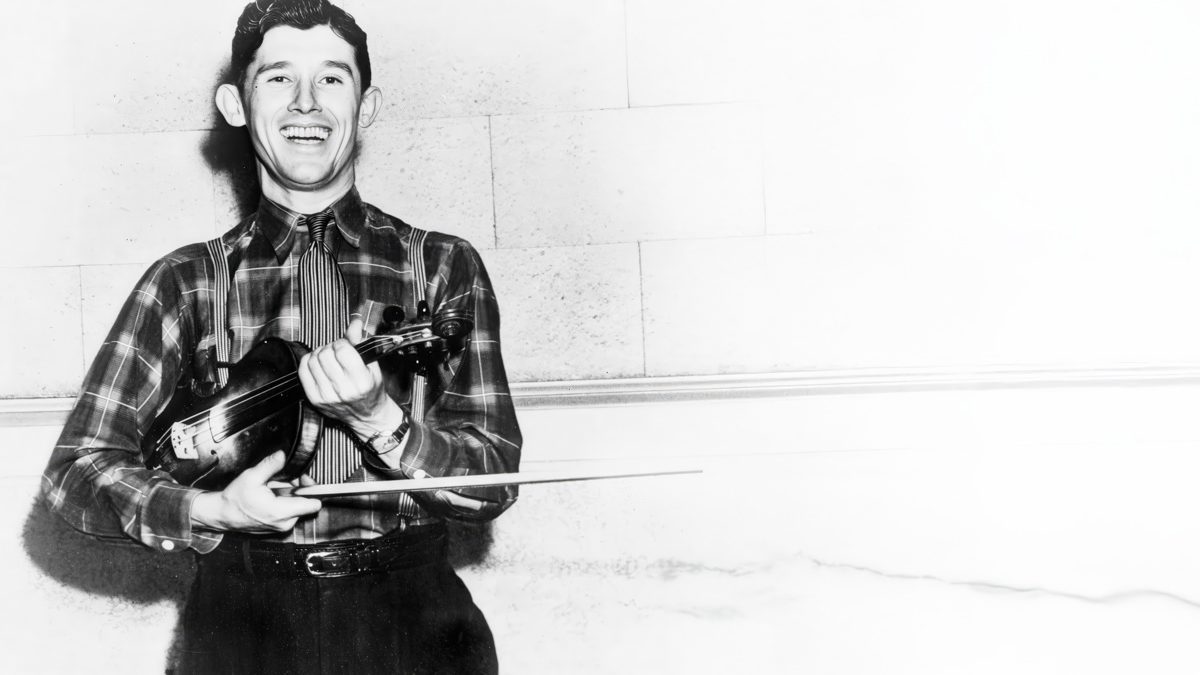
InsightsThe Fiddle that Forged a King
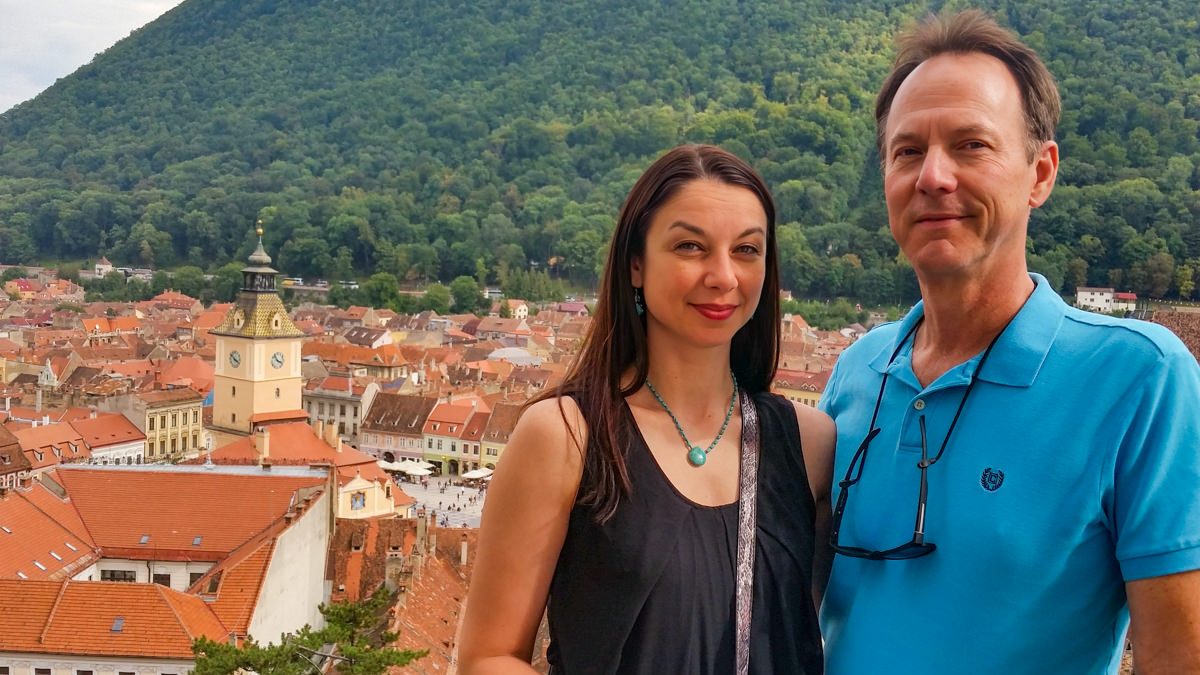
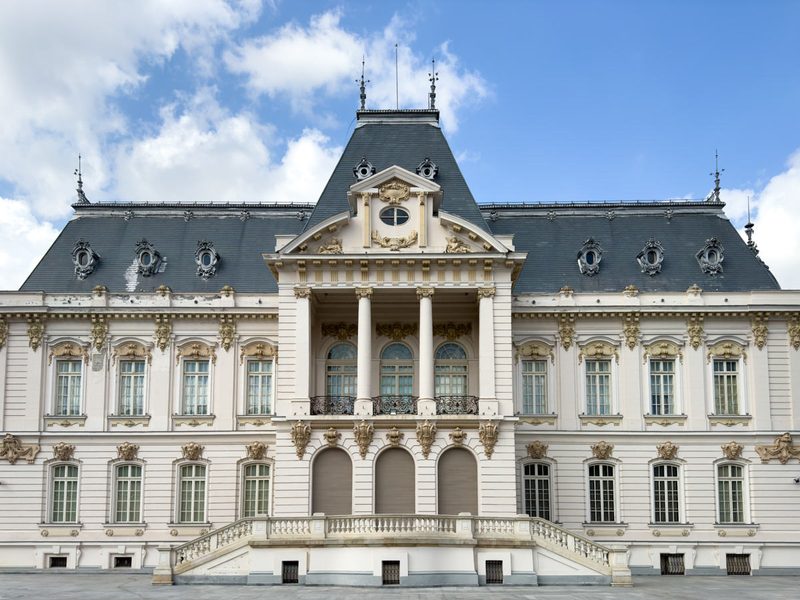
TravelThe Heart of Romania
FeatureDoctor AI
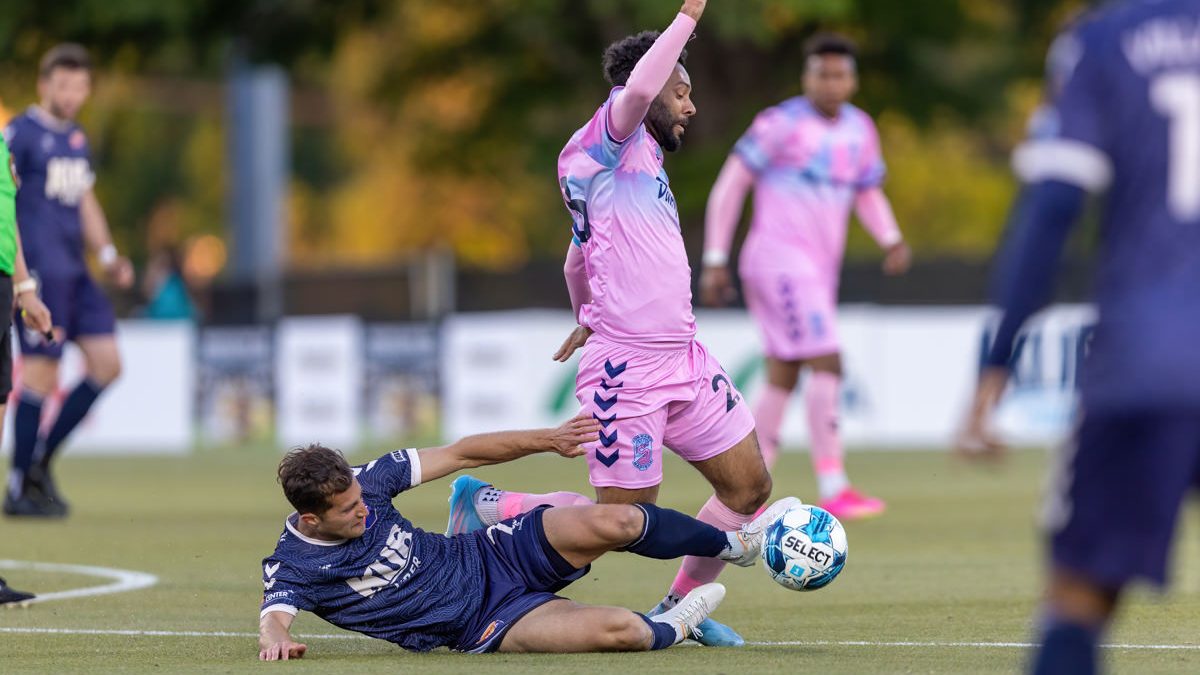
FeatureA Triumphant Return for the Knoxville Smokies
FeatureGeared up for March Madness
FeatureNew Era for One Knox
Non-ProfitFinding Her Voice
Top DocsTop Docs 2025
VeteranFollowing the Chow Line
FeatureHome Run
→ Swipe to start reading
The PublisherMARCH APRIL 2025
Mar. ’25 – From the Publisher
Story by Nathan Sparks
Like most kids, I spent a lot of time playing baseball. There’s something magical about a ballpark—the crisp white chalk lines, the rhythmic crack of a bat meeting the ball, the shouts of teammates, and the scent of fresh-cut grass mixed with popcorn from the concession stand. Whether it’s a little league game or the majors, baseball has a way of drawing people in, creating moments of pure joy and camaraderie.
But for me, baseball wasn’t all cheers and home runs. My time on the field was challenging, to put it kindly. I wasn’t the kid making diving catches or sending balls soaring over the fence. My skills—both at bat and in the field—left a lot to be desired. Back then, there weren’t baseball academies or personal coaches to help kids refine their game. You either had natural talent, or you sat the bench. Let’s just say, the bench and I were well-acquainted.
Coach Talley had his favorites—the kids with real talent, the ones destined to play every inning. He focused on them, as any coach probably would. My mother, in her ever-supportive way, tried to show appreciation for his time by baking cookies and taking little treats to practice. But to the other boys, that was a golden opportunity to make my life miserable. They saw her kindness as a desperate attempt to bribe my way into the lineup; the teasing that followed was relentless. The names, the jokes—it wasn’t easy. But none of it kept me away. I wanted to belong, to be part of the team, no matter what.
Then middle school rolled around, and with it, a fresh start—or so I thought. By eighth grade, I figured I finally had a fair shot. This was public school, after all. No more playing favorites. No more politics. Just a tryout, a fair assessment, and a chance to prove myself.
A few days after tryouts, the coach posted the team list. I happened to be standing there when he tacked it up. My heart pounded as my eyes scanned the names. One by one, I read them all. But my name wasn’t there.
“Coach,” I asked, my voice unsteady. “Why didn’t I make the team?” He didn’t sugarcoat it. “Sorry, son. You’re just not good enough.” I stood there, trying to process those words.Not good enough. “Well, what do I do during this part of the day?” I asked. He shrugged. “You might try the yearbook club.”
Yearbook club. That wasn’t exactly in my game plan. But I didn’t have much choice, so I wandered into the classroom where the yearbook team gathered. It was mostly girls, and when I told them why I was there, they giggled at my predicament. I could feel my face burning. Strike two.
The teacher looked at me thoughtfully. She knew I wasn’t exactly a poet. Writing had never been my strong suit. So what job could she possibly give me? She walked over to a cabinet, pulled out something, and placed it in my hands. It was a twin-lens Rolleiflex camera.
“I’ve been wondering who to give this job to,” she said. “And it’s going to be you, Nathan. You’re now the school photographer.” Just like that, my world changed.
She showed me how to use the camera, how to frame a shot, how to capture a moment. And then—something incredible happened. She set me free. I was allowed to roam the halls, take pictures of anything and everything, to see the world through a lens. And for the first time, I had a way to truly express myself. I was no longer standing awkwardly in the outfield, hoping a ball wouldn’t come my way. I had found my place.
I was a quiet, introverted kid back then—hard to believe if you know me now. How I went from that shy boy with a camera to where I am today is another story. But that moment—that camera—it set me on a path I never expected. The universe knew what I needed, even when I didn’t.
And that’s how I ended up here, capturing moments, telling stories, and sharing them with you.
→ Swipe for Next Story
Arts & CultureMARCH APRIL 2025
Big Ideas
Maryville’s Pinkie Mistry brings nature to life in canvas and murals
Story by Susan Alexander
Pinkie Mistry can measure the progress of her art not only in its development but also in its size. Originally working as a graphic designer after completing that program at Pellissippi State, Pinkie designed small pieces like brochures and rack cards, working largely for the tourist-related businesses in Sevier County, where she lived.
Now she’s creating large canvases, working in oils and concentrating mainly on florals and landscapes. And she paints even bigger murals that adorn buildings and walls both in Sevier and Blount counties, including the magnolia bloom she painted on the building her new gallery and studio now occupy in downtown Maryville.
A native of Canada who grew up in Sevierville, Pinkie eased into her painting career when her graphic design clients learned of her talents and began requesting custom pieces for their homes or businesses. By about 2015, she was concentrating far more on art than graphic design, working from her living room. That proved to be a challenge with the oversized canvases she prefers. Which led her to move her work into the loft space above Neighborly Books on Broadway. Eventually that space wasn’t big enough either. Last August she moved into her own building on West Harper, a spacious and bright area with room to paint and display her art and host occasional gatherings, like the event she held for the Blount Memorial Foundation.
A self-taught artist, Pinkie has been drawing since she was young. She’s illustrated children’s books, and her large-scale murals can be found at Anakeesta, the Seymour Branch Library, on Bruce Street in downtown Sevierville, on the Parkway in Gatlinburg as well as at local wineries and a pediatrics office.
“I use a lot of different styles and ideas,” she says. “I don’t like doing the same thing over and over.” Still, she says her art is distinguishable by its size, texture — she often applies paint with a palette knife — and nature themes. “I love florals and our mountains; they inspire a lot of my work.”
Pinkie’s work can be found on Facebook and Instagram, and at her website,pinkiemistry.com. Her gallery hours are Wednesday through Friday, noon to 6 p.m.
→ Swipe for Next Story
MusicMARCH APRIL 2025
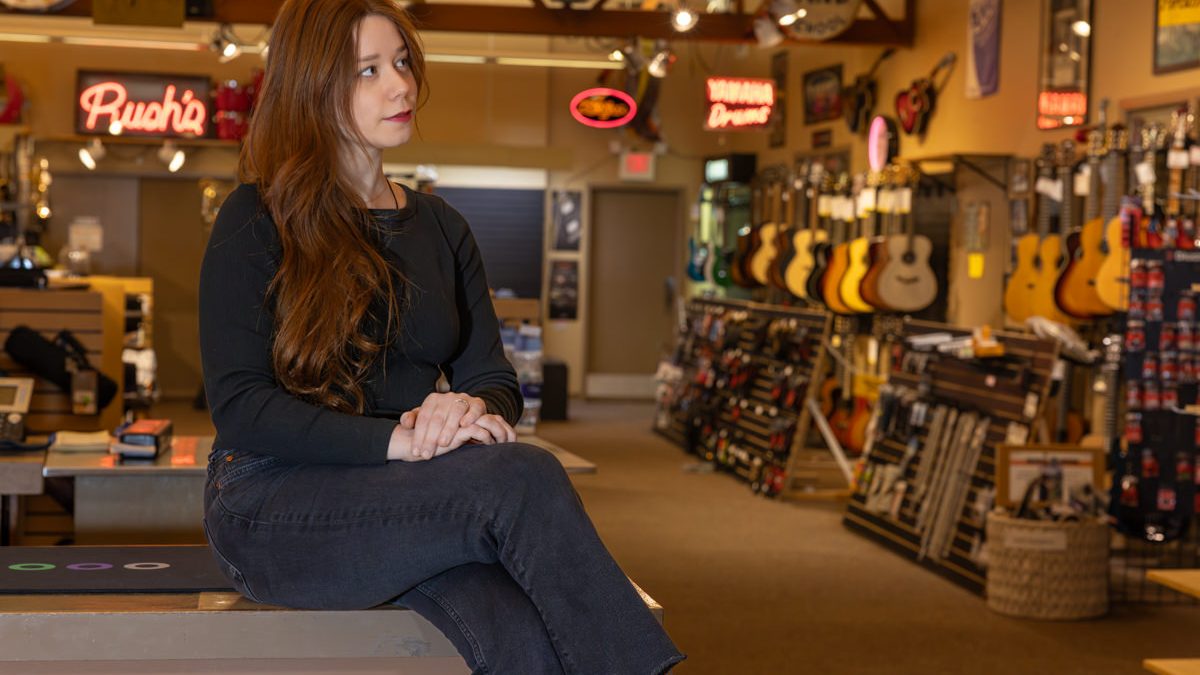
Strings of Change
Christina “Redd” Daugherty navigates a new chapter as both musician and business owner, balancing passion for what’s next and the legacy of a dear friend
Story by Chris Blue
In the heart of Knoxville’s music scene, one name has emerged as a beacon of resilience, passion, and entrepreneurial spirit—Christina “Redd” Daugherty. I sat down with Redd back in 2022 as she prepared for the release of her very first album,Monsters & Mothers. It’s only been a few years, but so much has changed for this former English teacher turned music entrepreneur. At the time, Redd was learning what it meant to her to be an artist, but as we sat down to talk recently, her story—one of heartbreak, adaptation, and an unwavering commitment to the music community that has shaped her—has become about so much more.
You might recall that Redd’s journey into the music industry wasn’t planned. “I was an English teacher,” she says, laughing at how unexpected her current path has been. “I taught English, yearbook, and journalism. But before all of that, I grew up in Clinton, Tennessee, and I worked at the local Food City.”
It was at the grocery store that she met Jim Gadd, a regular customer and brass repair technician at Rush’s Music. Recognizing her love for music, Gadd offered her a future opportunity, should she ever decide to leave retail. When she turned 18, she took him up on the offer.
“That’s when I met Steve Boyce for the first time,” she recalls, referring to Rush’s former owner. “I worked at Rush’s from 18 basically to, well, I guess I never really left.” She came back on and off, working on string and orchestral instruments. “I’ve just always kind of been here.”
A Turning Point
Life took an unexpected turn in 2023 when Jason Cooper, the owner of Rush’s Music and one of Redd’s closest friends, suddenly passed away. “I had a full-blown panic attack meltdown in the Knox County Police Department parking lot,” she admits, “because I didn’t know what to do and I needed more information.”
Redd would get a second shock later on as she learned that Cooper left Rush’s Music to her in his will. “I had no idea that he had this idea,” she says. “I think that’s why he didn’t tell me; I would have said, ‘No, I have other plans.’” But she took it on, honoring her friend’s wishes.
Managing grief while stepping into an unexpected leadership role was no easy feat. But with the help of her bandmates—Katie Adams, Colleen De Leo, and Gavin Greg—who encouraged her to work her hardest to move forward, she found a way through. “Now I’m trying to get back into a growth mindset again,” Redd says. Redd and the Paper Flowers | Courtesy of Redd Daugherty
Finding Purpose Through Music
Taking over a music institution with deep Knoxville roots came with its own set of challenges, but Redd calls it “good chaos” and has found clarity in her new role alongside her oldest love. “Music is, in a lot of ways, my baby,” she says, “performing, supporting the community, and just being completely covered up and divulging into music and the scene.”
Instead of focusing on the challenges, though, she’s facing them head-on and propelling her energy into helping those around her, utilizing this new platform she’s found herself with. “I have an enormous privilege and power that not everybody has,” she says, “and I want to leverage that to help other artists in the community, and our band directors, and our kiddos and schools and band programs.” Part of that work is the creation of a scholarship program for music students.
“It’s an enormous responsibility, and I’m excited and happy to take that and run with it to help other artists in the community. I don’t think that there are a lot of spaces for that.” Redd adds later, “I don’t know exactly what it means to support local artists yet, but I’m sure they’ll tell me.”
While she never anticipated where she would be right now, Redd has found purpose in the journey. “The grief is so hard, but I’m very thankful and very lucky to be here. I had it in my thick skull, ‘This is what my life is going to look like and this is the direction that I’m going to go in,’ but the universe is like, ‘No, thank you, ma’am. That’s not what we have in store for you.’”
A Future Rooted in Growth
Our journeys aren’t always what we plan, but if Redd’s story can teach us anything, it’s that there’s purpose in what we are handed. Alongside this is Redd’s advice to others navigating creative careers: “Find people you’re okay with failing in front of, hard and fast. I’ve failed so much in 2023 and 2024, but learning is my best friend. It doesn’t matter if you’re a singer-songwriter or if you’re trying to open up a business of your own, harnessing the power of failure is literally what propels us forward.”
Her story is a testament to resilience. With Rush’s thriving under her leadership, Redd is now focusing on her band, Redd and the Paper Flowers. “We’re going on tour for most of 2025,” she shares. “We’ve got an album release in May forAppalachian Bell Jar, and we’re doing a live recording at Pink Moon.”
The renaissance of Knoxville’s Market Square and downtown
Story by George Korda
Downtown Knoxville was for years the equivalent of a literary dark and stormy night. Not necessarily stormy, but certainly dark. In 1987, the first time I saw downtown’s Market Square, I initially said aloud, “This is great!” Then I saw the not-so-great empty storefronts. As I discovered, Market Square, and downtown Knoxville, were victims of attitudes changing toward a suburban lifestyle.
In late 1987, my family moved to Knoxville when I became the city’s public affairs director and mayor’s press secretary for newly elected Mayor Victor Ashe. Over the summer, I’d gotten a call from a friend, Tom Ingram, who had served as deputy to Gov. Lamar Alexander. Tom subsequently founded his own public affairs and consulting firm. I was with a large Nashville public relations agency after working on Ashe’s 1984 U.S. Senate race.
Tom asked me to visit him at his office. “Victor needs you in Knoxville,” he said. Ashe was in his first mayoral campaign, which was starting to go sideways. I said, “Tom, if he wins, he might ask me to move to Knoxville.” It wasn’t a prospect I particularly welcomed. Nashville was Tennessee’s capital city and a world-famous destination. Knoxville simply was not. Nevertheless, I consulted on the campaign, Ashe won, and my family and I moved to the “scruffy little city,” a handle aWall Street Journalreporter stuck on Knoxville.
Downtown Knoxville, for generations the hub of area commercial activity, wasn’t as scruffy as it was dead—well, maybe not all dead, but mostly dead. Shortly after arriving, I remarked, “If an explosion occurred in downtown Knoxville on a Friday night, no one would know about it until Monday morning.”
“Downtown Beirut” was Gay Street’s late 1980s nickname. The street was ripped up for a revitalization project. Boarded-up storefronts abounded. Particularly memorable: worn plywood sheets covering the former Lerner’s store at 403 South Gay Street. (Today, it is now a smart-looking residential building called Lerner Lofts).
Downtown wasn’t the place, or anyplace, to be. During December, as part of Christmas in the City, an ice-skating rink was set up on Market Square to lure people downtown. One evening, I answered the phone in my office. A woman asked, “How do I get downtown to the ice rink?” I gave directions, then asked, “Do you live around here?” She’d lived in Farragut for 10 years – but had never been downtown.
Something I learned in those years is how to tell when a downtown is struggling: murals are painted on empty store windows, and low-cost consignment stores appear. But things in Knoxville were moving. Over the decades, a succession of mayors put money and planning into reviving downtown. Some flopped, some succeeded. For example, Ashe spearheaded the effort to remove unsightly glass encasing the former Miller’s Department Store, at 445 S. Gay Street, today a downtown jewel and KUB’s main office. But something more was necessary.
In 1994, after leaving city government, I was with a company called Regal Corp. Also working there was David Dewhirst. One day, while we were going to lunch, he said, “I want to show you something.” We drove to a small, empty, building on mostly deserted South Gay Street. He said, “I bought this building; I’m going to renovate it and rent it out.” While we toured the building, I was encouraging, verbally, and skeptical, silently. Today, Dewhirst Properties is a successful real estate development company focused on the downtown area. David and others who took risks have played a substantial role in downtown’s rebirth. And it’s helped turn the city’s core into a neighborhood: almost 2,000 people now live downtown. Entertainment, restaurants, new stores – all have contributed to downtown’s renaissance. While in government I saw many people approach the city with ideas requiring taxpayers’ money. But true prosperity arises when people put their own money or credit on the line.
The number of people and organizations that have worked to bring back downtown is far too long to list. What they’ve done, with fits, starts, and toil, is working. One evening, my wife and I were having dinner while sitting outside at a Market Square restaurant. I motioned to the square. “Look at this: it’s like a festival!” But these days, it’s a normal evening, and a long way from downtown Beirut.
→ Swipe for Next Story
InsightsMARCH APRIL 2025
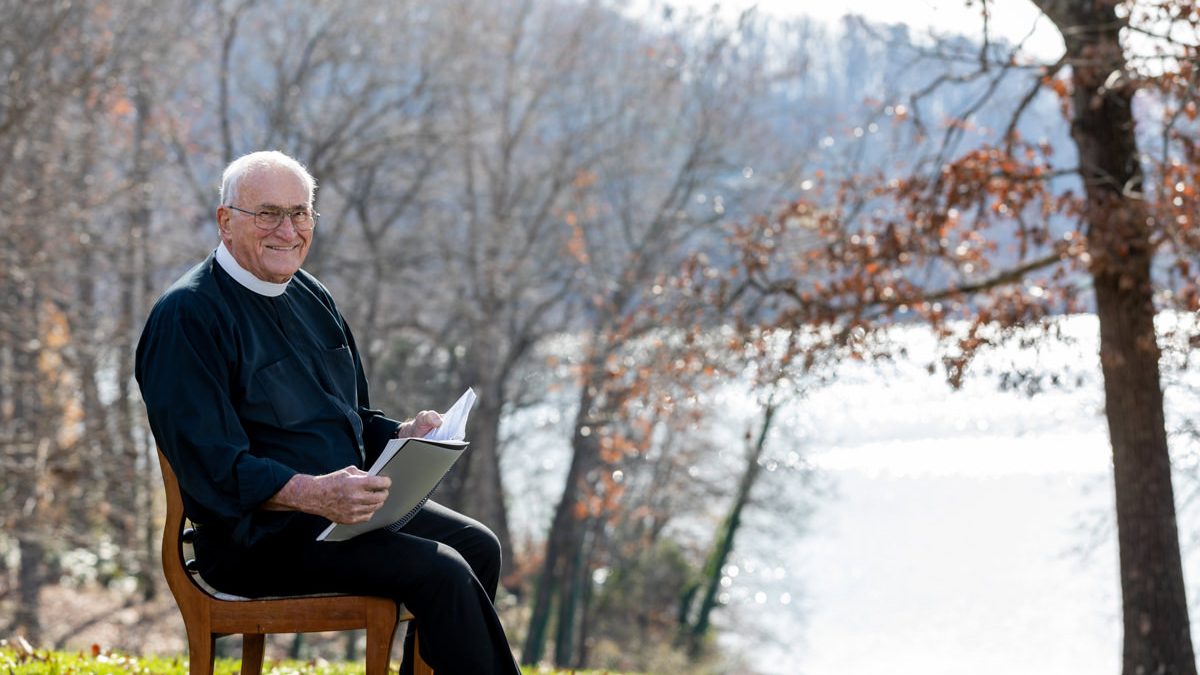
Matters of the Soul
Perhaps how we connect to the world has more to do with how we connect to ourselves
Story by Rev. George Doebler
Thirty years ago, I stumbled across the bookCare of the Soulby Thomas Moore. I was so captivated by what I was reading that I wanted to speak with the author. While searching for a way to contact him, I discovered that he had recently spoken at Duke Divinity School, and they provided me with a phone number.
I called, expecting to reach an office or secretary. Instead, a woman answered the phone and after asking to speak with Thomas Moore, she replied, “He’s not home. This is his wife. He should be home tomorrow evening.” I apologized for calling his home, which she graciously accepted, explaining that this happened often—he had no office or secretary. I was taken aback. How could the author of aNew York Timesbestseller have no office?
The next day, I called again, and Thomas Moore answered. That conversation marked the beginning of a friendship and a journey of self-discovery that changed the way I understood myself and others. I invited Thom to come speak at the University Medical Center in Knoxville. It was 20 years ago when he came and spoke to an audience of more than one hundred people, and yet his message was so profound that I still think and ponder it today: the way we care for our patients comes from our soul. It was a new way of thinking for many of us.
This idea grew from his own lifelong journey to understand himself and the world. Having spent 13 years as a monk, Thom was deeply influenced by the writings of Carl Jung, the Swiss psychologist who explored the mysteries of life. Jung suggested that our existence is more than just a series of events, family ties, or past experiences—every moment holds within it something deeper: soul. Not merely a religious concept, but an essential, ever-present force that gives meaning to life.
Thom has written more than 30 books about related topics, and he so profoundly changed the way I see myself, my work, and my relationships. His writings influenced the way I interact with the patients I visit, my colleagues, and even my own family. And through that I have come to understand that what I feel, believe, and do is tied to my essence—something indefinable yet deeply real. It is the work of the soul.
The soulfulness of every encounter connects us to the world in a way that cannot be measured. And yet, I fear we have lost sight of our souls. The events we witness each day, the news we consume, seem to paint a picture of a world that feels increasingly soulless. We reduce ourselves to bodies and minds as though they alone define our existence. But where is the care of the soul? It is rarely, if ever, mentioned.
Thom once said, “The care of the soul requires a different language from that of therapy and academic psychology.” We have become trapped in the belief that who we are is tied to our work, our productivity, and our future. But who we truly are is often hidden from us, and in searching for meaning in the things around us—wealth, possessions, or status—we risk losing our souls entirely. The destructive forces in our culture—drug abuse, alcoholism, crime, violence—are symptoms of this loss.
What I am beginning to see is that we are looking for answers outside of ourselves, believing that if we just did something different, there would be no crime, no violence, no disease. But perhaps these struggles are not separate from our loss of soul. Perhaps even disease itself is intertwined with this disconnection.
If there is such a force as soul, a deeper mystery that gives meaning and purpose to our fragmented lives—then I must learn to sense it. To be enchanted by it. To recognize it in each and every moment of my day.
→ Swipe for Next Story
DepartmentsMARCH APRIL 2025
Porter’s Creek
Off-trail in the Smokies, remembering a friend’s final bushwack to what’s next
Story by John Quillen
My feet were dangling way too far from terra firma so I death-gripped a bending piece of rhododendron. The branch stretched with increasing gravity, and my toes reached for nothing as the shrub eventually succumbed. When this alpine slide was complete, some 20 feet down the hill, I signaled to Frank Whitehead, my usual cohort, that everything was fine and the pathway fully paved. For some reason he was not inspired; I released the small rootball in my hand.
He was warned. Porter’s Creek manway is not for the fainthearted. Just ask Morgan Briggs. In 2009, he took off in pursuit of this elusive, Smokies off-trail, but learned that “ciphering” is the real trick here as there is no “trail.” Where Porter’s Creek ends, true adventure begins. I tend to use backcountry site #31 as basecamp for this bushwhack. Rescuers can begin their search at my tent if ever needed. Morgan didn’t have a basecamp when he took a left turn at Albuquerque, so to speak, instead of a right one and ended up stranded atop Porter’s Mountain.
My compadre on this ascent was wetting his feet at one of a dozen crossings, occasionally marked by rock cairns. We’ve lost count of our decussations and Frank notes, “It’s wild in here.” Wicked big trees and massive blowdowns create what we call the mega logjam, an important navigational marker. We can either turn right and shoot for Lester Prong or muscle straight up to the Appalachian Trail (AT). Over my shoulder is the shadow of the mountain where Morgan ended up when the helicopters found him after several days. He was no novice and got a full dose deep in this punchbowl.
I know which way to turn here thanks to some critical data from an expert on the area. I’d made this climb several times, but reached out to Jenny Bennett in 2012 as Porter’s Creek was always her jam, and I was looking to dial in to what she considered the “real” route. Of course, this is all subjective, depending upon your goal. Jenny usually angled for the bottom of the “true Bunion”. This was the path of Lester Prong.
Charlie’s Bunion folds down to this valley, but few will ever make it down to Jenny’s trail. We veer uphill aiming for a feature known as The Sawteeth. It’s where Class 3 scrambling turns into full-blown mountaineering as we dodge crippling undergrowth and climb precipitously in our second mile. We will miss the “true Bunion” as this present line seems to pull me like a magnet towards the AT. Perhaps I was putting off the reality of Lester Prong.
Small patches of snow glisten in the sun as we rise to the spine of our favorite national footpath. Frank grumbles about my decision to forge another “new” route. He has more sense than me and notes we have abandoned the cairns that would mysteriously appear in random places. It’s getting slick as we rise to almost 5,000 feet. Patches of ice lurk beneath shrubbery likely unread by any human boot. Rhododendron and laurel are replaced by heath and shrinking branches less conducive to our pulling. We claw our fingernails into loamy soil for purchase, chasing false summits. “It’s got to be over the next rise,” I yell to him.
Any chance he wanted to bail on this climb were extinguished when we turned at Lester Prong. No one wants to be down there blazing back through this wilderness alone. The Sawteeth were directly above me, less than 100 feet away. This is a rocky section of the AT, north of Charlie’s Bunion. It was getting late when we slapped that patch of flat ground. The relief on Frank’s face said it all. But we were only halfway. Summits are optional; successful descents are mandatory. Given the late hour, any notion of running out to tag Charlie’s Bunion was abandoned.
I campaigned to chase another line downhill, much to Frank’s chagrin. Shortcuts aren’t always shortcuts. Frank asks, “How do you always find the most difficult way?” It took two hours to drop back into the large part of this creek. We pause to dust off limbs and dirt from our sleeves as we wade the split at the creek.
Pausing half in and half out of Porter’s Creek, plastered in leaf litter and gratitude, Frank may have doubted, but we were going to make it out of here in a couple of hours. That’s not always the case with Porter’s Creek. I thought about what Jenny once prophetically wrote, “Porter’s Creek and Lester Prong form pathways for rock hoppers that lead to mysterious and difficult places.”
You see, somewhere along this stretch within 800 or 900 yards, my friend made her final bushwhack. It was 2015 when she disappeared deep into Lester Prong for another one of her solo hikes. Rescuers spent several days combing lower Porter’s Creek, but I had a feeling I knew where they may find her. Jenny’s final resting spot was here where untamed Lester says goodbye to Porter’s Creek and rises up to the real Bunion.
Much speculation surrounded her passing, which reverberated deeply through the off-trail community. She wasn’t lost; the NPS report determined that Jenny decided when and where she wanted to exit this planet. As we paused in the reverent shadow of unlogged poplar and hemlock, pink-billed junco birds shot like missiles through the air as the day’s remaining light fell. I wanted to sit and bathe myself in this maze of connecting streams that collide to form Porter’s drainage. In that moment, as a pileated woodpecker squawked in the distance, I felt some understanding and clarity. I could envision no more suitable portal to transition from this adventure to the next.
→ Swipe for Next Story
DepartmentsMARCH APRIL 2025
In Crust We Trust
Pizza that needs no razzle-dazzle to hype up its flavor.
Story by Micha Haas
A lot of restaurants we cover here atCityvieware beautiful, upscale sit-down affairs. The salad fork on the far left and all that (I had to look that up, by the way). And don’t get me wrong, places like that make for quite an enjoyable dining experience. But sometimes, there’s nothing like a fresh-baked pizza, and as my years in New York taught me, sometimes the best pies are the ones you least expect. Today, we’re leaving behind the healthy eats of last issue and diving into the world of blackened ovens and fist-bumping chefs in search of the perfect bite of that American classic: pizza.
Baker Boy Pizza Company
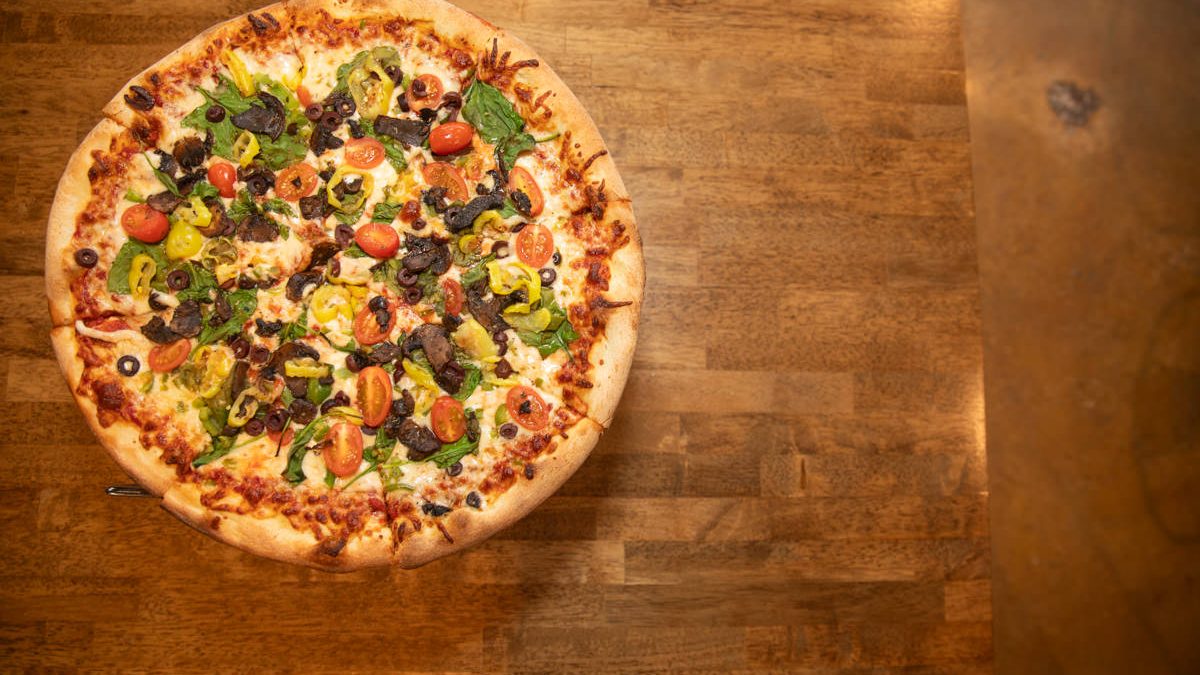
It may seem small, but the Baker Boy’s got a big oven, so come prepared for a big pizza! Walking in, I could see the chef flipping the dough through a small window, and I decided to walk over and say hello. This turned into me getting something of a chef’s special, a huge 24” behemoth of a pie loaded with mushrooms, spinach, and cherry tomatoes that burst in my mouth. I’m sure there were more toppings as well, but it’s the tomatoes that I remember—and I’m not usually much of a tomato eater. I’m told the closest thing to what I ordered is the Very Cherry, but hey, maybe next time I go in, there’ll be a Cityview Special on the menu so you can have a taste, too. Wink wink.
I didn’t know pizza restaurants took reservations! A Dopo may open at 5 p.m., but if you want to sit right away, you better get your foot in the door a few days in advance. Having found my way to a table, I can see why there’s a line at the door. A Dopo is known for its quick-baked sourdough pizza; 90 seconds in their thousand-degree oven is all it takes and then it’s out and on the table. I got a Margherita pizza and managed to eat the whole thing (they did say they recommended one per person), but if you want something a bit flashier, my guests got themselves a Pizzicletta. Piled high with arugula, aged prosciutto, and A Dopo’s white sauce—a blend of mascarpone cheese, local cream, and pecorino Romano cheese—it’s a heavenly selection.
I’ll be honest with you, researching this article was the first I’d heard of Cruze Farm doing pizza, but sure does make sense, doesn’t it? Great dairy means great cheese, which means great pizza. That, at least, was the thinking that opened the doors of the Pizza Barn seven years ago. The barn’s got the same classic Americana look you expect from Cruze Farm, and the names of the pizzas are equally classic. Dumb Blonde is the name of the three-cheese specialty white pizza that caught my eye, but I’d be remiss not to mention the Cowboy’s Ways for all you carnivores out there. With pepperoni, house-made Italian sausage, ground beef, ham, and bacon, it’s a meat lover’s dream!
Back in high school, I spent my fair share of time over at the Oak Ridge Playhouse as an actor, and always just next door was the face of Big Ed, smoking his cigar. I don’t recall if I ever actually ate there back then, but it still felt like a trip down memory lane stepping through the doors. Everything from the name to the lighting down to the signed Miss America’83 photo on the wall gives me a feeling of stepping into some classic mafia movie (not sure if that’s a universal experience or just me, though). I got myself a small David’s Veggie and managed to eat all but one slice in one sitting. My stomach probably thought that was a mistake, but my tastebuds sure didn’t!
Bicycles on the ceiling and all the pizza comes in boxes – this place is made to move! But that didn’t stop me from taking a seat at one of the picnic tables and chowing down. What caught my attention here were the sauce base options – hot sauce, Korean BBQ, and the one I ultimately decided on, pesto. You can get an 8” personal pie here, so it’s a great place to go solo (though going with friends seems to also be a favorite for some patrons). I can also attest to the richness of the chocolate lava cake, which I got as a bit of a belated birthday treat. early! And while you’re there, be sure to check out Brother Wolf as well for cocktails and small plates. If you’ve never tried the gnocchi, give it a taste!
Pizza is definitely an American classic, but it’s also a Mediterranean one, and there’s something extra authentic about pizza places that offer good cuisine that doesn’t come with crust. That’s Pizza Palace for you. Around since 1961, Pizza Palace offers not just pies, but also lasagna, ravioli, and even veal cutlets. This article is about pizza, though, so let’s talk about cheese. This pizza is the kind that is dripping hot strings of cheese down all the way from your mouth to the plate. Minus some minor mouth burns, that’s some good cheese, which – in this writer’s opinion – makes for a good pizza.
The Marlowe’s sophisticated vibe lives up to its Raymond Chandler-esque name.
Story by N. Brooks Clark
The night was as thick as a conman’s promise, and the streetlights of Knoxville’s Central Street flickered like the last gasps of a dying star. We found ourselves standing before The Marlowe, a joint at 1123 North Central Street, the kind of place where the clink of glasses and murmur of low conversations promised a temporary escape from the city’s hard edges.
Walking through the arched doorway, we were greeted by an atmosphere that was both cozy and elegant, a delicate balance that many aim for but few achieve. The lighting was soft, casting gentle shadows that danced on the open-brick walls. A jazz trio played mellow riffs. And the hum of conversation was lively but not overpowering. It’s a place where secrets can be shared, exotic trips planned, and a private eye might come up with important leads.
Though the name Marlowe is the middle name of owner Randy Burleson’s daughter, Aubrey Jaye Marlowe Burleson, it nonetheless evokes Raymond Chandler’s unforgettable prose and his hardboiled detective Philip Marlowe, forever enshrined in film-noir annals by Humphrey Bogart in The Big Sleep.
Sliding into a booth that felt as inviting as an old friend’s embrace, we were handed a menu that spoke of exquisite and creative options: seafood, steaks, and pastas, each dish described with a flair that suggested the kitchen knew its business.
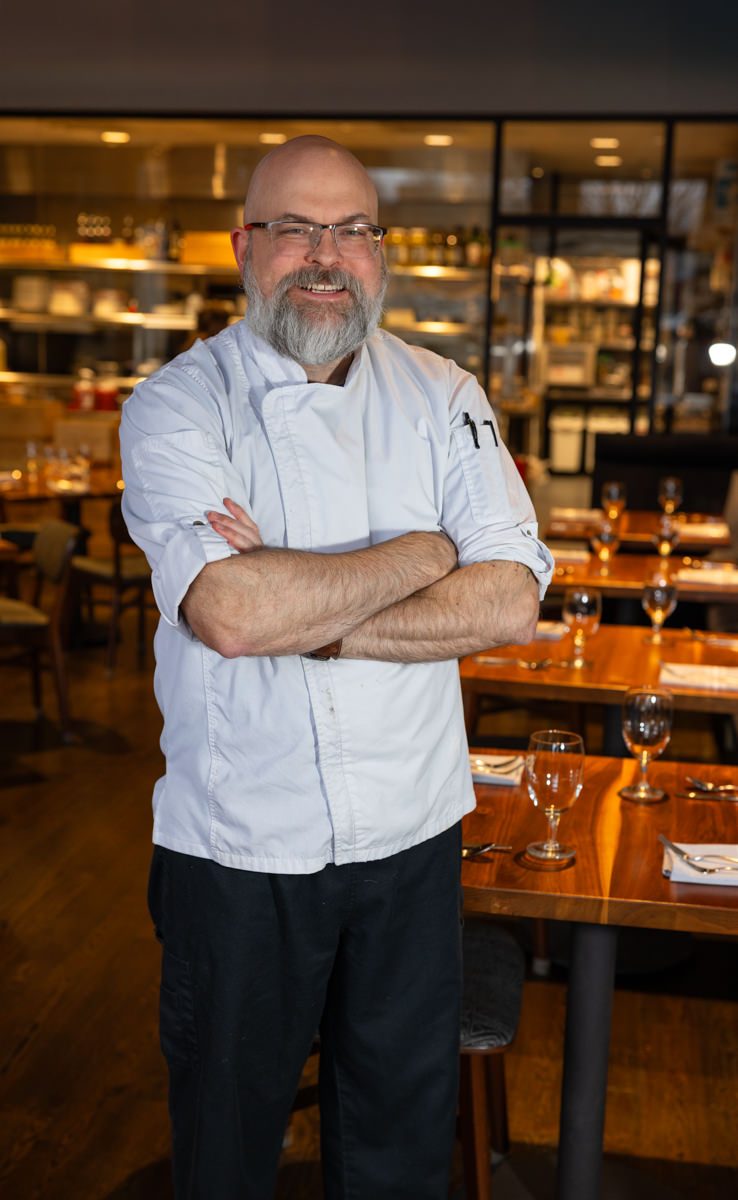
Chef Robert McDonald III is a local guy. He started cooking on his parents’ back deck gas grill. He was an actor at Central High and played Marryin’ Sam in L’il Abner his senior year. He went to the American Academy of Dramatic Arts in New York and at one point moved to Los Angeles looking for his big break. As Raymond Chandler might have written, the big breaks don’t come when you’re looking for them: they bite you on the nose when you’re not. McDonald’s culinary success has been aided by the theatrical sensibility he brings not only to the presentation of his culinary creations and his tutelage of sous chefs Jon Nash and Bryce Cobble, but also to The Marlowe’s interior design.
In the space formerly occupied by Bistro by the Tracks Happy Holler, a short-but-lively bar dominates one room. The dining room features exposed floor joists on the ceiling, comfortable black banquets along two walls, a picture window onto the passing parade of Central Street, and a glass wall giving a full view of the kitchen.
We started with a cocktail, something the place was reputed to do well. The drinks arrived, masterpieces in a glass, the kind of concoctions that could make a bishop kick a hole in a stained-glass window. It was clear that the bartender was an artist, and we were more than willing to be his canvas. I had the house Fall Fashion, a brooding beauty of Basil Hayden bourbon, Grand Marnier, Amaretto and Luxardo cherry, the kind of drink that made you want to sit back and contemplate life. My companion opted for the Muse Martini, a sharp but smooth blend of Matchbook distilling gin and Kamoizumi Umeshu sake, served very cold with just the right amount of bite.
We began with the Mushroom Gnocchi appetizer—filet bites, roasted chestnut mushrooms from Extraterrestrial Fungi in Powell, mushroom demi-glace, truffle oil, and cured egg yolk. “Very much ‘us,’ and my favorite,” said McDonald. We quickly understood why. With gnocchi, the texture tells the tale: these are delicate and savory.
We moved on to a seasonal Burrata with black garlic hummus, roasted root vegetables, olives, chili crunch, and pita bread. To get the just-right consistency, McDonald roasts the garlic for 12 days. It was creamy and indulgent, the hummus adding a depth of flavor that lingered long after the bite was gone.
Then came the best salad we’d tasted in a while, a Citrus Greek Salad. This light and crisp dish weds greens with onions, fennel oil, olives, red peppers, artichoke hearts, fried capers, and goat cheese, all dressed with a Greek olive purée and charred lemon vinaigrette. “It’s my favorite salad I’ve ever made,” said McDonald, and we weren’t about to argue. For the main courses, we tasted the Grilled Chicken, a dish that can often be as uninspired as a Monday morning, but here it was anything but. The chicken was succulent, each bite a testament to culinary skill, and the accompanying sides of mushrooms, olives, garlic Béchamel and red chili coulis complemented it like a well-matched pair of gloves.
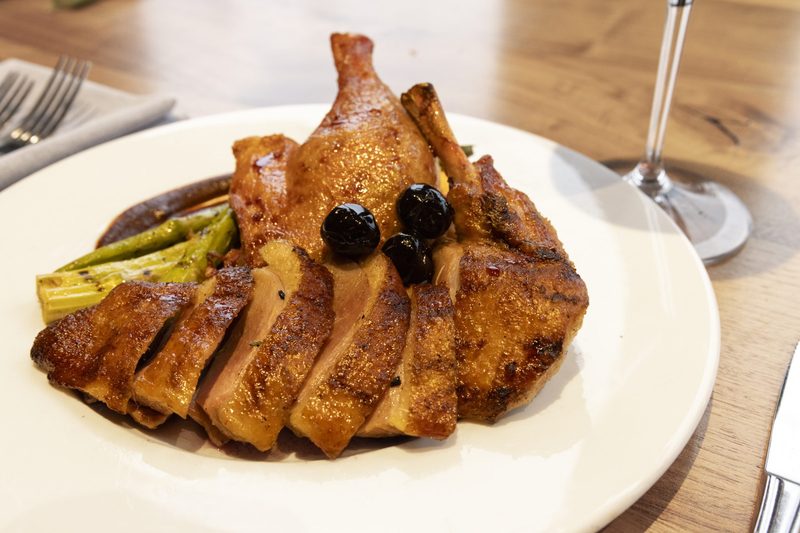
The Half Duck is a crisp confit duck quarter and grilled duck breast, both cold-brined for two days and served with grilled asparagus, safflower pilaf, and cherry bordelaise. The skin had a delicate crunch while the meat beneath was tender and rich.
The Crab Cakes are a “runaway success,” according to General Manager Laura Shackelford. They were golden, crisp, packed with crab and served with jalapeño grits, charred ginger carrots, and a balsamic ginger vinaigrette that cut through the richness just enough.
Beef Tenderloin was a classic presentation accompanied by grilled asparagus and a delightful addition of confit beet—earthy, sweet, and the perfect foil for the deep umami of the beef.
Sides are no afterthought here. Charred ginger carrots arrive with just the right amount of sweetness, and Burgundy mushrooms are a complement to main dishes like the Weekend Ribeye. Every element on the plate had been considered, perfected, and delivered without pretense.
Dessert was a must, though we were nearly too full to consider it. We opted for the Espresso Cheesecake, light and airy, with a Biscoff crust that added a delicate crunch, topped with coffee whipped cream. The Chocolate Torte, with its classic flavors of hazelnut and orange, perfectly contrasted a glass of Buffalo Trace Bourbon Cream, poured over a large Fresh press coffee ice cube.
Service was prompt, the staff moving with a grace that suggested they were part of the establishment’s foundation. They were attentive without being intrusive, friendly without being familiar in a delicate dance that they performed with aplomb.
As the evening wore on, we couldn’t help but notice the clientele. A mix of locals and out-of-towners, all drawn to this hidden gem in Knoxville’s crown. The Marlowe had the feeling of a place that had been around forever yet still managed to surprise even the most jaded of patrons. In the end, The Marlowe is more than just a restaurant; it’s a refuge from the mundane, a place where the food is excellent, the drinks are creative, and the service is as warm as a summer’s day. It’s the kind of place Phillip Marlowe himself might have frequented, seeking solace from the city’s relentless grind. And like any good detective, once you’ve discovered it, you’ll keep coming back, knowing that in a world full of uncertainties, The Marlowe is a sure thing.
→ Swipe for Next Story
FeatureMARCH APRIL 2025
A Triumphant Return for the Knoxville Smokies
With a new stadium with top-of-the-line facilities, East Tennessee’s Minor League team is in for a wild ride
Story by N. Brooks Clark
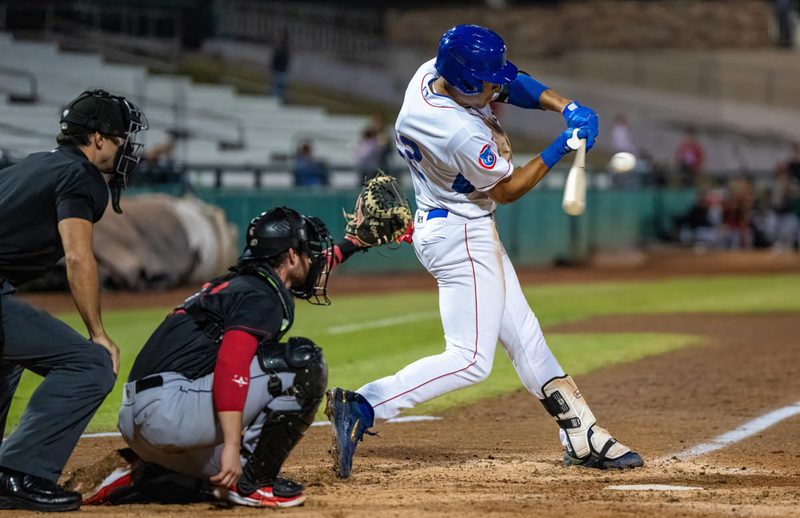
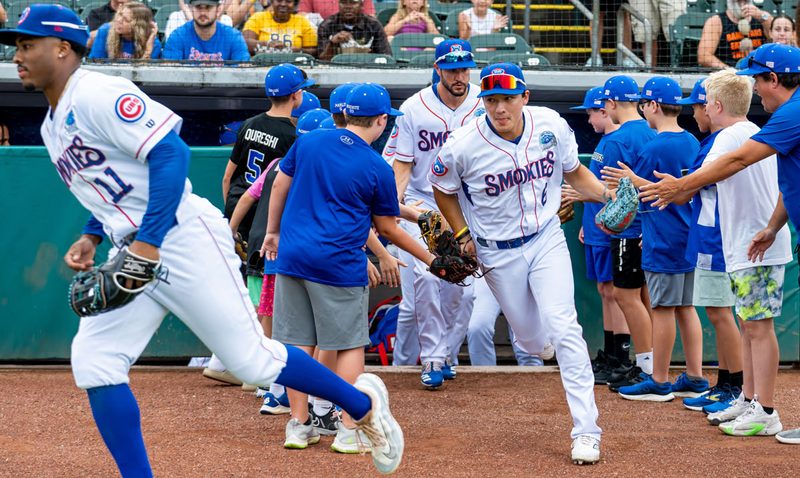
The sun was bright over the stadium last September, as the 6,632 fans in the stands looked on. It was the atmosphere you always experience at a Smokies game. The hot dogs and fries flowed out of the concession stands, the fans stood and sang “Take Me Out To The Ball Game” during the seventh inning, and Matthew Thompson threw six strikeouts during the game. And while the team lost that day, the fans showed up in earnest to support, staying until the bitter end on what was the team’s final league game in the stadium in Kodak.
The Smokies would end up having their best season ever last year, with 87 recorded wins. They also took home the best record in the Southern League for the season. And while we might not see many of those faces again this season, the feeling the team left fans last year remains with fans today as they anticipate a triumphant return of this beloved baseball team to Knoxville.
Ready for the Fans
One of the great things about minor league baseball is its accessibility to fans. There’s a deep connection fans feel to these guys who may be with them for just a singular season, but give off a hometown vibe that spectators can’t help but root for. And when these players head off for their next steps, many up to the Major League, there’s a sense for fans that they got to watch them take off.
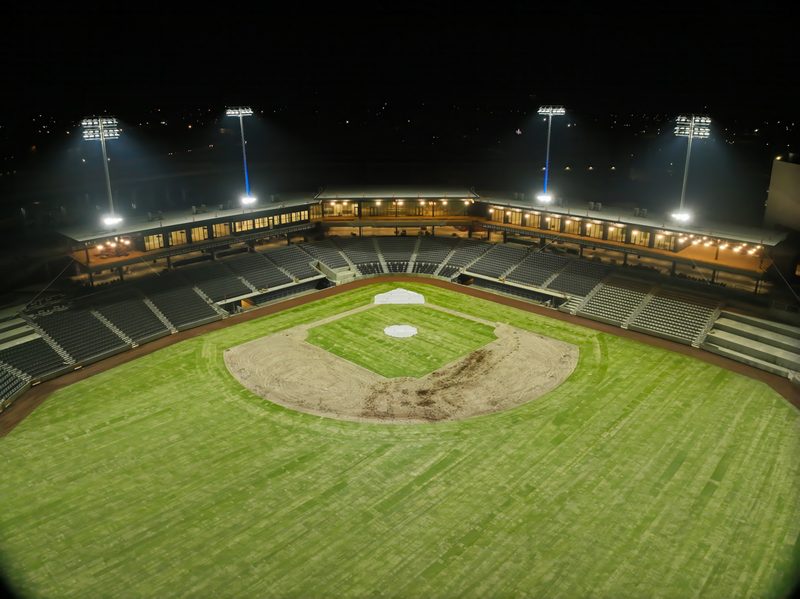
Now imagine that same feeling, but in a bigger and bolder stadium in a bustling downtown where fans from near and far clamber to get seats. That’s precisely what the Smokies have to look forward to this year as they play their very first season at Covenant Health Park in downtown Knoxville.
When the gates open for the first game in the new stadium, Randy Boyd, owner of Boyd Sports, expects a sellout crowd—more than 7,000 fans ready to witness history. For many, it will be their first glimpse of the city’s newest landmark. Covenant Health Park has a similar seating capacity to the previous stadium in Kodak, but it employs a different approach.
“Our focus wasn’t on increasing or decreasing seats,” explains Boyd Sports CEO, Doug Kirchhofer. “It was about changing the mix of seating. There’s more emphasis on group areas, specialty seating, and spaces where people can interact and socialize.”
Doug knows the importance of socialization at Smokies games. At any given game, you can find him in the parking lot greeting families or chatting fans up inside the stadium. It’s that personal touch that embodies the spirit of minor league ball—a place where the lines between management and fans blur, and everyone feels part of a shared family.
“One of the great things about baseball and the experience of the baseball stadium is that the game allows for interaction of people who are there to watch the game and enjoy the environment,” Doug says. “Our focus is going to be to create a great entertainment experience for fans.”
When the Smokies moved from Bill Meyer Stadium to Kodak, the thought was that they would lose a lot of fans from Knoxville, but would make it up from fans outside the area who were coming to Sevier County for vacation, Doug says. “The team certainly attracted more local fans to the Kodak location than they were drawing in the Bill Meyer Stadium, and the reason for that, I think points to the importance of the fan experience.”
The fan experience has evolved significantly since the team last played in Knoxville. Covenant Health Park is designed with modern amenities that prioritize comfort and engagement. The team hopes this will strengthen community support and build a new generation of fans.
Major League Partnerships and Player Development
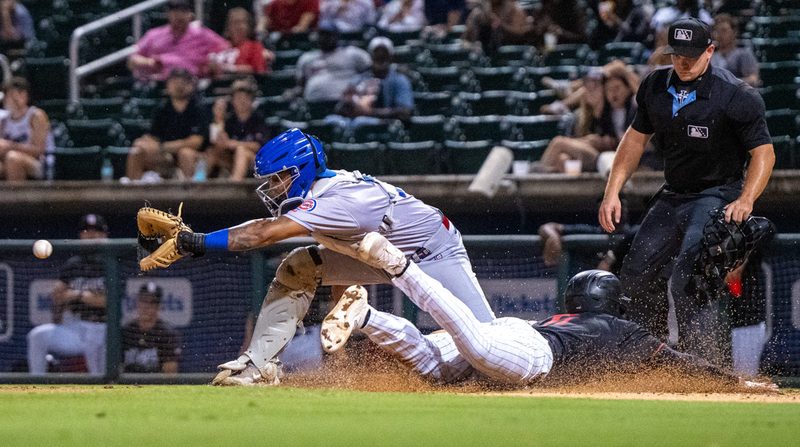
The Smokies have been affiliated with the Chicago Cubs since 2007, and Boyd Sports has seen hundreds of players come and go.
“That’s what leads to us looking back at the evolution of the player-development model that Major League Baseball teams have used,” Doug says. “At least in the past decade, there has been an increasing focus for major league organizations on player development, and specifically player health and wellness, and the type of facilities that the minor league affiliates are able to make available.
“The fact this new facility has been designed to incorporate all of the new facility requirements that have been put in place by Major League Baseball should make it a very friendly environment for our players.”
Jenny Boyd, who has been part of the Smokies success since 2013, says that while its sometimes jarring to see players grow in the program and then suddenly be gone to move up to the Major League, it’s also rewarding.
“We were so fortunate to have six or seven players on the team of the Cubs when they won the World Series, and we knew all of them,” she says. “That was meant to be for us to have a connection with those guys, and it was just totally thrilling.”TNS vs CHA 7/1-7/3 | Photo by Lindsay Coward
Looking Ahead
The Cubs finalize minor league rosters at the end of spring training. “Players report to Mesa, Arizona, in early March and they work through the spring training process,” Doug says. “We won’t know who will be on our roster until late March, just before the end of spring training.”
But that’s how it’s always been. What the team at Boyd Sports does know is that they’ll have some pretty great prospects. “We’ll have a team composed of a lot of players that the Cubs have high hopes and aspirations for,” Doug says, “or they wouldn’t assign them to contracts and they wouldn’t be part of the Cubs organization.”
The return of the Smokies to Knoxville is more than just a relocation. It will support players in a whole new way, increase the electricity of an already robust fan-base, and bring a fresh era of minor league baseball to downtown Knoxville.
→ Swipe for Next Story
FeatureMARCH APRIL 2025
Doctor AI
A look inside the ways our medical industry is using AI—and how things could change in the future
Story by Dr. Edwin Spencer
Those of you that know me are well aware of my love hate relationship with computers which borders on disdain. I think that the greatest advance that we could make in computers, would be making one that could take a punch. Having said that, I really learned a lot researching and interviewing for this topic. Realizing my limited knowledge, I called a close friend of mine Mike Kramer MD MBA. He is both a doctor and was the Chief Health Informatics Officer leading the implementation of AI in Ohio Health and Inova in Northern Virginia. This is his wheelhouse and allowed me to pepper him with questions.
Many of us, including me, have preconceived biases when talking about AI. Images of Skynet in Terminator or other sci-fi movies where AI becomes self-aware and malevolent causes us to fear AI. Students from high school to college are well aware how useful AI can be to compose papers or even answer complex questions.
Most believe AI is relatively novel since GPT (generative pre-trained transformer) was introduced in 2018 and the most recent iteration, GPT 4, in 2023. However, forms of AI have been around since the 1950’s. IBM showcased their Deep Blue rules-based AI to beat world champion chess master Garry Kasparov in 1996. The definition of AI changes as advances in the space continues from rules-based to computational models to large language-based models with the ability to predict data which can then be tested to ensure reliability and veracity. Conceptually in health care there are patient facing AI, provider facing AI, and AI that supports administrative facing applications. In addition, AI can be used to data mine for research purposes as well. A data model called, “alpha fold” AI is being used to model human proteins and develop new drugs. To do what used to take months, researchers can now build and simulate thousands of new drugs in minutes.
AI has been used in medicine for years. Even back in my medical school and residency days, EKG’s had interpretations at the top of the readout. Although these interpretations were not exceedingly detailed, they were an example of how AI could augment medical care. This is one of the essences of AI in medicine: how to augment our current care to make it faster at the point of care, more accurate, and with fewer providers. In this case, providers were and still are able to get an accurate EKG interpretation without having a cardiologist present which facilitates care especially in an urgent situation.
Multiple types of AI exist. Basic logical models use mathematical and statistical methods to find patterns. Some of these models can learn and improve without being explicitly programmed, these are calledmachine learning, or ML, AI models. Advanced models can predict diagnoses and conditions. For example, one common model is able to predict the likelihood for a patient to fall while in the hospital. Using ML methods, data scientists identified variables from a large data set of and predict fall risk and need for subsequent safety measures. Another very common model detects sepsis. Sepsis is a systemic infection that can quickly lead to multiorgan system failure and death. If treated early, this demise can be mitigated. AI is able to use data from the electronic health record to include textual documentation, lab results, and other information to determine the chance that the patient is septic. Over 900 variables were analyzed and 66 were correlated with sepsis and ultimately used to predict sepsis. Using powerful cloud computing, a computer can scan all the patients in the hospital continuously looking for any signs of change. These predictions can then be validated and acted upon by providers to render lifesaving care more quickly. These data are integral to care in the ED and hospital. It is now considered a standard of care to have these models running in US hospitals.
Data science has now become a very exciting space designing many different programs using AI. Some of these programs can use correlative data from large EHR data bases. The more data that can be stored and mined, the more correlations can be made. For example, an EHR database can be queried to see if there is a correlation between inflammatory bowel disease and Alzheimer’s dementia. If a correlation is found, then the question could be further refined by dialing down on specific symptoms or objective findings. These data are out there to be sifted, but it requires AI to sort through so many data points. This is how two separate fields of medicine might be related, but yet unknown. This is a common problem in medicine with more and more information being developed in each specific field. We have become more siloed experts in our respective specialties. I know very little about inflammatory bowel disease but it could be related to osteoporosis and fractures which are in my field. We can use AI to bridge medical specialties by making correlations which could then be tested for causation and allow for cross pollination and subsequent treatment.
Another provider facing example of AI is using deep learning neural networks to analyze visual data like mammograms or brain CT’s looking for cancer and a neurologic stroke. Visual heavy specialties like radiology, pathology, and dermatology depend on detailed review of many images. These lend themselves well to the use of AI. Software can be tuned to analyze the visual data and with reinforcement learning and can enhance the interpretation of images flagging studies for quicker human review or areas of the image to scrutinize more closely. In gastroenterology, AI is being used in colonoscopies to spot cancer polyps and other findings to make the procedure more sensitive and maybe more accurate.
There is a real existential fear that providers will be marginalized with such AI capabilities. Health care providers still need to confirm the differential diagnoses by combining the AI generated information with textual information from the patient and treatment rendered. However, there is existing software that is able to combine all these data and do it well. Is this good or bad? Depends on your point of view. As a provider, it raises concerns about being displaced by AI. On the other hand, there is a dearth of primary care physicians especially in rural areas. Could AI be used to make diagnoses and then implemented by mid-level providers that cost less?
We have mentioned manners in which AI can augment our current care but are there ways that we can use AI to solve or diagnose problems with which we currently struggle? Concussions come to mind especially on the sideline. What if we could use visual data from eye movements and gait and combine that with symptoms to help determine if a player is currently concussed and can even return to play later.
Large language models like GPT are being used now in a patient facing ways in clinic. The physician in real time records the conversation and exam with the patient. Immediately the information can be merged with data from the EHR to create an accurate chart note that saves time and improves accuracy. I currently have to dictate clinic notes which I abhor as it takes time away from the patient. Other physicians have to not only see patients but manually input data into an EHR. Think of the time they could save by ditching their data entry job in lieu of more patient interaction. In addition, prompt engineering could be used design notes that facilitate preauthorization for tests and surgeries. Insurance companies are currently using AI to evaluate provider’s notes to deny services. It would save time and improve patient care if we could use learning software based off previous denials to create an AI generated note that never gets a denial for services needed by our patients.
Dr. Kramer mentioned another patient facing application where bots are checking on patients after discharge. A call will be made from a bot that is able to respond with empathy and discuss issues like medication usage. In fact, Dr. Kramer cited a study that asked patients about their experience with a bot compared to a busy provider. The patients felt that the bot interaction was actually more empathetic than the human response. I was shocked at first but then reality set in. Most providers are being more burdened with administrative responsibilities not the least of which is arguing with insurers on behalf of patients for needed services. The actual time spent with patients is being eroded by these nonclinical responsibilities. Bots might actually be able to help respond to patients in an efficient empathetic manner all hours of the day freeing up providers for other responsibilities. I can assure you that a bot will be more empathetic at 3 a.m. than a surgeon who has eight surgeries the next day.
There are also uses in the back office for AI. Submitting authorizations for services where AI can pick out the buzz words required by insurance companies. Billing is made more efficient and accurate in the same manner.
Up to this point we have discussed AI applications in clinical medicine, but what about procedural medicine like surgery? Although robotic surgery is not AI, it has become standard of care for prostatectomies. The use of robots and AR (augmented reality) is expanding in other surgical procedures like joint replacement as well. This AR platform allows data such as anatomy and movements to be recorded and compared with outcomes in learning software to predict efficient moves. It is hard to imagine robots with AI learning software replacing surgeons as the tactile feel of the human hand is hard to imitate. Right now, the only real limitation is the amount of data needed to refine the accuracy of these programs and robots to do it. I know this is a crazy thought, but who thought that we would be driving autonomous cars and using autonomous drones to deliver payloads?
There are risks with AI beyond the concern for self-awareness and malevolence. AI is only as good as the data to which it has access. The more complete and accurate data that is available, the less variance in the predictions. However, patients have to be willing to give access to their personal data. I am personally reticent to allow unrestricted access as we don’t know where all the data are going and who has access to it. Furthermore, the predicted AI generated outcomes need to be continually tested for reliability and veracity. Finally, there needs to be transparency in the AI algorithms and regulation.
In the world of social media, it is estimated that 75 percent or more is generated by bots. The ability to determine what is human generated versus bot generated is difficult if not impossible. It is interesting that this was one of the first definitions of AI. This concerns me as well as others. What is real and what is bot? I hope that AI in medicine does not devolve to that.
There is no question that AI will be a powerful influence in the future of healthcare in many ways. The ability for AI to quickly assimilate textual and visual data exceeds what the human mind can do. We can harness this power and use it for good. But as providers are we digging are own graves? Responsible clinicians and health systems will need to manage this new technology like any other. Any device or test has its limitations, error rates, and requirements for interpretation. Responsible organizations will be judicious in selecting and implementing tools that monitor their ongoing performance. Like any technology, clinicians and patients are very important in asking questions, critically reviewing the results and working to assure the safest best care. The good news is that AI might be able increase efficiency and reliability in our health addressing some of the biggest challenges in health care, rising cost, varying quality, and unreliable experience. I remain cautiously optimistic. Now I’m sure that you are asking…did I write this or did chat GPT?
→ Swipe for Next Story
Non-ProfitMARCH APRIL 2025
Finding Her Voice
Girl Talk Inc. Shapes Knoxville’s Future Women
Story by Susan Alexander
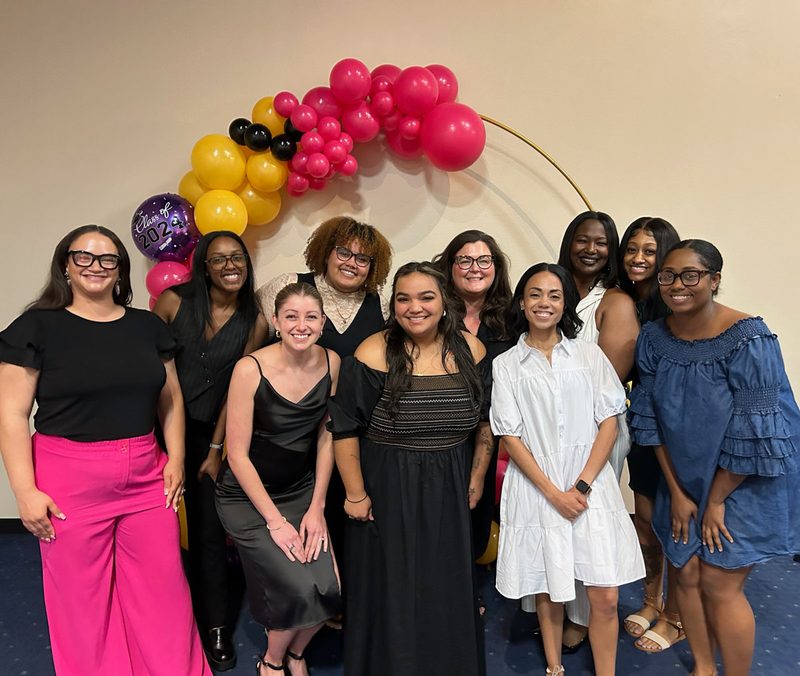
Sometimes, just talking helps. That’s the premise behind Girl Talk Inc., a Knoxville-based nonprofit aimed at helping Knoxville’s young females grow into their best selves. The talking happens in lots of ways — at after-school programs in elementary schools and community centers; in one-on-one outings with mentors; during college visits and field trips; in Life Prep Academy workshops as they look beyond high school.
“They just need someone in their corner who will support them, hear them and see them,” says Maya Brown, who coordinates Girl Talk’s mentoring program for high schoolers. “Someone who can be available if they have a question. Who shows up for them even if they don’t have to show up.”
All that talk — and the active listening that accompanies it — appears to be having the effect founder and executive director Denetria Moore hoped for when she started Girl Talk in 2006. The organization says that 100 percent of their Girl Talk grads get through high school without becoming pregnant and go on to pursue post-secondary education.
Sharing Experiences
Moore founded Girl Talk in the living room of her East Knoxville apartment. A Memphis native, Moore became a single mom while studying at the University of Tennessee. Though she did graduate with a bachelor’s degree in sociology, she knew her path would have been easier without having to parent at such a young age.
“I wanted to prevent girls from making the same mistakes I made growing up,” she says. “I also wanted to give them a safe space to be, feel, and receive love and guidance. It has blossomed into way more than I ever could have imagined.”
Today Girl Talk serves more than 400 Knoxville-area girls each year with a variety of programs that begin with after-school group mentoring for third- through fifth-graders at 17 schools and community centers. Once they enter middle school, girls can be matched with an adult mentor who connects with them at least monthly for a meal or an activity. They also participate in Girl Talk signature events like sleepovers and retreats, college and career tours and the annual fashion show/gala which serves as its principle fundraiser. High schoolers are encouraged to participate in Life Prep Academy, which provides monthly sessions on everything from budgeting to job interviewing skills, ACT test prep to visioning workshops.
Life Prep Academy
Chania Arnold started with Girl Talk as a student mentee. When she graduated from Hardin Valley Academy, she became an intern for Girl Talk as well as a mentor for two girls. Now she’s graduating from Johnson University and serving as the Life Prep Academy coordinator for ninth- and tenth-graders.
She wants the girls to leave Girl Talk and Life Prep with the knowledge that they have a support system and they know where they’re headed. “We work on an action plan — what are the barriers you will face and who do you have to support you. We want them to know they have the ability to be everything they want to be,” she says.
Vania Brown, a tenth-grader at Austin-East Magnet High School, learned about Girl Talk at a career fair and has been a member for two years. She says she’s learned a lot about time management through the Life Prep program and has set long- and short-term goals for her plan to become a registered nurse. Goal one: straight A’s in school. Check.
“It’s a fun program to be in,” Vania says. “You connect with a lot of other girls and build friendships with girls from other schools and grade levels. I learn a lot from them, and I know I have people I can talk to.”
Brooklyn Ballenger, also an A-E sophomore, has been involved with Girl Talk since fifth grade. Now she’s in Life Prep, which she describes as “help for life outside of school.” She says participants should be ready to commit to monthly meetings and active participation. She also likes participating in the mentoring program. “I have people to talk to who can give me advice. It’s a good support system.”
One-to-one mentoring
Attorney Jenaé Easterly has been a Girl Talk mentor since 2016. “I became a mentor to give back, grow alongside others, and honor the support I once received from my own mentors. It’s about being a dependable guide and friend, helping others achieve their goals while continuing to learn myself,” she says.
Easterly says she and her mentee try to meet in person once a month, but communicate more often than that. “When we do hang out we do things like cook dinner at the house, go shopping, watch movies or go out to eat.”
And she thinks both of them have benefited from their relationship. “I feel my mentee has gained confidence, clarity, and valuable skills through our time together. She has developed a stronger sense of direction, grown personally and professionally, and built a support system she can rely on,” she says. “I’ve benefited by gaining fresh perspectives, strengthening my own skills, and finding fulfillment in seeing someone else grow. Mentoring has also deepened my sense of purpose and helped me build meaningful connections.”
Currently, 56 mentors are working with 74 girls in one-to-one relationships. They meet them in speed matching events and activities like bowling parties and then Girl Talk pairs up the mentors and girls who connected the most.
Mentors must be at least 21 and agree to a background check and training, They also agree to spend time with their mentee each month. Maya Brown has seen the impact these relationships can have on the girls.
“One girl came in so timid and kind of closed off,” she says. “She needed extra confidence. Eventually she went from quiet to using her voice. She was a speaker at her graduation. She performed at our gala. You could see her blossom.”
How to help
Becoming a mentor is one important way to get involved with Girl Talk. The organization is currently recruiting more of them. You can learn more at girltalkinc.com
The Girl Talk Gala and Fashion Show raises about 19 percent of its annual operating budget, says Lauren Cox, development director. So attending the August show at the Knoxville Convention Center is another way to get involved. So is making an individual contribution. Girl Talk also receives funding through the United Way, grants, corporate contributions and foundations. “We try to create safe spaces to be in a chaotic, demanding world,” Brown says. That’s worth talking about.
U.S. Navy veteran Jerry Brice and his family honor military service at Halls eatery
Story by Phil Newman
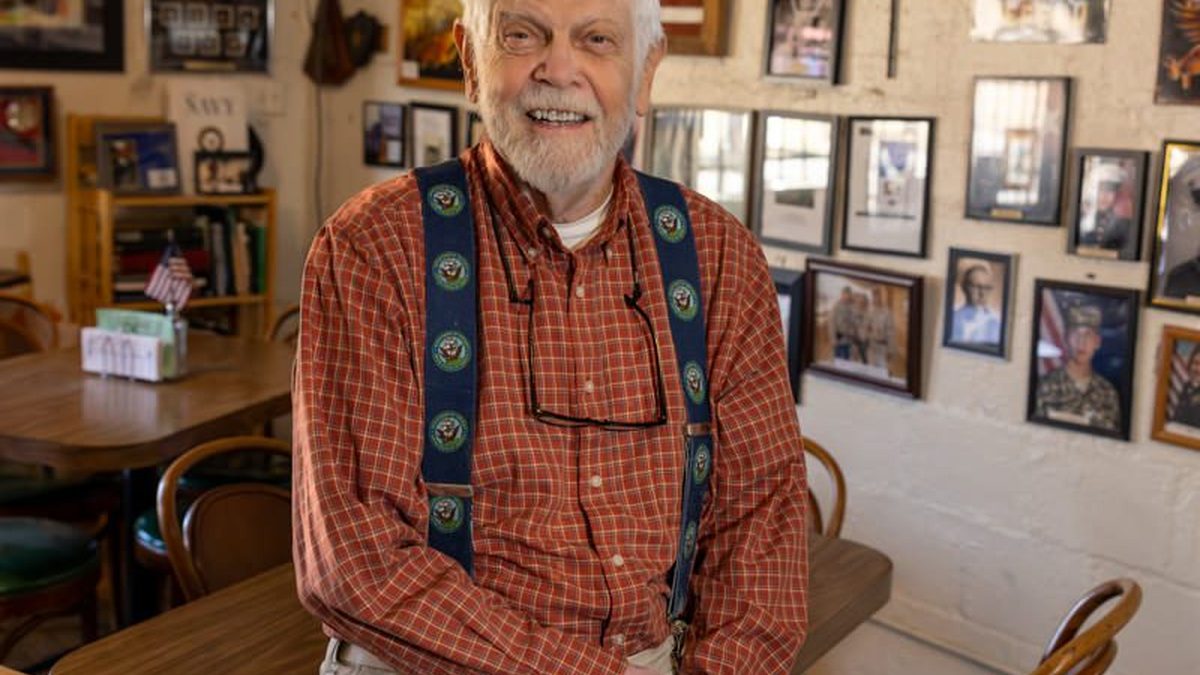
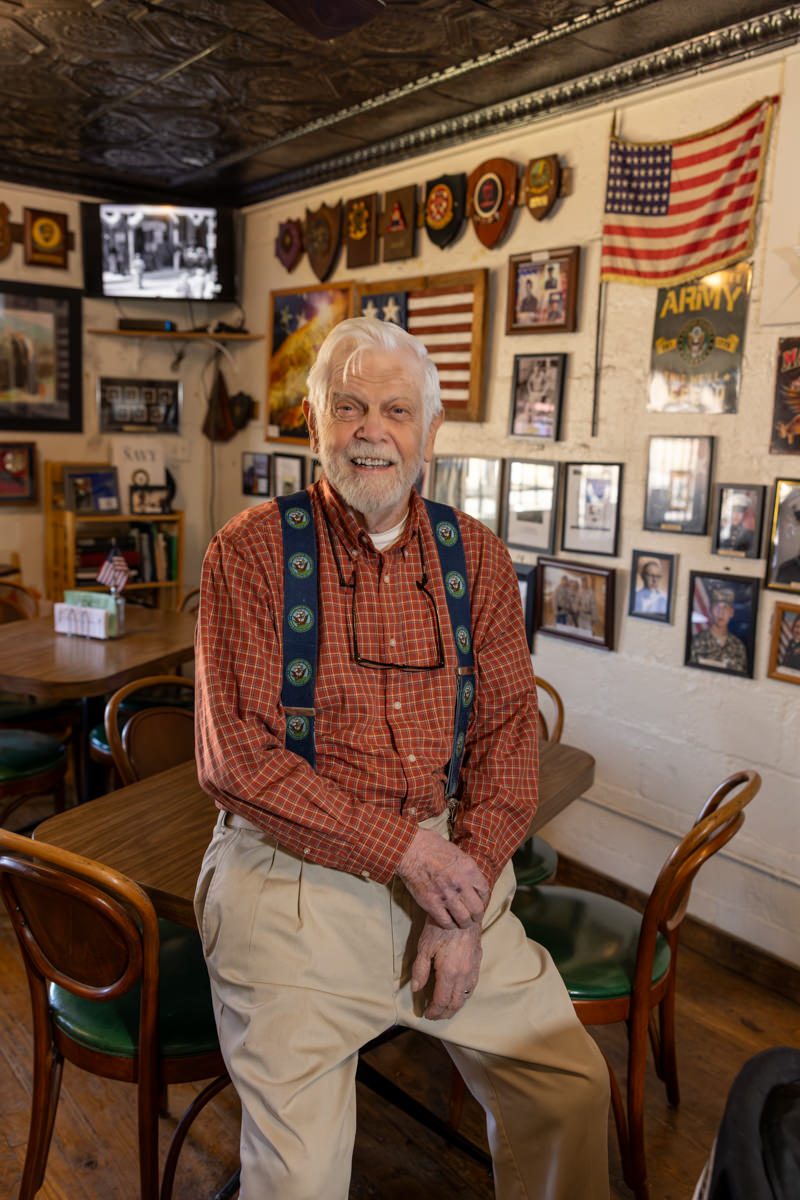
Walking in the door of The Chow Hall, a grayish one-story building at Emory and Bell roads in Hall Crossroads, feels like entering a cozy den whose walls and shelves overflow with remembrance—in this case a collection of photos, awards, and mementos honoring those who have served in the military.
The purpose of this lunchtime visit is to interview U.S. Navy veteran Jerry Brice. While his family has called Halls home for years, Jerry, 84, is a West Knoxville native—his ancestry includes the Weisgarber family after whom that road is named—who served in the Navy from 1958 to 1980, primarily in aircraft maintenance and avionics, on assignments as far-flung as San Diego, Oklahoma, Guam, Spain, the waters off Vietnam, New Jersey, Texas, and the Persian Gulf.
Jerry’s son David, whose gastronomic training includes tutelage under the New York Culinary Institute, opened The Chow Hall in 2014, serving up a menu that includes some of the best patties in town—on this visit, the Smokey Burger with tots and onion rings will prove a showstopper that makes it difficult to concentrate on the interview. But his primary motivation was to honor veterans like his dad and help the community remember that freedom isn’t free.
Even so, a point that will arise several times as the afternoon unfolds is a reminder that The Chow Hall is a public establishment. With its name and its mission of recognizing servicemen and -women, the restaurant might be perceived as a veterans-only club, but everyone is welcome—and, take it from firsthand experience: you want and need the food on this menu. It’s that good.
Just after walking in, it becomes clear that this truly is a family business. Jerry is still out on an errand, but a friendly server provides a warm welcome as she leads the way to a table near the swinging door into the kitchen. She introduces herself as Sarah Brice-McCowan, one of Jerry’s daughters, and nods toward a seat across from a lovely woman sporting a red sweater under a gray-and-white plaid vest; this is Mildred Brice, Jerry’s bride of 62-plus years.
An Adventurous Life
It works out well that Jerry is still making his way here, because it affords an opportunity to hear Mildred’s perspective on two-plus decades as a military wife and mom who fed and ferried the four Brice children—David, Sarah, Tommy, and Annabelle—while Jerry was often deployed for long stretches aboard ship.
“He was gone a lot, but our life was adventurous,” Mildred says as Sarah slides a glass of sweet tea onto the table. Mildred smiles as she recalls meeting Jerry when both were students at Bearden High in its “old” location on Kingston Pike; he was 16, she was 14. Six years later, four years into Jerry’s naval career, the couple would wed in Knoxville. She speaks proudly of the Brice’s four children, eight grandchildren, and five great-grandchildren.
As Mildred recounts the bases where the family lived, the fond memories she holds, and what the kids and grandkids are up to now—David runs The Chow Hall, Sarah moved back to town two years ago to help at the restaurant, Annabelle is an elementary-school teacher, and Tommy is a truck driver—Sarah returns and serves the aforementioned burger, tots, and rings. At the risk of beating a dead cow, the platter carries the look, aroma, and taste of gourmet fare.
Only three savory bites in, the kitchen door swings open and Jerry Brice himself appears, clad in tan chinos and a plaid button-down shirt held up by blue suspenders bearing emblems of a navy ship. With his shock of white hair, trimmed beard, and a twinkle in his eye as he approaches the table, Jerry could be kin to Donald Sutherland. It will be a blessing that he is thoughtful and pensive when responding to questions; those pauses will allow time to continue noshing as the conversation proceeds.
‘I Just Picked the Navy’
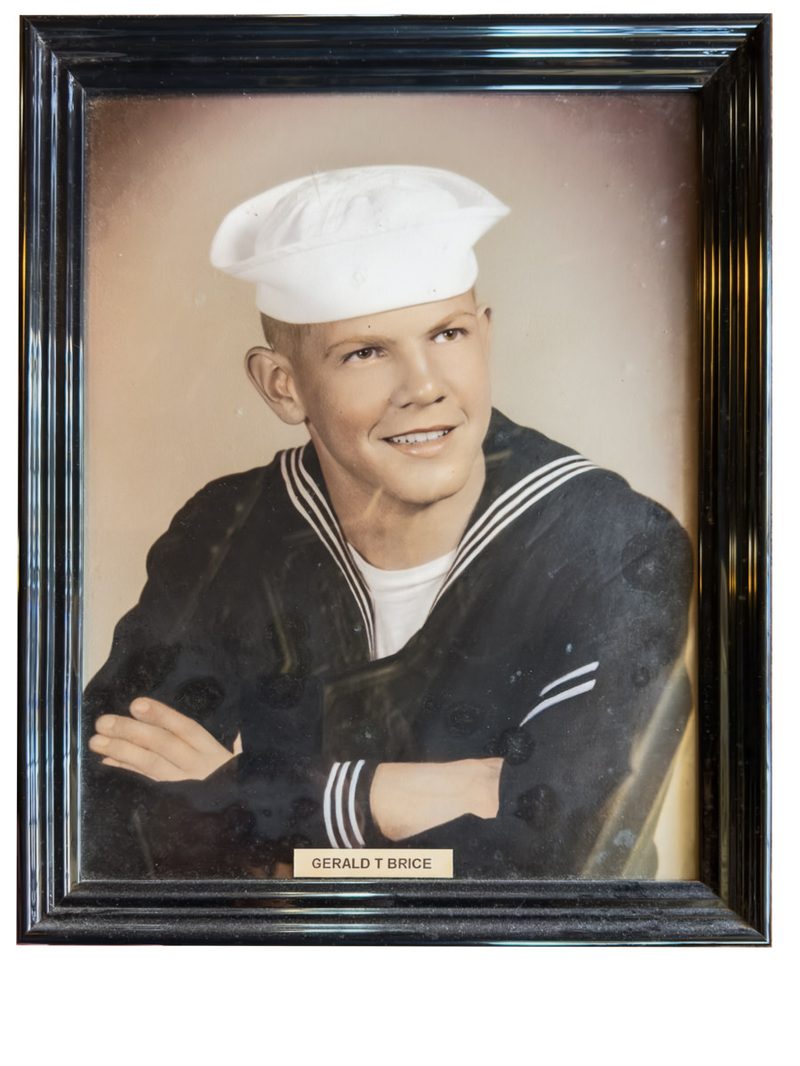
Born June 20, 1940, Jerry grew up amid a legacy of rural living and military service. His father’s side had been farmers for several generations, but Raymond Brice sold insurance for Metropolitan Life after having served in World War II. Jerry’s mother, Evelyn, had played piano at the USO in Tallahassee, Florida.
Jerry recalls working at a grocery store at age 12 while attending Bearden, which was then a K-12 school. He got acquainted with Mildred because her twin brother played on the football team with Jerry. Although he had “excellent English and math teachers,” college didn’t interest him.
“I just picked the Navy,” he says of enlisting after high school graduation in 1958 and heading for Naval Base San Diego. “It was easier than I thought it would be,” he says of basic training. From there he was sent to the Naval Air Technical Training Center (NATTC) in Norman, Oklahoma, for a six-month program focused on aviation. “I learned a lot, and my cousin was the comptroller at OU, so I enjoyed time with his family. I wouldn’t have minded spending my whole career there.”
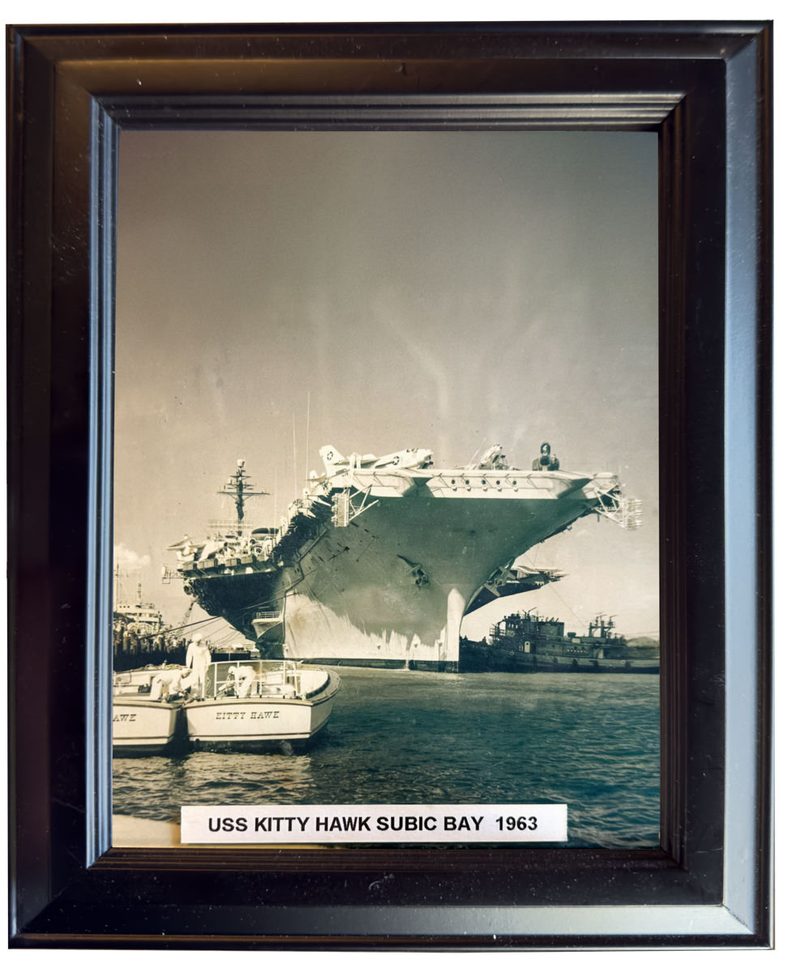
Of course, the military life is an intrepid one. After more training, Jerry was deployed to a naval station on Guam, where he rose to the rank of Petty Officer Second Class. He returned home to marry Mildred, and while he thought about leaving the Navy around the time of the Cuban Missile Crisis in 1962, he opted to stick it out and make a career out of the military. His path led him back to San Diego, where he was part of the USSKitty Hawk’s “first cruise,” a mission that would take him across the Pacific and, by 1965, into the escalating conflict in Vietnam, where the carrier launched a series of airstrikes against the Viet Cong.
Jerry would go on to work in avionics, providing repairs and maintenance of vital aircraft electronic systems, including radio. He later moved to Naval Air Station Kingsville in Texas, where he was assigned to a training squadron for pilots, before moving on to Naval Air Station Oceana in Virginia Beach, serving with the VF-102 squadron, operating the F4J aircraft.
He was later deployed to Vietnam aboard the USSAmerica,and after being selected for warrant officer was transferred to Naval Air Station Lakehurst in New Jersey. He transferred to RVAH-9 at Albany, Georgia for a short stint in 1973 until all recon squadrons were moved to Naval Air Station Key West in Florida.
Jerry’s career continued to take him around the world, from his deployment aboard the USSIndependence, offloading at Rota, Spain to a return to Kingsville, Texas as a power plant officer.
As the years passed, his service became deeply intertwined with personal sacrifice. While onboard the USSNimitz,Jerry came home to Knoxville to be with his ailing father, who passed away in 1979. He would return to theNimitzas it left Naples, Italy. Originally bound for the Persian Gulf amid the Iranian hostage crisis, the carrier sub-deployed to Naval Support Facility Diego Garcia in the Indian Ocean.
After 22 years of service, countless deployments, and a career that had taken him across the globe, Jerry retired from the Navy on November 1, 1980, having worked on nearly every aircraft flown in combat or training during his tenure.
Some Gave All
By now the Smokey Burger is gone (but not forgotten), yet Jerry’s tales of military adventure are proving just as delectable.
Nodding toward the POW-MIA table set up in the restaurant in memory of those who have given the last full measure of devotion, Jerry reflects on the ways his service intersected with combat operations in Vietnam. The twinkle in his eyes dims a bit and a more somber tone marks his recollections.
“When I was on Guam, they asked for a volunteer crew to fly to Vietnam to support an early-warning squadron and weather recon,” he says. “I was young and single, and I accumulated a lot of flight time working on the avionics for those flights.”
In addition to his cruise aboard theKitty Hawkand its forays into Southeast Asia, Jerry would get to know fighter-squadron members while stationed at Oceana in Virginia.
“We lost two crews in’68 in Vietnam,” he recounts. “In one, the back-seater was killed but the pilot got out. The other, it was the opposite. Those two were taken as POWs.” (One of them, Bob Fant, would go on to write a survival guide to help others after his release from a Vietnamese prison.)
Back Home for the Duration
After leaving the Navy, Jerry went to work as a rep for a heating and ventilation company. “It was all mechanical, and I developed a lot of kinship with the customers,” he says. The family lived in Halls from 1979 to 1991, where the Brice children finished growing up and launched their own lives. Jerry and Mildred moved to Chattanooga from 1991 to 2015 before returning to the Knoxville area.
These days, if Jerry and Mildred aren’t at the restaurant, they are likely working on something for Washington Presbyterian Church’s annual Fall Apple Festival, which is held on the third Saturday in October. Meanwhile, David is almost certainly in The Chow Hall’s kitchen, Sarah is serving diners, and the rest of the Brice children, grands, and great-grands are close by in spirit.
Veterans and their family members are encouraged to bring personal memorabilia to display on the walls, and many have done so. They include a Navy cookbook from the 1940s, photos from Normandy, flags, awards, and much more.
As he leads a tour around the restaurant, stopping at favorite items on display, Jerry reflects on what serving his nation has meant to him. “You don’t necessarily miss the organization, but you miss the people you served with, and you wonder how they’re doing,” he says. “Many of us came back with a deeper appreciation for America. We saw the rest of the world, and we realized how good we’ve got it here.”
We’ve got it good, alright—and yes, that includes the tasty burgers (have we mentioned those?) served up at the Brice family’s beloved Chow Hall.
→ Swipe for Next Story
FeatureMARCH APRIL 2025
Geared up for March Madness
Heading into tournament time, the Vols can be listless or unbeatable, sometimes both in the same game.
Story by N. Brooks Clark
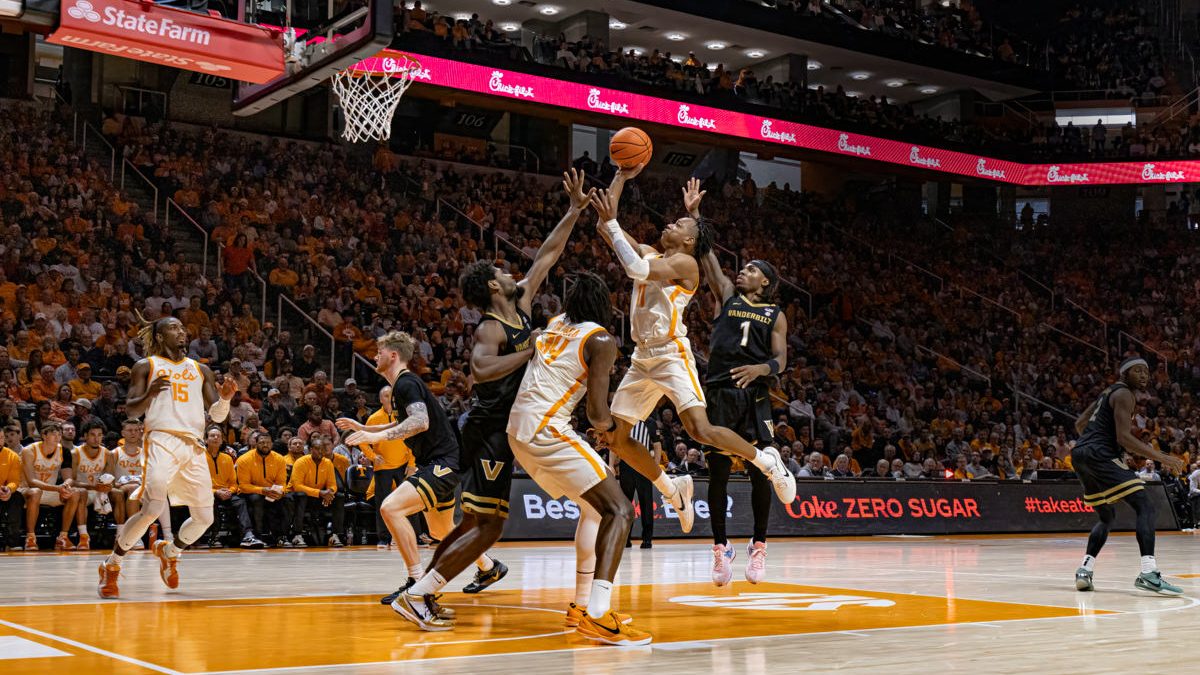
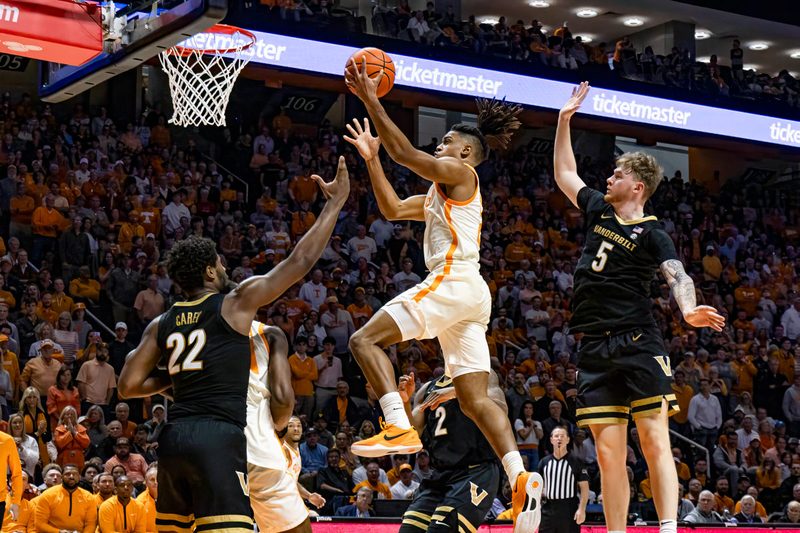
On February 15, the Volunteers went into the locker room at halftime, down 44-31 to Vanderbilt. Coach Rick Barnes had some words for his team, who had been listless on defense and offense, grabbing just 10 rebounds to Vandy’s 21. “We were awful,” said Barnes after the game. “I can’t explain why. I wish I could. We didn’t play with any pace. We had way too many defensive breakdowns. I told them that, at this time of year, you either wilt or you grow. If we’re going to grow, we have to have the mindset of getting better, looking at each other and holding each other accountable.”
Barnes was especially direct in his words to Zakai Zeigler, the 5-foot-9 point senior guard from Long Island, New York, the team’s heart and soul. Z, as Barnes calls him, had scored no points nor grabbed any rebounds in the first half. Said Barnes, “I asked him, ‘Who’s getting respect right now, and who’s not getting respect right now?’”
“He lit a little fire under us,” said Zeigler, with a wry smile. “I took an I’m-gonna-prove-him-wrong kinda mindset, play with more of a chip on my shoulder. In the second half we came out with a whole different kind of attitude.”
The Gutsy Comeback
Zeigler sparked the second-half scoring with an alley-oop lob to 6-foot-11 center Felix Okpara—the Ohio State transfer from Lagos, Nigeria—who slammed it home to cut Vandy’s lead to 44-33.
Guard Chaz Lanier, a North Florida transfer, made a jump shot to cut the lead to 44-35. After Vandy made a three, Zeigler nailed one of his own to make it 47-38, bringing the sold-out Thompson-Boling Arena crowd to its feet and the decibel level to “loud.”
After another Commodore three, senior guard Jahmai Mashack dribbled in for a lay-up. It was the ‘Dores by 10, 50-40. A pass from 6-foot-10 forward Igor Miličić Jr.—a Rovinj, Croatia, native who played a season at Virginia and two at Charlotte before transferring to UT—set up another Okpara slam (50-42).
Zeigler dribbled in for a reverse lay-up and a plus-one (50-45). Guard Jordan Gainey made two free throws and then another (50-47). After Vandy answered with a basket, Ziegler hit a three (52-50), Vandy hit a three (55-50), and Gainey made a floating jumper (55-52). Zeigler’s three tied it 55-55. Lanier’s lay-up gave UT the lead 57-55. Vandy tied it with free throws (57-57). Mashack’s free throw put UT up 58-57.
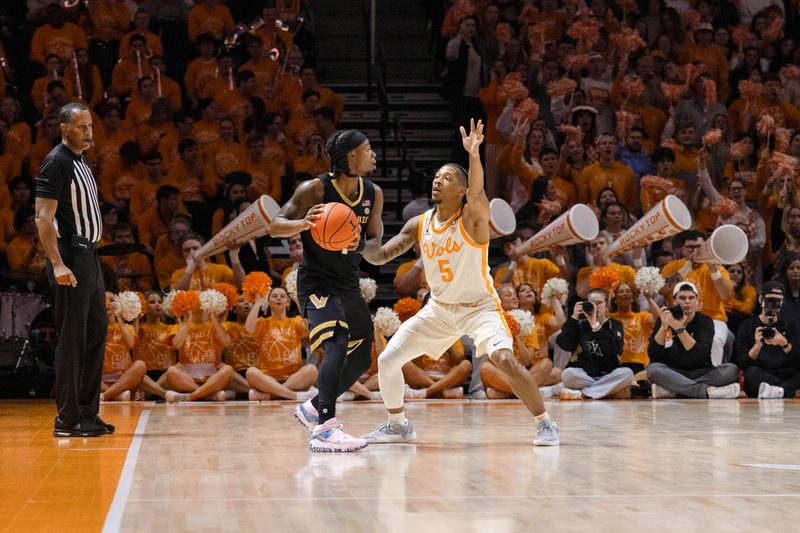
Led by Zeigler, one of the most relentless on-ball defenders in the nation, Tennessee played smothering defense against the Commodores, who kept coming back. After Vandy went up 59-58, Zeigler drove the lane for a jumper to go up 60-59 with six and a half minutes to go. After Vandy went up 61-60, Miličić made two free throws, then grabbed a Gainey pass on a fast break and drove down the floor for a jumper to put the Vols up 64-61. A pair of Vandy free throws cut the lead to 64-63, then Lanier hit a three to make it 67-63 with five minutes left. The crowd went wild, the decibel level ascending to “really loud.” The’Dores fought back to 67-66, then Zeigler made a driving layup to go up 69-67. Vandy went up 70-69 on a three. Zeigler made two free throws to go up 71-70.
With 2:27 to go, Mashack hit a three from the right corner, to put the Vols up 74-40 and increase the decibel level to “deafening.” “His energy lifted everybody,” said Barnes, who, as it happened, had spent an hour on the phone with Mashack the night before, encouraging him to, “on those corner threes, when you’re open, take the shot.”
Gainey drove for a lay-up to give the Vols a 76-70 cushion. Vandy hit a three to cut the lead to 76-73 with a minute left. Zeigler hits two free throws (78-73). Vandy hit a three (78-76). Zeigler drove for the layup 80-76. Lanier added a free throw to ice it at 81-76.
Zeigler ended up with 22 points—all in the second half—and eight assists. Lanier had 21 points and eight rebounds. In the second half, UT outrebounded the Commodores 20 to 10.
The Postgame
“It was a heck of a game,” said Vanderbilt Coach Mark Byington, whose team fell to 17-8 with the loss. “They have a tremendous point guard. They brought tremendous energy. They had Zeigler on a high screen. He’s great in space. He has great decision-making. If I had to say one thing, it’s Zeigler. I want to make sure people understand how good Tennessee is. The crowd was great. You can play really well and lose in this league.”
“I thought Z got back to playing with a real chip on his shoulder. His competitive spirit showed up,” said Barnes. “He was determined, Strong on the ball. He’s best when he plays angry. He’s always been a fighter his whole life. He was terrific in the second half. He was locked in and seeing it all. His vision was great today.”
“My momma always told me the same thing,” said Zeigler, “‘Get mad. Get mad.’ If I ‘m playing angry, I might have a smile on my face but I might be a little bit mad. Playing angry, I feel like I am being a little bit more aggressive, you could say.”
“Putting two halves together is something we’re continuing to work on,” said Lanier.
How Far Can the Vols Go in March Madness?
Looking forward to UT’s prospects in the SEC and NCAA tournaments, Al Lesar of theAssociated Pressasked, “Which team will it be? The one that beat Florida by 20 or lost to Florida by 30?”
AsCityviewwent to press, the SEC had nine teams in theAPtop 25—No. 1 Auburn (thanks, Bruce Pearl!), No. 2 Florida, No. 4 Alabama, No. 6 Tennessee, No. 7 Texas A&M, No. 15 Mizzou, No. 17 Kentucky, No. 21 Mississippi State, and No. 24 Ole Miss.
“It’s a historic season for this league,” said Barnes after the Vandy game. “It’s a great league. It’s going to get better. It’s the depth that each team can play with—and terrific coaches.”
The win over Vandy put the Vols at 21-5, with losses to Florida, Vanderbilt, Auburn, and Kentucky (twice)—and five games left, including mighty Alabama on March 1.
Barnes noted that his transfer starters—Milicic, Lanier, and Okpara—were still getting used to the day-in, day-out physical play of the SEC. “In this league you need guys who look life football players and play like footballs plays,” said Vandy coach Byington, wryly.
Barnes noted of Okpara, “Felix has grown in so many ways. At Ohio State he was really locked in to playing back on defense, but he’s grown into playing another way. Felix was really good today, playing with a real sense of purpose and passion all day long.”
Much of UT’s offense starts with Gainey and Zeigler coming off high screens and driving to the basket. UT will need Lanier to keep up his 40% shooting on 3-pointers (and Mashack to take those shots from the corners).
Sophomore 6-foot-9 forward Cade Phillips made strides in his game during the season but played only six and a half minutes against Vandy, as did fifth-year Hofstra transfer Darlinstone Dubar, who shot 40% on threes in previous seasons and went one for two from behind the arc against Vandy. Freshman guard Bishop Boswell played just three minutes. As Boswell said earlier in the season, “I’m just looking up to Zakai defensively, being a dog.”
→ Swipe for Next Story
FeatureMARCH APRIL 2025
Home Run
The Dream that Built Knoxville’s New Stadium
Story by Nathan Sparks
Sitting across from Randy Boyd in his downtown Knoxville office on a brisk winter afternoon, it was impossible to ignore the excitement in his voice as he spoke about the new Covenant Health Park. This wasn’t just a stadium to him—it was a dream decades in the making. And it was a dream that began not with blueprints and budgets, but with a boyhood love for baseball.
“I lettered in five sports,” Randy said with a chuckle. “You could say I was mediocre at more sports than most people knew how to play, but baseball wasn’t one of them.”
Though he never excelled as a player, baseball still captivated him. As a traveling businessman, he often found himself in cities with major league ballparks, and over time, he visited nearly all of them. What stood out to him was not just the game itself, but the atmosphere—the way a ballpark embodied the character of a city and brought people together.
That idea stuck with him. He would muse from time to time about owning a professional baseball team, but that dream seemed to hover out of reach, until it occurred to him that a minor league team might be the answer. When he casually mentioned to Jimmy Haslam, then-owner of the Knoxville Smokies, that he’d love to own a team one day, he had no idea it would set the wheels in motion for something much bigger.
The Business of Baseball
Years later, when Haslam bought the Cleveland Browns and decided to sell the Smokies, Randy jumped at the opportunity. It was an investment, but not just in a baseball team—it was an investment in Knoxville’s future and a way to give back.
“This was a fairly small investment relative to everything else I had going on,” Randy said. “People shouldn’t invest in baseball to get rich. You invest in baseball because of what it does for the community.” When Randy purchased the team it was still in Kodak and would remain there for several years, until the upcoming end of the lease made it clear it was time to consider returning to downtown Knoxville.
Doug Kirchhofer, the Chief Executive Officer of Boyd Sports, has been a key figure in making the move back to Knoxville happen. “This project is more than baseball,” he said. “It’s about economic development, job creation, and reconnecting downtown Knoxville with East Knoxville.”
The move from Kodak to downtown Knoxville was driven by an understanding that the team’s real fan base was largely in the city. Data showed that most attendees were already coming from Knox County or further west. By returning to the heart of the city, the Smokies weren’t just finding a new home, they were returning to their roots.
The Vision Takes Shape
The planning process began in 2018. This wasn’t just about a stadium—it was about revitalizing an entire district. The location, historically known as “The Bottom,” held significant meaning. It had been a vibrant African-American neighborhood before urban renewal projects displaced many residents. Randy and his team were committed to honoring that history while ushering in a new era of growth.
Mohamed Abbas, the construction project manager from Denark Construction, played a pivotal role in bringing the vision to life. “We had to build a stadium over an active creek,” he said. “It was a heavily regulated brownfield site with significant historical elements. The amount of underground infrastructure work alone was monumental.”
Despite the challenges, the project remained on schedule. The stadium was completed 60 days ahead of the projected timeline—a rare feat in commercial construction.
A Community Hub, Not Just a Stadium
Covenant Health Park is much more than a ballpark. It’s a multi-use entertainment venue designed to host soccer games, concerts, corporate events, and community gatherings. One Knoxville SC will also call it home, making it one of only a handful of stadiums in the country designed for both baseball and soccer.
Key innovations include a retractable pitcher’s mound—one of only five in the world—and seating designed to maximize social interaction. “People come to baseball games to socialize,” Randy explained. “We designed this stadium with a variety of seating options, from suites to club seats to outfield porches, to make sure it’s an experience for everyone.”
Jenny Boyd, Randy’s wife and owner of Boyd’s Jig and Reel in the Old City, has witnessed the transformation firsthand. “The Old City has always been a unique part of Knoxville,” she said. “Now, with the stadium, it’s finally getting the attention it deserves.”
Her business has already seen an increase in foot traffic, and she anticipates even greater changes once the stadium opens. “It’s bringing people together in a way we’ve never seen before. We’re seeing more restaurants, more families, more life in this part of town.”
The Economic Ripple Effect
The economic impact of the stadium extends far beyond ticket sales. Developers have already committed over an estimated billion dollars in new investments surrounding the stadium, including condos, apartments, and retail spaces. This influx of development is expected to create thousands of jobs and further invigorate downtown Knoxville.
“The stadium is a catalyst,” Doug said. “It’s sparking investment that wouldn’t have happened otherwise.”
One way this already happening is through the construction process. Denark Construction made a point to prioritize inclusion opportunities in subcontracting. “We had a side goal,” Mohamed said, “of trying to make sure that minority and woman-owned businesses in town that [might be] too small to bid on a project of this size has the ability to bid on one in the future.”
A Historic Homecoming
One of the most touching aspects of the project has been honoring Knoxville’s baseball history. Bronze statues commemorating legends from both the Knoxville Smokies and the Knoxville Giants have been installed around the stadium. “This stadium is about more than just the future,” Randy said. “It’s about celebrating the past and recognizing the players who paved the way.”
As the finishing touches are placed on the stadium, anticipation builds for opening day on April 15th. Season ticket sales have already surged by 500%, and demand continues to grow. The excitement is palpable.
For Randy, this moment is the culmination of a lifelong dream. He and Jenny, equal partners in this endeavor, have poured their hearts into making this stadium a reality. “This isn’t about Jenny and I,” Randy insisted. “It’s about Knoxville. It’s about building something that will last for generations.”
As the sun sets over downtown Knoxville, casting a golden glow on the new stadium, the words from an iconic film come to mind: If you build it, they will come.
On April 15th, as thousands of fans flood into Covenant Health Park, those words will ring true.
→ Swipe for Next Story
FeatureMARCH APRIL 2025
New Era for One Knox
One Knoxville SC kicks off its 2025 season with a new head coach and new place to call home
Story by Rebecca Whalen
One Knoxville SC is preparing for a big season. One of the most anticipated changes is the club’s move to Covenant Health Park in Old City. For Drew McKenna, One Knox’s general manager, this is more than just a relocation: “The growth and opportunity that’s going to exist for us because of Covenant Health Park is something we wouldn’t have been able to get anywhere else.”
Beyond the stadium, the move integrates One Knox into the atmosphere of Old City, which McKenna describes as a perfect match for the club’s identity.
“If One Knox were a Knoxville neighborhood, we think it’d be Old City,” he says. “It’s vibrant, it’s growing, it’s got a little bit of grittiness to it—that’s who we are.”
A Fresh Approach
The arrival of new head coach Ian Fuller, who spent the last 12 years in MLS both playing and coaching, signals a shift in playing style for the club. Fuller brings a wealth of experience and a commitment to attacking soccer.
“He’s really focused on playing exciting soccer,” McKenna says. “This is entertainment. We’re here to entertain the fans, and you’re going to see a style of play that’s very oriented towards scoring.”
Brian Canever, co-host of the Knox Soccer Podcast and who has served as both a color commentator and in-stadium announcer for the club, echoes this. “Last year, they just couldn’t score goals. They had one of the best defenses in the league, but finding the back of the net was a real struggle,” he recalls. “With Fuller’s approach, we should see a much more aggressive and exciting team.”
The team’s roster has been crafted to reflect Fuller’s style. Twelve players return, including club veterans James Thomas and Danny Fernandez, who have been with One Knox since its inception.
“It’s fun to see them here on their fourth year,” McKenna says. “Their first game ever with us was at Austin-East High School. Now their first game this year will be at Covenant Health Park. They’ve seen the full growth of the club.”
In addition to its returning core, One Knox has brought in eight new players this season, many with the attacking prowess that will bring Fuller’s coaching style to life.
“We really focused on offensive players, attacking players,” McKenna says. “Two of them came from USL Championship which is a league above us, and then there’s some great international representation, too.” In addition to American players, the club has signed players from Senegal, Ireland, and Denmark. “We’ve seen them score and create goals—and that’s what we’re looking to do.”One Knox Play During a Previous Season | Photo by Carlos Reveiz
A Start on the Road
While excitement builds for the April 26 home opener, One Knox will spend the first portion of its season away. McKenna acknowledges the challenge, but says it builds the anticipation of the home games.
“It’s a little bit of a challenge for our guys to travel…” he says, “but on the back end, we get to play a lot of games at home. So extra work at the beginning, but a reward at the end.”
Canever says he’s hopeful that the team “riles up the fans and gets the Scruffs, the supporter group, throwing orange and blue…It’s part of the culture of soccer that when a team scores, you sing and dance. Hopefully it will be a rowdy, raucous time in the Old City stands this year.”
Community Engagement and Growth
Beyond the team, McKenna says the club boasts 1,600 youth soccer players and 2,500 adult rec players, evidence of its deep community ties. “We want to democratize the sport, making it available to every kid in Knoxville.”
This commitment extends to community outreach. Eight One Knox players coached youth teams last year, an experience McKenna found invaluable. “These guys are heroes to kids in our youth club. When you’re 12 years old and your coach is a pro player, that’s something special.”
Adding to the excitement, One Knox has been teasing a “major announcement” for March 8, which McKenna describes as “the missing piece of the puzzle.”
“Soccer is growing across the country, and it’s not just on the men’s side,” McKenna hints. “We feel like we’re missing one piece that Knoxville needs.” (Cityviewwill keep readers posted as the announcements unfolds.)
Between a new home, a new coach, an upgraded roster, and a more attacking style of play, there’s plenty for fans to be excited about this season. “We’re always building,” McKenna says. “This is just year three or four of what we see as a 25-year vision. Our hope is that this club will be here in 50, even 100 years.”
To follow along with One Knox, visitoneknoxsc.com,and we will see you at the season opener.
→ Swipe for Next Story
InsightsMARCH APRIL 2025
The Fiddle that Forged a King
From a restless young troublemaker to the “King of Country Music”
Story by Robert Pryor, Sr.
I knew many guys like him when I was growing up in North Knoxville. You know the type – small, wiry, and tough as nails. I never understood what made his kind so cocky and always looking for a fight. His speed and tenacity made him one of the best all-around athletes to attend Central High School. He lettered all four years in football, basketball, and baseball, and went on to play recreational league and semi-pro baseball at Caswell Park.
In his youth, he roamed the streets and shops of Fountain City and Arlington and was no stranger to North Broadway, Lincoln Park, and Lonsdale. He was well-liked throughout the north side because of his affable and compelling personality. A boy trying to find himself in a world of limited opportunities. The year was 1930 and a 27-year-old Roy Acuff was practicing on his father’s fiddle on the front porch of the Acuff family home on Raleigh Avenue off North Broadway in the Arlington community.
Roy had played all sports, but had not been a particularly good student at Central, and in 1925 turned down an athletic scholarship to Carson Newman College where his father had attended. At age 20, after high school graduation, he began bumming around Knoxville playing all the baseball he could find and dating all the girls who would put up with him. He did a lot of whiskey drinking and some petty crime in the years after high school, and his primary skills were manipulating a yo-yo on a string and balancing anything and everything on his chin for attention. He tried his hand at shining shoes in Fountain City Barber Shop and worked briefly on a survey team building Norris Dam. As a result of playing on the L&N Railway baseball team, he got a job working in the office where he practiced making the sound of a train whistle. Later he tried his hand at crushing rock, but too much work was involved. He tried out for the Knoxville Smokies baseball team, but that didn’t pan out. His specialty was singing loudly around the house to imitate and aggravate his sister as she trained her operatic voice.
Across from the barber shop, Roy spent a lot of time with a mechanic named John I. Copeland at his garage at the corner of Garden Drive and Broadway. Copeland was an interesting well-read man and an accomplished fiddler. Roy had learned to play the fiddle from his father and uncle, but Copeland was a treasure trove of old fiddle tunes and Roy soaked them up like a sponge. Fountain City Wrecker Service now occupies the site of John Copeland’s one-time garage and fiddle parlor.
Roy’s father, Neill Acuff, was pastor of the Fountain City Missionary Baptist Church and sometimes lawyer in the firm of noted Knoxville attorney, Hobart F. Atkins. His father did his best to keep Roy out of jail in the years immediately following high school, but it was a tough assignment. Seems that Roy was constantly in trouble with the law and with women.
On one occasion, Roy had attended a University of Tennessee football game and encountered a boy from Cleveland, Tennessee, who had played against Central in football Roy’s senior year. Roy recognized the Cleveland player as the one who had knocked out several teeth of one of Roy’s teammates after the game. Out of his great sense of loyalty, Roy knocked the boy down the stadium stairs at Shields-Watkins Field.
Roy’s mother and father became concerned about Roy’s loss of direction and self-indulgence and sat him down to caution him about the consequences of drinking whiskey and carousing, to which Roy responded, “Well, Papa, I don’t know of anything I’d rather go to the penitentiary for than drinkin’ and carousin’.” Years later, on the Grand Ole Opry, Roy once asked a very straight, religious string band musician if he had ever drunk whiskey and chased women. When the man said he had not, Roy said, “Well, you don’t know what you’ve been missin’.”
Roy Acuff’s life was forever altered by a serious sun stroke suffered while fishing in Florida in 1929. A series of related complications, including a nervous breakdown, caused him to be homebound for approximately a year. His downtime and boredom were filled with hours of hanging around the nearby Sharp (Arlington) Drug Store at the corner of Raleigh Avenue and Broadway meeting with girls and entertaining them with music from his father’s fiddle. One girl in particular, Mildred Douglas, worked in the drug store as a cashier and was paying particular attention. Mildred later became Mrs. Roy Acuff for 44 years. Years later, my brother was a soda jerk at the same Arlington Drug Store and made me my first milk shake while seated at the original marble top counter on a swivel stool.
In 1931, Roy and his musician friends began to practice and draw crowds at the Arlington Drug Store and at Thompson’s Garage in Lonsdale. My mother told me when I was growing up in Lincoln Park that she knew Roy Acuff as a teenager and watched his band play in a lot next to the drug store. My mother’s family lived on nearby Oswald Street and remembered Acuff when he first started in the music business. Roy traveled playing fiddle music and singing loudly with a medicine show selling Mocoton Tonic (with 10% alcohol) for a period of time during the early 1930’s. The show had no PA system, but didn’t really need one given Roy’s voice, which was trained to mock his sister’s.
Roy Acuff organized the band, and by 1934 he was appearing on WROL radio, and then later his band moved to become one of the original acts on the Mid-Day Merry-Go-Round on WNOX radio. Early success on the radio in Knoxville stimulated an ambitious chord in Roy and he began to hitchhike or ride the bus to Nashville to seek an audition for the Grand Ole Opry. After several trips, he finally got his chance and went on stage in October 1937. Fearful his loud delivery would blast out the strong signal of WSM radio, he sang “The Great Speckled Bird” softly in a crooning style popular at the time. Roy bombed out on his first audition and he and his “Smoky Mountain Boys” returned to Knoxville with their tails between their legs.
A second chance in 1938, however, filled the bill, and Roy Acuff and his “Speckled Bird” lived and prospered until his death in 1992. During his life, Roy Acuff had multiple nicknames and titles. In his high school days, his Central football teammates called him “Rabbit” because he was so quick and could run so fast, and his semi-pro baseball friends called him “Home Run Acuff.” Years later, All-Star baseball pitcher and broadcaster, Dizzy Dean, once introduced Roy as “The King of the Hillbillies” and Roy loved it. He was always proud to be a hillbilly from the Smoky Mountains, but later encouraged the title “The King of Country Music.” Roy, however, was insulted in 1943 by Governor Prentice Cooper when the governor was invited to appear on the Opry’s national broadcast to showcase the state of Tennessee to the nation. Governor Cooper refused to appear and stated that the “hillbilly music played on the Grand Ole Opry was an embarrassment to Nashville and the state of Tennessee.” Outraged, Acuff decided to himself run in the next election as a Republican candidate for governor, but lost to the Democrat nominee, Gordon Browning.
I will never forget hitchhiking to Nashville in 1962 with a buddy to see the Grand Ole Opry at the old Ryman Auditorium. When the usher turned his back, we slipped quickly down the center aisle to grab seats down front near the stage. When the curtain went up, there he was in the spotlight spinning a yo-yo on a string to the sound of a train whistle and breaking into song on his famous “Wabash Cannonball” at the top of his lungs.
My thanks to Elizabeth Schlappi and her book,Roy Acuff: The Smoky Mountain Boy,and my mother for detail vital to this article.
→ Swipe for Next Story
TravelMARCH APRIL 2025
The Heart of Romania
Journeying home for an epic visit—from Transylvania’s Carpathian Mountains to the Blue Danube
Story by Oana Harrison
Underestimated. Beautiful. Complicated history. Home. That’s Romania, the beautiful country where I was born and lived until coming to the U.S. mid-90s. For 18 years, I called Knoxville and the Smokies home, while returning to my true home, the Carpathian Mountains, almost every year.
This year’s trip offered bonus time: we had one month to visit Brasov, my hometown, and to travel to the country’s southern border, the Danube. Our trip was also family centric: we celebrated my dad’s 80th birthday, caught up with my brother and sister-in-law who live in Switzerland, and visited my late grandparents’ old house while reconnecting with extended family.
Brașov, Romania
The excitement increases with each mode of transportation that brings me closer to home. After landing in Bucharest, we catch a car service to Brașov, a two-and-a-half drive crossing the 45th parallel, then snaking through the mountains. As we pass through Prahova Valley, we take a detour by Nevermore Academy—a historical building known as Cantacuzino Castle, once home to Romanian nobility and recently the set for the movieWednesday. Across the way is an ever more impressive site: Heroes’ Cross, a 98-foot steel structure commemorating WWI soldiers peers from the clouds atop the 7,821-foot Caraiman Peak.
Once in Brasov, we find our AirBnB inside a renovated historic building downtown. We are tired but giddy with excitement. Around the corner, Piața Sfatului (Council Square), the city’s main square, is an all-familiar and welcoming place. People gather around the large artesian fountain in the center, City Hall and clock tower nearby. Cafes with lively terraces surround the square. Just outside the square, the Black Church, an imposing Gothic style church, offers organ concerts. Tâmpa Mountain, adorned with a Hollywood-style Brașov sign, watches over it all.
We meet my brother and his friends for a traditional Romanian dinner at one of my favorite restaurants, La Ceaun (At The Cauldron). The feast includes traditional bread, vegetable spread, cheese, meats, and pickles to start. We get quiet as we savor hearty bean soup, sarmale cu mămăligă—stuffed cabbage rolls with polenta, and my favorite: mici—a unique blend of minced meat and spices, grilled and unforgettable. A glass of wine, a walk, and the nearby jazz festival are the perfect end to our first evening.
Brașov is a happening place. Every weekend, we take our pick of fun. We dance along with local groups performing in the square. We applaud amateur singers in the radio talent show. I watch one of my childhood favorite singers perform. We shop the pop-up crafts and flea markets and take long walks on cobblestone streets. On Republicii Street, the pedestrian way that leads to the main square, we bob in an out of shops, while the center of the street buzzes with café diners. We indulge in gelato and people watching, shop at fresh markets (vibrant with local produce), and fill up on pastries and potato bread. Many places seem unchanged; it feels like seeing old friends.
The 14th century defense wall and towers still hug the old city. Graft Creek runs behind one of the walls, and just inside the wall, we check out Juno Wine Garden, a contemporary café offering a comprehensive selection of Romanian wines. On the opposite side of the main square stands Tâmpa Mountain. Leading up to it from Schei Gate, the road curves past Olimpia Sports Complex, then opens into a paved alley along the base of the mountain, shaded by chestnut trees. Dogs frolic, kids ride bikes or play table tennis, people walk or rest on benches overlooking the city. I remember many winters ice skating at the local rink as a kid. The paved trail eventually morphs into a dirt path going up the mountain. On a clear day, I take the cable car up for panoramic views of downtown.
Another part of the old city is Cetățuia Brașov (Brașov Citadel). From downtown, walking across the central park—complete with fragrant roses, quiet benches, and people playing chess or checkers – a short but steep walk leads to the medieval fortress. Built in the 16th century for defense purposes, the citadel has served as a prison, quarantine, and barracks. Today, it hosts festivals and events and offers great city panoramas.
One drizzly morning, we get away from the city’s hustle and take refuge in nature. We take the bus to Pietrele lui Solomon (Solomon’s Rocks), a favorite childhood spot. There is a trail that leads to Poiana Brașov, the ski resort adjacent to my hometown. We don’t venture up this time due to increased bear activity. Instead, we walk up along a brook, breathing in the fresh mountain air, and the smell of grilled eggplant. Several families are preparing for the winter, taking advantage of the open-air grills set up at the trail base. Eggplant spread, the Romanian version of babaganoush, is one of my absolute favorites.
A Trip to the South
While I yield from Transylvania, both my parents are from Oltenia, the southern part of the country. To get to my grandparents’ village or to my cousin’s town, Craiova, we must take a windy road through the mountains called Rucar-Bran corridor. Named after its two bookend towns, the road used to be my nightmare as a child with motion sickness, but it is now one of my favorite places. The views are quintessential Transylvanian landscapes: sleepy huts and content cows and sheep grazing in the soft sunlight, bells clinking, a shaggy Romanian sheepdog keeping vigil and hoping for a snack from softhearted tourists.
The route passes by Dracula’s Castle—known to us as Bran Castle. Incidentally, I find the story of the castle’s real occupants much more interesting than the fantasy. Completed in 1328, the castle was the summer home of beloved Queen Maria and King Ferdinand I in the 1920s. Their daughter, Princess Ileana, inherited the castle and ran a hospital there during World War II. Although “Dracula” stopped by the castle on his quest to fight the Ottomans, he didn’t live there. His hometown is a beautifully preserved medieval town of Sighishoara, about two hours’ drive northwest from Bran. For me, the village of Bran brings back memories of running through orchards with my high school friends, and tasting local honey and brânză de burduf, a sheep’s cheese specific to the area, usually wrapped in pine bark. I love to stop by the roadside booths where the locals set up shop.
We meet my cousins in Craiova and tour the town. We see my mom’s old school, then downtown, now famously home to one of Europe’s best Christmas Markets. We stroll through the Botanical Garden with my uncle, and toast with Romanian Ursus beer after visiting Nicolae Romanescu Park, a sprawling 19th century French-designed estate and gardens. The Museum of Art is itself a work of art. Housed in an elegant baroque-style castle, it displays the works of modernism pioneer Constantin Brâncuși, alongside Romanian painters like Nicolae Grigorescu and Theodor Aman.
We leave the lush gardens of the city and head to my grandparents’ village, Ostroveni. We turn off the main paved road onto a dirt road. The old two-room house with hay storage on the top is drooping sadly. The newer house across from it has been completely renovated by my cousins who now live there. The dirt floor summer kitchen where my grandmother used to bake fresh flat bread and the most amazing bean soup is no longer. The garden is thriving, but the animal pens are gone. It’s bittersweet. I remember things on a much larger scale, but now they seem minuscule. The place is no longer my grandparents’, but it is loved. Neighbors and cousins gather around a long wooden table as we share food and laughter.
My cousin and his neighbor love fishing in the nearby Jie River, a tributary of the Danube, so there is no shortage of long-tailed tales. The neighbor proudly shows off a rusty Dacia car that he rigged well enough to still make it to the river and back—most days. He and his wife show off their expansive garden: apricots, plums, carrots, herbs, cabbage, tomatoes, beans, peanuts. The homemade dehydration station for sundried tomatoes and prunes cracks me up—but, hey, it works. Of course, we taste the wine, preserves, vegetable spreads, and fruit liquor, tuica—the Romanian version of moonshine, usually made from plums. Their generosity is typical, and we leave with a bag full of goodies.
Our next stop is by the southwestern border, on the Danube. We pass the Iron Gates, an impressive gorge with steep cliffs jutting from clear water; a hydroelectric power plant connects Romania and Serbia, a joint project of the two countries completed in 1972. We follow the road adjacent to the river and pass through Orșova, a charming town featuring a waterside promenade and river cruises. We stop to admire a giant rock side carving of Decebalus, the last King of Dacia, our ancestral land.
Our destination is a friend’s vacation property in Dubova. The property sits on the Danube, perfect for fishing enthusiasts. An outdoor brick oven and grill adds to the rustic ambiance—and to our waistlines. We take an evening walk and join a village celebration with live traditional music.
Beyond a Place
My country is truly beautiful—and I’m not just biased. It’s not always easy to navigate, but it’s worth visiting. A Latin country surrounded by Slavic cultures, Romania held its own through centuries of foreign aggression. The result is a proud people and a rich culture— with amazing food! I am always thrilled to reconnect with my family and childhood stomping grounds, and to discover new facets of my country, both as a native and as a tourist.
→ Swipe for Next Story
JurisprudenceMARCH APRIL 2025
The Rabbit is a Hero
The man who rolls up his sleeves seldom loses his shirt. – Thomas Cowan
Story by Gary Wade
The Museum of Appalachia, founded by the late John Rice Irwin and now one of the region’s important non-profit organizations, has recognized some of the local “heroes” who have made giant contributions to the culture of this area. Beloved Senator Howard Baker of Huntsville was the first to be recognized, followed by Four-Star General Carl Stiner, chief of the U.S. Special Operations Command until his retirement in 1993. University of Tennessee President Emeritus Joe Johnson, who spent his entire professional career in higher education as a Volunteer, was honored as a Hero prior to his passing. The humble, unassuming WBIR TV trailblazer and Friends of the Smokies President Emeritus Jim Hart has been so honored. Last year, famousRootsauthor Alex Haley, who had made East Tennessee his home before his untimely death, became the latest recipient of the honor. Celebrities serving as emcees of the annual events have included Senator Lamar Alexander, Hallerin Hilton Hill of local radio and television fame, and sportscaster Bob Kesling, the longtime Voice of the Vols. Pete DeBusk | Photo by Nathan Sparks
A few years back Autry 0. V. “Pete” DeBusk authored an autobiography primarily for his children and his grandchildren. The title?The Rabbit’s Got the Gun, an occasionally used metaphor from our Appalachian culture to indicate that “the tables have turned”- that the underdog has come out on top – or those who began at a disadvantage through sheer perseverance have gained the upper hand.
On February 28th, the Museum will honor a genuine “rabbit” —Pete DeBusk—who in his business life created the largest privately owned medical supply company in the world and, afterward, in his “retirement” has used his business acumen to transition his once tiny college alma mater, Lincoln Memorial University in Harrogate, into one of the most vibrant private universities in the southeast. So, how did he come from modest beginnings in a small community called Rose Hill in Lee County, Virginia, located only a “stone’s throw” from the historically poor areas of Kentucky and Tennessee to such heights? Here is his story.
An only child of hard-working parents just scraping by, he was named after Gene Autry, a 1930s, 40s, and sos singing cowboy of western movie fame, and a family friend who had no idea what the A or the O stood for. Autry 0. V.’s teenaged uncles, dissatisfied with such a “high-falutin” moniker, decided that “Pete” was a far better fit. The nickname stuck.
Times were hard during World War II for a country still reeling from the Great Depression. Pete’s father, partially disabled, was able to operate heavy equipment in the coal mining industry but the family had to move from town to town for him to get work. By the time Pete graduated from high school, he had attended 13 different schools. While in Boonville, Indiana, a state where basketball was king, this fiery young man developed his skills on the hardwood to such an extent that he was dismayed to be required by his parents to move back to Rose Hill. Despite acquiring a few bad personal habits in his senior year back home, Pete starred for his team and earned an athletic scholarship to Union College in Kentucky. When he learned, however, that his new school did not offer courses that would prepare him for a career as a veterinarian, he transferred to LMU—a better fit academically. By working in the coal mines in the summer, he earned a degree in 1965. Deciding against a career as a vet, preferring instead to try to help people, he first got a job in sales with a pharmaceutical company in Cincinnati. He quickly learned to make friends with the nurses who ran the doctors’ offices and soon became the top salesman in the organization. His boss there took a new job in the medical supply business and hired Pete to develop the sales program. When that company sold, Pete was on his own. Having spent years learning what doctors and nurses needed for their patients, Pete’s innovative skills took charge.
There were all kinds of issues with plaster casts for the knees and ankles in those years. So, with scissors, glue, vinyl, Velcro, and the material Rubatex Corporation manufactured for the popular and comfortable Hush Puppy shoes, Pete handmade a rough facsimile of what became known as the fiberglass boot, a product that changed the medical world in the treatment of injuries to lower extremities. From this first patent in 1973 his business has grown from Pete DeBusk and Associates, to STAT Medical, and finally DeRoyal Industries as it exists today, now in the hands of his talented son, Brian. Adopting the theme of “quality first,” a tenet the late Dr. Edward Demming brought into prominence, Pete sought and received help along the way from distinguished associates like Chuck Holland and Steve Ward.
Innovation did not stop with the boot. Pete devised creative means to improve the treatment of broken clavicles, arms, and wrists and developed a state-of-the-art cervical collar. In his book, Pete concedes that not all of DeRoyal’s inventions have worked out. His colleagues, however, credit him for knowing when to shut down a project and when to persist. Today, DeRoyal boasts some 1,800 employees with locations in Estonia, Costa Rica, and Guatemala in addition to its locations in Knox and Claiborne counties.
For the last 25 years in his role as LMU’s Board Chair, Pete, working every day, has led a renaissance in the fortunes of his beloved alma mater. Chartered in 1897 and located only 17 miles from his place of birth and nestled in the foothills outside the Cumberland Gap National Park, the school had operated for 100 years as primarily a liberal arts school. Things had to change. Once with only 1,000 students and barely able to open its doors, LMU has grown to well over 5,000 students with the DeBusk College of Osteopathic Medicine in Harrogate leading the way. “We bet the farm on that project,” Pete says, “and we now get over 10,000 applications for our 600 spots.” Schools of business, occupational therapy, physical therapy, and even arts and sciences have master’s programs. Nursing has become a specialty with locations in Knoxville and in Tampa, in Jacksonville, and more on in the planning stages. The vet school, closing in on a 10th birthday, is in southwest Virginia. The Physicians’ Assistant program is cutting edge. In Knoxville, there is a second medical school off Pellissippi Parkway, the Duncan School of Law is in the downtown, and the new dental school has opened at the former Saint Mary’s Hospital site.
At 82, Pete’s not yet finished as his remarkably supportive wife Cindi, a businesswoman and philanthropist in her own right, and his pal, full-time LMU contractor Dexter Honeycutt, can attest. “I would like to get a little more done before I leave this life,” Pete said recently. “I have always thought about the people living in the poverty-stricken areas of Appalachia that you can feed them and keep them alive, but the only way you can really help is to offer them an education.”
Indeed, the “rabbit” — the underdog– has become a top dog. A hero to the people of Southern Appalachia.
→ Swipe for Next Story
Top DocsMARCH APRIL 2025
Top Docs 2025
Story by Cityview
We approach our new year knowing that our first great undertaking will be our Top Doctors list. As you well may know, this list is our opportunity to call out the medical professionals in our community doing an exceptional job taking care of their neighbors. They work tirelessly in service of others, and it doesn’t always get recognized in the way it should.Cityview’s Top Doctors list is a chance for them to get the credit they deserve. In turn, it helps you, our readers, know who in the community you can turn to in times of need, who you can count on for excellent medical care.
To build this list every year, we call upon the doctors in our community to vote for their peers. They choose amongst themselves the ones who most deserve to be recognized each year. After all, they are the ones who know the medical community here the best.
Certain names show up year after year, a testament to their unending service to the community, but also a reminder that they’ve proven themselves to be trusted experts in their fields. Alongside them are new doctors who are stepping up to stand beside their mentors.
As always, we publish this list without rankings within each category. All have earned a place on the list, and you can be confident that any one of these doctors will take good care of you or your family.
Our sincere thanks to all of the doctors who voted in this year’s Top Doctors poll. We understand how much you already have on your plates, and the fact that you found time to help us make this list speaks volumes, both of you and the people you voted for. We could not have done this without you.
With that,Cityviewpresents the 2025 Top Doctors of East Tennessee.
Allergy& Immunology
Anesthesiology
Cardiology
Cardiology, Electrophysiology
Cardiology, Interventional
Cardiovascular Disease
Critical Care
Dentistry
Dermatology
Emergency Medicine
Endocrinology
Family Practice
Gastroenterology
Genetics
Geriatric Medicine
Gynecologic Oncology
Gynecology
Hematology/Oncology
Hospice/Palliative Care
Hospitalist
Hospitalist, Internal Medicine
Hyperbaric Medicine
Infectious Disease
Internal Medicine
Maternal & Fetal Medicine
Neonatology
Nephrology
Neurology
Obstetrics/Gynecology
Ophthalmology
Otolaryngology
Pain Medicine
Pathology
Pediatric Cardiology
Pediatric Critical Care
Pediatric Dentistry
Pediatric Dermatology
Pediatric Emergency Medicine
Pediatric Endocrinology
Pediatric Gastroenterology
Pediatric Hematology/Oncology
Pediatric Hospitalist
Pediatric Neurological Surgery
Pediatric Ophthalmology
Pediatric Orthopedics
Pediatric Otolaryngology
Pediatric Psychiatry
Pediatric Pulmonology
Pediatric Sleep Medicine
Pediatric Surgery
Pediatric Urology
Pediatrics
Physical Medicine & Rehabilitation
Podiatry
Psychiatry
Pulmonary Medicine
Radiation Oncology
Radiology
Radiology, Diagnostic
Radiology, Interventional
Rheumatology
Sleep Medicine
Surgery, Colon & Rectal
Surgery, General
Surgery Neurological
Surgery, Oral & Maxillofacial
Surgery, Orthopedic
Surgery, Plastic
Surgery, Thoracic
Surgery, Vascular
Urgent Care
Urogynecology
Urology
Allergy & Immunology
If pollen makes you miserable and seafood gives you hives, turn to allergy and immunology doctors for relief.
Leslie Baker, MD Greater Knoxville ENT Associates
Jane Conley, MD The Allergy Asthma and Sinus Center, PC
Richard DePersio, MD Greater Knoxville ENT Associates
Donald Ellenburg, MD Allergy & Asthma Affiliates
Timothy Frazier, MD Allergy & Asthma Affiliates
William Horton, MD Greater Knoxville ENT Associates
Karthik Krishnan, MD The Allergy Asthma and Sinus Center, PC
John Overholt, MD The Allergy Asthma and Sinus Center, PC
Marek Pienkowski, MD Pienkowski Allergy Clinic
Tidence “Ty” Prince, MD The Allergy Asthma and Sinus Center, PC
Jeffrey Schlactus, MD The Allergy Asthma and Sinus Center, PC
Andrew Singer, MD Allergy & Asthma Affiliates
Michael Springer, MD The Allergy Asthma and Sinus Center, PC
Joseph Wisniewski, MD The Allergy Asthma and Sinus Center, PC
Anesthesiology
Count backwards from 10… Anesthesiology deals with caring for patients before, during and after surgery, as well as in intensive care and emergency medicine.
Daniel Bustamante, MD University Anesthesiologists
Jack Chavez, MD University Anesthesiologists
Gordon Collins, MD American Anesthesiology of TN Parkwest Hospital
Craig Combs, MD University Anesthesiologists
Brian Conroy, MD American Anesthesiology of TN
Michael Flynn, MD University Anesthesiologists
Jeffrey Fuqua, MD American Anesthesiology of TN
Benjamin Harper, MD University Anesthesiologists
Steven Massaro, MD American Anesthesiology of TN
Patrick McFarland, MD University Anesthesiologists
Samuel Mcilrath, MD American Anesthesiology of TN Parkwest Hospital
Brian Wetherington, MD Blount Memorial Physician Group
Cardiology
Cardiology deals with the disorders of the heart, including congenital heart defects, coronary artery disease, heart failure, and electrophysiology.
John Acker, MD University Cardiology, PC
Thomas Ayres, MD Knoxville Heart Group
Raj Baljepally, MD University Cardiology, PC
Stuart Bresee, MD University Cardiology, PC
James Cox, MD University Cardiology, PC
Jerry Crook, MD University Cardiology, PC
Malcolm Foster, MD Turkey Creek Medical Center
Jeffrey Hirsh, MD University Cardiology, PC
David Huntsinger, MD University Cardiology, PC
Jeffrey Johnson, MD University Cardiology, PC
Joseph Liu, MD University Cardiology, PC
Ayaz Rahman, MD Cardiology Associates of East TN
Benjamin Shepple, MD University Cardiology, PC
Carmelo Venero, MD University Cardiology, PC
David Wood, MD Knoxville Heart Group
Nicholas Xenopoulos, MD Cardiology Associates of East TN
Cardiology, Electrophysiology
Electrophysiologists focus on the electrical system of the heart. They study and treat irregular heart rhythms with medicine, a pacemaker, cardiac ablation or surgery.
Michael Bailey, MD University Cardiology, PC
James Cox, MD University Cardiology, PC
Jeffrey Hirsh, MD University Cardiology, PC
William Mahlow, MD University Cardiology, PC
Hitesh Mehta, MD Knoxville Heart Group
John Meriwether, MD Cardiology Associates of East TN
Cardiology, Interventional
An interventional cardiologist treats heart and blood vessel conditions using nonsurgical, catheter-based procedures and imaging techniques.
Thomas Ayres, MD Knoxville Heart Group
Raj Baljepally, MD University Cardiology, PC
Stuart Bresee, MD University Cardiology, PC
Malcolm Foster, MD Turkey Creek Medical Center
Barry Michelson, MD Tennova Heart
Sara Negrotto, MD Cardiology Associates of East TN
Tjuan Overly, MD University Cardiology, PC
Ayaz Rahman, MD Cardiology Associates of East TN
Joshua Todd, MD Knoxville Heart Group
Carmelo Venero, MD University Cardiology, PC
David Wood, MD Knoxville Heart Group
Nicholas Xenopoulos, MD Cardiology Associates of East TN
Cardiovascular Disease
A cardiovascular disease specialist focuses on diseases of the heart and blood vessels and manages conditions such as heart attacks and abnormal heart rhythms.
Thomas Ayres, MD Knoxville Heart Group
Neil Barry IV, DO Tennova Heart
Lee Dilworth, MD Knoxville Heart Group
Malcolm Foster, MD Turkey Creek Medical Center
David Huntsinger, MD UT Medical Center
Jeffrey Johnson, MD UT Medical Center
Kyle McCoy, MD Tennova Heart
Ravi Mehta, MD Turkey Creek Medical Center
Barry Michelson, MD Tennova Heart
Benjamin Shepple, MD University Cardiology, PC
Charles Treasure, MD Tennova Heart
Critical Care
Doctor needed, stat! Critical care docs deal with seriously or critically ill patients with conditions that may be life-threatening.
Paul Andrews, MD Statcare Pulmonary Consultants
Paul Branca, MD University Pulmonary & Critical Care
Jesse Doers, MD Statcare Pulmonary Consultants
Tina Dudney, MD University Pulmonary & Critical Care
Jared Kravitz, MD University Pulmonary & Critical Care
Scott Luchsinger, MD Statcare Pulmonary Consultants
Michael McCormack, MD University Pulmonary & Critical Care
James Pharaoh, MD Statcare Pulmonary Consultants
Elise Schriver, MD University Pulmonary & Critical Care
Francisco Soto, MD University Pulmonary & Critical Care
Arseniy Tsapenko, MD University Pulmonary & Critical Care
Eric Weaver, MD Statcare Pulmonary Consultants
Dentistry
Although primarily associated with teeth, dentistry includes other aspects of the head and face complex, including muscular, lymphatic, nervous, vascular, and anatomical structures.
Tyler Allen, DDS Pickering & Allen
Jonathan Bradshaw, DDS Heritage Family Dentistry
Steven Brock, DDS Dental Images
John Coulter, DDS Coulter Family Dentistry
Robert Kelso, DDS Robert M. Kelso Family & Cosmetic Dentistry
Steven LoCascio, DDS East TN Prosthodontics
Chase Nieri, DDS Dental Images
G. Drew Osborn, DDS Foothills Pediatric Dentistry, PC
James Pickering, DDS Pickering & Allen
James Williams, DDS Turkey Creek Dental
Olcie Wilson, DDS University General Dentists
Andrew Young, DDS Knoxville Dental Center
Dermatology
Turn to a dermatologist with conditions involving the skin, hair, and nails, including acne, eczema, psoriasis, and skin cancer, among others.
Elizabeth Anderson, MD Knoxville Institute of Dermatology
Matthew Doppelt, DO Southeastern Dermatology
Elizabeth Ergen, MD Dermatology Associates of Knoxville
Carley Fowler, MD Knoxville Center for Dermatology and Plastic Surgery
Kimberly Grande, MD Skin Wellness Center
Robert Griffith, MD Griffith Dermatology
Matthew Hanggi, MD Knoxville Dermatology Group
Katherine Kerchner, MD Dermatology Associates of Oak Ridge
Edward Primka, MD Dermatology Associates of Knoxville
Quyn Rahman, MD Knoxville Institute of Dermatology
Emergency Medicine
Got a problem you need help with NOW? Emergency medicine is concerned with the care of illnesses or injuries requiring immediate medical attention.
Michael De Boer, MD TeamHealth Roane
Frederick Ergen, MD Fort Loudon Medical Center
Leonard Lamsen, MD UT Medical Center
Joseph Peeden, MD ETCH-Children’s Pediatric Group
Fred Wenger, DO TeamHealth Southeastern
Jeffrey Zurosky, MD Parkwest Medical Center
Endocrinology
Endocrinology deals with the endocrine system, its diseases, and hormones. Conditions like diabetes, thyroid disease, growth issues and infertility are treated by endocrinologists.
Thomas Doty, MD Endocrinology Consultants of East TN
William Law, MD Endocrinology Consultants of East TN
Daniel McCammon, MD Endocrinology Consultants of East TN
Gregory Moffitt, MD Endocrinology Consultants of East TN
Casey Page, MD Endocrinology Consultants of East TN
Amit Vora, MD Endocrinology Consultants of East TN
John Williams, MD Endocrinology Consultants of East TN
Family Practice
Unlike other specialties, family practice physicians are qualified to treat most ailments and provide health care for people of all ages.
Raye-Anne Ayo, MD Family Health Center
Amy Barger Stevens, MD University Family Physicians
Rachel Bowman, MD Tennova Primary Care Karns
Alicia Brooks, MD Fort Loudon Primary Care
Luke Chesney, MD Summit Medical Group at Deane Hill & Northshore
Daniel Cox, MD Lakemoor Family Physicians
Shelly Durbin, MD Family Physicians West
Brad Flaming, MD Emory Family Practice
Amy Forsee Rocky Hill Family Physicians
Julie Jeter, MD University Family Physicians
Rickey Manning, MD Halls Family Physicians
Randy Pardue, MD Trinity Medical Group
Amy Rosine, MD Fountain City Family Physicians
Rodney Sturgeon, MD Halls Family Physicians
Gastroenterology
Gastroenterology is the branch of medicine focused on the digestive system and its disorders. Colon cancer screening by a gastroenterologist is important for fighting cancer.
Ramanujan Samavedy, MD University Gastroenterology
Thomas Young, MD University Gastroenterology
Genetics
Genetics is concerned with the study of genes, genetic variation, and heredity in organisms. It can help explain why some diseases run in families.
Ilse Anderson, MD University Genetics Center
J. Austin Hamm, MD East TN Children’s Hospital Genetic Center
Geriatric Medicine
Geriatric medicine focuses on health care of elderly people. It aims to promote health by preventing and treating diseases and disabilities in older adults.
John Carroll, MD UT Hospice and Palliative Care
Monica Crane, MD Genesis Neuroscience Clinic
Cynthia Pearman, MD UT Hospice and Palliative Care
Karen Rhea, MD Internal Medicine Associates
Gynecologic Oncology
Gynecologic oncologists treat women’s cancers and complex benign gynecologic diseases, including cervical cancer, endometriosis, fibroids and ovarian cancer.
Jonathan Boone, MD University Gynecologic Oncology
Kenneth Coler, MD Thompson Oncology Group
Larry Kilgore, MD University Gynocology Oncology
Kristopher Kimball, MD University Gynocology Oncology
Gynecology
Gynecology deals with the functions and diseases specific to women and girls, especially those affecting the reproductive system.
Tammy Baker, MD Tammy Baker, MD
Allison Eaton, MD
University Womens Specialists
Christine Gale, MD East TN Children’s Hospital Pediatric and Adolescent Gynecology
Holly Noonan Talley, MD Generations OB/GYN
Hematology/Oncology
Someone is likely to be referred to a hematologist-oncologist because an abnormality was detected during a blood test.
David Aljadir, MD University Cancer Specialists
Tracy Dobbs, MD Tennessee Cancer Specialists, PLLC
Hesamm Gharavi, MD Tennessee Cancer Specialists, PLLC
Wahid Hanna, MD Hanna Cancer Associates
Daniel Ibach, MD Tennessee Cancer Specialists, PLLC
Ross Kerns, MD Tennessee Cancer Specialists, PLLC
Richard Lee, MD Tennessee Cancer Specialists, PLLC
Mitchell Martin, MD Tennessee Cancer Specialists, PLLC
James Mosley III, MD University Interventional Radiology
Timothy Panella, MD University Cancer Specialists
Hospice / Palliative Care
Hospice and palliative care focuses on symptom management, relief of suffering and end-of-life care.
Carla Gillespie, MD Statcare Hospitalist Group
Cynthia Pearman, MD UT Hospice and Palliative Care
Adam Tyson, MD UT Hospice and Palliative Care
John Vannoy, MD Internal Medicine Associates
Hospitalist
A hospitalist practices in a hospital and works to treat patients with a variety of illnesses and injuries.
Christie Carringer, MD UT Hospitalists
Michael Carringer, MD UT Hospitalists
Deborah Franklin, DO UT Hospitalists
Benjamin Helms, DO UT Hospitalists
Jano Janoyan, DO UT Hospitalists
Jason Kennedy, MD UT Hospitalists
Ryan Kerr, MD UT Hospitalists
Claude LaCharite, MD UT Hospitalists
Mary Nelson, MD UT Hospitalists
Nathan Smith, MD UT Hospitalists
Benjamin Verzi, MD UT Hospitalists
Hospitalist, Internal Medicine
An internal medicine hospitalist sees patients for the duration of a hospital stay, as opposed to in outpatient settings.
Michael Carringer, MD UT Hospitalists
Kimberly Morris, MD UT Hospitalists
Janet Purkey, MD UT Hospitalists
Walter Zibas, MD Statcare Hospitalist Group
Hyperbaric Medicine
Hyperbaric medicine is a treatment used to speed up healing of carbon monoxide poisoning, gangrene, stubborn wounds, and infections in which tissues are starved for oxygen.
Lee Carder, MD University Wound Care and Hyperbaric Center
Vaughan Hall, MD Mobile Hyperbaric Centers, LLC
Lindsey Harrell, MD Mobile Hyperbaric Centers, LLC
Ryan Unger, MD University Wound Care and Hyperbaric Center
Infectious Disease
Infectious disease docs have been busy over the last year. They are trained to make the right diagnoses for dozens of infectious diseases and organize treatment plans.
John Adams, MD Knoxville Infectious Disease Consultants
Ernest Kemp, MD Knoxville Infectious Disease Consultants
Jeffrey King, MD University Infectious Disease
Henri Shiflett, MD Knoxville Infectious Disease Consultants
Russell Smith, MD University Infectious Disease
Hiediliza Tan, MD Blount Memorial Hospital
Internal Medicine
Internal medicine deals with the prevention, diagnosis, and treatment of internal diseases. Internists, as they’re also known, generally treat adults.
Robert Alley, MD Internal Medicine Associates
Amy Bentley, MD Internal Medicine Associates–Bentley & Hall
Jeffrey Boruff, MD Internal Medicine West
Larry Brakebill, MD Internal Medicine Associates
Glenn Hall, MD Internal Medicine Associates
Rocio Huet, MD University Internal Medicine
James Hurst, MD Summit Medical
Kimberly Morris, MD UT Medical Center
Jennifer Piel, MD Family Physicians West
Nathaniel Piel, MD Faculty Internal Medicine
Janet Purkey, MD UT Medical Center
John Showalter, MD Summit Medical
Katie Tipton, MD Trinity Medical Associates
Maternal & Fetal Medicine
Maternal–fetal medicine, also known as perinatology, focuses on the health concerns of the mother and fetus prior to, during, and shortly after pregnancy.
Kimberly Fortner, MD High Risk Obstetrical Consultants, PLLC
Mark Hennessy, MD High Risk Obstetrical Consultants, PLLC
Bobby Howard, MD High Risk Obstetrical Consultants, PLLC
Cecil “Tripp” Nelson III, MD High Risk Obstetrical Consultants, PLLC
Callie Reeder, MD High Risk Obstetrical Consultants, PLLC
Lynlee Wolfe, MD High Risk Obstetrical Consultants, PLLC
Neonatology
When babies are born ill or prematurely, a neonatologist is likely to oversee care in a neonatal intensive care unit.
John Buchheit, MD Knoxville Neonatal Associates
Tara Burnette, MD Regional Neonatal Associates
Mark Gaylord, MD Regional Neonatal Associates
Malinda Harris, MD Knoxville Neonatal Associates
Keri Lattimore, MD Regional Neonatal Associates
John Meadows, MD Regional Neonatal Associates
William Henry Wooldridge, MD Knoxville Neonatal Associates
Nephrology
Kidney function and disease is the focus of nephrology. It stretches from dealing with diet and medication to kidney replacement.
Kendra Hendon, MD Knoxville Kidney Center, PLLC
Ritu Khanna, MD University Nephrology
Stephen Kiss, MD East Tennessee Nephrology
Ross Nesbit, MD University Nephrology
Edward Newman, MD Knoxville Kidney Center
James Ogrodowski, MD Renal Medical Associates
Denise Rivers, DO University Nephrology
Ashutosh Singh, MD Nephrocare Tennessee, PLLC
Urath Suresh, MD University Nephrology
Neurology
Neurology deals with disorders of the nervous system. Neurologists treat diseases of the brain and spinal cord, including epilepsy, stroke and Parkinson’s disease.
Alexander Hartmann, MD University Neurology
Steven Rider, MD University Neurology Cole Neuroscience Center
Randall Trudell, MD University Neurology Cole Neuroscience Center
Brian Wiseman, MD University Neurohospitalists
Obstetrics/Gynecology
Obstetrics and gynecology deals with both pregnancy and childbirth and the health of the female reproductive system. It’s commonly known as OB-GYN.
Margaret Beaudrot, MD Fort Sanders OB/GYN Group
Leonard Brabson, MD Tennova Women’s Health Specialists
Lisa Buckingham, MD UT Medical Center
Stephanie Cross, MD University Women’s Specialists
Kimberly Fortner, MD High Risk Obstetrical Consultants, PLLC
Robb McKeown, MD Fort Sanders Women’s Specialists
Laura Ellen Moffat, MD Fort Sanders OB/GYN Group
Kenneth O’Kelley, MD Generations OB/GYN
Periclis Roussis, MD Fort Sanders Perinatal Center
Andwylynn Sances, MD OB/GYN Associates of Oak Ridge
Erin Saunders, MD Fort Sanders Obstetrical & Gynecological Group, PC
Walter Schoutko, MD University Women’s Specialists
Jeanette Toney, MD Tennova Women’s Health Specialists
Jaclyn Van Nes, MD University Women’s Specialists
Shenika Welch-Charles, MD UT Medical Center
Nikki Zite, MD University Women’s Specialists
Ophthalmology
Ophthalmology deals with the diagnosis and treatment of eye disorders. Ophthalmologists also can perform surgery on the eyes.
Nicholas Anderson, MD Southeast Retina
Andrew Anzeljc, MD Baptist Eye Surgeons
John Dawson, MD East Tennessee Eye Surgeons, PC
Paul Froula, MD University Eye Specialists
Herbert Glatt, MD University Eye Specialists
David Harris, MD University Eye Specialists
Frank Murchison, MD Baptist Eye Surgeons
James Rouse, MD University Eye Specialists
R. Keith Shular, MD Southeast Retina
Otolaryngology
Otolaryngology is a subspecialty that deals with the surgical and medical management of conditions of the head and neck.
Leslie Baker, MD Greater Knoxville ENT Associates
Michael J. Belmont, MD Children’s Ear, Nose & Throat Specialists, PLLC
Elise Denneny, MD Greater Knox ENT Associates, PC
Richard DePersio, MD Greater Knoxville ENT Associates
William Horton, MD Greater Knox ENT Associates, PC
John Little, MD Children’s Ear, Nose & Throat Specialists, PLLC
Clyde Mathison, MD Farragut ENT & Allergy
Mark Overholt, MD Ear, Nose & Throat Consultants of East TN, PC
Nicholas Panella, MD Ear, Nose & Throat Consultants of East TN, PC
Christopher Rathfoot, MD Greater Knox ENT Associates, PC
R. Mark Ray, MD Children’s Ear, Nose & Throat Specialists, PLLC
Allan Rosenbaum, MD Greater Knoxville ENT
Pa in Medicine
A pain medicine specialist treats pain caused by disease, disorder, or trauma. They often see patients with pain in the back, knee, head, hip, and neck.
Jason Buehler, MD University Anesthesiologists
James Choo, MD Pain Consultants of East TN, PLLC
Donald E. Jones, MD Pain Medicine of the South
Mark Jones, MD Pain Medicine of the South
Elmer Pinzon, MD University Spine & Sport
Matthew Vance, MD University Anesthesiologists
Stephanie Vanterpool, MD University Anesthesiologists
Pathology
Pathology studies the causes and effects of disease or injury by examining bodies and body tissues and performing lab tests.
Frank Beuerlein, MD Innovative Pathology Services, PLLC
Lisa Duncan, MD University Pathologists, PC
Michael Dyer, MD Innovative Pathology Services, PLLC
If your child has problems with growth, puberty, diabetes, or other disorders related to the hormones and the glands that produce them, a pediatric endocrinologist may treat your child.
Carmen Tapiador, MD ETCH–Pediatric Endocrinology
Elizabeth Wirthwein, MD ETCH–Pediatric Endocrinology
Pediatric Gastroenterology
If your child has a digestive system, liver, or nutritional problem, a pediatric gastroenterologist has the expertise to treat your child.
Youhanna Al-Tawil GI for Kids, PLLC
David DeVoid, MD GI for Kids, PLLC
Chad Thornhill, MD GI for Kids, PLLC
Pediatric Hematology / Oncology
If your child or teen has a blood disease or cancer, a pediatric hematologist/oncologist will likely evaluate and treat him.
Michael Blake, MD ETCH-Pediatric Hospitalists
John Corns, DO ETCH–Pediatric Hematology/Oncology
Jennifer Hamm, MD ETCH-Pediatric Hematology/Oncology
Susan Spiller, MD ETCH-Pediatric Hematology/Oncology
Pediatric Hospitalist
Pediatric hospitalists are pediatricians who work in hospitals caring for children in many hospital areas.
Julia Arana, MD ETCH–Children’s Pediatric Group–Inpatient Service
Michael Blake, MD ETCH-Pediatric Hospitalists
Shannon Cohen, MD ETCH–Children’s Pediatric Group–Inpatient Service
Kristin Farr, MD ETCH–Children’s Pediatric Group–Inpatient Service
Deann Holbrook, MD ETCH–Children’s Pediatric Group–Inpatient Service
Joseph Peeden, MD ETCH-Children’s Pediatric Group
Joni Oberlin, MD East TN Childrens Hospital
Jeanann Pardue, MD ETCH–Children’s Pediatric Group–Inpatient Service
Amit Patel, MD ETCH–Children’s Pediatric Group–Inpatient Service
Kristen Sheets, MD ETCH–Children’s Pediatric Group–Inpatient Service
Pediatric Neurological Surgery
Pediatric neurosurgeons treat issues in a child’s nervous system as well as head and spinal deformities. Issues they address include spina bifida, skull deformities, and birthmarks.
Pediatric orthopedics focuses on children’s musculoskeletal problems including limb and spine deformities, gait abnormalities and bone and joint infections.
John Crawford, MD Knoxville Orthopaedic Clinic
Curtis Gaylord, MD Knoxville Orthopaedic Clinic
Cameron Sears, MD Knoxville Orthopaedic Clinic
Pediatric Otolaryngology
A pediatric otolaryngologist cares for children with conditions of the ear, nose and throat, including those related to breathing, swallowing and speech.
Michael J. Belmont, MDChildren’s Ear, Nose & Throat Specialists, PLLC
Madison Coleman, MD Children’s Ear, Nose & Throat Specialists, PLLC
John Little, MDChildren’s Ear, Nose & Throat Specialists, PLLC
Joe Graves, MD ETCH–Pediatrics ENT Services
R. Mark Ray, MD Children’s Ear, Nose & Throat Specialists, PLLC
Allan Rosenbaum, MD Greater Knoxville ENT
Pediatric Psychiatry
Pediatric psychiatrists specialize in the diagnosis and treatment of disorders of thinking, feeling and/or behavior affecting children, adolescents, and their families.
Dovile Paulauskas, MD Behavioral Medicine Institute
John Robertson, MD Center for Family Psychiatry
Caryn Stoller, MD Northshore Group
Pediatric Pulmonology
Pediatric pulmonologists treat children from birth to age 21 with breathing problems or a problem with their lungs.
Daniel Heintz, MD ETCH–Pediatric Pulmonology & Respiratory Care
Safina Kureshi, MD ETCH–Pediatric Pulmonology & Respiratory Care
Pediatric Sleep Medicine
Pediatric sleep medicine experts diagnose sleep disorders in children and work with them to ensure the entire family gets a good night’s sleep.
Ehab Mansoor, MD ETCH–Childrens Sleep Medicine Center
Pediatric Surgery
Pediatric surgery involves the diagnosis and surgery involving fetuses, infants, children, adolescents, and young adults.
Carlos Angel, MD ETCH–East Tennessee Pediatric Surgery Group
Eric Jensen, MD ETCH–East Tennessee Pediatric Surgery Group
W. Glaze Vaughan, MD ETCH–East Tennessee Pediatric Surgery Group
Pediatric Urology
Pediatric urologists treat diseases of the genitals or the urinary tract in children, including disorders of the kidneys, ureter and the bladder.
Rhys Irvine, MD ETCH–University Pediatric Urology
D. Preston Smith, MD ETCH–University Pediatric Urology
Pediatrics
Pediatricians handle the medical care of infants, children and adolescents up to age 21.
Abigail Blackmon, MD Blackmon Pediatrics
Gregory Blackmon, MD Blackmon Pediatrics
Cameron Blevins, MD Knoxville Pediatric Associates, PC
Kurt Brandt, MD Knoxville Pediatric Associates, PC
Ashley Gilmer, MD Knoxville Pediatric Associates, PC
Richard Glover, MD ETCH–Children’s Faith Pediatrics
Joseph Peeden, MD ETCH–Children’s Pediatric Group
Stephanie Shults, MD Shults Pediatrics
Angela Smithey, MD Knoxville Pediatric Associates, PC
Lauren Speckner, MD Knoxville Pediatric Associates, PC
John Wilkinson, MD Knoxville Pediatric Associates, PC
Physical Medicine & Rehabilitation
Physical medicine and rehabilitation aims to restore function and enhance quality of life to those with physical impairments.
Michael Craig, MD Knoxville Orthopaedic Clinic
Bruce Fry, DO Knoxville Orthopaedic Clinic
Jeffrey Hecht, MD University Rehabilitation Associates, PC
John Lavelle, MD Tennessee Orthopaedic Clinic, PC
Elmer Pinzon, MD University Spine & Sport
Samuel Yoakum, DO Tennessee Orthopaedic Clinic
Podiatry
Podiatry involves the study, diagnosis, and treatment of disorders of the foot and ankle.
Kelly Bumpus, DPM Knoxville Footcare, PC
Robert Hancock, DPM Volunteer Podiatry, PC
David Sandberg, MD Volunteer Podiatry, PC
Heather Sandberg, MD Volunteer Podiatry, PC
Psychiatry
A psychiatrist specializes in mental health, including substance use disorders, and can address both the mental and physical aspects of psychological problems.
Sharon Burnside, MD Laurel Management
Lane Cook, MD Cornerstone of Recovery
James Joseph Kennedy, MD Psychiatric Associates
Paul Miller, MD UT Internal Medicine Psychiatry
Pulmonary Medicine
Pulmonary medicine concerns the lungs. Pulmonologists generally assist in managing difficult or unusual diseases of the respiratory system.
Benjamin Bevill, MD University Pulmonary and Critical Care
Isaac Biney, MD University Pulmonary and Critical Care
Paul Branca, MD University Pulmonary and Critical Care
Michael Brunson, MD Statcare Pulmonary Consultants
Shannon Byrd, MD Statcare Pulmonary Consultants
Ronald Estes, MD Statcare Pulmonary Consultants
Varun Shah, MD Statcare Pulmonary Consultants
Elise Schriver, MD University Pulmonary and Critical Care
Francisco Soto, MD University Pulmonary and Critical Care
Radiation Oncology
Radiation oncologists oversee radiation therapy treatments for cancer. They develop and prescribe treatment plans and make sure they’re given accurately.
Sriniva Boppana, MD Tennova Radiation Oncology
Christopher Brett, MD University Radiation Oncology
Grant Clark, MD East Tennessee Radiation Oncology, PC
Steven Dill, MD University Radiation Oncology
Joseph Meyer, MD Neurosurgery and Spine Consultants
Nilesh Patel, MD Tennova Radiation Oncology
Daniel Scaperoth, MD East Tennessee Radiation Oncology, PC
Radiology
Radiologists diagnose and treat injuries and diseases using imaging procedures such as X-rays, CT scans, MRIs, nuclear medicine, PET scans and ultrasound.
Donna Culhane, MD Abercrombie Radiology
Judson Gash, MD Association of University Radiologists, PC
Garth Graham, MD Vista Radiology, PC
Christopher Hovis, MD Vista Radiology, PC
Steven Knight, MD Association of University Radiologists, PC
Garnetta Morin-Ducote, MD Association of University Radiologists, PC
Jeffrey Peeke, MD Association of University Radiologists, PC
Robert Santee, MD Vista Radiology, PC
Scott Wegryn, MD Vista Radiology, PC
Radiology, Diagnostic
Diagnostic radiologists undertake a range of imaging procedures to obtain images of the inside of the body and then use them to diagnose injury or illness.
Donna Culhane, MD Abercrombie Radiology
Judson Gash, MD UT Medical Center Radiology
Jeffrey Peeke, MD UT Medical Center Radiology
Gayle Roulier, MD Vista Radiology, PC
Daniel Walsh, MD Abercrombie Radiology
Radiology, Interventional
Interventional radiologists not only interpret medical images, but also perform minimally invasive surgical procedures through small incisions in the body.
Andrew Conrad, MD Vista Radiology, PC
John Goodwin, MD Interventional Radiology (IR) Centers
Peter Kvamme, MD UT Medical Center Radiology
Shuler Phillips, MD Vista Radiology, PC
Bradley Pollard, MD UT Medical Center Radiology
Jeffrey Roesch, MD Vista Radiology, PC
Christopher Stevens, MD UT Medical Center Radiology
Scott Wegryn, MD Vista Radiology, PC
Rheumatology
Rheumatologists treat people with pain and disorders of the joints, muscles, tendons and bones, such as arthritis.
Tonya Baker, MD Rheumatologix
Jeffry Bieber, MD UT Rheumatology
W. Brian Bush, MD Rheumatology Consultants, PLLC
Kenneth Johnson, MD Newport Medical Center
Gary Klipple, MD UT Medical Center
Christy Park, MD UT Rheumatology Associates
Kenny Sizemore, MD Rheumatology Associates of East Tennessee
Jay Warrick, MD Rheumatology Consultants, PLLC
Sleep Medicine
Sleep medicine is devoted to the diagnosis and therapy of sleep disturbances and disorders, including insomnia, sleep apnea and narcolepsy.
Rosanne Barker, MD Barker Sleep Institute
Tina Dudney, MD University Pulmonary and Critical Care
Kevin Martinolich, MD UT Sleep Disorders Center
Dewey McWhirter, MD Tennova Sleep Centers
Surgery, Colon & Rectal
Colon and rectal surgeons address diseases of the small intestine, colon, rectum, and anus, as well as conditions of the liver, urinary tract, and female reproductive system.
Mark Casillas, MD University Colon & Rectal Surgery
James McLoughlin, MD University Surgical Oncology
Gregory Midis, MD Premier Surgical Associates
Andrew Russ, MD University Colon & Rectal Surgery
Sung Lee, MD Premier Surgical Associates
Surgery, General
General surgery focuses on the abdomen, including esophagus, stomach, intestines, liver, pancreas, gallbladder, appendix, bile ducts, and often the thyroid gland.
Shannon Beierle, MD Premier Surgical Associates
Brian Daley, MD UT Medical Center
William Gibson, MD Premier Surgical Associates
Keith Gray, MD University Surgical Oncology
David Harrell, MD Premier Surgical Associates–North
Michael Kelly, MD Premier Surgical Associates
James Lewis, MD University Surgical Oncology
Jillian Lloyd, MD University Surgical Oncology
Gregory Mancini, MD University Surgeons Associates
Aaron Margulies, MD Aaron G. Margulies, MD
James McLoughlin, MD UT Medical Center
Gregory Midis, MD Premier Surgical Associates
David Schutter, MD Premier Surgical Associates
Surgery Neurological
A neurosurgeon specializes in the treatment of nervous system disorders, including trauma, stroke, tumors, and other diseases or infections of the brain or spine.
Todd Abel, MD UT Medical Center
Richard Boyer, MD Neurosurgical Associates, PC
James Killeffer, MD Neurosurgical Associates, PC
Joel Norman, MD TN Brain and Spine
William Snyder, MD Neurosurgical Associates, PC
Jonathan York, MD Neurosurgical Associates, PC
Surgery, Oral & Maxillofacial
Oral and maxillofacial surgeons treat diseases, injuries and defects in the head, neck, face and jaws. They are trained to administer anesthesia and provide care in an office setting.
Eric Carlson, MD Department of Oral and Maxillofacial Surgery
Turner Emery, MD Knoxville Oral & Maxillofacial Surgery, PC
Jack Gotcher, MD Department of Oral and Maxillofacial Surgery
John Hudson, DDS Department of Oral and Maxillofacial Surgery
J. Michael McCoy, MD UT Medical Center
Surgery, Orthopedic
Orthopaedic surgery is devoted to the prevention, diagnosis, and treatment of disorders of the bones, joints, ligaments, tendons and muscles.
Paul Becker, MD Knoxville Orthopaedic Clinic
Russell Betcher, MD Knoxville Orthopaedic Clinic
Herman Botero, MD Knoxville Orthopaedic Clinic
E. Brantley Burns, MD Tennessee Orthopedic Clinic, PC
Douglas Calhoun, MD Knoxville Orthopaedic Clinic
Michael Casey, MD Tennessee Orthopedic Clinic, PC
Harold Cates, MD Tennessee Orthopedic Clinic, PC
Michael Eilerman, MD University Orthopaedic Surgeons
G. Brian Holloway, MD Knoxville Orthopaedic Clinic
D. Hamilton Hunter, MD Tennessee Orthopedic Clinic, PC
Robert Ivy, MD Knoxville Orthopaedic Clinic
Paul Johnson, MD Knoxville Orthopaedic Clinic
Gregory Mathien, MD Knoxville Orthopaedic Clinic
Philip McDowell, MD University Orthopaedic Suregons
Matthew Nadaud, MD Knoxville Orthopaedic Clinic
William Oros, MD University Orthopaedic Surgeons
Tracy Pesut, MD Tennessee Orthopedic Clinic, PC
Matt Rappé, MD Knoxville Orthopaedic Clinic
Timothy Renfree, MD Tennessee Orthopedic Clinic, PC
Christine Seaworth, MD University Orthopaedic Surgeons
Edwin Spencer, MD Knoxville Orthopaedic Clinic
Konstantinos Triantafillou, MD University Orthopaedic Surgeons
Surgery, Plastic
Plastic surgery involves the restoration, reconstruction, or alteration of the human body, both reconstructive and cosmetic. Reconstructive can include the treatment of burns.
Stefanos Boukovalas, MD University Cosmetic & Reconstructive Surgery
Ed Breazeale, MD The Breazeale Clinic
Joseph Chun, MD University Cosmetic & Reconstructive Surgery
Daniel Fowler, MD Knoxville Center for Dermatology and Plastic Surgery
Tom Gallaher, MD Gallaher Plastic Surgery & Spa MD
Jason Hall, MD Trillium Plastic Surgery
Kathleen Herbig, MD University Plastic & Reconstructive Surgery
Dean Kleto, MD Dean Kleto Plastic Surgery
David Lo, MD Premier Surgical Associates
Jay Lucas, MD The Lucas Center/Cosmetic and Plastic Surgery
Steven Smith, MD Steven J. Smith, MD, PLLC
Stacy Stephenson, MD UT Medical Center
Timothy Wilson, MD East Tennessee Plastic Surgery
Surgery, Thoracic
A thoracic surgeon cares for patients with diseases of the chest, generally excluding the heart. About 80 percent of thoracic surgery involves cancer of some sort.
Raymond Dieter, MD University Heart Surgeons
Thomas Gaines, MD University Heart Surgeons
David Graham, MD East Tennessee Cardiovascular Surgery Group
Petros Leinonen, MD East Tennessee Cardiovascular Surgery Group
William Walker, MD Tennova Cardiothoracic Surgeons
Surgery, Vascular
Vascular surgeons treat diseases of the vascular system. While they perform surgery, they also treat diseases of the vascular system with medicine or exercise.
Joshua Arnold, MD UT Medical Center
Michael Buckly, MD UT Medical Center
C. Scott Callicutt, MD Premier Surgical Associates
Michael Freeman, MD UT Medical Center
Michael McNally, MD UT Medical Center
Scott Stevens, MD University Vascular Surgeons
Stephen Tonks, MD Premier Surgical Associates
Urgent Care
Urgent care is the diagnosis and treatment of medical conditions which are serious but pose no immediate threat to life and health.
John Carroll, MD Summit Hardin Valley Internal Medicine
Robin Huskey, MD Well Key Urgent Care
Urogynecology
Urogynecology doctors treat women with pelvic floor disorders. They can help improve quality of life by treating incontinence or prolapse issues.
C. Bryce Bowling, MD UT Urogynecology
Robert Elder, MD UT Urogynecology
Michael Polin, MD UT Urogynecology
Urology
Urology focuses on surgical and medical diseases of the male and female urinary-tract system and the male reproductive organs.