PoliticsLocal Politics – Public Safety or Orwellian Future?
InsightsInsights – Postulations
DepartmentsField & Family
DepartmentsOutdoors – Waterfall Woman
DepartmentsRustic Elegance – Dining Out
Dining GuideHealthy Indulgence
Features
JurisprudenceThe Humble Hammer
InsightsThe Survey
TravelWondering the West
FeatureBiologic Breakthrough
Business Profiles
ProfileSkin Wellness – Is your skin healthy and beautiful?
Features
FeatureAutomation is Taking Jobs. But that is only Half the Story
Non-ProfitFaithful Service
Top DocsTop Docs 2026
FeatureBuilt for March Tennessee – Then & Now
FeatureGunning for the top
Business Profiles
ProfileApex Vascular: Care That Goes Beyond Treatment.
ProfileGarza Law – The Cap Isn’t Absolute
ProfileLumière Plastic Surgery – The Next Evolution In Aesthetic Care
ProfileMike Stevens Homes – To Be Remembered
ProfileThe Last Deal You’ll Ever Make
Reading Settings
100%
Mar / Apr 2026
Swipe to read →
Vol. 42 · Issue 2 | March April 2026
The PublisherMarch April 2026 From the Publisher
Departments
Arts & CultureArts – Inspired By Fire
MusicTall Paul & The Strip
PoliticsLocal Politics – Public Safety or Orwellian Future?
InsightsInsights – Postulations
DepartmentsField & Family
DepartmentsOutdoors – Waterfall Woman
DepartmentsRustic Elegance – Dining Out
Dining GuideHealthy Indulgence
Features
JurisprudenceThe Humble Hammer
InsightsThe Survey
TravelWondering the West
FeatureBiologic Breakthrough
Business Profiles
ProfileSkin Wellness – Is your skin healthy and beautiful?
Features
FeatureAutomation is Taking Jobs. But that is only Half the Story
Non-ProfitFaithful Service
Top DocsTop Docs 2026
FeatureBuilt for March Tennessee – Then & Now
FeatureGunning for the top
Business Profiles
ProfileApex Vascular: Care That Goes Beyond Treatment.
ProfileGarza Law – The Cap Isn’t Absolute
ProfileLumière Plastic Surgery – The Next Evolution In Aesthetic Care
ProfileMike Stevens Homes – To Be Remembered
ProfileThe Last Deal You’ll Ever Make
→ Swipe to start reading
The PublisherMARCH APRIL 2026
March April 2026 From the Publisher
The Cost of Comfortable Mediocrity
For most of my life, I believed school was the great equalizer. Work hard. Pay attention. Follow instructions. Graduate prepared. That was the promise. Only later did I begin to recognize something unsettling: they were often more concerned with my compliance than my education. That was evident in how freely corporal punishment was used and how quickly independent thinking was treated as disruption. I was one of the students who rebelled against that machine. I refused to sit still, struggled to receive information through a narrow channel, and insisted on thinking for myself. Over time, I began to realize I was not alone.
I left public school with what I would describe as a weak academic foundation, but I left with something more important—my sense of self intact. I had not surrendered my curiosity or my independence. In many ways, that mattered more than grades ever could. From that point forward, my education became self-directed. I began a lifelong journey of learning with genuine enthusiasm, because I could pursue it on my terms, in ways that matched how I actually think and absorb the world.
Today, we see young adults entering the workplace with a new kind of illusion—false competence. A five-minute interaction with artificial intelligence can produce articulate answers, polished summaries, even confident explanations. But reciting what has been fed to you is not expertise. It is repetition. Even the current generation of AI, powerful as it is, makes mistakes. Access to answers is not the same thing as understanding. If we mistake information for mastery, we are building confidence on unstable ground.
Somewhere along the way, we softened standards in the name of political correctness and mistook comfort for preparation. Parents, wanting to be friends rather than parents, often blurred the line between support and structure. Participation became more important than performance. Feelings became more protected than feedback. In trying to shield young people from discouragement, we may have shielded them from growth.
This is not an indictment of youth; it is a warning about trajectory. For all of the half-trained, participation-trophy recipients entering adulthood, there is real trouble on the horizon. Artificial intelligence and AI-powered robotics will not politely coexist with low-level skill sets. Automation is already reshaping labor markets, and it will accelerate. The kinds of jobs that once absorbed marginal competence will increasingly disappear.
Massive displacement is not a distant science fiction scenario; it is a visible trend. If we continue lowering standards while technology continues raising them, the gap will widen quickly—and painfully. That gap will not be solved by outrage or slogans. It will be solved by preparation.
Preparation builds self-reliance. It builds earned confidence. It builds the ability to adapt when the landscape shifts. The future will not reward mediocrity. It will reward judgment, creativity, craftsmanship, leadership, and grit. In short, it will reward merit.
The question before us is not whether AI is coming—it is how we will coexist with it. Humans must understand where we add irreplaceable value. We must rediscover discipline, critical thinking, craftsmanship, and resilience. We must teach young people not merely how to access answers, but how to evaluate them, challenge them, and build upon them.
We owe them more than comfort. We owe them preparation for a world that will demand competence. Confidence without competence is brittle. Competence without confidence is tragic. But when the two meet, individuals thrive and societies strengthen.
Mediocrity may feel comfortable in the moment. But if we raise our standards, embrace discipline, and rediscover the dignity of mastery, the future does not have to belong to machines. It can belong to capable, adaptable, self-reliant humans who are ready for it. Merit does not divide us. It elevates us.
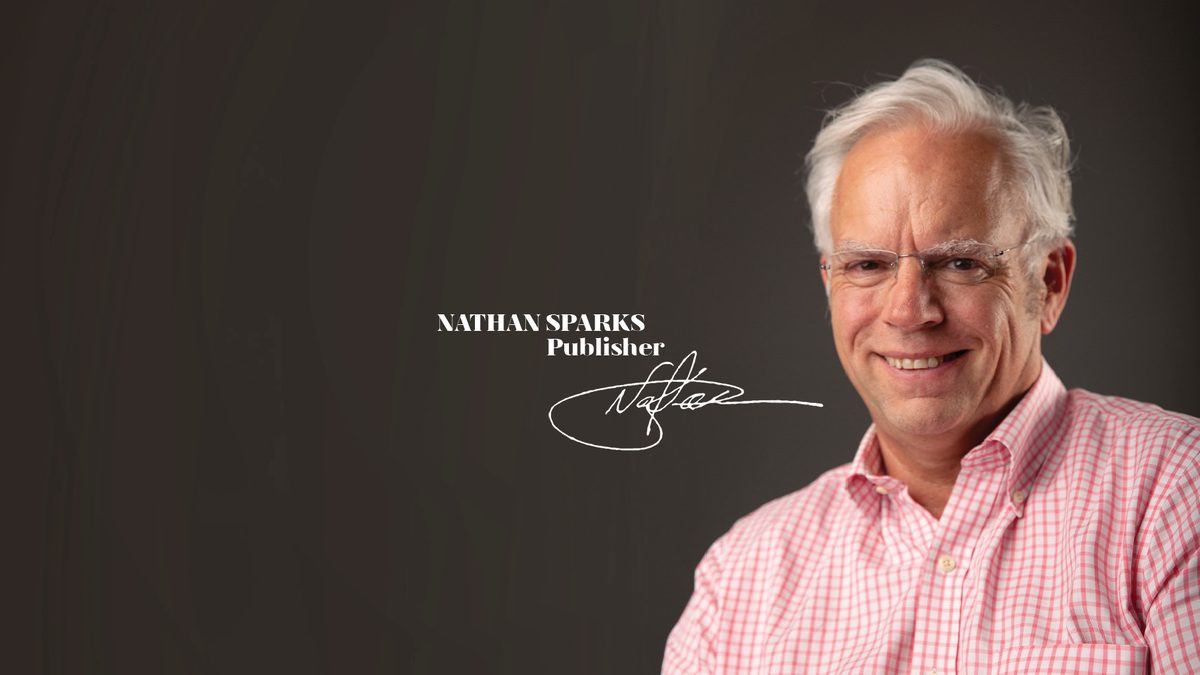
Nathan Sparks – Publisher Cityview Magazine
Access to answers is not the same thing as understanding.
→ Swipe for Next Story
Arts & CultureMARCH APRIL 2026
Arts – Inspired By Fire
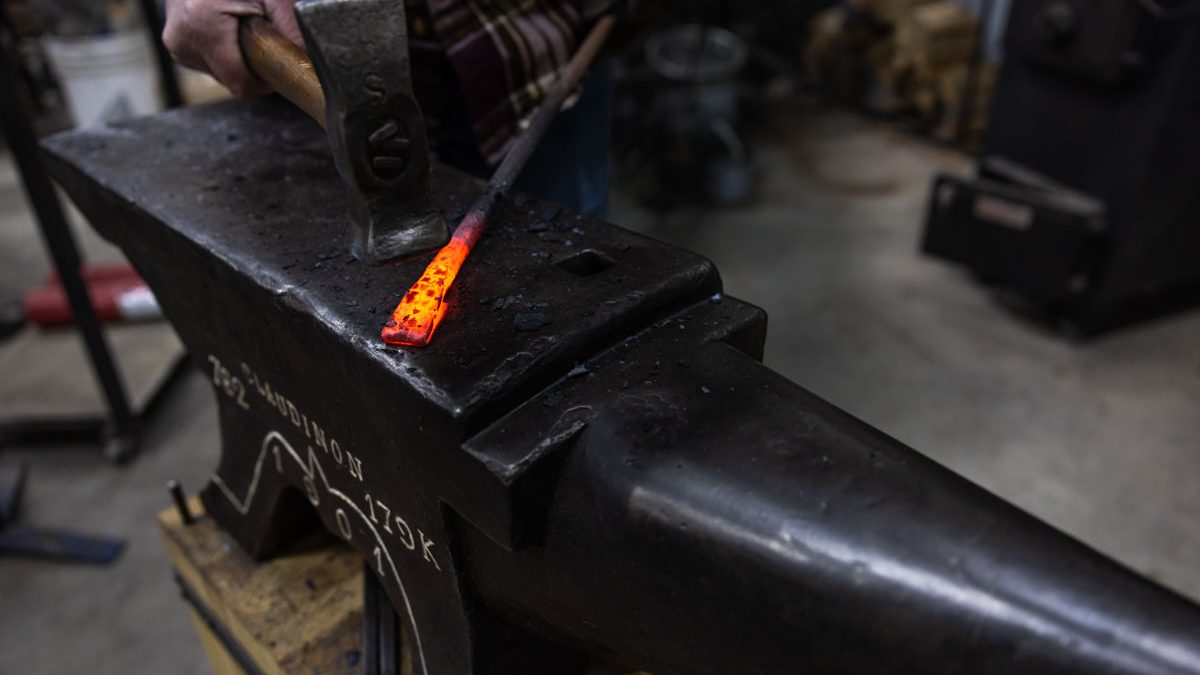
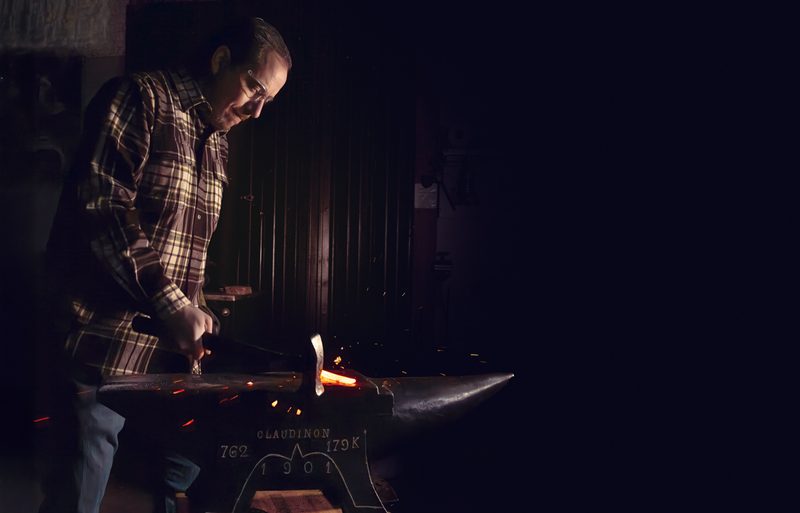
Steel and fire forged Erich Orris’s future before he was 10 years old.
Story by Susan Alexander Photography by Ethan Smith
The love for the craft was embedded in his nature, and though he worked at different jobs and lived around the country, blacksmithing called to him. In 2020, he and his wife purchased property in Cosby, in the shadow of the Smoky Mountains. After making the old house on the property livable, he opened Fudo Forge, named after a Japanese martial arts diety, and set to work.
Though he does architectural work like wrought iron railings and contracts his services to other blacksmiths who need help filling orders, Orris’s passion is making knives, especially kitchen knives and, even more specifically, chef’s knives. He’s been making them since long before he opened his own forge.
“I always liked making knives, even when I was little,” he says. “They were awful.” His love of cooking added to the appeal of his specialty.” For almost 10 years that’s all I did until I got good. I put them in the hands of professional chefs and home cooks until I liked the way mine looked and felt. I bought most of the early ones back,” he says with a laugh.
“For a long time I worked on the geometry of it. It’s an art form but it’s also a utilitarian tool. You’ve got to have a broad knowledge of steel, and you have to have the mechanics down. It doesn’t matter how creative you are if you can’t do the mechanics,” he says.
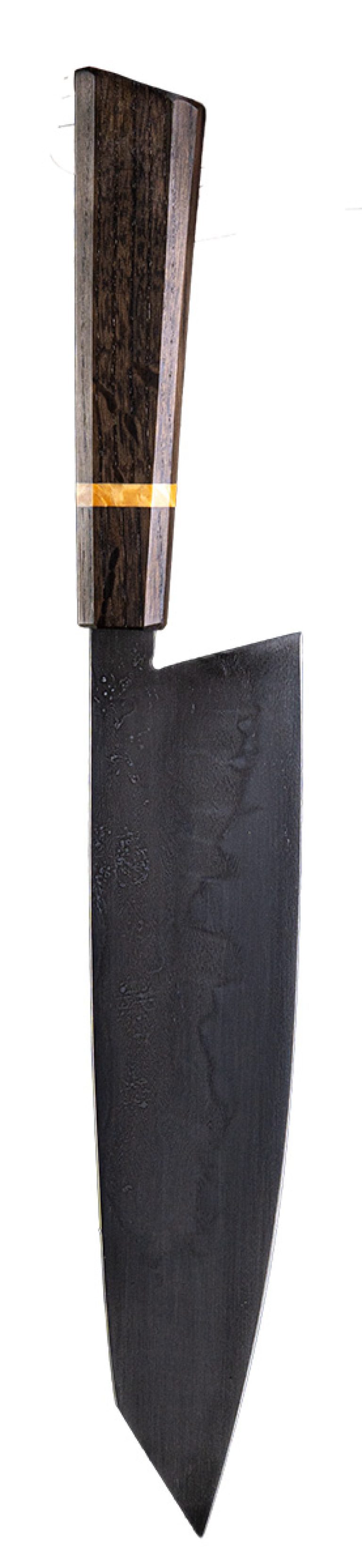
His knives are distinguishable by his touchmark — a sort of logo at the base of the blade — depicting a knife and a flag. The choil, the end of a knife’s cutting edge near the handle, has a distinctive angle to it. The tip of his chef’s knives are clipped and angled for strength. “The geometry, the bevels are what makes it perform the best.”
Sourcing wood for his handles from around the world, gathering Turkish walnut from Istanbul, bog oak from Belarus, redwood from the Pacific Northwest, and sometimes a piece of firewood from his own woodpile. “I’m like a Hollywood talent scout looking for the most beautiful prom queen for my next movie.”
Using both carbon and stainless steels in his work but prefers carbon. “Carbon rusts easier but creates beautiful visual effects with its patina. Stainless is more boring but doesn’t rust as easily.” With either one his work is painstaking to create the best product he can.
High-carbon steel. Ancient bog oak. Crafted with patience.
“The performance of a blade is determined less by the novel of its alloy than by the quality of its forging and heat treatment,” he explains on his website “… Across all materials, thoughtful heat treatment remains the decisive factor in a blade’s longevity, edge behavior and functional integrity.”
His 2,000-square-foot shop in Cosby includes a hydraulic press on which he does most of his forging, anvils for hand-hammering, a belt grinder and a wall-full of belts of varying degrees of grit. A milling machine allows him to create holes and slots. A heat-treating oven, welding tools and a cabinet full of wood in a rainbow of shades round out the equipment. “I think it’s a great setup for pursing my craft.”
He estimates he produces about 100 knives a year and sells them at shows around the country; he’s a member of Foothills Craft Guild locally, Southern Highlands Craft Guild, and he’s shown his work at the Philadelphia Museum of Art shows and those organized by the Smithsonian. His work is also at Bennett Gallery in Knoxville, and he sells online at www.fudoforge.com.
Reflecting on his knives, he admits “there’s a serious flaw in my business model. Once you buy one, you don’t have to buy it again. If you take care of it, your grandkids will die with it.”
→ Swipe for Next Story
DepartmentsMARCH APRIL 2026
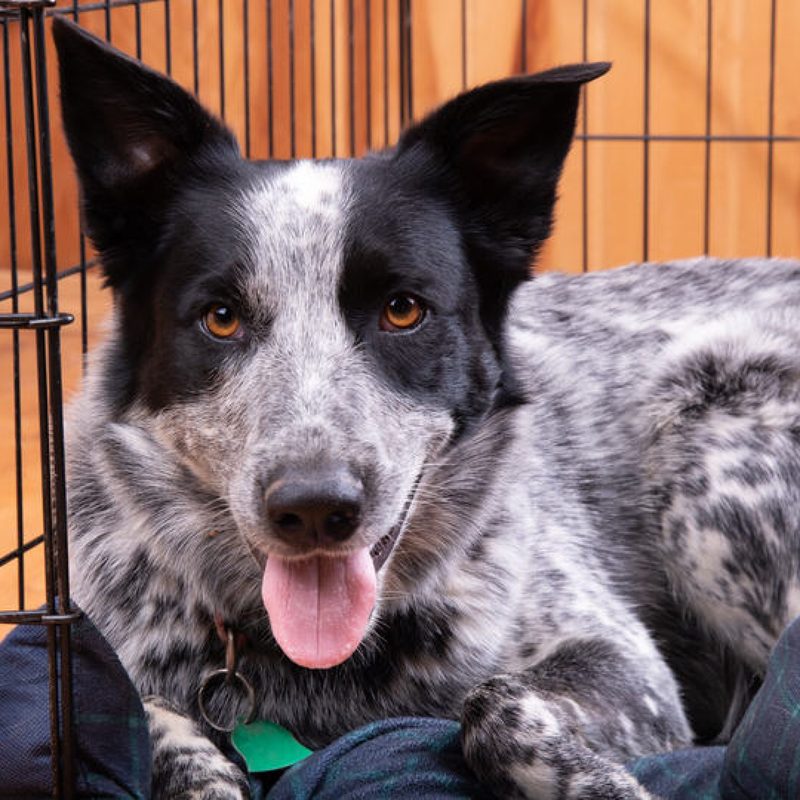
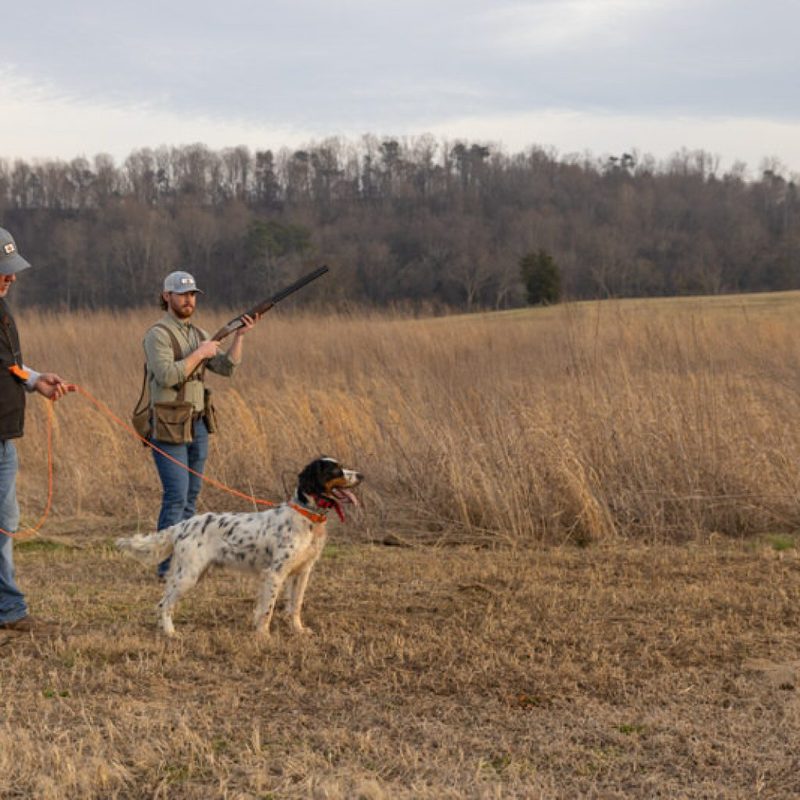
Field & Family
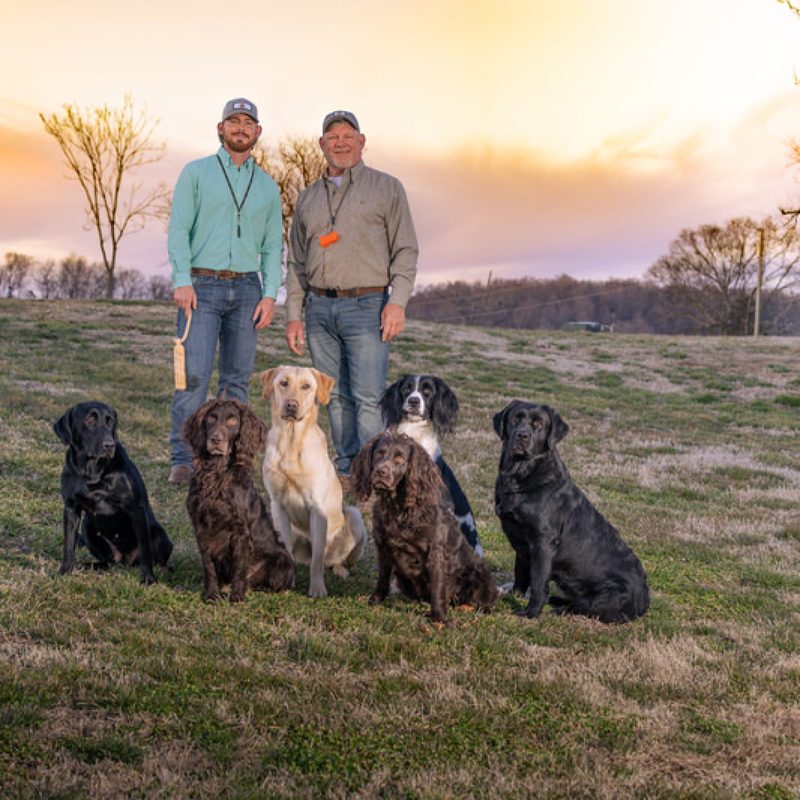
Wisdom from Mike & Jon Osteen
Story by Nathan Sparks Photography by Nathan Sparks&Ethan Smith
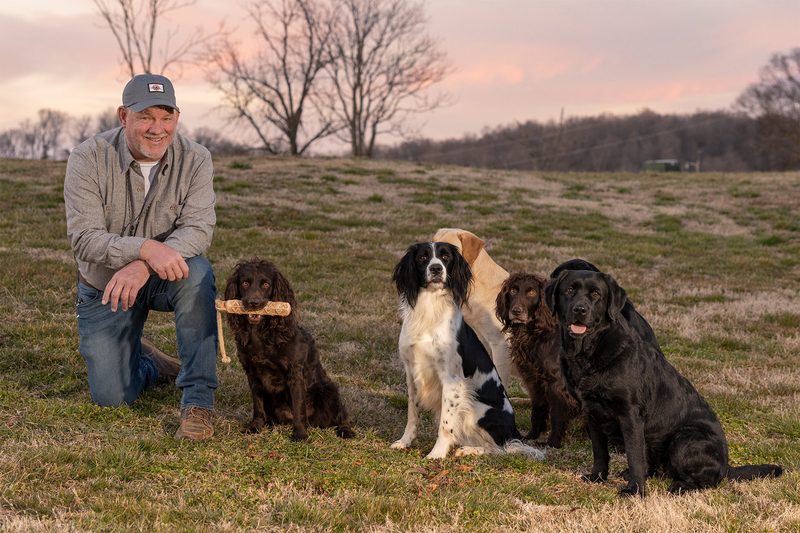
Picture this. You’re standing on a farm surrounded by dogs you don’t know, watching two men you just met move through the chaos like it’s well-timed choreography.
A German Shepherd who looks like he could rearrange your life in a single decision. A Labrador with the wide-eyed optimism of a toddler who just discovered bubbles. A mixed breed with an agenda. Maybe a spaniel bouncing like a rubber ball. A little bit of everything.
But then—quiet.
Not because the dogs are tired or sedated, but because they’ve been taught what the world is supposed to look like, not trained in the way most people mean it.
Most dogs learn a few commands and get treats when they follow them. Boom. Trained. But it’s a polite lie we like to tell ourselves. Because the truth is that dogs are shaped—through repetition, structure, boundaries, and timing. And standing in a field full of dogs that are taught? That’s an experience that’ll make you quickly realize it.
It was clear from watching Mike Osteen and his son Jon work that they aren’t merely “good with dogs.” They’re fluent. Their love of dogs is profound, but it’s not sentimental. It’s the kind of love that has a backbone. The kind that refuses to let a dog become anxious, obnoxious, unsafe, or unhappy because it’s easier in the short term to laugh off bad behavior and call it “cute.”
That’s why I asked them to join me on a six-part Cityview series about our favorites four-legged friends. Mike says he’s going to dispel a myth over the next six issues, and I’m happy to watch him do it: you absolutely can teach an old dog new tricks. It’s just a little harder than teaching a new dog. And that one sentence—simple, blunt, and true—frames almost every conversation that follows.
Here, we’ll cover the basics: the absolute minimum to do, how to get started, why you should hire a trainer, and what trainers do that will honestly blow your mind.
And yes, this series will have echoes of the sporting world—retrievers, hunt tests, field trials, upland work—because dog people are dog people, whether their dog sleeps on a $20 bed from the big box store or rides in a custom dog trailer behind a truck that costs more than your first house. But “sporting” isn’t the whole story, I promise. Most readers simply want a dog that’s a joy to live with—on a leash, at a front door, around kids, around guests, around other dogs, and in real life.
So let’s begin where all good dog stories begin: with the truth.
Harmony for 15 Years
“The value of training dogs,” Mike tells me, “is understanding how to live in harmony with something that’s going to be with you for a long time, maybe as much as 15–18 years.”
That’s the point most people miss. Training isn’t about domination. It isn’t about showing off. It’s not even primarily about obedience.
It’s about stewarding a dog that fits your life without constant friction—and a life that fits the dog without constant confusion.
Mike started training dogs at 18. He’s been doing it nearly 40 years. When I asked how many dogs he’s trained, he didn’t puff up—he just did the math out loud: “Probably in the thousands.”
Then he casually dropped a detail that reframes the whole “dog trainer” label: in one year, he oversaw and assisted in the training of about 450 dogs for the military—IED detection dogs deployed to Afghanistan.
That’s not a weekend obedience class. That’s life-or-death work.
“For the first time in my life,” he says, “I felt like I was doing something that had a lot more purpose than just earning a blue ribbon.”
Every now and then, he’ll see a former handler post online about a dog passing away—dogs that worked the roads and compounds of Afghanistan with a young soldier behind them, trusting a nose more than a map. Those stories come back years later, when the dog is old and gray and the handler is older too.
That’s the kind of experience that changes how you view a “problem dog.”
Because once you’ve seen what a dog can do when it’s taught correctly, you stop blaming dogs for acting like dogs.
You start blaming humans for being inconsistent.
The Three-Dimensional Dog
Mike doesn’t talk about dogs like machines. He talks about them like living creatures with internal wiring you’d better understand before you start pushing buttons.
He describes dogs as “three-dimensional.” There is environment (what the dog can handle—places, surfaces, water, noise, crowds), relationship (how the dog connects to you—trust, respect, clarity), and drive (the dog’s natural motivation—food, prey, retrieve, play, work).
When dogs fail, Mike says, it’s often because these three get out of balance.
Push the environment too hard, too early—like throwing a young dog into a big swim before it’s ready—and you can create a negative association with water. Hammer the training without a relationship with the dog, and you might get a dog that listens on a collar but doesn’t want to be anywhere near you when the leash comes off. Ignore drive, and you’ll struggle to motivate effort.
If you want the cleanest “Dogs 101” takeaway from a professional: balance isn’t a theory—it’s the whole game.
You Can’t Coach Height
The second thing Mike does—before he talks about sit, stay, or heel—is he talks about genetics.
Most people don’t want to hear it. They want to believe love is enough. They want to believe a good trainer can “fix” anything. Well, Mike offers the simplest analogy in the world: you can’t take a person who’s 4’6” and teach him to dunk a basketball.
“You can’t play God,” he says, “and you can’t find the perfect dog every time. But you can find dogs that are genetically proven to be good working dogs.”
For dog owners, this matters even if you’re never going to a hunt test or put the dog to work in the field. Temperament, resilience, drive level, stability—those aren’t just “training outcomes.” They’re often bred in.
So yes: pick a dog with your eyes open.
Socialize, Then Teach Boundaries
If you have a puppy, you’re holding wet cement. And you don’t need a “program.” You need awareness.
Mike’s priority with puppies is socialization—not the casual “let it meet everything” kind, but intentional exposure that builds trust and confidence. He compares it to what horse people call imprinting: touching paws, ears, mouth, belly, flipping the pup on its back—getting it comfortable with handling before the dog’s natural protective instincts harden around sensitive areas. If you don’t do that early, he says, a dog isn’t “being bad” when it guards its feet or its stomach. It’s being an animal.
But here’s where most puppy owners wreck themselves: They don’t teach boundaries. Puppies learn boundaries in the litter. Bite too hard? Another puppy bites back. Push too far? You get corrected. It’s not cruelty; it’s education. Then humans bring the puppy home and let it bite hands, climb, jump wildly, mouth everything, and generally practice being a little tyrant—because it’s small and adorable.
When those puppies turn into 80-pound teenagers, that’s when people start looking for somebody like Mike.
The advice here is simple: Don’t let the puppy rehearse the behavior you’re going to hate later. That’s not harsh. It’s kind. And it also just makes sense.
The Distinction That Saves Dogs
Teaching and training are not one and the same. This is one of Mike’s biggest “pet peeves,” he tells me. And quite frankly, he’s right to be irritated.
Most people use “teaching” and “training” as the same word. But they are not the same. Teaching is repetition until a dog understands a behavior and can offer it reliably (Mike uses 80% as a practical benchmark). Training on the other hand reinforces what’s been taught.
Where people get into trouble is when they apply pressure—collars, corrections, stern voices—before the dog understands what the command means. That’s how you create the dreaded “negative association.” The dog isn’t refusing; the dog is confused. And confusion plus pressure often becomes fear.
So if you’re a normal person with a normal dog, write this on a sticky note and put it on your refrigerator:Don’t punish what you haven’t taught.
The Basic Commands That Make Life Better
For the average household dog, Mike’s foundation is refreshingly practical:
Come when called (the command that keeps dogs alive)
Sit / Stay (impulse control)
Heel / Leash manners (civilization)
Place (a dog-sized off-switch)
Kennel / Crate (structure and safety)
But he keeps circling back to something even more important than commands:
if a dog doesn’t break boundaries, most people are happy. A huge percentage of dog problems aren’t “obedience problems.” They’re boundary problems.
Jumping. Mouthing. Door rushing. Counter surfing. Barking for attention. Ignoring you when guests arrive. Treating the house like a racetrack. That’s not a dog being evil. That’s a dog living in a world with no clear rules.
The Doorbell Problem
If you’ve ever had your dog turn into a possessed trampoline when someone enters your home, Mike has news: It’s usually not the dog’s fault. It’s the guests.
“The first thing they do is break their body language,” he said. They bend down, get submissive, reach, pet, baby talk—the whole show. And all the dog wants is attention. So the guest rewards the chaos.
His fix is almost comically simple: stand up straight. Don’t crouch. Don’t reach. Don’t immediately touch the dog. Calm posture, calm energy.
You’d be amazed how much your dog’s “excitement problem” is actually a human choreography problem.
The Crate
Mike is unapologetically pro-crate: “A crate is a dog’s best friend and man’s best friend.”
People project emotions onto crates: It feels mean. The dog needs freedom. Mike argues that genetically, dogs are comforted by a den-like space—protected on three sides with one open side to monitor.
Crates aren’t punishment. They’re structure, and structure creates calm. Also: crates keep puppies from practicing bad behavior when you’re not watching. And for dog training, what the dog practices becomes the dog.
When to Hire a Trainer
Busy professionals, families, people who travel, people with mismatched experience—this is where training programs shine. Mike’s advice is not “send the dog away and hope for magic.” His advice is to get the puppy started right—and be involved while it’s being trained. Because if the dog learns rules at the trainer’s farm and then comes home to chaos and inconsistent boundaries, the dog doesn’t “forget.” The dog adapts to the new reality.
Dogs are situational, after all. They learn through repetition. If the rules change every day, you create gray areas. Gray areas create uncertainty. Uncertainty creates problems. A trainer can build a foundation, but the home must maintain it.
Rehabilitation and the “Old Dog” Myth
At the foundation of all of Mike’s advice is a career ….. But it isn’t just ribbons and competitions. A major portion has been behavior modification and rehabilitation—dogs that got negative associations, got pushed too hard, were mishandled, washed out, or simply misunderstood.
He tells me about two Boykins that had been with previous trainers and carried phobias and major issues. They were rehabilitated, titled, and went on to place at a national-level event—second and third.
That’s not a cute “before and after,” though. That’s a professional undoing damage and restoring performance. And it’s the proof behind his favorite line: you can teach an old dog new tricks. The dog can keep learning through life. It’s just easier when you start earlier.
Sporting Dogs: A Different Realm (But the Same Foundation)
Once you step into the hunt tests, field trials, upland work, and serious retrieving of the sporting world, timeframes change.
Mike breaks it down in this way. A solid “gun dog start” might take around three months. Transitioning into handling and advanced work can push closer to six months. Competition dogs often stay in training 10–11 months a year, from puppyhood to age seven or eight, to remain competitive. That’s alifestyle, not a hobby.
And yes—this sport can get expensive fast. Mike compares it to fishing and duck hunting, where the excitement of catching a trophy fish lets one rod become forty-seven, and the boat become a mortgage.
But he also makes a point that matters even for the non-competitor: clubs and structured training keep dogs active all year. Too many dogs hunt for two months, then sit until next season. Training keeps the dog’s mind and body engaged—and makes the relationship better.
“I Don’t Want a Ribbon Dog. I Want a Hunting Dog.”
Mike smiles when we get to this one because he hears it constantly. The truth is: a well-trained competition retriever has the skills to be a world-class hunting dog. The missing piece is acclimation.
Put a competition dog in a duck blind for the first time and it might look confused—not because it’s incapable, but because it hasn’t learned that environment. Work the dog out of the blind. Out of the boat. Off the ramp. Let the dog succeed in the new setting.
Same dog. Same brain. New context.
And in the upland world, people love to argue about “big running dogs” versus “foot hunting dogs.” Mike and John both argue that with true balance and control, you can influence how far a dog hunts—because the dog is hunting with you, not just hunting for itself.
Preserved Birds vs. Wild Birds
This is where the conversation gets spicy. Pen-raised birds can create issues: birds that don’t fly well can teach dogs to creep, crowd, even herd birds like livestock. Wild birds teach a dog to stand still because wild birds leave when pressured.
John makes the point that the best sequence is often: let the dog hone natural pointing instinct early—through wild birds or launchers—before you pile on structure. Then you can steady the dog through training and avoid some of the mess that poor-flying birds create.
If you don’t have structure, preserved-bird hunting can become chaos fast.
The Closing Scene: A Table, a Story, and What Comes Next
After the interview, John, Jay Lynn, Mike, and I head to a local restaurant. Sitting there, away from the kennels and the fields, John paints a picture of how they used to run the hunt program at Winfield Plantation.
It’s the kind of detail you only get when people stop “being interviewed” and start telling stories.
I’ve been on great hunts at great places. I frequently visit my friend John Burrell’s operation at the Beretta Shooting Grounds at Barnsley Resort in Adairsville, Georgia—where the experience is as much about dogs and teamwork as it is about shooting.
And that’s one of the themes this series is going to keep returning to: you don’t go into the field with one dog. You go with multiple dogs, because dogs get tired, conditions change, and the best operations treat dogs like athletes—not accessories.
But whether you’re talking about a plantation hunt, a national retriever event, or a suburban front door with Amazon ringing the bell like it’s their job (because it is), the core is the same. And that core, what we’ve introduced you to today, is what we will explore over the next 5 issues.
In Part 2, we’ll go deeper into boundaries and household structure—the mechanics of “place,” door manners, leash work, and why your dog isn’t “stubborn,” it’s rehearsed.
Because if you want the real secret behind a great dog, it’s not a magic command.
It’s the life you build around the dog—every day—when nobody is watching.
→ Swipe for Next Story
Dining GuideMARCH APRIL 2026
Healthy Indulgence
A full day of balanced, flavor-forward dining proves Knoxville makes it easy to eat well without sacrificing enjoyment.
Story & Photography by Ethan Smith
There’s something special about starting a day in Knoxville. The light settles softly over the city, Market Square begins to stir, and the Smokies linger quietly in the distance. In a town known for Southern comfort and indulgent favorites, it’s easy to assume healthy eating requires sacrifice. But spending a full day dining across Knoxville proves otherwise. Here, flavor and wellness sit comfortably at the same table.
My morning began atFirst Watch, where the energy feels as bright as the sunlight pouring through the windows. It’s the kind of place where conversations buzz over coffee mugs and plates arrive looking as vibrant as they taste.First Watch’s avocado toast and fresh fruit offer a bright, balanced start.
I ordered the avocado toast topped with an over-easy egg, paired alongside a yogurt bowl layered with blueberries, strawberries, and pineapple, along with a simple cup of coffee. The avocado was creamy and rich, the egg perfectly runny, adding warmth and protein to every bite. The yogurt bowl tasted fresh and naturally sweet, with the fruit adding brightness and texture. It felt intentional. Healthy fats, lean protein, fiber, and natural carbohydrates made a breakfast that fuels rather than overwhelms. Walking out, I felt energized instead of weighed down, ready to move through the day.
Downtown Knoxville was calling me to visitThe French Market Creperie. Stepping inside always feels like slipping into a European café tucked inside the valley of the Tennessee mountains. The charm is undeniable, and so is the food.The French Market Creperie’s salmon and Swiss crepe blends indulgence with heart-healthy balance.
I chose the salmon and Swiss crepe topped with an over-easy egg. The salmon was delicate yet rich, packed with flavor and heart-healthy omega-3s. The egg added another layer of protein, while the light crepe wrapped everything together without feeling heavy. There was just enough Swiss cheese to add depth without overpowering the dish. Looking toward the streets of downtown, surrounded by the French ambiance, there’s a feeling of indulgence while enjoying a balanced dish.
By lunchtime, Market Square was fully alive.The Tomato Head, one of my all-time favorites, has long been a staple here, a place where locals gather and visitors quickly feel like regulars. There’s something comforting about its creativity and commitment to fresh ingredients.
The Tomato Head’s Kepner Melt proves plant-forward can be hearty and vibrant.
I ordered the Kepner Melt—stacked with tofu, fresh tomatoes, roasted onions, and pineapple—with a side of blue corn tortilla chips. The tofu was hearty and satisfying, the tomatoes juicy, and the pineapple added a subtle sweetness that made the sandwich unexpectedly vibrant. It was plant-based without feeling like a compromise. The tortilla chips added a nice crunch—a reminder that healthy eating doesn’t mean eliminating enjoyment. It means building meals around real ingredients and letting balance lead the way.
As the afternoon slowed,Clean Eatzprovided a practical yet flavorful experience. Knoxville has an active community. From runners along Neyland Greenway to professionals powering through busy days, they appreciate food that works as hard as they do.
I ordered the turkey burnt ends flatbread with baked sweet potato fries. The turkey delivered bold flavor while remaining lean, and the flatbread offered just enough carbohydrates to refuel. Packed with fiber and nutrients, the baked sweet potato fries offered a slightly crisp exterior and a soft interior. It was satisfying without the afternoon slump—the kind of meal that supports your goals instead of setting you back.
Clean Eatz’s turkey flatbread and sweet potato fries fuel an active afternoon.
By evening, I found myself atCazzy’s Corner Grill, where neighborhood warmth meets thoughtful preparation. It’s easy to associate grills with heavy fare, but this stop proved that mindful choices are always available.
I ordered the Mediterranean salad composed of Kalamata olives, chickpeas, spinach, diced cucumbers, red onions, and goat cheese, topped with a beautifully grilled piece of salmon—truly one of the best I’ve ever had. The salmon was cooked to perfection, flaky and flavorful without excess oil. The spinach and vegetables were crisp and fresh, and the chickpeas added a plant-based form of protein and fiber. The olives and goat cheese brought richness in measured bites. It was colorful, balanced, and deeply satisfying.
By the end of the day, I realized something simple but powerful: Knoxville makes it easy to eat well. Not in a restrictive way. Not in a joyless way. But in a way that feels natural, community-driven, and full of flavor.
From bright breakfasts to plant-forward lunches and mid-afternoon bites to Mediterranean-inspired dinners, this city proves that wellness and indulgence are not opposites. They coexist here on patios, in downtown cafés, and in neighborhood grills.
Healthy eating in Knoxville isn’t about perfection. It’s about thoughtful choices, fresh ingredients, and restaurants that care about what they put on the plate. And when a city makes it this enjoyable, eating well becomes less of a goal and more of a lifestyle.Cazzy’s Corner Grill’s Mediterranean salmon salad delivers bold flavor and balance.
→ Swipe for Next Story
InsightsMARCH APRIL 2026
Insights – Postulations
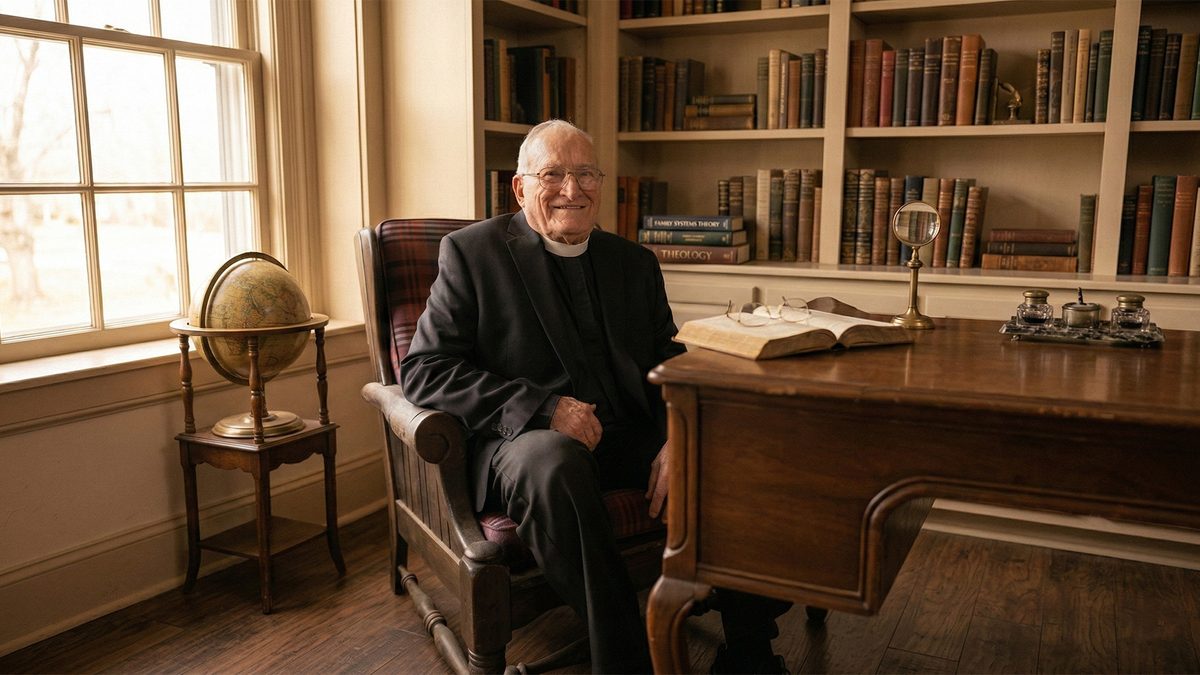
Story by Rev. George Doebler
Over the years, I have gathered a number of quotes that I tend to go back to time and time again—words that keep me thinking about who I am and how I live. Many come from the writings and presentations of Dr. Murray Bowen and Rabbi Edwin Friedman. You’ve likely heard me mention them here before. Dr. Bowen was a psychiatrist and professor, known for developing the Family Systems Theory and describing families as emotional units. Rabbi Friedman, a student of Bowen’s, became a pioneer in family therapy. Years ago, when I was Chief of Chaplains for the Tennessee Department of Mental Health, I brought them both here to speak. Their words were too important not to share.
I recall Friedman saying,
This spoke to me. Simply attending a class or conference—gathering data and information—will not change the way we think or live. The real work happens when we use that information to challenge our thinking.
Later Friedman went on to say that, “For a system—family, institution, political sphere, society—to change, it must produce leaders that have a sense of adventure—and the nerve and stamina to follow through in the face of predictable resistance and sabotage.” When we take in information and begin that emotional shift, when we truly begin changing, we are often met with self-sabotage. The difficulty for each of us is being open enough to recognize when we get stuck.
This is most clear to me when I find myself differing with Nancy, my wife of 60 years. When I differ, I retreat into my usual system and I cut off from hers. Why do I do that? I ask myself. I see the door open to new information. I acknowledge it, but I’m often unable to walk through it. Why is that?
Dr. Bowen—who was a University of Tennessee grad—talked a lot about this concept. “Chronic anxiety characterizes our emotional processes so deeply,” he said, “that our thoughts (and our leaders) focus on safety and certainty, rather than adventure and boldness. When we are anxious, we seek quick answers so we can feel better.”
Emotional issues in our culture have been developing for a long time. Dr. Bowen theorized that we were entering a period of societal regression, where anxiety runs rampant. It would require an emotional shift that would take time and work to get us back on track. A quick fix could not change us.
And the reality is there are no quick fixes to emotional problems. Our culture values data more than maturity, believing that if we know enough we can fix anything. But it’s a belief, I fear, that dooms us to feel inadequate. By believing this, we do not see the emotional process we are in.
So what does this all mean? How do I stay calm and less reactive in an anxious culture where data is king? Somehow, just stopping to recognize our feelings will be a start. It will help us see the problem is not “out there,” but within ourselves. And then maybe, just maybe, we can then talk about it and begin moving forward.
“More learning will not on its own automatically change the way people see things or think. It must be an emotional shift.”
→ Swipe for Next Story
PoliticsMARCH APRIL 2026
Local Politics – Public Safety or Orwellian Future?
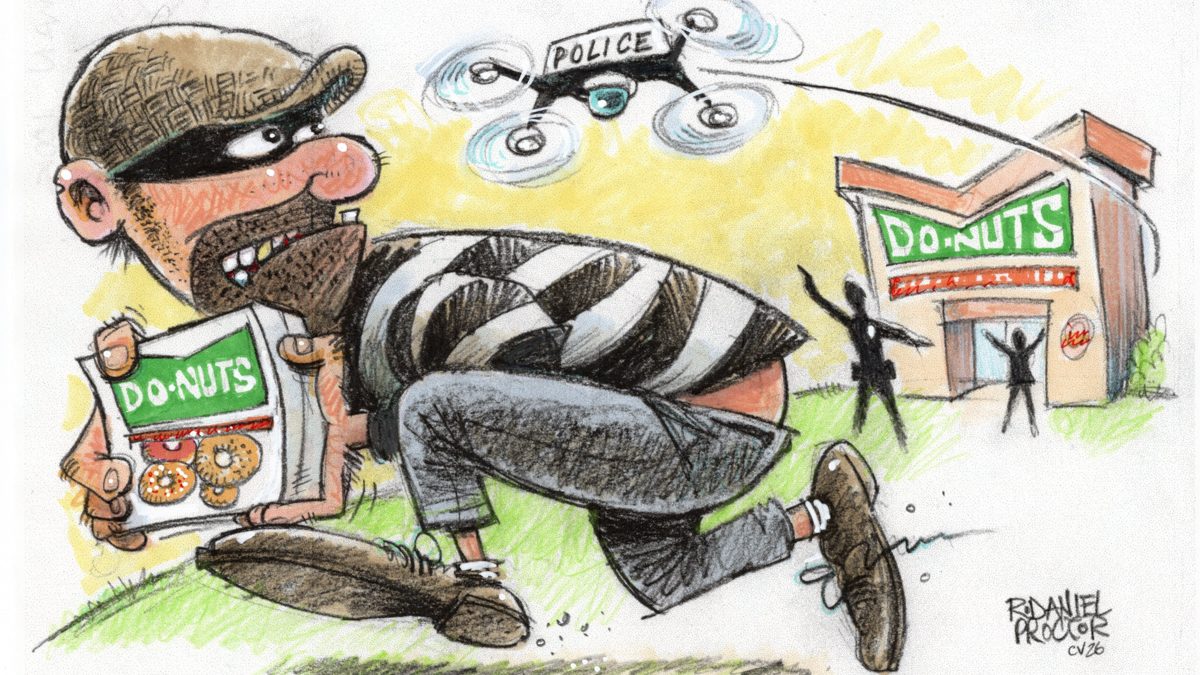
Look, up in the sky! It’s a bird! It’s a plane! No, it’s…a Knoxville Police Dept. drone!
Story by R. Daniel Proctor
You need some years behind you, or you watch retro TV, to recognize the opening lines of the 1950s television series “Superman.” But the modern-day connection fits: the KPD is growing its use of drones as a means of first response to emergencies.
Under the terms of a $9.4 million contract approved by an 8-1 vote of Knoxville City Council, the KPD adds to its existing drone capabilities by contracting with Axon Enterprises to acquire, along with bodycams and other equipment, a dozen drones that will be located throughout the city. What makes these drones different is the sky-eyes will respond automatically to 911 calls, but once on-site, a KPD controller will command the drones.
Police Chief Paul Noel is a drone advocate, which lends credibility to their use. Early in Mayor Indya Kincannon’s term the KPD was awash in controversy. In 2021, 40 murders were committed in Knoxville, the most in a decade. Claims of racism roiled the department. The tension grew to intensity that caused the resignation of the first police chief Kincannon appointed. Noel became chief in 2022 and from the time he arrived, things have quieted. One example: there were 17 murders in 2025, the lowest number since 2016. There has been little KPD operational-related controversy in the news. When they’re not hearing bad news, the public generally believes that systems are working well. On that basis, Noel is doing his job.
A police department – any police department – will never be free of controversy and contention, as the work is too intense and the contact is often tense, or even dangerous. Police-related storms are inevitable. The new drones are perhaps a means to help sail around the squalls.
Noel stresses using analytics in crime fighting and prevention. Simply put, it’s analyzing where the most crimes are occurring, who is committing the crimes, and using the data to stop and solve crimes. The approach is like the difference between a physician trying to react to a patient’s medical problem with a best guess instead of prescribing an MRI to deal with the problem based on deeper examination
Drones responding to a 911 call will be on a reconnaissance mission to enable KPD to see the landscape to analyze the situation while cars are dispatched, consider a strategy before officers arrive, and give responders real-time intelligence on what can be seen. It’s not a replacement for human beings, but another set of eyes with a vital vantage point. Think of news stories with police video taken from helicopters: a drone is a much smaller, and much less expensive, way to accomplish the same goal using more electronic eyes.
Drones aren’t a political controversy or conflict until circumstances create one. Cameras aren’t the issue; in today’s world cameras observe us in elevators, government buildings, hotel lobbies, airports, banks – even grocery stores. The central concern is government becoming George Orwell’s “1984” Big Brother, surveilling the common people, or “proles,” to ensure they’re obeying the law.
To the degree KPD uses the new drones to create demonstrable crime reduction, the public will be supportive or silent. But police critics are always on the prowl to sniff out real – or even perceived – misconduct. If there’s even suspected drone misuse, the protests will be heard at city council meetings, in the news, at drone sites, and, depending on the issue, perhaps on the streets.
A drone controversy in the next two years wouldn’t make a political difference to Kincannon, whose term ends in Dec. 2027. A blue political liberal, her post-mayor elected-office future is virtually non-existent in a red county and state. If controversy surfaced, upcoming candidates for mayor and city council would be compelled to take positions – probably tiptoeing on a line between concern for privacy rights and being against crime. To inoculate against potential drone-related problems, expect extensive publicity surrounding successful use of the new drones.
It’s impossible to totally separate a police department from politics, as it’s a political entity, managed by people elected or appointed because of politics. Drones are an evolving technology in law enforcement, and mistakes will be made. To the degree guardrails against misuse are public, and swift action taken if problems occur, leaders make themselves, if not Superman-level invulnerable, to political bullets, at least able to move fast enough to get out of the way.
→ Swipe for Next Story
DepartmentsMARCH APRIL 2026
Outdoors – Waterfall Woman
From Grotto Falls to hidden creeks, Dana Koogler has chased the sound of water and found a path through life’s toughest terrain.
Story by John Quillen Photography by Nathan Sparks,Jimmy Deane& John Quillen
Dana Koogler jokes that she was conceived beneath a waterfall. That’s probably just one of the reasons she wades so deeply into the folds of ancient backcountry maps. Many of us are driven to the outdoors through great literature. For Dana, she cites the work of Hubbs and Morris, “Waterfalls of the Great Smoky Mountains” are a cure for a period of depression in her early thirties.
Dana recalled that first real hike to Grotto Falls in 1997 with her husband Kenny. It’s one of those few waterfalls that you can walk behind and experience a liquid veil. This was her balm of Gilead. It didn’t take long to tick off all 30 hikes in that first guidebook. Although her family occasionally joined in, she realized that it was more her passion. She also suspected there was more goodness further into the back of beyond. In 2003 she began her off-trail quest with the first bushwhack to Hazel Creek Falls. A windstorm pushed her and Kenny out of this little-known area, and they found themselves feeling around in the dark without headlamps. “I cried like a girl”, Dana admitted.
She soon realized the importance of conditioning for these tasks. Off-trail bushwhacking requires a specific skill set and she focused on core strengthening and almost injured herself with sit-ups.“But my lats were shredded!” Everyone knows about Abrams Falls on the Cades Cove loop, but Dana gets excited talking about untouched gems such as Rowans Creek Falls, Crooked Arm Cascade, and the magnificent Mill Creek Cascade tucked discreetly around the old settlements. Lots of shoe leather has been spent by tourists on the path up to the Walker Sisters cabin, but most never know there is a small but scenic waterfall one-half mile behind the house called Grayback Falls. “I call it a one butt waterfall because the approach to it is so tight it is IN the creek and only one person at a time can really see it up close.”
When I was pitching this story to Cityview Publisher Nathan Sparks, he asked me about my favorite Smokies waterfall. I had to think for a while because so many came to mind. Eventually I landed on Ramsey’s Cascade. The sheer volume of water and breadth of that torrent seems thicker than others. And the hike is quite a workout. Dana will tell you about going above the falls and getting to the heart of things. (More than a few hikers have been injured prying around up there.) Nathan told me he was fond of Mingo Falls and not surprisingly, so did Dana. She took a friend off trail straight up the mountain to find those upper drops. Only after reaching the top did she spy a nice path that would have avoided all their rhodo pulling trouble.
In 2013, Dana was diagnosed with a rare form of Guillain Barre Syndrome. She experienced double vision, balance issues and no tendon reflexes. Most people would likely have foregone hiking efforts over uneven ground but not Dana. She doubled down and expanded her quest into Western North Carolina, undertaking the Kevin Adams 100 waterfall challenge. She pushed through pain and sickness, eventually reaching the top of Wilson Falls. This 400-foot off-trail hike on the slopes of Mt. Collins became a celebration of healing with friends.“It was incredibly hard, but fun. Thirteen miles. Rainbows in the falls were like a reassurance from the Lord that He was with me.”
Garnering her favorites felt like asking Robert Plant his preferred Led Zeppelin tunes. But I got an answer. In order, these are Dana’s ‘Greatest Hits”. In the Smokies: Upper Grotto Falls, Twin Falls, Dome Falls, Mill Creek Cascade, Wilson Falls, Upper Ramseys’ Cascade and Flat Creek Falls. She notes that there is a route to the base of Flat Creek Falls (which I personally view as the strangest looking waterslide in the national park.) On the Carolina side, she’s been Dana all the way thru the story.
Why switch now? She is partial to Big Falls on Thompson River and Alarka Falls.
Now a grandma to children ranging from age five to 16, she has hiked off one set of knees and is working on another. Her grandkids tease her about being old (she’s really not) but the photos prove they love being outside with their Grandma. This is her ministry, “A hedge against the night.” She’s been out west and seen Havasu Falls and others but mostly she tromps around the Smokies and Cumberland mountains.
In the quiet of the woods, sophistication takes its seat at the table.
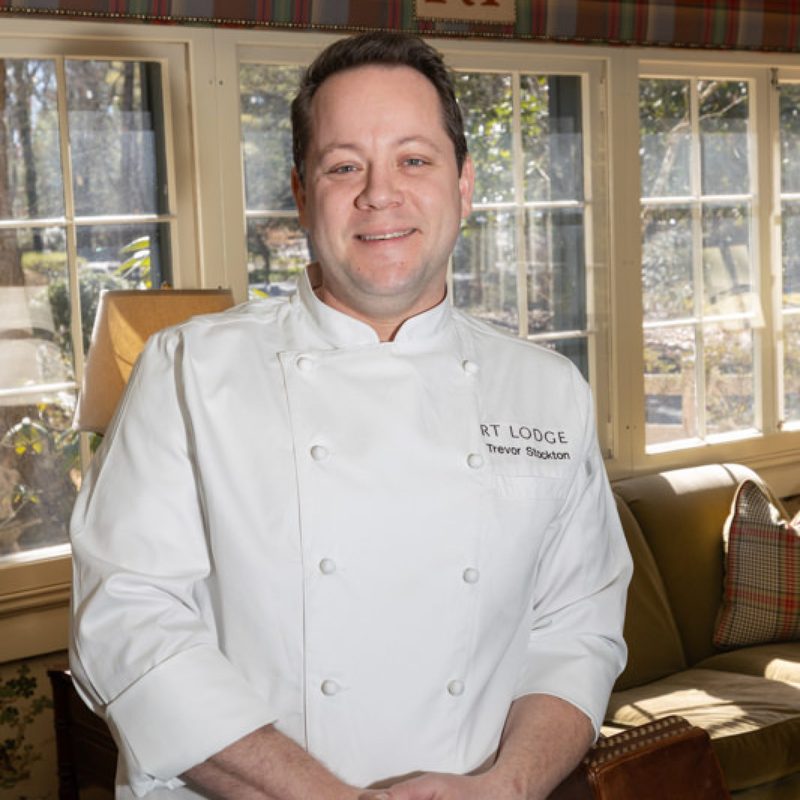
Story by N. Brooks Clark Photography by Nathan Sparks
Tucked into the sylvan charm of Maryville College Woods, RT Lodge’s restaurant embodies the warm, refined soul of East Tennessee dining. It is rustic yet elegant, with hospitality that feels personal from the moment you step inside.
Turning off a single-lane road from a historic neighborhood, you follow a sinuous road through a wooded area, then follow a winding walkway to the entrance of an old-style hunting lodge.
You walk past a large Constable-style painting of a noble buck, then come to a bronze sculpture of a hunting dog with a pheasant in its mouth. From here you might stop in the living room to the right, with a fire gently burning. Before you even sit for dinner, it’s worth exploring the bar experience at The Morningside Room, a snug, beautifully reimagined lounge just steps from the dining room.
The name is a nod to the rich history of the property. Susan Wiley Walker, widow of an Andrew Carnegie business partner, designed and constructed the home in 1932 and called it Morningside. As you admire a painting of a racehorse, enjoy a featured cocktail—perhaps a Lodge Fashioned (Chattanooga Whiskey 91, demerara, Fee Brothers bitters, and Amarena black cherry) or a Carriage House Sour (Company Distilling Maple Wood Finished Bourbon, Cocchi Americano Bianco Apertivo wine, citrus-balsamic vinegar and lemon).
Upstairs, the dining room opens around another fireplace, with hunting scenes, one complete with a “trumpet” of beagles, lining the walls. Service is smooth and genuinely warm.
On this particular day, waiter Adrian Ortiguerra arrives with a breadboard of sourdough brioche and promises a multi-course experience, starting with custom cocktails, including the two above and the Swan Lake, which comprises Letherbee Gin, Scandinavian Aquavit, cardamom, and lemon.
For a first opener, Adrian presents us with Blackberry Roasted Oysters. As Executive Chef Trevor Stockton explains, “They’re like Oysters Rockefeller but with flavors of collard greens, onions, garlic, and heirloom tomatoes,” all mixed with collard butter, Benton’s Bacon, and tomato cider vinegar. The Roasted Beet Salad featuring roasted, smoked, and pickled beets with pistachio-honey crumble might change the mind of anyone who claims not to like beets.
Crisp-edged, golden pork chop glazed in sorghum-mustard jus, its sweetness offset by broccolini and briny capers — rustic comfort, sharpened with precision.
Then comes Crispy Hashbrowns. “We poach shredded potatoes,” says Stockton, “and mix them with caramelized onions, horseradish, and trout roe and Royal Osetra Caviar.” They come in a kind of elegant burrito, served atop crème fraiche.
Stockton has been at RT Lodge since 2013, but he has recently been able to ramp up the sophistication of the menu as RT has added a team of sous chefs. “He has a spectacular team behind him,” says General Manager Kelley Harris. “It allows him to think conceptually. As chef de cuisine, he can hit it 100 percent of the time.”
In Stockton’s love of local products and innovative regional combinations of them, you can hear echoes of his time under Chef Josh Feathers at Blackberry Farm. Before that Stockton had trained under Chef Rick Mace, who recently opened Tropical Smokehouse in West Palm Beach, Florida, after a decade running Café Boulud in Palm Beach. “He taught me how to make short rib,” Stockton says.
Coming from a family of farmers and chefs, he grew to appreciate locally grown and raised products on his great-grandfather’s farm in Gainesboro, Tennessee. He also learned to preserve, pickle, and can homegrown ingredients the old-school way for use year-round. He is known to pick his own wild mushrooms, though he’d never say where, lest the word get out.
Small dishes can sometimes hold pleasant surprises. Take his version of chicken and dumplings, for example. Pepitas, Stracciatella braised chicken thighs, potato dumplings (let’s call them gnocchi), and Burnt Honey vinaigrette come together with the addition of Wintergreens Crispy Chicken Skin, “and a lot of chive and thyme,” says Stockton. It’s a fresh take on a classic plate.
In this course we get the first of two excellent wine pairings from Bar Manager Randi Savage. Though she is no relation to the late wrestler “Macho Man” Randy Savage (her maiden name was Smith), she is lovingly called the “Macho Manager” by her staff. Wine pairings from Savage are thoughtful and well explained without veering into lecture. An Alsatian Pinot Blanc, “Les Prémices” by Emile Beyer, adds brightness and lift to the earlier courses— “a little fruitiness. A little pizzaz,” says Savage. A medium-bodied Tuscan wine, San Vito’s Chianti, carries the entrées comfortably.
The Bourbon Pastry Cream is made of cherry jam lemon curd, Angostura ice cream, Sour Pavlova meringue, and Amarena cherries.
The Niman Ranch Pork Chop is a thick Duroc cut, Panko breaded with pan fried sunchokes and a sorghum-mustard jus that is close to Chef Trevor’s heart. He creates a base of shallots, sorghum, and white grain mustard, then mixes it with a pork-bones au jus.
The Red Wine Braised Short Rib, says Stockton, “is my favorite thing to cook. It’s a four-day process.” It is served with generous portions of carrots, fingerling potatoes, pearl onions, and mustard seed.
When you come upon a whitefish creation that stands out from the crowd, it is an occasion for celebration. The Pan-Roasted Halibut with fingerling potatoes and oyster mushroom beurre blanc has both perfect flaky texture and a unique flavor that balances perfectly with the chianti.
The Buttermilk Panna Cotta starts with Cruze Farm buttermilk, then combines summer plum preserved compote, Olive Oil, and Orange Blossom Whiskey. This is not to be missed.
The Bourbon Pastry Cream is made of cherry jam lemon curd, Angostura ice cream, Sour Pavlova meringue, and Amarena cherries.
Ultimately, RT Lodge succeeds because it doesn’t overreach. It knows exactly what it is: a beautiful place, run by people who care, serving food that reflects its region and its history without making a big speech about it. You leave well-fed, well-treated, and already thinking about coming back.
→ Swipe for Next Story
MusicMARCH APRIL 2026
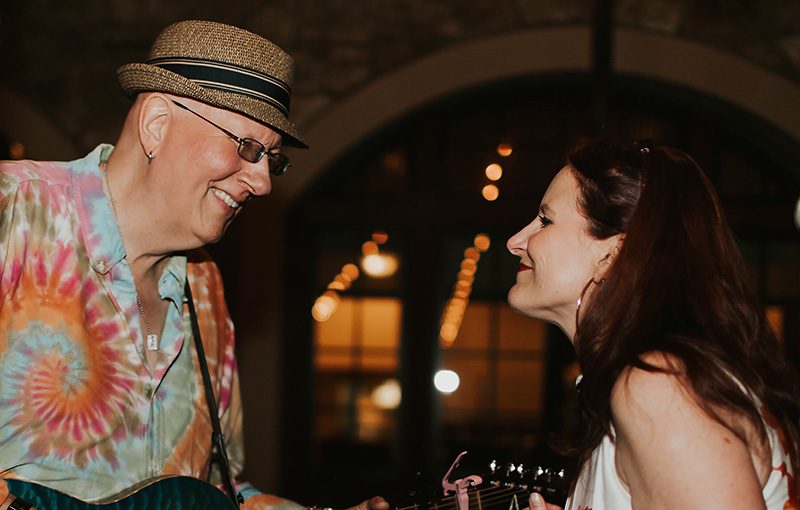
Tall Paul & The Strip
Before the Strip vanished, one voice turned Monday nights into legend.
Story by Terry Adams Photography by Kenneth Cieslak
Once upon a time in Knoxville, there was a place called “The Strip.” It was a magical place where legends were made. On that strip, there was a place called “The Library.” On Monday nights, there lived a giant. He went by the name of Tall Paul.
I first saw him in 1989. I can’t remember how long I waited to get in that night, long enough to freeze alongside students, fans, and faithful shifting foot-to-foot like pilgrims outside a holy temple that served beer by the pitcher. Upon entering, the bones thawed. Inside it was hot and sweaty. On the stage: a Ray-Ban-bespectacled, acoustic guitar-wielding goliath, singing of werewolves and desperados.
In the days before the shadows, there was sun on the Cumberland Avenue Strip. Now it’s January again, and the ghost of Tennessee winter is back. I am in my office. Tall Paul is at home, looking out at the same gray sky. The Library is gone, paved over by progress, but the moment he starts talking, the Strip rises, vivid as the morning’s hangover, the crowd howls, and everybody sings along.
You can hear him smiling through the phone; we are both waiting for the ice apocalypse. It’s the kind of conversation better had over a bottle of Tears of Llorona Extra Añejo—Tall Paul loves good tequila.
We reminisced about what used to be. The Strip was once a ragamuffin array of college bars in all manner of disrepair. A place where college kids had their first true tastes of freedom. There was the low hum of trouble that never quite got out of hand. It was a place where you learned who you were going to be.
The Library was alive in a way that can’t be reconstructed by developers or commemorated with plaques. What used to feel electric has been sanded down into something efficient and disposable. But back then, before the shadows fell, there was sun on the Strip. And inside The Library, there was a man with an acoustic guitar holding hundreds of people in the palm of his hand.
Tall Paul didn’t just play there. He happened there. People didn’t say they were going to The Library; they said they were going to see Tall Paul. It was in that room that Tall Paul met his wife, Kristie. “Desperado,” became the song they would sing and somewhere in that song, between the loneliness and the hope, two lives changed course. That’s the kind of place The Library was. People didn’t just meet there. They became there.
Tall Paul was becoming a legend in the way Davy Crockett and Paul Bunyan became legends, through tall tales. Before I really got to know him, I heard wild tales of getting high behind the Library and naked eggs. Literally, stories made up by folks who just wanted to be associated with him.
But like days of old, many of the legends are true. Peyton Manning has said his decision to attend the University of Tennessee came after Tall Paul pulled him onstage to sing “Rocky Top” during a recruiting visit.
When Kenny Chesney wrote about his life in music, he points to Tall Paul, among other luminaries, as one of his early influences. Kenny says he’s “a really good musician.” Chesney is far from alone. When Tall Paul released his second studio record, “Fast Beneath My Feet” in 2001, he was accompanied by Nashville musicians who are legendary in their own right including Jerry Douglas, Sam Bush, John Cowan, Kim Ritchie, and produced by Grammy Award-winning producer Brent Truitt. (With lines like “nothing says goodbye like a ticket in your hand,” how could they resist).
Tall Paul opened for Jimmy Buffett, became close friends with members of the Coral Reefer Band, and found himself woven into the fabric of that world, not as a hanger-on, but as family. He played for the troops on a Navy battleship because the ship’s captain had been a fan back in college. The stories that he has could fill volumes.
Think members of a hot-rod club showing up at a show on the Strip and urging Paul to let their buddy play his guitar. It was Andy Wood, who had already carved out a place for himself as one of the best guitarists on the planet. They would eventually collaborate with the band Hot Trio as well on each other’s projects.
But ask him what he is most proud of and he will tell you it didn’t happen on Cumberland Avenue or a battleship or a Buffett stage. It happened quietly, later, when the noise fell away and the story turned inward. He fell in love, not just with a person, but with a partner.
Today, Tall Paul and Kristie Bobal write songs together. They tour together across the country and the world. When Tall Paul talks about music now, the resume fades. He says the favorite thing he has ever done is writing with Kristie and watching those songs become fan favorites.
Songwriting is one of the ultimate acts of creation. You start with nothing. No chorus, no crowd, no line out the door. And when you’re done, you’ve made something that might live forever. Tall Paul understands that better than most.
He was one of my biggest influences. He told me about seeing T-Bone Burnett open for NRBQ after Burnett’s band missed their flight. T-Bone walked onstage alone, with nothing but an acoustic guitar, and changed the room. For Tall Paul, it was a revelation. For me, Tall Paul was that revelation. Growing up in Nashville, if you were in a room, you had a band. Everyone played. But the first time I saw Tall Paul, he stood alone on that stage with an acoustic guitar and commanded hundreds of people. No tricks. No safety net. Just songs and stories.
I put myself through college playing bars with nothing but a guitar. I never would have done that without seeing him first, without knowing it was possible to be enough on your own.
And now, as this story comes full circle, Tall Paul and Kristie are on the road again. They’re heading to Florida for a big dinner with close friends and to play for a Parrothead club, songs, laughter, history behind them, and the future ahead.
Music and love shared between two people who figured out that the greatest encore isn’t louder, it’s truer. The Strip is gone. The Library is gone. But some things don’t disappear.
They just change keys and keep playing.
→ Swipe for Next Story
FeatureMARCH APRIL 2026
Automation is Taking Jobs. But that is only Half the Story
AI is eliminating routine work—but the real shift is who takes responsibility when automation ends.
Story by Carter Barczak
Most conversations about artificial intelligence and job loss start the same way. They focus on what’s disappearing. Analysts, coordinators, customer support roles, entry-level technical jobs — work that lives almost entirely on a screen and follows a repeatable pattern. And that concern isn’t misplaced. I’ve watched it happen in real time. I’ve seen roles quietly phased out after workflows were automated, responsibilities folded into systems, and teams told that “the process is just more efficient now.” That reality is uncomfortable. But it’s also incomplete.
What gets far less attention is what’s happening at the same time. While AI is cutting roles on the surface, it’s creating an entirely new set of opportunities underneath — and not just at the company level, but at the individual level. The biggest shift isn’t simply that jobs are going away. It’s that people now have the ability to automate parts of their own job and use that leverage to move into work that actually matters.
That’s the real inflection point.
The winners in this next phase won’t be the people who avoid AI or complain about it. They’ll be the ones who use it to eliminate low-value work from their day, reposition themselves closer to decision-making, and become harder to replace in the process.
By the time most people realize their job is being automated, it’s usually too late. But what gets lost in the noise is that the same tools eliminating roles are also quietly turning individual workers into force multipliers. I felt this shift personally while learning tools like Power Automate. It became obvious how much routine work exists simply because “that’s how it’s always been done.” Once automated, those tasks don’t disappear — they just stop demanding constant human attention.
For the first time, a single person can automate pieces of their own job that once justified entire positions. Tasks that used to require junior analysts, coordinators, or support staff can now run quietly in the background. That doesn’t just change headcount decisions. It changes who becomes valuable inside an organization.
If part of your job is repetitive, manual, or rule-based, AI gives you a choice. You can wait for that work to be automated out from under you, or you can automate it yourself and reinvest that time into higher-value responsibilities. That shift — from execution to ownership — is where new roles are actually being created.
This distinction matters because AI is exceptionally good at removing the middle. Not the top and not the bottom, but the layers built around predictable execution. Reporting roles, static analysis, manual coordination, and process-heavy work are the easiest targets because they produce standardized outputs without real ownership. When software can do that faster and cheaper, organizations respond the same way they always have: they compress.
What AI still struggles with is accountability. It doesn’t own outcomes. It doesn’t absorb risk. It doesn’t make judgment calls when assumptions break. And as automation increases, that’s where human value concentrates.
That shift becomes easier to understand when you look outside the screen.
I see it play out every day in my own work around large-scale data-center developments — the physical backbone of the AI economy. These facilities are anything but abstract. A single data center campus can stretch across more than 100 acres, draw more electricity than a city the size of Knoxville, and represent billions of dollars in combined projects and infrastructure.
At peak construction, data center sites can involve thousands of workers on the ground at once — electricians, mechanical trades, concrete crews, steel workers, commissioning teams, safety managers, and logistics coordinators all operating in parallel under tight schedules and unforgiving constraints.
Once the buildings are live, the human involvement doesn’t disappear. Facilities engineers, operations teams, maintenance specialists, and network staff remain embedded for the life of the asset. These environments are highly automated, but they are not autonomous. Software can help forecast demand, optimize layouts, and track equipment. It cannot decide how much risk is acceptable. It cannot navigate supply-chain delays, permitting challenges, weather disruptions, or equipment failures without human intervention. And when something goes wrong, it can’t own the consequences. That’s the part of the automation conversation most people miss.
Automation doesn’t eliminate work — it redistributes it. It reduces the amount of pure execution required and increases the value of coordination, judgment, and ownership.
This pattern shows up anywhere work meets the physical world — energy, infrastructure, healthcare, manufacturing, logistics. The closer the work is to irreversible outcomes, the harder it is to automate completely.
That’s why much of the career advice around AI falls short. Learning tools is useful, but it’s not enough. The real advantage comes from understanding where automation makes sense — and where human judgment still matters.
This is where individuals have more leverage than they realize. AI gives you the ability to remove the lowest-value parts of your own job before someone else does it for you. Not by waiting for permission or making a big announcement, but by quietly automating the repetitive work that doesn’t require judgment and using that time to focus on work that does.
Those shifts aren’t flashy, but they compound. Over time, the people who make them become harder to replace because their value isn’t tied to how much work they produce. It’s tied to context, judgment, and ownership.
AI will eliminate jobs. That part of the story is real. But it will also expose something deeper: many roles existed primarily to execute work that no one truly owned.
Because AI doesn’t replace people who do work. It replaces people who never owned it.
Automation doesn’t eliminate work — It redistributes it.
→ Swipe for Next Story
FeatureMARCH APRIL 2026
Biologic Breakthrough
Once confined to science fiction, biologic therapies now harness growth factors and cellular signaling to reduce inflammation, restore function, and support natural healing.
Story by Chelsie Hall
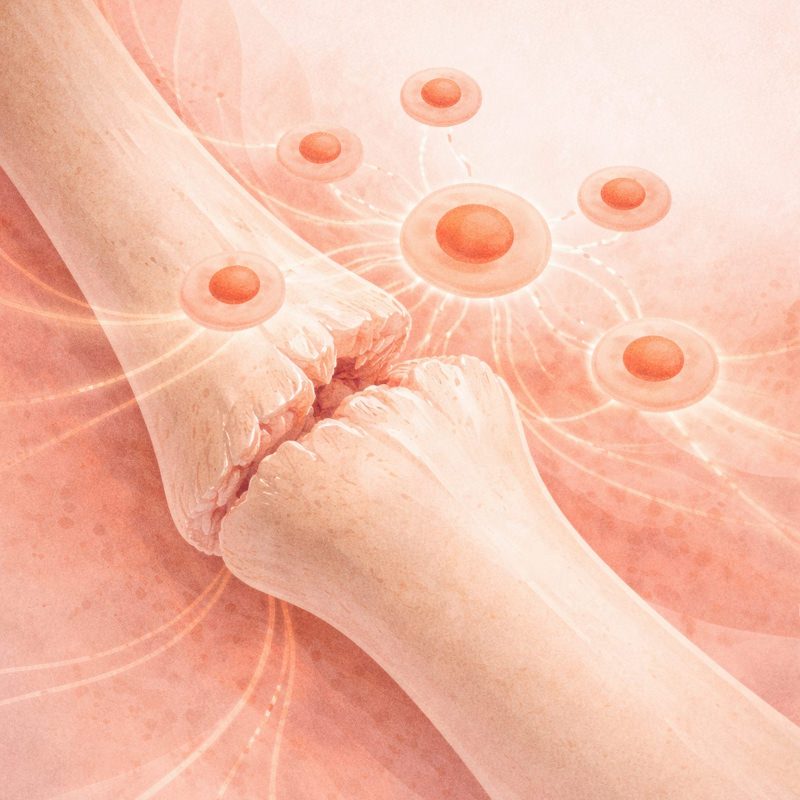
Do you remember Luke Skywalker being submerged in a Bacta tank in The Empire Strikes Back? Star Wars enthusiasts will. In the Star Wars series, patients could get immersed in the slimy fluid, and they could be healed from most any problem. Although technology in medicine is increasing at an exponential rate, we have not been able to create a Bacta tank. However, the field of biologics is heading in that direction by harnessing the body’s innate ability to heal.
Simply put, biologics are naturally occurring substances or processes that can stimulate the ability to heal. Examples in orthopaedics include platelet rich plasma (PRP) or bone marrow aspirate concentrate (BMAC). So, what exactly is PRP and how does it work?
Our blood is composed of many different elements that include red blood cells that carry oxygen, white blood cells that fight infection, and platelets. For a long time, we believed that platelets (which are fragments of a larger cell called a megakaryocyte) were only involved with clotting. You get a cut on your body, and the platelets come to the rescue to create a clot to prevent you from bleeding out. As it turns out, platelets do so much more. Platelets have granules inside them that house a plethora of growth factors. When these platelets arrive at the site of injury, these granules are released into the local environment, and the growth factors are distributed to do the work.
This is when the magic of healing begins. The growth factors act as small chemical signals that recruit and direct the action of other cells. Some growth factors recruit inflammatory cells while others signal to make blood vessels while still others stimulate fibroblasts to make a scaffold upon which to heal. It is a highly organized process that proceeds from inflammation to proliferation to remodeling. If this happens in such a predictable and consistent fashion, then why do we need to augment it? Why do we need to aid the body to heal with biologics?
Healing requires blood flow. Think of healing as a battle. The blood flow is the supply line feeding the army fighting the battle. If the supply line is deficient, then the front line cannot receive the supplies and win the battle. Tendons, ligaments and joints are privy to a limited blood supply. A tendon receives blood from the bone to which it is attached and the muscle on the other side. A ligament receives blood from the bones that it stabilizes. While joint cartilage receives nutrients from the synovial fluid and the underlying bone, there are very few vessels within each tendon and ligament. This makes blood supply and nutrients to tendons, ligaments and cartilage very tenuous. If the blood supply is deficient, then the ability to heal will be reduced.
This reduced blood flow is thought to be a reason for “chronic” tendon, ligament, and cartilage injuries. Have you ever been told that your injury is from old age or chronic? Imagine if you sustain a small injury that tears some of the fibers of a tendon, yet not enough to cause significant bleeding. Without ample blood and nutrients, this small tear will have a hard time
healing. Imagine this process happening repeatedly. Eventually, the tear enlarges until it becomes symptomatic. How can we aid the body to heal this tear? Biologics.
Biologics like PRP increase the normal number of platelets at a site of injury. The number of platelets can be increased by 4-10 times the normal amount. This in turn increases the number of growth factors that induce new vessels to form and a healing scaffold to be created.
I became very interested in this biologic space, especially for the treatment of partial tendon or ligament tears. Although these tears were partial thickness (the entire tendon was not pulled off the bone), they were still painful. Ask anyone with a partial thickness rotator cuff tear or tennis elbow and they will agree. It seemed, however, that there might be a better way to treat these partial tears other than surgical repair. Now we needed to test the hypothesis.
We chose a particular type of partial rotator cuff tear to evaluate that we thought would be amenable. One group in the study underwent surgical repair, and the other group was treated with an ultrasound-guided PRP injection into the tear site. While both groups performed equally well regarding pain relief and function, the PRP group recovered faster. This study was published in 2023. Based on these data, we expanded the use of PRP to other tendon and ligament tears with equally good success.
Let’s explore stem cells a bit. Stem cells are also a biologic that has received significant press. A stem cell is a cell that can differentiate into other cell types. There are different types of stem cells. Mesenchymal stem cells can differentiate into tendon, bone, or cartilage; while hematopoietic stem cells can differentiate into blood elements like red and white blood cells. We are blessed with stem cells all over our body to help us heal from damage.
In orthopaedics we have used stem cells harvested from bone marrow and fat to mainly treat arthritis. To call these stem cells might be a stretch, however. Yes, we can harvest stem cells in the US, but they cannot be expanded in culture to get them to the levels that have proven significant efficacy. Outside the US, stem cells can be harvested and expanded for 3-4 weeks and then given back to the patient. Here in the US, the harvested stem cells can be centrifuged or mechanically separated but not enzymatically processed. The FDA considers the stem cells to be a drug if they are manipulated more than just mechanically, and it is illegal. Stem cells harvested from the bone marrow are best termed bone marrow aspirate (BMA) and if centrifuged, bone marrow aspirate concentrate (BMAC), since they are not expanded in culture.
There are also allogenic (not from the patient) stem cells from umbilical cord, placenta, or Wharton’s Jelly, which are also not approved by the FDA. The theoretical benefit of these early stem cell lines is that they have a greater ability to differentiate into any cell line.
However, there is the possibility of a reaction to a foreign substance and transmission of any genetic disease from the original donor source to consider.
Another point to make about stem cells is that while we originally thought that it was the stem cells that actually made the new tissue, that doesn’t seem to be the case. The stem cells themselves have been shown to congregate at the site of damage. However, the stem cells seem
to have their effect through signaling other cells to do the work. Therefore, the name medicinal signaling cell is preferred to mesenchymal stem cell, although they share the same acronym.
The most potent effect of the stem cells seems to be a marked reduction in inflammation in the joint and thus a reduction in pain. As it turns out, that is exactly what patients desire. To believe that stem cells will create new cartilage in an arthritic joint is a stretch. This has been promulgated in the media and is where the media can get out over their skis. It is more realistic to think you may get a reduction in inflammation and pain for a certain time period. Most studies have shown much longer pain relief with biologics compared to cortisone, which is toxic to cartilage cells.
There is ongoing research in the US and outside the US demonstrating cartilage growth on biologic scaffolds. The future is promising, but we need to have realistic expectations of what we can accomplish with biologics today.
I think that we are able to get some tendons and ligaments to heal with PRP. This technology has been used and evaluated enough that we are dialing in on the specific types of PRP preparations that are best for tendon/ligament use and those for joint use. We are also starting to better understand the specific elements and molecules that are most important in healing and inflammation reduction.
We are not quite at the Bacta tank level yet, but great strides are being made. What intrigues me most is that this is not a drug. Rather, we are harnessing the body’s own ability to heal. With a better understanding of the biology, we can help people heal themselves. Isn’t that what we all want?
Story by Tripp Spencer Photography by Carlos Reveiz & Bruce McCamish
There’s a particular sound inside Thompson-Boling Arena when Tennessee basketball is right. It’s not just noise—it’s emotion. A mix of tension and belief. A crowd that understands defense travels, effort matters, and March doesn’t reward style points nearly as much as it rewards toughness.
As postseason play approaches, that feeling is back again in Knoxville. This year’s Tennessee team isn’t perfect, but it’s real—and in March, real often beats pretty.
A Standard Set Before
The best Tennessee teams I’ve watched all shared something deeper than talent. They played with emotion. They played for each other, for the orange and white, and for something bigger than minutes or stat lines. Those teams would die on the court for one another. Effort wasn’t situational—it was automatic.
That standard matters when looking at where this program has been and where it is now.
The 2022 season helped establish that foundation. That team clarified Tennessee’s identity: pressure defense, physical half-court basketball, and a willingness to turn games into fights. Offense came and went, but the Vols never made anything easy for opponents. It wasn’t always clean, and it wasn’t always pretty—but it was honest basketball.
That season also revealed the margins. Late-game execution. Cold shooting stretches. The reality that defense alone can’t always save you in March. Those lessons didn’t disappear. They became part of the program’s growth.
This Year’s Team: A Wave, Not a Straight Line
The 2025 Vols feel like a wave—ups and downs, momentum shifts, moments of dominance followed by stretches of frustration. Much of that reality rests on the shoulders of Tennessee’s best player, Ja’Kobi Gillespie. He is asked to be both the primary ball-handler and primary scorer, a burden that becomes heavier every time an opponent decides to trap, double, and force the ball out of his hands.
Statistically and structurally, Tennessee leans on Gillespie more than any defense should allow a single player to carry. He is the only true, confident initiator of offense on the roster. When possessions tighten late, everyone in the building knows where the ball is going—and so do opposing coaches.
That predictability isn’t a criticism of Gillespie. It’s evidence of how narrow Tennessee’s offensive responsibility structure currently is.
The Numbers That Explain the Feeling
The SEC data tells the same story Tennessee fans feel in real time. The Vols rank last in the conference in turnovers per game and near the bottom of the league in free-throw percentage—two flaws that March basketball punishes more than any others. Those mistakes stretch games longer than they need to be and leave the door open late.
And yet, Tennessee continues to compete because it dominates in areas that don’t fluctuate as easily. The Vols rank second in the SEC in rebounds per game, turning missed shots into extra possessions and preventing opponents from getting easy second chances. It’s not clean basketball, but it’s stubborn basketball. Effort and physicality keep Tennessee alive. Execution determines whether it advances.
Defense as the Constant
Conference play has only reinforced what Tennessee basketball has long been built on: elite defense. When comparing full-season team statistics across the SEC, the Vols stand out clearly. Against SEC competition, the Vols hold opponents to just 69 points per game while scoring 82.2 points per game themselves. They also hold opponents to the lowest field-goal percentage in the conference at 39.4%, a number that reflects discipline, physicality, and trust in help-side rotations.
Defense has always been the backbone of a Rick Barnes team, and this group is no different. It’s echoed every night inside Thompson-Boling Arena, where one of the loudest chants remains simple and revealing: feed the floor. Tennessee fans understand that effort on the defensive end is non-negotiable, and this team delivers it consistently.
Those same numbers also clarify why the margins feel so thin. When you defend at this level, possessions become more valuable, not less. Easy points matter more. Protecting the basketball matters more. Free throws matter more.
Tennessee doesn’t just defend shots — it controls the glass. The Vols allow the fewest rebounds per game in the SEC at 30.5, another indicator of discipline, physicality, and positional defense on that end of the floor. But the other side of the ball tells a harder truth. Tennessee ranks at the bottom of the league in turnovers and is blocked and stripped of the ball more often than any other SEC team, issues that go hand in hand with ball pressure and limited offensive initiation. It’s a tale of two sides of the ball: a defense built to win in March, and an offense that too often makes life harder than it needs to be.
Proof in the Losses
The pattern shows up clearly in Tennessee’s close losses. Against Illinois, turnovers and missed free throws erased any chance to build momentum. Against Syracuse, a two-point loss came down to execution, not effort. Against Arkansas, Tennessee shot efficiently from the floor, but the Razorbacks capitalized at the line while Tennessee left points on it.
These weren’t blowouts. They weren’t mismatches. They were games Tennessee had in its hands. And gave back.
A Shared Responsibility
Free throws aren’t a one-player issue for this team. They’re a collective standard problem. In March, free throws are the easiest points you will ever get—and the hardest to replace when you miss them. Leaving them on the floor turns manageable games into stressful ones.
Turnovers follow the same pattern. They aren’t about carelessness—they’re about pressure concentration. When one player carries the initiation load, defensive pressure multiplies. Passing lanes shrink. Decisions speed up. Mistakes follow. The solution isn’t schematic.
It’s shared responsibility
More players must be confident handling the ball. More players must be trusted to initiate offense. More players must be willing to make the first decision instead of the safe one. That’s how pressure disperses. That’s how traps fail. That’s how double teams stop working.
The Bench Factor
Tennessee doesn’t need stars off the bench. It needs reliability. It needs 6–8 points that punish over-help. It needs scoring that forces defenders to stay home. It needs production that prevents defensive schemes from loading entirely toward one player.
Bench scoring in March isn’t about volume—it’s about timing. One bucket during a drought. One finish in transition. One possession that stops a run. Those moments change games.
Rick Barnes and the Long View
Tennessee doesn’t need to become something new. It needs to become fully itself. That means spreading responsibility. Tightening execution. Valuing possessions. Treating free throws like the currency they are. Trusting more than one ball-handler. Demanding bench impact.
The foundation is already there: defense, rebounding, effort, physicality, and emotional toughness. What determines March is not identity. It’s discipline.
I believe in this team. Not because it’s flawless—but because it’s tough, connected, and capable of winning ugly. And in March, that’s often enough.
If Tennessee tightens the small things, it won’t need to play perfect basketball. It will just need to play honest basketball. And sometimes, that’s exactly what survives. Trusting more than one ball-handler. Demanding bench impact. The foundation is already there: defense, rebounding, effort, physicality, and emotional toughness. What determines March is not identity—it’s discipline.
I believe in this team. Not because it’s flawless—but because it’s tough, connected, and capable of winning ugly. And in March, that’s often enough. If Tennessee tightens the small things, it won’t need to play perfect basketball. It will just need to play honest basketball.
And sometimes, that’s exactly what survives.
→ Swipe for Next Story
Non-ProfitMARCH APRIL 2026
Faithful Service
For 35 years, InterFaith Health Center has kept uninsured workers healthy
Story by Susan Alexander Photography by Ethan Smith
Thirty years ago, the Almeida family was struggling. They had moved to the U.S. from Argentina 10 years earlier, but times were hard. The youngest of their five children had asthma. They had no health insurance and not enough money to pay for doctor’s visits for seven people.
Interfaith Health Center saved them, says Eugenia Almeida, the mother of that family. “The director and the staff members were so kind. I’m so thankful for the way the staff treated us. I was there very often. InterFaith was the best thing to happen to our family.”
The Almeidas worked hard and their lives changed. Eugenia now runs A New Hue, dedicated to creating innovative wall textures and finishes at homes and businesses in East Tennessee. When InterFaith purchased and remodeled its new location on Middlebrook Pike, Eugenia’s company applied Ja’decor, a decorative and functional product that combines cotton and silk fibers along with flecks of shiny mica, to a long wall just beyond the waiting area.
“I learned two things from this country: how to receive and how to give. Interfaith was the best thing that happened to us. I was so happy to give back.”A history of helping
About the time this issue of Cityview is published, InterFaith Health Center will celebrate its 35th year of existence, more than likely with quiet festivities. “We just invited everybody to the ribbon cutting and then the open house of our new building. I don’t know that we’ll do anything big,” says Melissa Knight, longtime executive director.
Their 20,000-square-foot headquarters, which they occupied in November, is the big news this year. It will allow the health center to expand its services to the working uninsured, add more medical staff — both paid and volunteer — and teach more classes on everything from healthy cooking to diabetes management.
The target population for InterFaith’s services is working people with no health insurance. Most are in the service industry, Knight says. “They’re restaurants’ wait staff or a mechanic at a mom-and-pop garage or hotel/motel workers or a construction worker who’s been hired temporarily to finish a project.” Most pay about $25 or $30 for an office visit.
Beth Roskelly, director of development and public relations, says patients have to provide statements of income for themselves or someone in the household, as well as proof of address, and a social security number or tax ID number. Knight says currently the center will serve people who are at or below 250 percent of the federal poverty guideline. What that number is depends on the number of people in the household.
The center had its start in 1989 when Catholic Charities director Mary Leslie Simpson Dotson gathered together community leaders for a discussion about healthcare and the need for better services for the uninsured. With leadership from Knoxville Inner City Churches United for People, a grant of $250,000 was obtained from the state to start up a clinic. It opened its doors on March 6, 1991.
Thirty-five years ago, the range of services they offer today was only a dream. At the time they employed one nurse and a front office person, relying on volunteers to fill in the gaps. Then a dental assistant was hired. Then finally a doctor.
Now, the center employs 35 people offering medical, mental health, and dental care, as well as an onsite dispensary to provide many medications. In addition, more than 40 volunteer medical professionals give their time each week to supplement the work of the paid staff.
Since its beginning, the center has cared for more than 29,000 East Tennesseans from about 33 counties, Knight says, serving more than 3,000 people a year over the course of about 12,000 office visits. Roskelly says the private sector value of their services amounts annually to $1.7 million for medical, $1.5 million for dental, $114,000 for mental health and $2 million for prescription assistance. Check in with a checkup
Most patients at Interfaith enter the system with a full medical checkup. From there they are referred to a dentist or mental health care provider or specialist for further treatment if necessary.
Dr. Lynn Nichols is the medical director overseeing that care. A pulmonologist who spent 20 years in private practice, Nichols also volunteered his time at InterFaith, finding satisfaction in providing health care to people who had difficulty accessing it.
When he was in private practice, he’d see the same people repeatedly come to the emergency room for health care. “At the hospital, we’d take care of all comers,” he says, “and they’d end up back there again and again. I saw InterFaith doing a good job filling a need.”
At the center, Nichols supervises three nurse practitioners and a host of volunteer doctors and other professionals. “We provide primary care for people age 19 to 64. (Minors in Tennessee receive TennCare and seniors are covered by Medicare.) We see a broad range of medical problems. Our goal is to have more people taken care of and fewer people in debt or bankrupt because they need care.”
In addition to the care provided at InterFaith, close to 100 medical specialists agree to accept their patients for further care at a greatly reduced cost. InterFaith patients can undergo diagnostic testing (such as CAT scans and MRIs), treatment, and even surgery at local hospitals at very affordable rates.
“I’m proud to say that Knoxville’s medical providers and businesses and the community as a whole see the value in what we do and support our clinic,” Nichols says. “We receive no federal funding. We rely on grants and donations to do our work.”Something to smile about
Once a patient’s general checkup is completed at InterFaith, he or she may be referred to the dentistry portion of the building for further attention. Dr. Danielle Barnes has directed the dental services there since 2021. She came from a corporate dental office and was happy to get back to doing more local and public health-oriented work.
The move to Middlebrook Pike allowed InterFaith to double the number of dental exam rooms and add a second full-time dentist to the rolls. Along with a full-time hygienist and volunteer help, they provide complete dental care, including dentures, partials, crowns, bridges, fillings, cleanings, root canals and, if all else fails, extractions. “We do everything but implants and cosmetic procedures like whitening,” Barnes says.
She estimates they see about 15 patients a day and the hygienist about seven patients a day, five days a week. In addition to working people without insurance, they also treat seniors on Medicare without dental insurance. Helping people cope
The last big division of the InterFaith Health Center is the mental health department directed by Licensed Marriage and Family Therapist Brandon Swaim. Though he is the only therapist on staff, InterFaith also contracts with the Helen Ross McNabb Center to have a nurse practitioner prescribe psychiatric medications when needed.
The center works hard to coordinate appointments across the departments so that a patient can see multiple practitioners in one day. “It can be difficult for them to take time off to take care of themselves,” Swaim says. “Often they don’t have paid time off.”
Swaim sees a range of mental health issues among his patients, primarily depression and anxiety. “We work with a population that’s been through difficult things,” he says. “I’m very proud to be in the position I am, and I’m proud of working for a nonprofit that truly cares, especially as we’re growing.”Looking ahead
Growth is the goal as InterFaith Health Center looks to the future. Melissa Knight plans to add more staff. And there are 3,000 square feet of the building they’re in that have not been renovated yet.
The day I visited the Center, Knight also got some exciting news that she was still processing. A plot of land beside their building had been donated to the center. When we spoke she was scrambling to make sure it was covered by liability insurance. She had no plans yet as to how to put it to use. “I haven’t even walked it yet,” she says.
She also would like to expand the number of people who know about InterFaith and rely on its services. “We’ve always struggled with how to get the word out,” she says. “We’ve sent home notes through the schools and even advertised on the buses. Most of our patients hear about us through word of mouth or the health care community, including emergency rooms.
“We have wonderful providers, and we do our very best,” she says. “We want to help.”
“Our goal is to have more people taken care of and fewer people in debt or bankrupt because they need care.” — Dr. Lynn Nichols
→ Swipe for Next Story
FeatureMARCH APRIL 2026
Gunning for the top
Military veteran Noah Mancuso led sailors in service before dropping anchor in Knoxville
Story by Phil Newman Photography by Nathan Sparks
Among the many colorful stories that dot San Diego-to-Knoxville transplant Noah Mancuso’s 26-year US Navy career, two stand out during a wide-ranging conversation from his office in Rocky Hill. And, as it turns out, both relate to big Hollywood movies.
For the first anecdote, it’s important to know that one of Mancuso’s first assignments early in his Navy tenure, which began in 1991, was in primary flight control aboard the dry-docked USS Belleau Wood, whose tower Maverick buzzed at the beginning of Top Gun.
When Mancuso mentions to someone that he was on Belleau Wood, they typically ask, “Oh, were you a pilot like Maverick or Goose?”
“No,” Mancuso replies, “but you know the tower they buzzed in the movie, right? And that officer who spilled coffee on himself when Tom Cruise flew by?” “Oh, no way, you were that guy?” they respond. “No...” Mancuso will say with a laugh. “I was the one who would have fetched that coffee for him. I wasn’t so important in those days.” Mancuso did have a role in primary flight control on the Belleau Wood, one of many positions he would occupy as he rose through the ranks to Senior Chief Petty Officer.
The second anecdote took place later in Mancuso’s career, in 2013, and involves a different Tinsel Town Tom—Hanks, this time—in his intense role as Captain Phillips in the pirate-hijacking blockbuster. As Mancuso watched the film in a crowded theater, the Navy vessel that came to the rescue toward the end looked strikingly familiar.
“All that dark space, the radar and equipment area, when they were preparing to take the shot at the bad guy, that was my ship—the USS Boxer!” Mancuso recalls. He recognized the ship’s combat information center (CIC) from two seafaring deployments.
At the moment he noticed the ship in the movie, in a spontaneous eruption of exuberance, Mancuso rose to his feet, jabbed his finger toward the screen, and yelled, “Boxer, baby! The mighty Boxer!”
Those two cinematic connections underscore both the joy Mancuso discovered during his two-and-a-half decades in the Navy and the pride and patriotism with which he approached his many assignments, both ashore and at sea.A New Yorker in a New Land
Mancuso wasn’t a native Californian—although his wife, Michelle, did grow up in the Golden State, and the couple’s two children, Kyla and Ryan, would be raised in San Diego before Ryan started the family’s Southward migration in 2022 when he enrolled at UT-Knoxville. (He’s a Vol senior now.)
But Mancuso himself hailed from Poughkeepsie, New York, along the Hudson River, where, among other formative experiences, he developed an appreciation for American history (the FDR Presidential Library is in nearby Hyde Park), and enjoyed the blessings of a close family, with one younger sister, and a group of “great friends—we’re still close to this day.”
Mancuso’s one less-happy youthful memory is his C+ average on the way to graduating from Arlington High School in 1990. “I couldn’t wait to get out of the classroom,” he says. In an ironic twist, he would later spend many hours in classrooms instructing young sailors. But as a teen, he saw the military as a less-academic alternative to college.
In another touch of irony, he says, “I didn’t want to spend another harsh winter in Poughkeepsie,” but he was shipped to boot camp at Recruit Training Command Great Lakes, Illinois, where frigid weather soon welcomed him after his fall 1990 arrival. “It was the coldest winter I ever spent.”
After boot camp, in February 1991, Mancuso was shipped West to his first duty station: the Belleau Wood, aka Devil Dog, an amphibious assault ship where he worked as a “blue shirt sailor” on the flight deck and in the tower.
It was, he says, a bit of a letdown. The previous summer, Iraq had invaded Kuwait. “That’s when I knew I was going to join the military. I wanted to go to war. But the war was over before I arrived in the yards at Long Beach. And the ship I was assigned to wasn’t even on the water.”
The highlight of that first assignment was a personal one: When a best friend from New York visited, the duo made for Tijuana, where, while laying down moves on the dance floor at a club called Tequila Sunrise, Mancuso locked eyes with a Southern Californian who would become the love of his life. He and Michelle were both 19 when they met. Moving Up the Ranks
In October of 1992, he was sent from San Diego to naval-aviation training in Millington, Tennessee, near Memphis—his first taste of the Volunteer State. “Another sailor and I were invited to a family’s house for Thanksgiving. They served us turkey and venison. That hospitality is when I knew I already loved Tennessee.”
From 1993 to 1995, he was back on the West Coast with HSL-47, the Helicopter Anti-Submarine Squadron Light 47, aka the “Saberhawks,” operating the Seahawk helicopter for anti-submarine and anti-surface warfare in the Pacific.
“I loved my job. For 26 years, serving this country wasn’t just a career—it was an honor.” — Noah Mancuso
In 1995, Mancuso started a stint onshore with the HSC-3 squadron, leading crews working to maintain Boeing Chinook aircraft. In 1998, it was back to school again, this time 14 weeks in Pensacola, Florida, to become proficient in nondestructive inspection (NDI), diagnosing needed updates to aircraft via X-ray, ultrasound, and other tools. “I thought, I’d much rather inspect these than to have to fix’em anymore.”
That December, he was “back to the fleet” in San Diego as an NDI technician on the Boxer until late 2002. The vessel deployed the Marine Expeditionary Unit (MEUs) with then-aircraft AV-8B harriers and CH-46 Echo helicopters, supporting amphibious landings in the Indo-Pacific region.
From 2003 to 2006, Mancuso served with the Aircraft Intermediate Maintenance Department (AIMD), which repaired aircraft components, engines, and support equipment for air stations and carriers.
From 2006 to 2009, he was Chief Petty Officer and the senior enlisted staffer with the renowned “Blackjacks” of Helicopter Sea Combat Squadron TWO ONE (HSC-21) at North Island.
As his career drew toward a close, in 2012 he pivoted to Helicopter Maritime Strike Squad SEVEN EIGHT (HSM-78), the “Blue Hawks,” to lead maintenance control on the MH-60R Seahawk, aka the “Romeo,” an advanced craft ideal for anti-submarine warfare.
In March of 2014, Mancuso, now having risen to Senior Chief Petty Officer, was deployed as the senior enlisted advisor for a detachment of HSM-78 aboard the USS Pinckney destroyer, overseeing aircraft maintenance as part of efforts to locate lost Malaysian Airlines Flight MH-370—the fate of which, even 12 years later, remains shrouded in mystery.
“My aircraft was out in the South China Sea looking for that for two straight weeks, 20 hours a day,” he recalls. “The XO asked me, ‘Hey Senior, how comfortable would you be lowering one of your guys from the helo into an oil slick to see it’s from the missing plane?’ I said, ‘If my guys say it’s safe, then I’m with it 100 percent.’” As it turned out, the oil wasn’t from the lost plane.
Mancuso worked in maintenance control in San Diego until 2015, when what turned out to be his final deployment was also his first aboard an aircraft carrier—the USS George Washington. “Our squadron escorted the carrier down and around Cape Horn. We saw Peru, Chile, the Strait of Magellan—that was awesome, so beautiful—up to Brazil right before the Olympics in 2016, and then dropped off the carrier to its home port at Norfolk [Virginia].”
After a storied career, Mancuso knew the time had come to end his naval service. His retirement ceremony stands as a lifetime highlight. “So many mentors and friends I really respected showed up. It was...” He pauses, nearly overcome. “All my ‘boys’ flew in from New York. One of them played the national anthem on his guitar.” His parents had passed, but other family, including his mother-in-law, helped make it extra special.
“I couldn’t keep it together,” he recalls. “Laughter, crying, stories. I was humbled to see some of the great Americans who had led me and some of those I was able to lead and mentor. You’re always looking to train your replacement, and I took pride in that ability.” As he gave his retirement remarks, he invited the audience to look around. “I know I am leaving this station and this squadron in good hands.”Proud to Be an American
Post-retirement, Mancuso took on roles in the private sector in transportation, communications, and drone development, mostly as a project administrator.
He moved with his family to Knoxville in August of 2024 and now works as a real estate agent at Wallace Realty. Right away, he picked up on the strength of the East Tennessee community toward the men and women who put themselves in harm’s way to protect and defend.
“Aw, it’s unbelievable here,” he says. “The vets, the police, firefighters... there is a lot of respect for those who serve. I love that.”
As for reflecting on his own lengthy career in the Navy, Mancuso speaks with characteristic passion about the opportunities he had to lead and train sailors who shared his dedication to preserving the freedoms we enjoy.
“I’m just proud, proud to be an American, really. I loved my job. To do it for 26 years, it’s humbling. Making Senior Chief Petty Officer was super humbling. And being able to serve my country was an honor. That’s what it was all about. Once my family came into the picture, providing for them while serving the nation—it all made sense.”
Just like the ending to that Hollywood blockbuster that prompted Noah Mancuso to stand and deliver a Navy-strong proclamation toward the big screen.
→ Swipe for Next Story
JurisprudenceMARCH APRIL 2026
The Humble Hammer
Well, it took me 17 years to get 3,000 hits in baseball. I did it in one afternoon on the golf course. – Henry Aaron
Story by Gary Wade
Henry Louis Aaron died on January 22nd, 2021 — two weeks short of his 87th birthday. During this man’s time on Earth, he had quietly become one of the best to ever play the game of baseball. For many in the Baby Boomer generation, his death represented not only one more step in the gradual disappearance of a glorious era in the sport, but it also served as a reminder of lost youth.
For over a hundred years after the Civil War, well before professional basketball, football and hockey, baseball reigned as America’s national pastime. The invention of the radio sparked interest in the game, permitting stations across the country to offer live broadcasts — play-by-play. Over time, practically every newspaper included “daily box scores” – a statical summary of every game and its individual performances — for both the National and the American Leagues. From the early spring until the World Series in October, the sport commanded the attention of fans across the nation. In the days the World Series games were played in the afternoon, some schools would close early rather than risk a roomful of distracted students. Not even two world wars suspended play in the United States. American heroes of the past included Babe Ruth, Ty Cobb, Lou Gehrig, Walter Johnson, Rogers Hornsby, and so many others. By the 1940s, the likes of Ted Williams, Stan Musial, Bob Feller, and Joe DiMaggio had become the most notable stars.
On April 15, 1947, the baseball world changed. Jackie Robinson made history, integrating the National League by starting at first base for the Brooklyn Dodgers. Branch Rickey, the managing partner of the team, had dared to break the color barrier by signing Robinson — a former all-around athlete at Southern Cal, a military veteran, and a star player in the Negro Leagues. Fittingly, some three months later, the Cleveland Indians integrated the American League by inserting center fielder Larry Doby into their starting lineup.
As notable as these achievements were, there was a downside. Wealthy organizations like New York, Cleveland, and other big cities began to drain the Negro Leagues of not only their veteran star players like Satchel Paige and Monte Irvin, but also their younger phenoms, who would later become dominating forces in the major leagues. For example, Willie Mays, who played for the Birmingham Black Barons from 1948 to 1950, signed with the New York Giants. Then, in 1951, teenager “Hank” Aaron, who had spent only three months with the Indianapolis Clowns, signed a contract with the Boston Braves. While opening the leagues’ doors to all races was cause for celebration, it signaled the end of a league that previously had been the only alternative for the best of all black baseball players and their fans.
Born to a poor family living just outside of Mobile, Alabama, Aaron had begun to develop his athletic skills at an early age by hitting bottle caps with a stick. The boys in his neighborhood equipped themselves by making “bats and balls” from materials they found on the streets. Eventually, he and his friends graduated to real bats, balls, and gloves. Aaron quietly excelled. In 1949, two years after Robinson’s debut, a 15-year-old Hank tried out for the Dodgers but was not offered a contract. Despite his habit of batting cross-handed (left-hand on top for a right-handed hitter), opposite the traditional manner, he played well enough to be employed by an independent team. The Pritchard Athletics paid this future major league superstar the princely sum of $2 per game. In the following summer, young Hank moved to the Mobile Black Bears, earning a raise to $3 per game. When the season ended, he was hired to play the following year for the Negro League’s Clowns — at $200 a month, but that was six months away. With a couple of dollars, two sandwiches and a one-way bus ticket, he traveled from his Alabama home to Indianapolis the next spring, hoping to make his living in the sport of baseball. In 26 games there, he compiled a batting average of.366 and launched five home runs, statistics that attracted talent scouts from the National League Giants and Braves. Each team offered a signing bonus of $10,000 to play in their minor leagues, but Aaron chose the Braves, who were willing to pay $50 more each month in salary.
During his time in the Braves’ minor leagues, Aaron learned to hold the bat the standard way (right hand on top), a change that led to a remarkable.336 batting for the Braves’ affiliate in Eau Claire, Wisconsin. He was selected to the All-Star team and named Rookie of the Year. Overcoming homesickness and regular doses of discrimination, Aaron agreed to accept a promotion in 1953, becoming the first black player in the South Atlantic League. Still in the minors, his organization assigned him to the Jacksonville Braves based on the belief that Aaron possessed the temperament to withstand the inevitable taunts from southern players and fans. As the team traveled to places like Montgomery, Charleston, and Savannah, Aaron was regularly separated from his teammates, being denied lodging in segregated hotels and meals in segregated restaurants. While hurt, of course, he elected not to voice his complaints. On the field, the young infielder led the league in hits, runs, and runs batted. No one came close to his batting average of.362. After Hank was named the league’s most valuable player, one sportswriter quipped, “He led the minor leagues in everything but hotel accommodations.” By then, the owners of his major league club had moved the team from Boston to Milwaukee.
After spending the following winter in the Puerto Rican league learning to play the outfield, Aaron was invited to the Braves’ major league spring training site in 1954. Bobby Thompson, who had been acquired by the Braves from the Giants in the offseason, broke his leg prior to the season. Incidentally, Thompson, old-timers might remember, had gained fame by slugging the game-winning home run in the 1951 playoff game against the Dodgers, “the shot heard ‘round the world.” The Braves replaced Thompson with Hank, who thereafter never left the starting lineup. In the ensuing years, he led the league in home runs, won a batting title, was named an All-Star (a record 25 times), and helped his team win a World Series championship. While signed to his contract when the team was still in Boston, he played for the Braves’ franchise only after it moved first to Milwaukee – 1954 through ‘65 — and then to Atlanta from ‘66 through ‘74. By the time of his retirement, “Hammerin’ Hank” hit for more total bases in his career and drove in more runners than anyone in baseball history.
The legendary Babe Ruth had held the lifetime record for home runs for over 40 years. During his colorful tenure in the sport, he had slugged 714 home runs—a record that most assumed would never be broken. No one had ever even come close … until Aaron. After the 1972 season, Hank’s total stood at 673, but on the opening day of the’73 season, Aaron was 39, an age at which almost all major leaguers had long since “hung up his spikes.” For baseball fanatics who had admired Aaron’s accomplishments but viewed Ruth as the one and only baseball “god,” the chase for 715 made the season one of the most memorable ever. Playing for a mediocre team, Hank was no longer the swift outfielder of his youth. Stolen bases and running first to third on base hits were no longer in his repertoire. In order to save his once spry legs, he most often skipped the second game of doubleheaders and occasionally played first base instead of his customary role in the outfield. But he could still hit. Playing in only 120 of the Braves 162 games, his fewest ever, he somehow smacked 40 more home runs going into the last game of the year. He only needed one more to tie the immortal Babe’s 714. Meanwhile, and unknown to fans, he was receiving thousands of letters each week. Most were encouraging, but many contained death threats. True to his nature, Aaron carried on with dignity throughout the ordeal. The Braves took precautions, but security can never be foolproof with huge crowds at each game, home or away.
Ironically, the last contest of the “73 year was against the Houston Astros, managed by 68-year-old Leo “the Lip” Durocher, a one-time teammate of none other than Babe Ruth. Durocher, perhaps out of loyalty to his late pal as some speculated, would not allow his pitchers to throw over the plate on the inside, where Aaron might be able to “pull” with power toward left field. Recognizing the strategy of his adversary, Hank simply banged out four base hits up the middle and to the opposite field, putting his season’s batting average over the magical.300 threshold for the last time in his long career.
“‘There’s a new home run champion of all time,’ Milo Hamilton shouted, ‘and it’s Henry Aaron.’”
For Aaron and the baseball world, the off-season seemed like forever. While his fans anxiously awaited the opportunity for his next home run, Aaron, the recipient of so many more threats over the winter, managed to survive until the opening day in Cincinnati in 1974. Sure enough, he homered off pitcher Jack Billingham, tying Ruth’s record, and then rounded the bases without incident. What a relief it must have been to the 40-year-old veteran. One more and he would own the record. Anticipating a sell-out crowd at their home opener in Atlanta, the Braves management kept Hank out of the lineup in the second game of the series. Naturally, the team wanted the record-breaker to be in front of the hometown Atlanta fans. In an odd twist, baseball Commissioner Bowie Kuhn intervened, ordering the Braves ownership to have him in the lineup for the third contest in the Cincinnati series– “in the interest of the integrity of the game,” he explained.
So, when Hank played that day, he failed to hit another four-bagger, purposeful or not. The team then returned to Atlanta’s Fulton County Stadium to host the visiting Los Angeles Dodgers, the same franchise that had signed Robinson almost 30 years before. Pitching for the Dodgers was Al Downing, one of the first blacks to play for the New York Yankees before being acquired by the Dodgers. The stage was set for what was to become an epoch moment in baseball history. The April 8th game merited a prime time, national broadcast. A sellout crowd of almost 54,000 fans were in attendance. Downing walked Hank in his first at bat as the fans booed. They had come to see him swing the bat. Facing Aaron for a second time in the fourth inning and with his team holding a 3-1 lead, Downing threw “a sinker that didn’t sink,” as he described it later, and “The Hammer” swatted the pitch into the left-center field bullpen. “It’s gone,” broadcaster Milo Hamilton shouted, “There’s a new home run champion of all time, and it’s Henry Aaron!”
Tommy House, a Braves reliever, caught the ball on the fly and presented it to his slugging teammate in the celebration that followed. As Aaron rounded second base two young men – both white — ran onto the field, eluded security, and patted him on the back in congratulations. Teammates mobbed Hank as he safely, and finally, reached home plate. “I’m glad it’s all over” served as his single comment. The prized ball is now on display at the Baseball Hall of Fame in Cooperstown, New York. Footnotes to the contest are that the legendary Vin Scully called the game for Dodgers’ radio and that the Braves, managed by Eddie Mathews, Aaron’s former teammate and a Hall-of-Famer himself, won the game, 7-4.
Hank hit 18 more home runs that year, finishing with 733 for the Braves, still a league record for a single franchise. He spent the last one and one-half years as a designated hitter in Milwaukee, where his major league career began, for the American League Brewers. During his short time there, he pounded a total of 22 home runs, setting his final tally at 755. Although Aaron’ salary of $200,000 in each of those two years pales in comparison to the stars of today, it marked the highpoint of his annual earnings. From the streets of the segregated South to stardom in the major leagues, this private man, this hero to many, is a genuine “Home Run King.”
In 1954 at just 20 years old, Aaron stepped into the major leagues and never left the starting lineup, beginning a career that would redefine power, consistency, and quiet greatness in American baseball.
As a postscript, Barry Bonds, who took center stage in the steroid era — first for the Pirates and more notoriously for Giants later in his baseball career, reached a lifetime total of 762 home runs in 2007. No asterisk accompanies that number, but he and other players suspected of steroid use have so far been denied entry to the Hall of Fame.
→ Swipe for Next Story
InsightsMARCH APRIL 2026
The Survey
A not-entirely-scientific look at what truly keeps Knoxville’s seniors up at night.
Story by R. Daniel Proctor
Last November Pew Research published a report on how older adults in the U. S. are reacting to social and demographic changes. “Our population is aging,” according to Pew, and its research investigated the attitudes and fears of older Americans regarding their perceptions of the aging process, income and financial concerns, and their control or lack of control over aging. I must say, the results of the study were shocking and stupefying. The Pew team surveyed just over 8,000 U.S. adults and discovered:
Old rich people worry less about money in retirement than older poor people.
Old people think they have more control over their physical and mental health than they do their looks.
More than half of old people have done or would consider doing something to look younger than they are, including coloring their hair.
The biggest worries of seniors are health (42%), finances and the future of Social Security (30%), and loneliness (16%).
Old rich people are more positive about their future than old poor people.
Now, I don’t know about you, but I do not feel I need a Pew survey to tell me these things. I know a few old people – in fact, I am thinking seriously about becoming one – and I think Pew could have saved considerable time and effort by simply spending an hour on a bench in West Town Mall and would have reached the same results. After all, these findings are obvious and common knowledge. Consequently, I decided to do my own research to find out what might be some less obvious concerns and fears of my seven or eight aging friends. So, with considerable financial backing from CityView magazine and as a service to my readers, here is my survey report about what really is on the minds of our more mature neighbors: The #1 fear facing the elderly in Knoxville is the recent construction of “roundabouts.” They are popping up everywhere, and it is hard to avoid them. They are nothing more than a four-way stop intersection with no signage, no speed limit, and no time to think about what is happening. I saw a lady the other day approach a “roundabout” on Northshore Drive as she would the escalator at Dillard’s – with much hesitation and trepidation. Interestingly, a fairly large number of our seniors (67%) view “roundabouts” as the county’s solution to our housing shortage. They think the plan is to kill us all off at “roundabouts” and then take our houses for the young.
The #2 fear is backing up. Both rich and poor Knoxville seniors feel they have lost control over their physical and mental health care as embodied in the “Wellness Test.” Most (72%) live with the apprehension of being unable to remember three words (tree, house, and car) after five minutes or forgetting how to draw a clock representing 10 minutes after 11 o’clock, perhaps resulting in immediately being transported to an assisted living facility.
Another somewhat surprising finding of my survey was how many of us across all ages (57%) regularly are unable to find our cars when we leave Costco. I think there might be money to be made by starting a new search service to match drivers to their automobiles by taking a photo of everyone next to their license plate before they go into the store.
Smartphones scored quite high in the “I know nothing” category. My research also revealed considerable anxiety (47%) about pickleball. It seems that most feared that societal pressures would eventually force them to play the game causing them to end up either liking it or becoming seriously injured or even permanently disabled by falling while chasing after the pickle.
Most responders to my survey (58%) were concerned about new aches and pains every day with no idea what caused them. Many made unsolicited comments on what gives them pleasure life, mentioning specifically oldies reunions on PBS (37%), supportive shoes (21%), weather forecasts (19%), and checking the clock at night to see if it’s late enough to go to bed (47%).
My survey did concur with the Pew Research finding that more than half of the elderly population has done or would do things to improve their appearance to make themselves look younger. In fact, I recently discovered a few gray hairs and seriously considered dying my hair black only to suddenly recall Rudy Giuliani on TV when he was sweating under stress and his black hair dripped down his face and off of his nose like Niagara Falls. That image alone caused me to throw away the bottle of shoe polish I was holding while looking in the mirror.
→ Swipe for Next Story
TravelMARCH APRIL 2026
Wondering the West
Finding peace and solace amongst natures greatest creations.
Story & Photography by Molly Herb
It was shortly after 8 p.m. on Christmas Eve when I reached for the windshield wiper lever, nudging it higher, only to realize it was already maxed out. As fast as they’d go. Not nearly fast enough. Damn.
The rain came down in sheets, gum-ball-sized bursts exploding against the glass, smearing the road into abstraction. No shoulder. No margin. Construction barrels squeezed the highway into a single narrow lane, their blinking orange lights mocking me as oncoming headlights detonated into white blindness. For brief moments, I just hoped the road stayed where it belonged.
I’d been on the road for hours, heading west somewhere past Gallup, New Mexico—the last familiar name on the map—into nowhere with my twelve-pound, self-appointed navigator Coco, half chihuahua, half Velcro, fully uninterested in directions. We’d just closed the year at Cityview Magazine.
At the edge of everything, looking down, you learn how vast the world is and how small you are within it.
I was wrung out. Empty. Ready to exhale.
I’d lost track of how long I’d been on that road, white-knuckling forward, shoulders locked, music turned down as if silence might sharpen my vision. Then, just like that, the rain stopped. The road reappeared. My shoulders dropped. A Chevron glow surfaced in the distance like a mirage. I didn’t need gas. I didn’t need snacks.I needed to stop driving.
Then the silence hit. Absolute. Crushing.
Inside, before I could even speak, the young attendant looked up and said, “A lot of people sleep in their cars here. You’re good.” I thanked him quietly and retreated to the back of my car, grateful beyond words, as there were few alternate choices than this tiny gas station.
Valley of the Rising Sun
The West holds a kind of darkness all its own. It wrapped around me for nearly an hour as I followed a narrow canyon road shortly after 6am, rain thinning to mist. I had no idea where I was, blindly following the GPS, seeing only as far as my high beams allowed. Everything else disappeared.
Then the storm clouds broke just enough. Navy blue softened into teal, then electric blue, then pastel orange and pink. Christmas morning arrived with a gift. The sky became a moving canvas, light spilling across the landscape. Jagged mountains tore through the earth, unanchored by trees, roads, or anything familiar. In this place, perspective simply didn’t exist. And it was magnificent.
A True Loss for Words
The road into Monument Valley slowed me to a crawl. Not by design, by necessity. Every mile demanded stopping. The lingering rain eased. The sun broke through. Light moved intentionally, like a roaming spotlight guiding a private tour. I remember being on the phone and slowly losing language. Words unraveled into sounds. Awe replaced explanation.
The twenty-five miles from Kayenta to the visitor center took three times longer than it should have, and I wouldn’t change a second of it. At the gate, a sign read “MONUMENT VALLEY LOOP TRAIL CLOSED. PRIVATE TOURS ONLY”. An oversight entirely my fault. Holiday closures weren’t part of the plan. I smiled anyway, snapped a quick photo of the formations, climbed back in, looked at Coco and said, “Monument Valley may be taking Christmas off, but we aren’t.” I pointed the car west and we settled in for the two-hour drive to our next destination. Wait! Is that a wild horse? Brake lights. Dust. A sharp side-eye from the dog. “Don’t look at me like that,” I said. “It’s a wild horse.”
Page, Arizona would be next. And Page, I soon learned, sold beauty by the ticket.
A Vending Machine for Beauty
Page, Arizona arrived with a price tag. The town knew exactly what it was doing. Opportunity met demand. Beauty became infrastructure. Gates went up. Ticket booths and gift shops followed. “Insert money, receive view, move along” might as well have been printed on the sign. I won’t fault Page for it. It saw something extraordinary and figured out how to manage the crowd. Still, the pay-per-view approach landed differently after the quiet I’d been chasing. Being frugal—and mildly stubborn—I chose the cheapest option: Horseshoe Bend, where a handwritten sign greeted me: NO FEE TODAY. FREE ENTRY. “Score,” I said out loud, as if saving those ten dollars counted as a personal victory.
People as far as the eye could see gathered along the rim for sunset. A guardrail offered safety only if you were lucky enough to wedge into one of the few remaining gaps. The rest of us trusted balance and strangers. I set up my tripod, took a few careful steps forward, and leaned forward just enough to look down. Six inches from the edge was a thousand-foot drop straight to the river below—taller than any building back home—and to that end, I shuffled back as one look was enough. Inner dialog failing me I turned to a nearby couple “That kind of fall would really give you time to reflect on your life choices. You’d be falling for almost ten seconds.” They smiled and backed away. I lingered until the sun slipped out of sight. Chilled to the bone, I was reminded that awe doesn’t require solitude, but solitude does change how it lands.
After three days on the road, I’d like to say I resisted the lure of a real bed and hot shower. I didn’t. A $37 motel sign appeared like divine intervention, but I should have kept driving. For the price of two fast-food meals, I got sheets auditioning for a detergent commercial, carpet dirtier than my shoes, and a door that didn’t latch. A call to the office resulted in a man with a screw driver showing up 20 minutes later. Naturally I let him in. He removed the strike plate entirely. Problem solved, I guess. I was too tired to complain and with the security of a latched door I blinked and the night was over.
Morning came, I was promptly greeted by the same man, shortly after opening my door. “You can just leave the door open when you go.” He said with a smile “Didn’t know I had a choice,” I replied with a smirk—already setting my sights on the complimentary breakfast. A suspiciously stale bagel and something resembling coffee later It was obvious I had learned nothing. I left Page with the aftertaste of commodified beauty in my mouth or maybe it was the brown water they called coffee. Either way, wherever we ended up next had to have more than 2-stars and unstained sheets.
Destination Unknown,But Not Unintended
Highway 89A stretched endlessly ahead. The destination I’d pinned promised solitude and sandstone. What I saw was flat road and familiar mountains. “Think we’ve been duped,” I said. Coco lifted her head, unimpressed. A sign appeared:VERMILION CLIFFS NATIONAL MONUMENT.
A dirt road flashed past. I braked, turned around, this wasn’t a road side glimpse, this was merely the warning sign: hazards, terrain, wildlife. One line repeated with enthusiasm.
High-clearance, 4×4 required.
I glanced at my Subaru Outback Wilderness. Nine and a half inches of clearance. AWD. I hoped marketing hadn’t lied. A cattle guard rattled beneath the tires. Game on.
Immense Beauty, Deafening Silence
Three hours and half a tank of gas later, I eased over what amounted to the final boss of cattle guards. Car-sized ruts lay scattered like a minefield—a clear reminder that precision wasn’t optional. Holding my breath, I threaded through without disappearing into any of the voids of shame. Beyond that point, there was no road. No trail. I continued on foot.
I zigzagged through the desert, climbing white “brain rocks,” their surfaces frozen mid–lava bubble, and stumbled into a small oasis—a twisted tree rising from sand, shallow water reflecting the sky. Then the silence hit. Absolute. Crushing. With the outside world gone, everything inside me turned up. My breathing sounded like wind. My heartbeat echoed. Even blinking had volume. I shot until I shouldn’t have, then kept going. Light vanished. Warmth followed.
My jacket sat forgotten on a rock a few hundred yards away and far above me. I’d drifted well north of my intended line. The walk back would be long. Moonlight helped. One bar of service helped more. The Subaru app optimistically promised a twenty-five-minute walk.
When I finally opened the tailgate, I found evidence of Coco’s ongoing stomach rebellion—a last-ditch attempt to distance herself from her sleeping area that ended far too close to mine. Thirty-degree air accelerated cleanup. We settled in for a long, cold night.
Morning arrived with snow, panic, and the hope that twenty miles of deep sand, ruts, and washboard hadn’t trapped us. Relief came. Then pavement. Monument Valley called again.
Temporarily Permanent
The car was dark and cold. Remote start was essential this early. Twenty-seven degrees—cold enough to see your breath even inside. No time or heat to waste. Pack it up and hit the road. At the gate, a young Navajo man glanced at my receipt, then my car, and said, “Stay on the trail.” Luxury SUVs floated past like they belonged on red carpets, not red dirt. Signs warned of snakes and stopping. I obeyed by slowing to a crawl and hanging my camera out the window. The scale never let up. These formations feel permanent to us, but to Earth they’re no more permanent than a sandcastle to a tide. At a small outpost: coffee, fry bread, chickens, kittens, and a man on a horse straight out of a western. I waited as underdressed tourists cycled through—ten dollars, a photo, dust, repeat.
Eventually the man stepped away, the horse lingered, and I settled for a single frame. Good enough. Back in the car, Coco sneezed into my coffee. You get used to it. I forgave her.
We kept going. But where to next lingered—until it didn’t. One word surfaced and refused to leave: cactus. I pointed the car south and drove.
Saguaro National Park arrived before sunrise. Cartoon cacti stood everywhere, flanked by every plant your parents ever warned you not to touch. Naturally, I touched all of them. The sunrise underperformed. The cacti did not. Fingers first, ankles later—both paid for my curiosity. It was painfully beautiful. By midday, it was time to move on. Something bigger was waiting.
The Perfect Ending
A few hundred yards from the parking lot at White Sands National Park, noise dissolved. Further out, even voices vanished. Coco stopped, looked at her leash before looking at me. I unclipped it, and finally herself again, she floated across the dunes as if untethered by gravity. We walked west for hours until there was no one left but us. We sat atop the tallest dune, backs to the sun, cool sand beneath us. Time passed only by shadow before the light dipped and the cold crept in. Two glossy eyes told me it was time, not for another adventure, but to go home.
The West humbles me in the best way. Here, reduced to scale and breath and presence, I feel at peace. This landscape holds my heart like no other place ever has.
→ Swipe for Next Story
Top DocsMARCH APRIL 2026
Top Docs 2026
Every year, the world of medicine changes and evolves – new discoveries are made, new procedures are perfected, and new solutions take the stage. But these changes and evolutions don’t spring from nothing. Thousands of medical professionals are all part of this momentous effort to ensure that our community gets the best care available, and every year, just as we see the results of their efforts, we have the opportunity to recognize those efforts.Cityview’sTop Doctors list is our way of giving thanks to the providers in our community who are making an impact, as well as our means of introducing you to the sorts of providers you can trust with your medical needs.
The list you are about to read isn’t just our opinion. This list is created first and foremost by doctors, voting for their peers whom they believe are most deserving of recognition in their fields. When you see a name on this list, it’s a name vetted by the medical experts you know and trust here in East Tennessee.
Whether they are a ten-year veteran of the list or this is their Top Docs debut, the doctors named here are published without ranking. Our goal isn’t to say one of these doctors stands above the rest; we’re here to highlight all these medical professionals who have contributed to the health of our community, and you can be confident that each and every one of them will take good care of you and your family.
We’d like to take this opportunity to thank all the medical professionals in our community – whether they’re featured on this list or not – for all you do. We appreciate the time you took out to highlight your peers.
And now, let’s see who they chose for 2026’s Top Doctors of East Tennessee!
Allergy & Immunology
If pollen makes you miserable and seafood gives you hives, turn to allergy and immunology doctors for relief.
Leslie Baker, MD Greater Knoxville ENT Associates
Jane Conley, MD The Allergy Asthma and Sinus Center, PC
Richard DePersio, MD Greater Knoxville ENT Associates
Donald Ellenburg, MD Allergy & Asthma Affiliates
Timothy Frazier, MD Allergy & Asthma Affiliates
Laura Green The Allergy Asthma and Sinus Center, PC
William Horton, MD Greater Knoxville ENT Associates
Karthik Krishnan, MD The Allergy Asthma and Sinus Center, PC
Marek Pienkowski, MD Pienkowski Allergy Clinic
Tidence “Ty” Prince, MD The Allergy Asthma and Sinus Center, PC
Jeffrey Schlactus, MD The Allergy Asthma and Sinus Center, PC
Andrew Singer, MD Allergy & Asthma Affiliates
Michael Springer, MD The Allergy Asthma and Sinus Center, PC
Joseph Wisniewski, MD The Allergy Asthma and Sinus Center, PCAnesthesiology
Count backwards from 10… Anesthesiology deals with caring for patients before, during and after surgery, as well as in intensive care and emergency medicine.
Jeffrey Broussard, MD North America Partners in Anesthesia
Jason Buehler, MD University Anesthesiologists
Daniel Bustamante, MD University Anesthesiologists
Gordon Collins, MD American Anesthesiology of TN Parkwest Hospital
Craig Combs, MD University Anesthesiologists
Brian Conroy, MD North America Partners in Anesthesia
Jeffrey Fuqua, MD Covenant Anesthesia Group
Michael Godbold, MD University Anesthesiologists
Benjamin Harper, MD University Anesthesiologists
Steven Massaro, MD Covenant Anesthesia Group
Patrick McFarland, MD University Anesthesiologists
Samuel (Tim) McIlrath, MD Covenant Anesthesia Group
James Miller, MD University Anesthesiologists
Jeffery Ollis, MD Covenant Anesthesia Group
Brian Wetherington, MD Prisma Health
James Wike, MD Neurosurgical Associates, PCCardiology
Cardiology deals with the disorders of the heart, including congenital heart defects, coronary artery disease, heart failure, and electrophysiology.
Thomas Ayres, MD Knoxville Heart Group
Raj Baljepally, MD University Cardiology, PC
Stuart Bresee, MD University Cardiology, PC
James Cox, MD University Cardiology, PC
Jerry Crook, MD University Cardiology, PC
Lee Dilworth, MD Knoxville Heart Group
Malcolm Foster III, MD Turkey Creek Medical Center
Jeffrey Hirsh, MD University Cardiology, PC
David Huntsinger, MD University Cardiology, PC
Jeffrey Johnson, MD University Cardiology, PC
Joseph Liu, MD University Cardiology, PC
Barry Michelson, MD Tennova Heart
Ayaz Rahman, MD Cardiology Associates of East TN
Benjamin Shepple, MD University Cardiology, PC
Charles Treasure, MD Tennova Heart
Carmelo Venero, MD University Cardiology, PC
David Wood, MD Knoxville Heart Group
Nicholas Xenopoulos, MD Cardiology Associates of East TNCardiology, Electrophysiology
Electrophysiologists focus on the electrical system of the heart. They study and treat irregular heart rhythms with medicine, a pacemaker, cardiac ablation or surgery.
Michael Bailey, MD University Cardiology, PC
James Cox, MD University Cardiology, PC
Jeffrey Hirsh, MD University Cardiology, PC
Keith Kyker, MD Tennova Heart
William Mahlow, MD University Cardiology, PC
Hitesh Mehta, MD Knoxville Heart Group
John Meriwether, MD Cardiology Associates of East TN
An interventional cardiologist treats heart and blood vessel conditions using nonsurgical, catheter-based procedures and imaging techniques.
Thomas Ayres, MD Knoxville Heart Group
Raj Baljepally, MD University Cardiology, PC
Neil Barry IV, DO Tennova Heart
Stuart Bresee, MD University Cardiology, PC
Clint Doiron, MD Tennova Heart
Malcolm Foster, MD Turkey Creek Medical Center
Barry Michelson, MD Tennova Heart
Sara Negrotto, MD Cardiology Associates of East TN
Tjuan Overly, MD University Cardiology, PC
Ayaz Rahman, MD Cardiology Associates of East TN
Joshua Todd, MD Knoxville Heart Group
Carmelo Venero, MD University Cardiology, PC
David Wood, MD Knoxville Heart Group
Nicholas Xenopoulos, MD Cardiology Associates of East TNCardiovascular Disease
A cardiovascular disease specialist focuses on diseases of the heart and blood vessels and manages conditions such as heart attacks and abnormal heart rhythms.
Thomas Ayres, MD Knoxville Heart Group
Neil Barry IV, DO Tennova Heart
Lee Dilworth, MD Knoxville Heart Group
Clint Doiron, MD Tennova Heart
Malcolm Foster III, MD Turkey Creek Medical Center
David Huntsinger, Jr., MD UT Medical Center
Jeffrey Johnson, MD UT Medical Center
Kyle McCoy, MD Tennova Heart
Ravi Mehta, MD Turkey Creek Medical Center
Barry Michelson, MD Tennova Heart
Sara Negrotto, MD Cardiology Associates of East TN
Benjamin Shepple, MD University Cardiology, PC
Charles Treasure, MD Tennova HeartCritical Care
Doctor needed, stat! Critical care docs deal with seriously or critically ill patients with conditions that may be life-threatening.
Andrews Paul, MD Statcare Pulmonary Consultants
Paul Branca, MD University Pulmonary & Critical Care
Shannon Byrd, MD Statcare Pulmonary Consultants
Jesse Doers, MD Statcare Pulmonary Consultants
Tina Dudney, MD University Pulmonary & Critical Care
Ronald Estes, MD Statcare Pulmonary Consultants
Jared Kravitz, MD University Pulmonary & Critical Care
Scott Luchsinger, MD Statcare Pulmonary Consultants
James Pharaoh, MD Statcare Pulmonary Consultants
Elise Schriver, MD University Pulmonary & Critical Care
Francisco Soto, MD University Pulmonary & Critical Care
John Swisher, MD Statcare Pulmonary Consultants
Arseniy Tsapenko, MD University Pulmonary & Critical Care
Eric Weaver, MD Statcare Pulmonary ConsultantsDentistry
Although primarily associated with teeth, dentistry includes other aspects of the head and face complex, including muscular, lymphatic, nervous, vascular, and anatomical structures.
Tyler Allen, DDS Pickering & Allen
Jonathan Bradshaw, DDS Heritage Family Dentistry
Steven Brock, DDS Dental Images
John Coulter, DDS Coulter Family Dentistry
Robert Kelso, DDS Robert M. Kelso Family & Cosmetic Dentistry
Steven LoCascio, DDS East TN Prosthodontics
Chase Nieri, DDS Dental Images
G. Drew Osborn, DDS Foothills Pediatric Dentistry, PC
James Pickering, DDS Pickering & Allen
James Williams, DDS Turkey Creek Dental
Olcie Wilson, DDS University General Dentists
Andrew Young, DDS Knoxville Dental CenterDermatology
Turn to a dermatologist with conditions involving the skin, hair, and nails, including acne, eczema, psoriasis, and skin cancer, among others.
Elizabeth Anderson, MD Knoxville Institute of Dermatology
Matthew Doppelt, DO Southeastern Dermatology
Elizabeth Ergen, MD Dermatology Associates of Knoxville
Carley Fowler, MD Knoxville Center for Dermatology and Plastic Surgery
Katherine Kerchner, MD Dermatology Associates of Oak Ridge
Edward Primka, MD Dermatology Associates of Knoxville
Meredith Overholt, MD Skin Wellness Center
Quyn Rahman, MD Knoxville Institute of DermatologyEmergency Medicine
Got a problem you need help with NOW? Emergency medicine is concerned with the care of illnesses or injuries requiring immediate medical attention.
Randal Dabbs, MD TeamHealth
Michael De Boer, MD UT Medical Center
Debra Durst, MD RevitalyzeMD
Travis Fawver, MD TeamHealth
Leonard Lamsen, MD UT Medical Center
Joseph Peeden, Jr., MD ETCH-Children’s Pediatric Group
Jeffrey Zurosky, MD Parkwest Medical CenterEndocrinology
Endocrinology deals with the endocrine system, its diseases, and hormones. Conditions like diabetes, thyroid disease, growth issues and infertility are treated by endocrinologists.
Thomas Doty III, MD Endocrinology Consultants of East TN
William Law, MD Endocrinology Consultants of East TN
Daniel McCammon, MD Endocrinology Consultants of East TN
Gregory Moffitt, MD Endocrinology Consultants of East TN
Casey Page, MD Endocrinology Consultants of East TN
Amit Vora, MD Endocrinology Consultants of East TN
John Williams, MD Endocrinology Consultants of East TNFamily Practice
Unlike other specialties, family practice physicians are qualified to treat most ailments and provide health care for people of all ages.
Christopher Acker, MD Trinity Medical Group
Kenneth Allum, MD Summit Medical Group
Raye-Anne Ayo, MD Family Health Center
Amy Barger Stevens, MD University Family Physicians
Alicia Brooks, MD Fort Loudon Primary Care
Luke Chesney, MD Summit Medical Group at Deane Hill & Northshore
Daniel Cox, MD Lakemoor Family Physicians
R. Wesley Dean, MD Emory Family Practice
Brad Flaming, MD Emory Family Practice
Amy Forsee Rocky Hill Family Physicians
Julie Jeter, MD University Family Physicians
Rickey Manning, MD Halls Family Physicians
Randy Pardue, MD Trinity Medical Group
Amy Rosine, MD Fountain City Family Physicians
Rodney Sturgeon, MD Halls Family PhysiciansGastroenterology
Gastroenterology is the branch of medicine focused on the digestive system and its disorders. Colon cancer screening by a gastroenterologist is important for fighting cancer.
Thomas Young, MD University GastroenterologyGenetics
Genetics is concerned with the study of genes, genetic variation, and heredity in organisms. It can help explain why some diseases run in families.
Ilse Anderson, MD University Genetics Center
J. Austin Hamm, MD East TN Children’s Hospital Genetic CenterGeriatric Medicine
Geriatric medicine focuses on health care of elderly people. It aims to promote health by preventing and treating diseases and disabilities in older adults.
Monica Crane, MD Genesis Neuroscience Clinic
Kim Emmett, MD Faculty Internal Medicine
Cynthia Pearman, MD UT Hospice and Palliative Care
Karen Rhea, MD Internal Medicine AssociatesGynecologic Oncology
Gynecologic oncologists treat women’s cancers and complex benign gynecologic diseases, including cervical cancer, endometriosis, fibroids and ovarian cancer.
Jonathan Boone, MD University Gynecologic Oncology
Kenneth Cofer, MD Thompson Oncology Group
Larry Kilgore, MD University Gynocology Oncology
Kristopher Kimball, MD University Gynecologic Oncology
Someone is likely to be referred to a hematologist-oncologist because an abnormality was detected during a blood test.
David Aljadir, MD Tennessee Cancer Specialists, PLLC
Tracy Dobbs, MD Tennessee Cancer Specialists, PLLC
Saji Eapen, MD University Cancer Specialists
Hesamm Gharavi, MD Tennessee Cancer Specialists, PLLC
Wahid Hanna, MD Hanna Cancer Associates
Daniel Ibach, MD Tennessee Cancer Specialists, PLLC
Ross Kerns, MD Tennessee Cancer Specialists, PLLC
Richard Lee, MD Tennessee Cancer Specialists, PLLC
Mitchell Martin, MD Tennessee Cancer Specialists, PLLC
James Mosley III, MD University Interventional Radiology
Timothy Panella, MD University Cancer Specialists
Felicia Wheeler, MD University Cancer SpecialistsHospice / Palliative Care
Hospice and palliative care focuses on symptom management, relief of suffering and end-of-life care.
Carla Gillespie, MD Statcare Hospitalist Group
Cynthia Pearman, MD UT Hospice and Palliative Care
Heather Reed-Day, MD UT Hospice and Palliative Care
Adam Tyson, MD UT Hospice and Palliative Care
John Vannoy, MD Internal Medicine AssociatesHospitalist
A hospitalist practices in a hospital and works to treat patients with a variety of illnesses and injuries.
Michael Carringer, MD UT Hospitalists
Richard Coffey, MD Statcare Hospitalist Group
Leila Davis, MD TeamHealth
Deborah Franklin, DO UT Hospitalists
Benjamin Helms, DO UT Hospitalists
J.J. Janoyan, DO UT Hospitalists
Jason Kennedy, MD UT Hospitalists
Ryan Kerr, MD UT Hospitalists
Claude LaCharite, MD UT Hospitalists
Nathan Smith, MD UT Hospitalists
Benjamin Verzi, MD UT Hospitalists
Brian Wheeler, MD UT HospitalistsHyperbaric Medicine
Hyperbaric medicine is a treatment used to speed up healing of carbon monoxide poisoning, gangrene, stubborn wounds, and infections in which tissues are starved for oxygen.
Lee Carder, MD University Wound Care and Hyperbaric Center
Vaughan Hall, MD Mobile Hyperbaric Centers, LLC
Lindsey Harrell, MD Mobile Hyperbaric Centers, LLC
Ryan Unger, MD University Wound Care and Hyperbaric CenterInfectious Disease
Infectious disease docs have been busy over the last year. They are trained to make the right diagnoses for dozens of infectious diseases and organize treatment plans.
John Adams, MD Knoxville Infectious Disease Consultants
E. Brian Kemp, MD Knoxville Infectious Disease Consultants
Henri Shiflett, MD Knoxville Infectious Disease Consultants
Mahmoud Shorman, MD University Infectious Disease
Russell Smith, MD University Infectious Disease
Hiediliza Tan, MD Hiediliza Tan, MDInternal Medicine
Internal medicine deals with the prevention, diagnosis, and treatment of internal diseases. Internists, as they’re also known, generally treat adults.
Robert Alley, MD Internal Medicine Associates
Amy Bentley, MD Internal Medicine Associates
Jeffrey Boruff, MD Internal Medicine Associates
Larry Brakebill, MD Internal Medicine Associates
Kathryn Coombes, MD Internal Medicine Associates
Glenn Hall, MD Internal Medicine Associates
Rocio Huet, MD University Internal Medicine
James Hurst, MD Summit Medical
Judith Kinzy, MD Faculty Internal Medicine
Kimberly Morris, MD UT Medical Center
Jennifer Piel, MD UT Primary Care Northshore
Nathaniel Piel, MD Faculty Internal Medicine
Thang Phan, MD TeamHealth
Janet Purkey, MD UT Medical Center
John Showalter, MD Summit Medical Group
Katie Tipton, MD Trinity Medical AssociatesLongevity/Regenerative Medicine
Longevity medicine is about more than simple ‘anti-aging’. Longevity doctors address numerous aspects of the aging process, aiming to not only make patients look younger but remain healthy longer.
Ed Breazeale, MD The Breazeale Clinic
Debra Durst, MD RevitalyzeMD
Tom Gallaher, MD Gallaher Plastic Surgery & Spa
Jason Hall, MD Trillium Plastic Surgery
Thomas Rogers, MD Performance Medicine
Margaret Troxell, MD Troxell’s Anti-Aging Center
Hiediliza Tan, MD Hiediliza Tan, MDMaternal & Fetal Medicine
Maternal–fetal medicine, also known as perinatology, focuses on the health concerns of the mother and fetus prior to, during, and shortly after pregnancy.
Kimberly Fortner, MD High Risk Obstetrical Consultants, PLLC
Mark Hennessy, MD High Risk Obstetrical Consultants, PLLC
Bobby Howard, MD High Risk Obstetrical Consultants, PLLC
Cecil “Tripp” Nelson III, MD High Risk Obstetrical Consultants, PLLC
Callie Reeder, MD High Risk Obstetrical Consultants, PLLC
Lynlee Wolfe, MD High Risk Obstetrical Consultants, PLLCNeonatology
When babies are born ill or prematurely, a neonatologist is likely to oversee care in a neonatal intensive care unit.
John Buchheit, MD Knoxville Neonatal Associates
Tara Burnette, MD Regional Neonatal Associates
Mark Gaylord, MD Regional Neonatal Associates
Malinda Harris, MD Knoxville Neonatal Associates
Keri Lattimore, MD Regional Neonatal Associates
J. Thomas Meadows, MD Regional Neonatal AssociatesNephrology
Kidney function and disease is the focus of nephrology. It stretches from dealing with diet and medication to kidney replacement.
Sung Yong Bae, MD East Tennessee Nephrology
Kendra Hendon, MD Knoxville Kidney Center, PLLC
Ritu Khanna, MD University Nephrology
Stephen Kiss, MD East Tennessee Nephrology
Ross Nesbit, MD University Nephrology
Edward Newman, MD Knoxville Kidney Center
Denise Rivers, DO University Nephrology
Ashutosh Singh, MD Nephrocare Tennessee, PLLC
Urath Suresh, MD University NephrologyNeurology
Neurology deals with disorders of the nervous system. Neurologists treat diseases of the brain and spinal cord, including epilepsy, stroke and Parkinson’s disease.
Alexander Hartmann, MD University Neurohospitalists
Steven Rider, MD University Neurology
Randall Trudell, MD University Neurology
Brian Wiseman, MD University NeurohospitalistsObstetrics/Gynecology
Obstetrics and gynecology deals with both pregnancy and childbirth and the health of the female reproductive system. It’s commonly known as OB-GYN.
Margaret Beaudrot, MD Fort Sanders Women’s Specialists
Leonard Brabson, MD Tennova Women’s Health Specialists
Lisa Buckingham, MD University Women’s Specialists
Stephanie Cross, MD University Women’s Specialists
L. Michael Fields, MD Fields Center for Women’s Health
Kimberly Fortner, MD High Risk Obstetrical Consultants, PLLC
Robb McKeown, MD Fort Sanders Women’s Specialists
Laura Ellen Moffat, MD Fort Sanders Women’s Specialists
Kenneth O’Kelley, MD Generations OB/GYN
Kimberly Roberts, MD Contemporary Women’s Health
Periclis Roussis, MD Fort Sanders Perinatal Center
Andwylynn Sances, MD OB/GYN Associates of Oak Ridge
Erin Saunders, MD Fort Sanders Women’s Specialists
Walter Schoutko, MD University Women’s Specialists
Jeanette Toney, MD Tennova Women’s Health Specialists
Jaclyn Van Nes, MD University Women’s Specialists
Shenika Welch-Charles, MD University Women’s Specialists
Nikki Zite, MD University Women’s SpecialistsOphthalmology
Ophthalmology deals with the diagnosis and treatment of eye disorders. Ophthalmologists also can perform surgery on the eyes.
Nicholas Anderson, MD Southeast Retina Associates
Andrew Anzeljc, MD Baptist Eye Surgeons
John Dawson, MD East Tennessee Eye Surgeons, PC
Paul Froula, MD University Eye Specialists
Herbert Glatt, MD University Eye Specialists
David Harris, Jr., MD University Eye Specialists
J.Franklin Murchison, MD Baptist Eye Surgeons
J. Matthew Rouse, MD University Eye Specialists
R. Keith Shuler, MD Southeast Retina AssociatesOtolaryngology
Otolaryngology is a subspecialty that deals with the surgical and medical management of conditions of the head and neck.
Leslie Baker, MD Greater Knoxville ENT Associates
Michael J. Belmont, MD Children’s Ear, Nose & Throat Specialists, PLLC
Elise Denneny, MD Greater Knoxville ENT Associates
Richard DePersio, MD Greater Knoxville ENT Associates
William Horton, MD Greater Knoxville ENT Associates
John Little, MD Children’s Ear, Nose & Throat Specialists, PLLC
Clyde Mathison, MD Farragut ENT & Allergy
Mark Overholt, MD Ear, Nose & Throat Consultants of East TN, PC
Nicholas Panella, MD Ear, Nose & Throat Consultants of East TN, PC
Christopher Rathfoot, MD Greater Knoxville ENT Associates
R. Mark Ray, MD Children’s Ear, Nose & Throat Specialists, PLLC
Allan Rosenbaum, MD Greater Knoxville ENT AssociatesPain Medicine
A pain medicine specialist treats pain caused by disease, disorder, or trauma. They often see patients with pain in the back, knee, head, hip, and neck.
Jason Buehler, MD University Anesthesiologists
James Choo, MD Pain Consultants of East TN, PLLC
Mark Jones, MD Pain Medicine of the South
Elmer Pinzon, MD University Spine & Sport
Matthew Vance, MD University Anesthesiologists
Stephanie Vanterpool, MD University AnesthesiologistsPathology
Pathology studies the causes and effects of disease or injury by examining bodies and body tissues and performing lab tests.
Frank Beuerlein, MD East Tennessee Pathology, PLLC
William Beuerlein, MD East Tennessee Pathology, PLLC
Lisa Duncan, MD University Pathologists, PC
Michael Dyer, MD Innovative Pathology Services, PLLC
If your child has problems with growth, puberty, diabetes, or other disorders related to the hormones and the glands that produce them, a pediatric endocrinologist may treat your child.
Carmen Tapiador, MD ETCH–Pediatric Endocrinology
Elizabeth Wirthwein, MD ETCH–Pediatric EndocrinologyPediatric Gastroenterology
If your child has a digestive system, liver, or nutritional problem, a pediatric gastroenterologist has the expertise to treat your child.
Youhanna Al-Tawil GI for Kids, PLLC
David DeVoid, MD GI for Kids, PLLC
Chad Thornhill, MD GI for Kids, PLLCPediatric Hematology / Oncology
If your child or teen has a blood disease or cancer, a pediatric hematologist/oncologist will likely evaluate and treat him.
Michael Blake, MD ETCH-Pediatric Hospitalists
John Corns, DO ETCH–Pediatric Hematology/Oncology
Jennifer Hamm, MD ETCH-Pediatric Hematology/Oncology
Susan Spiller, MD ETCH-Pediatric Hematology/OncologyPediatric Hospitalist
Pediatric hospitalists are pediatricians who work in hospitals caring for children in many hospital areas.
Julia Arana, MD ETCH–Children’s Pediatric Group–Inpatient Service
Michael Blake, MD ETCH-Pediatric Hospitalists
Shannon Cohen, MD ETCH–Children’s Pediatric Group–Inpatient Service
Kristin Farr, MD ETCH–Children’s Pediatric Group–Inpatient Service
Deann Holbrook, MD ETCH–Pediatric Hospitalists
Joni Oberlin, MD ETCH–Pediatric Hospitalists
Joseph Peeden, Jr., MD ETCH-Children’s Pediatric Group
Jeanann Pardue, MD ETCH–Children’s Pediatric Group–Inpatient Service
Amit Patel, MD ETCH–Children’s Pediatric Group–Inpatient ServicePediatric Neurological Surgery
Pediatric neurosurgeons treat issues in a child’s nervous system as well as head and spinal deformities. Issues they address include spina bifida, skull deformities, and birthmarks.
Jennifer Savage, MD Neurosurgical Associates PCPediatric Ophthalmology
Pediatric ophthalmologists diagnose, treat, and manage children’s eye problems, as well as prescribe eyeglasses and contact lenses.
Pediatric orthopedics focuses on children’s musculoskeletal problems including limb and spine deformities, gait abnormalities and bone and joint infections.
A pediatric otolaryngologist cares for children with conditions of the ear, nose and throat, including those related to breathing, swallowing and speech.
Michael J. Belmont, MDChildren’s Ear, Nose & Throat Specialists, PLLC
Madison Coleman, MD Children’s Ear, Nose & Throat Specialists, PLLC
John Little, MDChildren’s Ear, Nose & Throat Specialists, PLLC
R. Mark Ray, MD Children’s Ear, Nose & Throat Specialists, PLLCPediatric Psychiatry
Pediatric psychiatrists specialize in the diagnosis and treatment of disorders of thinking, feeling and/or behavior affecting children, adolescents, and their families.
A psychiatrist specializes in mental health, including substance use disorders, and can address both the mental and physical aspects of psychological problems.
Sharon Burnside, MD Sharon Burnside, MD
Lane Cook, MD TMS of Knoxville
James Joseph Kennedy, MD Psychiatric Associates
Paul Miller, MD UT Internal Medicine Psychiatry
Caryn Stoller, MD Northshore GroupPulmonary Medicine
Pulmonary medicine concerns the lungs. Pulmonologists generally assist in managing difficult or unusual diseases of the respiratory system.
Bashar Bargoty, MD Statcare Pulmonary Consultants
Benjamin Bevill, MD University Pulmonary and Critical Care
Isaac Biney, MD University Pulmonary and Critical Care
Paul Branca, MD University Pulmonary and Critical Care
Michael Brunson, MD Statcare Pulmonary Consultants
Shannon Byrd, MD Statcare Pulmonary Consultants
Ronald Estes, MD Statcare Pulmonary Consultants
Elise Schriver, MD University Pulmonary and Critical Care
Varun Shah, MD Statcare Pulmonary Consultants
Francisco Soto, MD University Pulmonary and Critical CareRadiation Oncology
Radiation oncologists oversee radiation therapy treatments for cancer. They develop and prescribe treatment plans and make sure they’re given accurately.
Srinivas Boppana, MD Tennova Radiation Oncology
Christopher Brett, MD University Radiation Oncology
Grant Clark, MD East Tennessee Radiation Oncology, PC
Steven Dill, MD University Radiation Oncology
Joseph Meyer, MD Neurosurgery and Spine Consultants
Nilesh Patel, MD Tennova Radiation Oncology
Daniel Scaperoth, MD East Tennessee Radiation Oncology, PCRadiology
Radiologists diagnose and treat injuries and diseases using imaging procedures such as X-rays, CT scans, MRIs, nuclear medicine, PET scans and ultrasound.
Donna Culhane, MD Abercrombie Radiology
Judson Gash, MD University Radiology, PC
Garth Graham, MD Vista Radiology, PC
H. Robert Hixson, MD Vista Radiology, PC
William Holmes, MD Vista Radiology, PC
Christopher Hovis, MD Vista Radiology, PC
Steven Knight, MD University Radiology, PC
Garnetta Morin-Ducote, MD University Radiology, PC
Jeffrey Peeke, MD University Radiology, PC
Robert Santee, MD Vista Radiology, PC
Scott Wegryn, MD Vista Radiology, PCRadiology, Diagnostic
Diagnostic radiologists undertake a range of imaging procedures to obtain images of the inside of the body and then use them to diagnose injury or illness.
Donna Culhane, MD Abercrombie Radiology
Judson Gash, MD University Radiology, PC
Jeffrey Peeke, MD University Radiology, PC
Gayle Roulier, MD Vista Radiology, PC
Daniel Walsh, MD Abercrombie Radiology
Radiology, Interventional
Interventional radiologists not only interpret medical images, but also perform minimally invasive surgical procedures through small incisions in the body.
Andrew Conrad, MD Vista Radiology, PC
John Goodwin, MD Interventional Radiology (IR) Centers
Jason Ozment, MD Abercrombie Radiology
Peter Kvamme, MD University Radiology, PC
Shuler Phillips, MD Vista Radiology, PC
Bradley Pollard, MD University Radiology, PC
Jeffrey Roesch, MD Vista Radiology, PC
Christopher Stevens, MD University Radiology, PC
Scott Wegryn, MD Vista Radiology, PCRheumatology
Rheumatologists treat people with pain and disorders of the joints, muscles, tendons and bones, such as arthritis.
Tonya Baker, MD Rheumatologix
Jeffry Bieber, MD UT Rheumatology Associates
W. Brian Bush, MD Rheumatology Consultants, PLLC
Gary Klipple, MD UT Medical Center
Christy Park, MD UT Rheumatology Associates
Kenny Sizemore, MD Rheumatology Associates of East Tennessee
Jay Warrick, MD Rheumatology Consultants, PLLCSleep Medicine
Sleep medicine is devoted to the diagnosis and therapy of sleep disturbances and disorders, including insomnia, sleep apnea and narcolepsy.
Rosanne Barker, MD Barker Sleep Institute
Tina Dudney, MD University Pulmonary and Critical Care
Colon and rectal surgeons address diseases of the small intestine, colon, rectum, and anus, as well as conditions of the liver, urinary tract, and female reproductive system.
Mark Casillas, MD University Colon & Rectal Surgery
Sung Lee, MD Premier Surgical Associates
James McLoughlin, MD University Surgical Oncology
Gregory Midis, MD Premier Surgical Associates
Andrew Russ, MD University Colon & Rectal Surgery
Surgery, General
General surgery focuses on the abdomen, including esophagus, stomach, intestines, liver, pancreas, gallbladder, appendix, bile ducts, and often the thyroid gland.
Shannon Beierle, MD Premier Surgical Associates
Brian Daley, MD UT Medical Center
Norma Edwards, MD Premier Surgical Associates
William Gibson, MD Premier Surgical Associates
Keith Gray, MD University Surgical Oncology
David Harrell, MD Premier Surgical Associates
Michael Kelly, MD Premier Surgical Associates
James Lewis, MD University Surgical Oncology
Jillian Lloyd, MD University Surgical Oncology
Megan Johnson Lodeiro, MD Tennessee Bariatric Surgery
Gregory Mancini, MD University Surgeons Associates
Aaron Margulies, MD Fort Loudoun Family Medical Center
James McLoughlin, MD UT Medical Center
Gregory Midis, MD Premier Surgical Associates
David Schutter, MD Premier Surgical AssociatesSurgery Neurological
A neurosurgeon specializes in the treatment of nervous system disorders, including trauma, stroke, tumors, and other diseases or infections of the brain or spine.
Todd Abel, MD Neurosurgical Associates, PC
Richard Boyer, MD Neurosurgical Associates, PC
Christopher Gallati, MD Neurosurgical Associates, PC
James Killeffer, MD Neurosurgical Associates, PC
Joel Norman, MD TN Brain and Spine
William Snyder, Jr., MD Neurosurgical Associates, PC
Jonathan York, MD Neurosurgical Associates, PCSurgery, Oral & Maxillofacial
Oral and maxillofacial surgeons treat diseases, injuries and defects in the head, neck, face and jaws. They are trained to administer anesthesia and provide care in an office setting.
Eric Carlson, MD Eric R. Carlson, MD, DMD
Turner Emery, MD Knoxville Oral & Maxillofacial Surgery, PC
Jack Gotcher, Jr., MDUniversity Oral & Maxillofacial Surgeons
J. Michael McCoy, MD University Oral & Maxillofacial SurgeonsSurgery, Orthopedic
Orthopaedic surgery is devoted to the prevention, diagnosis, and treatment of disorders of the bones, joints, ligaments, tendons and muscles.
Paul Becker, MD Knoxville Orthopaedic Clinic
Russell Betcher, MD Knoxville Orthopaedic Clinic
Herman Botero, MD Knoxville Orthopaedic Clinic
E. Brantley Burns, MD Tennessee Orthopedic Alliance
Michael Casey, MD Tennessee Orthopedic Clinic, PC
Harold Cates, Jr., MD Tennessee Orthopedic Alliance
Michael Eilerman, MD University Orthopaedic Surgeons
G. Brian Holloway, MD Knoxville Orthopaedic Clinic
Benjamin Weisenthal, MD Knoxville Orthopaedic ClinicSurgery, Plastic
Plastic surgery involves the restoration, reconstruction, or alteration of the human body, both reconstructive and cosmetic. Reconstructive can include the treatment of burns.
Stefanos Boukovalas, MD University Cosmetic & Reconstructive Surgery
Ed Breazeale, MD The Breazeale Clinic
Joseph Chun, MD University Cosmetic & Reconstructive Surgery
Daniel Fowler, MD Knoxville Center for Dermatology and Plastic Surgery
Tom Gallaher, MD Gallaher Plastic Surgery & Spa
Jason Hall, MD Trillium Plastic Surgery
Kathleen Herbig, MD University Plastic & Reconstructive Surgery
Dean Kleto, MD Dean Kleto Plastic Surgery
David Lo, MD Premier Surgical Associates
Jay Lucas, MD The Lucas Center
Steven Smith, MD Steven J. Smith, MD, PLLC
Stacy Stephenson, MD University Cosmetic & Reconstructive Surgery
Timothy Wilson, MD East Tennessee Plastic SurgerySurgery, Thoracic
A thoracic surgeon cares for patients with diseases of the chest, generally excluding the heart. About 80 percent of thoracic surgery involves cancer of some sort.
Raymond Dieter III, MD University Heart Surgeons
Thomas Gaines, MD University Heart Surgeons
David Graham, MD East Tennessee Cardiovascular Surgery Group
Petros Leinonen, MD East Tennessee Cardiovascular Surgery Group
William McAlexander, MD Tennova Cardiothoracic Surgeons
William Walker, MD Tennova Cardiothoracic SurgeonsSurgery, Vascular
Vascular surgeons treat diseases of the vascular system. While they perform surgery, they also treat diseases of the vascular system with medicine or exercise.
Joshua Arnold, MD University Vascular & Transplant Surgeons
Michael Buckly, MD University Vascular & Transplant Surgeons
C. Scott Callicutt, MD Premier Surgical Associates
Michael Freeman, MD University Vascular & Transplant Surgeons
Oscar Grandas, MD University Vascular & Transplant Surgeons
Christopher Pollock, MD Apex Vascular
George Lodeiro, MD Apex Vascular
Michael McNally, MD University Vascular & Transplant Surgeons
Scott Stevens, MD University Vascular & Transplant Surgeons
Stephen Tonks, MD Premier Surgical AssociatesUrgent Care
Urgent care is the diagnosis and treatment of medical conditions which are serious but pose no immediate threat to life and health.
John Carroll, MD Hardin Valley Internal Medicine
Robin Huskey, MD Well Key Urgent CareUrogynecology
Urogynecology doctors treat women with pelvic floor disorders. They can help improve quality of life by treating incontinence or prolapse issues.
C. Bryce Bowling, MD UT Urogynecology
Michael Polin, MD UT UrogynecologyUrology
Urology focuses on surgical and medical diseases of the male and female urinary-tract system and the male reproductive organs.
John-Paul Newport, MD Urology Specialists of East Tennessee
Brian Parker, MD Tennessee Urology Associates, PLLC
Ryan Pickens, MD University Urology, PC
Renee Quillin, MD Urology Specialists of East Tennessee
Christopher Ramsey, MD Tennessee Urology
Adam Shrewsberry, MD Tennessee Urology
Edward Tieng, MD Urology Specialists of East Tennessee
Wesley White, MD University Urology, PC
→ Swipe for Next Story
ProfileMARCH APRIL 2026
Apex Vascular: Care That Goes Beyond Treatment.
Innovation, access, and compassion come together to preserve limbs and improve lives.
Story by Matt McGarry
When APEX Vascular first opened its doors, its founder Dr. Chris Pollock had a clear mission; to put an end to unnecessary limb amputations. For Dr. Pollock, that vision has been the guiding principle for APEX Vascular’s growth; from its addition of experienced surgeons and evolution in surgical procedures, to the opening of multiple locations across the state. In the past three years they have treated over 10,000 patients in East Tennessee.
The mission to preserve limbs is grounded in a sobering reality; many of the APEX Vascular’s patients—a significant number of them senior citizens—arrive with non‑healing wounds, often on their legs or feet, and frequently related to diabetes or circulation problems. These are wounds that simply won’t heal because the patient’s blood flow is compromised. Dr. Pollock is quick to point out a statistic that continues to motivate his work: “As unbelievable as this sounds,” he says, “roughly half of patients who undergo amputation are never evaluated by a vascular surgeon first. It is essential that individuals know that in many cases—with prompt, proper care—a limb amputation can often be avoided.”
A Small Practice with Large Practice Capabilities
Despite now offering a wide range of vascular care treatments, APEX Vascular continues to operate as a smaller, “boutique” practice. Dr. Pollock believes this enables his team to offer highly-specialized procedures in a way that is both calming and personalized. “Unlike many other practices, which are predominantly larger, we’re able to provide patients with a low‑stress, family‑like atmosphere,” he says. “We know that patients do better when their stress levels are down, when they have confidence and comfort in their care and their physicians,” he explains.
That commitment to patient-centered comfort shows up in small but telling details. For instance, patients undergoing procedures at APEX’s ambulatory surgery center in Lenoir City—an all‑vascular, state‑of‑the‑art facility and the only specialized vascular center in the region, and the first in the state of Tennessee—are greeted by a team that does nothing but vascular cases, all day, every day.
“These are people we’ve worked with for a long time, and they treat the patients with a lot of compassion,” Dr. Pollock notes. “We call and check on them after, we call and check on them before. A lot of compassionate care goes into each patient’s experience.” Even something as simple as a meal becomes part of the care philosophy. Many patients arrive having fasted since the night before, anxious and hungry, so providing them with something to eat seemed to make perfect sense. “Every patient, before they leave, receives a box lunch. Do they appreciate the lunch? Yes. But, they appreciate the thought, and the care, much more. It’s a little thing, but it’s little things that can bring a patient comfort.”
Advanced Technology, Rapid Access
Behind the inviting atmosphere at APEX Vascular is a highly technical, rapidly evolving practice. “We use all the newest cutting‑edge techniques to treat peripheral vascular disease,” Dr. Pollock says. “When I started in 2002, a lot of what we did was open surgeries—long, three‑ or four‑hour operations, complex operations, high‑risk operations,” Dr. Pollock recalls. “Now 90% of what we do is without surgery.“
The procedures performed at APEX Vascular are all minimally invasive, and designed to diagnose and treat complex vascular conditions with greater precision, safety, and efficiency than traditional surgical approaches. For instance, by using advanced imaging technologies such as intravascular ultrasound (IVUS), fluoroscopy, and contrast-enhanced angiography, APEX Vascular physicians are able to visualize blood vessels in real time and perform targeted interventions with exceptional accuracy. Other procedures include endovascular treatment of peripheral artery disease (PAD), angioplasty and stenting to restore blood flow in narrowed or blocked arteries, and the treatment of deep vein thrombosis (DVT).
“This is what I love about what we do,” Dr. Pollock reflects. “It’s always changing, and so very different from what we were doing 25 years ago. For patients faced with non‑healing wounds, leg pain, or a possible amputation, the expertise and care we offer can be the difference between losing a limb and keeping it.”
APEX Vascular
460 Medical Park Dr #104 Lenoir City, TN 37772 865-562-3232 knoxvascular.com
→ Swipe for Next Story
ProfileMARCH APRIL 2026
Garza Law – The Cap Isn’t Absolute
Tennessee law sets strict limits on non-economic damages, but full compensation can sometimes be unlocked.
Story by Brent Morris, Garza Law Attorney Photography by Nathan Sparks
Imagine losing the use of your legs. Or suffering burns that change your appearance and your independence forever. Now imagine being told there is a limit on what your pain is worth.
In Tennessee, there is. For many people who suffer life-changing injuries, the law places a cap on how much they can recover for the human cost of what happened to them. Pain. Suffering. Emotional trauma. Loss of enjoyment of life. All of it has a ceiling. And when your injuries last a lifetime, that ceiling can feel painfully low. In most cases, the maximum recovery for these damages is $750,000.
That figure applies whether the injury is temporary or permanent and includes losses such as chronic pain, emotional trauma, loss of mobility, loss of enjoyment of life, and even death. The cap increases to $1,000,000 only in limited circumstances, such as paraplegia, amputation of two or more hands or feet, severe third-degree burns, or the death of a parent of a minor child.
If these limits feel unfair, we agree. They are the product of a broader national movement known as tort reform, largely driven by powerful insurance interests and justified by claims of runaway verdicts and frivolous lawsuits. The practical effect is that seriously injured people are often prevented from receiving full compensation for life-altering harm.
Why Legal Expertise Matters in These Cases
While damages caps apply in many cases, they do not apply in all of them. Determining whether a case qualifies for an exception is not as simple as reading a statute or reviewing an accident report. It requires experience, judgment, and a deep understanding of how criminal and civil law intersect.
An attorney who understands both personal injury law and criminal law brings a critical advantage. That dual perspective allows counsel to recognize when criminal conduct strengthens a civil claim, how prosecution evidence can be leveraged, how defense strategies typically unfold, and—most importantly—when damages caps may not apply at all. That distinction alone can mean hundreds of thousands of dollars more for an injured person or their family.
When Damages Caps May Not Apply
Tennessee law recognizes that some conduct is so reckless or intentional that limiting damages would be unjust. In those cases, the cap on non-economic damages may be lifted entirely. Common scenarios include:
Driving Under the Influence (DUI)
If the at-fault driver was impaired and that impairment contributed to the crash, damages caps may not apply. Proving impairment in a civil case requires careful evidence analysis and a strong understanding of criminal procedure.
Intentional Acts
When harm is caused deliberately rather than negligently—such as assaults or intentional vehicle collisions—victims may pursue full damages.
Destruction or Alteration of Evidence
If a defendant hides, destroys, or alters evidence (known as spoliation), courts may lift the cap. This behavior is viewed as fundamentally unfair and undermines the integrity of the case.
Certain Criminal Conduct Beyond DUI
Crimes such as reckless endangerment, evading arrest, or extreme speeding that directly contribute to an injury may also remove the protection of damages caps.
Fleeing the Scene
Leaving the scene of an accident after causing injury is not only a crime—it can also justify lifting the damages cap in a civil case.
Why These Details Are Often Missed
Determining whether a case qualifies for uncapped damages requires far more than reviewing a police report. These cases often hinge on nuanced questions such as:
Was the driver legally impaired or merely suspected?
What criminal charges were filed and how were they documented?
Does the evidence suggest intentional or reckless conduct rather than negligence?
Were body camera, dash camera, or surveillance videos preserved?
Was evidence deleted or altered?
Do police affidavits, warrants, or citations support lifting the cap?
These issues are not routine, and not every attorney knows how to identify them. Yet they can dramatically change the outcome of a case and the long-term financial security of an injured person or family.
The Advantage of Real-World Experience
At Garza Law, our attorneys combine extensive experience in personal injury litigation with firsthand knowledge of the criminal courts. This allows us to understand how criminal investigations develop, how prosecutors build cases, and how that evidence can support civil claims.
We know what prosecutors must prove, how law enforcement documents cases, when evidence points to intentional or reckless conduct, and how to build the record a court needs to lift the damages cap. Because we work at this intersection every day, we identify opportunities others may overlook—opportunities that can profoundly affect a client’s recovery.
The Bottom Line
Tennessee’s damages caps limit recovery in many cases, but not all. When an injury involves impaired driving, intentional harm, criminal conduct, fleeing the scene, or destroyed evidence, the law may allow full compensation.
For families facing life-changing injuries, understanding these exceptions is critical. Choosing an attorney who knows how to identify and prove them can make all the difference.
Lumière Plastic Surgery – The Next Evolution In Aesthetic Care
Physician-led center unites surgery, aesthetics, and wellness seamlessly.
Story & Photography by Nathan Sparks
Knoxville’s aesthetic landscape has evolved quickly in recent years. Into that momentum steps a new, fully integrated destination for plastic surgery, medical aesthetics, and wellness—led by Dr. David Lo and a team committed to innovation, safety, and total patient care.
Dr. Lo began practicing in Knoxville in 2018, arriving directly from training in Atlanta. What began as a traditional surgical path gradually transformed into a broader vision. “I wanted to build something integrated,” he explains—an environment where plastic surgery, advanced esthetics, and wellness services are not fragmented, but unified around the patient experience.
That philosophy now defines the new center, located in Bearden on Deane Hill Drive.
Unlike many practices that separate surgery, injectables, and wellness into disconnected silos, this facility brings them together under physician oversight. The result is a high-end, medically grounded experience designed to optimize outcomes before, during, and after treatment.
Dr. Lo’s surgical focus remains breast and body procedures—areas in which he has concentrated since beginning practice. But his long-term vision includes expanding into a collaborative group model, adding specialists in facial aesthetics and additional surgical disciplines. “You don’t want someone who claims to do everything,” he says. “To be excellent, you have to focus.”
Downstairs, plans are already underway for a future in-house surgery center—an expansion that will further elevate the level of care available on site.
The med spa division is led by Nurse Practitioner Caity Savage, who has worked alongside Dr. Lo for nearly five years. Savage specializes in neurotoxins—including Botox, Dysport, and Daxxify—as well as dermal fillers and cellulite treatments. Her background includes emergency nursing and a personal journey through dermatologic care that ultimately shaped her passion for aesthetics.
“I struggled with my skin growing up,” Savage shares. “I’ve done every acne treatment there is. I know firsthand what it means to help someone feel confident.”
For laser and advanced skin treatments, aesthetician Kari Irvine brings nearly a decade of medical esthetics experience. Certified through the National Laser Institute, Irvine specializes in customizable CO2 resurfacing with the Cartessa Helix system, Morpheus8 microneedling with radiofrequency, IPL for pigmentation, and vascular laser treatments.
“Lasers are my first love,” Irvine says. “But what sets us apart is safety. There are a lot of med spas in Knoxville. Having a physician in the building changes everything.”
That emphasis on safety is central to the practice’s identity. In an industry sometimes described as the “Wild West,” Dr. Lo is unequivocal: oversight matters. Every service operates within a physician-owned structure, ensuring compliance, medical integrity, and immediate support if needed.
The third element of the center is its integrated wellness component, offering IV therapy, weight-loss programs including GLP-1 medications, peptide protocols, and contrast therapies. The collaboration allows patients to hydrate before a Morpheus treatment for improved outcomes, optimize nutrition before surgery, or enhance recovery postoperatively—all within one cohesive system.
Ultimately, the mantra is simple: innovation rooted in sound medicine.
“We want people to come in sooner,” Dr. Lo says. “The earlier we see you, the better we can optimize everything.”
For Knoxville patients seeking surgical expertise, advanced esthetics, and wellness-driven longevity under one roof, this new center represents more than a med spa. It is a thoughtfully built ecosystem—where beauty, health, and safety converge.
Parade homes where craftsmanship, light, and memory converge.
Story by Nathan Sparks Photography by Bruce McCammish
For Mike Stevens, the Parade of Homes is not a marketing exercise. It’s a statement of identity.
Each year, when the Knoxville-area Parade opens its doors, visitors step into more than a finished house. They step into a philosophy—one built on natural light, open space, intentional design, and craftsmanship that begins long before the paint dries. For Mike Stevens Custom Homes, the parade home is where vision, discipline, and emotion meet.
That presence is unmistakable. Wide-plank floors carry you through open living spaces flooded with natural light. Custom iron stair rails rise beside thick wood treads that feel substantial underfoot. Kitchens are not just functional—they are curated, layered with texture, contrast, and subtle designer details. The finishes in these homes often fall into the $3–6 million range, where every fixture, beam, and built-in is expected to perform visually and structurally.
But the beauty doesn’t begin with furnishings. Stevens is just as passionate about what happens before drywall ever goes up. The framing stage—clean lines of lumber rising against winter skies—still excites him. A well-organized job site. A master stair builder fitting components with precision. A leather nail belt worn smooth from years of use. Those moments, he believes, are as meaningful as the final reveal.
“When you get a finished product, it’s easy to make it pretty,” he says. “But what I love is the process—meeting someone with a vision, putting it on paper, then putting it on the ground.”
That process is intensely collaborative. From the first meeting to the final walkthrough, clients work with an integrated team that includes in-house designers, draftsmen, and project leaders who stay engaged every step of the way. Stevens describes it as immersive. Clients aren’t simply buying a house; they’re participating in its creation.
And the emotionalcomponent matters. “When people choose a builder, they don’t choose based on every house he’s ever done,” Stevens explains. “They choose based on how they feel.” That feeling—confidence, trust, alignment—is often forged during the parade. A well-executed living room bathed in afternoon light communicates something beyond square footage. A staircase crafted by a master tradesman tells its own story. The open flow between spaces signals modern living, but it also signals clarity of thought.
Stevens remembers a client who wrote him a personal note after her home was completed. She said she knew from their first meeting that he would be her builder. “She couldn’t have written me a check that meant more than that note,” he admits. “That’s what gets me up in the morning.”
Even after decades in the business, retirement holds little appeal. The drive comes not from repetition, but from reinvention—each new parade home a fresh opportunity to elevate materials, refine layouts, and push design-build coordination further.
“We’ve always kept a presence in the Parade,” Stevens says. “It’s our demographic. But more than that, it’s where we get to show who we are.”
There’s also a deeper thread running through the work. Stevens often reminds audiences that people may forget what they watched on television last week, but they can recall every detail of their childhood bedroom. Homes imprint memory. That understanding shapes every project.
“We build places where memories are made for life,” he says. “That sticks with you.” And in the Parade of Homes, those memories begin long before the first family moves in.
Skin Wellness – Is your skin healthy and beautiful?
Story by Carolyn Evans Photography by Hannah Davis
There’s a group of women who can help almost everybody in town—probably even you.
Most of us are plagued by something we see in the mirror. It might be lip lines, age spots, hair loss, or something more serious like eczema, psoriasis, or skin cancer. Whatever the concern, the all-female team at The Skin Wellness Center, 10215 Kingston Pike, is ready to help. Doctors Kimberly Grande and Meredith Overholt intertwine skin health and beauty, using the latest technology in both areas. Together, they bring nearly 60 years of combined experience to the practice.
Their approach blends advanced medical dermatology with aesthetic expertise, offering comprehensive care for both the health and appearance of your skin.
Skin Cancer Removal Without the Scalpel
Grande and Overholt say that some skin cancers, excluding melanoma, can be removed with a relatively new option that is pain-free, requires no incisions, and involves minimal downtime and scarring.
Using a series of quick, targeted radiation treatments known as the GentleCure method, cancerous cells can be eliminated with remarkable precision. The Skin Wellness Center is the only practice in Knoxville offering the GentleCure method, combining advanced image-guided ultrasound technology to pinpoint the exact location and depth of skin cancer before treatment.
“It’s great for aesthetic areas like the face,” Grande says, “particularly the nose tip and the scalp. We’ve treated several eyelids with the therapy, and patients sometimes prefer this non-surgical treatment even for skin cancer on the arm or back.”
Dr. Overholt adds that although patients with melanoma aren’t candidates for GentleCure, other advances are improving outcomes.
Advances in Medical Dermatology
Beyond skin cancer treatment, innovation in medical dermatology is transforming care for chronic inflammatory conditions.
New targeted medications are now available for psoriasis, eczema, and other immune-related skin diseases.
“One of the most exciting things in medical dermatology is how effectively we can treat inflammatory skin diseases,” Overholt says. By targeting specific parts of the immune system, conditions like psoriasis and eczema can now be extremely well controlled.
Dr. Grande notes additional advances, including newer medications for hidradenitis suppurativa, a condition that primarily affects women and presents as deep, painful boils in the groin, underarms, or beneath the breasts.
The Science of Beautiful Skin
While medical dermatology focuses on healing, the aesthetic side of the practice helps patients feel confident in what they see in the mirror.
“Early melanomas have always been relatively easily cured with surgery,” she says. “Now, more serious melanomas are much more treatable thanks to medications. It’s not as scary a diagnosis as it used to be.”
The Skin Wellness Center offers a wide range of treatments for hair loss, lip lines, age spots, and wrinkles.
Nurse practitioner Brittany Ware is the region’s expert on hair conditions, whether you’re experiencing shedding, thinning, or a medically diagnosable cause of hair loss.
Aesthetician Alexis Pacetti highlights two of the center’s most requested treatments.
Low Downtime, High Impact
Nearly as popular is the BBL Fotofacial, which is not widely offered in other local offices, uses pulsed light to reduce redness, brown spots, and freckles while revealing smoother, more even-toned skin.
For appointments, call 865-584-8580 for medical dermatology and 865-251-9965 for cosmetic dermatology.
The Skin Wellness Center
“Our most requested service is a low-downtime laser we call Ultra,” she says. “It’s a gentle resurfacing laser that stimulates collagen, smooths skin texture and fine lines, and improves stubborn age spots and lines around the mouth.”
Why Selling Your Business Deserves Strategy, Patience, and Precision
Story by Nathan Sparks
Business has fascinated me for as long as I can remember — not just the money, but the mechanics of it. The way management decisions ripple through an organization. The art of selling. The thrill of creating a product out of thin air and watching someone willingly exchange their hard-earned dollars for it. I started my first real venture at fourteen, manufacturing fishing flies for a local department store while I was still in school. Somewhere between tying those flies and stuffing handwritten advertisements into mailboxes, I became hooked on the idea that value could be created from initiative and imagination. That early spark never left. Over the years, the industries have changed and the scale has grown, but the intrigue remains the same: how businesses are built, how they succeed, how they stumble — and ultimately, how they are positioned to thrive or to be sold.
I began working in mergers and acquisitions more than forty years ago. At the time, I thought deals were about numbers — balance sheets, multiples, leverage, negotiation. What I learned, and what decades of experience have reinforced, is that selling a business is never just about numbers. It is about identity. It is about legacy. It is about the culmination of a life spent building something real.
Today we are living through the single largest transition of privately held businesses in American history. The Baby Boomer generation is retiring, and across the country — including right here in East Tennessee — closely held companies are quietly entering the marketplace. These are not Fortune 500 corporations. They are the backbone businesses: the $50,000 lifestyle operations, the $2 million service companies, the $5 million regional firms built over decades of grit and reinvestment. For many of these owners, the value of their business represents a substantial portion of their retirement plan.
And yet, most of them have never prepared to sell.
For thirty or forty years they have done exactly what their accountants advised: minimize taxable income. They have legally charged vehicles, travel, insurance, meals, equipment, and a wide range of discretionary expenses through the company. That strategy preserves cash and reduces taxes. It is smart planning during the growth years. But when it comes time to sell, those same tax returns can make a healthy business appear marginal.
One of the first conversations I have with a prospective seller is often the most sobering. We sit down with five years of financial statements and tax returns and determine what the business is worth today — not what it feels like it should be worth, but what the market will support based on documented performance. Buyers do not purchase stories. They purchase verifiable earnings and assets.
There are several accepted methods of valuation in the lower-middle market, and the appropriate method depends on the industry structure of the company. The most common approach is a multiple of EBITDA — earnings before interest, taxes, depreciation, and amortization. In smaller privately held businesses, that multiple may range from two to four times adjusted EBITDA, depending on the strength of management, recurring revenue, and transferability of operations. If a company generates $400,000 in adjusted earnings and commands a three-times multiple, its value may land around $1.2 million.
The key word is “adjusted.” A careful review of financial statements often reveals legitimate add-backs: excess owner compensation, personal expenses, one-time capital purchases, or discretionary spending that will not continue under new ownership. Properly documented, these adjustments can significantly increase reported earnings and, in turn, the valuation. I have seen businesses gain meaningful value simply through disciplined financial presentation.
Other companies may be valued based on a percentage of gross revenue, particularly in industries where margins are consistent and predictable. Some subscription-based or service businesses trade at a multiple of recurring monthly revenue or even at a price per active account. Asset-intensive operations — construction firms with heavy equipment, warehouse-based distributors with large inventories — may be evaluated partly on the fair market value of tangible assets plus goodwill. There is no universal formula. There is only the formula that fits your business.
What troubles me most is how often owners decide to sell suddenly. They wake up one morning burned out, fatigued, or facing a health scare, and they want out immediately. Urgency is understandable, but it is rarely profitable. Selling a business well requires preparation. In many cases, twelve to twenty-four months of structured planning can substantially increase the final sale price and uncover an investor that will best ensure the viable continuation of the business.
During that preparation period, we focus on tightening financial reporting, improving gross margins, documenting systems, and building management depth so the company is not dependent on the founder. Buyers pay more for businesses that run without the owner. They pay more for documented procedures and transferable vendor relationships. They pay more for recurring revenue and stable teams. They pay more when risk is reduced.
Risk reduction is critical, and one of the greatest risks in a business sale is premature disclosure. When employees learn too early that a company may be sold, anxiety spreads quickly. Key people may consider leaving. Productivity may slip. Competitors may attempt to recruit valuable staff. The very assets that make the business attractive can weaken. For that reason, confidentiality is not simply professional courtesy; it is strategic necessity.
When a business is brought to market properly, it is presented anonymously at first. Interested parties sign non-disclosure agreements before receiving detailed information. Buyers are screened for financial capability and industry fit. There is little value in negotiating with someone who lacks the capacity to close. A serious broker verifies liquidity, lending relationships, and acquisition experience before allowing discussions to advance.
Structurally, most small and mid-sized transactions are completed as asset sales rather than stock sales. In an asset sale, the buyer acquires the equipment, customer lists, intellectual property, goodwill, and operating assets of the business, but not the historical liabilities of the corporate entity. This structure protects buyers and often simplifies financing. Speaking of financing, it is important to remember that a signed letter of intent is not a completed deal. Many transactions rely on SBA-backed loans, conventional bank financing, or a portion of seller financing. The closing only occurs when funds are secured and transferred. Anything short of that is still a negotiation.
Owners frequently ask about cost. Professional consulting during the preparation phase may range from $2,500 to $7,500 per month, depending on complexity. Engagements can last several months or more than a year. Most advisors also earn a success fee upon closing, typically structured as a percentage of the final sale price. The industry standard for smaller deals is typically 10%, larger deals use a step-down formula. While that investment may seem significant, proper preparation often increases the valuation enough to more than justify the cost. More importantly, it provides structure, discipline, and experienced negotiation — advantages that are difficult to quantify but invaluable in execution.
Beyond valuation models and transaction structure lies a more personal dimension. For many entrepreneurs, the business is not merely an asset; it is a reflection of their character. It carries memories of risk taken, payroll met during lean seasons, customers won through persistence, and employees hired when the company was small and uncertain. Letting go can be emotionally complex. I have seen owners hesitate at the final hour not because the numbers were wrong, but because they were not ready to separate themselves from what they built.
That is why exit planning must be approached as a strategy rather than an event. The ideal sale is not rushed. It is engineered. It protects employees, secures retirement, and allows the founder to leave with dignity and clarity.
We are in a moment when more businesses are for sale than ever before. Buyers have choices. Lenders scrutinize carefully. Markets reward preparation and penalize disorder. If you are within five years of considering an exit — even if you believe it may be ten — the time to begin evaluating your position is now. Understanding what your company is worth today is the first step toward increasing what it can be worth tomorrow.
After four decades in this field, I remain passionate about helping owners navigate what may be the most important transaction of their lives. Selling your business should not be improvised. It should be structured, confidential, and strategic. If you want an honest valuation, a disciplined preparation plan, and a professional process designed to maximize both value and certainty of closing, then it is worth having a conversation.
The last deal you make deserves to be the best one. Give us a call.