ProfileCharged with Boating Under the Influence in Knoxville? - keep
Reading Settings
100%
May / June 2026
Swipe to read →
Vol. 42 · Issue 3 | May June 2026
The PublisherRespect the Craft
Departments
MusicThe Odyssey of Travis Wyrick
PoliticsFashion Statements
InsightsThe Game of Listening
OutdoorsThe Groundhogs of Mt. Cammerer
DepartmentsDogs on Deck
Features
FeatureYesterday & Today
InsightsKnoxville Memories: Part 2
TravelThe Green Hills of Tanzania
FeatureThe Truth About Protein
FeatureThe Dinner Dilemma
More
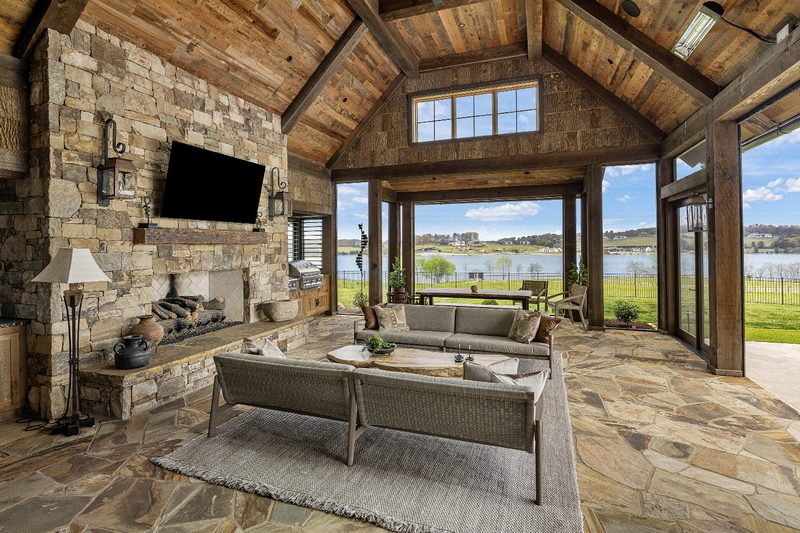
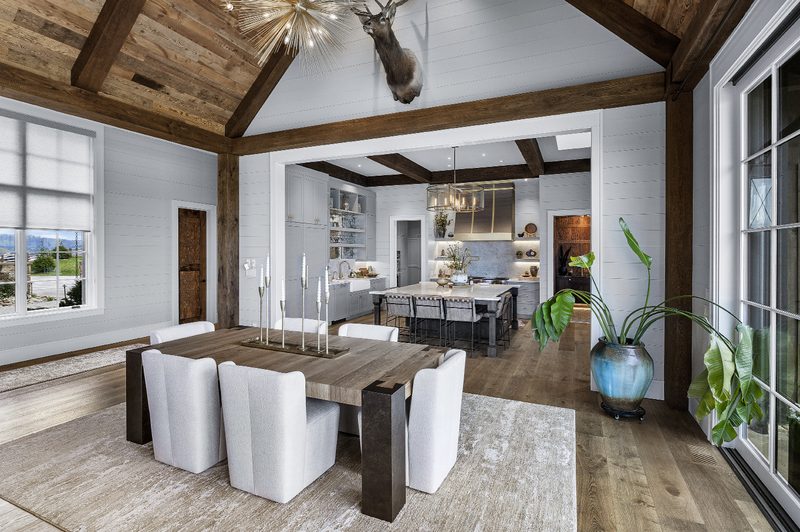
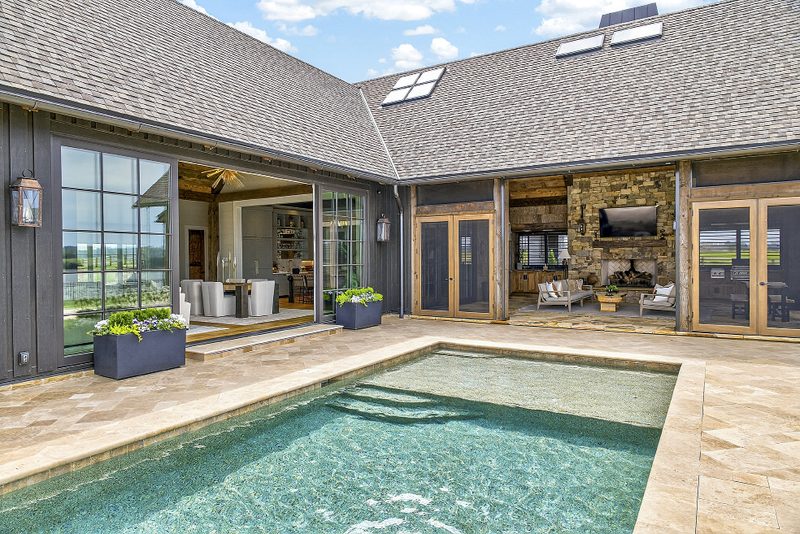
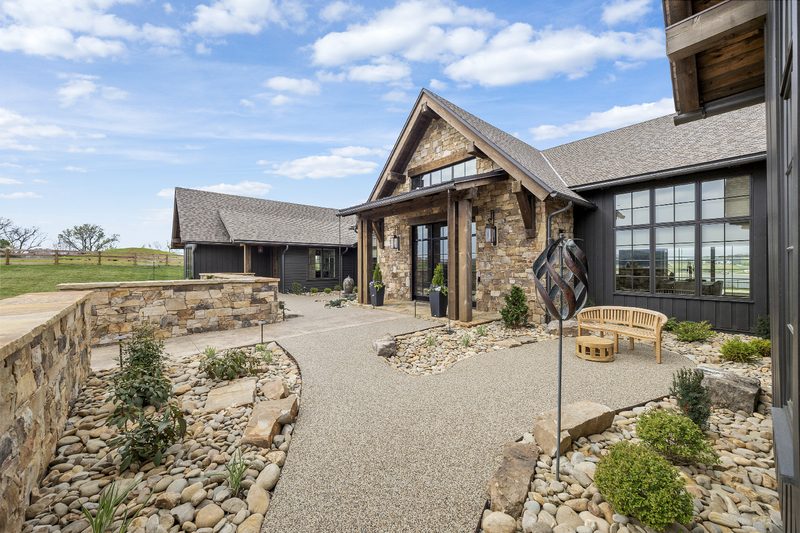
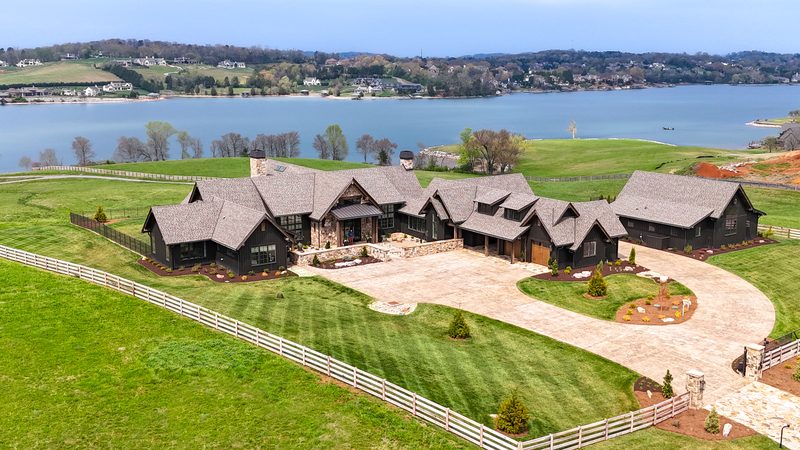
HouseWhere the Land Remembers You
Features
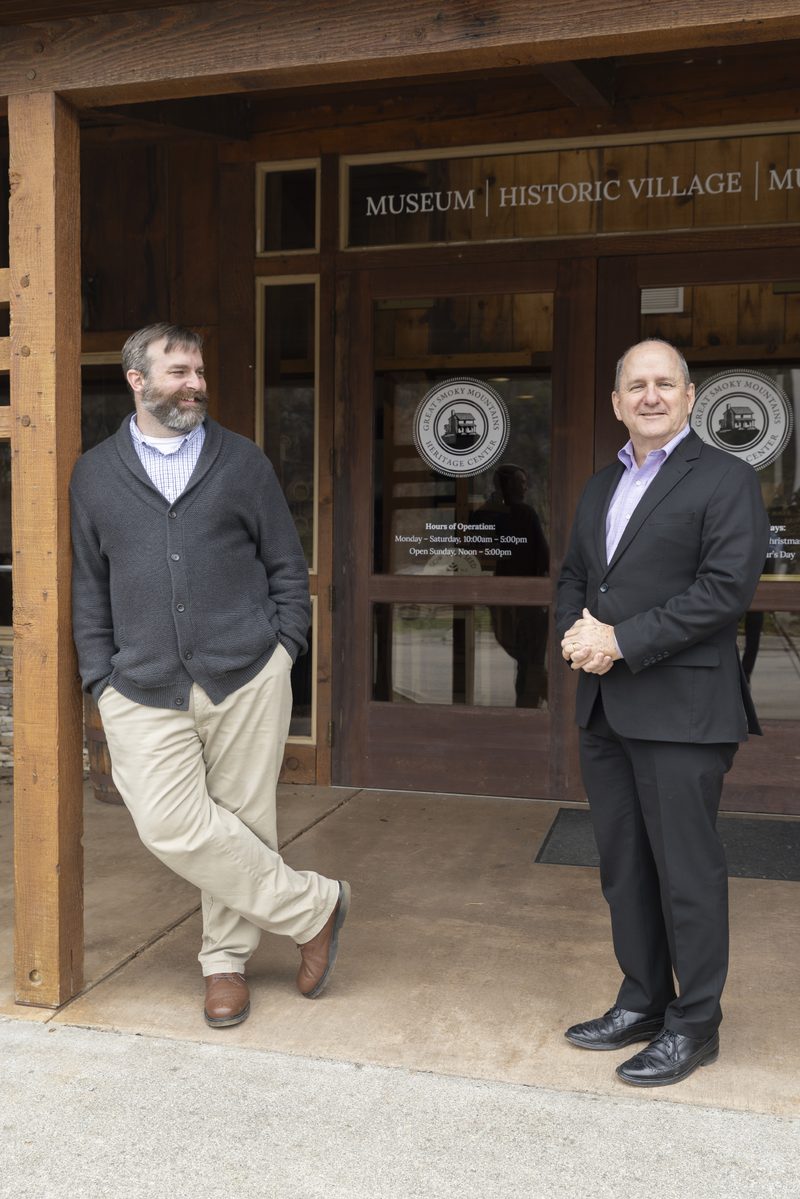
Non-ProfitPreserving the Past
Top Chefs 2026
Top ChefsAlex Gass
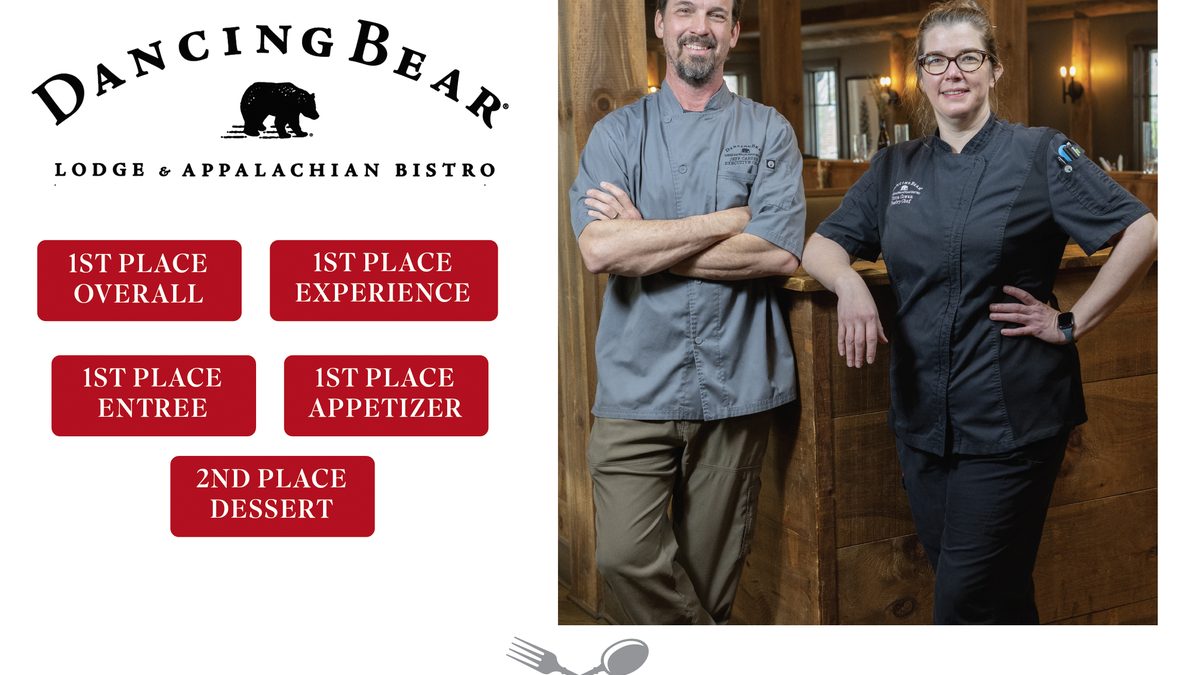
Top ChefsJeff Carter & Tirra Cowan
Top ChefsJeff Jorgensen
Top ChefsJohn Bryant
Top ChefsRobert McDonald III
Top ChefsTop Chefs 2026...and the winner is?
Top ChefsTravis Freundt
Features
VeteranAim High and Semper fi
FeatureDogs 101: Part II - The Rules of the House
FeatureWhere Light Comes Home
Business Profiles
ProfileCharged with Boating Under the Influence in Knoxville? - keep
→ Swipe to start reading
The PublisherMAY JUNE 2026
Respect the Craft
Respect the Craft
I was eighteen years old, driving the back roads between Highland and Cashiers, North Carolina, on assignment for BBDO — at the time the largest advertising agency in the world. My job was to scout locations for a Camel Filters photoshoot. Days were spent wandering those mountain ridges looking for the perfect frame, and nights I found my way to the kitchen door of the Frog and Owl Café.
I wasn’t exactly invited, but I offered myself as free labor, and they let me stay. My honest motivation at the start was simple: free food. What I got instead was something I never expected — an education.
They put me to work folding and buttering puff pastry, prepping vegetables, washing dishes. Occasionally, I made butterballs, rolling small squares of ice-cold butter between wooden paddles until they were perfect little spheres. It was a team sport in that kitchen, and I was the newest and greenest member of the team.
I had never really watched a chef plate a gourmet dish before. The timing between courses was precise. The attention to detail was something I didn’t have a word for yet — I just knew I’d never seen anything like it. The chef, Jerri Fifer — who happened to be my best friend’s girl — moved through that kitchen like she was conducting something. She was always dreaming up new ways to garnish plates, and she was generous enough to let me be part of it.
Then I made a mistake. One evening I tossed out the offhand comment that maybe a microwave would speed things along. Jerri threw a skillet. Not at me, but close enough. She told me not to come back until I’d found some respect for the craft.
I stood in the parking lot for a moment, a little stunned, and then I understood. She wasn’t being harsh, she was being honest. A real chef is an artist. The kitchen isn’t a factory — it’s a studio. And shortcuts don’t just slow things down, they hollow them out.
I did go back. And I kept going back. That lesson has followed me for fifty years — through restaurants, through publishing, through every business I’ve ever touched.
The people who show up in these pages—from chefs to artists, doctors to guides, and musicians to makers—they are all practitioners of a craft. They chose mastery over convenience, precision over shortcuts, and pride over ease, and they deserve to be seen that way.
That’s what Cityview has always tried to do. Not just cover the best of this region, but honor the people who make it worth living in.
This May and June, we’re celebrating them again — and I hope you’ll read these pages with that same sense of respect that a young kid from East Tennessee finally learned on a cool Carolina night, standing at a kitchen door, looking for a free meal.
That respect was earned.
→ Swipe for Next Story
PoliticsMAY JUNE 2026
Fashion Statements
Polling place fashion–Dressing the Part
Story by R. Daniel Proctor
“That’s not right,” I thought as I entered a Knox County polling place several years ago and saw a poll worker standing in the room’s center, guiding people to the various stations of the process. On the T-shirt he wore was this statement: “Vote for Equality.”
I decided not to say anything and to let it go. But, as I watched him work the room, despite my normal reluctance to speak out (he said, chuckling), I weakened. After voting, I approached the poll worker and said, “May I ask why you’re wearing that shirt?” He said something that pretty much strung a series of words together but didn’t answer the question.
“If a voter comes in here wearing a political message or slogan, are they allowed to stay?” No, he said. “Then why are you wearing that shirt?”
A fellow poll worker approached and asked if there was a problem. No, I said. I want only to know why he can wear a shirt with a political message. She said, “It only means that everyone should be for equality.” That was an interesting answer.
“How,” I asked, “does someone vote for equality? What, or who, is on the ballot that would be a vote for, or against, equality?”
Their expressions revealed a sudden awareness. “And that’s why you shouldn’t be wearing that shirt. You should either get another shirt or wear that one inside out.” With that, I left.
I thought about calling the election commission and pointing out what the poll worker was wearing, but decided against it; I wasn’t seeking to get anyone in trouble, and I was reasonably confident our conversation would motivate him to do something about the shirt and to dissuade him from future such election day apparel choices. But perhaps I should have made that call; poll workers should be setting an example and not be politicking in a polling place for their philosophy or ideology.
According to the National Conference of State Legislatures’ website, Tennessee is one of 27 states that restricts campaign apparel, button, stickers, or placards. In Tennessee’s case, the prohibition extends within 100 feet of the polling place (what someone wears at one inch past 100 feet is their business). Within the boundary a candidate, campaign worker, or voter can’t attempt to influence voters, solicit votes, or conduct political persuasion.
The question becomes one of what constitutes campaign material and political persuasion. If a voter or poll worker decides to make themselves a walking billboard for a political point of view that isn’t on the ballot, what then? The poll worker’s shirt I questioned advocated for no candidate, party, or ballot issue; instead, its message was encouragement to vote for a concept that requires taking a position for or against an issue or the ideology a candidate is believed to represent. If that were allowed, it would mean a voter could confidently wear a MAGA baseball cap or a t-shirt advocating a Democrat for president in 2028. Which, actually, you can.
“Generally, the guidance we’ve been given is that if it’s not on the ballot, if it doesn’t represent a political party, cause, or question on the ballot, it’s permissible,” says Chris Davis, Knox County Administrator of Elections. On ballot questions, if someone wore a T-shirt that said “Yes on 1” or “No on 1,” they’d be told that wasn’t allowed.
As for poll workers, Davis says, “We tell our poll workers to not wear political items. We have to be Switzerland,” meaning strictly neutral. As such, he said had he known about the poll worker’s “Vote for Equality” shirt, the man would have been told to go home and put on another shirt.
In upcoming elections, it may be that the national pastime of seeking momentary notoriety will motivate someone to push polling place apparel limits, claiming “freedom of speech,” because they want to see themselves on social media or mentioned in the local news. But most people will have judgement enough to dress and act appropriately. And poll workers, one hopes, will be equally careful to keep their political thinking at least 100 feet away from polling places.
“Inside 100 feet, even small messages matter.”
→ Swipe for Next Story
InsightsMAY JUNE 2026
0:00
The Game of Listening
Rethinking what it means to truly hear others—and ourselves—in a world full of noise.
Story by Rev. George Doebler
In the past few weeks, I have begun to realize that what I thought I knew, I didn’t.
Part of the realization comes from the writings of Irvin D. Yalom, an M.D. and professor emeritus of psychiatry at Stanford University, and part from the words of a Knoxville high school teacher. The words are in a book she gave me before she passed away. That book was Love’s Executioner, by Yalom.
“Dear Coach Doebler— Thanks to you I am beginning to figure out which direction the ball game is going, and the game isn’t over. You’ll be glad to know your contract had been extended indefinitely and I plan to make it to the post season… Now I only need to figure out what the game is.” -Marylyn.
I am reading this fifteen years after her “ball game” ended, and though she left us too young, she is still teaching me to this day. Most of the book is about ten patients whom Yalom saw professionally. For perhaps obvious reasons, seldom do psychiatrists write about their work with individuals. In Love’s Executioner, what he is really writing about is not so much the patient, but rather what he is learning about himself and how he is learning to rethink what he has been taught.
The case that struck me—and is still stumping me—is about a 45-year-old woman whose neurosurgeon husband was killed in an auto accident. She came to Yalom seven years after the accident, still grieving his loss and unable to move on in her life. After three years of therapy, Yalom believed that he had gotten nowhere in helping her, so instead he suggested she see a hypnotist whom he knew well. She felt as though Yalom was rejecting her, but she agreed to see this hypnotist only if he was present with her.
Together they saw the hypnotist three times, and Yalom recalls in one chapter that during a session his patient smiled not once but twice. He realized in that moment how a simple smile could alter the entire emotional landscape of the room.
Yep—Two Smiles
The title of that chapter was “Yep—Two Smiles.” While Yalom thought at first he understood what those smiles meant, it was ultimately those smiles that led him to discover that, after three years of therapy together, he didn’t actually understand his patient at all. In the meetings that followed with his patient and the hypnotist, he found those smiles were not what he, the hypnotist, nor even the woman herself thought them to be. This led Yalom to write, “Each time we see the face… it is our own ideas of him which we recognize.”
In other words, when we think we know someone, it is merely our perception of the person we know. This is true even with the person we love and have been married to for over sixty years. This led me to test out Yalom’s theory, and I asked my wife Nancy if she thought I truly understood how she thinks. The answer was a prompt “no.” I then tried to improve my understanding by asking questions, to which she replied, “See, you did not listen.”
I have seen folks for over fifty years, backed by extensive theological (and comic) training, which led me to believe I could genuinely listen to what I was hearing. I was jolted at the possibility that what I was hearing was not actually what I was being told. This proved true with my very patient, well-spoken wife, formerly a psychiatric nurse for over 40 years. Let the evidence speak for itself: what I was hearing was, and still is, what my life experience has taught me to hear.
So how do I learn to hear differently—especially in a world where there is so much deafening noise? How do I figure out “in which direction the ball game is going,” as Marylyn had written fifteen years earlier?
Maybe the answer is in the question. Like Marylyn said at the end of her letter, “I only need to figure out what the game is.” And like another thinker wrote, “Happiness is what you think about—not the stuff you have.”
Each of us has a different road to travel to do this. Like myself, perhaps you’re starting down that road later in life. Regardless of when that time comes, the destination may be unclear—but we can be sure that the trip will be quite a ride.
→ Swipe for Next Story
OutdoorsMAY JUNE 2026
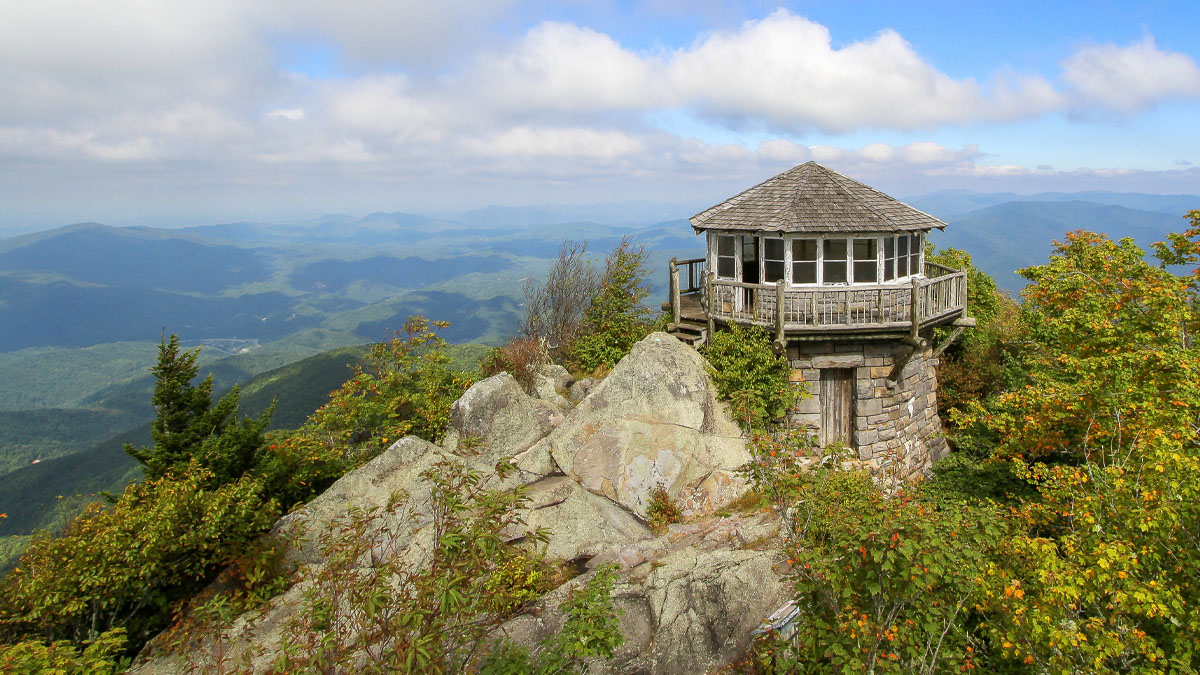
The Groundhogs of Mt. Cammerer
What starts as a simple climb becomes a crawl through roots, mud, and the limits of good judgment.
Story by John Quillen Photography by Bruce McCamish & John Quillen
It had been a minute since the Groundhog Ridge had come to mind. Even though I would pass through the gorge every other month, thoughts of that ascent were somewhat distant in the memory bank. 2018 was my last climb up that hill. I was deep into training for a big Himalayan expedition, and this had all the verticality needed then. JD Schlandt and Bill Ramsey had asked me to escort them, having been lured by tales of suffering in the shadow of Mt. Cammerer. I’ll never forget the look on their faces some two hours into the climb when I assured them it would only get worse.
There are just a few sweet spots in the year when this hike is even a consideration. Summer is too hot, and we weren't far from a trail called Snake Den Ridge, if that tells you anything. Winter can be extremely icy, which stopped me cold halfway up once. Neither condition impaired us this February morn as light blasted through the Blue Ridge mountains here on the Carolina border. Frank Cook took up the trail with us at the last minute, apparently ignoring my orienteering admonition. “We may get lost, Frank. Wouldn’t be the first time.”
Weaving through the Smokies border, we stopped at one of many hairpins to cram vehicles onto an inconspicuous shoulder. We began with a not-so-unusual personal blessing: “I hope we are all still friends after this.”
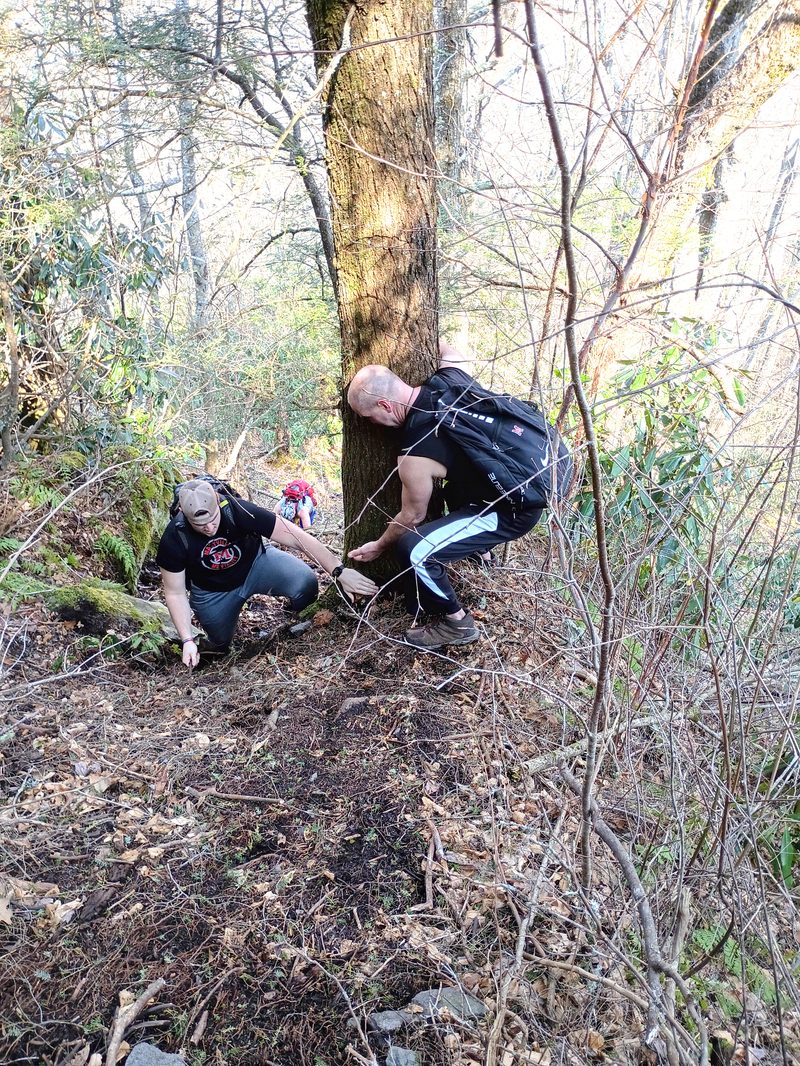
Nothing suggested trouble as we shouldered daypacks and traced the creek shoulder. Initially there had been an easily-followed trail until the first blowdown. Henry Chambers bent his six-foot-six frame to crawl underneath our first blowdown just five minutes into the adventure. “Is this similar to your football drills?” I asked as he rolled up from all fours. An eighteen-year-old still has plenty of cartilage, his father and I lamented as we pushed upward. Frank was nowhere to be seen so we took advantage of this first real break to pull twigs from our hair.
“We’re not lost yet,” I said. It was meant as a joke. Jon and Henry were not amused. We heard Frank grunting over the second log jam and proceeded into a narrowing tunnel. So far, the trail was still discernible. Last time we found ourselves almost a mile into the forest when we ended up turning back to the narrowing waterway. There appeared a stone foundation. It was obviously a remnant of a settlement unseen by most Smokies hikers. These are the jewels that draw us here, not with gold pans but cameras and sweat.
I was on all fours more than once as Jon and Henry stepped over things. Not being a Frankenstein’s monster myself, great joy was taken when I looked back to see them pawing at dirt like the gorilla in front of them. Our trail was still quite visible despite some necessary detours around Groundhog Creek. By 11 am, we had reached the lower Mt. Cammerer trail.
“This would be your last chance to turn around—it’s going to get difficult now.”
“This would be your last chance to turn around.” I reluctantly announced. “It's going to get difficult now.”
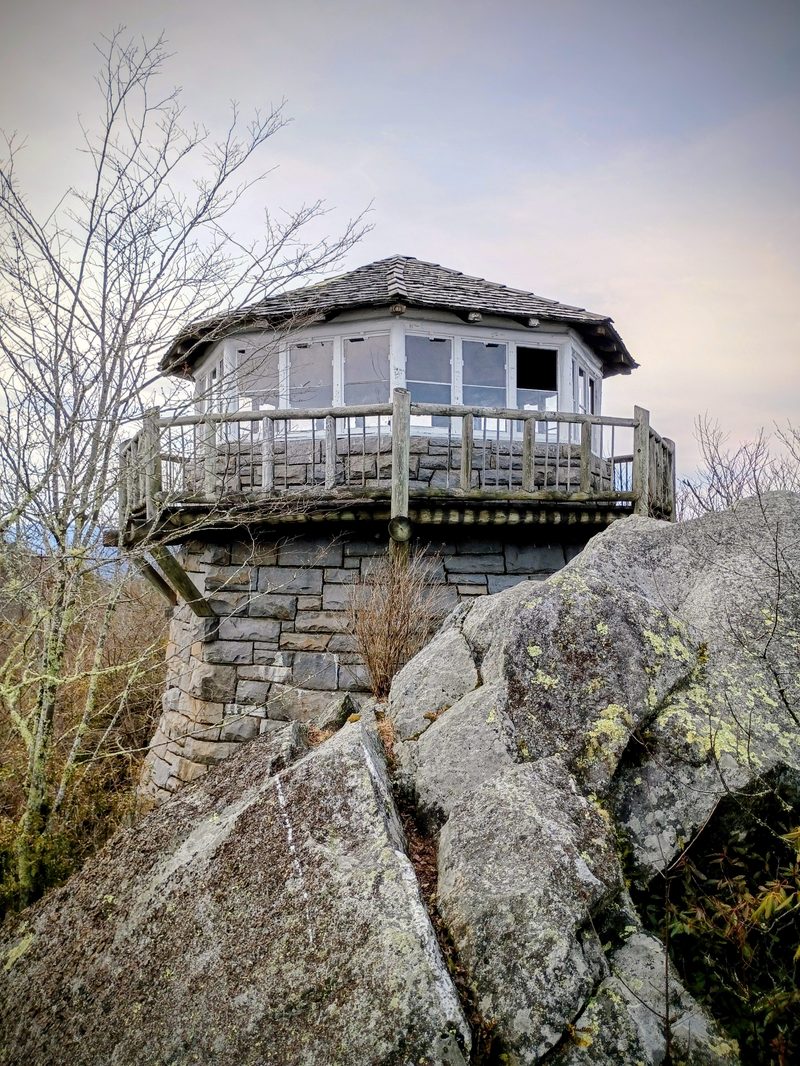
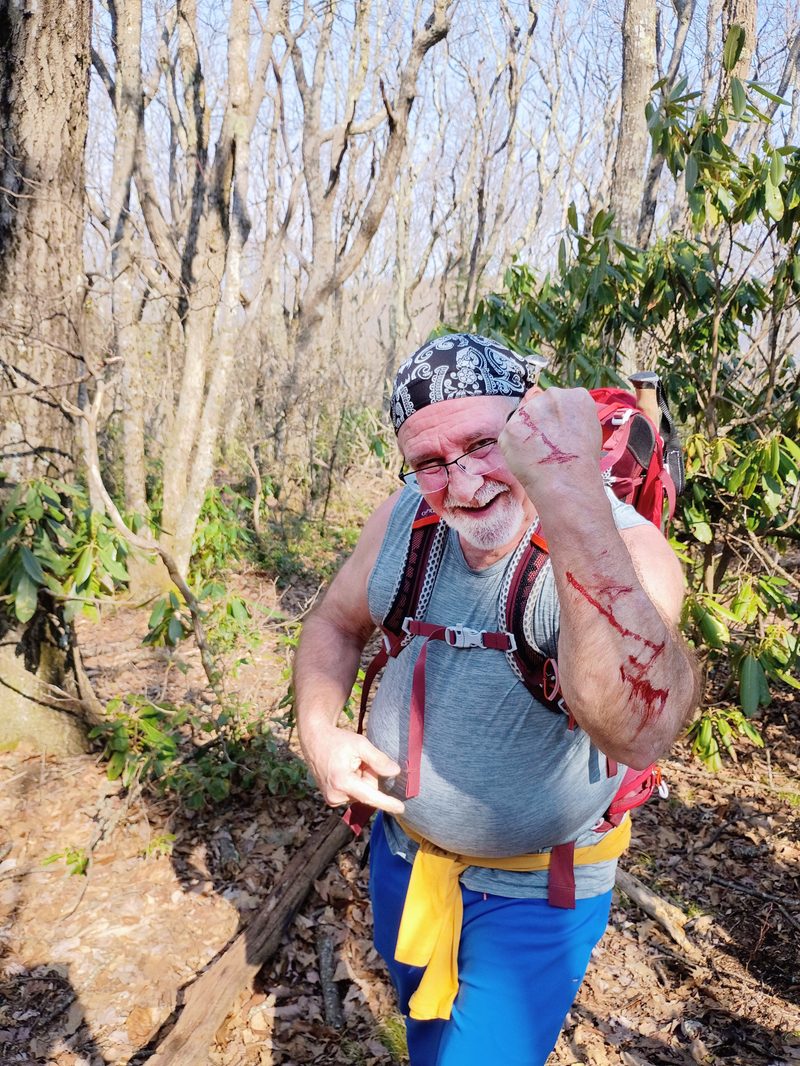
Frank lifted his bloody elbow with a dubious thumbs up. The pitch now required hand-over-hand root pulling through rhododendron tunnels. Between the branches, Mt. Cammerer’s fire tower was glistening in the noontime sun. Someone had placed tape on the trees, and I made the mistake of following it just out of curiosity. Pulling us deeply to the right, we had to traverse back on what I would consider to be some low-grade rock climbing. The tape was wrong, and I wondered if it wasn't intentional.
After righting ourselves, we faced the most difficult portion: twenty yards of plumb mud and roots. It was one step forward and two steps back. My fingernails were caked with dirt. Then came the true hands-and-knees test. There was really no way to stand up in this hell. Let's just say I fared better than the Chambers monsters.
When it seemed as if things could get no worse, we topped out on a rock outcropping. The tower was no more than one hundred vertical feet distant. A mere rock scramble was all the mountain required before we successfully crested the summit of Mt. Cammerer.
We carefully maneuvered over jutting slate slabs, careful not to twist an ankle or wrist in this crux move beneath the stone walls. The payoff was immediate. Through the afternoon haze emerged the profile of both the final section of Appalachian Trail in the Smokies and the slithering Pigeon River down towards Hartford. Jon and Henry took a victory lap around the porch of this former firetower. It was their first and likely most memorable ascent. Soon, Frank joined us for lunch inside the porous structure as wind whipped through broken windows. Mt. Sterling winked at us, yet was so many trail miles from here. Traffic shot through the river gorge in the narrowing shoulder between the mountains and hungry river basin that had already swallowed so much road. I wondered how many people ever looked up here from their vehicles.
After a break and some lunch, it was time to descend. I gave them the option of dropping back the same way. After all it was only about two miles, and 2100 ft of elevation. But for some reason the group chose to descend via the regular trail. Six miles versus two. That tells you all you need to know about the Groundhog Ridge Manway.
Five miles later we were turning back down the lower portion to follow the creek out of the Great Smoky Mountains National Park. Frank was quite a ways behind us. We had seen no people on the trail at all, but we did have a little bit of company at the tower. Downhill is always harder than up. And it's a good thing I was on my hands and knees, for I never would have noticed a piece of leather glistening in the fading afternoon light. Frank's wallet was laying there amongst the brush and leaf detritus. Finding it was proof this bushwhack treated us favorably. The Groundhog Ridge made true groundhogs out of us.
→ Swipe for Next Story
MusicMAY JUNE 2026
0:00
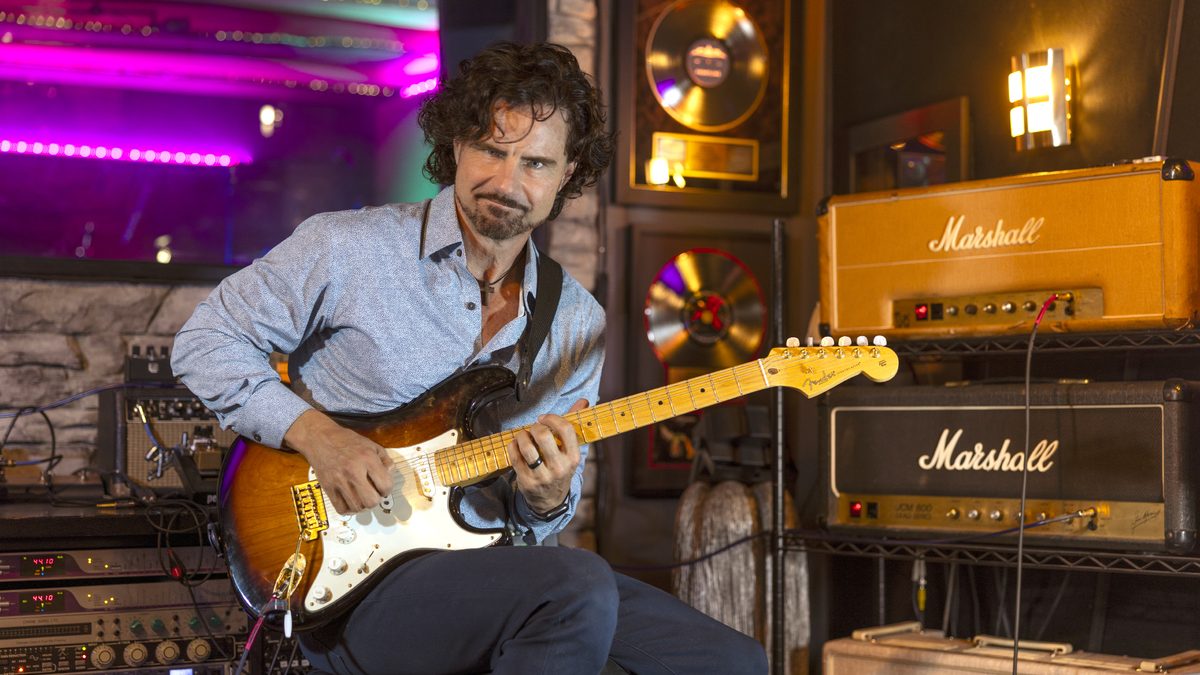
The Odyssey of Travis Wyrick
From teenage rock ambition to award-winning production, his greatest success may be the life he chose not to leave behind.
Story by Terry Glen Adams Photography by Nathan Sparks
He kind of looks like a superhero, still slim and fit, the long hair that made adults uncomfortable in his childhood. Christopher Vogler mapped the hero's journey in twelve steps. Travis Wyrick didn't need to read the book; he just lived it.
He was a Knoxville kid with the $80 guitar, in a band that nearly signed a major record deal. Then grunge arrived, ending fourteen years of work but also revealing something new. There were Grammy nominations, Dove awards, and a significant amount of money he walked away from to be with his family.
Vogler would recognize every moment, but there’s one aspect the old mythology missed: a superhero whose strength isn't in muscle or speed, but in understanding a song’s true meaning and insisting that the artist see it too.
WAKING UP TO SOUND
His mother raised four kids on her own. Money was tight. If Travis wanted something, he had to earn it. After eight months of mowing lawns, he bought an $80 guitar from Hugley's, which he still laughs about as "the worst guitar on Earth." But when he played it, something awakened inside him.
Then MTV came, and the world opened up.
Def Leppard. Van Halen. Guns and Roses. He watched from his grandmother's living room and felt a calling. That’s who I want to be.
Two years later, he got a secondhand, four-track recorder and a RadioShack mic. His bedroom turned into a lab. He wasn't trying to produce anything; he just had songs in his head and no way to share them. One track became two. A better mic came along. Then a preamp, and more gear followed. It grew until something shifted.
"From 'these are demos' to something else entirely. "
He didn't know it yet, but the hero had discovered his secret weapon.
THE CALLING
The band was called Sage, and for fourteen years, they answered every call the road made.
In a Michigan winter, they opened for Bon Jovi, Bad Company, and Peter Frampton. Travis believed they weren’t the most talented band in Knoxville. "We weren't the best band… but we were the hardest working." His mother taught him that lesson. You don't have to be the most gifted; just outwork everyone else.
A moment that stays with you long after it ends
They played hundreds of shows and spent money they didn't have. They believed in a way only the young and committed can. Then, after fourteen years of sacrifice, it happened: Sony. Real negotiations. Real money on the horizon. The dream come true.
The industry was watching. The gates were opening and then came Seattle.
One phone call from Marney Smith: "Travis, we've been told not to sign any rock bands." Grunge hit like a tidal wave, wiping out everything they'd built. One last show at the Library.
Fourteen years. Gone.
For most heroes, that's where the story ends. If it did, this would be a cautionary tale but it is not, it’s a hero’s journey.
BEFORE THE DAWN
There was something else waiting right around the corner. A life well lived and a promise that if you dare, you can have it all.
All those years spent demoing songs, miking odd instruments, and translating feelings into sound made him fall in love with something unexpected. A jazz quartet in his living room, the breath of a saxophone when mic'd right, the first time he heard drums mixed with room and air.
"I had fallen completely in love with that."
The loss of Sage didn't end the story, like Bob Segar advised, Travis turned the page.
An experience that stands apart from the rest
Instead of commanding the stage, he sat behind the board, a producer. Local bands came in, and unusual experiments occurred. Remarkably, the recordings he made in Knoxville sounded better than those bands spent $40,000 on in Nashville. A manager once pulled out a cassette on his Nakamichi deck, played the bedroom recording, and said, "This sounds amazing. Where did you record this?"
That’s how Lakeside Studios started. Not from a business strategy, not from ambition, but from necessity, loss, and a determination to keep going.
TRIALS
Every great producer has a philosophy. Many focus on gear; Travis focuses on something different.
"The magic is before the microphone."
Artists arrived expecting technical expertise, but they found it felt more like therapy. He would stop a vocal take not because a note was off, but because he doubted the emotion. Six months of rehearsing a song sometimes drained it of feeling. His goal was to uncover the wound inside, to bring the artist back to the moment the song was written when they were crying and unaware anyone was watching.
Sometimes I have to break them back down to why.
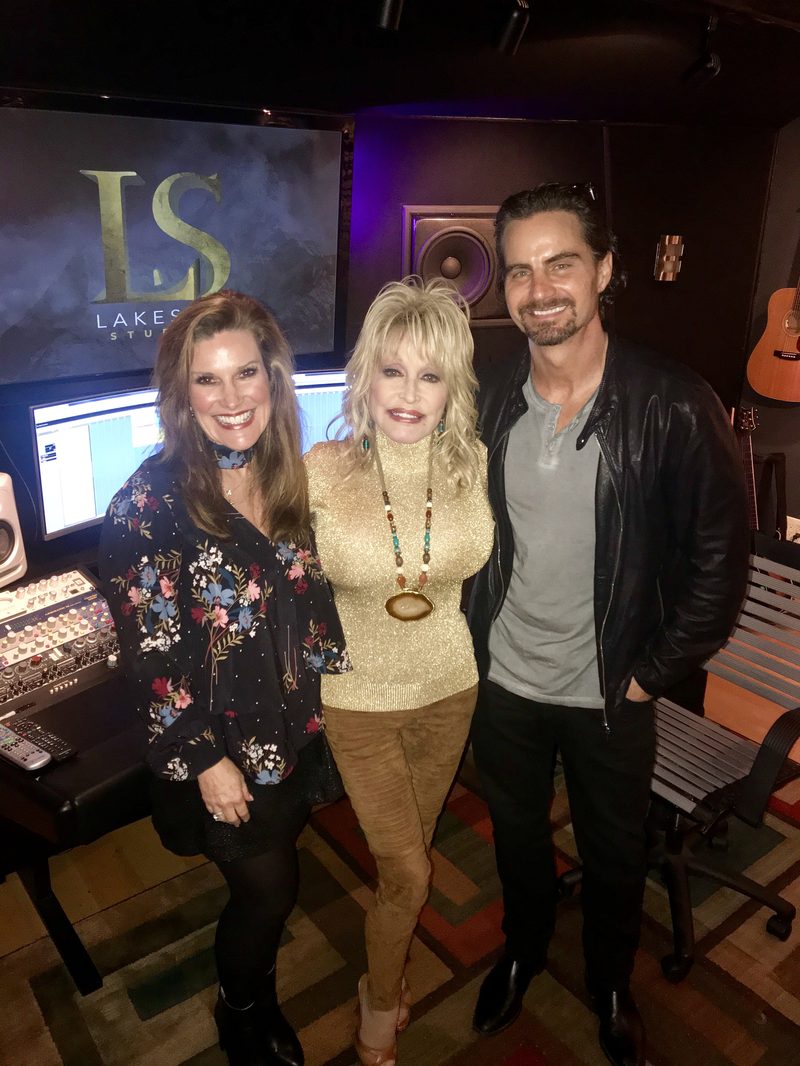
His philosophy, stubborn and almost out of style in its insistence on human truth, became his signature. And it translated across genres. Heavy metal. Bluegrass. Reggae. Christian rock. Country. P.O.D., Shinedown, 10 Years, Pillar, Charlie Daniels, Ricky Skaggs, Brantley Gilbert, Dolly Parton. Genre was never the focus, people were.
There were Grammy nominations and Dove Awards. Platinum records. The industry noticed. Then came the test that mattered the most.
THE DECISION
After the nominations, after the big records, management presented a plan: Los Angeles, New York, huge projects, and quadrupled income. It was the expected path, the move every serious producer made.
For a couple of weeks, he thought it over.
Something special is happening here
Then he called them back and said no.
"I didn't have a father growing up. I couldn't imagine leaving my kids to make more money."
That decision became the axis of his life. A month later, the management rep called back, initially furious, then honest: "I was mad because you were taking the right path." He had kids, too. He finally understood what Travis had known all along.
The hero faced the ultimate temptation: more money, more fame, more legacy and walked away from it. Not because he couldn’t have it, but because he knew what it would mean.
He never missed a single sporting event his kids played in that he could think of. Once, Dolly Parton booked the studio when his son had a postseason basketball game. Travis had never canceled a session, but he made calls and figured it out. Later, while tracking with one of the biggest artists alive, Dolly looked up and said,
"Honey, did you ever figure out that basketball thing with your son?"
That’s the story.
THE HERE AND NOW
Travis Wyrick is 55. He still arrives at the studio two hours early. He continues to work with 17 and 18-year-olds who remind him of his younger self. He still questions his instincts and is always learning.
A friend once told him his mixes shone best around 80% complete, the last 20% was overdoing it. Travis considered this for months. Am I at 82%? Should I leave that snare alone? His openness to hear this, to embrace it, and to adjust his process shows true mastery.
He believes his career took off when he realized he wasn’t as great as he thought.
"Not when I thought I was great. When I realized I needed people."
He often uses a line, half-joking and half-serious:
"I can make you rich or famous. I can't make you both. Pick one."
He chose Knoxville. He chose his family. He chose to be present when talented people create amazing things without yearning for the limelight. He built something sustainable and genuine.
Once, at a funeral for a successful man, no one mentioned his business achievements. They spoke of his family, friends, and the people who loved him. Travis left with a sense of peace.
Not many people manage to achieve that. I want to achieve that. Travis is already there.
If you live in Knoxville, you may have been in the neighborhood where Lakeside Studios resides without knowing what it holds. One of the most fascinating stories in this town has been hiding in plain sight, a man who chased one dream, lost it entirely, found something better, turned down big offers from the industry, and built a legacy that Grammy and Dove voters would reward.
He started with an $80 guitar and an idea. Forty years later, he's still striving to capture something real.
"I still can't believe I do this for a living."
Neither can we, Travis. But this is a story worth sharing. Good guys don’t always finish last. Your love for family and your hometown is not a weakness.
I recorded my first demo with Travis 25 years ago in the original Lakeside Studio. I have seen the arch of a true hero’s journey and remain in awe. Travis Wyrick is a Knoxville treasure and a singular talent. There is no doubt that he could have formed another band and become the Mike Campbell of his generation but that is an alternate universe. What is real and everlasting is the true tale of a man committed to his principals and dreams at the same time. Proof positive that making other people better makes the world better and perhaps ourselves.
→ Swipe for Next Story
DepartmentsMAY JUNE 2026
Dogs on Deck
A Guide to Knoxville’s Best Hot Dog
Story by Ethan Smith Photography by Nathan Sparks & Ethan Smith
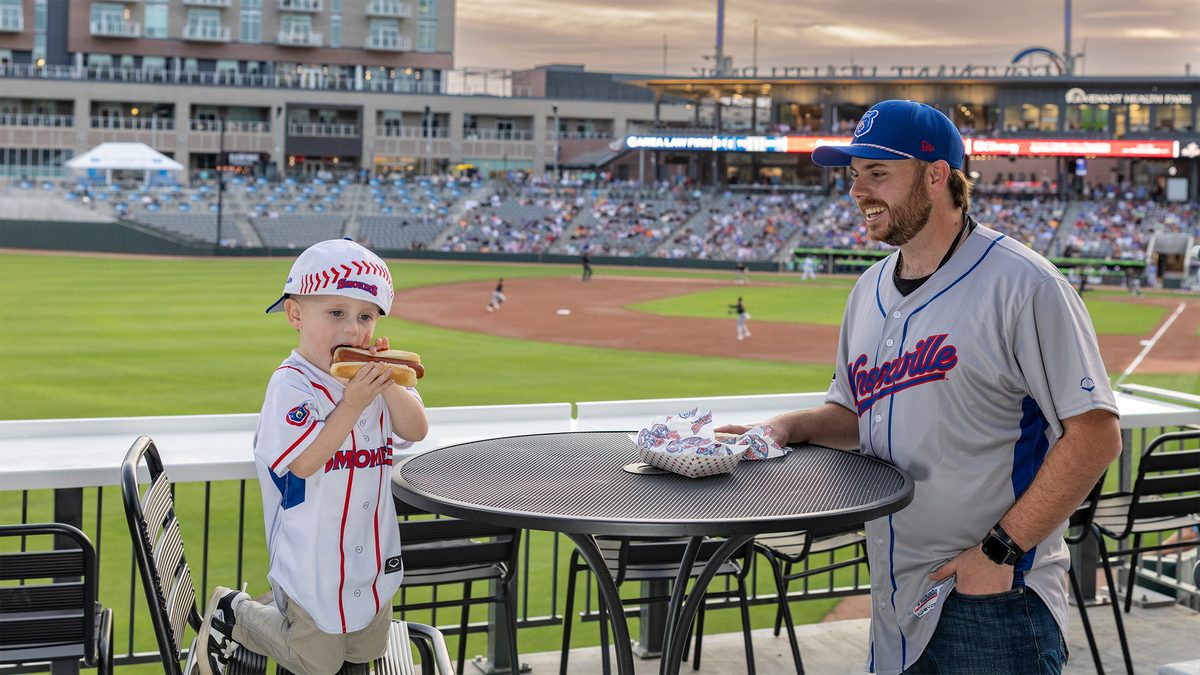
There are men who fall in love with food in a fine dining room, linen napkins across their laps, something French on the menu. Me? It happened on the patio above the third base line at a Knoxville Smokies game, at the precise moment my three-year-old son took his first real bite of a hot dog and looked up at me like I’d handed him the entire world. No toppings—just a bun, a frank, and that unguarded, joyful smile that only a child can give you. The crack of the bat echoed throughout the stadium, and the crowd was roaring. None of it mattered, in that moment it was just the two of us and just a good ole fashioned ballpark frank, one of those priceless moments between generations that didn’t need a single word to explain it.
That feeling lit something in me—a desire to chase that nostalgia that the first hot dog gave me and see what the Knoxville hot dog scene had to offer my inner child. So the next day, I set out to find it.
Dave's Dog House 7409 Middlebrook Pike
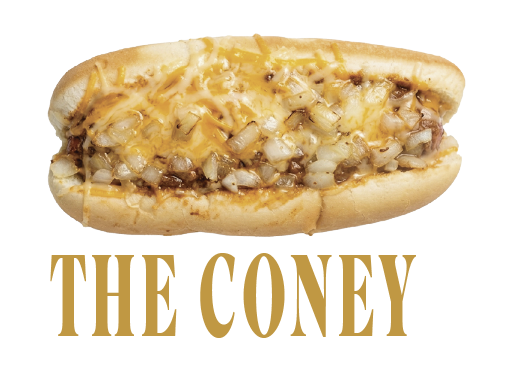
My first stop was Dave’s Dog House, a place that already held a piece of my past. Walking up to that place felt like stepping into a time machine—this was where my high school buddy and I used to come back when life was simpler and a five-dollar bill bought you the world. The owner greeted me as if I’d never left, and when I asked what I had to try, she didn’t hesitate: the Chicago dog and the Coney dog. The Chicago dog arrived dressed exactly as it should be—fresh tomatoes, pepperoncini, seasoning salt, a little pepper, all piled onto a classic bun. Vibrant, balanced, and familiar in the best way. Then came the Coney dog, a perfect amount of chili, cheese, and onions. Not too messy but bold and comforting in a way that reached back through my childhood. Each bite felt like a quiet conversation with my younger self, and somewhere between the chili and the cheese, I heard that inner voice say: “Keep going.”
Curious Dog 200 West Jackson Avenue
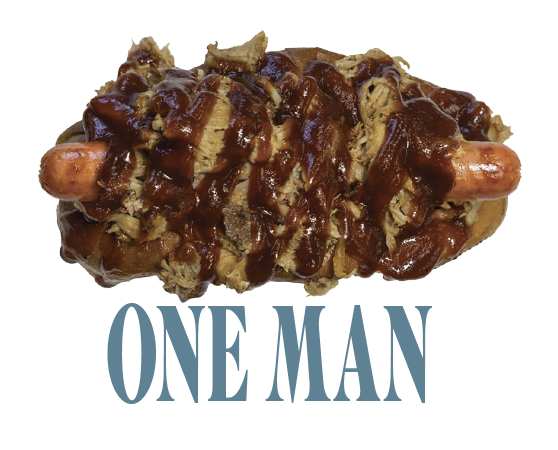
Next up was D&B Hot Dogs, a spot that felt a little more adventurous. One of the guys behind the counter pointed me toward something called the “One Man”—a hot dog topped with pulled pork barbecue, a combination I’d never once considered. I studied it like I was solving a puzzle, but that first bite erased every thought I had. Smoky, rich, and completely unexpected in the best possible way. That was enough to send me back to the counter, where he handed me the Covered Wagon: a massive creation loaded with potatoes, cheese, sour cream, chili, and bacon. Enormous,so big I had to eat it with a fork. This wasn’t just food anymore—It was discovery. While taking that last bite, that inner voice came back and said, “Aren’t you curious?”
D&B Hot Dogs 8909 Oak Ridge Hwy
That question carried me into Knoxville’s Old City for the final inning of this journey. The Curious Dog that sits just down Jackson Avenue, not far from where this incredible journey began, in those bleachers with my son. From the moment I stepped inside, I could tell this place was different. I talked with one of the owners, and what struck me immediately was the passion in every hot dog on the menu had a purpose, and nothing made the cut unless it was, in their words, “absolutely killer.” They steered me toward two: the Tennessee Tailgator and the Curious Dog itself. The Tailgator delivered bold flavors in a generously loaded bun, jalapeños adding just the right kick, every bite showing real intention—easier to manage than some of its counterparts yet just as satisfying
Curious Dog 200 West Jackson Avenue
Then came the Curious Dog: layered with barbecue sauce, topped with potato salad and bacon bits. “Feels like the Fourth of July” potato salad on every table, the smell of barbecue sauce in the air, and bacon just somehow finds its way into everything. This wasn’t just hot dog. It was “the feeling I was chasing.”
There are men who fall in love with food in a fine dining room, linen napkins across their laps, something French on the menu. Me? It happened on the patio above the third base line at a Knoxville Smokies game, at the precise moment my three-year-old son took his first real bite of a hot dog and looked up at me like I’d handed him the entire world. No toppings—just a bun, a frank, and that unguarded, joyful smile that only a child can give you. The crack of the bat echoed throughout the stadium, and the crowd was roaring. None of it mattered, in that moment it was just the two of us and just a good ole fashioned ballpark frank, one of those priceless moments between generations that didn’t need a single word to explain it.
That feeling lit something in me—a desire to chase that nostalgia that the first hot dog gave me and see what the Knoxville hot dog scene had to offer my inner child. So the next day, I set out to find it. And in that moment, everything came full circle. What started at a baseball game with a plain hot dog shared between a father and his son had grown into something much more—a journey through flavor, place, and memory that reminded me that the simplest things can be the beginning of something meaningful. That first bite at the ballpark was the opening pitch. The stops along the way were the innings. And by the time I finished my last bite in the Old City, the scoreboard read 6–0, hot dogs.
That inner voice came out like the umpire after the bottom of the ninth and said, “BALL GAME!”
→ Swipe for Next Story
VeteranMAY JUNE 2026
Aim High and Semper fi
John and Chrystie Shawhan give back to their adopted Knoxville community after lengthy careers in the Air Force and Marines
Story by Phil Newman Photography by Ethan Smith
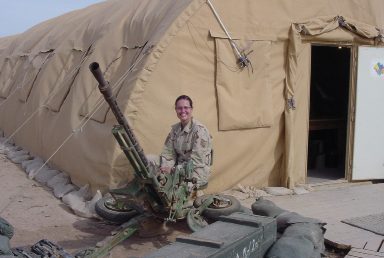
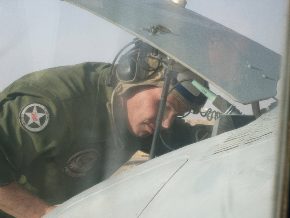
As eventful and meaningful as John and Chrystie Shawhan’s respective military service was—he retired from the Marines in 2014 after 21 years, she from the Air Force in 2022 after 28 years—reviewing my notes from a conversation with them at their West Knoxville home reveals a telling truth: Far more of the couple’s thoughts center on their passion for giving back and the difference they’ve made among fellow veterans after their lengthy tenures of duty.
"Serving and helping others is my love language; it really fills my cup,” says Chrystie, who comes from a family steeped in military tradition. When she retired from the Air Force after having achieved the rank of Chief Master Sergeant, she snapped a 72-year streak of consecutive active duty within her family.
“It’s all about serving and getting out in the community,” echoes John, who is open about the struggles he faced in isolation after his discharge from the Marines and the calling he feels to helps other veterans who face similar challenges.
“For me, suicide hits really close to home,” he continues. “I had three really good friends, Marines, who took their own lives. One of my best friends even committed suicide. I can relate to the mentality of wanting to be alone, not wanting to get up and do things. That’s why it’s so important to help.”
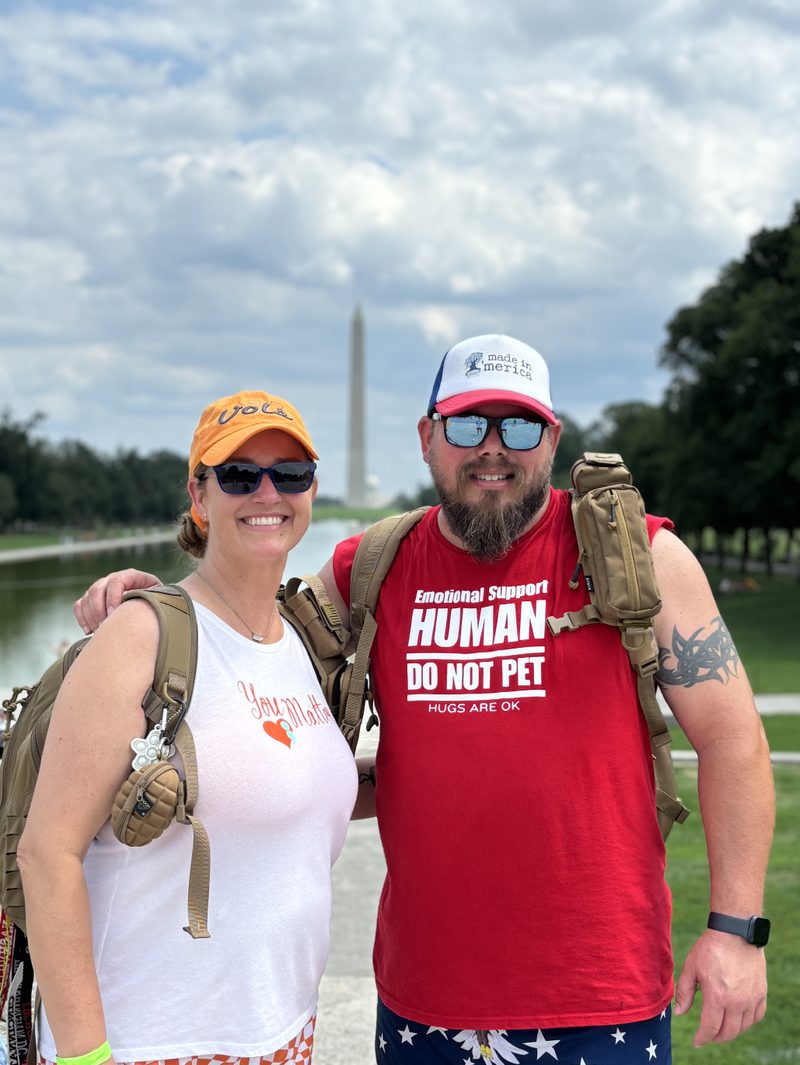
As a case in point, the Shawhans are deeply engaged with the nonprofit Irreverent Warriors (irreverentwarriors.org), which is “committed to tackling veteran suicide through camaraderie, connection, and authentic community.” John is the Knoxville-area coordinator. Likewise, Chrystie serves on the board of the East Tennessee Military Affairs Council (ETMAC.org), which connects governments and nonprofits that are focused on veteran issues and challenges.
The couple’s roles include hosting get-togethers for veterans, providing much-needed resources and support, breaking the power of isolation, and organizing opportunities for veterans themselves to make a difference. “Just as I have, they find health and healing through serving,” says John.
“We are grateful to be part of a community that is so willing to help others,” adds Chrystie. The Shawhans moved to East Tennessee in 2013 when their daughter, Trinity, was a toddler. She is now 14, and her little brother, Samuel, is 9.
Destined for A Personal Rendezvous Point
John and Chrystie met when both were well into their military careers. John had grown up in Richmond, Virginia, graduated high school in 1993, and enlisted. “I knew I wasn’t going to do anything in college. I would have just partied a lot,” he shrugs. After basic training at Parris Island, he went to Military Occupational Specialty (MOS) training on the West Coast, then to New River in North Carolina.
“I bounced around a little bit, was in California for six more years, went to Fort Worth to work as a Marine liaison for Bell Helicopter.” There he helped to upgrade Vietnam-era H-1 (Huey) choppers for modern warfare.
Chrystie, meanwhile, had grown up in Phoenix. Her parents were career Air Force and loved the service. “Without trying to influence me that way, they created a positive outlook of what military life could be like,” she reflects.
She joined in 1994, in the reserves, completing basic training at Lackland AFB in San Antonio. She then became a medic in Texas before returning to Arizona, studying public relations, and transferring back to the University of Texas at Arlington (UTA)—where she would meet her future husband.
The couple knew their “Aim High” and “Semper Fi” courtship would not be simple, since they were very busy in two different branches. “I was stationed in DC, so we did the long-distance thing for a while, and then later I went to North Carolina where he was,” Chrystie says. As their careers unfolded, it helped that she was in the reserves, so she would be able to move units to where John was sent.
“Serving and helping others is my love language; it really fills my cup.”
Battle-Tested Across the Globe
John’s ventures during his 21 years in the Marines included “two trips to the Mediterranean, one to Bosnia in ’95, two trips to Japan, and two to Iraq. When it came to my deployments, they were pretty straightforward, mostly tame. My tours in Iraq were toward the end, so I didn’t get shot at too much.”
As for Chrystie, her missions in the reserves included Saudi Arabia twice, and then being stationed stateside. In the 1990s, America “got a little taste” of hostilities with the first Gulf War in 1990-91, she says, but after 9/11 the pressure intensified. “It was all hands on deck.” When she was shipped to Saudi Arabia in December 2003, only 20 minutes down the road from where once she had experienced “footie jammies and burgers,” she now encountered Kevlar, “duck and cover” from mortar attacks, and injured service personnel arriving in the medical tent.
“It was ugly. At first I was wondering, What did I get myself into? But after a few weeks you acclimate and just do the job.”
Granted, that earlier deployment had been “eye-opening,” she says. She realized the “battle prep” for the guard and reserves—who previously had undergone more limited training away from the hot zones—would benefit from improvements, and she developed a desire to help with training and preparation back in the US.
Christie was deployed once more, in 2004. After that, she ended up with the 113th Medical Group of the DC Air National Guard, stationed at Joint Base Andrews in Maryland, aka the “Capital Guardians.” She was tasked with a range of duties mostly centered on planning and readiness.
Being deployed had magnified Chrystie’s heart for service, so for the rest of her career she worked to support America’s fighting men and women as well as their families back home. “They were taking care of us over there, so we need to take care of them.”
She would serve as a family readiness officer in North Carolina, making sure airmen and their families “were getting the benefits they needed, welcoming them to events so they didn’t isolate, taking care of them.” The pace was typically seven months away, five months home, which caused stress not only on the service personnel but also on their spouses and children.
The need for such support became even clearer when John began to move toward his retirement. “When he left [officially in 2014], I experienced again firsthand how important it is for the families to be taken care of,” she says.
Finally Home in the Shadow of the Smokies
John’s transition out of the Marines in the spring of 2014 “was a little different,” he says. His was a medical retirement, in light of the lingering and worsening effects of a vehicle accident years earlier. “I was hit by a drunk driver a long time ago. Toward the end of my career, it was tough to do the day-to-day stuff.”
The family had moved to East Tennessee the previous August. They rented a home in Greenback, and once his discharge was complete, suddenly John was without the camaraderie he had been used to for two-plus decades. He didn’t know what to do with himself. Even as John looked forward to encouraging his wife’s continued career climb, since “she had been so supportive of me over the years,” the walls started closing in.
Chrystie nods. “John had left his parents’ house for the Marine Corps after high school and spent all those years following orders, being told where to go and what to do. That keeps a Marine alive. Now it was like, ‘Here, start thinking on your own. What do you want to do with your life?’”
“We are grateful to be part of a community that is so willing to help others.”
John had a penchant for woodworking, so he plied his hand at that from their home. “I was isolated, and that lack of community took a toll,” he says. The couple both realized something needed to change. Gradually, they became more involved in Knoxville-area veterans groups, and that engagement radically improved John’s outlook on life.
Meanwhile, Chrystie, while remaining in the reserves, was working at the Air National Guard Training and Education Center (TEC) at McGhee Tyson ANG in Knoxville. The TEC serves as a premier Air Force schoolhouse for enlisted professional military education, specialized training, and multimedia support. Chrystie was tapped to serve as director of education, and that’s what had brought the family to East Tennessee.
In 2019, she shifted into a position that she still holds today, as a process-improvement trainer for compliance at Y-12 National Security Complex in Oak Ridge. “I love it. It fits right in with my passion for helping and serving others,” she says.
Now both retired from the military, the Shawhans remain busy volunteering in the community, not to mention parenting their two kids, essentially the family’s first Knoxville natives. On the service front, their work with Irreverent Warriors is especially meaningful.
“The transition out of the military can be hard,” says John, speaking from hard-fought experience. Civilian life “is just different. If you don’t have people you can count on, places you can go, it’s easy to slip into isolation.”
Thanks to John and Chrystie, fewer of their fellow veterans have had to suffer alone—and, if they have their way, even fewer will do so on their watch as they continue to give back to our community with tireless passion and purpose.
→ Swipe for Next Story
FeatureMAY JUNE 2026
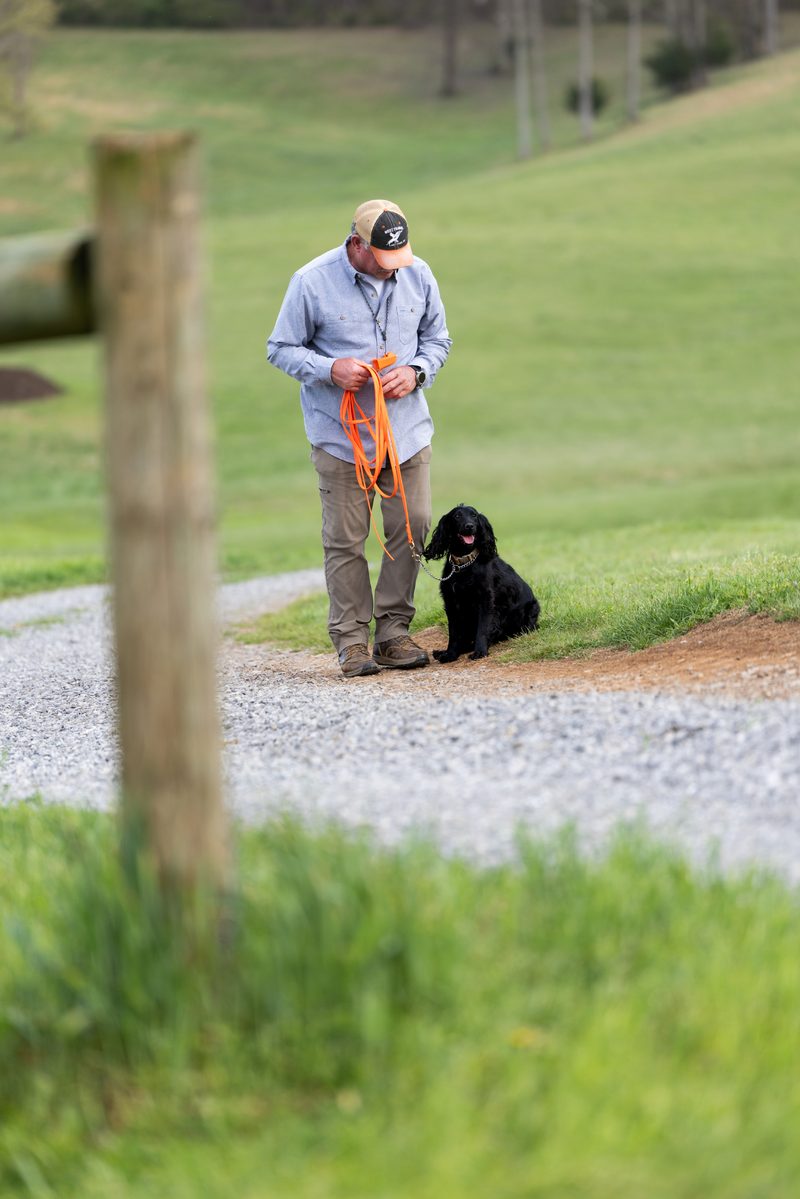
Dogs 101: Part II - The Rules of the House
Dog training insights from Mike & Jon Osteen reveal how structure, consistency, and clear rules turn chaos into calm, well-behaved companions
Story by Nathan Sparks Photography by Troupe Foden-Sparks
Years ago, a good friend of mine got a dog. He named him Damn-it.
If you’ve never stood in a neighborhood watching a grown man sprint down the block screaming “Damn-it! Damn-it, come here!” you haven’t truly lived. Neighbors peeking through blinds. Damn-it trotting ahead at a leisurely pace, completely unconcerned. It was, by any measure, magnificent.
I had small children at the time, so that particular approach wasn’t going to fly. I wanted a name they could yell freely in fields, in parks, in front of their teachers without anyone getting called into the principal’s office. So I named my adorable little double dappled dachshund Bravo.
For seventeen years, Bravo was the official mascot of Cityview Magazine. Crate trained. Came when called. Had a particular passion for fish. He once demolished an entire twelve-inch white bass, a fish that was nearly as long as he was, with the focus and efficiency of a dog twice his size. He was, in the best possible way, a genuinely pleasant companion everywhere we went. Take him anywhere, and he was fine, because he knew the rules, and the rules made sense to him.
Which is precisely what brings me to the Osteens. Because while Bravo’s life was a good one, I kept running into other people’s dogs and other people’s chaos. Dogs that owned their front doors. Dogs that turned guests into hostages. Dogs whose owners had clearly lost the argument years ago and were just living with the outcome. Somebody needed to explain this. So here we are.
The Gray Area Is the Problem
In our last issue, Mike Osteen laid the foundation: teaching and training are not the same thing, structure is a form of love, and a dog can only do what you teach it. What there wasn’t room to say, but what this entire installment is built around, is that most dogs aren’t bad. They’re rehearsed. Every time a behavior goes uncorrected, the dog quietly files it away under “acceptable.” Every time a rule applies sometimes but not others, the dog learns there’s a gray area. And gray areas, in Mike’s world, are the root of almost every problem people bring to him.
“You create a gray area,” he told me, “when you let them do something for an extended period and then go, ‘Well, I really don’t like it.’ And now you’re in a fight with a dog that learned something different from you than what you actually want.” The fix isn’t complicated, but it does require honesty about where the gray areas came from. Almost always, they came from us.
Meet Jon
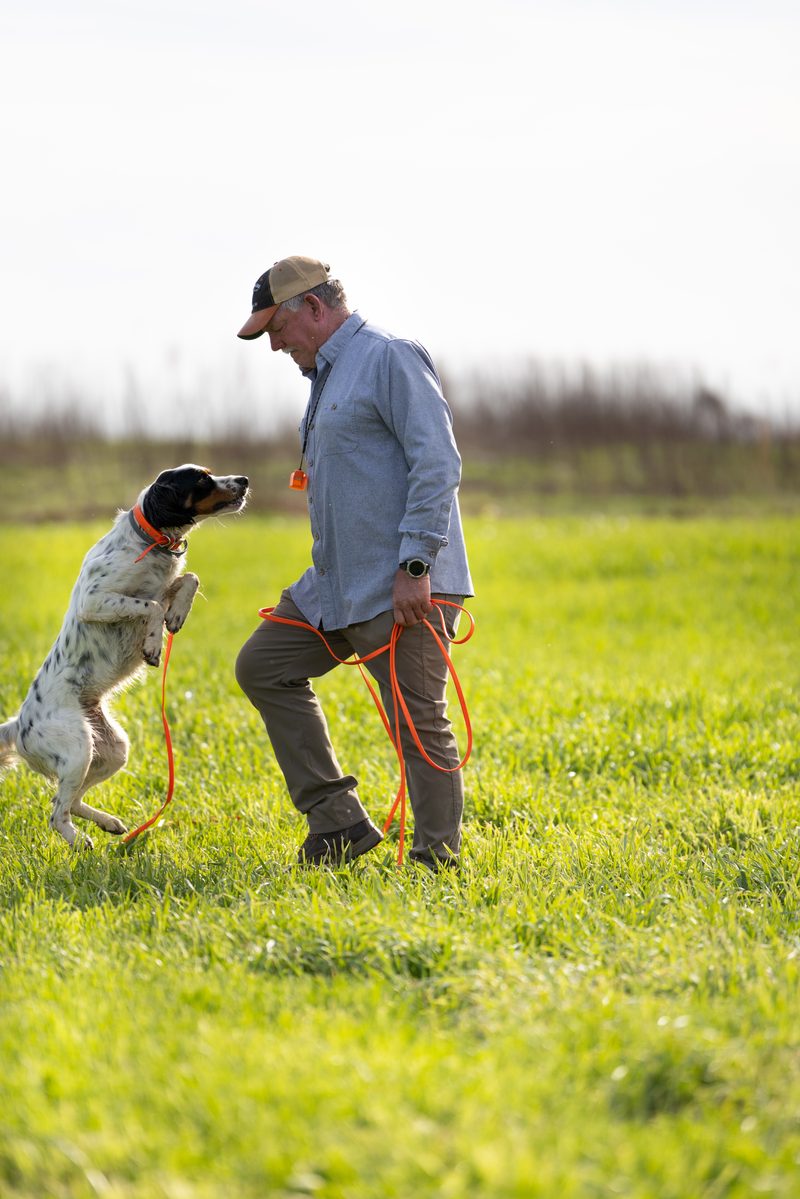
Jon Osteen grew up watching his father work dogs the way most kids watch their parents do their jobs, constantly and skillfully, in the background of everything. By the time he was a teenager, he’d earned the right to be turned loose, not just to observe, but to work. He’s softer in approach than his father, his own word for it, and he has a particular habit when a new dog comes to him. He looks at the leash before he looks at the dog.
“The respect that the dog has for whoever is on the other end of the leash tells me everything I need to know about what that relationship is like,” he said. That single observation reframes a lot. The leash isn’t a control device. It’s a communication line. And if things are going sideways on it, the leash already told you exactly why.
Growing up, Jon said, what he got to see over and over again was proof of what’s possible. “My dad proved time and time again that if you understand a dog’s behavior, almost anything is achievable.” The dogs owners had written off. The ones people brought in carrying labels such as stubborn, dominant, unfixable. Those dogs left rehabilitated. It shapes how he thinks about every dog that comes through the door.
The hardest part of dog training, as Jon has come to understand it, isn’t the dog at all. “The hardest part is owner training,” he said. “I can get the dog to do exactly what I need it to do. Then it goes home, the owner lets it get away with things they know they shouldn’t, and they call me back saying they don’t understand why it isn’t working.” The answer, always, is that the dog adapted to the new reality. Dogs are extraordinarily good at that.
“The leash isn’t a control device. It’s a communication line.”
Place: The House Dog’s Best Friend
If there is one command that separates a dog that’s “pretty good” from a dog that genuinely improves your daily life, it’s Place. The concept is simple: go to that spot and stay there until I release you. Not sit, which is momentary. Not stay, which assumes the dog is already where you need it. Place is an assignment. It gives the dog something to do during the moments that would otherwise produce chaos, and dogs find that deeply settling. They want to know what to do. When they don’t, they invent something, and you usually won’t like what they invent.
Jon starts every dog on an elevated platform, a raised mat, a dog cot, anything with a clear physical edge. The elevation creates an obvious boundary. You’re on it or you’re off it, with no ambiguity. Then he builds in increments so small most people would find them laughable.
“Two seconds, five seconds,” he said. “You reward, and then you build. Five to ten, ten to twenty, twenty to thirty. That’s how you start that process.”
What he doesn’t do is demand the dog hold it for five minutes on day one, get frustrated when it breaks, and conclude the dog “won’t do it.” That’s not a training failure. That’s asking the dog to run a marathon before it’s learned to walk, and then blaming it for falling.
Once Place is solid, it becomes one of the most useful tools any household owner has. Someone coming to the door? Place. Kids running circles at dinner? Place. A plumber walking through who looks, to the dog, like a full-scale emergency? Place. Instead of fighting the dog’s arousal, you give it a job, and the arousal drops. The household exhales.
Door Manners: The Guest Problem Nobody Talks About
Here is a truth that may irritate you. A significant amount of doorbell chaos is the guests’ fault. Your dog has been working at this, and then someone walks in, drops into a crouch, speaks in a high-pitched voice about what a good boy, and rewards every unwanted behavior with the exact thing the dog was trying to get: attention. The dog doesn’t know your guest just dismantled two weeks of effort. The dog knows what happened. It jumped, and it got what it wanted. Filed. Remembered.
Jon’s approach to door manners begins before the bell ever rings. “Have a leash on them any time somebody new comes to the door,” he said, “so you have adequate control and you are not allowing them to offer the behaviors you don’t want.” That’s not punishment. It’s management. It’s setting the dog up to succeed rather than leaving the outcome to whoever happens to be walking in.
For guests, his message is equally plain. “If you want training to transfer over into any environment, to any person, the same principles and standards have to be followed by everyone around that dog.” You can tell guests what to do. Most of them will cooperate once they understand they’re either helping you or undoing you.
This is also where the kennel command earns its keep. Dog is overwhelmed, guests are arriving, and you’d rather not manage a scene. “Kennel up,” and the door doesn’t even need to close. The dog moves to a space already associated with calm. It knows what the command means. When things settle, the dog comes back out on your terms, into an environment it can actually handle.
Leash Work: Start Without the Leash
You’ve seen the videos. Small person, large dog, somewhere between a walk and a kite-flying accident. The dog is not being walked. The dog is walking, and a person is simply attached. What most people don’t know is that Jon addresses this by starting leash training without picking up the leash at all.
“We start all dogs with leash walking by using a tether,” he said, a stationary object the dog is clipped to. “Pulling against that object is not going to get them what they want. They have to learn how to settle with having a leash on before I even begin to walk with them.”
“Every time a behavior goes uncorrected, the dog quietly files it away under ‘acceptable.’”
Once a dog understands that tension doesn’t open doors, doesn’t produce freedom, and doesn’t get them anywhere, everything else becomes teachable. The long line comes next. Extended range, maintained communication. The dog gets to move; you stay connected. And it’s also how you build the recall that actually holds when the dog is thirty feet away with interesting things happening in every direction.
Timeline, for the impatient: Jon says basic obedience and behavior work generally runs about four weeks. Getting a dog truly reliable off-leash, with the same responsiveness and without the safety net, is closer to eight to ten weeks. For a dog you’re going to live with for fifteen years, that’s a remarkably small investment.
Your Dog Is Not Stubborn
I’d like to put this one to rest permanently, and Mike said it in a way that’s hard to improve on. All a young dog knows is how to jump, scratch, bite, climb, dig, chew, or pull. That is not defiance. That is their entire vocabulary.
“What’s aggravating you,” he told me, “is them telling you what they want.”
A dog that won’t come at the dog park isn’t blowing you off. Recall was never properly built. A dog that rushes the front door isn’t dominant. It has rushed that door a hundred times without consequence. A dog that jumps on guests isn’t being disrespectful. Jumping has simply worked, every single time.
The word you’re looking for isn’t stubborn. It’s rehearsed, and rehearsed can be changed.
That’s the entire premise behind what Mike and Jon do. Jon put it this way: “The dog’s behavior will dictate what is needed to get the response you’re looking for. The dog in front of you will tell you what it needs, if you’re paying attention.”
That means your job, before you ever pick up the phone to call a trainer, is not to diagnose your dog. It’s to start watching differently. Stop filing the behavior under character flaw and start asking what’s actually been taught, even accidentally, even without knowing it. Because once you understand the dog isn’t working against you, things get a lot simpler. And the dog you always thought you had starts to show up, right where it’s been all along.
In Part Three, we go deeper into motivation, what drives your dog, how to find it, and how to use it as the engine behind everything else. Because if you build it right, you’ll need very little of what most people think training actually requires.
“Stop filing the behavior under character flaw and start asking what’s actually been taught.”
→ Swipe for Next Story
InsightsMAY JUNE 2026
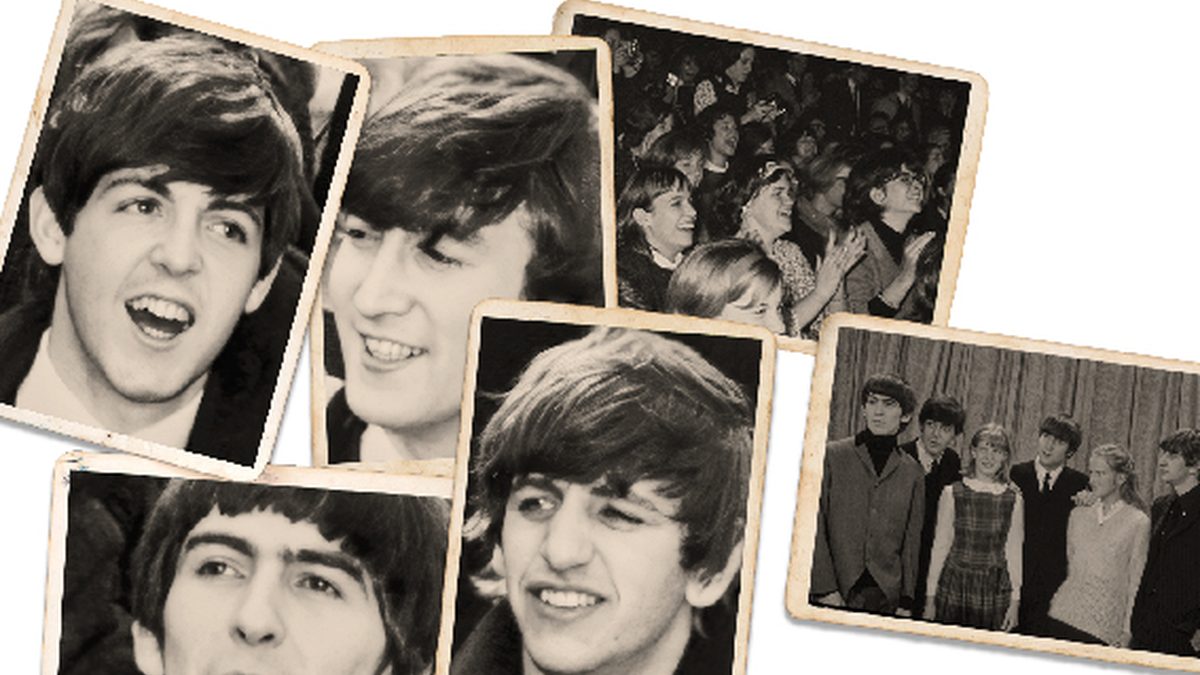
Knoxville Memories: Part 2
There’s no business like show business
Story by Bob Pryor
Knoxville has long been an important training ground for nationally and internationally famous entertainers. Our little hotbed for undiscovered talent has produced an “A-Team” of stars you know well. Beginning with Roy Acuff, Homer and Jethro, Chet Atkins, Carl Smith, and Archie Campbell, Knoxville kept Nashville and the Grand Ole Opry well supplied with entertainers the country learned to love. The Everly Brothers made the jump from the Cas Walker program straight into the Rock & Roll Hall of Fame, and Kenny Chesney, Kelsea Ballerini, and Morgan Wallen are currently popular throughout the world. Dolly would have to be considered the queen of the Knoxville “A-Team” and has transcended all others. But do you remember the “B-Team”? Yes, I’m talking about those stars who never broke out to become headliners, those poor souls who kept the hearth fires burning and never gave up their day job.
As a child growing up in North Knoxville, I entered my grade school talent show and surprised myself by winning. Let’s just say it was an off year for talent at old Lincoln Park Elementary. The victory placed me in high demand for gigs on both sides of North Broadway, from Chickamauga Avenue to Walker Boulevard. I was an especially big hit in our family living room when guests came to visit. It also allowed me to grow up as a solid member of what we are now certain was the Knoxville “B-Team” and rub shoulders with many talented people in search of recognition and even stardom.
Joe Canady was a fireman and part-time clown that I saw perform at the new Fulton High School auditorium in 1953. He was great performing a slap-stick pantomime rendition of a Spike Jones novelty record with lots of funny lyrics, horns, whistles, and gunshots all at breakneck speed. Canady had a masterful sense of timing and, like most clowns, was very creative. At age 10, I decided I could do the same thing and used my act as an excuse to buy more early rock and roll phonograph records. In the 1950s, Joe Canady helped form the Knoxville Fire Department Clown Troupe and performed at parades down on Gay Street and at festivals around the county, and he helped form the first Knox County rescue team. He eventually became Assistant Fire Chief, but on stage he was a very funny comedian - one of the great “B-Teamers.” With Joe Canady as a role model and with a little practice, I officially entered show business at 11 years of age.
Irene Hayes Hodges was a radio personality during the 1940 to 1950 era and originated the Bugs Bunny Club stage show at the Bijou Theatre. Every Saturday morning the Bijou would fill with kids screaming for kids competing in a talent show on WBIR radio. There were singers, baton twirlers, loads of tap dancers, and presentations of the timeless art of elocution. The stage show came complete with a piano player and awards for the winners and door prizes for the audience. A Gene Autry or Tarzan movie followed. Ms. Hodges, with her hair in a bun, served as producer, director, and mistress of ceremonies for a show named, for some unknown reason, after a “wascally wabbit.” Today, Looney Tunes would sue Ms. Hodges for copyright infringement so fast it would make her bun spin. She also ran a successful “elocution school.” Of course, she loved me because I was full of elocution. Many early “B-Teamers” got their start with the help of Bugs Bunny and Irene Hayes Hodges on the stage of the Bijou Theatre.
Bill “Bobo” Croxdale was, hands down, the top clown ever to clown around in Knoxville. His children’s shows included magic, and, with the help of his assistant (wife) “Aunt Maggie” and his precocious daughter, they put on a great family show. They would end the show with little Billie Ann dressed in gingham and singing:
I’m just a country girl
A cornbread lovin’ country girl
I raise Cain on Saturday
But I go to church on Sunday.
For years Bobo was a radio musician and printer when not charming children at birthday parties and in area hospitals. By the way, as you may have guessed by now, there were no fulltime clown jobs in Knoxville in those days. Bobo was not to be outdone by Irene Hayes Hodges and starred at the Tennessee Theatre on Saturday mornings in the weekly gathering of “The Chipmunk Club.”
Lowell Blanchard became associated with WNOX radio station and served as the MC for its live noonday show, “The Mid-Day Merry-Go-Round,” and the Saturday night version, “The Saturday Night Barn Dance.” Blanchard and his stage show before a live audience featured many young “B-Teamers” like me, and he became a very popular radio personality from 1936 to 1964. Lowell Blanchard dabbled in politics and served as a city councilman and an unsuccessful candidate for mayor. He recorded a few records, but his voice was better suited to be the voice of the Knoxville Smokies baseball team.
Blanchard, like Cas Walker and Archie “Grandpappy” Campbell, always surrounded himself with talented singers, musicians, comedians, and personalities for a fun and lively show, but only a few moved on to the big time. “The Mid-Day Merry-Go-Round” troupe included “Hot-Shot Elmer” (Bill Carlisle), “Smilin’” Eddie Hill, Jamup & Honey, Roy Sneed, Red (Rector) and Fred (Smith), Martha Carson, “Sunshine Slim” Sweet, and a folk singer by the name of Gene Wardell. The Blanchard-promoted shows were not exclusively country music programs like Nashville’s Grand Ole Opry. The “Merry-Go-Round” and the “Barn Dance” were more of a variety show with a stage band known as the Dixieland Swingsters featuring Jerry Collins on piano, Tony Musco on accordion, Harry Nides and his violin, drummer, Troy Hatcher, and Dave Durham on trumpet. The same band played galas and balls all over Knoxville as the Jerry Collins Orchestra for years after the “Merry-Go-Round” closed in 1961.
There was a traveling version of the “Merry-Go-Round,” and I made many trips with them on weekday nights to school auditoriums and manufacturing plants in western North Carolina and northern Georgia. People really enjoyed and turned out for those shows, but I slept my way through the fifth and sixth grades in school because of long, late-night trips back into Knoxville.
Harry Nides was a country fiddler who for 35 years played violin in the Knoxville Symphony Orchestra. A Symphony Society Scholarship Fund was established in his name. Tony Musco was a funny man who always helped keep the show going. He taught accordion for years in Knoxville and could have been the fourth Marx brother.
Troy Hatcher became a favorite musician of Chet Atkins and in approximately 1957, when Atkins became producer for the Nashville division of RCA records, he invited Hatcher to come to Nashville and play drums on what became Chet Atkins’ first produced recording. Hatcher drummed behind Don Gibson, also from the “Barn Dance,” and the recording of “Oh, Lonesome Me” became what many consider the first recording of the “Nashville Sound” era. Hatcher had developed a prominent drum sound that became influential in Nashville where drums were not used in recordings and not typically allowed in country stage shows. Troy Hatcher moved country music away from the old school steel guitar sound and toward rhythm drums helping to create that country/pop sound that made “Music City.”
Life in the 1950s was simple and so was entertainment. Red and Fred, the Spivey Mountain Boys, always had traditional country songs and corny jokes like the one about the two old maids who Red saw being robbed at gunpoint in the parking lot coming into the show. The thief frisked the old maids up and down looking for cash and only got $2. When he complained, one old maid offered that if he would search them again she would write him a check. Red was recognized nationally as a mandolin virtuoso and Fred was a deadpan comic of the first order.
Pay was slight working for Lowell Blanchard, but the opportunity was large. I was the only kid in the sixth grade with a fulltime job and a bank account. Throughout the 1950’s and beyond, the “B-Teamers” mentioned here kept Knoxvillians entertained, both on the radio and in live performances. It was a golden era for local entertainment, and yours truly was lucky to have been a part of the fun. From the “Bugs Bunny Club” to the “Mid-Day Merry-Go-Round,” there truly was no business like show business. Bravo, “B-Team.”
→ Swipe for Next Story
Non-ProfitMAY JUNE 2026
Preserving the Past
A heritage center brings Appalachian history to life while building meaningful connections across generations today.
Story by Susan Alexander Photography by Nathan Sparks
Donna Stinnett time travels three or four times a week.
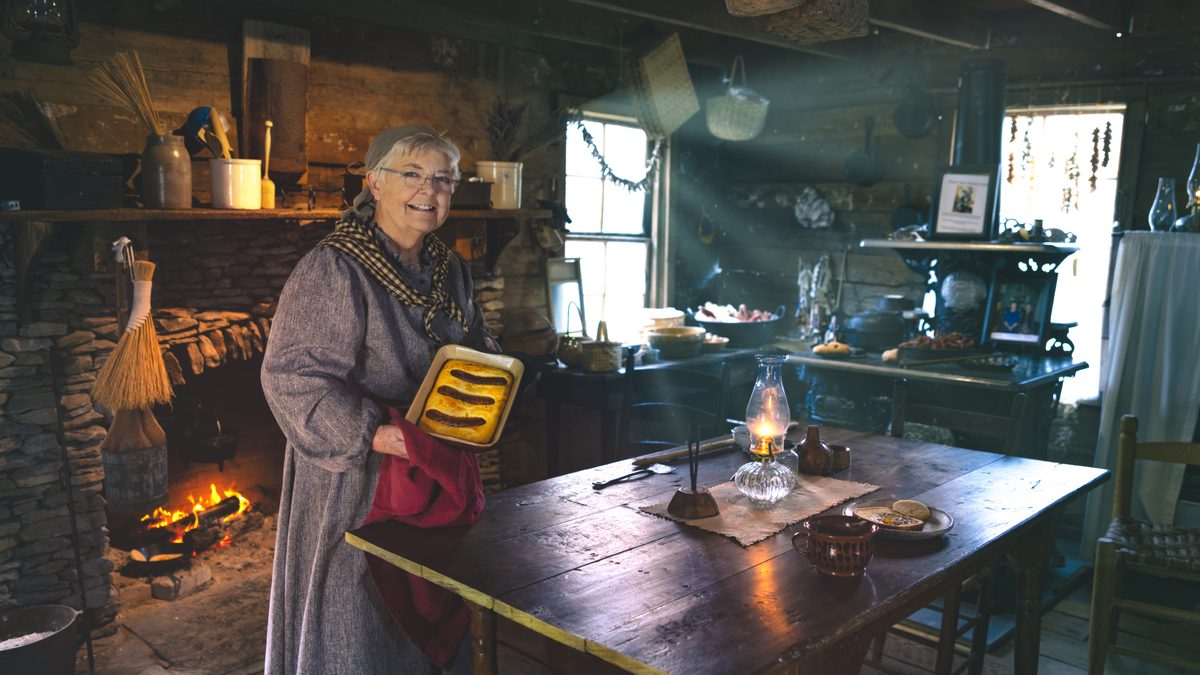
She wakes early at her home in Seymour and dresses in a long dress, hiking boots, an apron, and a kerchief for her journey back in time. Then she makes her way to the Great Smoky Mountains Heritage Center in Townsend and builds a fire in one of the historic cabins on the site. Once it burns down to coals, she’s ready to show the school kids who visit the center how Appalachian women in bygone days prepared their meals.
“I’ll usually make a dodger of cornbread and a pot of something, maybe soup beans. In February and early March, I’ll fix a starving meal using the things I dried over the winter,” says Stinnett. “It’s not that people were starving, but they were starved for the taste of something that’s fresh, waiting for the wild greens that grow in the spring.”
This spring and summer Stinnett will prepare meals with the help of about a dozen ticket holders. They’ll be joined by a local historian while they cook and then enjoy what they’ve made. The first meal, on April 30, was a Walker Sisters lunch and included such mountain delicacies as rutabaga cooked with bacon, pork tenderloin (“They also served a lot of mutton, but pork is easier to find today,” Stinnett says), kilt lettuce, boiled potatoes, soup beans, cornbread, chow chow, and fried apple pies.
She steps into the past to bring history vividly to life for new generations.
Stinnett learned her hearth cooking skills from Ersie Garner, the mother of her best friend, who taught it in Gatlinburg. At the time Stinnett was a teacher at the Tennessee School for the Deaf, and Garner would cook for her students once a year. “They loved it,” she says. And Stinnett did, too. Now retired, she travels regularly to North Carolina to work and learn with the Historic Cooks of the Catawba Valley. Hearth cooking and history are her passions. “I love it,” she says.
Highway to History
Stinnett’s skills are just one of many ways the Great Smoky Mountains Heritage Center shares the history of the Tuckaleechee Cove in which it is located. And builds community around it. Its roots lie in an expansion project on the Quiet Side of the Smokies.
Back in 1999, the state began the process of expanding Highway 321 through the cove from two lanes to four. But first, according to the National Historic Preservation Act, when federal dollars are spent on a project like that, an archeological dig must be completed in advance of it. What they found were signs of human habitation that went back more than 10,000 years to the Cherokee people and their ancestors.
“They found pottery shards and arrowheads, as well as post molds that showed the shape of the ancient houses,” says Trevor Lanier, the center’s curator. “They uncovered signs of palisade walls and storage pits. It became one of the largest archeological digs in Tennessee history.”
What began as a museum has grown into a living, breathing community hub.
By the time it was complete, they had evidence that the area had been inhabited for 17,000 years, since the end of the last ice age.
The question then became what to do with the artifacts they unearthed and the information they learned from them. Community leaders, as well as former Governor Don Sundquist, secured funding for the heritage center. Richard Way and Champ Beeler donated the property on which it sits. In 2006 the center opened.
“In the beginning, it was a museum,” recalls Richard Maples, one of the founders. “It was primarily started for children so they could come on field trips and learn about the history. But it has evolved into bigger and better things.”
History isn’t just preserved here—it’s experienced, shared, and lived.
Expanding Its Focus
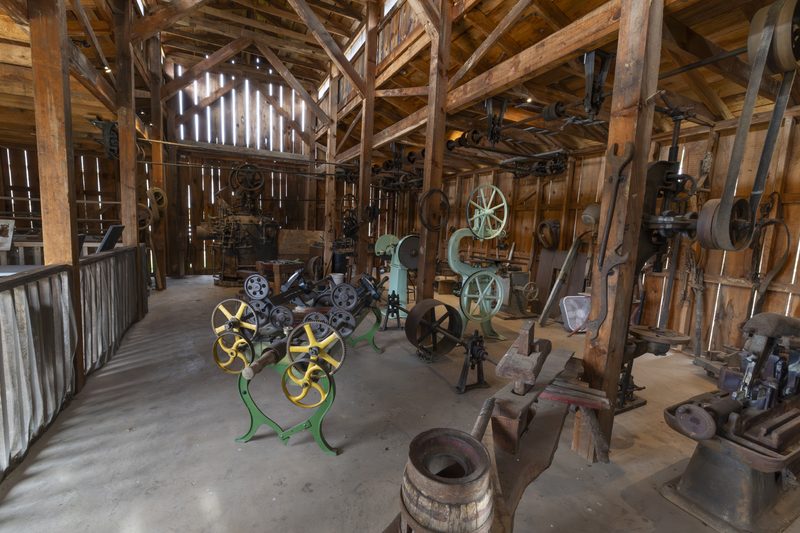
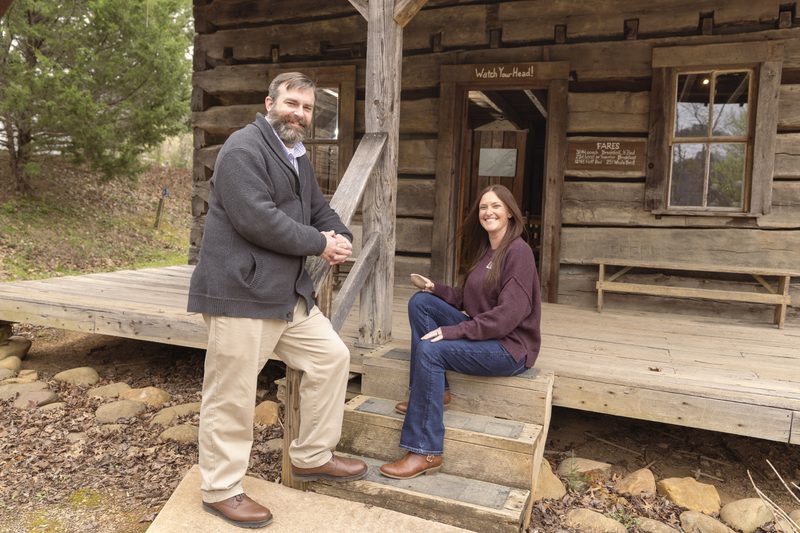
An amphitheater was added for concerts. Area residents donated old buildings — cabins, a moonshine operation, a church, as well as old wheelwright and sawmill equipment and printing presses — so visitors could get a sense of what life was like in the 1800s and early 1900s. Heirloom gardens were established by the Tuckaleechee Garden Club to show what Appalachians grew to feed themselves, like “lazy wife greasy beans” and the same variety of corn that Thomas Jefferson grew.
for whom the center was intended, continue to come. Jenn Bowen, curator of education at the center, says kids visit four days a week from September to December and from March through May. Donna Stinnett, a living history demonstrator, as well as yarn spinners and blacksmiths, show what life would have been like back in the day. “They do a really good job of bridging the gap between the kids’ life today and where it stemmed from,” she says.
One day a year — the Saturday of Mother’s Day weekend (May 9 this year) — the center hosts Kids Take Over the Museum with hands-on activities, demonstrations and experiential learning. Kids may help string leather britches (a variety of bean) for drying or help Stinnett prepare a treat like cinnamon toast. The historic preservation office of the Eastern Band of the Cherokee will send staff to talk about archeology and share stories and dancing. “It’s a very big day,” Bowen says. “It’s the one event that focuses solely on getting kids to physically connect with the history we share.”
Not that the adults are left out of center activities. Classes about the use of herbs in salves, oils, tinctures, and syrups are held regularly throughout the year. An annual Fiber Fair draws quilters, knitters, spinners, and other crafters for a weekend each spring. A big Independence Day concert and festivities are planned for July 4, and a Blue Ribbon Country Fair is on the calendar for September. The center regularly schedules bus tours of Cades Cove and once a year to Cherokee, N.C., to see the elk and listen to them bugling.
The past becomes tangible through hands-on learning, stories, and tradition.
Working in conjunction with the National Park Service, the center arranges temporary exhibits like photos of Carlos Campbell from when the national park was founded, which is currently on display. To celebrate the 250th anniversary of the nation’s founding, they are building an exhibit centered around the long rifle of Black Bill Walker, which legend has it was used during the Battle of Kings Mountain during the Revolutionary War. (Black Bill was a legend in his own right. A cousin of the Walker Sisters, he is said to have had three wives at the same time and fathered 24 children.)
Kimberly Smith, a citizen of the Eastern Band and board member at the heritage center, appreciates what the center is doing to develop stronger relationships with tribal citizens and support the Band’s efforts to teach native culture and traditions. They are designing a T-shirt to be sold at the center promoting Kuwohi (what used to be called Clingmans Dome), and 100 percent of the proceeds will support the Center for Native Health in Cherokee. She also said they are working together to see what natural resources the center might develop to support tribal artisans, such as growing river cane or the plants used to create dyes for basketmakers.
Thoughtful Growth
All of these activities are under the direction of Executive Director Frank Graffeo (not to mention Cat Stevens, the center’s feline resident, who supervises from the counter where guests check in or a shelf of cozy T-shirts in the gift shop).
As the center celebrates its 20th year, Graffeo is dedicated to creating community. “There’s so much opportunity for connection here,” he says. “We are working on a stronger focus of bringing people together — through concerts during the warm months and through immersive living history demonstrations.”
Connection is at the heart of everything the center continues to build.
He’s also working on forming relationships with other institutions associated with the national park, citing the future Lamar Alexander Institute at Maryville College as one example. “We want to host scholarly programs here. We are a living outdoor classroom.”
The Peaceful Side of the Smokies offers a sense of place you can’t find in, well, the not-so-peaceful sides. “The tree line, the views all around — you feel what draws people to it,” he says. “The people who live here and treasure this place fiercely defend it as unique, inviting, and authentic. What do you know? That’s also how you’d describe a great museum! We want to be very intentional and thoughtful about how we grow.”
“What Frank has going on has evolved into a community,” says Richard Maples. “And I see it continuing as more than a museum.”
→ Swipe for Next Story
FeatureMAY JUNE 2026
The Dinner Dilemma
How I Finally Stopped Overthinking What to Cook
Story by Carter Barczak
It’s 7:15 p.m. and I can feel the drop — that end-of-day wall where every last bit of mental energy has been spent on meetings and emails, and deciding what to cook feels like being handed one more task. I had planned to stop at the grocery store on my way home. Reader, I did not stop at the grocery store.
Once I was home, I stood in front of the open fridge hoping something would jump out at me. There was food in there — steak from earlier in the week, tortillas, a few avocados, some sauces doing their best in the door — but none of it was connecting into a plan. The pantry wasn’t more helpful. My girlfriend Sophia was on her way over after her own long day, and delivery felt like defeat, and going out felt worse.
“AI didn’t cook dinner — it just got me out of my own head and into the kitchen.”
Normally this is where I’d fall into the scroll. Instagram, TikTok, the usual — there’s genuinely good food content out there, but twenty minutes later I’ve watched three unrelated videos and completely forgotten why I picked up my phone. Google isn’t better; “easy steak dinner” returns ten versions of the same recipe using ingredients I don’t have. The hunt for dinner becomes more work than the actual cooking, and most nights I just give up and order a burger. The quesadilla never gets made.
Every dish tells a story worth savoring
This time I did something different. I took a photo of my fridge, then my pantry, and dropped both into ChatGPT with something like “what can I make with this?” Within seconds I had ten meal ideas. One was steak quesadillas with guacamole. Immediately, that was it — it used exactly what I had, wasn’t trying to be complicated, and most importantly, it just sounded good.
I sliced the steak, got it in a pan, and started mashing avocados while the cheese melted. Twenty minutes later, dinner was on the table when Sophia walked through the door — actual dinner for two, with guac, not sad reheated leftovers. Ten minutes before that I’d had absolutely no plan. That shift happened because I stopped scrolling and started cooking. The AI didn’t make the meal. It just got me out of my own head and into the kitchen.
That win opened a door. I’m a big foodie living in Charleston, which has no shortage of great restaurants, but it’s easy to cycle through the same ten spots. I started asking ChatGPT to recommend places based on exactly what I was craving — the specific vibe, the occasion, the mood — and it started pointing me toward spots I’d never heard of. I was actually discovering new food again.
Then came the moment that really sealed it. Sophia is allergic to seafood and nuts, which makes eating out more complicated than it sounds. At any new restaurant, we spend the first several minutes going through the menu line by line, asking the server how things are made — we don’t want to make a production of it, but there’s no way around it. One night at Post House, I just took a photo of the menu and ran it through ChatGPT. In under a minute, I knew exactly what was safe and what wasn’t. No hold-up, no awkward back-and-forth. She just got to eat. That’s not a small thing.
→ Swipe for Next Story
TravelMAY JUNE 2026
The Green Hills of Tanzania
We expected something splendid. What we experienced was magnificence with the volume knob removed.
Story by Brooks Clark Photography by Brooks & Karen Clark
We expected something splendid. What we experienced was magnificence with the volume knob removed.
As many Nat Geo shows as we’ve watched over the years, nothing prepared Karen and me for the impact of seeing wildlife in person and up close. Karen had read Hemingway’s descriptions in Green Hills of Africa of the vastness of the Serengeti Plain and the marvel of the great migration of wildebeest, zebras, giraffes, impalas, and other species, but she was awed to see the plains stretch to the horizons and herds by the thousand moving in their clockwise search for water and better grazing.
In our Toyota Land Cruiser, we moved with the herds and lions, leopards, and cheetahs waiting for their chance to down a newborn wildebeest or gazelle. At one point in the Serengeti, we came upon a sated pride of lions—aging patriarch surrounded by females, with younger males at a distance—sleeping lazily together near a half-creek after gorging themselves on a fresh kill.
None of the animals, predators or prey, are bothered by safari vehicles drawing close to them. “They don’t see you,” explained our tour director, Emmanuel (Emma) Mollel. “If you get out of the truck, that’s another story.”
The animals roam about with an air of professional absorption. Wildebeest move in committees. Zebras appear to have dressed in the dark but are determined to brazen it out. And the lions, stretched beneath the trees, look like country club golfers who have lunched well and see no reason to extend further effort.
When we first arrived in Arusha, Tanzania, Emma (pronounced EE-mah) showed our group a whiteboard of Swahili greetings—jambo (hello), karibu (welcome), asante sana (thank you very much), and hakuna matata (no worries). Of course, that last one we all knew from “The Lion King.”
With white-topped Mt. Kilimanjaro in the distance, our tour started in the Arusha and Tarangire national parks, where we saw our first giraffes, elephants, zebras, and lions, among other fauna, and a saddle-billed stork. Tarangire is famous for having over 550 species of birds. Enormous termite mounds dot the landscape; abandoned ones are often home to the dwarf mongoose, whose noses we saw popping out.
We were awed by the enormous and ancient baobab trees, called the Tree of Life. They absorb and store water in their wide trunks in the rainy season and produce fruit in the dry. Elephants chew the bark and fiber for moisture, but this doesn’t harm the baobab, which can live 5,000 years. (It’s Rafiki’s tree in “The Lion King.” By the way, rafiki means “friend” in Swahili.) We saw many baby elephants being nudged along by their mamas, bringing to mind Henry Mancini’s irresistible “Baby Elephant Walk” from the 1962 John Wayne movie “Hatari!” (“danger” in Swahili), which was filmed in Tanzania (then called Tanganyika).
We stayed in a lodge at an elevation of 7,200 feet on the rim of the Ngorongoro Crater. This is the world’s largest intact, unflooded, and perfectly formed caldera, formed some 2.5 million years ago. The name is believed to be an onomatopoeic word termed by the Maasai people to escribe the sound of a cow bell, “ngor ngor.” The crater floor—some 1,700 feet beneath the rim—holds a 100-square mile conservation area of grassland, swamps, lakes, forests, almost 30,000 large animals, and thousands of birds, including countless flamingos. Here you may see a black rhinoceros, as well as the elusive white rhinoceros. We watched a wildebeest give birth, then over some 15 minutes saw the newborn stumble several times trying to stand up on spindly legs before succeeding.
We were charmed by the secretary bird, so named because its head crest of quill-like feathers resembles the pens court clerks used to carry behind their ears. With an eagle-like body on crane-like legs, it can stand four feet tall. “It kills snakes,” nodded Emma approvingly. Its grey and black plumage, with black feathers on its legs resembling breeches, also suggesting a Dickensian functionary.
Leaving Ngorongoro, we saw a golden jackal trotting across a hillside with a rodent in its mouth. In the other direction, we looked out over vast lands used by the nomadic Maasai to graze their herds of goats, sheep, but mostly cattle. The Maasai are allowed to move their herds all across Tanzania, as they have done for centuries since migrating from South Sudan.
Emma, who is Maasai, took us to a Maasai village, where we met the son of the chief, joined in a welcome dance, and were ushered in as couples to the small, round, thatched-roof mud-and-dung houses. “We live on the meat, the milk, and we drink the blood of the cows,” explained a six-foot-four Maasai man. The Maasai are generally tall. NBA fans might remember the seven-foot-six Dinka tribesman Manute Bol from South Sudan. “Dinka and Maasai are the same,” said Emma.
Our group then met 15 charming three- and four-year-olds in the village classroom. They sang us a welcome song in Maasai. English, Swahili, and Maasai alphabets were at the front of the classroom—the children learn all three. Emma told us that Maasai youngsters showing promise in the classroom go to schools in nearby towns, as he once did. He decided that he wanted to be a guide and went to school to become one. At one point, he returned to find that his village had moved on into the endless wilderness. He didn’t tell us whether he ever found them again.
We stopped at the Olduvai Gorge, the “cradle of humanity,” one of the most important paleoanthropological sites in the world. It is not, at first glance, the sort of place where one expects to find one’s great-great-great-great-great-grandfather, yet it is here in 1959 Mary Leakey famously discovered the 1.8-million-year-old skull of Australopithecus. The gorge takes its name from the Maasai word “oldupai,” the place of the wild sisal plants.
Then it was on to the Serengeti, derived from the Maasai word for “endless plains.” We came upon a cheetah, the fastest animal on earth, looking out over the herds. A few hundred yards away, our driver took us to a clump of bushes and a nest of four cubs, just days old, whose eyes had not yet opened. Not far away, we drew close to a leopard, walking menacingly toward a watering hole. Later, we saw another leopard who had dragged a Thomson’s gazelle into a tree for snacking without the interference of other predators or scavengers.
In Green Hills, Hemingway described fisi, the hyena, as “self-eating devourer of the dead, trailer of calving cows, ham-stringer, potential biter-off of your face at night while you slept, sad yowler, camp-follower, stinking, foul, with jaws that crack the bones the lion leaves, belly dragging, loping away on the brown plain, looking back, mongrel dog-smart in the face.” When we passed a clan of hyenas, they lived up to that unflattering description. Despite their canine appearance, they are not related to dogs.
Warthogs, with their cocksure gait and spindly tails held straight in the air, invite similar attempts at description. The very name of Pumbaa, the Lion King warthog, means “foolish” or “silly” in Swahili. We passed a committee of lappet-faced vultures, storks, and cranes fighting over the carcass of a wildebeest in a scene reminiscent of Filene’s bargain basement.
One morning, we got up early to ascend in a hot-air balloon above the Serengeti. The endlessness of the plains was breathtaking. Hippo tracks crisscrossed the terrain where they rise out of the water at night and roam as far as six miles in their grazing. Driving to the Serengeti airstrip, we passed by a pond filled with two dozen happy hippos, snorting contentedly every now and then.
From the airstrip, we took a 90-minute flight to Zanzibar. Tanzania was formed in 1964, when Tanganyika and Zanzibar united to create the United Republic of Tanganyika and Zanzibar, later renamed Tanzania. Zanzibar gives the impression of having been assembled by a committee of sultans, traders, sea captains, and at least one enthusiast for decorative doors.
We visited the open fish market in Stone Town, the narrow-alleyed old part of the city. At dawn, wooden dhows unload their catches of yellowfin tuna, red snapper, octopus, and tuna. In the market, vendors bargain with chefs and families. Inland, Zanzibar’s spice farms reveal why it was known as the “Spice Island.” Though it used to send spices all over the world, today it exports only cloves. We walked through groves of cloves, nutmeg, cinnamon, and vanilla. You can buy items scented with Ylang Ylang, one of the distinctive notes of Chanel No. 5.
The former slave market was covered up in the late 1800s by an Anglican cathedral. Underground holding chambers tell the sobering story of the East African slave trade, an essential chapter in understanding Zanzibar’s complex history. Our flight back to the mainland took us to Dar es Salaam (“haven of peace,” in Arabic), a city of eight million, the former capital and still the commercial capital of the country. At our going-away dinner, Emma gave everyone in our group “khangas,” the traditional red or blue checked cloth Maasai wear. He asked us to remember his people and “come back to Tanzania soon.”
→ Swipe for Next Story
FeatureMAY JUNE 2026
The Truth About Protein
From muscle growth to longevity, a clear look at how much, when, and why it matters.
Story by Dr. Edwin Spencer
When you get a call from one of your mentors, you usually take it. This call was interesting as it was an introduction to another surgeon on the west coast who was equally interested in the health wellness space. He had noticed some of the same trends in outcomes and was interested in improving them. So, I walked out to the dock and we exchanged stories and ideas.
I'll be honest — conversations like that are where I do some of my best thinking. Whether I'm knee-deep in the headwaters of the Soque River working a dry fly upstream into a quiet run, or in the deer stand witnessing the woods come alive in the morning, my mind is always turning over problems. My wife will tell you I'm not always the best at shutting it off. Work/life balance is probably the thing I struggle with most. But every once in a while, the lack of balance pays off.
Protein is everywhere these days — added to shakes, bars, snacks, and even coffee. It's trending across social media, but that often leaves people wondering: What's actually true? Are some proteins better than others? Does timing matter? And is protein important only for people who train, or for everyone? These are questions I hear often, so let's break the topic down into something digestible — pun intended.
What Is Protein?
Protein is one of the three major macronutrients, along with fats and carbohydrates. It's made up of amino acids, which can come from either animal or plant sources. The human body uses about 20 amino acids to build all its proteins, but 9 of these are essential — meaning your body cannot make them. They must come from food.
How Does the Body Use Protein?
Proteins are the building blocks of enzymes, tissues, and many structural components of the body. Several amino acids are key for producing hormones and neurotransmitters — for example, tyrosine is used to make dopamine, norepinephrine, and thyroid hormone, while tryptophan helps produce serotonin and melatonin.
The body generally avoids using protein as a primary fuel source because it takes significantly more energy to metabolize compared to fats or carbohydrates — roughly 2–3 times more. This is one reason people on a carnivore diet often report meaningful weight loss. I like to think of it the way I think about a well-planned surgery: you use the right tool for the right job. A fire is a useful analogy for protein's metabolic role: carbohydrates are quick-burning paper, fats are slow-burning logs, and protein is the iron grate holding the whole thing together. You can burn the grate for fuel, but it's inefficient — the body prefers to use protein for structure and function rather than energy.
What Is the Best Source of Protein?
This is one of the most common questions I hear, especially in the gym. I'll admit my personal bias toward a thick, juicy, rare ribeye. It's a running joke in my house — my family knows that a good steakhouse makes me genuinely happy. But research shows that vegans can still achieve muscle protein synthesis (MPS) rates comparable to omnivores, provided they are very intentional about getting all essential amino acids, especially leucine, a key driver of MPS.
Common plant proteins that meet WHO essential amino acid recommendations include soy, quinoa, brown rice, and pea protein. However, they still don't match the amino acid profiles of beef, chicken, eggs, or whey. A useful metric here is the Protein Digestibility Corrected Amino Acid Score (PDCAAS), which accounts for both amino acid content and digestibility. A perfect score of 1.0 means the protein is complete and highly digestible.
Among plant-based options, soy scores 0.91, quinoa 0.87, chia 0.73, and pea protein 0.68. Animal-based proteins — eggs, whey, casein, and fish — score a perfect 1.0, with beef and chicken ranging from 0.92 to 1.0.
“Eat whole foods with plenty of protein, move your body, get sunlight, and sleep well.”
A recent study comparing vegan diets (with protein supplementation) to omnivorous diets showed no significant difference in MPS regardless of protein distribution throughout the day. However, another study comparing a soy-based meat alternative with beef found significantly higher muscle fractional protein synthesis after consuming beef, corresponding to higher serum amino acid levels.
The bottom line: you can achieve adequate protein on a vegan diet, but you must be far more deliberate with supplementation and food combinations. For those interested in muscle gain, animal-based proteins make it easier to hit ideal amino acid targets. For what it's worth, I don't push any single approach on my patients or my own family — I just want people eating intentionally, whatever that looks like for them.
Why Does Muscle Protein Synthesis (MPS) Matter?
People often raise protein intake only in the context of training, but MPS matters for everyone. Strength and VO₂max — a measure of cardiopulmonary fitness — are two of the strongest predictors of longevity and healthspan. I think about this not just as a physician but as a husband and father. I want to be on the river, active and sharp, for as many decades as possible. That means protecting muscle mass now.
After resistance training, MPS remains elevated for about 24 hours. Consuming adequate protein during this window supports recovery and growth. Higher protein intake also benefits endurance athletes, with research showing improvements in VO₂max (Cardiopulmonary fitness), peak workload, lean mass, and time trial performance.
How Much Protein Do You Need?
Strength gains increase in a dose-dependent manner with protein intake. For every 0.1 g/kg increase, strength improves by about 0.72%, up to roughly 1.5 g/kg — approximately 0.75 grams per pound of body weight. I personally aim for 1 gram per pound of ideal body weight to ensure adequacy.
That said, protein alone isn't enough. Without resistance training, simply increasing intake won't significantly improve strength. You must move your body, there is no shortcut.
When Should You Consume Protein?
For years, the prevailing belief was that protein must be consumed immediately after training, and that the body can only process 30 grams per meal. Newer research challenges both ideas. A study comparing a 25-gram dose of protein to a 100-gram dose over 12 hours showed that the larger bolus produced greater and longer-lasting MPS. This means you can safely consume more than 30 grams per meal, and larger servings can help maintain an anabolic — muscle-building — state.
The "anabolic window" debate continues, but total daily protein intake is probably more important than precise timing. Personally, I aim for 40–50 grams within an hour after training, using a high-quality whey isolate for maxim leucine delivery. On mornings after a hard workout, my family knows the blender is coming out for the smoothie and eggs and avocado are on the table.
Are There Downsides to Protein?
The only consistently noted risk relates to red meat — and specifically processed red meats like ham and bacon, which are associated with approximately a 20% increase in gastrointestinal cancers, particularly colorectal cancer. I found this particularly disappointing as bacon makes almost anything taste better. These findings often fail to account for confounding lifestyle factors like exercise and overall diet quality. In contrast, fruit and vegetable intake — particularly those high in soluble fiber — is protective, likely due to beneficial effects on the gut microbiome along with phytonutrients and antioxidants.
What Are the Other Effects of Protein?
It's hard to watch television anymore without an advertisement for a glucagon-like peptide (GLP) medication for weight loss. What most people don't realize is that amino acids — particularly glutamine, arginine, and leucine — are potent natural stimulators of GLP from the gut, which promotes satiety. Protein also has a stabilizing effect on blood sugar levels. A well-constructed, protein-rich diet does quietly in the background what some of these medications aim to do artificially.
The Takeaway
Protein intake and exercise are essential for stimulating muscle protein synthesis, improving strength, and enhancing endurance — all of which are key predictors of longevity. Choose proteins with high PDCAAS scores and sufficient leucine to maximize benefit. While I enjoy a good ribeye, I diversify with eggs, poultry, pork, and fish, and I make sure to get at least 30 grams of soluble fiber from fruits and vegetables daily. That is, essentially, an omnivore diet, and I believe it covers all the bases — for me and for my family.
Back to the Conversation
At the end of the conversation, we both agreed that nutrition was the key lever to affect outcomes while supplementing for deficiencies and additional needs. But could we accelerate the recovery and improvement even more? I had taken some peptides after a surgery years ago and recovered very well as had many of my patients. However, there is a paucity of human literature regarding their use. After a few more conversations we developed OPEN, Orthopaedic Peptide Evaluation Network with a scoring system that we can implement to track outcomes. We will launch this soon and begin collecting data…stay tuned. Having said that, I believe that peptides will only have a meaningful positive effect if the baseline nutrition is optimized.
In many ways, all the current nutrition data just reinforces what generations before us already practiced: eat whole foods with plenty of protein, move your body, get sunlight, and sleep well. As Solomon wrote in Ecclesiastes, "There is nothing new under the sun."
That truth steadies me — when taking care of patients, on the river, and at the dinner table with my family. Regardless of where the science leads next, we'd all do well to deepen our faith, love our families and friends profoundly, and recognize the fundamental meaningfulness in God's plan for each of us and for our fellow man.
“In many ways, all the current nutrition data just reinforces what generations before us already practiced.”
Dr. Edwin Spencer is an orthopedic surgeon and a longtime contributor to Cityview.
→ Swipe for Next Story
FeatureMAY JUNE 2026
Where Light Comes Home
The Beauford Delaney Building is Knoxville’s most inspired new address — and the story behind it is one for the ages
Story by Nathan Sparks Photography by Bruce McCamish
Stand on one of the lower-floor terraces of the Beauford Delaney Building and the game is right there. Not in the distance. Not behind glass. Right there—the pop of a fastball in the mitt, the crack of a bat, the crowd rising to cheer. The stadium opens below you and before you like a stage, and you are not a spectator in the usual sense. You are part of it. You are in it. You are home.
That is not a coincidence. That is Randy Boyd’s vision come to life.
There is a version of this story that starts with a fencing salesman. It is the right place to start, because everything Randy Boyd has built—and he has built a lot—traces back to that foundation. Hard work, eyes open, looking for the next thing that could become something bigger than it appears. The fencing business taught him something that fancy business schools often don’t: that the gap between where something is and where it could be is where opportunity lives. He found it in PetSafe, the pet products company he built from nothing into one of the most successful businesses in the country. He found it again when he acquired a collection of minor league sports teams under what is now Boyd Sports—including the Knoxville Smokies. He found it when he looked at the land east of Knoxville’s Old City and saw a stadium and a neighborhood where most people just saw a vacant lot. He is not a man who talks about himself much. He would wince at the word visionary—but he is a man who works tirelessly and he is one of the most successful businessmen in our community, and Randy Boyd has a track record of seeing things that don’t yet exist and making them real. Covenant Health Park was one. The Beauford Delaney Building is another.
“You’re not watching the game from here—you’re living inside it.”
The original inspiration came from visits to Wrigley Field—specifically the rooftops. Those improbable bleacher seats perched above the neighboring buildings, looking down into the park, give Wrigley a neighborhood feel that no modern ballpark has managed to replicate. They make you feel like you’re part of a community, not a customer in a commercial transaction. “We wanted to create that feeling,” Boyd says. “That you’re part of a community, not just at a baseball stadium.” The logistics of building actual rooftop stands turned out to be prohibitively expensive. But what came out of that problem may be better than the original idea. Residential buildings pressed directly against the stadium walls, rising alongside it—and Boyd says so himself, with the slight sense of sacrilege that only a Cubs fan could get away with. “It’s so intimate,” he says. “Between the Yardley building and the Delaney building, you’ve created almost an amphitheater feeling.”
The building itself—nine stories, 47 condominiums—is the kind of project where the more you look at it, the more intentional it reveals itself to be. Designed by a team that includes Design Innovation Architecture working alongside Barber McMurry, and built by Denark Construction. Proffitt and Sons handled drywall and framing throughout. It is a project where the craftmanship shows at every turn. The team at Partners Development has been shepherding it from concept to completion, and Christi Branscom is the person you want explaining it to you. She knows every number, every unit, every finish, and she talks about the project with the quiet pride of someone who has watched something genuinely good get built. “The building offers a variety of one and two bedroom units,” she says. “Ninety percent of those units overlook the stadium, and from the seventh floor and up, you have a great view of all of downtown and House Mountain too.”
“The Delaney isn’t just a building; it’s where a city decided who it wants to be.”
Prices run from $787,000 to just over $2 million, with the ninth-floor units—Boyd’s floor—edging past that upper number. The one-bedrooms average almost 1,200 square feet. The two-bedrooms run 1,600 to 2,300. The closets—Branscom mentions this with particular satisfaction—are nothing like typical condo closets. There are a lot of them and they’re all large. The finishes are where the building quietly announces what tier it’s playing in. Kitchen Sales supplied the cabinetry and hardware. The appliances are Thermador and Fisher & Paykel. Home Choice Windows, Doors, and Flooring handled the tile and hardwood selections throughout, and Branscom says the feedback on the kitchens and bathrooms—the tile selections, the color palettes, the material combinations—has been as strong as anything else in the building.
Design Innovation Architecture handled a good part of the interior design for the project. The attention to detail is evident throughout the building—in the warmth of the materials, the logic of the color choices, the way the contemporary aesthetic of the common spaces feels right without ever feeling cold or generic. It is the kind of design that doesn’t call attention to itself. It just makes everything feel considered.
“People didn’t buy condos here—they bought into a feeling they could already sense.”
Boyd’s take on the amenity floor cuts right to it. “The amenity space would be appropriate for 200 units,” he says. “There’s outdoor grilling space, a place for dogs, a beautiful indoor gathering space, a gym. Considering there are only 47 units, it’s extraordinary.” And then there are the lower-floor terraces. Boyd has his unit on the ninth floor—panoramic, mountains in one direction, stadium below. He has made his peace with that choice. But ask him about the lower unit outdoor spaces and something shifts in his voice. “Their terraces are the size of some people’s apartments,” he says. “It’s almost like having your own permanent suite for baseball games.”
One thing Branscom speaks of frequently is how this building makes people feel. Many of the current owners bought here bought long before completion. They were not buying a condo. They were buying a feeling. “We had a lot of contracts entered before the building was finished,” she says. “At that point, people were really buying into a dream—maybe buying the lifestyle, buying into the excitement around the stadium. Many of them were buying their first home in a downtown neighborhood. ‘We’ve been coming and doing things in Knoxville for a while. It’d be great to have a place here. And wow, we get a place where you have the stadium and all these other amenities.’” Then the building opened and people walked in and saw it for real. Some of them changed units. They’d loved a floor plan on paper, then stood in it and realized a different view was calling to them. Some wanted to be closer to the fitness center, some wanted a higher floor, some wanted the larger outdoor living space. The building changed around them as they decided, which is its own kind of magic.
“Knoxville always lived in Beauford Delaney. Now, his light lives here again.”
The name on the building is the part of the story that lifts everything else.
Beauford Delaney was born December 30, 1901, in Knoxville, Tennessee, the eighth of ten children. His father, Samuel, was a barber and a Methodist minister. His mother, Delia, took in laundry, cleaned houses, and raised her children with a love that would shape every one of them. She put something into those children that would eventually echo across the art world. Dr. Renee Kessler runs the Beck Cultural Center on Dandridge Avenue, which exists to preserve and amplify African American history and culture in Knoxville. She has been working alongside Randy Boyd on this project since before COVID, and she talks about Beauford Delaney the way someone talks about a relative they never met but know deeply. “His mother Delia was also a quilter,” Kessler says, “who inspired Beauford and his brother at a very young age to begin to use their hands in the gifts that God had given them to produce art.”
“It’s rare to find a place where history, design, and daily life all meet—and feel this natural.”
The boy who grew up on Vine Avenue—one block from the ground where Covenant Health Park now stands—would go on to study art in Boston and then answer the gravitational pull of the Harlem Renaissance, moving to New York in 1929. At 181 Greene Street in Greenwich Village, he built a studio and a life and a legend. He painted W.E.B. Du Bois and Duke Ellington. He became close friends with Henry Miller. In 1940, a fifteen-year-old named James Baldwin climbed the stairs to his studio, and a thirty-eight-year friendship began that would help shape American literature. What Baldwin wrote about that first encounter has stayed in the record ever since: Delaney was “the first living proof, for me, that a black man could be an artist.” Delaney moved to Paris in 1953 for a visit and stayed for twenty-six years. He died there in 1979. His paintings hang now in the Smithsonian, the Whitney, and the National Portrait Gallery.
Kessler does not hesitate when she talks about where Beauford Delaney belongs in the history of art. “Many people say he’s one of the greatest abstract artists of the twentieth century,” she says. “I really believe that when the history books are written in the future, we will say he was probably one of the most important artists ever—not just for this lovely abstract art that he did, but for what he meant to this world, and for how he will help continue to change the world, to really recognize and acknowledge the rich history, heritage, and gifts of extraordinary artists from right here in East Tennessee.” There is a historic marker near the stadium at the approximate site of the Delaney family home at 815 Vine Avenue. Stand at that marker and look south. The Beauford Delaney Building fills the background like it was placed there deliberately—and it was. “That building literally stands in the background of what would have been the original home place of Beauford Delaney,” Kessler says. “The Delaney is looking at the old original home place. And the old original home place… it’s calling its name out loud.”
Boyd’s connection to all of this is genuine, and it goes beyond the naming of a building. He and Jenny Boyd have long believed that investment without intention is just commerce. Their fingerprints are on the Beck Cultural Center restoration, on the effort to ensure this development honors the history of the land it sits on, and on the conviction that a great city takes care of its own story. When the Boyd’s met Kessler and learned the full arc of Beauford Delaney’s life—the Knoxville boy who became a world-renowned artist, whose childhood home stood a block from this very ground—naming the building felt less like a branding decision and more like an obligation. “The people living there are in an art museum, in a ballpark, in an area that’s going to be a destination within our city,” Boyd says, and the statement is not hyperbole. It is a description.
When you walk into the lobby of the Beauford Delaney Building, a large-scale reproduction of his work greets you—dramatic, lit, impossible to miss. Reproductions of his paintings are displayed throughout the building, a permanent acknowledgment that this city’s story is worth honoring. The Delaney Museum at Beck, now under construction on Dandridge Avenue, will add another landmark to what Kessler calls a corridor of memory—a trail that leads from the historic marker on Vine Avenue to the building that bears his name to the museum that will hold his legacy. “You have the Delaney Museum at Beck,” she says. “You’ve got the Delaney that stands tall. You’ve got the Delaney marker where it was. You’ve got artwork. You’ve got his archives. We think we’re going to bring the world to Knoxville for generations to come.” Then she says the thing that stays with you longest: “While he never returned back to Knoxville to live, Knoxville always lived in him. And in fact, even to the end of his life, he was trying to get back here—because there was something about Knoxville.”
The ground floor of the Delaney tells its own story about where this neighborhood is going. Iron Forge Brewing—whose craft beers are already pouring inside the stadium—will anchor the east end along Jackson Avenue and is expected to be the first to open. Jackie’s Dream, the beloved soul food destination, is close behind. T. Ralph’s Burgers and Fries and Disco Chicken, Knox-Quila, Berry Social, and Crispy Cones round out a tenant mix that reflects genuine thought about what a real neighborhood needs. Just south of the building, Jonathan’s Grille—a three-story upscale sports bar and restaurant—is under construction and will anchor the stretch between the stadium and the Old City. KUB Fiber ties it all together, ensuring the connectivity inside the building matches the quality of everything else. The commercial office space is fully leased. Three retail spaces along Jackson Avenue are spoken for. And the picture Branscom paints of daily life at the Delaney is not a sales pitch—it is something you can already watch taking shape. “People can be coming over to the Delaney and have dinner, not planning to go to a game, but kind of go, ‘Hey, I didn’t know there was a game tonight. Let’s hop over there,’” she says. “It’s something you can do on the spur of the moment. Whether it’s soccer or baseball or even a concert—the venue is going to host more of all of those as time goes on.” She started this job about sixteen months ago, when the area was still mostly a construction site. “Just in that short period of time, the area has really turned into its own downtown neighborhood,” she says. “I’m down there every day. I see people everywhere—running, walking their dogs, walking from Gay Street just to come and see the neighborhood and see the progress.”
When Covenant Health Park opened on April 15, 2025, something shifted in Knoxville. Not just because of the stadium—beautiful as it is, with its Tennessee-shaped scoreboard (among the largest in all of minor league baseball), its retractable pitcher’s mound, and its sweeping sight lines—but because of what the stadium made visible. That this city had decided something. That downtown Knoxville was not going to drift back into quietness. That it was going to be a place people choose. The numbers Boyd cites tell part of that story: stadium attendance up 40 percent, nearly every financial measure up 30 to 50 percent in the first year. BaseballParks.com named it the 2025 Ballpark of the Year. But the moment that gets Boyd—the one he returns to with the most evident emotion—is not in any spreadsheet. At the unveiling of the statues in the East Plaza honoring players from the Southern Negro League, more than 100 community members gathered to celebrate men who played a century ago and never imagined they would be remembered, let alone cast in bronze. “It was just a great way to connect our community together,” Boyd says quietly, “and celebrate people that would have otherwise been forgotten.” That is the center of this thing. The views are spectacular. The finishes are first class. The terraces truly are the size of most people’s apartments. But what drives all of it—what makes the Beauford Delaney Building more than a luxury address—is the conviction that a city’s history is worth taking seriously, and that the people who shaped a place deserve to be honored in it.
About half of the 47 units have found their owners—people who saw what this was before the paint was dry and bought a dream before it had walls. They wake up now to a view that no amount of second-guessing could have prepared them for. The remaining units are waiting for someone with the good sense to say yes. There will not be another building like this one. Kessler puts its significance where it belongs—in the long arc of Knoxville’s identity. “Now I think you’re going to know you’re in Knoxville when you see the Delaney building,” she says. “Because it’s going to drive you to find out about Beauford Delaney and the Delaney family. And then it’s going to drive you right here to the Beck.”
Stand outside your condo one more time. The field glowing below. The city humming in every direction. A boy who grew up one block from here and carried Knoxville’s light all the way to Paris. And a man who had the vision to put his name on a building that will outlast everything that came before it. Knoxville always lived in Beauford Delaney. Now his spirit lives on in Knoxville. His light is everywhere.
That is not a coincidence. That is Randy Boyd.
Play ball.
The Beauford Delaney Building is located along the first base line of Covenant Health Park in downtown Knoxville. For information on available residences, contact Partners Development.
The Team Behind the Beauford Delaney Building
Development/Owner/Vision: Boyd Property Development / Boyd Sports—Randy Boyd | Project Management—Partners Development | General Contractor: Denark Construction | Architecture: Design Innovation Architecture & Barber McMurry Architects | Cabinetry & Hardware: Kitchen Sales | Flooring: Home Choice Flooring | Appliances: Friedman’s | Interior Design: Design Innovation Architecture & Nouveau Classics | Mechanical: Chancey and Reynolds | Electrical: Shoffner | Plumbing: Interstate | Drywall & Framing: Proffitt and Sons | Retail Design: Johnson Architecture | Roofing: Dixie Roofing | Landscaping: Arcadis | Signage: Allen Signs | Technology: Central Technologies | Connectivity: KUB Fiber | Furniture & Amenities: Office Work’s LLC
Retail & Restaurant Partners: Iron Forge Brewing | Jackie’s Dream | T. Ralph’s Burgers and Fries | Disco Chicken | Knox-Quila | Berry Social | Crispy Cones | Jonathan’s Grille
→ Swipe for Next Story
HouseMAY JUNE 2026
Where the Land Remembers You
Some roads have a way of pulling you back.
Story by Nathan Sparks Photography by Bruce McCamish
I hadn’t driven this particular stretch in more than thirty years, but the moment I turned off the main road and felt the land begin to open — fields rolling down toward the water, the horizon spreading wider than you’d expect — something in my chest settled in a way that had nothing to do with directions. I knew this road. I had driven it hundreds of times as a young man, on my way out from the little community of Louisville to visit my friend Gene Taylor, who lived next door on Cactus Island back when this whole stretch of Fort Loudoun Lake was quieter and considerably less discovered. Back then, Louisville was a place you had to mean to find. There was a small boat dock, a handful of houses, and more cattails than cars. You went there because you knew someone, or because you loved the water, or both.
Thirty years have a way of changing things. Louisville has grown into something genuinely fine — a small community that draws from both Knoxville and Maryville without being consumed by either, situated along one of the most beautiful stretches of the Tennessee River system in all of East Tennessee. The fields are still there. The water still defines everything. But the roads are busier now, the neighborhoods filling in, the old boat dock replaced by a thriving marina. The landscape has settled into something more intentional and modern.
And yet, driving out past the Poland Creek recreation area on this particular morning, I spotted what stopped me cold — a loose flock of American white pelicans working the shallows along the embayment. That’s new. Pelicans have only begun appearing here in the last few years, great improbable birds in a landscape you’d never have associated with them, and seeing them there, enormous and unhurried, turned the morning into something else entirely.
By the time I was coming up on my destination, I had traveled thirty years in about twenty minutes. And then I pulled onto Julie Crum’s driveway, her home coming into view, and I came back to the present in a hurry.
Julie Crum grew up in Milan, Tennessee, which is to say she grew up in a part of the state where space and land are assumed rather than sought. She spent more than two decades in Memphis and Millington before a divorce brought her east in 2015. She enrolled at King University for nurse practitioner school, bought a place in Wind River, and began building a new chapter in a part of Tennessee she had chosen for herself. But over time, as Wind River filled in around her, she began to feel that familiar pull — the need for something more open, more unclaimed. “I love pieces of land,” she tells me, simply and without elaboration, and I believe her completely. She was driving roads one afternoon — not looking for anything specific, just riding, the way people do when they’re working something out — when she spotted a sign. She turned in. The property — Lot 3 in what would become her neighborhood, elevated just enough to capture views in every direction — revealed itself the way certain pieces of land do. Quietly. Completely.
“I drove my car right up onto the lot,” she says, “and I looked around and I called the number. It was a Sunday. I asked the man if he’d meet me out here.” The owner came. Julie told him she wanted the property that day.
“I just knew,” she says. “That’s how I am. I go by gut instinct. I know when it’s right.”
“Present without imposing — a home that settles into the land rather than competing with it.”
She bought Lot 3. Then she came back two days later and bought the adjacent lot as well. She has since sold that one, but the gesture tells you something essential about how Julie Crum moves through the world — decisively, and usually ahead of the moment when most people would still be deliberating.
The same instinct guided what came next. Julie had built before — a lakehouse in Heber Springs, Arkansas, more than 9,000 square feet drawn up on a poster board by a talented local builder after she tore a picture out of Southern Living. But this time she was doing it alone, on her own terms, and she wanted to get it exactly right.
She found her architect through a neighbor who had relocated to the Brevard, North Carolina, area and had worked with Parker Platt. Julie looked at the plans, recognized the sensibility immediately — lots of wood, natural stone, an attention to light and site — and didn’t look further.
“That’s what Parker’s team does,” she says. “Very rustic, lots of natural materials, lots of light. That aligned exactly with my vision.”
She pauses. “Refined rustic, maybe,” she adds with a small smile, making a distinction that matters. This is not a house that borrows the visual vocabulary of rusticity without understanding it. Every element has been considered, every material chosen for continuity rather than effect.
Platt made the trip to Louisville and spent time studying the property in a way that surprised even Julie. He looked at the angles of the sun, the orientation of the views, the way the lot sat slightly elevated above the surrounding landscape, and positioned the house to capture all of it, tilting the structure ever so slightly to hold the water views without sacrificing anything else.
“I told him I wanted everything on one level,” Julie says. “A lap pool. A big outdoor living space”
“I told him I wanted everything on one level,” Julie says. “A lap pool. A big outdoor living space, because we spend so much time outside. A kitchen designed for real cooking.” She ticks these off without hesitation, the way someone does when they’ve thought carefully about how they actually live, rather than how they’d like to appear to live.
The result is a home that doesn’t announce itself. From the lake, the home reads as a dark, horizontal form stretched across a green hillside — substantial but not aggressive, present without imposing. Up close, the materials speak more clearly: natural Crab Orchard fieldstone from Castone meticulously laid, board-and-batten siding in a custom dark tone, timber accents that carry the same warmth from outside to in. The driveway curves in past a stone-walled courtyard where the landscaping by Proscapes — overseen by Mike Wyrosdick, who had worked with Julie before and who was, by universal agreement, exactly the right person for this property — anchors the approach without overwhelming it.
Walking through the front entry is a moment worth pausing over. Stone walls rise on both sides, and the ceiling opens into rough-hewn timber. There is an immediacy to the scale that is not quite what you expected, even after seeing it from the outside. A large piece of metal art — a Zia sun symbol in warm patinated steel — hangs against the stone like something found rather than placed
The floor is natural stone underfoot. You feel, in a way that is hard to articulate, like you have arrived somewhere specific.
For the build itself, Julie interviewed several of the region’s most respected builders. She is careful to say that “they’re all top notch”, because she means it, and because she wants to be fair. But the truth is, she had known about Mike Stevens for years before she ever sat down with him. Years earlier, she had toured one of his Parade of Homes entries — the house he lives in now, up on North Shore — and that impression had stayed with her. When it came time to interview builders for Osprey Point, Stevens was already on the list before she made the first call. She chose him the way she had chosen the land and the architect: by feel. “He just has a way about him,” she says. “He’s so honest. I just got a good feeling.” Stevens, for his part, had no idea she’d been watching his work that long. “She never really told us that,” he says with a laugh, when I mention it. “She just showed up. And then when we finished, she wrote me a note and told me that when she walked into my office and met me, she knew right then I was her builder.” He pauses. “It’s a great feeling when somebody comes in like that and trusts you.”
Mike Stevens has been building in East Tennessee for more than fifty years, working his way from carpenter to superintendent to builder to developer, and he will tell you that this project stood apart almost from the beginning. “We’re at that point in our lives,” he says, “where we’re just doing very unique houses. Houses that are almost art.” He pauses on that word — art — and means it the way a man means something he has arrived at slowly and honestly, after a long time doing something else.
“A kitchen designed for real cooking, where function and beauty are one and the same”
The amount of wood alone was unlike anything his team had tackled in a single build. The stone, which carried seamlessly from the exterior courtyard walls through the entry and into the interior, required a level of sustained craftsmanship that went well beyond standard masonry. Kent Everett, owner of Castone and a longtime friend and collaborator of Stevens’s, executed the work at a level that Stevens says may be among the finest he’s seen Everett do. The windows bring in the lake in a way that makes every room feel larger than its walls.
The trim work was so extensive and so detailed that Stevens started joking with the carpenters that they’d been on site long enough to put up a mailbox. They stayed. They didn’t complain. They didn’t come back asking for more money. “This is something we’ve never done,” Stevens says. “Something she’s never done. And she had a vision, and she stuck to it.”
The architect — Parker Platt’s firm in Brevard — remained deeply involved throughout the process, making regular site visits and insisting on adjustments whenever something deviated from the original intent. Stevens describes this not as friction but as discipline.
“They agonize over details,” he says. “And you want that. We had a great relationship with them.”
Julie is equally measured about the challenges that came up along the way, the inevitable recalibrations that any build of this complexity requires. “Did we have some ups and downs? Yes,” she says. “But nothing that couldn’t be fixed. And honestly, the team, they become like family. It was enjoyable.”
d fully. Mountain Electric did the wiring, a significant undertaking on a house with this much glass and this many systems, and got it right. Mike Davis’s City Heating and Air installed a geothermal system and later came back at Julie’s request to add a whole-house humidifier, a detail that Stevens had initial reservations about but that turned out beautifully. John DeMartini, the site foreman Stevens brought in specifically for this project, ran the job with a steadiness that the complexity demanded.
“I think everybody that worked on that house is the best of the best,” Stevens says, and the statement has the weight of someone who has worked with a great many people over a great many years.
What Julie brought to the process beyond vision and decisiveness was her willingness to see opportunity inside the work as it was happening. She noticed the concrete planned for the secondary garage approach and asked, before the pour was finalized, whether a pickleball court could be incorporated. It could. It was. She looked at a set of open shelving and suggested finishing the edges with poplar bark — raw, organic, and exactly right in context. The carpenters made it work.
The kitchen, designed as a genuine working space rather than a showpiece, anchors the main living area at one end.
The cabinetry — a soft blue-gray with brushed brass hardware, designed and supplied by Standard Kitchen and Bath under the direction of Scott Findley’s expert team — runs the full perimeter and sets the tone for everything that follows. Standard Kitchen brought both the technical knowledge and the aesthetic sensibility the project demanded, and the result shows in every detail. A large island anchors the center, topped in leathered Taj Mahal quartzite sourced through White’s Marble. A custom range hood draws the eye upward. The hardwood floors, a warm white oak selected by Darrell Galyon from Broadway Carpet’s Asheville Collection, flow throughout the home and into the kitchen and ground the whole space. The appliances, a full Thermador suite from Friedman’s Appliances, are professional-grade and unpretentious about it. This is a kitchen where sourdough gets made — Julie makes her own — where friends gather on the island stools, where the function and the beauty are the same thing.
The great room opens beyond it with a vaulted ceiling clad in reclaimed wood, two sputnik-style chandeliers overhead catching the light at different hours, and a full wall of glass along the back face that captures the lake in a way that stops you mid-sentence. The stone fireplace rises floor to peak on the interior wall, and the effect of it all together is exactly what Mike Stevens reached for when he tried to explain it.
“You ever go into a big house and it just feels cold?” He says. “This is not that kind of house.” He’s right. While this is a substantial home, with multiple guest rooms, a study, a media and recreation room, a wet bar paneled in rich dark wood with Black Cosmic leathered countertops, and a primary suite that opens to a quiet outdoor shower, nothing about it feels formal or stiff. The primary bath has a freestanding soaking tub positioned below a window and a chandelier that belongs in a different room and is perfect here. Those same white oak floors run from room to room without interruption, warm and consistent, tying every space back to the whole.
Outside, the covered porch is, by Julie’s own accounting, the heart of the house. Stone floors, a massive outdoor fireplace, a reclaimed wood ceiling that mirrors the interior, and wide open views of Fort Loudoun Lake and the mountains visible on clear days to the north. A live-edge dining table sits near the screened opening, and the whole space is set up for the kind of living that makes the interior feel optional on a good afternoon.
“That’s my favorite place,” Julie says, gesturing out toward the porch and the water beyond. “I sit out there a lot in the afternoons.”
When I tell her that I’ll be looking for her out there when I come through in my bass boat, she laughs and says she might just be there.
As I drove back out the way I’d come — past the pelicans still working the shallows at Poland Creek, past the marina that used to be a little boat dock, past the roads I hadn’t driven in thirty years — I was thinking less about the house and more about the quality of attention that produces a place like that. It begins with someone who knows what she wants and has the instinct to trust it. It continues with an architect willing to study a piece of land until he understands it. It depends on a builder with fifty years of experience and the wisdom to know when a project is something more than a project. And it is sustained by every craftsman and tradesperson who shows up and gives more than the contract requires.
Louisville is not the place it was when I came here as a young man. But occasionally, if you are paying attention, you still come across a place that feels less like a development and more like a discovery. A place where the land is still the point, where the house responds to its setting rather than overriding it, where someone looked at six acres of East Tennessee hillside running down to the water and thought: this is exactly right.
fternoon and knew she had found the location for her new home. Everything that followed made sure she was right.
→ Swipe for Next Story
FeatureMAY JUNE 2026
Yesterday & Today
From Liverpool to legend, the Beatles’ rise traces genius, rivalry, heartbreak, and an enduring musical bond.
Story by Gary Wade
On a hot summer day in 1957, St. Peter’s Church in Liverpool, England, hosted an all-day garden party. The entertainment included a teenage rock and roll band led by a sideburned, leather-jacketed John Lennon, almost seventeen years old. They called themselves the Quarry Men. Fifteen-year-old Paul McCartney, a musical devotee of Elvis Presley and Little Richard, stood in awe of John’s performance and was determined to become part of a group as crazy about music as he was. Upon being introduced to each other, Paul, who played piano and guitar, asked John to have a go at his guitar. After re-tuning the instrument to suit his left-handed preference, Paul played “Twenty Flight Rock,” then followed on a nearby piano with “Long Tall Sally,” his voice reverberating through the hall. He had passed the audition. “That was the day,” John observed years later, “that things started moving.”
Later, Paul wrote “I Lost My Little Girl,” a song that inspired both men to begin collaboratively writing Lennon-McCartney originals using only words and chords. Neither could read a note of music. A short time later, Paul, after botching a riff in a performance as the group’s lead guitarist, invited his younger friend George Harrison to join the band, subject to John’s approval as the acknowledged leader. Thus, the Quarry Men became a trio of guitarists. By 1960, John’s close friend Stu Sutcliffe, drawing on Buddy Holly and the Crickets, suggested a new name for the group: not the beetles, but the Beatles, as with a beat. Soon came their first big break from a nightclub owner in Hamburg, Germany, who stipulated that the Beatles find a drummer. Thus, Pete Best, at age eighteen, entered the picture. Playing six days a week and four to six hours a day, the fledgling rock and rollers, who had chosen to include the musically challenged Sutcliffe, began to hone their skills. By the time they returned to England, they had become the most recognized band in the Liverpool rock scene. Sutcliffe stayed in Germany.
After a period of relative inactivity, the Beatles were hired to play at the Cavern in Liverpool, a former jazz club. Inspired by the music of Smokey Robinson and the Everly Brothers, the Beatles began drawing sold-out audiences by playing the popular tunes of others. “One After 909,” written primarily by John, was the only original featured in the lineup. The Lennon-McCartney team continued to write, but with that one exception, they never performed their own work. By popular demand, the boys returned to the Top Ten Club in Hamburg for a successful few months before returning home in 1961.
The Rise of the Beatles
Greasers until then, John and Paul let their hair grow at the suggestion of Sutcliffe’s girlfriend and decided to hire businessman Brian Epstein, only twenty-seven, to serve as their manager. Although Epstein promised they would one day be “bigger than Elvis,” the group flunked a recording audition with Decca, whose staff thought guitar music was on its way out. At Epstein’s suggestion, the band cast off their leather jackets, dressed in tailor-made narrow-legged suits, and promised to cut out smoking and drinking on stage. He persuaded the group to introduce a few of their originals at the Cavern with a cleaner image. In 1962, continuing their back-and-forth travels between England and Germany, they received a lucrative offer to return to Hamburg. Upon their arrival, they learned of Sutcliffe’s death, particularly devastating to his friend John.
Paul’s ballads, like “Till There Was You,” thrilled young girls and appealed to older audiences, but at this stage in their development, John, with his strong preference for rock and roll, was only able to tolerate those songs. This difference in style continued throughout their partnership.
During this time, a meeting between Epstein and George Martin, the head of a small subsidiary of EMI Records, proved historic. After listening to the Decca audition and several other Lennon-McCartney originals, Martin, a trained and talented musician himself, was persuaded to offer a recording session scheduled for June 6, 1962.
“That was the day,” John said later, “that things started moving.”
Impressed as much by their personalities as by their music, Martin approved “Love Me Do” as their first record, with “P.S. I Love You” on the flip side. He insisted, however, that Pete Best be replaced as the drummer. After Epstein was chosen to deliver the bad news to Best, Ringo Starr became the fourth Beatle. This first record was modestly successful in sales, but when they next recorded “Please Please Me,” Martin announced over the intercom, “Gentlemen, you have just made your first number one record.” And so it came to be, hitting the top of the charts in England.
Their sudden popularity was startling. Starting the year as merely the top band in Liverpool, by the middle of 1963 the Beatles, with three more number one hits, including “She Loves You” and “From Me to You,” and two number one albums, had become the biggest pop stars in the history of Great Britain. Meanwhile, Marsha Albert, a fourteen-year-old in Washington, D.C., informed WWDC disc jockey Carroll James of the recording of “I Want to Hold Your Hand,” which had just been released in England. James got a copy, playing and replaying his “exclusive” release, much to the disappointment of EMI’s subsidiary, Capitol Records, which had planned to wait another month or so until the Beatles came to this country. Listeners were hooked. The song soon reached number one on the pop charts.
On February 9, 1964, the Beatles appeared on American television as part of the Ed Sullivan Show. Upon their arrival in New York, the group was mobbed by the media. The mop tops displayed their sparkling personalities in a press conference that made national news. By April, the top five songs on the U.S. charts were all by the Beatles, and it was just the beginning. Fans could not get enough of the Fab Four. McCartney’s “Yesterday,” a year later, reached new heights. Not to be outdone, Lennon penned the deeply personal “In My Life,” another classic for the band. Each illustrates the musical growth of the duo while also revealing their competitive spirits. The Rubber Soul and Revolver albums were hugely successful. While their styles complemented each other, there continued to be differences in their preferences. In Paul’s words, “My songs are a bit soppier than John’s.”
Success, Strain, and Separation
Performing live concerts, including those in baseball stadiums in San Francisco and New York, became a chore when the Beatles could not hear their own music over the screams of the crowd. There were travel issues as well. The four were typically confined to their hotel rooms for security reasons. Abandoning live performances in favor of becoming recording artists only offered more personal time and a far less hectic existence. Please Please Me, released in the United States as Meet the Beatles!, had been their first album, and twelve more followed, including the iconic Sgt. Pepper’s Lonely Hearts Club Band, which achieved critical acclaim, and Magical Mystery Tour.
Epstein’s untimely death in 1967 was devastating to the group, personally and otherwise. Their business affairs, especially at Abbey Road, became a mess, but the hit songs kept coming. The evolving sounds of John’s “Strawberry Fields Forever” and Paul’s response, “Penny Lane,” were major hits, each reminiscent of their youth but also signs of decline in their Lennon-McCartney collaboration. Lennon and McCartney, while still partners in name, had become more independent in their creations. A memorable example came when John and his wife Cynthia divorced. Paul, concerned about the effect on their son Julian, wrote “Hey Jude,” a seven-minute ode, extraordinarily long for radio play, yet nevertheless an instant classic. While John loved the song, there was little or no collaboration involved.
“The Ed Sullivan Show introduced them to America—by April 1964, the Beatles owned the top five songs.”
John’s budding relationship with avant-garde artist Yoko Ono, and her presence at the Beatles’ recording sessions, created awkward dynamics. Meanwhile, Paul had married Linda Eastman, the sophisticated daughter of a prominent New York family. By then, Harrison, like Ringo previously excluded from Lennon-McCartney publication royalties, had begun to author major hits for the group. “Something,” “Here Comes the Sun,” and “While My Guitar Gently Weeps” are prominent examples. He learned to play the sitar in India and developed an interest in that country’s music. The release of George’s solo album All Things Must Pass received critical acclaim. McCartney released a solo album bearing his name alone. None of the other three Beatles participated. By the late 1960s, cracks in the relationships within the group were quite apparent. The discord documented on video during the making of their last album, Let It Be, was palpable.
When discussions began about hiring a manager to straighten out their business issues, a major disagreement followed. McCartney wanted Linda’s father and his law firm to represent the group. John, George, and Ringo insisted on Allen Klein, a tough-nosed, sometimes acerbic negotiator. A meeting between the two potential representatives ended badly. By then, John had been to New York to promote the Plastic Ono Band, so all, except maybe Ringo, seemed to be going their separate ways.
Here Today became Paul’s tender farewell to the friend he lost.
On December 31, 1970, Paul’s attorneys filed writs at the High Court in London for the dissolution of Beatles and Company, citing the employment of Klein as unacceptable. Three months later, the court ruled in favor of McCartney on every count. The opinion included a scathing assessment of Klein’s integrity. A receivership ordered by the court ultimately salvaged the band’s control over its music catalog. An appeal by the three other Beatles was later withdrawn. Paul was on his own. When Klein’s contract ended, the remaining Beatles sent him packing. In the interim, John was ruthless in his criticism of his longtime songwriting partner. He wrote, recorded, and released a song directed at Paul titled “How Do You Sleep?” Afterward, Paul lamented, “I was thought to be the guy that broke the Beatles up and the bastard who sued his mates.” Tensions subsided over the next several months. Time began to mend relationships. In December 1971, Paul, encouraged by Linda, met with John and Yoko, who agreed to a truce in their public spat. Two years later, John conceded, “Paul’s suspicions [about Klein] were right, and the timing [of the lawsuit] was right.”
The Last Notes
McCartney chose to interpret Lennon’s “Jealous Guy” as an apology. Ian Leslie, the author of John and Paul: A Love Story in Songs, described Paul as the primary object of John’s jealousy, tied to insecurity about his charisma, his way with women, and his musical abilities. John’s death on October 9, 1980, from gunshots as he approached his home in New York City, ended all hopes of a Beatles reunion. In remembrance of their thirteen years of special friendship, Paul wrote and recorded his personal tribute, “Here Today,” ending with the words, “No more tears, I love you.”
The Beatles Anthology, released in the 1990s before George’s death in 2001, and the 2025 remasters offer sound improvements and some new material. In 2023, Yoko, Ringo, and Paul, using an old demo recording made by John and a guitar part by George, released the last Beatles single, “Now and Then,” with the help of artificial intelligence. Paul had worked for two decades on the final product, a closing tribute to his departed friend. In June, Paul will be eighty-three. Ringo will be eighty-six in July.
→ Swipe for Next Story
Top ChefsMAY JUNE 2026
Top Chefs 2026...and the winner is?
A Culinary Celebration Honoring Knoxville’s Finest Food Artists
Story by Chelsie Hall Photography by Nathan Sparks & Micha Haas | Food stying
In 2007, Top Chefs was born from a simple idea: Knoxville’s culinary talent deserved a spotlight. Nearly two decades later, that idea has grown into something far greater than any of us imagined—a celebration of craft, community, and the kind of cooking that makes you close your eyes and forget everything else for a moment.
Chef Jeff Carter took first place in the appetizer (top) with Appalachian Cioppino and in the entrée (left) with Five Expressions of Duck. He also finished as the returning grand champion.
This year, seven extraordinary chefs answered the call. We opened with a stunning evening at Bistro by the Tracks, where John Bryant set the tone with the kind of hospitality and precision that reminds you why food is its own language. From there, we made our way through some of Knoxville’s most compelling kitchens: Robert McDonald III at the Marlowe, Alex Gass at Fire and Salt, Travis Freundt at Lonesome Dove, Jeff Jorgenson at Farm to Feast, and Jeff Carter at Dancing Bear Appalachian Bistro. We wrapped the series with newcomer Eric Rowland at Water into Wine, who made one thing very clear. He belongs in this conversation. The format remains the heart of what makes this competition special. Attendees become the judges, each one receiving a ballot to score the appetizer, entrée, dessert, and overall experience on a scale of one to ten. There is no panel of critics and no industry insiders deciding the outcome. It is the people of Knoxville, voting with their palates. We tally those scores to determine category winners, and from that same data, crown the overall grand champion. But here is what I want you to hold onto as you turn these pages: there are no losers here, and I do not mean that as a platitude. Every single one of these chefs, along with their entire teams, their front-of-house staff, their sous chefs, and their dishwashers, showed up and poured themselves into every plate. They competed to be the best, yes, but they also competed for something bigger: raising funds for Dolly Parton’s Children’s Hospital. That dual purpose is woven into every course, every score, and every vote cast. It is a reminder that great food can do real good in the community it serves. This year’s competition was as fierce as we have seen, with creativity pushing boundaries and each course telling a story of place, technique, and personal expression. Two names kept surfacing at the top of the tallies: Jeff Jorgenson of Farm to Feast, a newcomer who turned heads and earned exceptional marks across the board, and Jeff Carter of Dancing Bear Appalachian Bistro, who, in a field this talented, once again proved why he has become one of Knoxville’s most decorated culinary voices. When the final votes were counted, Carter claimed the grand champion title for another year, though this time he had to earn every point of it. As your host and emcee across all seven events, I had the privilege of tasting every dish, absorbing every atmosphere, and watching Knoxville’s dining scene shine in real time. Each stop brought its own personality, its own rhythm, and its own unforgettable moments around the table. If you have not visited each of these restaurants, consider this your personal invitation. So without further ado, the 2026 Top Chef contenders, and the champion who rose to the top once again. This is where the stories come to life on the plate. Dig in.
Newcomer Chef Travis Freundt took first place in dessert with his labor-intensive Medovik, a Russian honey layer cake.
Pastry Chef Tirra Cowan helped secure Dancing Bear’s overall win with her second-place dessert, Buttermilk Cornbread Tiramisu with Elderberry and Limoncello Crème
Pastry Chef Tirra Cowan helped secure Dancing Bear’s overall win with her second-place dessert, Buttermilk Cornbread Tiramisu with Elderberry and Limoncello CrèmePhoto: Nathan Sparks
→ Swipe for Next Story
Top ChefsMAY JUNE 2026
John Bryant
Bistro by the tracks wins 2nd place appetizer!
The elegant surroundings of the new Bistro by the Tracks, with its vintage portraits of what look to be everyone’s great grandparents, continues to inspire memorable evenings. Executive Chef John Bryant was born in Johnson City and trained at Johnson and Wales University in Charleston, South Carolina. He ran a catering business in Johnson City for eight years before joining Bistro by the Tracks three years ago. He is committed to sourcing from local farms. “When we grew up, everything came out of the garden,” says Bryant. “My parents grew everything—corn peaches, beans, grapes, berries.” Cityview Publisher Nathan Sparks brandished the $500 Chef’s Knife from Cosby, Tennessee, that will go to the winner of the Top Chefs competition.
Adam Cook, chief development and public affairs officer for the Dolly Parton Children’s Hospital, said the name-change had been announced just one week earlier. “Our hospital has some half a million patient encounters each year in 20 locations across 16 counties,” said Cook. “We serve 88 of Tennessee’s 95 counties and every state in the US. It takes one million dollars a day to keep our doors open. Sixty percent of our patients are on Medicaid or TennCare. We fill a huge need.” The appetizer featured hand-rolled spring agnolotti bathed in house ricotta and North Carolina blue crab with radish, spring peas, radish, and Meyer lemon. The 2023 ZD Chardonnay from Monterey, California, added notes of ripe apple, citrus blossom, and balanced acidity.
The main course was a perfectly pink American Wagyu center-cut Delmonico with Yukon potato pavé, spring greens, beef tallow hollandaise, and black garlic shoyu (soy). It was double-paired with a 2021 Spottswoode Estate Cabernet Sauvignon from St. Helena in Napa Valley, California, balancing the beef with notes of dark cherry, cassis, and refined tannins and a 2021 Spottswoode “Lyndenhurst” Cabernet Sauvignon with hints of red fruit, cocoa, and supple structure.
For dessert, the chocolate peanut butter pie featured Nutella whip, benne peanut brittle, and graham cracker streusel crust. The sweetness was well balanced by the Domaine de Rancy Rivesaltes Ambré, from Languedoc-Roussillon, France, with its suggestion of caramelized nuts, dried fruit, and warm spice.
→ Swipe for Next Story
Top ChefsMAY JUNE 2026
Jeff Carter & Tirra Cowan
Dancing Bear takes 1st Place overall & First Place Experience but also 1st in all three, appetizer, entree and desert!
Jeff Carter—fresh off his victory in last year’s Top Chefs competition and building on his background at Blackberry Farm, previous time at Dancing Bear, and years at Sunspot— doubled down with his Exploration of Italian Appalachia. The evening began with spring Prosecco cocktails and strolling bites of Benton’s bacon and lamb meatballs glazed with tomato jam, cucumber coins with bagna càuda, whipped goat cheese, and toasted hazelnut, and West Virginia pepperoni rolls. “My mother’s maiden name was Capellino and she came from Bluefield, West Virginia,” said Houston Oldham, VP of operations for Oldham Hospitality and son of the owners of Dancing Bear.
Pastry Chef Tirra Cowan created a heavenly dessert of buttermilk & cornbread tiramisu combined elderberry-soaked cornmeal sponge cake, buttermilk mousse, and sweet cream anglaise—all complemented by Limoncello Crème.
The first course of Appalachian Cioppino (fish stew) came in a bowl of smoked rainbow trout, catfish, crawfish tails, and mussels with Benton’s country ham, smoky tomato broth, soffritto, farro verde, grilled cornmeal sourdough, and chow chow. “I got a little bit of the chow chow,” said Angie Carter, the chef’s wife. “I thought, there’s Appalachia.”
Sommelier and Bar Director Michelle LaBorde introduced the three wines as coming from the same Valpolicella vineyard in Veneto, northern Italy. “They are very special,” said LaBorde. “A perfect match for Chef’s food. Three different styles and alcohol levels—the first at 12 percent, the second at 14.5 and the third at 16 percent.”
The Cioppino was tempered with a 2024 Massaro Norma, Classico DOC. The second course, a braised lamb leg pasta, warranted the notes of sweet spices and red fruit from a 2023 Massaro Norma Ripasso Classico Superiore DOC. It complemented the smoked lamb leg, Benton’s ham hock, local oyster mushrooms, roasted carrots, Italian apron Torchetti pasta, preserved lemon gremolada, and lemon oil.
Then came the third course, Five Expressions of Duck. “Duck broken down into different parts,” explained Carter. “A fun, entertaining dish for us to do.” The plate contained koji-dusted crispy duck breast, duck sausage roulade, duck liver mousse, duck confit, roasted duck with Madeira jus, duck fat parsnip purée, cider-kissed mustard greens, and cherry–sorghum gastrique. This demanded another Massaro Norma, a 2022 Amarone della Valpolicella Classico DOCG. “The fat of the duck will break down the high alcohol content,” said LaBorde.
→ Swipe for Next Story
Top ChefsMAY JUNE 2026
Jeff Jorgensen
Farm to Feast takes home 2nd place experience as well as 2nd place entree!
Turning off Hickory Creek Road into She Diggs Farm, you pass exotic Kunekune pigs, elegant chickens, mules, horses, and goats. Chef Jeff Jorgenson and his wife, Jessica, show you to a long table under the portico. Bartender Antonio Gutierrez mixes and shakes Chartreuse Liqueur, Rhum JM white rum, a house syrup, real lime juice, and Texas grapefruit shrub to create the cocktail “You Can’t Handle the Treuse.” The welcome hors-d’oeuvre is a quarter-sized homemade bone meal cracker, pimento cheese, paprika, topped with chive and pickled pepper.
“Farm to Feast is all about community and dining at the table with love and all that represents,” said Jorgenson. He started loving food as a child in Pennsylvania, where his mom and aunt made and sold pies with fruit from a nearby farm. After his family moved to Knoxville, he learned the restaurant business from top to bottom in 13 years with Aubrey’s restaurants, along the way getting his BS in food service management from UT in 2005.
Nourishing people’s spiritual sides, Jorgenson earned his master’s in Biblical Studies at Atlanta’s Reformed Theological Seminary in 2015, honing his culinary chops at Muss & Turner’s, Canoe, and Cook Hall. After returning to Knoxville, Jeff’s stint at RT Lodge inspired him and Jessica to launch Farm to Feast at his sister Heather Fulghum’s farm in 2020. Sourcing as much as possible from the farm, Jorgenson creates “elevated” meals—delivered to doors, catered, and served at the farm, like Top Chefs.
The beet-cured salmon appetizer was served with avocado purée, orange segments, cucumber, radish, candied orange peel, herb oil, and smoked trout caviar. The 2024 Domaine Tempier Bandol Rosé was subtle and apt.
The short rib, braised for three hours, came with a red wine demi-glace, caramelized parsnip purée, brown-butter–glazed parsnips, confit carrot, cipollini onion, and fried leeks. The 2019 Mayacamas Mt. Veeder Cabernet Sauvignon from the Napa Valley balanced the short rib.
The triple citrus goat cheesecake came atop a hazelnut crust, with huckleberry coulis, lemon curd, whipped cream, and edible flowers. The 2024 Vouvray Chenin Blanc from La Maison de Alain De La Treille had the right sweetness to keep up with the cheesecake.
→ Swipe for Next Story
Top ChefsMAY JUNE 2026
Alex Gass
Fire & Salt takes home 3rd place appetizer!
For Executive Chef Alex Gass, it always seems to be a family get-together at Fire & Salt. An Oak Ridge native, Gass started cooking with his mom, aunt, and grandmother at the Kern United Methodist Church and learned to smoke meats from his Uncle Jim. His first job was at the iconic Big Ed’s Pizza. The family vibe extends to the band Entente, with Gass on guitar, Associate Chef Billy Krebs on bass, and Assistant Manager Gabe Krebs on drums. “We express ourselves as people in music the same way we do in our cooking,” said Gass. “Real food is unity, bringing people together.”
Gass’s wife, Jessica, sat at a lively table that sang to Nancy King for her 78th birthday, and the evening was enhanced by the violin accompaniment of Sarah Jean Cammisano, The Honey Bee welcome cocktail combined Wheatley Vodka, St. Germain, honeydew purée, honeydew and cucumber syrup, honey syrup, lemon juice and grapefruit bitters. Attendees included Bella Executive Chef Cory Giaquinta, Sommelier Aileen Carroll of the Raven, and Lonesome Dove Executive Chef Travis Freundt.
Cityview Publisher Nathan Sparks introduced Gass from his former life as a personal chef on the road with Elton John, Van Halen, Tim McGraw, Chris Stapleton, and Widespread Panic.
The appetizer of cured and smoked red deer backstrap was a tasty square of rare venison. “Not gamey,” noted diner Allison Sousa. It was presented well with the Extraterrestrial Fungi mushrooms, roasted heirloom carrots, braised garlic, pommes maxim (thin-sliced potato slow-cooked in clarified butter), chives, volcanic sea salt, and whipped beef bone marrow crème fraiche. Sommelier Kelly Campbell introduced the Holus Bolus 2023 Syrah from Santa Barbara County, subtle with its notes of black pepper, plum, and blackberry. The entrée was a pan-seared Chilean sea bass—firm, flaky, and tasty—with lemongrass and kaffir lime leaf risotto, garlic confit cherry tomatoes, balsamic reduction, parsley, and toasted hazelnut.
The Chateau de la Font du Loup Côtes du Rhône signature rouge “was the mirror of the complexity of the dish,” said Campbell, “with notes of apple, pear, and lemon.” The dessert of peanut butter mousse with chocolate mirror glaze, peanut “Star Crunch” crust (chocolate, peanut butter, hazelnut, dehydrated crêpe), cacao nib coulis, chocolate pudding, brûléed bananas, peanut sable cookie, banana mousse, ornamented with circular banana tuile. The Dacosta Tawny Port from the Douro region of Portugal balanced the sweetness with notes of dried fruit, nuts, caramel, and coffee.
→ Swipe for Next Story
Top ChefsMAY JUNE 2026
Travis Freundt
Lonesome Dove takes 1st place dessert and 3rd place entree!
“I found my way to the orphanage next door and asked the director if I could live with them,” he recalls. In a way, his cooking began there. “We missed good food,” he says. “We grew our own stuff, cooked our own stuff. Cooking was surviving.” When he was 12, he was adopted by the Freundt family from Franklin, Tennessee. He found himself in Hawaii where he got his associates degree, surfed for a couple of years, then returned to Nashville and cooked at the Sutler Saloon and Nada.
Freundt and his mom, still in Ukraine connected on Facebook. She stunned him with the news that his biological father lived in Sacramento. “I went to meet him,” said Freundt. “He’s an osteopathic doctor. I met a half-brother.” In Sacramento, Freundt cooked at Camden Spit and Larder and Allora Italian restaurant. After a time, he moved to Fort Worth, Texas where he was a sous-cheff at Les Margot and the Press Café, before catching on at Tim Love’s Gemelle. This past January, he asked to be transferred to another of Love’s restaurants, Lonesome Dove here in Knoxville, not knowing that just three days after his arrival he would be approached to compete in the Top Chefs competition. He went on to host a lively evening in the vintage Patrick Sullivan’s Saloon building.
Fruendt’s grilled octopus appetizer was tender and flavorful, with Pimentón tomato sauce and bright parsley-caper Salsa Verde, lemon zest, and olive oil, paired with 2020 Henri Costal Vaillons 1er Chablis Cru Vallions. The smoked bison short rib came with a warm French potato salad tossed in a Dijon–champagne vinaigrette with shallot, garlic, chervil, parsley, chives, and fresh tarragon. The 2021 Louis M. Martini Cabernet Sauvignon balanced well. The Russian honey cake combined delicate layers of thin, honey-scented sponge cake with lightly spiced crème-fraîche and whipped cream filling, with mascarpone frosting and house-made raspberry coulis. “It takes patience and time to make this cake,” said Freundt. “It’s a beautifully balanced, decadent dessert.” The Dandelion Vineyards Legacy of Australia Pedro Ximénez XXXO Sherry was an apt counterpoint.
→ Swipe for Next Story
Top ChefsMAY JUNE 2026
Robert McDonald III
3rd place experience goes to the Marlowe!
The large picture window between the dining room and the kitchen of the Marlowe enables patrons to see how elaborate the preparation can be, especially for a Top Chefs dinner. This also plays into Executive Chef Robert McDonald III’s thespian instincts. Born in Fountain City, McDonald was an actor at Central High School, playing Marryin’ Sam in “L’il Abner” his senior year.
In those years he began cooking on his family’s outdoor gas grill, but his first challenge was to tread the boards at the American Academy of Dramatic Arts in New York. He returned to Fountain City and the Creamery Park Grille, where he met his future wife, Jennifer, breaking down the grill. They moved to LA looking for Robert’s big break, then returned to Knoxville, the Burleson Brands, and now The Marlowe. McDonald did some community theatre—his last role was the butler in Theatre Knoxville’s “A Flea in Her Ear” in 2010— but he is now a showman in the culinary arts. “The acting helps you present your work,” he said. “I enjoy the opportunity to play a little bit and show off.”
Lana Shackelford, Marlowe general manager, greeted guests with a festive Hush Heath Estate “1503” Brut Rosé from the Balfour Winery in Kent, England. A dark honey wheat bread with matcha honey whipped butter, marinated olives and burrata was complemented by a 2022 Martinelli Chardonnnay from the Sonoma Valley. Jennifer Lamb, head of charitable giving for Dolly Parton Children’s Hospital, thanked the crowd for their contributions.
The wood-fired tuna appetizer in Carolina gold sauce, nut salsa, and arugula, was paired with a 2023 Martinelli Pinot Noir from Blue Slide Ridge, Fort Ross-Seaview in Sonoma County. Caught between choices for his main dish, McDonald made the showman’s choice and served both. The first was a shaved duck confit with gnocchi, fermented blueberries, mushrooms and smoked egg yolk set off with another 2023 Martinelli Pinot Noir.
The second was a duck breast, with savory dashi custard, black rice, fire-roasted grapes, fennel, fried basil and a variety of spices. A 2023 Martinelli Zinfandel from the Jackass Vineyard in Sonoma County was picked to pair with these strong flavors.
The cherry, chili Pavlova with habanero syrup and chocolate shavings capped the evening with an appropriate note of decadence.
→ Swipe for Next Story
ProfileMAY JUNE 2026
Charged with Boating Under the Influence in Knoxville? - keep
Tennessee BUI Laws, Penalties, and Defenses Explained
Story by Andrew Varney, Liza Wells and Willow Van Skyhawk
Can a day on Norris Lake or Fort Loudoun Lake result in a criminal conviction? In Tennessee, the answer is yes if you are charged with boating under the influence. Knoxville residents love their boats; unfortunately, each year, many are charged with boating under the influence (BUI) because they consumed alcohol while operating a vessel, which can include, but is not limited to: jet skis, sailboats, and fishing boats. In recent years, officers from TWRA have made it clear that they will seek out and prosecute anyone suspected of boating under the influence in Knoxville and throughout East Tennessee.
Like DUIs, it is a criminal offense in East Tennessee to operate a vessel while under the influence of alcohol or any intoxicant. The BAC limit in Tennessee for operating a watercraft is .08 percent. If you have been arrested for boating under the influence in Knoxville or Knox County, it is important to understand the serious penalties and your legal options.
Penalties for BUI in Tennessee
While a BUI conviction does not automatically suspend your Tennessee driver’s license, it is a criminal conviction that can follow you. A prior BUI can be used as a prior offense in a future DUI case, potentially increasing jail time, fines, and the length of your driver’s license suspension. That means a mistake on the water can lead to harsher punishment on the road later. You also face the immediate loss of boating privileges for at least one year, and Tennessee BUI penalties mirror DUI penalties in many respects. Below are the statutory penalties for BUIs:
First Offense BUI
Second Offense BUI
Third Offense BUI
Fourth Offense and Subsequent BUI
Common Defenses to BUI Charges in Knoxville
If you have been arrested for boating under the influence in Knoxville or East Tennessee, an experienced BUI defense attorney will carefully evaluate every aspect of your case.
At Garza Law Firm, we carefully examine every aspect of your case, including:
These factors can create false signs of impairment.
Even small procedural errors can make a big difference in a Tennessee BUI case.
Why Choose Garza Law Firm for a Knoxville BUI?
Garza Law Firm is a respected criminal defense firm based in Knoxville, Tennessee, serving clients throughout Knox County and East Tennessee. Our team includes:
We have extensive experience handling BUIs in East Tennessee and know what to look for in terms of legal issues, including but not limited to: 1.) the reason for the stop, 2.) probable cause to make an arrest, and 3.) investigatory procedures used by law enforcement. Whether your case is in Knox County or surrounding counties, we will build a strategic defense tailored to your specific situation.
A BUI conviction can affect:
The earlier you involve a criminal defense attorney, the better your chances of minimizing the damage or getting the charge dismissed. If you or a loved one has been charged with Boating Under the Influence in Knoxville or East Tennessee, contact Garza Law Firm today for a free consultation and let us help.
Business information
Garza Law Firm 123 Main Street Knoxville, TN 37902 (865) 123-4567 www.garzalawfirm.com