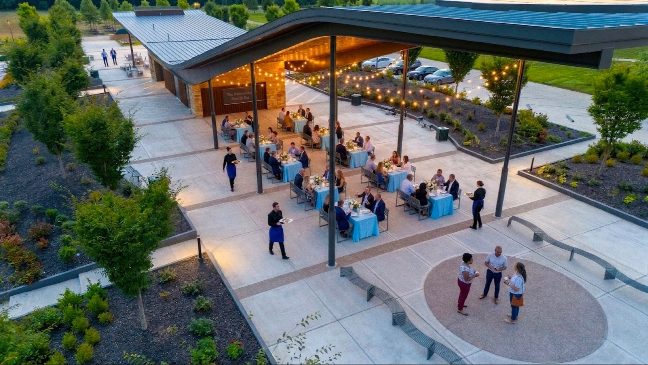
ProfileDESTINATIONS Your Corporate Retreat at Aspire
ProfileFrom dinner with your children to a minimum 32 days in jail
ProfileOwings, Coleman & Coalson
ProfileThe Dream Team for High Net Worth Divorce.
ProfileThe Why of Marcos Garza
ProfileTill the Bell Rings
Reading Settings
100%
July / Aug 2026
Swipe to read →
Vol. 42 · Issue 4 | July August 2026
The PublisherFrom The Publisher
Departments
MusicA Profile in Three Acts Guitar Man Andy Wood
PoliticsReading Between the Lines
InsightsOnly More So
DepartmentsAn Evening at Seasons
Dining Guide—Knoxville— Downtown Classics
Features
JurisprudenceA Republic If We Can Keep It
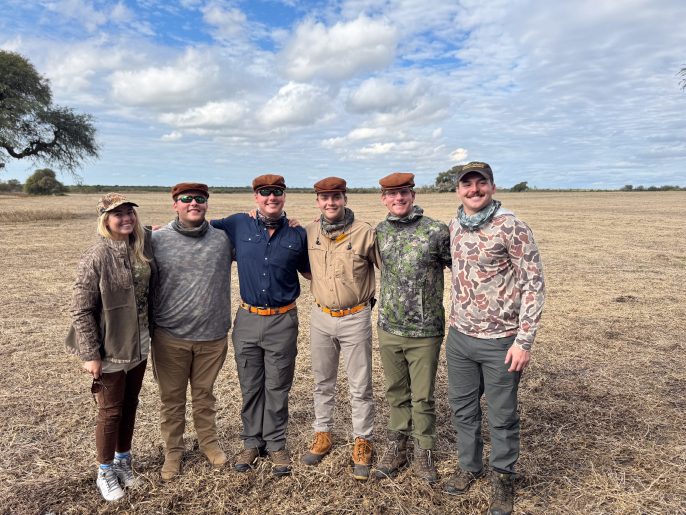
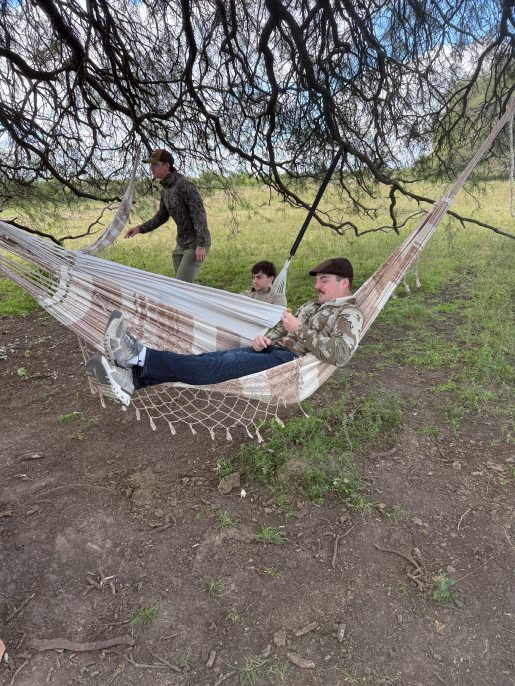
TravelHunting is just the excuse
FeatureComfort is Overrated
FeatureAI in the Courtroom
Non-ProfitFrom dream to reality
VeteranCarrying Them Home
FeatureDogs 101 Part 3 - The Power Of Motivation
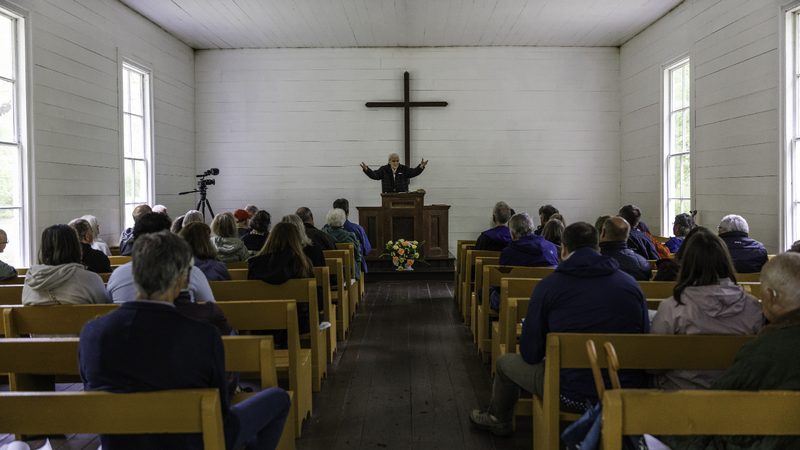
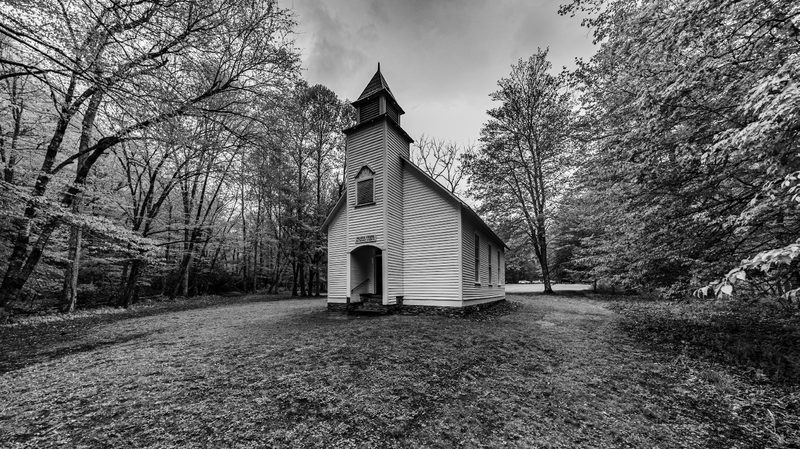
FeaturePreacher in theWoods
FeatureSecret Waters
FeatureSUMMER BREWS
Business Profiles
ProfileCome Together
ProfileDESTINATIONS Your Corporate Retreat at Aspire
ProfileFrom dinner with your children to a minimum 32 days in jail
ProfileOwings, Coleman & Coalson
ProfileThe Dream Team for High Net Worth Divorce.
ProfileThe Why of Marcos Garza
ProfileTill the Bell Rings
→ Swipe to start reading
The PublisherJULY AUGUST 2026
From The Publisher
Story by Nathan Sparks
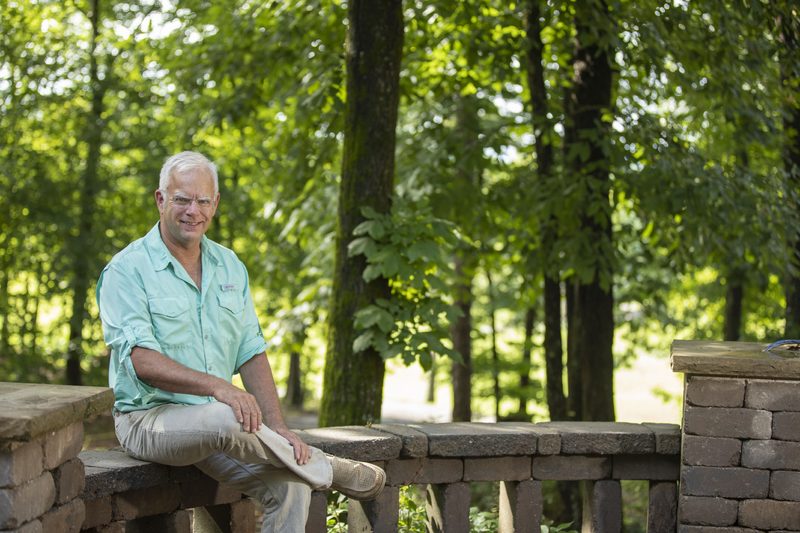
Not long ago I wrote about being sixteen, wedged into my dad’s bronze Chevy pickup with my brother and a stack of canoes, hauling across the country to a whitewater race out West. I was the kid in the back then—the one Dad tried to reach by banging a wrench on the floorboards as we sailed down the interstate. Funny how the river keeps running. I’m sixty-eight now, the father of two sons—Ethan, who’s twenty-nine, and Troupe, who’s nineteen—both of them raised in the outdoors and happiest when they’re in it. And not long ago, I got to be the dad on the trip for a change.
I’ll be honest: for a stretch there, we hadn’t gotten to do as much together as I’d like. Work had a way of swallowing the calendar. That’s not a complaint—I chose this path, and I’d choose it again—but a man notices when the good trips start getting rare. So when my friend Bruce Fox called with an invitation to join a group bass fishing in West Tennessee, I didn’t need to be asked twice.
We threw ourselves into getting ready. The bass boat came into the garage for a once-over; we installed some fancy new forward-facing sonar, squared everything away, packed the rods and lures—and, on the strength of a rumor that we might get to run a sporting clays course, even tucked in a shotgun. We had the better part of two weeks to prepare and, naturally, were still down to the wire Thursday night before our Friday-morning departure.
It’s quite a drive—about six hours. More than that, it was the first overnight trip I’d gotten to take with Ethan in years. The last one, if I’m remembering right, was a sailing trip down to St. Martin with Ethan, his brother Griffin, my friend Jimmy Chirella and his son Joey, and my dear friend Eric Creed. So it had been a minute, and I was genuinely excited. Bonus: traveling is easier these days, because Ethan can take a turn at the wheel. Off we went.
First stop was Crossville, Tennessee, to meet up with our group—at none other than Buc-ee’s. We rolled in last, but it worked out fine. Ethan ran in for some brisket, I topped off the tank, and we pointed the truck toward Bolivar, Tennessee.
Ethan and I had volunteered to handle breakfast, lunch, and Saturday night’s dinner, so he’d spent most of Thursday tearing around Knoxville gathering provisions: a glorious big rib eye, eggs, bacon, fresh-baked bread—all the things a proper fishing camp deserves. I’ve never understood why so many of my friends think the right fare for a trip like this is hot dogs and hamburgers. To my mind these outings call for a little extravagance, precisely because they don’t come along often enough. In the spirit of my friend John Burrell and the High Adventure Company, we aimed to make it as all-inclusive as we possibly could.
We pulled in that first evening and headed straight for the water, half-braced for trouble. All the rain we’d driven through to get there—a genuine monsoon—had us certain we’d find a churning bowl of mud. But the grounds at the Lone Oak facility are beautifully kept, and all that well-tended grass had done its work: the lake was only faintly stained, not enough to matter.
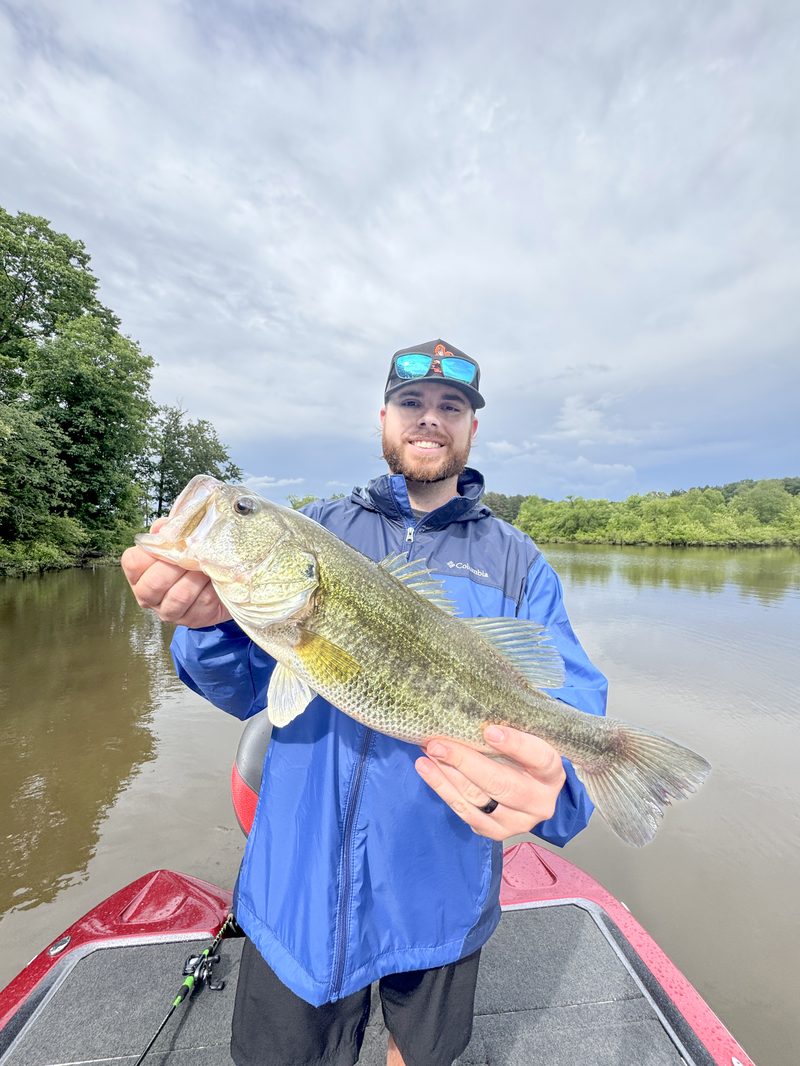
Ethan and I were first on the water, and I have to tell you—my son has become quite a fisherman. He tied the same lure on both our lines, and he’d boated four fish, maybe five, before I’d even sorted out when to set the hook. He made some comment about the student becoming the master—more on that in a minute. The bite was feather-light, and Ethan just seems to have the touch. Eventually I caught a few—nowhere near his count. I think he landed fourteen that first day in a couple of hours. We went to bed certain every day would be that generous.
That night we ate at Simon’s, in the bustling metropolis of Bolivar—a restaurant owned by Mr. Ledbetter, the same man who brought Lone Oak to life. Dinner was fabulous. (A word of warning: those Ledbetter Old Fashioneds can be brutal.) We even got to shake his hand and thank him for having us.
The next morning, after a good breakfast, we were back on the lake—and, as fishing tends to do, it had changed the rules overnight. Tougher. Slower. We got off to a fast start and then had to grind for every bite. By lunchtime we were ready for a break, so we grabbed a sandwich and a cold drink and headed over for a round of clays. They have a wonderful course there—fourteen stations. It was Ethan’s first crack at sporting clays, and we had a ball. Bruce is an incredible wing shooter and made it look easy.
Back to the lake Saturday afternoon for a decent day. We got to work with the new electronics, study that fancy sonar, and—best of all—just spend father-and-son time on the water. The wildlife put on a show: a mink, a beaver, a few snakes, and a steady run of fish. Mid-afternoon a great flock of Canada geese swept in and serenaded us with their honking. All in all, a fine day. Then we came in, and so did the rain.
I was busy at the stove—quail poppers, Brussels sprouts, asparagus, baked potatoes, and fresh bread—while Ethan got relegated to the grill outside. I had no idea until later just how hard it was coming down out there; the boy was literally standing in two inches of water cooking the steaks. He never said a word about it, and he did a beautiful job. And when we finally sat around the table and swapped stories about the day and about life, I was reminded how much it matters to step away from the noise and share that time with the people you love—and how easily the years can carry it off if you let them.
Which is the whole point, isn’t it? Decades ago I was the kid in the back of my father’s truck, learning the river from him. Now I’m supposed to be the one teaching my son when to set the hook—though somewhere out on that water, the student quietly became the master, and the truth is he was teaching me. That’s the gift of it. The river keeps running, and it doesn’t wait on anybody’s calendar. Life isn’t all work. So pack the truck, gather the people you love, and take the time to live a little—because the trips don’t come around often enough to let a single one slip by.
→ Swipe for Next Story
MusicJULY AUGUST 2026
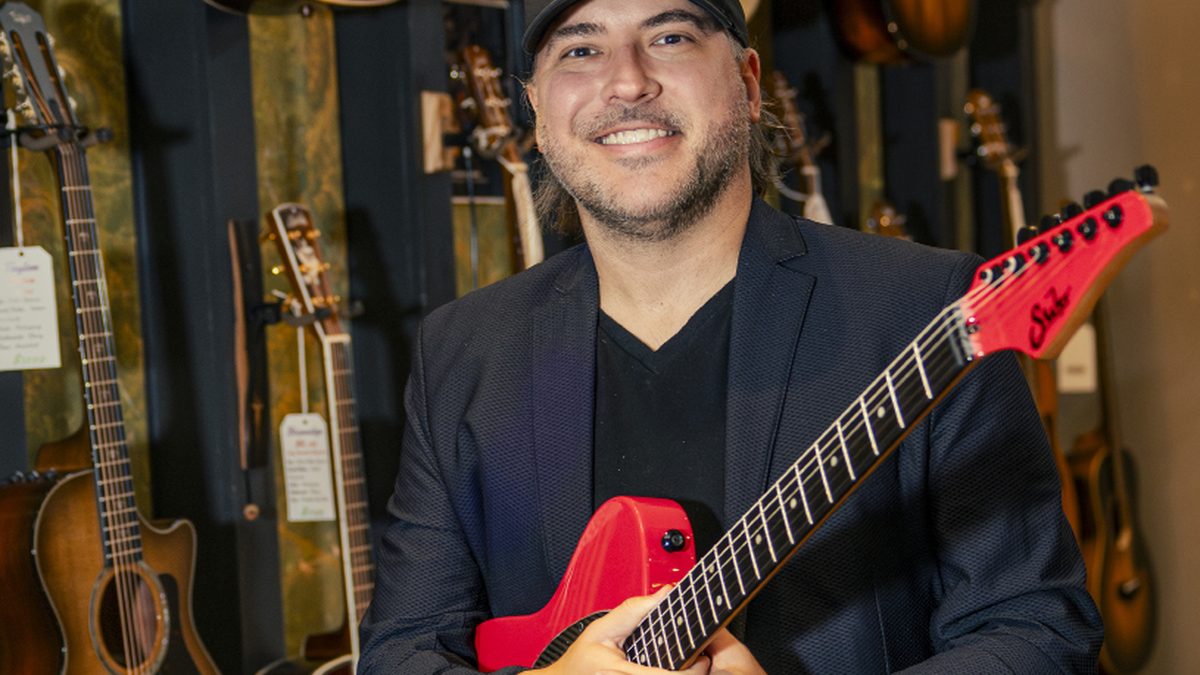
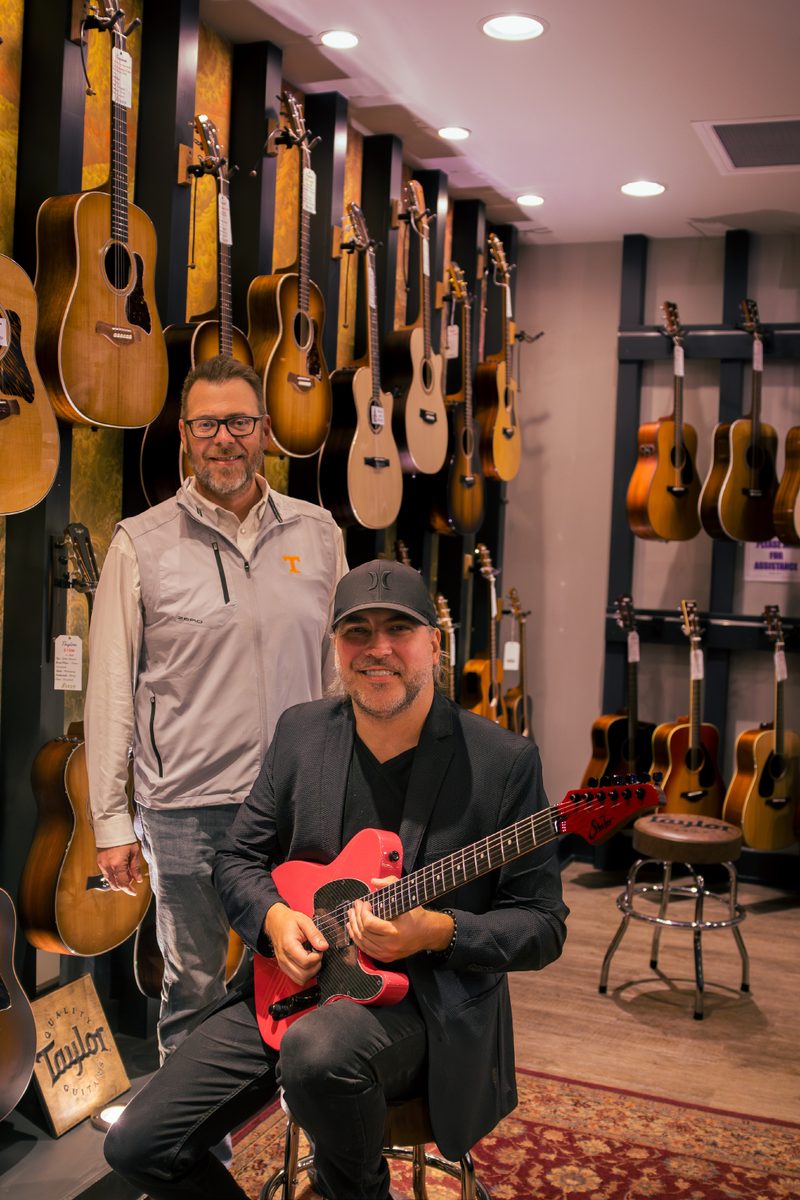
A Profile in Three Acts Guitar Man Andy Wood
“They sit at the bar and put bread in my jar and say,“Man what are you doing here?”” –Billy Joel, Piano Man
Story by Terry Glen Adams Photography by Nathan Sparks
Andy Wood is a guitar prodigy. His fingers cross the fretboard with a grace and precision that makes idle noodling sound like a Carnegie Hall recital, and he is completely free of the arrogance you’d expect from one of the best in the world at anything. He tells his own story as it happened to somebody else, somebody he’s not all that impressed by. The pedestal is reserved for his heroes.
I grew up in Nashville, where guitarists are thicker than mosquitoes in July. I’ve seen the best, the loudest, the fastest. But the first time I saw Andy Wood in Knoxville, I couldn’t look away. He’s a Knoxville hidden gem. People still wander up mid-set and ask the eternal question: man, what are you doing here? It’s the Piano Man riddle, and Andy’s been answering it for two decades, one blistering solo at a time.
Act One — Beginnings
“Whatever you do, or dream you can, begin it. Boldness has genius, power, and magic in it.” — Johann Wolfgang von Goethe
When I first crossed paths with him, he’d just walked off with the Guitarmageddon crown—Guitar Center’s answer to the Roman Colosseum (more distortion, fewer lions). Thousands of hopefuls, five weeks of musical cage matches in strip-mall showrooms, all funneled down to one neon-lit stage in Las Vegas, opening for Cheap Trick. And there’s Andy, last man standing, plugged straight into the amp no pedals, no smoke, no mirrors. He won anyway.
Andy tells the story like you’ve asked him about the weather. Calhoun’s still brags about ‘Best Ribs in America’ decades after the cookoff; Andy treats being crowned the nation’s top guitar slinger at twenty-one like it was just a trip to Vegas. Ask him what made him enter such a contest and you won’t get some misty-eyed speech about fate. The truth? A free bar tab.
He grew up in Marion, North Carolina, 20,000 souls and maybe four last names between them, though he says Asheville, because nobody outside the county line has ever heard of Marion. The family was devoutly religious and deeply musical, but the music was gospel and bluegrass; secular radio never made it through the door. His grandfather on his mother’s side played fiddle and mandolin, and when Andy and his cousin Brian turned up six months apart, the granddad had his proteges. (Brian went on to play for Travis Tritt for sixteen years.)
“The only thing that I’m chasing is the best version of myself, making Andy Wood music.”
Andy learned to play mandolin first, well enough for his folks to move to east Tennessee at fifteen to play the Pigeon Forge theaters. It was there that a bandmate handed him a mixtape, Van Halen, Guns N’ Roses, the whole rock-and-roll zoo and the kid who’d never heard any of it dove headfirst down the rabbit hole. He learned those songs lick for lick, note for note, improvising over the endless outro of ‘Hotel California’ until he owned it. The old-timers back home gave him the standard sermon: don’t try to make a living at this, son. Advice he would not follow.
Act Two — Becoming Andy Wood
“To be what we are, and to become what we are capable of becoming, is the only end of life.” — Robert Louis Stevenson
After the contest, Andy studied jazz at the University of Tennessee, but by then, Travis Wyric (another Knoxville gem with his own wall full of awards as a top of the industry producer) took note of Andy’s immense talent and started hiring him to ghost-track acoustic parts for metal bands, these rockers who could flatten a city block but couldn’t fingerpick their way through ‘Blackbird.’ The sessions piled up, and then he failed his guitar class for skipping it all semester to actually play guitar for money. Something had to give. He called his parents, it was the I’m dropping out of college to pursue rock and roll mom call. They couldn’t talk him out of it.
He was 21 sitting at the poker table and circumstances called his hand. I can hear the dealer saying “what are you going to do kid?” Andy looks up at the big dealer in the sky and says, “I’m all in.” The only thing that he had to his name was a 1994 Toyota Supra. For street racers that car was gold. Risk it? Hell, he was already risking it all. He took out a loan against the car and bought his first pro rig, a boutique amp and two Tom Anderson guitars, and paid off his student loan. He bet his last dime that this was going to work.
That is when the work began. Knoxville is Knoxville, it is not Nashville, LA, or New York and if one of the most promising musicians of his generation his going to “make it” he’s got to get to one of those towns, but he didn’t. If you listen to Andy’s records his style is immediately recognizable in the same way you recognize Sinatra’s voice. His attitude, his world view is just as unique and like Frank, he was, and is, going to do it his way. Back then, Knoxville’s live music bar scene was hopping. You could find live music every night of the week and Andy started sitting in, getting better, learning all genres of music. He and Erick Baker fronted a hard-rock band called Down From Up, sharing bills with Sevendust and Drowning Pool, then Andy spun around and played the polar opposite in Hot Trio with Tall Paul and Melanie Howe. He cut his first solo instrumental record at twenty-five and caught the internet wave, back when the online guitar scene was just a handful of nerds on the Petrucci forum, cats like Tom Quayle, Martin Miller, Andy James, and Rick Graham, scattered across Germany, England, and Tennessee. Eventually, True Fire, the guitar-instruction mothership, hung his mug on the faculty wall next to the names he’d grown up worshipping.
“I took out a loan against my Toyota Supra, bought my first pro rig, and bet my last dime that this was going to work.”
The dream was real. Andy had carved out a way to make a living as a professional musician without compromise. Homebase, Knoxville, making the kind of music he wanted to make. Zigging when folks thought he should be zagging. It wasn’t easy and there was help along the way but the word had spread far and wide. By the time the Dixie Dregs reunited, Andy showed up as a paying fan and got called to the stage by Steve Morse. Just so you know, rock bands don’t call guys up to the stage to play their guitars, unless you’re Andy Wood.
Act Three — Right Here, Right Now
“It takes courage to grow up and become who you really are.” — E.E. Cummings
If you think all of this sounds like a fever dream, we haven’t even scratched the surface. Let’s recap, kid grows up in Marrion, NC, hears rock and roll for the first time at fifteen, teaches himself the guitar, wins a national battle royal for the title of best guitarist in America at 21, goes to college, drops out of college, records with an award winning producer, starts a band, opens for legendary hard rock acts, gets invited to teach on the most prestigious guitar forum on the planet and then his big break. Ever heard of Creed? Yes, of course you have. When Creed front man, Scott Stapp, was looking for a rock and roll god to go on the road and play those songs, he didn’t look to NYC, LA or Nashville, he looked to Andy, who would become the band leader and tour with Stapp until the wheels came off. Then Travis Toy called, who also happens to be one of the best musicians on the Nashville scene. He asked Andy, “what are you doing next week? Nothing, because you’re auditioning for Rascal Flatts.” For those of you who don’t know, that’s a country band, a big one. It was Guitarmageddon all over again, a cage match audition, and Andy won it on pure versatility, cycling through bouzouki, mandolin, acoustic, and electric.
These days he says with a smile, Rascal Flatts has an Andy Wood black card; he’d play with those boys anytime, anywhere. They’re the reason he first played the Opry (they also sent a personal bus to haul his grandfather to the show and so he could stand where Hank Williams once stood).
When you see him playing now, that is an Andy Wood signature guitar made in America by John Shur of Shur guitars. Over the last decade he’s built his whole sound on it, and it’s been everywhere: the Opry, a University of Tennessee halftime show, the stage as direct support for the Rolling Stones at the Brickyard, where the car nut in him kissed the bricks in front of 98,000 people.
But the thing he’s proudest of sits on a lake in Crossville. The Woodshed Guitar Experience was born mid-pandemic, when his buddy John McCready, a gymnastics coach with zero patience for excuses, refused to take no for an answer. A hundred people, tops; it sells out faster than you can tune a mandolin. You eat breakfast with Steve Morse or Robben Ford or Brent Mason, hit a seminar with the amp wizards, then jam with your heroes until the sun comes up.
Andy has become an entrepreneur. He’s also become wise. Wise to the music business, wise to life in general, and wise to the legacy he’s leaving. We were wrapping up and he told me the only thing that he is chasing is the best version of himself, making Andy Wood music.
“Anything else you would like the readers to know?”
Andy Smiles, “it takes a village to raise an idiot, you can quote me on that.”
We laugh.
→ Swipe for Next Story
InsightsJULY AUGUST 2026
Only More So
Seeing ourselves in the other, and what it teaches us about ourselves.
Story by Rev. George Doebler Photography by Nathan Sparks
As we age, we tend to reflect on what we have experienced and what we have learned. When we do, inevitably there are a few of these experiences that stick out in our minds. One of these, for me, was early in my career when I found myself in a residence program at the second largest mental hospital in the U.S., St. Elizabeth in Washington, D.C., with over 12,000 patients (yes, 3 zeroes).
That core memory for me is a statement that the superintendent of the hospital, Dr. Winfred Overholser, made the first week I was there: “The mentally ill are just like us – only more so.” Little did I know in June of 1965 that I would spend the next twenty years of my life in federal and state mental hospitals as a clinically trained chaplain. The persons I met there, these people we call “mentally ill”, became, and still are, my teachers about the struggles of this thing we call daily life.
Moving from the mental hospital to the University of Tennessee Medical Center was a curious shift. In 1985, Dr. Albert Biggs, the then-medical director of U.T. Medical Center, asked if I would come and begin a Pastoral Care/Chaplaincy program. I told him then, “My work, my training, is for the mentally troubled.” His response: “What makes you think there are not those who come to the Medical Center that are struggling with mental issues?”
He asked if I would come with him and sit in the emergency room waiting area. I did – and to my surprise (naïve as I was), I saw people with more acute mental struggles than I saw even at places like Lakeshore Mental Hospital.
This began a 39-year adventure at the Medical Center. What began as a single position is now a Department of Pastoral Care of five staff, five resident chaplains and five intern chaplains Through it all, the statement that Dr. Overholser made in 1965 never left me. “The mentally ill are just like us – only more so.” Every day I saw that same lesson being taught to the students in Pastoral Care, mostly clergy: that when someone is “sick”, that just makes them even more like us.
The time in which we live, with all of its technology and knowledge, can easily lead us to forget that what is happening around us in the world is “just like us”. I tend to think that what is happening somewhere else is not affecting me. It’s not a part of me. But I am coming to realize how much what happens to others does affect me. It is here the dilemma emerges. How do I find my role, my place, in this thing we call life?
Not an easy task! It appears that anxiety and fear can become so pervasive that I can become sidetracked, angry even, that there seems to be no answer to what I feel. Yet if I stay in touch with others, both those I love deeply and those who are “just passing by” each day, it helps me find meaning in all the noise and chaos that seems to inundate us in this time of technology and unfettered data.
This can have its own problems, of course. I sometimes find myself looking to others to “fix” the anxiety and fear for me, and I become disappointed when those “fixers” do not fix it (whatever it is). Yet within myself I know the only fixer for my own life and its anxieties is myself. That is our struggle, I think. Again, not an easy task, and one that takes time – a lifetime.
The history of humankind is a history of trying to find peace, yet we end up with the opposite. There is something about being human that brings about tumult, not only in culture, but in our families, our marriages, and our communities. Finding peace – with ourselves, our family, our community, our neighbors – is an unending process. It is not something that can be fixed in a few days. It is somehow learning to know that what I consider to be sick may be “just like me – only more so.”
→ Swipe for Next Story
PoliticsJULY AUGUST 2026
Reading Between the Lines
The political rules of rhetorical engagement
Story by George Korda Photography by R. Daniel Proctor
When hearing, seeing, or reading political messaging, it pays to remember that politics is a word game. To play well, know the rhetorical rules of engagement. Sometimes things can be true, and not true, at the same time.
U.S. Rep. Tim Burchett’s name was drawn into the Republican Knox County mayoral primary because of something he didn’t say, and which candidate Betsy Henderson didn’t say he said. Nevertheless, she was questioned in the media for misrepresenting what Burchett hadn’t said, though it actually wasn’t misrepresented.
A WVLT-TV story said, “Betsy Henderson has announced a slew of endorsements for her run for Knox County mayor, but one of those ‘endorsements’ isn’t as solid as she says.” What Henderson said was this: “Thank you, Congressman Tim Burchett for your confidence and vote. It’s such an honor to earn your support!” Henderson planted this endorsement flag in response to a Burchett video in which, the story said, he planned to vote “for whoever keeps Knox County taxes steady.” In a field that included Larsen Jay and Kim Frazier, Henderson was the only candidate who pledged no new taxes.
Had Burchett endorsed her by name? No. Also, did Henderson thank Burchett for his endorsement - or thank him for lining up with her? It was the latter, eminently usable by the Henderson campaign. But instead of basking in the glow of the congressman’s announced intention to vote, Henderson was drawn into a “controversy” as to whether Burchett had endorsed her. His campaign staff said that the congressman had made no endorsement, and the video stated his position, which was that he’d vote for the candidate that would hold the line on taxes. And Henderson was the only one who’d made such a declaration.
The news media naturally gravitates toward indications of political conflict, and when prey doesn’t come to them, they look for it. Even when it shows up to be eaten, they might not like it. While living in Nashville in the 1980s I was a spokesman for Tennessee state government, a U.S. Senate campaign press secretary, and then an account executive with a large public relations firm. I had a lot of friends in the Capitol Hill press corps, and we’d often go in a group for lunch.
During one election cycle reporters complained about a boring race for Congress between Democrat U.S. Rep. Bill Boner and Democrat challenger, State Rep. Steve Cobb; Cobb refused to attack Boner, despite Boner carrying heavy negative baggage. There was no fire, no life, in the election. The next year there was a knock-down, drag-out, battle for Nashville mayor, with candidates Phil Bredesen and Boner savaging each other at the cost of nearly $4 million for a mayoral election. There was political blood on Nashville’s streets. At lunch one day the reporters were complaining about the ugly campaign and that candidates weren’t discussing issues.
“Wait a minute,” I said, reminding them of what they’d said only the year before. “Whatever way a campaign is going, you want it the other way.” They looked at each other around the table. Then, one of them smiled and said, “Yeah.”
That’s not a knock on the media: conflict is what news consumers tend to want. With respect to Henderson and Burchett, a “controversy" bubbled up over whether he had really endorsed her vs. her claim he had endorsed her. Burchett never endorsed her by name; however, he said he’d vote for the candidate with whom he agreed on taxes – and that was Henderson. She didn’t thank him for his endorsement, but for his confidence and vote. Based on Burchett’s position, she wasn’t wrong. But it could be made to seem wrong.
Henderson could have avoided the problem had she said this: “Voters should know I’m the only candidate who agrees with Congressman Tim Burchett on no new taxes.” Or this: “When Congressman Burchett says he’s voting for the candidate who’s pledged to keep taxes steady, he’s talking about only one candidate: Betsy Henderson.” Either statement would have protected Henderson from being criticized for claiming an outright endorsement; attempts to gin up controversy would be seen as a search for conflict. Instead, the fallout probably left some people thinking Henderson was trying to mislead them.
In campaign advertising and rhetoric, the rhetorical rules of engagement mean to look past what something might seem to mean, to not miss what it truly means. And that’s the truth.
→ Swipe for Next Story
DepartmentsJULY AUGUST 2026
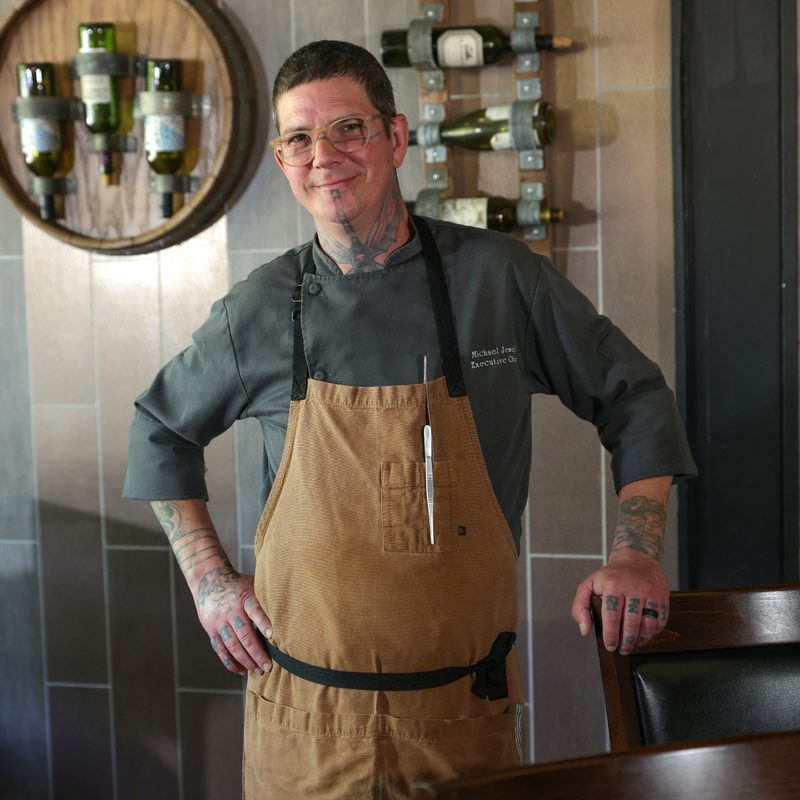
An Evening at Seasons
Trout roe to burrata, the Season’s dining room takes center stage, as Chef Jewell sets a new standard one detail at a time
Story by Brooks Clark Photography by Nathan Sparks
For longtime Seasons chef and owner Deron Little, his go-to reference was the 933-page Escoffier Cookbook, starting with its words on page one: “Stock is everything in cooking, at least in French cooking.”
For Mike Jewell, Seasons’ executive chef since August 2024, it’s The Alice B. Toklas Cook Book. “It’s all very descriptive,” says Jewell. “It’s about ratios and ingredients.” Who can forget the key ingredient in her "Haschich Fudge" that amused Toklas’s friends Gertrude Stein, Picasso, Hemingway, and Matisse?
Jewell is tall—6’4”—and thin, like the swimmer he was at Maryville High. His close-cropped dark hair and round, plastic-framed glasses give him the air of a culinary Clark Kent. A man of many interests, he loves to talk about Kurt Vonnegut and 19th-century French and Russian literature. When he was a youngster in Maryville and his single mom was working multiple jobs, she’d drop him at Southland Books and Café, leaving him with a love of books and learning.
“I love the role food has played in culture and people’s memories,” he says. Proust’s “petites madeleines” and the clam chowder in Moby Dick are literary victuals that support Jewell’s appreciation of the loftier significance of gastronomy.
Jewell adheres to the Thomas Keller/French Laundry philosophy of cooking. Jewell’s mentor Edward Kim learned it under Keller at Per Se in New York.
Mussels meant for lingering conversations.
“As lead line chef at Chicago’s 32-table Ruxbin,” says Jewell, “I had the Keller philosophy driven into me.” It’s about pursuing perfection and meticulous mise en place technique to create emotional experiences, with consistent attention to detail—from cleaning to plating.
“Every towel is folded, every spoon is polished,” says Jewell. “My goal is to execute something simple, doing it perfectly.” A famous French Laundry alumnus, Grant Achatz, once dined at Ruxbin. “His demeanor was one that was very relaxed and calm but intense at the same time,” remembers Jewell. “You could see the intensity in his eyes.”
Our evening at Seasons was in the “French service” tradition, meaning tableside food preparation and assembly, where unprepared foods are brought from the kitchen to the dining room on a gueridon (a cart) and then the final preparation is completed at a side table in front of the guests. It began with an amuse-bouche of trout roe on a quarter-sized shaved turnip with crème fraiche, chives, and tarragon.
Server Aryanna Alvarez then presented us with Jewell’s take on creamy potato-leek soup, finished with basil pesto and a swirl of goat cheese crema on top. “You can serve Vichyssoise cold,” said Jewell, “but by and large I get a better response serving it warm, where it is called potato leek soup.” He uses mostly the white parts of the leeks, saving most of the green parts for his all-important stock.
Perfection isn’t loud here. It’s plated.
A fragrant appetizer of pleasingly large Prince Edward Island mussels came in white wine broth with garlic, tomato, shallots, chervil, parsley, and herbs. A grilled baguette served to soak up the broth.
We savored three entrees with a 2023 Conundrum red blend from the Wagner Family’s Caymus Vineyards in California, featuring flavors of dark berries, plums, and cocoa with a smooth, velvety texture.
The 14 oz. ribeye, dry-aged between 14 and 21 days, was served “mid-rare” and to perfection with chive butter, and garlic mashed potatoes.
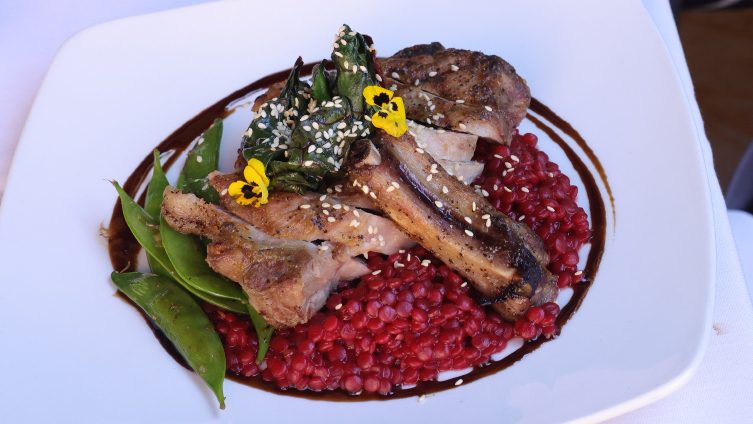
The rich color of the ruby-red pearled couscous starts with the beet salad served at Seasons. Jewell reserves the cooking water from the beets, adds a little vinegar to bind the color, and uses that to cook his couscou. Kurobutas are black pigs, originally from England but now found mostly in Japan, famous for well-marbled and exceptionally tender meat. Jewell used to get his Kurobutas from the Nicely Farm in South Knoxville but now gets them from Snake River Farms in Idaho, where the pigs get a nuttier taste from foraging for acorns.
Pastry with polish and personality.
The grilled Faroe Islands salmon filet, served with a spring onion chimichurri, diced tomato, and a little more of that couscous, was similarly flavorful, but with a more delicate touch.
Following the French theme, “I like to have a cheese course,” said Chef Mike. Ours was Italian burrata cheese with pickled red onions, heirloom cherry tomatoes, Peruvian sweet drop peppers in white balsamic vinaigrette, and a balsamic reduction with more grilled baguette.
Seasons has a secret weapon in Pastry Chef Elise Newell, who arrived in September with her baking and pastry arts degree from Pellissippi. “She has excelled,” says Jewell, nodding.
Her ganache-topped chocolate cheesecake, pistachio honey bread pudding with cardamom, and strawberry rhubarb crisp were delightful.
Executive Chef Mike Jewell brings French discipline to East Tennessee flavor.
Jewell ended up in Chicago after he left Maryville at 22 and began traveling the country, hopping freight trains like a literary character. “If you spend enough time hopping freights,” he says, “you’ll end up in Chicago.”
That’s what brought him to Ruxbin and Chef Kim. After his years at Ruxbin, he returned to Knoxville and cooked at The Appalachian in Sevierville, where he met Deron Little for the first time, making the connection that eventually led him to Seasons. Jewell also met Simone Steele in a local adult soccer league, and they were soon married. He has stepchildren Oliver, 13, and Benjamin, 11, while he and Simone recently welcomed August, 16 months, and Ezra, 1 month. “Our house is very busy,” he laughs.
“I like making things,” says Jewell. “I need to push.” At the same time, like a good intellectual, he is committed to balancing his passion of the Keller method with the ephemeral realities of fine dining when it comes to his staff at Seasons. “If I can create excitement back there,” he says, “I can do a lot more out here. But you also have to be honest about a plate that’s not going to be there in twenty minutes. What it’s really about is the connections that are made at the table.”
→ Swipe for Next Story
Dining GuideJULY AUGUST 2026
—Knoxville— Downtown Classics
The Restaurants That Stand the Test of Time
Story & Photography by Ethan Smith
In a city that continues to grow and reinvent itself, there is something comforting about the places that remain. Restaurants that have weathered changing trends, evolving skylines, and generations of diners become more than places to eat—they become landmarks in our personal histories.
For me, a handful of Knoxville’s downtown restaurants have earned that distinction. They’re classics not simply because they’ve been around for years, but because they hold memories deeply tied to different chapters of my life. A meal can satisfy your hunger, but a classic brings you back to a moment, a conversation, or a person who helped shape who you are.
My journey through these downtown classics begins at Pete’s Restaurant. The first time I visited Pete’s was with Chuck Cerny, the man who married my wife and me. From the moment I walked through the door, I understood why generations of Knoxvillians keep coming back. The atmosphere felt familiar, even though I had never been there before. The waitresses knew customers by name while conversations bounced from table to table. It felt less like a restaurant and more like a family gathering that happened to serve breakfast.
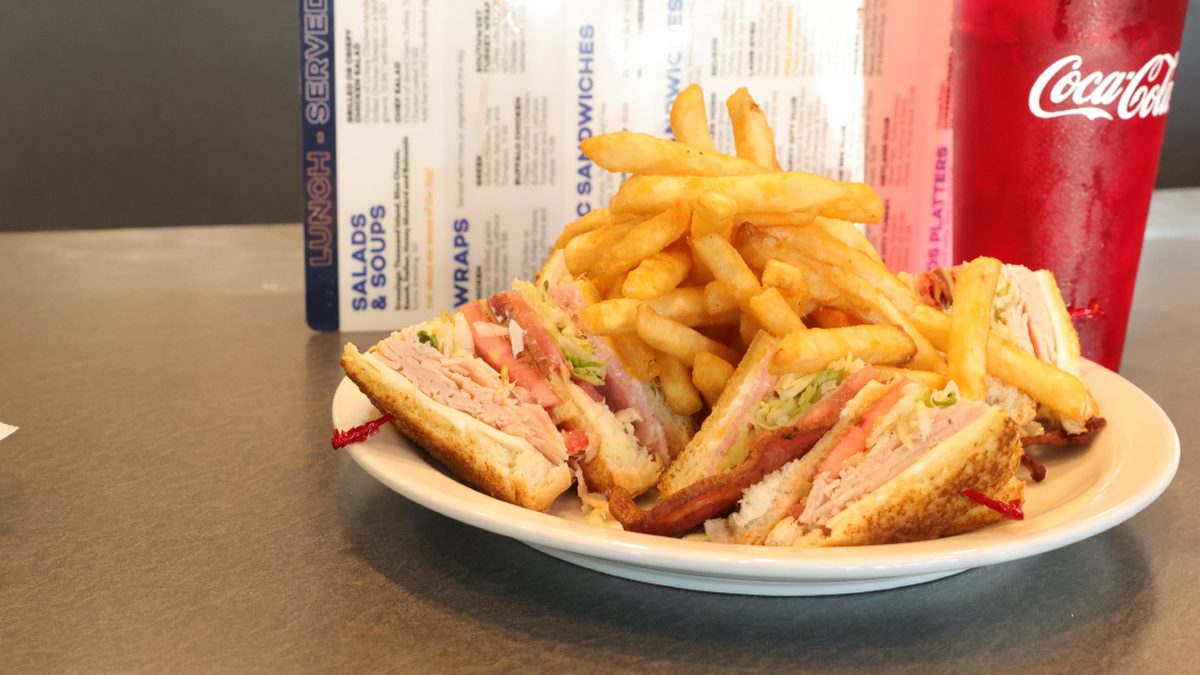
The meal itself was every bit as memorable. I ordered the Neyland Club, a towering sandwich that could easily feed more than one person. It arrived stacked high alongside a mountain of fries that seemed to stretch endlessly across the plate. It was a classic meal done right—comforting, abundant, and filling. Sitting there sharing breakfast and conversation with Chuck, I realized Pete’s was serving more than just food, but tradition.
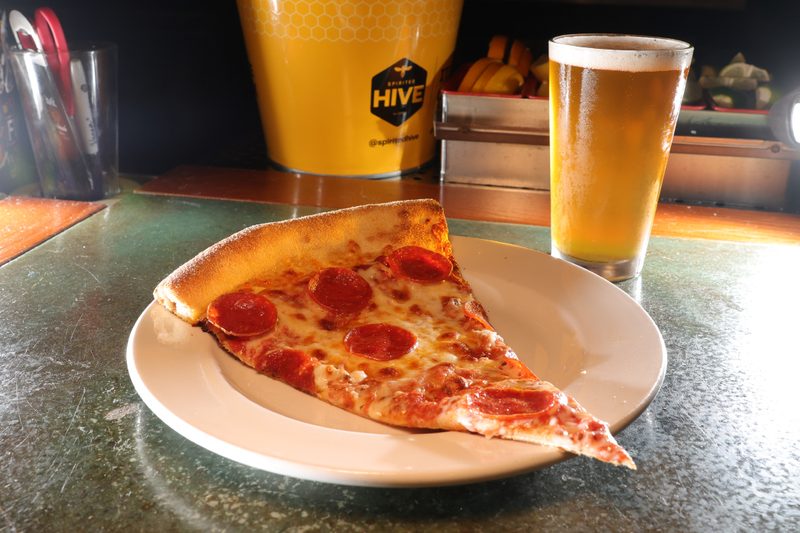
The next stop on my list was Barley's Taproom and Pizzeria, and for many people is synonymous with downtown Knoxville. For me, it carries the memory of turning 21 and having my first legal drink. Surrounded by college friends, celebrating a milestone that seemed incredibly important at the time when the present felt fleeting and the future was full of possibility. Decades later, I remember the restaurant as clearly as the occasion itself and the magic remains the same.
As timeless as the restaurant itself, I had one of the most long-loved pairings, a cold beer with a slice of New York-style pepperoni pizza. Barley’s executes this combo better than anywhere else. The crust is crisp yet foldable with the perfect amount of sauce to complement without weighing it down. The cheese stretches with every bite, and the pepperoni curls into little cups that hold pools of flavor. If you’re a ranch fan, a drizzle across the top provides the perfect finishing touch.
Today, Barley’s sits near Knoxville’s newest wave of downtown excitement, just steps away from the Smokies stadium complex. Despite the changes around it, Barley’s remains exactly what it has always been—a place where friends gather, stories are shared, and simple pleasures are celebrated.
"Your body is not a temple, it's an amusement park. Enjoy the ride." -Anthony Bourdain
Another Knoxville institution that holds a special place in my memory is Boyd’s Jig & Reel. While many people know Boyd’s for its music, atmosphere, and Scottish influence, I associate it with one of the most influential business conversations of my life. It was there that I first met Randy Boyd, a meeting that left a lasting impression on me, but no visit to Boyd’s would be complete without a bite to eat.
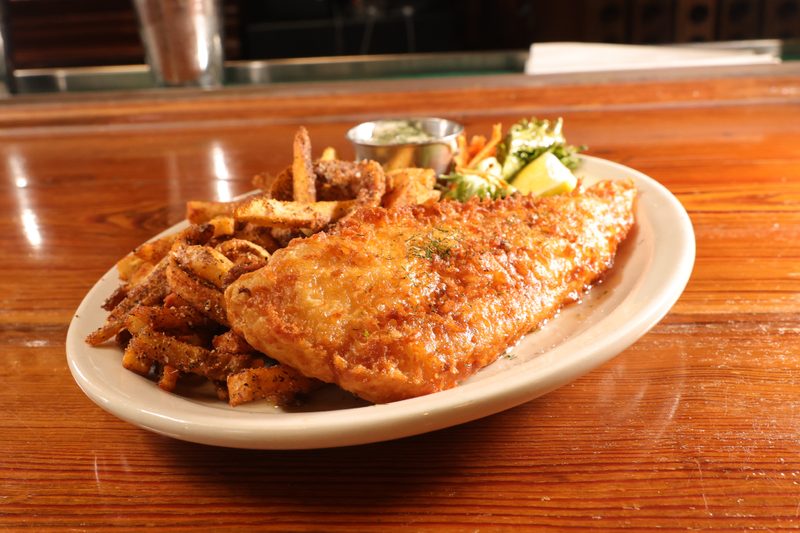
Their fish and chips may very well be the best in Knoxville. The cod is flaky and tender beneath a perfectly crisp batter aside perfectly seasoned fries—the ideal companion to the fish. From first bite to last, it never disappoints—a rarity in some restaurants. A timeless dish and perhaps that’s why it fits so perfectly within the walls of a restaurant that has become a downtown staple.
I’ve visited my final stop on this nostalgic journey many times over the years, Bistro at the Bijou. My connection to Bistro began long before I ever sat down at this table. For years, my father told stories of Martha Boggs and the moment I walked through the door there she was. She mentioned knowing my uncle, referencing his days tending bar downtown—an immediate connection.
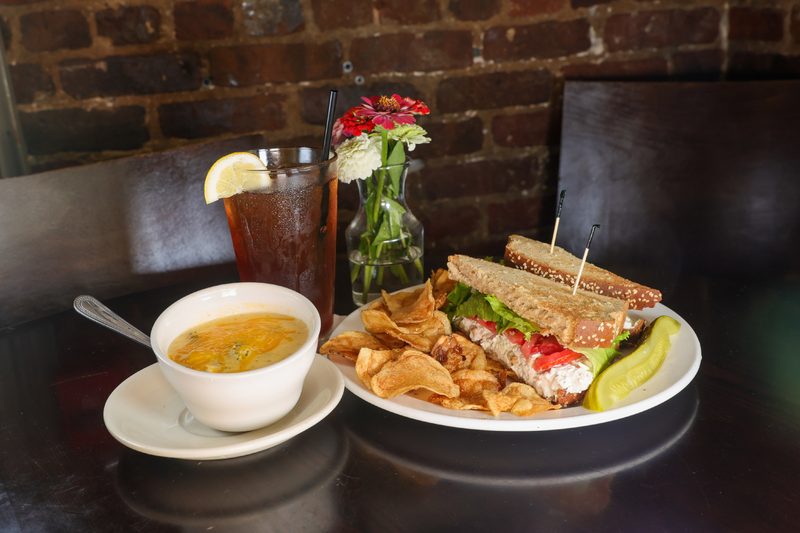
That’s the magic of Bistro by the Bijou, they make a city feel smaller in the best possible way. The day I visited, it seemed as though nearly every table had ordered the same thing: chicken salad. The restaurant’s sandwich-and-soup combo remains one of downtown’s great comfort meals. Along with the infamous chicken salad sandwich, I order the broccoli cheddar soup, a reminder that even simple food, when made exceptionally well, never goes out of style.
That soup was worth every spoonful, even on an 80-degree summer day. Martha’s commitment to homemade food shines through the fresh ingredients and handcrafted sauces, there is care behind everything that leaves this kitchen. I even took a piece of the Bistro at the Bijou home with me, their homemade hot sauce to share with my family. Like everything else at Bistro, it carried the unmistakable touch of someone who genuinely loves feeding people, which is the reason we gather around a table in the first place.
What struck me most throughout these visits wasn’t solely the flavors on the plate, but how each restaurant reflected both my own memories and the history of the city around it. You may be eating lunch without realizing that a restaurant can be a time machine. One taste can bring back a conversation with a mentor, a moment with family, or a chapter of youth you thought had faded with time. Suddenly, you’re not just eating—you’re reliving a memory. These restaurants offered a gateway to moments long past, and to me, that’s what makes a restaurant a classic.
In a city that continues to grow and evolve, Knoxville’s dining scene is constantly changing. While there is much to celebrate in what’s new, we can’t forget the places that helped shape the city’s culinary identity. Restaurants like Pete’s Restaurant, Barley’s Taproom, Boyd’s Jig & Reel, and Bistro at the Bijou aren’t just serving meals—they’re preserving a piece of Knoxville’s story and reminding us why we fell in love with this city in the first place.
These are more than restaurants. They are woven into the milestones, friendships, and family traditions that define our lives. A true classic is not measured by how long it has been around, but by how deeply it stays with us.
→ Swipe for Next Story
JurisprudenceJULY AUGUST 2026
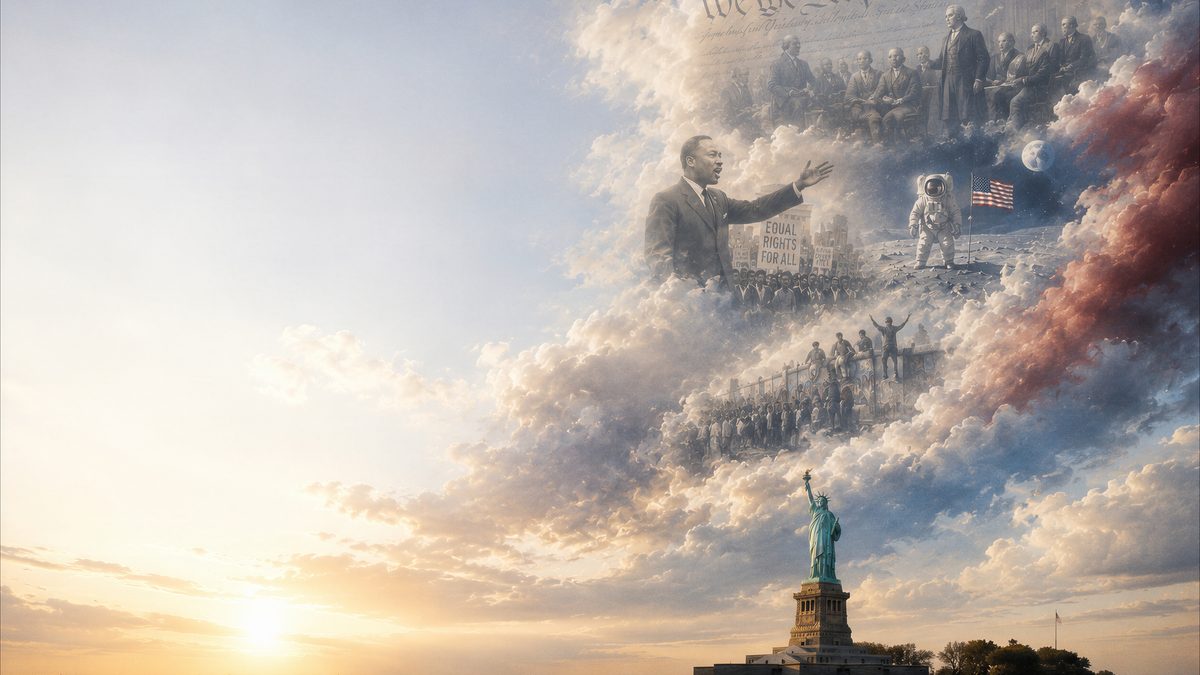
A Republic If We Can Keep It
On the eve of America's 250th anniversary, a reflection on where we've been, what we've overcome, and what's still at stake
Story by Gary Wade
The 250th anniversary of the Declaration of Independence is something called a Semiquincentennial, an unfamiliar term to most and one which has even confused my spellcheck device. Regardless, that America has endured these many years is a remarkable achievement worthy of celebration. So, I have resorted to my grade school lessons, not only to refresh my memory of how this all began but to place the course of events in a historical context.
The Seven Years War, lasting from 1763 and 1770, pitted Great Britain and Prussia against France, Austria, and Russia over disputed territories in North America and other parts of the world. While the French and Indian War in America was a component part of the conflict, the scope of the greater War included mostly Europe. In this country, Great Britain forces, which included a young militia officer by the name of George Washington, fought the French and its allies, including native tribes. In acknowledgment of winning the war, Great Britain received from France all of its territorial claims to Canada and the Ohio River Valley. Spain, an ally to the French, was required to cede to Great Britain its claim to Florida. During this long struggle, both England and France naturally incurred massive debt, which historians agree laid the groundwork to the Revolutionary War in this country and later, the revolution in France.
In 1765, Great Britain passed the Stamp Act, designed primarily to generate revenues to help service its war debt. The imposition of this direct tax on the 13 American colonies fueled hostilities toward its mother country. The act required their printed materials be produced on stamped paper from London with a revenue stamp. British currency, not colonial paper money, was required for payment on all magazines, newspapers, legal documents, and even playing cards and other papers utilized in the colonies. The response was predictable: “No taxation without representation.” As tensions rose within the colonies, the various means of protest resulted in the mass resignations of the intimidated stamp distributors who were designated to collect the tax. In consequence, Parliament rescinded the tax only months after its passage. Not to be outdone, however, Parliament passed the Tea Act of 1773, which imposed heavy taxes on daily goods, including tea, on the colonies. Moreover, the act granted a tax exemption to the East India Company, essentially creating a monopoly and crippling the tea trade of colonial merchants.
When an appeal for relief to Britain’s royal governor was denied, some 50 disguised colonists, dressed as Indians, staged the Boston Tea Party. They boarded the East India ships in the harbor and dumped some 46 tons of tea (having a value of nearly $2 million in today’s dollars) into the water. In response, Parliament retaliated by the passage of the Coercive Acts of 1774 -- which the colonists termed “The Intolerable Acts.” This new law (1) closed Boston Harbor to all commercial traffic until the East India Company was fully compensated; (2) revoked the 1691 Massachusetts charter, replacing their local government with complete British control; (3) authorized trials of any British authorities to “friendly jurisdictions”; and( 4) allowed royal governors of all 13 colonies to occupy all empty buildings to house the British military.
Instead of isolating the Massachusetts colony, however, the legislation galvanized the other colonies. All but Georgia chose a collection of 56 representatives to meet in the First Continental Congress in Philadelphia. Among such notables as Washington, Patrick Henry, and John Adams, Virginian Peyton Randolph was elected president. Fifty days of deliberations resulted in a reiteration of the claim of “no taxation without representation,” and a boycott of British goods, but also included a respectful appeal to King George III and his parliament to nullify the Coercive (Intolerable) Acts. Meanwhile, colonial leaders in Massachusetts had called for their local militias to train for possible conflict, acts that the First Continental Congress endorsed. In response, the British declared Massachusetts to be in a state of rebellion. Lt. Colonel Francis Smith was ordered to destroy the local militia’s military supplies, which were stored in Concord. The colonist got wind of the plan and prepared to intervene.
At sunrise on April 19, 1775, the first shots were fired. While only one British regular was injured, eight of the Massachusetts militia were killed and 10 injured. When the militia withdrew, the British split into companies to search for supplies. At the Old North Bridge in Lexington, a party of 100 British regulars ran into a gathering of some 4000 local militiamen. The hostilities that took place resulted in casualties on both sides before the British sounded a retreat. Among the colonists, 49 were killed, 39 wounded, and 5 were missing. The British reported 73 killed, 174 injured, and 53 missing. The word spread fast. By the next morning, Boston harbor, which housed the British troops, was surrounded on three sides by a militia force estimated as high as 15,000, resulting in a stalemate of sorts.
In view of these battles, on May 10, 1775, the Second Continental Congress convened. Within a month, the body formally established the Continental Army, appointing Washington as Commander-in-Chief. In July, the Congress again appealed to King George III for a peaceful resolution of the conflict. Again, no relief was forthcoming. Finally, on July 4, 1776, our forefathers placed their signatures on the Declaration of Independence. Its language sets out their list of grievances.
” The history of the present King of England of repeated injuries and usurpations, all having in direct object the establishment of an absolute Tyranny over these States,” including the imposition of taxes without consent and cutting off trade. Further, the document complains of the dissolution of colonial bodies, making judges dependent on the King’s will, for the tenure of their offices, and the amount and payment of their salaries, denial of rights to trial by jury, and for the obstruction of migrations of foreigners to the colonies.
Much has happened in the 250 years since the signing of the historic Declaration of Independence. Now, having reviewed the events leading to its adoption at the Second Continental Congress in Philadelphia, my list of highs and lows since are worthy of inspection – and perhaps debate. A chronological order of some of our most recognizable occurrences appear below:
Adoption of the Articles of Confederation, our first constitution;
1781: Victory in the siege of Yorktown over General Cornwallis;
1783: Treaty of Paris, acknowledging the independence of the 13 colonies;
1789: Adoption of the United States Constitution and election of President Washington;
1791: Ratification of the Bill of Rights;
1803: The Louisiana Purchase advocated by President Jefferson;
1812-14: War of 1812, including the 1814 burning of the White House, and Treaty of Ghent;
1828: The election of Democrat Jackson as the 7th president;
1838: The Trail of Tears pursuant to the Removal Act:
1846-48: Mexican American War;
1860: The election of Republican Lincoln as the 16th president;
1863: The Emancipation Proclamation;
1861 – 1865, the Civil War, A. Johnson succeeds Lincoln as 17th president;
1865-77, the Reconstruction Era;
1868 and 1872: Grant elected and re-elected as 18th president;
1872: Yellowstone becomes the world’s first national park;
1898: Spanish-American War;
1901: T. Roosevelt succeeds McKinley as the 26th president;
1912: Wilson elected 28th president;
1914-18: World War I;
1929: Wall Street Crash;
1929-39: the Great Depression;
1932: F.D. Roosevelt elected as the 32nd president;
1941-45: World War II ending with two atomic bombs detonated in Japan;
1950-53: Korean War and the McCarthy Red Scare era;
1955-1975: Vietnam War;
1961: Alan Shepard becomes the 1st American in space;
1963: L. Johnson succeeds Kennedy as the 36th president;
1969: Armstrong becomes the first to walk on the moon;
1974: Nixon resigns as the 37th president;
1980: Reagan elected as the 40th president;
1989: The Berlin Wall, built in 1961, comes down;
1990: The Gulf War against Iraq:
2000: G. W. Bush declared 43rd president in contested election with VP Gore;
2001: 9-11 al-Qaeda attacks;
2008: Obama becomes first African American elected as 44th president;
2011: Osama bin Laden, leader of al-Qaeda, killed by US forces in Pakistan;
2016 and 2024: Trump elected as 45th and 47th president;
2021: Rioters attack the US Capitol, attempting to overturn 2020 presidential election.
In the last few years, many Americans -- Republicans, Democrats, and independents – have increasingly voiced concerns about the future direction of our country. The hot button issues so prevalent today have served to create divisions, acrimony and violence, but these are not unprecedented.
Jon Meacham, a friend and colleague of former governor Bill Haslam, authored a book titled The Soul of America: The Battle for our Better Angels. The term “better angels” is, of course, a reference to a sentence in the inaugural speech of Abraham Lincoln in 1861, consistent with the theme that, historically, when this country has faced various turning points, it has always – someway, somehow – prevailed in the interest of solidarity. Slavery and the Civil War, Reconstruction, the fight for women’s rights, the immigration backlash, civil rights, and other issues stemming from fear and division, have always been overcome by our collective better selves – ultimately leading to progress and the advancement of liberty.
As we celebrate these 250 years of independence from foreign rule and in acknowledgment of Meachem’s optimism, there have always been doubts about the viability of a “republic,” a form of government in which the people have the supreme power through the representatives they elect. In 1787, just before the adoption of our US Constitution, an 81-year-old Benjamin Franklin was asked what kind of government – “a monarchy or oligarchy or mob rule” -- the Continental Congress had proposed: “A republic,” he answered, “if you can keep it.” Just as in those days, that is the continuing challenge to our form of governance. In his final address to this body, he observed, “When you assemble a number of men and women [in order to] have the advantage of their joint wisdom, you inevitably assemble all their prejudices, their passions, their errors of opinion, their local interests, and their selfish views.”
More recently, Winston Churchill weighed in on the subject of a government of the people, by the people, and for the people: “A democracy is the worst form of government,” he deadpanned, “except for all the others.”
Fearful that I have left out other critical events, highs or lows, I invite readers to email garyrwade1@gmail.com.
“Historically, when this country has faced various turning points, it has always—somehow and some way—prevailed in the interest of solidarity.”
→ Swipe for Next Story
FeatureJULY AUGUST 2026
AI in the Courtroom
A Knox County judge explains why AI and sovereign citizen theories are no substitute for a real lawyer in a real courtroom.
Story by Carter Barczak Photography by Nathan Sparks
s a young man, I haven't had much occasion to set foot in a courtroom or lean on the counsel of an attorney. It simply hasn't come up. So when I was asked to write about artificial intelligence and the legal system, I came at it with a particular kind of curiosity, the kind you get when a subject is new to you and you start poking at it from every angle. As it turned out, I had more personal experience to draw on than I first thought.
Not long ago I had a run-in with an auto repair shop. They caused damage to my vehicle, and I tried to handle it the straightforward way by simply asking them to cover the cost of what they had done. Reasonable, I thought. They disagreed. So I turned to attorney T. Scott Jones for help. A letter went out, some phone calls were made, and when things didn't resolve, Scott eventually filed suit. The moment he did, the shop's posture changed. They came to the table and offered a settlement for the full amount.
That made me think. The cost of that settlement was almost certainly far less than what their defense would have run, so why wait? Why put everyone through the process of filing? The answer, I came to understand, is reputation. Another attorney, or their client's insurer, can look up opposing counsel. When they see someone who makes hundreds of court appearances a year, they know that person is not afraid to go to trial, and that knowledge influences decisions. I feel certain it influenced this one.
Which brought me to the question at the center of this piece. Could I have simply gone to an AI, drafted a lawsuit myself, and filed it? Almost certainly. Would it have carried the same weight as a filing from T. Scott Jones? Absolutely not.
My skepticism here is not secondhand. In my day job I have spent enough time around legal conversations to build a system that redlines emails for structure and clarity before they go out. It works well, and it has shown me exactly where AI earns its keep and where it does not. AI is good at form. It can take a tangled message and make it organized, clean, and easy to follow. What it cannot do is supply the judgment underneath, the sense of which point to press and when to press it. That is the difference between a document that looks right and one that actually works.
AI is good at form. What it cannot do supply the judgment underneath, the sense of which point to press and when to press it.
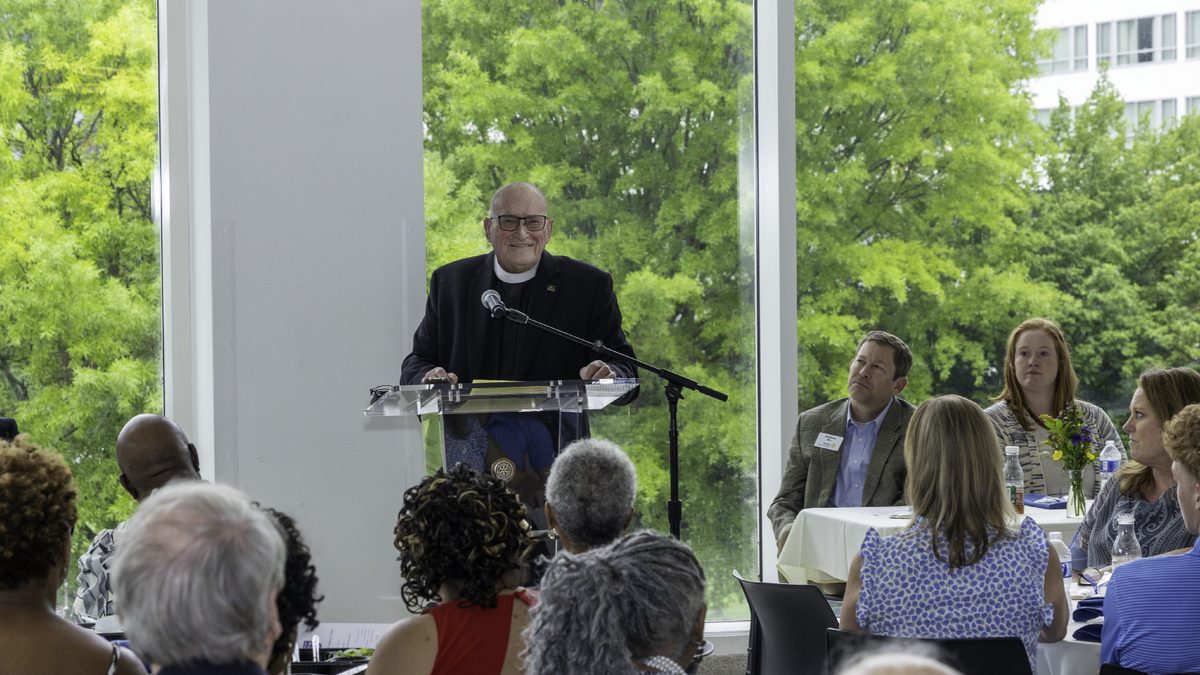
That distinction matters, and it is one that Knox County Sessions Judge Chuck Cerny understands well. Judge Cerny has been a familiar face in East Tennessee courts since his first election in 1998, having presided over the Veterans Treatment Court and now over the Mental Health Court. I spoke with him to get his perspective on what AI is doing to the legal landscape, and just as importantly, what it isn't.
The first issue is what courts call pro se representation, meaning people who choose to represent themselves. It has always happened, Cerny says, but AI has added a new wrinkle. People now believe that between the internet and a chatbot, they can walk into a courtroom prepared. “I see a lot of pro se folks,” he says. “It could actually be increasing.”
The problem isn't just confidence. It is competence, specifically the gap between what a filing looks like and what it actually does. Cerny compares it to sport. “Lawyers have a better understanding not only of the rules, but also how to get their evidence before the court. As a result of understanding the rules, you make better decisions about what play to call.”
AI-generated filings frequently miss the mark. Motions show up that have almost nothing to do with the case at hand, full of cut-and-pasted language that sounds authoritative but doesn't apply. And then there are what the legal world calls hallucinations, where AI systems confidently cite cases that don't exist, quote statutes that were never passed, and present legal fiction as established law. “What I'm seeing out of appellate courts when they are confronted with AI-generated garbage that includes hallucinations,” Cerny says, “is that those judges actually sanction lawyers for that behavior. And you can rest assured that an unrepresented litigant isn't going to get a lot of sympathy from the court if they pull that kind of stuff either.”
You have to have actually read it. You have to believe it's true. Because otherwise, you're doing something unethical by its nature, and it's not dissimilar to simple lying.
He puts the ethical obligation plainly. “You have to have actually read it. You have to believe it's true. You have to believe that the citations actually exist. Because otherwise, you're doing something unethical by its nature, and it's not dissimilar to simple lying.”
Then there is the sovereign citizen movement, a separate phenomenon though not entirely unrelated in spirit. Sovereign citizens believe, in varying degrees, that they exist outside the laws everyone else is subject to. They are traveling, not driving. Signing a citation means nothing. They are not that person, only an agent appearing on behalf of that person. Cerny is patient with the subject, but clear. “They're in error.” If you are behind the wheel in Tennessee, you need a license, registration, and insurance. If you refuse to sign a citation, the officer may simply arrest you. There is no philosophical workaround.
He shared a case that illustrates where this philosophy leads. A man facing foreclosure brought in someone from North Carolina who presented himself as legal counsel, though he was unlicensed in either state. This self-appointed advocate arrived for the hearing in what Cerny describes as “a pale blue vintage 1970s prom-like tuxedo.” Both men ended up in jail over their behavior in open court. The defendant lost his home, and his wife, quietly going through cancer treatments, was put out along with him. “The whole sovereign citizen movement is designed from the top down, almost like a pyramid scheme,” Cerny says. “It's a farce. It's a fraud. And people are actually victimized by it.”
The thread running through all of this is the same. It is the belief that the system can be navigated without competent representation. I wouldn't say that is impossible, but for the common person it usually is. Not with AI, not with sovereign citizen theory, and not with a stack of motions copied from the internet.
The whole sovereign citizen movement is designed from the top down, almost like a pyramid scheme. It's a farce. It's a fraud. And people are actually victimized by it.
My repair shop situation cost me some time and frustration, but it resolved well, in no small part because I had the right person in my corner. That is the lesson I would take from Judge Cerny's courtroom, and from my own modest experience. When the stakes are real, hire a lawyer.
→ Swipe for Next Story
VeteranJULY AUGUST 2026
Carrying Them Home
Jim Cundell spent 36 years bringing wounded service members back from war. Then he spent another 17 making sure 4,600 of them got the homecoming they never had.
Story & Photography by Nathan Sparks
Somewhere over the Pacific in the late 1960s, a young airman lay stacked five litters high in the belly of a C‑141. He had lost a leg. His hands were burned and wrapped, useless. He had been told he needed to eat, but he could not lift the spoon. So Jim Cundall crouched on the cargo deck, contorted himself beneath the lowest litter, and started to feed him.
The soldier shook his head. “But you can’t feed me in the position you’re in.”
“Look,” Jim told him. “We both did a job they told us to do. We didn’t ask for it. You did your job. And I’d like to do my job — and it’s not going to hurt me near as much as you got hurt doing yours. So let me do my job.”
The soldier ate everything on the tray.
That moment, more than any commendation or promotion, distills what Jim Cundall did across 36 years of military service. He carried people home. And then, when the uniform came off, he kept right on carrying them.
Jim was born in Nashville and was about to be drafted in 1963 when fate, in the form of a city councilman, intervened. The councilman was in the Tennessee Air National Guard, learned that Jim was about two weeks from a draft notice, and pointed him toward a hospital commander who ran him through a battery of tests. “You did real good on these tests,” the officer told him. “You can do whatever you want to do.”
Jim, who already had a civilian job in medical lab work at the Red Cross in Nashville, picked a new unit nobody had told him about — a flying medical squadron tasked with picking up wounded service members at forward hospitals and ferrying them toward home. It sounded interesting. He had no idea what he was signing up for.
His first temporary duty mission was to Japan, flying into Korea to retrieve patients and bring them back to major hospitals at the rear. On approach, the flight’s instructor pointed out the window. Mount Fuji was rising clean out of the cloud deck. The instructor told the crew to get out the camera.
“We didn’t have one,” Jim says. They had thought about it. They had decided against the weight. He still calls it the best photograph he never took — and his deployments only got more eventful from there.
By 1967 the Air Force was burning through aeromedical evacuation crews so quickly that it began calling on Guard and Reserve units to send qualified people. Jim and a handful of others volunteered. A typical rotation ran from California to Hawaii to the Philippines, then up to Vietnam, Okinawa, and Japan, and back across the Pacific to the United States. A single tour could put more than seventy hours of actual airtime on a man in one week. The Air Force eventually had to throttle the schedule. The medics did not always want to slow down.
Each plane carried roughly 40 patients — some ambulatory, some on litters — and the patients were often 18, 19, 20 years old. Jim was 29 when he started flying them. “When you see a 19‑year‑old kid hit by a Bouncing Betty,” he says, naming the antipersonnel mine that sprang to waist height before it detonated, “that was the most devastating thing.”
Many did not survive. The ones who did came aboard with shrapnel buried in their backs and a stunned, faraway look. They had trained together, gone to war together, gotten hit together, and then been split apart for evacuation. By the time Jim met them, they were strangers in their own bodies.
He understood, very quickly, that medicine was not the whole job. “You take care of their health things,” he says, “and they’re still kids. They’re kind of lost.” So he made a practice of being something more than a flight medic. He listened. He joked. He looked them in the eye while they ate.
He fed the soldier on the litter. He stood for nearly an hour beside a young Black serviceman strapped to a Stryker frame — the rotating bed used for spinal injuries — who reached out with the only fingers he could still move, hooked them into the cuff of Jim’s pants, and asked, simply, “Can you talk to me?” Jim sat and talked until the man fell asleep. Despite six decades of trying, he still cannot recall the soldier’s name.
By the time the war ended in 1975, Jim had stopped counting the flights.
The Guard was supposed to be a part‑time commitment. It never quite worked out that way. Between deployments, Jim built a parallel career in clinical and blood‑banking sciences. He ran the lab at the Red Cross in Nashville until 1980, when a job offer brought him and his wife Nancy to Knoxville. He took on regulatory and quality‑control work for the plasma centers owned by Armour Pharmaceutical — setting standards for the FDA, then making sure his own company met them.
Three years in, Dr. Carl Nelson, the founder of Knoxville’s Medic Blood Center, invited him to lunch and never quite let him leave. Jim joined Medic’s leadership in 1983 and spent the rest of his civilian career there.
Along the way he was elected to the Tennessee state medical lab board, eventually serving as its chairman — including a stretch when he had to be reelected in absentia because he was running an aeromedical operation in Saudi Arabia. He chaired the FDA Liaison Committee for the plasma industry. And he sat on the presidential panel that, in the early 1980s, debated whether blood centers should begin asking donors questions about HIV risk before there was a test that could detect it. Four panelists, Jim included, said yes. Thirty‑six said no. The four took it to the FDA themselves. When Jim finished his presentation, the FDA staff in the room rose to their feet and applauded. “We just applauded you,” one of them told him afterward, “for what we can’t do.” Six months later every blood center in the country was asking the questions.
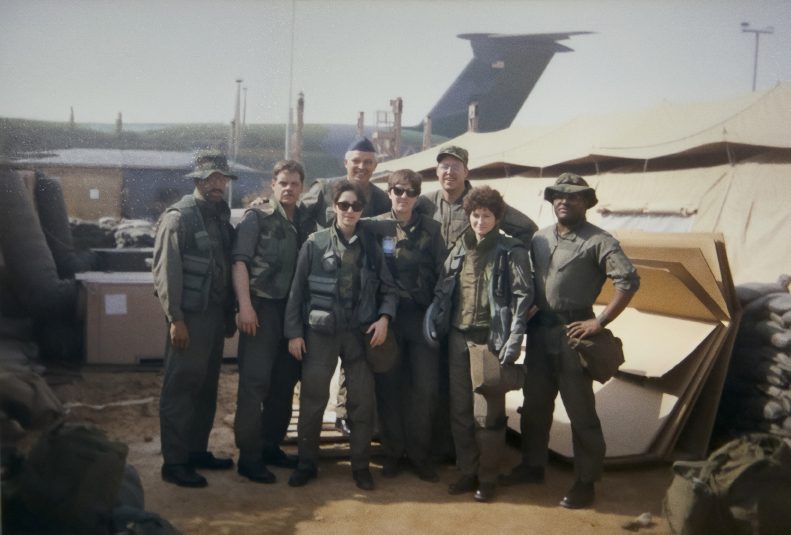
He went back to a war zone in 1990. By then Jim was an E‑9 — Chief Master Sergeant, the highest enlisted rank in the Air Force — and the senior enlisted aeromedical evacuation manager for Operations Desert Shield and Desert Storm. The Reserves ran air evac out of the desert. The Guard ran it out of Germany. Jim moved between Riyadh, Oman, and a small forward base whose nurses were, at one point, so short‑handed and so closely watched that Jim quietly let a rumor spread that he was the lone female airman’s father, just to keep the harassment down. “It worked,” he says.
There was the night, days before the air war began, that the chaplain corps suddenly multiplied in his briefing room — five chaplains where there had been one the day before. There was the plane full of patients his commander asked him to set up “for tomorrow night” with no explanation given. There was the time their inbound formation overshot a turn and his C‑141 nearly drove into the back of the lead aircraft.
There was also the morning he walked into the office of the base administrator he needed a favor from, noticed a Nerf basketball goal taped above the trash can, and came back the next day with a Nerf ball of his own. “I noticed your goal,” he told the man. “I played in high school. Brought you something.” He got every plane he asked to be reconfigured for litter patients. Around the desert, the joke spread: if you needed something done, find Cundall.
Jim retired from the Tennessee Air National Guard in 1999, after 36 years. Then a Knoxville businessman named Eddie Mannis had a vision, and Jim went back to work.
HonorAir, the program Mannis built to fly East Tennessee Vietnam veterans to Washington, D.C., to see the memorials raised in their honor, made its first flight in 2007. Jim joined as the flight director’s right hand and as the program’s intake interviewer — the man on the phone who first heard each veteran’s story and helped decide who got a seat on each $100,000 plane. Across the program’s life he flew on more than twenty missions and personally interviewed every one of the roughly 4,600 veterans who eventually boarded an HonorAir flight. The 38th and final mission lifted off from McGhee Tyson last fall, after the program had simply run out of East Tennessee Vietnam ground veterans to fly. “I had four veterans left,” Jim says of that last manifest. “We took them.”
The men he interviewed by phone told him things they had never told a wife, a son, or a priest. They told him because he had been there, too. “He talks to another veteran now,” Jim says, “and they’re on the same level. They understand.” He listened.
The trip he remembers best is the last one. He almost didn’t go — knee trouble, balance trouble, the long hours of a Saturday on a tarmac. The HonorAir team insisted. He went in a wheelchair. He watched men he had spent decades shepherding home press their fingers to the names cut into the black granite of the Vietnam Veterans Memorial. Afterward, one of them turned to him and said something that has not left him since:
“Y’all came in. Y’all took them away. We never got to say goodbye. This is our chance to say goodbye.”
For most of his career, Jim believed his job had been to load wounded kids onto airplanes and keep them alive long enough to land. On that last flight, a generation of his patients — gray now, slow now — finally let him hear the rest. “We would have hated to go out into the jungle if we knew y’all weren’t there,” one veteran told him. Knowing he was up there, they said, was how they made it through the day on the ground.
Jim Cundall will tell you he was lucky. He came home. He got a long marriage to Nancy, a long career, and a corner of Knoxville that knows his name. He will downplay the rest — the night runs into Da Nang, the HIV vote that took six months to become national policy, the Medal of Honor helicopter pilot, Larry Taylor, whom Jim once drove up to Fort Knox to be measured for the Class A uniform he had never bothered to own. He will tell you instead about the boys he fed.
He still calls them boys. He always will.
→ Swipe for Next Story
FeatureJULY AUGUST 2026
Comfort is Overrated
Why I Started Sweating on Purpose (and freezing on purpose, too)
Story by Chelsie Hall Photography by Chelsie HallEdwin Spencer | Imagery prompted
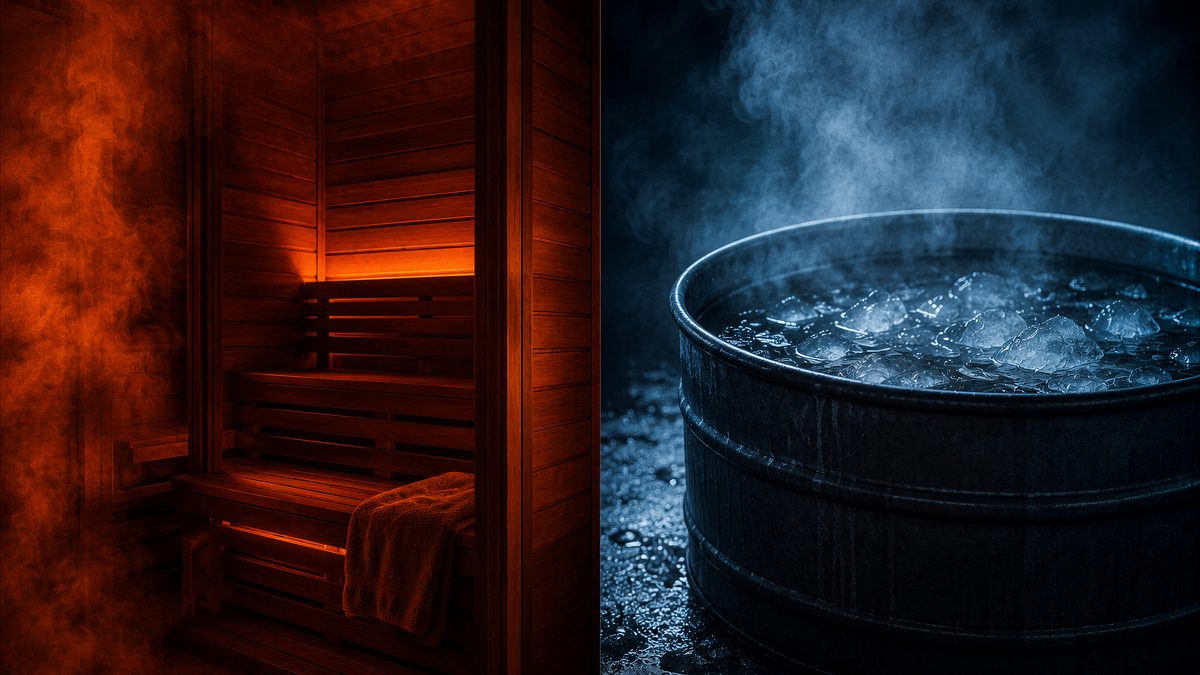
My infrared sauna sits in the corner of my home gym, and for years I treated it like a piece of furniture. I would glance at it on the way past, vaguely guilty, the way you might look at an exercise bike you keep meaning to use. Then about three years ago — for reasons I cannot fully reconstruct now; a stiff back, a bad few days of sleep, a podcast, I do not remember — I started getting in. Three or four times a week. Thirty minutes. That’s all.
Then a friend told me he built a cold plunge in the garage, a far more impressive name than “fifty-gallon stock tank from Tractor Supply with an aquarium chiller,” which is what it actually is. I usually stick to cold showers myself, but I have subjected myself to cold plunges before. With these experiences under my belt now, I want to tell you what I think is true and what I think is hype, because both heat and cold have become wellness commodities and the honest middle ground is hard to find.
Let Us Start With the Heat
The evidence here is older and stronger. The Finnish, who treat the sauna the way the rest of the world treats coffee, gave us the foundational dataset. A long-running cohort study followed thousands of middle-aged Finnish men for two decades and found something striking: men who used the sauna four to seven times a week had roughly half the risk of fatal cardiovascular events compared to men who used it once a week. Half. The same dataset showed reductions in all-cause mortality, dementia, and Alzheimer’s disease. Those numbers caught attention, and a wave of follow-up research has largely held up the basic finding — sauna use, done regularly, looks a lot like exercise from the cardiovascular system’s point of view.
What is actually happening in there? Heart rate climbs into the same range you would hit on a brisk walk or a light jog. Blood vessels dilate. The body releases heat shock proteins, which help cells repair and refold damaged proteins. Blood pressure drops in the hours afterward. Inflammatory markers fall. The mechanisms read like a list of everything cardiology spent fifty years figuring out exercise was doing — and the sauna seems to do a remarkable amount of it without you ever leaving the bench. However, let me be clear that there is no substitute for actual training.
Now to the question you actually want me to answer: does my infrared sauna count? The honest answer is — probably, mostly, but the evidence is thinner. Most of the research used traditional Finnish dry saunas at 175 to 212 degrees Fahrenheit. Infrared saunas top out closer to 140 degrees and heat the body more directly through radiation rather than the surrounding air. The cardiovascular response is real but somewhat smaller. The research catalog is much smaller, too. There is some evidence infrared may help more with chronic pain and joint stiffness specifically. What there is not yet is a Finnish-style cohort study showing infrared cuts cardiovascular mortality in half. So, when I describe my sauna habit, I describe it accurately: I am reasonably confident I am doing something good; I am not confident I am doing exactly what those Finnish men did.
I like to use the sauna after training, and it is a great place to read. Add some essential oils and you have a sweaty aromatherapy session that is hard to beat.
A Quick Untangling: Two Things Called “Infrared”
There is confusion baked into the wellness conversation around “infrared” that I had to work through myself, and it is worth a few paragraphs here because most readers — and many writers — conflate them. The infrared sauna I sit in and the red-light panel your friend on Instagram swears by are both called infrared, but they are different machines doing different things. My sauna delivers far-infrared wavelengths that are absorbed in the first millimeter of skin — the benefit is the heat. A red-light panel delivers near-infrared wavelengths in the 600-to-1,100 nanometer range that penetrate centimeters into tissue and activate enzymes inside the mitochondria — a photochemical effect, not a thermal one. Some all-in-one saunas include both. Mine does not. The mitochondrial and glucose-control claims you may have heard about belong to that second device, not the first.
We have one of those second devices — a near-infrared panel — and use it separately on whatever is complaining that week, usually for ten to twenty minutes. The mechanism, briefly: photons in the 600-to-900 nanometer range are absorbed by an enzyme called cytochrome c oxidase in the mitochondrial inner membrane, causing the electron transport chain to run a bit more efficiently and ATP production to climb. The clinical literature is much smaller than the sauna literature, but it is interesting. A 2024 University College London study found that a single 15-minute exposure at 670 nanometers reduced post-meal blood glucose by roughly 28 percent in healthy adults. Smaller trials suggest improvements in insulin sensitivity and skeletal muscle glucose uptake. The studies are short, the populations are small, and there is no equivalent of the Finnish cohort, but the mechanism is well-characterized, and the early human signals are real enough to take seriously.
We use the near-infrared panel to treat some chronic low back pain and surprisingly it helps. I was a skeptic at first, and it might be placebo, but I don’t really care – the back pain is better.
And Then the Cold
Here the science is younger, noisier, and more contested. The headline benefits are real but easier to oversell. Cold water immersion at 50 to 60 degrees Fahrenheit for three to ten minutes does measurable things: norepinephrine spikes by two to five times baseline, dopamine climbs and stays climbed for hours, mood lifts, and focus sharpens. A 2025 systematic review published in PLOS One found that people who use cold water immersion regularly report meaningful improvements in stress, sickness absences, and quality of life.
Together they are something like a small, repeated argument with comfort.”
There is even a nice clean number — Susanna Søeberg, the Scandinavian researcher whose work most of the cold-plunge community cites, has suggested that about eleven minutes of cold exposure per week, broken across a few sessions, is the threshold where measurable metabolic changes begin to show up. That is a manageable target. Eleven minutes a week is a lunch break, not a lifestyle.
What the cold does not do, and what wellness Twitter would rather not tell you, is reduce inflammation in a way that makes you stronger from your workouts. The opposite, actually. There is now reasonably solid evidence that cold immersion done immediately after resistance training blunts the muscle-building response. So, if you lift, plunge in the morning, not after the gym. The cold also does not melt fat in any clinically meaningful way despite many enthusiastic Instagram captions to the contrary. And the recovery claims for endurance athletes — which is where the whole modern cold plunge movement actually started — have been getting watered down by recent meta-analyses showing it works modestly, not magically.
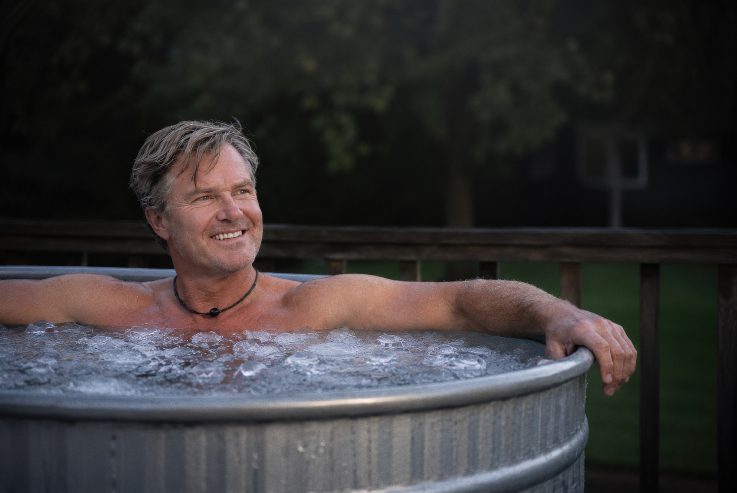
For some reason I wanted to see how long I could plunge at 50 degrees. It is miserable at first but then you can feel your heart rate drop and you acclimate. After 20 minutes I started to shiver and after 25 minutes I had enough. It took a good while to thaw out as my wife peppered me with the obvious question: “What the hell were you thinking?” Now I stick to much shorter sessions.
What Three Years Has Actually Taught Me
The effects are less dramatic than the wellness influencers would suggest and more dependable than I expected. The sauna is meditative; I read in there, and I think more clearly when I get out. I sleep better on nights I sat in it, especially if done a few hours before bedtime. The cold is not meditative — the cold is a small and consensual emergency. There is no thinking your way through it; there is only being in it. What it gives me every time is about four hours of what I can only describe as cleanness — mental quiet, physical alertness, an unreasonably good mood. Whether that is the dopamine doing its thing or just the contrast of being warm again, I genuinely do not know. I do know that I keep coming back.
If You Are Going to Start
The sauna is meditative. The cold is a small and consensual emergency.
Here is what I would actually tell you.
For the sauna: any kind beats no kind. Aim for sessions of 15 to 20 minutes, three or four times a week. Build up gradually. Hydrate the way you would for exercise, because that is what your body thinks you are doing. If you have unstable blood pressure or active cardiovascular disease, talk to your physician first.
For the cold: start in a cold shower, not a plunge. Three minutes at the coldest your tap will go, and turn it off when you start shivering hard. Work toward two or three sessions a week. The 11-minute weekly target is a useful goal, not a daily prescription.
Do not put yourself in cold water alone the first few times if you have any cardiovascular history. The cold-shock gasp reflex is real and the cardiac strain is genuine.
If you lift weights, plunge before the gym or at least six hours after, not immediately after.
If you want to add a near-infrared light panel, treat it as a separate practice with its own dosing — typical protocols are 10 to 20 minutes at a distance of six to twelve inches, three to five times a week, on the body region you care about. The early human evidence for glucose and recovery effects looks promising; the evidence base is far smaller than for sauna or cold.
Doing hard things to your body on purpose seems to make you measurably more resilient.
The Quieter Version
Three years in, I am a believer. Not in the influencer version of either practice, where the sauna fixes your hormones and the cold plunge fixes your soul, but in the older and quieter version: that doing hard things to your body on purpose, regularly, in small enough doses to keep doing them, seems to make you measurably more resilient. My infrared sauna is not a miracle. Cold immersion is not either. Together they are something like a small, repeated argument with comfort. I find I am better, on the whole, for using it.
→ Swipe for Next Story
FeatureJULY AUGUST 2026
Dogs 101 Part 3 - The Power Of Motivation
Why rewards, praise, purpose, and the desire to please matter more than force when training a dog.
Story & Photography by Nathan Sparks
When I sat down to write this article, I felt like I was listening to that old Johnny Cash song where he rattles off every town he’s ever been to. Except my list wasn’t towns, it was dogs. Beau and Bonnie. Smoke and King. Sean. Jackson. Radar and Sade. Smoky then Clicker. Bella the Basset Hound, a comedy act on four short legs. Stretchy, a miniature dachshund, proof that great dogs come in small packages. The two Great Danes, proof they come in enormous ones too. Gunner. Bravo, the Cityview mascot himself, who graced these pages more times than any dog in the magazine’s history. And now Chota Rocket. I’ve been everywhere, man — and almost everywhere I went, there was a dog. This is the third installment in our dog training series, and I figured it was time to dig into the question underneath all training: what is it that actually motivates a dog? I never fancied myself a dog trainer, but I’ve always been pretty good at getting into something, and as I’ve learned from Mike Osteen and his son Jon at Pet Resorts at The Farm, there’s a lot more to a dog than meets the eye. Still, after sixty years of field research, I have some findings of my own to report. It started with Beau and Bonnie. Beau was an English Pointer, Bonnie a Gordon Setter, and they were my dad’s hunting dogs — though make no mistake, they were the family pets, too. Dad had asthma, so the dogs didn’t live in the house. They had nice runs and insulated, heated houses for the winter, which back then was practically a canine country club. Dad loved to hunt, and as I got older we’d spend whole days walking the woods and fields after upland gamebirds. My favorite part was never the shooting, but watching the dogs work. Those dogs were motivated by something ancient — the prey instinct, pure and uncut. Dad trained them constantly; we even kept live quail just for that purpose. Otherwise, they were relatively ordinary dogs, but put them on a bird scent and they became artists. Beau and Bonnie eventually gave us Smoke and King, mixed pups but lovable through and through. It wasn’t until we got our first Irish Setter, a few dogs down the road, that I learned dogs are motivated by other things too. Things like mischief. Sean was a trickster. By then we lived in the city, and he wasn’t supposed to run free, but you can’t keep an Irish Setter penned up all the time in a quiet neighborhood. Sean would get out, stretch his legs, and shop. He had a fascination with bringing things home. Never a pair of shoes — just one shoe. Some days he’d haul in a dozen single shoes, like he was building the world’s most useless closet. Other days it was bedsheets, snatched right off the clotheslines people still used back then. I suppose a flapping bedsheet is irresistible if you’re a dog with a strong tug instinct and no moral compass. Then came the landscaping incident. Our neighbor had been to the store and bought what must have been several hundred plants, all in little six-inch pots, for a big project. Sean apparently decided this was the greatest treasure of his career, because one at a time, he picked those pots up in his mouth, carried them to our yard, and set them down in a nice, neat line. When we discovered it, we carried every one of them back, but the neighbor was not amused, and rather than walk over and ask us to keep the dog up, she went straight to the police and filed a charge. Next thing we knew, an officer was at the door with a warrant. Dog at large. Off to court we went, attorney in tow. We arrived on what was evidently Public Drunkenness Day. The judge sat with his head propped in his hand — at times almost laid flat on the bench — while a parade of defendants came forward. The clerk would read the charge, the accused would open his mouth to explain, and before a single word landed, the gavel would crack. Guilty, pay the fine or spend thirty days in jail. Next. My heart sank. This man wasn’t listening to anybody, and I was sure we were in serious trouble. When our case was called, the judge lifted his head, looking no more amused with us than the drunks. My brother testified about how much he loved the dog and only wanted to exercise him which the judge noted. Our neighbor, unrepresented, took the stand, swore to tell the truth, the whole truth, and nothing but the truth. What followed was a rantings and ravings of how our dog harassed her and her cat. The moment she said “that dog chases my cat,” it was over. The judge straightened up and announced: “The court will acknowledge that dogs chase cats, I’m dismissing this case. I want you people to take your matters and settle them amongst yourselves — this does not belong in the legal system.” At that, the woman’s son, a grown man of thirty-five or forty, jumped up and shouted, “Hold on a minute, Your Honor!” The judge informed him that one more word would earn him a contempt charge and an escort from the bailiff. It was my first introduction to a courtroom, and a fairly fun one at that. We prevailed! Sean stayed with the family for years after, often at my side, including the stretch when I was a partner in a river rafting company on the Nolichucky, living right on the banks of the Nolichucky River below Devil’s Looking Glass. That dog knew how to enjoy himself. He’d chase butterflies through the fields with total commitment, and he loved trying to catch minnows in the pond, thrusting his whole head under the water and coming up empty and delighted every time. We hadn’t been at the river long before we noticed something at night: from a half mile down the valley, you could hear puppies crying. There was a fenced in county dumpsite packed with dumpsters — and people would bring boxes of puppies, pups so little they could barely walk, and just leave them. It was the saddest thing I’d ever heard, and what did we do? We adopted them all. Before long we had what seemed like twenty-five dogs running around at any given time, and a standing deal: anyone who adopted a dog got a free trip down the river. We didn’t have the facilities. We just let them hang out, hoped the rafting customers would fall in love, and quite a few did. After all these dogs, what motivates them? I took the question to the man who’d know. Mike Osteen of Pet Resorts, our series sponsor and one of the finest dog trainers in the country, has spent more than forty years training everything from family pets to elite field trial champions. I watched him work a young retriever on a water blind, and he explained why the dog crashes through the pond instead of running around it. “When they jump in the water, we reward them for hitting the water, so it builds their desire to want to hit it,” he told me. “The reward gives it to them. They should desire it instead of just being made to do it.” There it is, the whole secret in two sentences: desire, not force. Mike builds wanting, and when a dog struggles? “If a dog fails, your job is to lessen the task but keep the standard the same.” Simplify the job, never the expectation. Mike’s son Jon, who trains alongside his father at Pet Resorts, starts every dog the same way — through motivation, reward, and praise, building the dog’s confidence before anything else. He also offered up the single most piercing line of this whole project. When I asked how he can tell whether a problem dog is a training issue or a household issue, he said: “The respect the dog has for whoever is on the other end of the leash tells me everything I need to know about that relationship.” Ouch. But true. The leash runs both directions. The rest of the training world agrees on the fundamentals, with their own accents. Veteran national trainer Ed Frawley boils motivation down to four levers — food, toys or prey, praise, and correction — and says real training means creating an atmosphere where the dog actively wants to learn. Victoria Stilwell’s positive-training school adds that no two dogs rank those rewards the same: some dogs would sell you out for a piece of cheese, others want the ball, others just want to hear “good boy” in the right tone of voice. Here in Knoxville, the trainers at North Star K9 say the same thing in their own way — every dog is uniquely motivated, and the trainer’s first job is detective work, figuring out what makes that particular dog light up. The folks at Sit Means Sit build their whole national system on the dog’s attention and focus. Different schools, same foundation: figure out your dog’s currency, then pay in it. Here’s what my unscientific field research adds. The one unifying trait, from bird dogs to dumpsite orphans, is the desire to please. Dogs like to have a job and know what they’re supposed to do. Beau’s job was birds. Sean’s job, as he understood it, was inventory acquisition. Give a dog a clear job and a boss worth pleasing, and most of your training is already done. Dogs also love having a place of their own. A crate isn’t a cage — it’s their den, a safe spot where nobody can bother them. Mike put it plainly: “If we don’t have time to give the dog our undivided attention, then the crate is our best friend.” And in all these years, I’ve never met a dog that didn’t want to live in the house. Some are just messier about it than others--the crate helps. The real point, though, is simpler than all of it: have fun with your dog, whatever that looks like. Take a walk. Play fetch. Go hunting. Chase butterflies. Or just hang out. The motivation runs both ways. Next issue, we’re reviewing a pile of products that make living with and training your dog easier — everything from kennels to collars. Until then, the court will acknowledge that dogs chase cats.
→ Swipe for Next Story
Non-ProfitJULY AUGUST 2026
From dream to reality
For 40 years, Dream Connection's volunteer board members have arranged special moments for more than 1,100 kids with life-threatening conditions.
Story by Susan Alexander
What’s it take to arrange a meeting with Seth Curry? Let Beth Milam tell us. Milam, current board president of the Dream Connection, was one of two dream captains who set out to contact Curry, a star of the Golden State Warriors, when a child here in East Tennessee expressed a dream to meet him.
“I tried to reach out to all of his handlers,” Milam remembers. No luck. “I contacted the home office of the Warriors.” Nada. She learned that Curry’s aunt lives in Charlotte, N.C., and reached out to her. But the aunt had agreed to protect Curry’s privacy and wouldn’t forward a message. “I got on Facebook and Instagram and asked if anyone had a connection, and someone on Facebook had a connection with Dominique Wilkins, a former Atlanta Hawks basketball star who is the broadcaster for the team.” The Warriors would be playing the Hawks in Atlanta soon. Perhaps Wilkins would relay a message to Curry.
“And that’s how it happened,” Milam says.
Curry is just one of the celebrities that kids in the Dream Connection’s 16-county coverage area have asked to meet. Michael Jordan was a challenging request. So were President George W. Bush and Dale Earnhardt Jr. But eventually all three meetings happened. So have many trips to Disney World and Universal Studios. One recipient asked for and received a dozen pairs of Nike athletic shoes in a rainbow of colors. Another child got to feed the polar bears at a zoo in Alaska. And another swam with the sharks.
For 40 years, Dream Connection’s volunteer board members have reached out and arranged special moments for more than 1,100 kids with life-threatening or chronically debilitating conditions. One hundred percent of the nonprofit’s funds, raised through its annual gala, grants and donations from other community organizations, go to making dreams come true.
"A child is never turned down who qualifies. Most recipients are referred by a doctor or social worker." —Farrell Levy
A simple start
The Dream Connection got its start in 1985 when B.J. Price, then an employee with AT&T, learned about a kid with a serious illness who wanted to go to California to visit his grandmother. Price wanted to help, but found the cost of setting up a nonprofit and paying the associated attorney fees prohibitive. Someone recommended he pay a visit to attorney Farrell Levy. Levy liked the concept and handled the red tape at no cost. The Dream Connection was officially established in October of that year. Levy has been a board member ever since.
Up to 25 volunteers serve on the board, including at least one medical professional, and an advisory board stands by to help when needed. Though many Dream Connection recipients are treated at Dolly Parton Children’s Hospital, the nonprofit is not associated with that or any medical facility.
On average, the Dream Connection fulfills about 25 dreams a year for kids ages 3 to 18. “A child is never turned down who qualifies,” Levy says. Most recipients are referred to the nonprofit by a doctor or social worker. Each recipient must be medically approved. The child and their parents are interviewed by the board. Once the dream is requested, a team of two dream captains get to work to make it happen. They tap whatever resources they can find; a recent dream to meet the Blue Angels came about when they learned a hospital social worker had been to a wedding with someone who knew one of the pilots.
Something special
Dr. Mary Palmer, a pediatrician at Children’s, has served on the board for 35 years. Occasionally through her work in the hospital’s emergency room, she has met and recommended a child for a dream. Those memories — and the emotions that accompany them — stick with her through the years.
She recalls one little boy who asked for a trip to the Orlando amusement parks. His trip was scheduled down the road until until his school principal alerted the board that his condition was worsening. They put together a rushed trip and the family flew to Florida. When Palmer went to the airport to meet them upon their return, she was met by the school principal and about 20 members of the community. “It illustrated for me how important these dreams are — for the whole community. Families and those who love them undergo a lot with a cancer diagnosis. These dreams are like a sigh of relief.”
She remembers another young man who asked for a trip to Europe to meet a favorite author. But before his dream, he asked that another patient, a little girl he met at the hospital, receive hers first. Months later, his mother called. They had met the girl and her family on the sidewalk walking a beautiful dog. That dog was her dream come true.
"These dreams are like a sigh of relief. Families and those who love them undergo a lot with a cancer diagnosis." —Dr. Mary Palmer
“Every dream is different,” Palmer says, “an expression of something that’s special for a child. The families benefit too because they’re also looking for hope. For whatever keeps us moving forward.”
Lauren Stansbury is a recent addition to the Dream Connection board, but before that her son was a recipient of a dream. Cooper, now 10, was diagnosed with stage four neuroblastoma in 2019. He underwent treatment at Children’s and asked for a trip to Orlando as his dream. But the addition of twins to the family delayed the trip until 2024.
“I knew when I got back that I wanted to get involved,” Cooper’s mom says, “so I manage the social media. They supported us through one of the hardest parts of our lives. That dream gave my son so much joy. I want to help create that for other families.
An engineer’s dream
Surely one of the most unique dream requests came from Sam Warren. Sam was being treated for leukemia at age 4 when he learned someone wanted to make a dream come true for him. “It was kind of like I was in a movie or a fairy tale or something,” he remembers. “I was given this amazing huge gift of anything in the world I wanted.”
His request? A Rainbow vacuum cleaner. Clearly his engineer’s brain was already at work, wanting to know how the machine worked. “I remember the incredible feeling that came with being able to hold and use the thing I’d been fixated on for so long.”
Through a partnership between Dream Connection and Special Spaces, Eden received the bedroom she had always imagined—a personalized retreat designed just for her, creating a place to rest, heal, dream and simply be a kid.
Warren, now a 30-year-old, leukemia-free engineer living in Nashville, spoke at the Dream Connection’s 40th anniversary gala in April. “It’s such an amazing thing that it even exists and that so many people volunteer and give and want to help kids and their families. It made me realize I want to be a part of it and support it more. We don’t have a cure for everything but we can find a way to help families.”
Husband-and-wife team Marcos and Ramsey Garza are both board members. Ramsey is also board treasurer. “Marcos joined first, and he inspired me with the stories he tells.”
The work the Dream Connection continues to inspire her. “To see how happy these kids are; there’s no way to describe it. We just want them to have good memories, and the families too. We just want them to be kids.”
To apply for a dream, support the work they do or learn more, go to dreamconnection.org.
→ Swipe for Next Story
TravelJULY AUGUST 2026
Hunting is just the excuse
A father-son hunting trip to Argentina reveals what men are really after — the friendships that make life longer, healthier, and richer.
Story by Dr. Edwin Spencer
Many times the anticipation of the adventure exceeds the excitement of the adventure itself. That was not the case for our most recent trip to Argentina. The bird hunting, the food, the Malbec wine, and the accommodations at Estancia Cortaderas all surpassed expectations. But when each man was asked what he enjoyed most, the answer was unanimous — the friendships. Some were new, some decades old.
This was a father-son (and one very brave daughter) trip — four old men and college-aged kids. We had one hitch in the get-along when one of the boys left his wallet on the plane and didn't realize until baggage claim. Our host Gloria retrieved it, with the pithy aside “funny…you don't look stupid,” which, delivered in a beautiful Argentine accent, drew laughter rather than offense.
After a day in Buenos Aires we reached the lodge, perched atop a bluff over the Paraná River. We unpacked, caught up, and headed to the field for lunch and a dove hunt. To call this lunch is a disservice — it's an event. Tablecloths spread, cutting boards laid out beside a wine glass for each member. Homemade empanadas to start. Then a pig that had smoked all morning, carved onto your board from pork belly to tenderloin. No one goes hungry on this trip.
Time in the field, in the blinds, and at the lodge gave us hours to talk about everything. That was the nugget. That was what we came for.
Your bird boy — Argentine for hunting guide — collects you after the meal. Doves are plentiful; the lodges and the local farmers have a symbiotic arrangement, since the birds eat the farmers' crops.
One special lunch, the owner Ariel Semenov regaled us with the history of Estancia Cortaderas. A close friend of ours, Robert McClanagan, had been instrumental in funding the lodge in exchange for a week every July when he could bring his friends down. I recall seeing Robert in clinic many years ago when he asked if he could shoot with a replaced shoulder in three months, as “we” were going down there. He clarified that “we” meant me too. We became lifelong friends until his passing in 2022.
The quality of close relationships predicted physical health better than cholesterol, IQ, social class, or genetics.
Back at the lodge, stories were exchanged (some actually true), and we sampled duck tacos and perdiz paella. Dinner mirrored lunch, indoors and heavier on protein. Afterward we shuffled pairings for the next morning's duck or perdiz hunt so that everyone hunted with someone different.
Time in the field, in the blinds, and at the lodge gave us hours to talk about everything. That was the nugget. That was what we came for. We learned that John Felton's wit is sharper than his shooting, and that Drew Everett — just on the cover of Forbes as chairman of Bush Beans — wears it lightly. The boys (Tripp, Cooper x2, Bennett, and Jack) all look good shooting in leather scally caps, and Mclain can outshoot all the boys. As Chris Cameron put it, hunting is just the excuse.
A small, intentional inner circle is one of the strongest predictors of healthy aging.
That excuse ties directly to health and longevity. A meta-analysis of over 300,000 people found a 50 percent survival advantage for those with stronger social connections — an effect comparable to quitting smoking. The Harvard Study of Adult Development, started in 1938 and now spanning three generations, found that the people most satisfied in their relationships at age 50 were the healthiest at age 80. The quality of close relationships predicted physical health better than cholesterol, IQ, social class, or genetics.
Decades of research by Robin Dunbar at Oxford zeros in on a specific number: five. He identifies five close relationships as the optimal size of the human support clique — the innermost layer of our social world. Separate epidemiological work shows that loneliness and weak social ties increase all-cause mortality by 14 to 26 percent in adults over 50. A small, intentional inner circle is one of the strongest predictors of healthy aging.
The piece of the trip we all carried home was an afternoon at an orphanage in Hernandarias. We each brought a backpack filled with clothes and toys chosen for a specific child. It was like Christmas morning — kids of all ages in the yard playing games and trying on new clothes. With Mark Ingram's help, a foundation has now been started for the orphanage.
We are in a friendship recession. The Survey Center on American Life found that the share of American men with at least six close friends fell from 55 percent in 1990 to 27 percent in 2021. The pandemic may have skewed those numbers, but the trend predates it. Men cluster their friendships around activities; women, around conversation. Either way the science is clear — invest in your friendships, whether the excuse is hunting, fishing, golfing, or hiking. Invest first in your spouse, family and then your friends. It is probably the best longevity investment you can make.
→ Swipe for Next Story
FeatureJULY AUGUST 2026
Preacher in theWoods
Episcopal priest, mountain innkeeper, and spiritual storyteller — Father Dan Matthews is still inspiring at 93 years of age.
Story by Gary Wade Photography by Bruce McCamish
In his storied career as an Episcopal priest beginning in Monteagle in the Tennessee diocese, Daniel Paul Matthews has served at churches in Memphis (1961), Nashville (1965), St. John’s in Knoxville (1972), and Atlanta (1980). In 1987, the church wardens and vestry of the prestigious Trinity Church on Wall Street, New York, called on “Father Dan” to become their 16th rector. Chartered by King William III of England in 1697, Trinity is among the oldest and best endowed churches in the United States. Alexander Hamilton is among the many notables laid to rest in their churchyard. After 17 years of exemplary leadership, Dan retired in 2004.
Turning back the clock, in 1943, Dan’s father, Robert, moved the family to Canton, North Carolina, a small town in the shadow of the Great Smoky Mountains, to become the high school band director there. Cataloochee Valley and other trails and sites within our national park became the family’s playground. Years later, with funds from the estate of their parents, Dan and his older brother, Bob, also an Episcopal priest, acquired 250 remote, mountainous acres on Hemphill Knob to build a nine-bedroom religious retreat. Separated from the park’s Cataloochee Divide Trail only by a fence, the property became a popular spiritual haven for their many visitors.
In preparation for the 1982 World’s Fair in Knoxville, a representative, concerned about the lack of rooms for their visitors, telephoned to ask if Dan and his wife Deener if they might accept reservations. They agreed, of course, and their overnight guests, impressed by the hospitality, chose to hike the trails rather than attend the Fair! By the end of the year, the Swag Country Inn was opened to the public with Deener serving as the Innkeeper. For their love of the mountains, the Matthews offered to host a fledgling Friends of the Smokies gathering in hopes of generating much-needed funds for the park. April 24th of this year marked the beginning of the 30th consecutive weekend of the event.
The highlight this year was a wish list item of the Friends organization. An excursion from the Swag to Cataloochee included a history lesson of the community -- until its evacuation in the 1930s -- by founding board member Steve Woody. What followed at Palmer Chapel featured the corresponding and remarkably inspirational homily by Father Dan, now a youthful 93 years of age, perhaps the premier spiritual storytellers of our time.
Father Dan, now a youthful 93 years of age, perhaps the premier spiritual storytellers of our time.
“The mountains have always been my cathedral.”
→ Swipe for Next Story
FeatureJULY AUGUST 2026
Secret Waters
A guide to finding peace in the waters of East Tennessee.
Story by John Quillen Photography by Patrick Caveney & John Quillen
The drive out of Oak Ridge and up onto the Cumberland Plateau has a way of slowing me down — the road climbing, the trees closing in, the world getting quieter the deeper I go. Heading down Ridge Road, I pass the Lilypad Hopyard Brewery, and it brings a small smile to my face knowing I’ll be stopping at Del and Marte’s place on the way back out for a beverage or sandwich of choice. But first, I’m headed down to Lily Bridge.
This whole area — a beautiful spot below Lily Bridge in the Obed Wild and Scenic River area — is one of my favorites for a short day trip. Less than an hour from Knoxville, it’s the country’s narrowest national park, and it’s worth the drive. Cross over the bridge, head up to the parking area, and you can walk down to the boulders. For a climber like me, that’s always a treat: a little afternoon bouldering in the shade of the tall trees, and not much could be better. Or, if I’m not in the mood to climb, there’s the trail that runs out along the ridge, the canyon falling away on both sides, every turn opening onto another lovely vista.
And what could be better, after a climb or a hot hike, than a dip in the cool waters of Clear Creek? In my mind, not much. It’s not just my favorite, either — it’s one of publisher Nathan Sparks’ favorites as well. From the parking area at Lily Bridge it’s just a short walk down the trail, easily accessible for almost anyone. Pack a picnic lunch and you’ve got the perfect spot to spend an afternoon.
But Lily is far from the only spot around. In this article I’ve detailed some of my favorite places to take a cool dip in the Smoky Mountains come summertime — from urban quarries to quiet campgrounds, and places we all know and love, like the Y and the Sinks.
The days are getting longer and insects are emerging from their holes. No-see-ums compete with mosquitoes for my exposed skin, covered in sweat and chalk. Sometimes we walk the mile, other times drive. Driving means that our climbing packs can be secured in the vehicle. Tender feet wrestle with jagged limestone as we lower ourselves into the warm water. Climbing at Ijams has this benefit. Meads Quarry is the perfect balm after four or five rock routes.
Meads Quarry, a 25-acre lake, reaching depths of nearly 80 feet, draws swimmers, paddlers, climbers, and adventurers year-round.
I’ve been known to dip here in the wintertime. A couple of years ago we did a few polar plunges. None of us stayed in there very long, but it made for great shrinkage jokes. Summer afternoons see us floating and talking about our performance on the quarry walls.
The newly redesigned Fort Dickerson swimming hole is an engineering feat. A significant investment by the city has turned this into prime real estate for downtown summer plunges. The best way to appreciate this little alcove is by driving to the top entrance off Chapman Highway and riding your bicycle down the trails at the actual Fort, because you may not be able to find a parking space on the main entrance. A busy weekend recently saw almost no available space on the docks or middle swim platform.
But the crystal-clear water remains cool and deep. New amenities include bathrooms, changing areas and a concession stand. This is one thing the city has done right. But just don’t think about bringing your own boats; you’ll have to pay a private concessionaire for that privilege. Same thing with Ijams.
Sometimes you need to get out of the city to escape the rising heat. Raft guides on the Pigeon River have known about this honey hole for years. As far as clarity and purity, you won’t beat the tumbling cascades of Midnight Hole in the Great Smoky Mountains National Park.
Crystal-clear waters and towering cliffs define Fort Dickerson’s summer appeal.
From Big Creek Campground you’re going to walk about one mile uphill on the Big Creek Trail. This branch of the river is just downstream from Mouse Creek Falls. On a busy summer afternoon, it can be quite festive. And by the time you arrive you’re definitely ready to cool off. Climb up the rocks and plunge into that deep pool from the infamous rock diving board. Snorkeling is definitely encouraged.
There’s nothing secret about swimming at the Wye. Scantily clad people are found there almost year-round. This confluence at the entrance to the National Park at the top of Townsend signifies where the Little River waves goodbye to the Smokies. For locals it is a rite of passage to commit a lazy summer afternoon there or hop on a tube and drift down the river. But more adventurous people will go upstream to the similarly well-known Sinks.
I’ve always found that place to be a little bit more dangerous. Turbulent water can suck you down, and it’s been the demise of more than a few unfortunate bathers. Could be a personal bias, given my friendships with local rescue divers.
The same goes for Abrams Falls. Hike out to see it, but enjoy from a distance. I consider that particular spot to be a siren of the Smokies. A while back I wrote about Roger Murphy who, in his capacity as a rescue diver, used to retrieve people from underneath certain logs out there. I’m not saying I haven’t dipped my toes, but be careful with going any deeper than the knee.
Get out of the house and find your perfect outdoor swimming hole. Don't forget to bring the beer — I'll be waiting.
The universe pulled me over past Asheville recently. My friend Tim Saltaklaraglu and his partner Gina Edwards had been goading me to check out Panthertown for quite some time. This pocket wilderness outside Brevard, North Carolina, is home to a lot of options — from backpacking to mountain biking to rock climbing. Take your pick.
Tim and Gina kept telling me about this pristine beach with white sand and a gorgeous waterfall. When we stepped out of the car, the temperature was in the 40s and looking not to get much warmer. After five or six backpacking miles, we found a suitable spot to camp. It got down into the 30s that night, so swimming seemed to be off the table.
When we finally reached that idyllic spot below Schoolhouse Falls, the warmth of the sun was feeling good on my neck, and given the temperature, the most I could handle was a full head dunk. But as the day warmed and we hiked on several additional miles, Tim managed to shed his layers and lower himself into a pool at the periphery of the wilderness area. Panthertown is definitely worth the drive.
We are blessed with so many natural bathing spots not far from downtown, and I’m thankful our leadership has seen fit to continue to protect and preserve them.
So I’m going to leave you now as I finish this story and my cold beer at Lilypad. Get out of the house and find your perfect outdoor swimming hole. Don’t forget to bring the beer — I’ll be waiting.
→ Swipe for Next Story
FeatureJULY AUGUST 2026
SUMMER BREWS
A Tour of Knoxville's Craft Breweries
Story by Caroline Williams Photography by Ashley Box & Ethan Smith
I am not a beer person. Or at least, I didn’t think I was. I came into this assignment the way most people walk into a brewery for the first time: a little unsure, a little curious, hoping I’d find something that didn’t taste like the bottom of a lawn mower bag. What I found instead was something I wasn’t expecting. Six places where real people pour real pieces of themselves into every single pint. Where the guy cleaning tanks at six in the morning is the same guy grinning at you from across the bar at four in the afternoon. Where a jar of leftover tahini becomes a beer, and a stack of oatmeal cream pies becomes a stout.
Knoxville’s craft beer scene has quietly become one of the most vibrant in the South. There are now more than twenty breweries within walking distance of each other downtown alone. This summer, I sat down with the people behind six of them and got an education in barley, hops, yeast, and the strange, beautiful alchemy that turns all three into something worth raising a glass to.
Pull up a stool. Let me take you with me.
Crafty Bastard Brewery The Place Where Everyone’s Welcome
The first thing I notice when I pull into Crafty Bastard’s West Knoxville location is that it doesn’t look like what I’d imagined. A little divey, a little open, the kind of place that feels lived in. The second thing I notice is Cliff Crocker, the brew master, who has the easy energy of a man who has absolutely nowhere else he’d rather be.
Cliff didn’t follow a straight path into brewing. He came out of an industrial kitchen background, became a fan first, wandering around Knoxville’s craft taprooms on his own time, and then heard there was a school in town offering a brewing certificate. The Brewing and Distilling Center, run by a man everyone calls Doc White, changed the trajectory of his life. He enrolled, got certified, met the owner of Crafty Bastard, and was offered a job fast.
The brewery’s name has a story as colorful as its beer list. The original owner, Aaron McLean, operated on his own wavelength. One day a friend called him a crafty bastard. He wrote it down and never let it go. Ten years and over 900 recipes later, the name fits like a glove.
I am drinking a pineapple tahini ale when Cliff starts explaining what makes this place different. He came up with the recipe because he had leftover pineapple beer and found a jar of tahini in the kitchen. “I was like, you know, let’s do it,” he tells me, with the casual confidence of someone who has stopped being surprised by his own good ideas. The beer is bright and strange and oddly wonderful, like a summer afternoon you didn’t plan. That willingness to grab whatever’s interesting and see what happens is Crafty Bastard’s whole personality.
But it’s not all pineapple tahini. The most popular beer at this west location is the Crispy Boy, a light lager written specifically for the West Knoxville crowd: people walking in saying they only drink Miller Lite or Bud Light. “So we wrote this recipe to be the answer to that question,” Cliff says. It worked. The Crispy Boy is now the official beer of the Knoxville Ice Bears and the Bijou Theatre. Downtown, the IPA called Tessellation outsells everything else by a mile.
“Six breweries. Six very different stories. One lesson repeated over and over: the best beer is never really about the beer.”
Walking through the brew house with Cliff feels like a science class you actually want to attend. The big system holds 550 gallons. Brew days start at six in the morning and run ten to twelve hours: bags of barley, pH balancing, a recirculation process named after some long-dead German, an hour and a half of boiling, and somewhere in all of it, a hibiscus IPA made with 30 pounds of flowers that sold out in under a month.
“You’d be surprised at how much everyone assumes that you brew every day,” Cliff tells me. “Most of it is just cleaning.” He says it with a laugh, but he means it. The romance of craft brewing, it turns out, runs on a whole lot of elbow grease. That part doesn’t make the Instagram posts.
The weekend before my visit, a local band called Smooth Sailor played the outdoor stage. Seven hundred people showed up. The line to the bar was out the door all night. They did $14,000 in sales. For the love of the game, Cliff says, and I believe him completely.
Abridged Beer Company Where the Food Is Half the Story
Zach Young didn’t set out to run a brewery. He was living in Colorado, giving guitar lessons to his boss’s son in exchange for six-packs of craft beer. A home brew kit with his brother in Chicago sealed the deal. He’s been at Abridged Beer Company in Bearden for seven years, working his way up from cleaning kegs to Director of Brewing Operations. The name comes from owner Jesse whittling years of home brewing
experiments down to the recipes he loved most, the abridged version of his trials and tribulations.
Abridged is one of the few places in Knoxville where the food program is genuinely as strong as the beer. Zach is unapologetic about it. I find out why the moment the Bridge Burger arrives: brussels sprout petals, crispy bacon, caramelized onions, all of it nestled into a sweet brioche bun. It is, without question, one of the better bites I have all summer. There’s also the Oak Room, a separate taproom with a date-night energy, where craft cocktails, oak-aged beers, spirits, and wine share the menu alongside some of the more ambitious brews the team produces.
The most popular beer at the main location is Topping Rock, a hazy IPA — juicy, tropical, not bitter — named as a play on Rocky Top. At the Parkside location, it’s the Rifleman Light Lager, easy and cold and exactly what you want after a long day. A couple is getting married here next Sunday. They had their first date inside this taproom. It’s that kind of place.
Pretentious Beer Co. A Brewery Run by an Artist
Matthew Cummings has a master’s in glass sculpture and has been blowing glass since 2004. He started home brewing as a research project, to better understand the chemistry behind the beer glasses he was designing, and told his wife about it in the middle of a crowded tapas restaurant on a Friday night. She was not initially thrilled.
Pretentious Beer Co. is tucked into a space in Old City where everything from the bar stools to the tap handles to the lights was made by hand. The name came from a bottle share club at an art center in Louisville, where Matthew made bespoke tailored beer glasses for his friends, who dissolved into giggles and declared the whole thing gloriously pretentious. He’s been leaning into the joke ever since, and making very serious beer underneath it.
“We don’t take ourselves seriously,” he tells me. “We take what we do very seriously.” That split is the whole place.
Matthew’s most popular beer is Chug Life, a Czech Pilsner and their only true flagship, the one beer they’ve made consistently since the beginning. His other bestseller is Squishy, a wild cherry sour made by melting actual pounds of gummy bears into the fermentation. The name is ridiculous on purpose. The beer tastes exactly like what you think it tastes like, and people lose their minds over it. The most experimental beer he’s ever made? A lemon, seaweed, and squid ink sour for Halloween. It was black. Someone asked him to bring it back over a year later, and he’d forgotten it existed entirely.
What sets Pretentious apart most visibly is that the brew house and the tap room are the same room. On brew days the equipment expands into the space where you’re sitting, and somehow it works.
There’s also a garden out back with hop vines, mint he’s let run wild because he’s from Kentucky and can’t quit mint juleps, lavender by the door that brushes against you as you enter, and a black walnut tree that is almost certainly the largest tree within half a mile of downtown. The back patio pulls you off the streets of Old City and makes you feel like you’ve wandered into someone’s backyard, tucked away among the greenery and a long way from anywhere loud.
Zul Beer Company Built to Scale
Brad West co-founded Zul in 2020 with business partners Tara and Seth Thacker. His path there started with a subscription box in the mail, a trip to New York where he fell hard for a brewery up there, and eventually the decision to build something of his own. The name is part Ghostbusters villain, part Diablo character, part Urban Dictionary rabbit hole. People mispronounce it constantly, but it’s just Zul, like tool with a Z. By almost any easure, it’s the largest operation I visit, with multiple taprooms in Knoxville and a growing Nashville presence. Last year they produced 7,500 barrels of beer. This year they’re hoping to hit 15,000.
The engine behind all of that is a peanut butter and jelly sour called PB&J Mixtape. Brad didn’t see it coming and neither did anyone else. They started making it around 2022 and it has grown exponentially ever since, now distributed across more than a dozen states and shipped internationally to Europe, China, Japan, and Australia. It is, Brad says with a straight face, deliberately marketed to people who don’t like beer. It’s now in Neyland Stadium, and every place that sells alcohol inside that stadium will pour a PB&J Mixtape this fall.
I try it. The first thing that hits is the nose: a full, warm waft of peanut butter before the can even reaches my lips. The sip that follows is lighter than you’d expect, slightly sweet, and somehow tastes exactly like the sandwich it promises. I immediately understand the phenomenon.
But there’s more to Zul than one viral product. Their hazy IPA, Paper Crowns, won a gold medal at the World Beer Cup in 2022. And coming soon: a barrel-aged stout collaboration with Side Project Brewing out of St. Louis and Other Half Brewing out of New York, finished with vanilla beans, caviar, and black truffles. They’re calling it Gourmand. They expect it to sell out in weeks.
Peaceful Side Brewery A Reflection of Where You Are
Maryville doesn’t feel like a brewery town, and then you walk into Peaceful Side and immediately understand that it absolutely is.
Chris Meadows got his start volunteering at Sweetwater Brewing Company in Atlanta for free beer, worked his way up through the cellar and brew house, and eventually landed in Knoxville, helping open Elkmont Exchange, then Yee-Haw, before getting a call from the people behind Peaceful Side asking him to run their Maryville facility. He said yes immediately.
The name comes from Townsend, where Peaceful Side Social first opened. Townsend is the peaceful side of the Smokies. On the other side of that mountain is Sevierville, Gatlinburg, and Pigeon Forge. Chris calls it “Panama City in the mountains.”
What Chris makes here feels like it belongs to the land around it, light and refreshing when it’s boating weather, darker and richer when people are hunkering down. Their One for Each Hand, a pina colada-style sour seltzer, is so popular they cannot brew it fast enough. I taste it fresh from the tank, still days away from being packaged, and even unfinished it is outrageously good. Sweet, tropical, dangerously drinkable.
Chris teaches part-time at the Brewing and Distilling Center, the same school Cliff Crocker attended. His philosophy on consistency is the most precise thing anyone says to me all summer: “Anybody can make beer. Making the same batch consistently, month to month, season to season — that’s where the real skill is.”
Almost twenty years in, Chris Meadows still gets up every morning wanting to come in. Sitting in the taproom after the tour, cold Mexican lager in hand, it’s easy to understand why.
Yee-Haw Brewing The Big Stage
If the other five breweries I visit feel like intimate conversations, Yee-Haw feels like a main event.
The Knoxville taproom is enormous: 62 taps, a full kitchen known for spicy chicken tenders, a jumbotron, a beer garden with fire pits, an outdoor bar, and an amphitheater built for large concerts. The day before I sit down with head brewer Trevor Daniels, an engineering school graduate, they hosted goat yoga on the property. Bachelor and Bachelorette watch parties routinely pack the place. UT game days are an event unto themselves.
Trevor brings the science: precision, process, a genuine love for what happens when all the variables line up. What Yee-Haw has built is something rare, a brewery that holds an intimate Tuesday evening just as gracefully as a thousand-person Saturday night. Show up on the right night and you might find yourself watching a concert under the Tennessee sky with a cold pint in hand, wondering how you ever spent a summer any other way.
Last Call
Here is what I know now that I didn’t know before: the people making beer in this city are not doing it for the money, although they’d like the money, and the margins are tight, and the cleaning never stops. They’re doing it because somewhere along the way, the transformation got them. Grain into sugar. Sugar into alcohol. A theory on paper into something cold and alive in a glass.
They all said some version of the same thing. Cliff Crocker said it warms the heart, watching people enjoy something he made. Matthew Cummings said he hopes people slow down for ten seconds and be mindful. Chris Meadows said he wants people to feel happy without feeling like it took effort. They work together too, borrowing ingredients, sharing tank space, because there’s more than enough thirst in this city to go around.
I came in not a beer person. I leave someone who knows that a pineapple tahini ale exists, that 30 pounds of hibiscus flowers can turn a beer the color of a sunset, and that a peanut butter and jelly sour can end up in Neyland Stadium.
Go find your glass. Knoxville has earned it.
→ Swipe for Next Story
ProfileJULY AUGUST 2026
Come Together
Classy Caterer expands its team to offer customers the only catering team they’ll ever need
Story by Cityview
When life offers you opportunities, you take a leap of faith and jump right in. At least, that's what Trisha Kelly, of Classy Caterer, did when she was presented with the opportunity to expand her team with seasoned catering talent. When two well-known local catering companies were shifting their operations, Kelly knew the East Tennessee community needed to retain their talent, she connected with team members at the two companies and offered them a home with Classy Caterer.
“We’re one big blended family now," Kelly says. "We all have blended so well and work so well together.”
The company specializes in corporate catering, and their service area includes Knox, Anderson, Loudon, Blount, and Sevier Counties. They cater almost any type of food you can imagine—if you can say it, they can cook it, Kelly says. If you’re looking for breakfast, they can do any style from classic Southern to continental. If you're looking for brunch or lunch or dinner, they can do that, too. They fulfill all sorts of special requests. If a team member is retiring, and you want to serve her favorite dish, they can do that. They meet any dietary needs.
“We’re going to do everything we can to please the client every time,” Kelly says. They always go the extra mile.
However, if you’re not sure what you want, they do have a standard menu as well. Kelly explains, “We can cater to very different price ranges as well. We can do something as simple as a salad and sandwich bar or potato bar. There’s hardly a Tuesday that goes by when we don’t do a taco bar. We have Mediterranean fare. We have pasta days where we’ve got a full menu of different pasta dishes that we can offer. We’re pretty widespread on the menu.”
Classy Caterer also offers full-service options. Unlike other companies that just deliver the food then leave, customers can hire Classy Caterer for not only the menu, but also to set up the artistic table presentation, bus tables during events, and clean up after event conclusions. Clients don’t have to worry about anything. Ironically, that’s how the company got its start.
Kelly was involved in the corporate world for 32 years before forming Classy Caterer six years ago. During that time, she worked with hundreds of caterers at countless events, but out of all the many companies, she never found one that brought a level of presentation that met her standard. “I never really felt that it presented itself as, for lack of a better word, classy,” Kelly says. “I always brought in my own plates, my own serving pieces, my tablecloths. Every time I would have someone come to my office, I would scale it up.”
Kelly saw a need in corporate catering. And as the saying goes, “If the business you want doesn’t exist, create it.” And that’s exactly what she did. She credits much of her success to not only her business acumen, but her faith. “To God be the glory,” she says, “because the way things have worked and fallen into place, we could certainly see His hand in things.”
With her faith leading her path, and now with an expanded team of professionals working alongside her, Kelly and her team at Classy Caterer are ready to offer even more East Tennessee customers with the opportunity for a more elevated corporate catering experience.
On the shores of Melton Hill Lake, Aspire makes the easiest yes you’ll give all year — bring your team here.
Story by Nathan Sparks
Imagine, for a moment, the perfect place to hold a corporate meeting or a company retreat. What comes to mind? And just as important — where? Maybe you picture somewhere far away: the airport, the rental car, the hotel ballroom that looks like every other hotel ballroom. But what if the answer was right here in our own backyard?
On the beautiful shores of Melton Hill embayment of the Clinch River, nestled at the base of the mountains, lies Aspire. It calls itself a park, and on paper it is one. But spend a single day there, as I have many times, and the word feels too small. Aspire is a cornucopia — trails and shoreline, a restaurant, meadows and ridgelines, gathering spaces with the lake right outside the glass. It is, quietly, one of the best places in East Tennessee to bring the people you work with.
So picture the day instead of the brochure. Your team arrives in the morning, twenty-five minutes from Knoxville — no flights, no logistics headaches, no one getting lost. You settle into The Jade, a light-filled room with floor-to-ceiling windows and walls that fold all the way open to the outdoors. The session that usually drags somehow doesn’t, because the lake is shimmering just past the glass and the air actually moves.
When lunch comes, you don’t sit through it in the same chairs. You take a walk. There’s a wildflower meadow and miles of trail right outside the door, and a short stroll with a colleague you normally only see on a screen does what no icebreaker ever has. You come back loose, talking, ready. That’s the thing about Aspire — it gives you those moments without making you schedule them too hard.
Everything, in One Place
The afternoon is yours to shape. Maybe it’s a hike up Aspiration Mountain, or kayaks out from The Launch onto Melton Hill, or a friendly, faintly ridiculous race around the bike pump track. Maybe it’s nothing more strenuous than coffee on the terrace. The point is that the team-building isn’t something you drive somewhere to find. It’s the ground beneath your feet — eighteen-plus miles of trail, the water, the meadow, all inside one secured property.
And here’s the detail that makes a planner exhale: you don’t have to wrangle any of it. Aspire’s Onward & Upward Center keeps your meeting room, your meals, and your evening reception under one roof. The Pearl, the restaurant on-site, handles the food — indoor dining, outdoor dining, a rooftop bar and lounge for when the laptops finally close. No catering company to hire, no coolers to haul, no vendor to chase. It’s all here. For a bigger crowd, The Exchange — a 200-foot open-air pavilion — opens the day up wider still.
Built to Be Loved
It helps to know Aspire wasn’t built for business at all. It’s the decades-long labor of the Hollingsworth family, Clinton residents who wanted to give their community something lasting — a place where recreation and inspiration intertwine. That origin shows. Aspire doesn’t feel corporate, even when you’re using it for corporate ends, and that’s precisely why it works. The fastest way to get people out of their meeting-room armor is to put them somewhere that doesn’t feel like a meeting. Aspire does that without trying.
I keep coming back, in every season — the meadow in bloom, the trailheads quiet at dawn, the lake throwing back the last of the evening light. CityView put this place on its cover not long ago, and reporting that story only deepened the sense that we have something genuinely special hiding in plain sight.
The Easiest Yes
We spend so much energy looking elsewhere for the thing that will impress our teams — flying them out, booking the resort, chasing a skyline. Aspire is a quiet argument that the better answer was close the whole time, on a stretch of Tennessee shoreline at the foot of the mountains. Convenient. Beautiful. All of it in one place. The kind of day people are glad they said yes to.
Walk it yourself and it clicks. Call the events team at (865) 463-7777 or visit alwaysaspire.com, and ask for a site visit. It’s more than a park. For the right gathering, it might be exactly the place you’ve been imagining.
From dinner with your children to a minimum 32 days in jail
Most people are unaware that a DUI conviction with a child in the vehicle results in a mandatory minimum 32 or 37 days in jail if convicted.
Story by Brandon D. Fersten Photography by Nathan Sparks
After a long week at work, you decide to celebrate the weekend with a nice dinner out with your family. At dinner, you consume a couple alcoholic beverages, enjoy some laughs and good conversation, begin your drive home, then you look back to see your child laughing when suddenly you observe blue lights behind your child’s laugh. You assume it will be a quick 5 minute or less encounter with the officer for speeding or failing to maintain your lane, but what started as a joyful night out has now become your worst nightmare.
The officer asks where you are coming from and whether you consumed any alcohol at dinner. Now, based on an odor of alcohol and an admission of just 1 or 2 drinks at dinner the officer requests you out the car. Next, the officer requests field sobriety tests and suddenly you are placed in handcuffs while your children are watching from the rear seat of your vehicle.
Did you know a DUI carries an enhanced punishment when accompanied by a child?
A DUI conviction, whether from alcohol, prescription medications or illegal drugs, with a child in the vehicle increases that mandatory minimum consecutive jail sentence by an additional 30 days. A DUI with a child in the vehicle results in the following mandatory minimum consecutive jail sentences if convicted:
Felony Charges But that is not all. A car accident or certain other conditions, even when there is no bodily injury, can result in child endangerment charges that can be charged up to a B felony, which means 8-30 years or even 8-12 years for someone with no criminal history.
DUI Investigations Explained DUI cases are broken up into 3 phases of a DUI investigation
Phase 1 is the vehicle in motion phase where an officer must have a lawful reason to pull you over. However, there are additional factors as it relates to a DUI case. Officers are trained there are 24 potential indicators of impairment based on driving behavior, so a skilled DUI attorney will argue that your driving behavior was not indicative of impairment if you do not exhibit such indicators. For example, speeding is not indicative of impairment. To the contrary, speeding without any failure to maintain lane can be indicative of a lack of impairment. However, simply having any of the 24 indicators does not automatically mean the individual is DUI of course. Moreover, just as driving is a divided attention task, the first divided attention task is a motorist’s ability to observe blue lights and pull over safely.
Phase 2 is the personal contact phase where an officer looks for reasonable suspicion, defined as specific and articulable facts, and more than a mere hunch, to believe the motorist is driving impaired. An officer cannot conduct sobriety tests on every individual pulled over for a traffic infraction. As a DUI attorney, it is imperative to challenge every aspect of a DUI stop and arrest including whether the officer had specific and articulable reasons to believe that the motorist has not simply consumed alcohol, but that the motorist is impaired. Here, we look at the five senses that an officer observes, and we differentiate between certain indicators being only indicative of consumption rather than impairment.
Phase 3 is the pre-arrest screening commonly known as the standardized field sobriety tests (SFST). To be standardized, these tests must be conducted on the proper candidate, under proper roadside conditions, and instructed and demonstrated correctly. Otherwise, the validity of the tests and their results are questionable. However, even under perfect conditions the walk-and-turn is only about 79% accurate and the one leg stand test is only 83% accurate. The horizontal gaze nystagmus test is the most reliable at 88% accurate but it is fortunately not admissible in court in most circumstances. Additionally, sometimes officers will perform non-standardized testing, especially in the case of a prescription medication or illegal drug DUI case pursuant to their Drug Recognition Expert (DRE) or Advanced Roadside Impaired Driving Enforcement (ARIDE) training.
Implied consent One of the most common misconceptions in DUI law is that refusing to provide a chemical sample will result in your automatic loss of license. You do not lose your license upon refusing and you may never lose your license. An officer cannot read implied consent to any individual. They must establish probable cause to believe you were driving impaired, and there are numerous defenses available. If you are convicted of DUI, you will lose your license, and a chemical sample may potentially increase the chances of a DUI conviction. In 2026 the implied consent law increased the punishment from 12-month to an 18-month loss of license if found guilty of the implied consent violation in court.
Blood/Breath Testing Chemical tests are not 100% accurate. While the TBI tests a blood sample at 99.73% accuracy, there are still plenty of defenses available regarding the admissibility of the chemical sample and, if deemed admissible, there are arguments available regarding the reliability of that sample.
Personal component: In addition to exploring every potential legal issue potentially present in a DUI case, the attorneys at Barnes & Fersten focus on our clients as people, not criminals. We focus on determining how to present our clients’ personal situation to a prosecutor to demonstrate why the punishment may not fit the crime as it relates to the specific client. For example, loss of employment and a career based on one bad decision can play a factor in alternatively resolving a DUI case.
Emily Smith, Brandon Fersten, Dakota Vermillion & Andrew O'Donnell 2026 Top Attorneys in Criminal Defense & DUI Defense
As the firm continues to grow, including the opening of a Harriman office in June 2024 and its new location in west Knoxville, its attorneys are expanding their reach while enhancing the way they serve clients. The move to Franklin Square reflects a continued focus on accessibility and convenience, allowing the firm to meet the needs of its clients better while continuing to provide trusted legal counsel to a broad and diverse client base. The firm provides a comprehensive range of legal services, with a particular focus on business law, government law, and civil litigation. Clients consistently describe Owings, Coleman & Coalson as a team of highly respected professionals known for their integrity and specialized knowledge.
At the heart of the firm’s success are the core values of honesty and integrity. These principles have guided the firm since its inception and continue to shape its mission today with our transition from Owings Wilson & Coleman. “When people hear our name, I hope they think, ‘That’s a firm that stands by its values and never wavers,’” says partner John Owings. “We are attorneys defined by spirit and character.”
The attorneys at Owings, Coleman & Coalson believe their clients deserve nothing less than the best. This belief has been central to the firm for the past 44 years and continues to guide its future. With our transition from Owings Wilson & Coleman, expanded footprint, and more convenient location in Franklin Square, the firm remains committed to meeting the evolving needs of both private individuals and public entities. “There is little more rewarding than helping clients achieve their goals,” partner Stephanie Coleman adds. “That’s what motivates us to give our all, every single day.”
→ Swipe for Next Story
ProfileJULY AUGUST 2026
The Dream Team for High Net Worth Divorce.
2026 Top Attorneys: Adoption, Family Law, Divorce, Child Support, Mediation and Arbitration
Story by Cityview
When people think about divorce, they often focus on the emotional aspects of the process. And understandably so. Divorce, child custody disputes, and questions surrounding alimony can be among the most difficult experiences a person will ever face. But there is another side to family law that is equally important: the financial realities that accompany these life-changing decisions. “At the Barnett Firm,” says principal Benjamin T. Barnett, “we understand that successful family law representation requires more than raw legal knowledge. The individuals who come to us are dealing with some of the most difficult circumstances of their lives. To make matters more difficult, their financial situation may be extremely complex. So, in reaching a solution that is equitable, practical, and sustainable for everyone involved, we are often navigating unique and difficult financial situations.” Very few divorce proceedings are straightforward when it comes to marital assets and debt, which must be identified, valued, and distributed fairly. This can include homes, vehicles, retirement accounts, investments, and business interests. A client may own a business, maintain substantial investment portfolios, or hold interests in multiple properties. “In these high-net-worth divorce situations,” says Barnett, “reaching a fair settlement requires much more than simply dividing assets down the middle. It requires careful analysis, attention to detail, and, quite frankly, the ability to do the math.” In reaching that fair outcome, The Barnett Firm team works diligently to understand every aspect of a client's financial picture. Often, they collaborate with financial professionals, valuation experts, accountants, and other specialists to ensure that all assets are properly identified and valued. Whether the team is addressing alimony, child support, business ownership, property division, or custody arrangements, the goal remains the same: to help clients make informed decisions that protect both their immediate interests and their long-term financial well-being. This commitment to providing clients with thoughtful, researched guidance in a family law proceeding has earned the firm recognition from both clients and peers. The Barnett Firm has been consistently recognized by professional organizations, recently named a Raising the Bar Top 10 Family Law Attorney, an American Institute of Family Law Attorneys Top 10, and Attorney and Practice Magazine’s Top 10 Family Law Attorney. The firm has also been listed as one of Cityview Magazine’s Top Attorneys every year since 2018. Family law litigation—high-asset divorce proceedings, in particular— brings with it a great deal of uncertainty, stress, and anxiety. “We become involved in the most personal and emotionally charged aspects of a person’s life,” says Barnett. “Our goal is to provide clients not only with skilled legal guidance but also with some much-needed peace of mind. And they get that, knowing they have an entire team of dedicated legal professionals protecting their interests every step of the way.”
Business information
The Barnett Firm 7417 Kingston Pike, Suite 203 Knoxville, TN 37919 (865) 474-0128 barnettlegalteam.com
→ Swipe for Next Story
ProfileJULY AUGUST 2026
The Why of Marcos Garza
For the founder of The Garza Law Firm, the practice of law begins and ends in the same place: the client.
Story by Ethan Smith Photography by Nathan Sparks
Ask Marcos Garza what drives him after all these years, and he won’t talk about verdicts, victories, or the awards on his wall. He’ll talk about people. “I believe the most important thing remains putting the client first—when considering strategy, the law, your plan of action,” Garza says. “The client-centered approach, putting the needs and the comfort of the client in front of yourself, is what ultimately yields the best outcomes in the practice of law.” That conviction has been the through line of his career, from his earliest days as a young lawyer to his role today leading one of Knoxville’s most respected firms. What has changed is the scale of the mission. “When it was just me, I was always working to get the very best result for all of my clients,” he recalls. “It was such a rewarding experience to get to do amazing things for clients, one person at a time—and I still really enjoy that as part of my practice. But what’s awesome about what I do now is I get to focus on creating a culture and an environment where many lawyers can succeed, and we can help more clients. If I can have ten or twenty attorneys working with me that have that same ethos, that same commitment to trying to achieve the very best outcome in that person’s life or that family’s life—it’s magnified.” His People Building that culture starts with the hiring. While many large firms stock their rosters with young associates fresh out of law school, Garza has deliberately gone the other direction, assembling a team of seasoned attorneys—a choice that addresses one of the most common fears clients have about big firms: that their case will be handed off to someone without the experience to handle it. “I’m always looking for attorneys who can carry their own water,” Garza says. “More often than not, that’s a lawyer who has some experience, who has been kicked in the teeth some and experienced the challenges of practicing law. Occasionally I will bring in a younger lawyer, but it’s got to be the right fit—a special person capable of standing on their own two feet.” For years, Garza admits, he evaluated candidates the way most of the profession does. “For ten years, I always wanted to know what somebody’s GPA was. Were they on law review? All the things you’re taught are important. And I’m still impressed with somebody who graduates top of their class. But if they don’t have a servant’s heart, they can’t work at our firm. It won’t work. If they don’t know how to put the comfort of their client in front of themselves, they won’t last.” The servant’s heart has become a mantra at the firm, and it’s now the quality Garza probes for hardest in every interview. “I’m trying to figure out: Do they have a servant’s heart? Are they selfless? Are they willing to stay until seven o’clock one night because the client doesn’t get off work until five-thirty and has used all their PTO? That’s the person I want.” Alongside compassion, he looks for something rarer still: courage. “One of our ethos is that we’re looking for creative and courageous outcomes,” he says. “You have to have the courage to stick your neck out and not be afraid of being embarrassed. A lot of lawyers care more about how they’re perceived by the judge than about getting what their client needs. I want the lawyer who is willing to take some risk for the client—because when in doubt, do something.” Highly educated, street savvy, compassionate, and willing to serve: that combination, multiplied across a roster of experienced trial attorneys, is what Garza believes sets his firm apart. The Strength of the Team It also answers a question clients often ask: why choose a firm over a sole practitioner? For Garza, the answer comes down to both intimacy and muscle. “The thing about a firm of our size is we are small enough that we know all of our clients,” he explains. “We work as a team, so a client is often known by three or four attorneys. And whenever you get multiple brilliant people involved who have expertise in different areas, you end up with extremely creative, often courageous, and highly effective strategies for maximizing outcomes. The whole is greater than the sum of its parts.” The muscle matters just as much. Insurance companies and large corporations have nearly limitless resources, and they know how to use them—burying smaller firms in reams of discovery or filing dozens of motions in a single week. “If you don’t have the resources to be thorough, it’s easy to get bogged down,” Garza says. “But if you have enough size, you can hang in there and not take a lower settlement or short-circuit your client’s case.” And his firm will not blink at the courthouse steps. “We are trial attorneys. Our job is to go to court,” Garza says plainly. “If you’re not willing to go to court and excel at the end game, everything leading up to it is flawed or at risk.” His advice for anyone choosing a lawyer: ask how many cases like yours the firm has actually tried in a courtroom in the past year. “One of the most important things to look at when you’re hiring a law firm is whether they have the resources and the willingness to go to trial,” he says, “or whether they refer cases out, or agree to a lesser outcome, because they’re afraid of the courtroom.” A Partnership at the Center There is one team member Garza credits above all. “I’m truly blessed to have my wife, Ramsey, as a partner in the management of this law firm,” he says. Though not an attorney, Ramsey is an integral part of the firm—the steady hand steering its administrative ship. She oversees operations, personnel, and the safeguards and processes that keep a growing firm running smoothly, freeing Marcos and his attorneys to focus on practicing law. “She is always thinking, always innovating, always coming up with a new idea—or frankly, always challenging me on how to do something even better,” he says with a smile. “She’s amazing at finding the places where we’re falling down and making us better. Having Ramsey involved in managing the firm is truly an advantage. It facilitates a smoother operation and helps us stay more effective as an organization.” It is, he says, part of what gives the firm its family approach. The Greatest Reward This year, Garza was once again voted a top attorney by his peers in multiple categories—an honor he says he never takes for granted. But ask him what he’s proudest of, and he points elsewhere. “What I’m more proud of is the fact that eight of our attorneys have been voted by their peers as top in the areas they practice—many of them in multiple areas,” he says. “It’s always a compliment and a blessing.” That pride—in his people more than himself—may be the truest expression of his why. Because for Marcos Garza, the privilege of being a lawyer was never about the spotlight. “The most rewarding part of getting to be a lawyer is seeing happy clients get fantastic outcomes because of the attorneys, the staff, and the culture we’ve created—where people are willing to put the client’s needs well ahead of their own,” he says. “They’re willing to go above and beyond, not just with amazing legal strategies, but to help the client in a more holistic way. That’s the servant’s heart. That’s what we talk about all the time.” Our 2026 Top Attorneys Marcos Garza Civil Litigation Criminal Defense DUI Defense Juvenile Defense Personal Injury - Auto Accidents Personal Injury - General Personal Injury - Motorcycle Accident Social Security Disability Law Wrongful Death Philip La Nasa Civil Litigation Consumer Protection Personal Injury - Auto Accidents Personal Injury - Motorcycle Accident Wrongful Death Jason Legg Employee Benefits/ERISA Medical Malpractice Personal Injury - General Personal Injury - Motorcycle Accident Social Security Disability Law Workers' Compensation Brent Morris Civil Litigation Personal Injury - Auto Accidents Personal Injury - General Workers' Compensation Wrongful Death Daniel Morrell Criminal Defense DUI Defense Juvenile Defense Michael Bock Social Security Disability Law Liza Wells DUI Defense
M. Hallie Dyer
Juvenile Defense
Business information
garza law Firm 865-830-1971 | garzalaw.com 550 W. Main Street #340, Knoxville, TN 37902
→ Swipe for Next Story
ProfileJULY AUGUST 2026
Till the Bell Rings
There’s no legal fight Burks & Ogle can’t take on.
Story by Micha Haas Photography by Ethan Smith
The legal arena has changed these past fifty years. New laws are signed in Nashville; new precedents decided with the bang of the gavel. But two things never change. One: every person standing before the law has something they need to protect. And two: Burks & Ogle is ready to step into the ring beside them.
Burks & Ogle is different from a lot of firms, their team tells Cityview. They have the resources and expertise of a big high-rise law firm, but they put it to work with the focus and resolve of a team that fights for every client. Chuck Burks, the firm’s co-founder, has been in practice for over fifty years, making a name as both a criminal and civil litigator. But the firm’s expertise extends well beyond Burks’ half-century career.
That fight is sharpened by how closely the team works a case. “We discuss our cases a lot, and you really can’t do that at a larger firm,” says Burks. “We all have the opportunity to have input, and that collaboration really produces special results.”
Nate Ogle is the other half of the letterhead, a former Knox County prosecutor and private trial attorney with more than fifty jury trials under his belt.
“My job is to go on the offensive in that courtroom, to drive my client’s case home through the evidence and dismantle the other side’s,” says Nate Ogle. “Whether a judge or a jury decide it, I make sure that by the time they do, our story is the one that stands up and the right conclusion is the only one left.”
2026 Top Attorneys in Administrative Law, Adoption, Criminal Defense, DUI Defense, Family Law/Divorce/Child Support, Federal Criminal Defense, Juvenile Defense
They are joined by Jacob Feuer, the firm’s third partner and a veteran of private and public defense practice, and experienced attorneys Katheryn Ogle and Chelsea Harris, each bringing their own expertise to the practice.
This collective experience shows in the firm’s results, not just in the courtroom but in the outcomes for clients.
“What clients can expect is an advocate who knows their case cold,” says Feuer. From the first meeting, he explains, the attorneys dig into every detail, because the more they know, the harder they can fight.
As any good trial attorney knows, a case reaches far beyond the courtroom and into a client’s life. That is exactly why winning matters so much.
“Clients come to you in crisis,” explains Katheryn Ogle. “They’re scared, they’re grieving, and they often have a version of success in mind that the legal system can’t actually deliver. Part of my job is helping them reframe what a good outcome means, so we’re fighting for something real and winnable.”
And win them they do. The testimonials of courtroom successes pour in, as do Cityview’s Top Attorney accolades.
“A job well done, to me, is when a client walks away knowing they were truly heard and that someone fought hard in their corner,” says Harris. “I take on my clients' burdens as if they were my own — their stress, their fear, their stakes. That weight is exactly what drives my work ethic, and seeing it pay off for the people I represent is what makes this profession deeply meaningful to me.”
If you are in need of an attorney in your corner, you can find Burks & Ogle online at knoxlegalteam.com, or can contact them by phone at 865-522-4964.
2026 Top Attorneys in Administrative Law, Adoption, Criminal Defense, DUI Defense, Family Law/Divorce/Child Support, Federal Criminal Defense, Juvenile Defense