The Odyssey of Travis Wyrick
From teenage rock ambition to award-winning production, his greatest success may be the life he chose not to leave behind.
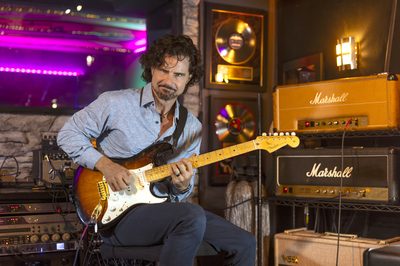
He kind of looks like a superhero, still slim and fit, the long hair that made adults uncomfortable in his childhood. Christopher Vogler mapped the hero's journey in twelve steps. Travis Wyrick didn't need to read the book; he just lived it.
He was a Knoxville kid with the $80 guitar, in a band that nearly signed a major record deal. Then grunge arrived, ending fourteen years of work but also revealing something new. There were Grammy nominations, Dove awards, and a significant amount of money he walked away from to be with his family.
Vogler would recognize every moment, but there’s one aspect the old mythology missed: a superhero whose strength isn't in muscle or speed, but in understanding a song’s true meaning and insisting that the artist see it too.
WAKING UP TO SOUND
His mother raised four kids on her own. Money was tight. If Travis wanted something, he had to earn it. After eight months of mowing lawns, he bought an $80 guitar from Hugley's, which he still laughs about as "the worst guitar on Earth." But when he played it, something awakened inside him.
Then MTV came, and the world opened up.
Def Leppard. Van Halen. Guns and Roses. He watched from his grandmother's living room and felt a calling. That’s who I want to be.
Two years later, he got a secondhand, four-track recorder and a RadioShack mic. His bedroom turned into a lab. He wasn't trying to produce anything; he just had songs in his head and no way to share them. One track became two. A better mic came along. Then a preamp, and more gear followed. It grew until something shifted.
"From 'these are demos' to something else entirely. "
He didn't know it yet, but the hero had discovered his secret weapon.
THE CALLING
The band was called Sage, and for fourteen years, they answered every call the road made.
In a Michigan winter, they opened for Bon Jovi, Bad Company, and Peter Frampton. Travis believed they weren’t the most talented band in Knoxville. "We weren't the best band… but we were the hardest working." His mother taught him that lesson. You don't have to be the most gifted; just outwork everyone else.
A moment that stays with you long after it ends
They played hundreds of shows and spent money they didn't have. They believed in a way only the young and committed can. Then, after fourteen years of sacrifice, it happened: Sony. Real negotiations. Real money on the horizon. The dream come true.
The industry was watching. The gates were opening and then came Seattle.
One phone call from Marney Smith: "Travis, we've been told not to sign any rock bands." Grunge hit like a tidal wave, wiping out everything they'd built. One last show at the Library.
Fourteen years. Gone.
For most heroes, that's where the story ends. If it did, this would be a cautionary tale but it is not, it’s a hero’s journey.
BEFORE THE DAWN
There was something else waiting right around the corner. A life well lived and a promise that if you dare, you can have it all.
All those years spent demoing songs, miking odd instruments, and translating feelings into sound made him fall in love with something unexpected. A jazz quartet in his living room, the breath of a saxophone when mic'd right, the first time he heard drums mixed with room and air.
"I had fallen completely in love with that."
The loss of Sage didn't end the story, like Bob Segar advised, Travis turned the page.
An experience that stands apart from the rest
Instead of commanding the stage, he sat behind the board, a producer. Local bands came in, and unusual experiments occurred. Remarkably, the recordings he made in Knoxville sounded better than those bands spent $40,000 on in Nashville. A manager once pulled out a cassette on his Nakamichi deck, played the bedroom recording, and said, "This sounds amazing. Where did you record this?"
That’s how Lakeside Studios started. Not from a business strategy, not from ambition, but from necessity, loss, and a determination to keep going.
TRIALS
Every great producer has a philosophy. Many focus on gear; Travis focuses on something different.
"The magic is before the microphone."
Artists arrived expecting technical expertise, but they found it felt more like therapy. He would stop a vocal take not because a note was off, but because he doubted the emotion. Six months of rehearsing a song sometimes drained it of feeling. His goal was to uncover the wound inside, to bring the artist back to the moment the song was written when they were crying and unaware anyone was watching.
Sometimes I have to break them back down to why.

His philosophy, stubborn and almost out of style in its insistence on human truth, became his signature. And it translated across genres. Heavy metal. Bluegrass. Reggae. Christian rock. Country. P.O.D., Shinedown, 10 Years, Pillar, Charlie Daniels, Ricky Skaggs, Brantley Gilbert, Dolly Parton. Genre was never the focus, people were.
There were Grammy nominations and Dove Awards. Platinum records. The industry noticed. Then came the test that mattered the most.
THE DECISION
After the nominations, after the big records, management presented a plan: Los Angeles, New York, huge projects, and quadrupled income. It was the expected path, the move every serious producer made.
For a couple of weeks, he thought it over.
Something special is happening here
Then he called them back and said no.
"I didn't have a father growing up. I couldn't imagine leaving my kids to make more money."
That decision became the axis of his life. A month later, the management rep called back, initially furious, then honest: "I was mad because you were taking the right path." He had kids, too. He finally understood what Travis had known all along.
The hero faced the ultimate temptation: more money, more fame, more legacy and walked away from it. Not because he couldn’t have it, but because he knew what it would mean.
He never missed a single sporting event his kids played in that he could think of. Once, Dolly Parton booked the studio when his son had a postseason basketball game. Travis had never canceled a session, but he made calls and figured it out. Later, while tracking with one of the biggest artists alive, Dolly looked up and said,
"Honey, did you ever figure out that basketball thing with your son?"
That’s the story.
THE HERE AND NOW
Travis Wyrick is 55. He still arrives at the studio two hours early. He continues to work with 17 and 18-year-olds who remind him of his younger self. He still questions his instincts and is always learning.
A friend once told him his mixes shone best around 80% complete, the last 20% was overdoing it. Travis considered this for months. Am I at 82%? Should I leave that snare alone? His openness to hear this, to embrace it, and to adjust his process shows true mastery.
He believes his career took off when he realized he wasn’t as great as he thought.
"Not when I thought I was great. When I realized I needed people."
He often uses a line, half-joking and half-serious:
"I can make you rich or famous. I can't make you both. Pick one."
He chose Knoxville. He chose his family. He chose to be present when talented people create amazing things without yearning for the limelight. He built something sustainable and genuine.
Once, at a funeral for a successful man, no one mentioned his business achievements. They spoke of his family, friends, and the people who loved him. Travis left with a sense of peace.
Not many people manage to achieve that. I want to achieve that. Travis is already there.
If you live in Knoxville, you may have been in the neighborhood where Lakeside Studios resides without knowing what it holds. One of the most fascinating stories in this town has been hiding in plain sight, a man who chased one dream, lost it entirely, found something better, turned down big offers from the industry, and built a legacy that Grammy and Dove voters would reward.
He started with an $80 guitar and an idea. Forty years later, he's still striving to capture something real.
"I still can't believe I do this for a living."
Neither can we, Travis. But this is a story worth sharing. Good guys don’t always finish last. Your love for family and your hometown is not a weakness.
I recorded my first demo with Travis 25 years ago in the original Lakeside Studio. I have seen the arch of a true hero’s journey and remain in awe. Travis Wyrick is a Knoxville treasure and a singular talent. There is no doubt that he could have formed another band and become the Mike Campbell of his generation but that is an alternate universe. What is real and everlasting is the true tale of a man committed to his principals and dreams at the same time. Proof positive that making other people better makes the world better and perhaps ourselves.