The Groundhogs of Mt. Cammerer
What starts as a simple climb becomes a crawl through roots, mud, and the limits of good judgment.
It had been a minute since the Groundhog Ridge had come to mind. Even though I would pass through the gorge every other month, thoughts of that ascent were somewhat distant in the memory bank. 2018 was my last climb up that hill. I was deep into training for a big Himalayan expedition, and this had all the verticality needed then. JD Schlandt and Bill Ramsey had asked me to escort them, having been lured by tales of suffering in the shadow of Mt. Cammerer. I’ll never forget the look on their faces some two hours into the climb when I assured them it would only get worse.
There are just a few sweet spots in the year when this hike is even a consideration. Summer is too hot, and we weren't far from a trail called Snake Den Ridge, if that tells you anything. Winter can be extremely icy, which stopped me cold halfway up once. Neither condition impaired us this February morn as light blasted through the Blue Ridge mountains here on the Carolina border. Frank Cook took up the trail with us at the last minute, apparently ignoring my orienteering admonition. “We may get lost, Frank. Wouldn’t be the first time.”
Weaving through the Smokies border, we stopped at one of many hairpins to cram vehicles onto an inconspicuous shoulder. We began with a not-so-unusual personal blessing: “I hope we are all still friends after this.”
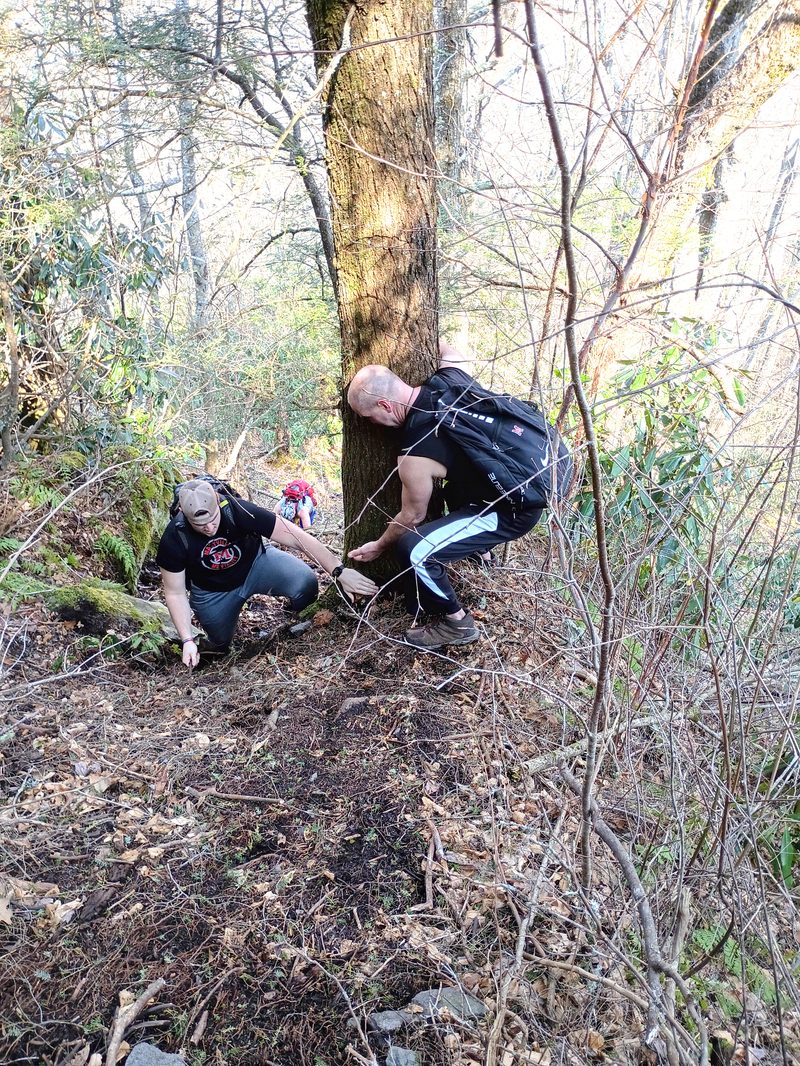
Nothing suggested trouble as we shouldered daypacks and traced the creek shoulder. Initially there had been an easily-followed trail until the first blowdown. Henry Chambers bent his six-foot-six frame to crawl underneath our first blowdown just five minutes into the adventure. “Is this similar to your football drills?” I asked as he rolled up from all fours. An eighteen-year-old still has plenty of cartilage, his father and I lamented as we pushed upward. Frank was nowhere to be seen so we took advantage of this first real break to pull twigs from our hair.
“We’re not lost yet,” I said. It was meant as a joke. Jon and Henry were not amused. We heard Frank grunting over the second log jam and proceeded into a narrowing tunnel. So far, the trail was still discernible. Last time we found ourselves almost a mile into the forest when we ended up turning back to the narrowing waterway. There appeared a stone foundation. It was obviously a remnant of a settlement unseen by most Smokies hikers. These are the jewels that draw us here, not with gold pans but cameras and sweat.
I was on all fours more than once as Jon and Henry stepped over things. Not being a Frankenstein’s monster myself, great joy was taken when I looked back to see them pawing at dirt like the gorilla in front of them. Our trail was still quite visible despite some necessary detours around Groundhog Creek. By 11 am, we had reached the lower Mt. Cammerer trail.
“This would be your last chance to turn around—it’s going to get difficult now.”
“This would be your last chance to turn around.” I reluctantly announced. “It's going to get difficult now.”
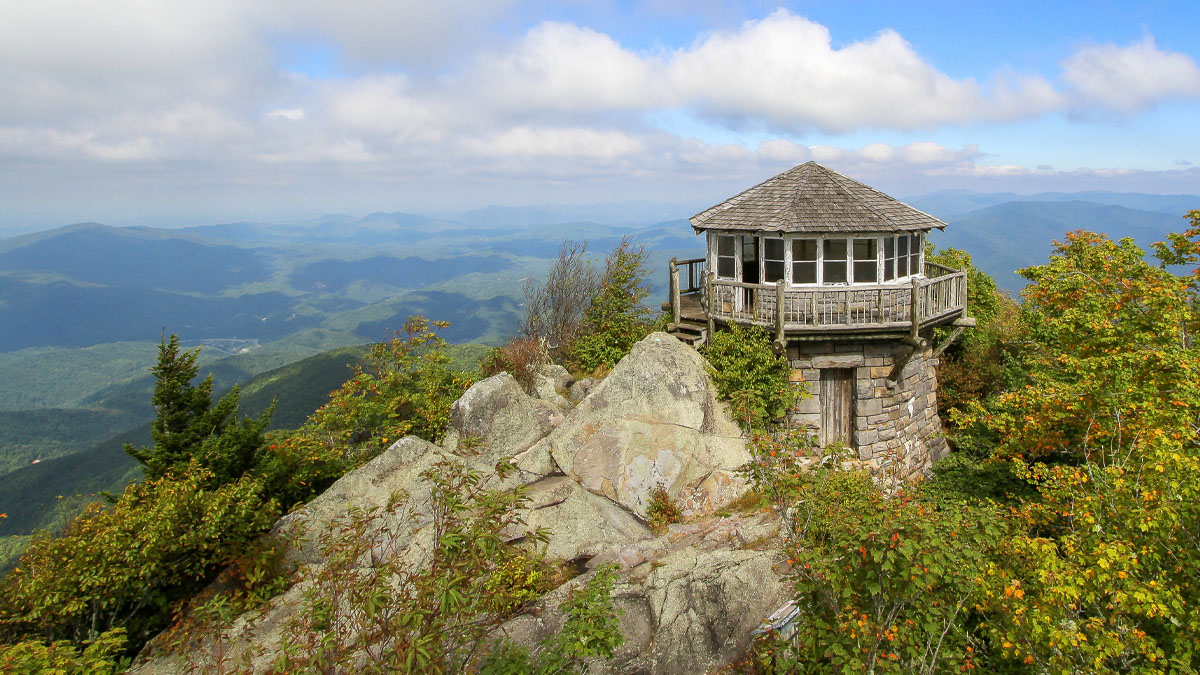
Frank lifted his bloody elbow with a dubious thumbs up. The pitch now required hand-over-hand root pulling through rhododendron tunnels. Between the branches, Mt. Cammerer’s fire tower was glistening in the noontime sun. Someone had placed tape on the trees, and I made the mistake of following it just out of curiosity. Pulling us deeply to the right, we had to traverse back on what I would consider to be some low-grade rock climbing. The tape was wrong, and I wondered if it wasn't intentional.
After righting ourselves, we faced the most difficult portion: twenty yards of plumb mud and roots. It was one step forward and two steps back. My fingernails were caked with dirt. Then came the true hands-and-knees test. There was really no way to stand up in this hell. Let's just say I fared better than the Chambers monsters.
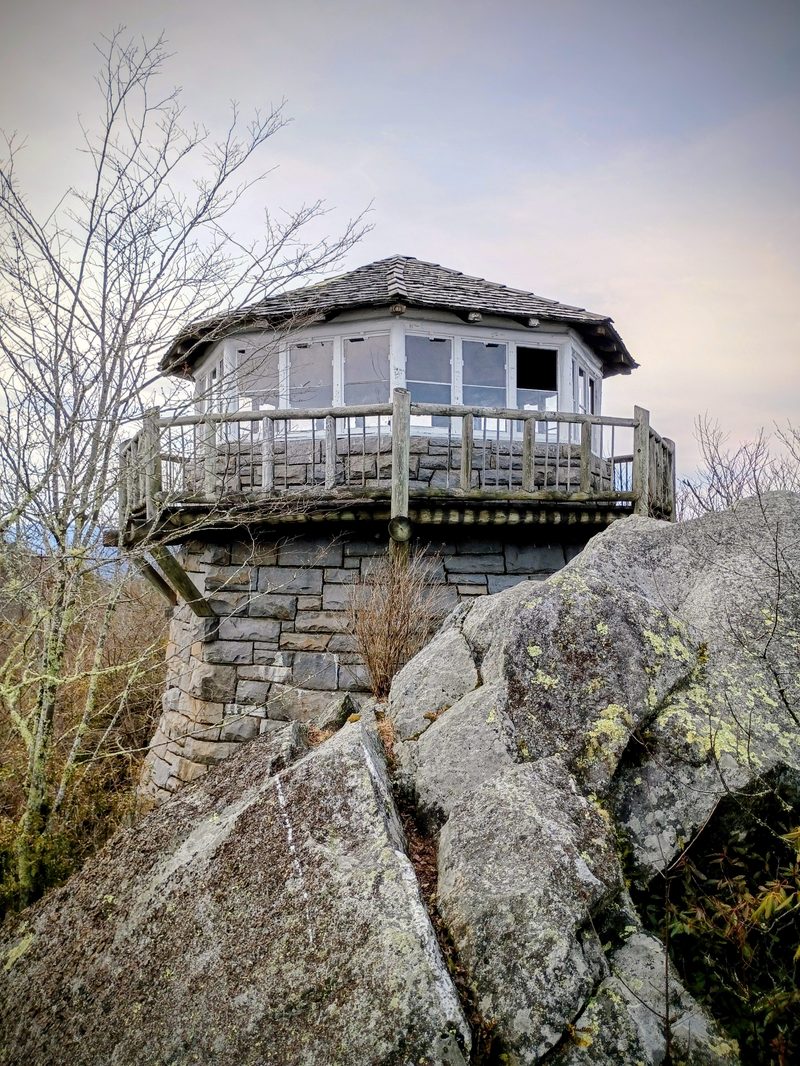
When it seemed as if things could get no worse, we topped out on a rock outcropping. The tower was no more than one hundred vertical feet distant. A mere rock scramble was all the mountain required before we successfully crested the summit of Mt. Cammerer.
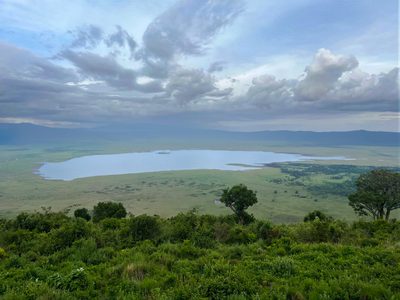
We carefully maneuvered over jutting slate slabs, careful not to twist an ankle or wrist in this crux move beneath the stone walls. The payoff was immediate. Through the afternoon haze emerged the profile of both the final section of Appalachian Trail in the Smokies and the slithering Pigeon River down towards Hartford. Jon and Henry took a victory lap around the porch of this former firetower. It was their first and likely most memorable ascent. Soon, Frank joined us for lunch inside the porous structure as wind whipped through broken windows. Mt. Sterling winked at us, yet was so many trail miles from here. Traffic shot through the river gorge in the narrowing shoulder between the mountains and hungry river basin that had already swallowed so much road. I wondered how many people ever looked up here from their vehicles.
After a break and some lunch, it was time to descend. I gave them the option of dropping back the same way. After all it was only about two miles, and 2100 ft of elevation. But for some reason the group chose to descend via the regular trail. Six miles versus two. That tells you all you need to know about the Groundhog Ridge Manway.
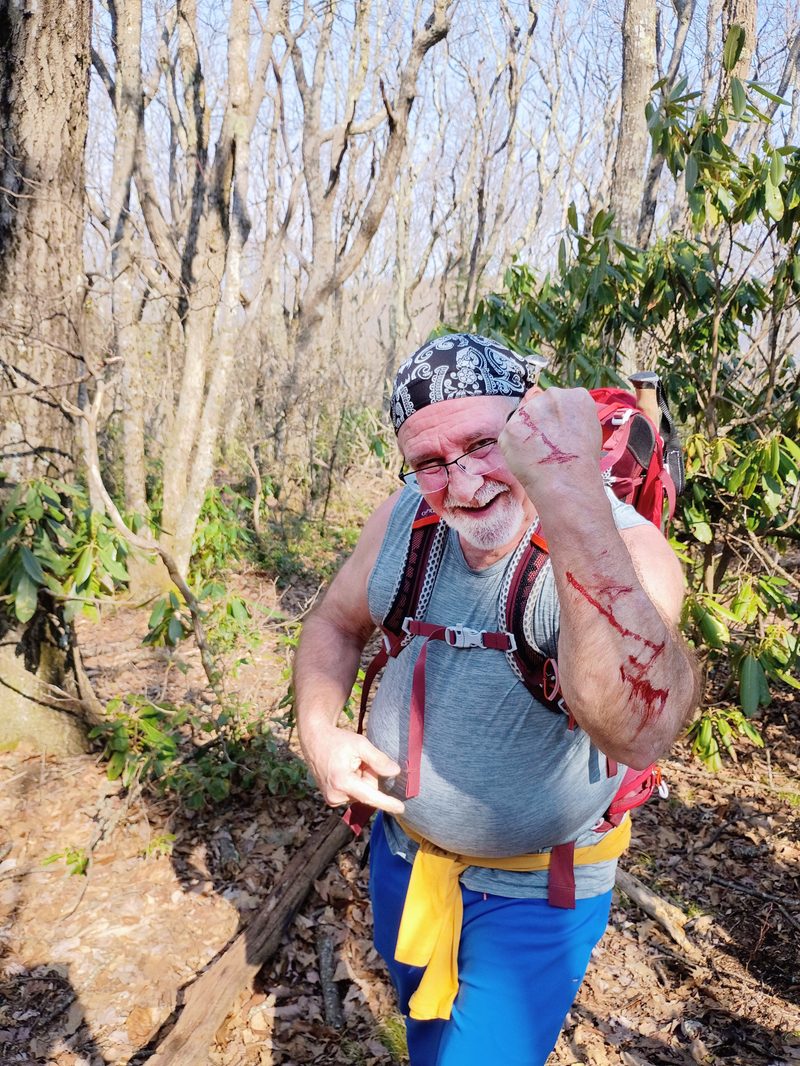
Five miles later we were turning back down the lower portion to follow the creek out of the Great Smoky Mountains National Park. Frank was quite a ways behind us. We had seen no people on the trail at all, but we did have a little bit of company at the tower. Downhill is always harder than up. And it's a good thing I was on my hands and knees, for I never would have noticed a piece of leather glistening in the fading afternoon light. Frank's wallet was laying there amongst the brush and leaf detritus. Finding it was proof this bushwhack treated us favorably. The Groundhog Ridge made true groundhogs out of us.