Fashion Statements
Polling place fashion–Dressing the Part
“That’s not right,” I thought as I entered a Knox County polling place several years ago and saw a poll worker standing in the room’s center, guiding people to the various stations of the process. On the T-shirt he wore was this statement: “Vote for Equality.”
I decided not to say anything and to let it go. But, as I watched him work the room, despite my normal reluctance to speak out (he said, chuckling), I weakened. After voting, I approached the poll worker and said, “May I ask why you’re wearing that shirt?” He said something that pretty much strung a series of words together but didn’t answer the question.
“If a voter comes in here wearing a political message or slogan, are they allowed to stay?” No, he said. “Then why are you wearing that shirt?”
A fellow poll worker approached and asked if there was a problem. No, I said. I want only to know why he can wear a shirt with a political message. She said, “It only means that everyone should be for equality.” That was an interesting answer.
“How,” I asked, “does someone vote for equality? What, or who, is on the ballot that would be a vote for, or against, equality?”
Their expressions revealed a sudden awareness. “And that’s why you shouldn’t be wearing that shirt. You should either get another shirt or wear that one inside out.” With that, I left.
I thought about calling the election commission and pointing out what the poll worker was wearing, but decided against it; I wasn’t seeking to get anyone in trouble, and I was reasonably confident our conversation would motivate him to do something about the shirt and to dissuade him from future such election day apparel choices. But perhaps I should have made that call; poll workers should be setting an example and not be politicking in a polling place for their philosophy or ideology.
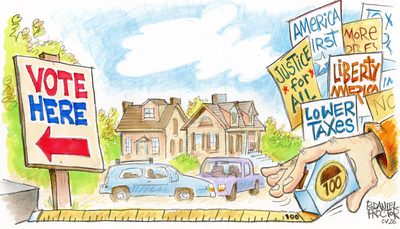
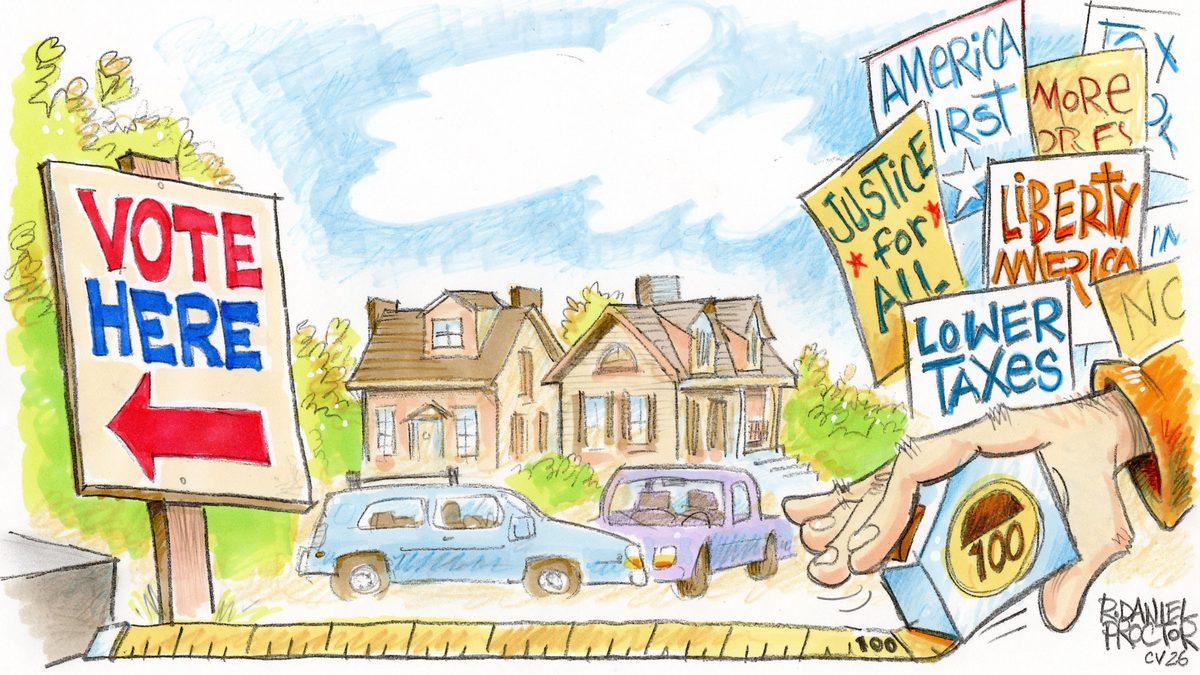
According to the National Conference of State Legislatures’ website, Tennessee is one of 27 states that restricts campaign apparel, button, stickers, or placards. In Tennessee’s case, the prohibition extends within 100 feet of the polling place (what someone wears at one inch past 100 feet is their business). Within the boundary a candidate, campaign worker, or voter can’t attempt to influence voters, solicit votes, or conduct political persuasion.
The question becomes one of what constitutes campaign material and political persuasion. If a voter or poll worker decides to make themselves a walking billboard for a political point of view that isn’t on the ballot, what then? The poll worker’s shirt I questioned advocated for no candidate, party, or ballot issue; instead, its message was encouragement to vote for a concept that requires taking a position for or against an issue or the ideology a candidate is believed to represent. If that were allowed, it would mean a voter could confidently wear a MAGA baseball cap or a t-shirt advocating a Democrat for president in 2028. Which, actually, you can.
“Generally, the guidance we’ve been given is that if it’s not on the ballot, if it doesn’t represent a political party, cause, or question on the ballot, it’s permissible,” says Chris Davis, Knox County Administrator of Elections. On ballot questions, if someone wore a T-shirt that said “Yes on 1” or “No on 1,” they’d be told that wasn’t allowed.
As for poll workers, Davis says, “We tell our poll workers to not wear political items. We have to be Switzerland,” meaning strictly neutral. As such, he said had he known about the poll worker’s “Vote for Equality” shirt, the man would have been told to go home and put on another shirt.
In upcoming elections, it may be that the national pastime of seeking momentary notoriety will motivate someone to push polling place apparel limits, claiming “freedom of speech,” because they want to see themselves on social media or mentioned in the local news. But most people will have judgement enough to dress and act appropriately. And poll workers, one hopes, will be equally careful to keep their political thinking at least 100 feet away from polling places.
“Inside 100 feet, even small messages matter.”