

The Remarkable Journey of Dr. Trent Douglas
By Ethan Smith | Photograph by Patricia Douglas
Appeared in Cityview Magazine, Vol. 42, Issue 1 (Jan/Feb 2026)
O
n a crisp Tennessee morning, with mist still hanging over the river, Trent Douglas looks far more like a fishing guide than a man who has rebuilt faces shattered by war. Ball cap, waders, fly rod in hand—he and his son are somewhere on the water fly fishing.
By day, though, Douglas is the new head of HKB Cosmetic Surgery—a double–board-certified plastic surgeon whose road to Knoxville ran through Miramar flight lines, a NATO trauma hospital in Kandahar, and a Navy hospital ship plying the Pacific.
Born In The Danger Zone
“Knoxville has just been such a warm welcome,” he says, looking around his new office, the one he purchased from long-time local favorite Dr. David Reath. “For us it’s family, quality of life, and the chance to keep doing what I love—just at a different tempo.
Service is the family language. Douglas’s father, now a retired Marine colonel, was in one of the very first Top Gun classes in 1969. He deployed to Vietnam twice; on the second tour he was shot down, ejected, survived on the ground for nearly an hour, and was finally rescued. Years later he would cheat death again—this time in the Pentagon.
On September 11, 2001, Colonel Douglas’s office sat directly above the impact point of American Airlines Flight 77. “The airplane went in right underneath his office,” Trent says. “There’s that famous photo of the big hole in the C ring—his was the one office sitting there untouched.” His father survived only because he had stepped down the hall into a secure communications room to speak with Trent’s sister, then a U.S. Marshal.
“Luckiest man alive,” Douglas says with
a half-smile. “Between Vietnam and 9/11, he’s used up a lifetime’s worth of close calls.”
It’s not surprising that Trent grew up with a deep respect for service and aviation, but also with an understanding that life can pivot in an instant.
Choosing the Scalpel and the Wings
Unlike his father, Douglas didn’t head straight to the cockpit. He went to college as a civilian, then joined the Navy through its Health Professions Scholarship Program, which pays for medical school in exchange for years of service.
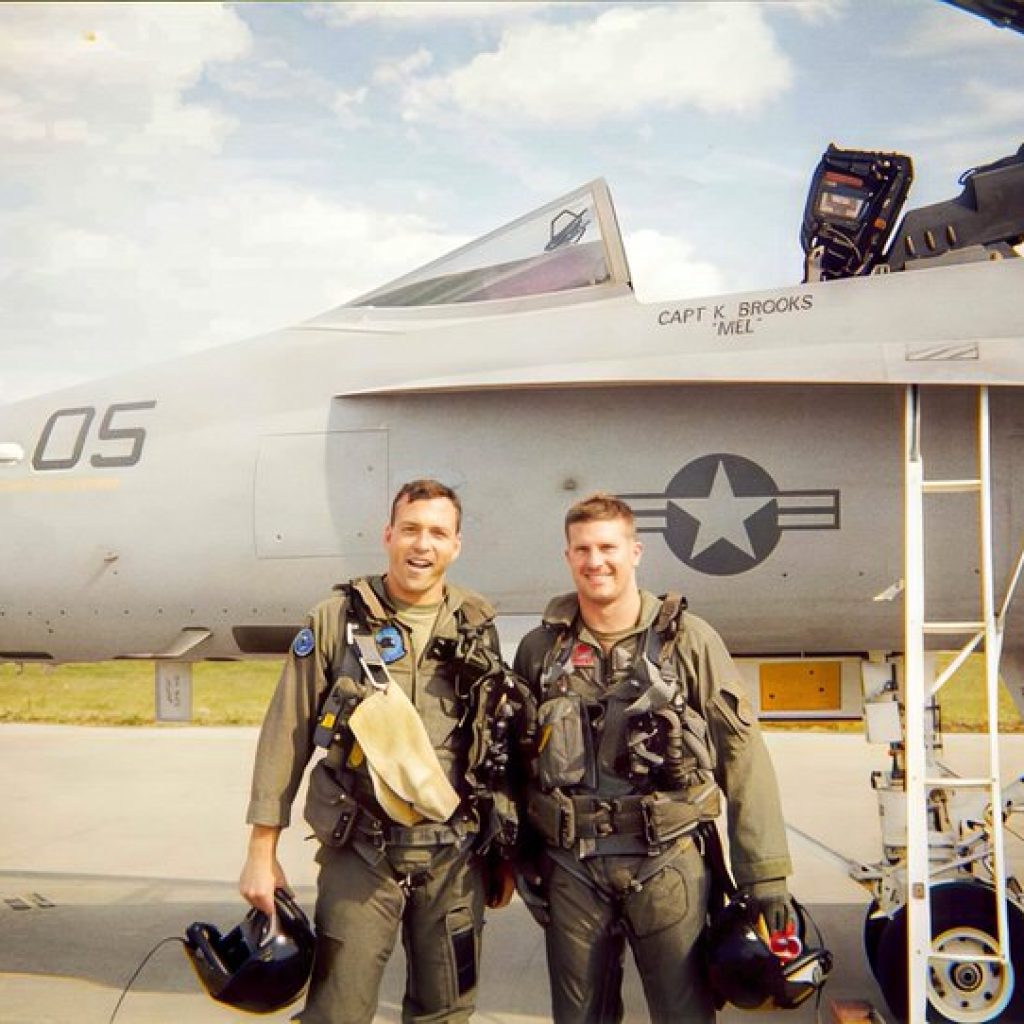
General surgery residency came next, followed by plastic surgery training. Along the way he became a flight surgeon assigned to a Marine F/A-18 squadron out of Miramar—the “Top Gun” landscape his dad had known a generation earlier.
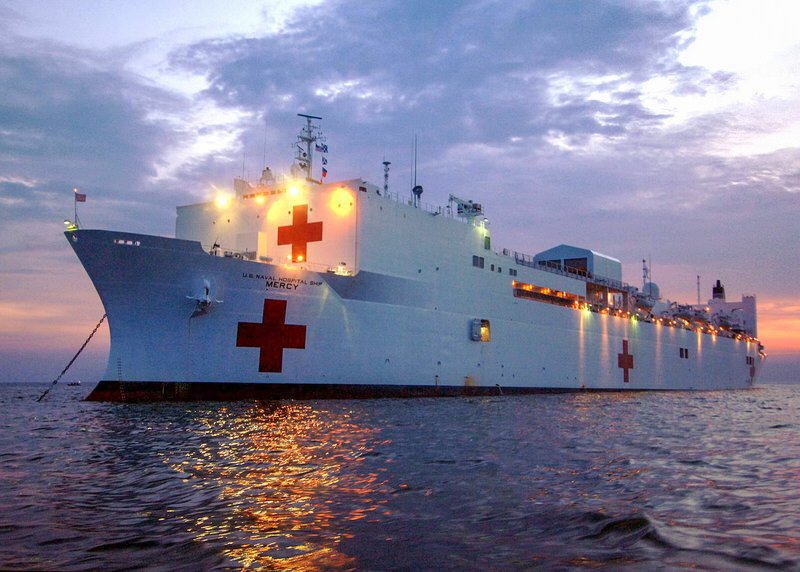
Deployments followed. One Western Pacific cruise put the squadron through island chains most tourists never see. Later, Douglas embarked on a Navy hospital ship as part of Pacific Partnership, a State Department–sponsored humanitarian mission that brought surgeons from thirteen nations together to treat patients across the Pacific Rim.
“You realize pretty quickly that doctors around the world are exceptionally well-trained,” he says. “The difference is the tools and resources they have.” Operating alongside colleagues from Japan, Korea, India, Indonesia, and beyond broadened his sense of how medicine could change lives far from gleaming American hospitals.
War, Wounds, and a 98 Percent Miracle
When the second Gulf War ramped up, Douglas was a freshly trained plastic surgeon at Naval Medical Center San Diego—the largest military medical facility in the world. It became one of the key destinations for soldiers and Marines wounded by IEDs in Iraq and Afghanistan.
“Everybody knows the term IED now,” he says. “What people don’t always realize is how complex those injuries are. We were working hand-in-hand with orthopedic surgeons on limb salvage, with burn specialists, with neurosurgeons. We saw everything—faces, torsos, hands, legs. It was a very meaningful way to start a career.”
Because Douglas is double board certified in both general surgery and plastic surgery, he was as comfortable stabilizing a trauma patient’s abdomen as he was reconstructing a shattered jaw. The hospital’s gait and prosthetics lab, he remembers, was both heartbreaking and inspiring: young men and women missing arms or legs, learning to walk and live again with state-of-the-art prostheses.
“It was the best and worst part of the day,” he says. “You hate that they’re there. But you’re also incredibly proud of how far they’ve come.”
In 2013–14 he finally deployed into the war zone itself, spending nine months at Kandahar Airfield in Afghanistan. There he served at the multinational NATO Role 3 medical facility, a fully equipped trauma center anchored by U.S. Navy medicine—on landlocked Afghan dust instead of the sea.
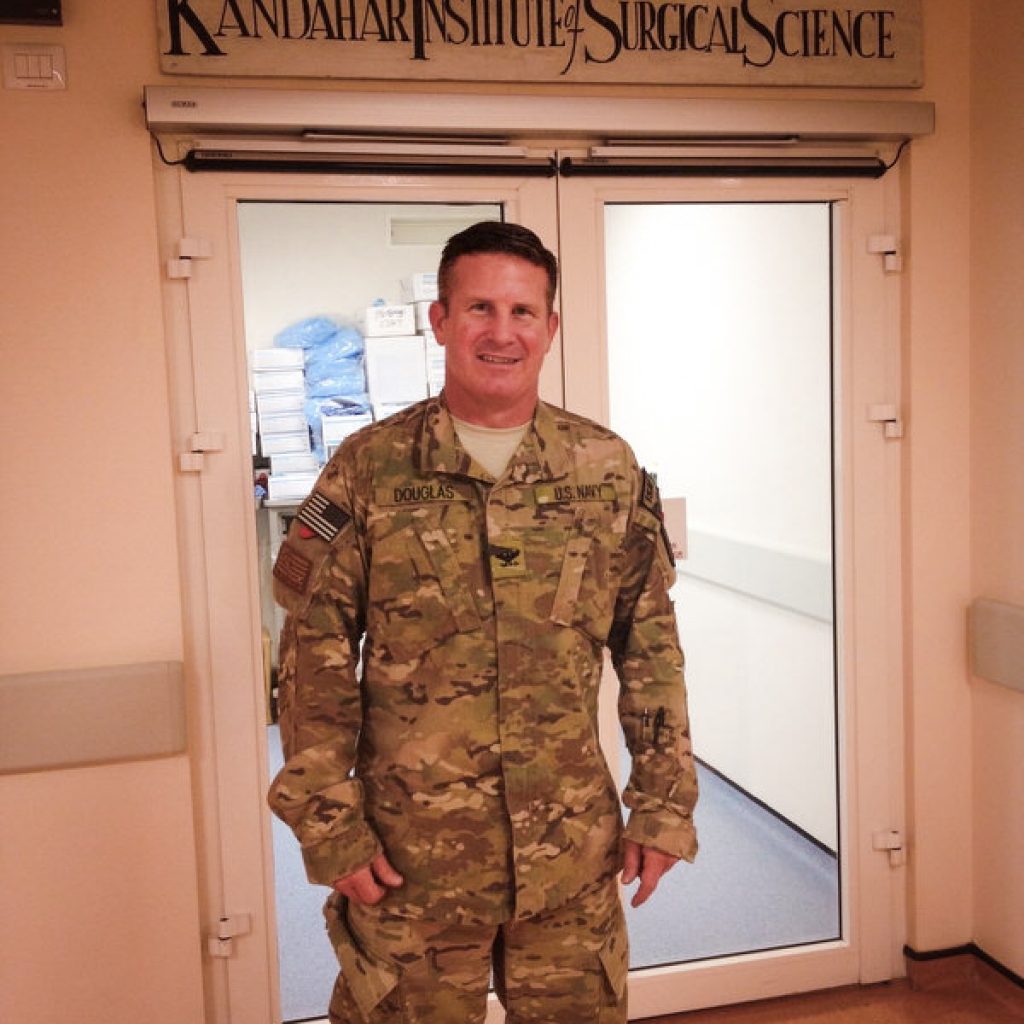
“We had a 5,000-unit blood bank, an amazing team of surgeons, and a very well-rehearsed evacuation chain,” Douglas explains. “If you got to us alive, there was better than a 98 percent chance you were going to stay alive.”
From battlefield to Kandahar surgery, then to Landstuhl, Germany, and on to Bethesda or Brooke Army Medical Center in Texas, severely wounded troops could be back in the States within 72 to 96 hours. The Air Force flew modified cargo planes that were essentially flying intensive care units.
“Kandahar felt oddly safe,” he says. “Every once in
a while you’d hear a rocket warning on the far side of the base where the airplanes were, but the medical side was probably the safest place you could be. If something happened to us, it was bad for everyone, so they protected us carefully.” Still, the psychological weight of what came through the trauma bay was real. Douglas coped the way he often has—by creating something.
Christmas Snow in Kandahar
High desert nights in Kandahar get cold. Cold enough, Douglas realized one October night, to make snow. With the help of some re-appropriated plumbing supplies, an air compressor, a pressure washer, and a homemade nozzle, he built a working snow-making machine behind the hospital. On Christmas Eve, as the temperature dropped below freezing, he stayed up all night blowing snow into a space about the size of his office in Knoxville.
By dawn there were eight inches of powder—enough for snowmen, snow angels, and a wild, impromptu snowball fight for the staff far from home. A visiting USO show—country singer Kellie Pickler and her band—joined in.
“The general was…let’s say…curious where all the parts had come from,” Douglas says with a grin. “But once Kellie Pickler was out there throwing snowballs, everybody decided it had been a pretty good idea.”
It’s the kind of story that follows him: the surgeon who can repair a face, rig up a snow machine in the Afghan desert, and quietly lighten the weight of a war zone for a morning.
A Second Act in Knoxville
After 22 years, the relentless pace of complex reconstructive surgery—and twelve- to fourteen-hour operating days—finally began to ask more than he wanted to give. “Reconstruction at that level is a younger person’s game,” he says. “I loved it, but there comes a point where you look at your kids, your spouse, your parents, and you realize you’ve earned the chance at a second chapter.”
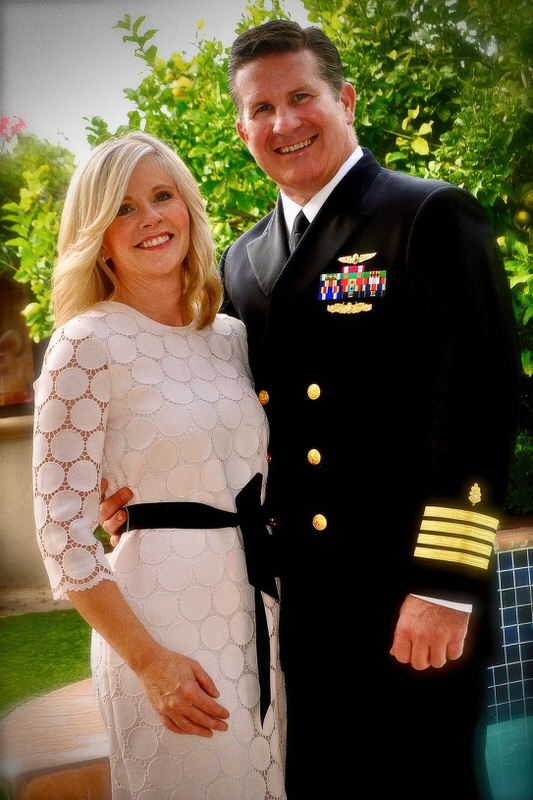
Douglas retired from the Navy as a captain in 2017, spent several years in private practice in San Diego and the Bay Area, and then he and his wife Trish—the ICU nurse he met during residency—began looking east. Their son landed at the University of Tennessee. Their daughter is in college in Dallas. Trish’s family is in Indianapolis. Knoxville suddenly looked like the center of gravity.
“We had no family left on the West Coast,” he says. “We wanted to prioritize aging parents and young-adult kids—and I won’t lie, getting rid of California’s state income tax was a nice bonus.” In the spring of 2025, they moved to Knoxville, where Douglas took over the established cosmetic surgery practice on South Northshore. Today HKB Cosmetic Surgery is focused entirely on aesthetic work: facelifts, tummy tucks, breast surgery, liposuction—all the procedures that help people feel better in their own skin.
He hasn’t stepped away from leadership, either. Douglas serves on the executive board of The Aesthetic Society, one of the nation’s premier professional organizations for plastic surgery, and is slated to become its president in 2028.
Trout, Football, and the Long View
Ask what he loves most about Knoxville so far and he doesn’t even try to separate his answers. “Trout fishing and game day,” he says. “It’s a dead heat.”
Weekend schedules revolve around water levels and football schedules. He and his son chase stocked winter rainbows in Pistol Creek, wild fish in Tellico and Gatlinburg streams, and dream about future trips to the South Holston and Watauga. Trish, meanwhile, has turned her photographer’s eye toward the Smokies, the morning fog, the fall color—the seasons they never really saw during their years in coastal California.
They’ve been to the rodeo, to concerts at Thompson-Boling, to Vols games where the stadium feels like the literal heartbeat of East Tennessee. “All things Tennessee,” Douglas says. “We’re all-in.”
In his exam rooms, patients see the photos: the F-18 squadron on the flight line, the Kandahar trauma team,
a Navy hospital ship sliding past a green coastline,
a snow-covered corner of an Afghan base with grinning sailors pelting each other with snowballs. Then, more recently, a shot of Douglas in waders, fly rod arced against a mountain backdrop.
It’s all the same story, really.
In war zones and on hospital ships, his job was to give wounded men and women a chance at a normal life again. In Knoxville, the stakes are quieter but still deeply human: to help someone feel comfortable with the face in the mirror, or the way they look in a dress, or the body they carry through the world.
“We did good things in the Navy,” he says. “Now I get to do good things here—just in a place with better barbecue and a lot more trout.”
For a town that loves both, that sounds like the perfect landing.
Comments are closed.