Southern Renaissance Man
Zac Brown on Dolly, Buffett, and the long road back to Knoxville
The air was cool in Kennebunkport for September. I had walked out along the Atlantic with the new Zac Brown record in my headphones, playing it the way it was meant to be heard, from the first track to the last. What came through over the next hour was pop, Americana, country, and, improbably, hip-hop. By the time I reached Walker’s Point, the Bush family compound, where the locals were still abuzz that the former President had been spotted exercising his dog in the ocean around six that morning, I had stopped thinking about individual songs and started thinking about the man who made them.
A few hours later I was on a Zoom call with Zac Brown, me in Maine, him in Nashville. The new album is a portrait. It is ambitious, and a departure from the Zac Brown of 2008. He has grown. In the music business, a wholly original artist is the holy grail: someone whose style, sound, and look are entirely his own and entirely compelling. That is what I had been listening to on the beach.
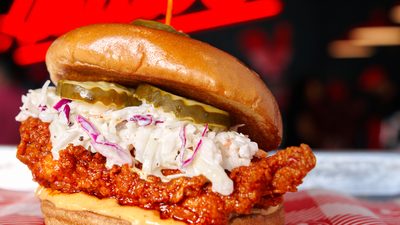
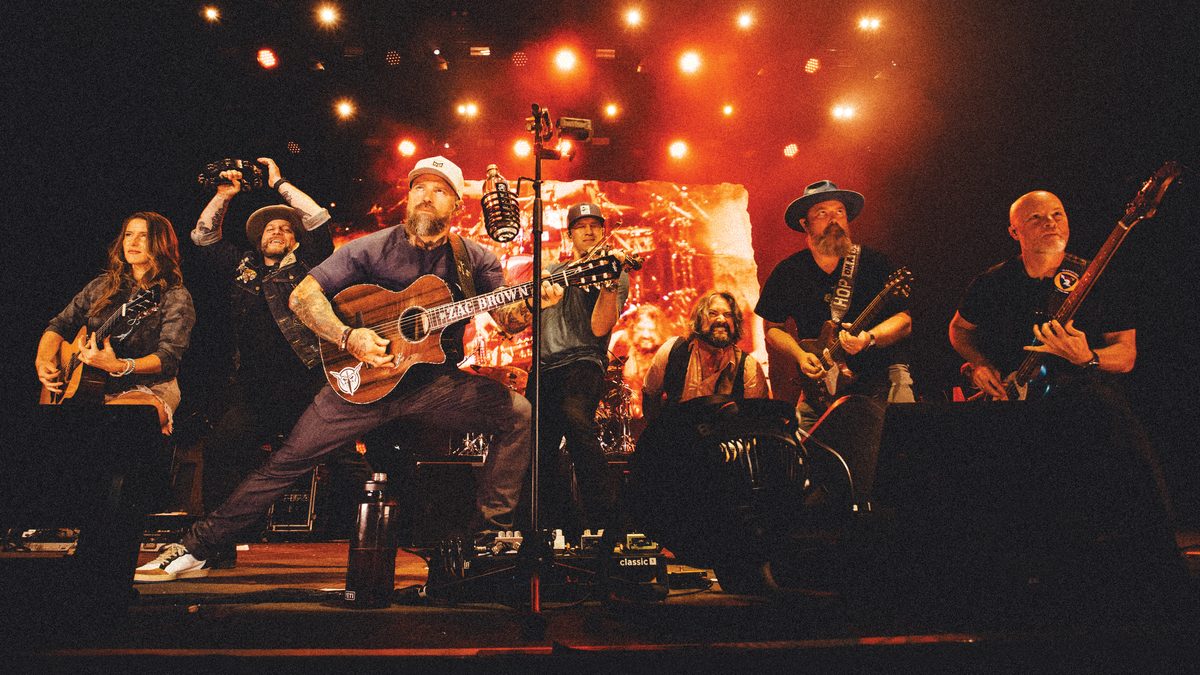
In 2008 my wife asked me one morning if I had heard the “fried chicken” song. I love fried chicken. I am a connoisseur of sorts. WIVK had started playing something that didn’t sound like anything else on country radio, and I loved it, and so did everyone I knew. But something bigger was happening. It had been years since anyone carved a new lane in country music, and here was an act doing it without compromise. Nearly two decades later, Zac Brown has reached near-legendary status, selling out arenas around the world, and the “fried chicken” song is a country standard, covered hundreds of times a night on Nashville’s Broadway and the world over.
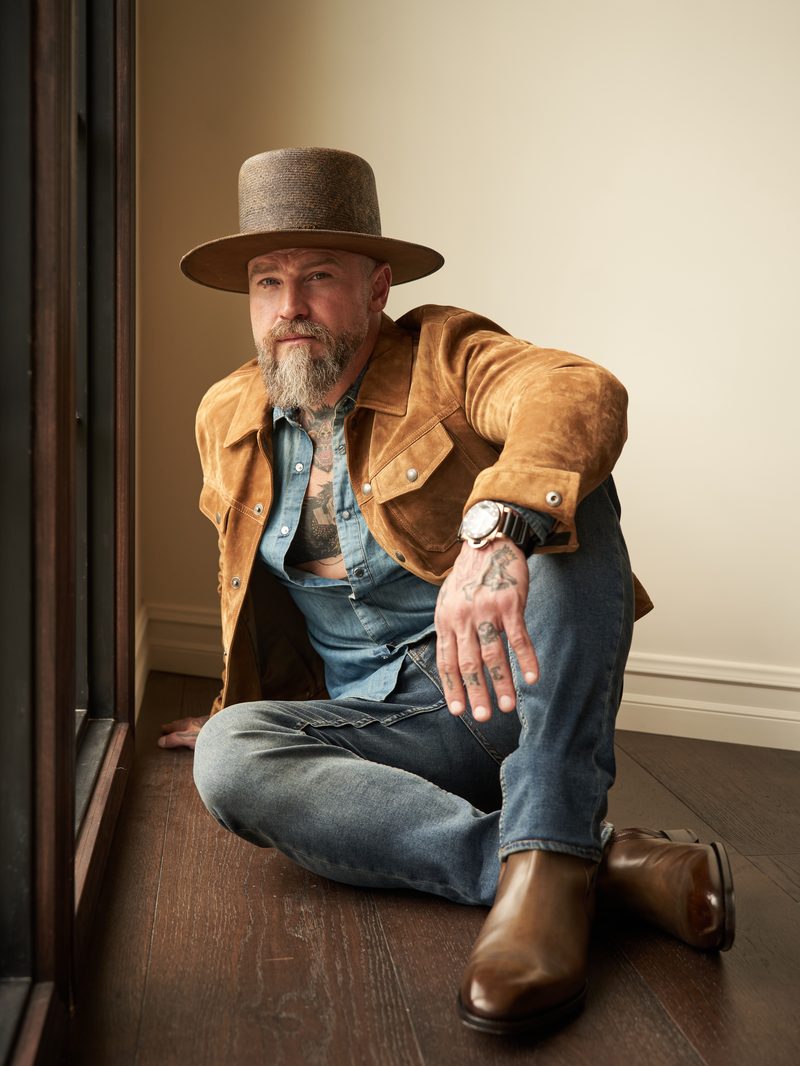
Like a pair of his heroes, Dolly Parton and Jimmy Buffett, what makes Zac special is that he is nobody but himself. He met his heroes, became their friend, played beside them, and cut his own path the way they did: hard to define, impossible to deny. And he is coming back to Knoxville.
The Circuit
When I asked what he remembered about coming up through East Tennessee, he didn’t hesitate. Knoxville, Chattanooga, Nashville, Bowling Green, anything drivable from Georgia. “We’ve been meandering around the Southeast for a long time,” he told me, “before we were able to actually be on a bus and lay down and sleep at night instead of sleeping against the window of a truck.”
He puts the number of shows north of five thousand: ten years of earning a room’s respect one night at a time so that when the band came back to a bigger stage nearby, those same people would show up and bring friends. “There’s really no shortcuts,” he said. “You gotta eat good, you gotta work out, you gotta be well, you gotta not be climbing in a bottle.”
The last time Zac Brown Band played Knoxville was just before the pandemic. Six years. When they take the stage in October it will be the longest gap between visits in the band’s history, and he sounded like a man who has been counting. “It’s been a long time,” he said. “I’m excited to come back.”
The Knife
We talked ten days after Dolly Parton died. When “Butterfly” (a duet between Zac and Dolly on the new record) came on during my walk, her voice woven through his, I stopped in the middle of the sidewalk. She could still sing as well as any human on the planet. And then she was gone.
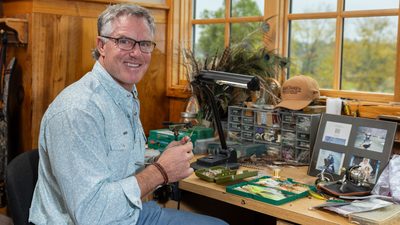
I asked how he met her. The answer was so Zac Brown it almost sounded made up. He has been forging knives since he was eighteen, and the first time he found himself in a room with Dolly, early in his career, he handed her one he had made himself. It was such a strange, enigmatic, unique presentation, that Dolly would never forget it. “I just remember the energy that she had,” he said. They stayed in touch. Years later his band backed her at her Rock and Roll Hall of Fame induction.
When he wrote “Butterfly,” he sent it to her and asked if she would sing on it. What came back stunned him. “It was some ninja, unbelievable, complex parts that she sang,” he said. “As a musician I can tell, this just doesn’t happen with normal people.” That was only a couple of years ago. “Her voice was every bit as good as it’s ever been. She’s kind of like in a time capsule.”
What he kept returning to, though, wasn’t the voice. It was the way she carried herself: The snarky interviewers she deflected with a smile and steel underneath it, the crew that would have taken a bullet for her. “You felt love from her when you were with her,” he said. “That happened with fans, with strangers, with her friends and her crew.” He paused. “She’s in a league of her own. Losing her was hard, but I’m so grateful that I got to know her.”
Batman and Superman
I told him what I had been thinking about since I got the assignment: that Dolly, Jimmy Buffett, and Zac Brown belong to a very small club of artists who didn’t pick a lane so much as pave one. Nashville has always told people it can’t be done. All three did it anyway.
“Holding on to who you are, and being brave enough to know who you are and fight for it, is really rare,” he said. For ten years, the business kept pitching him the same thing. “Okay man, you need to wear a hat and get some boots, and we need to do this, do that, and the other. And I was like, that’s not who I am.”
“Holding on to who you are, and being brave enough to know who you are and fight for it, is really rare”
Jimmy was the same, he said. So was Dolly. “If you let a machine decide what you are and who you are, it’s gonna chew you up and spit you out the other side of it. There’s really nothing about it that’s easy, but it’s worth it.”
He was, by his own account, a lousy student. “No school I ever went to taught me to be creative, taught me how to write songs, taught me how to use the gifts that I had,” he said. “The first thing that really made sense to me in my life was music.” The guitar has been company to him since he was very small, the eleventh of twelve kids, playing bluegrass with family and singing in church. He still talks about watching Billy Strings or Marcus King the way a fan would; both, he said, made him want to throw his own guitar in the ocean.
There was no roadmap for what Zac Brown Band became, but there were two people who had already made the trip. He could call Jimmy Buffett and ask questions almost nobody else on earth could answer. He asked Dolly what fueled her and found their values lined up: be good to everybody you meet, never act like you’re better than anyone, work your ass off, give yourself to your fans and your craft.
“They were superheroes to me,” he said. “Full on, like Batman, Superman. There was Dolly and Jimmy. And then I end up getting to be friends with them and kind of peers with them in a way.” His advice to young artists comes straight out of that: “If you don’t know who you are, you’re in for a tough damn road.”
Love and Fear
The new album is titled Love & Fear, and the title is a thesis. “You either make your decisions based on the love of something, or I’m afraid of doing this and I’m not going to do it,” he said. “You have to be courageous.”
Heard straight through, the way I heard it on the beach, it plays almost like a Broadway musical, which I told him. It swings from Dolly ripping your heart out on “Butterfly” to Snoop Dogg on “Let It Run.” How, exactly, did Snoop Dogg end up on a Zac Brown record?
“You’re talking about somebody that’s been himself,” Zac said. “He’s a legend and he’s always stayed relevant.” The song came out of a session with Chris Gelbuda, who now plays with the band and who Zac calls his favorite co-writer, ever. “If we’re going to have a song about herb, we got to have Snoop in it, man.” They sent it over with the second verse marked for him. Snoop sent it back, having sung the bridge instead. “Okay,” Zac laughed, “I guess that’s where he’s supposed to be.”
The album has its deep water: “Butterfly,” “The Sum,” “Passenger.” It also has “I Ain’t Worried About It” and “Let It Run,” and he is unapologetic about the mix. He grew up on Richard Pryor, Redd Foxx, and Eddie Murphy. “I’m not trying to convince anybody of anything,” he said. “I’m trying to help you have a good time for three minutes.”
The Kitchen and the Camp
Here is the part of Zac Brown that doesn’t get talked about enough. For six years the band ran what they called Eat and Greets: a full kitchen in a tractor-trailer, chefs on the road, about a hundred and fifty fans fed before every show. “It was like feeding a wedding every single day,” he said. He and the band served the food themselves. “Just to show our fans that we’re one of the people.”
The food-and-wine festival he ran for years is on hold, but the impulse behind it hasn’t gone anywhere. “When you stop giving, it’s over,” he said. “It’s like that in a relationship, it’s like that being a musician.”
And then there is Camp Southern Ground. At fourteen, he was opening for Shawn Mullins at a coffee house and working summers as a camp counselor, and he knew two things: he wanted to play music, and he wanted to build a camp. In 2011 he bought four hundred acres in Fayetteville, Georgia, south of Atlanta, and started building.
“When I say camp, that is not it,” he told me. “You picture some log cabins in the woods. That is not what we did.” What they did was build a university-scale campus. In the summer it is a sleepaway camp for kids seven to seventeen, and the whole idea is the mix: kids from military families, kids from underserved neighborhoods, kids on the autism spectrum, and kids who have been given everything and might not know how to appreciate it. Put them in the same cabin for a week, he said, and it can change the trajectory of a life. It changed his.
The first thing that really made sense to me in my life was music.” —Zac Brown
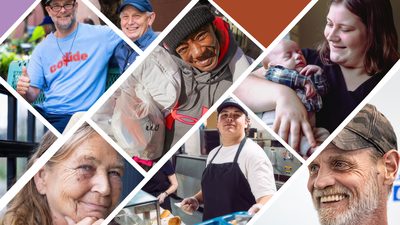
The rest of the year the campus belongs to veterans and their families, at no cost to them: Warrior Week, Warrior PATHH, and Warrior Family Camp, where spouses and kids learn the tools to bring someone all the way home. Brown says roughly eight hundred kids and more than nine hundred veterans came through last year.
“That’s kind of a God thing,” he said. “I was put here to do that, and I’ve just been following orders.” Zac doesn’t want credit for it and admits that reluctance sometimes keeps the camp from getting the attention it needs to grow. But the testimonies get to him every year. “That just tears me up.”
He drew the line to Dolly himself, and her Imagination Library. “When you align your living with giving, real joy comes from helping other people,” he said. “If you don’t have a way to give back, you need to find one, because you’re missing out on the best part of life.”
October
Before he signed off, he said the thing he had been circling the whole conversation, the reason a band that could play anywhere still drives back to East Tennessee after six years away.
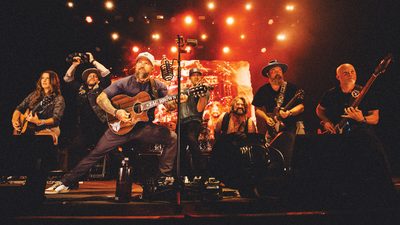
“Getting people in a room and trying to help them make memories together, no matter what your background or what you believe. We are a live performing band. That’s what we take pride in.”
Then, the invitation: “Y’all come out. Let’s make some memories, man. That’s what it’s all about.”
“When you align your living with giving, real joy comes from helping other people”
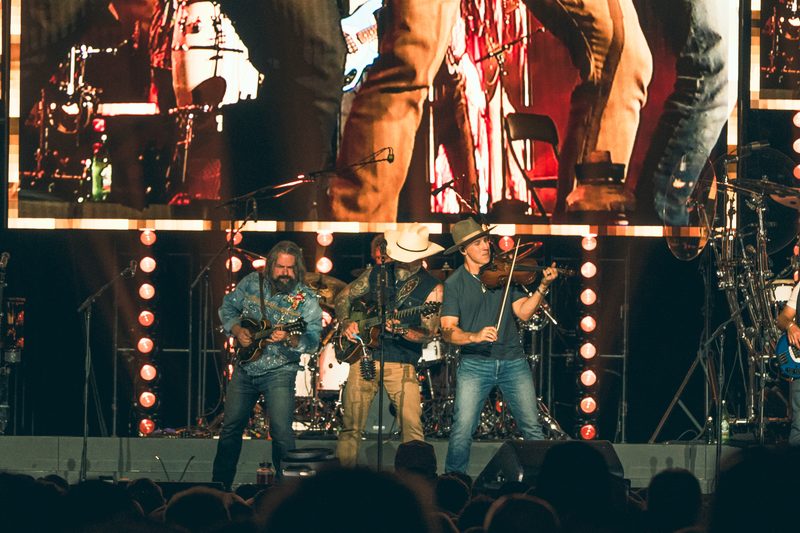
I closed the laptop and walked back the way I came, the tide coming in, the record starting over. Eighteen years ago, a song about fried chicken came through a Knoxville radio, and we listened. In October Zac will undoubtedly play it again at Food City Center in Knoxville, Tennessee, on Thursday, October 8, 2026, along with the songs from Love & Fear and those that have made for an incredible career so far.
As I pondered my conversation, there was one simple phrase that kept coming back, as true as one of his melodies: There’s nobody like Zac Brown.