Reshaping Lives
When options are few, KARM steps in to help
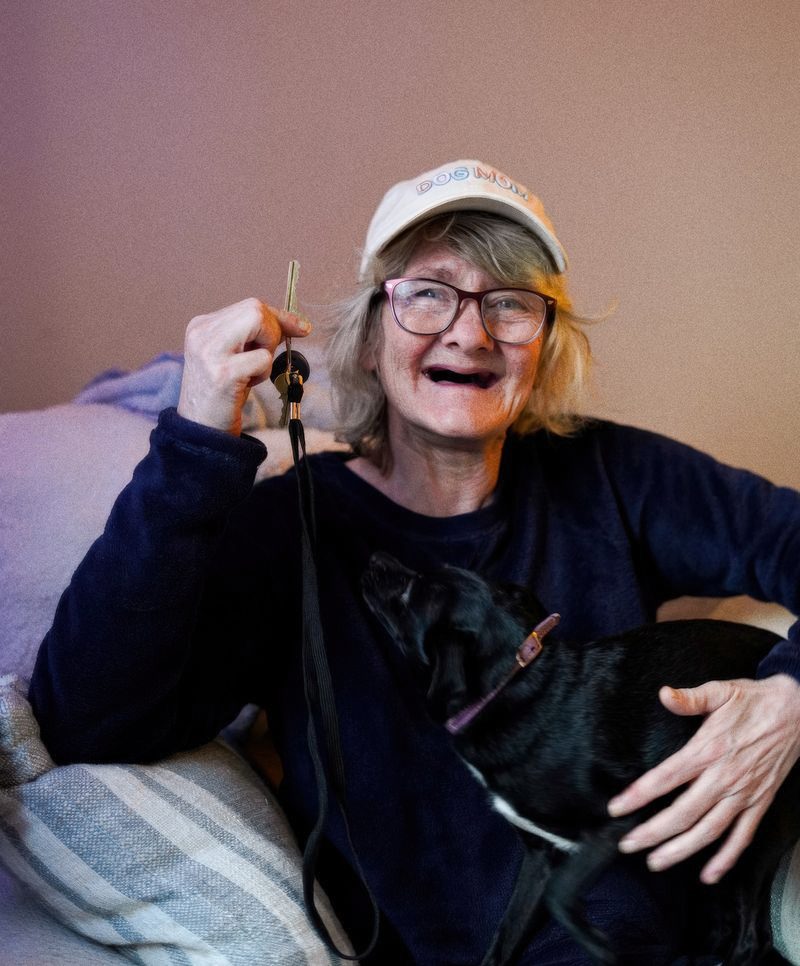
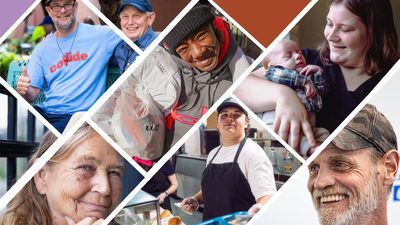
Andrea Tate has had her troubles. Raised by a single mom who struggled with mental illness, she learned early on to rely on alcohol and relationships to cope with her problems. She married, owned a business, served in her church, and stayed sober for seven years before falling off the wagon. She and her husband divorced and she later married again — the wrong guy. “I had lost my way,” she says. During COVID, she was isolated. She coped with alcohol. After a lot of trauma, the marriage ended. “He left me with nothing,” she says. She had no way to get housing for herself and her two girls. Her church pointed her toward Serenity, the shelter for women in crisis run by Knox Area Rescue Ministries. “It was my only option. I didn’t have a choice.”
They spent 23 months at Serenity. “It was very humbling,” she says, “but the fog started to lift. It was the ah-ha moment I needed in my life to start dealing with the trauma and the coping behaviors I’d had my whole life. I had a great experience.”
The people at Serenity were able to help Tate make decisions, she says. She got an attorney and divorced with full custody of her kids. While she was there, she was hired by KARM as an administrative assistant, a job she’s held for almost two years. She’s a full-time online student at Moody Bible Institute. Her daughters are thriving.
“I believe our circumstances can make us or break us,” she says. “I was able to be remolded.”
Changing needs
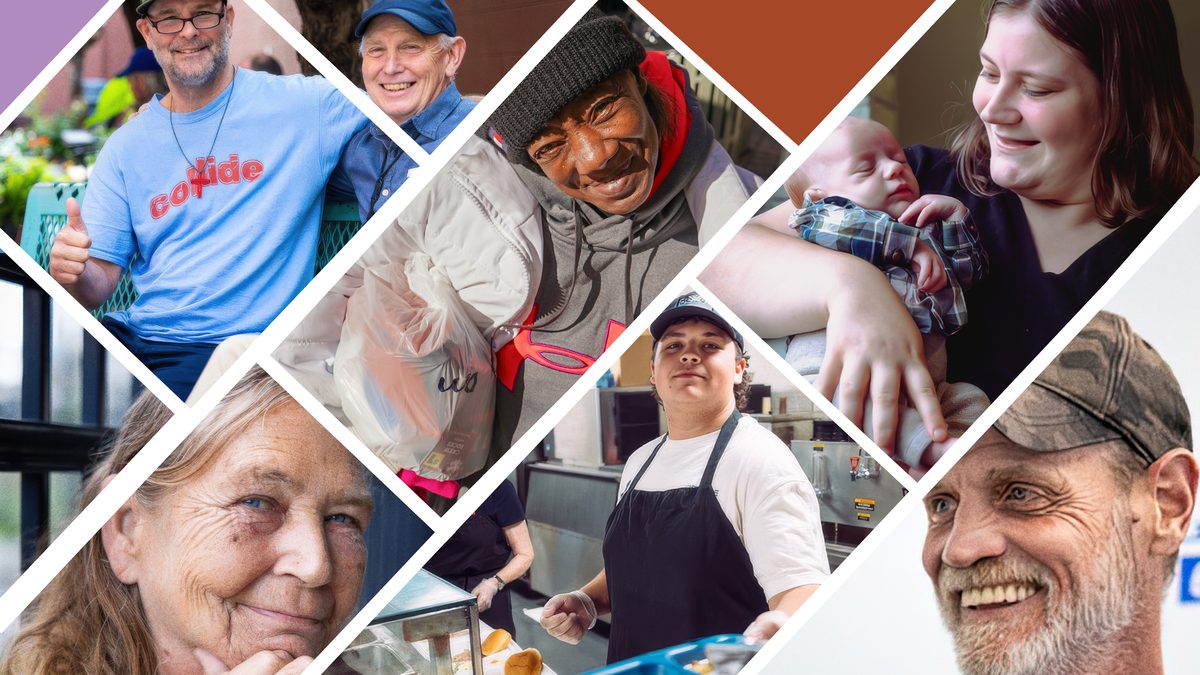
KARM has been reshaping lives — while also reshaping itself — since 1960. Started by five local pastors as a shelter for alcoholic men in the downtown area, KARM has expanded again and again as needs change and grow. It’s still a nondenominational faith-based ministry, though the people who come there for a hot meal or a bed do not have to profess a faith. It’s still located near town and on a bus line. It still serves a vulnerable population who need help.

“It all starts with a meal,” says Celia Lively, vice president of engagement. “You can’t think about your future if your stomach is growling today. We want to take care of the tangible physical needs first, then we move on to what do you need long term.”
The people they serve face a wide range of problems and situations. Some can’t keep up with the rising costs of housing. Some have been discharged from the hospital and have nowhere to go. Some are young people who’ve aged out of foster care. Some face mental health issues. Some are escaping abusive relationships with nothing to help them start over.
And the numbers they serve have skyrocketed in the last five years. The number of men being housed at KARM has risen by 73 percent in that time; the number of women by 133 percent.
“Just when you think you’ve seen every type of situation, you get a call that someone dropped their grandmother off at McDonalds and we should go get her,” says Danita McCartney, KARM president and CEO. “I’ve never seen so many wheelchairs and walkers, and elderly coming through the doors. We’ve really seen an increase in numbers post-COVID, with rents increasing. Some people have no safety net — family or financial. It’s single moms and kids and the elderly. People are coming to us so sick and worn out. It’s not just one reason.”
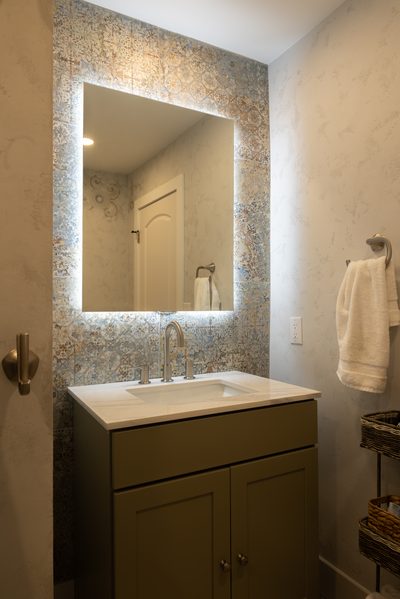
Opening doors to a fresh start: KARM helps people move beyond shelter and into housing.
“The landscape changes constantly,” McCartney says. “One of the things I love about KARM is our willingness to evolve and meet those changing needs. We do a great job at pivoting.”
Pivot with a purpose
KARM introduced a big pivot this past April. After months of studying other homeless ministries around the country and researching best practices, KARM changed its program to allow people to stay 28 days before requiring them to start working with a case manager on solving the problems that prevent them from getting housing.
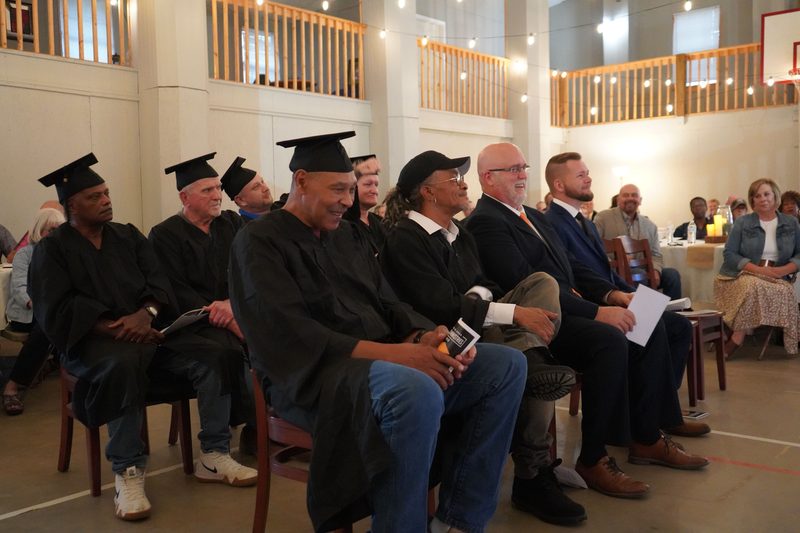
“Prior to April, people could stay as long as they needed to, and we were seeing that it was prohibiting them from moving on to the next step,” Lively says. Now, they have 28 days to get stabilized and then, in order to stay, they have to take life skills classes that focus on personal growth and mental health; learn how to maintain health and wellness; learn skills that help prevent relapses into bad behaviors. They can also enroll in job training programs: the Abundant Life Kitchen prepares them to work in restaurants, and CleanStart teaches janitorial skills.
The program seems to be working. Though it’s not been available for even a year, KARM is seeing an increase in the number of people who graduate from the program and move into housing.
Todd Gilbert, chief impact officer, shared numbers in a post online in September: “Since April, 73 percent of the adults who complete their initial 28 days choose to enter case management and begin building a life beyond the shelter,” he wrote. “… We are approaching 200 people housed this fiscal year, alongside a record number of employment placements. Our highest single month reached 39 individuals housed, more than some entire years used to bring.
“Knoxville’s broader rate of return to homelessness runs around 15 percent. Among KARM graduates, it is just under five percent.”
KARM Thrift Stores
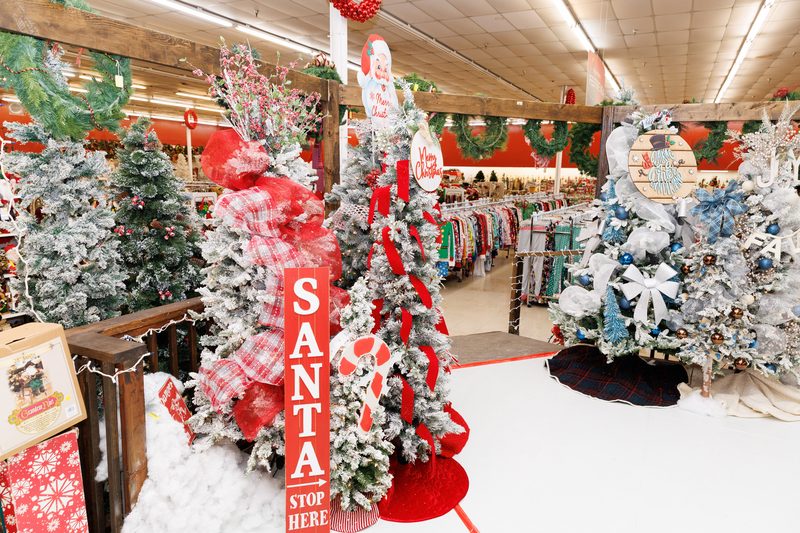
In order to offer all the services they offer — which also include a faith-based recovery program for men, medical care with help from Summit Medical, post-hospital care for people who would otherwise be on the street, and after-care services for the clients who move on from KARM — the ministry relies on two big sources of income: private donations amount to 44 percent of its income, and KARM thrift stores provide 43 percent, according to the 2025 annual report. At this time of year, a lot of that income flows from its two Christmas stores — one on Clinton Highway and the other on Peters Road. The stores opened in early September, but they see most of their traffic in November, says Josh Lively, director of marketing and communications for KARM Stores.
KARM Store workers snag Christmas-related donations year-round at each of its thrift stores and send them to be warehoused until Christmas store workers, like all good elves, start decorating the two outlets in early summer, he says. They have proven to be very popular since the first one opened in 2010; Lively says they’ve seen a rise in visitors from other states.
“You can’t think about your future if your stomach is growling today.”
In all, the Christmas stores offer 65,000 square feet of everything holiday: wreaths and trees, ornaments, centerpieces, garlands, candles and more — all donated goods from East Tennessee’s attics and cupboards. Lively says lots of young families come looking for the vintage items they remember from their childhood Christmases.
Last year on Peters Road, a woman found an angel topper made from corn husks, and she said her grandmother used to make them. When she looked at it more closely, she realized that her grandmother had indeed made that very topper. “That is part of the magic of our Christmas stores — finding treasures you wouldn’t find buying new,” he says.
Looking ahead — and how to help
Looking ahead, KARM staffers are excited about a new campus for women and children, which is scheduled to open in 2028. It will still be located in the vicinity of downtown and on a bus line, and it will offer 20 rooms for single mothers and their children.
They’re also anxious to educate the community about the challenges they face in addressing homelessness. “There is so much misinformation on social media,” McCartney says. “Some people believe we bus homeless people into Knoxville. That isn’t true. We encourage people to come down and take a tour and see what our programs are designed to do. Come see what we’re all about.”
There are other ways to help, too. The shelter is open and providing meals 365 days a year and always welcomes volunteers to serve them. “Whatever you’re good at — teaching or organizing or gardening — we’ll find a way to get you involved,” Celia Lively says.
And people who are homeless — and those who are ready to move into housing — need all kinds of basic supplies, from socks and toothbrushes to cleaning supplies and toilet paper. A list of items the shelter is always in need of is listed at https://karm.org/needs/.
Donating to and shopping at the 26 permanent and two Christmas KARM thrift stores also benefits the ministry. One hundred percent of profits go to KARM to provide services. Those funds keep KARM moving forward.
“We never sit still for long,” Lively says. “We’re always asking how can we serve our neighbors? What’s the gap?”