

Wisdom from Mike & Jon Osteen
In a field full of dogs, chaos turns to quiet—and the difference isn’t tricks. It’s structure, timing, and a life built with intention.
By Nathan Sparks | Photography by Nathan Sparks & Ethan Smith
Appeared in Cityview Magazine, Vol. 42, Issue 2 (March/April 2026)
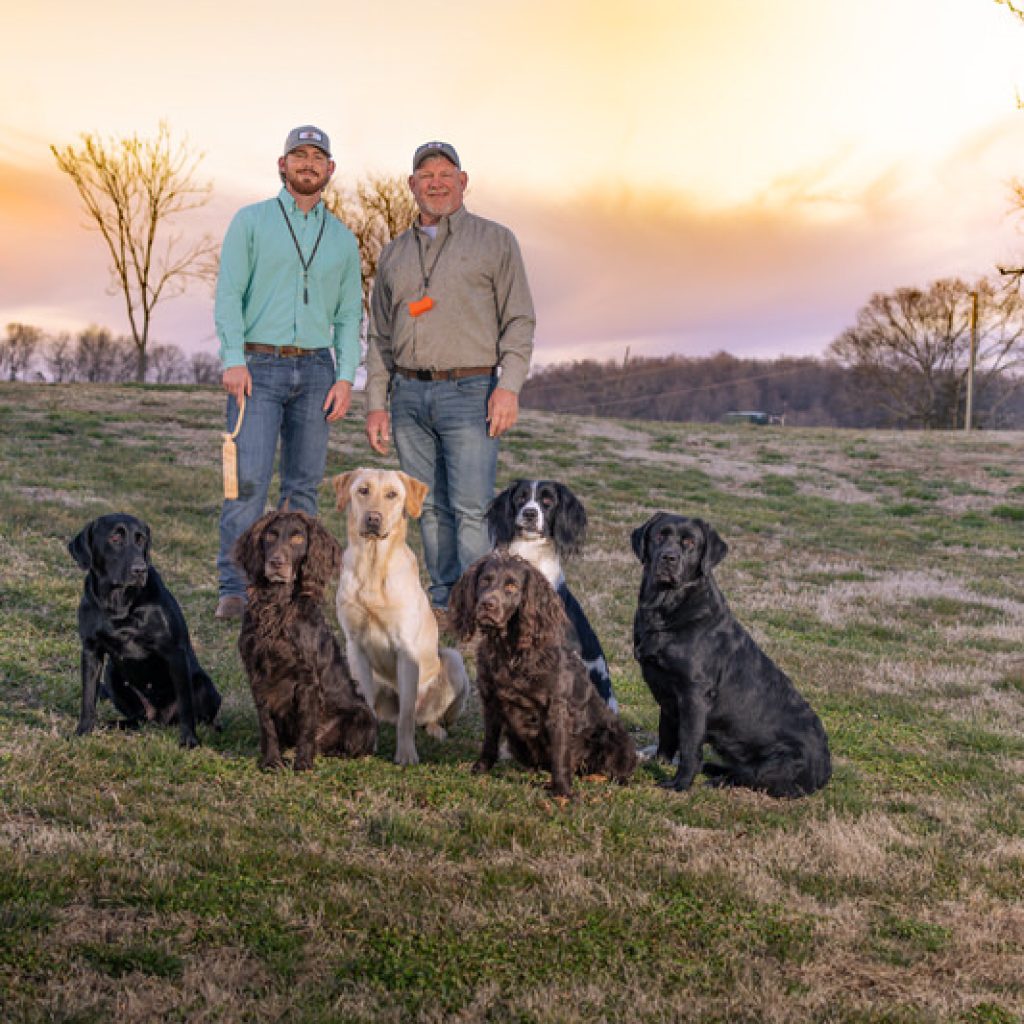
Picture this. You’re standing on a farm surrounded by dogs you don’t know, watching two men you just met move through the chaos like it’s well-timed choreography.
A German Shepherd who looks like he could rearrange your life in a single decision. A Labrador with the wide-eyed optimism of a toddler who just discovered bubbles. A mixed breed with an agenda. Maybe a spaniel bouncing like a rubber ball. A little bit of everything.
But then—quiet.
Not because the dogs are tired or sedated, but because they’ve been taught what the world is supposed to look like, not trained in the way most people mean it.
Most dogs learn a few commands and get treats when they follow them. Boom. Trained. But it’s a polite lie we like to tell ourselves. Because the truth is that dogs are shaped—through repetition, structure, boundaries, and timing. And standing in a field full of dogs that are taught? That’s an experience that’ll make you quickly realize it.
It was clear from watching Mike Osteen and his son Jon work that they aren’t merely “good with dogs.” They’re fluent. Their love of dogs is profound, but it’s not sentimental. It’s the kind of love that has a backbone. The kind that refuses to let a dog become anxious, obnoxious, unsafe, or unhappy because it’s easier in the short term to laugh off bad behavior and call it “cute.”
That’s why I asked them to join me on a six-part Cityview series about our favorites four-legged friends. Mike says he’s going to dispel a myth over the next six issues, and I’m happy to watch him do it: you absolutely can teach an old dog new tricks. It’s just a little harder than teaching a new dog. And that one sentence—simple, blunt, and true—frames almost every conversation that follows.
Here, we’ll cover the basics: the absolute minimum to do, how to get started, why you should hire a trainer, and what trainers do that will honestly blow your mind.
And yes, this series will have echoes of the sporting world—retrievers, hunt tests, field trials, upland work—because dog people are dog people, whether their dog sleeps on a $20 bed from the big box store or rides in a custom dog trailer behind a truck that costs more than your first house. But “sporting” isn’t the whole story, I promise. Most readers simply want a dog that’s a joy to live with—on a leash, at a front door, around kids, around guests, around other dogs, and in real life.
So let’s begin where all good dog stories begin: with the truth.
Harmony for 15 Years
“The value of training dogs,” Mike tells me, “is understanding how to live in harmony with something that’s going to be with you for a long time, maybe as much as 15–18 years.”
That’s the point most people miss. Training isn’t about domination. It isn’t about showing off. It’s not even primarily about obedience.
It’s about stewarding a dog that fits your life without constant friction—and a life that fits the dog without constant confusion.
Mike started training dogs at 18. He’s been doing it nearly 40 years. When I asked how many dogs he’s trained, he didn’t puff up—he just did the math out loud: “Probably in the thousands.”
Then he casually dropped a detail that reframes the whole “dog trainer” label: in one year, he oversaw and assisted in the training of about 450 dogs for the military—IED detection dogs deployed to Afghanistan.
That’s not a weekend obedience class. That’s life-or-death work.
“For the first time in my life,” he says, “I felt like I was doing something that had a lot more purpose than just earning a blue ribbon.”
Every now and then, he’ll see a former handler post online about a dog passing away—dogs that worked the roads and compounds of Afghanistan with a young soldier behind them, trusting a nose more than a map. Those stories come back years later, when the dog is old and gray and the handler is older too.
That’s the kind of experience that changes how you view a “problem dog.”
Because once you’ve seen what a dog can do when it’s taught correctly, you stop blaming dogs for acting like dogs.
You start blaming humans for being inconsistent.
The Three-Dimensional Dog
Mike doesn’t talk about dogs like machines. He talks about them like living creatures with internal wiring you’d better understand before you start pushing buttons.
He describes dogs as “three-dimensional.” There is environment (what the dog can handle—places, surfaces, water, noise, crowds), relationship (how the dog connects to you—trust, respect, clarity), and drive (the dog’s natural motivation—food, prey, retrieve, play, work).
When dogs fail, Mike says, it’s often because these three get out of balance.
Push the environment too hard, too early—like throwing a young dog into a big swim before it’s ready—and you can create a negative association with water. Hammer the training without a relationship with the dog, and you might get a dog that listens on a collar but doesn’t want to be anywhere near you when the leash comes off. Ignore drive, and you’ll struggle to motivate effort.
If you want the cleanest “Dogs 101” takeaway from a professional: balance isn’t a theory—it’s the whole game.
You Can’t Coach Height
The second thing Mike does—before he talks about sit, stay, or heel—is he talks about genetics.
Most people don’t want to hear it. They want to believe love is enough. They want to believe a good trainer can “fix” anything. Well, Mike offers the simplest analogy in the world: you can’t take a person who’s 4’6” and teach him to dunk a basketball.
“You can’t play God,” he says, “and you can’t find the perfect dog every time. But you can find dogs that are genetically proven to be good working dogs.”
For dog owners, this matters even if you’re never going to a hunt test or put the dog to work in the field. Temperament, resilience, drive level, stability—those aren’t just “training outcomes.” They’re often bred in.
So yes: pick a dog with your eyes open.
Socialize, Then Teach Boundaries
If you have a puppy, you’re holding wet cement. And you don’t need a “program.” You need awareness.
Mike’s priority with puppies is socialization—not the casual “let it meet everything” kind, but intentional exposure that builds trust and confidence. He compares it to what horse people call imprinting: touching paws, ears, mouth, belly, flipping the pup on its back—getting it comfortable with handling before the dog’s natural protective instincts harden around sensitive areas. If you don’t do that early, he says, a dog isn’t “being bad” when it guards its feet or its stomach. It’s being an animal.
But here’s where most puppy owners wreck themselves: They don’t teach boundaries. Puppies learn boundaries in the litter. Bite too hard? Another puppy bites back. Push too far? You get corrected. It’s not cruelty; it’s education. Then humans bring the puppy home and let it bite hands, climb, jump wildly, mouth everything, and generally practice being a little tyrant—because it’s small and adorable.
When those puppies turn into 80-pound teenagers, that’s when people start looking for somebody like Mike.
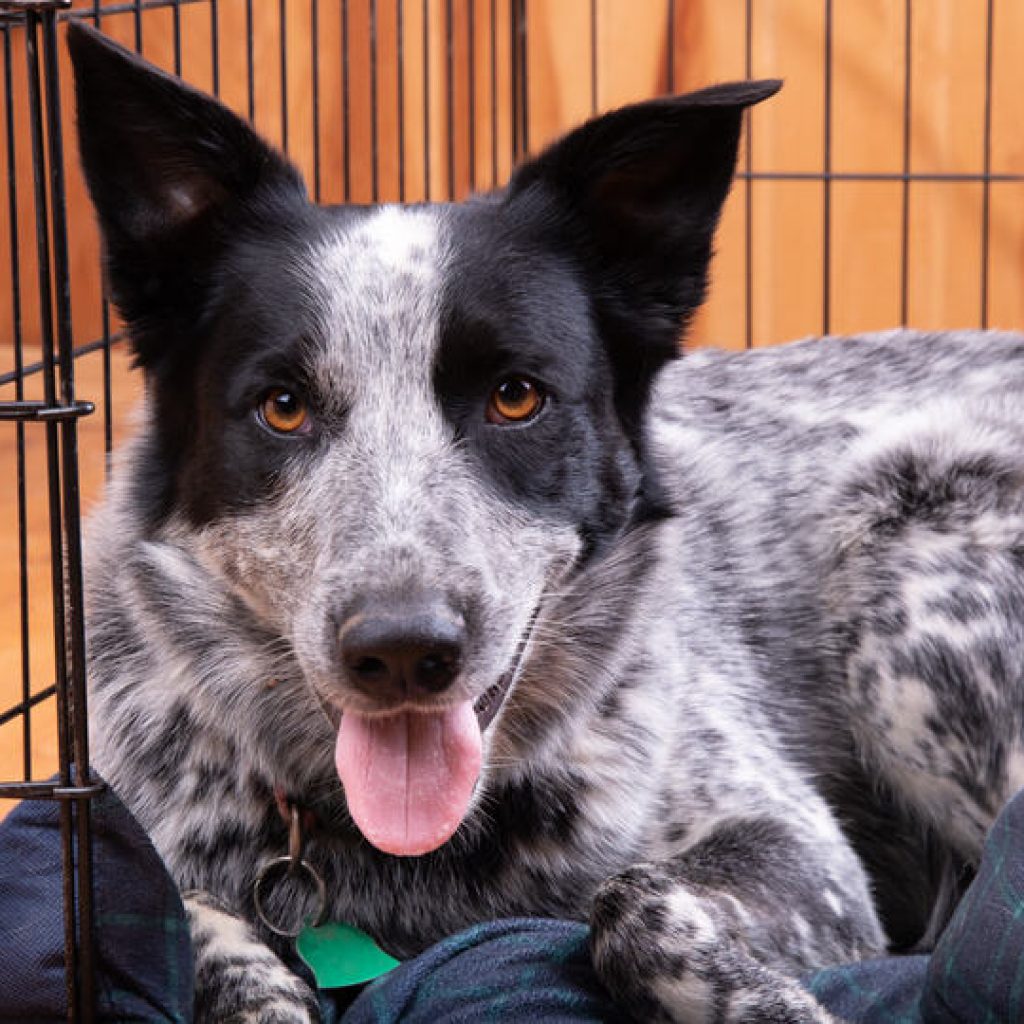
The advice here is simple: Don’t let the puppy rehearse the behavior you’re going to hate later. That’s not harsh. It’s kind. And it also just makes sense.
The Distinction That Saves Dogs
Teaching and training are not one and the same. This is one of Mike’s biggest “pet peeves,” he tells me. And quite frankly, he’s right to be irritated.
Most people use “teaching” and “training” as the same word. But they are not the same. Teaching is repetition until a dog understands a behavior and can offer it reliably (Mike uses 80% as a practical benchmark). Training on the other hand reinforces what’s been taught.
Where people get into trouble is when they apply pressure—collars, corrections, stern voices—before the dog understands what the command means. That’s how you create the dreaded “negative association.” The dog isn’t refusing; the dog is confused. And confusion plus pressure often becomes fear.
So if you’re a normal person with a normal dog, write this on a sticky note and put it on your refrigerator: Don’t punish what you haven’t taught.
The Basic Commands That Make Life Better
For the average household dog, Mike’s foundation is refreshingly practical:
Come when called (the command that keeps dogs alive)
Sit / Stay (impulse control)
Heel / Leash manners (civilization)
Place (a dog-sized off-switch)
Kennel / Crate (structure and safety)
But he keeps circling back to something even more important than commands:
if a dog doesn’t break boundaries, most people are happy. A huge percentage of dog problems aren’t “obedience problems.” They’re boundary problems.
Jumping. Mouthing. Door rushing. Counter surfing. Barking for attention. Ignoring you when guests arrive. Treating the house like a racetrack. That’s not a dog being evil. That’s a dog living in a world with no clear rules.
The Doorbell Problem
If you’ve ever had your dog turn into a possessed trampoline when someone enters your home, Mike has news: It’s usually not the dog’s fault. It’s the guests.
“The first thing they do is break their body language,” he said. They bend down, get submissive, reach, pet, baby talk—the whole show. And all the dog wants is attention. So the guest rewards the chaos.
His fix is almost comically simple: stand up straight. Don’t crouch. Don’t reach. Don’t immediately touch the dog. Calm posture, calm energy.
You’d be amazed how much your dog’s “excitement problem” is actually a human choreography problem.
The Crate
Mike is unapologetically pro-crate: “A crate is a dog’s best friend and man’s best friend.”
People project emotions onto crates: It feels mean. The dog needs freedom. Mike argues that genetically, dogs are comforted by a den-like space—protected on three sides with one open side to monitor.
Crates aren’t punishment. They’re structure, and structure creates calm. Also: crates keep puppies from practicing bad behavior when you’re not watching. And for dog training, what the dog practices becomes the dog.
When to Hire a Trainer

Busy professionals, families, people who travel, people with mismatched experience—this is where training programs shine. Mike’s advice is not “send the dog away and hope for magic.” His advice is to get the puppy started right—and be involved while it’s being trained. Because if the dog learns rules at the trainer’s farm and then comes home to chaos and inconsistent boundaries, the dog doesn’t “forget.” The dog adapts to the new reality.
Dogs are situational, after all. They learn through repetition. If the rules change every day, you create gray areas. Gray areas create uncertainty. Uncertainty creates problems. A trainer can build a foundation, but the home must maintain it.
Rehabilitation and the “Old Dog” Myth
At the foundation of all of Mike’s advice is a career ….. But it isn’t just ribbons and competitions. A major portion has been behavior modification and rehabilitation—dogs that got negative associations, got pushed too hard, were mishandled, washed out, or simply misunderstood.
He tells me about two Boykins that had been with previous trainers and carried phobias and major issues. They were rehabilitated, titled, and went on to place at a national-level event—second and third.
That’s not a cute “before and after,” though. That’s a professional undoing damage and restoring performance. And it’s the proof behind his favorite line: you can teach an old dog new tricks. The dog can keep learning through life. It’s just easier when you start earlier.
Sporting Dogs: A Different Realm (But the Same Foundation)
Once you step into the hunt tests, field trials, upland work, and serious retrieving of the sporting world, timeframes change.
Mike breaks it down in this way. A solid “gun dog start” might take around three months. Transitioning into handling and advanced work can push closer to six months. Competition dogs often stay in training 10–11 months a year, from puppyhood to age seven or eight, to remain competitive. That’s a lifestyle, not a hobby.
And yes—this sport can get expensive fast. Mike compares it to fishing and duck hunting, where the excitement of catching a trophy fish lets one rod become forty-seven, and the boat become a mortgage.
But he also makes a point that matters even for the non-competitor: clubs and structured training keep dogs active all year. Too many dogs hunt for two months, then sit until next season. Training keeps the dog’s mind and body engaged—and makes the relationship better.
“I Don’t Want a Ribbon Dog. I Want a Hunting Dog.”
Mike smiles when we get to this one because he hears it constantly. The truth is: a well-trained competition retriever has the skills to be a world-class hunting dog. The missing piece is acclimation.
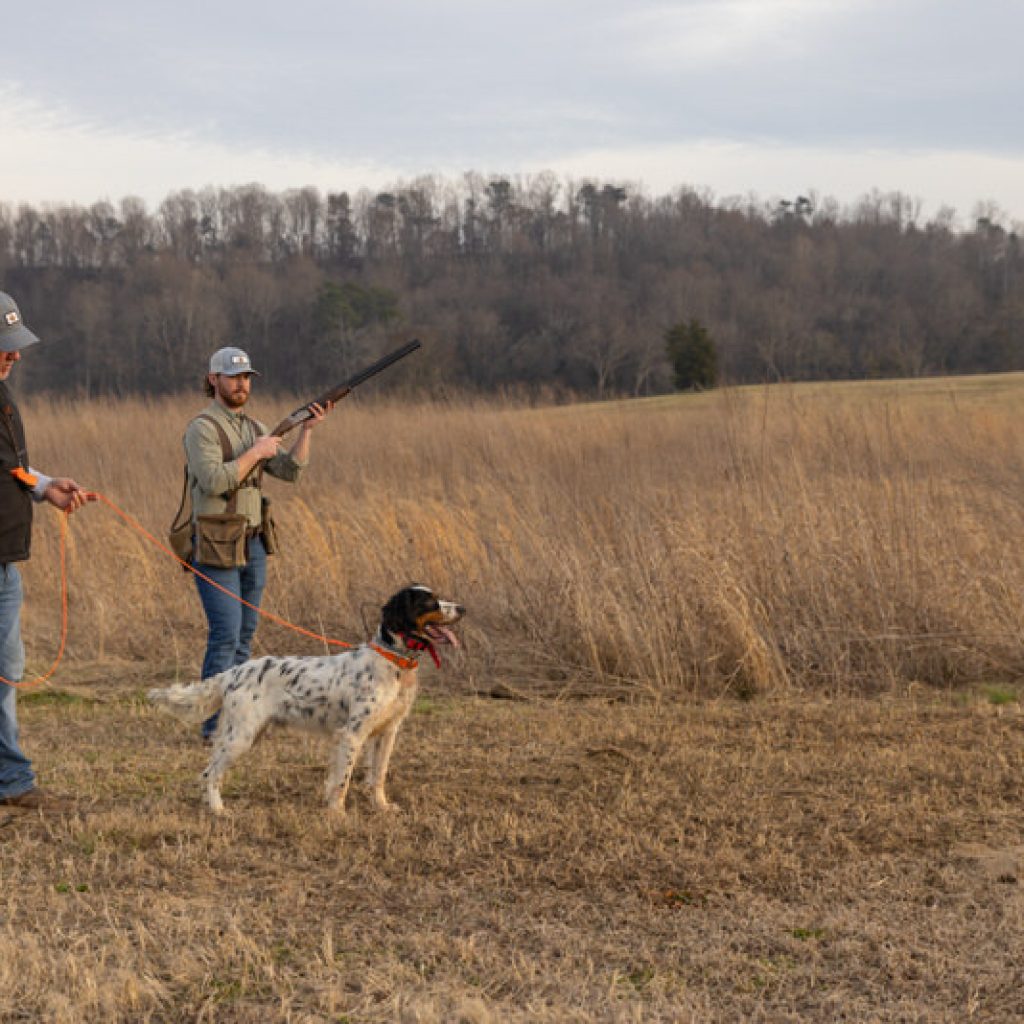
Put a competition dog in a duck blind for the first time and it might look confused—not because it’s incapable, but because it hasn’t learned that environment. Work the dog out of the blind. Out of the boat. Off the ramp. Let the dog succeed in the new setting.
Same dog. Same brain. New context.
And in the upland world, people love to argue about “big running dogs” versus “foot hunting dogs.” Mike and John both argue that with true balance and control, you can influence how far a dog hunts—because the dog is hunting with you, not just hunting for itself.
Preserved Birds vs. Wild Birds
This is where the conversation gets spicy. Pen-raised birds can create issues: birds that don’t fly well can teach dogs to creep, crowd, even herd birds like livestock. Wild birds teach a dog to stand still because wild birds leave when pressured.
John makes the point that the best sequence is often: let the dog hone natural pointing instinct early—through wild birds or launchers—before you pile on structure. Then you can steady the dog through training and avoid some of the mess that poor-flying birds create.
If you don’t have structure, preserved-bird hunting can become chaos fast.
The Closing Scene: A Table, a Story, and What Comes Next
After the interview, John, Jay Lynn, Mike, and I head to a local restaurant. Sitting there, away from the kennels and the fields, John paints a picture of how they used to run the hunt program at Winfield Plantation.
It’s the kind of detail you only get when people stop “being interviewed” and start telling stories.
I’ve been on great hunts at great places. I frequently visit my friend John Burrell’s operation at the Beretta Shooting Grounds at Barnsley Resort in Adairsville, Georgia—where the experience is as much about dogs and teamwork as it is about shooting.
And that’s one of the themes this series is going to keep returning to: you don’t go into the field with one dog. You go with multiple dogs, because dogs get tired, conditions change, and the best operations treat dogs like athletes—not accessories.
But whether you’re talking about a plantation hunt, a national retriever event, or a suburban front door with Amazon ringing the bell like it’s their job (because it is), the core is the same. And that core, what we’ve introduced you to today, is what we will explore over the next 5 issues.
In Part 2, we’ll go deeper into boundaries and household structure—the mechanics of “place,” door manners, leash work, and why your dog isn’t “stubborn,” it’s rehearsed.
Because if you want the real secret behind a great dog, it’s not a magic command.
It’s the life you build around the dog—every day—when nobody is watching.
Comments are closed.