

A heritage center brings Appalachian history to life while building meaningful connections across generations today.
Story by Susan Alexander | Photography by Nathan Sparks
Appeared in Cityview Magazine, Vol. 42, Issue 3 (May/June 2026)
Donna Stinnett time travels three or four times a week.
She wakes early at her home in Seymour and dresses in a long dress, hiking boots, an apron, and a kerchief for her journey back in time. Then she makes her way to the Great Smoky Mountains Heritage Center in Townsend and builds a fire in one of the historic cabins on the site. Once it burns down to coals, she’s ready to show the school kids who visit the center how Appalachian women in bygone days prepared their meals.
“I’ll usually make a dodger of cornbread and a pot of something, maybe soup beans. In February and early March, I’ll fix a starving meal using the things I dried over the winter,” says Stinnett. “It’s not that people were starving, but they were starved for the taste of something that’s fresh, waiting for the wild greens that grow in the spring.”
This spring and summer Stinnett will prepare meals with the help of about a dozen ticket holders. They’ll be joined by a local historian while they cook and then enjoy what they’ve made. The first meal, on April 30, was a Walker Sisters lunch and included such mountain delicacies as rutabaga cooked with bacon, pork tenderloin (“They also served a lot of mutton, but pork is easier to find today,” Stinnett says), kilt lettuce, boiled potatoes, soup beans, cornbread, chow chow, and fried apple pies.
Stinnett learned her hearth cooking skills from Ersie Garner, the mother of her best friend, who taught it in Gatlinburg. At the time Stinnett was a teacher at the Tennessee School for the Deaf, and Garner would cook for her students once a year. “They loved it,” she says. And Stinnett did, too. Now retired, she travels regularly to North Carolina to work and learn with the Historic Cooks of the Catawba Valley. Hearth cooking and history are her passions. “I love it,” she says.
Highway to History
Stinnett’s skills are just one of many ways the Great Smoky Mountains Heritage Center shares the history of the Tuckaleechee Cove in which it is located. And builds community around it. Its roots lie in an expansion project on the Quiet Side of the Smokies.
Back in 1999, the state began the process of expanding Highway 321 through the cove from two lanes to four. But first, according to the National Historic Preservation Act, when federal dollars are spent on a project like that, an archeological dig must be completed in advance of it. What they found were signs of human habitation that went back more than 10,000 years to the Cherokee people and their ancestors.
She steps into the past to bring history vividly to life for new generations.
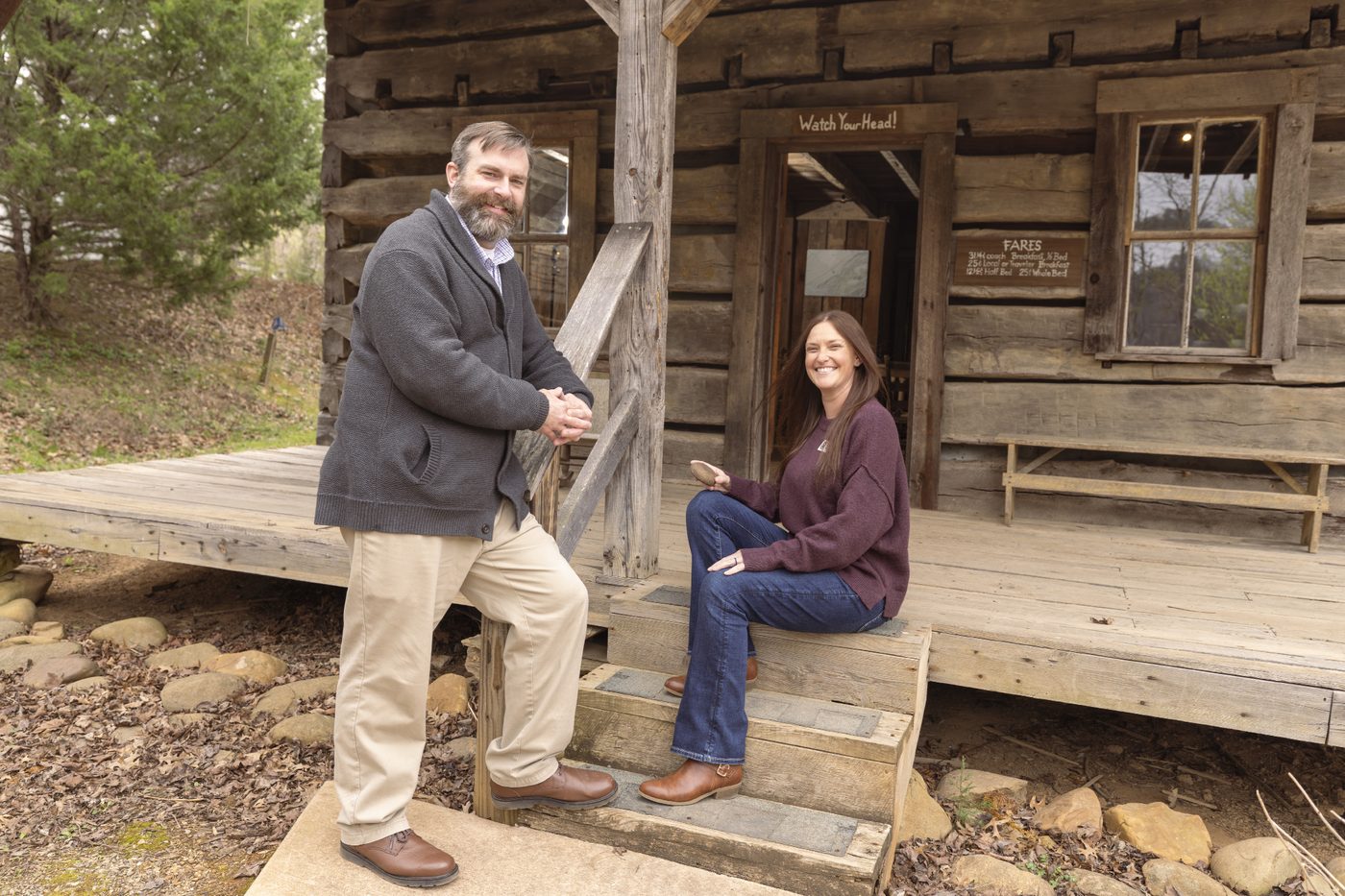
“They found pottery shards and arrowheads, as well as post molds that showed the shape of the ancient houses,” says Trevor Lanier, the center’s curator. “They uncovered signs of palisade walls and storage pits. It became one of the largest archeological digs in Tennessee history.”
By the time it was complete, they had evidence that the area had been inhabited for 17,000 years, since the end of the last ice age.
The question then became what to do with the artifacts they unearthed and the information they learned from them. Community leaders, as well as former Governor Don Sundquist, secured funding for the heritage center. Richard Way and Champ Beeler donated the property on which it sits. In 2006 the center opened.
“In the beginning, it was a museum,” recalls Richard Maples, one of the founders. “It was primarily started for children so they could come on field trips and learn about the history. But it has evolved into bigger and better things.”
Expanding Its Focus
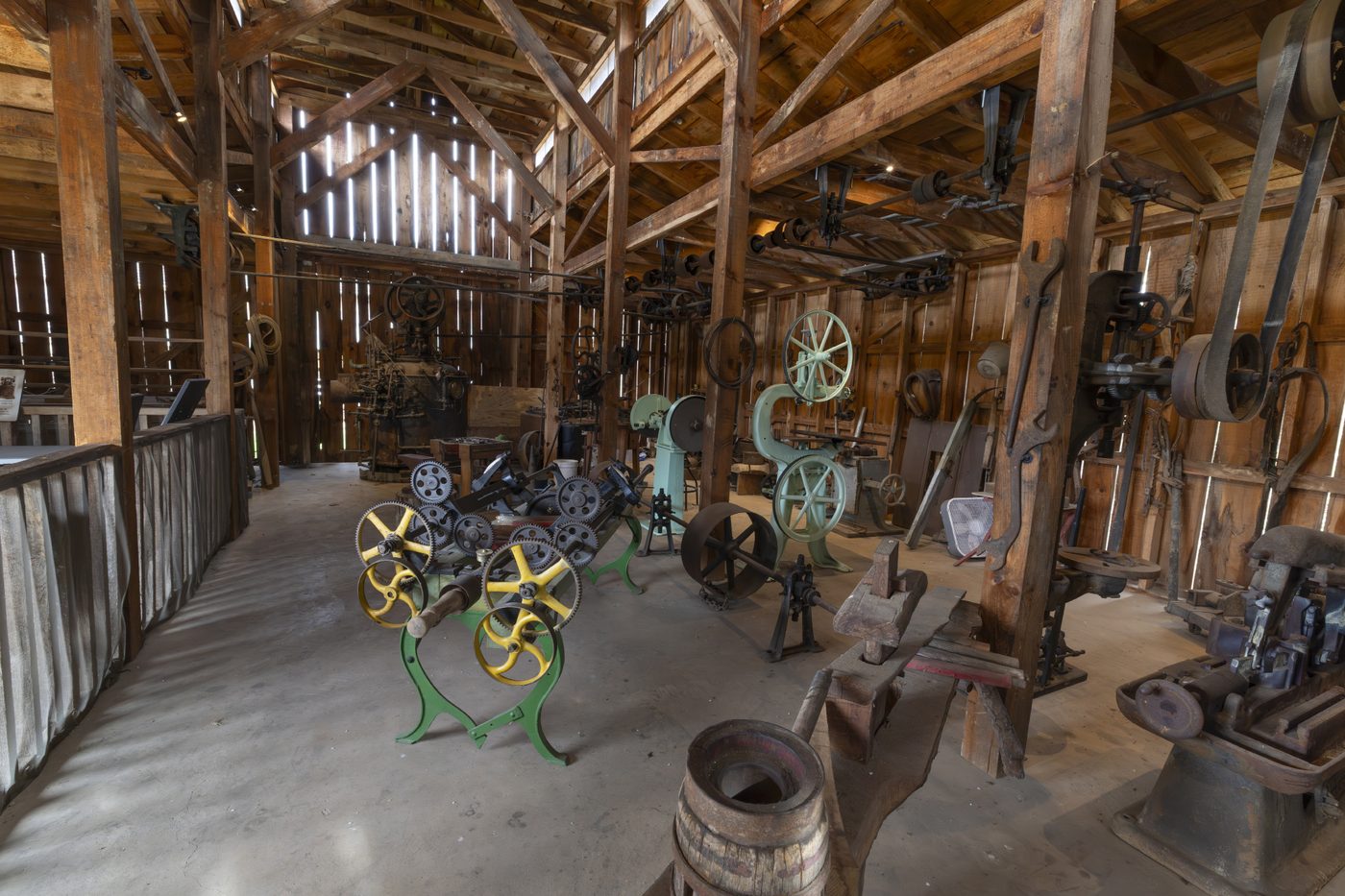
An amphitheater was added for concerts. Area residents donated old buildings — cabins, a moonshine operation, a church, as well as old wheelwright and sawmill equipment and printing presses — so visitors could get a sense of what life was like in the 1800s and early 1900s. Heirloom gardens were established by the Tuckaleechee Garden Club to show what Appalachians grew to feed themselves, like “lazy wife greasy beans” and the same variety of corn that Thomas Jefferson grew.
for whom the center was intended, continue to come. Jenn Bowen, curator of education at the center, says kids visit four days a week from September to December and from March through May. Donna Stinnett, a living history demonstrator, as well as yarn spinners and blacksmiths, show what life would have been like back in the day. “They do a really good job of bridging the gap between the kids’ life today and where it stemmed from,” she says.
One day a year — the Saturday of Mother’s Day weekend (May 9 this year) — the center hosts Kids Take Over the Museum with hands-on activities, demonstrations and experiential learning. Kids may help string leather britches (a variety of bean) for drying or help Stinnett prepare a treat like cinnamon toast. The historic preservation office of the Eastern Band of the Cherokee will send staff to talk about archeology and share stories and dancing. “It’s a very big day,” Bowen says. “It’s the one event that focuses solely on getting kids to physically connect with the history we share.”
Not that the adults are left out of center activities. Classes about the use of herbs in salves, oils, tinctures, and syrups are held regularly throughout the year. An annual Fiber Fair draws quilters, knitters, spinners, and other crafters for a weekend each spring. A big Independence Day concert and festivities are planned for July 4, and a Blue Ribbon Country Fair is on the calendar for September. The center regularly schedules bus tours of Cades Cove and once a year to Cherokee, N.C., to see the elk and listen to them bugling.
What began as a museum has grown into a living, breathing community hub.
Working in conjunction with the National Park Service, the center arranges temporary exhibits like photos of Carlos Campbell from when the national park was founded, which is currently on display. To celebrate the 250th anniversary of the nation’s founding, they are building an exhibit centered around the long rifle of Black Bill Walker, which legend has it was used during the Battle of Kings Mountain during the Revolutionary War. (Black Bill was a legend in his own right. A cousin of the Walker Sisters, he is said to have had three wives at the same time and fathered 24 children.)
Kimberly Smith, a citizen of the Eastern Band and board member at the heritage center, appreciates what the center is doing to develop stronger relationships with tribal citizens and support the Band’s efforts to teach native culture and traditions. They are designing a T-shirt to be sold at the center promoting Kuwohi (what used to be called Clingmans Dome), and 100 percent of the proceeds will support the Center for Native Health in Cherokee. She also said they are working together to see what natural resources the center might develop to support tribal artisans, such as growing river cane or the plants used to create dyes for basketmakers.
Thoughtful Growth
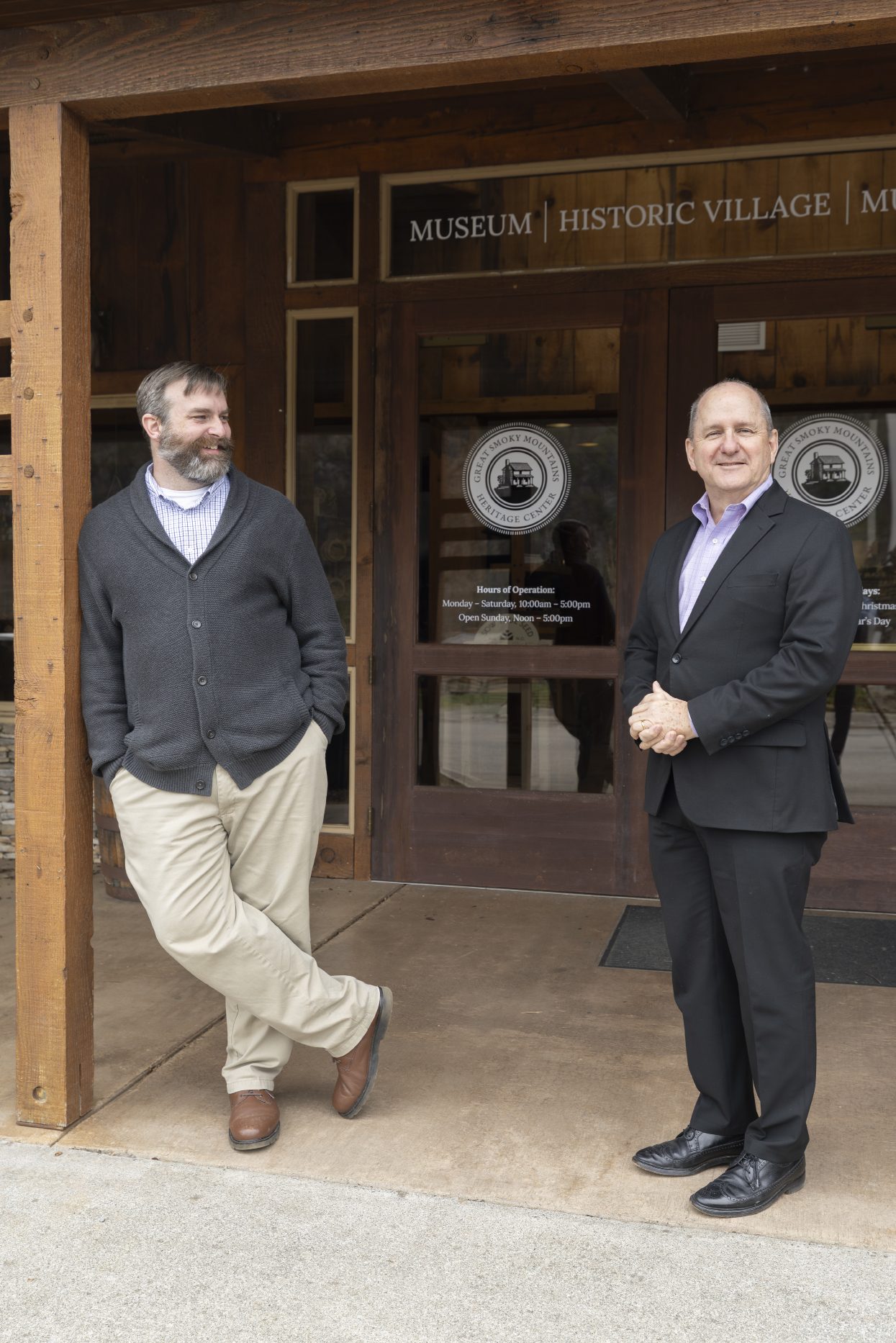
All of these activities are under the direction of Executive Director Frank Graffeo (not to mention Cat Stevens, the center’s feline resident, who supervises from the counter where guests check in or a shelf of cozy T-shirts in the gift shop).
As the center celebrates its 20th year, Graffeo is dedicated to creating community. “There’s so much opportunity for connection here,” he says. “We are working on a stronger focus of bringing people together — through concerts during the warm months and through immersive living history demonstrations.”
He’s also working on forming relationships with other institutions associated with the national park, citing the future Lamar Alexander Institute at Maryville College as one example. “We want to host scholarly programs here. We are a living outdoor classroom.”
The Peaceful Side of the Smokies offers a sense of place you can’t find in, well, the not-so-peaceful sides. “The tree line, the views all around — you feel what draws people to it,” he says. “The people who live here and treasure this place fiercely defend it as unique, inviting, and authentic. What do you know? That’s also how you’d describe a great museum! We want to be very intentional and thoughtful about how we grow.”
“What Frank has going on has evolved into a community,” says Richard Maples. “And I see it continuing as more than a museum.” ◆
Comments are closed.