

The Beauford Delaney Building is Knoxville’s most inspired new address — and the story behind it is one for the ages
Story By Nathan Sparks | Photography by Bruce McCamish
Appeared in Cityview Magazine, Vol. 42, Issue 3 (May/June 2026)
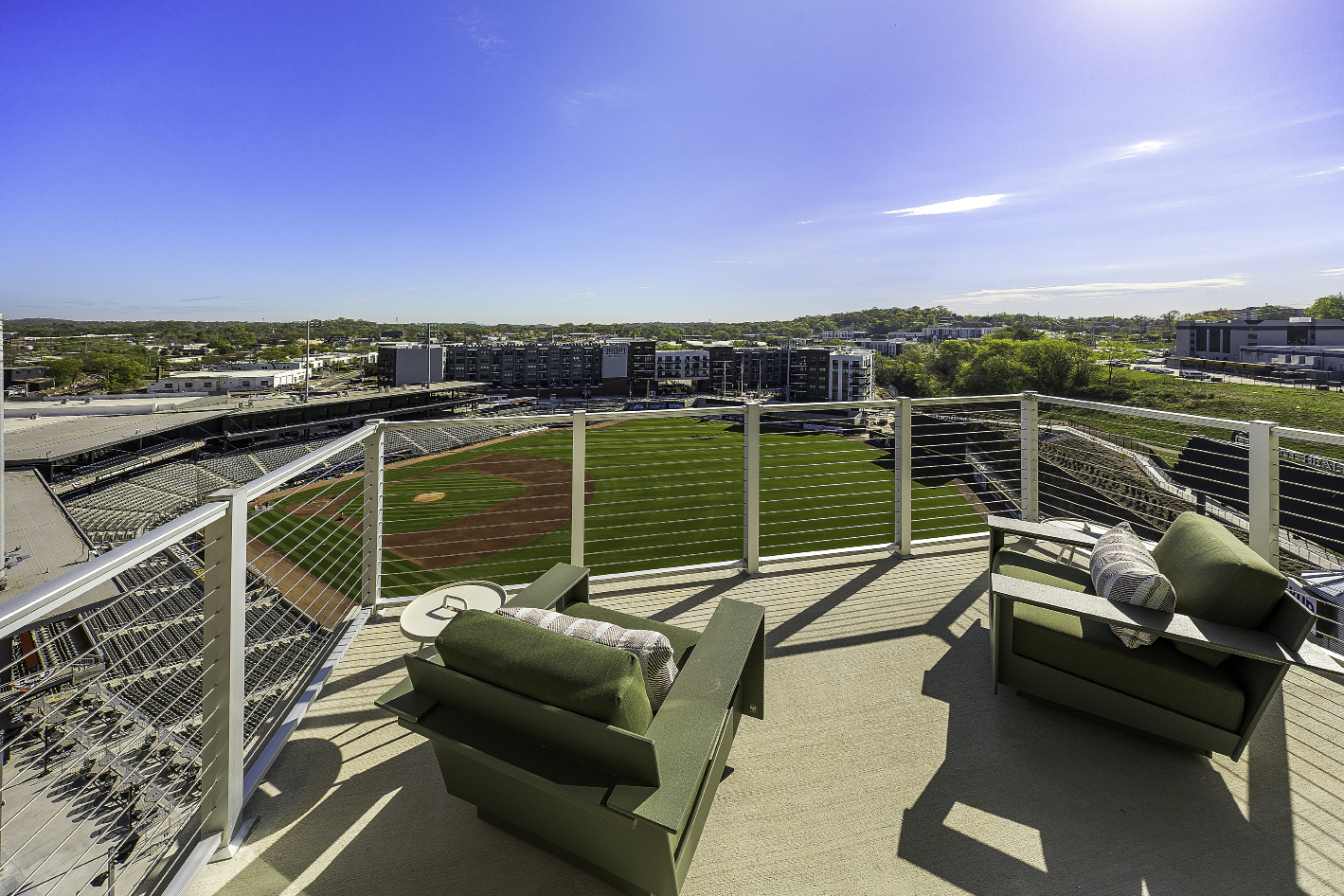
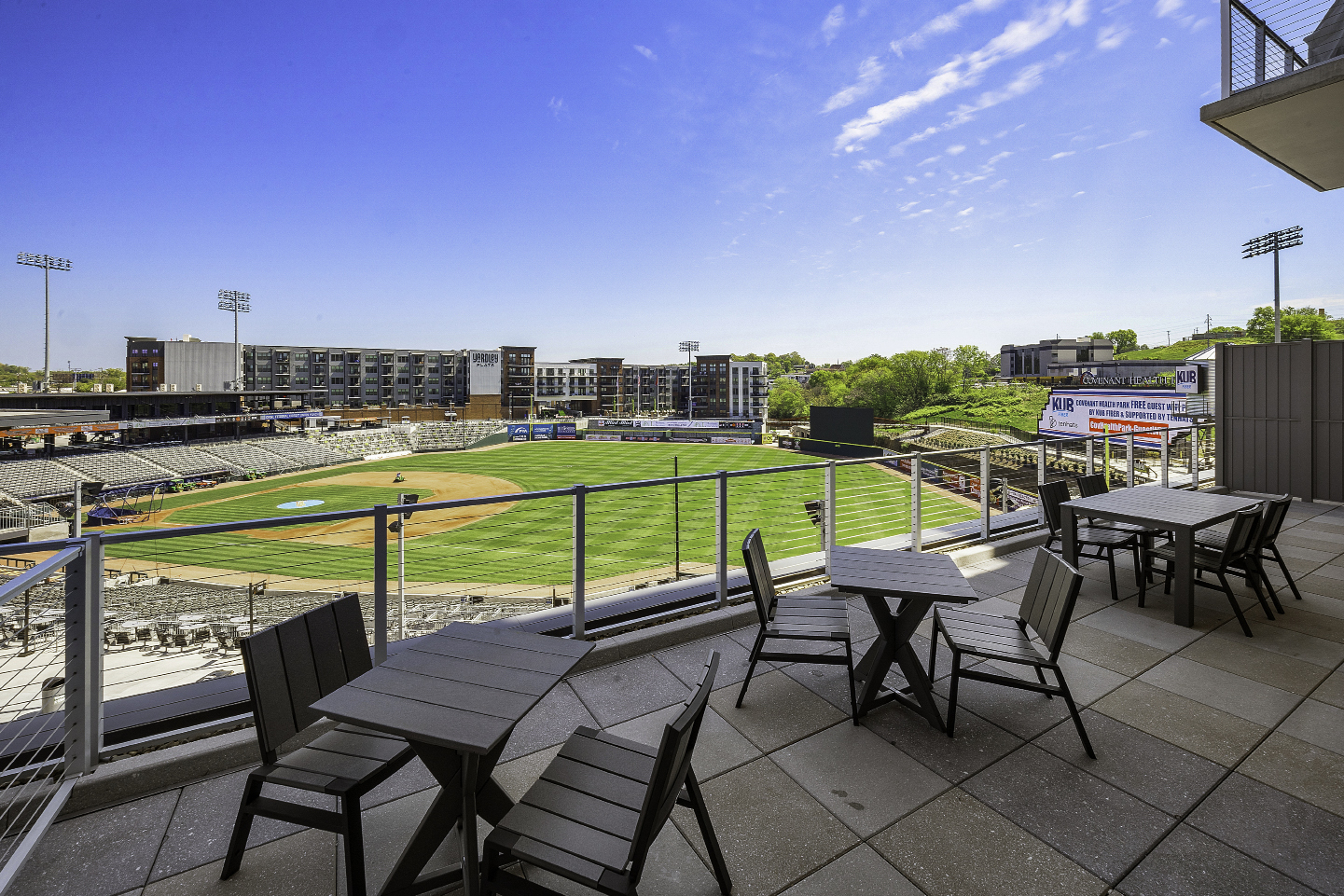
Stand on one of the lower-floor terraces of the Beauford Delaney Building and the game is right there. Not in the distance. Not behind glass. Right there—the pop of a fastball in the mitt, the crack of a bat, the crowd rising to cheer. The stadium opens below you and before you like a stage, and you are not a spectator in the usual sense. You are part of it. You are in it. You are home. That is not a coincidence. That is Randy Boyd’s vision come to life.
There is a version of this story that starts with a fencing salesman. It is the right place to start, because everything Randy Boyd has built—and he has built a lot—traces back to that foundation. Hard work, eyes open, looking for the next thing that could become something bigger than it appears. The fencing business taught him something that fancy business schools often don’t: that the gap between where something is and where it could be is where opportunity lives. He found it in PetSafe, the pet products company he built from nothing into one of the most successful businesses in the country. He found it again when he acquired a collection of minor league sports teams under what is now Boyd Sports—including the Knoxville Smokies. He found it when he looked at the land east of Knoxville’s Old City and saw a stadium and a neighborhood where most people just saw a vacant lot. He is not a man who talks about himself much. He would wince at the word visionary—but he is a man who works tirelessly and he is one of the most successful businessmen in our community, and Randy Boyd has a track record of seeing things that don’t yet exist and making them real. Covenant Health Park was one. The Beauford Delaney Building is another.
The original inspiration came from visits to Wrigley Field—specifically the rooftops. Those improbable bleacher seats perched above the neighboring buildings, looking down into the park, give Wrigley a neighborhood feel that no modern ballpark has managed to replicate. They make you feel like you’re part of a community, not a customer in a commercial transaction. “We wanted to create that feeling,” Boyd says. “That you’re part of a community, not just at a baseball stadium.” The logistics of building actual rooftop stands turned out to be prohibitively expensive. But what came out of that problem may be better than the original idea. Residential buildings pressed directly against the stadium walls, rising alongside it—and Boyd says so himself, with the slight sense of sacrilege that only a Cubs fan could get away with. “It’s so intimate,” he says. “Between the Yardley building and the Delaney building, you’ve created almost an amphitheater feeling.”
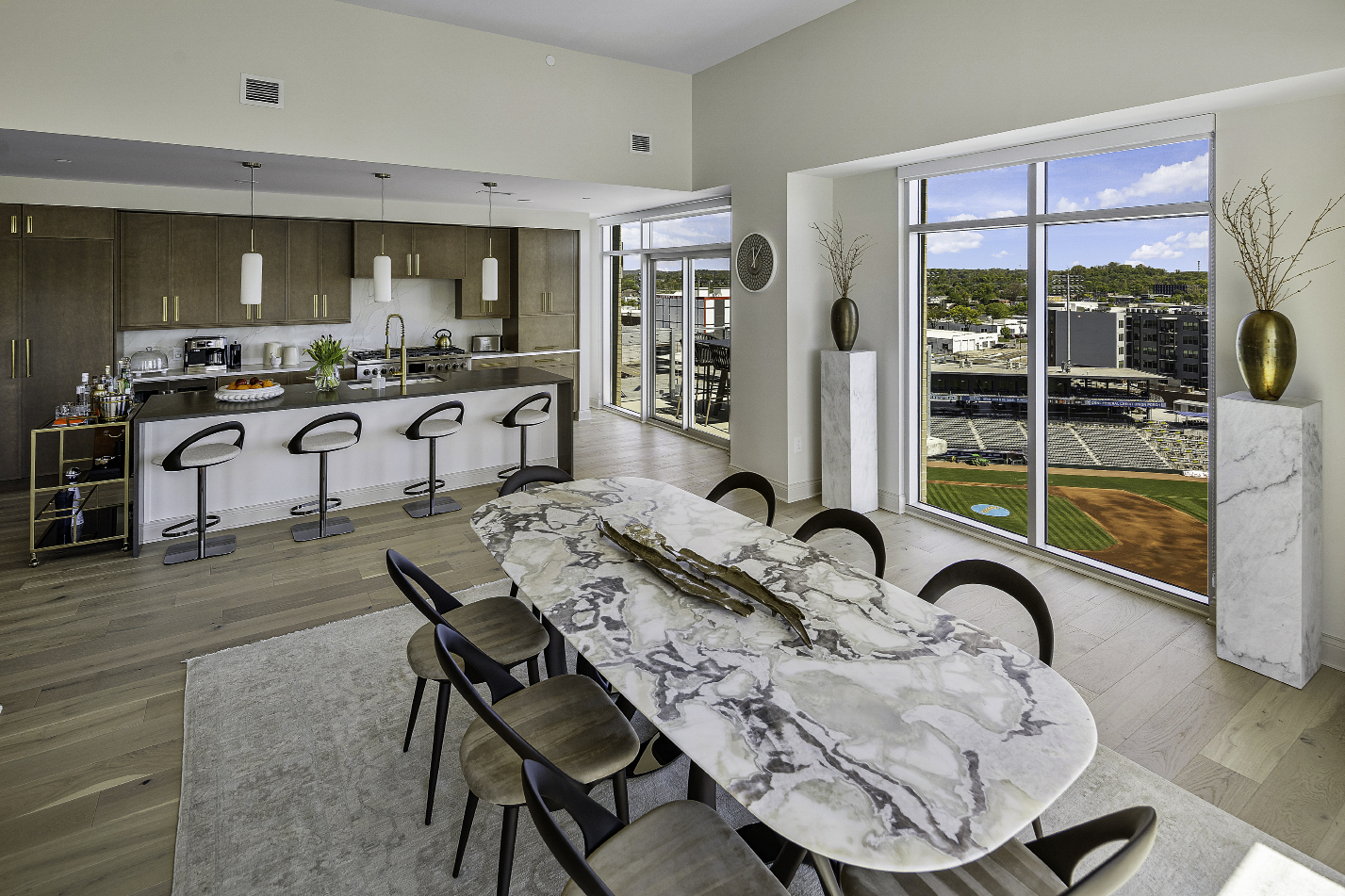
The building itself—nine stories, 47 condominiums—is the kind of project where the more you look at it, the more intentional it reveals itself to be. Designed by a team that includes Design Innovation Architecture working alongside Barber McMurry, and built by Denark Construction. Proffitt and Sons handled drywall and framing throughout. It is a project where the craftmanship shows at every turn. The team at Partners Development has been shepherding it from concept to completion, and Christi Branscom is the person you want explaining it to you. She knows every number, every unit, every finish, and she talks about the project with the quiet pride of someone who has watched something genuinely good get built. “The building offers a variety of one and two bedroom units,” she says. “Ninety percent of those units overlook the stadium, and from the seventh floor and up, you have a great view of all of downtown and House Mountain too.”
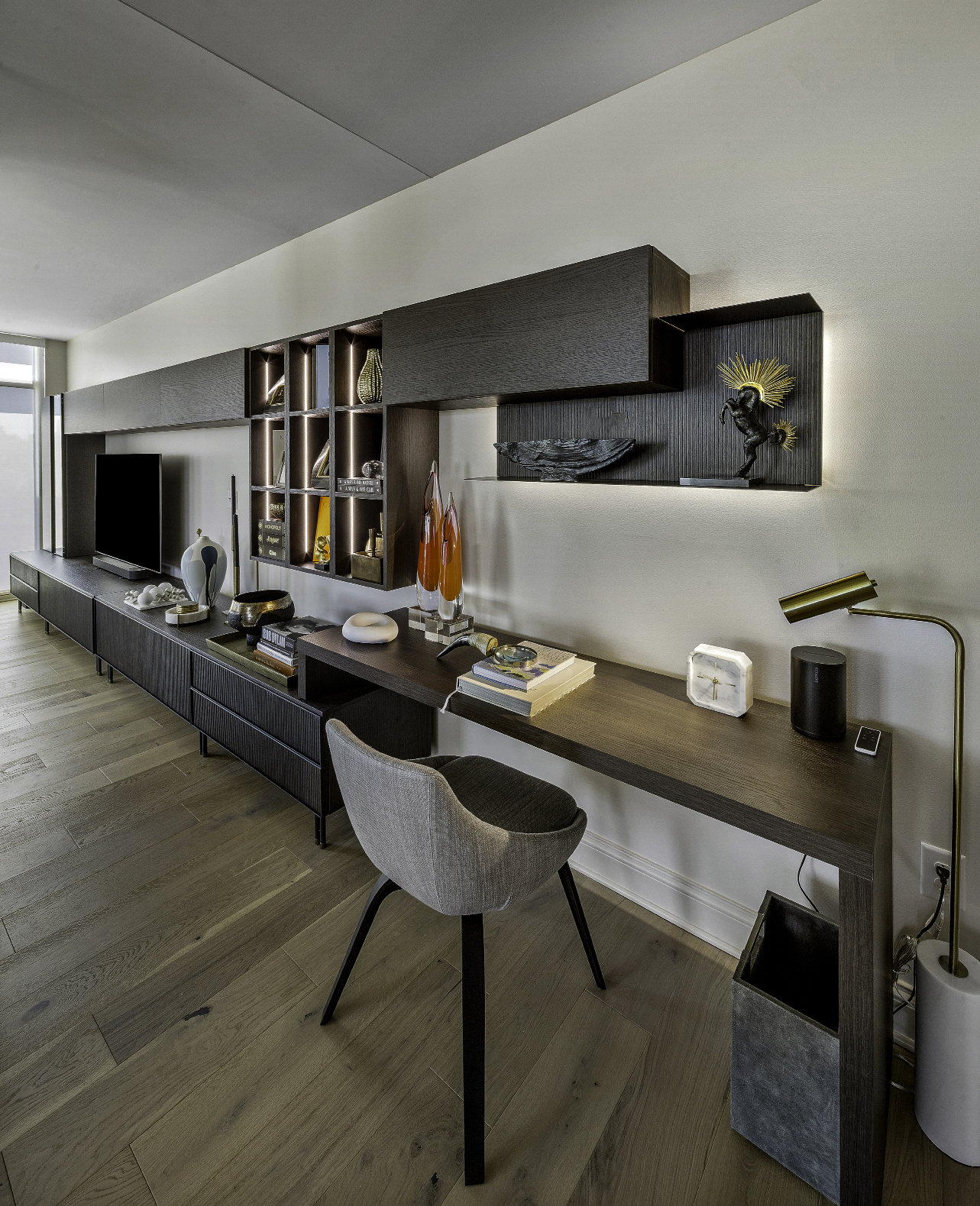
Prices run from $787,000 to just over $2 million, with the ninth-floor units—Boyd’s floor—edging past that upper number. The one-bedrooms average almost 1,200 square feet. The two-bedrooms run 1,600 to 2,300. The closets—Branscom mentions this with particular satisfaction—are nothing like typical condo closets. There are a lot of them and they’re all large. The finishes are where the building quietly announces what tier it’s playing in. Kitchen Sales supplied the cabinetry and hardware. The appliances are Thermador and Fisher & Paykel. Home Choice Windows, Doors, and Flooring handled the tile and hardwood selections throughout, and Branscom says the feedback on the kitchens and bathrooms—the tile selections, the color palettes, the material combinations—has been as strong as anything else in the building.
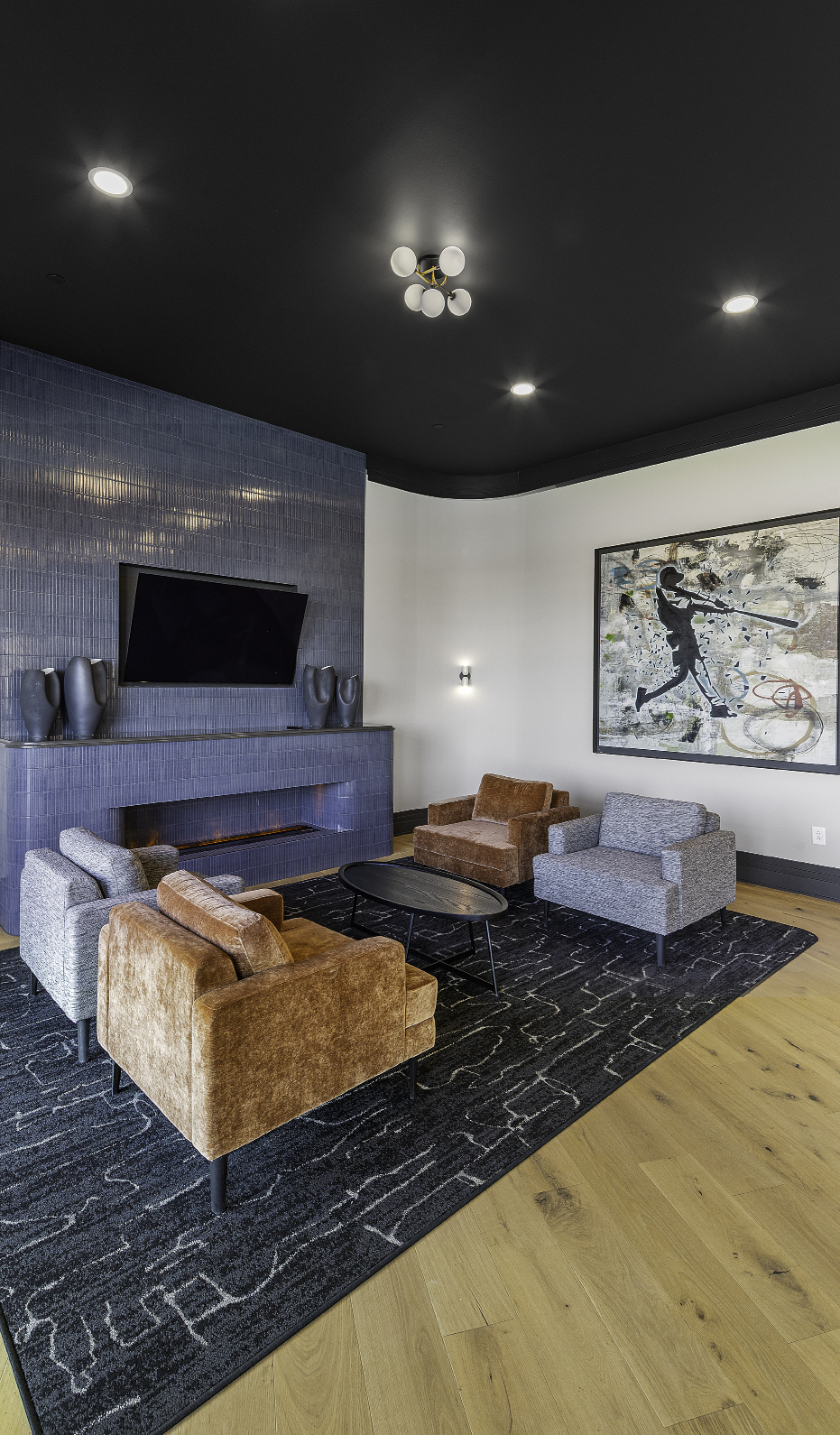
Design Innovation Architecture handled a good part of the interior design for the project. The attention to detail is evident throughout the building—in the warmth of the materials, the logic of the color choices, the way the contemporary aesthetic of the common spaces feels right without ever feeling cold or generic. It is the kind of design that doesn’t call attention to itself. It just makes everything feel considered.
Boyd’s take on the amenity floor cuts right to it. “The amenity space would be appropriate for 200 units,” he says. “There’s outdoor grilling space, a place for dogs, a beautiful indoor gathering space, a gym. Considering there are only 47 units, it’s extraordinary.” And then there are the lower-floor terraces. Boyd has his unit on the ninth floor—panoramic, mountains in one direction, stadium below. He has made his peace with that choice. But ask him about the lower unit outdoor spaces and something shifts in his voice. “Their terraces are the size of some people’s apartments,” he says. “It’s almost like having your own permanent suite for baseball games.”
“You’re not watching the game from here—you’re living inside it.”
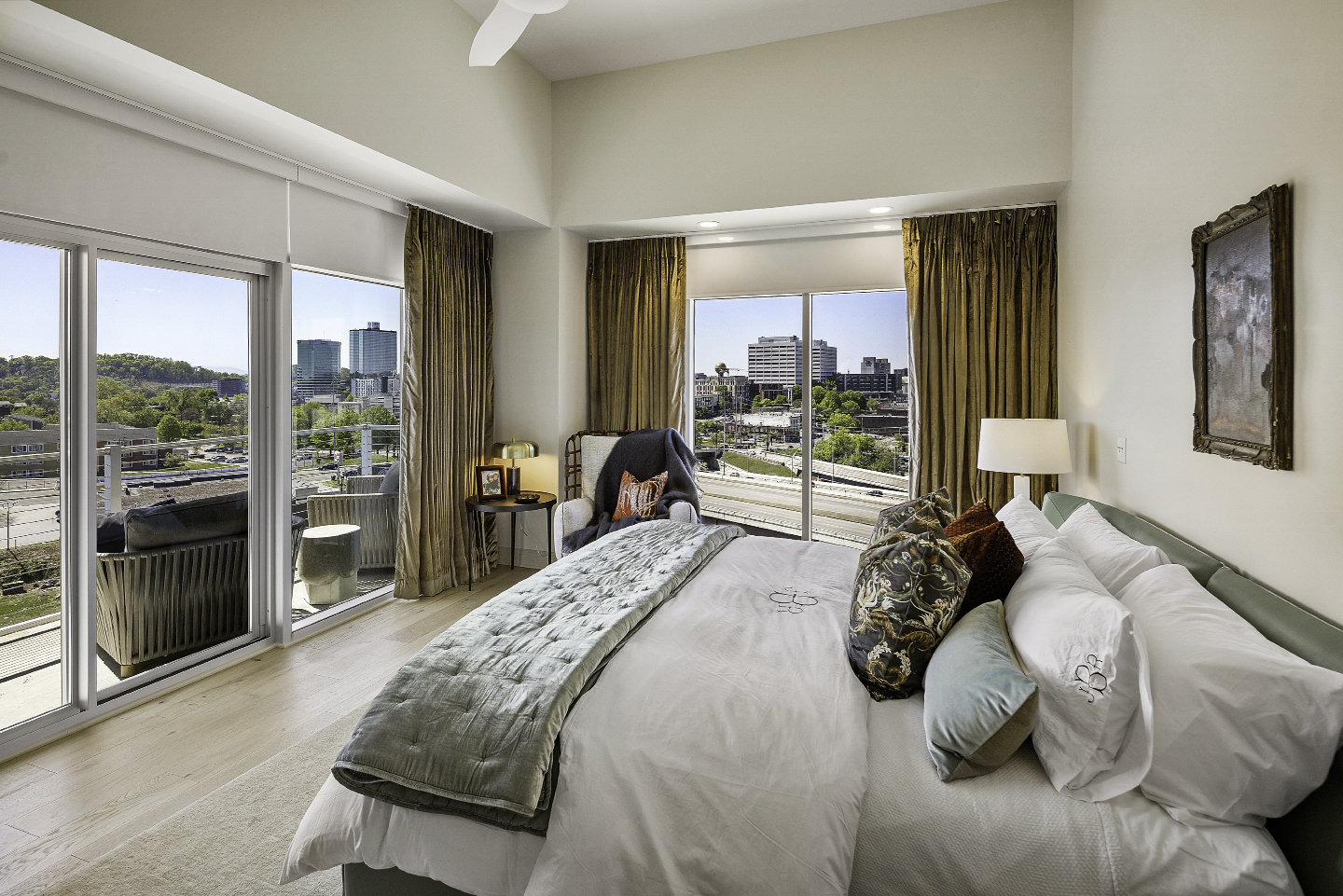
One thing Branscom speaks of frequently is how this building makes people feel. Many of the current owners bought here bought long before completion. They were not buying a condo. They were buying a feeling. “We had a lot of contracts entered before the building was finished,” she says. “At that point, people were really buying into a dream—maybe buying the lifestyle, buying into the excitement around the stadium. Many of them were buying their first home in a downtown neighborhood. ‘We’ve been coming and doing things in Knoxville for a while. It’d be great to have a place here. And wow, we get a place where you have the stadium and all these other amenities.’” Then the building opened and people walked in and saw it for real. Some of them changed units. They’d loved a floor plan on paper, then stood in it and realized a different view was calling to them. Some wanted to be closer to the fitness center, some wanted a higher floor, some wanted the larger outdoor living space. The building changed around them as they decided, which is its own kind of magic.
The name on the building is the part of the story that lifts everything else.
Beauford Delaney was born December 30, 1901, in Knoxville, Tennessee, the eighth of ten children. His father, Samuel, was a barber and a Methodist minister. His mother, Delia, took in laundry, cleaned houses, and raised her children with a love that would shape every one of them. She put something into those children that would eventually echo across the art world. Dr. Renee Kessler runs the Beck Cultural Center on Dandridge Avenue, which exists to preserve and amplify African American history and culture in Knoxville. She has been working alongside Randy Boyd on this project since before COVID, and she talks about Beauford Delaney the way someone talks about a relative they never met but know deeply. “His mother Delia was also a quilter,” Kessler says, “who inspired Beauford and his brother at a very young age to begin to use their hands in the gifts that God had given them to produce art.”
The boy who grew up on Vine Avenue—one block from the ground where Covenant Health Park now stands—would go on to study art in Boston and then answer the gravitational pull of the Harlem Renaissance, moving to New York in 1929. At 181 Greene Street in Greenwich Village, he built a studio and a life and a legend. He painted W.E.B. Du Bois and Duke Ellington. He became close friends with Henry Miller. In 1940, a fifteen-year-old named James Baldwin climbed the stairs to his studio, and a thirty-eight-year friendship began that would help shape American literature. What Baldwin wrote about that first encounter has stayed in the record ever since: Delaney was “the first living proof, for me, that a black man could be an artist.” Delaney moved to Paris in 1953 for a visit and stayed for twenty-six years. He died there in 1979. His paintings hang now in the Smithsonian, the Whitney, and the National Portrait Gallery.
Kessler does not hesitate when she talks about where Beauford Delaney belongs in the history of art. “Many people say he’s one of the greatest abstract artists of the twentieth century,” she says. “I really believe that when the history books are written in the future, we will say he was probably one of the most important artists ever—not just for this lovely abstract art that he did, but for what he meant to this world, and for how he will help continue to change the world, to really recognize and acknowledge the rich history, heritage, and gifts of extraordinary artists from right here in East Tennessee.” There is a historic marker near the stadium at the approximate site of the Delaney family home at 815 Vine Avenue. Stand at that marker and look south. The Beauford Delaney Building fills the background like it was placed there deliberately—and it was. “That building literally stands in the background of what would have been the original home place of Beauford Delaney,” Kessler says. “The Delaney is looking at the old original home place. And the old original home place… it’s calling its name out loud.”
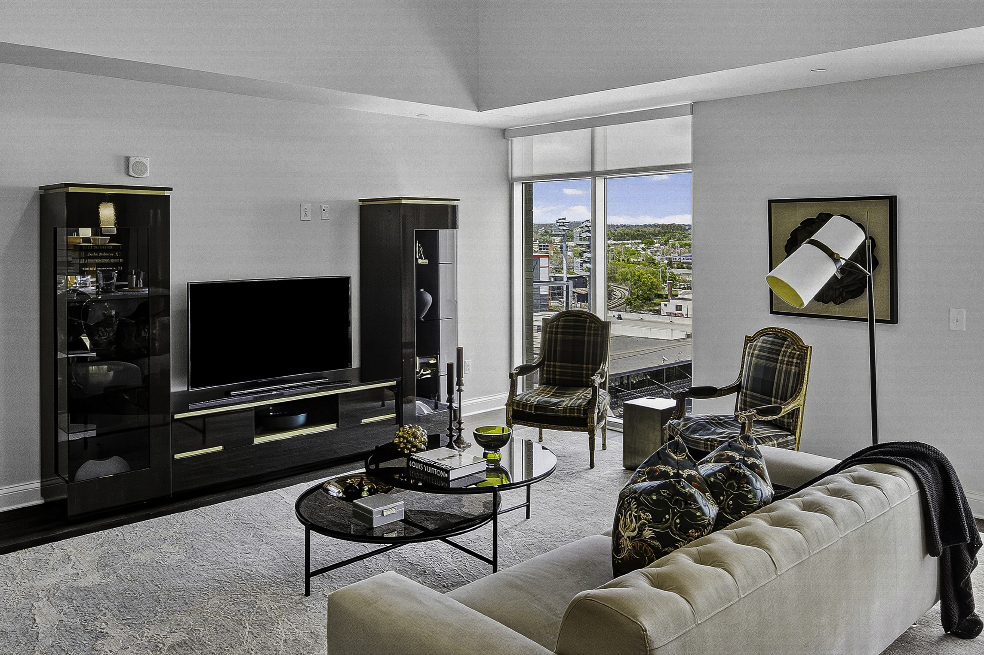
Boyd’s connection to all of this is genuine, and it goes beyond the naming of a building. He and Jenny Boyd have long believed that investment without intention is just commerce. Their fingerprints are on the Beck Cultural Center restoration, on the effort to ensure this development honors the history of the land it sits on, and on the conviction that a great city takes care of its own story. When the Boyd’s met Kessler and learned the full arc of Beauford Delaney’s life—the Knoxville boy who became a world-renowned artist, whose childhood home stood a block from this very ground—naming the building felt less like a branding decision and more like an obligation. “The people living there are in an art museum, in a ballpark, in an area that’s going to be a destination within our city,” Boyd says, and the statement is not hyperbole. It is a description.
When you walk into the lobby of the Beauford Delaney Building, a large-scale reproduction of his work greets you—dramatic, lit, impossible to miss. Reproductions of his paintings are displayed throughout the building, a permanent acknowledgment that this city’s story is worth honoring. The Delaney Museum at Beck, now under construction on Dandridge Avenue, will add another landmark to what Kessler calls a corridor of memory—a trail that leads from the historic marker on Vine Avenue to the building that bears his name to the museum that will hold his legacy. “You have the Delaney Museum at Beck,” she says. “You’ve got the Delaney that stands tall. You’ve got the Delaney marker where it was. You’ve got artwork. You’ve got his archives. We think we’re going to bring the world to Knoxville for generations to come.” Then she says the thing that stays with you longest: “While he never returned back to Knoxville to live, Knoxville always lived in him. And in fact, even to the end of his life, he was trying to get back here—because there was something about Knoxville.”
The ground floor of the Delaney tells its own story about where this neighborhood is going. Iron Forge Brewing—whose craft beers are already pouring inside the stadium—will anchor the east end along Jackson Avenue and is expected to be the first to open. Jackie’s Dream, the beloved soul food destination, is close behind. T. Ralph’s Burgers and Fries and Disco Chicken, Knox-Quila, Berry Social, and Crispy Cones round out a tenant mix that reflects genuine thought about what a real neighborhood needs. Just south of the building, Jonathan’s Grille—a three-story upscale sports bar and restaurant—is under construction and will anchor the stretch between the stadium and the Old City. KUB Fiber ties it all together, ensuring the connectivity inside the building matches the quality of everything else. The commercial office space is fully leased. Three retail spaces along Jackson Avenue are spoken for. And the picture Branscom paints of daily life at the Delaney is not a sales pitch—it is something you can already watch taking shape. “People can be coming over to the Delaney and have dinner, not planning to go to a game, but kind of go, ‘Hey, I didn’t know there was a game tonight. Let’s hop over there,’” she says. “It’s something you can do on the spur of the moment. Whether it’s soccer or baseball or even a concert—the venue is going to host more of all of those as time goes on.” She started this job about sixteen months ago, when the area was still mostly a construction site. “Just in that short period of time, the area has really turned into its own downtown neighborhood,” she says. “I’m down there every day. I see people everywhere—running, walking their dogs, walking from Gay Street just to come and see the neighborhood and see the progress.”
“The Delaney isn’t just a building; it’s where a city decided who it wants to be.”
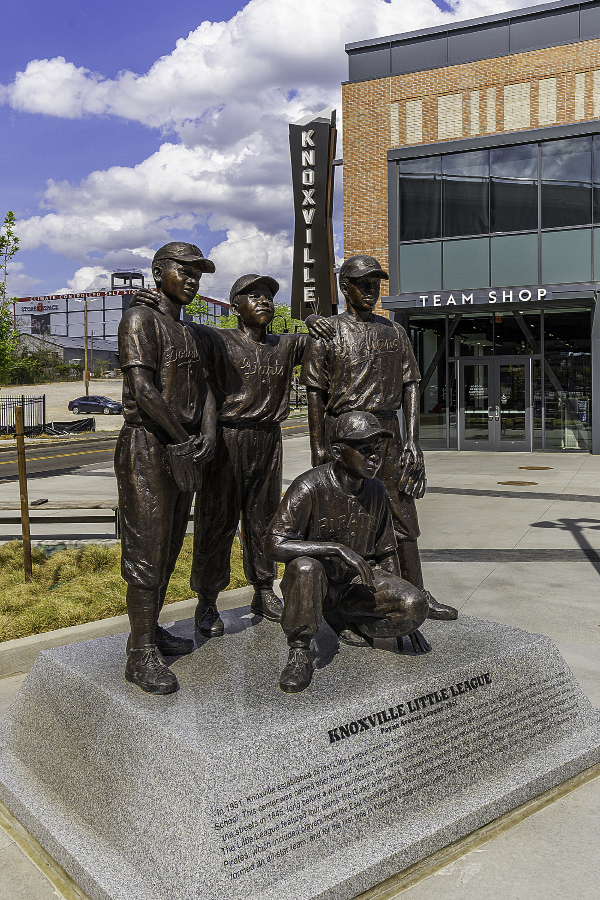
When Covenant Health Park opened on April 15, 2025, something shifted in Knoxville. Not just because of the stadium—beautiful as it is, with its Tennessee-shaped scoreboard (among the largest in all of minor league baseball), its retractable pitcher’s mound, and its sweeping sight lines—but because of what the stadium made visible. That this city had decided something. That downtown Knoxville was not going to drift back into quietness. That it was going to be a place people choose. The numbers Boyd cites tell part of that story: stadium attendance up 40 percent, nearly every financial measure up 30 to 50 percent in the first year. BaseballParks.com named it the 2025 Ballpark of the Year. But the moment that gets Boyd—the one he returns to with the most evident emotion—is not in any spreadsheet. At the unveiling of the statues in the East Plaza honoring players from the Southern Negro League, more than 100 community members gathered to celebrate men who played a century ago and never imagined they would be remembered, let alone cast in bronze. “It was just a great way to connect our community together,” Boyd says quietly, “and celebrate people that would have otherwise been forgotten.” That is the center of this thing. The views are spectacular. The finishes are first class. The terraces truly are the size of most people’s apartments. But what drives all of it—what makes the Beauford Delaney Building more than a luxury address—is the conviction that a city’s history is worth taking seriously, and that the people who shaped a place deserve to be honored in it.
About half of the 47 units have found their owners—people who saw what this was before the paint was dry and bought a dream before it had walls. They wake up now to a view that no amount of second-guessing could have prepared them for. The remaining units are waiting for someone with the good sense to say yes. There will not be another building like this one. Kessler puts its significance where it belongs—in the long arc of Knoxville’s identity. “Now I think you’re going to know you’re in Knoxville when you see the Delaney building,” she says. “Because it’s going to drive you to find out about Beauford Delaney and the Delaney family. And then it’s going to drive you right here to the Beck.”
Stand outside your condo one more time. The field glowing below. The city humming in every direction. A boy who grew up one block from here and carried Knoxville’s light all the way to Paris. And a man who had the vision to put his name on a building that will outlast everything that came before it. Knoxville always lived in Beauford Delaney. Now his spirit lives on in Knoxville. His light is everywhere.
That is not a coincidence. That is Randy Boyd.
Play ball.
The Beauford Delaney Building is located along the first base line of Covenant Health Park in downtown Knoxville. For information on available residences, contact Partners Development.
The Team Behind the Beauford Delaney Building
Development/Owner/Vision: Boyd Property Development / Boyd Sports—Randy Boyd | Project Management—Partners Development | General Contractor: Denark Construction | Architecture: Design Innovation Architecture & Barber McMurry Architects | Cabinetry & Hardware: Kitchen Sales | Flooring: Home Choice Flooring | Appliances: Friedman’s | Interior Design: Design Innovation Architecture & Nouveau Classics | Mechanical: Chancey and Reynolds | Electrical: Shoffner | Plumbing: Interstate | Drywall & Framing: Proffitt and Sons | Retail Design: Johnson Architecture | Roofing: Dixie Roofing | Landscaping: Arcadis | Signage: Allen Signs | Technology: Central Technologies | Connectivity: KUB Fiber | Furniture & Amenities: Office Work’s LLC
Retail & Restaurant Partners: Iron Forge Brewing | Jackie’s Dream | T. Ralph’s Burgers and Fries | Disco Chicken | Knox-Quila | Berry Social | Crispy Cones | Jonathan’s Grille
Comments are closed.